Here in Rawmona’s Artisan Kitchen, dessert is more than a sweet treat. From her shop near downtown Bend, founder Karla Diaz Cano shares tamales, paleta, Mexican popsicle, Mexican hot chocolate and cakes, among other delicacies. Every creation is a way to honor heritage, health and the Earth. Unlike most chocolate cakes made with processed cocoa, this one begins with genuine Mexican cacao. Diaz Cano makes all of her cakes with minimally processed flours, such as almond for this one (other times coconut or cassava flours) and utilizes coconut oil, a natural sweetener like maple syrup, and eggs—whole ingredients that are gluten-free, low glycemic, nutrient-dense and organic. What emerges from the oven is indulgent for certain, but balanced.
Between the tiers, a silky ganache shines with cacao, coconut cream, piloncillo and Mexican vanilla bean. On top, a crumble of traditional Mexican chocolate made with cacao, almonds and rosita de cacao, a blossom that is separate from, but shades, the cacao tree—adds a layer of texture
and flavor. Diaz Cano brings cinnamon, vanilla bean and cacao from Mexico into her kitchen so that each bite celebrates the flavorscape of her native culture.
In Mexico, Diaz Cano explained, food is inseparable from community and spirituality. Every ingredient in her kitchen is chosen with intention, heralding ancestral wisdom and time-honored practices. “I work a very different palate than most,” she said. “My hope is that people are positively surprised and intrigued.”
My introduction to marijuana came from “Fast Times at Ridgemont High.” As a kid, I watched Jeff Spicoli, played by Sean Penn, tumble out of a smoky VW Microbus. For me, he defined the stoner image with his classic phrase, “Hey bud, let’s party.” [Photo above by Tambi Lane]
Spicoli was on my mind as I filled out my Oregon election ballot in 2014. When it passed, Measure 91 made Oregon one of the first states to legalize recreational weed. This redirected money from the black market toward tax revenue. Cannabis took off similarly to the craft beer explosion of the 2000s. Instead of brewers, underground “pirates” stepped into the light. They created a multibillion-dollar industry.
In March 2014, Dr. Jolly’s was the first medical marijuana dispensary to open its doors in Bend. Today, Oregon has 820 dispensaries, with 27 located in Bend. Ross Lipson was one of the first to spot the opportunity. After waiting in a long dispensary line on day one, he realized cannabis sales needed an upgrade. With his brother Zach, he launched Dutchie in Bend in 2017. Dutchie is an all-in-one e-commerce platform for cannabis. After an early valuation of $3.75 billion in 2021, Dutchie became a giant. Today, it is one of North America’s biggest cannabis tech companies. While money doesn’t grow on trees, for a time it seemed to grow on weed.
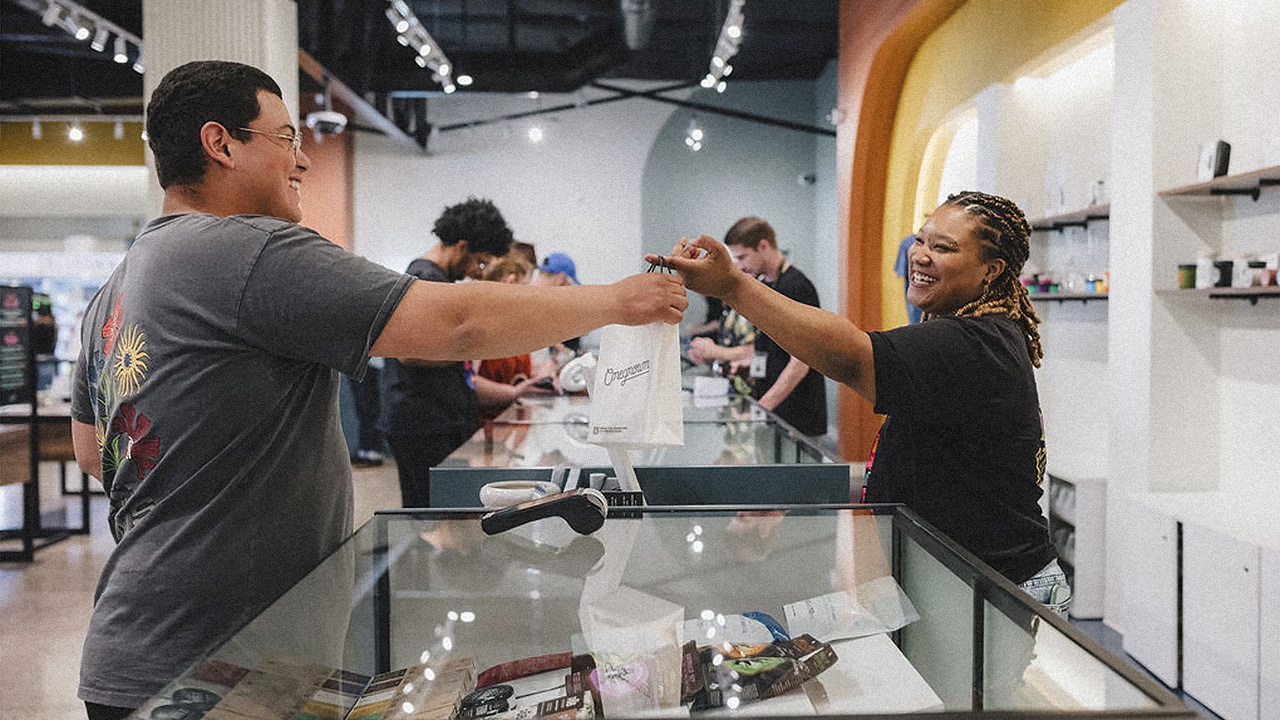
Oregown includes support of the community in its business plan. Photo courtesy of Oregrown
Local Dispensaries, Community Leaders
The stoner image persisted in the early days. This happened despite the products becoming safer and better. However, cannabis somewhere along the line dropped the stigma. As athletes started rubbing it into aching muscles, older generations found medicinal uses. Spicoli began to lose his status as the poster child of pot.
“Taxes generate approximately $1.25 million annually for just the greater Bend area,” said Kevin Hogan. He cofounded Oregrown, a Bend-started dispensary. Oregrown now has five locations, including its newest in Redmond. Oregon collected approximately $153 million in excise tax from cannabis. This is according to the state’s 2024 Comprehensive Financial Report. Deschutes County’s portion was just shy of $1.5 million. The county applied this toward public safety and law enforcement. The funds also support criminal justice, public health, and various community programs.
Tax revenue is only one way to look at the impact of weed. “We’ve created about 60 jobs in Deschutes County,” Hogan said. “These jobs meet or exceed the living wage for Deschutes County.” This money ends up with the local workforce. He also noted that each dollar spent at Oregrown redirects about a third back to other local companies.
For Oregrown, elevating communities has been part of the business plan from the beginning. The company has contributed roughly $250,000 to charities. They sponsor sporting events, veteran programs, and festivals. These include WinterFest and others throughout the year. By sponsoring these events, the cost is much lower for the rest of the community. This is more than a marketing plan for Hogan. “It’s important for leaders in every industry to give back,” he said. “It’s the right thing to do.”
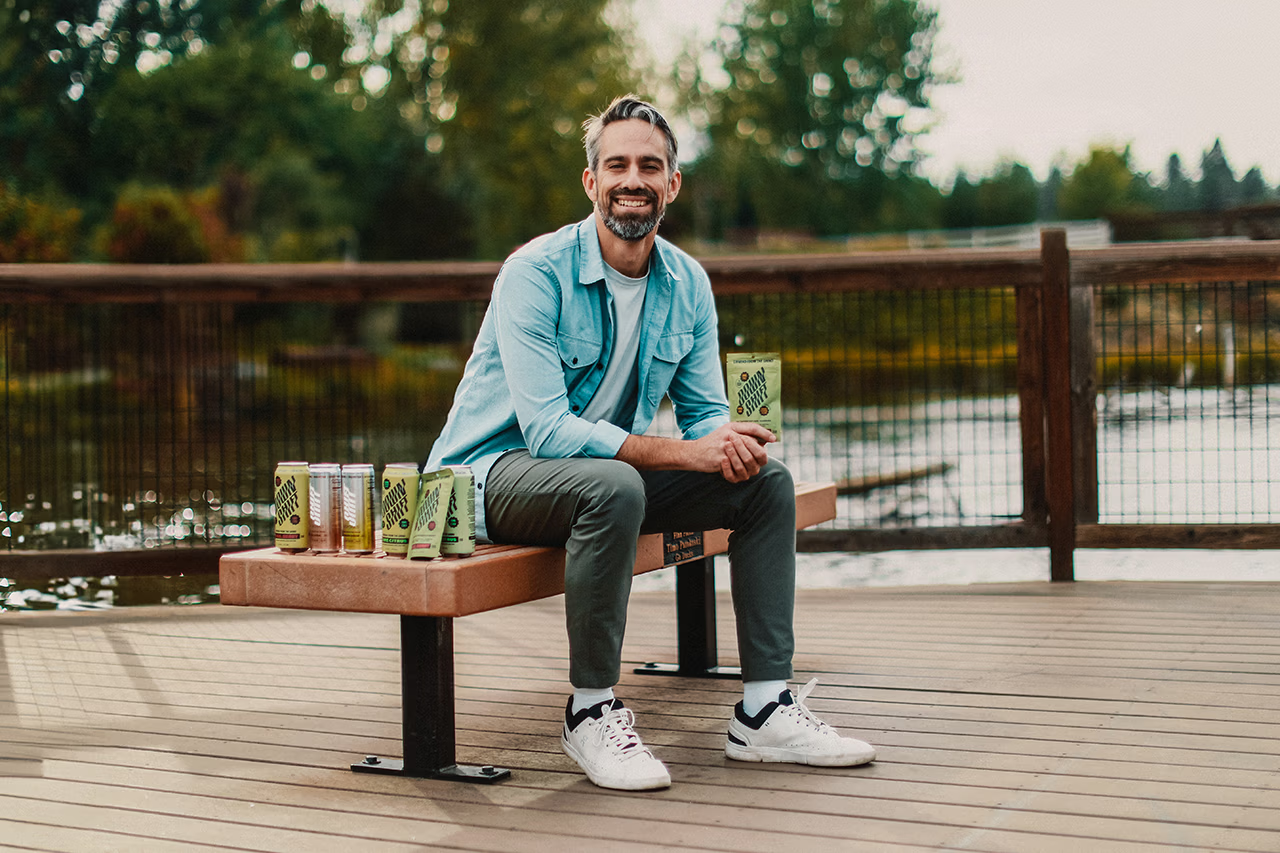
Ryan Evans of Shift Naturals. Photo by Tommy Corey
Shifting the Cannabis Mindset
Ryan Evans has similar ideas. He cofounded Shift Naturals, a line of microdosed THC cocktails, functional gummies, and terpene-infused sparkling waters. He wants his Bend-based brand to reconnect people with nature as much as cannabis. “Nature did it right. We just want to put it into a can,” said Evans.
Both Evans and Hogan now say overcoming the stoner stereotype is their biggest hurdle. “We need to destigmatize these products to give people more options,” Evans said. Hogan agreed: “It was really important to us from the beginning to normalize cannabis, support the community and create jobs.”
Attitudes about cannabis are slowly changing. Jeff Spicoli may have served as an icon of pot. Evans assured me their target consumer these days is closer to Claire Dunphy of “Modern Family.”
Edward Slingerland argued in his book, Drunk: How We Sipped, Danced, and Stumbled Our Way to Civilization, that altered states have been a part of human society for millennia. Imbibing has always played a role in ceremony, creativity, trust, and human connection. Even if we choose not to partake, we can still enjoy the ripple effects of cannabis. Anytime we’ve gone out to an event, chances are the cannabis industry has been there. They are like the cool friend of a friend. As Spicoli might say, “Hey, Bend, let’s party.”
“I know it’s around negative 15 degrees, since that’s usually when my eyelashes stick together,” she explained to a group of students at Central Oregon Community College. “A warm day for me is between zero and 10 degrees Fahrenheit,” she said.
Clark moved to Bend in 2024, and has been training rigorously, engaging with the community and fundraising to bring the first all-Black team on an Arctic expedition that pays tribute to history and raises awareness about climate change.
The journey is set to kick off in Greenland during April 2026, followed by a second phase of the trip to reach the North Pole in 2027. Clark is leading the team gathered by nonprofit Full Circle Expedition. The organization garnered national attention on May 12, 2022, when it formed the first all-Black team of climbers to conquer Mount Everest, with Clark as part of the support crew. Although Clark didn’t reach the summit, she made invaluable contributions to the team.
Photo by L. Renee Blount
To the Top of the World with Jeska Clark
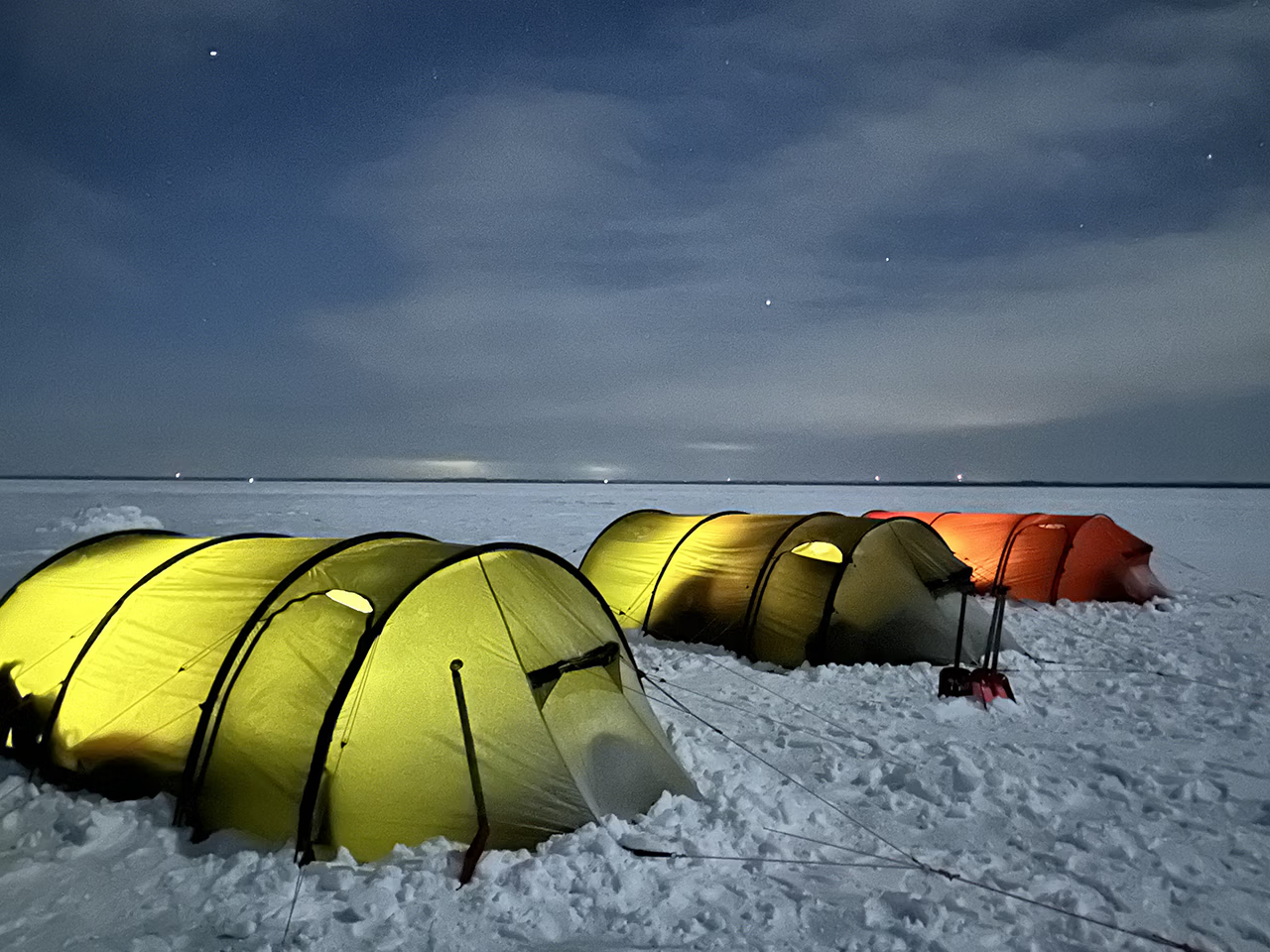
The planned Arctic route includes Greenland. A separate journey will then reach the North Pole, the last degree of latitude. The Greenland segment spans about 372 miles. It will take the team 25 to 30 days. They start in Kangerlussuaq, near the world’s second-largest ice cap. The route ends in Tasiilaq, a cultural center for east Greenland’s Inuit traditions. During the North Pole section, the team will face temperatures from 14 to minus 35 degrees Fahrenheit.
The group comprises Clark, Thomas Moore, and Demond Mullins. Moore and Mullins both summited Everest. The other members are L. Renee Blount, Erick Cedeño, Evan Green, Danica Carey, and Marcus Shoffner. They selected members for their spirit of exploration and resilience. The group also features people with diverse backgrounds from across the country. These include psychologists, photographers, writers, filmmakers, and athletes.
As expedition leader, Clark holds several responsibilities. The professional human performance specialist creates the training regimen. She also monitors health and conducts climate research. Part of the Arctic Team’s climate research will focus on two things. They will monitor glacier melt and the human condition in harsh environments.
Another element of the expedition honors explorer Matthew Henson. “Six years ago, I stumbled upon his story,” Clark explained. This happened during a visit to the Explorers Club gallery. The New York gallery has been a base for a dedicated group since 1904. This group advances field research, scientific exploration, and resource conservation. By many accounts, Henson was the first human to reach the North Pole on April 6, 1909. He was also the first African American to do so. He was inducted into the Explorers Club in 1937. However, he did not receive full recognition for his contributions until 1988.
“[Henson’s] story inspired me, as Black explorers are often overlooked. I felt compelled to honor his legacy,” she said. We’re heading to the edge of the earth to inspire underrepresented individuals to pursue exploration.”
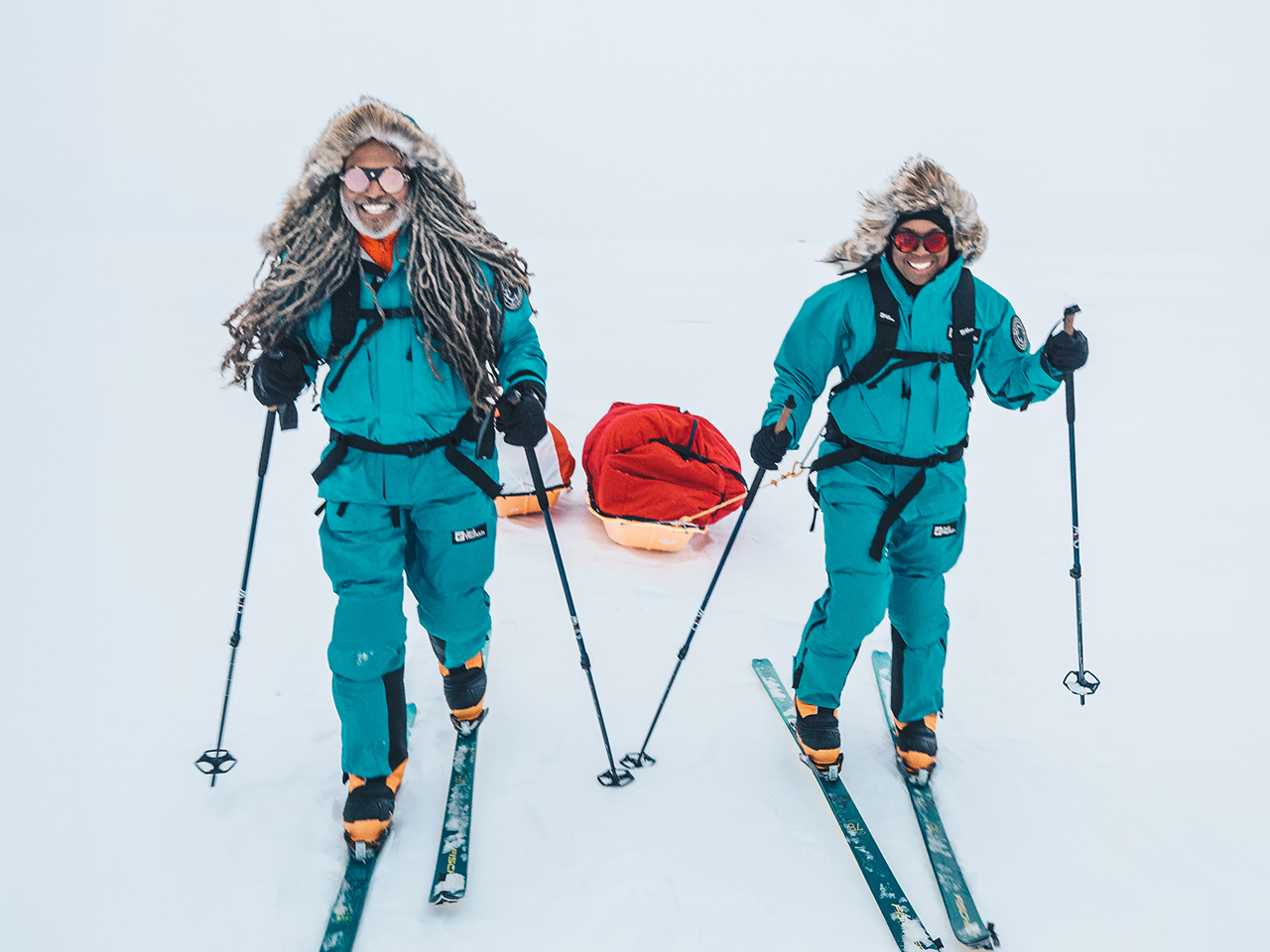
Erick Cedeño and Jeska Clark. Photo by Tanner Cibula
Training and Fundraising Goals
Training for the Arctic is no small feat. The expedition takes financial support, determination and strength. “Imagine hauling over 200 pounds of gear on a sled while skiing across icy terrain. You have to balance and move swiftly to dodge the sled from bumping into you. Strength training is essential for this,” Clark shared. At Boss Gym in Bend, Clark trains with fitness instructor Marcus McGovern, concentrating on exercises like weighted sled pulls and single-leg stabilization. Despite being in different states, her teammates keep each other accountable through scheduled Zoom calls, phone check-ins and progress reports until they will reunite in person later this winter.
Clark has held fundraising events, such as at Bend’s Juneteenth festival. There, she showcased equipment and educational materials for the Arctic expedition and shared that a documentary about the adventure is in the works. As it embarks on this inspiring journey, Clark’s team not only carries its gear but a profound legacy that will pave the team’s way into history. “Like Matthew Henson,” said Clark, “we’re heading to the edge of the earth to inspire underrepresented individuals to pursue exploration.”
‘Tis the season for holiday light displays! Grab your hot cocoa, pile into the car, and get ready for the ultimate festive drive. We’ve made finding the most dazzling displays in Central Oregon effortless with our interactive holiday lights map, featuring everything from synchronized light shows to classic neighborhood gems.
Use this interactive Christmas and holiday lights map to find some of the area’s best light displays in Central Oregon: