
Search results

Central Oregon Nordic Skiing: Top 5 Cross-Country Trails

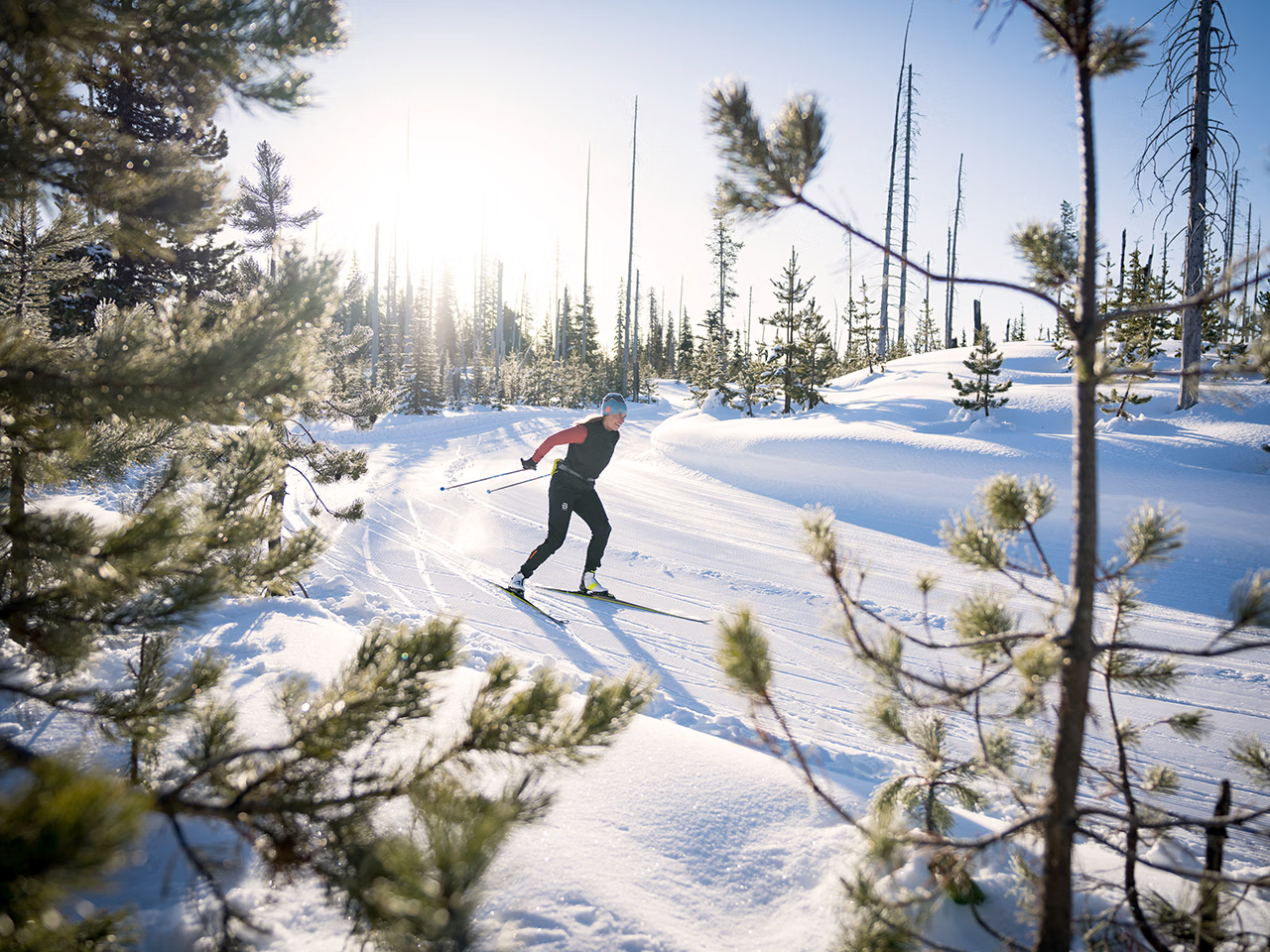
Nordic skiing has a long history in Central Oregon, beginning with the lumber mill workers in the region’s early days. Scandinavian transplants and friends Chris Kostol, Emil Nordeen, Nels Skjersaa, and Nils Wulfsberg formed the Skyliners ski club in 1927, and its traditions are still going strong. The combination of long winters, abundant snow and access from numerous sno-parks provide ideal opportunities for cross-country (XC) skiers to skate or glide through forested trails in the region’s winter wonderlands. So, here are five spots to explore this season. [Photo above of professional ski instructor, Ingrid Granlin, Glide Nordic, by Martin Sundberg]
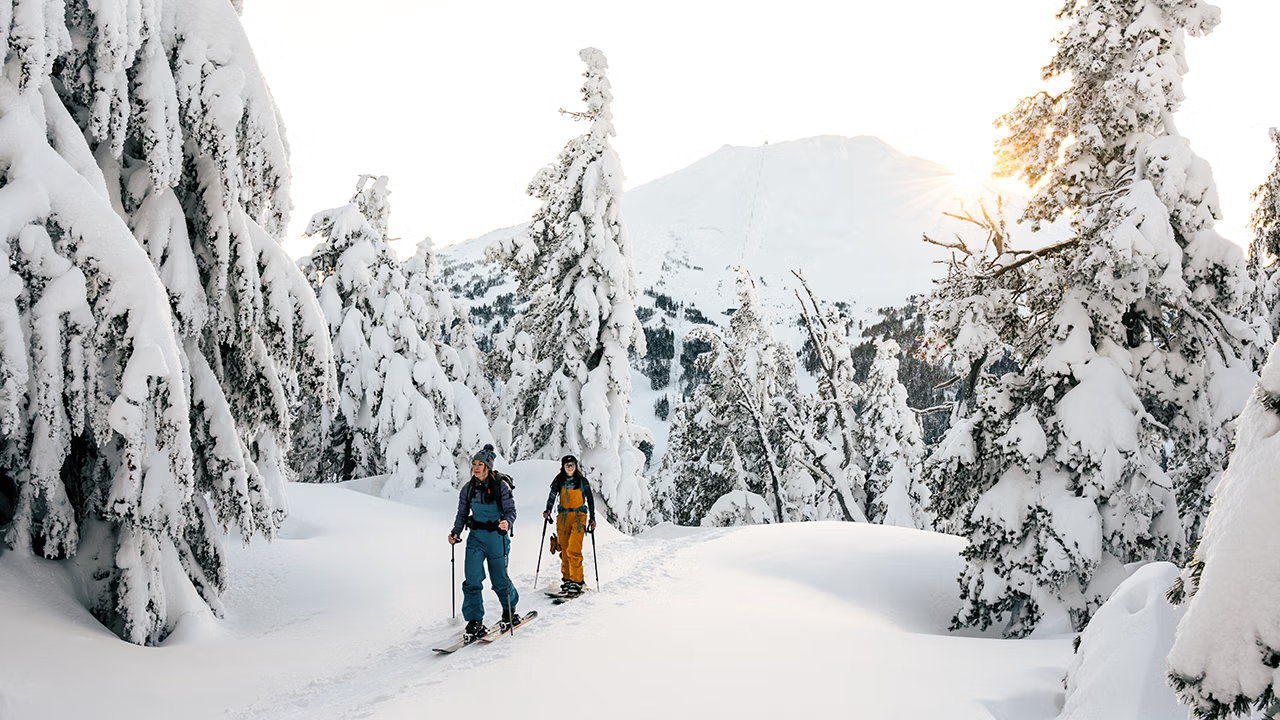
Tumalo Mountain with view of Mt. Bachelor. Photo by Whitney Whitehouse
Tumalo Mountain with a view of Mt. Bachelor | Photo by Whitney Whitehouse

Virginia Meissner Sno-Park

The network of groomed skate and classic trails maintained by Meissner Nordic, a volunteer-run and -supported nonprofit organization, is known by locals as simply “Meissner.” Several trails lead to the Meissner Shelter, or connect via the Tangent Trail to Swampy Lakes Sno-Park for a 5-mile loop, or even explore a new loop, Best Day Ever, added in 2024. Download the Meissner Nordic app for real-time grooming reports, weather, event information, alerts and interaction with offline maps. Remember to stay to the right, and make way for faster skiers—watch for local high school competitors and Olympic athletes who also train on these trails.

TIP: If Virginia Meissner Sno-Park is full, continue 3 miles up the Cascade Lakes Highway to Swampy Lakes Sno-Park, which offers access to ungroomed classic trails and rolling terrain to both the Swampy and Nordeen shelters.

Mt. Bachelor Nordic Center

Across from Mt. Bachelor ski resort’s alpine slopes, the Nordic Center offers more than 34 miles of groomed trails. These trails are perfect for skate and classic skiing. This rewards skiers with one of the longest groomed Nordic trail seasons in North America. Typically, the season starts in November and can last until June if the snow cooperates. Trails dip and weave through subalpine fir and old-growth mountain hemlock forests. Furthermore, the trails are punctuated by views of Mount Bachelor’s peak. Pick up a hot beverage or snack from the XC Café in the Nordic Center after your workout. Finally, with a free Common Corridor pass from the Nordic Center, skiers can also access the ungroomed two-mile-long trail to Todd Lake.
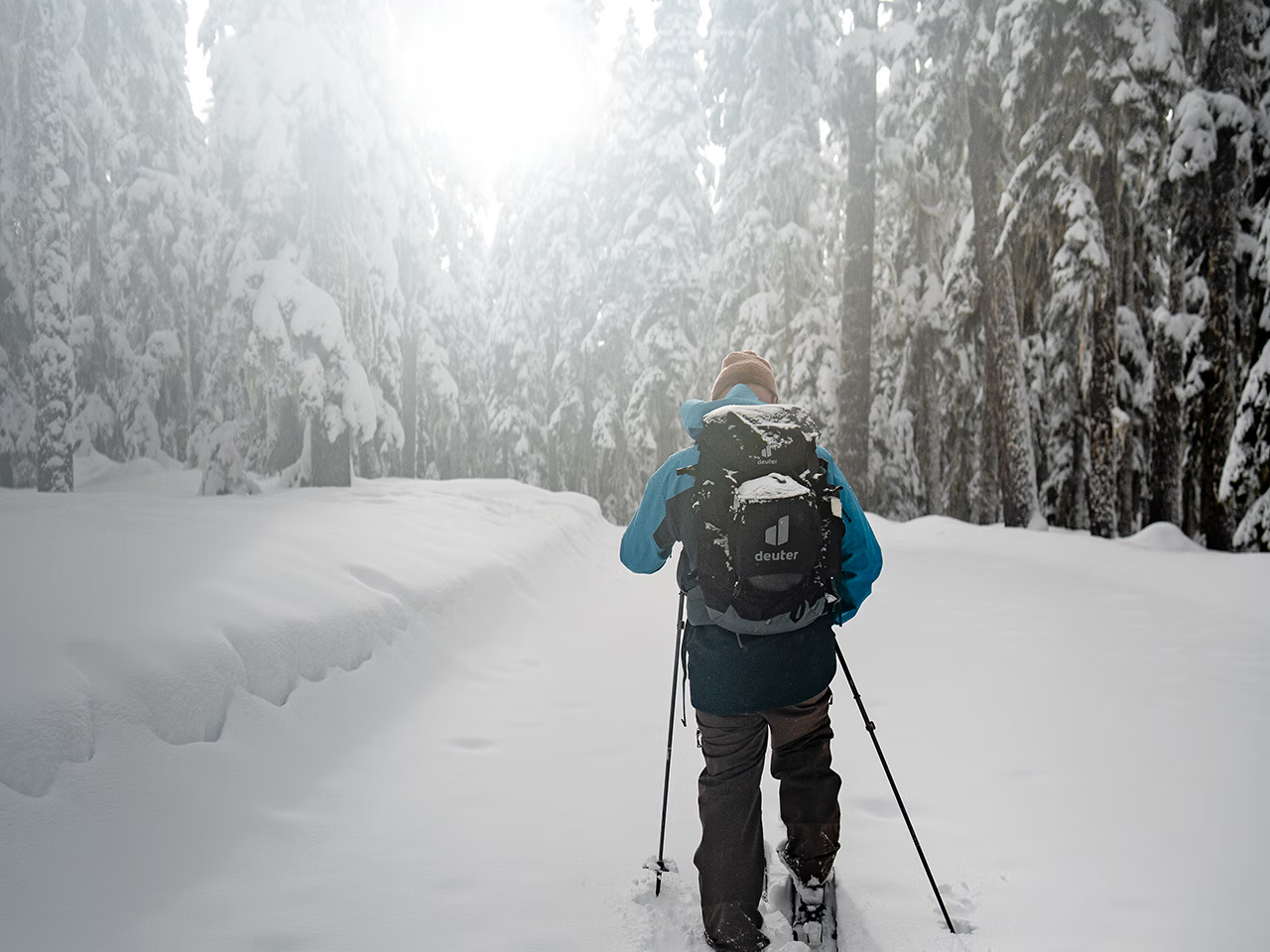
Photo by Sarah Tuttle

Upper Three Creeks Sno-Park

Forest Road 16 leaves Sisters and continues for about 11 miles to Upper Three Creeks, a hub for Nordic skiers and their dogs, snowshoers and snowmobilers. One popular destination is the well-marked ungroomed trails to the Jefferson View Shelter, which offers incredible views of several peaks in the Cascade Range. Trail distances vary from 4 to 7 miles. 

Wanoga Sno-Park

If you’re after a dog-friendly area with groomed trails, then head to Wanoga. Dogpac, a nonprofit, volunteer-run, off-leash advocacy organization, grooms a flat, 2-mile loop for skiers and their happy pets to bound through the snow.

Update: The nearby Edison Butte Sno-park closed in 2024 after the Bachelor Complex fires. While the closure was lifted for 2025, much clearing and re-signing work remains to be done.

Ten Mile Sno-Park

For a day or overnight trip, head up to the Ten Mile Sno-Park on the flank of the Newberry Volcano. Take the ungroomed Paulina View Trail that gently climbs for about 3 miles to Paulina Lake and passes by the ice-draped Paulina Falls. Overnighters can stay at the Paulina Lake Lodge (the lodge team will snowmobile in their gear) and enjoy a star-studded moonlight ski through the heart of the volcano.
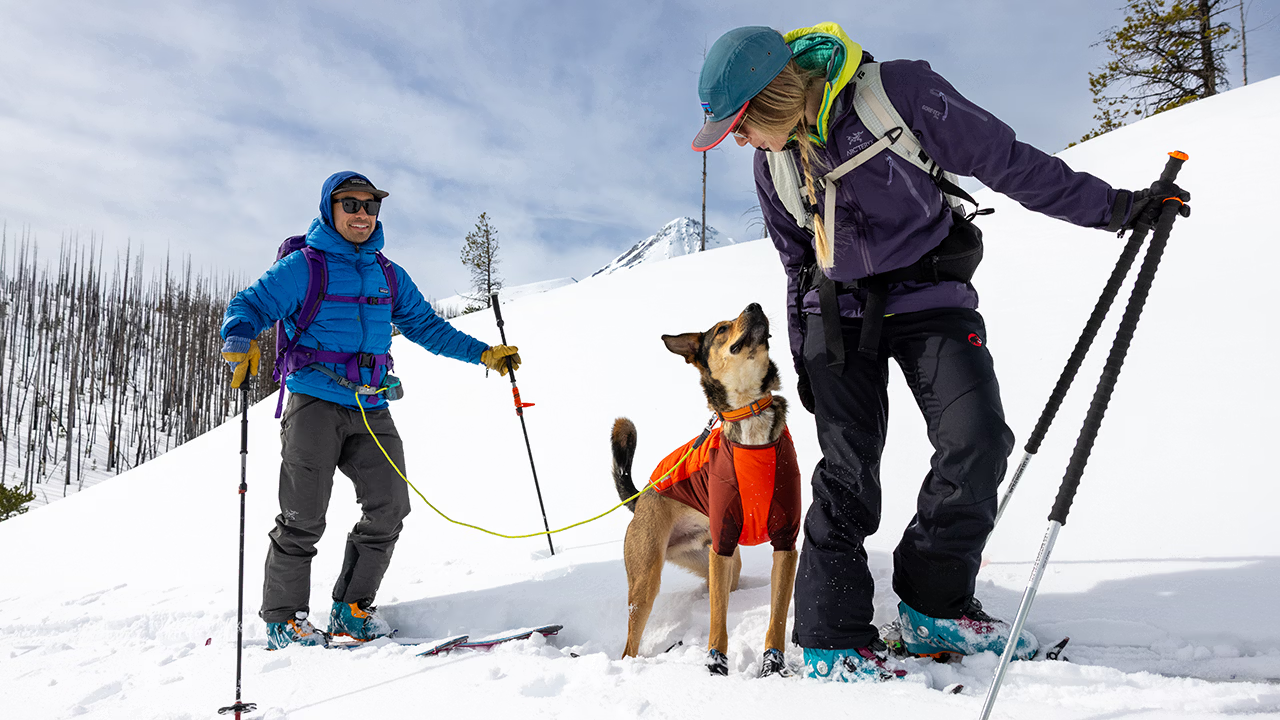
Three Sisters Wilderness.
Three Sisters Wilderness | Photo by Tyler Roemer

What You Need to Know:

The U.S. Forest Service manages many of the ski trails in the Deschutes National Forest. However, volunteers maintain them. They take on tasks such as grooming and signage. They also handle trail upkeep, special events, and stocking shelters. This includes emergency firewood. “Typically, we put in about 3,000 hours of volunteer work per year on trails,” said Sue Sullivan. She is the vice-president of the nonprofit Central Oregon Nordic Club (CONC). “We work many more hours in years with a big project.” This could include putting up a shelter or constructing new trails. Donations, memberships, or volunteer time are great ways to support CONC and Meissner Nordic.

Several ski shops in Bend, Sunriver, and Sisters offer XC ski rentals and sales. They also carry all the gear you’ll need. Mt. Bachelor Nordic Center offers lessons. CONC also offers ski clinics to members. Mt. Bachelor’s Nordic Center parking is free. Remember to purchase an Oregon Sno-Park pass. You must have this pass for parking from November 1 to April 30. The pass also supports snowplowing and maintenance efforts. This helps keep the history of Nordic skiing in Central Oregon alive.

Winter Running Routes in Bend and Redmond Oregon

When the snow and ice settle over Bend, those of sane mind and body tuck their running shoes in for a long winter’s nap. Those of us who simply cannot not run find any way we can to get those miles. Fearing a slip on the ice? Not in treaded runners (screws placed by the like-minded folks at FootZone for free). See a layer of snow on a favorite trail? Good thing for toothed YakTrax. Feel a chill in the air? Can’t touch me with my mittened hands and layers of insulated gear. And when mountain trails require planks instead of tread, head to these locations recommended by Lucas Alberg, author of Trail Running Bend: Great Loop Trails for Every Season. [Photo Above of Tulie Budiselich by Martin Sundberg]

Badlands, Bend

The loose sand of summer solidifies into hard-packed running perfection at the Flatiron Rock Trailhead when cold temperatures set. While it rarely snows there, crowds tend to stay away during winter, so trails are quiet and serene.

Head to Flatiron Rock, a 6.5-mile lollipop loop with little elevation gain for a fast, flat jaunt through old-growth junipers, low-lying sagebrush and rock outcroppings popping out of the volcanic landscape.

Winter Runners in snow
Colton Gale and Alli Miles run year-round | Photo by Cody Rheault

Radlands, Redmond

The landscape of northeast Redmond is classic high desert: low scrubs give way to lava rock formations and sprawling mountain views. Because of the lower elevation there, it has little snow accumulation, and with exposed trails, the winter sun shines with warmth.

The Bobber Loop is a 3-mile circuit with the option to add length on the single tracks that flow through low-lying brush and over lava rock outcroppings.

Lacing Up
Photo by Martin Sundberg

Maston, Redmond

With nearly 20 miles of trails that take runners along lava-rock-lined routes to views of the Deschutes River, this network of paths is a winter dream. From short loops through junipers to long meandering circuits, the trails here remain relatively snow-free yet cold-packed, the perfect conditions for free-flowing dirt miles.

From the Maston Trailhead, run the perimeter of the area on a 12.5-mile jaunt that takes you through all the highlights: river views, juniper trees and mountains in the distance.

Smith Rock | Photo by Martin Sundberg

Upper Shevlin Park, Bend

Shevlin Park is another year-round, close-to-home option, and with a series of new trails in the upper portion of the park, runners can enjoy their creek and mountain views in one short run. While this area gets snow, the upper trails get less accumulation. Pack traction in case a patch of ice or snow pop up along the route.

Park at the Shevlin Commons Trailhead, and run into the park via the Discovery Trail. Choose your own adventure on the loops that spread out in front of you, such as Western Larch Trail to Shevlin Loop Trail, which offers open plateau views of the Three Sisters and dips into the forest, a greatest hits of high desert running.

Smith Rock, Terrebonne

The rocky landscape of Smith Rock State Park is a year-round playground, but it’s especially sweet for runners in the winter when the Terrebonne location provides a reprieve from snow, while offering climbing options to keep trail legs in shape.

Misery Ridge to River Trail is a 3.7-mile loop with some serious elevation gain of almost 1,000 feet at the start as you ascend a series of switchbacks and stairs, followed by a measured descent to the river below. 

Spiral Wax Co.: A Meditation on the Environment

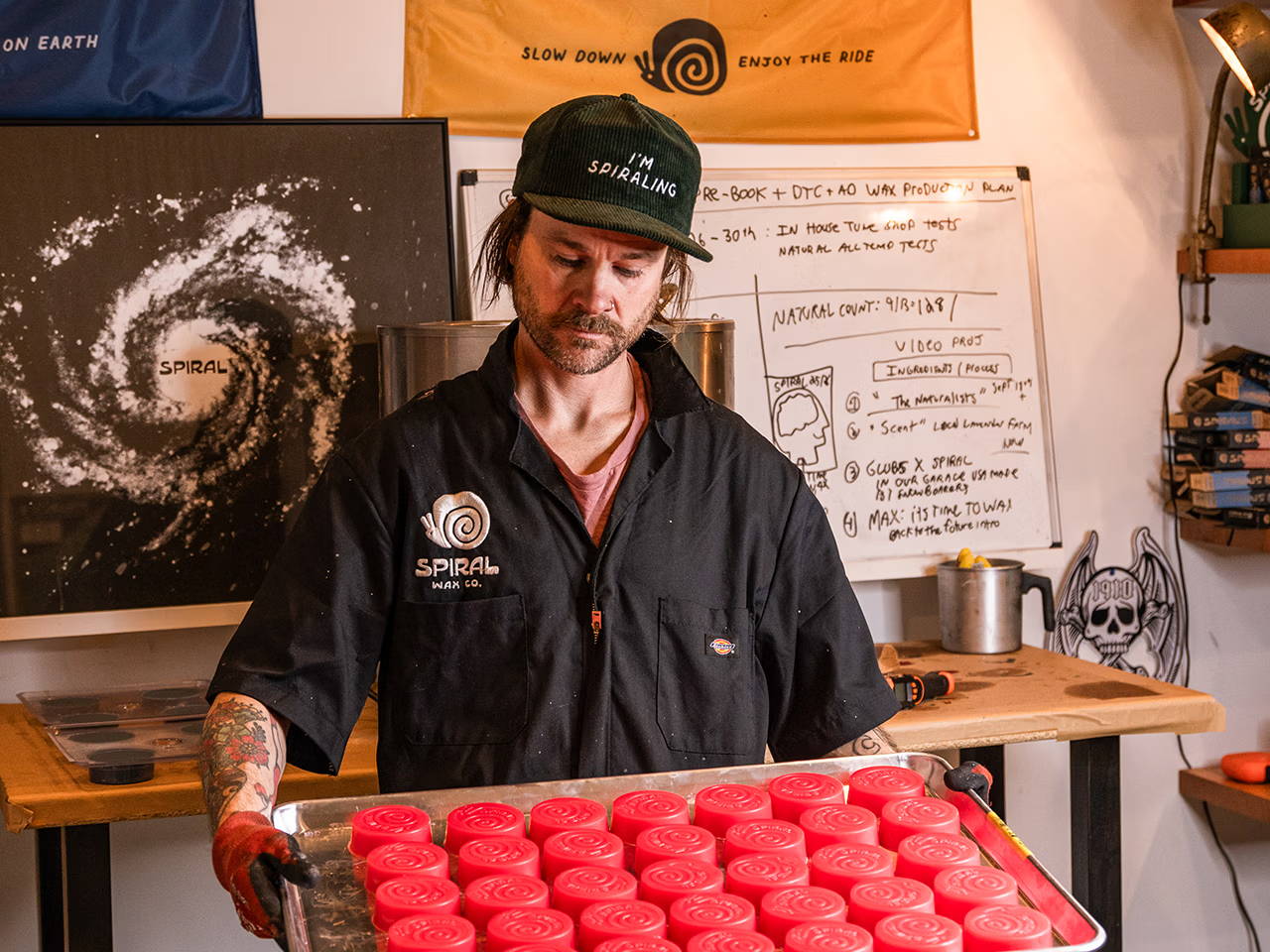
For a sport that emphasizes speed, Tim Karpinski and Spiral Wax Co. aim to bring the power of slowing down to the snowboard world. [Photo above by Aaron Staylor]

After decades in the snow sports industry—he founded Grenade Gloves and was creative director for Gnu Snowboards—Karpinski discovered the magic of shaking off the external motivation of success. He embraced the practice of meditation and self-care to thrive. Spiral Wax Co. found its foundation on this principle: even something as simple as waxing a snowboard can become a ritual.

Recently awarded a $75,000 production financing award at the 2025 Bend Outdoor Worx BreakOut Pitch event, Spiral Wax Co. is on its way to making a major impact in the sports world. Karpinski shared the inspiration behind creating a product that makes riders slow down in a world that wants to speed up.

How does Spiral make waxing a board less of a chore and more of a mindful experience?

At Spiral, our mantra is “Slow Down.” It might sound backwards for a wax brand, but for us, it’s more about the ritual. It’s a chance to pause, take a breath and connect with your board, then connect with the mountain. We see it as a form of self-care: taking care of your mind, body and snowboard alike. When all three are in balance, you can be fully present on the mountain and on your board, and get into that magical flow state when time stops and turns are effortless.

We want riders to embrace this slower pace—carefully carve the corduroy instead of bombing the hill, rip a new line through the trees you’ve never pursued or simply stop to soak up the beauty of nature. Slowing down lets you reconnect with the wonder that brought us to the mountains in the first place.

That same mindset flows into how we craft our wax. Each bar is made in small batches in Bend. Every step is done with intention. We like to think of love as the invisible ingredient that binds it all together. It’s a kind of quiet magic that resonates in every turn.

What inspired you to get back to the basics and make wax?

As creative director of Gnu Snowboards, I saw the power of owning my own manufacturing. Gnu hand-builds all their boards in Washington, and the founders actually taught themselves how. It took 20 years to perfect their process, inventing their own tools and tech along the way. Watching that showed me how much freedom comes from controlling the process—you’re not at the mercy of outside manufacturers raising prices or missing deadlines. At the same time, I discovered that I love working with my hands, not just designing on a computer.

By contrast, with my first brand, Grenade, we designed gloves in an office, sent them to China, and waited. I loved the creative part, but it always felt incomplete. So when I started Spiral, I knew the core had to be different. I wanted to own the factory, own the supply chain and reimagine snowboard wax from the ground up.

Spiral Wax Co.’s All Temperature Natural Wax

The packaging of the wax seems just as important as the wax itself. What informs the design?

I’m a graphic designer by trade, with a focus on packaging. When I looked at the wax market, I noticed most brands were making great waxes, but the packaging felt like an afterthought—with plastic wrappers, minimal branding, overly technical language and no real storytelling. I wasn’t connecting with what I saw. That gap was part of the opportunity I found with Spiral. I wanted to create a high-performing, earth-friendly wax that also looked and felt good. Since one of Spiral’s core values is making products that are better for the earth, it was important that our packaging reflected the same care we put into the wax.

We partner with an Oregon-based packaging supplier that works with recycled materials and soy-based inks, so even our packaging is local, recyclable, and low-impact. You can literally bury one of our boxes in the ground and it will biodegrade within months.

Where do you see Spiral heading in the future?

We’re taking things slow and growing steadily, which feels true to our mission. Our vision is to expand beyond snow into skate and surf wax, and further into self-care products designed specifically for boarders—things like chapstick, sunscreen, epsom salts and body oils. All of it will carry Spiral’s design DNA, to be mindfully made and look really cool.

We’re founded in Bend and want to grow deep roots in the community here. We plan to host community events that share the rituals of waxing, plus educate, inspire and help get the next generation “tuned in and tuned up!” Ultimately, we never want to lose sight of why we started this: To be out there together, riding snow-covered volcanoes and spiraling around the sun. 

Tune in to the full interview with Tim Karpinski on the new “Birth of the Brands” podcast series | Learn more and shop Spiral Wax Co.

0
    Your Cart
    Your cart is emptyReturn to Shop