

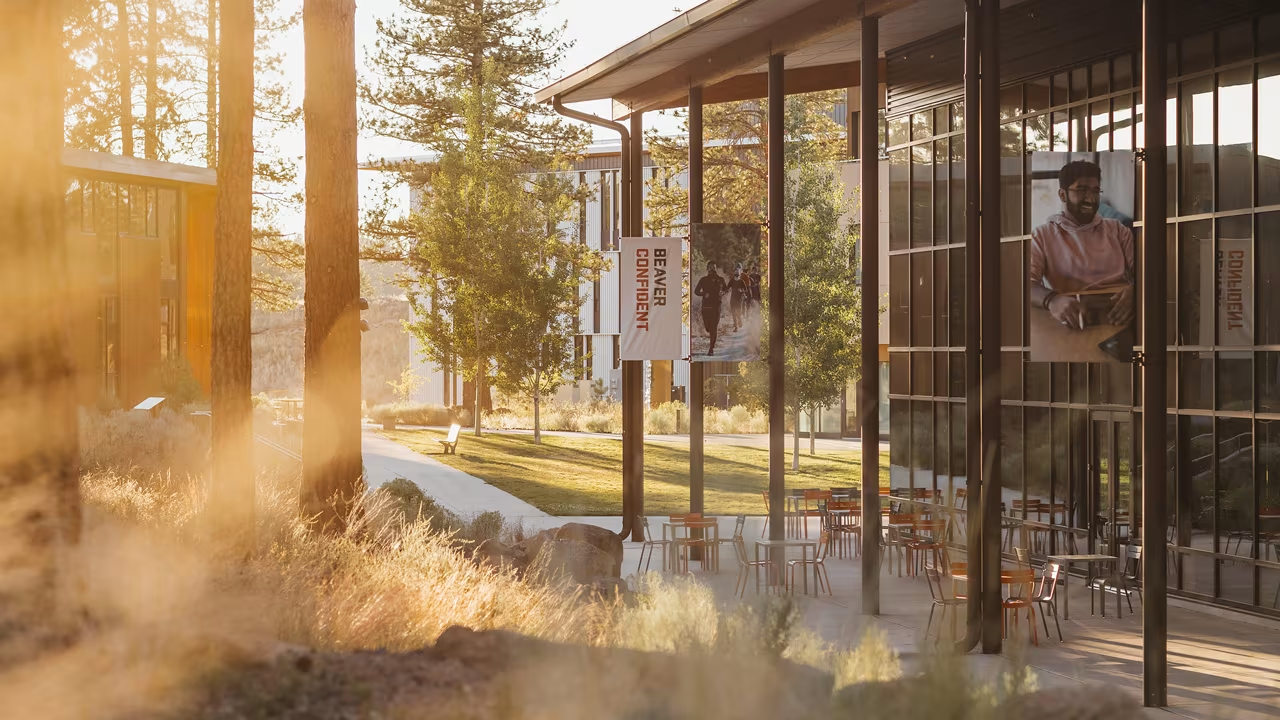
Once a dusty pumice pit and landfill at the edge of nowhere, it’s one of the most ambitious campus projects in the country today. Oregon State University-Cascades has transformed Central Oregon from a university desert into a rising academic power. In just 25 years, blighted ground has become the beating heart of Central Oregon’s evolution into a vibrant educational city.
Until the late 1990s, it was merely a long-held dream among Central Oregonians that they or their children could earn a four-year degree without leaving the area. As Bend moved beyond its roots as a timber town and entered the 21st century, it began reshaping itself around outdoor recreation, tourism, craft brewing, healthcare, tech startups and remote workers. The population grew, demographics evolved, and what was once a distant hope for local higher education began to feel possible and, in many ways, essential.
COCC – How It All Began
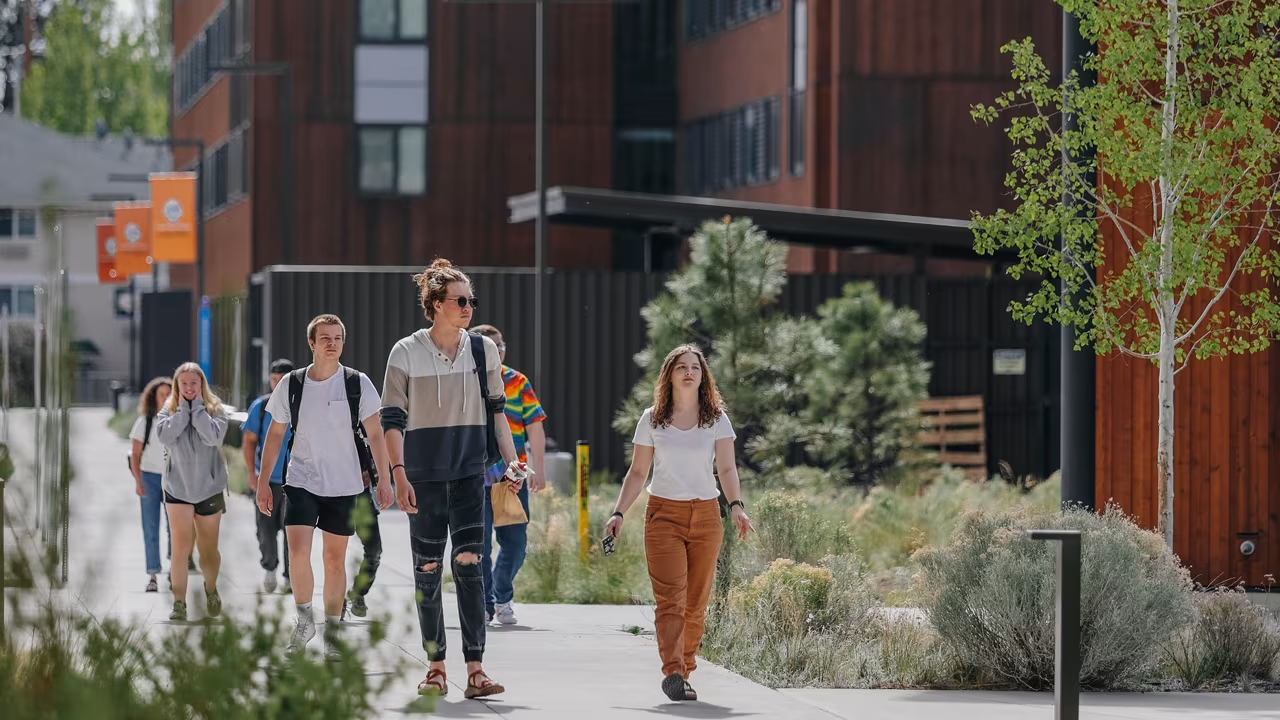
In 1999, an Oregon University System advisory board recommended a partnership between a capstone university and COCC to bring four-year degrees to Central Oregon. Oregon State University was selected and opened a branch campus on COCC’s campus in 2001, supported by $7.2 million from the state legislature.
Students followed a “two-plus-two” path, starting at COCC and finishing at OSU-Cascades. By 2009, enrollment hit 611, but the campus faced challenges, including leadership turnover and confusion with the University of Oregon’s presence on the COCC campus. That year, Becky Johnson, OSU vice provost for academic affairs, was brought over from Corvallis to lead the campus as lawmakers questioned whether it should remain open. “The Ways and Means Committee was holding hearings about shutting us down, but the community rallied,” she recalled, noting that more than 600 people either attended the hearing or submitted letters supporting the proposed campus. “I was so moved—I didn’t expect that level of support.”
If there was any doubt in the legislature about Central Oregon’s commitment, Jane Teater and Amy Tykeson quickly put it to rest. The two spearheaded a grassroots fundraising campaign that raised $4 million in private donations within weeks, a clear testament to the region’s strong belief in the vision for OSU-Cascades. Around the same time, a State Board of Higher Education working group, chaired by Kirk Schueler, president of Brooks Resources—who brought expertise in real estate, finance and accounting—recommended that Central Oregon be served by a single, comprehensive, degree-granting institution that could offer graduate programs and research aligned with local industries. That institution, the group concluded, should be Oregon State University.
The Next Step: A Permanent Campus
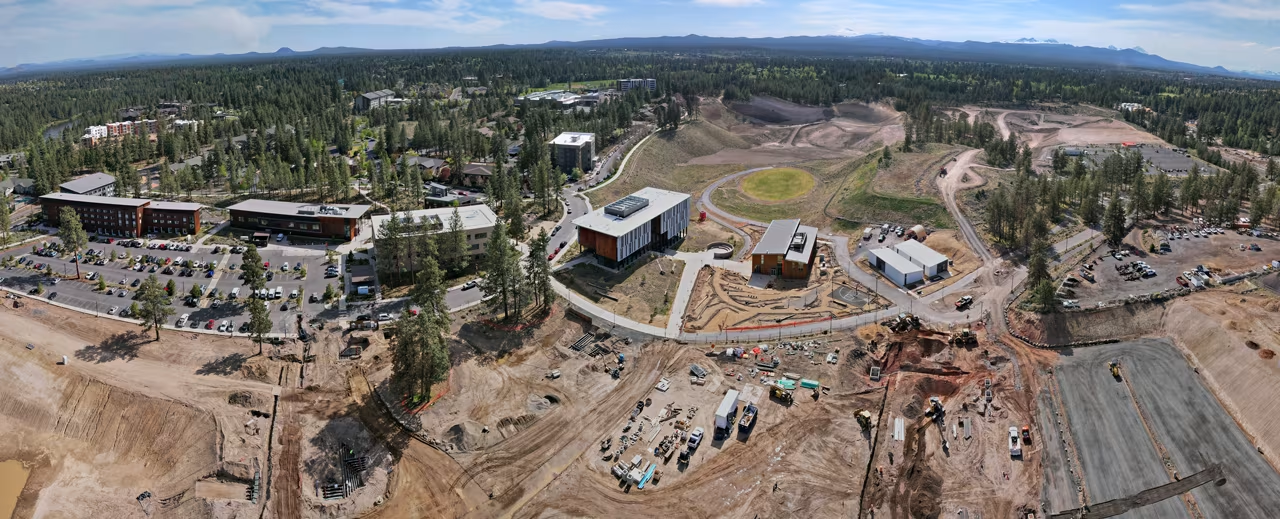
Johnson assembled a star-studded group of seasoned experts in local real estate and development, including Schueler, Mike Hollern, Todd Taylor, John James and Bill Smith. “We got a map of everything in Central Oregon—from Bend to Redmond to Prineville, to keep our eyes wide open,” Johnson said. The team settled on an old pumice mine and a demolition landfill in the heart of Bend with 10 acres of clean dirt.
“It gave us so much long-range opportunity for the university to pursue a 50- to 100-year vision,” Johnson said. “Who better than a university to take that on? And who else can take the time and get help from the state and Corvallis?”
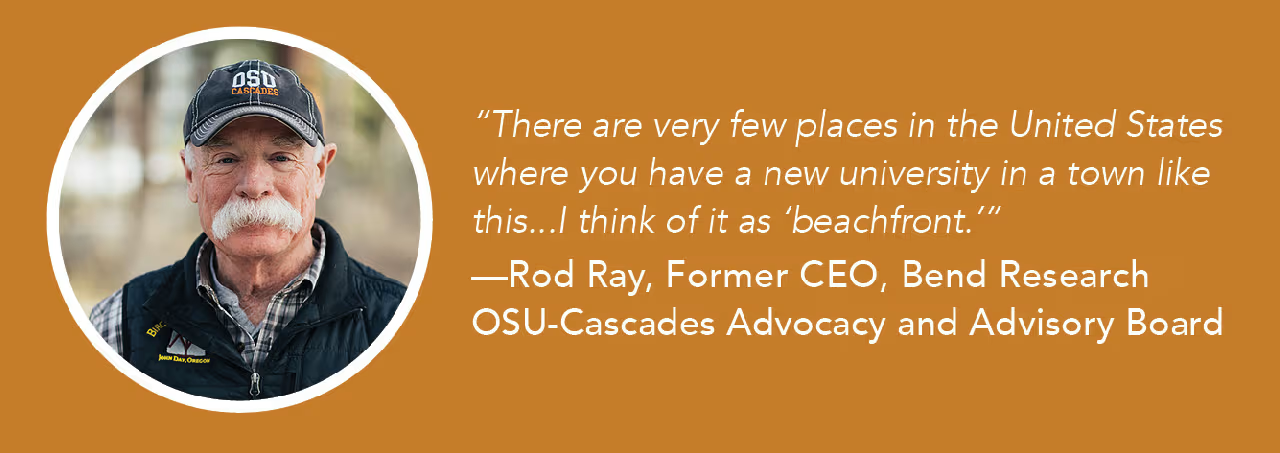
Rod Ray, a key supporter of OSU-Cascades from its inception and former CEO of Bend Research who grew up in Bend, recalled the early years as rocky. But he credits Johnson’s determination with seeing the vision through. “She was relentless,” he said. “She was the visionary. Sure, we all helped her, but she was clearly the leader, and she had Ed’s support,” he added, referring to then-OSU President Ed Ray.
Momentum Grows
Between 2009 and 2019, momentum for OSU-Cascades surged through community advocacy, government backing and significant philanthropic support. Residents traveled to Salem to lobby for legislative support, while local leaders advanced plans for a 128-acre campus.
The campus opened in 2016 with its first building, Tykeson Hall, and its largest incoming class ever. A 300-bed residence and dining hall, plus academic space, followed in 2017. In 2018, the Oregon Legislature approved $39 million for the university’s second academic facility—a STEAM building to expand programs in science, technology, engineering, arts and math. It would be named Edward J. Ray Hall in honor of the former OSU president. The most recent addition is the $22 million Student Success Center, which opened in January 2025, partially funded by the students themselves.
Taha Elwefati, the son of Libyan immigrants and a Summit High graduate born and raised in Bend, earned his degree from OSU-Cascades two years ago. Of his many accomplishments during his three years as student body president, he’s most proud of helping secure the student contribution of $5 million for the new student center.
Repurposed Ground: A Creative Vision for Land Use
Oregon State University-Cascades campus is a striking example of transformation, rising like a phoenix from a landscape once scarred by a demolition landfill and pumice mine. For the past several years, the campus has undertaken a massive remediation project to clean and recycle debris from Bend’s dismantled timber mill and other construction projects in Deschutes County.
University leaders believed building a campus from nothing was an opportunity to showcase sustainability through reclamation and remediation. Jarrod Penttila, associate director for capital planning and construction management, said that the campus is designed with the future in mind. “We’re putting in infrastructure to improve our sustainability over the next 30-plus years,” he explained. The ultimate goal is to achieve net-zero status in terms of energy, water and waste.
The first phase of OSU-Cascades’ land reclamation project focused on stabilizing the steep, 80-foot cliffs of the old pumice mine and testing methods for cleaning up a former landfill. Crews have been working on the site’s 72 total acres of landfill, using a giant vibrating screen to separate soil from larger pieces of waste, such as metal and plastics. “We’ll likely reclaim about 50% soil from the landfill, which we’re able to test for contaminants like asbestos and monitor in cooperation with Oregon DEQ,” Penttila said. Reclaimed soil from the landfill now forms the understructure for the grassy Oval Green at the center of campus.
A key element of preparing the land for use was to keep all the materials on site. “We’re able to clean up the landfill and pumice mine without taking anything on or off the site,” Penttila said. Instead, the waste is being re-landfilled in a giant hole in the northwest corner of campus to create passive uses like parking lots and recreation fields.
A Mission to Serve the Community
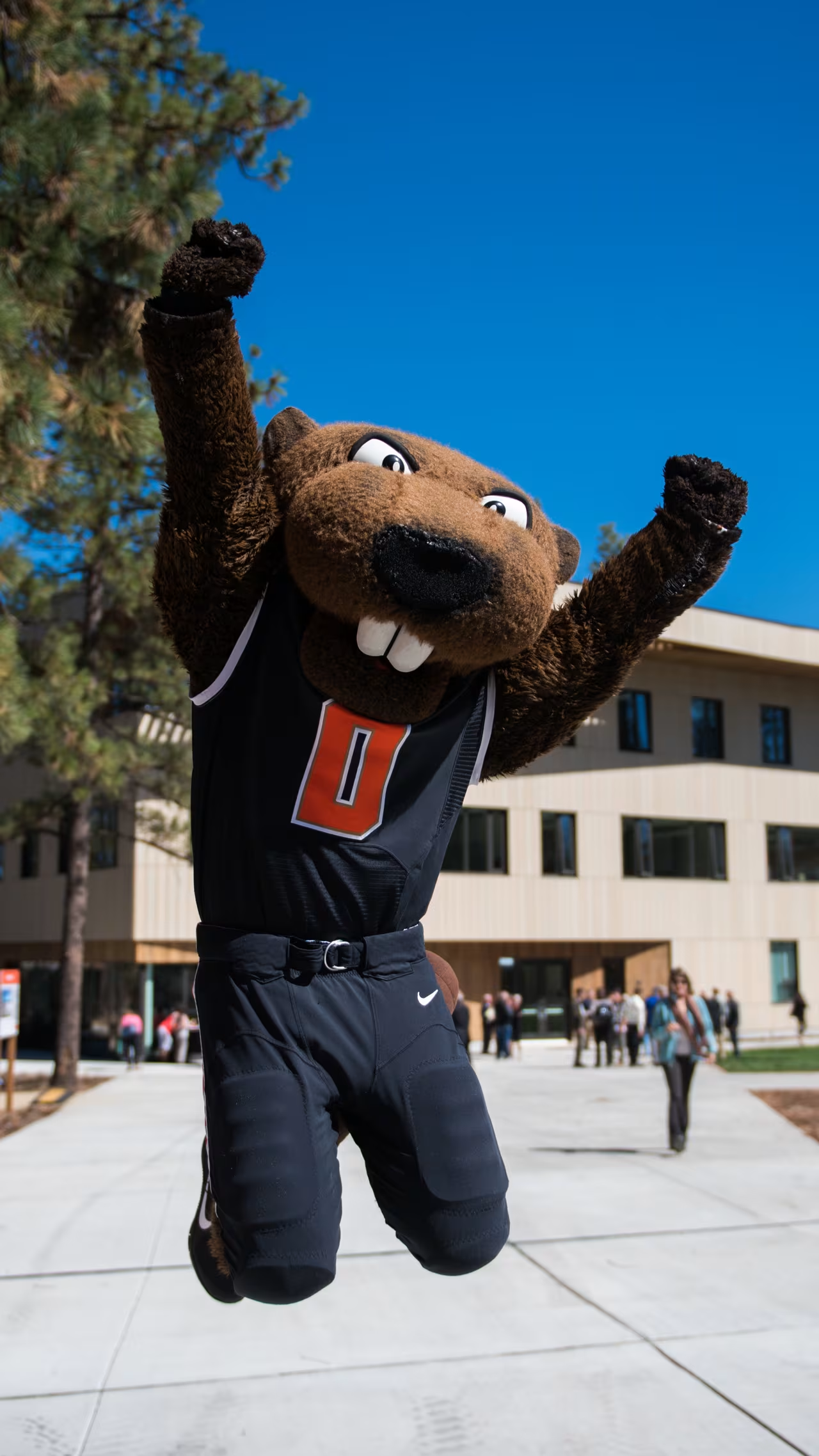
The 2025 numbers tell a clear story of success. Oregon State University-Cascades has graduated 5,960 students, 67% of them from Central Oregon—many the first in their families to earn a college degree. “Proximity still matters a lot,” said Sherm Bloomer, chancellor of OSU-Cascades. “Many students in this region don’t want to leave for other universities. So increasing access here is critical.”
Compared to other Oregon public universities, OSU-Cascades students are distinct in that they are choosing an education from a top-tier research institution in a smaller setting. In 2025, 340 students graduated, including 23 active-duty military or veterans. The campus serves 1,500 students across more than 25 majors.
Elwefati chose OSU-Cascades after visiting the campus and connecting with its tight-knit community. “The small class sizes, engaged faculty—many with impressive credentials—and affordability made it a compelling choice,” he said, adding that scholarships and proximity to home also played a major role.
Chancellor Bloomer emphasizes that the campus is shaped by regional needs. “We started mechanical engineering because there’s a demand in the community. We’re launching an accounting program this fall. Outdoor products are another—something that doesn’t exist in Corvallis but makes perfect sense here,” he said. Other locally relevant degrees include environmental science, hospitality management, energy systems engineering, natural resources, and tourism and adventure leadership.
“It’s not about building a college town. It’s about being in service to the community,” Bloomer said. “We don’t aspire to be a standalone four-year university. We’re part of a big, nationally prominent research institution. Most regional public universities don’t offer a doctoral degree in physical therapy.” The program, which launched in 2021, graduated 44 students in 2024. Many are now working in clinics and rural areas where access to physical therapy is limited. “It works here because dozens of clinical sites exist in this region that don’t exist in Corvallis.”
Looking to the Future
“We’re now looking ahead to the next five to eight years of program development,” Bloomer said. An innovation district is planned on 24 acres of the campus to accelerate regional economic development and foster innovation in Central Oregon. Ten acres of that district are near completion, and 14 acres are set aside for that goal.
“The benefit of having an innovation district at this campus is that two or three industry sectors are gravitating toward Central Oregon, and OSU has built up a curriculum that supports the business side of it,” said Katy Brooks, Bend’s economic development director.
Ray, former CEO at Bend Research, teaches a class on thermodynamics, giving him a unique perspective. “I’m right at the interface between the university and many of the companies around town,” he said. “The community has started to perceive a lot of value in the university, and industry is seeing its potential…It’s on a very positive trajectory.”
“I see a university that took a moonscape and turned it into the ultimate high-value use of public investment—getting something ready for private investment,” Brooks said. “That changes a hole in the ground into a world-class university. Shame on us if we don’t leverage that.”


Keep Reading: Choose Your Own Adventure: OSU-Cascades Edition
Post from 2017
The Tykeson Family Charitable Trust of Eugene was recently recognized by OSU Cascades when it announced that the academic building now under construction has been named the Tykeson Building. The foundation was honored for its long-standing support of a four-year university in Central Oregon. The trust first supported the university in 2012 with a $1 million gift, and recently committed an additional $1 million to the campus’ expansion. Tykeson Hall opens this fall with 43,650 square feet of space in three stories. The building will include eight classrooms, three laboratories and a computer lab. The building will also house faculty offices and student gathering and working areas.
Other campus buildings under construction include the living and dining halls, which are slated to open in early 2017. Monitor construction progress by signing up for OSU Cascades construction updates at news@osucascades.edu.


