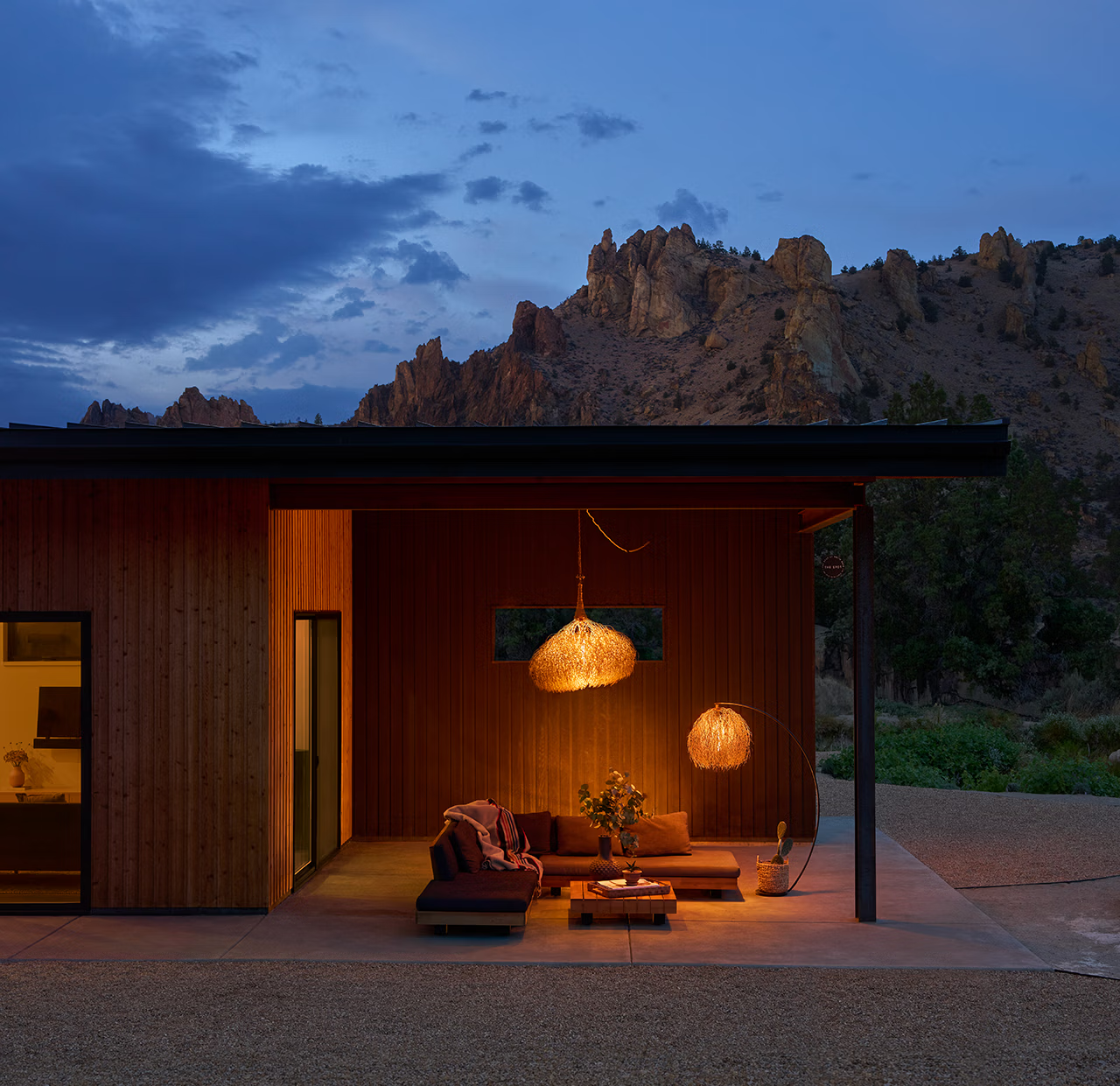
The tumbleweed: That desert-hued, rootless drifter rolling across open land. We have come to understand it as cinematic shorthand for the desolate, windblown landscapes of the West. This iconic weed—an invasive Russian thistle that hitched a ride in flaxseed to South Dakota in the 1870s—may seem far from the world of sculptural, innovative home decor, but for artist Lefty the lonesome tumblin’ tumbleweed was an inspiration that crossed his path at just the right time.

How TumbleGlow Began in Bend
Upon landing on a 13-acre property just east of Bend’s city limits, Lefty was coming off two decades in the restaurant business. He ran a catering company, launched eateries and acted as a consultant—the kind of hospitality life that eats every waking hour. Weeks before Covid would shut everything down, he sold the catering business and his home in Raleigh, North Carolina, to travel the open road from a converted van for four years. He moved to Bend at the end of 2024 with a partner. They broke up almost immediately. “Most of the time when I start creating,” Lefty said, “it’s from some sort of traumatic event that happened in life.”
He began doing electrical work and sales for Oxbow, a van-conversion outfit—a 40-hour week that felt, after life in the hospitality business, almost like nothing. The hours he used to lose running restaurants were now free for him to be open, observant and inspired. At home one day, the wind kicked up, blowing a tumbleweed across the big grassland behind his home.

Rare in the Northeast where Lefty grew up, the symmetrical spikey plant piqued his interest. “It just sat there, kind of teasing me a little,” he said. Then it got pinned against the fence. “I had to go look at it, see if I could do something with it.” Lefty rigged a bulb inside it, hung it in his room and posted a video. People began to ask if he’d make them one too, and TumbleGlow was born.
Handmade Tumbleweed Chandeliers and Sculptural Lighting
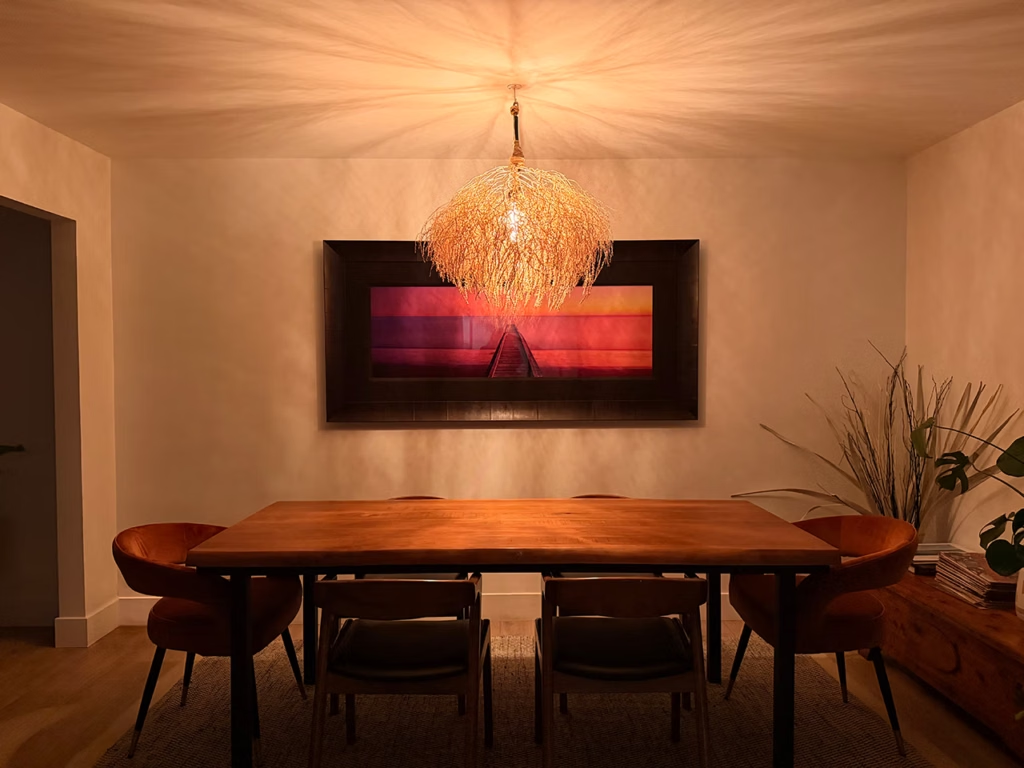
Lefty, who studied art and design in college, had previously made upcycled lighting for his home, such as chandeliers built from whiskey barrel hoops. His TumbleGlow iterations include floor lamps and hanging chandeliers. The bulbs are integral to the look: hand-blown, low-wattage LEDs cool enough to touch, in shapes picked for how they appear through the spines, from squat and ringed to tall and dimpled. One unfinished TumbleGlow piece runs on a smart bulb that is capable of emanating two million colors and is synced to music through a built-in microphone—ideal to one day outfit an event venue.
Each piece takes about 30 hours to build. Whittaker gathers the tumbleweed (some nearly five feet across), washes it in vinegar and water, trims with garden clippers while lying underneath it on the ground, then fireproofs it with a flame retardant he first used years ago on thatch-roof tiki bars for restaurants. He estimates he’s scrapped 50 tumbleweeds for every one that makes it to a ceiling.
The lights have tumbled their way well beyond Whittaker’s own living room. One hangs outside at a wedding venue near Smith Rock, chosen by the venue’s owner to incorporate into the property’s local art collection. Other fixtures have landed in Seattle and at both a boutique and private home in Sacramento.
A Slower Approach to Handmade Lighting
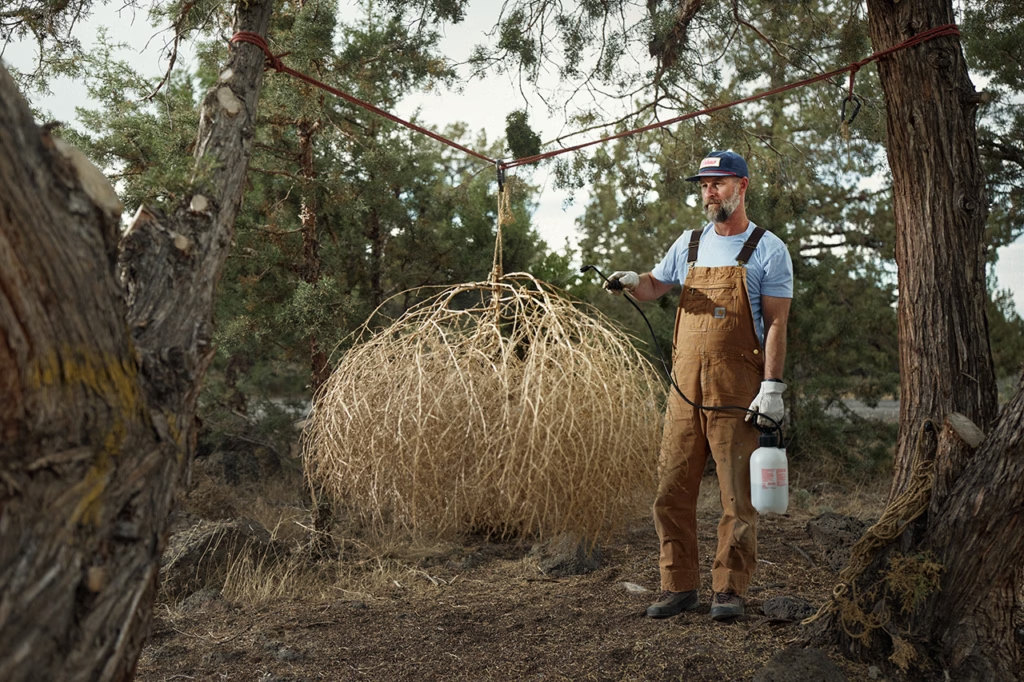
This is a pursuit that Whittaker doesn’t wish to scale, even as demand grows. He starts each piece by hanging a tumbleweed from a tree by his back deck, then watches it spin for hours—sometimes days—reading nearby, to see how the light filters through it. For now, he’s happy to see where the wind takes the endeavor. The process requires a patience that feels deliberate following two decades of demanding hours in hospitality. “I don’t want a hobby to turn into a career that rushes me around,” said Whittaker. See tumbleglow.com