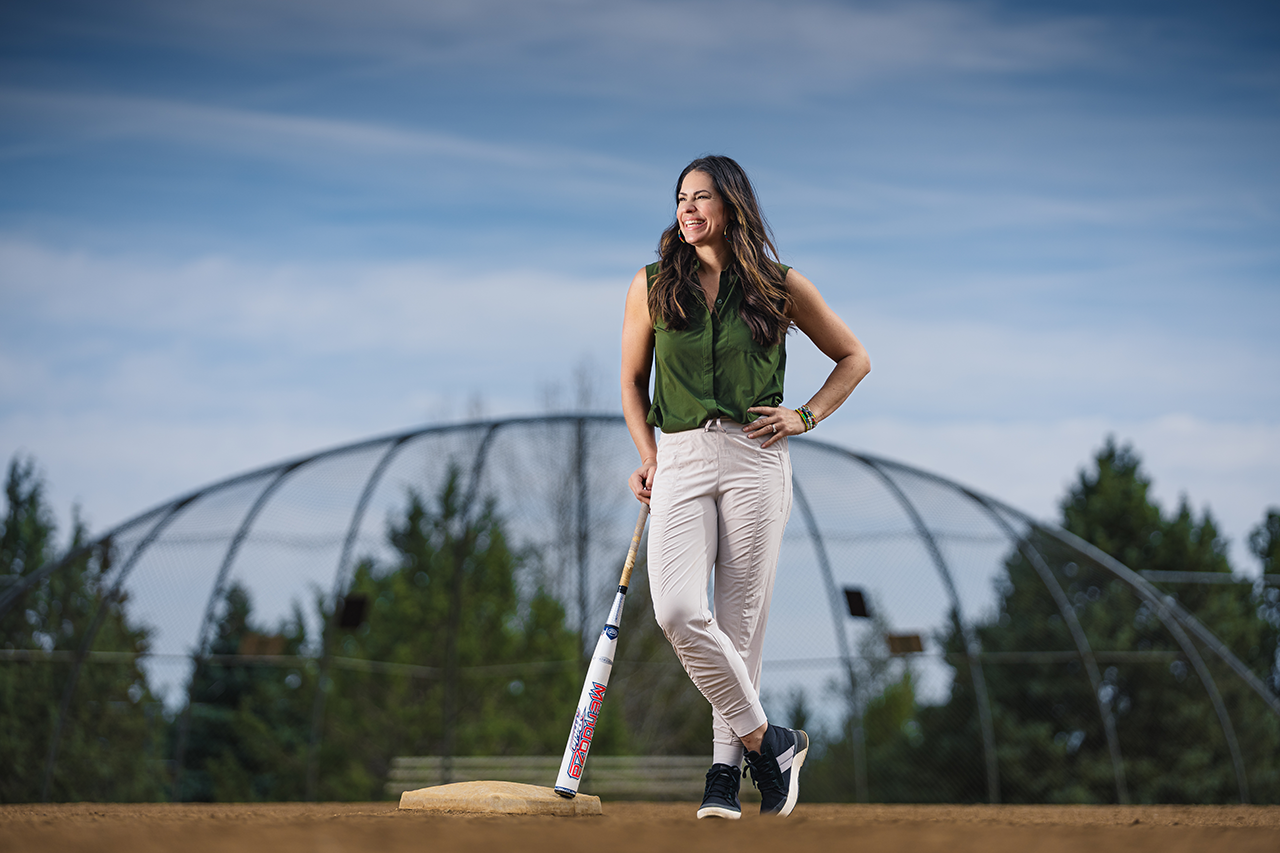
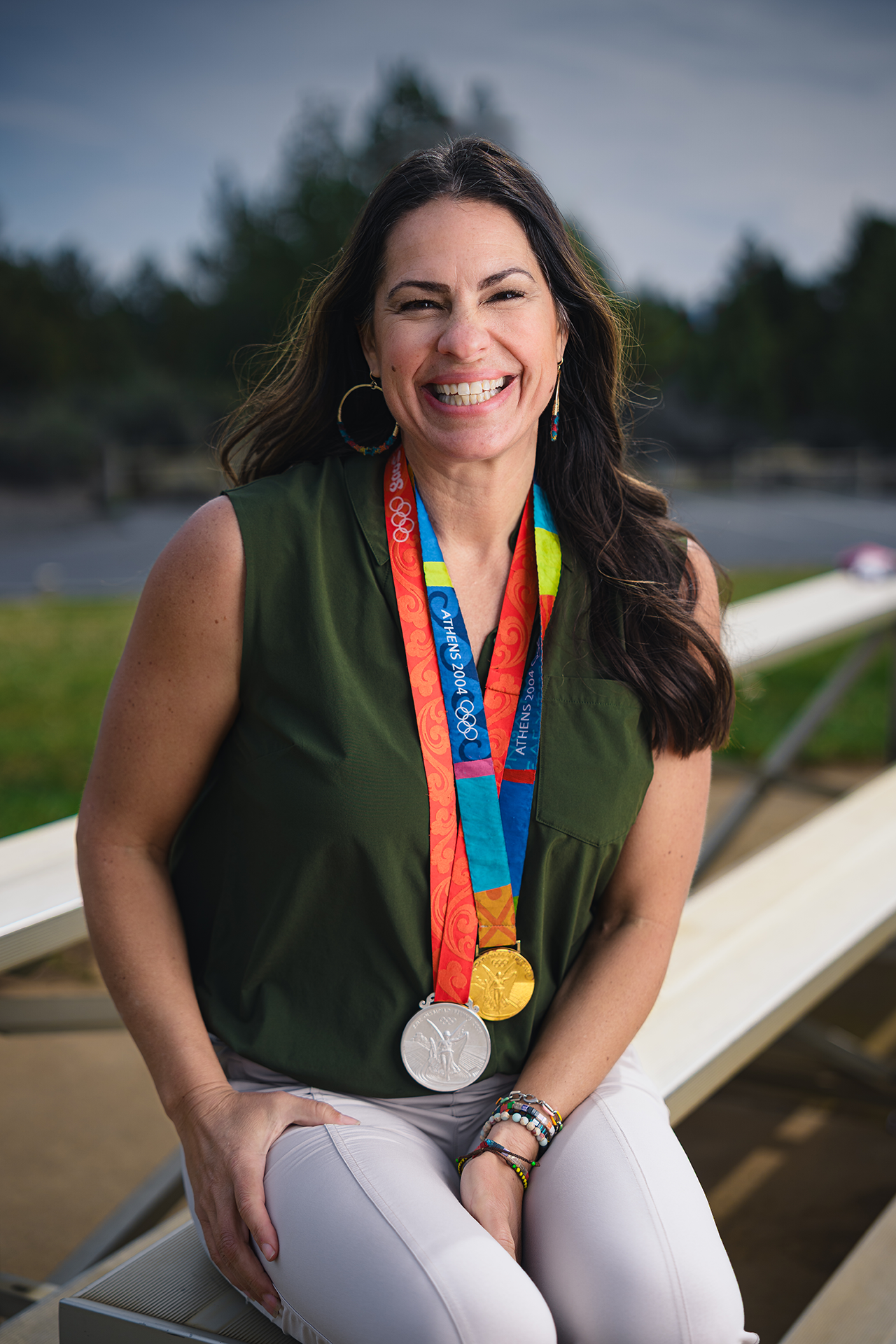
Jessica Mendoza often keeps her Olympic medals in a sock drawer. “I never wear them,” she said. Well, not anymore anyway, she explained. It was different when she won gold with the 2004 U.S. Olympic Softball Team in Athens. “We lived at the Olympic Training Center for a full year,” she recalled. “And you’re training like you’ve never trained before, so when you actually win that gold medal…I took a lot of time to really hold on to that. I don’t think I took it off for two weeks.”
But afterward, Mendoza did what she said a lot of women are trained to do—she downplayed it. “After I won the gold medal, people would be like, ‘Oh, you play softball? Are you good?’ And I’d say, ‘I’m okay.’”
Early Influence and Finding Representation
Growing up in Southern California, it didn’t take long for people to realize Mendoza was far better than okay. She had a penchant for most sports—softball included. “As a Hispanic young girl, there were not a lot of Hispanic female athletes to look up to,” she said. “Softball happened to have one of them, and that was Lisa Fernandez.”
Her love for the game, matched by her dedication to school—“I was always a student first,”she said, led Mendoza to Stanford University. There, she broke several batting records, helped lead her softball team to its first Women’s College World Series, and managed to earn bachelor and master’s degrees along the way.
Her accolades only piled up from there: She earned three WBSC World Championship titles, three World Cup of Softball titles and two Olympic medals—gold in 2004 and silver in 2008.
“I think it’s great to have humility. But at some point, you need to have the balance of confidence when it matters most.”
Amid all of it, she also stepped into advocacy work, serving as president of the Women’s Sports Foundation (WSF) for two years, and launched a broadcasting career at ESPN, where she eventually became the first female analyst for a nationally televised MLB game. In 2019, she was inducted into the National Softball Hall of Fame.
For Mendoza, every opportunity she’s had since Stanford has been completely unexpected and unplanned—but she doesn’t like to think long-term, she explained. “I’m just trying to be present,” she said. “And I’m going to keep getting better. But I’m always going to keep my eyes out for what else I can do.”
The Confidence Shift
While she’s naturally driven and independent, the confidence piece, Mendoza explained, hasn’t always been there. “I feel like humility was important for my grind as an athlete,” she said. “I think it’s great to have humility. But at some point, you need to have the balance of confidence when it matters most.”
It’s a lesson she believes is critical for young women to learn—one driving much of her ongoing advocacy work through WSF and the Sports Diplomacy program with the U.S. Department of State, where she travels internationally to empower young girls through sports.
“I imagine this whole community being created off those who need to find that way to believe in themselves and to get to the next level.”
Why Jessica Mendoza Chose Bend
Since moving to Bend in 2019, Mendoza has already found a version of that community. “The women here—I’d never realized that women like this existed,” she said. “I’ve been influenced by so many [of them]. It’s like we’re all connected in a way that I’d never felt before.”
When she’s not traveling for work, Mendoza, along with her husband, her two boys and their Bernese Mountain Dog, Vader, leans hard into Bend life: hiking at Green Lakes, camping along Cultus Lake, catching live music at Suttle Lodge, eating at Hablo Tacos and spending plenty of time at On Tap, especially during baseball season.
Recently, Mendoza pulled her Olympic medals out again for her son’s school career day, where she’ll let the kids hold them and try them on. “You know, it’s a female that’s on the front of every Olympic medal,” she said. “It’s Nike, the goddess of victory.”
See others who are making a difference in our community | Follow Jessica Mendoza