Ad Image
Skip to main content

Search results

Culinary Clarity: Laura Davidson’s Recipe for Kitchen Confidence

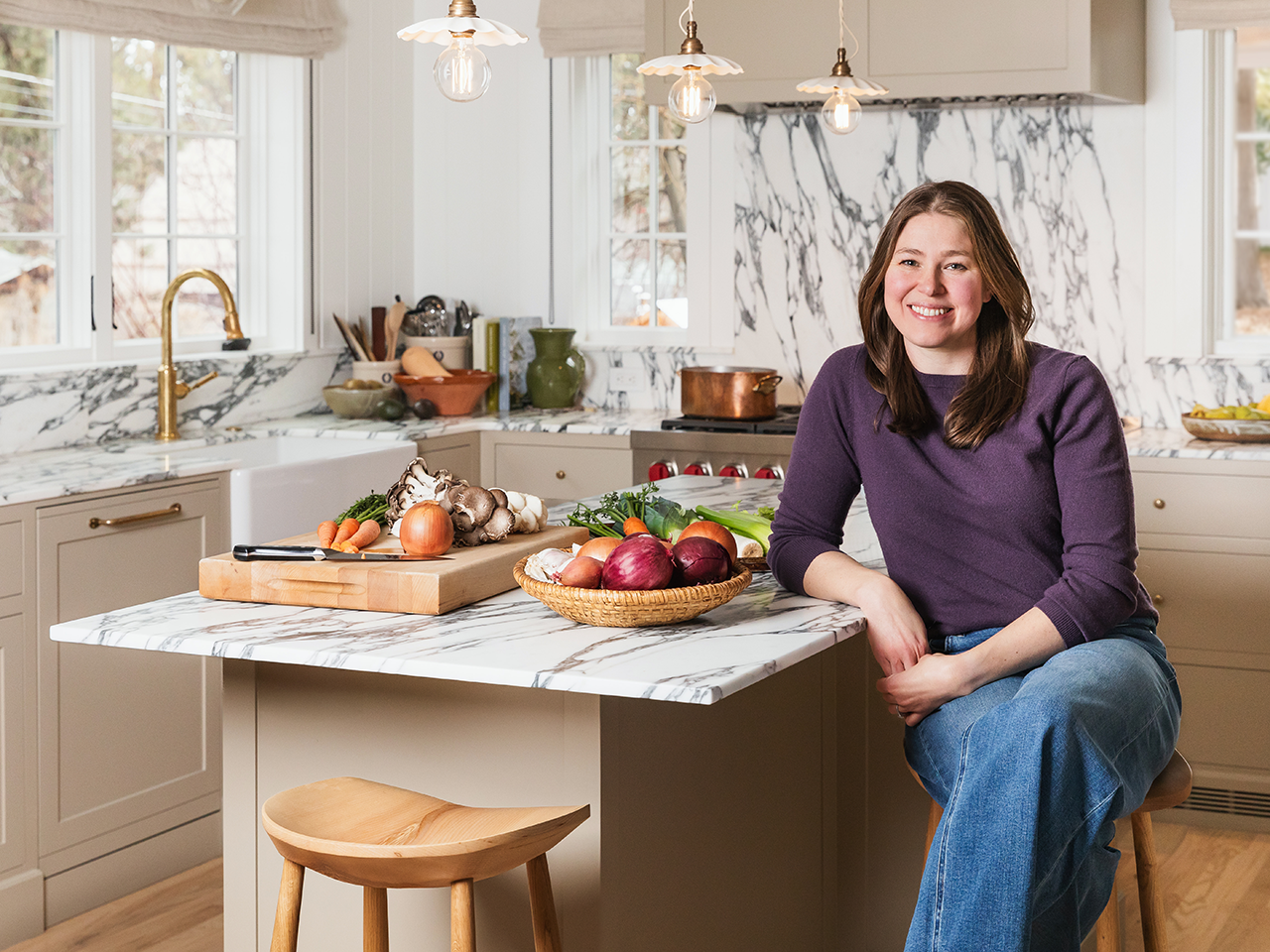
Laura Davidson’s kitchen is where her work begins. From her Bend home she tests, refines and shares recipes that prioritize flavor, reliability and longevity. What starts as a meal at her own table often becomes a favorite in thousands of other homes. [Photo by Tina Paymaster]

Davidson is the founder and voice behind A Beautiful Plate, a website that launched in 2010 as a passion project and took off into a full-time career within five years. Today, the site is a go-to for home cooks looking for recipes grounded in culinary fundamentals, clear instruction, and plates meant to be cooked time and time again.

Quality ingredients and kitchen smarts meet to make Davidson’s kitchen a useful and beautiful workspace any cook can admire. Olive oil and vinegar stay within reach. Onions, shallots and garlic are constants. Lentils, beans, grains and pasta anchor meals, and the pantry is curated with care. “I try to keep ingredients that can flex in a lot of directions,” said Davidson. “That’s what makes everyday cooking feel doable.” Meanwhile, open countertops, tall windows and just-right storage—a shallow cabinet made for canned goods and a pull-out pantry tailored to the dimensions of her essential equipment—create ideal conditions for any recipe to begin.

The ingredients to make Laura Davidson’s Creamy Mushroom Orecchiette with Mascarpone

Essential Kitchen Tools: Choosing Quality Over Trends

A well-loved Dutch oven, stainless steel bowls, a sharp chef’s knife, sturdy sheet pans and a bench scraper handle most tasks. It’s a collection she both relies on and encourages others to build: practical, hardworking pieces chosen for longevity over trend.

Recipes on A Beautiful Plate are designed to become staples, with seasonal produce taking charge. Davidson encourages cooks to begin with what looks best at the store or farmers’ market. When ingredients are fresh and of high quality, preparation can be simple. A sauté of spinach or a pot of winter greens asks for little embellishment when the raw materials are at their best.

Her background as a professionally trained chef supports her work, but her content is approachable. She has worked as a baker, cooked on the line at an award-winning Washington, D.C., restaurant and held roles within the specialty food industry. These experiences, plus more than 16 years of recipe writing, inform her online platform, which beautifully inspires and empowers any cook. The most meaningful feedback, Davidson said, comes from readers who return to the same recipe year after year.

Laura Davidson in her Bend, Oregon kitchen testing recipes for A Beautiful Plate.
Photo by Tina Paymaster

Building Home Cooking Skills and Culinary Competency

When she guides readers through recipes online, Davidson wants home cooks to assemble a repertoire of skills that allows them to follow recipes with confidence and, if they choose, to be used as flexible guides. Her writing includes detailed notes, substitution ideas and explanations for particular techniques. The goal is to build competency. “I care about clarity,” she said. “If someone understands why a recipe works, they’re much more likely to trust themselves in the kitchen.”

Learn more about Laura Davidson and A Beautiful Plate.


Laura Davidson’s Creamy Mushroom Orecchiette with Mascarpone

Recipe: Laura Davidson’s Creamy Mushroom Orecchiette with Mascarpone

A Beautiful Plate staple featuring silky mascarpone, fresh lemon, and earthy oyster mushrooms.

Yields: ~4 servings | Prep time: ~15 mins | Cook time: ~20 mins

Ingredients

  • 16 oz oyster mushrooms (cleaned, trimmed, and chopped)

  • 12 oz orecchiette or fusilli pasta

  • 4 oz mascarpone cheese

  • ½ cup Parmigiano-Reggiano cheese (finely grated, plus more for serving)

  • 3 large garlic cloves (finely chopped)

  • 2 medium shallots (finely chopped)

  • ¼ cup fresh chives (finely sliced, divided)

  • 2 tsp fresh lemon zest

  • 1 tbsp extra virgin olive oil

  • 1 tbsp unsalted butter

  • To taste: Kosher salt and freshly ground black pepper

How to Make Professional-Level Pasta at Home

  1. Boil the Water: Bring a large pot of heavily salted water to a boil.

  2. Sauté the Aromatics: In a 12-inch sauté pan, heat the olive oil and butter over medium heat. Add the shallots and a generous pinch of salt. Cook while stirring frequently until soft (about 4–6 minutes).

  3. Bloom the Garlic: Add the chopped garlic to the pan. Stir for 1–2 minutes until fragrant.

  4. Cook the Mushrooms: Add the mushrooms and spread them across the pan. Cook for 6–8 minutes, stirring infrequently, until they release their moisture. Season with salt and pepper. Keep the mixture warm over low heat.

  5. Cook the Pasta: Boil the pasta until it is just shy of al dente. Reserve 2 cups of the starchy cooking water. Transfer the pasta directly into the sauté pan.

  6. Create the Sauce: Increase the heat to medium-low. Add the mascarpone cheese and a splash of the reserved pasta water. Toss gently.

  7. Emulsify: As the mascarpone melts, add the grated Parmigiano-Reggiano in small handfuls. Stir constantly to “marry” the sauce to the pasta. Add more pasta water as needed for a smooth, silky finish.

  8. Final Seasoning: Remove from the heat. Fold in the lemon zest and 2 tablespoons of the chives. Season to taste with salt and pepper.

  9. Serve: Garnish each bowl with the remaining chives and serve immediately with extra grated cheese on the side.

Recipe from the Bend Home + Design 2026 Spring issue, view or subscribe for more recipes from Laura.

More Recipes from Local Chefs in Bend and Central Oregon


Big Ponderoo Music Festival: Intimate Music Experience in Sisters, Oregon

Kick off summer and kick up your heels at the fourth annual Big Ponderoo Music and Art Festival. World-class music and small-town charm intersect at the festival on June 26 and 27, 2026, in the heart of Sisters, Oregon. Big Ponderoo brings fresh energy to SFF Presents’ mission of “strengthening community and transforming lives through music and art.” With an impressive 15-act lineup performing at two outdoor stages, a free community art walk and celebration,  plus room for camping, Big Ponderoo has all the ingredients for a true festival experience. Bring your picnic blankets, dancing boots, or bare feet and get ready for an intimate music experience filled with an incredible lineup of Americana, alt-country, blues, and bluegrass talent with the soul of Sisters.

Band performing on stage at Big Ponderoo

The Weekend Lineup

Big Ponderoo Stage Lineup Friday 2026 Big Ponderoo Stage Lineup Saturday 2026


How Big Ponderoo Was Born

The creation of Big Ponderoo has been a long-time dream at SFF Presents (producers of the long-running Sisters Folk Festival). It was born out of a collective vision and desire to create something new and fresh early in the summer that would widen the festival’s audience base, Communication Manager Erin Pihl explained. The light-hearted name reflects the energy that inspired the creation of the festival. Ponderoo is a play on the word ponderosa, said Pihl.

attendees cheering at Big Ponderoo concert

“Our creative director Brad Tisdel wanted to celebrate the massive ponderosas that characterize Central Oregon, as well as a sense of place, and the fun, fresh feel we envisioned for the festival,” she said.

At Big Ponderoo, taking place under the sun, moon, and stars, music lovers are invited to bring their tarps and chairs, tents and sandwiches, and camp out. Big Ponderoo camping reservations are now open at three convenient locations in Sisters. Additional camping for the festival can be found at Indian Ford CampgroundCold Spring Campground and dispersed camping on the plentiful National Forest land surrounding Sisters.

Big ponderoo 2025

Where to Watch

Musical performances will take place at Village Green Park, conveniently located in the center of town under Central Oregon’s trademark ponderosa pines. The lineup for Big Ponderoo is filled with vibrant talent sure to get you grooving. See bands like Quattlebaum, a harmony-driven bluegrass band with a hypnotic blend of vintage folk and raw, gritty vocals. Portland, Oregon-based John Craigie rallies a closeness around music anchored by his expressive and stirring songcraft and emotionally charged vocals. Be sure to also check out the Fireside Collective, a newgrass turned eclectic jam band on stage on Sunday. Enhancing the festival’s music scene, Big Ponderoo is also hosting the Ponderoo Arts Experience throughout the week, exploring self-expression through the visual arts, including a dynamic Art Stroll complete with more live music at 13 galleries around Sisters. 

War and Treaty performing at Big Ponderoo
The War and Treaty at Big Ponderoo 2023 | Photo by Rob Kerr

Why Attend Big Ponderoo

Big Ponderoo brings a different energy to the myriad music festivals in Central Oregon. Since it is an independent, nonprofit event, attending Big Ponderoo is an investment in the community, and festival goers will feel that friendly, close-knit community energy.

“We are offering something very intimate where you’re up close and personal with the artists,” said Pihl. “Going to Sisters makes you feel transported back in time, to a quieter pace. The festival will have that laid back, getaway feeling.” 

On stage at Big Ponderoo 2024


Visit BigPonderoo.com for all the details.

Big Ponderoo attendees 2024
2023 Ponderoo Crowd
All Humans Outside Explores Belonging and Connection in Nature

For every human that has walked the earth, their ancestors hunted outside together, built shelters, swam in lakes and rivers, and even migrated to survive together. Nature has always been an integral part of our DNA. Community, belonging and the outdoors are at the core of our being. [Photo above of Anna Le]

It has resonated with me since I was a young child; but it was hiking more than 2,600 miles alone on the Pacific Crest Trail (PCT) that helped me realize that we all have these portals to our past, and led me to write the book All Humans Outside: Stories of Belonging in Nature.

Various portraits
One hundred and one people from across the country, including some from Central Oregon, were interviewed and featured in the book project authored by Tommy Corey. TOP (left to right): Dani Araiz, Caziah Franklin, Mirna Valerio; MIDDLE: Amelia Dall, Kamal Bell, Joe Stone; BOTTOM: Ben Mayforth, Zachary Darden, Nicole Rivera Hartery.

From the PCT to ‘All Humans Outside’: Finding Our Shared Connection to Nature

The sound of my 4 a.m. alarm woke me each day on the PCT. I’d shuffle for a few minutes in a 10-degree-cold-rated sleeping bag, and although the temperature was near freezing, the morning air mixed with the scent of pine was comforting and warm. As I boiled water to make instant coffee, I was reminded of early mornings camping when my dad would make breakfast on a cast-iron skillet, drinking his Folgers out of a giant Stanley cup as he waited for my brothers and me to get up. Minutes later, fully awake, I would throw a Hyperlite pack over my shoulders, ready to hike another 32 miles on the trail.

Priyam Patel bouldering
Priyam Patel

When I reached the Trinity Alps Wilderness in Northern California, I couldn’t help but feel a stinging nostalgia. I had run, hiked, played, laughed and cried in these mountains every summer since I was 9 months old, snuggled into a backpack strapped on my dad’s shoulders before my own feet could carry me on the trail. Despite feeling a connection to my family and this mountain range, exploring a wild and familiar place by myself was just as lonely as it was comforting.  Throughout the five-and-a-half-month journey, while some moments were scary or unnerving, most of them left me feeling empowered and brave, and sharpened my awareness of how much humans need connection to each other and to nature.

That recognition led me to compile photographs and short stories of 101 people from across the United States. The project, All Humans Outside, encapsulated the theme of not just belonging in nature, but the way human connection exists by way of the great outdoors.

Katie Dunbar portrait

The Heart of ‘All Humans Outside’: Recording Stories of Shared Origin

During interviews for the book, I asked subjects about their connection to nature, and often they spoke about their connection to others or a desire to belong. As I listened and began shaping those voices into stories, the theme of belonging surfaced again and again.

It wasn’t until I was halfway through writing the book that it clicked: Belonging to a place breeds a longing for further connection to each other. It’s why we carry such vivid memories of home, a childhood camping spot or a vista where we watched the sunset. Nature reminds us where we come from, and when we recognize our shared origin, we can’t help but search for deeper connection with those around us. Plus, nature is free and available to us all.

Wesley Heredia portrait

Belonging is what led me to travel across the United States for two years, photographing each person in the spaces that they felt most connected to. While celebrating the individuals and their stories, I was able to record them on land that felt familiar, meaningful, or even like home, to enliven and reiterate that message.

Social media has conditioned us to admire lone silhouettes on a ridgeline. I was flooded with the same praise when I finished my thru hike as if that independence, resilience and solitude were the highest achievements of being outside. But my earliest memories of nature were never about grandiose outdoor accolades, they were about togetherness—much like the people who shared their stories with me. Nature, for me, was about those cast-iron scrambled eggs and bacon and the smell of my dad’s coffee seeping through the nylon tent as our wake-up call—it was always belonging.

Anna Le stands in water fly fishing
Anne Le

All Humans Outside reminded me that a purposeful life is finding connection with other humans in the outdoors and anywhere life welcomes it. Today, the truest lesson I have come to hold dear isn’t how to wake myself up in the dark and hike 30-plus miles a day, but just how deeply human it is to want someone else there when the sun rises and the coffee is ready. The people on these pages have turned their outdoor world into a playground for human connection and true belonging. 

Geoff Babb portrait
Geoff Babb
Why Snowpack Matters for Central Oregon’s Water Supply

“Whiskey is for drinking; water is for fighting,” a quote that is attributed to Mark Twain, is possibly apocryphal and is absolutely apropos. Whether your preferred drink is bourbon, IPA or ginger ale, your daily life is supported by a highly orchestrated and at times fragile balancing act between supply and demand for water. In the best-case scenario, this balancing act is a case of “no news is good news:” The taps keep flowing, irrigated crops keep growing and hydroelectric dam-powered lights keep glowing. At other times, equilibrium is lost and the news cycle fills with stories of floods or droughts. [Above photo: Natural springs from the Middle Fork of Tumalo Creek eventually flow through the Bend Municipal Watershed.]

Oregon’s Water Crisis: Navigating the Confounding 2025-2026 Winter Season

In the Pacific Northwest, the start of the 2025-2026 winter was a confounding one. Ample mid-October snowfall had skiers and snowboarders hanging their mountain bikes in their garages and scrambling to sharpen their edges and wax their bases. Early season hopes were quickly dashed, however, with a dry November followed by a damp but very warm December that kept the precipitation more wet than white. This resulted in record-high river levels paired with record-low snowpacks in many places. The seesaw behavior carried on into January. There was enough snowfall to get the chairlifts spinning at local ski resorts, but the high-pressure system and sunny skies that followed led to deflated announcements of paused operations.

Bridge Creek municipal water system
Here, a portion of Bridge Creek’s flow is diverted from the stream and routed into Bend’s municipal water system for treatment and delivery.

From Cascades to Canals: A Primer on Central Oregon Hydrology

If you’ve climbed South Sister or another Cascade peak and had a good look around, you already know a few things about hydrology and water resources. From the Cascade crest, a look to the west plunges down into the McKenzie River and eventually the Willamette River watersheds. Dominated by Douglas fir, the western slopes of the Cascades see 80 to 100 inches of precipitation in most years.

To the east is the Deschutes River watershed, which is thirstier as it is located in an area with annual precipitation totals of only 10 to 20 inches per year, and its landscape is punctuated with ponderosa pines, their deep roots better suited to tap water deep below the surface. This west-to-east transition cleaves Oregon like an axe and is one of the most striking things about driving through the Columbia River Gorge between Hood River and The Dalles.

Snow and water resources in Oregon are really a story of where, when and how much. Regarding where: The west-to-east transition exemplified by precipitation and vegetation also exists in winter temperatures, with Bend and Burns far colder than Beaverton and Brownsville. All of these spatial patterns layer together to control where snow falls in the state. The Willamette Valley is plenty wet, but too warm for much snow. Eastern Oregon is plenty cold, but too dry (Wallowas excepted) to produce significant snow accumulations. This leaves the skinny Cascade crest as the sole purveyor of the meters-deep snowpacks for which the Pacific Northwest is known.

Weather station in sky
Science helps monitor snowfall.

Why the Cascade Snowpack is Our Most Vital Water Reservoir

The when of water availability can be just as important as the how much when it comes to planning for water use later in the year. In western Oregon, where it is too warm for significant snowfall, the rise and fall of its rivers largely mirrors the seasonal patterns in rainfall. In the event that this timing is not convenient for users, including cities and farmers, it can be (and often is) changed through water infrastructure such as surface water reservoirs, groundwater recharge basins and distribution networks of canals and aqueducts. In colder areas that experience snowfall, there can be a several-month delay between when water falls from the sky and when it runs off in a river.

This delayed gratification is worth the wait, however, because the lag helps to reduce flooding, and keeps stream temperatures cool and aquatic species happy well into the summer. In effect, the snowpack is as much a reservoir as are Green Peter, Detroit and Lookout Point lakes. The snowpack “reservoir” has the added benefit of being distributed over the landscape and, as a result, it treads lightly. It requires no heavy construction or environmental impact statements, and it does not impede fish passage or hold back sediment.

With water and snow in such high demand, it makes sense to develop ways of keeping our eye on them. Water is the easier subject, by far. Reservoirs behind dams are just big buckets after all, and the volume of water they contain is simple to determine. Water in the ground may be out of sight, but by monitoring wells, scientists and water managers are able to estimate how much is down there. Water in rivers is accurately measured by a network of hundreds of gaging stations in Oregon. These gaging stations measure the elevation of the water surface and use an equation to convert this to a water flow rate (in cubic feet per second). The superpower of these stations is that they give the lay of the land. River flow at any location is the response of a watershed to all of the hydrologic processes that have occurred upstream.

original smith rock aqueduct
The original aqueduct was drilled beneath Smith Rock in the mid-1940s.

The Future of Snow Science: How NASA and Volunteers Map the Deschutes Watershed

Snow has a higher price of entry for those who want to study it. First of all, it is not neatly packaged, like the water sitting behind a dam or flowing in a river. By distributing itself across vast expanses, snow plays very, very hard to get. In some areas, it can be costly, tiring or dangerous to measure. Secondly, snow changes quickly from one location to the next and from one day to the next. Just when scientists think they’ve got it all figured out, they don’t.

The snowpack in Oregon is continuously measured by dozens of automated SNOTEL—SNOwpack TELemetry—stations that determine how deep the snow is and how much water is in it. Snow levels are also measured manually at dozens of other locations called snow courses, where trained personnel take samples of the snow once a month and weigh it to see how much water it contains. A third type of measurement uses lasers carried by drones, airplanes or satellites to create very detailed and accurate maps of snow depth.

The Community Snow Observations (CSO) project is bringing all of these efforts together in the mountains west of Bend over the next three years in an effort to improve what we know about snow and water in the upper Deschutes River watershed. Initially supported by NASA and now by the Bureau of Reclamation, CSO will be collecting snow depth data from volunteers armed with avalanche probes and smartphones. The project will also measure snow depths with laser-instrumented planes flying over the basin.

In addition to monitoring the snow, all of these measurements will help computer programs to better model the arrival and departure of the season’s snowpack. For community members who want to contribute to this effort, the CSO Project welcomes volunteers.

This fusion of hands-on measurements, remote measurements and computer models is a perfect example of the whole being greater than the sum of the parts. Each tool has something to say about the past and the present of snow on the landscape. And the more we learn about today, the more confidence we can have in our ability to predict tomorrow. However, it might be the unpredictability of snow that makes it so magical. As poet Frederick Seidel wrote, “Snow is what it does; it falls and it stays and it goes.” Read more about Community Snow Observations here.

Crooked River Aqueduct
The Crooked River flows below an aqueduct created to irrigate arid farmland.

The Smith Rock Aqueduct

Written by Cheryl Parton

Carved into the basalt cliffs above the Crooked River canyon, the Smith Rock Aqueduct is easy to miss. Rock climbers and hikers come for the routes and views, but they may not notice remnants from some of Central Oregon’s lesser-known but most consequential pieces of history.  The aqueduct infrastructure quietly carried water across the gorge for decades, bringing farmland to life.

It dates back to the late 1930s when the federal government was investing in irrigation projects across the West. As part of the federal Deschutes Project, overseen by the U.S. Bureau of Reclamation, the job was ambitious: moving water from the Crooked River to dry farmland north of Bend.

Engineers faced a formidable challenge at Smith Rock, where the sheer rock faces plunge hundreds of feet into the canyon below. Rather than reroute water or lose elevation, designers opted for a steel pipeline supported by reinforced concrete piers to span the gorge. Construction was completed in the 1940s and played a key role in regional development.

The impact was lasting. Reliable irrigation transformed thousands of acres of high desert into productive farmland, fueling Jefferson County’s agricultural economy. Potatoes, alfalfa and grain became staples, and rural communities grew alongside newly irrigated fields.

As Smith Rock gained international recognition as a climbing destination and state park, the aqueduct faded into the background, hardly noticed. The 1945 Smith Rock canal system was replaced by a pressurized pipe system as of 2022 to modernize water delivery.

Today, the Smith Rock Aqueduct stands as a reminder of an era when federal engineering projects paved the way for Central Oregon’s future.

Xalisco Latin Cuisine Brings Authentic Flavors to Redmond

Just off the highway en route to the Redmond Municipal Airport, an unassuming strip mall is hardly a place associated with escape or excitement. Yet tucked into this unlikely setting, Xalisco Latin Cuisine transports diners straight to the Mexican state widely regarded as the birthplace of many of the country’s most iconic dishes. Drawing from the Jalisco region’s robust cuisine—where pre-Hispanic traditions meet Spanish influences—the restaurant is centered on family recipes and regional specialties. Many are reimagined with elevated touches that reward diners with creativity and quality, and defy the restaurant’s modest exterior.

The dishes reveal a place built on family, second acts and a deep emotional connection to food. For owner Maria Medina, Xalisco is a culmination of decades of lived experience, migration and resilience—served daily.

Xalisco Latin Cuisine Tacos Kraken
Tacos Kraken

Dedication is evident in the food. The carnitas—slow-cooked, tender, richly flavorful pork—is Medina’s mother’s recipe. The fundamentals come into focus in other specialty dishes such as the carne en su jugo (a Jalisco specialty of beef simmered in a savory tomatillo broth with beans and fresh garnishes), arrachera (marinated skirt steak) and tacos de camarón, or shrimp. “If you can do the basics really well, it says a lot about a menu and a place,” said Medina.

Maria Medina and Ángel Buenrostro Medina Xalisco Redmond
Maria Medina and Ángel Buenrostro Medina

One of the lesser-known menu items is torta ahogada, a traditional Guadalajara-style sourdough-bread sandwich of braised pork or pork belly carnitas, in a salsa of dried chiles and tomato with red onion and lime. “That’s a dish that a lot of people have never encountered before, and it’s one of my favorites. It’s just a classic that is delicious,” said Medina. “I always recommend it spicy as well. It gives it a good extra kick.”

Tropical Tequila cocktail from Xalisco Redmond
Tropical Tequila cocktail

For Medina, food has long been a source of comfort and connection, especially when she arrived in Los Angeles from Mexico, “freshly 21 years old and feeling so homesick, and so alone really,” she said. Finding familiar food helped ease that isolation while working as an office administrator for a textile business.

Medina moved to Redmond from Los Angeles about a month before opening Xalisco in May of 2021 in her 50s while navigating a new chapter of life following her divorce. “It’s never too late to start something new,” she said.

Ahi tuna tostadas Xalisco Redmond
Ahi tuna tostadas

Had she known more about the challenges of the restaurant business, she likely wouldn’t have taken the leap, she said, but what made it possible was family. Medina’s brother, sister-in-law, niece, nephews, grandniece and daughter all play roles in the restaurant, from the kitchen to the dining room. “I was never alone,” she said. “Without them, we would not be where we are.”

At the helm of the kitchen is Medina’s nephew, Ángel Buenrostro Medina, who studied gastronomy in Guadalajara. His training shows up in creative renditions of family and traditional recipes—an approach that has helped develop a cadre of devoted regulars. Among them are Dawn and David Haffey of David Haffey Fine Jewelry in Redmond, who have frequented Xalisco at least twice weekly since it opened, after one of their own customers recommended it.

Margarita flight Xalisco Redmond
Margarita flight

When they first saw the location, they didn’t have high expectations, but their presumptions vanished with the first bite of camarones momia, bacon-wrapped shrimp finished in a rich, creamy sauce. Other standouts soon followed, such as the arrachera. Dawn enjoyed margaritas made with freshly squeezed limes. What struck the couple just as deeply was the atmosphere. “They treat you like family,” said David. “You can feel the love that goes into the food.”

That mix of culinary creativity and authentic hospitality has turned an unlikely spot into a gastronomic destination. 

Antonio’s Chamorro Xalisco Redmond
Antonio’s Chamorro


Xalisco Latin Cuisine

3835 SW 21st St., Redmond | 541-923-3943

Sink Your Teeth into Some of Bend’s Best Sandwiches

Between Two Slices

There are few things in life better than a delicious sandwich. Naps and dogs come to mind. But perhaps Liz Lemon said it best, “All of humankind has one thing in common: the sandwich. I believe that all anyone wants in life is to sit in peace and eat a sandwich.”

It’s a seemingly simple concept. Put some stuff between two pieces of bread. Shove it into your mouth hole. Enjoy the bliss.

Not all sandwiches are created equal, however. Anyone who’s ever opened a rusty-hinged Care Bears lunchbox to discover a soggy, squishy tuna fish sandwich would agree. A sandwich should be a work of art. A truly excellent sandwich is about finding that perfect balance of textures and flavors.

Breakfast Sandwiches in Bend

At breakfast, anything goes. An oozing sauce. A satisfying crunch. A savory filling. No spoon or plate. Just a hearty two-fisted affair to point your day in the right direction.

What do you get when you cross-grilled cheese with French toast? A Monte Cristo. Café Sintra in downtown Bend has perfected this indulgent sandwich. Scrambled eggs, grilled ham, Havarti cheese, “dijonnaise” and a dusting of powdered sugar make the Monte Cristo the best of all worlds—salty, sweet and insanely cheesy.

Valentines Deli Sandwich Bend
Valentine’s Deli | Photo by Ely Roberts

Classic Deli Sandwiches at The Box Factory & Downtown Bend

Infinitely customizable and perfected over the years, a classic sandwich is all about the bread—not too soft, nor too hard. Yet it’s the ratio of ingredients that makes the experience.

Valentine’s Deli in the Box Factory always stacks their sammies high with the ideal balance of veggies to meat. The Simple Tom—juicy turkey, provolone, shredded lettuce, dill pickles, red onions and tomatoes on a Sparrow Bakery hoagie—is an absolute gem. Classics are classics for a reason. Why mess with perfection?

For the most mouthwatering mashup, try the Meatball Parm from Planker Sandwiches in downtown Bend. Spicy meatballs and crushed tomato sauce add a kick of heat while melty mozzarella blisters in all the right places. Served on a perfectly toasted sourdough roll, this unpretentious sammie feels like a hug from your Italian nonna.

Josie K's Dagwood Sandwich
Dagwood, Josie K’s | Photo by Ely Roberts

Sunriver’s Towering Deli Favorites

Remember Dagwood Bumstead from the comic strip Blondie? He was constantly careening around the room with an enormous, towering sandwich. Channel your inner Dagwood with a sky-high sandwich from Josie K’s Deli and Kitchen in Sunriver (shown here). The aptly-named Dagwood is made with thinly sliced turkey, ham, and salami with provolone cheese, mayo, mustard, lettuce, onion, dill pickle, tomato, pepperoncini and Josie K’s special dressing served up on a Big Ed’s hoagie roll.

“You can do whatever you want with a sandwich.” -Kellen S., 14-year-old sandwich savant

Global Fusion: The Iconic Carnitas Sando at Spork

Sandwiches are loved by people all over the world. No matter what small corner of the globe we live in, eating a sandwich is all about enjoying the moment.

Spork Carnitas Sandwich
Carnitas Sando, Spork | Photo by Ely Roberts

Please put your hands together for Spork’s Carnitas Sando (shown here), a delicious fusion of carnitas, morita chili sauce, cotija cheese, onion, fried egg, cabbage, radish, cilantro, yuca chips and chili mayo served up on a toasted Big Ed’s roll. The flavors are complex, the amount of spice is just right, and the pork—which is roasted for hours—is the perfect combination of a crispy outside with a tender, melt-in-your-mouth center. Dine like a local and enjoy dinner at Spork too.

“There’s a sandwich out there for everyone.” -Lucas N., rock climber and sandwich egalitarian

Nashville Hot Chicken and European Classics in Central Oregon

The average American eats close to 200 sandwiches per year. We are a nation full of mad scientists experimenting with new combinations in the quest for the perfect flavor delivery system.

Nashville Hot Chicken Sandwich Tin Pig
Nashville Hot Chicken Sandwich, Tin Pig | Photo by Ely Roberts

There’s nothing wrong with a little spice at The Tin Pig, a Southern cuisine food truck currently parked at Ponch’s Place. Their Nashville Hot Chicken Sandwich (shown here) is over ½ lb. of hand-breaded, hormone-free fried chicken topped with dill pickles. But the real kicker is the slathering of spicy hot paste and extra spices—Nashville style—that creates an intoxicating explosion of heat and flavor.

Close up of Nashville Hot Chicken Sandwich
Nashville Hot Chicken Sandwich, Tin Pig | Photo by Ely Roberts

If gooey and outrageously cheesy is more your thing, try the Croque Monsieur from Sparrow Bakery in NorthWest Crossing. A “grown-up grilled cheese and ham sandwich with more oooh-la-la,” as described by the folks at Sparrow, the Croque Monsieur is a real knife-and-fork sandwich. This savory delight is made with ham and Gruyere cheese on brioche bread, and doused with a shallot-infused bechamel sauce that totally steals the show.

Prost’s Schnitzel Sandwich is a simple yet satisfying meal that’s become a crowd favorite. A Carlton Farms pork loin is pounded until thin and then breaded and fried. Schnitzel relies on bold toppings, and this sando rises to the task with tangy sauerkraut, house mustard, aioli and German Gruyère cheese.

“My superpower is making sandwiches disappear.” -Ezzy the Dog, a good girl easily distracted by sandwiches (and squirrels)

Farm-to-Table Freshness at The Farmer’s Deli

If the secret to a great sandwich is the sum of its parts, The Farmer’s Deli in Downtown Bend is doing the math perfectly. They take the “local” label seriously, stacking their creations with local produce and meats that taste like they were plucked from the earth this morning. Served on Sister’s Bakery bread that holds its own against a generous helping of greens, it’s the kind of meal that makes you feel energized rather than ready for a nap. It’s honest, unpretentious, and exactly what a neighborhood deli should be.

Farmers Deli sandwich

Their Turkey Pesto is a masterclass in bright, herbaceous flavor, featuring thick slices of oven-roasted turkey, provolone, and a pesto mayo that ties the whole garden together. Served on fresh bread that holds its own against a generous helping of greens, it’s the kind of meal that makes you feel energized rather than ready for a nap.

Creative “Wiches” at ‘Wich Doctor Sandwich Co.

For those who believe a sandwich should be an experiment in bold, unconventional flavors, ‘Wich Doctor Sandwich Co. at the Pine Shed is the ultimate laboratory. This husband-and-wife team specializes in scratch-made “Wiches” that bridge the gap between elevated cuisine and the comfort of a toasted roll.

Which Doctor Sandwiches on table

Take The Linda, for example: a complex layering of green-chili-braised chicken thighs and smoked chicken breast, topped with house-made pickled peppers and lime aioli on a buttered Sparrow Bakery hoagie. It even comes with a side of their signature coconut habanero hot sauce for those who want to dial up the heat.

Local Favorites at Midtown Yacht Club’s Bread and Bunny

If you’re looking for a sandwich that feels like a full-blown event, follow the locals to Bread and Bunny at Midtown Yacht Club. Their approach is simple but effective: source the best bread in the region (shoutout to Sisters Bakery and Sparrow) and stack it with a generous, gravity-defying confidence.

Bread and Bunny Sandwich

The Madi Melt is a local legend in the making. It’s an “ode to Madison” that features smoked turkey, melted Havarti, and thick-cut bacon, but the real magic is in the details—a drizzle of Mike’s Hot Honey and “Madi Mayo” (spiked with cherry peppers) for a sweet-and-spicy kick that keeps you coming back for more.

Is there a sandwich we missed and need to try? Let us know by email so we can get it added to the list. Head over to our FOOD & DRINK section for more articles on the Central Oregon restaurant scene, or visit our DINING GUIDE to plan your next dining adventure.


Think Wild Animal Rescue in Bend Rehabilitates Wildlife in Need

Bend’s Think Wild Responds to a Growing Need for Wild Animal Rescue and Rehabilitation

In the middle of a hiking trail at Virginia Meissner Sno-Park last July, an animal rarely seen in daylight was found struggling to survive. The patient—an orphaned northern flying squirrel—was alone, underweight and hypothermic. Estimated to be just a few weeks old, its rescuer brought her to Think Wild for a shot at survival. [Photo above: A baby bobcat is held with care | Photo by Sue Dougherty]

“This species is nocturnal, and the rescuers found her on the trail in the middle of the day,” said Molly Honea, development and communications coordinator for Think Wild. It was the first flying squirrel ever treated by the organization, which was founded in 2016 and opened its wildlife hospital and conservation center on the east side of Bend in 2020. For weeks, the tiny squirrel received round-the-clock care, including time in an incubator and five feedings a day.

Its rehabilitation was handled by Think Wild’s staff of 17, and supported by some of the hundreds of volunteers who help power the nonprofit.

Baby owls in tree
Great Horned Owl nestlings | Photo by Sue Dougherty

As Central Oregon has grown and development has pushed deeper into forest and high desert habitats, Think Wild’s services have expanded and become increasingly essential. In 2025, the organization fielded about 4,000 calls and cared for approximately 900 injured and orphaned animals. The rising demand reflects both increased human-wildlife encounters and a growing public awareness of where to turn for help when encountering a wild animal in need.

The steady call volume to Think Wild increases during the spring and summer’s baby animal season, when instances of orphaned squirrels, birds and small mammals begin to flood the hotline and hospital. Think Wild employs a full-time veterinarian and several wildlife rehabilitators, allowing the hospital to handle more complex injuries and fragile young patients than ever before.

Infant raccoons are fed by hand by the Think Wild staff | Photo by Sue Dougherty

Growing Populations and Increased Incidents

The organization’s campus is growing to meet that demand. Construction is underway on a new beaver and otter enclosure, and a new education yurt and restroom building are paving the way for more events and public-education opportunities on site.

Many of Think Wild’s patients arrive in the organization’s care because of a human-caused impact, such as a vehicle strike, tree removal or habitat loss, underscoring the importance of Think Wild’s work to help these animals. “We’re all part of the same habitat, and we’re causing a lot of the harm wildlife are experiencing,” Honea said. “There are many things that people disagree on today, but I think most people care about animals, and we can come together to protect them.”

Eaglets in nest with adult
In Oregon, bald eagle eaglets typically hatch between March and May. | Photo by Sue Dougherty

That awareness fuels the organization’s proactive programs. Think Wild’s Wildlife Education team delivers hands-on programming for K–12 students, with a focus on rural and low-income communities, while also engaging the public through bird walks, trivia nights and other events. Through Beaver Works Oregon, the nonprofit restores riparian ecosystems, monitors wildlife and helps mitigate conflicts between landowners and animals. Its Humane Wildlife Services program supports coexistence through nest boxes, bat houses and customized wildlife habitat consultations.

Soon, the public will have an even closer view into that work through a new osprey nest cam expected to go live on the organization’s website this spring, providing an educational window into the wild lives the organization works to protect.

For the young flying squirrel found on the trail last summer, that care ultimately led the animal back to the wild. “We drove right back to the coordinates where she was found to release her,” said Honea, who was present for the squirrel’s return to its natural habitat. After weeks of careful rehabilitation, it ventured out to explore a large dead ponderosa tree, nibbled on lichen and found a crack in the bark to nest in. Read more about Think Wild here.

To report a wildlife encounter or animal in need, call the Think Wild rescue hotline at 541-241-8680.

Visit thinkwildco.org to learn more. 

To report a wildlife encounter or animal in need, call the Think Wild rescue hotline at 541-241-8680.

Written by Teresa Ristow


Protecting Central Oregon Wildlife

Written by Chloe Green

The wild animals that call Central Oregon home are increasingly in need of people to advocate for their well-being and protection as human populations continue to grow. Thankfully, Think Wild, a nonprofit wildlife conservation center in Bend, has been doing exactly that since 2016.

It’s Wildlife Hospital and Conservation Center gives rescued animals of all sizes, from hummingbirds to mule deer, top-notch veterinary care and rehabilitation, with the goal of releasing them back into their natural habitats. In addition, Think Wild has emerged as a regional leader in wildlife protection through community education and conservation efforts. “It is our mission to not only provide the necessary medical care for injured and orphaned native wildlife, but to ultimately reduce the need for wildlife rehabilitation,” said Molly Honea, the organization’s development and communications coordinator.

Think Wild
Photos courtesy of Think Wild

Through educational programming designed for K-12 youth through adults, Think Wild provides insight and information for the Central Oregon community on how to better care for and coexist with the wild animals of Central Oregon. Program offerings include community volunteer days, classroom lessons, workshops, naturalist-guided walks, public events, after-school programs and summer camps.

Additionally, Think Wild’s conservation efforts aim to reduce the overall number of conflicts between humans and animals to nurture positive relationships so that both can live and enjoy Central Oregon for years to come. Instead of a trapping and relocating model, Think Wild works to create sustainable coexistence through habitat improvements, feature installations and infrastructure adjustments. An example of their efforts can be seen in the Beaver Works Oregon project, which builds networks of successful beaver habitats throughout Central and Eastern Oregon’s riparian zones. “A central tenet of our organization is ‘living with wildlife,’ emphasizing humane, long-term and non-lethal strategies for wildlife success,”  Honea said. “The more our community learns about our work and how to support wildlife, the better the outcomes for animals and people alike.” Learn more about Think Wild here


Published March 2021, Written by Noah Nelson

As cities in Oregon continue to develop and expand, the likelihood of animals getting caught in the middle between city and country increases. Human activity increases the rates of injured and orphaned animals and contributes to local species becoming endangered and even extinct. Think Wild was founded as an effort to both save these vulnerable species and educate people about how they can help.

Think Wild is a wildlife hospital and conservation center based in Bend. In its first year, the organization responded to more than 100 calls to take in, rehabilitate and release injured Central Oregon animals. While Think Wild’s goal is to accept any animal in need, operations last year were limited by incomplete construction that made housing large animals impossible. 

All operations are overseen by Think Wild’s Executive Director Sally Compton and Director of Wildlife Rehab Pauline Baker, who have both been with the organization since it began in spring of 2020. Together, this dynamic duo works around the clock to make sure that every facet of Think Wild is running smoothly, and with an organization like this, that means that the duo has to take on new and unique challenges all the time. 

The story is the same for the organization’s volunteers. Debra Merskin, a professor of media studies at the University of Oregon, said volunteering always keeps her on her feet. “Some days you’re pouring concrete to help finish a new enclosure, and other days you’re bottle-feeding baby squirrels.”

Merskin got involved partly because her research in media studies pertains to how certain animal species are portrayed in popular media, and how these portrayals affect animal rights. She has always been passionate about volunteering her time to help animals, and finds that Think Wild gives volunteers a chance to experience something very impactful. Merskin recalls one such moment when she was bottle-feeding baby squirrels. This task had to be done in a way so that the baby squirrel did not grow any attachment to the person holding the bottle.

“As much as you might want to form a bond with the animals, you cannot forget that the goal is to eventually release them back into the wild. As much as you want to hold that cute baby squirrel and feed them every day, you know that would actually hurt their chances of survival,” Merskin said.

Merskin realized that the best thing that can happen to any animal that gets rehabilitated is to never interact with a human again. She compared animal rehabilitation to parenthood, in that they share the goal of preparing something or someone to become successfully independent.

This responsibility is carried by Compton and Baker as they forge Think Wild into the future. Each is optimistic about what can be achieved this new year. Think Wild will be completing construction on a much larger space that can accommodate different kinds of animals, like birds of prey. They plan to expand educational programs to help prevent the need for animal rehab, and add many new internship positions. 

If you find an injured animal, call Think Wild’s animal help hotline at 541-241-8680. 

To volunteer, please visit the “Get Involved” tab at thinkwildco.org. 

Where to Find the Best Smash Burgers in Bend

I think I figured it out, but much later than most of you. I was one of those people that initially balked at the concept of a smash burger, unable to wrap my head around wanting anything other than a half-pound monstrosity, dripping with mayo, some sort of spicy aioli, a pickle or six, and a tomato thicker than a smash burger patty itself. Honestly, I thought the concept was a brilliant way to sell me a smaller burger for a similar price as a large one. [Photo Above by Alyson Brown]

Oh, how wrong I was. There is a science to the smash burger, one that seems deceptively simple on the surface, but is so easy to botch that the difficulty spike is downright intimidating. While heat, fat, seasoning, lacy edges and a juicy center are all key ingredients, what I realized from the following chefs and Burger Geniuses is that the approach is to be taken seriously. Underestimating a smash burger is to have failed at having a good one.

Americana Burger
Americana Burger | Photo by Tambi Lane

A Growing Business is the Americana Burger Dream

Its own success story, Americana Burger went from an unassuming Sprinter van food truck to a brick-and-mortar restaurant in downtown Bend in less than five years, and today has a line to the door within seconds of opening. What’s remarkable about Americana and its owners Olivia and Joseph Franco is that, even when nine out of 10 people in Bend will tell you it’s their favorite burger, Olivia doesn’t think she’s reached her full potential yet.

“[The] concept was a fluke off of wanting to have an American bistro truck. The burger was as far as that concept went, and we ended up doing just the burger,” said Olivia. “We didn’t even sell fries in the beginning. Smash burgers presented a challenge. I wanted to work on them after cooking so many cheeseburgers in my career. I don’t think I’ve perfected them yet, though.”

Try The Popper—with pickled jalapeños, jalapeño cream cheese, white American cheese, caramelized onions, bacon, ranch, secret sauce, shredded lettuce, fresh tomato with a double patty on a brioche bun—and get close to smash burger perfection.

Blue Eyes Burgers and Fries | Photo by Alyson Brown

Nostalgia and Quality at Blue Eyes

“Smash burgers are how burgers really started,” said Parker Vaughan, owner and head chef of Blue Eyes Burgers and Fries. While opinions, legends and stories vary, most agree that the origin of the smash burger (also known as a smashburger or smashed burger) goes back to the Great Depression when, in order to make the meat go farther, cooks would smash the patties to stretch the portions.

“They were street food meant to be cooked fast and be flavorful,” said Vaughan, who is also a student, teacher and historian of the burger. “And like all great food, regional versions started popping up all over the country and led to chain restaurants such as Fosters Freeze, White Castle, Whataburger, In-N-Out and one of my favorites, Krystal. Believe it or not, before these places were commoditized, they were amazing burger spots where everything was made from scratch.”

Regardless of origin, we’re definitely in the throes of a smash revival. Nostalgia hit me when entering Blue Eyes, whose location off Greenwood in midtown Bend immediately sent me back to being 6 years old and getting a dipped cone at the Fosters Freeze my grandpa built in Paradise, California.

At Blue Eyes, quality is a priority, and while you might pay a bit more than other burger joints in town, the burger is worth every cent. The company uses locally sourced, 100% grass-fed beef from Pitchfork T Ranch in Sisters, buns developed by Vaughan and baked by M’s bakery, and scratch-made onion rings. Put a Rainshadow Double in your mouth and tell me the combo of Duke’s Real Mayonnaise, pickled jalapeño, bacon, BBQ sauce, onion rings, a griddled sweet bun and Pitchfork T meat magic isn’t burger alchemy.

WillieBurger | Photo by Alyson Brown

Simplicity is the Key at WillieBurger

The magnificent WillieBurger rocks a very simple menu. Order a single, double or triple smash burger from Andrew George, the owner and chef who knows what makes a perfect burger and doesn’t mince words about achieving it. He explains it’s butter on a grilled bun, paper-thin onions, a meatball pressed to a certain size without over-smashing and then, the edges are “rolled” to get a lacy, crispy edge but still have a juicy thicker center. “[We] modestly season with our secret seasoning, flip, add a little house sauce directly on the patty and then top with cheese. A double patty. Nothing else,” said George.

“The cheese melt on a smash burger from this food truck found at Deschutes Brewery’s Tasting Room still lives in my dreams.”

Creating a Following, from New Orleans to Bend

Mike Aldridge, owner and chef of MidCity SmashedBurger, was early to the smash burger revival when he founded his franchise in New Orleans during the pandemic. When he opened a Portland food truck in 2021, he sold 1,000 burgers in eight days. The Bend truck is at 3rd Street’s Waypoint Hotel where you’ll find a Smashy Boi, which for $6 is one of the best burger deals in town: The char on the 80/20 Oregon beef sourced from Painted Hills is tender, juicy and without flaw.

“Smash burgers, for us, were always meant to be nostalgic,” said Aldridge. “A small, affordable cheeseburger that is simple but stands out for a couple reasons. A smash burger is the ‘family-friendliest’ burger there is.”

Pardon a ridiculous metaphor, but I think I’ve figured out what makes a smash burger so remarkable. Each smash burger is like a perfectly curated and crafted snowflake. Over three weeks, I’ve tried even more than I’ve mentioned here and no two were the same.

I think at first it was easy to look at smash burgers like a fad that would go the way of pogs or pet rocks, but they’re not and they shouldn’t. Sure, the mediocre ones will fade away, but the real genius chefs, like the ones on these pages, aren’t just out to make a buck on a skinny burger. They are about striving to build a new version of an American classic; elevating something so simple, yet so easy to get wrong. I can’t wait to see what comes next.

Inside The Westman Hotel in Bend’s Historic Post Office

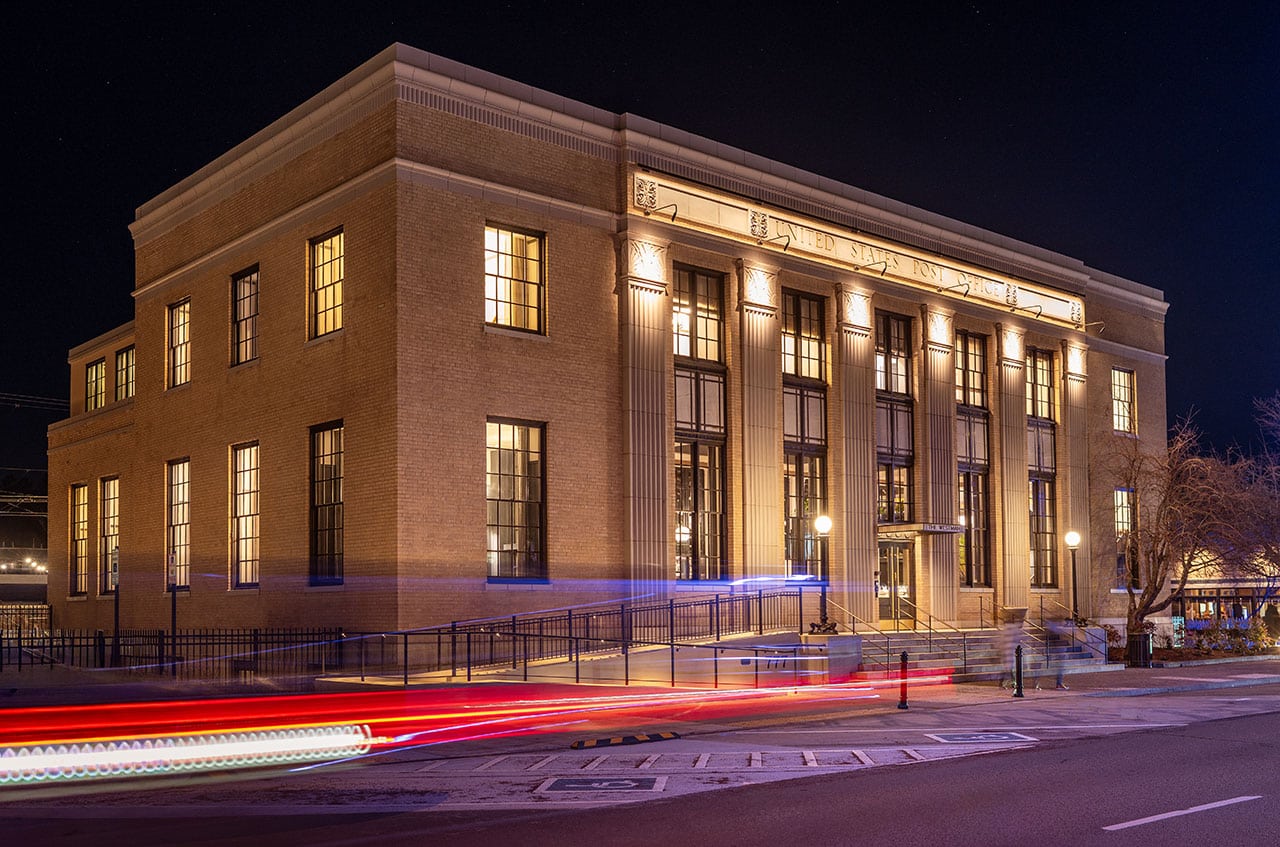
During the Great Depression, the construction of a neoclassical U.S. post office in downtown Bend provided much-needed employment. It also gave people hope with its grand brick and terracotta façade featuring a column detail and Art Deco flourishes. Reborn as a 23-room hotel, The Westman has once more become a beacon of light and a community gathering spot. After visitors and guests enter the rectangular foyer with its soaring 16-foot ceilings and a lobby bar, they’ll find stories that unfold in every elegant corner.

The Westman co-owner Gil Burgess, a successful businessman who grew up in rural Oregon, remembers trips to Central Oregon with his family, where they would buy sandwiches at a local deli, walk around downtown Bend and camp on the Metolius River.

“I have a lot of fun memories of Bend. It was a very special place to me growing up,” said Burgess.

Woman reading by fire inside the westman lounge

During dinner, his business partner asked a profound question, “What if we did something that would spark joy in both of us? What would that be?” Eventually, they decided on hospitality. When the old post office came up for sale, they jumped on it, determined not to let it go the way of Bend’s Pilot Butte Inn that was demolished in 1973 despite having a historic designation.

“It was really important for us to maintain all the historic elements of the post office and do it the right way,” said Burgess.

Man and dog walk into the westman
Hospitality at the hotel extends to pets.

Hudson’s Inspirational Interiors

Burgess and the hotel’s management group, Embarcadero Hospitality, prioritized saving as much of the building, on the National Register of Historic Places, as possible. They preserved 175,000 bricks, 1,900 square feet of gold terrazzo flooring, 1,700 tons of concrete and 44 original windows, while also creating a luxurious hotel with modern comforts, like an oversized heated outdoor soaking tub.

Minnies bar in the westman art deco chairs

Interiors are a modern take on Art Deco with nods to Mountain West style. Senior interior designer Jenny Baines at LRS Architects of Bend and Portland was tasked with selecting interior finishes, furniture and fixtures.

Baines chose four Kelly Wearstler schoolhouse-style pendant light fixtures for the lobby. Echoing the shape of the space’s pilasters, Artistic Frame barstools feature fluted bases. The jewel box of a parlor features rich green velvet sofas and a handmade brass fireplace crafted by MW Designs in Salem. There’s a river rock art installation on the wall and a dramatic charcoal crystal light fixture.

Exterior of Westman

“High-end hospitality in Oregon needs to have a level of elegance, but it also has to have casualness to it. People don’t want stuffy, they want comfortable,” said Baines.

Inspired by the building’s history, architecture and the surrounding landscape, guests will spot walls painted U.S. Forest Service green—the Forest Service was an original tenant—and dark blue, a nod to the night sky. Pops of dark gray and rich brown recall postal uniforms and leather mailbags.

Find a spiral staircase leading to the sleeping loft.

Preservation Challenges for the Hotel

The hotel’s namesake, Minnie Westman, was the first woman mail carrier west of the Mississippi. Riding horseback through Oregon to deliver mail in the 1880s, Westman even encountered bears along the way.  The Western motif wallpaper in the public bathrooms on the main floor, a custom design by local artist Mikayla Bivona, is an ode to her adventures. It requires grit and determination similar to Westman’s to turn a nearly 100-year-old post office into a hospitality venture, but Emerick Architects, a Portland firm with extensive experience in historic restoration, was up for the challenge.

“There are a lot of constraints, but that’s part of the fun. It really demands a lot of creativity to try to crack that code and figure out the puzzle,” said principal architect Brian Emerick.

Door numbers and labels at The Westman
Rooms pay homage to the building’s history.

Working with the existing square footage and original wooden windows allowed for larger rooms. Each of the 23 guest rooms, including 15 suites, has a unique layout. Lower-level rooms have outdoor patios with firepits in old window wells to let in natural light.

The Mailroom Suite, one of three guest rooms with spiral staircases and loft sleeping areas, has a fluted marble fireplace.

The corner Franklin Street suite showcases one of Baines’ favorite details: handstitched cashmere scarf-like draperies that accentuate the verticality of the spaces. Each guest room has a white oak kitchenette with a built-in refrigerator, a design akin to something found in a high-end home.

Wooden desk at the westman
Bend woodworker Aaron Johnson created postmaster-style desks for rooms.

Caretakers of History

In the early 1900s, people would congregate in post offices to receive news about loved ones during wartime. It feels fitting that this important building is once again a gathering place. At the lobby bar called Minnie’s, the menu includes a Minnie Westman-inspired Smoking Revolver cocktail and a refreshing Marionberry Bramble with Wild Roots gin, fresh lemon juice and marionberry puree, along with a plate of tater tot waffles topped with Pacific Northwest smoked salmon.

People enjoy private fireplace on their enclosed patio

The care taken to create The Westman experience extends to all the senses. When visitors walk into the hotel, they’ll immediately smell the intoxicating scent of cedarwood atlas, sandalwood and oakmoss blended with an oregano tincture. It’s a signature scent created by Bend-based natural perfumer Kristine Ambrose.

“I wanted to capture the scent of Central Oregon, but I also wanted to include the entire region through the lens of Minnie and the routes she took,” said Ambrose. Portland-based interior mural and hand-painted wallpaper company Lonesome Pictopia applied gold leaf to lobby windows inside, creating a swirling, storm-like effect.

Cocktail at Minnies at the westman

The Westman is a love letter to Bend and the building’s history from the walnut wood postmaster-style desks made by Bend woodworker Aaron Johnson to the post office’s original vault door emblazoned with an American eagle emblem, showcased in a special suite called the Vault.

Just like the 90-year-old ficus trees in the lobby, which lived in the post office for decades, the stewards of this project haven’t forgotten the roots of this space, “What we’ll have here cannot be duplicated or replicated,” said Burgess.

People on patio at night at the westman

Elk Lake Resort Expands Nordic Skiing Near Bend

It was a bluebird day when six friends and I gathered at the far edge of Dutchman Flat, near Mount Bachelor. There hadn’t been much fresh snow, but that didn’t dampen our spirits. Whatever the conditions, we were giddy with anticipation for the adventures ahead.

If it were summer, we’d be on the shoulder of the Cascade Lakes Highway, watching cars whiz past toward a multitude of lakes, trails and summits. But with its gate closed for winter, the unplowed road has transformed into a snow-lover’s playground.

Cross country skiing at elk lake resort

A Trip to Elk Lake Resort in Winter 2026

This year, thanks to Elk Lake Resort’s new emphasis on trail grooming, the area is more accessible than ever for cross-country skiers. With its new state-of-the-art PistenBully 400 snowcat, the resort is consistently grooming the 11-mile, mostly downhill stretch from Dutchman Flat to the lake, plus a 7-mile loop around it.

When the snowcat churned up to us, leaving perfect corduroy in its wake, we loaded overnight bags into the cab, which also has room for guests to ride inside. We stepped into our skate skis and set out to traverse one of the most scenic landscapes in Central Oregon. We paused near Sparks Lake to take in the panorama of peaks from South Sister and Broken Top to Mount Bachelor. We glided past hillsides of black volcanic boulders topped with snow and through forests of pine and fir.

It wasn’t all downhill—the few rolling ascents were enough to make us appreciate arriving at the lodge. We cozied up to a woodstove and gave the lodge pups, Ace and Tex, scratches behind their ears. It was time to enjoy a well-deserved beverage, just as folks have done at Elk Lake for more than a century.

Elk lake resort interior with fireplace

A Bend Landmark, Reinvigorated

Since the Wilcoxen family built the first Elk Lake lodge in 1921, Bend locals have flocked to the resort’s shores. The resort has survived wildfires and droughts, added all-season cabins and amenities, and has changed ownership several times. In 2025, a group of Bend families purchased Elk Lake Resort with the shared vision of updating the facilities while preserving its history and rustic spirit. 

“Our goal is to restore this iconic resort and elevate the experience, with a focus on responsible stewardship of the lake,” said Ken Natoli, co-owner and assistant general manager.

That meant upgrading infrastructure, blending new fixtures to match old logs and historical decor, and overhauling the kitchen. The new food and drinks menu incorporates locally sourced products, and keeps old favorites like elk chili and burgers. The renovation held surprises, too, like uncovering an original stone fireplace in the back of a storage room. Now cleaned and restored, that fireplace serves as a touchstone to the past and a focal point in the lodge.

Elk lake resort in the snow

Unlike other local areas, Elk Lake’s groomed trails are open to snowmobilers, as well as snowshoers, fat-tire bikers and dog-sledders. Trail etiquette encourages everyone to stay aware of other users and slow down as needed. Preserving the grooming is part of trail etiquette too, especially as more skiers join the mix.

“In past years, no one thought the Nordic ski community would support this lodge, so grooming trails was not a priority. We’re betting they will. So far we’ve seen a lot of enthusiasm,” said Natoli. And with a full calendar of events, including ski-in, shuttle-out moonlight dinners, Elk Lake is now on a must-do ski touring list.

cross country skiing at elk lake

Expanding the Map of Local Groomed Trails

Steve Roti, president of Meissner Nordic Ski Club, and Tina Pavelic, a Nordic ski instructor, have seen growing enthusiasm for adding skiable miles, beyond the trails at Meissner Sno-Park and Mt. Bachelor Nordic Center. All three areas post grooming updates on Nordic Pulse, an app specific to ski trail conditions. With more local options online, skiers can compare conditions and make the most of their time on the trails.

As Roti noted, the High Cascades often have a prime quality and quantity of snow. “Because Elk Lake sits in the center of the Cascades, the area holds more snow than on the east slope—far more than at Meissner, even though the elevation of Elk Lake is lower than at Meissner,” he said.

For Pavelic, skiing into Elk Lake brings a different perspective. “It’s more like a European ski experience, skiing point-to-point through a spectacular landscape, ending at a warm lodge with food, and the option to shuttle back. Also, these trails are perfect when training for long-distance races,” she said.

Elk lake resort aerial cross country skiing

Skiers can expect the same wide, rolling trail conditions on the 7-mile loop around the lake. Ski in a clockwise direction, and the wide, open trail ascends gently before unfolding through dappled shade, which can get icy. Ski counter-clockwise for punchier hills and easier descents. Either way, watch for the sign to Hosmer Lake, about midway on the loop. It’s worth the walk along the short ungroomed spur to check out the lake­ and the view of Mount Bachelor.

Adding 18 miles of groomed trails puts Bend on a par with renowned Nordic ski areas like Galena, Idaho, and Winthrop, Washington, according to Roti.

“We’ve now exceeded 100 kilometers of groomed trail with varying steepness and difficulty. That’s the standard for top-tier destinations, but this one is close to home.”

What Else to Do at Elk Lake Resort in the Winter 

Skiing is not the only way to break a sweat at Elk Lake. Behind the lodge, close to the frozen lake, sits a barrel-shaped, wood-fired sauna. More than an antidote to post-ski chills, spending time in the intense, steamy heat relaxes sore muscles, lowers stress and promotes deep sleep.

During our weekend at Elk Lake Resort, my group of friends reserved the sauna for a late afternoon session, after a ski around the lake loop. The sauna benches were big enough to hold the seven of us, and we ladled water over the hot rocks for a rush of steam. Through the sauna’s window, we watched the lake’s ice glow lavender in the twilight. But what really caught our attention was the hole cut into the ice, just a short walk away.

Elk lake resort sauna interior

Twenty minutes into our sauna session, the cold plunges began. Dashing across the ice, taking a deep breath, we jumped into the waist-deep icy water, dunking as deep and as long as we could stand it. Skin tingling, spirits lifted, we’d return to the sauna for more heat. The sauna session left us both invigorated and calm, warmed from the inside out, connected to this lake in a new way.

The next morning, we walked out beyond the cold plunge hole to the middle of the lake, where the ice was thick and free of snow. A soft booming sound echoed from below the surface, a tuneful moan like whales singing. One friend recognized it as the sound of the ice itself, expanding and changing.

Snow cat at Elk Lake

Back at Dutchman Flat, we glanced down the trail we came from. A ribbon of corduroy gleamed in the sun, offering an invitation to return to Elk Lake and the deep connection to nature, now more accessible year-round. 

More About Elk Lake Resort


Sailing on Elk Lake

Three Winter Lodging Getaways Near Bend

The Gerry Lopez Big Wave Challenge

For many, the word aloha is associated with a greeting. But for Gerry Lopez, aloha is a way of being. Rooted in Native Hawaiian values, it helps guide how people treat one another, the land and themselves, plus it’s a core value of the namesake snowboarding event he founded. The Gerry Lopez Big Wave Challenge will be held for its 14th year at Mt. Bachelor March 26 to 29, 2026. [Photo above: Chauncey Sorenson, by Grant Myrdal]

Gerry Lopez riding at Mt. Bachelor
Gerry Lopez | Photo by Sebastian Tronolone Jr.

Much of the aloha behind the Big Wave Challenge is inspired by early Hawaiian surfing contests that Lopez, a resident of Bend for the past 30 years and one of surfing’s big-wave pioneers, experienced when he was a kid, before professional surfing events existed. “The surf contests were a kind of celebration, a gathering of all the different surf clubs and the different families and communities that would all come out to support,” Lopez said. “It was a real celebration of aloha. It wasn’t like this dog-eat-dog thing. It was: Come, we have this surfing contest, someone’s going to win and others aren’t gonna win, but afterward we’ll all eat and have a good time.”

wooden surf board for big wave challenge
Photo by Grant Myrdal

Surf Culture Inspires Bend’s Snowboarding Event

If surfing is the trunk of the board-sport tree, snowboarding is the branch that reaches to the mountains, but shares its roots in self-expression, style and progression. Similar to early snowboard events in the ‘80s and ‘90s, the Big Wave Challenge event harkens back to a time when contests felt less like a competition and more like a community gathering, paralleling the events from Lopez’s childhood days. Many participants are focused less on winning and more on having fun, being in the moment with others and having the shared experience of witnessing the creativity on a course that changes every year.

Temma Tamai on the halfpipe snowboarding
Temma Tamai | Photo by Sebastian Tronolone Jr.

Hosted by Mt. Bachelor since 2010, and inspired by the mountain’s wave-type terrain and Lopez’s own love of snowboarding. The Big Wave Challenge has been infused with community spirit from the beginning. Across the years, it has raised money for a number of causes through registration fees, auction items and donations. This snowboard-only competition gives riders of all ages and abilities the opportunity to express their creativity on a world-class, custom-built, surf-inspired course made up of banks, hips, spines and quarterpipes.

Gerry Lopez snowboarding the Big Wave Challenge at Mt. Bachelor
Gerry Lopez | Photo by Sebastian Tronolone Jr.

The Gerry Lopez Big Wave Challenge also translates the aloha spirit of generosity and care into meaningful action by directing all proceeds toward local individuals and organizations in need. Individuals like Pat Malendowski and Michele Schnake, two long-time Central Oregonians, have each significantly contributed to the sport of snowboarding locally and globally, and are both battling cancer. This year, 100% of proceeds from the event registration and online auction will be used to support Malendowski and Schnake in their treatment. The Big Wave Challenge also partners with organizations like Oregon Adaptive Sports and Urban Surf 4 Kids to provide access to board sports.

Nathan Jacobson Halpipe air snowboard gerry lopez challenge
Nathan Jacobson | Photo by Grant Myrdal

Lopez characterizes the event as a collective achievement rather than a personal one, and he showcases the spirit of aloha through humility by crediting the success of the event to everyone involved. He emphasizes that without the efforts of the whole community—specifically mentioning the volunteers, Mt. Bachelor and the individuals who participate—the event wouldn’t be possible. “Everyone always thanks me for the event, but it’s really not me; it’s everyone. I always want to say, ‘No, no, thank everybody else,’” said Lopez. “It’s a lot of people coming together and making a big effort on their part. I think everyone showing their aloha pumps up the whole event.” Even by deflecting praise and highlighting the contributions of others, Lopez demonstrates that aloha isn’t just something you say; it’s something you practice. Read more about the Big Wave Surf Challenge here.

Tune in to the full interview with Gerry Lopez on Bend Magazine’s “The Circling Podcast” with Adam Short. As always, our podcast can be found on all major podcast platforms.

How BOSS Sports Performance Builds Strength and Community

When Bend local Nate Nielsen began looking for a gym, he wanted more than a warehouse of equipment. A lifelong sports fan, Nielsen was focused on strength and mobility for golf and pickleball, but he also wanted a community.

“At most gyms, people plug in their music and ignore each other. I wanted a welcoming environment where people get to know and support each other,” said Nielsen.

He’s not the only one drawn to a different approach to fitness. From teens to seniors and weekend warriors to pros, today’s athletes seek a more holistic approach, one that builds strength as it supports body, mind and spirit. It’s a new perspective on weight training to build more than muscle mass—it elevates metabolism and bone density, ignites speed and power, and boosts mental health and resilience.

Coach Marcus McGovern, leading a class.

Nielsen found the community he’d been seeking when a friend invited him to BOSS Sports Performance, a strength and fitness training hub in Bend that embodies this approach to fitness. “The facilities and coaches are both impressive, but the energy is contagious, especially with all the student-athletes. I immediately wanted to be part of it,” he said.

Cultivating Strength, Starting with the Kids

Kevin Boss on the indoor field
Kevin Boss

Kevin Boss founded BOSS Sports Performance in 2014, after retiring from a professional football career that included a 2007 Super Bowl win for the New York Giants. His vision for the business was clear: use everything he’d learned in football to teach not only sports, but persistence and confidence in young athletes.

From Boss’s perspective, resilience is a byproduct of strength training, especially in teens. “There’s no instant gratification in the weight room. You have to keep showing up, and the reward comes slowly. Seeing kids grow into their abilities is the best part of my job—and that will always be the heart of what we do,” Boss said.

Brooklyn Fobi, of Bend, is one of those teens. She’s a Bend High School junior aiming to play college volleyball. “The training helps me in volleyball with more vertical and explosive strength on the court. It keeps me disciplined, and that will help me in college,” she said. For Fobi, it’s the coaches who make the difference. “You can see that they feel like a family. The coaches are so approachable and positive, and they know me,” Fobi added.

Coach Christian Parr leading exercise
Coach Christian Parr

Since its beginnings with an initial focus on youth, the gym has grown to include adults at all levels, from professional athletes during their offseason to amateur enthusiasts who want to up their game on the trails, ski runs and courts. Addressing this wide variety of goals and abilities, coaches tailor group classes to allow each individual to succeed at their own level. As Boss put it, they want to make workouts the best part of the day.

Come for the Coaching, Stay for the Community

How does a fitness center cultivate that sense of community? Marcus McGovern, coach and director of adult fitness at BOSS Sports Performance, sees it as a top-down intention. “Kevin brings our staff together into a close-knit team that cares deeply for each other and the work we do,” he said. The team’s enthusiasm for strength and health spreads to the clients and infuses the gym with energy. As McGovern explained, being surrounded by positive people is the best way to adopt a healthy, happy mindset that sets the tone for the rest of the day.

“Everything we do in the gym is designed to serve life outside the gym—to help people keep doing what they love, injury-free,” said McGovern. “Bend is full of wildly active people, and strength training is like putting on armor. It protects your body against injury from the forces that can beat us up, and makes us more durable.”

This approach is what keeps clients like Nielsen and Fobi coming back. “When everybody knows your name, you feel welcome. You go for an hour, move your body, interact with friends—that sets you up for a good day,” said Nielsen.

Strength plus community equals resilience outside the gym. Kevin Boss seems to have found the formula for turning exercise into the best part of a day. 

Soul of Central Oregon

Shannon Lipscomb

Researcher + Children’s Advocate

Driven by community impact, Oregon State University–Cascades developmental scientist Shannon Lipscomb is helping advance how Central Oregon supports children and families facing adversity. As associate dean of research and faculty advancement and professor of human development and family sciences, Lipscomb leads nationally funded work focused on resilience, early learning and trauma-informed practice. Her projects include Roots of Resilience—a program funded by the Institute of Education Sciences, now scaling statewide—as well as studies supported by the National Institutes of Health that examine children’s health, school readiness and environmental exposures. Through OSU-Cascades’ Human Thrive Research Lab and community-engaged projects, her work reflects a deep commitment to equity, early intervention and helping Central Oregon’s children, educators and communities thrive.

shannon lipscomb

Sam Bousfield

Innovator + Entrepreneur

A lifelong innovator, Sam Bousfield—a Prineville-based aerospace entrepreneur—has spent decades turning cutting-edge ideas into real-world solutions. As the designer and CEO behind the Samson Switchblade flying car, his work is reshaping how we think about regional travel, blending sports-car performance with certified flight in a vehicle that fits in a standard garage. In December 2025, that vision earned national recognition when he received the GSA Global Innovator Award and a U.S. Congressional Medallion at a Capitol Hill ceremony, honoring what lawmakers recognized as the only viable flying car ever produced. Ideas that took flight in Central Oregon are now being brought to a global audience by Bousfield and his company, Samson Sky.

sam bousfield

Todd Dunkelberg

Leader + Librarian

A champion for the Central Oregon community, Todd Dunkelberg has shaped how Central Oregonians connect to knowledge and one another. Dedicating 26 years to the Deschutes Public Library system—including more than 16 as library director—his leadership has guided the district through the Great Recession, a global pandemic and major bond-funded expansions, with a focus on keeping libraries open, welcoming and staffed. Beginning his career as a children’s librarian, he brought a deep respect for learning at every age to his work after moving to Central Oregon in 1999. As he prepares to retire in fall 2026, Dunkelberg is helping usher in a landmark moment—the opening of the new 100,000-square-foot Central Library at Stevens Ranch in May. Bright, energy-independent and community-centered, the space reflects the Deschutes Public Library’s enduring vision and the commitment to Central Oregon.

todd dunkelberg

Ad Image
0
    Your Cart
    Your cart is emptyReturn to Shop