Search results

What Is Canyoning? A Guide to the Fast-Growing Adventure Sport

For anyone unfamiliar with canyoning—or canyoneering, as the terms are often used interchangeably—the introduction starts here. Canyoning is rapidly following in the footsteps of rock climbing and backcountry skiing in its transition from a niche activity to a mainstream pursuit. Loosely defined, it involves the descent and exploration of canyons using a wide variety of methods, including hiking, scrambling, swimming, jumping and rappelling. Given that a lot of Oregon canyons are deep, shadowy and wet, canyoning is the perfect prescription for a hot summer day in Bend

The attractions are numerous, especially for those with rock-climbing experience: Canyoneers beat the heat, use existing rope skills and learn new ones, and explore hard-to-see parts of Oregon. “Canyoneering makes you feel like a little kid again. Jumping into pools, splashing in creeks and discovering places that hardly anyone goes to,” said Emily Abrams, the operations manager of the Adventure Leadership Institute at Oregon State University and an ambassador for the sport. Kevin Clark, author of the book Canyoning in the Pacific Northwest, concurs that part of canyoning’s appeal is the playfulness of it, but also noted that the physical challenges, the problem-solving and the teamwork required to overcome obstacles are attractions as well. 

Man canyoning at Starvation Creek State Park in Oregon
Starvation Creek State Park, Oregon | Photo by Wade Hewitt

Why Oregon Is a Premier Destination for Canyoning

Whether canyons are wet or dry, Clark noted, is largely a question of local geology and hydrology. Most of the canyons in Oregon are found on the west slopes of the Cascade Range and are wet or “aquatic” canyons, given the ample precipitation in their watersheds. On the east slopes, a notable example of a dry canyon is the Crack-in-the-Ground in the Oregon Outback near Christmas Valley. Abrams points out that the southwestern United States is well known for its elaborate dry canyons. Water is involved, of course, in carving the canyons through sandstone walls, but the ephemeral river flow leaves them dry for much of the season.

Why Whitewater Paddlers and Rock Climbers Excel at Canyoning

For rafters and kayakers, whitewater skills will crossover to canyoning. People with a whitewater background “will likely be familiar with reading the flow and knowing how to assess water features and hazards,” Clark said. While whitewater is definitely the common denominator between the two sports, added Abrams, rafting and kayaking are mostly horizontal while canyoning is vertical. So, people who love whitewater and have the stomach for heights are a natural fit.

David Hill prepares to rappel his first waterfall at Big Alder Creek.
David Hill prepares to rappel his first waterfall at Big Alder Creek | Photo by Josh Norris

Rock climbers are also well-positioned to pick up canyoning quickly. Familiarity with ropes, harnesses, anchors, and the techniques for ascending and descending ropes helps develop comfort and confidence in canyons. However, there are notable differences. For example, it’s common for rock climbers to tie a knot at the end of a rope to prevent falling while rappelling. While descending in water, knots are avoided for safety, allowing canyoners to escape quickly from a waterfall’s flow.

Essential Canyoning Gear

Much of the gear needed to get started can be borrowed from whitewater and climbing. A good wetsuit is critical, even on a hot summer day. The shade and cold water usually feel marvelous, but over several hours, thermal protection is a must. While there are canyoning-specific harnesses, a standard climbing harness will suffice. Good footwear is essential, and the stickier the rubber, the better—rocks polished by flowing water for millennia and then lubricated with algae make for tricky footing.

Canyoning at Parkett Creek in Oregon
Brett Stomps canyoning at Parkett Creek in Oregon | Photo by Jessi Maxey

For those who like new adventures, don’t mind getting wet and think that canyoning might be for them, there are various levels of difficulty to get started. There is a canyon for just about everyone. 

Canyoning Basics: How to Get Started

Start with a free introductory course through V7 Academy.

Learn about canyons and caves in the counties surrounding Bend using Ropewiki.

Build skills with in-person instruction from Cascade Canyon Guides or the Mazamas.

Frequently Asked Questions About Canyoning

Is canyoning safe?

Like any adventure sport, canyoning carries inherent risks. Proper training, appropriate equipment, awareness of water conditions and weather, and traveling with experienced partners or certified guides all help reduce those risks. Beginners should avoid attempting technical canyons without instruction.

Where can you go canyoning in Oregon?

Many of Oregon’s most popular canyons are found on the west slopes of the Cascade Range, where abundant rainfall creates aquatic canyons with waterfalls, pools and narrow gorges. The state also has dry canyons, including Crack-in-the-Ground near Christmas Valley in the Oregon Outback.

When is the best time to go canyoning in Oregon?

Summer is generally the most popular season for canyoning in Oregon. Although canyon water remains cold year-round, warm air temperatures make long days in the water more comfortable. Conditions can vary depending on snowmelt, rainfall and water levels, so it’s important to research current conditions before heading out.

Why is canyoning becoming so popular?

Canyoning combines elements of hiking, climbing, swimming and whitewater adventure into a single experience. It offers access to remote landscapes that few people ever see, while providing physical challenges, teamwork and opportunities to cool off during the summer—making it an increasingly popular sport across Oregon and the Pacific Northwest.

More ideas for outdoor adventure in Central Oregon here.

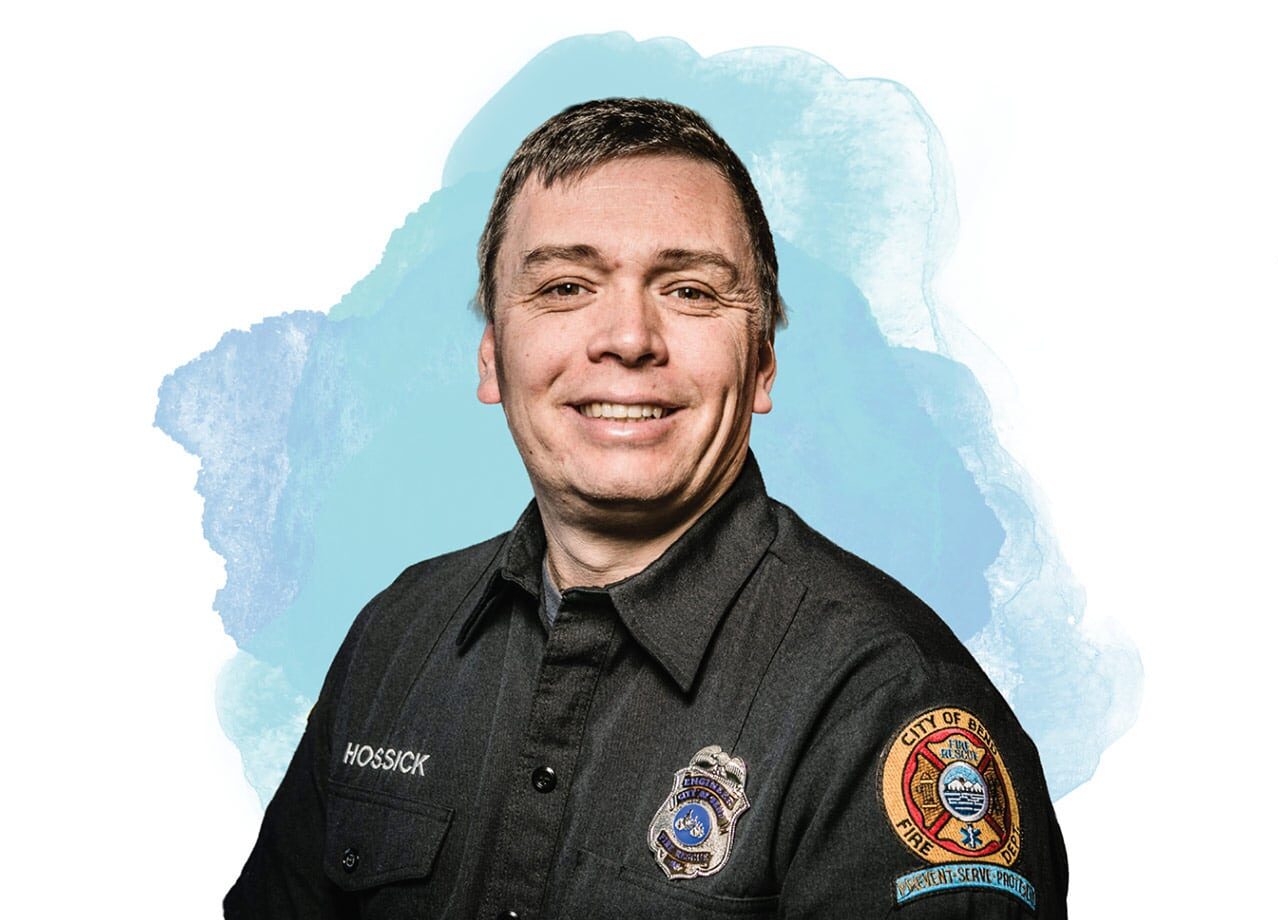
Firefighter Captain Petar Hossick

A steady force in Central Oregon’s emergency medical response community, Captain Petar Hossick of Bend Fire & Rescue spent 36 years redefining how lifesaving care reaches people in critical moments. Retiring in 2026 after 26 years with Bend Fire and 10 with Sunriver Fire, he leaves a legacy of innovation, mentorship and deep commitment to patient care.

Honored with multiple awards, including the Oregon EMS Impact Award and EMS Provider of the Year, Hossick championed advancements that shaped modern EMS across the region. Beyond protocols and programs, his legacy is the collaboration he created by uniting agencies and mentoring generations of responders in what’s now known as the “Bend Fire Way.”

Read more Soul of Central Oregon profiles.

Why More Bend Parents Are Treating Swim Lessons as a Life Skill

Bend’s rivers, lakes and outdoor lifestyle have families enrolling children in swim lessons earlier than ever. SafeSplash Bend is helping build water safety, confidence, and lifelong skills beginning at 6 months.

Living in Bend means spending time around the water. Families float the Deschutes River, paddle nearby lakes, cool off in pools, and plan summer adventures where swimming is almost always part of the experience. 

As those moments become a regular part of childhood, more parents are asking an important question before their children are old enough to join a swim team. Are they prepared if something unexpected happens in the water?

Swim lessons have become much more than another extracurricular activity. Many Bend families now view swimming as a life skill that builds confidence, teaches water safety, and prepares children for the outdoor lifestyle that makes Central Oregon unique.

SafeSplash Bend is opening with exactly that purpose in mind. After seeing local families struggle to find consistent swim instruction, local owners Chase and Grant partnered with Bend swim instructor Kristyn Deckard to create a dedicated swim school where children can build essential water safety skills from an early age.

“Their hope was bringing something to Bend that would benefit our town and kids in our community,” said Carissa Nystrom, SafeSplash Bend’s marketing director.

Indoor swimming pool at SafeSplash in Bend Oregon
Inside SafeSplash Swim School Bend

Growing Up Around Water Comes With Extra Responsibility

Few communities embrace outdoor recreation like Bend. Children grow up floating rivers, spending weekends at lakes and enjoying water throughout every season–even in winter through indoor pools and swim lessons.

Kristyn Deckard, co-owner of SafeSplash Bend and a former Division I swimmer and collegiate coach, says living in Central Oregon changes the conversation around swim lessons.

“Our primary focus is water safety,” she said. “We have such a huge community [of water lovers] with the river, the lakes, and everything around here. It’s just as much of a survival skill as it is a safety skill.”

Deckard has spent years coaching swimmers at every level, including collegiate athletes and Team USA junior national programs. Returning home gave her an opportunity to address a need she had heard about repeatedly from local families.

“People were talking about how Bend is really limited with lesson programs,” Deckard said. “It would be great if you could get one started.”

Small Classes Create Bigger Opportunities

SafeSplash serves children beginning at 6 months old, along with teens and adults. Parent-and-child classes introduce infants to the water while helping parents build healthy habits from the very beginning.

As children grow, instruction continues with one priority before anything else.

“A lot of safety, back floats, front floats, bubbles, getting to a wall, being able to spot a wall,” Deckard said. “We really focus on those things before we even touch the strokes.”

Class sizes never exceed four students, giving instructors additional opportunities to work with each child individually.

“We have a max of four kids in a class because that’s the maximum number those kids are able to retain and learn,” Deckard said. “Instructors have more time to hone in on those individual swimmers and cater to those individual needs.”

Nystrom says smaller groups also create an environment children genuinely enjoy.

“SafeSplash really tries to make it something kids want to go do,” she said. “It feels more like a fun activity, and instructors have a lot of good one-on-one time with the kids.”

The Skills Children Need Before Anything Else

Many parents picture swim lessons as the place where children learn freestyle, backstroke and other techniques. Deckard says those skills come later. The first priority is helping children respond safely if they unexpectedly end up in the water.

“If their kid goes underwater, what do they do? If they fall in, how do they get back out?” she said. “The leading cause of death for kids ages one through four is drowning.” 

The exterior of the SafeSplash swim building in Bend
SafeSplash Swim School in Bend

Instruction begins with skills children can use in real-life situations, then progresses into stronger swimming technique and endurance as their confidence grows. 

SafeSplash also recognizes children learn in different ways. Some become comfortable through a slower, reassuring approach, while others respond better to greater structure and energy. Families can even switch instructors if another teaching style creates a better connection, giving each child an opportunity to learn in an environment where they can succeed.

“We want parents to communicate with us,” Deckard said. “We want them to enjoy their time in the water, while they are actively learning life-saving skills.”

Built by People Who Call Bend Home

SafeSplash may be part of a national brand, yet its Bend location was created by local women raising their own families in Central Oregon. They know how often children here spend time around rivers, lakes and pools, and how difficult it can be for parents to find consistent swim instruction.

Nystrom hopes families see the new school as more than another business opening in Bend.

“SafeSplash gives us the foundation, but we can take it and focus it on what our community needs,” she said. “We’re locals in this with you.”

As enrollment begins and opening day approaches, the team hopes more children enter the water with skills their families can trust. A lesson may begin with bubbles, floating or finding the wall, yet each one prepares a child for summers on the river, weekends at the lake, and unexpected moments when knowing what to do can make all the difference.

Learn more or enroll at safesplash.com.

How to Style Cocktails at Home, According to Bend’s Alyson Brown

A spirit of choice blends with a fresh mixer to create flavor. Soft light shimmers on the glass, casting long shadows as the flower petal garnish sets the mood. If flavor is the way to the heart, then styling is the way to the imagination, and both bring liquid to the lips. In Alyson Brown’s world, creating the perfect, full-flavored summer cocktail is only the beginning. Brown is the author of The Flower-Infused Cocktail and owner of Alyson Brown Studio at the Stacks in the Old Mill. Her beverage styling and photography have found their way into half a dozen books and in myriad ad campaigns. Her ability to create a narrative by photographing a glass of liquid has driven her success. “Light, to me,” she said, “goes a long way in telling a story.”

Now, after creating hundreds of sets, unique moods and beverage experiences through light and shadow, Brown has learned a thing—or 10—about how to style cocktails. More importantly, she has mastered the art of the elevated drink and offers recommendations for ditching the red plastic party cup at home.

Alyson Brown creates flower infused cocktails
Alyson Brown shares her cocktail recipes. Photo by Tina Paymaster

Alyson Brown’s Three Rules for Better Cocktails

The First Rule: Batch It

While she promotes simplicity, when Brown hosts an event, she wants “people to leave with a memory and not feel like they wanted more.”

When she puts out the effort to make her own ingredients, she makes a large batch ahead of time and stores it in a container that makes it easy to serve.

Infused simple syrups are the easiest. By planning ahead, one can layer sugar with flowers, coffee beans and vanilla beans and store for a couple of weeks. When it’s time to make the tonic, sift the sugar to remove the ingredients, then mix equal parts of the infused sugar with hot water, stir and let cool.

With all the premade mixers at her disposal, she can also pivot for easy mocktail variations.

The Flower-Infused Cocktail

The Second Rule: Garnish It

A garnish goes a long way, making even simple drinks look fancy. “Add a few edible flower petals,” said Brown, “or a dehydrated lime on top to make it sexy.” Despite being known for creating elaborate garnishes, she admits that making your drink look cooler “can be as simple as the position of your cocktail pick.”

The Third Rule: Set the Mood

With every photo she snaps, she connects the sipper to the drink and the occasion. To take this idea home, Brown considers the beverage’s color and which flower best creates the mood. However, it all starts with the right glass to create an experience. “Even sparkling water in a champagne flute feels nice,” she said. Brown’s final bit of advice is to create an interactive cocktail adventure. Set out different garnishes, flowers, herbs and citrus. For summer brunch parties, she recommends a “make your own Bloody Mary bar.” By setting out skewers “with fried squash blossoms, bacon, shrimp, cucumbers, peppers, asparagus, green apple” and more in a choose-your-own fashion, every drinker can explore their own stylish flavor profiles. “It’s like a charcuterie board for cocktails,” she said. You’ll also need some basic bar tools to start: a jigger for measuring spirits, a muddler for crushing ingredients, a simple cocktail shaker and some acrylic cocktail glasses for outdoors. Lastly, remember this is all about fun and connection. After all, “flavor is the way to the heart,” she said.

Alyson Brown shares her cocktail recipes
Alyson Brown shares her cocktail recipes. Photo by Tina Paymaster

Recipes


White Jasmine Sangria

Ingredients

  • 1 bottle of dry white wine
  • 1 cup of triple sec
  • 12-ounce bottle of ginger ale
  • Juice from 1 cantaloupe
  • 1 cup jasmine ginger green tea syrup
  • 1/3 cup jasmine flower water
  • 1 lime, sliced
  • 4 kumquats, sliced

Jasmine Green Tea Simple Syrup

Ingredients

  • 1 cup sugar
  • 1 cup water
  • 2 tablespoons loose jasmine green tea
  • 1-inch piece of ginger, chopped

Bring water to a gentle simmer over medium heat. Remove from the heat and add the loose jasmine tea. Steep for three minutes and strain, reserving the liquid. Add the sugar and bring back to a simmer. Once the sugar has dissolved completely and the syrup has thickened, remove from the heat. Add the ginger, cover and steep for 30 minutes. Cool completely. Store in the refrigerator and use within one week.

Mixology

In a pitcher or glass serving container, combine wine, triple sec, ginger ale, cantaloupe juice, jasmine ginger green tea simple syrup, jasmine flower water and fruit slices. Stir gently. Serve over ice. Garnish with fruit slices.

Mocktail Option

Make it a mocktail by subbing with a nonalcoholic white wine, such as Giesen 0% Sauvignon Blanc, and fresh-squeezed orange juice in place of the triple sec.


Spin Spin Sugar

Ingredients

  • 2 ounces bourbon
  • 1 ounce dry vermouth
  • 1 ounce Concord grape shrub
  • 2 dashes orange bitters
  • 2 dashes cardamom bitters
  • Pinch of cinnamon
  • Lemon slice
  • Lemon peel
  • Sugar-dusted grapes

Cornflower Sugar

Ingredients

  • 1 cup sugar
  • 3 tablespoons cornflower petals

Rub a lemon slice over the rim of a chilled glass and roll it into the cornflower sugar.

Mixology

Shake bourbon, vermouth, shrub, bitters and cinnamon with ice, strain and pour into a prepared glass with fresh ice. Express a lemon peel over the glass and finish with sugar-dusted grapes.


Aviator Glasses, a cocktail by Alyson Brown
Aviator Glasses

Aviator Glasses

Ingredients

  • 1½ ounces blanco tequila
  • ½ ounce maraschino liqueur
  • ¼ ounce crème de violette
  • ¾ ounce lime juice
  • Grapefruit slice

Mixology

Pour the tequila, maraschino liqueur, crème de violette and lime juice into a shaker over ice and shake for 30 seconds. Strain into a glass over ice and garnish with violet flowers and a grapefruit slice.


Pablo's Daughter, a perfect summer cocktail by Alyson Brown
Pablo’s Daughter. Photo by Tina Paymaster

Pablo’s Daughter

Ingredients

  • 2 ounces blanco tequila
  • 1 ounce grapefruit juice
  • 1 ounce mandarin juice
  • ½ ounce lime juice
  • ½ ounce grapefruit rosemary simple syrup
  • ¼ ounce Campari
  • Grapefruit bubbly water
  • Grapefruit slice
  • Mandarin slice
  • Stem of alyssum

Grapefruit Rosemary Simple Syrup

Ingredients

  • 1 cup sugar
  • 1 cup water
  • ½ peeled grapefruit, sliced
  • 1 sprig rosemary

Combine sugar and water in a small pot and bring to a gentle simmer over medium heat. Once the sugar has dissolved completely, add the grapefruit and stir for one minute, lightly mashing the fruit. Remove from the heat. Add the rosemary, cover and steep for 30 minutes. Cool completely. Use within one week.

Mixology

Add tequila, grapefruit juice, mandarin juice, lime juice, simple syrup and Campari to an ice-filled shaker and shake until chilled. Strain into a glass over ice and top with bubbly water. Garnish with sliced grapefruit, mandarin and a stem of alyssum.

Read more Bend Home + Design stories here.

0
    Your Cart
    Your cart is emptyReturn to Shop