
Search results

The Big Butte Challenge in Bend

Look in any direction and you’ll spot a peak just begging to be bagged. South Sister, Broken Top, Mount Jefferson: These magnificent summits take planning and preparation to climb. Yet, there are many mountaintops that are easily crested within a few hours, and with a whole lot of snacks. 

Cue the Big Butte Challenge, a go-at-your-own pace event put on by Cascade Relays. This all-ages adventure offers community spirit while tackling peaks within driving distance of Bend. For each summit achieved, hikers receive a token that can be redeemed at the local brewery sponsoring each butte.

The idea came about in 2021, when gathering for races and other big athletic events wasn’t feasible. Realizing there were more than a handful of attainable buttes to climb—while maintaining social distance—the team at Cascade Relays started the Big Butte Challenge (named after a creative Cascade Relays team, I Like Big Buttes). Scott Douglass, co-founder of Cascade Relays, wanted this event to both challenge those who joined and support businesses within the Central Oregon community.

“Everything at Cascade Relays revolves around community,” said Douglass. “People come to Central Oregon to feel connected, and when hikers see someone else wearing the green Big Butte Challenge hat, it draws them into a sense of togetherness.”

This year, roughly 500 people are hiking, running or even biking the trails, which runs from May through October. The one who finishes bagging all nine peaks first gets a prize, but the real reward comes with each mountain conquered: stunning views of the mountains, lakes and stretches of land that make Bend such a magical place to call home. The ice cold brew is the cherry on the top.
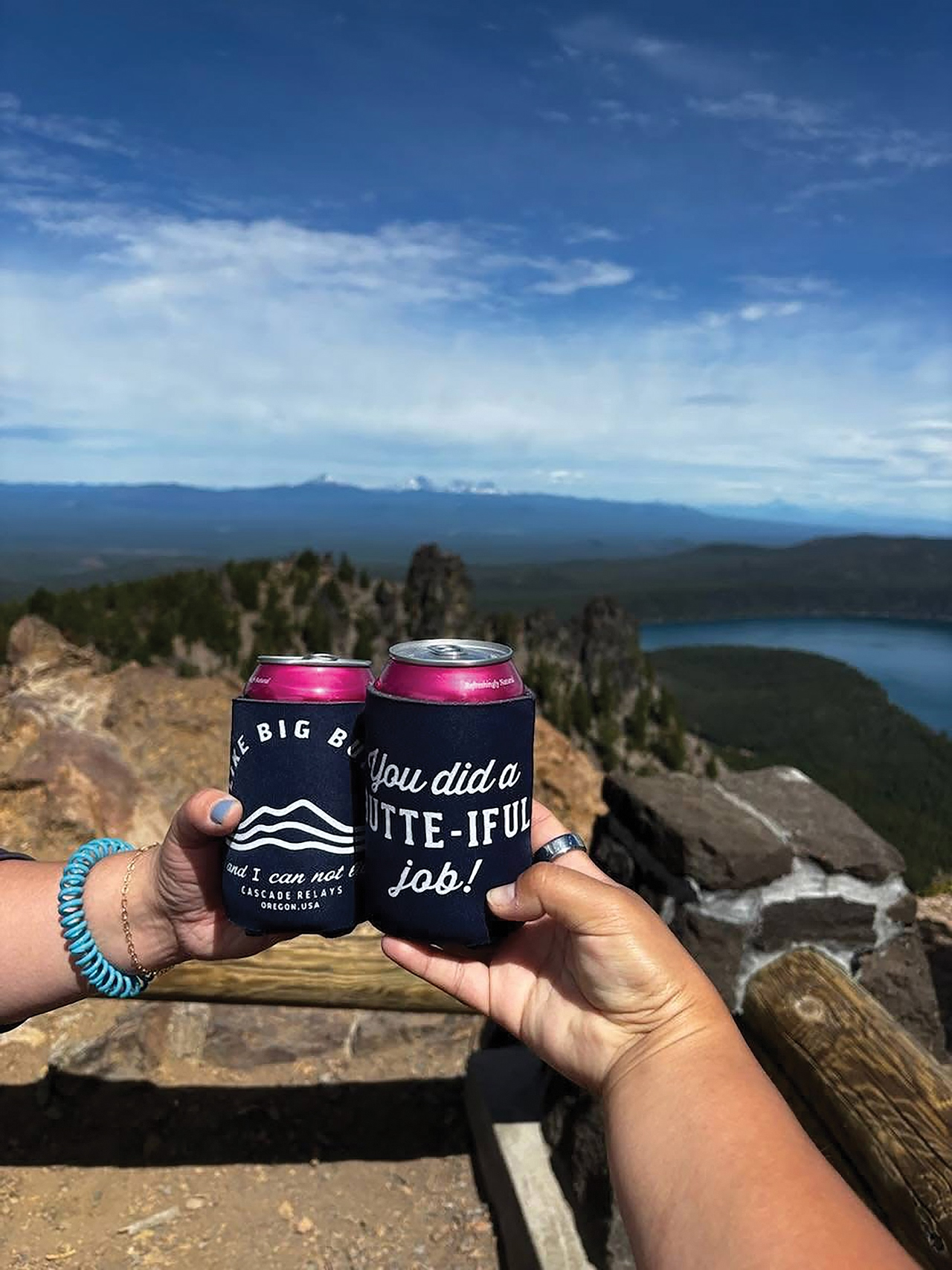
Big Butte Cheers
Celebrations at each summit, then at a corresponding brewery in town. | Photo by Evelia Sandoval

The Buttes to Climb

Barnes Butte

Distance: 2.72 miles round trip | Brewery: Wild Ride Brewing | The volcanic landscape of Central Oregon unfolds in front of climbers when they get to the top of this butte, with the Cascades to the west and Ochocos to the east.

Black Butte

Distance: 3.8 miles round trip | Brewery: Van Henion Brewing | A steep and exposed trail makes this hike best tackled early in the day, but once at the top, climbers are treated to views of Mount Jefferson, Mount Washington and even Mount Hood to the north.

Misery Ridge

Distance: 3.6 miles round trip | Brewery: Kobold Brewing | An iconic Central Oregon hike in Smith Rock State Park, the trail takes you along rocky ledges and offers views of the Crooked River and rock climbers scaling the side of the ridge below.

Overturf Butte

Distance: 5.58 miles round trip | Brewery: GoodLife Brewing | Although it takes challengers through neighborhoods, this easy meander from Phil’s Trail to the top of Overturf is an easily tackled butte, and welcoming for dogs.

Paulina Peak

Distance: 6.12 miles round trip | Brewery: Bend Brewing Company | The push to this rocky mountain top is one of the more challenging, but well worth it. Once there, find a reward to scan views of Paulina and East lakes framed by the Cascade Range.

Pilot Butte

Distance: 2.06 miles round trip | Brewery: Worthy Brewing | It’s a popular spot in the center of town, but when Mount Hood is visible on a clear day, the top of this butte is anything but ordinary.

Tumalo Mountain

Distance: 4.04 miles round trip | Brewery: Cascade Lakes Brewing | With Broken Top and the Three Sisters standing magnificently in the distance, the view from the top of this two-mile climb just might be the best look at Mount Bachelor in Bend.

Tam-a-lau

Distance: 6.6 miles round trip | Brewery: Initiative Brewing | The Peninsula, a lava plateau at the end of a trail winding through old-growth juniper and sagebrush, offers views of the Deschutes and Crooked River canyons below.

Vista Butte

Distance: 4.3 miles round trip | Brewery: UPP Liquids | This relatively quick and mild jaunt is a popular spot to get to easy views of Mount Bachelor and the Three Sisters, and is a great option for hikers just getting their trail legs.
Keep reading to find more incredible hikes around Bend.

A 1970s Sisters Oregon Cabin Gets a Modern Makeover

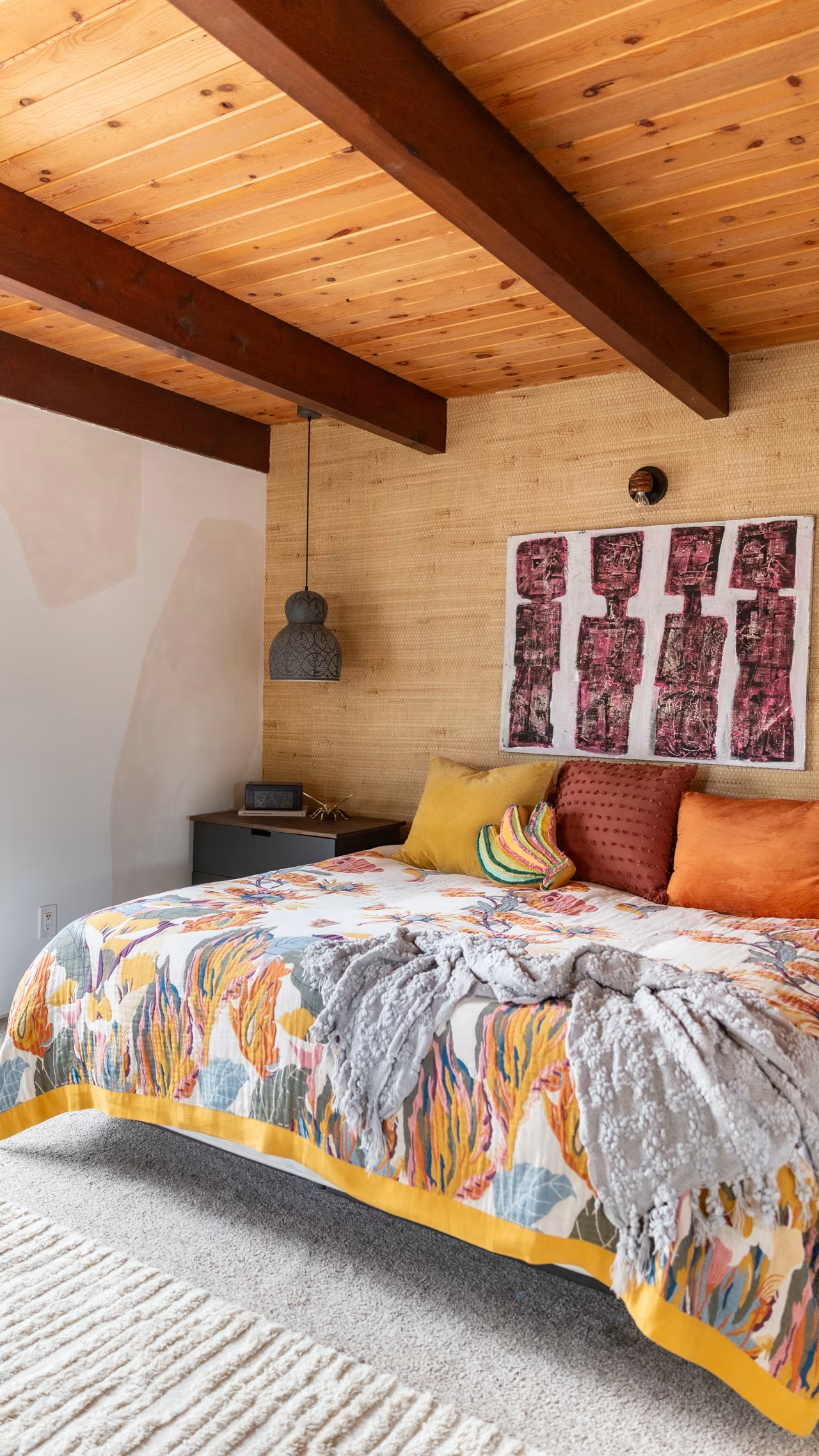
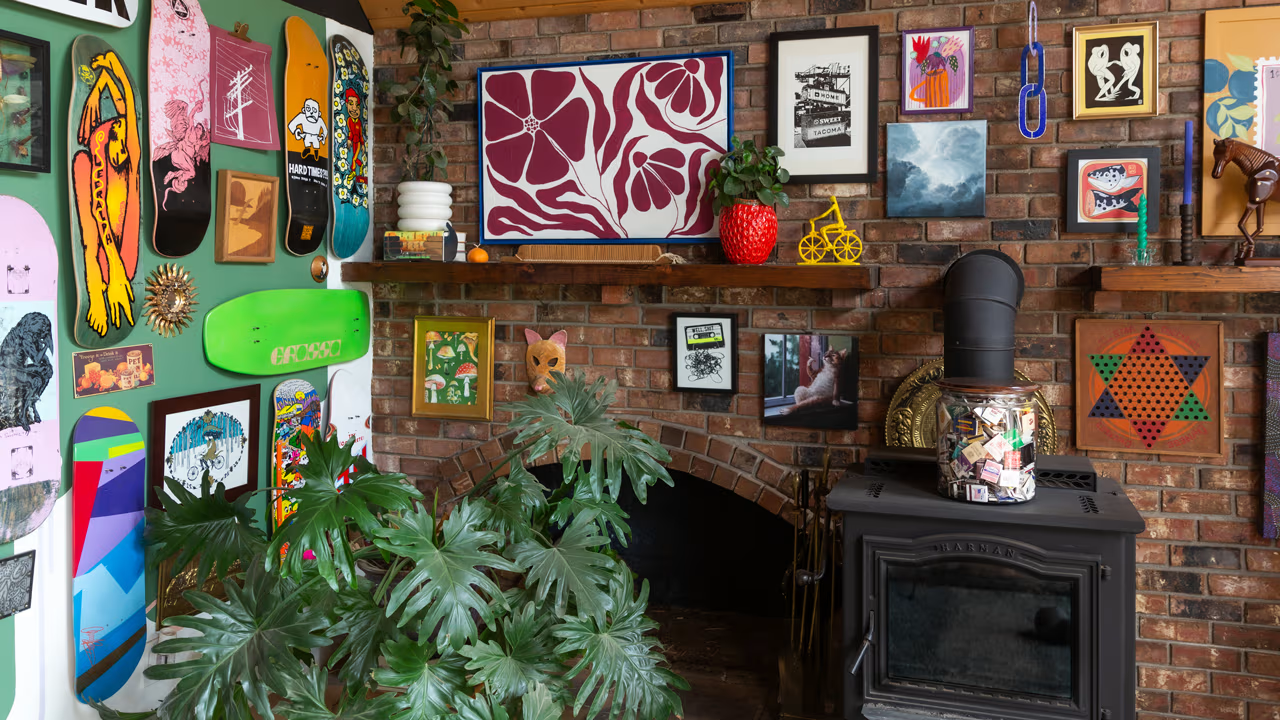
When Else Kerkmann and her husband bought their modest cabin in Sisters, they knew it was going to be a project. From the original wood ceilings and brick fireplace to the shag carpet and poorly remodeled bathrooms, their investment needed a light and heavy touch. As luck would have it, Kerkmann—a content creator in the design and DIY field—is a master at these kinds of projects, from home renovations to redesigns, and she leaned heavily on her innate artistry to bring bursts of color to the home’s blank slate. While the home was absolutely livable, the dark brown palette left over from the 1970s, when the home was originally built, made for a dark and dreary space. Wood-paneled ceilings ran throughout the home, and the walls maintained a dark and textured appearance.

I always had a fun side to my designs, but I finally had more freedom to explore and play with it. My style evolved from here, and I got a little braver with what I wanted to create.”

Else Kerkmann

From Drab to Dazzling: The Bathroom Transformations

The guest bathroom had the most recent remodel, but it was uninspired in tones of brown, brown and more brown. In addition, the remodel was hastily done, and water leaked into the basement below. “We hate throwing usable things away, but this [bathroom] was really ugly,” said Kerkmann. “We just worked with the bones a bit.” The first step to livening up the dreary space was to add pops of bright turquoise tile to the open shower.

Kerkmann realized how fun it could be to add more color and be a bit more playful in her design. She then painted stripes on the wall and it snowballed from there. “I always had a fun side to my designs, but I finally had more freedom to explore and play with it,” said Kerkmann. “My style evolved from here, and I got a little braver with what I wanted to create.”

That bravery extended to the primary bathroom. The original powder room had low, scratched and abused counters and an offset sink, touches that felt less thought out and more of an inconvenience to such a well-trafficked space. In the spirit of Reduce, Reuse, Recycle, Kerkmann pulled together items she had leftover from other projects: a floating cabinet for the vanity, a marble-style sink, a gold swan faucet—all items that reflect her personality and design goals. Paint came to the rescue once again on the bathroom floors, where Kerkmann painted over the existing vinyl flooring. “I knew what was under the top layer of vinyl flooring, and it was a lot of other layers which are such a pain to pull up,” said Kerkmann. “I thought, why not just paint over it.”

Else Kerkmann

Else KerkmannEmbracing the Past with a Playful Twist

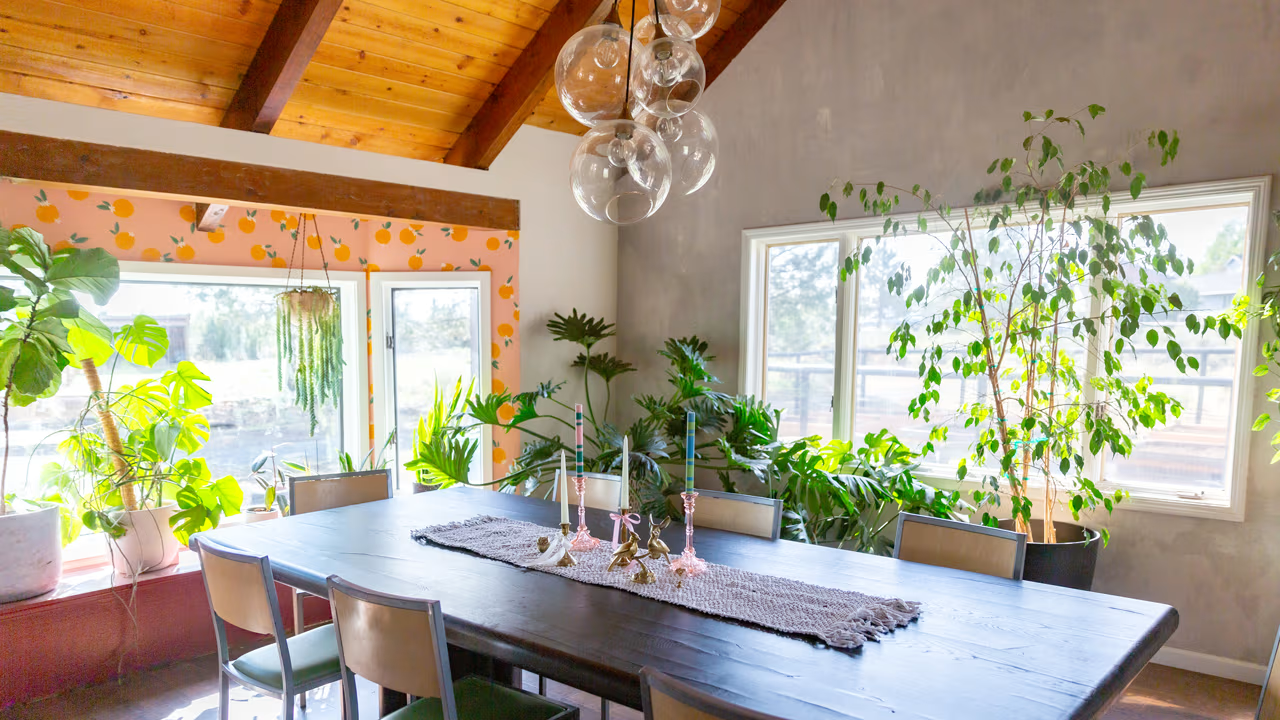
When looking at the rest of the home, Kerkmann loved many of the ‘70s elements, but wanted to bring the design into modern day in simple and whimsical ways. “I decided to embrace the bones of the house and then use art and color to transform it,” Kerkmann said. This is seen in the massive gallery wall displaying her husband’s skateboard collection—with a backdrop of a handpainted mural—the surrounds of the bay window in the dining room painted peach with pops of oranges, and the multicolor entryway to the downstairs living quarters.

The playful additions don’t stop at using paint, however. Kerkmann knows the value of adding bold print to an unexpected place, and the white spaces of the home’s many nooks and crannies allowed her to experiment with wallpaper and patterns in a surprising way. A hallway leads from the main living space to the first-level bedrooms, and the area always felt tight and restricting. Kerkmann added a bold and daring touch: black wallpaper designed with large pink flamingoes, an unsuspecting counter to the narrow thoroughfare.

The A-frame continues to be a work in progress, and with each new corner of the home that is lovingly tended to, Kerkmann’s vision comes more and more into focus: to build a home reflective of her colorful spirit and love of creating, to fashion something new with items that might have been discarded or tossed aside, and to showcase her art through creative design. 

Follow Else Kerkmann on Instagram for more inspiration as she continues her renovation.

Else Kerkmann

Q and A with Camp Clay in Bend Oregon

Camp Clay Keeps the Health of its Members and the Earth Top of Mind

Walking into Camp Clay, you’ll be greeted by artists working their hands through muddy clay or artfully glazing freshly fired creations. The ceramics studio is a welcoming space, the first of two goals that owner Jess Volk had in mind as she dreamed up the concept for her membership-based workshop. The second goal: To create sustainability in a craft that can create a large amount of waste. The result is a gorgeous and welcoming studio designed for all, from first-time students and novice creatives to professional ceramicists, all with a keen eye on reducing the carbon footprint of clay work being fabricated. From reusing materials to understanding how slowing down the process reduces waste, Volk’s thoughtfulness to detail is clear. Bend Magazine visited the studio to learn more about Volk’s mission to keep clean while getting hands dirty.

What inspired you to open a studio focused on both community and the environment?

I wanted to set up a space that would make it easy to recycle and reclaim what we can, in an environment that almost guarantees the best circumstances so there is less waste. While there are a lot of ways to recycle ceramics, there is undoubtedly tons of refuse. Plus, we use water throughout the entire process. Sometimes, even in our best efforts, our work fails in the last firing and it feels like an entire waste of resources. I joke that in ceramics we practice nonattachment, but it is true, there is a lot of failure. It’s part of learning. I just hope to lessen the waste for a medium that I, and others, love so much. It has become clear that now is the time to act; we must do what we can right now to try and save this planet.

What processes do you use to help your sustainable practice?

We use two sinks with dedicated traps, one for clay and one for glaze. We did this with the basic intention of keeping clay and glaze materials from clogging our plumbing. But also, I know there is so much energy that goes into mining, refining and distributing these materials that it would be a shame to simply throw them away. We reclaim the contents of the glaze sink trap and turn them into a new glaze.

I also purchased a 50-year-old pugging machine [a mill that mixes and compresses clay to remove air bubbles, which creates a workable product]. I fixed it up and now use the machine to aid in our clay-recycling process. Our reclaimed product is as good as brand “new clay,” new in quotations because much like rocks, clay is very old.

I am also in the process of harnessing the heat of the kilns to be redistributed through the building. Initially, we put the kilns into a room with an exhaust fan so that we didn’t have to breathe in the fumes when the kilns started to burn off organic materials. The exhaust fans also helped to blow the heat out of the space. In the winter, I’m hoping to add new fans to blow the warm air into the studio after the kilns have burned off organics; they continuously put off heat for another 48 hours which we can use as a heater of sorts.

In what ways do you support the community of artists who enjoy your space?

I designed the space to be able to sustain the amount of members we have at capacity. The studio will never exceed 65 members, even with shared larger studios and a full work-trade program. We have two kilns now, but we have space for four, so it is my priority to be able to sustain these members and students without the work of others suffering. I believe that when members choose to work at Camp, they are entrusting me to have their best interest at heart. It is my commitment to this community and environment to continue to learn how to accomplish this in better ways.

Members can join Camp for a fee, but are there other ways to join?

Yes! We offer a work-trade program, where members trade their help around the studio in exchange for a full membership and even space to store their materials and works in progress.

The studio opened in July 2024, and the gallery in November. Are there any new additions on your horizon?

I am most excited to continue to polish the studio; it was certainly a lot to get everything up and running, and already I am making changes to systems I put in place in the beginning. I am really looking forward to getting my own studio space organized and going. I have so many ideas, and I can’t wait to get my hands back into clay.


Learn more about Camp Clay | Read more about the ARTS & CULTURE around Bend | ARTIST PROFILES

Pacific Northwest-Inspired Patterns from Ash Cascade Designs

Artist Ashley Paggi Finds Inspiration in the Rugged Landscapes of Central Oregon

It wasn’t too long ago that Ashley Paggi of Ash Cascade Designs began to consider herself a fine artist. Even after working as a graphic designer for 15 years, licensing her artwork for companies such as Cotton and Steal Fabrics, and selling her mostly digitally created art prints and products locally at The Workhouse and at nationwide boutiques, Paggi was hesitant to use that word to describe herself.

With a simple daily commitment to work in her sketchbook, she found the conviction to look at her art in a more elevated and tactile way, giving light to a new approach. “I was never a very confident painter. I would always paint in black and then add color and texture on the computer,” said Paggi. “But in January [2025], I thought, I’m just going to play. And I started painting quilts in my sketchbook everyday.” The experimentation, which turned into the start of a 100-day project, allowed Paggi to test her skills away from the computer, playing with acrylics and watercolors, which gave her enough self-assuredness to move from the comfort of her sketchbook and onto painting quilt patterns on canvas and wood.

Ashley Paggi

Beauty in the Grit

Eventually, she found a rhythm to this mode of creation and realized that painting can actually be more forgiving than she had believed. “I’m not creating shapes as much as I’m laying down color. If something isn’t right, I can put more color over it,” said Paggi. “And I don’t want it to be perfect. Something I’m aiming for, and have even with my fabrics, is a sense of grit.”

Paggi’s interpretation of grit is seen in the artwork lining the walls of her backyard studio. The quilts that once lived in her sketchbook have come alive, painted on wood panels. On canvases of varying sizes are images of desert flowers, moths and rugged mountainscapes reflecting western Cascade landscapes. “We have flowers [here] that are teeny tiny, because they’re living on the side of a mountain, and they have to survive a snowstorm…When I’m painting, I want there to be an element of soul. Yes, it’s beautiful, but it’s not necessarily fragile.”

Ashley Paggi

The vision of these hearty florals and landscapes comes from the experience of simply living in the high desert. “When I’m on a walk, I’m constantly looking at the shape of the plants and flowers,” said Paggi. “I’m looking at the color and how it’s attached to the ground. I’m looking at how I can interpret this thing that nature made and make it my own.”

It’s the story within these elements that Paggi is looking to preserve with her art. “When you go to a museum, you’re not looking at tax records. You’re looking at the art people made, you’re reading the passages that people wrote. And those are the things that tell the story of history,” Paggi said. Her current art documents what it means to live in Central Oregon and the importance the natural world plays: the subtle green that shows up in sagebrush as spring arrives, the difference between a ponderosa and a juniper, the reprieve that the first cool days of fall bring after a hot and dry summer. “It’s common for us to see spiny flowers and more rugged foliage, but it’s new to people in other areas,” Paggi said. 

Ashley Paggi

When Paggi reflects on her art, where she started and where she is now, she feels pride in the transformation of her work. Putting paint to canvas—or wood—has allowed her to explore dynamics within herself that she sees in the natural world: a kind of beauty that is raw, real and sometimes a little messy. With that comes a desire to keep learning, to keep finding new ways to create.

“Because what would life be like without beautiful things?”

Read more about Pacific Northwest-Inspired Patterns from Ash Cascade Designs here, or visit Ash Cascade’s website.


Original article published May 2022, written by Lee Lewis Husk | Photography by Julia Duke

When Ashley Cascade Paggi graduated in 2006 with a graphic design and communications degree from California State University, Chico, she landed in-house graphic design positions with Pottery Barn and Weather Underground, both in San Francisco. Seven years later, she and her husband moved to Bend, and she went to work as the lead graphic designer at Oregon State University-Cascades. Her successful graphic design career was full steam ahead, but nevertheless, change was coming. In 2015, Paggi took maternity leave and never went back.

Ash Cascade Designs

After five years as a stay-at-home mom, she searched for a way to reenter the workforce with flexibility and no requirement to clock into an office. When the world shut down in early 2020, Paggi found her answer in an online course. “It was an intensive eight-week immersion class on surface pattern design (fabric design) that quickly became my passion,” she said. Instead of using her creativity for someone else’s vision, she could now explore her own projects. Eventually, that led to her artwork appearing on children’s clothing, handmade quilts, wallpaper, silk scarfs, stationery, dinnerware and much more.

Ash Cascade Designs Paggi named her company Ash Cascade Designs and began sketching simple drawings inspired by adventures in the Pacific Northwest with her husband and two daughters. The sketches became patterns created through Adobe Illustrator, which grew to an extensive digital library. The course taught her to protect her designs with copyrights and how to earn royalties from licensing agreements.

Her big break came when Rachael Stipanov, the creative director at Cotton+Steel Fabrics, a California-based wholesaler and manufacturer of Japanese fabrics, saw Paggi’s hashtag on Instagram. “I review a lot of art and was drawn to Ashley’s unique layouts, color palette and the balance of her designs,” she said. “We connected, and I decided she was someone I wanted to work with. She’s the perfect package of great design and personality.” 

Since that phone call, Paggi has licensed three collections for Cotton+Steel, which the company distributes to boutique quilt shops, including two in Central Oregon. The collections, “Camp Creek,” “Canyon Springs” and “South Sister,” pay tribute to the color palette of Central Oregon.

Ash Cascade Designs

She also has licenses with Alice + Ames, an online retailer of high-end children’s clothes, and eight designs with Bend-based ski clothing company, BlackStrap, which makes base layers and face gear for their signature artist series. Other recent clients include Geometry House, which has chosen six towel designs, and Kinder Cloth Diaper Co., which will make cloth diapers in Paggi’s patterns.


“Licensing art is a good revenue stream for artists,” she said. Her home studio is packed with cards, stationery, Japanese rolls of decorative sticky tape, holiday wrapping paper and calendars printed with her designs. In the two years since its creation, Ash Cascade Designs has evolved into a business that can license anything printed with an image. 

“When I finally got the confidence and drive to start creating the artwork that I wanted to make, I started enjoying my art practice so much more,” she stated in Origin, a lifestyle magazine that featured Paggi as a female creative leader, describing her work as “bohemian artwork (that) evokes a polished yet gritty sense of place.” 

As a successful entrepreneur with an active social media presence, the 38-year-old is busy courting new clients, mentoring other artists and is part of a team of mentors for thousands of students enrolled worldwide in the same class she took two years ago. “It’s fun to have a career that I’m passionate about,” she said. See ashcascade.com.


Read more about our local artists here.

0
    Your Cart
    Your cart is emptyReturn to Shop