Standing on the edge of the Bank of America fountain in downtown Bend’s Brandis Square, 32-year-old Eric Corrales studied the distance to his next jump. “It’s about 10-6. I’ve measured it before,” he said, meaning 10 feet, 6 inches.
Top NFL players average a 10-foot standing broad jump. This one had a catch. Five-foot-five Corrales needed to clear the deactivated fountain’s dry, rocky basin or risk landing on sharp, cracked rocks or the concrete ledge.
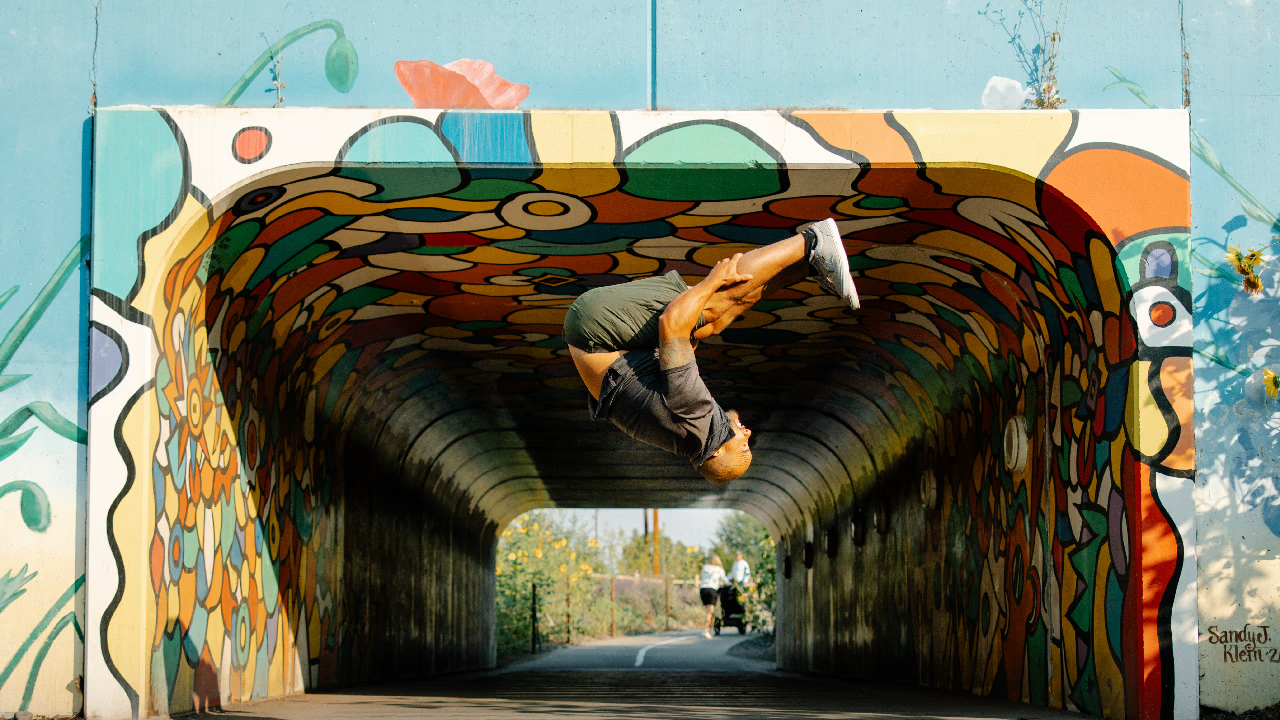
He steadied himself, then swung his arms back and forth, keeping his feet firmly planted on the edge. One. Two. Three. He leapt through the air, landed on the balls of his feet, and rose onto his toes, teetering until finding his balance.
“That’s so toesy,” said Liam McGlenn, a 14-year-old student who seemed unfazed by the jump. McGlenn is currently the West Coast’s second-ranked parkour champion in his age group, and Corrales ranks fourth in his.
An Urban Sport Built Around Creative Movement
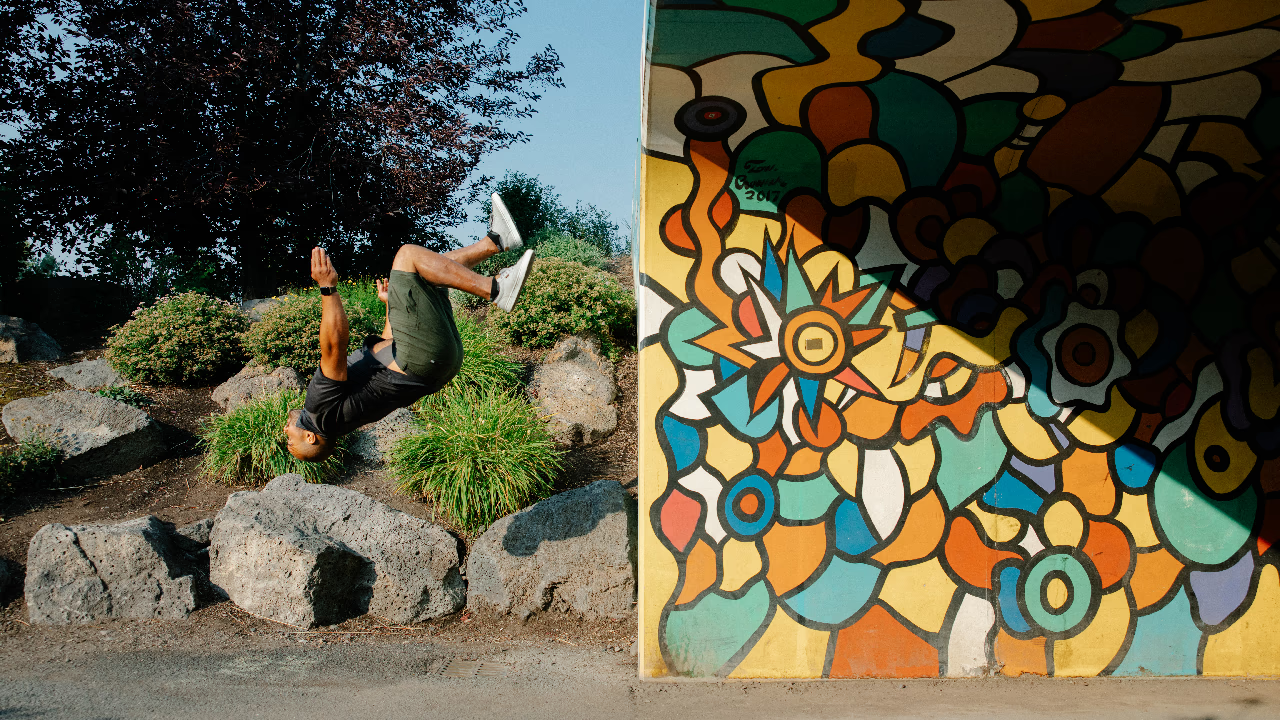
Corrales coaches parkour (pronounced par-CORE) in Bend through his company, Abstract in Motion(opens in new tab). The urban sport was founded in the 1990s by a Frenchman inspired by the military obstacle-course style training, parcours du combattant. Like gymnastics, parkour relies on strength, technique and momentum to jump, vault and climb. Instead of a gym, parkour participants see walls, staircases and handrails as opportunities to move creatively through the built environment.
The sport gained worldwide attention through viral videos of athletes performing dramatic flips and gainers, followed by its appearance in the James Bond film Casino Royale, where parkour pioneer Sébastien Foucan raced alongside Daniel Craig through a gravity-defying chase sequence. Its place in pop culture was cemented when “The Office” famously parodied it with co-workers tumbling over office furniture while shouting, “Parkour!”
“Ultimately, what sets parkour apart from other movement disciplines is its absolute freedom: It can be practiced anywhere, at any time, with zero equipment,” said Devin Strehle, a national competition circuit director of the United States Parkour Association(opens in new tab). The organization recently reported that 859 athletes competed in its 2025 National Parkour Competition Circuit, which included 30 qualifying events and a national championship.
The Parkour Community in Bend
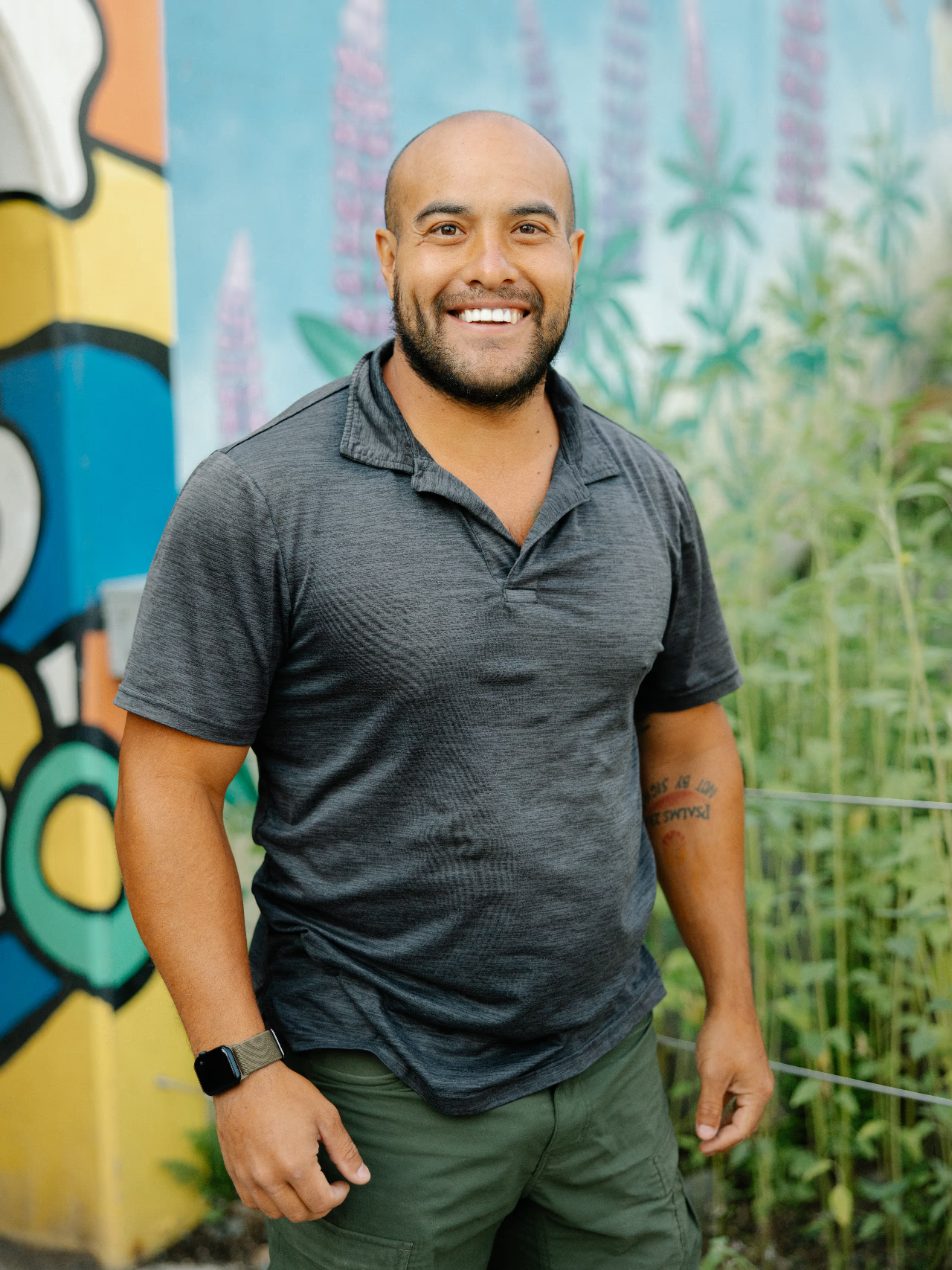
In Central Oregon, Corrales has spent more than 18 years building a community around the sport. For many athletes, parkour isn’t about posting risky stunts on social media. It’s a way to build strength, challenge themselves and find belonging.
“It was like finding my sport,” said McGlenn before he sprinted up a wall, flipped and landed lightly on his feet. The teen never felt at home in conventional sports. “That’s what I love about parkour—the connections. I’ve been able to make a lot of new friends.”
Like skateboarding(opens in new tab), parkour appeals to people seeking an unconventional way to stay active and express themselves. According to Corrales, that’s one of its greatest strengths. There is no ideal body type or single path to success.
“You just need to be willing to try and get out there,” he said.
How Parkour Athletes Train for Safety and Risk
Safety comes first. Athletes begin by learning how to land and fall properly before progressing to more advanced movements. Once they master those fundamentals, the city becomes a landscape filled with possibilities.
“How cool is it to have your mind evolve to where you see something the average person doesn’t?” Corrales asked.
He acknowledges that parkour carries risk, but believes those risks are manageable through sound judgment, proper technique and consistent practice. Those fundamentals give athletes the confidence to see opportunities where others see obstacles—whether jumping a puddle, running up a staircase or clearing the width of a downtown fountain.
Parkour in Bend: Frequently Asked Questions
Where can you learn parkour in Bend?
Eric Corrales coaches parkour in Bend through his company, Abstract in Motion. He has spent more than 18 years building a parkour community in Central Oregon.
Do you need equipment for parkour?
No specialized equipment is required. Devin Strehle of the United States Parkour Association describes the freedom to practice anywhere, at any time and without equipment as one of the qualities that distinguishes parkour from other movement disciplines.
Is parkour dangerous?
Parkour carries risk, but training emphasizes safety and progression. Athletes first learn how to land and fall properly before moving on to more advanced techniques. Corrales emphasizes sound judgment, proper technique and consistent practice as ways to manage risk.
Do you have to be an elite athlete to try parkour?
According to Corrales, there is no ideal body type or single path to success in parkour. The sport offers an unconventional way for people to stay active, challenge themselves and express themselves through movement.
Is parkour a competitive sport?
Yes. The United States Parkour Association reported that 859 athletes competed in its 2025 National Parkour Competition Circuit, which included 30 qualifying events and a national championship.