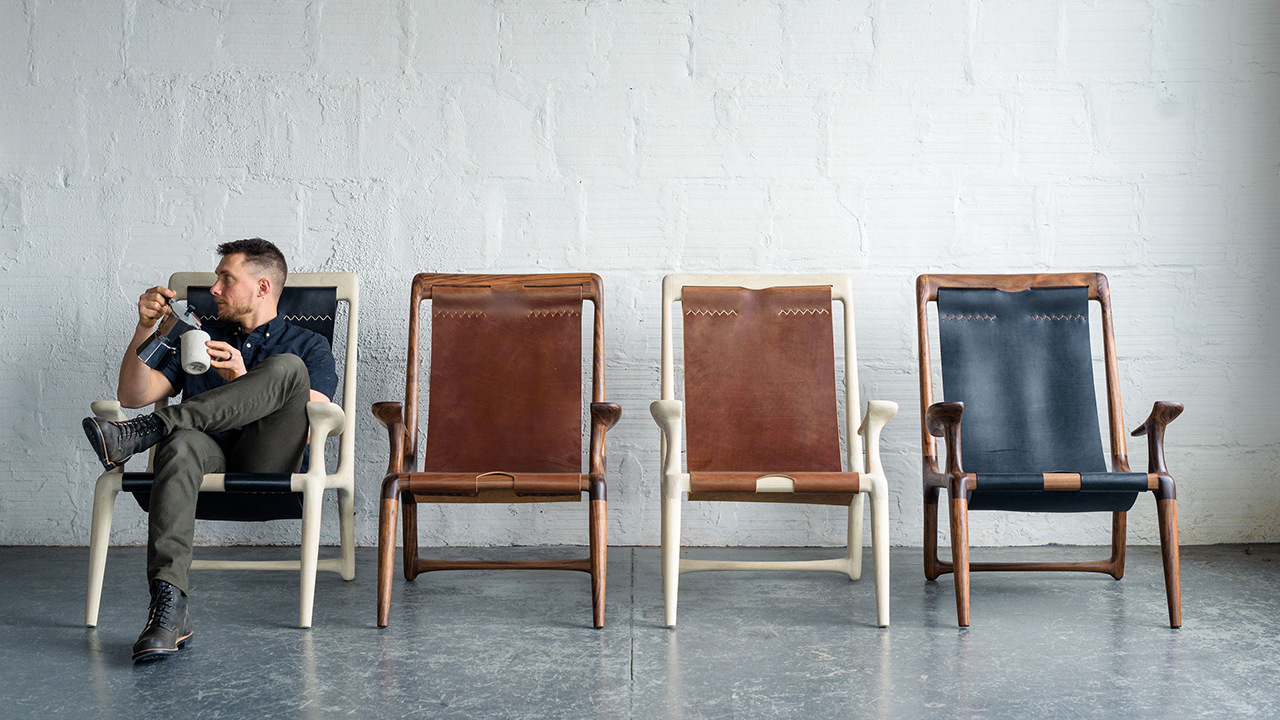
Justin Nelson remembers his first woodcarving: a tobacco pipe. He’d taken up the hobby while serving in the Marine Corps in his 20s, more than a decade ago. Recounting that memory recently from his shop and design studio in Tumalo, he realized even that early piece held the DNA of his work: a pull toward curves, softness and flow.
His self-taught experiment has evolved into a studio operating on a national stage. Fernweh Woodworking now shows in New York alongside some of the country’s most accomplished furniture makers. This serves as proof that Nelson’s team has not only refined a sculptural design language, but mastered the manufacturing discipline required to produce high-end work at scale.
The studio built a national presence via New York City, exhibiting annually during NYCxDESIGN and showing at the International Contemporary Furniture Fair four times. Today, Fernweh maintains showroom relationships from Los Angeles to Philadelphia, placing its Bend-made furniture in some of the country’s most competitive design markets.
The Self-Taught Path to Mastery
“I had no business starting this business. I wasn’t a woodworker. I didn’t have an artistic background at all,” said Nelson. He grew up in Indiana, where he studied business at Purdue University before joining the Marine Corps and deploying to Afghanistan.
After the military, he and his wife moved to Redmond in 2014, and Nelson joined the Prineville Hotshot elite wildland firefighting crew. He started Fernweh the next year during the off-season, making bud vases, planters, and cabinetry. Then, in 2017, he discovered the work of renowned craftsman Sam Maloof and his sculptural rockers. “That changed everything. I didn’t know you could do that with furniture,” he said.
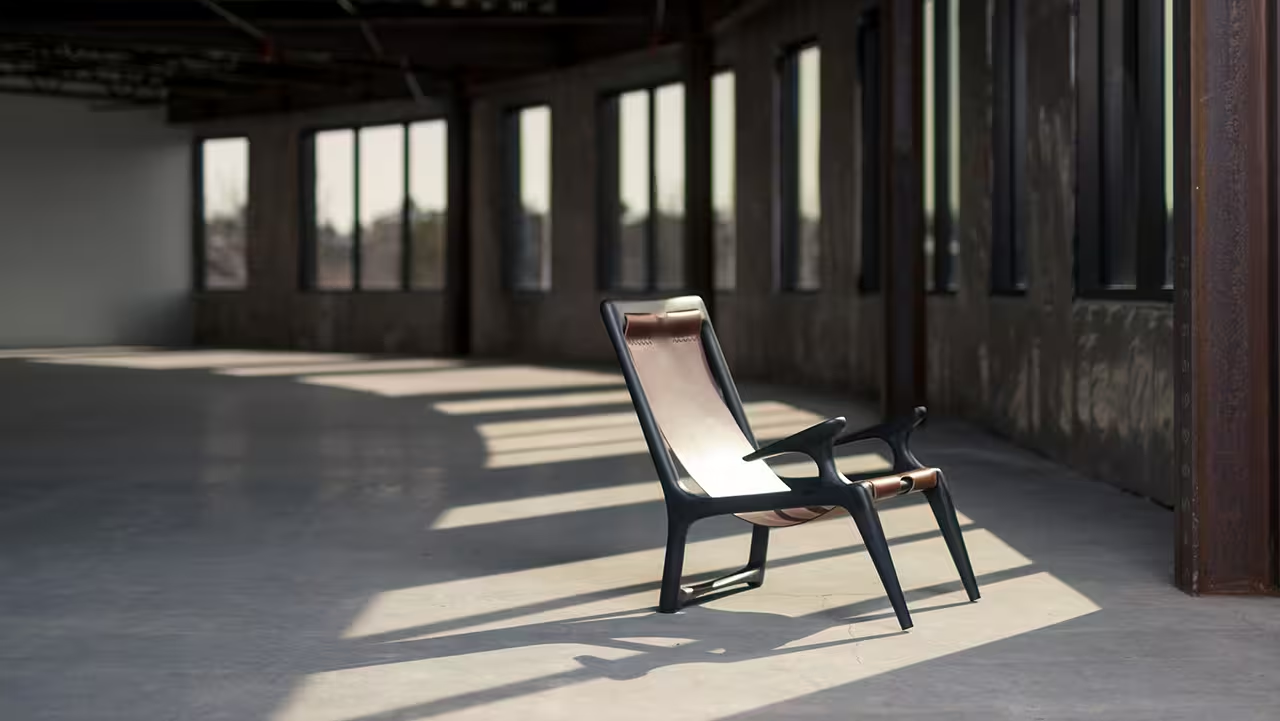
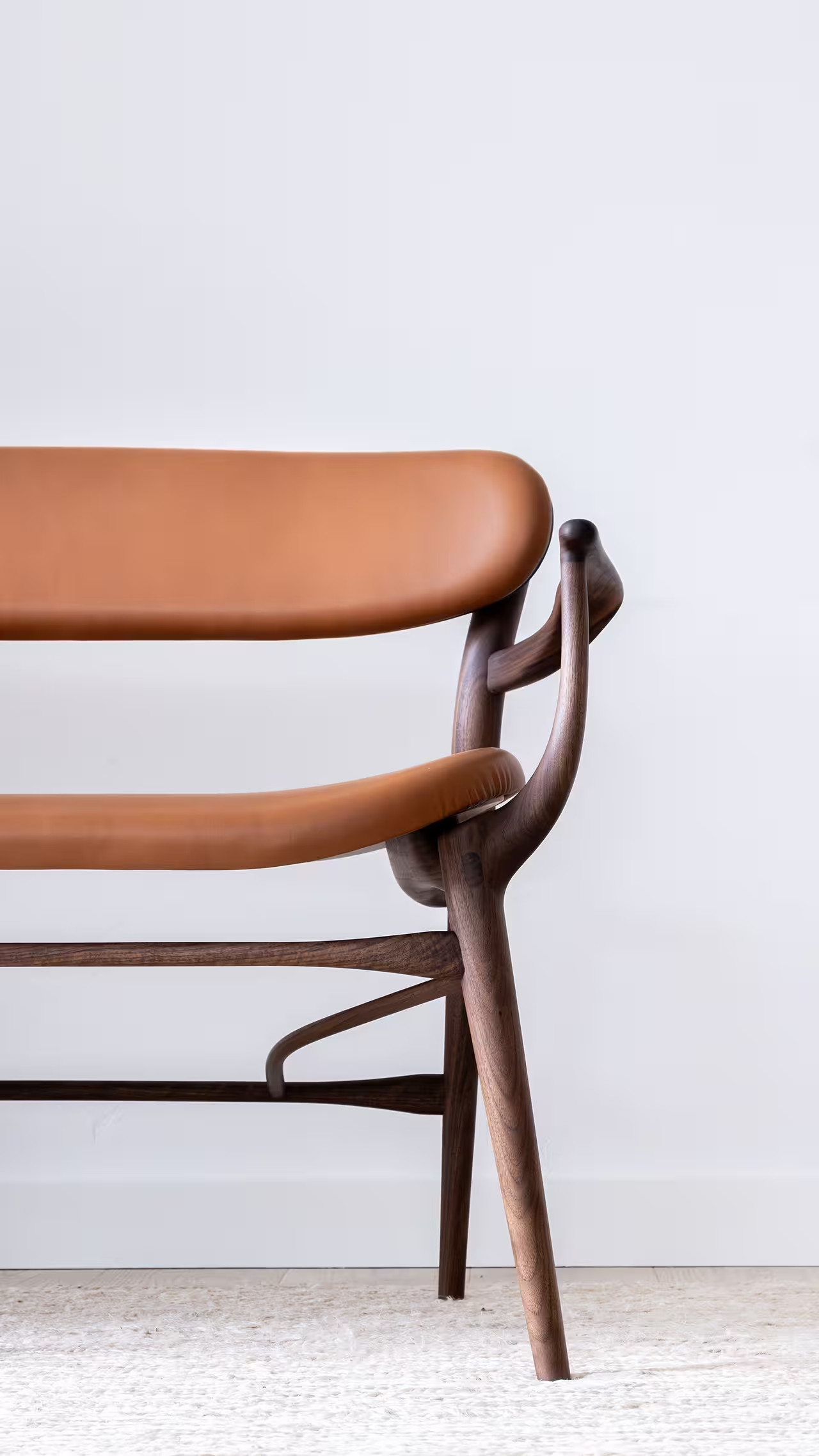
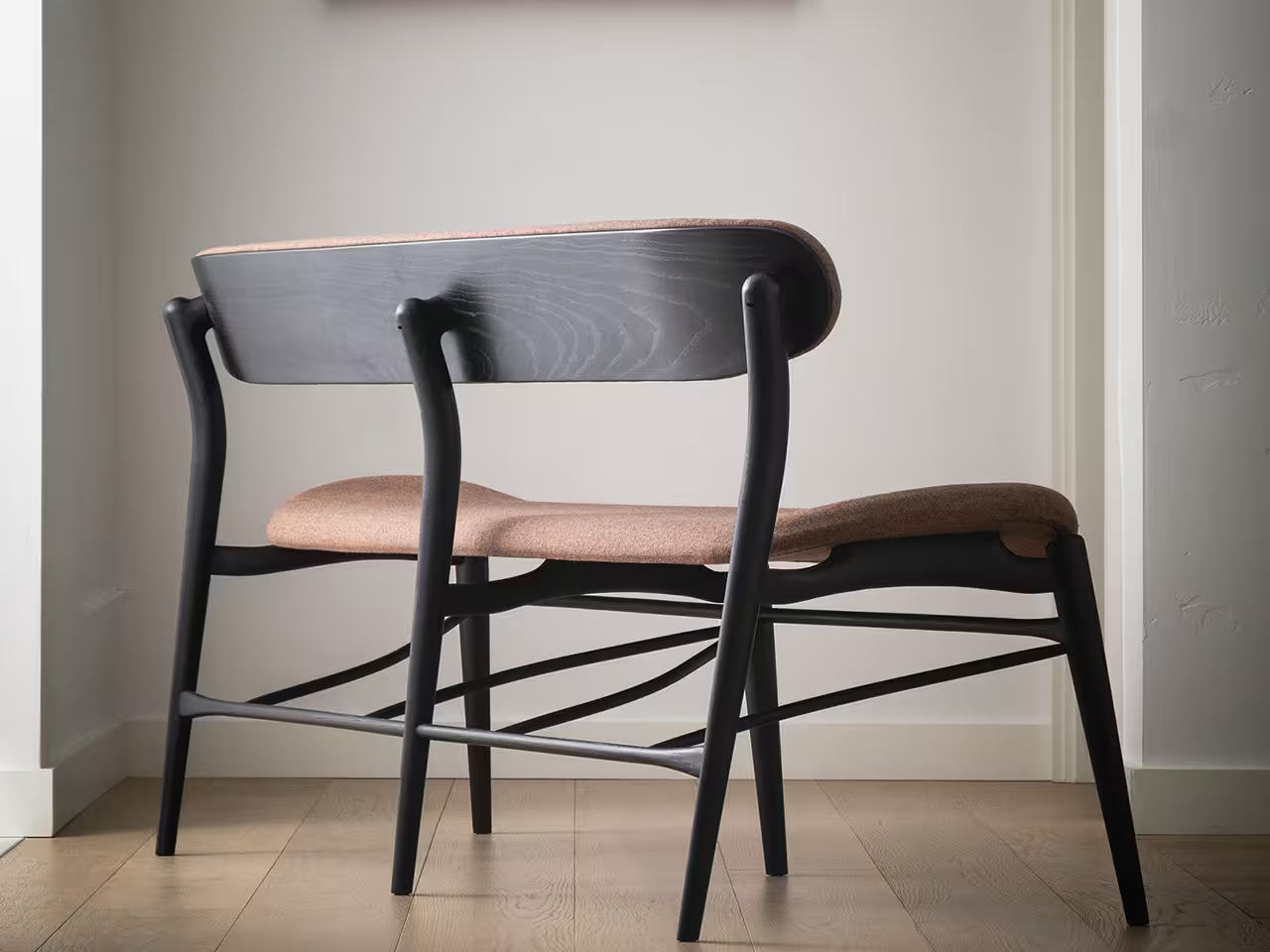
That year Nelson designed his Sling Chair, with its hand-shaped, quasi-skeletal wood frame, sleek joinery and supple leather sling. The Danish and Scandinavian design influence is also apparent in the piece that followed: a sleek yet organic, handcrafted Tripod Table that balances aesthetics and everyday function.
“When I designed those two pieces, that’s when I knew: This is what I want to be doing,” said Nelson. The challenge was how to make a living at it. His daughter had just been born; his wife was in graduate school, and he worked until 2 a.m. most nights, earning well below minimum wage given the hours he worked. “It was brutal,” he said.
Two years later, at the Architectural Digest Design Show in New York City, the showroom FAIR Design discovered Fernweh and became its primary partner in the city. About 80% of Fernweh’s sales are through interior designers and architects in their partner showrooms.
The Architect of the Sling: Finding a Signature Style
A pivotal moment came in 2023, when Nelson traveled to Europe to see a refurbished 3D parts duplicator—a rarity in the United States. “It was such a big investment, I wanted to see it in person before we shipped it across the ocean,” he said.
After training on the machine in Italy, he confirmed it could translate complex curves into precise, repeatable components. From there, he went on to Denmark to visit admired manufacturers like PP Møbler. He’d previously assumed that level of efficiency wasn’t replicable in the U.S., but his perspective shifted. He saw that his studio could evolve into a medium-scale microfactory.
That realization dovetailed with Nelson’s hiring of Production Manager Aaron Johnson, trained at Maine’s Center for Furniture Craftsmanship, who could further the operation by blending problem-solving with classical woodworking expertise. Last year, Nelson hired woodworker Matthew McDermott from the same program, rounding out a collaborative team producing world-class furniture at scale.
Nelson’s dream is to grow thoughtfully, hiring craft-school graduates—a vision reflected in the studio’s name. In German, fernweh means homesickness for a place you’ve never been. The idea mirrors where his company is headed—and where it began. He feels the thrill of it when designing chairs: “I have an inkling or an inspiration or constraints that are defining an imaginary chair in my head, and it feels like being homesick for something, somewhere I’ve never been in the design process, and I need to get there.”
Learn more about Justin Nelson and Fernweh Woodworking. | Keep reading about the home and design community in Bend and Central Oregon.