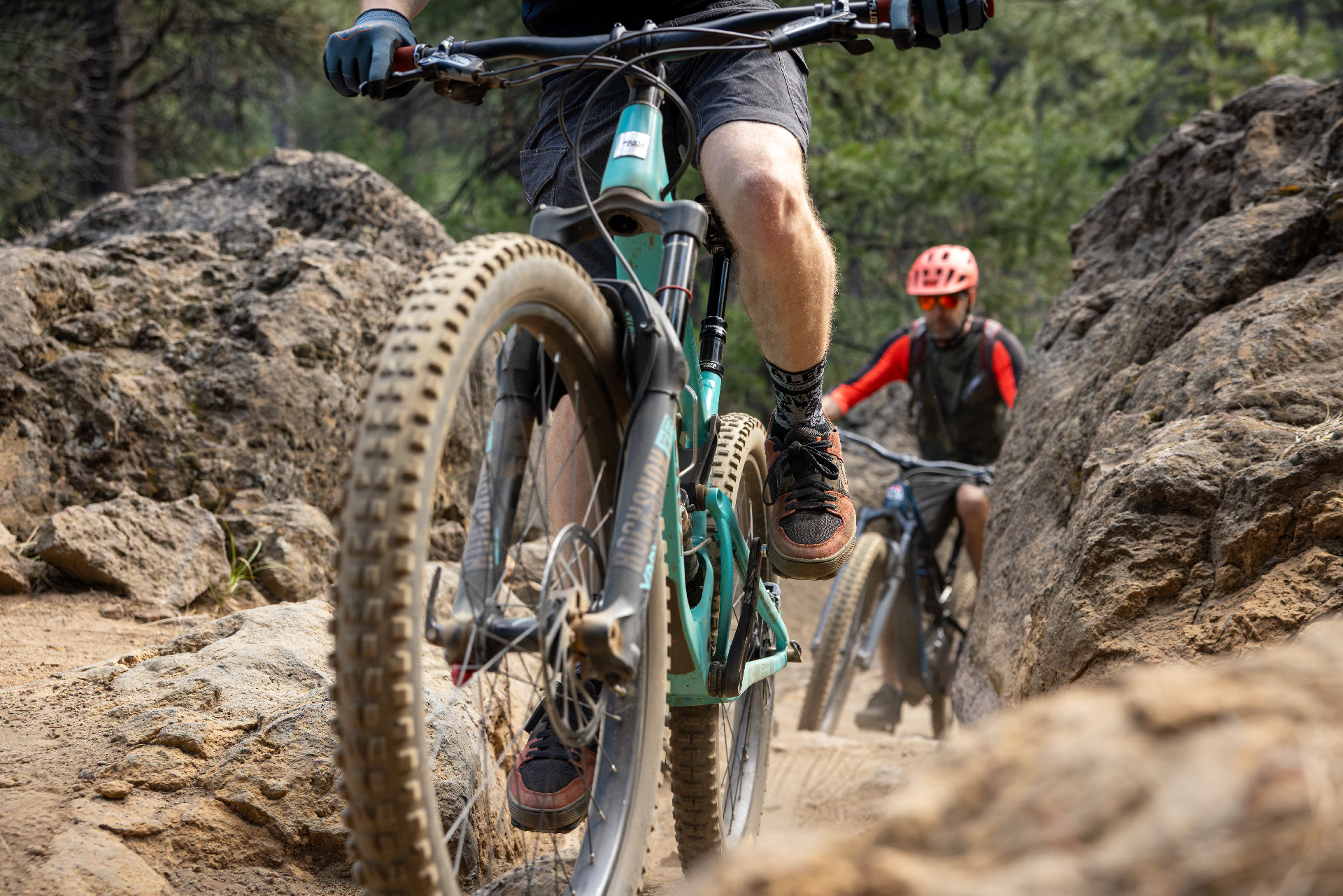
Thanks for not having eees on those bikes!” said a couple of old-timers as a friend and I passed them at a technical rock outcrop on Ben’s Trail. “You’re welcome?” I laughed in response, puzzled, as we pedaled by.
A couple of miles later, we’d find the reason for the remark stopped at a junction. An e-bike rider quickly remounted just ahead of us and took off up the trail. He wore gym clothes and a full-face helmet. His saddle was several inches too low and his poorly tuned suspension had him bobbing indelicately from side to side. He had buds in his ears and rode alone. A surfer would have called him a kook. Bouncing, whirring and rocking out, he was having the time of his life, though. With his machine evidently set to “Maximum Turbo Boost,” he quickly and easily accelerated away from us.
Now, I didn’t have any beef with this guy, and I don’t know what transpired between him and the old-timers—maybe they were just e-judgers, and it was nothing at all. There was a petty part of me that wanted to give chase. He was hauling ass. But with effort, we could haul too. Historically, no person this inexperienced could ever ride away from a true—albeit old and washed up—pro bike racer like me, or from dyed-in-the-wool mountain bikers like them.
As people who’ve invested years into honing a craft, being left in the dust by someone with motor assistance raises understandable frustration. The fact that I enjoy riding trails on motorcycles as well as mountain bikes makes my unease at e-mountain bikers seem even more arbitrary and, I’ll admit, a bit laughable.
What Changed on Bend’s Trails
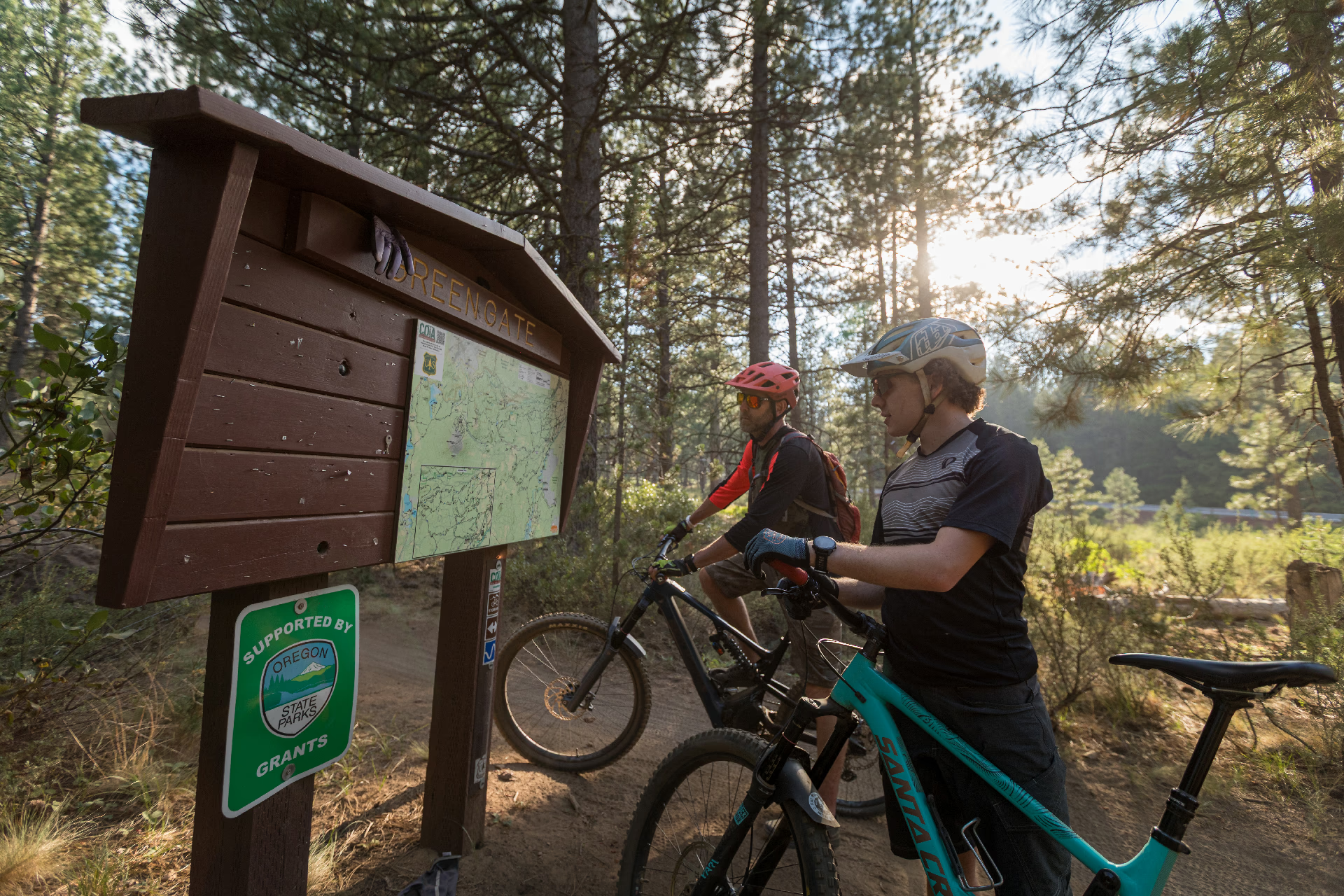
This year, 161 miles of trails in the Deschutes National Forest(opens in new tab), including much of the Phil’s and Wanoga networks, have been opened to Class 1 (pedal-assist) e-bikes. This leaves 159 miles of trails in those woods dedicated to muscle power only.
If this isn’t enough for the luddites, a look in the mirror may be warranted. As mountain bikers, most of us have come across surly hikers on a stretch of singletrack. Sour and unacknowledging, it’s obvious they wished we were elsewhere, despite our equal right to public lands. The uncharitable things we have thought of them just might be what e-bikers are thinking of us.
Why There’s Room for Everyone
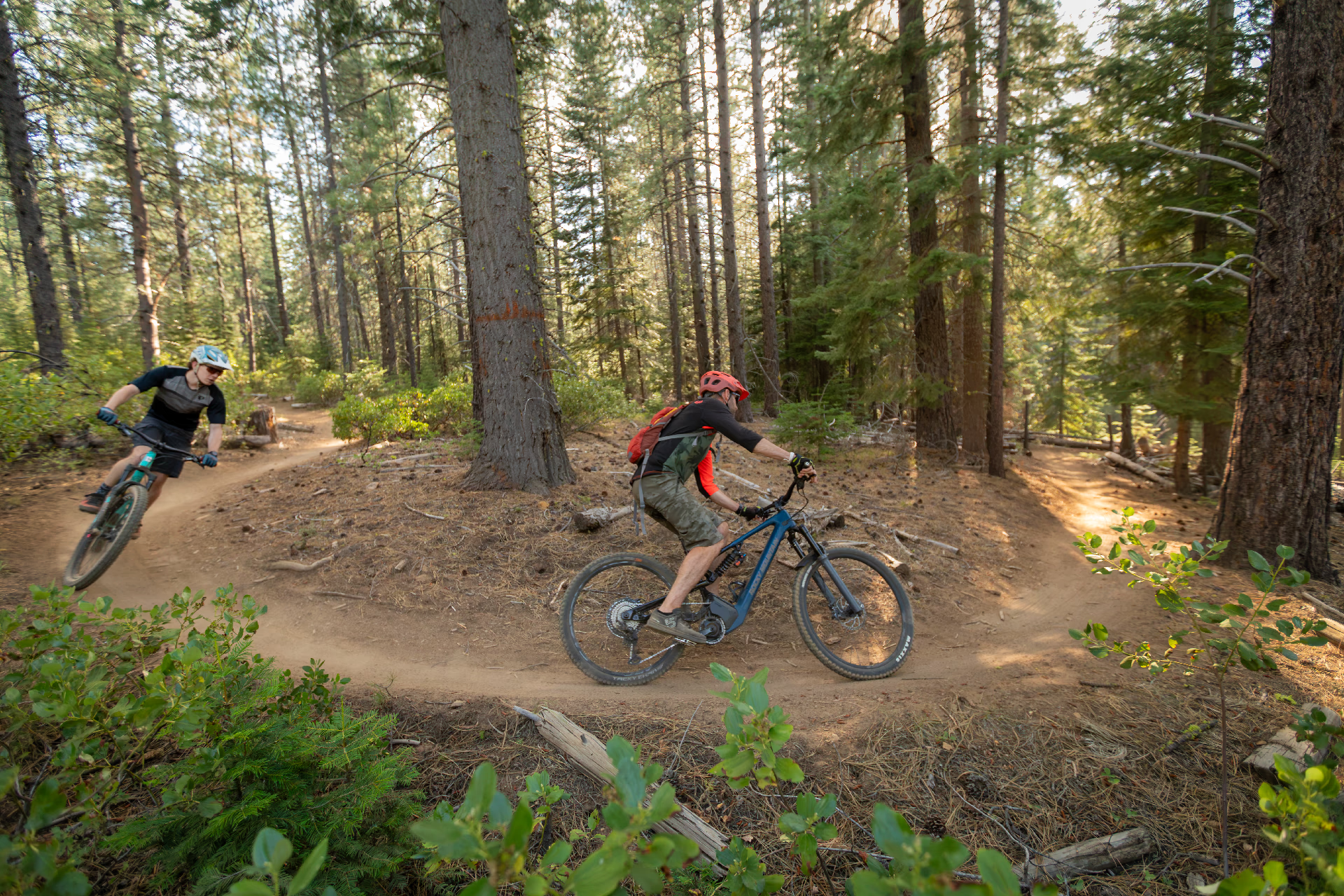
E-bikes move about as fast as well-ridden bicycles do. They do not emit exhaust fumes or offensive noises. Their impact on trails is no greater than a normal bike, and they don’t seem to be catching fire and burning our forests down, as fearmongers predicted. Their real impact is that there are more people on our trails than there otherwise might be. Some are newcomers and strangers who haven’t “paid their dues.” And others are quite the opposite.
Many of the legendary local racers and trail builders I know have been dabbling with electric assist—if not fully embracing it. Phil Meglasson (yes, of Phil’s trail fame) is in his 80s now and rides e-bikes almost exclusively. There’s undeniable poetic justice in the rules changing to allow him to ride at Phil’s. So if you run into an old fella on an electric bike out at Helipad summit, save the stink eye and say hello. It could be a man who planted a seed long ago, sharing the fruits of his labor with you.
Bottom Line
The Sea Otter Classic in Monterey has been hosting an e-bike race since 2016. There was a lot of hubbub that inaugural year, and world champion mountain biker Christoph Sauser was even on the start list. Ever curious, I taped the severed cord of a salad shooter to my acoustic bike and snuck into the rear of the start chute.
At the time, I was a passably fit professional racer, and at the tops of the steep climbs, I was hyperventilating significantly louder than the e-bikes that were softly whizzing past left and right. But everywhere else, we were pretty even. I’d eventually finish 17th of 31 racers. Sure, Sauser beat me by six minutes or so. I learned a lot that day, but mostly this:
There’s less difference between electric and unplugged than you think.
With Great Power Comes Great Responsibility
A Guide to E-Bike Etiquette
E-Bikers Should
Be friendly to other trail users. Don’t shy from connection—on a Class 1 e-bike, you have just as much right to be on e-bike legal trails as anyone else. Announce when you are approaching from behind on climbs, and be patient for acoustic bike riders to find a flatter, wider place to pull over so you can pass. Do not sweat them from behind.
Acoustic Bikers Should
Be friendly to other trail users. E-bike riders are less different than you think! If trail access were granted like water rights, cyclists might have a “first in time, first in right” stump to stand on here, but we do not. If an e-biker catches you from behind, tell them you’ll pull off when you can and look for a suitable place to let them by as soon as possible. When you see them again at the top of the hill, talk about how great the descent is going to be.
Frequently Asked Questions About E-Bikes in Central Oregon
Are e-bikes allowed on trails in Central Oregon?
Yes, but only on trails where they are specifically permitted. In the Deschutes National Forest, many trails are open to Class 1 (pedal-assist) e-bikes, while others remain designated for non-motorized use only. Always check the latest trail regulations before you ride.
What is a Class 1 e-bike?
A Class 1 e-bike provides electric assistance only while you’re pedaling and stops assisting once you reach 20 mph. These are the types of e-bikes most commonly allowed on designated natural-surface trails. They also have no twist or thumb throttle to move forward on their own.
Can I ride any type of e-bike on mountain bike trails?
No. Trail access depends on the land manager and the type of e-bike. Many trail systems that allow e-bikes permit only Class 1 models. Class 2 (throttle-equipped) and Class 3 e-bikes may have different restrictions.
Do e-bikes damage trails more than traditional mountain bikes?
Current land management policies generally treat Class 1 e-bikes similarly to traditional mountain bikes regarding trail impact. Riding responsibly—especially on wet or muddy trails—is the biggest factor in protecting trail conditions.
Should e-bike riders announce themselves before passing?
Yes. A friendly “On your left” or “Passing when you’re ready” gives other riders and hikers time to find a safe place to move over.
Are e-bikes allowed on Phil’s Trail?
Some trails within the Phil’s Trail network are open to Class 1 e-bikes, while others are not. Check current maps and posted regulations before your ride, as access varies by trail.
Why are e-bikes controversial?
Some longtime mountain bikers worry about increased trail traffic, speed differences or changes to trail culture. Others see e-bikes as a way to make mountain biking more accessible for older riders, people recovering from injuries and newcomers.
Are e-bikes good for older riders?
Many riders use pedal-assist bikes to continue enjoying trails as fitness, age or physical limitations change. E-bikes can help riders cover more ground while still requiring them to pedal.