
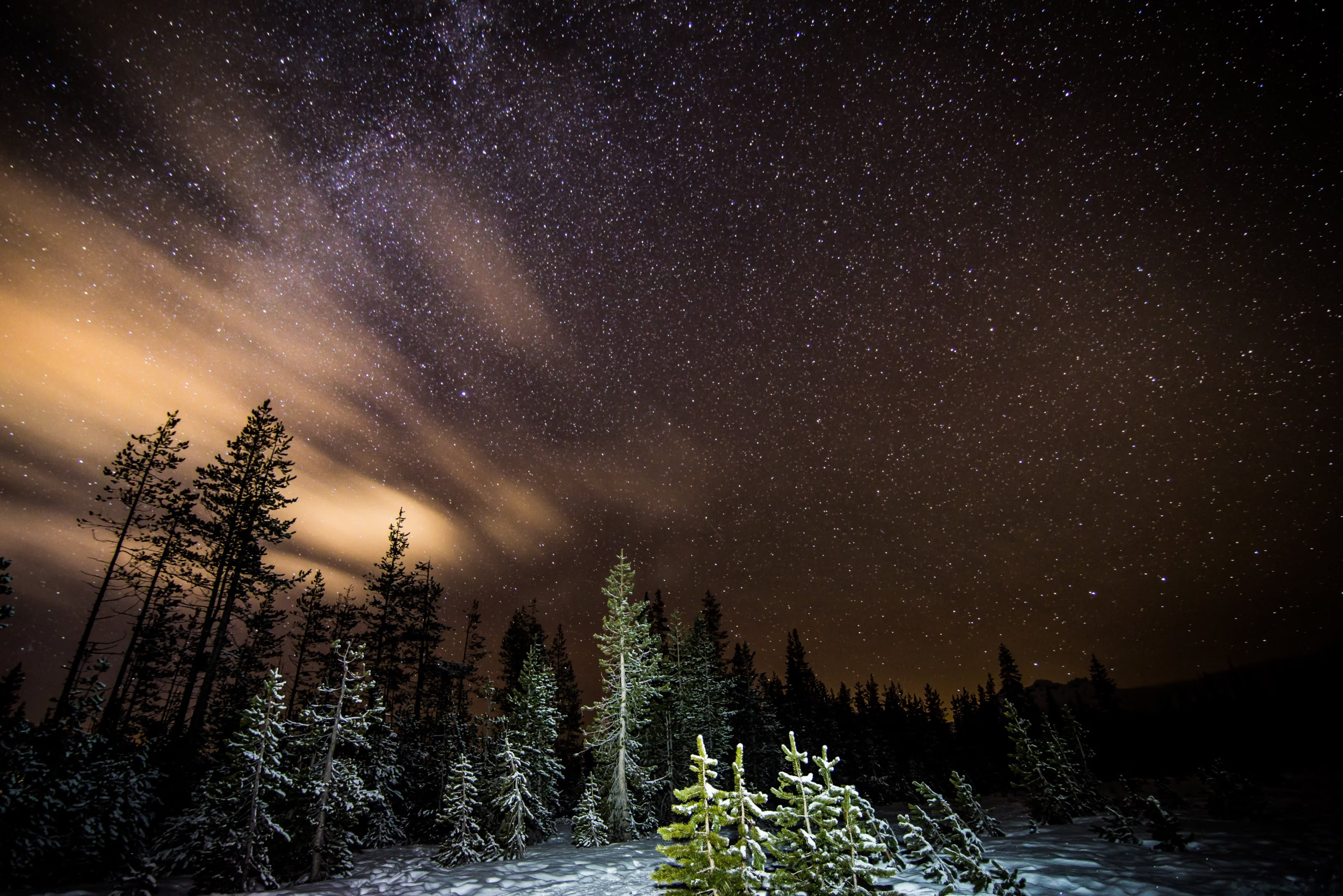
Central Oregon has a way of making the night sky feel within reach. Away from the brightest city lights, the high desert landscape features broad horizons, long stretches of darkness(opens in new tab), and skies where planets, constellations, and even distant galaxies come into sharp focus.
From September through December 2026, the region’s night sky will deliver a steady progression of reasons to look up: a crescent moon beside luminous Venus, the warm glow of a Harvest Moon rising over the high desert, flashes of comet debris streaking overhead and, by December, one of the year’s most anticipated meteor showers, when the prolific Geminids return. But there is plenty worth watching before then.

September: Planets, Dark Skies and the Harvest Moon
September 11-12 | New Moon
New moons produce virtually no lunar light, making the surrounding nights especially good for searching out the faint structures that disappear beneath a brighter moon. September is also one of the final opportunities of 2026 to see the vivid core of the Milky Way from the Northern Hemisphere before it disappears from view until spring. For anyone more interested in deep-sky objects than the moon itself, this could be one of September’s best excuses to head beyond the glow of town.
Viewing tip: Find the darkest safe skies you can and give your eyes time to adjust. Under sufficiently dark conditions, the Milky Way, galaxies and nebulae become easier to distinguish. Avoid looking at your phone or other bright lights while your eyes adjust.
September 14 | Crescent Moon Meets Venus
This celestial pairing comes with a conveniently early showtime. Shortly after sunset on September 14, look above the western horizon for a delicate crescent moon hanging near brilliant Venus. The two will appear within about five degrees of each other—roughly the width of three middle fingers held at arm’s length. Against the fading colors of twilight, the scene should be especially striking: a thin sliver of moon beside one of the brightest objects in the evening sky. The pair should remain visible for roughly an hour after sunset before dropping beneath the horizon.
Viewing tip: Find a location with a clear western horizon. Open terrain will offer a better view than a spot hemmed in by tall trees, buildings or steep ridgelines.
September 18 | Venus at Its Brightest
For much of the year, Venus can be easy to mistake for something closer to home. Its intense white light can resemble an aircraft or an unusually bright star. On September 18, the planet reaches peak luminosity, shining at magnitude -4.8. That brightness makes Venus one of the easiest objects in the evening sky to identify, even from places where artificial light washes out many stars.
Viewing tip: Look toward the western horizon shortly after sunset. Mercury will appear nearby. Unlike meteor watching, this event does not require especially dark skies, so a clear horizon matters more than getting far away from town.
September 22 | Autumn Equinox—and a Reason to Watch for Auroras
Autumn officially begins in the Northern Hemisphere on the evening of September 22, marking the shift toward longer nights. It may also bring another reason for Central Oregon skywatchers to pay attention. Equinoxes are associated with above-average northern lights activity because Earth’s orientation can create more favorable conditions for interaction with the solar wind.
That does not mean auroras are guaranteed. Northern lights remain notoriously difficult to predict, and the most dramatic displays happen at high Arctic latitudes, but the equinox period gives Oregonians a reason to keep an eye on aurora forecasts.
Viewing tip: If an aurora alert reaches Oregon, find a dark location with a wide, unobstructed view to the north. Get away from city lights if possible. Cameras can sometimes capture auroral color and structure that appears much fainter to the naked eye.
September 25 | Mars Joins the Gemini Twins
Look east before sunrise on September 25 for a temporary new member of one of the night sky’s most recognizable pairings. Mars will line up with Castor and Pollux, the twin stars of Gemini. Castor will sit at the top, Pollux in the middle, and orange-tinged Mars below, forming a neat celestial trio.
Mars’ reddish color should help distinguish the planet from its stellar neighbors. Look lower toward the horizon for bright Jupiter.
Viewing tip: Choose an open spot with a low eastern horizon. Because the objects will be relatively low in the sky, a clear sightline will matter more than finding complete darkness.
September 26 | Watch the Harvest Moon Rise
Few celestial events suit Central Oregon’s open landscapes better than a moonrise. September’s full moon, known as the Harvest Moon, reaches peak illumination September 26. The most dramatic moment comes as the moon climbs over the eastern horizon around sunset. Near the horizon, the moon can appear unusually large because of an optical effect known as the moon illusion. It may also glow deep gold or orange as its light travels through more of Earth’s atmosphere.
The Harvest Moon will not be alone. Saturn will follow the moon into the sky and remain within roughly six degrees of it through the night. Telescope users may also be able to find Neptune nearby.
Viewing tip: Find an unobstructed eastern horizon and arrive before moonrise. Watching the moon emerge behind a ridge, juniper-dotted high desert or distant landscape creates a more dramatic view than waiting until it is high overhead.
All September | Find the Andromeda Galaxy
Not everything worth seeing in September belongs to our own galaxy. The Andromeda Galaxy is the closest major galaxy to the Milky Way. Under truly dark conditions, it can be visible without a telescope, appearing less like a dramatic spiral and more like a faint, hazy smudge against the stars. Binoculars or a small telescope make the view more rewarding. And what looks like a tiny patch of light in the Central Oregon sky is, in reality, an entire galaxy far, far away.
Viewing tip: Andromeda is highest in the sky around midnight or 1 a.m. Dark skies make a major difference, so this is one event worth traveling to see, away from artificial light.
October: Meteor Season Begins
October 6-10 | Draconid Meteor Shower
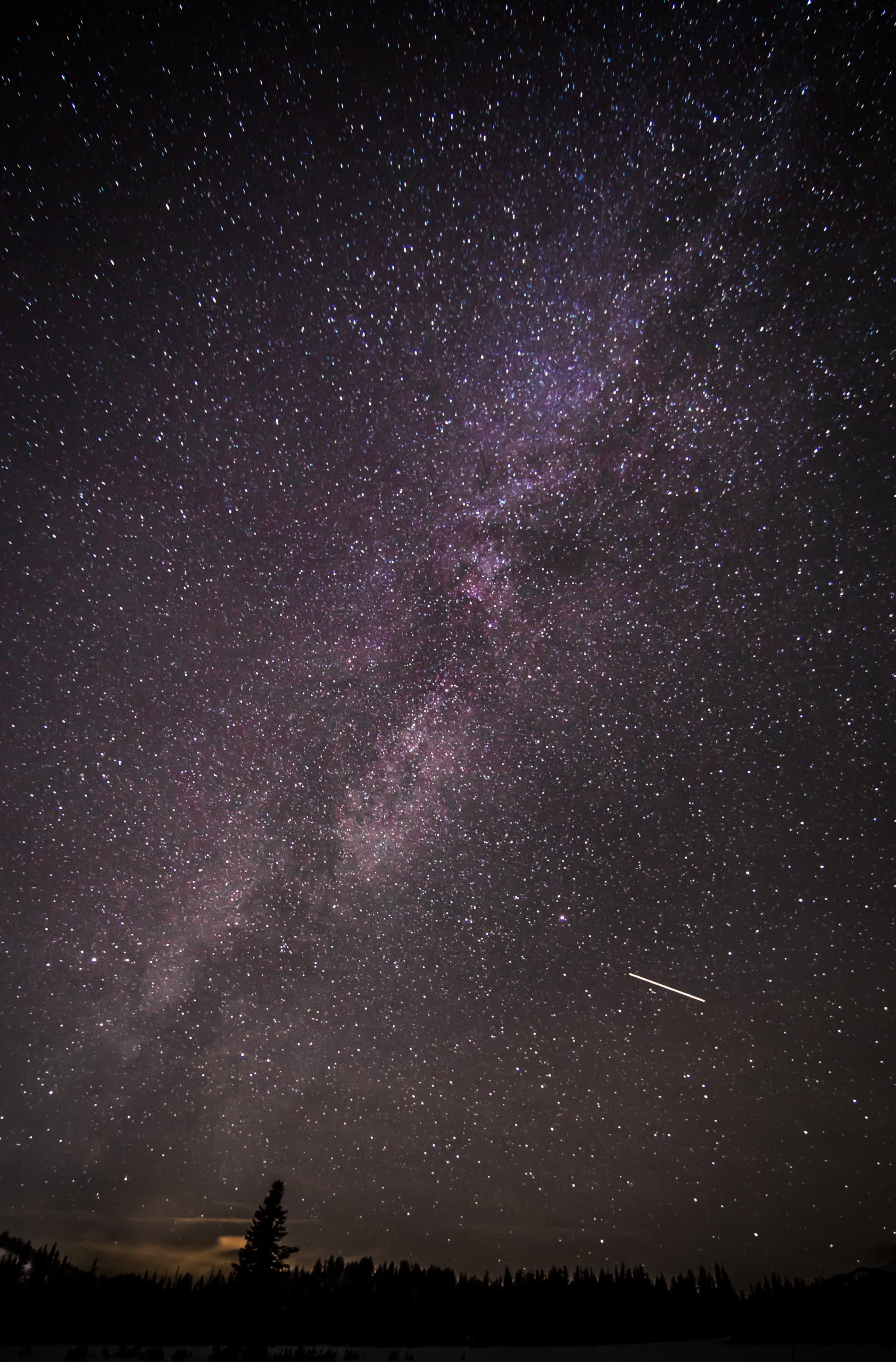
The Draconids may not produce the dramatic meteor counts of December’s Geminids, but their timing and dark-sky conditions could make the 2026 shower worth an evening outdoors. The shower runs October 6 through 10 and peaks October 8, with roughly five to 10 meteors per hour on average. A new-moon phase means little lunar light should interfere around the peak, leaving the background sky darker and making fainter meteors easier to spot. That makes the shower well suited to Central Oregon’s broad, open skies.
Viewing tip: Skip the telescope. Meteors can appear across a wide swath of sky, so settle into a place where you can see as much of the sky as possible. Bring a chair or blanket and allow time for your eyes to adjust.
October 21-22 | Orionid Meteor Shower
Every Orionid that flashes overhead carries a connection to one of the best-known objects in astronomy. The Orionids are created by debris left behind by Halley’s Comet. As Earth crosses that trail of particles, tiny fragments plunge into the atmosphere and burn up, producing streaks of light.
Near maximum, the shower typically produces roughly 10 to 20 meteors per hour. The challenge in 2026 will be moonlight. An approximately 80%-illuminated moon could wash out some of the fainter meteors.
Viewing tip: Look for the darkest window between moonset and dawn. Once the moon is out of the sky, move away from artificial lights, get comfortable and watch a broad area overhead rather than staring at a single constellation.
November: Fireball Month
November 4-5 | Southern Taurids
November’s meteor showers are less about quantity than spectacle. The Taurids typically produce fewer meteors than some of the year’s headline showers, but they are known for something else: slow, intensely bright meteors that can blaze conspicuously across the sky. Those occasional fireballs make November a particularly interesting month for patient skywatchers. Southern Taurids meteor counts are relatively modest, but the reward can be memorable: a bright, unhurried streak carving across the night sky. The Southern Taurids peak with relatively little moonlight, improving the odds of noticing fainter activity as well.
Viewing tip: Find a dark site with as much open sky as possible. No telescope is needed. Taurid meteors can appear far from the shower’s radiant, so avoid concentrating on a single part of the sky.
November 11-12 | Northern Taurids
A week later comes the Northern Taurids peak with only a 7%-illuminated moon. Prime viewing hours after midnight should be moon-free. That combination of darkness and the shower’s reputation for bright meteors makes this one of November’s more appealing nights to spend outside. You may not see a constant stream of shooting stars. But with the Taurids, one brilliant meteor can become the entire night’s show.
Viewing tip: Plan for a longer watch. Bundle up, find somewhere comfortable to sit or recline and give the sky time. Meteor watching rewards patience.
November 16-17 | Leonid Meteor Shower
Associated with Comet Tempel-Tuttle, the Leonids can produce roughly 15 meteors per hour under ideal conditions. Leonid meteors are known for their speed, streaking through the atmosphere considerably faster than the slow-burning Taurids earlier in the month. That makes the Leonids feel like a different kind of meteor display: quicker, sharper and easier to miss if you are not looking.
Viewing tip: Keep a wide portion of sky in view rather than relying on binoculars or a telescope. Find a dark location and allow your eyes at least several minutes to adapt before deciding whether conditions are good.
November 24 | Beaver Supermoon
Just days before Thanksgiving, November’s Full Beaver Moon will also appear as a supermoon. A supermoon occurs when a full moon happens near the Moon’s closest approach to Earth in its elliptical orbit, a point known as perigee. The result is a full moon that can appear somewhat larger and brighter than usual. The difference can be subtle when the moon is high overhead. Near the horizon, however, the moon’s apparent size, combined with the moon illusion, creates a much more dramatic scene.
Viewing tip: Watch around moonrise and incorporate Central Oregon’s landscape into the view. A distant ridge or other foreground feature will help emphasize the moon’s scale.
December: A Marquee Meteor Shower
December 4-20 | Geminid Meteor Shower
If there is one meteor shower worth pulling on winter boots, piling on extra layers and standing outside in the December cold for, it is the Geminids.
The Geminids are among the strongest and most reliable meteor showers of the year, capable of producing up to roughly 120 meteors per hour under ideal conditions. The shower peaks on December 13, and moon conditions are expected to be favorable in 2026.
Away from bright lights, Central Oregon provides the kind of dark backdrop that meteor watching demands. Under darker skies, fainter Geminids remain visible rather than disappearing in the glow of streetlights.
The result can be a night when the sky seems to come alive without warning—one streak overhead, then another somewhere completely different.
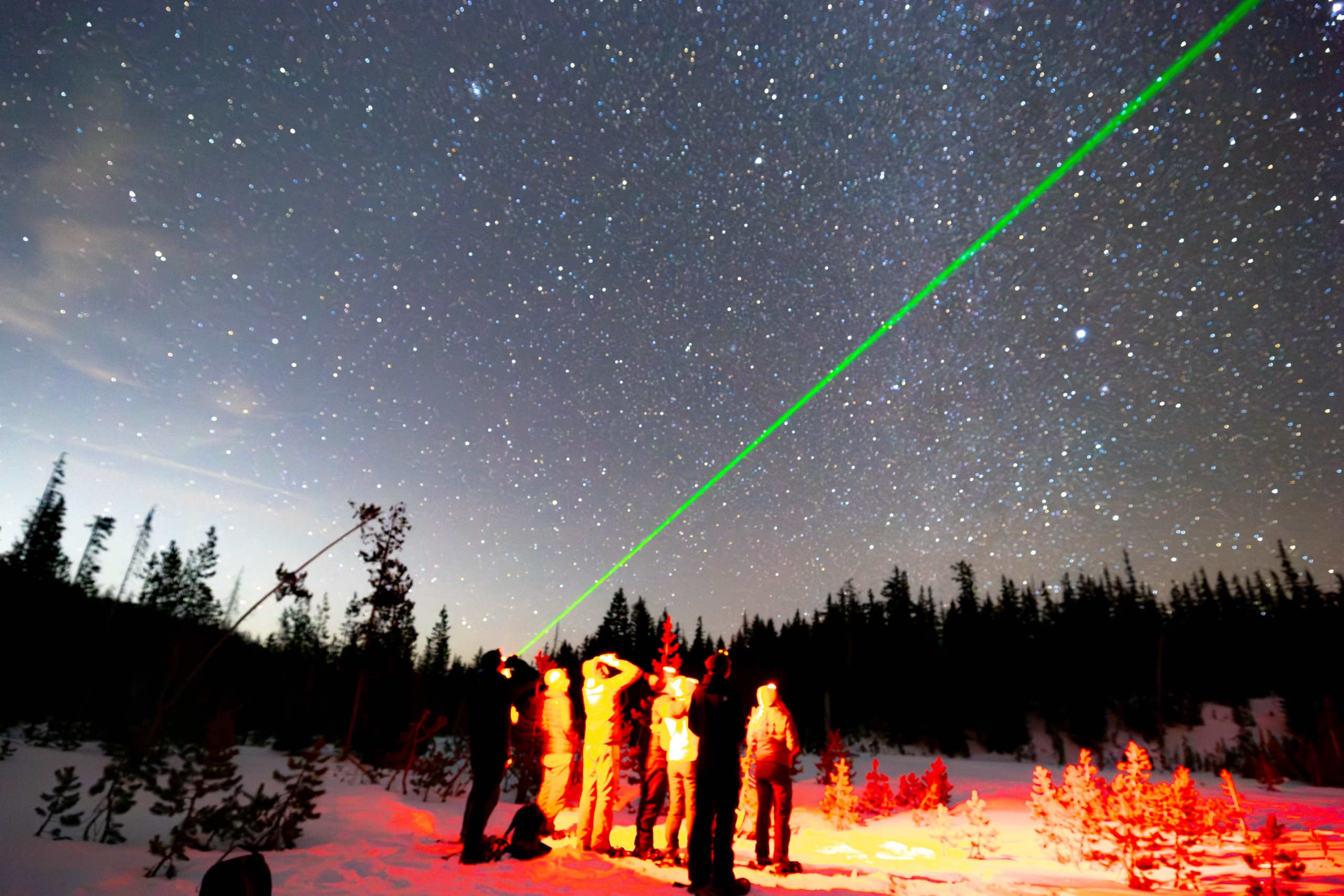
Viewing tip: Wanderlust Tours is offering Geminids Meteor Shower Snowshoe Tours(opens in new tab) December 11-13. Participants will travel through the snowy Deschutes National Forest with naturalist guides while watching for the shower overhead. For independent viewing, find the darkest safe location available, dress for prolonged exposure to winter temperatures, and let your eyes adjust before settling in.
December 22 | Ursid Meteor Shower
The Ursids are a subtler shower than the Geminids, producing around 10 meteors per hour. It is unlikely to compete with the spectacle of mid-December, but clear skies can still make it worthwhile for anyone spending an evening outside around the winter solstice.
Viewing tip: Think of this as a lower-key meteor night. Choose a convenient dark-sky location rather than traveling solely in search of high meteor counts, and give yourself enough time outside to catch the occasional streak.
December 23 | December Supermoon
December’s full moon will also be a supermoon, bringing a bright close to a season filled with much fainter celestial objects. Compared with searching for a distant galaxy or waiting for a single meteor, this is easy skywatching: walk outside, look up and let the full moon do the work.
Viewing tip: For a more dramatic view, watch the moon close to moonrise, when it sits low above the landscape. An open horizon and a recognizable Central Oregon foreground can make the scene especially photogenic.
Looking Ahead: The Next Eclipse Visible From Bend
The next eclipse visible from Central Oregon will be a penumbral lunar eclipse on August 16-17, 2027. During a penumbral lunar eclipse, the moon passes through the faint outer portion of Earth’s shadow, known as the penumbra. Unlike a total lunar eclipse, the moon does not turn dramatically dark or red. Instead, observers may notice a subtle shading across part of the lunar surface.
Until then, Central Oregon’s celestial show is less about one blockbuster moment than a steady procession overhead: planets appearing in twilight, orange moons climbing over the high desert, pieces of comets flashing through the atmosphere and, on the darkest nights, a view extending far beyond our own galaxy.
Where to Stargaze Around Central Oregon
The best stargazing locations in Central Oregon depend on what you are trying to see. A meteor shower or distant galaxy benefits from the darkest sky possible, while a moonrise or planetary conjunction may simply require a broad, unobstructed horizon.
Central Oregon has several places associated with astronomy and dark-sky viewing:
Pine Mountain Observatory(opens in new tab)
An astronomy-focused destination east of Bend where the distance from major urban light creates darker viewing conditions.
Sunriver Nature Center & Observatory(opens in new tab)
An established astronomy destination in Sunriver that brings telescopes and night-sky education together.
Oregon Outback International Dark Sky Sanctuary(opens in new tab)
For viewers willing to travel farther, the Oregon Outback offers an enormous expanse of exceptionally dark night sky.
Prineville Reservoir State Park(opens in new tab)
Another Central Oregon destination for dark-sky viewing, where open landscapes offer expansive views overhead.
Worthy Brewing’s Hopservatory(opens in new tab)
A convenient Bend option for people who want an astronomy experience without making a long drive into the high desert.
Always check current nighttime access, operating hours, road conditions, closures and regulations before heading out.
Frequently Asked Questions About Central Oregon Stargazing
What is the best celestial event to see in Central Oregon in fall or winter 2026?
The Geminid meteor shower is the standout event on this calendar. The shower peaks around December 13 and can produce up to roughly 120 meteors per hour under ideal conditions. Favorable moon conditions and Central Oregon’s dark skies could make it one of the best viewing nights of the season.
Do I need a telescope to watch a meteor shower?
No. In fact, telescopes and binoculars can make meteor watching more difficult because they restrict your field of view. Meteors can flash across almost any portion of the sky, so the best equipment is usually your own eyes and a comfortable place to sit or lie back.
Where are the darkest skies near Bend?
Potential dark-sky and astronomy destinations include Pine Mountain Observatory, Sunriver Nature Center & Observatory, the Oregon Outback International Dark Sky Sanctuary and Prineville Reservoir State Park. The best location will depend on nighttime access, weather, seasonal road conditions and the celestial event you want to see.
How far should I get from Bend’s city lights?
For bright objects such as Venus, Jupiter or a full moon, you may not need to leave town at all. For meteor showers, the Milky Way and the Andromeda Galaxy, darker conditions become much more important. Moving away from concentrated artificial light will reveal fainter objects that are otherwise lost in urban skyglow.
Can you see the Andromeda Galaxy without a telescope in Central Oregon?
Under sufficiently dark skies, yes. Andromeda can appear to the naked eye as a faint, fuzzy patch rather than the detailed spiral galaxy seen in long-exposure photographs. Binoculars or a small telescope can make it much easier to find.
Can you see the northern lights from Central Oregon?
It is possible during strong auroral activity, but sightings are not guaranteed. The strongest northern lights displays typically occur much farther north. If forecasts suggest auroral activity could reach Oregon, find a dark site with a clear view toward the northern horizon.
Discover more winter stargazing ideas.