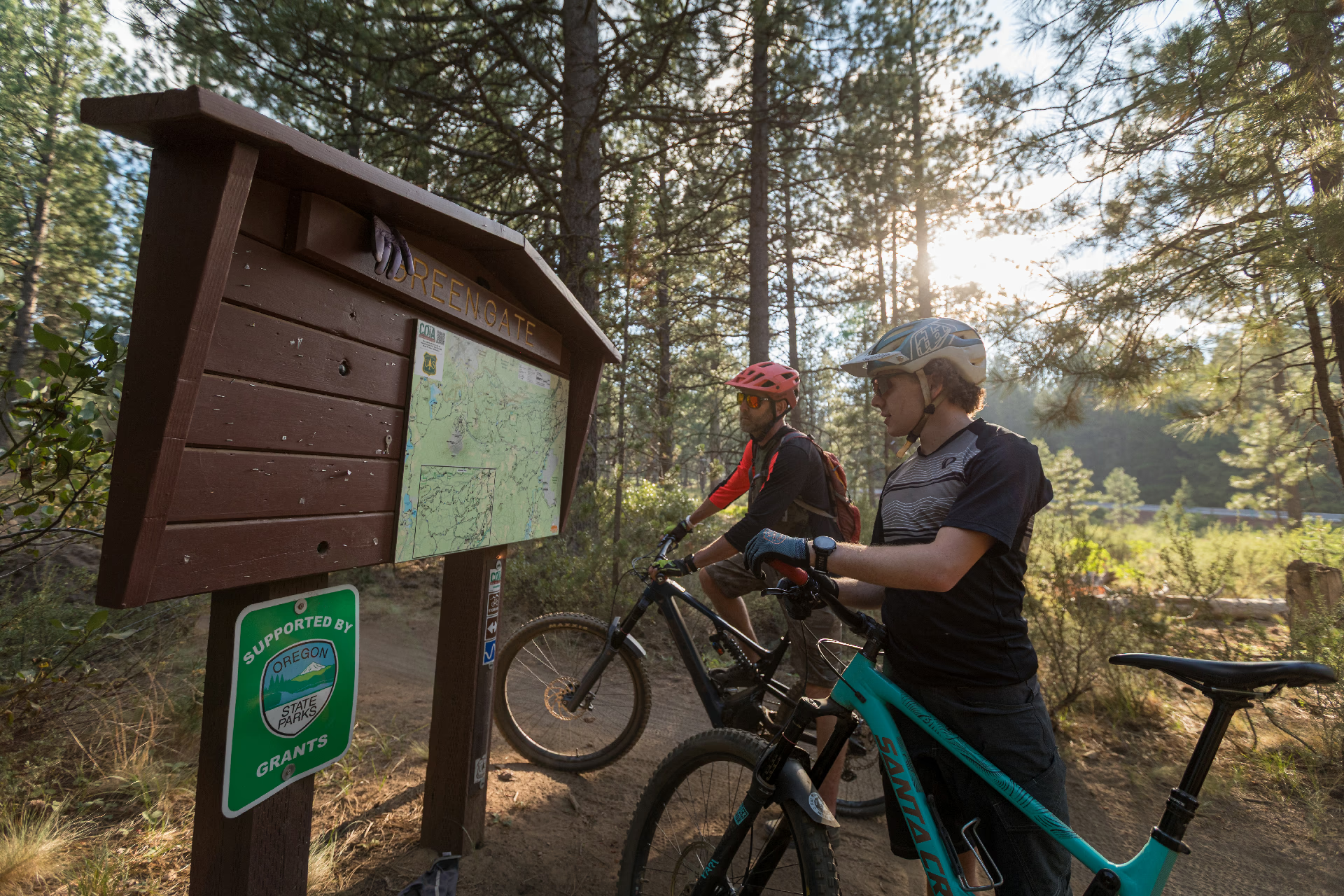
Thanks for not having eees on those bikes!” said a couple of old-timers as a friend and I passed them at a technical rock outcrop on Ben’s Trail. “You’re welcome?” I laughed in response, puzzled, as we pedaled by.
A couple of miles later, we’d find the reason for the remark stopped at a junction. An e-bike rider quickly remounted just ahead of us and took off up the trail. He wore gym clothes and a full-face helmet. His saddle was several inches too low and his poorly tuned suspension had him bobbing indelicately from side to side. He had buds in his ears and rode alone. A surfer would have called him a kook. Bouncing, whirring and rocking out, he was having the time of his life, though. With his machine evidently set to “Maximum Turbo Boost,” he quickly and easily accelerated away from us.
Now, I didn’t have any beef with this guy, and I don’t know what transpired between him and the old-timers—maybe they were just e-judgers, and it was nothing at all. There was a petty part of me that wanted to give chase. He was hauling ass. But with effort, we could haul too. Historically, no person this inexperienced could ever ride away from a true—albeit old and washed up—pro bike racer like me, or from dyed-in-the-wool mountain bikers like them.
As people who’ve invested years into honing a craft, being left in the dust by someone with motor assistance raises understandable frustration. The fact that I enjoy riding trails on motorcycles as well as mountain bikes makes my unease at e-mountain bikers seem even more arbitrary and, I’ll admit, a bit laughable.
If this isn’t enough for the luddites, a look in the mirror may be warranted. As mountain bikers, most of us have come across surly hikers on a stretch of singletrack. Sour and unacknowledging, it’s obvious they wished we were elsewhere, despite our equal right to public lands. The uncharitable things we have thought of them just might be what e-bikers are thinking of us.
Why There’s Room for Everyone
E-bikes move about as fast as well-ridden bicycles do. They do not emit exhaust fumes or offensive noises. Their impact on trails is no greater than a normal bike, and they don’t seem to be catching fire and burning our forests down, as fearmongers predicted. Their real impact is that there are more people on our trails than there otherwise might be. Some are newcomers and strangers who haven’t “paid their dues.” And others are quite the opposite.
Many of the legendary local racers and trail builders I know have been dabbling with electric assist—if not fully embracing it. Phil Meglasson (yes, of Phil’s trail fame) is in his 80s now and rides e-bikes almost exclusively. There’s undeniable poetic justice in the rules changing to allow him to ride at Phil’s. So if you run into an old fella on an electric bike out at Helipad summit, save the stink eye and say hello. It could be a man who planted a seed long ago, sharing the fruits of his labor with you.
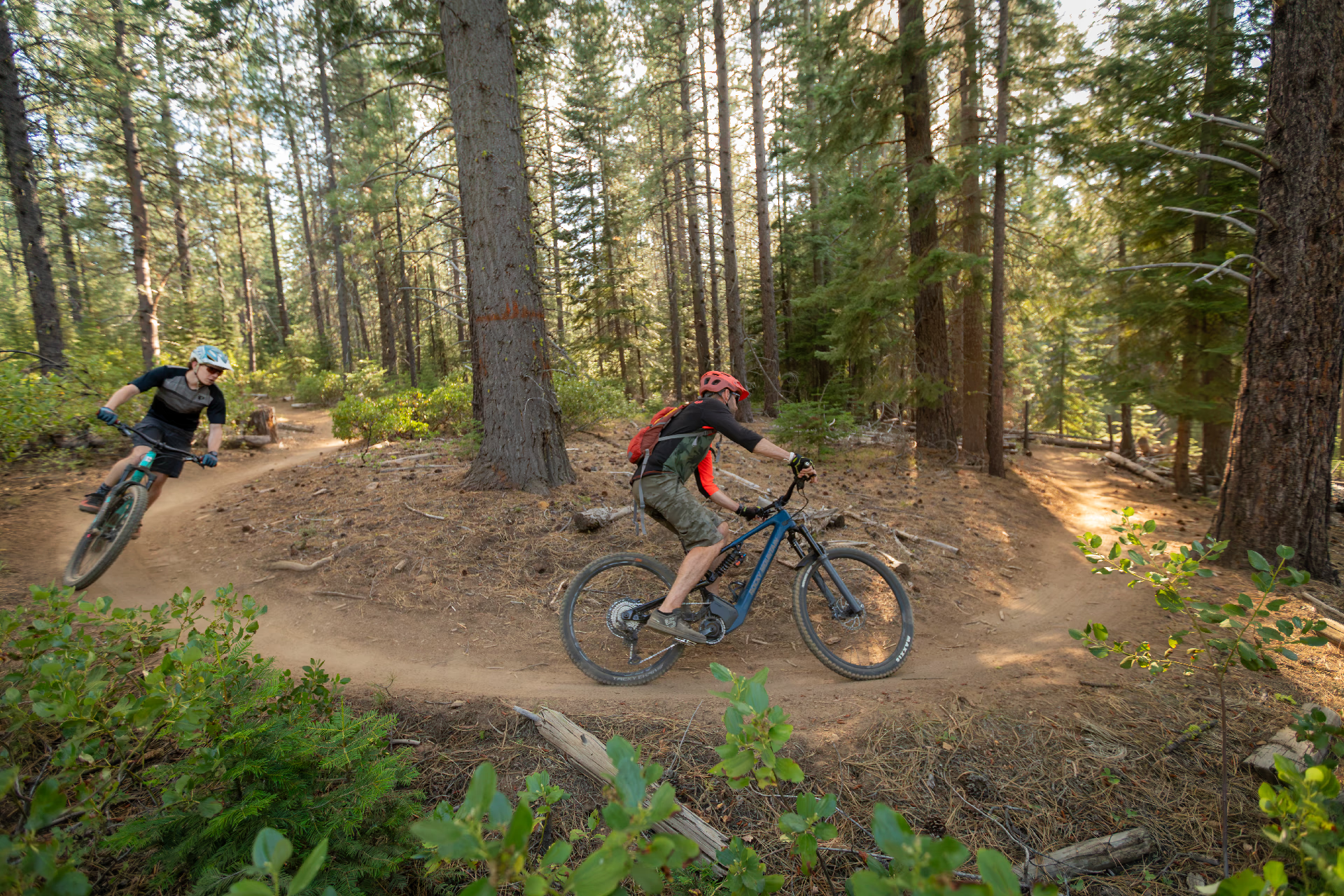
An acoustic cyclist and e-biker ride together on Storm King.
Bottom Line
The Sea Otter Classic in Monterey has been hosting an e-bike race since 2016. There was a lot of hubbub that inaugural year, and world champion mountain biker Christoph Sauser was even on the start list. Ever curious, I taped the severed cord of a salad shooter to my acoustic bike and snuck into the rear of the start chute.
At the time, I was a passably fit professional racer, and at the tops of the steep climbs, I was hyperventilating significantly louder than the e-bikes that were softly whizzing past left and right. But everywhere else, we were pretty even. I’d eventually finish 17th of 31 racers. Sure, Sauser beat me by six minutes or so. I learned a lot that day, but mostly this:
There’s less difference between electric and unplugged than you think.
With Great Power Comes Great Responsibility
A Guide to E-Bike Etiquette
E-Bikers Should
Be friendly to other trail users. Don’t shy from connection—on a Class 1 e-bike, you have just as much right to be on e-bike legal trails as anyone else. Announce when you are approaching from behind on climbs, and be patient for acoustic bike riders to find a flatter, wider place to pull over so you can pass. Do not sweat them from behind.
Acoustic Bikers Should
Be friendly to other trail users. E-bike riders are less different than you think! If trail access were granted like water rights, cyclists might have a “first in time, first in right” stump to stand on here, but we do not. If an e-biker catches you from behind, tell them you’ll pull off when you can and look for a suitable place to let them by as soon as possible. When you see them again at the top of the hill, talk about how great the descent is going to be.
Frequently Asked Questions About E-Bikes in Central Oregon
Are e-bikes allowed on trails in Central Oregon?
Yes, but only on trails where they are specifically permitted. In the Deschutes National Forest, many trails are open to Class 1 (pedal-assist) e-bikes, while others remain designated for non-motorized use only. Always check the latest trail regulations before you ride.
What is a Class 1 e-bike?
A Class 1 e-bike provides electric assistance only while you’re pedaling and stops assisting once you reach 20 mph. These are the types of e-bikes most commonly allowed on designated natural-surface trails. They also have no twist or thumb throttle to move forward on their own.
Can I ride any type of e-bike on mountain bike trails?
No. Trail access depends on the land manager and the type of e-bike. Many trail systems that allow e-bikes permit only Class 1 models. Class 2 (throttle-equipped) and Class 3 e-bikes may have different restrictions.
Do e-bikes damage trails more than traditional mountain bikes?
Current land management policies generally treat Class 1 e-bikes similarly to traditional mountain bikes regarding trail impact. Riding responsibly—especially on wet or muddy trails—is the biggest factor in protecting trail conditions.
Should e-bike riders announce themselves before passing?
Yes. A friendly “On your left” or “Passing when you’re ready” gives other riders and hikers time to find a safe place to move over.
Are e-bikes allowed on Phil’s Trail?
Some trails within the Phil’s Trail network are open to Class 1 e-bikes, while others are not. Check current maps and posted regulations before your ride, as access varies by trail.
Why are e-bikes controversial?
Some longtime mountain bikers worry about increased trail traffic, speed differences or changes to trail culture. Others see e-bikes as a way to make mountain biking more accessible for older riders, people recovering from injuries and newcomers.
Are e-bikes good for older riders?
Many riders use pedal-assist bikes to continue enjoying trails as fitness, age or physical limitations change. E-bikes can help riders cover more ground while still requiring them to pedal.
Fresh-hop season is upon us, and Central Oregon has several events worth adding to your calendar. The strongest concentration comes from late September through the first weekend of October, when breweries pour beers made with hops that went from Oregon farms to the brew kettle within hours of harvest. The sheer volume of beers can feel overwhelming, so here’s what to know about the style and where to enjoy the beers all season long.
Hoptoberfest
Sept. 26, 2–7 p.m. | Bend
Crux Fermentation Project brings together fresh-hop beers from Crux, Silver Moon Brewing, Sunriver Brewing, Hopworks Brewery, Funky Fauna Artisan Ales and Bend Brewing Company during Hoptoberfest(opens in new tab). The lineup spans citrusy, piney, tropical and dank expressions of freshly harvested Oregon hops, offering a chance to compare how different breweries approach the seasonal style side by side.
Funky Fauna Artisan Ales picking up all the fresh hops!
Fresh Hops on the Pond
Oct. 2–3, Starting at 11 a.m. | Bend
Bend Brewing Company expands Fresh Hops on the Pond to two days this year, with more than 30 fresh-hop beers from breweries across the West Coast, plus live music and tasting packages. Bend Brewing plans five fresh-hop beers of its own, including Fresh Trop with fresh Simcoe hops, Keyboard Warrior with Citra and Party Laps with Mosaic. Great Notion is among the visiting breweries.
Fresh Hops Fest
Oct. 3, Noon–8 p.m. | Sisters
Three Creeks Brewing hosts Sisters’ fresh-hop celebration(opens in new tab), with a lineup that reaches beyond the season’s usual IPAs. Highlighted releases might include a Three Creeks/TPK hazy IPA made with fresh Luminosa hops, a fresh-hopped mead from Sisters-based Lazy Z Ranch Wines and a fresh-hop Japanese lager from Wayfinder.
Fresh Hop Bingo
Mid-September-Oct. 15 | Bend, Sisters and Redmond
For a season-long option, Visit Bend’s Fresh Hop Bingo(opens in new tab) sends drinkers to a dozen participating breweries throughout Central Oregon. Current beers include Crux Fresh Hop Bochi Bochi, Boneyard Out on Bale IPA, Sunriver Fresh Hop Fuzztail Hefeweizen, Bevel Green Flag Strata Fresh Hop IPA and Cascade Lakes Fresh Pressed Helles, along with fresh-hop releases from Funky Fauna Artisan Ales and others.
Pick up a free bingo card at the Bend Visitor Center, then visit participating breweries and collect stamps. Connect four or more breweries on the card for a chance to win prizes and enter a Bend beer-cation giveaway. The game runs through Oct. 15, or until the beers or prizes run out.
About the Central Oregon Fresh Hop Scene
It was September when a UPS truck arrived at Sunriver Brewing Company(opens in new tab) with 200 pounds of fresh Mosaic hops from the Yakima Valley in Washington. The shipment took Brett Thomas, then one of Sunriver’s two brewers, by surprise; he’d been expecting the hops, but not for at least another day or two. Thomas wasn’t sure whether the delivery was due to a miscommunication, missed phone call, or lost voicemail—but when the shipment arrived at the brewhouse, he knew he needed to do something with the hops—and fast. Thomas immediately ruled out storing the hops overnight in the brewery’s cooler, lest they wilt and degrade. Setting them aside in the humid brewhouse seemed just as fraught. “It’s like, ‘Crap, what do we do?’” Thomas, now Sunriver’s director of brewery operations, recalls thinking. “I had to start making some decisions at that point.”
Brett Thomas, Sunriver’s director of brewing operations
Locked in a race against time, Thomas had his fellow brewer transfer another beer-in-progress to a different tank a day early, freeing it up to make use of the freshly delivered hops. From there, he cleaned the tank, started brewing, tossed in the hops, mainlined cups of coffee and—at age 40—pulled an all-nighter like an overworked college student. Thomas didn’t head home until 10 a.m. the following morning. “That was the longest day of my brewing career,” he said. “It was about a twenty-seven-hour day for me. It was exhausting but invigorating; I was going to make that beer regardless of what it took.”
The race to do it, and do it right, was partly because Thomas wasn’t just brewing any ordinary beer; he was brewing a fresh-hop beer—a style which, in recent years, has become the heartbeat of regional festivals, a mainstay at bars and breweries alike, and one of the most fun, if challenging, styles for brewers to craft. So as summer turns to fall in Central Oregon, here’s what the fuss is about—and why anyone would work all night to make such a beer—along with background on the phenomenon and how to enjoy the once-a-year fun that is fresh-hop season.
Fresh-Hop Beers, Explained
Most of the beers you’ve ever enjoyed—from Natural Lights in college-town dive bars to high-end sour ales and hazy IPAs from Central Oregon’s best breweries—have used dried hops as one of their main ingredients. The plant, with a cone-shaped flower, acts as a preservative that keeps beer fresh longer—and gives beer its aromas and flavors. So, if you’ve ever enjoyed a vanilla-tinged porter or picked out the pineapple flavor in your favorite IPA, you have the humble hop plant to thank.
Josh Yoker, one of Sunriver Brewing’s talented production brewers
These hops, actually a cousin of the cannabis plant, are generally picked and processed on farms, turned into small pellets (resembling rabbit food), placed into vacuum-sealed bags and stored for weeks or months in refrigerators. Hop farms can be found all over the United States, but the vast majority are in Washington, Idaho and Oregon—where hops have grown in the Willamette Valley for more than 150 years.
But when hops for fresh-hop beers are picked between mid-August and mid-September, they aren’t pelletized and stored for later use. Rather, the freshly picked hops are cleaned and immediately sent to craft breweries for inclusion in a brewing batch over the following 24 hours or so—a tight timeframe that ensures the hops retain their freshness and distinct flavor profiles before degrading over the following days.
What Does Fresh-Hop Beer Taste Like?
The resulting beers boast intense flavors and stark aromas made possible by the specific hop variety used in that beer; maybe it’s a juiciness that lingers on the palate, hard-hitting notes of citrus or pine, or lasting resinous flavors that stand out. “The essence of the hop ends up in the beer,” explained Wade Underwood, co-founder and general manager of Three Creeks Brewing in Sisters. “They’re really unique in that we can only make them a few days each year when they’re physically harvested, and they make incredible beers with more delicate notes than most bigger IPAs.”
The beers generally start showing up around Oregon in early September, a few weeks after their hops are picked from the bine (not vine!), and can remain relevant well into October. And while IPAs and pale ales account for most fresh-hop beer styles, several breweries routinely churn out fresh-hop lagers, most commonly Oktoberfest-style beers, as the season unfolds.
The first fresh-hop beers appeared in the Pacific Northwest in the early 2000s and have grown in popularity over the past decade. Early on, brewers saw it as a fun and pressure-packed challenge, along with a way to show off the fresh flavors of the hop. Our region’s collective love of hoppy IPAs made it easy for those brewers to find a receptive audience, and fresh-hop beers have become seasonal mainstays ever since.
Today, fresh-hop beers are ubiquitous at breweries, taprooms, and festivals around the Pacific Northwest. Thomas says Sunriver expects to brew seven or eight fresh-hop beers in 2021, for instance, and Bend’s Deschutes Brewery routinely churns out upwards of a dozen or more fresh-hop beers each year. But just why are fresh-hop beers the most sought-after seasonal release each fall?
Central Oregon hop growers and brewers alike teased out a few common themes to explain the beers’ allure. First, there is the one-and-done nature of fresh-hop season, which is matched by the style’s short shelf life. These beers begin to lose their pungent, fresh flavors soon after being brewed. Most beers rely on ingredients that aren’t nearly as fresh, but fresh-hop beers degrade a lot quicker once they get brewed and into kegs/cans. All of this, along with regional IPA-lust, increases the urgency to sample these unique ales and lagers.
Oregon Hops and the Connection to Local Agriculture
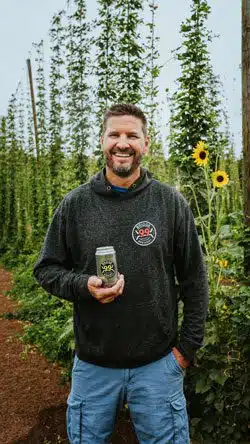
Trever Hawman, Bridge 99 Brewing owner and managing member
But for many, the appeal goes beyond those explanations—and into what they say about our region’s agricultural roots. “As an agricultural product, hops are so ingrained into Oregon’s culture,” Thomas said. “It is something that brewers specifically come to Oregon for. People come to Oregon for craft beer, and a lot of it is the connection to hops and that agricultural component.” As a brewer, Bridge 99 Brewery(opens in new tab) owner and managing member Trever Hawman enjoys the season for the rare opportunities it provides—and the self-imposed pressure to get a beer right. After all, most brewers must wait a whole year for a second chance if their first fresh-hop beer misses the mark. “You’re using a whole bunch more hops than usual, and then you’re like, ‘I hope this works, that’s a lot of hops going in there,’” Hawman said. “That makes it a little more scary and a little more sketchy, but it’s super gratifying when it comes out, and it’s good.”
Finding Fresh-Hops Close to Home
The Willamette Valley may produce the vast majority of Oregon’s hops each year, but Central Oregon is no stranger to fresh-hop season. At least one local farm produces hops for a Bend-based brewery, and several breweries throughout the region have put their own stamp on the style in recent years. Tumalo Hops Company(opens in new tab), for instance, was launched in 2006 and has been growing four varieties of hops just outside the community of Tumalo ever since. Husband-and-wife team Gary and Sue Wyatt run the small farm and process each year’s yield for local homebrewers, along with the Bend-based Bridge 99 Brewery.
For several years, the Wyatts have supplied Hawman with 100 pounds of hops for Bridge 99’s annual fresh-hop beer. Whenever the hops reach peak ripeness each September, after four to five months of steady growth, the Wyatts generally wake up around 4 a.m. to pick fifty bines and bring them into their shed for processing; by 8 a.m., the duo generally has 100 pounds of fresh hops sorted and ready for Hawman.
Central Oregon Breweries Making Fresh-Hop Beer
Gary Wyatt, Tumalo Hops Company
Hawman and his crew start their fresh-hop brew day as early as 7 or 8 a.m. so they can be ready when the Wyatts arrive with the hops roughly three hours later. Most years, Gary Wyatt said the hops are poured into Hawman’s tanks just twenty minutes after they leave his farm. In a state beloved for its farm-to-table ethos, it doesn’t get much fresher.
Further west, Underwood and his team at Three Creeks Brewing (opens in new tab) have earned acclaim for their Conelick’r Fresh Hop IPA. The beer earned a bronze medal for fresh-hop pale ales and IPAs at the 2021 Oregon Beer Awards—as well as a gold medal for fresh-hop beers at the 2020 Great American Beer Festival (the country’s largest beer festival). Fans can sample when the brewpub hosts the annual Fresh Hops Fest on Oct. 3, 2026.
As for Thomas and that beer he stayed up all night to brew? That became D’Kine, Sunriver Brewing’s original fresh-hop IPA and, today, one of its best-loved releases every fall. The beer uses Mosaic hops from Coleman Agriculture in the Willamette Valley, giving it flavors of mango, blueberry, citrus and pine. Over a decade later, D’Kine remains a signature beer that invigorates Thomas each year—especially now that he’s not working overnight to make it happen. “Fresh-hop beers are a labor of love,” he said. “The entire process, from the guys picking the hops all the way to the brewers pulling the hops out of the [container], it’s a very labor-intensive style of brewing—but we wouldn’t have it any other way.”
Frequently Asked Questions About Fresh-Hop Beer
When is fresh-hop season?
Fresh-hop season in Central Oregon generally runs from early September through October. The region’s first hops are typically harvested in mid-August, and the first fresh-hop beers begin appearing at breweries, taprooms and stores by early September. Because different hop varieties are harvested at different times through mid-September, new fresh-hop beers continue to arrive throughout the season, with some remaining on tap well into October.
What is a fresh-hop beer?
Fresh-hop beer is made with freshly harvested hops rather than hops that have been dried and stored. The hops are typically delivered to breweries shortly after harvest and used quickly to capture their fresh flavors and aromas. That short harvest window is also why fresh-hop beers are primarily a late-summer and fall tradition.
Are all fresh-hop beers IPAs?
Fresh-hop beers aren’t limited to IPAs. While IPAs and other hop-forward ales are common during fresh-hop season, Central Oregon brewers also make fresh-hop lagers and other styles. Fresh-hop beers can offer a range of flavors beyond the sharp bitterness often associated with IPAs. Fresh-hop lagers, in particular, can provide a milder, more rounded introduction to the season.
Do I need to like IPAs to enjoy fresh-hop beer?
You don’t have to be an IPA fan to enjoy fresh-hop season. Fresh hops can produce a range of flavors and aromas, and brewers use them in styles that can be milder and easier drinking than a traditional IPA. Look for fresh-hop lagers or other non-IPA releases if you prefer less bitterness.
Where can I find fresh-hop beers in Central Oregon?
Fresh-hop beers are available at breweries and taprooms throughout Central Oregon during the fall. Local breweries source hops from nearby growers or travel to Oregon’s Willamette Valley during harvest to bring fresh hops back for brewing. The selection changes throughout the season as different hop varieties are harvested, so breweries may release multiple fresh-hop beers between September and October.
An experienced thru-hiker is continually called back to Oregon’s stretch of the Pacific Crest Trail.
Remarkably, one of the first things I noticed at the Oregon-California border of the Pacific Crest Trail was a weathered, wood-burned sign nailed to a ponderosa pine: CA/OR. Just south of Ashland, that humble marker represented far more than a state line. It marked 1,699 miles of metamorphosis: My calves were swollen to the size of Cosmic Crisp apples; my thighs resembled Superman’s, bulging and clearly defined. Months of sleeping on the ground and moving with earth’s rhythm had reshaped how I saw the world.
The Pacific Crest Trail(opens in new tab) didn’t begin my transformation—it deepened it. Four years earlier, a thru-hike on the Appalachian Trail had introduced me to the freedom of long-distance backpacking. But the PCT promised something bigger. The trail winds through deserts full of rattlesnakes and waterless miles, plunges into snow-filled valleys and peaks in the Sierras, and touches volcanoes—real volcanoes that, to a Midwestern girl raised on adventure novels, felt almost mythical. Hiking the PCT wasn’t simply another trail but was the next step in my quest to live a life full of adventure.
The Pacific Crest Trail spans 2,650 miles from Mexico to Canada across California, Oregon and Washington. Several people are credited with conceiving the trail in the late ’20s and early ’30s, including avid outdoorswoman Catherine Montgomery(opens in new tab). The route connected existing trails and was designated as a National Scenic Trail in 1968 before being officially completed in 1993.
The 455-mile-long Oregon portion starts near Donomore Pass and ends at the Bridge of the Gods at Cascade Locks. I finished my Pacific Crest Trail thru-hike in 2006, years before Cheryl Strayed introduced millions of readers to the trail through Wild: From Lost to Found on the Pacific Crest Trail. By then, thru-hiking was still a relatively quiet pursuit. I shared the trail with roughly 300 fellow hikers. Today, thousands set out each year, drawn by the same promise that captivated me: the chance to discover just how much a long walk can change a person.
I moved to Bend in 2008 to keep hiking. The PCT was in my backyard now, and I’ve gone back to it time and again. Thirty-three miles of the PCT pass through Crater Lake National Park. An alternate route diverges from the main route at the Dutton Creek Trail junction and traces the rim of the caldera, allowing hikers to take in views of the lake and Wizard Island.
I realized the only part I had skipped on my thru-hike—a 57-mile gap due to the Black Crater fire—was now easily accessible. This section of the trail, arguably the best part, ushers hikers along the shoulders of volcanoes including Mount Washington, Three Fingered Jack and the hulking Mount Jefferson.
Other Central Oregon highlights include huckleberry bushes that bulge with fruit in late summer and deep-blue lakes that provide a cool respite after miles and miles of hot hiking. Curious hikers who want to experience the quintessential volcanic section of the Oregon PCT will need a Central Cascades Wilderness Permit(opens in new tab) for a day hike or short backpacking trip.
From Santiam Pass, hikers can embark on a 10-mile hike below the summit of Three Fingered Jack. Look for backpackers when driving over Willamette Pass. From the Willamette Pass Trailhead, a three-mile hike leads visitors to the clear blue waters of Rosary Lakes where they can camp, swim and give high-fives to passing hikers on their way to Canada. Elk Lake is only a mile off the PCT. Lunch at the resort will likely lead to meals shared with hungry thru-hikers that can’t resist a slight detour for a cheeseburger and a cold beer.
In the years since moving to Oregon’s high desert, I’ve discovered every season has its draw on the trail. The native creeping Oregon grape turns multiple shades of maroon in the fall, and well-trained hikers can forage for golden chanterelle mushrooms (peak season is September through November)—a welcome addition to any trail meal. The cooler temperatures mean fewer bugs, and when permit season ends in mid-October, it’s easy to do a day hike from Sisters Mirror Trailhead or McKenzie Pass.
In the winter, Ray Benson Sno-Park, about 30 minutes northwest of Sisters, provides access to cross-country ski trails that cross the PCT; I’ve made it a New Year’s Eve tradition to welcome the new year by sluicing through the snow or, at the very least, taking a photo with a PCT sign. Skiing into Mount Thielsen’s shoulder to set up a snow camp is a thrilling backcountry adventure. Skinning South Sister from the Obsidian Trail junction is a rigorous day-trip near the PCT.
Emma “Goldfish” Lawson at camp while on the trail
Finding Community and Connection on the Pacific Crest Trail
The power of the PCT lies largely in people. The community is welcoming, vulnerable and playful, qualities I think we all embrace more when we’re away from screens and the demands of modern life. One year, I set up a grill to make burgers and veggie dogs for hikers along the trail. I met a couple from Arizona, who became packrafting, rafting and southwest-hiking buddies.
I’ve met lawyers, doctors, college students and housekeepers on the trail, but you’d never know what they do because dirt is the great equalizer. While on the PCT we fantasize about hot water and describe the incredible sunsets we were able to witness. We are united in the miles we’ve walked and the conversations about life we’ve had. I find folks to be their most authentic selves on the trail. We are all united in a love of nature.
Along the trail, hikers can learn about history, geology, flower identification and how Indigenous peoples lived on this landscape for thousands of years. Kiosks illuminate details about the areas you walk through, while listening to audiobooks about what interests them along the trail or using iNaturalist or Seek apps to find out the names of flowers and trees around them help to continue the education.
The Pacific Crest Trail reminds us that we don’t always need centralized heat and running water. Some of my favorite moments on the trail have been the simplest: laying under ponderosa pine trees and listening to the wind sway the heavy branches overhead, feeling the warm sun on my face as I drifted to sleep, smelling the tangy berries of the manzanita shrub. In these moments, I became a part of the forest floor. The PCT was home.
Photo courtesy of Oregon Field Guide
The Heart Behind The Hike
One of the Pacific Crest Trail’s long-standing traditions is a network of volunteers known as trail angels. This informal program of residents near the PCT helps hikers with everything from a ride into town or a hot meal to a shower or a place to spend the night.
In Oregon, trail angels are especially active during the summer months, when northbound thru-hikers (the typical direction) move through our PCT-adjacent communities. Trail Angel Central(opens in new tab) is an online community focused on connecting hikers with volunteers offering transportation, lodging, resupply assistance, laundry facilities, trail updates and other support, and local Facebook groups can also offer the same.
Many angels also provide “trail magic,” unexpected treats like cold drinks or fresh fruit at road crossings and trailheads that can lift spirits after long days on the trail.
Interested in becoming a trail angel? The PCTA encourages starting with simple acts of generosity, whether that’s offering a ride into town, sharing local knowledge, offering refreshments or doing trail maintenance. Volunteers can also add their services to Trail Angel Central’s directory or join regional Oregon angel groups to connect with hikers.
“An unforgettable adventure was completing a 24-hour challenge, hiking from midnight to midnight through the Mount Jefferson Wilderness. One of the highlights was seeing Mount Jefferson glowing under a full moon. After the PCT, I know how strong I am and that I can move through whatever life brings my way.”
Fun Fact: “I actually met my husband on the PCT! We ended up hiking most of the trail together, and now we get to explore trails all over the world.”
“Hiking the PCT taught me mental clarity, adaptability and persistence even when I felt burnt out. As a BIPOC hiker on the PCT, I had to learn to trust my inner instincts without relying on social validations. For BIPOC hikers, the trail becomes a space to challenge stereotypes and internalized limitations.”
Fun Fact: “My trail name is ‘Chef.’ A lot of hikers cold-soak, but I prefer hot meals like ramen noodles in a spicy peanut butter sauce.”
“I have a bad habit of reading too heavily into situations. Not all suffering is in service of something greater. You can do everything right on the trail and still get the blister, still snap the hiking pole, still not make it to the finish line. Sometimes, it just isn’t your day. ‘That’s okay.’”
Fun Fact: “I can’t pass those single-serve packets of tuna in the grocery store without gagging. I consumed over 80 on the trail.”
“When I think back on my time on the PCT, I remember nearly six months’ worth of sunrises and sunsets and the locals who pulled over for me as I threw up my thumb to hitchhike into town. I also learned just how capable my body was of doing hard things. When I am 80 years old, I want to look back on a life where I chose to experience all the things it had to offer.”
PCT Hack: “Add a cup of dehydrated minute rice and an extra pinch of salt to any of those expensive freeze-dried backpacking meals. It’ll stretch one single-serving pouch into two to three meals.”
Bianca “Bee” Corrado
High School Spanish Teacher & Content Creator | San Diego, California Just finished hiking Instagram:@beeswildlife(opens in new tab)
“Hiking the PCT has been the most difficult, rewarding and liberating thing I have ever done. You will learn about yourself, experience the most beautiful wild spaces and become part of the most wonderful community. Hiking the PCT will change your life.”
Frequently Asked Questions About Hiking the Pacific Crest Trail in Oregon
Do I need a permit to hike the PCT in Central Oregon?
It depends on where you’re hiking. Many day hikes and overnight trips in the Central Cascades Wilderness require a Central Cascades Wilderness Permit between late May and mid-October. If you’re thru-hiking the entire PCT with a long-distance permit, different rules apply. Always check current permit requirements before your trip.
What is the best section of the PCT in Central Oregon?
Many hikers consider the stretch between Willamette Pass and Santiam Pass one of Oregon’s highlights. The trail passes beneath Mount Washington, Three Fingered Jack and Mount Jefferson, with access to alpine lakes, lava landscapes and sweeping Cascade views.
When is the best time to hike the Oregon PCT?
Most hikers visit from July through September, when snow has melted from higher elevations. Fall offers cooler temperatures, vibrant foliage and fewer mosquitoes, while winter provides opportunities to cross-country ski or snowshoe where the PCT intersects winter trail systems.
Where can I see Crater Lake from the PCT?
The official PCT passes west of Crater Lake National Park, but hikers can take the Rim Alternate Route to enjoy spectacular views of the lake and Wizard Island.
How difficult is the Oregon section of the PCT?
Compared with California and Washington, Oregon is generally considered one of the more moderate sections of the trail. Grades are often gentle, though hikers should still prepare for long distances, high elevations, changing weather and exposure to sun.
Stepping into the atrium of Bend’s new Central Library(opens in new tab), first-time visitors may pause in surprise. Instead of encountering a checkout counter and hushed voices, visitors experience a soaring space filled with natural light, a monumental suspended art installation, the aroma of fresh coffee, the buzz of conversations and even live music on certain days.
Sure, stacked books inhabit the space as well, but at a human scale, even in the children’s section. The space is filled with kids darting in and out of the movable stacks, parents conversing with friends around tables, while others stand at the large glass window on the ground floor, mesmerized by the automated sorting of just-returned books.
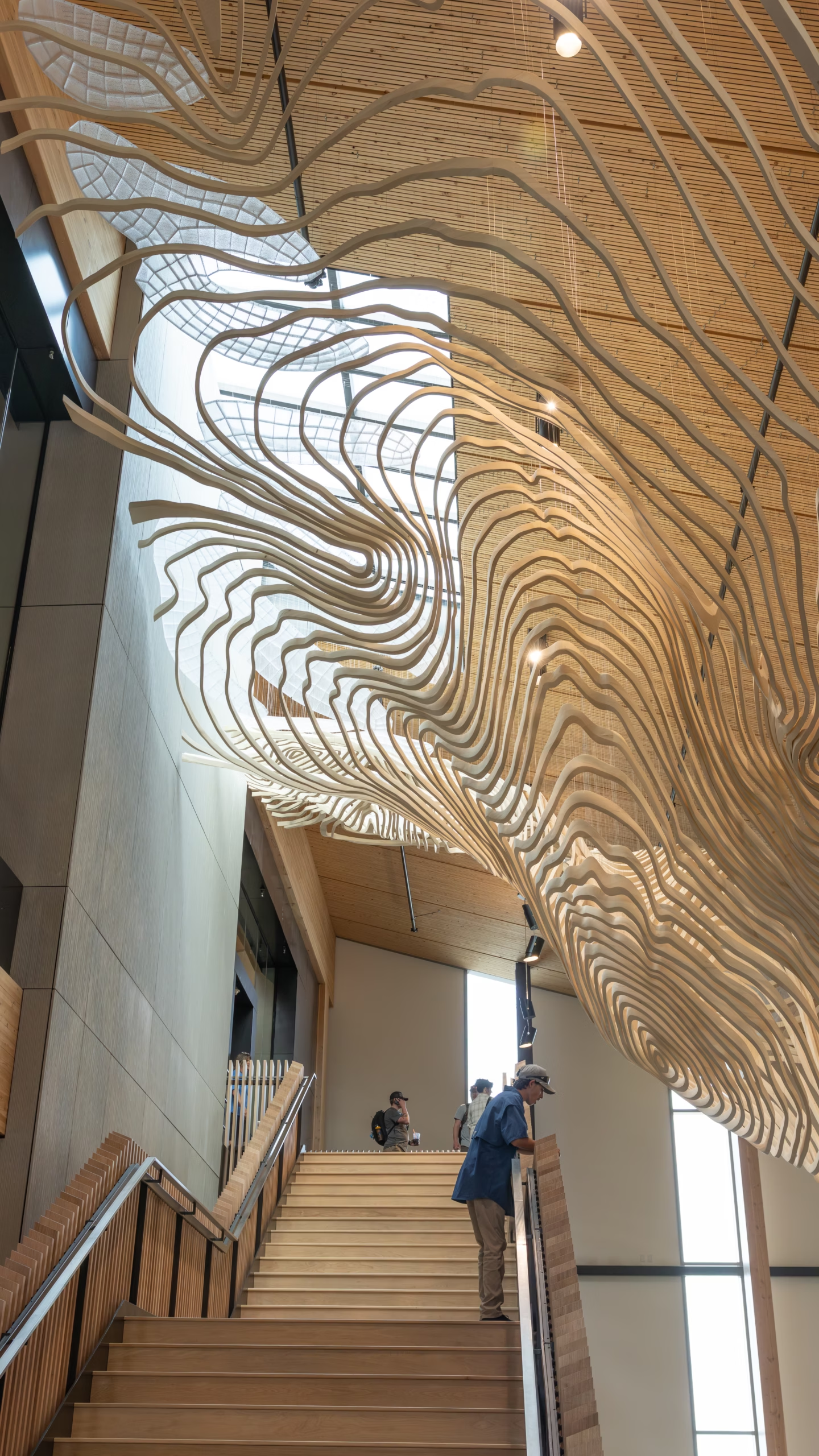
The staircase at the atrium center pulls one’s curiosity upward for a closer look at “Juniper,” the colossal wood sculpture(opens in new tab) suspended over the slated wooden staircase. Created by Seattle artist John Grade(opens in new tab), the 52-foot-wide work is inspired by the growth rings of Central Oregon juniper trees. It is crafted from 7,400 pieces of salvaged Alaskan yellow cedar and suspended by more than 1,200 nearly invisible steel cables. It weighs more than 2,000 pounds but appears to float midair.
More Than Books: What the Central Library Offers
Beyond its collection of 165,000 books, the Central Library offers a rich tapestry of welcoming spaces and experiences for every age and interest—from large community gathering rooms and intimate meeting spaces to coworking areas and quiet study rooms.
Teens hang out in a room of their own, while toddlers and young children delight in the Discovery Zone. Visitors browse the shelves, check out materials at the self-check-out stations with a library card, launch a business idea, learn how to create 3D prints in the MakerSpace(opens in new tab), attend a program and collect book-club kits for their reading groups.
All six public libraries have similar places for gathering and learning, and the county is widely recognized as having one of Oregon’s most innovative library systems. Yet three decades ago, the future of public libraries in Deschutes County was anything but certain.
How Deschutes County’s Funding Crisis Threatened the Downtown Bend Library
By the mid-1990s, the Downtown Bend Library was bursting at the seams. Like other libraries across Deschutes County, it struggled to keep pace with rapid growth and chronic underfunding. As a county department, libraries competed with other property tax-supported services, such as the Sheriff’s Office.
“The collection was badly outdated, with many materials decades old,” said Ann Malkin, longtime library advocate and president of the Deschutes Public Library District Board.
To modernize the collection, the library launched “Bucks for Books.” The grassroots campaign raised $120,000—including pennies collected by local children—but it couldn’t solve the larger problem.
Deschutes County announced it would stop funding library operations in 1997. The timing was particularly bad—the new Downtown Bend Library, paid for through a 1995 voter-approved bond, was set to open in 1998.
“We had a beautiful downtown library built and a community-sourced book fund, but we couldn’t open the building because we didn’t have money to run it,” said Chantal Strobel, interim director of the Deschutes Public Library.
The Discovery Zone at the Central Library
How Voters Created the Deschutes Public Library District
Led by foundation president Bill Jayne and the library board, supporters proposed creating a Deschutes Public Library District as a permanent solution. It would be funded by a dedicated property tax rather than the county’s general fund.
Voters approved the measure by 65% in May 1998, but the election was invalidated because of low voter turnout.
Most library employees were laid off that summer. A one-year serial levy reopened the library while supporters regrouped. To ensure passage of a November 1998 ballot measure, library volunteers staffed phone banks, local businesses donated office space, and residents called voters to encourage support, according to Malkin, who remembers the effort as one that united people across Deschutes County.
The ballot passed, creating the Deschutes Public Library District and providing stable funding for operations and future capital projects.
Keeping Pace With Deschutes County’s Growth
When the Downtown Bend Library finally opened its doors, demand exceeded expectations.
“It was wildly apparent that the building was undersized,” Malkin said.
The library board and foundation immediately started long-range planning for future facilities.
As Deschutes County’s population grew from 115,367 residents in 2000 to nearly 200,000 by 2020, the library system once again struggled to keep up.
In 2020, voters approved a bond to renovate the Bend, Sisters, Sunriver and La Pine libraries, replace the Redmond library and construct the Central Library on Bend’s east side. The bond also funded modern technology, flexible community spaces and other improvements.
Staircase under John’s Grade “Juniper” sculpture.
Building a 21st-Century Library
The Central Library was planned with input from 7,000 residents who shared their wants and ideas through surveys, public meetings and community events throughout Deschutes County.
“We asked people, ‘What is missing that could help enrich your life?’” said Strobel. “They told us they wanted more free meeting space, children’s areas to learn and discover, a coffee shop, more books and a creative MakerSpace.”
Across all demographics, people wanted their libraries to be a hub for information, a sanctuary for everyone and a place that fosters adventure. Most of all, they wanted community to be at the heart of a library.
Why the Central Library Was Built on Bend’s East Side
The SE Santorini Street location was chosen in part because the library could boost services in an area that historically lacked them and also because of Bend’s eastward housing and business expansion.
The three-story Central Library opened in May 2026 and was immediately inundated with people curious about their new community hub. In its first two months, the facility hosted 150,000 visitors.
“Libraries are for everyone, even for those who don’t think they are,” said Todd Dunkelberg(opens in new tab), Deschutes Public Library’s director for the past 16 years and employee for 26 years.
“Come in and see the play areas,” he said. “All are designed to ready kids on the road to reading preparedness, [with] makerspaces and coworking spaces that help people connect in the new age of libraries,” he said.
Designed for How People Use Libraries Today
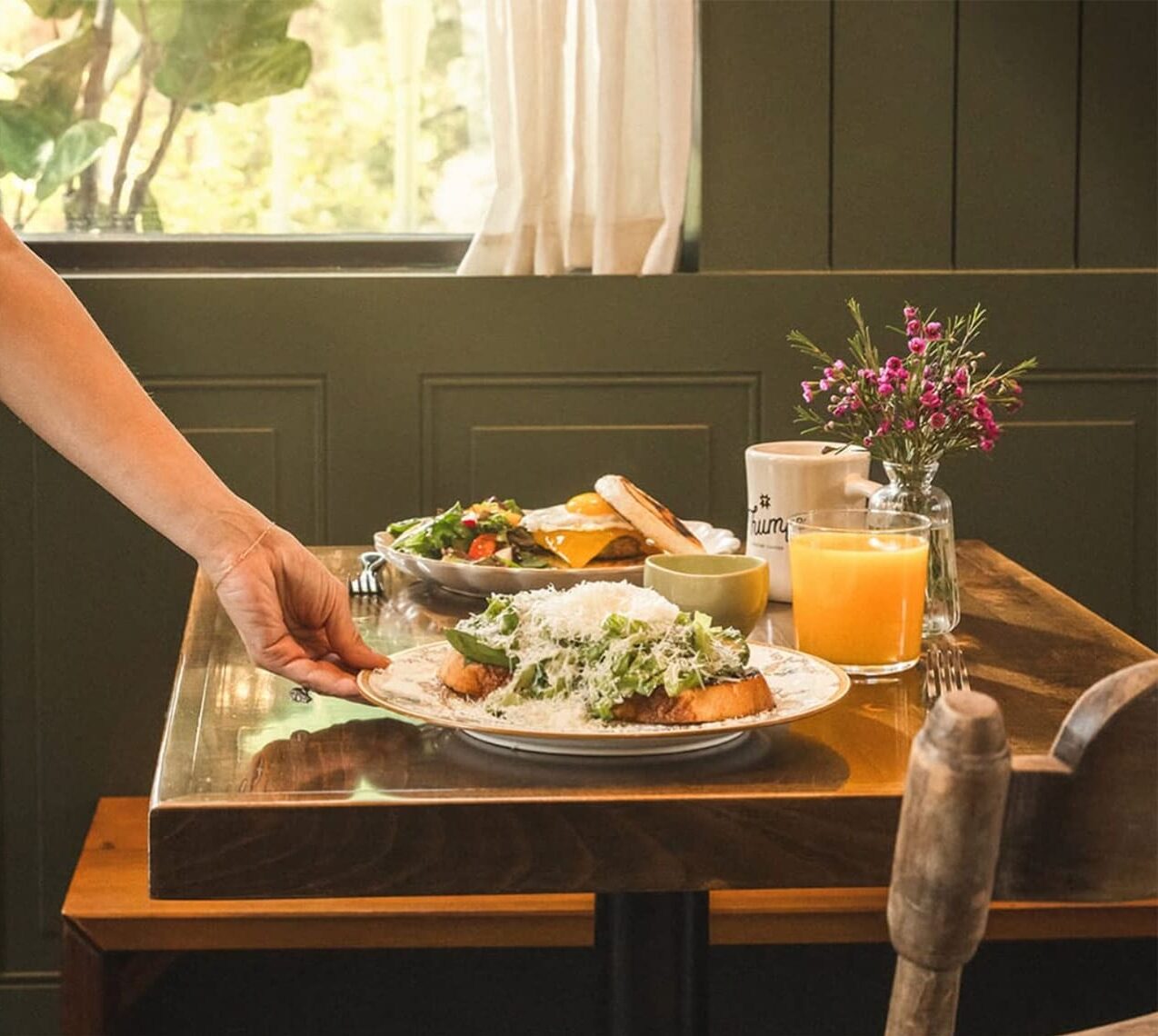
Visitors can bring their own food and beverages, or order a cappuccino at Thump Coffee(opens in new tab). Strobel says the idea is to make the library comfortable and allow people the space and amenities they want.
In many ways, the district adopted a user-friendly bookstore approach—the stacks are organized by subject rather than the Dewey Decimal Classification system dominant in 20th-century libraries.
Jeremy Okai Davis in front of his piece, “Servants of Humanity.” The painting can be found on the third floor.
Public Art Throughout the Central Library
Permanent art is displayed throughout the building.
“The district intentionally incorporated significant public art because, for many children, the library may be their first exposure to original art,” Malkin said. “It’s a cultural treasure for this community.”
Throughout the building, art tells stories of Native peoples, including a mask by Lillian Pitt, baskets by Natalie Kirk and paintings by Sara Siestreem. Other soon-to-be-installed works include a mosaic by Sarah Helen More and poetry and art by Anis Mojgani, a previous Oregon poet laureate. Paintings by Jeremy Okai Davis and MOWO, Bend’s first creative laureate, are on display now.
Three decades ago, residents voted to save their libraries. Today, that investment has evolved into a system built not only to lend books, but to bring a community together.
“I believe our role here,” said Dunkelberg, “is to help people reach for their dreams.”
Frequently Asked Questions About Bend’s Central Library
When did Bend’s Central Library open?
Bend’s Central Library opened in May 2026 on SE Santorini Street on Bend’s east side. The three-story library welcomed 150,000 visitors in its first two months.
What can you do at Bend’s Central Library?
Beyond browsing its collection of 165,000 books, visitors can use community gathering and meeting spaces, coworking areas and quiet study rooms. The library also has a teen room, a Discovery Zone for young children, a MakerSpace with 3D printing, self-checkout stations and Thump Coffee.
Why was the Central Library built on Bend’s east side?
The location was chosen in part to expand library services in an area that historically lacked them and to respond to Bend’s eastward housing and business growth. The Central Library was one of several projects funded by a bond approved by voters in 2020.
How was Bend’s Central Library planned?
Deschutes Public Library gathered input from 7,000 residents through surveys, public meetings and community events. Residents asked for amenities including free meeting spaces, children’s areas, a coffee shop, more books and a creative MakerSpace, with an emphasis on making the library a community gathering place.
Central Oregon has a way of making the night sky feel within reach. Away from the brightest city lights, the high desert landscape features broad horizons, long stretches of darkness(opens in new tab), and skies where planets, constellations, and even distant galaxies come into sharp focus.
From September through December 2026, the region’s night sky will deliver a steady progression of reasons to look up: a crescent moon beside luminous Venus, the warm glow of a Harvest Moon rising over the high desert, flashes of comet debris streaking overhead and, by December, one of the year’s most anticipated meteor showers, when the prolific Geminids return. But there is plenty worth watching before then.
Photo courtesy of Wanderlust Tours, by J Gedit
September: Planets, Dark Skies and the Harvest Moon
September 11-12 | New Moon
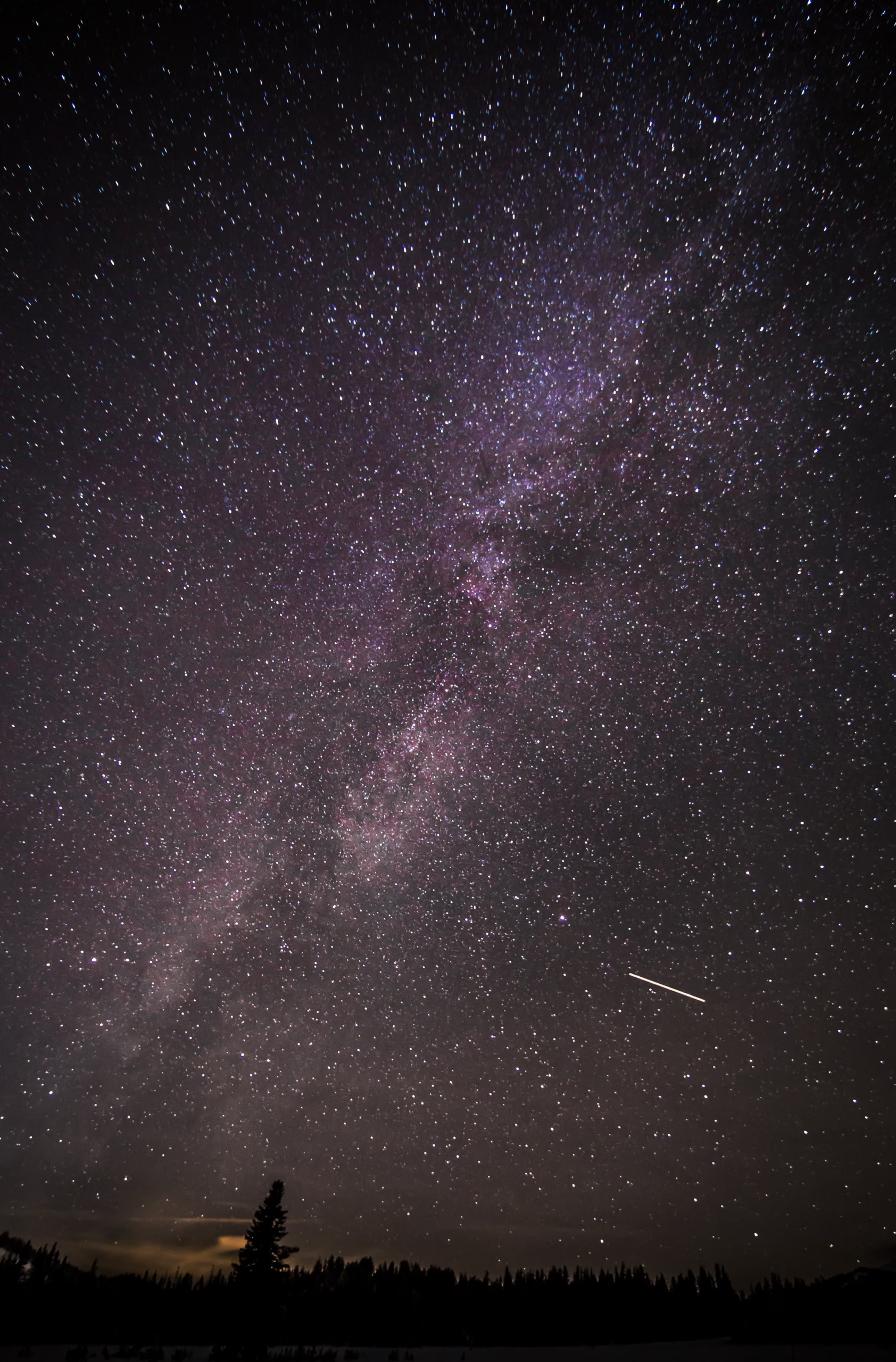
New moons produce virtually no lunar light, making the surrounding nights especially good for searching out the faint structures that disappear beneath a brighter moon. September is also one of the final opportunities of 2026 to see the vivid core of the Milky Way from the Northern Hemisphere before it disappears from view until spring. For anyone more interested in deep-sky objects than the moon itself, this could be one of September’s best excuses to head beyond the glow of town.
Viewing tip: Find the darkest safe skies you can and give your eyes time to adjust. Under sufficiently dark conditions, the Milky Way, galaxies and nebulae become easier to distinguish. Avoid looking at your phone or other bright lights while your eyes adjust.
September 14 | Crescent Moon Meets Venus
This celestial pairing comes with a conveniently early showtime. Shortly after sunset on September 14, look above the western horizon for a delicate crescent moon hanging near brilliant Venus. The two will appear within about five degrees of each other—roughly the width of three middle fingers held at arm’s length. Against the fading colors of twilight, the scene should be especially striking: a thin sliver of moon beside one of the brightest objects in the evening sky. The pair should remain visible for roughly an hour after sunset before dropping beneath the horizon.
Viewing tip: Find a location with a clear western horizon. Open terrain will offer a better view than a spot hemmed in by tall trees, buildings or steep ridgelines.
September 18 | Venus at Its Brightest
For much of the year, Venus can be easy to mistake for something closer to home. Its intense white light can resemble an aircraft or an unusually bright star. On September 18, the planet reaches peak luminosity, shining at magnitude -4.8. That brightness makes Venus one of the easiest objects in the evening sky to identify, even from places where artificial light washes out many stars.
Viewing tip: Look toward the western horizon shortly after sunset. Mercury will appear nearby. Unlike meteor watching, this event does not require especially dark skies, so a clear horizon matters more than getting far away from town.
September 22 | Autumn Equinox—and a Reason to Watch for Auroras
Autumn officially begins in the Northern Hemisphere on the evening of September 22, marking the shift toward longer nights. It may also bring another reason for Central Oregon skywatchers to pay attention. Equinoxes are associated with above-average northern lights activity because Earth’s orientation can create more favorable conditions for interaction with the solar wind.
That does not mean auroras are guaranteed. Northern lights remain notoriously difficult to predict, and the most dramatic displays happen at high Arctic latitudes, but the equinox period gives Oregonians a reason to keep an eye on aurora forecasts.
Viewing tip: If an aurora alert reaches Oregon, find a dark location with a wide, unobstructed view to the north. Get away from city lights if possible. Cameras can sometimes capture auroral color and structure that appears much fainter to the naked eye.
September 25 | Mars Joins the Gemini Twins
Look east before sunrise on September 25 for a temporary new member of one of the night sky’s most recognizable pairings. Mars will line up with Castor and Pollux, the twin stars of Gemini. Castor will sit at the top, Pollux in the middle, and orange-tinged Mars below, forming a neat celestial trio.
Mars’ reddish color should help distinguish the planet from its stellar neighbors. Look lower toward the horizon for bright Jupiter.
Viewing tip: Choose an open spot with a low eastern horizon. Because the objects will be relatively low in the sky, a clear sightline will matter more than finding complete darkness.
September 26 | Watch the Harvest Moon Rise
Few celestial events suit Central Oregon’s open landscapes better than a moonrise. September’s full moon, known as the Harvest Moon, reaches peak illumination September 26. The most dramatic moment comes as the moon climbs over the eastern horizon around sunset. Near the horizon, the moon can appear unusually large because of an optical effect known as the moon illusion. It may also glow deep gold or orange as its light travels through more of Earth’s atmosphere.
The Harvest Moon will not be alone. Saturn will follow the moon into the sky and remain within roughly six degrees of it through the night. Telescope users may also be able to find Neptune nearby.
Viewing tip: Find an unobstructed eastern horizon and arrive before moonrise. Watching the moon emerge behind a ridge, juniper-dotted high desert or distant landscape creates a more dramatic view than waiting until it is high overhead.
All September | Find the Andromeda Galaxy
Not everything worth seeing in September belongs to our own galaxy. The Andromeda Galaxy is the closest major galaxy to the Milky Way. Under truly dark conditions, it can be visible without a telescope, appearing less like a dramatic spiral and more like a faint, hazy smudge against the stars. Binoculars or a small telescope make the view more rewarding. And what looks like a tiny patch of light in the Central Oregon sky is, in reality, an entire galaxy far, far away.
Viewing tip: Andromeda is highest in the sky around midnight or 1 a.m. Dark skies make a major difference, so this is one event worth traveling to see, away from artificial light.
Photo courtesy of Wanderlust Tours by Nate Wyeth
October: Meteor Season Begins
October 6-10 | Draconid Meteor Shower
The Draconids may not produce the dramatic meteor counts of December’s Geminids, but their timing and dark-sky conditions could make the 2026 shower worth an evening outdoors. The shower runs October 6 through 10 and peaks October 8, with roughly five to 10 meteors per hour on average. A new-moon phase means little lunar light should interfere around the peak, leaving the background sky darker and making fainter meteors easier to spot. That makes the shower well suited to Central Oregon’s broad, open skies.
Viewing tip: Skip the telescope. Meteors can appear across a wide swath of sky, so settle into a place where you can see as much of the sky as possible. Bring a chair or blanket and allow time for your eyes to adjust.
October 21-22 | Orionid Meteor Shower
Every Orionid that flashes overhead carries a connection to one of the best-known objects in astronomy. The Orionids are created by debris left behind by Halley’s Comet. As Earth crosses that trail of particles, tiny fragments plunge into the atmosphere and burn up, producing streaks of light.
Near maximum, the shower typically produces roughly 10 to 20 meteors per hour. The challenge in 2026 will be moonlight. An approximately 80%-illuminated moon could wash out some of the fainter meteors.
Viewing tip: Look for the darkest window between moonset and dawn. Once the moon is out of the sky, move away from artificial lights, get comfortable and watch a broad area overhead rather than staring at a single constellation.
November: Fireball Month
November 4-5 | Southern Taurids
November’s meteor showers are less about quantity than spectacle. The Taurids typically produce fewer meteors than some of the year’s headline showers, but they are known for something else: slow, intensely bright meteors that can blaze conspicuously across the sky. Those occasional fireballs make November a particularly interesting month for patient skywatchers. Southern Taurids meteor counts are relatively modest, but the reward can be memorable: a bright, unhurried streak carving across the night sky. The Southern Taurids peak with relatively little moonlight, improving the odds of noticing fainter activity as well.
Viewing tip: Find a dark site with as much open sky as possible. No telescope is needed. Taurid meteors can appear far from the shower’s radiant, so avoid concentrating on a single part of the sky.
November 11-12 | Northern Taurids
A week later comes the Northern Taurids peak with only a 7%-illuminated moon. Prime viewing hours after midnight should be moon-free. That combination of darkness and the shower’s reputation for bright meteors makes this one of November’s more appealing nights to spend outside. You may not see a constant stream of shooting stars. But with the Taurids, one brilliant meteor can become the entire night’s show.
Viewing tip: Plan for a longer watch. Bundle up, find somewhere comfortable to sit or recline and give the sky time. Meteor watching rewards patience.
November 16-17 | Leonid Meteor Shower
Associated with Comet Tempel-Tuttle, the Leonids can produce roughly 15 meteors per hour under ideal conditions. Leonid meteors are known for their speed, streaking through the atmosphere considerably faster than the slow-burning Taurids earlier in the month. That makes the Leonids feel like a different kind of meteor display: quicker, sharper and easier to miss if you are not looking.
Viewing tip: Keep a wide portion of sky in view rather than relying on binoculars or a telescope. Find a dark location and allow your eyes at least several minutes to adapt before deciding whether conditions are good.
November 24 | Beaver Supermoon
Just days before Thanksgiving, November’s Full Beaver Moon will also appear as a supermoon. A supermoon occurs when a full moon happens near the Moon’s closest approach to Earth in its elliptical orbit, a point known as perigee. The result is a full moon that can appear somewhat larger and brighter than usual. The difference can be subtle when the moon is high overhead. Near the horizon, however, the moon’s apparent size, combined with the moon illusion, creates a much more dramatic scene.
Viewing tip: Watch around moonrise and incorporate Central Oregon’s landscape into the view. A distant ridge or other foreground feature will help emphasize the moon’s scale.
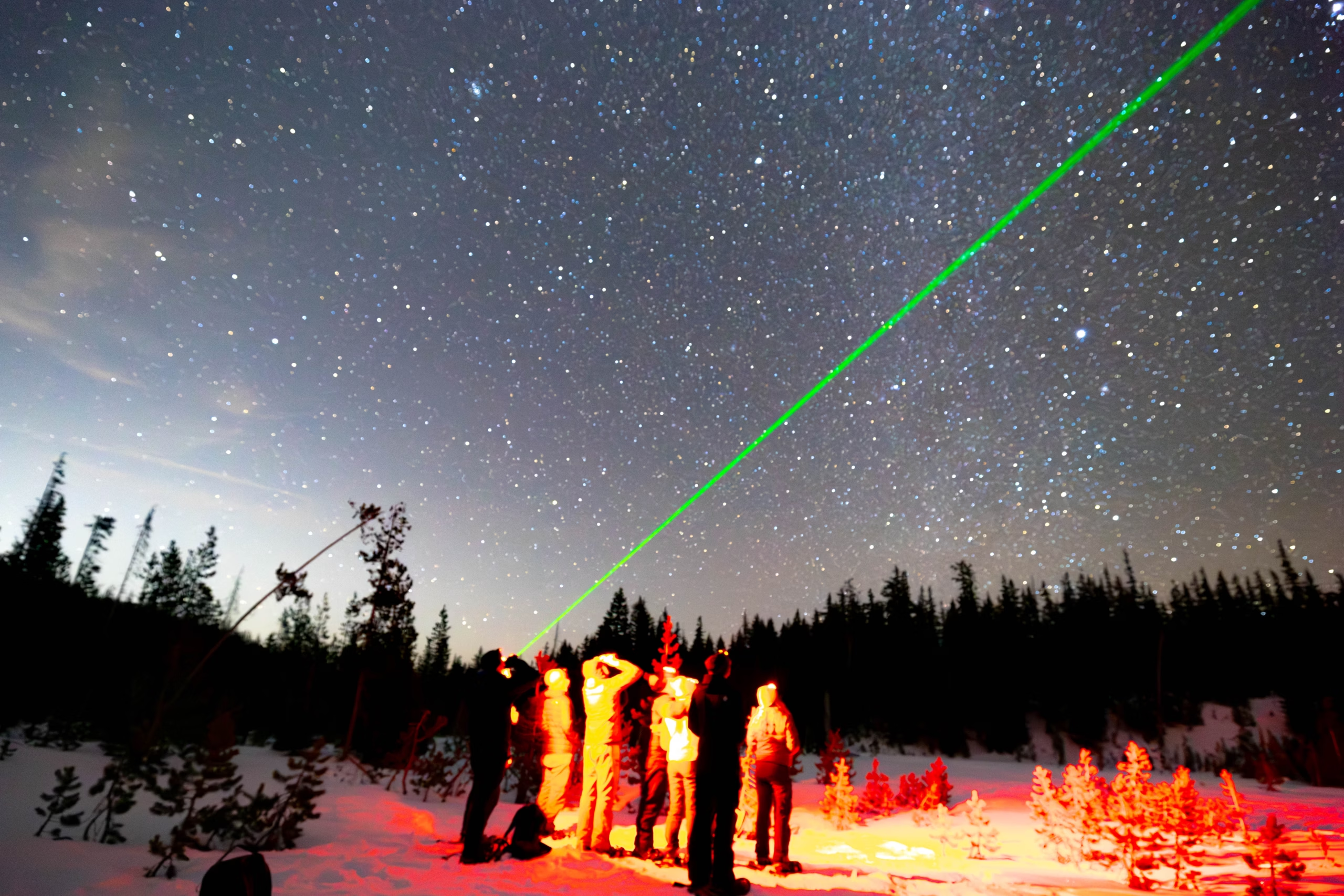
Stargazing with Wanderlust Tours. Photo courtesy of Wanderlust Tours
December: A Marquee Meteor Shower
December 4-20 | Geminid Meteor Shower
If there is one meteor shower worth pulling on winter boots, piling on extra layers and standing outside in the December cold for, it is the Geminids.
The Geminids are among the strongest and most reliable meteor showers of the year, capable of producing up to roughly 120 meteors per hour under ideal conditions. The shower peaks on December 13, and moon conditions are expected to be favorable in 2026.
Away from bright lights, Central Oregon provides the kind of dark backdrop that meteor watching demands. Under darker skies, fainter Geminids remain visible rather than disappearing in the glow of streetlights.
The result can be a night when the sky seems to come alive without warning—one streak overhead, then another somewhere completely different.
Viewing tip: Wanderlust Tours is offering Geminids Meteor Shower Snowshoe Tours(opens in new tab) December 11-13. Participants will travel through the snowy Deschutes National Forest with naturalist guides while watching for the shower overhead. For independent viewing, find the darkest safe location available, dress for prolonged exposure to winter temperatures, and let your eyes adjust before settling in.
December 22 | Ursid Meteor Shower
The Ursids are a subtler shower than the Geminids, producing around 10 meteors per hour. It is unlikely to compete with the spectacle of mid-December, but clear skies can still make it worthwhile for anyone spending an evening outside around the winter solstice.
Viewing tip: Think of this as a lower-key meteor night. Choose a convenient dark-sky location rather than traveling solely in search of high meteor counts, and give yourself enough time outside to catch the occasional streak.
December 23 | December Supermoon
December’s full moon will also be a supermoon, bringing a bright close to a season filled with much fainter celestial objects. Compared with searching for a distant galaxy or waiting for a single meteor, this is easy skywatching: walk outside, look up and let the full moon do the work.
Viewing tip: For a more dramatic view, watch the moon close to moonrise, when it sits low above the landscape. An open horizon and a recognizable Central Oregon foreground can make the scene especially photogenic.
Looking Ahead: The Next Eclipse Visible From Bend
The next eclipse visible from Central Oregon will be a penumbral lunar eclipse on August 16-17, 2027. During a penumbral lunar eclipse, the moon passes through the faint outer portion of Earth’s shadow, known as the penumbra. Unlike a total lunar eclipse, the moon does not turn dramatically dark or red. Instead, observers may notice a subtle shading across part of the lunar surface.
Until then, Central Oregon’s celestial show is less about one blockbuster moment than a steady procession overhead: planets appearing in twilight, orange moons climbing over the high desert, pieces of comets flashing through the atmosphere and, on the darkest nights, a view extending far beyond our own galaxy.
Where to Stargaze Around Central Oregon
The best stargazing locations in Central Oregon depend on what you are trying to see. A meteor shower or distant galaxy benefits from the darkest sky possible, while a moonrise or planetary conjunction may simply require a broad, unobstructed horizon.
Central Oregon has several places associated with astronomy and dark-sky viewing:
Always check current nighttime access, operating hours, road conditions, closures and regulations before heading out.
Frequently Asked Questions About Central Oregon Stargazing
What is the best celestial event to see in Central Oregon in fall or winter 2026?
The Geminid meteor shower is the standout event on this calendar. The shower peaks around December 13 and can produce up to roughly 120 meteors per hour under ideal conditions. Favorable moon conditions and Central Oregon’s dark skies could make it one of the best viewing nights of the season.
Do I need a telescope to watch a meteor shower?
No. In fact, telescopes and binoculars can make meteor watching more difficult because they restrict your field of view. Meteors can flash across almost any portion of the sky, so the best equipment is usually your own eyes and a comfortable place to sit or lie back.
Where are the darkest skies near Bend?
Potential dark-sky and astronomy destinations include Pine Mountain Observatory, Sunriver Nature Center & Observatory, the Oregon Outback International Dark Sky Sanctuary and Prineville Reservoir State Park. The best location will depend on nighttime access, weather, seasonal road conditions and the celestial event you want to see.
How far should I get from Bend’s city lights?
For bright objects such as Venus, Jupiter or a full moon, you may not need to leave town at all. For meteor showers, the Milky Way and the Andromeda Galaxy, darker conditions become much more important. Moving away from concentrated artificial light will reveal fainter objects that are otherwise lost in urban skyglow.
Can you see the Andromeda Galaxy without a telescope in Central Oregon?
Under sufficiently dark skies, yes. Andromeda can appear to the naked eye as a faint, fuzzy patch rather than the detailed spiral galaxy seen in long-exposure photographs. Binoculars or a small telescope can make it much easier to find.
Can you see the northern lights from Central Oregon?
It is possible during strong auroral activity, but sightings are not guaranteed. The strongest northern lights displays typically occur much farther north. If forecasts suggest auroral activity could reach Oregon, find a dark site with a clear view toward the northern horizon.
Local vintage dealers and shop owners find pieces with stories to tell.
“The history of clothing is really the history of the United States of America,” said Todd Beckwith, as the vintage clothing expert sifted through racks in his Redmond showroom curated with embroidered gabardine bowling shirts, thick Cowichan sweaters, 1930s Harley-Davidson belts and World War II flight jackets. One jacket was worn by an Army Air Forces bomber crew. “That jacket dropped bombs over Germany,” he said, “and it ended up in a trunk at a woman’s yard sale.”
Todd Beckwith, owner of Royal De Luxe
Royal De Luxe Vintage Clothing
With multiple warehouses in Central Oregon, the owner of Royal De Luxe, a true vintage fashion company, is one of the industry’s most prolific collectors. “I try to have such a selection that it’s overwhelming to people,” said Beckwith. Instead of offering just a handful of American-made vintage Levi’s 501s, he wants shoppers to choose from dozens. Beckwith also supplies wholesale inventory to many Central Oregon vintage shops and spends nearly 11 months preparing for his annual pop-up at Coachella. He also sells at Stagecoach and the National Finals Rodeo Cowboy Christmas in Las Vegas.
Along the way, his client list has grown to include Brad Pitt, Billie Eilish and Justin Trudeau, while local shoppers can find his collection at his downtown Bend pop-up inside Casa de Stela or by appointment. Every piece comes from a pawnshop, a thrift store, a garage sale, an estate sale or an antique store, but might make its way to Melrose Avenue. Beckwith also retails at Fred Segal. “I’m a real picker. I’m a denim dog. I love the hunt. It requires traveling all the time,” said Beckwith. “You leave at 8 a.m. on a Thursday and go to the Grange Supply store in Burns.”
Preserving American Fashion History
The longtime La Pine resident is also an encyclopedia of American fashion knowledge. Beckwith can trace Levi Strauss to the California Gold Rush, explain Carhartt’s 1889 beginnings in Detroit, or connect Henry Ford’s famous $5 workday to the moment clothing became more accessible to ordinary Americans. “Instead of being able to afford just one coat, now you could get the brown, you could get the twill, you could get the hickory,” said Beckwith. “It’s really a part of how this country grew.”
Beckwith, who was raised between San Francisco and Jackson Hole, Wyoming, began thrifting as a teenager and has shod horses as a farrier for more than 40 years. “I grew up with Dickies, Ben Davis and Levi’s. So, cowboy and every kind of other culture on the planet,” said Beckwith.
Rather than discard damaged pieces, he repairs and rehabs them by cropping jackets and adding patches. He also transforms 1950s Beacon robes into jackets inspired by one worn by Robert Redford in Jeremiah Johnson. High-end fashion labels such as Ralph Lauren’s Double RL may reproduce the look, but nothing compares to the original. “I think it’s cooler when you get the real thing,” said Beckwith.
Back among the racks, he paused to pull out a mint-condition gabardine Western shirt Gene Autry might have worn. “Someone loved it, right?” said Beckwith. “I feel like it’s my responsibility to keep caring about this thing and send it down the road.”
Casa de Stela co-owner Jess Bercovici has chased vintage finds since her teenage years in Los Angeles, when she and her sister built entire wardrobes by shopping Jet Rag’s legendary dollar sales. “I always had my foot in vintage,” said Bercovici. “There’s something to be said about having a pair of jeans that have been worn in by somebody else for 40 years,” she said. “That wash can’t be replicated.”
Bercovici founded Casa de Stela in 2010 while living and working as an archaeologist in Guatemala. She began collaborating with local artisans to create ethically made fashions. Expanding into vintage felt like a natural next step for her boutique on Bond Street. She co-owns the shop with her mother, Pam. “My brand’s whole mission has been ethical fashion and sustainability, and vintage is the most sustainable thing that exists,” said Bercovici. “You’re not putting a new product into the world.”
After years of producing clothing with artisans overseas, Bercovici met Beckwith and found a partner who shared her appreciation for authentic Americana.
Today, the boutique blends carefully selected vintage with contemporary fashion, making it easy to see how vintage pieces can fit into a modern wardrobe. The shop stocks more than 300 pairs of vintage Levi’s, sourced by Beckwith, alongside French workwear, floaty Casa de Stela floral dresses and Le Bon cotton cardigans. “I’m constantly hunting for that perfect 1950s leather jacket,” said Bercovici. She stocks buckskin rodeo jackets, buttery suede bombers and even rare heirloom pieces, such as a hand-beaded jacket from the 1920s valued at $1,200.
She and Beckwith have begun offering Selects, private appointments for clients searching for specific vintage pieces. “Finding that unique fringe jacket that no one else is going to have—that’s what makes it special,” said Bercovici.
There’s a big difference between a thrift store and a vintage shop, says Good Bad Rad Vintage owner Jenna Pauley. To be called vintage, items must be at least 20 years old. Unlike thrift stores filled with donated goods, every piece in the vintage marketplace on SE 3rd Street has been hand-selected by one of 22 vendors. Clothing and home goods are thoughtfully sourced, cleaned, repaired and restored before ever reaching the sales floor, giving shoppers an edited collection instead of racks to sort through.
Good Bad Rad is a destination for long dresses from the ’70s, suede skirts, vintage sportswear, festival fashion and everything in between. “I love vintage clothing because it allows you to show your personality instead of being told what’s fashionable.”
For fall, Pauley, a third-generation vintage and antique dealer, has collected flannels, sweaters and warm jackets. Pauley believes vintage fashion is thriving in Central Oregon because locals support small businesses. “I love that all of the vintage stores in town are different,” said Pauley. “Having a vendor-based store allows us to offer something for everyone.”
Step inside Old Boy Vintage and it’s easy to lose track of time. Housed in a former automotive garage built in 1915, the Bend shop on Greenwood Avenue with brick walls showcases a wide range of vintage clothing. “People who are new to it and want to find out more are blown away by the fact that we take clothes that are 30-plus years old, we save them, fix them up, and bring them back to life,” said owner Ezra Watson.
Watson’s collection spans decades, with everything from Western wear and Hawaiian shirts to turquoise jewelry and vintage children’s clothing. Watson feels like a treasure hunter when he finds items such as a pair of pale blue Lucchese ostrich leather cowboy boots and a 1950s University of Oregon varsity jacket with its original Duck patch.
Some museum-worthy pieces—a tie from a NASA employee who worked on the Apollo 11 mission, an original City of Bend sign from the 1920s, and a 1949 Central Oregon Community College sweatshirt Watson and his girlfriend discovered at a flea market in Yokohama, Japan—aren’t for sale.
“It is rare to see a garment last for 50, 70 years,” said Watson. “When you do come across something like that, it gives you motivation to continue looking and continue searching.” Watson also supplies vintage garments to fashion designers looking for authentic inspiration.
For him, vintage is ultimately about expressing individuality, whether it’s a 1970s prairie-style dress or a pair of baggy JNCO jeans. “I feel like fashion is becoming more of a thing in Bend, and we’re super happy to be a part of that,” said Watson.
Big Chief Vintage’s new location in Sisters occupies a historic building that once housed a hardware store in the 1940s and later a Native American art gallery. Pendleton jackets hang beside Navajo blankets, antique saddlebags and bear skin coats. Every corner reflects owner Mike Davis’ story and interests.
The co-founder of the Born-Free Motorcycle Show in California and its Texas counterpart, Davis has built a career around selling vintage motorcycles. His experiences and expertise shape the shop’s distinctive mix of motorcycle culture and Western heritage. “I buy what I like,” he said. “I don’t necessarily buy what sells.”
Davis moved into the larger space in June, giving him room to display everything from 19th-century buffalo-hide jackets and Angora wooly chaps to vintage Harley-Davidson and Triumph T-shirts. One prized Triumph tee, identical to one Bob Dylan wore in a 1965 photo shoot, took Davis three decades to find. “You will never find another one of these,” he said.
The shop’s name and logo are also personal. Davis, who is half Cherokee, wanted Big Chief Vintage to honor Native history while capturing the spirit of the old trading posts that inspired the store. “The word ‘chief’ is not a bad word,” he said. “It’s a powerful word. It’s a respectful word.”
Look at the crowd mixing at Big Chief Vintage, from musicians to tourists visiting from Japan, and it’s clear Big Chief Vintage is more than a retail space; it’s an immersive experience. “I don’t treat it as a business, which is terrible,” Davis said with a laugh. “It’s a personal hobby.”
[Click the left and right arrows on the image below to see more Big Chief Vintage images by Cody Rheault]
Inside Revival Vintage on Bend’s west side, racks invite shoppers to step into another era, whether they’re searching for a statement coat, a Victorian treasure, or the perfect outfit for a 1920s-themed party.
“I think we’re looking for anything to remind us of the good old days,” said owner Shasta DeArmond, who opened Revival Vintage in 2019 and moved to the location off of Galveston Avenue in 2024. “When people walk into my shop, their eyes light up.”
Older shoppers reminisce as they browse, while younger visitors hunt for one-of-a-kind items they won’t find anywhere else.
“I’ll get a lot of people who have never walked in here, but they’re shopping for a costume, and they need help styling for a specific outfit,” said DeArmond. “They leave here beaming because they were originally going to buy something off Amazon.” DeArmond says about 60% of the store’s inventory comes from consignment, with each piece carefully chosen. “When people ask what I’m looking for, I tell them, ‘Anything dope,’” she said. “Does it look cool? Does it have great texture? Is it colorful?”
DeArmond specializes in fur and faux fur coats, particularly trench-length styles perfect for concerts, festivals and nights out. Showstoppers in the store, decorated with stained-glass light fixtures, include a geometric 1960s mink coat, a tapestry jacket with zippered pockets, and rare Victorian- and Edwardian-era garments such as a bodice with a beaded rooster design. “They don’t make anything like they used to, so it’s not just cheap old clothing. It’s better quality than what a lot of stores make today,” said DeArmond.
For her, vintage offers more than sustainable fashion. It gives people the chance to express themselves through pieces with history.
Vintage Shopping in Central Oregon: What to Know Before You Go
What’s the difference between vintage and thrift?
According to Good Bad Rad Vintage owner Jenna Pauley, vintage pieces are at least 20 years old. Unlike a thrift store filled with donated goods, vintage shops typically offer pieces that have been individually sourced, cleaned, repaired or restored before reaching the sales floor.
Where can I shop for vintage clothing in Central Oregon?
Bend is home to Casa de Stela, Good Bad Rad Vintage, Old Boy Vintage and Revival Vintage, along with a Royal De Luxe pop-up inside Casa de Stela. Big Chief Vintage is located in Sisters, and Royal De Luxe also has a showroom in Redmond.
What kinds of vintage pieces can I find around Bend?
A little bit of everything. The shops featured here carry finds ranging from vintage Levi’s, Western wear and 1970s dresses to cowboy boots, fur coats, workwear, motorcycle T-shirts and rare garments dating back to the Victorian and Edwardian eras.
Can I get help hunting down a specific vintage piece?
Yes. Royal De Luxe and Casa de Stela offer Selects, private appointments for clients looking for specific vintage pieces. Revival Vintage also helps shoppers style outfits for specific occasions, including themed parties.
Why shop vintage instead of buying something new?
For these Central Oregon shop owners, it’s about more than nostalgia. Vintage offers a way to wear something distinctive, extend the life of existing clothing and preserve pieces that may have already survived for decades.
What’s the secret to finding something great?
Keep an open mind. As Revival Vintage owner Shasta DeArmond puts it, her criteria can be as simple as: “Anything dope.” Sometimes the best vintage find is the piece you weren’t looking for.
In a city that never hits the snooze button on breakfast, Bend emerges with a morning ritual that goes beyond mere sustenance. Here, breakfast isn’t just a meal; it’s a reboot, a delicious pact, a love language spoken through the dialect of food. And it’s totally worth getting up for. Eat some breakfast, and then change the world.
As Bend rises and shines, so does its breakfast scene, offering everything from good-for-you fuel-ups to indulgent delights and homestyle comforts. And we have 12 locations to try, see more below.
Nourishing Nosh
Seize the day, and the spoon, with Fix & Repeat’(opens in new tab)s Açaí Smoothie Bowl. This Maui-meets-Bend plant-powered energy boost is a symphony of superfoods conspiring for morning domination: sustainably sourced açaí, almond milk, tart marionberries, banana, housemade peanut butter and vanilla protein topped with goji granola, even more banana, berries, cacao nibs and coconut. “Fueled food heals your body faster so you can go out and repeat your life the next day,” said co-owner Leila Carter. “For us, it doesn’t get much better than knowing we’re providing something nutritious and good for people.”
Açaí Bowl at Fix and Repeat
Dive into the Riverside Bowl at Active Culture(opens in new tab) for a gluten- and dairy-free ode to plant-forward nourishment. A blend of organic quinoa and housemade almond milk is topped with organic granola, walnuts, banana, blueberries, local honey and a sprinkle of cinnamon. Fresh, locally sourced ingredients take center stage in this cozy riverside hangout, where breakfast lasts all day.
Delicious Decadence
At Dear Mom Cafe(opens in new tab), owner Jattalee “JJ” Chalernhinthong is giving Bend another reason to get up early with 8 am Breakfast,(opens in new tab) a new farm-to-table breakfast concept inside the modern Thai restaurant on SW Century Drive. Chalernhinthong, who previously operated The Good Egg at The Grove, channels her love of breakfast into a menu that puts a playful Thai twist on familiar morning favorites.
Start simply with a toast basket of country sourdough and brioche served with whipped butter, Oregon berry jam and Thai chili. Or lean into decadence with banana bread pudding toast topped with brûléed banana and vanilla custard. On the savory side, the B.E.T. pairs honey-BBQ thick-cut bacon with scrambled eggs, while the Caesar avocado toast layers avocado, a poached egg, shaved romaine, and miso Caesar dressing on sourdough.
8 am Breakfast, Dear Mom Cafe in Bend | Photo by Tina Paymaster, Off Menu Studios
Save room for something sweet. An Oh My Goodness Bakery counter showcases Chalernhinthong’s handmade brioche doughnuts in creative flavors such as mango sticky rice, chocolate hazelnut, strawberry cheesecake and maple bacon. Breakfast is served Thursday through Monday in the recently refreshed cafe or outside in a garden-like setting beneath striped umbrellas.
Embark on a delectable journey at The Lemon Tree(opens in new tab) with its signature Jumbo Lump Crab Cake Benedict. This iconic dish features chunky East Coast crab mixed with herbs and finely diced vegetables from the restaurant’s small organic garden in Tumalo. Lightly seared for sublime caramelization, the crab cake rests atop a crisp toasted English muffin. Every ingredient reveals a world of flavor, from the perfectly grilled and seasoned tomato and microgreens to the creamy brown butter-infused Hollandaise sauce that adds depth and a subtle nuttiness to every sumptuous bite. The Lemon Tree’s commitment to fresh, locally sourced ingredients, coupled with the passion and professionalism of an eager staff, is a true celebration of hospitality. “This is a happy, nurturing place,” co-owner and chef Betsy McDonald emphasized. “Everything is made with love.”
Jumbo Lump Crab Cake Benedict at Lemon Tree
Blissful Spoon’s(opens in new tab) French Connection Waffle is the ticket for those craving a rendezvous with their indulgent side. Served with fresh sous-vide poached eggs, jambon de Paris (French ham), buttery rich manchego cheese and organic maple syrup, it’s a breakfast affair that oozes European sophistication, minus the pretentious vibes.
Nestled in a white picket-fenced cottage in downtown Sisters, Cottonwood Cafe(opens in new tab) serves up a PNW twist on traditional breakfast with the famous Blackstone Benny. Fresh cornmeal-crusted tomatoes, sauteed spinach, smoked bacon, poached eggs and a luscious béarnaise sauce create an elevated eating experience, Central Oregon style—where indulgence comes with a side of laid-back vibes.
Heartfelt Homestyle
Enjoy the timeless charm of McKay Cottage’s(opens in new tab) classic, love-infused twist on traditional French toast. Using locally sourced cinnamon swirl bread from Big Ed’s, the magic of Mama’s Cinnamon Toast lies in the batter—a blend of brown sugar, real vanilla bean paste and warming spices. Topped with strawberries, bananas or berries and served with fresh butter and a petite pot of real maple syrup, every bite becomes a nostalgic journey to grandma’s cozy kitchen. Don’t miss McKay’s homemade scones, a beloved breakfast staple boasting a light and flaky texture thanks to the yogurt-infused recipe. Favorite flavors include marionberry and seasonal options such as cranberry orange.
French Toast at McKay’s Cottage
Sunriver’s Cafe Sintra(opens in new tab) pays homage to its Portuguese roots with the French Toast Trio. Chase that French toast high through soft, luscious layers of Portuguese sweet bread delicately dusted with powdered sugar. Inspired by the enchanting Portuguese town of Sintra, the menu offers fresh, homemade offerings that evoke the flavors of Europe at its downtown Bend location, too.
In the heart of Redmond, One Street Down(opens in new tab) beckons pancake enthusiasts with its love-at-first-bite Buttermilk Pancakes. This charming cottage cafe, celebrated for its artisan coffee, scratch-cooked meals and all-day breakfast menu, offers ample portions and impeccable service.
Sunrise Sips
Enjoy sunshine in a glass with refreshing cold-pressed orange juice (representing up to 15 pieces of citrus) from Mother’s Juice Cafe(opens in new tab). The cafe has been juicing to order for more than 20 years, offering customizable fresh-pressed blends with fruits and veggies representing the best from local farms.
Drinks at the Victorian Cafe, including the Proud Mary cocktail
For a sip with some zip, the Victorian Cafe’s(opens in new tab) Proud Mary is a legendary 24-ounce Bloody Mary cocktail and a breakfast adventure in itself. With a charbroiled smokey prawn, housemade andouille sausage, a cube of pepper jack cheese and other zesty fixings, it’s a bold answer to the question, “What about a second breakfast?”
Brunch at a brewery? Absolutely! Sunriver Brewing Company’s Eastside(opens in new tab) spot is now offering a delightful morning experience. Drop by the Eastside Coffee Bar on weekdays from 8 a.m. to 11 a.m. for a taste of Still Vibrato Coffee. On weekends, indulge in a full-service brunch from 9 a.m. to 2 p.m., featuring classics like chicken and waffles, biscuits and gravy, and other breakfast favorites. Don’t overlook the impressive beverage selection, including beer and spirits perfectly paired with your morning coffee and eggs.
Central Oregon’s culinary landscape has expanded remarkably, with a surge of restaurants serving Thai, Vietnamese, Japanese, Korean and Chinese cuisine across the region. From sweet and sour Pad Thai to the savory delights of Vietnamese phở and the comforting warmth of Japanese ramen, Central Oregon offers an array of authentic dishes to try. Whether you find yourself in downtown Bend or venturing out to Redmond or Sisters, here are eateries to satisfy your cravings.
Thai Food in Central Oregon
For those seeking a taste of traditional Thai cuisine, Central Oregon has an array of options. In downtown Bend, find Sen Thai Noodles & Hot Pot, where diners indulge in colorful dishes amidst the picturesque backdrop of Mirror Pond. Meanwhile, just up the road, Toomies Thai Cuisine proudly stands as the city’s first Thai restaurant, capturing the essence of Thailand’s rich culinary heritage. For those craving authentic northern Thai flavors, Wild Rose offers a bustling and delicious downtown dining experience, while Noi Thai Cuisine welcomes patrons with warm hospitality and flavorful fare in an elegant setting.
Sen Thai Hot Pot
Venture away from downtown Bend to discover even more Thai food options. Dear Mom Cafe on Bend’s west side boasts a vibrant environment alongside a curated menu of elevated Thai fare infused with Central Oregon influences. In Redmond, Thai O Restaurant, operated by a father-and-son duo, serves up generous portions of traditional cuisine. In southwest Bend, JIA Asian Street Kitchen, with its moody and energetic atmosphere, offers a medley of bright flavors inspired by vibrant street markets found throughout Thailand, Vietnam, China and beyond.
Vietnamese Food in Central Oregon
For those wanting to enjoy the flavors of Vietnamese cuisine in the heart of Central Oregon, a visit to Bend’s Da Nang Vietnamese Eatery(opens in new tab) is a must. This food truck is known for its flavorful and satisfying bowls, bánh mìs and more. For a sit-down experience, Phở Việt & Café boasts authentic Vietnamese dishes that rival any found across the Pacific.
Da Nang Vietnamese Eatery
Ramen and Sushi in Central Oregon
Japanese offerings across Central Oregon cater to those craving comforting bowls of ramen and fresh, flavorful sushi. Cozy up with a steaming bowl of ramen at Miyagi Ramen on chilly evenings. In NorthWest Crossing, Poke Row offers casual and custom-designed sushi bowls.
Miyagi Ramen
In downtown, Bamboo Sushi (opens in new tab) delivers innovative Japanese-inspired cuisine and cocktails, while Five Fusion offers a fine-dining sushi experience. For a neighborhood sushi-house ambiance, make a reservation at Kanpai. In Redmond, Oishi has an extensive menu featuring more than 100 sushi items, ensuring there’s something for every sushi lover.
Five Fusion
Himalayan Food in Central Oregon
For Himalayan food, adventure to Sisters and pair your beer with mouthwatering Himalayan curries, sandwiches, noodles and more at High Camp Taphouse.
High Camp Taphouse
Korean Food in Central Oregon
Central Oregonians enjoy authentic Korean fare in the intimate dining room of Yoli in downtown Bend, which offers a thoughtful, artistic menu showcasing the rich flavors of Korea.
Yoli Bend
Chinese Food in Central Oregon
For those craving Chinese-inspired fare, Chi Chinese & Sushi Bar on Bend’s north side offers inspired sushi and delectable dishes.