Search results

Where to Ride With and Without E-Bikes Near Bend

With balmy temperatures, fewer summer crowds and miles of forest singletrack framed by changing fall colors, autumn is an ideal time to explore Bend’s trail network by bike. Central Oregon cyclists have more miles to explore this fall thanks to the Central Oregon Trail Alliance (COTA), the nonprofit that builds and maintains mountain biking trails across the region. 

Following a December 2025 U.S. Forest Service decision, Class 1 pedal-assist e-bikes are now permitted on roughly 161 miles of selected trails in the Deschutes National Forest, including portions of the Phil’s, Wanoga, Sunriver and Peterson Ridge trail systems. Other trails remain off-limits to e-bikes.

As cyclists adjust to the new rules, COTA encourages everyone to lead with patience and trail courtesy. “Having proper riding etiquette, knowing where you can now legally ride Class 1 e-bikes and being kind are the most important things,” said COTA Executive Director Casey Andrews.

Before heading out, check current COTA or Forest Service information for seasonal and temporary closures.
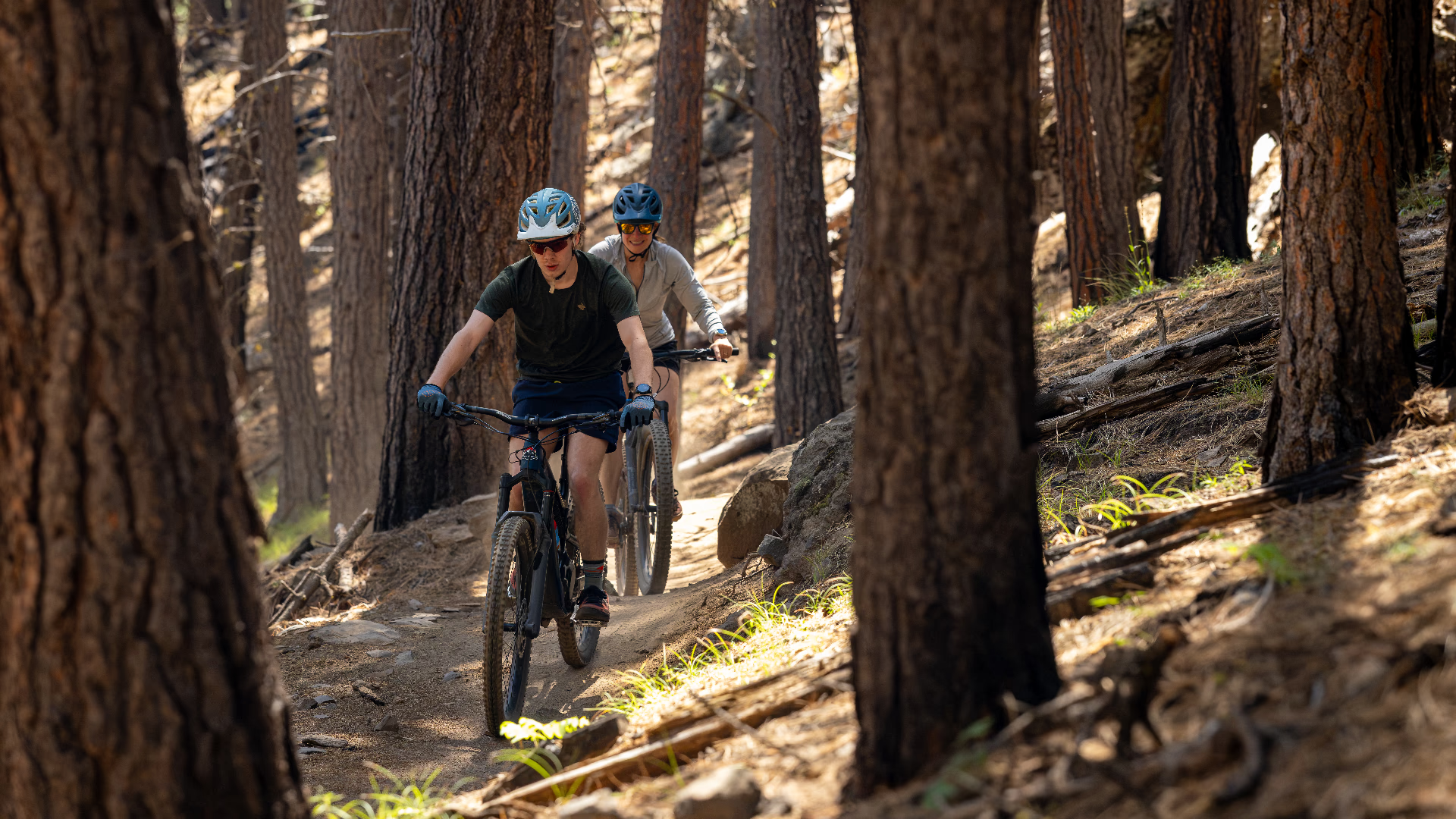
Two bikers ride down a mountain biking trail in Central Oregon

The Best E-Bike Friendly Trails

Upper and Lower Storm King

Storm King connects the Phil’s and Wanoga trail systems and crosses Cascade Lakes Highway near Green Gate. It’s a versatile trail that works just as well as a steady climb as it does as part of a longer descent from Wanoga via Funner or Tiddlywinks.

Storm King’s appeal comes from its variety. Upper Storm King winds through the forest on well-graded singletrack, while Lower Storm King rewards downhill riders with a fast, twisty finish. Climbers get a relatively manageable grade, making the trail a useful — and fun — connection between some of Bend’s most popular riding areas.

Trail mileage: 9 miles total
Upper Storm King: 5.4 miles
Lower Storm King: 3.6

Pinedrops

Pinedrops is the kind of trail that proves a climb doesn’t have to feel like a chore. The roughly 2-mile stretch winds gradually uphill through the forest on approachable singletrack, with enough turns and short steeper sections to keep the ride interesting without turning it into a grind.

COTA put significant work into Pinedrops this year, improving the trail as part of a larger effort to separate climbing traffic from the faster downhill action around Whoops. The result gives riders a more comfortable way to gain elevation while setting themselves up for another lap through the Phil’s network.

Trail mileage: 2 miles 

Royal Flush

Short, fast and built for play, Royal Flush packs a lot into 1.3 miles. A large Trail Love event hosted by COTA in spring 2026 focused on maintenance to get the trail primed for the riding season.

The downhill-only trail strings together tabletops, banked turns and other features in quick succession, making it a good choice for riders who want more action without committing to a long descent. The machine-built flow and steep berms encourage riders to carry momentum from one feature into the next. Be aware of low spots, which can retain snow or rainwater in colder, wetter weather.

Trail mileage: 1.3 miles 

Voodoo Child 

Voodoo Child offers a mellower change of pace in the Phil’s network. With relatively little elevation change, the 0.8-mile trail is a good choice for riders looking for a casual cruise or an easy connection between more demanding trails.

Its appeal is in the flow rather than big technical features: riders can keep moving without the sustained climbing or descending found elsewhere in the network. Thanks to COTA’s roughly 700-foot expansion in 2025, riders can also connect Phil’s Trailhead and Voodoo without using Forest Road 4610.

Trail mileage: 0.8 miles 

Phil’s to Shevlin 

The connection between Phil’s and Shevlin opens up opportunities for riders who want to turn a familiar Phil’s-area outing into a longer adventure. The connector links Phil’s Trailhead, Shevlin Park and Lower Mrazek while supporting the retirement of unauthorized routes that fragment wildlife habitat and disturb natural and cultural resources.

The payoff is variety: riders can move from the classic forested singletrack around Phil’s toward Shevlin and, for riders on traditional mountain bikes, continue onto the flowing terrain of Lower Mrazek. Lower Mrazek is fun in both directions, with climbing singletrack on the way up and stretches of fast, flowing trail on the return.

If you continue onto Mrazek Trail, however, leave the e-bike behind: e-bikes are not allowed.

Trail mileage:
Shevlin: 2.5 miles
Phil’s: 7.6 miles
Lower Mrazek: 7.5 miles

Cant we all just get along on the bike trails

Acoustic Bike Only Trails

Wanoga Downhill Trail

Wanoga continues to evolve into a mountain biking hub west of Bend, with something for riders at very different stages of the sport. Families and newer riders can start with the pump track at Wanoga Sno-Park, while more experienced riders can head toward the downhill trails for steeper terrain and more technical challenges.

One of Wanoga’s biggest advantages is connectivity. Riders looking to extend the outing can link into Tiddlywinks and Funner for a longer ride, combining purpose-built downhill riding with some of the Wanoga network’s best-known singletrack.

Trail mileage: 5.5 miles

Cline Butte and Cascade View

The new trails at Cline Butte and Cascade View give riders more reasons to explore beyond Bend’s west-side trail network. Developed in partnership with the Bureau of Land Management, the project added trails while rerouting unofficial user-created routes away from private property and sensitive golden eagle habitat.

But the conservation work also produced more riding variety. COTA’s completed additions include trails such as Chainbreak, Positive Vibrations, Legal Eagle and CrossFire at Cline Butte and Whiptail, Rattler, Bull Snake and Hummingbird at Cascade View. Together, the additions create more options for putting together different rides instead of following a single established route through the area.

Trail mileage: 11.5 miles total
Cline Butte: 6 miles
Cascade View: 5.5 miles

Pine Drops Extension

Also known as the Uphill Whoops Route, this uphill-only connector is designed to make one of the busiest parts of the Phil’s network work better for everyone. Instead of climbing the same trail other riders want to descend, riders get a dedicated route uphill toward Pinedrops and Whoops.

That separation is the real appeal: climbers can settle into their pace while downhill riders get more freedom to enjoy the flow and features of Whoops. The extension also improves connections within the larger Phil’s network, making it easier to string together laps without relying as heavily on forest roads.

Trail mileage: 3 miles

Ridge Loop

Ridge Loop brings riders into the higher-elevation terrain around Swampy Lakes Sno-Park, offering a noticeably different experience from the lower, drier trails closer to Bend. The forested setting and roughly 580 feet of climbing give the trail more of a backcountry feel while still connecting into the larger Swampy trail network.

Its biggest strength is connectivity. Ridge Loop gives riders another way to build longer loops through the Swampy area rather than simply riding an out-and-back, making it particularly useful for riders who like piecing together bigger high-country days.

Trail mileage: About 2.5 miles

Yeti Winter Fat Bike Trail

Yeti adds something different to the mix: a trail created specifically to expand winter fat-biking opportunities. Located southwest of Kiwa Butte, the route adds approximately 5 miles of riding designed to offer more varied terrain and challenge than existing winter options.

That makes Yeti less about simply keeping the bike rolling through winter and more about providing an actual trail-riding experience on snow. Its terrain and location give fat-bike riders another option for exploring the forest when many of Central Oregon’s traditional mountain bike trails are buried for the season.

Trail mileage: Approximately 5 miles
Read more about biking in Central Oregon.

Youth and Adaptive Golf Expand Access Around Bend

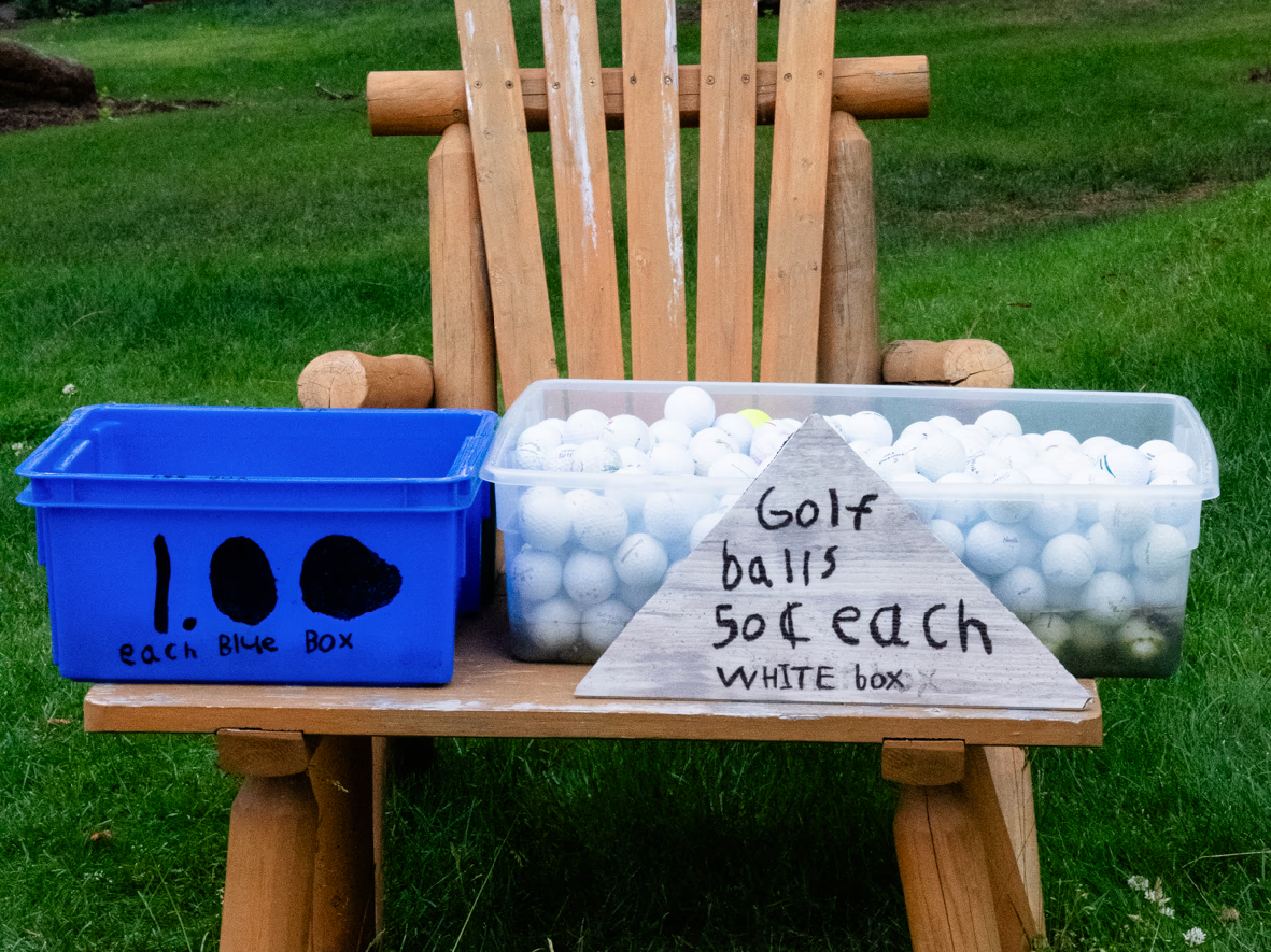
Eleven-year-old Ethan Carnahan helps to fund his rounds at Aspen Lakes Golf Course in Sisters by collecting, cleaning and selling golf balls he finds near his family’s home along the eighth fairway. Ethan discovered golf through his grandfather and took his first lesson from Aspen Lakes head pro, Nicholas Krohn, when he was 6 years old.

Ethan sells golf balls at Aspen Lakes Golf Course, on the honor system

“I came up with the idea to sell golf balls after my sister got a job,” he said. “I couldn’t have a lemonade stand where I live, but I could find and clean golf balls and make a golf ball stand to sell them on the honor system.”

In Central Oregon, considered one of the Pacific Northwest’s top golf destinations with about 30 courses within 30 miles of Bend, Ethan’s “two balls for a dollar” enterprise challenges one of golf’s oldest perceptions—that the game is reserved for those with deep pockets. Across Central Oregon, efforts to lower financial and physical barriers are reshaping who gets to play. Aspen Lakes participates in Youth on Course (YOC), a program established in 2006 to expand diversity in golf and remove financial barriers.

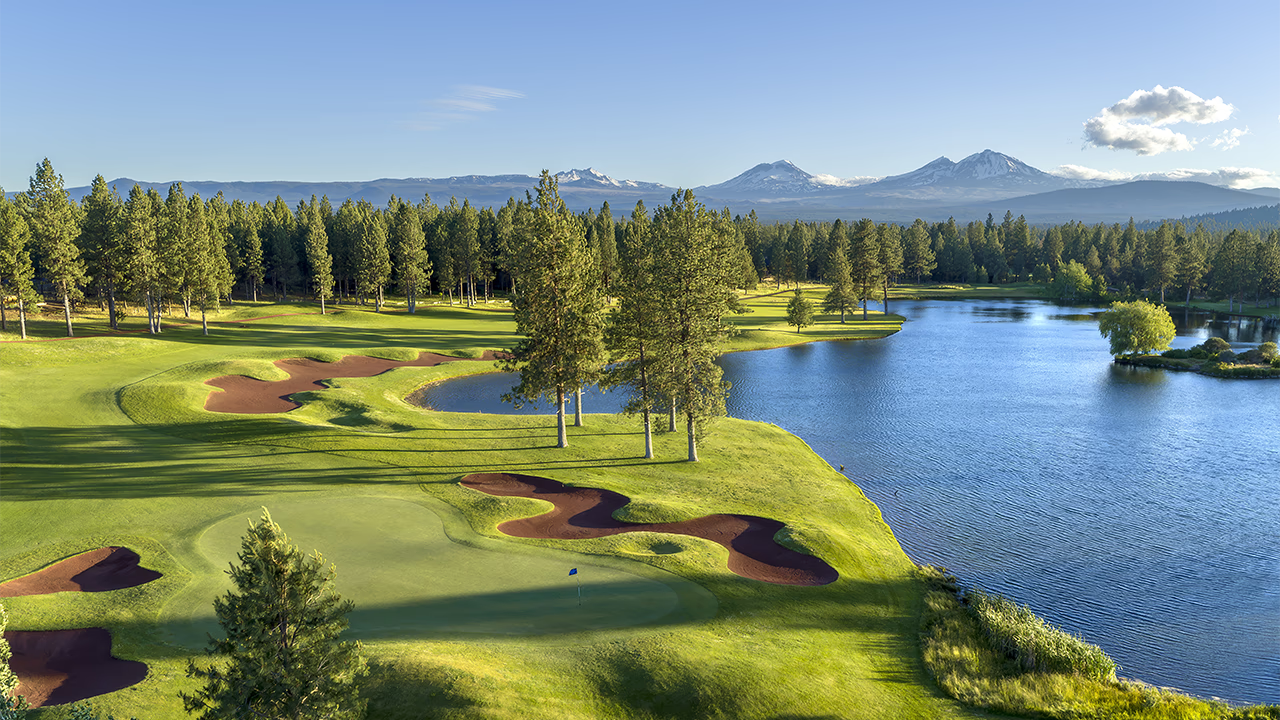
Aspen Lakes Golf Course in Central Oregon
Aspen Lakes Golf Course

How Youth on Course Makes Golf More Affordable

Four courses in the greater Bend area support Youth on Course. To participate, youth register for an Oregon Golf Association Junior Membership and pay a $40 annual fee. Green fees are as low as $5 per round, along with other member benefits such as driving range access and instruction. In addition to Aspen Lakes, Juniper Golf Course, Crooked River Ranch Golf Course and Meadow Lakes Golf Course in Prineville offer tee times for YOC members and reduced green fees for their adult companions.

“Two of the major barriers in golf are access to facilities and cost of green fees,” said Notah Begay III, one of the few Native American golfers to have played on the PGA Tour. “Youth on Course helps eliminate those barriers.” Begay didn’t have the benefit of YOC in Albuquerque, New Mexico, in the 1980s, when he became passionate about golf after tagging along with his father.

“I would recycle cans and collect spare change to pay for range balls,” recalled Begay. “When my desire to practice outmatched my funding, I worked at the range in exchange for practice time.”

His efforts paid off. Begay became the #1 Junior Golfer in America at 17 and was a three-time All-American at Stanford. In 2005, he created the NB3 Foundation to support Native American youth golfers and teach them the sport’s values of “discipline, goal setting, etiquette, pride and health.”

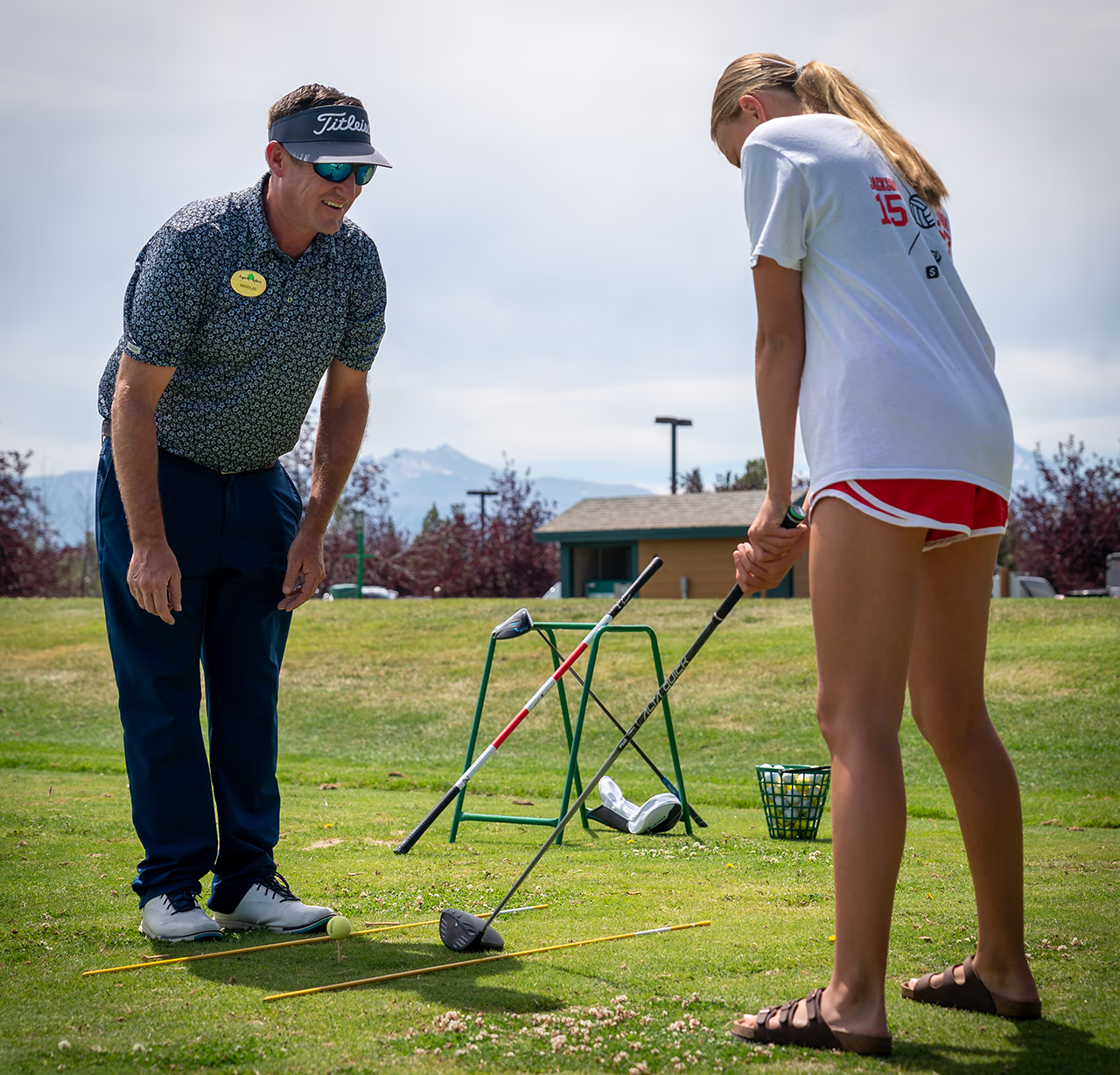
Golfer Nicholas Krohn teaches golf to a student, practicing swing
Nicholas Krohn with student | Photo by Kevin Dahlgren, KDahlgren Photography

Making Golf Easier for Young Players to Learn

Krohn says Aspen Lakes hosts about 50 YOC rounds per month, of which as many as 30% are visitors to Central Oregon. He makes a point of greeting every YOC player personally before they tee off.

“Golf can be a very intimidating process for a new player,” he said. “My goal is to make every youth guest comfortable when they visit Aspen Lakes.”

Aspen Lakes also supports the Operation 36 program, which allows a new player to tee off 25 yards from the hole. Once they shoot 36 over nine holes from this distance, they move back to 50 yards, 100 yards, etc., until they reach the appropriate tee box. Krohn also places green junior tees in the fairway to establish the appropriate tee-to-green yardage. Several other courses in Central Oregon feature junior tees.

Juniper Golf Course general manager Pat Cashman grew up playing junior golf in Bend, where he took advantage of a policy that let kids play for free after 5 p.m. Today at Juniper, YOC members can play a round for $5, depending on day-of availability. YOC players completed 122 rounds this past June alone. “It’s important as a city-owned facility that we offer a cost-effective entry point into golf,” said Cashman.

As Begay did in Albuquerque, high schooler Stephen Chapman took a job at Juniper, his home course, to improve his game. “I play two to three times a week,” said the rising senior, who recently shot 70 in a high school tournament. “I appreciate the challenge and self-reliance of golf, which I hope to play in college.”

The U.S. Adaptive Open Is Coming to Sunriver

Self-reliance is on full display in another growing faction of players with an important Central Oregon connection: adaptive golf. In 2027 and 2028, Sunriver will host the U.S. Adaptive Open, an event that brings together the world’s best golfers with recognized physical, sensory or intellectual impairments to compete for a national championship.

The U.S. Adaptive Golf Alliance (USAGA) has developed equipment and protocols that enable individuals with a variety of disabilities to excel in golf. Players may use adaptable gloves with more Velcro and larger surface areas for gripping, solo golf carts designed for play from the cart itself or as an elevation aid, and customized clubs. “When we were selected by the USAGA for their championship, we set about learning everything we could about adaptive golf from a playing and instruction perspective,” said Joshua Willis, Sunriver Resort’s vice president of operations.

Sunriver has hosted other United States Golf Association events and several adaptive golf clinics. Increased adaptive golf training among its seasoned staff includes procuring tools such as driving-range seats and ball-teeing aids tailored to individual golfers. “Our responsibility is to continue to learn and create more understanding about adaptive golf and adaptive sports, in general,” Willis said. “I encourage anyone to watch because the quality of golf is unbelievable.” Last year, two adaptive golfers qualified for the U.S. Open, overcoming odds that their PGA Tour peers have never faced.

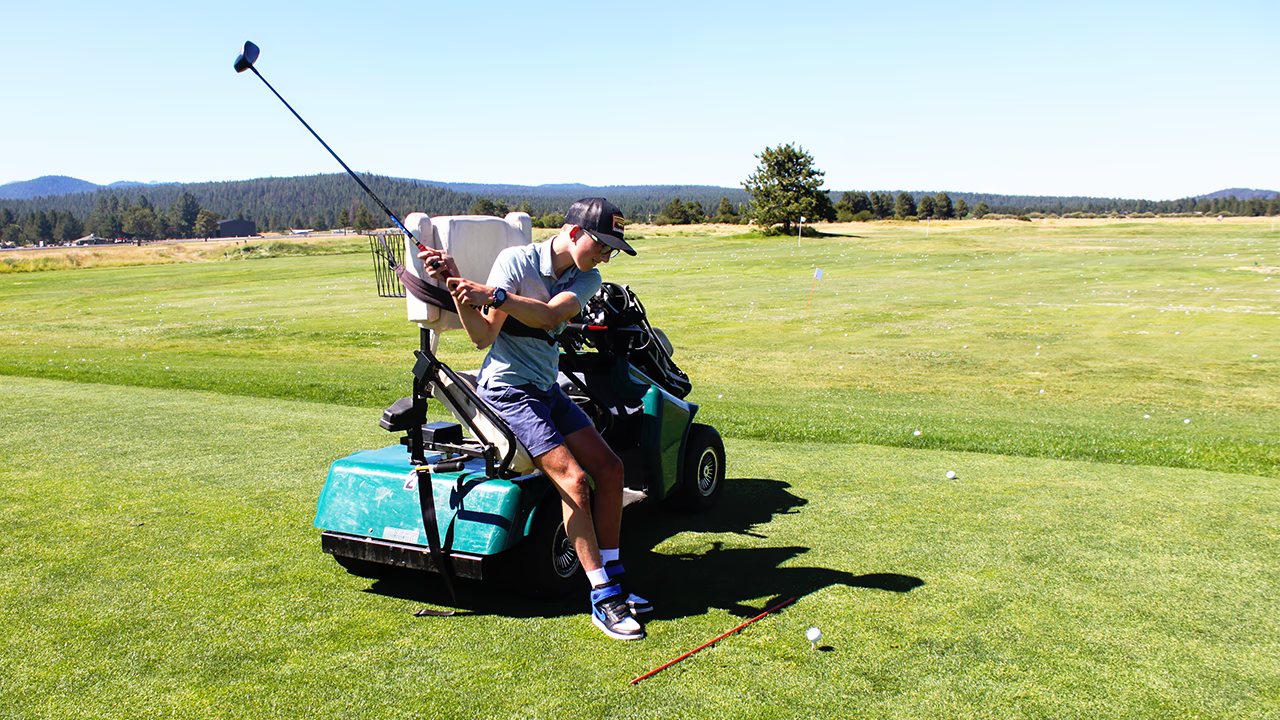
Oregon Adaptive Sports offers community adaptive golf clinics. Awbrey Glen is home to a SoloRider adaptive golf cart, which makes the game more accessible for players with mobility challenges.
Oregon Adaptive Sports (OAS) offers community adaptive golf clinics at Awbrey Glen Golf Club and Sunriver Resort from June through September. Awbrey Glen is home to a SoloRider adaptive golf cart, which makes the game more accessible for players with mobility challenges. Adaptive golfers of all abilities, ages 8 and older, are invited to practice the fundamentals of golf in a welcoming, supportive environment. | Photo courtesy of Oregon Adaptive Sports

Where to Try Adaptive Golf in Central Oregon

Oregon Adaptive Sports (OAS) offers community adaptive golf clinics at Awbrey Glen Golf Club from June through September. Awbrey Glen is home to a SoloRider adaptive golf cart, making the game more accessible to players with mobility challenges. Adaptive golfers of all abilities, ages 8 and older, are invited to practice the
fundamentals of golf in a welcoming, supportive environment.

From the world’s best adaptive players preparing for Sunriver to high schooler Chapman’s dreams of playing in college, golf in Central Oregon is becoming less about who traditionally belonged and more about welcoming new players in. Ethan, who tries to play golf four times a week, says hitting the ball far and the continuous challenge of making each shot are what he likes most about the sport. “I think the more practice you get, the better you become,” he said.

Frequently Asked Questions About Affordable and Adaptive Golf in Central Oregon

How can kids play golf for less in Central Oregon?
Youth on Course helps make golf more affordable for young players at participating Central Oregon courses. Youth can register for an Oregon Golf Association Junior Membership for $40 annually and access green fees as low as $5 per round, along with benefits including driving range access and instruction.

Which Central Oregon golf courses participate in Youth on Course?
Four courses in the greater Bend area participate in Youth on Course: Aspen Lakes Golf Course in Sisters, Juniper Golf Course, Crooked River Ranch Golf Course and Meadow Lakes Golf Course in Prineville. Participating courses offer Youth on Course tee times, with availability and rates varying by course.

What is adaptive golf?
Adaptive golf uses equipment, instruction and playing modifications to make golf accessible to people with physical, sensory or intellectual impairments. Equipment can include adaptable gloves, specialized golf carts, customized clubs, driving-range seats and ball-teeing aids.

Where can people try adaptive golf in Central Oregon?
Oregon Adaptive Sports offers community adaptive golf clinics at Awbrey Glen Golf Club from June through September for golfers of all abilities ages 8 and older. Awbrey Glen also has a SoloRider adaptive golf cart for players with mobility challenges.

When is the U.S. Adaptive Open coming to Sunriver?
Sunriver will host the U.S. Adaptive Open in 2027 and 2028. The national championship brings together leading golfers with recognized physical, sensory or intellectual impairments.

Trailhead Lodge Grand Opening Party

Celebrate the Grand Opening of Trailhead Lodge with an afternoon of live music, great food, a raffle, and community fun. Relax on the lawn while enjoying live music by Maria, and grab delicious fajitas available for purchase from Sharkmouth Fajitas. Bring your friends and family to celebrate this exciting new addition to the community!

Ultimate Scavenger: The High Desert Food Trail!

High Desert Food & Farm Alliance (HDFFA) is inviting the community to experience Central Oregon’s local food scene like never before at the inaugural High Desert Food Trail Scavenger Hunt on Saturday, September 19.

This first-of-its-kind, family-friendly event transforms the High Desert Food Trail into an interactive adventure, where teams will travel throughout the Sisters and Tumalo area, visiting over 15 local farms and food businesses while competing in a friendly scavenger hunt for a grand prize.

At each stop, teams will complete fun activities and solve clues bringing them one step closer to completing the hunt. Along the way, participants will enjoy exclusive experiences, meet local food producers, discover hidden gems, and gain a deeper appreciation for the people who grow and produce the food that nourishes Central Oregon.

Teams that successfully complete the scavenger hunt will be eligible to compete for top prizes from local businesses, adding an extra layer of excitement to a day already filled with exploration, discovery, and local flavor. The scavenger hunt encourages participants to explore the region, support local businesses, and create lasting memories with family and friends while celebrating Central Oregon’s vibrant food community.

For all information and to purchase your tickets, click here.

Why Balloons Over Bend is a Magic Summer Event

At dawn’s first whisper of light, a crowd of spectators gathers. The crisp air and the roar of burners pierce the early-morning stillness as a line of quiet giants slowly stretch and stand in their full glory. In a breathtaking moment of awe, they rise into a quiet, dreamlike ascent, their silhouettes drifting effortlessly toward the cloudless horizon. Later, as darkness falls, a spectacle known as “balloon glow” will take place, in which tethered balloons are lit with intense bursts of flame to create a kaleidoscope of color against the backdrop of the nighttime sky. Central Oregonians will have the opportunity to witness both of these scenes unfold during the annual Balloons Over Bend and Night Glow show, one of the best summer festivals near Bend.

The History of Hot Air Balloons

It’s a little-known fact that more than 300 years ago, a similar setting took place during what is considered the dawn of aviation. But this wasn’t the first sustained flight by Orville and Wilbur Wright, which would happen more than a century later. The advent of human flight actually occurred in 1783, when another set of brothers, the French-born Montgolfiers, successfully launched a manned balloon composed of paper-laced linen and royal blue silk over the Paris skyline, ignited by the heat of a basic straw and wool fire. A large crowd stood transfixed during those 20 minutes of wonder, curiosity and ingenuity. This moment sparked “balloon mania” across Europe in the 18th century—a cultural obsession with human flight and the desire to explore past natural boundaries that appealed to the fascination of both aristocrats and commoners.

The aviation industry advanced light-years in the centuries that followed, yet hot air ballooning continued to harness its simplest element—capturing rising heat. Although the earliest prototypes have been replaced with balloons made of nylon and other synthetic materials, propane burners, and advanced navigation tools have improved efficiency and safety, little else has changed. Even the effectiveness of the wicker basket endures from centuries ago, thanks to its shock-resistant material and natural ventilation.

The function of a balloon pilot, called an aeronaut, has undoubtedly evolved from performing precarious experiments to test the science of lift to enchanting today’s passengers with an immersive experience. The term aeronaut is literally translated to “air sailor,” based on the way a person navigates the wind and buoyancy of the skies instead of the seas.

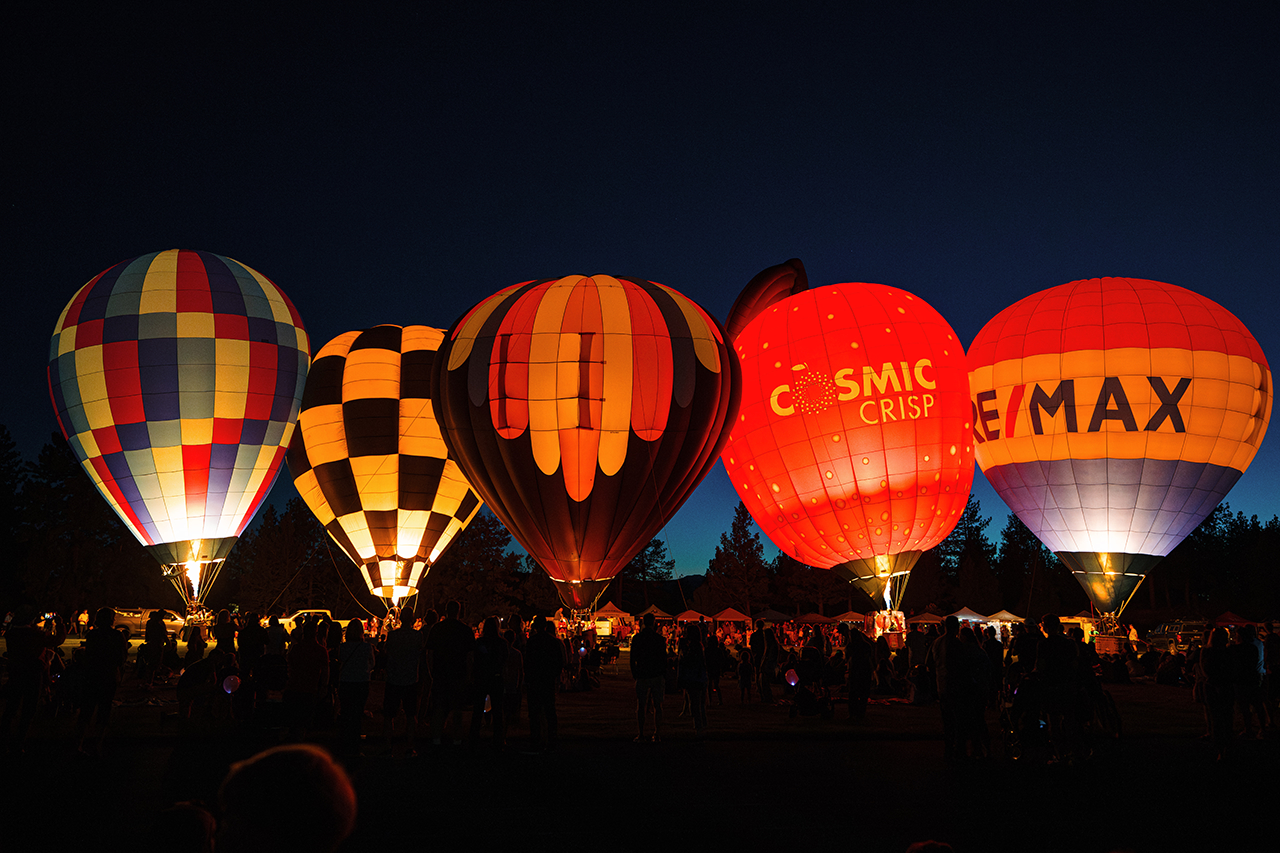
Hot air balloons in Bend Oregon
A variety of the hot air balloons at the event.

Central Oregon’s Aeronauts

Each aeronaut has a personal story of how they got into ballooning and subsequently became part of a coterie of fewer than 10,000 pilots worldwide. For Drew Smith, a Sunriver native and owner of Cascade Balloon Company in Bend, it was because of his first passion. As the former owner of a skydiving company in Madras and a skydiver himself, he began piloting to take divers up for the rush of jumping from the balloon. “It’s a very niche thing—few pilots in the area were doing it,” explained Smith. “Local ballooning here is unique because it brings different communities together, bridging the gap between aviation and thrill seekers in such a fun and inclusive way.”

Like other regions, the Pacific Northwest has a tight-knit subculture that exists among aeronauts and their crews. “It draws in all sorts of people. But in Central Oregon, there’s about one degree of separation between us, and we have our favorite places to fly passengers,” shared Darren Kling, operator of Big Sky Balloons in Redmond.

Why Central Oregon Is Ideal for Ballooning

Thanks to its undeniably picturesque topography, aerial sightseeing is increasing in popularity here. The majestic ridgeline of the Cascade Range and the glowing canyon vistas of Smith Rock State Park offer spectacular panoramic views that rival those of Sedona, Napa Valley and even Glacier National Park, where Kling flew before coming to Oregon more than 20 years ago.

It is the draw toward the essence of the experience—a rare opportunity to become one with the elements rather than be cut off from them—that the ballooning community shares. “The perspective you get is much different than from within a plane, where you are looking out of a window,” Kling described. “In a balloon, you are immersed in 360-degree views along with the stillness of floating, and it is such an elemental experience.”

It turns out the fascination with seeing the natural world from a higher vantage point is as much physiological as it is sensory-driven. The feeling we experience during flight is the release of what researchers call “awe-triggers,” which interrupt our default processing and thinking patterns. This feeling offers a reset and allows us to feel a calmness and a deeper connection to the world. Quite literally, it changes the way the brain thinks. And because the way humans process sensation has remained unchanged, hot air ballooning has endured as a beloved and timeless tradition.

Hot air balloon over Central Oregon Landscape

Overcoming the Fear of Heights

Still, effortlessly floating thousands of feet in the air is not for everyone. Dispelling fears about safety or about heights is common in the industry. “It’s natural to have a healthy fear of something like this. But 99.9% of the people I take up who have a fear of heights relax within the first five minutes,” said Kling. “The balloon travels at the same speed as the wind, so there is no resistance.

Most people have a fear of heights that arises when you look over an edge. In a balloon, it’s so expansive. You don’t get that relative feeling to the ground. And that makes it accessible—and magical—to just about everyone.” Taking photographs of Balloons Over Bend, photographer Cody Rheault shared the beauty of seeing this living art gallery rise: “And for a breath, all five lit at once with their immense, buoyant masses seemingly defying gravity for a brief photographic moment.”

Bend Hot Air Ballooning FAQ

Where can you see hot air balloons in Central Oregon?

One of the best opportunities is Balloons Over Bend. The annual summer event features sunrise launches and an evening Night Glow. Tethered balloons illuminate the night sky with synchronized bursts of flame. Several commercial operators also offer scenic flights throughout the region, weather permitting.

When is the best time to fly in a hot air balloon?

Hot air balloon flights typically take place shortly after sunrise, when winds are calmest and temperatures are cooler. These stable conditions provide the safest and smoothest flying experience.

Why is Central Oregon a popular place for hot air ballooning?

Central Oregon’s wide-open landscapes, favorable morning weather and dramatic scenery make it one of the Pacific Northwest’s premier destinations for ballooning.

Is hot air ballooning safe?

FAA-certified pilots fly modern hot air balloons equipped with advanced safety systems. Because weather plays a critical role in every flight, pilots only launch when conditions are safe.

More unique ways to enjoy summer in Bend and Central Oregon.

0
Your Cart
Your cart is emptyReturn to Shop