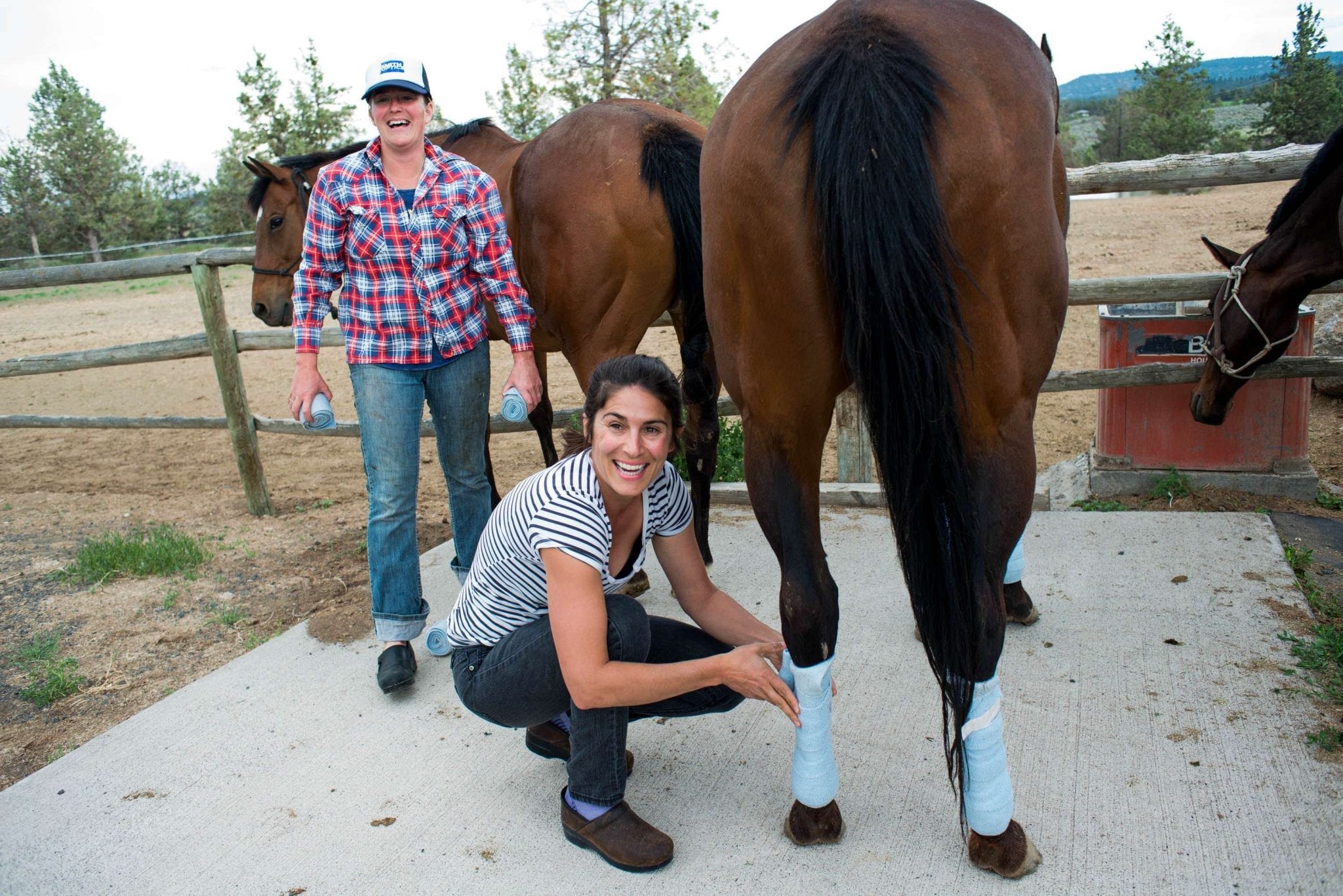
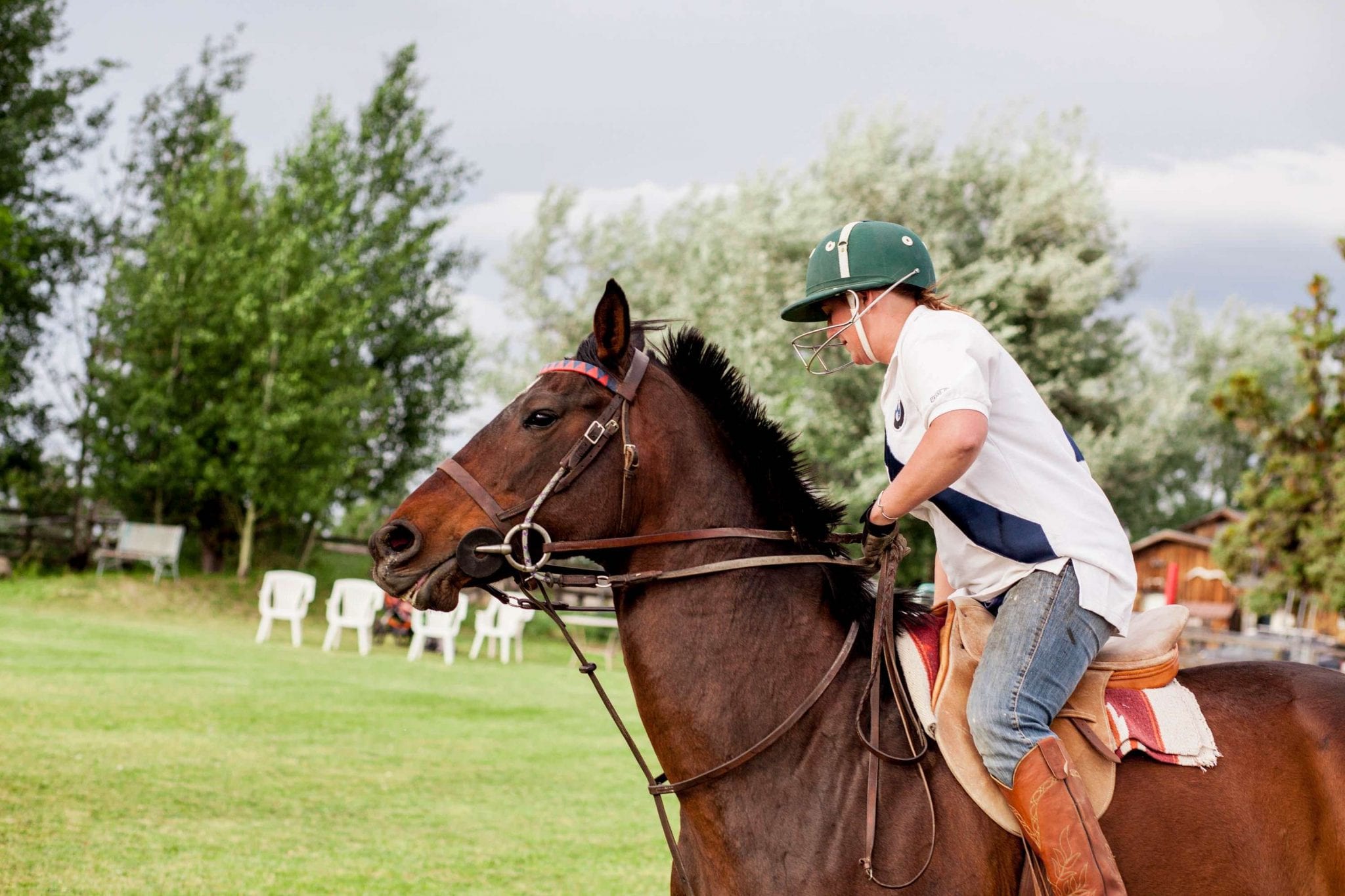
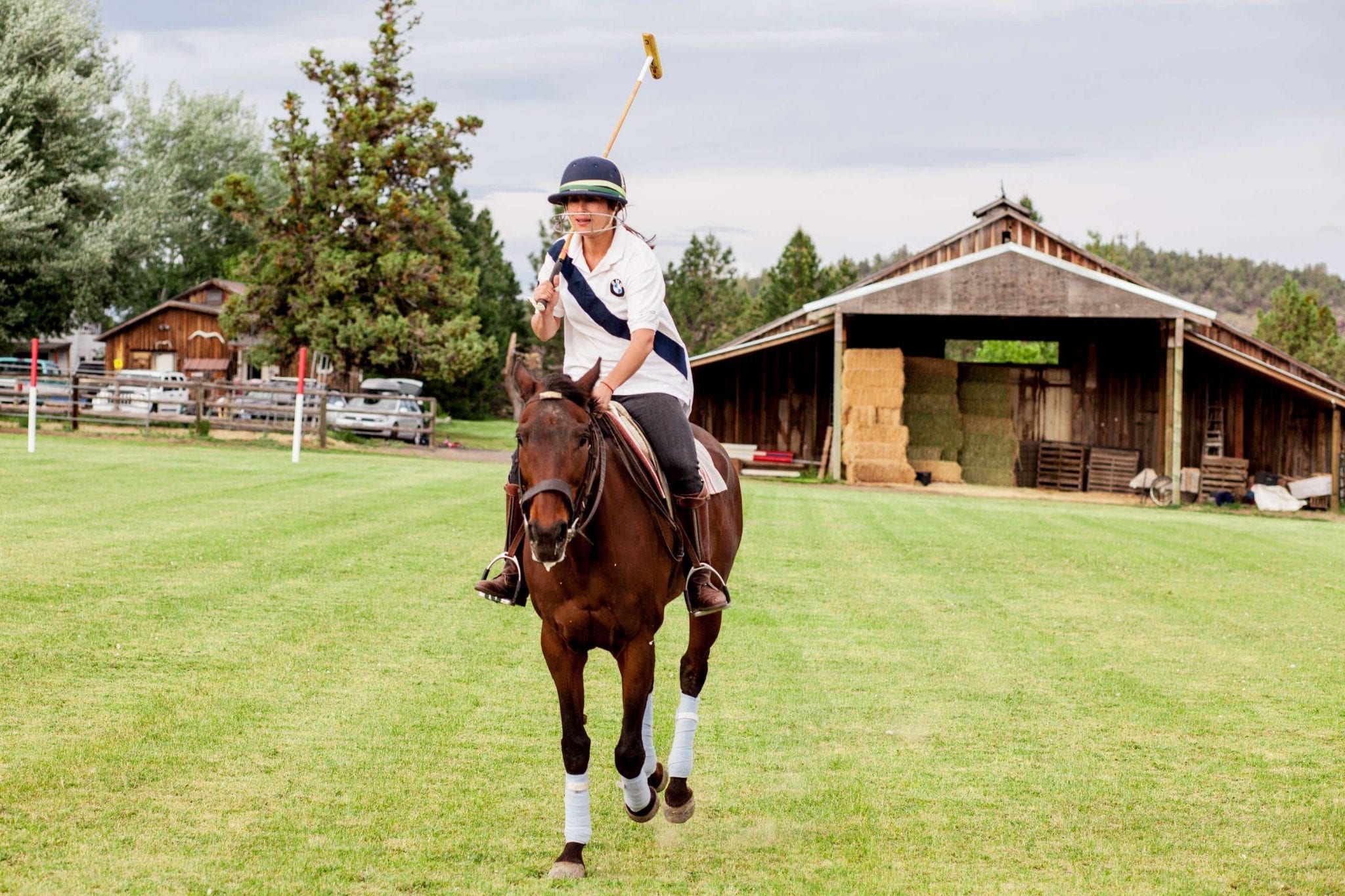
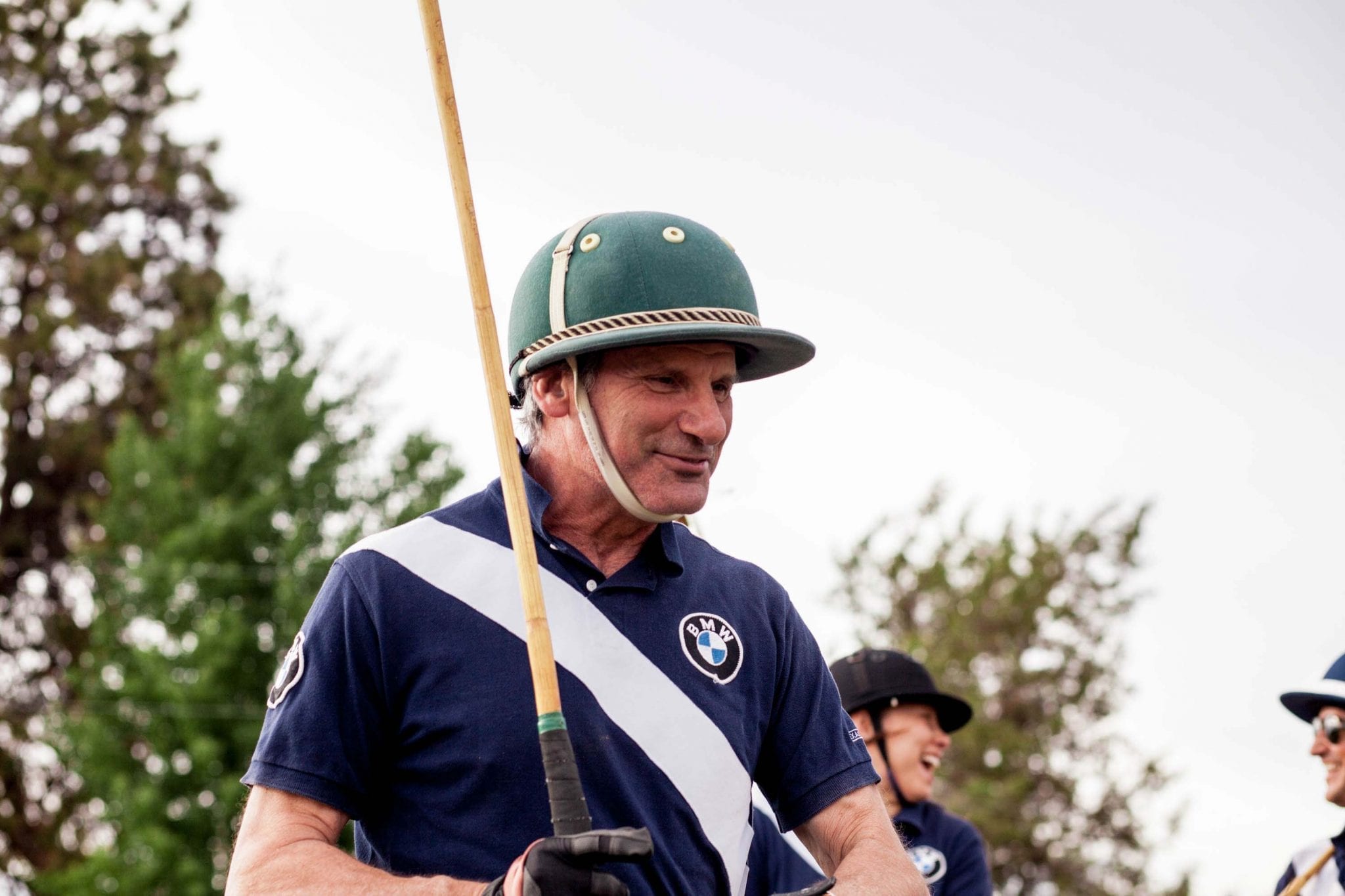
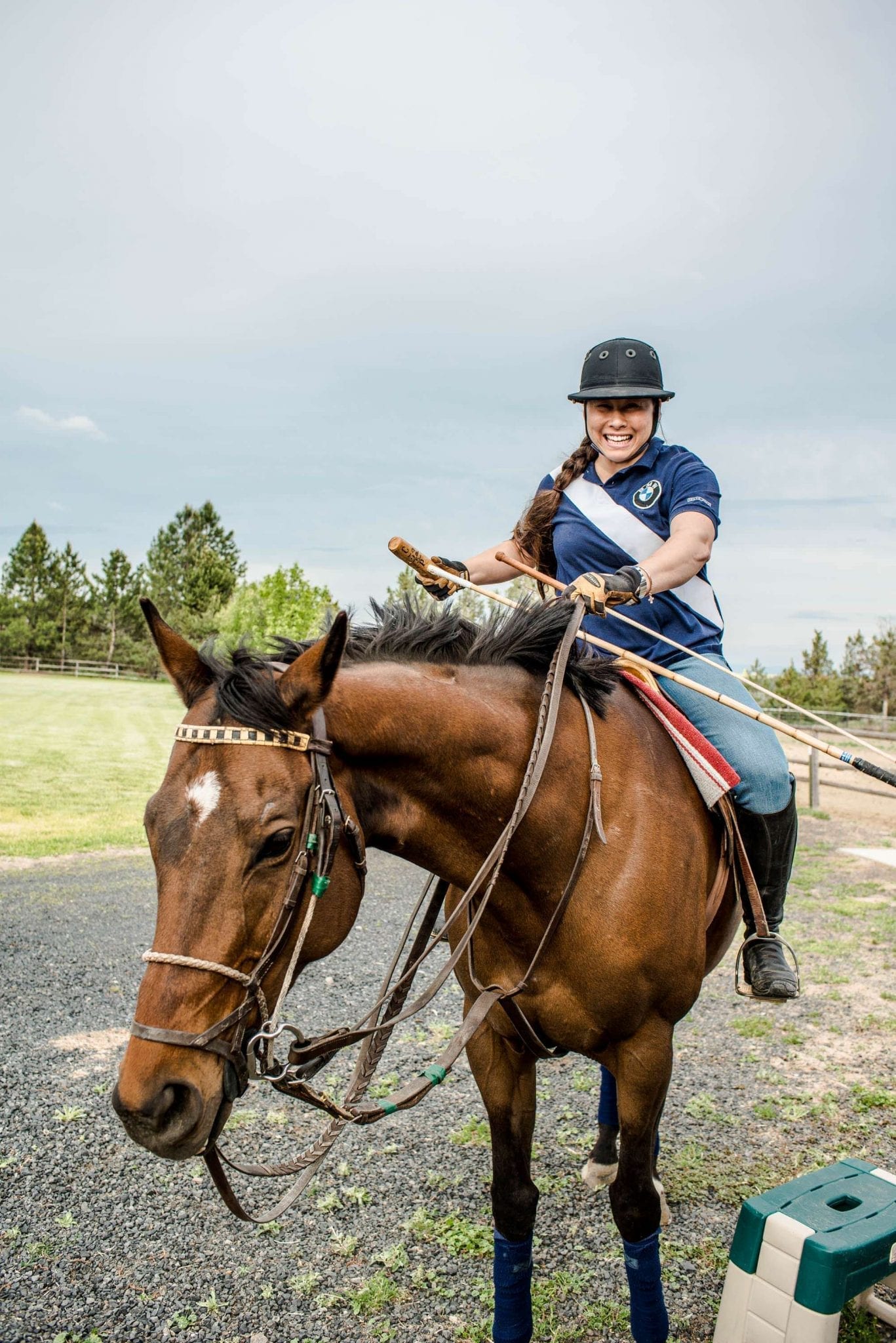
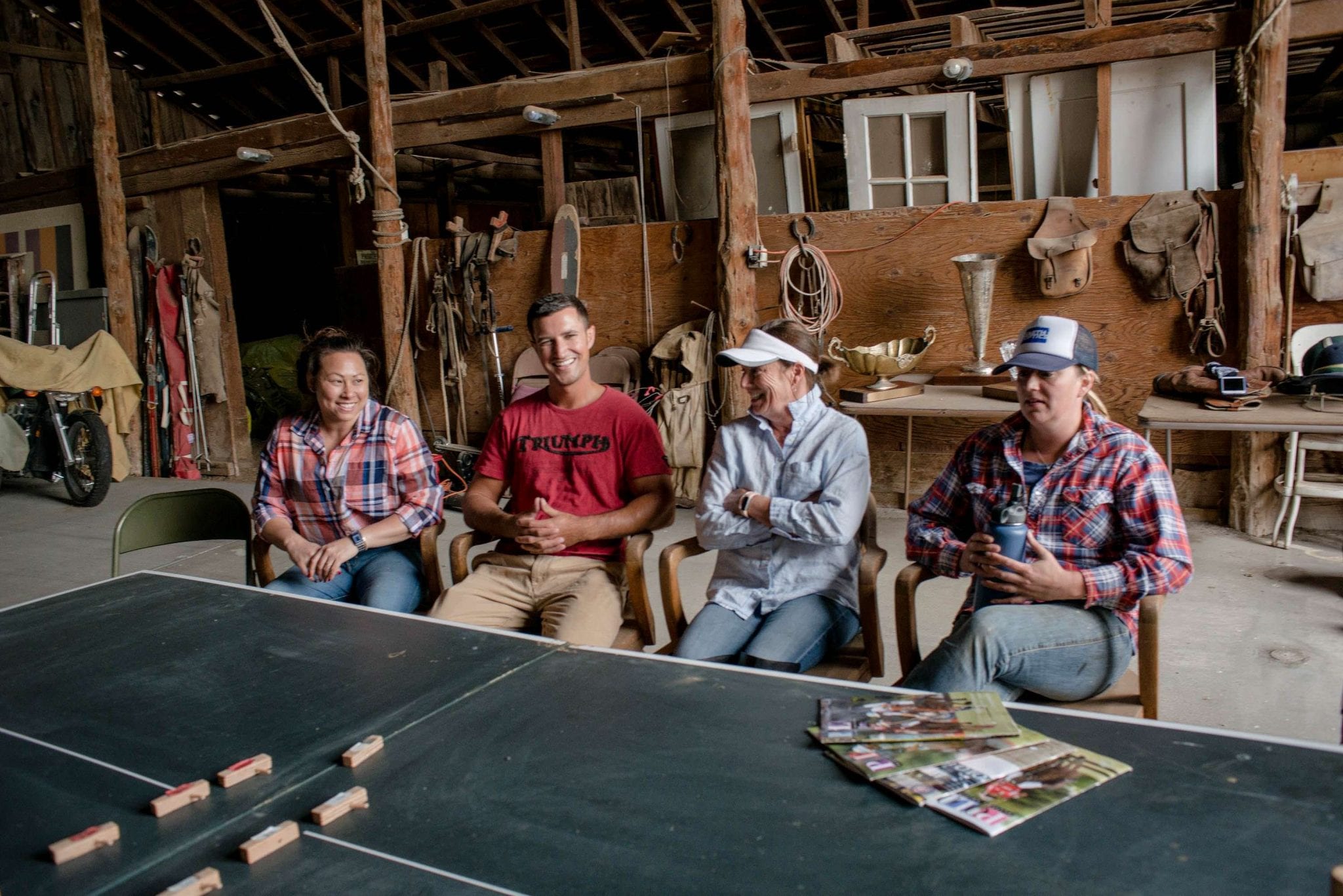
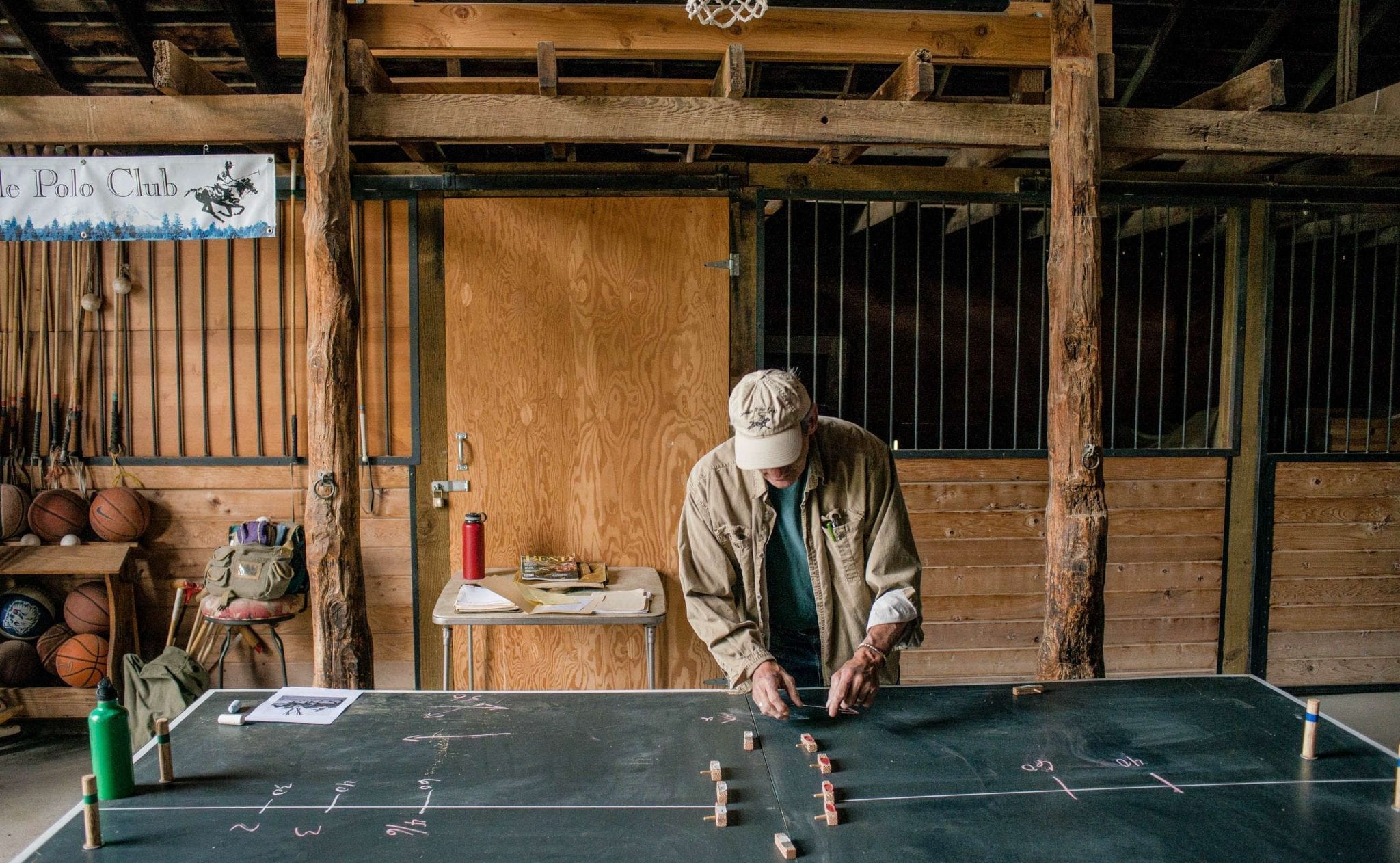
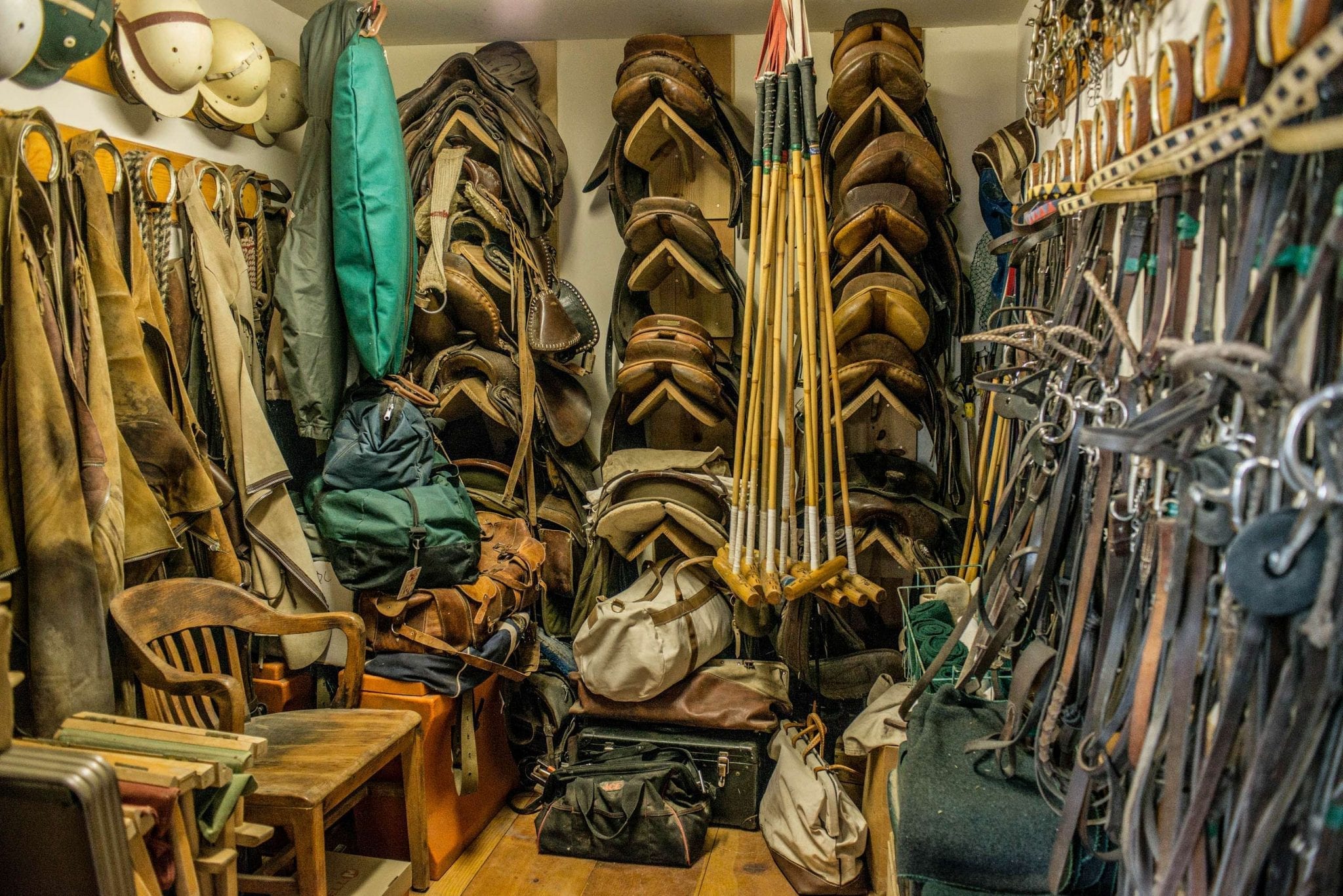
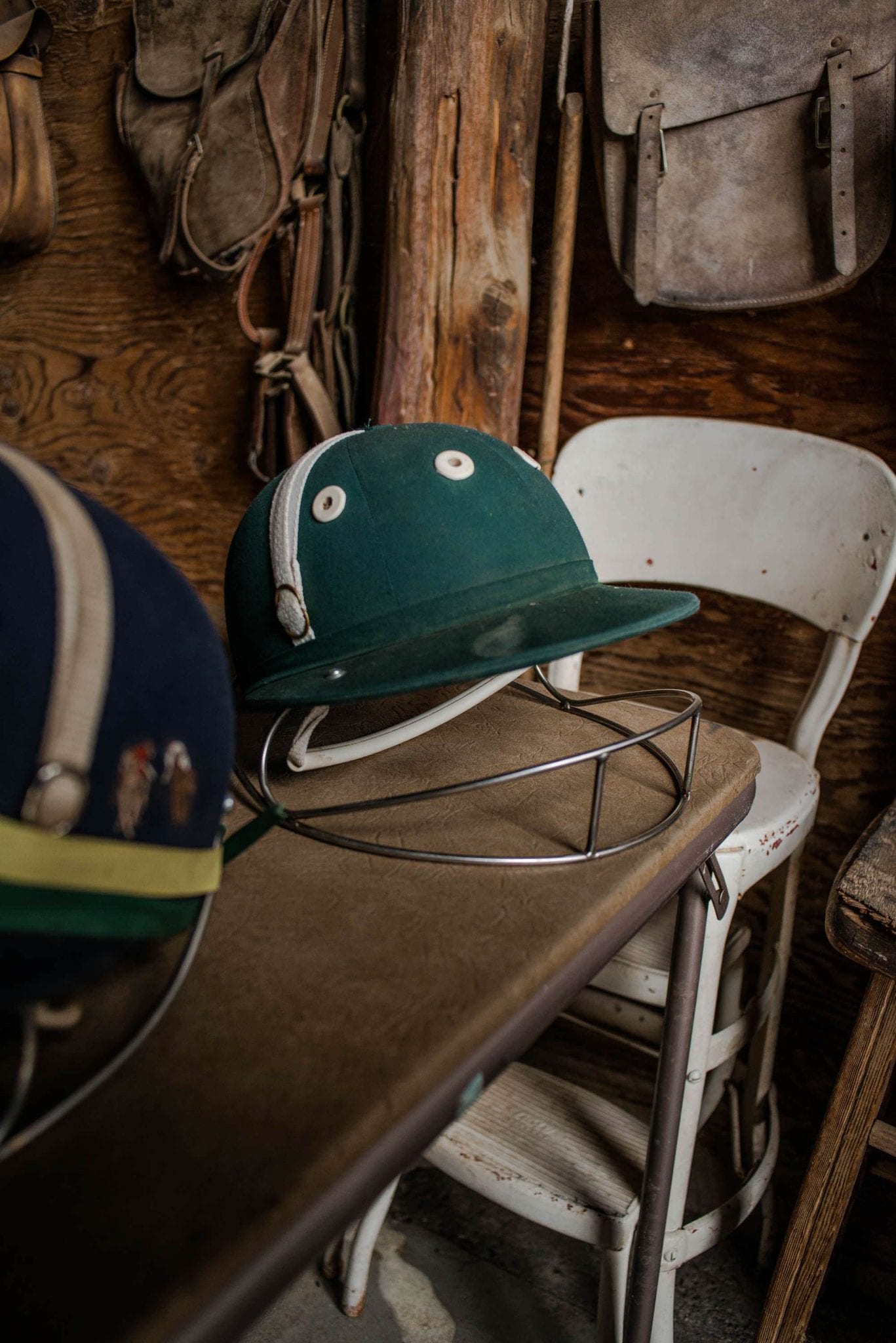
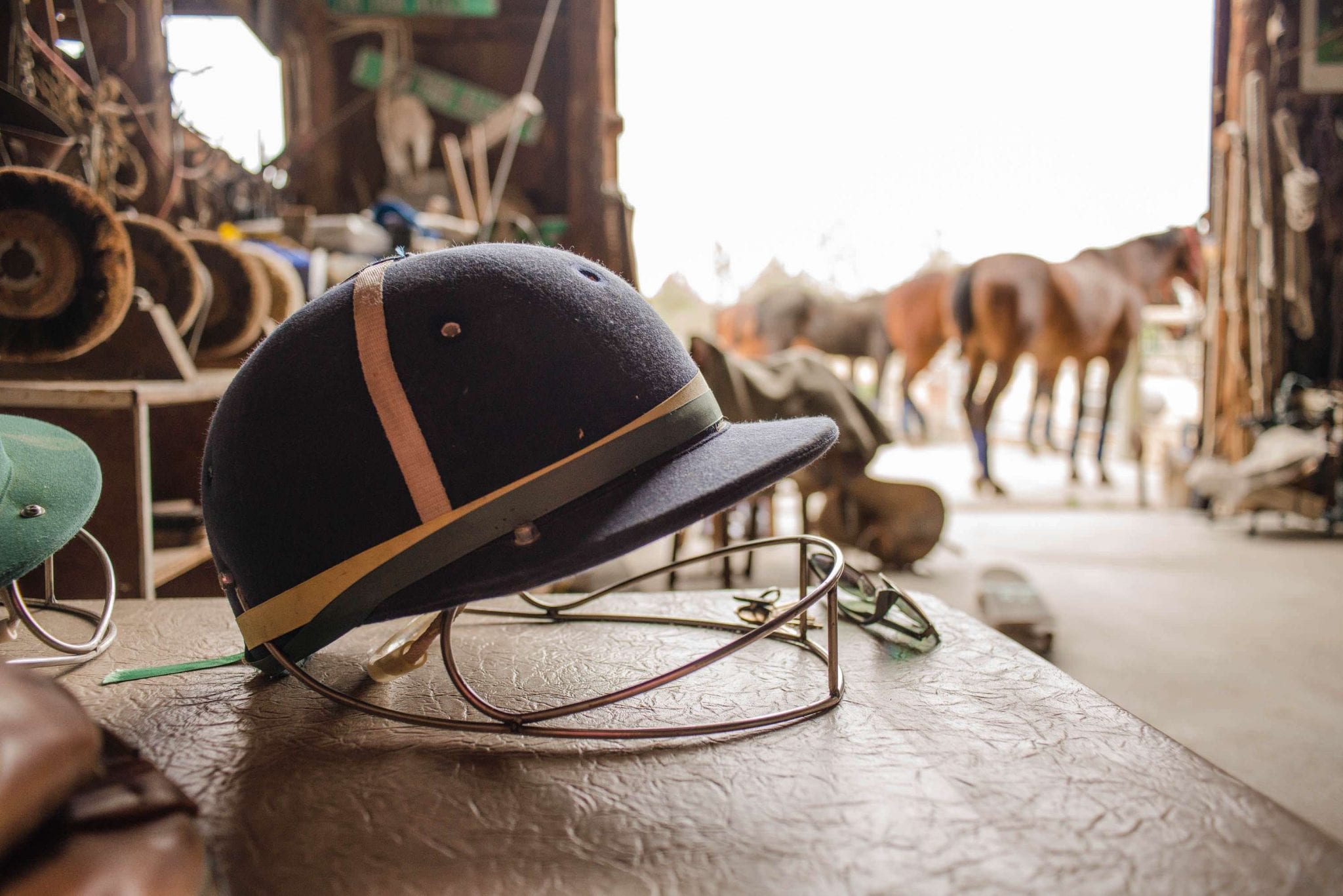
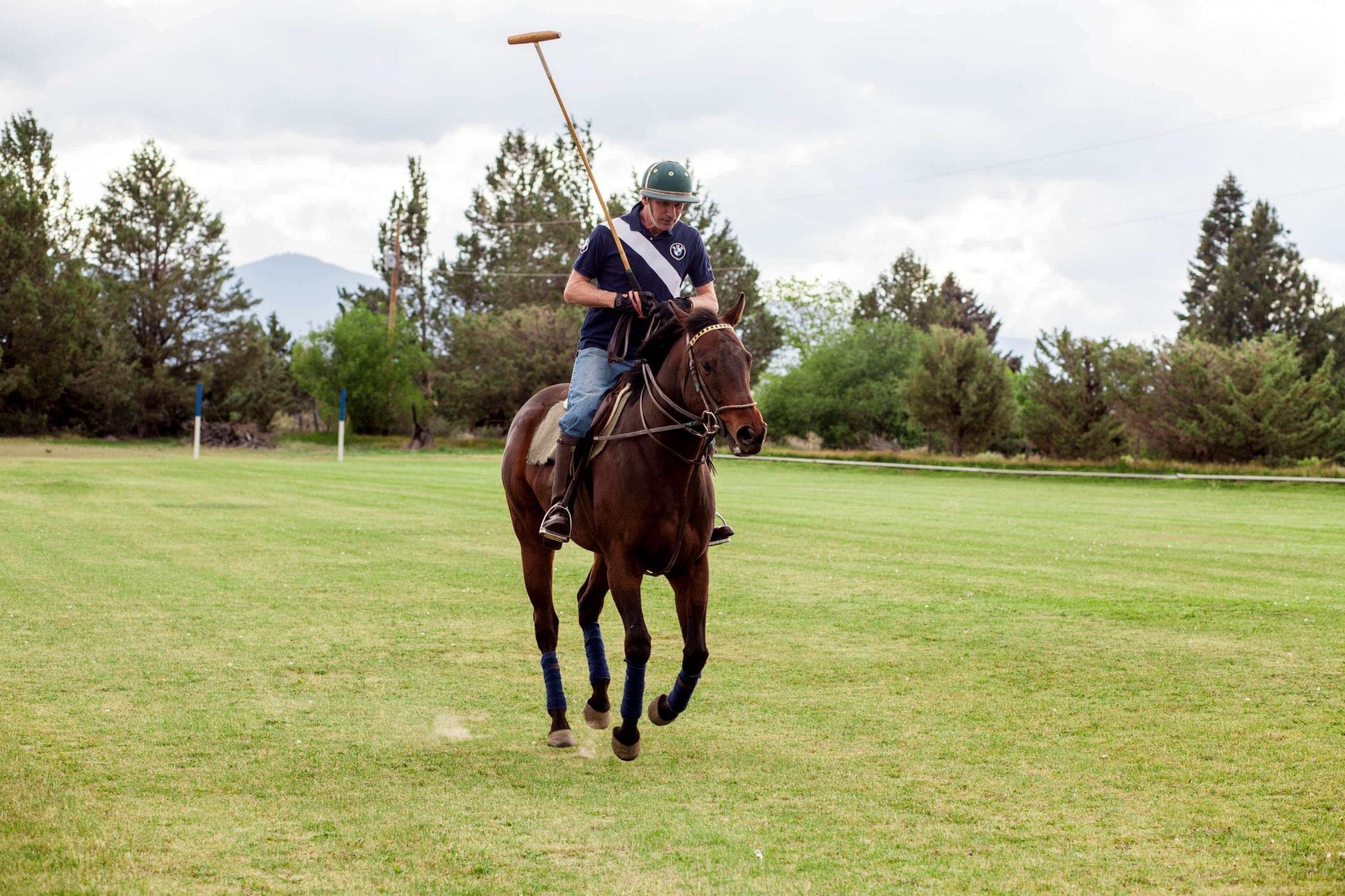
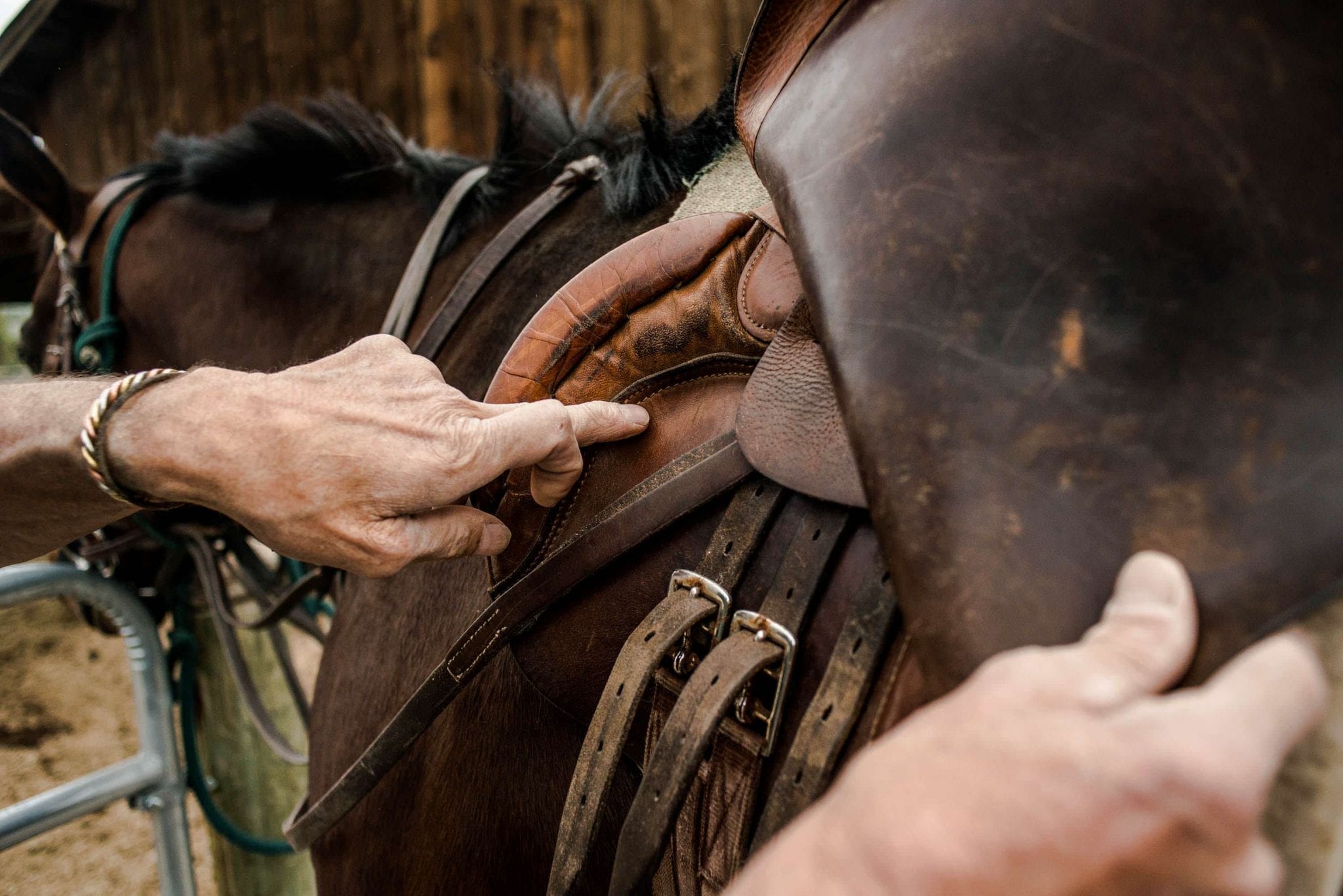
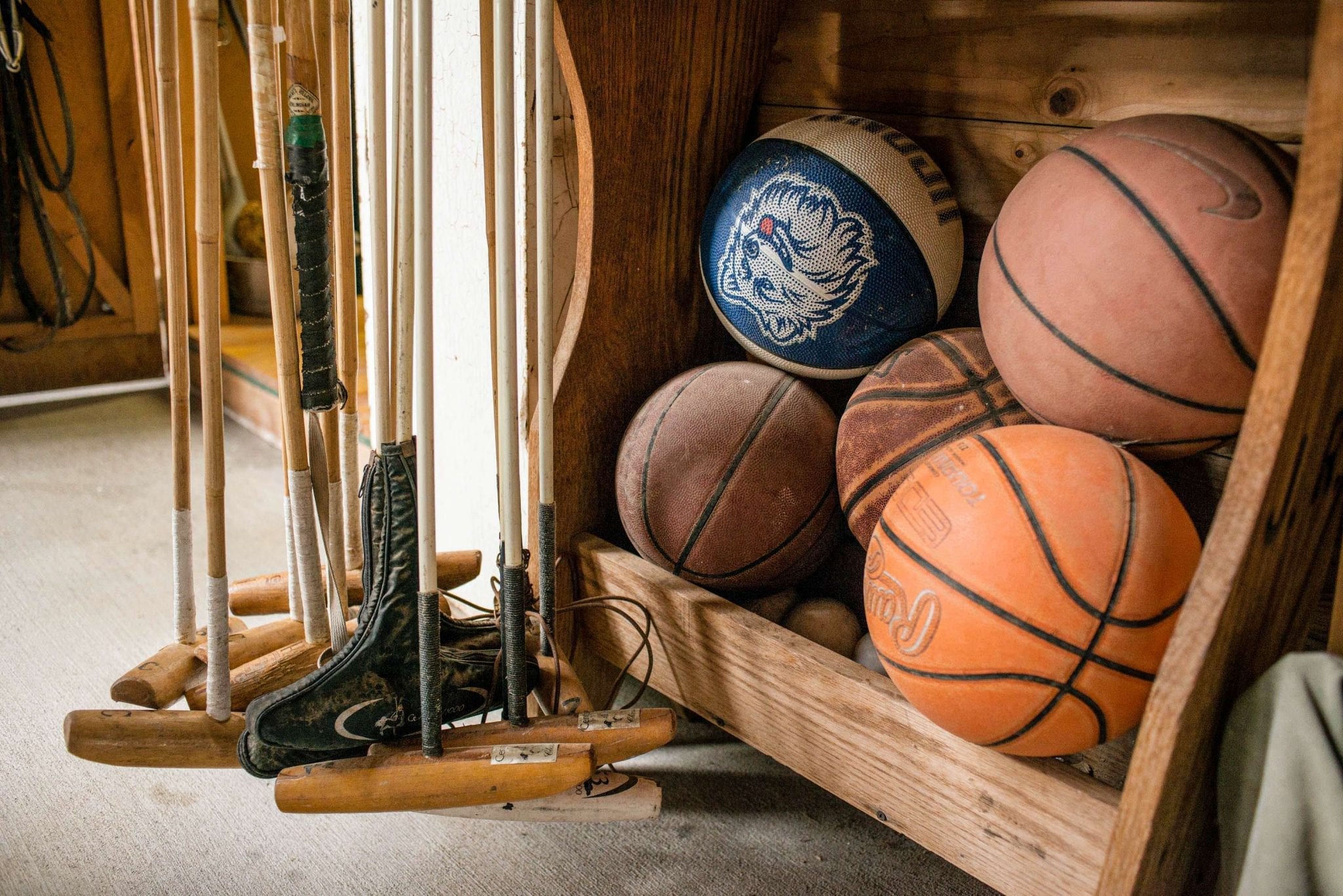
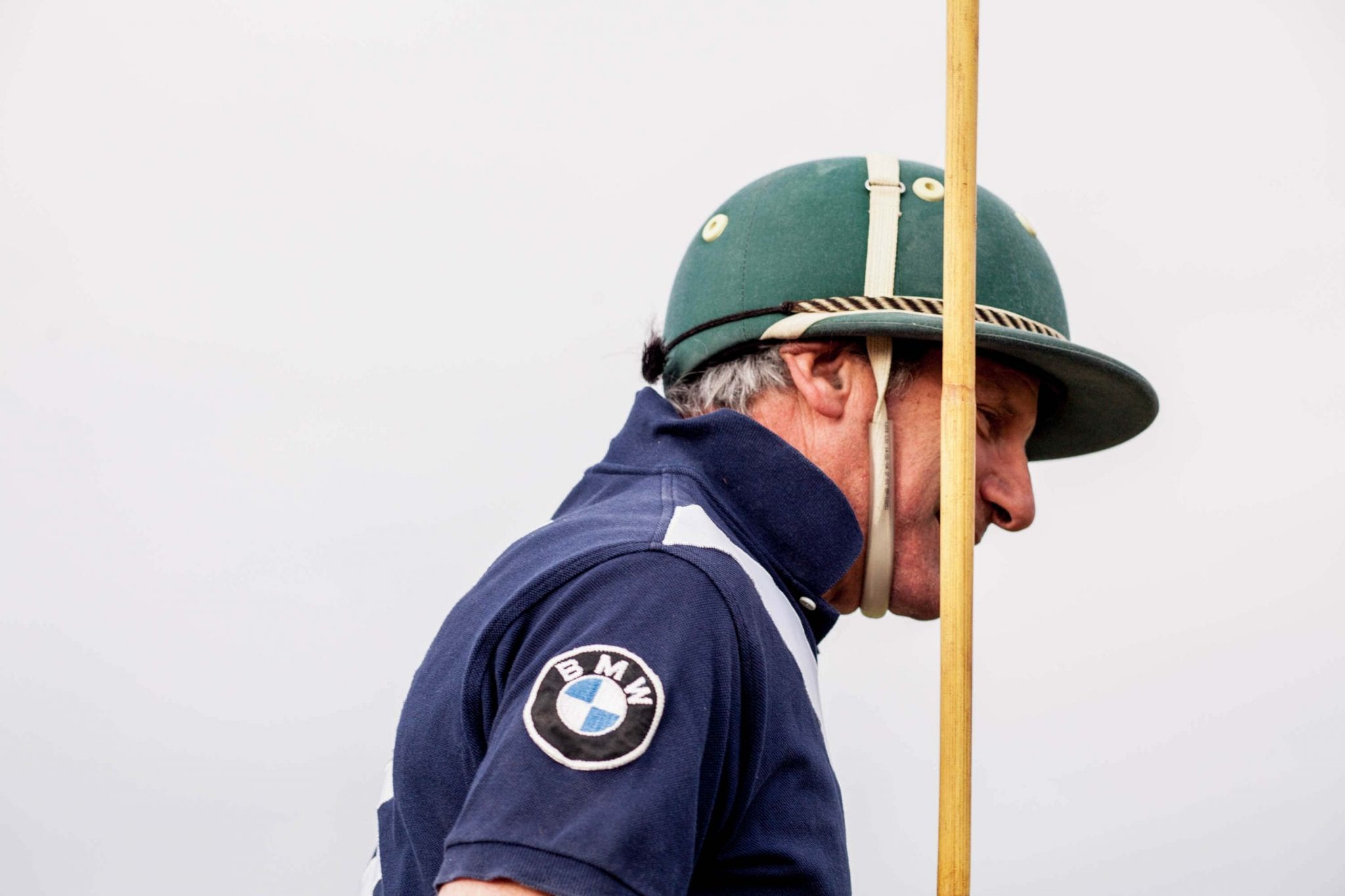
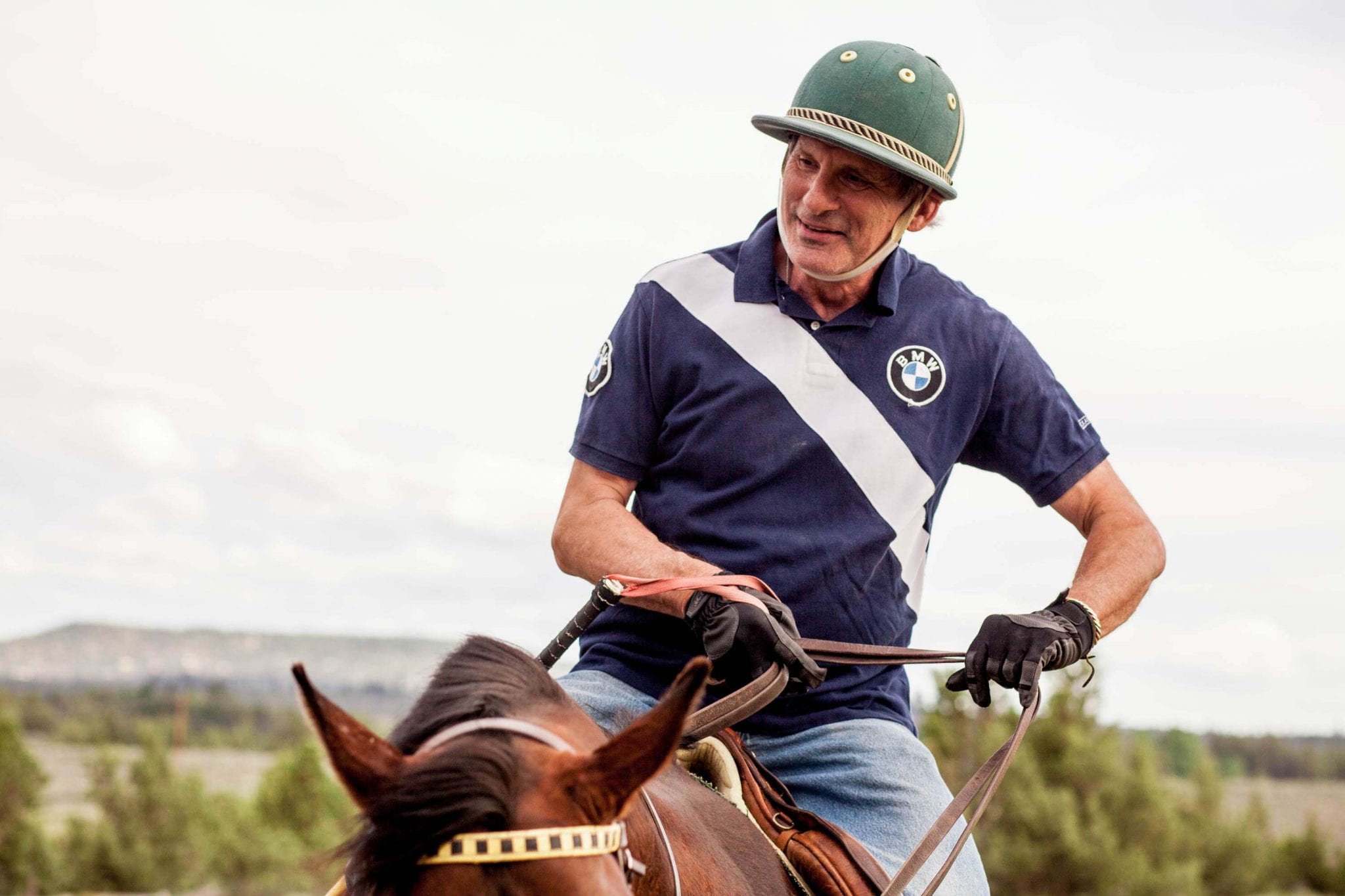
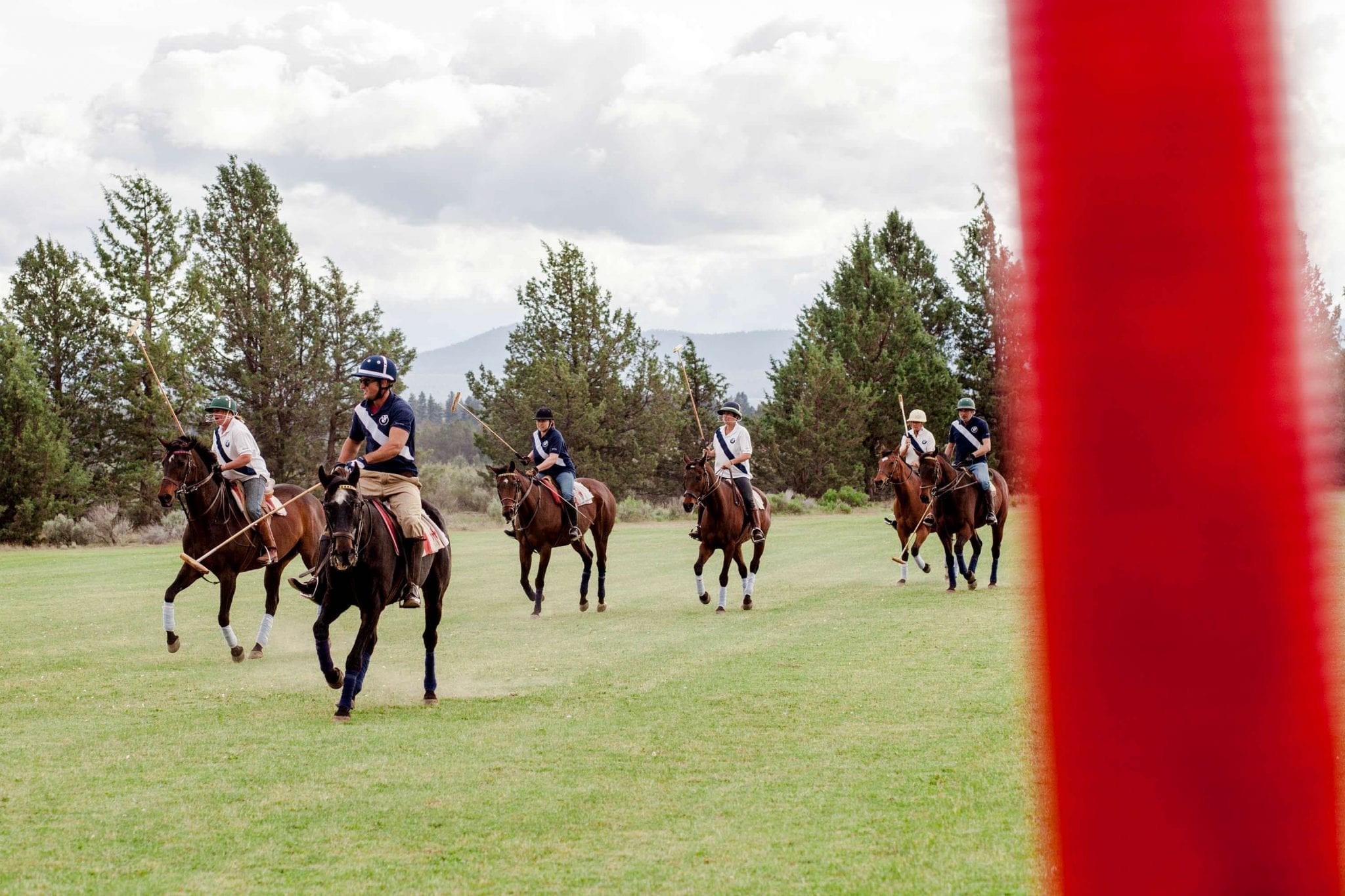
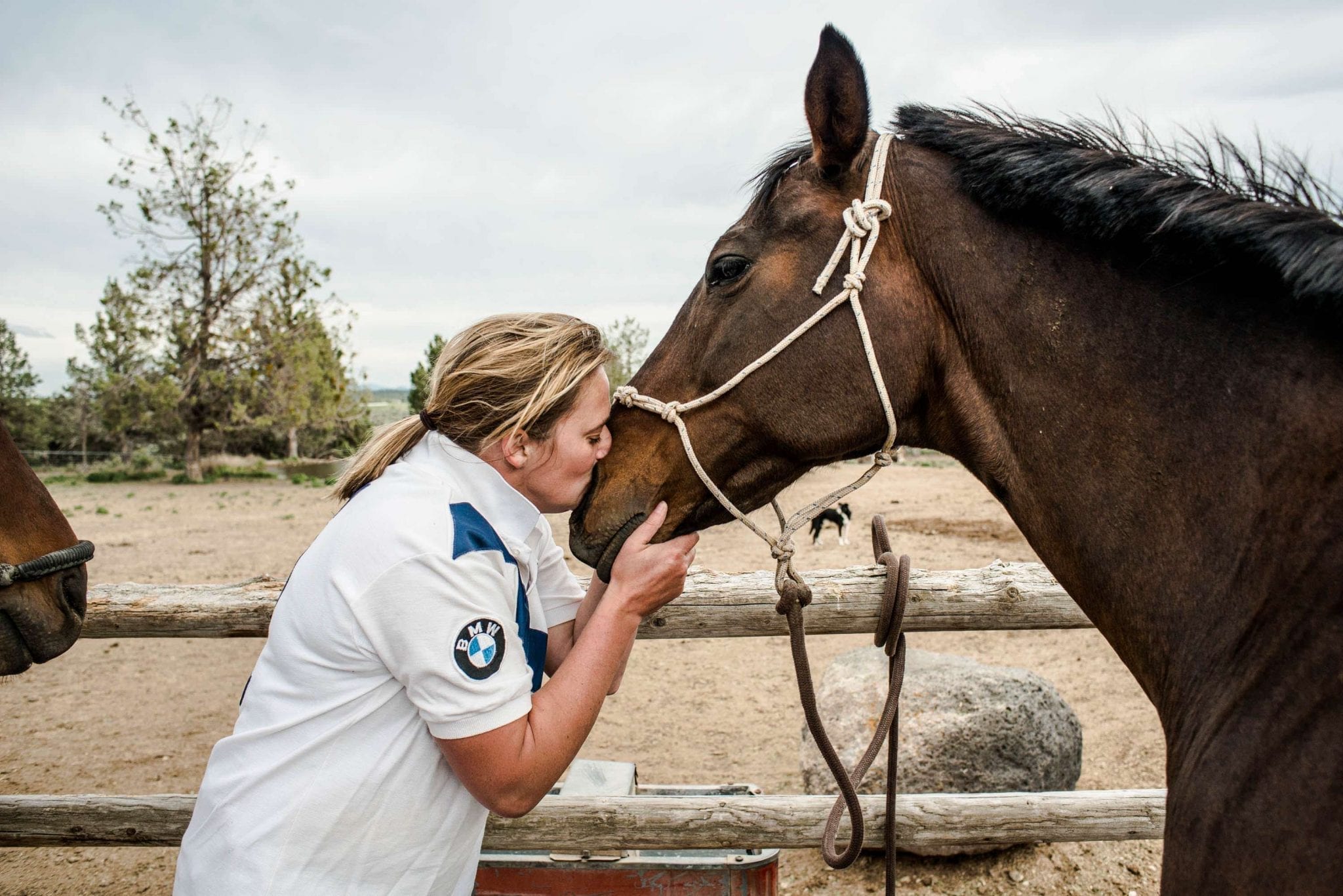
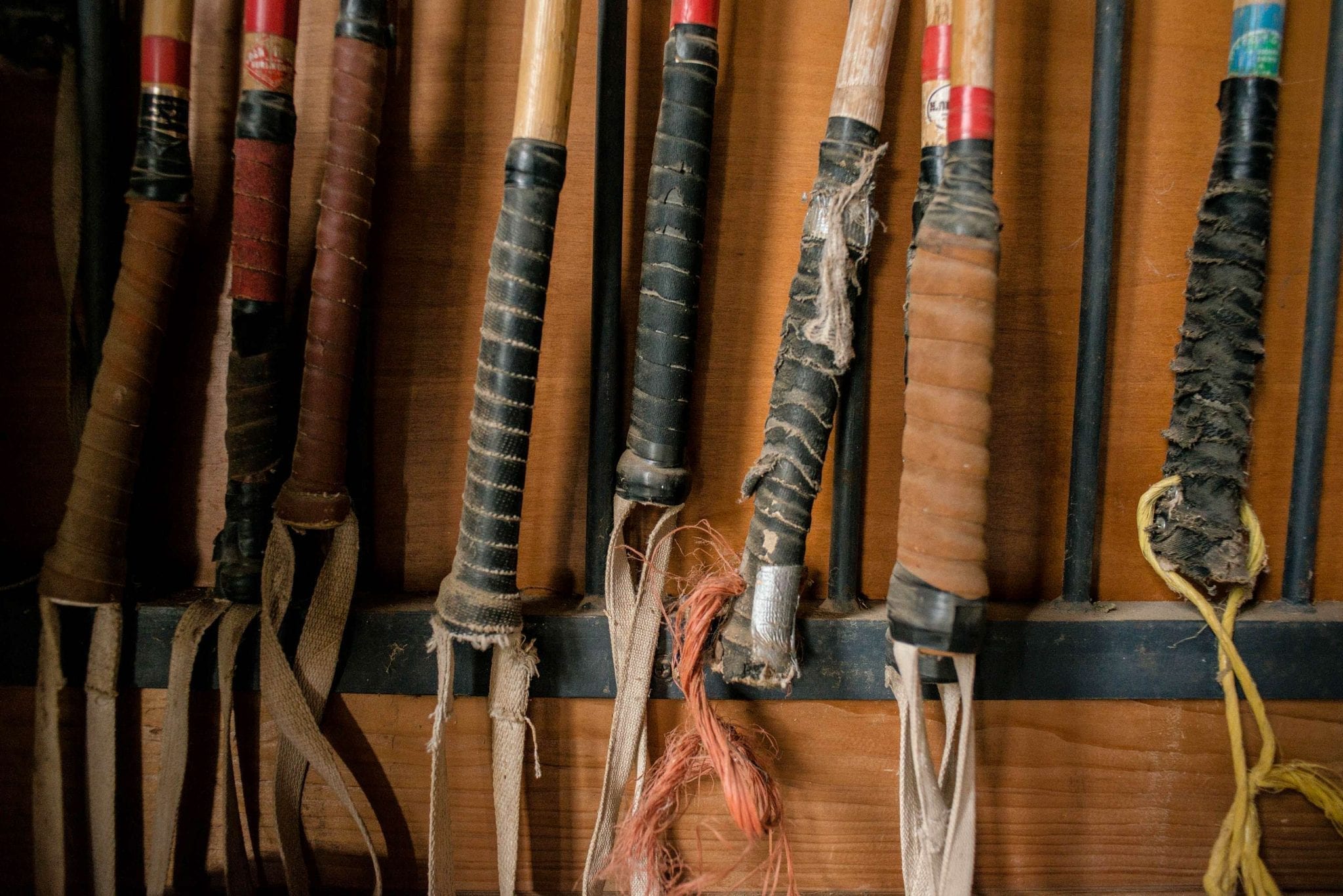
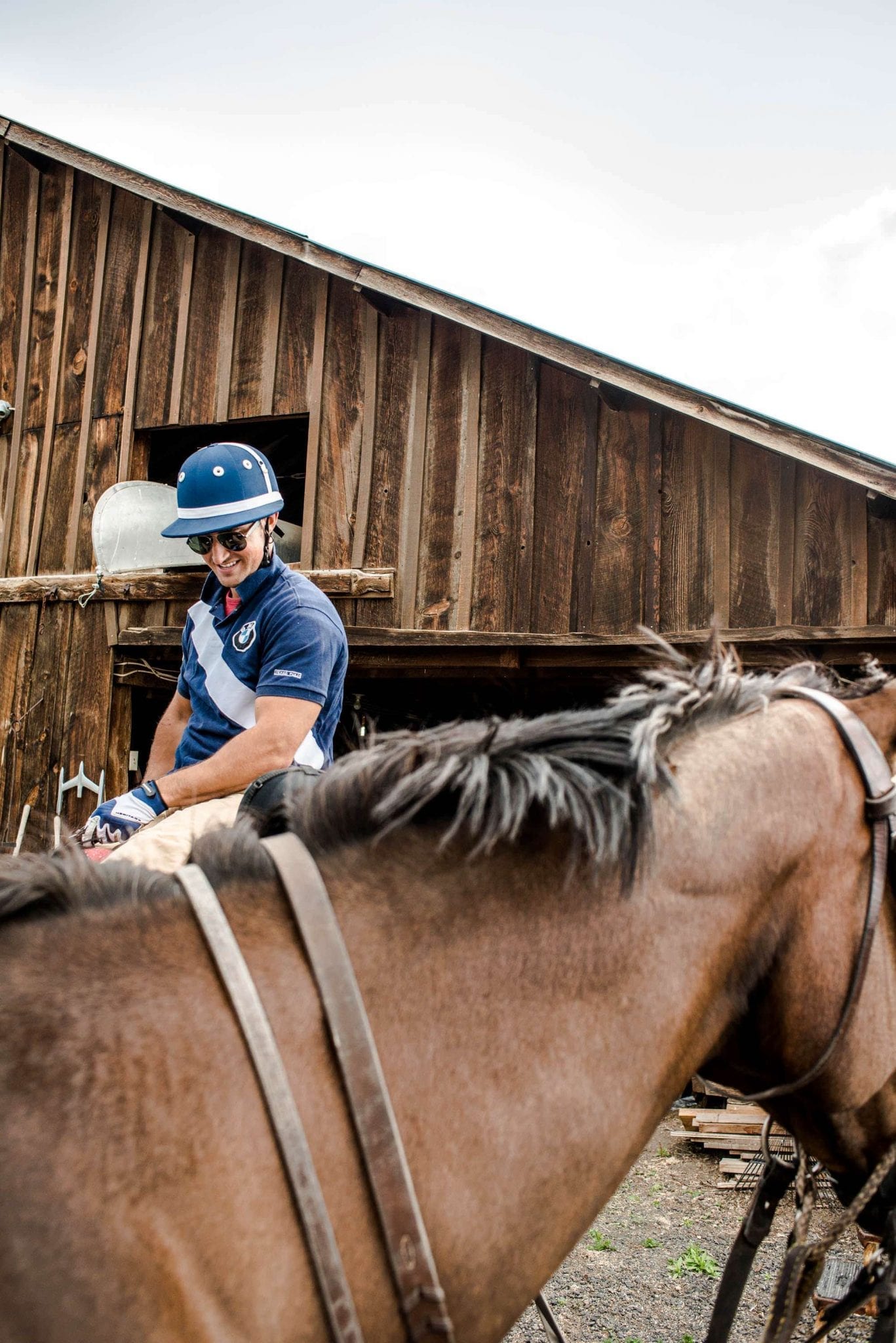
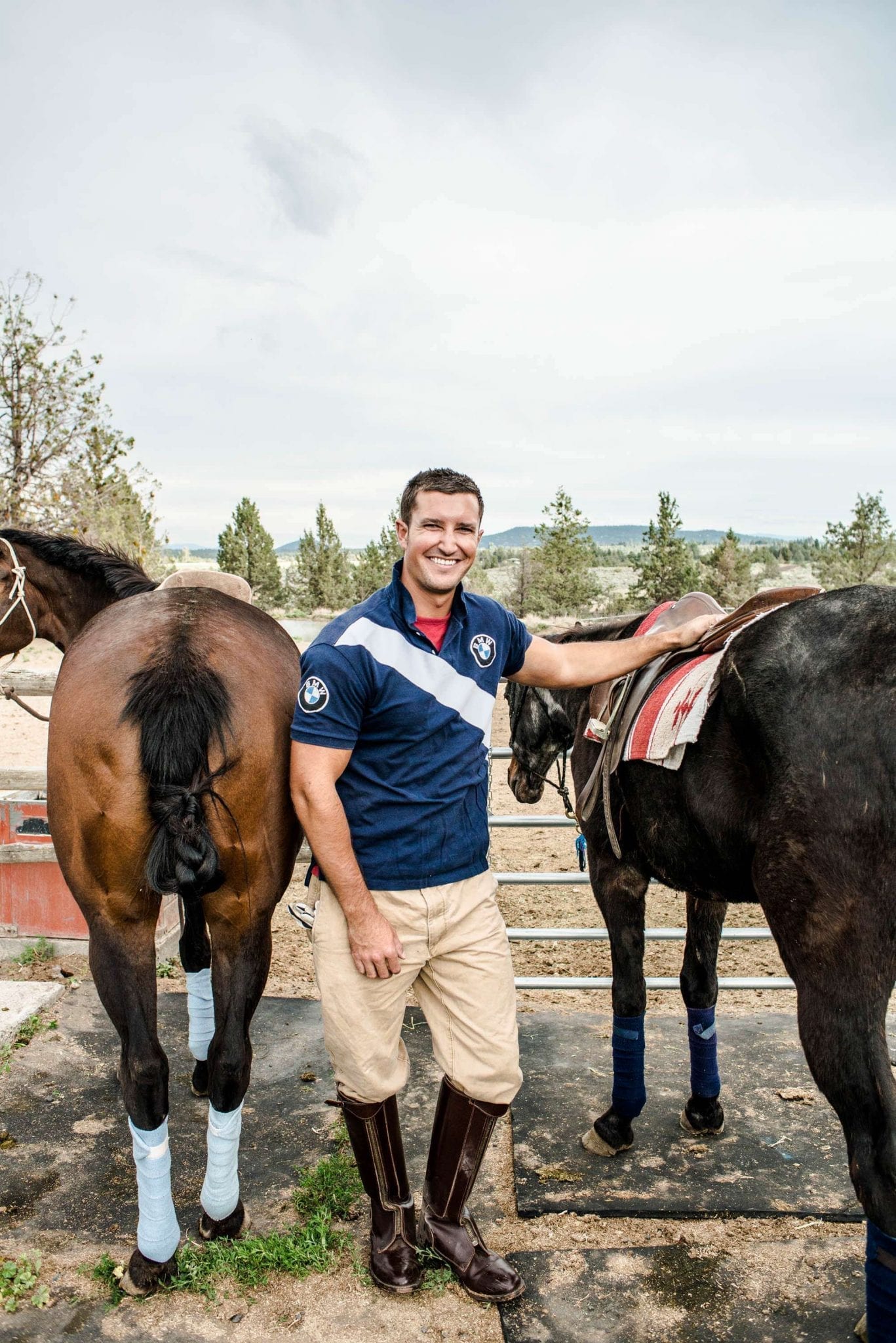
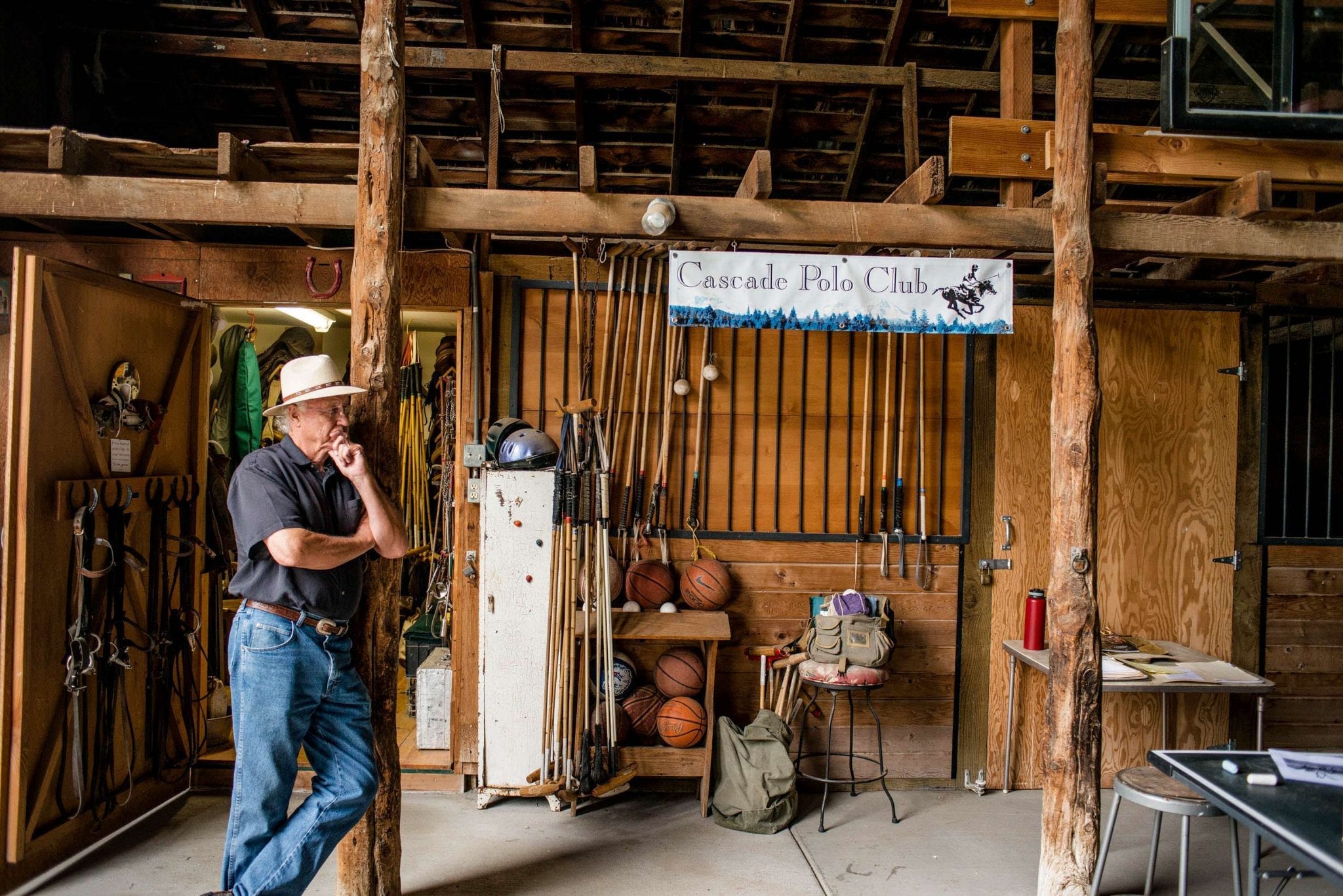
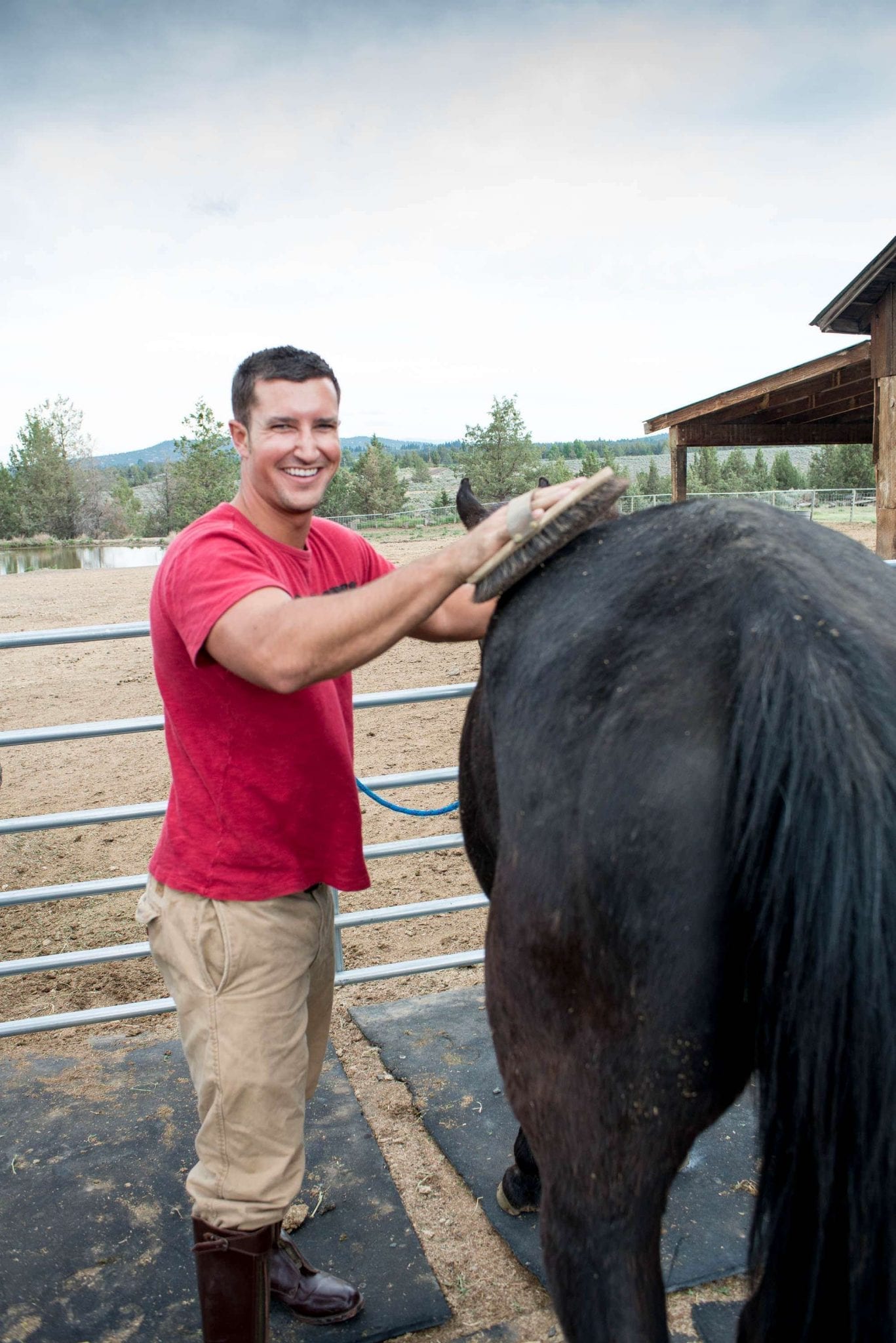
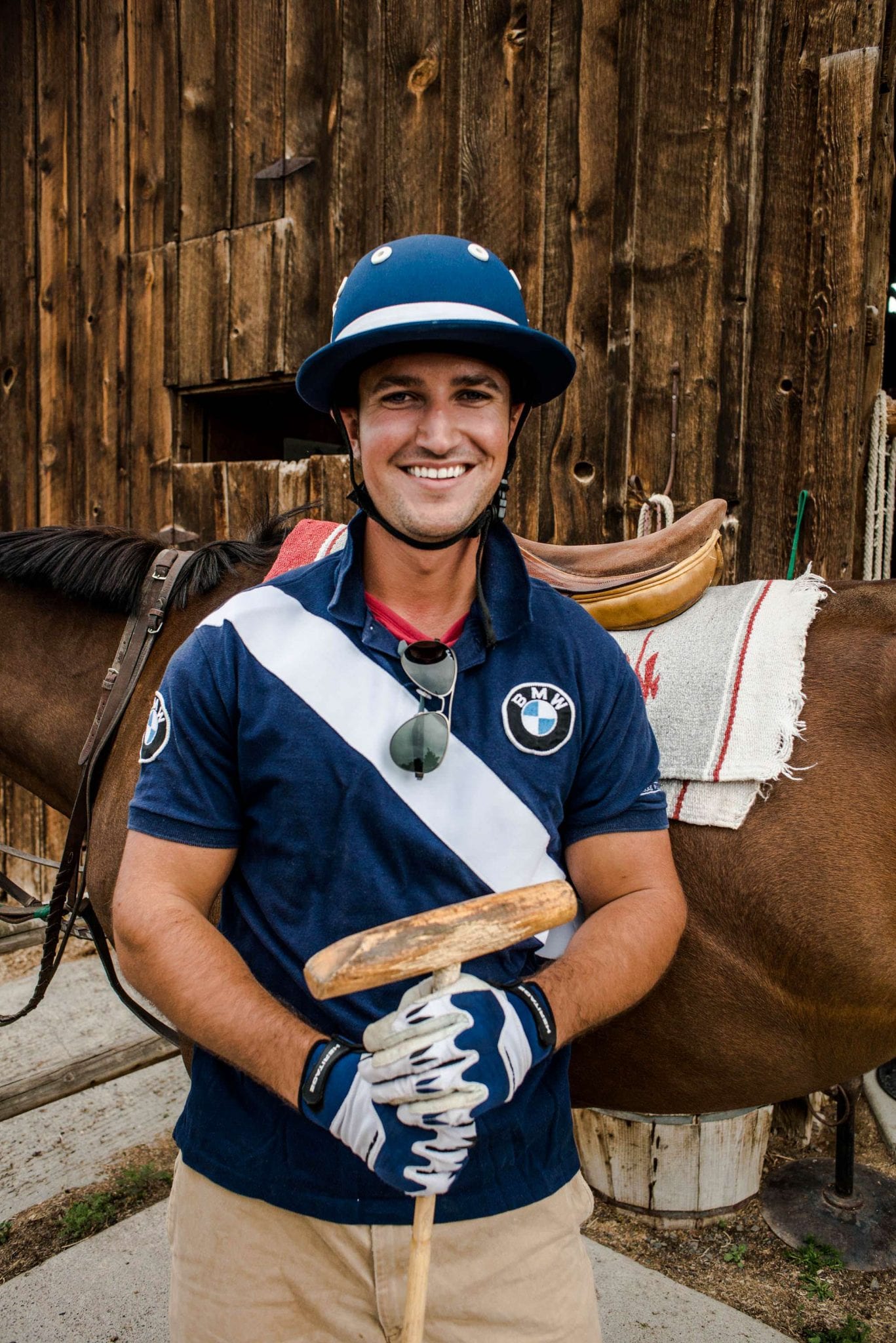
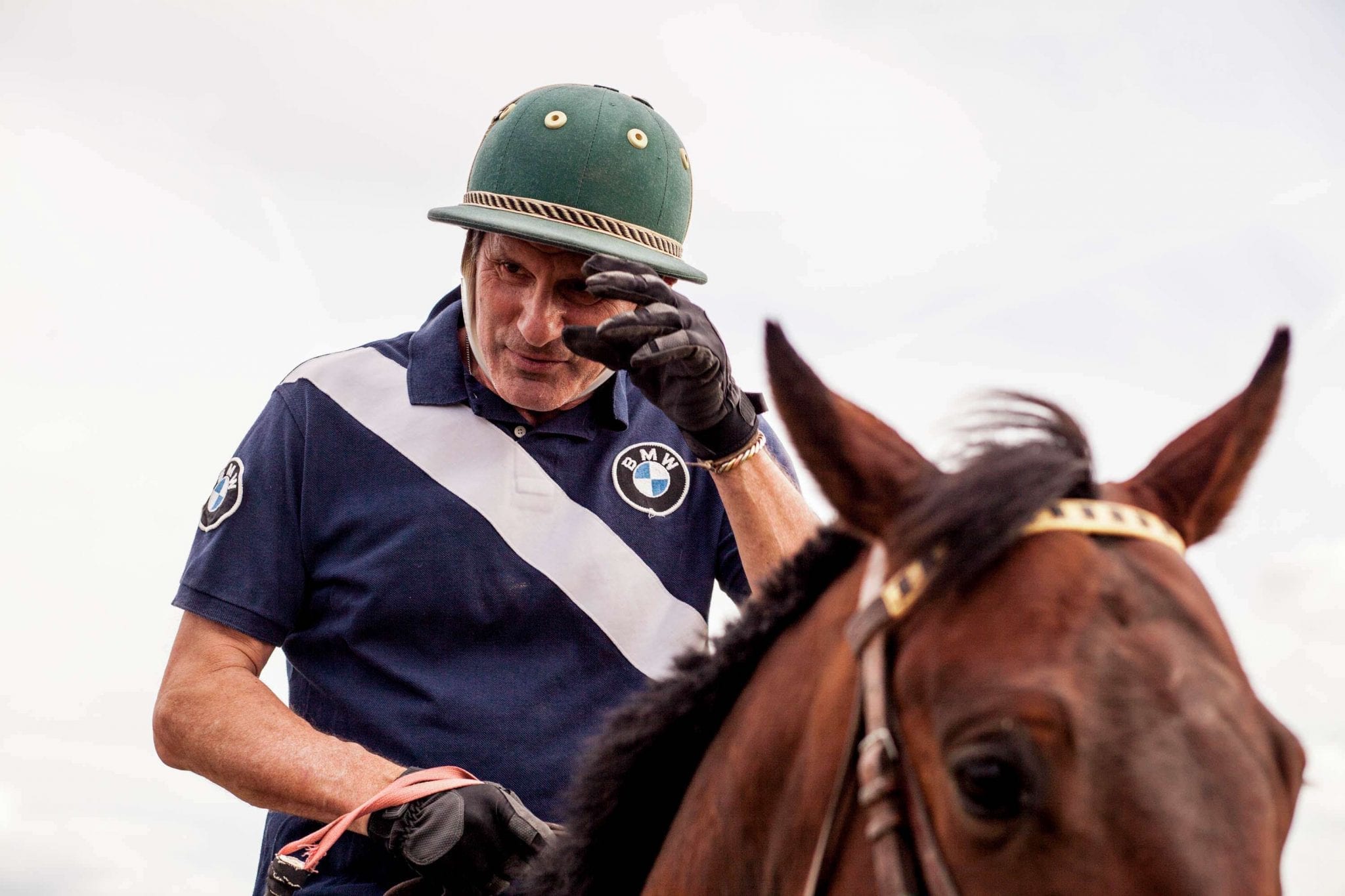
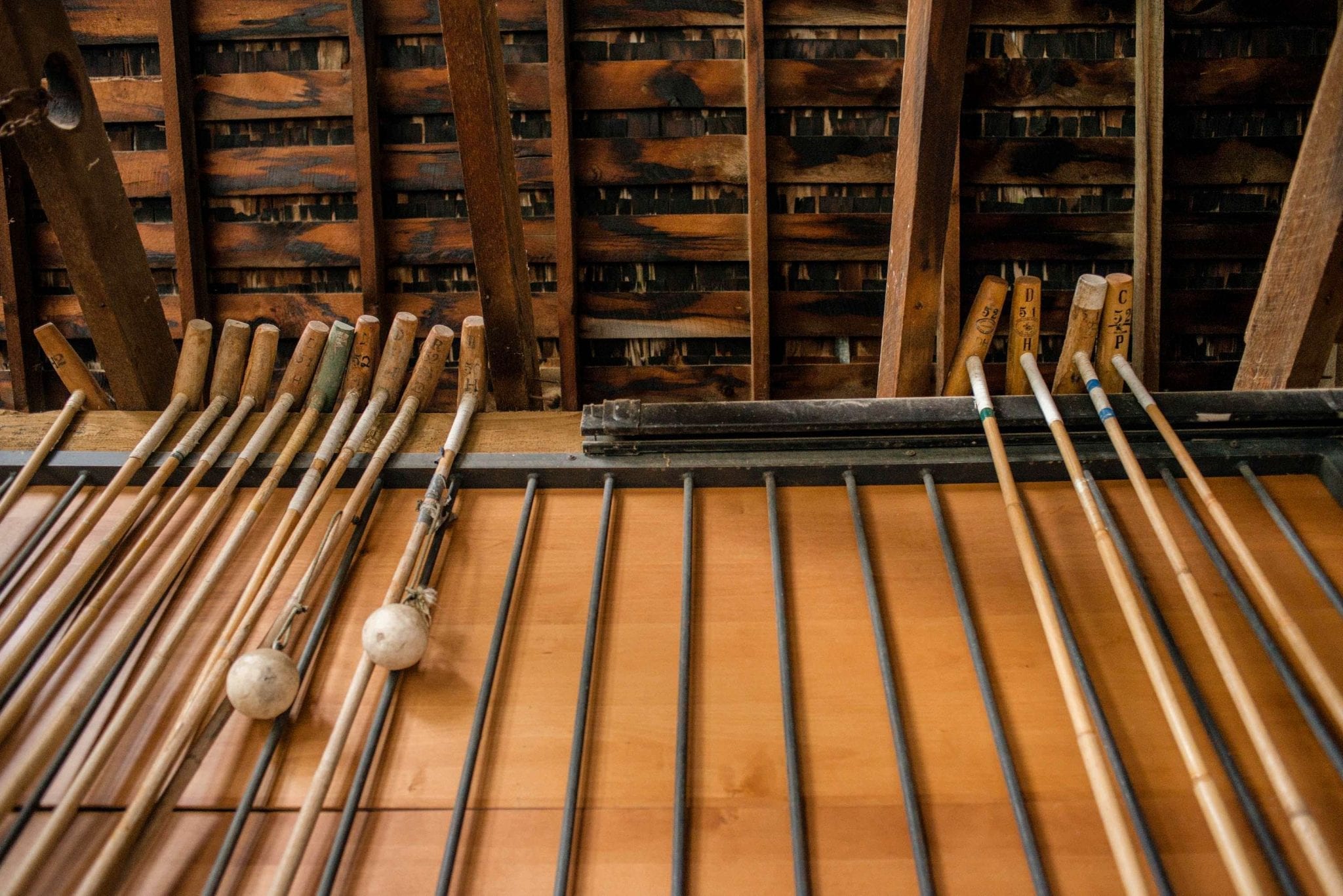
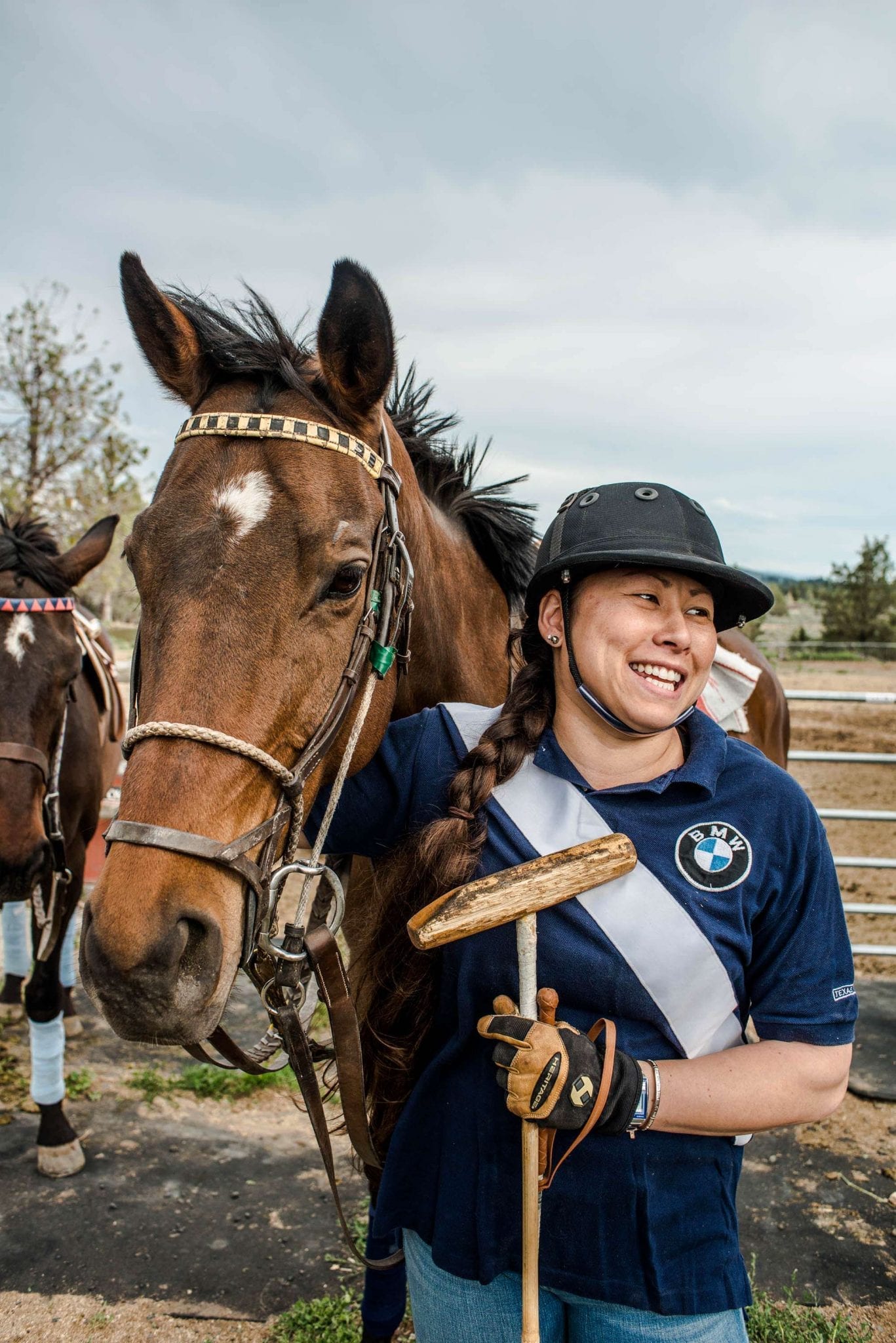
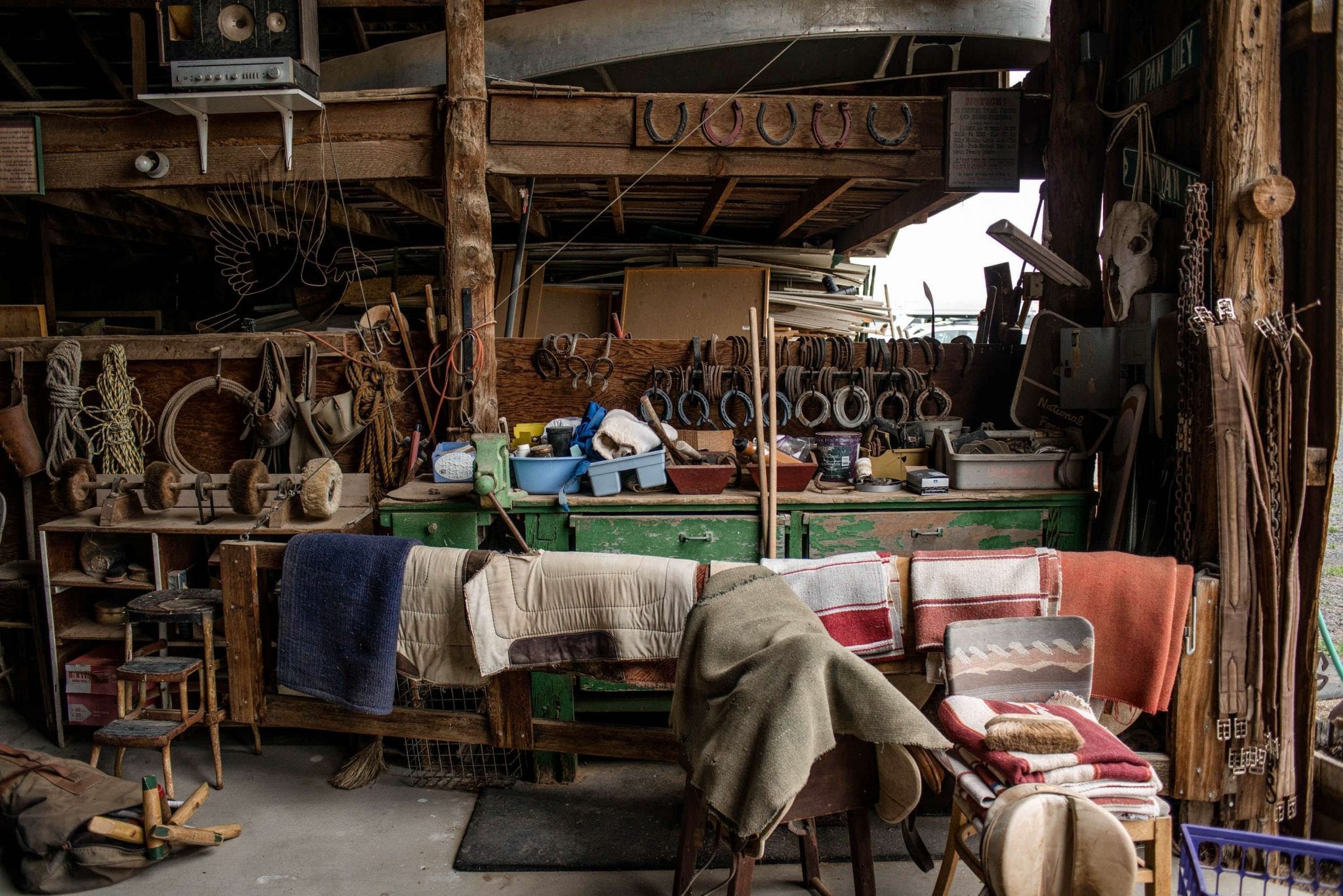
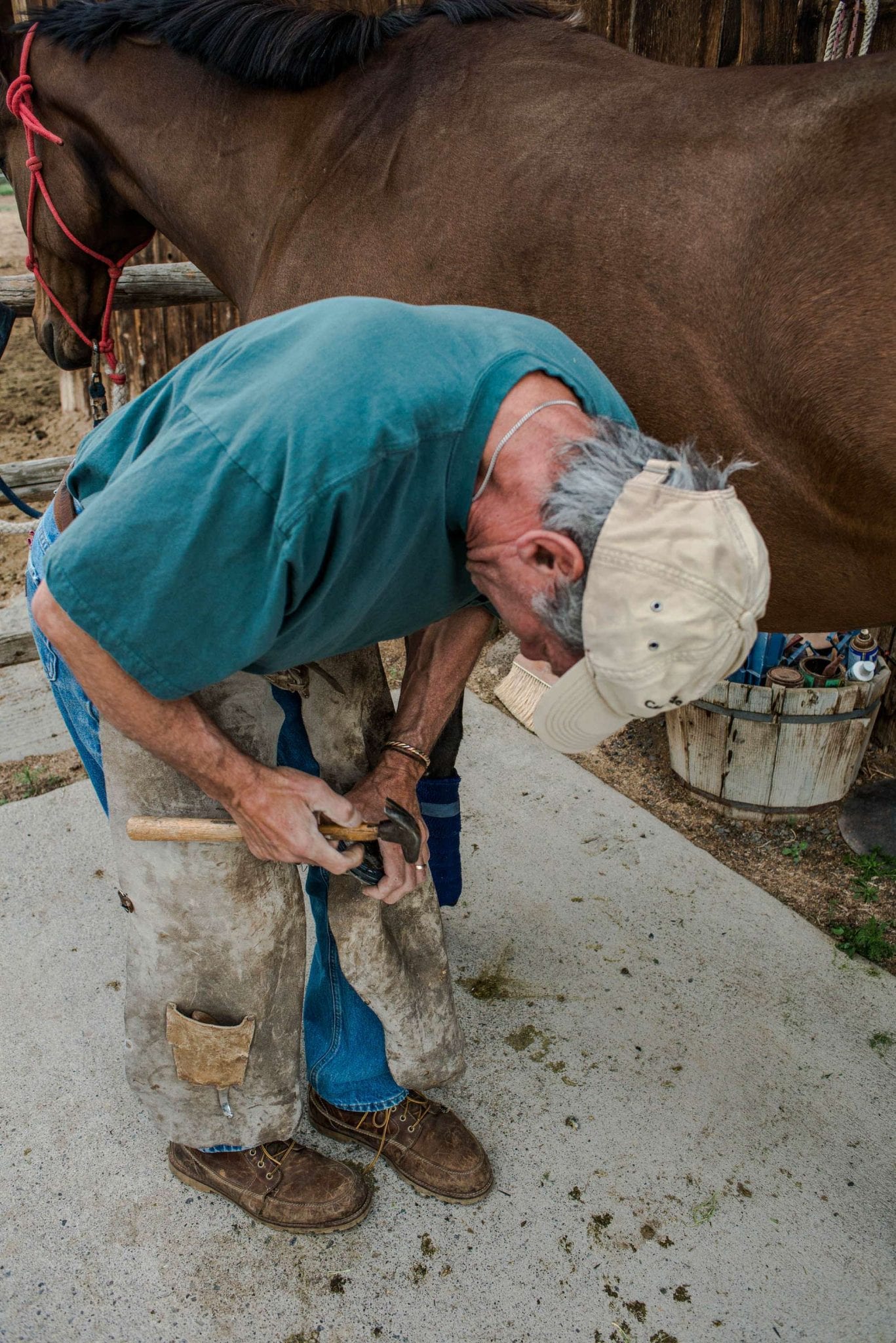
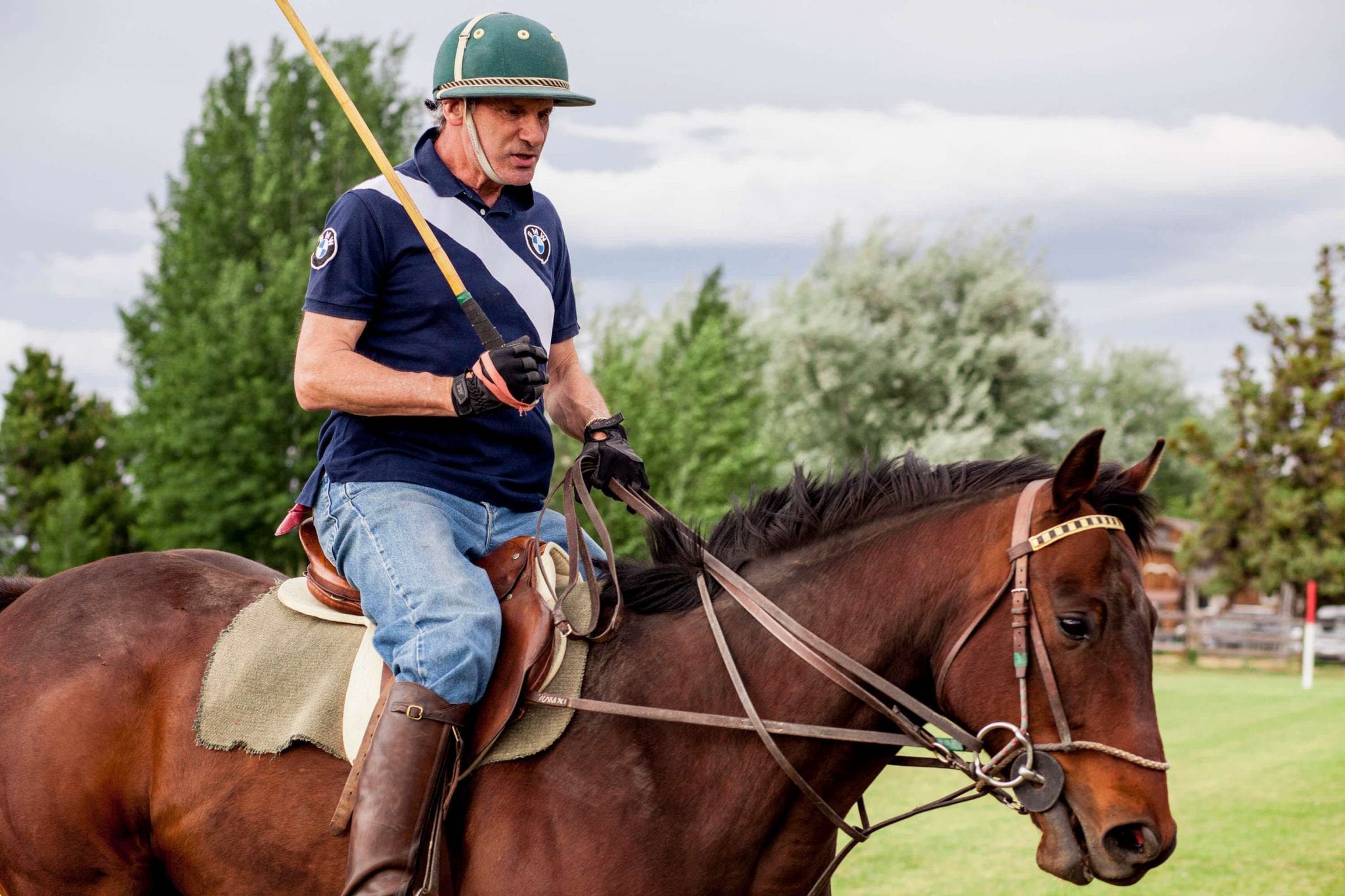
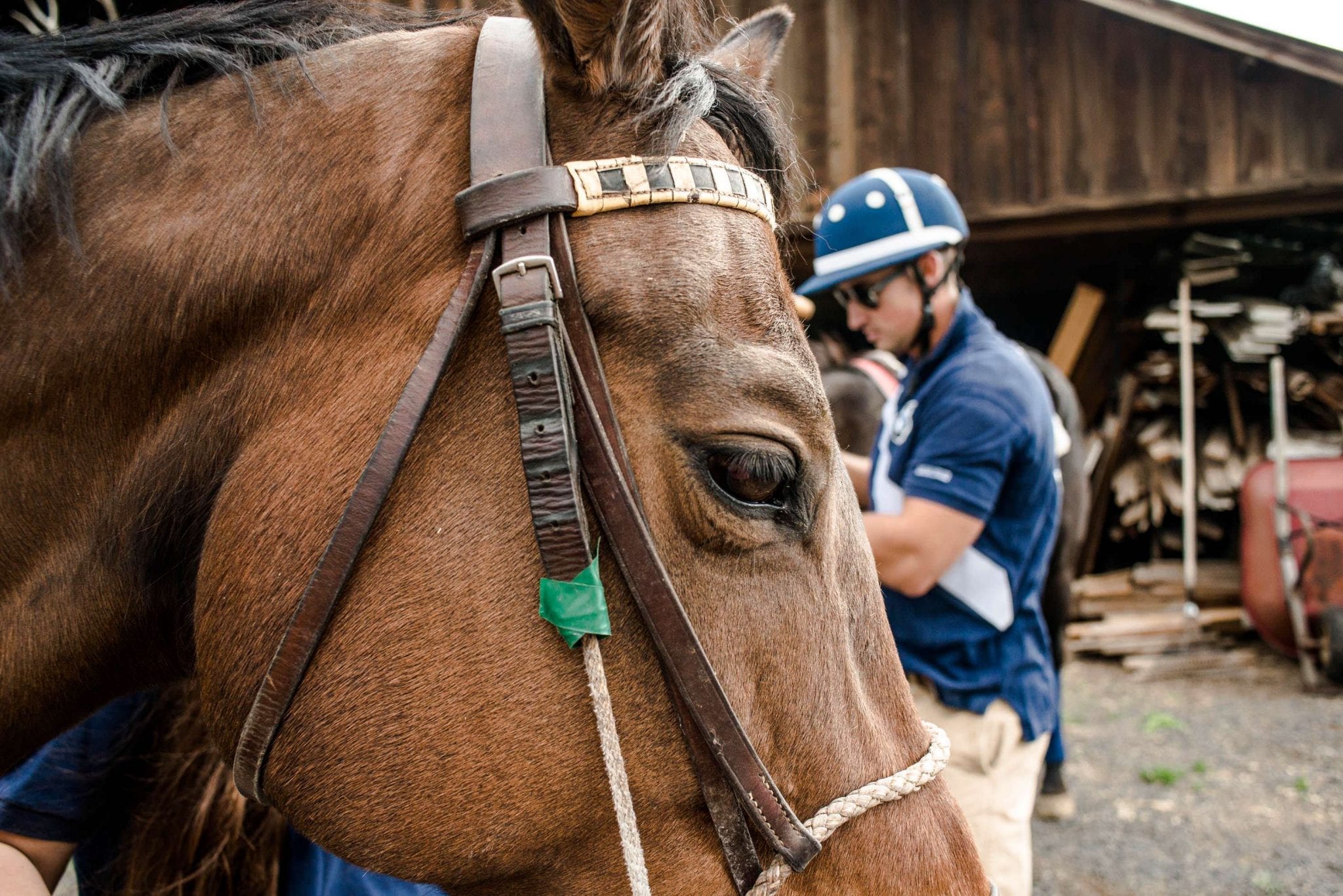
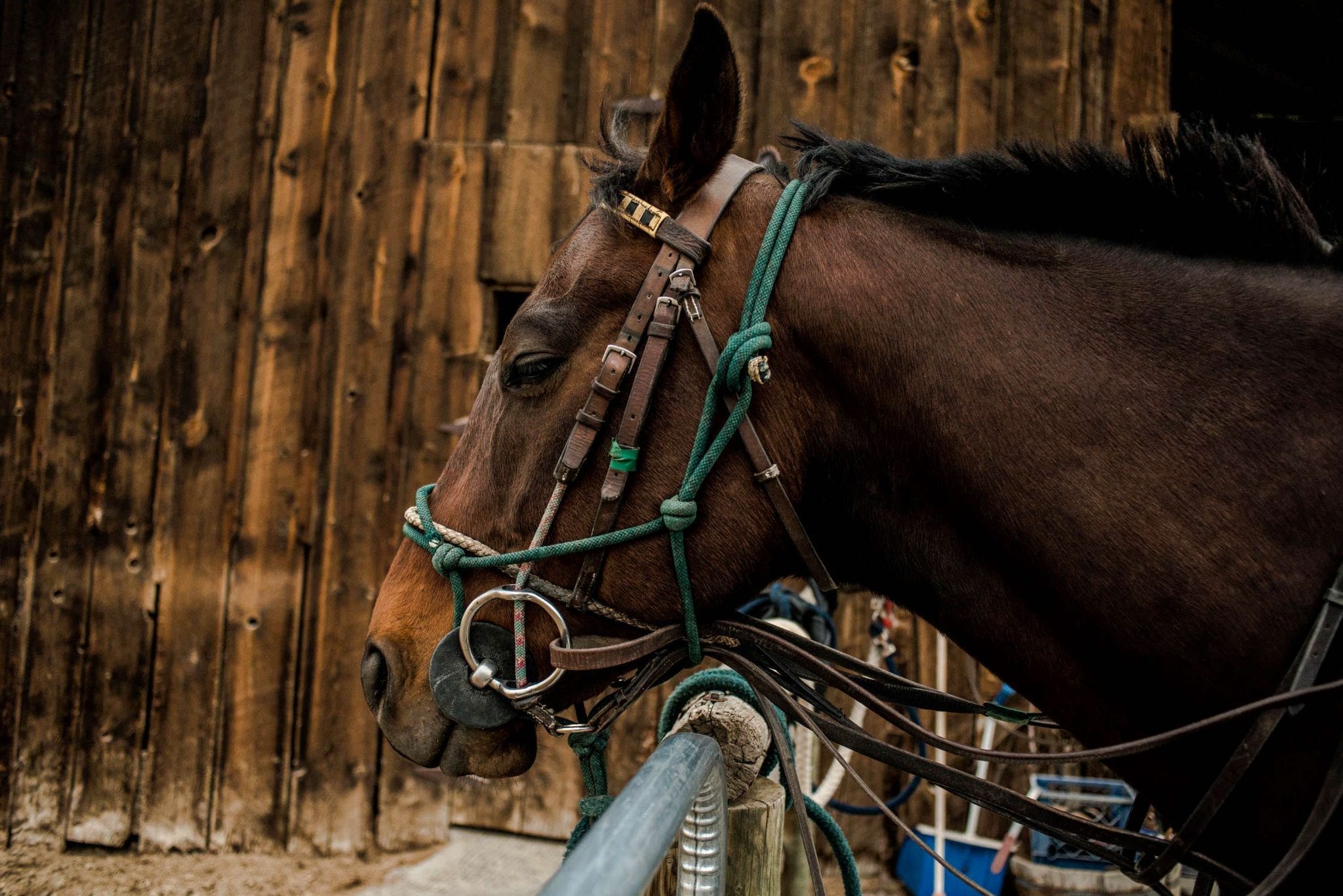
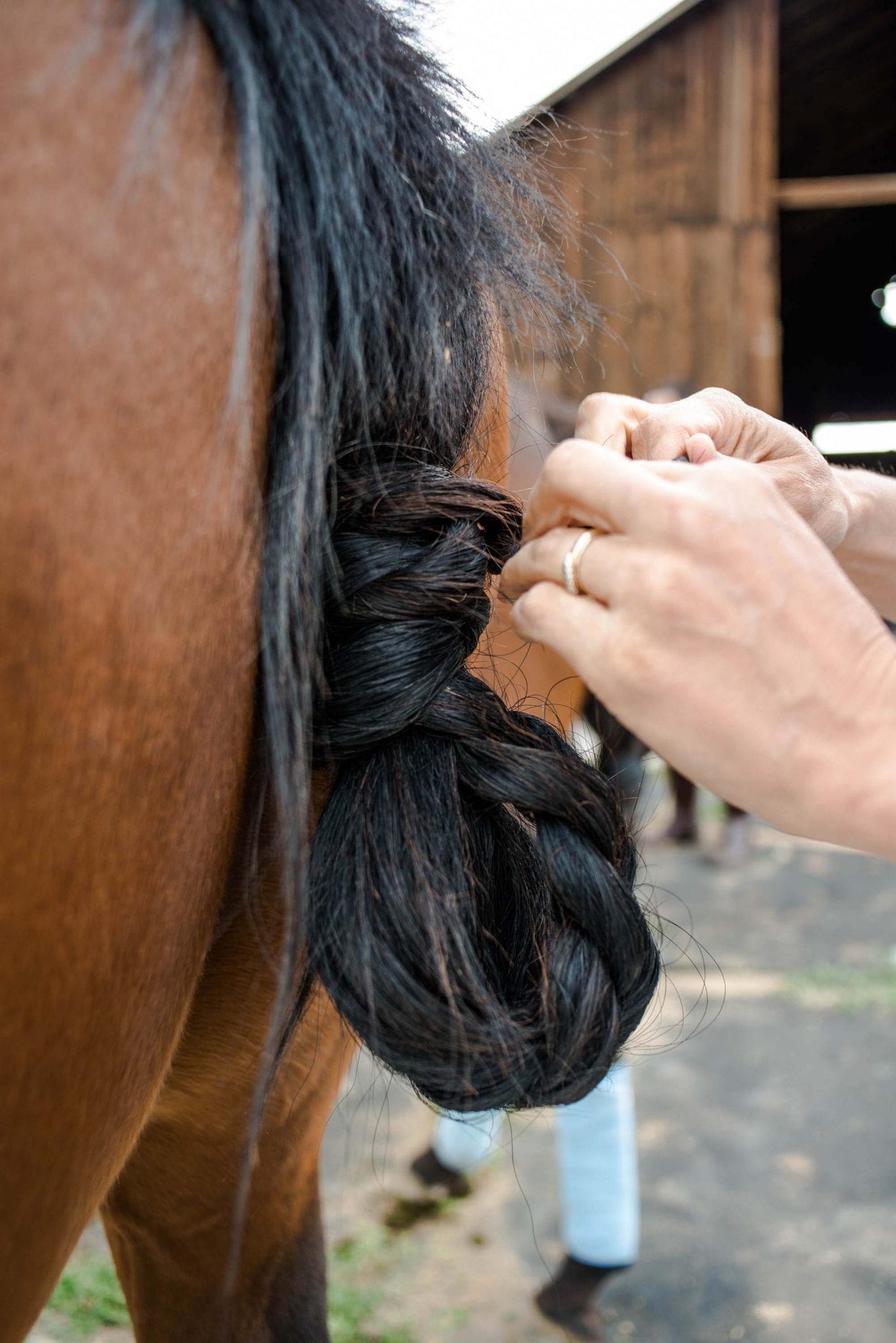
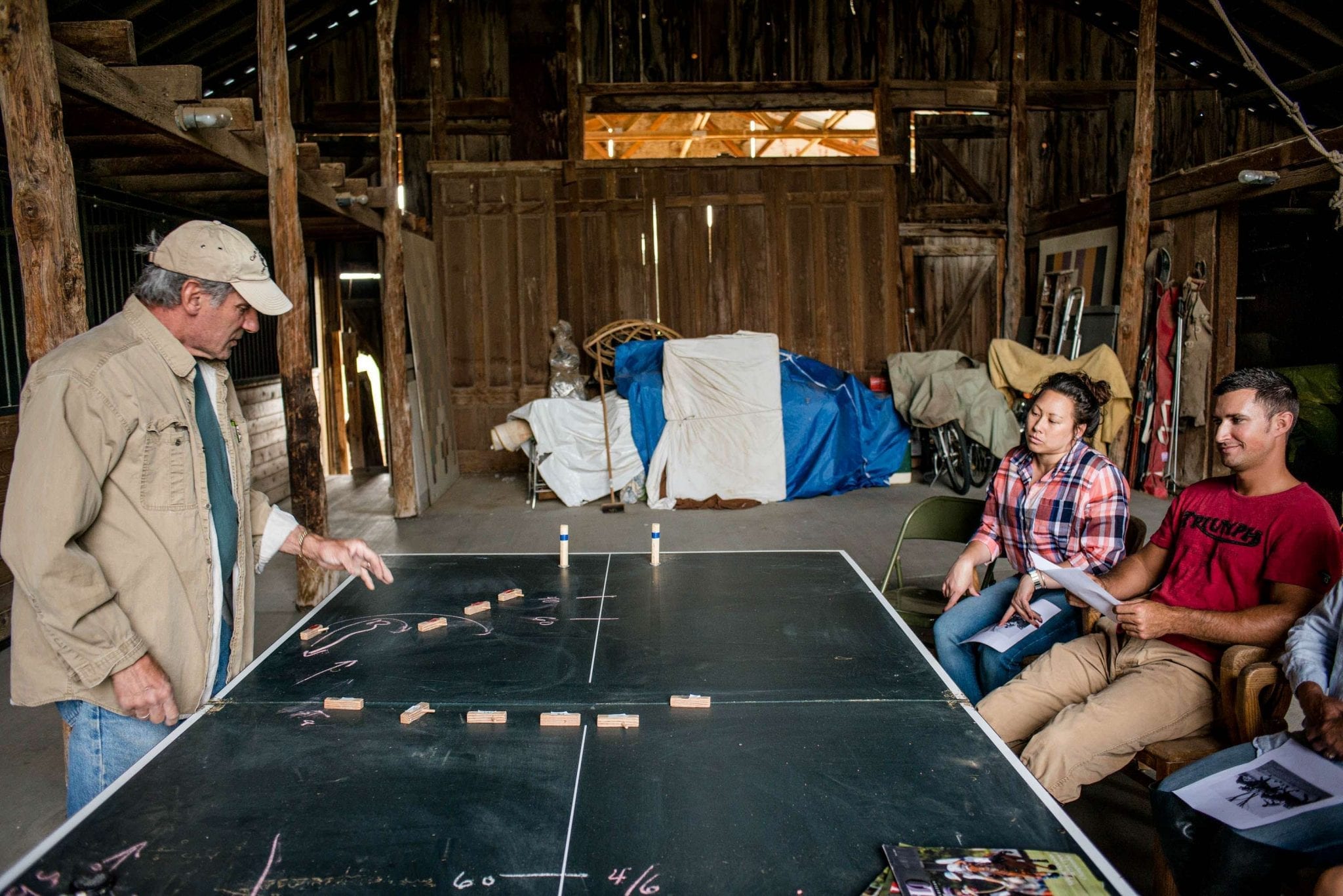
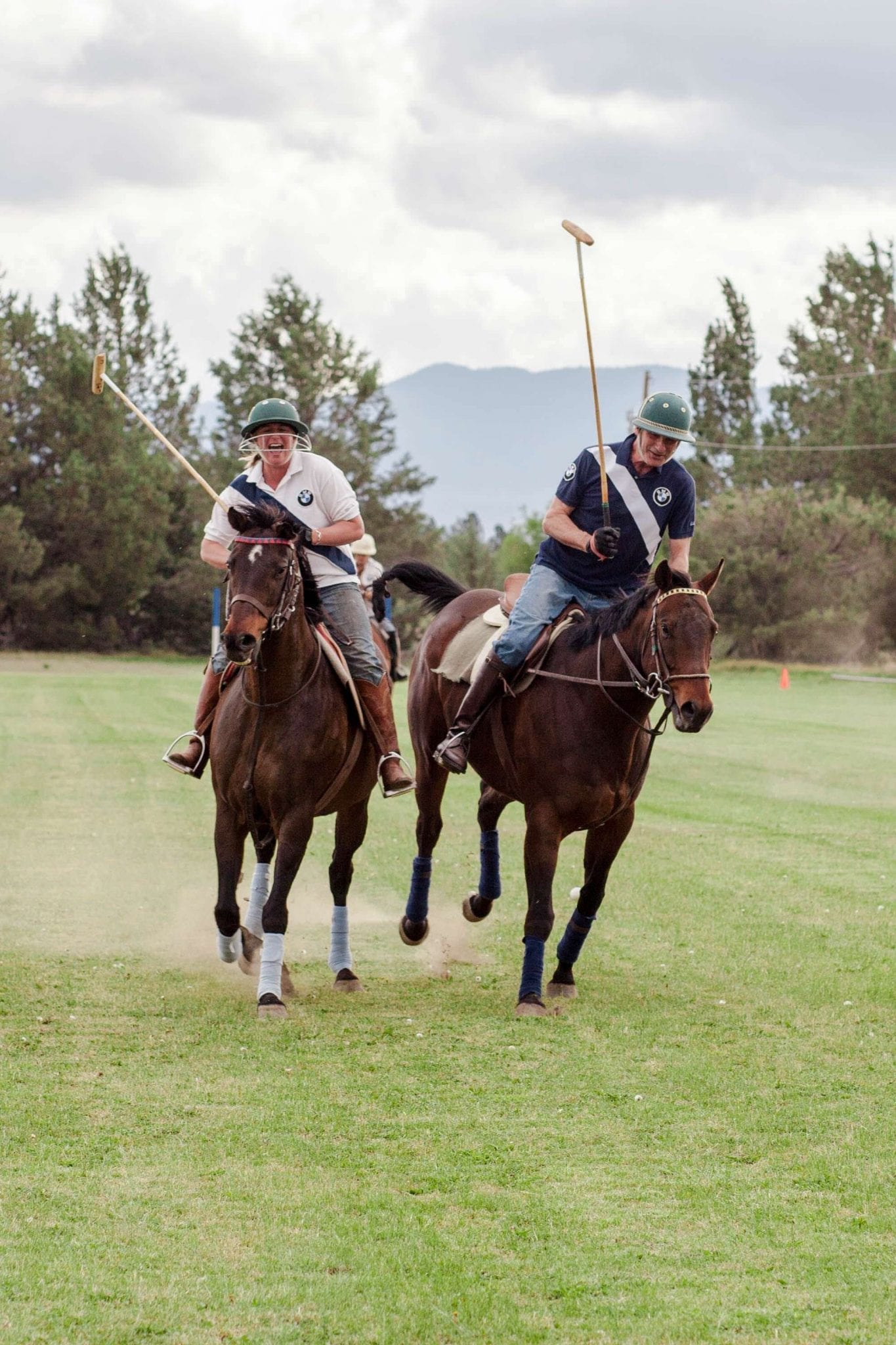
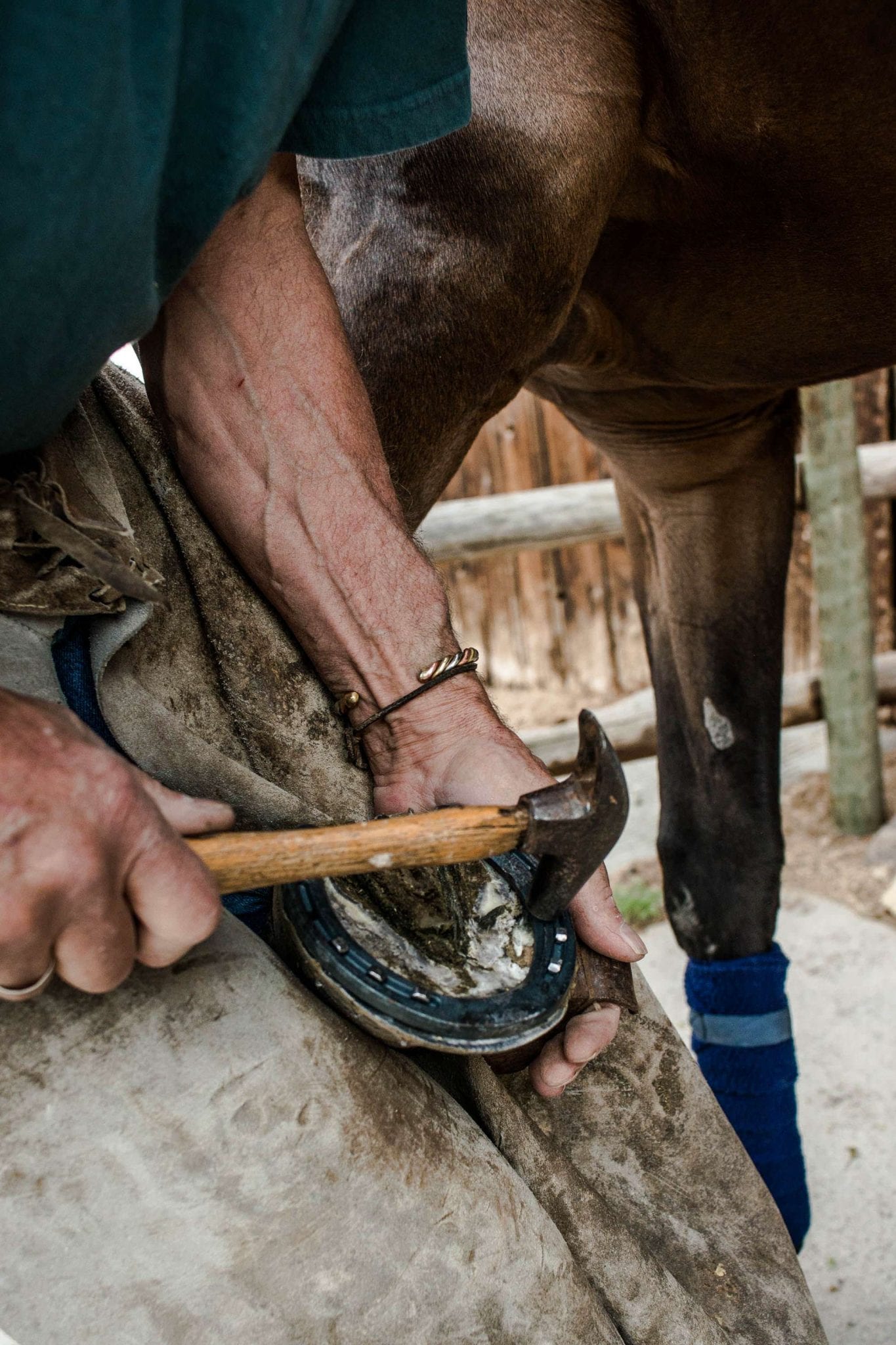
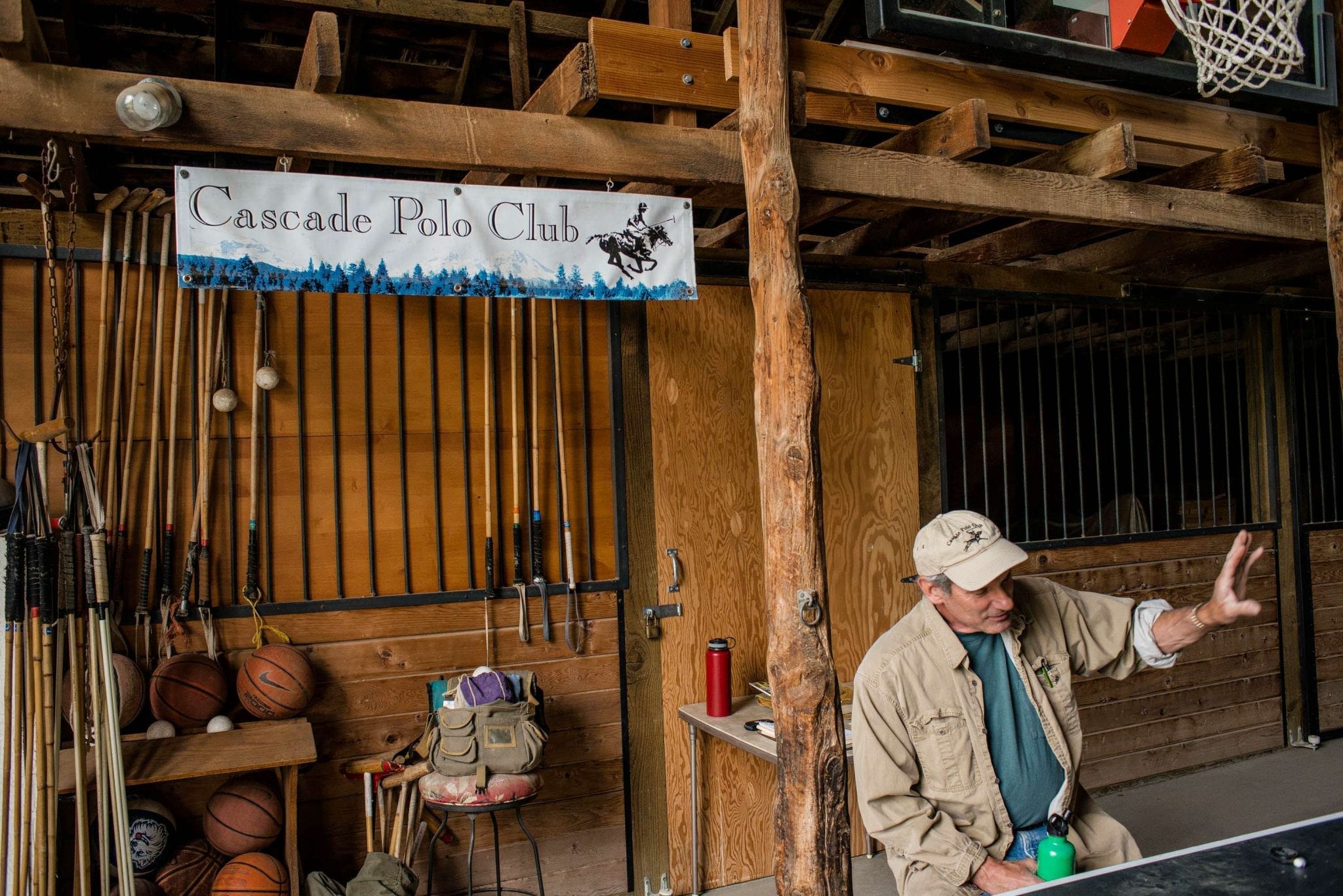
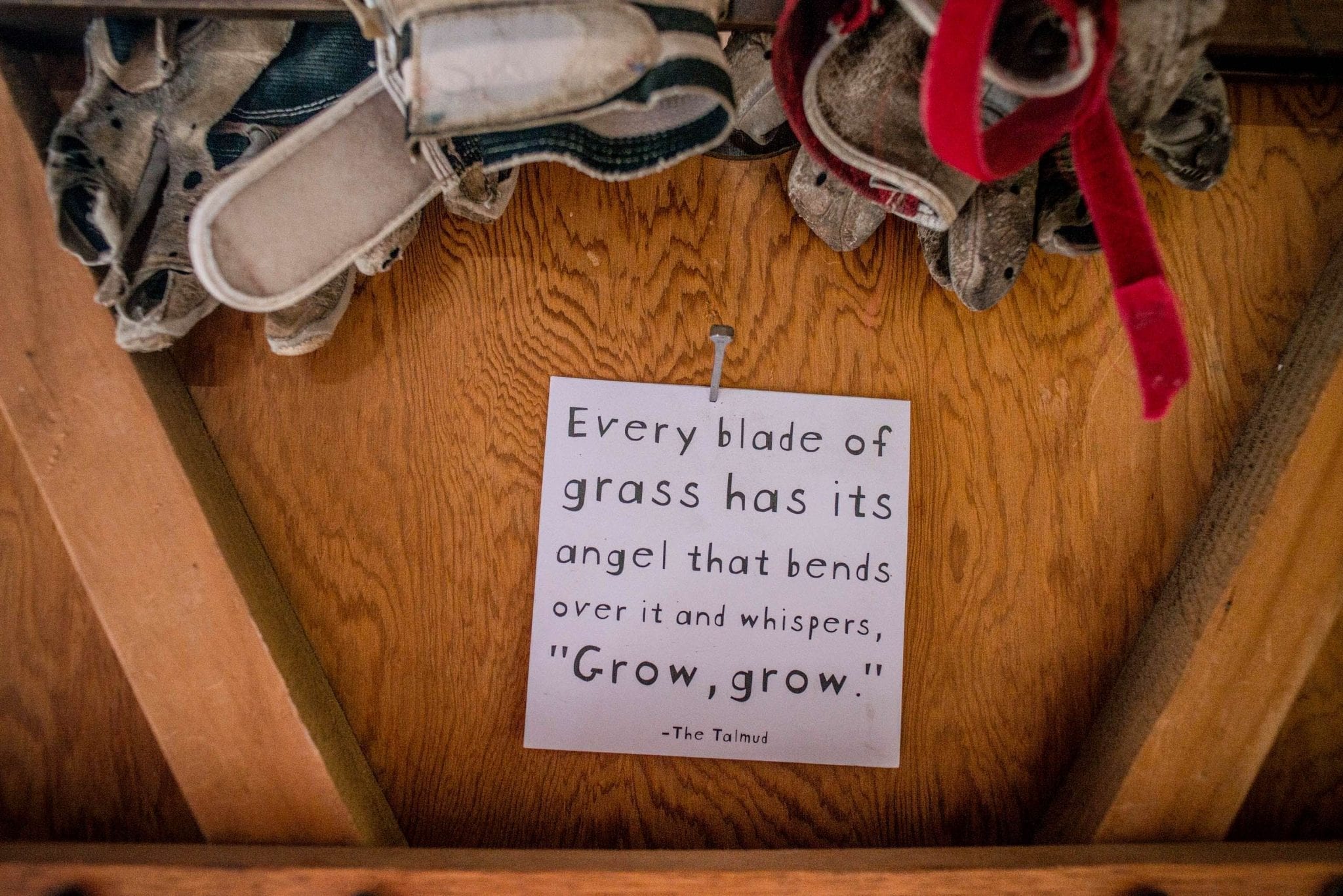
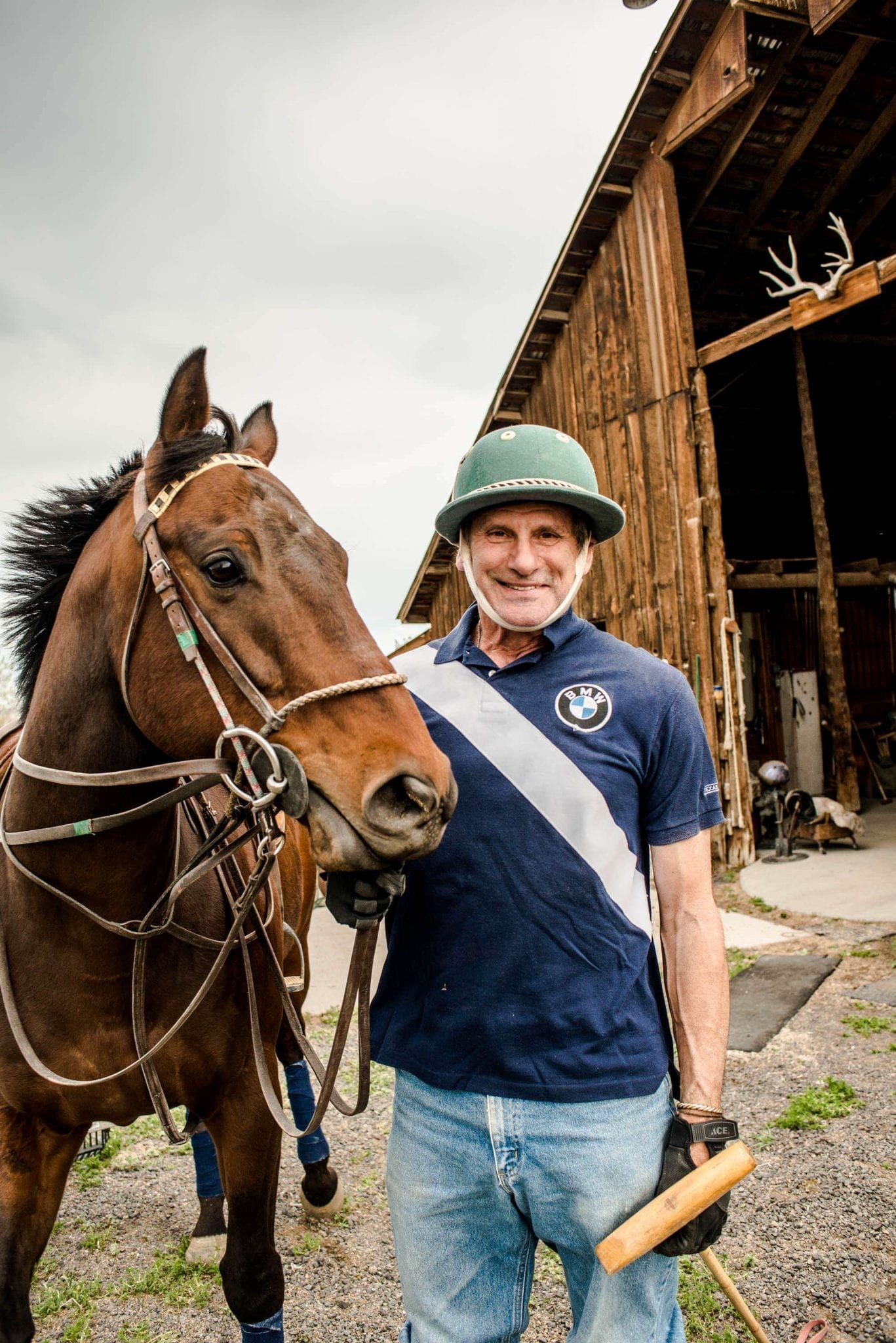
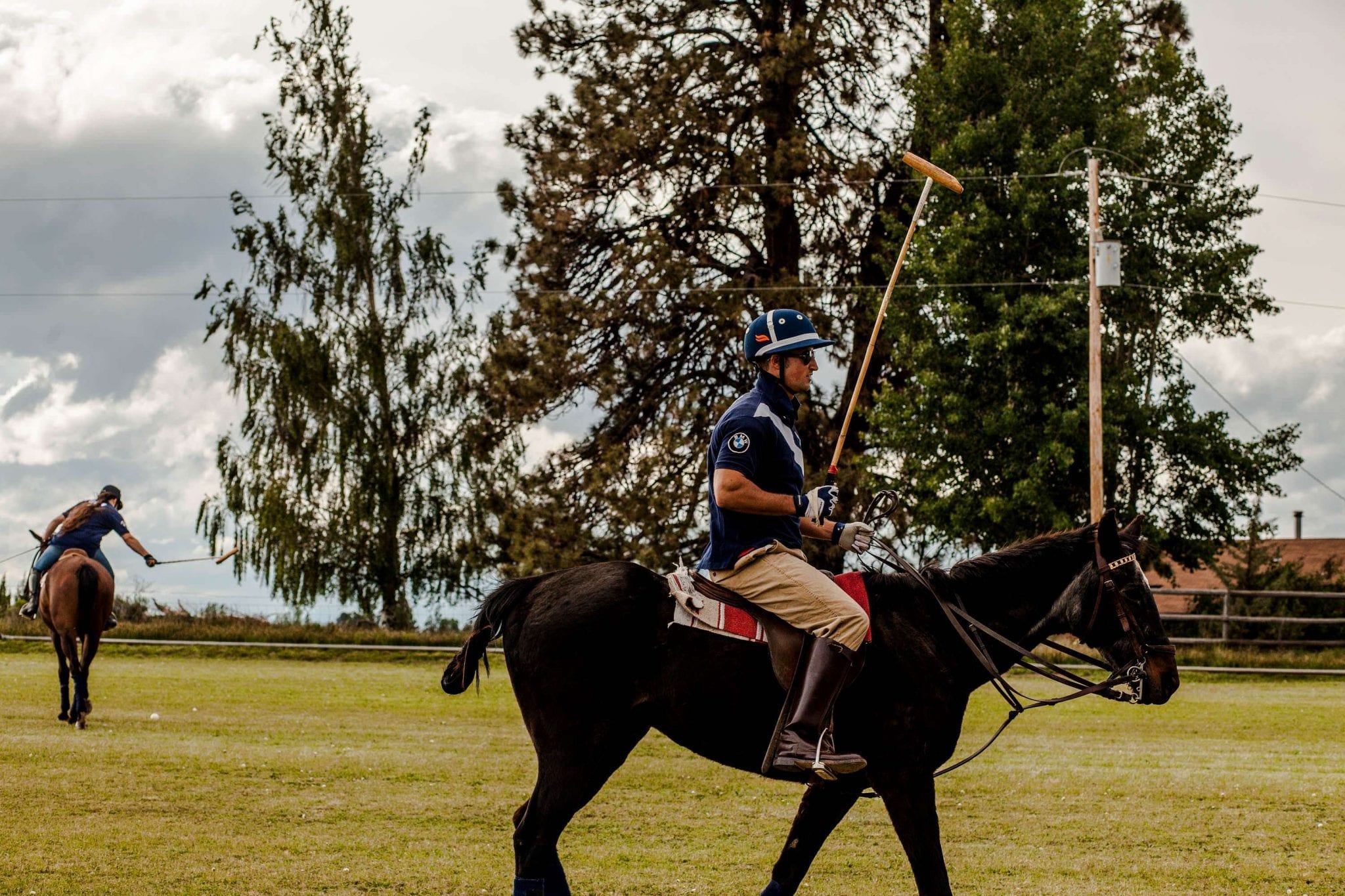
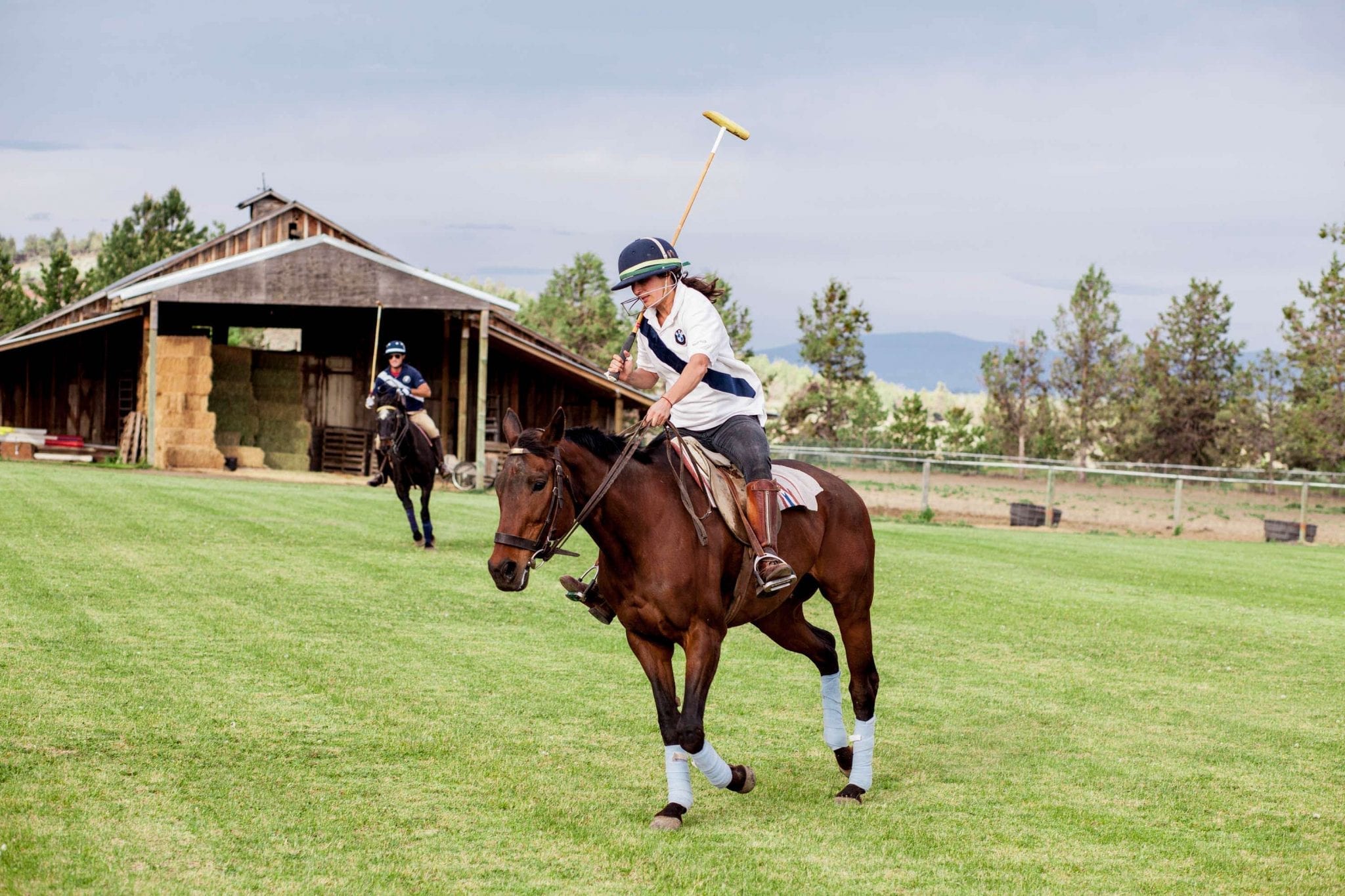
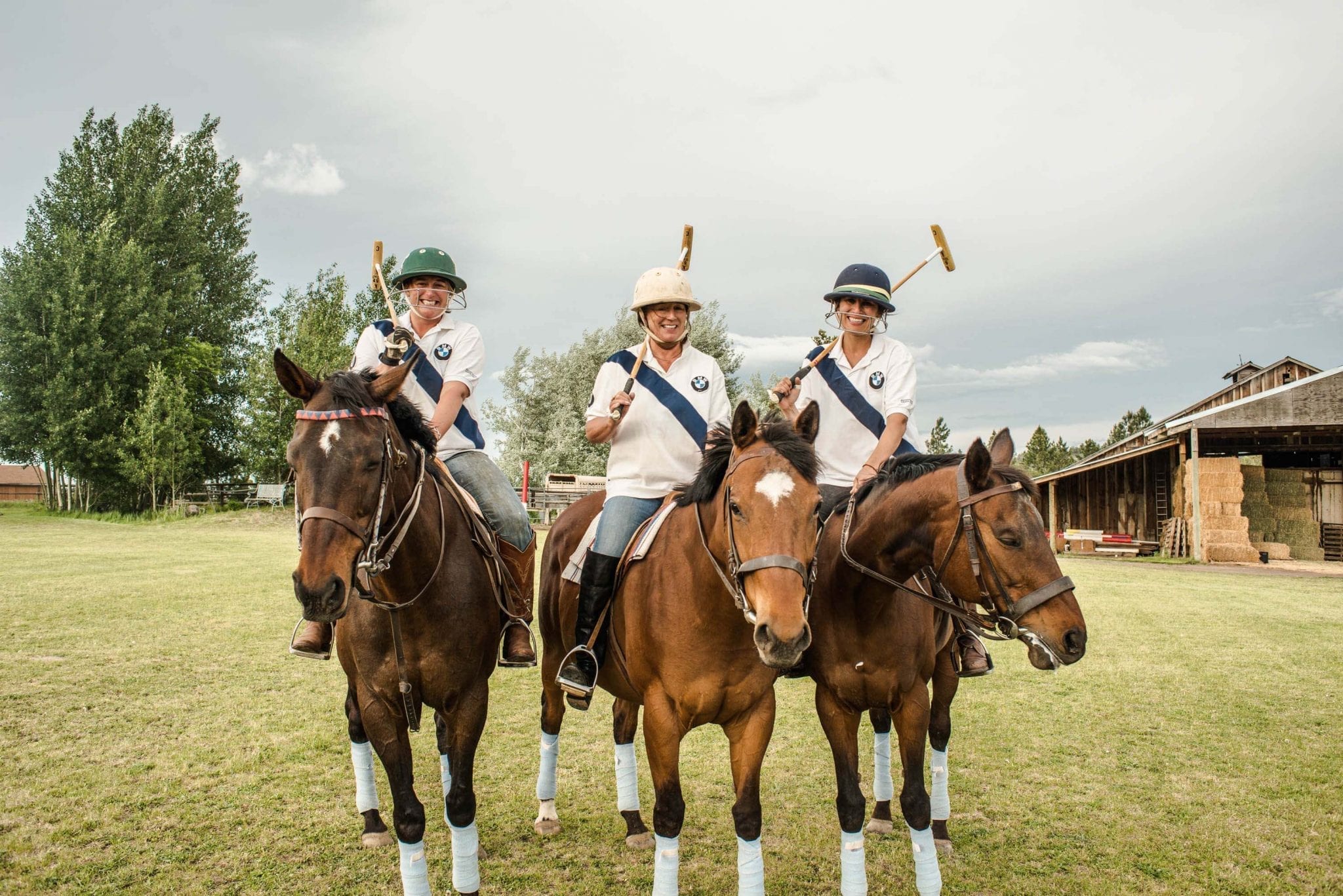
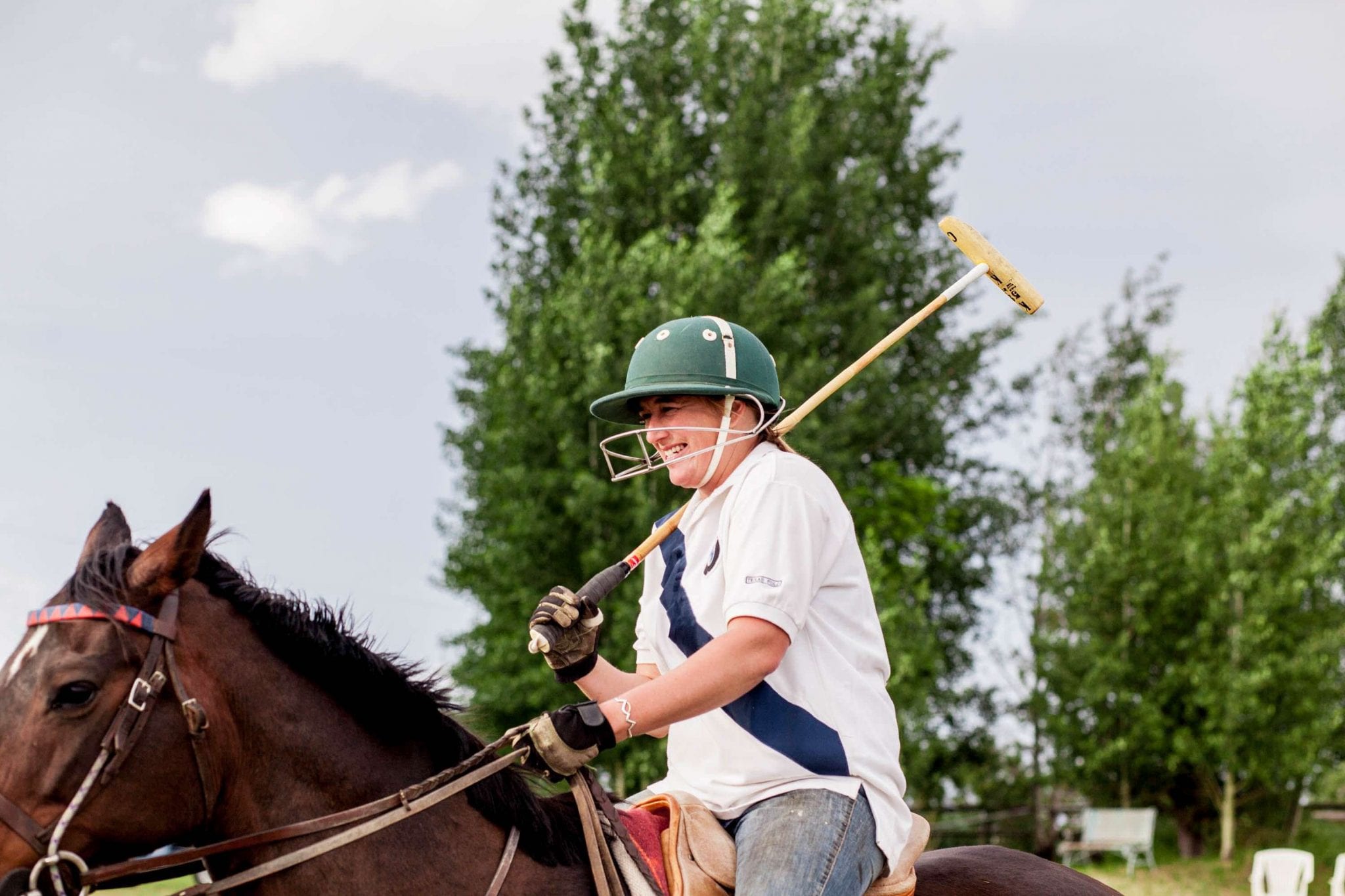
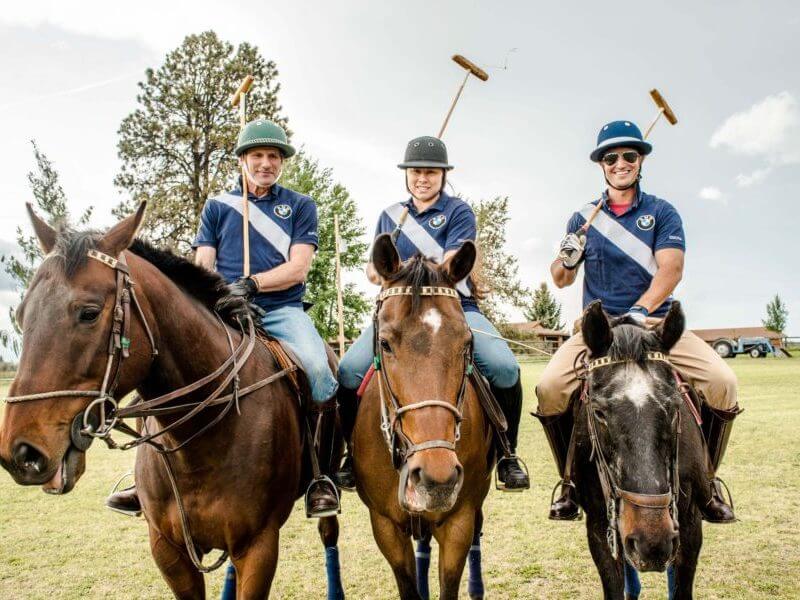
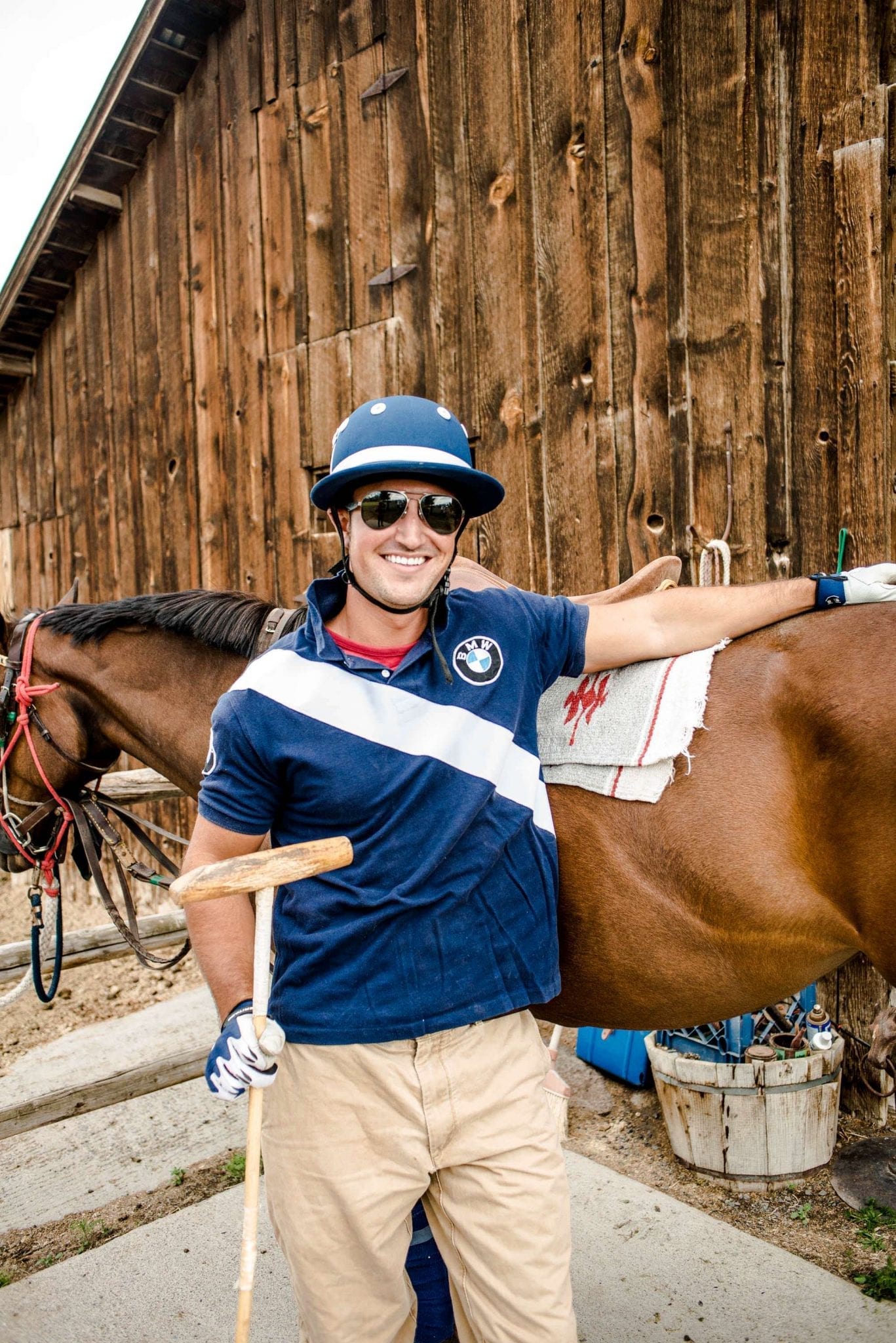
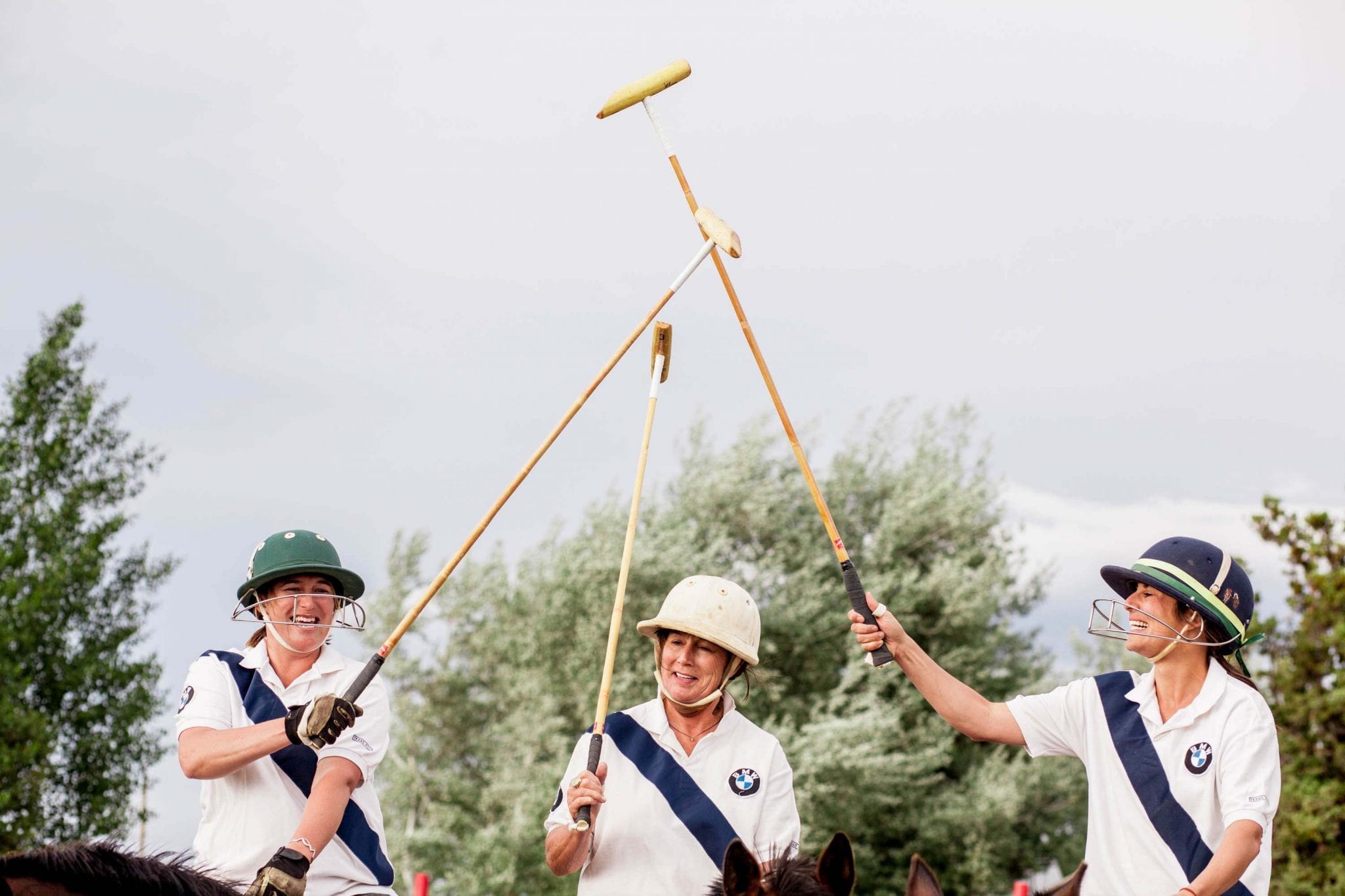
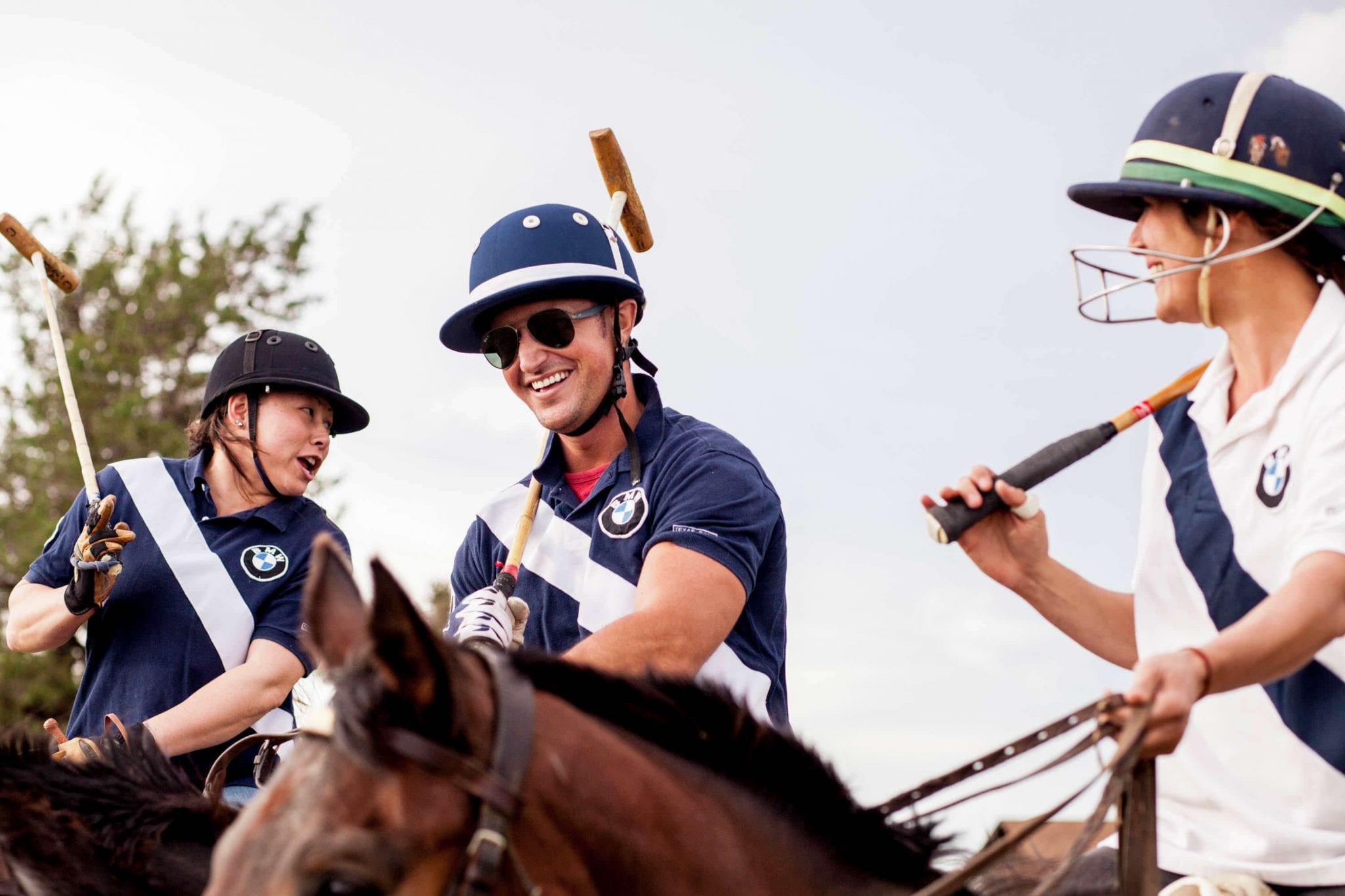
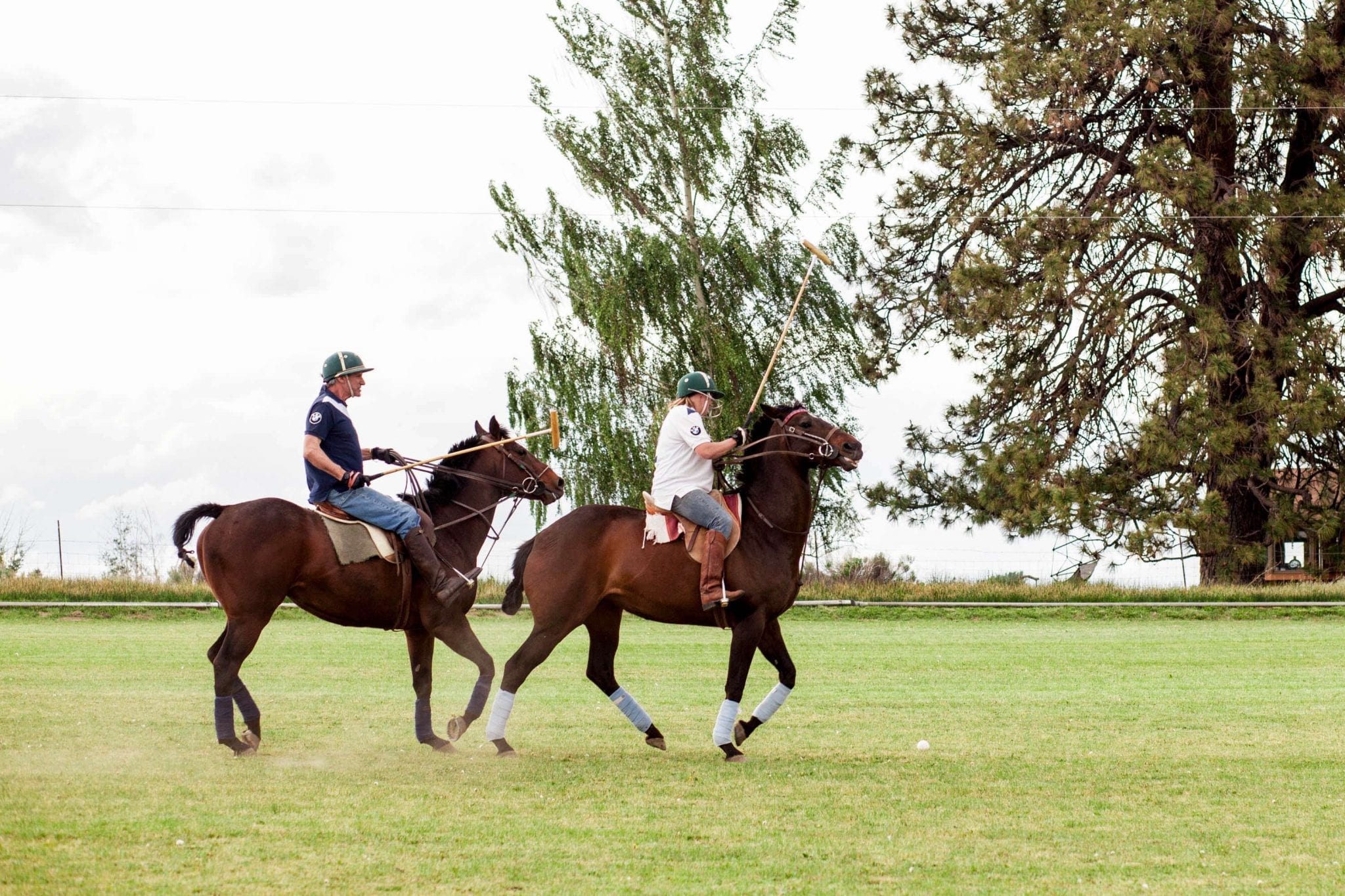
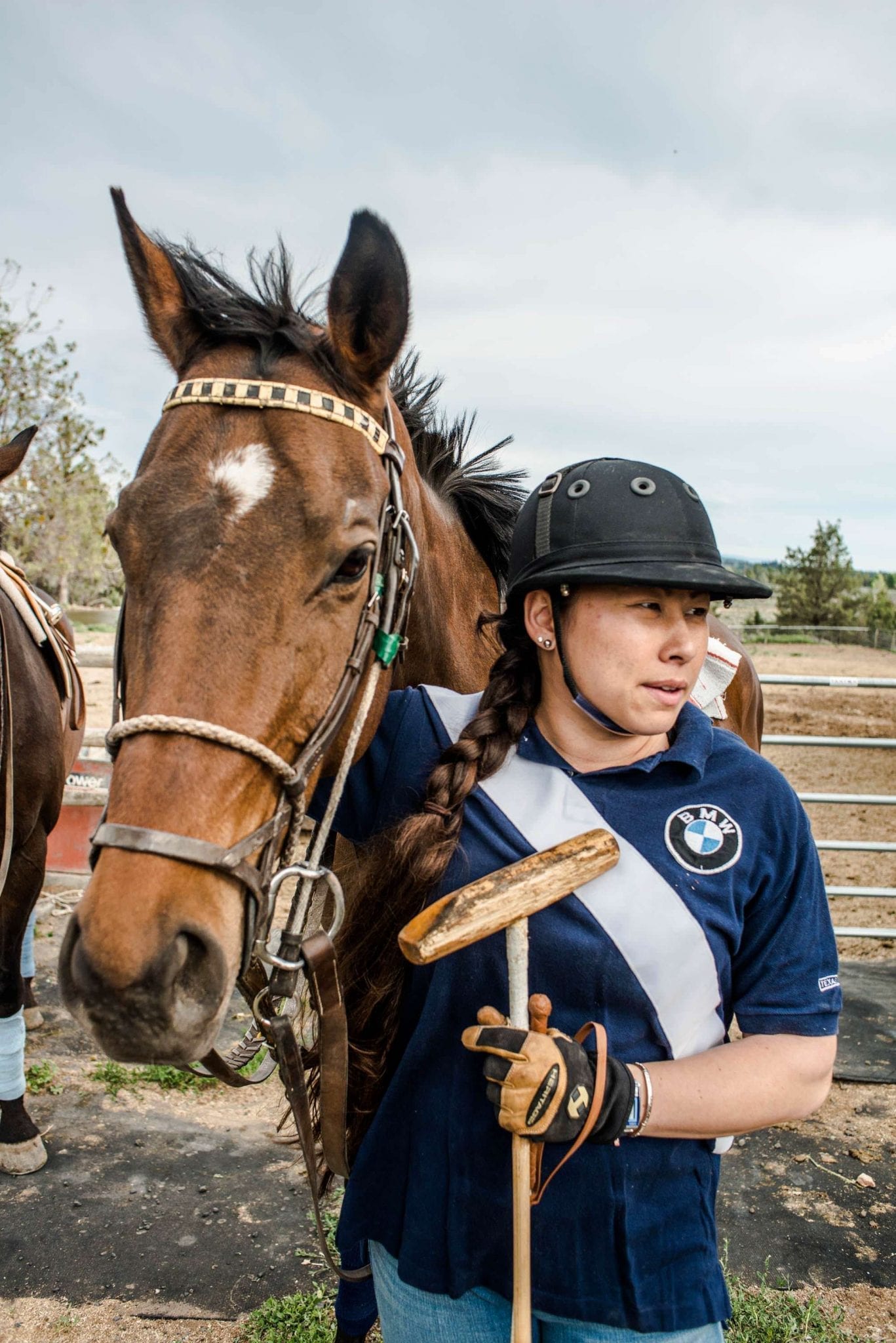
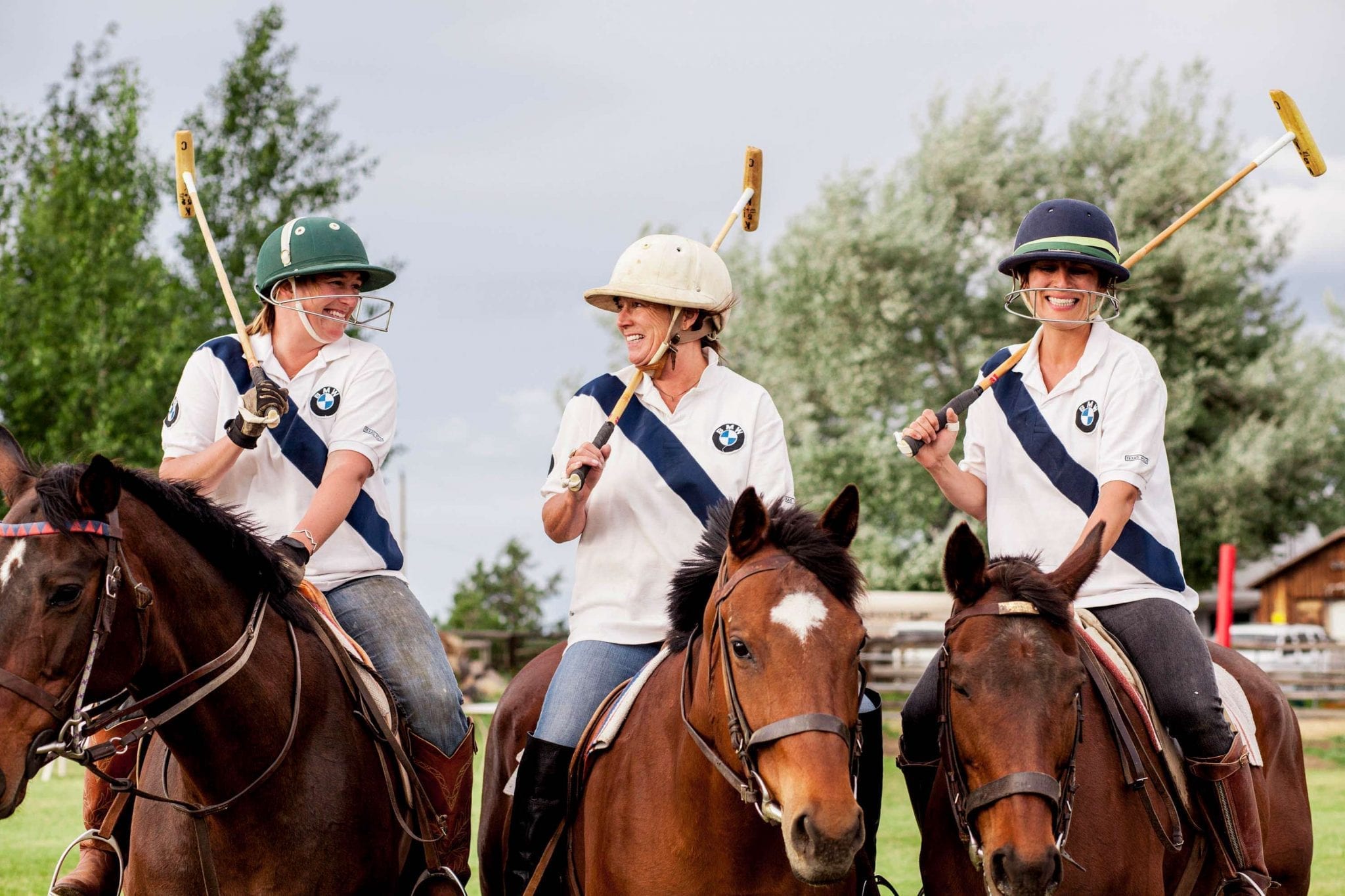
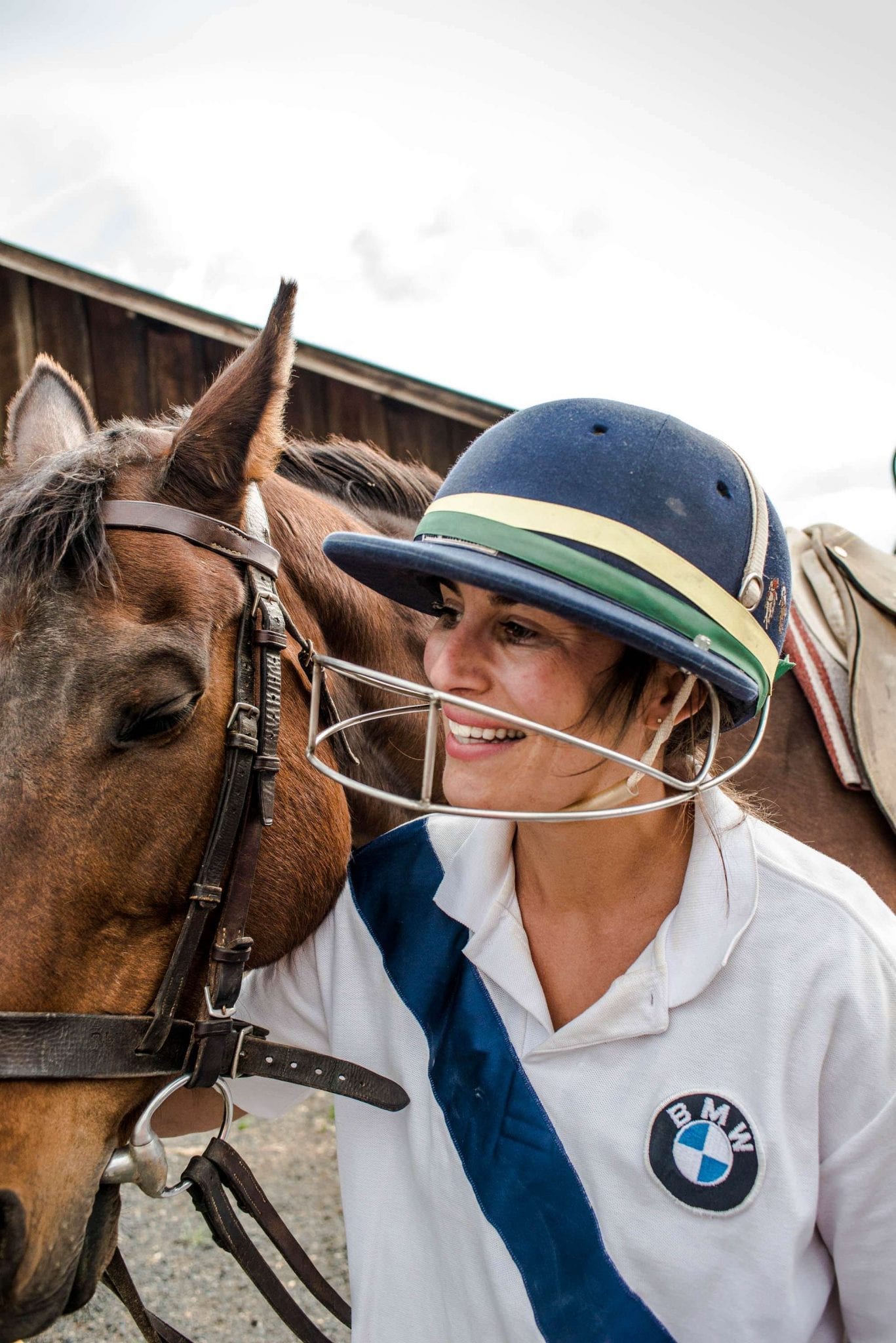
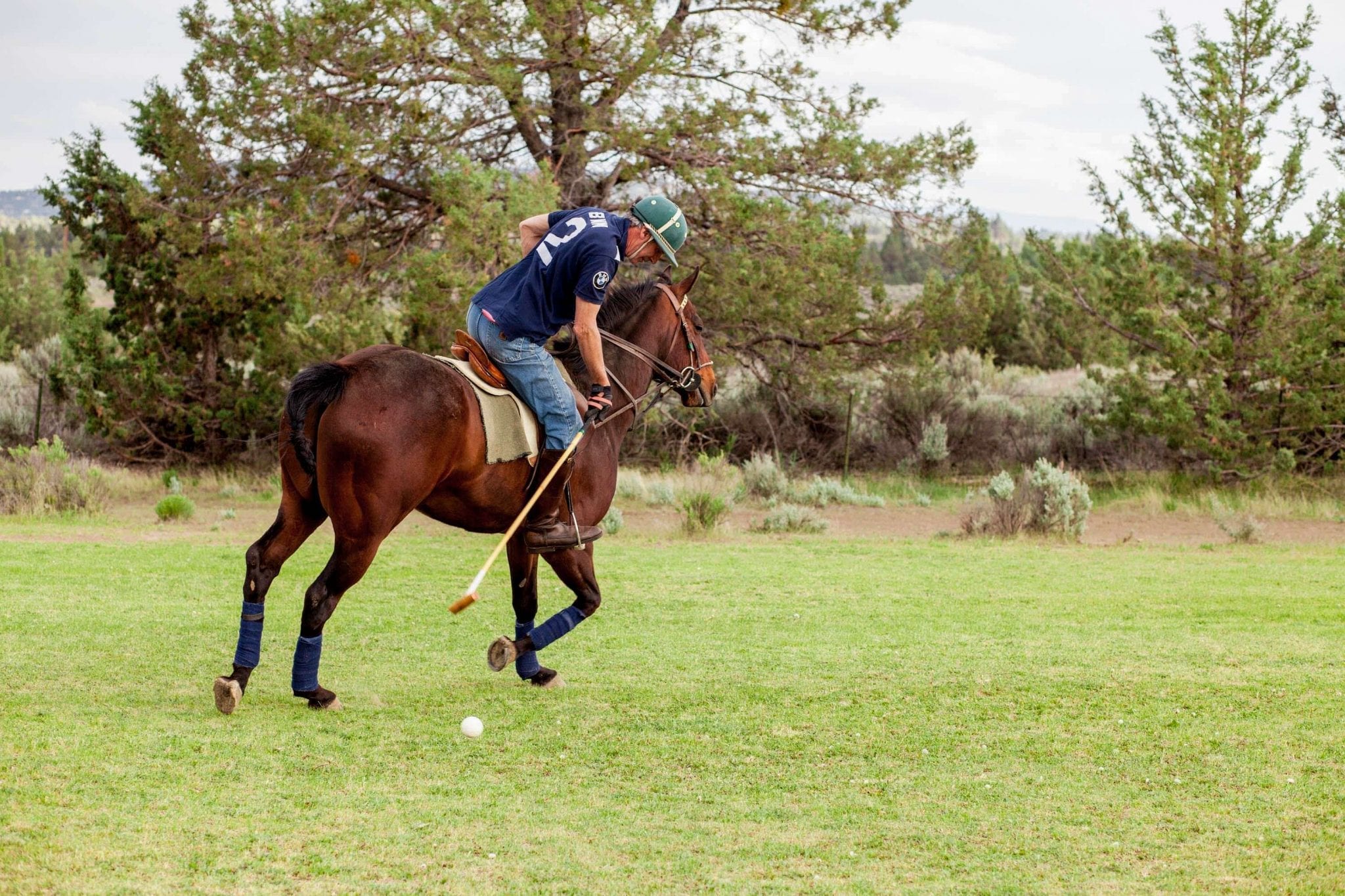
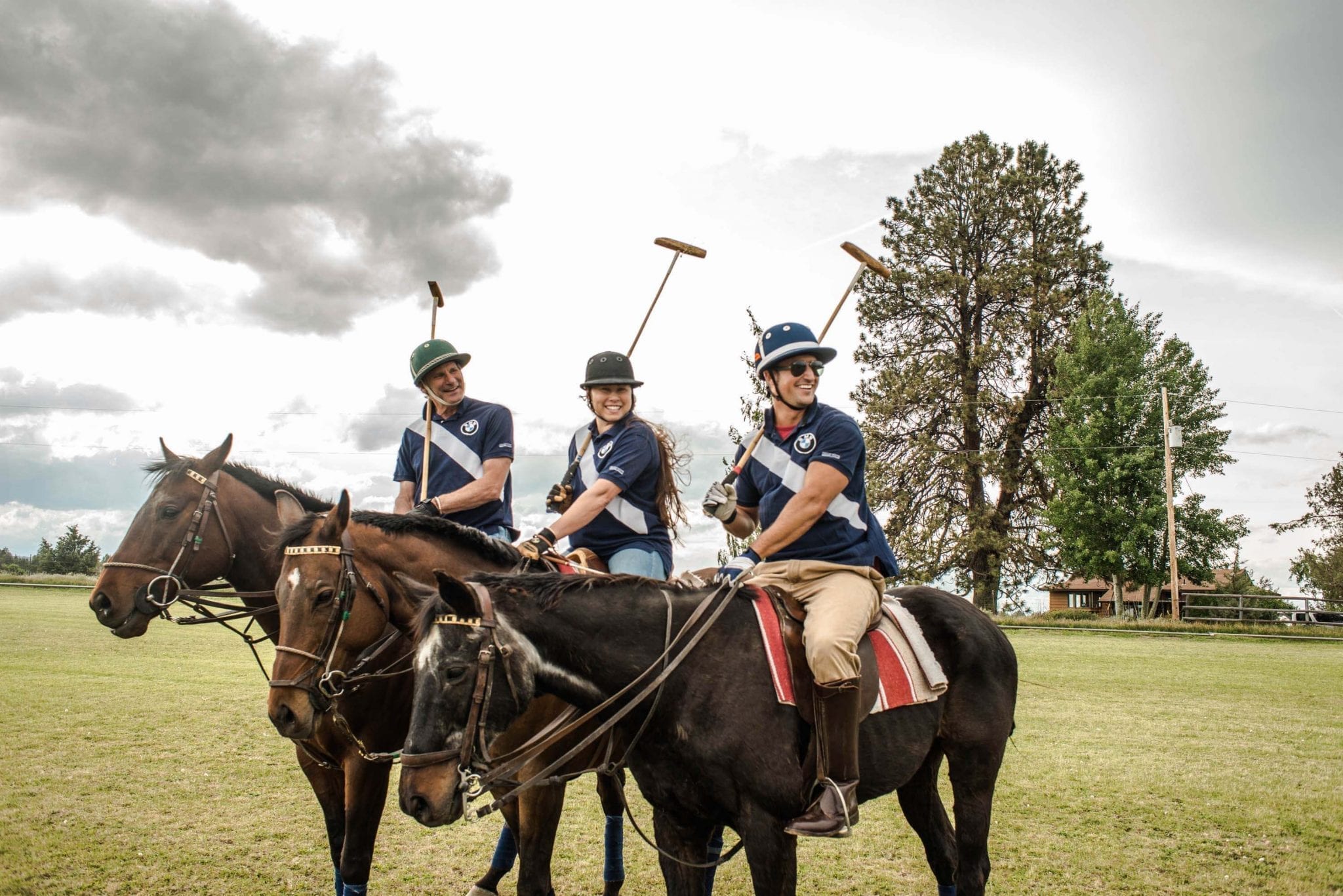
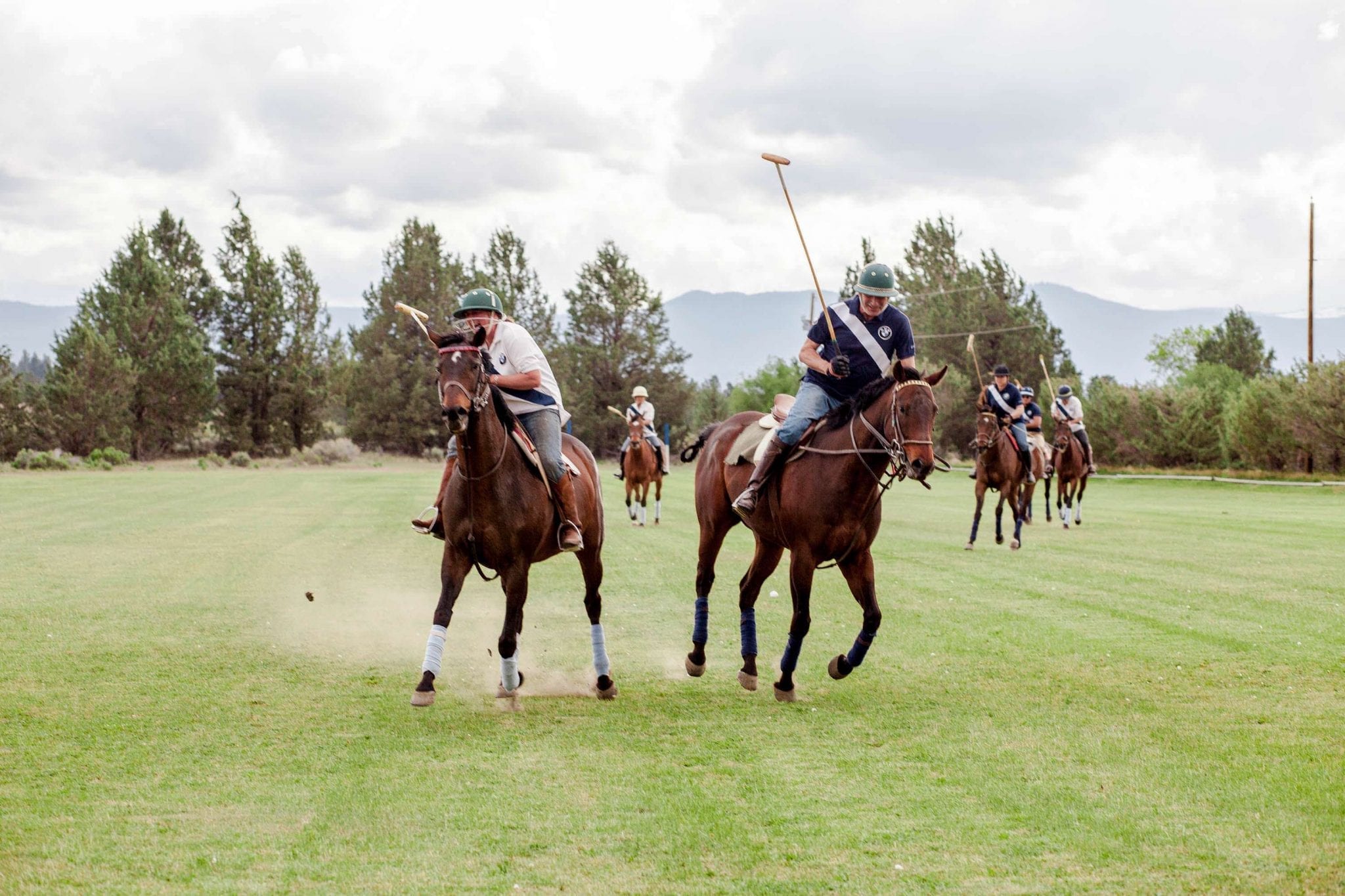
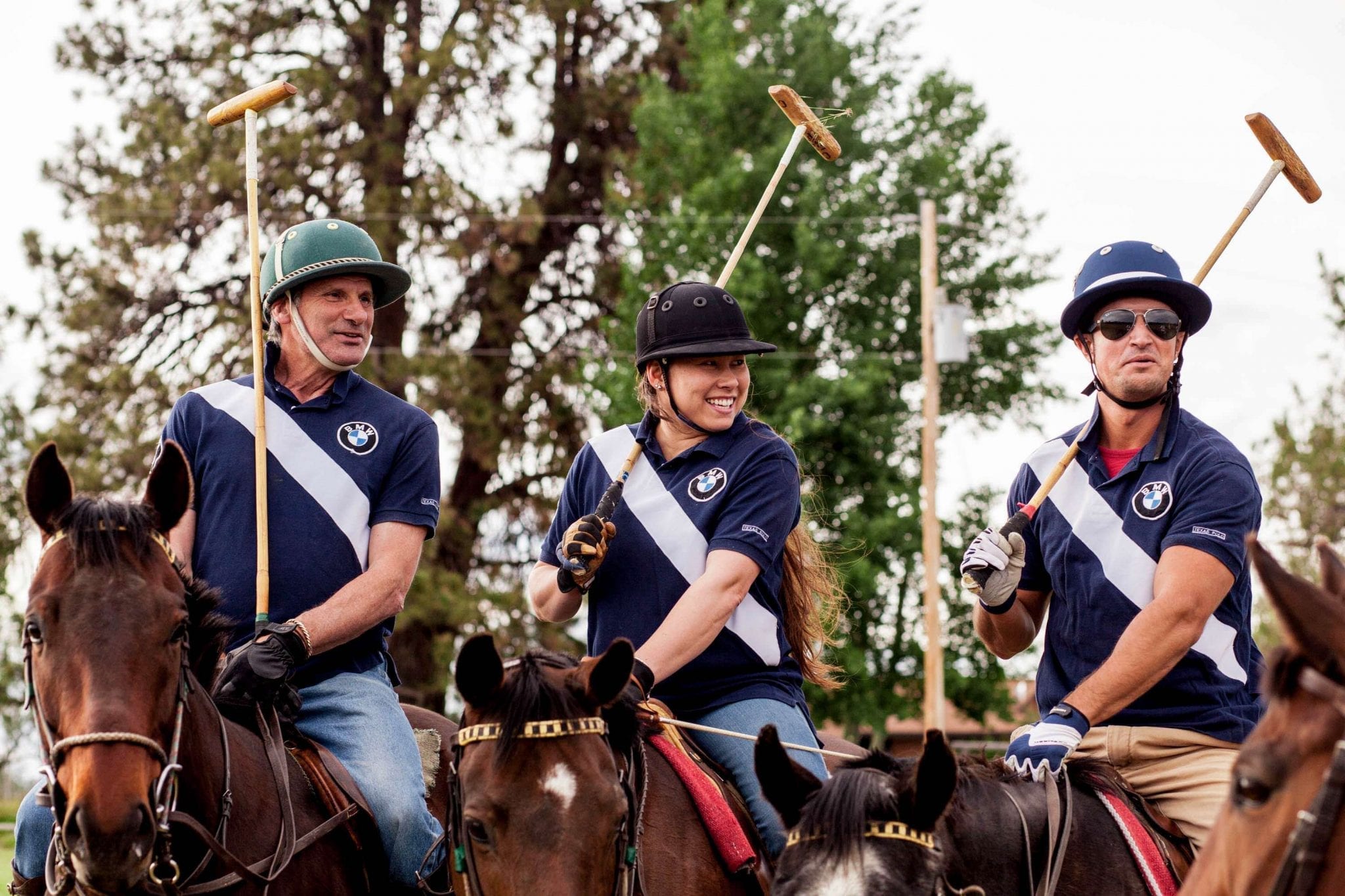
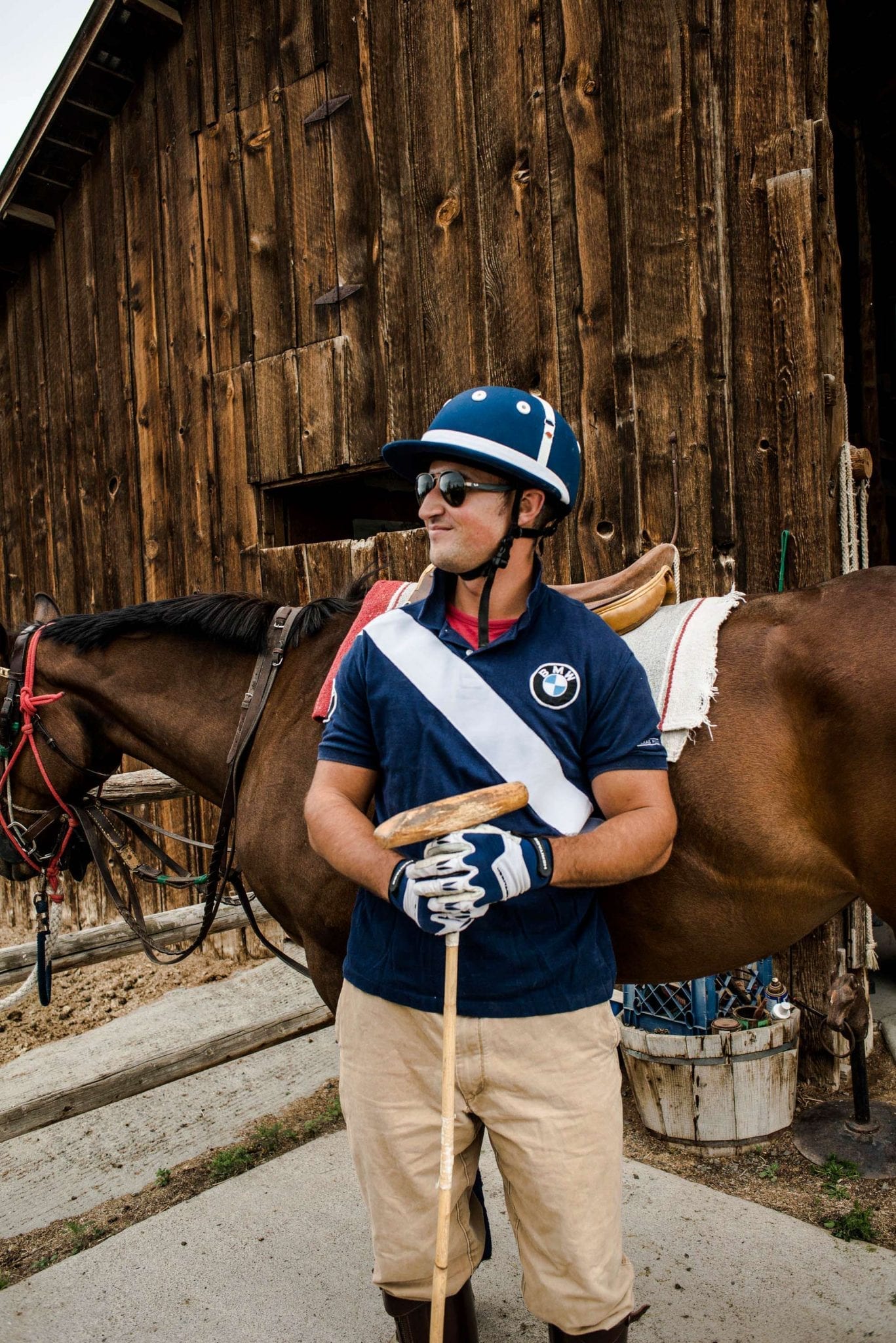
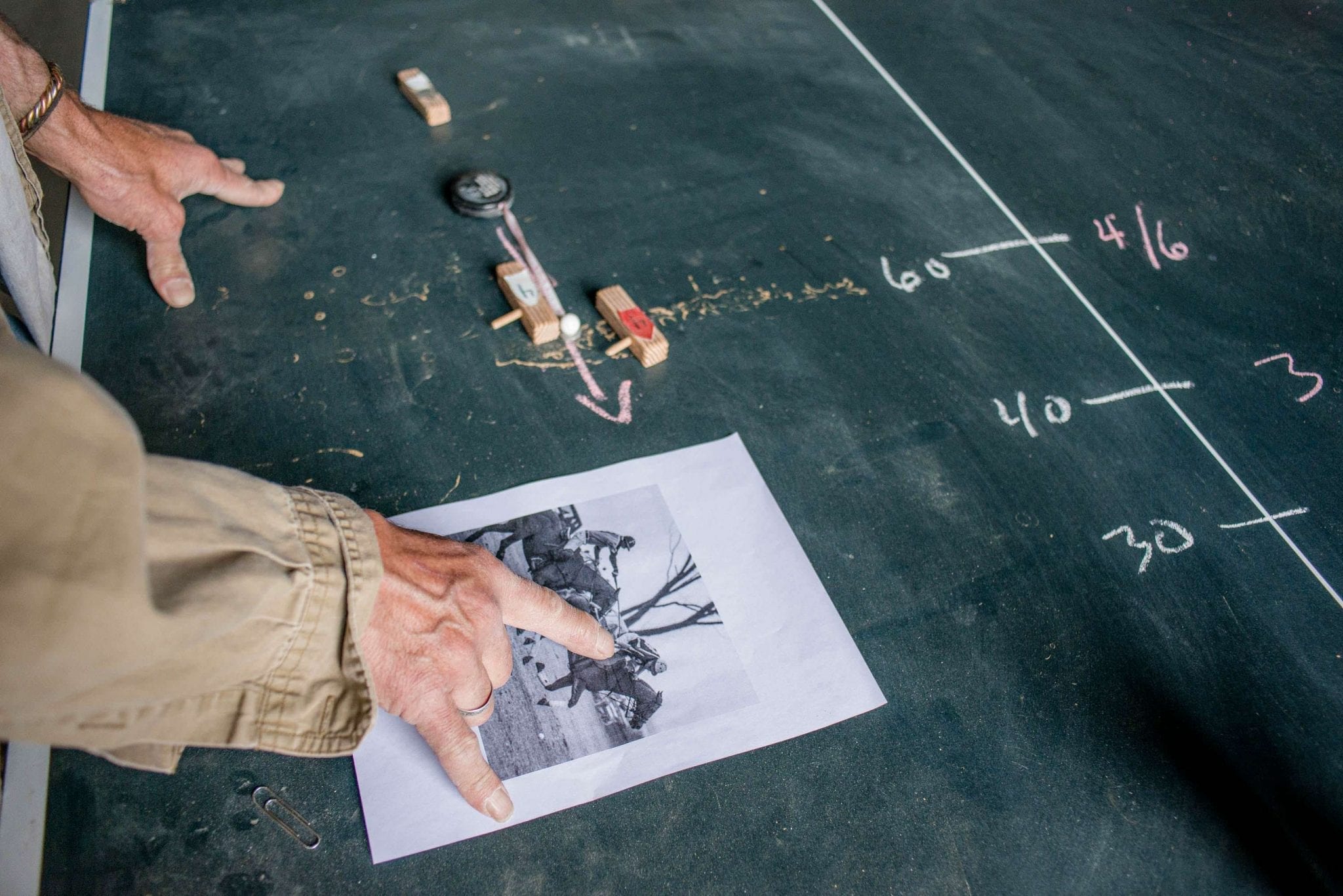
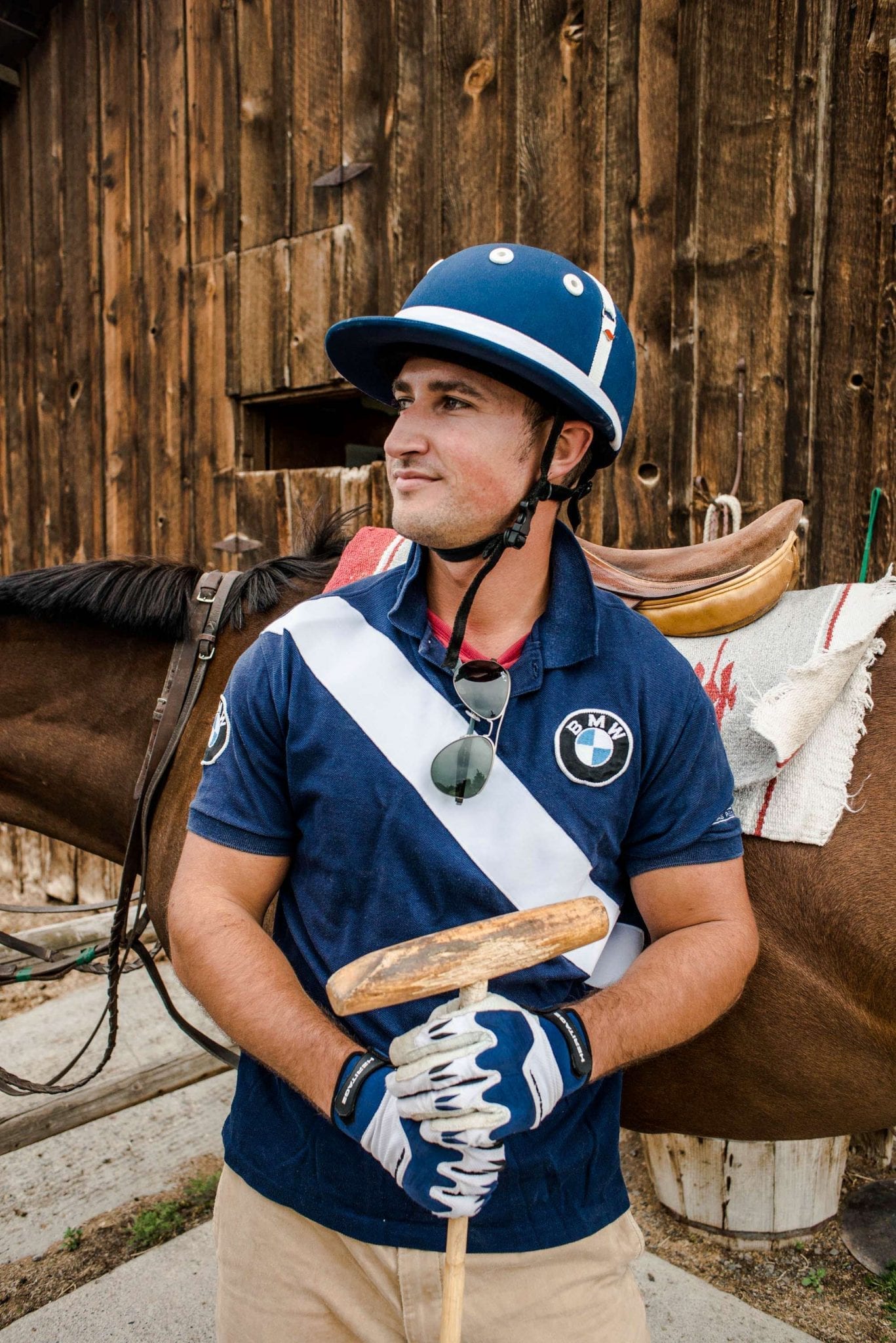
Daniel Harrison played polo professionally beginning in 1975 and has played for U.S. internationally in 10 different countries. Recruiting local riders to learn the sport of kings, he founded the Cascade Polo Club in 1986. While polo is often perceived as a sport for the elite class, Harrison’s philosophy involves respect in the saddle and checking your ego at the barn.
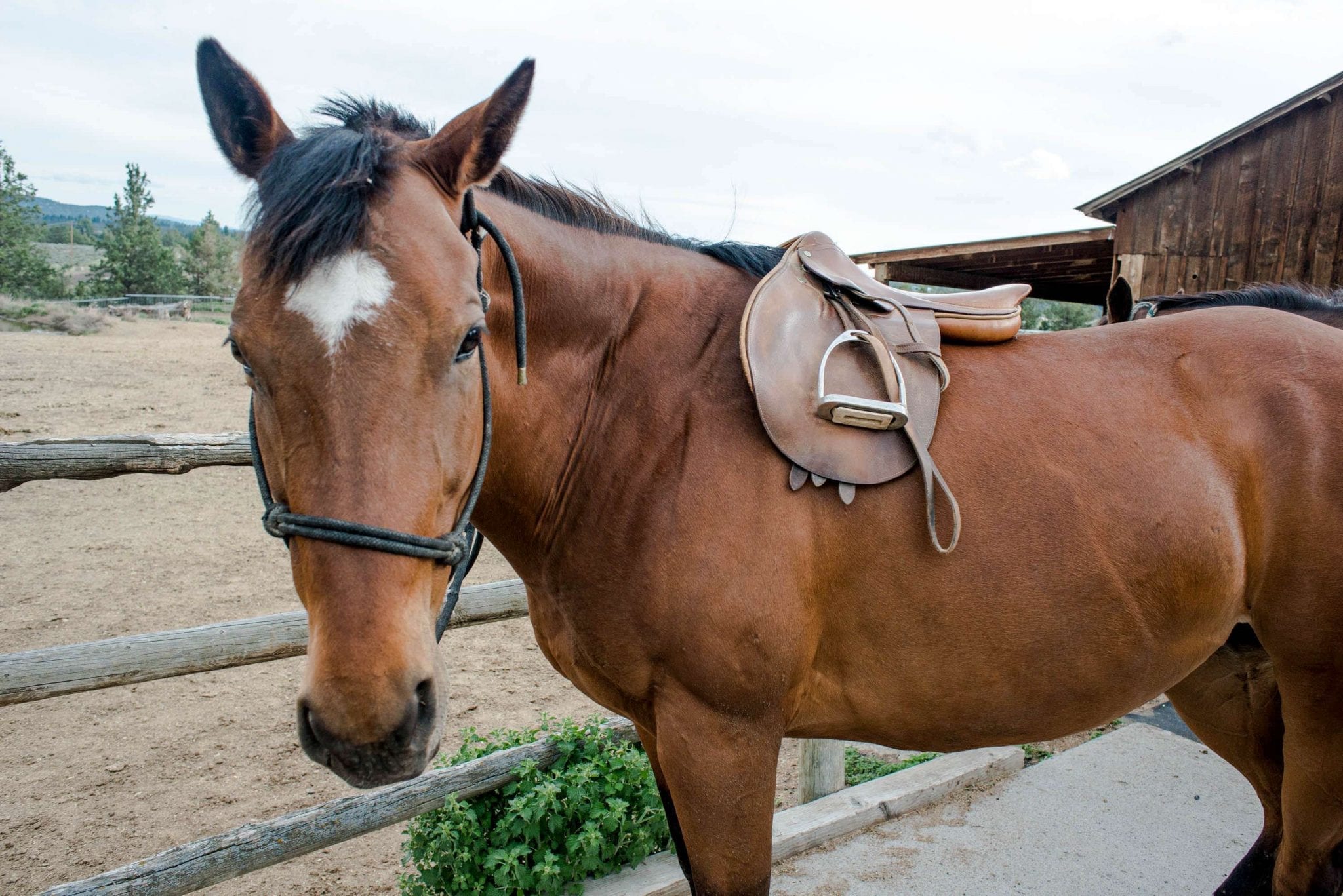
“Riding well is more important than hitting the ball, we cannot play the game without the generous contribution of the horse,” Harrison said. “I teach polo from the ground up, and as a veterinarian, I am particularly attentive to how the horses are being treated and ridden. They do not have a voice in this game, but yet represent 75 percent of the game. If you cant get to the ball in control, you can’t hit it.”
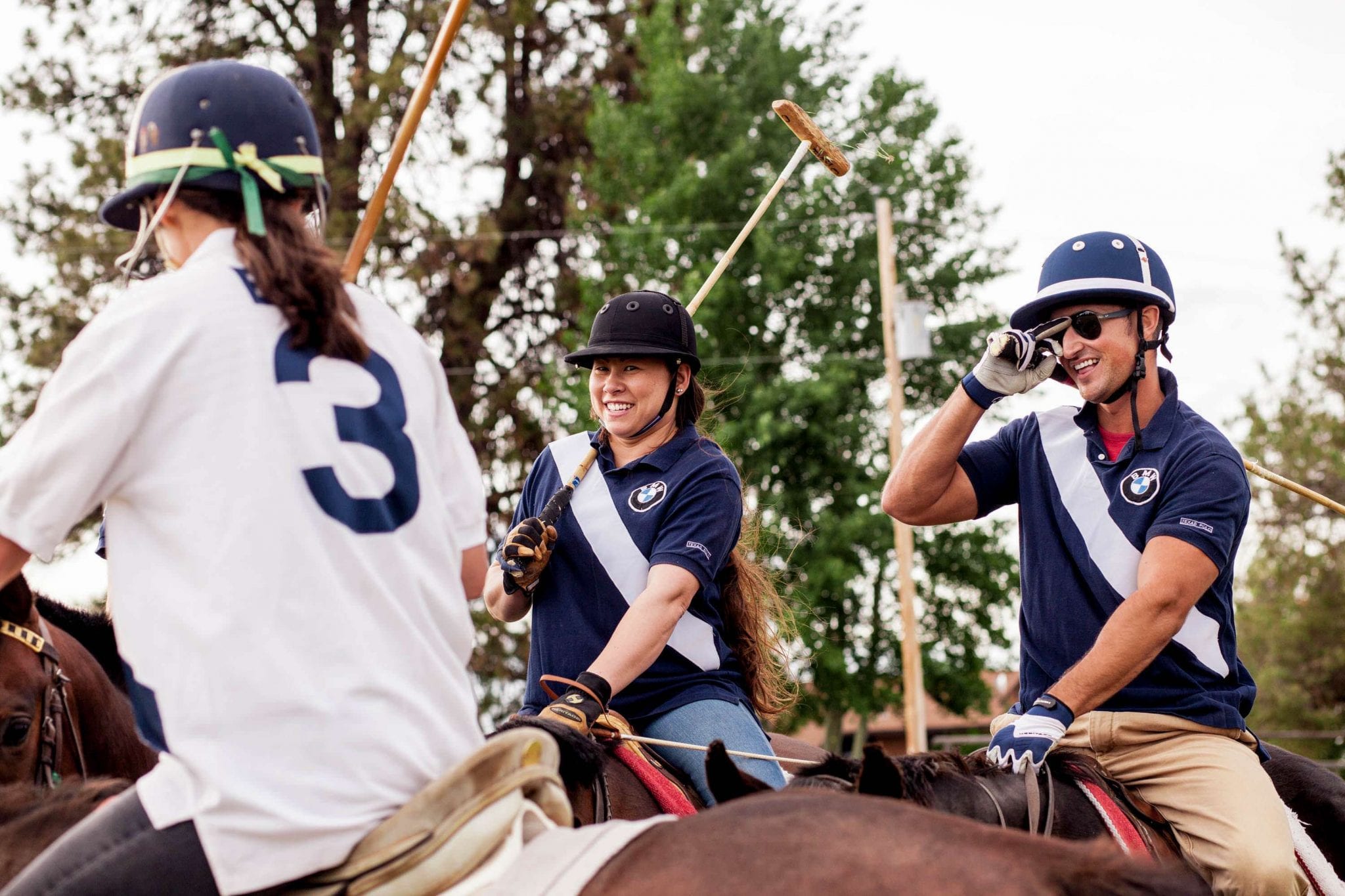
Photos by Talia Galvin. Players (and horses) pictured:
White team: Wendy Kelly (Australia), Katey Kelly (Spice Chic), Kelsey Kelly (Sweet Pea)
Blue team: Ben Peterson (Clark Kent), Dan Harrison (Skookum), Helen Schwab (Cracker)
Austin Britts has been visiting Bend since he was 10 when his family started coming up from California for ski races at Mt. Bachelor. But when the CEO and co-founder of Zealios, a personal products company for athletes, was considering moving here last year, he wondered whether the ski town of his childhood would also be a good fit for his company.
The answer was a resounding yes. Britts connected with the Oregon Outdoor Alliance, Bend Outdoor Worx and some local outdoor companies. “The rest is history,” he said. “We were absolutely stunned by the cohesion and support of the Bend business community.”
Britts and his co-founder, Kevin Fuller, started Zealios in 2009. They wanted to make a better waterproof, sweat-proof, zinc-based sunscreen. “We’ve always placed performance as our key objective,” said Britts. “While the industry is trending toward natural and organic ingredients, we have [also] steered toward formulations that perform the best. For instance, what good is an all-natural sunscreen that comes off in the water or when you start to sweat?”
The company has found a natural market among endurance athletes, and especially triathletes, who find themselves in the sun and in the pool on a regular basis. Britts and Fuller appreciate these athletes’ passion. “Having played rugby at the highest level in the USA, I think Kevin and I identify with their competitive spirit,” he said.
This past year, Zealios product sales have taken off. “We are working hard to cement ourselves within the endurance culture and want to be a household name within the community,” said Britts. “We have a long way to go, but given our recent growth the future sure feels bright.”— Kelly Kearsley
The Museum at Warm Springs will feature the works of American Indian artist Lillian Pitt in the exhibition “Kindred Spirits: the Artistic Journey of Lillian Pitt,” which will run from June 23 through September 19 at the museum. Pitt, who is a member of the Confederated Tribes of Warm Springs and grew up on the reservation, is best known for her work as a sculptor and mixed media artist. She has also worked in clay, fiber, bronze, glass and other forms. In each chosen medium, she creates modern designs that draw on and reflect the past 12,000 years of Native American culture and history throughout the Columbia River Basin. Pitt’s art has been exhibited throughout the Pacific Northwest, nationally and internationally. museumatwarmsprings.org
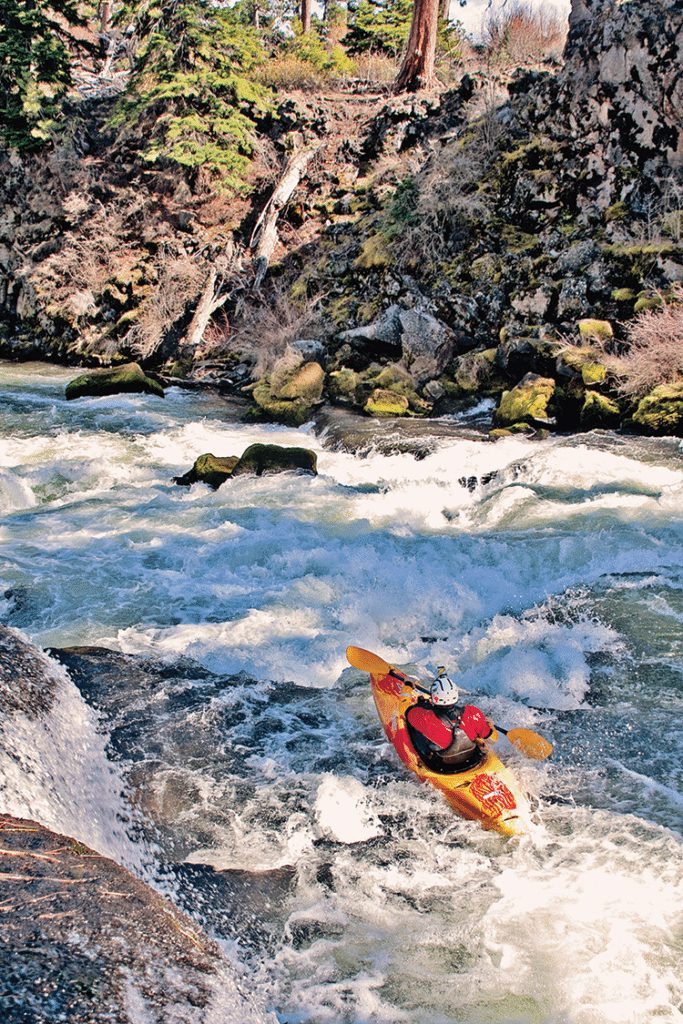
With irrigation-moderated flows, scores of rapids and a variety of runs, rivers in the Bend area make for great year-round kayaking. Whether you’re front surfing at the whitewater park or running rapids on the Deschutes River, share the water and paddle safely with these practical tips while enjoying the best regional places to point your kayak downstream.
Photo by Jeffrey Conklin
Colorado Bridge
Drive over the Colorado Avenue bridge on any given day and expect to see a kayaker in the water, showing off a spin or stunt to a crowd of onlookers on the pedestrian bridge.
Bend’s whitewater park is the culmination of almost a decade of planning that transitioned from dream to reality in 2012 when voters approved a bond measure to modify an aging and hazardous dam at the bridge. The park divides the river into three channels—one for people floating the river (currently closed), one for kayakers, surfers, and standup paddleboarders, and one for wildlife. The project took more than a year to build and cost $9.7 million, $1 million of which was raised by the Bend Paddle Trail Alliance, the local organization behind the waterpark.
For whitewater kayakers and surfers, the playground starts in the middle channel, where pneumatic bladders control the flow of water, creating four standing waves. These waves are numbered from downstream to up, corresponding to difficulty. Novice kayakers can refine their skills on Jason’s Wave (number one), while intermediate surfers and kayakers practice riding on Kricket’s Wave (number two) and the Green Wave (number three). Nearest the bridge is Eddy’s Wave (number four), the largest wave in the series that is designed for more experienced users.
While whitewater kayaking is an individual sport, it takes practice. The whitewater park’s dynamic wave play area provides a place for Bend’s growing kayak community to train right in town, and is one of the first of its kind on the West Coast.
KNOW: BE COURTEOUS
“The whitewater park is a big draw for kayakers due to the accessibility and consistent nature of the features, as well as a variety of waves. Advice for sharing the whitewater park really boils down to: be respectful of all users. Usually parks like this are ‘managed’ by a core group of local users that set the tone for tourists or locals new to the sport. For example, avoid droppinginto a feature when someone else is already in it. This is extremely important from a safety perspective. It’s also just good river etiquette. As the park enters its rookie season, kayakers can front surf waves, test out spins or try aerial tricks in the more hydraulic-type features.” – Justin Rae | President, Bend Paddle Trail Alliance
UPDATE: CHANGING THE CHANNEL
The Colorado spillway project suffered a setback in June when the Bend parks department closed the pass-through channel nearest McKay Park over safety concerns. Following a spate of injuries, the park district moved quickly to close the newly minted safe passage and is requiring that all river users exit at the dam and portage around the whitewater park.
Meanwhile, the whitewater channel will remain open for kayakers, surfers and other expert users. “It’s important for people to know the whitewater channel is still open and will continue to be up and running throughout the summer,” said Julie Brown, Bend Parks’ community relations manager at Bend Park and Recreation District.
Photo by Trevor Lyden
Upper Deschutes
Like hitting cool waters on a hot day? The upper Deschutes is characterized by slow, flatwater sections flowing into waterfalls and drops that make for a thrilling ride. Boaters call this a “pool-drop” style river, but be aware as technical sections can sneak up quickly and rapid classes vary in difficulty, ranging from class I (beginner) to V (very dangerous, experts only). Some of these rapids are extremely hazardous and should not be attempted by anyone but expert paddlers who understand the risks. If you are unfamiliar with the river, visit one of the local paddling outfitters, such as Tumalo Creek and Kayak in Bend. Consult maps and scout all sections prior to running to ensure that you are aware of hazards as conditions can change on a daily basis.
“Our consensus here in the shop is everything above [town] is experts only, excluding Aspen to Big Eddy. There are just tons of consequences on the Deschutes. It’s just kind of a wild river. It’s not the easiest to navigate and learn on,” said Keoni Chung, a store and programs manager at Tumalo Creek and Kayak.
For those with experience, there are popular places to put in upstream of Bend,including Meadow Camp (Class IV) a popular run with advanced kayakers that starts near Widgi Creek golf course and finishes just above the Old Mill at Bill Healy bridge. Another popular run is the Big Eddy section (Class III), a short float that is heavily used by Bend’s commercial rafting outfitters. With so many different drops and chutes in constant flux, it’s important to learn how to read water and scout rapids from shore to find the safest route before dropping in.
KNOW: BE SAFE
“One thing all paddlers need to understand is how powerful a river is and that it’s different every time. Whitewater is not the log flume at Disney and not all rivers are safe to play in. Know self-rescue skills and learn swiftwater swimming and the fundamentals of shore, boat and in-water rescues for others. You want everyone in your group to be trained, because they will be the ones rescuing you.” – Travis Reid | Instructor, Oregon Rescue LLC
Photo by Trevor Lyden
Lower Crooked River
A run less-paddled, the Crooked River Canyon plunges boaters through some of the most dramatic river views in Central Oregon—as long as there’s enough water to float your boat. Depending on the year, snowpack release and dam regulation from the Ochoco and Prineville reservoirs often make this unscheduled run a hit-or-miss adventure.
When the river does run, it’s an experts only paddle that is best done with an experienced guide.
If you’re still game, put in at Lone Pine Bridge and paddle eighteen miles of great whitewater through the desert canyon to Crooked River Ranch. While drops and difficult sections on the Deschutes are sporadic, the Crooked River provides continuous class III and IV rapids. The exception is a few miles of flatwater through Smith Rock State Park.
After Smith, the action picks back up and a series of drops carry boaters through rapids simply named #1, #2 and Wap de Doodle. Ride the currents under the railroad bridge, enjoying spectacular views of the gorge before you come to No Name, one of the most technically challenging rapids on the run. This rapid is responsible for lots of flips and lost gear—so hold on to your paddle.
KNOW: BE CLASSY
Taking a class is a great way to become comfortable and proficient in rivers, and address safety concerns. Learning about rivers and what to watch for is essential. It will also make you an asset to boating partners—not a liability. Professional instructors with proven teaching techniques are by far the most reliable resource from which to learnthese skills. As a rule of the river, kayakers don’t kayak on their own. It takes time on the water to learn to ‘read’ it. Because of that time needed, there is a community grooming process to get new boaters out and involved in organized meetups and ongoing group classes for newcomers. – Danielle Carvahlo, Bend Kayak School
This time of year, with trails to hike and rivers to run, many people put their fun before their eyes. Central Oregon’s endless outdoor activities and blue-skied, arid climate put eye health at risk. Two local eye care experts gave us tips for mitigating the effects during summertime. Dr. Derri Sandberg, an optometrist at LifeTime Vision who has practiced in Central Oregon since 2007, first became interested in optometry when she dissected a sheep’s eye in seventh grade. In Central Oregon since 2001, Dr. Ida Alul is a ophthalmologist and surgeon at InFocus Eyecare who specializes in advanced vision correction techniques.
Shades of Play
Getting out in the sunshine also means more exposure to ultraviolet radiation, making a quality pair of sunglasses much more than just a fashion accessory. “They’re very important,” said Alul. “Good UV protection helps reduce the incidence of cataracts and macular degeneration, the two leading causes of blindness as we age. Without 100 percent UV protection, sunglasses aren’t doing good and are actually doing harm,” said Sandberg. “Something people don’t think about is that you don’t necessarily need tint for UV protection. Some contacts have it, as well as [some] clear glasses.”
Playing it Safe
Summer activities also call for extra eye protection, whether we’re at work, play or in the pool. Alul recommends wearing safety glasses or goggles when performing activities such as mowing, leaf blowing, using power tools or playing sports that involve small objects (think pickleball or racquetball). In addition, being careful to wear protection around fireworks is very important, as 40 percent of firework injuries happen to the eye and face. “Any sort of water source can also be pretty dangerous,” said Sandberg. “Contacts act like sponges and absorb things from the water that can cause a pretty serious infection.” When swimming, paddling or even playing around water this summer, Sandberg’s advice is to steer clear of contact lenses or wear daily disposable lenses that can be worn and thrown away afterward.
Not a Dry Eye
Optometrists see an upsurge in patients during the transition to summer. Depending on what’s blooming, allergies and outdoor activity often cause the dry eyes and irritations that bring people in. “It’s a pretty big deal in Central Oregon,” said Sandberg. “As the temperature gets hotter, eyes tend to dry out more. Add to that air conditioning, outside recreation, even more traveling on airplanes—we treat a lot of dry eyes. Having a good eye drop to lubricate helps regenerate the balance of our tears and decrease inflammation.”
Sunset dinners serve up one of Central Oregon’s best-kept summer secrets.
For six months of the year, dining on the slopes of Mt. Bachelor typically entails handwarmers, hot chocolate and chili cheese fries, but summertime takes Mt. Bachelor cuisine to new heights. On weekends, guests can ride the chairlift up to the mid-mountain Pine Marten Lodge for dinner and a sunset at 7,800 feet, with stunning views of nearby Broken Top and South and Middle Sisters.
“The drive up to the mountain is beautiful and the chairlift ride up to the restaurant is thrilling—especially for those who normally don’t ski, it’s an amazing experience,” said Mt. Bachelor’s hospitality director, Chas Savage.
Started in 2009, the first sunset dinners on the mountain were originally served on Labor Day weekend. They became so popular that Mt. Bachelor staff extended the service through summer, starting in early July. Food is served buffet-style, with a different theme each week. After dinner, guests gather out on the deck for sunset and linger until twilight, then ride the chairlift down (blankets provided on chilly nights). This year, the lift ticket is included in the price, with beer and wine tasting as well as live music scheduled throughout the summer.
This year also brings a fixed price menu. For $39 to $49 guests can feast on fare centered around rotating themes. Currently planned themes include Tuscan, American barbecue, Hawaiian and seafood, all served at one of the highest elevations in the state.
During the day, the Pine Marten bar is open with limited lunch options at Scapolo’s, the lodge’s year-round restaurant. Stirling Cobb, Mt. Bachelor’s marketing director, said that dinners are diners’ favorite because the sunsets beat even the dessert.
“With the Sisters and Broken Top right in front of the lodge, at night it’s pretty special up there,” Cobb said. “It’s something that most people have never seen, and coming down on the chairlift after dark is definitely one of the cooler things to experience at Bachelor in summer.”
Dinner Friday, Saturday and Sunday, starting at 5 p.m.
July 8 through Labor Day. Reservation-only, 800.829.2442
The Fourth of July Pet Parade in downtown Bend is a celebrated tradition more than eighty years old.
Fireworks, pie and pets! The Bend Fourth of July Pet Parade started with a simple concept: let local children walk or pull their pets in wagons as they parade through downtown. It has attracted thousands of spectators each year since its inception, enduring through the Great Depression and times of war (though the parade was cancelled from 1942 to 1944 during WWII). Today, the event draws an estimated 8,000 participants and onlookers.
Local cable channels broadcast the festivities live with commentary on novelty pets such as Daisy, the flying dog. In 2014, the pet parade was designated as an Oregon Heritage Tradition by the Oregon Heritage Commission. In keeping with tradition, participating kids receive popsicles from the Bend Fire Department after the parade.
History on Parade
Come Fourth of July, Bendites go big on celebrations and take to the streets to continue a long tradition of parades. Festivities historically centered around two major parades, one of pageantry and one of animal domestication—the latter of which is still thriving.
Bend’s oldest parade, the Pet Parade started in the summer of 1932, when 100 children marched a menagerie down Wall Street to compete for a first prize of four dollars. Four-year-old Doris Grubb won the first pet parade pushing her cat, Tom, in a baby stroller; a badger came in sixth place. Unlike many parades, the pet parade was open to any species of pet. Over the years, “pets” have included deer, badgers, gold fish, chickens, squirrels, ducks, oxen, calves, a pet eagle and baby coyotes.
From 1933 to 1965, the more extravagant Bend 4th of July Stampede and Water Pageant popularized Bend for tourists from across the state, offering a three-day schedule of festivities that included everything from archery contests and bowling to social balls and baseball games. Epic and ambitious, the water pageant took place at night on Mirror Pond, as elaborate floats made by local businesses drifted down the Deschutes River through Drake Park. In 1940, attendance swelled to 18,000, more than doubling the population of the town at the time. The extravagance eventually went by the wayside, leaving the children and animals to shine.
An undated photo of elaborate floats that highlighted the now defunct Water Pageant.
A knight in shining armor from the 1953 parade.
Genevieve Armstrong (with cat) and sister Joyce in the 1934 pet parade. Friend Elma Ramlo accompanies, pulling the wagon.
Horsebacked riders stroll through downtown circa 1940. (Note the Tower and Liberty theaters in the background.)
The thinking in Sunriver is that community happens not in lines, but in circles. Seventeen miles southwest of Bend, the same meadows where wagon trains circled in the 1800s still beckon travelers to come, slow down and lose themselves in the beauty of Central Oregon. Tucked into the woods, and dotted with eleven traffic circles (there is no circle eight), more than 3,000 acres comprise this community where travelers and locals alike come to get away from their overscheduled lives and out into nature.
These fields and forests have hosted a variety of people throughout history. During World War II, the government purchased 5,500 acres for Camp Abbot, an Army Corps of Engineers combat-training facility that housed thousands of soldiers from 1942 to 1944. The last remaining building, the officer’s club, still serves as a place for social gatherings, hosting weddings and events as the Great Hall at Sunriver Resort.
In the late 1960s, a group of developers envisioned a residential community centered around a resort and Sunriver was born. Like home but without the hassles of regular life, the scenic vacation spot continues to entice visitors to come enjoy recreation like hiking, tennis, river kayaking, fly fishing, birding, horseback riding and world-class golf, as well as running and biking around Sunriver’s more than 30 miles of paved pathways. Even with so many options for activity, perhaps the best part of Sunriver is the chance to really relax, whether it’s in a hammock or a hot tub, and enjoy the luxury of leisure time.
In the summertime, guests can swing golf clubs at one of four golf courses, including Crosswater, a former host course for a PGA Legends Tour stop. Splash down a waterslide at aquatic centers such as SHARC or The Cove, Sunriver Resort’s newest outdoor swimming facility. In July, Balloons Over Sunriver fills the sky with floating hot-air balloons, August brings in classical strings for the Sunriver Music Festival, and families flock to the Twilight Cinema Nights, showing free movies under the stars during August and September.
See
Benham Falls One of the largest waterfalls on the Upper Deschutes River, Benham Falls is also one of the easiest and the most accessible hikes. Walk or bike the 6.6-mile paved out-and-back trail that connects Sunriver Resort to the falls, where singletrack side trails offer various route options for longer treks.
Play
Golf, Swim and Stars Recreation opportunities abound at Sunriver, which was designed with fun in mind. Play golf at one of four golf courses, splash in the water park at SHARC, go horse riding at the stables or see local wildlife up close at the nature center. At night, gaze up at the summer sky and see stars at the Oregon Observatory.
Eat
Bistros and Brewpubs Serving Sunriver since 2004, South Bend Bistro blends Italian influences with Northwest ingredients. Chef Day has curated a menu that tells a story of the Northwest through regional flavors and ingredients. For something more casual, grab bites and beers at the original Sunriver Brewing Company located in The Village at Sunriver.
Shop
The Village at Sunriver From sports shops to retail, The Village at Sunriver features stores with souvenirs for all seasons. Seek stylish finds at Village Threads, take kids to the ever-popular Tumbleweeds Toys or stop in at Sunriver Books & Music to pick up a good read and hear a local author’s book talk.