Search results

Dog Days of Summer: Where to Hike With Your Dog Around Bend

Head out in any direction for a Bend summer day and you’re likely to see a few pooches with their heads out the car window, ears blowing in the wind, along for whatever adventure their humans are embarking on. Many of Bend’s dogs have mastered the arts of balancing all four legs on paddleboards, riding in the backpacks of bikers, or accompanying their human diners al fresco. But the classic dog-friendly activity remains a summer hike, and this is an area where Central Oregon really delivers, offering miles of high desert trails, shaded forest paths, scenic waterfall hikes and alpine lakes for a mid-walk cooldown. From quick after-work loops to scenic half-day escapes, these four dog-friendly hikes near Bend capture the range of what makes the region such a paradise for people and their pups.
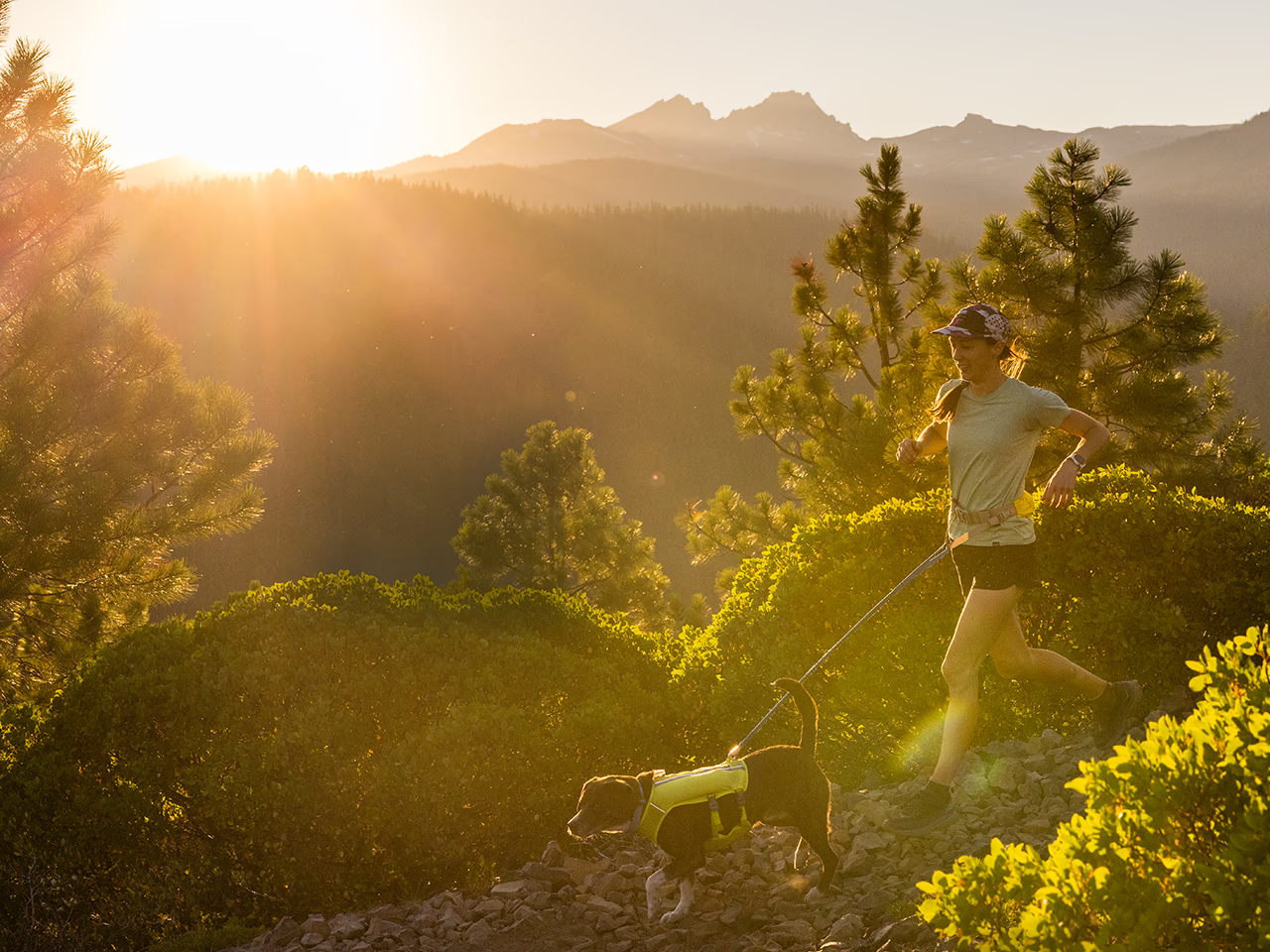
A woman and her dog run on a trail in Central Oregon
Photo by Tyler Roemer

Shevlin Park

Just minutes from downtown, Bend’s 981-acre Shevlin Park provides shade, water and plenty of trail options to suit different dogs.

From the parking area, follow the Tumalo Creek Trail upstream along the water, and find plenty of spots for dogs to dip in the creek to chill or get a drink. At the southern end of the park, either continue on to connect to Deschutes National Forest trails, take a left and cross the bridge to loop back on the hilly Shevlin Loop Trail, or take a right to return on the paved Fremont Road Trail. Better yet, let your dog choose.

Dogs need to stay leashed here, but the sensory payoff is still rich, with plenty of water, wildlife scents and shaded stretches that keep things cool, even in summer.

Rimrock Trail (GoodDog!)

Ask around Bend for the best off-leash hiking for dogs, and you’ll likely hear the same answer again and again: GoodDog!

Head out of Bend on Cascade Lakes Highway just a few miles and then turn left into the parking area for this trail system that caters to dogs, who are welcome off-leash year-round. Head south from the parking area on a network of trails that eventually wind down to the Deschutes River, where dogs can enjoy swimming, fetching and socializing on a hot summer day.

The terrain is classic Central Oregon, with rocky outcrops, a mix of sandy paths and pine forest, and areas with wide-open views. There are lots of ways to loop around this area to create a short or long hike, depending on the day or your dog’s energy level.
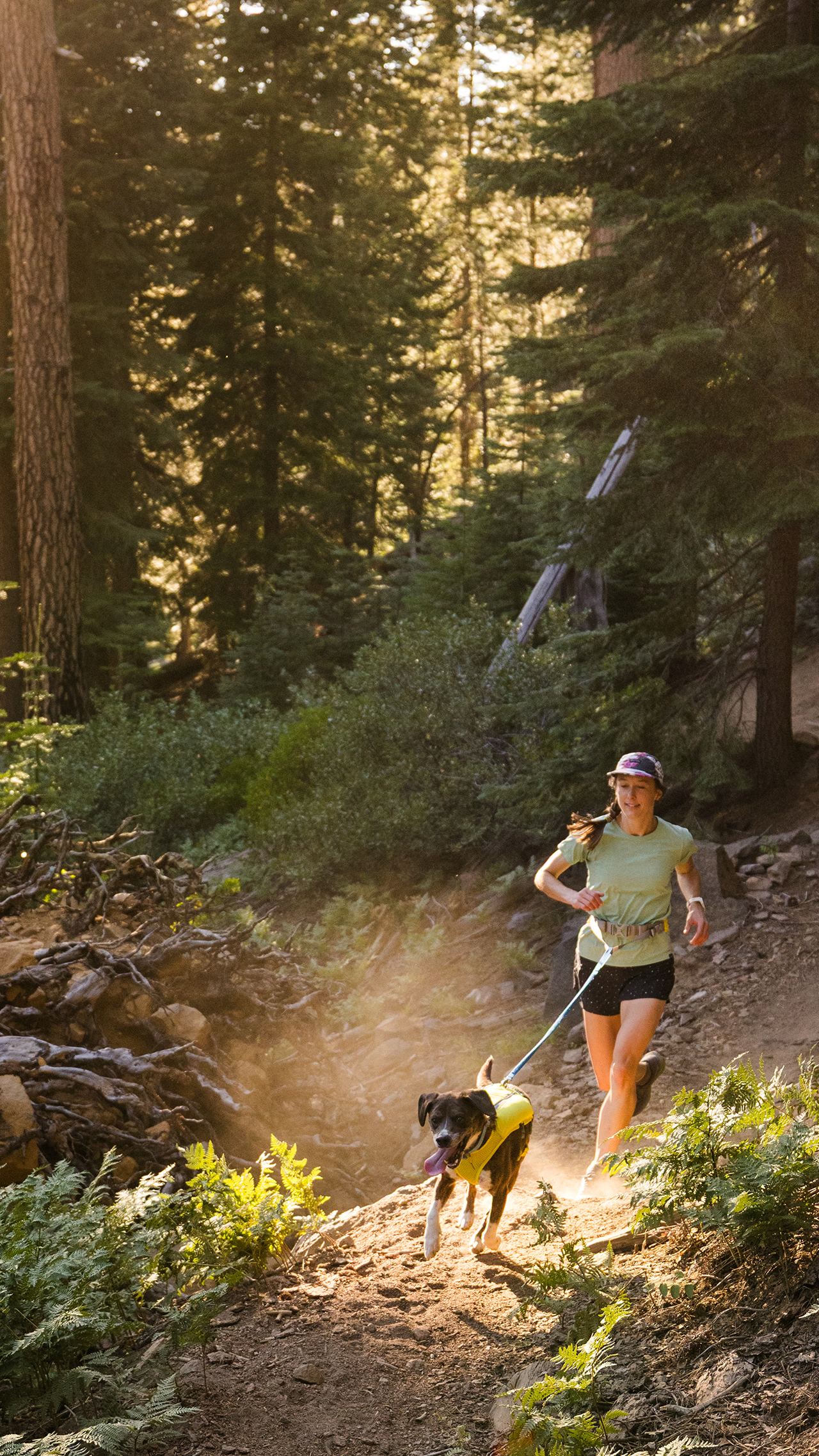
A woman and her dog run North Fork to Farewell Loop at Tumalo Falls
North Fork to Farewell Loop at Tumalo Falls. Photo by Tyler Roemer

Tumalo Falls

Who says dogs can’t appreciate a beautiful view? Tumalo Falls is a popular hiking area that begins with a viewpoint to a 100-foot cascading waterfall, but continues on with hiking trails alongside Tumalo Creek beyond the falls.

From Bend, travel 11.6 miles west of town on Skyliners Road, then veer left and head 2.6 miles west on Forest Road 4603 toward signs for the falls. Dogs must remain on-leash in the parking area, and it’s a good idea to keep them leashed near the busy waterfall viewing area. Leashes are not required while hiking the North Fork Trail beyond the viewpoint, but are useful until the crowd thins out on this popular trail.

Dogs can enjoy splashing around in Tumalo Creek at various stops along the path, which continues for 3.7 miles one way, with more than 1,300 feet of elevation gain and several more waterfall viewings, before connecting to more forest trails.

Todd Lake

For a peek of the Cascade Range in its most serene state, head 24 miles along Cascade Lakes Scenic Byway up to Todd Lake. Set against a backdrop of snow-capped peaks in early summer, this alpine loop delivers big views with relatively little effort. The trail circles the lake for 1.7 miles through meadows that burst with wildflowers in summer.

Dogs must be leashed for their hike from July 15 to September 15, but can otherwise be off-leash, and can always be free when entering or exiting the water for a swim. Expect company on warm weekends, but know there’s a reason this spot is so beloved. Few places capture the essence of a Central Oregon summer quite like this.
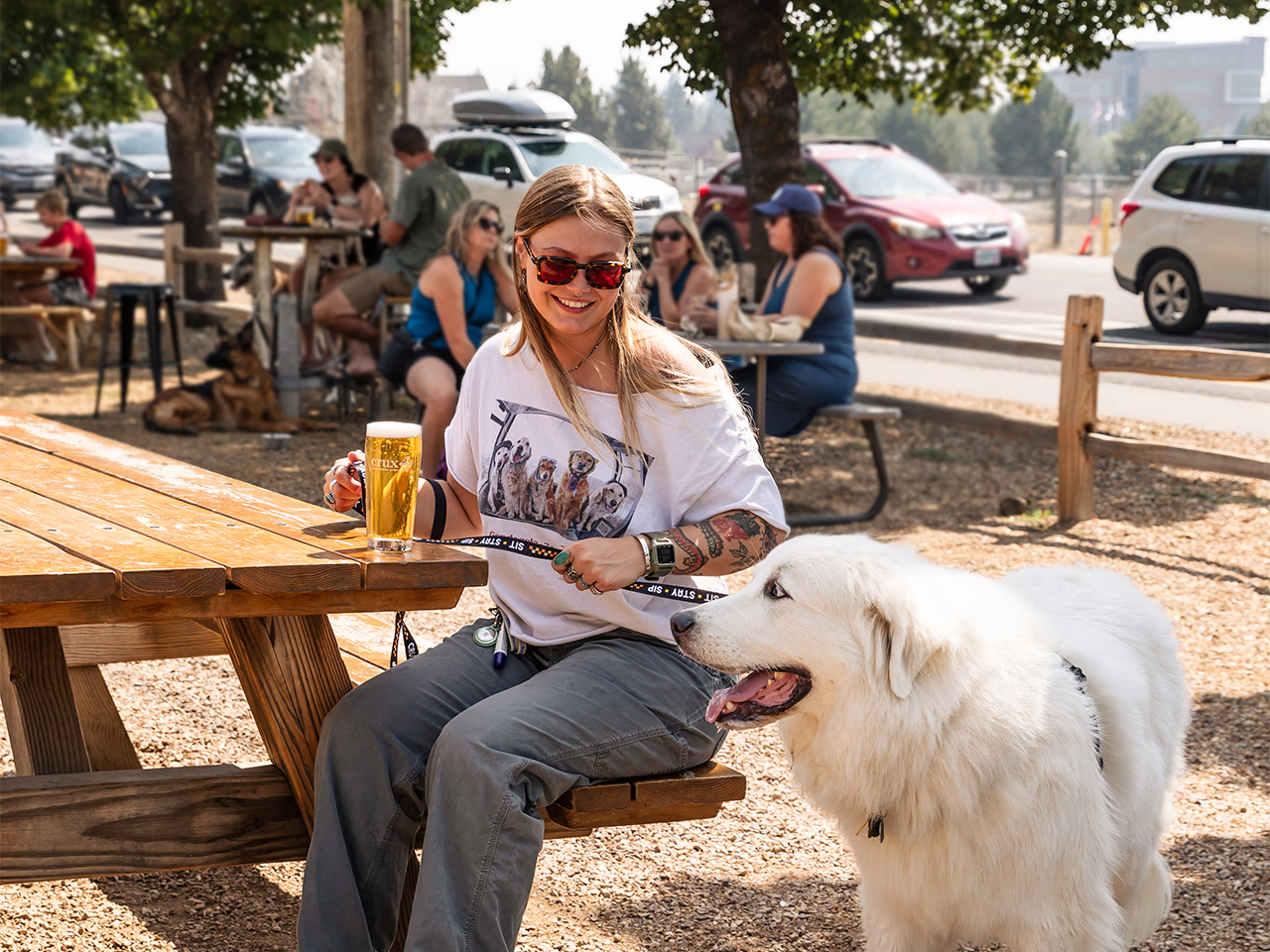
A woman and her dog at Crux Fermentation Project
Crux Fermentation Project. Photo by Tina Paymaster

Where to Eat After Your Hike

In Bend, the après-hike ritual is just as important as the trail itself. Fortunately, the city’s bustling dining and brewery scene is as dog-friendly as its trails, offering lots of options to enjoy a post-hike refreshment. Try a brewery with outdoor lawns—Crux Fermentation Project, GoodLife Brewing Company and Bend Brewing Company are good options.

Yappy Hour

Visit a dog-friendly food truck pod, such as On Tap and Midtown Yacht Club.

If you’re looking for table service, grab a seat on the back patio at J-Dub in downtown Bend, where dogs can order from a menu of dog-friendly snacks, or enjoy a beefy “Pooch Hooch” dog beer to sip on after a fulfilling Central Oregon summer adventure.
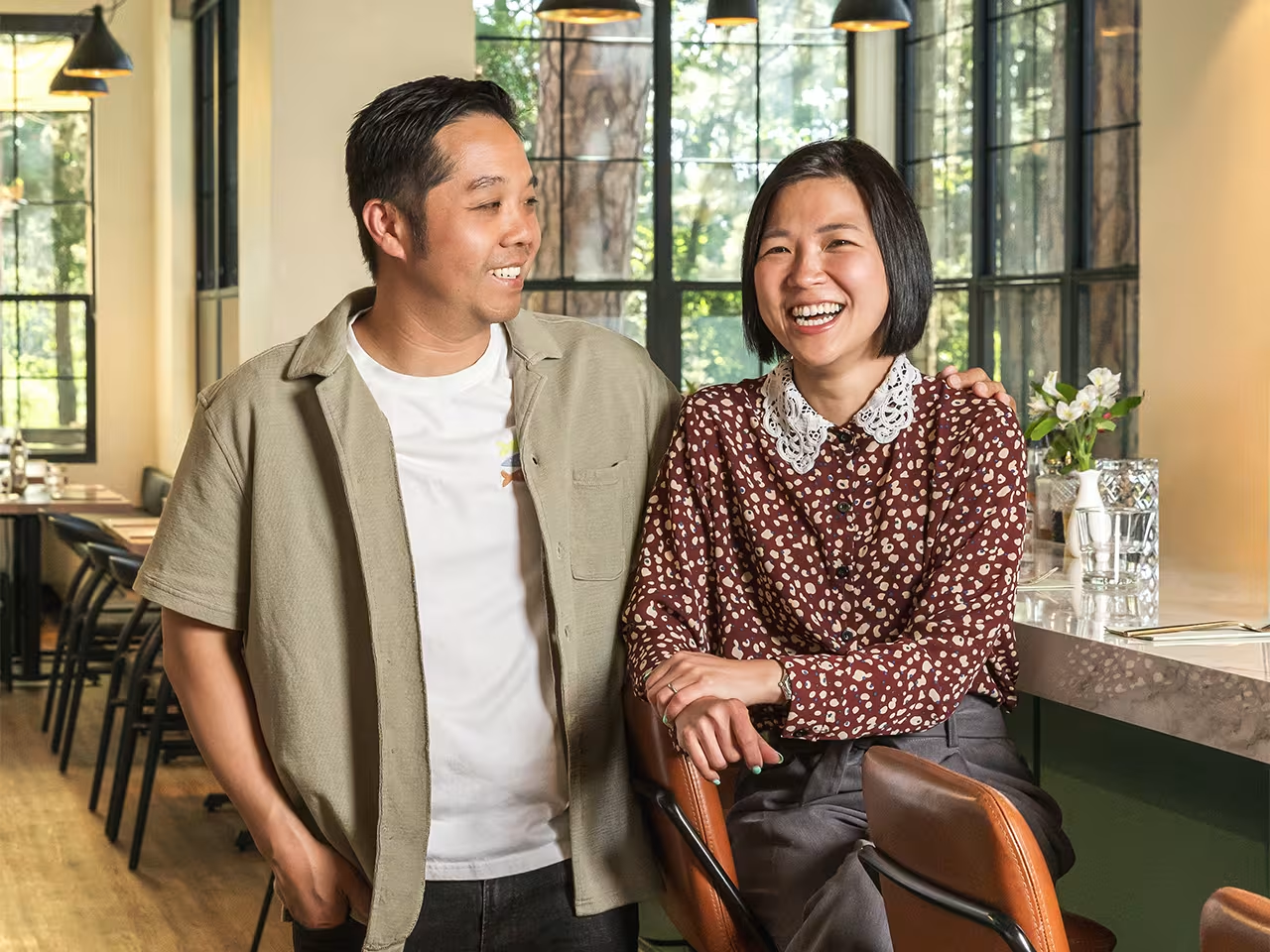
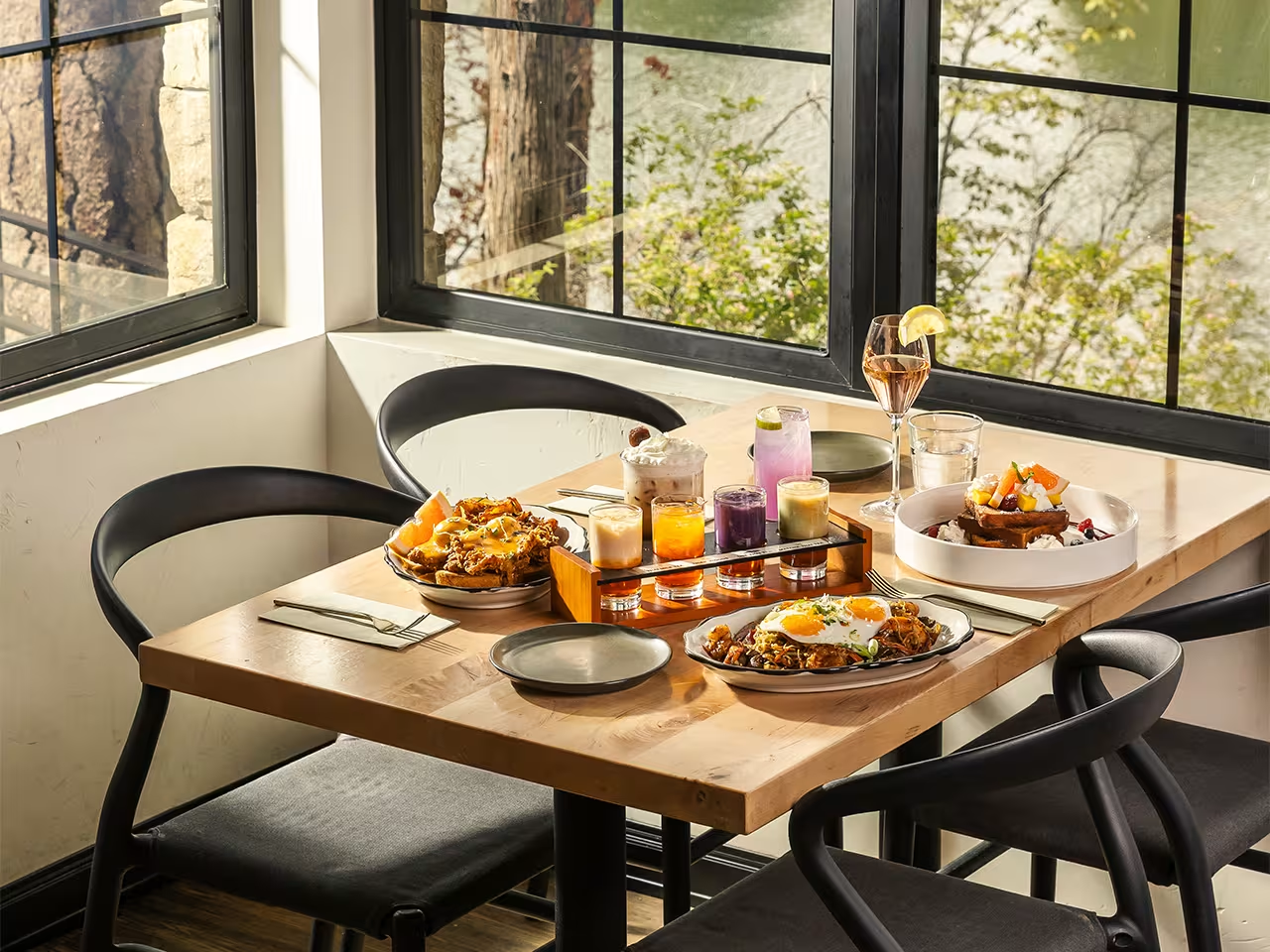
Sen Thai Brings Bright Thai Flavors to Brunch on Mirror Pond

Thai flavors aren’t usually what come to mind at brunch, but at Sen Thai Noodles & Hot Pot, dishes layered with lemongrass, sriracha chili, star anise, plus herbal broths shine in the late morning. Krit Dangruenrat, Sen’s head chef, initially resisted the idea. “Add a brunch menu? Nah man, I don’t have time. I’ve got two kids!” he said, with a laugh. Thankfully, Krit and his wife, Bua Karoon—the restaurant’s co-owners—went with it anyway.

Krit Dangruenrat and Bua Karoon of Sen Thai Noodles and Hot Pot
Krit Dangruenrat and Bua Karoon

Familiar Brunch Favorites Reimagined

The brunch menu was, in part, developed alongside Dangruenrat and Karoon’s longtime friend, Chalinee Chuchuay, who spent years working in San Francisco restaurants before relocating to Bend. Together, they leaned into eclectic dishes that expertly pair familiar American comfort food with distinctly Thai flavors. The Tom Yum Grits, for instance, reinterpret shrimp and grits with creamy Thai herb broth, bacon, jalapeño peppers, lemon and cheesy rice porridge. The Fried Chicken Benedict swaps the standard English muffin for brioche, and is topped with Korean-style fried chicken and sriracha Hollandaise. The Thai Tea Short Stack arrives layered with house made Thai tea syrup and caramelized almonds. Several dishes come with their signature crispy potatoes drenched in red chili sriracha sauce. “People come here just for the potatoes,” said Dangruenrat. “And the green beans!” Karoon added.

Perched on the banks of Mirror Pond in downtown Bend, Sen first opened in 2021 under the leadership of Karoon’s cousin Rosie Westlund and her parents, Paul and Ampawan Itti—the original owners of Wild Rose. Since then, Sen has entered a new chapter under Dangruenrat and Karoon, who assumed full operations in March 2025.

Thai Brunch at Sen Thai Noodles and Hot Pot

Inspiration from Thailand and Beyond

While Wild Rose focused exclusively on the cuisine of Northern Thailand, Sen took a broader, more playful approach, drawing from culinary traditions across Thailand and, every so often, beyond it. And there’s no one better suited to taking up the mantle than Dangruenrat and Karoon, who have spent time in the likes of Bangkok, London and New York City. In fact, the couple met in Manhattan, where Dangruenrat spent a decade running his family’s restaurant, Thailand Café, in the East Village.

The pair first came to Bend in 2012 and, after several years back in Bangkok, returned in 2021 to help run Sen. Now, after taking the reins of the restaurant in 2025, they’re focused on maintaining a space where the vibe—elevated yet comforting, fresh yet familiar—matches the magic coming out of the kitchen.

Sen’s interior is sleek yet inviting, filled with natural light from contemporary floor-to-ceiling windows and accented with understated decor. But the space really shines in summer, when guests can dine on a back patio overlooking the pond. Its setting feels equal parts lively downtown destination and peaceful hideaway, an ideal backdrop for relaxing and enjoying a crisp Shezen Siso Mimosa or a Butterfly Pea Limeade—coupled with exceptional dishes.

At Sen, a hot pot’s ingredients are cooked at the table
A hot pot’s ingredients are cooked at the table

The Hot Pot is the Menu’s Heart

Though Sen recently expanded to include brunch, the restaurant has built its reputation on familiar Thai favorites like Pad Thai and Drunken Noodles, along with the hot pot, which has always been the focal point of its menu. Unlike a traditional entrée, hot pot is an interactive meal, with simmering broth set over a burner next to platters of raw vegetables, proteins, noodles and herbs, all designed to be cooked right at the table.

The Bangkok-style “Jim Joom” Hot Pot features herbal pork broth with sliced pork loin, pork belly, glass noodles, Thai basil, lemongrass, lime leaves and vegetables, paired with a spicy seafood dipping sauce. There are several hot pot options on the menu, for both groups and solo diners, that offer customizable broths, noodles, proteins and add-ons, ranging from prawns and calamari to Thai herb bouquets and tom yum “flavor bombs.”

Along with the food and atmosphere, Dangruenrat, Karoon and their staff have cultivated a space that, no matter the season or time of day, feels warm, inviting and familial. “When you’re running a restaurant, it’s not just the food—it’s the feeling that you want,” Karoon said. At Sen, that feeling carries through everything they do. For some time, near Sen’s entrance, a small neon sign read: “Open for noods.” Now, another sign glows next to it: “Open for brunch.” A diner would be remiss not to try both.

More dining ideas in Bend

Where to Eat and Drink from Sunrise to Sunset in Bend

Summer days in Bend don’t need an ambitious itinerary—they just need a few great stops in the right order. Start with a nourishing breakfast, spend the afternoon beside an alpine lake and finish the day with cocktails overlooking the Deschutes. It’s the kind of day that captures what locals love most about summer in Central Oregon: good food, time outside and an easy pace that invites you to linger.

Here’s how to spend a full day eating your way through Bend and beyond.

Breakfast: Restore and Refuel at Fix & Repeat

The season spills from the front doors at Fix & Repeat, a vegan cafe that throws open its garage-door walls the moment the weather allows. Morning light warms the patio tables at this restaurant along Arizona Avenue in a scene that feels, for all its naturalness, miraculous. Co-owner Leila Carter has compared the café to the “Cheers” of smoothie bars—and she’d know. Carter is often in the shop before it opens, juicing and prepping alongside a staff that, in many cases, has been part of the team since the beginning. She and co-owner Kristen O’Neill met while living on Maui and, coincidentally, moved to Bend on the same day. They purchased the café in January 2020 and have remained committed to its founding mission: helping people restore their bodies with plant-based food so they can get back out and do what they love. Hike. Bike. Float the Deschutes. Nourish. Repeat.

Try the electric-cyan Blue Breeze smoothie where coconut milk meets fresh-squeezed orange juice, pineapple, mango and lemon with a hint of maple syrup, vanilla protein and blue spirulina. The glowing color resembles a swatch of the morning sky and comes courtesy of the spirulina—a blue-green algae superfood.

The Acai bowl is dense, blended with house made peanut butter, almond milk, banana, vanilla protein powder and, for an Oregon touch, marionberries. This base is topped with goji granola—also made in house—plus banana, berries, coconut and cacao nibs.

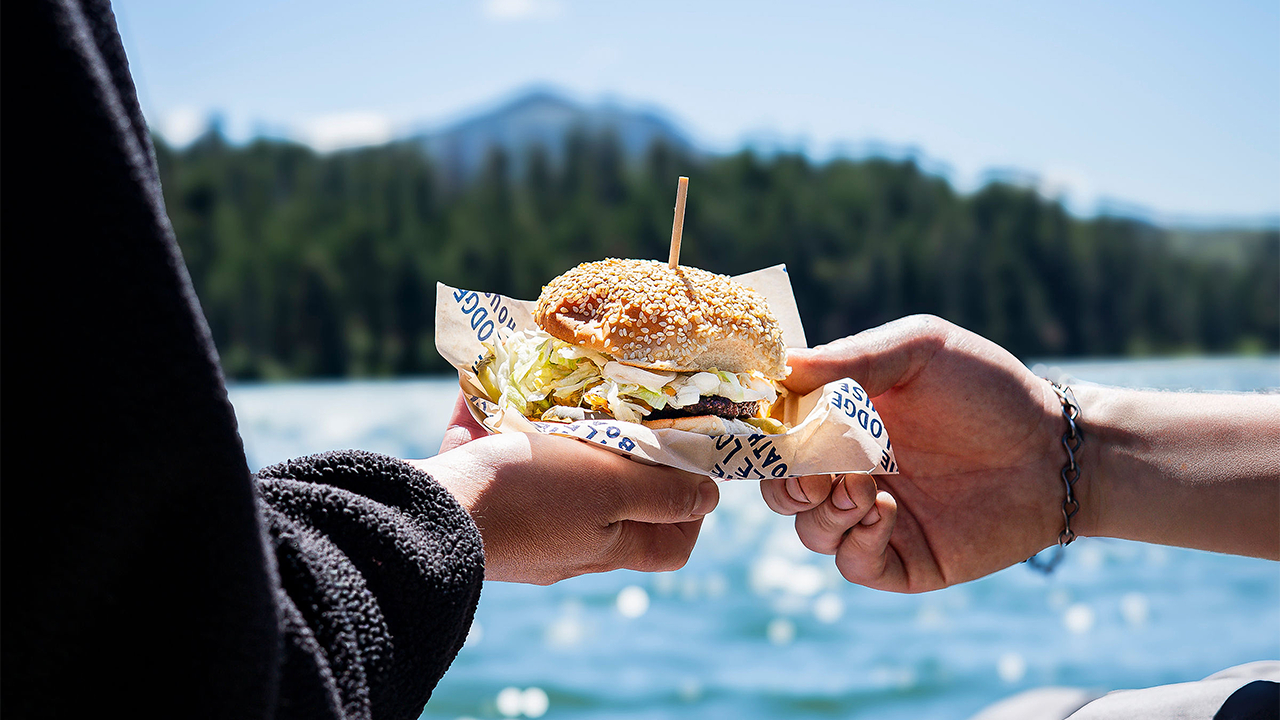
A couple eating a sandwich at the Boathouse at Suttle Lodge
Lunch at the Boathouse at Suttle Lodge

Lunch: Lakeside Dining at The Boathouse at Suttle Lodge

Summer at The Boathouse is akin to refined summer camp. Open seasonally along Suttle Lake, the spot has everything someone could ask for in a lakeside eatery, which is probably why you’ll find loads of hikers, swimmers, paddle boarders and road-trippers filling the tables inside and out. Sit dockside and you’ll see boats bobbing, dogs drying off in the sun after a swim, and birdsong drifting through the trees, all within a lunch break.

The Boathouse offers cuisine that may seem humble with its counter service and menu board, but surprises with invention once the plates land on their royal blue serving trays. The Famous Fish Sandwich is a potato chip-crusted trout slice of heaven. It even earned national attention after appearing on Hulu’s “Eater’s Guide to the World.” This is not the kind of trout-by-the-lake situation that The Parent Trap’s Hallie and Annie tried to pawn off onto Meredith Blake during their camping trip. The full-length fried fish extends well beyond the sesame-dense bun sandwiching it—which is great news because the trout is delicious. Also in the sandwich are the classic LPO (lettuce, pickle, onion) fixings, an acidic tartar dressing called Fish Trap Sauce and a wedge of lemon on the side.

If in need of some veg, the cold noodle salad comes with rice noodles, tahini, pickled onion and cucumber, shredded carrot, jalapeno, herbs and a chili crunch sauce that adds punch and texture to the dish. It pairs quite perfectly with the specialty Lawn Margarita, which is poured over a full mound of nugget ice.

Enjoying a hot dog at a Bend Elks game at Vince Genna Stadium

Afternoon: Bend Elks Baseball at Vince Genna Stadium

Carrying a hot dog up stadium bleachers is a distinct summer joy. As long as the Bend Elks are playing at home, it is the perfect occasion to snag one for $5. These are the long days Bendites crave during winter’s 4 p.m. sunsets.

At Vince Genna Stadium, the menu is as old school as the venue itself, which dates to the ‘40s: hot dogs with choose-your-own toppings, pretzels with cheese sauce, hamburgers, Cracker Jacks and warm peanuts. For drinks, the lineup includes Bend brews, Cascade Lakes’ Left Field Lager and Deschutes Anytime Lemonade Shandy, plus Corvallis-made 2 Towns Cider and Craftwell Cocktails in flavors like hibiscus lemonade. There’s something for fans to holler about when stadium entertainers sprint past the stands with a sign reading “CHEER FOR CHEAP BEER.” Just remember to get your drinks before the 7th inning when beer sales wrap up.

If the main queues have you missing too much of the action, the BBQ Deck near third base usually offers a swifter route to the ordering counter. A full hot dog toppings bar stands by with onions, pickles and a specialty Dijon mustard. Between innings, the ball game stays alive with band music—a plucking banjo, brassy calls of a trombone and the like—while quick field competitions between ticket holders keep things moving. Local tips: The Elks take the field right on time, so arrive early if you want to make first pitch. Bring a baseball cap, too. The setting sun makes for an idyllic golden hour, but it aims directly into the stands. And exercise caution in the parking lot—foul balls have a notorious habit of finding windshields.

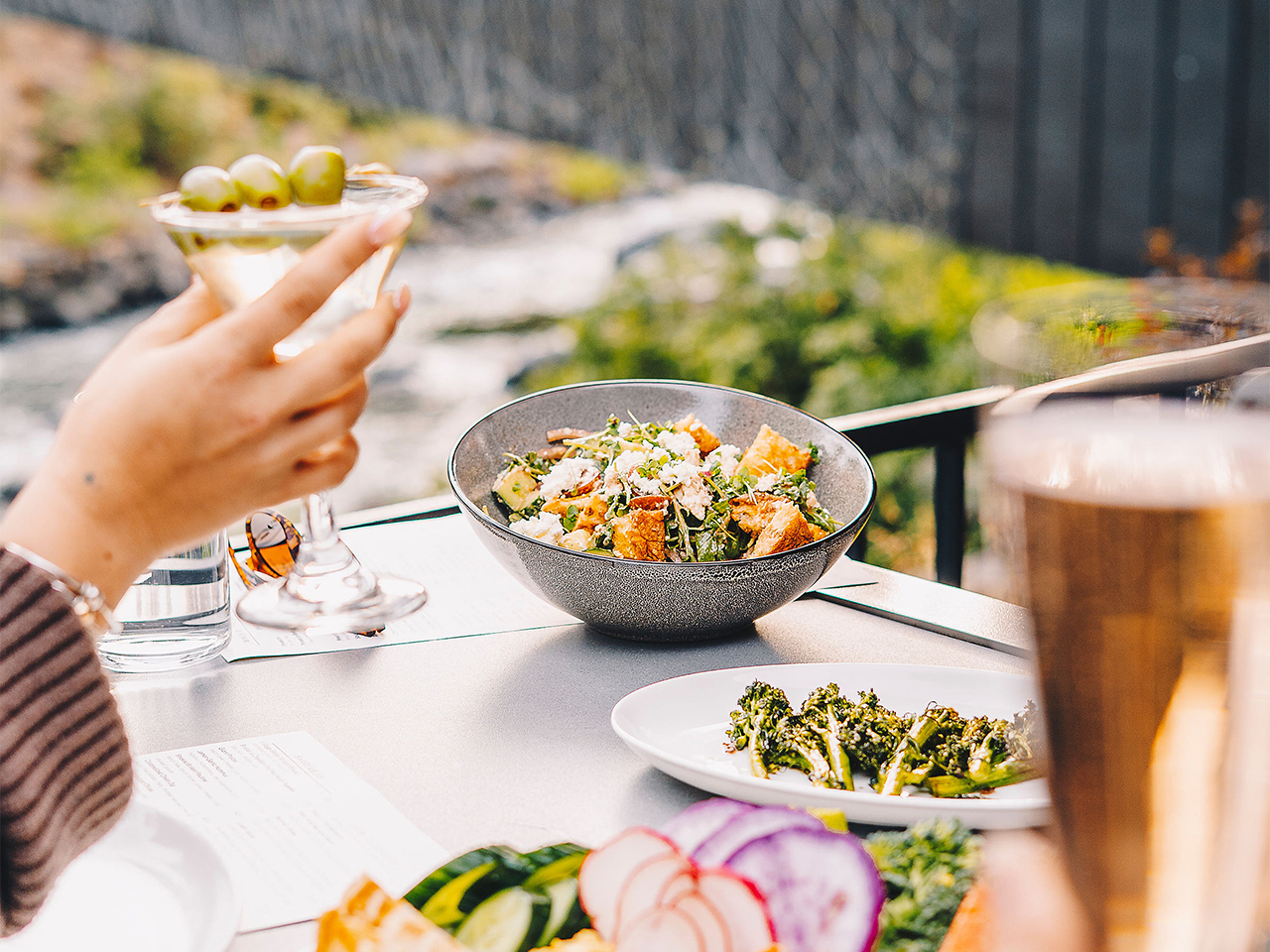
Dining at Currents at Riverhouse Lodge

Evening: Cocktails Along the Deschutes at Currents

Currents at Riverhouse Lodge epitomizes everything Bend has to offer when it comes to closing the day out right. Few Bend patios sit as close to the Deschutes River as Currents. The location hangs over the riverbank, close enough to hear sounds of the river above the clinking glasses, table talk and live music.

Firepits line the deck if you want to settle in, and s’more kits are available for a sweet treat to extend sundown. Walk the footbridge off the patio for a closer look at the rushing water and, if you time it right, you’ll catch anglers casting in the Deschutes while the sky warms into pinks and golds behind them. The passageways leading to the bridge, and the bridge itself, are lined with murals by local Bend artist Janessa Rose, whose team spent two months completing the work. Painted in the same pinks, yellows, blues and golds of the scene around it, the works depict the vitality of the Deschutes corridor with its eagles, otters, fish, waterfalls, wildflowers and mountains.

The Currents bar menu focuses on bright, seasonal flavors. Its Spicy Hibiscus Margarita uses spicy bitters and a house made citrus stock with a hibiscus-infused tequila. The Cherry Mezcal Mule is crisp and smokey, and made for nights when the heat sticks around—adding fruity Maraschino liqueur to a classic cocktail for a bit of dog day nostalgia.

Throughout Central Oregon, the high-spirited environment is just as essential to a summer dining experience as the cuisine. These long, sun-drenched days define the meal—from smoothies and grain bowls to beer and hot dogs, some things simply taste better outside.

More ideas for planning the perfect summer in Bend.

A Deschutes River Log Cabin Gets a Bright, Scandinavian-Inspired Update

Some of Chris Bond’s fondest memories involve vacationing at his grandparents’ log cabin. The cabin sat on a blue-ribbon trout stream in Michigan. There, his grandmother—an avid golfer and angler—taught him to fly fish and play cards.

After raising their children in Beaverton, he and his wife, Laura, began looking for homes in Central Oregon. Chris found his dream: a home on the Deschutes River in Three Rivers near Sunriver. But it was a little cave-like for Laura’s tastes.

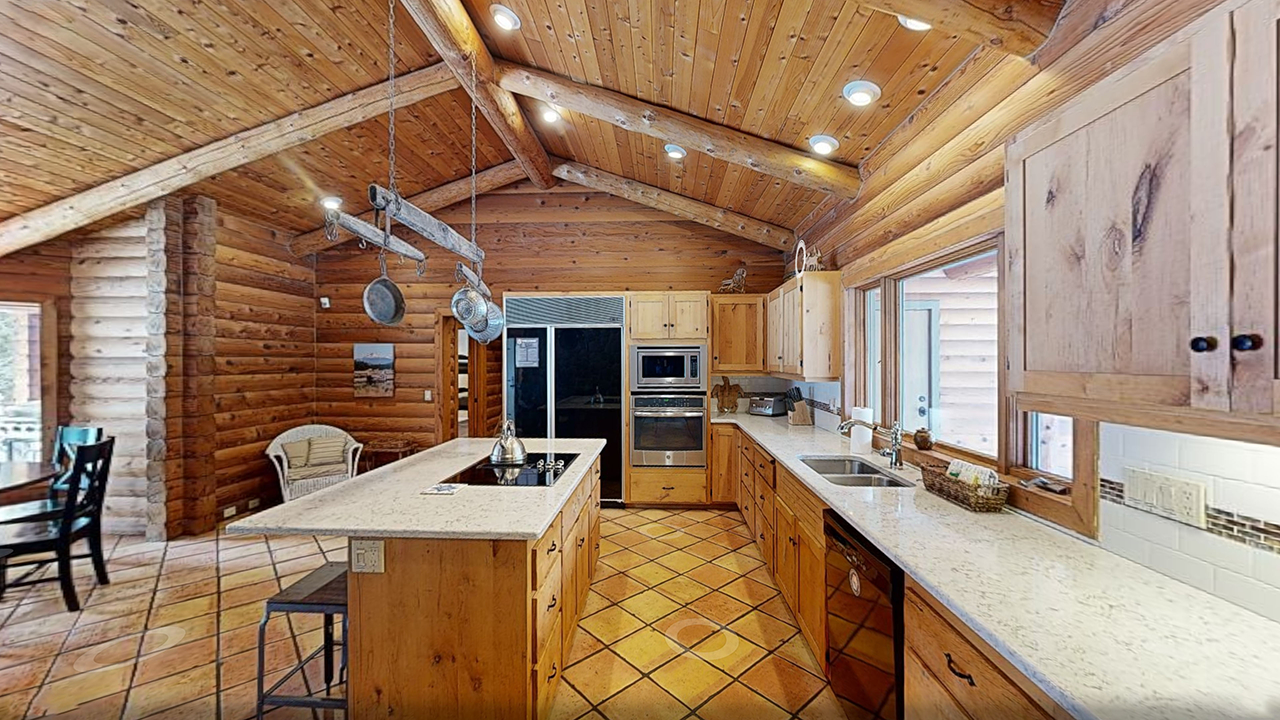
“On the sunniest day in August, you’d have to have the lights on because it was so dark,” Chris said.

Before photo of the kitchen, described by the owners as "a little cavelike"
A before photograph of the kitchen

The interiors showcased outdated finishes and honey-hued wood. Chris’ mother, Sue, lives in Portland and has helped the couple renovate three previous residences. When she saw the cabin, she realized the potential to do something entirely different. She envisioned a Scandinavian concept rooted in simplicity and functionality.

“I like the modesty; it feels like it belongs here, and it’s without pretense,” Sue said.

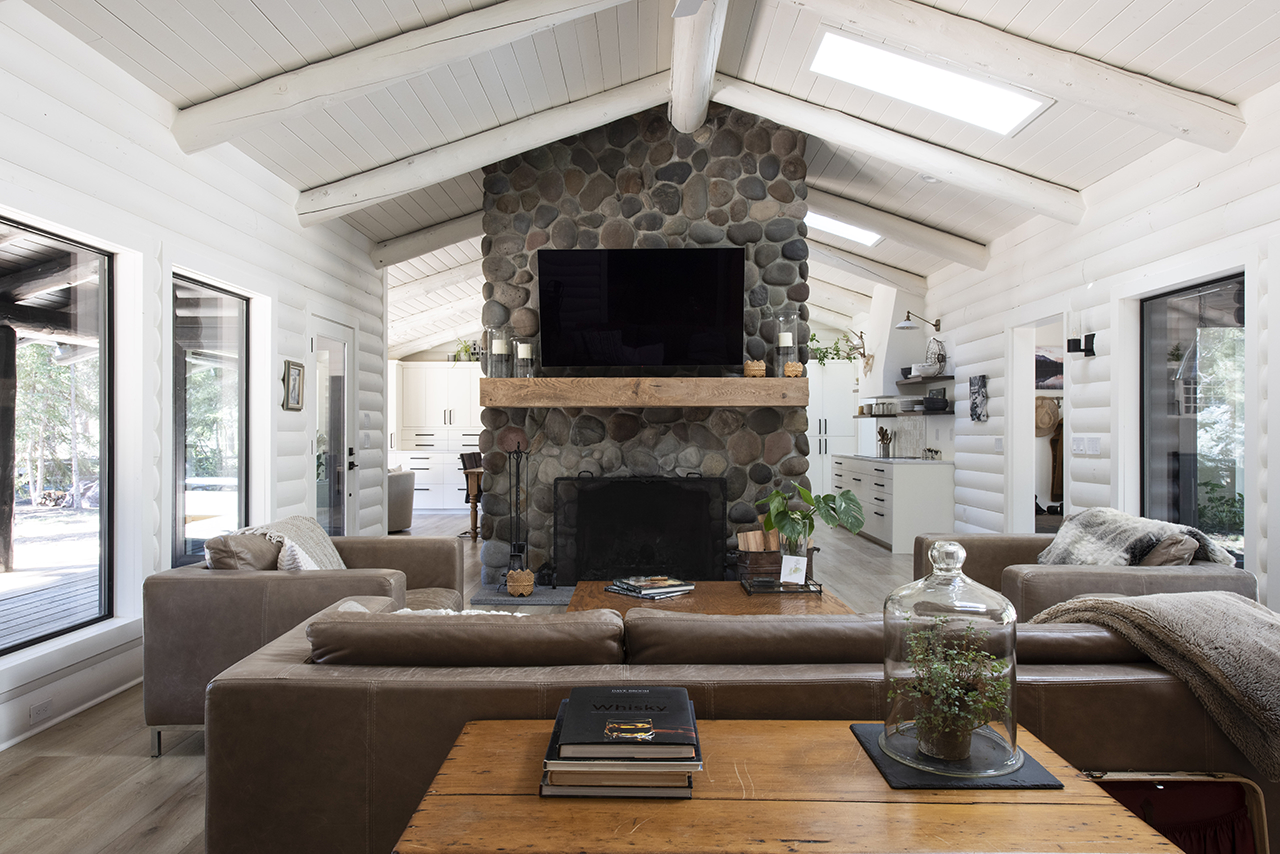
Painted black, the cabin now stands out beautifully against the riverfront property’s towering ponderosa pines. Inside, new skylights pull in the sun. The wood walls are now painted Benjamin Moore’s Simply White. Visitors are struck by how bright and airy the interior feels.

“People walk in, and they’re like, ‘Whoa,’” Laura said. “It is unexpected.”

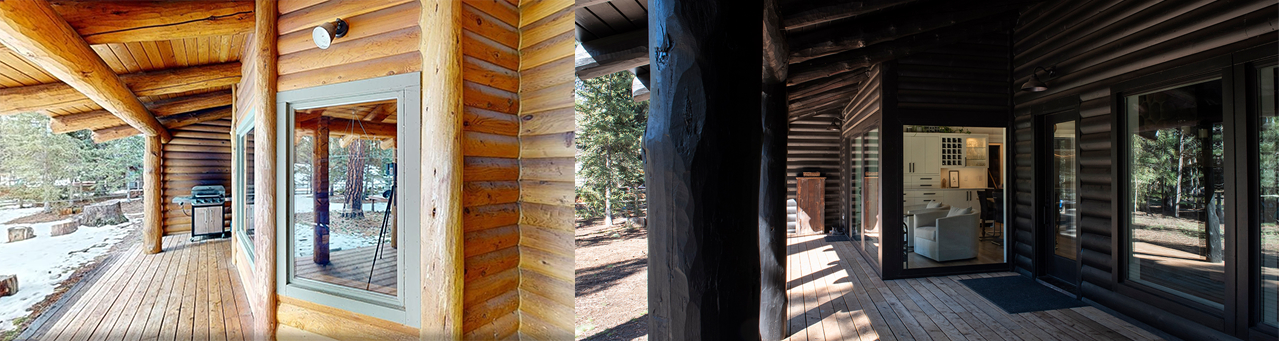
A white Scandinavian-inspired living room with a stone fireplace.

The House Whisperer: Rethinking the Layout

Women rarely became architects in the 1960s, but that didn’t stop Sue from pursuing her passion for remodeling and home design. A jack-of-all-trades, she tiles, woodworks, selects furniture, and draws up floor plans.

“She always says, ‘The house doesn’t want that,’” Laura noted.

The log cabin-style home—technically stick-built with pine log attachments—was built in 1996. It originally featured an awkward entrance sequence. The front door opened directly into the side of a large river-rock fireplace. Sue advised the couple to use a portion of the front porch to create a dedicated vestibule.

The couple hired architect and general contractor Tyson Gillard. His company, Life Design Build, managed the project. They executed the construction, design work, and finish carpentry. Gillard’s team created a glass-enclosed entryway. It lets in abundant natural light and creates a proper landing spot before entering the main living space.

They also added skylights in the kitchen and living room, and created a walk-in pantry by enclosing another part of the porch. A garage door opens directly into the pantry to help the couple easily unload groceries. The new space also features sleek quartz countertops.

The kitchen now boasts a contemporary farmhouse feel. Industrial Crate & Barrel light fixtures are suspended above the island alongside ceramic sconces.

Gillard credits the family for seeing the rustic home’s true potential. “A lot of people, when they’re buying homes, see the house for what it is, not for what it could be,” he said.

Homeowners Laura and Chris Bond with their golden retriever, Milo.
Laura and Chris Bond with their golden retriever, Milo.

Nods to Nordic Design

The couple spent two years living in the Netherlands, where Chris worked at Nike’s European headquarters. During that time, they purchased their taupe-colored leather living room furniture and modern dining room chairs. A large painting of Amsterdam canals and rows of houses, created by their former neighbor, now hangs in the kitchen.

There’s an enduring appeal to Scandinavian design, said Laura, whose mother was Swedish. Laura grew up in simple houses with white walls, wood furniture, and wood floors.

“I think a white background makes your wood furniture show up differently,” she explained.

Other furnishings are an eclectic mix of antiques and family heirlooms. These include a pine armoire, a fireplace screen from Paris, and a mid-century bar cart Sue discovered at a yard sale.

Life Design Build’s plans for an updated primary bedroom and bathroom are slated for the future. However, they have already completed several other renovated spaces. These include an expanded river-view sitting area and a new laundry and mudroom. They even added an elevated dog-wash station—perfect for cleaning up Milo, the golden retriever, after his daily river swims.

To open up the outdoor living space, the couple shifted the deck from a vertical to a horizontal orientation. They also added a sunken hot tub alongside a privacy screen designed by Sue.

Before and after of the back deck remodel on a log cabin home in Central Oregon
Before and after of the back deck remodel

Memories on Display

Now that the cabin serves as the primary residence for the retired couple, daily life for the Bonds revolves around the outdoors. Chris can fly fish directly from his property. The pair also loves to launch a boat at LaPine State Park and float right back to their house. They can easily imagine their grandkids one day running around the lawn and learning to kayak on the Deschutes.

Personal mementos are found everywhere. These include Laura’s photographs and a circa-1900 straw basket that once sat in the old Michigan cabin. Sue even painted the picture of Chris with his grandfather on the Au Sable River that hangs at the top of the staircase.

“Everything has a personal connection,” Chris said. For the couple, log cabins will always symbolize family. Lightening this one up is what finally made it feel like home.


Architect, Builder, Interior Design: Life Design Build | Painting: Diego & Co. | Concrete Work: HD Construction | Countertops: Cement Elegance

See more Central Oregon home remodels for inspiration here.

Why Balloons Over Bend is a Magic Summer Event

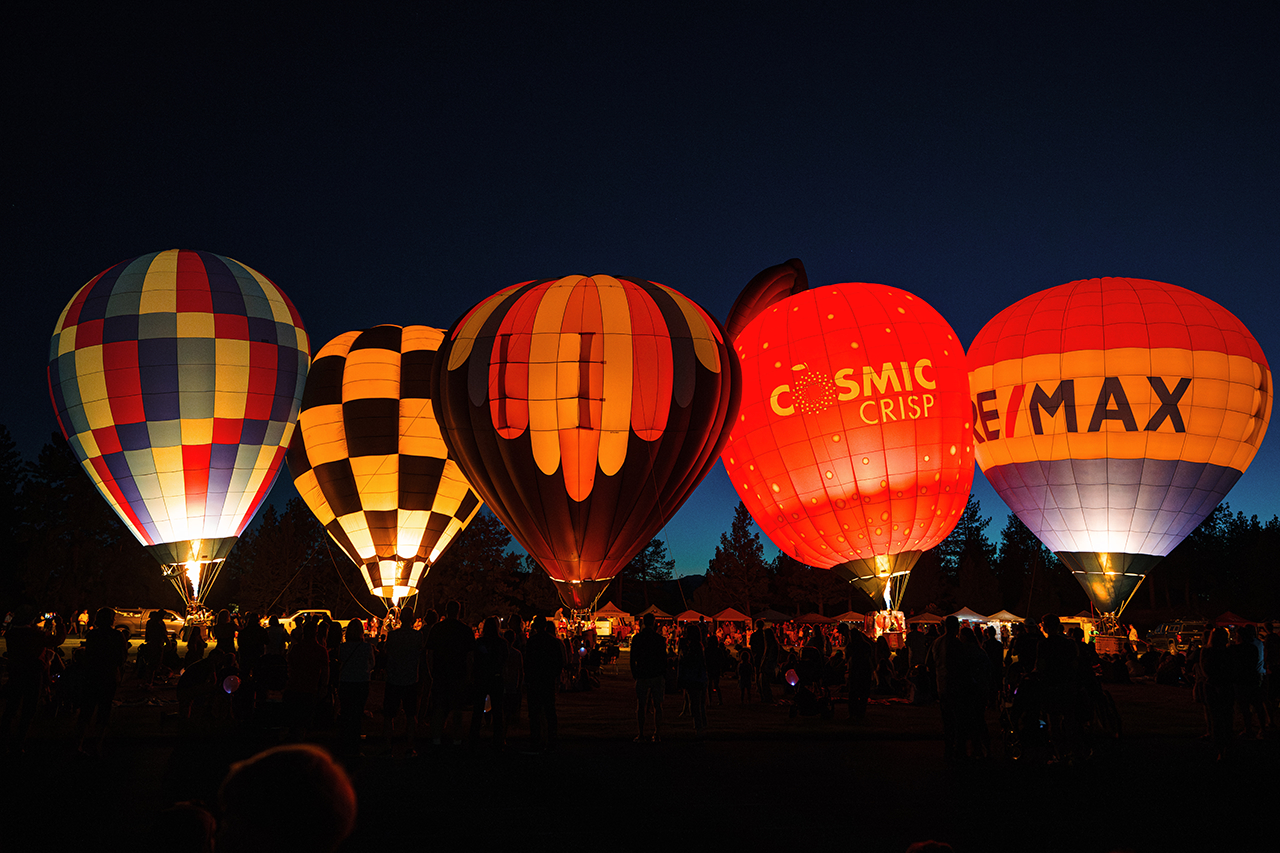
At dawn’s first whisper of light, a crowd of spectators gathers. The crisp air and the roar of burners pierce the early-morning stillness as a line of quiet giants slowly stretch and stand in their full glory. In a breathtaking moment of awe, they rise into a quiet, dreamlike ascent, their silhouettes drifting effortlessly toward the cloudless horizon. Later, as darkness falls, a spectacle known as “balloon glow” will take place, in which tethered balloons are lit with intense bursts of flame to create a kaleidoscope of color against the backdrop of the nighttime sky. Central Oregonians will have the opportunity to witness both of these scenes unfold during the annual Balloons Over Bend and Night Glow show, one of the best summer festivals near Bend.

The History of Hot Air Balloons

It’s a little-known fact that more than 300 years ago, a similar setting took place during what is considered the dawn of aviation. But this wasn’t the first sustained flight by Orville and Wilbur Wright, which would happen more than a century later. The advent of human flight actually occurred in 1783, when another set of brothers, the French-born Montgolfiers, successfully launched a manned balloon composed of paper-laced linen and royal blue silk over the Paris skyline, ignited by the heat of a basic straw and wool fire. A large crowd stood transfixed during those 20 minutes of wonder, curiosity and ingenuity. This moment sparked “balloon mania” across Europe in the 18th century—a cultural obsession with human flight and the desire to explore past natural boundaries that appealed to the fascination of both aristocrats and commoners.

The aviation industry advanced light-years in the centuries that followed, yet hot air ballooning continued to harness its simplest element—capturing rising heat. Although the earliest prototypes have been replaced with balloons made of nylon and other synthetic materials, propane burners, and advanced navigation tools have improved efficiency and safety, little else has changed. Even the effectiveness of the wicker basket endures from centuries ago, thanks to its shock-resistant material and natural ventilation.

The function of a balloon pilot, called an aeronaut, has undoubtedly evolved from performing precarious experiments to test the science of lift to enchanting today’s passengers with an immersive experience. The term aeronaut is literally translated to “air sailor,” based on the way a person navigates the wind and buoyancy of the skies instead of the seas.

Hot air balloons in Bend Oregon
A variety of the hot air balloons at the event.

Central Oregon’s Aeronauts

Each aeronaut has a personal story of how they got into ballooning and subsequently became part of a coterie of fewer than 10,000 pilots worldwide. For Drew Smith, a Sunriver native and owner of Cascade Balloon Company in Bend, it was because of his first passion. As the former owner of a skydiving company in Madras and a skydiver himself, he began piloting to take divers up for the rush of jumping from the balloon. “It’s a very niche thing—few pilots in the area were doing it,” explained Smith. “Local ballooning here is unique because it brings different communities together, bridging the gap between aviation and thrill seekers in such a fun and inclusive way.”

Like other regions, the Pacific Northwest has a tight-knit subculture that exists among aeronauts and their crews. “It draws in all sorts of people. But in Central Oregon, there’s about one degree of separation between us, and we have our favorite places to fly passengers,” shared Darren Kling, operator of Big Sky Balloons in Redmond.

Why Central Oregon Is Ideal for Ballooning

Thanks to its undeniably picturesque topography, aerial sightseeing is increasing in popularity here. The majestic ridgeline of the Cascade Range and the glowing canyon vistas of Smith Rock State Park offer spectacular panoramic views that rival those of Sedona, Napa Valley and even Glacier National Park, where Kling flew before coming to Oregon more than 20 years ago.

It is the draw toward the essence of the experience—a rare opportunity to become one with the elements rather than be cut off from them—that the ballooning community shares. “The perspective you get is much different than from within a plane, where you are looking out of a window,” Kling described. “In a balloon, you are immersed in 360-degree views along with the stillness of floating, and it is such an elemental experience.”

It turns out the fascination with seeing the natural world from a higher vantage point is as much physiological as it is sensory-driven. The feeling we experience during flight is the release of what researchers call “awe-triggers,” which interrupt our default processing and thinking patterns. This feeling offers a reset and allows us to feel a calmness and a deeper connection to the world. Quite literally, it changes the way the brain thinks. And because the way humans process sensation has remained unchanged, hot air ballooning has endured as a beloved and timeless tradition.

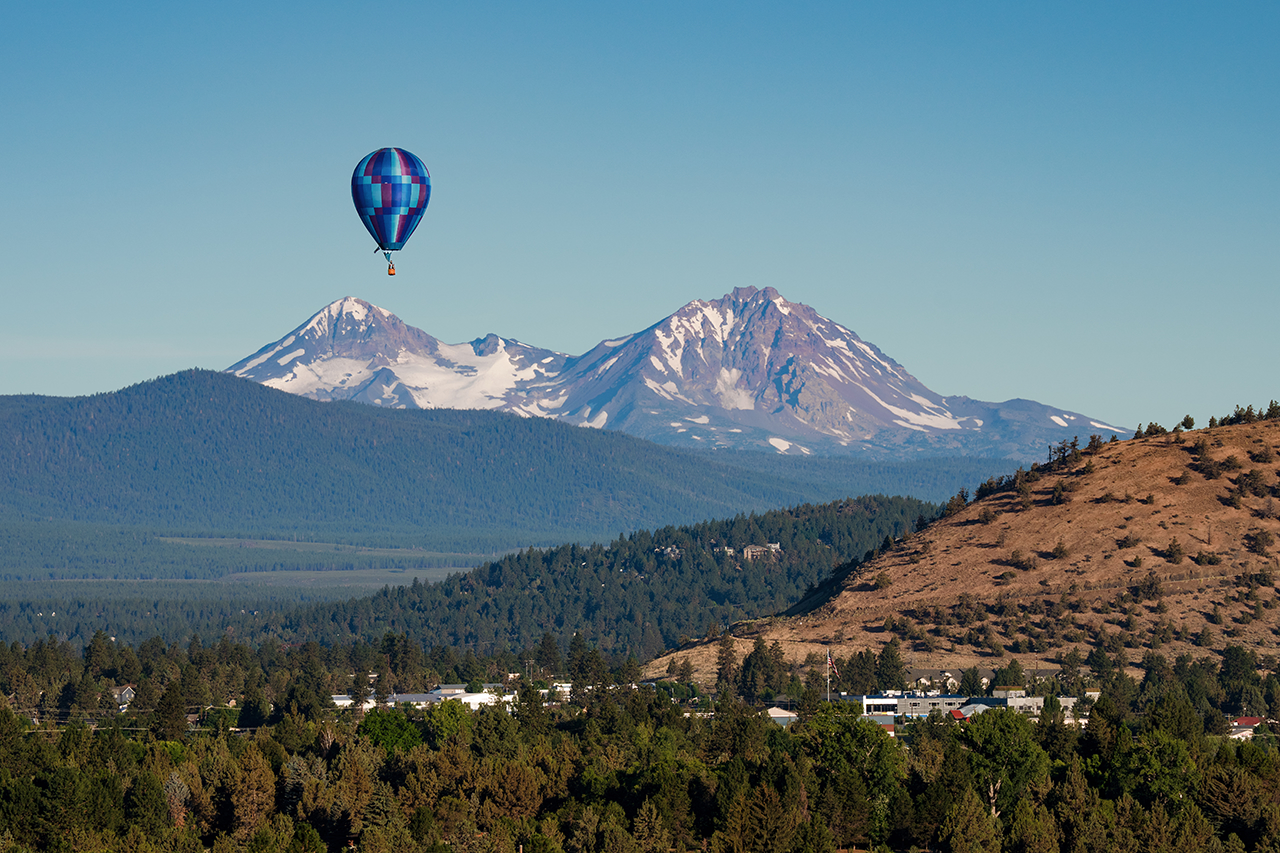
Hot air balloon over Central Oregon Landscape

Overcoming the Fear of Heights

Still, effortlessly floating thousands of feet in the air is not for everyone. Dispelling fears about safety or about heights is common in the industry. “It’s natural to have a healthy fear of something like this. But 99.9% of the people I take up who have a fear of heights relax within the first five minutes,” said Kling. “The balloon travels at the same speed as the wind, so there is no resistance.

Most people have a fear of heights that arises when you look over an edge. In a balloon, it’s so expansive. You don’t get that relative feeling to the ground. And that makes it accessible—and magical—to just about everyone.” Taking photographs of Balloons Over Bend, photographer Cody Rheault shared the beauty of seeing this living art gallery rise: “And for a breath, all five lit at once with their immense, buoyant masses seemingly defying gravity for a brief photographic moment.”

Bend Hot Air Ballooning FAQ

Where can you see hot air balloons in Central Oregon?

One of the best opportunities is Balloons Over Bend. The annual summer event features sunrise launches and an evening Night Glow. Tethered balloons illuminate the night sky with synchronized bursts of flame. Several commercial operators also offer scenic flights throughout the region, weather permitting.

When is the best time to fly in a hot air balloon?

Hot air balloon flights typically take place shortly after sunrise, when winds are calmest and temperatures are cooler. These stable conditions provide the safest and smoothest flying experience.

Why is Central Oregon a popular place for hot air ballooning?

Central Oregon’s wide-open landscapes, favorable morning weather and dramatic scenery make it one of the Pacific Northwest’s premier destinations for ballooning.

Is hot air ballooning safe?

FAA-certified pilots fly modern hot air balloons equipped with advanced safety systems. Because weather plays a critical role in every flight, pilots only launch when conditions are safe.

More unique ways to enjoy summer in Bend and Central Oregon.

How This Former Bend Wine Bar Became One of the City’s Busiest Hangouts

New ownership, inventive cocktails, live music, and a chef driven menu have transformed Portello Lounge into one of Bend’s most talked about destinations.

Guests sang along during Music Bingo, conversations carried throughout the lounge, and nearly every table was full.

Cocktails came in vintage glassware, and the murmur of conversation drifted from the bar onto the patio. It was the kind of atmosphere people usually expect to find in the middle of downtown Bend.

Instead, it was happening inside Portello Lounge.

Cucumber Margarita being made by Bryan Smith
Owner Bryan Smith pouring a customer favorite Spicy Cucumber Margarita | Photo by Tina Paymaster

Since purchasing the Northwest Crossing destination in July 2024, Bryan Smith and Rachel Fishman have reimagined the experience through creative cocktails, chef driven cuisine, live music, and a calendar packed with events designed to bring people together.

“We walked in and immediately saw what was possible here,” Fishman says. “The location was incredible, the character was already there, and we knew we could create something special.”

Today, Portello has become the place many locals discover once and immediately start telling their friends about.

Disco Ball
You will find several disco balls hanging from the ceiling of Portello Lounge | Photo by Mountain Tides Photography

A Familiar Address with a New Personality

When Smith and Fishman first walked through the doors, they found a beloved neighborhood business with loyal customers, a strong reputation, and nearly two decades of history.

Portello had built a loyal following over the years, earning a reputation as a neighborhood wine bar where guests gathered over charcuterie boards, bruschetta, paninis, and a curated wine list.

“We were drawn to what Portello already meant to the neighborhood,” Fishman says. “Our goal was to take everything we loved about it and introduce some of our own creativity along the way.”

The couple introduced changes gradually, adding their own personality while preserving the qualities guests had come to appreciate. They built custom shelving themselves, added a decorative back bar, and incorporated plush velvet couches, lounge chairs, antique glassware, candles, floral wallpaper, and disco balls that reflect their love of hospitality and entertainment.

“We wanted people to walk in and immediately feel welcomed, stay a little longer than they planned, and leave excited to come back,” the owners say.

Drawing from their own love of music, Smith and Fishman made live performances a priority, giving local artists a stage while offering guests something new to discover each weekend.

Cocktails Inspired by Stories Worth Sharing

Portello may have expanded its cocktail program, though wine remains an important part of the experience.

“We still carry the same amount of wine by the glass,” Smith says.

The difference comes through creativity. Guests can order a Smoked Maple Bacon Old Fashioned, a honey Apricot Daiquiri, a Green Tea Negroni, or a seasonal Cantaloupe Sour made with house-prepared ingredients.

“People describe it as summer in a glass,” Fishman says.

Summer cocktail with apricot at Portello Lounge
Cocktail at Portello Lounge | Photo by Tina Paymaster

Several drinks carry personal meaning. The Miss Moxie cocktail pays tribute to Smith’s late father, who often used the word “moxie” when talking about courage and taking chances. The tribute extends beyond the cocktail menu, inspiring the name of the couple’s business, Smith Moxie LLC. Another drink, The Gregory, honors Smith’s father through his favorite combination of gin and orange juice.

Every cocktail is made to be memorable without taking itself too seriously.

“People connect with drinks they know,” Smith says. “We just like putting our own spin on them.”

Topping the Sunset Boulevard Salad at Portello
Sunset Boulevard Salad | Photo by Tina Paymaster

The Food That Keeps People Talking

The cuisine has evolved alongside the lounge’s broader transformation.

Working closely with Chef Nikki Munk and the culinary team, Smith and Fishman have focused on creating a menu that feels fresh, welcoming, and worth talking about. New dishes, house-made ingredients, and globally inspired flavors have helped establish a growing reputation among guests while allowing the menu to continue evolving.

“Our goal has always been to create food that surprises people and gives them a reason to come back,” they say.

Guest favorites include Moroccan carrots served over whipped honey feta with pistachios, house-made meatballs, a honey mustard chicken sandwich, and a Caesar salad that regularly earns rave reviews from diners.

Salad at Portello Lounge
Photo by Tina Paymaster

“I can’t tell you how many people have told us it’s the best Caesar salad they’ve ever had,” Fishman says.

The collaborative approach between ownership and the culinary team has helped Portello continue refining the menu while maintaining the welcoming atmosphere that defines the lounge.

The Night Everyone Wants a Seat For

While some restaurants become known for a signature dish, Portello has become known for a night of the week.

Wednesday Music Bingo has grown into one of the venue’s busiest events, regularly filling seats throughout the lounge. Behind the microphone, Fishman keeps the energy moving by playing recognizable hits and encouraging friendly competition, and plenty of audience participation.

“People ask if it’s really like that every week,” Fishman says. “And the answer is yes.”

Live music every weekend, Taco and Tequila Tuesdays, wine specials, seasonal events, and community fundraisers have helped Portello develop a loyal following while attracting newcomers who may never have visited Northwest Crossing before.

Why Guests Keep Coming Back

Great food and cocktails may bring people through the door, but relationships are what keep them returning.

Bryan and Rachel after Portello Lounge was chosen for the cover of the 2025 Savor summer issue
Bryan and Rachel after Portello Lounge was chosen for the cover of the 2025 Savor summer issue | Photo by Bootsie Boddington

Community remains central to Smith and Fishman’s vision for Portello. Alongside expanding the food and beverage menus, the couple has hosted charitable events supporting causes ranging from Alzheimer’s awareness to mental health initiatives while building the relationships that have become such an important part of Portello’s identity.

They also credit much of Portello’s success to the team that helps create the experience guests have come to know and love.

“Our staff is amazing,” Fishman says. “They’re fun, kind, and they genuinely care about creating a great experience.”

Many guests first discover Portello through a recommendation from a friend, a social media video, or a glimpse of a packed patio, then quickly understand why the lounge has developed such a loyal following.

While Portello continues to honor its neighborhood wine bar roots, Smith and Fishman have created a lounge that is uniquely their own.

Ready to experience Portello for yourself? Explore menus, events, live music, and upcoming happenings at Portello Lounge in Bend.

From Garden to Table: 5 Expert Tips for Growing Fresh Veggies

Imagine plump, vine-ripened tomatoes sun-kissed to sweet perfection. Sugar snap peas and yellow corn picked fresh from your garden. Sounds great—until your shovel grinds against rock balls smothered in chalky dirt. Luckily, there is a better way. With a raised bed garden, you can build the perfect environment for all the vegetables you crave without fighting the softball-sized lava rock common to our high desert. Central Oregon is surprisingly excellent for growing many fresh veggies such as corn, potatoes, garlic, onion, and lettuce.

“All of your brassicas (cabbage, cauliflower, broccoli) do really well here,” says Ben Marsh, CEO of Around the Bend Farms, a local nonprofit dedicated to helping people grow and access fresh food.

Marsh, a biology teacher by trade, left teaching in California and moved to Bend in part to help communities grow more of their own food. Around the Bend Farms makes custom raised gardens for individuals and families. They can even manage the garden for busy homeowners who love the idea of a garden but lack the time or knowledge to make it happen. The nonprofit helps with irrigation installation and maintenance, and donates excess produce to local charities.

“If you create the conditions optimal for growth, it’ll happen,” Marsh says. Raised beds do not need a lot of space, and there’s something wonderful about connecting with nature and harvesting what you grow.

Try these five expert recommendations for producing a Central Oregon bounty big enough to share:

Raised garden beds in Central Oregon
Photo courtesy of Around The Bend Farms

1. Begin With a Proper Container

Any number of materials can be used for a raised bed. Though plastic isn’t preferable because it can leach out microplastics over time. Containers can be DIY’d with livestock troughs, pots, and other materials, or purchased online.

Around the Bend Farms typically uses a wooden frame and corrugated siding. The metal helps keep roots warmer for better starts. Whatever material you choose, Marsh recommends making sure it has ample drainage. Soil kept too wet causes root rot and fungal growth.

2. Use Nutrient-Rich Soil

A great compost is like magic, promoting healthier, stronger plants. Around the Bend Farms uses compost from Landsystems Nursery, but local gardeners can also buy nutrient-dense compost directly from the Deschutes County landfill.

3. Keep Water Consistent

Install a drip system or set a regular watering schedule to prevent plants from stressing or drying out in the arid Central Oregon climate. According to Marsh, it is difficult to overwater seedlings if your raised bed has plenty of drainage.

Fresh produce from Around the Bend Farms
Photo courtesy of Around The Bend Farms

4. Protect Your Veggie Babies

Lots of high desert critters feed on tasty new growth. Marsh admitted his first garden in Central Oregon sat wide open in his front yard and quickly became an all-you-can-eat salad bar for the local deer.

  • For Varmints & Deer: In open areas, fencing or netting your raised beds is the best protection.

  • For Insects: Use neem oil and a row cover—a light-mesh fabric that lets sunlight through but blocks flying insects from hatching offspring on new plants.

  • Companion Planting: Planting basil and marigolds repels insects because the plants emit a scent that bugs find repulsive, similar to how citronella works for mosquitoes.

  • For Frost: When a late spring or early fall frost threatens, a light plastic covering can offer valuable protection, provided it is kept off the foliage.

5. Learn From Local Experts

Central Oregon is full of microclimates. Some spots are sunny, hot, and perfect for tomatoes; others are not. Seed company representatives can share all the secrets to growing in our region.

“We rely on them,” Marsh says. Ask them, and they will tell you how to grow the seed, the best types of seed for our specific climate, and how to navigate particular soil types.

At the end of the day, whether you have a green thumb or you’re green behind the ears, there is always a learning curve in gardening. Marsh suggests building connections with local farmers, seed growers, and fellow gardeners. You’ll always learn the most from those who have been there and grown that.


CEO Ben Marsh of Around the Bend Farms
Ben Marsh of Around the Bend Farms. Photo courtesy of Around The Bend Farms

About Around the Bend Farms

The USDA reports that approximately 54 million Americans live in low-income communities with little access to supermarkets or farms. Lack of food access is most prominent in rural areas, and grants to help are dwindling. “If a community wants fresh food, it’s the community that needs to do it,” Marsh said. Around the Bend Farms took a communitarian approach and asked: What if urban communities grow food and share with those who have less? The vision led to building raised gardens locally, helping those who didn’t have time or expertise to maintain the gardens, and then making connections to share the harvest.

Now the nonprofit operates two small farms in Central Oregon that grow food primarily for the Madras and Warm Springs communities. In Bend, locally grown produce from gardens is harvested and donated to the Family Kitchen. Around the Bend offers a CSA, starts for gardens and can consult on building or maintaining raised gardens.

More garden and home inspiration here.

Bend Magazine Celebrates 11 Years and Honors Gerry Lopez

We’re still buzzing from the magic of Bend Magazine’s 11th Anniversary Party. We celebrated by bringing together advertisers, contributors, partners and supporters for an evening dedicated to the people who make Central Oregon special. The celebration was centered around connection and gratitude and culminated with Gerry Lopez receiving the 2026 Soul of Central Oregon Award, recognizing his lasting impact on the region and the community he calls home.


DSC00358_alt
previous arrowprevious arrow
next arrownext arrow
Shadow

Click here to view our Bend Magazine Anniversary Party photos. If you download and post on social media, please tag both @bendmagazine and @bendhomemagazine

An Evening of Celebration

Nearly 200 guests gathered on the lawn at Oregon Media’s headquarters for a luau with live music by Bill Keale. Donner Flower Shop outdid itself with colorful floral arrangements featuring bird-of-paradise blooms and orchids that transformed the space, while Bowtie Catering delighted everyone with island-inspired cuisine. Our friends at Crafted Life kept the good times flowing with craft cocktails and a beer canoe. Sunriver Brewing provided refreshing local brews.

The relaxed atmosphere encouraged conversation and connection as friends, partners and supporters gathered to celebrate another year of telling Central Oregon’s stories.

Honoring Gerry Lopez

In 2024, Oregon Media established the Soul of Central Oregon Award to celebrate individuals who have helped shape the culture, identity and future of Central Oregon. This year’s recipient, Gerry Lopez, embodies the spirit and values of our region. Known worldwide as “Mr. Pipeline,” Gerry Lopez has inspired generations through his humility, adventurous spirit and commitment to community. A longtime Central Oregon resident, Gerry has championed the outdoors, healthy living and a life lived with purpose. Through his character, generosity, and example, Gerry Lopez truly embodies the Soul of Central Oregon. Past award recipients include developer Mike Hollern and community leader Trish Smith.

Every anniversary offers an opportunity to reflect, and this celebration was no exception. The continued support of Bend Magazine’s advertisers, contributors, partners and readers has made more than a decade of storytelling possible.

As Bend Magazine begins its next chapter, the evening served as both a celebration of the past and a reminder that the strength of Central Oregon has always been found in its people. Here’s to many more years of sharing the stories that connect our community.


How a Bend Designer Went From Building Apple’s iPad to Reinventing Outdoor Furniture

Jules Henry was working as a product design engineer at Apple—his dream job, collaborating with a cadre of cutting-edge talent on the first iPad in 2010, a pivotal point in tech history, and the next-generation, thinner iPad. It was akin to a graduate degree in manufacturing while a revolutionary product was being developed: multiple trips to China, learning industry standards for materials sourcing, integrating complex components, innovating with big teams.

After about two years, though, he felt burned out from stress and neglect for his creative self. During one of those long flights to China in a luxurious business class seat, halfway through a glass of champagne in the pure, offline space when Wi-Fi didn’t reach most planes, he was receiving messages anyway. They were of the nondigital type, telling him to get back to the natural world and work with his hands.

Jules Henry sitting in one of his fr33form chairs
Photo by Cyr Beckley

Soon after, his father was having heart issues, and Henry took a three-month leave to return to Big Sur to help. It was just what he needed, too. A friend taught him how to weld, and he was hooked. He began making chairs as gifts for his father and friends.

The Burning Man Chair That Launched It All

In 2012, preparing to head to Burning Man in the Black Rock Desert of Nevada, he built the precursor to what would become the Volo—a sculptural, curved, oversized rocking lounger made for two with folding tires and a shade canopy—in about a week. He pushed it out onto the playa and left it for anyone to experience.

“It really came through me as this offering of joy and an opportunity to be together with someone you care about,” Henry said.

The positive reaction was immediate, becoming the seed of a company. FR33FORM—the 33 a nod to numerology’s “master teacher” of spiritual upliftment of humanity—took shape, its chairs, swings, tables and sculptural stools all handcrafted in Henry’s Bend workshop.

Jules Henry making a fr33form chair

Each creation is “a vehicle for consciousness to soar”—furniture designed to hold the body in comfort, quiet the mind and open awareness. The key is vestibular stimulation: the gentle, rhythmic movement his pieces allow—like rocking a baby, or drifting in a hammock, that lets the nervous system drop into a regulated, settled state.

“That’s our highest purpose,” he said. “Furniture that expands consciousness. A lofty goal.”

fr33form lounger on back deck outside

How the Vibe Chair Came to Life

That philosophy found a new expression about six years ago, when acclaimed furniture designer Charles Gibilterra came to Henry to remake a chair he’d designed in the 1970s. Henry couldn’t resist but told him that if they were to redo it, it had to move.

The result is the Vibe—an aluminum-frame chair that delivers what Henry calls freedom of movement. Where other chairs rely on concealed springs and pivots, the Vibe’s flex is built into the material itself. Aluminum gives the same yield strength as steel but with three times more movement, keeping the sitter gently, almost imperceptibly active.

While developing the chair, an idea struck: to create a frame from a single continuous piece—aesthetically pleasing and conveying the message that vital energy recirculates infinitely as we move.

“There is no beginning, and there is no end,” he said. “That’s what you see…no start point or end point to the structure, it’s looping.”

fr33form lounger on deck at the beach

Furniture That Encourages Movement and Connection

The Vibe is FR33FORM’s most accessible piece yet (priced at $550, compared to $8,000 for the Volo), with implications Henry didn’t anticipate. At the massive spring High Point Market trade show in North Carolina, some visitors were moved to tears, recognizing in the chair something their neurodivergent children had been missing all along—a seat that works with the body’s natural need to move, rather than against it.

All of FR33FORM’s pieces are built for the outdoors because Henry believes nature invites what he calls “soft fascination”—a broad, effortless awareness we’re built for. His furniture, he said, is meant to meet you there.

More Bend home and design stories here.

Jules Henry in Bend Oregon sitting on fr33form chair he designed and created
Photo by Cyr Beckley
How to Find Last-Minute Camping Near Bend Without Reservations

There’s a version of camping we all picture this time of year, with a quiet lakeshore, a crackling fire, and the smell of pine needles warming in the late sun. The reality, of course, is that if you didn’t book that campsite months ago, you’re probably not getting it.

Camping has surged in popularity in recent years, and in Central Oregon, that demand shows up quickly—prime sites are often scooped up within minutes on platforms like ReserveAmerica or recreation.gov. And yet, locals still go camping all the time—often without a plan.

As someone who has lived in Bend for more than 15 years, camping has always been a way to step out of the daily rhythm and into something quieter. It gives me permission to slow down, to read a book, to notice the way light moves through the trees. Though I can attest that Bend has changed, there are still plenty of camping options. The only difference now is how you get there.

Start With Campground Cancellations

Reservations may be competitive, but they’re not fixed—cancellations happen constantly. Even fully booked campgrounds can open up and, with a little persistence, finding a spot is possible. Setting availability alerts through ReserveAmerica or recreation.gov helps, especially at larger campgrounds like Crane Prairie or Crescent Lake, where the odds are higher that there might be turnover. Timing also matters. Sites become available at 7 a.m. and the best bet is to have your coffee in one hand and your mouse in the other when that time hits.

If you’re down to the wire, look for first-come sites and arrive early; Wednesday or Thursday are your best bet. Places like Indian Ford Campground or Cold Springs Campground are good examples where a little timing—and a little luck—can go a long way.

Think Beyond Traditional Campgrounds

The fastest way to find a campsite in Central Oregon, however, is to stop looking for a campsite.

There’s a moment when you realize that the boundaries you’ve been working within—numbered sites, reservation windows—are only a tiny fraction of what’s actually out there. Beyond those are a vast network of public land across the Deschutes National Forest, the Mount Jefferson Wilderness and beyond where camping is free and abundant.

Build your own system of dispersed camping sites. Mine lives in the app Gaia GPS, but OnX is another popular choice. There, digital maps are speckled with spots I’ve pinned across the region, loosely labeled “good,” “better,” “best.” Some dispersed areas are better known, while others are quick pull-offs from the road that I’ve found over the years as “just-in-case” sites. The best ones are little-known respites tucked along lonely forest roads or near tranquil creeks.

It doesn’t take years to create a resource; instead simply dedicate a couple of weekends wandering forest roads, marking spots and getting familiar with the landscape. That knowledge is what makes last-minute camping not just possible, but reliable. And when a weekend rolls around and everything feels booked, you’ve got options.

Tent Camping Near Bend Oregon
Photo courtesy of Whitney Whitehouse

Where to Look for Last-Minute Camping

One of the simplest shifts I’ve learned is to go farther than most people are willing to. Head past the usual stop of Elk Lake along the Cascade Lakes Highway, and soon the pressure begins to ease. Wickiup Reservoir, Davis Lake and the areas stretching toward the Crater Lake National Park region offer a mix of quieter campgrounds and abundant forest access. Around Diamond Lake and the surrounding national forest, it’s often still possible to find space, especially if you’re willing to explore a bit.

Farther east, the Ochoco National Forest offers a different kind of solitude—rolling hills, open pine and a noticeably lighter footprint. And heading west over the pass beyond the McKenzie River toward Detroit Lake brings a shift in both landscape and pace. The pattern holds: Go a little farther and look a little harder.

Consider Camping That Doesn’t Require a Campground

Or, you may want to rethink the premise entirely. Some of the best overnights I’ve had didn’t involve a campground at all. Paddle-in camping on Cultus Lake or Sparks Lake opens up a shoreline of sites that are often still available, even on busy weekends. Bikepacking routes—especially in the Ochocos—open access to places rarely reached by car. Even hiking into camp can change the equation.

Practice Good Camping Etiquette

When you do finally land a site, there are a few unwritten rules. Don’t set up right next to someone if you don’t have to. Keep noise down since sound carries in the quiet of the wilderness, and even more so over water. Be thoughtful with dogs. Follow Leave No Trace principles. And, increasingly important in Central Oregon, fires are likely prohibited. If fires are allowed, always put them out by drowning them until they’re cold to the touch.

Redefine What Makes a Great Camping Trip

For me, a successful camping trip is simple: the family has fun, you find a spot that works—even if it’s not the one you imagined—and you get to do the things you came out for. You ride bikes, sit by the water, hang a hammock, read and let the day stretch out.

No matter your goal, there’s still a mountain of possibility out there. And when the sun dips low, the forest warms and the smell of sun-baked pine needles settles into the air, that’s the moment summer camping is worth the effort.

capmping group near Bend, Oregon
A low snowpack this winter translated to an especially dry summer. Add hot temperatures and the wildfire risk increases. Be aware of campfire restrictions at a selected location by visiting centraloregonfire.org. | Photo by Tyler Roemer

Where to Camp Now

Crane Prairie Area

Large campgrounds mean more turnover and better odds to take advantage of cancellations or find openings. Arrive early for first-come sites and check Recreation.gov often.

Go South

Skip the busiest Cascade Lakes Highway stops and continue toward Davis, Crescent and Diamond lakes. You’ll find more campgrounds, more forest roads and fewer crowds.

Head East

The Ochoco National Forest remains one of the best bets for quieter camping, dispersed sites and last-minute flexibility. Aim for Walton Lake and look for dispersed sites before and after reaching the lake.

Keep reading the Insider’s Guide to the Perfect Summer in Bend

Community Advocate Catalina Sánchez Frank

Recognized for her leadership by the Women’s Foundation of Oregon, Catalina Sánchez Frank received its 2026 Advancing Women Experience Grant, honoring leaders promoting gender equity across Oregon. She became the first female executive director of the Latino Community Association in January 2025, bringing more than a decade of experience advocating for immigrant communities in Oregon, including serving as vice chair of the Oregon Secretary of State Translation Advisory Council.

At LCA, Sánchez Frank leads a bilingual team acting as a trusted bridge for Latine families across Central Oregon, connecting community members to immigration legal services, housing, workforce and health resources, and culturally rooted programs that foster belonging and opportunity. She also serves on regional advisory groups focused on health equity and community wellbeing.

A Bend resident since 2015, Sánchez Frank immigrated with her family from Colombia during a period of civil unrest. “I am deeply honored to receive this grant and to represent the extraordinary women who pour their hearts into mission-driven work,” she said.

Read more Soul of Central Oregon profiles.

Where Climbing History Was Made: Smith Rock With Alan Watts

It’s late morning as Alan Watts pulls up at Smith Rock State Park. We first climbed here almost 40 years ago, when Watts was establishing a new style of rock climbing and putting Smith Rock on the map. We’re older now and not climbing as hard as we used to, but that’s OK. Today we’re going to climb a few forgotten classics, hoping we’ll have them to ourselves. We put on our packs and start hiking down the Chute Trail. That’s when it starts.

“Are you Alan Watts?” someone asks. “Will you autograph my guidebook?”

I like climbing with Alan, but we never do a lot of actual climbing. It’s like hanging out with a rock star. Everyone stops him to chat, pose for a selfie or autograph his climbing guide (he gets so many requests he carries a Sharpie in his pack). He’s been climbing here since the mid-1970s; when it comes to Smith Rock climbing, he wrote the book. His popular climbing guide, first published in 1992, is in its third edition.

How Alan Watts Helped Put Smith Rock on the Climbing Map

I first climbed at Smith in the early ‘80s and was not impressed. Sure, the park inspired a sense of awe (it still does), but the rock seemed loose and the climbing so-so. I didn’t know that Alan—then a self-described “scrawny kid from Madras” in his early 20s—had already put up the first of dozens of steep, bolt-protected routes on the park’s blank-looking walls that would transform it into a world-class climbing destination. After a picture of Watts appeared on the cover of Mountain magazine in 1986, climbers from around the world began to arrive. Nearly 40 years later, they haven’t stopped coming.

Alan Watts
Allan Watts helped put Smith Rock on the sport-climbing map. | Photo by Tyler Roemer

“Watts’ legacy is pushing climbing forward early on with a new style of route development that created the hardest routes of their time.”

“It was my dream to someday turn Smith Rock into an international climbing destination,” Watts says, but admits he didn’t anticipate the sheer numbers of climbers who would come or the impact they would have. “There are times when I’ve felt overwhelmed by the popularity, wishing I could step back in time to the old days.” 

In the old days, Watts was often the only climber in the park. Those days are long gone. “I’m never lonely out there anymore,” he says. 

A Living Legend of Smith Rock Climbing

We finally get past the conga line of adoring fans and find a shady wall that isn’t too crowded. Alan goes first. You wouldn’t know this compact, unassuming 63-year-old was one of the best rock climbers of his generation—until he starts climbing. He leads methodically upward, casually clinging to the pebble-size nubbins and finger pockets, toeing in on rounded edges worn down by decades of ascents. He makes quick work of the pitch. 

Some people assume Alan is the famous Zen philosopher and writer of the same name. “There are serious climbers who think we are one and the same,” he says. “I used to remind people that the other Alan Watts died in 1973, but now…” Now he just suppresses that wry smile of his and says, “Ah, yes, in each of my books lies the seeds of my next book.” 

A New Smith Rock Climbing Guidebook

Passing climbers ask Alan when the new edition of his guidebook will be done. “Soon,” he assures them, but admits it’s a bigger task than he imagined. “People keep putting up new routes,” he explains. “I have to get them all in.”

Alan Watts and Alan Collins
Alan Watts (left) and Alan Collins (right) | Photo by Tyler Roemer

Rock Climbing Oregon’s Smith Rock State Park: A Comprehensive Guide to More Than 2,200 Routes, which comes out in August, has more than 800 new routes; it took three years of hard work—frustrating at times, Watts admits, but fulfilling. “I had doubts along the way whether I had another guidebook left in me,” he confides, “but I somehow reached the finish line.” He credits the book with giving him purpose and preserving his sanity during the COVID pandemic. He’s clearly relieved to be finally done. 

Preserving Smith Rock

We only get in a couple of routes before Alan goes off to lead a history tour of the park, narrating as he goes, pointing out the hard climbs he and his contemporaries—local climbers and foreign hotshots—did in the ‘80s and ‘90s, which still rank among the hardest climbs anywhere. Despite the heat, the group—mostly younger climbers—eagerly follows, soaking it all in. Alan is clearly enjoying himself, proud that he’s able to share the place he loves most. 

“I never could have imagined decades ago that climbers who weren’t even born at the time would be just as enthused about Smith climbing as I was when I was young,” Watts tells the group. “What happened at Smith Rock in the 1980s still matters.” 

Watts wasn’t thinking of future generations of climbers back then; he was focused on climbing challenging new routes. But his single-minded obsession created a legacy, a torch that he’s passed on to a new generation, including Alan Collins, who, like Watts, is a passionate route developer who’s committed to preserving the character of the landscape. 

“Alan [Collins]’s been a tremendous steward of the area,” Watts says. “In terms of new route development, he’s holding the torch right now.” 

“I’m really proud to hear that he thinks I’ve got the torch,” Alan Collins says. “I’m just doing my thing out there.”

Photo Richard Bacon
Photo by Richard Bacon

The Next Generation of Smith Rock Route Developers

Collins, a 31-year-old Bend native, is one of the current driving forces of Smith Rock climbing. Since he started climbing seriously at age 19, he’s spent countless days establishing routes and building trails just outside the park boundary, developing new areas to help alleviate overcrowding in the park. Although some remain critical of the development process—removing loose rock and drilling protection bolts—it’s work he’s proud of. “I like things to look good, especially if it’s one of my routes.” 

He’s quick to acknowledge Watts’ influence on the new generation of Smith Rock climbers. “Watts’ legacy is pushing climbing forward early on with a new style of route development that created the hardest routes of their time,” Collins says. “It’s always inspiring to think about everything Watts did back in the day. As a route developer, I have the utmost respect for Alan staying true to his vision regardless of the criticism.” 

The Future of Climbing at Smith Rock

Is the future of Smith Rock climbing in good hands? Watts thinks so, but insists preserving the legacy of climbing here isn’t about one or two people. He credits organizations such as the Smith Rock Group and the High Desert Climbers Alliance for their access and conservation efforts, and Park Manager Matt Davey for doing a good job balancing access and overcrowding. He worries that increased bureaucracy may negatively impact the future of climbing in the park. 

“It has taken the collective efforts of many people to keep this place from getting trampled to death,” Davey acknowledges. “For the first time, climbing is no longer purely in the hands of climbers.” He points to the draft master plan for Smith Rock issued in April 2023, which proposes the hiring of a climbing ranger to enforce climbing standards in the park and an online reservation and permitting system to alleviate overcrowding. 

“I hope I never see the day when it’s necessary to make a reservation to climb at Smith,” Watts says, knowing it’s already happening at other climbing areas. 

Why Stewardship Matters

Regardless of new regulations, Watts believes older climbers—such as his role models from back in the day who helped shape his approach to climbing—play a vital role in preserving the legacy of climbing at Smith Rock. He says that the best way to assure access is for climbers to take it upon themselves to be good stewards and set a good example for newcomers to the sport. 

“The older climbers not only inspired me but helped me define the boundary between what was and wasn’t acceptable,” Watts says. “Now I’m one of the older climbers who plays that vital role.”

Belay On: Local Smith Rock Climbing Guides and Resources

At any level, climbing requires diligent attention and support. Start with local companies and guides, such as:

chockstoneclimbing.com

smithrockclimbingguides.com

smithrockclimbing.com

smithrock.com

Read more about climbing in Central Oregon here.

Where to Find Some of the Best Desserts for Summer in Bend, Oregon

In case you needed a few more reasons to fall in love with Bend and Central Oregon, the food scene here transcends small-town output, making the region a destination for foodies across the country. Even more specifically, the dessert offerings have such breadth and variety. It’s striking how deep the bench goes for truly remarkable, decadent treats.

In a world that can feel increasingly rushed, a truly sublime confection is like a truce with time itself. It’s a pause that invites you back into presence—something unhurried and entirely worth it—a sweet reminder to delight in our days, not just get through them.

Whether it’s small-batch popsicles, gluten-free death-by-chocolate, silkily divine gelato, or a singularly perfect tiramisu, some of the finest desserts in the high desert can be found. Apologies in advance for any drool or sticky hands.

Aerial shot of 5 flavors of Glory Popsicles
Glory Popsicles | Photo by Tambi Lane

Glory Popsicles Nostalgic Summer Treats

Steven and Shanna Nunes are the former owners of Dreams Rolled Ice Cream. They knew that the evolution of frozen desserts was just beginning when they launched Glory Gourmet Popsicles in the summer of 2024. What followed for the Nuneses was a period of careful experimentation, recipe development and refinement, rooting the brand in craftsmanship, creativity and a love for exceptional treats.

One of the (many) remarkable things about Glory Gourmet Popsicles is the intentionality behind the craft. When imagining the popsicles of childhood, the mind goes to those punchy reds, blues and greens that promised a sweet release of ice-cold fruitiness. The Nuneses remember those bright, summer colors of nostalgia, but ditch the chemicals, creating popsicles without dyes, fillers or preservatives. Instead, they use a plant-based thickener and flash freezing to create the creamy texture of their fruit pops. The vibrant colors come naturally from the fruit itself.

“We also love supporting our community by sourcing from small businesses whenever possible, incorporating ingredients like locally grown rhubarb from Frosted GF Delights, a local cottage baker, and locally roasted coffee and espresso, as well as local dairy products for our cream-base popsicles,” Shanna said.

With flavors such as mango chamoy, blackberry ginger lemon, chocolate sea salt and Metolius chai, there seems to be a limitless sense of playful experimentation to Glory’s summer salivations. Find them at the Redmond Farmers Market, or spot Glory rolling through private events all season long.

Don’t miss:

  • Mango Chamoy
  • Blackberry Ginger Lemon
  • Chocolate Sea Salt
  • Metolius Chai
hand holdinga cup of bonta gelato with sprinkles falling from above onto it
Bonta Gelato | Photo by Tina Paymaster

Bonta Authentic Italian-Style Gelato

One of the easiest ways to tell if summer has truly arrived is to check the line in front of downtown Bend’s Bonta Gelato. If the queue has crossed the alley and started to encroach on the Oxford Hotel, you know that summer is in full swing and that the town is ready for some of the finest gelato found anywhere outside of Europe. Fortunately, there is a second location on Galveston Avenue.

The science might be unfamiliar, but most know the tastes of gelato well. General Manager Peter Curran gave a brief masterclass. “It’s similar to ice cream, but with three distinct differences that I believe make it yummier and better for you. The first being that it is much denser than ice cream.

This is a result of a slower churning process, versus the faster whipping process that ice cream uses. The second is that it doesn’t include eggs. Lastly, it contains more milk and less cream than ice cream.”

The sweet, sweet chemistry in combination with the notes of stracciatella, a classic Italian flavor, makes for a Bonta customer favorite. The delicate dark chocolate flakes combined with the fior di latte base create an alchemic masterwork that shapes what dreams are made of. From the gentle essence of caramel in the dulce de leche to the nostalgia-soaked goodness of its orange cream flavor that tastes like a creamsicle, Bonta crafts world-class treats right from its Bend creamery.

Don’t miss:

  • Stracciatella
  • Dulce de Leche
  • Orange Cream

Locations in Bend:

  • Downtown Bend
  • Galveston Avenue
A variety of Blissful Spoon breads and pastries plated on a table
Blissful Spoon | Photo by Tina Paymaster

The Handcrafted Elegance of Blissful Spoon

While Blissful Spoon is a staple for breakfast, brunch and its elegant Moroccan dinner service (when the space morphs into Papillon three nights a week), it’s the dessert case that has claimed a spot in Central Oregon’s collective consciousness. The gluten-free case is not only packed with an ever-rotating selection of pastries, cakes and cookies, but is also ample evidence for the world at large that treats don’t need wheat to be divine.

Owner and food genius Miki Bekkari keeps the selection rotating based on the seasons and what can be sourced locally. “This time of year, we’re moving into our spring and summer items, so the lemon-berry scones are now back. We also have our bestsellers, like the Tuscan almond cookies, lemon twist cake and flourless chocolate cake,” said Bekkari. “In the winter, people will find more things like apple cinnamon cake and walnut bars, while the summer might have things like savory grab-and-go hand pies or tequila lime cake.”

If you or someone you love has never tried the flourless chocolate cake, remedy this immediately. The dish doesn’t just melt in your mouth like a good cake should, but is indistinguishable in flavor from its gluten-involved counterparts. From the delicately tart citrus punch of the lemon twist cake to the gently rum-infused canelés and their tender, custardy centers, Blissful Spoon explores desserts that manage to walk the line between nostalgic and groundbreaking. And they make it look easy.

Don’t miss:

  • Flourless Chocolate Cake
  • Lemon Twist Cake
  • Lemon-Berry Scones
  • Tuscan Almond Cookies

Seasonal offerings range from apple cinnamon cake in winter to tequila lime cake and savory hand pies during warmer months.

a pan of beautiful donuts by oh my goodness bakery
Oh My Goodness Bakery | Photo by Tina Paymaster

Why Bend’s Dessert Scene Stands Out

What makes Bend’s dessert culture remarkable isn’t simply the variety—it’s the craftsmanship behind it.

Local makers emphasize seasonal ingredients, small-batch production and thoughtful sourcing, creating everything from naturally colored popsicles to gluten-free pastries and authentic Italian gelato. Together, they prove that Central Oregon’s sweet side rivals destinations far larger than its size might suggest.

A woman holding an ice cream cone in front of a turquoise ice cream truck
Birdsong Ice Cream | Photo by Tambi Lane

More Treats to Try Around Bend 

Farmhouse Pies

A farmers market favorite known for classic fruit pies, especially peach pie.

Café des Chutes

Look for the lemon poppyseed mini Bundt cake with bright citrus flavor and airy texture.

Oh My Goodness Bakery

The pop-up’s brioche donuts feature inventive Asian-inspired fillings including strawberry cheesecake and mango sticky rice.

Birdsong Ice Cream

New Zealand-style ice cream spun to order with regional fruit.

Pacific Roots Coffee + Mini Donuts

Pair locally roasted coffee with fresh mini donuts and rotating seasonal specials such as marionberry jam.

Learn more about ice cream around Bend.

Endurance Athlete and Ultramarathoner, Heather Jackson

Completing one of the world’s most demanding 250-mile ultramarathons, Bend’s Heather Jackson placed 4th among women and 12th overall at the May 2026 Cocodona 250. The former Princeton ice hockey captain adds this to her six Ironman titles, 16 Ironman 70.3 wins—including a World Championship podium—and a course record at Ironman Lake Placid.

Also a U.S. National Team track cyclist, Jackson’s path has taken her from New England to Thailand and Southern California before moving to Bend in 2010. From her base in Central Oregon, she continues to pursue elite gravel and ultra racing events. Her record-setting 2025 win at the Unbound Gravel XL, a 350+ mile ultra-endurance gravel cycling race, cemented her as one of the United States’ most versatile endurance athletes.

Read more Soul of Central Oregon profiles.

What Happens to Your Body When You Stop Drinking for 30 Days?

OnePeak Medical explains how alcohol affects sleep, weight, anxiety, and overall health, plus practical tips for healthier drinking habits this summer.

Summer in Central Oregon means outdoor concerts, lake days that turn into long evenings around the firepit and a wedding or festival every other weekend. Routines change. Bedtimes drift, social calendars fill up, and the rosé starts pouring at four o’clock on a Tuesday. We tell ourselves it’s a well-deserved summer ritual.

Most people never stop to ask a simple question. How is alcohol actually affecting my health?

At OnePeak Medical, providers look at the full picture of health, including how sleep, nutrition, movement, stress, and lifestyle choices affect wellness. Alcohol is one factor that often deserves a closer look, especially during summer when consumption tends to increase.

Is Moderate Drinking Really Safe?

Many people still believe a daily glass of red wine offers heart health benefits. While earlier studies suggested potential advantages, newer research paints a more complicated picture.

Alcohol is a dose-dependent toxin, meaning the effects increase with the amount consumed. Even moderate drinking can influence sleep quality, recovery, metabolism, and overall health.

One of the most common questions providers hear is, “How much alcohol is too much?”

The answer varies from person to person. Factors including age, genetics, body composition, hormone levels, medications, and existing health conditions all play a role in how alcohol is processed.

What works for one person may create significant health challenges for another.

Young adults at the lake grilling and enjoying each other's company.
Moderation and mindful drinking habits can support better sleep, energy, recovery, and overall wellness.

Why Alcohol Affects More Than Your Liver

Most people associate alcohol-related health concerns with liver disease, but its effects show up throughout the body.

Alcohol can interfere with the body’s ability to build and maintain muscle mass, which becomes increasingly important after age 40. It can also contribute to weight gain, elevated blood pressure, insulin resistance, and increased inflammation.

If you’re exercising consistently, eating well, and still struggling to lose stubborn abdominal weight, alcohol may be part of the equation.

Many patients are surprised to learn how significantly alcohol can affect their progress even when they don’t consider themselves heavy drinkers.

Does Alcohol Really Affect Sleep and Anxiety?

Woman yawning holding coffee
Better sleep is one of the most common benefits people report after reducing alcohol consumption.

Yes.

While alcohol may help you fall asleep faster, it often reduces sleep quality later in the night. Many people wake more frequently, experience less restorative sleep, and feel less refreshed the following morning.

Alcohol can also contribute to anxiety.

A growing number of people describe experiencing “hangxiety,” a term used to describe feelings of nervousness, irritability, or low-grade dread after drinking. Even individuals who consume only a few drinks may notice increased anxiety, brain fog, difficulty concentrating, or mood changes the next day.

Because alcohol is a depressant, it can also worsen symptoms in people already struggling with low mood.

Patients who reduce their alcohol intake frequently report better focus, steadier energy levels, improved sleep, and greater emotional resilience.

What Happens When You Stop Drinking for 30 Days?

One of the most effective ways to understand alcohol’s impact is to take a temporary break.

Research has linked 30-day alcohol resets to improvements in blood pressure, insulin sensitivity, liver health markers, and weight management. Many people also notice clearer thinking, deeper sleep, and increased energy.

A month-long break doesn’t require a lifetime commitment to sobriety.

Instead, it creates an opportunity to evaluate how alcohol affects your body and determine what level of consumption aligns with your health goals.

Practical Tips for Healthier Drinking Habits

If completely eliminating alcohol doesn’t feel realistic, small changes can still make a difference.

Try these provider-recommended strategies:

  • Decide before arriving how many drinks you’ll have.
  • Alternate alcoholic beverages with water or a nonalcoholic option.
  • Schedule at least two or three alcohol-free nights each week.
  • Eat a balanced meal before drinking.
  • Stay hydrated throughout the day.
  • Pay attention to how you sleep and feel the next morning.

Paying attention to your habits is often the first step toward better health.

Woman lifting weights at the gym.
Reducing alcohol may support muscle recovery, weight management, and exercise performance.

A Healthier Relationship With Alcohol Starts With Honest Reflection

Every person metabolizes alcohol differently. The challenge is that many of alcohol’s effects develop quietly over time.

When someone says they handle alcohol just fine, they’re usually referring to how they feel in the moment. Blood work, sleep quality, mood, recovery, and long-term health often tell a different story.

As summer celebrations continue, consider checking in with yourself.

Are you drinking because you’re enjoying the occasion, or because alcohol has become your primary tool for managing stress, sleep, or social situations?

That simple question can reveal more than any hangover ever will.

At OnePeak Medical, providers work with patients to identify lifestyle factors that may be affecting their health and create sustainable plans built around long-term wellness. Sometimes, a healthier future starts with something as simple as taking a closer look at what’s in your glass.

For more information, schedule a visit at OnePeak Medical

BEND: 2088 NE Kim Lane
REDMOND: 2775 SW 17th Place

Or visit onepeakmedical.com

Best Lakes Near Bend for Summer Adventures

Finally, a much-anticipated, self-proclaimed favorite time of the year. By July, Bend locals have refined the ritual: A car is packed before breakfast, somebody remembered the watermelon; somebody else forgot the sunscreen. By noon, a migration has taken place in search of cool water and a spot to set up a day of Shangri-la on the shoreline.

There are spots for a quick after-work splashdown at an alpine spot closer to town, or lakes to create an all-day outing that calls for camp chairs, paddleboards, a larger cooler, and a 128-ounce Hydro Flask filled with an iced beverage. 

Lakes define summer in Bend as much as orange sunsets and dusty trailheads. Offering everything from lava-rock entry points and turquoise waters to cliff-lined reservoirs or family-friendly swimming beaches, these are the lakes worth building your days around.

Warm Water Beneath Dramatic Canyon Walls: Lake Billy Chinook

Where the Deschutes, Metolius and Crooked rivers converge, Lake Billy Chinook offers a dramatically different lake experience from the alpine waters west of Bend. Towering canyon walls rise above deep blue water, creating scenery more reminiscent of the Southwest than the Cascade Range. Families gravitate toward the protected swimming areas and picnic grounds near Cove Palisades State Park, while boaters head deeper into the lake’s branching coves in search of quiet shoreline pockets and hidden swimming spots. With 70 miles of shoreline and warm summer conditions, Billy Chinook provides space for long, unhurried days on the water. It’s equally suited for camping weekends and spontaneous afternoon escapes from Bend’s summer crowds.

Boating at Lake Billy Chinook in Oregon
Lake Billy Chinook | Photo by Richard Bacon

The Classic Central Oregon Lake Day: Crescent Lake

Southwest of Bend along the eastern flank of the Cascade Range, Crescent Lake delivers the classic full-service summer lake day. The long crescent moon-shaped shoreline is dotted by pines and has pockets of sand and enough open water for every kind of recreation—from lazy floating sessions to waterskiing laps that begin at dawn before the afternoon winds arrive. Families spread out along the beaches while anglers and boaters make use of the expansive 4,000-acre lake. Off the water, the surrounding national forest offers hiking, mountain biking and horseback riding trails that make it easy to turn a swim stop into an entire weekend outdoors.

Woman boating on Crescent Lake in Oregon
Crescent Lake | By Alex Jordan

Quiet Scenery With Room for Adventure: Cultus Lake

Cultus Lake feels a little farther removed from Bend’s summer bustle, and that distance is part of the appeal. Ringed by dense conifer forest and backed by views of Cultus Mountain, the glacier-carved lake has a wilder feel than many stops along Cascade Lakes Highway. It’s also one of the few Cascade lakes where high-speed motorized boating is permitted, drawing waterskiers, sailors and jet skiers alongside paddlerboarders hugging the shoreline coves. Even so, the day-use beaches remain surprisingly relaxed, making Cultus an ideal choice for those willing to trade a slightly longer drive for a quieter alpine setting. Nearby trails extending toward the Three Sisters Wilderness add another reason to linger after a swim.

Young boy wakeboarding behind boat while mom watches on Cultus Lake
Cultus Lake | Photo by Steven Heinrichs

Blending Volcanic History and Summer Recreation: Paulina Lake

Few places in Central Oregon combine geology and recreation quite like Paulina Lake. Set inside the Newberry Volcano caldera south of Bend, the lake sits amid evidence of the region’s volcanic past—lava flows, obsidian fields and crater walls that frame the water in every direction. Early in the season, the lake can still carry the chill of lingering snowmelt, but by midsummer, swimmers spread out along the beaches and day-use areas. The real local secret lies along the north shore, where short hikes lead to lakeside geothermal hot springs that feel especially satisfying after a cold swim. Nearby, Paulina Creek and the area below Paulina Falls offer natural pools and a smooth rock waterslide referred to as the Paulina Plunge, that generations of Central Oregon families have returned to summer after summer.

For Brilliant Turquoise Water: Devil’s Lake

Every summer, Devil’s Lake becomes one of the most photographed bodies of water in Central Oregon—and for good reason. The striking turquoise color looks almost unreal against the dark evergreens and volcanic rock surrounding it. Fed by snowmelt and shallow enough to stay brilliantly clear, the lake is invigoratingly cold even during August heat waves. Locals know to arrive early, before the parking lot fills up. Parking along the highway makes loading and unloading paddleboards easy, but prime parking locations and afternoon traffic can be a hindrance. Without motorized boats, the atmosphere stays calm, with SUPs and kayaks gliding across the clear water giving the illusion that they are floating while swimmers brave the frigid water for a quick alpine plunge. Pair the stop with a picnic, a wilderness hike, or snag a first-come, first-served campsite and stay overnight, and it will become one of summer’s best outings.

Paddleboarding at Devils Lake in Bend Oregon
Devil’s Lake | Photo by Jared Mantzouranis

Central Oregon’s Favorite Family Swimming Hole: Scout Lake

Residents in Sisters have long treated Scout Lake as a neighborhood swimming hole, and its smaller scale is precisely what gives it charm. Tucked near the busier Suttle Lake but often noticeably quieter, Scout Lake trades sprawling scenery for accessibility and ease. Warm, shallow water and sandy edges make it especially popular with families and younger swimmers, while the adjacent campground encourages laid-back overnight stays close to the shoreline. The small size and absence of large crowds create the kind of old-school Central Oregon lake atmosphere many locals miss elsewhere during peak summer weekends. One notable caveat: dogs are prohibited here, a rarity within Deschutes National Forest recreation areas.

Couple paddleboarding on Scout Lake in Oregon
Scout Lake | Photo by Pete Alport

Perfect for Paddling and Peaceful Afternoons: South Twin Lake

Smaller and calmer than many neighboring Cascade lakes, South Twin Lake rewards those looking for a quieter pace. Motorboats are prohibited, leaving the water largely to kayakers, canoeists and swimmers enjoying the warmer temperatures that develop through   July and August. The sandy shoreline and manageable size make it especially inviting for families introducing kids to paddling or fishing. A loop trail circles the lake and connects to North Twin Lake, adding an easy hiking option between swims. Formed by volcanic activity thousands of years ago, the paired lakes carry the geological signature that shapes so much of Central Oregon’s outdoor landscape—though on summer afternoons, most visitors are focused less on ancient craters and more on finding the next perfect spot to dive in.

Tip: A valid Oregon fishing license is required for anyone 12 years or older to fish at South Twin Lake. Anglers 17 and younger can purchase a youth license, while those 12 and under fish for free. 

More family adventures on the water in Bend.

Bend Lakes FAQ

What are the best lakes near Bend for swimming?

Some of the best swimming lakes near Bend include Crescent Lake, Devil’s Lake, Paulina Lake, Scout Lake, South Twin Lake and Lake Billy Chinook. Each offers a different experience, from cold alpine water to warmer canyon reservoirs.

Which lake near Bend has the clearest water?

Devil’s Lake is known for its exceptionally clear turquoise water created by snowmelt filtering through volcanic terrain.

Which Central Oregon lake is best for paddleboarding?

South Twin Lake and Devil’s Lake are excellent choices because motorboats are prohibited, creating calm water for paddleboarding and kayaking.

Where can you boat near Bend?

Lake Billy Chinook, Crescent Lake and Cultus Lake all allow motorized boats and provide plenty of room for waterskiing, wakeboarding and cruising.

Which lake near Bend has hot springs?

Paulina Lake features geothermal hot springs along its north shore, making it one of the most unique lake destinations in Central Oregon.

0
    Your Cart
    Your cart is emptyReturn to Shop