Search results

Exploring Bend, Oregon’s Mountain Bike Mecca

An ordinary Monday morning. Two wheels dance beneath your body as you fly through a sun dappled forest of ponderosa pine trees. The dance floor is an endless ribbon of flowy singletrack trail. You’ve enjoyed a leisurely 10-mile mountain bike ride and still have time to grab an Ocean Roll and wipe the dirt from your brow before your 10 a.m. office meeting. Welcome to Bend, a mountain biker’s dream. The proximity of Deschutes National Forest land near town allows access to hundreds of miles of trail and is just one of the elements that make Bend the mountain bike mecca it is today.

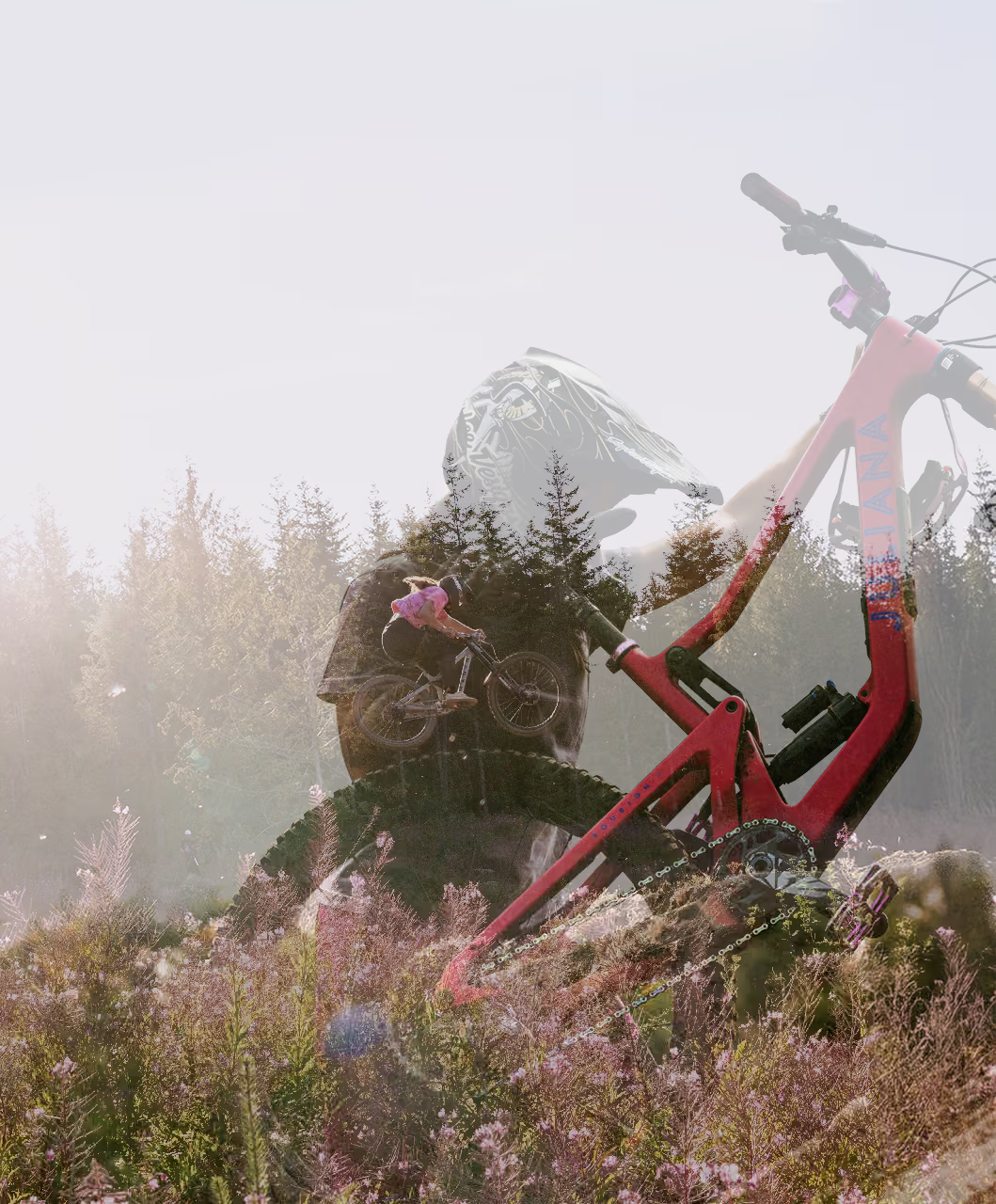
[Photos above: Left of Jaclyn Walles on Tiddlywinks and Funner, by Aaron Staylor | Right at Mt. Bachelor by Max Rhulen]

With trails ranging from mellow double track and technical cross-country to downhill and jump, plus a lift-access bike park at Mt. Bachelor, the region is touted as a world-class destination that offers trails for all abilities. The ease of incorporating rides into daily life without making it an all-day ordeal is high on the list of attractive qualities. Sometimes making an ordeal is a big part of the fun, though. Fortunately, a cornucopia of mind-blowing adventures lies within an hour’s drive.

Bend’s mountain bike aura is the confluence of several factors, including accessibility, top-notch bike shops, guide and shuttle services, organized group rides and a remarkable trail alliance. Plenty of trails in Bend are usable year-round and many mountain bikers also fancy skiing in the winter, adding to the allure. Several existing trails have been assessed by adaptive riders and deemed appropriate for adaptive mountain bikes, like the Bowhead Reach. It’s an electric adaptive off-road bike with two front and one rear wheel that is customizable to fit a rider’s specific mobility needs, allowing more riders to enjoy the trails.

Professional mountain biker, Martha Gill.
Professional mountain biker, Martha Gill. Photo by Hannah Sourbeer

Developing a Trail Utopia

Central Oregon Trail Alliance (COTA), a nonprofit organization dedicated to developing, protecting and enhancing the mountain biking experience throughout the area, is perhaps the most significant instrument in Bend’s reputation as a mountain bike hub. The nonprofit stewards more than 520 miles of singletrack trails, five bike parks and nine miles of groomed winter fat bike trails. “COTA was established in 1992 and has been pivotal in the creation, development and continued maintenance of trails,” shared Alex Brieger, the trails program director for the organization. Driven by his deep passion for big backcountry mountain bike rides, Brieger directly oversees all aspects of trail planning, building, maintenance and training, ensuring trails in Central Oregon meet the highest standards for quality and sustainability.

“We have about 80 miles of trail currently in the plans,” he said. The ongoing development of new trails keeps locals engaged and gives visitors a reason to return year after year. For instance, five new trails at the Wanoga Sno Park—including a novice jump line and two advanced downhill trails—strengthen Bend’s magnetic force. Nearly 70% of COTA’s funding comes from donors and members with the remainder funded by grants. “We have a staff of just four people, so we rely heavily on volunteers. I truly enjoy connecting with all of them,” Brieger said.

He invites folks to get involved by digging in the dirt at a trail work event or simply joining COTA’s membership program.

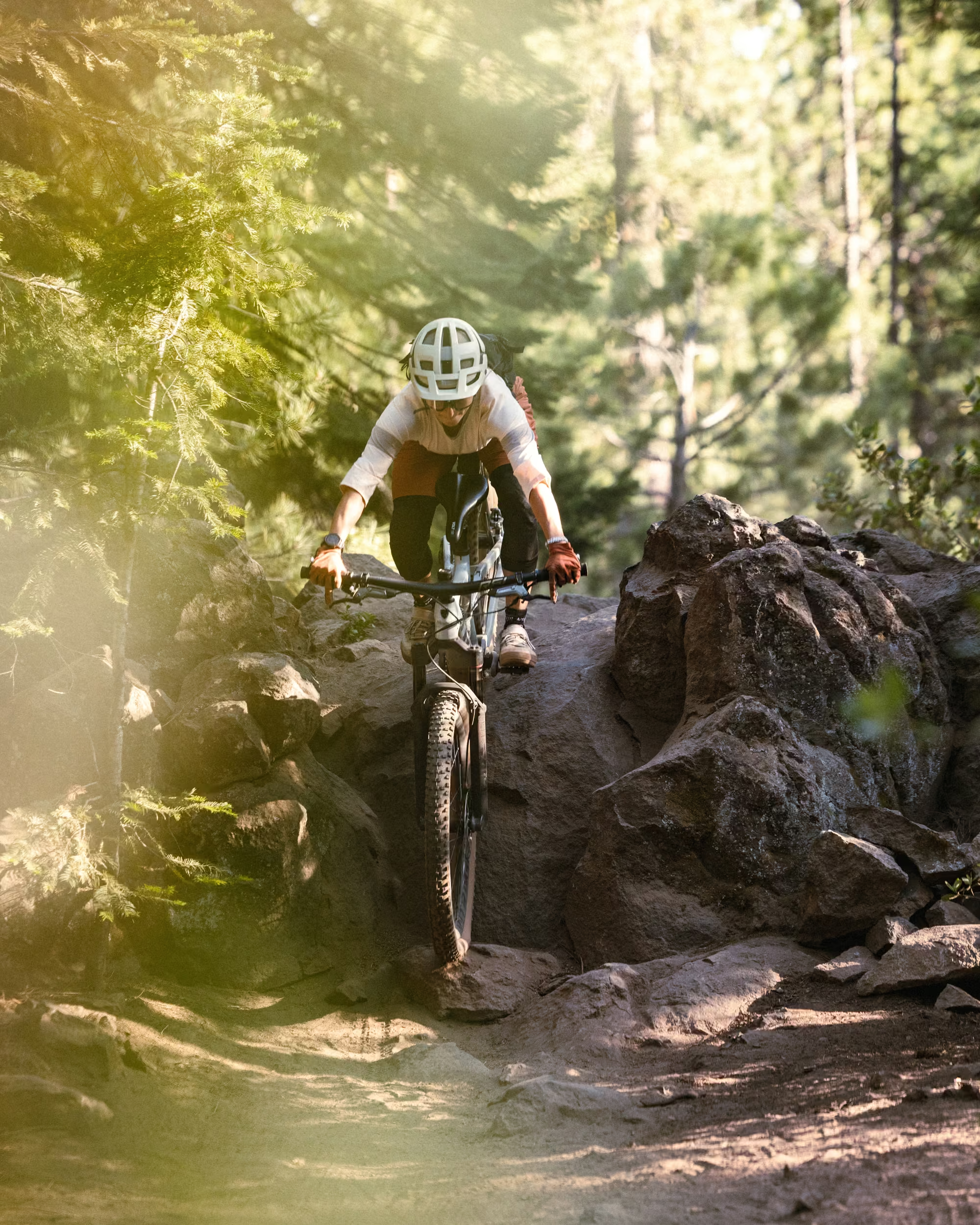
Kamrin Peterson riding Southfork Trail
Kamrin Peterson riding Southfork Trail. Photo by Aaron Staylor

All Riders are Welcome

Not only does Bend attract seasoned riders, it’s a welcoming place to dip your toes into mountain biking. With myriad bike shops that have gear to get you out on the trail, knowledgeable mechanics to keep your bike rolling, educational events, meet-ups and group rides, there is no shortage of opportunities to throw your leg over a bike and get riding. Local businesses like Grit Clinics and Cog Wild provide lessons, coaching and skills camps to help riders improve confidence and ability on the trail. Riders can hop on a shuttle or guided tour, streamlining the process.

“We make it easy for folks to come ride with us by having everything they need. We teach skills, guide rides, rent bikes and explain routes. Someone can show up with just athletic clothes and—with our support—have a full adventure on trail,” said Kirin Stryker, co-owner of Cog Wild, a small, family-operated outfitter and long-standing pillar in the community.

Offering bike shuttles, guided tours and lessons, Cog Wild has been a valuable catalyst in facilitating adventure tourism and attracting riders from around the world. It also runs Cascadia Junior Cycling, which provides programming for youth through off-road racing teams, clubs and bike camps.

“My favorite part of the job is coaching a group of elementary-aged girls through Cascadia Junior Cycling. They are so much fun, and it’s a great reminder to be less serious while out riding. We stop for snacks, look for frogs and lizards, and play games while shredding singletrack trails,” said Stryker.

Wanoga Park
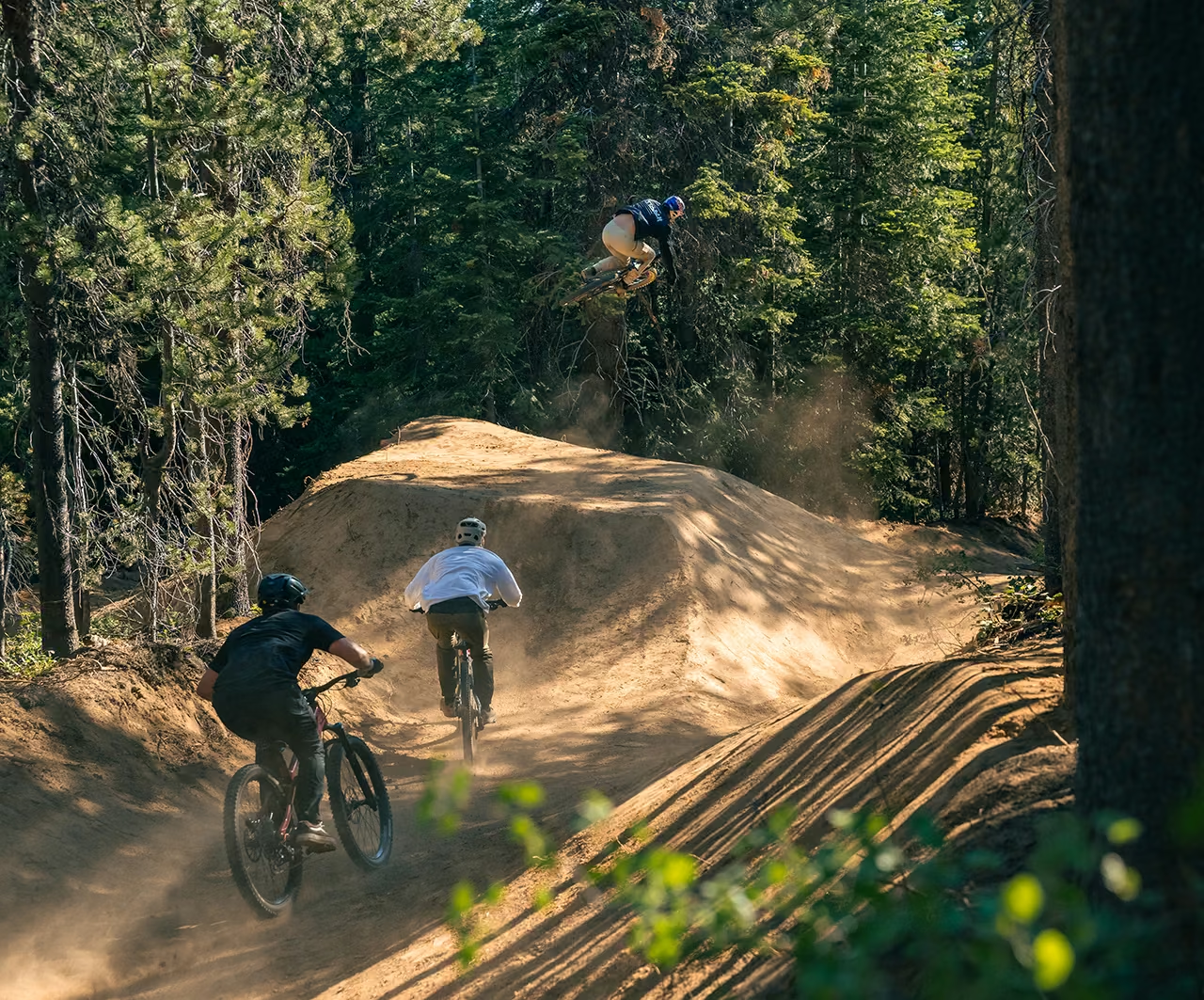
Dusty Wygle, Cody Wilkins, and Carson Storch riding at Wanoga. Photo by Max Rhulen

Grow Up, or Grow Old, on a Bike

Kids who grow up in Bend have a unique opportunity to benefit from bike programs like Cascadia Junior Cycling, Bend Endurance Academy and Vámonos Outside. With a bounty of beginner-friendly trails right out their doors, it’s inevitable that many mature into talented bikers. The easy-to-ride trail systems allow families to introduce little ones to mountain biking as soon as they can balance, and the progression to more aggressive downhill and jump trails is natural. Bend native, 13-year-old Soren Donnelly can vouch for that. He and his sister have been hitting the trails since they were toddlers.

“Being in this community, it’s easy to progress. Biking has definitely made me closer with my family, especially my dad,” Donnelly shared. “Having family friends who all bike has made it easier for my dad to push me and support my riding. When there’s a big group who are all going together, it’s motivating.”

It’s no secret that the one-time small town of Bend has evolved into one of the most celebrated mountain biking destinations in the United States. Whether you can backflip a dirt jump, hit the 8-foot drop feature at Mt. Bachelor, or you’re a trail-curious 7- or 70-year-old, Bend has a little slice of mountain bike heaven for all to enjoy.

Jaclyn Walles. Photo by Aaron Staylor

ICONIC RIDES

Tiddlywinks Trail: A 7-mile intermediate level trail with jumps and rock features in the Wanoga Complex.

Lookout Mountain Trail: Located in the Ochoco National Forest outside Prineville, Lookout Mountain offers a 4,500-foot descent and a 360-degree view from the summit.

Lower Whoops: This downhill only jump trail in the Phil’s Complex is one of the most popular rides in Bend.

Old Cascade Crest (OCC) Trails: True backcountry all-day epics are the name of the game in the OCC. Situated off the Santiam Pass highway, these are steep, primitive, remote trails with several route options.


Jaclyn Walles
Jaclyn Walles. Photo by Aaron Staylor

SEE MORE ARTICLES ON MOUNTAIN BIKING

Autumn Retreats Along the Metolius River

The teal water of the Metolius River has long been described as magical, mesmerizing visitors with its crystal clarity and rejuvenating flow. The river begins its journey at the base of Black Butte and moves prestigiously for nearly 30 miles, showcasing its standing as one of the largest spring-fed tributaries in the country. The river’s birthplace (the Head of the Metolius) can be seen from a short hike to the spot where headwaters emerge, revealing the source of its pure water with invigorating temperatures year-round. [Photo above by Steve Giardini]

The name Metolius means “white fish,” and the waters were considered a sacred source of life for Oregon’s native people. A fall visit to the Metolius reveals how its life-giving setting still casts a spell today. Mossy banks, smoothed boulders and deep pools set nature’s stage for world-class bird watching, fly fishing and hiking.

The area carved by the Metolius offers an unrivaled experience to watch summer’s leisurely hand-off to autumn, as the crisp air arrives and the vine maple leaves transform into ember hues of fiery red and golden yellow. With inspired lodging options that offer crackling fires, seasonal fare and strolls under the glowing deciduous trees, the Metolius holds the best fall has to offer for a weekend retreat.

lake creek
Photo by Gallivan Photo

Lake Creek Lodge

Nestled in a cradle of wooded pines and aspens, Lake Creek Lodge embodies a vintage nod to fall during a stay in one of its 22 creekside cabins. The sprawling grounds host modern amenities while preserving the nostalgia of its 100-year history, featuring a fly-fishing pond, pickleball courts, a heated pool and 40 acres of meandering trails. Rustic yet comfortably renovated cabins (some dating back to the 1920s) can accommodate up to seven guests. Its main lodge offers an idyllic evening respite, with a roaring stone hearth, a rec room and oversized chairs to bookend a day of fall enchantment. Read more about Lake Creek Lodge here.

House on Metolius

The setting of the House on Metolius is true serenity, boasting 200 acres of private land with unrivaled views and welcoming riverside cottages. The property has been family-owned for decades, originally purchased as a summer retreat in the 1920s, and later opened to the public as a commitment to the preservation of its enduring beauty. The original 10,000-square-foot, eight-bedroom main house and eight additional distinctive cabins are available for gatherings and rentals. Framed in the distance, snow-capped Mt. Jefferson creates a picturesque backdrop inspiring wedding goers, anglers and writers alike. One thing is clear: The House on Metolius is unparalleled for nature-enthusiasts seeking privacy and impressive views. Read more about the House on Metolius here

lake creek
Photo by Gallivan Photo

Metolius River Lodges

Location is everything at the Metolius River Lodges, home to 13 modest and fully equipped cabins tucked under the ponderosa pines lining the river’s edge. Each cottage is just a stones-throw away from the Metolius and features river-facing decks that invite lazy afternoon relaxing and al fresco dining. The lodge’s sought-after proximity makes it an ideal family base from which to explore the area. Guests can stroll on the river trail to the neighborly Camp Sherman’s General Store for fishing bait and a frozen treat, or hike to Wizard Falls to see the area come alive with vivid splashes of fall color. A library and stocked game closet encourage evening merriment after the day’s adventures. Read more about the Metolius River Lodges here.

Metolius River Resort

For a more luxurious retreat, the rustically elegant Metolius River Resort features 11 award-winning cabins with knotty pine interiors and upgraded finishes like granite countertops and river-stone fireplaces. Many feature spacious floor plans and expansive decks with Adirondack chairs—a spot to enjoy morning coffee amidst the ground’s lush setting that becomes ablaze in autumn. Peace and tranquility feel effortlessly in abundance here. After a day of biking or fishing from the resort’s doorstep, visitors can enjoy tapas and a margarita at Hola!, a Mexican-Peruvian inspired restaurant located on-site. Read more about the Metolius River Resort here.

lake creek cabins
Lake Creek Lodge | Photo by Gallivan Photo
Study in Contrasts: A Family’s Tetherow Retreat

Bordering the Deschutes National Forest with access to bike and hiking trails, a home in Tetherow was a perfect match for a family looking for a mountain abode.

The homeowners, avid skiers who also reside in Palo Alto, settled on Bend because of its vibrant community and range of year-round activities from fishing to rock climbing.

Arrowood Development constructed the contemporary, Northwest-style home with a cedar and black basalt stone exterior. Inside, Arrowood’s brand and design director, Femke van Velzen, curated a material finish palette that stages dramatic contrasts: taupey, luminous surfaces set against saturated, ebony tones to amplify spatial depth and accentuate daylight and shadow.

The homeowners were drawn to the family-friendly layout, featuring four bedrooms on the ground floor and ample space for entertaining, including a large great room, gourmet kitchen and outdoor fireplace. They purchased it in April 2023, in time to make changes to the finishes, fixtures and landscaping before it was completed eight months later—just as the ski season began.

Arrowood Development home

Lived-In Feel

House of Milo interior designers Sarah Westhusing and Emily Abbassian were brought in to create a family retreat that felt elegant and organic, but durable enough to accommodate hosting visitors and friends.

From vintage terra cotta vases and bowls in the dining room to woven fixtures, the designers chose pieces to infuse each room with character. Furniture needed to be stylish but functional to suit the family’s lifestyle.

Arrowood Development home

Layered Look

The entry, with a tall wall covered in deep blue grasscloth, grounds the space, while a ratan light fixture provides delicate and natural illumination. A console styled with rustic floral arrangements complements the design. To the right of the entry, a custom bench is upholstered in a black-and-white striped fabric.

“These clients weren’t afraid of layering patterns like plaids and stripes, which adds a fun pop of their personality,” said Abbassian.

The home has a touch of hygge—a Danish concept that includes creating a cozy and comfortable living space—particularly in the dining room, where chairs draped in sheepskin throws surround the wooden RH (formerly Restoration Hardware) table. “I love how they create warmth and absorb sound,” said homeowner Michele of the throws.

The homeowners wanted the great room with a vaulted ceiling to be both beautiful and usable, which Westhusing and Abbassian achieved by layering textures and patterns and selecting comfortable furniture, such as two high-backed blue lounge chairs.

The primary bedroom, with forest views, is a calming space featuring a king-size bed and a cool, blue-toned headboard. The main bathroom, featuring two separate vanities, a herringbone-patterned porcelain-tile floor and a standing tub, feels both timeless and modern.

Hobbies and Hosting

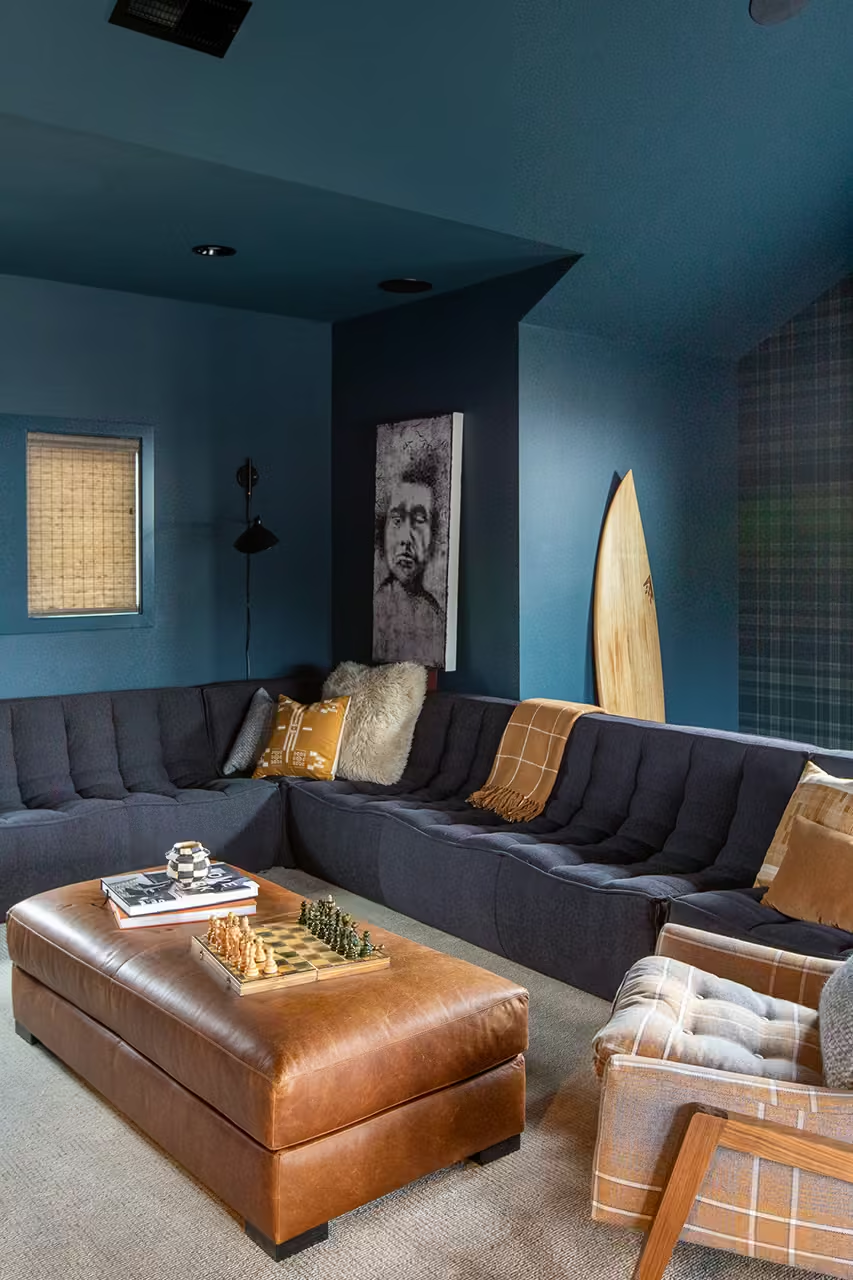
With inky blue walls and preppy, plaid wallpaper, the second-floor rec room above the three-car garage is a stylish space for watching movies and listening to music. A camel-colored leather ottoman lends contrast to the dark color palette. Michele’s husband, an executive coach, is also a DJ in his free time. Westhusing and Abbassian incorporated his DJ equipment into the design. Instead of books, records from artists like Pearl Jam and LCD Soundsystem line the walls.

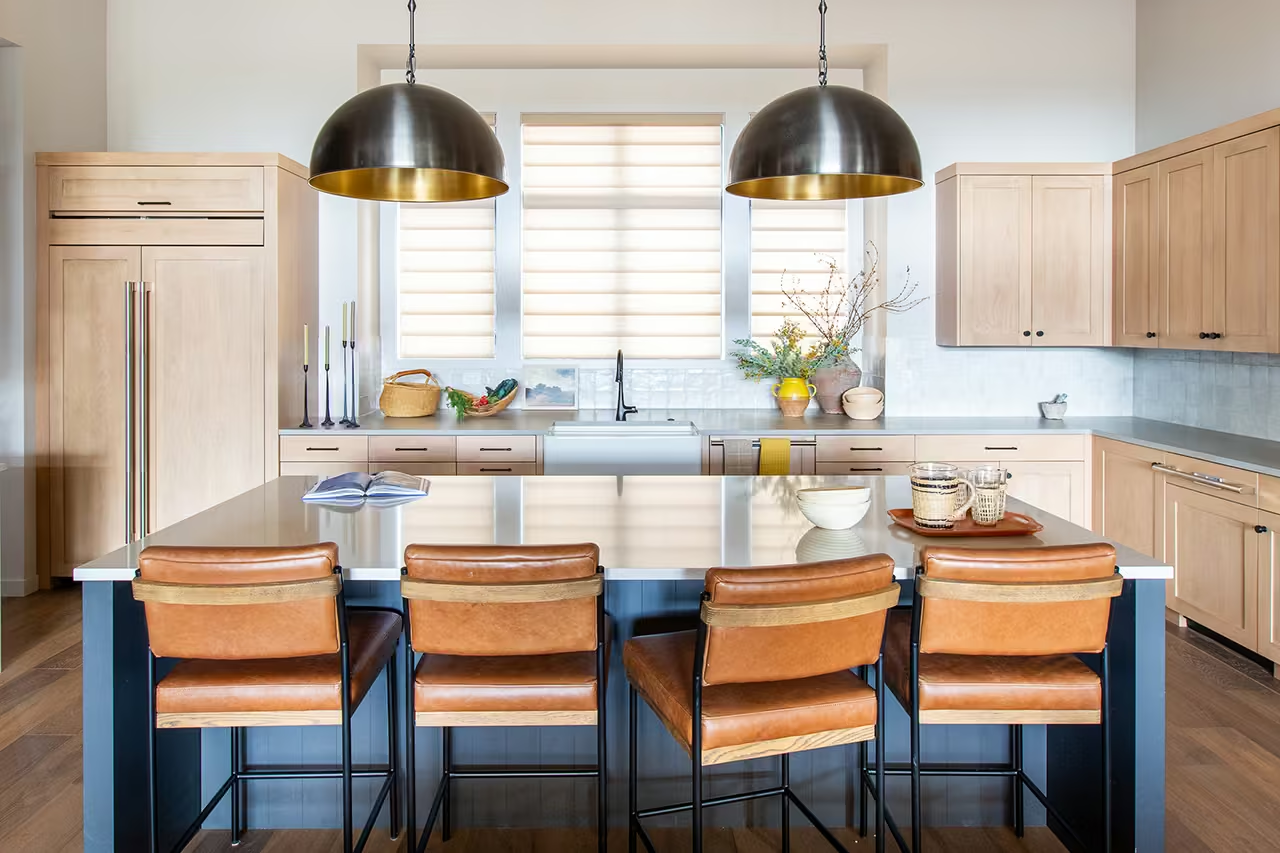
It’s not uncommon for multiple people to cook at once in the large kitchen, one of the home’s most frequently used spaces. Two dishwashers can handle larger groups, and the kitchen island’s satin finish doesn’t show fingerprints. The look is polished—with leather bar stools, a Blanco farmhouse sink and bronze dome fixtures. Throughout the home, decorative elements add soul to the decor: a vintage chessboard sits on the ottoman in the rec room and a hanging ceramic art installation in a guest bedroom hums when it catches the breeze.

Reflecting on the project, Michele said she’s most proud of how the home’s warm design facilitates family togetherness. She shared whether coming in from a day of skiing or fishing, “we all end up hanging out together.”

Arrowood Development home

Architect: John L. Muir, Arrowood Development  |  Builder: Arrowood Development  |  Interior design: Femke van Velzen, Arrowood brand and design director; Sarah Westhusing and Emily Abbassian, House of Milo designers |  Landscape architect: Mike Szabo  |  Landscape company: LandEscapes

The Sanctuary at Varekai Ranch in Tumalo

Wandering through the rambling ranch house on Swalley Road feels like a tour of discovery. Each room in the 6,121-square-foot dwelling reveals something unexpected: hidden doors leading to secret spaces, a ceiling made of cloth, a spiral staircase and wall niches that serve as small shrines to mustang horses.

The home sits on 25 acres near Tumalo and was acquired by a local family to create what they call The Sanctuary at Varekai Ranch. As longtime sponsors of 3 Sisters Equine, a mustang rescue based in Central Oregon, it was important for the homeowners to live close to the horses they help rescue.

Luxury ranch house exterior with pond in Tumalo Oregon by Copperline Homes.

“[The client] came to me with a strong perspective,” said Kate Darden, a Bend interior designer. “She wanted it to have an Alice in Wonderland feeling, that everywhere you go, there’s a surprise.”

Darden, along with Josh Wilhite of Copperline Homes and dozens of subcontractors who worked closely with the family over the course of two years of construction, brought that vision to life. The original scope of the project expanded beyond the residence to include a new pole barn with rustic accommodations and a medical stall for horses, a remodeled carriage house and extensive landscaping around a pond and surrounding structures.

Varekai Ranch kitchen and dining room in Tumalo
A fabric ceiling defines the dining nook adjacent to the kitchen.

An architect designed the horseshoe-shaped, two-story ranch house, but didn’t provide the family with detailed enough drawings and specifications for construction. “[The clients] had a vision for this house that the plans did not reflect,” said Wilhite. “Only after getting into the home’s construction and working with them were we able to absorb what they wanted. Their vision was nimble and continually evolving, and they were open to advice from people with long experience. They trusted us to fulfill the mission.”

Varekai Ranch bathroom with wallpaper and mirrors in Tumalo
Cowboys, surfers and punk rockers bring life to the powder room’s wallpaper.

A House of Surprises

Though the owners call it a farmhouse, the home draws from a wide range of influences—Western, Pacific Northwest, Southwestern, Spanish and even modern—blending them into a cohesive living space for the couple, their three sons and five dogs.

A unifying material found throughout the home is handcrafted tile from Kibak Tile in Sisters. All bathrooms have tile accents, as do many other rooms. Darden describes working with Kibak’s Carli Strachan to select patterns, then building different color palettes to present to the client and ultimately deciding where each motif should go in the house.

Arched built-ins create a shrine to mustangs in the living room.

Darden said the client favored turquoise and terra cotta, but didn’t want it to look overly Southwestern. “Since we live in the high desert, I brought in earthy colors familiar in this landscape to complement the turquoise and clay she loved.”

The primary bath exemplifies how tile can be effectively incorporated into a maximalist design. The roomy space with a balcony features a copper, stand-alone tub, a chandelier made of eucalyptus-hued coconut shells, an ornately tiled shower and a mirror from Santa Fe flanked by custom Apparatus Talisman wall sconces. The toilet room is adorned with Anna Hayman’s vintage-inspired wallpaper in complementary patterns and colors. As a final flourish, a Victorian-era tête-à-tête loveseat invites inhabitants to linger and marvel at the dazzling display of colors and patterns.

A coconut-shell chandelier illuminates the primary bathroom.

The powder room off the home’s entryway exhibits similar maximalist tendencies. This room is cleverly tucked beneath the stairs, incorporating a vanity from India, a black vessel sink and rowdy cowboy wallpaper that, on closer inspection, reveals images of punk rockers and surfers. The bigger surprise, though, is the hidden door in the powder room that leads to a hookah lounge. Low-profile seating upholstered in plush fabrics and rich hues, including Middle Eastern–style poufs, beckons friends into a place of relaxation centered around the exotic-looking hookah.

The entryway highlights two distinctive features of the home: custom-designed lighting and hand-forged ironwork. One of two chandeliers, imagined by Darden and lighting designer Chris Ferguson of Part & Process, welcomes visitors at the door. “It’s meant to emulate a horse bit on the sides, with a light that filters through an oculus at the bottom,” Darden said. “It looks so cool at night.” Overhead, a narrow indoor catwalk is built of see-through steel flooring, allowing light to pass down into the entry while offering curious eyes below a glimpse of what’s above.

Ponderosa Forge of Sisters handcrafted ironworks around the home, including the fireplace grates and tools, a triangular dinner bell displayed outside and hardware such as towel hooks and floor registers with an interlocking “H” pattern that stands for the couple’s last name.

Tumalo ranch house

In the kitchen nook dining area, the ceiling— made of multicolored striped fabric—is another marvel to behold. Darden designed it after she and her client bought yards of a Peruvian textile they saw in Santa Fe without knowing where the fabric might be used.

“I had piles of fabric at my office and wondered what I was going to do with it all. Curtains seemed predictable, so I went to the project manager, Simon Doss, and told him I had this crazy idea,” Darden recalled. Together, they designed a system of building frames that incorporated magnets for snapping fabric-covered panels into place. Colored stripes with alpacas and little bears are in perfect alignment with one another. “It was labor-intensive,” she admitted, “but it turned out really nice.”

Calming Influences

While parts of the home exude playful energy, other sections shift toward a calmer demeanor. The barn room (or family room) is such a place. It’s where the family gathers around the long wooden table for meals or together on the leather couch before the Montana moss rock fireplace on game day.

“My favorite part of the house is the barn room, with its massive, super-tall vaulted ceiling,” said Wilhite. “I worried it might feel like a cavern, but the client was confident from the start. As we moved through the design process, Kate covered every wall and ceiling in wood, and we added timber-frame trusses, large light fixtures and a ‘Juliet’ balcony with a small reading space, its own library and a hidden door. In the end, it all worked out.”

From this room, the family and its guests can flow onto the outside deck that hangs over a pond deep enough for the boys and dogs to jump in and swim around. Two wicker chairs suspended from a large beam are a favorite of the homeowners for sitting or even napping.

For nighttime magic, the family and its guests can retreat to the courtyard built between the home’s two main wings. Tiny lights strung across cables and the glow of the firepit set the mood for lingering in the soaking pool or gathering under the stars with a glass of wine.

Builder Wilhite summed it up by saying, “There’s an eclectic flair to the house, and everywhere you look there’s something fun.” It reflects the family’s playful spirit and love of surprise, their trust in the design team to fulfill their vision and a desire to make Varekai Ranch a true sanctuary.

Architectural steel: Iron Environments  |  Builder: Copperline Homes  |  Cabinetry: Bladt’s Custom Woodworking   |  Finish carpentry: Outback Finish & Trim Co.  |  Interior design: Kate Darden  |  Landscape: Outdoor Innovations  |  Reclaimed wood: Forged Elegance  |  Tile installation: Harlan Manley Tile Inc.

Giveaway from Lazy Z Ranch and Luckey’s Woodsman

THIS CONTEST HAS ENDED. Please sign up for our newsletter and keep following @bendmagazine so you will be the first to know about our next three giveaways to come.

Enter to win $25 from Lazy Z Ranch AND $25 to Luckey’s Woodsman’s Food Truck in Sisters! Contest runs through Sunday, November 23, 2025 at 11:59 PST. One winner will be chosen to win both gift cards and notified via email on Monday, November 24, 2025. Please include a real email address, as it’s the only way to be notified of how to receive your prize. Please see the full rules here.

Luckey's Woodsman Jackson Higdon
Luckey’s Woodsman | Photo by Arian Stevens
Where to Enjoy Sparking Wine and Champagne in Bend

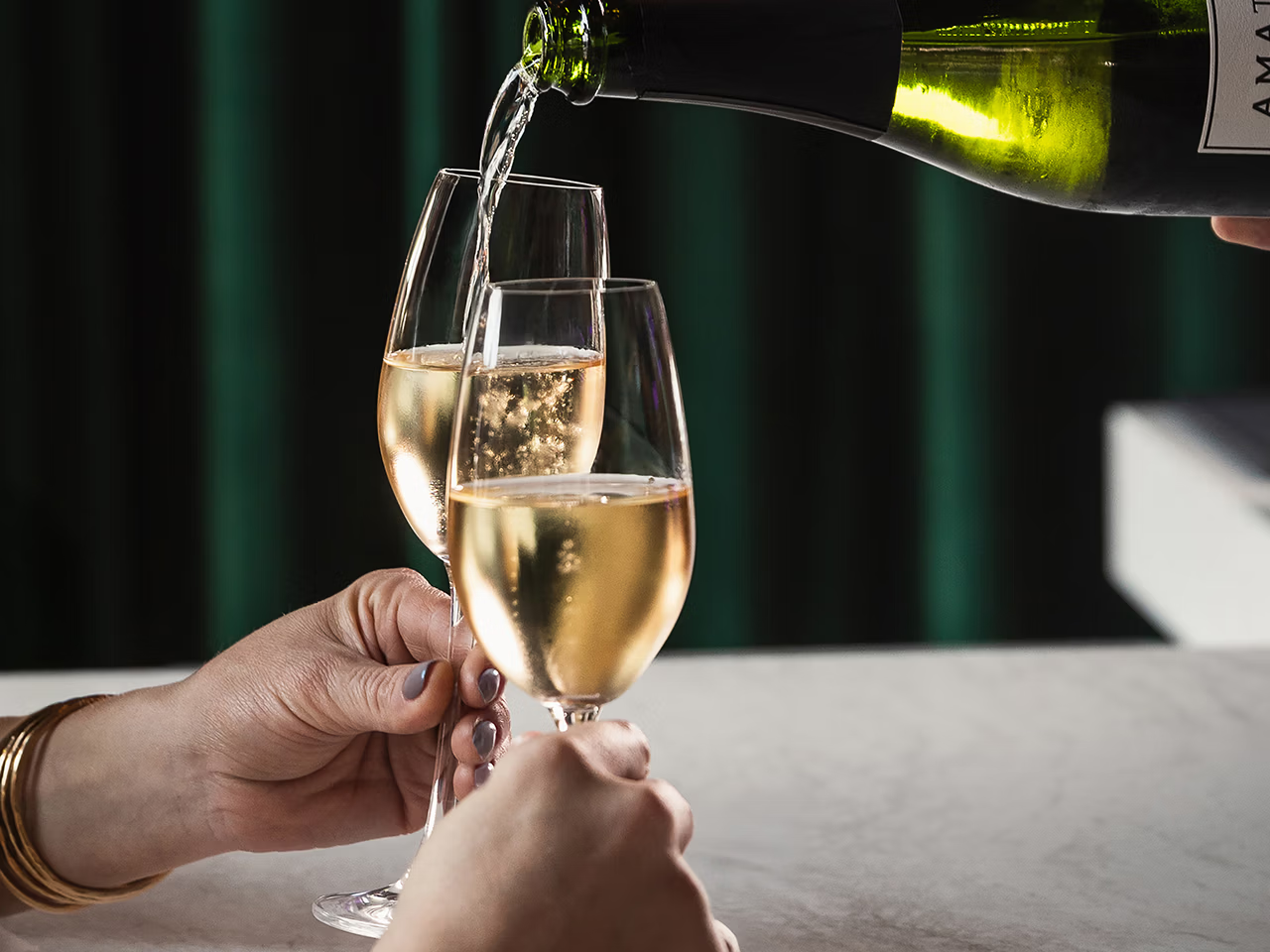
With tiny bubbles of carbonation and a flair for excitement, sparkling wines are often associated with celebrations. Yet, their effervescence offers loads of diversity and enjoyment throughout the year, regardless of the occasion. The holidays may be upon us, but raise a glass to the sparkling discovery of your next favorite bubbly, even if to celebrate a Tuesday night between Thanksgiving and the bright New Year. [Stoller Wine Bar pictured above]

Stoller Wine Bar in Bend

Family Estate 2019 LaRue’s Blanc de Blanc

From the Dundee Hills AVA in the Willamette Valley, the Stoller Family Estate 2019 LaRue’s Blanc de Blanc kicks off with tiny bubbles. They dance on the palate and mellow out with a lingering finish, complete with the taste of ripe Fuji apples and a full mouthfeel of brioche bread. This blanc de blanc—translated to “white of whites”—is 100% chardonnay. It’s a wine worthy of many things. Pair it with the gourmet popcorn selection, cheeses and charcuterie at the Stoller Wine Bar in Bend.

Visit Stoller Wine Bar, Box Factory | 555 NW Arizona Ave., Bend


Crusat’s Kung Fu Sparkling Rosé
Matías Riccitelli Kung Fu Sparkling Rosé

Ermisch Winery & Tasting Room in Bend

Argentinian Sparkling Rosé

Bendite Christopher “Kirk” Ermisch, operates Ermisch Winery & Tasting Room, and is the majority owner of Bodega Calle, a winery in Mendoza, Argentina, founded in 1925. He also makes wine under the Ermisch Cellars wine label with his daughter, Hannah, who grew up in Bend and is a trained winemaker and sommelier. Visit the urban winery and tasting room to sample some of the six sparkling wine offerings, including several Argentinian versions like Matías Riccitelli Kung Fu and Bodega Calle’s Baja Tanga Sparkling Rosé. The Baja Tanga is a bubbly sipper made with predominantly chenin blanc and just a bit of Torrontés, an aromatic white grape variety, and malbec, a red-skinned grape variety from which the wine gets its pale pink color. This wine bursts with lightly candied aromatics, vibrant acidity on the palate and a rounded mouthfeel that makes sipping oh-so-delicious. Baja Tanga Sparkling Rosé is produced in the same way that prosecco from Italy is made: A second fermentation, the process that creates tiny bubbles of carbonation, is done in a pressurized vat versus in the bottle as is French Champagne. The result is a zippy, fresh-flavored sparkling wine that does not require aging to enjoy it at its finest.

Visit Ermisch Winery & Tasting Room 11 NW Lava Road, Bend


Amaterra

Amaterra Kitchen + Social Club

2019 Blanc de Noir Traditional Method Brut

Amaterra Winery is a reflection of its relationship to place: The word Amaterra combines Italian amare (to love), with terra (earth) to form “for the love of the Earth.” With grapes from its Swede Hill estate vineyard in the most northern part of the Willamette Valley AVA, the golden straw color of the Blanc de Noir Traditional Method Brut might initially confuse the consumer: It’s made exclusively from the red-skinned pinot noir grape. It is light in color due to minimal skin contact during the winemaking process. Full-bodied with a delicate hit of dried rose petal, the 2019 Blanc de Noir is a delightful wine to pair with a traditional Thanksgiving turkey meal or many of the offerings on the Amaterra Kitchen + Social Club’s dinner menu, including its take on ricotta gnudi, a traditional Italian dish from Tuscany that pops with cheesy deliciousness.

Visit Amaterra Kitchen + Social Club | 909 NW Bond St., Bend


Va Piano

Va Piano Vineyards Wine and Champagne Bar

Duval-Leroy Brut Reserve Champagne

Two wine worlds meet at Va Piano Vineyards Wine and Champagne Bar in the Old Mill District. Sparkling wines galore augment the red and white offerings from the Walla Walla, Washington, winery. A standout on the wine-by-the-glass menu is the Duval-Leroy Brut Reserve Champagne, a classic example of the character of wine from the Champagne region of France. Although single-varietal Champagnes do exist, most are blends of white and red grapes. This includes this one, made of chardonnay, pinot meunier and pinot noir. Va Piano’s Bolle Vino Club Membership is a fun way to dive into trying different sparkling wines and Champagne—members receive four allocations of six bottles every year.

Visit Va Piano Vineyards Wine and Champagne | Old Mill District, 425 SW Powerhouse Drive, Bend 

Life Design Build Modernizes a 1970s Home in Bend

When Kathy Lang and her husband, Greg, relocated to Bend from Spokane in 2022, they started out looking on the west side of town. But Greg bike commutes to his job at Summit Health near St. Charles’ main east side campus, so they settled in a temporary Hidden Hills rental in southeast Bend and soon saw the perks of that part of town, including a flatter terrain for a safer commute and no HOA to object to their Sprinter van in the driveway.

Bend has plenty of older homes with potential, often in established neighborhoods with larger lots. “Taking on the remodel of an older home is not for the faint of heart,” said Tyson Gillard, architect, general contractor and founder of Life Design Build, who worked with the Langs to make the couple’s dream house a reality. “But with the right team, you can end up with an incredible, fully customized home at a great value.”

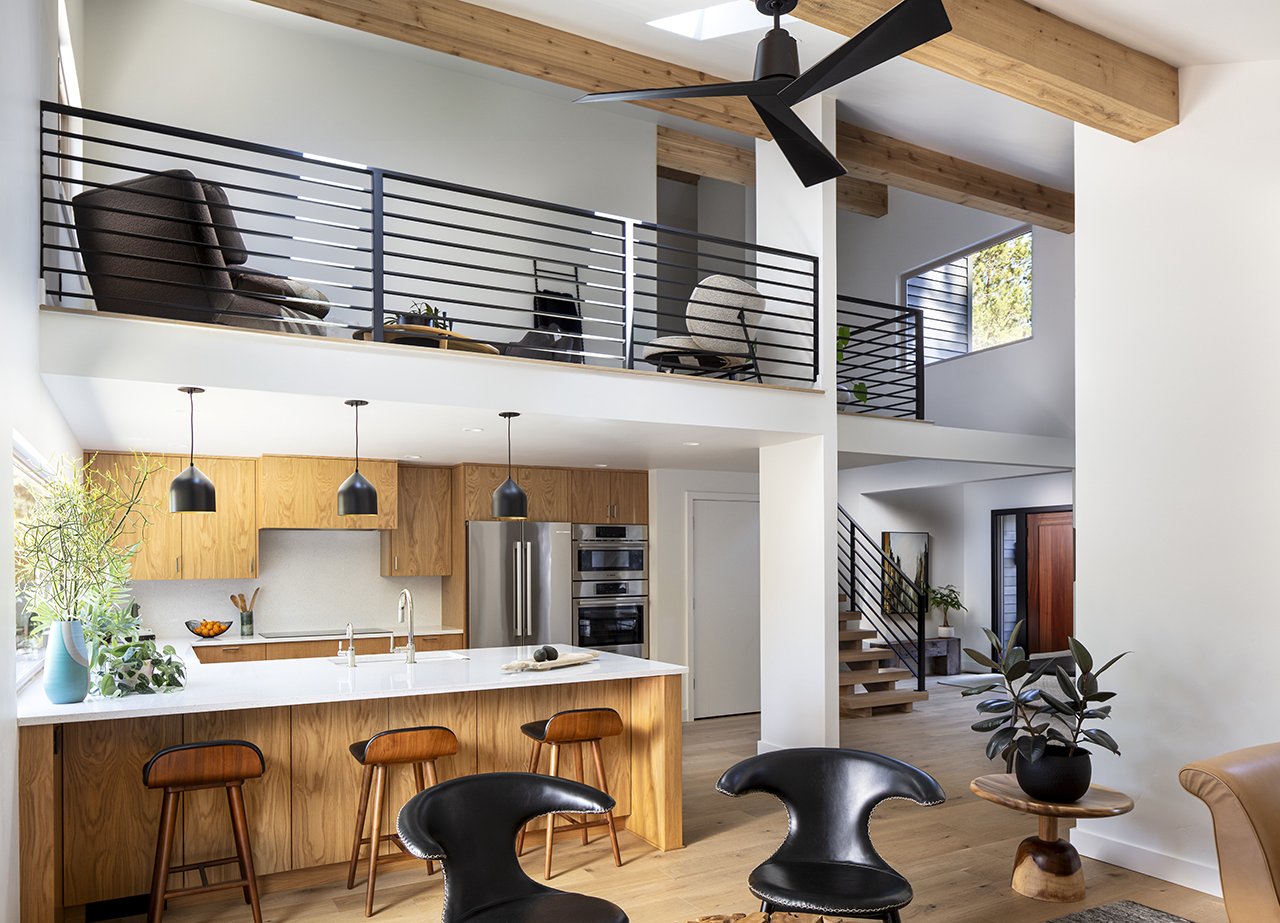
Modern remodeled kitchen with loft above

Home makeover before
Before

Transforming a Dark Interior with Natural Light and Open Floor Plans

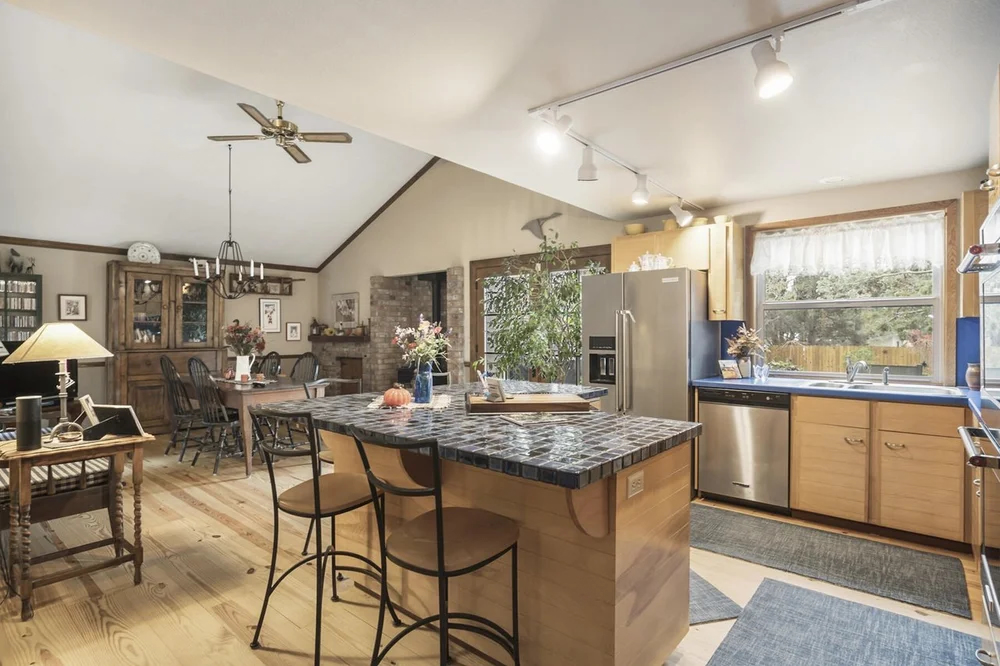
The Langs found a 1979 home on King David Avenue in the Kings Forest neighborhood. Yet, the four-bedroom, three-bath, 2,500-square-foot home on a half-acre lot was dark and choppy, like many ‘70s and ‘80s homes.

As a real estate agent, Kathy sees a lot of homes and floor plans. “I can relate to how a space flows,” she said. “I can envision what it can be instead of getting caught up in what it is. We walked into this house, and it was dark and heavy, very tight. … But I thought, ‘I know exactly what I will do to this house.’” The Langs purchased the home, and then the real work started.

Kathy and Gillard’s team spent five months on the design, keeping the dramatic angles of the original architecture. They added a patio, skylights to bring in more natural light, widened doorways to enhance the flow of the home and removed walls that made the space cramped.

“From a design standpoint, the main objective was opening and brightening,” Gillard said. “Functionally, there were awkward areas that we completely restructured.”

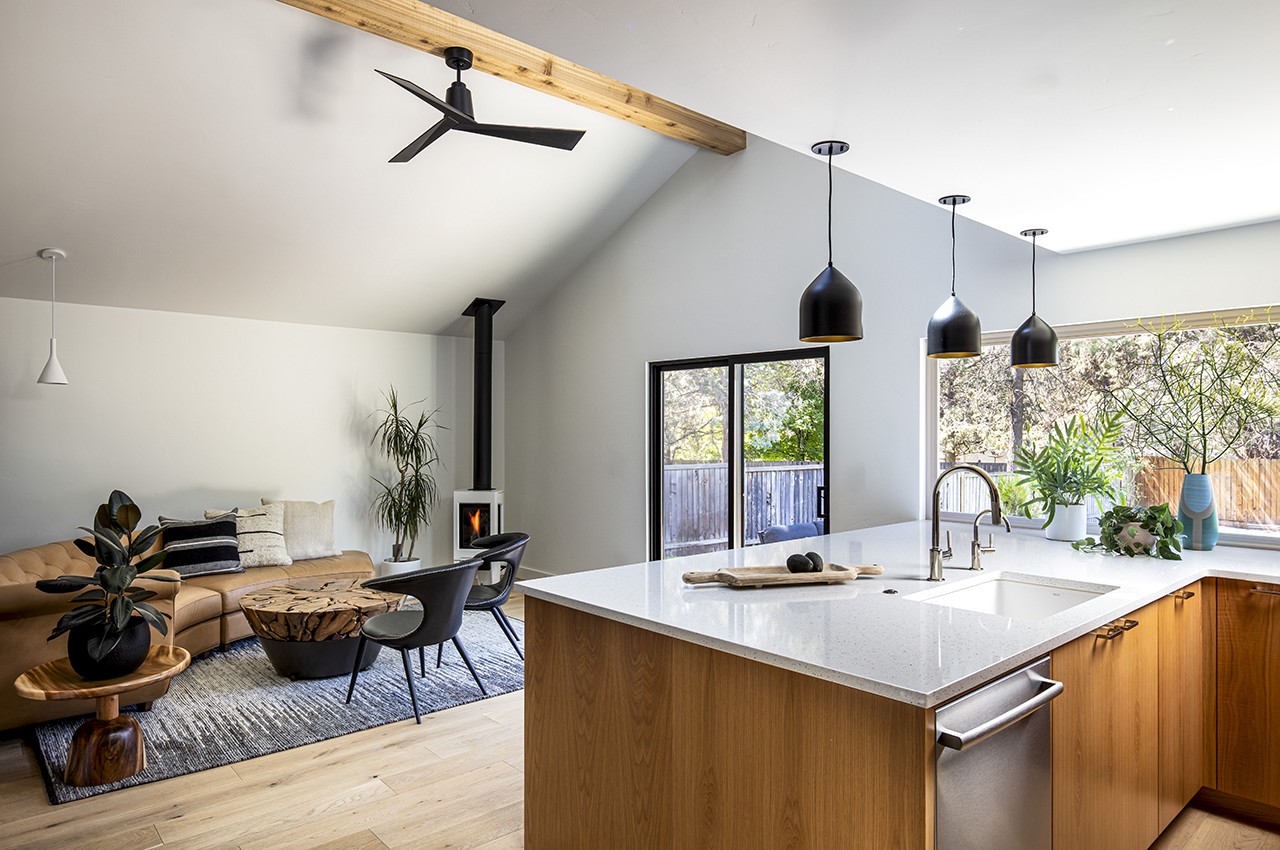
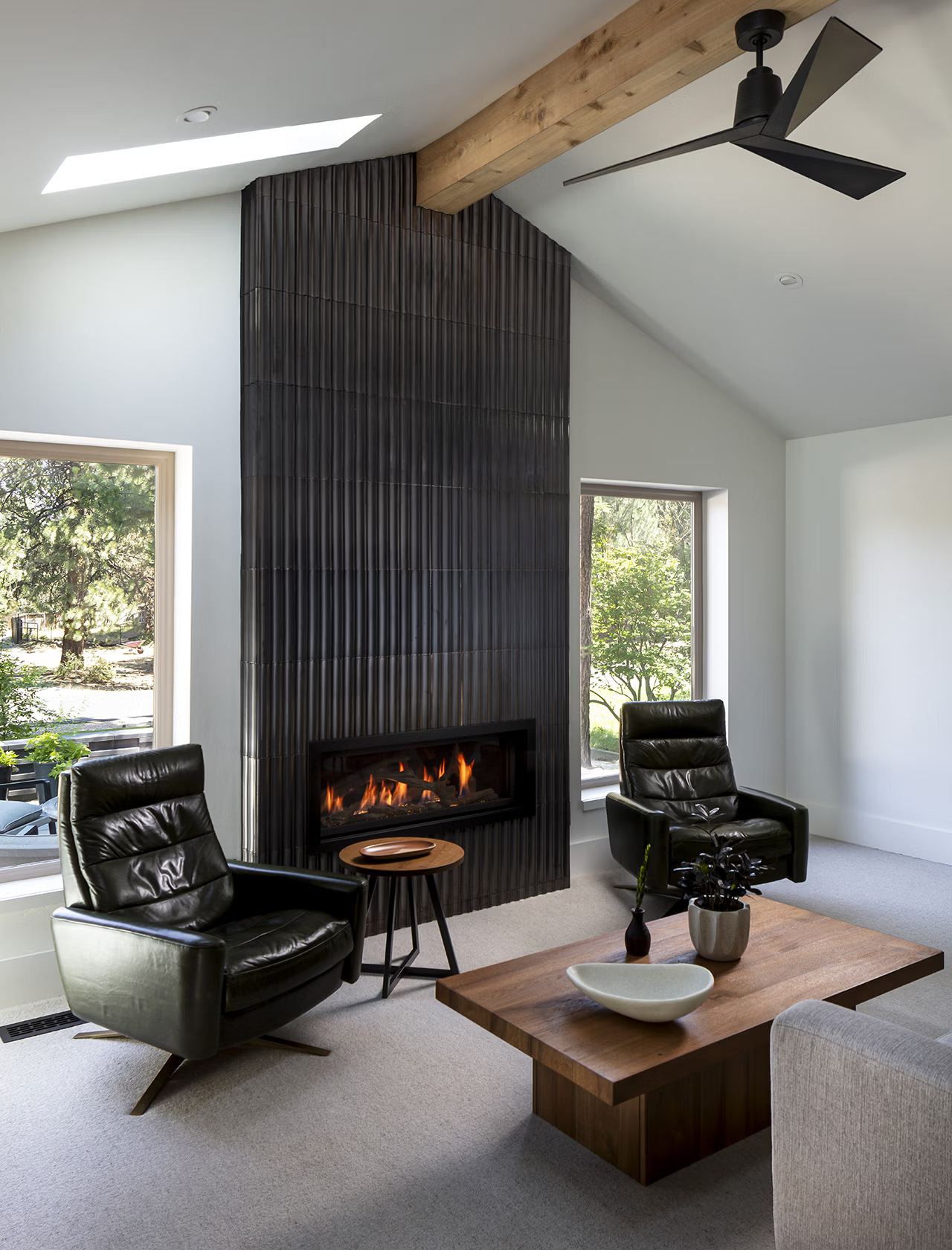
They chose a timeless black-and-white palette, warmed by wood accents. Quartz countertops, white walls and textured white tile in the bathroom contrast with a striking black fireplace wall, loft and stair guardrails, pendant lights, ceiling fan and select furnishings. To soften the high-contrast scheme, the team found cohesion throughout the house with the use of white oak, incorporating it in the floors, stairs, cabinetry and trim.

Kitchen after remodel in 1970's home
After
Kitchen before remodel in 1970 home
Before

Architectural Work by Life Design Build

To save costs, Kathy handled demolition, repurposing and donating what she could—the old tongue-and-groove cedar found new life as the walls and ceiling in another home. While Life Design Build did all the architectural work and construction through drywall installation, Kathy took over project management and coordinated subcontractors to finish the job.

Gillard estimated the all-in costs for the home (property, design, permitting and remodel) to be roughly $580 per square foot—lower than the cost of new homes in other areas of Bend. While it was more than the Langs intended to spend, they say it was worth it.

“I love how our home feels,” Kathy said. “In any space, I can enjoy the lights and the nature around us. And when friends gather, they move freely, without barriers. That’s what our home needed, and now it’s exactly what it is.”

Life design build makeover after remodel of 1970's home living froom
After
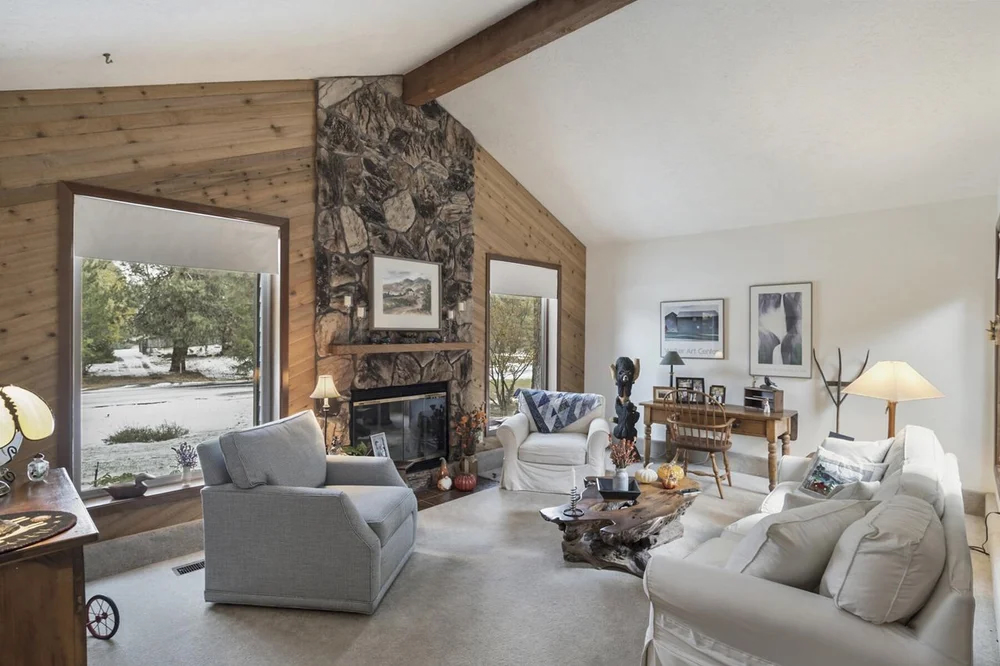
Living room before remodel in 1970's home
Before

Builder: Life Design Build  |  Carpenters: Ash Baugher, Against the Grain Carpentry, and Mark Kanitz Hardwood Floors  |  Design Services: Jenny Lanker and Victor Ellingsen, Area Rug Connection  |  Metal Fabricator: Cody Hawes, Simply Fabricated

Education and Inspiration at Asterisk Observatory

Rock climbing brought Cassandra Fallscheer to Central Oregon in May 2019. But what happened after she looked into the clear dark sky is what changed the course of her life. [Photo by Nick Lake]

Friends had invited Fallscheer, then studying astronomy as a graduate student, on a weekend-long climbing trip at Smith Rock State Park. The first night, she unfurled her sleeping bag in the park’s camping area and, just before dozing off, looked up. “I stared at the night sky and was in awe of what I could see,” she said. The Milky Way arched overhead. Countless stars twinkled. Meteors hurtled through it all. “Each time I saw a meteor, it was like a little burst of joy that I experienced.”

She fell in love with Central Oregon’s dark night skies that weekend and, in early 2024, she helped open an observatory less than a mile away from where she first experienced them. Today, Fallscheer shares her wonder with amateur astronomers at Asterisk Observatory at The Spot—along with the chance to see the Milky Way, meteors and other celestial wonders for themselves.

Love Affair with Astronomy

Fallscheer grew up loving numbers and decided to major in math at California Polytechnic State University in San Luis Obispo. When Fallscheer developed misgivings about her chosen career path, she found inspiration from a nearby source. “My roommate was an astronomer, and she would come home and tell me about all the galaxies she was studying,” Fallscheer said. Astronomy had more allure than math, it turned out.

Cassandra Fallscheer, Ph.D. 

Fallscheer switched majors and dove headfirst into her new path, first serving as a summer camp docent at an observatory in her hometown of Chico, California, and later working a summer internship at the Smithsonian Astrophysical Observatory in Cambridge, Massachusetts. After receiving her doctorate in astrophysics, she got into teaching and is today a professor of physics and astronomy at Central Washington University in Ellensburg, Washington.

Climbing Toward the Creation of an Observatory

Fallscheer’s 2019 enchantment with Central Oregon’s night skies blossomed three years later when she attended the Craggin’ Classic Climbing Festival, held in an empty field across the street from Smith Rock State Park.

That evening, she set up her telescope and invited other attendees to take a look. Fallscheer gave a constellation tour, viewed planets and star clusters, and spied a distant galaxy alongside more than 50 fascinated climbers.

Buoyed by their enthusiasm, she inquired about building an observatory on the vacant plot. The landowner loved the idea and, within a year, Fallscheer was laying the groundwork for her new venture.

Asterisk Observatory at The Spot

Overnight Stays and Sky Views at The Spot

Less than two years after toting her telescope to Smith Rock, Fallscheer opened the Asterisk Observatory at The Spot in March 2024.

A two-part experience begins with an overnight stay in what is known as The Spot—a brand-new guesthouse that’s open in spring, late summer and autumn; the three-bedroom home comes with a kitchen, hot tub and firepit. The Spot is open to groups who want to rent out the whole place, as well as solo travelers and smaller parties who’d like just one or two bedrooms, and who may share the house with other astronomy enthusiasts.

Overnight guests can then book an additional stargazing experience in the open-air Asterisk Observatory, which resides in a small wooden structure just behind the guesthouse. There, a local astronomer—typically Fallscheer—leads a 90-minute session that includes an educational overview, stargazing, 360 degrees of night-sky viewing through a 17-inch telescope and a question-and-answer session.

“I hope they leave with a sense of wonder and awe.”

Along the way, Fallscheer wants visitors to understand the universe a little bit better and see a bit of the magic she first felt under the same starry skies on her first visit.

Read more about Asterisk Observatory and how to further experience Central Oregon’s dark skies.

Tasting Global Flavors at Spork

Spork has been a Bend institution since its opening day 13 years ago. From its origin as a wildly popular food cart to its now consistently packed brick-and-mortar restaurant, Spork has reliably fed and shaped the Bend community through quality, curiosity and collaboration. It began in 2009, when co-founders Jeff Hunt and Erica Reilly made their case at Bend City Hall to serve globally inspired street food from a 1962 Airstream trailer. At the time, food trucks were still a novelty in Bend. Spork was at the forefront of the food truck revolution in the city, and it’s likely thanks to its knockout flavors and inventive dishes that helped pave the way for the now thriving nomadic food culture.

Spork

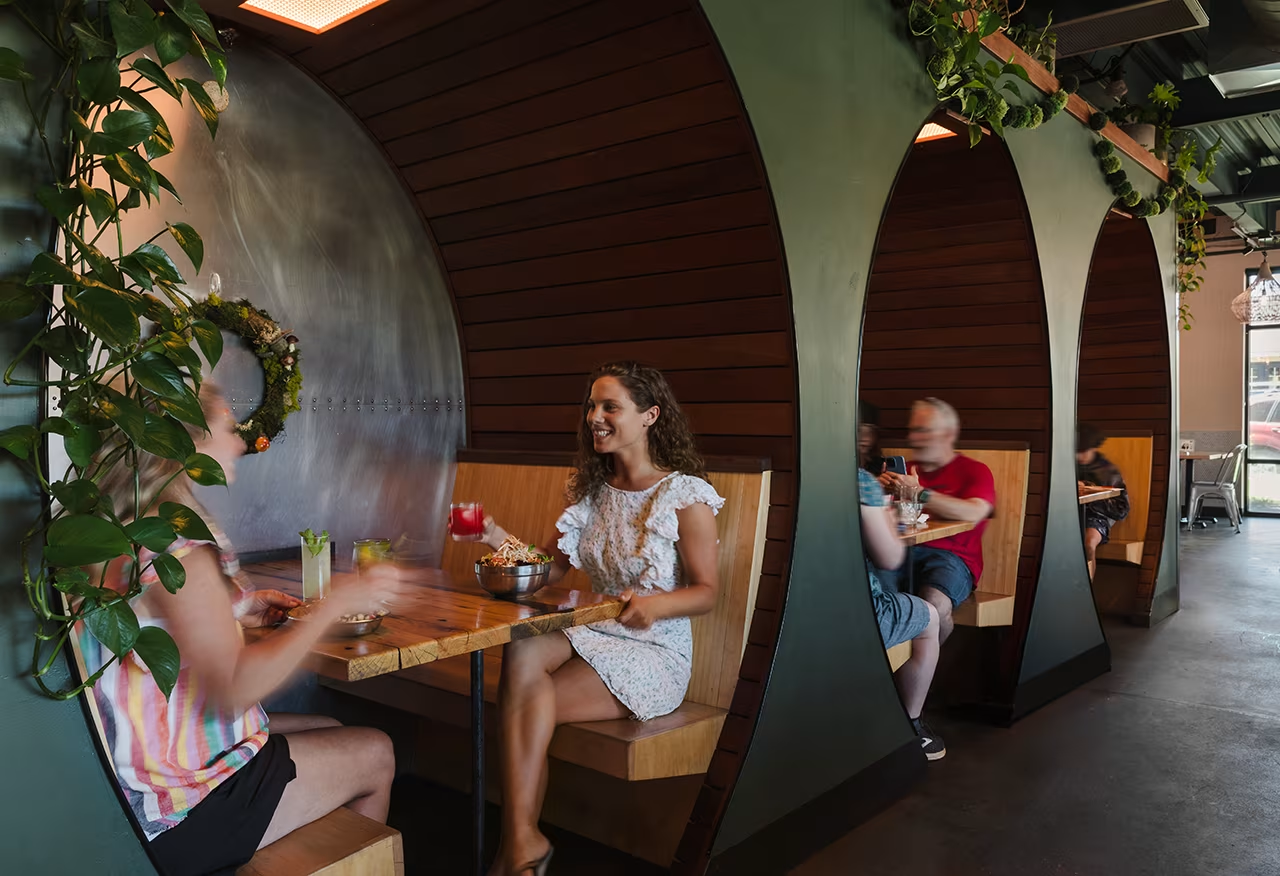
In June 2013, Spork opened its permanent space on Newport Avenue. Today, you’ll step into line with anticipation, treated to a lively preview of your meal. The open kitchen buzzes with energy and colorful fare in stainless steel bowls fly past packed tables. An international soundtrack plays overhead while lush, greenhouse-worthy plant installations fill the restaurant from wall to ceiling. There’s an unshakable sense that something delicious is soon coming your way.

The evolving menu is informed by Chef Hunt’s travels around the world and a deep respect for culinary cultures. Spork doesn’t call its food “fusion,” but certainly nods to the overlap between Latin American and Southeast Asian cuisines.

“We have always tried to present our food in ways that feel like an eye of travel,” said Reilly.

Shrimp and Pork Belly Yellow Curry

In the ultra-bright Shrimp & Pork Belly Yellow Curry, kaffir lime leaves and lemongrass—staples in Southeast Asian cooking—add citrusy depth.

“We honor dishes and their origin, serving dishes the way they should be served. It makes all the difference,” said Katrina Spatrisano, director of operations and chef de cuisine at Spork.

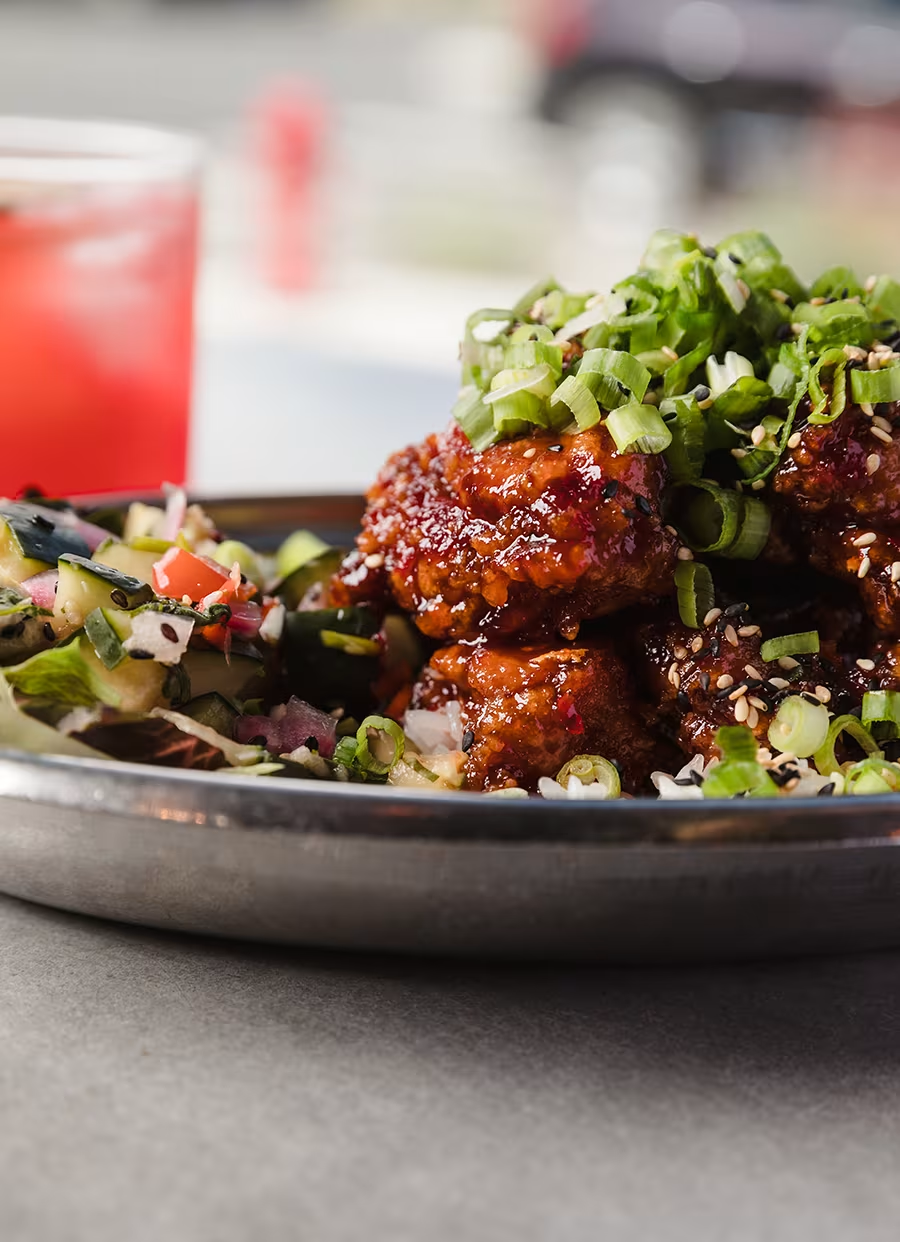
Among the many other offerings are tender Broccoli Beef, Spicy Pork Noodles and specials such as the Elote—grilled bi-color corn topped with citrus browned butter, chili mayo, cotija cheese, cilantro, green onions, tajin and lime. One of the most popular dishes is the Spicy Fried Chicken—chicken thighs coated in rice flour, fried to a perfect crisp and always juicy on the inside.

Nearly every dish comes with the signature Spork accent: a leafy trio of mint, basil and cilantro. Crispy, chewy, crunchy and saucy, it makes sense why the kitchen’s expo station is entirely dedicated to garnishes. Dishes are layered with texture. Take the seasonal Crispy Rice Salad. It’s served year-round, but its toppings shift with the season: watermelon in the heat of summer, apples in fall, mandarins in winter, asparagus in the spring. Cabbage, bean sprouts, toasted coconut, crispy shallots, a citrus-heavy dressing and palm sugar chili peanuts turn this salad into a must-order.

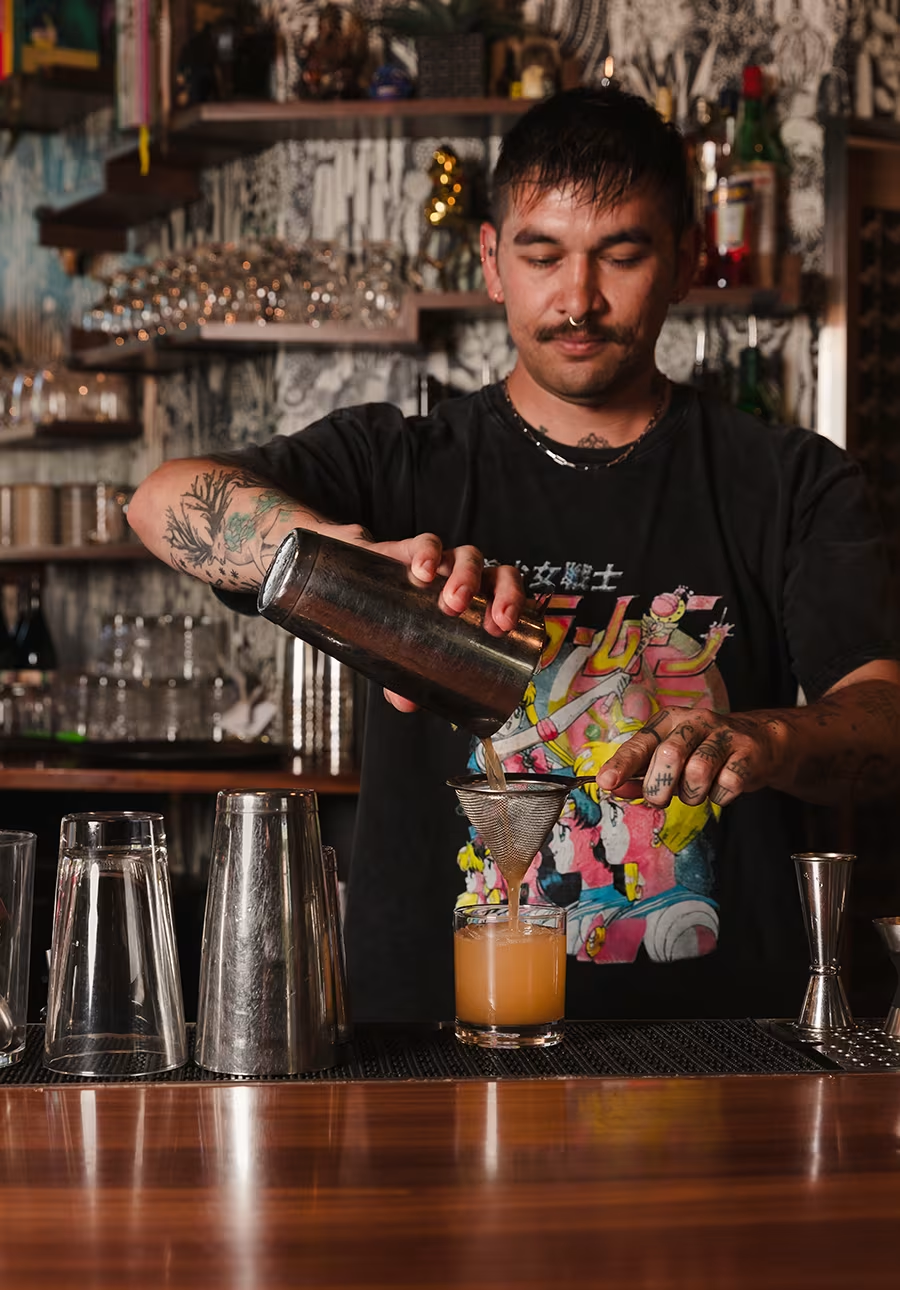
The craft cocktail program, piloted by Reilly, is a collaborative endeavor shaped by her years behind the bar, and a formative chapter opening a classic cocktail venue in Jackson, Wyoming, where she trained with some of the country’s best mixologists. From bright mezcal sippers such as the Barefoot Desert to the herbaceous Maui Z, drinks at Spork are deeply considered. You’ll find the best expressions of the classics and spirited cocktails born from group collaboration that reflects the creative minds behind the bar.

Behind the bar, Joel Herrera builds a creative cocktail.

Spork is an eatery distinguished for its flavor, no doubt, but also for its open-minded ethos:

“Let’s be curious,” said Reilly. That candor radiates from the crew, many of whom have stayed for years. Menu development is a team effort, and specials “become a playground for new ideas,” explained Spatrisano. It’s a spot where Bend gathers. The line that snakes out the door each evening spans first dates and families. It’s dotted with locals and people from around the world. “Spork is a bit of a watering hole,” said Reilly.

This is a place as much about people as it is about food. Locals send visitors here for the unforgettable menu as well as for the fun energy, eclectic vibe and a staff that brings heart to every shift. There’s no industry ladder-climbing here, just a team that’s genuinely all in. Growth, Reilly defined, means becoming a better teammate and a better person. Spork maintains four-day workweeks, health benefits for its team and is closed on Sundays. A percentage of gross sales is put into a community abundance fund, and the restaurant periodically becomes home to pop-ups for up-and-coming food establishments.

As it continues to evolve, which it’s distinctly expert at, Spork remains itself—curiosity-fueled, people-powered and led by the conviction that things are better when created together. Maintaining consistency and quality for 13 years, from its Airstream beginning to a high-volume Bend restaurant, hasn’t been easy, acknowledged Reilly. “Yet we do it, and keep doing it better each year.”

SporkBend.com | 937 NW Newport Ave., Bend | 541-390-0946

Spicy Fried Chicken at Spork
Spicy Fried Chicken
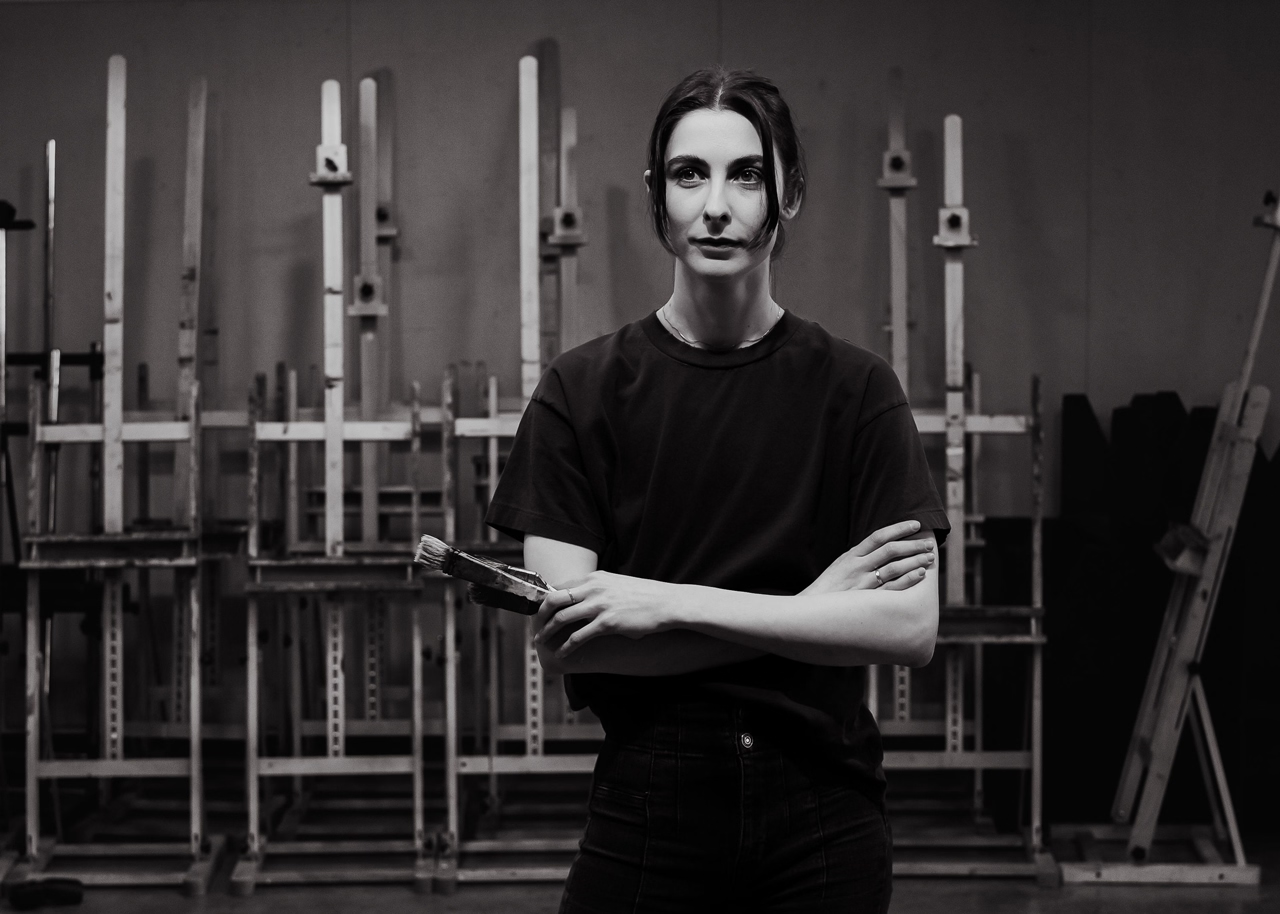
Bend Artist Erin Bodfish | Abstract Art & Emotional Journeys

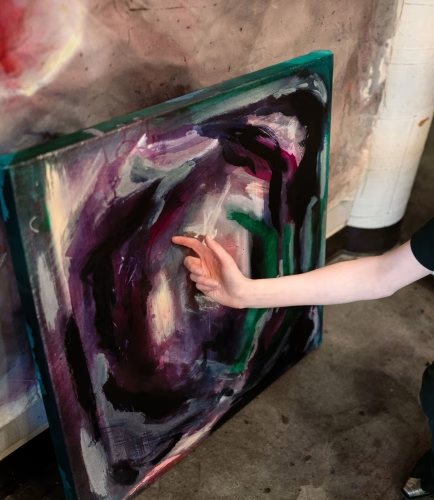
Erin Bodfish’s work invites viewers on a personal, visual and emotional journey shaped by color, movement, shape and form. Free of recognizable imagery, it opens a visceral, imaginative path of discovery, one that is quietly guided by the artist’s experiences.

Her latest series of work, created at her studio in Bend, draws from her early life, growing up in northeastern Oregon as part of the third generation of a family-run flower shop. Using encaustic paint, a beeswax-based paint mixed with pigments, she encases dried floral matter into the works, exploring themes that have always been integral to her process: how we locate and feel grief in the body.

That was also the driving force behind her previous project, a collection of paintings for the solo exhibition, “At the Altar of My Own Love,” held in May at after / time, an artist-run gallery and experimental curatorial platform in Portland. “Themes were centered around grief and love and cycles of the ends of friendships and relationships … chapters in our lives as we move forward into new spaces,” said Bodfish.

Erin Bodfish art

She’s carrying that same emotive tonality into her new work. “It’s really important to me to have those different layers present in the pieces,” she said. She seeks to create artwork offering places of solace. Following intuition and instinct, she draws on her own experiences, particularly moments of deep grief juxtaposed with moments of joy.

Those included the death of two relatives with whom she was close: her grandmother, 10 days before she graduated from high school with honors, and her great uncle, just before she was going to study abroad in London for a summer. She went on to complete a dual master of fine arts in visual studies and a master of arts in critical studies at Pacific Northwest College of Art in Portland. Three days before her graduation, her partner abruptly ended their relationship.

Erin Bodfish art“I had these big moments of grief accompanied by accomplishment, where it was this severing of a past life,” she said. “The ending of my time in my hometown, me going off to a new place for the first time and really stepping fully into myself, then finally completing my education after seven years and having this abrupt end to a relationship that had been there with me through all of it. So, the past lives that I reference [in the work] are in relation to those different versions of myself that I’ve been through in these major chapters of my life,” she said.

A new chapter in Central Oregon brought connection. She moved to Bend three years ago to teach art history and studio art at OSU-Cascades. In the summer of 2023, she was awarded an artist residency at the Scalehouse Gallery downtown.

“I had a studio space with them for about six months, and that really allowed me to be connected more to the arts community here and our faculty at both colleges,” said Bodfish, who now also teaches painting at Central Oregon Community College. “They’re wonderful people and are so passionate about the work that they do, so I feel incredibly supported in the space that I’ve been in,” she added.

Bodfish’s work continues to evolve, rooted in both loss and renewal. By embedding dried flowers in her work, she reflects on life’s impermanence—an ephemerality she finds deeply beautiful, and one that reminds her, and us, to always seek moments of presence. See more of Erin Bodfish’s art at erinbodfishart.com.

Erin Bodfish

Custom Bikes in Central Oregon

Downhill, cross-country, touring, road, gravel, the high desert offers every option a cyclist could ask for. It follows, then, that the area is also home to a core group of custom bike builders who are pushing bicycle engineering and production past any preconceived boundaries, while also maintaining the spirit of elation and freedom that cycling can provide. [Photo above by Mighty Creature]

In the United States, about 20 million bikes are sold each year, generating a market revenue of $8 billion. Some 98% of these bikes are manufactured in Asia. This may seem like an unfair headwind for Central Oregon’s bike companies, but instead they use it to their advantage by providing a custom bike build experience.

As Central Oregon’s trail systems expand and more cyclists move to the area, the pack of custom bike companies is gaining speed. Their market, from local to international cyclists, is starting to take notice.

Pursuing Perfection

Argonaut Cycles designs and builds some of the world’s most customized road and gravel bikes, which start at $16,000. Founded by Ben Farver in 2007, today Argonaut rolls out 200 high-end bikes a year, all made by hand starting with raw sheets of carbon fiber. Design, product testing and fabrication all happen in Central Oregon.

For cyclists who have spent enough time in the saddle to become one with their bike, customization offers an opportunity to exploit the benefits of different bike-frame geometries and flex patterns. Rather than ride a bike designed for a predetermined style of riding, and a particular weight and height range, a custom bike fine tunes performance.

“Our bikes really do improve folks’ cycling experience,” said Argonaut’s Joe Rudisill. “It’s not just marketing jargon. It comes from our client feedback. So it’s pretty special to see that all the way through, from hands-on, raw frames to getting to see and know the people who are really feeling the labor of love that we put into those bikes.”

Ethan Eggert founder of Arid Cycles
Ethan Eggert, founder of Arid Cycles. Photo by Tyler Winans

For the Love of It

Due to steeper prices, and the challenges of reaching a niche market, custom bike building is a small but strong segment in Central Oregon. Without the deeper financial resources of major bike brands, custom builders rely on commitment and stoke instead.

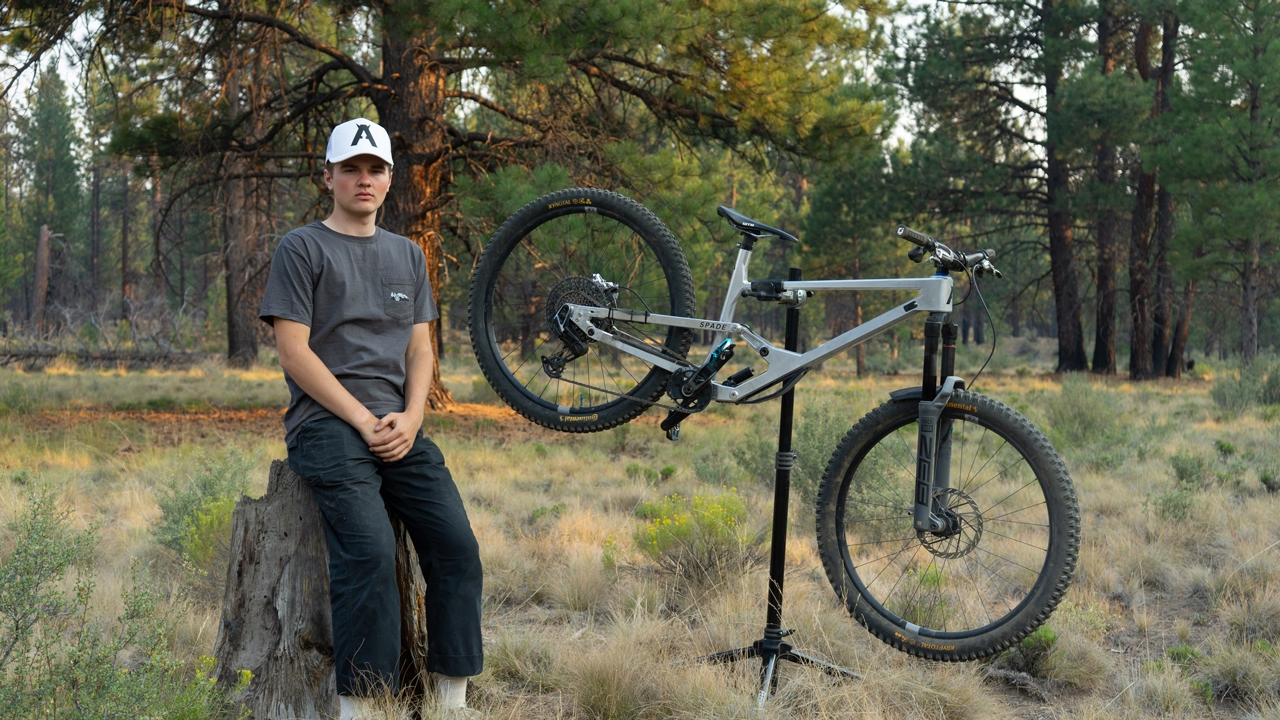
Bend-grown 21-year-old Ethan Eggert founded Arid Cycles after high school. Arid’s full-suspension mountain bike frames are modular, allowing for a rider to select customized options when building the frame. Still in the prototype phase, Eggert plans to open pre-orders this fall. He’s proud to have stayed in Bend to pursue his project. “The market for high-end is there, and it still has room to grow,” Eggert said. “We’re in a good place because we have what people are looking for that they can’t find at the other brands.”

close up of the arid cycles bike frame
Arid Cycles Bike Frame | Photo by Tanner Barclay

Besides the technical merits, working with a custom builder offers real-life value, allowing rider and builder to develop a relationship like that between surfer and shaper.

“You’re supporting someone who’s passionate about what they’re making,” said Max Keegan, who custom welds about three to five bike frames a year as part of his project, Mostly Forever. Frames sell for between $1,900 and $2,500. “It’s sort of the farm-to-table deal, a closer circle. I get the materials, I make a bike frame, and I give it to you—versus a bike frame made overseas, shipped to a distribution center and then shipped to a bike shop.”

Cyclists from Bend and beyond are becoming aware of the incomparable custom-build options taking off in Central Oregon. “For those riders who have been on the other top-shelf bikes, there’s a growing segment of folks who are looking for something different, cooler and more progressive that separates their riding and puts it on the next level of what’s possible,” Argonaut’s Rudisill said. As far as cycling in Central Oregon goes, from its extensive trail options and routes to its emerging custom builds, nothing is impossible.

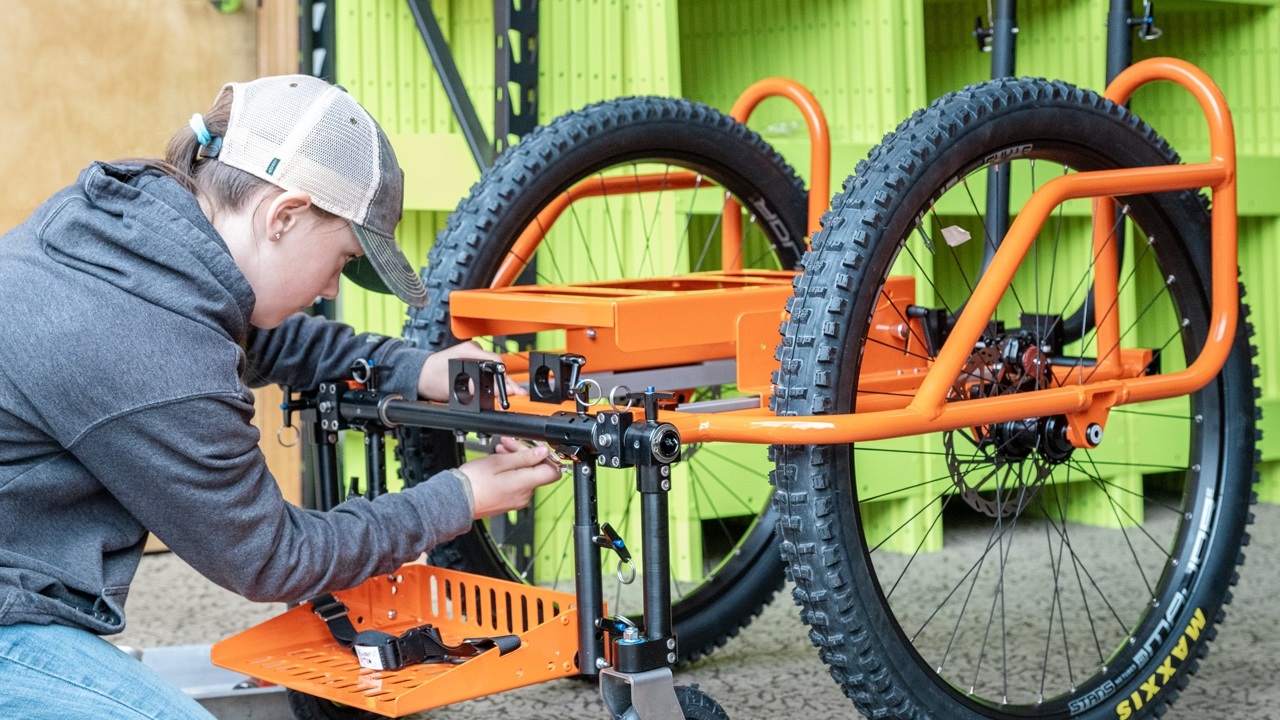
Advenchair
Each AdvenChair is made by hand. Photo courtesy of Advenchair

Access for All

Rich in innovation and collaboration, Central Oregon does not limit itself. When Geoff Babb suffered a paralyzing stroke in 2005, he refused to give up his passion for trails. In response, Babb pursued an off-road wheelchair that could explore places like the Grand Canyon. Babb tested his first AdvenChair in 2016, and today his volunteer-run nonprofit provides all-access wheelchairs for people from age 6 to 96 who previously couldn’t get to places such as Smith Rock in a standard wheelchair.

An AdvenChair costs around $12,000, but Babb works with outdoor schools and tour operators in the United States and beyond to make the chairs themselves more accessible. “We’re allowing a whole range of people to be outside enjoying nature,” Babb said.

Central Oregon’s strong sense of community and entrepreneurship provided the ideal environment for AdvenChair to get rolling.

“Really important locally is just being in Central Oregon where there are so many small businesses, so many startups,” said Babb. “I really benefited from being in this incubator, in this small, very supportive group of companies.”

Heritage Apple Corps Preserves Agricultural History

Rediscovering and Rehabilitating a Historic Orchard

Crooked River National Grassland is more than earth and sky; it is a land steeped in history that whispers to passersby. Observant locals have long heard this call and noted clusters of unusual trees tucked on the hillsides across the grasslands, including in the foothills of Grey Butte near Culver. Surviving more than 120 years, the trees are a rare grove of fruit trees that persist in what is known as the Enoch Cyrus orchard, a remnant of the Cyrus homestead settled in the 1880s. [Photo above of Matt Cyrus]

Taking a bite of one of the apples that ripen in this orchard might be like tasting time itself, a shared experience eating an apple from the same tree that Enoch Cyrus did 130 years ago.

“These orchards are a unique blend of natural heritage, cultural memory and resilience; they evoke a zen that brings people together for a common cause,” said Carolyn “CJ” Johnson, founder of In-Cahoots Heirloom Apple Collaborative and one of the residents leading the charge to draw attention to these early orchards.

The fruit trees are modern day denizens from the cusp of a period known as the age of fruit diversification and migration (1801-1880), an era in American agricultural history typified by the transition from wild seedling orchards associated with icons like Johnny Appleseed to the development of varieties with more commercial potential. Before the Honeycrisp and Red Delicious apples found on grocery shelves today came hundreds of heirloom varieties used for drying, eating and cider making, important elements in the livelihoods of families on the Western frontier.

Carolyn CJ Johnson of In Cahoots Heirloom Apple Collaborative
Carolyn “CJ” Johnson, Heritage Apple Corps

Heritage Apples Link Past to Present

The genetic diversity of apples is extensive. Apples are “not true to seed,” meaning the seeds in the apple you eat do not grow a tree that produces the same type of apple. The apples in the Cyrus orchard tease an imagination with names such as Yellow Transparent, Blue Pearmain, Northern Spy and Red Astrachan. But they aren’t the only varieties in the orchard. Genetic testing has identified a number of trees that do not share all of the genetic markers of any documented varieties of apple—meaning they may very well be one-of-a-kind trees that exist nowhere else on earth. Duane Ecker, a retired Forest Service silviculturist who first noticed the trees more than 20 years ago, shared how important it is to protect and maintain these apples for generations to come. “If we lose them, we have lost the genetic source of these varieties,” he said.

Cyrus Family
Cyrus Family, back row: Brian, Morgan, Joe, Connor, Emma, Matt and William Cyrus | Middle: Keith and Connie Cyrus
Front: Jameson and Maeve Cyrus

In 2023, a dedicated group of fruit lovers rallied around these tenacious trees that had survived without attention, determined not only to fortify the orchard remnants, but preserve the heritage varieties and share their story with the community. The U.S. Forest Service and In-Cahoots Heirloom Apple Collaborative hosted workdays to clear brush from the orchards and undertook genetic testing to identify fruit varieties. In 2025, they partnered with The School of Ranch to create the Heritage Apple Corps.

Close up of Cyrus Apple Bloom

The Heritage Apple Corps recently hosted a workday with the descendants of the Cyrus family and secured financial support from Discover Your Forest to lead restorative efforts and rejuvenate the surviving trees. “These orchards are living histories,” Forest Service botanist said Maddy Shriver said, “connecting people to their community’s past.

See more at School of Ranch Heritage Apple Corps.

Matt Cyrus standing in the orchard in Central Oregon
Matt Cyrus in the orchard
Moments of Connection During Bird Hunting Season

On the migratory superhighway of the Pacific Flyway, Oregon is an avian apotheosis, or at least a scenic resting spot on the 5,000-mile route for more than one billion birds annually. Offering cover in riverside thickets, forest understory and marshland, the state also has one of the longest bird hunting seasons in the country, duck season begins the second weekend in October and runs through January. In the same way that patterns of flight are imprinted by evolution, hunting is part of canine DNA and that goes for humans, too. [Photo above: Donny Farrell with Duke near Summer Lake, Oregon]

Widge, Gillian Murkin and Quin

Gillian Murkin was introduced to hunting 13 years ago by her husband Andrew and his dog, Mally, short for Mallard. She fell in love with the sport by watching dogs and how they worked.

“If you’ve ever seen a child with one toy at the top of their list, it’s like that for the dogs. They get that look on their faces when retrieving as if it’s Christmas, a birthday and New Year’s Eve all at once. It’s everything they love all in one moment,” she said.

Andrew Murkin and Quin

“Quin’s goal is to be where Andrew is. She’d be in his skin if she could. It makes her happiest to give up what she retrieves since her whole world revolves around him.”
—Gillian Murkin

The Murkins, with their labs Quin and Widge (named for Harlequin and American widgeon ducks) have been to the wetlands near Summer Lake for opening day of duck hunting season for the past eight years, but it’s not just for sport.

“People may get a negative impression of hunting, but it’s an intentional use of time,” Gillian said. “I get to sit in nature with my dog. If we’re lucky, we’ll get something to eat, a bird or two, but the best part is the magic of being out there when nature doesn’t know you’re watching.”

Hunting allows instinct take the lead, naturally.

Roosters Are Her Life’s Work

An Essay by Gary Lewis

Pepper. I wrote her name on a piece of paper. Stuck it on my bulletin board. Looked at it a few times for the better part of a week. I knew the right pudelpointer was out there somewhere. The promise of this breed is to be a versatile dog with “birdiness,” desire, a strong field nose, endurance, pointing instinct and a family companion. I made a couple of phone calls and heard of a female puppy with no name and a purple collar, owned by the Daytons of Lost Valley Gundogs in Nampa, Idaho. We drove to Nampa, picked her up and brought her back home to Bend.

Then, at four months old, she knew it was a special day because I put a bandana on her. A red bandana meant a ride in the truck. This new fuzzy-faced pup was so young that she did not even know what she was made for. We drove north to Maupin and ended up at Sage Canyon Outfitters where I asked if I could take the puppy for a walk, let her smell the smells and hear the sounds of guns in the distance. We walked in and out of the marshes and once she jumped a pair of meadowlarks and then a snipe. She quartered back and forth, checking back to see that I followed.

Back at the clubhouse, I let her get a sniff of a rooster’s tail feathers. “This is your life’s work,” I told her. Lucky dog.

Gary Lewis and Pepper

A Dog With Heart

Sometimes we hunt in asparagus fields, sometimes in furrows sown to wild rye and sorghum. We might walk along a railroad track with a quarter mile of Russian olive and cottonwoods, tall grass and tangles of blackberry with cattails in the creek bottoms. We want to start quietly with no slamming of car doors or whistles or shouts.

If the birds are before us, there will be a scent cone to find. A dog quarters back and forth to sort through the smells, discovering, cataloging and discarding tendrils of scent. While there may be rabbits and meadowlarks in the cover, dogs know these are not our game. As a dog works out the trail, a rooster is likely to move ahead at first and then buttonhook and go back the way it came.

The dog may lose the scent and reacquire it a dozen times, but if it is experienced, it will make smaller moves, adjusting to find the scent cone again. And when the scent is strong, the dog knows to stop, often with one front foot held off the ground, its body rigid, tail flagged, afraid to move, nose and eyes locked on the spot where the bird has stopped.

We communicate with whispers or hand signals, guns muzzle-up, trigger fingers along the actions. This is when a young rooster will flush, while an older bird might lock up tighter. The bird lifts its wings and—kuk-kuk-kuk—clears the cattails and tilts into the wind and for a moment it is in range of the guns. 

There is no more glorious moment than when the dog has pointed the rooster and the approaching hunter puts it to air. There is a shot, and the dog sees the bird drop and dashes forward to catch its scent again, pin the rooster to the ground then turn to seek its master.

Pepper will be going into her first full hunting season with as good a start as we could hope for. She’s a dog that back home is eager to please, knows her place at heel and by the hearth, and has won our hearts. Because she gives all of hers.

Mentoring Filmmakers with BendFilm’s Basecamp

At a moment when Sundance Film Festival is poised to move from its Park City, Utah, home of four decades to Boulder, Colorado, BendFilm is doubling down on staying local and being indie. With a honed vision to support emerging independent filmmakers at its new Basecamp mentorship retreat and with a program of North American films, the nonprofit’s Bend Film Festival moves into the future with a focus on connection.

Founded in 2004 by Katie Merritt, the first Bend Film Festival brought culture, cash prizes for filmmakers and parties open to all attendees to Bend, plus VIPs, like Gus Van Sant, and put it on the national film-circuit map.

Being part of a community and a shared experience is one of the incomparable experiences of a film festival. In 2024, Bend Film Festival drew its highest-ever attendance, and with that momentum in mind, it added a day, going from a four- to five-day event held October 8 through 12, 2025. It also introduced Basecamp, an immersive retreat held at the Caldera Arts Center near Sisters, Oregon.

“Basecamp feeds into the idea of a discovery film festival,” said BendFilm’s executive director Giancarlo Gatto. “We’re helping build a platform for filmmakers. It’s not just people coming here to see the films, but for people to connect within the industry.”

Expanding the Lens of a Film Festival Experience

In its second year, Basecamp’s intensive four-day residency program invites 45 emerging or mid-career filmmakers for hands-on workshops, industry networking, creative collaboration and real-world guidance from film-industry experts. “We wanted a program to help launch a career, not just a film,” said John Cooper, former director of Sundance Film Festival and a consultant to BendFilm. The Basecamp cohort spent three days at the inaugural session with mentors including power agent Craig Kestel, producers Christine Vachon (“Carol”) and Effie Brown (“Real Women Have Curves”).

“Basecamp gave me the creative reset I didn’t know I needed,” said Bend filmmaker Erin Galey. “It was mentorship, community, and creative oxygen all in one.” A veteran of the film industry with 23 years of experience, she found the experience invaluable, particularly for the practical skills like pitching that are rarely taught in film school. “Something inexplicable happened when we were there, which created a connection that was really magical,” she added.

John Cooper speaks to the inaugural Basecamp cohort.

Basecamp and BendFilm Forge Connections

“The secret is that the mentors get as much out of it as the fellows,” said Cooper. Basecamp adds one more layer of connection to a film festival experience—whether it is filmmaker to mentor or audience to the art. “What you’re really building is relationships and a form of loyalty to a place and
an experience.”

Furthering the interaction, this year’s Basecamp program culminates in a public pitch event during Bend Film Festival’s opening day, allowing audiences and industry insiders alike to witness stories at their inception. This is an increasingly rare opportunity in a marketplace that often only rewards finished products, according to Cooper. Providing momentum leading up to the festival, it also ties the public into the filmmaker experience. “The experience is a stoke. To be in an audience, to rub elbows with filmmakers and the industry,“ BendFilm’s Gatto said. “Basecamp is an opportunity for us to lean in and create something special as an education piece and to platform these emerging filmmakers.”

Filmmaker and cinematographer LaRonn Katchia.

Defining Festival Margins

BendFilm has also strengthened its own point of view. Starting in 2025, the juried competition will spotlight films with majority financing from, or shot in, North America. “It’s not about excluding the rest of the world,” Gatto explained. International films will be shown in noncompetitive categories to ensure the festival retains its global lens while amplifying regional voices, he said.

A major festival like Sundance shifting out of its founding location signaled both a logistical and philosophical rethinking of how and where stories are shared. Today, viewers are curators by streaming a personalized experience each evening in their living room. But BendFilm’s programming power can connect communities and continuously contribute to the local cultural landscape. Year-round, BendFilm operates Tin Pan Theater, a boutique cinema, and supports the Future Filmmakers Program, summer camps, the IndieWomen advocacy group, and a BIPOC Women Production Grant.

“Theories may divide us, but stories unite us,” said Cooper. “Telling stories is what helps you break down walls. It’s a shared drama when as humans, we have something that resonates with you. Film is an amazing storytelling device.” By attending a film festival, “you can own a moment in a film’s life,” he said. BendFilm’s Gatto agreed,  “We’re not just building a festival,” he said. “We’re building a pipeline, a culture, a community.”

Learn more about the Annual Bend Film Festival

Sakari Farms’ Blueberry Tea

Some teas ask for your full attention. Sakari Farms’ Blueberry Tea isn’t one of them. Instead, it offers a tender moment of calm—something fragrant to savor while you ease into a morning or unwind into an evening. Made with antioxidant-rich blueberries, wild rose petals, jasmine flowers and bachelor buttons, the blend is as visually striking in its violet color as it is grounding in flavor.

Sakari’s founder Spring Alaska Schreiner of the Chugach Alaska Native Corporation/Valdez Native Tribe, is an Indigenous agriculturalist, ecologist, seedkeeper and Native fashion designer (among other roles). She created the tea as part of her mission to restore access to First Foods—those traditional, culturally meaningful ingredients that have nourished Native communities for generations. “We grow everything ourselves,” Schreiner said, with the exception of the jasmine flower, which is organic and ethically sourced. “It’s all medicine. And it’s simple.”

Steeped hot and sipped with a spoonful of local honey or poured over ice in the fading heat of September, the tea is versatile, seasonal and clean. It’s not perfumey, but rather just aromatic enough to feel special. The rose petals support digestion, the bachelor buttons are known to ease headaches, and the blueberries, beyond their vitamins, may awaken memory for Native drinkers. Schreiner calls this “blood memory,” where the sight of a familiar berry recalls ancestral knowledge, such as moments spent gathering food with aunties and grandmothers along the creek.

Originating from a six-acre farm in Tumalo, Sakari’s products are viewed as more than a provision; they’re a source for education and reconnection. “I’m trying to slow people down,” she said. Sometimes, it just takes a teapot and a moment of intention. See sakarifarms.com.

Brew Tip:

1 tablespoon loose tea per 6 ounces of water.
Steep covered for 5 minutes.
A longer steeping time yields a stronger jasmine flavor.

Cascade Equinox: An Elevated Festival Experience for Everyone

Attend an unforgettable multi-day festival experience at Cascade Equinox. This vibrant multi-modal event offers a highly-curated celebration of art and community with music, art, food, spa experiences and activities for all ages.

See both favorite nationally-recognized artists and discover new bands. Cascade Equinox has selected an eclectic roster — from well-known headliners to local favorites and new-on-the-scene artists. There’s something for everyone, with genres spanning from jam and electronic to funk, soul and bluegrass. Across six stages, energetic performances feature unique stage designs and light shows that pulse with the energy of the crowd. 

Get lost in Cosmic Drip, the festival’s interactive art experience. This exhibit isn’t your classic, don’t-touch-just-look experience. Festival-goers become part of the art as they interact with the installations and get their hands dirty in the live painting lounge. Cosmic Drip offers more than just visual art, it’s an experience of the senses with music, poetry and even healing arts. 

Unwind at The Oasis and The Healing Garden. Decompress at The Healing Garden with yoga and meditation classes or a session with a massage, acupuncture, chiropractic or Reiki practitioner. Finish your spa experience at The Oasis mobile bathhouse with a shower, sauna, cold plunge, or massage.

Shop, play and dine at the festival’s different environments. From indoor roller skating at the Solar Spin to shopping at The Nomadic Market, Cascade Equinox offers entertainment of all varieties. Play all day and refuel at the Culinary Commons or grab a drink at one of the festival’s many social areas—The Grotto, The Inner Circle or The Grove. 

Cascade Equinox is a festival for the whole family! Cascade Equinox offers engaging day camps for children of all ages in the Orbit Family Zone. While the kids play, parents can enjoy the elevated experience of a festival reimagined for Central Oregon that recognizes the natural landscape and adds layers of an art and musical landscape.

WHEN: September 18–20, 2026
WHERE: Deschutes County Fairgrounds, Redmond, OR
CascadeEquinox.com

cascade equinox events from 2023

More About Bands Performing


OSU-Cascades in Bend Looks to the Future

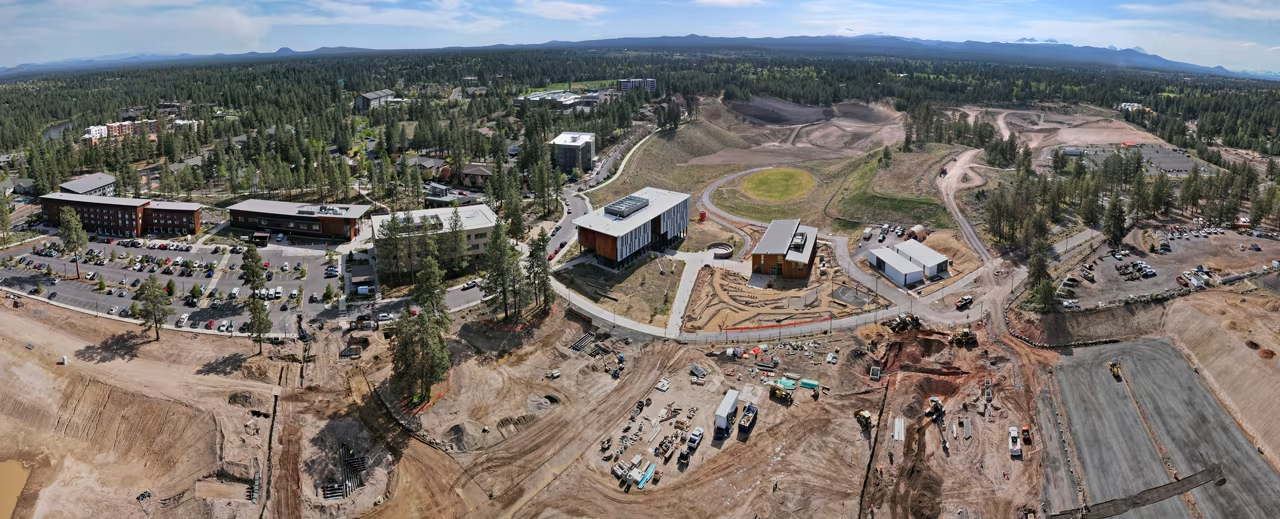
Once a dusty pumice pit and landfill at the edge of nowhere, it’s one of the most ambitious campus projects in the country today. Oregon State University-Cascades has transformed Central Oregon from a university desert into a rising academic power. In just 25 years, blighted ground has become the beating heart of Central Oregon’s evolution into a vibrant educational city.

Until the late 1990s, it was merely a long-held dream among Central Oregonians that they or their children could earn a four-year degree without leaving the area. As Bend moved beyond its roots as a timber town and entered the 21st century, it began reshaping itself around outdoor recreation, tourism, craft brewing, healthcare, tech startups and remote workers. The population grew, demographics evolved, and what was once a distant hope for local higher education began to feel possible and, in many ways, essential.

OSU Cascades Campus

COCC – How It All Began

In 1999, an Oregon University System advisory board recommended a partnership between a capstone university and COCC to bring four-year degrees to Central Oregon. Oregon State University was selected and opened a branch campus on COCC’s campus in 2001, supported by $7.2 million from the state legislature.

Students followed a “two-plus-two” path, starting at COCC and finishing at OSU-Cascades. By 2009, enrollment hit 611, but the campus faced challenges, including leadership turnover and confusion with the University of Oregon’s presence on the COCC campus. That year, Becky Johnson, OSU vice provost for academic affairs, was brought over from Corvallis to lead the campus as lawmakers questioned whether it should remain open. “The Ways and Means Committee was holding hearings about shutting us down, but the community rallied,” she recalled, noting that more than 600 people either attended the hearing or submitted letters supporting the proposed campus. “I was so moved—I didn’t expect that level of support.”

If there was any doubt in the legislature about Central Oregon’s commitment, Jane Teater and Amy Tykeson quickly put it to rest. The two spearheaded a grassroots fundraising campaign that raised $4 million in private donations within weeks, a clear testament to the region’s strong belief in the vision for OSU-Cascades. Around the same time, a State Board of Higher Education working group, chaired by Kirk Schueler, president of Brooks Resources—who brought expertise in real estate, finance and accounting—recommended that Central Oregon be served by a single, comprehensive, degree-granting institution that could offer graduate programs and research aligned with local industries. That institution, the group concluded, should be Oregon State University.

OSU Cascades Campus

The Next Step: A Permanent Campus

Johnson assembled a star-studded group of seasoned experts in local real estate and development, including Schueler, Mike Hollern, Todd Taylor, John James and Bill Smith. “We got a map of everything in Central Oregon—from Bend to Redmond to Prineville, to keep our eyes wide open,” Johnson said. The team settled on an old pumice mine and a demolition landfill in the heart of Bend with 10 acres of clean dirt.

“It gave us so much long-range opportunity for the university to pursue a 50- to 100-year vision,” Johnson said. “Who better than a university to take that on? And who else can take the time and get help from the state and Corvallis?”

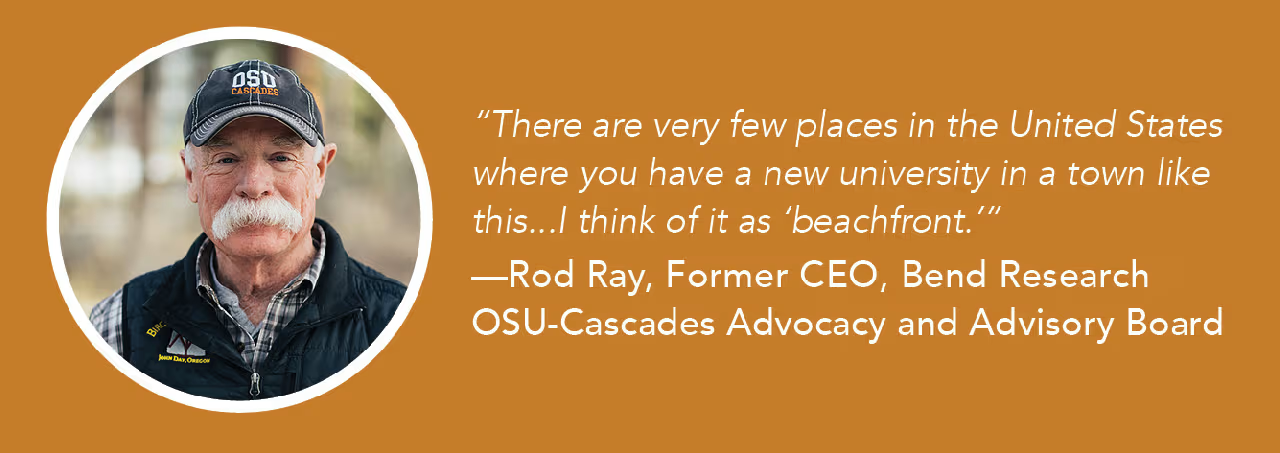
Rod Ray, a key supporter of OSU-Cascades from its inception and former CEO of Bend Research who grew up in Bend, recalled the early years as rocky. But he credits Johnson’s determination with seeing the vision through. “She was relentless,” he said. “She was the visionary. Sure, we all helped her, but she was clearly the leader, and she had Ed’s support,” he added, referring to then-OSU President Ed Ray.

Momentum Grows

Between 2009 and 2019, momentum for OSU-Cascades surged through community advocacy, government backing and significant philanthropic support. Residents traveled to Salem to lobby for legislative support, while local leaders advanced plans for a 128-acre campus.

The campus opened in 2016 with its first building, Tykeson Hall, and its largest incoming class ever. A 300-bed residence and dining hall, plus academic space, followed in 2017. In 2018, the Oregon Legislature approved $39 million for the university’s second academic facility—a STEAM building to expand programs in science, technology, engineering, arts and math. It would be named Edward J. Ray Hall in honor of the former OSU president. The most recent addition is the $22 million Student Success Center, which opened in January 2025, partially funded by the students themselves.

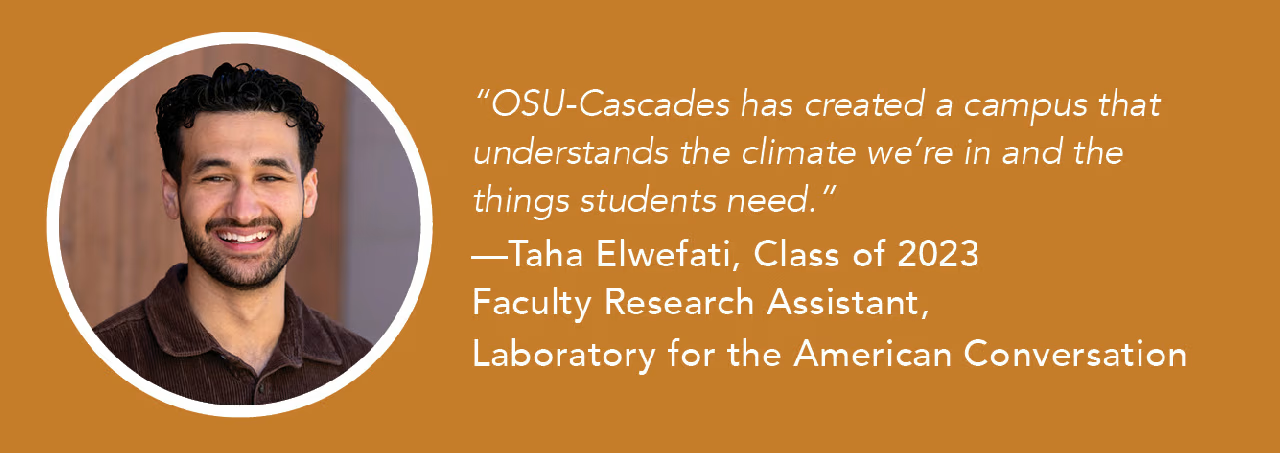
Taha Elwefati, the son of Libyan immigrants and a Summit High graduate born and raised in Bend, earned his degree from OSU-Cascades two years ago. Of his many accomplishments during his three years as student body president, he’s most proud of helping secure the student contribution of $5 million for the new student center.

Repurposed Ground: A Creative Vision for Land Use

Oregon State University-Cascades campus is a striking example of transformation, rising like a phoenix from a landscape once scarred by a demolition landfill and pumice mine. For the past several years, the campus has undertaken a massive remediation project to clean and recycle debris from Bend’s dismantled timber mill and other construction projects in Deschutes County.

University leaders believed building a campus from nothing was an opportunity to showcase sustainability through reclamation and remediation. Jarrod Penttila, associate director for capital planning and construction management, said that the campus is designed with the future in mind. “We’re putting in infrastructure to improve our sustainability over the next 30-plus years,” he explained. The ultimate goal is to achieve net-zero status in terms of energy, water and waste.

The first phase of OSU-Cascades’ land reclamation project focused on stabilizing the steep, 80-foot cliffs of the old pumice mine and testing methods for cleaning up a former landfill. Crews have been working on the site’s 72 total acres of landfill, using a giant vibrating screen to separate soil from larger pieces of waste, such as metal and plastics. “We’ll likely reclaim about 50% soil from the landfill, which we’re able to test for contaminants like asbestos and monitor in cooperation with Oregon DEQ,” Penttila said. Reclaimed soil from the landfill now forms the understructure for the grassy Oval Green at the center of campus.

A key element of preparing the land for use was to keep all the materials on site. “We’re able to clean up the landfill and pumice mine without taking anything on or off the site,” Penttila said. Instead, the waste is being re-landfilled in a giant hole in the northwest corner of campus to create passive uses like parking lots and recreation fields.

Benny the Beaver from OSU Cascades

A Mission to Serve the Community

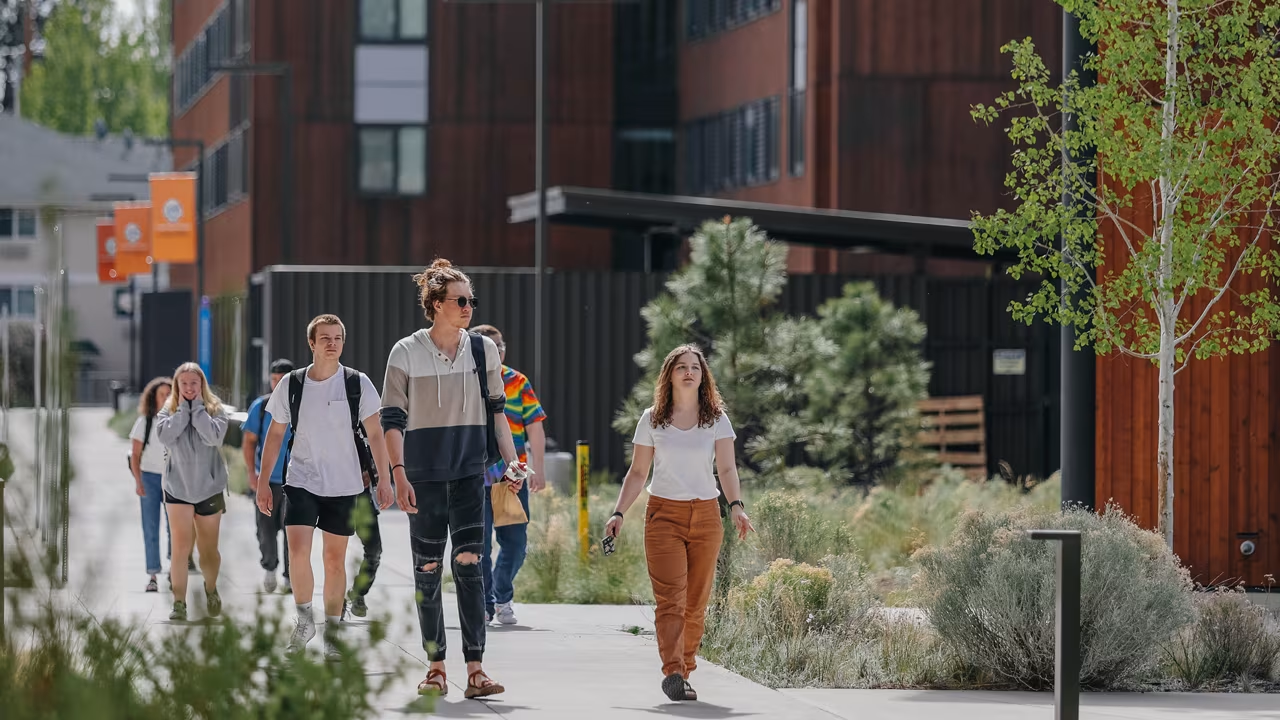
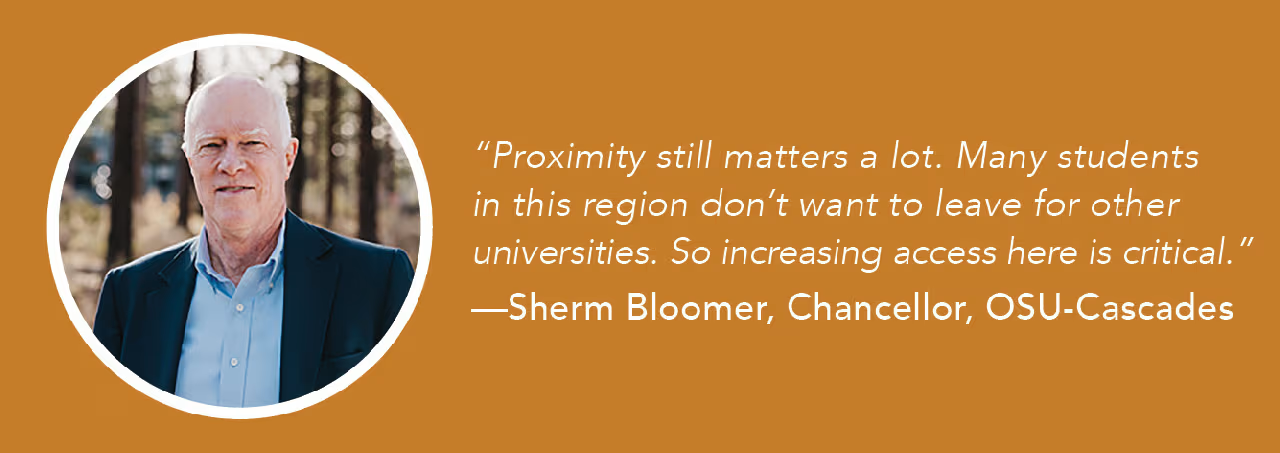
The 2025 numbers tell a clear story of success. Oregon State University-Cascades has graduated 5,960 students, 67% of them from Central Oregon—many the first in their families to earn a college degree. “Proximity still matters a lot,” said Sherm Bloomer, chancellor of OSU-Cascades. “Many students in this region don’t want to leave for other universities. So increasing access here is critical.”

Compared to other Oregon public universities, OSU-Cascades students are distinct in that they are choosing an education from a top-tier research institution in a smaller setting. In 2025, 340 students graduated, including 23 active-duty military or veterans. The campus serves 1,500 students across more than 25 majors.

Elwefati chose OSU-Cascades after visiting the campus and connecting with its tight-knit community. “The small class sizes, engaged faculty—many with impressive credentials—and affordability made it a compelling choice,” he said, adding that scholarships and proximity to home also played a major role.

Chancellor Bloomer emphasizes that the campus is shaped by regional needs. “We started mechanical engineering because there’s a demand in the community. We’re launching an accounting program this fall. Outdoor products are another—something that doesn’t exist in Corvallis but makes perfect sense here,” he said. Other locally relevant degrees include environmental science, hospitality management, energy systems engineering, natural resources, and tourism and adventure leadership.

“It’s not about building a college town. It’s about being in service to the community,” Bloomer said. “We don’t aspire to be a standalone four-year university. We’re part of a big, nationally prominent research institution. Most regional public universities don’t offer a doctoral degree in physical therapy.” The program, which launched in 2021, graduated 44 students in 2024. Many are now working in clinics and rural areas where access to physical therapy is limited. “It works here because dozens of clinical sites exist in this region that don’t exist in Corvallis.”

Looking to the Future

“We’re now looking ahead to the next five to eight years of program development,” Bloomer said. An innovation district is planned on 24 acres of the campus to accelerate regional economic development and foster innovation in Central Oregon. Ten acres of that district are near completion, and 14 acres are set aside for that goal. 

“The benefit of having an innovation district at this campus is that two or three industry sectors are gravitating toward Central Oregon, and OSU has built up a curriculum that supports the business side of it,” said Katy Brooks, Bend’s economic development director.

Ray, former CEO at Bend Research, teaches a class on thermodynamics, giving him a unique perspective. “I’m right at the interface between the university and many of the companies around town,” he said. “The community has started to perceive a lot of value in the university, and industry is seeing its potential…It’s on a very positive trajectory.”

“I see a university that took a moonscape and turned it into the ultimate high-value use of public investment—getting something ready for private investment,” Brooks said. “That changes a hole in the ground into a world-class university. Shame on us if we don’t leverage that.”


Lisa Hale
Lisa Hale
previous arrow
next arrow

Keep Reading: Choose Your Own Adventure: OSU-Cascades Edition


Post from 2017

The Tykeson Family Charitable Trust of Eugene was recently recognized by OSU Cascades when it announced that the academic building now under construction has been named the Tykeson Building. The foundation was honored for its long-standing support of a four-year university in Central Oregon. The trust first supported the university in 2012 with a $1 million gift, and recently committed an additional $1 million to the campus’ expansion. Tykeson Hall opens this fall with 43,650 square feet of space in three stories. The building will include eight classrooms, three laboratories and a computer lab. The building will also house faculty offices and student gathering and working areas.

Other campus buildings under construction include the living and dining halls, which are slated to open in early 2017. Monitor construction progress by signing up for OSU Cascades construction updates at news@osucascades.edu.

The Home of Jackie and Tinker Hatfield in Bend

A larger-than-life image of Will Rogers peers out over the great room. It sets the tone for many design choices that Nike shoe designer Tinker Hatfield and his wife Jackie made for their newly completed residence in Bend. [Photo above by Benjamin Edwards]

Jackie’s connection to Rogers, an American humorist, vaudeville performer and Oklahoma native, dates back to the early 1990s when she saw “The Will Rogers Follies,” a Broadway musical celebrating his life and legacy. Jackie’s degree in recreation and park management from the University of Oregon influences how she hosts family and friends, and how she envisioned a home. When the couple visited Rogers’ historic ranch in Pacific Palisades, both its spirit and style left a lasting impression. (It was destroyed by fire in 2025.)

Tinker Hatfield
Photo by Kaitlin Green

Tinker, a University of Oregon-trained architect and the designer behind many iconic Nike sneakers like the Air Jordan series, used his laptop stylus like a brush to create the image of Rogers. Set in the American West, Rogers is wearing jeans, boots and a cowboy hat, and holding a lasso.

A rope coils across the living room table, a temptation to throw it around “Rusty,” the metal steer just beyond the sliding glass doors. A replica of Rogers’ cattle brand leans against the stone fireplace, its shape echoed in architectural details and ironwork throughout the residence.

Tinker Hatfield
Two seats (circa-1967) from Autzen Stadium, replaced during the arena’s 2002 renovation. | Photo by Kaitlin Green

Designing a Modern Ranch House with Character

“Apart from the Will Rogers story, there’s a design story,” Tinker said. As the home’s architect, he faced the challenge of a triangular lot on a sloping hillside set in an older neighborhood off Portland Avenue. “Simplicity was the driving factor in design,” he said, adding that Bend architect Thomas Fagan partnered with him to create design plans. Another challenge was trickier: getting Jackie’s approval. “I spent five months [on various designs]. She was the most difficult client I think I’ve ever had,” he joked. “It’s a compliment because most people don’t really know what they like.” In the end, the couple found shared inspiration in the world of Will Rogers, blending western motifs with modern design that pleases both.

Tinker Hatfield
Tinker found inspiration from the Robert Wesley Amick painting (above the fireplace) to create the Nike Air Mowabb. | Photo by Kaitlin Green

The modern farmhouse, rectangular in form, has a great room anchoring one end. A stone fireplace, wood ceiling and exposed steel cross supports lend a rustic feel with a touch of contemporary grit. Tinker gave the room expansive windows to take in views of the surrounding neighborhood, while Jackie chose curtains, rather than blinds, similar to those in the Will Rogers house.

The other end of the home contains the private quarters: a bunkroom behind the kitchen that sleeps nine grandchildren, and above it, a second story with the primary suite, a guest bedroom and a “flex” room that serves as an office and guest space, complete with a Murphy bed. One last-minute addition from Tinker during construction was a playhouse outside the primary bedroom, cleverly tucked into a hidden space.

In the Kitchen of Tinker and Jackie Hatfield
Photo by Kaitlin Green

“There is a story behind every corner of the house, from the hammered stairway ballasts to the wheel-brushed hemlock trim and the custom fireplace stonework,” said Sarah Westhusing, House of Milo founder and interior designer. “This project is a beautiful showcase of local craftsmanship and modern architecture.”

Tinker Hatfield
Photo by Benjamin Edwards

A Welcoming Home

Renowned for their hospitality, the Hatfields chose the location not just for its walkability to downtown, but for the open-door lifestyle it supports. Their daughter lives across the street with two of their grandkids, who are always running back and forth between the two homes. “Friends can stop by unannounced on their bikes and hang out on the porch or have something to drink,” said Jackie. “That’s the way we want it to be here. That’s why we didn’t build in a gated community. We want to be part of the neighborhood. It’s an invitation to connect.”

Tinker Hatfield
Photo by Benjamin Edwards

It’s easy to imagine friends milling around the firepits beneath a large solar tube, holding plates of home-cooked food Jackie prepares and sets on a buffet counter near the grill. When it’s time to eat, she assumes the role of a camp counselor—a position she actually held at Colorado’s Sanborn Western Camp—and rings the dinner bell.

The scene wouldn’t be complete without the Hatfield’s grandchildren barreling out of the bunkroom, a space designed just for them, with built-in cubbies, wall niches for reading lights and spots for a favorite toy or stuffed animal. “It’s perhaps everyone’s favorite room,” said Westhusing.

Tinker Hatfield
Photo by Kaitlin Green

Not Just a House

From the Robert Wesley Amick painting Tinker found at a garage sale—now hanging over the fireplace and inspiring the design of his Nike Air Mowabb sneaker—to the many custom, often quirky details, the home reflects his creative spirit. “[That] combined with Jackie’s consistent vision, everything works together,” Westhusing said. “The house feels full of life and personality.”

Tinker Hatfield
Photo by Kaitlin Green

Whether they’re hosting friends, watching their grandkids play or gearing up to ski, cycle or stroll into town for morning coffee, their Bend home is a lived-in expression of creativity, connection and warmth. As Will Rogers once said, “Live in such a way that you would not be ashamed to sell your parrot to the town gossip.” With its open-door charm and personality-infused character, the Hatfields’ home speaks volumes—no parrots necessary.

Modern Mirage

Tinker Hatfield
Photo by Kaitlin Green

Privacy and personality coexist in a screenwall that creates both a sanctuary and an evocative dreamspace. Here, the Painted Hills in Eastern Oregon were the inspiration for laser-cut metal art with high contrast and low tones that is also functional, sliding open for a real-world view. 

Architect/Designer: Thomas Fagan, Studio Mas / Interior Design Studio: Sarah Westhusing, House of Milo / Fabrication: Skye Kimel, Downtown Ornamental Iron

Accelerating Toward Success with Snowshoe Leather Care

When it came time for a fourth-generation company to step into the 21st century, there was no better person for the job than Tiffany Huey. As founder and CEO of Bend-based Snowshoe Leather Care, she stepped into the shoes of her great-grandfather, who transformed the business from a hobby to become a thriving heritage brand.

Raised in Portland, Oregon, Huey has a broad marketing background and built her career with Fortune 500 companies such as Starbucks, PepsiCo. and Nestle. To help position Snowshoe Leather Care, Huey participated in the Bend Outdoor Worx program, which supports innovative outdoor-focused companies. Here, she shares her experience of respecting a company’s history while accelerating it into the future.

What is the lineage of your family business?

Snowshoe Leather Care was founded in 1927, back when snowshoes were made with leather bindings—hence the name. Those bindings had to be soft, supple and waterproof to perform well in harsh conditions. While leather snowshoes are a rarity today, the product lives on because it restores leather’s beauty and enhances its durability. My grandfather purchased the business from my great-grandfather around 1950 after he retired from the railroad. It was meant to be a small hobby, but he grew it significantly. At one point, Snowshoe products were sold by retailers like L.L. Bean and JCPenney. During the past few generations, the company became more of a side hustle for my family until I decided to leave my corporate career and return to my roots. I knew we had a remarkable product with a cult following and a rich story—I just needed to give it the care and attention it deserved.

Tiffany Huey You refer to yourself as a re-founder? What does that mean?

Although Snowshoe Leather Care has been around for nearly 100 years, in many ways it operates like a startup. During the past two years, I’ve rebuilt the foundation by streamlining operations, refreshing the brand, updating our packaging, building a digital presence, scaling distribution and relocating manufacturing to a rustic barn on the east side of Bend.

I may not be the original founder, but I’ve taken on the role of reimagining and reinvigorating the brand for a new era. “Re-founder” feels like the perfect word to describe that journey—and it gives me a meaningful way to tell the Snowshoe story.

The process and formula seem like an ultimate recipe for Pacific Northwest success. What can you tell us about it?

Being based in the Pacific Northwest has shaped our identity. We know rain. We know cold. And we know how to protect leather from moisture, mold and the elements. Here in Central Oregon, it’s important to moisturize leather to prevent it from drying out and cracking. With nearly a century of experience, we’ve truly perfected our approach.

We still use the same formula, equipment and ingredients my grandfather used, including beeswax, pine resin and carnauba wax, which is a type of palm wax. Our customers include saddle makers, rodeo outfitters, motorcycle leather enthusiasts and cobblers who’ve sworn by Snowshoe for decades. We’ve never felt the need to change a winning formula with a new and improved version because it already works beautifully and has such a loyal following.

How do you envision your company evolving?

We’re incredibly excited about what’s ahead. We’re currently expanding our product line, with special interest in product-specific offerings and the furniture care space. Customers have shared amazing before-and-after stories of restoring dry, pet scratched leather sofas and chairs with our conditioner, and we see a lot of potential there.

We’re also approaching our 100-year anniversary—an incredible milestone that deserves to be celebrated. I’ve been thinking a lot about how to honor the brand’s legacy. One idea I’m exploring is finding century-old leather items and telling the stories they carry. If anyone has a treasured leather heirloom with a story to tell, I’d love to hear from you!

What are some other stories that span across time?

One of the unexpected joys of taking over the business has been digging through old bankers’ boxes full of dusty files. I’ve uncovered correspondence between my grandfather and the U.S. Naval Academy, supply negotiations with European vendors and all kinds of fascinating documents. It’s been meaningful to see how he navigated the same types of business decisions I now face.

One story that stands out is Richard’s, a rodeo cowboy, rancher and longtime customer from The Grove, Texas, with a lifetime of rich experiences. He first discovered Snowshoe back in the 1960s while apprenticing under master saddlemaker Floyd Lingle in Kissimmee, Florida. Richard still rides with a saddle Floyd made for him in 1973, kept in “mint” condition thanks to decades of care and consistent use of Snowshoe Leather Conditioner. It’s stories like his—of craft passed down, of cherished items, and of loyalty that spans generations—that make this work so rewarding. Learn more about Snowshoe Leather Care on their website.

Listen to the full interview with Tiffany Huey on the new “Birth of the Brands” podcast series.
Bend Magazine’s “The Circling Podcast” with Adam Short can be found on all major podcast platforms.

The Business of Listening with StoryBooth

Adam Short moved to Bend in 1998 to pursue his dream of professional snowboarding. After several knee surgeries, he shifted paths, moved to Portland, and completed medical training in orthopedics at OHSU. In 2009, Short returned to Bend, where he practices as a physician assistant with a focus on sports medicine.

As a natural connector and listener, he started a community-focused podcast in 2021 to share the stories of local residents. Later he partnered with Bend Magazine to host “The Circling Podcast” where he continues to spotlight the voices and experiences that make up the soul of Central Oregon.

It was while learning the craft of podcasting that he and friend Dan Gummel founded StoryBooth, an event podcast-production company. StoryBooth offers an audio storytelling experience using an on-site podcast recording studio. Their proprietary process creates a custom podcast series built from the stories shared during weddings, family reunions, corporate events and legacy celebrations.

Recently, StoryBooth partnered with the Finnish brand Blocko to provide a sleek, modern structure for its pop-up podcasting space and an immersive experience that celebrates human connection.

So where did StoryBooth come from, given your background in medicine and professional sports?

Honestly, I’m not convinced StoryBooth was an idea I came up with as much as one that was waiting for someone to bring it to life. A few years ago, I read The Creative Act by Rick Rubin, and his belief that creative ideas are “in the air” really stuck with me—that they come to those who are open and paying attention.

During COVID, when my practice slowed, I finally had time to explore something new. I’d always loved podcasts, so I ordered some basic recording gear. Just as we were leaving for a family wedding, the UPS truck delivered the equipment. I tossed it in the car on a whim.

At the reception, I set up some mics on a table, thinking it might be fun to record a few messages for the couple—and learn how to use the software in the process. Within minutes, a line had formed. Fifteen people were waiting to share stories, toasts and memories. That night, I saw how naturally people are drawn to preserving a moment in time through voice. That spark became StoryBooth.

How has the response been since launching?

The response has been overwhelmingly positive, especially in the wedding and legacy-celebration spaces. People immediately recognize the value and appreciate how fun and meaningful the experience is. We often hear, “I wish this existed at my wedding,” or “I’ve never seen anything like this.”

At weddings, StoryBooth captures something photography can’t: the voice of your loved ones. A grandfather’s insight, a sibling’s inside joke, a best friend’s story—all preserved in a warm, conversational format. It feels less like a product and more like a family heirloom in the making.

Our legacy-celebration offering has struck an especially deep chord. It’s not about memorializing someone after they’re gone: it’s about celebrating and preserving the essence of a life while it’s still being lived. There’s growing awareness that audio captures emotional truth in a way no other medium can.

There’s significant opportunity for growth in both of these spaces, and I feel more prepared for that challenge after recently completing the Bend Outdoor Worx 10th annual business development program. It was like getting a crash course MBA in brand development, sales, marketing, operations and finance.

As a podcast host, what have you learned from the experience?

Hosting The Circling Podcast has made me a better listener and a better learner. It’s taught me the importance of showing up prepared, doing the research, and being fully present. Podcasting isn’t about performing; it’s about creating space for someone to be heard.

What I love most is seeing people open up—laugh, reflect, and share something real. There’s no camera, no pressure—just voice, story, and connection. Every time someone steps into StoryBooth or I sit down for an interview, I’m reminded how powerful it is simply to be heard. That never gets old.

Lately, it seems like everyone has a podcast. Why do you think the format has exploded?

Podcasting has taken off because it fits into people’s lives so naturally. You can listen while you drive, cook, hike or exercise. It meets us where we are—multitasking, craving real connection and tired of overly curated content.

More importantly, people are hungry for authentic stories, ones that aren’t overly edited or filtered. Podcasting democratized storytelling. You don’t need a Hollywood studio. If you have a mic and a point of view, you can contribute.

What we’re doing at StoryBooth is taking that accessibility and transforming it into a premium experience. We’re making podcasting tangible, immersive and tied to life’s biggest moments. And I think that’s exactly where the medium is headed, more personal, more interactive, more meaningful.

Read more about StoryBooth and keep updated on the latest episodes here.

Stay tuned for the release of the “Birth of the Brands” podcast series this fall. Bend Magazine’s “The Circling Podcast” with Adam Short can be found on all major podcast platforms.

The Big Butte Challenge in Bend

Look in any direction and you’ll spot a peak just begging to be bagged. South Sister, Broken Top, Mount Jefferson: These magnificent summits take planning and preparation to climb. Yet, there are many mountaintops that are easily crested within a few hours, and with a whole lot of snacks. 

Cue the Big Butte Challenge, a go-at-your-own pace event put on by Cascade Relays. This all-ages adventure offers community spirit while tackling peaks within driving distance of Bend. For each summit achieved, hikers receive a token that can be redeemed at the local brewery sponsoring each butte.

The idea came about in 2021, when gathering for races and other big athletic events wasn’t feasible. Realizing there were more than a handful of attainable buttes to climb—while maintaining social distance—the team at Cascade Relays started the Big Butte Challenge (named after a creative Cascade Relays team, I Like Big Buttes). Scott Douglass, co-founder of Cascade Relays, wanted this event to both challenge those who joined and support businesses within the Central Oregon community.

“Everything at Cascade Relays revolves around community,” said Douglass. “People come to Central Oregon to feel connected, and when hikers see someone else wearing the green Big Butte Challenge hat, it draws them into a sense of togetherness.”

This year, roughly 500 people are hiking, running or even biking the trails, which runs from May through October. The one who finishes bagging all nine peaks first gets a prize, but the real reward comes with each mountain conquered: stunning views of the mountains, lakes and stretches of land that make Bend such a magical place to call home. The ice cold brew is the cherry on the top.

Big Butte Cheers
Celebrations at each summit, then at a corresponding brewery in town. | Photo by Evelia Sandoval

The Buttes to Climb

Barnes Butte

Distance: 2.72 miles round trip | Brewery: Wild Ride Brewing | The volcanic landscape of Central Oregon unfolds in front of climbers when they get to the top of this butte, with the Cascades to the west and Ochocos to the east.

Black Butte

Distance: 3.8 miles round trip | Brewery: Van Henion Brewing | A steep and exposed trail makes this hike best tackled early in the day, but once at the top, climbers are treated to views of Mount Jefferson, Mount Washington and even Mount Hood to the north.

Misery Ridge

Distance: 3.6 miles round trip | Brewery: Kobold Brewing | An iconic Central Oregon hike in Smith Rock State Park, the trail takes you along rocky ledges and offers views of the Crooked River and rock climbers scaling the side of the ridge below.

Overturf Butte

Distance: 5.58 miles round trip | Brewery: GoodLife Brewing | Although it takes challengers through neighborhoods, this easy meander from Phil’s Trail to the top of Overturf is an easily tackled butte, and welcoming for dogs.

Paulina Peak

Distance: 6.12 miles round trip | Brewery: Bend Brewing Company | The push to this rocky mountain top is one of the more challenging, but well worth it. Once there, find a reward to scan views of Paulina and East lakes framed by the Cascade Range.

Pilot Butte

Distance: 2.06 miles round trip | Brewery: Worthy Brewing | It’s a popular spot in the center of town, but when Mount Hood is visible on a clear day, the top of this butte is anything but ordinary.

Tumalo Mountain

Distance: 4.04 miles round trip | Brewery: Cascade Lakes Brewing | With Broken Top and the Three Sisters standing magnificently in the distance, the view from the top of this two-mile climb just might be the best look at Mount Bachelor in Bend.

Tam-a-lau

Distance: 6.6 miles round trip | Brewery: Initiative Brewing | The Peninsula, a lava plateau at the end of a trail winding through old-growth juniper and sagebrush, offers views of the Deschutes and Crooked River canyons below.

Vista Butte

Distance: 4.3 miles round trip | Brewery: UPP Liquids | This relatively quick and mild jaunt is a popular spot to get to easy views of Mount Bachelor and the Three Sisters, and is a great option for hikers just getting their trail legs.

Keep reading to find more incredible hikes around Bend.

Sailing Away in Central Oregon

A 2 p.m. race approaches, and primal jockeying for position intensifies. Boats tack toward the starting buoy. Eyes are on telltale signs of winds in the clouds and on rippling, then choppy water, and on the other vessels of all shapes and sizes as they avoid ramming into each other. It’s “Knot a Regatta” Sunday at Elk Lake, and while this isn’t a sanctioned sailing event, bragging rights are on the line, tied to tradition and linking past and future generations.

Sailing Elk Lake
Photo by Arian Stevens

For anyone who has set out for a late afternoon SUP on a glassy alpine lake, they’ve been schooled on thermodynamics. In summer, interior land heats up and pushes wind up the mountains. Thermals pick up speed as they are sucked toward cold lake waters. With gusty afternoons, and set against a backdrop of Mount Bachelor and Broken Top, Elk Lake is one of the most peaceful and scenic places to sail in the Pacific Northwest.

Ray Peoples figured that out. Considered the “dean” of sailing as a sport at Elk Lake, he came from Minnesota and built the lake’s first sailboat in 1929 in his garage on Riverside Boulevard in Bend. He brought that 18-footer named Typhoon to his cabin on what is now the E Tract on the northwest side of the lake. There, he hoisted sails and became a figure of encouragement and enthusiasm; the Peoples cabin became a “spirit outpost” of the Elk Lake Yacht Club tradition, along with Elk Lake Resort’s marina next door.

Sailing in Bend
Photo by Toni Toreno

Today, especially on a sailing Sunday, you’ll find Lasers, Snipes and Sunfish. There are Thistles, Lidos, Hobie catamarans, a Capri Cyclone, a Flying Scot sloop and an inland scow called Punkin Seed that’s sailed on the lake since 1946. Stories are told about High Hope, a boat designed by Peoples so fast it left a rooster tail in its wake. Look for boats named Crackerjack, Lucky Puff and Kevin. Catch-22, a 22-foot Catalina Capri, sits moored off the northwestern shore to create a postcard-like vignette. But if there’s a boat synonymous with Elk Lake, it’s the Geary 18.

It’s Gotta be a Geary

With a flat bottom and lean profile, the Geary 18 is fast and responsive to quick-changing winds on a lake, making it the ideal boat for a small mountain lake like Elk. “Sometimes in a race, we’d have to make 30 tacks,” said Ron Estes, who has sailed on Elk Lake for more than 70 years. Simple and tactical, the “flatties” on the lake were the ultimate local craft: Gearys named Drake I, II, III, IV, V and VI were made in the ‘50s of wood from Brooks-Scanlon’s mill. In 1980, at the peak of their popularity, the fastest boats in the country converged at Elk Lake for the Geary U.S. Nationals. During that era, cabin-owner Chuck Cleveland, in his own engineered and hand-built boat, was the one to beat. On most weekends today though, the vibe is distinctly less competitive or about points of sail and more focused on community, as Bend wind veteran Randall Barna put it, “welcoming just about anything that can sail.” But he added, “It’s a given that when there are two sailboats on a lake, the first thing they want to do is race.”

Where’s the Club?

The Elk Lake Yacht Club, while more than a century old, won’t come up on a location search (you’ll be sent to Eugene’s Yacht Club 99 miles away or to the food ‘n’ beer hub of Midtown Yacht Club off NE 4th Street). But it’s for real. The marina at Elk Lake Resort rents 32 (of 42) slips, and the “club” is open with no roll-taking roster. “The Yacht Club is for everyone,” said Dock Manager Todd Wells. Boats may be found at the marina, at the docks of private cabin owners, on a smattering of anchors or hauled up by day-use “trailer sailors.” But the spirit of sailing and community is still based at Ray Peoples’ original cabin and led by the enthusiasm of Greg Welch.

Many credit Welch with reinvigorating the sailing community in 2018 when he gathered OG families to celebrate the 100th birthday of the Elk Lake Yacht Club. Welch started coming to Elk Lake two decades ago to enjoy open-water swimming, plus camping and paddle boarding with his wife Manuela and their three young children. Over time, he became a partial owner of the Peoples cabin along with Peoples’ kids, and that “sailing family” extended to the recruitment of friends and their children who wanted to learn the sport. “We taught our kids how to sail and how to get around the lake,” said Welch. The 100th-Anniversary reunion drew a crowd, and many of those new sailors kicked off the next wave of sailing.

Randall Barna
Randall Barna | Photo by Rob Kerr

A Gust from the Next Generation

Young people, such as 22-year-old aviation mechanic Max Bentley from Bend, spent lots of time at Elk Lake with the Peoples’ dock as a basecamp. From a family of sailors and pilots, he is now at the helm of a Geary 18, saved from a field on the east side of the lake that took two years to restore. The Lone Haranguer is recognizable with its black Kevlar sail in stark contrast to the traditional white sails seen on the lake for the past 100-plus years. What’s the allure for Bentley? “When you get going, it can be a pretty physical sport, and you’re always thinking about where the wind is coming from. You can even hear it in the boat,” he said. “It’s a team sport when you have two people running their sails correctly.” Plus, he added, “everyone puts their phones down.”

Barna, who operated a windsurfing school at Elk Lake and who has spent most of his life chasing wind, emphasized how meaningful it is to share sailing in common with others. “As Bend grows, we need these microcommunities more and more,” he said. “It’s really meaningful that someone was there to witness the summer you see your child at the helm of their own boat.”

Sailing in Bend Oregon
Photo by Toni Toreno

Change in the Air for Elk Lake Resort

There’s a next iteration for Elk Lake Resort, too. In May 2025, new owners—a group of local families led by Ken Natoli and Michael Weeks as general managers—began upgrades to the resort, marina and septic systems to “sequence it up for the 21st century,” said Natoli. Turnover of boat slips has traditionally been slow; Chris Gardner has the longest-running slip lease at 34 years, and the waitlist is long, but change will bring new life. These include the possibility of sailing lessons, three-day sailing camps, an Elk Lake fleet or a monthly event for Elk Lake Yacht Club “members” to meet, extending the community beyond privately owned docks. Natoli and Weeks, who has had a hand in renovating many of the log cabins on the lake, are planning for the future. An Eagle Scout with a sailing badge, Natoli looks forward to teaching his own 6- and 9-year-old children to sail.

But the lake is still the ultimate teacher. “‘Prevailing winds’ is a misnomer at the lake,” said Estes, now 81 and still racing. “These winds can fool you. There are swirling winds, pockets of wind and no wind. But if you’re a competitive racer at Elk Lake, you can race anywhere.”

Todd Wells rigs up to set sail.
Todd Wells rigs up to set sail. | Photo by Toni Toreno

Crossing the Finish Line

Meanwhile, along the course, the “Knot a Regatta” nears its conclusion. Barna and Estes are far in the lead, having chosen a line and puff of wind they think can take them across the finish line. That is, until, like lake winds do, the gust disappears. For them, doldrums take the wind out of their sails, and Rob Kerr (who learned the ropes from Barna and Estes) in his zippy Laser called Hummingbird seizes an opportunity. With a quick tack and a bit of luck, he crosses the finish line 10 meters ahead of his mentors to claim the 2024 title and storytelling rights for years to come. Sure, it’s about the sailing, but the traditional end-of-year BBQ includes all comers, whether they’ve participated in the race or not. Welch serves up “Rainbow Specials,” a whiskey concoction some say “tastes a bit like lake water.” Another season is on the books before boats are hauled out for winter.

“Sailing is about concentric circles,” said Leslie Skelton, granddaughter of Paul Hosmer, the namesake of Hosmer Lake. Leslie and her husband Steve have likely seen more days on Elk Lake than anyone from their cabin residence on its western shore. “From the center of the boat to the relationship of captain to skipper, then to Yacht Club and outward, sailing is about the community it creates.”

Sailing Elk Lake
Photo by Arian Stevens

Read more about the history of sailing at Elk Lake in Oregon.


Photographer Steve Giardini
Steve J. Giardini is a photographer specializing in expressive fine art photography. His work, which he describes as “Blissful Exploration,” covers a wide range of subjects, from nature scenes like sunsets and ferns to more abstract themes like “Rust Rings.” His portfolio is organized into different collections, including black and white, color, and specific thematic series. To learn more about Steve Giardini or to order prints, click here.


Click the left and right arrows to view stunning photography by Steve J. Giardini.


Steve_GiardiniHIGH-RES_6300x3781_300ppi_21_(w)_Wizard_Fall_Sunset_22239WND850C_1-1-666-AR
previous arrow
next arrow

Newer Expression Work Slideshow

2000px_100ppi_Autumn_Winds_25074NWMIBND850C_3x2
previous arrow
next arrow


Summer Dishes to Beat the Heat

It’s the season of sun-warmed tomatoes and garden-fresh sensibility. Somewhere, someone just described a salad as “gorgeous,” and no one flinched. Summer does that. It gives food a certain glow. A slice of peach turns cinematic. A smear of tahini feels like a power move. And eating outside is its own kind of therapy.

So Fresh and So Green: This Summer’s Dishes are Cool, Crisp and Deliciously Unbothered

Fix and repeat salad
Fix and Repeat | Photo by Tambi Lane

At Fix & Repeat, Maui roots and Bend spirit collide in nutrient-packed bowls and juices. The Summer Quinoa Bowl layers orange-scented quinoa with roasted chickpeas, lemon tahini, mint-basil pesto, pistachios, snap peas and arugula for a savory, tangy mix that co-owner Leila Carter calls “wholesome and deeply satisfying.” New to the menu, the Crispy Rice Salad plays with texture, baked rice bites, punchy greens, avocado, cucumber and herbs that crunch under a drizzle of peanut dressing. Cold-pressed juices like The Cure (pineapple, cucumber, kale, serrano pepper, sea salt) and Simple Detox (green apple, cucumber, celery, mint) offer peak refreshment on hot high desert days.

Fix and repeat smoothies
Fix and Repeat | Photo by Tambi Lane

Summer comes alive at Jackson’s Corner, where heirloom tomatoes, pink radishes and bright herbs make their way into standout salads and unexpected garnishes.

“I love throwing a big handful of arugula splashed with vinaigrette on our pizzas,” said co-owner Anna Hall. “It adds a whole new dimension of flavor.”

The salmon tartine, made with wild-caught fish from Warm Springs, stacks capers, pickled onions and herbed cream cheese under a tangle of greens. On the cocktail side, Spa Water plays it cool with cucumber, mint, cilantro, gin and a splash of Greek mastiha.

Jacksons Corner greens salad
Jackson’s Corner | Photo by Tina Paymaster

From veggie rolls to citrus-bright smoothies, Salud leans into what’s ripe and ready. The Radiant Roll, a rainbow of basil almond paté, beets, carrots, purple cabbage, cucumber and tender greens wrapped in nori, is served burrito-style with a maple miso chili sauce that’s equal parts sweet and umami. The ever-popular Wontons tuck shredded carrot, red bell pepper, cabbage, cilantro and microgreens into romaine squares, ready to dunk into a zesty chili-lime. Smoothies get the same kind of vibrant love. The Topaz provides a sunny mix of citrus and ginger, while the Jade is green and grounding with cucumber, kale, spinach and summer fruit.

Salud – Food for Life | Photo by Tambi Lane

The Garden Party

Say hello to the laid-back, light-filled days of summer, best spent lakeside, fireside or lost in a coastal daydream. Long lunches drift into early cocktails, dessert tastes like someone else is doing the dishes, and the rest of the day sort of forgets to happen.

Lake House at Caldera Springs perfectly pairs lakeside leisure with a chef’s flair. The summer menu leans into Oregon’s greatest hits with watermelon salad, housemade strawberry shortcake and returning favorites such as grilled corn salad, fried green tomatoes and bourbon peach cobbler. Just beyond the patio, a glassy lake stretches under the wide-open sky and Mount Bachelor holds steady in the background. The Tajín-dusted Mango Tango—tequila, mango, fresh-squeezed orange juice—brings its own kind of magic to the moment.

Kusshi appetizer
Kusshi | Photo by Tina Paymaster

Kusshi’s ceviche wasn’t meant to be a headliner. It started as a clever way to use up sashimi odds and ends, but quickly took on a life of its own. Inspired by Nikkei cuisine, the Peruvian-Japanese fusion of flavor and form, chef Ian Skomski builds each plate into an edible sculpture. Tuna, scallops and Oregon albacore are marinated in sun-kissed citrus, chilies and whatever fresh herbs are currently thriving. Each version is different, but always tastes like it drifted in on a coastal breeze. 

It’s easy to sink into a seat at Portello Wine and Spirits and forget what time it is. Especially once the Ahi Crudo Tower graces the table (photo shown above). Stacked with ponzu-marinated tuna, pineapple and arugula between crispy wontons, it lands somewhere between a snack and an obsession.

“We wanted to create something cool and fresh,” new owner Rachel Fishman said. “It pairs beautifully with the Spicy Cucumber Margarita, made with our house-infused jalapeño tequila.” Among Portello’s fresh cocktails are riffs on the Old Fashioned, such as the subtly sweet and summery Blackberry Basil.

The Sweetest Sundown

There’s a slow unraveling as a high desert day winds down. Glasses clink and the world exhales, loosening its collar in the evening light. Nights don’t need a big plan, just something cold, something sweet and a little more time to enjoy it all.

At Canteen, the open-air bar at Campfire Hotel, summer unfolds in poolside snapshots: cocktails in hand, a DJ spinning vintage soul, flip-flops kicked under the table. Canteen’s cocktails shift with the seasons and lean into whatever feels fresh and far-flung. The Vera Aloysious, a mix of soju, aloe, cucumber and a dash of saline, is instantly soothing. The Frogoni is what happens when a Negroni stops checking its email and starts floating on a flamingo raft, unbothered and brain-freeze-ready.

Canteen cocktails
Canteen Bar at Campfire Hotel | Photo by Bootsie Boddington

Bonta’s gelato rotates seasonally, using local ingredients to create flavors that somehow feel nostalgic and brand-new: blueberry lemonade sorbetto, orange blossom honey with poppy seed, root beer that tastes like childhood. It’s a love letter to summer professing that gelato always tastes better outside.

“We love eating what we make, and I promise, no one is digging into gelato at the dining table,” said CEO Corey Owens.

Whether perched on a rooftop or gathering on a patch of grass everyone agrees is ‘the spot,’ this is gelato for lingering in the sun and not minding when Stracciatella drips down a knuckle.

Bonta Ice cream cone
Bonta Gelato | Photo by Tina Paymaster

And if the night still has something left to say, Dear Irene knows just what to pour. The cocktail menu shifts like a curated playlist that never repeats itself and always knows what’s next. Herb Your Enthusiasm is a sharp, botanical blend of gin, génépy, aquavit and chamomile. Tequila lays the groundwork in Moment of Treuse, with passionfruit bringing the brightness and green chartreuse humming in the background, herbal and electric. It’s a subtle nod to summer’s best secret: Vibes aren’t found. They’re made. 

Dear Irene Cocktails
Dear Irene | Photo by Tambi Lane

See more of our FOOD & DRINK articles or visit our DINING DIRECTORY.

A 1970s Sisters Oregon Cabin Gets a Modern Makeover

When Else Kerkmann and her husband bought their modest cabin in Sisters, they knew it was going to be a project. From the original wood ceilings and brick fireplace to the shag carpet and poorly remodeled bathrooms, their investment needed a light and heavy touch. As luck would have it, Kerkmann—a content creator in the design and DIY field—is a master at these kinds of projects, from home renovations to redesigns, and she leaned heavily on her innate artistry to bring bursts of color to the home’s blank slate. While the home was absolutely livable, the dark brown palette left over from the 1970s, when the home was originally built, made for a dark and dreary space. Wood-paneled ceilings ran throughout the home, and the walls maintained a dark and textured appearance.

I always had a fun side to my designs, but I finally had more freedom to explore and play with it. My style evolved from here, and I got a little braver with what I wanted to create.”

Else Kerkmann

From Drab to Dazzling: The Bathroom Transformations

The guest bathroom had the most recent remodel, but it was uninspired in tones of brown, brown and more brown. In addition, the remodel was hastily done, and water leaked into the basement below. “We hate throwing usable things away, but this [bathroom] was really ugly,” said Kerkmann. “We just worked with the bones a bit.” The first step to livening up the dreary space was to add pops of bright turquoise tile to the open shower.

Kerkmann realized how fun it could be to add more color and be a bit more playful in her design. She then painted stripes on the wall and it snowballed from there. “I always had a fun side to my designs, but I finally had more freedom to explore and play with it,” said Kerkmann. “My style evolved from here, and I got a little braver with what I wanted to create.”

That bravery extended to the primary bathroom. The original powder room had low, scratched and abused counters and an offset sink, touches that felt less thought out and more of an inconvenience to such a well-trafficked space. In the spirit of Reduce, Reuse, Recycle, Kerkmann pulled together items she had leftover from other projects: a floating cabinet for the vanity, a marble-style sink, a gold swan faucet—all items that reflect her personality and design goals. Paint came to the rescue once again on the bathroom floors, where Kerkmann painted over the existing vinyl flooring. “I knew what was under the top layer of vinyl flooring, and it was a lot of other layers which are such a pain to pull up,” said Kerkmann. “I thought, why not just paint over it.”

Else Kerkmann

Else KerkmannEmbracing the Past with a Playful Twist

When looking at the rest of the home, Kerkmann loved many of the ‘70s elements, but wanted to bring the design into modern day in simple and whimsical ways. “I decided to embrace the bones of the house and then use art and color to transform it,” Kerkmann said. This is seen in the massive gallery wall displaying her husband’s skateboard collection—with a backdrop of a handpainted mural—the surrounds of the bay window in the dining room painted peach with pops of oranges, and the multicolor entryway to the downstairs living quarters.

The playful additions don’t stop at using paint, however. Kerkmann knows the value of adding bold print to an unexpected place, and the white spaces of the home’s many nooks and crannies allowed her to experiment with wallpaper and patterns in a surprising way. A hallway leads from the main living space to the first-level bedrooms, and the area always felt tight and restricting. Kerkmann added a bold and daring touch: black wallpaper designed with large pink flamingoes, an unsuspecting counter to the narrow thoroughfare.

The A-frame continues to be a work in progress, and with each new corner of the home that is lovingly tended to, Kerkmann’s vision comes more and more into focus: to build a home reflective of her colorful spirit and love of creating, to fashion something new with items that might have been discarded or tossed aside, and to showcase her art through creative design. 

Follow Else Kerkmann on Instagram for more inspiration as she continues her renovation.

Else Kerkmann

Getting Around Bend Oregon Without a Car

In Central Oregon, we’ve got more than planes, trains and automobiles. The Bend version of transportation also includes paddle board, floating tube, cycle pub or a full-suspension mountain bike. The City of Bend has invested in the blueprints and upgrades to make its roads, trails and rivers safer than ever. When you’re car-free, the journey to a destination is part of the fun. So ditch those car keys and embrace the adventurous side of Bend, Oregon. [Illustration by Davi Augusto, inspired by Joe Kline Photography]

Party on Wheels: Group Rides That Roll

Make getting around Bend a celebration. Bend has options for exploring with friends or family where athleticism isn’t a factor, but enthusiasm gets extra points.

Cruizzy offers rides in its fleet of new electric Low Speed Vehicles (LSVs). Envision a golf cart as an urban explorer. The open-air vehicles comfortably seat up to five passengers (and can form a “Cruizzy caravan” for larger groups). They are perfect for zipping you to dinner or socializing between hotspots like downtown, the Box Factory, and the Old Mill District. They run daily from 10 a.m. to 10 p.m., and you can pre-book your ride for curated tours to scenic overlooks or breweries. Text them to check availability for on-demand service. Cruizzy drivers can even provide a cooler and ice to be the ultimate designated driver. 

Transportation
Cruizzy

The original Bend Cycle Pub is the stuff legends, or bachelorette parties, are made of. Gather your besties and matching tee-shirts then hop on its Big Bike for up to 14 riders with 10 pedal seats. A Small Bike seats 4 to 6 and either way, you’ll pedal your way through Bend. This rolling social club comes complete with cup holders, overhead storage, and a sound system. Professional bike pilots guide you to 3 to 4 stops at local breweries, wine bars, or ice cream shops on a 2-hour tour. There’s even an electric Tuk Tuk for those who prefer not to pedal.

For a more relaxed pace starting in the Old Mill District, Wheel Fun Rentals is an amusement park ride on wheels. Cruise along the river trail next to the Deschutes River on an eight-person surrey. Rent a single or double option, pet trailers or classic cruiser bikes. Drivers of surreys and four-person deuce coupes must be 16 or older or accompanied by an adult.

Wheel fun rentals
Wheel Fun Rentals at The Old Mill District

Rental Bikes in Central Oregon

Bike Sharing in Bend

Embrace two-wheeled transportation. The City of Bend rolled out its permanent city bike share program in July 2025. Look for an aqua pop of color on brand-new electric bikes by Veo. There are 300 e-bikes scattered throughout town, and hopping on a bike and taking a ride is easy. Simply download the Veo app, find an available e-bike, and unlock it. For a fee, take a rental bike for your morning commute, to connect with a bus, or to explore Bend with no more parking woes.

Rent a Bike from Bend Bike Shops

Bend is a mecca for mountain biking and gravel biking. Take your choice of trails with a first stop at Bend bike shops that offer expert service, advice, and fleets of wheels:

  • Pedego Bend (25 NW Minnesota Ave.): Find electric bikes to rent by the hour or day. Take a trial lap before you select a bike and get route recommendations, ensuring you’re comfortable before you hit the road. 
  • WebCyclery (157 NW Franklin Ave.): This bike shop is based in an old stone church, as evidenced by a wall of stained glass. While the space undergoes renovation after a fire in 2025, it still offers a selection of gravel and mountain bike demos from its satellite spot in the parking lot and repairs from its expert staff. Watch for updates on this local favorite here. 157 NW Franklin Ave.
  • Hutch’s Bicycles (820 NE 3rd St.): A long-standing staple since 1981, Hutch’s offers full-suspension and electric mountain bikes, gravel, fat tire and kids bikes for rent. 
  • Pine Mountain Sports (255 Southwest Century Drive): Positioned near the Deschutes National Forest, it has a large selection of Trek and Santa Cruz bicycles. The team has a big heart for local nonprofits and gives back to the community with its ambassador program.
Lev Stryker gets air at The Lair.
Lev Stryker gets air at The Lair | Photo by Katie Sox

A Guide to Bus Adventures in Bend

Central Oregon’s public transportation system, Cascades East Transit (CET), makes it easy to explore Bend’s neighborhoods, breweries, parks, and outdoor gems. Bus rides with CET were were free from 2020-early 2026. Starting February 1, 2026, riders can download the CETGo app and pay fares with a simple scan. Bus passes are still available for those without smartphone access.  The low fares are far less than the cost of gas or parking tickets. 

Hit Bend’s Hotspots by Bus

CET’s fixed routes offer direct access to some of the city’s favorite areas:

  • Route 11 (Galveston Ave./14th): Cruise through one of Bend’s most popular corridors, packed with breweries, restaurants, and shops. Galveston Avenue is a favorite for foodies and craft beer lovers alike.
  • Route 3 (Newport Ave.): This westside street is lined with cafes, restaurants, and the incomparable locally owned Newport Market. This route also provides easy access to Drake Park and Bend’s historic neighborhoods.
  • Route 7 (Greenwood Ave.): A main east-west corridor links riders to shopping at the Forum Shopping Center, dining, and transit-friendly areas with ongoing improvements for pedestrians and cyclists.
  • Route 8 (Northeast Bend): This pilot program starting in July 2025 connects downtown to northeast schools, Pine Nursery Park, and the Cascade Village Shopping Center.

Seasonal Shuttles for Outdoor Fun

After errands are complete, take one of CET’s seasonal shuttles to get outside, without the hassle of driving or parking:

  • Lava Butte Shuttle (Route 19): From mid-June through Labor Day (plus Memorial Day weekend), take this $5 round-trip shuttle to the summit of Lava Butte. Enjoy panoramic Cascade Range views without worrying about crowded trailhead lots.
  • Mt. Bachelor Ski Bus (Route 18): In winter, this shuttle whisks you straight to the slopes seven days a week. No need to brave icy roads, just grab your gear and ride for $7, or $12 round trip.
  • Ride the River Shuttle (Route 17): For a $5 day pass, this summer shuttle connects the Park & Float station to Riverbend Park, making tubing a breeze.

    ride the river
    Courtesy of Cascades East Transit

Float or Paddle from Riverbend Park to Downtown Bend

The Deschutes River is picturesque, but also a vital north-flowing river and a landmark (or watermark) through Bend. As you move the two miles from upriver at Riverbend Park to Drake Park in the center of town, catch a view of the river’s wildlife: osprey, geese, river otters and the occasional bald eagle or beaver.

Tumalo Creek Kayak & Canoe’s Park & Float 

Rent a bright orange tube up to 24 hours in advance from Tumalo Creek Kayak & Canoe. Park at Simpson Avenue and Bradbury Way across from The Pavilion. Then catch its Park & Float shuttle to Riverbend Park, where you’ll get fitted for a personal flotation device (PFD), which is required for kids 12 and under and highly recommended for everyone else. Depending on the current and wind direction, the two-mile float takes 1.5-2 hours to Drake Park. A shuttle at the take-out point takes you back to where you started.

tube rental
Courtesy of Tumalo Creek Kayak and Canoe

At Bend Kayak School, find SUP and kayak rentals to pick up at Pageant or Drake parks or have one delivered to your front door. It provides paddles, PFDs, and even car straps if you plan to transport the gear yourself for a longer adventure on an alpine lake.

crescent lake near la pine lake swimming in central oregon
Swimming at Crescent Lake near La Pine. Photo by Alex Jordan

Local Tip: Remember the Deschutes River is a natural resource. Keep an eye out for currents and swift sections. At the Bend Whitewater Park, you’ll float through small rapids near the fish ladder while experts surf the nearby waves, but if it looks too bumpy, there’s a convenient walk-around route on the river-left side to the family-friendly McKay Park. 

Walk on Foot Along the Deschutes River Trail

Getting around Bend takes only two feet and a sense of wanderlust. The Deschutes River Trail is a walking wonderland as the route meanders right through the heart of downtown. While the 12-mile trail offers segments to hike or bike, these two segments take you to and from town.

Bend Parks Deschutes River Trail Bridge
Photo courtesy of Bend Parks and Recreation District
  • Old Mill District to Drake Park: This paved section is a flat, scenic stroll, with plenty of opportunities to pop into shops or grab a bite to eat at restaurants in the Old Mill District
  • Downtown Bend to North of Pioneer Park: If you’re seeking a bit more solitude and rugged natural beauty, head north from downtown Bend. Follow the new walkway below downtown’s shops and restaurants to Pioneer Park. From there, the trail gets a bit wilder and crosses the bridge at First Street Rapids Park. Then, it transforms into dirt paths that wind through more natural landscapes.

More Options, More Freedom!

There’s no need for a car when Bend is on a roll toward a more connected and sustainable future. Watch the City of Bend and nonprofit Commute Options efforts for a more pedestrian and bike-friendly community.


Find Healthcare for Active Living in Bend, Oregon with OnePeak Medical

Bend ranks on many Top Ten lists of places to live because of its lifestyle, proximity to natural resources, and its access to quality medical care. Living in Central Oregon, you may not have to hike the same trail twice, but it’s valuable to have consistent support from your doctor. That’s where OnePeak Medical clinic comes in. Their office in Bend offers a blend of conventional primary care with a whole-body functional medicine approach that supports its patients’ health goals by acting like a GPS to wellness. 

Doctors at OnePeak Medical in Bend
Andrea Kosty, MSN, FNP-C and Doug Goodgion, PA-C

Functional Medicine as Preventative Care

An active lifestyle is diverse, and so is human health. You may have heard the term, but functional medicine is the next wave of healthcare and it can be found in the heart of Bend. Functional medicine seeks the root cause of an illness instead of treating symptoms alone. Practitioners at OnePeak Medical, located close to St. Charles Medical Center, have this prevention mindset. Imagine your team of caregivers not waiting for illness to strike. Instead, they help you build resilience and vitality from within. At the clinic, an appointment is guided by this preventative mindset with every interaction. The team listens closely and works with its patients to uncover the web of factors contributing to individual well-being. 

OnePeak Medical Reception area

OnePeak Medical is One-Stop Collaborative Care

A proactive plan is a pathway to optimize health. “But it’s not just about a functional mindset,” said Doug Goodgion, PA-C and a provider at the Bend office. “We focus on the mind-body connection and want to know how a patient feels even if labs indicate everything is okay.” With a team of practitioners and services, from primary care providers to nutritionists and mental health professionals, their medical care begins with education. They learn about you as a patient and build an on-going relationship. A visit to the clinic starts with not only labs, but with conversations to establish a baseline and to learn about the whole person. Learn more about the services OnePeak Medical offers. 

“Oftentimes a patient will walk away astonished, saying, ‘Wow, someone actually listened to me,’” said Goodgion. “Those conversations are foundational when we’re not just treating a symptom.”

Your Unique Blueprint: A Personalized Approach

Healthcare is different here. Hospitals have emergency rooms, and at urgent care you may have to take a number. But at this welcoming clinic, the experience is personal. Visits are covered by most insurance and the assurance continues each step of the way. The one-on-one journey begins with a deep dive into your health story. This isn’t a hurried five-minute appointment. Instead, it’s an in-depth conversation where providers and staff listen to understand both symptoms and possible causes. They explore your past medical history, your daily routines, your stresses, and your aspirations. This comprehensive exploration forms the bedrock of a truly tailored health plan. A visit takes into account your desire to manage factors from stress or hormone changes. The clinic has a phlebotomist and lab on site for more convenient blood draws and quick results. This personalized attention acknowledges the profound connection between your thoughts, emotions, and physical health. 

Office Building OnePeak Medical Bend

Functional Medicine Pillars of Health at OnePeak Medical

Your experience at OnePeak Medical is about more than just a list of conditions; it’s about getting to know you. To find the root causes of an ailment, caregivers address pillars of peak health like sleep, movement and nutrition. To juggle the diverse days of work and play living in Central Oregon, quality rest is non-negotiable. In their model of care, sleep isn’t treated like a quick fix; it’s seen as a foundation of health. Waking up groggy or feeling wiped out despite getting “enough” sleep means something deeper might be at play. The team of medical practitioners can help you with sleep hygiene adjustments.

“If we don’t fix your sleep, we’ll have a hard time fixing anything. It’s an uphill battle,” said Doug Goodgion, PA-C. 

Recommendations for sleep, movement and nutrition may include:

  • A wind-down routine cueing your vagus system that it’s time to sleep
  • Blackout curtains for better circadian alignment
  • A mattress optimized for spinal support
  • Reduction of ambient noise
  • Other times, advanced testing might be necessary. Caregivers on your team have the diagnostic tools to profile melatonin levels or adrenal function to uncover what might be keeping you from restorative rest. 

OnePeak Medical Bend Oregon Team in front of sign Building Strength and Mobility in Bend

To maximize the Bend lifestyle, no two adventures or bodies are the same. To this medical team, movement is more than a fitness goal; it’s a form of preventative care. The team tailors a movement plan just for you that might include referrals to its network of:

  • Strength training for sports 
  • Mobility work with an occupational therapist to prevent falls
  • Joint-stabilizing exercises to ease chronic pain
  • Even with the best attention, injuries and aches happen. Providers like Doug Goodgion, PA-C assess how injuries, inflammation or biomechanical imbalances may limit your movement. They offer exercise modifications and may give referrals to a network to trusted physical therapists. 
  • Referrals to other local businesses such as  Foundation Health & Fitness.

“We’re not just focused on fitness, we’re focused on how you move through your life, with freedom and without pain,” Goodgion said.

Personalized Nutrition Rooted in Science

Kyndell Keddy, OnePeak Medical fitness and nutrition advisor
Kyndell Keddy, Fitness & Nutrition Advisor

Nutrition is a pillar of foundational health, and is central to this provider’s approach of full-body care. Each patient is treated with a personalized and practical approach, based in science.

The team, including Kyndell Keddy, Fitness & Nutrition Advisor at both the Bend and Redmond, OR clinics, starts with an in-depth assessment of your dietary habits, health goals and symptoms. Then, through advanced lab testing like microbiome mapping and food sensitivity testing available in the office, they can identify nutrient deficiencies, allergies or inflammation that may be impacting your energy, digestion or metabolism.


“Depending on your labs, symptoms, and nutrition and health history, we discuss which dietary pattern will be best to optimize your health. But we don’t just stop there. Equally important to what we eat is how we eat. The behavioral aspect of nutrition is often overlooked and underappreciated. Together, we’ll dive into roadblocks, stressors, grocery-shopping habits, dietary preferences, time constraints, and other nutrition-related systems so we can make sustainable, lifelong changes that align with your health goals.” Kyndell Keddy, OnePeak Medical fitness and nutrition advisor

A plan is crafted for your lifestyle and biology that might include:

  • Anti-inflammatory foods to reduce joint pain
  • Balanced meals to stabilize blood sugar
  • Gut-friendly foods to improve digestion
  • Smart supplements based on labs, not guesswork

One Peak Medical office A Collaborative Journey to Wellness

At OnePeak Medical in Bend, your health journey is a partnership for an active lifestyle, both in sickness and for long-term health. Your medical support team doesn’t just dictate; they collaborate with you to ensure your health plan is not only effective but also aligns with your way of living. Discover a new approach to health, one that focuses on prevention, personalization, and empowering you to be your best.

Ready to perform at your peak in Bend, Oregon? Learn more about OnePeak’s Bend, Oregon office.

2088 NE Kim Ln., Bend, OR 97701
541-309-0031

Encaustic Art by Allison Shadday

With a blowtorch in hand, Allison Shadday directs the hissing flame at a wooden board layered with paint and wax. Heat melts the surface, creating abstract patterns and textures that range from a soft, translucent glow to the cracked look of a dry creek bed. It’s all part of the encaustic painting process, an ancient art form that, for Shadday, reflects both her family background and her journey with multiple sclerosis.

Shadday began encaustic painting after her mother died in 2018. Until then, she had never drawn or explored any form of visual art. But creativity ran in her blood — both her grandmother and mother were artistic. Picking up the blowtorch felt like a way to channel their presence.

In the 1990s, while in her 30s, Shadday was diagnosed with multiple sclerosis, which would later influence her attraction to encaustic painting. Effective treatments for MS were nonexistent then, so she chose an unconventional therapy: allowing honeybees to sting her 30 times every other day to trigger an anti-inflammatory response. It helped manage her symptoms. At one point, when she and her husband lived in West Linn, Oregon, a beekeeper approached Shadday and her husband about keeping hives on their property.

“Bees started to play a big role in my life,” she said. Decades later, while visiting Seattle, she encountered a large encaustic painting. “When I saw this encaustic, and it was primarily created from beeswax, it sparked something in me.”

Allison Shadday art
“Eruption”

Creating Luminescent Images Through Wax and Fire

Shadday returned to O’ahu, where she was living at the time, and focused on learning the technique for encaustic painting. She took classes and experienced early success: She was accepted into the juried Haleiwa Arts Festival in 2019. “I sold 17 of 18 encaustic paintings, which motivated me, so I kept going,” she recalled.

Despite her success in the new medium, the tropical heat was starting to take its toll on her health. Seeking a change, the couple relocated to Central Oregon for its sunshine and temperate climate. “When we moved here, I needed a studio outside the house,” Shadday said. She found a shared space with several glass artists and chose the entryway specifically for its window, which provides essential ventilation from the encaustic process. “It’s messy, it’s smelly, and it’s physical. I paint with fire and a blowtorch,” she laughed.

Allison Shadday art
“Free Flow”

In the Studio with Allison Shadday

The panel she’s working on began with five layers of brushed-on, melted white beeswax. Over that base, Shadday builds up dozens of pigmented wax layers, fusing each one to the last with her torch. While the wax is still molten, she can push the surface around to achieve unexpected color blends. “It’s very exciting when you see what emerges,” she said. For added texture, she sometimes embeds materials, copper strips or, recently, pretzels that dissolve away, leaving only the salt behind. As a painting nears completion, she’ll torch the surface again, encouraging a distinctive “cool crackle,” a Shadday hallmark.

Allison Shadday with her art

She set the blowtorch down and stepped back to study the work.

“I love how this is turning out,” she said of the commissioned piece, an opportunity that arose when a collector spotted one of her paintings at the Layor Art gallery in downtown Bend. “It brings me a lot of joy to do this,” she said. The 63-year-old self-described extrovert stays active, including golfing five days a week, but noted that encaustic painting is the one thing that brings her indoors. “This is a place I can come to settle down and go inward, tapping a different part of my brain.”

In this space, she lets her ancestors, and even the honeybees, shine through each luminescent layer. Check out Allison Shadday’s art and read more about her here.

Trish Smith Awarded the 2025 Soul of Central Oregon Award

Trish Smith was awarded the 2025 “Soul of Central Oregon Award” from Oregon Media at the 10th-anniversary celebration of Bend Magazine. Surrounded by friends, family and local leaders, she was honored on a stage across from Mirror Pond in the community she and her husband Bill Smith (1941-2022) helped to create. 

Since moving to Bend in July of 1970 as a newlywed, Trish has been involved in many of the nonprofits and organizations that benefit people and places synonymous with Bend. While leading Brooks Resources and William Smith Properties, Bill was instrumental in developing Black Butte Ranch and the Old Mill District in Bend and Trish was by his side. 

Trish devoted decades to supporting the community by championing higher education, the arts and culture, public broadcasting and, more recently, the culinary arts. She has served on the boards of the Oregon Community Foundation, a $1.8 billion endowment created by Oregon individuals and families, including the Smiths; Central Oregon Community College; Oregon Public Broadcasting and many more.

Those fortunate enough to have gathered around Trish’s table know her for her warm hospitality and exceptional cooking. Her cookbook Feeding My Friends, published in 2024, was inspired by the legacy of Julia Child and shaped by Trish’s extensive travels, particularly in France and Italy. Never one to rest on her laurels, Trish remains active in the Old Mill District through William Smith Properties. She spends several weeks each year traveling with friends and family, and is a dedicated member of the Bend Study Club, a century-old group devoted to exploring current events and cultural topics.

The Soul of Central Oregon Award honors people who embody the heart and soul of the community by giving selflessly to make Central Oregon a better place. It shines a light on the effect one individual can have to build community, and motivates each of us to make our own contributions to Bend and our neighbors.

Learn more about Trish Smith. Our 2024 Soul of Central Oregon recipient, Mike Hollern.

Read more about Bill Smith and his life’s work devoted to Bend, Oregon.

Outstanding in the Field Comes to Casad Family Farm in Madras

On a windy summer evening in Madras, a red 34-foot 1953 Flxible bus rumbled down a gravel road and parked beside an open barn. From it emerged Jim Denevan, the chef, artist and founder of Outstanding in the Field. He welcomed a crowd of diners from across the region and beyond. We did not gather in a restaurant, but on the land where our food originated.

Welcome to Outstanding in the Field - Barn at Casad Family Farms

Since 1999, Outstanding in the Field has been a traveling “restaurant without walls,” setting long tables across the world from orchards and vineyards to beaches and fishing docks. The Outstanding experience has taken place in all 50 states and 24 countries. The concept is as simple as it is revolutionary: don’t bring ingredients to the restaurant, bring the restaurant to the ingredients. Each event is a fleeting moment in time, a meal as an art experience that’s designed to tie attendees to the land, to the people who tend it, and to their neighbors. 

This year, Denevan rolled into the Casad Family Farm, an organic and regenerative farm in the rural hills of Madras. At the farm, run by Cate and Chris Casad, agriculture flourishes and cows graze freely. The Casad Family Farm is also home to Range Revolution and Havstad Hat Co., where Cate handcrafts heirloom-quality hats worn by everyone from Post Malone to the night’s host, Denevan himself. 

Inside Cate Havstad’s Studio

At this night’s event, this renowned culinary experience set the stage for an evening of local libations and food prepared by the culinary artistry of Chef Ariana and Andres Fernandez of Ariana Restaurant in Bend, Oregon.

“The culture of food is more interesting when a farmer is closer to the general public. That’s the reason we got out there.” —Jim Denevan, founder Outstanding in the Field


Hiyu Wine from Hood River being poured by owner Nate Ready Dinner began in the barn, where three bars each offered a jovial welcome: Hiyu Wine Farm from Hood River provided its 2023 Tzum “Solais” Red Blend; Wild Ride Brewing’s “Toes in the Water” Pilsner and “Dashboard Dreams” IPA; and a Honeycomb Spritz from Wheyward Spirit, blended with Casad Farm honey and lavender bitters. Thrilled by the local gastronomic beauties before us, knowing much was still to come, conversations flowed freely. Passed appetizers included jalapeño cornbread with honey butter, squash blossom gougères and beef tartare on wild mushroom chicharron. The ingredients came from the ranch where we sat, as well as from surrounding farms. 

After introductions, we took a tour of the property. Cate’s hat shop was full of vintage hat-making tools and colorful ribbons that danced in the gusty wind from an open window to the Madras sky. 

We strolled about 10 minutes through tall grasses to a stunning long table stretched across the farm’s field. The surrounding cows mooed as we arrived, as if cued for the occasion. Once we sat ourselves where we pleased, servers wove through the field, suspending family-style platters and offering bottles of Hiyu wine.

“I think about food and how it’s sourced, how it ends up on our plate and about how we present it beautifully to make people feel certain emotional connections to that food…So that’s what you are going to eat tonight. You’re going to eat what has been 11 years of perseverance.” —Cate Havstad-Casad, Casad Farms

Each course was a tribute to the hands that grew and raised the ingredients, from the beef of Casad Family Farm to the organic vegetables of Boundless Farmstead in Bend. Guided by Ariana chefs, snap peas, carrots and radishes were accented by sunflower hummus and green goddess dressing. Then came smoked Casad Family Farm spare ribs, glazed with cherry and juniper, and topped with crispy shallots. A rich polenta, made with Floriani red flint corn and garnished with herb gremolata and slow-braised beef was served. Next, came porchetta and an artfully arranged rolled pork belly with fennel pollen, paired with lemony carrots and garlic scapes. The final act of a hyper-seasonal feast was dessert: A bed of impossibly silky fromage blanc, topped with huckleberry jam that maintained the integrity of the fruit’s shape, and was sprinkled with a lavender crumb topping.

Click through the slideshow below to see more images of the food and drink:

Wild-Ride-Brewing-at-Outstanding-in-the-Field
previous arrow
next arrow

The courses were accompanied by pours from Hiyu’s winemaker Nate Ready, whose poetic knowledge of viticulture made every sip sacred. The table hosted a mix of farmers, food lovers, travelers and Central Oregonians who expressed their personalities in everything from pink overalls to theatrical hats.

The team is expert at inviting a sense of occasion and priceless inspiration. At the event, guests eat food grown nearby, served by the people who grew it, in the place it came from, all while fostering a special table of kinship. Each event is a lens to highlight what a region has to offer.

In Madras, farm-to-table, or rather, “table-at-farm,” as the Outstanding in the Field crew refers to it, provided more than a scenic backdrop. An event like this educates attendees about regenerative farms like the Casads’, that nourish soil and community in equal measure. Tonight, it showcased chefs Andres and Ariana Fernandez who have been working with Central Oregon ingredients at their restaurant for more than two decades and whose work is guided by respect for place. At these events, tables are where stories are shared, courses are passed and strangers become friends.

Jim Denevan and his team packed up their red bus at night’s end, but the meal was more than a moment. It was about a movement. 

HOST FARMERS: Chris & Cate Casad, Casad Family Farms

GUEST CHEFS: Andres and Ariana Fernandez | Ariana Restaurant

GUEST WINERY: Nate Ready | Hiyu Wine Farm

GUEST BREWERYWild Ride Brewing

GUEST DISTILLERY: Emily Darchuk | Wheyward Spirit

Find more farm-to-table dinners in Central Oregon, or learn more about where Outstanding in the Field will head next.


Discovery West – Brooks Resources

Living on the edge isn’t for everyone. But at Discovery West, the edge means something different; it’s where Bend meets the wild. Stepping outside your back door leads into the calm of the Deschutes National Forest, where you can spin your wheels at Phil’s Trail or scout for osprey nests in Shevlin Park. The same team behind NorthWest Crossing (Brooks Resources and Tennant Developments) has created another thoughtfully planned neighborhood that connects community, nature and lifestyle.

Discovery West offers mixed-use retail and a diverse array of housing, including an area for short-term overnight stays, an option not offered in NorthWest Crossing (fondly referred to as NWX by locals). When fully built out, it will be half the size of neighboring NWX, but residents and visitors will still enjoy walkable access to the neighborhood’s amenities, such as restaurants, wine bars, the Grove Market Hall, a bookstore and the popular summer Saturday farmers market.

At the heart of Discovery West is Discovery Corner, a circular plaza and retail hub opened in 2024, designed for gathering around a firepit sculpture and mosaic mural, encouraging relaxation, connection and community.

Valerie Yost Delves into the Discovery West Neighborhood

How does Discovery West differ from NorthWest Crossing?

The most noticeable difference is its smaller scale, but also its layout with mixed-use housing and retail organized around Discovery Corner, a central plaza with businesses oriented toward foot traffic rather than along busy streets. We placed townhomes and attached cottages near the plaza to create a sense of density in the urban core. As streets fan outward, single-family homes populate the landscape.

Breaking new ground from NWX’s traditional approach, Discovery West is introducing 20 luxury townhomes above street-level retail in the plaza for vacation rentals in a neighborhood setting. AvantStay, a national company specializing in short-term rentals in more than 100 cities, hosts Aerie by AvantStay at Discovery Corner. Each fully furnished unit has two or three bedrooms and a bird’s eye view over the neighborhood, expansive decks with hot tubs, outdoor furniture and BBQs for relaxing in a quiet setting. And they’re pet friendly!

Discovery Corner was designed as a gathering space and venue for neighborhood events. We integrated power and water access for vendors and entertainment, including a stage, and ample infrastructure for food trucks and services, all without needing to close roads. From our experience in NWX, we learned the value of a dedicated event space that minimizes disruptions to nearby businesses and residents.

What’s the vision behind the art installations in Discovery West?

Honoring our theme of discovery, we embrace opportunities to celebrate its spirit through public art thoughtfully placed throughout the neighborhood. Oregon artist Jenny Ellsworth created a 600-pound steel firepit sculpture that anchors Discovery Corner where people can gather year-round, warming up by the fire or sipping a favorite beverage while listening or dancing to live music at neighborhood events. Encircling the firepit is “Mechanical Waves,” a near-ground mosaic by Bend artist Rochelle Rose-Schueler inspired by sound waves, hydraulic waves and tectonic energy.

Another ode to the arts can be found on the lower side of Discovery West in the green zone, where walkers and cyclists may be surprised to find the Discovery Park Labyrinth. In partnership with Bend Park and Recreation District and with support from the Bend Sustainability Fund, the labyrinth was created by designers Lea Goode-Harris and Marilyn Larson of Creative Labyrinths to make a serene place to wander and connect with nature. Collaborative projects like this welcome the entire community.

Our theme of discovery first emerged when naming streets. We quickly realized most of the explorers we first thought to name streets after were men. That sparked a deeper journey: uncovering remarkable women whose contributions to science, space and exploration deserved to be celebrated. Today, our Women of Discovery are honored throughout the neighborhood in street names, art, bronze medallions around Discovery Corner and banners—proof that discovery can mean so much more. Among them are Annie Londonderry, the first woman to bicycle around the world in 1894; Marie Tharp, a geologist and oceanographic cartographer who provided proof for the theory of plate tectonics; and Ellen Ochoa, the first Latina in space and former director of NASA’s Johnson Space Center.

How is buying a home in Discovery West different than buying in other areas?

We work with a hand-selected group of talented builders, our Discovery West Builders Guild, known for exceptional craftsmanship and a strong grasp of our design vision. We offer our builders finished homesites in each phase, and they bring them to life with a mix of 10 approved architectural styles, from classic craftsman and American farmhouse to sleek mid-century modern and minimalist Scandinavian. This thoughtful variety gives the neighborhood a timeless, custom feel, like it’s been here for generations. Whether families are looking for a beautifully designed spec home or want to build something truly custom, our builders can make it happen.

Learn more about the Discovery West Community | Read about The History of Discovery West in Northwest Bend

Distinct Designs with Curtis Homes

For homebuyers seeking a more personal experience, Curtis Homes takes a collaborative and transparent approach to custom building. With eight years of experience in Bend and a newly relocated headquarters in the city, the company has established a strong presence in Central Oregon. Founder and CEO Cameron Curtis believes the building process should be as rewarding as the finished home. “We walk with clients through every step, from design and budgeting to schedules and finishes,” he said. “It should be a fun and meaningful experience.”

This summer, the company is showcasing five distinct residences in the sought-after Discovery West neighborhood. These homes, from move-in ready to fully customized, reflect a variety of architectural styles, including prairie, modern Tudor and mid-century modern. One of the homes, a Scandinavian-inspired one, will be featured on the Central Oregon Builders Association’s 2025 Tour of Homes. A member of the Discovery West Builders Guild, Curtis Homes’ portfolio is as diverse as the buyers it serves.

Cameron Curtis of Curtis HomesCameron Curtis Describes His Journey into Home Building

Tell us about your work in Discovery West

We’re wrapping up five one-of-a-kind custom homes in Discovery West, all of which will be available for sale this summer. We’ve really leaned into this community because of how well it’s designed: walkable, connected, family-friendly and amenity-rich. It’s a great match for our buyers. The homes range in style and layout, but all offer strong architecture, livability and quality finishes.

What types of homes does Curtis Homes offer, and how do you tailor them to meet your clients’ lifestyles?

We focus on three types: move-in-ready spec homes, presold semicustom homes where buyers can still make selections and full custom homes. This summer’s lineup includes all three. They’re loaded with architectural detail and reflect an understanding of how people actually live. We take the time to learn about our clients’ lifestyles and then design homes that cater to their needs.

Can you highlight a few of the homes?

This summer, Curtis Homes’ lineup features a modern Scandinavian home showcased on the COBA Tour of Homes, a prairie-style home with floor-to-ceiling windows and a floating steel staircase, and a single-story Scandinavian design with two primary suites and vaulted ceilings. There’s also a modern Tudor with dramatic rooflines and an atrium-style dining space, and a single-level mid-century modern home. All are crafted with thoughtful layouts, indoor-outdoor living features and architectural details that reflect Curtis Homes’ commitment to quality and value.

Curtis Homes

We understand that Curtis Homes is part of the Discovery West Builders Guild. How does that work?

Discovery West developers hold builders to high standards consistent with their vision of a neighborhood with tree-lined streets, architectural diversity and quality craftsmanship. To achieve that goal, they formed a Discovery West Builders Guild based on the success of a similar concept in NorthWest Crossing. Curtis Homes applied and was accepted into the guild after a rigorous review and assessment. Guild members enter a lottery for each phase of development, giving them the right to purchase homesites and build either spec or custom dwellings. Builders can sell directly to a buyer or use their own realtors for marketing a property.

Curtis Homes

How did you get started in homebuilding?

I learned the trade working alongside my grandfather. That early experience taught me not just how to build, but how to care about the people you’re building for. The idea that a home can offer safety, stability and hope took root in those early years.

What inspired you to turn that into a business?

During my first year at Corban University [a Christian college in Salem], Hurricane Katrina hit New Orleans. I went there to help with recovery and ended up gutting and rebuilding homes, making 14 trips over the course of two years. It was incredibly humbling. That’s when I realized this work is about more than construction—it’s about helping people move forward. Out of that experience, I got my contractor’s license and started Curtis Construction & Remodeling in 2008, not the best time to start a business as the economy was crashing. In 2009, we changed the name to Curtis Homes and by 2012 had built our first home. We created Legacy Development as part of Curtis Homes to focus on project management. We built homes in The Dalles, White Salmon and Hood River before coming to Central Oregon. The move to Bend has been a wild ride, but also exciting.

Curtis Homes
2738 NW Potts Ct. Suite 120, Bend

Top Local Beers to Savor This Summer in Bend

Introduction by Maisie Smith | Beer review by Jon Abernathy

Bend summers have a way of unfolding like an oddly specific playlist that Spotify got exactly right. River currents humming in the background, grills sizzling on patios and the satisfying pffft of cold cans cracking open in unison. Beer shows up like an old friend, slightly sweaty and ready to roll. It’s the unassuming ringleader of summer life, turning loose plans into real hangs and open space into someplace. Lawns become living rooms. Mid-hike is the new happy hour. And somehow, dusty camp chairs feel like a front row seat to everything that matters.

This is how Central Oregon gathers, casually, instinctively, and with something cold in hand. It’s a subtle kind of magic that’s equal parts sunshine and good timing. And beer is the common denominator of these beautiful, ordinary moments. The kind of moments that come from being in the right place, with the right people, tapping cans while the sun takes its sweet time saying goodnight.

Bend Beer Knows How to Hang

It’s peak beer thirty, and local breweries have stocked the high desert with brews ready for their moment in the sun: drink-me-now pilsners with personality, hazy IPAs that lean lush and citrusy or Kölsch with a snap that lands crisp and balanced. Radlers and hard seltzers slide into the cooler like the fun cousins everyone can’t help but love. The mood is bright and the flavors follow suit, citrus peel, stone fruit, melon, with the odd botanical cameo just to keep things interesting.

This is what summer gets right. The ease. The light. The people who show up. And beer, just hanging around like it has nothing to prove. From lighter lagers to flavorful hoppy ales and fun alternatives, here are some suggestions from Jon Abernathy, founder of The Brew Site (since 2004), for the best and brightest brews to drink this summer:

Beer campout

Deschutes Brewery: Boggs Lager

4.2% ABV, 18 IBUs: Longtime pub brewer Robin Johnson created this light American lager in honor of his fly-fishing friend, Niall Boggs. The recipe starts with clean, crisp pilsner malt and adds flaked corn for a touch of sweet character and smooth mouthfeel. Saaz hops, grown in the United States, round out the flavor with a mildly spicy, herbal note with a citrus flourish for a mellow and flavorful easy drinker.

Sunriver Brewing: Roller XPA

5% ABV, 38 IBUs: XPA stands for “Extra Pale Ale” and represents a hop-forward style from Australia that’s been growing in popularity in recent years. The style is well represented in this latest release in Sunriver’s quarterly Rotator series. Roller XPA is a light-bodied ale featuring a blend of American and New Zealand hops, which give it notes of pineapple, tangerine, white wine and exotic berries. Think summer fruit salad!

GoodLife Brewing: Blackberry Lime Hard Seltzer

5% ABV: This year, GoodLife entered the hard seltzer market with Strawberry, Blackberry Lime, Tropical and White Peach Lemonade versions. While the brewery is best known for its crushable, award-winning Sweet As! Pacific Ale, these seltzers offer a crisp, easy-drinking alternative to the usual blast of malt and hops. Blackberry Lime is light and refreshing, with a subtle sweet berry note and pop of lime that’s great for a day at the lake.

Crux Fermentation Project: NØ MØ River Refresher IPA

<0.5% ABV, 40 IBUs: When it comes to nonalcoholic beer, Crux is one of the breweries at the forefront with its NØ MØ series of NA IPAs, all with less than 0.5% alcohol by volume. River Refresher is a summertime quencher with tropical and citrus flavors that will leave you feeling fresh, clear-headed and ready for adventure.

Various Bend beers on table

Cascade Lakes Brewing: Muy Chido Mexican-Style Lager

5.1% ABV, 19 IBUs: When it comes to hot-weather beer styles, Mexican-style lagers first come to mind, and they fall into two camps: lighter versions brewed with corn (think Corona and Pacifico) and versions inspired by darker Vienna lager (Dos Equis, Negra Modelo). Muy Chido embraces the darker tradition with an amber-brown hue and rich, nutty flavors that will have you reaching for another.

UPP Liquids: 300 Days of Sunshine

4.5% ABV: On the lighter side, it’s hard to beat the influence of Baja, where we get the tradition of adding lime and salt to lagers, and newcomer UPP brewed this specialty with this in mind. 300 Days of Sunshine starts with a crisp and dry rice lager and layers in calamansi lime and pink sea salt to elevate it to a perfectly crushable summer quaffer.

Bevel Craft Brewing: First Run IPA

6.8% ABV: This favorite was the first batch brewed at Bevel and has been a mainstay ever since. This is a solid, dialed-in IPA featuring Simcoe hops, which bring pine, citrus and a bit of dank diesel to the aroma, and a firm bitterness featuring tree bark, citrus pith and zest, and dandelion greens to the flavor party. It’s clean and crisp, and while it may be the first run, it won’t be the last.

Van Henion Brewing: Kölsch

5% ABV, 22 IBUs: Van Henion excels in brewing two types of beers in particular, IPAs and German-style lagers, with a lineup full of palate pleasers. It’s German Kölsch-style ale, while technically not a lager, is brewed to tradition while being a crisp and flavorful modern interpretation—not to mention it has garnered multiple accolades from the North American Beer Awards, Best of Craft Beer and Oregon Beer Awards as a refreshing ale perfect for summer.

Terranaut Beer: Goat Beer

4.7% ABV, 30 IBUs: A relative newcomer, Terranaut has made a splash in the industry in its first year, thanks in part to beers like its cocktail-inspired Goat Beer, brewed in collaboration with San Simón, the bohemian bar tucked into Tin Pan Alley. Racking up awards from Best of Craft Beer and Sip Magazine, this sour-adjacent ale brewed with lime and bitters is sure to keep you refreshed all season long.

Wild Ride Brewing: Tarty to the Party Marionberry Sour Ale

5.6% ABV, 10 IBUs: How could you not like a beer with a name like this? Wild Ride repeatedly wins awards for this rotating, fruited sour beer series, most recently with a silver medal at this year’s Oregon Beer Awards for Marionberry Sour Ale. The award is for good reason: It strikes a balance between acidity, the fruit and a light, sweet creaminess, which you’ll enjoy, as the brewery says, “from tart to finish.”

Bend Brewing: 30th Anniversary IPA

7% ABV, 60 IBUs: Thirty years ago, Bend Brewing Company opened its doors in downtown Bend to become the city’s second brewery. To celebrate three decades, BBC released 30th Anniversary IPA, a milestone beer redolent with notes of candied citrus, mango, grilled pineapple and a summertime evergreen forest. The flavor hits just right with piney, fruity hops leading the way buoyed by a light, creamy malt body. It might just be the perfect IPA for summer.

El Sancho beer

Find Tokyo-Inspired Street Food at Yokocho Izakaya

Yokocho Izakaya is a different kind of pub. Colorful, packed with personality and buzzing with energy, its Japanese food pays homage to the spirited street food alleys of Tokyo, known as yokocho, where locals gather to unwind after a long day. With bold and playful decor (a Pac-Man arcade machine, anime projected on a screen and papier-mâché lanterns) and creative dishes, Yokocho Izakaya is an experience and immersion into another scene.

Founded by Thai-born chefs Kwanchanok Singhakahm (Chef Kwan) and Phanapat Namsr (Chef Nong), Yokocho Izakaya is more than a restaurant. “It wasn’t just about opening a business to make money,” said Kwan. “It’s our passion.”

Izakaya dishes
Options include small plates to fried chicken.

Having started cooking for his family at a young age, Kwan developed a deep love for food. Moving to New York City with big dreams but little means, the aspiring chef started as a dishwasher because culinary school was out of reach financially. After a move to Portland, Kwan and Nong met and discovered a shared dream: To create a space that offered something different, both in food and in feel.

That vision came to life in Bend with the opening of a space much like the lively izakayas of Japan. The word izakaya combines three words in kanji of stay, drink and place. At the Bend restaurant, people can gather, relax and enjoy robust flavors in a cozy, come-as-you-are atmosphere. Kick back on an upcycled milk crate stool, sip a sake, cold beer or craft cocktail and enjoy the ways Yokocho Izakaya adds a twist to elevate Japanese street food.

Agedashi Tofu
The colorful Agedashi Tofu.

Chef Kwan’s menu is a blend of traditional Asian flavors with inventive flourishes and a focus on seasonality. Start with a Yakitori skewer, such as the Chicken with Scallion, served with a house-made gluten-free sweet sauce. For a twist on comfort food, crispy Dirty Fries are covered in a house sauce and topped with tobiko (flying fish eggs) and shredded seaweed, adding light crunch and texture. Kwan describes the fries as “a little creamy, sour and sweet.”

On the lighter side, the Salmon Sashimi Salad is a standout not only as the sole raw dish on the menu. It features delicately cured salmon sashimi and a crown of avocado topped with ikura (salmon roe also known as red caviar). For heartier appetites, Tonkatsu is Chef Kwan’s personal favorite: juicy marinated pork loin, breaded in crispy Panko and deep-fried, paired with honey soy sauce and pickled ginger.

Tonkatsu Curry Chicken
The Tonkatsu Curry chicken.

Fans of fried chicken will rejoice over karaage, Yokocho’s take on Japanese-style deep-fried chicken. Enjoy it two ways: in the comforting Karaage Don with scrambled egg, honey soy sauce and pickled ginger, or in the soul-warming Karaage Curry featuring Japanese curry.

The Tofu Five Spice, simmered in a deeply aromatic five-spice broth, is both vegan and gluten-free, and Chef Kwan promises more plant-based options are on the way. Chef Nong’s personal favorite? Kim’s Fried Rice, a bold, flavorful mix of kimchi, chashu pork, pork belly, egg, fried garlic and scallions.

Izakaya beer

Another showstopper is the Grilled Salmon Miso, wild salmon marinated in miso, sake and soy sauce, served with miso soup. And when it comes to dessert, the Shibuya Toast steals the spotlight with its thick slices of Sparrow Bakery brioche soaked in honey, topped with Eberhart’s vanilla ice cream, strawberries, almonds, brown sugar syrup and whipped cream cheese.

Behind the bar, creative cocktails such as the Chrysanthemum Martini and the Magic of Yokocho (mezcal, yuzu syrup, coconut cream and rosemary) add to the fun along with a selection of Japanese and local beers and an impressive list of rotating sakes and nonalcoholic offerings. Together, Kwan and Nong, plus their team, are building more than a restaurant, they’re cultivating a colorful new corner in Bend’s food scene.

Sunadda "Jeep" Rimrang
Enjoy a cocktail made by Sunadda “Jeep” Rimrang

Yokocho Izakaya | See a sample menu at Yokocho Izakaya
1900 NE Division St., Bend
458-836-7655

Chrysanthemum Martini cocktail
The Chrysanthemum Martini cocktail
A Celebration of Culinary Artistry Through Summer Fare in Bend, Oregon

Some chefs decorate plates. Others compose them. The standouts walk the line between precision and poetry, knowing exactly when to push and when to pull back. It’s the difference between a solid dish and one that lingers in the mind for weeks. Hanging out at the intersection of style and substance, these four chef-driven kitchens are bringing depth, bite and soul to the plate.  

Dungeness Crab at BOSA in Bend
Dungeness Crab, BOSA | Photo by Benjamin Edwards

Bosa Food & Drink

At Bosa Food & Drink, simplicity is the point. But don’t mistake that for basic. Chefs and co-owners Bill Dockter and Nate King serve up rustic European fare with the kind of focused cooking that comes from trusting ingredients over trends. “We’re a tweezer-free kitchen,” Dockter laughed. That’s the Bosa way, unfussy, hyper-fresh, and grounded in good taste.

It’s a philosophy that’s easy to spot on the plate, especially in the Oregon Dungeness Crab that tastes like equal parts Pacific tide pool and Sardinian breeze. Sweet crab from Newport, Oregon, meets creamy avocado mousse, juicy cantaloupe, and fresh cilantro, all brightened by a brown butter vinaigrette. “We let the butter separate and caramelize, then hit it with lemon and some herby Sicilian olive oil,” said King. Every element shows up. There’s acid, richness, herb and that salt-snap of brine. In between bites, a dry German Riesling or a melon-forward Albana does what good wine should, it listens, then answers.

BOSA Scallops
Scallops at BOSA | Photo by Benjamin Edwards

Bosa’s Campanelle Verdi doubles down on the “simple done well” ethos. It’s a pasta dish that reads like a field guide to peas. English peas, shucked. Sugar snaps, sliced. Pea pods reduced to a stock. Some pureed, some left whole. All tossed into hand-rolled campanelle dyed a vibrant green with spinach water. Finished with grape tomatoes, a snowfall of ricotta salata, and a drizzle of truffle essence (with the option to add a dreamy summer truffle conserva), it’s spring and summer holding hands. The pasta’s ridges catch the sauce, the peas find a place to hide and every bite holds a little of everything. King, who also heads up Bosa’s wine program, suggests pairing the Campanelle Verdi with Ligurian Vermentino, known for its coastal salinity and faint edge of hillside and herbs. 

BOSA CHEFS
Chefs and co-owners Nate King and Bill Dockter, BOSA | Photo by Benjamin Edwards

Bosa is named after a picturesque town in Sardinia, Italy, where the Temo River winds through pastel buildings and into the sea. It reminded the chefs of the Deschutes River cutting through Bend. “This town needed something that felt both familiar and a little off the map,” said Dockter. But Bosa isn’t chasing nostalgia. It isn’t chasing anything. It’s just two chefs letting simple, good ingredients drive their dishes. “The community love and support has been unreal,” King added. “From day one, people understood what we were doing and they keep coming back. We’re so grateful.” Learn more about BOSA Food & Drink with our first article about them or see their sample menu here.

Flights Wine Bar

The menu at Flights Wine Bar doesn’t follow a straight line, and that’s the point. Shaped around the concept of “American eclectic,” it jumps from Pan-Asian to Paris to Midwestern memory without losing its footing, thanks to Chef Brad Phillips’ obsession with dialing in flavors that feel both familiar and new. Born and raised in Michigan, Phillips didn’t grow up making soufflés in elementary school or cooking next to a doting Nonna. “I didn’t even know asparagus could taste good until I was an adult,” he laughed. The education came later, through world-traveling friends, culinary school in Colorado, and a decade in Maui that introduced him to the melting-pot flavors of the Pacific Rim. 

Chef Brad Flights Wine Bar
Chef Brad Phillips at Flights Wine Bar | Photo by Tina Paymaster

That worldly curiosity shows up in dishes like the Furikake Seared Ahi, where pristine tuna is crusted in an umami-rich furikake seasoning and seared in a sizzling hot pan. It’s served with an edamame-wasabi purée that sidesteps the expected punch of heat in favor of creamy depth, plus a tamari chili glaze that Phillips describes as a “kind of a teriyaki-chili-crunch thing.” Ginger-pickled cucumber namasu and housemade lotus root chips finish the dish with a flash of tang and texture. Flights owner Kelsey Daniels suggests pairing the seared ahi with something sturdy and bright. “A Chenin Blanc or an Albariño with a little salinity works beautifully.”

Flight Wine Bar Ahi Tuna
Furikake Seared Ahi at Flights Wine Bar | Photo by Tina Paymaster

New to the menu, the Juniper Sage Duck Breast finally lets this wildly good sleeper protein strut. “Duck is like a flying steak,” said Phillips. “Flavorful, earthy. It’s got presence.” The breast is dry-rubbed with a blend of Chinese 5-spice, juniper, and sage for a distinctively high desert flavor. It’s slowly cooked until the fat renders, then seared and finished to a tender medium-rare. A truffled parsnip purée anchors the plate, flanked by local rainbow carrots browned in duck fat and drizzled with cherry gastrique. “There are so many wonderful pinot noirs from the Willamette Valley that really complement this dish,” said Daniels. 

Flights Wine Bar
Juniper Sage Duck Breast at Flights Wine Bar | Photo by Tina Paymaster

Almost everything at Flights is made in-house, including the fresh fettuccine for their Lemon Pesto Shrimp dish. It’s pasta that hits the comfort zone without tipping into food coma territory. The pesto is bright and balanced. Toasted pine nuts add crunch, and a squeeze of lemon keeps it lifted. “Pesto’s one of my favorite ways to enjoy pasta,” said Phillips. “So I just try to make it the best version of itself.” Nothing overly showy. Just dialed in. “We fast-blanch the fresh basil in boiling salted water with a bit of baking soda, then quickly shock it in ice water to keep the color vibrant green,” he continued. The shrimp are lightly sautéed with garlic, tomatoes, and spinach and served with a scatter of pine nuts, shaved parmesan, and a squeeze of lemon. For wine pairings, Daniels suggests Italian summer whites such as Vermentino, Grillo or Soave.

Grating cheese Flights Wine Bar
Lemon Pesto Shrimp at Flights Wine Bar | Photo by Tina Paymaster

Flights isn’t out to shock the palate. It’s here to wake it up. Every dish has a memory tucked inside. Every wine helps it linger. “I shape the wine list and chime in with pairing ideas,” Daniels noted. “Then I get out of Brad’s way so he can work his magic.” Learn more about Flights Wine Bar or see their sample menu here.

The Lodge Restaurant at Black Butte Ranch

Nobody skips dessert at The Lodge Restaurant. Not with Executive Pastry Chef Sharon Espinoza running the show. Her work spans all Black Butte Ranch’s restaurants, weddings, and special events, but it’s at The Lodge where her pastry brain runs wild. Every plate reflects her roots, her rigor, and her rule: dessert should tell a story.

Pastry Chef Sharon Espinoza
Pastry Chef Sharon Espinoza | Photo by Tambi Lane

Espinoza’s style holds space for both precision and play. Raised in a large Mexican-American family and obsessed with the kitchen since age 4, she talks about food with the energy of someone who never considered doing anything else. “I knew I wanted to cook before I even knew how to read,” Espinoza said. “Baking is my love language.”

13-Layer Ricotta Crepe Torte
13-Layer Ricotta Crepe Torte | Photo by Tambi Lane

Her flavor fluency finds its sweet spot in the Sourdough Chocolate Mousse Cake. A long-time favorite on The Lodge Restaurant menu, Espinoza reimagined it as a chocolate chiffon base made with Gus, the beloved sourdough starter that lives in The Lodge kitchen. A dome of Jivara chocolate mousse adds height and is smothered in a dark chocolate mirror glaze. A crunchy ring of toasted hazelnuts and feuilletine, a caramelized crepe crumble, form the base. Gold-dusted brown butter tuile crowns the dome. “Because I like everything a little extra,” confessed Espinoza. Marigold petals finish things off. “It’s the unofficial flower of Mexico,” she continued, “and I like to add a bit of my heritage to everything I make.”

Sourdough Chocolate Mousse Cake
Sourdough Chocolate Mousse Cake | Photo by Tambi Lane

The Fraisier, a modern riff on strawberry shortcake, was part of The Lodge’s spring menu and was inspired by Sharon’s father. “His favorite thing in the world, besides his family, was strawberry shortcake,” she said. A vanilla bean chiffon base holds layers of strawberry mousse and toasted marshmallow-sweet meringue, with a buttery, delicate milk crumble standing in for the shortbread. Juicy strawberry sauce adds depth, dried berries bring crunch and height, and vanilla gelato ties it all back to something familiar. “Dad passed away in 2015,” she said. “This dessert is my way of keeping him at the table.”

The Fraisier strawberry dessert
The Fraisier | Photo by Tambi Lane

Thirteen layers of lemon, ricotta and whipped cream are carefully stacked in Espinoza’s gravity-defying 13-Layer Ricotta Crepe Torte. The dessert takes a full day to set before slicing, but the payoff is visual and structural, the kind of cross-section that stops forks mid-air. Deep velvet marionberry sauce cascades down the sides, while crispy feuilletine at the base and a sprinkle of candied pistachios add crunch. A perfect single scoop of gelato perches on top like a cloud that knew exactly where to land.

Flavors may shift with the seasons, but Espinoza’s process stays the same: remember, then reimagine. Every dessert is a kind of remix. A little nostalgic, a little wild. And entirely her own. See a sample menu at The Lodge at Black Butte Ranch.

Bos Taurus

At Bos Taurus, exquisite cuts of beef anchor the menu from ribeye, strip, or Wagyu in all its forms. Still, there’s always something unexpected lurking between the bone marrow and the dry-aged swagger. A cone, for example. Made with beet-cured salmon, fermented lemon gel, poppyseed cream cheese, and a dollop of briny ikura, it disappears in two unapologetic bites. Over too soon, like most good surprises.

Foie Gras Floret at Bos Taurus
Foie Gras Floret, F%#K’n Cone and Cotton Candy | Photo by Benjamin Edwards

“Everyone loves the cones,” said Culinary Director Hector Sanchez. The savory wonders became known as “F%#K’n cones” in the kitchen, and the name stuck. “It made people laugh,” he continued. “Now it’s part of the experience.” As soon as the cone is devoured, Bos Taurus servers encourage diners to send silent messages to the chefs: thumbs up, peace signs, heart hands, or the occasional cheeky middle finger. “It breaks the wall,” said Sanchez. “Most kitchens feel closed off. We want the connection.” That moment of interaction, equal parts irreverence and invitation, is a window into what makes Bos Taurus tick.

The same playfulness shows up in other surprising ways. Cotton Candy isn’t on the menu but has a habit of landing on the table at the most unassuming moment. Foie gras terrine is coated in crushed corn nuts, wrapped in cherry blossom cotton candy and finished with a dusting of dried raspberries. Tucked into a vase of cotton branches, it dissolves on the tongue in a savory-sweet poof of flavor.

With its flower-like shape and layered detail, the Foie Gras Floret feels part fairytale, part fine dining. The design nods to the intricate pastries of La Mancha, Spain. A crisp, golden base is filled with rich foie gras, Granny Smith apple pudding, pickled Honeycrisp apple bites, and seasonal wildflowers. Sweet, sharp and savory meet somewhere in the middle, walking along the edges of indulgence but never tripping over each other.

Foie Gras Floret close up at Bos Taurus
Close up of the Foie Gras Floret at Bos Taurus | Photo by Benjamin Edwards

Like the dishes he creates, Hector Sanchez’s path to Bos Taurus didn’t follow a straight line. Raised in Spain, he was on track to become a doctor when a summer job at a restaurant changed everything. Culinary school followed, then kitchens in the United Kingdom, Germany, France, and Kenya. When his wife’s work brought her to Oregon, Sanchez tagged along. He fell hard for Bend. “I wanted to see New York and San Francisco,” he said. “But I landed here and didn’t want to leave.”

Now, Sanchez leads a team that knows its beef, and is always ready to riff. At Bos Taurus, dishes come to the table plated like small works of art, layered with bold flavors that steer clear of predictability. See the current menu at Bos Taurus.

Storytelling on a Beautiful Plate

What’s on the plate matters, but so does how it arrives. At these restaurants, presentation isn’t just about aesthetics. It’s the kind of storytelling where every flourish reflects the chef’s perspective. What they value. What they notice. What they want people to feel, if only for a moment. If we’re lucky, we taste a little of that story in every bite. Continue reading from our FOOD & DRINK articles.

The Dog Whisperers of Bend Oregon

They’re our true companions and four-legged adventure buddies. They also chew our shoes, escape their leashes and dig up the garden. We love them anyway. But life with a dog would be much easier if only we could speak the same language.

In dog-friendly towns like Bend, canines and humans mix and mingle everywhere, making clear communication essential for the safety of all. What if we could “speak dog” to avoid the frustration of messages lost in translation? Meet four dog whisperers who know how to listen, understand and communicate in the language of interaction to help Bend remain one of the best dog towns in the U.S.A.

Meet the People Who Seem to Speak Canine and Know How to Listen

Charlotte Roy

Leader of the Pack: Charlotte Roy

“No dog left inside.”

For Charlotte Roy, fluency in dog language includes understanding pack behavior. Long before dogs connected with humans, they thrived in packs for survival. Roy taps into that social structure with every group of dogs she takes out for a Dogs Gone Wild adventure hike.

In 2012, Roy founded her dog exercise business with the motto “No dog left inside, because a tired dog is a happy dog.” Her outings provide the pack experiences that modern dogs crave.

“Walks on a leash are insufficient for many dogs. A pack adventure gives them mental and physical exercise and the socialization they need,” said Roy.

Roy evaluates each of her canine clients to group them into packs that work well together. Each morning, she loads her van with that day’s dogs, then drives to a remote forest destination to run trails, summit buttes and navigate rock structures.

Dogs Gone Wild, Charlotte Roy

As pack leader, she considers body language as the dogs interact. Are they circling in a friendly way or following too closely? Panting, licking and showing teeth all have meaning. Energetic pups get extra challenges while gentler dogs pace themselves; by the end of the two-hour outing, every dog is tuckered out.

“Dogs want to please, not misbehave. We can help them thrive with opportunities for structured play, sniffing and problem-solving. The result is a well-balanced, good canine citizen,” said Roy. Check out Dogs Gone Wild to read more.

Stryder Doescher

Life Saver: Dog, Nestle with Stryder Doescher

“Sensing medical need.”

When Stryder Doescher started kindergarten in Bend, his dog Keebler came along. Keebler was trained as a medical service dog, able to detect changes in Doescher’s body that might signal a seizure. Keebler stayed at Doescher’s side through most of his school years, a constant companion that allowed him to stay healthy in the classroom.

This year, Doescher graduated from Mountain View High School. He’s training a new service dog named Nestle, who senses when Doescher’s blood pressure or oxygen level drops. Nestle alerts Doescher by licking his hand, well before Doescher feels it himself.

Stryder Doescher at

“When we got Nestle, Keebler was still with us and taught her how to alert me. Nestle learns super quickly. We train every day,” said Doescher.

Getting a service dog is a complicated, expensive process, and few dogs can do the job.  Training a service dog requires an intense connection between the dog and person. Nestle must stay close to Doescher, alert him to problems and ignore everything else. She can be an energetic, silly pup at home, but Nestle shifts into work mode when her service vest goes on, whether at the grocery store,
school or doctor’s office.

Nestle’s ability to communicate lets Doescher live with less worry about his medical challenges.

“Nestle is always with me. She sleeps with me, drives with me and lets me know if there’s a problem. She’s really my best friend.”

Follow along and continue reading about Nestle and Stryder.

Marianne Cox

Heroic Listener: Marianne Cox

“Dogs tell you loud and clear when they feel at home.”

Some animal lovers know the language of dogs, and Marianne Cox knows how to listen. While traveling in Mexico she heard the plight of street dogs in particular. Malnourished, unsheltered and fearful, these dogs spoke to her heart. In March of 2017, Cox founded the nonprofit organization Street Dog Hero. Since then, the organization has rescued more than 4,000 dogs.

“Imagine a dog who’s never been given a simple act of kindness. When we bring treats, open hearts and gentle hands, the dogs jump joyfully and seek affection. They are starving for human connection,” said Cox.

Cox’s team also rescues dogs from overcrowded shelters around the United States and from Asian markets. The dogs live with foster families, where they adjust to a life free of trauma. When they are adopted into a permanent home, Cox listens once again.

Street Dog Hero Marianne Cox

“Dogs tell you loud and clear when they feel at home,” she said. “They smile, they sleep soundly, their true self shines through. Despite their tough lives, street dogs are surprisingly trusting. They show immense gratitude for small comforts and form strong bonds.”

Yet rescuing dogs is not enough. Street Dog Hero aims to reduce the number of street dogs. They’ve performed more than 11,000 spay and neuter surgeries in Bend and with partner organizations around the world. They also use art and community engagement to teach how to care for and love neglected pups. Because, as Cox believes, the true goal is no dogs wandering the streets. Read more about Street Dog Hero here.

Dog Whisperer: Justin Grant

“Every dog needs a purpose.”

Known as the Dog Whisperer of Bend, Justin Grant trains the most challenging dogs: aggressive barkers, jumpers, nippers or destructive chewers. Before addressing the dog’s unwanted behaviors, Grant teaches the owners to become leaders.

“Every dog needs a purpose. If their leader doesn’t give them a job, they’ll create their own. They’ll follow their instincts to guard, herd or chase, and that causes problems,” said Grant. 

Earning respect is the key. “From day one, dogs read your tone of voice and posture. They recognize pushovers. A leader is kind but firm.” The relationship thrives when the dog has a structured routine, knows its job and trusts its person to lead.

Grant demonstrates this leadership with his own dog, a 4-year-old Doberman Pinscher named Oprah. Off leash, she stays relaxed and alert; alongside a bike she runs by his side. In stores, she’ll carry a bag as requested, and Grant continually challenges her with new games and commands.

“Oprah is a good match for me, but not for everyone,” he said. Grant advises potential dog owners to study breed temperaments and to evaluate their own lifestyles. Matching activity levels and personalities is the first step to a positive relationship.

Reinforcing good behavior with rewards is another method of communication. Grant suggests choosing a reward to reflect behavior goals. “I don’t reward Oprah with treats because she’s not food-motivated. We play ball as a reward, which satisfies her desire to chase. But love and affection is always the best reward,” said Grant. Keep up with Oprah and Justin on Instagram.

Rock Solid Fun: Bouldering in Bend

They’re out on the river trail or in the woods outside of town, people hiking with what look like mattresses strapped to their backs or clinging to tiny holds on trailside boulders. “What are they doing?” you might wonder, or maybe you’re a savvy outdoors person who already knows: They’re bouldering. [Photo above by Adam McKibben]

People call bouldering trendy, but climbing on boulders for sport has been “trending” since the late 1800s. In his essay “Games Climbers Play” (Ascent, May 1967), Lito Tejada-Flores called bouldering the most-complex of the climbing games, because it had the most rules, no ropes, equipment or partners allowed. But bouldering is really the simplest of the climbing games because of its, well, simplicity, no gear, just you climbing up a boulder or short cliff, not far off the ground, for no particular reason other than it’s a fun bit of invigorating outdoor exercise.

What’s the attraction? Bouldering is both mentally and physically engaging, using mind and body to solve a problem on the rock. It’s a workout that’s also meditative, allowing you to be present in the moment as you crank or finesse up the rock. It’s therapeutic, a way to clear your mind after a tough day at work or school. If you need space, you can boulder alone and enjoy the solitude; if you’re social, you can meet up with friends.

Bouldering with crash pads
Photo courtesy of Switchback Travel

The Unique Appeal of Bouldering

“It’s a way to constantly chase movement, to repeat and refine movement on rock,” is how Bend-resident Mike Rougeux described bouldering’s appeal. “It’s a snappy, powerful style of climbing that suits me.”

Rougeux, the executive director of Bend Endurance Academy, a kid-focused nonprofit with a mission of championing healthy living and lifelong passion for sports, started climbing in the Gunks in New York (short for Shawangunk Mountains, one of the premier climbing destinations in the United States). He saw people bouldering and thought, “There’s real climbing here; why are they bouldering?”

Now he admits he spends more time bouldering than “real climbing.” While he appreciates the camaraderie of group climbing, especially the support and celebrations of the almost moments when people nearly reach the top, Rougeux prefers to climb alone.

“It’s a way to get some time on rock without feeling like I’m neglecting my parenting or work responsibilities,” he said. “I can be on the boulders in just a few minutes. It’s very accessible and convenient.”

Bouldering with crash pads
Photo courtesy of Switchback Travel

Fun for Everyone

Despite bouldering’s increasing popularity, most local areas aren’t crowded. “There are a lot of bouldering areas that aren’t in a guidebook,” Rougeux confided. “You can still explore and get away from the crowds.”

It’s also a great activity for kids, who seem to flock to big rocks. Rougeux took his son, Kieran, age 6, bouldering with him as he was growing up.

“At first it was just adventure in the woods, throwing pine cones and exploring, but eventually he developed his own circuit on these little boulders. He got very into it.”

Bouldering is fairly safe as climbing goes, because it’s close to the ground. Although some boulders are more than 20 feet high, and they don’t all have nice, flat landings. That’s where the pads come in, helping to cushion your landing in case you fall from high up, although you may still find stubborn old-school climbers out cranking highballs with just rock shoes and a chalk bag, no pads in sight.

Most people try indoor bouldering first to get the hang of it before venturing outdoors. Bend Rock Gym and The Circuit Bouldering Gym both have bouldering areas with hundreds of problems (see glossary) in a wide range of difficulties, and Bend Endurance Academy has its own dedicated bouldering wall. There’s also Alpenglow Community Park, which has several precast and custom-built artificial boulders, a good place to try bouldering for the first time, especially for kids. Careful, though. Bouldering is addicting. Before you know it, they’ll be crushing highball. Read more about rock climbing and bouldering in Bend.

Sitting on a crash pad
Photo by Adam McKibben

Bendites are lucky to have several popular bouldering spots right in town or a few miles out, including:

The Depot: The Depot is a basalt cliff band on the Deschutes River, a 15-minute hike up the trail. It offers various problems from warm-ups like The Big Easy (V1) to challenging climbs like The Goblin (V11).

Mount Bachelor Village: Directly across the river from The Depot, the Classic Corner area has several good boulders. Some include the Classic Traverse (V2) and Walk in the Park (V0) on Juniper Slab, a stellar problem that’s V-Fun.

Meadow Camp: A few miles farther up the river at the Meadow Creek Day Use Area, near Widgi Creek Golf Club, find a couple dozen boulders scattered along a welded tuff cliff line above the river. A day pass or NW Forest Pass is required.

Widgi Creek: At the end of a gravel road across Cascade Lakes Highway from Widgi Creek Golf Club, find 30 or so boulders hidden in the forest.

Mile Marker 5: Five miles up Skyliners Road, there are an assortment of shaded boulders with flat landings.

Smith Rock State Park: The park has hundreds of boulder problems scattered throughout. Although it has a reputation of being crowded, you can find easy and moderate boulders away from the crowds.

To find out more, check out Central Oregon Bouldering by Jason Chinchen. Published in 2017, it has 300 pages detailing all of the best bouldering in the Bend area.


Bouldering Terminology

Problem: A bouldering route or variation.

Highball: A problem that is high off the ground.

Traverse: A horizontal problem close to the ground.

V-Scale: The rating system for bouldering where V0 is “easy” and V17 is currently the most challenging.

V-Fun: A boulder problem that is super easy but a lot of fun to climb.

Pine Meadow Ranch Center for Arts & Agriculture

A 260-acre ranch beside Whychus Creek, surrounded by the peaks of the Three Sisters Wilderness and the Deschutes National Forest in Sisters, is inspiring artists of all disciplines from around the country. In rustic studios, including a converted dairy barn, tack room and shop, artists immerse themselves in pursuits from metalwork and painting to fiber arts, photography, writing, music and more.

At Pine Meadow Ranch Center for Arts & Agriculture, during two- and four-week residencies, artists share the ranch’s large, historic home, engage with local and regional experts related to their fields and offer events for the public. The center aims to bridge sustainable agriculture, conservation, the arts and sciences.

Roundhouse artist
Kathy Deggendorfer

This year’s residency theme, “Care and Stewardship,” links the program with the work of its umbrella organization, the Roundhouse Foundation, which focuses on supporting rural and Indigenous spaces.

Connecting Artists and Community in Creative Collaboration

The value of an artist residency in the creation of a work was evident this past spring, when the 2025 Pulitzer Prize for a memoir was awarded to one of the ranch’s first participants. Tessa Hulls of Seattle worked on her debut book, the graphic novel Feeding Ghosts, during her residency at the ranch in 2018. She mentioned that she was inspired by the Ranch and did much of her writing there, in the book’s acknowledgements.

It’s an example of the vision of Roundhouse Foundation Founder and Trustee Kathy Deggendorfer, an accomplished painter who believes that bringing together artists and scientists of seemingly disparate disciplines yields inspiring discussion and the basis for creative problem solving. She researched and attended multiple residencies around the nation and abroad to inform the program at the ranch.

“There were always interesting conversations, new ways of thinking about things, expanding people’s horizons,” she said. “It’s this great equalizer and a way to create this area of respect between people, which I think is something that’s really, really needed now.”

Two recent artist residents, Mallory Craig and Joshua Anderson, hail from New York City and North Dakota respectively, and at the ranch both deepened their artistic journeys and worked on projects they shared with the local community.

Roundhouse Cow and view
Bucolic inspiration on the ranch

Connecting with the Land

For Mallory Craig, a residency gave her insight into rural food systems, which connects to her work with the urban food system in her home neighborhood of Harlem. There, Craig manages the Greenhouse and Education Center and Learning Gardens, where she offers community programs around therapeutic horticulture, art
and foodways.

At the ranch, Craig shadowed staff, learning about regenerative practices such as rotational grazing and the use of native plants to support water conservation and fire ecology. As part of her ongoing project around eating as an agricultural act, she made plant pigments and handmade papers for image transfers. She often found herself in the sagebrush at the ranch, surrounded by ponderosa pines.

“We play a part in our local ecologies and our food system just by what we decide to eat,” she said. “To look up and know that the water that I was hearing was coming from these amazing mountains—you can see how it all connects and how the ecology really relies on itself,” said Craig.

She led a workshop on developing a more intimate relationship with food and nature. The workshop included two activities: starting a sit-spot practice, where guests found a quiet place to observe nature, and creating an artful recipe book by considering their everyday foods.

Words and Filmmaking as Seeds of Change

An integral part of our food system and health is soil, the focus of another artist resident, writer Joshua Anderson. He had been teaching literature and creative writing in New England in 2022 when he made a fateful visit to his hometown in rural North Dakota. “There was a biblical windstorm, acres and acres and acres of topsoil were blowing away, it looked like [a scene from] The Grapes of Wrath.”

Poor soil health practices, including the area’s monoculture of sugar beets for processed sugar, led to erosion. His home county has lost more than half of its topsoil since 1960. “People think the Dust Bowl ended in the 1930s, but it has decidedly not ended in the rural Great Plains,” Anderson said.

Roundhouse artist in resident
A past artist in residence, Mersaedy Atkins, at work.

A job with his hometown’s soil conservation district opened, and he took it. As manager and watershed coordinator, his work ranges from running public education and outreach programs to planting grass and trees, and collecting water samples.

Pine Meadow Ranch connected him with Central Oregon soil scientists, geologists, river ecologists and others to help advance his conservation and storytelling work, which includes “Common Ground: A Prairie Podcast” and a documentary film tentatively titled “Soil and Water.”

During his residency, he also collaborated on a lecture with his sister, Jordana Anderson, a geologist and biologist in Prineville, exploring land health, personal care work and rural abundance. Guests engaged in discussion, followed by a seed planting activity.

Conservation work is much like seed planting, he said. “A lot of the seeds that you plant, nothing grows, and so you’ve got to plant a lot of them.”

On July 16, 2025, attend the Open Studio of the 2025 residency season at Pine Meadow Ranch Center for Arts & Agriculture | Click for upcoming artist-in-residence workshops, lectures and open studios

Inside the Bend Outdoor Worx Accelerator

What happens when an entrepreneurial seed is planted in a prime environment and nurtured by the wisdom of experienced leaders in an emerging industry? The result can be exponential economic impact and sustainable success. The outdoor industry in Bend is blooming as proof that one person’s idea can grow into a successful business that contributes to a thriving community and creates career opportunities for many. Bend Outdoor Worx (BOW) is a catalyst for this particular breed of success; the outdoor sector accounts for $8.4 billion of Oregon’s economy annually.

Bend Outdoor Worx Supports Entrepreneurs and the Outdoor Industry

Celebrating its 10th cohort this year, BOW began as the first business accelerator in the nation dedicated solely to the outdoor industry. With an initial mission to help entrepreneurs, develop the economy and create jobs in the outdoor industry locally, BOW now reaches far beyond Bend, serving some of the most exciting brands across the industry.

“When we launched BOW, it came from a place of genuine passion. We weren’t looking to create a typical business incubator, we wanted to build something authentic that gave outdoor start-ups tools to be sustainable, successful and scalable,” said Gary Bracelin, BOW founder and mentor.

BOW Group Picture
Photo by Ely Roberts | LEFT TO RIGHT: Meg Chun, Kialoa Paddles (mentor) | Will Blount, Ruffwear (mentor) | Adam Short & Dan Gummel, StoryBooth Experience | Melanie Jenkinson, Howl at the Spoon |
Sherrise Erlandson,
Giddyup Glove | Miki Keller, Bend Outdoor Worx | Gary Bracelin, Founder, Bend Outdoor Worx | Kate Raber & Kai Nevers, Wanderhut Vehicle Equipment  | Tim Karpinski, Spiral Wax | Tiffany Huey, Snowshoe Labs | Cindy Hayes, Oregon Outdoor Alliance (mentor) | Jak & Sanjay Green, Eyeonize | Susan Strible, Oregon Outdoor Alliance (mentor) | Scott Allan, Hydro Flask (mentor) | Drew Hornbeck, Snunny | Matt Szundy, Mindful Mitigations Corp. (mentor)

Gary Bracelin

A 32-year resident of Bend, Bracelin got started in the outdoor business sector when he helped a friend launch Epic, a skateboard and surf brand. When snowboarding exploded onto the scene, he became one of the first sales representatives in the business, eventually building a sales agency that represented more than 30 brands. Bracelin moved into leadership positions with larger outdoor brands, managing sales teams and international relationships. Shifting into consulting and mentoring was a natural extension of everything he had learned.

“Nothing beats working directly with entrepreneurs, helping them avoid common pitfalls, navigate the loneliness of building something from scratch and ultimately watching them succeed,” Bracelin said. “Their energy and passion are contagious. It feeds my soul to be part of their journey.”

Mentoring companies like Picky Bars and Cairn that went from idea seeds planted to full-grown trees that made gainful exits, BOW has an 89% success rate with 31 of the 35 accelerator program businesses still operating.

An example of BOW’s effectiveness, Robert Axle Project is a bicycle industry start-up that manufactures thru axles for all types of bikes. The business has maintained sustainable growth since its participation in the cohort program in 2015, even acquiring a second company, Old Man Mountain, which produces bikepacking gear including racks, bags and accessories. Robert Axle Project was born in co-founders Katy Bryce and Chris Kratsch’s garage in Bend as a solution to an issue the bike industry had overlooked. The business evolved from an idea to an employer of 14 people in the commercial building Bryce and Kratsch now own.

“Bend Outdoor Worx was a huge help to us. Neither of us came from a business background, so we had to learn margins, sales channels, trademarks, finance, all of it,” said Bryce, CEO and co-owner of the companies. “We got connected to key resources like lawyers, CPAs and insurance resources in addition to our mentors. We were also the first company to win BOW Pitch Night. That $10,000 helped a ton.”

BOW
Scott Allan and Gary Bracelin | Photo by Katie Sox

Oregon’s total gross domestic product, the value of goods produced and services provided during a year, was $262 billion in 2023, with the outdoor industry making up 2.6% of that revenue and providing 72,925 jobs, according to the Bureau of Economic Analysis.

“We need diverse businesses that provide jobs for people living here. Product companies provide a unique situation in that they can employ people of various education, training and skill levels,” Bryce said. Ryan Price of Broke Supply Co., a member of the 2023 BOW cohort, shared that “BOW pushed us to look at the entirety of our business, not just the exciting and creative aspects. The process helped us to explore weaknesses and develop them into strengths.” While the outdoor industry faces challenges, Bracelin believes that the next five years will deliver another wave of growth.

“Tariffs are a top concern across the industry, and logistics are always a challenge. Production financing is another hurdle that many early-stage brands face. But the outdoor industry is inherently scrappy and resilient. At BOW, we help entrepreneurs find creative, sustainable ways to overcome those barriers and keep moving forward,” Bracelin said. “Bend has truly become a hub for outdoor innovation, and that was always our vision.”

With the 2025 BOW cohort being the largest to date, the future looks promising for the outdoor industry.

Bracelin remarked, “Oregon has been a pioneer in outdoor products and apparel. That innovation continues today, and it’s deeply tied to our lifestyle, economy and state identity. Through hands-on mentorship and real-world guidance, BOW plays a vital role in helping these companies thrive, supporting a sector that’s increasingly recognized as an economic engine for Oregon.”

Bend Outdoor Worx 2025 Cohort

While Bend Outdoor Worx has worked with businesses from as far away as Alaska, New York, Tennessee and Texas, the 2025 cohort is the largest in BOW’s history, and all nine companies hail from Oregon—eight are from Central Oregon.

Eyeonize: A caffeinated, mentholated under-eye balm designed for adventure seekers, providing comfort and invigoration for dry or fatigued eyes.

GiddyUp Glove: Gloves designed to let you enjoy your favorite drink in the cold without freezing your hand.

Howl at the Spoon: This company from Portland, Oregon, offers portioned, gourmet-quality sauce singles for outdoor enthusiasts looking to elevate meals.

SnoPlanks: An independent Northwest snowboard brand now operated by students at Oregon State University-Cascades.

Snowshoe Labs: A premium leather conditioner that protects, waterproofs and keeps leather soft and supple, enhancing durability for outdoor adventures.

Snunny: An outdoor gear company founded on a storm-ready, waterproof butt pad—engineered for comfort in harsh weather conditions. 

Spiral Wax: All-natural, PFAS-free snowboard wax, handmade by riders for riders in Bend, Oregon.

StoryBooth Experience: A pop-up podcast studio for events, designed to capture voices, stories and memories that last a lifetime.

Wanderhut Vehicle equipment: A car camping solution that offers an alternative to rooftop tents, vans and traditional setups.

Central Oregon Volunteers Build Beds for Kids in Need

Every child deserves a bed. It seems like such a simple thing. But across the country, a staggering number of children are sleeping on the floor. The Central Oregon community has been working hard to change that by building beds for kids ages 3 to 17, and giving them to their families at no cost.

“There are people here who want to do good,” said Bob Mickelsen, cofounder of the Sleep in Heavenly Peace (SHP) Deschutes Chapter. “This gives them a chance to do that.”

He and his wife, Robyn, first discovered SHP, a nationwide bed-building nonprofit, while volunteering in Grants Pass in 2019. Upon returning home, they decided to start a new chapter in Bend. By February 2020, alongside about 25 volunteers, Bob and Robyn had built their first 10 beds, ready to be donated to kids in need.

Since then, Joe Myers has taken over as the chapter’s president, and SHP has delivered nearly 3,000 beds to underprivileged children across Central Oregon. Much of that success comes from volunteers and partners such as Home Depot, AAA, Trinity Lutheran Church and local nonprofit Furnish Hope.

The support team at Furnish Hope.

Partnerships Strengthen Hope

“We have been partnering with SHP for the past five years. It has been a wonderful relationship,” said Megan Martin, founding executive director at Furnish Hope. “Last year, we teamed up for a bed giveaway in Warm Springs. We distributed over 70 beds to school-age children there. Those children were previously sleeping on the floor.”

The organization, coordination, and hard work to plan these bed builds is a huge task. But Joe Myers manages it. Before each event, Myers hauls all the tools and supplies to the build site. This site could be a warehouse, church, or business parking lot. He and a few seasoned volunteers also cut the wood slats ahead of time.

On build day, volunteers of all ages and skill levels drill, sand, stain, and brand the bed pieces. They also assemble each bedframe. In the days following, a few more volunteers deliver the beds to their new homes. They finish assembling them on site. Thanks to local donations, each bed comes with a new mattress and bedding.

The real impact is difficult to measure. “One year, we delivered a bunkbed to two young girls, ages 6 and 4,” Myers recalled. “They had made a nest of blankets and pillows for themselves in the closet. That’s where they slept. When we made these beds for those girls, one ran up and hugged my leg. She said it was the best day of her life.” He paused. “It’s those stories that keep me going.”

Looking forward, SHP faces a few uphill battles. For instance, volunteers currently store supplies sporadically across the region. Also, the chapter lacks a dedicated space to host builds. A permanent, affordable facility in Bend would make a huge difference. “We’re struggling a bit this year,” Myers admitted. “The economy’s been a challenge for a lot of our big donors… but if you donate even $5—it all helps.” You can contribute in many other ways, too. You can donate bedding, help with deliveries, do admin work, or register for a build day.

While SHP could always use more help, Myers is quick to recognize the dedicated volunteers who come back again and again to build and deliver beds. “Central Oregon is really unique in that we just have so much support from all the businesses and people,” he reflected. “It helps us be able to give these kids hope and give them the experience of someone who actually cares. A lot of these kids have never experienced an act of kindness, and when we go in and deliver a bed—it’s just such a big deal. The impact you’re having is tremendous.” See shpbeds.org and furnishhope.com.

Learn more about the history of Furnish Hope in our 2023 article.

Handcrafted Tile Maker Kibak Tile Offers Unique Designs for Every Space

A home is more than a structure; it’s a composition of choices, materials and details that reflect the people who live there. Every element, from the floors to the fixtures, shapes the character of a space. Most decorative-tile options on the market are flat, uniform and forgettable, designed for efficiency, not artistry. Kibak Tile in Sisters offers an artisanal alternative.

Kibak Tile bathroom Sisters Oregon

Each piece is handcrafted and made to order, with makers creating intricate designs that carry the warmth of the human hand. By blending centuries-old techniques with contemporary design, Kibak produces tiles with depth and texture that mass production can’t match. It’s time-consuming, yes, but well worth the one-of-a-kind ceramics that transform spaces from cookie-cutter to custom.

Making of tiles Kibak

“It may sound a bit ‘woo-woo,’” said Carli Strachan, Kibak’s head of product development and outreach, “but I truly believe that if you live in a home where the tile was carefully handcrafted by caring people, the love we pour into each piece will translate into your home and have a lasting positive impact.”

Sashiko by Kibak Tiles For Strachan, the work is personal. “My mother, Susanne Redfield, founded Kibak Tile, so my journey technically began 30 years ago when I would visit her at work,” she said. Childhood curiosity and summers spent painting tiles would eventually lead her to join the company, full-time in 2015. “I couldn’t resist the creative pull any longer,” she added. “There’s something special about working in a trade that embraces quality and infuses objects with life.”

tiles Kibak

The creative process at Kibak begins long before the first brushstroke. Design inspiration comes from various sources. Sometimes, it’s drawn from Spanish, Moroccan, Danish or Japanese design motifs. Other times, it’s an unexpected color palette or an interplay of textures.

Whatever the point of inspiration, artistry must be balanced with practicality. “Making a new pattern can be challenging,” Strachan explained. “It has to be paintable, with no space too small or intricate, and it has to work well as a repeat.” This ensures the final product is beautiful and functional, a standard that has earned Kibak the attention of respected names in architecture and design, with patterns commissioned by Daltile, Ann Sacks, Fireclay and Malibu Tile Works.

Kibak Tiles placed on staircase beautifully

Clients are also central to the creation process. Instead of simply flipping through a catalog, they co-create something that aligns with their vision. “Tiles have incredible storytelling power,” Strachan said. Clients become part of the process, with the Kibak team working closely with them to refine patterns and select colors, whether the space is modern, farmhouse, coastal, craftsman or another. If the perfect hue isn’t available commercially, the teams will customize glazes to match cabinets, countertops or paint.

Tile colors

Once the design is finalized, the dry-line technique brings it to life. Rooted in Islamic ceramic art, this method uses the wax resist technique to trace patterns, keeping glazes crisp and defined.

“The story of tile and tile making is so rich, with historical roots that date back thousands of years,” Strachan explained. “It’s a craft that deserves to be honored, and that’s exactly what we do here.”

After glazing, the tiles are kiln-fired at thousands of degrees, permanently sealing the color and finish. The intense heat alters the pigments, deepening some shades and softening others. No two tiles are ever identical, a touch of unpredictability that gives each piece its individual quality.

Screen print Kibak
Kibak Tile Screen Print

Traditionally confined to kitchen backsplashes and bathroom floors, tile was valued more for durability than design. But Kibak sees tile as architectural, shaping a room’s entire mood.

“We tile in unexpected places, fireplace surrounds, stair risers, pools, door frames, even custom furniture,” Strachan said. “We’re actually developing a tile and steel table that will be available soon.” Thinking beyond the backsplash allows tile to elevate even the most practical spaces and corners of a home.

kitchen Kibak

The belief that tile should enhance a space rather than fade into the background extends to color and pattern. “Although we can work with neutrals and have our twists on how to make them more interesting with textures and patterns, we love a project that embraces color, pattern, richness and depth,” she said.

Strachan’s advice for those considering custom tile is simple: Start with a vision, but stay open to discovery. “Think about the mood, color palette and vibe while considering how the tile will interact with other design elements,” she said. “Most importantly, you should love the tile you choose.” It’s an investment in quality, legacy and artistry.

the making of kibak tiles by hand

Looking ahead, Kibak is expanding its offerings beyond traditional installations. The business is also developing wall hangings, murals and even footwear featuring its signature patterns, allowing the spirit of Kibak Tile to find its way into projects of all sizes. Local showroom visits are now welcome, and collections are available for direct purchase through its website.

“Our tiles are designed to bring joy, beauty, excellence and a personal touch to your space,” Strachan says. “It’s a timeless choice that requires no maintenance and will never fade”—a lasting reminder that some things are worth making by hand.

Kibak

Tales From a Trip Along the Cascade Lakes Scenic Byway

You’ve driven past the iconic wooden Cascade Lakes Recreation Area sign on Century Drive dozens of times and might know the mileage posts by heart. But even if it’s a road well-traveled, how well do you really know the Cascade Lakes Scenic Byway? [Photo above by Cody Rheault]

Map Illustration by Elizabeth Person

Beyond a Road Well Traveled

The 66-mile route from Bend to Crescent Lake accesses 14 sparkling lakes and dozens more if you’re willing to do some legwork from one of its many trailheads. Yet beyond the countless opportunities for fun along the way, there are scores of hidden gems, subtle secrets and tall tales that are waiting to be uncovered and explored. So grab a Northwest Forest Pass, fasten your seatbelt and come along for a drive that will shed new light on the byway in your backyard. 

Yellow VW Bus driving down Cascade Lakes Highway
Michael McLandress driving his yellow VW bus down the Cascade Lakes Scenic Byway | Photo by Cody Rheault
  1. Before the dormant volcano known as Bachelor Butte became the seventh largest ski area in North America, it was also known as Brother Jonathan and Mount Brother. The developers figured that skiing on a butte sounded small time, so they called their resort “Mt. Bachelor.” The name stuck but didn’t become official until the Oregon Geographic Names Board reluctantly voted to change it in 1983. By whatever name, the volcano last erupted between 8,000 and 10,000 years ago, which means its top layer of ash actually came from the more recent eruption of Mt. Mazama. No wonder its powder is so magical.
  2. If you visit Todd Lake or Sparks Meadow and feel a sense of déjà vu, you may have seen one of them before. These two sites are so quintessentially Western that they’ve set the stage for numerous Hollywood movies including “Rooster Cogburn,” starring John Wayne and Katherine Hepburn, “The Way West” with Kirk Douglas, and “Homeward Bound,” featuring two adorable dogs and a cat. Haven’t seen those classics? They may not be streaming, but you can rent them at the last Blockbuster after you drive back to Bend.

    Above Todd Lake off Cascade Lakes Highway in Oregon
    Photo of Todd Lake by Richard Bacon
  3. On large, flat-sided boulders near Devil’s Lake, look for Native pictographs, evidence of the Indigenous people who once lived here. A few of the drawings are said to be thousands of years old.
  4. At Devil’s Lake, the glacial-fed water is both extra chilly and a clear aquamarine color. Paddling on the shallow, clear blue water gives the sensation of a magic carpet ride.
  5. In the late 1960s, astronauts in the Apollo space program came to places like the lava flow at Devil’s Garden to prepare themselves for walking on the moon. They climbed around similar lava rock at Lava Butte in their space suits. As it turned out, the surface of the moon was much less rugged than Devil’s Garden, but the astronauts added to its topography by taking one of our local rocks and placing it on the moon surface in exchange for a lunar rock now on display at the University of Arizona Alfie Norville Gem & Mineral Museum.
  6. In the 1950s, little-known Mud Lake was completely overshadowed by its resplendent neighbor Elk Lake. With a murky name and no fish, it had very few visitors. Then, someone had the audacity to stock it with Atlantic salmon for catch and release flytfishing. Paul Hosmer, The Sage of the Sagebrush Country, began singing its praises in the Brooks-Scanlon Pine Echoes newspaper, and they renamed it Hosmer Lake after him in 1962. These days, anglers, paddlers and campers can’t stay away. Now that’s a lake that cleaned up its act (and the fish evade catching like Nessie avoids being sighted at Loch Ness).

    Aerial photo of Hosmer Lake in Oregon
    Photo of Hosmer Lake by Christian Murillo
  7. Peaceful Lava Lake is notorious for one of Central Oregon’s greatest unsolved mysteries. In the winter of 1923-24, three burly men settled into a small cabin near the lake for what they thought would be a profitable winter of fur trapping. However, in early spring, the cabin was found abandoned and all three of their bodies were discovered on the surface of the lake when the ice melted, each with evidence of gunshot wounds. While no one was ever charged in the murders, it’s safe to say the killer is no longer at large.

    Lava Lake Murders, courtesy of Deschutes County Historical Society
  8. Nearby, the creek flowing out of Little Lava Lake is the source of the Deschutes River. Its water has been traced all the way back to Mount Bachelor, which absorbs most of its snowmelt like a sponge and sends it downhill to the lake. From here, the Deschutes River continues south to Crane Prairie Reservoir, does a 180 at Wickiup Reservoir and completes its rollicking journey to the Columbia River, 252 miles in all.

    Little Lava Lake
  9. A short hike to Osprey Point at Crane Prairie Reservoir brings you to a prime spot for wildlife viewing. Once an endangered species, about half of Oregon’s osprey population returns to nest and mate here every spring. They share the habitat with eagles, often competing over the same fish in their unique ways. While eagles gracefully soar down and grab a fish near the surface of the water, osprey pause high above the lake, then power dive as much as three feet underwater, which gives osprey their name “fishing hawks.”
  10. In April of 1940, a team of 600 Civilian Conservation Corps (CCC) workers began clearing trees and moving dirt to build Wickiup Reservoir. Creating this source of irrigation water for the Madras area was one of the CCC’s biggest undertakings; and yet, as WWII roared in, most of the crew members were called away to serve elsewhere. So who stepped in to finish the job in 1946? A group of Mennonite conscientious objectors.

    Historical photo of Wickiup Dam, Oregon
    Wickiup Dam, courtesy of Deschutes County Historical Society
  11. At the end of the byway lies Crescent Lake. Until 1941, ski trains shuttled people there to downhill ski. Soon after, Willamette Pass Ski Area usurped it with easier access and better terrain. Appearing like a throwback to those times is the roadside cabin, Manley’s Tavern. The Manley family has been serving up broasted chicken since 1973. If you’re lucky, reserve a night at the 1930s Crescent Guard Station to feel the history of the land and the roadway to get there.
El Sancho Eastside is Back!

Tacos and Tenacity

El Sancho is back with a fresh new look and the same killer tacos. Part taco stand, part neighborhood living room, El Sancho has always felt effortlessly hardwired for joy, held together with hot sauce and scrappy, low-key magic that somehow works. So when a fire rolled through the eastside location last June, it felt like someone pulled a chair out from under the city.

The building may have burned, but El Sancho’s spirit never flinched. The crew regrouped, rallied its crowd and cranked out an insane amount of tacos at the Galveston location during the eastside rebuild. It turns out that good people, and good tacos, don’t mind getting a little messy.

Different Walls, Same Sancho Vibes

“We built the original restaurant with whatever we could scrounge up,” said co-owner Joel Cordes. “The rebuild allowed us to create the space we always dreamed of—even though the path wasn’t ideal.” Almost a year after the fire, El Sancho East is back with a fresh new look. The sprawling outdoor patio is once again pulling in Bend’s taco faithful. A line occasionally snakes through the parking lot, but nobody cares because the air smells like grilled meat, citrus and everything else good in the world. The dining room got a major glow-up, less squeeze, more ease, with joyful colors and funky artwork that crank up the energy without sanding down the charm. Cordes calls it “a slightly more grown-up El Sancho.” Everyone’s still wearing flip-flops, but the tables no longer wobble.

El Sancho’s food remains as unfussy and glorious as ever. Just real-deal Mexican street food best eaten near a pile of napkins. Fried plantains, served with a tongue-tingling dollop of serrano aioli, are the perfect little snack. And the tacos still crush it, carnitas dripping with salsa verde, barbacoa buried under a pile of Cotija cheese and grilled mahi-mahi fresh enough to summon a sea breeze.

Of course, it wouldn’t be El Sancho without margaritas. Every drink begins with fresh juice, squeezed daily by an actual human. Pineapple Serrano, the margarita darling of the seven-flavor lineup, continues to seduce guests with its slow, welcome burn. “And when you just want a great margarita, go for the El Camino,” Cordes advised. Cointreau steps in for Triple Sec, tequila gets upgraded, and a splash of fresh lime juice brings the zing.

Some things have changed. And some haven’t. El Sancho never stopped being El Sancho, because the stuff that mattered—tacos, people, spirit—never burned. Walls come and go, but vibes are forever. Check out El Sancho’s sample menu here! | Learn more about El Sancho’s Grand Reopening Party on June 29, 2025.

Highlands Home Blends Timber and Modern Art

On trips to Bend for the elite cycling race, the Cascade Cycling Classic, James and Tracy Chao began dreaming of a life in Central Oregon. Coming from San Clemente, California, where space comes at a premium, the couple was attracted to the abundant biking opportunities and open landscapes.

In architect Eric Meglasson, James found a fellow cycling enthusiast and someone who shared his affinity for clean, contemporary design. The Chaos purchased a 10-acre parcel in the Highlands at Broken Top, close enough to walk to NorthWest Crossing but overlooking a meadow with views of the Cascade Range beyond. Meglasson designed a single-story residence nestled next to ponderosa pine trees.

“It is very rooted in the Northwest tradition of using exposed timberwork for the structure,” said Meglasson. “The scale is perfect for family living,” he added.

living room couch

The home’s exposed glulam roof beam structure is an homage to the region’s timber industry. Asian influences are found in the simplicity of the design and repetition of the roof beam work.

The Chaos, who have a son and two Schnauzers, wanted a large private courtyard to capitalize on the privacy they were lacking in California. They also wanted a comfortable dwelling area for James’ mother who is spending more and more time in Bend, as well as display areas for their art collection.

“We wanted every space to be functional and useful,” said Tracy.

Interior kitchen

Influence From Down Under

The large courtyard with a gas fire pit is calming and open. With sliding glass doors, the great room—which includes a kitchen with natural soapstone countertops—is bright and stylish.

Fans of mid-century modern design, the Chaos furnished the bungalow they lived in for 17 years in San Clemente with colorful mid-century pieces. In their Bend home, they wanted to do something different. The mid-century-inspired yet modern furniture with darker and more neutral tones is a mix of pieces from Italy, such as the slim walnut dining table, as well as from Room & Board and Design Within Reach.

couch with art

They stumbled on the work of Australian architect and interior designer Lani Fixler on social media and loved her clean, but not overly cold, aesthetic. “It’s just the small details where she came up with something different,” said James.

In the kitchen, Fixler, who they hired to do the fixed items in the house, such as cabinetry and decorative light fixtures, suggested a tile backsplash overlaid with a white range hood cover. The look is sleek, but soft. The home’s smooth profile wooden cabinets have recessed handles, so everything looks like one piece and clothes don’t snag on a protruding handle.

bathroom

A Personal Collection

James’ appreciation for art began early. His aunt Flory Chowe was an accomplished artist. Her sculptures, paintings and sketches decorate the home and capture family memories big and small: an ethereal portrait of James’ grandmother and a 1976 sketch of his grandfather and father playing Go, a board game that originated in ancient China. A joint passion, the couple began adding to James’ collection more than 15 years ago. They especially love supporting up-and-coming young artists.

hallway of art

Meglasson designed the L-shaped home to showcase the Chao’s artwork. The main hallway doubles as a gallery with works ranging from surf art by Andy Davis and Jeff Canham to a large painting with tribal motifs and bright colors called “Sacred and Profane” by mural artist Zio Ziegler.

“Initially, what pulled us in was the complexity, but it also made us feel good. Art makes us happy,” said James.

Another captivating work is a narrative wall mural by Oklahoma City-based artist Denise Duong. Done in three pieces, it represents various states of being, from feeling overwhelmed to desiring exploration and septuagenarians eating ice cream, a quirky obsession of the artist.

bedroom

Throughout the home, other details tell a story about the homeowners and their interests, from black and white vintage cycling photography to a stock print of slender trees turned into wallpaper in the primary bedroom, which Tracy calls her “happy place.”

With a soft and serene color palette and views of nature in every direction, the Chaos finally have the sanctuary they long craved.

Architect: Eric Meglasson, Meglasson Architecture  |  Builder: Copperline Homes  |  Interior design: Lani Fixler Studio and West Laurel & CO  |  Cabinet maker: Bladt’s Custom Woodworking  |  Roof Panels: Premier Building Systems

Kitchen Heartbeets Meal Delivery Service in Bend

Stephanie Rooker is rewriting what it means to eat well, one menu drop at a time. Kitchen Heartbeets in Bend, a weekly meal service is delivering dishes free from gluten, dairy, soy and inflammatory oils to Central Oregon doorsteps. She offers rotating menus full of organic meats, wild fish, local produce and serious flavor. “I don’t want people to worry about what’s in their food,” Rooker said. “I just want them to know it’s good.”

Stephanie Rooker, owner of Kitchen Heartbeets

Before becoming a business owner, getting married and raising her two boys, Rooker spent four years teaching the first grade, a job she loved. While teaching, she simultaneously led a middle school cooking elective once a week. A student in her cooking class once asked if she’d gone to culinary school. She hadn’t—but the question was enough to encourage a reconnection to Rooker’s long-standing passion for food and wellness.

That summer, Rooker enrolled at Le Cordon Bleu College of Culinary Arts in San Francisco. She came prepared—she had already earned a certificate from the Institute for Culinary Nutrition while teaching. Her dual education opened the door to two distinct culinary perspectives: the refined techniques of classical French cuisine and the holistic approach of food consumed as medicine.

After culinary school, Rooker’s work in restaurants, corporate catering and as a personal chef—paired with her own health challenges related to diet—prompted her to explore the healing power of food more deeply. “I was my own guinea pig,” she said. That journey led her to a food philosophy grounded in joy: comfort food that fuels the body.

Naming Kitchen Heartbeets

The name Kitchen Heartbeets came from a personal chef client who once told her, “You’re bringing the heartbeat back into my kitchen,” while ‘beet’ felt like the perfect play on words—part nourishing vegetable, part kitchen rhythm, and all heart. Her business has continued to carry on as a soul-led project.

Now, Rooker integrates her education to make nourishing food accessible. “The thing that people bump up against isn’t that they don’t want to eat food that fuels their body, it’s getting it on the table,” Rooker said. Better yet, Rooker has made it her mission to meet nourishment and accessibility with a deeply enjoyable culinary experience. “People sometimes associate satisfying food with not being able to be healthy. I wanted to flip that on its head,” she said. “You can have both.”

Inspired by the seasons, Rooker will look to a single ingredient or even the weather when building a menu. She loves the exciting work of creating something new every week: “A lot of what motivates me is doing something I haven’t done.” Naturally, this makes the farmers markets her happy place, with their reliably seasonal and diverse offerings. A Kitchen Heartbeets menu may feature Indian-inspired cuisine rich with spices. Or a menu may begin with the mission to master a dish that is new to her repertoire, such as ph, leading to a Vietnamese theme for the week.

While she cooks to fuel the community, Rooker is most motivated by the team she’s assembled along the way. Rooker didn’t start Kitchen Heartbeets with friends; her employees joined her business specifically to amplify her mission. One assistant Rooker mentors told her that she “loves working toward something that feels bigger than us.” That declaration hit home. “Apparently,” said Rooker, “I’ve always been a teacher.” 

Marry Me Chicken by Kitchen Heartbeets

Chimichurri Recipe

INGREDIENTS

  • 2 cups chopped cilantro, about 2 bunches
  • 1 cup flat-leaf parsley, chopped, about 1 bunch
  • ½ teaspoon coarse salt, plus more to taste
  • 1 tablespoon ground cumin
  • 1 teaspoon red pepper flakes
  • 2 small garlic cloves
  • 3 tablespoons red wine vinegar
  • 1 tablespoon balsamic vinegar
  • ½ cup olive oil

INSTRUCTIONS

In a food processor, add cilantro, parsley, salt, cumin, red pepper flakes and garlic. Pulse until finely chopped, scraping sides. Add red wine vinegar and balsamic vinegar, pulsing to combine. While on low, slowly stream in olive oil until just incorporated. Don’t overblend! Use it on grilled steak, chicken, fish, and roasted vegetables, or anything that begs for a flavor upgrade.

Marry Me Chicken Recipe by Kitchen Heartbeets


Marry Me Chicken Recipe

INGREDIENTS

  • 4 to 5 boneless chicken breasts
  • ½ tablespoon dried basil, divided
  • ½ tablespoon Italian seasoning, divided
  • ½ tablespoon garlic powder or granules, divided
  • ½ teaspoon salt

SAUCE

  • 2 tablespoons avocado or olive oil
  • 1 large sweet or yellow onion, finely chopped
  • 1 teaspoon salt
  • 5 garlic cloves, minced
  • ½ tablespoon dried basil
  • ½ tablespoon Italian seasoning
  • 2 tablespoons garlic powder or granules
  • ½ teaspoon red pepper flakes
  • ½ cup nutritional yeast
  • 1 cup chopped sun-dried tomatoes, well drained if in oil
  • 2 tablespoons tomato paste
  • 36 ounces chicken stock
  • 1 cup full-fat coconut milk
  • Fresh basil, chopped

INSTRUCTIONS

Combine dried basil, Italian seasoning, garlic powder and salt. Use half the mixture to coat chicken breasts.

Heat saucepan over medium-high heat and add oil. Add onions without stirring for one minute to caramelize, then stir for three to five minutes. After the onions have softened, stir in salt and a splash of chicken stock to deglaze. Stir in garlic and cook for one minute until fragrant. Add remaining basil, Italian seasoning, garlic powder, red pepper flakes, yeast and ½ cup chicken stock. Simmer until seasons are incorporated. Stir in sun-dried tomatoes and tomato paste until fully blended. Add the remaining chicken stock, followed by the coconut milk. Simmer gently for three to four minutes, whisking occasionally to fully integrate.

In a separate pan, heat a little oil over medium-high, searing chicken for five minutes on each side until golden and internal temperature reaches 160 degrees. When done, pour sauce over chicken. Don’t skimp! Garnish with a handful of fresh basil. Serve hot with a favorite vegetable, a side of grains, crispy potatoes or a loaf of bread to soak up the sauce.

Tahini Citrus Bowl by Kitchen Heartbeets

Tahini Citrus Bowl

INGREDIENTS

  • 2 cups dried quinoa
  • 3 of each golden and red beets
  • 1 pound cremini mushrooms,  chopped
  • ½ head purple cabbage, chopped
  • 2 bunches of kale, chopped
  • 1 ½ cups walnuts
  • 1 bunch parsley, finely chopped
  • 1 bunch chives, finely chopped
  • Olive oil
  • Salt and pepper to taste

CITRUS TAHINI DRESSING

  • ⅓ cup tahini
  • 1 garlic clove
  • 1 orange, juiced and zested
  • 2 teaspoons apple cider vinegar
  • ¾ teaspoon salt, or to taste
  • ½ teaspoon honey
  • 2 tablespoons lemon juice
  • 2 tablespoons chives, chopped

QUICK PICKLED RED ONIONS

  • 2 medium red onions, sliced thinly
  • 2 cups red wine vinegar
  • 2 cups water
  • ½ teaspoon peppercorns
  • 2 tablespoons salt
  • ⅓ cup honey

INSTRUCTIONS

Heat oven to 375 degrees. Wash and foil-wrap the red and golden beets separately, roasting them for 1 hour or until tender. Once cooled, rub the skins off with paper towels. Chop, season with salt and pepper and add a squeeze of lemon (optional). On a baking sheet, spread the mushrooms and cabbage, drizzle with olive oil and season with salt and pepper. Roast for 20 minutes at the same 375 degrees. Massage kale with olive oil, salt and pepper. When the mushrooms are nearly done, push them to one side of the tray and add the kale. Cook for an additional five minutes.

Cook quinoa according to the package.

In a saucepan, combine the pickling ingredients, except the onions; bring to a simmer.  Place onions in a jar and pour hot liquid over them. Let them cool and then refrigerate. Keeps for two weeks.

For the dressing, blend all ingredients except the chives in a blender until smooth. Lightly pulse in chives at the end. Refrigerate until ready to use.

TO ASSEMBLE

Start with the quinoa, then layer on roasted vegetables, beets and fresh herbs. Drizzle generously with citrus tahini dressing. Finish with walnuts and pickled onions.

Ice Cream Around Bend Oregon

It doesn’t matter how old you are, eight, fifty or eighty-five, ice cream makes people happy. And when it comes to ice cream, everyone knows that homemade is best. Cool off this summer with our picks for classic and new flavors from Bend, Oregon’s best local purveyors. [Photo above by Tina Paymaster] Keep reading to find your favorite ice cream around Bend.


BONTA GELATO

More than a decade ago, Juli and Jeff Labhart took a trip around the world and came back with a good taste in their mouth. The couple came home, took creamery courses and in 2011, Bonta was born. Meaning “goodness” in Italian, the company sold out on its first day at the Bite of Bend. 

Bonta Gelato with sprinkles
Photo by Tina Paymaster

Today, under the leadership of current CEO Corey Owens, Bonta has multiple locations in Central Oregon: the OG location downtown, their tasting counter on SE Wilson Avenue, and on NW Galveston Avenue. You can also find them in Redmond at Westmount and at grocery stores by the pint or quart. And what might be our favorite location, at the Hayden Homes Amphitheater! Flavors at the scoop shops rotate seasonally, using local ingredients to create flavors such as blueberry lemonade sorbetto, orange blossom honey with poppy seeds or roasted strawberry that might taste like summertime. 

“We love eating what we make, and I promise, no one is digging into gelato at the dining table,” said CEO Corey Owens. 

Whether perched on a rooftop or gathering on a patch of grass everyone agrees is ‘the spot,’ this is gelato for lingering in the sun and not minding when Stracciatella drips down a knuckle. Learn more about Bonta Gelato.


GOODY’S 

Known for its fine chocolates, Goody’s started churning its own ice cream in Sunriver in 1984 at the family business of Marne and Marion Palmateer. Today, Goody’s scoops out ice cream at locations in Bend, Sunriver and Boise, Idaho. Made in-store until 2007, Goody’s ice cream now comes from the company’s local factory to keep up with popular demand.

Goody’s has changed hands across the years, but the old-fashioned spirit remains. In 2023, the newest owners, David Bergman and Mark Strelcheck, renovated the Downtown shop and its nostalgic soda fountain. Take a seat at the counter and try one of sixteen flavors, including best-seller Oreo cookie and a rotation of new flavors. Pull up a second seat with a special someone, as its milkshakes are worthy of two straws for sharing. Learn more about Goody’s.


ROCKHARD BM_Summer_2016_icecream_RockHard_cone_RF

When hiking Smith Rock State Park, don’t forget to bring ice cream money. For many climbers and families, the promise of huckleberry ice cream on the way out of the park has become part of the Smith Rock ritual.

Owners Pam and David Potter purchased the store from Collin Day in 2023. Day said that the store has been scooping huckleberry ice cream since his parents started it in 1966, back when it was still known as Juniper Junction.

In the 1980s, the store had a full soda fountain, but was most famous for its milkshakes. Rockhard now offers six ice cream flavors, including the best-selling huckleberry, as well as two rotating dairy-free flavors. 


Bend_Magazine_Sisters_Sno_cap_Ice_Cream_by_Talia_Galvin(2of3)
Photo by Talia Jean Filipek

SNO CAP DRIVE-IN

A Sisters staple since 1952, Sno Cap owner Lacey Weeks said that the three secrets to the drive-in’s success are tradition, curiosity and homemade ice cream.

“People who came as kids are now bringing their families,” said Weeks, whose grandfather bought the Sno Cap in 1978 and who grew up helping at the restaurant. She worked the counter throughout her high school years and recalls staying up late on summer nights to make ice cream with her grandfather.

“Newcomers see the long lines out the door when driving by and stop to check it out. It’s simply iconic,” Weeks said.

To accommodate long lines, the Sno Cap churns out ice cream in three-gallon batches, using two vintage Taylor machines. The thirty-seven flavors include: Cascade blackberry, mint chocolate chip, German chocolate brownie and white chocolate raspberry cheesecake. Learn more about the Sno Cap Drive-In.


ELLY’S ICE CREAM

Tucked in NorthWest Crossing’s The Grove Market Hall, Elly’s is a modern ice cream shop with a nostalgic twist, serving ultra-premium scoops made from Pacific Northwest ingredients. Each batch is rich, velvety, and made with organic milk, cream, and eggs, plus local berries and small-batch toppings like house-spiced nuts and graham crumble. Many baked goods and sauces come from Bend’s local bakery, Two Sweet Cakes. With flavors that rotate often and a focus on quality over quantity, Elly’s invites guests to explore bold combinations in a bright, creative space. Learn more about Elly’s Ice Cream.


HANDEL’S HOMEMADE ICE CREAM

With roots dating back to 1945 in Youngstown, Ohio, Handel’s brings its time-tested traditions to Bend. Each batch is made fresh on-site, following original methods started by Handel’s founder Alice Handel, who first scooped with fruit from her own garden. With rich textures and classic flavors, it’s no surprise National Geographic once named Handel’s the best ice cream on the planet in the book 10 Best of Everything. Learn more about Handel’s Homemade Ice Cream.


GLORY GOURMET POPSICLES

Glory Gourmet Popsicles Mango flavor
Photo courtesy of Glory Gourmet Popsicles

Glory Popsicles is a Central Oregon treat on wheels. Launched in 2024 by husband-and-wife duo Steven and Shanna Nunes, the company was born out of a love for ice cream and faith. After running a rolled ice cream shop together, they returned to their original dream: handcrafted popsicles. The ice cream and fruit bars are served from their signature Icicle Tricycles. Glory Pops are made with fresh ingredients and an extra dose of joy. Find them at local events or book them for private parties. Learn more about Glory Gourmet Popsicles.


BIRDSONG ICE CREAM

Call it real-fruit ice cream, New Zealand-style ice cream, or even New Zealand-style real-fruit ice cream if you have the breath, Birdsong’s all-organic, creamy dessert has the community flocking to The Podski.

Birdsong Ice Cream Cone
Photo by Tambi Lane

Cassandra Price and Taylor Samuelsen fell for the treat during visits to British Columbia, where they first encountered the irresistible simplicity of combining ripe frozen berries and a scooped ice cream base. A cold dessert after mountain biking with no sugar crash? They were hooked. Within months of deciding to bring this discovery to Bend, Price and Samuelsen tracked down a machine from New Zealand specifically crafted for this kind of ice cream, refurbished a vintage cart (Price has years of construction experience) and landed a coveted spot at The Podski.

Every organic ice cream is made to order using fresh frozen fruit from Oregon and Washington and an ice cream base from Alden’s, a Eugene creamery, or a lush, dairy-free coconut-based ice cream made in Bend.

“Because it’s scooped ice cream, the water content is not as high. It comes out a lot creamier and richer than a soft serve would,” said Samuelsen.

Real-fruit ice cream takes less than a minute to make, whole fruit moves through Birdsong’s specialty machine and is mixed directly into the cream to create a bright, tangy blend that is as fresh as it is flavorful.

These swirls bring patrons back to the basics: sprinkles naturally dyed with ingredients such as beetroot, a chocolate-coconut shell developed by Price that hardens like magic on contact and crisp waffle cones from a generations-old Canadian cone artisan. You won’t find artificial dyes, just bright colors from nature and pure ingredients with gluten- and dairy-free options.

Some customer favorites include the Oregon-native marionberry or raspberry, topped with the housemade chocolate shell. And look out for seasonal collaborations with local vendors. Last season, Birdsong teamed up with Bend’s Ascend Mushrooms for a limited-edition matcha ice cream.

Behind the counter, the pair takes pride in their delicious offering, Birdsong’s regional ingredients and sharing summer with the community, one waffle cone at a time. Learn more about Birdsong Ice Cream.


Beautiful Bend Home on 100 Acres Above Tumalo State Park

The surprise comes after turning off a well-traveled route onto a county road that crosses through an old-growth juniper forest, banks right and descends toward a cliff high above the Deschutes River. Unexpectantly, visitors arrive at a 6,458-square-foot home set among boulders, sagebrush, water features and more junipers, a marvel of design, engineering, creativity and collaboration between the owners and their team.

A Cliffside Marvel of Design and Construction Hidden in Plain Sight

A thoughtful conversion of the site into a secluded family getaway known as “Juniper Rim” began in 2018. While house hunting in Bend, Carol Ann and Scott Smallwood took a break to walk upstream from Tumalo State Park. “We realized [a parcel of land for sale] was right above us,” Scott recalled. “We scrambled up, bouldering until we reached the top. It was a bluebird day, and when we saw the land, we thought, ‘Wow, this is ridiculous.’” They purchased 100 acres, later subdividing the property into 10-acre parcels, reserving one for themselves.

canyon haven living room angle 2

Beginning in 2019, the couple assembled their team, first selecting Bend architect Scott Gilbride. “The site felt nice because it opens up to the views,” he said, noting how rock outcroppings framed a natural place to nestle the home. “The combination of the river canyon and the mountain views makes the land rare and spectacular.”

Joining Gilbride were builder Trevin Duey of Trevin Duey Construction, Harper House interior designers Lucy Roland and Allie Stoddard and landscape designer Arianne “Ani” Cahill. “It was a group effort from day one,” said Roland.

Duey described how they shaped the site to harmonize the home with its surroundings. “It was a sizable project, but we minimized its visual footprint more than one might expect,” he said, noting that the pool and pickleball court were tucked to one side. “From the river, you can’t even see the house—a feat in itself.”

kitchen

Cahill emphasized the Smallwoods’ commitment to preserving the site.

“Once we figured out the best location, not too close to the cliff for safety, we adjusted the plans, pulling the home back and instead bringing the cliff to the house,” she explained. To achieve this, Bryan Harrison and his team at LandEscapes carefully moved additional rock to the patios. “They did such a stunning job, it was pure artistry,” she said. “You can’t even tell where the native rock ends and the new material begins.”

Gilbride designed a two-story building with two wings, one with the everyday living spaces for the couple, including the great room. The primary suite has a disappearing door that opens to a covered patio for a morning soak in the hot tub or a nightcap around the firepit. This side also incorporates the couples’ offices, a workout room and a guest bedroom. The other wing, built above the garage, has what the Smallwoods call “a kid zone,” including a rec room with couches and a pool table that converts to ping pong, a bunk room and guest amenities.

view

With 25 years of home-building experience, contractor Duey’s expertise proved invaluable in overcoming the project’s many challenges. “It was as complicated a house as I’ve ever built,” he said. Known for his meticulous attention to detail, Duey ensured that every aspect, from structural execution to finishing touches, met or exceeded the owners’ expectations. “He cared so much that it became clear there wouldn’t be a single flaw if he could help it,” Scott recalled. He shared a memorable example: A particular stone in the center of the entryway wall had a hint of pink that didn’t match the rest of the stone. It quickly became an eyesore to those who noticed it. After Roland mentioned it to Duey, the stone was gone by the couple’s next visit.

Office

Bringing the Outside In

Blending the landscape with the home’s interior shaped both architecture and design. “When you’re inside, it feels like a comfortable cocoon, yet everywhere you look, you’re outside again,” Gilbride said. Expansive patios, including a covered one off the kitchen and upper-level balconies, ensure light-filled rooms open to sweeping canyon views.

A key feature throughout is Montana moss stone, inspired by Carol Ann’s fascination with “gorgeous juniper branches covered in lichen.” A dry-stack Montana stone wall greets visitors in the foyer. To the left, the masonry rises two stories behind the staircase. In the great room, it forms the fireplace wall, with additional placements throughout the home. Stone mason Jason Buckley of Elevated Stoneworks spent three years meticulously placing each piece.

Photo: Zee Wendell

Rock walls, hemlock ceilings and white oak cabinets create a rustic feel, offset with contemporary elements such as floor-to-ceiling doors along the canyon-facing side and a steel-supported staircase and balcony railings. “We wanted the home to look contemporary but not modern, which can feel cold and sterile,” Scott said. “We asked for informal comfort—low key but with cool style. The team nailed it.”

Designers Roland and Stoddard let the stonework, white oak and cement floor take center stage. “Everything else should take a back seat, and nothing should feel too precious,” said Roland. They chose earthy tones for the bathroom tile and walls, switching them up with subtle color shifts. “We wanted to achieve an organic feel that flowed from the bathrooms to the furniture,” she said. They incorporated natural fabrics such as linen and wool while keeping the palette neutral so the interior wouldn’t overpower the surrounding landscape.

canyon haven living room

The kitchen showcases a sleek, minimalist design with white oak cabinets and a quartzite island with a waterfall edge. It is complemented by light fixtures that “feel like jewelry,”  Roland said. The rare use of the same quartzite to wrap the stove hood, reinforced with steel due to its weight, adds an unconventional twist, reflecting the builder’s skill in executing an innovative design.

One of Carol Ann’s favorite rooms is the butler’s pantry, which serves as a kitchen behind the kitchen. “When I walk into the pantry to make coffee, I see bunnies and birds. It’s a comforting space where every window has a fun, interesting view,” she said.

canyon haven stairs

Intentional Landscape

Cahill’s challenge was balancing fire resistance, drought tolerance and efficient water use. She achieved this by using gravel and rock mulches with fire-safe plants.  “It can be tricky to choose plants that tolerate drought and also resist fire,” she explained. One favored strategy was restoring undisturbed areas to nurture native species, such as Idaho fescue, wildflowers, penstemon, buckwheat and flax.

Scott and Carol Ann Smallwood | Photo: Zee Wendell

For the front yard, she positioned ornamental plants close to the house to maximize water efficiency while avoiding high-flammability species. “You can see the two water features from most of the house. It’s really quite dramatic and lovely,” she said.

Every detail reflects the Smallwoods’ commitment to creating a haven that feels both intimate and grand. A gem hidden in plain sight.

Architect: Scott Gilbride  |  Interior Designer: Lucy Roland and Allie Stoddard of Harper House   |  Builder: Trevin Duey Construction Inc.  |  Landscape Design: Arianne “Ani” Cahill

Overlanding in Bend Oregon

Overlanding is as Much About the Journey as the Destination

Look out, Redmond. On June 27-29, 2025, the overlanders are converging. A Toyota Tacoma with 33-inch mud tires and LED lights on a custom bumper might crest the horizon. Behind it might be a Mercedes-Benz Sprinter Van with retractable awnings and skid plates to protect its underbelly. These vehicles are rigged to withstand rough terrain, and there’s plenty to explore—the United States has more public land than any other developed country in the world. [Photo above by Benjamin Edwards]

Around 17,000 overland enthusiasts and their rigs are expected to descend on the Deschutes County Expo Center for the Overland Expo PNW, a weekend dedicated to off-road adventures. Imagine an off-camber, log-jammed driving course, a backcountry-specific culinary pavilion, more than 300 gear exhibits and demonstrations, educational workshops, and 1,000-plus campers all in one place.

Photo by Fluri Adventures

The term “overlanding” originated in Australia, originally referring to moving cattle across long distances. Today, this concept has evolved to mean self-sufficient vehicle travel, where the odyssey of traveling is itself the destination. The trend gained momentum in part when Jeep Wrangler fanatics began developing backcountry modifications. Then, during the COVID-19 pandemic, overlanding exploded as people leaned heavily into outdoor recreation and wanted to work remotely, as in faraway forests, canyons or beaches.

“For many people the term overlanding means you have to drive a specific kind of tricked-out rig, but shorter adventures with smaller vehicles can still be overlanding,” said David Kerstan, a marketing specialist at Overland Expo. “I like to define overlanding as using a vehicle to get to a place to do a thing, from expeditions in the outback to weekend warriors car camping.”

Earth Cruiser
Photo by Ray Gordon

While there is a diversity of approaches to overlanding, a consistent feature is the embrace and utilization of gear and vehicle modifications. Imagine improved suspension, engine snorkels for river crossing, traction boards for tires, intricate mounting systems, hitch-mounted cargo carriers, rooftop solar panels and cell phone boosters for backcountry service.

Overlanding has recruited a solid following in Central Oregon, where people have an outsized affinity for both getting outside and cutting-edge gear. Naturally, related businesses have popped up in the area and are thriving, from rack specialists to makers of tow-behind tents and backcountry meal kits.

Rooftop tent on Four Runner
Photo by Madi Carson

“As an outdoor-centric area, Central Oregon is a hotspot for overlanding,” said Kerstan. “Our PNW expo is a place where  locals hang out around fires and connect during campground  after-parties after expo activities and classes are done.”

Many local enthusiasts are a part of the Central Oregon Landcruisers, a collective of people who love to ride their highly equipped vehicles on super rough land and snow. Online, the forum IH8Mud is also a hub for local information. One Oregon group, Team Overland, is a volunteer-run nonprofit based in Southern Oregon which takes veterans on free trips three to four times per year, sometimes exploring Central Oregon. Their trips epitomize the spirit of overlanding and why so many people are drawn to it.

Bobby Raetz, the vice president of Team Overland, describes the magic of retreating deep into the woods: “As we travel away from civilization, we tap back into a mentality of camaraderie and support. We use teamwork to navigate obstacles and set up camp. Then, at the end of the day, we sit around the fire and use that as common ground to communicate.”

rooftop tent camping
Overlanding provides the gift of outdoor recreation | Photo by Fluri Adventures

Get Ready to Overland with Central Oregon Companies

360 Sierra: A pop-up camper that’s towable behind smaller vehicles.

Adventure Truck: Overland accessory company specializing in locally manufactured racks.

Cascade Rack: Vehicle accessories, racks, hitches and installation. cascaderack.com.

Cascade Van: Specializing in build-outs and custom van conversions. 

EarthCruiser Overland Vehicles: This company makes innovative expedition overland trucks. 

Expion360: Offering lithium power sources for outdoor pursuits.

Freespirit Recreation: Find rooftop and hub tents, as well as awnings, kitchen supplies and lighting systems.

Luno: Vehicle-based camping products, such as mattresses and storage solutions.

Oxbow Van Conversions: Custom van conversions for outdoor adventures.

Overbuilt Adventure: Dealer for vehicle-based storage systems, suspensions, bumpers and armors. 

PACAYA: Prepared meal kits for outdoor adventure.

Technique Vehicle Outfitters: Off-road and expedition-vehicle outfitters and dealer for Overland Explorer Vehicles.

Zamp Solar: Solar power solutions for vans, overland vehicles and RVs.

Sisters Outdoor Quilt Show in Oregon

When Shakespeare wrote, “All the world’s a stage,” he may have appreciated a city covered in quilts. On Saturday, July 12, 2025, Sisters, Oregon, hosts the 50th Annual Sisters Outdoor Quilt Show, transforming the town into a vibrant, open-air art gallery. This free, family-friendly event features over 1,300 handcrafted quilts created by textile artists from around the globe. Each July, more than 10,000 quilting enthusiasts and visitors flock to Central Oregon to witness this spectacular showcase of fabric art, tradition, and innovation. Seeing is believing how an entire town can be covered in quilts.

Sisters Quilt Show Displays

Jean Wells: Founder and Quilting Pioneer Honored in the Quilter’s Hall of Fame

The origins of this world-renowned quilt show go back to 1975 when Jean Wells, a passionate quilter and owner of local quilt shop in Sisters called the Stitchin’ Post, displayed a dozen quilts outside her storefront. The simple heartfelt act of sharing colorful textile art kicked off what has become the world’s largest outdoor quilt show. Wells’ dedication to quilting and the Sisters community has earned her numerous accolades, including a 2010 induction into the Quilter’s Hall of Fame in Marion, Indiana, in 2010.

2025 Annual Sisters Quilt Show from above

Golden Anniversary Events: Quilt Show Week Highlights

To honor the show’s 50-year legacy, several special events are planned leading up to the main event on Saturday:

Quilters Affair: July 7–11, 2025
Leading up to the big day, attend the Quilters Affair, where 118 hands-on quilting workshops are offered by renowned instructors from around the world. Don’t miss the instructor meet-and-greet on Thursday, July 10 at Sisters High School, featuring a special talk by Jean Wells on the early days of the quilt show.

A Town Covered in Quilts: Friday, July 11, 2025
Join Jean and her daughter Valori Wells at Sisters High School for an intimate evening of storytelling, a Q&A session, and a charity quilt auction. Discover the personal stories behind their iconic quilt designs.

Close up of a quilt at Sisters Quilt Show

Save It for Sunday: July 13, 2025
Spend Sunday morning at FivePine Lodge with nationally recognized quilter Karen Stone, who will host lectures and walking tours highlighting her innovative approach to modern quilting and design.

Local Quilting Guilds Unite for 50th Anniversary Exhibits
The 50th Annual Quilt Show wouldn’t be possible without support from Central Oregon’s vibrant quilting community. Local guilds—including the East of the Cascades Quilt Guild, Central Oregon Modern Quilt Guild, and more—will present exclusive anniversary-themed exhibits, such as “Log Cabin Redux,” “Golden Threads,” and “Quilting Sisters: A Tribute to Oregon.”

Featured Quilters: Celebrating Local Talent

Mari Wymore: A Central Oregon resident for 55 years, Wymore’s quilting journey began in 1965. She is recognized for her wool appliqué techniques, her commitment to sustainable quilting, and her innovative use of recycled fabrics. Her work honors both heritage craftsmanship and contemporary design

Karen Stone: A nationally recognized quilter and teacher, Stone is known for her bold color palettes, complex paper-pieced patterns, and award-winning quilts. She is a sought-after teacher and speaker, and her innovative style bridges the gap between traditional quilting and modern art.

Ways to Get Involved in the Show

View quilts hung across town, or get involved in multiple ways:

WISH Fabric Postcard Challenge
Design a 4” x 6” fabric postcard commemorating the 50th anniversary. The top entries will be auctioned off to benefit the Sisters Outdoor Quilt Show Scholarship Fund.

Quilt Block Design Contest
Submit a custom quilt block using Sisters Mountain Meadow fabrics. Winning blocks will be showcased in future quilt exhibits and publications.

Plan Your Trip to the Sisters Show

Don’t miss a chance to experience quilting artistry in Sisters, Oregon. Whether you’re a seasoned quilter, a textile lover or a curious visitor, the annual show offers art, inspiration, community and a celebration of creativity in Sisters, Oregon this summer. 

Attendees viewing quilts at the Sisters Quilt Show

Deschutes River Fishing Guides Share the Wisdom of the Water

Flowing Voices

Apologies to Ted Lasso, but water (not football) is life. It’s Earth’s secret sauce, the magic elixir of existence. Those who live amid the plateaus and canyons of Central Oregon understand its value. The perpetually thirsty landscape, porous by nature, absorbs nearly all the scant precipitation it receives and redirects that flow underground. Chemistry and gravity carve fissures in volcanic bedrock, fill vast aquifers underneath arid plains and create rivers that sustain every form of life that call this place home.

Few of us, even the most dedicated anglers and paddlers, are as intimately connected to rivers, fisheries and aquatic ecosystems as professional fishing guides. Successful guides don’t just show up, put in their hours and go home—they observe and catalog every nuance of these complex systems for their clients’ success and safety. Because of that vigilance, they’re often the first to notice when a river changes or exhibits signs of distress.

Mia Sheppard owns and operates Maupin-based Little Creek Outfitters and Juniper River Adventures

From the Mouths of Guides

“Guides witness the river’s rhythms every day,” said Dylan Stanford, who takes clients out on the Deschutes River as owner of North Fork Outfitters. “That awareness and intimacy is beneficial in assessing the health of the river system over time. We see the subtle shifts in water quality and the impact on the bird, insect and fish populations. It’s our home water. We’re consistent observers of this place.”

Similarly, Mia Sheppard owns and operates Maupin-based Little Creek Outfitters and Juniper River Adventures with her husband, Marty. She’s been a professional fishing and river guide since 2003.

“Every day, I wake up and see the Deschutes River,” Sheppard explained. “We have raised our daughter on the water. We have hiked almost every canyon and peak in the lower 25 miles. Rivers are our life. [They’re] the lifeblood of Oregon rural communities and this planet.”

Matt Mendes of Spin the Handle guide service has been guiding on the Warm Springs Reservation since he was 16 years old. He apprenticed under his grandfather, the first Native guide on the Warm Springs section of the Deschutes, and continues to work as a full-time fishing guide.

“The Deschutes River is like family: The water, this river, it means everything to us, [through] several generations. I’ve grown up on it. My grandpa took me fishing there. My kids now fish it. I’ve spent countless days and hours with friends on it. It gives us confidence, life, peace, closure and, at moments, even sadness.”

Dylan Stanford

Protecting Resources

Unlike casual anglers and recreators, guides have multiple incentives to care for the river. “Guides bear an inherent responsibility to steward the waters they work,” said Stanford. “We’re obligated to preserve, educate and advocate for these ecosystems. Our livelihoods are tied to the health of the river and fish populations, so it’s not only an ethical obligation, but in a guide’s best business interest to protect these natural resources.”

“Outfitters and guides play significant roles in river conservation,” said Sheppard. “We educate people about the river and wildlife, about sustainable practices, such as how to properly handle wild fish; we inspire people to practice Leave No Trace; we pick up trash and poop and pack it out; we break up fire rings and pull noxious weeds. Our business has donated more than $100,000 in trips to conservation organizations over the years.”

Mendes holds himself and his business accountable to the river, carrying on his family legacy of stewardship.

Forming Relationships

Good guides don’t just lead to fish, they help people develop relationships with rivers and educate them about wild places. The fish are adrenaline catalysts, searing experiences in the minds of people who would otherwise never have such visceral and personal reasons to care about watershed conservation. Some of the people who hire guides become ardent conservation supporters themselves.

“On the surface, it would seem that a fishing guide is primarily responsible to put their clients on fish,” Stanford said. “In my experience, however, the fishing—and especially the catching of the fish—comes second to the overall experience. Bridging the gap between a mysterious wild river and people who want to interact with that place in a positive way is what makes a great guide. I believe people are more likely to protect what they know and understand.”

Sheppard believes guides facilitate meaningful interactions that would otherwise never happen. “A lot of people don’t have a boat, know how to row safely, or have time to learn a river,” she said. “This is why people hire guides. We are all servants to the resources and to our guests. When guests inquire about where to donate money, we offer suggestions on NGOs [nonprofits that address non-governmental or political issues] we trust or suggest giving back to rural communities and programs.”

Fishing and river guides don’t care for the rivers because they work as guides; they work as guides because they care for the rivers.

Mendes explained, “When I need to get away, I go listen to the sounds of the canyon. The wind, the birds, the pungent aromas of sage and juniper. The sound of the water rushing over the rocks balances out my soul. It’s the best medicine around. When I’m in such a sacred and powerful place, all is well again.”

Read more about fly-fishing on the Deschutes River here.

Local Storytellers: Premiering “The Hard Way”

Sisters filmmaker R.A. Beattie and Off the Grid Studios premiered a new film, “The Hard Way,” depicting the beauty and challenges of the Deschutes River through the eyes of fly-fishing guide Matt Mendes. An enrolled member of the Confederated Tribes of Warm Springs, Mendes follows in the footsteps of his grandfather, who was the first Native American fishing guide on the river. The film portrays four seasons of the Deschutes and how the living ecosystem changes throughout the year. Beattie and his team, including writer Miles Nolte and cinematographer Arian Stevens, took two years to create “The Hard Way” and secured rare permits to film on tribal land.

“While it’s a fishing film, it’s not just about the fish,” said Beattie. “It’s about effort, place and presence; about showing what it really means to choose the harder path, and why that choice matters. It’s the kind of story that reminds us why we started fishing in the first place, and why it’s worth pushing through the tough days to get to the good ones.” 

The film premiered as part of the 2025 Fly Fishing Film Tour, which spanned more than 14 countries and 300 events, including a sold-out premier in Bend in spring 2025. See offthegridstudios.com.

Central Oregon Pediatrics Associates (COPA Kids)

Celebrating 50 Years of Pediatric Excellence in Central Oregon

Central Oregon Pediatrics Associates (COPA) began with the goal of putting children first.

And on July 26, 2025, the community was invited to Alpenglow Park in Bend to celebrate a milestone: 50 years of pediatric healthcare focused on every child at every stage, for every need.

The free event welcomes families, caregivers, and supporters for games, activities, and community-building fun. It’s more than a party, it’s a tribute to the founders and to five decades of dedication to kids’ health.

How Pediatric Healthcare Started in Bend, Oregon

In the early 1970s, Bend looked very different. With just 15,000 residents and only a few medical providers, specialized care for children was limited. There was no pediatric ward in the first St. Charles Hospital, then located on NW Franklin Avenue. Families had to travel to Portland when their kids got seriously ill, but Dr. Mary Brown saw a better way. “I knew we could do more,” Dr. Brown said.

Her residency training included the emerging science of neonatology, and she brought skills of infant ventilation and critical care to the small town. In 1975, she opened a 700-square-foot pediatric clinic with just three exam rooms on NE 3rd Street. That year, she was instrumental in making sure the newly built St. Charles Medical Center on Neff Road included a pediatric ward—it wasn’t in the original plans, but she converted a storage room on the fifth floor into two rooms. Dr. Brown helped bring in the first infant ventilator, called a “Baby Bird,” to Central Oregon. She believed that Bend kids deserved the same high-quality care as children in larger cities, and her goal was to keep kids healthy and close to home.

One year later, Dr. John Chunn, an infectious disease specialist, joined her. He shared her vision that they could do more. “We were both trained to take care of the sickest kids,” said Dr. Chunn. “It was possible to treat them right here in Bend versus sending them away.” Sue Stanley played an important role as their first nurse and administrator.

Together, they built something extraordinary. 

A Clinic with a Mission That Still Guides the Work

The small clinic has grown to include upwards of 35 pediatricians, physician assistants, nurse practitioners, and clinicians on its healthcare team, but its core values remain unchanged. This clinic is still committed to individualized care for all children in Central Oregon, inclusive of all backgrounds, needs, and medical complexities. It believes every child matters, that all families deserve access to exceptional care, and that pediatric health is a lifelong journey.

“I didn’t realize what I was creating back then,” said Dr. Brown. “I just knew it was important to focus on the kids and not forget what it means to be with a family that is struggling.  I love what COPA has become.”

A Full Range of Pediatric Services in Central Oregon

Today, families trust the clinics not just for expert care, but for compassion, respect, and a deep understanding of what children need to thrive. As Dr. Brown explained, the job of a pediatrician is an honor: “Once you get in a room with a 5 year old, you forget about other things.” As the region has grown, so has the reach and expertise. The practice now offers:

  • Urgent Visit Support, 7 Days a Week
  • A 24-Hour Nurse Advice Line
  • Pediatric Specialty Care
  • Four Convenient Locations in East Bend, West Bend/NorthWest Crossing, South Bend, and Redmond

Services were created with families and children in mind. Whether your child has a high fever at 10 p.m. or a sprained ankle on a Sunday, access to trusted care is efficient, accessible, and built for kids of all ages.

When 24-Hour Nurse Advice Can Make a Difference

Imagine it’s the middle of the night. Your toddler has a sudden cough and a high fever, and you’re not sure whether to head to the emergency room or wait until morning.

That’s when COPA Kids’ 24/7 Nurse Advice Line becomes a lifeline. A pediatric-trained nurse talks you through symptoms, offers real-time guidance, answers your questions, and helps you decide the right next steps.

Sometimes it’s at-home care and a nurse will talk you through it. Other times, it’s a recommendation to be seen urgently. Either way, a nurse advice line offers peace of mind. You’re never alone.

What to Expect from COPA’s Kids Care: Expert Care for Urgent Concerns

Weekends and evenings are when kids always seem to get sick or injured. COPA Kids’ Care offers expert urgent pediatric care without the high cost and stress of an emergency room visit. Healthcare emergencies can’t always wait until Monday. 

Maybe your 6-year-old has a sudden earache on Saturday morning. What if your teenager sprains their ankle during a soccer game? You can quickly schedule online for easy access to evening and weekend visits with a trusted pediatric expert.

Bring your children to COPA Kids’ Care for faster recovery and less worry. 

Locally Owned Pediatricians Who Know the Community

One of the things families love most about COPA is its inclusive care for all children. Unlike many large healthcare systems, they remain locally owned and financially independent. This matters. It means decisions are made in Central Oregon, by providers who live here and understand the families they serve.

The team is committed to inclusive care. Every child, inclusive of their race, gender identity, background, and ability, receives compassionate and personalized attention. 

“We determine our own future,” says Dr. Chunn. “That means we can keep doing what’s best for the kids, always.”

From Curious Toddlers to Confident Teens

Central Oregon Pediatrics Associates has always believed in the power of connection. That starts with seeing each child as unique, curious, imaginative, and full of potential. “Our approach has always been very individual and down to earth,” said Dr. Brown.

From your baby’s first check-up to helping your teen prepare for college, the early vision of care means providers support families through every milestone and stage of life of a child’s life.

They believe that kids aren’t simply small adults; healthcare isn’t just about treating illnesses. It’s about helping kids develop positive, life-long attitudes about their health and wellness.

Building a Healthy Future—Together

The vision that began in a tiny three-room clinic has expanded into a trusted, multi-location practice serving tens of thousands of Central Oregon families. Yet the heart of Central Oregon Pediatrics Associates remains the same: Compassionate care. Local connection. Expert guidance for every stage of childhood.

“The joy of pediatrics is knowing you played a part in the life of someone; that the things you did or said made a difference in the person they’ve become,” said Dr. Brown. “Being a pediatrician is the best job in the world.”

As COPA Kids celebrates 50 years, it looks forward to serving the next generation of young patients as they grow, learn, and thrive. We invite you to attend the COPA 50th Celebration:

  • A community event with activities, music, and more
  • Alpenglow Park, Bend
  • July 26 from 12:00–4:00 PM

Take the Next Step for Your Family’s Health

Whether you’re new to Central Oregon and looking for a new doctor or have been here for years, COPA Kids is ready to support your family. Visit COPA Kids to learn more about services, providers, and how to become a patient.Stay in touch with COPA Kids via Instagram here.

Explore Bend’s 65 Miles of Urban Hiking Trails

You don’t have to go far to find nature’s solitude in Bend. Through the Bend Park & Recreation District, there are 65 miles of urban trails that can be explored almost year-round. The trails cover many different landscapes, including parks, natural forests and urban areas. Many of the trails are accessible or have sections that are accessible. Here are some favorite trails to explore in town. [Photo above of First Street Rapids taken along the River Run trail, courtesy of Bend Parks and Recreation District.]

Photo courtesy of Bend Park and Recreation District

Deschutes River Trail

The Deschutes River Trail is a 19-mile trail that runs parallel to the Deschutes River and extends from Tumalo State Park to Meadow Camp, with connections to Sunriver in the works. The popular trails aren’t fully connected yet, but they all can be accessed from four different parks across Bend.

Awbrey: Located north of Sawyer Park, the Awbrey section of the Deschutes River Trail is unpaved and includes a few moderate hills. The middle stretch of the trail runs along the top of a canyon, allowing for spectacular views of the Cascade Mountains and the Deschutes River below. The trail connects to Mt. Washington Drive.

Awbrey Reach Trail Bend
Awbrey Reach | Photo courtesy of Bend Park and Recreation District

Pioneer: Located between McKay Park and Pioneer Park, this easily accessible trail follows sidewalks through downtown and passes through Drake Park on Mirror Pond. There are several footbridges crossing the Deschutes River on this scenic urban trail.

South Canyon: The South Canyon section extends from Farewell Bend Park to River Rim Park with a bridge connecting the west to the east side of the Deschutes River 1.5 miles upstream. The west side of the river does not allow bicycles, but there is an alternative bike route that connects the Bill Healy Bridge to the Haul Road Trail along Century Drive. The east side of the river is bike accessible, although it is narrow and rocky in some places.

Old Mill: The Old Mill section is paved for the majority of the trail, with a few sections of stone pathways along the trail. For a longer hike, this section can be continued into the South Canyon trail. The Old Mill section is accessible and features water fountains and rest areas along the trail. The route also reaches to Bend’s Whitewater Park.

River Run: Passing through neighborhoods and over the Tumalo Irrigation canal pipe, the River Run section is one of the flattest sections of the Deschutes River Trail. There are water and trail accesses at First Street Rapids Park and Riverview Park.

First Street Rapids Deschutes River
First Street Rapids taken along the River Run trail.

Shevlin Park

Shevlin Park is home to one of the most diverse growths of a forest at this elevation. There is an abundance of animal life including birds, deer, elk, bears and even occasional cougars. Dogs must be on a leash on the Shevlin Park trails because of the wildlife. The 6-mile trail follows the canyon rim with a few short and steep hills. The loop runs through old growth ponderosa pines and crosses Tumalo Creek twice. The Tumalo Creek Trail is 2.5 miles long and follows the creek upstream from the park’s south entrance. Mountain bikers are also allowed on the trails and are often sharing the Mrazek Forest Service Trail with hikers.

Photo by Arian Stevens

Larkspur Trail

The Larkspur Trail extends about 4 miles between Pilot Butte Middle School and Larkspur Park. Users can add an additional mile by climbing the Pilot Butte Trail.

Central Oregon Canal Trail

The Central Oregon Canal Trail spans a little more than 3 miles along American Lane to Alderwood Circle. It is an easy urban hike that follows concrete, dirt, and gravel along an irrigation canal. There is an additional part of the trail that spans between Blakely Park and Brookswood Boulevard.

Cascade Highlands Trail

The Cascade Highlands Trail spans about 4.5 miles and is good for hikers and mountain bikers. The trail begins at Overturf Park on 17th Street and travels west over Overturf Butte through neighborhoods to Mt. Washington, and continues through the Cascade Highlands and connects to the Forest Service’s Phil’s Trail system.

Explore Bend Park’s and Recreation’s Trail Maps if you are looking for more information on Bend’s incredible trail system!

School of Ranch in Terrebonne Oregon

Education of the Land Builds Skills and Community

Here in Central Oregon, long before it was known for skiing and mountain biking, it was a hub for ranching and farming. Folks grew their own food, fixed their own fences and relied on each other for help when needed. The roots of that culture still thrive here, and growing numbers of people seek out the satisfaction of creating a lifestyle that is grounded, literally, in the land. Traditional knowledge that once passed through generations now can be learned through local organizations such as the School of Ranch. With its blend of high and low technology, the nonprofit connects people who want to learn traditional ranch skills with local mentors and helps build a community of shared values, according to its founder Mark Gross.

In 2020, Gross left a high-tech career in California, aiming for a low-tech retirement in rural Central Oregon. Rural life wasn’t as simple as it seemed, and he soon realized he needed help learning to use a chainsaw. Ex-Marine Kaleb Watson answered his Craigslist ad.

“We were opposites in many ways, but through that project we became friends,” said Gross. “I saw how hands-on collaboration builds bridges across differences, while teaching practical skills.”

This learning experience inspired Gross to establish the school, based in Terrebonne, and cultivate a team of instructors. The organization’s website links students to in-person, hands-on workshops held throughout Central Oregon. With a full menu of ranch-relevant topics such as handyman basics, tractor driving, welding, beekeeping, canning and soapmaking, participants and expert mentors work and learn together. Along the way, they find common ground and friendship.

schooled on ranch
Mark Gross

Resilient Individuals, Stronger Communities 

Julia Vasinda and Steve Challis joined the School of Ranch in 2024 after purchasing 80 acres of undeveloped farmland near Sisters. They’d been seeking a more balanced life, one that felt substantial and connected to the land. They had a vision for small-scale farming and the School of Ranch workshops are helping them realize that dream.

“The Power Saws for Women class got me started. Then carpentry, soil management, welding and chicken keeping,” said Vasinda.

Each class enriches students’ ranching know-how and builds upon itself—a student learns how to build a coop before learning how to raise chickens. Of all the workshops, Vasinda and Challis found welding the most challenging and satisfying. “Welding can be intimidating, but by the end I had the basic skills. On our rocky terrain, we’re sure to break equipment, and now I know how to fix it,” said Challis.

Joe Slattery

That sense of satisfaction came as no surprise to welding instructor Joe Slattery, who runs the class in his personal workshop. After a career that included fusing NASA space shuttles, he enjoys sharing his wealth of knowledge. “Everyone likes to make stuff, to fix things yourself instead of hiring someone,” said Slattery. “Each class has a diverse group, people from all walks of life, but here we share the same goals.”

A drive for self-sufficiency shows up in the kitchen, as well, according to Beth Covert, School of Ranch board member and instructor. Covert has seen a fresh desire for a return to traditional ways, especially since the COVID-19 pandemic. In that time of insecurity, people turned to the forgotten arts of cultivating gardens, preserving the bounty and sharing delicious dishes.

schooled on ranch
Beth Covert

For Covert, food is the foundation of a healthy community. She’s always cultivated and preserved home-grown food, even as more convenient options filled grocery aisles. Covert’s workshops focus on high desert gardening and food preservation, including canning, fermenting and dehydrating. Sharing her knowledge is easy, she explained, because of the structure built into every School of Ranch program.

“I’ve built hoop beds, propagated low-water plants, mastered my compost system and filled my pantry with dried and canned food, but I’ve never been a teacher,” said Covert.

For her classes, Covert schedules time for a potluck to nurture friendships among the participants.

While Covert’s classes revolve around the garden, instructor Rick Bell helps learners move toward energy independence. After a lengthy military career, Bell turned to self sufficiency, living off the energy grid. Through School of Ranch, he teaches others to do the same. His workshops help participants understand wiring and electrical systems, beginning with small projects such as solar batteries and wiring for trailers. Like other instructors, Bell remains available for advice and help as students venture into their own solar and off-grid projects.

“These classes help people take care of both themselves and others, rather than depending on the grid. It makes for a stronger local community, and the local level is where it matters,” said Bell.

schooled on ranch
Rick Bell

Nurturing the Ranch Mindset

Community engagement has always been part of the mission for Shannon and Taylor Kane of Wild Grown Farm in Redmond. Through School of Ranch, they help people understand the foundations of producing their own food. “As a society, we’re increasingly disconnected from where our food comes from,” said Taylor. “I was raised in a city, so I took the long route to learning these skills. These workshops allow us to bridge the gap for folks like me who weren’t raised with this knowledge base.”

The Kanes’ approach to farming goes beyond traditional agriculture into agroecology and permaculture, with a mindset that keeps them looking to nature as a guide for building regenerative, closed-loop systems on their farm.

The Kanes

“These workshops are a gateway into this lifestyle and philosophy. We hope that folks see the connection between nurturing the earth and nurturing ourselves. Getting your hands in the soil and raising your own food is empowering, and we want to inspire people on that path. The more folks that do that, the better we collectively will be,” said Shannon.

For Vasinda and Challis, they’re ready to start beekeeping while carefully laying out their farming strategy. They’ve got a list of workshops yet to join, to grow their community as well as their skills. Eventually, they hope to come full circle and host School of Ranch sessions on their own land.

Gross, in the meantime, has gone from thoughts of retirement to creating a legacy. “School of Ranch will continue to grow because there is so much in the concept of ranching that matters,” he said. “Ranch is a metaphor for using your hands, for connecting to land, for community, for sustainability, and even for finding common ground with those who have differing opinions. We all need that now.” Learn more at School of Ranch.

Illuminating Dark Skies Around Bend Oregon

Get ready for a cosmic spectacle, 2025 offers a variety of notable astronomical events! 2025 is packed with incredible night sky events, from dazzling meteor showers to breathtaking auroras and dramatic blood moons. Discover the must-see celestial shows of the year, many of which you can enjoy with just your own eyes. Even if you’re new to stargazing, these upcoming wonders are sure to amaze.

2025’s Dazzling Star Events

June 24-29, 2025: Oregon Star Party

Join amateur astronomers at Indian Trail Spring in the Ochoco National Forest for this annual multiday celebration. Find educational speakers, telescope mentoring for adults and youth, along with telescopes available for use in the ‘Telescope Tent.’ Oregon Star Party is held 45 miles east of Prineville, Oregon, and camping is available. 

June 26, 2025: Moon and Mercury Meet Up

Witness a rare celestial rendezvous! On June 26th, tiny Mercury, the sun’s closest planet, emerges from its hiding place to join the slender crescent moon. To see this subtle spectacle, peer low into the western sky shortly after sunset, 20-30 minutes before darkness falls. Mercury, a faint glimmer, will be just three degrees from the moon. A clear western view is essential, and binoculars can cut through the sunset’s glow.

August 12, 2025: Venus and Jupiter’s Close Encounter

Mark your calendars for an early morning planetary conjunction on August 12th. Venus and Jupiter will appear very close together in the eastern dawn sky. Venus will be the brighter of the two, shining with a white light, while Jupiter will appear dimmer and golden. Binoculars will easily show both planets together. A small telescope will reveal Jupiter’s atmospheric bands and the Galilean moons.

September 7, 2025: Total Lunar Eclipse and Blood Moon

Sorry, this total lunar eclipse (“blood moon”) will only be visible in Europe, Africa, Asia, and Australia. But in case you are traveling, a partial eclipse begins at 9:27 a.m. PST, with totality from 10:30 a.m. to 11:52 a.m. PST. This timing is to show when it occurs relative to PST, it will be visible during evening hours in the locations mentioned above. Look east at the moonrise for the red glow. No equipment is needed, but binoculars/telescope will enhance the view.

September 19, 2025: Moon, Venus, and Regulus in Celestial Group Hug

Dawn’s celestial triangle. 45 minutes before sunrise, look east for the crescent moon, dazzling Venus, and blue-white Regulus forming a beautiful trio.

November 8, 2025: Saturn’s Rings Vanish

Prepare for a rare Saturn sighting! In early November, its famous rings will appear edge-on, nearly vanishing. This happens only every 15 years. Use a backyard telescope for the best view, looking south in the evening sky within Aquarius.

December 13 to 14: Geminid Meteor Shower Peaks

Prepare for a dazzling display of shooting stars! The Geminid meteor shower, peaking December 13-14, will deliver up to 120 meteors per hour. Thanks to a dark, moonless sky, this year’s show will be exceptional. Escape light pollution for the best experience, but even backyards can offer a great view.

Shining a light up to the sky at night
Oregon Badlands Wilderness

Past Events in 2025

March 13, 2025: Total Lunar Eclipse and Blood Moon

The eclipse is viewable anywhere in the Western Hemisphere that has clear skies, including every state in the U.S. The moon will start to look a little different just before midnight EDT on Thursday. The eclipse will start shortly after 10 p.m. PST and totality happens between about 11:30 p.m. and 12:30 a.m. PST.

March 29, 2025: Partial Solar Eclipse

The next partial solar eclipse will occur on March 29 and will begin around 1:50 a.m. PST, according to timeanddate.com. It’s expected to end just before 5:43 a.m. PST. The peak of the partial eclipse is scheduled to happen around 3:47 a.m. PST.

LOCAL DARK SKY RESOURCES

Asterisk Observatory

Sunriver Observatory

Pine Mountain Observatory

Worthy Hopservatory

Grant Tandy


Article Published September 2024

Dawn Nilson spends a lot of time under starry night skies. When she gazes at the cosmos alongside campers and astronomers, she notices a peculiar pattern. Voices get quiet, and tones are softened. A serene stillness blankets the scene. Certain animals come out and specific plants begin to flower. As the sun sets and the stars twinkle, the world transforms, and we transform with it.

In those awe-inspiring moments, Nilson—dark sky preservation director with the Rose City Astronomers and a delegate for DarkSky International—says we’re connecting to something deeper than the brilliant display before us. “The stars have engaged people since we’ve been people,” she said. “They have inspired all the major religions, all the sciences, farm work and poetry. It’s just this big beyond—these really vast places of unknown.”

Todd Lake stars
Todd Lake looking at Mount Bachelor | Photo by Jared Mantzouranis

This is the sentiment at the heart of Nilson’s professional efforts to protect and preserve dark night skies for generations to come. Most recently, she managed and authored an application to create the Oregon Outback International Dark Sky Sanctuary—an area of more than 2 million acres, roughly 90 minutes southeast of Bend, recognized for its bracingly clear night skies.

Broken Top | Photo by Nick Lake

Those efforts paid off in early 2024 with the establishment of the sanctuary, and organizers across the region aren’t done trying to save our dark skies. Here’s why that matters and what organizers are doing to keep those pristine views intact.

Why Dark Night Skies Matter

According to a 2016 study published in the journal Science Advances, nearly 80% of North Americans can’t see the Milky Way on an otherwise clear evening—a problem caused by what’s known as light pollution.

Light pollution occurs when streetlights and other sources of artificial light brighten and wash out otherwise pristine night skies. According to the National Park Service, that man-made light can travel up to 125 miles from its original source.

But the effects go far beyond what we can or cannot see. The presence of artificial light may attract invasive species that can alter established ecosystems, force native species from their habitats and throw off long-held migration patterns.

Milky way over hot springs
Summer Lake Hot Springs | Photo by Joey Hamilton

How Skies Are Being Protected

Fortunately, organizations around the world are working to reduce light pollution and protect clear night skies. Chief among them is the nonprofit organization DarkSky International, whose International Dark Sky Places program strives to curtail light pollution, collaborate with local communities to implement responsible lighting practices and educate the public on the importance of clear skies.

The first location in Central Oregon to receive a DarkSky designation was the community of Sunriver—which in 2020 was dubbed a Dark Sky Friendly Development of Distinction.

The recognition came after collaboration between Bob Grossfeld, who led the effort as observatory manager of Sunriver Nature Center & Observatory, and local stakeholders. Efforts included minimizing the number of streetlights and reworking lights on homes and community buildings—typically by installing shields and focusing beams of light away from the sky and toward the ground. The following year, Prineville Reservoir was dubbed an International Dark Sky Park after staff members installed soft yellow and red lighting that reduced light pollution.

Most recently, in March 2024, the 2.5-million-acre Oregon Outback International Dark Sky Sanctuary was established in southeastern Oregon. Within those boundaries, and under the region’s clear night skies, sits Summer Lake Hot Springs, the Hart Mountain National Antelope Refuge and other popular attractions.

Stargazer through telescope
Sunriver Nature Center & Observatory | Photo by Grant Tandy

Todd Forbes, the Bureau of Land Management’s (BLM) Lakeview district manager, said the effort started after being approached in 2019 by community stakeholders, including Nilson.

Forbes has worked in Lakeview for more than two decades and says that travelers have been visiting the Oregon Outback the entire time to admire its starry skies. So when Nilson and others asked the BLM to support their efforts to establish the sanctuary, Forbes said it was a no-brainer to take part. “We saw this as a way to validate some of that recreation use that was already happening—and maybe draw some additional attention to the area,” he said.

The sanctuary largely sits on existing BLM land, much of which is unlit—reducing the need to mitigate light pollution. “There are usually a lot of conflicting uses out there,” Forbes said. “And this is one that really doesn’t conflict much with uses that are already going on.”

That solitude gets at why so many have visited the region for decades—a trend that Forbes doesn’t think will slow anytime soon. “What makes the Oregon Outback so special is the ability to find solitude pretty easily,” he said. And now there are two million acres of dark sky to make it even more remarkable.

Chasing Aurora

Written by Christian Murillo

When people think of chasing the northern lights, arctic destinations such as Alaska, Iceland or Norway typically come to mind. While auroras may not occur often in Central Oregon, the year ahead could be special.

The aurora borealis occurs when charged particles from the sun collide with Earth’s atmosphere, resulting in a dazzling display of light and color. The solar flares that cause these energetic spikes follow a roughly 25-year cycle. We are currently reaching the solar maximum, a period typically associated with more frequent and stronger auroras. This period is expected to last through 2025 and may not appear for another 11 years.

To View and Enjoy the Aurora in Central Oregon

First, keep an eye on the planetary K-index of the National Oceanic and Atmospheric Administration’s Space Weather Prediction Center. The planetary K-index, or Kp, predicts the strength of an aurora. For reference, the aurora on May 10 hit Kp levels of 9, the upper limit of the scale. I have photographed an aurora in Oregon with a Kp as low as 6, but have found that it isn’t really visible to the naked eye until it gets above 7. Even at this strength, the aurora is more visible to most cameras (even smartphone cameras) than to the naked eye. Since night vision in humans is poor, we need to do everything possible to see the night sky in its full glory.

One of the best ways to see the aurora with your naked eyes is to avoid light pollution. The northern lights typically display on the northern horizon so it is worth noting light pollution to the north. The moon should also be considered when making aurora plans. Its brightness can easily wash out even the strongest auroras; instead check for aurora activity around a new moon, before moonrise or after moonset.

As with any night sky viewing, it is important to look for a place with clear skies. Central Oregon is blessed with frequently clear skies, but weather patterns may be different in the mountains. Always check the latest forecast before heading out.

Lastly, it is important to let your eyes adjust to true darkness when trying to view an aurora. It takes our eyes about 30 minutes to adjust and see as much detail in the night sky as possible. That means no headlamps, phones or flashlights, except in red mode. Red light wavelengths do not spoil night vision, so this mode is recommended when viewing the night sky. With that said, part of the reason catching an aurora is so special is because it is so rare. Aurora forecasts are even less accurate than weather forecasts. Worst case scenario, you get to spend an incredible night out under a blanket of endless stars. See murillophoto.com.

Northern lights
Santiam Pass | Photo by Christian Murillo

What Can You Do?

Eager to help reduce light pollution and brighten the night skies across Central Oregon? It’s easier than you think. Here’s how to get started:

Unused lights: One of the easiest ways to make a difference is to turn off lights when not in use or aren’t a necessity after dark.

Household lighting: Install shields that prevent porch lighting from pointing upward and toward the atmosphere and use lighting that focuses its beam toward the ground.

Camp lighting: Traditional headlamps, lanterns and flashlights can impair night vision and wash out the sky, so consider using red lighting, which provides illumination without ruining the views overhead.

Make a donation: Nilson says one of the easiest ways to get involved is through a tax-deductible donation to DarkSky International, which funds the group’s advocacy work and supports the growth of its Dark Sky Places program.

Where can you go?

In Central Oregon, we’re some of the lucky ones who can actually see the Milky Way on a clear night. If you’d like to take a closer look, appreciate and celebrate the wonders of the universe, here are a few places around the region where you can do just that:

Sunriver Nature Center & Observatory has the largest collection of telescopes accessible to the public in the United States and offers year-round nighttime viewing by reservation. See snco.org.

Twenty-six miles southeast of Bend, Pine Mountain Observatory welcomes visitors on weekends from May through late September. The observatory is operated by University of Oregon Department of Physics under a special use permit from the Deschutes National Forest. See pmo.uoregon.edu.

The Asterisk Observatory at Smith Rock features a 17-inch PlaneWave telescope to offer a 360-degree view of the night sky and surrounding skyline. Visitors are welcome nightly through October or by appointment. See asteriskobservatory.org.

Overnight guests in Tetherow’s Ridge Homes can view galaxies, star clusters and other celestial wonders alongside Bend-based astronomer Grant Tandy. The experience even includes celestial-themed drinks and dessert. See tetherow.com.

Handcrafted Furniture with Hydes Custom

Summer invites us to slow down and linger at the picnic table after dark, swapping stories with friends, or sinking into a bench chair while the kids chase the dog across the yard. Helping families make the most of these moments, Joshua Hyde of Hydes Custom builds handcrafted wood furniture that blends comfort, durability and all-season design.

With a background in high-end residential and commercial carpentry, Hyde has built everything from custom cabinets to large-scale home renovations. It was at a music festival where he created pieces for seating areas that ignited a vision for a business handcrafting patio furniture out of reclaimed and sustainably sourced wood from local mills. He likes to say that the moments spent on furniture may only be seasonal, but the memories created will last a lifetime.

Hydes Custom operates out of an expanding workshop near Prineville. He continues to expand the scope of his furniture line as well as offering woodworking and outdoor design services for clients.

Joshua Hyde speaks about his vision for Hydes Custom

How did you get started in this line of work?

I started in carpentry at 17 after graduating high school early. I enjoyed being outside and working with my hands. After a few years of college in Salt Lake City, I realized I wasn’t built for office work. I needed something more creative, more physical. I joined a custom home builder at 22 and began working on high-end projects in Bountiful, Utah. That’s where I really found my love for creating something from nothing. Over time, I took over a commercial door and hardware business, but after doubling the revenue in just over a year, I returned it to the original owner and resumed my career in residential carpentry, which felt more fulfilling.

What led you to focus on custom outdoor furniture?

About eight months ago, after years of doing siding, decks and exterior work, I sponsored a music festival and built unique patio pieces for the event. That reignited the spark I had back in my 20s: building for creativity, not just construction. I realized furniture was a way to merge design, sustainability and craftsmanship. Now I’m focusing on handmade patio furniture using salvaged fir and cedar from Oregon wildfire zones, all locally milled.

What sets your work apart from mass-produced outdoor furniture?

Every piece is hand-built, using mortising, routing and planing techniques not found in big-box options. Our fasteners come with a lifetime warranty and won’t rust. I use glues and predrilled holes to ensure tight fits that won’t loosen or squeak. We use rough-sawn wood for better UV protection and offer multiple coats of high-performance stain, urethane or even shou sugi ban burning for triple the lifespan. These are legacy pieces built to last, not seasonal throwaways.

Who are your typical clients?

A lot of our clients come from the high-end market, people building or renovating homes who want outdoor furniture that feels as custom as their houses. They’re looking for quality, timelessness and something that invites people to gather. These are heirloom pieces designed to last 20-plus years.

Where are your products made?

Our shop is located just outside Prineville near the mills and suppliers we work with. We’re scaling up our operations and using materials from reclaimed forest cedar to Oregon walnut and cherry. Our steel table legs are manufactured in Prineville by RRCo. MFG, and we’re now incorporating more metal-wood hybrids into our designs.

What’s your long-term vision for Hydes Custom?

I want to offer a full suite of outdoor solutions, from decks and siding to pavers and furniture. I still hold my general contractor license, so we’re not just selling products, we’re designing entire outdoor experiences. I want to be coaching each project like it’s a championship game: hands-on, thoughtful and cost-conscious, without compromising quality. 

Learn more about Hydes Custom furniture.

A Luxury Patio Remodel in Tetherow Home

At first glance, it was hard to tell if the remodeled patio was truly outdoors. With a ceiling and three enclosed sides, it appeared to be a living room—until a closer look revealed a built-in BBQ and the fourth side completely open to the elements. Interior designer PJ Hurst and the homeowners had pulled off a kind of design alchemy, transforming a once stark, chaotic covered patio into what Hurst described as an “outdoor sculptural entertaining retreat.”

“We loved the house when we bought it, but we never liked the patio—it was unusable,” said Jenny Lanker, who, along with her husband Greg, purchased the home in West Bend in 2019. The home’s covered patio “had no charm, felt cold, had stainless steel counters and a metal fireplace that was already rusting,” she added.

View from backyard patio bar

The upcoming wedding of their son sparked a year-long burst of activity to make over the existing patio into a pre-wedding party space, as well as a place for family and friends to gather around the fireplace or watch football on TV. As owners of Area Rug Connection, the Lankers had helped many clients beautify their homes. However, they sought an expert for this project to collaborate on the design and functionality.

Connecting Two Outdoor Entertainment Areas

“We reimagined the outdoor entertaining patio to blend sculptural artistry, modern luxury, function and natural beauty seamlessly,” Hurst said. Both outdoor spaces, one covered and the other open air, are connected with a thoughtfully designed kitchen-style peninsula island between them. With bar stools all around, the island creates a central hub where guests can interact from multiple vantage points—whether facing inward to converse with someone tending the built-in grill or outward toward the exterior dining table.

Outdoor inset fireplace with chairs and rug tetherow

Making a Dull Space Sparkle

The design team preserved the covered patio’s original walls and ceilings, but little remains of the former design. Anchoring the space is a hand-fluted fireplace—a concrete wonder, designed by Hurst and created by Francois Schneyder of Coalesce Concrete in Bend. “It’s sculptural artistry and a focal point,” Hurst said. “Two windows flank it with beautiful, serene views to the outside.”

Schneyder cast the fireplace, including the front and two sides, as a monolithic piece. “Such intricate pieces require a massive investment in time,” he said, noting that he lost sleep for weeks leading up to its transport from his shop to the Lankers’ home. “So much time and love go into producing something like that, and you put it on the line when you move it into place. But it went off flawlessly.”

Outdoor patio remodel with tv on wall, windows, bar, chairs and inset fireplace

He also crafted concrete benches that curve along the walls, with fluting that echoes the fireplace design. That same vertical fluting carried over to the chair slats and the island’s support and lower “kick,” tying together key elements throughout the remodel.

“Projects like this are fun because you create something unique and irreplaceable,” Schneyder said.

To extend the seasons in the covered outdoor zone, Hurst and the homeowners chose materials designed to withstand the elements. They installed a rough, hammered quartzite for the rounded peninsula island countertop and cabinetry explicitly rated for exterior use.

“It looked like a crazy, complicated remodel at first, but when you break it down step by step and have the right team in place, it really wasn’t that challenging,” said general contractor Ryan Frank of Upright Build Co. The project was completed in time for the a family wedding and has become what Frank referred to as “a perfect blend of outdoor living for Oregon that can be enjoyed year-round.”

Interior designer: PJ Hurst, PJ Hurst DESIGN LLC | Builder: Ryan Frank, Upright Build Co. | Concrete artistry: Francois Schneyder, Coalesce Concrete | Rugs, pillows and furniture accessories: Area Rug Connection

Inside a Custom Westgate Oasis by Likens Interior Design

On a corner lot in the Westgate neighborhood, a sleek and angular home with abundant steel and glass is an elegant example of organic modernism.

“It’s an amazing site,” said architect Jason Todd. “Of course, it has views of the Cascades, but also looks both south and east to Paulina.”

To capture the views, Todd oriented the main spaces to the west, framing the mountains with floor-to-ceiling windows. Living spaces are infused with creativity, natural elements and personal touches.

Likens Interior Design living room with large windows to outside and see through fireplace

“When the house was being built, there was a lot of talk about how could we add warmth and make it inviting,” said homeowner Lynnanne Likens. A builder in Bend for more than a decade who established the interior design company Likens Interior Design in 2017, she shares the home with her husband, Randy.

Likens and her daughter Laney Hayes were the interior designers on the project; it was essential to get it right. “There are nice textures and colors that don’t feel stereotypically modern or too harsh and cold,” said Hayes.

Likens Interior Design modern kitchen with gold fixures and kitchen island

Earthy touches begin in the entryway, where a green planter filled with pothos and ZZ plants sits next to the angular floating staircase. Eventually, the plants will grow enough to wind their way up the stair railing to create a living wall of sorts.

Cedar paneling under the exterior eve was continued on the living room’s ceiling to bring the outside in. Chinoiserie-style wallpaper in Randy’s office draws a connection to the inner courtyard, inspired by a natural hot spring. The zen space has a plaster spa pool surrounded by flagstone, a running stream into a koi pond and a boardwalk.

Life Design Build redesign Westgate Home diningroom with see through floating fireplace

Custom Tailoring

Likens and Hayes’ complementary dynamic is displayed in the main living space, which offers many examples of ingenuity. Hayes, who served as the lead designer on the project, is a creative with a bold vision, while Likens’ superpower is solving problems.

Likens Interior Design hidden drawer with dog bowl

The furniture was designed to harmonize with the large Turkish rug containing flecks of blue purchased on a visit to Istanbul. Hayes dreamed up the two-toned black and tan sofa (she jokes that the colors match the couple’s German shepherd Cleo perfectly) and two cream-colored chairs, and had them custom-made. The two side tables by Milk Shop in Portland were also custom-designed to coordinate with the coffee table. The floating glass, stone and steel fireplace was a challenge to create because of venting, but worthwhile. It is a focal point in the space and creates separation between the living and dining rooms.

“There are so many details that go into taking your vision and making it a reality,” said Likens.

One such example is the light fixture in the dining room. Hayes worked with custom New York-based lighting company Shakúff to get the white oak and blown-glass fixture just right. The piece was lengthened and staggered to better suit the size of the table.

Likens Interior Design bedroom with floor to ceiling windows of views outside

Likens and Hayes pulled the reeded tambour panels on the kitchen island onto the oversized hood above the Wolf Range. The jewel-box pantry balances beauty and functionality with open shelving tucked behind a wall, a dark soapstone countertop, decorative wallpaper and shelving for Randy’s collection of Baccarat glasses. A dog dish is concealed in a side drawer on the stone island with a waterfall edge.

A Serene Suite

Many of Likens’ favorite parts of the house are on the second floor, which is entirely devoted to the couple’s suite. “It’s an exclusive space,” said architect Todd. “That’s where the mountain views get supercharged.”

The bedroom, with wood-beamed ceilings and another silk Turkish rug find, sports warmer sunset tones. “The colors, the softness, the romance of it; it makes me feel joy,” said Likens.

Likens Interior Design coffee bar sink with marble countertop and inset oven

Likens uses the coffee bar next to the bedroom every morning as an important part of her daily routine.

The raised bathtub in the main bathroom has expansive views of Mount Bachelor. A glass-beaded chandelier dangles from above. The natural aqua bella quartzite counters add depth without being overwhelming.

Likens Interior Design bathtub and shower with large windows

Distinctive Spaces

Laney Hayes and Lynnanne Likens on the beach
Laney Hayes and Lynnanne Likens

“I’m most proud that the house has some color,” said Hayes. Her favorite tile is the blue marble with scalloped edges in the ground-floor guest suite bath.

The home’s other distinctive features include a pickleball court, a wine cellar, Likens’ and Hayes’ office, a wildlife-focused art collection and an intuitive home control system called “Josh.” Users turn lights and other controls on and off with voice commands and texting.

The house is an oasis of calm and originality. “Knowing each other so well helps that creativity, that trust. There are no bad ideas or options,” said Likens, and Hayes added, “We have better ideas because we work together.”

Architect: Jason Todd Home Design  |  Interior designer: Likens Interior Design  |  Builder: Madrone Construction  |  Landscape design: Kristin Georgeton  |  Landscaper: Mike Limke

Likens Interior Design tennis court outside house

The Best of Bend: Insider Tips for Hiking, Skiing, Dining and Downtown Fun

Here’s What We Love to Do in Beautiful Bend, Oregon

Bend truly has a lot to offer. From exploring the great outdoors behind the wheel of an ATV to grabbing a beer with friends, something can fill your calendar every day. From summer to winter, spring to fall, below are some of our favorite activities that make Bend, Bend.

Octane Adventures ATV Trip
Octane Adventures | Photo by Cody Rheault

Hiking and Backpacking

Let’s start small, and then expand to the surrounding area. In Bend, we’re fortunate that trails literally touch the edges of town. Many Bendites can even walk to these trails from home.

The Deschutes River Trail

Stretching from the north end of Bend to Sunriver, the Deschutes River Trail (DRT) is a hometown favorite. Linking the nearly 20 miles of the trail can be tricky. Different segments leave you on one side of the river or the other. But, with proper maps and the occasional walk through a neighborhood, it can be done.

Woman running Awbrey Reach portion of the Deschutes River Trail
Awbrey Reach Trail | Photo courtesy of Bend Park and Recreation District

Most of us have our favorite “reaches” of the DRT. Several of them cut through spectacular sections of Bend, following the river as it winds through the city. Others are on the edges, such as the South Canyon Reach, which feels like you left the city entirely and entered the forest. 

Hiking in the Cascade Range

In Bend, it feels like we can reach out and touch the mountains. The neighboring Cascade Range to the west offers both spectacular views and phenomenal hiking. 

Perhaps the most popular mountain in the Central Oregon Cascades is Bend’s Mt. Bachelor. Aside from winter skiing and the summer mountain bike park, Bachelor offers a few hiking trails, including the new Evergreen trail. Evergreen climbs just over 1,300 feet in 4.5 miles with a consistent grade, easy terrain, and striking viewpoints.

If you are looking for a bit more of a challenge, there are miles of trails in the Three Sisters Wilderness area. Whether you are just looking for an out-and-back or want to summit South Sister or Broken Top, the endless options create a “choose your own adventure” scenario. 

Three hikers exploring three sisters wilderness
Photo Benjamin Krause

Backpacking

Turn a day hike into an overnighter or even a multi-day adventure! Countless loops between lakes are found throughout the surrounding forest. The Pacific Crest Trail is also nearby, just make sure you have proper permits when required.

The Deschutes River

Bend wouldn’t exist without the Deschutes River. It cuts through the middle of town and once upon a time, the Deschutes was a crucial part of Bend’s logging industry. Beyond some of the best fishing in the state, the river is still vital for life in Bend.

The river’s whitewater welcomes many kayakers and rafting enthusiasts. For a mellower option, try the perfect river float. From just south of the Old Mill to Bend’s Whitewater Park. Just past the Colorado Bridge, the currents pick up for a moment. Stay to the left side of the river to float through the easier rapids and avoid river surfers, then you’ll be cruising. 

Poppy Smith | Photo by Cody Rheault

Mountain Biking

Central Oregon has roughly 700 miles of singletrack, with the lion’s share in Bend. The majority of these trails fall on the west side, where the city bleeds into the Cascade slopes. Trailheads like Phil’s and Wanoga are summer launching points, but mountain bikers head east to Maston or Horse Ridge Trailheads when the snow flies.

Bend is also very fortunate to have a bike park less than 30 minutes from town. Mt. Bachelor Bike Park runs from early summer to early fall. It offers some of the best gravity riding for professionals and beginners. 

New Evergreen Trail at Mt. Bachelor
Photo courtesy of Mt. Bachelor

Skiing and Snowboarding

We can’t mention Mt. Bachelor without talking about the world-class skiing and snowboarding. The 7th largest resort in North America, Mt. Bachelor has 101 different runs spread out across 4,300 skiable acres. Twelve different lifts are scattered around the mountain, including a summit lift that allows skiers and snowboarders to descend a tremendous 3,300 feet.

A thriving Nordic skiing community is also found on the mountain. Many choose to ditch the lifts and “skin” up the hill to tackle the mountain’s backcountry terrain on the way down.

Photo credit: Max Rhulen, Skier: Cody Winters

Food and Beer

After getting off the trails or a day on the river, locals head to one of their favorite spots for beer and a bite.

El Sancho and Parrilla Grill have authentic Mexican street food and margaritas that may change your life. Check out Salute in downtown Bend for classic Italian dishes. For the traditional burger and beer combo, visit one of the countless breweries around town. Time it right, and stop in during happy hour.

El Sanchos | Photo by Tina Paymaster

Food Truck Pods

The easiest way to feed everyone is to head to one of Bend’s many food truck pods. Enjoy dishes from around the world. Nearly every food truck pod in Bend surrounds a taphouse where you can try different beers, both local and from abroad. Some taphouses feature 40 beers, ciders, CBD drinks, and wines, with constantly rotating taps. Check out our online dining guide for the best dining options Central Oregon has to offer.  

Downtown Bend, Oregon

With food, shopping, and festivals, downtown Bend constantly has something going on. Every Wednesday during the summer hosts the Farmer’s Market, followed by Saturday’s Artisans Market, which runs year-round. There is also the First Friday Art Walk every month.

Walk the streets of downtown during summer and fall festivals. Eat delicious food, drink beer, and listen to live music. What could be better? Bend’s Munch & Music series happens each summer in neighboring Drake Park and is a must-visit.

Man with dog walking at Bend Farmers Market
Bend Farmers Market | Photo by Marvin Walder

The Old Mill District

More shopping and incredible restaurants can be found in the historic Old Mill District. After you’re done shopping, walk or ride the paved Deschutes River Trail. Heading in either direction will take you to either Farewell Bend Park or McKay Park, both of which have excellent river access. If you have kiddos, Farewell Bend Park has a play structure and rock climbing. 

Across the bridge from the Old Mill is the Hayden Homes Amphitheater. If you didn’t know, Bend brings in phenomenal live music from some of the biggest bands in the world. 2024 saw some of the biggest names yet. 

Artists such as Anderson Paak., The Beach Boys, Cage the Elephant, Dave Matthews Band, and Jason Aldean visited in 2024, just to name a few. The amphitheater had shows on 58 nights from May through September in 2024. 

Cake performing at Hayden Homes Amphitheater in Bend Oregon
Cake | Photo courtesy of Hayden Homes Amphitheater by Michelle Adams

In Bend, you can catch views from the top of Pilot Butte, one of the only city-dwelling volcanoes in the United States, or take in the Cascade Range. With over 300 days of annual sunshine and over 200 perfect adventure days per year, the high desert is full of possibilities for outdoor enthusiasts and culture lovers. 

Bend is a place where you can enjoy the powder at Mt. Bachelor in the morning, take on world-class mountain bike trails in the afternoon, and finish your evening with craft beers and live music. Culture shines through year-round. Catch the Winter PrideFest, new restaurant openings, and festivals that add to Central Oregon’s vibrant community. This “Best of Bend” list could go on, and we’d love to hear what you think we missed. Let us know your “Best of Bend” by tagging us @bendmagazine on social media. New to Bend, read our First Timer’s Guide to Bend, here.


Artist John Grade Creates a World Class Sculpture in Redmond

Entering the Redmond Public Library is an invitation to connect with the community. There, sculptor John Grade found a space for an art installation surrounded by volumes of books. His new work has an organic subject and is at the center of an intellectual landscape to provoke thought and inspire visitors to grow.

Commissioned by the Deschutes Public Library, “SAGE” is a large-scale sculpture suspended from the ceiling of the renovated Redmond branch, which reopened in January 2025. Inspired by the structure within a stem of high desert sagebrush, “SAGE” mimics a horizontal cross section of the plant’s growth rings and shows the intricate biological geometry that draw water and nutrients from deep within the high desert’s soil. Similar to a cell network, each segment of the art piece was created individually. Walking up the staircase in the library space, a visitor is meant to feel part of an interconnected root system. Then, from a walkway above the art, a viewer will see more additional nuances from Grade: an undulating reference to Central Oregon’s topography.

Where to Find John Grade’s Work

While based in Seattle, Grade’s work is found both across the country and the world. The award-winning artist has pieces at the Smithsonian American Art Museum, Kew Gardens in London, Arte Sella sculpture garden in Italy, the Seattle Art Museum and Seattle-Tacoma International Airport. Working from his studio with a team of artists, designers and structural engineers, he creates works in collaboration with others, much in the way he approaches the imagining of each piece: in its relationship to the ecosystem.

“John’s connection to and deep sense of place was critical for us,” said Chantal Strobel, a member of the library’s art committee and assistant director of Deschutes Public Library. ”John’s immediate and holistic sense of Central Oregon was exciting to witness. He quickly embraced the polarity of our landscape and set out to discover it.”

Photos courtesy of the Deschutes Public Library

Grade had previous experience in Central Oregon, having spent 15 years exploring the region. He was drawn to the Badlands in particular and what he referred to as “the humble sagebrush.”

“The sculpture started by asking how it participates in the landscape,” Grade explained, adding that a journal he read informally called the sagebrush a community builder. “With its deep root system, it takes in more water than it can use itself, and it disperses it to the plants around it and smaller plants that live in its shadow. I thought it was a beautiful metaphor for what a library could be.”

Creation of a Centerpiece

The first step in designing the sculpture was finding a dead sagebrush and cutting a cross-section of its stem. “The growth rings are similar to a tree, but much more dynamic,” Grade said. The formal qualities of a one-inch cross-section were magnified to almost 30 feet across and used as inspiration. The building of the large-scale work was what Grade calls a “feat of structural engineering.” The ceiling wouldn’t support a monolithic object and had to follow seismic-safety parameters, so the 1,000-pound work had to be hollow. What appears to be a singular piece is actually a 10-section exoskeleton, with thousands of small holes that Grade said refer to the cell structure of the plant. It was created by his team in Grade’s Seattle studio before being installed at the Redmond Public Library. Standing beneath the artwork—positioned under a skylight—gives the viewer a feeling of seeing through a stem.

“On multiple visits, you may discover something new,” Grade said. “Similar to a library and how it functions for a cross section of people, the sculpture is a way to interact with the building.”

More John Grade Art for Libraries

Next, Grade will install the work “JUNIPER” at the Central Library at Stevens Ranch, opening in 2026. This piece was inspired by contrast: the expansion of the high desert’s ubiquitous and quick-growing western juniper compared to the contraction of the glacier at South Sister. “I liked the idea of taking two difficult things going on in the landscape, thinking of how we frame them, and bringing them together.” Referring to his sculpture as “cultural manifestation,” Grade often includes groups of people in the creation of his art and hopes “JUNIPER” will include a hands-on program in conjunction with the library related to its themes. “It will have a long legacy for visitors, not just today but into the future, because that’s what the library is trying to do: create community.” 

Learn more about John Grade or visit the Deschutes Public Library.

Q and A with Camp Clay in Bend Oregon

Camp Clay Keeps the Health of its Members and the Earth Top of Mind

Walking into Camp Clay, you’ll be greeted by artists working their hands through muddy clay or artfully glazing freshly fired creations. The ceramics studio is a welcoming space, the first of two goals that owner Jess Volk had in mind as she dreamed up the concept for her membership-based workshop. The second goal: To create sustainability in a craft that can create a large amount of waste. The result is a gorgeous and welcoming studio designed for all, from first-time students and novice creatives to professional ceramicists, all with a keen eye on reducing the carbon footprint of clay work being fabricated. From reusing materials to understanding how slowing down the process reduces waste, Volk’s thoughtfulness to detail is clear. Bend Magazine visited the studio to learn more about Volk’s mission to keep clean while getting hands dirty.

What inspired you to open a studio focused on both community and the environment?

I wanted to set up a space that would make it easy to recycle and reclaim what we can, in an environment that almost guarantees the best circumstances so there is less waste. While there are a lot of ways to recycle ceramics, there is undoubtedly tons of refuse. Plus, we use water throughout the entire process. Sometimes, even in our best efforts, our work fails in the last firing and it feels like an entire waste of resources. I joke that in ceramics we practice nonattachment, but it is true, there is a lot of failure. It’s part of learning. I just hope to lessen the waste for a medium that I, and others, love so much. It has become clear that now is the time to act; we must do what we can right now to try and save this planet.

What processes do you use to help your sustainable practice?

We use two sinks with dedicated traps, one for clay and one for glaze. We did this with the basic intention of keeping clay and glaze materials from clogging our plumbing. But also, I know there is so much energy that goes into mining, refining and distributing these materials that it would be a shame to simply throw them away. We reclaim the contents of the glaze sink trap and turn them into a new glaze.

I also purchased a 50-year-old pugging machine [a mill that mixes and compresses clay to remove air bubbles, which creates a workable product]. I fixed it up and now use the machine to aid in our clay-recycling process. Our reclaimed product is as good as brand “new clay,” new in quotations because much like rocks, clay is very old.

I am also in the process of harnessing the heat of the kilns to be redistributed through the building. Initially, we put the kilns into a room with an exhaust fan so that we didn’t have to breathe in the fumes when the kilns started to burn off organic materials. The exhaust fans also helped to blow the heat out of the space. In the winter, I’m hoping to add new fans to blow the warm air into the studio after the kilns have burned off organics; they continuously put off heat for another 48 hours which we can use as a heater of sorts.

In what ways do you support the community of artists who enjoy your space?

I designed the space to be able to sustain the amount of members we have at capacity. The studio will never exceed 65 members, even with shared larger studios and a full work-trade program. We have two kilns now, but we have space for four, so it is my priority to be able to sustain these members and students without the work of others suffering. I believe that when members choose to work at Camp, they are entrusting me to have their best interest at heart. It is my commitment to this community and environment to continue to learn how to accomplish this in better ways.

Members can join Camp for a fee, but are there other ways to join?

Yes! We offer a work-trade program, where members trade their help around the studio in exchange for a full membership and even space to store their materials and works in progress.

The studio opened in July 2024, and the gallery in November. Are there any new additions on your horizon?

I am most excited to continue to polish the studio; it was certainly a lot to get everything up and running, and already I am making changes to systems I put in place in the beginning. I am really looking forward to getting my own studio space organized and going. I have so many ideas, and I can’t wait to get my hands back into clay.


Learn more about Camp Clay | Read more about the ARTS & CULTURE around Bend | ARTIST PROFILES

A Guide to Seriously Fantastic Fish and Sushi in Bend

Off the Hook. Yep, Central Oregon is undeniably landlocked. There are no docks, no tides, no anglers staring pensively out to sea. And yet, defying all expectations, sushi is flourishing in the high desert thanks to a motley crew of fish whisperers and flavor explorers who refuse to let geography define greatness.

Before we start, let’s clear up some confusion about sushi: It’s not simply raw fish. Sushi begins where plain rice ends, with vinegar and precision, whether shaped into hand-pressed nigiri, wrapped around fillings in a roll or anchoring a chef’s wildest ideas. Technically, those beautiful slices of raw seafood known as sashimi aren’t sushi at all (there’s no rice in sight), but that doesn’t stop us from giving it the love it deserves.

Sebastian’s Seafood & Specialty Market

The Catch is In at Sebastian’s

Athena and Sebastian Galletti
Athena and Sebastian Galletti, Sebastian’s Seafood & Specialty Market

The most crucial ingredient in sushi isn’t fish. It’s trust. You have to know that everything you’re eating has been handled with care, precision and zero shortcuts. Founded in 2021 by Sebastian Galletti, Sebastian’s Seafood & Specialty Market at The Grove in NorthWest Crossing sources fish directly from his family’s seafood distribution business in California, ensuring Central Oregon gets nothing but the best.

The Sebastian’s seafood case brims with fresh catches, including buttery salmon and ruby-hued yellowfin plus rotating stars such as Chilean sea bass and Hawaiian bigeye tuna. While availability shifts with the tides, every fish is handpicked by people who take seafood personally. Ambitious home sushi enthusiasts can even snag a perfectly rectangular saku block of tuna, ensuring beautifully geometric slices land on the plate. Friendly fishmongers are also happy to answer questions or track down special requests.

While seafood is the showstopper, Sebastian’s shelves are packed with must-haves for a proper sushi night: nori sheets, sushi rice, premium soy sauces, togarashi spice blends and chili crunch oil for an extra kick. As Galletti joked, “The only thing missing is the rice maker.”

Raw Talent at Kusshi & Kanpai 

Sashimi may not check the official sushi box, but Kusshi is far too busy crafting beautiful plates to argue semantics. In Japanese, the word kusshi translates to “precious,” a deliberate nod to the deep respect chefs Ian Skomski and Marcus Mitchell have for the ocean’s bounty. Their evolving menu at its location tucked off of Century Drive, confidently explores Nikkei cuisine and its inspired union of Japanese precision and punchy Peruvian flavors.

“Our dishes feel accessible even if you’re new to sashimi,” Skomski explained. “It’s not just a slab of raw fish, we surround it with bright sauces and exciting flavors that didn’t exist in Bend until now.” 

Seafood table
Kusshi
Chef Ian Skomski at Kusshi
Chef Ian Skomski, Kusshi

Take the Tuna Tiradito, with delicate slices of Hawaiian tuna swimming in a fruity-spicy aji amarillo sauce that practically begs diners to consider drinking directly from the bowl. Or the Causa Limeña that reimagines Peru’s mashed potato dish as a neatly stacked one-bite wonder topped with tuna, avocado purée and a salty hit of tobiko (flying fish roe). Even Hokkaido scallops get special treatment with delightfully acidic Leche de Tigre sauce and Peruvian salsa. See our original article on Chef Ian Skomski from 2017.

Longtime locals know Kanpai as the place that started Bend’s love affair with sushi. Its standout nigiri, hand-pressed mounds of rice topped with a perfect slice of fresh fish, features classics such as maguro (bluefin tuna) and uni (sea urchin), as well as inventive specialties like Sunrise, featuring tuna crowned with tobiko and luxurious quail egg yolk. 

Ryoshi Sushi & Izakaya

At Ryoshi Sushi & Izakaya, the izakaya part is less about late-night revelry and more about the joyful chaos of passing plates, swapping stories and not caring about who double-dipped. It’s the kind of place where local chefs gather after their shifts to sip sake and share fresh-off-the-blade sashimi.

Here, rice is treated with reverence, crafted exclusively by the sushi chef to achieve a perfect texture and balance, subtly vinegared, slightly sweet, structured yet soft enough to hold everything together. Great rice may not win awards, but it’s the quiet hero of every great sushi roll.

Ryoshi Sushi & Izakaya

Chef The daily specials at Ryoshi showcase seasonal fish flown in from Japan. Those seeking adventure can opt for omakase, a multicourse meal left entirely to the sushi chef’s imagination. There are also dependable sides like garlic edamame, tangy seaweed salad and comforting miso soup to round things out.

But it’s the rolls that bring everyone to the table.

Sushi rolls come in two main varieties: maki (seaweed wrapped neatly on the outside) and uramaki (an inside-out approach that hides the seaweed beneath perfectly sticky rice). Within these humble parameters lies limitless creative potential. Ryoshi’s signature roll exemplifies controlled elegance with salmon, avocado, tiny beads of masago (capelin fish roe) and rice neatly pressed into a compact and deceptively simple rectangle. A thin slice of torched salmon and a sliver of jalapeño take it from subtle to sublime.

Ryoshi Sushi Bend box
Ryoshi

While the Ryoshi Roll plays with form, the Sunset Roll plays with crunch. Sushi rice is fried into crispy, golden slabs and piled high with spicy tuna, creamy avocado, tempura flakes and masago. The aptly named Dynamite Roll dares to combine tempura shrimp, smoky grilled eel and…yes… melted cheese. “People see cheese on a sushi roll and hesitate,” said manager Yuki Li. “But one bite, and they get it.”

Sushi to go from NorthFresh Sushi
NorthFresh Sushi

Fresh Off The Truck with NorthFresh Sushi

What started as a cooler and a picnic table is now a no-frills sushi empire. Jeff Berneski launched NorthFresh Sushi inside a small cafe in Silverton, eventually trading counter space for food trucks across Central Oregon and, most recently, a brick-and-mortar sushi bar inside Redmond’s Blacksmith Public House. Trained in kitchens rather than culinary school, Berneski learned the ropes from a sushi chef who took a chance on him. He’s been honoring that mentorship ever since.

North Fresh Sishi roll

NorthFresh built its reputation on sourcing the best possible seafood. Fish is flown in almost daily, like buttery Ora King salmon and ruby-red bigeye tuna from Oahu’s North Shore, and that quality shows up across the menu. The Ghost Pepper Kimchi Poke bowl is a local rite of passage, layered with fresh tuna, sesame oil, green onion, furikake and a no-joke dose of Mama O’s Super Spicy Kimchi paste. It’s not gentle, but it is glorious. The signature Hyper Drip roll takes a maximalist approach: seared Ora King salmon over avocado, cream cheese, real crab, jalapeño and finished with a rowdy mix of spicy, sweet and crunchy toppings.

NorthFresh Sushi chef Redmond

Catch NorthFresh at The Bite in Tumalo, Midtown Yacht Club in Bend or inside Redmond’s Blacksmith Public House, under a glowing sign that says it all: Let the good times roll. Sushi North Fresh

Grab Ingredients & Go Fishin’ at Home

  • Ginger 101: Not a garnish or topping—just a reset button for your palate.
  • Hands vs. Chopsticks: Nigiri gets a pass, rolls get the sticks—but it’s always your call.
  • One and Done: Sushi is designed for one perfect bite. Don’t overthink it.
  • Soy Sauce Strategy: A quick dip, fish-side first. No dunking, no drowning.
Sebastian’s Seafood & Specialty Market
Pacific Northwest-Inspired Patterns from Ash Cascade Designs

Artist Ashley Paggi Finds Inspiration in the Rugged Landscapes of Central Oregon

It wasn’t too long ago that Ashley Paggi of Ash Cascade Designs began to consider herself a fine artist. Even after working as a graphic designer for 15 years, licensing her artwork for companies such as Cotton and Steal Fabrics, and selling her mostly digitally created art prints and products locally at The Workhouse and at nationwide boutiques, Paggi was hesitant to use that word to describe herself.

With a simple daily commitment to work in her sketchbook, she found the conviction to look at her art in a more elevated and tactile way, giving light to a new approach. “I was never a very confident painter. I would always paint in black and then add color and texture on the computer,” said Paggi. “But in January [2025], I thought, I’m just going to play. And I started painting quilts in my sketchbook everyday.” The experimentation, which turned into the start of a 100-day project, allowed Paggi to test her skills away from the computer, playing with acrylics and watercolors, which gave her enough self-assuredness to move from the comfort of her sketchbook and onto painting quilt patterns on canvas and wood.

Ashley Paggi

Beauty in the Grit

Eventually, she found a rhythm to this mode of creation and realized that painting can actually be more forgiving than she had believed. “I’m not creating shapes as much as I’m laying down color. If something isn’t right, I can put more color over it,” said Paggi. “And I don’t want it to be perfect. Something I’m aiming for, and have even with my fabrics, is a sense of grit.”

Paggi’s interpretation of grit is seen in the artwork lining the walls of her backyard studio. The quilts that once lived in her sketchbook have come alive, painted on wood panels. On canvases of varying sizes are images of desert flowers, moths and rugged mountainscapes reflecting western Cascade landscapes. “We have flowers [here] that are teeny tiny, because they’re living on the side of a mountain, and they have to survive a snowstorm…When I’m painting, I want there to be an element of soul. Yes, it’s beautiful, but it’s not necessarily fragile.”

Ashley Paggi

The vision of these hearty florals and landscapes comes from the experience of simply living in the high desert. “When I’m on a walk, I’m constantly looking at the shape of the plants and flowers,” said Paggi. “I’m looking at the color and how it’s attached to the ground. I’m looking at how I can interpret this thing that nature made and make it my own.”

It’s the story within these elements that Paggi is looking to preserve with her art. “When you go to a museum, you’re not looking at tax records. You’re looking at the art people made, you’re reading the passages that people wrote. And those are the things that tell the story of history,” Paggi said. Her current art documents what it means to live in Central Oregon and the importance the natural world plays: the subtle green that shows up in sagebrush as spring arrives, the difference between a ponderosa and a juniper, the reprieve that the first cool days of fall bring after a hot and dry summer. “It’s common for us to see spiny flowers and more rugged foliage, but it’s new to people in other areas,” Paggi said. 

Ashley Paggi

When Paggi reflects on her art, where she started and where she is now, she feels pride in the transformation of her work. Putting paint to canvas—or wood—has allowed her to explore dynamics within herself that she sees in the natural world: a kind of beauty that is raw, real and sometimes a little messy. With that comes a desire to keep learning, to keep finding new ways to create.

“Because what would life be like without beautiful things?”

Read more about Pacific Northwest-Inspired Patterns from Ash Cascade Designs here, or visit Ash Cascade’s website.


Original article published May 2022, written by Lee Lewis Husk | Photography by Julia Duke

When Ashley Cascade Paggi graduated in 2006 with a graphic design and communications degree from California State University, Chico, she landed in-house graphic design positions with Pottery Barn and Weather Underground, both in San Francisco. Seven years later, she and her husband moved to Bend, and she went to work as the lead graphic designer at Oregon State University-Cascades. Her successful graphic design career was full steam ahead, but nevertheless, change was coming. In 2015, Paggi took maternity leave and never went back.

Ash Cascade Designs

After five years as a stay-at-home mom, she searched for a way to reenter the workforce with flexibility and no requirement to clock into an office. When the world shut down in early 2020, Paggi found her answer in an online course. “It was an intensive eight-week immersion class on surface pattern design (fabric design) that quickly became my passion,” she said. Instead of using her creativity for someone else’s vision, she could now explore her own projects. Eventually, that led to her artwork appearing on children’s clothing, handmade quilts, wallpaper, silk scarfs, stationery, dinnerware and much more.

Ash Cascade Designs Paggi named her company Ash Cascade Designs and began sketching simple drawings inspired by adventures in the Pacific Northwest with her husband and two daughters. The sketches became patterns created through Adobe Illustrator, which grew to an extensive digital library. The course taught her to protect her designs with copyrights and how to earn royalties from licensing agreements.

Her big break came when Rachael Stipanov, the creative director at Cotton+Steel Fabrics, a California-based wholesaler and manufacturer of Japanese fabrics, saw Paggi’s hashtag on Instagram. “I review a lot of art and was drawn to Ashley’s unique layouts, color palette and the balance of her designs,” she said. “We connected, and I decided she was someone I wanted to work with. She’s the perfect package of great design and personality.” 

Since that phone call, Paggi has licensed three collections for Cotton+Steel, which the company distributes to boutique quilt shops, including two in Central Oregon. The collections, “Camp Creek,” “Canyon Springs” and “South Sister,” pay tribute to the color palette of Central Oregon.

Ash Cascade Designs

She also has licenses with Alice + Ames, an online retailer of high-end children’s clothes, and eight designs with Bend-based ski clothing company, BlackStrap, which makes base layers and face gear for their signature artist series. Other recent clients include Geometry House, which has chosen six towel designs, and Kinder Cloth Diaper Co., which will make cloth diapers in Paggi’s patterns.


“Licensing art is a good revenue stream for artists,” she said. Her home studio is packed with cards, stationery, Japanese rolls of decorative sticky tape, holiday wrapping paper and calendars printed with her designs. In the two years since its creation, Ash Cascade Designs has evolved into a business that can license anything printed with an image. 

“When I finally got the confidence and drive to start creating the artwork that I wanted to make, I started enjoying my art practice so much more,” she stated in Origin, a lifestyle magazine that featured Paggi as a female creative leader, describing her work as “bohemian artwork (that) evokes a polished yet gritty sense of place.” 

As a successful entrepreneur with an active social media presence, the 38-year-old is busy courting new clients, mentoring other artists and is part of a team of mentors for thousands of students enrolled worldwide in the same class she took two years ago. “It’s fun to have a career that I’m passionate about,” she said. See ashcascade.com.


Read more about our local artists here.

Summer Camps in Bend Provide Tradition, Outdoor Experiences and Economic Viability

S’more Business

School’s out for summer and camps are ready for another season of adventure. From rugged backcountry excursions to classic campfire sing-alongs, these programs don’t just create happy campers, they fuel local businesses, support jobs and turn the region’s incomparable outdoors into an immersive experience for leadership, resilience and tons of fun. [Photo above courtesy of C.A.M.P. Bend]

climber on wall
Photo by Mason Otis

By drawing on the area’s mountains, rivers, forests and deserts, these programs are evolving in new ways to deepen connections to nature and expand access to more campers—an invaluable benefit to families. But as funding sources shift, organizations are adapting with strategic partnerships and diversified revenue streams to stay competitive, and to continue creating lanyards and lifelong memories.

A Tradition of Outdoor Adventure

Summer camps in Bend have been a tradition dating back to its logging-camp days and today, they need to adapt and evolve to remain vital. Camp Fire Central Oregon, for example, began in 1916 when newcomers flocking to the timber industry wanted their girls to learn outdoors skills for life in their new environs. The camp thrives today, and is open to all. Since 1935, Camp Tamarack taps into the power of the Deschutes National Forest in Sisters to inspire campers and offers counselor-in-training programs that develop leadership.  The sight of teepees dotting Shevlin Park signals another year of Cougar Camp. Beginning in the early 1980s, Bend Park and Recreation has offered a classic experience, from the creation of camp names, songs and skits to a family barbecue before kids overnight in the teepees as a Bend rite of passage.

Three campers
Photo courtesy of R.A.D. Camps

The Path to Camp Ownership

Summer camps provide leadership development to counselors, and Chance Caruso’s outdoor-education career began while he was a camper at R.A.D. Camps. The camp was founded in 2008, and Caruso took the reins in 2021. He has maintained its focus on true wilderness experiences, offering adventures in more than 50 backcountry locations within a two-hour radius of Bend, from desert to rivers, creeks, mountain lakes and forests.

As a child, the young entrepreneur had unknowingly absorbed business skills by overhearing his mother, a real estate agent, on speaker phone as she sold houses and negotiated deals.

“I just slowly took things in over years and years and years, so it’s always been natural for me to be able to do that type of thing,” he said.

The company has the advantage of possessing rare, highly sought-after special-use permits for the Deschutes and Willamette national forests. Caruso continues the camp’s focus on free play, while developing ease in nature, with leave-no-trace practices and no electronics.

R.A.D. Camp has wide appeal, including for families relocating from urban areas that want their children to develop outdoor skills, not unlike Bend’s timber industry families a century ago. Clients have expanded from locals to visitors from across the country and some from abroad. Caruso cites the camp’s flexible, single-day trips which appeal to vacationing families.

foraging kids
Photo courtesy of R.A.D. Camps

Meeting Growing Demand

As Bend continues to grow, so does the demand for diverse and enriching youth programs. Luckily, new camps are stepping in to meet that need. Cascade Adventure Mountain Programs (C.A.M.P.) Bend is one example, launched last year by Drew Hornbeck who drew on decades of experience in adventure and wilderness therapy to create a summer camp focused on leadership and personal growth through outdoor experiences. The focus also underscores how offering a niche program can be essential for standing out and gaining traction when launching a new business.

“Whether it’s paddleboarding, hiking, caving, mountain biking or camping, we’re there for a purpose—to create more insight, awareness, resiliency and personal growth within the context of becoming a leader,” said Hornbeck.

He requires staff to have related degrees or significant outdoor education experience to achieve a high-quality, safe, inclusive environment, emphasizing both physical and emotional well-being. As a result, personnel is the largest business expense. To sustain the camp year-round, he is expanding into after-school and business team-building programs.

Accessibility is key to the financial models for camps such as Camp Fire, C.A.M.P. Bend and R.A.D. Camps, with tuition and business sponsorships generating funds to subsidize enrollment for underserved kids.

slackline kid
Photo courtesy of Cougar Camp, Bend Park & Recreation District

Camps Innovate to Thrive

As summer camps face evolving financial pressures, some are seeking commercial partnerships or offering specialized programs to stay viable and fulfill their mission to serve local children and families. Camp Fire Central Oregon, for example, is addressing federal budget cuts by seeking alternative funding sources.

To adapt, Executive Director Kecia Kubota is focusing on diversifying revenue through business sponsorships and individual donations. A recent grant enabled the hiring of a marketing and development director to strengthen outreach and secure corporate partnerships, particularly with businesses that depend on and prioritize outdoor spaces. These efforts aim to sustain programming and expand scholarship opportunities for summer campers.

Camp Fire Central Oregon, a local affiliate of the national nonprofit, hosts about 120 summer campers each week at Tumalo Day Camp, a traditional outdoor experience with optional overnight stays for older kids and a nine-week, elementary school-based day camp with themed activities, catering to working families. The emphasis is on fostering stewardship of the natural world and preparing campers for becoming valuable employees and contributing citizens.

Another example of creative funding and marketing partnerships is from C.A.M.P. Bend, which has leaned on strategic partnerships to build momentum. A key collaboration with Bend Park and Recreation District played a pivotal role in boosting enrollment this year, generating 50 signups the first day it was posted, Hornbeck said. He also relies on a mix of digital and grassroots efforts, from boosted social media ads to old-school methods such as posting flyers in local businesses and hosting booths at community events. Hornbeck’s personal networks helped with inaugural trips last year—families that knew him through his two teenage daughters trusted his expertise.

The trust and tradition of Central Oregon summer camps offer more than play. With another summer comes a new wave of kids ready to grow under open skies with camps working to create something bigger—for families, the community and the wild places that make it all possible.

More Camp Fun

Summer Skate Camp 2025 is open for registration, offering a week-long skateboarding experience for all levels from June 16 to August 29 in Central Oregon. The camp will provide opportunities to learn and improve skateboarding skills, design tech deck skate parks, create art, and more. Learn more about Board House and their summer camps here

Meet April Lawyer – The Founder of Vanilla Boutique in Bend

April Lawyer is a professional athlete and founder of Vanilla boutique, celebrating 20 years in Bend.

Recipe for Success

Start with an industrious child growing up in the sports-centric culture of Big Bear Lake, California, during the ‘80s. Fold in raw athletic talent, tenacity and grit. Add hefty doses of style and community support. That only begins to describe April Lawyer: professional athlete—the first woman to compete in both downhill mountain biking and snowboarding in the first X Games of 1997, and founder of the Old Mill District boutique Vanilla, celebrating its  20th anniversary in 2025. Lawyer was one of the first retailers in the Old Mill District when it was a sparkle in Bill Smith’s eye. Similarly, Lawyer saw a new niche for her shop with its melding of the snowboard and fashion worlds. She recently talked with Adam Short of Bend Magazine’s The Circling Podcast.

A lemonade stand and a bedroom window candy drive-through were a start for the young entrepreneur:

We lived in an old house and I was on the lower floor, so I had a little pop-out window. I got some milk crates and lined them up so kids could step up to the window. I made a little sign, and I created a little store out of my bedroom window. Kids would knock on the window, I’d slide it open and they would ask, “What do you have today?”

I don’t know that my dad completely loved having kids constantly knocking on the windows, but it was really fun, and it created such a great opportunity to understand how to put my profits [from selling candy] into overhead. It was my first introduction into how retail works, but also to customer service and talking to people and just sort of figuring out what people want.

It was an important step to advocate for herself, and being authentic was the best form of marketing:

At one point in time I did bring on a manager [as a professional athlete], but I felt like just being my own authentic self was my best marketing. Having somebody on the outside trying to do that just didn’t sit well with me. I really learned a lot about marketing because I negotiated all my own contracts, and I think that to this day it was the best education I could have given myself—to be an advocate for myself.

Vanilla began as the “vanilla shell” of a space and an idea to blend the cultures of a snowboard shop with a boutique:

April Lawyer

In 2005, you were either a snowboard shop or you were a boutique; there wasn’t any in between. And I thought, why can’t we just put the two worlds that I’ve now been exposed to and really love together? Nowadays, there are lots of those, but back then, there really wasn’t a whole lot of that. There was one space that was available in a brand new building that hadn’t been built out yet. It was what they called a “vanilla shell.” It was this huge 2,500-square-foot space, but it was beautiful. I guess I must’ve been crazy.

Bill Smith believed in her ideas—and the osprey out his window—in the rising Old Mill District of 20 years ago:

I didn’t know who Bill Smith was, and I didn’t know what I was walking into. Bill was just sitting there in his Old Mill office smiling at me. And I thought, “Okay, I have to make a pitch. This is the real deal.” I didn’t have a business plan. I just had to pitch [him and his team] on an idea.

Bill looked at me silently, and he had this funny look on his face and I thought, ”Oh, this isn’t going to go well.” He didn’t say anything. He just let me keep talking and talking. Then, finally, he looks at his window and he says, “Look out there. Do you like my osprey? Isn’t that beautiful?” He was so proud. He looked at me, smiled and said,  “I like you, let’s do this.”

Vanilla was embraced by the community early on and it’s an honor to share a vision:

I am so fortunate that the community embraced what we were doing early on, and I think they saw its value. My goal with Vanilla from the beginning was for people to enjoy it because of what we had curated, but also the authenticity of what we were all about. I wanted people to enjoy what I created, and not because it was attached to whatever [sports-related] notoriety I had at that time. But I think to be able to tap into a little bit of who you are is very unique, and I’m very honored to be able to do this.

Learn more about April Lawyer’s world of professional athletics and entrepreneurship. Listen to Bend Magazine’s The Circling Podcast.

Photography Internship Position

We’re currently looking to connect with a motivated student for a Photographer Intern opportunity based here in Bend. This role is designed to provide hands-on, real-world editorial experience while helping students build a strong professional portfolio.

About the opportunity:
The Photography Intern will assist our creative team on photo shoots, support editing and organization of images, and contribute to content creation across our publications and digital platforms. This is a 3-month internship program.

Key responsibilities include:
• Assisting on photo shoots (setup, lighting, gear handling)
• Editing and organizing photos (Lightroom/Photoshop)
• Supporting creative planning and concept execution
• Assisting with content creation for web, social, and print

We’re looking for students who are:
• Passionate about photography and visual storytelling
• Familiar with DSLR or mirrorless cameras
• Comfortable with Adobe Lightroom and/or Photoshop
• Reliable, detail-oriented, and eager to learn

What students will gain:
• Real client and editorial project experience
• Portfolio-worthy published work
• Mentorship from an experienced media team
• Flexible scheduling to accommodate coursework
• Access to Oregon Media’s photography equipment, with the option to also use their own gear if preferred

For more information and to apply, please email JT@oregonmedia.com.

Jennifer and Kristen Hofer are the First Sisters to Row Across the Mid-Pacific Ocean

Rowing for a Record

Last summer, humpback whales spouted and breached around Bend natives Jennifer and Kristen Hofer’s 28-foot skiff during the first two days of the World’s Toughest Row competition from Monterey Bay, California, to Hanalei Bay, Kaua’i. It wasn’t all whales and rainbows, though. On the eighth day, a 20-foot wave capsized their boat. Their self-righting vessel flipped back over, with the rowers strapped onto the boat with harnesses. All were safe.

It could be assumed that the Hofer sisters had immense experience navigating open ocean. However, they grew up in land-locked Central Oregon, graduated from Bend High School and had no experience in deep ocean waters before the race. Jennifer, 30, was on a rowing team at Pacific University in Forest Grove, Oregon; Kristen, 31, competed in outrigger canoe races when attending University of Hawaii at Hilo, but never away from coastal zones.

Despite growing up far from the ocean, their team, Hericane Rowing, finished the 2,800-mile race on July 19, 2024, in 40 days, 22 hours and 14 minutes, coming in sixth out of eight teams. Jennifer and Kristen became the first sisters to complete a mid-Pacific row together.

2800 miles to go
Photo courtesy of World’s Toughest Row

The Dream Begins

Jennifer was the first to get excited about the potential of racing. “In 2022, we watched the Lat 35 team break the women’s record crossing the Pacific,” said Jennifer, who quit her job as a data analyst in Portland to do the race. But she couldn’t do it alone. “I asked Kristen and Sierra Myers, my college rowing teammate, if I was crazy to consider doing this. They were both instantly interested. We connected to our skipper, Kelsey Pfender. through the race organization. She had the most open water experience.”

The women trained for two years, not just physically but also for sleep deprivation, stress and pressure. They prepared to row in teams of two—two hours on, two hours off. To go faster, sometimes the women did three-hour day shifts on the oars with 30-minute breaks.

“We averaged four hours of sleep per day across 40 days,” said Kristen, who is a rafting guide for Wanderlust Tours in Central Oregon. “We were so exhausted, we worried less about getting to sleep and more about going to sleep with unchewed goldfish in our mouths.”

Nighttime rowing was even more challenging. “Talking kept us from falling asleep at the oars, which sometimes happened,” said Jennifer. “Focusing on what a rowing partner needed helped distract us from our own struggles.”

Kristen added, “Talking at night, we learned everything about each other. Jenn and I really got to know each other as adults.”

Their two-hour breaks weren’t just for sleeping. They had chores. The women used a solar-powered desalinator for a limited amount of freshwater. Many times laundry meant a bucket of seawater and dish soap. They also concentrated on sunscreening, wound care, baby-wipe showering, teeth brushing, water boiling and, of course, eating.

“We had a bag of food each per day; our job was to eat a whole bag to get the calories we needed,” said Kristen, and Jennifer added: “Eating that amount of food was difficult because you had to sacrifice sleep to eat. You had to convince yourself to eat. People brought a surprise snack pack every 500 miles. One time, chocolate pudding changed our entire day.”

High points included an unexpected rest day when skipper Pfender was able to use the shape of the boat to sail, going faster than rowing. They paddled through a night of meteor showers and had a day being followed by a family of whales. They savored wearing shorts on the first sunny day and replaying the MP3 audio files from their family and friends.

Team Hericane
Team Hericane Rowing: Left to Right: Kelsey Pfender, Jennifer Hofer, Sierra Myers, and Kristen Hofer

Challenges on Open Water

As for the scariest moment, it wasn’t capsizing. It wasn’t the shark that lurked under their boat. It wasn’t the pitch-black night when they could hear, but not see, humongous swells that had them wondering if these would be the waves that dumped them. It was the night they used a parachute-style anchor when a bad storm was shoving them the wrong way. Their satellite monitor’s alarm jolted them awake. They were on a collision course with a cargo ship—vessels that are huge, fast and can suck a boat under.

Their radio communication wasn’t answered. They had to act fast, pull anchor and row as if their lives depended on it.“In those make or break moments, we learned we could pull through and trust each other,” said Jennifer.

Around 4 a.m. on day 40, they neared Kaua’i and their cheering family and friends. “We saw their tiny light in the distance; it seemed to take forever for it to grow closer,” said Mary Hofer, the sisters’ mother who had her two daughters and a son (deployed in the navy) all on open ocean at the same time during the trip.

Crossing the Finish Line

“Seeing the finish celebration flares from the pier was a moment I’ll never forget,” said Mary. “Seeing their faces was the most wonderful feeling in the world. I couldn’t wait to get my arms around them. When the four of them walked to shore, holding each other up because they could barely stand, I felt so much pride in this team of amazing young women.”

The team drank cold bubbly water to celebrate, except none of them could open a can themselves. Their fingers were seized up. They struggled with a common rowing injury called claw hand that limits the ability to extend fingers, as well as atrophied walking muscles.

They quickly recovered, but were forever changed. “I think about who I was when I started training, then who I was on the starting line and end of the race,” said Kristen. “You learn you are stronger than you think you are—physically, emotionally and mentally.” Jennifer added, “Gaining confidence, pushing through fear—that translates to everything else in life.”

Photos courtesy of World’s Toughest Row

Where to Find the Best Farmers Markets in Central Oregon

Summer in Central Oregon means farmers markets overflowing with fresh produce—think juicy berries, crisp greens and sweet local honey, all making you wish you could bottle the season. There’s no better way to spend a summer afternoon than by strolling through stands, connecting with local farmers, ranchers, producers and your fellow Central Oregonians. Here’s your guide to making the most of the region’s array of bountiful farmers markets.

Farmers Markets in Bend, Oregon

Elevation Farmers Market

Bend’s newest farmers market, Elevation, launched during a rebrand of the Bend Factory Stores to become Elevation Bend on May 1, 2026. Set against the backdrop of the refreshed shopping center, the market offers a hub for a rotating lineup of local farmers, food vendors and community partners on Fridays from 3 p.m. to 7 p.m., from May through October. 

With its afternoon to evening hours, Elevation Farmers Market offers an opportunity to gather after work or unwind at the end of the day. It’s an opportunity to connect with the community while supporting locally grown foods and small businesses.

Click here to stay up-to-date with Elevation Farmers Market.

Bend Farmers Market

Nestled in Brooks Alley in downtown Bend, the Bend Farmers Market is a Wednesday afternoon highlight. From May to October, 11 a.m. to 3 p.m., rows of stands line the alley above Mirror Pond, the perfect midweek pick-me-up, just try not to eat all your purchases before you get home!

The Bend Farmers Market’s mission is to support local farmers and producers who utilize sustainable practices, enhancing the health and well-being of the Central Oregon community. Vendors include Boundless Farmstead, Dan’s Smoked Salmon, Farmhouse Pies, North 44 Farm, Rainshadow Organics, Royal Juice Company, and so many more; you’ll probably need a second basket!

Click here to see a full list of all the Bend Farmers Market vendors.

Strawberries, blueberries, cherries and raspberries in boxes at farmers market
Photo by Marvin Walder

NorthWest Crossing Saturday Farmers Market

Looking for a Saturday activity for the whole family? Want to stock up on fresh goodies before your weekend adventures or grab ingredients for Sunday night dinner? Head to the NorthWest Crossing Saturday Farmers Market from 10 a.m. to 2 p.m. and explore the plethora of stands lining the main strip.

This market features more than just produce; you’ll find artists, makers, jewelry stands, curated thrift items, local beer and wine, and more. A stellar lineup of local farmers and ranchers bring their fresh treats, including Deschutes Gourmet Mushrooms, DD Ranch, Central Oregon Wagyu, Wild Roots Spirits, Dear Mom Cafe and more.

Check the NorthWest Crossing Saturday Farmers Market Instagram page for the latest market updates.

Worthy Farmers Market

A fresh addition to Bend’s local food scene, the Worthy Farmers Market invites the community to gather each Sunday from 10 a.m. to 2 p.m. on the lawn of Worthy Brewing. Running from April 27 through September, this new market offers a lively mix of farm-fresh produce, handmade artisan goods, live music, and of course, craft beer.

In addition to shopping for locally grown food and artisan products, visitors can unwind with a pint and enjoy performances from regional musicians. The market also features a free community booth, spotlighting local nonprofits and initiatives, making it more than just a place to shop—it’s a space to connect.

Click here to learn more about the Worthy Farmers Market.

Pedestrians at the NW Farmers Market
Photo by Marvin Walder

Sisters Farmers Market

Head to the welcoming town of Sisters for the charming market that pops up every Sunday from 10 a.m. to 2 p.m. at Fir Street Park in downtown. The square is filled with local producers who offer the community fresh, healthy, and delicious food. Running from June to October, this market is the perfect spot to stock up on veggies, fruits, meats, eggs, and artisanal goods.

Managed by Seed to Table since 2020, the market is part of a mission to nurture Central Oregon’s agricultural community. Enjoy live music while visiting vendors such as Abe & Oley Farms, Zodiac Farms, Happy Hounds Alpaca Ranch, Rawmona’s Artisan Kitchen, Broadus Bees, Smith Rock Nut Roasters and many others.

Click here to see a full list of all the Sisters Farmers Market vendors.

Redmond Farmers Market

Redmond Farmers Market Downtown Redmond comes alive with a streetful of stands offering a wide range of goods on Fridays from 3 p.m. to 7 p.m. A peaceful way to end the work week, connect with local producers and stock up on some fresh goodies for the weekend. From May to August, patrons can find local farmers and ranchers, as well as artists and makers, with live music playing at the center of it all.

This year the Redmond Farmers Market is getting a refresh with new management and a novel market plan in order to continue bringing fresh, local goods to the community. Stop by vendors like 4 Acre Farm, Black Goat Winery, McTrimble Preserves, Marquam Hill Berries and more.

Click here to learn more about the Redmond Farmers Market.

NW Crossing Farmers Market Fruit and Veggies
Photo by Marvin Walder

Sunriver Farmers Market

Once a month, Sunriver’s only handmade and locally grown boutique market pops up at SHARC, offering a curated selection of goods from regional farmers, artists, and makers. This market takes place on the last Saturday of the month from May through September. Mark your calendar for market days: May 31, June 28, July 26, August 30, and September 27. Whether you’re stocking up on veggies for the week or browsing handcrafted treasures, Sunriver Saturday Market is the perfect place to support small producers and soak in the community vibe.

Click here to follow along for updates on Sunriver Saturday Market.

Beyond the Market

It’s hard to beat the charm of strolling through rows of stands in the sunshine, tucking away fresh, local treats into your basket and enjoying the vibrant energy of one of Central Oregon’s farmers markets. But there are plenty of other ways to get your hands on the flavors of the season while supporting the region’s local agricultural community. From an array of seasonal farm stands to the Community Supported Agriculture programs that connect you to the bounty of Central Oregon’s local farms, there are plenty of ways to indulge in this season’s natural goodness.

Central Oregon CSA’s

Central Oregon Community Supported Agriculture (CSA) programs are programs designed to strengthen the connections between local farms and community members. By subscribing to a CSA, individuals can receive a regular supply of fresh, locally-grown produce. These subscriptions are often paid for in advance, providing financial support to farmers by helping them cover essential costs.

In return, community members have the chance to enjoy a share of the farm’s seasonal bounty, fostering a closer relationship with the source of their food. This model not only ensures a steady supply of high-quality, farm-fresh items but also promotes a sense of community involvement and support for the local agriculture that nourishes and sustains our region.

Click here to read our full article covering the benefits of local CSA Programs.

Central Oregon Farm Stands

Craving fresh produce or ripe berries on a day of the week when you can’t find a local farmers market? No worries! Several farm stands can be found close by for gathering hand-picked seasonal goods.

Paradise Produce Stand

Located on Bend’s lively Galveston Street, the Paradise Produce Stand is a seasonal open-air spot for high-quality produce all summer long. Find organic goods from Central Oregon, Willamette Valley and Yakima Valley farms. Opening May 9, 2025, the hours of operation are from 10 a.m. to 6 p.m. Monday through Saturday and 10 a.m. to 5 p.m. on Sunday. Click here for more about the Paradise Produce Stand.

Schilling’s Farm Stand

Located within Schillings Garden Market Nursery, Schilling’s Farm Stand offers a curated selection of regional products, including specialty meats, eggs, vegetables, fruits, beer, wine, and more. The stand, open seasonally, is committed to supporting local farmers and sourcing the finest organic and sustainable products. Swing by Monday through Saturday from 9 a.m. to 5 p.m. and on Sunday from 10 a.m. to 3 p.m. Click here for more about Schilling’s Farm Stand.

The Stand – Mahonia Farms

Mahonia Gardens is a small, family-owned vegetable farm in Sisters, dedicated to organic and sustainable practices. All of their food is produced with a focus on soil health, biodiversity and inspiring a sustainable lifestyle. The farm stand is open from May through October 9 a.m. to 7 p.m., offering not only Mahonia produce but also pasture-raised eggs, seasonal organic berries, flour, honey and more from trusted local producers. Click here for more about Mahonia Farms.

Tumalo Farm Stand

Founded on a passion for community, The Tumalo Farmstand offers local fruit, vegetables and more in the heart of Tumalo. Established in May 2017, this seasonal produce stand specializes in quality produce and exceptional customer service, working closely with local farmers to ensure variety and freshness. Swing by from 10 a.m. to 6 p.m. Monday through Sunday for a taste of Central Oregon’s bounty. Click here for more about Tumalo Farm Stand.

Woman with veggies walking at Bend Farmers Market
Photo of Bend’s Downtown Farmers Market, by Marvin Walder

Grab your reusable bags, put on your sunhat and get ready to enjoy the fresh flavors of Central Oregon. Happy market hopping!

J Bar J Youth Services Offers Programs for Those at Risk When They Need Help the Most

Supporting Community

When Stephanie Alvstad thinks about J Bar J Youth Services, the organization she leads as president and CEO, she sees it through the lens of community connection. “Everything we do comes down to relationships. And when those connections are strong, lives change,” said Alvstad. The mission of J Bar J Youth Services is to support young people facing significant challenges. Youth connect with the nonprofit in various ways, including court appointments, referrals from community partners and by seeking help directly through the programs.

J Bar J’s network of programs have served Central Oregon’s at-risk youth for nearly six decades. Founded in 1968, J Bar J facilitates everything from emergency shelter to equine psychotherapy and helping young people build confidence and self-sufficiency. “We work with youth who have often been through tremendous difficulties,” Alvstad said. “Our goal is to provide the stability and support they need to move forward.”

Photo by Javi Varela
The Oregon High Desert Classics is the major fundraiser for J Bar J Youth Services.

Different from traditional services, J Bar J’s programs offer specialized support systems. Their residential facilities, such as the J Bar J Boys Ranch and J5, provide rehabilitation for young men facing adversity or those involved in the juvenile justice system.

J Bar J Youth Services includes multiple programs: The Cascade Youth and Family Center delivers emergency shelter and housing solutions for youth experiencing homelessness. J Bar J operates the at: project, providing intervention and assistance for human trafficking victims; and Grandma’s House offers shelter for pregnant girls and young mothers.

Mentorship remains central through Big Brothers Big Sisters of Central Oregon, which pairs children as young as age 8—known as “Littles”—with adult mentors for guidance. These relationships often extend into high school. In 2023, 100% of the program’s high school Littles graduated or received their GED. For young women needing intensive intervention, The Academy at Sisters serves as a therapeutic boarding school focusing on healing and growth.

The J Bar J Learning Center offers alternative education for youth who struggle in traditional schools, while Kindred Connections stabilizes home environments by supporting families in crisis.

Photo by Javi Varela
Funding for Programs Comes From Oregon High Desert Classics

To support its wide range of programs, J Bar J hosts the Oregon High Desert Classics at its Boys Ranch every July. The two-week hunter-jumper competition draws thousands of equestrians from across North America to compete for $150,000 in prizes, including the $25,000 Grand Prix. The event is the organization’s largest fundraiser and holds the highest AA rating from the U.S. Equestrian Foundation. The competition is on one of the last remaining grass footing rings in the country—a prized surface in the equestrian world that’s worth experiencing.

The event is open to the public, with many locals making it an annual tradition. Spectators enjoy watching skilled riders and horses in action, plus exploring a variety of vendors offering local food and artisan items.

The Central Oregon community is invited to contribute time and professional expertise to support J Bar J’s mission. From bankers teaching accounting skills to chefs hosting cooking classes, community members have numerous opportunities to make an impact on young people’s lives. Become more involved with J Bar J’s mission, here.

Chef Bodi’s Downtown Bend Restaurant FERM & fare

Strolling a promenade of small shops, you duck into a tiny, softly lit spot where the chef-sommelier greets you, welcoming you to one of only eight seats. From there, you begin a multicourse journey into the region’s finest seasonal ingredients, interpreted by a mind obsessed with discovering exactly the right wine pairing for each innovative dish.

Is it a scene from beside the Seine, the Thames or the Hudson? No, it’s beside the Deschutes, along the Brooks Street promenade. It’s FERM & fare, the charming 450-square-foot wine bar of chef and sommelier Dave Bodi, who in March brought his intimate, Wednesday-night, five-course chef’s table experience to the downtown space which he and his wife Amy opened in 2020.

Chef Dave Bodi

“This has been an evolution for a long time for my wife and me, how do we take the chef’s side of my career and the sommelier side and bring them together?” said Bodi. On a quest to give guests the highest level of cuisine and service, a fixed menu for eight hit the sweet spot, offering control over the variables in traditional restaurants, such as the number of guests, when they arrive and what they order, which all translate to demands on the kitchen. It also frees up his creativity, allowing him to choose ingredients at their seasonal peak. “We’re able to deliver perfection every time,” he said.

The control over timing also lets Bodi flex his passion for hospitality. “I love the guest experience,” he said. “I love not just cooking, but touching tables and talking about the wine or the food, or engaging in random conversation. Having that time to get out there [and mingle with guests] has been super important.”

Elegant Dessert at FERM & fare in Bend

This allows guests to not only absorb the flavors and textures of Bodi’s inventive dishes, it’s a chance to gain insight into the precise wine pairings, informed by years of knowledge and experience amassed by Bodi, who is on the cusp of achieving the highest rank of master sommelier. For example, he recently uncorked 20 wines, seeking the right pairing for the pork cheek and mole negro, a small plate served at the wine bar.

He went with a vintage rioja, La Rioja Alta S.A. Vina Arana Gran Reserva 2015. “It’s got a lot of intentional oxidation to it, so the fruit is still beautiful on it, but it also has these wood notes. You get vanilla, you get spice, you get all this barrel complexity from this wine,” said Bodi. His mole negro is Oaxacan-style, made with high-quality bitter chocolate, one of more than 30 ingredients, which he adapts seasonally with items such as local Comice pears and wildflower honey.

“(The mole is) really complex on the palette, and most wines are just obliterated by it. But the complexity and the depth you can find in these old riojas, and (the wine’s) softness, too, works really well,” Bodi said.

On the tasting menu, expect dishes such as charred octopus basted with a bit of chili jam served on Bodi’s culinary version of a beach: Rustic tahini mimics wet sand and Japanese shirasu (dried sardines), kombu (seaweed), panko breadcrumbs and garlic, all crispy fried, dressed with garlic confit oil and pounded into a powder, represent dry sand. The final element: an edible “sea foam” involving kombu, shiitake mushrooms, jalapeno and cilantro, aerated into bubbles that rest on the “sand.”

Chef Dave Bodi putting finishing touches on a dessert

Growing up in Eugene, Bodi has been enamored with food since childhood, especially the fresh tomatoes on his grandmother’s farm. In 2015, after their son, Ramsey, was born, the Bodis left the Willamette Valley for Bend. Here, he opened Bangarang, a farm-to-table food truck, and served as executive savory chef at the former Foxtail Bakeshop.

His new, small-scale dining experience fills a niche in a town brimming with talented chefs. “We all just feed off each other, and it elevates the food scene as a whole,” said Bodi. Learn more about FERM & fare and their exclusive dining events here.

Burrata Dish at FERM & fare Restaurant in Bend
Chef Dave Bodi putting the finishing touches on a Burrata Dish at FERM & fare Restaurant in Bend

Burrata Recipe

Ingredients

  • 4 burrata balls, 4 ounces each
  • 1 pint strawberries, cut into ¼ inch pieces
  • ¼ cup shelled pistachios
  • ½ tablespoon honey
  • Pinch of ground Tellicherry peppercorn
  • 1 crusty baguette
  • Flaked sea salt

Emulsion

  • ¼ cup olive oil
  • 2 teaspoons wildflower honey
  • 1 tablespoon dried lavender
  • 2 sprigs of lemon thyme
  • ¼ bay leaf
  • 5 whole peppercorns
  • 1 tablespoon whole coriander, toasted
  • 1 clove garlic, smashed and skinned

Instructions

Heat oven to 250 degrees. Place the pistachios on a sheet pan and warm them in the oven. Meanwhile, heat the honey and ground peppercorn in a small nonstick pan. When the pistachios are warm, remove the honey from the stove and add the pistachios, gently coating them in the mixture. Spread nuts evenly on a sheet pan and return to the oven. Bake for two hours, agitating every 30 minutes to keep them from sticking together. Remove from the oven; cool to room temperature.

For the emulsion, combine all ingredients in a small sauce pot and heat on low or medium until the oil begins to bubble. Remove from heat and steep for five minutes. Repeat two more times. Strain the mixture through a fine mesh into a squeeze bottle or container with an airtight lid. Discard the solids. The emulsion will hold for a week in the fridge.

Slice baguette into ½ inch slices on the bias, drizzle with oil, flake salt and pepper. Place on a sheet pan in the oven on the middle rack. Broil on low until deep brown and caramelized, slightly burnt around the edges. Remove from the oven.

To assemble: Drain burrata from its liquid and pat dry with paper towels. Place one burrata ball in the center of each of four plates. Shake the emulsion until it is emulsified and homogenous. Add enough emulsion to the diced strawberries until they are evenly coated, but no more. Place berries around each burrata ball, mounding them high along the sides. Spoon the remaining honey emulsion over the burrata. Add a generous pinch of flaky salt to the top of each plate. Crush or chop the pistachios and sprinkle over the burrata. Enjoy with crusty bread.

Escargot with wine at FERM & fare in downtown Bend
Escargot Dish at FERM & fare in Downtown Bend

Escargot Recipe

Escargot with Burgundy mother butter, fine herbs and crusty baguette | Yields approximately 24 escargots

Ingredients

  • 24 extra large Burgundian snails
  • 24 extra large Burgundian shells
  • 1 pound butter, room temperature, diced into 1-inch cubes
  • 1 medium shallot, finely diced
  • 1 large garlic clove, finely diced
  • 2 ounces aromatic white wine such as Chablis
  • 3 tablespoons flat-leaf parsley, finely diced
  • ½ teaspoon white pepper
  • Sea salt to taste
  • 1 tablespoon tarragon, finely chopped
  • 1 tablespoon chives, finely diced
  • 1 crusty French-style baguette

Making Escargot with Chef Dave Bodi Getting Started

Quality is key here. Wild Burgundian snails are harvested in the spring, purged, blanched and canned for later use. They are creamy, earthy and mineral-driven at their finest. Start by removing 24 snails from the can and placing them into a fine-mesh strainer. Gently run warm water over them while slightly agitating to remove any residue. Lay the cleaned snails on a paper towel to absorb excess water. 

In the meantime, prepare the mother butter by placing the softened and cubed butter into the bowl of a stand mixer with the paddle attachment. A hand mixer will suffice if you do not have a stand mixer. Whip the butter on medium-low until it starts to cream, then increase to medium-high, incorporating air to lighten it dramatically. 

Finely chop the shallot and garlic. Halfway through, add a pinch of kosher salt to the cutting board to help soften the alliums. Turn the mixer on low speed and add the shallots and garlic, chopped parsley, ground white pepper and a few heavy pinches of sea salt. Bring the mixer back to medium and whip until homogeneous. Slow the speed again to low and drizzle in all the white wine. Then, slowly increase the speed to medium-high to achieve full emulsion of the liquid. 

Taste and add salt as necessary until proper seasoning is achieved. This dish should have a touch of extra salt as the snails themselves are not salted and will absorb the excess, leading to the perfect seasoning in the shell. 

Escargot dish FERM & fare in Bend

To fill the shells, use piping bags or a simple offset spatula. Pick up a snail shell, ensuring no broken bits lie within. Load the backside of the offset spatula with enough butter to nearly fill the shell and scrape it into the shell using the shell’s edge to help force the butter mixture in. You cannot have too much butter here. Repeat with the remaining shells. Use your pinky finger to make an impression in the butter, forming an entry point into the shell. Hold a rinsed and dried snail by the foot and gently feed it into the shell, twisting back and forth if necessary to completely press it back into its home. No part of the snail should extend past the edge. Be gentle during this process–plenty of delicate fat can be easily lost with its delicious flavor. Continue until all the snails are tucked away. 

Grab your piping bag or offset spatula again and use the backside to mound a heaping tablespoon of the butter mixture onto the shell’s entry point. Push any excess air pockets out of the shell to avoid micro butter explosions while cooking. There should be an excessive mound of butter atop each shell. Place the shells butter side up in a high-sided container, using the sides of each shell to support the one next to it. Use right away or place in the fridge, covered, for later use. Stuffed shells can be stored for a few days under refrigeration as the butter protects the shells from oxygen. 

When you are ready to cook, place the rack in the lower third of the oven and turn the broiler on high. Load the indentations in your escargot plate with the stuffed shells upside down so the butter can’t escape during cooking. Do not let them fall over, or they will leach the cooking medium. If you do not have an escargot plate, you can use a mini muffin pan. 

Cut the crusty baguette into manageable sections, typically a third for each person. Bisect the sections lengthwise as if for a sandwich. Place the baguette on a sheet pan, cut-side down and loosely drape foil over the top to avoid browning. The goal is to heat them up and maintain their beautiful crunch. 

Place the escargot on the sheet pan next to the baguette pan and put it on the oven rack. It will take 10 to 15 minutes to cook. Keep a close eye on the escargot. Once the shell butter begins to boil, let the escargot cook for another three to five minutes. (If left for five minutes, the butter’s milk solids caramelize, adding a nutty flavor.) Alternatively, you can use clarified butter for a more delicate flavor profile. Also keep a close eye on the baguette. You just want to reheat it, not dry it out.

Remove the sheet pan from the oven and garnish the snails with the chopped tarragon and chive and a final pinch of flaked sea salt. Serve with the crusty bread within 60 seconds. The butter will maintain its boil for about a minute after it is removed from the oven, and the dramatic presentation of the still-cooking escargot is worth the hustle! 

Tip on salt: Adding the proper amount of salt is difficult for new cooks, who often undersalt, leading to blandness. Salt is not a seasoning but a flavor enhancer. You’ll reach the ideal amount by tasting as you cook–from five to 15 times after adding pinches of salt. This dish should have extra salt as the snails aren’t salted and will absorb the excess, leading to the perfect seasoning in the shell. 

Learn more about FERM & fare and their exclusive dining events here.

Appetizer at Ferm & fare in Bend

Historic Tumalo Schoolhouse Transforms into a Family Home

Renovation Education

In many ways, interior designer Celeste McGowan and her family’s home eschews mainstream home design trends. It’s small by today’s standards, at 1,300 square feet. The opposite of “open concept,” every room is defined and infused with personality.

“Spaces with character are what I love to design. When I had the chance to dream up spaces in my own house, I knew that was the direction I wanted to go in,” said Celeste, who owns Iron Roots Design along with her husband, Tim. The design-build studio does everything from large home renovations to designing restaurant interiors such as Dear Irene in downtown Bend.

The home already came with a history. Built in 1911, the schoolhouse was moved in the 1970s in Tumalo to its current location, a larger property on Old Bend Redmond Highway. When the McGowans first saw it, the house had blue office carpet and commercial lighting, but the they saw its potential.

The living room was once the main school room, and features custom cabinets made by Tim McGowan.

Elements of History

While little of the original building was salvaged, the McGowans set about creating spaces that harken back to the building’s first iteration, while showcasing their personal style.

They added the decorative black-glazed brick fireplace from California-based Arto Brick in the living room. Celeste found the heavy wooden oversized mirror, a focal point of the room, at a Bend thrift shop. Tim, a multitalented craftsman with a background in custom metal fabrication, made the steel and stained-wood built-in cabinets on the opposite wall, which is both functional and stylish. “In small spaces, playing with scale can be important. I feel like we’re doing that with these two opposing elements [of steel and wood],” said Celeste.

History is also important: The living room, which would have been the main school room, is decorated with family photographs and heirlooms, such as a brass oil lamp passed down through Tim’s family and a coin purse from Celeste’s grandmother. Celeste is a descendant of a famed Oregonian, Captain George Flavel, whose former Queen Anne-style residence is now the Flavel House Museum in Astoria.

One of the living room’s most eye-catching features is the dry bar with gold accents and earthy mint green Zelige tile that catches the mid-afternoon light.

The McGowans moved the front door so they could turn an awkward entryway into a second bathroom. This jewel box of a powder room features early 20th-century inspired Art Nouveau wallpaper in a warm cream and black color palette.

“We wanted it to feel special, light and bright,” said Celeste.

The 1911 schoolhouse was renovated to serve as the McGowan family home.

Family Ties

After living in Sonoma—where Celeste studied interior design and architectural drafting—the McGowan’s moved to Tumalo to be closer to family; Celeste’s mother and stepfather live down the road. The couple was also searching for a place to start a business and a family. They moved into the home in 2019 and two years later the couple welcomed their son. Today, 3-year-old Sloane loves playing in the renovated mudroom off the kitchen that is decorated with an array of plants and an Iron Roots Design custom bench. While she put a lot of heart and effort into the home’s design, Celeste laughed when she admitted, “There’s going to be toy dinosaurs scattered across my living room 95% of the time.”

Celeste McGowan creates restful spaces accented with heirlooms and photographs.
Tim & Celeste McGowan

The primary bedroom is the best example of the layered design look. It features the natural, organic and textured elements Celeste loves. Eucalyptus-themed wallpaper by artist Yvonne Hart adds drama. A green Four Hands bench draped in blankets and linens of different colors and textures adds a point of interest at the end of the bed. The wooden side tables built by Tim’s late father were important to incorporate into the space—the McGowans also encourage clients to showcase meaningful pieces.

“Family is the main reason we do everything. To have the opportunity to be a small part of somebody’s story or to make their home feel like a safe space is important to me,” she said.

As the McGowan’s embarked on their home renovation journey, they noticed that more clients also began asking for separation and privacy in their living spaces. While open floor plans have their upsides, they said, they believe there will be a continued movement toward more traditional design in home architecture.

The McGowans also added a deck to the front of the house, but they have more plans for the home, including renovating the bright but dated kitchen and possibly exposing the schoolhouse’s original brick chimney stack hidden inside a wall. Every renovation makes the house feel more like a home while staying true to its roots.

“With this project, we didn’t want to try to make the house something it isn’t. That’s how we approach all our work,” said Celeste.

Strawberry Trails Forever in Eastern Oregon’s Paradise

Wildlife and Wildflowers

As summer approaches, the wilderness around Bend is brimming with hikers eager to summit buttes and mountain peaks clear of winter snow. But why not take a road trip to explore an equally spectacular landscape with lesser-traversed paths and leave some of the crowds behind? Nestled in the Malheur National Forest of Eastern Oregon is one such place—a glacier-carved valley seeming to rise out of nowhere from the surrounding sage brush hills. This postcard-perfect alpine region is known as the Strawberry Mountain Wilderness, named by homesteader Nathan Willis Fisk—one of Oregon’s earliest pioneers—from his simple observation of an abundance of wild strawberries found there.” [Photo by Garrett & Nina, Oregonisforadventure.com]

To access the Strawberry Mountain Wilderness, hikers starting from Bend drive roughly three-and-a-half hours to the parking area at Strawberry Campground. The sojourner is welcomed with stunning views and more than 100 miles of trails showcasing waterfalls, craggy peaks, spring-fed meadows and seven alpine lakes. The appeal of the Strawberry Mountains is perhaps their ability to simultaneously humble and awe visitors with both a grandeur and quiet nature. The landscape here seems more akin to the Canadian Rockies than the Cascade’s high desert peaks—an unexpected delight in what feels like Oregon’s forgotten backcountry.

lake
Strawberry Lake | Photo by Troy McMullin

This wilderness is also a haven for wildlife and wildflowers. California bighorn sheep and mountain goats are frequent visitors on the andesite cliff outcroppings. In early summer, the mountain basins bloom with colorful explosions of a variety of wildflower species. Throughout the hillside meadows, paintbrush, lupine and monkeyflower mingle and dance to create a colorful symphony of bright pinks, deep purples and striking yellows.

Fortunately, Fisk’s namesake observations still hold true as spring-fed meadows feed the fields and ripe huckleberries and strawberries dot the trails in late summer, offering the hiker plenty of sweet trailside treats. The region is also a backpacker’s paradise, offering an ideal setting for a two- or three-day loop to take in one of the few less-touched areas of majestic wilderness east of the Cascade Range.

Here are three hikes that feature some of the most scenic portions of the Strawberry Mountains, all starting from Strawberry Campground. Choose a beginner’s loop, or level up to the Summit.

Strawberry Lake Loop

If a shorter hike is at the top of the list, the trek around Strawberry Lake provides a perfect introduction to the splendor of the area. The trail picks up at the Strawberry Basin Trailhead in the campground day-use parking lot. It begins with a gradual ascent through a thick fir forest before opening up to a dramatic view of glistening Strawberry Lake. The 4-mile loop follows the shoreline before connecting back to the trailhead and gives ample shaded inlets to take in the valley’s breeze, cast your line or enjoy a tranquil picnic lunch. At around the 1.5-mile marker, turn right to take the lesser-traveled path and enjoy the stillness of the lake’s western shores on the return.

Distance: 4-mile loop | Difficulty: Easy | Dog and family friendly

waterfall
Strawberry Falls | Photo by Christian Murillo

Strawberry Falls and Little Strawberry Lake

At the head of Strawberry Lake is a large grassy meadow and a series of bubbling stream crossings. Look for the sign to the falls branching off to the right and begin the climb. In roughly a mile, feel the mist from 60-foot Strawberry Falls—a welcome treat on a hot summer day. Continue on a long switchback toward the footbridge that traverses the top of the falls. The next fork heads uphill toward the Little Strawberry Lake basin. The babbling Strawberry Creek will follow the trail through the next half-mile section of ponderosa pine forest as glistening Little Strawberry Lake comes into view. Keep watch for mountain goats on the towering cliffs here. There are several secluded sites in which to pitch a tent for overnighting, or head back the same way you came, turning right to explore the other side of the shoreline back toward the falls.

Distance: 6.5 miles out and back | Difficulty: Moderate, but with some challenging sections | Dog and older kid-friendly

hike
Strawberry Mountain | Photo by Christian Murillo

Strawberry Mountain Summit 

This trail gains more than 3,000 feet of elevation, so prepare accordingly. At the Strawberry Basin/Little Strawberry Lake Trail Junction is the optional (but recommended) side trip to Little Strawberry Lake, which adds about a mile. From here, the Strawberry Basin trail continues and offers a bird’s-eye view of Strawberry Lake as a kaleidoscope of wildflower meadows come to life. Keep an eye out for the remains of an old cabin, and across the valley to the east, catch a glimpse of Rabbit Ears, a rock formation jutting out of the rocks on the ridgeline. The trail eventually opens up to a drier, more rugged and exposed landscape. Keep right and expect some scree field scrambling here, reminiscent of South Sister’s summit trail (the “one step forward, two steps back” kind). The last 300 feet of the ascent is a series of switchbacks toward the summit’s reward: arguably the best panoramic views of the John Day River valley, the Blue Mountains and the vast Strawberry Mountain Wilderness below. Return the same way for the most scenic descent.

Distance: 13 miles (with optional side trip to Little Strawberry Lake) | Difficulty: Hard | Not recommended for dogs or kids due to narrow trails and drop-offs

Helpful Hiking Tips:

  • There are small, nonreservable campsites—one at the base of the trailhead, another farther down the road at Slide Creek—to overnight and begin at early light.
  • Pack a fishing pole. The lakes in the area are stocked with brook and rainbow trout.
  • A Northwest Forest Pass or interagency pass, such as America the Beautiful, is needed to park at any of the trailheads.
  • Mosquito spray is highly recommended if exploring in the early summer months.

Find more hiking trails around Central Oregon.

Home on 10 Acres in the Highlands At Broken Top

On trips to Bend for the elite cycling race, the Cascade Cycling Classic, James and Tracy Chao began dreaming of a life in Central Oregon. Coming from San Clemente, California, where space comes at a premium, the couple was attracted to the abundant biking opportunities and open landscapes.

A Contemporary Highlands Family Home Blends Northwest Tradition and Asian-inspired Design

In architect Eric Meglasson, James found a fellow cycling enthusiast and someone who shared his affinity for clean, contemporary design. The Chaos purchased a 10-acre parcel in the Highlands At Broken Top, close enough to walk to NorthWest Crossing but overlooking a meadow with views of the Cascade Range beyond. Meglasson designed a single-story residence nestled next to ponderosa pine trees.

livingroom

“It is very rooted in the Northwest tradition of using exposed timberwork for the structure,” said Meglasson. “The scale is perfect for family living,” he added.

The home’s exposed glulam roof beam structure is an homage to the region’s timber industry. Asian influences are found in the simplicity of the design and repetition of the roof beam work.

The Chaos, who have a son and two Schnauzers, wanted a large private courtyard to capitalize on the privacy they were lacking in California. They also wanted a comfortable dwelling area for James’ mother who is spending more and more time in Bend, as well as display areas for their art collection.

“We wanted every space to be functional and useful,” said Tracy.

Influence From Down Under

The large courtyard with a gas fire pit is calming and open. With sliding glass doors, the great room—which includes a kitchen with natural soapstone countertops—is bright and stylish.

Fans of mid-century modern design, the Chaos furnished the bungalow they lived in for 17 years in San Clemente with colorful mid-century pieces. In their Bend home, they wanted to do something different. The mid-century-inspired yet modern furniture with darker and more neutral tones is a mix of pieces from Italy, such as the slim walnut dining table, as well as from Room & Board and Design Within Reach.

bar top in kitchen

They stumbled on the work of Australian architect and interior designer Lani Fixler on social media and loved her clean, but not overly cold, aesthetic. “It’s just the small details where she came up with something different,” said James.

In the kitchen, Fixler—who they hired to do the fixed items in the house, such as cabinetry and decorative light fixtures—suggested a tile backsplash overlaid with a white range hood cover. The look is sleek, but soft. The home’s smooth profile wooden cabinets have recessed handles, so everything looks like one piece and clothes don’t snag on a protruding handle.

living room

A Personal Collection

James’ appreciation for art began early. His aunt Flory Chowe was an accomplished artist. Her sculptures, paintings and sketches decorate the home and capture family memories big and small: an ethereal portrait of James’ grandmother and a 1976 sketch of his grandfather and father playing Go, a board game that originated in ancient China. A joint passion, the couple began adding to James’ collection more than 15 years ago. They especially love supporting up-and-coming young artists.

bathroom counters

Meglasson designed the L-shaped home to showcase the Chao’s artwork. The main hallway doubles as a gallery with works ranging from surf art by Andy Davis and Jeff Canham to a large painting with tribal motifs and bright colors called “Sacred and Profane” by mural artist Zio Ziegler.

“Initially, what pulled us in was the complexity, but it also made us feel good. Art makes us happy,” said James.

open hallway

Another captivating work is a narrative wall mural by Oklahoma City-based artist Denise Duong. Done in three pieces, it represents various states of being, from feeling overwhelmed to desiring exploration and septuagenarians eating ice cream, a quirky obsession of the artist.

Throughout the home, other details tell a story about the homeowners and their interests, from black and white vintage cycling photography to a stock print of slender trees turned into wallpaper in the primary bedroom, which Tracy calls her “happy place.”

With a soft and serene color palette and views of nature in every direction, the Chaos finally have the sanctuary they long craved.

kitchen counter

Architect: Eric Meglasson, Meglasson Architecture  |  Builder: Copperline Homes  |  Interior Design: Lani Fixler Studio and West Laurel & CO  |  Cabinet Maker: Bladt’s Custom Woodworking  |  Roof Panels: Premier Building Systems

Central Oregon RC Plane Clubs

From afar, the sky above one of Central Oregon’s model plane clubs can resemble a world-class air show. Century-old biplanes, classic military aircraft, Piper Cubs, private jets and gliders can be seen cruising, speeding, performing aerobatics or engaging in faux-combat. But upon closer inspection, the scale models reveal their true size, and the men with radio controllers dwarf the mini tarmac, smiles stretched across their faces as if they were flying in an open cockpit.

Central Oregon is home to some fine flying conditions and locales, hence the four radio controlled (RC) model airplane clubs that operate here. Ever since the 1970s, enthusiasts have built, flown, crashed and rebuilt model planes on this edge of the high desert. Today, most of the RC pilots are men in or near retirement, some with real flying experience, all elevated by a passion for flight and a sense of camaraderie.

Cascade Flyers RC Club

“It’s a broad-spectrum hobby,” said Tom Rainwater, president of the Field of Dreams RC Club in Redmond. “If you’re into building models, you can do [just] that. And if you want to put them together really quick and get out there and fly, you can do that, too.”

Besides events and rendezvous held at public places such as Haystack Reservoir and Schaub Lake, the RC plane clubs in Bend, La Pine, Redmond and Sisters serve as FAA-approved flight zones where (almost) anything goes, as long as it stays under the mandated 400-foot ceiling in the sky. Propeller planes reach speeds of 40 to 50 miles per hour, while electric, ducted fan-propelled planes can blast beyond 130 miles per hour. Distances are kept well within a half mile from the controller.

Motivation for flying RC planes is as varied as the models themselves. Friedhelm Baitis, a member of the Bend Aero Modelers club, flew for 20 years in the U.S. Air Force, including two tours in Vietnam, and later as a commercial pilot, but no longer flies real airplanes. He began flying model planes at the age of 14 and admits he’s still “attracted to the flying game one way or the other.”

Model Planes are a Challenging Hobby

Maneuvering a model plane is harder than it looks. One factor that keeps RC pilots alongside the tarmac year after year. Depth perception, quick reflexes, and remembering that right is left when the plane is flying toward you all equate to a unique set of challenges. “In my opinion, it’s harder to fly a model than a real airplane,” Baitis said. “I think you really do have to concentrate more for a model.”

Cascade Flyers RC Club

For Baitis, the endless quest for the perfect landing provides part of the joy of flying models. For Bill Broich, president of the Bend Aero Modelers club, it’s the entire process. “Flying something that I built myself, something that I got as a box of wood and a rolled-up sheet of plans and turned into an airplane that I could fly and control in the air and that’s pretty neat,” he said.

The magic of flight is universal, but model airplanes aren’t just about take-offs, tricks and landings. For Broich and the others, it’s also about community, which is why visitors are always welcome to watch, try their hand at flying or just hear some good stories. “We joke that we spend maybe 10 percent of our time out on the field flying, and the other 90 percent is sitting around talking with everybody,” he said.

“You just go out there and sit in a chair, fly the planes and chat with your buddies,” Rainwater said. “That’s an average day. But it’s a good day.”

Hope Mountain Vaulters Prepare for the Summer Olympics

In a sport where athletes stand in vertical splits on the back of a cantering horse, courage, teamwork and trust are paramount. An artistic and technical blend of gymnastics, ballet and horsemanship, equestrian vaulting finds its roots in Ancient Roman games and is soon to make its Olympic debut at the 2032 Summer Olympics. In Central Oregon, young athletes train year-round at Hope Mountain Vaulters, one of only three clubs in Oregon and 78 in the United States.

Athletic Artistry at Hope Mountain Vaulters

Combining grace and strength, the performative sport of vaulting involves an athlete executing a series of acrobatic movements while perched on a moving horse. A “lunger” guides the horse with 15 feet of lead rope in a circular walk, trot or canter from the arena’s center throughout the vaulter’s routine. Performed to music, vaulting is judged on a scale of one to 10 for compulsory and artistic elements.

Vivianna Singer (top) & Allison Patron

Led by longtime equestrian and lead lunger Lydia Singer, Hope Mountain Vaulters offers recreational and competitive vaulting programs. “We’re very careful and thoughtful about how we train our horses and vaulters,” Singer explained. Having a horse for a teammate requires a different set of skills than other sports, she added. Care for the horse is woven into the daily practice schedule, and athletes are educated on how to identify a horse’s injuries and ailments. This daily connection is integral to building mutual trust, the foundation of vaulting.

Eleven-year-old national qualifier Emery Mills said, “Our horse, Kitty, always knows what we need. When I’m nervous, she helps me feel calm.”

At Hope Mountain Vaulters, athletes say it’s more than just fun and hard work. “Vaulting has taught me about life,” Emery shared. Riding horses in rodeo-style events since the age of 7, she switched to vaulting in 2020 after a frightening barrel racing experience. Immediately hooked, she’s been dedicated to the sport ever since. “Vaulting got me back in the saddle,” she said. In 2032, Mills will be 19 years old and is working toward a spot in the Brisbane Summer Olympics.

Coached by Hope Mountain’s Julia Walk, 15-year-old canter vaulter Vivianna Singer, is entering the competition season this spring ranked fifth in the nation. Vivianna began vaulting in 2019 and has competed and trained with clubs across the country and in Canada. Her signature move, the “Needle,” earned her a rare perfect 10 in an international competition. Working toward the Junior World Championships, Vivianna, with partner Katherine Midkiff of Serendipity Vaulters in Yamhill, Oregon, won a national title for their pas de deux, an event involving two vaulters performing synchronized movements on the back of one horse, and often lifting each other into the air while the horse circles inside the arena.

Vivianna Singer

Although vaulting appears to be a dangerous pursuit, the intensive training, trust and controlled environment make it safer. Working in a synergistic partnership, the vaulter, lunger and horse are in-tune with each other and adjustments are made if there’s a hint of agitation, Singer explained. Athletes are taught emergency dismounts, and audiences are educated on the etiquette of spectating. “Our horses are chosen for their solid minds,” she said, and arenas—even the soil—are analyzed for safety.

In a sport where athletes as young as 5 years old are perched on a 2,000 pound, 17-hands-tall horse, mental toughness develops naturally—and athletes find ways to combat nerves before entering the arena. Doing the Makarena on the back of her horse is Emery’s tactic, “I get a lot of laughs,” she said. Vivianna focuses on the judges. “I read my horse so I can mirror her,” she explained. “Learning to trust the horse underneath you teaches you how to trust yourself.”

It’s not surprising that a sport reliant on connection fosters a community spirit. “Every club we travel to offers their horses to visiting competitors, along with advice on how to ride them,” Hope Mountain Vaulters volunteer Courtney Eastwood shared. “The vaulting community is all about lifting each other up, safety and respect.”

Offering periodic recitals throughout the year for the public to enjoy, the club also welcomes visitors to watch practice sessions with advanced notice. “Vaulting is so unique. People are really surprised when they see it,” Vivianna said, “It’s a hidden gem.” Read more about Hope Mountain Vaulters.

Best Locals’ Nights in Central Oregon for Food, Drinks and Community

Beyond the stunning natural beauty of Central Oregon, the region is also known for its vibrant and connected community. To honor and give back to the locals who live, work and play here throughout the year, numerous restaurants and breweries in the area host weekly “Locals’ Nights.” These evenings provide an opportunity for residents to unwind, connect and enjoy exclusive discounts. In this guide, we explore some of the favorite locals’ nights that Central Oregon has to offer, spanning from Bend and Redmond to Prineville.

DAILY

Lady Bird Cultural Society

When: 3-5 pm, daily
Full Bar & Specials:
Lady Bird is an ode to timeless beauty and a bygone era. Join them beginning at 3:00 pm daily for happy hour and some afternoon delight.

Bend Brewing

Locals Night at Bend Brewing happens Monday – Thursday each week! Not only do they offer their $15 burger, beer and fries deal, but you can get a second beer for only $4! Shared on January 28, 2025, here.

MONDAYS

Silver Moon Brewing

When: Every Monday, all day

What’s in store: Silver Moon Brewing, nestled just a few streets east of downtown Bend, shows its appreciation for locals every Monday. Gather your crew and enjoy a delightful offer of $3 pints all day long. The fun continues into the evening with free live music by the talented Bluegrass Collective, performing in the Taproom from 7 p.m. to 9 p.m. If you’re in the mood for laughter, take advantage of the free Open Mic Comedy Night in Silver Moon’s Webfoot Garage space from 7 p.m. to 9 p.m.

Deschutes Brewery

When: Every Monday, 4:30 to close

What’s in Store: Deschutes Brewery sets the stage for a memorable Monday night with $5 pints and mouthwatering $10 burgers, including their classic pub burger and a delightful veggie burger. It’s the perfect way to kick off your week.

On Tap

When: Every Monday, all day

What’s in Store: Mondays at On Tap are all about happy hour, featuring $1 off on ALL drinks, ALL day long. It’s the perfect way to brighten up the start of your workweek.

TUESDAYS

Crosscut Warming Hut No. 5

When: Every Tuesday, all day

What’s in store: Crosscut Warming Hut No. 5 warmly welcomes everyone on their “Locals’ Day” every Tuesday. They extend their generosity by offering a friendly $1 discount on all draft products to visitors. You can cozy up in Crosscut’s inviting wood cabin or savor a pint by the fire pits. Either way, you’re sure to be surrounded by great company.

Kobold Brewing

When: Every Tuesday, all day

What’s in Store: Tuesdays at the Redmond location of Kobold Brewing find $1 off pints all day long. (The Bend location is temporarily closed for renovations!) It’s a great opportunity to savor their exceptional brews without breaking the bank.

Bevel Craft Brewing

When: Every Tuesday, all day

What’s in store: Bevel Craft Brewing ensures their “Locals’ Day” is packed full of community and camaraderie. They present $4 Bevel beer, local cider and a $1 discount on wine. Grab your beverage before ordering the perfect snack from one of the onsite food trucks.

Photo by Valarie Doss

Bend Brewing Company

When: Every Tuesday, all day

What’s in Store: Bend Brewing Company welcomes locals with open arms, offering the perfect excuse to savor their exceptional brews at a wallet-friendly price of $4 per beer. Whether you prefer sipping your brew on their expansive lawn, gathered around the inviting fire pits, or cozied up inside you’re sure to have a fun time.

WEDNESDAYS

Wild Ride Brewing

When: Tuesdays and Wednesdays, all day

What’s in store: Wild Ride Brewing, with locations in Redmond and Prineville, extends the tradition of locals’ night to both Tuesdays and Wednesdays. On “Takeout Tuesdays,” you can enjoy 64-oz. growlers for just $9, and “Wild Card Wednesdays” feature $3 pints. With such incredible deals, Wild Ride Brewing ensures that locals have a fantastic time exploring their offerings.

Flights Wine Bar

When: Every Wednesday, all day

What’s in Store: Locals Night isn’t just for beer lovers, Flights Wine Bar has you covered with Wine Wednesday. Enjoy happy hour all day, with discounts on glasses, beers and appetizers. It’s a delightful way to break up the week and unwind with your favorite beverages.

THURSDAYS

GoodLife Brewing

When: Every Thursday, all day

What’s in store: GoodLife Brewing knows how to have a good time and does an excellent job at making locals feel truly special. GoodLife Brewing’s “Locals’ Day” is a Thursday tradition, running from noon to 9 p.m. It features $4 Pint Specials and the unveiling of new beers on tap, offering beer enthusiasts the opportunity to sample fresh brews. GoodLife Brewing’s commitment to the Central Oregon community shines through in these weekly gatherings.

These Central Oregon locals’ nights are an effort to show some love to those who call this region home and to bolster our connected community. Whether you are a connoisseur of craft beer, a fan of cider, or simply someone searching for a warm and welcoming atmosphere, these Central Oregon venues are here to make sure you know that you’re a valued part of the community.

Click here to read more about our local food and restaurant scene. | Visit our Dining Guide here.

Beyond the Vine’s High-Desert Twist on Italy’s Favorite Cocktail

Sunset in a Glass

There’s something about an Aperol Spritz that suggests a person has absolutely nowhere to be. That they’ve made peace with the afternoon and ordered another round just to prove it. First poured in Italy in 1919, the cocktail is a low-proof blend of prosecco, soda water and Aperol—a bitter orange aperitivo with a fiercely guarded recipe and a neon-orange hue that glows with main-character energy. It’s long been a symbol of the good kind of lazy, a refreshing salute to effortless leisure.

Beyond the Vine in Redmond captures that same unhurried spirit. The wine bar and bottle shop, opened by Lydia DeRoss in November 2023, is more about vibe than vocabulary. With a soft spot for European varietals and a distaste for pretension, DeRoss turned her wine curiosity into a business model. “Redmond was hungry for the things I was excited about,” she said. While the wine list runs deep, it’s the seasonal spritzes that turn sipping into lingering. Especially one. “The Venetian holds the heartstrings around here,” shared DeRoss.

A riff on the Aperol Spritz, the Venetian swaps prosecco for drier Cava, and Aperol for Cappelletti—a wine-based Italian bitter that keeps its sweetness tucked just beneath the surface. Topped with fragrant desert herbs snipped on-site and a lush slice of blood orange, the spritz is the color of a sunset in full sprawl—fiery, layered and electric. DeRoss affectionately dubs it “summer water,” although locals are determined to sip the Venetian year-round.

There’s no wrong seat at Beyond the Vine, but the patio has its own thing going on—there’s sun above, shade where it counts and planters full of things that smell good in the breeze. A dog’s asleep under the table. Glasses clink, conversations drift and no one seems to care what time it is. That’s kind of the point. Learn more about Beyond the Vine here.

Spotlighting Central Oregon Women Professionals

Women at Work

More than a half century ago, women’s work conjured visions of homemakers in aprons or Rosie the Riveter rolling up her sleeves during wartime. Generations of women have fought to open doors to greater opportunities, and their efforts have paid off. With grit and perseverance, women are thriving in careers once dominated by men. For Women’s History Month, the spotlight is on a sampling of Central Oregon professionals who have broken through stereotypes. These women followed their passions, embraced challenges and have elevated the lives of others along the way.

Tracy Williams (left) and Sami Gotschall (right)

Tracy Williams, Bend Municipal Airport Manager

Overseeing the action and safety at an airport is a critical part of aviation and requires specific skills, such as an Accredited Aviation Executive (AAE) certification. Only 20% of AAE-certified airport executives are women, and Central Oregon’s Tracy Williams is among them. Williams served eight years on active duty in Air Force Command and Control, tracking aircraft and weapon systems globally. Along the way, she earned undergraduate and graduate degrees in aeronautics, her pilot’s license, and established herself as a leader in airport management. 

“I breathe aviation; I thrive on the fast pace. But I was ready for a balanced life. That’s what brought me to Bend,” said Williams. When Williams accepted the Bend Airport manager position in 2020, she set her sights on raising the regional airport to a higher level of safety and technology with the addition of an air traffic control tower. “Years ago, the Bend Airport was a sleepy operation. We’re not sleeping anymore,” said Williams. The airport has approximately 140,000 takeoffs and landings per year as the third busiest airport in Oregon, and the tower is long overdue. Breaking ground in December 2025, the new 115-foot control tower will add a critical layer of safety for pilots, who currently must talk to each other directly. “Guiding this project to completion feels like a capstone. If I could choose a legacy to leave, it’d be this tower.”

Sami Gotschall, Helicopter Pilot

The first woman to earn a helicopter pilot license was Ann Shaw Carter, in 1947. Since then, helicopter flying has expanded into many sectors, yet the percentage of female pilots has grown slowly, barely nudging past 10% in 2023. Sami Gotschall, of Bend, sees a world of opportunity for more women in aviation.

After completing her training at Leading Edge Aviation in Bend in 2018, Gotschall flew helicopter tours over the Grand Canyon and Hoover Dam and worked as a flight instructor. Then the Camp Fire raged through her childhood hometown of Paradise, California, a disaster that compelled Gotschall to use her skills to fight wildfires. She shifted to aerial firefighting, flying in quick-response firefighters and water buckets in a Bell 407. These days, her work helps prevent wildfires from starting. As a utility flyer, she carries crews and equipment on external long lines into remote areas for power line repairs. It’s precision flying that requires a calm demeanor, persistence and spatial awareness, according to Gotschall.

“I stay on high alert because human beings are attached to the line hanging below me. Getting them to the exact spot takes finesse, a soft approach. Using both hands and feet, and sometimes my head is out the window, I consider the weather, the aerodynamics and the mechanics of the load,” she said. “Getting the linemen back safely at the end of the day is the best reward.”

Trish Connolly, Deputy Fire Chief


Trish Connolly, Deputy Fire Chief

“I never intended to be a groundbreaker. I just wanted to do this work,” said Trish Connolly of Bend Fire Department. In 2020, when Connolly was its first female firefighter, only 2% of career firefighters across the country were women. Today, Connolly serves as deputy chief at Bend Fire and Rescue, and her work lifts the department as a whole. “We have such talented, capable people and an open, caring culture. My goal is to help each [person] work to their highest ability,” said Connolly. 

Women now make up only 5% of firefighters nationwide, and Connolly emphasizes the need for more. “Firefighters need physical fitness, but not brute strength. The great majority of emergency calls are medical, and we need a diverse team of responders who can solve problems in different ways,” she said.

One piece of advice she received early in her career has stayed with her. “My mentor reminded me I was hired as a female, so I should lead as a female. Lead as my authentic self. That helped me step into my role and trust myself. I think that advice is something more women should hear—to not be afraid to lead as a woman.”

Julia Sparks, Bike Guru

Julia Sparks, Bike Guru

While Bend’s singletrack hums with female bikers, it’s a different story elsewhere. Nationwide, only one in five mountain bikers is a woman, and even fewer work on bikes or in bike shops. For Julia Sparks, a love of adventure biking runs in her family and drives her business, Chariot Bike. Working as a bike mechanic for more than a decade and inspired by her grandmother, who rode across the country in 1948 on a bicycle named Chariot, Sparks launched the Chariot mobile bike repair van in 2020. After five years of growth, Chariot Bike now fills a storefront stocked with gravel and mountain bikes, bike repair stations, bikepacking gear, community event space, and coming soon: a coffee bar. Sparks has kept the space flexible for DIY repair workshops and other gatherings.

“Without our Bend community, Chariot would not exist,” she said. On her rare days away from work, Sparks follows her grandmother’s example and rides her bike into nature. “Bikes get you outdoors. You forget the rest of the world and recharge,” she said. “I just want more people to get on bikes.”

Katie Pendleton (left) and Karen Smuland (right)

Katie Pendleton, Homebuilder & Karen Smuland, Architect

A woman’s place hasn’t traditionally been in building a home. Today, women make up just 10% of the construction workforce, and the numbers are similar for residential contractors. When Katie Pendleton began her career, she knew there could be obstacles, but she didn’t let that hold her back. She gained valuable experience in commercial building, but had a passion for creating beautiful homes. In 2020, Pendleton launched The Fort, her residential construction business.

Working in construction means constant problem solving and collaboration with architects, subcontractors and clients. For Pendleton, that requires strong relationships. “I never take respect or trust for granted; I earn it through my work,” she said. This year, Pendleton will serve as president of the Central Oregon Builders Association.
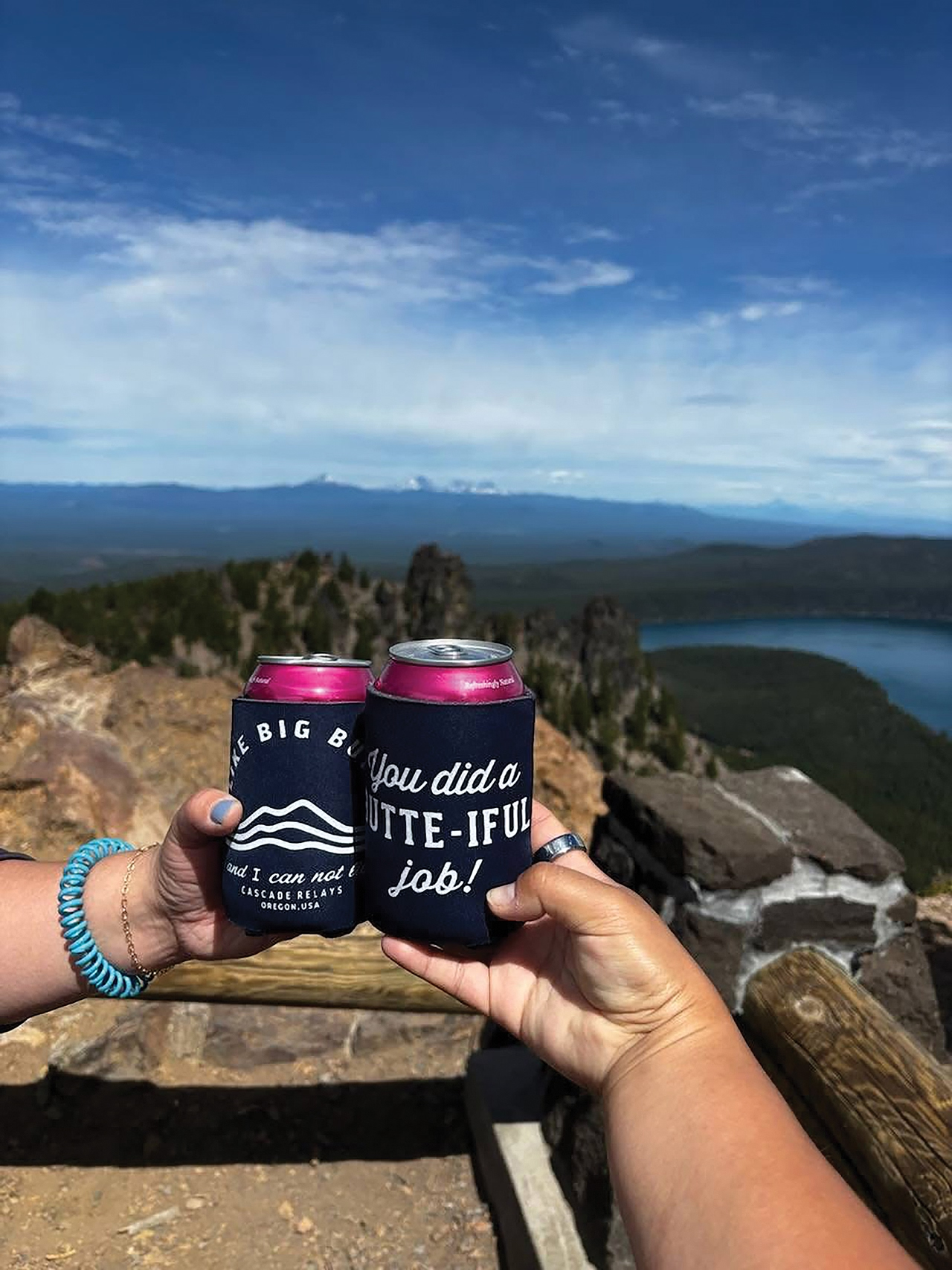
While construction has been slow to open doors, the number of women in architecture has steadily increased in number from 20% in 2000 to nearly half of all new architects in 2023. Architect Karen Smuland appreciates the balance between art and science in the field of architecture. As a registered architect with LEED Accredited Professional certification, Smuland weaves sustainability into her designs. “Most of my clients want a fire-wise approach, and lean toward net-zero energy usage through solar panels and responsible design principles,” she said. Smuland’s designs aim to bring the outdoors in, with natural light and intentional views to connect to nature.
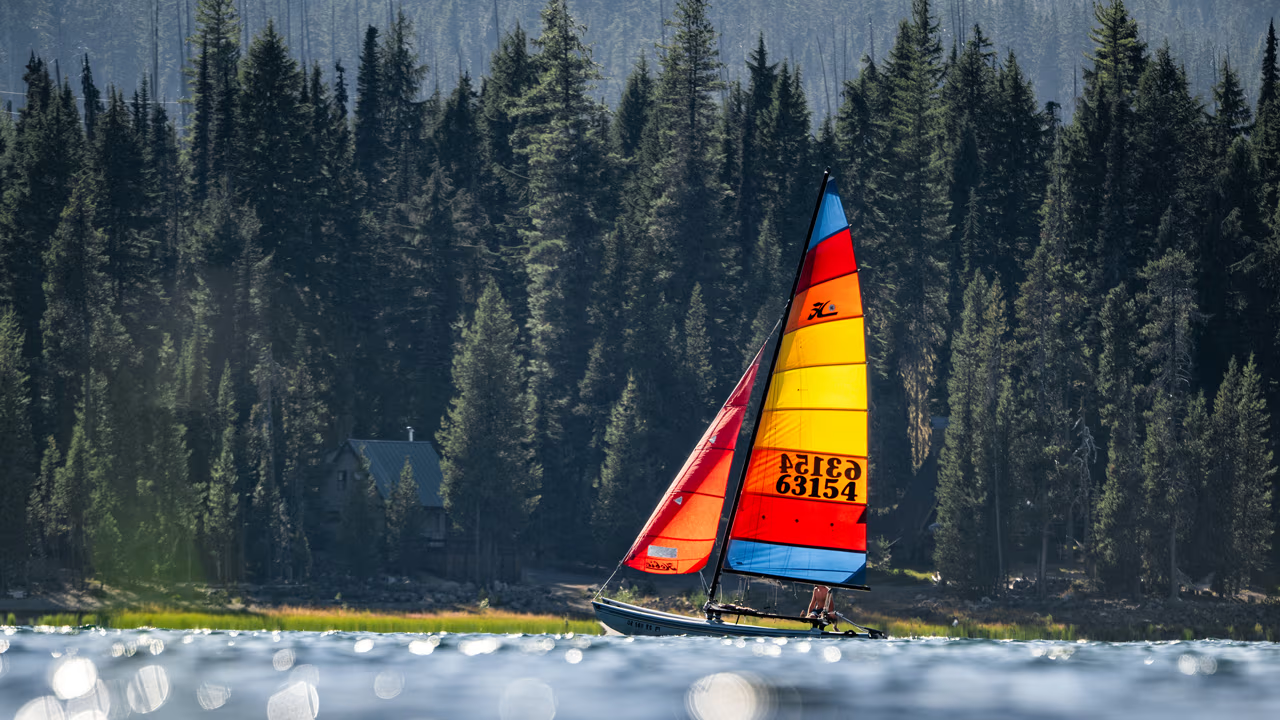
Architecture relies on technical knowledge, physics and mathematics, but art is what makes a design special, according to Smuland.

“Feeding that creative spark is important, even when other parts of the work try to take over,” she said.
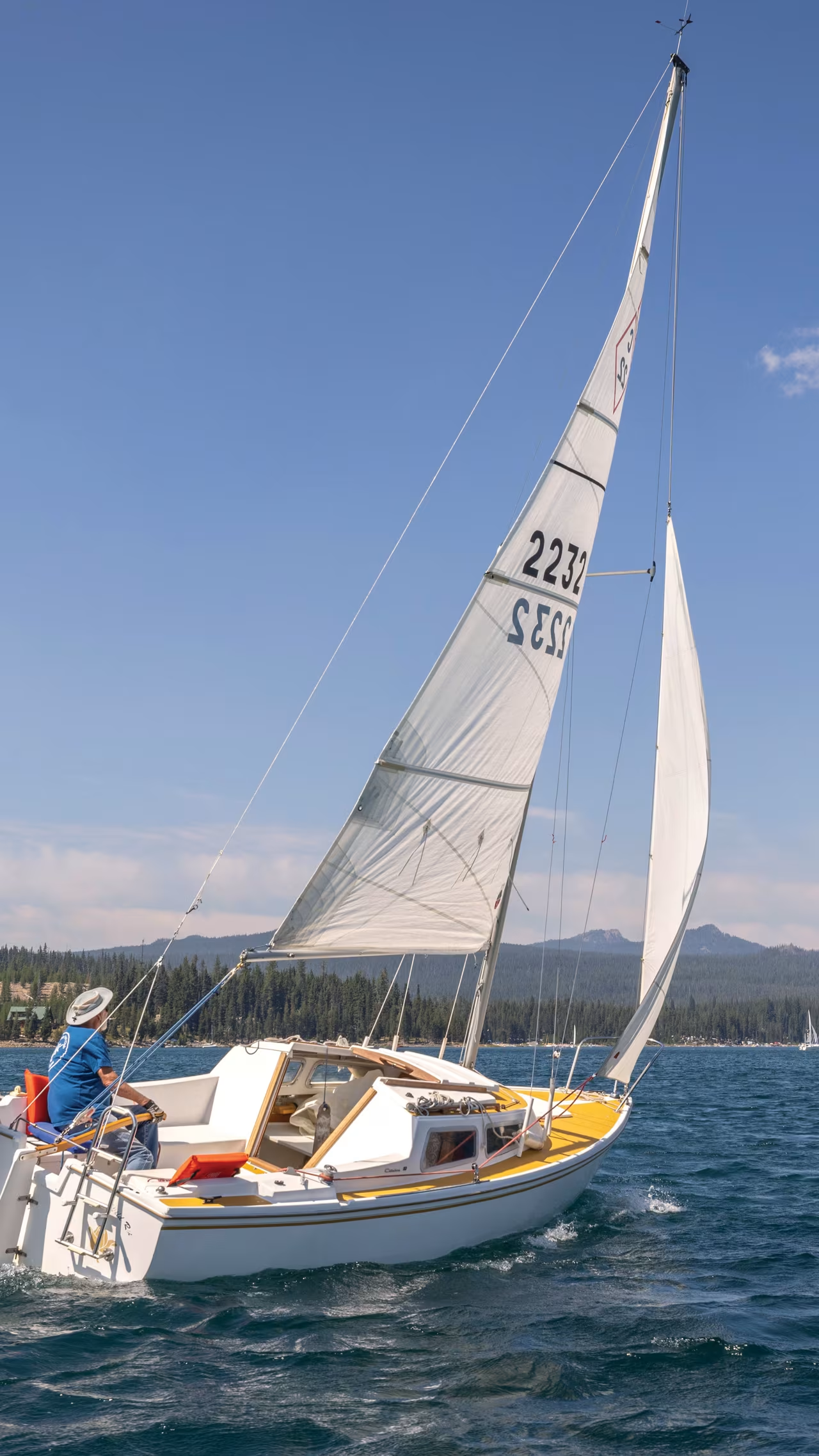
Michelle Mitchell, Cofounder of Humm Kombucha

Michelle Mitchell, Cofounder of Humm Kombucha

Craft brewing has long been considered a guy’s world, but kombucha breaks that mold. Industry organizations estimate 40% of kombucha companies today are women-owned with female brewers. Bendites Michelle Mitchell and Jamie Danek brought this trend home when they launched their kombucha company during the worst recession of this century.
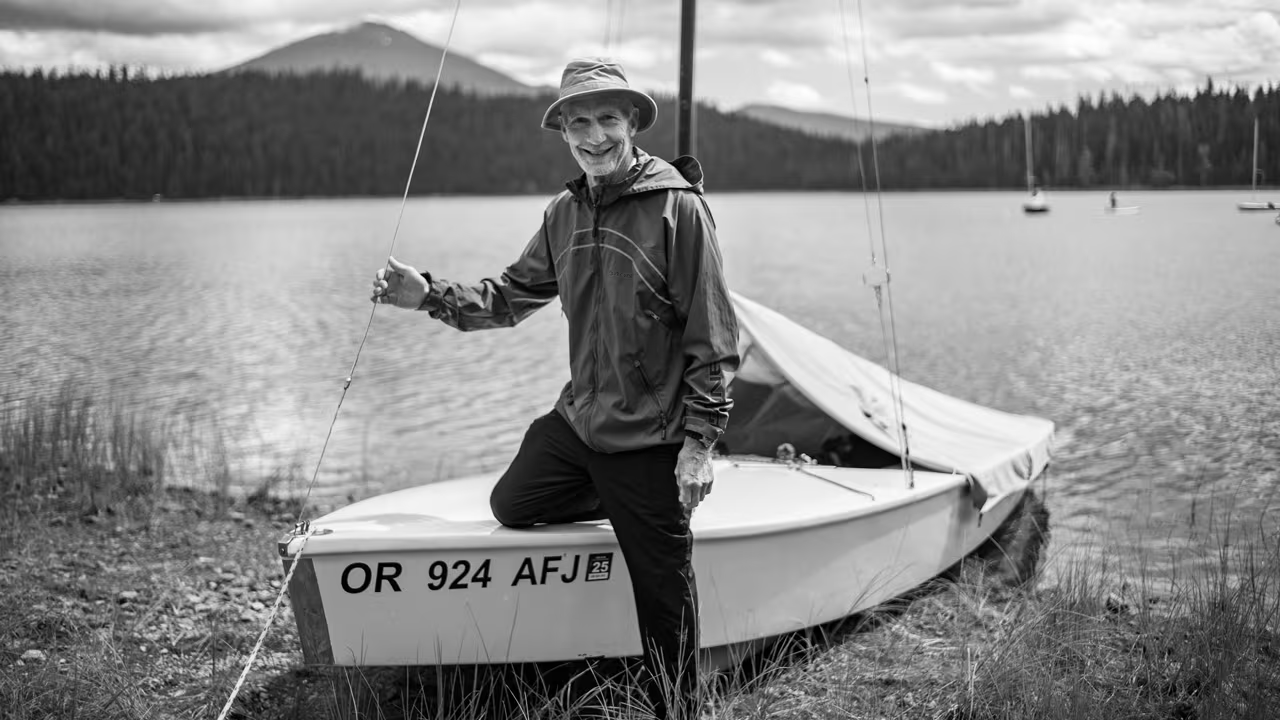
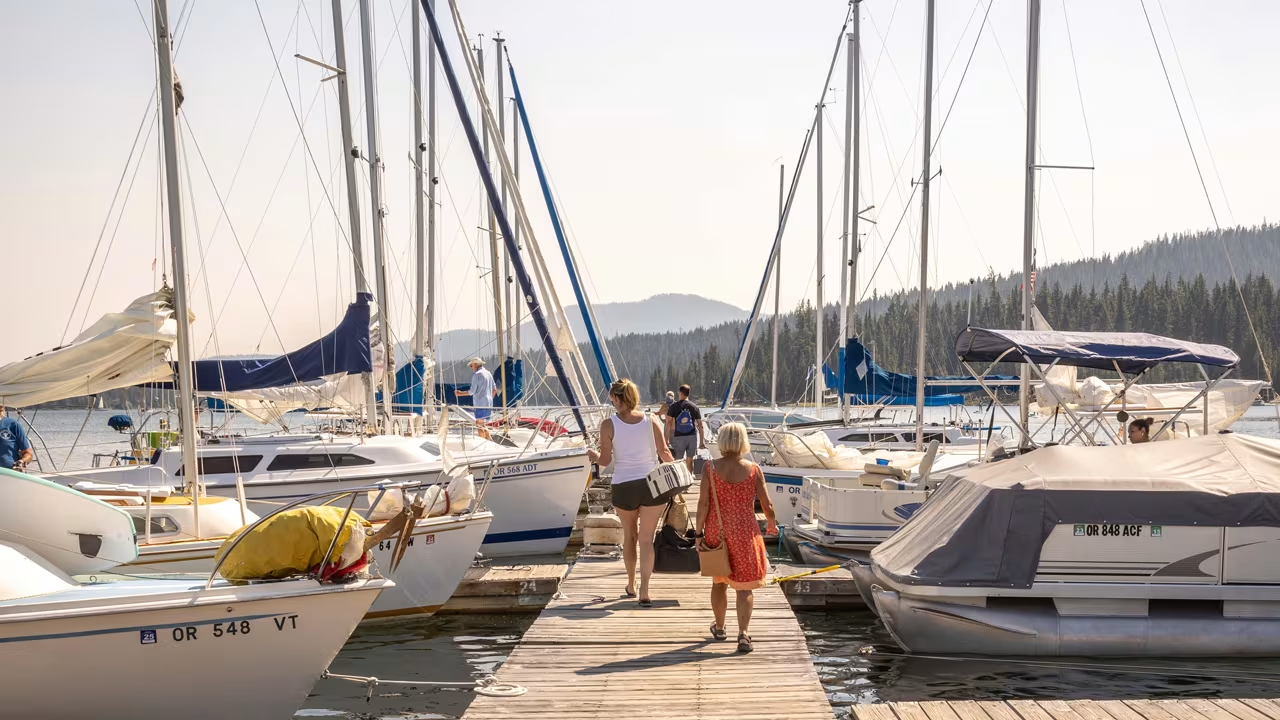
In 2008, Mitchell and Danek got together for a glass of Mitchell’s homebrewed kombucha. Inspired by its health-boosting probiotic vitality, they began selling gallon jugs of the bubbly, non-alcoholic brew. They never imagined they’d still be making kombucha 16 years later as a national brand, with 160 employees and in 2024 its 100 millionth bottle rolling across the production line.

“It’s always been about making people feel great, internally and externally,” said Mitchell. The pair grew from single jugs to a full-scale brewery by holding true to their core values: healthy business, partnership, quality and optimism. That translates to fastidious quality control, responsible fiscal planning, and building a team that feels like family, according to Mitchell.

As Chief Culture Angel, her unofficial title, Mitchell is responsible for worksite culture and community engagement. “We rely on both hard science and what I call heart science, meaning intuition and creativity to solve problems,” said Mitchell. “And, we have an amazing brewing community in Bend that helped us every step of the way.”

For aspiring entrepreneurs and brewers, Mitchell has some advice. “Ask tons of questions. Gather information. Reach out to collaborate, but trust your gut to bring your idea to light.”

Marathon Training Season in Bend

Runners Take it Step by Step to Cross a Finish Line at 26.2 Miles

If finishing a marathon is just putting one foot in front of the other roughly 55,000 times, why don’t more people do it? Fewer than 1% of Americans ever will. Standing at the start line of the Berlin Marathon in September 2024, I asked myself the same question. [Photo above by Martin Sundberg]

Despite having run 11 marathons, I’ve battled plantar fasciitis, hip pain requiring cortisone shots and, at 72 years old, a depleted pool of training partners. As I waited for the race to begin, doubt crept in—could I even make it to the finish?

More Than a Sum of Miles

A marathon is so much more than 26.2 miles. To give the distance some respect, it’s like running from southwest Bend to Sisters—not exactly something to attempt without preparation. But where does training even begin?

Marathon training on trail in Bend
MILEAGE: Alli Miles and Colton Gale train regardless of the weather. “A running buddy or group makes training fun and motivating, and keeps you accountable,” said Kari Strang, Summit High School cross-country coach and Bend Marathon co-race director. | Photo by Cody Rheault

Fortunately, Oregon is one of the best places in the country to take the first steps. It ranks fourth in marathon participation per capita, trailing only Massachusetts, Colorado and Vermont. As the birthplace of Nike and home to Eugene’s legendary Hayward Field, Oregon boasts a deep running culture, an outdoor fitness ethos and a relatively mild climate—ideal for long-distance training.

Central Oregon has its own bragging rights as a long-distance running hotspot, with three marathons (Bend, Pacific Crest and Haulin’ Aspen), several ultramarathons and dozens of shorter-distance races. Bend-based running coach and competitive ultramarathoner Ian Sharman sums it up: “This is a big running town for long distances and ultramarathon training. It’s easy to get out the door and run trails.”

For Sharman, understanding why someone wants to run a marathon is key to building the right training plan. Are they aiming simply to finish or looking for a scenic race destination like Bend? Do they prefer a hilly challenge or a fast, flat course? If they’ve conquered half marathons, are they ready to go farther? Or if they’ve run full marathons before, are they chasing a personal best? Regardless of motivation, he said three to six months is what it takes to be ready on race day.

Marathon Training Steps Bend Oregon
Photos by Cody Rheault

Marathon Training

When it comes to training, few names carry more weight than Hal Higdon, often called the godfather of American running. Author of 36 books, including Marathon: The Ultimate Training Guide, he has completed 111 marathons, with four overall wins and numerous age-group victories. His experience informs his widely used training plans that have helped thousands reach their marathon goals. His 18-week novice program has a 99% finish rate. “It’s very doable,” he said, “and after a runner’s first marathon, we can take them into more advanced training, one that will challenge the best-conditioned runners.”

Colton Gale, manager of FootZone Bend and winner of the Oregon Cascades 100-mile ultra this past August in a record 14 hours and 36 minutes, said that Higdon promotes a sensible walk-run strategy that, over time, shortens the amount of walking time and lengthens the running part.

“It helps promote endurance, grow stamina and patience,” said Gale.

That aligns with a final piece of advice Higdon shared: “Start slow, which applies to everyone from those who have never run a marathon to experienced runners who want to avoid going too fast in the first two miles—they can pick up the pace later. It’s an easy approach that will help anyone get to the finish line.”

Local runners have plenty of support. Summit High School cross-country head coach and Bend Marathon co-race director Kari Strang highlights Central Oregon’s many coaching options, from professional trainers such as Sharman who offer individualized custom plans, to group runs with the Central Oregon Running Klub, FootZone and others. “A running buddy or group makes training fun and motivating, and keeps you accountable,” Strang said. She emphasizes consistency over hard workouts where a runner can’t do anything for days afterward.

A lifelong runner, Strang is passionate about introducing others to the sport and encouraging them to look beyond just logging miles. “People put so much energy into workouts but often overlook the essentials—sleep, nutrition, hydration and cross-training, like strength work,” she said.

Getting the physical elements right is essential, but many long-distance runners will say the mental part is just as crucial.

“We often set limits on ourselves. We’re capable of so much more than that,” said Strang. “Running is a sport that continually pushes you and shows others what you’re made of.”

Ultramarathoner Sharman said that as a coach, he enjoys seeing people who are newer to the sport do something they never thought they could do. “There’s a lot of value in getting into it and embracing the suck. When you’re doing a [long-distance] race, you get exhausted, but it’s a good suffering.”

All hours of marathon training in Bend Oregon
Photo by Cody Rheault

Marathons Trending Upward

Marathon participation has surged during the past 25 years, peaking in 2013 with more than half a million United States finishers. Numbers dipped for a few years as half-marathons gained popularity and races were canceled or held virtually during COVID-19. Still, major races such as New York, Boston and Chicago marathons now have record applicants. Women make up nearly half of all participants, and the number of runners older than 50 is growing.

First-time marathoners account for 40% of finishers, proving that marathons aren’t just for elite Boston qualifiers. In Central Oregon, runners can easily access scenic trails and roads outside their doors to facilitate training. Many will use local half-marathons for training, such as the Salmon Run (April 19, 2025) or Haulin’ Aspen (August 9, 2025). The Bend Marathon (April 13, 2025) is, “an honest course that has some grit to it,” said co-race director Strang. “We don’t have a lot of people calling it easy, but it gives people bragging rights and is always cool.”

As I approached the Brandenburg Gate, I was reminded of what well-known Running World columnist and motivational speaker John Bingham wrote: “The miracle isn’t that I finished. The miracle is that I had the courage to start.” Crossing the line comes down to experience and digging deep, step by step: I was greeted by my family, marathoners themselves, and I embraced my husband, tears streaming down my face with the sheer joy of completing my 12th, and final, marathon.

How to Run Without Pain

Long-distance running offers many benefits: scenic trails, improved fitness, new friendships and even exotic travel. However, the sport also carries risks, with published studies showing that up to 50% of runners experience lower extremity injuries. Knees are most vulnerable, but issues can arise anywhere from the hips to the feet.

For Bend audiologist Amy Winkler, that risk became a reality after completing dozens of marathons—including the Boston Marathon in 2016— when she was sidelined by persistent heel pain. She underwent surgery in 2020 for Haglund’s deformity, a bony heel growth, and felt strong enough in 2022 to enter the Haulin’ Aspen Half Marathon—until the pain returned.

Rob Hollander, an orthopedic physical therapist and cofounder of Alpine Physical Therapy, attributes most running injuries to overuse.

“If an athlete loads tissue beyond its ability to adapt—running 25 to 60 miles a week without proper rest—injury is likely,” he said. His advice? “If pain affects your ability to run, scale back. Give your body a break.”

Still, race day is a powerful motivator. “Everyone has a goal, whether it’s finishing in the top 10 or completing a first marathon,” Hollander said. “Crossing that finish line is a rad feeling.”

Winkler shifted gears, turning to gravel biking and HIIT classes. Now, she hopes to run the Eugene Half Marathon this year and gradually build back up to 26.2 miles.

Where to Find the Best Food Truck Pods in Central Oregon

Central Oregon’s food truck lots are where relaxed dining meets international flavors and community connection. Whether you’re grabbing a quick lunch, planning a chill night out or looking for a place to take kids or dogs, these spots offer diverse plates for every crowd. 

Crux lawn with picnic blanket
Crux Fermentation Project Lawn | Photo by Tina Paymaster

Bend Food Truck Pods

CRUX Tasting Room

For sunset views of the Cascade Range and laid-back evenings with plenty of space to roam, Crux Fermentation Project is THE gathering spot. It features carts offering tacos, pizza, and more on a sprawling lawn. The amount of space is unique for a food cart lot, so consider their original Bend location when you have a larger crowd or little ones with lots of energy. See the food trucks currently at CRUX Fermentation Project in Bend.

Tacos from El Sancho Food Truck at Crux | Photo by Tina Paymaster

Dogwood at the Pine Shed

Adding to Bend’s vibrant food scene is Dogwood at the Pine Shed, a lively hub that perfectly blends a unique atmosphere with diverse culinary offerings. Beyond its artfully designed interior and creative cocktails, Dogwood hosts a rotating lineup of exceptional food trucks, bringing everything from authentic Dominican flavors and gourmet sandwiches to delicious pizzas and savory crepes. With a focus on community connection, Dogwood offers a dynamic spot for fantastic food, drinks, and a great time, whether you’re relaxing by the fire pit or enjoying live music. Learn more about the food trucks at the Dogwood at the Pine Shed.

The Dominican Food Truck at the Dogwood at the Pine Shed

The Lot

Split off from Galveston Avenue to find The Lot, a Bend staple since 2013 and the first food truck lot in Central Oregon. Seating is centered around a heated bench circle and a small indoor taproom, with carts serving options from burgers to burritos (and trivia nights from November to April). Walk up to the bar for a drink while someone else in your crew hits up the iconic green double-decker bus for some Fricken Faco crispy cod tacos. Discover food trucks at The Lot in Bend. 

Midtown Yacht Club
Midtown Yacht Club | Photo by Marvin Walder

Midtown Yacht Club

Right off NW Fourth Street at Revere Avenue, this neighborhood pod has become a go-to for those seeking food with a side of tongue-in-cheek good nature. This is the spot to buy a captain’s hat or be skipper for an afternoon, even if there’s no boat in sight. The mix of seven trucks features sandwiches, poke, and coffee, with ample seating for groups. Plenty of covered seating and open-air tables make this “club” a certified good time in any weather. Check which Midtown Yacht Club food trucks are currently open.

The Office at Silver Moon

Follow the music, or the music mural, to Silver Moon Brewing’s food cart lot. Grab tacos, po’ boys, or rotating specials to pair with a fresh pint of Silver Moon’s own craft beer. Music lovers are frequently taken aback by the handful of stages and the detailed mural that adorns one of the walls. It’s masterfully packed with faces of countless music legends. Venture inside this venue after grabbing a bite, and you’ll likely catch even more music or stand-up comedy on stage. Keep up with Silver Moon Brewing’s food trucks and live music here.

Evening at On Tap Food Truck Lot in Bend, Oregon
Photo courtesy of On Tap

On Tap

On the east side of Bend, with a view of Pilot Butte, On Tap offers a lineup of six food trucks and dozens of beers and wines on tap. It’s a popular choice for big groups, especially when you want to eat Himalayan dumplings while someone else opts for fish tacos, and the kids play cornhole. The On Tap website is updated daily with hours and events.

The Patio at 9th Street Village

Part of a creative complex near the DIYcave lot off of SE 9th Street, The Patio surrounds the Bevel Craft Brewing taproom. Its carts serve breakfast burritos, gumbo, and Hawaiian plates alongside coffee and beer. It’s a versatile option for coworking, casual meal, or to try your hand at throwing a frisbee or two at its disc golf basket. Learn more about the food trucks at Bevel Brewing.

Summer evening outside Podski in Bend
Photo courtesy of The Podski

The Podski

Tucked into a lively stretch of NW Arizona Avenue, The Podski is the perfect place to peel off from the busy street scene and sink into a fun community of food, desserts, and drinks. Its loyal following might be attributed to the huge selection of plates (think pierogies, oysters, sushi, vegan entrees, and desserts), or maybe it’s the streaming sports games, the kid- and dog-friendly vibes, or just the welcoming atmosphere. See the food truck lineup at The Podski.

Ponch’s Place

Outside the Veterinary Referral Center of Central Oregon, Ponch’s Place makes a vet visit a little more enjoyable by adding tacos, dumplings, and fresh air. Small but dependable, it’s a relaxed spot that turns a routine trip to the vet into something worth lingering over. Many find this food truck lot a worthy destination, even if you don’t have a pet! Learn more about the food trucks at Ponch’s Place.

Ponch Place Grand Opening Bend Oregon
Ponch’s Place | Photo by Travis Reill

River’s Place

Across from the eastside’s Forum Shopping Center, River’s Place combines covered seating and entertainment with a mix of carts serving Thai dishes, tacos, sandwiches, and more. You’d be wise to stop by on a Thursday, Saturday, or Sunday when live music plays, and the vibes crank extra high. Or if you’d rather watch a sports game, two of six large screens face the outdoor seating, so you can soak in some fresh air, too. See the current list of food trucks at River’s Place.

SOPA nachos for cinco de mayo at Rivers Place in Bend
SOPA at River’s Place | Photo by CJ Juan

Tumalo Food Truck Pods 

The Bite

Right off Highway 20, downtown Tumalo’s The Bite is a laid-back lot perfectly designed for gathering over food, music, or around its fire pit. The carts serve everything from sushi and cheesesteaks to pizza and are open seven days a week. Plus, there’s live music two nights a week and plenty of outdoor seating. See the current food trucks at The Bite in Tumalo. 

Sisters Food Truck Pods

The Barn 

Located behind Cascade Avenue in downtown Sisters, The Barn encapsulates small-town charm. From a crowd-favorite wood-fired pizza to tasty vegan bites, it welcomes gatherings for every taste. The fenced play area and dog-friendly zones make this a great spot for kids and pups. It’s the type of spot where rolling in from a day of fun on nearby trails just makes sense. Visitors can also grab local beer or wine at the bar. Check out the tap list and full food cart options at The Barn in Sisters.

Redmond Food Truck Pods

1/8th Street Patio at High Desert Music Hall

This casual lot right adjacent to the High Desert Music Hall in downtown Redmond features rotating carts serving family-friendly meals, from donuts and barbecue to Jamaican fare. Whether you’re catching a pre-show meal or looking for an inviting spot to catch up with your people, ⅛ Street Patio is a gem only a few blocks from the SCP Redmond Hotel. See what food trucks are open at the 1/8th Street Patio at High Desert Music Hall. 

live music at the Blacksmith Public House in Redmond
Live music at the Blacksmith Public House

Blacksmith Public House

Blacksmith is a neighborhood gathering spot on downtown’s Evergreen Avenue with open space and a rotating group of carts serving hearty plates and healthy bowls. It more than meets its goal to be a community and family gathering place. There’s a neighborhood feel at this lot with its trivia nights, karaoke, bingo, and delicious food. Chinese, pizza, or sushi, anyone? Learn more about the food trucks at Blacksmith Public House in Redmond. 

General Duffy’s Waterhole

This downtown Redmond spot brings together food carts, live music events, and a big patio with room to let an afternoon or evening unfold. From family-friendly Goody’s treats to barbecue and more, the atmosphere is buzzing with energy. Grab a beer at The Waterhole & Taphouse, take the mic at a karaoke night, or join other hungry music lovers on any concert night. Find out more about the food trucks at General Duffy’s Waterhole.

Otto’s Landing

Near downtown Redmond, Otto’s Landing is part food truck pod and part entertainment hub. Arcade games, pool tables, and two stories of seating are paired with Hawaiian dishes, burgers, and BBQ. Something is always happening here, from rooftop hangs to arcade tournaments. Find out more about Otto’s Landing’s food trucks.

View of Redmond Food Park
Redmond Food Park

Redmond Food Park

With seven trucks and a fenced play structure, this pod off SW 5th is centrally located and alcohol-free. It’s designed for relaxed, kid-friendly meals. Enjoy the picnic-style dining with Mediterranean and Mexican food, boba drinks, or even a Philly cheesesteak. Find Redmond Food Park carts and hours here.

The Vault Tap House

Connected to Kobold Brewing on the northeast side of Redmond, The Vault is a relaxed space to catch a game, sip a beer, and try food truck staples like sliders (order one breakfast style if you want to try a fried-egg slider) or perfect fish tacos. On the patio, take in Redmond’s downtown scene, or soak in a gathering around the fire. See the current food truck lineup at The Vault Tap House.

Photo courtesy of Visit Redmond

Wild Ride Brewing

One of Redmond’s original food truck pods, Wild Ride offers indoor-outdoor brewery seating and food trucks serving plates filled with killer fish and chips and yakisoba. The international flavors at this lot are exceptional and are offered every day of the week. There’s space for everyone, and watch the calendar for its evenings with live music. Learn more about Wild Ride Brewing’s on-site food trucks.

Bend’s Fresh Take on Comfort Food

Not Your Grandma’s Meatloaf

Comfort food is more than what’s on the plate—it’s an open door, a shared table, the sense of being welcomed and well-fed. A little messy, never too serious. In Bend, a few new spots are spinning this familiar joy into the kind of food that scoots out a chair, sets down a plate and says, “Stay a while.”

‘Wich Doctor Sandwich Co.: All the Good Stuff in One Bite

For Cody and Brenda Gimbel, making a sandwich is more like casting a spell. Cody, a seasoned chef obsessed with flavor fusion, is always chasing the challenge of “How can I turn this into a sandwich?” The result is a menu that feels like a greatest-hits playlist of comfort food. This food truck-turned-sandwich lab on Bend’s west side churns out bold bites such as The Linda, a riff on the Cubano that throws tradition out the window, swapping out the usual pork and ham for applewood-smoked chicken and chili-citrus braised thighs, all slathered in lime aioli, then piled with pickled peppers and Swiss cheese. The wildly popular Cedar Street is inspired by the British cheese-and-pickle classic—only at ‘Wich Doctor, it’s roasted tri-tip, homemade shallot jam, Irish cheddar and a punch of arugula, piled on crusty ciabatta from M’s Bakery.

Lambda Sandwich at Wich Doctor in Bend

While ‘Wich Doctor’s foundation menu stays mostly the same, winter brings new warmth to the mix with heartier sides such as poutine and specials like the Black Sheep, featuring tangy black vinegar-braised lamb and local greens. Every sandwich feels like a childhood memory—familiar but full of surprises. “If it doesn’t bring comfort and joy in equal measure, it’s not going on the menu,” said Brenda.

Hasta Que Olvidemos: Bringing Wine and Oysters Down From Their Pedestals

At Hasta Que Olvidemos (“Until We Forget”), co-owners Brian and Ashley Trottier have made it clear: Wine should be for everyone. “It’s supposed to be a drink of the people, not a luxury,” Brian said, and their Napa wines and vermouths—crafted by longtime friend Tim Colla—are served from taps without a single Wine Spectator score in sight. Here, labels don’t matter, but flavor does. It’s wine without the fuss, served up in a space that’s more old-soul hideaway than wine bar—soft candlelight, ‘60s Samba spinning in the background and just enough room to get lost in conversation (and a bit of oyster brine).

Spread at Hasta Que Olividemos
Photo by Tambi Lane

The menu takes food from a fancy realm and brings it back down to earth. Fresh Pacific oysters are hand-shucked until closing, mingling on the menu with simple bites like caviar, sardines and olives. Ashley’s spontaneous daily specials, whipped up whenever inspiration strikes, are a lucky find for anyone who happens to wander in. From oysters and champagne to chips, dip and a glass of vermouth, Olvidemos on Bend’s lively Galveston Avenue, is an invitation to come as you are and happily lose track of time.

Americana burger
Photo by Tambi Lane

Americana Burgers: For When You Just Really Want a Burger

At Americana Burgers in Bend’s Podski food truck pod, Joseph and Olivia Franco keep it simple and satisfying. “Food should be affordable for families, not $100 for a meal,” insists Olivia. Their OG burger—two patties smashed into a smoking-hot grill, seared to crispy perfection on one side while the other side stays juicy under a blanket of melty American cheese—is piled with shredded lettuce, caramelized onions and a swipe of secret sauce on a toasted brioche bun. Americana’s fries are already the stuff of legend, often referred to as the best in town. Cooked in lard, they’re served golden and hot for that seductive combo of sizzle and salt.

Americana Burger and Fries
Photo by Tambi Lane

Americana isn’t a food truck with fancy frills—the food speaks for itself. A burger is just a burger, and that’s the best part. Fans will soon be able to sink their teeth into a perfectly smashed burger at Americana’s new downtown brick-and-mortar location. The restaurant will offer its beloved classics—The OG, The Popper and The BBQ—plus a winter-ready tomato soup that pairs perfectly with a gooey twice-grilled cheese sandwich.

Read more about the dining scene in Bend, Oregon | See the Bend Dining Guide | Savor Magazine

’80s Update with Surface Kitchen and Bath

Known for expert craftsmanship and full-service remodeling, Bend’s Surface Kitchen & Bath—a division of Nelson Tile & Stone—specializes in customized kitchen and bath spaces, and recently transformed a 1989 home in the Mountain High community. Company owners Chris and Jennifer Nelson purchased the home to showcase the many products that the company offers through its Surface Kitchen & Bath showroom. Thoughtful updates preserved the home’s original charm while enhancing flow and natural light by opening compartmentalized spaces. Durable materials such as quartz countertops and engineered hardwood add warmth and timeless appeal. The result is a modern yet character-rich home, reflecting the team’s dedication to elevated, functional design.

kitchen stove

Q&A with Marketing Manager James Deitz of Surface Kitchen & Bath

James Deitz

How did you approach updating the home’s 1989 layout to enhance functionality while preserving its character?

The original layout of the Edelweiss home, named for its street location, reflects a classic late-1980s design: compartmentalized spaces, low soffits and a lack of natural flow. While the home had great bones, it felt dark and inefficient for modern living. We reimagined the space with an open design concept, removing multiple walls in the kitchen and living areas to create a seamless connection and maximize natural light to make the home feel larger. We also carved out a dedicated office space, addressing a need for a functional workspace. In the primary bath, we removed overhead partitions to highlight the soaring ceilings and skylight. We preserved vaulted ceilings and architectural lines while updating finishes with a neutral, timeless palette.

interior with chess

How is collaboration important to achieving the project’s goals?

We are especially proud of our team’s collaborative efforts. While it wasn’t a traditional client project, our staff took great pride in incorporating many of our own brands, resulting in a beautifully finished home. Chris and Jennifer Nelson were both born and raised in Bend and they knew this neighborhood since its inception in the 1980s. They saw it as a hidden gem with spacious common areas, a golf course lined with towering pines and homes with incredible bones. Updating an original home in Mountain High allowed them to be consistent with the character of the neighborhood while bringing it into the modern era.

Bathroom

What role does natural light and intentional lighting design play in modernizing and elevating the overall feel of a home?

Lighting played a major role in transforming the space. The home initially felt dark, so we prioritized natural and layered lighting to bring warmth and openness. We enhanced existing natural light by opening the floor plan, which allowed light to flow more freely, and emphasized the primary bath skylight to create a spa-like feel. Layered lighting, combined with recessed lighting, pendant fixtures and under-cabinet illumination, led to the perfect balance of ambiance and functionality. Strategic fixture placement ensured workspaces were well-lit, while softer accent lighting enhanced the inviting atmosphere. The result is a home that feels brighter, more expansive and visually striking, elevating the modern and luxurious feel.

kitchen

How do you incorporate today’s materials while maintaining warmth in a home remodel?

We approached material selection with intentionality to balance contemporary style with comfort. Durable, marblelike quartz countertops provide elegance without the upkeep of real stone. The USA-made Calacatta Miraggio Cove quartz creates a seamless look that complements the home’s warm design. Engineered hardwood offers rich texture and durability, while clean-lined cabinets blend modern efficiency with classic craftsmanship. Neutral tones highlight the natural beauty of the materials for a timeless appeal. By integrating warm and cool elements, we achieved a sophisticated yet inviting aesthetic that enhances the home’s character.

bathroom

Surface Kitchen & Bath
20794 NE High Desert Lane, Bend

Read more stories about the beautiful homes in our area and features on those who help create them.

Caldera Springs Vacation Homes and Amenities

Sponsored Content

Just 15 minutes from Bend, find Caldera Springs, the Pacific Northwest’s premier residential resort community. Within 1,000 acres of Ponderosa pine forest, Caldera Springs offers a lifestyle shaped by relaxation, nature, and four seasons of adventure. Here, a limited collection of luxury mountain modern homes and nature-steeped homesites allows owners to build their Pacific Northwest legacy—with opportunities for vacation rental income through Sunriver Resort Vacation Properties

Frostbrook Home from front in Caldera Springs

Forestbrook: Mountain-Modern Homes

Discover Forestbrook, a distinctively new way to own at Caldera Springs. Located just steps from Forest House and Forest Park, these mountain-modern vacation homes feature three to four bedrooms, expansive patios with hot tubs, and an attached studio residence with its own entrance, kitchenette, and private bath. The studio can be rented separately or together with the main home, offering rare flexibility for both personal use and income potential.

New Homesites Now Available

Caldera Springs is currently offering homesites in two of its newest enclaves—Preservation and Wild Pine. Preservation offers expansive sites backing directly onto the community’s 220-acre Wildlife Forest Preserve, offering exceptional privacy and a close connection to nature. Select homesites in Preservation also surround the new Preservation Park, a natural gathering space with trails, water features and handcrafted birdhouses.

Wild Pine is the newest collection of forest-immersed homesites in the northeast section of the community, surrounded by tranquil waterways and steps from Forest House, Forest Park, and miles of trails. Select homesites in Wild Pine also offer peaceful water views. Both neighborhoods offer utility lines in place and are ready for immediate build for your dream home in 

Build Your Dream Home in Nature-Inspired Settings

For those aspiring to build their dream home, Caldera Springs’ homesites present an idyllic blank canvas amidst the Pacific Northwest’s most breathtaking alpine wilderness. To ensure a seamless process, Caldera Springs collaborates with the region’s top architects, designers, and homebuilders, expertly transforming each owner’s vision into a reality.

Community members Dionne and Craig Lewelling experienced first-hand what it is like to build a custom home at Caldera Springs. After consulting architects, designers, and engineers, they landed on the perfect homesite for their home. “Our homesite has a lot of unique features that give us different ideas each time we go out there,” Craig said. “There’s a lava rock structure that separates the two lots, and also the headwaters of a new lake nearby. It’s just awesome.”

pool at caldera springs sunriver

Your Year-Round Pacific Northwest Basecamp

Set across from the Crosswater Golf Course at Sunriver Resort and just a short drive from Mt. Bachelor, Caldera Springs offers four seasons of adventure in every direction—from snow sports to biking, kayaking, and golf. Owners enjoy over 13 miles of scenic paved and soft trails, along with 14.7 acres of lakes, ponds, and streams—perfect for paddling, fishing, and quiet reflection. From rounds on the 9-hole Caldera Links course to snowy days on the slopes, the adventure never ends.

Forest House adds even more to the experience, with a double-racer waterslide, game room, indoor-outdoor dining, and a fitness center. Nearby, Forest Park offers pickleball courts, a sledding hill, creative play areas, and an off-leash dog park. At The Quarry, owners can unwind in an infinity-edge pool and outdoor spa overlooking Obsidian Lake. And at Lake House, the social heart of the community, dining, cocktails, and morning coffee are served up with panoramic views of Mt. Bachelor.

boat launch caldera springs sunriver

Limited Opportunities Available

Caldera Springs is currently offering a limited release of Forestbrook vacation homes, as well as homesites in the Preservation and Wild Pine neighborhoods. Resale opportunities are also available, including several artfully designed custom homes.

For more information, visit CalderaSprings.com or contact the Caldera Springs Real Estate Team at Sunriver Realty at sales@calderasprings.com or 541-593-3000.


Learn more about Caldera Springs | Read more about our vibrant Central Oregon community here.

Norman Building and Design: Showtime at Home

When Norman Building & Design’s client needs an escape from the stress of his high-tech job, he retreats to his custom home theater. With the press of a button, the lights dim, a comfortable chair awaits and one of his favorite movies springs to life on the 120-inch screen. It’s showtime!

The theater, designed by Norman Building & Design (NBD), is part of an award-winning residence near Whychus Creek in Sisters. The room captures the essence of large traditional and classic drive-in theaters with a “starry night” ceiling that evokes a nostalgic, cinematic experience in an intimate setting.
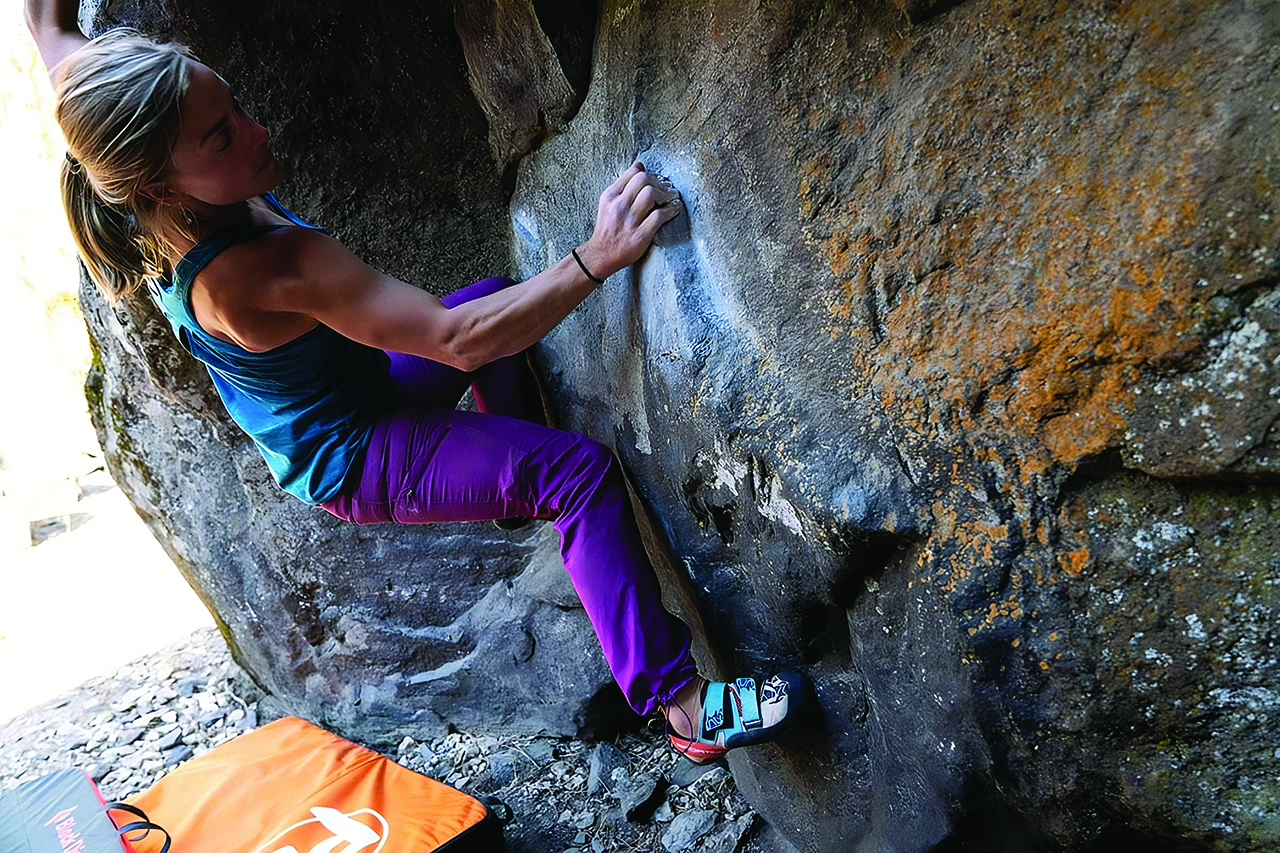
Home theater room

Founded in 1977, NBD is an enduring presence in the Central Oregon home-building market. The theater is part of a 4,875-square-foot home designed and constructed by NBD. It won Central Oregon Builders Association’s 2019 Tour of Homes Best of Show and Best Feature awards in the $2.4 million-plus category.
An Interview with Greg Garrick of Norman Building & Design
You said that people who saw this theater on the 2019 Tour of Homes often mention it to you as a memorable feature. How did the specific design of this theater come about?

When we met with the client in the early design phase, the husband focused on his desire for a true theater room. He had a collection of 2,000 to 3,000 DVDs that he wanted to display–showcasing the covers. He loves all movies, from classic to current releases, but is especially fond of classics such as Casablanca. He wanted to be wholly enveloped in the movie experience, so we designed the space to be relatively small—5 by 16 feet. To make movie selection easy, one wall is lined with glass storage for DVD covers, plus we built additional “hidden” storage in a nodule accessed by a door from the theater. To enhance sound quality, we blunted the corners by creating an octagonal shape, eliminating dead space.

Living room and fireplace with open giant windows

Besides this “extraordinarily comfortable room” as you’ve described, what other amenities are near the theater? 

Just outside the theater is a wet bar equipped with a sink, refrigerator, separate wine, beer and cold drinks cooler and other conveniences. Across the hallway is a media room, perfect for entertaining friends and family or simply relaxing on the couch to watch football and favorite shows on the built-in TV.  The media room is connected to the outdoor living area and a covered patio for extended enjoyment. Two guest ensuite bedrooms complete this entertainment-focused wing of the home.

View of screen in home theater room

How unique is this theater room compared to other theaters you’ve built in new or remodeled homes?

Norman Building & Design has designed and built other theaters before, but none that are dedicated solely to movies. This theater is its own immersive world. During tours, I often let it run on a continuous film loop. Unlike the overwhelming intensity of an IMAX, this theater offers a more enveloping and experiential atmosphere. People would peek in and say, “Wow! I want to go in and watch.” It’s about the experience of being in there, sitting down and being enveloped by the darkness. It makes the viewing all the more powerful.

Headshot of Greg Garrick
Greg Garrick

How did the process of designing the theater mimic how Norman Building & Design works with clients?

Every Norman home begins with notepads, sketchbooks and meetings.With the client often away from Central Oregon for his job in San Jose, we’d literally meet him halfway in Mount Shasta at Bistro No. 107. We’d review plans, make observations and I’d carry his input back to our designers. We go the extra mile for our clients.

Norman Building & Design
1016 SW Emkay Drive, Bend

See more Norman Building & Design work here, learn about the history of Norman Building, or visit their website directly.

Hook & Plow Celebrates Local Bounty From Coast to Coast

Lauren and Lisa Cassity grew up loving Bend since the ‘80s, coming here with their parents from Hawaii every summer and winter break. Their taste for Central Oregon was shaped by learning to snowboard at Mt. Bachelor, while their culinary sensibilities were formed in Oahu and Southern California before the twin sisters moved to Bend and opened Hook & Plow restaurant in 2023.

Growing up on Oahu, nightly dinner at home reflected local culture, from sashimi to Hawaiian barbecue, and rice at every meal. As teenagers, the sisters’ first jobs were in restaurants.

“Hawaii is such a mixing pot of culture and diversity—[with] all sorts of different styles of food, like Japanese, Filipino, Hawaiian, obviously the fresh fish, all of these different cultures melding together in one location on an island,” said Lisa. “We started being really passionate about food and different cultures early on.”

Charcuterie They earned bachelor’s degrees: marketing for Lisa, finance for Lauren, and headed to the corporate world, but realized it wasn’t for them. They landed in Southern California, managing a little beach bar in the early 2000s, learning everything about running a restaurant. By 2014, they opened the first Hook & Plow in Hermosa Beach, just as the farm-to-table movement was in full bloom. Local restaurants hadn’t yet embraced that ethic, so they focused on it in their new endeavor, serving local seafood, organic farm fare and wine and beer crafted in the area. Two more Hook & Plows, in Manhattan Beach and Redondo Beach, followed.

The Cassitys had always dreamed of living full time in Bend though, and by 2022 they’d both moved to Central Oregon with their families and opened the fourth Hook & Plow. The “hook” part of the dining concept begins with briny, sweet Pacific Northwest oysters, glistening on the half shell with fennel mignonette and tomato ponzu alongside them. A nod to the Cassity’s roots, Hawaiian-style ahi poke is layered artfully with avocado, scallion and cucumber. House-made poke sauce brings a subtle zing; tortilla chips, a complementing crunch.

Beef
Grass-fed beef with brussels sprouts

The Menu at Hook & Plow

Entrees such as pan-roasted halibut with delicate bunashimeji mushrooms in dashi broth with house-made ricotta gnocchi, freeze-dried corn and microgreens change with the seasons. Diver scallops are seared and served with risotto al nero—arborio rice with black, buttery squid ink, Calabrian peppers and delicate, parsley-esque chervil.

From the “plow” comes dishes such as grass-fed beef from an Oregon-based cooperative of ranchers. Slices of perfectly grilled steak top potato puree, beneath a rich peppercorn demi-glace and seasonal vegetables such as lemon-garlic Brussels sprouts. Burgers are heightened with sweet onion jam, rich gorgonzola and crunchy, fried shoestring onions, sandwiched between a toasted brioche bun.

Executive Chef Ryan Ohmert brings a passion for making fresh pasta and a style aimed at letting great ingredients shine.

“I’d much rather us do ‘simple-done-well’ than overcomplicate something, making [the menu] unapproachable,” he said.

Interior

Creative cocktails follow suit, such as the brown butter old fashioned, which blends bourbon with butter, browned to a smooth nuttiness, and walnut bitters for a cool drink with warm, round flavors. Chilly high desert nights call for a pear hot toddy with Oregon pear-infused vodka, brandy, cinnamon, honey and lemon.

It all happens in an ambiance that Lauren designed using details such as a drape of nautical ropes, blonde wood and round mirrors that suggest portholes. The effect is cozy and beachy, matched with a culinary journey reflecting the Cassitys’ past and present, which the community is pleased to embark on, too.

Hook & Plow Owners/ Chef
Chef Ryan Ohmert (left) with Lisa Warren (middle) and Lauren Coplean (right)

The Hook & Plow Bend
210 SW Century Drive, Suite 150, Bend
thehookandplow.com

Rubbish Renewed Eco Fashion Show

Each year, the Rubbish Renewed Eco Fashion Show graces the Bend stage. Participants create upcycled couture in a celebration of sustainability and innovation, turning trash into treasure. Designs constructed with recycled materials are modeled and auctioned off to support community efforts. On a night when Earth comes first, local talent is the star of the show. [Photo above by Joe Kline, Gear Fix Business Challenge

Rubbish Renewed Stage Bend Oregon
Photo by Joe Kline, Designer: Clar Wirtz  

Origins of the Rubbish Renewed Eco Fashion Show

Created in 2010 by a group of teachers from Realms Middle and High Schools, the eco-conscious fashion show has grown into a community favorite. The event now features a single runway show with an intermission. The first half showcases younger student designers, adult-designed pieces available for auction and the Business Challenge. The live auction takes place at the end of this first segment. After intermission, the show continues with the Community Garment, older student designs, additional adult pieces not for auction, a continued focus on the Business Challenge and voting. Attendees can enter a raffle to win one of two bikes—a mountain bike and an e-bike. Local restaurants provide food and drinks, making the night a lively celebration of community and fashion.

Model walking on catwalk Rubbish Renewed
Photo by Joe Kline, Designer: Samantha Press  

In Support of Local Students

The fashion show raises more than $20,000 each year for immersive programs at Realms. The funds from the event support the creation of fieldwork and experiences for students outside of the classroom that are not supported by Bend La Pine Schools.

Rubbish Renewed OAS model Bend
Photo by Joe Kline, Oregon Adaptive Sports Business Challenge  

“Coordinated by the efforts of Friends of Realms, a volunteer group of parents and community members, the fundraiser makes possible opportunities ranging from collecting data on Tumalo Creek and climbing at Smith Rock to learning how to play guitar,” said facilitator of creativity and joy Karen Holm. The goal is to align real-life experience with the curriculum to enhance students’ growth.

Rubbish Renewed Cat Walk Bend
Photo by Joe Kline, Designers: Delphine Porter and Jadie Witticar

Sneak Peek of the 2025 Event

On May 10, designers, models and community members will gather at The Pavilion in Bend for the 13th annual show. This year’s event will feature two runway shows, educational booths and an eco-market with locally made and sourced goods. Central Oregon food trucks, including The Bob, Big Foot BBQ and The Pizza Cart, will be onsite throughout the evening. Slow Ride Mobile Bar will keep the drinks flowing with locally loved beverages such as Boneyard beer, AVID Cider, cocktails from Crater Lake Distillery, wines from Willamette Valley Vineyards, Humm Kombucha and other nonalcoholic options.

Details at Rubbish Renewed
Photo by Joe Kline, ReStore Business Challenge  

Conscious to the Core

With the tagline, “Transforming Trash and Inspiring Community for a Sustainable Earth,” the Rubbish Renewed organizing committee ‘walks its talk’ by centering the event around conscious practices. Waste stations at the event encourage recycling and composting. Reusable dishware will be used for food and drinks. All signage is made using reclaimed materials. And every item on display in the eco-marketplace will be either re-fashioned, designed to keep trash out of the landfill, or provide interactive education about local resources for living more sustainably. 

Fashion Show Rubbish Renewed
Photo by Joe Kline, Designer: Carolyn Parker  

Designs from the 2024 Show 

The 2024 Rubbish Renewed Eco Fashion Show lit up The Pavilion stage with showstopping creations designed by artists from ages 8 to 90 years old. Behind the scenes, hair stylists from Badlands Hair Studio and student makeup artists from Realms High School performed their magic to bring dramatic looks to the runway. Highlighting imagination and ingenuity, the colorful displays of fashion served as a powerful statement about consumption and environmental responsibility, proving that one person’s trash can truly become another’s couture masterpiece. Here’s a snapshot of the 2024 runway hits.

Repurposing an old pillowcase, lids from cat food cans, Coca-Cola bottle tops, sheets of clear plastic from mattresses, bubble wrap and can tabs, Bend High School student Vida Halpern and her sister, Simone Halpren, created an elegant gown that was aptly named “Hold Onto Your Caps.” Their idea was ignited by the amount of unnecessary packaging carelessly thrown into the trash that could be transformed into something beautiful.

Photo by Kimberly Teichrow

With plastic mesh produce bags sourced from the Grass Valley Food Bank, Amity Creek Elementary student Samantha Press designed a whimsical two-piece gown. A rainbow of fairy-like layers comprised the skirt, and fruit and vegetable labels added pops of interest to the coordinating top, creating the flowing garment, “Don’t Mesh with My Dress.” 

In a blend of fashion genres, “Camp-torian” was a fusion of science fiction and the Victorian era in a dramatic two-toned gown. Damaged tents and old climbing ropes set the stage for this collaborative past-meets-future design from Gear Fix’s Nico Brilmyer, Kasey Boyd and Ethan Engemann. 

Rubbish Renewed Camptorian Design
Photo by Kimberly Teichrow

Lost ski gloves found their match in the Oregon Adaptive Sports’ entry, “Gloves Off,” by Martha Campbell and Karen Holm. Rescuing Mt. Bachelor’s left-behind gloves and combining them with punctured bicycle tubes, the designers constructed a functional two-piece outfit ready for the trails and slopes in Central Oregon. 

OAS model at Rubbish Renewed
Photo by Kimberly Teichrow

A Bend Anesthesiology Group team of two perioperative nurses and two anesthesiologists created “Aeternum,” a dress made of blue wrap commonly used to wrap surgical instruments, to shed light on the issue of medical waste. “Our aim is to highlight ongoing initiatives focused on recycling this material and giving it a new lease on life,” said Dr. Cherie Long. Beyond the catwalk, Long and Dr. Holly Graham are repurposing blue wrap into products such as reusable totes for The Environmental Center’s annual fundraising campaign and for new mothers at the St. Charles Medical Center Family Birthing Center. 

Photo by Kimberly Teichrow

With the stroke of a magic wand, “Fairy Rubbish Godmother” floated across the runway in a cloud of pink and purple grace. Gathered from the dump and a local thrift store, artist Carolyn Parker swirled felt scraps, thrifted lamp shades, wood banding, wire, paper flower cutouts, tulle fabric, a salvaged beach sunshade and worn out gym workout tubes into a spectacle worthy of the most fashionable fairy godmother.  

Rubbish
Photo by Kimberly Teichrow

Lasting Impact

Artistry and community spirit reign supreme at the Rubbish Renewed Eco Fashion Show, and the driving mission behind the event can be seen in every detail. It raises awareness about personal waste production in a lighthearted and creative way to motivate its organizers, designers, models, vendors and viewers to adopt sustainable habits that reduce their environmental impact. “The show is electrifying,” said Holm. “It is a sophisticated and playful evening of creativity, ingenuity and accessibility, elevating the community in a collective celebration of conscious living.”

More Designs to See

“THE 2ND REINCARNATION OF EARLY 20TH CENTURY COATS”

Designer: Karen Holm | Model: Michi Sato | Materials: Worn-out early 20th-century braided wool rug, made originally from worn-out wool coats

“My great uncle made braided rugs during the Great Depression and World War 2. Living in Roundup, Montana, the winters were long and cold. He gathered worn-out woolen coats and scraps from family and neighbors, and spent hours deconstructing garments, stripping fabric, and manipulating the newly formed strips into braids. This rug was riddled with holes from 80 years of service. I deconstructed, washed, cut, reversed and resewed strands. Then sewed them into this coat, creating “The 2nd Reincarnation of Early 20th Century Wool Coats.”

Photo by Kimberly Teichrow

BUSINESS CHALLENGE: Bend-Redmond Habitat for Humanity ReStore “AMPED-UP EVERYDAY HERO”

Designer: DeeDee Johnson | Model: Steve Stevens | Materials: Old speaker wire, chandelier parts, thrift store Halloween cape, thrift store jeans, empty Yerba Mate cans, and pop tops

We drink Yerba Mates. A lot of them. It gives us the energy to do hard things, every day, for affordable housing in our community. We love giving new life to old things and having fun while we do it.

Photo by Kimberly Teichrow

“PACIFIC EVEN COOLER”

Designer/Model: Olive Morris | Materials: Caprisun pouches, Caprisun straws, thrifted beads, repurposed zipper, repurposed bird netting – Sisters High School

“After being inspired by other artists online, I made a backpack and wallet out of Caprisuns and was immediately interested in creating something bigger. Something as simple as a juice pouch is so quickly used and disregarded, and this piece can help bring to light how much we use without ever noticing our impact.”

Photo by Kimberly Teichrow

BUSINESS CHALLENGE: Lonza Pharma & Biotech – “SCIENCE WEATHERS THE STORM”

Designers: Kari D’Angona, Amy Hansen, Thyia Scott, Nahi Ortiz | Model: Nahi Ortiz | Materials: Deconstructed garments from previous Rubbish Renewal Runway years, more old, stained lab coats, used GC copper tubing, pop can tabs.

This fashion ensemble is inspired by the X-Men character Storm, whose power over the weather and atmosphere is unparalleled. We dyed discarded lab coats black and purple to evoke Storm’s moody elegance, then added pop can tabs scavenged from hundreds of canned beverages and accessorized with copper tubing from gas chromatography equipment, transformed into jewelry. We hope to remind all of the power of science to battle waste, climate change, and more.

Photo by Kimberly Teichrow

“THE ORBIS DRESS”

Designer/Model: Presley Lester | Materials: Repurposed dress, Repurposed tutu, bubble wrap, thrift store hat, old ornament, magazines rescued from the recycle bin – Pine Ridge Elementary School

“Mother Earth inspired my dress. I hope to visit every place featured on this dress. Fashion has always been my passion!”

Photo by Kimberly Teichrow

JEANS, JEANS, READ ALL ABOUT IT!

Designer/Model: Iris Boettcher | Materials: Repurposed ribbon, rollerblade lace, old newspaper, upcycled jeans – Highland Elementary School

“This lace-up halter top consists of an old pant leg from jeans, with a rollerblade lace-up the front to make a corset effect. Paired with a boring newspaper that we have now made not so boring in a giant frilly tutu. And don’t forget the bright pink bow on the back. I like street style and coquette, and I wanted to find a way to combine the two and share “One man’s trash is another man’s treasure.”

Photo by Kimberly Teichrow

LEARN MORE and GET TICKETS to Rubbish Renewed 2025 | Learn more about the Rubbish Renewed Eco Fashion Show

Travel Medford: Your Gateway to Wine, Adventure, and Culture in the Stunning Rogue Valley

May marks Oregon Wine Month, and there’s no better place to celebrate than in Medford, the vibrant heart of Southern Oregon’s acclaimed wine country. More than just a launching pad, Medford is a destination brimming with award-winning wineries, breathtaking natural landscapes, and a thriving cultural scene to explore. Imagine a weekend where you can sip exquisite, small-batch Tempranillo, stand in awe of the deep blue waters of Crater Lake, and lose yourself in the magic of the renowned Britt Festival – all within easy reach.

Lavender Field at Dos Mariposas Travel Medford
Lavender Field at Dos Mariposas

Uncorking the Secret: Rogue Valley Wine Country – Accessible, Affordable, and Ready to Be Discovered

Step away from the crowded tasting rooms and discover the captivating charm of the Rogue Valley wine country, a true gem yet to be fully unveiled on the national stage. Over 80 diverse vineyards and inviting tasting rooms dot the sun-kissed hillsides and picturesque river valleys, creating an intimate and authentic wine-tasting experience.

The unique terroir of the region, characterized by warm days and cool nights, nurtures a flourishing array of varietals. From heavy bodied warm-climate wines like Cabernet Sauvignon, Syrah and Tempranillo to the cooler Pinot Noir, Sauvignon Blanc and Chardonnay—the Rogue Valley has something for everyone! Whether you visit during the spring [Travel Medford’s Spring Bucket List] or the golden hues of fall, you’ll find the ideal atmosphere to savor exceptional wines in a refined and refreshingly approachable setting.

Britt Festival Travel Medford
Britt Festival

For wine enthusiasts seeking both quality and value, the Rogue Valley presents an incredibly accessible destination. Affordable tasting fees and the convenient proximity of the Rogue Valley International Medford Airport (MFR) to downtown means you can transition from the tarmac to a tasting room in under 30 minutes! What truly sets this region apart is the welcoming atmosphere. Here, you’re more likely to have a genuine conversation with the passionate winemakers, gaining firsthand insights into their craft and the land that shapes their exceptional wines.

Padigan Travel Medford
Padigan

Your Passport to Flavor: Savor Southern Oregon – One Event, Endless Discoveries

Want to immerse yourself in the full spectrum of Rogue Valley wines without traversing the entire region? Then mark your calendar for Savor Southern Oregon, your golden ticket to an unparalleled wine experience. Held on June 13th and 14th at the scenic Bigham Knoll just outside Medford, this highly anticipated celebration brings together over 50 of the Rogue Valley’s finest wineries in one vibrant location.

Butterfly Club Travel Medford
Butterfly Club

Imagine strolling through the event, glass in hand, as you connect directly with the winemakers, learn about the diverse array of wine styles produced in the region, and have the opportunity to curate your collection of newfound favorites to enjoy at home. Whether you’re a seasoned connoisseur or just beginning to explore the world of wine, this fun and informative event offers the perfect gateway to understanding and appreciating Southern Oregon’s thriving wine scene.

Don’t miss this incredible chance to explore Southern Oregon wine’s depth, complexity, and sheer deliciousness – all within one unforgettable weekend. Learn more about the Savor Southern Oregon event

Savor Wine Event Medford

Beyond the Grape: Medford – Where Wine Meets Adventure and Culture

While the exceptional wines may draw you to Medford, the city offers a rich tapestry of experiences extending far beyond the tasting room. Upon arrival, you’ll discover a dynamic town boasting a vibrant farm-to-table culinary scene, stunning scenic hikes, abundant outdoor recreation opportunities, and a burgeoning cultural landscape.

Mural Medford Oregon


Begin your day with a delectable chive buttermilk biscuit smothered in savory sausage cream gravy at Over Easy, a local Medford favorite. Afterward, wander through downtown admiring the colorful murals that adorn the walls of Southern Oregon’s largest city and reflect the rich history and diverse stories of the region. Browse the unique offerings of boutique shops like Bumble & Wren and the intriguing finds at Main Antique Mall. For lunch, indulge in the diverse flavors of local food trucks such as Haas Caribbean Craft Kitchen. If time allows, catch a captivating performance at the Collaborative Theatre Project. As evening descends, unwind at The Urban Cork a sophisticated wine bar offering expertly curated flights and an extensive selection of regional pours.

District Wine Mural Travel Medford
District Mural

Medford’s strategic location serves as an ideal home base for venturing out and exploring Southern Oregon’s iconic destinations. Within a short and scenic drive, you can find yourself at:

  • Crater Lake National Park: Prepare to be mesmerized by the breathtaking beauty of this expansive natural wonder, the deepest lake in the United States, with its impossibly blue waters and stunning caldera views.
  • Table Rock and Prescott Park: Discover picturesque landscapes perfect for picnics, with hiking and biking trails catering to all skill levels, offering panoramic views of the Rogue Valley.
  • The Rogue River: Embark on thrilling jet boat adventures or enjoy peaceful fishing excursions, providing unforgettable ways to connect with the untamed beauty of the region.
  • The Oregon Shakespeare Festival (OSF) and Britt Music & Arts Festival: Immerse yourself in world-class cultural experiences just minutes away in the charming neighboring towns of Ashland and Jacksonville, drawing international audiences with their exceptional theater and music performances.
Prescott Park Travel Medford
Prescott Park

Explore all of  the experiences that the region has to offer, here.

Meet the Heart of the Harvest: The Rogue Valley Growers Market

Don’t miss the Rogue Valley Growers Market for a taste of local life and the freshest seasonal offerings. Every Thursday, downtown Medford’s Hawthorne Park transforms into a vibrant hub of local vendors and producers from March through November. Stroll through the charming stalls between 8:30 a.m. and 1:30 p.m. and delight in the colorful array of healthy produce, unique handcrafted items, and thoughtful gifts. It’s a feast for the senses and an excellent opportunity to take a piece of the Rogue Valley’s bounty home with you.

Plan Your Escape: Travel Medford – Your Adventure Awaits

Whether you’re raising a glass to Oregon Wine Month, eagerly anticipating the Savor Southern Oregon celebration, or simply seeking a rejuvenating long weekend getaway, Medford stands ready to be the perfect starting point for your Southern Oregon adventure.

Rafting the Rogue River Medford Area

Let Travel Medford be your trusted guide to unlocking all this remarkable region has to offer – from world-class wines and exhilarating outdoor experiences to inspiring art, rich culture, and the unforgettable flavors of the local cuisine. Whatever brings you to our corner of Oregon, Medford is poised to surprise, delight, and leave you with lasting memories at every turn.

Savor your time in the Rogue Valley – we look forward to welcoming you back soon!

Sponsored by Travel Medford

Photo courtesy of Travel Medford
Spring Hiking at Smith Rock State Park

As you descend from the main trailhead at Smith Rock State Park outside of Terrebonne, it’s hard not to be impressed by the majesty and beauty of the iconic Central Oregon landmark— the orange-red hues of the vertical rock faces, the tranquil, meandering Crooked River in the foreground and the impressive antics of climbers dangling from sheer rock hundreds of feet above the ground. In fall 2023, a new, wider footbridge was christened and now visitors have a safer and sturdier gateway to the park’s multitude of outdoor activities. Though the park may be best known for its climbing, spring is the perfect time to hike as well, both to beat the throngs of summer visitors and the soaring temperatures. Here are the three trails we recommend for some of the best early-season hiking in the park.

Misery Ridge

Misery may love company, as the adage goes, but for many outdoor enthusiasts in Central Oregon, Type II fun is often the most rewarding, leading to jaw-dropping vistas—as well as an excuse for a post-hike pint. The Misery Ridge Trail is one of the park’s most iconic, and for good reason. The views from the top make the uphill burn worth it, with a panoramic vista of the Cascade Range, including the Three Sisters, Mount Bachelor, Broken Top, Mount Washington, Mount Jefferson, Three Finger Jack and Black Butte, among other Central Oregon geological landmarks. If you have a compact pair of binoculars, bring them along for spotting both wildlife and the high life of sport climbers.

To begin the hike, park at the main trailhead and day-use area near the Welcome Center. Follow pathways north past a picnic shelter to begin the short descent to the river. Before you do, be sure to take in the spectacular view of the south-facing rock formations and the Crooked River at its base. Keen eyes may be able to spot climbers high up along the walls–and if you brought binoculars, this is a fun spot for a quick scan. After the descent, pop out at the newly reconstructed footbridge. Stay straight at the junction after crossing to continue onto the Misery Ridge Trail, which very quickly provides first-hand experience to how it got its name by gaining more than 600 feet of elevation in approximately a half mile. Though punishing, the quick ascent also provides a wonderful excuse to stop and take in the expansive scenery as you catch your breath.

Once on top, the views really begin to open up. On clear days, the volcanic peaks of the Cascades, as far south as Mount Thielsen and Mount McLouglin, are visible all the way north up to Washington’s Mount Rainier. As you skirt along the ridgeline, you soon come head-to-head with one of the park’s more notable climbing routes, Monkey Face. Fortunate timing may offer you a glimpse of climbers as they summit to the top of the 350-foot spire which, indeed, has a striking resemblance to a monkey face. Begin the descent through a series of steep switchbacks down to the Mesa Verde Trail and soon after, the River Trail. From here, it’s an easy and flat 2-mile return along the Crooked River back to the bridge to complete the loop.

Trail length: 3.6 miles round trip
Elevation gain: 908 feet
Difficulty: Moderate after the initial ascent

A couple hike Smith Rock lower trails
Photo by Nate Van Mol

Homestead Trail to Canyon Trail

For those wanting a milder hike, the Homestead Trail stays low along the Crooked River. Park at the far northern end and locate the trail at the apex of the turn-around. Descend a short section of switchbacks to the river and turn left to go toward the center of the park. Within a half mile, you’ll pass by the footbridge. Instead of crossing, keep straight along the southern side of the river onto the Canyon Trail.

This is a wonderful route for both hiking and photography as it offers so many angles of the impressive southern side of the rock formations. Additionally, if you time the hike just right during the morning or evening hours, you’ll be rewarded with a kaleidoscope of changing colors. If you choose to hike the out-and-back Canyon Trail in its entirety, it will take you 1.6 miles to the southern boundary of the park. Turn around here, or to make the hike shorter, simply turn around at any point prior. On the return, you can shorten your hike even more by veering up the Chute to the main parking area and walking along the paved path back to the turn-around.

Trail length: Up to 4.8 miles round trip with multiple options to shorten
Elevation gain: 250 feet
Difficulty: Easy

Spring Hiking at Smith Rock State Park
Photo by Adam McKibben

River Trail – Summit Trail Loop

The dramatic and varied options of Smith Rock State Park, make it hard to narrow down a visit to just one hike. So why not choose one that takes it all in? Circumnavigate the entire park by connecting the River Trail, Summit Trail, Burma Road and the Wolf Tree Trail for a 7-mile hike of ups, downs and all-arounds. With more than 1,200 feet of elevation, it’s not a loop for the faint of heart. But, for those up for the challenge, the rewards are incredible vistas that the bulk of visitors to the park rarely ever see.

Trail length: 7 miles
Elevation gain: 1,253 feet
Difficulty: Difficult due to elevation and distance.

Know Before You Go

Day-use parking permits are required at Smith Rock State Park and can be paid via self-service kiosks along the main parking areas (credit and debit cards accepted). Limited camping is available on a first-come, first-served basis beginning March 15. Click to read more OUTDOOR ADVENTURE ARTICLES with us.

Envisioning Bend as the First Nature Positive City

A strategy is emerging among businesses wanting to improve the state of the world; the term “nature-positive” refers to a global goal, and Bend could be a forerunner to the movement. “Bend has the potential to be the first city to have a systemic approach to mitigating human impacts on nature and climate, an epicenter for nature-positive strategies,” said Tony Hansen of Bend, director of natural capital at management consulting firm McKinsey & Company. [Photo above by Cody Rheault]

While many climate strategies address the carbon footprint, a nature-positive strategy considers the entire nature footprint. Emissions are one factor, but others include fresh water use, chemical pollution, forest coverage and biodiversity loss from top to bottom of a business’ supply chain. The UN’s Global Biodiversity Framework (GBF), a pathway to halt and reverse dangerous and detrimental human impacts on nature by 2030, outlines these priorities.

Hansen works with corporations and large public bodies to create practical blueprints to enact nature-positive initiatives, and there’s one small business in Central Oregon leading the way.

“Mountain Burger represents the possibility of small businesses becoming nature-positive. It’s exciting to see who might follow suit in Bend,” he said.

Sunrise at Drake Park
Photo by Pete Alport

Mountain Burger’s Nature Positive Strategy

Located in NorthWest Crossing, Mountain Burger is the first in the area to tackle a nature-positive strategy. Local investors and Mountain Burger co-owners Sara and Dan Hobin wanted to act on the climate crisis, which they see affecting Bend in myriad ways. For instance, the summer wildfire smoke caused a 6% drop in tourism in 2024.

“It’s time to think about dependency on natural capital, risk from natural disasters, environmental impact, and what I can do to reduce that impact with my business,” said Dan Hobin, who was previously founder and CEO of Bend software marketing firm G5.

Hobin, who had a climate action plan for Mountain Burger from the beginning, reached out to Hansen to deepen his understanding of how he could enact a nature-positive strategy. Unfortunately, the existing guidance isn’t tailored to small businesses such as Mountain Burger. So Hansen and Hobin brought Tanner Fields into the conversation. Fields, a sustainability consultant based in Bend, scaled the nature-positive model specifically for Mountain Burger.

“For the most part, the model is our brainchild,” said Fields, who once led sustainability initiatives at Mt. Bachelor Ski Resort. “The nature-positive field is new. We are hoping models become templatable, making nature-positive strategies more accessible and easier to implement for small businesses.”

Fields’ work with Mountain Burger resulted in a 14-page assessment detailing Mountain Burger’s nature-related dependencies, impacts, risks and opportunities. Mountain Burger had already integrated an electric griddle, LED light bulbs, motion sensor light switches, renewable energy, natural lighting and a composting and recycling program. However, 85% of its impact was from buying beef alone—the cattle industry is one of the most destructive to nature.

That revelation spurred the creation of a 50/50 burger made up of half grass-fed meat from a regenerative farm and half plant-based ingredients, such as onions, mushroom, shallots and nori.

“We are for meat eaters, plant eaters and everything in between. We don’t shame people; rather encourage them to consider eating less meat,” said Hobin, who notes that sales of the 50/50 burger are increasing as hoped.

The 50/50 burger is an example of what Hansen would call an opportunity that arises from nature-positive strategies: “In our framework, there’s both defense (preventing climate fallout) and offense (creating opportunity). Mountain Burger discovered a unique, marketable product in the 50/50. Customers, employees, and investors are increasingly drawn to businesses that have good environmental practices.”

“I want to prove that you can have a sustainable restaurant with a successful business model,” added Hobin.

Sara and Dan Hobin
Sara and Dan Hobin of Mountain Burger

Sustainability Minded Bend Businesses

While other businesses in Bend don’t specifically apply the nature-positive model, some are moving forward robust sustainability initiatives.

For Hayden Homes Amphitheater in the Old Mill District, it all started when musician Jack Johnson refused to play at venues with single-use water bottles.

“After that, we thought: What else can we do?” said Beau Eastes, marketing director at the Old Mill District. “We started recycling and upcycling more and more items. We take banners from shows that can’t be reused and make them into bags for staff. We collect random screws and nails to be donated.”

During shows, the waste stations, with trash, recycling and compost, are staffed by garbage concierges of sorts, who answer people’s questions about what bin to use. After a show, staff members sort the bins. If they’re attentive, they might find the “Trashy Golden Ticket,” an incentive hidden in one of the receptacles, which they exchange for a prize. 

Sorting recycling at Hayden Homes
Photo Courtesy of the Old Mill District, by Nate Wyeth | Hayden Homes Amphitheater is one of the greenest venues in the country.

In 2024, the amphitheater’s landfill diversion rate was 87%, or 195,000 pounds of trash. In 2025, it plans to be 90%. This and other initiatives, such as bike parking and compostable tableware, make the amphitheater one of the greenest music venues in the country. 

Local breweries are also doing their part. Alongside partnerships with conservation nonprofits, Deschutes Brewery has invested in energy-efficient heating, cooling and lighting on its Bend campus. Worthy Brewing’s nonprofit, Worthy Garden Club, advocates for soil health, native pollinators and dark sky conservation.

“A lot of businesses might think there is nothing they can do,” said Fields. “They might be overwhelmed by the crisis. Some aspects of a nature-positive strategy cost money, which can seem like an obstacle. But everybody can do something. Even little [steps] count. It’s important to show up in any way you can.”

Learn more about the Nature Positive Initiative.


Disney Film Composer Dave Metzger Keeps a Tumalo Tempo

From his home outside Tumalo, with a panoramic view of snowcapped mountain peaks, composer Dave Metzger, arranger and orchestrator of multiple Grammy-winning projects, quietly writes music that connects viewers to a film.

“Sometimes I will play a scene where there’s no music at all for people and then play that scene with music and people’s jaws drop; they haven’t thought about how much of an impact the music has,” said Metzger. He has worked with Disney for 25 years, and his film credits include “Frozen,” “Moana,” and most recently 2024’s “Mufasa: The Lion King,” for which he composed all 100 minutes of the film’s score.

David Metzger’s studio was designed by renowned audio and acoustical engineer, George Augspurger. | Photo by Tim Cotter

The score signals to viewers how to feel: happy, sad, concerned or hopeful. It swells or ebbs during the most impactful moments of a movie and is a big reason why those scenes stick with cinema-goers long after they’ve left the theater.

Originally from Corvallis, Metzger began writing music when he took a choir class at the age of 12. After he saw the first “Star Wars” movie at 16, he dreamed of becoming a film composer. He took music theory classes in college and eventually moved to Los Angeles. However, when he moved back to Oregon with his family in the mid-90s, his career started to thrive.

“Southern California never felt like home to me,” said Metzger. “As soon as we moved back to Oregon, I just felt so much more creative again.”

World Class Studio in Tumalo

After living in Salem for many years, Metzger and his wife, a retired physician, moved to Bend full time in 2021. The region’s mountain views and hikes continue to be constant sources of inspiration. His home studio is a world-class facility, designed by renowned audio and acoustical engineer George Augspurger. The sound diffuser, panels of wood cut at different dimensions and depths, looks like a work of art, but it has the essential purpose of breaking up sound.

Photo by Hannah Turner

In the studio, Metzger is surrounded by instruments, including a 1965 vintage Fender bass guitar he has had since he was 17 years old and an octave mandolin he used for composing the score for Disney’s “Wish,”­ Metzger’s first lead composer credit. To begin the creative process, Metzger receives “prints,” or 10-minute clips, from the films he’s working on. He watches the scenes several times to get a feel for the tempo. Then Metzger writes a piano guide track in a sequencing program called Cubase that helps him decipher key themes. Like a puzzle, he decides where to place the themes and fill in the rest. When the director has approved of the segment, Metzger travels to Los Angeles or London to record the music with musicians.

“Musicians are expensive, so they sight-read everything. There’s no rehearsal or anything. It’s wild,” said Metzger.

From “The Lion King” on Broadway to “Mufasa”

Metzger’s path to “Mufasa” began decades ago. His first “big break,” as he calls it, was the opportunity to write music for the 1997 action film “Speed 2: Cruise Control.” That’s where he met Mark Mancina, music producer for the Broadway version of “The Lion King.” Metzger orchestrated the musical, making sure the music was adapted for a live theater setting.

When the President of Disney Music, Tom MacDougall, was looking for a composer for “Mufasa,” he knew Metzger would understand how to tie in original themes and create something new. In addition to using some of Hans Zimmer’s music from “The Lion King” movie and writing new material, Metzger helped save the villain track “Bye, Bye,” from the cutting room floor. In one night, Metzger, also a song arranger, used elements from his score, such as the clack of sticks on the rim of a taiko drum and menacing violins to integrate the song into the film more and recall the character Scar’s “Be Prepared.”

Photo by Tim Cotter

Metzger has also arranged some of the most well-known songs in the Disney universe, such as “Let it Go” from “Frozen.”

“I’m proud that on films like ‘Moana’ and ‘Frozen,’ I had an impact on how the songs turned out. The piano part is all there is when I do the song arranging, so everything else you hear is what I bring to it,” he said.

Despite working with people such as Lin Manuel-Miranda, who Metzger says is just as charismatic and kind as he appear, much of his work for years was as an additional composer or ghostwriter. In those roles, he wasn’t necessarily front and center, but that all changed when he got the call to be the composer for the 2023 movie, “Wish.”

“It was like a dream fulfilled, you know, and this movie ‘Mufasa’ was icing on the cake,” he said.

3 Spots for Early Season Gravel Cycling Near Bend

Sundrenched trails beckon high desert adventurers as the days grow longer this time of year. That means you can ski your heart out all morning then hop on a bike in the afternoon, making it a multisport kind of day. Perhaps you simply prefer pedals over poles and just can’t wait until summer to feel the kiss of tires on trails. In that case, dust off those cobwebs from your gravel bike and set out for an early-season cycling adventure. Enjoy a leisurely spin with scenic views or challenge yourself to a bit of lava rock tech mixed in with miles of flowy dirt singletrack. Whether you’re new to adventure cycling or a seasoned vet, there are many places to explore on your gravel steed. 

Maston Outer Loop

Located about 20 minutes north of Bend, outside of Tumalo, the Maston Trail System can be accessed from Newcomb Road off Cline Falls Highway. Enjoy the 12-mile outer loop by riding counterclockwise from the parking lot and taking right turns at every major trail intersection. The route features smooth, fast dirt singletrack and a spicy spur out to the river rim on the Rockbar trail, about 2.5 miles in. This technical section with armored rock is sure to tickle the fancy of those looking for a thrill and provides a dazzling view of the Deschutes River winding through the canyon below. Most of the ride is easy to moderate, however the rocky sections are more advanced on a gravel bike. Swooping trails will lead to stunning glimpses of the Cascade Range as you loop back to the trailhead. Extend the adventure by exploring any of the trails within the Maston trail network. Stop into The Bite food truck lot in Tumalo for après nibbles and sips.

Distance: 12 miles, loop
Surface: Singletrack dirt trail with technical rock features
Difficulty: Moderate to advanced
Elevation: +500/-500 feet
Parking: Maston Trailhead

Bikers on Maston Loop
Maston Outer Loop | Photo by Katie Sox

Deschutes River Trail

River Run Reach + Awbrey Reach

Meandering along the Deschutes River, this easy-to-access ride offers views of the mountains, overlooks Archie Briggs Canyon, and has plenty of places to stop and enjoy your surroundings. A great choice for those new to gravel biking, the trail features a wide, compacted gravel surface and some short but punchy elevation changes. With lovely options for taking a break along the riverbank by Sawyer Park, the River Run and Awbrey Reach sections of the Deschutes River Trail make for a fun and scenic out-and-back ride. Head north from Pioneer Park, cross the footbridge over the Deschutes, then follow the compacted gravel trail for a sweet little escapade right from town. You’ll want to watch out for flying golf balls as you pass through River’s Edge Golf Course. The trail is popular for walking and biking, so be mindful of other users and share the trail kindly.

Distance: 10.7 miles, out and back
Surface: Wide, compacted gravel trail
Difficulty: Easy
Elevation: +440/-440 feet
Parking: Pioneer Park

Biker with sun behind on gravel trail

Horse Butte Coyote Loop

Flowing through desert sagebrush and lava rock outcroppings, this singletrack loop serves up mountain views and a bit of rocky technical riding. On Bend’s eastside, the Horse Butte area is often accessible throughout the year, depending on snowfall and freeze-thaw cycles. Take time to enjoy many moments of awe at expansive vantage points. This loop is rideable in both directions, with the counterclockwise loop beginning on Arnold Ice Cave Trail adjacent to the trailhead parking area. Take a left on Swamp Wells Trail, then hop on Coyote Loop Trail to make your way back to where you started. With an exciting little switchback section, this is a great ride for those looking to challenge their gravel-bike skills. The Horse Butte area offers many miles of trails and route options, as well as gravel and paved roads for those looking for a bigger ride. You could even navigate a road route from town out to the trails, making for a longer, car-free adventure.

Distance: 9.8 miles, loop
Surface: Singletrack dirt trail with technical rock features
Difficulty: Moderate to advanced
Elevation: +649/-649 feet
Parking: Horse Butte Trailhead

Know Before You Go

It’s a dreamy time of year to hit the trails, as they’re often less dusty and more hard-packed than later in the season. Weather can change quickly on the high desert, so you’ll want to check the forecast, dress in layers according to the range of temperatures. Be mindful of trail-user etiquette by not riding in muddy conditions. You can find trail maps and GPS info on apps like Ride with GPS and Strava, or websites such as bendtrails.org. Be sure to ride within your skillset and, as with any outdoor foray, know before you go.

Read more cycling stories with us, here.

Where to Find the Best Outdoor Gear in Bend

In Bend, there is no shortage of adventures to be had. But, not having the proper gear and equipment can stand in the way of getting out and enjoying all Central Oregon has to offer. From snowshoes to ATVs, mountain bikes to ski boats, Bend has rentals to meet every adventure. 

Group Floating on the Deschutes River
Photo by Nate Wyeth

Best Gear for Summer Adventures

Get on the Water!

With the Deschutes River cutting through the middle of town and many lakes within an hour’s drive from Bend, summer happens on the water. Nothing could be more “Bend” than a lazy summer float on the Deschutes River. Tube rentals are easy and affordable with Tumalo Creek. The rental comes with a personal flotation device (PFD), which must be with you while you float and worn if under 12. You can also include a shuttle ride for just $6. Tumalo Creek also rents stand-up paddleboards for two-hour and all-day adventures. Paddleboard rentals come with a paddle, PFD, and rooftop pads and straps. They also rent whitewater rafts, kayaks, and offer lessons.

Tumalo Creek Kayak & Canoe
805 SW Industrial Way, Bend, OR 97702541-317-9407

All the Boats!

Maybe you’re planning a long weekend at one of Central Oregon’s many lakes. If you book with nearby Cultus Lake Resort, you can enjoy the water in several ways. Cultus Lake offers ski boat rentals and an additional towing package that allows you to also rent wakeboards, tubes, and kneeboards. Those 18 years and older can also rent jet skis that fit up to two adults and one child. If your idea of a lake day is all about relaxation, check out their pontoon boat rentals.

Cultus Lake Resort
55885 Cascade Lakes Highway, McKenzie Bridge, OR 97413541-408-1560

Scenic bikeways in Central Oregon
Sherar’s Falls Scenic Bikeway

Bend Loves Bikes!

Summer in Bend means plenty of bike rides. Whether you are hitting the local trails, looking to put in miles on a road bike, or simply cruise the city, there is a bike for you in Bend.  Bend has an ample number of bike shops, so you are likely to find a bike to rent even at the busiest times of the season. Bike shops like Project Bike have a large rental fleet covering all riding disciplines.  If you need transportation options for your rental, check if your chosen bike shop offers bike racks or tailgate pads for rent.

Project Bike
35 NW Bond St, Bend, OR 97703541-668-6377

Car camping under the stars
Photo by Austin White

Camping

Make your next camping adventure more comfortable by renting a camper van or motorhome. And with Happy Campers RV Rentals, you’re covered. If you’re looking for a longer getaway, check in about extended road trip rentals.

Happy Campers RV Rentals
62955 Boyd Acres Rd, Bend, OR 97701541-931-8060

Octane Adventures ATV Trip
Photo of Octane Adventures, by Cody Rheault

Adrenaline Junkies

For the ultimate off-road adventure, check out ATV rentals from Octane Adventures. Rental options are four or eight hours, with no need to tow, since you will meet at the trailhead. Octane Adventures also offers guided tours, which we highly recommend!

Octane Adventures
541-439-8441

Rentals for All Seasons

If there isn’t too much snow and you can handle the cold, many Bend adventures can be done year-round.

Year-Round Gear Supply

For adventure enthusiasts seeking quality equipment without the sticker shock, Gear Fix and Second Wind Sports Bend are treasure troves just waiting to be explored. Gear Fix specializes in expertly refurbished outdoor equipment, breathing new life into pre-loved items (and your outdoor adventures). Meanwhile, Second Wind Sports Bend offers an impressive selection of consignment gear that lets you outfit yourself for Central Oregon’s outdoor playground without breaking the bank.

Alan Watts at Smith Rock in climbing gear
Alan Watts at Smith Rock in climbing gear | Photo by Trevor Roemer

Rock Climbing

World-class rock climbing is just a stone’s throw away (pun intended) at Smith Rock State Park. If you are new to the sport, a great place to start and rent equipment is at Bend Rock Gym. To maintain safety standards, the shoes, harnesses, and other climbing gear rented must be used at Bend Rock Gym’s indoor facility.

Bend Rock Gym
1182 SE Centennial Ct, Bend, OR 97702541-388-6764

Fishing on the Deschutes
Photo by Toby Nolan

Fishing

With standup paddleboarding, kayaking, and river tubes, plenty of fun happens on the surface of the Deschutes River. But, ask any fisherman and they’ll tell you that there is more life happening underneath the water. [More fishing here.] If you’d like to try fishing, find poles, reels, waders, boots, and floats at Bend’s The Patient Angler.

The Patient Angler Fly Shop
822 SE 3rd St B, Bend, OR 97702541-389-6208

Photo by Brandon Nixon

Best Gear for Winter Adventure

Skiing and Snowboarding

If it is your first time skiing or snowboarding, or you’re just between setups, Mt. Bachelor has you covered. There are two rental shops at the mountain — located at the West Village Lodge and the Sunrise Lodge. Rentals can conveniently be reserved the day of, or scheduled ahead of time. Use gear for a day, lease for the season, or rent for any amount of time in between. 

Mt. Bachelor Ski Resort
13000 SW Century Drive, Bend, OR 97702541-382-1709

Do you want to pick up gear before heading to the slopes? Check out local shops such as the Powder House on Century Drive. They offer daily and seasonal rentals for everything you need. Stop in or call ahead. 

Powder House Ski & Patio
311 SW Century Dr, Bend, OR 97702541-389-6234

Cross-country skiing at Swampy Lakes sno-park near Bend, Oregon
Photo by Richard Bacon

Cross Country Skis and Snowshoes

Sprinkled along either side of the Cascade Lakes Highway are a variety of snow parks that are a great launching point for an XC ski or snowshoe adventure. The Virginia Meissner Sno-Park features 40 kilometers of groomed skiing trails. Up the road, Wanoga Sno-Park welcomes Nordic skiers and snowshoers.

Bend has several options for XC ski and snowshoe rentals. Sunnyside Sports is a great stop for XC ski and snowshoe rentals, including sleds for gear or kids!

Sunnyside Sports
930 NW Newport Ave, Bend, OR 97703541-382-8018

If you want to get into the competitive side of Nordic skiing, visit the groomed tracks at Mt. Bachelor’s Nordic Center. It has 22 trails and 56 kilometers of track and rents any needed equipment. For those new to the sport, the Nordic Center offers both lessons and clinics.

Mt. Bachelor Nordic Center

13000 SW Century Drive, Bend, OR 97702541-693-0999

Snowmobile drive on the snow
Octane Adventures | Photo by Arian Stevens

Snowmobiles

If the adrenaline rush of downhill skiing and snowboarding isn’t enough, consider renting a snowmobile. Adrenaline Rentals provides a lineup of the top snowmobiles and snowbikes on the market. Sleds are loaded on a trailer and are ready to be hooked up for your adventure.

A full-face, fog-resistant helmet is included in your rental. Adrenaline Rentals also has snowmobiling suits, gloves, and boots available for rent. Other accessories available include a ski/snowboard rack or a pull-behind utility sled.

Adrenaline Rentals
100 SE Bridgeford Blvd f, Bend, OR 97702541-216-7017

Fat Tire Biking
Brett Pulliam rides at Todd Lake. Photo David Braun

Winter and Fat Tire Biking

Who says you can’t ride bikes because of snow? That person has never heard of fat-tire bikes. The wide tires set at low pressures act as snowshoes, distributing the weight of you and your bike as you pedal across the snow. Groomed fat bike trails can be found at Wanoga Sno-Park.

But fat tire bikes aren’t the only winter pedaling available. When the snow sets on Bend’s infamous westside trails, mountain bikers head east of town to ride the best winter mountain biking trails

Regardless of the winter riding you’re doing, Bend has many bike shops, such as Pine Mountain Sports, that rent regular mountain bikes and fat tire bikes. 

Pine Mountain Sports
255 SW Century Dr, Bend, OR 97702541-385-8080

River Sol May Be One of the World’s Most Sustainable Homes

Lisa and Scott May were not looking for a transformational building project when they noticed a “For Sale” sign while walking along the Deschutes River Trail one summer day in 2018. On a whim, they walked up the staircase to see what lay on the elevated property above First Street Rapids Park. With towering ponderosa pines and river views, they immediately felt at home on the land.

“It had a complete stillness to it, which is nurturing and soothing to the mind, body and spirit,” said Lisa.

They bought the property in March 2019, and the ideas immediately began swirling. The Mays didn’t want to build just any house. Both are deeply committed to sustainability: Scott is a food scientist focusing on regenerative food systems, and Lisa is a leadership coach who helps individuals and organizations unlock potential through science-based technologies. They decided to pursue a LEED-certified building concept and then heard about the International Living Future Institute and the Living Building Challenge (LBC). The “Mount Everest” of sustainable architecture, the LBC is the world’s most rigorous and aspirational green building certification with standards such as generating 105% of the energy used on site.

River Sol Bend Home

“There is a reason they call it a challenge,” said Lisa. “There were a lot of big hurdles to overcome throughout the process.” The greatest was designing a water system that met the LBC criteria to use only captured water and manage wastewater to meet city and DEQ standards, she described.

The home, which they named River Sol, has stylish and functional bioregional modern architecture specifically adapted to help the structure sustain the elements in Bend. The shed roofs collect rain and snow melt, funneling it into a 15,000-gallon cistern—capturing enough water to use throughout the year.

The choice of architects for the project was easy for the Mays in light of their ambitions. They selected architects Al Tozer and Cecile Cuddihy of Tozer Design. Tozer and Cuddihy designed Desert Rain in Bend, the world’s first residential full Living Certified building. The Mays are in the Living Building Challenge “performance period” where they must occupy and monitor key metrics such as energy and water use for a year. They’ll learn if River Sol earns Living Certification by the end of 2025.

Sustainable Home Bedroom

Taking Cues From Nature

From the street, River Sol looks imposing. Creating a tall structure was the only way to position the solar array high enough to reach the sun above the site’s tall trees.

Once inside, the home is warm and inviting. Mimicking a deciduous shade tree, the roof overhangs keep the hot sun from touching the windows or the glass doors in the summer. Natural light filters in from every angle, and operable glass walls and windows let in cool breezes. In the winter, when the sun is lower, light streams inside, warming the concrete slab floors and living spaces.

“River Sol is incredibly well connected to place,” said Tozer. “When you are in the home, you are also outside the home because of the transparency of the walls and that interaction between you and the [outside] environment.”

Interior designers Jeannie Legum, Lisa Arballo and Taelor Lang of Legum Design understood the principles of the Living Building Challenge and used biophilic design—a philosophy that connects people to nature in built environments—to carry a sense of place throughout the home’s interior design. The team chose autumnal tones for the kitchen and main living area, which is anchored by a basalt wrapped fireplace at one end of the space that heats the entire home. The golden yellow kitchen backsplash consists of leaf-patterned tile emulating falling leaves. The tile in the primary bathroom shower recalls a pixelated rushing river. The home’s exterior is clad partly in reclaimed cedar planks from trees affected by the 2020 fires near Detroit Lake. In the primary suite, the wood comes from outdoors onto the ceiling inside and continues vertically down the wall behind the bed.

“It’s like a cozy tree house where you feel immediately connected to nature and relaxed,” said Arballo.

Sustainable Home Bend

Regenerative Home Finishes

River Sol is made up of two separate dwelling units, and Lisa uses the second unit for her office and retreats. The home’s sweeping patio is tiered like an amphitheater and looks down onto a riparian environment and the First Street Rapids Park.

Scott and Lisa May Bend River Sol Home

A showcase for artisans and artists specializing in sustainable furniture and art, every piece in the home tells a story. In the living room, the coffee table is made from a live-edge reclaimed walnut slab. The team from Ecobalanza in Seattle crafted the sectional from organic leather. The bed in the primary suite, a custom design from Modern Honor, features an asymmetrical steel wave base that recalls the river below. A colorful piece of regenerative art by native Bahamian artist Dr. Desiree Cox is not only beautiful; it’s a sensory experience. The viewer sees something new every time they look at the abstract patterns, colors and textures.

Similarly, the home is a living example of how architecture can be beautiful, functional and nourishing.

“This project aligns with everything we believe in,” said Lisa, “and embodies a sustainable way of being.”

river sol sustainable home bend oregon

Read more stories about real home owners in Bend, Oregon.

Board House Society On Deck

Creating an indoor skatepark and community hub for Central Oregon

There’s a skateboarding renaissance on the horizon. Caitlin and Tryg Bjornstad are the visionaries working to transform the seasonal Central Oregon skating scene into a year-round community. With the introduction of the Board House Society—an indoor skating initiative—the Bjornstads, along with their expanding team, are on the hunt for a 15,000-square-foot warehouse to anchor their growing community and house Bend’s only indoor skatepark. In its fundraising and community-growth phase, the Board House Society is rooted in an ethos of support, inclusion and stoke.

A Skating Community

Skaters in town share the woes of skateboarding in Central Oregon. Existing skate parks are exclusively outdoors, affected by weather conditions such as snow and smoke, and are limited to daylight hours.

Board House Society
Jack Clark

A skate community begins when young people are given year-round access to parks, according to Trent Bowman, a community partner with Board House Society and a team member from Bend’s Tactics boardshop. Bowman, who grew up in Southern California, witnessed firsthand how access fostered a withstanding love for skateboarding. After moving to Bend, he noticed kids’ interest in the sport dropping off without a consistent connection to it. He also feels the absence.

“Me and my homies need a place to skate,” Bowman said. “We work at the shop until eight, and then we’re like, ‘Where do we go? It’s dark.’”

Wise to this frustration, the Bjornstads have dedicated themselves to creating a solution: an indoor hub where weather is not a barrier to getting on a board. The Bjornstads are keen on removing other barriers to skating, too. Board House will cater to every age and skill level, from little rippers to skate-moms in the making. The facility has plans for ramps and rails, along with coworking spaces, an art hub with graffiti walls and a space to relax and talk shop.

Patrick O'Connor at Game of Skate

Skating for All

Accessibility is at the forefront of its mission, with systems for mentorships, affordable rentals and safety gear scholarships. “We want to make it clear that the moment you walk through the door, we’re super psyched that you’re here,” Caitlin said.

The decision to build a welcoming and consistent skate community was made in the summer of 2023, when Tryg was at a crossroads in his professional life. After 25 years of a leadership role in carpentry, where he was able to make positive impacts on company culture, a mandatory transition to remote work left him feeling isolated from the people he uplifted in his work. Plus, he sought a way to contribute to the community.

Tryg turned to his buddy, pro-surfer Garrett McNamara who set the record for surfing the world’s largest wave, and who knows a thing or two about chasing dreams. “He told me to make a list of the things I like to do and a list of the things I don’t like to do,” Tryg said.

Board House Bend
Trent Bowman

He found himself staring at two lists he’d drawn up. The first was Tryg’s “good boards” list—snowboards, wakeboards and skateboards. His second list included less inspiration: being “bored.” Tryg chose the first list and from there, passion and purpose came together in the form of Board House Society. “If every day was wonderful, what would that look like?” Tryg said. “If you can create a place that looks like that, then you’ve just created a wonderful life.”

Follow their journey at boardhousesociety.org, and @boardhousebend. Learn more about Board House Society by listening to a conversation with Caitlin and Tryg Bjornstad on The Circling Podcast

Johnson Brothers Appliances — Family Led for 75 Years

For multiple generations, Johnson Brothers Appliances has been a favorite Bend company for home appliances, evolving with the times while staying true to its family roots. What began as a small business has grown into a locally trusted establishment offering services specific to each customer, with a thoughtful yet modern approach. Over the decades, the third-generation-owned company has expanded its showroom, upgraded technology and brought its warehouse on-site, intending to make the appliance-buying experience increasingly approachable. Whether helping customers find the perfect kitchen setup or exploring the latest innovations in home design, Johnson Brothers Appliances remains dedicated to quality, service and the relationships that have made it a lasting part of the Central Oregon community.

kitchen
Photo courtesy of Sunrise Construction

Q&A with Dave Johnson, General Manager of Johnson Brothers Appliances

Celebrating 75 years as a local family business is an impressive milestone. How has Johnson Brothers Appliances evolved over the decades while staying true to the values of your grandfather?

Grandpa set the precedent for friendly, personalized service, and each generation has honored that legacy while embracing forward-thinking business practices. We maintain delivery, logistics and service departments to ensure customer needs are met from start to finish. Being local allows us to respond quickly with creative solutions to challenges. Grandpa’s innovative spirit endures, and our employees—many who have been with us for decades—are our greatest asset. We invest in regular factory training to keep them updated on the latest technology, and they take pride in providing friendly and knowledgeable service to our customers. 

Tell us how moving to your current location has enhanced the overall customer experience.

Purchasing the Azure Drive building allowed us to enlarge the showroom and bring the warehouse on-site, improving efficiency. We’ve expanded product lines, offering everything from budget-friendly options to luxury appliances. Our showroom creates an intuitive shopping experience where customers can see three- and four-piece kitchen packages displayed together, along with a large selection of top-brand appliances. Technology upgrades, including digital price tags and new computer and phone systems, streamline the process from selection to delivery.

outdoor grill/patio

What are the biggest trends in home appliances today compared to past decades?

Today’s appliances are more energy-efficient, quieter and offer greater convenience. Many cooking appliances have pre-programmed settings and can connect to apps, reducing guesswork in meal prep. Features such as steam cooking, air frying and induction cooktops are increasingly popular. Laundry machines are more effective, using less water and electricity, with some that remove pet hair or even combine washer and dryer functions. Smart appliances in every category allow homeowners to check contents, preheat the oven or start appliances remotely. There are new product categories we didn’t have years ago: Built-in coffee makers are a fun luxury and alfresco kitchens have allowed people to enjoy their outdoor spaces while entertaining more efficiently.

How do you help customers balance aesthetics and performance when choosing appliances?

Shopping at a local family business with decades of experience is beneficial. We ask the right questions to understand each customer’s needs and help them find the balance between style and performance within their budget. Some want a seamless, built-in look while others want a statement range or custom vent hood as the kitchen’s focal point. We guide customers toward choices that enhance their space and simplify daily life—whether that’s a quiet dishwasher, a refrigerator with better storage and temperature control or a cooking setup that truly suits their lifestyle.

As a third-generation family business, what do the next 75 years look like for Johnson Brothers?

Manufacturers continue to innovate and improve their products, and it keeps things on our side of the business exciting. Currently, there is a pretty fast turnover in the showroom as new appliances arrive and customers request new product categories. On the business level, we never want to grow stale, so we continue to stay open to better technologies and practices, both in customer service and employee training. The future looks bright, and we are excited to be able to provide friendly service to our community for many years to come.

Johnson Brothers Appliances
571 NE Azure Drive, Bend
jbbend.com

Storage Redefined with California Closets

Despite its name, California Closets extends its reach far beyond California, and offers services that go beyond basic closet solutions. The franchise has served Oregon and Southwest Washington since 1984 and Bend since 1990. Strong demand led to the opening of a showroom in 2016. Design consultations, manufacturing, installation and warranty services are handled in-house by local employees.

Murphy bed

Executive Sales and Design Consultants Charity Riley and Amy Bodi emphasize the company’s focus on whole-home storage, excluding kitchens. “We create custom storage for offices, garages, mudrooms, laundries and unique spaces such as under stairs, wine bars and dry bars,” Bodi said. “We’re a hybrid between furniture and cabinet companies.” The company offers a range of cabinet materials, including woodgrain, solid finishes, high-gloss, matte and decorative elements such as metals, leather composites and glass. Custom-made in Tualatin, the furniture comes with an extensive selection of hardware and lighting, ensuring every job is built-to-order for a truly custom design.

California Closets uses top-quality functional hardware, concealed, soft-close drawer glides and door hinges, details that clients may not see, but can always feel.

Laundry machine

Q&A with Amy Bodi and Charity Riley, Executive Sales and Design Consultants

Amy Bodi and Charity Riley

What steps should I expect when starting a project with California Closets?

The first step is a complimentary consultation with a designer. Clients are invited to visit the showroom and bring photos, rough measurements and sources of inspiration while exploring various wall systems and materials on display. For local clients, visiting the home job site can be more effective, allowing us to gather information about their priorities, preferences and needs directly. Depending on the complexity of the space, we may set up our laptops on-site to create a design using a CAD program to generate a 3D rendering. This allows for real-time collaboration on revisions, with the quote adjusting as we make changes. Alternatively, we may use the initial consultation to collect information, design off-site and email a set of preliminary designs.

Shelves with clothes

What can clients expect after the design and budget phase is complete?

We book the installation. Because nothing is prefabricated, installations are scheduled four to eight weeks in advance, depending on the size and complexity of the project. The delay gives homeowners time to prepare the space, such as tearing out existing storage systems, patching and painting walls, checking that outlets and electrical components are in the proper place and even installing flooring.

desks with shelves

What storage solutions are locals asking for?

With Central Oregon’s thriving tourism and remote workforce, home office solutions and wall (or Murphy) beds are in high demand. People don’t want to sacrifice an entire room for a guest who stays just a night or two. In smaller homes, wall beds maximize space. Converting a bedroom or integrating an office into an existing area is a practical solution. Another area often needing attention is the garage, which is not just for cars here in Bend, but often storage for bikes, kayaks, paddleboards, ski gear and outdoor toys common in this area. We also love the challenge of finding solutions for small spaces, which are the most impactful for owners.

Desk

What are the significant misimpressions that clients come with?

The biggest one is that we’re too expensive. We are very much in alignment with our competitors. We offer clients our showroom, experienced designers, control of their budget, real-time 3D images and local installers. If anything needs attention or adjustment, we send our installers to fix warranty issues.

Another misimpression is that California Closets only does large jobs or spaces. In fact, the smaller and “weirder” the space, the more impactful it is when designed with intention. Anyone can make a large, rectangular space useful, but our products and services are optimized when we have to think outside the box.

California Closets – Bend
937 NW Newport Ave. #210, Bend
californiaclosets.com

Rustic Lodges for Winter Adventure in Central Oregon

Lakeside Locales

One of the most captivating qualities of the Central Oregon wilderness is the ability to access its rugged beauty year-round. In winter, we trade our paddles for poles and our hiking boots for snowshoes as alpine meadows morph into miles of untouched, snow-covered canvases. Almost overnight the deep glacial waters of our region’s nearly 150 high lakes transform into glassy sheets of frozen stillness, reflecting the surrounding peaks that rise behind their shorelines. It is a metamorphosis that unfolds as we witness nature’s spectacular seasonal rhythms.

As the snow begins to fall, a lakeside cabin retreat is a perfect way to experience the blissful comforts of the season and the thrill of wintertime activities. Book a stay at one of these rustic lodges, which are sure to inspire an idyllic getaway for solitude, romance and everything in between.

Snowshoeing at Elk Lake Bend Oregon

The Suttle Lodge

Suttle Lake is a gem for all seasons; its picturesque Americana setting feels like a living reenactment of a Norman Rockwell painting. Come winter, the vintage summertime vibe gives way to an enchanted snow-blanketed wonderland. The Suttle Lodge is tucked in the wooded Deschutes National Forest, with lodging options from rustic rooms to deluxe cabins. During your stay, snowshoe the serene 4-mile loop around the lake or take a guided bonfire tour with Wanderlust Tours. Popular Hoodoo Ski Area is just a 15-minute drive away for Nordic, downhill and tubing adventures. After a day of exploring, enjoy a craft cocktail inside the Skip Bar near the roaring fireside hearth. The ambiance mixed with tunes from their local musician series creates a cozy vibe. (Tip: Time a stay for its anticipated Winter Beer Fest in February, a Bavarian-inspired outdoor gathering that brings together Central Oregon’s best trifecta: brews, eats and tunes.)

Front of Suttle Lodge in Winter
Suttle Lodge | Photo by Natalie Puls

Elk Lake Lodge

As a treasured favorite among the upper Cascade Lakes, Elk Lake Lodge offers a blissful respite for winter wanderers. The 11-mile stretch from Dutchman Flat Sno-Park to the lodge is accessible only by snowcat, snowmobile or cross-country skiing—so getting there is half the fun. The area surrounding the lake is a back-country recreationist’s dream, boasting more than 100 miles of fresh snow to carve. The lodge requires a two-night minimum for a stay in one of its 13 cabins, so there is plenty of time to embrace the present. Take in the sunrise from the deck as snow-covered ponderosas frame picture-perfect views of nearby Mount Bachelor. In the evening, a storybook winter scene emerges outside each window under the glow of star-filled lights. Settle in with a piping hot bowl of the lodge’s elk chili and a book from the community library.

Elk Lake Lodge in Winter
Elk Lake Lodge

Paulina Lake Lodge

The Newberry Caldera is inaccessible by car in the winter months, and the only way to explore the splendor of this diverse geographic area is a 6-mile trek from the Ten Mile Sno-Park. Nestled in the volcanic crater is pristine Paulina Lake and its accompanying lodge, built in 1929. In its nearly 100 years, Paulina Lake Lodge has offered a “down-home” experience for its guests, with 13 pleasantly modest cabins. Trek around the lake and enjoy expansive views of Paulina Peak or rent a snowmobile onsite to explore the epic 150 miles of groomed trails. For the avid winter cyclist, take a scenic fat bike ride up the main road to neighboring East Lake. Every itinerary should also include a snowshoe outing to nearby frozen Paulina Falls to marvel at its icy curtain of suspended cascading water. Après-ski, enjoy a hearty pint and then retire back to the fire’s warmth of the lodge’s rooms.

Paulina Lake Lodge Snowmobiling
Paulina Lake Lodge | Photo by Arian Stevens

Shelter Cove

As the summer bustle quiets at Odell Lake, and the smell of warm earth and juniper gives way to the scent of damp pinecones, Shelter Cove Resort offers a classic winter destination. More than 100 years ago, Shelter Cove was the site of the Cascade Summit train station. Today, it offers 14 cabins and limited RV spots on Odell’s western shore. Book in advance for an intimate stay at the historic cabin, formerly the train engineer’s private residence. Directly from the resort, guests can access a sprawling network of Nordic trails or drive 3 miles to the Willamette Pass ski area for a downhill fix. As evening falls, a blazing communal firepit awaits on the lakeshore—a welcome contrast against the ink-black winter sky. Quell appetites with a wood-fired pizza and reflect on the day’s adventures over roasted s’mores with new friends and old.

Winter Views at Shelter Cover
Winter Views at Shelter Cove
Abstract Art by Paige Barnes Starts with Nature

Inside her cottage studio, Paige Barnes works with acrylic paint to create colorful canvases that harmonize structure with intuition.

Her backyard workshop is lined by windows that frame an open yard. Dense Central Oregon trees and neighboring rooftops allow Barnes to keep bearings on her surroundings. After more than 20 years in Bend, the OSU-Cascades graduate and mother of three embraced life as a full-time artist just eight years ago. Since then, her pieces—donated, commissioned and displayed throughout Bend—have brought abstract beauty to the community.

Paige Barnes Artist Headshot

Barnes initially studied photography in college, but after taking a one-off painting class, she found it more fun—it satisfied something she craved creatively. “Painting was gratifying and instant. I didn’t have to think so hard about manipulating a camera. My mind just moves quicker than photography requires,” Barnes said.

Inspiration is found everywhere for Barnes, but particularly in the landscapes surrounding her—the boulders along the Deschutes River Trail, the high desert terrain and the lush greenery she occasionally revisits in the Willamette Valley where she grew up. These elements inform her compositions, although they don’t appear literally on the canvas. Barnes’ paintings result from what she observes and become something cohesive but abstract, no longer directly a part of nature.

Painting by Paige Barnes
Morning Ritual

Music also plays a meaningful role in her creative process. Her recent taste for listening to classical melodies while painting has translated to more playful pieces.

Each day in the studio begins with what Barnes calls “mindless sketching,” a warm-up exercise where she draws continuously for about 10 minutes to ground herself. From there, Barnes pivots to her easel, layering paint, pen lines and bold figures, with no preconceived direction of where she wants to take her painting. She typically works on two canvases at a time, allowing ideas and techniques to flow between them. One canvas may serve as the primary focus, while the other becomes an outlet for experiments—a space to clean brushes, test colors and try new techniques. Over time, even these experimental works take on a life of their own.

Finished Painting by Paige Barnes
Melodic Beauty

When frustration inevitably arises on her canvas, Barnes embraces it as a catalyst for transformation. She paints over tight or restrictive elements and leaves traces of earlier layers to build dimension and contrast. “I’m constantly finding the edge, going over it, then finding my way back,” Barnes said. “If I don’t push my work over the edge, then it’s never done.”

When Barnes finishes a piece, she feels deep, even if fleeting, satisfaction that reminds her, “This is why I’m here.” And then she starts all over again.

Barnes’ collaboration with Inspire Bend, the nonprofit branch of retailer furnish., has brought beauty and comfort to community spaces. One of her contributed works, created for the Bear Creek Elementary School teachers’ lounge, moved one teacher to tears with gratitude.

Paige Barnes Artist Bend Oregon

Barnes continues to look forward to the future, when she hopes to work on large, unstretched canvases spanning more than 6 feet in size. For now, she is focusing on consistency in her painting practice, with a goal of three two-hour painting sessions each day.

“I’m not worried about how far I go or how big of a name I have,” Barnes said. “I just want to keep going. I want to be one of those artists still making art at 95.”

See more at paigebarnesart.com and
@paigebarnesart. See more about our local artist community, here.

Bob Woodward – Living Life “Woody’s Way”

Bob Woodward’s adventurous spirit, infectious humor and belief in community helped shape Bend’s identity.

It was early 2001, and I’d just made the decision to move to Bend. Someone told me that I should meet a fellow journalist there, Bob Woodward. I gave him a call, and he invited me to stop by. His wife, Eileen, was outside, greeted me, and directed me to his office, down a couple of steps in their home on Portland Avenue.

I don’t remember how much we talked about our work, which for him included contributing to many publications including Sports Illustrated, covering the Olympics multiple times and running his respected outdoor industry newsletter, SNEWS.

One thing he said, though, struck me: “Bend needs good people.” I was flattered, but more than a compliment — it was the implication that living in Bend is about giving, not just taking — a fresh new concept for someone who grew up in and around New York City. It said so much about how Bob viewed the importance of community. I’d later come to know his singular place in this one — a former mayor of Bend and one of the pioneers of its outdoor recreation scene, but always emphasizing camaraderie and fun — with a vehemence for not taking things too seriously.

It wasn’t on the local Nordic or mountain biking trails which he helped create where I got to know Bob “Woody” better, though. It was at the community theater — where he was instrumental in changing my life. Through doing a play that Bob directed, “Moon Over Buffalo,” a fast-paced, ensemble-driven comedy, I met my husband.

Photo of Bob Woodward from
Bob Woodward | Photo by Julia Meglasson

But I’m far from the only one whose life improved because of Bob. His impact through the community is legendary. That Bend “lifestyle” known for drawing growing numbers of people to visit or move to this recreation mecca? Bob pretty much invented it, with no agenda but the sheer love of playing in the outdoors with others who did too, when Bend was a working town winding down from its timber heyday with seemingly endless stretches of forests, rivers and steeps to explore.

Simply look to the trails — including “Woody’s Way” at Mt. Bachelor’s Nordic Center — that he and his band of like-minded merry mountain bikers, Nordic skiers and paddlers pioneered. [Read more about the Phil’s Trail System and how it came to be.] It was a group of Portland Avenue area denizens known as the Klister Korner gang (named for a sticky cross-country ski wax) that drew attention to just how much fun you could have in the backcountry. In the late 1970s, when Bend’s population was less than 18,000, mail addressed simply to “Klister Korner,” would still be delivered to Bob’s house.

“It was natural synergy, with everybody loving and living to do all that stuff,” Bob said in an article in Bend Magazine, Bend’s Outdoor Pioneers, written in 2016.

“We were exploring all the time, and there was always something new, someplace new to tour. Discovery was the key word, whether it was technique or things to do.”

He’d moved to Bend with Eileen in 1978, two years after they’d visited from the Bay Area and vowed to make Bend their home. As a freelance sportswriter and photographer, he showed the world the fun to be had pedaling through forests and down mountain peaks, careening over waterfalls in a kayak, shushing atop vast, white stretches of snow met by brilliant blue skies and heavenly, puffy clouds.

“There was a real sense of a little community that was building these sports, and it was the key to why it lasted,” Bob said in the same article, when he was 76 and skiing and biking frequently. “We got involved, stayed involved and spread it around. I’m tickled to death that there’s so much interest in Nordic. The only thing that bothers me is that people take it so seriously now. We had the dress-up days and kept a sense of humor about it at all times,” he said. “We’d get serious a few times for races, and the rest of the time was always about the fun and camaraderie. When I raced mountain bikes as the Reverend Lester Polyester and Art Deco, there were people in town who would call me Art — ‘Hey Art, how you doing!’ There was nudging and winking a jaundiced eye for anything too serious — everybody was in on the gag.”

Mark Person and Bob Woodward 1986
Mark Pearson and Bob Woodward, 1986

He chronicled this and more in his weekly “Saturday Ramble” posts on Facebook, and his infectiously exuberant-yet-cool energy pervaded everything he did, from forming a comedy improv group or launching shows on the community radio station, KPOV. Local artist and DJ Teafly remembered the early days at the station, which was starting up in 2004.

“Bob taught me so much about what community building looks like,” she said. “How simply sharing the things you love with others can build bridges between differences. For Bob and I, our biggest difference was our age, but our sensibilities and humor were the same.”

Her favorite memories of him are how he shared things he loved — mostly jazz. “I would relish finding a CD in my mailbox or on my stoop with a simple note: ‘Tea — I think you’ll really dig this. It’s totally your vibe. — Woody’ ”

He was always right, too. “I always dug whatever he was throwing down,” Teafly said. “He opened up new worlds of music for me and always celebrated my own artistic endeavors. He encouraged me at every step and really made me feel like I was an important part of this wonderful community we call Bend. I will miss him.”

The last time I saw Bob was a chance meeting on an unusually warm, sunny winter day about 10 days before he died, on March 7 — he was doing an outdoor workout. Despite the progression of Parkinson’s disease, the 85-year-old was finishing laps around a quiet, pine-encircled parking lot off Shevlin Park Road, with help from a walker and Eileen.

We were laughing about a comedy sketch that Teafly and I did with his Around the Bend Players troupe in 2006 for the Bend 2030 future visioning project. In it, two women at a coffee shop are talking about skiing “Knott Fun Mountain,” the landfill-turned-ski resort that’s 20,000 feet high.

Right now, it’s hard to imagine a Bend future that doesn’t have Bob Woodward in it. One reassuring thought, though, is that the thousands of people who raced, explored and laughed along with him or those who never met him but will discover the glory of biking or skiing a trail he blazed, will carry his spirit — irreverent, fun and generous — forward. They will pick up on the message that he gave me the day we met: Bend needs good people. 

-Cathy Carroll

A Staycation in the New Discovery West Community

There’s something about waking up to a Bend sunrise that feels like an invitation to dive into the day. When the morning light streamed through wall-to-wall windows in our living room, it cast warm hues of orange and pink across the walls, mirroring the colors of the art hanging in the condo where we were lucky to have a recent stay. Aerie by AvantStay at Discovery Corner, a concept in overnight accommodations for the Discovery West neighborhood, was our editorial office for a couple of days and served as a working staycation. A long table with plenty of seating gave the four of us a place to gather. The front balcony became our favorite spot for morning coffee and watching neighbors in the plaza below starting their days with dog walks and morning phone calls. Meanwhile, the back deck awaited us for evenings worth savoring.

Discovery Park Launch in Bend

An Art-filled Community Space for Year-Round Gathering

We were perched above Discovery Corner, the lively plaza and retail center that debuted in October 2024. It serves as an open space rich with art, thoughtful design and shops. The plaza’s circular shape naturally encourages gatherings. After a day’s work, we were drawn to the warm glow from a 600-pound steel firepit sculpture anchoring its center and created by Oregon artist Jenny Ellsworth. It was easy to envision music and conversation taking place there all year round. After warming up by the fire, we started what would be a tour of art throughout the neighborhood. Discovery Corner is adorned by “Mechanical Waves,” a striking mosaic by Bend artist Rochelle Rose-Schueler. Inspired by sound waves and tectonic energy, its flowing design led us along the plaza’s curves, prompting reflection on the forces that have shaped both nature and our community. We felt a deep sense of pride in Bend’s enduring connection to its surrounding landscape—a place where art, science and shared moments come together.

Inside Aerie - living room and kitchen view

Steps away from the front door of our condo, new businesses like Sparrow Mercado and Put A Cork In It were preparing to open. They provide local bites and sips to fuel adventures, exploring the neighborhood and nearby hikes or bike rides at Phil’s Trail.

Wandering the new Discovery West Labrinyth

For an afternoon break from writing, we wandered the streets of Discovery West, following the bronze medallions along Discovery Walk, each honoring women who have made remarkable contributions throughout history. Standing beside the plaque of Ann Bancroft—the first woman to journey to both the Arctic and Antarctica—I felt a spark of inspiration from her adventurous spirit. Though our tour was more of a neighborhood education than a polar expedition, I shared my own thrilling sense of exploration.

We wove through streets and paths, and soon came upon the newest addition to Discovery West’s commitment to the arts: Discovery West Labyrinth. In partnership with Bend Park and Recreation District, the serene spot is a maze to wander and connect with nature. Designers Lea Good-Harris and Marilyn Larson of Creative Labyrinths created this space for quiet contemplation, with additional funding provided by the Bend Sustainability Fund. Collaborative projects like this welcome the entire community. 

The neighborhood’s varied architecture added another layer of fascination to our walk—with examples from Craftsman and farmhouse-style homes, to mid-century and contemporary styles. It’s the kind of place where we felt we could walk for hours (and we did), admiring the art of everyday living. The neighborhood trail network forms a 7-mile loop that connects Discovery Park with the surrounding forested hills.

A Neighborhood Surrounded by Nature and Nearby Restaurants

Our stay with Aerie at Discovery Corner certainly spoiled us with modern luxury, yet the surrounding natural environment reminded us to enjoy the simplest moments. After full workdays and refreshing breaks along the paths outside our front door, we especially appreciated the choice of restaurants close by. At NorthWest Crossing, less than a mile away, we were tempted by fine dining at Rancher Butcher Chef, casual counter service from The Grove Market Hall or Poke Row, and restaurants such as Washington Dining + Cocktails, La Rosa and Mountain Burger. We opted to eat in, wanting to savor our meals in the comfort of our condo’s lovely deck.

The day’s adventures ended with a soak under the stars, my favorite way to take in Central Oregon’s dark sky. With the heat cranked up, the hot tub became our evening sanctuary. When the sun fell and made room for the night sky, it lit up with a different kind of mosaic—a blanket of constellations. Perhaps a cosmic nudge that even in calm moments, anything is possible.

Labyrinth Art in Bend, Oregon


A Distinctly Bend Experience

Discovery Corner is an invitation to out-of-towners, neighborhood residents and Central Oregon locals alike to enjoy community, nature and a lifestyle of connectedness. Aerie offers a one-of-a-kind experience for overnight stays in northwest Bend as the neighborhoods are absent of short-stay vacation rentals. With 20 rental units, you can plan a staycation, work and play like we did, or host friends and family and truly be part of the neighborhood, even if only for a short time.

A row of Discovery West homes in Bend

Our “workdays” ended with a sunrise that seemed to thank us for taking the time to explore Discovery West and Discovery Corner.  It was a reminder that we don’t have to go far to be wowed. All we needed to do was step outside, soak in what surrounded us and stay curious—something worth admiring kept reveal itself. 

Head over to Discovery West to explore more of the community, explore its art and learn more about the Women of Discovery. See Aerie by AvantStay at Discovery Corner to explore available short-term stays.

Taking a Cold Plunge in Bend Oregon

A surge of interest in contrast therapy has made it easy to unleash your inner Viking.

Elif Koyuturk about to cold plunge into the Deschutes River in the snow
Photo of and by Elif Koyutürk

Frankly, I think they’re bonkers. Some friends and I are seated in a sauna sweating our cheeks-to-cheeks off. It’s a cold, brittle day in Ramsvik, Sweden, and the oven-hot air inside here has that spicy cedar scent. My leg muscles, tight from a morning trail run, now go slack like molasses in the sun.

“You ready?” prods my friend Jim, motioning toward the sauna door.

The sauna sits along a small cove of black, 43-degree seawater, which is a whopping 160 degrees colder than inside the 200-degree sauna. Jim wants to race outside and do a cold plunge. The Vikings themselves knew this kind of hot-cold routine could bring curative, transformative powers. To me, it sounds like torture.

Getting ready to cold plunge in Bend Oregon
Photo of and by Elif Koyutürk

“I don’t know,” I say. But peer pressure prevails and into the water I go.

You know what happens next. I freak out. The cold crushes my breath into sharp, inefficient gasps. The water drains the heat from me with lethal efficiency. Every brain cell tells me to get out of this, now. I do as Jim says and work to control my breathing. When I do, something odd starts to happen.

I find willpower. Time slows and thoughts go still. I stop reacting to the pain and let my mind feel it out, like a finger drawn on an old stone wall. For a moment, I’m in control.

In less than a minute survival instincts take over and guide me out of the water. Dripping wet in the icy breeze on the dock, I am neither hot nor cold but sharp and alert like never before. I feel like a guy who has learned he can fly.

Cold Plunge Bend Oregon
Photo of and by Elif Koyutürk

Cold Plunge as Therapy

Scandinavians have long embraced the sauna-plunge ritual of vinterbadning, or winter bathing. But now “contrast therapy” is everywhere. In Bend, you could even say it’s having a moment.

Gather Sauna House
Gather Sauna House | Photo by Samantha Henry

Consider this. Gather Sauna House: The original sauna/cold plunge business in Central Oregon is in its third year of a partnership with Bend Park and Recreation District. Its setup at at Riverbend Park allows you to sweat in a wood-fired sauna only steps away from a plunge in the chilly Deschutes River. Founded in 2019, Gather Sauna House will soon add a brick and mortar spot in addition to its seasonal park location. In late December 2024, SweatHouz opened on SW Century Drive with cold plunges and infrared saunas that warm tissues with a deeper heat. ChillWell opened in September 2024 on Olney and Wall streets. Flux Thermal Lounge in the westside Century Center will open in 2025 to provide hot and cold water immersion therapy. Bend’s mobile barrel sauna and cold plunge service, 541 Social Club, found a permanent home at Foundation Health and Fitness in southeast Bend.

Inside Gather Sauna House
Gather Sauna House | Photo by Samantha Henry

Want to build your own? Redmond Spa Stove and Sauna has the heat. For about $15,000, Redmond-based BlueCube will make you a handcrafted tub cooled by commercial chillers.

“People are digging it,” said Bryan Messmer, a former self-described contrast therapy skeptic who tried it, had a wonderful, transformative experience and launched ChillWell. “I thought for sure I was going to see a bunch of yogis and granolas and endurance athletes and biohackers and those kinds of people, but that has not been the case,” Messmer said. “This has been for everyone.”

From the Athletes

For years, athletes everywhere have fought muscle soreness and fatigue with cold therapies while others have sought the mental and physical benefits of cold plunges and breath work championed by people such as surfer Laird Hamilton and Wim Hof—the Dutch “iceman” known for his acts of enduring extreme cold. With this flush of new services in Bend, anyone can book a session and hire an expert to guide them through the experience.

Gather Sauna House
Gather Sauna House | Photo by Samantha Henry

Clayton Reeves, a Mountain View High School grad and an Oregon State Beaver with a bachelor’s degree in exercise sports science, is one of those experts. He returned to Bend after seeing a need for a mobile contrast therapy service. By January 2023 he was rolling around town with a barrel sauna and cold plunge tubs on a trailer that he could set up outside of gyms. He showed up at corporate retreats and marathons. Often people would hire him to do private pop-up events on their neighborhood streets.

“So many people would stop me and be, like, is that wine?” Reeves said. “I’d say, ‘No, it’s performance recovery.’”

His new space at Foundation Health and Fitness is now fully enclosed but the benefits are the same. How hard you train is only as beneficial as how well you can recover, he said. Alternating between hot and cold can speed that up.

For the hot portion of contrast therapy to work best, Reeves said you need an environment that’s at least 170 degrees. That’s when our cells activate a flood of heat-shock proteins that cruise around the body looking for and repairing damaged cells. The heat also ups your heart rate, which ups your blood flow and results in faster repairs. A sauna also stress tests our abilities to sweat, which trains our bodies to cool themselves more efficiently in the future.

After taking a cold plunge
Photo of and by Elif Koyutürk

Adding in cold is when things get interesting. Getting into water that’s roughly 40 degrees drastically reduces inflammation throughout the body, slashing pain. Cold-shock proteins whirl to life and pick up the repairs. Feel-good neurochemicals such as dopamine, adrenaline, epinephrine and oxytocin surge into the blood stream giving us a euphoric rush. To warm ourselves back up, our cells incinerate “brown fat,” a healthier fat than the “white fat” that’s great for the brain. The hot-cold combo can leave you in a better mood with less stress and anxiety and more confidence to face new challenges. “Plus I sleep like a baby,” Reeves said.

Photo of and by Elif Koyutürk

Me, too. Not long after I get home from Scandinavia, my wife and friends book a session at Gather Sauna House. I’m tempted to try it again, but ultimately chicken out. My wife struggles to push through the pain, while another friend, Erin Morgan, is hooked. She lights up when I ask her about it a few days later.

“I feel like that yoga shirt that says, ‘I’m just here for the Shavasana,” Morgan laughs. “Bring it on.”

Read more about how to add a sauna to your home in Bend.

0
    Your Cart
    Your cart is emptyReturn to Shop