During the Great Depression, the construction of a neoclassical U.S. post office in downtown Bend provided much-needed employment. It also gave people hope with its grand brick and terracotta façade featuring a column detail and Art Deco flourishes. Reborn as a 23-room hotel, The Westman has once more become a beacon of light and a community gathering spot. After visitors and guests enter the rectangular foyer with its soaring 16-foot ceilings and a lobby bar, they’ll find stories that unfold in every elegant corner.
The Westman co-owner Gil Burgess, a successful businessman who grew up in rural Oregon, remembers trips to Central Oregon with his family, where they would buy sandwiches at a local deli, walk around downtown Bend and camp on the Metolius River.
“I have a lot of fun memories of Bend. It was a very special place to me growing up,” said Burgess.
During dinner, his business partner asked a profound question, “What if we did something that would spark joy in both of us? What would that be?” Eventually, they decided on hospitality. When the old post office came up for sale, they jumped on it, determined not to let it go the way of Bend’s Pilot Butte Inn that was demolished in 1973 despite having a historic designation.
“It was really important for us to maintain all the historic elements of the post office and do it the right way,” said Burgess.
Hospitality at the hotel extends to pets.
Hudson’s Inspirational Interiors
Burgess and the hotel’s management group, Embarcadero Hospitality, prioritized saving as much of the building, on the National Register of Historic Places, as possible. They preserved 175,000 bricks, 1,900 square feet of gold terrazzo flooring, 1,700 tons of concrete and 44 original windows, while also creating a luxurious hotel with modern comforts, like an oversized heated outdoor soaking tub.
Interiors are a modern take on Art Deco with nods to Mountain West style. Senior interior designer Jenny Baines at LRS Architects of Bend and Portland was tasked with selecting interior finishes, furniture and fixtures.
Baines chose four Kelly Wearstler schoolhouse-style pendant light fixtures for the lobby. Echoing the shape of the space’s pilasters, Artistic Frame barstools feature fluted bases. The jewel box of a parlor features rich green velvet sofas and a handmade brass fireplace crafted by MW Designs in Salem. There’s a river rock art installation on the wall and a dramatic charcoal crystal light fixture.
“High-end hospitality in Oregon needs to have a level of elegance, but it also has to have casualness to it. People don’t want stuffy, they want comfortable,” said Baines.
Inspired by the building’s history, architecture and the surrounding landscape, guests will spot walls painted U.S. Forest Service green—the Forest Service was an original tenant—and dark blue, a nod to the night sky. Pops of dark gray and rich brown recall postal uniforms and leather mailbags.
Find a spiral staircase leading to the sleeping loft.
Preservation Challenges for the Hotel
The hotel’s namesake, Minnie Westman, was the first woman mail carrier west of the Mississippi. Riding horseback through Oregon to deliver mail in the 1880s, Westman even encountered bears along the way.The Western motif wallpaper in the public bathrooms on the main floor, a custom design by local artist Mikayla Bivona, is an ode to her adventures. It requires grit and determination similar to Westman’s to turn a nearly 100-year-old post office into a hospitality venture, but Emerick Architects, a Portland firm with extensive experience in historic restoration, was up for the challenge.
“There are a lot of constraints, but that’s part of the fun. It really demands a lot of creativity to try to crack that code and figure out the puzzle,” said principal architect Brian Emerick.
Rooms pay homage to the building’s history.
Working with the existing square footage and original wooden windows allowed for larger rooms. Each of the 23 guest rooms, including 15 suites, has a unique layout. Lower-level rooms have outdoor patios with firepits in old window wells to let in natural light.
The Mailroom Suite, one of three guest rooms with spiral staircases and loft sleeping areas, has a fluted marble fireplace.
The corner Franklin Street suite showcases one of Baines’ favorite details: handstitched cashmere scarf-like draperies that accentuate the verticality of the spaces. Each guest room has a white oak kitchenette with a built-in refrigerator, a design akin to something found in a high-end home.
Bend woodworker Aaron Johnson created postmaster-style desks for rooms.
Caretakers of History
In the early 1900s, people would congregate in post offices to receive news about loved ones during wartime. It feels fitting that this important building is once again a gathering place. At the lobby bar called Minnie’s, the menu includes a Minnie Westman-inspired Smoking Revolver cocktail and a refreshing Marionberry Bramble with Wild Roots gin, fresh lemon juice and marionberry puree, along with a plate of tater tot waffles topped with Pacific Northwest smoked salmon.
The care taken to create The Westman experience extends to all the senses. When visitors walk into the hotel, they’ll immediately smell the intoxicating scent of cedarwood atlas, sandalwood and oakmoss blended with an oregano tincture. It’s a signature scent created by Bend-based natural perfumer Kristine Ambrose.
“I wanted to capture the scent of Central Oregon, but I also wanted to include the entire region through the lens of Minnie and the routes she took,” said Ambrose. Portland-based interior mural and hand-painted wallpaper company Lonesome Pictopia applied gold leaf to lobby windows inside, creating a swirling, storm-like effect.
The Westman is a love letter to Bend and the building’s history from the walnut wood postmaster-style desks made by Bend woodworker Aaron Johnson to the post office’s original vault door emblazoned with an American eagle emblem, showcased in a special suite called the Vault.
Just like the 90-year-old ficus trees in the lobby, which lived in the post office for decades, the stewards of this project haven’t forgotten the roots of this space, “What we’ll have here cannot be duplicated or replicated,” said Burgess.
For many, the word aloha is associated with a greeting. But for Gerry Lopez, aloha is a way of being. Rooted in Native Hawaiian values, it helps guide how people treat one another, the land and themselves, plus it’s a core value of the namesake snowboarding event he founded. The Gerry Lopez Big Wave Challenge will be held for its 14th year at Mt. Bachelor March 26 to 29, 2026. [Photo above:Chauncey Sorenson, by Grant Myrdal]
Gerry Lopez | Photo by Sebastian Tronolone Jr.
Much of the aloha behind the Big Wave Challenge is inspired by early Hawaiian surfing contests that Lopez, a resident of Bend for the past 30 years and one of surfing’s big-wave pioneers, experienced when he was a kid, before professional surfing events existed. “The surf contests were a kind of celebration, a gathering of all the different surf clubs and the different families and communities that would all come out to support,” Lopez said. “It was a real celebration of aloha. It wasn’t like this dog-eat-dog thing. It was: Come, we have this surfing contest, someone’s going to win and others aren’t gonna win, but afterward we’ll all eat and have a good time.”
Photo by Grant Myrdal
Surf Culture Inspires Bend’s Snowboarding Event
If surfing is the trunk of the board-sport tree, snowboarding is the branch that reaches to the mountains, but shares its roots in self-expression, style and progression. Similar to early snowboard events in the ‘80s and ‘90s, the Big Wave Challenge event harkens back to a time when contests felt less like a competition and more like a community gathering, paralleling the events from Lopez’s childhood days. Many participants are focused less on winning and more on having fun, being in the moment with others and having the shared experience of witnessing the creativity on a course that changes every year.
Temma Tamai | Photo by Sebastian Tronolone Jr.
Hosted by Mt. Bachelor since 2010, and inspired by the mountain’s wave-type terrain and Lopez’s own love of snowboarding. The Big Wave Challenge has been infused with community spirit from the beginning. Across the years, it has raised money for a number of causes through registration fees, auction items and donations. This snowboard-only competition gives riders of all ages and abilities the opportunity to express their creativity on a world-class, custom-built, surf-inspired course made up of banks, hips, spines and quarterpipes.
Gerry Lopez | Photo by Sebastian Tronolone Jr.
The Gerry Lopez Big Wave Challenge also translates the aloha spirit of generosity and care into meaningful action by directing all proceeds toward local individuals and organizations in need. Individuals like Pat Malendowski and Michele Schnake, two long-time Central Oregonians, have each significantly contributed to the sport of snowboarding locally and globally, and are both battling cancer. This year, 100% of proceeds from the event registration and online auction will be used to support Malendowski and Schnake in their treatment. The Big Wave Challenge also partners with organizations like Oregon Adaptive Sports and Urban Surf 4 Kids to provide access to board sports.
Nathan Jacobson | Photo by Grant Myrdal
Lopez characterizes the event as a collective achievement rather than a personal one, and he showcases the spirit of aloha through humility by crediting the success of the event to everyone involved. He emphasizes that without the efforts of the whole community—specifically mentioning the volunteers, Mt. Bachelor and the individuals who participate—the event wouldn’t be possible. “Everyone always thanks me for the event, but it’s really not me; it’s everyone. I always want to say, ‘No, no, thank everybody else,’” said Lopez. “It’s a lot of people coming together and making a big effort on their part. I think everyone showing their aloha pumps up the whole event.” Even by deflecting praise and highlighting the contributions of others, Lopez demonstrates that aloha isn’t just something you say; it’s something you practice. Read more about the Big Wave Surf Challenge here.
Tune in to the full interview with Gerry Lopez on Bend Magazine’s “The Circling Podcast” with Adam Short. As always, our podcast can be found on all major podcast platforms.
Whether grown in a humble kitchen garden or contributing to the 2021 Nobel prize, a story of chili peppers is an epic tale of diaspora. The ancient fruit grew wild in South and Central America, traveling to Europe, India and China before flaming culinary passions across North America. Capsaicin is the ingredient that makes eyes and noses run, but it was proven with that global science prize just a few years ago, it’s all a genetic ruse. Capsaicin activates a pain receptor intended to protect a body from actual fire. With chilis, the tongue experiences the thrill without the danger, like a scary movie or the plunge of a rollercoaster. It’s not real fire, even if the tears are tangible.
When it comes to culinary adventure, local makers, mixologists and chefs eschew the Scoville spiciness scale gauntlet of the YouTube show “Hot Ones” for the deep flavor and enticing heat of a deliciously balanced dish or sip. There’s nothing like a bit of spice to take the chill off a day in winter wonderland, and chili peppers ignite cuisines and melt seasonal ice with the most delectable of fires.
Simón Latin Cuisine and Margaritas
Hot, Sweet and Spicy at Simón Latin Cuisine
Warm up on a cold night with an order of Aguachiles from Simón Latin Cuisine and Margaritas. This traditional dish from the Mexican state of Sinaloa is made with tiger prawns, serrano peppers, marinated red onion, cucumber, lime and cilantro. “The heat of the chilis,” said chef and owner Roberto Cardenas,“combined with the crisp bite of cucumber and the sweetness of lime,” is best accompanied by a seasonal margarita with fresh pomegranate juice—the perfect picante antidote for winter doldrums.
Cocktail menu creator Brian Moe looked to the tradition of Western movies to inspire the spicy libations at The Coyote. True Grit’s zip derives from a dried chili infusion into the bourbon, while Blazing Saddle builds its fire from tequila that undergoes a house-made process of infusing the Mexican spirit with cumin and cilantro. The seasoned tequila is combined with mezcal (for a subtle smokiness), fresh lime juice and triple sec, and is served in a rocks glass rimmed with Tajin, adding a salty, citrus and spice flavor to the profile.
Another spicy sip: Dogwood at the Pine Shed serves the Beesting, mixed with aged tequila reposado, habanero, honey, mint and lemon on the rocks, making it spicy and bright. Dogwood at the Pine Shed, 821 NE 2nd St., Bend
Wild Rose, Bend
Level Up with Thai-style Sukiyaki at Wild Rose
The Thai-style Sukiyaki at Wild Rose can be ordered with a spice level of three, four (very spicy) or five (extremely spicy), and is composed of clear glass noodles stir-fried in a spicy fermented chili sauce with garlic, Napa cabbage, egg and Chinese greens with a choice of protein. When it comes to this family recipe from the city of Chiang Mai in northern Thailand, chef Paul Itti isn’t pulling any punches. Forewarned is forearmed.
Fred Giacomini forged his own chili destiny working in the restaurant business before creating his brand, fRED Sauce. The adventure began in 2018 with a four-ingredient recipe—Fresno chilis, red wine vinegar, garlic and sea salt. He discovered Cherry Bomb peppers at a Portland farmers market and bought 10 pounds. By 2019, his order was upped to 7,500 pounds, then fermented and bottled into 400 cases of fRED Sauce. Today the fRED Sauce lineup includes the original hot sauce, with medium heat at the back of the tongue and sweetness up front. The best-selling Green Sauce, added in 2021, gets tartness from tomatillos and sweetness from lime, with a whisper of smoke. Habañero Red, introduced in 2022, has “creeper heat,” balanced with roasted red peppers, carrot juice and sweet onions to enhance food, not dominate it.
More Local Hot Stuff
Sakari Farms produces a suite of 13 sauces that showcase the supernovas of heat—from Carolina Reapers, Maruga Scorpions to Peach Reapers and Ghost Peppers. Bend Sauce’s new owners, David Rabe and Jason Berry, keep tongues tingling with Chipotle Hot Sauce and Smokin’ Hot Honey. And watch for chili, ginger and garlic-infused vinegar from Cultivate Farms.
Who’s Ready for Live Music at Hayden Homes Amphitheater?
With summer right around the corner in Central Oregon, the Hayden Homes Amphitheater concert series is well underway. Last year’s season delivered some unforgettable live music performances, with many more exciting shows to come this year. The complete lineup for this summer features an impressive array of artists across various genres. Take a look at what is scheduled for the Hayden Homes Amphitheater this summer, mark your calendar for your favorite acts, and don’t forget to purchase tickets before they sell out.
Nestled in Bend’s Old Mill District right alongside the Deschutes River, Hayden Homes Amphitheater is a cultural hub for Central Oregon’s growing arts scene. With a capacity of 8,000, it hosts diverse concerts, comedy shows, and community events all summer long. Recent upgrades, like an expanded stage, solidify its status as a premier destination for unforgettable live entertainment. Visit Bend Concerts to learn more about the history of HHA.
Flume | Photo by Gwen Shoemaker
Described as one of “America’s coolest venues” by Travel + Leisure, the amphitheater regularly draws music’s biggest acts, including everyone from Kenny Chesney to Bob Dylan, Dave Matthews Band to ODESZA, and plenty more in between. The summer concert lineup usually runs from May through mid-October.
The amphitheater, which hosted about 50 shows in 2025, is putting Central Oregon on the map for big-name music tours. There’s not a bad seat in the house within the HHA’s intimate riverfront venue. With complimentary parking, a diverse selection of Central Oregon’s finest food carts, and an impressive assortment of craft beer, cocktails, and wine from Bend’s top establishments, a concert here feels like a top-notch party in the park with a few thousand of your best friends.
Photo by Nate WyethMy Morning Jacket | Photo by Matthew Lasala
There’s a good reason why Lifty’s restaurant and bar has an eclectic menu: Owner Chris Justema has been feeding Bend for decades and knows the diverse tastes of his patrons. He and his wife, Elizabeth, created it to be an extension of the mindset of Bend, something Justema calls, “Après anything.” Lifty’s celebrates family, community and connecting through shared passions and experiences. In fact, this is how the restaurant got its name in the first place. “I’m a die-hard skier and have been my whole life,” Justema said. “And I have a soft spot for all the lift operators who feed my passion and get zero credit.”
On any given day, patrons might be found relaxing around a firepit after burning their quads on hill repeats, tackling a mountain of nachos while watching a game on a big screen in the dining room or enjoying a drink—alcohol optional. This is exactly the point. After running Cascade Lakes Brewery, one of the first stops on the road down the hill from a ski day, for decades, Justema was ready for the next evolution with an emphasis on local favorites.
The menu reflects the broad tastes of Bend. Head Chef Alan Skelton has been given a clear mission to pull off the culinary trifecta: create unexpected whimsy, offer healthy options and absolutely nail the classics. With full autonomy to change the menu with the seasons, Skelton blends global flavors with Central Oregon favorites. “People come with different tastes, and we make sure not to stick to one type of food,” Justema said.
While the burgers, wings and salads are all well executed, Lifty’s menu stands out because of the bold, international dishes. The potstickers, for instance, balance lemongrass with savory chicken, and have a crisp crunch. Add a dip into the tangy and spicy Korean barbecue-style sauce with notes of ginger to ignite a gentle burn.
The colorful drunken noodles feature wide rice noodles tossed with peppers, onions, Thai basil and a rich, aromatic drunken sauce. The pork belly adds savory depth, but even without it, the dish would hold its own.
The Italiano sandwich is molto bene. Hot capicola and pepperoncini create a little heat between slices of airy schiacciata bread (a cross between focaccia and ciabatta). Order it with fries; they’re worth the extra calories.
Lifty’s also approaches drinks differently. Bend is a beer hotspot, and Lifty’s gives tribute to that tradition with local favorites and a rotating selection for those looking to discover something new. Justema goes a step further, paying equal attention to nonalcoholic beverages. “I feel like a lot of places ignore the NA drinker,” he said. “We want to change that. Some people still want to drink, they just don’t want the alcohol.” The result is a menu that treats NA beers, wines and mocktails with the same respect as any craft IPA or house cocktail.
Then there’s the surprise of a sand volleyball court with a very good reason for it—the Justemas are also supportive parents. Their daughter, Harper, was a competitive volleyball player in high school, and they wanted to honor her and the Bend beach volleyball tribe by giving them a place to gather and play.
While Lifty’s welcomes anyone from anywhere in need of fuel, it keeps its focus local. “We’re not in downtown, we’re off the beaten path,” said Justema. It’s a destination spot—a nice way of saying people are not likely to stumble upon it. But Lifty’s is worth seeking out, because whatever Bendites are into, this spot is up for après anything.
Winter in Central Oregon is yin and yang. Under clear sunny skies, you might feel giddy walking the Deschutes River Trail wearing one layer of wool under some afternoon sun, then boom: temps drop overnight, tightening the air until it crackles and pushes mercury toward single digits. But Bendites are resilient and curious. They don’t hibernate as much as recalibrate. When the cold settles in and stays awhile, locals lean into rituals old and new: a 6 a.m. yoga class by the light of a Himalayan salt lamp? Yes. Hushed steps for you (and your dogs) on fresh snow-covered trails after a storm? Feels like walking in a dream. People kindle their creativity when daylight runs short and darkness sets in at 4:30 p.m. Bend’s winter is about staying connected, and cold can be a catalyst, even if some of the activities sound like a dare. [Photo above by Martin Sundberg]
Stihl Whiskey Bar | Photo by Alyson Brown
Winter Things to Do Inside – Bend, Oregon
When the air outside freezes, Bend’s indoor culture doesn’t just hunker down, it comes alive. For whiskey lovers, Oregon Spirit Distillers, Central Oregon’s first grain-to-glass distiller, and Stihl Whiskey Bar offer flights and education. Taste history, and debate the build of a perfect Old Fashioned.
Hands warm up and get dirty with clay when potters’ wheels are in motion. Find classes for beginners or studio space for rent at Camp Clay, Mud Lake Studiosand Supplies, and Synergy Ceramics. Cold days are for creating a line of specialty mugs or your own version of a “Ghost”-like moment with a favorite partner in pottery.
Morning coffee isn’t just a ritual, it may be a wake-up and warm-up necessity. This winter, learn more about what’s in that cuppa joe. At Still Vibrato, roaster and owner Clint Rowan serves scientifically calibrated coffee and helps customers become their own baristas. Learn about grinds, water ratios and techniques for French press, pour overs, Aeropress or espresso from Rowan’s brewing notes found on the Still Vibratowebsite. Watch beans being roasted in real time at Lone Pine Coffee or Thump Coffee’s NorthWest Crossing location.
Stihl Whiskey Bar | Photo by Alyson Brown
Escape the bite of winter temps by tucking into an English-style pub, The Cellar, serving cask-conditioned ales and meat pies. At Emerald Loop, dark green walls, a wood-burning fireplace and Jameson Irish Whiskey-glazed wings complement pulls of draft Guinness stout.
The Olympics aren’t the only winter games. Silver Moon Brewing’s Not’cho Grandma’s Bingo hosted by Dusty Riley and Stacia Guzzo serves as both entertainment and a fundraiser for local nonprofits. Modern Games offers a full schedule of play, including board game socials and regular Warhammer Wednesdays. Brainiacs and pop-culture savants can find trivia nights almost every night of the week throughout Central Oregon. At Portello Lounge, music bingo might include a classic rock theme as owner, and Robert Plant lookalike, Bryan Smith pours wine and co-owner Rachel Fishman plays MC. Happy hour feels like a full night out when dark comes early, and you’re home by 7 p.m.
There’s no need to put tri-season pursuits on hold for the winter quarter. Keep spokes rolling by fat biking on snow-packed trails. Rent a bike at Between Evergreens, Pine Mountain Sports or WebCyclery, and head out to try one of five new trails as part of the Wanoga Downhill Trails Project. There’s no need for elevated heart rates, just binoculars, to participate in the annual Great Backyard Bird Count, taking place February 13 through 16. During the event, keep an eye out for resident species returning to Central Oregon’s treetops, parks or backyards, then report on the Merlin Bird ID or eBird apps.
When the temperatures dip, connect with the community at Bend WinterFest from February 13 through 15 as it transforms the Old Mill District into a winter playground. Expect glowing fire sculptures, ice-carving demos, its Hot Cocoa 5 or 10K run, and the crack of boards in a Pump Bump Jam contest. The pump track itself is a work of art. Live music from Brandi Cyrus, Tiffany, Saxsquatch and a Blondie tribute band creates harmonized notes of winter, and dancing is a way to keep warm from the inside out.
There’s something about an underground space. While others abide by the norm of striding along sidewalks, stepping below street level is a sojourn to discover the hidden, the secret, the unusual at the Underground Book Gallery. Descending steps, you find the subterranean world of Justin Schlosberg—artist, writer and curator for the analog soul.
Step into a world of creativity.
The bustle of nearby NW Wall Street fades as you step into the low-ceilinged, 600-square-foot space lined with roughly 20,000 used books, from beat poets and classics to a mass-market sci-fi paperback collection and antiquarian finds. What at first seems like strictly a bookstore quickly reveals its other self: art gallery. Among the shelves, black pen-and-ink works catch the eye. The art depicts the Elusive Taloned Penguin, Schlosberg’s spindly-armed take on the Penguin Books icon. On the canvases, the Schlosberg’s Penguin spouts off “factoids,” quirky, satirical musings and mischief, drawn with Ralph Steadman-esque gonzo print, ink splatters and blotches.
Find a mixture of new titles, used books and bits of history.
To wit: Factoid #557 is mixed media—the penguin strums a guitar drawn as a wedding couple dances under festival string lights, and words reveal that the Elusive Taloned
Penguin gigs classical guitar at weddings. “Incidentally,” it’s explained, “this couple met playing pickleball.” Factoid #911 tells us the Elusive Taloned Penguin was fined$50,000 for betting on himself in professional laser tag, spent a month in federal prison with cellmate Pete Rose, but “fortunately, it didn’t exclude him from being inducted into the Laser Tag Hall of Fame in 2002.” Penguin is inked on the glass of a framed 1949 Life Magazine cover devoted to French alpine racer Émile Allais who is airborne and leans over his ski tips. A thought bubble over the flightless bird’s head says, “Wow, that’s photoshopped.”
The character came to Schlosberg a few years ago, when he riffed on the publisher’s logo with a nibbed ink pen in hand. “I extended the arms on it and wrote a little story to go along with it, what I called ‘factoids,’” said Schlosberg, black ink stains lining his hands. His girlfriend, Bernadette Foley, who cofounded the shop, liked it and encouraged him to make more.
“They’re kind of like the mascot of the store now—and [the penguin] has all these different adventures.”
In 2022, Schlosberg opened the shop with mostly art and a few books after operating a bookstore in Breckenridge, Colorado, for 19 years. Underground Book Gallery could be considered out of the box, as could Schlosberg’s own books. My Family Album began when Schlosberg opened what he thought was a John Adams biography box set and discovered, not books, but a stash of someone’s family photos from the 1950s and ‘60s. Curating the images, he mounted them on album pages and began layering on his darkly humorous calligraphy.
Neil Anderson plays at the shop piano.
His next book, A Peculiar Day in Coney Island, was a short story that Schlosberg reworked as a young adult book, collaborating with a friend on the art. It tells the metaphorical tale of a boy who wants to be treated like an adult. Things change on a strange day in Coney Island when he meets Mysterioso, who runs the freak show. The book is an exploration in much the same way a visit to the bookstore is filled with mystery and discovery.
Justin Schlosberg.
On First Fridays, Schlosberg pours sake, and musicians pull up a seat at the piano. Other nights, the group Upstairs Poetry hosts readings. Any time in this subterranean spot, though, offers a journey beyond the ordinary and into the delightfully eccentric world that Schlosberg has crafted for creativity, humor and serendipity.
When snow has begun to fall again after a fairly long dry spell, my heart flutters at the change in weather. Snow is my love, and I’ve spent close to 30 years shooting video and photos of skiers and snowboarders in the backcountry.
There looks to be a break in the storm a couple days away with forecasted sun, so I line up a trip with two trusted friends and athletes, Andrew Orlich and Griffin Biancucci, to head into the backcountry and document the day from start to finish. Andrew is a seasoned vet skier—he could’ve been a pro, but chose otherwise. He is kind, hard-working, has a strong knowledge base in snow science, and is highly talented. At just 20 years old, Griff is a young snowboarder, yet we work well together because of his ability to send it off of anything, to collaborate, work hard and have a positive attitude. Shooting in the backcountry isn’t easy by any means. The conditions, communication, timeliness and effort go beyond just trying to have a “fun day in the snow.” We are out there trying to create incredible imagery together. I work well with others who understand this and want to get after it.
Since 1994, I have been acquiring knowledge about Oregon’s backcountry, which has created quite a library of locations to choose from. On this trip, I want to take Andrew and Griff to an area that has volcanic terrain on steroids. The zone has everything from pillow stacks and massive volcanic archways to volcanic tunnels, hefty cliffs and tight, technical lines. I call Griff and Andrew, explain the location, time and assignment. They are stoked and are in.
Sleds Before Sunrise
At 4:30 a.m. my alarm goes off and I wake up excited, with gear prepped and a bit of nervousness—you never know if the sun will show, how good (and safe) snow conditions will be and how the day will go. The number of times I have been shut down by weather, shitty snow or tricky athlete dynamics, and failed to get a shot, is beyond counting, but I always hope for the best and continue to try. Even “failing” in the snow is where I want to be.
I arrive at the sno-park under the star-filled dark sky before the 6 a.m. call time. I am always early. Griff and Andrew arrive early, too, and we are off to a great start. We load the three snowmobiles (or sleds) up with gear, do beacon checks and head out to get our first pre-dawn shots as we head out to the location with incredible snow.
The next step will be punching a trail in on the sleds to our transition point from where we start our touring/splitboarding. Getting there takes effort in skill, guts and navigation. Griff, unlike me, is an animal on the sled and leads the way. We arrive at the transition point as the sun begins to rise, and begin the tour. Vibes are high and the crew is gelling.
Setting the Scene in the Backcountry
We arrive at the location to set up the angle we will be working from and to dig an avalanche pit. The information from the pit is good, indicating the snow should be stable and give us the opportunity to create the shots we’re visualizing. I’ve witnessed avalanches take athletes out, and I’ve been hit by avalanches while shooting. Say what you want about my risk-taking, but I take precautions and try my best to be safe, but even then, things happen in the snow.
Andrew and Griff attack the zone all day long, totaling over a dozen lines/hits a piece. They love the dynamic range, and I am loving the photos we are capturing. As days like this transpire, I am filled with elation. We are three humans intertwined with the earth, using our passion to experience epic moments while creating beautiful imagery. This was a 10/10 day.
Not much else brings me the level of joy I feel by being in the snow with a camera.
In her studio’s top-floor perch overlooking the Old Mill District, Jennifer McCaffrey’s canvas is situated next to a window framing a dynamic, unfolding sky. It is a setting for daily discovery, a space where she crafts landscapes that capture thematic patterns of land and light. [Photo above by Bec Ellis]
McCaffrey has always been drawn to the sky’s endless depth, an appreciation she contributes to growing up in the Midwest. The sky often serves as the mood setter for her paintings, an ever-changing canvas that inspires the connection between the external world and the landscapes within.
From her earliest memories in small-town Indiana, McCaffrey was an artist in a variety of forms such as dance, piano and painting. After receiving her degree as a physician assistant (PA) and starting her family, she found herself craving the “float state” in the margins of her days—moments she described when time would effortlessly float away.
She recalls experiencing this most when painting during the fringe hours at her kitchen table while her children were asleep. After relocating to Bend in 2018, Central Oregon’s poetic beauty became a catalyst for her art.For McCaffrey, this was found among alpine meadows, on the still shores of glacier lakes and in the shadows of jagged peaks. “Part of my creative rhythm is to play first before I can create,” McCaffrey explained. “I need to fill up the cup of inspiration by spending unhindered time in these landscapes.”
“Three Sisters Nocturne”
This cup seems to overflow effortlessly into her work as she mixes rich palettes of oil paint to masterfully recreate scenes of serenity and splendor: the billowing clouds of an alpenglow sunset, a winter afternoon’s snow-laden silence or the ethereal majesty of Broken Top’s ridgeline. To capture her subject’s depth and intensity, she stretches raw linen over canvas with a coat of clear gesso on top to augment the texture and color of the fabric, and then paints directly on it.
“My art tends to be a combination of whatever is going on with me internally coupled with what I see in a landscape,” she described. “I’m often trying to create a movement or a mood. Landscapes tend to be a great format to convey that.”
“Smith Rock Lookout”
McCaffrey’s paintings range in style from abstract to impressionistic, creating moments that are suspended between the perceived and the felt. She believes landscapes are alive within all of us, that the inner and outer are always in communication with each other. This is inspired by a quote from a former professor which guides her creative process: “If you cracked us open, you would find landscapes.”
After her third child was born, McCaffrey rented a studio space to put more time toward her painting practice. “Since becoming a mom, my art has become therapy. My goal is to crack myself open to see what is inside of me at the current moment,” she shared. “There are still pieces of myself that I need to take out and examine, and art is the way I express that, by putting it into paint and onto canvas to create a composition.”
Jen McCaffrey | Photo by Bec Ellis
McCaffrey likens this process to a form of excavation—a gathering of inspiration and a sifting before landing on a concept or color palette. Then, the magic begins. Visitors to the Old Mill District will see her work as the featured artist for its Winter Art Series.
“I want consumers of my art to have an encounter, a moment of connection when they recognize something they cherish…whether that is the actual composition itself or just a feeling that calls to something deep within and draws them in.”
Connection—to community and to the outdoors—drives Giddyup Glove founder Sherrise Erlandson’s entrepreneurial spirit. From her inventive beverage holder to her podcast that encourages young people and adults to embark on listening adventures while finding peaceful moments together, Erlandson has created a community filled with joy and wondrous spirit. As for the glove, what may seem like simply a quirky product is a functional one: a beverage holder that keeps hands toasty and drinks cold. But more than that, it encourages gathering outside in the months when Central Oregon weather might suggest otherwise. At fireside chats to mountainside meetings, this mitten beckons people to mingle and forget the cooler temperatures to forge connections.
What inspired you to create the Giddyup Glove, and how did the initial idea take shape?
It started with a simple winter observation: Good company, cold air and hands that tapped out too early. Someone looked at my early mitten mockups and said, “Why not take it up the wrist?” and that one line unlocked the whole concept. I wanted something cozy and clever that would let people stay outside longer without juggling between warmth and comfort. That’s how the Giddyup Glove was born—a mitten with a built-in drink holder that insulates both your hand and your drink.
What is one of the biggest challenges you faced in developing the glove?
Time: I’ve been developing everything myself—from design and sourcing to sewing, packaging, marketing and sales—so there’s never enough of it. Every improvement, every material test, every stitch has come from long nights and a lot of persistence. Balancing creativity, production and business strategy as a one-woman show has been my greatest challenge and, honestly, my greatest teacher. It’s forced me to stay adaptable and resourceful while building something that truly feels like mine. And coming out of the other side of that challenge, I’m now looking toward hiring my first employees. The persistence absolutely paid off.
How has the community responded to Giddyup Glove?
The response has been incredible. People try it on and immediately smile. The most common thing I hear is, “This is genius. I never knew I needed this—but here it is, and I do.” You’re going to be seeing them out and about more and more now that I’ve perfected the design for my flagship version. You’ll spot them at tailgates at Mt. Bachelor, food cart lots on cold nights, tucked into people’s RVs and camping gear. Look for them at RendezVan and other cool-night gatherings. The Giddyup Glove is a staple for anyone who loves staying outside a little longer.
Where do you see the Giddyup Glove brand heading next?
I’m slowly growing the line with new products and thoughtful iterations, always staying true to that blend of comfort, connection and clever design. Right now, I’m working on variations that help more people with grip challenges, cold sensitivities, Raynaud’s syndrome and other conditions that make winters less enjoyable. The goal is to keep creating gear that makes life outside easier, warmer and a little more joyful for everyone.
I’m also looking forward to creating clothing, beanies and ear warmers that pair with the gloves. And even farther on the horizon, but still in the works, are seasonal variations of the glove that might look a little different, but will help to get your giddyup on when floating the river and relaxing lakeside.
What excites you most about the future?
I can’t understand how people get bored. There’s always so much to do, discover and create. In the future, I’d love to tie together the Giddyup Glove with my podcast, “The Giddyup Guide to the Galaxy,” a meditation series for kids and their adults. I’ve started using some of the names of the gloves in the podcast, but the names are going to be applied to planets and realms within the galaxy I’m creating in the podcast. As I develop more gloves, I will introduce them into the galaxy.
Tune in to the full interview with Sherrise Erlandson on the new “Birth of the Brands” podcast series. Bend Magazine’s “The Circling Podcast” with Adam Short can be found on all major podcast platforms.
The guitarist carries his instrument to the center of the stage. Music blasts as the audience screams. With a determined smile, he raises the guitar above his head and smashes it to the ground with pure rock and roll fury. No, this isn’t a 1960s London underground club. It’s the grand opening of School of Rock Bend. [Photo above – School of Rock brings the study of music to the stage. Photo by David Kindler]
Owners Jeff and Niki Reading decided to open the music school after stumbling upon a School of Rock performance in Seattle. Watching their daughter mesmerized by the young musicians showed the pair the true power of music, even though they were not musicians themselves.
“Music is unique among the arts, as well as the most accessible,” said Jeff. “Pretty much everyone has music in their lives.”
Coaching starts with a song | Photo by Cody Rheault
Music Education for All at School of Rock
In 1998, music teacher and entrepreneur Paul Green opened the first School of Rock location in Philadelphia, with a desire to show children the importance of performing with others. To date, it has spun off more than 400 locations worldwide, as well as a 2003 eponymous movie starring Jack Black. The School of Rock Bend carries the band-oriented tradition by teaching a sense of community in a safe space. The school offers four-month sessions that culminate in a performance at a local venue. Its first event is scheduled for January 2026, where students will perform British Invasion and ‘90s rock songs.
School of Rock Bend has three youth programs, depending upon children’s ages: Little Wing, Rookies or the Performance Program. They also offer classes for adults. Weekly throughout the session, students have one private lesson and one group lesson, plus The Method App provides home practice direction. The school’s curriculum begins immediately by teaching a song first, to instill belief and self-confidence in students.
“In one session, kids and adults will learn to perform a rock show with a band of peers on stage,” explained cofounder Niki Reading. “It’s not just about hitting the notes. We’re teaching stage presence, teamwork and connection, confidence and vulnerability, and the historical context of the songs.”
“I hope every kid learns what it feels like to make music with others; to listen, collaborate and build something together,” adds Music Director Beverly Anderson. “It’s not about perfection; it’s about showing up, trying something new and realizing you can do it.”
Jeff Reading, Kiki Castro and Niki Reading; Front: Beverly Anderson | Photo by Cody Rheault
A Rock and Roll Studio
SunWest Builders and Tricorn Black, who led the interior design of the space, transformed the school’s northeast Bend building into a rock and roll studio. This included two group practice rooms and nine individual instruction rooms, all appropriately named after iconic musicians from Jimi Hendrix and Jack White to Stevie Wonder and Alicia Keys.
Since School of Rock Bend focuses on performance, the Readings placed importance on having an instructor team made up of some of the top-performing musicians in the area. In addition to acting as music director, Anderson plays keys and sings with local band Mamas Boy, performs solo, and is an actor. She was most recently the lead in “Once” at Bend’s Greenhouse Cabaret.
“My dad got me into music,” explained Anderson. “He’d pull me up on stage with him when I was 5, and that’s where I first felt the magic of performing. I didn’t have any formal training until much later, so I’ve always understood both sides of learning—the joy of figuring things out through play, and the depth that comes with understanding theory.”
Whether the goal is to grow up to be a rock star or just have fun with friends, the School of Rock Bend helps students discover the wonders of playing music with others. Pyrotechnics and hair spray aside, the school teaches the community spirit of rock and roll. “Music connects people,” said Anderson. “It always has and it always will.”
Bombaci Handmade Pasta proves that by pairing high-quality ingredients and total attention, pasta becomes its own kind of pleasure. Founders Gabriel Rossi and Annette Solis started the business in the spring of 2024 after years of working together in restaurants, from Denver, Colorado, to the Australian Outback. The husband and wife team tried many food projects at home, but pasta was the one that stuck. It offered craft, variation and endless room to learn.
Their dough starts with flour imported from Italy, which Rossi trusts for its consistency and flavor. For their stuffed pastas, they add a touch of semolina and use a generous number of egg yolks, making the dough soft but strong. The couple developed the ratio to hold fillings without weighing them down. But Bend’s dry climate forces constant adjustments. Some days require more water, some days less. The dough changes with the weather, and the makers follow its lead. Even with machines kneading their dough, Rossi and Solis finish each batch by hand.
Gabriel Rossi and Annette Solis
For its stuffed pastas, Bombaci’s dough sheets are rolled out on wooden tables and folded individually into their respective shapes. Rainshadow and Godspeed eggs are a staple in the kitchen. Local ranchers and farmers, such as Well-Rooted Produce, Boundless Farmstead, Seed to Table and Pitchfork-T, regularly provide sources for fillings.
During market season, each week brings new flavors from the Sisters, NorthWest Crossing and Downtown Bend farmers markets. Off-season, flavors change about every other week. The Bombaci team never feels boxed in when it comes to flavor development: If a creamed corn and braised beef filling feels right one week, they try it.
When Bombaci added an extruder to its kitchen, a machine that pushes dough through a bronze “die” to create noodle shapes that can’t be formed by hand, it opened the door to offer pasta variations such as bucatini, rigatoni and campanelle.
“Quality is the absolute top priority; we’ve obsessed over it.” Rossi said. “We use awesome ingredients. We’ve both lost so much sleep over pasta.” Solis added, “It needs to be delicious.”
It’s quality that drives every decision in the Bombaci kitchen, down to the packaging. Rossi and Solis discovered that candy boxes help control moisture due to their hybrid cardboard and plastic composition. This allows Bombaci to deliver fresh stuffed pasta that is tender and never brittle.
Bombaci pasta is meant to inspire the home cook to explore flavor in the kitchen. Stuffed shapes ask for very little, perhaps brown butter, a bit of salt and a handful of grated cheese. Extruded shapes can welcome more, such as a meat ragu or simply vegetables cooked down in olive oil. Rossi often recommends blistered cherry tomatoes with their mushroom agnolotti: one tomato and one agnolotti per bite, a surprisingly tender forkful that balances sweetness and umami. Bombaci gives people a way to cook at home with minds open to the creative possibilities of flavor, from simple preparations to the most eclectic.
If you asked me last year, I would have pessimistically told you I had never had a true valentine. However, if there’s one thing growing up in Bend has taught me, it’s just how wrong that statement is.
While the day traces back to ancient Roman tradition, today’s celebrations are less about roses and reservations and more centered on community and connection. That sense of love is written as part of Oregon’s history. It became the nation’s 33rd state on February 14, 1859. Which means, Bendites know how to celebrate love. Keep reading for 14 ways to celebrate Valentine’s Day in Bend this year.
I felt it in 2019 at Summit High School when student Callan Valentine raised enough money to give every single girl in the school a rose so no one would be left out. I still have the crimson petals, dried and preserved in a glass jar.
I see it each year in downtown Bend when the Waldorf School of Bend hangs thousands of handmade felt hearts on trees, bike racks and storefronts, turning an ordinary winter’s walk into something magical. In 2025, Waldorf students decorated the city with more than 2,400 hand-sewn hearts. It’s a simple reminder that on Valentine’s Day in Central Oregon, love isn’t merely performative; it’s heartfelt.
No Reservations Required Options in Bend on February 14
Many eateries open their reservations 30 days in advance, and it’s no secret that when it comes to February 14, a table can be hard to come by. If you’re looking to get into high-demand restaurants, try these tips to help secure your spot at a table:
Pull up a seat at the bar. Several of Bend’s most popular restaurants don’t take reservations when it comes to their high-top barstools. To increase your odds of scoring a spot, arrive early. Try your luck at Bosa, RBC, Ariana, Hawkeye & Huckleberry Lounge, or a favorite spot that might be booked for the night.
For an evening escapade with no reservations required, head to Blacksmith Public House’s Valentine’s party in Redmond, Oregon. With free entry, enjoy a trifecta of live music, seasonal cocktails and none of the unnecessary stress.
Opt for scrumptious takeout in the comfort of your own home. Lean into the date with another type of rose: Pick up Northern Thai food from Wild Rose in downtown Bend, the $14 Valentine’s Day special from food truck Wildfired Bend, or a heart-shaped tray of tacos from El Taquero food truck.
Dining Alternatives in Bend Valentine’s Day
Dinner isn’t the only meal on February 14. A lunch or afternoon spread might be the perfect remedy to cure reservation anxiety.
Bevel Craft Brewing’s beer and sweets pairing on February 13, kick starts the holiday with a combination of craft IPAs and desserts. Leave the event with recipe cards to recreate the sweetness at home.
Wild Petals Provisions, Bend
At Wild Petals Provisions in downtown Bend, create a personal and decadent charcuterie board to share with your special someone. Owner Nancy Zadoff often has locally grown flowers to add to a distinctive meal.
Known for their creative sugar cookies, Sparrow Bakery bakes edible Valentines. Pick up sexy-themed sweets or more G-rated confections by ordering online. Inside the secretive pop-up tent outside the NorthWest Crossing Bend location, you’ll find naughty cookies branded with word play, amongst other types of decorative, physical play.
Check out more flirtatious, adult-themed sugar cookies from the Downtown Redmond food truck Kooki, or opt-in to their family-friendly cookie decorating class on February 7 from 2:30 to 4:30 p.m. It’s perfect for beginners or intermediate bakers, so bring your girls, your kids or simply yourself and make new friends! Enjoy two hours of baking bliss that will linger on the taste buds for days and in your memory forever.
Sweet Valentine’s Cookie Decorating Class, photo courtesy of Kook’i of Redmond, Oregon
How to Celebrate Galentine’s (or Palentine’s) Day in Bend
On Galentine’s Day (officially February 15) it’s a time to show the women in your life how deeply they matter to you. If you are anything like me, the friends in your life are foundational to your well-being.
Valentine’s Day Shopping Markets
Kick off Valentine’s Day or Galentine’s Day early with the holiday tradition of shopping. Find everything in one place during Bend’s Love & Local Makers Market hosted at Juniper Preserve, on February 7 from 10 a.m. to 3 p.m. Enjoy music, a chair massage, and shop at more than 30 local vendors. If you feel especially spontaneous, add a flash tattoo.
Bend WinterFest in the Old Mill District runs from February 13-15. The streets are energized, filled with vendors, art and sports exhibitions, live music, and tons of goodies. If you’re a Mt. Bachelor pass holder, entry is free.
In nearby Redmond, stroll through the Valentine’s Day Sip & Shop at Wild Ride Brewing from 11 a.m. to 4 p.m. Find goods that sing of romance like candles, permanent jewelry, flowers, sweets and plenty more.
Where to Go for Self Care on Valentine’s Day
The active lifestyle in Bend is energetic, but sometimes it’s important to take time to slow down.
At Anjou Spa, a steadfast part of the Bend community for more than 15 years, enjoy a seasonal Valentine’s Day Special, available to book through February 22, 2026. The Love Is in the Air Facial involves strawberry, chocolate and champagne, and it’s the ultimate romantic nod to personal care. If a massage is what you’re after, be sure to look into the Ember and Citrus Valentine’s Massage Experience, whether to enjoy solo or with a special someone.
Spa Brasada extends Valentine’s Day through the end of March with some great deals. Enjoy a Chocolate Decadence Pedicure full of passion (literally), featuring a passionfruit foot soak, scrub, massage, and polish for a shiny finish.
Chocolate Decadence Pedicure at Spa Brasada, Brasada Ranch
Celebrate Valentine’s Day Outdoors in Bend
People flock to Bend for the nature scene and often stay because they fall in love. This holiday, whether solo or accompanied, celebrate your love for the incredible environment that surrounds Central Oregon.
Make a weekend of the holiday at Wanderlust Tours’ Romance on the Snow journey from February 13-15. Snowshoe around Mt. Bachelor and the adjacent areas of the Deschutes National Forest of the Cascade Range. If you want to venture a bit further, sign up for Wanderlust Tour’s holiday adventure to Oregon’s sole National Park, Crater Lake, on February 14. See the deepest lake in the United States with strikingly clear blue water that, even if you’ve seen it once, will always take your breath away.
Wanderlust Tours Romance on the Snow Event
If you are a season pass holder for Mt. Bachelor or want to buy a lift ticket, enjoy a couple of hours at the Boneyard Backcountry Bar events on February 14-15th. Dabble in Bend’s beer offerings, mountain adventures and dance to a live DJ. Mountains, music and mouth-watering brews at the top of a ski lift? What more could you ask for?
A Table in Bend for One
Last but certainly not least, remember that Valentine’s Day in Bend is as much about loving yourself as it is a romantic or friendly gesture. After all, love is in the air in Bend, and it includes the kind of love you give yourself.
For Bend athletes, the path to the Winter Olympics is more like a steady current of training than a surging pipeline. For some, it’s a childhood dream, and for each one it takes a combination of talent, circumstance, sheer determination, community support and dedicated coaching. Every four years, a flow of such athletes converges in one place as they set their sights on sport’s grandest reward: a gold medal. In February, the Winter Games return to Cortina d’Ampezzo for the first time since 1956. The homecoming resonates with fans who won’t just be watching for medals; they’ll feel connected to their Central Oregon home by tracking skiers they once saw grinding out intervals in freezing fog, or cheering for the kids who learned to race at Mt. Bachelor long before they honed timing as precise as an atomic clock. The Olympics command the world’s attention, but at its heart are stories of how ordinary lives, shaped by place and people, arrive on the world’s biggest stage. [Introduction written by Cheryl Parton]
Photos courtesy of U.S. Ski Team | Portrait: @vargophoto | Action: Marcus Hartmann
RAVI DRUGAN
Originally hailing from Eugene, Ravi Drugan started skiing in Bend with nonprofit Oregon Adaptive Sports (OAS) after losing both legs in a train accident at age 15. “I’ll never forget my first day monoskiing with OAS,” he said. “My instructor, Ben Sparrow, shared the love of skiing and gave me the opportunity to ski every day.”
Drugan’s foundation lies in freeskiing, which he honed carving through the trees, bowls and terrain parks at Mt. Bachelor—now one of his many sponsors—as well as at Hoodoo Ski Area. Once he set his sights on racing, he began training with the National Ability Center in Park City, Utah, focusing on the high-energy monoskier X discipline—a freestyle event featuring rollers, berms and jumps. [Read about the history of Mt. Bachelor]
His breakout moment came at the 2015 X Games, where he earned bronze in Mono Skier X, a result that helped propel him onto the U.S. Para Alpine Ski Team the following season. At the Beijing 2022 Paralympics, Drugan was the only Team USA para-athlete to race in every event. He posted top finishes of 10th in Slalom, 17th in Super-G and 20th in Giant Slalom.
Now entering his sixth season with the national team, Drugan is competing on the World Cup circuit across Europe—including stops in Austria, Italy, Switzerland, Germany and France—as he works to secure qualification for his second Paralympic Games.
With years of experience and renewed momentum, Drugan is eyeing stronger results in 2026. His goal for the season: “Ski fast, take chances, have fun, and hopefully get some results on the podium,” he said as he charges toward another chance to represent Team USA in the Italian Alps.
Photos courtesy of U.S. Ski Team | Portrait: @vargophoto | Action: @goodenouf
HUNTER HESS
Bend native Hunter Hess has been a member of the U.S. Freeski Team since 2017, steadily climbing from the rookie team to the pro level. He got his start with Mt. Bachelor Sports Education Foundation (MBSEF) at age 6—launching a career that’s seen him progress from local halfpipes to the global stage. Hess narrowly missed qualifying for the 2022 Beijing Olympics, but since then, he’s been on a steady rise. With back-to-back X Games bronze medals in 2024 and 2025, plus three more World Cup podiums, Hess has firmly established himself among the world’s top halfpipe skiers.
Now based in Park City, Utah, Hess trains full-time with the U.S. team, but he credits MBSEF and longtime freeski and snowboard director Coggin Hill as the foundation behind his rise. “He pushed for us super hard,” Hess said, speaking about the crew he came up with, including Gabe Ferguson and Jake Mageau. “He got us the coaches we needed and created a system that worked for us.”
Outside of competition, Hess channels his creativity into the film series MAGMA, which he produces alongside teammate and Olympic gold medalist Alex Hall. The project follows the duo as they explore unique terrain and push the boundaries of freeskiing both in and out of the halfpipe.
Action photo by @untraceableg
ZACH JAYNE
Zach Jayne grew up skiing with MBSEF, with coaches Bill Hokanson and Olympian Dan Simoneau. At Summit High School he helped the team secure four consecutive state titles, and he was the 2022 Oregon high school state champion his senior year.
Jayne took those skills to the University of Utah Ski Team, which has earned four NCAA championship titles in the past five years. His performance also earned him a spot on the U.S. Ski & Snowboard cross-country development team for the 2024-25 season.
Now a senior at Utah, Jayne competes across all disciplines, but said sprint is his strongest Olympic opportunity. He shared that sprinting rewards power over endurance and comes with a degree of luck and unpredictability that can favor younger athletes like himself.
This winter, Jayne’s ambitions extend beyond the Olympic conversation. He’s targeting an individual NCAA title or podium, hopes to make his World Cup debut and is targeting a peak performance at the U23 World Championships in Lillehammer, Norway, in March. While Milano Cortina 2026 remains a dream, he frames it with perspective: qualifying would be “amazing,” but not making the team “doesn’t impact my development” as he plans to continue skiing professionally after college.
Photos by Robin O’Neill
ANNA SOENS
A familiar name in Bend’s outdoor community, Anna Soens is known for her remarkable athletic feats—including summiting Mt. Hood just two years after a climbing accident left her partially paralyzed from the waist down. Since then, she has gone on to master a range of adaptive sports, from mountain biking to sit-skiing. She first discovered sit-skiing at Mt. Bachelor during the 2016-17 season through OAS and quickly became a powerful freeskier. Her talent didn’t go unnoticed; local Paralympians soon began “chirping in her ear,” encouraging her to test her skills in the competitive Para-alpine world.
Last winter, Soens decided to commit. The 2024-25 season was her first on the Para-alpine racing circuit. She trained with an adaptive program in Winter Park, Colorado, while continuing to work with MBSEF when back home in Bend—all while maintaining a full-time role as a wildlife biologist with the U.S. Fish and Wildlife Service.
Her debut season was decisive. She earned wins in domestic FIS races, including a sweep of both slalom and super-G at Eldora, Colorado. She also competed at the Europa Cup in Austria, contributing to the U.S. women’s team securing two additional Paralympic quota spots.
By spring, Soens had finished the season as the top-ranked women’s sit-ski racer in the country, putting her in strong contention for one of the six U.S. quota spots for the Milano Cortina 2026 Paralympic Games. While the ever-modest Soens jokes that her approach has been “faking it till I make it,” her rapid rise on the Para-alpine skiing circuit speaks to her inherent athleticism and mastery, giving her a very real shot at these Paralympic Winter Games.
Photos courtesy of U.S. Ski Team | Standing: Sarah Brunson
DAVE REYNOLDS
Dave Reynolds enters the Milano Cortina 2026 cycle as one of the most accomplished slopestyle and big air coaches in snowboarding, for what will be his third Olympic Games.
Reynolds helped shape a generation of Olympic talent. He coached Chloe Kim to halfpipe gold at the 2016 Youth Olympic Games. At PyeongChang 2018, serving as the U.S. co-head slopestyle coach, he guided athletes to four medals: Red Gerard’s breakthrough slopestyle gold at age 17; Jamie Anderson’s slopestyle gold and big air silver; and Kyle Mack’s big air silver. That year, he was U.S. Ski & Snowboard Coach of the Year and International Coach of the Year. Under Reynolds, the U.S. slopestyle and big air squad earned three X Games medals, 11 World Cup podiums and an overall World Cup title that season. The team added another Olympic silver at Beijing 2022, courtesy of Julia Marino in slopestyle.
A Bend native, Reynolds first pursued his own snowboarding and soccer career before transitioning into coaching as a cofounder of the MBSEF youth snowboard program with Howard Friedman in 1998-99. Today, he works as an independent coach with a roster of top-level snowboard athletes aiming for Milano Cortina 2026 including Red Gerard who will look to Reynolds as he seeks to reclaim gold on an Olympic podium.
Photo courtesy of U.S. Ski Team
STEVE PORINO
After reporting on 11 Winter Olympic Games, Steve Porino has become a familiar face. He may be recognizable after living in Bend for 16 years before his move to Sun Valley. Skiing since he was 3, and racing by age 6, he had his own downhill career as a member of the U.S. Ski Team from 1988 to 1990. Porino covered his first Winter Olympic Games as a print journalist in 1998 and has been part of NBC Olympic broadcasts since 2002. “I’ve been super lucky to be part of the most-watched moments in sports,” he said. “Every four years, the stakes are higher, and you feel it. For me, the joy is the people and the stories you don’t get to tell every day.” [Written by Cheryl Parton]
ANNIE FAST
A writer in the snowboard and ski industries, Annie Fast is the former editor of TransWorld Snowboarding Magazine. She has covered freeskiing and snowboarding at four Winter Olympic Games and wrote about the Paris Summer Olympic Games in 2024. This year, Fast will be based in Livigno for a front-row seat to the halfpipe, slopestyle, big air, snowboard cross, aerials and moguls venues. “I take inspiration from these athletes—whether physically pushing themselves to perform, overcoming the challenges to become the best or developing the mental game to quiet their minds, focus and perform under incredible pressure.” [Written by Cheryl Parton]
Central Oregon is a magical place that fills visitors with a sense of wonder and, sometimes, romance. There’s just something about a getaway, an escape from the everyday humdrum of life, that fuels love. Maybe it’s the sudden alleviation of stress upon leaving work responsibilities behind or the free time to be attentive to the relationship and spend fulfilling one-on-one time with your partner. Or, it could be the chance to indulge in plenty of wine, chocolate and local craft beer. Whatever it might be, there are some amazing places across Central Oregon where couples can connect in romantic getaways.
Located near the pristine waters of Suttle Lake, about forty-five minutes from Bend, The Suttle Lodge embraces rustic Pacific Northwest style without skimping on quality whatsoever. Nestled directly in the Deschutes National Forest, this getaway truly feels like an escape from all things urban. Outdoorsy couples will thrive with the opportunity to hike, snowshoe, stargaze, snowmobile, cross-country ski, and do pretty much any other activity one would do in a lakefront forest in the winter. From rustic, reasonably-priced cabins to luxurious premium cabins, couples will find a lodging option that fits their taste and their budget. Don’t forget to stop by SKIP, the cocktail lounge that features homemade, locally sourced drinks and meals.
Tetherow is perfectly situated near the edge of the Deschutes National Forest but still only minutes away from the heart of Bend. Seven minutes from the Old Mill District and twenty from Mt. Bachelor, Tetherow becomes the perfect home away from home for couples who love the best of both worlds: urban amenities and natural adventure.
Tetherow
Stay bundled up and lounge by the fireplace on the private decks and patios in the many rental options offered, or go for a nature walk on the miles of available trails. Couples who love to do it all will enjoy Tetherow’s proximity to Bend and the Deschutes National Forest, where they can shop and dine minutes away from skiing, snowboarding, snowmobiling and snowshoeing opportunities.
Nicknamed “The Ranch,” Brasada Ranch is a quick thirty-minute drive northeast of Bend. Guests here are encouraged to connect with nature as they pursue adventure while hitting pause on life. Its adults-only Cascade Bungalows feature private hot tubs and peaceful Scandinavian design and the Spa Brasada offers a full range of pampering. Seasonal flavors of the region are served at the newest restaurant on site: Wild Rye, where diners eat by the glow of sunsets on the Cascade Range. Brasada Ranch was named The Most Romantic Honeymoon Cabin in the United States by Brides Magazine in 2021.
What was once a Catholic school for Bendites when it opened in 1936 has since been renovated into a movie theater, pub, restaurant and hotel featuring unique rooms filled with old-school style. Couples can often be spotted in white bathrobes making their way from private accommodations to the soaking pool, a semi-enclosed pool room covered in turquoise tiles that depict images of St. Francis in a style reminiscent of Roman baths.
McMenamins Old St. Francis School Soaking Pool | Photo by Steven Heinrichs, Courtesy of Visit Central Oregon
In fact, handmade tiles and stained glasswork are found across the entire property. Add some extra romance to any stay with the Add A Little Romance package, which adds sparkling wine, keepsake champagne flutes, chocolates and massage oil to any room.
For an urban stay, the Oxford Hotel puts couples right in the middle of Bend, with seemingly endless options for entertainment. The rooms utilize a modern style that celebrates natural materials, neutral tones, clean lines and geometric features. From enjoying the plentiful shopping and restaurant scene downtown and in the Old Mill District to wine tasting, brewery hopping and even play watching at the Tower Theatre, the Oxford Hotel provides a high-end sanctuary and becomes a great basecamp for a romantic Bend adventure.
An ever-popular destination for weddings in Central Oregon, Sunriver Resort rests in the shade of the Deschutes National Forest under towering ponderosa pines and overlooks plenty of sunny glades near the Deschutes River. The resort features 40 miles of paved trails through idyllic nature scenes, ready to be explored on foot or by bike, and couples should consider special deals offered in the relaxing resort spa, such as couples massages and more. For a romantic night out, stop by the Sunriver Nature Center & Observatory, the largest collection of telescopes of its kind in the country and sponsored by NASA, perfect for stargazing on clear nights. With 245 guestrooms and suites, along with many more fully furnished condos and vacation rentals, the resort is able to provide couples with any lodging they need.
With a claim to be the most romantic getaway in Central Oregon, couples can expect to be wowed while staying at the FivePine Lodge & Spa, located in Sisters, a small town with a cute Western-themed downtown strip, about 30 minutes away from Bend. Select either the Romance Cabin or the Ultimate Romance Package to cater the stay to personal tastes, and prepare for a two-night stay in a private, luxury cabin with wine, chocolate, bubble baths, couples massages, two tickets to the Sisters Movie House and much more. It’ll be tough to leave FivePine without feeling giddy about romance.
You’ve probably seen them, those early-morning dots inching their way up Mt. Bachelor while you’re still in the parking lot, buckling boots. They’re the “earn your turns” crowd. The folks who climb Leeway for a little prework exercise or to tag the Cone without using a lift. But look closely and you’ll spot the serious ones: with skinny skis, tiny packs and tight-fitting outerwear. They move with quiet purpose, part monk, part mountain goat, and entirely unfazed by the fact that they’re skiing the “wrong” direction.
These aren’t casual uphillers. They’re ski mountaineers, a niche-but-growing group dedicated to endurance, efficiency and the counter-intuitive joy of going uphill fast to go downhill even faster. Once a year, they all converge for a kind of reunion-slash-sufferfest called VertFest, Bend’s annual celebration of all things uphill on snow.
The Idea of VertFest
“The idea of VertFest was really to get the backcountry community together in a single space,” said Trevor Miller, cofounder of the event. It’s Central Oregon’s yearly dive into “verticulture” and the world of ski mountaineering, or “skimo” to those in the know. Part race, part backcountry skills clinic, part block party for people who think uphill is the fun direction, the event raises money for the Central Oregon Avalanche Center (COAC) while giving skiers and riders a safe, structured space to learn backcountry travel skills.
The race features multiple divisions, including the beginner-friendly Rookie Rally, a one lap, up and down of the Cone. The elite course threads its way up Leeway to Pine Marten Lodge, drops into Ed’s Garden, climbs back up and descends to Red Chair twice. Alongside the racing are gear demos, beacon workshops, kids’ activities, and a crowd of friendly masochists who show up simply because movement in the mountains feels good.
In the Know of Skimo
At its core, skimo is backcountry skiing stripped down and sped up. Instead of hunting powder on wider skis, skimo athletes climb on ultralight gear with skis barely wider than a hand, and boots that often weigh less than a pizza. Like backcountry skiers, they rely on climbing skins and walk-mode bindings to move efficiently uphill. At the top, they rip off skins, lock heels, ski down and do it again as fast as their lungs allow. It’s part endurance race, part mountain craft and part gear-shaving obsession.
“The smallest detail can make a difference—like how you pack your skins, which line you ski, the gear you choose,” Miller said. Even downhill skiing becomes strategic. As elite racer Chris Jones puts it, “People think it’s all uphill, but a huge amount of time is in transitions and how you ski downhill.”
Jones, now in his 40s, made his name as a professional cyclist racing at the national and international level before turning his competitive instincts toward the mountains. When he discovered ski mountaineering, he found a sport that blended endurance, efficiency and technical skill, an appealing constellation after years of structured bike racing. The transition stuck. He quickly became one of Central Oregon’s top skimo athletes, made the U.S. National Team and won VertFest in 2024. What keeps him hooked isn’t just the competition, he said, but the simple thrill of “going fast in the mountains and trying to be efficient.”
Miller sees that same appeal in the people who show up for VertFest every season. While the event attracts a handful of elite racers, he says, “Ninety percent of the people are friends and family who just want to support the backcountry concept.”
That communal magic is part of why skimo has taken root in Bend’s skin-track culture, where a parade of beanies bobbing uphill at 7 a.m. is nearly as common as a Sprinter van in the West Village lot. For athletes like Jones, that shared grind can be addictive. “It’s a lot of fun,” he said.
Founding a Mountain Festival
VertFest itself began humbly with roots that go back to the King and Queen of the Cone. This was a proudly homespun race organized around 2010 by educator and local outdoor fixture Kevin Grove. Around the same time, Miller and his friend Jon Tapper were building what would become COAC, then a volunteer group offering avalanche education and snowpack summaries for backcountry travelers. As the backcountry community grew, so did the desire for an event that blended education with celebration.
The spark to found a festival came from the wider Northwest skimo world. Grassroots races at places like Crystal Mountain and Alpental Ski Resort enjoyed support from deep-pocket sponsors like Outdoor Research as well as the Northwest Avalanche Center. When Outdoor Research tied those races into a regional series in the early 2010s, Miller and Tapper saw an opportunity for Bend. They brought VertFest to Mt. Bachelor in 2012, and the response was immediate. The series eventually dissolved elsewhere, but COAC kept VertFest going because the Central Oregon community clearly cared.
Today, VertFest feels like the natural expression of Bend’s mountain culture: part fundraiser, part workshop, part joyful winter chaos. It’s one of those unique events where elite racers and first-timers share at least part of the same course before gathering afterward to trade stories about blown skins, steep bootpacks, and whatever weather the mountain delivered.
And if you expect a podium of superhuman twenty-somethings, you’d be thinking of the women only. Athletes such as Anna Gibson, Sarah Burke and Samantha Marin, who’ve all shared the podium, were in their twenties when they earned their medals. But VertFest’s fastest male elite racers tend to be in their early to mid-40s, and in the 2025 race, a 60-year-old was a top finisher. Along with Jones, ultrarunner Max King and this year’s champion, Andrew Parsel—who jumped from fifth to first—have all claimed podium spots. Like high-altitude mountaineering, the best skimo athletes have a lot of experience.
But for all the carbon gear and lung-searing effort, VertFest isn’t really about wattage or winning. It’s about what makes mountain life in Bend so magnetic: people getting outside together, testing themselves, and sharing something steep and beautiful in winter.
As Miller puts it, “Even if you’re slow, there’s still an enjoyable element of climbing through the woods under human power with views of those mountains.”
Nordic skiing has a long history in Central Oregon, beginning with the lumber mill workers in the region’s early days. Scandinavian transplants and friends Chris Kostol, Emil Nordeen, Nels Skjersaa, and Nils Wulfsberg formed the Skyliners ski club in 1927, and its traditions are still going strong. The combination of long winters, abundant snow and access from numerous sno-parks provide ideal opportunities for cross-country (XC) skiers to skate or glide through forested trails in the region’s winter wonderlands. So, here are five spots to explore this season. [Photo above of professional ski instructor, Ingrid Granlin, Glide Nordic, by Martin Sundberg]
Tumalo Mountain with a view of Mt. Bachelor | Photo by Whitney Whitehouse
Virginia Meissner Sno-Park
The network of groomed skate and classic trails maintained by Meissner Nordic, a volunteer-run and -supported nonprofit organization, is known by locals as simply “Meissner.” Several trails lead to the Meissner Shelter, or connect via the Tangent Trail to Swampy Lakes Sno-Park for a 5-mile loop, or even explore a new loop, Best Day Ever, added in 2024. Download the Meissner Nordic app for real-time grooming reports, weather, event information, alerts and interaction with offline maps. Remember to stay to the right, and make way for faster skiers—watch for local high school competitors and Olympic athletes who also train on these trails.
TIP:If Virginia Meissner Sno-Park is full, continue 3 miles up the Cascade Lakes Highway to Swampy Lakes Sno-Park, which offers access to ungroomed classic trails and rolling terrain to both the Swampy and Nordeen shelters.
Mt. Bachelor Nordic Center
Across from Mt. Bachelor ski resort’s alpine slopes, the Nordic Center offers more than 34 miles of groomed trails. These trails are perfect for skate and classic skiing. This rewards skiers with one of the longest groomed Nordic trail seasons in North America. Typically, the season starts in November and can last until June if the snow cooperates. Trails dip and weave through subalpine fir and old-growth mountain hemlock forests. Furthermore, the trails are punctuated by views of Mount Bachelor’s peak. Pick up a hot beverage or snack from the XC Café in the Nordic Center after your workout. Finally, with a free Common Corridor pass from the Nordic Center, skiers can also access the ungroomed two-mile-long trail to Todd Lake.
Photo by Sarah Tuttle
Upper Three Creeks Sno-Park
Forest Road 16 leaves Sisters and continues for about 11 miles to Upper Three Creeks, a hub for Nordic skiers and their dogs, snowshoers and snowmobilers. One popular destination is the well-marked ungroomed trails to the Jefferson View Shelter, which offers incredible views of several peaks in the Cascade Range. Trail distances vary from 4 to 7 miles.
Wanoga Sno-Park
If you’re after a dog-friendly area with groomed trails, then head to Wanoga. Dogpac, a nonprofit, volunteer-run, off-leash advocacy organization, grooms a flat, 2-mile loop for skiers and their happy pets to bound through the snow.
Update: The nearby Edison Butte Sno-park closed in 2024 after the Bachelor Complex fires. While the closure was lifted for 2025, much clearing and re-signing work remains to be done.
Ten Mile Sno-Park
For a day or overnight trip, head up to the Ten Mile Sno-Park on the flank of the Newberry Volcano. Take the ungroomed Paulina View Trail that gently climbs for about 3 miles to Paulina Lake and passes by the ice-draped Paulina Falls. Overnighters can stay at the Paulina Lake Lodge (the lodge team will snowmobile in their gear) and enjoy a star-studded moonlight ski through the heart of the volcano.
Three Sisters Wilderness | Photo by Tyler Roemer
What You Need to Know:
The U.S. Forest Service manages many of the ski trails in the Deschutes National Forest. However, volunteers maintain them. They take on tasks such as grooming and signage. They also handle trail upkeep, special events, and stocking shelters. This includes emergency firewood. “Typically, we put in about 3,000 hours of volunteer work per year on trails,” said Sue Sullivan. She is the vice-president of the nonprofit Central Oregon Nordic Club (CONC). “We work many more hours in years with a big project.” This could include putting up a shelter or constructing new trails. Donations, memberships, or volunteer time are great ways to support CONC and Meissner Nordic.
Several ski shops in Bend, Sunriver, and Sisters offer XC ski rentals and sales. They also carry all the gear you’ll need. Mt. Bachelor Nordic Center offers lessons. CONC also offers ski clinics to members. Mt. Bachelor’s Nordic Center parking is free. Remember to purchase an Oregon Sno-Park pass. You must have this pass for parking from November 1 to April 30. The pass also supports snowplowing and maintenance efforts. This helps keep the history of Nordic skiing in Central Oregon alive.
When the snow and ice settle over Bend, those of sane mind and body tuck their running shoes in for a long winter’s nap. Those of us who simply cannot not run find any way we can to get those miles. Fearing a slip on the ice? Not in treaded runners (screws placed by the like-minded folks at FootZone for free). See a layer of snow on a favorite trail? Good thing for toothed YakTrax. Feel a chill in the air? Can’t touch me with my mittened hands and layers of insulated gear. And when mountain trails require planks instead of tread, head to these locations recommended by Lucas Alberg, author of Trail Running Bend: Great Loop Trails for Every Season. [Photo Above of Tulie Budiselichby Martin Sundberg]
Badlands, Bend
The loose sand of summer solidifies into hard-packed running perfection at the Flatiron Rock Trailhead when cold temperatures set. While it rarely snows there, crowds tend to stay away during winter, so trails are quiet and serene.
• Head to Flatiron Rock, a 6.5-mile lollipop loop with little elevation gain for a fast, flat jaunt through old-growth junipers, low-lying sagebrush and rock outcroppings popping out of the volcanic landscape.
Colton Gale and Alli Miles run year-round | Photo by Cody Rheault
Radlands, Redmond
The landscape of northeast Redmond is classic high desert: low scrubs give way to lava rock formations and sprawling mountain views. Because of the lower elevation there, it has little snow accumulation, and with exposed trails, the winter sun shines with warmth.
• The Bobber Loop is a 3-mile circuit with the option to add length on the single tracks that flow through low-lying brush and over lava rock outcroppings.
Photo by Martin Sundberg
Maston, Redmond
With nearly 20 miles of trails that take runners along lava-rock-lined routes to views of the Deschutes River, this network of paths is a winter dream. From short loops through junipers to long meandering circuits, the trails here remain relatively snow-free yet cold-packed, the perfect conditions for free-flowing dirt miles.
•From the Maston Trailhead, run the perimeter of the area on a 12.5-mile jaunt that takes you through all the highlights: river views, juniper trees and mountains in the distance.
Smith Rock | Photo by Martin Sundberg
Upper Shevlin Park, Bend
Shevlin Park is another year-round, close-to-home option, and with a series of new trails in the upper portion of the park, runners can enjoy their creek and mountain views in one short run. While this area gets snow, the upper trails get less accumulation. Pack traction in case a patch of ice or snow pop up along the route.
•Park at the Shevlin Commons Trailhead, and run into the park via the Discovery Trail. Choose your own adventure on the loops that spread out in front of you, such as Western Larch Trail to Shevlin Loop Trail, which offers open plateau views of the Three Sisters and dips into the forest, a greatest hits of high desert running.
Smith Rock, Terrebonne
The rocky landscape of Smith Rock State Park is a year-round playground, but it’s especially sweet for runners in the winter when the Terrebonne location provides a reprieve from snow, while offering climbing options to keep trail legs in shape.
•Misery Ridge to River Trail is a 3.7-mile loop with some serious elevation gain of almost 1,000 feet at the start as you ascend a series of switchbacks and stairs, followed by a measured descent to the river below.
For a sport that emphasizes speed, Tim Karpinski and Spiral Wax Co. aim to bring the power of slowing down to the snowboard world. [Photo above by Aaron Staylor]
After decades in the snow sports industry—he founded Grenade Gloves and was creative director for Gnu Snowboards—Karpinski discovered the magic of shaking off the external motivation of success. He embraced the practice of meditation and self-care to thrive. Spiral Wax Co. found its foundation on this principle: even something as simple as waxing a snowboard can become a ritual.
Recently awarded a $75,000 production financing award at the 2025 Bend Outdoor Worx BreakOut Pitch event, Spiral Wax Co. is on its way to making a major impact in the sports world. Karpinski shared the inspiration behind creating a product that makes riders slow down in a world that wants to speed up.
How does Spiral make waxing a board less of a chore and more of a mindful experience?
At Spiral, our mantra is “Slow Down.” It might sound backwards for a wax brand, but for us, it’s more about the ritual. It’s a chance to pause, take a breath and connect with your board, then connect with the mountain. We see it as a form of self-care: taking care of your mind, body and snowboard alike. When all three are in balance, you can be fully present on the mountain and on your board, and get into that magical flow state when time stops and turns are effortless.
We want riders to embrace this slower pace—carefully carve the corduroy instead of bombing the hill, rip a new line through the trees you’ve never pursued or simply stop to soak up the beauty of nature. Slowing down lets you reconnect with the wonder that brought us to the mountains in the first place.
That same mindset flows into how we craft our wax. Each bar is made in small batches in Bend. Every step is done with intention. We like to think of love as the invisible ingredient that binds it all together. It’s a kind of quiet magic that resonates in every turn.
What inspired you to get back to the basics and make wax?
As creative director of Gnu Snowboards, I saw the power of owning my own manufacturing. Gnu hand-builds all their boards in Washington, and the founders actually taught themselves how. It took 20 years to perfect their process, inventing their own tools and tech along the way. Watching that showed me how much freedom comes from controlling the process—you’re not at the mercy of outside manufacturers raising prices or missing deadlines. At the same time, I discovered that I love working with my hands, not just designing on a computer.
By contrast, with my first brand, Grenade, we designed gloves in an office, sent them to China, and waited. I loved the creative part, but it always felt incomplete. So when I started Spiral, I knew the core had to be different. I wanted to own the factory, own the supply chain and reimagine snowboard wax from the ground up.
Spiral Wax Co.’s All Temperature Natural Wax
The packaging of the wax seems just as important as the wax itself. What informs the design?
I’m a graphic designer by trade, with a focus on packaging. When I looked at the wax market, I noticed most brands were making great waxes, but the packaging felt like an afterthought—with plastic wrappers, minimal branding, overly technical language and no real storytelling. I wasn’t connecting with what I saw. That gap was part of the opportunity I found with Spiral. I wanted to create a high-performing, earth-friendly wax that also looked and felt good. Since one of Spiral’s core values is making products that are better for the earth, it was important that our packaging reflected the same care we put into the wax.
We partner with an Oregon-based packaging supplier that works with recycled materials and soy-based inks, so even our packaging is local, recyclable, and low-impact. You can literally bury one of our boxes in the ground and it will biodegrade within months.
Where do you see Spiral heading in the future?
We’re taking things slow and growing steadily, which feels true to our mission. Our vision is to expand beyond snow into skate and surf wax, and further into self-care products designed specifically for boarders—things like chapstick, sunscreen, epsom salts and body oils. All of it will carry Spiral’s design DNA, to be mindfully made and look really cool.
We’re founded in Bend and want to grow deep roots in the community here. We plan to host community events that share the rituals of waxing, plus educate, inspire and help get the next generation “tuned in and tuned up!” Ultimately, we never want to lose sight of why we started this: To be out there together, riding snow-covered volcanoes and spiraling around the sun.
Some Discovery West homes sit on the edge of a green space, a tree-lined ravine with a trail running through its center. Builder Aaron Salvesen and his wife Heather decided to build their family home on one of these prized lots. With interiors featuring walnut wood and a color palette of chocolate brown, gold and black, the modern home exudes warmth and richness.
“Aaron is the one who talked me into doing a dark wall color,” explained Heather, who often works with her husband to choose finshes in their projects, but was initially nervous about the deep beige with red undertones that covers ground-floor walls. “I thought it’d be moody, edgy and dramatic,” said Aaron. The risk ultimately paid off, setting it apart from the ubiquitous white walled interiors of other modern homes. It also inspired Heather to select bold finishes and fixtures, such as the cork wallcovering with gold leaf in the primary bedroom and the bird wing-shaped Guild Manor entry pendants above the floating staircase. Eye-catching natural Splendido Quartzite, with veins the color of single malt Scotch, covers many of the home’s surfaces.
Craftsmanship Meets “Moody Modern” Aesthetic
A third-generation builder who learned his trade in the Seattle area, Aaron founded Salvesen Homes in Bend in 2010. He designed the floor plan and built the two-story home with three bedrooms and two-and-a-half bathrooms. “Aaron knows all the components of building so well,” said Heather. “He is a perfectionist.”
His craftsmanship shines in the dining room hutch, where brass hardware gives the built-in piece a furniture-like feel. In the entryway and bathrooms, hand-placed fluted wood panels add rich, intentional texture. To soften the home’s linear architecture, the couple integrated round accents, starting with a glowing, 8-foot backlit mirror in the entry. This circular motif repeats in the powder bath’s half-moon mirror, the custom steel stair railing, and the etched pattern on the Thermador range hood.
Despite the home’s moodier finishes, it doesn’t feel dark. The living room—with a high, angled ceiling—features large picture windows that frame views of ponderosa pine trees and let in abundant natural light. The white brick fireplace and white oak floors add a touch of brightness.
Multiple windows are a Salvesen signature, and Aaron dreamed up the decorative balances throughout the home, concealing electronic shades that resemble crown molding and don’t detract from the view or aesthetic. “I wanted it to look intentional and not like an afterthought,” said Aaron.
Luxe Finishes and Meaningful Details in Discovery West
Heather loves to entertain. A large sliding glass door makes it easy to open the main living area, allowing people to mix and mingle on the patio with a fire-rock water feature. The jewel-box bar, backed with glittering gold mosaic Ann Sacks tile, is where she displays a dark green 100-year-old margarita set given to the couple by Aaron’s grandmother. “I believe in using the things that bring you joy and evoke memories, not tucking them away,” said Heather.
Other meaningful pieces are displayed throughout their home, such as a framed print of the Tower Theatre, which stokes memories for Heather, who was born and raised in Bend. Aaron created the floating shelves on the second floor, the kids’ zone with two bedrooms and a bonus room, specifically to display the family of five’s extensive collection of large-scale Lego sets, works of art in their own right.
The couple is proud that the home has both character but a feeling of cohesion.
“There’s this consistency to the whole house,” said Aaron.
Craftsman homes feel warm and welcoming, often with interesting details, but they can feel cramped compared to modern, open-plan homes. When Howard and Stephanie Natinsky began looking for a home in Bend, they settled on a 1918 Craftsman on a quiet street. The well-cared-for house was 1,500 square feet with a galley kitchen and three small bedrooms. The couple hired architect Thomas Fagan of Studio Mas to remodel the home. He was excited about the prospect of respecting the history while modernizing interior spaces and adding square footage with a contemporary wing.
“Working with historic architecture causes you to do something a little unusual. I like that because it feels more personal,” said Fagan.
The result is a home that’s an intriguing juxtaposition between traditional architecture and modern composition.
Smooth Transition
After years of living in Chicago’s Lincoln Park, the Natinskys liked that the house near Trinity Episcopal Church was within walking distance to the river, multiple parks and downtown.
“We like the pedestrian life,” said Howard, a developer in the Chicago area for more than three decades. They also wanted more light and indoor-outdoor flow.
When starting any remodel of a historic structure, it’s important to ensure the structure is sound. This home was built well and featured interesting exterior details, including a basalt foundation with lava-rock column bases. “It made practical sense to continue working with it,” said Fagan. The homeowners chose basalt planters in the front and back to tie in with the original architecture. The home’s shingle and tongue-and-groove cedar siding has a solid stain in a cool, dark gray with a hint of green.
Fagan designed the light-filled addition in the back with tall, slanted ceilings to maximize light. It includes a family room, primary bedroom and bathroom, and a garage with a workout room, creating a courtyard feel in the backyard.
Original interiors were gutted and painted white to tie in with the new part of the house and create a more modern, blank canvas for the Natinskys’ mid-century furniture and colorful collection of fine street art.
Intentional Spaces
“You can make a smaller house live large and comfortably if you’re intentional and careful about how all the spaces are laid out,” said Fagan.
The remodeled kitchen, with rift white oak cabinets and black granite counters, marks the transition from old to new. An ebony-stained wall on one side—with shelves holding a rainbow of cookbooks, cabinets, the refrigerator and wall ovens—contrasts with the lighter oak wood floors and also creates a hallway of sorts.
“We took that dark line from the front to the back so that the rear section of the house kind of ties together, and then it opens up,” said Howard.
The family room—with a high, slanted, wood-paneled ceiling and sliding glass doors—showcases the couple’s preference for modern furniture, featuring an eye-catching dark green Ligne Roset Pumpkin swivel chair and a light gray sectional from Design Within Reach. A brightly colored textile art piece by Chicago artist Lefty Out There (aka Francesco Campanella) is a focal point on one wall.
All In the Details
Other interesting pieces in the Natinsky’s collection include a Robert Rauschenberg print in the guest bedroom and a Shepard Fairey original over the soapstone fireplace in the living room, which also features more sculptural mid-century furnishings, like a vintage oak Knoll coffee table and a Moooi fixture over the dining table.
More thoughtful surprises can be discovered throughout the 2,300-square-foot home, like a powder bathroom behind a peek-a-boo door with inky blue-green tiles and a crackle glaze from Encore Ceramics in Southern Oregon. The kitchen’s light colored oak cabinets have an integrated edge pull. A continuous piece of oak milled into an L shape; it’s a detail that’s clean and modern but nods to Craftsman style.
“Modern architecture can feel cold and sterile, but something doesn’t have to look traditional to introduce a warm, handmade quality,” said Fagan.
Older houses may have quirks, but working with what’s there can create opportunities and spark more creativity.
For more than 40 years, Baldhead Cabinets has been in the metal manufacturing business, and the past 20 years have been spent crafting high-end metal cabinets that transform garages, barns and utility spaces into durable, well-designed extensions of the home. Family-owned and operated, the company moved to Bend more than 20 years ago and manufactures everything in-house. The company also travels across the country to install its systems, ensuring every detail is done right.
Built to last in any environment, Baldhead’s precision-engineered cabinets appeal to homeowners who value craftsmanship, longevity and clean design. CEO Peter Fleming says that while their cabinets are made of steel, the company’s real strength comes from its focus on family, hands-on work and respect for customers who expect excellence.
In Central Oregon, where outdoor living is part of everyday life, homeowners rely on their garages and storage spaces to hold gear for biking, skiing, camping and more. Baldhead’s systems are designed for that lifestyle, from heavy-duty shelves for equipment to secure cabinetry that keeps gear clean, organized and protected from temperature swings. We go inside Baldhead Cabinets with CEO Peter Fleming.
Baldhead Cabinets has a long history. How did it all begin?
CEO Peter Fleming.
My parents started the company more than 40 years ago in Southern California. My mom was actually the one who came up with the idea. They were remodeling their home, and when it came time to do the garage, they couldn’t find anything that was well built—everything on the market was cheap. She said, “Why don’t we make cabinets out of metal?” My dad and our engineer sat down together and designed the first ones, and it took off from there.
How did the business make its way to Bend?
We’d been in Southern California for years, but it wasn’t getting any easier to run a business there. A client who had moved to Bend invited my parents up for an installation, and they fell in love with the area. Over a few years, they explored the idea of moving. Eventually, in the early 2000s, we relocated everything—family and business. Bend has been a great fit ever since.
What makes Baldhead Cabinets different from other storage brands?
We manufacture everything right here in the U.S. Our team handles the entire process—design, production and installation. A lot of other companies just sell you boxes and leave you to figure it out. We’re involved from start to finish. That’s important to our customers, and it’s what sets us apart.
Tell us more about your products and process.
About half of our work is custom manufacturing for other companies, and the other half is our own cabinet line—mostly high-end residential garage systems. In Central Oregon, we focus heavily on garage systems that help homeowners store and organize outdoor gear—skis, bikes and camping supplies. Our products also help with overflow storage from the house, such as holiday decor, yard tools, bulk supplies and seasonal clothing.
We also help organize storage for barns, kitchens and utility spaces. Customers or designers reach out with ideas and dimensions, and we go back and forth on the design. Once it’s finalized, it takes about four to six weeks to build and ship. If we’re doing the install, we fly out to a client’s location, deliver our product and get the installation done in a day.
How would you describe the quality difference?
It’s like comparing a cheap car to a Porsche—both get you there, but one’s built to a whole different standard. Our clients notice that difference. They’re often building their last home and want every detail done right. For them, the garage isn’t just storage or a place to throw their junk; it’s part of the home’s overall design. That’s where we come in.
A newly completed multigenerational compound in Bend unites two connected yet independent homes for a family relocating from Austin. Designed with shared outdoor spaces, wide Texas-inspired porches, and abundant natural light, the project reflects Bend Craftsmen Company’s craft-driven approach through amenities such as alder woodwork, European oak floors, cedar ceilings and a stone fireplace.
Bend Craftsmen Company is an intentionally small firm rooted in integrity, collaboration and a deep respect for the homes people live and work in. Founder Hank Hill has spent more than a decade shaping a practice where craftsmanship is both process and principle. What began as a boutique remodeling company has evolved into a collective of dedicated designers, trade partners and artisans committed to quality, sustainability and genuine client relationships.
As the founder of Bend Craftsmen Company, Hank Hill reflects on the firm’s origins, its values and its green-building practices.
Hank Hill.
How did your company begin, and what’s the origin of the name?
I started Bend Craftsmen Company in 2012 as a small remodeling company after years of working as a finish carpenter and project manager. The name “Craftsmen” comes from my time in Charleston, South Carolina, where I learned carpentry under a company called Palmetto Craftsmen. The word represents more than a style—it’s a philosophy.
For me, it’s about enlisting highly skilled craftsmen and craftswomen who take pride in their work and approach every project with integrity. I’ve always wanted Bend Craftsmen Company to stay small—a boutique builder that feels like a collaborative collective of designers, trade partners, vendors and craftspeople united by a shared commitment to quality.
What sets Bend Craftsmen Company apart from other Central Oregon design-build firms?
We’re intentionally small, and that’s by design. Remaining boutique allows me to be deeply involved in every project, from the very first meeting through post-construction follow-up. That hands-on connection builds trust and creates an intimate, enjoyable experience for clients.
The relationships we build become just as meaningful as the work itself. The journey with our clients is what distinguishes us from larger design-build firms in the region.
Do you have a signature style or distinguishing features?
While every project is tailored to the client’s vision and the designer’s direction, many of our builds lean toward a “mountain modern” or contemporary Central Oregon aesthetic. As a certified Sustainable Homes Professional through Earth Advantage, I naturally incorporate energy efficiency and sustainability into every project.
We consistently build beyond code, focusing on healthy materials, nontoxic finishes, tight building envelopes and excellent air circulation. Even smaller choices, like water-wise fixtures or advanced framing for extra-thick insulated walls, reflect our commitment to energy-smart design. Not every client goes for full green certification, but I always ensure they understand their options.
How does your green building approach differ from traditional models?
Our green building approach goes beyond meeting energy codes. It’s about creating homes that are healthier for people and the planet. We emphasize nontoxic materials, airtight construction balanced with fresh-air systems and sustainable strategies such as radiant heating and high-performance insulation.
We view the home as a living system. Advanced framing and specialized air-sealing methods help achieve impressive efficiency, comfort and indoor air quality. It’s a balance of building science, craft and conscience—something I take a lot of pride in.
Where do you see your firm focusing as Central Oregon grows?
I plan to keep Bend Craftsmen Company small, concentrating on remodeling and intimate custom builds. Staying small preserves that high-touch experience and quality that define our work. I may eventually bring on another project or office manager to balance growth while maintaining that client-focused experience. Ultimately, my goal is to continue crafting homes that reflect care, collaboration and craftsmanship—values that feel especially meaningful as the region evolves.
Sconces and fixtures highlight works of art when mindfully placed on a wall. Photo by Christopher Dibble
Walk into any beautifully lit home and you can feel it instantly. Lighting sets the stage—a relaxing glow for winding down, a romantic shimmer for evenings in or bright clarity for focused tasks. Filmmakers and actors have long known the truth: Light shapes how we look, feel and even behave. The same is true for our homes. Thoughtful lighting doesn’t just brighten a space, it sets the stage for daily life.
The Shift Toward Intentional, Layered Illumination
One of the strongest lighting shifts local designers are embracing is a move away from blanket illumination and toward intentional, mood-driven layering. Kate Darden of Kate Darden Interior Design said that rather than relying on overhead recessed cans, she guides how a room feels and functions by using softer, sculptural sources.
“Where there are cans in the ceiling, there’s also a chandelier, a table lamp, an art light,” she said. “Walk into a bedroom, you want to set a mood—a light in the corner over a chair. At the bedside table, you turn on a different kind of light. And with home automation becoming more popular, it’s easier for people to do that from their phone or tablet.”
Photo by Christopher Dibble
Lighting choices are becoming a foundational step in shaping a home’s look, mood and personality. “We bring lighting into the conversation right at the start,” said designer PJ Hurst of PJ Hurst DESIGN. For a recent entryway, Hurst mounted a trio of alabaster sconces on reeded white oak. This created a large sculptural object that provides a warm, welcoming glow. “They act like artwork, floating on the wall to bring softness to all the linear forms,” she said.
In the same project, Hurst used a cloudlike Artemide Logico chandelier in the dining room, which softened the modern architecture without competing with windows and views of clouds and mountains. A slim linear walnut light over the island brings a cohesive, calm feeling to the space.
Soft lighting warms up dark corners, creating inviting atmospheres for small spaces. Photo courtesy PJ Hurst Design
Functional Art: From Sculptural Chandeliers to Jewelry-Like Sconces
Hurst and Darden also leverage lighting to add fun and interest to little powder rooms, which frequently lack windows. In one project, Hurst used a sculptural blue glass sconce for playful contrast, almost like a piece of jewelry. “The shape and color bring an energy to the room that keeps it from feeling too serious,” she said.
When lighting becomes a design conversation rather than an afterthought, rooms take on depth, personality and warmth. This turns architecture into experience—and transforms everyday spaces into environments where you feel genuinely at home.
Once inside the multigenerational home in Bend’s Westgate development, it’s clear why the glass, steel and cedar structure that seemingly floats above the rugged high desert landscape earned the moniker The Expanse.
“You can see Bachelor, the Three Sisters, Broken Top, Mount Washington, Three Fingered Jack, Mount Jefferson and Mount Hood. The view has it all,” said Rick Berry, a principal designer at Portland-based Scott Edwards Architecture.
Berry and architect Ryan Yoshida began working with the owners in 2020 to create a home on the westernmost edge of the custom-design neighborhood, perfectly positioned to capture the views while minimizing environmental impact. When the shades are up, it’s possible to see through the house to the view that lies beyond.
The 4.5-acre site has a cross slope, and Berry and Yoshida seized the opportunity to do something different. They suggested a rectangular structure with a cantilever at one end. A great room fireplace, made of blackened steel and board-formed concrete, is the heart of the home and the house’s literal anchor, contributing to its appearance of weightlessness.
“Our clients are minimalists. They wanted something simple, clean and timeless,” said Yoshida.
Human-Scaled Design
A part-time residence for multiple families, including a brother and sister and their parents, it was important that the home was a comfortable place for two people or 10. With four bedrooms and three and a half bathrooms, the home feels spacious but not sprawling.
The homeowners chose FQ Designs Group in San Francisco to work on the interiors. Designer Kathy Vuong chose minimal, refined furniture and finishes. “We were captivated by the beauty of the high desert,” said Vuong.
“The Expanse home is a reflection of the clients’ love for thoughtful simplicity,” she added.
The grand entry foyer is two stories high and clad in cedar siding that discreetly conceals doors to closets, the powder room and the bedrooms. The large Bomma Tim pendants make a statement, in contrast to the more understated Apparatus Lantern sconces that flank a sculptural console.
The great room has an open floor plan and a 40-foot-long sliding glass door, blurring the line between indoors and out, and opening onto a back patio with a firepit, hot tub, outdoor shower and swimming pool. The 36-foot-long pool juts out toward the mountains. The western facade includes a deep overhang to mitigate harsh sunlight and provide shade. A porch made of thermally modified wood wraps around the end of the cantilever and serves as a viewing platform to see herds of elk and deer wander by in the afternoon.
Artful Ease
Award-winning PLACE, a Portland landscape architecture firm, which has worked on notable projects such as the Nike headquarters in Beaverton, was hired to make outdoor improvements. “How you move from the house into the landscape, that whole sequence and story, it’s important to us,” said PLACE Principal Charles Brucker.
The climate-adaptive landscaping includes native Idaho fescue and bitterbrush, as well as amur maple trees, a tough, drought-tolerant tree with beautiful fall color. A gravel band around the building helps meet firewise requirements and softens the transition from the angular architecture to the natural landscape, a patchwork quilt of scrub-shrub habitat and grasses. Low walls are made of Deschutes Basin local black basalt. “The landscape will weather the hot and the cold and still look beautiful,” said Brucker.
A balance between beauty and functionality is the goal inside. The primary bedroom features a custom bed with a headboard covered in a fade-resistant, easy-to-maintain material. The adjoining bathroom is a spa-like space coated in earthy artisan-applied plaster. In the kitchen—which features Carrara extra-white marble countertops, white oak cabinets and Miele appliances—a sliding backsplash reveals a shallow cabinet where homeowners can access kitchen items.
The B&B Italia Oskar table is a fun gathering space for meals and game nights. The Vibia Cosmos cluster pendants resemble an array of planets, and the custom wool Peshawar rug, hand-woven in Pakistan, features soft, muted tones reminiscent of the surrounding landscape.
Due to the great room’s orientation, the homeowners can sit on the soft gray sectional and enjoy the sunrise in the morning and the sunset in the evening. The expansive views are endless.
“You really feel like you are part of the landscape,” said Berry.
For more than two decades, Sam Paz, owner and founder of InterZone Interiors, has built a reputation for craftsmanship and trust among Oregon’s building contractors and homeowners. Starting as a one-man flooring installer in Springfield in 1998, Paz has grown his business into a family-owned, full-service interiors company with showrooms in Springfield, Eugene and Redmond. InterZone Interiors now offers a wide range of products, including solid wood and luxury vinyl flooring, carpet, tile, countertops, cabinetry and window coverings—a one-stop resource for anyone needing help with restoration or building projects. Known for quality work and dependable service, Paz believes success comes from hard work, community connections and a deep respect for his customers. As the company continues to expand, Paz shared his focus: providing honest service, lasting quality and interiors that reflect the lifestyles of Oregonians.
Sam Paz, owner and founder of InterZone Interiors, reflects on his origins and how his services have expanded over the years.
Sam Paz, owner and founder of InterZone Interiors.
How did you get your start in the flooring business?
I started working with my brother, installing wood floors in Lane County back in 1998. About five years later, in 2003, I decided to start my own company. In the beginning, it was just me refinishing and repairing floors, learning the products and dealing with vendors. Eventually, I opened a showroom so I could get materials directly from suppliers and serve customers faster and better.
What kind of projects did you focus on early in your career?
At first, it was all about solid hardwood floors—oak, maple, Brazilian cherry. Back then, there were no vinyl planks, just real wood. I did sanding, staining and refinishing, creating custom colors and finishes. It was hands-on work, and I still love it. There’s nothing like seeing the grain come to life after sanding and applying the finish.
How has InterZone Interiors grown since those early days?
Over time, I added more products and services. After hardwood floors, we expanded into installing carpet, tile and countertops. Now we also offer cabinets and window coverings. That’s why we changed the name from InterZone Flooring to InterZone Interiors, because we do more than just floors. I now have about seven employees in sales and another 10 to 14 installers. We’re proud to keep everything in-house, ensuring the best quality from start to finish.
What types of materials are most popular with your customers?
For flooring, luxury vinyl plank (LVP) has become very popular because it’s durable and waterproof, which is perfect for homes with pets or kids. Still, my personal favorite will always be solid wood floors. They last a lifetime. For carpets, we carry several lines, but I prefer brands like DreamWeaver DWS Select because they are high-quality, pet-friendly and easy to maintain. In Central Oregon, we see a lot of demand for natural textures and warm tones that fit the mountain lifestyle.
Tell us about your countertop and tile offerings.
We install quartz, granite, quartzite and marble—all fabricated at our Springfield shop. Quartz is a low-maintenance and budget-friendly option, while natural stone offers a unique beauty. For tile, we focus mainly on floors, showers and backsplashes. We work with both production and handmade tiles, depending on the client’s design and budget.
You also launched a new business, right?
Yes, two years ago we started Giant Custom Builders, a Springfield-based company offering restoration, remodeling and new construction services. It handles restoration and remediation for fire, water and mold damage as well as rebuilds. It fits perfectly with what we do because we already have access to all the materials and trades needed for repair and remodeling.
What drives you to keep growing your business?
I love what I do. I enjoy working with customers and my employees, and I’m proud of what we build together. My vision for the future is to continue providing high-quality service and to train the next generation, so that when I retire, the legacy will continue. It’s about leaving a legacy built on honesty, trust and craftsmanship.
It was a cold winter night in 2005 when the “midnight riders”—a handful of pioneers of Central Oregon’s first community radio station—took to the streets in their cars. They were tuned in to a new spot on the dial, 88.9 FM, waiting to hear their fledgling low-power signal crackle to life around town. The big commercial stations in Bend had agreed to power down their transmitters for the test, and the volunteers began calling each other from their cars: “Do you hear it?” [Photo above of DJ Stacie Dread]
And hear it they did. KPOV officially launched in June 2005 after four years of planning, broadcasting live from its studio on NW Bond Street with more than 70 newly trained DJs producing 35 commercial-free music and talk programs, along with select syndicated shows. Since then, it has grown and evolved, streaming worldwide, with podcasts and an online archive for on-demand listening. Over 20 years, the station has grown considerably, with an estimated 13,000 weekly listeners, 100 volunteers, and a full-power transmitter broadcasting live civic, political, and sporting events. The station also hosts youth camps and DJ classes, all while staying true to its grassroots, listener-supported mission.
“It’s radio by the people, for the people of Central Oregon,” said Mike Riley, one of the KPOV founders, who has since been elected a Bend city councilor. “We wanted to have a station that was run by local people, telling local stories and doing local music, and just really being about our community. It felt like we didn’t get that from the bigger broadcast networks—OPB and KLCC in Eugene weren’t really focused on us.”
Executive Director Linda Orcelletto, Programming Manager Gillian Hodgen and DJ Stacie Dread
The Power of “Point of View”
The founders chose the call letters POV for “point of view,” central to its core values of fostering dialogue and uplifting diverse voices. “It’s to tell other people’s point of view, to hear everybody’s voice,” said Executive Director Linda Orcelletto. She noted that KPOV’s public affairs program“The Point” is hosted by five rotating local hosts, many representing nonprofits.
“Our biggest thing is hearing all the voices that you might not hear in mainstream media, and that’s so important right now,” Orcelletto said. Community radio is increasingly significant today and relies entirely on private donations and foundations, rather than government funding, to safeguard free expression and reliable information, she explained.
DJ Mystic of the “Mystic Radio Monday” show.
Connecting Through Music and Mission
The station focuses on promoting an exchange of views. KPOV’s mission also emphasizes entertaining local programming. It works to promote equality, peace, and economic justice. This helps foster healthy individuals and a thriving community.
Radio remains one of the most powerful tools for building local ties, Riley said. Music provides a great example of this. KPOV spotlights Central Oregon’s music scene. It features both up-and-coming and veteran musicians. They offer live performances and interviews on shows like “Center Stage.” This connects them with broader audiences.
Several local musicians and promoters serve as DJs. This includes KPOV Board Member Stacy Koff. She is an original DJ and early supporter of KPOV. Koff also founded the 4 Peaks Music Festival. KPOV’s DJs range in age from 16 to 92.
Terrebonne musician Steve Frandsen, 71, has hosted “Psychedelic Protest” since 2008. He plays 1960s music. He explained that the songs remain relevant today. “Protest is very necessary,” he said. The music addresses themes of war and injustice. He wants it to inform and inspire younger generations. They may not have experienced past movements firsthand, as he did.
KPOV proves community radio belongs to every generation. The station prepares for innovation and growth. As KPOV marks 20 years, its signal remains strong. It tunes the community to the same wavelength. The station amplifies voices that will carry it into the future.
Here in Rawmona’s Artisan Kitchen, dessert is more than a sweet treat. From her shop near downtown Bend, founder Karla Diaz Cano shares tamales, paleta, Mexican popsicle, Mexican hot chocolate and cakes, among other delicacies. Every creation is a way to honor heritage, health and the Earth. Unlike most chocolate cakes made with processed cocoa, this one begins with genuine Mexican cacao. Diaz Cano makes all of her cakes with minimally processed flours, such as almond for this one (other times coconut or cassava flours) and utilizes coconut oil, a natural sweetener like maple syrup, and eggs—whole ingredients that are gluten-free, low glycemic, nutrient-dense and organic. What emerges from the oven is indulgent for certain, but balanced.
Between the tiers, a silky ganache shines with cacao, coconut cream, piloncillo and Mexican vanilla bean. On top, a crumble of traditional Mexican chocolate made with cacao, almonds and rosita de cacao, a blossom that is separate from, but shades, the cacao tree—adds a layer of texture
and flavor. Diaz Cano brings cinnamon, vanilla bean and cacao from Mexico into her kitchen so that each bite celebrates the flavorscape of her native culture.
In Mexico, Diaz Cano explained, food is inseparable from community and spirituality. Every ingredient in her kitchen is chosen with intention, heralding ancestral wisdom and time-honored practices. “I work a very different palate than most,” she said. “My hope is that people are positively surprised and intrigued.”
My introduction to marijuana came from “Fast Times at Ridgemont High.” As a kid, I watched Jeff Spicoli, played by Sean Penn, tumble out of a smoky VW Microbus. For me, he defined the stoner image with his classic phrase, “Hey bud, let’s party.” [Photo above by Tambi Lane]
Spicoli was on my mind as I filled out my Oregon election ballot in 2014. When it passed, Measure 91 made Oregon one of the first states to legalize recreational weed. This redirected money from the black market toward tax revenue. Cannabis took off similarly to the craft beer explosion of the 2000s. Instead of brewers, underground “pirates” stepped into the light. They created a multibillion-dollar industry.
In March 2014, Dr. Jolly’s was the first medical marijuana dispensary to open its doors in Bend. Today, Oregon has 820 dispensaries, with 27 located in Bend. Ross Lipson was one of the first to spot the opportunity. After waiting in a long dispensary line on day one, he realized cannabis sales needed an upgrade. With his brother Zach, he launched Dutchie in Bend in 2017. Dutchie is an all-in-one e-commerce platform for cannabis. After an early valuation of $3.75 billion in 2021, Dutchie became a giant. Today, it is one of North America’s biggest cannabis tech companies. While money doesn’t grow on trees, for a time it seemed to grow on weed.
Oregown includes support of the community in its business plan. Photo courtesy of Oregrown
Local Dispensaries, Community Leaders
The stoner image persisted in the early days. This happened despite the products becoming safer and better. However, cannabis somewhere along the line dropped the stigma. As athletes started rubbing it into aching muscles, older generations found medicinal uses. Spicoli began to lose his status as the poster child of pot.
“Taxes generate approximately $1.25 million annually for just the greater Bend area,” said Kevin Hogan. He cofounded Oregrown, a Bend-started dispensary. Oregrown now has five locations, including its newest in Redmond. Oregon collected approximately $153 million in excise tax from cannabis. This is according to the state’s 2024 Comprehensive Financial Report. Deschutes County’s portion was just shy of $1.5 million. The county applied this toward public safety and law enforcement. The funds also support criminal justice, public health, and various community programs.
Tax revenue is only one way to look at the impact of weed. “We’ve created about 60 jobs in Deschutes County,” Hogan said. “These jobs meet or exceed the living wage for Deschutes County.” This money ends up with the local workforce. He also noted that each dollar spent at Oregrown redirects about a third back to other local companies.
For Oregrown, elevating communities has been part of the business plan from the beginning. The company has contributed roughly $250,000 to charities. They sponsor sporting events, veteran programs, and festivals. These include WinterFest and others throughout the year. By sponsoring these events, the cost is much lower for the rest of the community. This is more than a marketing plan for Hogan. “It’s important for leaders in every industry to give back,” he said. “It’s the right thing to do.”
Ryan Evans of Shift Naturals. Photo by Tommy Corey
Shifting the Cannabis Mindset
Ryan Evans has similar ideas. He cofounded Shift Naturals, a line of microdosed THC cocktails, functional gummies, and terpene-infused sparkling waters. He wants his Bend-based brand to reconnect people with nature as much as cannabis. “Nature did it right. We just want to put it into a can,” said Evans.
Both Evans and Hogan now say overcoming the stoner stereotype is their biggest hurdle. “We need to destigmatize these products to give people more options,” Evans said. Hogan agreed: “It was really important to us from the beginning to normalize cannabis, support the community and create jobs.”
Attitudes about cannabis are slowly changing. Jeff Spicoli may have served as an icon of pot. Evans assured me their target consumer these days is closer to Claire Dunphy of “Modern Family.”
Edward Slingerland argued in his book, Drunk: How We Sipped, Danced, and Stumbled Our Way to Civilization, that altered states have been a part of human society for millennia. Imbibing has always played a role in ceremony, creativity, trust, and human connection. Even if we choose not to partake, we can still enjoy the ripple effects of cannabis. Anytime we’ve gone out to an event, chances are the cannabis industry has been there. They are like the cool friend of a friend. As Spicoli might say, “Hey, Bend, let’s party.”
“I know it’s around negative 15 degrees, since that’s usually when my eyelashes stick together,” she explained to a group of students at Central Oregon Community College. “A warm day for me is between zero and 10 degrees Fahrenheit,” she said.
Clark moved to Bend in 2024, and has been training rigorously, engaging with the community and fundraising to bring the first all-Black team on an Arctic expedition that pays tribute to history and raises awareness about climate change.
The journey is set to kick off in Greenland during April 2026, followed by a second phase of the trip to reach the North Pole in 2027. Clark is leading the team gathered by nonprofit Full Circle Expedition. The organization garnered national attention on May 12, 2022, when it formed the first all-Black team of climbers to conquer Mount Everest, with Clark as part of the support crew. Although Clark didn’t reach the summit, she made invaluable contributions to the team.
Photo by L. Renee Blount
To the Top of the World with Jeska Clark
The planned Arctic route includes Greenland. A separate journey will then reach the North Pole, the last degree of latitude. The Greenland segment spans about 372 miles. It will take the team 25 to 30 days. They start in Kangerlussuaq, near the world’s second-largest ice cap. The route ends in Tasiilaq, a cultural center for east Greenland’s Inuit traditions. During the North Pole section, the team will face temperatures from 14 to minus 35 degrees Fahrenheit.
The group comprises Clark, Thomas Moore, and Demond Mullins. Moore and Mullins both summited Everest. The other members are L. Renee Blount, Erick Cedeño, Evan Green, Danica Carey, and Marcus Shoffner. They selected members for their spirit of exploration and resilience. The group also features people with diverse backgrounds from across the country. These include psychologists, photographers, writers, filmmakers, and athletes.
As expedition leader, Clark holds several responsibilities. The professional human performance specialist creates the training regimen. She also monitors health and conducts climate research. Part of the Arctic Team’s climate research will focus on two things. They will monitor glacier melt and the human condition in harsh environments.
Another element of the expedition honors explorer Matthew Henson. “Six years ago, I stumbled upon his story,” Clark explained. This happened during a visit to the Explorers Club gallery. The New York gallery has been a base for a dedicated group since 1904. This group advances field research, scientific exploration, and resource conservation. By many accounts, Henson was the first human to reach the North Pole on April 6, 1909. He was also the first African American to do so. He was inducted into the Explorers Club in 1937. However, he did not receive full recognition for his contributions until 1988.
“[Henson’s] story inspired me, as Black explorers are often overlooked. I felt compelled to honor his legacy,” she said. We’re heading to the edge of the earth to inspire underrepresented individuals to pursue exploration.”
Erick Cedeño and Jeska Clark. Photo by Tanner Cibula
Training and Fundraising Goals
Training for the Arctic is no small feat. The expedition takes financial support, determination and strength. “Imagine hauling over 200 pounds of gear on a sled while skiing across icy terrain. You have to balance and move swiftly to dodge the sled from bumping into you. Strength training is essential for this,” Clark shared. At Boss Gym in Bend, Clark trains with fitness instructor Marcus McGovern, concentrating on exercises like weighted sled pulls and single-leg stabilization. Despite being in different states, her teammates keep each other accountable through scheduled Zoom calls, phone check-ins and progress reports until they will reunite in person later this winter.
Clark has held fundraising events, such as at Bend’s Juneteenth festival. There, she showcased equipment and educational materials for the Arctic expedition and shared that a documentary about the adventure is in the works. As it embarks on this inspiring journey, Clark’s team not only carries its gear but a profound legacy that will pave the team’s way into history. “Like Matthew Henson,” said Clark, “we’re heading to the edge of the earth to inspire underrepresented individuals to pursue exploration.”
‘Tis the season for holiday light displays! Grab your hot cocoa, pile into the car, and get ready for the ultimate festive drive. We’ve made finding the most dazzling displays in Central Oregon effortless with our interactive holiday lights map, featuring everything from synchronized light shows to classic neighborhood gems.
Use this interactive Christmas and holiday lights map to find some of the area’s best light displays in Central Oregon:
What comes to mind when you close your eyes and remember your first December in Central Oregon? We’ve all got that one memory—warm enough to melt the frostiest rime and so full of holiday magic it still lifts your spirits today. It’s likely it wasn’t because of tinsel, presents or even a visit from Santa and his reindeer (okay, maybe Santa gets some credit). True holiday magic comes from gathering. In this darkest month of the year, real-life connections light us up. Gathering elevates us, grounds us, and fills us with joy. It reminds us that we belong here. [Photo above by Arian Stevens]
Gather to Nurture Body and Soul
The region’s culture and landscape make it a natural place to congregate. This is true even in this season of short days and colder weather. Bendites know to shrug off the temperatures. They bundle up rather than isolate indoors. We organize Friendsgiving potlucks with new acquaintances who become chosen clans. We invite a new neighbor on a trek into the snowy woods to find the perfect fir. This tradition will connect them to this place forever. We meet long-time friends on the ski trails. We stop at the warming hut’s fire to laugh and reminisce.
These are more than fleeting feel-good moments. The simple act of coming together benefits both physical and mental health. This is according to Kelli Singer, a functional medicine health coach in Bend. “Spending time with others releases oxytocin, often called the love hormone, and dopamine,” she said. Dopamine is the brain-boosting hormone. “Human connection is calming. It lowers stress and inflammation.”
No matter how people choose to celebrate holidays, gathering is at the core of most traditions and rituals. Meeting around holiday meals is especially powerful, according to Singer.
“Food is the bond all people use to celebrate,” she said. “Sharing meals instills a sense that we belong to something bigger than ourselves alone.”
Julia Duke’s Photos with Santa event at Wintercreek Nursery, Bend
Gather to Embrace Community
Long-time locals and new transplants agree the Central Oregon community is vibrant and valuable. Fully engaging in life here means taking part in local events. It means expanding our social circle. It also means giving back by sharing our time and talents.
Joining Bend’s holiday celebrations is easy. The hard part is fitting all the cheer into a busy calendar. Find a tree-lighting ceremony in cities across Central Oregon. This includes the impressive Grand Illumination at Sunriver Resort on November 22 to kick off the season. See Santa, high school marching bands, and local business floats. They will all be in the Bend Christmas Parade on December 6. This is a tradition for more than 40 years. String twinkling lights on a kayak and paddle the Deschutes River during the Holiday Lights Paddle Parade on December 12.
Creating community can be as simple as connecting with neighbors. Giving back through volunteering helps make the holidays more meaningful. Local organizations depend on volunteer help to accomplish their missions.
“The energy and generosity of our volunteers make it possible for people to share a meal in a friendly, welcoming place,” said Clara Patt. She is the volunteer director at the Family Kitchen in Bend.
Family Kitchen serves more than 12,000 free meals each month in Central Oregon. They rely on volunteers for cooking and serving. “Their work bridges social and class divides. I’m constantly awed by the people who give so much,” Patt said. They ensure all their neighbors can have a proper meal every day. In return, volunteers gain the camaraderie of a team. They also get the satisfaction of making a difference in another person’s life.
Virginia Meissner shelter | Photo by Whitney Whitehouse
Gather to Appreciate Each Moment
Being present is a thread of appreciation that runs through gatherings of all kinds. It’s a mindset that takes intention. It begins before the holiday whirlwind ramps up. Engaging with the people around us helps us to fully enjoy each experience.
Singer suggests strategies for staying centered, calm, and focused. These include yoga, meditation, and breathwork.
“By practicing grounding ahead of the holidays, you can become more resilient to stress,” Singer said. In the season of jam-packed calendars and to-do lists that rival Santa’s, gathering can mean simplifying. “And not every gathering is easy,” she added. “Some are very challenging. In difficult moments, step away to breathe. Check in with your body. Engage your senses to calm down.”
The more a person practices self-care, the easier it becomes to return to your center. Singer suggests shrinking your to-do list. Slow your pace. Shift the focus to what brings the most joy.
Taking the time for self-care helps us to be present for magical moments. These moments remind us why we’re here. Collecting up those moments may be the best gift we could ever give ourselves.
3️⃣ Complete the official entry form below, it’s how we will contact you if you win:
Good luck! GIVEAWAY ENDS ON DECEMBER 10, 2025, at 12 PM PST.
Winner will be announced on WEDNESDAY, December 10, 2025, and contacted via email and DM. You must reside in the United States to enter this contest. Per Instagram rules, this contest is in no way sponsored, administered, or associated with Instagram. By entering, entrants confirm that they are 21+ years of age, release Instagram of responsibility, and agree to Instagram’s terms of use.
In downtown Bend, the walls of the Hot Box Betty boutique display a vibrant collection of art. These striking pieces come from “Golden,” a decade-long collaborative project. It features the distinct mediums of photographer Brown W. Cannon III and painter K.C. Cannon, who are siblings. Black-and-white photographs of horses and crashing waves become surreal. This happens with layers of oil paint, pennies, and flecks of gold leaf.
“Starlit”
Roots of Creativity
The siblings were born into a life steeped in art. Brown studied at the ArtCenter College of Design. He spent decades traveling for publications like National Geographic Adventure. Influenced by his Colorado and Hawaiian family ties, he often focuses on horses and surf culture. His meticulously composed images reflect his perfectionism.
K.C.‘s vibrant, textured work contrasts with her brother’s photography. She trained as a dancer but shifted to painting due to injuries. K.C. refined her skills at the School of Visual Arts and the Rhode Island School of Design. Now based in Colorado, her intuitive work emphasizes symbolism and devotion. She shares that her vision is to her kuleana pono—the sacred responsibility to living in integrity.
The series called “Golden” began in 2012 and has since become the thread that pulls the siblings back together across distance and time. They work in flurries when timing is right. The first piece, “Lucky Penny,” came to fruition when K.C. was particularly struck by one of Brown’s images of a horse and rider printed on metallic gold paper. She tentatively asked if she could paint on top of it and the end result made it evident that this collaboration would be something special.
“Initially I wondered how our uniquely different personalities would match up,” said K.C. “But as it turns out, our differences are what allows each piece to stand out.”
“Beyond the Veil”
The two art mediums are as distinct as the artists themselves, but that is what makes their collaborative pieces so striking. Brown approaches his images with a scientific exactness.
“I am a perfectionist of sorts,” he said. “When I hand a print over to my sister, my belief is that it is ready to be framed; however, she sees a canvas that has only just begun.”
K.C.’s job then is not to finish what her brother started but to expand it. She meets his precision with a deep intuition, revealing a new dimension to the images that isn’t immediately visible.
Their creations are striking, but for the siblings it’s less about the finished product. For them, the spark and beauty of their work lives not simply in the final image but in the act of creating art. The practice continues to draw them back to one another across years and miles. As K.C. puts it, “Creating with him is truly golden.”
The holiday season is upon us, and with it comes the perfect excuse to indulge in some local shopping. Central Oregon’s holiday markets are the place to get into the spirit, offering everything from one-of-a-kind gifts to warm, seasonal drinks, vibes and community cheer. Whether you’re hunting for that one-of-a-kind find or just soaking up the festive atmosphere, these markets are the ideal place to make your season even brighter. Ready to shop? Let’s go!
UPP Liquids Holiday Makers Market
November 15th | UPP Liquids
UPP Liquids Holiday Makers Market is your destination for artisan beverages and craft cocktail essentials this holiday season. From small-batch bitters and house-made syrups to unique spirits and premium mixers, you’ll discover all the locally crafted libations your bar cart needs. The festive atmosphere, expert tastings, and seasonal sips make it the perfect spot for an afternoon of spirited holiday shopping from local makers and artists.
Sunriver Saturday Holiday Market
November 29st | SHARC
For those seeking gifts with a little extra heart, the Second Annual Sunriver Saturday Holiday Market at SHARC is the place to be. This cherished community gathering brings together local artisans and creators showcasing their handcrafted treasures—from unique home décor to one-of-a-kind keepsakes. It’s perfect for anyone who wants to find meaningful gifts while supporting the talented makers in our own backyard.
Bend Moonlight Market
November 29th | Midtown Ballroom
If you like your markets with a side of eclectic fun, Bend Moonlight Market is the place to head to. With free entry and a lively mix of local vendors, food, live music, and even flash tattoos, this is the place to pick up gifts that are as unique as you are. Perfect for a festive night out with friends—and don’t forget to stop by the food carts for a bite while you’re at it.
Downtown Thump Holiday Makers Market
Dec. 5 | Downtown Thump
Thump Downtown Holiday Market brings together the best of local craftsmanship for your holiday shopping needs. Browse curated collections of handmade ceramics, vintage goods, candles, stained glass and more—all created by independent artisans.
Holiday Market at Bend Brewing Co.
Dec. 5 | Bend Brewing Co.
Looking for a holiday market where you can check out local artists’ wares with a fan favorite beer in hand? Bend Brewing Co. Holiday Market has you covered.
Sunriver Brewing Co. Annual Holiday Makers Market
Dec. 6 | Sunriver Brewing Co.
Sunriver Brewing Craft beer meets holiday shopping at Sunriver Brewing’s Annual Holiday Makers Market. Browse local artisans, snag unique gifts, and enjoy a pint or two in a festive atmosphere. It’s the perfect way to support local makers while crossing names off your holiday list.
Somewhere That’s Green Magical Markets of Merriment
Nov 29/30, Dec 6/7, Dec 13/14, Dec 20/21 | Somewhere That’s Green
If you’ve ever wanted to shop in a winter wonderland, Somewhere That’s Green is making it happen. With dates spread throughout the season, these Magical Markets of Merriment offer cookies, hot cocoa, butterbeer and a chance to meet Santa. It’s the perfect place to find something special, all while soaking in the pure holiday magic that this market serves up in spades.
Faith Hope & Charity Vineyards Holiday Market
November 29th & November 30th | Faith Hope & Charity Vineyards
Set against the stunning Three Sisters, Faith, Hope & Charity Vineyards is offering the ultimate holiday market experience. Enjoy award-winning wine, wood-fired pizzas and locally-made gifts all under one roof. With a heated tent and festive vibes, you’ll find yourself lingering longer than you planned.
The Barn in Sisters Holiday Market
November 30th & December 6th | The Barn in Sisters
Discover one-of-a-kind treasures at The Barn in Sisters Holiday Market, where local artisans showcase their finest holiday creations. The rustic charm and festive ambiance set the stage for relaxed browsing through handwoven textiles, artisan home décor, gourmet treats, and unique gifts. With live artisan demonstrations and seasonal touches throughout, it’s an inviting escape for finding those special curated pieces.
Holiday Market at Schillings Garden Market
Schilling’s Garden Market Holiday Makers Market
December 6th & 7th | Schilling’s Garden Market
Get ready for a holiday market full of everything—from handmade wreaths to artisanal food and live music. Schilling’s Holiday Makers Market is the place to be for festive fun, with a portion of parking proceeds benefiting the Family Access Network. Plus, who doesn’t love a visit from Santa?
Photo by Julia Duke
Bevel Craft Brewing Holiday Market
December 6th & 7th | Bevel Craft Brewing
Bevel Craft Brewing transforms into a festive marketplace where craft beer meets local artistry at the Bevel Holiday Market. Sip seasonal brews while browsing handmade treasures from regional makers—custom leather goods, artisan foods, handcrafted décor, and unique gifts. The lively brewery vibe and great beer make for an unforgettable holiday shopping experience.
The Workhouse: 14th Annual Craft-O!
December 13th & 14th | The Workhouse
Craft-O! is Bend’s go-to holiday market for all things handmade. From ceramics and jewelry to candles and soaps, you’ll find all the locally crafted goods your heart desires. The relaxed vibe, live music and warm drinks make it the perfect spot for a day of stress-free holiday shopping.
In 2017, Tom Carson launched Fuse Design + Build, a residential design studio serving the greater Bend area. Before relocating to Central Oregon in 2010, he had already spent more than two decades honing his architectural design and construction skills, first in New Mexico where he earned a master’s degree in architecture and gained experience in every phase of homebuilding, and later in the San Francisco Bay Area, working with Tekton Architecture, a design-build firm.
Carson’s philosophy is to deliver homes that balance functionality, aesthetics and budget while emphasizing strong design elements and sustainability. He and his team work closely with clients and contractors to guide projects from concept to completion, whether contemporary new builds to more traditional Pacific Northwest styles. Along the way, Fuse has become adept at working with neighborhood associations and design review committees, as well as energy-efficiency standards and, increasingly, firewise practices.
Carson explains the origins of Fuse Design + Build, his design approach and the evolving trends shaping homes in Central Oregon.
Where does the name Fuse come from?
The name wasn’t instantaneous. It came through a process of elimination. My background is in design-build, and the intent was to continue that here in Bend, fusing design with construction. The build part hasn’t fully materialized yet, but it’s still part of the vision.
What’s the process like when a client comes to you?
It depends on whether it’s a remodel or a new build. For remodels, clients usually come to us with a wish list that’s more programmatic and functional, and typically less clear in terms of aesthetics. We strive to marry the existing conditions with the new, and hopefully elevate everything in the process—it’s a delicate balancing act. We want to meet their needs while also pushing the design beyond their expectations.
For new construction, it’s a bit different. You start with a blank slate, and the site itself becomes critical in shaping the concept. We go through the same process of defining programmatic needs, then hone in on a design that’s both beautiful and functional. We try to start every project with fresh eyes and tailor specific solutions for each client. Depending on the size and complexity, the design timeline can run from six months to more than a year.
How do you involve clients in the design process?
We prefer a lot of client involvement. The more invested they are, the richer the outcome. Many clients are savvy and comfortable making selections for the interiors on their own, but we’re there to guide them through the process. We often collaborate with Element Design Collective—Jane Wirth and Jenn Adams have a great showroom for finishes like tile and stone. We also take clients to places like the Fixture Gallery for plumbing and several other specialty niche studios. We’ll design and select everything from cabinets to paint colors, depending upon the project.
What trends have you seen in Central Oregon design since you moved here?
When I arrived in 2010, contemporary design was rare. That’s changed dramatically—now you see much more modern architecture, alongside the traditional Northwest lodge style that’s still popular. Another major shift is the focus on energy efficiency and building performance. Things like triple-pane windows, photovoltaic panels, insulation systems and advanced building envelope methods are increasingly standard. Codes are changing, but clients also want efficiency, and builders are responding with better materials and systems.
Firewise practices have become a big topic. How is that shaping your work?
It’s definitely on the table now. Neighborhood architectural review committees and clients are paying closer attention to exterior materials that are fire-resistant, such as metal siding, stucco and cementitious products. Some neighborhoods now require fire-resistant materials and details outright. Landscaping plays a role, too. We often work with Angie Snell of North of South Landscapes, a talented designer who’s excellent at integrating firewise concepts into design. Larger lots make it easier to maintain defensible space, while still having room for a beautiful yard. Smaller lots are challenging the way we have traditionally thought about personal yards and what constitutes beauty and comfort.
Tell us about your team.
I used to be a one-man show for years. Trevor Larsen joined Fuse nearly five years ago and handles the majority of the production work, including 3D modeling. He holds a BA in architecture and possesses a solid design eye. We collaborate closely on every project, and his perspective catches things I might miss. Having that partnership has really strengthened the work Fuse produces.
When Stacy and Richard Lyon crest the final stretch of their long driveway, they arrive atop a flattened knob of ancient lava. The land drops steeply away in all directions, creating sweeping views across their seven-acre property in rural Deschutes County. They joke that it’s the kind of place on which 12th-century Europeans would have built a castle. Instead, a mid-20th-century gem crowns the site, an inspired collaboration between the Lyons and architectural designer Tom Carson, owner of FUSE Design + Build.
On their first visit, the Lyons fell in love with the property. What they didn’t know was how much history, and how many surprises, it would reveal. Piecing together neighborhood lore and county deed records, they discovered the first owner was Laura Hill, a writer from the Bay Area, and her husband, who purchased the land in 1964 for “$10 and other good and valuable consideration.” The first recorded structure on the site was a 1,000-square-foot home completed in 1965.
“The single-story was built as a highly specific geometric design, taking cues from Frank Lloyd Wright, with 30-degree angles appearing everywhere,” Carson said, “which made it very interesting.” One end resembled the bow of a boat, and the other had a massive lava-stone fireplace, anchored to its volcanic base.
In the 1980s, a subsequent owner added a wing at right angles to the south end of the existing ‘60s home, bringing the square footage to 1,600 and creating an L shape.
Over the decades, other creatives were drawn to the unusual site. In 2017, five-time Grammy Award-winner Brittany Howard of Alabama Shakes acquired the property. A year later, she sold it to an artist who painted the entire interior white.
The Lyons bought the property in 2019. “We spent one night, and I’m like, do you smell that?” Stacy asked Rich. “It was [like the moment in] a horror movie when you realize something is deeply wrong.” The next morning, Rich started pulling cupboards and walls apart and discovered years’ worth of floor-to-ceiling rat nests. Removing the unwelcome boarders took months, during which the structure’s underside was encased in rat wire and every possible entry point sealed during renovations.
Reimagining a Larger, More Livable Home
Besides eliminating a rat infestation, initial preparations included sandblasting white paint from the beams to restore the original wood and moving an interior wall between the hallway and the adjacent galley kitchen, expanding the kitchen’s width by 2 feet.
The Lyons hoped to keep the dramatic floor-to-ceiling lava-rock fireplace, but its massive presence dominated the planned open space stretching from the kitchen to their private quarters. Ultimately, a modern peninsula fireplace divides the living and dining rooms, adding a new centerpiece and keeping the space open.
It would be two years before the couple spent another night in the house. During that time, they worked closely with Carson to plan additions at both ends of the original L. On the short arm, they added a glass breezeway that connects to a new laundry room and garage. On the long arm, they created a dining room linked to a new primary suite by a second breezeway. With these expansions and new energy-saving windows throughout, the dwelling grew to 2,500 square feet, offering unobstructed views from Mt. Hood to Mount Bachelor.
Inside the Home
The home blends contemporary design with throwbacks to earlier incarnations—like the big wood-carved hand now displayed in an entryway niche. The Lyons discovered it under a bush, one of several curious objects unearthed on the property.
Mid-century modern design dominates the single-story layout with human-scale rooms, generous but not oversized windows and natural woods that add warmth to airy spaces with minimal fuss. “I went to YouTube University to decorate the home,” Stacy said of her approach to learning mid-century design.
The kitchen and baths feature classic subway tile, while the kitchen’s vertical-grain Sapele cabinetry adds a warm mahogany tone that carries throughout the house—from a built-in living room cabinet to the Weldtex Monterey pine panels at the original boatlike end of the home, and into the couple’s primary bedroom.
The primary suite is spacious, with a whole wall of windows facing the Cascade Range.
Its bathroom offers what the couple jokingly calls “the million-dollar view”
—a direct sightline from the toilet to the mountains.
Stacy’s favorite spot is the dining room-slash-breezeway, where sliding doors on both sides open to the outdoors. To the west, a weathered juniper anchors xeriscaped gardens that draw bees and butterflies in the summer. To the east, early light makes it the perfect place for morning coffee.
With the improvements complete, the home matches the potential of its location, proving that thoughtful design can reshape an aging building while honoring its quirky past.
When diners walk into Ariana, they hear the delicate clink of glasses, the unmistakable “pop” of sommeliers uncorking Champagne bottles and the rattle of cocktails being shaken behind the bar. Servers present artfully composed dishes, such as Japanese Hamachi topped with pickled shishito peppers, drizzled with charred onion and applewood smoke-infused oil, to guests seated at caramel-colored banquettes. It is a restaurant for a special occasion or to make an ordinary evening memorable. By the looks of it, Central Oregonians have plenty to celebrate. Reservations are quickly snapped up when they’re released 30 days in advance.
“When I look back, I see how much we’ve grown,” said chef Andres Fernandez, who owns the restaurant with his wife and chef Ariana.
Ariana celebrated its 20th anniversary in 2024. It’s no small achievement considering more than half of restaurants close after five years. From trying new techniques to updating its recognizable location, a craftsman bungalow on NW Galveston Avenue, the chefs say their success lies in a willingness to change and adapt.
Chefs Ariana and Andres Fernandez
“We never want to rest on what we’ve done before. We’re always trying to do something better,” said Ariana.
Andres grew up in busy Bogota, Colombia, (the passionfruit Rumba cocktail nods to his Colombian background) and Ariana is from Northern California near Eureka. Both were drawn to the culinary arts and found their way to Central Oregon to attend Cascade Culinary Institute. However, they didn’t meet until they were working at Merenda, one of Bend’s first fine-dining restaurants.
While many couples who run restaurants split duties between front and back of house, Ariana and Andres work together in the kitchen, preparing different parts of the menu.
“I’m better at some things, and he is better at other things, and we really balance each other out,” said Ariana.
Ingredients shine with the seasons.
Inspiration: Global Travel, Local Farms
The couple finds inspiration in both travel and Central Oregon’s abundant ingredients. They close the restaurant twice a year. This allows them to taste their way through destinations such as Japan, Spain, and Italy. Local farms like Boundless Farmstead and Rooper Ranch supply everything from fresh tomatoes to cellared root vegetables.
“Pretty much every dish on our menu has something the farmers have grown,” said Andres.
A lamb dish is a labor of love and a showcase for Oregon ingredients. The chefs source lamb from family-owned Anderson Ranches. After a long, slow braise on the bone, they shred the meat and cook it until crisp. They pair it with pureed Rooper Ranch carrots and homemade rose harissa. They top it with locally grown herbs. Ariana guests can order à la carte or choose the tasting menu. The tasting menu changes weekly and is an excellent vehicle for seasonal produce.
Owning and operating a restaurant is challenging. But Andres and Ariana remain passionate about what they do. This includes updating the restaurant’s ambiance. They unveiled the renovation of the space in January. The pair expanded the restaurant’s year-round dining capacity by enclosing a patio. They also added moody floral wallpaper and black marble tables. Guests can book the room for semiprivate events.
Noelle Gulley behind the bar.
Behind the Scenes at Ariana
Andres is experimenting with foams. He loves finishing Snake River Farms steaks over binchotan hardwood charcoal. This brings out the savory flavors and adds a touch of smoke. Diners who order the tasting menu can opt for a nonalcoholic pairing. This might include a concoction of tart cherry juice, Chinese smoked tea, and toasted coriander seeds. This is in addition to expertly curated wine pairings. Many of the best new ideas come from staff members.
“Everyone who works here wants to be in this industry. This is not a stepping stone,” said longtime server Justin Bustamante.
Each year, Ariana and Andres take the entire staff to restaurants they admire, such as the renowned French Laundry, so the staff, from servers to cooks, can experience hospitality at the highest level.
“We never want them to forget what it feels like to be a guest,” said Ariana.
While Ariana and Andres were invited to cook at the James Beard House in 2013, they’ve become less concerned about earning awards or accolades. They’re proud that the restaurant supports a community that feels like a family, including their dedicated staff, farmers, delivery people and wine reps, and that diners are still clamoring for tables two decades in.
“We have a restaurant that is busy, and people like it. That to me is the most important thing,” said Andres.
From Mexico City to Central Oregon: A Bakery Blends European Craft with Mexican Heritage
M’s Bakery hums with activity from the moment it opens at 7 a.m. Guests and passersby watch bakers laminating dough and cutting croissants in the open production space. A line stretches to the door. Families, couples and groups of friends eat avocado toast topped with roasted pepitas and microgreens or breakfast sandwiches with chimichurri aioli at indoor and outdoor tables. It’s not uncommon for pastries to sell out daily.
Macy Davis and Dario Muciño
“It’s still such a dream; I can’t believe it,” said Dario Muciño, who owns and operates the bakery with his wife, Macy Davis. Muciño grew up in Mexico City and went to culinary school in Mexico.
M’s uses only high-quality ingredients, including organic, easier-to-digest flour from a specialty mill in Eugene and real butter and eggs. Filling the shelves are golden loaves of sourdough bread flecked with Castelvetrano olives and frosted cinnamon rolls. The bakery also serves a machaca burrito (machaca is a dry, shredded beef from northern Mexico) and a guajillo Caesar salad.
“The vision was to create a bakery that had European-style breads, but the heritage of my background,” said Muciño.
The two met in Arizona while employed with the Four Seasons Resort Scottsdale at Troon North. Muciño was working in the kitchen, and Davis was working at the pool. The experience taught them about hospitality at the highest level.
After the couple moved to Orange County, Muciño realized he had a passion for fermentation and making sourdough bread. “The idea of sourdough was interesting to me because it felt different compared to popular breads in Mexico,” said Muciño.
They rented a commercial kitchen space and started a bakery in 2020. The goal was always to open a brick-and-mortar bakery, but because of the competitiveness of retail in Orange County, no lender wanted to take a chance on a mom-and-pop shop. Looking back, the couple says it was a sign they might be happier elsewhere. After visiting friends in Bend, they could see themselves enjoying Central Oregon’s fresh air and beautiful rivers and decided to move in October 2023. They began selling bread at farmers markets and wholesale, then opened the bakery in the Old Mill District in March 2025. They welcomed their second child just a month later in April. “We feel like we got hit by a train a little bit,” said Davis, laughing.
It’s hard to believe the corner space with big windows and high ceilings used to be a Jimmy John’s. “We wanted [the design] to be very clean and simple,” said Davis of imagining the space.
The couple worked with Blue Forty Architecture’s founder, Alex Collins, and Bigfoot Contracting’s Todd Ashley to turn it into a space that would be at home in Mexico City, with clay walls and Indigenous and colonial design inspiration.
The Heath Ceramics Geyser Green tile that lines the bakery counter and serves as a focal point on one wall reminded Davis of the earthy, natural tones of Bend, but she knew it wasn’t within their budget. So she emailed the company. They loved Muciño’s immigrant story and were willing to work with them. “[The tile] helped make the space come to life,” said Davis.
The rustic red Alcazar tile in the bathroom was made just outside San Miguel de Allende, where Muciño and Davis were married and plan to retire one day. The textile artwork above the water station was created by a third-generation Mexican sheep and wool farming family.
This fall, visitors will spot even more ties to Mexico at the bakery, including a selection of Mexican wines, chocolate from Chiapas and pan de muerto—a sweet bread traditionally made for Day of the Dead celebrations, which will be available throughout October.
By the end of the year, Muciño and Davis plan to launch afternoon breadmaking classes in the production space, creating connections one loaf at a time. “We want people to bake in the space that we bake in,” said Davis, “so it feels genuine and authentic.”
When the homeowners began building their dream space in Tetherow, one thing became clear. They didn’t want to play it safe when it came to design. [Photo above by Benjamin Edwards]
“We wanted to risk potentially coming to hate the choices we made, and that approach gave us permission to fall in love with bold elements,” they said, adding, “We wanted to have a sense of continuity but surprise.” The pair created a home filled with interiors that they noted leave guests reflecting, “That’s interesting.”
The mid-century-influenced home features statement light fixtures, wall coverings with pops of deep blue flowers, tropical fish and birds, and an intriguing play between light and dark.
From a library with a bright yellow daybed evoking an Eames chair to a laundry room with copper piping inspired by a 19th-century diving helmet, every room has character.
Photo by Christopher Dibble
Bold Home Design Choices
The couple had roots in Southern Oregon and fell in love with Central Oregon on a ski and snowboard trip. They began working with John Brockway and Michelle Wilson of Lightfoot A+D in 2019 to create a home with a main living area that would accommodate large gatherings such as for Seder. The upstairs was designed on a more intimate scale so their family of four would be encouraged to spend time together.
The home’s main floor is split into three terraced levels to follow the sloping landscape. The upstairs, including the main bedroom with floor-to-ceiling glass windows, has panoramic mountain views to the west. In a nod to Frank Lloyd Wright, the home has moments of compression and release with smaller spaces sometimes leading to larger ones. Think Alice in Wonderland, but with sophistication.
“The spaces feel engaging and playful, in a way that reflects the personalities of the owners,” said Brockway.
Photo by Christopher Dibble
A love of reading inspired the book nook in the upstairs family room, featuring a Cisco Home pink velvet sofa. Built-in bookcases were designed to reveal a surprise, hidden doors leading to the daughters’ bedrooms.
The dining room ceiling is darker than the rest of the home. The vision was a steakhouse by way of Bend, with an oversized oak table where the family likes to play games of Mahjong. An array of hematite-like Tom Dixon Melt Pendant light fixtures that extend beyond the table toward the living room creates what the family calls a dining hall.
“Modern can be simple and minimal sometimes to a fault. This house has textural contrast. It has layers,” said Design Bar founder and lead designer Anne Mastalir, who began working with the couple shortly after they purchased the property.
Photo by Christopher Dibble
Creating Contrast in Architecture and Design
The homeowners are the first to admit they have opposing tastes in architecture and design. The husband, chief marketing officer of a software company, prefers more minimalist modern designs. The style preference of the wife, a clinical psychologist, leans to the traditional.
“We decided we would give the other person what they love in areas, instead of always splitting the difference so neither person gets their way,” they said.
Clad in thermally modified ash and dark gray ledgestone, the home’s architecture is undeniably modern, but more traditional touches can be found throughout. Throw pillows in the family room are upholstered in maximalist Emma J Shipley and House of Hackney fabric, then trimmed with fringe. The wooden floor in the dining room is a traditional French-style herringbone parquet. Cabinet doors leading to the powder room feature multiple panels of glass made to look antique with a high-gloss paint finish.
“They weren’t afraid to bring in materials from suppliers that most people would not think about for a modern house,” said interior designer Mastalir.
Photo by Benjamin Edwards
Thoughtful Choices with stories to tell
Whenever possible, the couple chose products and materials that were ethically sourced and efficient. The Ann Sacks MADE Modern Collection black tile on the kitchen backsplash is made from clay sourced outside of the Portland area. The Rumford fireplace in the living room is shallower and taller than a typical wood-burning fireplace, so it burns less wood.
To support women, it was important to the homeowners to find female light fixture designers. Brooklyn-based designer Danielle Trofe designed the fixture in the guest bathroom with sustainable materials—the hanging lampshade is made from naturally grown mushroom mycelium.
Art is also deeply personal. The family put together the black and white Vitra Algue installation in the entryway—its seaweedlike plastic components snap together like Legos. A photograph of the interior of historic Hangar One at Moffett Federal Airfield, California, in the main living area was taken near where the homeowners met.
The family didn’t expect to love certain parts of the house as much as they do. In the kitchen, striking and moody with lower ceilings, matte black cabinetry and a large marble kitchen island, and a single large picture window frames tall trees and a putting green.
“I love symmetry, and I fought the architect. I said ‘really, we’re going to do one window?’”
But with rabbits, quail families and bucks often passing through as the seasons change, it’s like a living artwork, adding to the mystery and the wonder that this home reveals around every corner. “It’s our favorite place in the house,” they added.
In a city that never hits the snooze button on breakfast, Bend emerges with a morning ritual that goes beyond mere sustenance. Here, breakfast isn’t just a meal; it’s a reboot, a delicious pact, a love language spoken through the dialect of food. And it’s totally worth getting up for. Eat some breakfast, and then change the world.
As Bend rises and shines, so does its breakfast scene, offering everything from good-for-you fuel-ups to indulgent delights and homestyle comforts. And we have 12 locations to try, see more below.
Nourishing Nosh
Seize the day, and the spoon, with Fix & Repeat’s Açaí Smoothie Bowl. This Maui-meets-Bend plant-powered energy boost is a symphony of superfoods conspiring for morning domination: sustainably sourced acai, almond milk, tart marionberries, banana, housemade peanut butter and vanilla protein topped with goji granola, even more banana, berries, cacao nibs and coconut. “Fueled food heals your body faster so you can go out and repeat your life the next day,” said co-owner Leila Carter. “For us, it doesn’t get much better than knowing we’re providing something nutritious and good for people.”
Açaí Bowl at Fix and Repeat
Dive into the Riverside Bowl at Active Culture for a gluten- and dairy-free ode to plant-forward nourishment. A blend of organic quinoa and housemade almond milk is topped with organic granola, walnuts, banana, blueberries, local honey and a sprinkle of cinnamon. Fresh, locally sourced ingredients take center stage in this cozy riverside hangout, where breakfast lasts all day.
Tucked away in downtown Bend, Salud is an oasis for delicious, nutritious and creative offerings. Toast isn’t just toast here; it’s a canvas. Using real, raw ingredients, Salud is the Michelangelo of gluten-free gastronomy. Whether adorned with sweet toppings such as peanut butter and fresh fruit or stacked high with savory delights like avocado, microgreens and garlicky vegan Caesar dressing, each creation promises a mouthwatering experience.
Delicious Decadence
Embark on a delectable journey at The Lemon Tree with its signature Jumbo Lump Crab Cake Benedict. This iconic dish features chunky East Coast crab mixed with herbs and finely diced vegetables from the restaurant’s small organic garden in Tumalo. Lightly seared for sublime caramelization, the crab cake rests atop a crisp toasted English muffin. Every ingredient reveals a world of flavor, from the perfectly grilled and seasoned tomato and microgreens to the creamy brown butter-infused Hollandaise sauce that adds depth and a subtle nuttiness to every sumptuous bite. The Lemon Tree’s commitment to fresh, locally sourced ingredients, coupled with the passion and professionalism of an eager staff, is a true celebration of hospitality. “This is a happy, nurturing place,” co-owner and chef Betsy McDonald emphasized. “Everything is made with love.”
Jumbo Lump Crab Cake Benedict at Lemon Tree
Blissful Spoon’s French Connection Waffle is the ticket for those craving a rendezvous with their indulgent side. Served with fresh sous-vide poached eggs, jambon de Paris (French ham), buttery rich manchego cheese and organic maple syrup, it’s a breakfast affair that oozes European sophistication, minus the pretentious vibes.
Nestled in a white picket-fenced cottage in downtown Sisters, Cottonwood Cafe serves up a PNW twist on traditional breakfast with the famous Blackstone Benny. Fresh cornmeal-crusted tomatoes, sauteed spinach, smoked bacon, poached eggs and a luscious béarnaise sauce create an elevated eating experience, Central Oregon style—where indulgence comes with a side of laid-back vibes.
Heartfelt Homestyle
Enjoy the timeless charm of McKay Cottage’s classic, love-infused twist on traditional French toast. Using locally sourced cinnamon swirl bread from Big Ed’s, the magic of Mama’s Cinnamon Toast lies in the batter—a blend of brown sugar, real vanilla bean paste and warming spices. Topped with strawberries, bananas or berries and served with fresh butter and a petite pot of real maple syrup, every bite becomes a nostalgic journey to grandma’s cozy kitchen. Don’t miss McKay’s homemade scones, a beloved breakfast staple boasting a light and flaky texture thanks to the yogurt-infused recipe. Favorite flavors include marionberry and seasonal options such as cranberry orange.
French Toast at McKay’s Cottage
Sunriver’s Cafe Sintra pays homage to its Portuguese roots with the French Toast Trio. Chase that French toast high through soft, luscious layers of Portuguese sweet bread delicately dusted with powdered sugar. Inspired by the enchanting Portuguese town of Sintra, the menu offers fresh, homemade offerings that evoke the flavors of Europe at its downtown Bend location, too.
In the heart of Redmond, One Street Down beckons pancake enthusiasts with its love-at-first-bite Buttermilk Pancakes. This charming cottage cafe, celebrated for its artisan coffee, scratch-cooked meals and all-day breakfast menu, offers ample portions and impeccable service.
Sunrise Sips
Enjoy sunshine in a glass with refreshing cold-pressed orange juice (representing up to 15 pieces of citrus) from Mother’s Juice Cafe. The cafe has been juicing to order for more than 20 years, offering customizable fresh-pressed blends with fruits and veggies representing the best from local farms.
Drinks at the Victorian Cafe, including the Proud Mary cocktail
For a sip with some zip, the Victorian Cafe’s Proud Mary is a legendary 24-ounce Bloody Mary cocktail and a breakfast adventure in itself. With a charbroiled smokey prawn, housemade andouille sausage, a cube of pepper jack cheese and other zesty fixings, it’s a bold answer to the question, “What about a second breakfast?”
Brunch at a brewery? Absolutely! Sunriver Brewing Company’s Eastside spot is now offering a delightful morning experience. Drop by the Eastside Coffee Bar on weekdays from 8 a.m. to 11 a.m. for a taste of Still Vibrato Coffee. On weekends, indulge in a full-service brunch from 9 a.m. to 2 p.m., featuring classics like chicken and waffles, biscuits and gravy, and other breakfast favorites. Don’t overlook the impressive beverage selection, including beer and spirits perfectly paired with your morning coffee and eggs.
The goal of classical ballet is to appear effortless, but it requires decades of consistent practice and the ability to push the body to its limits. Classical ballet can also be the foundation for innovative contemporary choreography that expresses a dancer’s athleticism. [Photo above: Tentacle Tribe performs “Prism.” By: Elias Djemil]
Presenting Innovation in Ballet
Certain choreographers—think work by Portland-Indiana born Twyla Tharp or French-Algerian choreographer Hervé Koubi—showcase more physicality and intentionally, according to Peter Franc, a principal dancer at several prestigious ballet companies and the former artistic director of Oregon Ballet Theatre. “A dancer’s body is as much athlete as artist. Making dance exciting and changing what people think they know about dance, that’s something that I think I’m good at,” said Franc. He believes Central Oregon is ready for more boundary-pushing dance.
Franc’s new presenting dance company, Ballet Bend, will debut in 2026 and showcase contemporary, classical and traditional dance from around the world that advances the art form through thought-provoking choreography. HUMANHOOD, a contemporary dance company out of Birmingham, England, and led by internationally known choreographers Julia Robert and Rudi Cole, will headline performances at the Tower Theatre in early fall 2026. Their immersive soundscapes and lighting enhance movement that is fluid, precise and rhythmic.
Peter Franc, founder of Ballet Bend | Photo by Trey McIntyre
“Certain combinations of work are relevant, exciting and more modern than people think,” said Franc, who has a background in both classical and contemporary ballet.
“There’s a culture-share component,” added Franc. The dancers and choreographers will stay in Bend for a week or two, offering classes and demonstrations in addition to performances. Franc has seen firsthand how dance can flourish in a mountain community—he and his wife met while living and dancing in Aspen, Colorado. Performances brought to town by Ballet Bend will always be bold and innovative, something Franc believes will work well in a similarly active community.
“That combination of athlete and artist doesn’t just get me excited, but gets audiences excited,” said Franc.
Central Oregon School of Ballet. Photo by Timothy Park Dance Photography
Longstanding Dance Traditions in Central Oregon
Home to several ballet schools and on the circuit of many professional touring companies, Central Oregon hosts ballet performances throughout the year, from “Swan Lake” at the Tower Theatre this fall, to multiple productions of “The Nutcracker.” Bend’s proud ballet tradition dates to the early 1980s when Sarah and Zygmunt Sawiel, professional dancers who met in Germany, moved to Bend and founded Central Oregon School of Ballet in 1981. Joshua D. Deininger and Elizabeth Voiles, a husband and wife team, took over the school in 2018—Voiles grew up in Bend and trained at Central Oregon School of Ballet. The school’s annual production of “The Nutcracker” is celebrating its 39th year this winter and includes community volunteers, professionals and young dancers who fill out other roles, including a festive party scene.
Académie de Ballet Classique. Photo by Jude Forest Photography
At Académie de Ballet Classique, dancers progress through ballet levels in a sequence adhering to standards for dance set by UK-based Royal Academy of Dance. Founder Valerie Holgers has devoted her life to instructing ballet which, she said, teaches children accountability and mental endurance. Académie de Ballet Classique’s annual production, “The Nutcracker: A Child’s Tale,” composed entirely of students, will return to the Tower Theatre with four performances on November 29 and 30.
While viewers might notice new costumes and updated choreography to highlight dancers’ abilities, both Central Oregon School of Ballet and Académie de Ballet Classique said the Nutcracker’s magic lies largely in giving audiences what they’ve come to expect. Still, these local performances demonstrate why it’s important not to outsource arts and culture to bigger cities.
“It’s an identifying cultural mark of who we are and the values that we have,” said Deininger. “We want to continue to produce high-caliber performances that are unique to the area.” See more at @balletbend, centraloregonschoolofballet.com, and abcbend.com.
Wind socks lead a path through the sagebrush as student pilots of Astro Paragliding maneuver nylon canopies into the air, “kiting” as they learn to fly. A barbecue is at the ready for post-training gatherings while Astro Paragliding’s founder, Harrison Ruffin, and his wife, Heather, instruct and tell stories from the sidelines, inviting all who arrive to share their passion for this extreme sport. A pursuit that inspires pilots to travel the world in search of the perfect launch has a home in Central Oregon, roughly 30 miles east of Bend, at Pine Mountain.
“I moved here for the flying,” said Austin Miles, an Atlanta native who now lives in Bend. “Pine Mountain is an epic launch site.”
Photo of Caleb Roberts, by Ely Roberts
Rough gravel roads carved by hang gliders in the 1960s veer off Highway 20, marking the way to this renowned free-flying peak. Chasing evening wind, pilots’ cars kick up dust as they bump along while others carry their 20-pound gliders in packs and hike the trail from the base to the mountain’s top. Then, there are those who turn their kites perpendicular to the ground in front of them and, like wielding a spinnaker on a sailboat, let the wind pull them effortlessly up the hill. A path guides the way through pine trees to a gentle, open slope where a rainbow of bright nylon canopies ruffle in the breeze, awaiting the perfect gust. The Cascade Range frames the western horizon as pilots—some in tandem—take turns running down the gentle slope to inflate their wings with wind and take flight into the open sky.
Experience the Flow
At roughly 6,300 feet, Pine Mountain’s altitude is perfect for soaring and maneuvering with a paragliding wing. The mountain’s wide-open ridge faces prevailing westerly winds that create reliable lift, so even on days with moderate wind speeds, gliders can stay aloft for extended flights. Known as “glass-offs,” Pine Mountain’s late summer evenings have predictable, smooth wind patterns that support flight in every direction. Stretching for miles, the surrounding Badlands wilderness heats unevenly in the sun forming strong thermals—ideal for experienced pilots to gain elevation by circling within them, much like birds of prey. And with plenty of landing spots, year-round sunshine and breathtaking views, Pine Mountain is a paraglider’s paradise.
Photo by Ely Roberts
Training Grounds
Below Pine Mountain’s peak, at the basecamp of Astro Paragliding, free flying is more than a hobby, it’s a way of life.
“You just show up one day and that’s your future,” paraglider Miles said upon landing an evening flight. “The addiction is real.” Creating community since 2019, Astro began with a free kiting clinics and a mission to train pilots to be better, smarter and safer. “We study the weather, we study ourselves, and we study human nature,” Harrison said.
Amidst a laid-back, friendly atmosphere, the Ruffins’ instructional school is known for its high safety standards. “We don’t train ‘sendies’ here,” Harrison said, defining those who have a more risky “send it” attitude. Intentional instruction and respect for the power of nature are at the core of Astro’s philosophy, and the success of its graduated students’ safety history speaks for itself. To earn a license to fly, pilots begin with ground school to master kiting and theory, before moving onto practice solo launches (Harrison supervises these on more forgiving sand dunes at the Oregon coast) and two comprehensive written examinations. While the United States Hang Gliding and Paragliding Association (USHPA) requires an 80% to pass, Astro accepts nothing less than a 93%. “This is aviation,” Harrison said, “A ‘B’ is simply not good enough.”
Photo by Ely Roberts
Take to the Skies
With wings rooted in parachuting technology used for WWII rescue missions and the return of NASA’s space capsules, modern gliders are lighter, more stable and higher-performing, making today’s paragliding safer than ever, according to the USHPA. Still, soaring thousands of feet in the air requires a healthy dose of courage, meticulous meteorology analysis, quality gear and intensive training to achieve symbiosis between the pilot and the wing.
“[It’s] like balancing a broom handle on your palm,” Harrison explained, adding the words of Spanish world champion paragliding pilot and instructor Raul Rodriguez: “I’m teaching you to dance and the glider is your dance partner.”
Photo by Steve Roti
If the skies are calling, head east on any sunny summer evening and look for graceful arcs punctuating the high desert sky. Whether you’re yearning to launch off Pine Mountain’s ridge, soar cross-country, hike-and-fly around the world or become a competitive aerobatic paraglider, begin by taking a tandem flight with Astro Paragliding, Desert Air Riders or Cascade Paragliding Club to experience the rush and feel the camaraderie. A partnership between Project Airtime and Astro Paragliding has paved the way for free adaptive tandem flights for those with mobility limitations, ensuring everyone has the chance to fly. Because once the weather is analyzed, the gear is checked (and double-checked), and the wing fills with wind, the high desert sky opens up to a quiet, peaceful freedom.
The Bainbridge Court residence is a home that introduces contemporary design to a serene forest setting within Tetherow’s Glen neighborhood. Architect Brandon Olin of Olin Architecture balanced clean lines and bold black accents with wood and steel. Completed in 2021, the home was a collaboration with interior designers Monte and Cian Van Tassel, landscape architect Mike Szabo and Timberline Construction. Heightened bedrooms give a treehouse vibe for a closer connection to nature. A showcase garage below equips the home with a space for tinkering. The residence is a place for both family living and elevated entertaining. Brandon Olin, founder of Olin Architecture, spoke about designing a home in a forest setting, from material choices to site inspiration. Keep reading for our full interview with Brandon.
Photo by Kayla McKenzie
How did you approach the design of this home, both with the clients and the site itself?
I spend as much time as I can getting to know our clients and the ideas and goals they have for their home. Often, they’ve already thought about it quite a bit, and it is fun to meet them where they’re at and then look at what “ideas” the site may have. This is what makes every project unique—the merging of home and site. In this case, the homeowners had some unique requirements, including the need for a sizable showcase garage for storage and tinkering on a variety of vehicles, which we pushed below the house.
The home has such a strong connection to its forest setting. How did the site influence your design?
It is recessed into the trees of the Glen neighborhood of Tetherow. We oriented the great room and outdoor space of the home to face the back of the property, taking advantage of the forest’s privacy and the southern exposure. The bedroom wing was then pushed to the front of the home and given a raised position above the garage, offering expansive views to the north. The bedrooms are all elevated, and the home has a treehouse feel at each side.
With so many windows, how did you maintain privacy while still creating an open and airy space?
We oriented the great room windows to take advantage of the site’s privacy and used a tall, slatted screenwall to enclose the end of the back patio, which provides privacy for the adjacent neighbor. The home has a butterfly roof that creates opportunities for high windows at both the front and the back, with ample natural light throughout, while the elevated bedrooms allow for views.
What choices did you make to strengthen the indoor-outdoor living experience?
We extended the roof over the back patio to create a covered outdoor living area, located directly off the kitchen and dining area, so that the main living space seamlessly extends to the outdoors. This end of the home and patio are also sunken a bit into the grade, so the landscape feels like it surrounds and buffers the home. The patio firepit and outdoor screenwall echo the interior finishes, creating a consistent language between indoors and out.
The interiors feature striking black accents and steel details. What role did these materials play in shaping the home’s feel?
The wood-burning fireplace, surrounded by steel and shou sugi ban, is the focal point of the great room, positioned along the structural steel beams that extend from inside to out. Finishes were selected to feel both clean and tactile. Custom steel work by MODERNFAB throughout the home gives a refined ruggedness. The steel finishes and details carry through to the exterior, including the patio firepit and the outdoor screenwall. [Click to read our interview with MODERNFAB.]
Can you share more about the home’s scale and special features?
The home is about 3,400 square feet, featuring three bedrooms and three and a half baths. The two garages add another 2,000 square feet, with the emphasis on the showcase garage at the lower level, which also has a wine room and a workout area. A hot tub is concealed on a deck at the upper level adjacent to the primary bedroom. The home is the client’s primary residence. The home was designed for them to live comfortably while also being suitable for hosting their adult children and families. Indoor-outdoor living is prioritized, and the home’s location, tucked into the trees, offers great access to the amenities of Tetherow and the adjacent outdoor opportunities, making for the best of both worlds.
An ordinary Monday morning. Two wheels dance beneath your body as you fly through a sun dappled forest of ponderosa pine trees. The dance floor is an endless ribbon of flowy singletrack trail. You’ve enjoyed a leisurely 10-mile mountain bike ride and still have time to grab an Ocean Roll and wipe the dirt from your brow before your 10 a.m. office meeting. Welcome to Bend, a mountain biker’s dream. The proximity of Deschutes National Forest land near town allows access to hundreds of miles of trail and is just one of the elements that make Bend the mountain bike mecca it is today.
[Photos above: Left of Jaclyn Walles on Tiddlywinks and Funner, by Aaron Staylor | Right at Mt. Bachelor by Max Rhulen]
With trails ranging from mellow double track and technical cross-country to downhill and jump, plus a lift-access bike park at Mt. Bachelor, the region is touted as a world-class destination that offers trails for all abilities. The ease of incorporating rides into daily life without making it an all-day ordeal is high on the list of attractive qualities. Sometimes making an ordeal is a big part of the fun, though. Fortunately, a cornucopia of mind-blowing adventures lies within an hour’s drive.
Bend’s mountain bike aura is the confluence of several factors, including accessibility, top-notch bike shops, guide and shuttle services, organized group rides and a remarkable trail alliance. Plenty of trails in Bend are usable year-round and many mountain bikers also fancy skiing in the winter, adding to the allure. Several existing trails have been assessed by adaptive riders and deemed appropriate for adaptive mountain bikes, like the Bowhead Reach. It’s an electric adaptive off-road bike with two front and one rear wheel that is customizable to fit a rider’s specific mobility needs, allowing more riders to enjoy the trails.
Professional mountain biker, Martha Gill. Photo by Hannah Sourbeer
Developing a Trail Utopia
Central Oregon Trail Alliance (COTA), a nonprofit organization dedicated to developing, protecting and enhancing the mountain biking experience throughout the area, is perhaps the most significant instrument in Bend’s reputation as a mountain bike hub. The nonprofit stewards more than 520 miles of singletrack trails, five bike parks and nine miles of groomed winter fat bike trails. “COTA was established in 1992 and has been pivotal in the creation, development and continued maintenance of trails,” shared Alex Brieger, the trails program director for the organization. Driven by his deep passion for big backcountry mountain bike rides, Brieger directly oversees all aspects of trail planning, building, maintenance and training, ensuring trails in Central Oregon meet the highest standards for quality and sustainability.
“We have about 80 miles of trail currently in the plans,” he said. The ongoing development of new trails keeps locals engaged and gives visitors a reason to return year after year. For instance, five new trails at the Wanoga Sno Park—including a novice jump line and two advanced downhill trails—strengthen Bend’s magnetic force. Nearly 70% of COTA’s funding comes from donors and members with the remainder funded by grants. “We have a staff of just four people, so we rely heavily on volunteers. I truly enjoy connecting with all of them,” Brieger said.
He invites folks to get involved by digging in the dirt at a trail work event or simply joining COTA’s membership program.
Kamrin Peterson riding Southfork Trail. Photo by Aaron Staylor
All Riders are Welcome
Not only does Bend attract seasoned riders, it’s a welcoming place to dip your toes into mountain biking. With myriad bike shops that have gear to get you out on the trail, knowledgeable mechanics to keep your bike rolling, educational events, meet-ups and group rides, there is no shortage of opportunities to throw your leg over a bike and get riding. Local businesses like Grit Clinics and Cog Wild provide lessons, coaching and skills camps to help riders improve confidence and ability on the trail. Riders can hop on a shuttle or guided tour, streamlining the process.
“We make it easy for folks to come ride with us by having everything they need. We teach skills, guide rides, rent bikes and explain routes. Someone can show up with just athletic clothes and—with our support—have a full adventure on trail,” said Kirin Stryker, co-owner of Cog Wild, a small, family-operated outfitter and long-standing pillar in the community.
Offering bike shuttles, guided tours and lessons, Cog Wild has been a valuable catalyst in facilitating adventure tourism and attracting riders from around the world. It also runs Cascadia Junior Cycling, which provides programming for youth through off-road racing teams, clubs and bike camps.
“My favorite part of the job is coaching a group of elementary-aged girls through Cascadia Junior Cycling. They are so much fun, and it’s a great reminder to be less serious while out riding. We stop for snacks, look for frogs and lizards, and play games while shredding singletrack trails,” said Stryker.
Dusty Wygle, Cody Wilkins, and Carson Storch riding at Wanoga. Photo by Max Rhulen
Grow Up, or Grow Old, on a Bike
Kids who grow up in Bend have a unique opportunity to benefit from bike programs like Cascadia Junior Cycling, Bend Endurance Academy and Vámonos Outside. With a bounty of beginner-friendly trails right out their doors, it’s inevitable that many mature into talented bikers. The easy-to-ride trail systems allow families to introduce little ones to mountain biking as soon as they can balance, and the progression to more aggressive downhill and jump trails is natural. Bend native, 13-year-old Soren Donnelly can vouch for that. He and his sister have been hitting the trails since they were toddlers.
“Being in this community, it’s easy to progress. Biking has definitely made me closer with my family, especially my dad,” Donnelly shared. “Having family friends who all bike has made it easier for my dad to push me and support my riding. When there’s a big group who are all going together, it’s motivating.”
It’s no secret that the one-time small town of Bend has evolved into one of the most celebrated mountain biking destinations in the United States. Whether you can backflip a dirt jump, hit the 8-foot drop feature at Mt. Bachelor, or you’re a trail-curious 7- or 70-year-old, Bend has a little slice of mountain bike heaven for all to enjoy.
Jaclyn Walles. Photo by Aaron Staylor
ICONIC RIDES
Tiddlywinks Trail: A 7-mile intermediate level trail with jumps and rock features in the Wanoga Complex.
Lookout Mountain Trail: Located in the Ochoco National Forest outside Prineville, Lookout Mountain offers a 4,500-foot descent and a 360-degree view from the summit.
Lower Whoops: This downhill only jump trail in the Phil’s Complex is one of the most popular rides in Bend.
Old Cascade Crest (OCC) Trails: True backcountry all-day epics are the name of the game in the OCC. Situated off the Santiam Pass highway, these are steep, primitive, remote trails with several route options.
The teal water of the Metolius River has long been described as magical, mesmerizing visitors with its crystal clarity and rejuvenating flow. The river begins its journey at the base of Black Butte and moves prestigiously for nearly 30 miles, showcasing its standing as one of the largest spring-fed tributaries in the country. The river’s birthplace (the Head of the Metolius) can be seen from a short hike to the spot where headwaters emerge, revealing the source of its pure water with invigorating temperatures year-round. [Photo above by Steve Giardini]
The name Metolius means “white fish,” and the waters were considered a sacred source of life for Oregon’s native people. A fall visit to the Metolius reveals how its life-giving setting still casts a spell today. Mossy banks, smoothed boulders and deep pools set nature’s stage for world-class bird watching, fly fishing and hiking.
The area carved by the Metolius offers an unrivaled experience to watch summer’s leisurely hand-off to autumn, as the crisp air arrives and the vine maple leaves transform into ember hues of fiery red and golden yellow. With inspired lodging options that offer crackling fires, seasonal fare and strolls under the glowing deciduous trees, the Metolius holds the best fall has to offer for a weekend retreat.
Photo by Gallivan Photo
Lake Creek Lodge
Nestled in a cradle of wooded pines and aspens, Lake Creek Lodge embodies a vintage nod to fall during a stay in one of its 22 creekside cabins. The sprawling grounds host modern amenities while preserving the nostalgia of its 100-year history, featuring a fly-fishing pond, pickleball courts, a heated pool and 40 acres of meandering trails. Rustic yet comfortably renovated cabins (some dating back to the 1920s) can accommodate up to seven guests. Its main lodge offers an idyllic evening respite, with a roaring stone hearth, a rec room and oversized chairs to bookend a day of fall enchantment. Read more about Lake Creek Lodge here.
House on Metolius
The setting of the House on Metolius is true serenity, boasting 200 acres of private land with unrivaled views and welcoming riverside cottages. The property has been family-owned for decades, originally purchased as a summer retreat in the 1920s, and later opened to the public as a commitment to the preservation of its enduring beauty. The original 10,000-square-foot, eight-bedroom main house and eight additional distinctive cabins are available for gatherings and rentals. Framed in the distance, snow-capped Mt. Jefferson creates a picturesque backdrop inspiring wedding goers, anglers and writers alike. One thing is clear: The House on Metolius is unparalleled for nature-enthusiasts seeking privacy and impressive views. Read more about the House on Metolius here.
Photo by Gallivan Photo
Metolius River Lodges
Location is everything at the Metolius River Lodges, home to 13 modest and fully equipped cabins tucked under the ponderosa pines lining the river’s edge. Each cottage is just a stones-throw away from the Metolius and features river-facing decks that invite lazy afternoon relaxing and al fresco dining. The lodge’s sought-after proximity makes it an ideal family base from which to explore the area. Guests can stroll on the river trail to the neighborly Camp Sherman’s General Store for fishing bait and a frozen treat, or hike to Wizard Falls to see the area come alive with vivid splashes of fall color. A library and stocked game closet encourage evening merriment after the day’s adventures. Read more about the Metolius River Lodges here.
Metolius River Resort
For a more luxurious retreat, the rustically elegant Metolius River Resort features 11 award-winning cabins with knotty pine interiors and upgraded finishes like granite countertops and river-stone fireplaces. Many feature spacious floor plans and expansive decks with Adirondack chairs—a spot to enjoy morning coffee amidst the ground’s lush setting that becomes ablaze in autumn. Peace and tranquility feel effortlessly in abundance here. After a day of biking or fishing from the resort’s doorstep, visitors can enjoy tapas and a margarita at Hola!, a Mexican-Peruvian inspired restaurant located on-site. Read more about the Metolius River Resort here.
Bordering the Deschutes National Forest with access to bike and hiking trails, a home in Tetherow was a perfect match for a family looking for a mountain abode.
The homeowners, avid skiers who also reside in Palo Alto, settled on Bend because of its vibrant community and range of year-round activities from fishing to rock climbing.
Arrowood Development constructed the contemporary, Northwest-style home with a cedar and black basalt stone exterior. Inside, Arrowood’s brand and design director, Femke van Velzen, curated a material finish palette that stages dramatic contrasts: taupey, luminous surfaces set against saturated, ebony tones to amplify spatial depth and accentuate daylight and shadow.
The homeowners were drawn to the family-friendly layout, featuring four bedrooms on the ground floor and ample space for entertaining, including a large great room, gourmet kitchen and outdoor fireplace. They purchased it in April 2023, in time to make changes to the finishes, fixtures and landscaping before it was completed eight months later—just as the ski season began.
Lived-In Feel
House of Milo interior designers Sarah Westhusing and Emily Abbassian were brought in to create a family retreat that felt elegant and organic, but durable enough to accommodate hosting visitors and friends.
From vintage terra cotta vases and bowls in the dining room to woven fixtures, the designers chose pieces to infuse each room with character. Furniture needed to be stylish but functional to suit the family’s lifestyle.
Layered Look
The entry, with a tall wall covered in deep blue grasscloth, grounds the space, while a ratan light fixture provides delicate and natural illumination. A console styled with rustic floral arrangements complements the design. To the right of the entry, a custom bench is upholstered in a black-and-white striped fabric.
“These clients weren’t afraid of layering patterns like plaids and stripes, which adds a fun pop of their personality,” said Abbassian.
The home has a touch of hygge—a Danish concept that includes creating a cozy and comfortable living space—particularly in the dining room, where chairs draped in sheepskin throws surround the wooden RH (formerly Restoration Hardware) table. “I love how they create warmth and absorb sound,” said homeowner Michele of the throws.
The homeowners wanted the great room with a vaulted ceiling to be both beautiful and usable, which Westhusing and Abbassian achieved by layering textures and patterns and selecting comfortable furniture, such as two high-backed blue lounge chairs.
The primary bedroom, with forest views, is a calming space featuring a king-size bed and a cool, blue-toned headboard. The main bathroom, featuring two separate vanities, a herringbone-patterned porcelain-tile floor and a standing tub, feels both timeless and modern.
Hobbies and Hosting
With inky blue walls and preppy, plaid wallpaper, the second-floor rec room above the three-car garage is a stylish space for watching movies and listening to music. A camel-colored leather ottoman lends contrast to the dark color palette. Michele’s husband, an executive coach, is also a DJ in his free time. Westhusing and Abbassian incorporated his DJ equipment into the design. Instead of books, records from artists like Pearl Jam and LCD Soundsystem line the walls.
It’s not uncommon for multiple people to cook at once in the large kitchen, one of the home’s most frequently used spaces. Two dishwashers can handle larger groups, and the kitchen island’s satin finish doesn’t show fingerprints. The look is polished—with leather bar stools, a Blanco farmhouse sink and bronze dome fixtures. Throughout the home, decorative elements add soul to the decor: a vintage chessboard sits on the ottoman in the rec room and a hanging ceramic art installation in a guest bedroom hums when it catches the breeze.
Reflecting on the project, Michele said she’s most proud of how the home’s warm design facilitates family togetherness. She shared whether coming in from a day of skiing or fishing, “we all end up hanging out together.”
Wandering through the rambling ranch house on Swalley Road feels like a tour of discovery. Each room in the 6,121-square-foot dwelling reveals something unexpected: hidden doors leading to secret spaces, a ceiling made of cloth, a spiral staircase and wall niches that serve as small shrines to mustang horses.
The home sits on 25 acres near Tumalo and was acquired by a local family to create what they call The Sanctuary at Varekai Ranch. As longtime sponsors of 3 Sisters Equine, a mustang rescue based in Central Oregon, it was important for the homeowners to live close to the horses they help rescue.
“[The client] came to me with a strong perspective,” said Kate Darden, a Bend interior designer. “She wanted it to have an Alice in Wonderland feeling, that everywhere you go, there’s a surprise.”
Darden, along with Josh Wilhite of Copperline Homes and dozens of subcontractors who worked closely with the family over the course of two years of construction, brought that vision to life. The original scope of the project expanded beyond the residence to include a new pole barn with rustic accommodations and a medical stall for horses, a remodeled carriage house and extensive landscaping around a pond and surrounding structures.
A fabric ceiling defines the dining nook adjacent to the kitchen.
An architect designed the horseshoe-shaped, two-story ranch house, but didn’t provide the family with detailed enough drawings and specifications for construction. “[The clients] had a vision for this house that the plans did not reflect,” said Wilhite. “Only after getting into the home’s construction and working with them were we able to absorb what they wanted. Their vision was nimble and continually evolving, and they were open to advice from people with long experience. They trusted us to fulfill the mission.”
Cowboys, surfers and punk rockers bring life to the powder room’s wallpaper.
A House of Surprises
Though the owners call it a farmhouse, the home draws from a wide range of influences—Western, Pacific Northwest, Southwestern, Spanish and even modern—blending them into a cohesive living space for the couple, their three sons and five dogs.
A unifying material found throughout the home is handcrafted tile from Kibak Tile in Sisters. All bathrooms have tile accents, as do many other rooms. Darden describes working with Kibak’s Carli Strachan to select patterns, then building different color palettes to present to the client and ultimately deciding where each motif should go in the house.
Arched built-ins create a shrine to mustangs in the living room.
Darden said the client favored turquoise and terra cotta, but didn’t want it to look overly Southwestern. “Since we live in the high desert, I brought in earthy colors familiar in this landscape to complement the turquoise and clay she loved.”
The primary bath exemplifies how tile can be effectively incorporated into a maximalist design. The roomy space with a balcony features a copper, stand-alone tub, a chandelier made of eucalyptus-hued coconut shells, an ornately tiled shower and a mirror from Santa Fe flanked by custom Apparatus Talisman wall sconces. The toilet room is adorned with Anna Hayman’s vintage-inspired wallpaper in complementary patterns and colors. As a final flourish, a Victorian-era tête-à-tête loveseat invites inhabitants to linger and marvel at the dazzling display of colors and patterns.
A coconut-shell chandelier illuminates the primary bathroom.
The powder room off the home’s entryway exhibits similar maximalist tendencies. This room is cleverly tucked beneath the stairs, incorporating a vanity from India, a black vessel sink and rowdy cowboy wallpaper that, on closer inspection, reveals images of punk rockers and surfers. The bigger surprise, though, is the hidden door in the powder room that leads to a hookah lounge. Low-profile seating upholstered in plush fabrics and rich hues, including Middle Eastern–style poufs, beckons friends into a place of relaxation centered around the exotic-looking hookah.
The entryway highlights two distinctive features of the home: custom-designed lighting and hand-forged ironwork. One of two chandeliers, imagined by Darden and lighting designer Chris Ferguson of Part & Process, welcomes visitors at the door. “It’s meant to emulate a horse bit on the sides, with a light that filters through an oculus at the bottom,” Darden said. “It looks so cool at night.” Overhead, a narrow indoor catwalk is built of see-through steel flooring, allowing light to pass down into the entry while offering curious eyes below a glimpse of what’s above.
Ponderosa Forge of Sisters handcrafted ironworks around the home, including the fireplace grates and tools, a triangular dinner bell displayed outside and hardware such as towel hooks and floor registers with an interlocking “H” pattern that stands for the couple’s last name.
In the kitchen nook dining area, the ceiling— made of multicolored striped fabric—is another marvel to behold. Darden designed it after she and her client bought yards of a Peruvian textile they saw in Santa Fe without knowing where the fabric might be used.
“I had piles of fabric at my office and wondered what I was going to do with it all. Curtains seemed predictable, so I went to the project manager, Simon Doss, and told him I had this crazy idea,” Darden recalled. Together, they designed a system of building frames that incorporated magnets for snapping fabric-covered panels into place. Colored stripes with alpacas and little bears are in perfect alignment with one another. “It was labor-intensive,” she admitted, “but it turned out really nice.”
Calming Influences
While parts of the home exude playful energy, other sections shift toward a calmer demeanor. The barn room (or family room) is such a place. It’s where the family gathers around the long wooden table for meals or together on the leather couch before the Montana moss rock fireplace on game day.
“My favorite part of the house is the barn room, with its massive, super-tall vaulted ceiling,” said Wilhite. “I worried it might feel like a cavern, but the client was confident from the start. As we moved through the design process, Kate covered every wall and ceiling in wood, and we added timber-frame trusses, large light fixtures and a ‘Juliet’ balcony with a small reading space, its own library and a hidden door. In the end, it all worked out.”
From this room, the family and its guests can flow onto the outside deck that hangs over a pond deep enough for the boys and dogs to jump in and swim around. Two wicker chairs suspended from a large beam are a favorite of the homeowners for sitting or even napping.
For nighttime magic, the family and its guests can retreat to the courtyard built between the home’s two main wings. Tiny lights strung across cables and the glow of the firepit set the mood for lingering in the soaking pool or gathering under the stars with a glass of wine.
Builder Wilhite summed it up by saying, “There’s an eclectic flair to the house, and everywhere you look there’s something fun.” It reflects the family’s playful spirit and love of surprise, their trust in the design team to fulfill their vision and a desire to make Varekai Ranch a true sanctuary.
THIS CONTEST HAS ENDED. Please sign up for our newsletter and keep following @bendmagazine so you will be the first to know about our next three giveaways to come.
Enter to win $25 from Lazy Z Ranch AND $25 to Luckey’s Woodsman’s Food Truck in Sisters! Contest runs through Sunday, November 23, 2025 at 11:59 PST. One winner will be chosen to win both gift cards and notified via email on Monday, November 24, 2025. Please include a real email address, as it’s the only way to be notified of how to receive your prize. Please see the full rules here.
With tiny bubbles of carbonation and a flair for excitement, sparkling wines are often associated with celebrations. Yet, their effervescence offers loads of diversity and enjoyment throughout the year, regardless of the occasion. The holidays may be upon us, but raise a glass to the sparkling discovery of your next favorite bubbly, even if to celebrate a Tuesday night between Thanksgiving and the bright New Year. [Stoller Wine Bar pictured above]
Stoller Wine Bar in Bend
Family Estate 2019 LaRue’s Blanc de Blanc
From the Dundee Hills AVA in the Willamette Valley, the Stoller Family Estate 2019 LaRue’s Blanc de Blanc kicks off with tiny bubbles. They dance on the palate and mellow out with a lingering finish, complete with the taste of ripe Fuji apples and a full mouthfeel of brioche bread. This blanc de blanc—translated to “white of whites”—is 100% chardonnay. It’s a wine worthy of many things. Pair it with the gourmet popcorn selection, cheeses and charcuterie at the Stoller Wine Bar in Bend.
Bendite Christopher “Kirk” Ermisch, operates Ermisch Winery & Tasting Room, and is the majority owner of Bodega Calle, a winery in Mendoza, Argentina, founded in 1925. He also makes wine under the Ermisch Cellars wine label with his daughter, Hannah, who grew up in Bend and is a trained winemaker and sommelier. Visit the urban winery and tasting room to sample some of the six sparkling wine offerings, including several Argentinian versions like Matías Riccitelli Kung Fu and Bodega Calle’s Baja Tanga Sparkling Rosé. The Baja Tanga is a bubbly sipper made with predominantly chenin blanc and just a bit of Torrontés, an aromatic white grape variety, and malbec, a red-skinned grape variety from which the wine gets its pale pink color. This wine bursts with lightly candied aromatics, vibrant acidity on the palate and a rounded mouthfeel that makes sipping oh-so-delicious. Baja Tanga Sparkling Rosé is produced in the same way that prosecco from Italy is made: A second fermentation, the process that creates tiny bubbles of carbonation, is done in a pressurized vat versus in the bottle as is French Champagne. The result is a zippy, fresh-flavored sparkling wine that does not require aging to enjoy it at its finest.
Amaterra Winery is a reflection of its relationship to place: The word Amaterra combines Italian amare (to love), with terra (earth) to form “for the love of the Earth.” With grapes from its Swede Hill estate vineyard in the most northern part of the Willamette Valley AVA, the golden straw color of the Blanc de Noir Traditional Method Brut might initially confuse the consumer: It’s made exclusively from the red-skinned pinot noir grape. It is light in color due to minimal skin contact during the winemaking process. Full-bodied with a delicate hit of dried rose petal, the 2019 Blanc de Noir is a delightful wine to pair with a traditional Thanksgiving turkey meal or many of the offerings on the Amaterra Kitchen + Social Club’s dinner menu, including its take on ricotta gnudi, a traditional Italian dish from Tuscany that pops with cheesy deliciousness.
Two wine worlds meet at Va Piano Vineyards Wine and Champagne Bar in the Old Mill District. Sparkling wines galore augment the red and white offerings from the Walla Walla, Washington, winery. A standout on the wine-by-the-glass menu is the Duval-Leroy Brut Reserve Champagne, a classic example of the character of wine from the Champagne region of France. Although single-varietal Champagnes do exist, most are blends of white and red grapes. This includes this one, made of chardonnay, pinot meunier and pinot noir. Va Piano’s Bolle Vino Club Membership is a fun way to dive into trying different sparkling wines and Champagne—members receive four allocations of six bottles every year.
When Kathy Lang and her husband, Greg, relocated to Bend from Spokane in 2022, they started out looking on the west side of town. But Greg bike commutes to his job at Summit Health near St. Charles’ main east side campus, so they settled in a temporary Hidden Hills rental in southeast Bend and soon saw the perks of that part of town, including a flatter terrain for a safer commute and no HOA to object to their Sprinter van in the driveway.
Bend has plenty of older homes with potential, often in established neighborhoods with larger lots. “Taking on the remodel of an older home is not for the faint of heart,” said Tyson Gillard, architect, general contractor and founder of Life Design Build, who worked with the Langs to make the couple’s dream house a reality. “But with the right team, you can end up with an incredible, fully customized home at a great value.”
Before
Transforming a Dark Interior with Natural Light and Open Floor Plans
The Langs found a 1979 home on King David Avenue in the Kings Forest neighborhood. Yet, the four-bedroom, three-bath, 2,500-square-foot home on a half-acre lot was dark and choppy, like many ‘70s and ‘80s homes.
As a real estate agent, Kathy sees a lot of homes and floor plans. “I can relate to how a space flows,” she said. “I can envision what it can be instead of getting caught up in what it is. We walked into this house, and it was dark and heavy, very tight. … But I thought, ‘I know exactly what I will do to this house.’” The Langs purchased the home, and then the real work started.
Kathy and Gillard’s team spent five months on the design, keeping the dramatic angles of the original architecture. They added a patio, skylights to bring in more natural light, widened doorways to enhance the flow of the home and removed walls that made the space cramped.
“From a design standpoint, the main objective was opening and brightening,” Gillard said. “Functionally, there were awkward areas that we completely restructured.”
They chose a timeless black-and-white palette, warmed by wood accents. Quartz countertops, white walls and textured white tile in the bathroom contrast with a striking black fireplace wall, loft and stair guardrails, pendant lights, ceiling fan and select furnishings. To soften the high-contrast scheme, the team found cohesion throughout the house with the use of white oak, incorporating it in the floors, stairs, cabinetry and trim.
AfterBefore
Architectural Work by Life Design Build
To save costs, Kathy handled demolition, repurposing and donating what she could—the old tongue-and-groove cedar found new life as the walls and ceiling in another home. While Life Design Build did all the architectural work and construction through drywall installation, Kathy took over project management and coordinated subcontractors to finish the job.
Gillard estimated the all-in costs for the home (property, design, permitting and remodel) to be roughly $580 per square foot—lower than the cost of new homes in other areas of Bend. While it was more than the Langs intended to spend, they say it was worth it.
“I love how our home feels,” Kathy said. “In any space, I can enjoy the lights and the nature around us. And when friends gather, they move freely, without barriers. That’s what our home needed, and now it’s exactly what it is.”
Rock climbing brought Cassandra Fallscheer to Central Oregon in May 2019. But what happened after she looked into the clear dark sky is what changed the course of her life. [Photo by Nick Lake]
Friends had invited Fallscheer, then studying astronomy as a graduate student, on a weekend-long climbing trip at Smith Rock State Park. The first night, she unfurled her sleeping bag in the park’s camping area and, just before dozing off, looked up. “I stared at the night sky and was in awe of what I could see,” she said. The Milky Way arched overhead. Countless stars twinkled. Meteors hurtled through it all. “Each time I saw a meteor, it was like a little burst of joy that I experienced.”
She fell in love with Central Oregon’s dark night skies that weekend and, in early 2024, she helped open an observatory less than a mile away from where she first experienced them. Today, Fallscheer shares her wonder with amateur astronomers at Asterisk Observatory at The Spot—along with the chance to see the Milky Way, meteors and other celestial wonders for themselves.
Love Affair with Astronomy
Fallscheer grew up loving numbers and decided to major in math at California Polytechnic State University in San Luis Obispo. When Fallscheer developed misgivings about her chosen career path, she found inspiration from a nearby source. “My roommate was an astronomer, and she would come home and tell me about all the galaxies she was studying,” Fallscheer said. Astronomy had more allure than math, it turned out.
Cassandra Fallscheer, Ph.D.
Fallscheer switched majors and dove headfirst into her new path, first serving as a summer camp docent at an observatory in her hometown of Chico, California, and later working a summer internship at the Smithsonian Astrophysical Observatory in Cambridge, Massachusetts. After receiving her doctorate in astrophysics, she got into teaching and is today a professor of physics and astronomy at Central Washington University in Ellensburg, Washington.
Climbing Toward the Creation of an Observatory
Fallscheer’s 2019 enchantment with Central Oregon’s night skies blossomed three years later when she attended the Craggin’ Classic Climbing Festival, held in an empty field across the street from Smith Rock State Park.
That evening, she set up her telescope and invited other attendees to take a look. Fallscheer gave a constellation tour, viewed planets and star clusters, and spied a distant galaxy alongside more than 50 fascinated climbers.
Buoyed by their enthusiasm, she inquired about building an observatory on the vacant plot. The landowner loved the idea and, within a year, Fallscheer was laying the groundwork for her new venture.
Asterisk Observatory at The Spot
Overnight Stays and Sky Views at The Spot
Less than two years after toting her telescope to Smith Rock, Fallscheer opened the Asterisk Observatory at The Spot in March 2024.
A two-part experience begins with an overnight stay in what is known as The Spot—a brand-new guesthouse that’s open in spring, late summer and autumn; the three-bedroom home comes with a kitchen, hot tub and firepit. The Spot is open to groups who want to rent out the whole place, as well as solo travelers and smaller parties who’d like just one or two bedrooms, and who may share the house with other astronomy enthusiasts.
Overnight guests can then book an additional stargazing experience in the open-air Asterisk Observatory, which resides in a small wooden structure just behind the guesthouse. There, a local astronomer—typically Fallscheer—leads a 90-minute session that includes an educational overview, stargazing, 360 degrees of night-sky viewing through a 17-inch telescope and a question-and-answer session.
“I hope they leave with a sense of wonder and awe.”
Along the way, Fallscheer wants visitors to understand the universe a little bit better and see a bit of the magic she first felt under the same starry skies on her first visit.
Read more about Asterisk Observatory and how to further experience Central Oregon’s dark skies.
Spork has been a Bend institution since its opening day 13 years ago. From its origin as a wildly popular food cart to its now consistently packed brick-and-mortar restaurant, Spork has reliably fed and shaped the Bend community through quality, curiosity and collaboration. It began in 2009, when co-founders Jeff Hunt and Erica Reilly made their case at Bend City Hall to serve globally inspired street food from a 1962 Airstream trailer. At the time, food trucks were still a novelty in Bend. Spork was at the forefront of the food truck revolution in the city, and it’s likely thanks to its knockout flavors and inventive dishes that helped pave the way for the now thriving nomadic food culture.
In June 2013, Spork opened its permanent space on Newport Avenue. Today, you’ll step into line with anticipation, treated to a lively preview of your meal. The open kitchen buzzes with energy and colorful fare in stainless steel bowls fly past packed tables. An international soundtrack plays overhead while lush, greenhouse-worthy plant installations fill the restaurant from wall to ceiling. There’s an unshakable sense that something delicious is soon coming your way.
The evolving menu is informed by Chef Hunt’s travels around the world and a deep respect for culinary cultures. Spork doesn’t call its food “fusion,” but certainly nods to the overlap between Latin American and Southeast Asian cuisines.
“We have always tried to present our food in ways that feel like an eye of travel,” said Reilly.
Shrimp and Pork Belly Yellow Curry
In the ultra-bright Shrimp & Pork Belly Yellow Curry, kaffir lime leaves and lemongrass—staples in Southeast Asian cooking—add citrusy depth.
“We honor dishes and their origin, serving dishes the way they should be served. It makes all the difference,” said Katrina Spatrisano, director of operations and chef de cuisine at Spork.
Among the many other offerings are tender Broccoli Beef, Spicy Pork Noodles and specials such as the Elote—grilled bi-color corn topped with citrus browned butter, chili mayo, cotija cheese, cilantro, green onions, tajin and lime. One of the most popular dishes is the Spicy Fried Chicken—chicken thighs coated in rice flour, fried to a perfect crisp and always juicy on the inside.
Nearly every dish comes with the signature Spork accent: a leafy trio of mint, basil and cilantro. Crispy, chewy, crunchy and saucy, it makes sense why the kitchen’s expo station is entirely dedicated to garnishes. Dishes are layered with texture. Take the seasonal Crispy Rice Salad. It’s served year-round, but its toppings shift with the season: watermelon in the heat of summer, apples in fall, mandarins in winter, asparagus in the spring. Cabbage, bean sprouts, toasted coconut, crispy shallots, a citrus-heavy dressing and palm sugar chili peanuts turn this salad into a must-order.
The craft cocktail program, piloted by Reilly, is a collaborative endeavor shaped by her years behind the bar, and a formative chapter opening a classic cocktail venue in Jackson, Wyoming, where she trained with some of the country’s best mixologists. From bright mezcal sippers such as the Barefoot Desert to the herbaceous Maui Z, drinks at Spork are deeply considered. You’ll find the best expressions of the classics and spirited cocktails born from group collaboration that reflects the creative minds behind the bar.
Behind the bar, Joel Herrera builds a creative cocktail.
Spork is an eatery distinguished for its flavor, no doubt, but also for its open-minded ethos:
“Let’s be curious,” said Reilly. That candor radiates from the crew, many of whom have stayed for years. Menu development is a team effort, and specials “become a playground for new ideas,” explained Spatrisano. It’s a spot where Bend gathers. The line that snakes out the door each evening spans first dates and families. It’s dotted with locals and people from around the world. “Spork is a bit of a watering hole,” said Reilly.
This is a place as much about people as it is about food. Locals send visitors here for the unforgettable menu as well as for the fun energy, eclectic vibe and a staff that brings heart to every shift. There’s no industry ladder-climbing here, just a team that’s genuinely all in. Growth, Reilly defined, means becoming a better teammate and a better person. Spork maintains four-day workweeks, health benefits for its team and is closed on Sundays. A percentage of gross sales is put into a community abundance fund, and the restaurant periodically becomes home to pop-ups for up-and-coming food establishments.
As it continues to evolve, which it’s distinctly expert at, Spork remains itself—curiosity-fueled, people-powered and led by the conviction that things are better when created together. Maintaining consistency and quality for 13 years, from its Airstream beginning to a high-volume Bend restaurant, hasn’t been easy, acknowledged Reilly. “Yet we do it, and keep doing it better each year.”
Erin Bodfish’s work invites viewers on a personal, visual and emotional journey shaped by color, movement, shape and form. Free of recognizable imagery, it opens a visceral, imaginative path of discovery, one that is quietly guided by the artist’s experiences.
Her latest series of work, created at her studio in Bend, draws from her early life, growing up in northeastern Oregon as part of the third generation of a family-run flower shop. Using encaustic paint, a beeswax-based paint mixed with pigments, she encases dried floral matter into the works, exploring themes that have always been integral to her process: how we locate and feel grief in the body.
That was also the driving force behind her previous project, a collection of paintings for the solo exhibition, “At the Altar of My Own Love,” held in May at after / time, an artist-run gallery and experimental curatorial platform in Portland. “Themes were centered around grief and love and cycles of the ends of friendships and relationships … chapters in our lives as we move forward into new spaces,” said Bodfish.
She’s carrying that same emotive tonality into her new work. “It’s really important to me to have those different layers present in the pieces,” she said. She seeks to create artwork offering places of solace. Following intuition and instinct, she draws on her own experiences, particularly moments of deep grief juxtaposed with moments of joy.
Those included the death of two relatives with whom she was close: her grandmother, 10 days before she graduated from high school with honors, and her great uncle, just before she was going to study abroad in London for a summer. She went on to complete a dual master of fine arts in visual studies and a master of arts in critical studies at Pacific Northwest College of Art in Portland. Three days before her graduation, her partner abruptly ended their relationship.
“I had these big moments of grief accompanied by accomplishment, where it was this severing of a past life,” she said. “The ending of my time in my hometown, me going off to a new place for the first time and really stepping fully into myself, then finally completing my education after seven years and having this abrupt end to a relationship that had been there with me through all of it. So, the past lives that I reference [in the work] are in relation to those different versions of myself that I’ve been through in these major chapters of my life,” she said.
A new chapter in Central Oregon brought connection. She moved to Bend three years ago to teach art history and studio art at OSU-Cascades. In the summer of 2023, she was awarded an artist residency at the Scalehouse Gallery downtown.
“I had a studio space with them for about six months, and that really allowed me to be connected more to the arts community here and our faculty at both colleges,” said Bodfish, who now also teaches painting at Central Oregon Community College. “They’re wonderful people and are so passionate about the work that they do, so I feel incredibly supported in the space that I’ve been in,” she added.
Bodfish’s work continues to evolve, rooted in both loss and renewal. By embedding dried flowers in her work, she reflects on life’s impermanence—an ephemerality she finds deeply beautiful, and one that reminds her, and us, to always seek moments of presence. See more of Erin Bodfish’s art at erinbodfishart.com.
Downhill, cross-country, touring, road, gravel, the high desert offers every option a cyclist could ask for. It follows, then, that the area is also home to a core group of custom bike builders who are pushing bicycle engineering and production past any preconceived boundaries, while also maintaining the spirit of elation and freedom that cycling can provide. [Photo above by Mighty Creature]
In the United States, about 20 million bikes are sold each year, generating a market revenue of $8 billion. Some 98% of these bikes are manufactured in Asia. This may seem like an unfair headwind for Central Oregon’s bike companies, but instead they use it to their advantage by providing a custom bike build experience.
As Central Oregon’s trail systems expand and more cyclists move to the area, the pack of custom bike companies is gaining speed. Their market, from local to international cyclists, is starting to take notice.
Pursuing Perfection
Argonaut Cycles designs and builds some of the world’s most customized road and gravel bikes, which start at $16,000. Founded by Ben Farver in 2007, today Argonaut rolls out 200 high-end bikes a year, all made by hand starting with raw sheets of carbon fiber. Design, product testing and fabrication all happen in Central Oregon.
For cyclists who have spent enough time in the saddle to become one with their bike, customization offers an opportunity to exploit the benefits of different bike-frame geometries and flex patterns. Rather than ride a bike designed for a predetermined style of riding, and a particular weight and height range, a custom bike fine tunes performance.
“Our bikes really do improve folks’ cycling experience,” said Argonaut’s Joe Rudisill. “It’s not just marketing jargon. It comes from our client feedback. So it’s pretty special to see that all the way through, from hands-on, raw frames to getting to see and know the people who are really feeling the labor of love that we put into those bikes.”
Ethan Eggert, founder of Arid Cycles. Photo by Tyler Winans
For the Love of It
Due to steeper prices, and the challenges of reaching a niche market, custom bike building is a small but strong segment in Central Oregon. Without the deeper financial resources of major bike brands, custom builders rely on commitment and stoke instead.
Bend-grown 21-year-old Ethan Eggert founded Arid Cycles after high school. Arid’s full-suspension mountain bike frames are modular, allowing for a rider to select customized options when building the frame. Still in the prototype phase, Eggert plans to open pre-orders this fall. He’s proud to have stayed in Bend to pursue his project. “The market for high-end is there, and it still has room to grow,” Eggert said. “We’re in a good place because we have what people are looking for that they can’t find at the other brands.”
Arid Cycles Bike Frame | Photo by Tanner Barclay
Besides the technical merits, working with a custom builder offers real-life value, allowing rider and builder to develop a relationship like that between surfer and shaper.
“You’re supporting someone who’s passionate about what they’re making,” said Max Keegan, who custom welds about three to five bike frames a year as part of his project, Mostly Forever. Frames sell for between $1,900 and $2,500. “It’s sort of the farm-to-table deal, a closer circle. I get the materials, I make a bike frame, and I give it to you—versus a bike frame made overseas, shipped to a distribution center and then shipped to a bike shop.”
Cyclists from Bend and beyond are becoming aware of the incomparable custom-build options taking off in Central Oregon. “For those riders who have been on the other top-shelf bikes, there’s a growing segment of folks who are looking for something different, cooler and more progressive that separates their riding and puts it on the next level of what’s possible,” Argonaut’s Rudisill said. As far as cycling in Central Oregon goes, from its extensive trail options and routes to its emerging custom builds, nothing is impossible.
Each AdvenChair is made by hand. Photo courtesy of Advenchair
Access for All
Rich in innovation and collaboration, Central Oregon does not limit itself. When Geoff Babb suffered a paralyzing stroke in 2005, he refused to give up his passion for trails. In response, Babb pursued an off-road wheelchair that could explore places like the Grand Canyon. Babb tested his first AdvenChair in 2016, and today his volunteer-run nonprofit provides all-access wheelchairs for people from age 6 to 96 who previously couldn’t get to places such as Smith Rock in a standard wheelchair.
An AdvenChair costs around $12,000, but Babb works with outdoor schools and tour operators in the United States and beyond to make the chairs themselves more accessible. “We’re allowing a whole range of people to be outside enjoying nature,” Babb said.
Central Oregon’s strong sense of community and entrepreneurship provided the ideal environment for AdvenChair to get rolling.
“Really important locally is just being in Central Oregon where there are so many small businesses, so many startups,” said Babb. “I really benefited from being in this incubator, in this small, very supportive group of companies.”
Rediscovering and Rehabilitating a Historic Orchard
Crooked River National Grassland is more than earth and sky; it is a land steeped in history that whispers to passersby. Observant locals have long heard this call and noted clusters of unusual trees tucked on the hillsides across the grasslands, including in the foothills of Grey Butte near Culver. Surviving more than 120 years, the trees are a rare grove of fruit trees that persist in what is known as the Enoch Cyrus orchard, a remnant of the Cyrus homestead settled in the 1880s. [Photo above of Matt Cyrus]
Taking a bite of one of the apples that ripen in this orchard might be like tasting time itself, a shared experience eating an apple from the same tree that Enoch Cyrus did 130 years ago.
“These orchards are a unique blend of natural heritage, cultural memory and resilience; they evoke a zen that brings people together for a common cause,” said Carolyn “CJ” Johnson, founder of In-Cahoots Heirloom Apple Collaborative and one of the residents leading the charge to draw attention to these early orchards.
The fruit trees are modern day denizens from the cusp of a period known as the age of fruit diversification and migration (1801-1880), an era in American agricultural history typified by the transition from wild seedling orchards associated with icons like Johnny Appleseed to the development of varieties with more commercial potential. Before the Honeycrisp and Red Delicious apples found on grocery shelves today came hundreds of heirloom varieties used for drying, eating and cider making, important elements in the livelihoods of families on the Western frontier.
Carolyn “CJ” Johnson, Heritage Apple Corps
Heritage Apples Link Past to Present
The genetic diversity of apples is extensive. Apples are “not true to seed,” meaning the seeds in the apple you eat do not grow a tree that produces the same type of apple. The apples in the Cyrus orchard tease an imagination with names such as Yellow Transparent, Blue Pearmain, Northern Spy and Red Astrachan. But they aren’t the only varieties in the orchard. Genetic testing has identified a number of trees that do not share all of the genetic markers of any documented varieties of apple—meaning they may very well be one-of-a-kind trees that exist nowhere else on earth. Duane Ecker, a retired Forest Service silviculturist who first noticed the trees more than 20 years ago, shared how important it is to protect and maintain these apples for generations to come. “If we lose them, we have lost the genetic source of these varieties,” he said.
Cyrus Family, back row: Brian, Morgan, Joe, Connor, Emma, Matt and William Cyrus | Middle: Keith and Connie Cyrus Front: Jameson and Maeve Cyrus
In 2023, a dedicated group of fruit lovers rallied around these tenacious trees that had survived without attention, determined not only to fortify the orchard remnants, but preserve the heritage varieties and share their story with the community. The U.S. Forest Service and In-Cahoots Heirloom Apple Collaborative hosted workdays to clear brush from the orchards and undertook genetic testing to identify fruit varieties. In 2025, they partnered with The School of Ranch to create the Heritage Apple Corps.
The Heritage Apple Corps recently hosted a workday with the descendants of the Cyrus family and secured financial support from Discover Your Forest to lead restorative efforts and rejuvenate the surviving trees. “These orchards are living histories,” Forest Service botanist said Maddy Shriver said, “connecting people to their community’s past.
On the migratory superhighway of the Pacific Flyway, Oregon is an avian apotheosis, or at least a scenic resting spot on the 5,000-mile route for more than one billion birds annually. Offering cover in riverside thickets, forest understory and marshland, the state also has one of the longest bird hunting seasons in the country, duck season begins the second weekend in October and runs through January. In the same way that patterns of flight are imprinted by evolution, hunting is part of canine DNA and that goes for humans, too. [Photo above:Donny Farrell with Duke near Summer Lake, Oregon]
Widge, Gillian Murkin and Quin
Gillian Murkin was introduced to hunting 13 years ago by her husband Andrew and his dog, Mally, short for Mallard. She fell in love with the sport by watching dogs and how they worked.
“If you’ve ever seen a child with one toy at the top of their list, it’s like that for the dogs. They get that look on their faces when retrieving as if it’s Christmas, a birthday and New Year’s Eve all at once. It’s everything they love all in one moment,” she said.
Andrew Murkin and Quin
“Quin’s goal is to be where Andrew is. She’d be in his skin if she could. It makes her happiest to give up what she retrieves since her whole world revolves around him.” —Gillian Murkin
The Murkins, with their labs Quin and Widge (named for Harlequin and American widgeon ducks) have been to the wetlands near Summer Lake for opening day of duck hunting season for the past eight years, but it’s not just for sport.
“People may get a negative impression of hunting, but it’s an intentional use of time,” Gillian said. “I get to sit in nature with my dog. If we’re lucky, we’ll get something to eat, a bird or two, but the best part is the magic of being out there when nature doesn’t know you’re watching.”
Hunting allows instinct take the lead, naturally.
Roosters Are Her Life’s Work
An Essay by Gary Lewis
Pepper. I wrote her name on a piece of paper. Stuck it on my bulletin board. Looked at it a few times for the better part of a week. I knew the right pudelpointer was out there somewhere. The promise of this breed is to be a versatile dog with “birdiness,” desire, a strong field nose, endurance, pointing instinct and a family companion. I made a couple of phone calls and heard of a female puppy with no name and a purple collar, owned by the Daytons of Lost Valley Gundogs in Nampa, Idaho. We drove to Nampa, picked her up and brought her back home to Bend.
Then, at four months old, she knew it was a special day because I put a bandana on her. A red bandana meant a ride in the truck. This new fuzzy-faced pup was so young that she did not even know what she was made for. We drove north to Maupin and ended up at Sage Canyon Outfitters where I asked if I could take the puppy for a walk, let her smell the smells and hear the sounds of guns in the distance. We walked in and out of the marshes and once she jumped a pair of meadowlarks and then a snipe. She quartered back and forth, checking back to see that I followed.
Back at the clubhouse, I let her get a sniff of a rooster’s tail feathers. “This is your life’s work,” I told her. Lucky dog.
Gary Lewis and Pepper
A Dog With Heart
Sometimes we hunt in asparagus fields, sometimes in furrows sown to wild rye and sorghum. We might walk along a railroad track with a quarter mile of Russian olive and cottonwoods, tall grass and tangles of blackberry with cattails in the creek bottoms. We want to start quietly with no slamming of car doors or whistles or shouts.
If the birds are before us, there will be a scent cone to find. A dog quarters back and forth to sort through the smells, discovering, cataloging and discarding tendrils of scent. While there may be rabbits and meadowlarks in the cover, dogs know these are not our game. As a dog works out the trail, a rooster is likely to move ahead at first and then buttonhook and go back the way it came.
The dog may lose the scent and reacquire it a dozen times, but if it is experienced, it will make smaller moves, adjusting to find the scent cone again. And when the scent is strong, the dog knows to stop, often with one front foot held off the ground, its body rigid, tail flagged, afraid to move, nose and eyes locked on the spot where the bird has stopped.
We communicate with whispers or hand signals, guns muzzle-up, trigger fingers along the actions. This is when a young rooster will flush, while an older bird might lock up tighter. The bird lifts its wings and—kuk-kuk-kuk—clears the cattails and tilts into the wind and for a moment it is in range of the guns.
There is no more glorious moment than when the dog has pointed the rooster and the approaching hunter puts it to air. There is a shot, and the dog sees the bird drop and dashes forward to catch its scent again, pin the rooster to the ground then turn to seek its master.
Pepper will be going into her first full hunting season with as good a start as we could hope for. She’s a dog that back home is eager to please, knows her place at heel and by the hearth, and has won our hearts. Because she gives all of hers.
At a moment when Sundance Film Festival is poised to move from its Park City, Utah, home of four decades to Boulder, Colorado, BendFilm is doubling down on staying local and being indie. With a honed vision to support emerging independent filmmakers at its new Basecamp mentorship retreat and with a program of North American films, the nonprofit’s Bend Film Festival moves into the future with a focus on connection.
Founded in 2004 by Katie Merritt, the first Bend Film Festival brought culture, cash prizes for filmmakers and parties open to all attendees to Bend, plus VIPs, like Gus Van Sant, and put it on the national film-circuit map.
Being part of a community and a shared experience is one of the incomparable experiences of a film festival. In 2024, Bend Film Festival drew its highest-ever attendance, and with that momentum in mind, it added a day, going from a four- to five-day event held October 8 through 12, 2025. It also introduced Basecamp, an immersive retreat held at the Caldera Arts Center near Sisters, Oregon.
“Basecamp feeds into the idea of a discovery film festival,” said BendFilm’s executive director Giancarlo Gatto. “We’re helping build a platform for filmmakers. It’s not just people coming here to see the films, but for people to connect within the industry.”
Expanding the Lens of a Film Festival Experience
In its second year, Basecamp’s intensive four-day residency program invites 45 emerging or mid-career filmmakers for hands-on workshops, industry networking, creative collaboration and real-world guidance from film-industry experts. “We wanted a program to help launch a career, not just a film,” said John Cooper, former director of Sundance Film Festival and a consultant to BendFilm. The Basecamp cohort spent three days at the inaugural session with mentors including power agent Craig Kestel, producers Christine Vachon (“Carol”) and Effie Brown (“Real Women Have Curves”).
“Basecamp gave me the creative reset I didn’t know I needed,” said Bend filmmaker Erin Galey. “It was mentorship, community, and creative oxygen all in one.” A veteran of the film industry with 23 years of experience, she found the experience invaluable, particularly for the practical skills like pitching that are rarely taught in film school. “Something inexplicable happened when we were there, which created a connection that was really magical,” she added.
John Cooper speaks to the inaugural Basecamp cohort.
Basecamp and BendFilm Forge Connections
“The secret is that the mentors get as much out of it as the fellows,” said Cooper. Basecamp adds one more layer of connection to a film festival experience—whether it is filmmaker to mentor or audience to the art. “What you’re really building is relationships and a form of loyalty to a place and
an experience.”
Furthering the interaction, this year’s Basecamp program culminates in a public pitch event during Bend Film Festival’s opening day, allowing audiences and industry insiders alike to witness stories at their inception. This is an increasingly rare opportunity in a marketplace that often only rewards finished products, according to Cooper. Providing momentum leading up to the festival, it also ties the public into the filmmaker experience. “The experience is a stoke. To be in an audience, to rub elbows with filmmakers and the industry,“ BendFilm’s Gatto said. “Basecamp is an opportunity for us to lean in and create something special as an education piece and to platform these emerging filmmakers.”
Filmmaker and cinematographer LaRonn Katchia.
Defining Festival Margins
BendFilm has also strengthened its own point of view. Starting in 2025, the juried competition will spotlight films with majority financing from, or shot in, North America. “It’s not about excluding the rest of the world,” Gatto explained. International films will be shown in noncompetitive categories to ensure the festival retains its global lens while amplifying regional voices, he said.
A major festival like Sundance shifting out of its founding location signaled both a logistical and philosophical rethinking of how and where stories are shared. Today, viewers are curators by streaming a personalized experience each evening in their living room. But BendFilm’s programming power can connect communities and continuously contribute to the local cultural landscape. Year-round, BendFilm operates Tin Pan Theater, a boutique cinema, and supports the Future Filmmakers Program, summer camps, the IndieWomen advocacy group, and a BIPOC Women Production Grant.
“Theories may divide us, but stories unite us,” said Cooper. “Telling stories is what helps you break down walls. It’s a shared drama when as humans, we have something that resonates with you. Film is an amazing storytelling device.” By attending a film festival, “you can own a moment in a film’s life,” he said. BendFilm’s Gatto agreed,“We’re not just building a festival,” he said. “We’re building a pipeline, a culture, a community.”
Some teas ask for your full attention. Sakari Farms’ Blueberry Tea isn’t one of them. Instead, it offers a tender moment of calm—something fragrant to savor while you ease into a morning or unwind into an evening. Made with antioxidant-rich blueberries, wild rose petals, jasmine flowers and bachelor buttons, the blend is as visually striking in its violet color as it is grounding in flavor.
Sakari’s founder Spring Alaska Schreiner of the Chugach Alaska Native Corporation/Valdez Native Tribe, is an Indigenous agriculturalist, ecologist, seedkeeper and Native fashion designer (among other roles). She created the tea as part of her mission to restore access to First Foods—those traditional, culturally meaningful ingredients that have nourished Native communities for generations. “We grow everything ourselves,” Schreiner said, with the exception of the jasmine flower, which is organic and ethically sourced. “It’s all medicine. And it’s simple.”
Steeped hot and sipped with a spoonful of local honey or poured over ice in the fading heat of September, the tea is versatile, seasonal and clean. It’s not perfumey, but rather just aromatic enough to feel special. The rose petals support digestion, the bachelor buttons are known to ease headaches, and the blueberries, beyond their vitamins, may awaken memory for Native drinkers. Schreiner calls this “blood memory,” where the sight of a familiar berry recalls ancestral knowledge, such as moments spent gathering food with aunties and grandmothers along the creek.
Originating from a six-acre farm in Tumalo, Sakari’s products are viewed as more than a provision; they’re a source for education and reconnection. “I’m trying to slow people down,” she said. Sometimes, it just takes a teapot and a moment of intention. See sakarifarms.com.
Brew Tip:
1 tablespoon loose tea per 6 ounces of water.
Steep covered for 5 minutes. A longer steeping time yields a stronger jasmine flavor.
Attend an unforgettable multi-day festival experience at Cascade Equinox. This vibrant multi-modal event offers a highly-curated celebration of art and community with music, art, food, spa experiences and activities for all ages.
See both favorite nationally-recognized artists and discover new bands. Cascade Equinox has selected an eclectic roster — from well-known headliners to local favorites and new-on-the-scene artists. There’s something for everyone, with genres spanning from jam and electronic to funk, soul and bluegrass. Across six stages, energetic performances feature unique stage designs and light shows that pulse with the energy of the crowd.
Get lost in Cosmic Drip, the festival’s interactive art experience. This exhibit isn’t your classic, don’t-touch-just-look experience. Festival-goers become part of the art as they interact with the installations and get their hands dirty in the live painting lounge. Cosmic Drip offers more than just visual art, it’s an experience of the senses with music, poetry and even healing arts.
Unwind at The Oasis and The Healing Garden. Decompress at The Healing Garden with yoga and meditation classes or a session with a massage, acupuncture, chiropractic or Reiki practitioner. Finish your spa experience at The Oasis mobile bathhouse with a shower, sauna, cold plunge, or massage.
Shop, play and dine at the festival’s different environments. From indoor roller skating at the Solar Spin to shopping at The Nomadic Market, Cascade Equinox offers entertainment of all varieties. Play all day and refuel at the Culinary Commons or grab a drink at one of the festival’s many social areas—The Grotto, The Inner Circle or The Grove.
Cascade Equinox is a festival for the whole family! Cascade Equinox offers engaging day camps for children of all ages in the Orbit Family Zone. While the kids play, parents can enjoy the elevated experience of a festival reimagined for Central Oregon that recognizes the natural landscape and adds layers of an art and musical landscape.
WHEN: September 18–20, 2026 WHERE: Deschutes County Fairgrounds, Redmond, OR CascadeEquinox.com
Once a dusty pumice pit and landfill at the edge of nowhere, it’s one of the most ambitious campus projects in the country today. Oregon State University-Cascades has transformed Central Oregon from a university desert into a rising academic power. In just 25 years, blighted ground has become the beating heart of Central Oregon’s evolution into a vibrant educational city.
Until the late 1990s, it was merely a long-held dream among Central Oregonians that they or their children could earn a four-year degree without leaving the area. As Bend moved beyond its roots as a timber town and entered the 21st century, it began reshaping itself around outdoor recreation, tourism, craft brewing, healthcare, tech startups and remote workers. The population grew, demographics evolved, and what was once a distant hope for local higher education began to feel possible and, in many ways, essential.
COCC – How It All Began
In 1999, an Oregon University System advisory board recommended a partnership between a capstone university and COCC to bring four-year degrees to Central Oregon. Oregon State University was selected and opened a branch campus on COCC’s campus in 2001, supported by $7.2 million from the state legislature.
Students followed a “two-plus-two” path, starting at COCC and finishing at OSU-Cascades. By 2009, enrollment hit 611, but the campus faced challenges, including leadership turnover and confusion with the University of Oregon’s presence on the COCC campus. That year, Becky Johnson, OSU vice provost for academic affairs, was brought over from Corvallis to lead the campus as lawmakers questioned whether it should remain open. “The Ways and Means Committee was holding hearings about shutting us down, but the community rallied,” she recalled, noting that more than 600 people either attended the hearing or submitted letters supporting the proposed campus. “I was so moved—I didn’t expect that level of support.”
If there was any doubt in the legislature about Central Oregon’s commitment, Jane Teater and Amy Tykeson quickly put it to rest. The two spearheaded a grassroots fundraising campaign that raised $4 million in private donations within weeks, a clear testament to the region’s strong belief in the vision for OSU-Cascades. Around the same time, a State Board of Higher Education working group, chaired by Kirk Schueler, president of Brooks Resources—who brought expertise in real estate, finance and accounting—recommended that Central Oregon be served by a single, comprehensive, degree-granting institution that could offer graduate programs and research aligned with local industries. That institution, the group concluded, should be Oregon State University.
The Next Step: A Permanent Campus
Johnson assembled a star-studded group of seasoned experts in local real estate and development, including Schueler, Mike Hollern, Todd Taylor, John James and Bill Smith. “We got a map of everything in Central Oregon—from Bend to Redmond to Prineville, to keep our eyes wide open,” Johnson said. The team settled on an old pumice mine and a demolition landfill in the heart of Bend with 10 acres of clean dirt.
“It gave us so much long-range opportunity for the university to pursue a 50- to 100-year vision,” Johnson said. “Who better than a university to take that on? And who else can take the time and get help from the state and Corvallis?”
Rod Ray, a key supporter of OSU-Cascades from its inception and former CEO of Bend Research who grew up in Bend, recalled the early years as rocky. But he credits Johnson’s determination with seeing the vision through. “She was relentless,” he said. “She was the visionary. Sure, we all helped her, but she was clearly the leader, and she had Ed’s support,” he added, referring to then-OSU President Ed Ray.
Momentum Grows
Between 2009 and 2019, momentum for OSU-Cascades surged through community advocacy, government backing and significant philanthropic support. Residents traveled to Salem to lobby for legislative support, while local leaders advanced plans for a 128-acre campus.
The campus opened in 2016 with its first building, Tykeson Hall, and its largest incoming class ever. A 300-bed residence and dining hall, plus academic space, followed in 2017. In 2018, the Oregon Legislature approved $39 million for the university’s second academic facility—a STEAM building to expand programs in science, technology, engineering, arts and math. It would be named Edward J. Ray Hall in honor of the former OSU president. The most recent addition is the $22 million Student Success Center, which opened in January 2025, partially funded by the students themselves.
Taha Elwefati, the son of Libyan immigrants and a Summit High graduate born and raised in Bend, earned his degree from OSU-Cascades two years ago. Of his many accomplishments during his three years as student body president, he’s most proud of helping secure the student contribution of $5 million for the new student center.
Repurposed Ground: A Creative Vision for Land Use
Oregon State University-Cascades campus is a striking example of transformation, rising like a phoenix from a landscape once scarred by a demolition landfill and pumice mine. For the past several years, the campus has undertaken a massive remediation project to clean and recycle debris from Bend’s dismantled timber mill and other construction projects in Deschutes County.
University leaders believed building a campus from nothing was an opportunity to showcase sustainability through reclamation and remediation. Jarrod Penttila, associate director for capital planning and construction management, said that the campus is designed with the future in mind. “We’re putting in infrastructure to improve our sustainability over the next 30-plus years,” he explained. The ultimate goal is to achieve net-zero status in terms of energy, water and waste.
The first phase of OSU-Cascades’ land reclamation project focused on stabilizing the steep, 80-foot cliffs of the old pumice mine and testing methods for cleaning up a former landfill. Crews have been working on the site’s 72 total acres of landfill, using a giant vibrating screen to separate soil from larger pieces of waste, such as metal and plastics. “We’ll likely reclaim about 50% soil from the landfill, which we’re able to test for contaminants like asbestos and monitor in cooperation with Oregon DEQ,” Penttila said. Reclaimed soil from the landfill now forms the understructure for the grassy Oval Green at the center of campus.
A key element of preparing the land for use was to keep all the materials on site. “We’re able to clean up the landfill and pumice mine without taking anything on or off the site,” Penttila said. Instead, the waste is being re-landfilled in a giant hole in the northwest corner of campus to create passive uses like parking lots and recreation fields.
A Mission to Serve the Community
The 2025 numbers tell a clear story of success. Oregon State University-Cascades has graduated 5,960 students, 67% of them from Central Oregon—many the first in their families to earn a college degree. “Proximity still matters a lot,” said Sherm Bloomer, chancellor of OSU-Cascades. “Many students in this region don’t want to leave for other universities. So increasing access here is critical.”
Compared to other Oregon public universities, OSU-Cascades students are distinct in that they are choosing an education from a top-tier research institution in a smaller setting. In 2025, 340 students graduated, including 23 active-duty military or veterans. The campus serves 1,500 students across more than 25 majors.
Elwefati chose OSU-Cascades after visiting the campus and connecting with its tight-knit community. “The small class sizes, engaged faculty—many with impressive credentials—and affordability made it a compelling choice,” he said, adding that scholarships and proximity to home also played a major role.
Chancellor Bloomer emphasizes that the campus is shaped by regional needs. “We started mechanical engineering because there’s a demand in the community. We’re launching an accounting program this fall. Outdoor products are another—something that doesn’t exist in Corvallis but makes perfect sense here,” he said. Other locally relevant degrees include environmental science, hospitality management, energy systems engineering, natural resources, and tourism and adventure leadership.
“It’s not about building a college town. It’s about being in service to the community,” Bloomer said. “We don’t aspire to be a standalone four-year university. We’re part of a big, nationally prominent research institution. Most regional public universities don’t offer a doctoral degree in physical therapy.” The program, which launched in 2021, graduated 44 students in 2024. Many are now working in clinics and rural areas where access to physical therapy is limited. “It works here because dozens of clinical sites exist in this region that don’t exist in Corvallis.”
Looking to the Future
“We’re now looking ahead to the next five to eight years of program development,” Bloomer said. An innovation district is planned on 24 acres of the campus to accelerate regional economic development and foster innovation in Central Oregon. Ten acres of that district are near completion, and 14 acres are set aside for that goal.
“The benefit of having an innovation district at this campus is that two or three industry sectors are gravitating toward Central Oregon, and OSU has built up a curriculum that supports the business side of it,” said Katy Brooks, Bend’s economic development director.
Ray, former CEO at Bend Research, teaches a class on thermodynamics, giving him a unique perspective. “I’m right at the interface between the university and many of the companies around town,” he said. “The community has started to perceive a lot of value in the university, and industry is seeing its potential…It’s on a very positive trajectory.”
“I see a university that took a moonscape and turned it into the ultimate high-value use of public investment—getting something ready for private investment,” Brooks said. “That changes a hole in the ground into a world-class university. Shame on us if we don’t leverage that.”
The Tykeson Family Charitable Trust of Eugene was recently recognized by OSU Cascades when it announced that the academic building now under construction has been named the Tykeson Building. The foundation was honored for its long-standing support of a four-year university in Central Oregon. The trust first supported the university in 2012 with a $1 million gift, and recently committed an additional $1 million to the campus’ expansion. Tykeson Hall opens this fall with 43,650 square feet of space in three stories. The building will include eight classrooms, three laboratories and a computer lab. The building will also house faculty offices and student gathering and working areas.
Other campus buildings under construction include the living and dining halls, which are slated to open in early 2017. Monitor construction progress by signing up for OSU Cascades construction updates atnews@osucascades.edu.
A larger-than-life image of Will Rogers peers out over the great room. It sets the tone for many design choices that Nike shoe designer Tinker Hatfield and his wife Jackie made for their newly completed residence in Bend. [Photo above by Benjamin Edwards]
Jackie’s connection to Rogers, an American humorist, vaudeville performer and Oklahoma native, dates back to the early 1990s when she saw “The Will Rogers Follies,” a Broadway musical celebrating his life and legacy. Jackie’s degree in recreation and park management from the University of Oregon influences how she hosts family and friends, and how she envisioned a home. When the couple visited Rogers’ historic ranch in Pacific Palisades, both its spirit and style left a lasting impression. (It was destroyed by fire in 2025.)
Photo by Kaitlin Green
Tinker, a University of Oregon-trained architect and the designer behind many iconic Nike sneakers like the Air Jordan series, used his laptop stylus like a brush to create the image of Rogers. Set in the American West, Rogers is wearing jeans, boots and a cowboy hat, and holding a lasso.
A rope coils across the living room table, a temptation to throw it around “Rusty,” the metal steer just beyond the sliding glass doors. A replica of Rogers’ cattle brand leans against the stone fireplace, its shape echoed in architectural details and ironwork throughout the residence.
Two seats (circa-1967) from Autzen Stadium, replaced during the arena’s 2002 renovation. | Photo by Kaitlin Green
Designing a Modern Ranch House with Character
“Apart from the Will Rogers story, there’s a design story,” Tinker said. As the home’s architect, he faced the challenge of a triangular lot on a sloping hillside set in an older neighborhood off Portland Avenue. “Simplicity was the driving factor in design,” he said, adding that Bend architect Thomas Fagan partnered with him to create design plans. Another challenge was trickier: getting Jackie’s approval. “I spent five months [on various designs]. She was the most difficult client I think I’ve ever had,” he joked. “It’s a compliment because most people don’t really know what they like.” In the end, the couple found shared inspiration in the world of Will Rogers, blending western motifs with modern design that pleases both.
Tinker found inspiration from the Robert Wesley Amick painting (above the fireplace) to create the Nike Air Mowabb. | Photo by Kaitlin Green
The modern farmhouse, rectangular in form, has a great room anchoring one end. A stone fireplace, wood ceiling and exposed steel cross supports lend a rustic feel with a touch of contemporary grit. Tinker gave the room expansive windows to take in views of the surrounding neighborhood, while Jackie chose curtains, rather than blinds, similar to those in the Will Rogers house.
The other end of the home contains the private quarters: a bunkroom behind the kitchen that sleeps nine grandchildren, and above it, a second story with the primary suite, a guest bedroom and a “flex” room that serves as an office and guest space, complete with a Murphy bed. One last-minute addition from Tinker during construction was a playhouse outside the primary bedroom, cleverly tucked into a hidden space.
Photo by Kaitlin Green
“There is a story behind every corner of the house, from the hammered stairway ballasts to the wheel-brushed hemlock trim and the custom fireplace stonework,” said Sarah Westhusing, House of Milo founder and interior designer. “This project is a beautiful showcase of local craftsmanship and modern architecture.”
Photo by Benjamin Edwards
A Welcoming Home
Renowned for their hospitality, the Hatfields chose the location not just for its walkability to downtown, but for the open-door lifestyle it supports. Their daughter lives across the street with two of their grandkids, who are always running back and forth between the two homes. “Friends can stop by unannounced on their bikes and hang out on the porch or have something to drink,” said Jackie. “That’s the way we want it to be here. That’s why we didn’t build in a gated community. We want to be part of the neighborhood. It’s an invitation to connect.”
Photo by Benjamin Edwards
It’s easy to imagine friends milling around the firepits beneath a large solar tube, holding plates of home-cooked food Jackie prepares and sets on a buffet counter near the grill. When it’s time to eat, she assumes the role of a camp counselor—a position she actually held at Colorado’s Sanborn Western Camp—and rings the dinner bell.
The scene wouldn’t be complete without the Hatfield’s grandchildren barreling out of the bunkroom, a space designed just for them, with built-in cubbies, wall niches for reading lights and spots for a favorite toy or stuffed animal. “It’s perhaps everyone’s favorite room,” said Westhusing.
Photo by Kaitlin Green
Not Just a House
From the Robert Wesley Amick painting Tinker found at a garage sale—now hanging over the fireplace and inspiring the design of his Nike Air Mowabb sneaker—to the many custom, often quirky details, the home reflects his creative spirit. “[That] combined with Jackie’s consistent vision, everything works together,” Westhusing said. “The house feels full of life and personality.”
Photo by Kaitlin Green
Whether they’re hosting friends, watching their grandkids play or gearing up to ski, cycle or stroll into town for morning coffee, their Bend home is a lived-in expression of creativity, connection and warmth. As Will Rogers once said, “Live in such a way that you would not be ashamed to sell your parrot to the town gossip.” With its open-door charm and personality-infused character, the Hatfields’ home speaks volumes—no parrots necessary.
Modern Mirage
Photo by Kaitlin Green
Privacy and personality coexist in a screenwall that creates both a sanctuary and an evocative dreamspace. Here, the Painted Hills in Eastern Oregon were the inspiration for laser-cut metal art with high contrast and low tones that is also functional, sliding open for a real-world view.
When it came time for a fourth-generation company to step into the 21st century, there was no better person for the job than Tiffany Huey. As founder and CEO of Bend-based Snowshoe Leather Care, she stepped into the shoes of her great-grandfather, who transformed the business from a hobby to become a thriving heritage brand.
Raised in Portland, Oregon, Huey has a broad marketing background and built her career with Fortune 500 companies such as Starbucks, PepsiCo. and Nestle. To help position Snowshoe Leather Care, Huey participated in the Bend Outdoor Worx program, which supports innovative outdoor-focused companies. Here, she shares her experience of respecting a company’s history while accelerating it into the future.
What is the lineage of your family business?
Snowshoe Leather Care was founded in 1927, back when snowshoes were made with leather bindings—hence the name. Those bindings had to be soft, supple and waterproof to perform well in harsh conditions. While leather snowshoes are a rarity today, the product lives on because it restores leather’s beauty and enhances its durability. My grandfather purchased the business from my great-grandfather around 1950 after he retired from the railroad. It was meant to be a small hobby, but he grew it significantly. At one point, Snowshoe products were sold by retailers like L.L. Bean and JCPenney. During the past few generations, the company became more of a side hustle for my family until I decided to leave my corporate career and return to my roots. I knew we had a remarkable product with a cult following and a rich story—I just needed to give it the care and attention it deserved.
You refer to yourself as a re-founder? What does that mean?
Although Snowshoe Leather Care has been around for nearly 100 years, in many ways it operates like a startup. During the past two years, I’ve rebuilt the foundation by streamlining operations, refreshing the brand, updating our packaging, building a digital presence, scaling distribution and relocating manufacturing to a rustic barn on the east side of Bend.
I may not be the original founder, but I’ve taken on the role of reimagining and reinvigorating the brand for a new era. “Re-founder” feels like the perfect word to describe that journey—and it gives me a meaningful way to tell the Snowshoe story.
The process and formula seem like an ultimate recipe for Pacific Northwest success. What can you tell us about it?
Being based in the Pacific Northwest has shaped our identity. We know rain. We know cold. And we know how to protect leather from moisture, mold and the elements. Here in Central Oregon, it’s important to moisturize leather to prevent it from drying out and cracking. With nearly a century of experience, we’ve truly perfected our approach.
We still use the same formula, equipment and ingredients my grandfather used, including beeswax, pine resin and carnauba wax, which is a type of palm wax. Our customers include saddle makers, rodeo outfitters, motorcycle leather enthusiasts and cobblers who’ve sworn by Snowshoe for decades. We’ve never felt the need to change a winning formula with a new and improved version because it already works beautifully and has such a loyal following.
How do you envision your company evolving?
We’re incredibly excited about what’s ahead. We’re currently expanding our product line, with special interest in product-specific offerings and the furniture care space. Customers have shared amazing before-and-after stories of restoring dry, pet scratched leather sofas and chairs with our conditioner, and we see a lot of potential there.
We’re also approaching our 100-year anniversary—an incredible milestone that deserves to be celebrated. I’ve been thinking a lot about how to honor the brand’s legacy. One idea I’m exploring is finding century-old leather items and telling the stories they carry. If anyone has a treasured leather heirloom with a story to tell, I’d love to hear from you!
What are some other stories that span across time?
One of the unexpected joys of taking over the business has been digging through old bankers’ boxes full of dusty files. I’ve uncovered correspondence between my grandfather and the U.S. Naval Academy, supply negotiations with European vendors and all kinds of fascinating documents. It’s been meaningful to see how he navigated the same types of business decisions I now face.
One story that stands out is Richard’s, a rodeo cowboy, rancher and longtime customer from The Grove, Texas, with a lifetime of rich experiences. He first discovered Snowshoe back in the 1960s while apprenticing under master saddlemaker Floyd Lingle in Kissimmee, Florida. Richard still rides with a saddle Floyd made for him in 1973, kept in “mint” condition thanks to decades of care and consistent use of Snowshoe Leather Conditioner. It’s stories like his—of craft passed down, of cherished items, and of loyalty that spans generations—that make this work so rewarding. Learn more about Snowshoe Leather Care on their website.
Adam Short moved to Bend in 1998 to pursue his dream of professional snowboarding. After several knee surgeries, he shifted paths, moved to Portland, and completed medical training in orthopedics at OHSU. In 2009, Short returned to Bend, where he practices as a physician assistant with a focus on sports medicine.
As a natural connector and listener, he started a community-focused podcast in 2021 to share the stories of local residents. Later he partnered with Bend Magazine to host “The Circling Podcast” where he continues to spotlight the voices and experiences that make up the soul of Central Oregon.
It was while learning the craft of podcasting that he and friend Dan Gummel founded StoryBooth, an event podcast-production company. StoryBooth offers an audio storytelling experience using an on-site podcast recording studio. Their proprietary process creates a custom podcast series built from the stories shared during weddings, family reunions, corporate events and legacy celebrations.
Recently, StoryBooth partnered with the Finnish brand Blocko to provide a sleek, modern structure for its pop-up podcasting space and an immersive experience that celebrates human connection.
So where did StoryBooth come from, given your background in medicine and professional sports?
Honestly, I’m not convinced StoryBooth was an idea I came up with as much as one that was waiting for someone to bring it to life. A few years ago, I read The Creative Act by Rick Rubin, and his belief that creative ideas are “in the air” really stuck with me—that they come to those who are open and paying attention.
During COVID, when my practice slowed, I finally had time to explore something new. I’d always loved podcasts, so I ordered some basic recording gear. Just as we were leaving for a family wedding, the UPS truck delivered the equipment. I tossed it in the car on a whim.
At the reception, I set up some mics on a table, thinking it might be fun to record a few messages for the couple—and learn how to use the software in the process. Within minutes, a line had formed. Fifteen people were waiting to share stories, toasts and memories. That night, I saw how naturally people are drawn to preserving a moment in time through voice. That spark became StoryBooth.
How has the response been since launching?
The response has been overwhelmingly positive, especially in the wedding and legacy-celebration spaces. People immediately recognize the value and appreciate how fun and meaningful the experience is. We often hear, “I wish this existed at my wedding,” or “I’ve never seen anything like this.”
At weddings, StoryBooth captures something photography can’t: the voice of your loved ones. A grandfather’s insight, a sibling’s inside joke, a best friend’s story—all preserved in a warm, conversational format. It feels less like a product and more like a family heirloom in the making.
Our legacy-celebration offering has struck an especially deep chord. It’s not about memorializing someone after they’re gone: it’s about celebrating and preserving the essence of a life while it’s still being lived. There’s growing awareness that audio captures emotional truth in a way no other medium can.
There’s significant opportunity for growth in both of these spaces, and I feel more prepared for that challenge after recently completing the Bend Outdoor Worx 10th annual business development program. It was like getting a crash course MBA in brand development, sales, marketing, operations and finance.
As a podcast host, what have you learned from the experience?
Hosting The Circling Podcast has made me a better listener and a better learner. It’s taught me the importance of showing up prepared, doing the research, and being fully present. Podcasting isn’t about performing; it’s about creating space for someone to be heard.
What I love most is seeing people open up—laugh, reflect, and share something real. There’s no camera, no pressure—just voice, story, and connection. Every time someone steps into StoryBooth or I sit down for an interview, I’m reminded how powerful it is simply to be heard. That never gets old.
Lately, it seems like everyone has a podcast. Why do you think the format has exploded?
Podcasting has taken off because it fits into people’s lives so naturally. You can listen while you drive, cook, hike or exercise. It meets us where we are—multitasking, craving real connection and tired of overly curated content.
More importantly, people are hungry for authentic stories, ones that aren’t overly edited or filtered. Podcasting democratized storytelling. You don’t need a Hollywood studio. If you have a mic and a point of view, you can contribute.
What we’re doing at StoryBooth is taking that accessibility and transforming it into a premium experience. We’re making podcasting tangible, immersive and tied to life’s biggest moments. And I think that’s exactly where the medium is headed, more personal, more interactive, more meaningful.
Stay tuned for the release of the “Birth of the Brands” podcast series this fall. Bend Magazine’s “The Circling Podcast” with Adam Short can be found on all major podcast platforms.
Look in any direction and you’ll spot a peak just begging to be bagged. South Sister, Broken Top, Mount Jefferson: These magnificent summits take planning and preparation to climb. Yet, there are many mountaintops that are easily crested within a few hours, and with a whole lot of snacks.
Cue the Big Butte Challenge, a go-at-your-own pace event put on by Cascade Relays. This all-ages adventure offers community spirit while tackling peaks within driving distance of Bend. For each summit achieved, hikers receive a token that can be redeemed at the local brewery sponsoring each butte.
The idea came about in 2021, when gathering for races and other big athletic events wasn’t feasible. Realizing there were more than a handful of attainable buttes to climb—while maintaining social distance—the team at Cascade Relays started the Big Butte Challenge (named after a creative Cascade Relays team, I Like Big Buttes). Scott Douglass, co-founder of Cascade Relays, wanted this event to both challenge those who joined and support businesses within the Central Oregon community.
“Everything at Cascade Relays revolves around community,” said Douglass. “People come to Central Oregon to feel connected, and when hikers see someone else wearing the green Big Butte Challenge hat, it draws them into a sense of togetherness.”
This year, roughly 500 people are hiking, running or even biking the trails, which runs from May through October. The one who finishes bagging all nine peaks first gets a prize, but the real reward comes with each mountain conquered: stunning views of the mountains, lakes and stretches of land that make Bend such a magical place to call home. The ice cold brew is the cherry on the top.
Celebrations at each summit, then at a corresponding brewery in town. | Photo by Evelia Sandoval
The Buttes to Climb
Barnes Butte
Distance: 2.72 miles round trip | Brewery: Wild Ride Brewing | The volcanic landscape of Central Oregon unfolds in front of climbers when they get to the top of this butte, with the Cascades to the west and Ochocos to the east.
Black Butte
Distance: 3.8 miles round trip | Brewery: Van Henion Brewing | A steep and exposed trail makes this hike best tackled early in the day, but once at the top, climbers are treated to views of Mount Jefferson, Mount Washington and even Mount Hood to the north.
Misery Ridge
Distance: 3.6 miles round trip | Brewery: Kobold Brewing | An iconic Central Oregon hike in Smith Rock State Park, the trail takes you along rocky ledges and offers views of the Crooked River and rock climbers scaling the side of the ridge below.
Overturf Butte
Distance: 5.58 miles round trip | Brewery: GoodLife Brewing | Although it takes challengers through neighborhoods, this easy meander from Phil’s Trail to the top of Overturf is an easily tackled butte, and welcoming for dogs.
Paulina Peak
Distance: 6.12 miles round trip | Brewery: Bend Brewing Company | The push to this rocky mountain top is one of the more challenging, but well worth it. Once there, find a reward to scan views of Paulina and East lakes framed by the Cascade Range.
Pilot Butte
Distance: 2.06 miles round trip | Brewery: Worthy Brewing | It’s a popular spot in the center of town, but when Mount Hood is visible on a clear day, the top of this butte is anything but ordinary.
Tumalo Mountain
Distance: 4.04 miles round trip | Brewery: Cascade Lakes Brewing | With Broken Top and the Three Sisters standing magnificently in the distance, the view from the top of this two-mile climb just might be the best look at Mount Bachelor in Bend.
Tam-a-lau
Distance: 6.6 miles round trip | Brewery: Initiative Brewing | The Peninsula, a lava plateau at the end of a trail winding through old-growth juniper and sagebrush, offers views of the Deschutes and Crooked River canyons below.
Vista Butte
Distance: 4.3 miles round trip | Brewery: UPP Liquids | This relatively quick and mild jaunt is a popular spot to get to easy views of Mount Bachelor and the Three Sisters, and is a great option for hikers just getting their trail legs.
A 2 p.m. race approaches, and primal jockeying for position intensifies. Boats tack toward the starting buoy. Eyes are on telltale signs of winds in the clouds and on rippling, then choppy water, and on the other vessels of all shapes and sizes as they avoid ramming into each other. It’s “Knot a Regatta” Sunday at Elk Lake, and while this isn’t a sanctioned sailing event, bragging rights are on the line, tied to tradition and linking past and future generations.
Photo by Arian Stevens
For anyone who has set out for a late afternoon SUP on a glassy alpine lake, they’ve been schooled on thermodynamics. In summer, interior land heats up and pushes wind up the mountains. Thermals pick up speed as they are sucked toward cold lake waters. With gusty afternoons, and set against a backdrop of Mount Bachelor and Broken Top, Elk Lake is one of the most peaceful and scenic places to sail in the Pacific Northwest.
Ray Peoples figured that out. Considered the “dean” of sailing as a sport at Elk Lake, he came from Minnesota and built the lake’s first sailboat in 1929 in his garage on Riverside Boulevard in Bend. He brought that 18-footer named Typhoon to his cabin on what is now the E Tract on the northwest side of the lake. There, he hoisted sails and became a figure of encouragement and enthusiasm; the Peoples cabin became a “spirit outpost” of the Elk Lake Yacht Club tradition, along with Elk Lake Resort’s marina next door.
Photo by Toni Toreno
Today, especially on a sailing Sunday, you’ll find Lasers, Snipes and Sunfish. There are Thistles, Lidos, Hobie catamarans, a Capri Cyclone, a Flying Scot sloop and an inland scow called Punkin Seed that’s sailed on the lake since 1946. Stories are told about High Hope, a boat designed by Peoples so fast it left a rooster tail in its wake. Look for boats named Crackerjack, Lucky Puff and Kevin. Catch-22, a 22-foot Catalina Capri, sits moored off the northwestern shore to create a postcard-like vignette. But if there’s a boat synonymous with Elk Lake, it’s the Geary 18.
It’s Gotta be a Geary
With a flat bottom and lean profile, the Geary 18 is fast and responsive to quick-changing winds on a lake, making it the ideal boat for a small mountain lake like Elk. “Sometimes in a race, we’d have to make 30 tacks,” said Ron Estes, who has sailed on Elk Lake for more than 70 years. Simple and tactical, the “flatties” on the lake were the ultimate local craft: Gearys named Drake I, II, III, IV, V and VI were made in the ‘50s of wood from Brooks-Scanlon’s mill. In 1980, at the peak of their popularity, the fastest boats in the country converged at Elk Lake for the Geary U.S. Nationals. During that era, cabin-owner Chuck Cleveland, in his own engineered and hand-built boat, was the one to beat. On most weekends today though, the vibe is distinctly less competitive or about points of sail and more focused on community, as Bend wind veteran Randall Barna put it, “welcoming just about anything that can sail.” But he added, “It’s a given that when there are two sailboats on a lake, the first thing they want to do is race.”
Where’s the Club?
The Elk Lake Yacht Club, while more than a century old, won’t come up on a location search (you’ll be sent to Eugene’s Yacht Club 99 miles away or to the food ‘n’ beer hub of Midtown Yacht Club off NE 4th Street). But it’s for real. The marina at Elk Lake Resort rents 32 (of 42) slips, and the “club” is open with no roll-taking roster. “The Yacht Club is for everyone,” said Dock Manager Todd Wells. Boats may be found at the marina, at the docks of private cabin owners, on a smattering of anchors or hauled up by day-use “trailer sailors.” But the spirit of sailing and community is still based at Ray Peoples’ original cabin and led by the enthusiasm of Greg Welch.
Many credit Welch with reinvigorating the sailing community in 2018 when he gathered OG families to celebrate the 100th birthday of the Elk Lake Yacht Club. Welch started coming to Elk Lake two decades ago to enjoy open-water swimming, plus camping and paddle boarding with his wife Manuela and their three young children. Over time, he became a partial owner of the Peoples cabin along with Peoples’ kids, and that “sailing family” extended to the recruitment of friends and their children who wanted to learn the sport. “We taught our kids how to sail and how to get around the lake,” said Welch. The 100th-Anniversary reunion drew a crowd, and many of those new sailors kicked off the next wave of sailing.
Randall Barna | Photo by Rob Kerr
A Gust from the Next Generation
Young people, such as 22-year-old aviation mechanic Max Bentley from Bend, spent lots of time at Elk Lake with the Peoples’ dock as a basecamp. From a family of sailors and pilots, he is now at the helm of a Geary 18, saved from a field on the east side of the lake that took two years to restore. The Lone Haranguer is recognizable with its black Kevlar sail in stark contrast to the traditional white sails seen on the lake for the past 100-plus years. What’s the allure for Bentley? “When you get going, it can be a pretty physical sport, and you’re always thinking about where the wind is coming from. You can even hear it in the boat,” he said. “It’s a team sport when you have two people running their sails correctly.” Plus, he added, “everyone puts their phones down.”
Barna, who operated a windsurfing school at Elk Lake and who has spent most of his life chasing wind, emphasized how meaningful it is to share sailing in common with others. “As Bend grows, we need these microcommunities more and more,” he said. “It’s really meaningful that someone was there to witness the summer you see your child at the helm of their own boat.”
Photo by Toni Toreno
Change in the Air for Elk Lake Resort
There’s a next iteration for Elk Lake Resort, too. In May 2025, new owners—a group of local families led by Ken Natoli and Michael Weeks as general managers—began upgrades to the resort, marina and septic systems to “sequence it up for the 21st century,” said Natoli. Turnover of boat slips has traditionally been slow; Chris Gardner has the longest-running slip lease at 34 years, and the waitlist is long, but change will bring new life. These include the possibility of sailing lessons, three-day sailing camps, an Elk Lake fleet or a monthly event for Elk Lake Yacht Club “members” to meet, extending the community beyond privately owned docks. Natoli and Weeks, who has had a hand in renovating many of the log cabins on the lake, are planning for the future. An Eagle Scout with a sailing badge, Natoli looks forward to teaching his own 6- and 9-year-old children to sail.
But the lake is still the ultimate teacher. “‘Prevailing winds’ is a misnomer at the lake,” said Estes, now 81 and still racing. “These winds can fool you. There are swirling winds, pockets of wind and no wind. But if you’re a competitive racer at Elk Lake, you can race anywhere.”
Todd Wells rigs up to set sail. | Photo by Toni Toreno
Crossing the Finish Line
Meanwhile, along the course, the “Knot a Regatta” nears its conclusion. Barna and Estes are far in the lead, having chosen a line and puff of wind they think can take them across the finish line. That is, until, like lake winds do, the gust disappears. For them, doldrums take the wind out of their sails, and Rob Kerr (who learned the ropes from Barna and Estes) in his zippy Laser called Hummingbird seizes an opportunity. With a quick tack and a bit of luck, he crosses the finish line 10 meters ahead of his mentors to claim the 2024 title and storytelling rights for years to come. Sure, it’s about the sailing, but the traditional end-of-year BBQ includes all comers, whether they’ve participated in the race or not. Welch serves up “Rainbow Specials,” a whiskey concoction some say “tastes a bit like lake water.” Another season is on the books before boats are hauled out for winter.
“Sailing is about concentric circles,” said Leslie Skelton, granddaughter of Paul Hosmer, the namesake of Hosmer Lake. Leslie and her husband Steve have likely seen more days on Elk Lake than anyone from their cabin residence on its western shore. “From the center of the boat to the relationship of captain to skipper, then to Yacht Club and outward, sailing is about the community it creates.”
Steve J. Giardini is a photographer specializing in expressive fine art photography. His work, which he describes as “Blissful Exploration,” covers a wide range of subjects, from nature scenes like sunsets and ferns to more abstract themes like “Rust Rings.” His portfolio is organized into different collections, including black and white, color, and specific thematic series. To learn more about Steve Giardini or to order prints, click here.
Click the left and right arrows to view stunning photography by Steve J. Giardini.
It’s the season of sun-warmed tomatoes and garden-fresh sensibility. Somewhere, someone just described a salad as “gorgeous,” and no one flinched. Summer does that. It gives food a certain glow. A slice of peach turns cinematic. A smear of tahini feels like a power move. And eating outside is its own kind of therapy.
So Fresh and So Green: This Summer’s Dishes are Cool, Crisp and Deliciously Unbothered
Fix and Repeat | Photo by Tambi Lane
At Fix & Repeat, Maui roots and Bend spirit collide in nutrient-packed bowls and juices. The Summer Quinoa Bowl layers orange-scented quinoa with roasted chickpeas, lemon tahini, mint-basil pesto, pistachios, snap peas and arugula for a savory, tangy mix that co-owner Leila Carter calls “wholesome and deeply satisfying.” New to the menu, the Crispy Rice Salad plays with texture, baked rice bites, punchy greens, avocado, cucumber and herbs that crunch under a drizzle of peanut dressing. Cold-pressed juices like The Cure (pineapple, cucumber, kale, serrano pepper, sea salt) and Simple Detox (green apple, cucumber, celery, mint) offer peak refreshment on hot high desert days.
Fix and Repeat | Photo by Tambi Lane
Summer comes alive at Jackson’s Corner, where heirloom tomatoes, pink radishes and bright herbs make their way into standout salads and unexpected garnishes.
“I love throwing a big handful of arugula splashed with vinaigrette on our pizzas,” said co-owner Anna Hall. “It adds a whole new dimension of flavor.”
The salmon tartine, made with wild-caught fish from Warm Springs, stacks capers, pickled onions and herbed cream cheese under a tangle of greens. On the cocktail side, Spa Water plays it cool with cucumber, mint, cilantro, gin and a splash of Greek mastiha.
Jackson’s Corner | Photo by Tina Paymaster
From veggie rolls to citrus-bright smoothies, Salud leans into what’s ripe and ready. The Radiant Roll, a rainbow of basil almond paté, beets, carrots, purple cabbage, cucumber and tender greens wrapped in nori, is served burrito-style with a maple miso chili sauce that’s equal parts sweet and umami. The ever-popular Wontons tuck shredded carrot, red bell pepper, cabbage, cilantro and microgreens into romaine squares, ready to dunk into a zesty chili-lime. Smoothies get the same kind of vibrant love. The Topaz provides a sunny mix of citrus and ginger, while the Jade is green and grounding with cucumber, kale, spinach and summer fruit.
Salud – Food for Life | Photo by Tambi Lane
The Garden Party
Say hello to the laid-back, light-filled days of summer, best spent lakeside, fireside or lost in a coastal daydream. Long lunches drift into early cocktails, dessert tastes like someone else is doing the dishes, and the rest of the day sort of forgets to happen.
Lake House at Caldera Springs perfectly pairs lakeside leisure with a chef’s flair. The summer menu leans into Oregon’s greatest hits with watermelon salad, housemade strawberry shortcake and returning favorites such as grilled corn salad, fried green tomatoes and bourbon peach cobbler. Just beyond the patio, a glassy lake stretches under the wide-open sky and Mount Bachelor holds steady in the background. The Tajín-dusted Mango Tango—tequila, mango, fresh-squeezed orange juice—brings its own kind of magic to the moment.
Kusshi | Photo by Tina Paymaster
Kusshi’s ceviche wasn’t meant to be a headliner. It started as a clever way to use up sashimi odds and ends, but quickly took on a life of its own. Inspired by Nikkei cuisine, the Peruvian-Japanese fusion of flavor and form, chef Ian Skomski builds each plate into an edible sculpture. Tuna, scallops and Oregon albacore are marinated in sun-kissed citrus, chilies and whatever fresh herbs are currently thriving. Each version is different, but always tastes like it drifted in on a coastal breeze.
It’s easy to sink into a seat at Portello Wine and Spirits and forget what time it is. Especially once the Ahi Crudo Tower graces the table (photo shown above). Stacked with ponzu-marinated tuna, pineapple and arugula between crispy wontons, it lands somewhere between a snack and an obsession.
“We wanted to create something cool and fresh,” new owner Rachel Fishman said. “It pairs beautifully with the Spicy Cucumber Margarita, made with our house-infused jalapeño tequila.” Among Portello’s fresh cocktails are riffs on the Old Fashioned, such as the subtly sweet and summery Blackberry Basil.
The Sweetest Sundown
There’s a slow unraveling as a high desert day winds down. Glasses clink and the world exhales, loosening its collar in the evening light. Nights don’t need a big plan, just something cold, something sweet and a little more time to enjoy it all.
At Canteen, the open-air bar at Campfire Hotel, summer unfolds in poolside snapshots: cocktails in hand, a DJ spinning vintage soul, flip-flops kicked under the table. Canteen’s cocktails shift with the seasons and lean into whatever feels fresh and far-flung. The Vera Aloysious, a mix of soju, aloe, cucumber and a dash of saline, is instantly soothing. The Frogoni is what happens when a Negroni stops checking its email and starts floating on a flamingo raft, unbothered and brain-freeze-ready.
Canteen Bar at Campfire Hotel | Photo by Bootsie Boddington
Bonta’s gelato rotates seasonally, using local ingredients to create flavors that somehow feel nostalgic and brand-new: blueberry lemonade sorbetto, orange blossom honey with poppy seed, root beer that tastes like childhood. It’s a love letter to summer professing that gelato always tastes better outside.
“We love eating what we make, and I promise, no one is digging into gelato at the dining table,” said CEO Corey Owens.
Whether perched on a rooftop or gathering on a patch of grass everyone agrees is ‘the spot,’ this is gelato for lingering in the sun and not minding when Stracciatella drips down a knuckle.
Bonta Gelato | Photo by Tina Paymaster
And if the night still has something left to say, Dear Irene knows just what to pour. The cocktail menu shifts like a curated playlist that never repeats itself and always knows what’s next. Herb Your Enthusiasm is a sharp, botanical blend of gin, génépy, aquavit and chamomile. Tequila lays the groundwork in Moment of Treuse, with passionfruit bringing the brightness and green chartreuse humming in the background, herbal and electric. It’s a subtle nod to summer’s best secret: Vibes aren’t found. They’re made.
When Else Kerkmann and her husband bought their modest cabin in Sisters, they knew it was going to be a project. From the original wood ceilings and brick fireplace to the shag carpet and poorly remodeled bathrooms, their investment needed a light and heavy touch. As luck would have it, Kerkmann—a content creator in the design and DIY field—is a master at these kinds of projects, from home renovations to redesigns, and she leaned heavily on her innate artistry to bring bursts of color to the home’s blank slate. While the home was absolutely livable, the dark brown palette left over from the 1970s, when the home was originally built, made for a dark and dreary space. Wood-paneled ceilings ran throughout the home, and the walls maintained a dark and textured appearance.
I always had a fun side to my designs, but I finally had more freedom to explore and play with it. My style evolved from here, and I got a little braver with what I wanted to create.”
From Drab to Dazzling: The Bathroom Transformations
The guest bathroom had the most recent remodel, but it was uninspired in tones of brown, brown and more brown. In addition, the remodel was hastily done, and water leaked into the basement below. “We hate throwing usable things away, but this [bathroom] was really ugly,” said Kerkmann. “We just worked with the bones a bit.” The first step to livening up the dreary space was to add pops of bright turquoise tile to the open shower.
Kerkmann realized how fun it could be to add more color and be a bit more playful in her design. She then painted stripes on the wall and it snowballed from there. “I always had a fun side to my designs, but I finally had more freedom to explore and play with it,” said Kerkmann. “My style evolved from here, and I got a little braver with what I wanted to create.”
That bravery extended to the primary bathroom. The original powder room had low, scratched and abused counters and an offset sink, touches that felt less thought out and more of an inconvenience to such a well-trafficked space. In the spirit of Reduce, Reuse, Recycle, Kerkmann pulled together items she had leftover from other projects: a floating cabinet for the vanity, a marble-style sink, a gold swan faucet—all items that reflect her personality and design goals. Paint came to the rescue once again on the bathroom floors, where Kerkmann painted over the existing vinyl flooring. “I knew what was under the top layer of vinyl flooring, and it was a lot of other layers which are such a pain to pull up,” said Kerkmann. “I thought, why not just paint over it.”
Embracing the Past with a Playful Twist
When looking at the rest of the home, Kerkmann loved many of the ‘70s elements, but wanted to bring the design into modern day in simple and whimsical ways. “I decided to embrace the bones of the house and then use art and color to transform it,” Kerkmann said. This is seen in the massive gallery wall displaying her husband’s skateboard collection—with a backdrop of a handpainted mural—the surrounds of the bay window in the dining room painted peach with pops of oranges, and the multicolor entryway to the downstairs living quarters.
The playful additions don’t stop at using paint, however. Kerkmann knows the value of adding bold print to an unexpected place, and the white spaces of the home’s many nooks and crannies allowed her to experiment with wallpaper and patterns in a surprising way. A hallway leads from the main living space to the first-level bedrooms, and the area always felt tight and restricting. Kerkmann added a bold and daring touch: black wallpaper designed with large pink flamingoes, an unsuspecting counter to the narrow thoroughfare.
The A-frame continues to be a work in progress, and with each new corner of the home that is lovingly tended to, Kerkmann’s vision comes more and more into focus: to build a home reflective of her colorful spirit and love of creating, to fashion something new with items that might have been discarded or tossed aside, and to showcase her art through creative design.
In Central Oregon, we’ve got more than planes, trains and automobiles. The Bend version of transportation also includes paddle board, floating tube, cycle pub or a full-suspension mountain bike. The City of Bend has invested in the blueprints and upgrades to make its roads, trails and rivers safer than ever. When you’re car-free, the journey to a destination is part of the fun. So ditch those car keys and embrace the adventurous side of Bend, Oregon. [Illustration by Davi Augusto, inspired by Joe Kline Photography]
Party on Wheels: Group Rides That Roll
Make getting around Bend a celebration. Bend has options for exploring with friends or family where athleticism isn’t a factor, but enthusiasm gets extra points.
Cruizzy offers rides in its fleet of new electric Low Speed Vehicles (LSVs). Envision a golf cart as an urban explorer. The open-air vehicles comfortably seat up to five passengers (and can form a “Cruizzy caravan” for larger groups). They are perfect for zipping you to dinner or socializing between hotspots like downtown, the Box Factory, and the Old Mill District. They run daily from 10 a.m. to 10 p.m., and you can pre-book your ride for curated tours to scenic overlooks or breweries. Text them to check availability for on-demand service. Cruizzy drivers can even provide a cooler and ice to be the ultimate designated driver.
Cruizzy
The original Bend Cycle Pub is the stuff legends, or bachelorette parties, are made of. Gather your besties and matching tee-shirts then hop on its Big Bike for up to 14 riders with 10 pedal seats. A Small Bike seats 4 to 6 and either way, you’ll pedal your way through Bend. This rolling social club comes complete with cup holders, overhead storage, and a sound system. Professional bike pilots guide you to 3 to 4 stops at local breweries, wine bars, or ice cream shops on a 2-hour tour. There’s even an electric Tuk Tuk for those who prefer not to pedal.
For a more relaxed pace starting in the Old Mill District, Wheel Fun Rentals is an amusement park ride on wheels. Cruise along the river trail next to the Deschutes River on an eight-person surrey. Rent a single or double option, pet trailers or classic cruiser bikes. Drivers of surreys and four-person deuce coupes must be 16 or older or accompanied by an adult.
Wheel Fun Rentals at The Old Mill District
Rental Bikes in Central Oregon
Bike Sharing in Bend
Embrace two-wheeled transportation. The City of Bend rolled out its permanent city bike share program in July 2025. Look for an aqua pop of color on brand-new electric bikes by Veo. There are 300 e-bikes scattered throughout town, and hopping on a bike and taking a ride is easy. Simply download the Veo app, find an available e-bike, and unlock it. For a fee, take a rental bike for your morning commute, to connect with a bus, or to explore Bend with no more parking woes.
Pedego Bend (25 NW Minnesota Ave.): Find electric bikes to rent by the hour or day. Take a trial lap before you select a bike and get route recommendations, ensuring you’re comfortable before you hit the road.
WebCyclery (157 NW Franklin Ave.): This bike shop is based in an old stone church, as evidenced by a wall of stained glass. While the space undergoes renovation after a fire in 2025, it still offers a selection of gravel and mountain bike demos from its satellite spot in the parking lot and repairs from its expert staff. Watch for updates on this local favorite here. 157 NW Franklin Ave.
Hutch’s Bicycles (820 NE 3rd St.): A long-standing staple since 1981, Hutch’s offers full-suspension and electric mountain bikes, gravel, fat tire and kids bikes for rent.
Pine Mountain Sports (255 Southwest Century Drive): Positioned near the Deschutes National Forest, it has a large selection of Trek and Santa Cruz bicycles. The team has a big heart for local nonprofits and gives back to the community with its ambassador program.
Lev Stryker gets air at The Lair | Photo by Katie Sox
A Guide to Bus Adventures in Bend
Central Oregon’s public transportation system, Cascades East Transit (CET), makes it easy to explore Bend’s neighborhoods, breweries, parks, and outdoor gems. Bus rides with CET were were free from 2020-early 2026. Starting February 1, 2026, riders can download the CETGo app and pay fares with a simple scan. Bus passes are still available for those without smartphone access. The low fares are far less than the cost of gas or parking tickets.
Route 11 (Galveston Ave./14th): Cruise through one of Bend’s most popular corridors, packed with breweries, restaurants, and shops. Galveston Avenue is a favorite for foodies and craft beer lovers alike.
Route 3 (Newport Ave.): This westside street is lined with cafes, restaurants, and the incomparable locally owned Newport Market. This route also provides easy access to Drake Park and Bend’s historic neighborhoods.
Route 7 (Greenwood Ave.): A main east-west corridor links riders to shopping at the Forum Shopping Center, dining, and transit-friendly areas with ongoing improvements for pedestrians and cyclists.
Route 8 (Northeast Bend): This pilot program starting in July 2025 connects downtown to northeast schools, Pine Nursery Park, and the Cascade Village Shopping Center.
Seasonal Shuttles for Outdoor Fun
After errands are complete, take one of CET’s seasonal shuttles to get outside, without the hassle of driving or parking:
Lava Butte Shuttle (Route 19): From mid-June through Labor Day (plus Memorial Day weekend), take this $5 round-trip shuttle to the summit of Lava Butte. Enjoy panoramic Cascade Range views without worrying about crowded trailhead lots.
Mt. Bachelor Ski Bus (Route 18): In winter, this shuttle whisks you straight to the slopes seven days a week. No need to brave icy roads, just grab your gear and ride for $7, or $12 round trip.
Ride the River Shuttle (Route 17): For a $5 day pass, this summer shuttle connects the Park & Float station to Riverbend Park, making tubing a breeze.
Courtesy of Cascades East Transit
Float or Paddle from Riverbend Park to Downtown Bend
The Deschutes River is picturesque, but also a vital north-flowing river and a landmark (or watermark) through Bend. As you move the two miles from upriver at Riverbend Park to Drake Park in the center of town, catch a view of the river’s wildlife: osprey, geese, river otters and the occasional bald eagle or beaver.
Tumalo Creek Kayak & Canoe’s Park & Float
Rent a bright orange tube up to 24 hours in advance from Tumalo Creek Kayak & Canoe. Park at Simpson Avenue and Bradbury Way across from The Pavilion. Then catch its Park & Floatshuttle to Riverbend Park, where you’ll get fitted for a personal flotation device (PFD), which is required for kids 12 and under and highly recommended for everyone else. Depending on the current and wind direction, the two-mile float takes 1.5-2 hours to Drake Park. A shuttle at the take-out point takes you back to where you started.
Courtesy of Tumalo Creek Kayak and Canoe
At Bend Kayak School, find SUP and kayak rentals to pick up at Pageant or Drake parks or have one delivered to your front door. It provides paddles, PFDs, and even car straps if you plan to transport the gear yourself for a longer adventure on an alpine lake.
Swimming at Crescent Lake near La Pine. Photo by Alex Jordan
Local Tip: Remember the Deschutes River is a natural resource. Keep an eye out for currents and swift sections. At theBend Whitewater Park, you’ll float through small rapids near the fish ladder while experts surf the nearby waves, but if it looks too bumpy, there’s a convenient walk-around route on the river-left side to the family-friendly McKay Park.
Walk on Foot Along the Deschutes River Trail
Getting around Bend takes only two feet and a sense of wanderlust. The Deschutes River Trail is a walking wonderland as the route meanders right through the heart of downtown. While the 12-mile trail offers segments to hike or bike, these two segments take you to and from town.
Photo courtesy of Bend Parks and Recreation District
Old Mill District to Drake Park: This paved section is a flat, scenic stroll, with plenty of opportunities to pop into shops or grab a bite to eat at restaurants in the Old Mill District.
Downtown Bend to North of Pioneer Park: If you’re seeking a bit more solitude and rugged natural beauty, head north from downtown Bend. Follow the new walkway below downtown’s shops and restaurants to Pioneer Park. From there, the trail gets a bit wilder and crosses the bridge at First Street Rapids Park. Then, it transforms into dirt paths that wind through more natural landscapes.
More Options, More Freedom!
There’s no need for a car when Bend is on a roll toward a more connected and sustainable future. Watch the City of Bend and nonprofit Commute Options efforts for a more pedestrian and bike-friendly community.
In search of a summer holiday, we sometimes feel that pull to escape, to chase something entirely different from our everyday routine. But what if the reset you’re craving isn’t hundreds of miles away? What if it’s right here, tucked into the folds of Central Oregon’s high desert? Before you pack for a road trip or a weekend at the Oregon coast, try retreating closer to home. Try glamping in Bend and Central Oregon.
There’s No Need to Escape When Central Oregon is Right Outside
Photo courtesy of Green Rock Retreat
Quiet Reprieve: Green Rock Retreat
Just 30 miles north of Bend, near Smith Rock State Park, lies Green Rock Retreat. This alcohol-free, off-grid sanctuary is designed as an overnight stay for those seeking stillness, reflection and a reprieve from modern life. Some come alone while others find their way to Green Rock via facilitated events, such as the Oasis wellness retreat hosted by Where the Wilds Are (July 25), a men’s health intensive (August 27) or the Soulwise gathering during the fall equinox (September 10). Luxury tents dot the 50-acre property, each with organic linen bedding, a private outdoor shower and a deck with expansive nature views. Many retreats at Green Rock observe “noble silence” through breakfast, prepared by a private, on-site chef. Days are often filled with hiking, yoga, art therapy, guided meditation, dips in a sacred splash pool, or visits to the onsite labyrinth and prayer trees.
“There’s a vortex here, I swear. You can feel it,” said Nicole-Amanda, the steward of Green Rock Retreat.
An hour’s drive from Bend, Lake Simtustus Resort is a sun-drenched high desert retreat untrammeled by the buzz and chaos of daily life. Once a humble fishing camp, the resort has evolved since 2018 into a boutique lakeside escape with not just RV rentals and hookups, but 15 upscale contemporary tiny homes, each with a private hot tub and deck overlooking the water.
The lake itself is a reservoir with 540 surface acres and plenty of water to enjoy the resort’s paddleboards, kayaks and pontoon boats. After playing on the water, guests can pop into the sauna or head to pickleball courts, a putting green or the resort’s tipi event space. Watersport rentals at Dockside are open to the public, too, so a day trip to Lake Simtustus can feel like traveling a world away with no plane ticket required. Read more about Lake Simtustus Resort here.
Photo Courtesy of Campfire Hotel
Stay Local: Campfire Hotel
Campfire Hotel and Pool Club has what it takes to “camp” in comfort right in the center of Bend. The hotel, mere blocks from downtown, merges vintage Pacific Northwest style with rock ‘n’ roll soul for a lively, music-filled stay. Inspired by ‘60s and ‘70s motor lodges, cofounder Tod Breslau infused childhood road-trip nostalgia into this retro-modern, community-driven spot, and it shows. Instruments such as guitars and mandolins hang in all 100 rooms, while the property’s fire pit and heated saltwater pool serve as central hubs for live music, DJ pool parties and karaoke throughout the summer.
There’s no need for an overnight booking to enjoy Campfire’s amenities. Enjoy a Scouting vibe, complete with fishing poles and themed cocktails at its Canteen Bar. Splash into the heated pool or relax in the hot tub with a $20-per-day pass for the Campfire Pool Club. The 10-foot-wide fire pit is a setting for local music events with plenty of room for gathering, s’mores and singing along. Read more about Campfire Hotel here.
Photo courtesy of Bivvi
Tow and Go: Bivvi and 360Sierra
Why choose one destination when you can wheel comfy accommodations with you? The mobile A-frame cabin developed by Sisters company Bivvi offers a modern take on a tiny home. The name Bivvi comes from the word bivouac, a small shelter that can be packed and deployed in the wilderness. Find a favorite summer space (or expand accommodations in your own backyard), park and stay awhile.
Another Central Oregon company, 360Sierra, designed a fleet of ultra-light trailers to tow behind most cars, from Subarus to Sprinter vans. Hook up and have the combined experience of tent camping with the mobility of RVing. Maneuver it to park just about anywhere and glamp under the stars. Learn more about Bivvi Camp and 360sierra.
Bend ranks on many Top Ten lists of places to live because of its lifestyle, proximity to natural resources, and its access to quality medical care. Living in Central Oregon, you may not have to hike the same trail twice, but it’s valuable to have consistent support from your doctor. That’s where OnePeak Medical clinic comes in. Their office in Bend offers a blend of conventional primary care with a whole-body functional medicine approach that supports its patients’ health goals by acting like a GPS to wellness.
Andrea Kosty, MSN, FNP-C and Doug Goodgion, PA-C
Functional Medicine as Preventative Care
An active lifestyle is diverse, and so is human health. You may have heard the term, but functional medicine is the next wave of healthcare and it can be found in the heart of Bend. Functional medicine seeks the root cause of an illness instead of treating symptoms alone. Practitioners at OnePeak Medical, located close to St. Charles Medical Center, have this prevention mindset. Imagine your team of caregivers not waiting for illness to strike. Instead, they help you build resilience and vitality from within. At the clinic, an appointment is guided by this preventative mindset with every interaction. The team listens closely and works with its patients to uncover the web of factors contributing to individual well-being.
OnePeak Medical is One-Stop Collaborative Care
A proactive plan is a pathway to optimize health. “But it’s not just about a functional mindset,” said Doug Goodgion, PA-C and a provider at the Bend office. “We focus on the mind-body connection and want to know how a patient feels even if labs indicate everything is okay.” With a team of practitioners and services, from primary care providers to nutritionists and mental health professionals, their medical care begins with education. They learn about you as a patient and build an on-going relationship. A visit to the clinic starts with not only labs, but with conversations to establish a baseline and to learn about the whole person. Learn more about the services OnePeak Medical offers.
“Oftentimes a patient will walk away astonished, saying, ‘Wow, someone actually listened to me,’” said Goodgion. “Those conversations are foundational when we’re not just treating a symptom.”
Your Unique Blueprint: A Personalized Approach
Healthcare is different here. Hospitals have emergency rooms, and at urgent care you may have to take a number. But at this welcoming clinic, the experience is personal. Visits are covered by most insurance and the assurance continues each step of the way. The one-on-one journey begins with a deep dive into your health story. This isn’t a hurried five-minute appointment. Instead, it’s an in-depth conversation where providers and staff listen to understand both symptoms and possible causes. They explore your past medical history, your daily routines, your stresses, and your aspirations. This comprehensive exploration forms the bedrock of a truly tailored health plan. A visit takes into account your desire to manage factors from stress or hormone changes. Theclinic has a phlebotomist and lab on site for more convenient blood draws and quick results. This personalized attention acknowledges the profound connection between your thoughts, emotions, and physical health.
Functional Medicine Pillars of Health at OnePeak Medical
Your experience at OnePeak Medical is about more than just a list of conditions; it’s about getting to know you. To find the root causes of an ailment, caregivers address pillars of peak health like sleep, movement and nutrition. To juggle the diverse days of work and play living in Central Oregon, quality rest is non-negotiable. In their model of care, sleep isn’t treated like a quick fix; it’s seen as a foundation of health. Waking up groggy or feeling wiped out despite getting “enough” sleep means something deeper might be at play. The team of medical practitioners can help you with sleep hygiene adjustments.
“If we don’t fix your sleep, we’ll have a hard time fixing anything. It’s an uphill battle,” said Doug Goodgion, PA-C.
Recommendations for sleep, movement and nutrition may include:
A wind-down routine cueing your vagus system that it’s time to sleep
Blackout curtains for better circadian alignment
A mattress optimized for spinal support
Reduction of ambient noise
Other times, advanced testing might be necessary. Caregivers on your team have the diagnostic tools to profile melatonin levels or adrenal function to uncover what might be keeping you from restorative rest.
Building Strength and Mobility in Bend
To maximize the Bend lifestyle, no two adventures or bodies are the same. To this medical team, movement is more than a fitness goal; it’s a form of preventative care. The team tailors a movement plan just for you that might include referrals to its network of:
Strength training for sports
Mobility work with an occupational therapist to prevent falls
Joint-stabilizing exercises to ease chronic pain
Even with the best attention, injuries and aches happen. Providers like Doug Goodgion, PA-C assess how injuries, inflammation or biomechanical imbalances may limit your movement. They offer exercise modifications and may give referrals to a network to trusted physical therapists.
“We’re not just focused on fitness, we’re focused on how you move through your life, with freedom and without pain,” Goodgion said.
Personalized Nutrition Rooted in Science
Kyndell Keddy, Fitness & Nutrition Advisor
Nutrition is a pillar of foundational health, and is central to this provider’s approach of full-body care. Each patient is treated with a personalized and practical approach, based in science.
The team, including Kyndell Keddy, Fitness & Nutrition Advisor at both the Bend and Redmond, OR clinics, starts with an in-depth assessment of your dietary habits, health goals and symptoms. Then, through advanced lab testing like microbiome mapping and food sensitivity testing available in the office, they can identify nutrient deficiencies, allergies or inflammation that may be impacting your energy, digestion or metabolism.
“Depending on your labs, symptoms, and nutrition and health history, we discuss which dietary pattern will be best to optimize your health. But we don’t just stop there. Equally important to what we eat is how we eat. The behavioral aspect of nutrition is often overlooked and underappreciated. Together, we’ll dive into roadblocks, stressors, grocery-shopping habits, dietary preferences, time constraints, and other nutrition-related systems so we can make sustainable, lifelong changes that align with your health goals.” –Kyndell Keddy, OnePeak Medical fitness and nutrition advisor
A plan is crafted for your lifestyle and biology that might include:
Anti-inflammatory foods to reduce joint pain
Balanced meals to stabilize blood sugar
Gut-friendly foods to improve digestion
Smart supplements based on labs, not guesswork
A Collaborative Journey to Wellness
At OnePeak Medical in Bend, your health journey is a partnership for an active lifestyle, both in sickness and for long-term health. Your medical support team doesn’t just dictate; they collaborate with you to ensure your health plan is not only effective but also aligns with your way of living. Discover a new approach to health, one that focuses on prevention, personalization, and empowering you to be your best.
With a blowtorch in hand, Allison Shadday directs the hissing flame at a wooden board layered with paint and wax. Heat melts the surface, creating abstract patterns and textures that range from a soft, translucent glow to the cracked look of a dry creek bed. It’s all part of the encaustic painting process, an ancient art form that, for Shadday, reflects both her family background and her journey with multiple sclerosis.
Shadday began encaustic painting after her mother died in 2018. Until then, she had never drawn or explored any form of visual art. But creativity ran in her blood — both her grandmother and mother were artistic. Picking up the blowtorch felt like a way to channel their presence.
In the 1990s, while in her 30s, Shadday was diagnosed with multiple sclerosis, which would later influence her attraction to encaustic painting. Effective treatments for MS were nonexistent then, so she chose an unconventional therapy: allowing honeybees to sting her 30 times every other day to trigger an anti-inflammatory response. It helped manage her symptoms. At one point, when she and her husband lived in West Linn, Oregon, a beekeeper approached Shadday and her husband about keeping hives on their property.
“Bees started to play a big role in my life,” she said. Decades later, while visiting Seattle, she encountered a large encaustic painting. “When I saw this encaustic, and it was primarily created from beeswax, it sparked something in me.”
“Eruption”
Creating Luminescent Images Through Wax and Fire
Shadday returned to O’ahu, where she was living at the time, and focused on learning the technique for encaustic painting. She took classes and experienced early success: She was accepted into the juried Haleiwa Arts Festival in 2019. “I sold 17 of 18 encaustic paintings, which motivated me, so I kept going,” she recalled.
Despite her success in the new medium, the tropical heat was starting to take its toll on her health. Seeking a change, the couple relocated to Central Oregon for its sunshine and temperate climate. “When we moved here, I needed a studio outside the house,” Shadday said. She found a shared space with several glass artists and chose the entryway specifically for its window, which provides essential ventilation from the encaustic process. “It’s messy, it’s smelly, and it’s physical. I paint with fire and a blowtorch,” she laughed.
“Free Flow”
In the Studio with Allison Shadday
The panel she’s working on began with five layers of brushed-on, melted white beeswax. Over that base, Shadday builds up dozens of pigmented wax layers, fusing each one to the last with her torch. While the wax is still molten, she can push the surface around to achieve unexpected color blends. “It’s very exciting when you see what emerges,” she said. For added texture, she sometimes embeds materials, copper strips or, recently, pretzels that dissolve away, leaving only the salt behind. As a painting nears completion, she’ll torch the surface again, encouraging a distinctive “cool crackle,” a Shadday hallmark.
She set the blowtorch down and stepped back to study the work.
“I love how this is turning out,” she said of the commissioned piece, an opportunity that arose when a collector spotted one of her paintings at the Layor Art gallery in downtown Bend. “It brings me a lot of joy to do this,” she said. The 63-year-old self-described extrovert stays active, including golfing five days a week, but noted that encaustic painting is the one thing that brings her indoors. “This is a place I can come to settle down and go inward, tapping a different part of my brain.”
Trish Smith was awarded the 2025 “Soul of Central Oregon Award” from Oregon Media at the 10th-anniversary celebration of Bend Magazine. Surrounded by friends, family and local leaders, she was honored on a stage across from Mirror Pond in the community she and her husband Bill Smith (1941-2022) helped to create.
Since moving to Bend in July of 1970 as a newlywed, Trish has been involved in many of the nonprofits and organizations that benefit people and places synonymous with Bend. While leading Brooks Resources and William Smith Properties, Bill was instrumental in developing Black Butte Ranch and the Old Mill District in Bend and Trish was by his side.
Trish devoted decades to supporting the community by championing higher education, the arts and culture, public broadcasting and, more recently, the culinary arts. She has served on the boards of the Oregon Community Foundation, a $1.8 billion endowment created by Oregon individuals and families, including the Smiths; Central Oregon Community College; Oregon Public Broadcasting and many more.
Those fortunate enough to have gathered around Trish’s table know her for her warm hospitality and exceptional cooking. Her cookbook Feeding My Friends, published in 2024, was inspired by the legacy of Julia Child and shaped by Trish’s extensive travels, particularly in France and Italy. Never one to rest on her laurels, Trish remains active in the Old Mill District through William Smith Properties. She spends several weeks each year traveling with friends and family, and is a dedicated member of the Bend Study Club, a century-old group devoted to exploring current events and cultural topics.
The Soul of Central Oregon Award honors people who embody the heart and soul of the community by giving selflessly to make Central Oregon a better place. It shines a light on the effect one individual can have to build community, and motivates each of us to make our own contributions to Bend and our neighbors.
On a windy summer evening in Madras, a red 34-foot 1953 Flxible bus rumbled down a gravel road and parked beside an open barn. From it emerged Jim Denevan, the chef, artist and founder of Outstanding in the Field. He welcomed a crowd of diners from across the region and beyond. We did not gather in a restaurant, but on the land where our food originated.
Since 1999, Outstanding in the Field has been a traveling “restaurant without walls,” setting long tables across the world from orchards and vineyards to beaches and fishing docks. The Outstanding experience has taken place in all 50 states and 24 countries. The concept is as simple as it is revolutionary: don’t bring ingredients to the restaurant, bring the restaurant to the ingredients. Each event is a fleeting moment in time, a meal as an art experience that’s designed to tie attendees to the land, to the people who tend it, and to their neighbors.
This year, Denevan rolled into the Casad Family Farm, an organic and regenerative farm in the rural hills of Madras. At the farm, run by Cate and Chris Casad, agriculture flourishes and cows graze freely. The Casad Family Farm is also home to Range Revolution and Havstad Hat Co., where Cate handcrafts heirloom-quality hats worn by everyone from Post Malone to the night’s host, Denevan himself.
Inside Cate Havstad’s Studio
At this night’s event, this renowned culinary experience set the stage for an evening of local libations and food prepared by the culinary artistry of Chef Ariana and Andres Fernandez of Ariana Restaurant in Bend, Oregon.
“The culture of food is more interesting when a farmer is closer to the general public. That’s the reason we got out there.” —Jim Denevan, founder Outstanding in the Field
Dinner began in the barn, where three bars each offered a jovial welcome: Hiyu Wine Farm from Hood River provided its 2023 Tzum “Solais” Red Blend; Wild Ride Brewing’s “Toes in the Water” Pilsner and “Dashboard Dreams” IPA; and a Honeycomb Spritz from Wheyward Spirit, blended with Casad Farm honey and lavender bitters. Thrilled by the local gastronomic beauties before us, knowing much was still to come, conversations flowed freely. Passed appetizers included jalapeño cornbread with honey butter, squash blossom gougères and beef tartare on wild mushroom chicharron. The ingredients came from the ranch where we sat, as well as from surrounding farms.
After introductions, we took a tour of the property. Cate’s hat shop was full of vintage hat-making tools and colorful ribbons that danced in the gusty wind from an open window to the Madras sky.
We strolled about 10 minutes through tall grasses to a stunning long table stretched across the farm’s field. The surrounding cows mooed as we arrived, as if cued for the occasion. Once we sat ourselves where we pleased, servers wove through the field, suspending family-style platters and offering bottles of Hiyu wine.
“I think about food and how it’s sourced, how it ends up on our plate and about how we present it beautifully to make people feel certain emotional connections to that food…So that’s what you are going to eat tonight. You’re going to eat what has been 11 years of perseverance.” —Cate Havstad-Casad, Casad Farms
Each course was a tribute to the hands that grew and raised the ingredients, from the beef of Casad Family Farm to the organic vegetables of Boundless Farmstead in Bend. Guided by Ariana chefs, snap peas, carrots and radishes were accented by sunflower hummus and green goddess dressing. Then came smoked Casad Family Farm spare ribs, glazed with cherry and juniper, and topped with crispy shallots. A rich polenta, made with Floriani red flint corn and garnished with herb gremolata and slow-braised beef was served. Next, came porchetta and an artfully arranged rolled pork belly with fennel pollen, paired with lemony carrots and garlic scapes. The final act of a hyper-seasonal feast was dessert: A bed of impossibly silky fromage blanc, topped with huckleberry jam that maintained the integrity of the fruit’s shape, and was sprinkled with a lavender crumb topping.
Click through the slideshow below to see more images of the food and drink:
Wild-Ride-Brewing-at-Outstanding-in-the-Field
Megan-Dirksen-Photo_OutInTheField00014
Megan-Dirksen-Photo_OutInTheField00038
Megan-Dirksen-Photo_OutInTheField00030
Megan-Dirksen-Photo_OutInTheField00033
appetizer-ariana-outstanding-in-the-field
Megan-Dirksen-Photo_OutInTheField00039
Megan-Dirksen-Photo_OutInTheField00041
Megan-Dirksen-Photo_OutInTheField00052
Megan-Dirksen-Photo_OutInTheField00072
The courses were accompanied by pours from Hiyu’s winemaker Nate Ready, whose poetic knowledge of viticulture made every sip sacred. The table hosted a mix of farmers, food lovers, travelers and Central Oregonians who expressed their personalities in everything from pink overalls to theatrical hats.
The team is expert at inviting a sense of occasion and priceless inspiration. At the event, guests eat food grown nearby, served by the people who grew it, in the place it came from, all while fostering a special table of kinship. Each event is a lens to highlight what a region has to offer.
In Madras, farm-to-table, or rather, “table-at-farm,” as the Outstanding in the Field crew refers to it, provided more than a scenic backdrop. An event like this educates attendees about regenerative farms like the Casads’, that nourish soil and community in equal measure. Tonight, it showcased chefs Andres and Ariana Fernandez who have been working with Central Oregon ingredients at their restaurant for more than two decades and whose work is guided by respect for place. At these events, tables are where stories are shared, courses are passed and strangers become friends.
Jim Denevan and his team packed up their red bus at night’s end, but the meal was more than a moment. It was about a movement.
Living on the edge isn’t for everyone. But at Discovery West, the edge means something different; it’s where Bend meets the wild. Stepping outside your back door leads into the calm of the Deschutes National Forest, where you can spin your wheels at Phil’s Trail or scout for osprey nests in Shevlin Park. The same team behind NorthWest Crossing (Brooks Resources and Tennant Developments) has created another thoughtfully planned neighborhood that connects community, nature and lifestyle.
Discovery West offers mixed-use retail and a diverse array of housing, including an area for short-term overnight stays, an option not offered in NorthWest Crossing (fondly referred to as NWX by locals). When fully built out, it will be half the size of neighboring NWX, but residents and visitors will still enjoy walkable access to the neighborhood’s amenities, such as restaurants, wine bars, the Grove Market Hall, a bookstore and the popular summer Saturday farmers market.
At the heart of Discovery West is Discovery Corner, a circular plaza and retail hub opened in 2024, designed for gathering around a firepit sculpture and mosaic mural, encouraging relaxation, connection and community.
Valerie Yost Delves into the Discovery West Neighborhood
How does Discovery West differ from NorthWest Crossing?
The most noticeable difference is its smaller scale, but also its layout with mixed-use housing and retail organized around Discovery Corner, a central plaza with businesses oriented toward foot traffic rather than along busy streets. We placed townhomes and attached cottages near the plaza to create a sense of density in the urban core. As streets fan outward, single-family homes populate the landscape.
Breaking new ground from NWX’s traditional approach, Discovery West is introducing 20 luxury townhomes above street-level retail in the plaza for vacation rentals in a neighborhood setting. AvantStay, a national company specializing in short-term rentals in more than 100 cities, hosts Aerie by AvantStay at Discovery Corner. Each fully furnished unit has two or three bedrooms and a bird’s eye view over the neighborhood, expansive decks with hot tubs, outdoor furniture and BBQs for relaxing in a quiet setting. And they’re pet friendly!
Discovery Corner was designed as a gathering space and venue for neighborhood events. We integrated power and water access for vendors and entertainment, including a stage, and ample infrastructure for food trucks and services, all without needing to close roads. From our experience in NWX, we learned the value of a dedicated event space that minimizes disruptions to nearby businesses and residents.
What’s the vision behind the art installations in Discovery West?
Honoring our theme of discovery, we embrace opportunities to celebrate its spirit through public art thoughtfully placed throughout the neighborhood. Oregon artist Jenny Ellsworth created a 600-pound steel firepit sculpture that anchors Discovery Corner where people can gather year-round, warming up by the fire or sipping a favorite beverage while listening or dancing to live music at neighborhood events. Encircling the firepit is “Mechanical Waves,” a near-ground mosaic by Bend artist Rochelle Rose-Schueler inspired by sound waves, hydraulic waves and tectonic energy.
Another ode to the arts can be found on the lower side of Discovery West in the green zone, where walkers and cyclists may be surprised to find the Discovery Park Labyrinth. In partnership with Bend Park and Recreation District and with support from the Bend Sustainability Fund, the labyrinth was created by designers Lea Goode-Harris and Marilyn Larson of Creative Labyrinths to make a serene place to wander and connect with nature. Collaborative projects like this welcome the entire community.
Our theme of discovery first emerged when naming streets. We quickly realized most of the explorers we first thought to name streets after were men. That sparked a deeper journey: uncovering remarkable women whose contributions to science, space and exploration deserved to be celebrated. Today, our Women of Discovery are honored throughout the neighborhood in street names, art, bronze medallions around Discovery Corner and banners—proof that discovery can mean so much more. Among them are Annie Londonderry, the first woman to bicycle around the world in 1894; Marie Tharp, a geologist and oceanographic cartographer who provided proof for the theory of plate tectonics; and Ellen Ochoa, the first Latina in space and former director of NASA’s Johnson Space Center.
How is buying a home in Discovery West different than buying in other areas?
We work with a hand-selected group of talented builders, our Discovery West Builders Guild, known for exceptional craftsmanship and a strong grasp of our design vision. We offer our builders finished homesites in each phase, and they bring them to life with a mix of 10 approved architectural styles, from classic craftsman and American farmhouse to sleek mid-century modern and minimalist Scandinavian. This thoughtful variety gives the neighborhood a timeless, custom feel, like it’s been here for generations. Whether families are looking for a beautifully designed spec home or want to build something truly custom, our builders can make it happen.
For homebuyers seeking a more personal experience, Curtis Homes takes a collaborative and transparent approach to custom building. With eight years of experience in Bend and a newly relocated headquarters in the city, the company has established a strong presence in Central Oregon. Founder and CEO Cameron Curtis believes the building process should be as rewarding as the finished home. “We walk with clients through every step, from design and budgeting to schedules and finishes,” he said. “It should be a fun and meaningful experience.”
This summer, the company is showcasing five distinct residences in the sought-after Discovery West neighborhood. These homes, from move-in ready to fully customized, reflect a variety of architectural styles, including prairie, modern Tudor and mid-century modern. One of the homes, a Scandinavian-inspired one, will be featured on the Central Oregon Builders Association’s 2025 Tour of Homes. A member of the Discovery West Builders Guild, Curtis Homes’ portfolio is as diverse as the buyers it serves.
Cameron Curtis Describes His Journey into Home Building
Tell us about your work in Discovery West
We’re wrapping up five one-of-a-kind custom homes in Discovery West, all of which will be available for sale this summer. We’ve really leaned into this community because of how well it’s designed: walkable, connected, family-friendly and amenity-rich. It’s a great match for our buyers. The homes range in style and layout, but all offer strong architecture, livability and quality finishes.
What types of homes does Curtis Homes offer, and how do you tailor them to meet your clients’ lifestyles?
We focus on three types: move-in-ready spec homes, presold semicustom homes where buyers can still make selections and full custom homes. This summer’s lineup includes all three. They’re loaded with architectural detail and reflect an understanding of how people actually live. We take the time to learn about our clients’ lifestyles and then design homes that cater to their needs.
Can you highlight a few of the homes?
This summer, Curtis Homes’ lineup features a modern Scandinavian home showcased on the COBA Tour of Homes, a prairie-style home with floor-to-ceiling windows and a floating steel staircase, and a single-story Scandinavian design with two primary suites and vaulted ceilings. There’s also a modern Tudor with dramatic rooflines and an atrium-style dining space, and a single-level mid-century modern home. All are crafted with thoughtful layouts, indoor-outdoor living features and architectural details that reflect Curtis Homes’ commitment to quality and value.
We understand that Curtis Homes is part of the Discovery West Builders Guild. How does that work?
Discovery West developers hold builders to high standards consistent with their vision of a neighborhood with tree-lined streets, architectural diversity and quality craftsmanship. To achieve that goal, they formed a Discovery West Builders Guild based on the success of a similar concept in NorthWest Crossing. Curtis Homes applied and was accepted into the guild after a rigorous review and assessment. Guild members enter a lottery for each phase of development, giving them the right to purchase homesites and build either spec or custom dwellings. Builders can sell directly to a buyer or use their own realtors for marketing a property.
How did you get started in homebuilding?
I learned the trade working alongside my grandfather. That early experience taught me not just how to build, but how to care about the people you’re building for. The idea that a home can offer safety, stability and hope took root in those early years.
What inspired you to turn that into a business?
During my first year at Corban University [a Christian college in Salem], Hurricane Katrina hit New Orleans. I went there to help with recovery and ended up gutting and rebuilding homes, making 14 trips over the course of two years. It was incredibly humbling. That’s when I realized this work is about more than construction—it’s about helping people move forward. Out of that experience, I got my contractor’s license and started Curtis Construction & Remodeling in 2008, not the best time to start a business as the economy was crashing. In 2009, we changed the name to Curtis Homes and by 2012 had built our first home. We created Legacy Development as part of Curtis Homes to focus on project management. We built homes in The Dalles, White Salmon and Hood River before coming to Central Oregon. The move to Bend has been a wild ride, but also exciting.
Introduction by Maisie Smith | Beer review by Jon Abernathy
Bend summers have a way of unfolding like an oddly specific playlist that Spotify got exactly right. River currents humming in the background, grills sizzling on patios and the satisfying pffft of cold cans cracking open in unison. Beer shows up like an old friend, slightly sweaty and ready to roll. It’s the unassuming ringleader of summer life, turning loose plans into real hangs and open space into someplace. Lawns become living rooms. Mid-hike is the new happy hour. And somehow, dusty camp chairs feel like a front row seat to everything that matters.
This is how Central Oregon gathers, casually, instinctively, and with something cold in hand. It’s a subtle kind of magic that’s equal parts sunshine and good timing. And beer is the common denominator of these beautiful, ordinary moments. The kind of moments that come from being in the right place, with the right people, tapping cans while the sun takes its sweet time saying goodnight.
Bend Beer Knows How to Hang
It’s peak beer thirty, and local breweries have stocked the high desert with brews ready for their moment in the sun: drink-me-now pilsners with personality, hazy IPAs that lean lush and citrusy or Kölsch with a snap that lands crisp and balanced. Radlers and hard seltzers slide into the cooler like the fun cousins everyone can’t help but love. The mood is bright and the flavors follow suit, citrus peel, stone fruit, melon, with the odd botanical cameo just to keep things interesting.
This is what summer gets right. The ease. The light. The people who show up. And beer, just hanging around like it has nothing to prove. From lighter lagers to flavorful hoppy ales and fun alternatives, here are some suggestions from Jon Abernathy, founder of The Brew Site (since 2004), for the best and brightest brews to drink this summer:
Deschutes Brewery: Boggs Lager
4.2% ABV, 18 IBUs: Longtime pub brewer Robin Johnson created this light American lager in honor of his fly-fishing friend, Niall Boggs. The recipe starts with clean, crisp pilsner malt and adds flaked corn for a touch of sweet character and smooth mouthfeel. Saaz hops, grown in the United States, round out the flavor with a mildly spicy, herbal note with a citrus flourish for a mellow and flavorful easy drinker.
Sunriver Brewing: Roller XPA
5% ABV, 38 IBUs:XPA stands for “Extra Pale Ale” and represents a hop-forward style from Australia that’s been growing in popularity in recent years. The style is well represented in this latest release in Sunriver’s quarterly Rotator series. Roller XPA is a light-bodied ale featuring a blend of American and New Zealand hops, which give it notes of pineapple, tangerine, white wine and exotic berries. Think summer fruit salad!
GoodLife Brewing: Blackberry Lime Hard Seltzer
5% ABV: This year, GoodLife entered the hard seltzer market with Strawberry, Blackberry Lime, Tropical and White Peach Lemonade versions. While the brewery is best known for its crushable, award-winning Sweet As! Pacific Ale, these seltzers offer a crisp, easy-drinking alternative to the usual blast of malt and hops. Blackberry Lime is light and refreshing, with a subtle sweet berry note and pop of lime that’s great for a day at the lake.
Crux Fermentation Project: NØ MØ River Refresher IPA
<0.5% ABV, 40 IBUs: When it comes to nonalcoholic beer, Crux is one of the breweries at the forefront with its NØ MØ series of NA IPAs, all with less than 0.5% alcohol by volume. River Refresher is a summertime quencher with tropical and citrus flavors that will leave you feeling fresh, clear-headed and ready for adventure.
Cascade Lakes Brewing: Muy Chido Mexican-Style Lager
5.1% ABV, 19 IBUs: When it comes to hot-weather beer styles, Mexican-style lagers first come to mind, and they fall into two camps: lighter versions brewed with corn (think Corona and Pacifico) and versions inspired by darker Vienna lager (Dos Equis, Negra Modelo). Muy Chido embraces the darker tradition with an amber-brown hue and rich, nutty flavors that will have you reaching for another.
UPP Liquids: 300 Days of Sunshine
4.5% ABV: On the lighter side, it’s hard to beat the influence of Baja, where we get the tradition of adding lime and salt to lagers, and newcomer UPP brewed this specialty with this in mind. 300 Days of Sunshine starts with a crisp and dry rice lager and layers in calamansi lime and pink sea salt to elevate it to a perfectly crushable summer quaffer.
Bevel Craft Brewing: First Run IPA
6.8% ABV:This favorite was the first batch brewed at Bevel and has been a mainstay ever since. This is a solid, dialed-in IPA featuring Simcoe hops, which bring pine, citrus and a bit of dank diesel to the aroma, and a firm bitterness featuring tree bark, citrus pith and zest, and dandelion greens to the flavor party. It’s clean and crisp, and while it may be the first run, it won’t be the last.
Van Henion Brewing: Kölsch
5% ABV, 22 IBUs:Van Henion excels in brewing two types of beers in particular, IPAs and German-style lagers, with a lineup full of palate pleasers. It’s German Kölsch-style ale, while technically not a lager, is brewed to tradition while being a crisp and flavorful modern interpretation—not to mention it has garnered multiple accolades from the North American Beer Awards, Best of Craft Beer and Oregon Beer Awards as a refreshing ale perfect for summer.
Terranaut Beer: Goat Beer
4.7% ABV, 30 IBUs:A relative newcomer, Terranaut has made a splash in the industry in its first year, thanks in part to beers like its cocktail-inspired Goat Beer, brewed in collaboration with San Simón, the bohemian bar tucked into Tin Pan Alley. Racking up awards from Best of Craft Beer and Sip Magazine, this sour-adjacent ale brewed with lime and bitters is sure to keep you refreshed all season long.
Wild Ride Brewing: Tarty to the Party Marionberry Sour Ale
5.6% ABV, 10 IBUs:How could you not like a beer with a name like this? Wild Ride repeatedly wins awards for this rotating, fruited sour beer series, most recently with a silver medal at this year’s Oregon Beer Awards for Marionberry Sour Ale. The award is for good reason: It strikes a balance between acidity, the fruit and a light, sweet creaminess, which you’ll enjoy, as the brewery says, “from tart to finish.”
Bend Brewing: 30th Anniversary IPA
7% ABV, 60 IBUs: Thirty years ago, Bend Brewing Company opened its doors in downtown Bend to become the city’s second brewery. To celebrate three decades, BBC released 30th Anniversary IPA, a milestone beer redolent with notes of candied citrus, mango, grilled pineapple and a summertime evergreen forest. The flavor hits just right with piney, fruity hops leading the way buoyed by a light, creamy malt body. It might just be the perfect IPA for summer.
Yokocho Izakaya is a different kind of pub. Colorful, packed with personality and buzzing with energy, its Japanese food pays homage to the spirited street food alleys of Tokyo, known as yokocho, where locals gather to unwind after a long day. With bold and playful decor (a Pac-Man arcade machine, anime projected on a screen and papier-mâché lanterns) and creative dishes, Yokocho Izakaya is an experience and immersion into another scene.
Founded by Thai-born chefs Kwanchanok Singhakahm (Chef Kwan) and Phanapat Namsr (Chef Nong), Yokocho Izakaya is more than a restaurant. “It wasn’t just about opening a business to make money,” said Kwan. “It’s our passion.”
Options include small plates to fried chicken.
Having started cooking for his family at a young age, Kwan developed a deep love for food. Moving to New York City with big dreams but little means, the aspiring chef started as a dishwasher because culinary school was out of reach financially. After a move to Portland, Kwan and Nong met and discovered a shared dream: To create a space that offered something different, both in food and in feel.
That vision came to life in Bend with the opening of a space much like the lively izakayas of Japan. The word izakaya combines three words in kanji of stay, drink and place. At the Bend restaurant, people can gather, relax and enjoy robust flavors in a cozy, come-as-you-are atmosphere. Kick back on an upcycled milk crate stool, sip a sake, cold beer or craft cocktail and enjoy the ways Yokocho Izakaya adds a twist to elevate Japanese street food.
The colorful Agedashi Tofu.
Chef Kwan’s menu is a blend of traditional Asian flavors with inventive flourishes and a focus on seasonality. Start with a Yakitori skewer, such as the Chicken with Scallion, served with a house-made gluten-free sweet sauce. For a twist on comfort food, crispy Dirty Fries are covered in a house sauce and topped with tobiko (flying fish eggs) and shredded seaweed, adding light crunch and texture. Kwan describes the fries as “a little creamy, sour and sweet.”
On the lighter side, the Salmon Sashimi Salad is a standout not only as the sole raw dish on the menu. It features delicately cured salmon sashimi and a crown of avocado topped with ikura (salmon roe also known as red caviar). For heartier appetites, Tonkatsu is Chef Kwan’s personal favorite: juicy marinated pork loin, breaded in crispy Panko and deep-fried, paired with honey soy sauce and pickled ginger.
The Tonkatsu Curry chicken.
Fans of fried chicken will rejoice over karaage, Yokocho’s take on Japanese-style deep-fried chicken. Enjoy it two ways: in the comforting Karaage Don with scrambled egg, honey soy sauce and pickled ginger, or in the soul-warming Karaage Curry featuring Japanese curry.
The Tofu Five Spice, simmered in a deeply aromatic five-spice broth, is both vegan and gluten-free, and Chef Kwan promises more plant-based options are on the way. Chef Nong’s personal favorite? Kim’s Fried Rice, a bold, flavorful mix of kimchi, chashu pork, pork belly, egg, fried garlic and scallions.
Another showstopper is the Grilled Salmon Miso, wild salmon marinated in miso, sake and soy sauce, served with miso soup. And when it comes to dessert, the Shibuya Toast steals the spotlight with its thick slices of Sparrow Bakery brioche soaked in honey, topped with Eberhart’s vanilla ice cream, strawberries, almonds, brown sugar syrup and whipped cream cheese.
Behind the bar, creative cocktails such as the Chrysanthemum Martini and the Magic of Yokocho (mezcal, yuzu syrup, coconut cream and rosemary) add to the fun along with a selection of Japanese and local beers and an impressive list of rotating sakes and nonalcoholic offerings. Together, Kwan and Nong, plus their team, are building more than a restaurant, they’re cultivating a colorful new corner in Bend’s food scene.
Some chefs decorate plates. Others compose them. The standouts walk the line between precision and poetry, knowing exactly when to push and when to pull back. It’s the difference between a solid dish and one that lingers in the mind for weeks. Hanging out at the intersection of style and substance, these four chef-driven kitchens are bringing depth, bite and soul to the plate.
Dungeness Crab, BOSA | Photo by Benjamin Edwards
Bosa Food & Drink
At Bosa Food & Drink, simplicity is the point. But don’t mistake that for basic. Chefs and co-owners Bill Dockter and Nate King serve up rustic European fare with the kind of focused cooking that comes from trusting ingredients over trends. “We’re a tweezer-free kitchen,” Dockter laughed. That’s the Bosa way, unfussy, hyper-fresh, and grounded in good taste.
It’s a philosophy that’s easy to spot on the plate, especially in the Oregon Dungeness Crab that tastes like equal parts Pacific tide pool and Sardinian breeze. Sweet crab from Newport, Oregon, meets creamy avocado mousse, juicy cantaloupe, and fresh cilantro, all brightened by a brown butter vinaigrette. “We let the butter separate and caramelize, then hit it with lemon and some herby Sicilian olive oil,” said King. Every element shows up. There’s acid, richness, herb and that salt-snap of brine. In between bites, a dry German Riesling or a melon-forward Albana does what good wine should, it listens, then answers.
Scallops at BOSA | Photo by Benjamin Edwards
Bosa’s Campanelle Verdi doubles down on the “simple done well” ethos. It’s a pasta dish that reads like a field guide to peas. English peas, shucked. Sugar snaps, sliced. Pea pods reduced to a stock. Some pureed, some left whole. All tossed into hand-rolled campanelle dyed a vibrant green with spinach water. Finished with grape tomatoes, a snowfall of ricotta salata, and a drizzle of truffle essence (with the option to add a dreamy summer truffle conserva), it’s spring and summer holding hands. The pasta’s ridges catch the sauce, the peas find a place to hide and every bite holds a little of everything. King, who also heads up Bosa’s wine program, suggests pairing the Campanelle Verdi with Ligurian Vermentino, known for its coastal salinity and faint edge of hillside and herbs.
Chefs and co-owners Nate King and Bill Dockter, BOSA | Photo by Benjamin Edwards
Bosa is named after a picturesque town in Sardinia, Italy, where the Temo River winds through pastel buildings and into the sea. It reminded the chefs of the Deschutes River cutting through Bend. “This town needed something that felt both familiar and a little off the map,” said Dockter. But Bosa isn’t chasing nostalgia. It isn’t chasing anything. It’s just two chefs letting simple, good ingredients drive their dishes. “The community love and support has been unreal,” King added. “From day one, people understood what we were doing and they keep coming back. We’re so grateful.” Learn more about BOSA Food & Drink with our first article about them or see their sample menu here.
Flights Wine Bar
The menu at Flights Wine Bar doesn’t follow a straight line, and that’s the point. Shaped around the concept of “American eclectic,” it jumps from Pan-Asian to Paris to Midwestern memory without losing its footing, thanks to Chef Brad Phillips’ obsession with dialing in flavors that feel both familiar and new. Born and raised in Michigan, Phillips didn’t grow up making soufflés in elementary school or cooking next to a doting Nonna. “I didn’t even know asparagus could taste good until I was an adult,” he laughed. The education came later, through world-traveling friends, culinary school in Colorado, and a decade in Maui that introduced him to the melting-pot flavors of the Pacific Rim.
Chef Brad Phillips at Flights Wine Bar | Photo by Tina Paymaster
That worldly curiosity shows up in dishes like the Furikake Seared Ahi, where pristine tuna is crusted in an umami-rich furikake seasoning and seared in a sizzling hot pan. It’s served with an edamame-wasabi purée that sidesteps the expected punch of heat in favor of creamy depth, plus a tamari chili glaze that Phillips describes as a “kind of a teriyaki-chili-crunch thing.” Ginger-pickled cucumber namasu and housemade lotus root chips finish the dish with a flash of tang and texture. Flights owner Kelsey Daniels suggests pairing the seared ahi with something sturdy and bright. “A Chenin Blanc or an Albariño with a little salinity works beautifully.”
Furikake Seared Ahi at Flights Wine Bar | Photo by Tina Paymaster
New to the menu, the Juniper Sage Duck Breast finally lets this wildly good sleeper protein strut. “Duck is like a flying steak,” said Phillips. “Flavorful, earthy. It’s got presence.” The breast is dry-rubbed with a blend of Chinese 5-spice, juniper, and sage for a distinctively high desert flavor. It’s slowly cooked until the fat renders, then seared and finished to a tender medium-rare. A truffled parsnip purée anchors the plate, flanked by local rainbow carrots browned in duck fat and drizzled with cherry gastrique. “There are so many wonderful pinot noirs from the Willamette Valley that really complement this dish,” said Daniels.
Juniper Sage Duck Breast at Flights Wine Bar | Photo by Tina Paymaster
Almost everything at Flights is made in-house, including the fresh fettuccine for their Lemon Pesto Shrimp dish. It’s pasta that hits the comfort zone without tipping into food coma territory. The pesto is bright and balanced. Toasted pine nuts add crunch, and a squeeze of lemon keeps it lifted. “Pesto’s one of my favorite ways to enjoy pasta,” said Phillips. “So I just try to make it the best version of itself.” Nothing overly showy. Just dialed in. “We fast-blanch the fresh basil in boiling salted water with a bit of baking soda, then quickly shock it in ice water to keep the color vibrant green,” he continued. The shrimp are lightly sautéed with garlic, tomatoes, and spinach and served with a scatter of pine nuts, shaved parmesan, and a squeeze of lemon. For wine pairings, Daniels suggests Italian summer whites such as Vermentino, Grillo or Soave.
Lemon Pesto Shrimp at Flights Wine Bar | Photo by Tina Paymaster
Flights isn’t out to shock the palate. It’s here to wake it up. Every dish has a memory tucked inside. Every wine helps it linger. “I shape the wine list and chime in with pairing ideas,” Daniels noted. “Then I get out of Brad’s way so he can work his magic.” Learn more about Flights Wine Bar or see their sample menu here.
The Lodge Restaurant at Black Butte Ranch
Nobody skips dessert at The Lodge Restaurant. Not with Executive Pastry Chef Sharon Espinoza running the show. Her work spans all Black Butte Ranch’s restaurants, weddings, and special events, but it’s at The Lodge where her pastry brain runs wild. Every plate reflects her roots, her rigor, and her rule: dessert should tell a story.
Pastry Chef Sharon Espinoza | Photo by Tambi Lane
Espinoza’s style holds space for both precision and play. Raised in a large Mexican-American family and obsessed with the kitchen since age 4, she talks about food with the energy of someone who never considered doing anything else. “I knew I wanted to cook before I even knew how to read,” Espinoza said. “Baking is my love language.”
13-Layer Ricotta Crepe Torte | Photo by Tambi Lane
Her flavor fluency finds its sweet spot in the Sourdough Chocolate Mousse Cake. A long-time favorite on The Lodge Restaurant menu, Espinoza reimagined it as a chocolate chiffon base made with Gus, the beloved sourdough starter that lives in The Lodge kitchen. A dome of Jivara chocolate mousse adds height and is smothered in a dark chocolate mirror glaze. A crunchy ring of toasted hazelnuts and feuilletine, a caramelized crepe crumble, form the base. Gold-dusted brown butter tuile crowns the dome. “Because I like everything a little extra,” confessed Espinoza. Marigold petals finish things off. “It’s the unofficial flower of Mexico,” she continued, “and I like to add a bit of my heritage to everything I make.”
Sourdough Chocolate Mousse Cake | Photo by Tambi Lane
The Fraisier, a modern riff on strawberry shortcake, was part of The Lodge’s spring menu and was inspired by Sharon’s father. “His favorite thing in the world, besides his family, was strawberry shortcake,” she said. A vanilla bean chiffon base holds layers of strawberry mousse and toasted marshmallow-sweet meringue, with a buttery, delicate milk crumble standing in for the shortbread. Juicy strawberry sauce adds depth, dried berries bring crunch and height, and vanilla gelato ties it all back to something familiar. “Dad passed away in 2015,” she said. “This dessert is my way of keeping him at the table.”
The Fraisier | Photo by Tambi Lane
Thirteen layers of lemon, ricotta and whipped cream are carefully stacked in Espinoza’s gravity-defying 13-Layer Ricotta Crepe Torte. The dessert takes a full day to set before slicing, but the payoff is visual and structural, the kind of cross-section that stops forks mid-air. Deep velvet marionberry sauce cascades down the sides, while crispy feuilletine at the base and a sprinkle of candied pistachios add crunch. A perfect single scoop of gelato perches on top like a cloud that knew exactly where to land.
Flavors may shift with the seasons, but Espinoza’s process stays the same: remember, then reimagine. Every dessert is a kind of remix. A little nostalgic, a little wild. And entirely her own. See a sample menu at The Lodge at Black Butte Ranch.
Bos Taurus
At Bos Taurus, exquisite cuts of beef anchor the menu from ribeye, strip, or Wagyu in all its forms. Still, there’s always something unexpected lurking between the bone marrow and the dry-aged swagger. A cone, for example. Made with beet-cured salmon, fermented lemon gel, poppyseed cream cheese, and a dollop of briny ikura, it disappears in two unapologetic bites. Over too soon, like most good surprises.
Foie Gras Floret, F%#K’n Cone and Cotton Candy | Photo by Benjamin Edwards
“Everyone loves the cones,” said Culinary Director Hector Sanchez. The savory wonders became known as “F%#K’n cones” in the kitchen, and the name stuck. “It made people laugh,” he continued. “Now it’s part of the experience.” As soon as the cone is devoured, Bos Taurus servers encourage diners to send silent messages to the chefs: thumbs up, peace signs, heart hands, or the occasional cheeky middle finger. “It breaks the wall,” said Sanchez. “Most kitchens feel closed off. We want the connection.” That moment of interaction, equal parts irreverence and invitation, is a window into what makes Bos Taurus tick.
The same playfulness shows up in other surprising ways. Cotton Candy isn’t on the menu but has a habit of landing on the table at the most unassuming moment. Foie gras terrine is coated in crushed corn nuts, wrapped in cherry blossom cotton candy and finished with a dusting of dried raspberries. Tucked into a vase of cotton branches, it dissolves on the tongue in a savory-sweet poof of flavor.
With its flower-like shape and layered detail, the Foie Gras Floret feels part fairytale, part fine dining. The design nods to the intricate pastries of La Mancha, Spain. A crisp, golden base is filled with rich foie gras, Granny Smith apple pudding, pickled Honeycrisp apple bites, and seasonal wildflowers. Sweet, sharp and savory meet somewhere in the middle, walking along the edges of indulgence but never tripping over each other.
Close up of the Foie Gras Floret at Bos Taurus | Photo by Benjamin Edwards
Like the dishes he creates, Hector Sanchez’s path to Bos Taurus didn’t follow a straight line. Raised in Spain, he was on track to become a doctor when a summer job at a restaurant changed everything. Culinary school followed, then kitchens in the United Kingdom, Germany, France, and Kenya. When his wife’s work brought her to Oregon, Sanchez tagged along. He fell hard for Bend. “I wanted to see New York and San Francisco,” he said. “But I landed here and didn’t want to leave.”
Now, Sanchez leads a team that knows its beef, and is always ready to riff. At Bos Taurus, dishes come to the table plated like small works of art, layered with bold flavors that steer clear of predictability. See the current menu at Bos Taurus.
Storytelling on a Beautiful Plate
What’s on the plate matters, but so does how it arrives. At these restaurants, presentation isn’t just about aesthetics. It’s the kind of storytelling where every flourish reflects the chef’s perspective. What they value. What they notice. What they want people to feel, if only for a moment. If we’re lucky, we taste a little of that story in every bite. Continue reading from our FOOD & DRINK articles.
They’re our true companions and four-legged adventure buddies. They also chew our shoes, escape their leashes and dig up the garden. We love them anyway. But life with a dog would be much easier if only we could speak the same language.
In dog-friendly towns like Bend, canines and humans mix and mingle everywhere, making clear communication essential for the safety of all. What if we could “speak dog” to avoid the frustration of messages lost in translation? Meet four dog whisperers who know how to listen, understand and communicate in the language of interaction to help Bend remain one of the best dog towns in the U.S.A.
Meet the People Who Seem to Speak Canine and Know How to Listen
Leader of the Pack: Charlotte Roy
“No dog left inside.”
For Charlotte Roy, fluency in dog language includes understanding pack behavior. Long before dogs connected with humans, they thrived in packs for survival. Roy taps into that social structure with every group of dogs she takes out for a Dogs Gone Wild adventure hike.
In 2012, Roy founded her dog exercise business with the motto “No dog left inside, because a tired dog is a happy dog.” Her outings provide the pack experiences that modern dogs crave.
“Walks on a leash are insufficient for many dogs. A pack adventure gives them mental and physical exercise and the socialization they need,” said Roy.
Roy evaluates each of her canine clients to group them into packs that work well together. Each morning, she loads her van with that day’s dogs, then drives to a remote forest destination to run trails, summit buttes and navigate rock structures.
As pack leader, she considers body language as the dogs interact. Are they circling in a friendly way or following too closely? Panting, licking and showing teeth all have meaning. Energetic pups get extra challenges while gentler dogs pace themselves; by the end of the two-hour outing, every dog is tuckered out.
“Dogs want to please, not misbehave. We can help them thrive with opportunities for structured play, sniffing and problem-solving. The result is a well-balanced, good canine citizen,” said Roy. Check out Dogs Gone Wild to read more.
Life Saver: Dog, Nestle with Stryder Doescher
“Sensing medical need.”
When Stryder Doescher started kindergarten in Bend, his dog Keebler came along. Keebler was trained as a medical service dog, able to detect changes in Doescher’s body that might signal a seizure. Keebler stayed at Doescher’s side through most of his school years, a constant companion that allowed him to stay healthy in the classroom.
This year, Doescher graduated from Mountain View High School. He’s training a new service dog named Nestle, who senses when Doescher’s blood pressure or oxygen level drops. Nestle alerts Doescher by licking his hand, well before Doescher feels it himself.
“When we got Nestle, Keebler was still with us and taught her how to alert me. Nestle learns super quickly. We train every day,” said Doescher.
Getting a service dog is a complicated, expensive process, and few dogs can do the job.Training a service dog requires an intense connection between the dog and person. Nestle must stay close to Doescher, alert him to problems and ignore everything else. She can be an energetic, silly pup at home, but Nestle shifts into work mode when her service vest goes on, whether at the grocery store,
school or doctor’s office.
Nestle’s ability to communicate lets Doescher live with less worry about his medical challenges.
“Nestle is always with me. She sleeps with me, drives with me and lets me know if there’s a problem. She’s really my best friend.”
“Dogs tell you loud and clear when they feel at home.”
Some animal lovers know the language of dogs, and Marianne Cox knows how to listen. While traveling in Mexico she heard the plight of street dogs in particular. Malnourished, unsheltered and fearful, these dogs spoke to her heart. In March of 2017, Cox founded the nonprofit organization Street Dog Hero. Since then, the organization has rescued more than 4,000 dogs.
“Imagine a dog who’s never been given a simple act of kindness. When we bring treats, open hearts and gentle hands, the dogs jump joyfully and seek affection. They are starving for human connection,” said Cox.
Cox’s team also rescues dogs from overcrowded shelters around the United States and from Asian markets. The dogs live with foster families, where they adjust to a life free of trauma. When they are adopted into a permanent home, Cox listens once again.
“Dogs tell you loud and clear when they feel at home,” she said. “They smile, they sleep soundly, their true self shines through. Despite their tough lives, street dogs are surprisingly trusting. They show immense gratitude for small comforts and form strong bonds.”
Yet rescuing dogs is not enough. Street Dog Hero aims to reduce the number of street dogs. They’ve performed more than 11,000 spay and neuter surgeries in Bend and with partner organizations around the world. They also use art and community engagement to teach how to care for and love neglected pups. Because, as Cox believes, the true goal is no dogs wandering the streets. Read more about Street Dog Hero here.
Dog Whisperer: Justin Grant
“Every dog needs a purpose.”
Known as the Dog Whisperer of Bend, Justin Grant trains the most challenging dogs: aggressive barkers, jumpers, nippers or destructive chewers. Before addressing the dog’s unwanted behaviors, Grant teaches the owners to become leaders.
“Every dog needs a purpose. If their leader doesn’t give them a job, they’ll create their own. They’ll follow their instincts to guard, herd or chase, and that causes problems,” said Grant.
Earning respect is the key. “From day one, dogs read your tone of voice and posture. They recognize pushovers. A leader is kind but firm.” The relationship thrives when the dog has a structured routine, knows its job and trusts its person to lead.
Grant demonstrates this leadership with his own dog, a 4-year-old Doberman Pinscher named Oprah. Off leash, she stays relaxed and alert; alongside a bike she runs by his side. In stores, she’ll carry a bag as requested, and Grant continually challenges her with new games and commands.
“Oprah is a good match for me, but not for everyone,” he said. Grant advises potential dog owners to study breed temperaments and to evaluate their own lifestyles. Matching activity levels and personalities is the first step to a positive relationship.
Reinforcing good behavior with rewards is another method of communication. Grant suggests choosing a reward to reflect behavior goals. “I don’t reward Oprah with treats because she’s not food-motivated. We play ball as a reward, which satisfies her desire to chase. But love and affection is always the best reward,” said Grant. Keep up with Oprah and Justin on Instagram.
They’re out on the river trail or in the woods outside of town, people hiking with what look like mattresses strapped to their backs or clinging to tiny holds on trailside boulders. “What are they doing?” you might wonder, or maybe you’re a savvy outdoors person who already knows: They’re bouldering. [Photo above by Adam McKibben]
People call bouldering trendy, but climbing on boulders for sport has been “trending” since the late 1800s. In his essay “Games Climbers Play” (Ascent, May 1967), Lito Tejada-Flores called bouldering the most-complex of the climbing games, because it had the most rules, no ropes, equipment or partners allowed. But bouldering is really the simplest of the climbing games because of its, well, simplicity, no gear, just you climbing up a boulder or short cliff, not far off the ground, for no particular reason other than it’s a fun bit of invigorating outdoor exercise.
What’s the attraction? Bouldering is both mentally and physically engaging, using mind and body to solve a problem on the rock. It’s a workout that’s also meditative, allowing you to be present in the moment as you crank or finesse up the rock. It’s therapeutic, a way to clear your mind after a tough day at work or school. If you need space, you can boulder alone and enjoy the solitude; if you’re social, you can meet up with friends.
Photo courtesy of Switchback Travel
The Unique Appeal of Bouldering
“It’s a way to constantly chase movement, to repeat and refine movement on rock,” is how Bend-resident Mike Rougeux described bouldering’s appeal. “It’s a snappy, powerful style of climbing that suits me.”
Rougeux, the executive director of Bend Endurance Academy, a kid-focused nonprofit with a mission of championing healthy living and lifelong passion for sports, started climbing in the Gunks in New York (short for Shawangunk Mountains, one of the premier climbing destinations in the United States). He saw people bouldering and thought, “There’s real climbing here; why are they bouldering?”
Now he admits he spends more time bouldering than “real climbing.” While he appreciates the camaraderie of group climbing, especially the support and celebrations of the almost moments when people nearly reach the top, Rougeux prefers to climb alone.
“It’s a way to get some time on rock without feeling like I’m neglecting my parenting or work responsibilities,” he said. “I can be on the boulders in just a few minutes. It’s very accessible and convenient.”
Photo courtesy of Switchback Travel
Fun for Everyone
Despite bouldering’s increasing popularity, most local areas aren’t crowded. “There are a lot of bouldering areas that aren’t in a guidebook,” Rougeux confided. “You can still explore and get away from the crowds.”
It’s also a great activity for kids, who seem to flock to big rocks. Rougeux took his son, Kieran, age 6, bouldering with him as he was growing up.
“At first it was just adventure in the woods, throwing pine cones and exploring, but eventually he developed his own circuit on these little boulders. He got very into it.”
Bouldering is fairly safe as climbing goes, because it’s close to the ground. Although some boulders are more than 20 feet high, and they don’t all have nice, flat landings. That’s where the pads come in, helping to cushion your landing in case you fall from high up, although you may still find stubborn old-school climbers out cranking highballs with just rock shoes and a chalk bag, no pads in sight.
Most people try indoor bouldering first to get the hang of it before venturing outdoors. Bend Rock Gym and The Circuit Bouldering Gym both have bouldering areas with hundreds of problems (see glossary) in a wide range of difficulties, and Bend Endurance Academy has its own dedicated bouldering wall. There’s also Alpenglow Community Park, which has several precast and custom-built artificial boulders, a good place to try bouldering for the first time, especially for kids. Careful, though. Bouldering is addicting. Before you know it, they’ll be crushing highball. Read more about rock climbing and bouldering in Bend.
Photo by Adam McKibben
Bendites are lucky to have several popular bouldering spots right in town or a few miles out, including:
The Depot: The Depot is a basalt cliff band on the Deschutes River, a 15-minute hike up the trail. It offers various problems from warm-ups like The Big Easy (V1) to challenging climbs like The Goblin (V11).
Mount Bachelor Village: Directly across the river from The Depot, the Classic Corner area has several good boulders. Some include the Classic Traverse (V2) and Walk in the Park (V0) on Juniper Slab, a stellar problem that’s V-Fun.
Meadow Camp: A few miles farther up the river at the Meadow Creek Day Use Area, near Widgi Creek Golf Club, find a couple dozen boulders scattered along a welded tuff cliff line above the river. A day pass or NW Forest Pass is required.
Widgi Creek: At the end of a gravel road across Cascade Lakes Highway from Widgi Creek Golf Club, find 30 or so boulders hidden in the forest.
Mile Marker 5: Five miles up Skyliners Road, there are an assortment of shaded boulders with flat landings.
Smith Rock State Park: The park has hundreds of boulder problems scattered throughout. Although it has a reputation of being crowded, you can find easy and moderate boulders away from the crowds.
To find out more, check out Central Oregon Bouldering by Jason Chinchen. Published in 2017, it has 300 pages detailing all of the best bouldering in the Bend area.
Bouldering Terminology
Problem: A bouldering route or variation.
Highball: A problem that is high off the ground.
Traverse:A horizontal problem close to the ground.
V-Scale: The rating system for bouldering where V0 is “easy” and V17 is currently the most challenging.
V-Fun: A boulder problem that is super easy but a lot of fun to climb.
A 260-acre ranch beside Whychus Creek, surrounded by the peaks of the Three Sisters Wilderness and the Deschutes National Forest in Sisters, is inspiring artists of all disciplines from around the country. In rustic studios, including a converted dairy barn, tack room and shop, artists immerse themselves in pursuits from metalwork and painting to fiber arts, photography, writing, music and more.
At Pine Meadow Ranch Center for Arts & Agriculture, during two- and four-week residencies, artists share the ranch’s large, historic home, engage with local and regional experts related to their fields and offer events for the public. The center aims to bridge sustainable agriculture, conservation, the arts and sciences.
Kathy Deggendorfer
This year’s residency theme, “Care and Stewardship,” links the program with the work of its umbrella organization, the Roundhouse Foundation, which focuses on supporting rural and Indigenous spaces.
Connecting Artists and Community in Creative Collaboration
The value of an artist residency in the creation of a work was evident this past spring, when the 2025 Pulitzer Prize for a memoir was awarded to one of the ranch’s first participants. Tessa Hulls of Seattle worked on her debut book, the graphic novel Feeding Ghosts, during her residency at the ranch in 2018. She mentioned that she was inspired by the Ranch and did much of her writing there, in the book’s acknowledgements.
It’s an example of the vision of Roundhouse Foundation Founder and Trustee Kathy Deggendorfer, an accomplished painter who believes that bringing together artists and scientists of seemingly disparate disciplines yields inspiring discussion and the basis for creative problem solving. She researched and attended multiple residencies around the nation and abroad to inform the program at the ranch.
“There were always interesting conversations, new ways of thinking about things, expanding people’s horizons,” she said. “It’s this great equalizer and a way to create this area of respect between people, which I think is something that’s really, really needed now.”
Two recent artist residents, Mallory Craig and Joshua Anderson, hail from New York City and North Dakota respectively, and at the ranch both deepened their artistic journeys and worked on projects they shared with the local community.
Bucolic inspiration on the ranch
Connecting with the Land
For Mallory Craig, a residency gave her insight into rural food systems, which connects to her work with the urban food system in her home neighborhood of Harlem. There, Craig manages the Greenhouse and Education Center and Learning Gardens, where she offers community programs around therapeutic horticulture, art
and foodways.
At the ranch, Craig shadowed staff, learning about regenerative practices such as rotational grazing and the use of native plants to support water conservation and fire ecology. As part of her ongoing project around eating as an agricultural act, she made plant pigments and handmade papers for image transfers. She often found herself in the sagebrush at the ranch, surrounded by ponderosa pines.
“We play a part in our local ecologies and our food system just by what we decide to eat,” she said. “To look up and know that the water that I was hearing was coming from these amazing mountains—you can see how it all connects and how the ecology really relies on itself,” said Craig.
She led a workshop on developing a more intimate relationship with food and nature. The workshop included two activities: starting a sit-spot practice, where guests found a quiet place to observe nature, and creating an artful recipe book by considering their everyday foods.
Words and Filmmaking as Seeds of Change
An integral part of our food system and health is soil, the focus of another artist resident, writer Joshua Anderson. He had been teaching literature and creative writing in New England in 2022 when he made a fateful visit to his hometown in rural North Dakota. “There was a biblical windstorm, acres and acres and acres of topsoil were blowing away, it looked like [a scene from] The Grapes of Wrath.”
Poor soil health practices, including the area’s monoculture of sugar beets for processed sugar, led to erosion. His home county has lost more than half of its topsoil since 1960. “People think the Dust Bowl ended in the 1930s, but it has decidedly not ended in the rural Great Plains,” Anderson said.
A past artist in residence, Mersaedy Atkins, at work.
A job with his hometown’s soil conservation district opened, and he took it. As manager and watershed coordinator, his work ranges from running public education and outreach programs to planting grass and trees, and collecting water samples.
Pine Meadow Ranch connected him with Central Oregon soil scientists, geologists, river ecologists and others to help advance his conservation and storytelling work, which includes “Common Ground: A Prairie Podcast” and a documentary film tentatively titled “Soil and Water.”
During his residency, he also collaborated on a lecture with his sister, Jordana Anderson, a geologist and biologist in Prineville, exploring land health, personal care work and rural abundance. Guests engaged in discussion, followed by a seed planting activity.
Conservation work is much like seed planting, he said. “A lot of the seeds that you plant, nothing grows, and so you’ve got to plant a lot of them.”
Barbecue is a craft. A ritual. It’s a long game that involves smoke, patience and likely a folding chair. Rooted in region, culture and community, each style of preparation carries its own flavor, technique and friendly rivalries. Call it barbecue, barbeque, BBQ or just ‘cue. It all counts, as long as it’s smoked. Not grilled, not rushed, and definitely not the kind of backyard affair where the smoke comes from lighter fluid and someone’s forgotten the buns. [Photo above courtesy of Flosa’s Barbecue, by Cyr Beckley]
Two main styles dominate the smokers in Central Oregon: the stripped-down steeze of Texas, and the saucy, soul-fed traditions of the South. Sure, sauce always plays a role, but it’s never the whole story. Each style has been honored and reimagined by seasoned pitmasters with something to say, preferably from behind a smoker the size of a small boat.
Photo courtesy of Flosa’s Barbecue, by Cyr Beckley
Texas BBQ: Meat, Salt, Smoke, Done
If barbecue had swagger and a pair of cowboy boots, it’d be Texas-style. The approach is bold, straightforward and obsessed with beef—especially brisket. Sliced thick, seasoned with little more than salt and defiance, it’s coaxed over smoke until it yields like butter. Sauce is an afterthought, the meat is meant to hold its own.
That philosophy anchors Flosa’s Barbecue, a roving operation from chef-owners Jordan Grosser and Mark Goodger which treats Central Texas barbecue as a blueprint and a springboard. “We want to be playful all the time,” said Grosser. A permanent home is on the way, but for now, Flosa’s is popping up across Central Oregon with smoke, soul and a few clever surprises. The brisket is textbook perfection, smoked over Oregon oak in a 24-foot Moberg offset smoker until the bark crackles and the inside is so tender a fork feels like overkill. Beef cheeks get a 10-hour smoke-and-bathe treatment in tallow, while pork belly burnt ends are served with a whisper of Szechuan spice. The sweet potato salad isn’t afraid to wander from its picnic-table roots. And the pudding is so satisfying that it earned the nickname “Banana Crack.”
Photo of Pop’s Southern BBQ by Trey Mullen, One Reel Media House
Pop’s Southern BBQ might nod to the South in name, but this Ponch’s Place food truck brings pure Texas style. Pop (real name John) seasons, smokes and serves with quiet authority. He can allegedly lift a brisket and know, by weight alone, how much time it has left, down to the minute. Ribs, chili and hearty grits round out a menu where tradition runs deep. Tucked inside Cross-Eyed Cricket, Hattie’s BBQ keeps things Central Texas pure: smoke in the air, salt on the fingers and meat that barely needs a blade. The team grinds its own sausage, makes its own sauces and rotates fun specials like smoked Loco Moco or adobo ribeye tacos. Prineville’s Renegades BBQ is literally throwing logs on the fire. They use local juniper wood to smoke their meat, turning out brisket, tri-tip and ribs with an unmistakable high desert twang.
Southern BBQ: Low, Slow, Sauce, Soul
Southern barbecue is a patchwork of traditions pulled from porches, pit shacks and Sunday suppers. Pork usually takes the lead, supported by beef, chicken and ribs. If Texas BBQ is the strong, silent type, Southern-style hums a tune while stirring the pot.
Photo of the Owners of Craft Kitchen and Brewery, by Tambi Lane
At Craft Kitchen and Brewery, the smoke rises early and stays late. Co-owners Courtney and Mark Stevens built the place piece by piece, fueled by beer and smoke-thick hours. Courtney grew up in Atlanta, where barbecue wasn’t just something you ate, it was something you lived.
“Football, tailgating and barbecue were the holy trinity,” she said. That same spirit is woven through Craft Kitchen’s menu, where standout ingredients do most of the preaching. “Start with the best stuff and let the smoke do its work,” Courtney continued.
The Southern Pride smoker, packed with orchard wood, hums nearly around the clock. Pulled pork is almost a two-day process. Brisket is seasoned with salt and pepper only. Burnt ends, carved from the crusty, fatty point of the brisket, are fall-apart succulent and gone in the blink of an eye. The vibe leans cozy and communal, with housemade sauces on every table and cold beer, such as Craft’s Driftwood Lager, to complement the ‘cue.
Photo of Craft Kitchen and Brewery by Tambi Lane
Baldy’s Barbeque, a longtime local favorite, turns out slow-smoked classics across three locations in Central Oregon. Baby Back Ribs are a fall-off-the-bone specialty, spice rubbed and basted in Baldy’s award-winning sauce. The BBQ Sundae, a layered bowl of mashed potatoes, baked beans, pulled pork, slaw and a drizzle of sauce, is pure comfort food chaos. Curbbq keeps the rules loose, blending barbecue traditions from everywhere worth tasting. Then there’s West Coast BBQ. No strict lanes, just whatever tastes good over smoke. Its brisket grilled cheese is legendary: melted cheese on crunchy sourdough and dipped in a secret-recipe chipotle BBQ sauce.
Barbecue isn’t just a meal. It’s a fire-lit, slow-built, deeply human kind of alchemy. Gone in a few grateful bites and totally worth it. As for picking a side, Texas swagger or saucy Southern soul, let’s just say it’s a delicious problem to have.
What happens when an entrepreneurial seed is planted in a prime environment and nurtured by the wisdom of experienced leaders in an emerging industry? The result can be exponential economic impact and sustainable success. The outdoor industry in Bend is blooming as proof that one person’s idea can grow into a successful business that contributes to a thriving community and creates career opportunities for many. Bend Outdoor Worx (BOW) is a catalyst for this particular breed of success; the outdoor sector accounts for $8.4 billion of Oregon’s economy annually.
Bend Outdoor Worx Supports Entrepreneurs and the Outdoor Industry
Celebrating its 10th cohort this year, BOW began as the first business accelerator in the nation dedicated solely to the outdoor industry. With an initial mission to help entrepreneurs, develop the economy and create jobs in the outdoor industry locally, BOW now reaches far beyond Bend, serving some of the most exciting brands across the industry.
“When we launched BOW, it came from a place of genuine passion. We weren’t looking to create a typical business incubator, we wanted to build something authentic that gave outdoor start-ups tools to be sustainable, successful and scalable,” said Gary Bracelin, BOW founder and mentor.
Photo by Ely Roberts | LEFT TO RIGHT: Meg Chun, Kialoa Paddles (mentor) | Will Blount, Ruffwear (mentor) | Adam Short & Dan Gummel, StoryBooth Experience | Melanie Jenkinson, Howl at the Spoon | Sherrise Erlandson, Giddyup Glove | Miki Keller, Bend Outdoor Worx | Gary Bracelin, Founder, Bend Outdoor Worx | Kate Raber & Kai Nevers, Wanderhut Vehicle Equipment| Tim Karpinski, Spiral Wax | Tiffany Huey, Snowshoe Labs | Cindy Hayes, Oregon Outdoor Alliance (mentor) | Jak & Sanjay Green, Eyeonize | Susan Strible, Oregon Outdoor Alliance (mentor) | Scott Allan, Hydro Flask (mentor) | Drew Hornbeck, Snunny | Matt Szundy, Mindful Mitigations Corp. (mentor)
Gary Bracelin
A 32-year resident of Bend, Bracelin got started in the outdoor business sector when he helped a friend launch Epic, a skateboard and surf brand. When snowboarding exploded onto the scene, he became one of the first sales representatives in the business, eventually building a sales agency that represented more than 30 brands. Bracelin moved into leadership positions with larger outdoor brands, managing sales teams and international relationships. Shifting into consulting and mentoring was a natural extension of everything he had learned.
“Nothing beats working directly with entrepreneurs, helping them avoid common pitfalls, navigate the loneliness of building something from scratch and ultimately watching them succeed,” Bracelin said. “Their energy and passion are contagious. It feeds my soul to be part of their journey.”
Mentoring companies like Picky Bars and Cairn that went from idea seeds planted to full-grown trees that made gainful exits, BOW has an 89% success rate with 31 of the 35 accelerator program businesses still operating.
An example of BOW’s effectiveness, Robert Axle Project is a bicycle industry start-up that manufactures thru axles for all types of bikes. The business has maintained sustainable growth since its participation in the cohort program in 2015, even acquiring a second company, Old Man Mountain, which produces bikepacking gear including racks, bags and accessories. Robert Axle Project was born in co-founders Katy Bryce and Chris Kratsch’s garage in Bend as a solution to an issue the bike industry had overlooked. The business evolved from an idea to an employer of 14 people in the commercial building Bryce and Kratsch now own.
“Bend Outdoor Worx was a huge help to us. Neither of us came from a business background, so we had to learn margins, sales channels, trademarks, finance, all of it,” said Bryce, CEO and co-owner of the companies. “We got connected to key resources like lawyers, CPAs and insurance resources in addition to our mentors. We were also the first company to win BOW Pitch Night. That $10,000 helped a ton.”
Scott Allan and Gary Bracelin | Photo by Katie Sox
Oregon’s total gross domestic product, the value of goods produced and services provided during a year, was $262 billion in 2023, with the outdoor industry making up 2.6% of that revenue and providing 72,925 jobs, according to the Bureau of Economic Analysis.
“We need diverse businesses that provide jobs for people living here. Product companies provide a unique situation in that they can employ people of various education, training and skill levels,” Bryce said. Ryan Price of Broke Supply Co., a member of the 2023 BOW cohort, shared that “BOW pushed us to look at the entirety of our business, not just the exciting and creative aspects. The process helped us to explore weaknesses and develop them into strengths.” While the outdoor industry faces challenges, Bracelin believes that the next five years will deliver another wave of growth.
“Tariffs are a top concern across the industry, and logistics are always a challenge. Production financing is another hurdle that many early-stage brands face. But the outdoor industry is inherently scrappy and resilient. At BOW, we help entrepreneurs find creative, sustainable ways to overcome those barriers and keep moving forward,” Bracelin said. “Bend has truly become a hub for outdoor innovation, and that was always our vision.”
With the 2025 BOW cohort being the largest to date, the future looks promising for the outdoor industry.
Bracelin remarked, “Oregon has been a pioneer in outdoor products and apparel. That innovation continues today, and it’s deeply tied to our lifestyle, economy and state identity. Through hands-on mentorship and real-world guidance, BOW plays a vital role in helping these companies thrive, supporting a sector that’s increasingly recognized as an economic engine for Oregon.”
Bend Outdoor Worx 2025 Cohort
While Bend Outdoor Worx has worked with businesses from as far away as Alaska, New York, Tennessee and Texas, the 2025 cohort is the largest in BOW’s history, and all nine companies hail from Oregon—eight are from Central Oregon.
Eyeonize: A caffeinated, mentholated under-eye balm designed for adventure seekers, providing comfort and invigoration for dry or fatigued eyes.
GiddyUp Glove: Gloves designed to let you enjoy your favorite drink in the cold without freezing your hand.
Howl at the Spoon: This company from Portland, Oregon, offers portioned, gourmet-quality sauce singles for outdoor enthusiasts looking to elevate meals.
SnoPlanks: An independent Northwest snowboard brand now operated by students at Oregon State University-Cascades.
Snowshoe Labs: A premium leather conditioner that protects, waterproofs and keeps leather soft and supple, enhancing durability for outdoor adventures.
Snunny: An outdoor gear company founded on a storm-ready, waterproof butt pad—engineered for comfort in harsh weather conditions.
Spiral Wax: All-natural, PFAS-free snowboard wax, handmade by riders for riders in Bend, Oregon.
StoryBooth Experience:A pop-up podcast studio for events, designed to capture voices, stories and memories that last a lifetime.
Wanderhut Vehicle equipment: A car camping solution that offers an alternative to rooftop tents, vans and traditional setups.
Every child deserves a bed. It seems like such a simple thing. But across the country, a staggering number of children are sleeping on the floor. The Central Oregon community has been working hard to change that by building beds for kids ages 3 to 17, and giving them to their families at no cost.
“There are people here who want to do good,” said Bob Mickelsen, cofounder of the Sleep in Heavenly Peace (SHP) Deschutes Chapter. “This gives them a chance to do that.”
He and his wife, Robyn, first discovered SHP, a nationwide bed-building nonprofit, while volunteering in Grants Pass in 2019. Upon returning home, they decided to start a new chapter in Bend. By February 2020, alongside about 25 volunteers, Bob and Robyn had built their first 10 beds, ready to be donated to kids in need.
Since then, Joe Myers has taken over as the chapter’s president, and SHP has delivered nearly 3,000 beds to underprivileged children across Central Oregon. Much of that success comes from volunteers and partners such as Home Depot, AAA, Trinity Lutheran Church and local nonprofit Furnish Hope.
The support team at Furnish Hope.
Partnerships Strengthen Hope
“We have been partnering with SHP for the past five years. It has been a wonderful relationship,” said Megan Martin, founding executive director at Furnish Hope. “Last year, we teamed up for a bed giveaway in Warm Springs. We distributed over 70 beds to school-age children there. Those children were previously sleeping on the floor.”
The organization, coordination, and hard work to plan these bed builds is a huge task. But Joe Myers manages it. Before each event, Myers hauls all the tools and supplies to the build site. This site could be a warehouse, church, or business parking lot. He and a few seasoned volunteers also cut the wood slats ahead of time.
On build day, volunteers of all ages and skill levels drill, sand, stain, and brand the bed pieces. They also assemble each bedframe. In the days following, a few more volunteers deliver the beds to their new homes. They finish assembling them on site. Thanks to local donations, each bed comes with a new mattress and bedding.
The real impact is difficult to measure. “One year, we delivered a bunkbed to two young girls, ages 6 and 4,” Myers recalled. “They had made a nest of blankets and pillows for themselves in the closet. That’s where they slept. When we made these beds for those girls, one ran up and hugged my leg. She said it was the best day of her life.” He paused. “It’s those stories that keep me going.”
Looking forward, SHP faces a few uphill battles. For instance, volunteers currently store supplies sporadically across the region. Also, the chapter lacks a dedicated space to host builds. A permanent, affordable facility in Bend would make a huge difference. “We’re struggling a bit this year,” Myers admitted. “The economy’s been a challenge for a lot of our big donors… but if you donate even $5—it all helps.” You can contribute in many other ways, too. You can donate bedding, help with deliveries, do admin work, or register for a build day.
While SHP could always use more help, Myers is quick to recognize the dedicated volunteers who come back again and again to build and deliver beds. “Central Oregon is really unique in that we just have so much support from all the businesses and people,” he reflected. “It helps us be able to give these kids hope and give them the experience of someone who actually cares. A lot of these kids have never experienced an act of kindness, and when we go in and deliver a bed—it’s just such a big deal. The impact you’re having is tremendous.” See shpbeds.org and furnishhope.com.
A home is more than a structure; it’s a composition of choices, materials and details that reflect the people who live there. Every element, from the floors to the fixtures, shapes the character of a space. Most decorative-tile options on the market are flat, uniform and forgettable, designed for efficiency, not artistry. Kibak Tile in Sisters offers an artisanal alternative.
Each piece is handcrafted and made to order, with makers creating intricate designs that carry the warmth of the human hand. By blending centuries-old techniques with contemporary design, Kibak produces tiles with depth and texture that mass production can’t match. It’s time-consuming, yes, but well worth the one-of-a-kind ceramics that transform spaces from cookie-cutter to custom.
“It may sound a bit ‘woo-woo,’” said Carli Strachan, Kibak’s head of product development and outreach, “but I truly believe that if you live in a home where the tile was carefully handcrafted by caring people, the love we pour into each piece will translate into your home and have a lasting positive impact.”
For Strachan, the work is personal. “My mother, Susanne Redfield, founded Kibak Tile, so my journey technically began 30 years ago when I would visit her at work,” she said. Childhood curiosity and summers spent painting tiles would eventually lead her to join the company, full-time in 2015. “I couldn’t resist the creative pull any longer,” she added. “There’s something special about working in a trade that embraces quality and infuses objects with life.”
The creative process at Kibak begins long before the first brushstroke. Design inspiration comes from various sources. Sometimes, it’s drawn from Spanish, Moroccan, Danish or Japanese design motifs. Other times, it’s an unexpected color palette or an interplay of textures.
Whatever the point of inspiration, artistry must be balanced with practicality. “Making a new pattern can be challenging,” Strachan explained. “It has to be paintable, with no space too small or intricate, and it has to work well as a repeat.” This ensures the final product is beautiful and functional, a standard that has earned Kibak the attention of respected names in architecture and design, with patterns commissioned by Daltile, Ann Sacks, Fireclay and Malibu Tile Works.
Clients are also central to the creation process. Instead of simply flipping through a catalog, they co-create something that aligns with their vision. “Tiles have incredible storytelling power,” Strachan said. Clients become part of the process, with the Kibak team working closely with them to refine patterns and select colors, whether the space is modern, farmhouse, coastal, craftsman or another. If the perfect hue isn’t available commercially, the teams will customize glazes to match cabinets, countertops or paint.
Once the design is finalized, the dry-line technique brings it to life. Rooted in Islamic ceramic art, this method uses the wax resist technique to trace patterns, keeping glazes crisp and defined.
“The story of tile and tile making is so rich, with historical roots that date back thousands of years,” Strachan explained. “It’s a craft that deserves to be honored, and that’s exactly what we do here.”
After glazing, the tiles are kiln-fired at thousands of degrees, permanently sealing the color and finish. The intense heat alters the pigments, deepening some shades and softening others. No two tiles are ever identical, a touch of unpredictability that gives each piece its individual quality.
Kibak Tile Screen Print
Traditionally confined to kitchen backsplashes and bathroom floors, tile was valued more for durability than design. But Kibak sees tile as architectural, shaping a room’s entire mood.
“We tile in unexpected places, fireplace surrounds, stair risers, pools, door frames, even custom furniture,” Strachan said. “We’re actually developing a tile and steel table that will be available soon.” Thinking beyond the backsplash allows tile to elevate even the most practical spaces and corners of a home.
The belief that tile should enhance a space rather than fade into the background extends to color and pattern. “Although we can work with neutrals and have our twists on how to make them more interesting with textures and patterns, we love a project that embraces color, pattern, richness and depth,” she said.
Strachan’s advice for those considering custom tile is simple: Start with a vision, but stay open to discovery. “Think about the mood, color palette and vibe while considering how the tile will interact with other design elements,” she said. “Most importantly, you should love the tile you choose.” It’s an investment in quality, legacy and artistry.
Looking ahead, Kibak is expanding its offerings beyond traditional installations. The business is also developing wall hangings, murals and even footwear featuring its signature patterns, allowing the spirit of Kibak Tile to find its way into projects of all sizes. Local showroom visits are now welcome, and collections are available for direct purchase through its website.
“Our tiles are designed to bring joy, beauty, excellence and a personal touch to your space,” Strachan says. “It’s a timeless choice that requires no maintenance and will never fade”—a lasting reminder that some things are worth making by hand.
You’ve driven past the iconic wooden Cascade Lakes Recreation Area sign on Century Drive dozens of times and might know the mileage posts by heart. But even if it’s a road well-traveled, how well do you really know the Cascade Lakes Scenic Byway? [Photo above by Cody Rheault]
Map Illustration by Elizabeth Person
Beyond a Road Well Traveled
The 66-mile route from Bend to Crescent Lake accesses 14 sparkling lakes and dozens more if you’re willing to do some legwork from one of its many trailheads. Yet beyond the countless opportunities for fun along the way, there are scores of hidden gems, subtle secrets and tall tales that are waiting to be uncovered and explored. So grab a Northwest Forest Pass, fasten your seatbelt and come along for a drive that will shed new light on the byway in your backyard.
Michael McLandress driving his yellow VW bus down the Cascade Lakes Scenic Byway | Photo by Cody Rheault
Before the dormant volcano known as Bachelor Butte became the seventh largest ski area in North America, it was also known as Brother Jonathan and Mount Brother. The developers figured that skiing on a butte sounded small time, so they called their resort “Mt. Bachelor.” The name stuck but didn’t become official until the Oregon Geographic Names Board reluctantly voted to change it in 1983. By whatever name, the volcano last erupted between 8,000 and 10,000 years ago, which means its top layer of ash actually came from the more recent eruption of Mt. Mazama. No wonder its powder is so magical.
If you visit Todd Lake or Sparks Meadow and feel a sense of déjà vu, you may have seen one of them before. These two sites are so quintessentially Westernthat they’ve set the stage for numerous Hollywood movies including “Rooster Cogburn,” starring John Wayne and Katherine Hepburn, “The Way West” with Kirk Douglas, and “Homeward Bound,” featuring two adorable dogs and a cat. Haven’t seen those classics? They may not be streaming, but you can rent them at the last Blockbuster after you drive back to Bend.
Photo of Todd Lake by Richard Bacon
On large, flat-sided boulders near Devil’s Lake, look for Native pictographs, evidence of the Indigenous people who once lived here. A few of the drawings are said to be thousands of years old.
At Devil’s Lake, the glacial-fed water is both extra chilly and a clear aquamarine color. Paddling on the shallow, clear blue water gives the sensation of a magic carpet ride.
In the late 1960s, astronauts in the Apollo space program came to places like the lava flow at Devil’s Garden to prepare themselves for walking on the moon. They climbed around similar lava rock at Lava Butte in their space suits. As it turned out, the surface of the moon was much less rugged than Devil’s Garden, but the astronauts added to its topography by taking one of our local rocks and placing it on the moon surface in exchange for a lunar rock now on display at the University of Arizona Alfie Norville Gem & Mineral Museum.
In the 1950s, little-known Mud Lake was completely overshadowed by its resplendent neighbor Elk Lake. With a murky name and no fish, it had very few visitors. Then, someone had the audacity to stock it with Atlantic salmon for catch and release flytfishing. Paul Hosmer, The Sage of the Sagebrush Country, began singing its praises in the Brooks-Scanlon Pine Echoes newspaper, and they renamed it Hosmer Lake after him in 1962. These days, anglers, paddlers and campers can’t stay away. Now that’s a lake that cleaned up its act (and the fish evade catching like Nessie avoids being sighted at Loch Ness).
Photo of Hosmer Lake by Christian Murillo
Peaceful Lava Lake is notorious for one of Central Oregon’s greatest unsolved mysteries. In the winter of 1923-24, three burly men settled into a small cabin near the lake for what they thought would be a profitable winter of fur trapping. However, in early spring, the cabin was found abandoned and all three of their bodies were discovered on the surface of the lake when the ice melted, each with evidence of gunshot wounds. While no one was ever charged in the murders, it’s safe to say the killer is no longer at large.
Lava Lake Murders, courtesy of Deschutes County Historical Society
Nearby, the creek flowing out of Little Lava Lake is the source of the Deschutes River. Its water has been traced all the way back to Mount Bachelor, which absorbs most of its snowmelt like a sponge and sends it downhill to the lake. From here, the Deschutes River continues south to Crane Prairie Reservoir, does a 180 at Wickiup Reservoir and completes its rollicking journey to the Columbia River, 252 miles in all.
Little Lava Lake
A short hike to Osprey Point at Crane Prairie Reservoir brings you to a prime spot for wildlife viewing. Once an endangered species, about half of Oregon’s osprey population returns to nest and mate here every spring. They share the habitat with eagles, often competing over the same fish in their unique ways. While eagles gracefully soar down and grab a fish near the surface of the water, osprey pause high above the lake, then power dive as much as three feet underwater, which gives osprey their name “fishing hawks.”
In April of 1940, a team of 600 Civilian Conservation Corps (CCC) workers began clearing trees and moving dirt to build Wickiup Reservoir. Creating this source of irrigation water for the Madras area was one of the CCC’s biggest undertakings; and yet, as WWII roared in, most of the crew members were called away to serve elsewhere. So who stepped in to finish the job in 1946? A group of Mennonite conscientious objectors.
Wickiup Dam, courtesy of Deschutes County Historical Society
At the end of the byway lies Crescent Lake. Until 1941, ski trains shuttled people there to downhill ski. Soon after, Willamette Pass Ski Area usurped it with easier access and better terrain. Appearing like a throwback to those times is the roadside cabin, Manley’s Tavern. The Manley family has been serving up broasted chicken since 1973. If you’re lucky, reserve a night at the 1930s Crescent Guard Station to feel the history of the land and the roadway to get there.
El Sancho is back with a fresh new look and the same killer tacos. Part taco stand, part neighborhood living room, El Sancho has always felt effortlessly hardwired for joy, held together with hot sauce and scrappy, low-key magic that somehow works. So when a fire rolled through the eastside location last June, it felt like someone pulled a chair out from under the city.
The building may have burned, but El Sancho’s spirit never flinched. The crew regrouped, rallied its crowd and cranked out an insane amount of tacos at the Galveston location during the eastside rebuild. It turns out that good people, and good tacos, don’t mind getting a little messy.
Different Walls, Same Sancho Vibes
“We built the original restaurant with whatever we could scrounge up,” said co-owner Joel Cordes. “The rebuild allowed us to create the space we always dreamed of—even though the path wasn’t ideal.” Almost a year after the fire, El Sancho East is back with a fresh new look. The sprawling outdoor patio is once again pulling in Bend’s taco faithful. A line occasionally snakes through the parking lot, but nobody cares because the air smells like grilled meat, citrus and everything else good in the world. The dining room got a major glow-up, less squeeze, more ease, with joyful colors and funky artwork that crank up the energy without sanding down the charm. Cordes calls it “a slightly more grown-up El Sancho.” Everyone’s still wearing flip-flops, but the tables no longer wobble.
El Sancho’s food remains as unfussy and glorious as ever. Just real-deal Mexican street food best eaten near a pile of napkins. Fried plantains, served with a tongue-tingling dollop of serrano aioli, are the perfect little snack. And the tacos still crush it, carnitas dripping with salsa verde, barbacoa buried under a pile of Cotija cheese and grilled mahi-mahi fresh enough to summon a sea breeze.
Of course, it wouldn’t be El Sancho without margaritas. Every drink begins with fresh juice, squeezed daily by an actual human. Pineapple Serrano, the margarita darling of the seven-flavor lineup, continues to seduce guests with its slow, welcome burn. “And when you just want a great margarita, go for the El Camino,” Cordes advised. Cointreau steps in for Triple Sec, tequila gets upgraded, and a splash of fresh lime juice brings the zing.
On trips to Bend for the elite cycling race, the Cascade Cycling Classic, James and Tracy Chao began dreaming of a life in Central Oregon. Coming from San Clemente, California, where space comes at a premium, the couple was attracted to the abundant biking opportunities and open landscapes.
In architect Eric Meglasson, James found a fellow cycling enthusiast and someone who shared his affinity for clean, contemporary design. The Chaos purchased a 10-acre parcel in the Highlands at Broken Top, close enough to walk to NorthWest Crossing but overlooking a meadow with views of the Cascade Range beyond. Meglasson designed a single-story residence nestled next to ponderosa pine trees.
“It is very rooted in the Northwest tradition of using exposed timberwork for the structure,” said Meglasson. “The scale is perfect for family living,” he added.
The home’s exposed glulam roof beam structure is an homage to the region’s timber industry. Asian influences are found in the simplicity of the design and repetition of the roof beam work.
The Chaos, who have a son and two Schnauzers, wanted a large private courtyard to capitalize on the privacy they were lacking in California. They also wanted a comfortable dwelling area for James’ mother who is spending more and more time in Bend, as well as display areas for their art collection.
“We wanted every space to be functional and useful,” said Tracy.
Influence From Down Under
The large courtyard with a gas fire pit is calming and open. With sliding glass doors, the great room—which includes a kitchen with natural soapstone countertops—is bright and stylish.
Fans of mid-century modern design, the Chaos furnished the bungalow they lived in for 17 years in San Clemente with colorful mid-century pieces. In their Bend home, they wanted to do something different. The mid-century-inspired yet modern furniture with darker and more neutral tones is a mix of pieces from Italy, such as the slim walnut dining table, as well as from Room & Board and Design Within Reach.
They stumbled on the work of Australian architect and interior designer Lani Fixler on social media and loved her clean, but not overly cold, aesthetic. “It’s just the small details where she came up with something different,” said James.
In the kitchen, Fixler, who they hired to do the fixed items in the house, such as cabinetry and decorative light fixtures, suggested a tile backsplash overlaid with a white range hood cover. The look is sleek, but soft. The home’s smooth profile wooden cabinets have recessed handles, so everything looks like one piece and clothes don’t snag on a protruding handle.
A Personal Collection
James’ appreciation for art began early. His aunt Flory Chowe was an accomplished artist. Her sculptures, paintings and sketches decorate the home and capture family memories big and small: an ethereal portrait of James’ grandmother and a 1976 sketch of his grandfather and father playing Go, a board game that originated in ancient China. A joint passion, the couple began adding to James’ collection more than 15 years ago. They especially love supporting up-and-coming young artists.
Meglasson designed the L-shaped home to showcase the Chao’s artwork. The main hallway doubles as a gallery with works ranging from surf art by Andy Davis and Jeff Canham to a large painting with tribal motifs and bright colors called “Sacred and Profane” by mural artist Zio Ziegler.
“Initially, what pulled us in was the complexity, but it also made us feel good. Art makes us happy,” said James.
Another captivating work is a narrative wall mural by Oklahoma City-based artist Denise Duong. Done in three pieces, it represents various states of being, from feeling overwhelmed to desiring exploration and septuagenarians eating ice cream, a quirky obsession of the artist.
Throughout the home, other details tell a story about the homeowners and their interests, from black and white vintage cycling photography to a stock print of slender trees turned into wallpaper in the primary bedroom, which Tracy calls her “happy place.”
With a soft and serene color palette and views of nature in every direction, the Chaos finally have the sanctuary they long craved.
Celebrate summer with floats, fireworks, festivals, and good old-fashioned fun.
Central Oregon has become something of a Fourth of July destination. Summer weather has finally kicked in, the river is begging for a float and the beer has never tasted more refreshing. Bend’s streets are plastered with red, white and blue and there are tons of events and activities to choose from. Here’s where to experience family fun, vibrant patios, and thrilling outdoor adventures.
Join the Bend Pet Parade
Start Independence Day with a Bend tradition more than a century old, the beloved Bend Pet Parade. This festive march invites pets of all shapes and sizes (plus a few stuffed animals) to parade through downtown with their humans in tow. The event takes place on Friday, July 4, 2025, with staging from 8:30 a.m. at Harmon Park. The parade kicks off at 9:30 a.m. Participants walk the route to Drake Park along the Deschutes River. The parade is free to attend or join, but please leave rabbits, cats, and aggressive animals at home. Read more about the history of the Bend Pet Parade.
Float the Deschutes River on the Bend Freedom Float
Floating the river is a Bend summer rite of passage. The Bend Freedom Float adds a bit of cool Americana fun. Start at the Park & Float station on 1000 SW Bradbury Way, between 10 a.m. and 4 p.m. You’ll make your way past the Old Mill District, through the Bend Whitewater Park, and finish at Drake Park. For a smooth return, purchase a $6 Ride the River shuttle pass in advance to hop on between 11 a.m. and 7:30 p.m. Consider wearing water shoes, and pack the sunscreen! Get tips on how to float the Deschutes River in Bend.
For a more laid-back kind of Independence Day, Bend’s breweries are the place to be. Head to GoodLife Brewing to sip craft beer on the grass while playing corn hole. Bend Brewing Company offers riverside seating and picnic-style vibes. Over at Crux Fermentation Project, sprawl out and enjoy some food trucks and bocce ball. Worthy Brewing on Bend’s Eastside has plenty of seating, warm string lights to illuminate the space after sundown, and a Hopservatory worth exploring.
Photo of Crux Fermentation Project in Bend, by Tina Paymaster
Catch the Bend Freedom Ride
The Freedom Ride has evolved from an underground bike parade into an epic pre-party that winds its way, in some form or another, through downtown Bend. Expect to see bicyclists sporting wigs, tutus, and often plenty of skin. Riders loosely gather at Pioneer Park between 1 and 2 p.m. The real energy often lies in the spontaneous chaos as the route unfolds toward Columbia Park (known as “Pirate Park” by many), where most revelers eventually land. Though it ends at a playground, the Freedom Ride is not for kids.
Celebrate Fourth of July at Central Oregon Resorts
Seventh Mountain Resort
Looking for a way to wind down or get your dance party on before the fireworks begin? Enjoy live music from Rusty Frets, a reggae band from Bend, at the Seventh Mountain Resort’s Summer Music Festival on the fourth, from 5 to 8 p.m. Held at the outdoor skating rink venue at Seventh Mountain Resort, this free-admission concert invites you to bring lawn chairs or blankets and soak up the good vibes with friends.
Photo courtesy of Sunriver Resort
Sunriver Resort
Sunriver pulls out all the stops for the 4th of July with a weekend of family-friendly fun. In addition to the annual bike parade and festival in The Village from 11 a.m. to 3 p.m., the resort hosts several festive events. Bring your furry friend to the Patriotic Pets photo competition on July 3 from 10 a.m. to 2 p.m. A Pickleball Partner Challenge on July 4 offers fun for all skill levels. Solo players are welcome. On July 5, sample local brews at the Red, White & Brew tasting from 2 to 5 p.m., and earlier that morning, team up for the Cornhole Tournament at The Backyard Cafe & Bar.
Brasada Ranch
Brasada Ranch is celebrating the Fourth with a weekend of festivities from July 3–6. Highlights include a festive BBQ with live folk music, a pickleball tournament, and craft cocktail tastings from the Straightaway Sidebar. Guests can also enjoy axe throwing, poolside parties, and stargazing from the Spirit Rock viewpoint. It’s a perfect escape within the high desert.
Black Butte Ranch
Black Butte Ranch offers a full weekend of classic American festivities. On July 4, enjoy a morning fun run, bike decorating and parade, flag ceremony, BBQ picnic, and live music on the Lakeside Lawn. Kids of all ages love the splash of dunk tank, slip ‘n slide, and lawn games. From July 4–6, explore sidewalk sales at the shops, try the latest golf gear during Demo Days, or unwind with poolside spa treatments. It’s a festive weekend filled with laid-back mountain charm.
Beyond Bend
For those looking to explore beyond Bend, neighboring cities throughout Central Oregon host their own unique Fourth of July celebrations. In Madras, the day kicks off with a community breakfast, followed by an old-school parade, flag ceremony, and festivities featuring local food and live music. La Pine’s Frontier Days runs from July 2–5 and is a beloved hometown festival complete with lawnmower races, a barbecue pit roast, living-history reenactments, and a fireworks display. Redmond brings the fun with a patriotic downtown parade, a family-friendly fair, and a fireworks show at the Deschutes County Fairgrounds & Expo Center. Prineville hosts a vintage-style celebration with a parade, games, music, artisan vendors, and a grand finale of fireworks. In Sisters, the second annual Sisters 4th Fest includes a pancake breakfast, fun run, car show, pie-eating contest, and live music, making it a charming spot for families and festive spirits alike.
Stephanie Rooker is rewriting what it means to eat well, one menu drop at a time. Kitchen Heartbeets in Bend, a weekly meal service is delivering dishes free from gluten, dairy, soy and inflammatory oils to Central Oregon doorsteps. She offers rotating menus full of organic meats, wild fish, local produce and serious flavor. “I don’t want people to worry about what’s in their food,” Rooker said. “I just want them to know it’s good.”
Before becoming a business owner, getting married and raising her two boys, Rooker spent four years teaching the first grade, a job she loved. While teaching, she simultaneously led a middle school cooking elective once a week. A student in her cooking class once asked if she’d gone to culinary school. She hadn’t—but the question was enough to encourage a reconnection to Rooker’s long-standing passion for food and wellness.
That summer, Rooker enrolled at Le Cordon Bleu College of Culinary Arts in San Francisco. She came prepared—she had already earned a certificate from the Institute for Culinary Nutrition while teaching. Her dual education opened the door to two distinct culinary perspectives: the refined techniques of classical French cuisine and the holistic approach of food consumed as medicine.
After culinary school, Rooker’s work in restaurants, corporate catering and as a personal chef—paired with her own health challenges related to diet—prompted her to explore the healing power of food more deeply. “I was my own guinea pig,” she said. That journey led her to a food philosophy grounded in joy: comfort food that fuels the body.
Naming Kitchen Heartbeets
The name Kitchen Heartbeets came from a personal chef client who once told her, “You’re bringing the heartbeat back into my kitchen,” while ‘beet’ felt like the perfect play on words—part nourishing vegetable, part kitchen rhythm, and all heart. Her business has continued to carry on as a soul-led project.
Now, Rooker integrates her education to make nourishing food accessible. “The thing that people bump up against isn’t that they don’t want to eat food that fuels their body, it’s getting it on the table,” Rooker said. Better yet, Rooker has made it her mission to meet nourishment and accessibility with a deeply enjoyable culinary experience. “People sometimes associate satisfying food with not being able to be healthy. I wanted to flip that on its head,” she said. “You can have both.”
Inspired by the seasons, Rooker will look to a single ingredient or even the weather when building a menu. She loves the exciting work of creating something new every week: “A lot of what motivates me is doing something I haven’t done.” Naturally, this makes the farmers markets her happy place, with their reliably seasonal and diverse offerings. A Kitchen Heartbeets menu may feature Indian-inspired cuisine rich with spices. Or a menu may begin with the mission to master a dish that is new to her repertoire, such as phở, leading to a Vietnamese theme for the week.
While she cooks to fuel the community, Rooker is most motivated by the team she’s assembled along the way. Rooker didn’t start Kitchen Heartbeets with friends; her employees joined her business specifically to amplify her mission. One assistant Rooker mentors told her that she “loves working toward something that feels bigger than us.” That declaration hit home. “Apparently,” said Rooker, “I’ve always been a teacher.”
Chimichurri Recipe
INGREDIENTS
2 cups chopped cilantro, about 2 bunches
1 cup flat-leaf parsley, chopped, about 1 bunch
½ teaspoon coarse salt, plus more to taste
1 tablespoon ground cumin
1 teaspoon red pepper flakes
2 small garlic cloves
3 tablespoons red wine vinegar
1 tablespoon balsamic vinegar
½ cup olive oil
INSTRUCTIONS
In a food processor, add cilantro, parsley, salt, cumin, red pepper flakes and garlic. Pulse until finely chopped, scraping sides. Add red wine vinegar and balsamic vinegar, pulsing to combine. While on low, slowly stream in olive oil until just incorporated. Don’t overblend! Use it on grilled steak, chicken, fish, and roasted vegetables, or anything that begs for a flavor upgrade.
Marry Me Chicken Recipe
INGREDIENTS
4 to 5 boneless chicken breasts
½ tablespoon dried basil, divided
½ tablespoon Italian seasoning, divided
½ tablespoon garlic powder or granules, divided
½ teaspoon salt
SAUCE
2 tablespoons avocado or olive oil
1 large sweet or yellow onion, finely chopped
1 teaspoon salt
5 garlic cloves, minced
½ tablespoon dried basil
½ tablespoon Italian seasoning
2 tablespoons garlic powder or granules
½ teaspoon red pepper flakes
½ cup nutritional yeast
1 cup chopped sun-dried tomatoes, well drained if in oil
2 tablespoons tomato paste
36 ounces chicken stock
1 cup full-fat coconut milk
Fresh basil, chopped
INSTRUCTIONS
Combine dried basil, Italian seasoning, garlic powder and salt. Use half the mixture to coat chicken breasts.
Heat saucepan over medium-high heat and add oil. Add onions without stirring for one minute to caramelize, then stir for three to five minutes. After the onions have softened, stir in salt and a splash of chicken stock to deglaze. Stir in garlic and cook for one minute until fragrant. Add remaining basil, Italian seasoning, garlic powder, red pepper flakes, yeast and ½ cup chicken stock. Simmer until seasons are incorporated. Stir in sun-dried tomatoes and tomato paste until fully blended. Add the remaining chicken stock, followed by the coconut milk. Simmer gently for three to four minutes, whisking occasionally to fully integrate.
In a separate pan, heat a little oil over medium-high, searing chicken for five minutes on each side until golden and internal temperature reaches 160 degrees. When done, pour sauce over chicken. Don’t skimp! Garnish with a handful of fresh basil. Serve hot with a favorite vegetable, a side of grains, crispy potatoes or a loaf of bread to soak up the sauce.
Tahini Citrus Bowl
INGREDIENTS
2 cups dried quinoa
3 of each golden and red beets
1 pound cremini mushrooms,chopped
½ head purple cabbage, chopped
2 bunches of kale, chopped
1 ½ cups walnuts
1 bunch parsley, finely chopped
1 bunch chives, finely chopped
Olive oil
Salt and pepper to taste
CITRUS TAHINI DRESSING
⅓ cup tahini
1 garlic clove
1 orange, juiced and zested
2 teaspoons apple cider vinegar
¾ teaspoon salt, or to taste
½ teaspoon honey
2 tablespoons lemon juice
2 tablespoons chives, chopped
QUICK PICKLED RED ONIONS
2 medium red onions, sliced thinly
2 cups red wine vinegar
2 cups water
½ teaspoon peppercorns
2 tablespoons salt
⅓ cup honey
INSTRUCTIONS
Heat oven to 375 degrees. Wash and foil-wrap the red and golden beets separately, roasting them for 1 hour or until tender. Once cooled, rub the skins off with paper towels. Chop, season with salt and pepper and add a squeeze of lemon (optional). On a baking sheet, spread the mushrooms and cabbage, drizzle with olive oil and season with salt and pepper. Roast for 20 minutes at the same 375 degrees. Massage kale with olive oil, salt and pepper. When the mushrooms are nearly done, push them to one side of the tray and add the kale. Cook for an additional five minutes.
Cook quinoa according to the package.
In a saucepan, combine the pickling ingredients, except the onions; bring to a simmer.Place onions in a jar and pour hot liquid over them. Let them cool and then refrigerate. Keeps for two weeks.
For the dressing, blend all ingredients except the chives in a blender until smooth. Lightly pulse in chives at the end. Refrigerate until ready to use.
TO ASSEMBLE
Start with the quinoa, then layer on roasted vegetables, beets and fresh herbs. Drizzle generously with citrus tahini dressing. Finish with walnuts and pickled onions.
It doesn’t matter how old you are, eight, fifty or eighty-five, ice cream makes people happy. And when it comes to ice cream, everyone knows that homemade is best. Cool off this summer with our picks for classic and new flavors from Bend, Oregon’s best local purveyors. [Photo above by Tina Paymaster] Keep reading to find your favorite ice cream around Bend.
BONTA GELATO
More than a decade ago, Juli and Jeff Labhart took a trip around the world and came back with a good taste in their mouth.The couple came home, took creamery courses and in 2011, Bonta was born. Meaning “goodness” in Italian, the company sold out on its first day at the Bite of Bend.
Photo by Tina Paymaster
Today, under the leadership of current CEO Corey Owens, Bonta has multiple locations in Central Oregon: the OG location downtown, their tasting counter on SE Wilson Avenue, and on NW Galveston Avenue. You can also find them in Redmond at Westmount and at grocery stores by the pint or quart. And what might be our favorite location, at the Hayden Homes Amphitheater! Flavors at the scoop shops rotate seasonally, using local ingredients to create flavors such as blueberry lemonade sorbetto, orange blossom honey with poppy seeds or roasted strawberry that might taste like summertime.
“We love eating what we make, and I promise, no one is digging into gelato at the dining table,” said CEO Corey Owens.
Whether perched on a rooftop or gathering on a patch of grass everyone agrees is ‘the spot,’ this is gelato for lingering in the sun and not minding when Stracciatella drips down a knuckle. Learn more about Bonta Gelato.
GOODY’S
Known for its fine chocolates, Goody’s started churning its own ice cream in Sunriver in 1984 at the family business of Marne and Marion Palmateer. Today, Goody’s scoops out ice cream at locations in Bend, Sunriver and Boise, Idaho. Made in-store until 2007, Goody’s ice cream now comes from the company’s local factory to keep up with popular demand.
Goody’s has changed hands across the years, but the old-fashioned spirit remains. In 2023, the newest owners, David Bergman and Mark Strelcheck, renovated the Downtown shop and its nostalgic soda fountain. Take a seat at the counter and try one of sixteen flavors, including best-seller Oreo cookie and a rotation of new flavors. Pull up a second seat with a special someone, as its milkshakes are worthy of two straws for sharing.Learn more about Goody’s.
ROCKHARD
When hiking Smith Rock State Park, don’t forget to bring ice cream money. For many climbers and families, the promise of huckleberry ice cream on the way out of the park has become part of the Smith Rock ritual.
Owners Pam and David Potter purchased the store from Collin Day in 2023. Day said that the store has been scooping huckleberry ice cream since his parents started it in 1966, back when it was still known as Juniper Junction.
In the 1980s, the store had a full soda fountain, but was most famous for its milkshakes. Rockhard now offers six ice cream flavors, including the best-selling huckleberry, as well as two rotating dairy-free flavors.
Photo by Talia Jean Filipek
SNO CAP DRIVE-IN
A Sisters staple since 1952, Sno Cap owner Lacey Weeks said that the three secrets to the drive-in’s success are tradition, curiosity and homemade ice cream.
“People who came as kids are now bringing their families,” said Weeks, whose grandfather bought the Sno Cap in 1978 and who grew up helping at the restaurant. She worked the counter throughout her high school years and recalls staying up late on summer nights to make ice cream with her grandfather.
“Newcomers see the long lines out the door when driving by and stop to check it out. It’s simply iconic,” Weeks said.
To accommodate long lines, the Sno Cap churns out ice cream in three-gallon batches, using two vintage Taylor machines. The thirty-seven flavors include: Cascade blackberry, mint chocolate chip, German chocolate brownie and white chocolate raspberry cheesecake. Learn more about the Sno Cap Drive-In.
ELLY’S ICE CREAM
Tucked in NorthWest Crossing’s The Grove Market Hall, Elly’s is a modern ice cream shop with a nostalgic twist, serving ultra-premium scoops made from Pacific Northwest ingredients. Each batch is rich, velvety, and made with organic milk, cream, and eggs, plus local berries and small-batch toppings like house-spiced nuts and graham crumble. Many baked goods and sauces come from Bend’s local bakery, Two Sweet Cakes. With flavors that rotate often and a focus on quality over quantity, Elly’s invites guests to explore bold combinations in a bright, creative space. Learn more about Elly’s Ice Cream.
HANDEL’S HOMEMADE ICE CREAM
With roots dating back to 1945 in Youngstown, Ohio, Handel’s brings its time-tested traditions to Bend. Each batch is made fresh on-site, following original methods started by Handel’s founder Alice Handel, who first scooped with fruit from her own garden. With rich textures and classic flavors, it’s no surprise National Geographic once named Handel’s the best ice cream on the planet in the book 10 Best of Everything. Learn more about Handel’s Homemade Ice Cream.
GLORY GOURMET POPSICLES
Photo courtesy of Glory Gourmet Popsicles
Glory Popsicles is a Central Oregon treat on wheels. Launched in 2024 by husband-and-wife duo Steven and Shanna Nunes, the company was born out of a love for ice cream and faith. After running a rolled ice cream shop together, they returned to their original dream: handcrafted popsicles. The ice cream and fruit bars are served from their signature Icicle Tricycles. Glory Pops are made with fresh ingredients and an extra dose of joy. Find them at local events or book them for private parties. Learn more about Glory Gourmet Popsicles.
BIRDSONG ICE CREAM
Call it real-fruit ice cream, New Zealand-style ice cream, or even New Zealand-style real-fruit ice cream if you have the breath, Birdsong’s all-organic, creamy dessert has the community flocking to The Podski.
Photo by Tambi Lane
Cassandra Price and Taylor Samuelsen fell for the treat during visits to British Columbia, where they first encountered the irresistible simplicity of combining ripe frozen berries and a scooped ice cream base. A cold dessert after mountain biking with no sugar crash? They were hooked. Within months of deciding to bring this discovery to Bend, Price and Samuelsen tracked down a machine from New Zealand specifically crafted for this kind of ice cream, refurbished a vintage cart (Price has years of construction experience) and landed a coveted spot at The Podski.
Every organic ice cream is made to order using fresh frozen fruit from Oregon and Washington and an ice cream base from Alden’s, a Eugene creamery, or a lush, dairy-free coconut-based ice cream made in Bend.
“Because it’s scooped ice cream, the water content is not as high. It comes out a lot creamier and richer than a soft serve would,” said Samuelsen.
Real-fruit ice cream takes less than a minute to make, whole fruit moves through Birdsong’s specialty machine and is mixed directly into the cream to create a bright, tangy blend that is as fresh as it is flavorful.
These swirls bring patrons back to the basics: sprinkles naturally dyed with ingredients such as beetroot, a chocolate-coconut shell developed by Price that hardens like magic on contact and crisp waffle cones from a generations-old Canadian cone artisan. You won’t find artificial dyes, just bright colors from nature and pure ingredients with gluten- and dairy-free options.
Some customer favorites include the Oregon-native marionberry or raspberry, topped with the housemade chocolate shell. And look out for seasonal collaborations with local vendors. Last season, Birdsong teamed up with Bend’s Ascend Mushrooms for a limited-edition matcha ice cream.
Behind the counter, the pair takes pride in their delicious offering, Birdsong’s regional ingredients and sharing summer with the community, one waffle cone at a time. Learn more about Birdsong Ice Cream.
The surprise comes after turning off a well-traveled route onto a county road that crosses through an old-growth juniper forest, banks right and descends toward a cliff high above the Deschutes River. Unexpectantly, visitors arrive at a 6,458-square-foot home set among boulders, sagebrush, water features and more junipers, a marvel of design, engineering, creativity and collaboration between the owners and their team.
A Cliffside Marvel of Design and Construction Hidden in Plain Sight
A thoughtful conversion of the site into a secluded family getaway known as “Juniper Rim” began in 2018. While house hunting in Bend, Carol Ann and Scott Smallwood took a break to walk upstream from Tumalo State Park. “We realized [a parcel of land for sale] was right above us,” Scott recalled. “We scrambled up, bouldering until we reached the top. It was a bluebird day, and when we saw the land, we thought, ‘Wow, this is ridiculous.’” They purchased 100 acres, later subdividing the property into 10-acre parcels, reserving one for themselves.
Beginning in 2019, the couple assembled their team, first selecting Bend architect Scott Gilbride. “The site felt nice because it opens up to the views,” he said, noting how rock outcroppings framed a natural place to nestle the home. “The combination of the river canyon and the mountain views makes the land rare and spectacular.”
Joining Gilbride were builder Trevin Duey of Trevin Duey Construction, Harper House interior designers Lucy Roland and Allie Stoddard and landscape designer Arianne “Ani” Cahill. “It was a group effort from day one,” said Roland.
Duey described how they shaped the site to harmonize the home with its surroundings. “It was a sizable project, but we minimized its visual footprint more than one might expect,” he said, noting that the pool and pickleball court were tucked to one side. “From the river, you can’t even see the house—a feat in itself.”
Cahill emphasized the Smallwoods’ commitment to preserving the site.
“Once we figured out the best location, not too close to the cliff for safety, we adjusted the plans, pulling the home back and instead bringing the cliff to the house,” she explained. To achieve this, Bryan Harrison and his team at LandEscapes carefully moved additional rock to the patios. “They did such a stunning job, it was pure artistry,” she said. “You can’t even tell where the native rock ends and the new material begins.”
Gilbride designed a two-story building with two wings, one with the everyday living spaces for the couple, including the great room. The primary suite has a disappearing door that opens to a covered patio for a morning soak in the hot tub or a nightcap around the firepit. This side also incorporates the couples’ offices, a workout room and a guest bedroom. The other wing, built above the garage, has what the Smallwoods call “a kid zone,” including a rec room with couches and a pool table that converts to ping pong, a bunk room and guest amenities.
With 25 years of home-building experience, contractor Duey’s expertise proved invaluable in overcoming the project’s many challenges. “It was as complicated a house as I’ve ever built,” he said. Known for his meticulous attention to detail, Duey ensured that every aspect, from structural execution to finishing touches, met or exceeded the owners’ expectations. “He cared so much that it became clear there wouldn’t be a single flaw if he could help it,” Scott recalled. He shared a memorable example: A particular stone in the center of the entryway wall had a hint of pink that didn’t match the rest of the stone. It quickly became an eyesore to those who noticed it. After Roland mentioned it to Duey, the stone was gone by the couple’s next visit.
Bringing the Outside In
Blending the landscape with the home’s interior shaped both architecture and design. “When you’re inside, it feels like a comfortable cocoon, yet everywhere you look, you’re outside again,” Gilbride said. Expansive patios, including a covered one off the kitchen and upper-level balconies, ensure light-filled rooms open to sweeping canyon views.
A key feature throughout is Montana moss stone, inspired by Carol Ann’s fascination with “gorgeous juniper branches covered in lichen.” A dry-stack Montana stone wall greets visitors in the foyer. To the left, the masonry rises two stories behind the staircase. In the great room, it forms the fireplace wall, with additional placements throughout the home. Stone mason Jason Buckley of Elevated Stoneworks spent three years meticulously placing each piece.
Rock walls, hemlock ceilings and white oak cabinets create a rustic feel, offset with contemporary elements such as floor-to-ceiling doors along the canyon-facing side and a steel-supported staircase and balcony railings. “We wanted the home to look contemporary but not modern, which can feel cold and sterile,” Scott said. “We asked for informal comfort—low key but with cool style. The team nailed it.”
Designers Roland and Stoddard let the stonework, white oak and cement floor take center stage. “Everything else should take a back seat, and nothing should feel too precious,” said Roland. They chose earthy tones for the bathroom tile and walls, switching them up with subtle color shifts. “We wanted to achieve an organic feel that flowed from the bathrooms to the furniture,” she said. They incorporated natural fabrics such as linen and wool while keeping the palette neutral so the interior wouldn’t overpower the surrounding landscape.
The kitchen showcases a sleek, minimalist design with white oak cabinets and a quartzite island with a waterfall edge. It is complemented by light fixtures that “feel like jewelry,”Roland said. The rare use of the same quartzite to wrap the stove hood, reinforced with steel due to its weight, adds an unconventional twist, reflecting the builder’s skill in executing an innovative design.
One of Carol Ann’s favorite rooms is the butler’s pantry, which serves as a kitchen behind the kitchen. “When I walk into the pantry to make coffee, I see bunnies and birds. It’s a comforting space where every window has a fun, interesting view,” she said.
Intentional Landscape
Cahill’s challenge was balancing fire resistance, drought tolerance and efficient water use. She achieved this by using gravel and rock mulches with fire-safe plants.“It can be tricky to choose plants that tolerate drought and also resist fire,” she explained. One favored strategy was restoring undisturbed areas to nurture native species, such as Idaho fescue, wildflowers, penstemon, buckwheat and flax.
Scott and Carol Ann Smallwood | Photo: Zee Wendell
For the front yard, she positioned ornamental plants close to the house to maximize water efficiency while avoiding high-flammability species. “You can see the two water features from most of the house. It’s really quite dramatic and lovely,” she said.
Every detail reflects the Smallwoods’ commitment to creating a haven that feels both intimate and grand. A gem hidden in plain sight.
Overlanding is as Much About the Journey as the Destination
Look out, Redmond. On June 27-29, 2025, the overlanders are converging. A Toyota Tacoma with 33-inch mud tires and LED lights on a custom bumper might crest the horizon. Behind it might be a Mercedes-Benz Sprinter Van with retractable awnings and skid plates to protect its underbelly. These vehicles are rigged to withstand rough terrain, and there’s plenty to explore—the United States has more public land than any other developed country in the world. [Photo above by Benjamin Edwards]
Around 17,000 overland enthusiasts and their rigs are expected to descend on the Deschutes County Expo Center for the Overland Expo PNW, a weekend dedicated to off-road adventures. Imagine an off-camber, log-jammed driving course, a backcountry-specific culinary pavilion, more than 300 gear exhibits and demonstrations, educational workshops, and 1,000-plus campers all in one place.
The term “overlanding” originated in Australia, originally referring to moving cattle across long distances. Today, this concept has evolved to mean self-sufficient vehicle travel, where the odyssey of traveling is itself the destination. The trend gained momentum in part when Jeep Wrangler fanatics began developing backcountry modifications. Then, during the COVID-19 pandemic, overlanding exploded as people leaned heavily into outdoor recreation and wanted to work remotely, as in faraway forests, canyons or beaches.
“For many people the term overlanding means you have to drive a specific kind of tricked-out rig, but shorter adventures with smaller vehicles can still be overlanding,” said David Kerstan, a marketing specialist at Overland Expo. “I like to define overlanding as using a vehicle to get to a place to do a thing, from expeditions in the outback to weekend warriors car camping.”
Photo by Ray Gordon
While there is a diversity of approaches to overlanding, a consistent feature is the embrace and utilization of gear and vehicle modifications. Imagine improved suspension, engine snorkels for river crossing, traction boards for tires, intricate mounting systems, hitch-mounted cargo carriers, rooftop solar panels and cell phone boosters for backcountry service.
Overlanding has recruited a solid following in Central Oregon, where people have an outsized affinity for both getting outside and cutting-edge gear. Naturally, related businesses have popped up in the area and are thriving, from rack specialists to makers of tow-behind tents and backcountry meal kits.
“As an outdoor-centric area, Central Oregon is a hotspot for overlanding,” said Kerstan. “Our PNW expo is a place wherelocals hang out around fires and connect during campgroundafter-parties after expo activities and classes are done.”
Many local enthusiasts are a part of the Central Oregon Landcruisers, a collective of people who love to ride their highly equipped vehicles on super rough land and snow. Online, the forum IH8Mud is also a hub for local information. One Oregon group, Team Overland, is a volunteer-run nonprofit based in Southern Oregon which takes veterans on free trips three to four times per year, sometimes exploring Central Oregon. Their trips epitomize the spirit of overlanding and why so many people are drawn to it.
Bobby Raetz, the vice president of Team Overland, describes the magic of retreating deep into the woods: “As we travel away from civilization, we tap back into a mentality of camaraderie and support. We use teamwork to navigate obstacles and set up camp. Then, at the end of the day, we sit around the fire and use that as common ground to communicate.”
Overlanding provides the gift of outdoor recreation | Photo by Fluri Adventures
Get Ready to Overland with Central Oregon Companies
When Shakespeare wrote, “All the world’s a stage,” he may have appreciated a city covered in quilts. On Saturday, July 12, 2025, Sisters, Oregon, hosts the 50th Annual Sisters Outdoor Quilt Show, transforming the town into a vibrant, open-air art gallery. This free, family-friendly event features over 1,300 handcrafted quilts created by textile artists from around the globe. Each July, more than 10,000 quilting enthusiasts and visitors flock to Central Oregon to witness this spectacular showcase of fabric art, tradition, and innovation. Seeing is believing how an entire town can be covered in quilts.
Jean Wells: Founder and Quilting Pioneer Honored in the Quilter’s Hall of Fame
The origins of this world-renowned quilt show go back to 1975 when Jean Wells, a passionate quilter and owner of local quilt shop in Sisters called the Stitchin’ Post, displayed a dozen quilts outside her storefront. The simple heartfelt act of sharing colorful textile art kicked off what has become the world’s largest outdoor quilt show. Wells’ dedication to quilting and the Sisters community has earned her numerous accolades, including a 2010 induction into the Quilter’s Hall of Fame in Marion, Indiana, in 2010.
Golden Anniversary Events: Quilt Show Week Highlights
To honor the show’s 50-year legacy, several special events are planned leading up to the main event on Saturday:
Quilters Affair: July 7–11, 2025 Leading up to the big day, attend the Quilters Affair, where 118 hands-on quilting workshops are offered by renowned instructors from around the world. Don’t miss the instructor meet-and-greet on Thursday, July 10 at Sisters High School, featuring a special talk by Jean Wells on the early days of the quilt show.
A Town Covered in Quilts: Friday, July 11, 2025 Join Jean and her daughter Valori Wells at Sisters High School for an intimate evening of storytelling, a Q&A session, and a charity quilt auction. Discover the personal stories behind their iconic quilt designs.
Save It for Sunday: July 13, 2025 Spend Sunday morning at FivePine Lodge with nationally recognized quilter Karen Stone, who will host lectures and walking tours highlighting her innovative approach to modern quilting and design.
Local Quilting Guilds Unite for 50th Anniversary Exhibits The 50th Annual Quilt Show wouldn’t be possible without support from Central Oregon’s vibrant quilting community. Local guilds—including the East of the Cascades Quilt Guild, Central Oregon Modern Quilt Guild, and more—will present exclusive anniversary-themed exhibits, such as “Log Cabin Redux,” “Golden Threads,” and “Quilting Sisters: A Tribute to Oregon.”
Featured Quilters: Celebrating Local Talent
Mari Wymore: A Central Oregon resident for 55 years, Wymore’s quilting journey began in 1965. She is recognized for her wool appliqué techniques, her commitment to sustainable quilting, and her innovative use of recycled fabrics. Her work honors both heritage craftsmanship and contemporary design
Karen Stone: A nationally recognized quilter and teacher, Stone is known for her bold color palettes, complex paper-pieced patterns, and award-winning quilts. She is a sought-after teacher and speaker, and her innovative style bridges the gap between traditional quilting and modern art.
Ways to Get Involved in the Show
View quilts hung across town, or get involved in multiple ways:
WISH Fabric Postcard Challenge Design a 4” x 6” fabric postcard commemorating the 50th anniversary. The top entries will be auctioned off to benefit the Sisters Outdoor Quilt Show Scholarship Fund.
Quilt Block Design Contest Submit a custom quilt block using Sisters Mountain Meadow fabrics. Winning blocks will be showcased in future quilt exhibits and publications.
Plan Your Trip to the Sisters Show
Don’t miss a chance to experience quilting artistry in Sisters, Oregon. Whether you’re a seasoned quilter, a textile lover or a curious visitor, the annual show offers art, inspiration, community and a celebration of creativity in Sisters, Oregon this summer.
Apologies to Ted Lasso, but water (not football) is life. It’s Earth’s secret sauce, the magic elixir of existence. Those who live amid the plateaus and canyons of Central Oregon understand its value. The perpetually thirsty landscape, porous by nature, absorbs nearly all the scant precipitation it receives and redirects that flow underground. Chemistry and gravity carve fissures in volcanic bedrock, fill vast aquifers underneath arid plains and create rivers that sustain every form of life that call this place home.
Few of us, even the most dedicated anglers and paddlers, are as intimately connected to rivers, fisheries and aquatic ecosystems as professional fishing guides. Successful guides don’t just show up, put in their hours and go home—they observe and catalog every nuance of these complex systems for their clients’ success and safety. Because of that vigilance, they’re often the first to notice when a river changes or exhibits signs of distress.
Mia Sheppard owns and operates Maupin-based Little Creek Outfitters and Juniper River Adventures
From the Mouths of Guides
“Guides witness the river’s rhythms every day,” said Dylan Stanford, who takes clients out on the Deschutes River as owner of North Fork Outfitters. “That awareness and intimacy is beneficial in assessing the health of the river system over time. We see the subtle shifts in water quality and the impact on the bird, insect and fish populations. It’s our home water. We’re consistent observers of this place.”
Similarly, Mia Sheppard owns and operates Maupin-based Little Creek Outfitters and Juniper River Adventures with her husband, Marty. She’s been a professional fishing and river guide since 2003.
“Every day, I wake up and see the Deschutes River,” Sheppard explained. “We have raised our daughter on the water. We have hiked almost every canyon and peak in the lower 25 miles. Rivers are our life. [They’re] the lifeblood of Oregon rural communities and this planet.”
Matt Mendes of Spin the Handle guide service has been guiding on the Warm Springs Reservation since he was 16 years old. He apprenticed under his grandfather, the first Native guide on the Warm Springs section of the Deschutes, and continues to work as a full-time fishing guide.
“The Deschutes River is like family: The water, this river, it means everything to us, [through] several generations. I’ve grown up on it. My grandpa took me fishing there. My kids now fish it. I’ve spent countless days and hours with friends on it. It gives us confidence, life, peace, closure and, at moments, even sadness.”
Dylan Stanford
Protecting Resources
Unlike casual anglers and recreators, guides have multiple incentives to care for the river. “Guides bear an inherent responsibility to steward the waters they work,” said Stanford. “We’re obligated to preserve, educate and advocate for these ecosystems. Our livelihoods are tied to the health of the river and fish populations, so it’s not only an ethical obligation, but in a guide’s best business interest to protect these natural resources.”
“Outfitters and guides play significant roles in river conservation,” said Sheppard. “We educate people about the river and wildlife, about sustainable practices, such as how to properly handle wild fish; we inspire people to practice Leave No Trace; we pick up trash and poop and pack it out; we break up fire rings and pull noxious weeds. Our business has donated more than $100,000 in trips to conservation organizations over the years.”
Mendes holds himself and his business accountable to the river, carrying on his family legacy of stewardship.
Forming Relationships
Good guides don’t just lead to fish, they help people develop relationships with rivers and educate them about wild places. The fish are adrenaline catalysts, searing experiences in the minds of people who would otherwise never have such visceral and personal reasons to care about watershed conservation. Some of the people who hire guides become ardent conservation supporters themselves.
“On the surface, it would seem that a fishing guide is primarily responsible to put their clients on fish,” Stanford said. “In my experience, however, the fishing—and especially the catching of the fish—comes second to the overall experience. Bridging the gap between a mysterious wild river and people who want to interact with that place in a positive way is what makes a great guide. I believe people are more likely to protect what they know and understand.”
Sheppard believes guides facilitate meaningful interactions that would otherwise never happen. “A lot of people don’t have a boat, know how to row safely, or have time to learn a river,” she said. “This is why people hire guides. We are all servants to the resources and to our guests. When guests inquire about where to donate money, we offer suggestions on NGOs [nonprofits that address non-governmental or political issues] we trust or suggest giving back to rural communities and programs.”
Fishing and river guides don’t care for the rivers because they work as guides; they work as guides because they care for the rivers.
Mendes explained, “When I need to get away, I go listen to the sounds of the canyon. The wind, the birds, the pungent aromas of sage and juniper. The sound of the water rushing over the rocks balances out my soul. It’s the best medicine around. When I’m in such a sacred and powerful place, all is well again.”
Sisters filmmaker R.A. Beattie and Off the Grid Studios premiered a new film, “The Hard Way,” depicting the beauty and challenges of the Deschutes River through the eyes of fly-fishing guide Matt Mendes. An enrolled member of the Confederated Tribes of Warm Springs, Mendes follows in the footsteps of his grandfather, who was the first Native American fishing guide on the river. The film portrays four seasons of the Deschutes and how the living ecosystem changes throughout the year. Beattie and his team, including writer Miles Nolte and cinematographer Arian Stevens, took two years to create “The Hard Way” and secured rare permits to film on tribal land.
“While it’s a fishing film, it’s not just about the fish,” said Beattie. “It’s about effort, place and presence; about showing what it really means to choose the harder path, and why that choice matters. It’s the kind of story that reminds us why we started fishing in the first place, and why it’s worth pushing through the tough days to get to the good ones.”
The film premiered as part of the 2025 Fly Fishing Film Tour, which spanned more than 14 countries and 300 events, including a sold-out premier in Bend in spring 2025. See offthegridstudios.com.
The free event welcomes families, caregivers, and supporters for games, activities, and community-building fun. It’s more than a party, it’s a tribute to the founders and to five decades of dedication to kids’ health.
How Pediatric Healthcare Started in Bend, Oregon
In the early 1970s, Bend looked very different. With just 15,000 residents and only a few medical providers, specialized care for children was limited. There was no pediatric ward in the first St. Charles Hospital, then located on NW Franklin Avenue. Families had to travel to Portland when their kids got seriously ill, but Dr. Mary Brown saw a better way. “I knew we could do more,” Dr. Brown said.
Her residency training included the emerging science of neonatology, and she brought skills of infant ventilation and critical care to the small town. In 1975, she opened a 700-square-foot pediatric clinic with just three exam rooms on NE 3rd Street. That year, she was instrumental in making sure the newly built St. Charles Medical Center on Neff Road included a pediatric ward—it wasn’t in the original plans, but she converted a storage room on the fifth floor into two rooms. Dr. Brown helped bring in the first infant ventilator, called a “Baby Bird,” to Central Oregon. She believed that Bend kids deserved the same high-quality care as children in larger cities, and her goal was to keep kids healthy and close to home.
One year later, Dr. John Chunn, an infectious disease specialist, joined her. He shared her vision that they could do more. “We were both trained to take care of the sickest kids,” said Dr. Chunn. “It was possible to treat them right here in Bend versus sending them away.” Sue Stanley played an important role as their first nurse and administrator.
Together, they built something extraordinary.
A Clinic with a Mission That Still Guides the Work
The small clinic has grown to include upwards of 35 pediatricians, physician assistants, nurse practitioners, and clinicians on its healthcare team, but its core values remain unchanged. This clinic is still committed to individualized care for all children in Central Oregon, inclusive of all backgrounds, needs, and medical complexities. It believes every child matters, that all families deserve access to exceptional care, and that pediatric health is a lifelong journey.
“I didn’t realize what I was creating back then,” said Dr. Brown. “I just knew it was important to focus on the kids and not forget what it means to be with a family that is struggling. I love what COPA has become.”
A Full Range of Pediatric Services in Central Oregon
Today, families trust the clinics not just for expert care, but for compassion, respect, and a deep understanding of what children need to thrive. As Dr. Brown explained, the job of a pediatrician is an honor: “Once you get in a room with a 5 year old, you forget about other things.” As the region has grown, so has the reach and expertise. The practice now offers:
Services were created with families and children in mind. Whether your child has a high fever at 10 p.m. or a sprained ankle on a Sunday, access to trusted care is efficient, accessible, and built for kids of all ages.
When 24-Hour Nurse Advice Can Make a Difference
Imagine it’s the middle of the night. Your toddler has a sudden cough and a high fever, and you’re not sure whether to head to the emergency room or wait until morning.
That’s when COPA Kids’ 24/7 Nurse Advice Line becomes a lifeline. A pediatric-trained nurse talks you through symptoms, offers real-time guidance, answers your questions, and helps you decide the right next steps.
Sometimes it’s at-home care and a nurse will talk you through it. Other times, it’s a recommendation to be seen urgently. Either way, a nurse advice line offers peace of mind. You’re never alone.
What to Expect from COPA’s Kids Care: Expert Care for Urgent Concerns
Weekends and evenings are when kids always seem to get sick or injured. COPA Kids’ Care offers expert urgent pediatric care without the high cost and stress of an emergency room visit. Healthcare emergencies can’t always wait until Monday.
Maybe your 6-year-old has a sudden earache on Saturday morning. What if your teenager sprains their ankle during a soccer game? You can quickly schedule online for easy access to evening and weekend visits with a trusted pediatric expert.
Bring your children to COPA Kids’ Care for faster recovery and less worry.
Locally Owned Pediatricians Who Know the Community
One of the things families love most about COPA is its inclusive care for all children. Unlike many large healthcare systems, they remain locally owned and financially independent. This matters. It means decisions are made in Central Oregon, by providers who live here and understand the families they serve.
The team is committed to inclusive care. Every child, inclusive of their race, gender identity, background, and ability, receives compassionate and personalized attention.
“We determine our own future,” says Dr. Chunn. “That means we can keep doing what’s best for the kids, always.”
From Curious Toddlers to Confident Teens
Central Oregon Pediatrics Associates has always believed in the power of connection. That starts with seeing each child as unique, curious, imaginative, and full of potential. “Our approach has always been very individual and down to earth,” said Dr. Brown.
From your baby’s first check-up to helping your teen prepare for college, the early vision of care means providers support families through every milestone and stage of life of a child’s life.
They believe that kids aren’t simply small adults; healthcare isn’t just about treating illnesses. It’s about helping kids develop positive, life-long attitudes about their health and wellness.
Building a Healthy Future—Together
The vision that began in a tiny three-room clinic has expanded into a trusted, multi-location practice serving tens of thousands of Central Oregon families. Yet the heart of Central Oregon Pediatrics Associates remains the same: Compassionate care. Local connection. Expert guidance for every stage of childhood.
“The joy of pediatrics is knowing you played a part in the life of someone; that the things you did or said made a difference in the person they’ve become,” said Dr. Brown. “Being a pediatrician is the best job in the world.”
As COPA Kids celebrates 50 years, it looks forward to serving the next generation of young patients as they grow, learn, and thrive. We invite you to attend the COPA 50th Celebration:
A community event with activities, music, and more
You don’t have to go far to find nature’s solitude in Bend. Through the Bend Park & Recreation District, there are 65 miles of urban trails that can be explored almost year-round. The trails cover many different landscapes, including parks, natural forests and urban areas. Many of the trails are accessible or have sections that are accessible. Here are some favorite trails to explore in town. [Photo above of First Street Rapids taken along the River Run trail, courtesy of Bend Parks and Recreation District.]
Photo courtesy of Bend Park and Recreation District
Deschutes River Trail
The Deschutes River Trail is a 19-mile trail that runs parallel to the Deschutes River and extends from Tumalo State Park to Meadow Camp, with connections to Sunriver in the works. The popular trails aren’t fully connected yet, but they all can be accessed from four different parks across Bend.
Awbrey: Located north of Sawyer Park, the Awbrey section of the Deschutes River Trail is unpaved and includes a few moderate hills. The middle stretch of the trail runs along the top of a canyon, allowing for spectacular views of the Cascade Mountains and the Deschutes River below. The trail connects to Mt. Washington Drive.
Awbrey Reach | Photo courtesy of Bend Park and Recreation District
Pioneer: Located between McKay Park and Pioneer Park, this easily accessible trail follows sidewalks through downtown and passes through Drake Park on Mirror Pond. There are several footbridges crossing the Deschutes River on this scenic urban trail.
South Canyon: The South Canyon section extends from Farewell Bend Park to River Rim Park with a bridge connecting the west to the east side of the Deschutes River 1.5 miles upstream. The west side of the river does not allow bicycles, but there is an alternative bike route that connects the Bill Healy Bridge to the Haul Road Trail along Century Drive. The east side of the river is bike accessible, although it is narrow and rocky in some places.
Old Mill: The Old Mill section is paved for the majority of the trail, with a few sections of stone pathways along the trail. For a longer hike, this section can be continued into the South Canyon trail. The Old Mill section is accessible and features water fountains and rest areas along the trail. The route also reaches to Bend’s Whitewater Park.
River Run: Passing through neighborhoods and over the Tumalo Irrigation canal pipe, the River Run section is one of the flattest sections of the Deschutes River Trail. There are water and trail accesses at First Street Rapids Park and Riverview Park.
First Street Rapids taken along the River Run trail.
Shevlin Park
Shevlin Park is home to one of the most diverse growths of a forest at this elevation. There is an abundance of animal life including birds, deer, elk, bears and even occasional cougars. Dogs must be on a leash on the Shevlin Park trails because of the wildlife. The 6-mile trail follows the canyon rim with a few short and steep hills. The loop runs through old growth ponderosa pines and crosses Tumalo Creek twice. The Tumalo Creek Trail is 2.5 miles long and follows the creek upstream from the park’s south entrance. Mountain bikers are also allowed on the trails and are often sharing the Mrazek Forest Service Trail with hikers.
Photo by Arian Stevens
Larkspur Trail
The Larkspur Trail extends about 4 miles between Pilot Butte Middle School and Larkspur Park. Users can add an additional mile by climbing the Pilot Butte Trail.
Central Oregon Canal Trail
The Central Oregon Canal Trail spans a little more than 3 miles along American Lane to Alderwood Circle. It is an easy urban hike that follows concrete, dirt, and gravel along an irrigation canal. There is an additional part of the trail that spans between Blakely Park and Brookswood Boulevard.
Cascade Highlands Trail
The Cascade Highlands Trail spans about 4.5 miles and is good for hikers and mountain bikers. The trail begins at Overturf Park on 17th Street and travels west over Overturf Butte through neighborhoods to Mt. Washington, and continues through the Cascade Highlands and connects to the Forest Service’s Phil’s Trail system.
Here in Central Oregon, long before it was known for skiing and mountain biking, it was a hub for ranching and farming. Folks grew their own food, fixed their own fences and relied on each other for help when needed. The roots of that culture still thrive here, and growing numbers of people seek out the satisfaction of creating a lifestyle that is grounded, literally, in the land. Traditional knowledge that once passed through generations now can be learned through local organizations such as the School of Ranch. With its blend of high and low technology, the nonprofit connects people who want to learn traditional ranch skills with local mentors and helps build a community of shared values, according to its founder Mark Gross.
In 2020, Gross left a high-tech career in California, aiming for a low-tech retirement in rural Central Oregon. Rural life wasn’t as simple as it seemed, and he soon realized he needed help learning to use a chainsaw. Ex-Marine Kaleb Watson answered his Craigslist ad.
“We were opposites in many ways, but through that project we became friends,” said Gross. “I saw how hands-on collaboration builds bridges across differences, while teaching practical skills.”
This learning experience inspired Gross to establish the school, based in Terrebonne, and cultivate a team of instructors. The organization’s website links students to in-person, hands-on workshops held throughout Central Oregon. With a full menu of ranch-relevant topics such as handyman basics, tractor driving, welding, beekeeping, canning and soapmaking, participants and expert mentors work and learn together. Along the way, they find common ground and friendship.
Mark Gross
Resilient Individuals, Stronger Communities
Julia Vasinda and Steve Challis joined the School of Ranch in 2024 after purchasing 80 acres of undeveloped farmland near Sisters. They’d been seeking a more balanced life, one that felt substantial and connected to the land. They had a vision for small-scale farming and the School of Ranch workshops are helping them realize that dream.
“The Power Saws for Women class got me started. Then carpentry, soil management, welding and chicken keeping,” said Vasinda.
Each class enriches students’ ranching know-how and builds upon itself—a student learns how to build a coop before learning how to raise chickens. Of all the workshops, Vasinda and Challis found welding the most challenging and satisfying. “Welding can be intimidating, but by the end I had the basic skills. On our rocky terrain, we’re sure to break equipment, and now I know how to fix it,” said Challis.
Joe Slattery
That sense of satisfaction came as no surprise to welding instructor Joe Slattery, who runs the class in his personal workshop. After a career that included fusing NASA space shuttles, he enjoys sharing his wealth of knowledge. “Everyone likes to make stuff, to fix things yourself instead of hiring someone,” said Slattery. “Each class has a diverse group, people from all walks of life, but here we share the same goals.”
A drive for self-sufficiency shows up in the kitchen, as well, according to Beth Covert, School of Ranch board member and instructor. Covert has seen a fresh desire for a return to traditional ways, especially since the COVID-19 pandemic. In that time of insecurity, people turned to the forgotten arts of cultivating gardens, preserving the bounty and sharing delicious dishes.
Beth Covert
For Covert, food is the foundation of a healthy community. She’s always cultivated and preserved home-grown food, even as more convenient options filled grocery aisles. Covert’s workshops focus on high desert gardening and food preservation, including canning, fermenting and dehydrating. Sharing her knowledge is easy, she explained, because of the structure built into every School of Ranch program.
“I’ve built hoop beds, propagated low-water plants, mastered my compost system and filled my pantry with dried and canned food, but I’ve never been a teacher,” said Covert.
For her classes, Covert schedules time for a potluck to nurture friendships among the participants.
While Covert’s classes revolve around the garden, instructor Rick Bell helps learners move toward energy independence. After a lengthy military career, Bell turned to self sufficiency, living off the energy grid. Through School of Ranch, he teaches others to do the same. His workshops help participants understand wiring and electrical systems, beginning with small projects such as solar batteries and wiring for trailers. Like other instructors, Bell remains available for advice and help as students venture into their own solar and off-grid projects.
“These classes help people take care of both themselves and others, rather than depending on the grid. It makes for a stronger local community, and the local level is where it matters,” said Bell.
Rick Bell
Nurturing the Ranch Mindset
Community engagement has always been part of the mission for Shannon and Taylor Kane of Wild Grown Farm in Redmond. Through School of Ranch, they help people understand the foundations of producing their own food. “As a society, we’re increasingly disconnected from where our food comes from,” said Taylor. “I was raised in a city, so I took the long route to learning these skills. These workshops allow us to bridge the gap for folks like me who weren’t raised with this knowledge base.”
The Kanes’ approach to farming goes beyond traditional agriculture into agroecology and permaculture, with a mindset that keeps them looking to nature as a guide for building regenerative, closed-loop systems on their farm.
The Kanes
“These workshops are a gateway into this lifestyle and philosophy. We hope that folks see the connection between nurturing the earth and nurturing ourselves. Getting your hands in the soil and raising your own food is empowering, and we want to inspire people on that path. The more folks that do that, the better we collectively will be,” said Shannon.
For Vasinda and Challis, they’re ready to start beekeeping while carefully laying out their farming strategy. They’ve got a list of workshops yet to join, to grow their community as well as their skills. Eventually, they hope to come full circle and host School of Ranch sessions on their own land.
Gross, in the meantime, has gone from thoughts of retirement to creating a legacy. “School of Ranch will continue to grow because there is so much in the concept of ranching that matters,” he said. “Ranch is a metaphor for using your hands, for connecting to land, for community, for sustainability, and even for finding common ground with those who have differing opinions. We all need that now.” Learn more at School of Ranch.




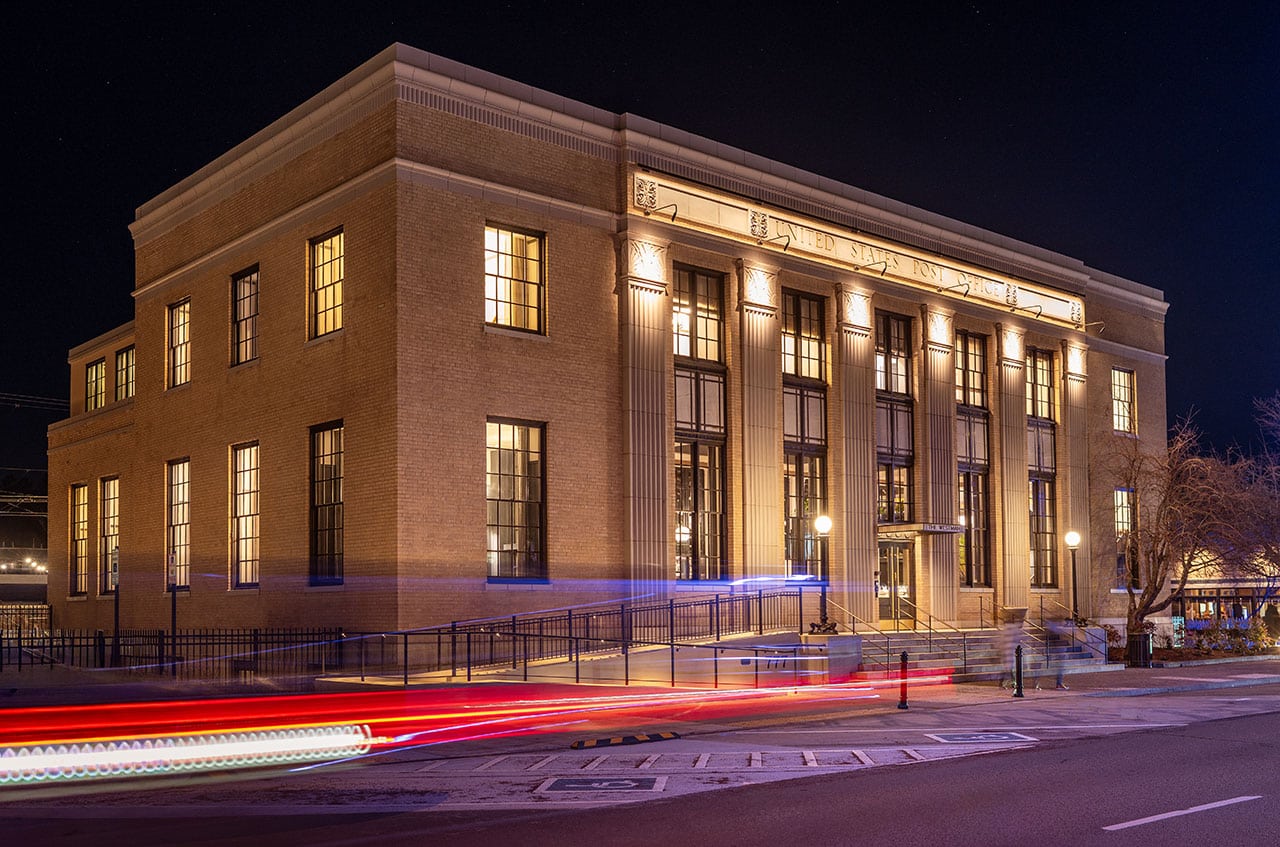


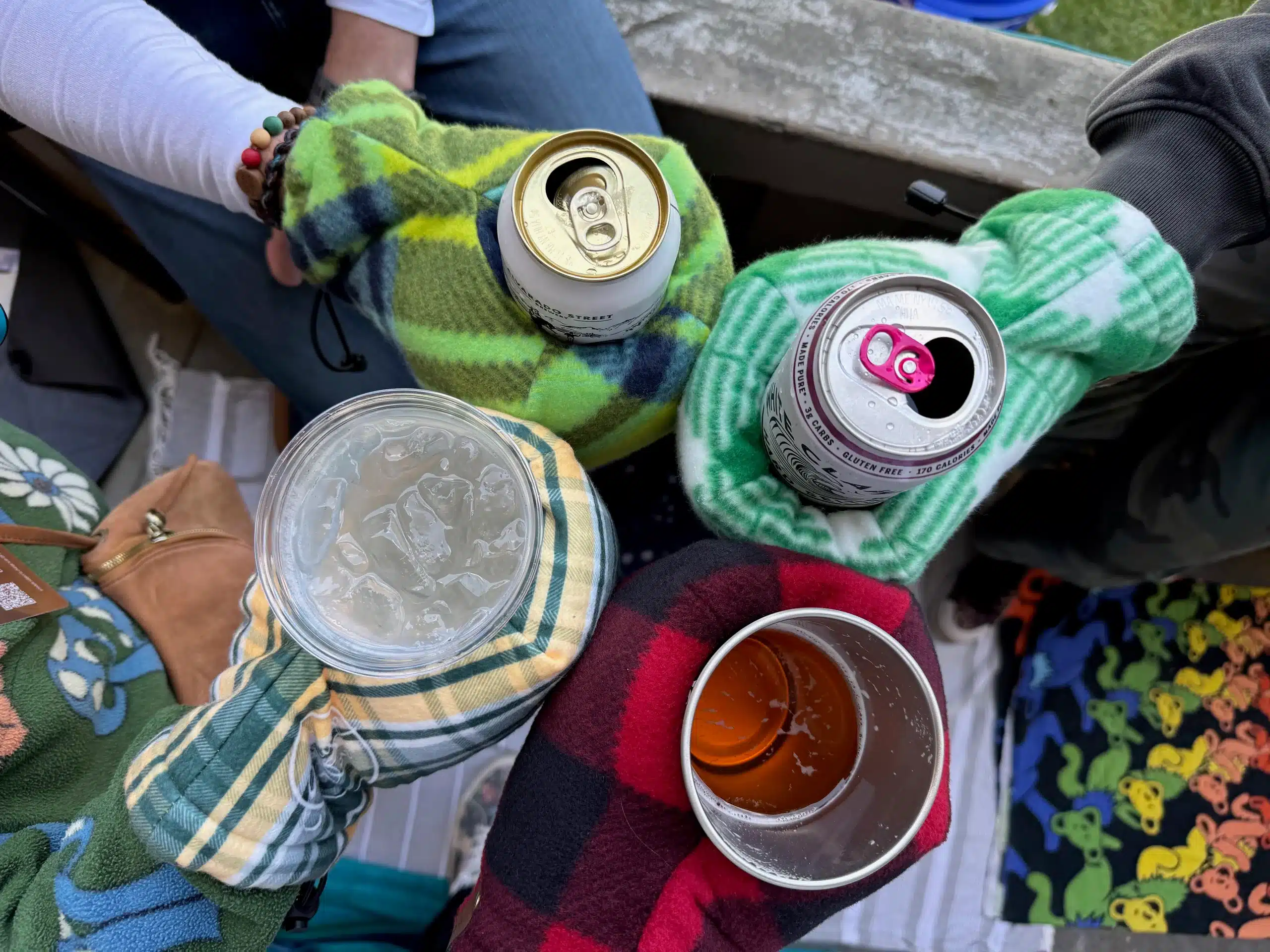


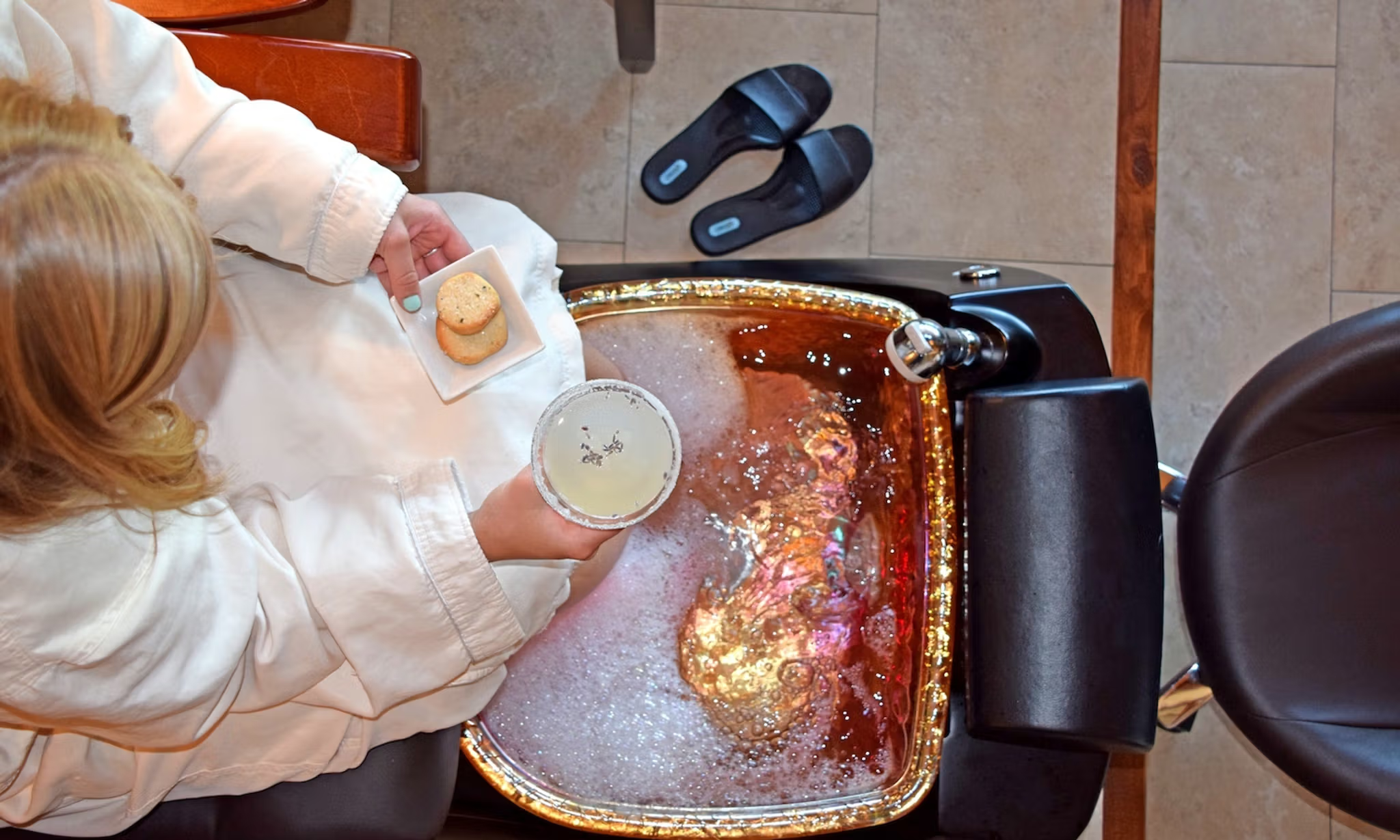
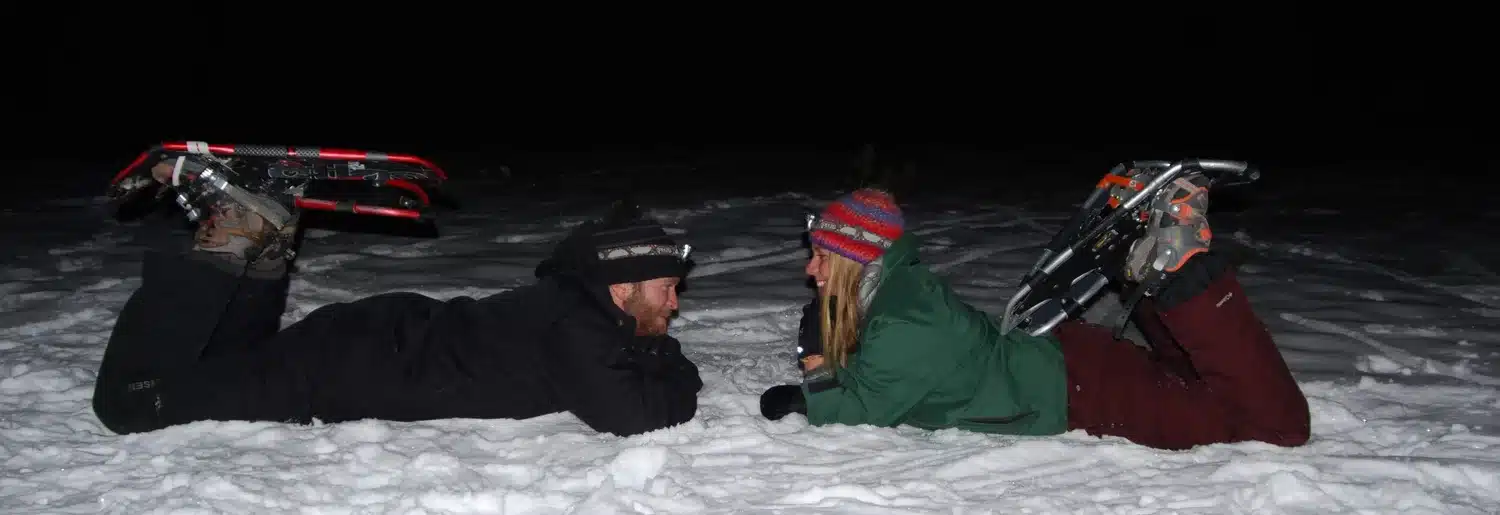


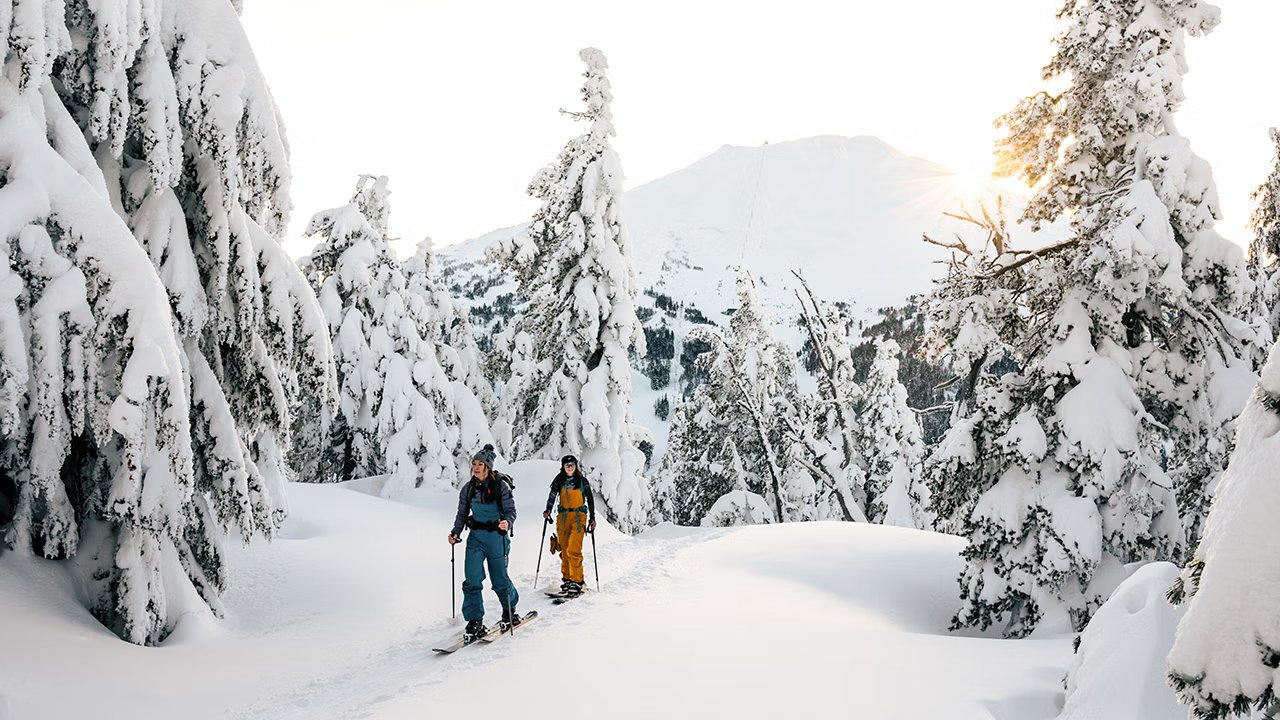
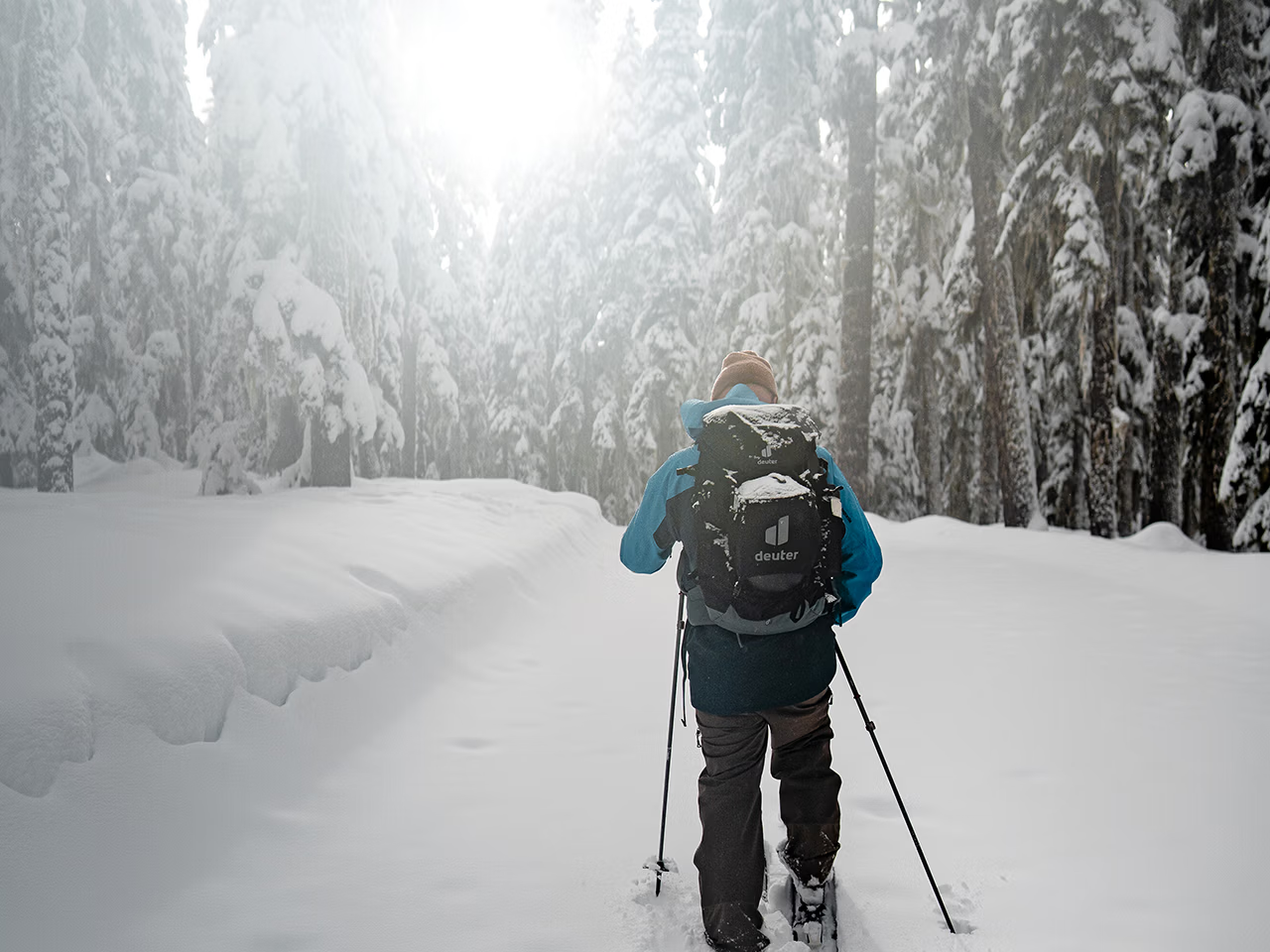
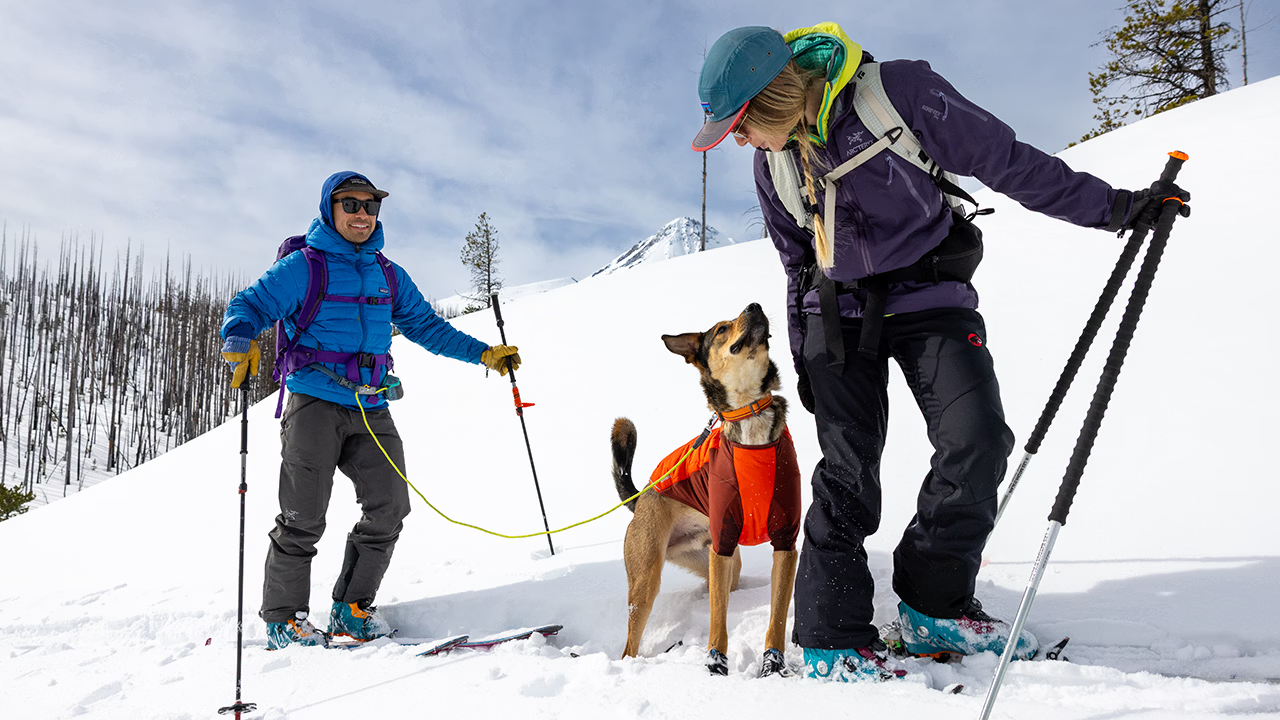


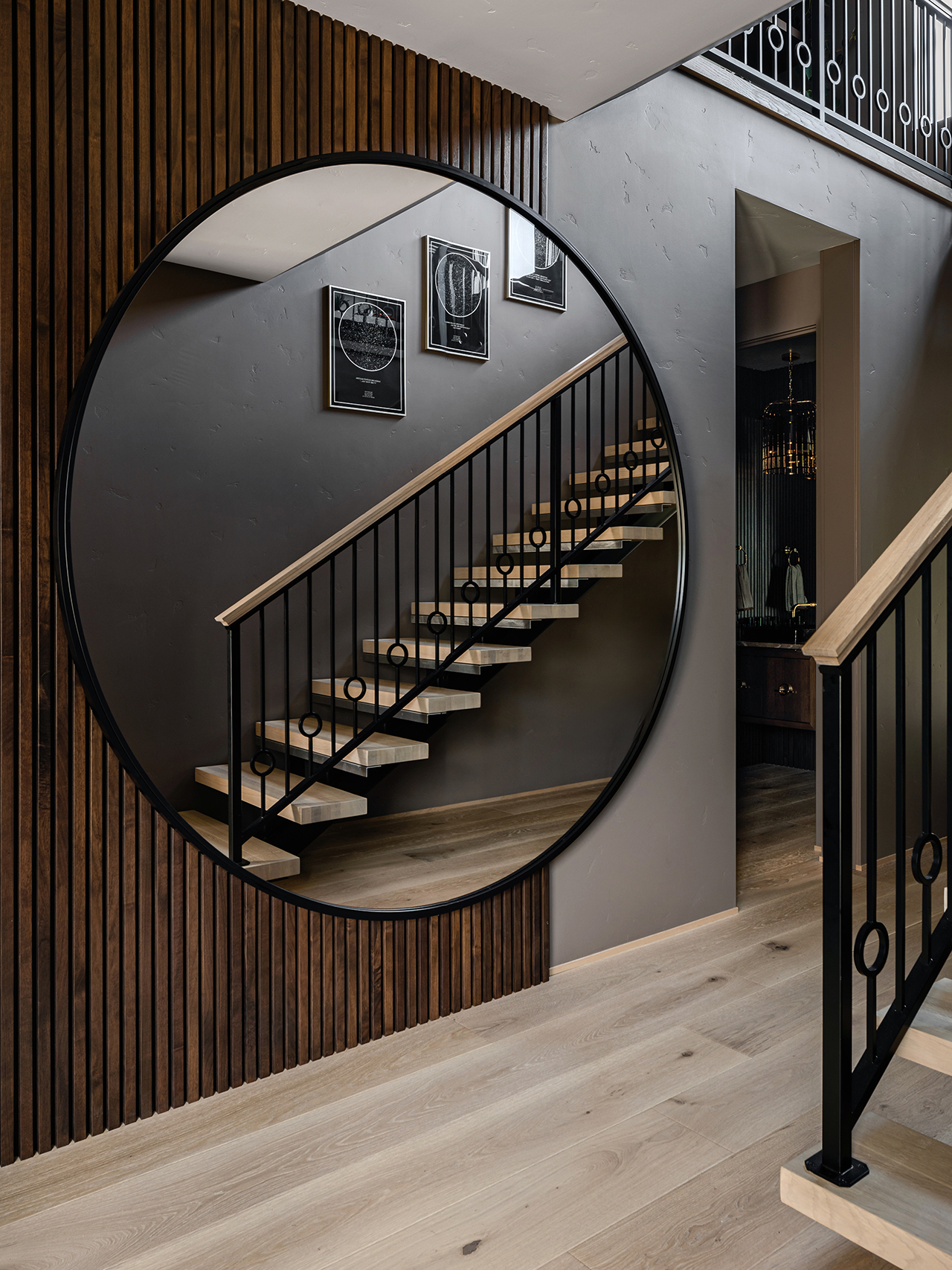
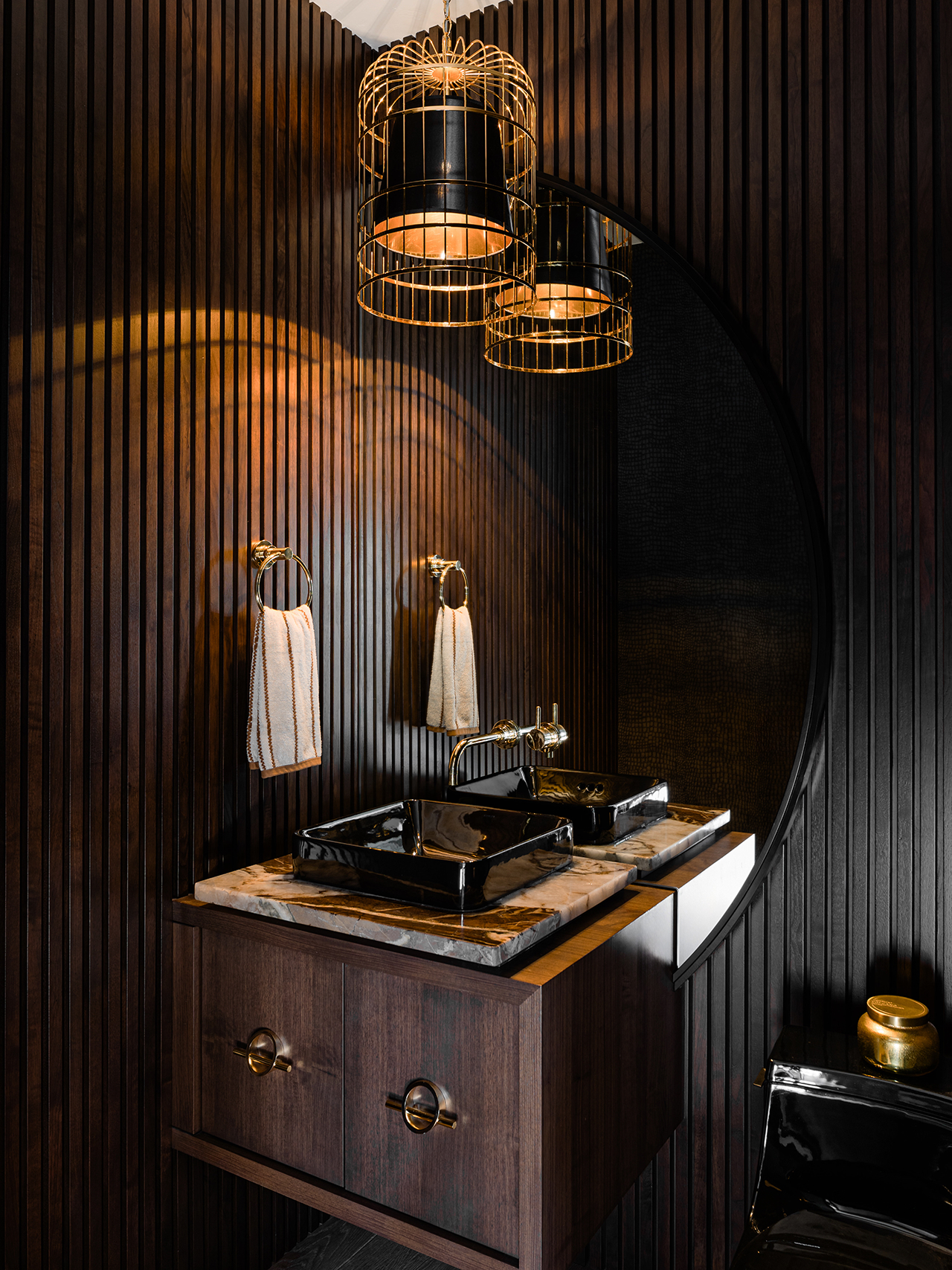
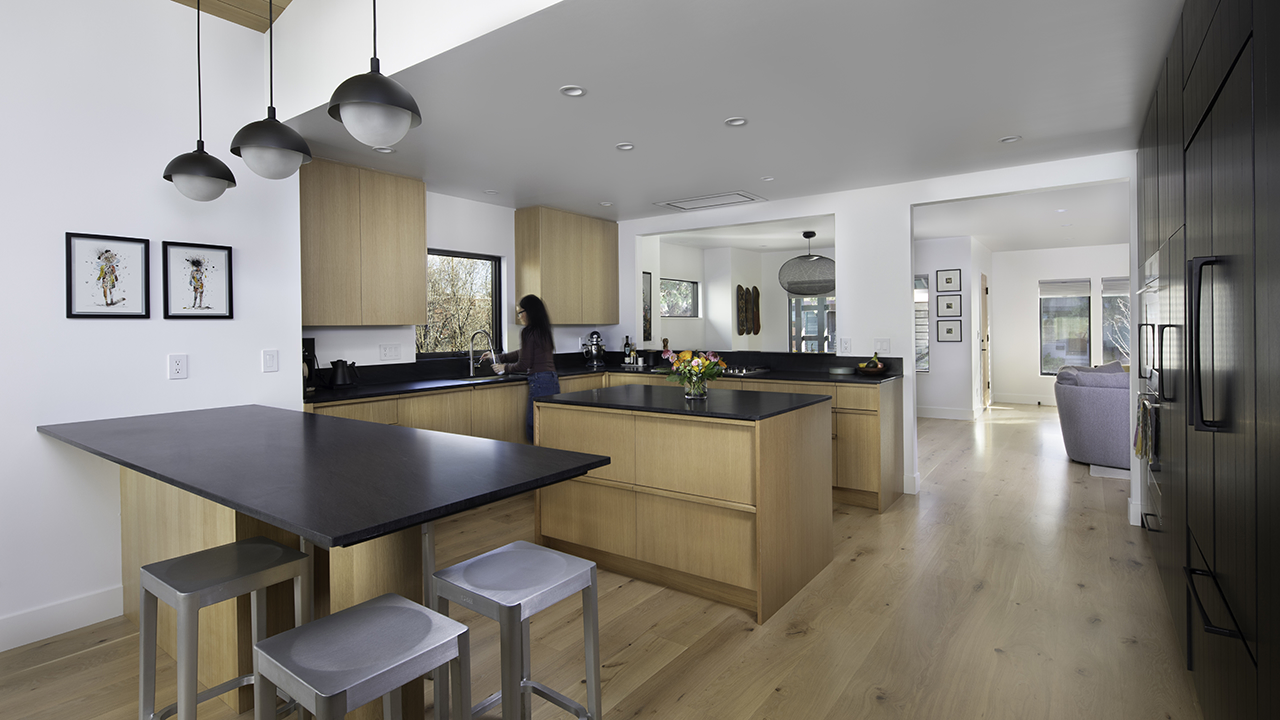
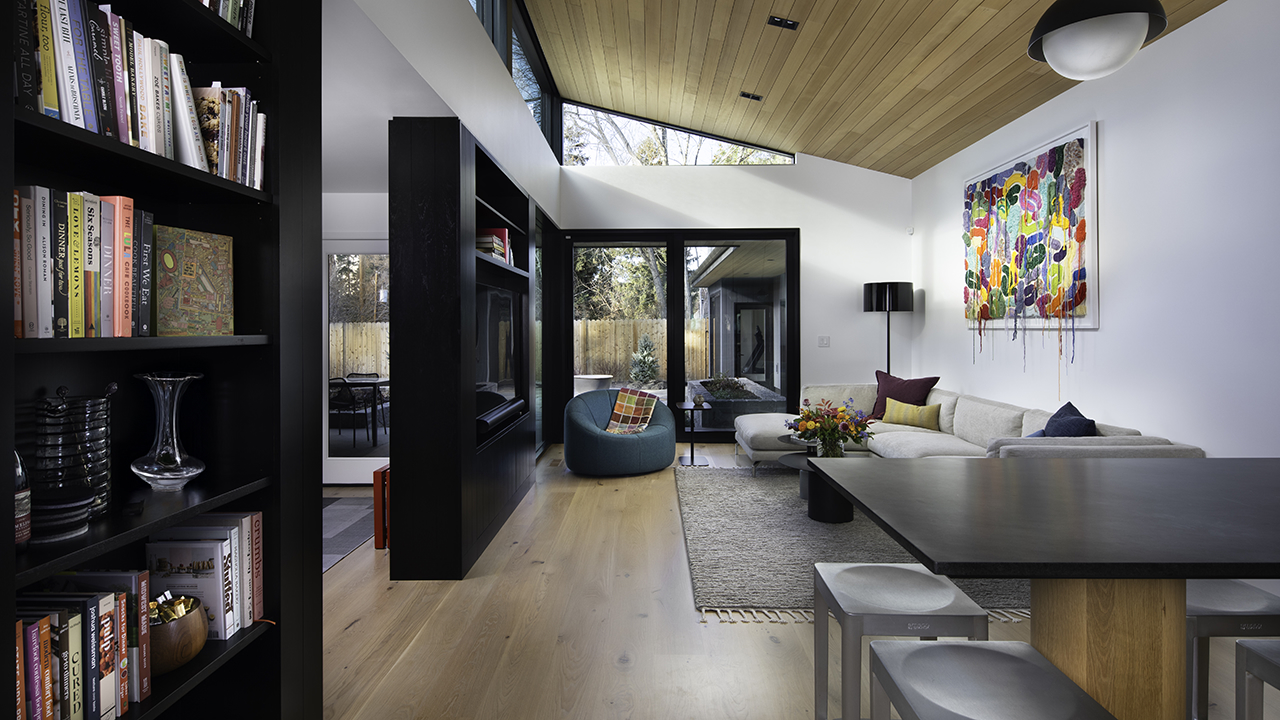
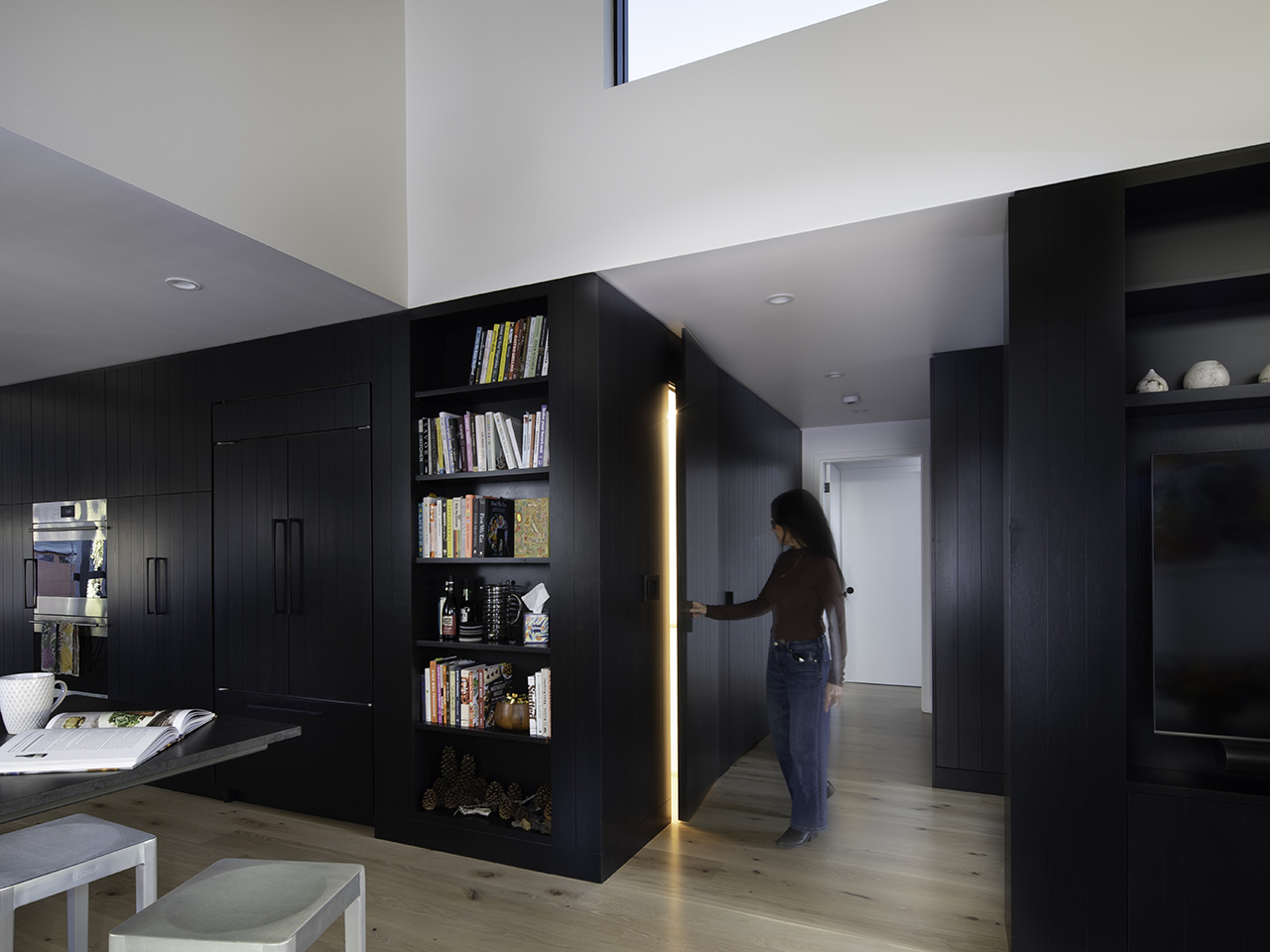


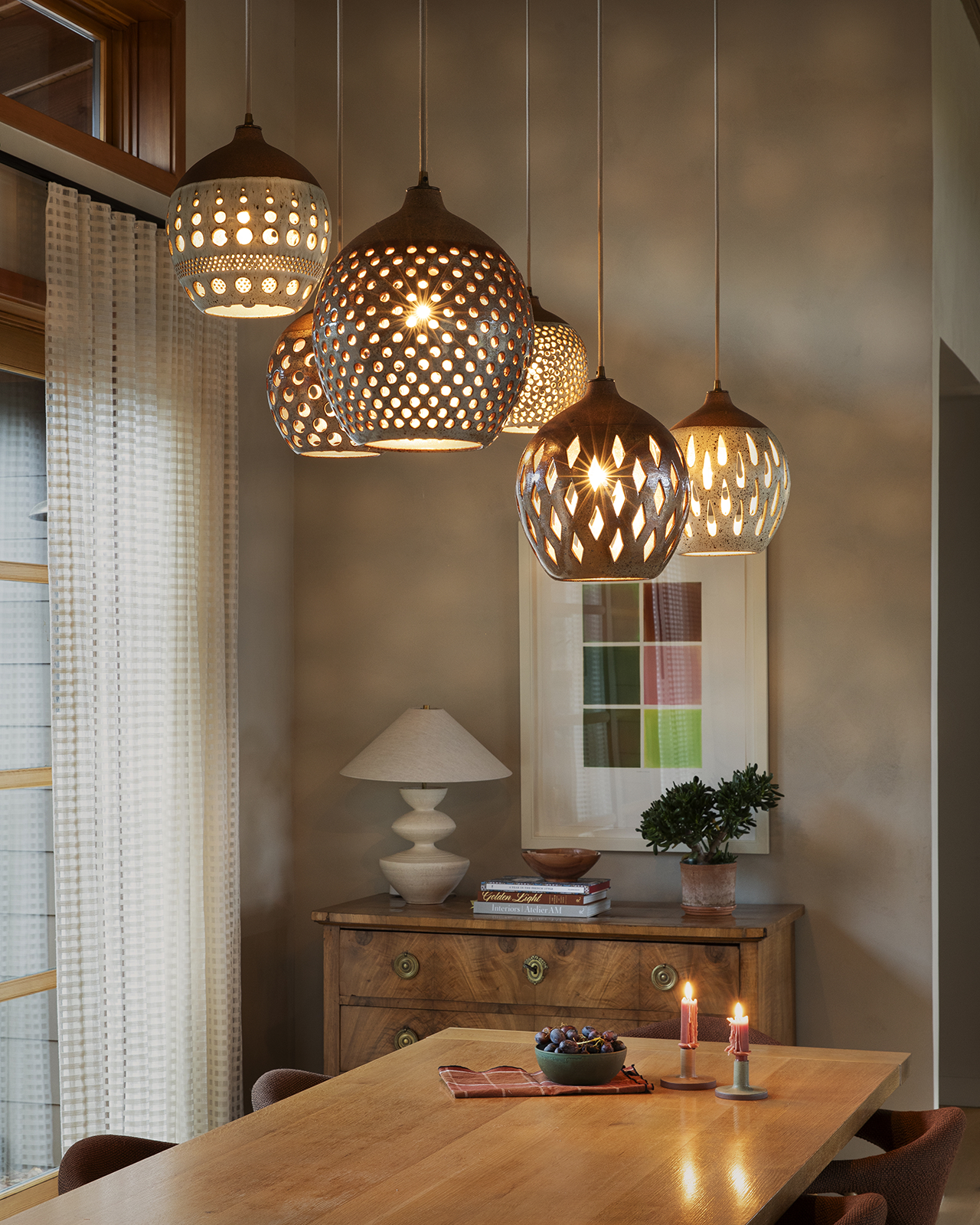
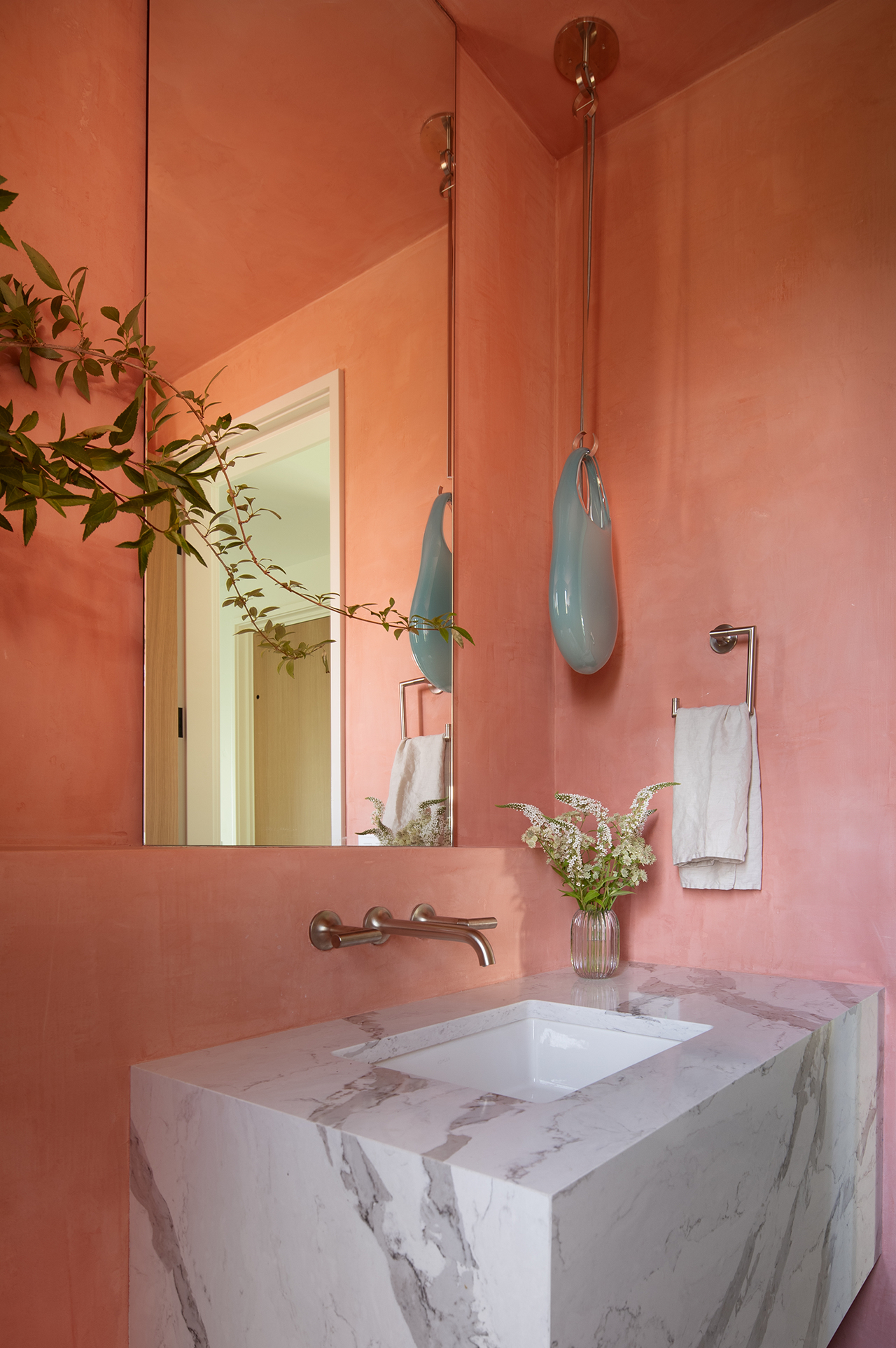


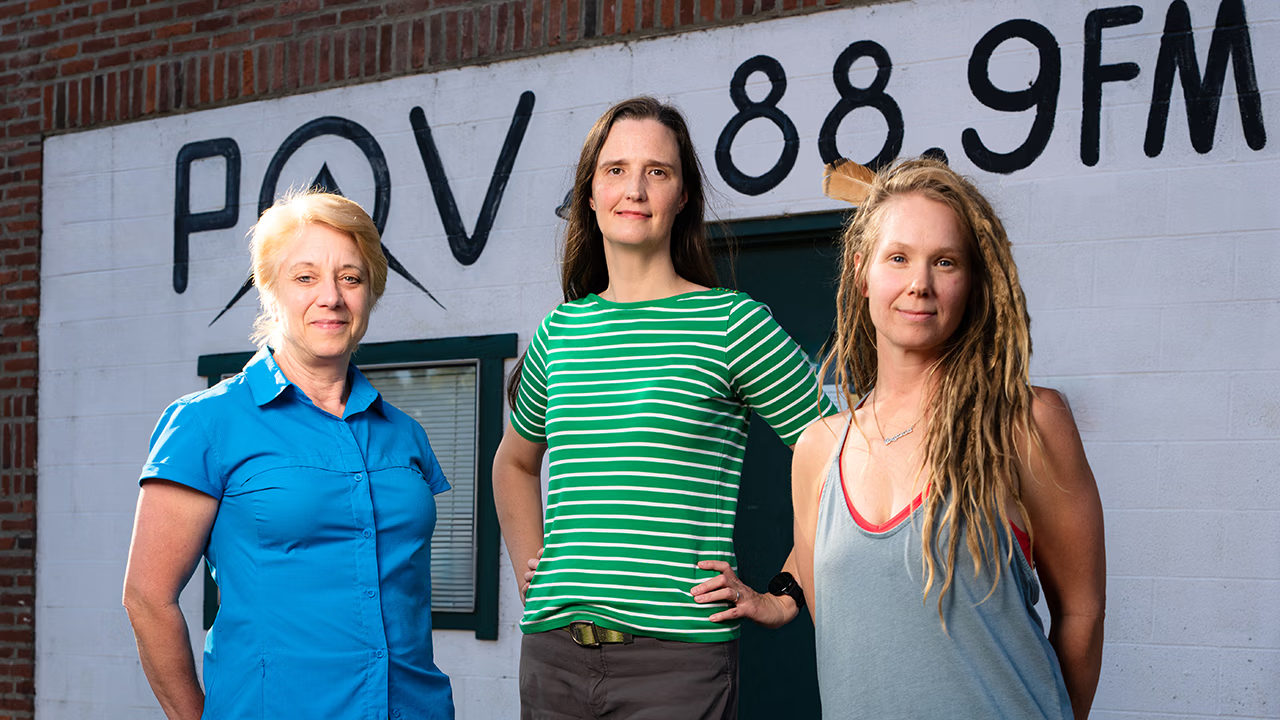

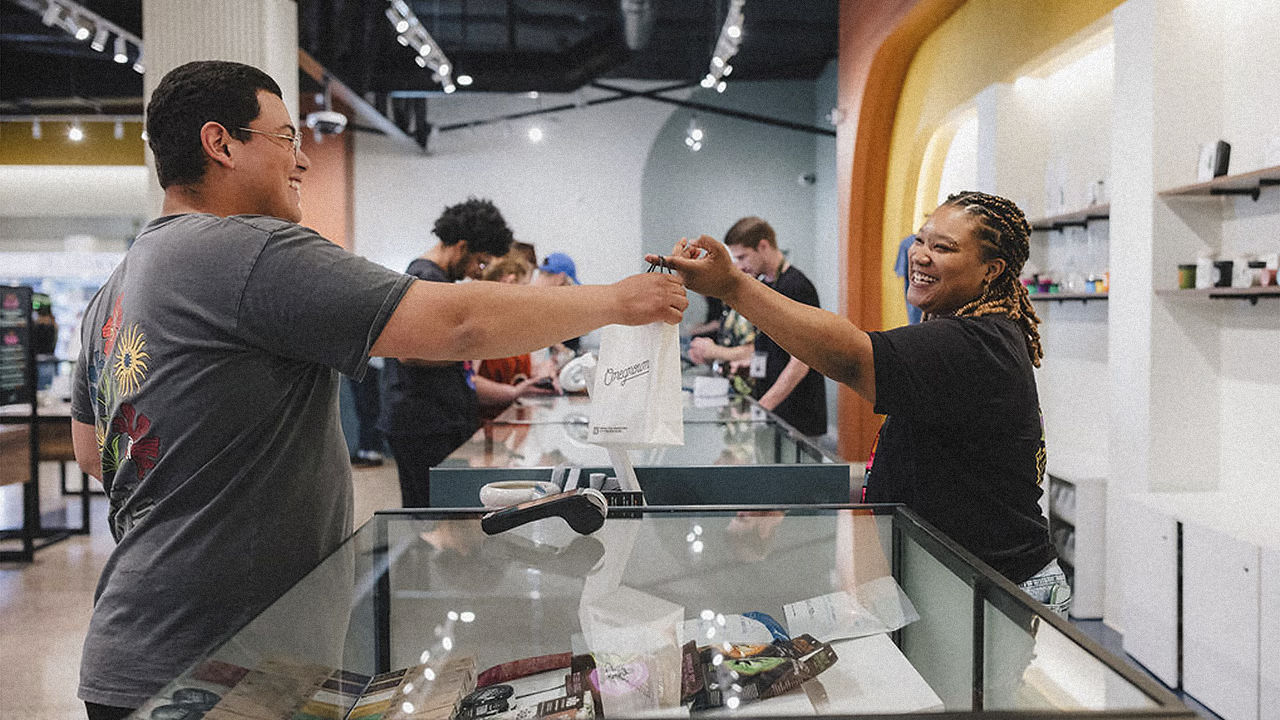
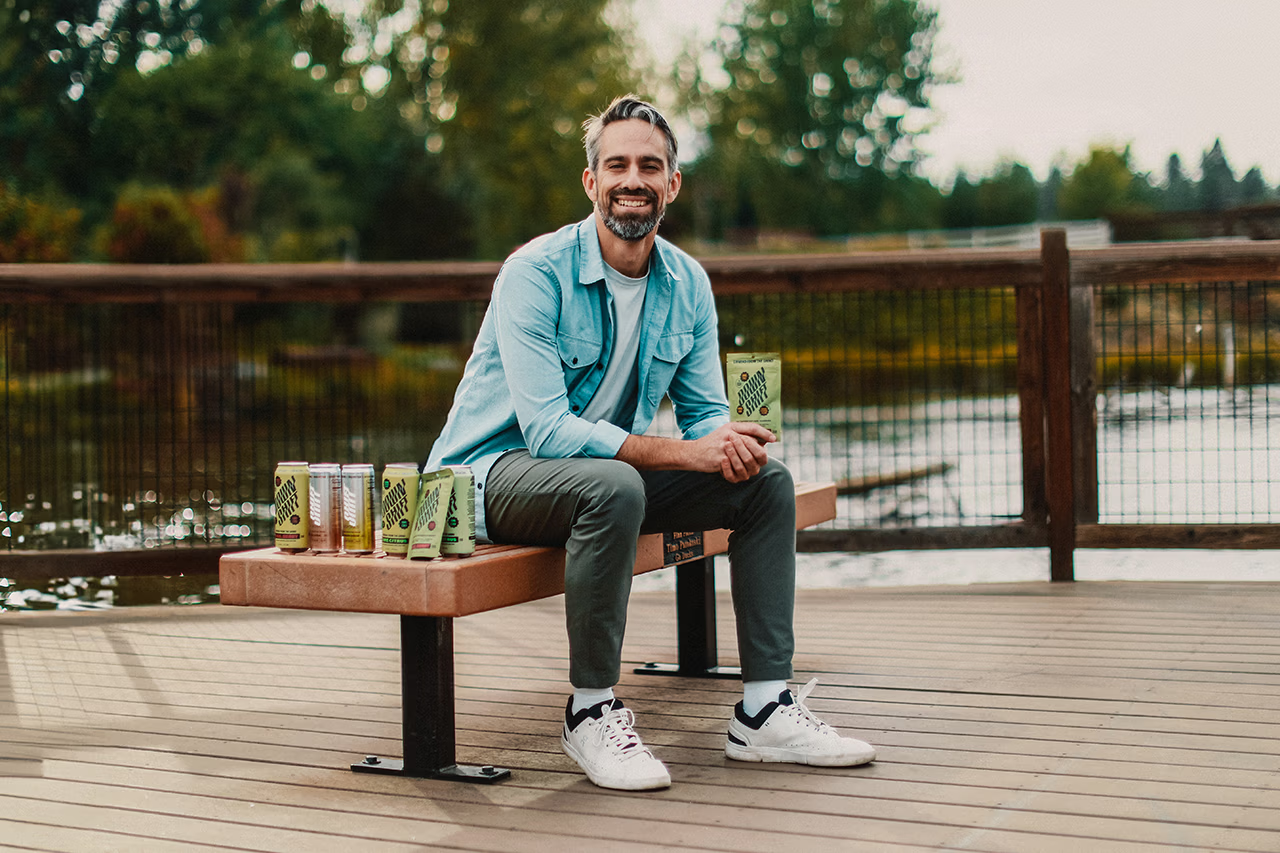

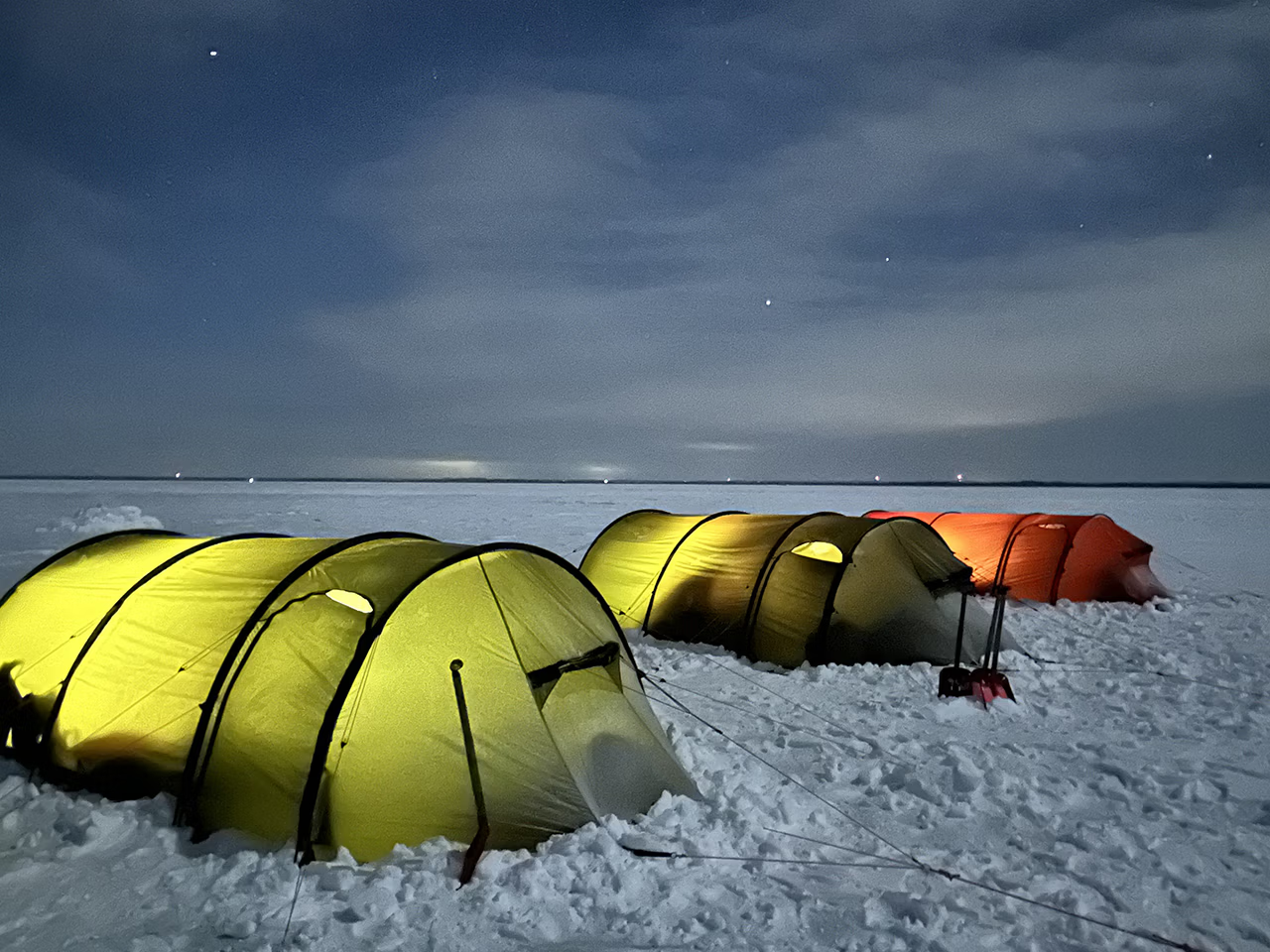
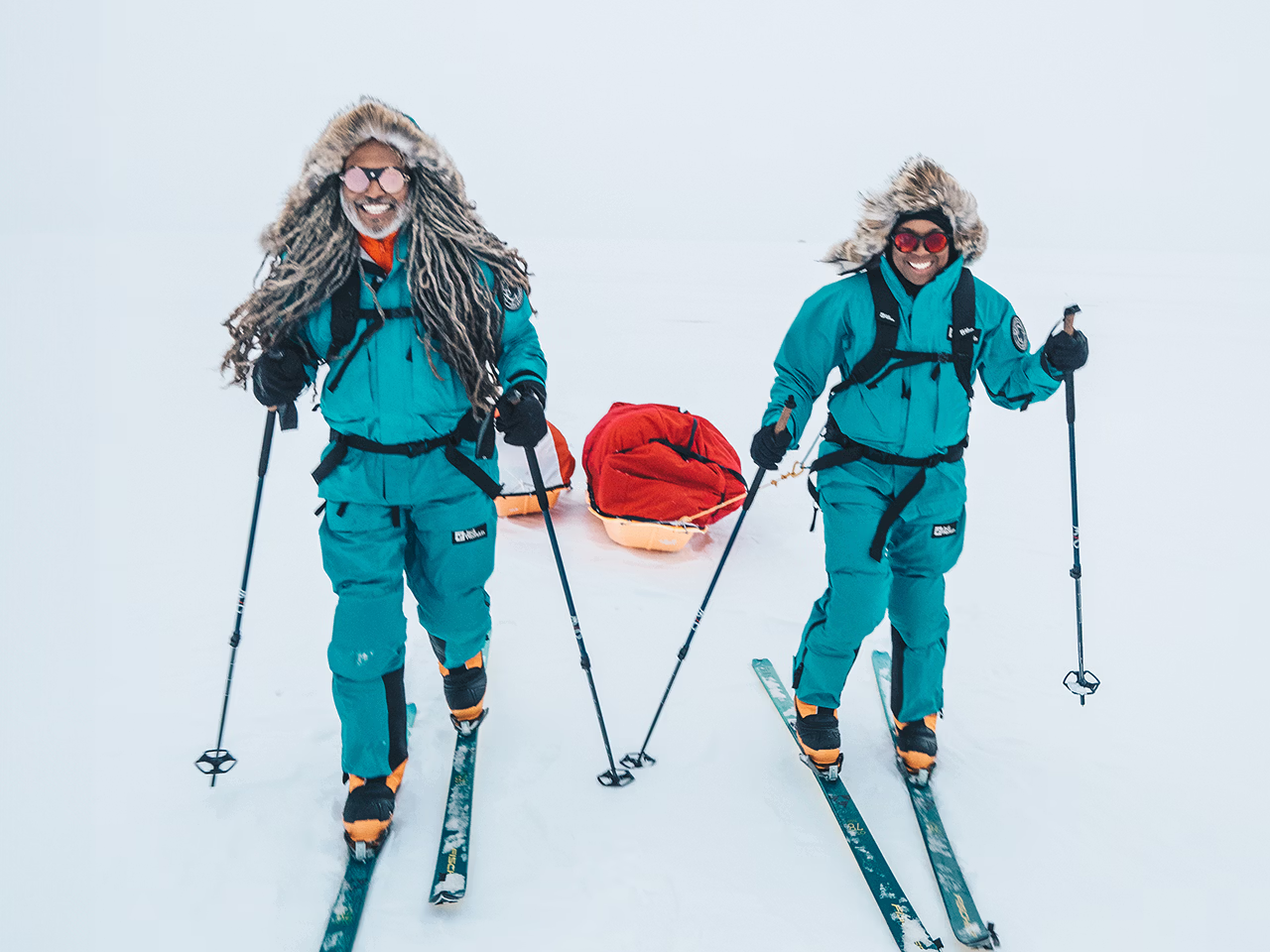

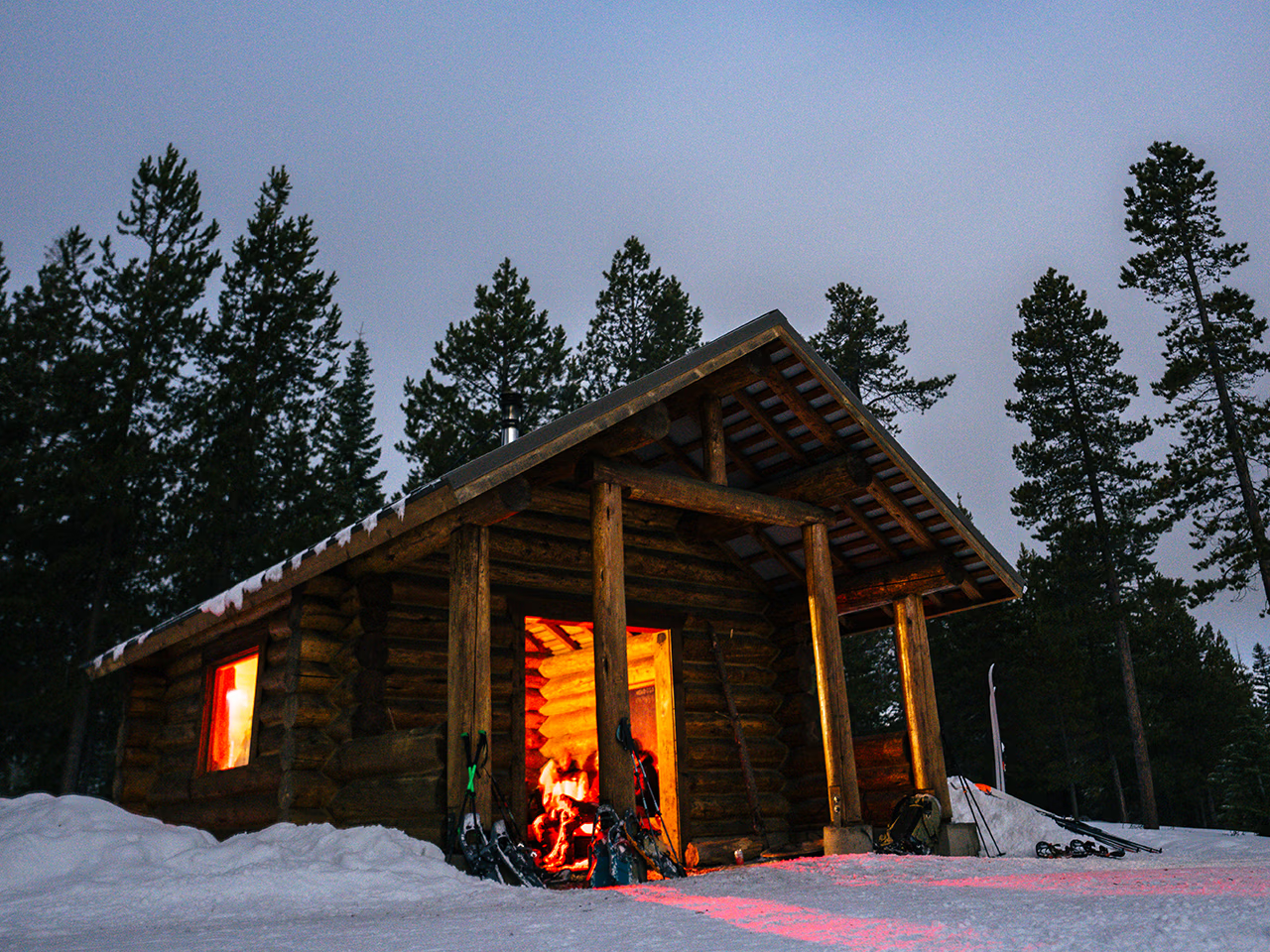

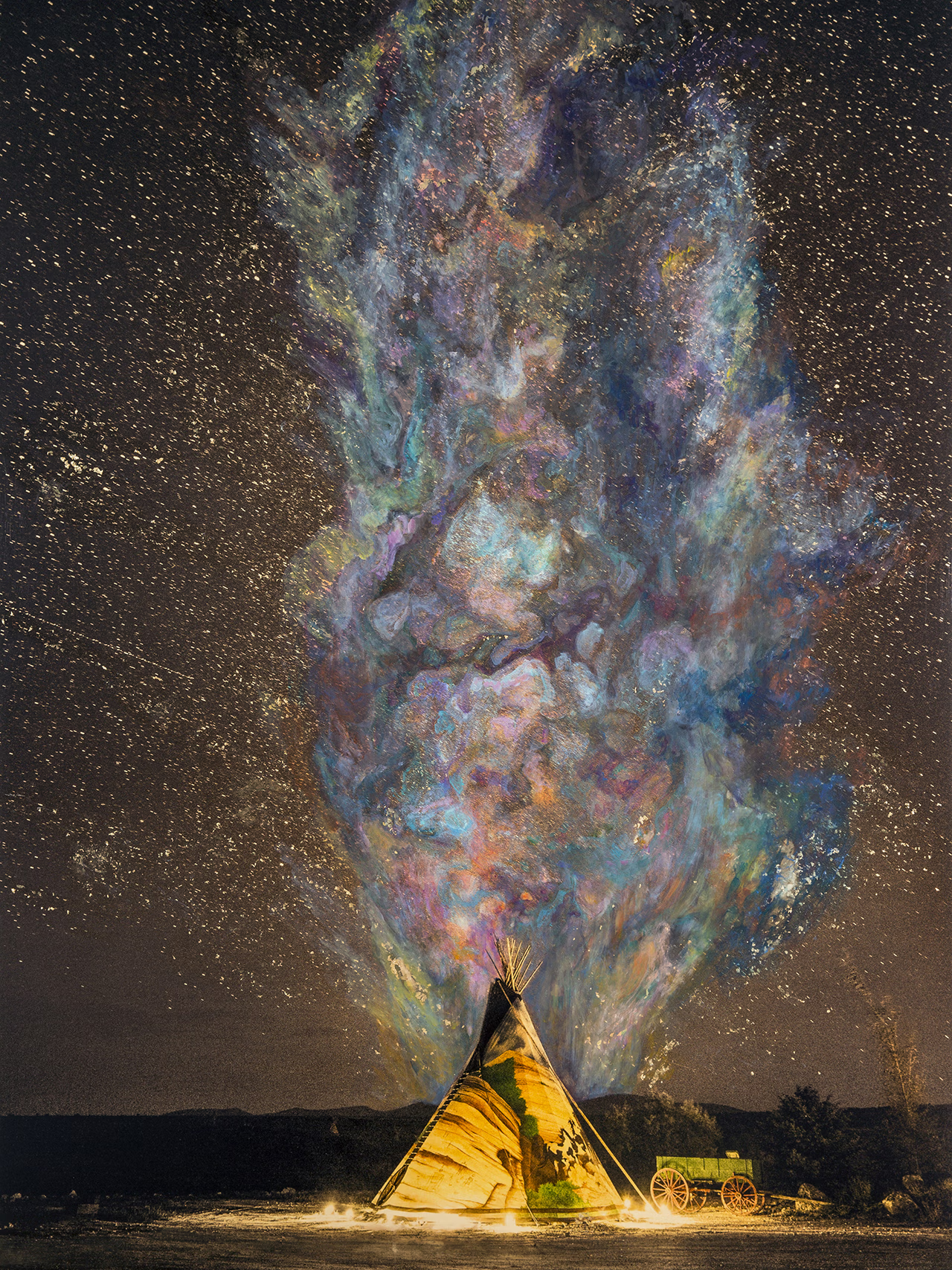
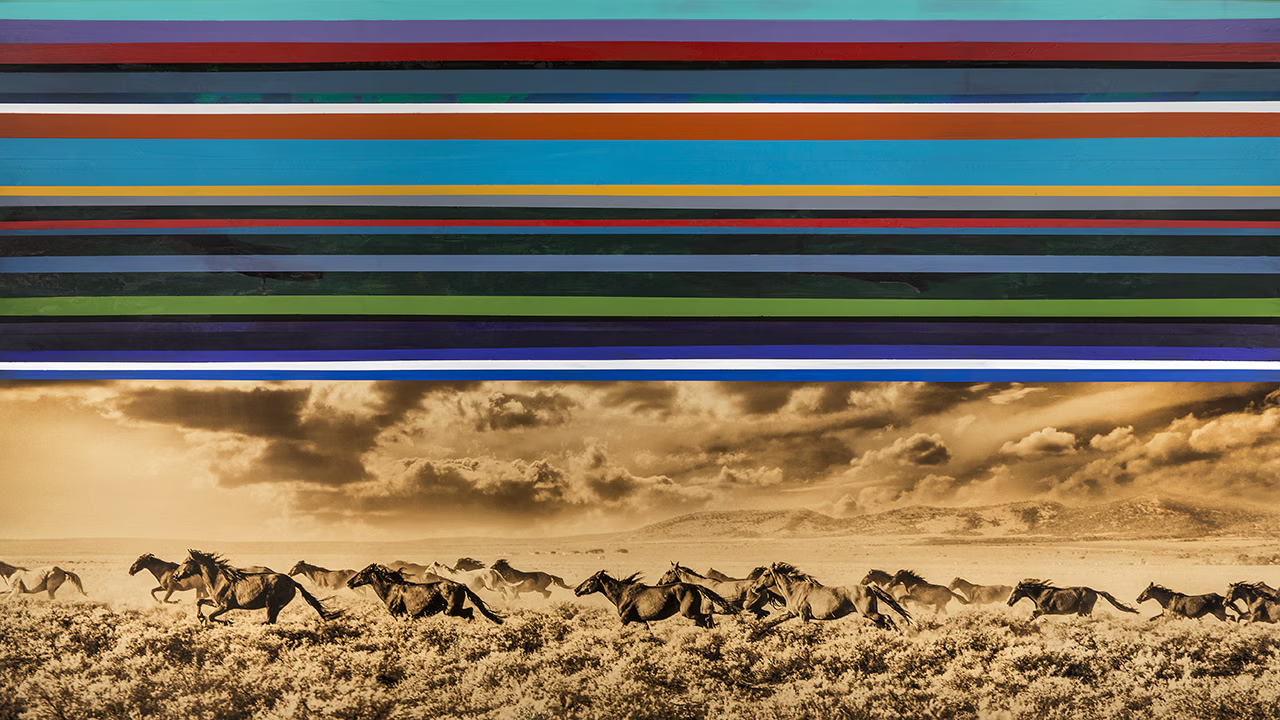


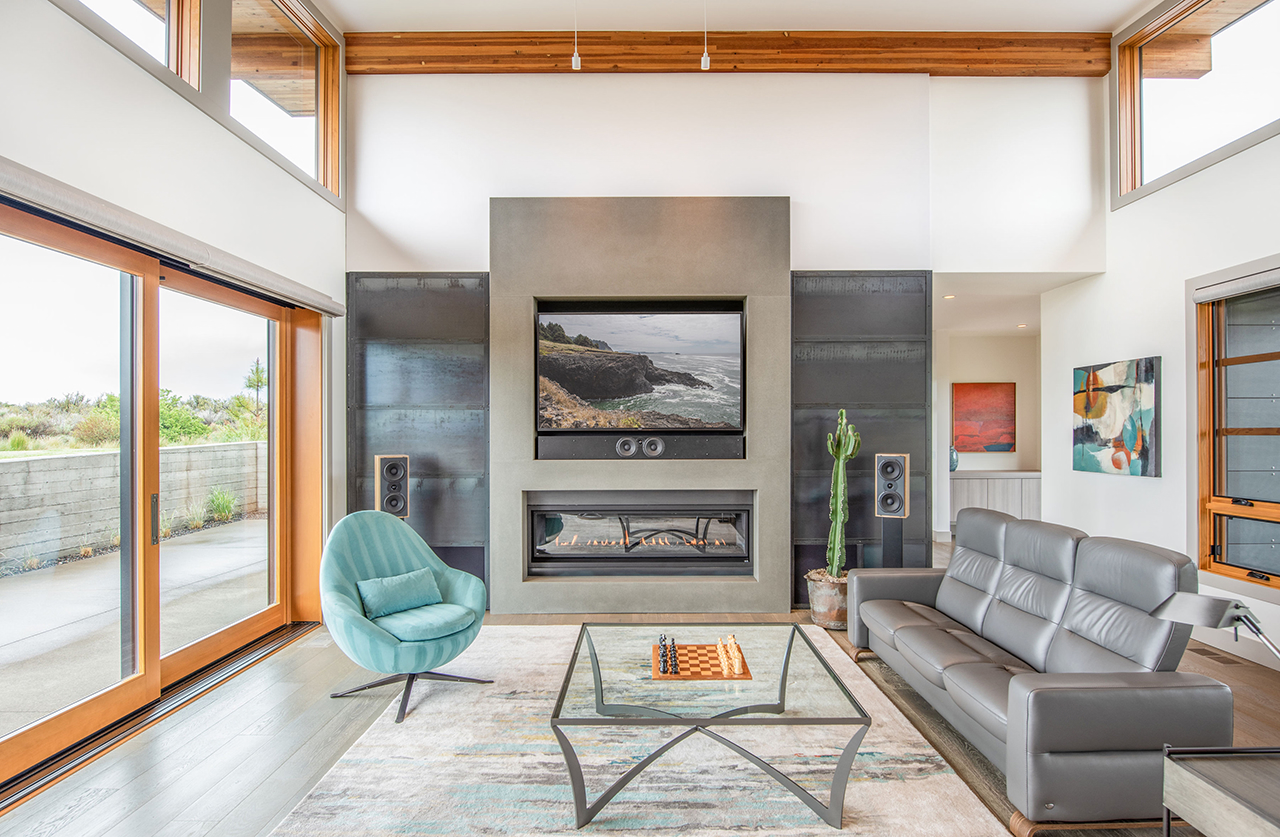
 Where does the name Fuse come from?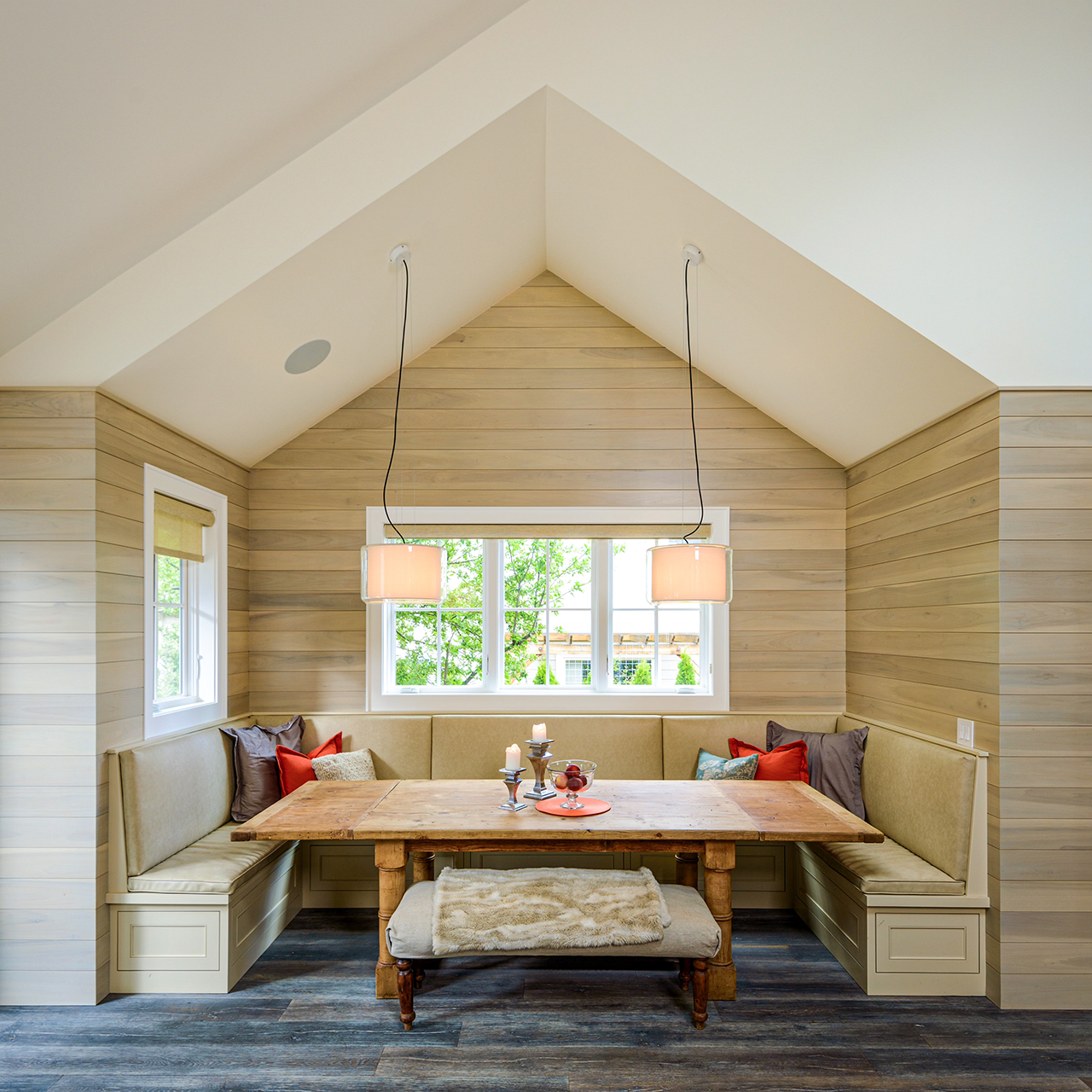


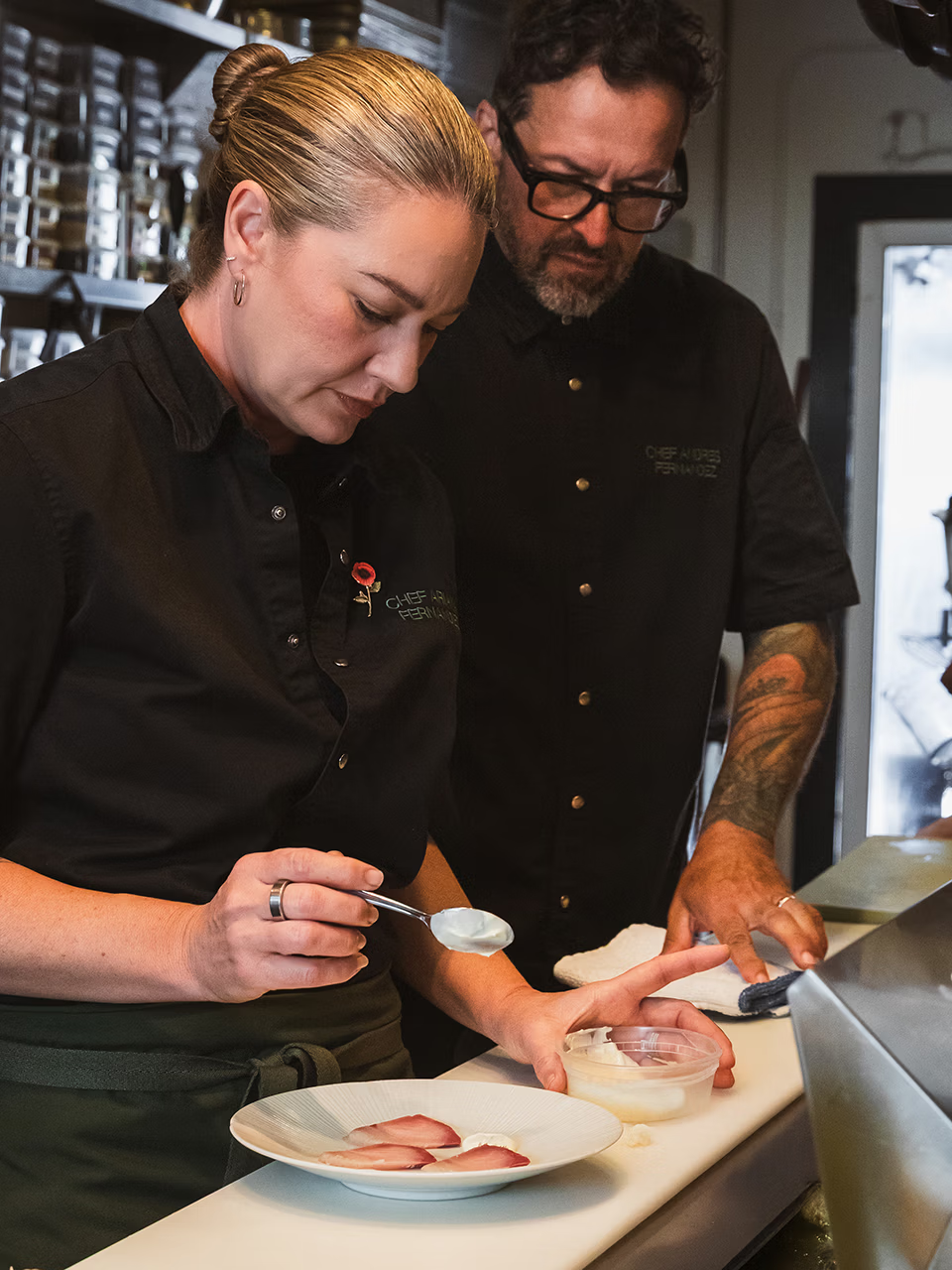
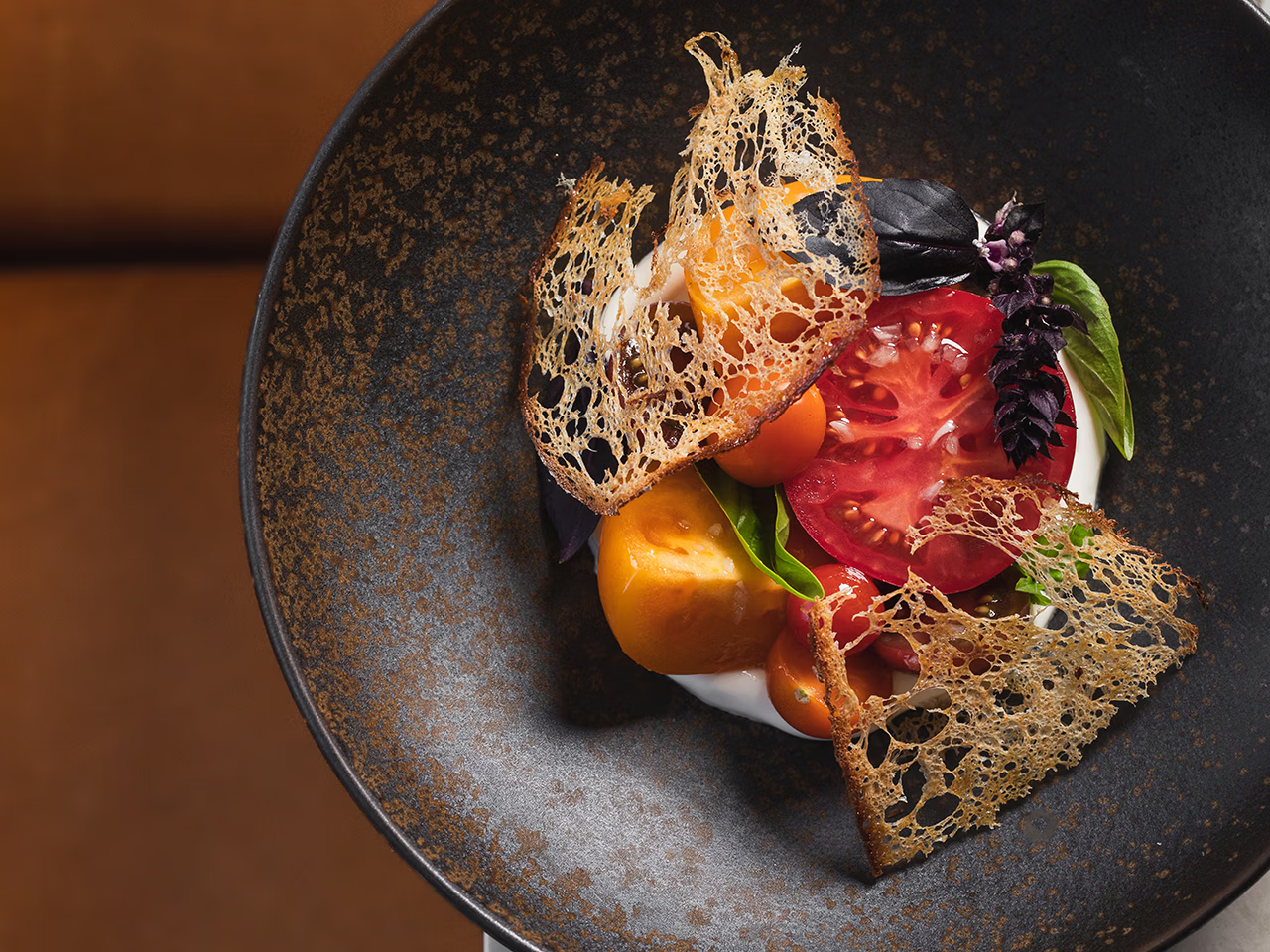
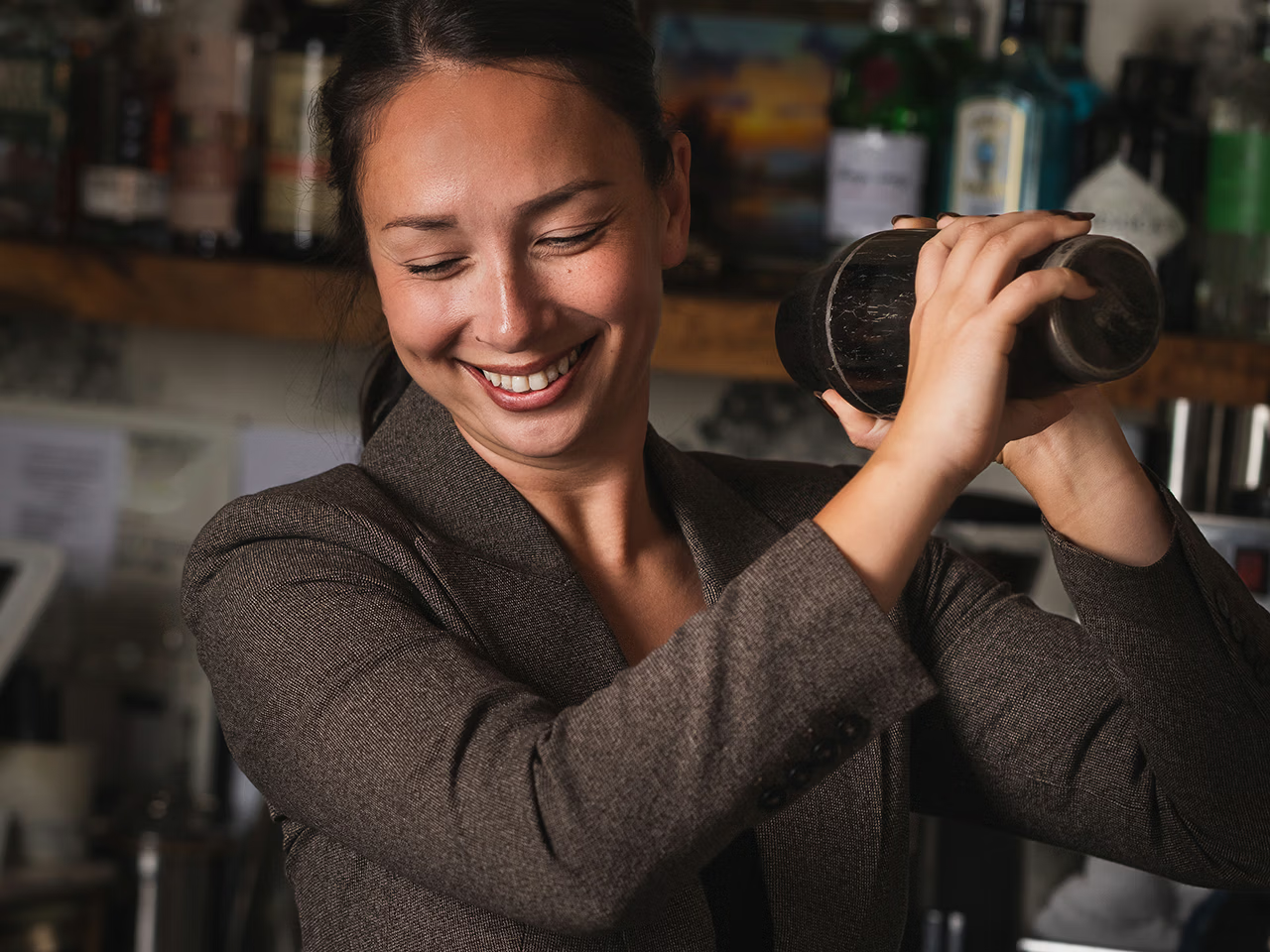
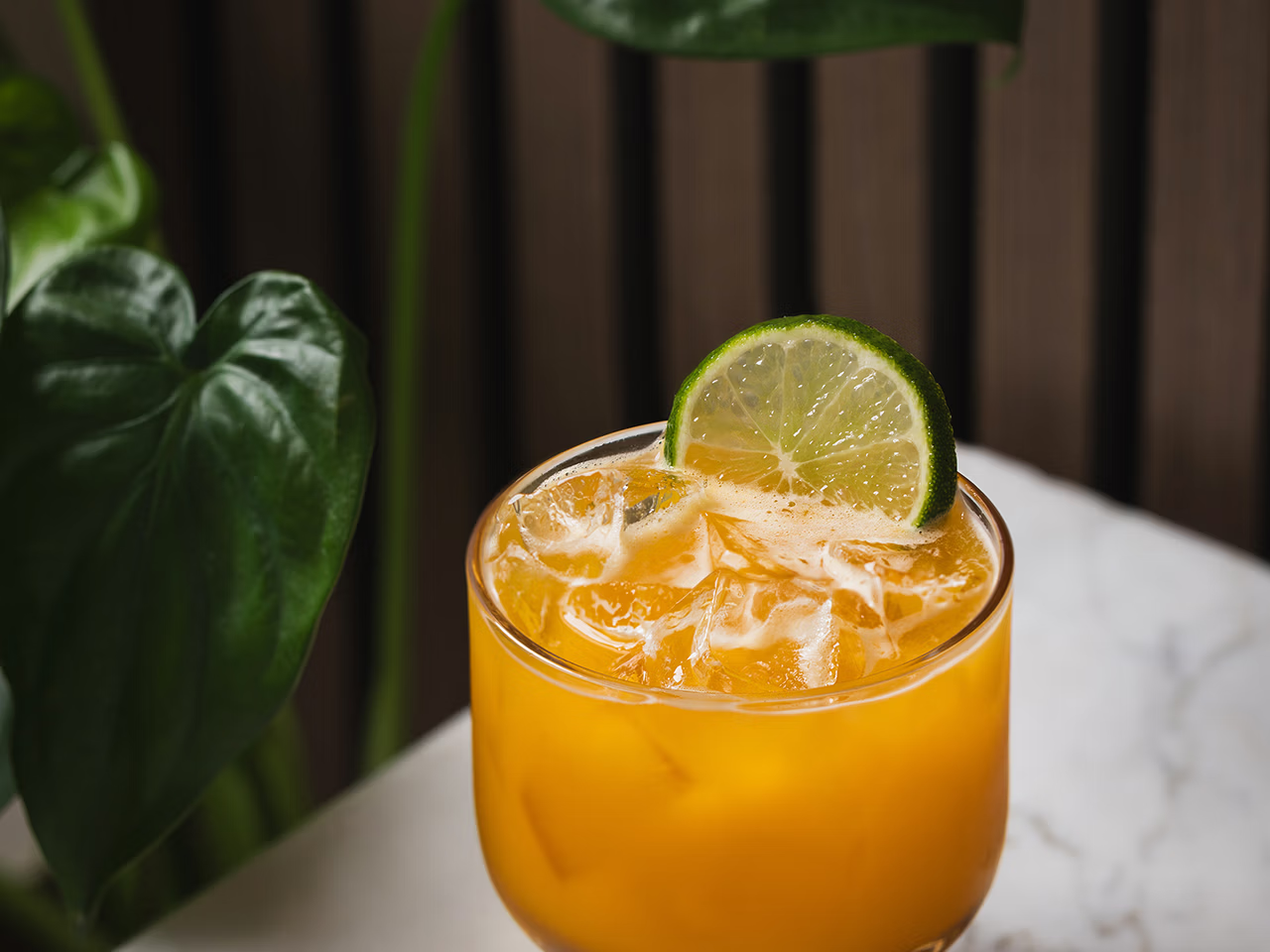
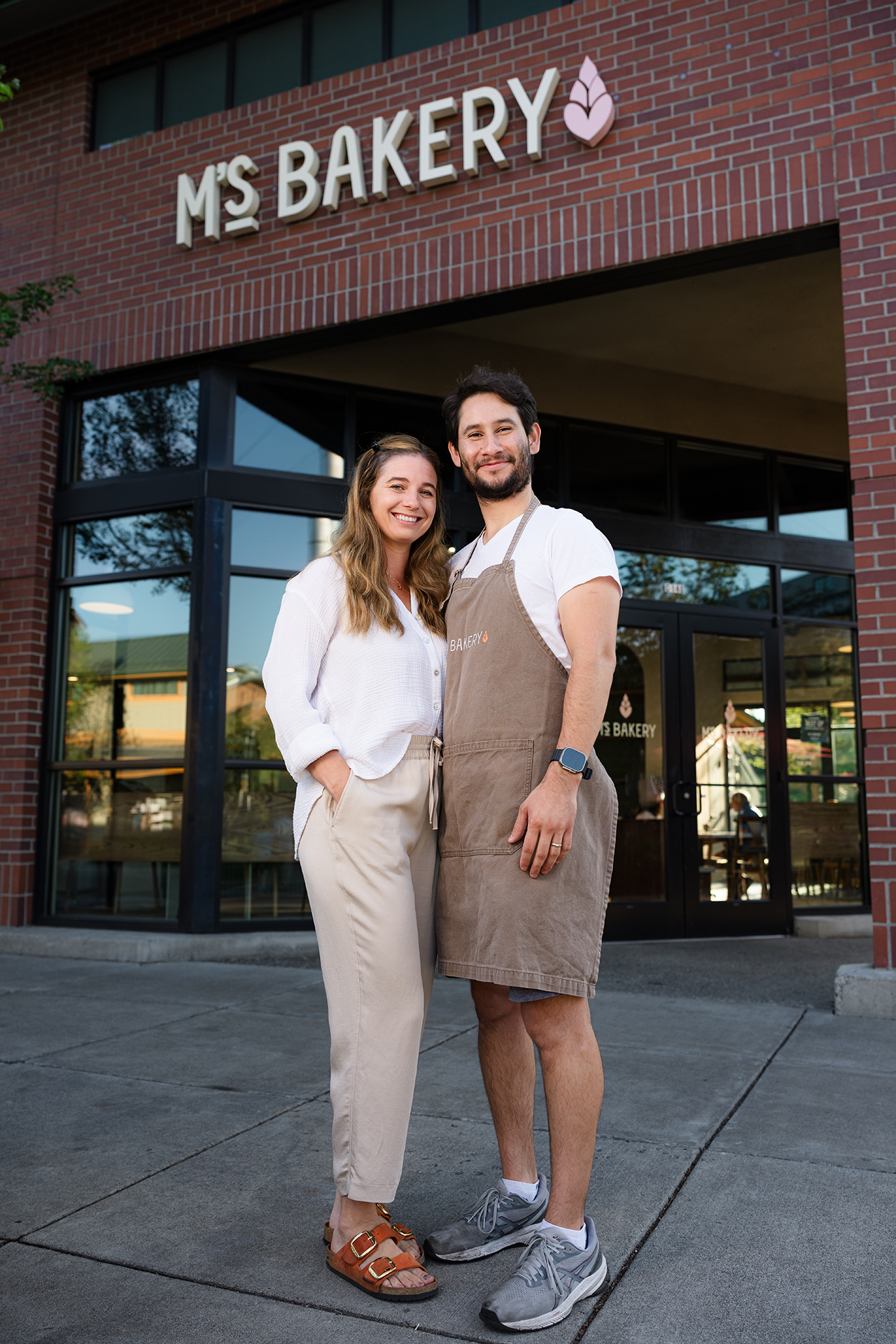
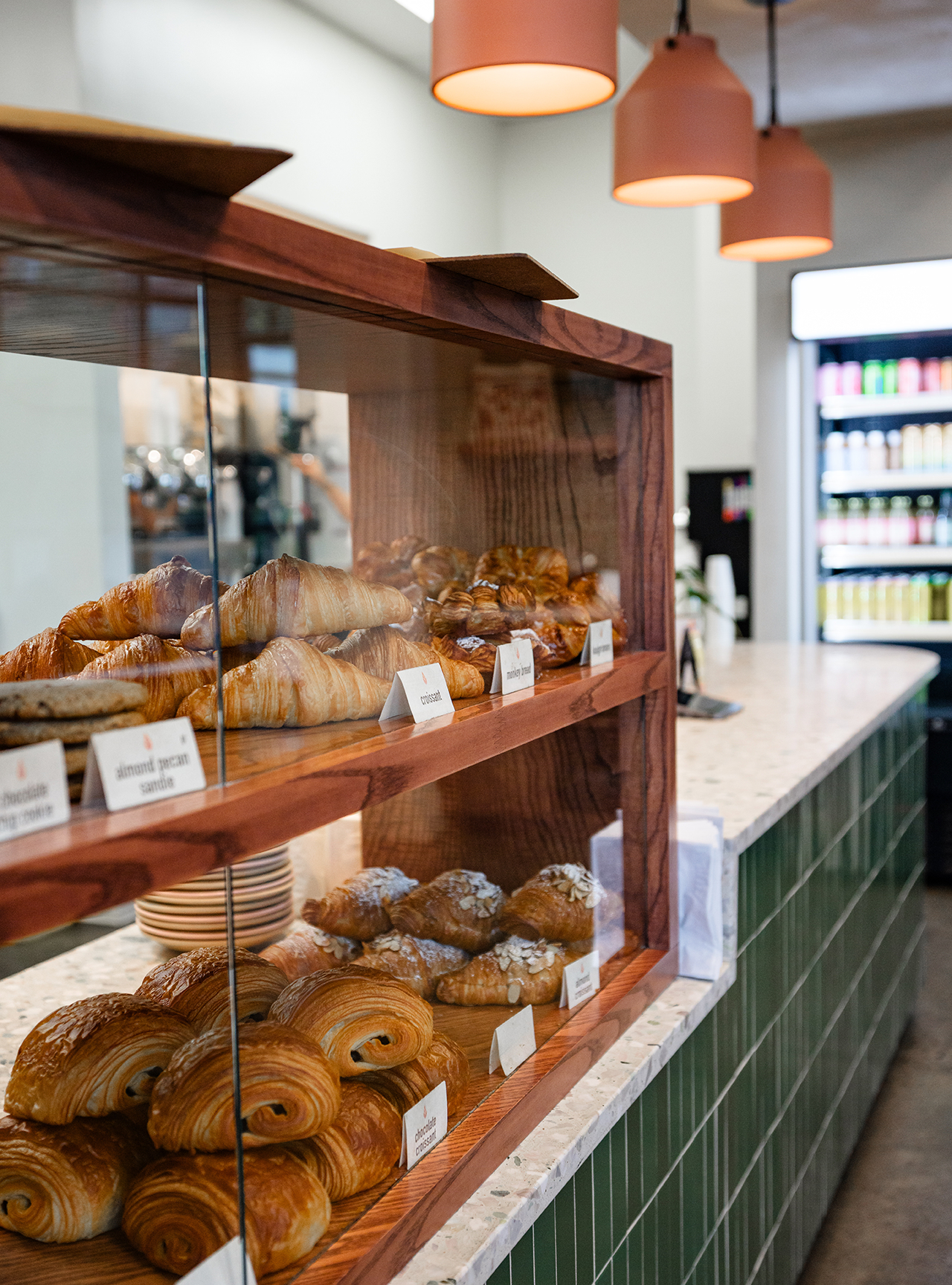
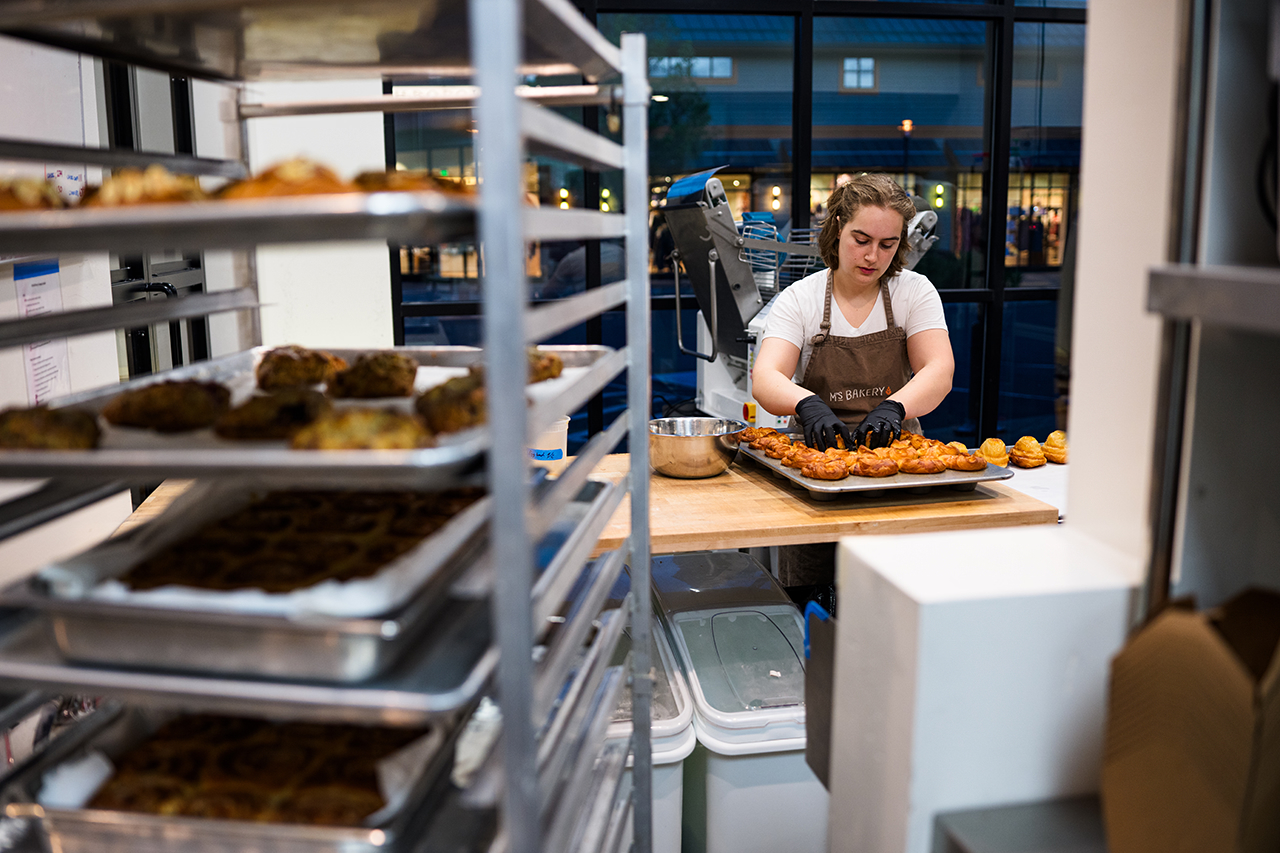
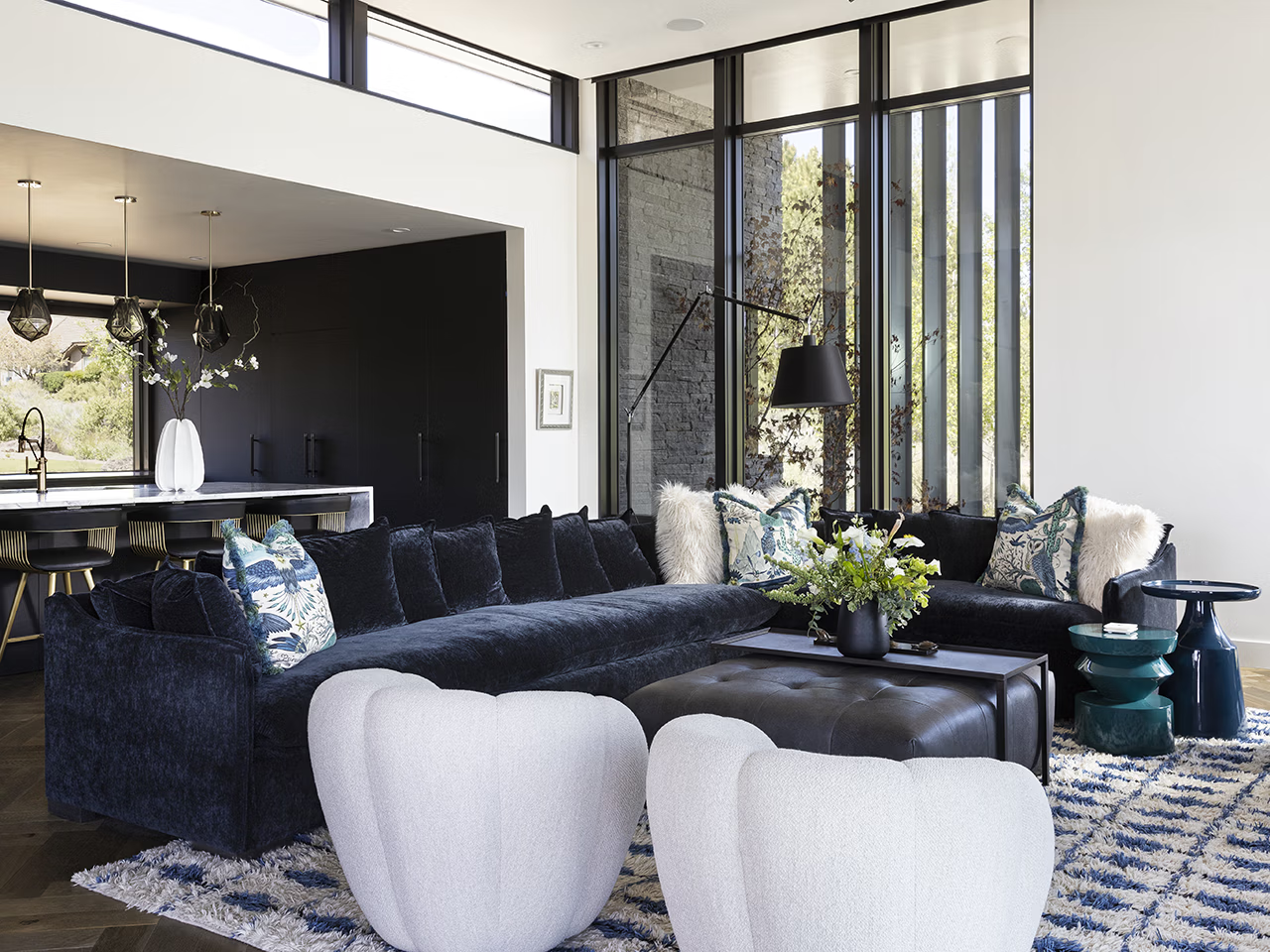
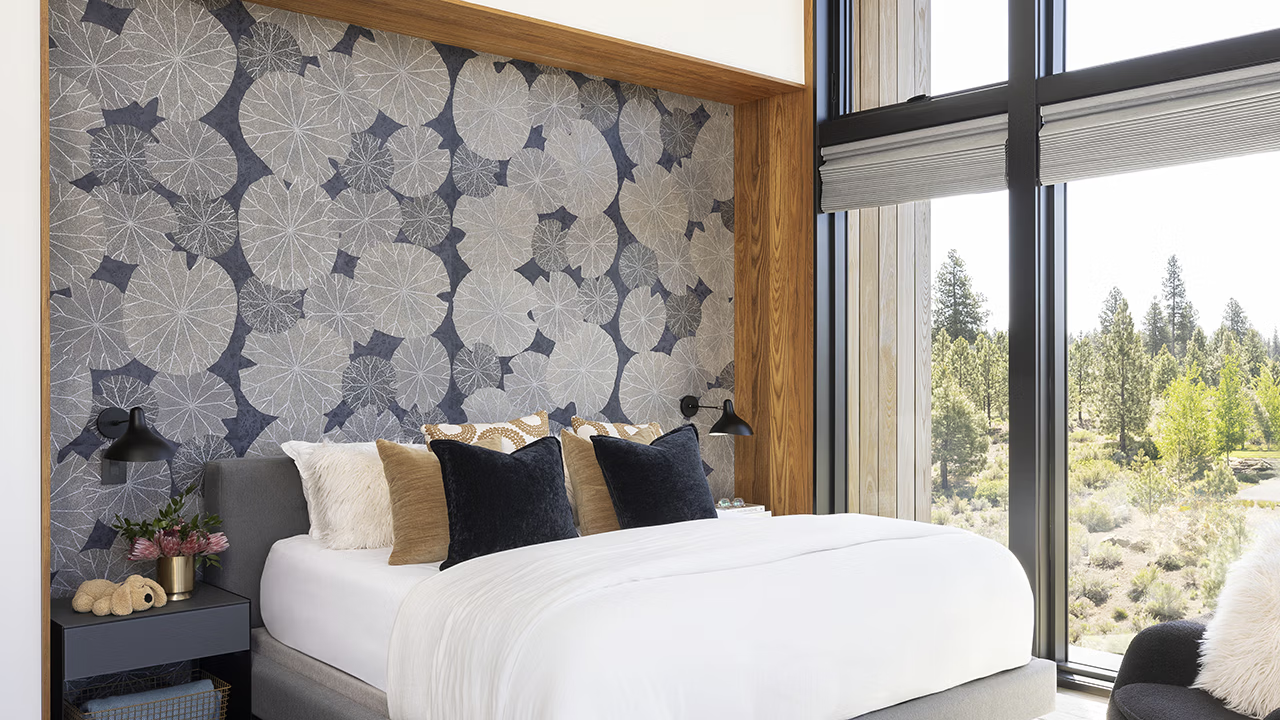
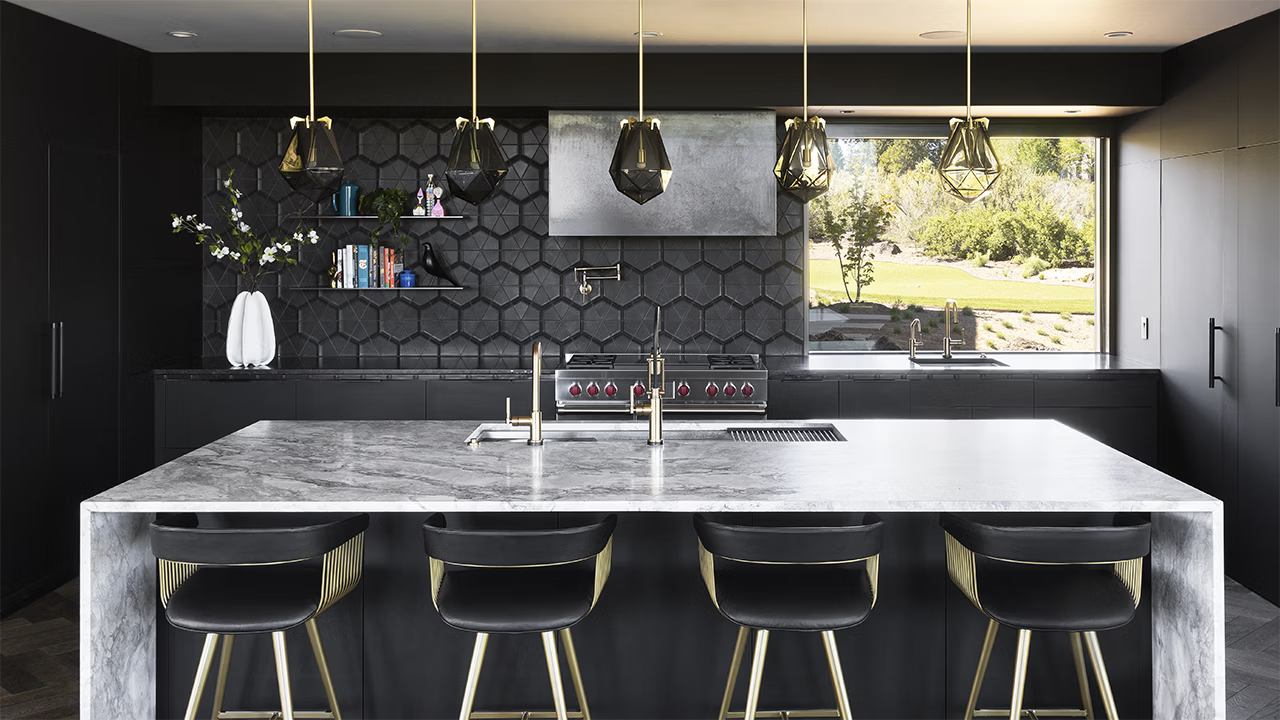
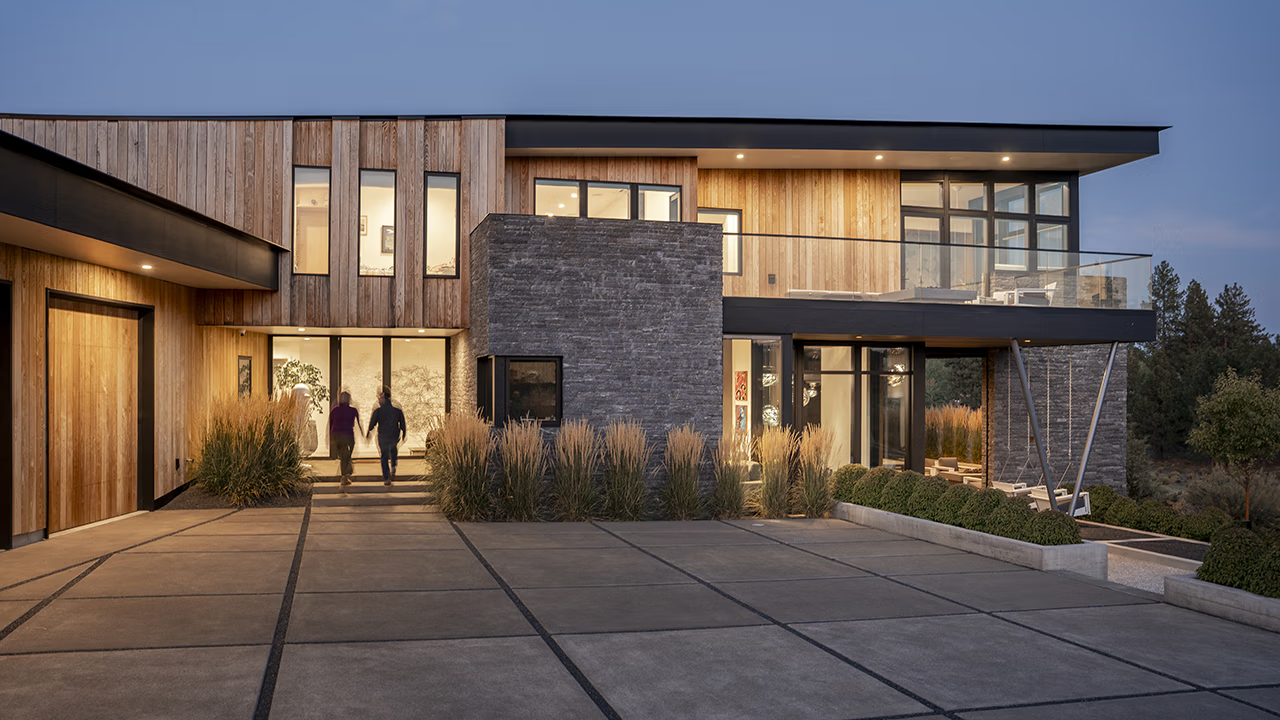


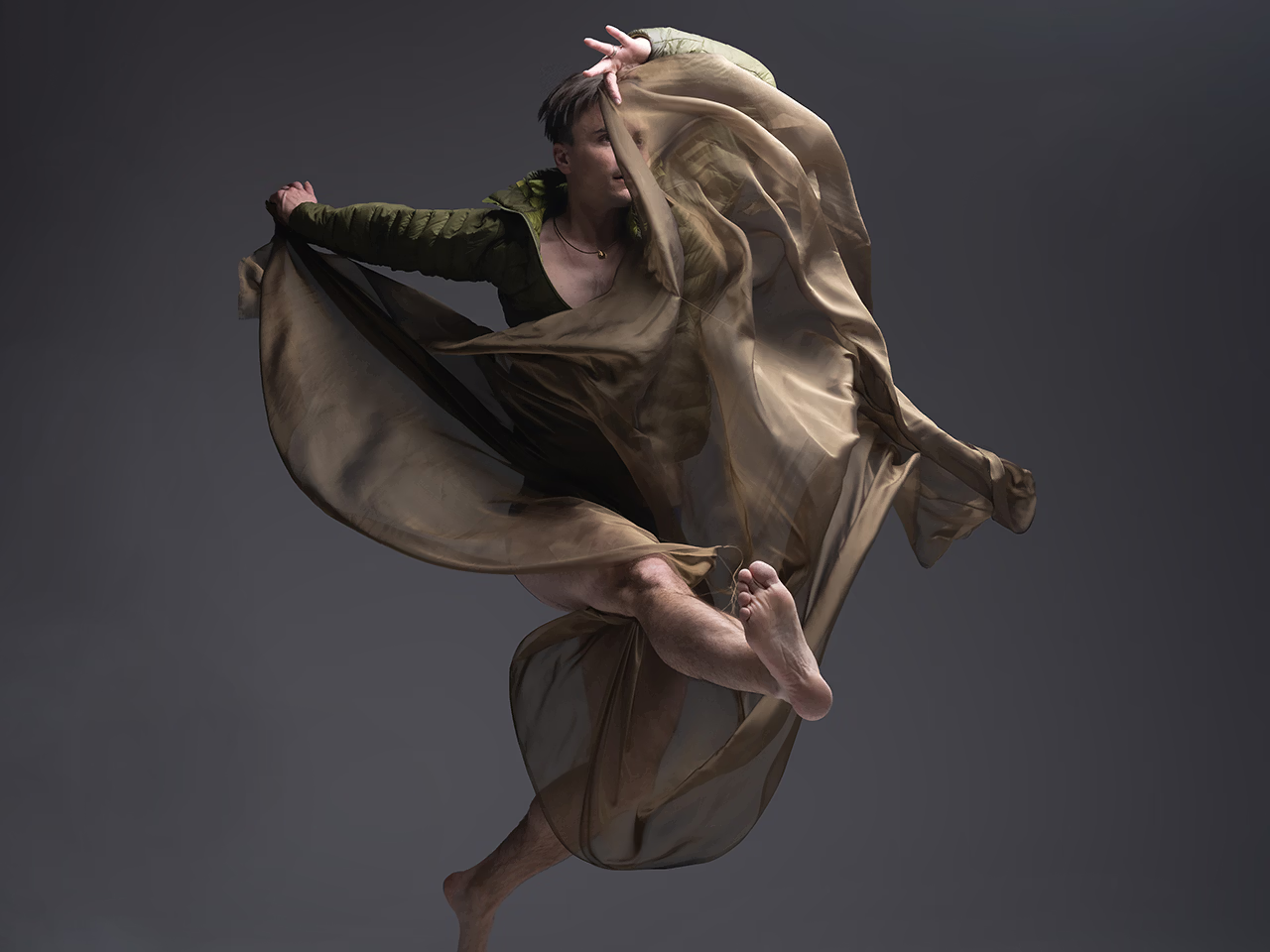
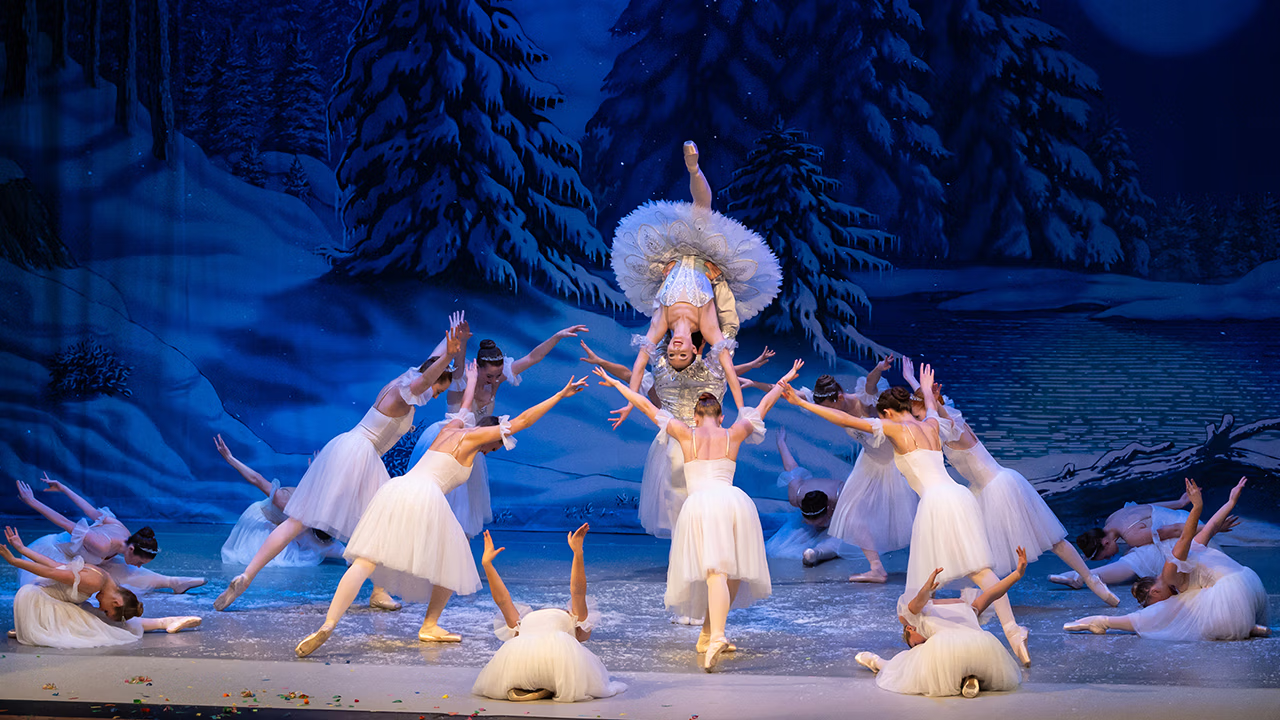



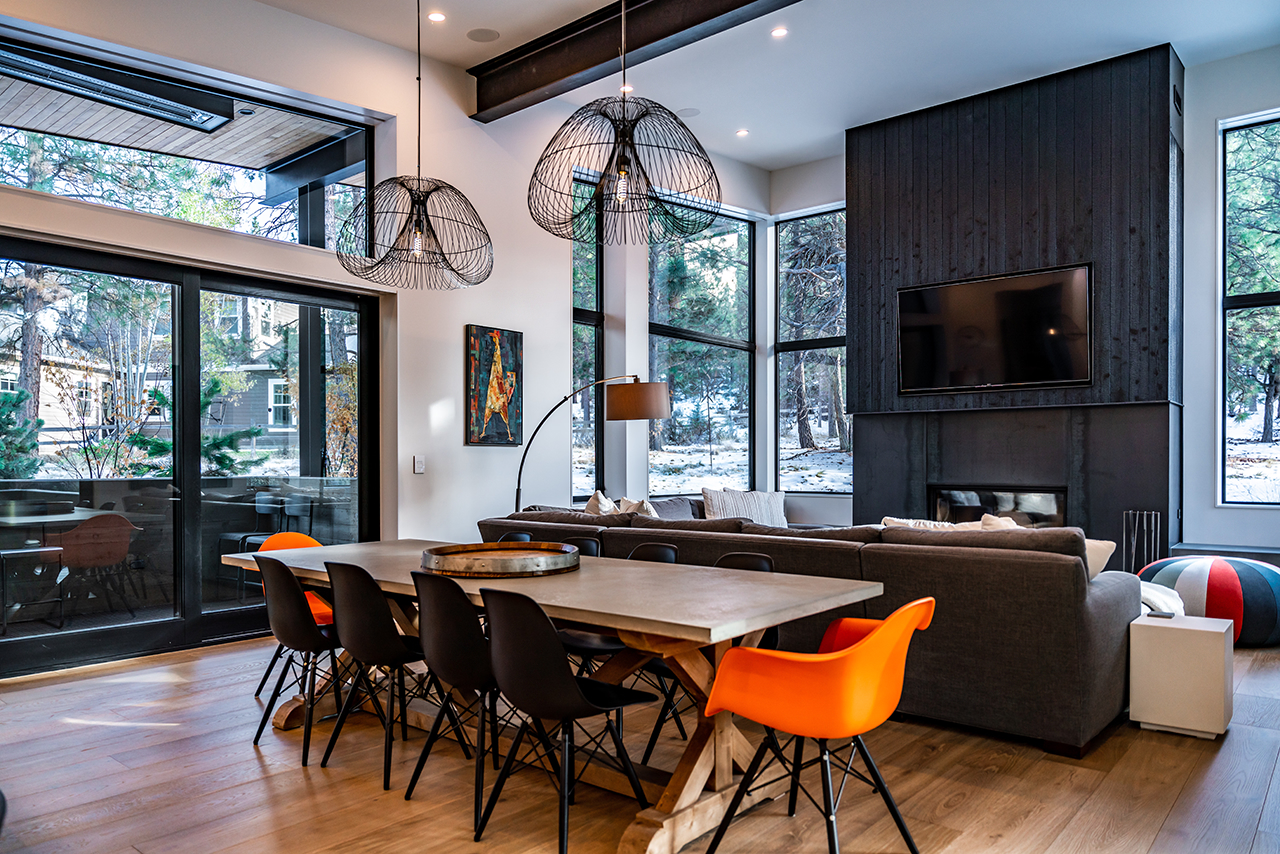
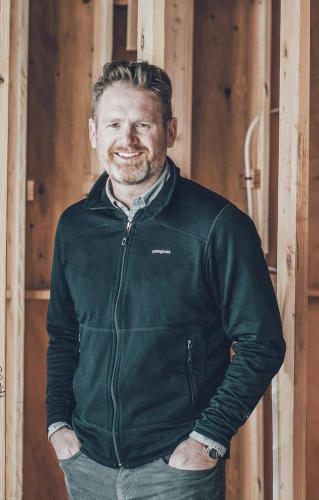
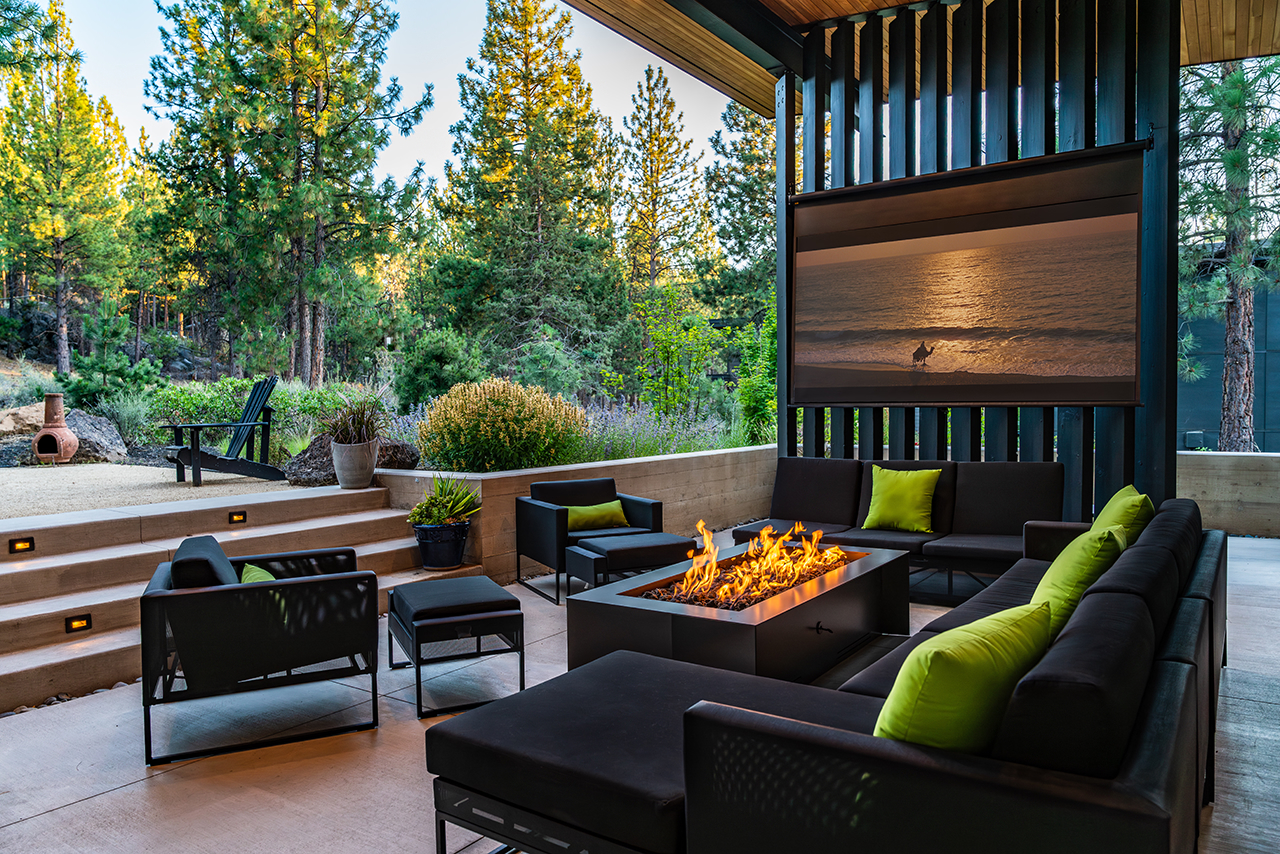
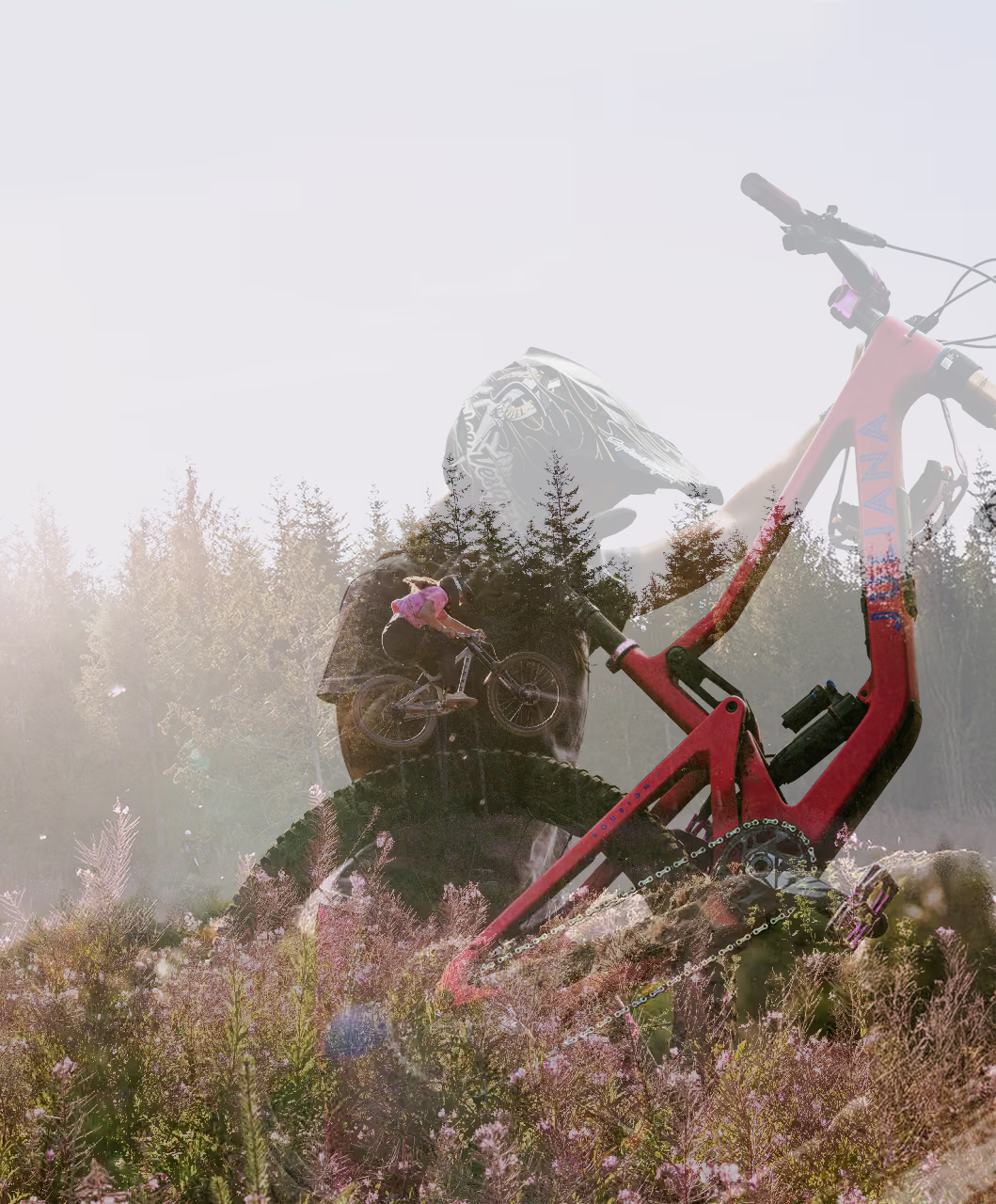
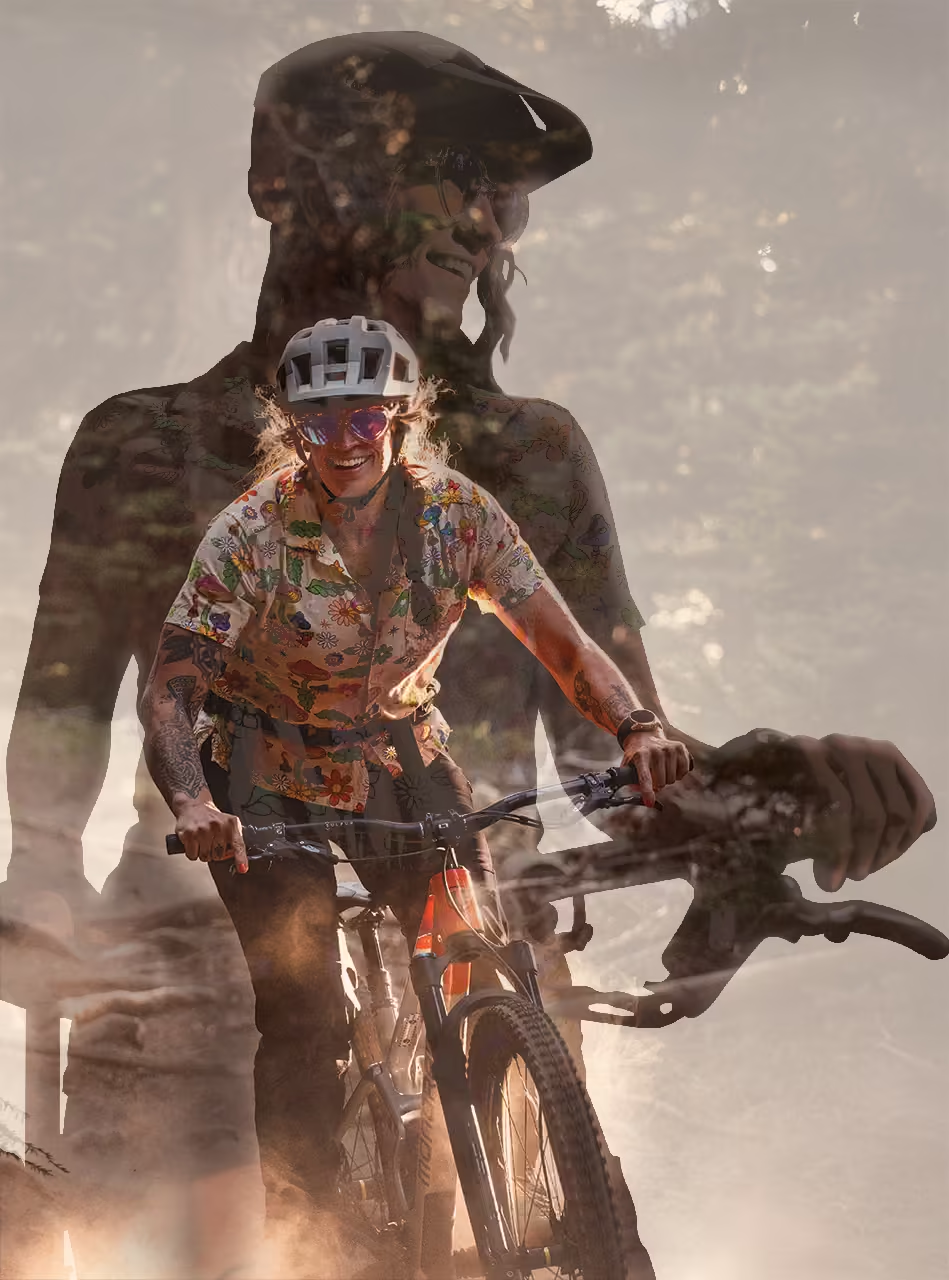
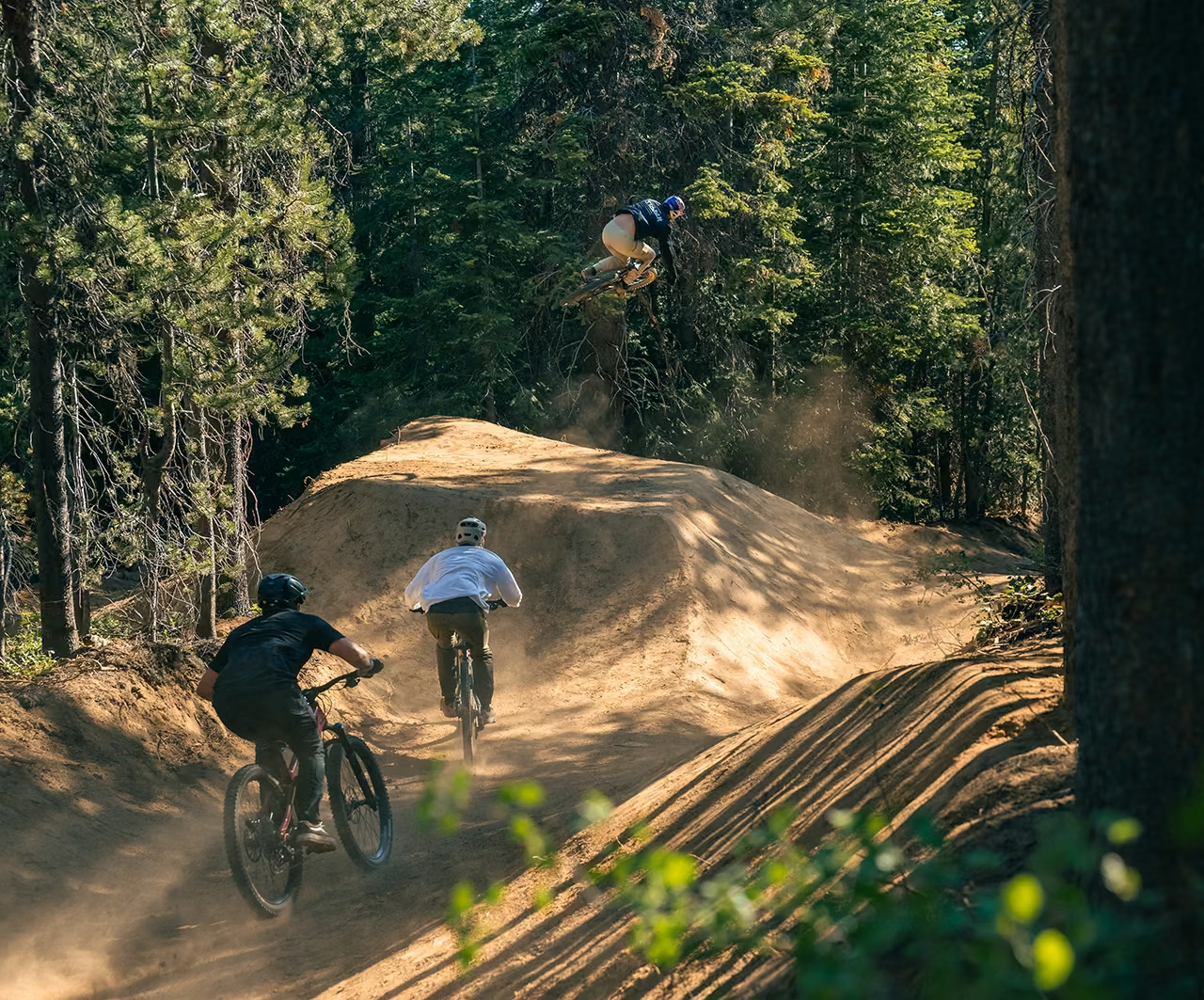
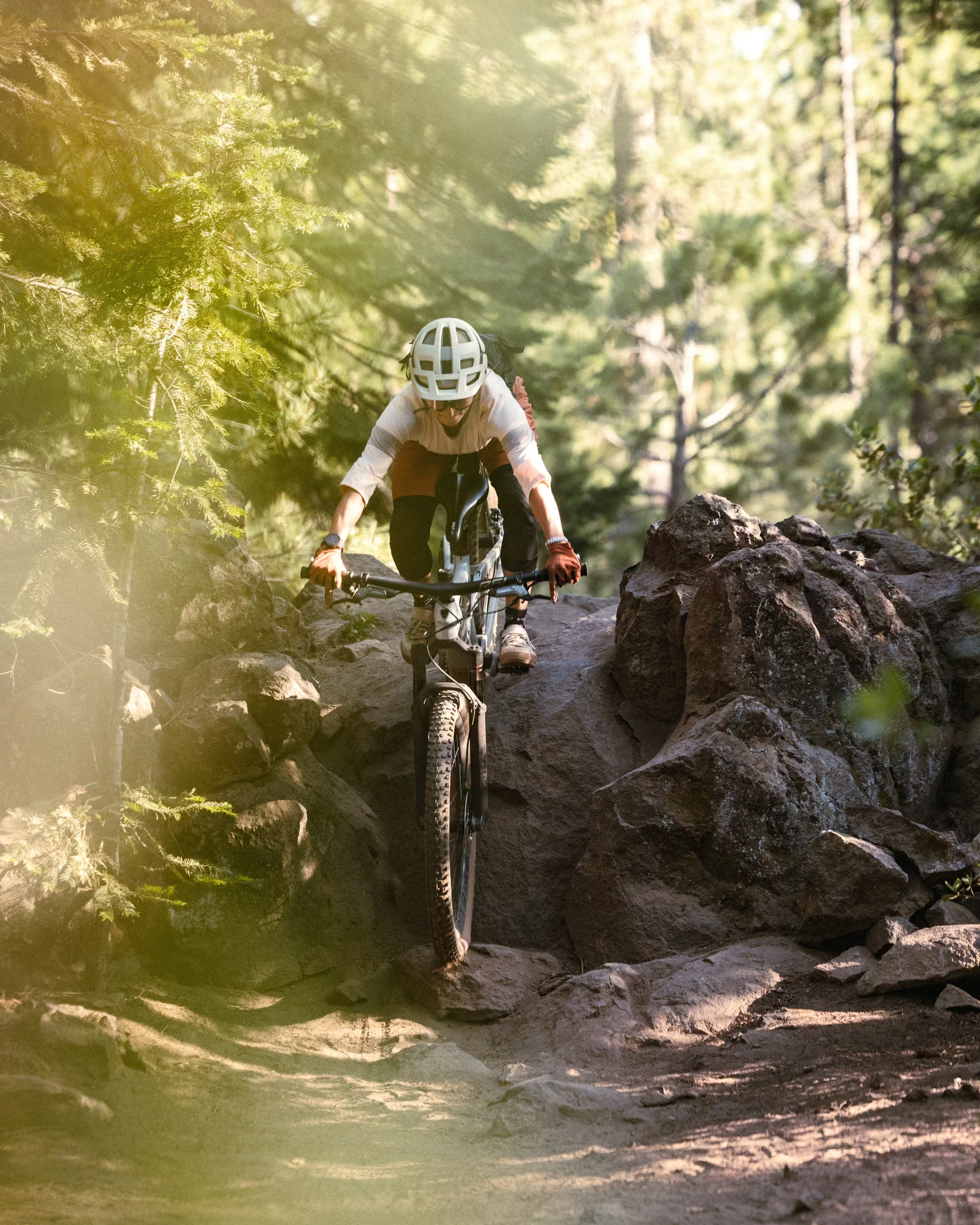


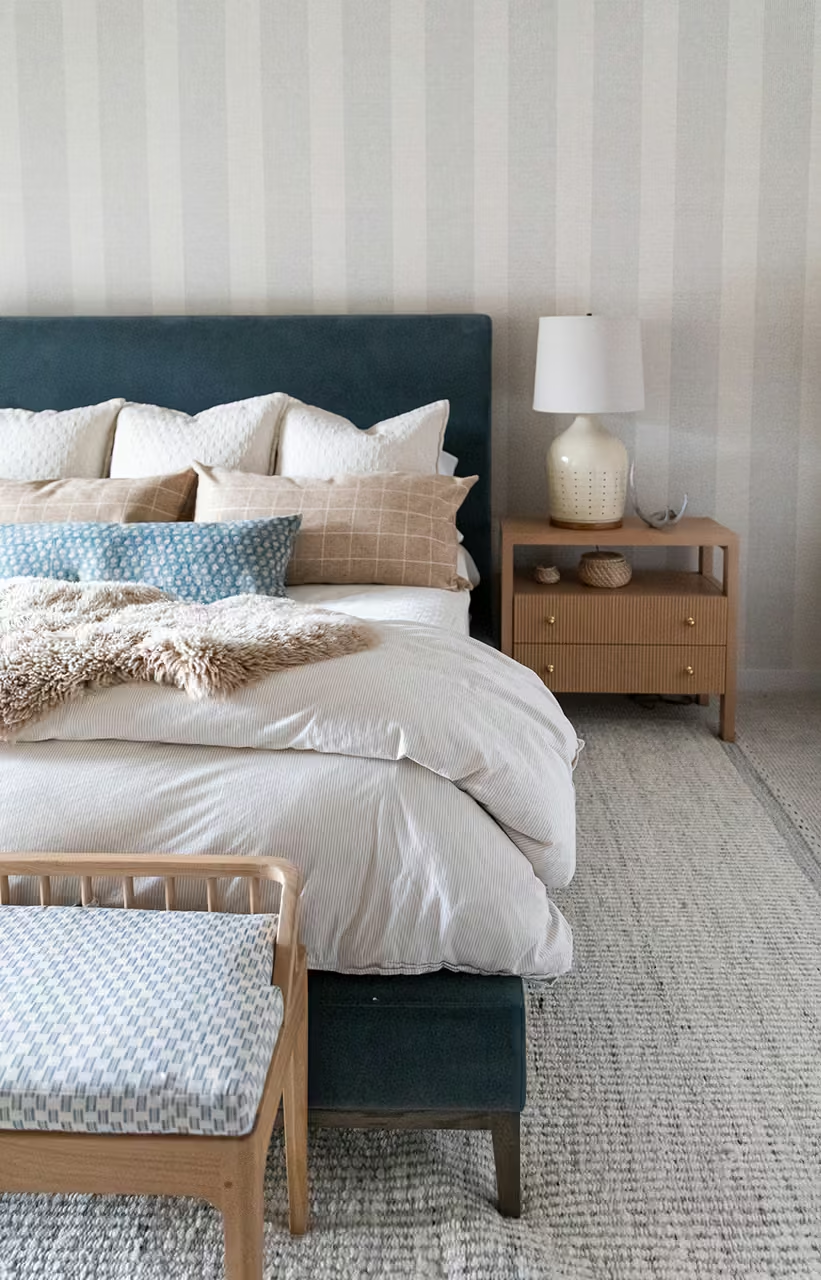
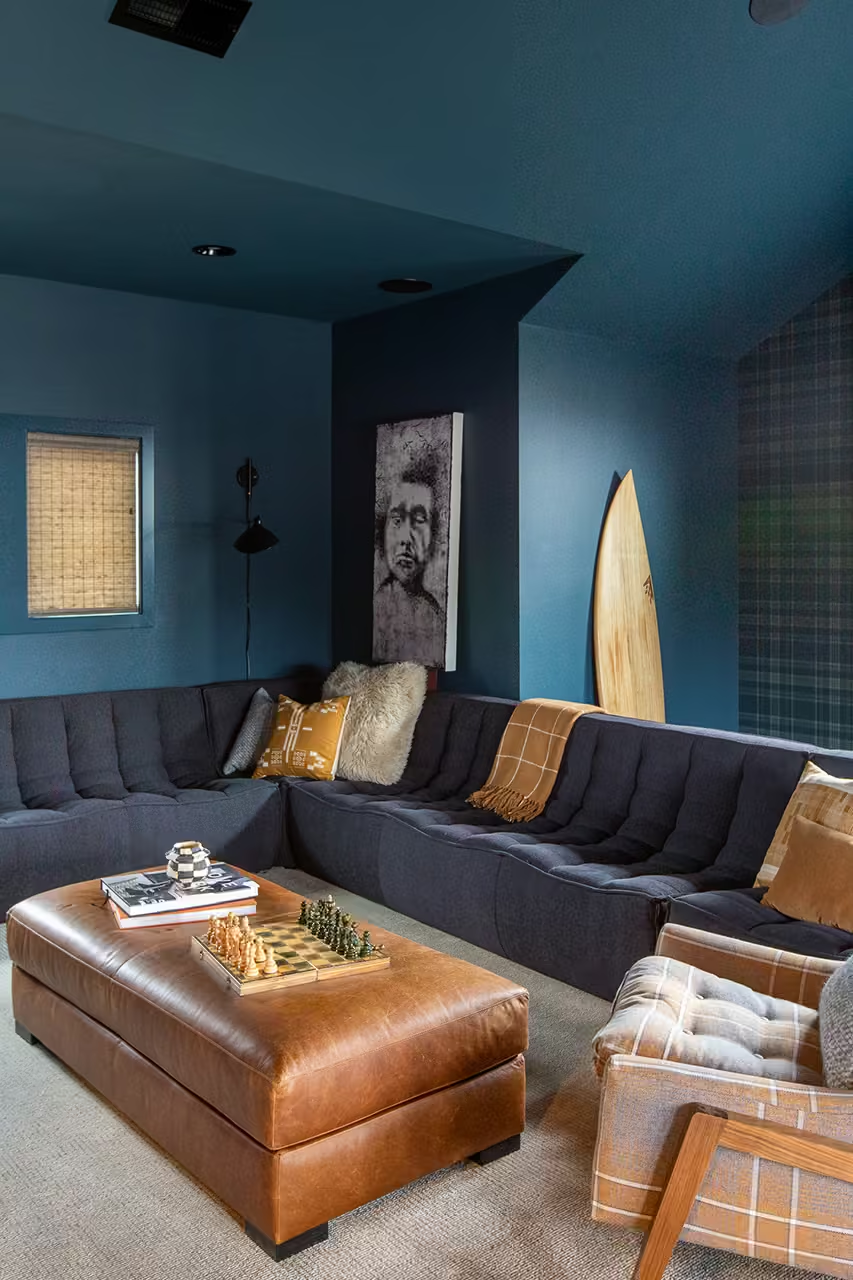
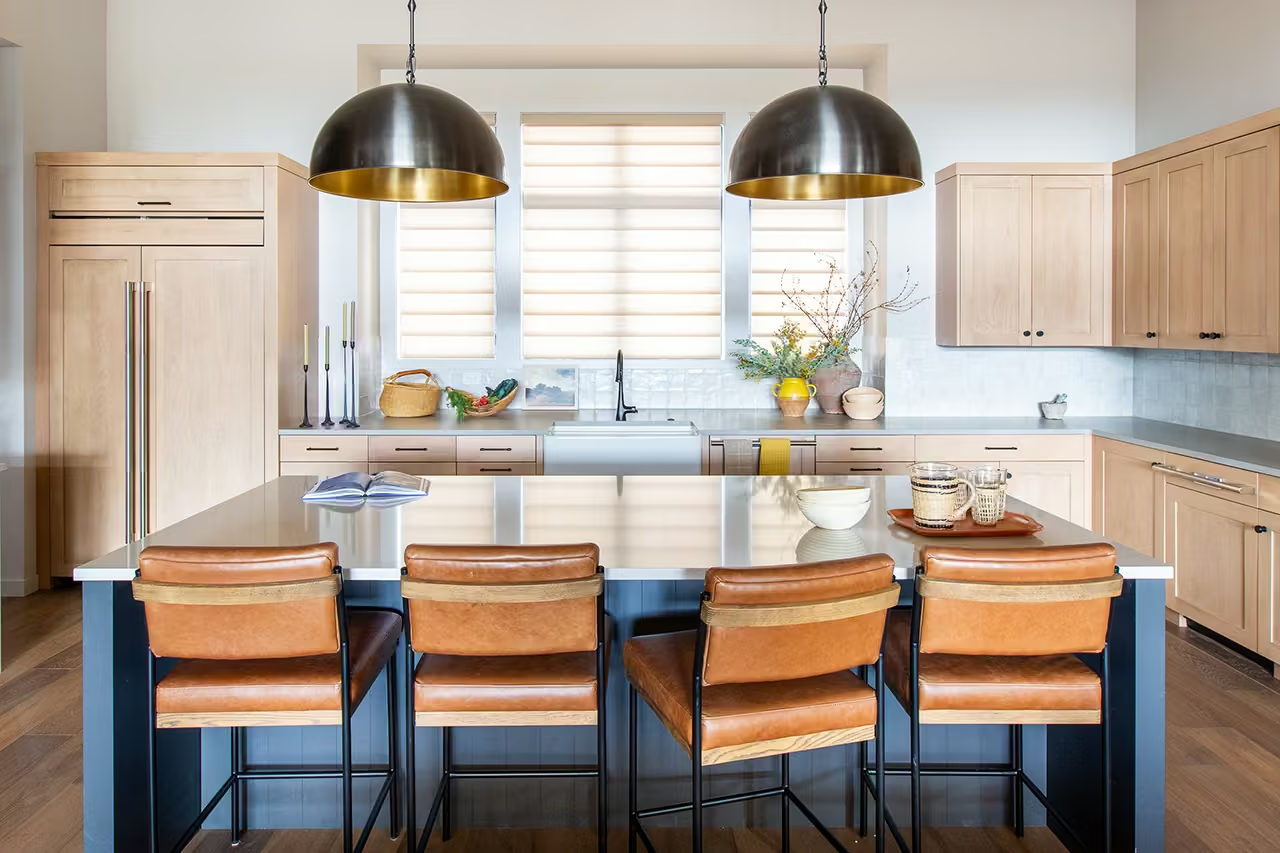


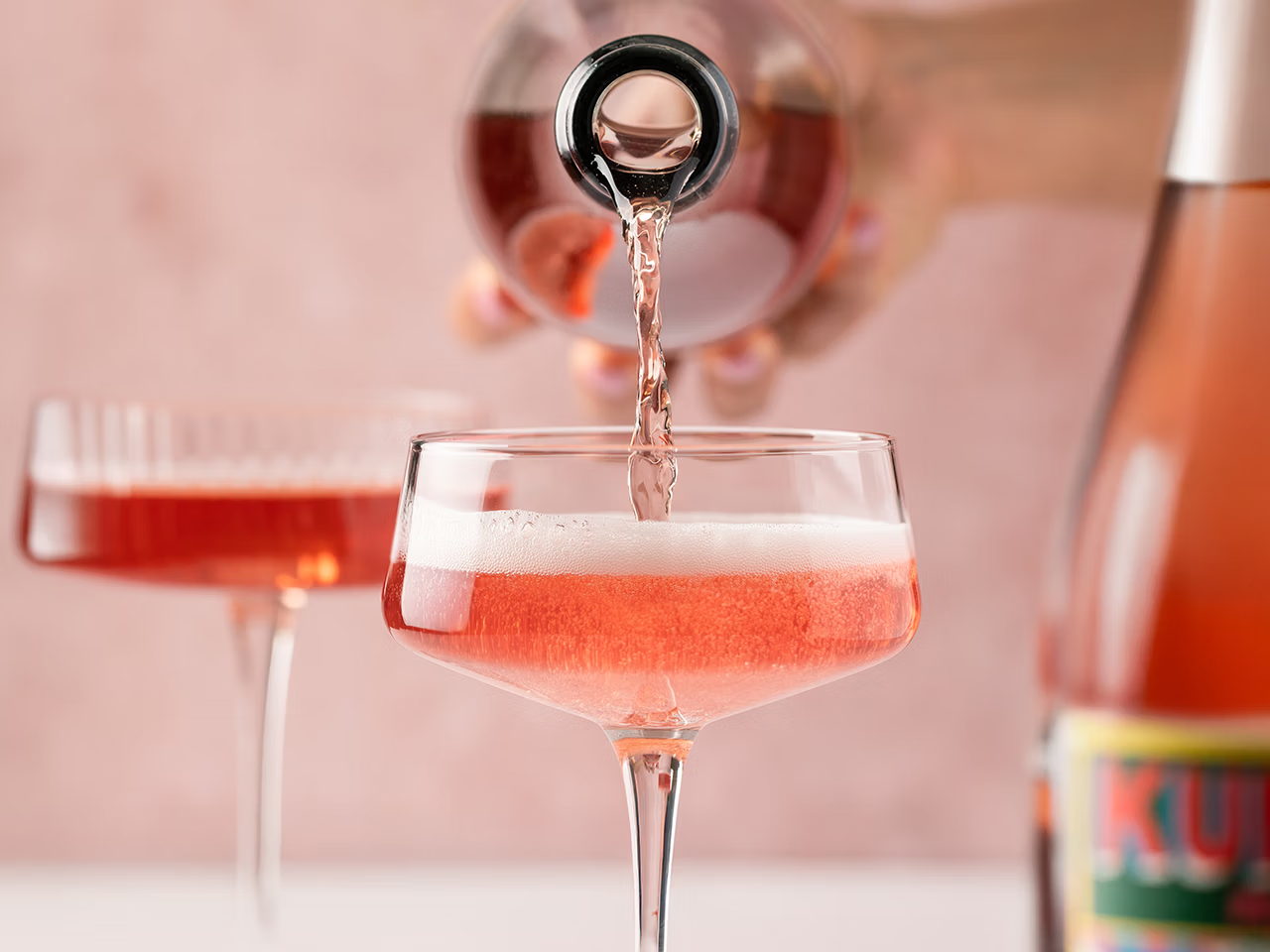
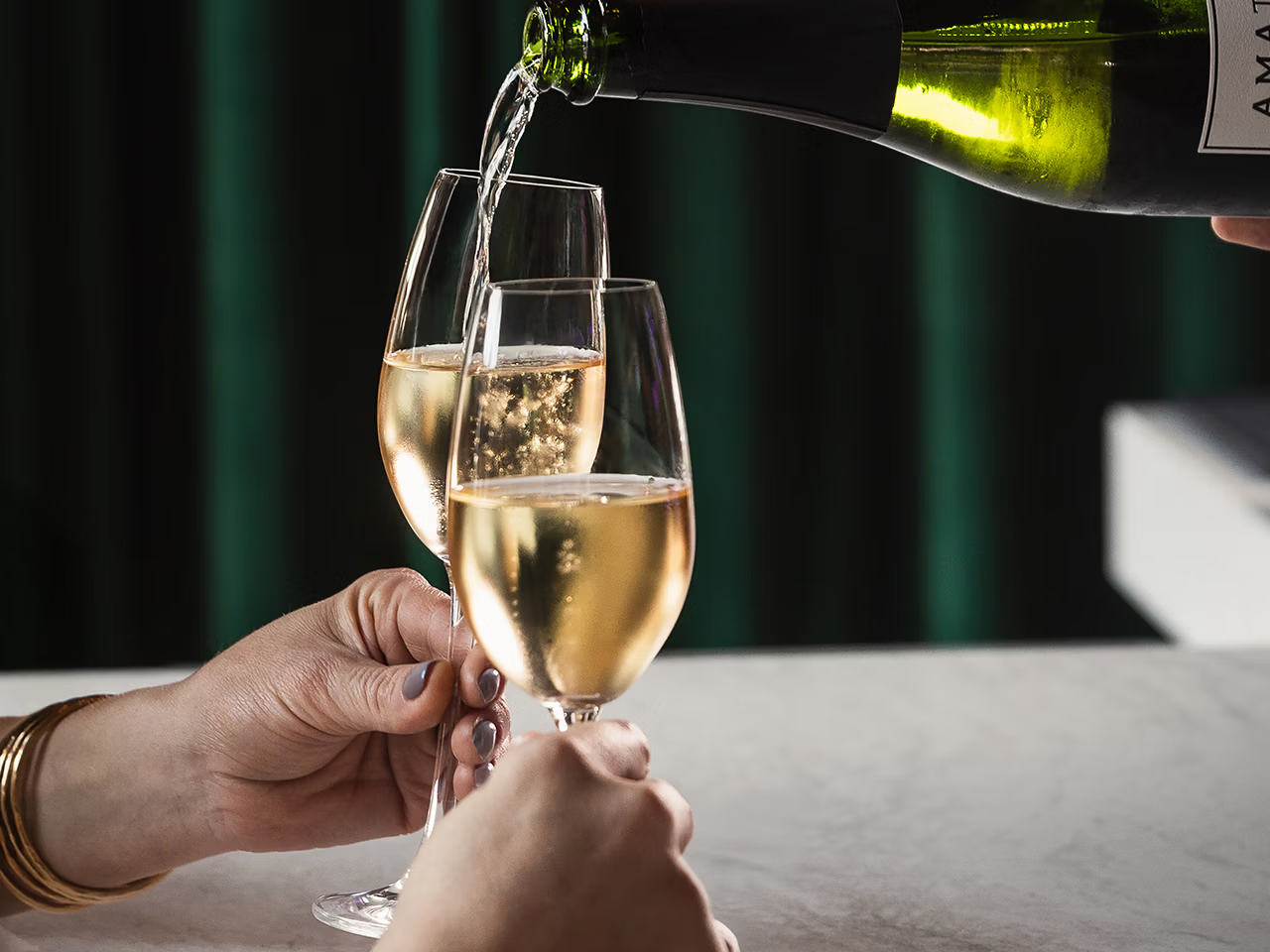

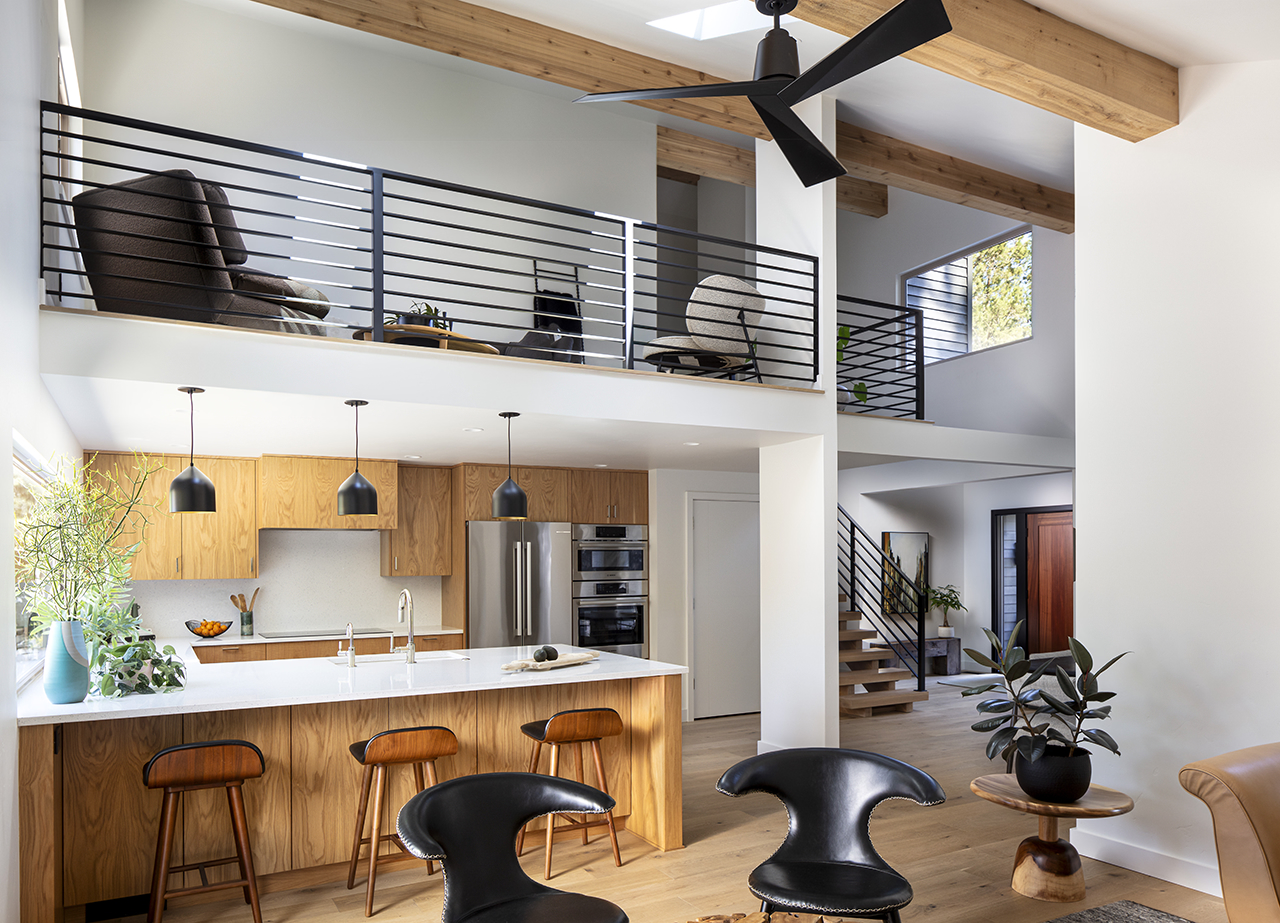



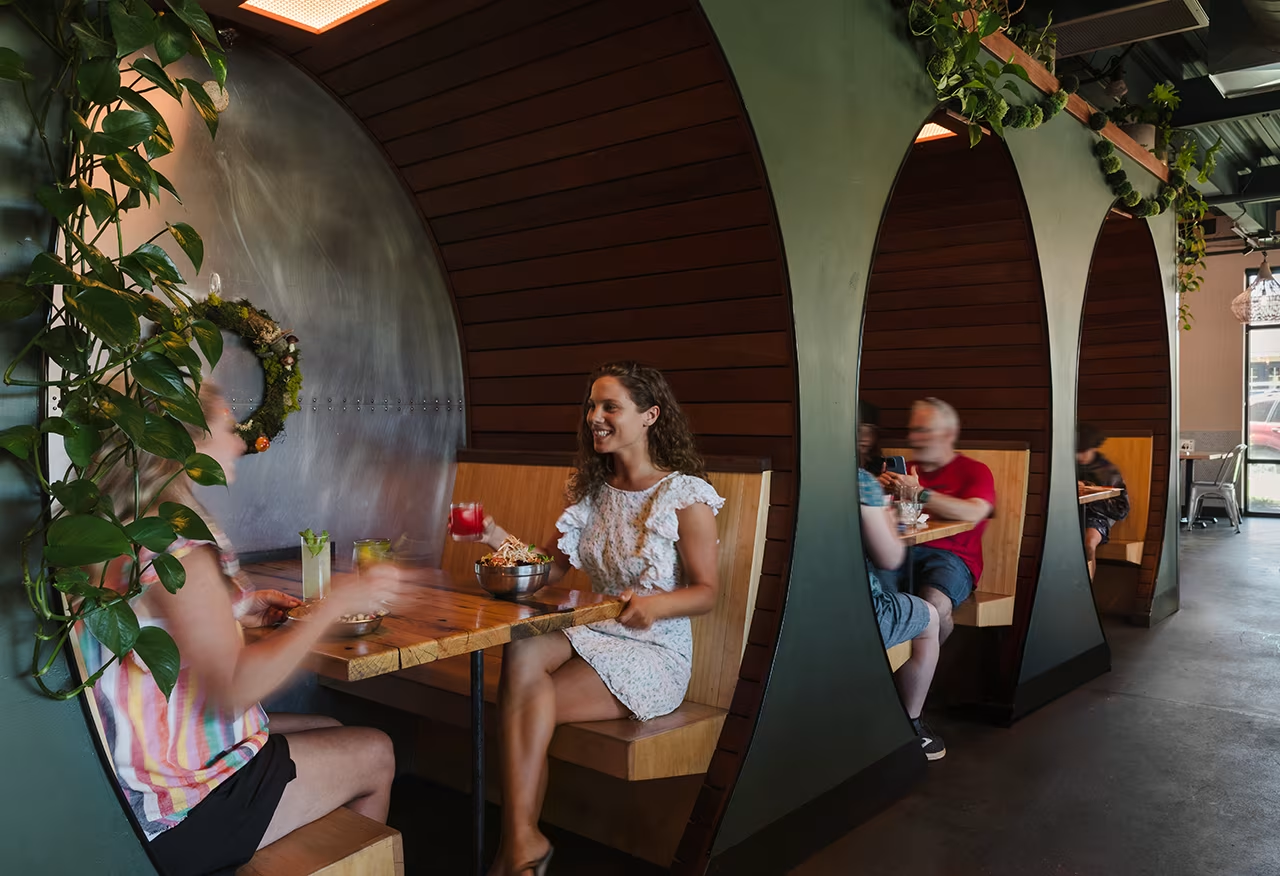
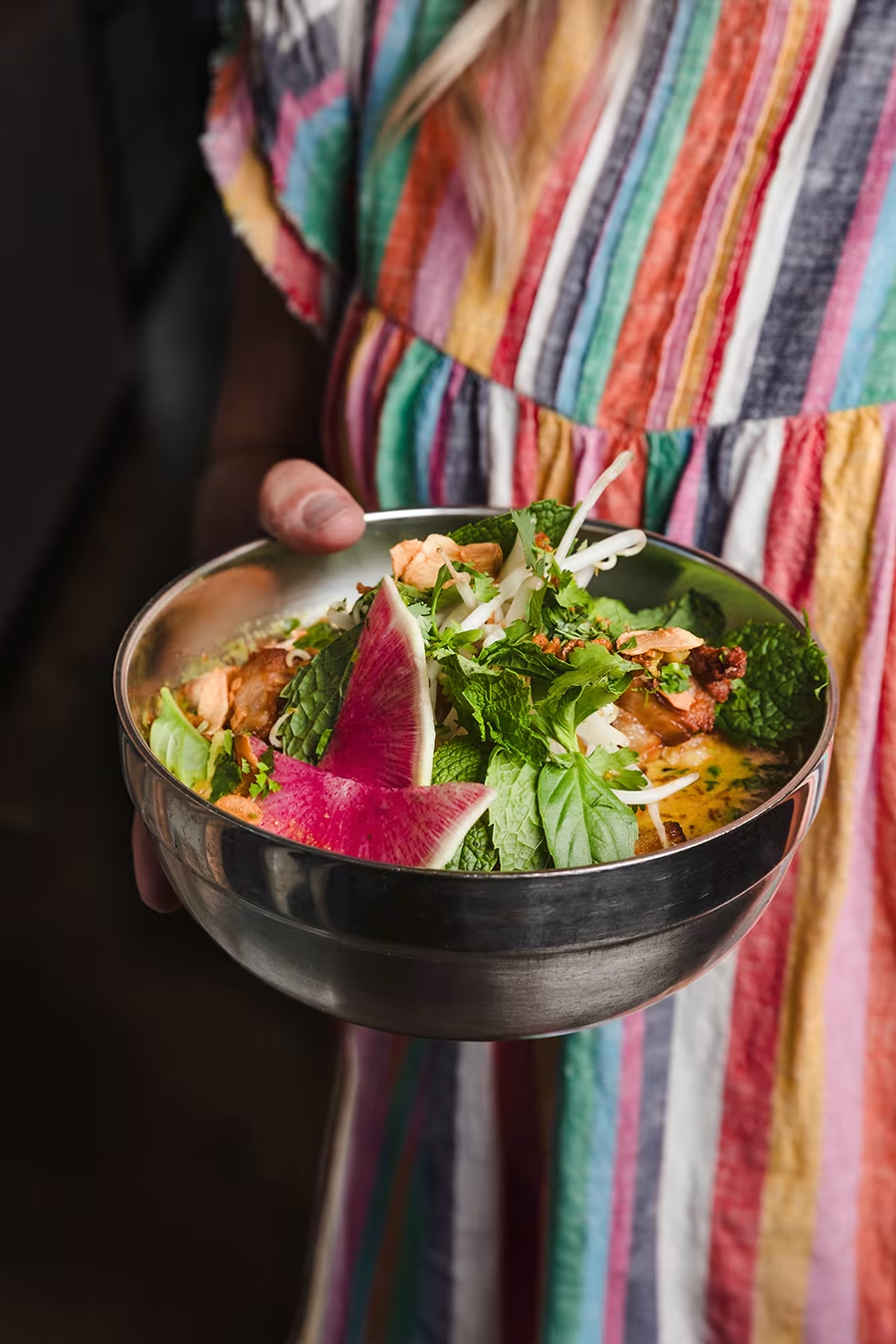
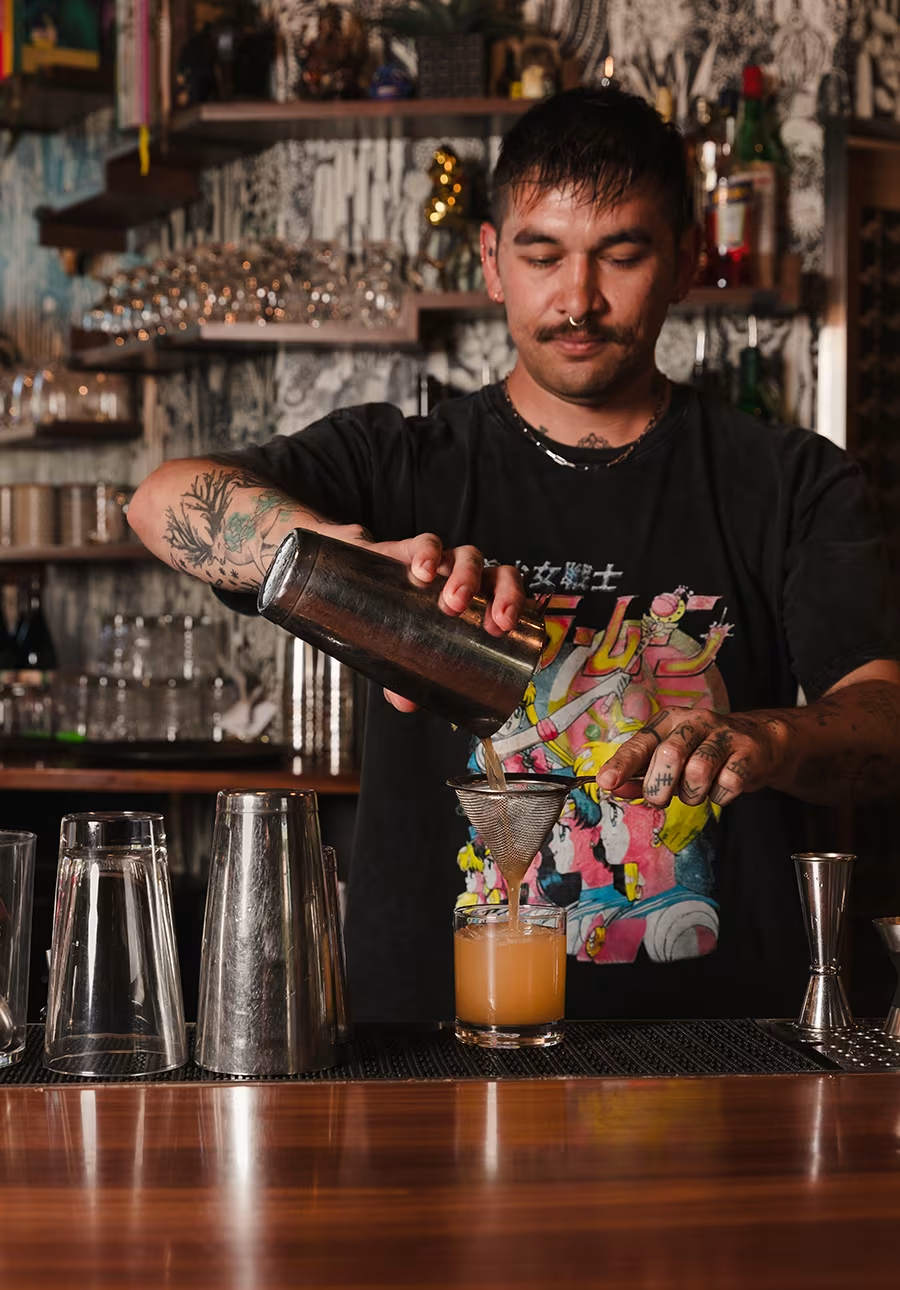
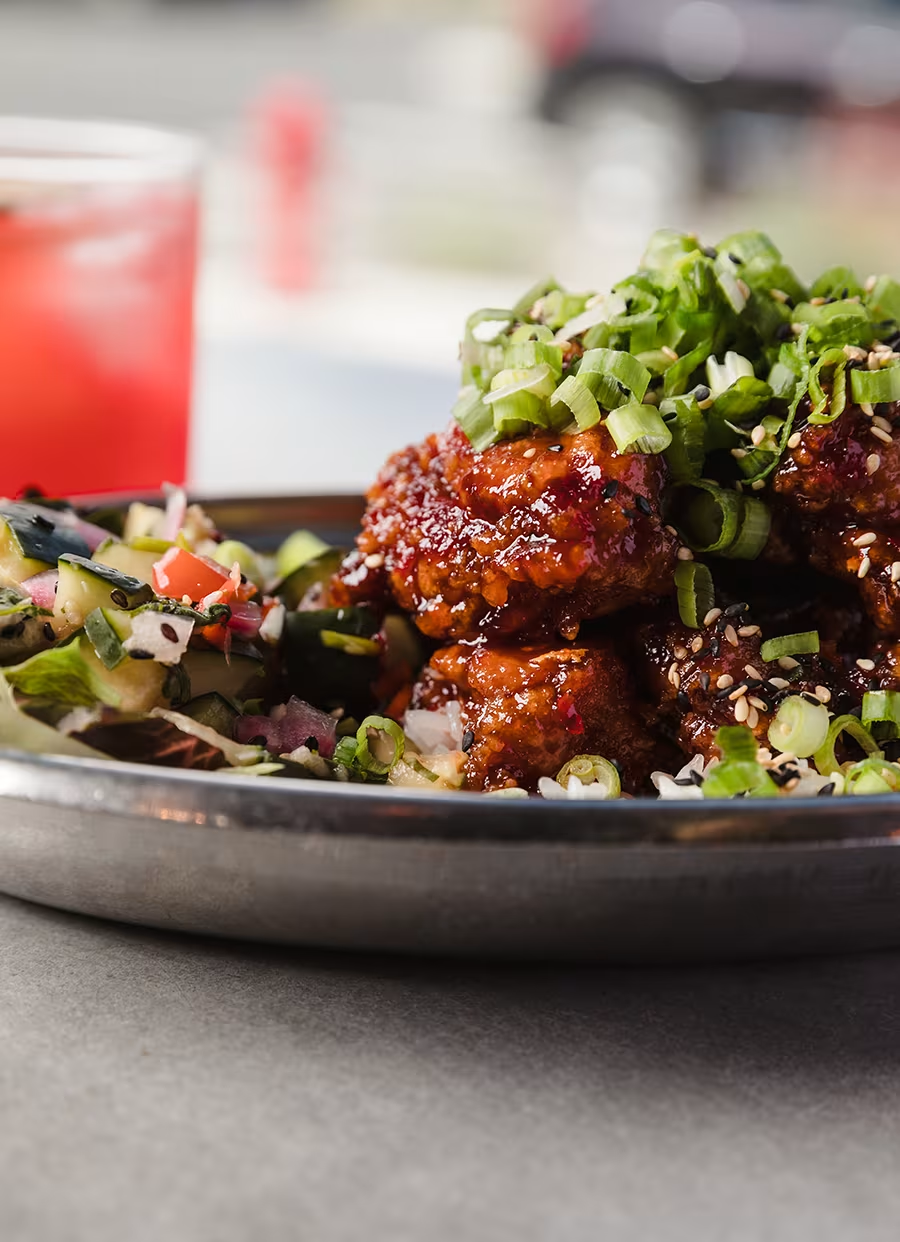
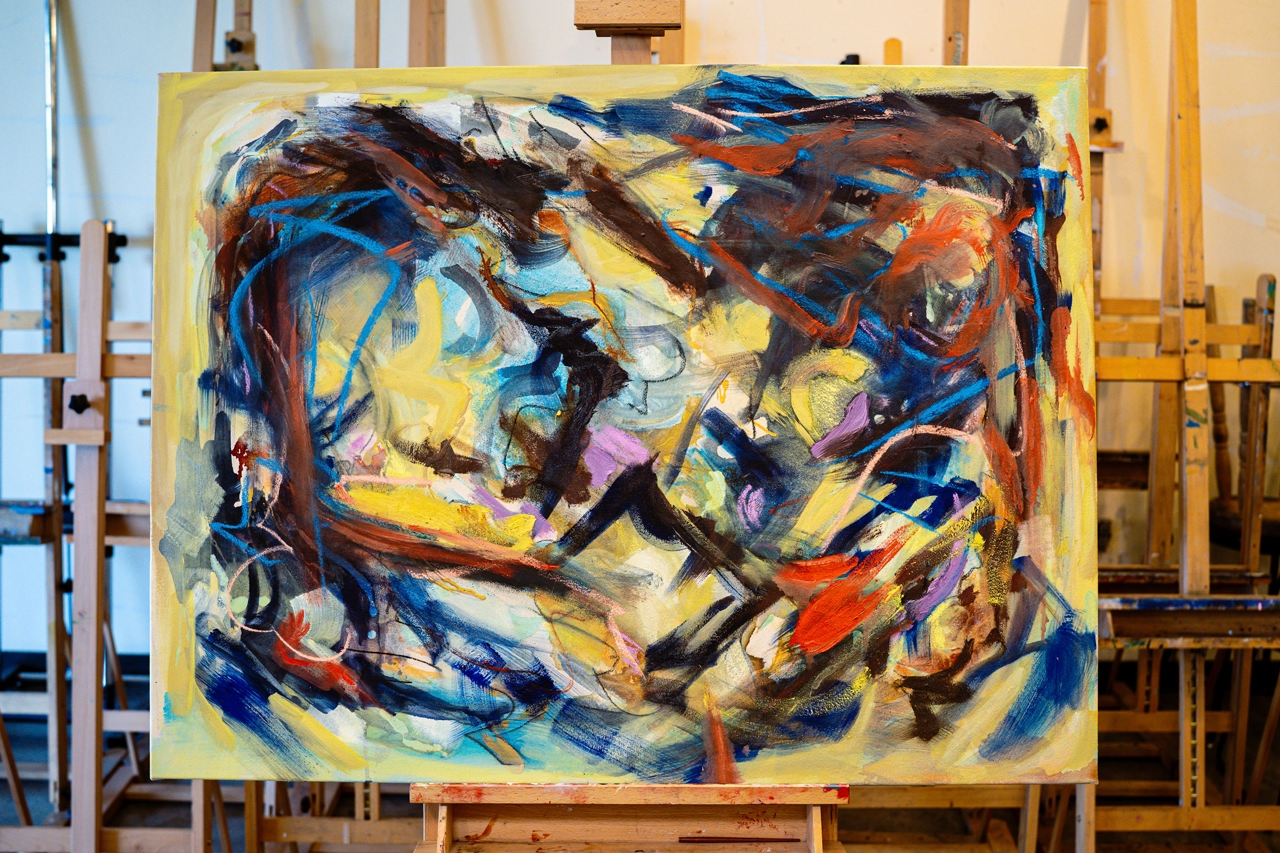
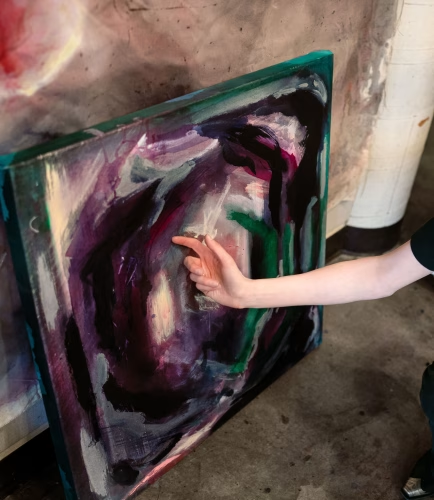 “I had these big moments of grief accompanied by accomplishment, where it was this severing of a past life,” she said. “The ending of my time in my hometown, me going off to a new place for the first time and really stepping fully into myself, then finally completing my education after seven years and having this abrupt end to a relationship that had been there with me through all of it. So, the past lives that I reference [in the work] are in relation to those different versions of myself that I’ve been through in these major chapters of my life,” she said.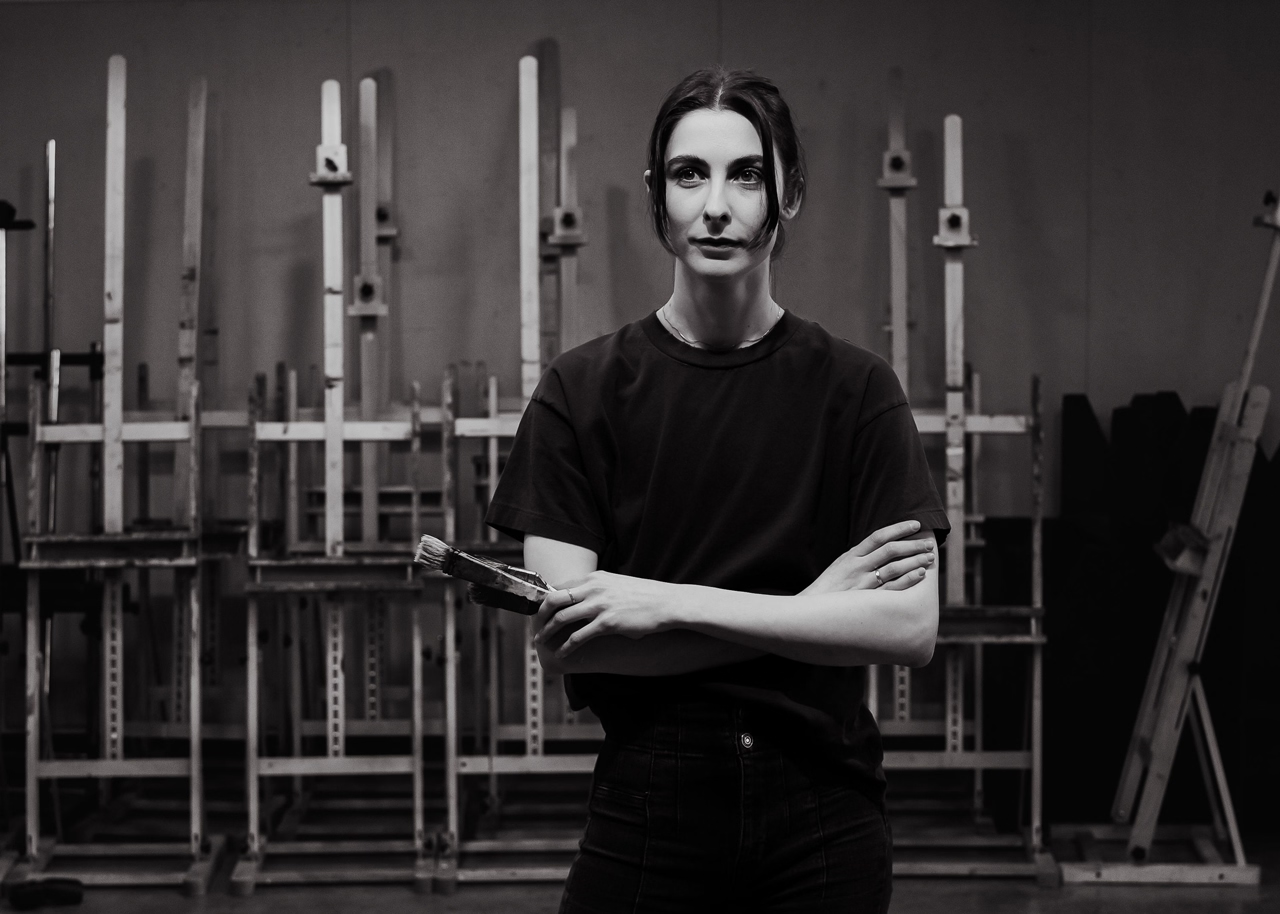
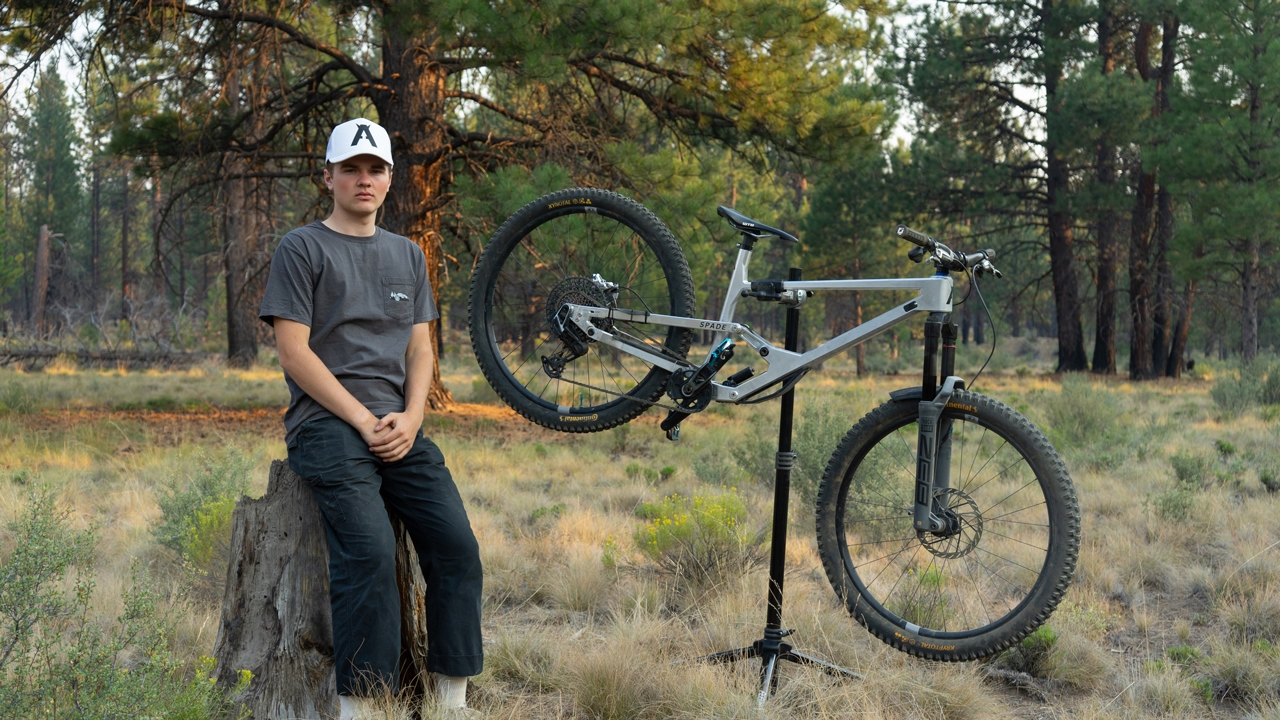




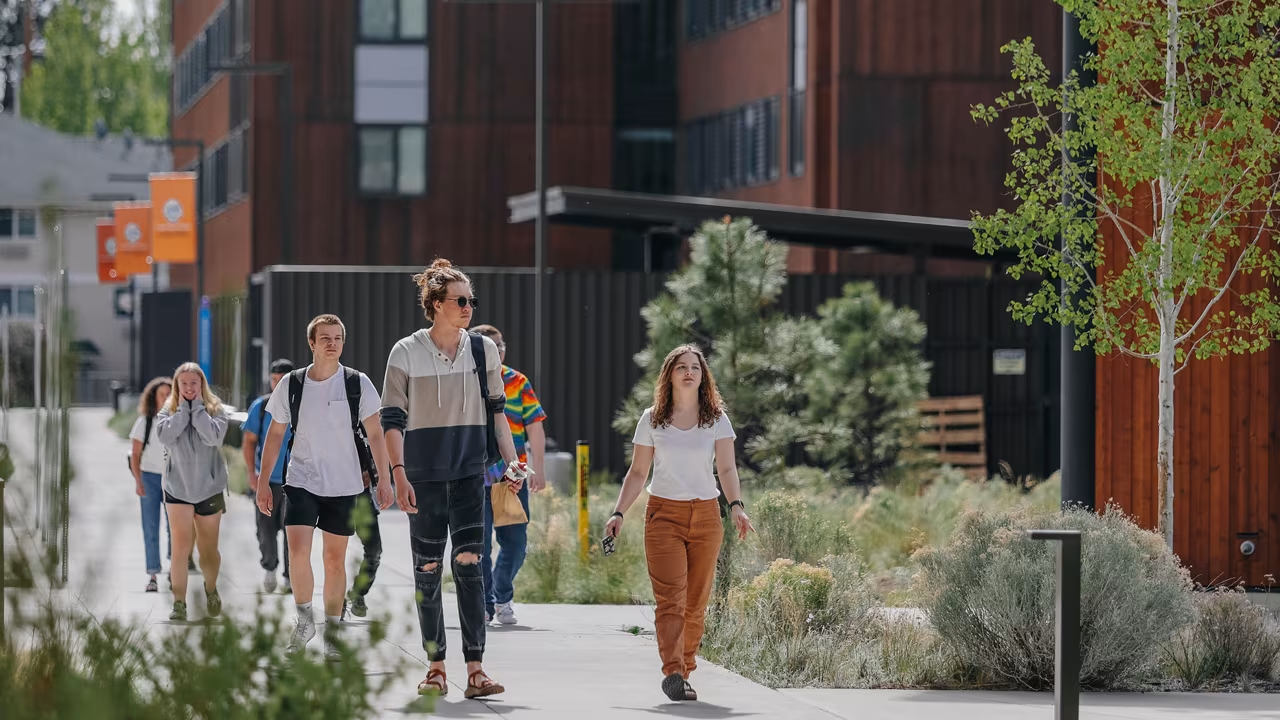
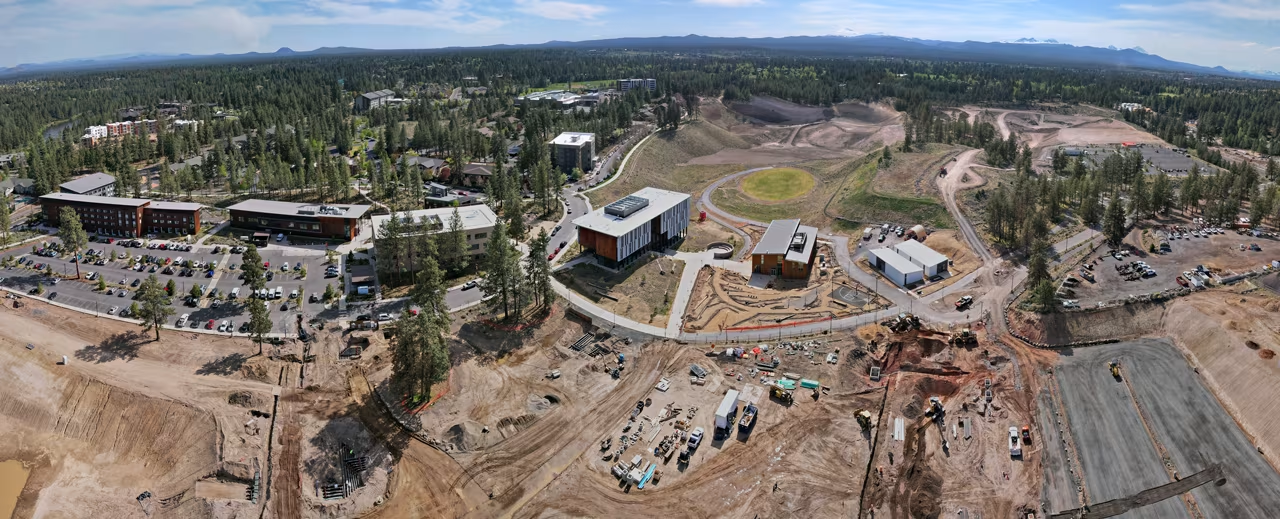



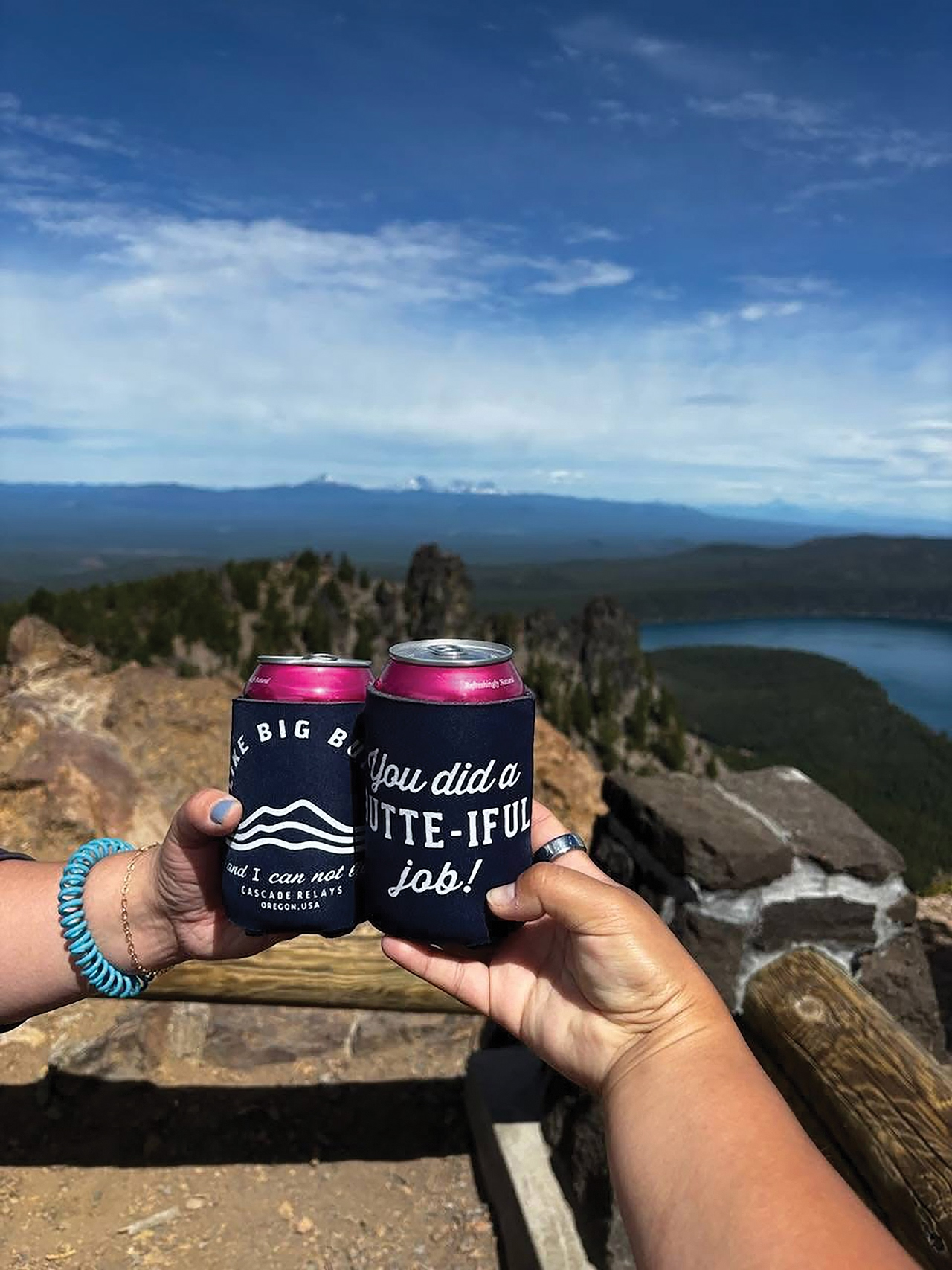
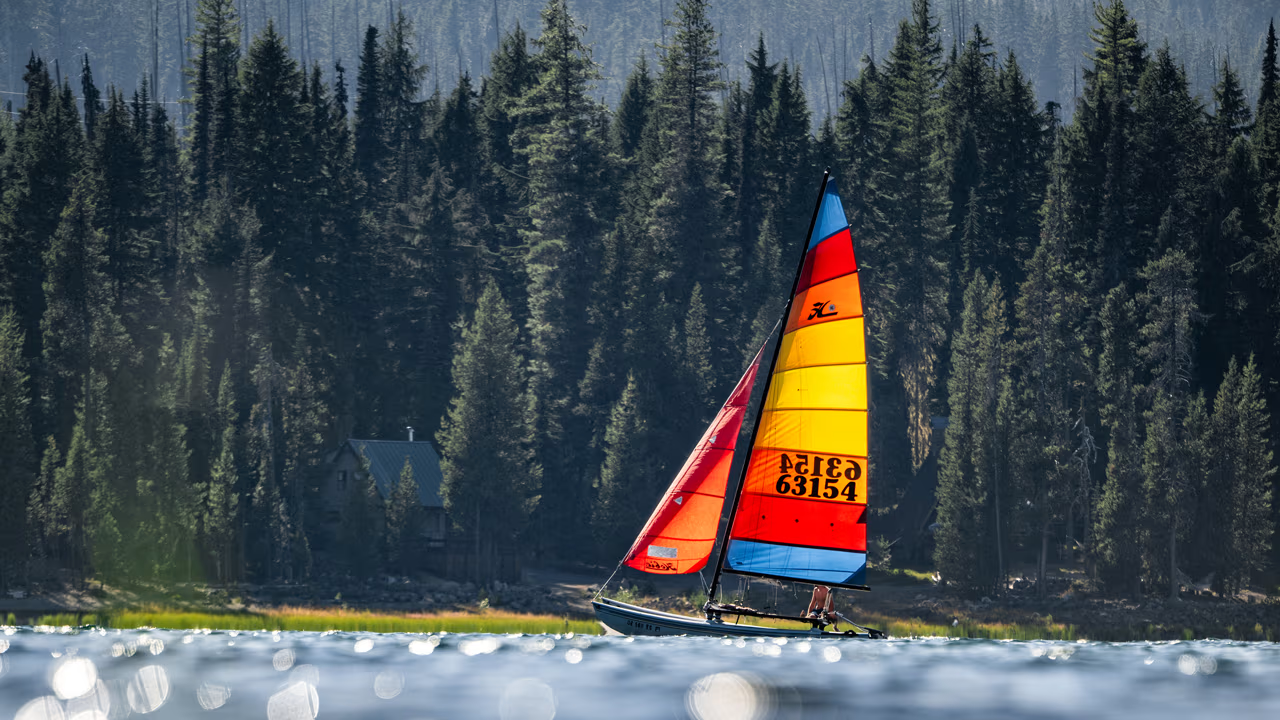
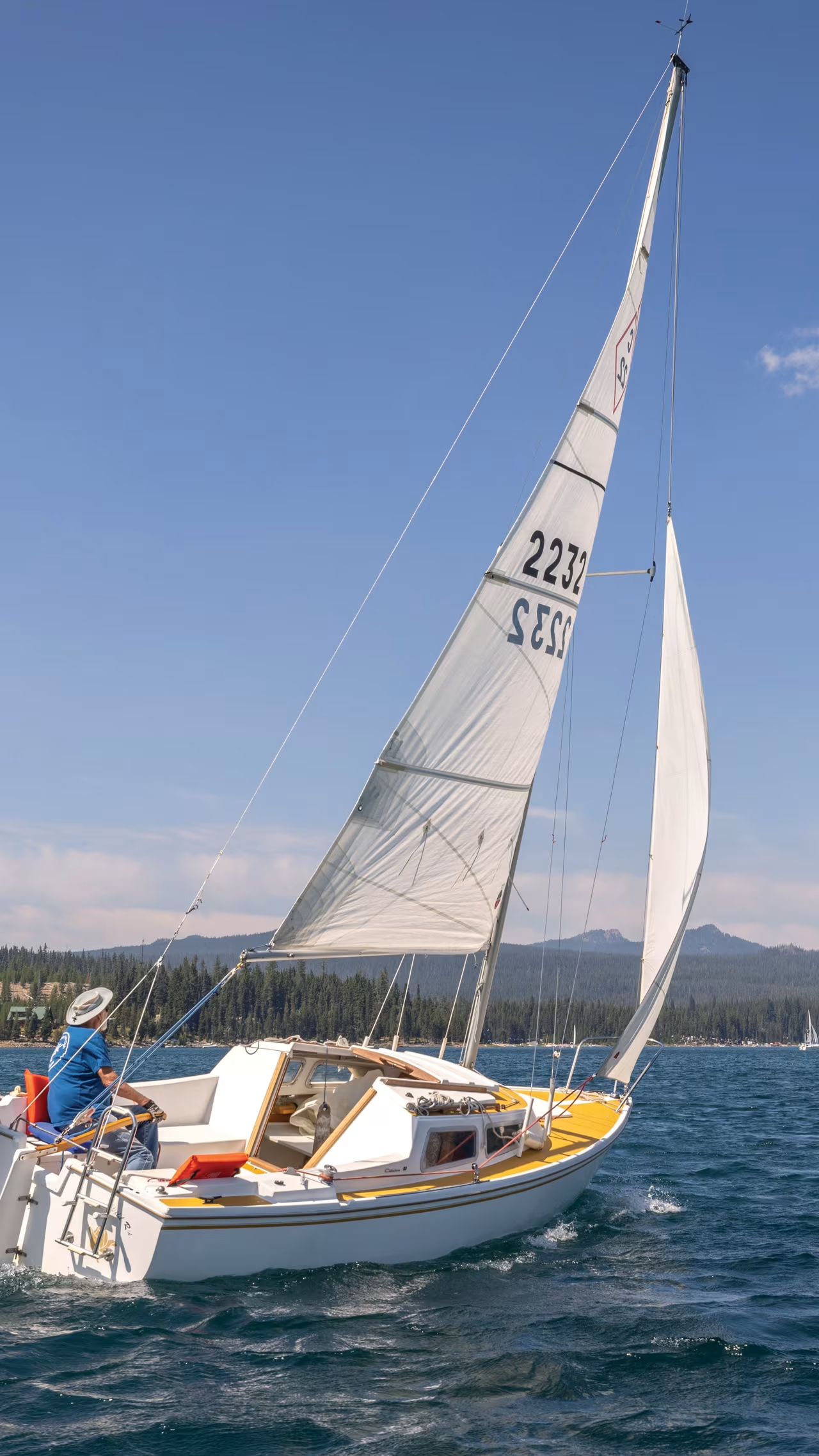
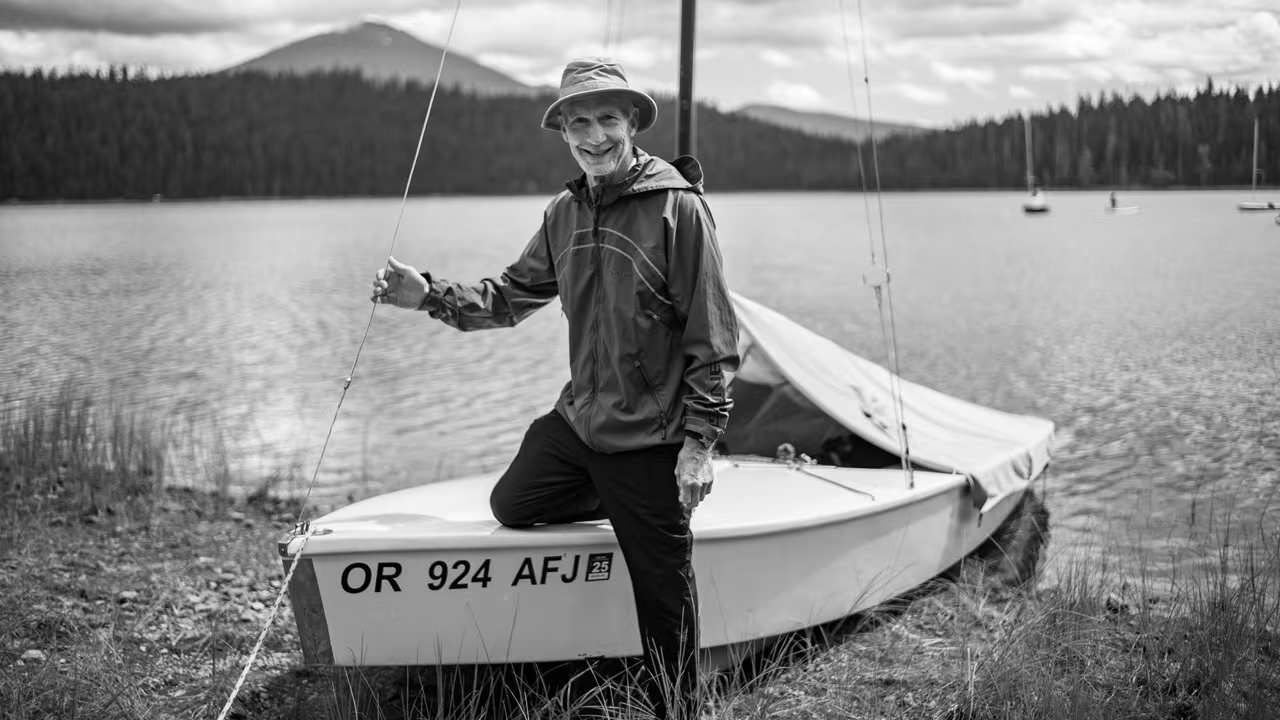
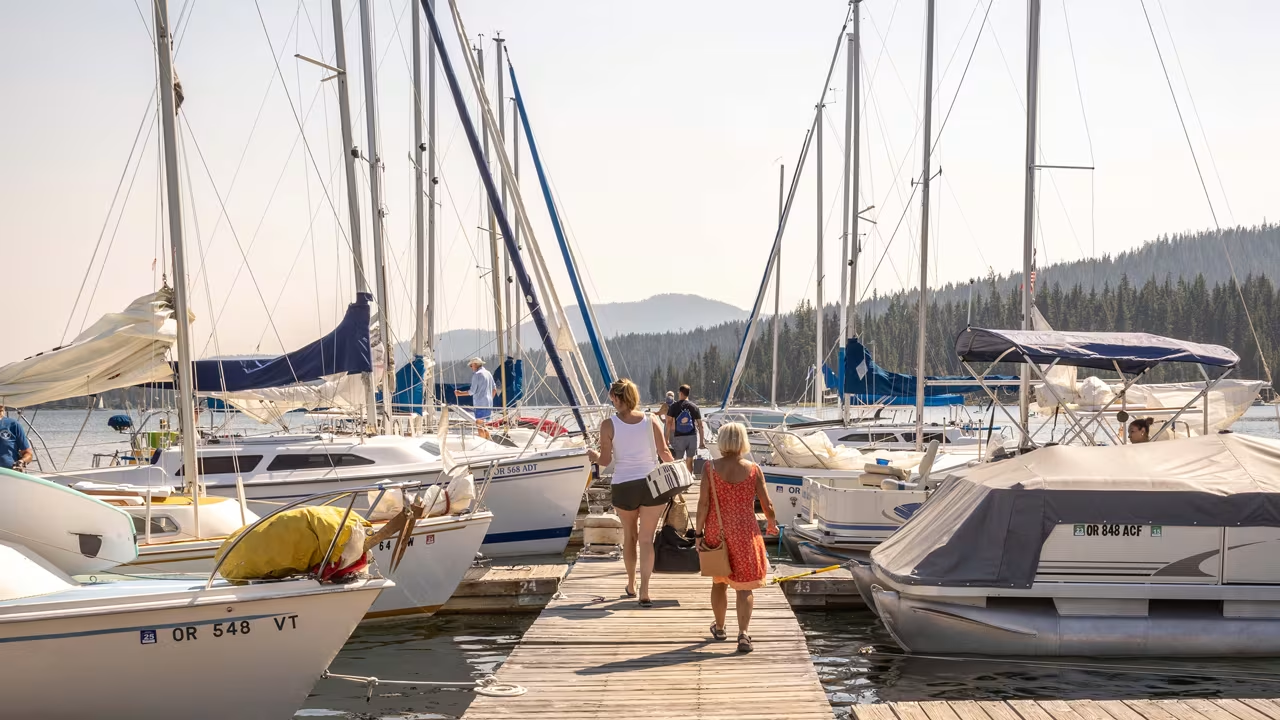



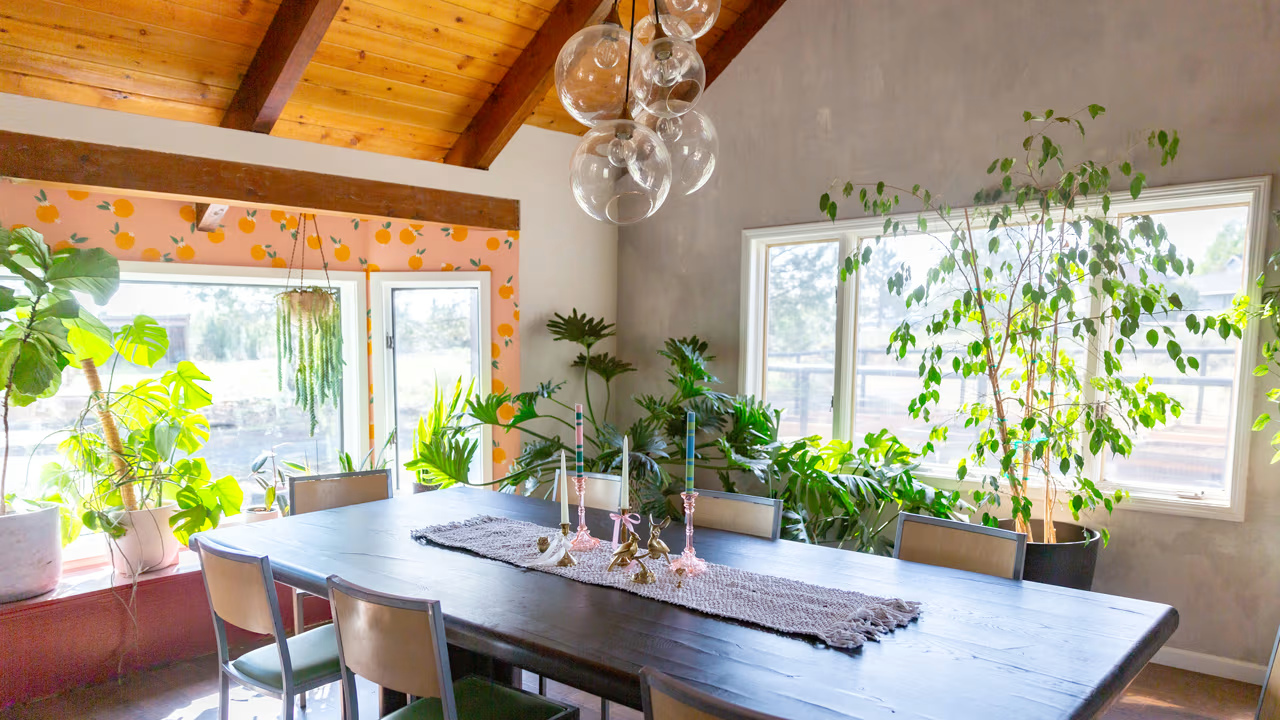
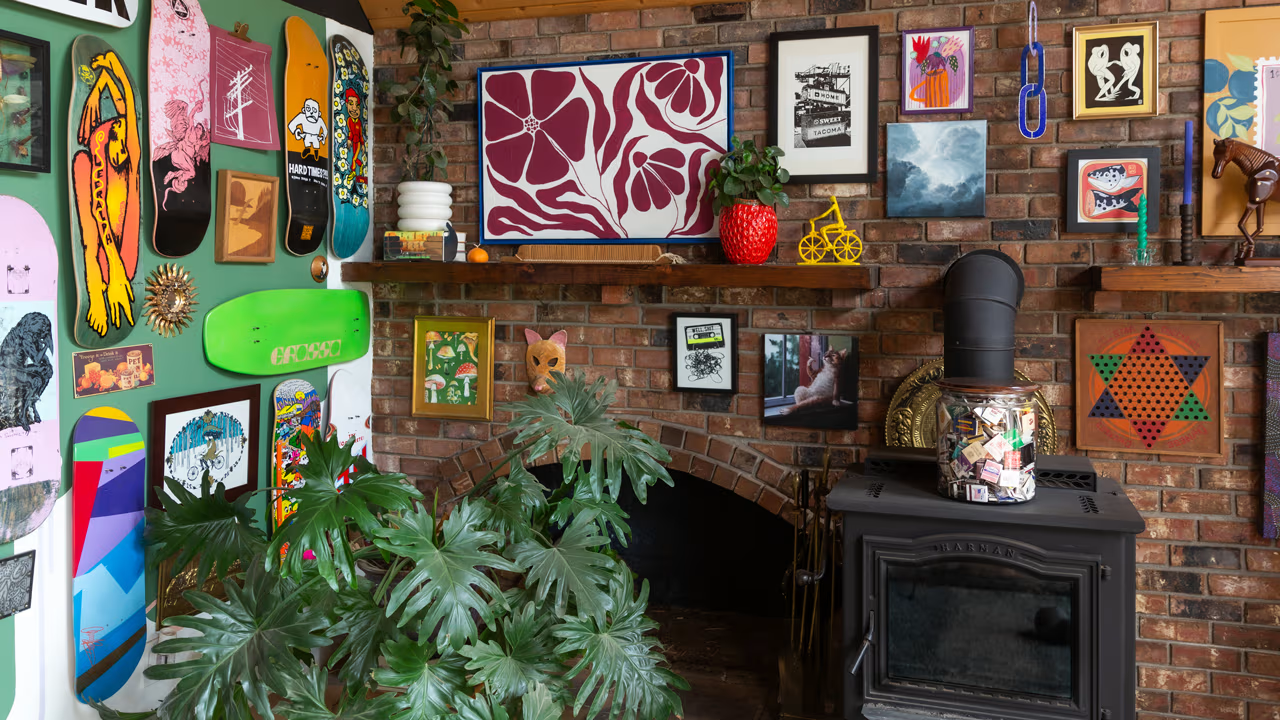
 Embracing the Past with a Playful Twist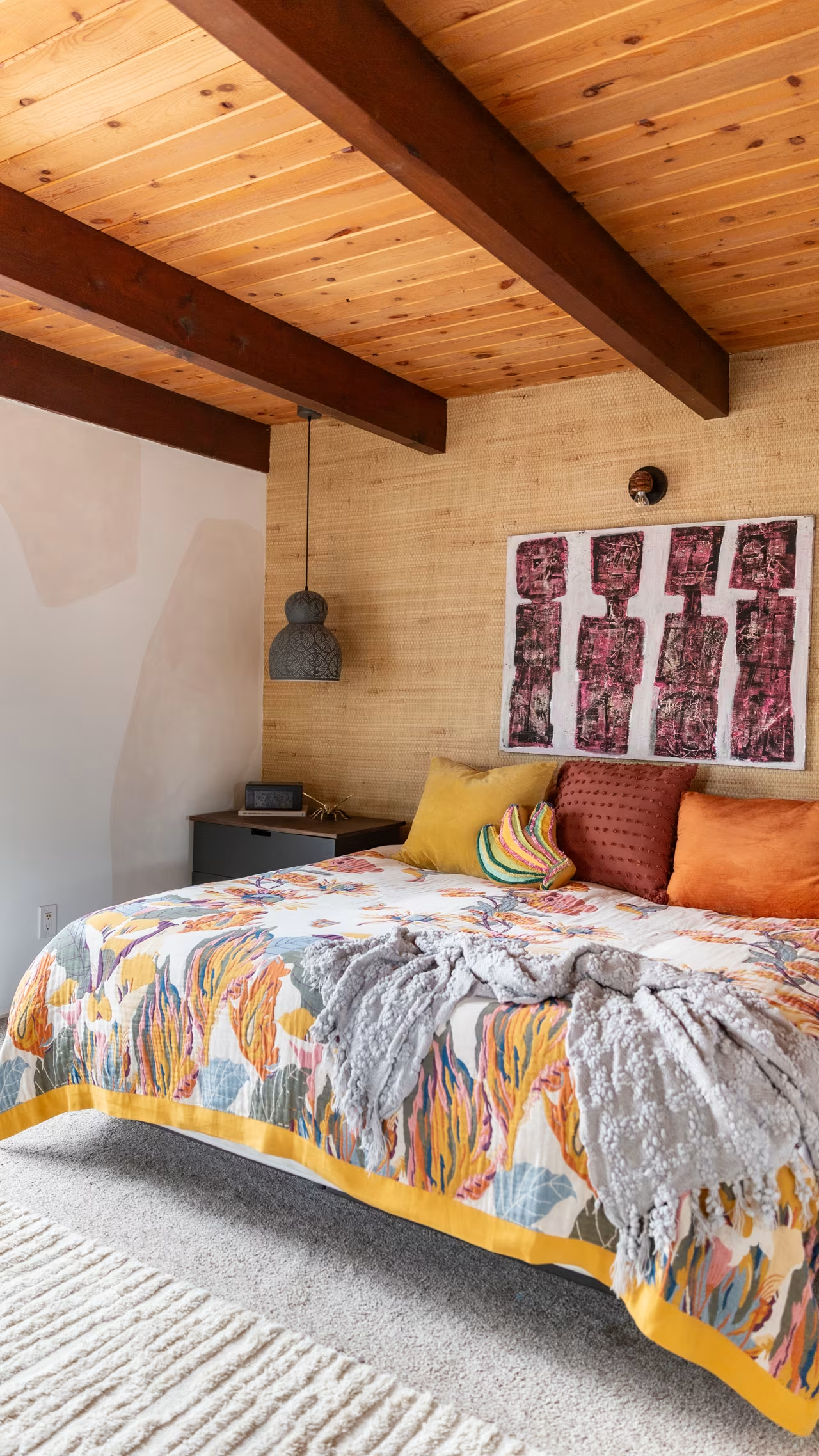


 Cameron Curtis Describes His Journey into Home Building