In his shop in northeast Bend, Jorma Nagel waxed poetic about granite. “There are a lot of materials, but granite is the real thing. It has the beauty and uniqueness of natural stone, and the depth of time.” And, he adds to further bolster his case, “since the recession, the price of granite has actually gone down.”
“We can, and have, put granite just about anywhere,” explained Nagel, owner of New Era Granite. Nagel recently completed an installation with a kitchen wall of bookmatched granite in AJ brown and a black granite island counter. Other unusual projects have included an interior wall with a window of honey-colored onyx, and a house with all the window trim—including that for the skylight—made of granite. Not every job is that large; more diminutive projects have included the counter of a 30-inch vanity and cutting 2-inch by 2-inch squares for an artist’s project. “We can do anything you want with granite, except bend it,” he said.
While Nagel gets most of his materials from Portland (“a lot of places left Bend during the recession,” he explained), much of the granite itself comes from Brazil, China and off the coast of Japan. Nagel often encourages his customers to go to Portland to pick out their stone in person, because it is much easier to see granite’s patterns and depths in a whole slab—rather than in a showroom sample.
Once the granite is chosen, a template is made to the project’s dimensions. With the template complete, the granite is lifted by a five-ton crane to a bridge saw. “We try to keep lifting to a minimum within the shop,” explained Nagel.“Granite is very heavy, probably twenty pounds a square foot and it needs to be carried so it won’t collapse from its own weight.”
Sinks are cut out and pieces are cut to the template, along with special features if a client has requests. Nagel has integrated drain boards into counters, cut backsplashes in the silhouette of the Cascades and “can sandblast any design you want into stone.” Edges are also finessed at this stage. “Everyone wants a flat squared edge now because it’s a more modern look—ten years ago everyone wanted a fancy edge like a curved ogee.” Whatever the trend, however, a simple rounded shape provides the strongest edge.
Once cut, the stone is polished into one of three finishes: high shine, antique or leather, or honed. “Polishing may be the most difficult part,” said Nagel. “It takes about a year-and-a-half of training before someone can polish without being supervised. It’s a real art and some people just can’t do it.”
The final step is installation, which is also tricky because of the weight and size of the pieces. Once installed, however, Nagel is confident in his product. “It took more than a million years to make,” he said, “and it’s going to last for a lifetime in your house.”
Most of Nagel’s business is by word of mouth. His advertising has been limited to a counter in a Tour of Homes house and sponsoring his daughter’s soccer team. “About 25 percent of my business is remodels; the rest is new construction for custom homes. I love it when homeowners come straight to me. We do things the old-school way. I like to see people’s reaction when they see the finished work.”
Central Oregon has a long history of Nordic and alpine skiing, but none is older or more influential than the Skyliners ski club. Born out of a rescue effort in the Three Sisters area in 1927, Scandinavians Nels Skjersaa, Nils Wulfsberg, Chris Kostol and Emil Nordeen founded Bend’s first ski club.
Fostering a love for the outdoors, the club put skiing, tobogganing, skating, hiking and mountain climbing on the map in Central Oregon. Skyliners built its first winter playground at McKenzie Pass in 1928. When the club started arranging annual competitions in 1929, athletes from the Pacific Northwest and Canada congregated on the area.
Skyliners’ top skiers, including John Ring, Olaf Skjersaa, Ole Amoth, and Arved Iverson held their own against Hjalmar Hvam and John Elvrum of Cascade Ski Club, and Ole Tverdahl of Seattle Ski Club. In 1931, Skyliners became one of the founding members of the Pacific Northwest Ski Association.
By 1935, the Skyliners had moved their ski area and jump to Skyliner Hill near Tumalo Creek.
A diminishing snowpack and a wish to build a larger ski jump prompted Skyliners to relocate its headquarters to the Tumalo Creek area, in the mid-1930s, where the only paved road still bears the club’s name.
Like many extracurricular clubs around the country, Skyliners went into hibernation with the outbreak of World War II. It wasn’t until the early 1950s that Skyliners resumed regular activities. With the establishment of a ski center at Bachelor Butte (now Mt. Bachelor) in 1958, the club made its final move.
From the new base west of Bend, head alpine coach Frank Cammack was instrumental in developing Skyliners’ next generation of top athletes, including Kiki Cutter, the first American to win a World Cup race. Others, including, Karen Skjersaa, Sherry Blann, Mark Ford (father of World Cup racer Tommy Ford) and Mike Lafferty competed at national and international tournaments.
After almost sixty years as an independent organization, Skyliners was integrated into Mt. Bachelor Ski Education Foundation (MBSEF) in 1986. Its legacy lives on in the ski and outdoor culture that is so deeply imprinted on the DNA of Central Oregon today.
Clockwise from top left: Four Scandinavians (left to right): Chris Kostol, Nels Skjersaa, Nils Wulfsberg and Emil Nordeen.The ski jump at Skyliners’ McKenzie Pass headquarters—the jump hill was expanded several times with a taller starting platform to accommodate longer jumps.As much a social club as an outdoors club, Skyliners arranged dances at the Hippodrome (where the Deschutes Public Library stands today) complete with in-house orchestra.
Editor’s Note: The Heritage Page is a product of the Deschutes Historical Society, a nonprofit volunteer organization dedicated to the preservation and celebration of Central Oregon’s early history.
Five Talent’s CEO on what it takes it to make it in Bend and how tech companies are working together to make this the most liveable city in America.
Preston Callicott is your classic go big or go home personality. For example, the CEO of Five Talent and his wife visited Bend for the first time ever on a Friday in 2003—they bought a house here twenty-four hours later. Callicott started several companies in the Bay Area, and for the past six years has helmed Five Talent, doubling the software development company’s revenue annually for nearly his whole tenure.
Recently Callicott has turned his energy toward tapping Bend’s tech and startup community to participate in the city’s civic issues. He helped rally dozens of tech companies to sponsor the Bend Livability Project, and he’s made strategic asks since then for support on other community projects. We sat down with Callicott to learn more about Bend’s tech industry and why he thinks it’s important that tech and startups get involved.
When did you realize you wanted to live and work in Central Oregon?
I had been commuting from here to the Bay Area every day for more than seven years. I kept trying to spin up our startups in Bend; the investors would like the idea, but they didn’t want us to start it here. One weekend I was driving with the kids down Wall Street downtown and I told my wife that our most recent startup had been funded, but that the investors wanted it based in Silicon Valley. From the back seat, my daughter points out the window and says “Daddy, if you worked at that hot dog stand, I could see you every day.” I knew then that I needed to figure out how to fully be in Bend. I joined Five Talent a few months later.
For many years, investors challenged the notion that you could build a tech company here. Has that sentiment changed?
Before if you wanted to live here, you either had to create a business or bring something with you. The concern from investors was whether you could find enough talent and was it close enough to keep an eye on. In the last four years, we’ve seen enough companies start, get funded and be successful. Now they’re attracting talent and spinning out their own startups. Suddenly we’re pollinating our own ecosystem and people are realizing that you can move here and get tech jobs. So I do think it’s changed. I see so many bright minds and great ideas. And the exciting part is that’s just the surface—there’s so much more going on that we haven’t heard about.
You’ve rallied the tech community to sponsor the Bend Livability Project and support other community initiatives. Why do you want tech to be involved?
I want Bend to be the most livable city in America. There’s a massive sense of new ideas and innovation brewing here to facilitate that goal and I think we should take advantage of it. It’s not just tech, but innovators. There are so many entrepreneurial people who moved to Bend for the same reason, the lifestyle. So they have a vested interest in helping the city navigate its growth. In addition, they are used to finding creative solutions for problems, and they move fast. The tech/startup community often avoids getting involved with government and politics, but this stuff—from affordable housing to transportation—affects all of our daily lives. When one of your employees can’t find housing, then it’s suddenly your issue, too.
What current private or public initiatives are you working on?
I’m on the Bend 2030 executive board, which created MOVEBend, a group dedicated to transportation issues. We’re supporting the OSU bike share program and trying to bring zip cars to Bend. I’m also committed to supporting entrepreneurs and businesses here. To that end, I’m on the board of Opportunity Knocks (OK), I mentor one entrepreneurial OK group and I am a member of another OK group.I mentor and meet with new startups all the time, and I’m in the process of starting another one right now.
Above: Bend Magazine invited two notable natives to our riverside deck for a chat about the Bend sporting life and their common (or not-so-common) experiences. Bob Woodward (left) sat down for a conversation with Tim Gibbons (middle) and Carl Decker (right) on a (hot!) summer day. Photo by Jon Tapper
Crossing Tracks
as told to Bob Woodward
Bend is recognized as a great place to cross-country ski and mountain bike andhome to locals who are competing at the highest level in both sports.
On the mountain bike, Carl Decker has carved out an outstanding career that includes a world single-speed championship, several world all-mountain championships (downhill and cross-country results combined over two days). He has completed arduous, self-supported, off-road tours. Just recently, he was crowned U.S. Single-Speed National Champion. A former Bend High cross-country running star, Decker races bikes professionally for team Giant.
While not a pro racer, Tim Gibbons has immersed himself in competitive cross-country skiing on the collegiate level as the former leader of Dartmouth College’s women’s ski team. He also served as a physiologist with the U.S. Olympic Training Center in Colorado Springs. Recently he served as co-curator of the well-received “Winter Comes” exhibit of Oregon’s ski history at the Deschutes Historical Society.
Carl, your dad was an MTB racer around here. Did he directly influence you to get in the sport or was that something you decided that you wanted to pursue?
Carl Decker: Living in Bend and growing up in my family, that was a foregone conclusion. The pinnacle of the lifestyle around here is to make a living riding bikes, at least for me. And my dad he was so into biking before people were into that. He rode his bike across the country when he was 20 years old—on a Schwinn. People didn’t do that stuff. Growing up in my family, living in this place and doing what I always wanted to do [was the dream], but I didn’t think I’d ever be able to do it.I was told by people that I couldn’t do it, but I just kind of got lucky.
Tim, your dad was an early adopter when cross-country skiing started to become popular, dragging you as a kid every weekend to Mt. Hood. Was it his influence or something else that motivated you?
Tim Gibbons:It was literally every weekend, from November to the first week of May that we were skiing. One weekend in high school, I decided that I wanted to hang with my buddies in Beaverton [rather than ski]. It was the most boring weekend I ever spent. So I realized: I love being outdoors; I love skiing. My brother and I, we literally would explore on alpine skis the trails from Timberline to Government Camp, or we would explore the Barlow Trail on our cross-country skis.
So when you came to COCC was it to ski and become a ski racer?
TG:Skiing was a big part of it because COCC had such a nationally prominent program for a community college. Back then community colleges had sports programs. But it was also how you could have a great instructor and small class sizes.
Carl, when you decided to go pro as a mountain bike racer, did you feel people in the community were more supportive or skeptical?
CD: People have always been supportive—the people that get it. I was going to school wearing mountain bike race T-shirts, thinking that was the coolest clothing that you could wear. There were like six guys that thought that was cool. But around here there was such a big community of outcasts like us.
When you first came here, Tim, cross-country was really taking off. You got in on the ground floor of the boom.
TG: Exactly. And the college was a big part of that. But it was also Sunnyside Sports and their races. Of course, nationally and internationally cross-country took off [as well]. It was fun to be part of that, but it was also fun to explore and be part of something growing in Bend.
photo by Jon Tapper
Carl, who were the people who influenced you growing up in Bend?
CD: Well, my dad to some degree. I learned a lot from him, even into my professional days he gave me some nice perspective. But it was people like you [Woody]. I remember you being at Ashland and being the emcee at bike races and making it into a fun event. It wasn’t a road race that’s super intense and everybody is fighting against each other. It was you fighting against your bike and the terrain and rejoicing that you made it through to the other side. That’s been the nature of mountain biking, that its man against hill instead of man against man—to some degree. I looked up to Paul Thomasberg a lot in that transition from being a kid to being a pro that was probably the guy that I could learn the most from.
At what point did you decide to become an actual pro?
CD: I think in bike racing, “actual pro” is a very gray area. It’s not like baseball where it’s, “I turned pro and then… I bought my mom a house in Malibu!” I turned “pro” and much like these other fringe sports, I delivered pizza for several years of transition until I didn’t have to have a job, or my job was racing bikes. I turned pro in 1998 and I stopped delivering pizza in probably 2004.
You’ve taken different paths, but you’ve both gone away and come back. What’s been the draw of Bend and Central Oregon.
CD: It’s obvious for anybody that lives here, but you do have to go away at some point to realize what you’ve got. It didn’t take long living in Portland and opening the drapes and seeing no sun for the thirtieth or fourtieth day in a row. I’d get tears in my eyes when I’d open the blinds those first few years in college. Seasonal Affective Disorder is a thing.
Tim, you went off to Dartmouth and coached the Dartmouth team and then went to work for the U.S. Olympic team in Colorado. What brought you back?
TG: You know, the mountain biking in Colorado is fantastic and around Colorado Springs is great, but you have to drive close to two hours to get to snow. When I can go for a run or a mountain bike ride within five minutes, or in ten to fifteen minutes I’m on snow at Meissner, or in twenty to twenty-five minutes I’m at Bachelor, not many places can say that. That’s the lure that brings you back.
What about futures? Carl what are you expecting?
CD: I’m doing a little bit of coaching, which I didn’t expect to like as much as I do. In a year I can give people seven years of knowledge. I work with Giant developing product and making bikes better, but I still love racing bikes and still holding on for grim death at the age of 41. But I’m still learning stuff. Parts of me are getting worse and parts of me are getting a little bit better.
Talk a little bit about the family and support network and what that did to allow you both to develop personally and professionally.
Carl: I was lucky to come up in a family that was based around sports and cycling specifically. The Decker family we had our own Team Decker T-shirts. That’s just what we did. The luckiest day of my life was the day my dad got transferred from the Oregon Coast to Bend with the state police. From then on my future was in motion. There was a huge community here that helped push me.
As you get older do you have a different perspective about how much your parents put into that?
CD: Oh yes. My parents made huge sacrifices for that. My dad worked his (butt) off all winter and banked all of his vacation time so we could go to these mountain bike races. And it was a very valuable asset this vacation time. And a lot of people would want to go to Hawaii and drink beer and relax, but we were charging out to races and doing these adventures. Most people would need a vacation from their vacation when they got back.
Tim, how about you?
TG: Very similar to Carl. Both parents were teachers and educators and had winter vacation and summer vacation. We were whitewater rafting and climbing mountains. We were fly fishing, cross-country ski racing. So every other weekend in the winter we would road trip to a race. That’s not what families did. So in talking about the sacrifice, that was also the adventure. My parents are still alive; dad is 92 and mom is 86. They are avid sports fans. They watch soccer; they watch track and field. They watch college sports, but none of the professional sports. They’ll watch every minute of the Olympics. So you have parents who watch and appreciate the sports lifestyle. It’s not whether you liked it, it’s just what we did as a family.
Like much of Central Oregon, the Ochocos were born from a violent past that includes massive mudslides, volcanic eruptions and storms that left the land piled with ash up to 1,000-feet deep. Today, it’s a place of secluded canyons, dancing creeks, whispering meadows and open forests that invite exploration. The only thing missing is the crowds.
written by Eric Flowers photographs by Mike houska
Photo by Mike Houska
Lookout Mountain
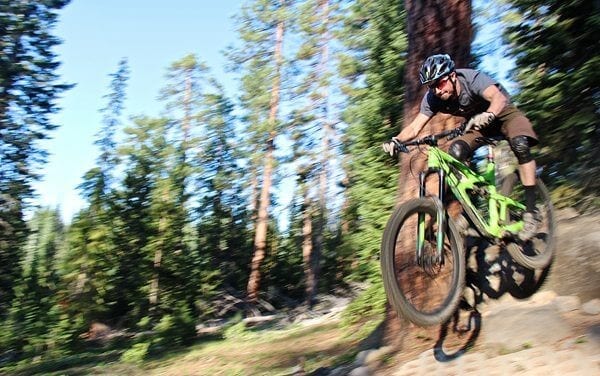
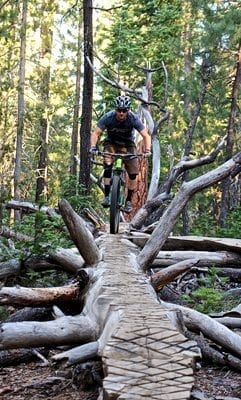
Perhaps the most well-known and popular destination in the Ochocos, Lookout Mountain is just a short drive east of Prineville and also the tallest peak within the range. There are several access points, beginning with an eight-mile trail near the Ochoco Campground on County Road 123. Those looking for a shorter route with more direct access to the summit can continue southeast to Forest Road 42. From there, a jeep track winds to the Baneberry Trailhead and the historic Independent Mine site where three different routes meet to lead you to the summit. The multi-use trails get foot, horse and mountain bike traffic throughout the spring, summer and fall seasons. But on a recent weekday excursion that spanned more than five hours on the trails, we encountered not a soul. Still, it’s easy to see why locals have added Lookout as a go-to destination. Even in midsummer the trails were in superb biking condition, thanks to the abundance of shade offered by towering old-growth fir and pine trees. Where small springs pop up, the landscape turns verdant with ferns and grasses more closely associated with the McKenzie River area than the far eastern edge of Central Oregon. While we were able to push, pull and sometimes carry our bikes to the summit, the trail is more suited to hiking over the last mile or two. At the summit, hikers are rewarded with expansive views over thousands of forested acres stretching miles westward. On the horizon, the peaks of the Cascades rise in a stately formation, glaciers clinging stubbornly to their sides.
“It’s the crown jewel of our trail system,” said Drew Peterson, a recreation foreman with the Ochoco Ranger District.
Dog-friendly Rating: 3/5 As with all trails within the Ochocos, there are no leashes required for dogs. However, opportunities for water are limited to the few springs on the trail. Precipitous ledges at the Summit also require owners to keep a close eye on pets.
Trail Notes:While the seclusion is nice, it also means that hikers and bikers need to be prepared for all eventualities in the backcountry as cell phone service is spotty and help may be slow to arrive. But for those who have endured overfull campgrounds and jammed trailheads all summer, the Ochocos are the perfect antidote. For bikers, Lookout offers an attractive destination as an easy two-car shuttle. Simply drop the second vehicle at the trailhead near the Ochoco Campground, then proceed to the upper trailhead off Forest Road 42. From the top, it’s a roughly eight-mile downhill screamer back to the shuttle car. For bikers wanting a more traditional cross-country experience, the Ochoco-Round Mountain Trail offers an extended ride with plenty of climbing and descending.
Photo by Mike Houska
Steins Pillar
One of the most iconic and photographed features within the Ochocos sits just a few miles east of Prineville. Located just north of Ochoco Reservoir, Steins Pillar soars roughly 300 feet from the forest floor, looming like a sentinel over Mill Creek. While easily observed and photographed from Forest Road 33, which parallels Mill Creek, intrepid explorers can access a trailhead from a dead-end spur road. From there, hikers and their companions have a two-mile hike to the base of the basalt column pillar. A geological anomaly, Steins Pillar is evidence of the area’s violent volcanic past and the subsequent eons of erosion that stripped bare the surrounding soil and left the solid pillar standing as a solitary reminder of a more tumultuous time.
Dog-Friendly Rating: 3/5 This four-mile, out-and-back trek is an ideal length for a family outing. However, as one of the more heavily visited trails in the area, it’s a good idea to keep your dog close to hand to minimize conflicts.
Trail Notes: Steins Pillar is believed to be named after Major Enoch Steen, a civil war veteran and early explorer. His name was often misspelled as “Stein”. In the case of Steins Pillar, the misspelling stuck, as did the possessive grammatical error. Steens Mountain outside of Burns also bears his name, albeit correctly spelled.
About Dogs and the Ochocos: There are currently no leash restrictions in place at any time in the Ochoco National Forest, including the Wilderness areas. However, rangers encourage visitors to bring and use leashes to minimize conflicts between trail users. Leashes also prevent dogs from harassing wildlife and vice versa. “We understand that dogs are members of people’s families and we take their safety into consideration. In the end the more responsible dog users will be rewarded with a better experience,” said Drew Peterson, recreation foreman for the Ochoco Ranger District.
Photo by Mike Houska
Twin Pillars Mill Creek Wilderness Trail
Just a few miles beyond Steins Pillar is the southern access for Twin Pillars. The trailhead is located at the entrance to Wildcat Campground on the edge of the Mill Creek Wilderness. While much of the wilderness area was severely impacted by a wildfire in the late 1990s, not all was lost. In some respect the wildfire has helped to reveal views of the surrounding landscape, including better sightlines to the namesake Twin Pillars. This area is also a great place to visit when fall colors begin to emerge.
“The great thing about the Ochocos is that they actually feature a lot of fall foliage, not in comparison with the East Coast, but we have lots of aspen and larches,” said Drew Peterson, Ochoco National Forest recreation foreman.
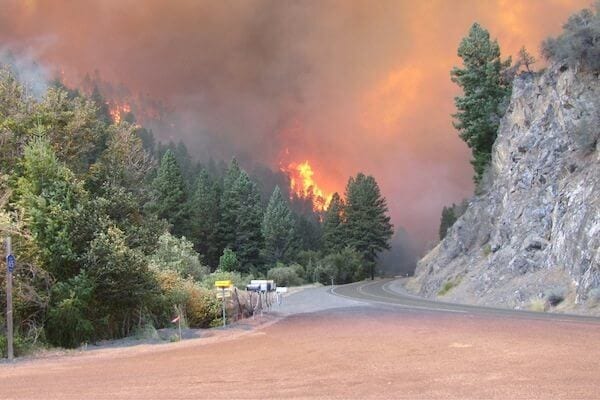
The Mill Creek Wilderness is also a good window into the devastation that can be caused by wildfire, whether sparked by nature or humans, and the slow but steady recovery in an otherwise healthy ecosystem.
Like other places in the Ochocos, Mill Creek Wilderness is short on crowds and long on solitude. During a recent visit, we spent the night at Wildcat Campground with the camp host as the only other occupant. We locked our rigs at the trailhead, but the only real danger was a cougar that had apparently been sighted recently in the area. We didn’t see any signs of the big cat, but we did flush a grouse and spotted a healthy wild trout that was idling in a small pool alongside the trail. Most impressive though were the massive Ponderosas spared by the wildfire. These stately trees have reached full maturity with trunks four and five feet in diameter. These are the few remnants of giants that drew lumbermen to the region a century ago, providing fodder for sawmills in Bend and Prineville. Today those mills are idle and the trees that were spared the saw comprise a commodity of a different sort.
Dog-friendly Rating: 5/5 An abundance of water and plenty of room to roam make this a great spot for an extended hike with your dog. The fact that it gets light traffic minimizes the potential for conflict.
Trail Notes: The Twin Pillars trail is accessible by northern and southern trailheads. The namesake pillars are located closer to the northern trailhead near Bingham Springs. Because most of this trail lies within the Mill Creek Wilderness, it is minimally maintained. There are no bridges to assist with stream crossings, of which there are several. However, water levels are lowest in fall, making this less of an issue.
If you are the parent of a baby or toddler, you know the stress of the sleep-deprived early years. When there is a lack of food, unemployment, a struggle with mental illness or drug and alcohol dependence, the stress can become overwhelming. Before young families reach a breaking point they need a pressure relief valve. Enter MountainStar Family Relief Nursery, a Central Oregon nonprofit that prevents child abuse before it happens by helping families in crisis.
There are twenty-eight relief nurseries in the state of Oregon and MountainStar operates three of them—in Bend, Madras and Prineville. The relief nursery model supports families in a number of ways. Children who are three and younger come twice a week to a therapeutic classroom, a safe and relaxing space designed to boost healthy development. When the children are in the classroom, parents have time to go to the grocery store, seek out services or simply get a break. Staff members also make regular home visits and offer parent coaching. Families are connected to community resources. And there is an emergency food pantry and a cabinet stocked with diapers for parents in immediate need. For those without a family safety net, such as a parent or grandparent, MountainStar acts as a surrogate of sorts.
The holistic program is working. Ninety-eight percent of the children enrolled remained free from confirmed cases of abuse and neglect.
“Parents tell me they can really talk to us—that we listen,” said MountainStar Program Director Jeanna Darnell. “For some parents, this is the first time they’ve ever had anyone on their team.”
Staff Extraordinaire:Roberta Maestas
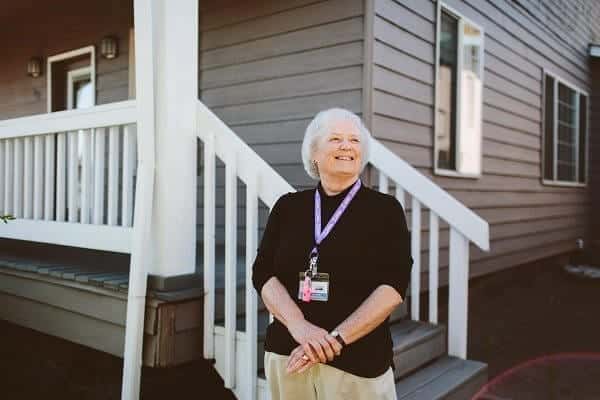
Roberta Maestas is the safety net specialist at MountainStar and is the first point of contact for families wanting to enroll in the program. She visits each family at their home for intake, putting parents at ease with her warm smile. Maestas moved to Bend to retire after working for twenty-one years as a juvenile probation officer in Salem. But retirement didn’t last long. “I love working with the little ones,” she said. “They are just so precious.”
–
Get Involved
About MountainStar:
MountainStar works directly with vulnerable families in an effort to keep children safe from abuse and neglect. Learn more at mtstar.org
By the Numbers:
• More than 675 clients servedeach year • Families receive 300+ contact hours each year • 98 percent of children enrolled remain free from abuse
How You Can Help:
• Sign up for a tour • Donate items such as formula from their wish list • Be a fairy godparent • Volunteer in a classroom
Though locals and visitors alike once knew October as a quiet month in Bend, Tenth Month changed that this year. The once loosely associated roster of gatherings that constitute Tenth Month have emerged as a cohesive, must-see lineup of film, design, marketing and business events.
Almost every day of the month, Bend was filled with entrepreneurs, filmmakers and creatives. Conferences and festivals like BendFilm, Swivel Digital Marketing and Bend Design and Bend Venture Conference anchored the month, while events like the unConference, Venture Out and TedxBendWomen rounded it out. All independently organized, the conferences, events and festivals were brought together by the Tenth Month team to celebrate the people who are making a difference in Bend and beyond.
Tenth Month by the Numbers
3,755,000: Number of dollars awarded to companies at the Bend Venture Conference between October 12-14, hosted by the Economic Development of Central Oregon. The funding set a record for angel conferences in the state.
6: Number of women who pitched (out of 15 presenters) at the Bend Venture Conference.
3: Number of people who moved to Bend within the last 6 months specifically for the chance to compete for funding at the unConference, an event created by Startup Bend and Tech Alliance of Central Oregon for startups founders to pitch their ideas in three minutes or less and compete for funding.
25:Percent of Bend Design Conference attendees who live outside of Central Oregon
7,600: Number of seats filled during BendFilm
8:Number of short films shown at BendFilm made by Oregon filmmakers.
Richard Miller’s amateur boxing gym produces a powerful punch of integrity. Miller, now a middle-aged community champion (instead of the middle-weight one), still looks like a fighter. When Miller moved to Bend twelve years ago, he saw a void in the athletic fabric and created Deschutes County Rocks, an amateur co-ed boxing club. In doing so, Miller contributed something unusual on Greenwood Avenue: an all-volunteer staff that relies on donations, raffles and exhibition shows to cover the gym’s costs.
Why did you create a boxing gym in downtown Bend?
We are not all built the same. Bend is great and offers a lot to kids but I kept asking myself: Where are the kids who don’t fit in the box? Where are the kids who can’t afford to ski or pay the hefty fees for club athletics? I know what boxing did for me and I wanted to offer that to both the east and west sides of town. At Deschutes County Rocks you don’t have to be the fastest, biggest or most skilled to get a scholarship. You just have to show up, respect the rules and make a commitment.
Every Coach has golden rules they live by. What are yours?
I guess the first one is respect your team. Everyone has something to give. I’m not in charge; I have four fulltime volunteers, including my wife. The team is the driving force to become what we want to achieve. Your ego is the most dangerous thing about you. That’s how fights happen. I don’t want them to fight. I want them to learn. Learning includes doing well in school. Nothing below a C.
Did the male athletes just allow the women (there were five in attendance) to proceed before them?
I want my boxing team to be regarded as having the best manners wherever we go and whenever we travel. I’m often on the road with two-dozen kids, traveling to other states to compete. Last year we traveled twenty-seven times. We always win if the officials come up to me and say: your team has impressive manners. But we also win a lot even against the east coast slicks. It might sound archaic, but I don’t like cell phones. Eye contact is important in our sport. I have my team look each other in the eye at dinner and look out the window when we travel. Ladies do go first around here. It’s a sign of respect.
Photo by Jon Tapper
You volunteer hundreds of hours of your time, you strain to pay the rent and make sure the kids who want to compete never carry the financial burden. Why?
I grew up in Rock Springs, Wyoming. There wasn’t a lot to do if you didn’t like riding horses. The movie theater was our social moment. Two weeks in a row I got in a fight and was kicked out. A few weeks went by without a word from my dad. Then one day he came home from work and said, ‘Put on your sneakers and gym shorts.’ I found myself at the local middle school in line with seventy middle school-age boys. When they let us inside, he was sitting there with a panel of old timers and there were training stations, gloves, bags and gear all over the gym. My dad smiled and said, ‘Now you’re going to learn something else but brawling.’ That’s why I do it. This is not about hitting. This is about controlling your anger, fear, rage and obstacles we come up against every day. I do it because I know what it did for me. I’m leaving a legacy. What more can a person want than to change a life—especially a kid’s.
Can we talk about about the “C” word? What about Concussions?
I want to talk about it. There are so many misunderstandings. This is amateur boxing. Ironically, amateur boxing is not even in the top twenty-five sports that cause concussions. We have gear that is designed specially to absorb impact, not create it. We have intense monitoring systems. We only go three rounds. If there is even a doubt you’ve been hit inappropriately there is a mandatory thirty days’ suspension. Our concussion protocol is higher than soccer, football, lacrosse and skiing. There’s a basic principal of being a good coach that is often overlooked: my goal is to retain my players and keep them healthy. Why would I want anyone on my team to get hurt?
Avid golfers know that the best time to play golf is whenever there is room for a backswing. That is to say that real golfers don’t let weather or seasons determine if or when they play. For the rest of us though, there is a sweet spot. Perhaps a mid-summer afternoon or a perfect late spring weekend when winter storms seem a distant memory appear ideal. In Central Oregon, though, autumn is the underrated season. It’s a time to savor what remains of summer as if it were the last sip of wine from a bottle found deep in the cellar.
Come October, months of mercury-popping heat give away to mild days. It’s a time when you want to linger in, not flee, the midday sun. Tourists have scattered like the smoke from the wildfires and a quiet settles over the region’s trails and fairways. The days are made more perfect because there are so few of them and they aren’t always predictable. Knowing winter is around the corner makes it all the better.
“Fall, for me, is one of the best times to play golf in Central Oregon,” said Rob Malone, Aspen Lakes director of golf. “It’s cool in the morning. It’s beautiful and crisp and normally blue skies.”
There’s also another incentive to get out after Labor Day—the shoulder season is chock full of bargains. Whether you are a local looking to play 18 holes on one of the region’s award-winning courses or a visitor looking for a stay-and-play resort experience, there is a destination to fit just about any itinerary and budget. If you want to play golf at any of the premier destinations, without paying top shelf prices, now is the time. But don’t wait too long. Winter really is just around the corner.
Golf Staycation
Summer may be the busy season here for local golf courses, as evidenced by the $80 greens fees, but it’s also the busy season for locals who pack their calendars with road trips, hiking, camping and exploration. Golf is usually put on the back burner for busy moms and dads and others who choose to spend their time somewhere other than the practice green. As kids return to school and weekends are freed, resorts are looking to pull in locals to fill tee sheets and overnight rooms. Now is the time to round up your golf buddies that you’ve blown off all summer and schedule a man-cation. Here are a couple of itineraries:
A guys’ weekend doesn’t necessarily have to entail a stay at fancy lodge or resort room. Creating your own home base also gives you the flexibility to choose from a variety of golf courses. We recommend grabbing somewhere centralized that will let you spread out, but also somewhere that offers a kitchen for meal prep and snacks, ideally with a barbeque on site. (Bonus if you can find a place with a hot tub.) McMenamins cottages make an attractive option with the soaking pool and fire pits for evening gatherings, but your best bet might be a vacation rental. Like resorts, they are also looking to fill rooms in the shoulder season and deals abound.
In terms of golf, we recommend looking into some of the courses that consistently rate high with locals and visitors, but drop their rates in the shoulder season. Our shortlist includes Aspen Lakes near Sisters, which offers some of the best views and most enjoyable golf in the region. In Bend, Widgi Creek—which always offers a great evening special—will drop rates come October. Tetherow will also be open until the end of October and offers one of the most memorable experiences in Central Oregon. It’s also one of the few courses in the state to make the illustrious Golf Digest Top 100 list.
If a resort stay is in the cards, Black Butte Ranch with its two golf courses and wide range of home rentals is a perfect option. The resort’s newly upgraded pools and gym facilities located at the main lodge. Two award-winning golf courses, including the recently renovated Glaze Meadow, mean you never have to leave the property to get your fill of fairways. There’s even fly-fishing on the resort lakes, as well as on the nearby Metolius River.
“The first few weeks in October are spectacular,” said Jeff Fought, director of golf at Black Butte Ranch. “Not only do the rates drop, but you have a September feel of being a little colder in the morning and then getting up to 75 degrees.”
While enjoying a soak in the 102-degree pond at Crystal Crane Hot Springs, a handful of bathers watched a distant storm surge across Eastern Oregon’s landscape in dramatic fashion. Bolts of lightning arced toward the earth and lit up the night.
Elsewhere overhead, the day’s last sunlight faded from the western sky. Soon the coyotes would begin to howl and the stars would show their brilliance.
It’s all part of the natural scene at Crystal Crane, a high-desert oasis about twenty-five miles east of Burns along an arrow-straight stretch of Oregon 78. With its therapeutic soaking pool, private tubs and quintessential Harney County ambiance, the resort is a fine rest stop for the weary traveler.
“It was very relaxing,” said Josh Sims, of Bend, who was packing up his campsite on a recent sunny morning. “If I’m traveling a long distance, I see if there’s a hot spring in the area. It’s very convenient, especially in the middle of nowhere.”
Sims had watched the lightning storms the previous evening, immersed in the bath-like water after a long day of driving.
“You feel good, stuck in a pool, and hearing coyotes in the background and lightning in the hills,” he said.
Not far from Steens Mountain, the Ochocos and the Malheur National Wildlife Refuge, Crystal Crane Hot Springs offers a variety of overnight lodging options. Pitch a tent or park an RV at one of several campsites. Rent a poolside cabin or a single room.
Overnighters can cook their meals in a shared kitchen, then head over to the springs for a nighttime soak.
Denise Kryger and her husband, Dan, purchased the Crystal Crane property in 1997. They expanded the soaking pond, improved existing structures and added more lodging—including a Plains-style teepee with a hot tub inside.
“The teepee is one of our biggest hits,” Kryger said. “It’s a wonderful little unit to rent.”
The main soaking pool is really a small pond, bordered on one side by a grassy marshland where ducks often swim. Hot water pours from several spigots. The pebbled bottom gently slopes to a depth of seven feet, but it’s shallow in most spots, perfect for wading or reclining near water’s edge.
For a luxurious experience, reserve one of the private bathhouses. Inside a quiet room, with a rustic metal tub full to the brim, it’s not hard to kick back and forget about the world—if only for an hour.
In addition to soothing weary muscles, the Crystal Crane water also contains healthful minerals such as calcium, sodium, silica and magnesium. Hot springs are good for the soul, sure, but they’re good for the skin, as well.
“It makes your skin feel so smooth,” said Kryger. “It’s a wonderful feeling with that water.”
On clear nights, the stargazing is spectacular. Planets glow and shooting stars flare. Far from a major city, light pollution is almost nonexistent at Crystal Crane, and there’s nothing quite like floating on your back in a warm pool, watching the universe swirl high above.
Open year-round, Crystal Crane is a popular stopover for hikers, bird watchers and autumn hunters. Travelers from across the United States and the world visit the hot springs, Kryger said.
“We meet the best people here; it’s incredible,” he mused. “[Crystal Crane] is still quite remote, and yet we have all the amenities to go with it.”
Itinerary: Steens Road Tour
What to do between soaking sessions at Crystal Crane? Well, there are plenty of recreational opportunities in Harney County, a place short on crowds and long on scenery.
Before you head out, stop for breakfast at the Crane Store & Café on the outskirts of Crane, a few minutes from the hot springs. Try the biscuits and gravy—you won’t be disappointed, but you will be stuffed.
Fuel up the car and take a long drive on the East Steens Tour Route, where opportunities for camping, hiking and wildlife viewing abound. From Crystal Crane, take Oregon 78 to the Fields-Denio road and turn south. Soon the rugged fault block of Steens Mountain, rising to nearly 10,000 feet, will come into view. Stop at Mann Lake for camping or fishing, or check out the table-flat Alvord Desert a bit farther south.
At Fields, head north on Oregon 205 to take in the gentler west side of the Steens. A drive up the steep Steens Loop offers spectacular views in all directions, as well as scenic hiking trails and fishing holes on the Donner and Blitzen River. Keep your eyes peeled for mule deer and California bighorn sheep.
Autumn is a great season in the Steens—the mountain is known for its fall foliage.
Keep driving north on 205 to arrive at Malheur National Wildlife Refuge, a haven for migratory birds. The refuge headquarters is still closed following last winter’s armed occupation, but the roads are open. Bring binoculars and scan for sandhill cranes and assorted waterfowl.
The tour wraps up in Burns, just two hours from Bend.
Brisk mornings, less traffic and changing leaves make fall in the High Desert an ideal time for both road and mountain biking. You don’t have to travel far from Bend to be the only person on a road or trail. It’s what makes the fall shoulder season a favorite time among local riders. “To me, fall in Central Oregon is the nicest time,” said Brad Boyd, owner of Eurosports bike shop in Sisters. “Cooler temperatures, less wind; I’m always amazed how quiet it is.” While in spring you might still be waiting for snow to melt at higher elevations, and summer heat can make riding a bear, the right fall day is without equal. With that in mind we’re focusing on the Sisters area and offering up three fall road rides that you don’t need to have Tour de France-level conditioning to enjoy.
Photo by Duncan Galvin
MCKENZIE PASS
The thirty-mile, out-and-back ride from Sisters culminates at the historic Dee Wright observatory lookout, a one-of-a-kind structure carved out of solid lava rock by members of the Civilian Conservation Corps, some eighty years ago.The intrepid explorer will also find distinct remnants of the 1860 wagon trail that was similarly carved out of the unyielding lava beds and remains largely as it was when the route was abandoned in the 1920s.
While it gains roughly 2,100 feet of elevation, the climb is spread gradually throughout the ride, particularly on the final eleven miles.
“For someone who is comfortable riding on roads and can handle a hill, it’s great ride,” said Alex Phillips, Oregon Parks & Recreation Department bicycle recreation specialist.
From Sisters, the ride cruises past horse ranches and into a thick forest of tall Ponderosa pines. The real climb begins roughly four miles in, but continues at a steady, manageable rate. The final five miles open up with views of the expansive lava fields. Mount Jefferson looms in the distance.
Boyd suggested continuing on an additional five miles of rolling highway to Scott Lake, before the pass begins the lion share of its 3,600-foot decent to the McKenzie River Valley.
“That section, in both directions, is just fantastic,” he said.
Photo by Duncan Galvin
METOLIOUS RIVER/CAMP SHERMAN
If climbing isn’t your thing, consider the Metolius River/Camp Sherman area. Formerly designated a Scenic Bikeway by the state, the region has a hidden gem quality, especially in the fall.
“It’s a beautiful area. People love riding there,” said Phillips. With the crystal-clear headwaters of the Metolius, historic Camp Sherman and a variety of roads are scattered through Ponderosa pine forest, offering loops from three miles to around twenty miles with options for thirty-mile plus rides. There’s something for everyone with minimal elevation gain and occasional mountain vistas.
“We tell people September and October are the best months to be here,” said Camp Sherman Store owner Roger White.
“Everything lines up perfectly. Once we start into fall the colors start and the weather gets even better. Traffic drops off a lot. Come the start of school, there will be a lot less people.”
Boyd agreed.
“There’re some beautiful colors there,” he added, describing fall. “There’s nothing going on. You’re pretty much by yourself.”
ALONG THE WAY
Each of our three fall rides offer a variety of stops and sites along the way. Consider starting your day in Sisters with a morning coffee at Sisters Coffee Company or breakfast at Sisters Bakery. For additional ride information visit Brad Boyd’s Eurosports bike shop in town or nearby Blazing Saddles bike shop. Boyd, a longtime area resident, offers a number of beers on tap for post-ride celebration in the shop’s beer garden. In the summer, the shop hosts a number of food carts, which Boyd said may remain open on weekends through the fall. Three Creeks Brewery, just outside of Sisters on the way to Bend, also makes a solid option for a post-ride bite and brew.
Photo by Sebastian Foltz
SISTERS TO SMITH ROCK
The lesser known Sisters to Smith Rock Scenic Bike Ride also makes for a great fall ride. Less prone to fall colors, the route from Sisters east through Terrebonne gives a taste of the High Desert without the blazing summer heat.
“People don’t tend to focus on it, and it’s spectacularly beautiful,” said Phillips. “A lot of people think it’s all downhill one way. It’s really not. It’s a lot of rolling hills.”
The thirty-seven-mile route (one-way) fluctuates within a range of 660 feet of elevation gains and losses. Phillips recommends it as a great introduction to bike touring, with camping options on either end of the route.
Boyd also suggested shortening it to an out-and-back by turning around where the route crosses the Deschutes River, a little more than halfway through the ride.
With its high desert climate, this route remains a solid option through much of the winter and long after snow has begun to fall on the Metolius area and McKenzie Pass.
Ingrid Rohrer-Downer infuses Broken Top Bottle Shop’s menu with ethnic inspiration.
written by Lee Lewis Husk
Since 2015, the small kitchen at Broken Top Bottle Shop has been in the hands of Ingrid Rohrer-Downer, a chef with an outsized reputation for versatility and creativity. With extensive experience cooking for large parties as well as diners at upscale restaurants, Rohrer-Downer’s ethnically influenced comfort food complements BTBS’s extensive global beer selection.
“Broken Top is a nice place to step back and prepare ethnic food that translates well,” she said.
That love of ethnic food started when she was a youngster in Fresno where a live-in nanny from Argentina fostered in her an appreciation of seafood. After completing the California Culinary Academy in San Francisco in the early 1990s, Rohrer-Downer spent ten years with Bon Appétit Management Co., which offers on-site food service to businesses, universities and others. She started with the company in Palo Alto and later transferred to Hillsboro where the company contracted with Intel.
At Intel, Rohrer-Downer oversaw Mexican, Indian, Sri Lankan, Thai, Japanese and Colombian chefs who catered to the cravings of Intel’s diverse workforce. “I sucked up as much (culinary) knowledge as possible,” she said of the time spent with chefs, who shared recipes and cooking techniques.
Traditional favorites still populate the BTBS menu—house-smoked baby back ribs, the cheese-stuffed DD Ranch burger and the sesame sushi salad. However, global influences are evident around every corner. For example, the pork belly sandwich is now “the pork belly bahn mi sandwich” with Vietnamese flavor infusing each bite. The cauliflower shawarma sandwich is a burst of exotic flavors.
“I can do high-end food, but people love comfort food,” she said. “The difference is I throw in a twist—some unusual stuff in it,” she said.
With a commitment to organic and locally-grown produce and meats, Rohrer-Downer converts the weekly CSA (community supported agriculture) box into “Thursday’s tacos.”
Located at the foot of Central Oregon Community College on Bend’s westside, BTBS’s ground-level space is beneath apartments, which for safety reasons prevent it from having an open flame, hood or deep fat fryer. All the cooking is done on flat-top induction burners, ovens and outdoor Traeger barbeques. That’s where Rohrer-Downer’s creativity shines through.
“It’s a testament to Ingrid’s skills and ability to put out large quantities of food on busy nights from such a small space,” said Jennifer Powell, who owns the restaurant with her husband, Jason.
“She excels under pressure and succeeds by all measures,” said Jennifer.
A compulsive cook, Rohrer-Downer, 45, says she’s always thinking about food and creative ways of preparing it. “I have a lot of food dreams,” she said, adding that at BTBS she’s able to experiment and enjoys interacting with its regular clientele.
The BTBS menu has always offered vegan, vegetarian and gluten-free soups, salads, sandwiches and entrées along with meaty selections. Rohrer-Downer has been tweaking the menu to reflect her love of various cuisines of the world. The results are evident in every bite. Explore their menu here: btbsbend.com
The Robert Axle Project rode a simple solution to a common bike commuting problem to international success.
interview by Kelly Kearsley
Three years into their entrepreneurial adventure, Chris Kratsch and Katy Bryce still joke that they accidentally created a company. “We always look at each other and ask ‘We’re doing this?’” says Kratsch, co-founder with his wife Bryce, of The Robert Axle Project. The Bend startup makes “thru axles” for connecting trailers to modern bikes.
The couple’s business was born out of necessity. They bought new mountain bikes in 2012, and quickly realized that they couldn’t attach their bike trailers. Their surprisingly simple solution has since grown into an international company that sells products in 35 countries.
An Axle Problem
Kratsch and Bryce are passionate about biking. In 2003, the couple biked 2,400 miles on the Great Divide Trail from Canada to Mexico. They have designated motor-free weekends. “We’ll ride out to the Cascade Lakes and camp,” said Kratsch. He is a long-time Central Oregon Trail Alliance volunteer who has spent hundreds of hours maintaining local mountain bike trails.
BOB trailers—the same company that makes the ubiquitous three-wheeled BOB strollers—have been a crucial component of all their adventures. Kratsch and Bryce use them to haul their camping gear and pull trail maintenance equipment. But their newer carbon frame bikes had 12 millimeter thru axles, which attach the wheel to the bike frame, unlike the older quick-release skewers. That made connecting the BOB trailers temporarily impossible.
Kratsch called BOB and the bike manufacturers but didn’t get anywhere. “I worked at a machine shop at the time, and I realized I had the resources to make something myself,” said Kratsch. His replacement axle worked so well that friends were soon asking if they could buy them. Thinking others probably had the same issue, Bryce, a writer and marketer, put up an e-commerce site.
Going All In
The pair named their company The Robert Axle Project, a tongue-in-cheek reference to their beloved BOB trailers. Within weeks of their site going live, they received an order for 100 axles from a large bike parts distributor in Switzerland. The business took off from there. “Now nearly half of our orders come from Europe,” said Kratsch.
Long-distance bikers like themselves seek out the after-market axles, which can be used with any brand trailer. But the bulk of their orders come from people pulling kid trailers. The bike manufacturers have shown no interest in tackling the problem. As a result, The Robert Axle Project created the solution that has become the industry standard. While it’s a small market, the Bend-based company has a virtual monopoly. It sells direct to consumers from its website, to bike shops, and parts distributors and recently partnered with a trailer company. The business grew 400% last year, and is slated to grow another 200% this year.
Being in bike-crazy Bend turned out to be a boon. “We have so many bike shops here,” said Kratsch. “Not only were they supportive, but I was able to ride around town and measure the axles of nearly every bike on the market.” He used that information to build an online tool for consumers to determine which size axle they need. The startup was also part of Bend Outdoor Worx (BOW), an accelerator for outdoor gear companies.
Kratsch quit his job in 2015 to run The Robert Axle Project full time. Bryce continues to do the company’s marketing. Devoting more time and energy to their business has definitely cut into the couple’s own long bike adventures, but Kratsch said it’s worth it.
“It’s exciting to see how far we can push this,” he said. “We’re helping others find adventure, and we’re finding our own through growing a business.”
Avid bikers, Kratsch and Bryce took 63 days to ride the Great Divide Trail from Canada to Mexico.
Photo by Heaven McArthur
Shipped worldwide, all of the axles sold by the pair are produced at a two machine shops in Bend.
Photo by Heaven McArthur
While originally designed for the ubiquitous “Bob” trailers, the axles are universal and pair with many trailers.
Photo by Heaven McArthur
Bend joins the So-Cal longboarding tradition. Written by Sebastian Foltz
SINCE ITS birth on the beaches and boardwalks of California circa 1960, skateboarding, and skate culture, has been intertwined with surfing, its more Zen-like cousin. With the explosion of longboarding over the past decade, it’s no surprise that Bend, with its strong “board” culture, has been an early adopter. Whether commuting, cruising or going full downhill daredevil, longboarding has emerged as another way to experience Central Oregon.
“It certainly beats walking,” said Grace Seelye of The Longboard Store. The Bend-based company is located in the Old Mill and was founded by her parents Scott and Jennifer Seelye.
With fewer younger riders picking up skateboarding (the sport has largely seen declining participation for the past several years at the 17 and under level), longboarding is a bright spot for the industry in general. Graying riders ready to hang up their park boards transition easily into longboarding. That makes it a natural fit for Bend’s slightly older and more active population.
“It’s more popular than ever,” said SnoPlanks snowboard and ski company co-founder James Nicol. “It’s a great way to get from point A to point B.”
His company, also out of Bend, added longboards to its lineup this summer using leftover materials from their snowboard and ski manufacturing.
“It was awesome,” he said of the first year of production. “We couldn’t build them fast enough.”
Board designs were done in collaboration with renowned surfer, and longtime Bend resident, Gerry Lopez.
Less expensive than a bike and easier to bring along, longboard-riding has a lower skill- and risk-level barrier to entry than skateboarding. Unlike a traditional skateboard, a longboard is easier to balance and turn.
“There’s not a lot of a learning curve,” said Nicol. “It’s very user friendly.”
“It’s a smoother comfortable ride,” said Jennifer Seelye.
But don’t expect to get into it by picking up a rental at a local shop.
“It’s not really a rental thing. You kind of just have to go buy one,” said Nicol.
Typically, entry level boards start around $130. SnoPlanks’ new board retails for $249.
Getting on a board for the first time? Longboarders recommend the Old Mill and the Drake Park area, with their paved recreation paths, as a solid place to cruise.
We aren’t sure if Mt. Bachelor officials intentionally named the high speed lift after a “My Little Pony” character, but we are giving them props for it anyway. Cloudchaser, as the lift and the pony are known, is expected to debut in time for holiday break at Mt. Bachelor, opening up more than 600 acres of new east-side terrain, including lower Cow’s Face area.
While locals are familiar with the chutes, glades and secret powder stashes tucked below Cow’s Face, the terrain has not been easily accessible. When conditions and operations converge, the skiing and riding can be without equal, but so is the hike out. Frequent winter storms result in less than predictable operation of Summit chair, and Rainbow chair remains a last resort for many locals. The Cloudchaser lift should resolve those access issues, opening a significant swath of moderate terrain to families and younger skiers. It should also help spread out crowds during the peak visitor days over winter and spring break, particularly around Sunrise, where lift lines can grow painfully long. “The capacity of that entire area is going to be completely improved,” said Stirling Cobb, Mt. Bachelor’s director of communications. In addition to the roughly six miles of new groomed terrain opened by Cloudchaser, Mt. Bachelor is shortening the Rainbow chair, cutting the ride time from almost thirteen minutes to just about eight minutes.Lifts aren’t the only things being tweaked. West Village Lodge is getting a makeover with an expanded patio that will stretch from the Clearing Rock area across the front of the building. The slopeside staircase will be removed with access points moving to either side of the building.
The sound of children’s laughter is often heard echoing past the dual zip lines and over a climbing wall replica of Smith Rock’s Monkey Face, just two of the seventy play items at Hope Playground in Redmond. Hope was designed to encourage interactive play for people of all abilities and ages. “It’s a great asset for Redmond, and an excellent way to draw attention to our town because it’s the largest inclusive playground in the Northwest,” said Charlie Rucker of the Redmond Chamber.
Behind the grassroots project is a group of Redmond moms who saw their dream for this inclusive playground become a reality last year. Today the 450-person capacity playground is both a destination and a point of civic pride for this booming bedroom community. Volunteers were integral to the completion of the playground—located in Sam Johnson Park—as was the $750,000 in donations, grants and in-kind labor.
Since opening, 5 Fusion & Sushi Bar has held a reputation as the best sushi place in Bend, but the menu doesn’t stop there. Their renowned chef creates gourmet twists on Asian and American fare.
Exciting and motivating the arts community and promoting arts education are central to the mission of the High Desert Mural Festival, taking place October 2-9 as part of the Tenth Month suite of events in Bend. The grassroots festival’s organizers hope to use this inaugural building year as the first step toward creating a world-class, large format arts festival.
“In this mountain town category, like in Aspen, there is potential to support and sustain the arts,” said Douglas Robertson, founder and executive director of the festival.
The mural festival’s board is currently waiting for city approval on a sign code adjustment in the Makers District in Bend. There they hope to create murals that will be redesigned annually by large format artists in collaboration with students from the local school district.
“Murals, by nature, are transitory art,” said festival board member Kara Cronin. “The large format of murals brings diversity and scale to arts education.”
The man behind Bend’s Venture Conference talks start-up strategy and what it takes to stay ahead in the high-growth investment game.
Interview by Kelly Kearsley
For Brian Vierra, work on this year’s Bend Venture Conference began days after last year’s stage lights turned off. The venture catalyst for Economic Development of Central Oregon had investors to entice, companies to recruit and keynote speakers to find.
The BVC has helped eleven Oregon startups garner more than $3 million in investments over the past twelve years, making it the Pacific Northwest’s largest angel conference. We sat down with Vierra to learn more about how the conference comes together, what’s new for this year and his vision for the BVC’s future.
The BVC has grown over the past few years, both in the scope of the event and the money invested. What has been driving that growth?
I almost think it was an accident. When I started in June 2014, we were behind in organizing the conference. So I focused 100 percent on finding and recruiting companies, because that’s what I could do. And it worked: I learned that great companies ignite participation. The attendance goes up, and it brings in more investors.
We’ve had some really quality companies the past few years, including Amplion, Homeschool, Poached, BrightMD, Odysys, CrowdStreet and Perfect. In some cases, we had to convince some of the bigger companies to participate. However, for the past two years, all five growth-stage companies have walked away with funding.
The conference attracts investors and entrepreneurs from around the state. How does the BVC specifically help entrepreneurs and/or the business community here?
In Oregon and especially in Bend, there’s a capital gap that we’re trying to fill. Businesses need money to grow, and we’re way behind what’s going on in Seattle and even Portland. The BVC attracts investor attention from bigger places. These startups may be small, but if you pump $250,000 into them, they’re probably going to hire quite a few people. It’s also an important way of diversifying Bend’s economic base, so that the next time we have a downturn we won’t get hit as hard.
You’re headed into your third year organizing the conference. What’s been your favorite BVC moment so far?
It can actually be a little hard. We have 100 companies apply, and I have to say no to most of them. It’s fun when we get some big wins, such as getting investors to come into the fund or finding great companies to pitch. There’s no glory on the day itself, because we know what’s going to happen already. Then the day after the conference ends, we start working on the next one.
How will the conference change and/or expand in the future?
This year we’re adding a social impact track. This will be an investment awarded to social entrepreneurs and companies focused on using their businesses to do good. I’m excited because this track appeals to a different type of investor, and it broadens the scope of the conference. We want to appeal to as much of the community as we can. We’re folding an outdoor company track into the conference as well. Going forward, I think the BVC could attract national and global attention. The challenge is scaling it up to an event of that level.
Sitting inside the barn at Some Day Farm in Tumalo, the Cascade Polo Club started their season with a team meeting around a ping-pong table. Tiny posts set on metal washers marked the goals, as Daniel Harrison moved wooden blocks around a white marble, going over the rules of the game with his team before they saddled up. One of only three polo teams in Oregon, Cascade Polo Club aims to introduce the sport of kings to both riders and spectators in Central Oregon.
“Polo is a rare bird in these parts, but it’s a good fit,” said Harrison. “There are a ton of horses out here and a ton of horse people who want to learn—it’s a nice thing to pass on.”
Harrison first started riding as a hunter-jumper, but says as soon as he swung a mallet, he was hooked. He began playing professionally in the 1970s and has competed for the U.S. in ten different countries. In 1975, his team at the University of California, Davis won the National Intercollegiate Polo Championship, bringing the tournament’s prestigious trophy to the West Coast for the first time. This launched a streak of wins in seven out of the ten years that followed.
In 1981, just out of veterinary school, Harrison moved to Bend to set up a practice in a town that fulfilled his three needs: a trout stream, a ski mountain and a place for a polo field. He eventually founded the Cascade Polo Club in 1996 and began an instruction program to teach local riders the game, he said, was, “too good to quit and too good not to share.”
“It’s the most fun you can have on the back of a horse,” he said. “There’s no arena, no boundaries—it’s a unique riding experience that appeals to horse people, [like] a chess game played at a gallop.”
Saddled up on Harrison’s six polo-trained ponies, the team’s weekly practices consist of clacking mallets and lots of laughter from both experienced players and newcomers to the sport. Kelsey Kelly played polo during college for Colorado State University and said she fell in love with the sport because of the people.
“I started to try out for the equestrian team but they were kind of ‘tight-bunned,‘ if you know what I mean,” she said. “Then I saw these people ponying horses with a beer in their hand and I thought ‘who are those people?’ The personality in polo is really laid back; the camaraderie is awesome.”
Newcomer Helen Schwab had never played polo until last year. Moving to Oregon from Alaska, she missed riding horses, found the club online and gave Daniel a call.
“I’m still catching on,” she said of the sport after the team’s chalk talk. “The rules are so intricate, but you just have to get out and ride.”
Calling in professional players from all over the Northwest, the club participates in four tournaments a year, as well as multiple dual meets. Hosted on Harrison’s practice-sized (but pristinely green) polo field at the farm, home matches bring in hundreds of spectators from the community, with half of the ten-dollar entry fee benefitting a local nonprofit. Sponsored by Central Oregon businesses, games have been known to bring in crowds of up to 450 people and have supported more than twenty local nonprofits over the years, including animal shelters and a horse rescue.
With complicated rules (sides change after each score) and lingo such as “bumps” and “chukkers,” the game can be confusing to watch, but also thrilling. Harrison describes games as family events, picnic-style, with more people wearing Carharts and t-shirts than fancy hats.
“The mystique is attached to the upper class, but this isn’t the queen’s polo,” said Harrison.
“This is everyday polo. It’s more grassroots, more fun, more accessible and there’re a lot more appaloosa.”
For a photo gallery of the Cascade Polo Club, click here.
A luxury riverside home emerges from the ashes with distinctive modern elements blending into its steep, rocky perch as if it had landed there.
written by Hayley Martin
photographs by Christian Heeb
On a Sunday morning in April 2013, two longtime Bend residents returned home to find their house had burned to the ground. Fire inspectors called it one of the hottest fires they’d ever seen, completely consuming the structure in less than two hours. Even the foundation was unsalvageable.
After demolition, the owners hired a restoration company to rebuild the home. Five months after the first company had begun, it submitted the first budget–a single page that revealed more than half of the maximum insurance coverage was spent on 25 percent of the work. The homeowners turned to Bart Mitchell of Stillwater Construction, who happened to have grown up next door, to salvage the mess.
Mitchell compiled a five-page construction budget for the remaining tasks.
“We reined in the excessive cost expenditures and ended up completing their home within the allotted insurance coverage amount, with even more custom finishes than they had planned,” he said.
Mitchell had known the family for years, but he worked with them as he would any other client. “I only build a few homes a year and I manage them all personally,” he said. “I’m very hands-on with the planning, management and design.”
With postcard-worthy views surrounding the home, inspiration came easily for Mitchell. Located on the rimrock overlooking the Deschutes River with views of the Cascade Range, the home was designed to maximize the views and capture the sound of the flowing river below. The house is oriented toward the south, where the view of the Cascades is perfectly framed by the river canyon walls. The great room features two-story window walls showcasing that view while the master bedroom looks directly out at the canyon and mountains.
“We made the deck massive, and because the original home had been there so long, we were able to maintain the nearly overhanging location of the deck with a view straight down to the river,” Mitchell said.
The 3,300 square-foot, rustic-modern home has two stories with three bedrooms, an office, two- and-a-half bathrooms and a two-car garage. The exterior is composed of durable James Hardi siding and stone. The interior features wide-plank, distressed oak flooring as well as reclaimed barnwood for the mantle and stairs. “We also did blown-in cellulose insulation in all of the exterior and interior walls to exponentially increase the value of the insulation and drastically decrease sound transmission,” he said.
One standout is the bathroom. “We created a backlit, onyx countertop in the powder room with an onyx vessel sink that uses LED lights hidden below the surface–the entire form glows when lit,” Mitchell said. “The bathrooms are otherwise made of porcelain tile and natural stone with granite and quartz slab countertops.”
Mitchell custom-designed another special element for the homeowner, an avid fly-fisherman. He embedded a three-foot-long copper steelhead in a thick concrete countertop for the upstairs bar area. “That thing weighs over 1,500 pounds–it had to be wheeled into place ‘Egyptian-style’ across temporary beams,” he said.
In the kitchen, a combination forty-eight-inch, professional-grade double oven offers the home chef plenty of options. On the rimrock overlooking the river canyon, Mitchell installed a custom stone bench made in remembrance of the homeowner’s late son.
What began as a near-catastrophe remodel ended in one of Mitchell’s proudest moments in his career.
“Had the homeowners proceeded with the original restoration company, they very likely would have run out of insurance money and would have had to pay out of pocket,” he said.
“They likely would have had to sell the home just to break even. With careful planning and strict budget management, I was able to bring it back in line and introduce some really fun, custom elements they had wanted but didn’t think they could have.”
A Balancing Act
Golden eagles nesting in the canyon walls surrounding this home required Bart Mitchell and his construction team to adhere to regulations for protecting the birds.
In Deschutes County, the Oregon Department of Fish and Wildlife requires a quarter-mile construction setback from the nest site.
Loud, disruptive outdoor construction is also restricted between February 1, when the raptors are laying their eggs, through August 1, when their young are fledging and getting ready to fly.
Mitchell’s team was able to run small saws and nail guns, but could not use loud machinery that vibrates significantly.
Love Great Cheese, but don’t know how to shop for it? Meet Jeff Holden, Newport Avenue Market’s resident cheese expert of eight years. Jeff knows cheese like a brewer knows beer. Most days you’ll find him guiding customers through the market’s many offerings. The cheese case is brimming with nearly two hundred types of fermented goodness from the best creameries around Oregon, the nation and the globe.
“If you don’t know about cheese, it can look intimidating,” Holden said. “It’s like a wine list, so we let customers try lots of samples because every person likes different things.”
Among other things, Holden can suggest some top seasonal varieties. Cheese crafted from the milk of cows fed on summer’s fresh grass and flowers exudes earthy, straight-from-the-farm flavor.
“My favorite cheeses in summertime revolve around the fresh Oregon produce we start seeing. I really like Burrata and Bufala mozzarella for caprese salads,” said Holden. “Oregon-made Rogue River blues are also great on any salad.”
This summer, the market’s cheese team plans to attend several national food shows and take a road trip to small dairies across Oregon where it will source artisan, hard-to-find cheeses. Next time you’re on Newport Avenue and in need of last-minute foodstuff for a party, stop in and ask Jeff to introduce your palate to a few bite-size samples. –Mary Hinds
Fifteen percent of all cheese at Newport Avenue Market hails from the Northwest. The offerings include these three Oregon curds.
Rogue River Blue Rogue Creamery, Central Point Made from raw cow’s milk and wrapped in pear brandy-soaked grape leaves, this creamy cheese was recently voted one of the top sixteen cheeses in the world in all varieties.
Adelle Ancient Heritage Dairy, Portland Originating in Madras, Ancient Heritage’s soft-ripened, bloomy-rind cheese made from a cow-sheep milk blend placed second at the American Cheese Society (ACS) Judging & Competition.
Two-Year Extra Aged Cheddar Face Rock Creamery, Bandon In 2015, this sharp but smooth cheese took first place at the ACS Competition in the Aged Cheddar category.
Caldera is many things. An arts camp for underserved youth. An environmental organization focused on youth development. A program that nurtures adult artists. The organization puts in place people and processes to transform human beings in mysterious and impressive ways. At the end of the day, one could argue that Caldera might be akin to alchemy.
Caldera was originally created in 1996 as a program to bring together limited-opportunity kids from both the city and the country to make art. It seemed simple. A fun summer camp with music, drawing and writing, as well as hiking, canoeing and campfires.
But the alchemy started immediately. Kids found out they were artists. They realized they could use creativity to solve life problems. And they were transformed.
Now in its twentieth year, Caldera’s Youth Program has been named one of the top fifty youth development organizations in the United States by the President’s Committee on the Arts and Humanities. Last year it was one of the top twelve programs honored at the White House. Today, Caldera works with twelve partner middle schools in Portland and Central Oregon, offering art and nature programs to 430 middle and high school youth, as well as providing year-round mentoring and camps to at-risk kids.
Realizing that grownups could use a little alchemy, too, Caldera opened up its doors during the winter to adult artists and creative thinkers. These artists now work onsite for month-long residencies as part of an Artist in Residence program.
The natural next step of the alchemical process was to blend the Caldera Youth Programs and the Artist in Residence programs.
“It’s our belief that by having the youth work with a variety of talented adult artists, committed environmental stewards, and caring mentors, they are introduced to a variety of ways in which creativity can be expressed, which will encourage their own creativity and help them grow,” said Elia Unverzagt, communications director for Caldera. “They see value in expressing their own creativity and unique voices, and become able to imagine a new set of possibilities for their lives.”
Artists in Residence work with kids at every level. Youths may be invited on studio tours, interview artists, or participate in workshops. Some artists come back to teach at Camp Caldera during the summers, finding that collaboration with another generation can be generative and, thus, transformative.
At the end of the day, the alchemy Caldera offers happens by using creativity of all sorts to facilitate a deeper sense of self and possibly a greater humanity in both children and adults. ‒Katrina Hays
Get Involved Caldera Arts Center 31500 Blue Lake Drive Sisters, OR 97759 541.595.0956 calderaarts.org Learn how you can volunteer and help with special events, youth programs and administrative projects. caldera@calderaarts.org
Two miles southeast of Pilot Butte, boxed in by housing developments, Fields Farm begins where the sidewalks end. In the midst of urban growth, the crops, hoop houses and little brown house draw a stark contrast.
For nearly thirty years, the ten-acre Fields Farm plot has yielded organic crops for a community that has grown up around it. It is one of the only working farms within the Bend city limits.
“We’re kind of like a frog in a pan of water on the stove—the town kind of blew up,” said Jim Fields of Bend’s expansion over the years. “We moved [here] thinking ‘maybe in-town is not for us,’ then all the acres around us sold to developers and the city moved out.”
When Jim and his wife Debbie bought the farm in 1987, Bend had a population of around 17,000. The couple, both working other jobs at the time, came up with the idea to buy acreage after gardening and composting in the backyard of their westside cottage. Two years later, they started a community-supported agriculture program with eight people. Today, their CSA provides vegetables and greens for more than sixty members, along with local farmers’ markets and half a dozen restaurants around town.
When asked how many kinds of crops they grow on the farm, Fields said he’s stopped counting. He described the CSA system like a magazine subscription, surprising members who sign up with different “articles,” ranging from asparagus to zucchini. Over time, the farm has remained organic and pesticide-free but Fields said some things have changed over the years, including an extended growing season with the building of greenhouses and improved soil that allows them to cultivate more plants in less space.
“The most effective way we’ve found to compost is using the waste hops from the breweries like Deschutes,” said Fields. “We used to do a mix with manure, but this works better and occasionally they’ll share a beer with you.”
Jim Fields said he grows more than just plants, as food cultivates community. Despite a small staff of three (Jim, Debbie and their friend Brian), the farmers still make time to host school trips for kids, and they keep their roadside farm stand stocked with veggies for anyone to stop and buy. According to Jim, it’s the giving back that keeps the neighbors from complaining about living next to a working farm and what motivates him to keep working with nature.
“The land doesn’t have to be farmed,” he said. “It could be growing houses, but we’ll stay around as long as we can.”–Mary Hinds
If you haven’t listened to the infectious, rhythm-driven, nuevo flamenco sound of Todd Haaby and his Latin group, Sola Via, then please, hop online right now and check them out. It’s music that begs you to dance, to move, to revel in the exuberance of life.
In the past few years, the Bend-based group has gone from playing in small clubs to headlining and appearing as featured artists on National Public Radio. Heady stuff, but Haaby and the band are also interested in using their music and time to help folks in need.
In 2005, they played a concert to benefit victims of the devastating tsunami in Sri Lanka. Closer to home, in May 2016 they played at a benefit for the Deschutes Children’s Foundation.
In this interview, Haaby spoke of his musical inspirations and desire to use music to make a difference. – Katrina Hays
Donating your time and proceeds is also a way to pay it forward, possibly to young musicians. Who were the artists who influenced you early in your career? I started playing guitar at 15, and was focused on rock & roll. The influences for me then were Jeff Beck, David Gilmore with Pink Floyd, Edward Van Halen, and Alex Lifeson with Rush. After listening to these guys I couldn’t put the guitar down. It wasn’t till later that I even had an interest in the Spanish guitar. I was in my 20s when I had a chance to see the Gipsy Kings, now one of the most influential Latin groups ever. It was Spanish-guitar-driven music that had haunting vocals and the energy of any rock band. After listening to them, I knew I wanted to change my musical direction. So then I became this Norwegian American living in Japan and writing Spanish guitar music… and loving it. After I moved back to the United States, I formed an American Latin group. But who really influenced me in using my music as a platform to make a difference is Bono from U2.
What was it specifically about nuevo flamenco that caught your artistic heart? It was fresh, almost alluring. It was unlike anything I had ever heard or played before. The music ranged from fiery to romantic, from soothing to aggressive. I could hear the passion behind it. I think it was also the Latin rhythms that got me. In Japan I started writing hundreds of melodies with Rumba and Bossa rhythms swimming in my head.
What are you hoping to give to audiences with the music you and Sola Via perform and record? I would hope that people are emotionally moved and inspired. Maybe they will get swept away, at least for a little while. I hope they are refreshed—like we have been, through music.
Your career has taken you all over the world, sharing music—“the universal language.” When you and your band donate proceeds from a concert to benefit a group in need, what are you trying to say, over and above what you normally communicate when you play?
I want them to know we all matter in this world. No matter who you are or where you are from: red, yellow, black or white; silver spoon or wooden spoon. Everyone matters, and we want them to know there are people out there that care for them and have their backs.
What is the best thing about donating your time? The possibility of making a difference.
From mainstream to main street, this Sisters artist rose to commercial success before returning her brand and designs to a small-town scale.
written by Lee Lewis Husk
Photo by Talia Galvin
Decorative, hand-painted tiles have formed the backsplash of Susanne Redfield’s life for the past thirty-five years. Among her professional successes was the time she made tiles for White House holiday decorations. She ran a commercial and custom tile factory from Redmond. She hobnobbed with the country’s best interior designers and sold a line of hand-painted ceramic tiles through Ann Sacks Tile & Stone, a Portland-born company. When Ann Sacks sold her business to Kohler (of plumbing fame), Redfield’s tiles got fired into prime time, appearing in twenty-three showrooms from New York to Los Angeles and London.
All this success happened from Sisters, where Redfield has lived since the early 1980s. “It’s been fun to do what I’ve done from this little town,” she said. “I didn’t have to live in New York to access the markets.”
Redfield earned a degree in ceramic arts from the University of California Santa Cruz and began as many fledgling artists do—selling the product of her craft at Saturday markets. Her work caught the eye of a local contractor and interior designer who commissioned murals for kitchens and baths in Black Butte Ranch.
“I love the utility of tile,” she said. “It is a building material everyone needs, but it is a constant challenge to make an everyday item transcend the mundane and really become an inspirational surface that lifts the spirit.”
As commissions poured in, Redfield opened Kibak Tile to manufacture hand-painted tiles. In 1996, the factory moved into an industrial space in Redmond where Kibak made high-end tiles for everything from pools to restaurants.
By 2013, Redfield was ready to downsize. She sold the factory to a California company and repurposed her energies toward opening Studio Redfield on Hood Street in Sisters in 2014. The space is part gallery, part studio, part retail store. It’s a place where local artists and crafts-people can showcase and sell their work—from husband Randy Redfield’s contemporary paintings and Kathy Deggendorfer’s folk art to hand-carved wood pieces, tribal art, jewelry and even her mom’s hand-knit baby sweaters.
Redfield is looking forward to collaborating with companies such as California-based Fireclay Tile, which recently launched a hand-painted collection of Redfield’s designs. Instead of selling out of a showroom, the company sells factory direct to consumers, she said, allowing her to focus exclusively on design. For production with non-Fireclay products, Redfield is doing research and development on new patterns and glazes with an Arizona factory that has cutting-edge tile-making capabilities. From her small studio on Hood Street, she hopes to launch other national accounts.
“I never thought of myself as an artist in the classic sense,” she said. “I think of myself more as a designer in the same vein as furniture or fabric print designers. The challenge is to design something unique but livable, something lasting and not trendy.”
It’s about more than the rate of return for Craft3’s Turner Waskom who specializes in financing rural and start-up businesses in smaller communities.
As Turner Waskom sees it, Craft3 is filling a much-needed funding gap for Central Oregon businesses. The Bend office of this Ilwaco, Washington-based community development finance institution makes loans to companies that are unable to access traditional funding sources. “We’re also mission driven,” said Waskom, Craft3’s vice president and senior lender in Bend. “We want to build economic, ecological and family resilience in rural communities.”
Craft3 lends to startups and long-term businesses that may not qualify for a traditional bank loan for a variety of reasons. The company may be too new, not meet a bank’s requirements or need a complicated financial solution. Craft3 receives its funding via investment partnerships and loans from nonprofit foundations and large financial institutions, and lends money at a slightly higher-than-average interest rate. “We’re never anyone’s final solution, but we’re good partners,” said Waskom.
Since opening its Bend office in 2013, Craft3 has provided vital capital to well-known Central and Eastern Oregon companies. It facilitated a $10 million loan to Fry Foods last year, so that the company could purchase and reopen an onion processing plant in Ontario, Oregon. The deal will create more than 300 jobs in one of the most economically depressed areas of the state.
Craft3 was also instrumental in helping Skjersaa’s ski shop maintain its business and relocate. It provided funding to help Redmond-based Straw Propeller grow and Rat Hole Brewery to launch. Craft3 has also invested in the Bend Venture Conference and Cascade Angels. So far, there is a steady need for capital sources, and Waskom anticipates that will continue. “There’s such a strong entrepreneurial spirit here,” said Waskom. “I can’t believe how many small businesses are growing in the area.”
After a longer-than-expected forced closure due to a manufacturer’s defect in plumbing, 900 Wall has reopened with a newly redesigned interior. “A three-week project turned into a six-month project,” said executive chef Cliff Eslinger. Luckily, insurance allowed them to continue paying their staff, most of whom have stayed on for the reopening.
While the nearly 100-year-old building provides historical charm, it was difficult to keep warm on cold nights and was somewhat dim and noisy, due to the brick walls and exposed wood. Those troubles have been erased thanks to radiant floor heating, new lighting and sound dampening. “We’ve made a lot of changes in the infrastructure that people may not see, but will have a huge impact,” explained Eslinger.
While patrons will notice an improved dining experience, the menu of this modern American restaurant in the heart of downtown Bend has remained mostly unchanged. “We’ve always done a fairly seasonal and locally-driven menu,” said Eslinger. “We’re reopening right as the produce season is starting, so we’ll have a lot of produce, and we’re continuing to offer locally-sourced meat. We source all wild fish (nothing farmed), and the beef is as local as possible.”
To pull off a dish like beef tartare ($14), the quality of the ingredients must be superb. 900 Wall has always sourced their meat from Imperial Stock Ranch in Shaniko. The melt-in-your-mouth goodness comes from finely hand-chopped, grass-fed, antibiotic-free, and hormone-free tenderloin mixed with herbs, Dijon mustard, and shallots—served alongside a horseradish gruyere custard, which Eslinger likens to a savory pot de crème. “You smear a little bit of the custard on a piece of crostini and pile the chopped beef on top,” he said. “Ours is a little different than the classic preparation, where the beef is mixed with the egg yolk. We have the beef and herbs on one side of the plate and the custard is set aside, so you build each bite to your liking.” –Vanessa Salvia
From walk-in wilderness to full hook-up RV camping, Central Oregon has a multitude of camping destinations. Here are six must-see sites that suit every style.
written by Eric Flowers
GRAB THE KIDS
Car Camping
Car Camping. It’s still a dirty word in some circles, usually predicated with some dubious claims of laziness. (Hint: there are no lazy people in Bend. And if there are, they aren’t out camping.) Kids are also a convenient excuse. As in, “We used to backpack the (insert amazing, secluded wilderness area), but with the kids…”
The dirty little secret is that car camping is as American as the fastball and cherry pie. So let’s stop making excuses as to why we loaded up the Subaru to overflow, brought two sets of everything and threw in the reclining chairs for good measure. Camping in style doesn’t go out of style.
That isn’t to say there isn’t a time and place for a multiday backpacking trip subsisting on dehydrated food and filtered water, but let’s give car camping its due. With that said, you could probably exhaust back issues of any camping-centric magazine looking for the perfect destination and not find a better basecamp than Bend. Local geography finds us perched on the edge of a mountain range and a desert that stretches to the Great Basin. It’s not an exaggeration to say that you could stand atop Pilot Butte, survey the horizon and find a worthy destination in every direction. With so many options, here are a few recommendations to either add to your bucket list or keep in your regular rotation.
Wild & Scenic Crooked River
Just a short forty-five-minute drive from most parts of Bend, it’s easy to forget just what an amazing resource Central Oregon has in the Crooked River. One of two major tributaries to the Deschutes, including the Metolius, the Crooked River springs to life high in the Ochoco Mountains before turning northwest toward its intersection with the Deschutes at Crooked River Ranch. Before it gets there, it passes through a roughly fifteen-mile stretch below Prineville Reservoir that was designated as a Wild and Scenic waterway by Congress in 1988. Here the river twists through a rugged basalt canyon with soaring rimrock walls. The river dances along in riffles and pools beside the Crooked River highway, offering amazing access to this resource. Beginning at Big Bend, just below Bowman Dam, campgrounds sprout along the highway—tucked in groves of mature Ponderosa and juniper. Thanks to good fishing and great access, spots can be hard to come by in peak season, but those who arrive early are rewarded with a stunningly scenic backdrop for a weekend camping excursion.
“It’s nice when you live in the city to get away from the stress and everything,” said Melissa Byrne, who staked out a perfect spot below the iconic Chimney Rock on an early May weekend.
Byrne, 53, who works as a service contract manager, said she and her partner weren’t headed anywhere in particular when they packed up their station wagon and loaded in their dog, George, an amiable Dachshund mix.
“We try not to go to the same place twice,” she said. “We kind of go where we end up.”
East and Paulina Lakes
While sometimes overlooked by locals, this popular destination draws visitors from around the Northwest and beyond—and for good reason. It’s not every campground that’s nested in the belly of a dormant shield volcano, though you wouldn’t really guess Newberry’s cataclysmic history based on the serenity found there today. Thanks to restrictions on motorized recreation, the entire inner rim of the volcano is designated as a National Monument. It’s easy to slip away from the sounds of the campground and escape for a quiet sunset. A year-round destination for some, thanks to extensive snowmobile and backcountry skiing opportunities, Newberry really comes alive in late spring when the road is finally cleared after a winter of accumulated snow. This opens up scores of small and large campsites that ring the two lakes located in the bowels of the volcano, a product of eons of snow and rain melt. In addition to world-class fishing (Paulina Lake yielded the state record brown trout), there are miles of shore hiking trails, as well as a popular trail around the entire crater rim that is a must for experienced mountain bikers. There are also DIY hot springs around the area that make for great soaking pools when dug out with a shovel. A pair of resorts (one on East Lake and one on Paulina) means you’re in luck for last-minute supplies.
East Lake
Photo by Sarah Durfee
Crane Prairie Reservoir
Photo by Jon Tapper
Paulina Lake
Photo by Mike Houska
(NOT) ROUGHING IT
Trailers & RV
Combine the fickle weather of the Northwest with the predictable unpredictability of mountain climates and you have a recipe for snow in July and frost on the ground before October. This can make for, well, challenging conditions to enjoy the great outdoors. Add in a few kids and overworked parents, and you’ve got a recipe for a camping disaster. It’s probably no wonder that so many families have embraced a refined approach with the addition of travel trailers and, in some cases, motorhomes. But let’s get this out of the way: No one wants to saddle up next to a rig with a generator running outside their tent door or wake up with a forty-foot coach parked in what was previously a view of the evening sunset. That being so, there’s a time and place for trailers and motorhomes. Those who thumb their noses should try sleeping in a tent with a crying infant or spending a weekend huddled against an October winter storm with only a vinyl wall for insulation. Trust us. There’s a better way.
Dave Naftalin was so smitten with camping and the outdoors as a kid growing up on the East Coast that he worked for a time as a park ranger as an adult. Like many children of the ’90s his interests tended toward backcountry camping and the exploration of remote places. But like others of his generation he got married, had kids and discovered that unlike his favorite mug, the kids didn’t fit neatly in a backpack. There were other reasons, too, that led Naftalin and a friend to decide five years ago to split the cost of a second-hand motorhome. It was the convenience that finally led them to make the leap.
“The two factors were kids number one and wanting to go to Bachelor and camp every weekend of the winter if we wanted to with the kids,” said Naftalin.
They also found that it came in handy at music festivals where a personal bathroom is a great alternative to porta potties and the attendant conditions.
While he readily admits that he and his wife don’t fit the motorhome stereotype, it’s a contradiction that they relish. These days he loves pulling up to a cavalcade of silver-haired motorhomers and watching the reaction as his kids burst forth like soda from a shaken bottle.
Depending on the weekend, the motorhome can be headed to mountain, coast or desert. Sometimes all three. There’s always one common denominator, said Naftalin: “The family is in its most harmonious state in the camper.”
Cove Palisades State Park
If you’d rather have the convenience of full-electric hook-ups, access to shower facilities and other amenities but don’t want to sacrifice the sunsets, look north to the Cove Palisades State Park where more than 150 full RV slots are split between two campgrounds. You won’t be lacking for creature comforts but there are also opportunities for hiking and bird watching, including the annual Eagle Watch event in February that draws hundreds of birders and raptors alike. There is also ample access to Lake Billy Chinook, the expansive reservoir that lies behind the Pelton Round-Butte Dam complex at the confluence of the Deschutes, Metolius and Crooked rivers. Whether it’s fishing, pleasure boating or wakeboarding and tubing, there are plenty of ways to whittle the day away on the water. Boat rentals are offered at the marina on an hourly and daily basis.
Walton Lake
While most National Forest campgrounds are suited to accommodate RV’s and travel trailers, some are better equipped to accommodate larger vehicles. Walton Lake is one of those destinations. Several years ago the campground received a makeover to make it more accommodating for these visitors. Today the cozy campground in the Ochocos has twenty-one sites set up for RV’s and trailers. The campground offers easy access to its namesake waterbody, a small lake that is stocked with trout and includes a beach for summertime frolicking. There are also nearby hiking trails, including a loop at Walton Lake and the multi-use Round Mountain Trail.
Four Peaks Music Fest
Photo by Jon Tapper
Crooked River
Photo by Mike Houska
Belknap Hot Springs
Photo by Jon Tapper
PACK IT IN
Backcountry
We may not have the peaks of Yosemite or the grizzlies of Glacier, but Central Oregon is a perfect launching point for countless backcountry camping adventures. From subalpine lakes ringing the Three Sisters to the novelty of paddle-in camping at Sparks Lake, there is a backcountry itinerary for anyone who has a passion for exploration. Here is a short list of overnight backcountry trips that offer a taste of what the region offers.
Mt. Jefferson Wilderness
Just beyond the faux-Western storefronts of Sisters lie more than 100,000 acres of federally designated wilderness with the majestic Mt. Jefferson at its heart. More than 100 alpine lakes, many of them stocked with trout, dot the landscape. Almost 200 miles of trails offer untold opportunities for exploration. Depending on the time of year, don’t be surprised if you encounter hikers passing through on an epic quest to complete the 1,000-mile Pacific Crest Trail. Some forty miles of it wind through the Mt. Jefferson Wilderness. In terms of breathtaking terrain and diversity, it’s hard to beat the area. However, it’s also heavily trafficked. So much so that the Forest Service has moved to a limited entry permit system at many of the most popular areas, including Jefferson Park and the Pamelia Lake areas.
“Because Mt. Jefferson is located between major populations in the valley and Bend, Redmond and Sisters, it is very highly used. You will see a lot of people. If solitude is what you’re looking for, it’s probably not the place to go,” said Brad Peterson, wilderness manager for the Willamette National Forest. “That being said, it does have some amazingly unique characteristics that you won’t see a lot of in other places.”
Two such characteristics include the park’s eponymous peak, the second highest in the state of Oregon, and areas that are recovering from recent wildfires and offer a glimpse into how healthy ecosystems rejuvenate.
Three Sisters Wilderness & Cascade Lakes
Myriad options greet explorers of this expansive wilderness area just minutes from Bend. This is also the place where many families choose to embark on their first tentative steps into the backcountry with younger children. (It’s easier to be ambitious when your safety is a home or hotel less than an hour away.) Chad Lowe and wife Sarah Durfee made their first foray about four years ago, on an overnight trip to Todd Lake with son Ethan, then 5 and daughter Zoe, then 3.
“They carried in their stuffed animals,” recalled Lowe, an assistant principal at Redmond High School.
Since then it’s become an annual outing, usually involving other families.
“We try to pick a new spot every year and we go with two other families. They have kids around the same age. So our range expands a little every year (as the kids grow older),” said Lowe.
While the Cascade Lakes Highway opens beyond Mt. Bachelor around Memorial Day, it can be weeks before some of the area’s high country is accessible. Once the snow recedes, it opens hundreds of miles of trails and backcountry exploration options. Hikes through dense stands of hemlock and Doug fir lead to hidden waterfalls and shimmering alpine lakes tucked in the shoulders of the surrounding hillsides. Similar to Jefferson, this is a highly-trafficked area and is particularly vulnerable to human impacts. Respect the leave no trace ethos and familiarize yourself with all local regulations, including fire regulations and camping restrictions.
Daniel Harrison played polo professionally beginning in 1975 and has played for U.S. internationally in 10 different countries. Recruiting local riders to learn the sport of kings, he founded the Cascade Polo Club in 1986. While polo is often perceived as a sport for the elite class, Harrison’s philosophy involves respect in the saddle and checking your ego at the barn.
“Riding well is more important than hitting the ball, we cannot play the game without the generous contribution of the horse,” Harrison said. “I teach polo from the ground up, and as a veterinarian, I am particularly attentive to how the horses are being treated and ridden. They do not have a voice in this game, but yet represent 75 percent of the game. If you cant get to the ball in control, you can’t hit it.”
Photos by Talia Galvin. Players (and horses) pictured:
White team: Wendy Kelly (Australia), Katey Kelly (Spice Chic), Kelsey Kelly (Sweet Pea)
Blue team: Ben Peterson (Clark Kent), Dan Harrison (Skookum), Helen Schwab (Cracker)
Austin Britts has been visiting Bend since he was 10 when his family started coming up from California for ski races at Mt. Bachelor. But when the CEO and co-founder of Zealios, a personal products company for athletes, was considering moving here last year, he wondered whether the ski town of his childhood would also be a good fit for his company.
The answer was a resounding yes. Britts connected with the Oregon Outdoor Alliance, Bend Outdoor Worx and some local outdoor companies. “The rest is history,” he said. “We were absolutely stunned by the cohesion and support of the Bend business community.”
Britts and his co-founder, Kevin Fuller, started Zealios in 2009. They wanted to make a better waterproof, sweat-proof, zinc-based sunscreen. “We’ve always placed performance as our key objective,” said Britts. “While the industry is trending toward natural and organic ingredients, we have [also] steered toward formulations that perform the best. For instance, what good is an all-natural sunscreen that comes off in the water or when you start to sweat?”
The company has found a natural market among endurance athletes, and especially triathletes, who find themselves in the sun and in the pool on a regular basis. Britts and Fuller appreciate these athletes’ passion. “Having played rugby at the highest level in the USA, I think Kevin and I identify with their competitive spirit,” he said.
This past year, Zealios product sales have taken off. “We are working hard to cement ourselves within the endurance culture and want to be a household name within the community,” said Britts. “We have a long way to go, but given our recent growth the future sure feels bright.”— Kelly Kearsley
The Museum at Warm Springs will feature the works of American Indian artist Lillian Pitt in the exhibition “Kindred Spirits: the Artistic Journey of Lillian Pitt,” which will run from June 23 through September 19 at the museum. Pitt, who is a member of the Confederated Tribes of Warm Springs and grew up on the reservation, is best known for her work as a sculptor and mixed media artist. She has also worked in clay, fiber, bronze, glass and other forms. In each chosen medium, she creates modern designs that draw on and reflect the past 12,000 years of Native American culture and history throughout the Columbia River Basin. Pitt’s art has been exhibited throughout the Pacific Northwest, nationally and internationally. museumatwarmsprings.org
With irrigation-moderated flows, scores of rapids and a variety of runs, rivers in the Bend area make for great year-round kayaking. Whether you’re front surfing at the whitewater park or running rapids on the Deschutes River, share the water and paddle safely with these practical tips while enjoying the best regional places to point your kayak downstream.
Photo by Jeffrey Conklin
Colorado Bridge
Drive over the Colorado Avenue bridge on any given day and expect to see a kayaker in the water, showing off a spin or stunt to a crowd of onlookers on the pedestrian bridge.
Bend’s whitewater park is the culmination of almost a decade of planning that transitioned from dream to reality in 2012 when voters approved a bond measure to modify an aging and hazardous dam at the bridge. The park divides the river into three channels—one for people floating the river (currently closed), one for kayakers, surfers, and standup paddleboarders, and one for wildlife. The project took more than a year to build and cost $9.7 million, $1 million of which was raised by the Bend Paddle Trail Alliance, the local organization behind the waterpark.
For whitewater kayakers and surfers, the playground starts in the middle channel, where pneumatic bladders control the flow of water, creating four standing waves. These waves are numbered from downstream to up, corresponding to difficulty. Novice kayakers can refine their skills on Jason’s Wave (number one), while intermediate surfers and kayakers practice riding on Kricket’s Wave (number two) and the Green Wave (number three). Nearest the bridge is Eddy’s Wave (number four), the largest wave in the series that is designed for more experienced users.
While whitewater kayaking is an individual sport, it takes practice. The whitewater park’s dynamic wave play area provides a place for Bend’s growing kayak community to train right in town, and is one of the first of its kind on the West Coast.
KNOW: BE COURTEOUS
“The whitewater park is a big draw for kayakers due to the accessibility and consistent nature of the features, as well as a variety of waves. Advice for sharing the whitewater park really boils down to: be respectful of all users. Usually parks like this are ‘managed’ by a core group of local users that set the tone for tourists or locals new to the sport. For example, avoid droppinginto a feature when someone else is already in it. This is extremely important from a safety perspective. It’s also just good river etiquette. As the park enters its rookie season, kayakers can front surf waves, test out spins or try aerial tricks in the more hydraulic-type features.” – Justin Rae | President, Bend Paddle Trail Alliance
UPDATE: CHANGING THE CHANNEL
The Colorado spillway project suffered a setback in June when the Bend parks department closed the pass-through channel nearest McKay Park over safety concerns. Following a spate of injuries, the park district moved quickly to close the newly minted safe passage and is requiring that all river users exit at the dam and portage around the whitewater park.
Meanwhile, the whitewater channel will remain open for kayakers, surfers and other expert users. “It’s important for people to know the whitewater channel is still open and will continue to be up and running throughout the summer,” said Julie Brown, Bend Parks’ community relations manager at Bend Park and Recreation District.
Photo by Trevor Lyden
Upper Deschutes
Like hitting cool waters on a hot day? The upper Deschutes is characterized by slow, flatwater sections flowing into waterfalls and drops that make for a thrilling ride. Boaters call this a “pool-drop” style river, but be aware as technical sections can sneak up quickly and rapid classes vary in difficulty, ranging from class I (beginner) to V (very dangerous, experts only). Some of these rapids are extremely hazardous and should not be attempted by anyone but expert paddlers who understand the risks. If you are unfamiliar with the river, visit one of the local paddling outfitters, such as Tumalo Creek and Kayak in Bend. Consult maps and scout all sections prior to running to ensure that you are aware of hazards as conditions can change on a daily basis.
“Our consensus here in the shop is everything above [town] is experts only, excluding Aspen to Big Eddy. There are just tons of consequences on the Deschutes. It’s just kind of a wild river. It’s not the easiest to navigate and learn on,” said Keoni Chung, a store and programs manager at Tumalo Creek and Kayak.
For those with experience, there are popular places to put in upstream of Bend,including Meadow Camp (Class IV) a popular run with advanced kayakers that starts near Widgi Creek golf course and finishes just above the Old Mill at Bill Healy bridge. Another popular run is the Big Eddy section (Class III), a short float that is heavily used by Bend’s commercial rafting outfitters. With so many different drops and chutes in constant flux, it’s important to learn how to read water and scout rapids from shore to find the safest route before dropping in.
KNOW: BE SAFE
“One thing all paddlers need to understand is how powerful a river is and that it’s different every time. Whitewater is not the log flume at Disney and not all rivers are safe to play in. Know self-rescue skills and learn swiftwater swimming and the fundamentals of shore, boat and in-water rescues for others. You want everyone in your group to be trained, because they will be the ones rescuing you.” – Travis Reid | Instructor, Oregon Rescue LLC
Photo by Trevor Lyden
Lower Crooked River
A run less-paddled, the Crooked River Canyon plunges boaters through some of the most dramatic river views in Central Oregon—as long as there’s enough water to float your boat. Depending on the year, snowpack release and dam regulation from the Ochoco and Prineville reservoirs often make this unscheduled run a hit-or-miss adventure.
When the river does run, it’s an experts only paddle that is best done with an experienced guide.
If you’re still game, put in at Lone Pine Bridge and paddle eighteen miles of great whitewater through the desert canyon to Crooked River Ranch. While drops and difficult sections on the Deschutes are sporadic, the Crooked River provides continuous class III and IV rapids. The exception is a few miles of flatwater through Smith Rock State Park.
After Smith, the action picks back up and a series of drops carry boaters through rapids simply named #1, #2 and Wap de Doodle. Ride the currents under the railroad bridge, enjoying spectacular views of the gorge before you come to No Name, one of the most technically challenging rapids on the run. This rapid is responsible for lots of flips and lost gear—so hold on to your paddle.
KNOW: BE CLASSY
Taking a class is a great way to become comfortable and proficient in rivers, and address safety concerns. Learning about rivers and what to watch for is essential. It will also make you an asset to boating partners—not a liability. Professional instructors with proven teaching techniques are by far the most reliable resource from which to learnthese skills. As a rule of the river, kayakers don’t kayak on their own. It takes time on the water to learn to ‘read’ it. Because of that time needed, there is a community grooming process to get new boaters out and involved in organized meetups and ongoing group classes for newcomers. – Danielle Carvahlo, Bend Kayak School
This time of year, with trails to hike and rivers to run, many people put their fun before their eyes. Central Oregon’s endless outdoor activities and blue-skied, arid climate put eye health at risk. Two local eye care experts gave us tips for mitigating the effects during summertime. Dr. Derri Sandberg, an optometrist at LifeTime Vision who has practiced in Central Oregon since 2007, first became interested in optometry when she dissected a sheep’s eye in seventh grade. In Central Oregon since 2001, Dr. Ida Alul is a ophthalmologist and surgeon at InFocus Eyecare who specializes in advanced vision correction techniques.
Shades of Play
Getting out in the sunshine also means more exposure to ultraviolet radiation, making a quality pair of sunglasses much more than just a fashion accessory. “They’re very important,” said Alul. “Good UV protection helps reduce the incidence of cataracts and macular degeneration, the two leading causes of blindness as we age. Without 100 percent UV protection, sunglasses aren’t doing good and are actually doing harm,” said Sandberg. “Something people don’t think about is that you don’t necessarily need tint for UV protection. Some contacts have it, as well as [some] clear glasses.”
Playing it Safe
Summer activities also call for extra eye protection, whether we’re at work, play or in the pool. Alul recommends wearing safety glasses or goggles when performing activities such as mowing, leaf blowing, using power tools or playing sports that involve small objects (think pickleball or racquetball). In addition, being careful to wear protection around fireworks is very important, as 40 percent of firework injuries happen to the eye and face. “Any sort of water source can also be pretty dangerous,” said Sandberg. “Contacts act like sponges and absorb things from the water that can cause a pretty serious infection.” When swimming, paddling or even playing around water this summer, Sandberg’s advice is to steer clear of contact lenses or wear daily disposable lenses that can be worn and thrown away afterward.
Not a Dry Eye
Optometrists see an upsurge in patients during the transition to summer. Depending on what’s blooming, allergies and outdoor activity often cause the dry eyes and irritations that bring people in. “It’s a pretty big deal in Central Oregon,” said Sandberg. “As the temperature gets hotter, eyes tend to dry out more. Add to that air conditioning, outside recreation, even more traveling on airplanes—we treat a lot of dry eyes. Having a good eye drop to lubricate helps regenerate the balance of our tears and decrease inflammation.”
Sunset dinners serve up one of Central Oregon’s best-kept summer secrets.
For six months of the year, dining on the slopes of Mt. Bachelor typically entails handwarmers, hot chocolate and chili cheese fries, but summertime takes Mt. Bachelor cuisine to new heights. On weekends, guests can ride the chairlift up to the mid-mountain Pine Marten Lodge for dinner and a sunset at 7,800 feet, with stunning views of nearby Broken Top and South and Middle Sisters.
“The drive up to the mountain is beautiful and the chairlift ride up to the restaurant is thrilling—especially for those who normally don’t ski, it’s an amazing experience,” said Mt. Bachelor’s hospitality director, Chas Savage.
Started in 2009, the first sunset dinners on the mountain were originally served on Labor Day weekend. They became so popular that Mt. Bachelor staff extended the service through summer, starting in early July. Food is served buffet-style, with a different theme each week. After dinner, guests gather out on the deck for sunset and linger until twilight, then ride the chairlift down (blankets provided on chilly nights). This year, the lift ticket is included in the price, with beer and wine tasting as well as live music scheduled throughout the summer.
This year also brings a fixed price menu. For $39 to $49 guests can feast on fare centered around rotating themes. Currently planned themes include Tuscan, American barbecue, Hawaiian and seafood, all served at one of the highest elevations in the state.
During the day, the Pine Marten bar is open with limited lunch options at Scapolo’s, the lodge’s year-round restaurant. Stirling Cobb, Mt. Bachelor’s marketing director, said that dinners are diners’ favorite because the sunsets beat even the dessert.
“With the Sisters and Broken Top right in front of the lodge, at night it’s pretty special up there,” Cobb said. “It’s something that most people have never seen, and coming down on the chairlift after dark is definitely one of the cooler things to experience at Bachelor in summer.”
Dinner Friday, Saturday and Sunday, starting at 5 p.m.
July 8 through Labor Day. Reservation-only, 800.829.2442
The Fourth of July Pet Parade in downtown Bend is a celebrated tradition more than eighty years old.
Fireworks, pie and pets! The Bend Fourth of July Pet Parade started with a simple concept: let local children walk or pull their pets in wagons as they parade through downtown. It has attracted thousands of spectators each year since its inception, enduring through the Great Depression and times of war (though the parade was cancelled from 1942 to 1944 during WWII). Today, the event draws an estimated 8,000 participants and onlookers.
Local cable channels broadcast the festivities live with commentary on novelty pets such as Daisy, the flying dog. In 2014, the pet parade was designated as an Oregon Heritage Tradition by the Oregon Heritage Commission. In keeping with tradition, participating kids receive popsicles from the Bend Fire Department after the parade.
History on Parade
Come Fourth of July, Bendites go big on celebrations and take to the streets to continue a long tradition of parades. Festivities historically centered around two major parades, one of pageantry and one of animal domestication—the latter of which is still thriving.
Bend’s oldest parade, the Pet Parade started in the summer of 1932, when 100 children marched a menagerie down Wall Street to compete for a first prize of four dollars. Four-year-old Doris Grubb won the first pet parade pushing her cat, Tom, in a baby stroller; a badger came in sixth place. Unlike many parades, the pet parade was open to any species of pet. Over the years, “pets” have included deer, badgers, gold fish, chickens, squirrels, ducks, oxen, calves, a pet eagle and baby coyotes.
From 1933 to 1965, the more extravagant Bend 4th of July Stampede and Water Pageant popularized Bend for tourists from across the state, offering a three-day schedule of festivities that included everything from archery contests and bowling to social balls and baseball games. Epic and ambitious, the water pageant took place at night on Mirror Pond, as elaborate floats made by local businesses drifted down the Deschutes River through Drake Park. In 1940, attendance swelled to 18,000, more than doubling the population of the town at the time. The extravagance eventually went by the wayside, leaving the children and animals to shine.
An undated photo of elaborate floats that highlighted the now defunct Water Pageant.
A knight in shining armor from the 1953 parade.
Genevieve Armstrong (with cat) and sister Joyce in the 1934 pet parade. Friend Elma Ramlo accompanies, pulling the wagon.
Horsebacked riders stroll through downtown circa 1940. (Note the Tower and Liberty theaters in the background.)
Prineville bike projects are getting off the ground — and getting big air. In addition to the projected Crooked River Bikeway, Central Oregon’s first bike park is coming to Prineville this summer. Three years ago, after a group of teens approached the city council asking for a bike track, bike enthusiasts began fundraising and partnering with local businesses for the project, which cost approximately $89,000.
“It’s been a huge community effort,” said County Commissioner Seth Crawford, referring to local donations and volunteer work on the park. “It has something for everyone, from two-year-olds to seniors. We’re really excited because this is something that kids and families can do together, and it’s the first one in Central Oregon.” With a grand opening set for July 16, the course is located next to Ochoco Creek Park in the middle of town and includes a BMX pump track, mountain biking obstacles and an area for families and novice riders.
Just in caseyou were wondering about the construction in Northwest Crossing—so were we. It’s been almost a year since builders broke ground on the Trend Building at 900 NW Mt. Washington Drive, now the project is nearing completion.
Slated to open sometime in Summer 2016, the new mixed-use building at the intersection of Mt. Washington and NorthWest Crossing Drive brings a new restaurant, offices and retail space to the heart of the planned community located on Bend’s Westside.
Leasing the largest space on the first floor, a new restaurant will feature a bar, patio and takeout window to serve up food for the neighborhood. Ted Swigert, owner of Drake Restaurant downtown said the space was designed with Bend locals in mind.
“It’s a fun, creative neighborhood, and we’re hoping the location will reach residents,” Swigert said, “We’re going with creative, American cuisine that’s more approachable for families.”
Designed with post and beam construction, the modern 14,000-square-foot building incorporates a simple and linear design. Architect Darren Thomas incorporated floor-to-ceiling windows that will display views of the Cascade Mountains while flooding the space with natural light.
“This will introduce Northwest contemporary design in office buildings,” said Shayne Olsen of Sace Inc., the company developing the property, “It’s something that hasn’t been done yet on this scale in Bend.”
The commercial corner houses thirteen spaces on two stories, and Olsen said he is expecting tenants to move in sometime in May 2016.
In The Arms Of The Metolius, Camp Sherman Welcomes
Photos courtesy of Al Krause
A river runs from it, not just through it. Tucked away in the woods northwest from Sisters, the Metolius River provides a source of both relaxation and recreation for those who want to truly get away. Well-known as a fly fisherman’s dream, the currents and eddies of the twenty-eight mile stream call people from all walks of life to slow down, observe, and go with the flow.
Year after year, photographers, hikers, bicyclists and birders flock to Camp Sherman to see white-headed woodpeckers, catch rainbow trout or just go for a stroll amid the flowers and wildlife on riverside trails. Those not fishing can feed salmon and trout at Wizard Falls fish hatchery or snorkel the river to get a close-up look.
According to legend, Native Americans named the river “Mptolyas” or “white fish” for the light flesh of the salmon that swam in its waters. Springing up from underground somewhere underneath Black Butte, the river attracted settlers in the 1890s but the creation of the Cascade Forest Reserve halted further homesteaders. Established by visitors from Sherman County and shaped by logging and public work projects in the 1930s, the quiet community of Camp Sherman has changed little over the decades. The same quaint cabins line the river, ready to be rented to vacationers, supplied by the same general store since 1917.
Clear, cold water flows and green plants flourish along the banks, painting a picture of tranquility that can only be described as Metolius magic. There are bigger gorges.There are larger resorts. There is more extreme. But it is hard to find more consistency for a vacation spot. Great for a daytrip or to stay half the summer, the Metolius Basin remains a place where people can be still, sit back and watch while the river keeps running.
~see~
Headwaters of the Metolius
Everything in Camp Sherman revolves around the twenty-eight-mile river, starting here at its headwaters. Watch clear, blue water spring up from the ground to create a full-fledged river within a few feet. From the observation deck, let your jaw drop from taking in views of Mt. Jefferson or make a longer trek on the Wizard Falls trail.
~stay~
House on Metolius
Set on 200 acres of private land surrounding the Metolius, this venerable, intimate, understated lodge and cabins have been a private estate and retreat for more than a century. Escape to this serene environment, where the art evokes the history amid millions of acres of national forest. More small resorts and campgrounds round out the options here.
~eat~
Kokanee Cafe
Fine wines and fare of the Northwest such as steelhead and elk burgers suit the surroundings perfectly. Dinner is served in this rustic restaurant May through October. A year-round restaurant at Lake Creek Lodge is known for its homemade cinnamon rolls and family-style meals.
~shop~
Camp Sherman General Store
Around for nearly a century, the Camp Sherman General Store is truly “general”, selling a little bit of everything and serving as a hub for the town. Get tackle gear, hear the fishing report and stock up on essential supplies, souvenirs and snacks.
An ancient Chinese practice, acupuncture treatments in Central Oregon have taken some time to stick.
“I’ve waited fifteen years for people to widely recognize its benefits,” said Jennifer Cochrane, the founder and owner of Central Oregon Acupuncture. With two centers in Bend and one in Redmond, Cochrane said she endured raised eyebrows without giving up her resolute beliefs that the right points of pressure can be life-saving.
Acupuncture has been used for over 4,000 years to heal and treat various physical, mental, and emotional ailments. Now, the service is offered in various types of clinics across Central Oregon including, physical therapy, chiropractic clinics and even a yoga studio. In 2015, Mark and Gina Montgomery opened Bend Community Healing, a health studio that combined Mark’s acupuncture background with Gina’s yoga experience and promotes communal bodywork in group sessions.
Having pricked a finger or experienced a paper cut it is hard to imagine how the harsh sensation caused by needles could be healing, but acupuncture actually aims to eliminate pain. Working below the body’s sensitive nerve fibers in the deep dermis, acupuncturists target acupoints along a system of channels called meridians.
According to tradition, energy blocked in these channels can lead to health problems. Acupuncturists treat a combination of points with their needles to remove cricks in the internal circuit of the body. Cochrane’s explanation likens these blocked passages to a garden hose. Simply put: a hose with kinks will not nourish the garden.
Using acupuncture to treat more than sixty conditions, ranging from allergies to peptic ulcers, Cochrane believes the goal of acupuncture is to correct the root of a physical problem rather than merely reduce symptoms.
“I’m an advocate that in three treatments you should see improvement or we need to revaluate,” she said, “With a few well-placed needles, you should feel the effects of a spring tune-up in just one session, even if you are training for the Pole Pedal Paddle.”
Cochrane attributes acupuncture’s new acceptance in the region to this preventive approach and the belief that pain should not be permanent, making the more than fifteen clinics across Central Oregon a case in point. – Andes Hruby
Other services offered by acupuncture clinics include:
Allergy Elimination
By testing one allergy at a time, Nambudripad Allergy Elimination Techniques, (NAET) aim to retrain the nervous system’s responses to specific substances.
Cupping
Used primarily to treat respiratory conditions, cupping therapy comes from the traditional Chinese practice and uses heated glass cups to draw out muscle tension and relieve pain.
Massage
Central Oregon Acupunture’s clinics employ a number of massage techniques, including deep tissue massage, Swedish massage, myofascial release and prenatal massage.
The application of red and near infrared light over injuries or wounds, Low Level Laser Therapy (LLLT) aims to improve soft tissue healing and relieve acute and chronic pain.
Eclipse chasers from around the globe are shifting their gaze toward Madras. Experts say the city will be one of the best vantage points for the total solar eclipse on August 21, 2017. It will be the first total solar eclipse visible from North America in more than three decades. “I don’t think you can find words to describe what it feels like when you see your first total eclipse,” said Jay Anderson, a well-known Canadian “eclipse chaser” and meteorologist. “Even after having almost thirty years under my belt, I still get a rush.”
Anderson said Madras lies directly under the eclipse track, and the area’s dry, clear weather should make for optimal viewing. The city has set aside $40,000 in room-tax revenue to pay for eclipse-related events, which are expected to potentially draw 25,000 people. Details at: facebook.com/madras2017eclipse.
“The focus and pressure for innovation and change has landed with primary care providers, with a significant focus on the vulnerable populations.”
Addressing everything from insurance issues to language barriers, Central Oregon’s nonprofit Mosaic Medical, has striven to keep the stress out of getting sick for more than a decade.
It all began in 2002, when a group of community members in Prineville started working toward creating better access to health care for Crook County residents. Their efforts gave rise that year to the Ochoco Community Clinic in Prineville, which began serving anyone in need. During its first year, 689 patients came through the door.
The Ochoco Community Clinic became a model for other clinics opening throughout Central Oregon, and by 2012 those nonprofit clinics were united under the name Mosaic Medical. Today, Mosaic encompasses a dozen clinics including its Mobile Community Clinic (below). Serving about 20,000 people last year, it has grown from having about 100 employees in 2012 to 250 in 2016.
“The focus and pressure for innovation and change has landed with primary care providers, with a significant focus on the vulnerable populations,” said Mosaic CEO Megan Haase, who has been with Mosaic since its inception.
Mosaic has also partnered with school districts and created walk-in clinics at Bend High School, Ensworth Elementary School in Bend, Lynch Elementary School in Redmond and Crooked River Elementary School in Prineville. Deschutes County Mental Health began partnering with Mosaic Medical in 2011 to provide integrated care, and created Harriman Health Care at the Deschutes County Downtown Clinic in 2014. –Andes Hruby
Health on Wheels:Mobile Community Clinic
Mosaic Medical’s Mobile Community Clinic has offered primary care, urgent care, health screenings, immunizations, mental health referrals and dental referrals since 2012. The mobile clinic stops weekly in Bend, Redmond, Prineville and Culver. The permanent staff onboard builds relationships and long-term trust with patients who would not otherwise have access to health care. The mobile clinic accepts health insurance and also offers reduced rates and sliding scales.
A distinctive modern structure juxtaposes elements, and blends into its steep, rockyperch in Bend, appearing as if it landed there.
written by Stephanie Boyle Mays | photographs by Steve Tague
Dan Slape of Bend frequently talks to passersby in his West Hills neighborhood. That’s because of his house.
“It has always attracted notice,” he said. “We had people stop when it was under construction and want to talk about it. Even now when it’s finished, we still have people stop when they see us outside, and they want to talk about it.”
The distinctive modern structure, home to Slape and his wife, Debbie Benson, is a juxtaposition of wood, cement, metal and glass angles which blends into its site. “We just wanted it to look like it landed here, and we wanted to maintain the integrity of the site,” said Benson. Another more practical priority was that the couple did not want a lawn or to even own a mower.
The challenge for friend and Bend-based architect Neal Huston was to design the home with only one story. Huston used stilts to perch the house on its steep, rocky site. A catwalk takes friends and visitors from the street level to the front door, a wood-and-steel design by Huston, which accents a tree nearby where Slape proposed to Benson.
Huston continued using the exterior architectural materials on the interior, with cement floors, metal beams and raw-edge wood counters in a half-bath and as an accent to the island.
“I really wanted the look of an industrial loft here in Bend,” explained Slape, who grew up in Prineville but lived for many years in the eastern U.S. And Benson agreed, though at times she asked him to take it down a notch or two. “I always think of the eventual resale value,” said Benson, who is a real estate agent.
The home’s tree-house-like feel is enhanced by twenty-foot- high ceilings and south facing, floor-to-ceiling windows that look out over Bend. Its layout is as mindful of the views outside as it is of the flow of rooms inside. The master bedroom is situated to one side of the combination living, dining and kitchen area to provide privacy and take advantage of the view.
“We didn’t realize it when we were building the house, but we can also see the Old Mill and the river,” said Benson. “That was a happy surprise.” On the other side of the public areas are two guestrooms and a bathroom. The only room that does not look out over the city is a guest room used as a home office.
Once settled on the layout of the 2,400-square-foot home, Slape and Benson enlisted the help of interior designer Carol Gregg and spent evenings searching online for design elements they wanted in their home. One of their first purchases was a yellow-green and pink rug for the living area to add color to the otherwise neutral palette. Pink turns up again in a master bathroom lighting fixture, and the yellow appears in the kitchen’s upper cabinets and the knobs on the stove.
Combined with the playful touches are clever interpretations of functional elements such as corner drawers in the kitchen cabinetry, frosted glass in the master bath to allow for natural light while providing privacy, a fireplace that doubles as a defining line between the living and dining areas without obstructing the view, and a wall of windows that folds back upon itself for egress to the deck.
The couple agrees that the house turned out to be exactly what they wanted, in exactly the right spot. Despite Benson’s attention to resale value, both agree that Huston also designed a home that they will never have to sell. “There is not a stair here, and we can ‘age in place,’ ” said Benson. “We’ll never have to leave.”
A Guide To Ditching The Screens, Building Family Traditions and Developing A Lifelong Love Of The Outdoors In One Of The World’s Premier Natural Playgrounds.
Written by Eric Flowers
With mountains and rivers in its backyard, Central Oregon breeds the best kind of wild child. In a town where “going to the park” can easily mean going to a state park to scale a cliff, local kids grow up with a healthy appreciation for the nature (and dirt) right outside their front door. Kids by nature want to run, play and climb—and the opportunities to play here abound—from casting flies and running rapids to rock climbing and camping. While raising kids to be rugged may present some challenges, outdoorsy children learn from an early age to push through, be fearless and most importantly to havefun. When kids tire of casting, start skipping rocks. When they get bored of rafting, find a rope swing. We unpack regional spring activities that kids (and their big-kid parents) can do as a family to discover the joy of being outside. How do you raise a mountain kid? Play outside together.
On the Fly
A love of the outdoors brought Scott Cook’s family to Central Oregon when he was 15 years old. In fact, it has been a guiding principle in his life ever since. It led him to open the Fly and Field Outfitters in Bend more than a decade ago, and it has grown and thrived through the ups and downs of Bend’s tourism economy. Today it’s the bedrock of a lifestyle that allows him to share his love of the outdoors with his children, Ellie, 11, and Henry, 4. Whether it’s launching a boat on a windless morning at Crane Prairie Reservoir or standing knee-deep in the Crooked River with a fly rod in hand, there’s more to being on the water than just catching fish.
“Fishing with your family and kids is a unique part of what Central Oregon has to offer. Most of these locations are within an hour of city limits and some are just right in town. The key is just getting away from the phones, tablets and video games and spending time together,” Cook said.
Other places in the world offer the chance to catch more, bigger fish, but Central Oregon is nearly unparalleled with so many choices within easy reach. In Bend, fishing holes await on the Deschutes River above the Bill Healy Bridge. The same river trail affords access to Sawyer Park on the Middle Deschutes where the river slips into a canyon defined by obsidian bedrock channels and pools, an urban gem by any measure.
Beyond Bend’s borders, world-class fishing is seemingly limitless. The high lakes near Mt. Bachelor, Crane Prairie and Lava Lake are wellsprings of the mighty Deschutes, offering great scenery and highly productive fishing. A boat is helpful, but a canoe, kayak, inner tube, or even paddleboard lend access to these spots and countless more.
“We have a saying in the fly shop: ‘Trout don’t live in ugly places.’ To me this means if you are on the water looking for trout, it is going to be a memorable experience,” Cook said.
Family Friendly Guide Services
If you don’t have the gear or expertise, but want to get the full experience while maximizing the chance of getting kids hooked on the sport, grab a guide.
“It’s a really good outing when we have kids involved,” said John Garrison, owner of Garrison’s Fishing Guide Service. He has been guiding on Central Oregon lakes for three decades and specializes in group and family outings. He recommends half-day trips for families with kids. They head to consistently productive spots on destinations such as Lava Lake where kids are virtually guaranteed opportunities to catch rainbow trout and lots of them.
On the Rocks
Jules and Sean Reinhart arrived in Central Oregon as self-described “dirt bag” climbers, living for six months in what was little more than a shed in the long shadow of Smith Rock near Terrebonne. It was back in 1998 when the real estate and relocation boom was a dot on the horizon too far to see.
Eighteen years later they are still climbing. But these days it’s more of a family affair. Their 11-year-old son Hamish is quickly becoming an accomplished climber.
This kind of dynamic is becoming more and more common as Generations X and Y move grudgingly into middle age, not ready to give up on their passions, but needing to find a way to integrate pursuits like mountain biking and rock climbing into their family dynamic. For Jules and Sean it was a matter of making their passion for the outdoors a part of their family, rather than an escape from it.
The Reinharts, who work for the school district, brought Hamish on his first expedition at three months when they traveled to Bishop, California to climb. Pretty much every extended break from work is spent on the road in pursuit of new lines, be it on rock walls, powder bowls or ocean breaks.
But it was the climbing in Central Oregon that drew them here and keeps them grounded.
“Smith Rock is an absolute anchor, but so are the other recreational opportunities,” said Sean Reinhart. “Most important is that Bend has the best schools in the state, and this is a great place to raise a family.”
Climbing Monkey Face isn’t for the inexperienced climber, but there are plenty of ways for families to gain entrée to the sport, including the Bend Rock Gym, which offers ever-changing routes, from sport bouldering to dizzying technical routes. It’s also a great off-season option that offers monthly individual and family memberships as well as instruction. The gym also offers programs and summer camps for kids who can’t get enough carabiner time.
The gym is a great place to build basic skills, but also a base to make connections within the climbing community, including with other families that share an interest in doing outings. It’s helped to make rock climbing truly a family friendly four-season sport in Central Oregon.
Postcards from Wall: Three Climbing Spots
Widgi Creek: An easily accessible area near the namesake golf course off Century Drive in Bend offers a range of climbing opportunities from bouldering to belay routes.
Badlands: The subject of a successful wilderness designation campaign, this roadless area just east of Bend is a geological looking glass that offers a glimpse into Central Oregon’s cataclysmic beginnings. Explore several climbing areas among the volcanic formations, including the South Wall and the “Walk In” area.
Smith Rock: This is the granddaddy of them all. The birthplace of sport climbing in the Northwest, Smith Rock features more than 1,000 distinct routes. A globally renowned destination, it offers picturesque basalt walls that soar high above the Crooked River and a range of difficulties that challenge the best climbers in the world.
On the Water
When Joyce and Mike Stahly decided to leave Salt Lake City a decade ago in search of a smaller town to raise their then young son, proximity to paddling was at the top of their list. Bend quickly surfaced as a relocation destination.
“The fact that we have two runs in town, a winter and a summer run for kayaking, helped,” said Joyce Stahly. “We were looking for a place that was close enough to the ocean where we could go for a long weekend, and boating nearby. Bend hit the mark.”
Their son Kai, now 13, has been raised on or near the water most of his life. That includes annual trips to the Rogue River in southern Oregon and the legendary Salmon River in Central Idaho during the summer.
Bend may not rival Maupin as a Central Oregon rafting destination, but it’s basecamp for many families such as the Stahlys which make rivers an integral part of their summer. The new Bend Whitewater Park is another sign that river culture is thriving here.
Thankfully, you don’t need to know how to barrel roll a kayak to enjoy what Bend has to offer on the water for families. Saunter down to Farewell Bend Park on any summer afternoon and pick up a rental inner tube and launch it just a few feet away on the lazy currents of the Deschutes as it meanders through the Old Mill District toward downtown and Mirror Pond. There, for a few bucks, you can grab a shuttle courtesy of the Bend Parks District that will ferry you back to Farewell Bend Park.
For a little more adventure, you need not look far. Several rafting outfitters offer guided trips on an upstream stretch of the Deschutes that plunges through an ancient lava bed. Here the river drops through a series of class-3 and class-4 rapids created by the deposits from the last eruption of Newberry Volcano. The whole trip can be done in less than a few hours and will surely become part of your family lore.
Try Me A River: Water Three Ways
While most rafting tours in the region accommodate children accompanied by a parent, some companies, such as Tumalo Creek Kayak and Canoe offer youth programs to get kids comfortable with currents:
Paddlesports Camp Stand up paddleboarding, kayaking, rafting and sailing. June – August $395 for 4 days
Whitewater Kayaking Camp Kids practice in a pool, alpine lakes and run class II rapids by the end of the week. July – August, $395 for 4 days
Afterschool Paddling Let kids study kayaking or standup paddleboarding with five of their friends. Months vary. $75 for 3 days
Happy Campers
For kids in many places, “camp” is a four-letter word. But in Central Oregon, it’s cut from a different cloth–such as Gore Tex. These programs take their cue from the region’s outdoor recreational community, particularly the lifestyles of parents who moved to Bend to raise their families with the outdoors at their backdoor.
Whether it’s sharpening mountain biking skills or learning to build a wildland shelter, there is a program for every personality and ability. But program offerings go beyond trail adventures. There are also arts-based activities designed to introduce kids to creative and performing arts, such as the Tower Theatre’s Youth Summer Film Camp.
Parents looking for more long-term engagements focused on athlete development also have options, most notably the Mount Bachelor Sports Education Foundation and the Bend Endurance Academy, two programs designed to take athletes from the earliest stages to the highest level of competition. With graduates that include recent X-Games silver-medalist Ben Ferguson and U.S. Ski Team World Cup racers Tommy Ford and Laurenne Ross, the results are evident.
Bend Endurance Academy Founder and Executive Director Ben Husaby said his nonprofit focusing on three disciplines, skiing, biking and climbing, has gone from a few dozen participants in its inaugural 2009 season to more than 600 today. It thrives because of its ability to help kids become better athletes, but more importantly because it instills a lasting love of the outdoors and activities that get kids and parents off the couch and outside. It also replaces solitary screen time with shared time in the outdoors, an experience that transcends competition and translates into quality family time.
“I think what we’re really about is to teach kids the joy of being outside.”
Summer Camp: Spring Sign-Up
A tip for Central Oregon families: don’t wait for summer to book popular camps.
Bend Rock Gym An easily accessible area near indoor and outdoor camps, including girls-only camps, for climbers as young as age 4. bendrockgym.com
High Desert Museum Week-long camps for kids. Rotating cultural and natural history themes, many of which include interacting with the museum’s collection of live raptors, reptiles and other animals. highdesertmuseum.org
RAD Camps The “no child left inside” motto includes adventures in the Deschutes National Forest and more than fifty stellar outdoor destinations. Think of it as therapy for Gen Wireless. radcamps.com.
Bend Endurance Academy Cross-Country Mountain Biking Ride one to three days per week for ten weeks. Skill progression is the goal, with options for more training or race preparation. bendenduranceacademy.org
Camp Tamarack One of the few true overnight camps, kids ages 8 to 13 do five-day stays at the rustic camp on Dark Lake near Sisters. Days are filled with outdoor activities as well as creative projects designed to help develop skills and bonds that last beyond the final day. In partnership with the Bend Park and Recreation District. camptamarack.com
Recently I was returning my shopping cart in the parking lot of a Bend supermarket, and a person passing said, “Gosh, you people do that here?”Yes, we do. It’s just one example of our local culture of being nice, along with not honking our car horns or unnecessarily idling our car engines. And, when it comes to hitting the trails in spring, it’s important for people with dogs to follow our etiquette, which also happens to be our leash law.
Bend is known for being a dog-loving community as well as a recreational mecca, and the city has done a great job of accommodating everyone, including designating off-leash areas just for dogs. As the weather warms up, we all start to feel footloose and fancy free, so it’s important to tap into your moral compass and be respectful of everyone on our trails.
The Central Oregon group dogpac.org helps maintain off-leash areas and educates people about being responsible dog owners. It offers these tips for practicing good etiquette for off-leash areas and trails.
Brad Tisdel is a co-founder of the Americana Project music and arts education program, in which Sisters Middle School and High School students learn to play music, write songs, record and engineer a final product. The professional singer-songwriter also is consulting with Bend LaPine Schools to bring the program there.
What is the Americana Project to you?
It is a broad-brush stroke of infusing music and art education into academia. We prove that art integration will create stronger ties to the value of learning. Artistic opportunity allows for us to connect to the creative, and then focus on the practical manifest of work. It’s turning on the light bulb and realizing you need inspiration, creativity and education to connect the wires.
What was the inspiration for the Americana Project?
It was a beautiful trifecta of endearing moments. I was a musician and songwriter who had a degree in sociology and had traveled the world. When I came to the Sisters Folk Festival, I was first a performer and then a consultant. In 2000, I saw a community which would benefit by having more music opportunities in their lives. It was hard times–cutbacks in art education and a recession. I went into the school with my guitar and poetry and the Sisters community kept saying, “Let’s do more!” The folk festival generated funds, and we have grown to year-round venues, an art auction, awards and mentors–returning alumni. Before we knew it, we had a grant from the Oregon Community Foundation and are bringing sixteen keyboards into the classrooms.
Can you detail all of the events and entities surrounding the Americana Project?
The Sisters Folk Festival is the non-profit organization umbrella. We like to say ‘all the town’s a stage,’ but it is no longer just a three-day festival of performances with old-school, laid-back intimacy. It has given birth to many rivers and tributaries of creative expression. First, we have the outreach of the Americana Project. To help fund it, we have My Own Two Hands, a community art auction and celebration of artists and their work.
Before each folk festival, we have the Americana Song Academy, where artists performing in the folk festival arrive early to teach aspects of music, performance, songwriting and singing. There is also our commitment to the Americana Luthier Program, which teaches kids how to build their own guitars and ukuleles, and in the spring we offer the Americana Song Academy for Youth. Oh and now we don’t hibernate, we have a winter concert series
Do children who have participated in the Americana Project stay engaged with the organization?
We have a revolving group of great young adults who always come out and help for the festival, and alumni who return to teach. But it’s better than that; for those age 18 to 32, we have built a focus on mentoring, talent sharing and support. We are open to progressive social change that is encouraging a new hub of diversity.We have people coming back to create sustainable agriculture when they are not on tour. We see people like Slater Smith of the Weather Machine keeping his commitment and focusing on our youth even as his own journey around the world grows.
For a creative guy in charge of many things, this is quite a clean office. What does your day look like?
Ha! It’s clean because I’m never here. I generally work from a home office, consult in schools, book the talent for the festival, and am always scheduling and looking at who has great energy to bring into the classroom and into our community to share their insight and talents.I’m also asking myself how best to utilize the amazing opportunity we have to make a lasting impact.And now, I have to go and coach my son’s basketball team. – Andes Hruby
Looking for a local cup of tea? Conner Schweitzer of Powell Butte fell in love with masala chai during his travels through the spice markets of Morocco. He returned home, attended the Cascade Culinary Institute in Bend and created a tea concentrate infused with essential oils and brewed slowly with organic, hand-roasted spices. Thus, Hearth Chai Co. was born. Each bottle makes twenty cups of chai when prepared with warm milk. It can also spice up sauces, ice creams and other recipes. The orange infused and cacao chili concentrates are priced at $12.99 and are sold at local markets in Bend, Redmond, Prineville and Sisters. hearthchai.com
Visit Us:
Bend Magazine/Oregon Media Headquarters
1001 SW Disk Drive, Suite 110
Bend, OR 97702
Mailing Address: Oregon Media
70 SW Century Drive
Suite 100-474
Bend, Oregon 97702
For all inquiries regarding your magazine subscription please e-mail us at info@bendmagazine.com or call (541) 389-4383.
For editorial inquiries contact: editorial@oregonmedia.com
For advertising information contact: ross@oregonmedia.com
For members of the press who are interested in getting more information about Bend Magazine, please contact: Claudia Johnson For article reprints and back copies: Please call 541-389-4383
For any other inquiries please send us a message using the following form:
Jeff Monson, executive director of Commute Options for Central Oregon, gets around by bike year-round,
and he offered some advice on how to commute differently this spring.
Written by Mackenzie Wilson
What’s the best way to get started in using your car less?
Most of us need to drive our cars, maybe even most days. We like to suggest to get started, people get out for a bike ride or a walk on a Sunday morning when there’s only light traffic. Explore the best route and make sure it’s fun.
How much does having the right gear have to do with a person’s success in driving less?
When you head out in more diverse weather, be sure to get the right layers of clothes, a helmet for biking, good walking shoes and lights if you’ll be out after dark, and studded bike tires are great in the winter. Remember, there’s no rule against taking the car once in awhile.
Should commuting by car or bike be a family affair?
Kids of all ages love to bike and walk, and they’re great options to avoid car traffic and parking issues. Plus, kids get a different perspective of the neighborhood, and it’s a great way to get some quality exercise.
What’s a Blue Zone and why does Commute Options want Central Oregon to be one?
The Blue Zones Project studies what factors go into helping a person live longer. So, that’s where Commute Options comes in. We promote active transportation and focus on the built environment – in other words, living in a community where driving is not the first (and only viable) option.
What is being done to make Central Oregon more bike and walking friendly?
Every city in Central Oregon is working to make bicycling and walking safer and easier. Cities are adding green bike lanes, under-crossings, pedestrian bridges, trails, safety crosswalks and more. We offer bicycling and walking education classes in thirteen area schools. More tips and resources atcommuteoptions.org
The Oregon Outback is home to some of the best mountain biking around. Come springtime, sun-filled skies give gearheads a hankering to hit the trails, but it pays to know where to go before you start pedaling—and when. Muddy tracks tear up trails, so be sure to check in with the Central Oregon Trail Alliance at cotamtb.com and Bend Trails at bendtrails.org for maps, updates, current conditions, etiquette and more. Bike smart, be nice, and get ready to ride.
Eighteen-time national championship rider and Bend local Adam Craig gets big air on a descent at Maiden Peak near Oakridge.
Get Technical
This season, say hello to the hard stuff on the fifteen-mile North Fork to Farewell Loop high in the hills west of Bend. Climb through gorgeous forest on the uphill-only North Fork trail connecting to Mrazek trail, then drop 1,200 feet in three fast miles, ending at Tumalo Falls. One of the area’s most demanding rides, be ready to navigate tight switchbacks and steep terrain and don’t forget to brake for the breathtaking views.
Another wild ride lies east on Highway 20 at Horse Ridge where the wide-open terrain differs from trails closer to Bend. Ascend to 4,700 feet on abandoned roads such as Mad Max Drive, then rip through lava rock and junipers down Sand Canyon for a super fun spin. Thirty miles of trail options up and down the ridge make for endless entertainment.
Up for a downhill challenge but don’t want to climb? Come summer, Mt. Bachelor’s Downhill Bike Park opens up thirteen miles across the mountain, complete with banked turns, fun boxes and lots of ramps and jumps. Survive hair-raising, hairpin switchbacks, then take the chairlift to the top for all-day downhill fun and shred like it’s ski season.
World Cup mountain biking champion Kirt Voreis leads Lev Stryker, owner of Cog Wild bike tours on a ride at Horse Ridge near Bend.
KNOW: WHEN TO GO – The biggest challenge in spring is keeping riders off trails that are simply not ready to ride. Riding muddy trails erodes and widens trails as riders steer around puddles. More tires on trails widen singletrack that is meant to be narrow, leaving ruts that seriously alter the flowing fun of the ride and makes them dustier in summer.
More people riding has an impact on Bend trail systems. It’s important for people to understand the work it takes to keep our trails in good shape. The Central Oregon Trail Alliance (COTA) does an amazing job with education, trail maintenance classes and community workdays to get local riders involved in owning our trails.
Professional mountain biker and skills instructor Lindsey Voreis tears it up on the MacKenzie River Trail seventy-five miles West of Bend.
Middle trails
Ask any Bendite about biking and Phil’s Trail will come up. In the early 1980s, trail-builder Phil Meglasson and his friends carved out a few trails west of Bend (story on p. 76). Today, the Phil’s complex crisscrosses hundreds of miles of singletrack through the Deschutes National Forest with trail names like Funner, Tiddlywinks and Whoops. To the northwest, Mrazek trail connects into Phil’s, offering thirteen intermediate miles of ridge complete with logs, ramps and some steep descents.
When trails in Bend are muddy, the Maston system in Redmond is drier and has plenty of good trails to try. In spring, flat and fast dirt follows the Deschutes River with a few moderate technical sections thrown in. Right across the road, advanced riders in search of steeps can climb up Cline Butte and descend through some gnarly rocks.
Just beyond Central Oregon, the McKenzie River Trail is well worth the ninety-minute drive. Hailed as one of the top mountain biking destinations in America, this twenty-six-mile singletrack trail weaves past waterfalls and through old-growth forest while rock obstacles make for one killer all-day ride.
KNOW: WHICH WAY TO GO – COTA has created one-way trails on the more congested networks such as Phil’s Trail to limit interruptions and head-on encounters, but a good rule of thumb is if you’re riding up behind someone, make it clear from a good, safe distance. Handlebar bells are good for this—less startling than yelling, and somehow more polite and less aggressive.
If you choose to wear headphones, be aware that you aren’t the fastest rider on the trail and someone may want to pass. You also may not hear someone rallying up ahead, and you may cause a head-on collision.
Champion rider Adam Craig cuts tracks on Farewell Trail west of Bend.
Cruiser views
For a cruiser steeped in the sheer beauty of Central Oregon, the Deschutes River Trail is hard to beat. Winding it’s way through the heart of Bend, the thirteen-mile trail follows the river, flaunting stellar views of the Cascades and Mt. Bachelor. It’s also an extremely popular hike, so expect people, pets and other bikers, especially on weekends in downtown sections, but access is available from multiple points along the DRT.
Another easy trail is through scenic and relatively flat Shevlin Park. Climb a few short switchbacks then coast along the ridge over gently rolling singletrack, catching glimpses of Tumalo Creek in the canyon below. The main trail circles a 4.6-mile loop, linking into Mrazek and other intermediate routes.
Outside of Bend, Peterson Ridge in Sisters presents a perfect playground for beginning mountain bikers. More than twenty miles of singletrackmixed with old service roads swoop around an 18.4-mile outer loop spiderwebbed with dozens of connector trails. Moderate ups and downs lead riders to rewarding views, making this a great spring ride before dry and dusty summer conditions.
KNOW: THE RULES – The number-one trail etiquette: be cool with each other. We are all out there searching for the same ethereal feeling on our bikes, so be nice. With a growing population of riders who want to go fast using apps such as Strava to track their speed, it’s important to just be polite. Say “hello” to your fellow rider and take time to let people pass.
When you encounter someone riding in the opposite direction on a single track, slow down and let the uphill rider pass. If you are on a flat trail, both riders should stop, give each other a high-five and continue with their day. To be extra nice, pitch in at COTA work parties or Adopt-a Trail programs.
KNOW: DAVID MARCHI
Shredding etiquette this issue comes straight from David Marchi, owner of Crow’s Feet Commons, a coffee, beer, bike and skihub for the mountain-minded located in downtown Bend. Originally from the Mt. Shasta area, Marchi came to Bend to watch cyclocross in 2009 and ended up opening his business four years later. With a passion for cycling and all things single-track, David shares three tips about when, where and how to tackle the trails this spring.
The competing visions for the management of the upper Deschutes River, which has drawn people and sustained life for millennia, are as old as the West itself.
On the last Saturday in January, a bright, sunny affair when the promise of spring felt near, the Fly Fisher’s Place in Sisters was full of impatient anglers debating the merits of some of the shop’s 1,400 flies. But the light vibe turned serious when I asked Jeff Perin, the shop’s owner, about his connection to the Upper Deschutes River. Seated at a table in the back room of his meandering store, Perin spoke about the river wistfully, as though retelling the story of a once great athlete who had fallen upon hard times.
“I got hooked on the river the very first day we moved here, back in June 1980,” he said, his alert blue eyes shadowed by a stiff-billed fishing cap.
Perin, then in sixth grade, didn’t catch a single fish that day. In fact, he fell into the river. But his older cousin caught a slew of rainbow trout, enough to make a big impression and cement what would become a lifelong passion for the river. Perin can recall days of remarkably good fly-fishing on the Upper Deschutes as recently as three years ago, just before a devastating fish kill in October 2013 that galvanized attention to a problematic twenty-five-mile stretch of the river between the Wickiup Reservoir and Sunriver, where low streamflows have had a harmful impact on fish and wildlife.
“The river is oversubscribed for irrigation purposes,” he said. “The Upper Deschutes was once one of the best places in the country for trout fishing, but now it’s not even in the top 100.”
Most in Central Oregon agree that this stretch of the Upper Deschutes is sick, but there is no consensus on how to treat it. The conversation can be, in the words of one conservationist, a “clash of cultures” as fisherman like Perin, boaters, conservationists, state and federal agencies, municipalities, farmers and ranchers grapple for solutions and defend their turf. The debate will play out in meeting rooms and courtrooms, thanks to a lawsuit related to the Oregon spotted frog. It will continue in government offices, where officials will rule on a regulatory process initiated by eight local irrigation districts and the city of Prineville.
The competing visions for this river, which has drawn people to the region and sustained life for thousands of years, are as old as the West itself.
“There’s a reason why they say ‘whiskey is for drinking and water is for fighting,’ ” said Shon Rae, communications manager for the Central Oregon Irrigation District (COID), a quasi-municipal group that has 3,623 members, mostly small farmers and ranchers.
Origins of the Last Great Problem in the Deschutes Basin
The Deschutes River runs north, covering some 250 miles, and has numerous tributaries and three sections:the Upper Deschutes, which begins at Little Lava Lake and runs down to Bend, the Middle Deschutes, which extends to Lake Billy Chinook, and the Lower Deschutes, which flows up to the Columbia River. The Deschutes is a spring-fed river that has been called the “Peculiar River” because of its remarkably consistent streamflow.
Early inhabitants of the Deschutes basin region included the Warm Springs, Wascoes, Paiutes, Klamaths, Modocs, Nez Pearce and Walla Walla tribes. Europeans began exploring Central Oregon as early as 1813. That year a pair of fur traders carved their initials and the date on a large stone on the banks of the Deschutes River, south of present day Bend.
In 1877, John Todd purchased a ranching claim along the Deschutes River he named the Farewell Bend Ranch. When travelers left the ranch and headed north, knowing it was the last bend in the river along their route, they would say, “Farewell Bend.” The nickname stuck but the post office shortened the town’s official name to Bend, since another community along the Snake River had already laid claim to the name Farewell Bend.
One of the first government reports on the water resources of Central Oregon, written by Israel Cook Russell, an early geologist and geographer, was published in 1905 and marveled about the river’s “conspicuously clear” waters.
It is a swift flowing stream … a delight to the beholder on account of its beautiful colors, refreshing coolness, and the frequently picturesque … impressive scenery of its canyon walls, as well as a blessing to the arid region to which it brings its flood of water for irrigation and other purposes. It is also an attraction to the angler and its waters are abundantly stocked with trout.
In the first decades of the 20th century, Bend evolved into a prosperous mill town along the banks of the river. The Shevlin-Hixon and Brooks-Scanlon companies opened mills on opposite sides of the river in 1916. They built a dam between them for log ponds, and the river was an indispensable conduit for transporting timber to market.
In 1894, Congress passed the Carey Act, which allowed private irrigation companies to erect irrigation systems and sell water to landowners in the arid Western states. A handful of irrigation districts were established in Central Oregon starting in 1904, and the state passed an agriculture-friendly water rights code in 1909 which encouraged farmers and ranchers to settle in the region, offering free land in exchange for the cost of irrigation. By 1924, 28,500 acres of land in Central Oregon were irrigated, supporting a population of about 10,000 people in Deschutes County.
The founding principal of the state water code was and still is—first in time, first in right—meaning the irrigation companies with the most seniority have first dibs on water rights. The eight irrigation districts in Central Oregon have “priority dates” ranging from 1899 to 1916, which dictate when and if they get their water.
A series of dams were built along the river starting in 1910, along with six reservoirs, including Crane Prairie (1940) and Wickiup (1949) on the Upper Deschutes. The Bureau of Reclamation (BOR), a government agency tasked with managing and protecting water resources, assigned irrigation districts to manage these reservoirs, which are used to store water during the winter and release it to district members during the irrigation season, April 15 through October 15.
Conservationists argue that BOR and the Oregon Water Resources Department (OWRD) have allowed the irrigation districts to oversubscribe the river, hoarding water in the reservoirs in the winter and flooding the river during the summer irrigation season. The upper stretch of the Peculiar River that historically flowed at a remarkably consistent at 700 to 800 cubic feet per second (cfs) year-round, is slowed to a trickle, sometimes down to 20 cfs in the winter between Wickiup and Sunriver, and can roar to the tune of 2,000 cfs in the summer. The Oregon Department of Fish and Wildlife (ODFW) has set the instream water right at 300 cfs, but that is essentially just a target—one that hasn’t been met in recent winters largely due to demand from the irrigation districts. (Climate change and a growing population in the region also play an important role.)
“It’s clear that fish and wildlife would benefit from a more natural river flow,” says Ryan Houston, executive director of the Upper Deschutes Watershed Council, a Bend-based nonprofit that takes a collaborative approach to trying to restore the Upper Deschutes. “But how do we get there? The devil is in the details.”
A striking stretch of the Upper Deschutes in 2015, below the Wickiup Reservoir. Photo by Richard Scott Nelson
The Fishermen
Yancy Lind’s office is perched on a bluff above the memorable bend in the river where the Upper Deschutes morphs into the Middle Deschutes. As a financial manager who needs to follow the markets, Lind monitors four computer screens at a desk with a panoramic view of the river. But he’s also a board member of a fly-fishing group, Central Oregon Flyfishers—he’s a guy who owns no less than eighteen rods.His real passion lies beyond the screens.
“I’m obsessed with the river,” he said. Lind is intense, deadly serious when it comes to the Deschutes, and looked annoyed when I told him I was writing a story about the river.
“The river is many rivers,” he said, sweeping a hand toward the window and the view. “It has many different areas of ecological concern, and they are dramatically different. You cannot possibly write an article of any depth about the whole river.”
I conceded the point and asked him to grade the particularly problematic stretch of the Deschutes between Wickiup and Sunriver.
“If you’re going to quote me, I better be diplomatic,” he said, with a wry smile. “It’s a g**damn, f**king disaster. A complete ecological kill zone every winter. On a scale of one to ten, it’s a minus one.”
Lind is equally certain of what needs to change: the laws which grant, in his opinion, far too much latitude to the irrigation districts to manage the river. “The irrigation districts own 90 percent of the water,” he said.“And the law says that we cannot release any water instream solely for the benefit of the fish. People in Bend think we can just sit around a table and sing Kumbaya to fix this problem, but that hasn’t worked.”
When I asked about his obsession with the river, he declined to answer, insisting that my story should be about the river, not him. But when I asked again, he relented.
“People come to Bend for this ambiguous thing, quality of life, right?” he asked. “We live stressful lives. You see I’m monitoring four computer screens, and that doesn’t count my iPad and my phone. Some people do yoga, some go to church. But for me, and I think a lot of people, I go to the river. That’s what grounds me. And it’s my calling to try to make it better than it was when I moved here.”
Jeff Perin is equally passionate, but doesn’t shy away from his personal connection to the Deschutes. He holds one of just seven permits to guide anglers on the Upper Deschutes, and he was there before, during and after the October 2013 fish kill near Lava Island Falls that killed more than 3,000 fish.
“The year after that big kill, all those fish we were catching (and releasing) were gone,” he said. “If the river had been flowing at 250 cfs, it never would have happened, but at 20 cfs, those fish never had a chance.”
The Environmentalists
Paul Dewey came to Oregon in 1977, armed with a law degree from the University of Virginia, after reading a “go west young man story” in a magazine that described the state as a kind of progressive “Ecotopia.”
“I guess I was hoping it would be like a continuation of the ’60’s here,” he said.
After a stint working as a caretaker at a horse farm in Sisters, he became an attorney specializing in land use, environmental and Native American law. He founded Central Oregon Landwatch, a nonprofit dedicated to protecting the environment, fish and wildlife in 1986, and has fought and won many legal battles over the years. When asked about the Upper Deschutes problem, he exhibits the energy of an idealistic college student and the passion of an evangelist.
On the afternoon I met him at Stackhouse Coffee in Bend, he was brandishing an enormous binder with materials from the Upper Deschutes Basin Study Group, a well funded, collaborative effort involving just about every water rights stakeholder in the region. I asked him if this group is likely to produce a solution to the streamflow problem.
“We’ve been studying the problem for thirty years,” he said. “Studying it is great, but we need litigation to affect change.”
The litigation he was referring to is a pair of lawsuits filed by two environmental groups, Water Watch and the Center for Biological Diversity. The latter sued the U.S. Bureau of Reclamation (BOR), the former sued BOR plus the irrigation districts, alleging that their operation of the Wickiup and Crane Prairie dams is harming the habitat of the Oregon spotted frog, which is protected as a “threatened species” under the Endangered Species Act. The suits were recently combined by agreement of all parties.
Aside from what he views as antiquated water laws, Dewey pointed to “two-llamas-and-a-Prius gentleman farmers” whom he claims don’t know how to conserve water. “They use their farming losses as a tax write-off, and they don’t even grow anything,” he said. “The state considers almost anything a ‘beneficial use’ of water, so they use their water on big lawns, water features and so on.”
Ryan Houston and his group, the Upper Deschutes Watershed Council, believe in a more collaborative, less litigious approach to the problem. He says that the river has been fundamental to every stage of Bend’s evolution—from early Native American and European settlement, to its heyday as a mill town, to today’s tourism and recreation-focused economy. Houston says that we’re still wrestling with the ecological impact of Bend’s logging days—in those days, the river was cleared of much of the dead wood that rivers need to sustain a healthy ecosystem to facilitate moving logs up the river. That damage can take decades, even centuries to right, so his organization is helping to restore that habitat balance by placing dead wood back in the river. But boaters, floaters and others who recreate on the river aren’t always happy about that.
“People floating the river don’t want a huge 150-foot-tall ponderosa pine in their way as they float down the river,” says Houston, a native of Southern California who moved to Bend in 2001.
And so, the debate over how to manage the river isn’t just about streamflow, and it’s not just fishermen and conservationists versus big agriculture. Add issues such as restoring the river habitat and the interests of tourism and recreation, and you have a contentious stew indeed. Few know more about being caught in the middle of these competing interests than Tod Heisler, the executive director of The Deschutes River Conservancy, a Bend-based nonprofit that is coordinating the Upper Deschutes Basin Study, a $1.5 million collaborative process that seeks to “provide a road map to meet water needs for rivers, agriculture and communities for the next fifty years.”
Heisler says that while the problem stretch of the Upper Deschutes appears to present a “seemingly intractable” set of issues, he believes an agreement could be reached in one of three ways: through the courts, via the spotted frog lawsuit, through the voluntary basin-study group process, or through the regulatory process, based on the habitat conservation plan being prepared by the irrigation districts and the city of Prineville. (In the latter scenario, this group is seeking a permit that would essentially exempt them from lawsuits such as the spotted frog one. Their habitat conservation plan, which would need to be approved by two federal agencies, and withstand scrutiny and, potentially, lawsuits from environmental groups, would have to make the case that they have a plan to mitigate the impact of their actions on protected species such as the Oregon spotted frog.)
“This won’t be an academic report that just sits on someone’s desk,” Heisler said. “It’s going to be a solutions-based study, based on science, that could result in the negotiation of a regional water management agreeement Central Oregon so urgently needs.”
The Technocrats
If you saw Douglas DeFlitch sitting in a corner of the Bluebird Coffee Company, steeping a cup of black tea, you might guess that he works for an environmental NGO, rather than BOR. Yancy Lind only “half-facetiously” described DeFlitch, who manages BOR’s Bend Field Office, as “the enemy.” But when I met him, he had a week’s beard growth and wore a pair of faded jeans and a puffy winter coat. “Casual Friday,” he explained. And when asked about the problem area of the Upper Deschutes, he was candid, not at all like the stereotype of the secretive government bureaucrat.
“It is the last worst place on the Upper Deschutes,” he said of the stretch between Wickiup and Sunriver. “But we’ve spent a lot of money and effort working to put more water instream to solve the problem.”
DeFlitch contends that management of the river has been tilting more toward the natural end of the spectrum in recent years and will continue in that direction. But he cautions that changes cannot happen overnight because irrigators have rights that are enshrined in law, and maintains that the current system delivers large economic benefits to Central Oregon. “We’ve grown economies based upon a particular use of the river so you need to take that into consideration before you change from the way the river has been managed,” he said.
Kyle Gorman, a region manager for Oregon’s Water Resources Department, was more blunt than DeFlitch in attempting to refute claims I’d heard from conservationists. I’d heard that the existing “use it or lose it” water laws encourage waste, but Gorman says not so, because those who don’t need their water can lease it back instream and not lose their water rights. Environmentalists complained to me that the required “beneficial use” of water can include anything, even watering rocks, but Gorman scoffs at this notion, insisting that regional watermasters investigate reports of this kind of misuse. (Though he admits that there’s nothing the state can do if farmers want to have big lawns and water features.) And Gorman thinks that those who advocate for a completely natural approach to the river aren’t considering all aspects of a complicated issue.
“Folks that have the water rights, they were promised those rights and told if they developed the land and continued to use the water, they could retain those rights,” he said, “You can’t take something away from someone by just pointing a finger and saying, ‘I don’t like that, I want it changed,’ to the detriment of someone else’s investment that they’ve made.”
The Farmers and Ranchers
Matt Borlen’s ranch is situated just beyond where the rolling hills east of Bend give way to the parched farms and ranches in the tiny community of Alfalfa. Before setting foot on his property, I met some of his 300 cows—black and red Angus, Tarentaise, and Hereford, beautiful creatures who linger close to the fence and study passersby. Given the arid landscape, water rights are no trifling manner in these parts. But Borlen is an optimist, and he greeted me on a blustery morning in early February with a smile and apologies for “being so dirty.”
Borlen and his father, Bob, humanely raise cattle and provide ground beef that is used in the burgers at the Deschutes Brewery Pub and other area restaurants.
During the irrigation season, they order their water from the Central Oregon Irrigation District (COID). The water comes to them through the Central Oregon Canal, which flows behind Fred Meyer, and through the Pilot Butte Canal to a sub-canal that flows through their property. That canal leads to a pond, where a pump connects it to underground pipes that fan out across the fifty-two acres they irrigate.
“Without this water, we couldn’t grow hay, we couldn’t sustain the cows,” he said, as we tromped around the ranch against a brisk wind.
Borlen said that he’s invested tens of thousands of dollars in infrastructure improvements to make more efficient use of their water resources. He loves frogs and wildlife and “all the other things that everyone loves about living here” but is frustrated by the lawsuit.
“We all have to eat,” he said. “Food has to be produced somewhere. We want to buy local don’t we? We’re trying to be good stewards of our natural resources, but the lawsuit could shut down people like me. The money we’ll spend on lawyers could be spent on conservation, and ultimately we’ll have to pass those (legal) costs on to our customers.”
I asked Borlen about some of the “two llamas and a Prius” complaints I’d heard, and he said that his community wasn’t as tight-knit as it was years ago, so it was hard for him to evaluate how others were doing. But COID’s Shon Rae, who grew up on a farm in Redmond, said that it’s harder for small farmers to afford the kind of infrastructure that would make them more efficient. She says that COID monitors and fines “bad apples” who waste water and insists that attacks on “gentleman farmers” are unfair.
“They are getting into morals and values,” she said of the critics. “They’re saying that it’s wrong to have a small farm, they’re telling people how to live. We don’t tell them how to live.”
Seth Klann is a seventh-generation farmer whose family migrated to Oregon because of the Homestead Act of 1862, which encouraged western migration by providing settlers 160 acres of public land. He has a craft malthouse north of Madras that sells estate malt to craft brewers such as Deschutes, Ale Apothecary, Wild Ride and others. As a member of the North Unit irrigation district—which has the most recent (from 1916) and thus most junior water rights in the region—he and other farmers “at the end of the irrigation line” have had no choice but to invest in technology to be resource efficient. Klann believes that the Oregon spotted frog lawsuit could have huge implications for every farmer and rancher in the region.
“Farmers aren’t making infrastructure investments because they’re afraid they might lose their water rights,” he says. “If the water goes away, Madras will become a ghost town.”
Klann says that they get just eight inches of rain per year in Madras but need twenty to malt barley. He wants to plead his case and that of other farmers in the court of public opinion, rather than in a court of law.
“I’m frustrated because my family poured so much work into this place, moving lava rock, surviving depressions and droughts,” he said, his voice rising. “We make due with so little water and now everything—all the hard work— could be wiped away by one lawsuit.”
Solutions
On a life-affirming, perfect Saturday in January, the kind of day where the sun plants a golden kiss on the snowcapped mountains, I could hear the reassuring gurgle of Whychus Creek, a tributary of the Middle Deschutes, before I could see it. I parked at the Whychus Creek trailhead, off Forest Road 16 south of Sisters, and the sound hit me immediately. I’d come to check out the Whychus because Douglas DeFlitch and others told me it was a great example of the positive work that’s been done to restore streamflow in the Middle Deschutes region, which had the opposite streamflow problem than the Upper Deschutes (heavy streamflow in winter, low in summer). Walking upstream along the Whychus Creek trail, alongside the reassuringly regular streamflow, I could see and hear that they were right.
Four days later, at the urging of Yancy Lind and many others who had encouraged me to see the “ecological kill zone” south of Sunriver, I drove south from Bend, and parked my car on a steep, snow-covered bluff above the Deschutes at La Pine State Park. It was another gorgeous day, but the place was deserted, save for one old man with a long gray beard riding his bike with a fluffy Old English sheepdog in tow.
This time, even though I could see the river below, I recognized the problem right away: I couldn’t hear it. I crept closer and could see sections were frozen, and what was flowing was sluggish, almost stagnant. I stood close to the riverbank and had to remain perfectly still just to hear the anemic flow. Who is going to fix this mess, I wondered. Will it be a judge? A study group? A government agency? Or will it be us, the people who live here and hold this iconic river close to our hearts?
Kyle Gorman believes that we need public funding to help irrigation interests create infrastructure that will allow them to use water more efficiently. Paul Dewey and a host of other conservationists want to see water laws changed to allow for more natural management of the river. Tod Heisler and many others contend that the most durable solution will come via the collaborative, scientific study group process that includes all stakeholders.
Jeff Perin doesn’t really care how the problem is resolved, so long as he gets the Upper Deschutes of his childhood back, the river that got him hooked on fly-fishing. Perin witnessed the October 2013 fish kill, but he was also part of the grassroots “bucket brigades” efforts in the fall of 2014 and 2015 that rescued hundreds of fish. He saw how concerned citizens, anticipating that low streamflows could trap and kill fish, got together and did something about the problem, and so he knows the situation isn’t hopeless.
“When we’re quietly rowing a drift boat on a day with perfect blue skies, past all these tall trees with their red bark through these gentle currents of the Upper Deschutes, and we cast dry flies toward the banks and catch these great fish—that’s what people come back for year after year,” he said. “I still love this river and I believe we can fix it.”
The roaring rapids of Benham Falls on the Deschutes just above Bend.
Editors Note: This article was originally published April, 2016
Jeff Dowell grew up in Bend, playing golf for Bend High School and Central Oregon Community College before moving on to Indiana State. His career in product innovation, technology and startups led him around the world and then ultimately back home nearly three decades later to his first love: golf.
Dowell became president of fast-growing GolfBoard in 2014. Originally inspired by surfing, the GolfBoard is a four-wheeled board that allows golfers to smoothly ride around the course, speeding up the game and adding another element of fun. In two years, the GolfBoard went from a relatively unknown product to a coveted novelty among hundreds of courses ordering up fleets of them.
“It’s been a crazy ride,” Dowell said. “We’ve had tremendous exposure and a significant amount of orders. Now we’re really crossing the chasm from early adopters into mainstream.”
Surfing Roots
The idea began with surfers who love to golf. Don Wildman, founder of Bally Total Fitness, and renowned surfer and athlete Laird Hamilton began experimenting with riding homemade electric boards around courses in Malibu and Hawaii years ago. They teamed up with Paul Hodge, a startup veteran who had moved to Central Oregon, as well as electric vehicle enthusiasts Star Faraon and Mike Radenbaugh, to help further develop the technology.
Hodge, a co-founder and board member of GolfBoard, described it thusly to American Golf magazine in 2013: “We initially used the boards for personal enjoyment, but every time we played on the courses, we were mobbed by people who wanted them. Eventually, we decided to develop a safe, fun, and easy-to-ride board that everyone could enjoy.”
The product has since gone through several iterations and improvements, Dowell says. The company honed in on the board’s safety, ensuring it was stable, and added a handlebar for balance. Most people get the hang of it within a few minutes. “It’s really intuitive,” Dowell said.
Photo by Duncan Galvin
A Breakout Year
The concerns that Dowell initially fielded about the boards–that they’d be unsafe or hard to use—have abated after thousands of golfers have tried it and enjoyed it. None of the courses renting GolfBoards has reported injuries from them, Dowell said.
Indeed, the golf community appears to be embracing a product that not only speeds up the game, but has the potential to attract more young people to golf. GolfBoard has been featured on national television shows, has had a presence at tournaments, and is getting interest from international golf course management companies.
GolfBoard primarily sells fleets of the boards to courses and Dowell projects that nearly 200 golf courses will offer the product this year. Central Oregon courses include Tetherow, Awbrey Glen and Aspen Lakes.
Dowell anticipates that 2016 will be the company’s biggest sales year yet. “It’s been really well received, and people are excited about the potential for injecting new life and fun into the game.” he said.
Known for her honest, interpretive work informed by Central Oregon’sinteresting light and color, the self-taught artist who created a local cooperative is now gravitating toward the abstract.
Like many artists, Susan Luckey Higdon sees things that others don’t. She points to a ponderosa pine outside her living room window in southwest Bend and says most people see a tree; she sees a rainbow of color and shades of light and dark. The self-taught artist and member of Tumalo Art Co. in the Old Mill District has been pulling inspiration from the Central Oregon landscape for twenty-five years. She started painting while working full time as a graphic designer and raising a family. We ask the local artist about paints, pastels, and what it takes to “see” the Central Oregon landscape.
Photo by Talia Galvin
What brought you to Central Oregon and when did you start painting landscapes?
I moved to Central Oregon from the Eugene area over 30 years ago to be an art director for a magazine. About 24 years ago, while still working as an art director in an advertising agency and with two young children, I began to paint landscapes-mostly to do something completely from my right brain and for myself. I started out using soft pastel because they were easy to get out and put away…I would paint in any short block of time that I could carve out. I didn’t have a studio to work in at that time.
Tell us a little bit about your studio. What do you like the most about your workspace?
My studio is not that large but I use every inch of it and can work on very big pieces, and a couple of paintings at once, if I want to. It is attached to my home in such a way that I can be involved in what is going on, but still be “away”. This was important while my kids were growing up…now not so much, but I still love the connection. It has great light with big windows and is a very peaceful space for me. I have also given myself permission to let it be messy.
What’s the one color you couldn’t paint without and why?
I mix all of the colors I use in my paintings from the three primary colors, rarely adding a color outside of those. So, I couldn’t do without any of them! As far as colors that are dominant in my work, there are a lot of blues and I love a very pale, warm yellow. The color of the grasses in winter in Central Oregon. And then that hit of aqua on a ridge line. Capturing the color of deep water and sky is an ongoing challenge.
For you, what’s one of the hardest things to paint?
One of the reasons I paint so much water—above and below the surface, is not only because it is mesmerizing to me, but because it’s so challenging.
Describe your creative process- where do your best ideas for paintings come from?
When I am out, I take photos of the things that catch my eye. Usually patterns, shapes with color, or light that is hitting the landscape in an unusual way. I work the compositions until I like what is happening, either in photoshop or by physically folding and refolding an enlargement. What interests me most is to abstract reality using composition, which creates a little bit of friction, causing the landscape to be viewed in a slightly different way. I have to be able to “see” the essence of what I want to capture using paint. Then I can do it. Sometimes that feeling of being able to “see” it is very fleeting.
During the nearly two decades in which Brett Pulliam worked with high-tech animation studio Pixar, he pursued a decidedly lower-tech passion in his off-time. Instead of IMAX 3D, think Q*bert, Pac-Man and Centipede.
Today the passion has become a profession, as Pulliam delights video gamers and newcomers alike with his downtown Bend business Vector Volcano Arcade. The space catapults visitors back to the early ’80s, complete with pinball machines, joystick-and-fire-button video games and a jukebox stocked with selections curated from his collection of nearly a thousand 45 records.
“I’m still a collector,” said Pulliam, age 45. “But it’s all about if the game is fun, not if it’s rare. If it’s not fun to play, it’s not here.”
The focus is on games that are easy to play and family-friendly. For instance, in Bubbles, you’re a soap bubble with the object of cleaning the sink. In Journey, your mission is to reunite Steve Perry with his microphone. While arguably part of a burgeoning ’80s “barcades” trend around the nation (beer and wine are available at Volcano, too) Pulliam puts the emphasis on the games rather than the snacks and drinks. Patrons pay $5 for an hour and need not plug the machines, allowing a try at everything from destroying the Death Star to saving the damsel from Donkey Kong.
“New game” signs regularly signal a rotation from Pulliam’s personal collection of about 100 video games. And Pulliam happily shares his vast knowledge about the early ’80s video game experience. He even admits that it’s not unusual for him to stay until midnight after the arcade closes, trying for high scores on Tapper and Galaga.
“It’s time-consuming, but I love it,” he said. “I still feel like it’s my hobby. I hope the customers can feel that passion.” — Heidi Hagemeier
Owner Brett Pulliam plays one of his favorite games, Robotron. Photo by Duncan Galvin
“Early 80’s arcade games are nostalgic, simple, and social,” says Pulliam, “They survived on simple gameplay and were hard to master.” Photo by Duncan Galvin
Moving to Bend to be close to mountain biking and snow, Pulliam set up his classic arcade in downtown Bend in 2015. Photo by Duncan Galvin
“Talking to customers about classic games and pinball is my favorite part of the job.” says Pulliam, who worked with Pixar for almost 20 years. Photo by Duncan Galvin
According to Pulliam, the limited technology of 80’s games, with joysticks and fire buttons, added an extra challenge for players. Photo by Duncan Galvin
No quarters required- five dollars at Vector lasts an hour, allowing gamers to play multiple games. Photo by Duncan Galvin
Vector also offers game repair and maintainence classes for pinball and video game enthusiasts. Photo by Duncan Galvin
One of the Open Table Diner’s Choice Top 100 Best Restaurants in America in 2014, Ariana draws from a bounty of northwest ingredients to redefine fine dining from a fresh perspective. Since 2004, husband and wife Andres and Ariana Fernandez have blended their Italian and Colombian backgrounds to invent unique flavors specific to Bend by working with local farmers and purveyors in Central Oregon. Now you can taste the best of spring with Ariana’s recipe for Hermiston Asparagus Bisque:
• 8 oz. unsalted butter (1 stick)
• 2 medium yellow onions, small diced
• 3 bunches asparagus, cut into 1-inch pieces
• 2 cups water or chicken stock
• 1 cup dry white wine
• 3 cups heavy cream
• 1 Tablespoon salt, or to taste
• 2 teaspoons Pepper
• 1 teaspoon freshly grated nutmeg
For the soup: Melt the butter in a large heavy bottomed pot over high heat. Add diced onions to the melted butter and cook until soft and translucent, about 5 minutes. Add asparagus, season with salt, pepper and nutmeg, and cook another 5 minutes. Add the water or stock, wine. Bring to a boil and cook another 10 minutes. Ladle cooked asparagus mixture into a blender in batches- allowing enough room to blend. Blend until smooth. Add cream, stir, and taste, adjusting seasoning if necessary. Pour back into pot and keep over low heat until ready to serve.
Art and nature are coming together to benefit the belted kingfisher, a bird native to Central Oregon. A steel sculpture by Bend artist Andrew Wachs, in collaboration with Portland designer Dylan Woock, a Bend native, will offer a platform and hunting perch for the kingfisher on the Deschutes River. It is expected to be installed in late-March, near the Bend Whitewater Park and new Colorado Avenue pedestrian bridge.
Wachs consulted with local ornithologist David Dobkin to create optimal locations for the perches on the piece, allowing kingfishers to spy fish and other prey. The sculpture is designed especially for the riparian area on the east side of the river near Miller’s Landing Park, Wachs said. The tapered tubular structure will be installed on a small island in the river, and stand about twenty-three feet tall with perch points at varying angles and heights. Onlookers will be able to watch kingfishers in action while walking across the footbridge or along the east bank of the river.
“The sculpture mimics the geometry of a tree,” said Wachs, who specializes in metal art and public sculptures. Another one of his works is at the center of the roundabout at Southwest Bond and Wilson Streets in the Old Mill District. That metal sculpture, entitled “Ghost,” is a contemporary version of a historic mill crane and dredge. He said the kingfisher sculpture, a new venture between himself and Woock, is aimed at merging ecologically driven public art works with awareness for the environment.
Wachs, who has already spotted birds perched on the piece, said he’s grateful for the support of Bill Smith, president of William Smith Properties of Bend, which commissioned and sponsored the project. “This has been the chance of a lifetime,” Wachs said.”(I) appreciate every moment of the process.”
SnoPlanks began in James Nicol’s garage. He and his college friend Ryan Holmes wanted to create a different type of snowboard. “We were looking for something that was more surf style and that really lent itself to Mt. Bachelor, which isn’t super steep,” Nicol said.
In search of something light, flexible and beautiful, they began making boards from bamboo. What started as a passion project has exploded into one of Bend’s most talked about new companies. SnoPlanks won the $15,000 early stage award at the Bend Venture Conference in October. Now the founders want to show the rest of the world what bamboo boards and skis can do.
Keeping It Simple
Photo by Duncan Galvin
Both Holmes and Nicol grew up in the Pacific Northwest and spent their childhood vacations in Central Oregon. They reconvened in Bend within the past few years and started contemplating the potential for a new type of board while riding at Mt. Bachelor.
In 2012, they started experimenting with maple and birch woods. They’d test their creations, giving boards to friends and well-known local riders and incorporating that feedback into their subsequent models. Bamboo was a revelation. In their shop in Northeast Bend, Holmes grabbed a newly made board and easily bent it into an arc. “These just float,” he said. “They’re solid, but super responsive.”
They touted the simplicity of their product. No crazy colors. No wild designs. Just the beauty of the wood combined with a unique ride, especially made for powder. It wasn’t long before their ski and boards grabbed people’s attention. Other riders wanted to know what these wooden boards were all about.
A Business Born
Nicol and Holmes have come a long way from the garage mentality. They sponsored the Big Wave Challenge at Mt. Bachelor last April. They added skis to their SKUs, then tapped into Bend’s startup community. Bend Outdoor Worx, an incubator program for outdoor industry companies, selected SnoPlanks for its third cohort. “That was a turning point,” Holmes said. “We knew that we’d have a network of people who could really drive our growth.”
Their first big order came last fall—160 snowboards for Deschutes Brewery, which is using them as part of its Red Chair promotions. Holmes and Nicol, along with their employee, made all of the boards by hand. They believe this season could be a game changer for SnoPlanks, as they invest in production efficiency marketing. They’d already sold 200 boards by the end of October. SnoPlanks are available on the company’s website and will also be in some local Bend shops.
In the meantime, the founders remain committed to crafting their products by hand, and doing it here. “Bend literally and figuratively shaped SnoPlanks,” Nicol said. “This is an Oregon brand through and through.” Learn more here.
Central Oregon’s Cascades offer an abundance of excellent skiing for those willing to seek it out and make the effort. Depending on snow conditions and time of year, much of the area’s terrain is accessible for a day, overnight or weekend trip. Before embarking on any backcountry adventure, always check the weather forecast and prepare accordingly. Even better, monitor the snow and weather cycles throughout the season, as well as the snowpack observations on the Central Oregon Avalanche Association (COAA) website. Carry the proper gear, have fun and come home safe.
Three Sisters
Tam McArthur Rim is in the Three Sisters Wilderness, north and east of Broken Top. During the winter, skiers access Tam Rim from Sisters via Three Creek Lake Road, which turns into NF-16. Usually, the road is clear to Upper Three Creek Sno-Park. From there, it’s a six-mile approach by snowmobile or on Nordic skis to Three Creek Lake at the base of Tam Rim.
Photo by Jon Tapper
The Three Sisters Backcountry yurts, available by reservation at Three Sisters Backcountry, are located here, making this area a great option for overnight or multi-day trips, with more comfort than camping directly in the snow—that is unless your tent comes equipped with a keg and a sauna. This is also where Three Sisters Backcountry hosts its hut-based avalanche education courses. Even if you aren’t taking a course or reserving a bed, the huts are a good place to stop and inquire with other skiers regarding any avalanche events or snowpack observations about the area.
From the lake, skiers can choose from a variety of aspects across the rim, ranging from north- to southeast-facing. Terrain options include widely-spaced old growth trees, glades, open bowls and cliffs. On the north-facing aspects during the winter, powder will linger for days after a storm.
Get Prepared: COAA promotes avalanche safety and education in Central Oregon. COAA’s four professional snowpack observers post weekly reports to the COAA website throughout the season. Thanks to Bend’s backcountry community and local businesses, COAA also recently bought a mountain weather station, which will stream weather data directly to the COAA website. The weather data will help backcountry riders make better decisions about when to go in the mountains. Having the proper gear (beacon, probe and shovel) and knowing how to use it is essential for traveling in avalanche terrain. COAA offers free monthly “Know Before You Go” events at Broken Top Bottle Shop. Check Central Oregon Avalanche Association for dates.
Broken Top
Broken Top is a preeminent Central Oregon backcountry skiing destination for a day trip, overnighter or multi-day excursion. With a snowmobile, it’s about a thirty-minute ride to the wilderness boundary from Dutchman Flat, depending on snow conditions. On skis, the rolling and gradually climbing six-mile approach from either Dutchman Flat or Mt. Bachelor’s Nordic Ski Center will vary depending on snow conditions, as well as the skier’s fitness and experience level. No matter the approach, with an early start, a trip to Broken Top can easily be done in a day and is worth the effort every time.
Photo by Jon Tapper
Arguably one of Central Oregon’s most aesthetic mountains, this extinct stratovolcano has been glacially eroded over the past 100,000 years, exposing its cone and ultimately creating outstanding skiing terrain. Due to its complex shape and elevation, this mountain typically has good snow on at least one of its aspects. Some of the classic ski descents drop into the bowl, including the 11 o’clock couloir, called Pucker Up, and the 3 o’clock face. However, any of Broken Top’s faces and ridges are skiable in the right conditions, in addition to nearby Broken Hand and Ball Butte.
Day Trips: Broken Top and Tam McArthur can be done as day trips, but it’s worthwhile to put together a small group and make a weekend out of it, especially if the snow is good.
Mount Bailey
Mount Bailey is about 100 miles south of Bend, near Crater Lake National Park, on the west side of Diamond Lake and across from Mount Thielsen. From Bend, skiing Bailey is ideally an overnight or long-weekend trip. If you can spare the time and the snow is good, it’s also worth skiing Mount Thielsen while you’re in the area.
Photo by Brian Becker
Mount Bailey is another classic Oregon volcano with an abundance of terrain and aspects from which to choose, including northand east-facing bowls. During the winter, the approach to Mount Bailey begins at Three Lakes Sno-Park, located off the Diamond Lake Highway. Skiers can reserve the Hemlock Butte cabin, a rustic backcountry hut at the base of the mountain that requires a four-mile approach on skis or snowshoes. From there, Mount Bailey’s terrain can be reached via its southeast ridge.
A clear day will provide skiers with an incredible panorama of Diamond Peak to the north, Diamond Lake and Mount Thielsen to the east, the Crater Lake Rim to the southeast, Mount McLoughlin to the south and more. The most popular terrain is in the east-facing bowls. Experienced skiers will find steeper terrain off the north side.
Cat Ski Tour: For advanced and expert skiers, guided tours are available through Cat Ski Mt. Bailey, covering an average of 15,000 to 18,000 vertical feet per day. With a maximum of twelve skiers and riders per day, the cat skiing operation makes turns accessible on 6,000 acres of terrain. $350 per person, or $3,500 to reserve the twelve seats on the cat.
Hemlock Butte: The Hemlock Butte cabin can be reserved for free, but it gets booked up for the season quickly, so plan ahead. It is a four-mile trek in to this base camp. With ample access to ideal ski terrain, this shelter does not disappoint. The cabin provides basic amenities and has room for about twelve people.
Despite its grumpy-sounding name, if a friend offers to share a growler with you then that’s a great thing. If you want to be specific, a growler refers to a 64 ounce glass container which are meant to be filled straight from the tap. However, in general the term applies to a wider variety of containers ranging in size and materials. While typical glass growlers can keep draft beer fresh for a matter of hours, technology is changing things. Changes in the law also mean that you can get a growler fill in more places including pubs, grocery stores, and even the gas station or car wash. So which container is right for you?
The Growler
Simple glass containers can be purchased in a variety of shops. Most pubs and growler filling stations also offer a variety of plain vessels, along with nicer versions adorned with brewery logos or even the mascot for popular sports teams. They come in a variety of shapes. Some have a screw top, and others have stopper with a metal bail. The cheapest place to pick up a growler in Bend is probably the Kitchen Collection store at the Bend Factory Stores or at The Brew Shop (Platypus Pub) on Third Street. No matter the logo or closure style, once these containers are open the beer inside will go flat fairly quickly so itís best to consume within a few hours to ensure freshness. For me, that means these containers are great for parties and sharing with a group of friends.
The Growlette (a.k.a. Howler)
A smaller version of the growler is the 32 ounce growlette (or howler in the Midwest and other regions). Other than size, they are pretty much the same as their 64 ounce counterpart. I prefer the growlette size for beer that I am sharing with a smaller group, or for darker or Imperial brews with higher alcohol content.
Specialty Vessels
A wide variety of advanced fill-and-go containers are available. If you are visiting and don’t want to invest in a glass growler, check out CrowlersTM. These 32 ounce containers are also great for packing along on a camping trip. The catch is, they are NOT resealable so once they are open the clock is ticking.
Another Central Oregon favorite is the DrinkTankR, in both 64 ounce and 128 ounce sizes. Stylish and insulated, these steel vessels have a sturdy handle, dual bail cap, and keeps beer cold for up to 12 hours on a hot day. You can upgrade a DrinkTankR to be your own personal keg by adding an accessory kit that includes a tap and CO2 injector that ensures youíll never get a flat pour.
Get Filled
While growler fills have been commonplace at pubs for years, Bend is the birthplace of Oregon’s more recent fill station phenomenon. It all started with the Growler Guys who now have locations on both the East and West sides of town. Other popular fill locations include Gorilla Growlers, Growler Philís, Love Handles, and Fred Meyer Grocery. Of course, if you are looking for a specific Central Oregon beer or cider I recommend going to the source and filling up at the brewery.
We ask a Mt. Bachelor Ski Instructor about teaching how to shoot straight and ski cool.
When Larry Smith started working at Mt. Bachelor, the mountain still went by its original name—Bachelor Butte. Since 1979, he’s spent every winter teaching skiing there. Sometimes he’s on the snow 150 days a year. Smith remembers when the main hangout was Egan Lodge, a thirty-by-fifty-foot hut, a quarter of the way up the mountain. Smith, 67, said that many of the people he started with at Mt. Bachelor went on to different jobs or are now retired. Smith spends his summers guiding cycling tours in Europe, but he’s always excited to head back up Century Drive. Here is a slice of Smith’s three decades on the mountain.
What is the most memorable lesson you gave?
A couple winters ago, there was a former ballerina from the Bolshoi Ballet who came here to ski. She’d never skied before, and we went out and learned how to dance on the snow. It was pure delight because she understood balance and movement. All I said was, “This stage isn’t flat, this one tips, so you need to stay perpendicular to the stage as it tips.”
We’ve all witnessed a mid-run tantrum. How do you deal with them?
You have to figure out why the tantrum is happening: Why is the kid uncomfortable? You have to be good at reading kids. I like to give them the opportunity to make choices. I say, ‘Would you like to do this or do that?’ Both of them are good choices, but they get to feel like they’re choosing things. Kids like to be self-directed.
What about adults?
Very few people who are teaching their friends or loved ones actually know how to teach. Just because you know how to do something doesn’t mean you can break it down and explain it to somebody else in a manner that allows them to be successful. We (ski instructors) understand little bitty pieces and baby steps for starting out so that you just gradually become more comfortable and you aren’t thrown into the steep stuff right away.
What’s it take to be a great ski instructor?
You have to want to help people. You need to be able to put people before everything else—they’re front and center and the most important person on the snow. If you can do that and believe it, and love it, you’ll be fine.
You gave up a job in telecommunications to be a ski instructor. Any regrets?
When I was in telecom, I was good at it. I managed people and ran big programs, but it didn’t feed my soul. When I’m on the snow and I’m sharing skiing, there’s no better place for me to be. Although, my mom does still wonder if I’ll ever grow up. The only thing that would stop me from teaching is if something happened to my health and I couldn’t. Otherwise, I see no reason to ever stop. I don’t even think of it as a job.
A white tablecloth experience isn’t typically associated with college, but for diners at Central Oregon Community College’s Cascade Culinary Institute student training restaurant, Elevation, the courses are upper-level. Located on the COCC campus in an airy, modern $3 million building, lunch and dinner is served in fine dining style, with largely organic, seasonal and local ingredients.
Staff members are students in the midst of their two-year culinary training. Students are required to work in the front of the house (dining room), as well as the back of the house (kitchen). “This cross-training not only broadens the learning experience but also allows students to understand the importance of communication and respect,” said chef instructor Thor Erickson. Though small service blips in the dining experience do occur, they are mitigated by a staff that is ready to remedy any situation. Review forms encourage feedback. Erickson said that students benefit from hearing guests’ expectations and experiences.
Because the goal of the establishment is education over profit, the fine dining, seasonal menu is presented at light fare prices. Smoked wild salmon cakes with an Asian touch are the perfect density and dining texture. A white bean and root vegetable cassoulet highlights the best flavors Central Oregon soil can grow. Tender filet mignon is grilled to the temperature of one’s desire with prime steakhouse accuracy. Even if much of the staff can’t yet legally drink, Oregon wines and beers are plentiful, and the desserts are worth reviewing.
“Guests enjoy themselves so much, they sometimes forget that they are at a culinary school,” said Erickson.
Lunch Thursday and Friday, starting at 11:30 a.m.; dinner Wednesday-Friday, 5:30 p.m. to close. Reservation-only: elevationbend.com.
The mudroom may be the hardest-working room in the house.
Kids and jackets, hiking boots, muddy dogs, soggy mittens, soccer shoes, guest coats and wet gear—living and playing here in Central Oregon can be a dirty business and a storage challenge. The mudroom may be the hardest-working room in the house.
A mudroom was a must-have when Portlander Tiffany Talbott and her husband gave architect Scott Gilbride the wish list for their new home. “To a lot of folks, the mudroom is a pretty important space,” said Gilbride. “It solves a lot of storage needs, and it becomes all-purpose. Some people include a laundry center or a pet area while others make it a hobby room or add a space for wrapping presents.”
Storage and multi-purpose were two concerns for the Talbott family, who built their Bend home with an eye on eventually moving here permanently. In the meantime, though, they spend summers and vacations in Bend and needed to have an area in which they could shed coats, feed the dog, and dry swimsuits or ski boots—depending on the season.
“I had three notebooks of ideas,” recalled Talbott. “I wanted it to be very practical.”
Among the included ideas were a drain in the floor, a dog area by the sink, a drainage area for skis and boots and copious amounts of storage. “We have a whole wall of cubbies,” said Talbott. “They look like shelves but Scott designed them to slide out so they’re really more like trays. We use them for shoes, hats, gloves and even our chargers. It’s very easy to keep everything tidy.”
Also included were pegs for hanging coats and jackets, and a washer and dryer in which to launder athletic clothing before dirt could be brought farther into the house.
“I also wanted it be well-designed and pretty,” said Talbott, “the green and white is very calming.”
“Central Oregon has a very active community,” added Gilbride. “You need storage for all your sporting equipment and a place to take off your boots. We use these spaces a lot; why not make them enjoyable?”
“It had to have a window with a view of the backyard,” said Manuela Bond of the mudroom in her Westside Bend home. “I like being able to see the kids play, and the room really had to be nice and bright. It is a well-used room,” she added. That’s a bit of an understatement.
For Bond and her husband, builder Greg Welch, the mudroom served several duties: a buffer space between the house and garage, a laundry room, a store room for smaller sporting gear, and all the coats, hats, and other winter accessories that they and their three children bring in.
Designer Andria Garrett of Legum Design lined the room with the same bright white Shaker-style cabinetry used elsewhere in the house and covered the floor with plank porcelain tiles in the same tone as the home’s wood floors. One side of the room is designed for storage; floor-to-ceiling drawers and cabinets can hold out-of-season jackets and boots. Each family member has his or her own storage area and place to sit in the adjoining built-in bench with hooks and storage above and cubbyholes below. Facing the bench and storage are additional cabinets, a laundry center and a utility sink with a drying bar. On the window wall are more cabinets and the requested view of the backyard. Counters are topped with large porcelain tiles that have minimal grout lines.
“The goal was to make as much storage as possible while keeping it looking nice as well as functional,” explained Garrett. “I like things to be put away and organized,” added Bond, “and I like that I can shut the door and close it off from the rest of the house. That may be the best part.”
Nestled along the McKenzie River seventy miles from Bend, Belknap Hot Springs offers refuge from winter’s bite in a quintessential Pacific Northwest setting. The air is heavy and saturated, so it’s hard to tell whether it’s actually raining, and wisps of fog waft among the surrounding hillsides like ghosts peering out from the trees. The resort embodies a mood that is like ghosts emerging from trees. The quest for contemplation slows time here.
Open year-round, Belknap Hot Springs is an easy getaway from Bend, whether to hit the reset button with a day at the spa or to work a soak into a full-day excursion along the McKenzie River. Originally developed in 1869 by R. S. Belknap, the springs have been open to the public almost continuously since the 1870s.
Today, the resort includes a lodge, cabins, campsites, RV sites, and two 104-degree mineral pools fed from the natural spring bubbling out of the ground directly across the river. Behind the lodge, a footbridge spans the McKenzie River and links to a network of trails that meander through gardens, lawns, ponds and woods. After soaking, it’s worth venturing across the bridge to explore the wooded paths and gardens.
The upper pool is limited to overnight guests, but the lower pool is available to the public for day use, and is family-friendly and large enough to hold multiple groups without feeling crowded. The lower pool sits alongside the river, which rushes over smooth stones, adding a low hush to the tranquil ambience.
Joe Lakowski sipped a dark beer and chatted with his fiancé, Susan, at the Deschutes Brewery Public House. The din of the tavern made chatting a louder undertaking in recent more crowded years. “I love the Black Butte Porter,” said the 32-year-old electrician from Chicago. “I went to Deschutes’ Street Pub this summer in Chicago, and I had to come out to Bend to see it for myself,” he said. “It’s better than I imagined.”
Before 1988 and the dawn of craft beer in Central Oregon, craft beer drinkers would have had only a couple of choices of mass-produced beers in what has become a booming incubator of brewing. When Deschutes Brewery opened in 1988, times—and tastes—were changing.
Gary Fish, Deschutes Brewery’s founder, with a businessman’s head on his shoulders and a knack for spotting trends. He and his wife, Carol, moved from Northern California to Bend in 1987 to open what was supposed to be a modest public house and restaurant serving its own beer.
Deschutes Brewery became all that and more.
Deschutes is now the largest-selling American beer in British Columbia and Alberta, Canada, and is the seventh- or eighth-largest brewery in the nation by sales volume—Fish isn’t sure and doesn’t really care. As Deschutes enters its twenty-eighth year, Fish is entertaining offers from hundreds of East Coast cities eager to have a Deschutes outpost in their community.
Fish grew up in Northern California where his father was a wine grape grower in the 1970s, although both his mother and father were native Oregonians. Fish had been in the restaurant business for years, working his way up from dishwasher to part owner of a Salt Lake City restaurant. In the early ’80s, Fish sold his share of that restaurant and moved back to California to help open a brewpub. He and his wife had been looking for a place to relocate when his parents came through Bend after a high school reunion in Corvallis and returned with favorable opinions about the community. “We came up and took a look at Bend, and things fell together pretty quickly after that,” said Fish.
The wine and local food renaissance in California in the early ’70s informed what the Fishes believed was happening to beer in the mid-’80s. A handful of other Northwest breweries—Portland’s McMenamins, Widmer Brothers, BridgePort and Portland Brewing; Hood River’s Full Sail; Rogue in Ashland and Newport and Corvallis’ Oregon Trail Brewery—had opened in that era. When Deschutes opened in June of 1988, Bend was still a raffish mill town of 15,000 people coming out of a massive recession that many would say rivals the recent downturn.
“Craft beer wasn’t known then,” recalled Fish. “There were no breweries in town, and there were maybe a couple bars that served ‘microbrewery beer,’ as it was called then—‘craft beer’ was a term years in the making. The idea that the consumer would drive for more variety, more intrinsic and perceived quality was, we thought, a pretty solid assumption given what we knew about what had happened to wine and what was starting to happen with coffee and produce in the area where I grew up in California.”
Fish recalls a lot of boarded up storefronts in downtown Bend. As a result of this economic lull, the restaurant wasn’t immediately successful. “It was tough going,” he said. Then some taverns in Portland began pouring Deschutes beer, which kicked off the wholesale side of the business.
“We began to grow,” he said, “and we didn’t really know why or what to make of it. Once the industry took off, we took off with it, and we were just trying to make sure the tide kept rising.”
In 1986, the Brewers Association reported 124 breweries across the nation. In 1987, that number was 150. By 1988, there were 199. The paradigm was shifting, led by what Fish called “enterprising entrepreneurs and adventurous consumers.”
“I think every place was ready for it, but Oregon was a little more out front,” he said.
After opening in June of ’88, Deschutes brewed 310 barrels through December. In 2015, it produced some 350,000 barrels. Deschutes beer is on tap or in the beer aisle in twenty-eight states and the District of Columbia. Fish now has about 525 employees spread among the Bend tasting room, the pub, the manufacturing facility and the Portland pub. A team of thirty brewmasters is led by Karl Ockert, Brian Faivre and Veronica Vega, who have decades of experience among them.
While nearly 50 percent of Deschutes’ sales are in Oregon, more people on the East Coast will soon be tipping pints of Bend’s iconic beer. Fish has spent the past two years looking for an East Coast expansion location. He anticipates a decision to be made by the end of 2015, although it may be a while before that decision is publicly announced.
His team of scouts started with 5,000 potential locations and narrowed it down to 110. Needless to say, there’s a great deal of competition for his business. “We’re going to move into a community and spend a lot of money, hire a lot of people and make a big impact on the community,” he said. “That’s an attractive proposition for a lot of these communities, and they want us to know how badly they would like us to pick their community.”
Concepts for the East Coast outpost call for an initial real estate footprint of between 100,000 and 200,000 square feet, with an initial capacity somewhere between 200,000 and 400,000 barrels annually and the ability to grow substantially beyond that. Fish expects that there will be a restaurant attached to it at some point in time, but not necessarily at the outset. The competition for this business is incredibly flattering, he said, but he’s not shopping for kind words and convenience. “What we want is a community where we can develop a meaningful relationship,” he said. “It’s challenging, and there are a lot of really, really cool communities out there to build a brewery in.”
Even as Deschutes continues to diversify its market, it hasn’t lost track of where its home is. “We’re trying to stay local as much as we can, but we know that there are people who live in other parts of the country who want the beer,” Fish said. No matter where the bottles originate, the Oregon-based branding will not change. “That’s very important to us, and it’s our home,” he said.
Fish is level-headed and eternally positive when discussing his business plans. The company’s motto is, “Do your best and next time do it better.”
His speaking tones are leveled with confidence and his pace is measured. He smiles though, when explaining his involvement in the Bend community. The company has donated one dollar per barrel to local charities since its inception. “Community involvement has been part of our DNA from the very beginning when we wanted the pub to be that European model where it was really the center of community life in small towns,” he explained. “It’s called a ‘public house’ for a reason, and we knew if we were going to be successful we needed to be involved in the community and we have been ever since. This extends to the other communities where we sell beer, and it continues to grow and it’s an important part of what we do.
He laughs when considering the possibility that Deschutes Brewery take the route of 10 Barrel Brewing Co., which was acquired by beer giant Anheuser-Busch InBev. “I honestly don’t think about it,” he said. “We’re not planning to sell. We’re not trying to sell. We’re having fun. We’re moving fast—things are good. If I wanted to sell the company, there are plenty of people who would line up to buy it, but I really have no interest in that.”
Fish conceded that, at some point, he may consider selling, but that time is not now, and when—or if—it does come, he’ll take into consideration all of the things that matter beyond his financial windfall.
Much like the company’s high-end Reserve Series beers that are intended to develop more complexity over time—like a fine bottle of wine, Deschutes Brewery’s path is plotted to evolve and age as well.
According to the Brewers Association, the majority of Americans now live within ten miles of a local brewery. Craft beer has become such a part of everyday life that what’s disappearing, Fish said, is not Bud or Miller Lite, but brand loyalty among craft beer drinkers.
Although things change quickly in this industry, Fish wants customers to consider Deschutes Brewery and think of “trust” when they’re standing in front of the beer cooler selecting what to drink that day. “They know that every one of our beers in any style category is going to be exemplary of that style, and they can trust that beer is going to taste a way that exceeds their expectations,” he said. “We’ve put so much effort over the years into the idea that what goes into the bottle rather than what goes on the label is what matters to our consumer. That’s something we’re very focused on every single day.”
Seeing an artist’s workspace is often a reminder of what it takes to make it as an artist. Sheila Dunn used to paint in a friend’s garage where she dressed warmly to combat the chill. These days, her studio is in a second-story bedroom with a futon that sleeps the occasional guest. This studio, perhaps just another stepping stone, is a snapshot of a young painter with a part-time job and a full-time passion for canvas.
The former yoga instructor from Colorado lives and paints in an apartment off a busy Bend residential street. She offers tea and then leads the way up a narrow staircase to her studio. The room is small but the painting in progress is large—six feet by five feet—and occupies the majority of the wall. It’s hard to imagine her getting the canvas up the stairs.
Photo by Duncan Galvin
Women are a common theme in her art, although she does occasional male portraits and admits that she’s even done a few dog commissions. She said her work explores the integration of living subjects with the environment. Lines between a figure and the background get blurred. Bodies are fractured, pixilated into shimmering colors and geometric brushstrokes. “I try to stay loose and not overwork my paintings,” said Dunn.
Mentor and fellow painter, Stefan Kleinschuster of Los Angeles, said, “Sheila’s paintings display mastery in both ‘abstract patternistic’ beauty and the deep ‘correctness’ or ‘rightness’ of the realism of her subjects. This makes for a very rich and satisfying visual and visceral experience, and a melting, sumptuous sensation communicating deeper truths.”
When Dunn is in the studio, the process consumes her. “Painting is something I have to do,” she said. “I can’t imagine not doing it.” Balance is sometimes difficult to achieve but a part-time job as a graphic designer for Mosaic Medical helps ward off isolation.
At thirty-two, Dunn feels that she’s at a point where art could fully sustain her. Her work can be found all over Central Oregon, including the Bend Visitor Center and in fifty private collections. She avoids galleries and prefers to sell directly to people on Etsy, her website (sheiladunnart.com) or showings in businesses such as Velvet, Deschutes Brewery, Naked Winery and Bellatazza.
With a bachelor’s degree in fine art from Colorado State University, a body of growing work, including prints and wall murals, Dunn will continue exploring new ideas and styles. “I have a whole lifetime to create,” she said.
It might be plunging into champagne powder, chattering down a grating groomer or cutting through an icy blow-over. No matter what kind of day it was at the mountain, the great equalizer is knowing the best après. Unclip or unlace your boots and kick up the stories of your Mt. Bachelor runs over gamely priced drinks and food. Sit by a fire or around a table with mountain views, and recall the day’s face plant, the flat light that blew your last run, or the perfect poodle turns you made.
Sunriver
Many visitors this winter will hit Sunriver Resort after skiing. The resort recently underwent a large renovation, replacing dated digs with an entourage of upscale restaurants, bar nooks, beer gardens and patios. The new team is focused on inclusivity. Even if you are not a guest of the resort, take advantage of all it has to offer. After all, the drive to Sunriver and Bend from Mt. Bachelor is comparable.
Instead of separate states of mind (and grub), the new layout of The Twisted Tavern, Carson’s and The Living Room now have an all-encompassing atmosphere. Open kitchens, love seats, benches and lounge chairs seamlessly come together around a huge stone hearth harboring seven feet of fire. The upper level of the Twisted Tavern is for adults only and has intimate seating beyond the bar. The lower level is nestled under glass windows that provide a spectacular sunset view of Mt. Bachelor. The menu has grazing options or bigger items such as baskets of fried pickles or homemade pretzels. Full menus and service are available on the heated patio, where there are two massive firepits and wooden benches, and dogs are welcome. Specials include half-off appetizers and desserts at happy hour. Discounted rates, ski packages, kids ski free and shuttles make Sunriver Resort more than just a happy hour pick.
For another aspect of Sunriver, head into Sunriver Village and stop at The Village Bar and Grill. Recently renovated and now offering more elbow room and an expansive patio, it overlooks the north lawn of the mall. A roaring fireplace separates the dining room, bar seating and patio. A rollicking happy hour kicks off at 3 p.m., with family-friendly deals until 6 p.m. This is pub food at its best with burger classics and a balanced selection of vegetarian and gluten-free tweaks. Portions are beyond big, so bring a mountainous appetite. Delicious deals include Burger and a Beer Monday, Taco Tuesday kids-eat-free dinner and Thirsty Thursday has an all-day happy hour. Watch your kids glide around the ice skating rink from the back side of the bar alcove, where heavy-duty heaters and your hot toddy keep you comfortably warm.
Century Drive
The first thing to know when you are heading down the west side of the mountain is that the pint waits for no one in Bend. One of the first options on the southwest edge of Bend is Tetherow Resort. It may look like a private club, but The Row is a welcoming, family-friendly, Scottish-inspired pub that serves a discount seasonal après ski menu starting at 1 p.m.
Clunky ski boots and sweaty helmet heads are welcome. Bring a tribe of kids and collapse by one the big screens. Breweries from across Oregon rotate twelve fresh taps with inspired beer-infused menu items (Beer Snob Cobb, Beer Berry Smoked Salmon, Hopanero Dip). Huge glass windows overlook the snow-covered golf course—where sledding is encouraged on the driving range and every seat is primed for a perfect view. At the outdoor firepit, there are also events such as “Stouts and Smores.” This is a great place to stop and to stay. Tetherow has special ski package discounts and shuttles to the mountain.
Continuing down Century Drive, you can also veer right to Bistro 28. This newly renovated restaurant is attached to the members-only Athletic Club of Bend, but the casual Bistro 28 is open to the public. Trudge past the front desk in your down jacket and find a space to rejuvenate. You can experience full service on the couches by the massive fireplace or take your kin up to the long wood table at the bar. An open-kitchen design offers great chef-watching in the dining room. With the purchase of an entrée, pass holders and single ticket skiers receive discounts on artisan pizzas from the classic wood-fired oven or a free dessert.
Just a little farther down Century Drive, look for a solitary gondola on the left at the second roundabout. Cascade Lakes Brewing Company kicks it with a hoppy and happening happy hour Monday through Friday from 4 p.m. to 6 p.m. More than a dozen handcrafted beers alongside nicely discounted appetizers make for another good happy hour option. Taco Tuesdays champion cheap eats and margaritas. The lodge is a family-friendly watering hole with pool tables, dartboards and a central fireplace. Pub fare ranges from hot wings to Kobe beef sliders. (There are vegetarian options.) The décor is rugged yet relaxed, and the cost is comforting.
Slip farther down Century Drive and stop by Sip Wine Bar at Galveston Avenue for a relaxed and refined flight of wine or champagne. Don’t ditch your beer buddies, as there are a few taps here, too. Although happy hour is only from 4 p.m. to 5 p.m., if you flash your pass or lift ticket, this cozy spot will honor happy hour pricing all the time. Inside, tall tables allow your boots to drip-dry. Better yet, take advantage of the outside patio with a firepit glowing with red-hot glass Sangria fire beads. There is a great built-in wooden banquet and love seats for a snuggle.
On the Side
Über-Casual: You might see a line out the door of Parrilla Grill. This local spot is beloved by big appetites. It offers a walletfriendly happy hour seven days a week, from 4 p.m. to 5 p.m. The burritos are filled with goodness from influences all over the world, and the staff multiplies the magic. Ask for “all the recs,” or recommendations, tailored to each burrito from nine housemade salsas and other culinary condiments. Skater stickers adorn the door and the line forms along a vestibule clad with posters that will keep you in-the-know for live music shows.
Adults Only: Velvet lounge sounds fancy, but this rugged two-story bar in the heart of downtown has rough reclaimed cabin wood walls and antler chandeliers. It is sassy and classy, with the right touch of hip. Mason jars packed with organic fruit-infused booze and creative cuisines go down easy during the happy hour from 5 p.m. to 7 p.m. Grab a board game or zone out to radical videos of backcountry bombers ripping down couloirs. Minors not allowed.
Apple of Our Eye: On the fringe of downtown near the Old Mill is the sweet new Atlas Cider taproom. Northwestern to the core, its apples are sourced from Hood River. Grab a mason jar and explore a crisp, thirst-quenching drink. No additional sugars or sweeteners are in this farm-fresh pour. Your pass or lift ticket will give you $2.50 off a cider flight. A vintage-looking machine pumps out free popcorn. Chill on couches by the fireplace or play old school cool pinball machines and arcade games. Watch the sun set behind the snow-capped peaks from the comfort of a heated, enclosed patio. There are beers on tap too, but Atlas Cider is as refreshing as the crisp mountain air.
Last year, Kollective CEO Dan Vetras offered to fly his thirty-five Bay Area employees to Bend on a weekend relocation scouting mission. As the head of a fast-growing cloud-based video software startup, Vetras wanted to find a place with affordable office space and a high quality of life for his employees.
Bend provided both. First, however, Vetras needed to know whether a critical mass of his staff would be willing to move. After visiting, a dozen employees indicated they’d relocate. Kollective opened its Bend office in the 1001 Tech Center this past summer and immediately started hiring. Vetras expects the office will have twenty-five employees by year’s end.
“It’s proving the thesis that we can recruit for and build out a software company in Bend,” said Vetras.
The company kept a smaller California office, but the move helped cut its real estate costs by 65 percent, freeing up capital that Kollective can use to grow. The CEO noted that the long-term success of Bend’s tech companies depends largely on OSU-Cascades creating a pipeline of computer engineers who come for school and stick around.
“In the interim, we’re going to have to sell people on why they want to be here,” he said. “That’s not hard, we just have to get them on a plane for a weekend.”
More and more these days, consumers are demanding that the meat on their plate be raised naturally and happily. At many places around the country, cattle are pumped with hormones to spurt growth and confined to a small area with only a trough of corn to stare into every day. That’s far from reality, though, for the cows that eventually become Country Natural Beef.
Founded in 1984 by Doc and Connie Hatfield, this Burns-based company sources its beef from small, family-operated ranches in just about every state in the West. When the beef-marketing cooperative began, originally with the name Oregon Country Beef, fourteen ranching families pitched in with a mission to supply customers with humanely raised beef. Today, nearly 100 ranches work in partnership with Country Natural Beef.
Unlike many products in the meat aisle at supermarkets, Country Natural Beef clearly labels the source, because it wants its customers to know where their product came from and how the animal was raised.
Country Natural Beef is sold in Whole Foods, New Seasons Market and most natural grocery stores in the West. As the beef supplier for the popular Oregon and Washington chain, Burgerville, for the past eleven years, it’s also helping to end the stigma around some fast food. In Central Oregon, Jackson’s Corner, McMenamins, Zydeco Kitchen and the High Desert Museum serve Country Natural Beef. The only local market stocked with the product, however, is Newport Avenue Market (where it is still sold under the original company name, Oregon Country Beef).
Most of the beef sold in Bend comes from the McCormack Ranch in Brothers, which began herding cattle in 1943. The ranch has been handed down through three generations and is also one of the founding family ranches.
“We have a saying. It is, ‘Healthy land, healthy animals, healthy people,’” said Country Natural Beef marketer Alan Kartchner. “A number of ranches in our co-op have been in Oregon for five, six or seven generations, and they hope to be able to do that for generations to come.”
Some places and faces in the community seem to stick with the town as part of its identity. That’s the case at Nancy P’s Cafe & Bakery. A fixture on Bend’s Westside for more than fifteen years, Nancy P’s held onto its name when Katy and Tom Clabough bought the familiar breakfast, lunch and dessert haven from Nancy five years ago.
All of the bakery’s planet-sized sandwiches are made with fresh, local ingredients heaped on, making them almost as tall as they are wide. Thick slices of Tillamook cheese put deli-slicers to shame and are stacked between bread slices that can’t get any more local, because loaves are made fresh daily in house.
Baked goods such as New York-style black and whites, cupcakes and seasonal pastries tantalize patrons in a display case that runs almost the length of the bakery. It’s hard not to buy out the entire case of calories, but if you had to pick one, try the Chocolate Puddle, a rich and dense brownie in an oversized cupcake holder with a gooey chocolate core.
A popular choice among patrons is the $8.50 lunch special, which includes two of three items: a cup of soup, a half sandwich (which is a full-sized sandwich anywhere else) and a half salad. On warm mornings, there’s no better place to drink a cup of joe than the garden patio. On cold days, the Central Oregon sun fills the indoor space with warm light.
Art from Bend-area artists lines the walls, and the dining room is a comfortable spot to read the newspaper or work away at a computer. The Claboughs want their guests to feel at home when they visit, and that happens almost immediately. Perhaps it’s because the building used to be a home?
Many folks who live in the neighborhood that surrounds Nancy P’s have been consistent customers for years. Newcomers usually become regulars after their first visit. Its contemporary mom-and-pop charm and delectable baked treats set it apart from run-of-the-mill franchise coffee shops.
There is something special about eating in a restaurant that is housed in a converted home. Co-owner of Cottonwood Cafe, T.R. McCrystal, greets a steady flow of breakfast, lunch and brunch diners who wait their turn for a table in the small café, feeling the successful transition of the eatery from special occasion dinner spot (Jen’s Garden) to daytime hotspot. McCrystal’s co-owner and chef, Jennifer, is behind the scenes creating remarkable dishes.
Portions are not especially massive, but neither is the price. The price point is, however, average. Quality versus quantity wins the row of the day. One of the heartiest and perfectly-executed menu items is the Hash it Out ($12), made with slow-roasted pork so tender it melts away almost before you can savor it with the fresh, seasonal vegetables and perfectly cooked fried potatoes. Two fried eggs topping the dish give it substance. A white cheese sauce will have you scraping the bowl clean.
Service was a little haphazard after the twenty-minute wait for a table, but the kindness of everyone working in the front of the house seemed warm and genuine. The cluster of locals and aspiring locals dining at the homey restaurant, a block south of the main drag in Sisters, is proof that the move to daytime was the right one for Cottonwood Cafe.
Oregon Adaptive Sports helps people with disabilities enjoy and safely navigate the mountain.
Learning to ski or snowboard can be exciting and intimidating for anyone, but imagine not being able to see where you’re going or hear another skier coming up behind you. Oregon Adaptive Sports (OAS) helps people with disabilities enjoy and safely navigate the mountain.
Photo by Heaven McArthur
The nonprofit started out in 1996 as the Central Oregon Adaptive Ski Program. Now, more than 400 people donate their time to the organization, which operates year-round. Throughout each winter, volunteers teach participants on Mt. Bachelor and Hoodoo. Many of the participants are only able to join OAS on the mountain once, but there are some who come back every year.
Volunteer Barb Smith said watching them progress and helping them push their limits is her favorite part. “They share part of their life with you and that’s a very special, intimate experience,” said Smith.
There are more than 200 volunteers on the winter roster for OAS, but more are always needed. Smith said new people often show up timid and unsure of how much help they’ll be. “We learn as we go. None of us is perfect, but we’re all doing our best,” she said. “The number one thing is you have to be safe and have fun.”
OAS puts their volunteers through at least eight hours of training, including a half-day of work on the mountain. Throughout the season, OAS also teaches local students from “life skills” classes and seniors from the Whispering Winds retirement home.
Volunteer Extraordinaire: Barb Smith
Photo by Heaven McArthur
Barb Smith began volunteering for OAS in 2009 when she moved to Bend to retire. Smith, 65, said OAS consumes her winter in the best way possible. She taught physical education for thirty-two years, so working with OAS is a natural fit. “You never stop being a teacher and never stop wanting to give, but I get so much more back—you change their lives and they change yours,” said Smith.
A small but valuable chunk of ground in downtown Bend has been the source of contention over the past year. Troy Field, a 0.8-acre plot of land owned by the Bend-La Pine School District, has become a symbolic hotbed for the future of Bend.
The district doesn’t use the field for anything, so most often it’s used for pickup soccer, football, ultimate Frisbee games, and a space for dogs and kids to run. The Bend-La Pine School District put the land, estimated at $2.6 million, up for sale so it could use the money for funding schools.
There is no real opposition to the school district selling the property, but the buzz grew when the highest bidder turned out to be a Portland developer proposing the construction of high-end condos.
The space was offered to public entities such as the City of Bend and Bend Parks and Recreation District first, but the City of Bend was the only one to bid. The school district rejected its offer and accepted the developer’s offer of $1.9 million, to which local activists responded with protests and petitions.
Zoned for limited commercial use, the property comes with a public facilities comprehensive plan designation. The school district is applying to have the plan designation changed to match the zoning designation, and at the time of publication, it’s estimated the city council will make a decision in early
2016.
The annual release of The Abyss, Deschutes Brewery’s barrel-aged Imperial Stout, is practically a holiday for dark beer lovers. At both the Bend and Portland pubs, special menus were created with entrees and desserts to complement this complex and decadent beer. It was so popular that the wait at the pub prevented me from getting a taste on release day.
The following afternoon, my luck was a little better. I think it worked in my favor, as it was the day the new Star Wars movie was released and the pub was embracing the power of The Force. Core beers were renamed based on the Star Wars theme, and special menu items were offered as well. The dark chocolate Stormtrooper Tiramisu paired exceptionally well with the young, but already delicious, 2015 vintage. Served in a snifter, The Abyss is a roasty blend of flavors including chocolate, bourbon, and tobacco.
For the truly dedicated, a flight of several vintages of The Abyss is also available. Last year I made a solo attempt to enjoy the six-sample flight. It took hours, and I enjoyed every sip, but it was just too much of a commitment for me this year. Next time I will plan ahead better, and invite another dark beer loving friend to join me. The smaller, three-sample vertical tasting offered at the brewery was a more do-able feat. Comparing the vintages is an interesting undertaking, and itís a great way to see how the aging process changes the flavors over time.
Wax sealed, 22-ounce bottles of The Abyss are also available for a limited time. In Central Oregon you can find them at most grocery stores and bottle shops in addition to the Deschutes Brewery Tasting Room and Pub. I highly recommending buying two: one for now, and one to save. Be sure to save room in your cabinet for two other bombers since there will be Rye Whiskey and Cognac versions available soon to celebrate the tenth release of The Abyss.
Less than a half-hour away from Bend, Sunriver is an easy place to escape for a day into a secluded winter wonderland.
In 1969, Sunriver, a U.S. Army base during World War II, was reimagined as a resort community. Since then, the 3,000-acre community has grown into small village, with 1,400 people calling it home year-round. At the edge of the Deschutes National Forest, Sunriver has the best access to the adventurous lifestyle in Central Oregon.
Even with its substantial growth and redevelopment within the last two decades, Sunriver hasn’t lost the mountain charm that drew people from Oregon and beyond, especially in the winter. Less than a half-hour away from Bend, Sunriver is an easy place to escape for a day into a secluded winter wonderland.
Morning
If you’re getting an early start to your day, head to the Hot Lava Baking Co., a bakery that’s been in Sunriver Village for thirty years. It’s open at 6 a.m. for hot coffee and breakfast sandwiches. Hang out in the bakery and enjoy the coffee for a while, so you’re first in line when the fresh pastries are ready at 7 a.m.
Once you’ve had breakfast, take a walk along the miles of trails that wind through Sunriver. Inside the Village, there are independent shops, boutiques and galleries to visit like Sunriver Books and Music or Tumbleweed Toys. Central Oregon is becoming known as a cultural destination for art, and both the Village and Sunriver Resort host galleries featuring local artists.
If you’re looking for a snowy adventure, check out Sunriver Stables, owned by Sunriver Resort. You can take a sleigh ride to explore the community or take a guided horseback ride.
Afternoon
Sunriver Brewing Company
One of our favorite places to eat in Sunriver is the Sunriver Brewing Company. Founded in 2012, the craft brewery and restaurant is new to the Central Oregon brewing economy and has already made a name for itself with its Vicious Mosquito IPA and seasonal brews. The restaurant has a diverse menu that includes pepper-bacon wrapped pineapple and smoked jalepeño hummus.
If you’re looking for something less casual, Sunriver Resort also has renowned chefs on staff. The resort has four restaurants for upscale dining food.
After lunch, spend time at the outdoor ice skating rink in the center of the Village. Kids will also enjoy the Alpine Express, a train that takes them through the entire Village.
Evening
Whether you visit in the summer or winter, the best way to end a day at Sunriver is at Goody’s, the old-fashioned candy and ice cream shop that has been in Sunriver since 1984. The Central Oregon staple has a huge variety of treats, as well as warm drinks to sip on while the snow falls outside.
Whether it’s after work or après ski, Central Oregonians take happy hour seriously. There are a variety of great options, both indoor and out. Several breweries in town offer weekly “Locals’ Night” deals where you can get a pint for less than $5. Other pubs and bars have special pricing on late afternoon beverages.
On Monday, check out the crowded but convivial scene at Deschutes Brewery’s downtown location. Pints are $3.50 until 11 p.m., and it’s a great opportunity to try something new from its expansive tap selection. Be sure to check out the pub exclusives before falling back on an old favorite like its flagship beer, Black Butte Porter.
Out and about on Tuesday? Head to Bend Brewing Company, also in downtown Bend, for $2.75 pints. The winner of multiple Great American Beer Festival medals, BBC brews a variety of traditional and experimental beers and has some solid seasonal options in addition to its year-round offerings. I look forward to Scottish Heart Scotch Ale every year.
If you don’t mind braving the winter chill, then bring your mittens and head over to some other great locations.
Happiest of Hump Days are a short trip North, at Redmond’s Wild Ride Brewing where there’s $1 off select pints. Grab a bite from one of the food trucks at the adjacent pod, and cozy up to the fire pit on the patio. While most of their beers are a little on the hoppy side for me, Wild Ride’s Stand Up and Shout Stout is tasty and great on a cold day.
Thursday, Friday and any other day, try Crux or McMenamins. While service at these locations is not stellar, the ambiance and offerings do a bit to make up for this. Crux offers drink and appetizer specials during Sundowner Hour, from thirty minutes before until thirty minutes after sunset. Grab a pint and a snack from its newly revamped menu (I recommend the curds), and watch the action as the sun dips behind the Cascade Mountains. At McMenamins, you can get $3.25 pints, 3 to 6 p.m. anywhere on the property. I like to catch an early movie and score a happy hour burger and beer deal, or warm up by the fire at O’Kanes and enjoy conversation with friends over a few pints.
Beers Made By Walking is a great concept. The recipes are inspired by local agriculture and wild plants seen on hikes in the areas where they are brewed. In addition to Bend, Beers Made By Walking has worked with breweries in the Pacific Northwest and nationwide. For the Central Oregon beers I recognize a lot of the locally used ingredients as plants that grow voluntarily in my own yard.
Recently, Worthy Brewing collaborated with the Oregon Natural Desert Association (ONDA) to brew “Walk on the Wild Side” which was inspired by the Central Oregon Badlands. Buckwheat, sage, local honey, and yarrow round out the bill of ingredients. A portion of the proceeds benefit ONDA through the breweries Heart & Soul giving program. I visited Worthy’s pub to sample a pint. While it had a slightly grassy flavor, overall I was pretty disappointed with this beer. It didn’t have the flavors of sage or yarrow that I expected.
Other Central Oregon breweries have participated but I haven’t come across them on tap, yet. Crux Fermentation Project’s “Redbarn Farm” was inspired by a hike in the Scout Camp area. It’s a red Saison ale with rye, rosehips, and fermented with Brettanomyces. Deschutes Brewery’s “Painted Wonder” was inspired by the Painted Hills. This one is an IPA with yarrow and black currant.
Since other areas have a larger number of regional breweries participating, I have hope that the Bend edition will grow in the next few years, offering more daring and interesting beers.
Locals may tell you that the brewpub isn’t the same after Anheuser-Busch bought out the company in 2014, but with a new chef and expanded menu, 10 Barrel may be the ultimate comeback kid in the Oregon brew economy. In winter, we love their outdoor fireplace, which is a fun spot where families can warm up after a day in the cold or snow.
With two locations in Bend, Jackson’s Corner is a charming spot for any meal. While the atmosphere is casual, the food is an elevated take on classic pizzas, salads and sandwiches. Large tables make this place an ideal spot for family gatherings.
Self-described as a cozy place to find creative comfort food, McKay Cottage is a popular breakfast and lunch spot in Bend. There’s a full menu that kids will recognize and enjoy, and kids also receive fruit and crackers as soon as they sit down.
McMenamins has become an Oregon staple no matter where you are in the state. The renovated Old St. Francis School provides a warm atmosphere for families. Most of its live music is fun for families, and they also have a movie theatre where kids can watch movies before 9 p.m.
If you’re in the Old Mill District, Greg’s Grill is the best spot for a family dinner. Greg’s serves classic Northwest dishes from burgers to seafood. While it’s a popular spot in the summer because of the outdoor seating along the Deschutes, the indoor atmosphere is just as comfortable for the winter months.
There’s a beer festival for every season (and possibly every month) in Central Oregon. Winter is no exception, and I’m happy to see that the Central Oregon Winter Beer Fest will be back for a third year. Held on the second Saturday of December at GoodLife Biergarten, this fundraiser for the Central Oregon Brewer’s Guild is a great way to support advocacy for our local breweries while enjoying samples of their best winter offerings.
This ‘fest operates pretty much the same as similar events – admission gets you a festival glass and some tickets that can be redeemed for samples of the beers on tap at the event. You can buy more tickets if needed. Many of the beers are on the heavy side, so I don’t usually need more than what’s included with admission.
Last year saw a nice variety of winter-themed ales, porters, stouts and Belgian beers. In addition, the action was moved into a warmed tent, which was a big improvement over being outside in the bitter cold during the inaugural event back in 2013. One drawback was the tent was fairly crowded and loud, but there was still plenty of room to move around and ample space outside around a fire pit. Food trucks will be on-site.
The Central Oregon Winter Beer Fest is on my “must do” list for December, as I enjoyed the last two years and the event is very well-run by the folks at GoodLife. While it was busy, I wouldn’t say the festival was overly crowded. The atmosphere was friendly and warm, and it was a fun opportunity to meet up with friends during the “slump” between Thanksgiving and Christmas. If you’ve never been, I recommend checking it out.
If You Go:
3rd Annual Central Oregon Winter Beer Festival When: Saturday, December 12th, 2015 1 p.m.-9 p.m. Where: GoodLife Biergarten (70 SW Century Drive, Bend, OR 97702) Cost: $10 admission gets you a festival tasting glass + four drink tickets. Extra tickets are $1 each. Why: There were 22 breweries from Central Oregon and beyond represented at the 2014 event. Also, it’s a fundraiser for the Central Oregon Brewers Guild.
Editor’s Note: This article was originally published in October 2015. The Maker Mill is now known as The High Desert Makers.
The “maker movement” has been gaining momentum for the past fifteen years, cultivating skills and community spaces to localize manufacturing again and challenging conventional business models. Central Oregon was late to the game, not really having much to speak of until 2013, but High Desert Maker Mill president Scot Brees sees that as an advantage—local makers can see what has worked and what hasn’t. The High Desert Maker Mill is a nonprofit that opens this fall. It will be a community resource for local makers—developers, fabricators, entrepreneurs, screen printers, designers, metalsmiths, 3D printers and engineers—or people who want to gain the skills to become makers. The nonprofit space wants to be the venue for “Aha moments” that might launch the next big thing.
Scot Brees sat down with BEND Magazine to talk shop.
Tell me more about the “maker movement.”
The maker movement really started with the fabrication labs from MIT and the concept of shared tooling, the traditional co-op space. It really picked up momentum about fifteen years ago or so because people started getting access to advanced technology, and some of the patents on the proprietary hardware were going away. People were actually able to modify and hack the technology, and make it more affordable and accessible … We refer to it as the modern industrial revolution.
What kind of people do you want to bring into the Maker Mill?
In its simplest form, we want people with ideas. We want people who want to develop products, think of an idea to improve something, or as they typically refer to it, ‘hack’ something that already exists. We want entrepreneurs and inventors to come in. That’s how we are differentiating our space because in addition to offering workshops to the community or to the people that just want to learn skills, we want people to take those skills and turn them into products. `Zero-to-maker’ is someone who doesn’t necessarily have a skill or experience but wants to learn something. Then you’re a maker. So maker-to-maker is about sharing experience with other people. And the last one is maker-to-market, taking an idea or a product or that skill and making it a marketable product or a service. I think that last part is really the big one that we’re finding a lot of demand for.
What makes Bend a good place for this type of resource?
We have the expertise, the subject-matter expertise, and here in Central Oregon, if one of those products starts to take off, then we’ve got the venture capital groups, we’ve got development groups, and we’re right around the corner from what is basically becoming the entrepreneurial district.
Do you think the maker movement will become the norm?
It absolutely is. Advanced manufacturing, using the technology to be able to make manufacturing more efficient or more accurate is already on the cutting edge, and you see a lot of that here in Central Oregon. There’s a lot of focus on that education—the career technical education. One of the other things we’re noticing around the country and around the world, is that economic development organizations are identifying the maker movement and these maker-spaces and saying, ‘Hey, that’s where our next big things are going to come from.’ These are actually altering the way that business is done in our community and not in a bad way.
You guys are also working with the schools and doing workshops with kids?
I came to Central Oregon and started working with Oregon State University doing youth programs. I oversee youth robotic programs as well as some other science and technology classes. The kids understand this stuff, they’ve grown up with it and they just get it. I took a local team of robotics kids down to Silicon Valley to compete at a robotics tournament. On the way back we stopped at the Jelly Belly factory, which is just arguably a tourist destination, but Jelly Belly’s a very high profile company across the world. They have a manufacturing line tour, and the kids who were in this robotics program were looking around, talking and describing the entire manufacturing process. The technology they were using with the robots was already more advanced than the technology process that’s used in manufacturing that product.
What is the ultimate goal for the Maker Mill?
We know what infrastructure is necessary to enable the opportunities, whether it’s for kids, adults, businesses or whatever. The partnership we did with Cascade Divide Data Centers was incredible because they had a building that was under-utilized. We’re in a building now that has shop space, lab space and offices. Somebody can literally come in and learn a skill, they can share with other people, and then they can actually catalyze and start a business. We’re building a community, and out of the community are going to come a couple of those entrepreneurial lightning strikes that just explode. But at its heart, what we’re building is a community center, a community maker-space.
Immerse yourself in the beauty of the best fall hikes in Central Oregon as leaves tumble in shades of orange and yellow through the crisp autumn air. Prepare your hiking shoes, pack a delightful lunch, and fill your water bottle, for now, is the opportune time to explore these trails before the arrival of snow and the seasonal closures that follow.
Metolius River
This is a great hike for families. There’s a fish hatchery at the start of the hike that is fun for kids and parents to explore. The trail stays relatively flat as it follows the Metolius River, but there’s a lot to see, including many different springs that appear from the banks of the river. Hiking among the trees, you can easily forget that you’re actually in the high desert of Central Oregon—it feels more like you’re on the wetter side of the Cascades. The Metolius River area is a small, green oasis that pops with color in the fall.
Driving Directions: Take the Camp Sherman turnoff from Highway 20. Follow road 14, and take the right at the fork. Continue for about 7.5 miles, then turn left at the Wizard Falls Fish Hatchery. Follow the signs across the bridge to the parking area. Difficulty: Easy Distance: 4.6 miles out and back. Dogs: Must remain on a leash. Other: There are two routes you can take, starting from the hatchery. The upper part of the hike is the easiest and will take you to a small waterfall at the end.
Scout Camp
The hike is part of a new network of trails along the Deschutes and Crooked Rivers. While the hike is relatively short, there’s a lot of adventure in store. This narrow trail descends 700 feet into the canyon.
Driving Directions: Take Lower Bridge Road west on Highway 97, drive about 2 miles, turn right on 43rd Street. Follow for two miles, then turn left on Chinook Drive. Follow about 2.5 miles, then turn left onto Mustang Road. After about a mile, turn right on Shad Road. Then drive another 1.5 miles and turn right on Peninsula Drive. Follow for 3 miles, then turn left onto Meadow Drive. In about .5 miles, turn right onto Scout Camp Trail. Parking and trailhead is at the end of the gravel road. Difficulty: Moderate Distance: 3-mile loop Dogs: Allowed. Other: No bathrooms or water at the trailhead. A little over a mile in, there’s a 10-foot-tall rock that you’ll have to scramble over.
Shevlin Park
There are 652 acres available to explore in this forest on the outskirts of the city. Because the park is mostly flat, the trails can easily be used for running or for hiking with kids and family. October is the best time to visit when the leaves are at their peak fall colors.
Driving Directions: Follow Newport Avenue west until it turns into Shevlin Park Road. Follow for about 1.5 miles. Parking is free and on the left side of the road. Distance: Almost 10 miles of trails, but there are plenty of options to shorten your route. Dogs: Allowed. Other: This is a popular spot because of its location in Bend, and parking can be limited. You’ll want to share the trail with mountain bikers, too.
Paulina Creek Trail and Falls
About a 30-minute drive south of Bend in the Newberry National Volcanic Monument, the trail along Paulina Creek offers varying terrains. With steep elevation changes and several rocky areas, this is a hike for families with older children. If you do hike the almost 17 miles in one day, you’ll want to start early, pack a lunch and bring plenty of water.
Driving Directions: Take Service Road 21 off Highway 97, then follow signs to Paulina Lake. Continue on the road until you reach the Peter Ogden trailhead. Difficulty: Difficult if you hike the whole trail, but there is also a good turnaround point less than halfway at McKay Crossing. Distance: 16.6 miles out and back Dogs: Allowed. Other: Open through November. Horses and bikes may be on the trail. Parking and hiking is free.
McKenzie River and Tamolitch Pool
At the crossroads between the Willamette Valley and the high desert of Central Oregon, the McKenzie River hike takes you through many different terrains. While you’ll start the hike among the green Douglas firs, as you gain elevation, you’ll find that the landscape transitions into the dry and rocky ground that dominates in Central Oregon. It’s four miles to Tamolitch Pool. From the top, the view over the pool is stunning. There is a steep descent if you want to get close to the water. The water is unbelievably clear and blue. The best time for swimming is summer. The water is icily cold, and the bottom of the shallow pool is visibly chunked with boulders.
Driving Directions: Take the Koosah Falls/Ice Cap Campground exit on Highway 126. Follow the signs to the parking area and trailhead. Difficulty: Moderate. Distance: 4 miles out and back Dogs: Allowed. Other: This is a favorite trail among mountain bikers, so you’ll want to be aware of them.
Trail: Mt. Bachelor Summit Trail Distance from Bend: 20 miles west on Century Drive (park along Cascade Lakes Highway in front of Sunrise Lodge) Door-to-Door time: 3 hours Elevation gain: 2,651 feet Movement time: Less than 2 hours
Distance: 6.2 miles Fitness Level: Moderate Gear: Trail running shoes Reward: Climb a mountain before work! Stop for an Ocean Roll and coffee at Backporch on the way back into town.
What better way to start a workday than with a mountain summit? Mt. Bachelor may seem a little intimidating, but the trail to the summit is beautiful and totally doable. With 2,600 feet of climbing in about 3 miles, it’s only about twice the distance of hiking Tumalo. Usually you’ll have the mountain to yourself, though occasionally you’ll see a lone skier hiking to a high snow patch for a morning turn.
The trail starts at the Sunrise ski lift, but you can’t park up there. Instead, pull over along the side of Century Drive in front of the entrance to Sunrise Lodge, and then follow the pavement up and to the left toward the ski lift. The trail begins to the right of the ski lift and goes up into the woods. The first mile or so is runnable, with steep climbs interspersed with more gradual sections that let you catch your breath. Above the tree line, however, the trail becomes more technical, so watch your footing on the loose lava rock. Enjoy the sunrise as you make your way through the scree. It takes just more than an hour to reach the summit, where you can enjoy a 360-degree view of the surrounding wilderness and peak into the snow-less bowl. Watch your footing on the descent as lava rock does not make for a soft landing when you fall. Once you hit the trees, you can let loose and enjoy a ripping fast downhill to the car.
Trail: Green Lakes/Soda Creek Distance from Bend: 27 miles west on Century Drive Door-to-Door time: 3 hours, 15 minutes Elevation gain: 1,627 feet Movement time: 2 hours at 10 min/mile pace
Distance: 12.1 miles Fitness Level: Moderate Gear: Trail running shoes Reward: Having the trail to yourself, seeing the sun peek over Broken Top, hot coffee waiting in your Hydro Flask, an Ocean Roll at Backporch Coffee on the way back into town
Central Oregon’s supremely popular Green Lakes trail is nearly empty during the best time to experience it—at sunrise. The Green Lakes/Soda Creek loop is quick enough to squeeze in during the work-week, yet challenging enough feel like a real accomplishment. It’s a great way to start the day and break up the week while treating your lungs to some fresh mountain air. Sunrise is the perfect time to enjoy this trail because temperatures are cooler and the trail tends to have few, if any, people on it. The alpenglow glancing off South Sister isn’t a bad sight, either.
Beginning at Green Lakes trailhead, run over the footbridge and up to the lakes, about 4.5 miles of steady climbing. Stop and take in the still peace of the morning and the glassy lakes. Most people run and hike this trail as an out-and-back and miss all the beauty of Soda Creek. Instead, take a right and follow Soda Creek Trail around the south of Broken Top for views of the Cascade Lakes to the south, Diamond Peak and Mt. Thielsen on the southern horizon, and Mt. Bachelor straight ahead. The trail rolls and climbs gradually for another mile from Green Lakes before making a fast and fun switch back descent along Soda Creek. Here, you’ll cross meadows exploding with wildflowers and likely startle some deer grazing in the meadows. The trail bottoms out around mile 10.5 and continues winding back to the Green Lakes trailhead parking lot.
The software company is among other Growth Stage finalists at the Bend Venture Conference. From October 15 to 16, startups and investors will gather in Bend to recognize entrepreneurship and innovation in the region.
Early Stage Finalists competed for $15,000 Bend Business prize:
AirFit: Creating spaces in airports after the security lines that include gyms and showers so that passengers can stay active and healthy while traveling.
Outdoor Logic – Solutions: Creates products that help make outdoor activities easier to participate in.
QuakeWarn: Sets up early warning detection for earthquakes. When one is detected, QuakeWarn sends SMS and push notification alerts.
Radventure: An online marketplace used to connect outdoor adventure travelers with expert locals.
SnoPlanks: Handmade in Bend, SnoPlanks constructs bamboo snowboards that are made for powder days on the mountain.
Growth Stage Finalists competed for larger investments:
HoneyComb: Uses data and drones to transform agriculture and forestry.
NemaMetrix: A platform that reduces the cost of drug discovery and increases the success of drug identification.
Odysys: Builds software for boutique hotels to make booking easier.
Perfect Company: Makes cooking and baking easier by combining software and products.
Scratch-it: Using “reveal,” the software and marketing solution company increases customer engagement.
You’ve likely heard stories about entrepreneurs who got their start with a lemonade stand or newspaper route. Kent Schnepp is that guy, though with a distinctly Oregon narrative. A Portland native, Schnepp put himself through the University of Oregon by building bikes and websites, both skills he taught himself.
“I’ve only ever worked for a handful of companies,” Schnepp said. He started his own web design firm two years out of college. He then joined forces with a mountain biking buddy in 2006. Together they transformed Schnepp’s design business into a data-driven internet marketing company called EngineWorks. As organic search began to dominate, demand for search engine optimization and marketing business in Portland exploded. They sold the successful company six years later. Schnepp relocated to Bend in 2014 with his newest startup, Odysys, a company that combines his knowledge of digital marketing with a software platform to help independent and boutique hotels boost their bookings.
Escaping Expedia
While building EngineWorks, Schnepp had taken a vacation to Thailand and came back with a new target market. “We kind of stumbled into the hospitality vertical,” Schneppsaid. “I thought it would be a great excuse to travel more.” The whim turned into a solid business after EngineWorks reached out to web development agencies specializing in destination resorts. “We ended up running all the digital strategy and SEO for Vail Resorts, and we had clients around the world,” he said.
When Schnepp founded Odysys last year, he returned to that travel market. He saw that boutique hotels much smaller than his previous clients were becoming dependent on online travel agencies (OTAs) such as Priceline and Expedia to acquire customers. These OTAs, however, command a steep commission of up to 20 percent per booking.
Schnepp saw an opportunity. “Our goal is to drive customers to book on the hotel’s direct website instead of through the OTAs,” he said. Odysys offers clients a platform that houses their website, search, content marketing and reservations system all in one place.
Same fundamentals, smaller place
With interior brick walls and an open floor plan, Odysys’ office in downtown Bend has the appearance of a startup in any major city. City life, though, is the last thing Schnepp wants for himself or his burgeoning business. “I want to have a balanced life, and I want my employees to have balanced lives,” he said. “It’s a fallacy that everyone at a startup has to work fourteen hours a day and give up every hour of their life for the cause.”
He’s hired nearly a dozen people, all of them local, with an eye toward more growth. “It feels like we can have a positive impact on the community,” he said. “I’ve done that in Portland, but it’s more tangible here.”
Over the past fifty years, Bend has grown in short, intense bursts. This time, it means growing up or growing out. Are we ready?
Graphics by Brendan Loscar | Chalk art by Katey Dutton
On July 15, a dozen people packed the Bend City Council meeting. Determination radiated from their florescent yellow shirts whose bold capitals proclaimed, “Save Pilot Butte.”
There was no insidious plan to close the butte, or strip it of its junipers or pave it over with a new road. What Pilot Butte needed saving from was growth in the form of an apartment complex planned for a nearby neighborhood. This proposed 205-unit apartment complex would add to the scarce inventory of available rental housing and likely offer affordable homes to some of those families in Bend’s growing population.
At this council meeting, there was little solidarity from a renter in another nearby apartment complex. “I don’t believe that the four-story apartment complex is the best, efficient use of that land,” said Hope Dalryample. “[Our street] already has parking problems as it is. Our lease is month-to-month, and if they do the construction, our plan is to move because it is just going to be unrealistic to get out of that parking area.”
Dalryample’s voice, shaky with nerves at times but determined nonetheless is increasingly the voice of many Bendites who weathered the recent recession and now see a city ready to explode with growth once again.
Urbanization, in-fill, and density are all themes in play as Bend contemplates its larger self. No matter what moniker it goes by, change—significant change—is on the cusp. Central Oregon, and Bend in particular, will look very different in the coming years.
Multi-storied buildings and other housing density projects will soon be planned for neighborhoods in the southeast, the northeast, the downtown core and every other section of the community as Bend seeks to accommodate a projected 54 percent increase in population over the next twenty years while balancing a state mandate to keep the city’s urban growth boundary tight around the waist.
“It’s in the cards, and it’s not going to be easy,” said Nan Loveland, one of the founders of Old Farm Neighborhood Association in southeast Bend who, at times, has closely scrutinized developments near Pilot Butte and sees the “Save the Butte” group as an inevitable harbinger of growing conflict. “[This apartment building] is going to add more people, it’s going to change the nature of how the area looks,” Loveland said. “Residents have had open spaces for a long time. People just don’t like change. Very few people embrace it.”
POPULATION
“We just wanted to live here. We felt the draw for so many years and to have the door open up for us, we just couldn’t say no.”
– Rachel Scott
Loveland, who moved to Bend in 2000 after retiring from a teaching career, was part of an earlier wave of Bend’s population growth—a boom that increased Bend’s population nearly 70 percent between 1995 and 2000.
Trevor Scott, 28, is part of a new influx that is being driven by recreation and new industries, particularly high-tech. Trevor and his wife, Rachel, 26, moved from California to Bend in June for his new tech job with Five Talent, an app and software development company. She left a steady job as a risk analyst with Ventura County, where she had just earned a promotion. The couple packed up their studio apartment in a desirable neighborhood just a mile from Ventura Beach and headed for Bend, even before finding housing.
“We just wanted to live here,” said Rachel. “We felt the draw for so many years and to have the door open up for us, we just couldn’t say no.”
They came for the love of the outdoors, skiing at Mt. Bachelor and to be closer to family, who live in Northern California. The young couple knew it would be difficult for Rachel to find another job, and that affordable housing in Bend was scarce, yet they believed it was the right thing for their family and first child.
“The conversation basically came down to, ‘Do we want to be semi-comfortable in Ventura or live somewhere where we actually want to live and risk being slightly less comfortable?’” said Trevor.
This quality-of-life debate, chiefly among millennials and seniors, is expected to result in an additional 46,500 people migrating to Bend by 2035, increasing the population to 132,200. This growth is expected to outpace the rest of Oregon, the West Coast and most areas across the nation.
“Boomers and the millennials are the dominant market in Bend to the mid-2030s,” Arthur C. Nelson, a professor of urban planning at the University of Utah and a nationally recognized demographer, told the Bend City Council and the City Club of Central Oregon in July. “What these two groups want will help spur the coming changes in how people live and get around in Bend.”
Fewer millennials, now 20 to 35, are opting for the quintessential single-family home on a suburban lot. Likewise, seniors are, increasingly, looking to downsize to smaller homes, condominiums or apartments. Both groups favor walking, biking and public transit.
“This will lead to a decline in home ownership,” said Nelson. “Basically forty percent of all new demand will be for rental housing. A much higher share of all new housing going forward to 2040 is going to have to be different. And these groups will be looking for more opportunity for walking and biking.”
HOUSING
In an attempt to slow urban sprawl and maintain farmland and forests, Governor Tom McCall, in 1973, signed a progressive land-use bill that mandated a twenty-year supply of land for housing and economic development for every city in Oregon. McCall, in a passionate speech, decried, “sagebrush subdivisions, coastal condomania and the ravenous rampages of suburbia.”
The relationship between the state-regulated UGB and the City of Bend has been that of teacher and student. In 2010, the city submitted a plan to the state Land Conservation and Development Commission to expand its boundary by 8,400 acres—the first proposed expansion since 1981. The state rejected the application for its failure to first show how it would use existing space within the city efficiently.
The overriding message from the State of Oregon to the build-first predisposition of Bend was that density must precede sprawl. Now the city is planning for an expansion of around 2,000 acres with a focus on using land currently inside the UGB differently. It’s likely that this philosophy, more than anything else, will shape Bend’s cityscape over the next fifteen years.
Behind this prescription is the notion that the largest tracts of undeveloped land, such as those in southeast Bend where Loveland lives, will be rezoned and subdivided to usher in a greater density of residences. At the same time, the city will look to create incentives for new development on small infill lots inside existing neighborhoods throughout town. For example, the Bend City Council recently eliminated the need for expensive conditional use permits for new duplexes on corner lots.
That single change immediately triggered a fuss in Bend’s West Hills, where a developer began building a multi-family home in an area surrounded by single-family houses. Homeowners took to an online forum called Nextdoor to vent their frustrations with the new project.
“I need some space around me but still be within walking distance of amenities and be able to meditate while looking at the mountains,” wrote one West Hills resident in the thread relating to the new duplex. “I have lived down in the flats, and it was a lot noisier.”
“Although I enjoy the convenience of living in town, the thought of leaving the city, or buying a larger parcel within, crosses my mind every day,” wrote another resident. “ … The unfortunate fact of the matter is that there are too many people who want to live in Bend, to build every residence a typical single story with a quarter-acre or more.”
This frustration over new development in the city isn’t a new problem. From her single-family home off of Ferguson in southeast Bend, Loveland looked out of her sliding glass door on a recent afternoon and described how she and a dozen other residents were able to persuade the city to reduce the number of lots that a nearby tract was subdivided into about a decade ago.
“That subdivision was going to go in with sixty-eight homes—it was going to be high residential,” she said. “That left (some neighbors) with five new homes along their lot line. So a bunch of us got together and hired Paul Dewey as a lawyer,” Loveland said, referring to the executive director of Central Oregon Landwatch, a group that encourages smart growth. “We got it down to thirty-eight.”
Despite Loveland’s earlier success in shaping development, she isn’t sure how new rules currently being drafted by the city’s planning commission will affect new higher-density residential projects abutting existing neighborhoods.
“My concern is that the new language will have protections for RL, the lowest density zoning, but what happens when you put these big lot residential single-family lots up against residential medium density lots or residential high density lots?” Loveland asked, speaking in the vernacular of developers gleaned from her involvement in civic committees and land use. “How do we preserve the character of these old neighborhoods?”
As the UGB expansion marches forward, the key to achieving this will be community input. “Involvement is a big key—it’s a huge key,” Loveland said. “You have to spend the time to learn what the problems are, who the players are, and how you can influence things, what you can bring to the table that might be helpful.”
TRANSPORTATION
Crumbling streets, an incomplete sidewalk grid, dangerous bike and pedestrian routes and a fledgling transit system that runs just six days a week and stops at 6:15 p.m.—this is the current state of Bend’s transportation system.
Now picture another 25,000 cars here by 2030 with virtually no new roads, the addition of a university, and the realization of denser residential housing.
A tally of the cost of projects for improvements to transportation run more than $100 million, plus ongoing annual funding of $5 million or more to operate the public transit facilities.
What sounds like a system doomed to failure could actually be the seed of a solution to Bend’s transportation issues, said Robin Lewis, transportation engineer with the City of Bend. The more congested the streets, the more people are willing to consider alternative modes of transportation. For investments in key multimodal infrastructure such as public transit to pencil out, more people have to be willing to regularly take the bus.
In the coming months, as part of the UGB process, the city will begin changing zoning and development rules to create incentives for developers and residents to embrace supporting alternative modes of transportation.
In fact, earlier this spring, the city reduced parking space requirements for residential developments near a transit line, in the hopes of encouraging more development near transit lines and to coax future residents to take public transit.
Moves like this could encourage people to live along “transit corridors,” which will become the skeletal structure for higher density areas throughout the city. Greenwood Avenue, Third Street, Reed Market Road, and other major streets will eventually offer the multimodal transit, bike and pedestrian facilities that will allow the city to better accommodate growth with fewer cars.
These changes, however, imply a change of culture and a substantial influx of funds. A tally of the cost of projects for improvements to transportation run more than $100 million, plus ongoing annual funding of $5 million or more to operate the public transit facilities.
Earlier this year, David Abbas, the street maintenance director for the City of Bend, said that city streets have declined to a “D” level and the city is facing $80 million in deferred maintenance. Compare that to Deschutes County and Redmond, which have maintained streets at a “B” level.
The deferred maintenance is the result of at least a decade of political and administrative instability, said Bend City Manager Eric King. From 2000 to 2007, Bend had four city managers and a great deal of turnover on the city council. To tackle large infrastructure issues during that time was very challenging, he said, and earlier attempts to fund roads were voted down by the city council.
“These are not easy things,” said King. “There have been efforts to educate the council on these issues, and sometimes there is political will for it and sometimes there’s not.”
Loveland watched it happen from her position on the city’s infrastructure advisory board, where she served for years. “The hard thing for Bend is that we are playing catch up,” said Loveland. “The decisions were not made thirty years ago when they should have been made.”
Because of the constraints of Oregon’s Measure 50, the funding mechanisms to catch up are few and local. Twenty-three cities across the state have navigated this issue with a local fuel tax, another thirty-one have passed transportation utility fees—which are frequently tacked onto water and sewer bills.
In August, Bend City Councilors, in a four-to-three vote, agreed to open up the debate of a local fuel tax to Bend residents by putting the issue on the March 2016 ballot. Passing it will be tough, with formidable opposition likely from a group of local petroleum dealers, which has hired Bend’s former mayor, Jeff Eager, to lobby against the tax on their behalf.
But the city has other options for raising transportation money. It could ask the public to pass a food and beverage tax that would seek to capture more tourism revenues from the roughly 2 to 3 million Bend visitors each year. The city also has plans to lobby the Oregon Legislature to pass a studded tire fee or new vehicle registration fee.
While funding roads in Bend is challenging, the real question is whether the city has strong enough political leadership to address the issue and adequately frame what’s at stake for its residents.
FOR Trevor and Rachel Scott, Bend’s future looks promising, but they are concerned whether the city they chose will be a good long-term bet. They wonder if voters will continue to fund schools with new levies. Will there be local employment opportunities for their daughter to stay in Bend when she is of working age? Can the small-town charm be preserved in the face of growth?
“It does seem like it’s on the cusp of something,” said Trevor. “I couldn’t tell if it would be negative—it seems like it would be positive.”
Meanwhile, many longtime residents resent the influx of newbies and change.
“Everybody has lived in rental housing at one point or another in their lives, but they don’t see the individuals for the whole,” Loveland said. “They don’t see the individual college student coming in, they just see the hordes.”
We asked local trail runners what some of their favorite trails are. Here is what we found out. [Published September 2015]
Amanda Bowers
What is your favorite trail run in Central Oregon?
As a trail runner with a dog who also loves to run, I try to find trails where we both can run for free. And as a busy mother of three, I try to stick to the trails closest to Bend while still getting away from the more populated areas.
One of the best places to run with dogs is the Deschutes River Trail up by Meadow Camp. You can park at the gravel turnout before Meadow Camp off Century Drive (on the left, 2.5 miles after Reed Market/Mt. Washington Drive/Century Drive roundabout). After one mile of running, you can be running along the river. This portion of the trail is so diverse in beauty and terrain. It’s like running through different movie sets if you go upriver.
I’ve run as far as Benham Falls and close to Sunriver and back for my long runs (20-24 miles). I’ve also enjoyed many shorter runs of around 5-6 miles (just turn around when you’ve gone half the total time/distance you want to run).
My favorite trails near Bend to run short runs between 3-8 miles are the Shevlin Park trails, which are a mix of paved and unpaved (good for long runs, too), and the Deschutes River trail near the Old Mill area. Shevlin Park offers some of the most lush forestscape in Central Oregon. You can stay low along Tumalo Creek. You can also head up higher on the Shevlin Loop trail or Mrazek trails and enjoy elevation climbs and mountain views. The Deschutes River Trail near Old Mill is convenient because it is closest to town. The drawback is that it can be highly populated and is definitely not off-leash friendly. This can be a perfect three-mile-or-so loop. Park near the pedestrian bridge at Farewell Bend Park, just before the Bill Healy Bridge and run down to the Colorado Bridge, cross the river (you’ll have to go up and over until construction is completed) and run back to the park on the other side.
Angela Shatting
How do you stay energized on your trail runs? What does that mean to you?
Energized to me means feeling good and more than happy to put one foot in front of the other and keep on moving. I do this in a few ways. 1. Stay hydrated with water and fueled with Picky Bars. That may seem like a cheap plug but Picky Bars has actually been the main food I eat on the trails for years now. I mix it up with trail mix, nut butter with pretzels and beef jerky. 2. Keep a positive attitude. If I tell myself I’m tired, dragging and don’t want to be out there, then that’s how I feel. When I tell myself I’m strong, happy and enjoying the time on the trail, that comes through in my run. I’ve mentally destroyed runs and also made them way better than they should have been with my attitude. The mind is a powerful tool in running. Thinking positively about being out there keeps me energized and moving happily. 3. Good gear. Getting fit for the proper shoe makes a huge difference. I’m excited to run when I’m comfortable and my feet feel good. 4. Sleep and good nutrition. The days leading up to a long run make a huge difference. I try to stay hydrated, eat well, get rest and limit those delicious Central Oregon IPA’s leading up to a long run. Knowing that a cold beer is in town waiting for me after my run offers a healthy dose of positive energy and motivation as well.
Jack Strang
What are your favorite trail runs in Central Oregon?
A short run is anything under four miles. My favorites are the Deschutes River trail because of its “off-road cross country” (rock scrambling, free running, mini adventures) built-in, Smith Rock’s shorter routes, and Tumalo Mountain.
How do you stay energized on your trail runs? What does energy mean to you?
Being out in nature and on trail keeps me energized. I love just being out there. I feel clear and in touch with nature, connected to it all. I use water, gel (chocolate Gu), and sometimes Shot Blocks to keep me fueled.
Jeff Browning
Do you listen to music on your trail runs? What favorites are on your playlist(s)?
I don’t listen to music when running, except during the second half of a 100-mile race. I prefer to just be alone with my thoughts in the woods. It’s my non-technology time. Being a graphic designer, I’m surrounded by technology and listen to music five to eight hours a day while working at my computer. So, when I head to the mountains, I prefer the silence and turn off the technology static.
My iPod 100-miler playlist consists primarily of fast-paced bluegrass music with harder rock/alternative tracks mixed in here and there for motivation—such as Rage Against the Machine, Pixies, Soundgarden, Red Hot Chili Peppers and Jack White.
Ryan Kaiser
What is your favorite short trail run? How do you define a “short” run?
I consider any run that can be completed at a comfortable pace in less than 1.5 hours to be a “short” run. One of my favorite runs is a 10.5-mile loop route at Tumalo Falls. You begin at the Tumalo Falls parking lot and take a nice climb up the Farewell trail about 3 miles to Mrazk. Once you reach Mrazk, take a left and follow the single track several miles to Happy Valley (aptly named). Once in Happy Valley, follow the soft and fast single track of North Fork back down to Tumalo Falls. This run will give you a decent dose of climbing and unforgettable views.
What is your favorite long trail run? How do you define a “long” run?
Long runs for me are typically at least 2 hours while running at a comfortable pace. One of my favorite long runs is the circumnavigation of Three Fingered Jack. This route is about 21 miles and offers breathtaking views of the Cascades and very distinct landscapes as you circle this jagged mountain. Make sure to bring ample water in the summer!
How do you stay energized on your trail runs? What does energy mean to you?
Staying energized on the trails from a physical standpoint is all about keeping calories coming into the body. I try to consume 200-300 calories per hour during a workout, and typically use gels and a product called TailWind, which is a carbohydrate powder that dissolves in water (available at Fleet Feet). Feeling mentally energized requires physical energy of course (no bonking), but being on the trails and in nature invokes a sense of freedom and appreciation that stimulates my mind and stirs my soul.
Ian Sharman
Do you listen to music on your runs? What favorites are on your playlist(s)?
Yes, often on solo runs I listen to my iPod Shuffle. The music varies a lot but usually focuses on more upbeat stuff. Recently David Guetta and Calvin Harris’s new albums, in particular.
How do you stay energized on your trail runs?
The scenery keeps it interesting, plus I eat Clif Bar gels and their other race food, especially if it’s a long run.
Working from home sounds great in theory, but for many people the reality can be lonely and uninspiring.
Fortunately, there’s a new wave of co-working spaces that cater to everyone from artists and writers to developers and makers.
Kelly Thiel, Wallis Levin, Karen Ruane
Consider The Wilds, a hybrid co-working art studio space in the Century Center in Bend. The workspaces were full before the space opened, with more hopefuls on a wait-list. Co-founders Wallis Levin (middle), a Bend entrepreneur who builds sets for photo shoots; Karen Ruane (right), a painter; and Kelly Thiel (left), an artist who works primarily in clay, created the space “for fearless creators who need a place to focus on their work, while enjoying the atmosphere of other entrepreneurial artists.” The trio launched a Kickstarter in June, raising $7,400 to renovate the facility with skylights, exposed wood beams and glass garage doors.
The region’s other co-working spaces include BendTECH and SistersTECH (both targeting technology workers), the High Desert Maker Mill, and The Bridge—which includes a mix of light industrial facilities and office space.
Brooks Resources chairman, Mike Hollern, decided to stay in Bend for a while to see what happened. That was fifty years ago. Today, the creative developer’s influence is everywhere, and he’s not done yet.
By many metrics, Mike Hollern leads a conventional life. He works in an office that was once, in fact, a convent for a quiet order of nuns from the St. Francis Parish. He wears knit sweaters, collared shirts and khakis to work. He has chosen not to accessorize his life through decorous eyewear, as many people do these days. He has not gone completely mobile. He has an office phone and answers it instead of hiding behind layers of staff or technology, as is today’s emergent protocol.
“We’ve got to do something about the roads. The road situation is deteriorating,” Hollern told me from a small conference room. There’s no alarm in his voice but the tone of someone who has navigated similar problems before.
I ask him how we’ll fund it. “I support a gas tax. It borders on a no-brainer,” he said. Inside I smiled, remembering that Hollern was never someone who is afraid to call for a tax in the face of a local anti-tax sentiment. No matter how the city ends up funding what appears to be a massive deferred-road-maintenance bill, the man who has had a creative hand in shaping Bend over the past fifty years will be a part of the process.
His profession as a developer is almost never mentioned in the same paragraph with the term “creativity” unless prequalified by its absence. Nonetheless, it’s Hollern, chairman of real estate development firm Brooks Resources, who has quietly led an artful revolution of transforming a lumber town of chokes and chainsaws into one of recreation and roundabouts, of higher-use and higher-ed, of artworks and aesthetics.
Hollern, of course, disavows any moniker beyond his professional designation as a developer. “We’re just developers with a long-term planning horizon, who care about our community,” Hollern said. He politely deflects attention to some of the area’s iconic community builders: Sister Catherine Hellmann, the first CEO of St. Charles Medical Center, the Bulletin editor Bob Chandler, Mt. Bachelor booster Bill Healy and Old Mill District developer Bill Smith.
When we talk about growth in Central Oregon, Mike Hollern’s contribution is both obvious (Black Butte Ranch, Awbrey Butte) and subtle (the High Desert Museum and roundabouts). His influence is ubiquitous today, but his story is one that began one hundred years ago. Going back to the early days, Brooks Resources was Brooks-Scanlon, a logging company based in Minnesota. Bend was a dot on a map surrounded by green. Some of the nation’s largest timber barons operated in Minnesota, where they were quickly running out of timber as World War I was in the works.
Brooks-Scanlon Lumber Company—of which Hollern’s mother’s family, Pauline Brooks, was an owner—looked west and to Bend, where trees were abundant. In 1911, the golden spike was driven into the Oregon Trunk-Des Chutes Railroad tracks that would begin transporting logs and lumber from Bend to bigger markets north and east. What is now the Old Mill District was once the venue of Brooks-Scanlon and Shevlin-Hixon, two Minnesota-based sawmills on opposite sides of the Deschutes River.
There in Minnesota, Hollern grew up. The Land of 10,000 Lakes was known more for its water than its lumber. Many of these lakes froze in winter, creating the playing surface for Minnesotans’ pastime of hockey. It was this sport that sent a young Hollern to join other Minnesotans at Dartmouth College for his undergraduate years. In his junior and senior years there, Hollern was one of the top scorers for a team that would win the Ivy League in 1959 and 1960. For good luck, number 21 would call his fiancé, Sue Ungar, at Skidmore College before every game.
After Dartmouth, Hollern and his new wife, Sue Ungar Hollern, eventually moved to Palo Alto, California where he pursued an MBA at Stanford University while continuing his hockey career with the semi-pro San Francisco Shamrocks in Berkeley. “That consisted of practicing for half an hour on Sundays at 5:30 before a 6:30 game,” Hollern said. “I think the team provided the uniforms and the beat-up rented arena. We needed gloves, skates and medical insurance.”
Hollern had worked a couple of summers in Bend for Brooks-Scanlon, but the couple’s move here in 1965 was more exploratory. “We made a promise to each other—we give it two years,” Hollern recalled with a laugh. “If either of us wanted to leave, we’d go. I didn’t have great visionary thoughts at that point. I just thought it was a great place to be. Bend was a marvelous opportunity.”
In 1965, Bend’s population was approximately 10,000. Because many mill workers were Scandinavian, winter sports and skiing were important to Bend’s residents. Lumber workers Nels Skjersaa and Emil Nordeen are just two prominent names in Bend’s early ski legacy. There were skiing competitions on Pilot Butte and Bachelor Butte. Frank Cammack, a lumber broker for Brooks- Scanlon coached the Skyliners ski team.
By 1970, Hollern had become president of Brooks-Scanlon. The logging company owned vast tracks of timber in Central Oregon. “We were in the real estate business whether we wanted to believe it or not,” said Hollern. Brooks Resources, the real estate development arm of Brooks-Scanlon, was formed in 1969 with Hollern at its helm. Bend was changing.
Black Butte Resort was Hollern’s freshman project. Brooks Resources owned most of the land that would become Black Butte Ranch but needed the state’s regulatory blessing and a crucial road frontage easement to make it work. He recalls sealing the deal on the land from a meeting in a bar behind Portland’s airport. That day, the Minnesota Vikings were playing a Kansas City Chiefs team led by quarterback Len Dawson in Super Bowl IV. Hollern lost a $5 bet on his beloved Vikings but came home with the final piece of land that would become Black Butte Ranch.
From 1970 to 1980, Brooks-Scanlon went from being a $10 million company to a $100 million enterprise, Hollern said. Brooks Resources spun off from Brooks-Scanlon in 1979, with Hollern as its chairman. This new entity was, indeed, in the real estate business and soon began shaping Central Oregon’s landscape. There was Awbrey Butte, River Wild at Mt. Bachelor Village Resort, Tollgate in Sisters, Yarrow in Madras, NorthWest Crossing in Bend and roundabouts.
Maybe he saw the first American incarnation of a roundabout in Berkeley as he drove to the Shamrocks arena in the early ’60s, but Hollern clearly recalled the traffic-calming devices in Europe after a vacation abroad. Traffic was the main roadblock for the City of Bend to allow further development on the west side. Hollern devised a plan through which developers would build them with their own money and gradually get paid back by the City of Bend.
Soon roundabouts were everywhere with art pieces set in the middle, including the so-called Flaming Chicken. In its typical curiosity-about-the-Western-cousins-style, The New York Times took an editorial interest in Bend’s roundabouts in a piece in December 2002.
That same year, sociologist Richard Florida published a book— The Rise of the Creative Class—whose premise Hollern quickly embraced. The author best summarizes his thesis as, “Access to talented and creative people is to modern business what access to coal and iron ore was to steel-making. It determines where companies will choose to locate and grow …”
While Hollern doesn’t think of himself as “particularly creative,” the notion behind The Rise of the Creative Class resonated with him. “I just thought it made a lot of sense to think about economic development in a different way than just developing shovel-ready industrial sites and providing tax subsidies to lure employers,” he said. Projects such as the mixed-use NorthWest Crossing, Prineville’s IronHorse, marketed as desert dens for creative pursuits, and others fit easily into this philosophy.
As integral as he has been to the growth of Central Oregon, the Brooks Resources chairman rarely emerges from his professional role. Hollern, nonetheless, has sometimes stepped up in support of art, culture and human equality, but always with a forward-looking perspective. For the Basic Rights Oregon campaign that helped bring about legal equality regardless of sexual orientation in Oregon, Hollern’s voice becomes one with Creative Class. “We know that young, bright people gravitate toward areas that are perceived as tolerant and open,” he wrote in support of 50 Voices for Equality, an equal rights advocacy group. “So if our communities do not adopt principles and legislation demonstrating our tolerance of all sexualities, we’ll be losing that influx of people.”
One high-profile project that combines many of Hollern’s passions for community building is that of the OSU-Cascades campus. The Brooks Resources chairman is on the site-planning advisory committee of the new four-year university. Its location, on Bend’s west side, has become a source of public controversy, with one group calling for its removal to a tract of land on Bend’s outskirts.
OSU-Cascades president Becky Johnson worked with the site planning committee of five developers, including Hollern, to choose the final site for the campus. “When Mike looks at the campus, he looks at it from a community-building perspective,” she said. “He always has a bigger picture of how you can do business but make your community a better place to live.”
Despite owning no piece of these parcels, Hollern argued for an integrated campus on Bend’s west side, where non-motorized transportation would prevail. Central Oregon’s greatest opportunity going forward, he said, is helping Oregon State University-Cascades grow to provide opportunities, stability and a culture increasingly built around education.
“I’m inclined to think that we’re on the brink of greater growth,” he said. “I think the economy will continue to diversify. I still worry about the lack of racial diversity and the lack of affordable housing.”
Late July or early August, when warmth has folded itself into Central Oregon’s evening air, beer gardens reemerge as the scene for beer lovers.
This beer garden scene ranges from chill to carnival, casual to canine-friendly. Here are our top five picks for soaking up sun and libations this summer at local breweries’ beer gardens.
Worthy Brewing Company
Address: 495 NE Bellevue Drive, Bend Summer Hours: 11:30 a.m. – 9:00 p.m. on weekdays, 11:30 a.m. – 10:00 p.m. on weekends Dog-friendly: Yes, leashed only Minors: Allowed all hours
The outdoor area at Worthy Brewing Company on Bend’s eastside is ideally located for viewing sunsets around Pilot Butte.
If you don’t mind waiting for a table on a Saturday night, Worthy is a lively place to gather with friends for grub, beer and music on Bend’s east side. Worthy’s take is a well thought-out and cleanly landscaped space surrounded by a wood-framed fence. Amid the small trees, shrubs and hanging flower baskets are several wooden picnic tables beneath a canopy of strung lights. On either sides of the seating areas are plots of grass for kids and adults to play lawn games. To alleviate the crowd at the indoor bar, Worthy has a small outdoor station that pours four of their best-selling beers. There’s also a small stage with live music on the weekend.
Garden games, lighting, fire pit, and misters above shaded picnic tables makeup some of the outdoor seating options at Crux.
Address: 50 SW Division Street, Bend Summer Hours: 11:30 a.m. – 10 p.m. every day, except Monday from 4:00 p.m. -9 p.m. Dog-friendly: Yes, leashed only Minors: Allowed all hours
Crux Fermentation Project in Bend has risen to one of the best locations for gathering in the closing rays of sun.
Crux’s outdoor seating area feels a lot like your fun friend’s backyard. With a spacious field and equipment for the game cornhole, it’s the perfect place to bring the kids and the dogs. There is a beer style on tap for any beer lover. Saison and barrel-aged fans, in particular, will be thrilled. Notable is the happy hour, beginning a half-hour before sunset and ending a half-hour afterward, with a dollar off draft beers and two dollars off appetizers. Gather by the fire pit with a glass of discounted beer and watch the sun set over Crux’s gorgeous view of the Cascades. Crux has a menu of soups, salads and sandwiches, and provides service to part of its outdoor seating area. However, the local favorites are the Broken Top BBQ truck and El Sancho Taco Shack out back. At least one of these is open every day, usually mid-afternoon through nine or ten at night. El Sancho’s tacos have a cult-like following, but check their Facebook to make sure they are not at a festival.
10 Barrell Brewery, a Bend westside staple, features multiple outdoor gathering areas.
Address: 1135 Northwest Galveston Avenue, Bend SummerHours: 11 a.m.-11 p.m. on Sunday-Thursday, 11 a.m.-12 p.m. Friday and Saturday Dog-friendly: Yes, leashed only Minors: Allowed all hours
10 Barrell Brewery, a Bend westside staple, features multiple outdoor gathering areas.
10 Barrel’s Bend pub, more a restaurant than a brewery, sets the standard for beer patios in Bend with a cozy courtyard with wooden tables enclosed by a rustic wooden fence. The centerpiece is a large stone fireplace with benches surrounding it. While you’ll almost certainly be waiting to get a table here, there is an open seating area with a few tables near the outdoor bar for those over 21. 10 Barrel’s location is ideal for the 20-something crowd traipsing through a neighborhood on Northwest Galveston where doughnuts, Mexican food and other bars are just a short stroll away.
GoodLife Brewery has a garden-like outdoor seating complete with games and a fine venue for music performers.
Address: 70 Southwest Century Drive #100-464, Bend Summer Hours: 12 p.m. -10 p.m. every day Dog-friendly: Yes, leashed only Minors: Allowed all hours
Side-by-side bocci ball courts are some of the garden-style games and environment at Bend’s GoodLife Brewing.
The Biergarten at GoodLife Brewing is nearly its own park. The extensive grass lawn is partly fenced in, with the dark red, barn-like brewery bordering one side. As you enter the space, you’ll find a bar to your right that has a handful of GoodLife’s staple beers on tap. There is a smattering of picnic tables and lawn chairs scattered throughout, still leaving open space to roam. A family-friendly space, the Biergarten is complete with a round stone fire pit, room for two cornhole competitions and two sand courts for bocce ball. One food cart, Big Ski’s Pierogi, is always available onsite, in addition to the classic pub food offered by GoodLife inside the Bierhall, featuring soft pretzels with beer cheese sauce and beer-battered doughnut holes.
Wild Ride Brew Company is centrally located in downtown Redmond.
Address: 332 Southwest 5th Street, Redmond Summer Hours: 11 a.m. – 10 p.m. every day Dog-friendly: Yes, off-leash allowed (but not recommended) Minors: Allowed all hours
The tall tables and bright red stools of Wild Ride’s al fresco-focused brewery are essentially in the parking lot. And yet, it works. It’s a basic, no-frills kind of spot that lets the beer speak for itself. Wild Ride sticks to the beer and leaves the food to its two food cart vendors onsite that rotate every three to six months, according to bartender Shane Sturza. The current rotation includes Food Fellas, McBain’s Fish and Chips and The Jerk Kings. “We both do what we do best,” said Sturza. The service at this Redmond brewery is impressive. While outside patrons are left to their own devices at many establishments, they are attended to often by Wild Ride’s staff, making sure you’re never left without something to quench your thirst.
Among other accolades, Central Oregon is a trail runner’s paradise with hundreds of miles of trails from the ultra runner to the weekend warrior. Here’s the beta on a few favorites.
Smith Rock
RUNNER’S NOTEBOOK
Connecting the River Trail and Misery Ridge Trail is about four miles, spanning 1,400 feet of elevation changes. The Burma Road-Summit Trail Loop is about 7.5 miles, with 1,500 feet of elevation change. From the top of Burma-Summit, head east and north on the single track toward Gray Butte for a 10- to 14-mile loop and a 1,800-foot elevation gain.
During the last half-million years, the Crooked River has carved a canyon through ancient compressed volcanic ash and basalt flow. Today, textured rock formations climb to 3,200 feet, creating a stunning outdoor playground that’s a high desert wildlife oasis and a geological wonderland. For rock climbers, Smith Rock is known as the birthplace of American sport climbing. With more than 1,800 climbing routes, it remains an international climbing destination. For trail runners, Smith offers grueling hills balanced with panoramas of the Cascade Mountains, sweeping views of the high desert and river canyon below, and no shortage of adventure. The park is open year-round, and the only time that’s not ideal for running is during the heat of summer.
The trail running options at Smith Rock extend as far as a runner’s imagination and sense of adventure. The classic trails go up Misery Ridge, Burma Road and Summit Trail. Misery Ridge can be accessed from the base of the footbridge by going straight up or by taking the River Trail to the left and going around to the west side of the rock spires. You can also jump on Summit Trail to the left via the River Trail or by taking a right from the footbridge and ascending Burma Road. Any of these trails can be combined for a four- to eight- mile loop from the welcome center. For seasoned runners, continuing east and north at the top of Burma Road-Summit Trail toward Gray Butte offers grassy meadows, sage, more juniper and a network of trails throughout BLM land.
TRAIL REPORT
The trail surface consists of hard packed clay, loose rocks and scree, so watch footing, especially on steep slopes or in wet weather. Bring water, wear layers and watch for rattlesnakes in warm weather. Don’t forget to glance up now and then to catch a glimpse of bald eagles, golden eagles, hawks, great blue herons and other wildlife.
Peterson Ridge
Drew Jones, 29, enjoys a run on PRT West, Sisters, Oregon
RUNNER’S NOTEBOOK
From the campground area on the southeast end of Sisters, follow the trail system to Peterson Ridge Trail East, which climbs 6.5 miles and about 400 feet to Peterson Ridge, a rock outcropping with views of the national forest and the Cascades to the north and west. From the ridge, head back downhill via Peterson Ridge Trail West for about the same distance to complete the loop.
Thirty miles to the west of Smith Rock is the small town of Sisters and the Peterson Ridge Trail System. Beginning on the southeastern edge of town and ascending into national forest, the Peterson Ridge system gradually climbs toward Three Creeks Lake and the Three Sisters Wilderness, revealing views of Black Butte and the Cascade Range with each mile. Peterson Ridge trails are runnable throughout the year though they can get muddy after rainstorms or during periods of significant snowmelt.
TRAIL REPORT
The trails in the Peterson Ridge Network are not always clearly marked. Bringing a map is advised. The trail surface varies between dust, dirt and mud, depending on the time of year. Watch for rocks and be on the lookout for deer, elk and other wildlife.
Shevlin Park
Jeff Browning and Ryan Ness enjoy a Sunday morning run on the trails in Bend’s Shevlin Park.
RUNNER’S NOTEBOOK
From the lower parking lot to the south end of the canyon is about 2.2 miles on any trail. Add about a mile round-trip from the upper parking lot. Linking the canyon perimeter trails is a nice 4.5-mile loop from the lower lot or about 5.5 miles from the upper lot (up to 350-foot elevation gain). Run to the back of the canyon and up Mrazek Trail, then loop back via the fire road for a 6-8-mile option.
Within Bend, a small canyon burrows into the western edge of town and hosts a network of trails as well as access to the national forest beyond. Called Shevlin Park, the canyon is home to Tumalo Creek, which provides refreshment and wildlife habitat as the creek flows through, merging with the Deschutes River just north of the park. A great running option year-round, Shevlin’s towering ponderosa pines shade the canyon and help hold in cool air coming off the creek in the summer. Shevlin’s perimeter trails above the canyon stay snow-free through most of the winter. There’s a four-and-a-half-mile loop of rolling hills, and it’s easy to tack on three to four extra miles by looping up to the fire road on the south end of the park. From there, runners looking for a challenge can hop on Mrazek Trail and go another thirteen miles uphill to Tumalo Falls.
TRAIL REPORT
Keep an eye (and ear) out for great horned owls and bald eagles, especially at dusk. Aspen Groves turn the canyon gold in the fall. Watch out for rocks and roots that may try to snag your toes and beware of icy trails within the canyon during winter.
When it comes to growth in Central Oregon, Mike Riley knows what’s at stake.
“Squeak loudly, but nicely and with a smile. If we really want to keep that small-town, friendly feel, it’s up to each of us.”
Riley is the executive director of The Environmental Center and has lived in Bend for eighteen years. Debates about OSU-Cascades expanding on Bend’s Westside and tense talks about the urban growth boundary have raised questions regarding how Central Oregon can grow sustainably. Riley, who’s also the co-chair of the City of Bend’s UGB – Boundary and Growth Scenarios Technical Advisory Committee, gave us his take on what changes are in the works and how residents can get their voices heard.
Some people still think of Bend as a small town. Is it?
Size matters. We’re growing fast again— predictions are that we’ll have 115,000 residents by 2028. That’s not even a large town—it’s a small city. With that come the same problems seen in most cities, including congestion and what we do about it. Big changes can be jarring to long-time Bend residents.
What was your reaction to crews breaking ground on the OSU-Cascades campus? I knew they had started the construction while I was out of town, so I did a drive-by and I gasped—audibly. It was nicely spaced, mature trees; now it’s ugly, bare dirt. I hate that. I also know that even older-timers than me had the same reaction when my new neighborhood was built in 1996-97. Kids used to ride their bikes on trails where I now live. My neighborhood is once again full of kids, has mature trees and is a desirable place to live close to downtown. A decade from now, OSU-Cascades will be a thriving educational and cultural center of our community.
What timeline should people expect for a decision on the urban growth boundary?
The plan is for the city council to choose a final boundary scenario by late fall of this year. Then the city staff will turn that into a formal document to send to the State of Oregon for review and approval in April of 2016. Frankly, I have no idea how long it will take the state to bless it. There’s always the possibility of legal challenges and then all bets are off. I am hopeful we are doing it right this time to minimize delays and challenges.
How can Bend residents be an active part of how our community changes? Get out of your car, bike, walk, take a ride on the bus—to school, to work, for an outing on the weekend. If those options are not convenient or safe where you live, then call the City of Bend and complain. Tell them to add a sidewalk or bike lane or bus stop. Squeak loudly, but nicely and with a smile. If we really want to keep that small-town, friendly feel, it’s up to each of us.
Central Oregon’s hiking trails showcase the region’s remarkable diversity, winding past cascading waterfalls, crystal-clear alpine lakes and ancient lava fields. From lush forest paths to rugged volcanic landscapes, these routes offer an unforgettable blend of natural beauty and adventure. Lace up your hiking boots, pack plenty of water, and set out to discover some of the Pacific Northwest’s most captivating terrain. This guide highlights some of the region’s best hikes for every skill level, helping you find the perfect path for your next outdoor adventure.
The Most Scenic Hikes in Central Oregon
Whether you’re a seasoned backpacker planning a multi-day wilderness trek or a casual explorer seeking a scenic stroll with rewarding mountain views, Central Oregon has a trail to match your pace.
Lava Cast Forest in Newberry Volcano National Monument
Drive about twenty minutes south of Bend and nine miles off the beaten path of Highway 97 to explore where forest fuses with lava. This one-mile paved loop winds through a Martian landscape strewn with jagged, melon-sized chunks of porous lava that flowed through these old-growth woodlands 7,000 years ago. During late spring and summer, the vibrant hues of red, purple, and yellow wildflowers pop against the backdrop of the black volcanic rock. A gentle 100-foot elevation gain and the path’s smooth surface make it a great trail for wheelchairs and strollers to access most of it (parts may be too steep or narrow). The back stretch reveals awesome views of the Cascades.
Difficulty: Easy Distance: 1 mile round trip Dogs: No leash law Other: $5/vehicle/day recreation pass required May 1- September 30, but visitors have access to the entire national monument with purchase. Mountain bikes prohibited. Hike is short and close enough to get to most of the other sites within Newberry Volcano National Monument in one day.
Benham, Dillon, Lava Island Falls in Deschutes National Forest
Follow the Deschutes River Trail into the woods to hit three of Central Oregon’s most visited waterfalls in one journey. From Bend, head south on Highway 97 about eleven miles and turn right at the Lava Lands Visitor Center exit. Benham Falls is a quick half- mile walk from the trailhead. Continue on the trail and you’ll pass Dillon and Lava Island Falls. See the river in its many phases on this path, with vistas overlooking fierce rapids and calm flumes. Don’t forget to bring your camera on this expedition.
Difficulty: Easy/Moderate Distance: .5 mile to Benham, additional 2.5 miles from Benham to Dillon, 8 miles from Benham to Lava Island Dogs: Must be on leash May 15 – September 15 Other: $5 day pass required in all day-use parking areas within Deschutes National Forest
Green Lakes-Soda Creek Loop in Three Sisters Wilderness
Navigate through a forest dotted with creeks, waterfalls and wildflower-speckled meadows along one of the state’s most popular high alpine hiking trails. At the Green Lakes trailhead parking lot, start on the Soda Creek Trail or head out on the Green Lakes Trail—either way, you’re making the right decision. When you reach Green Lakes (taking Route B), you’ll be rewarded with front row views of Broken Top and the 10,358- foot, glacier-coated South Sister. It’s the perfect trail for a tough half-day jog or a weekend backpacking adventure. Camp at Green Lakes and head back, or use it as a basecamp for more hiking at higher elevations. Bring bug spray if you visit in the early summer and pack plenty of water or a purifier.
Difficulty: Moderate Distance: 9 miles round trip (to the first lake and back) Dogs: Must be on a leash July 15 – September 15 Other: Free wilderness permit required for both day and night use. $5 Recreation Pass required for parking May 1 – September 30. Snow covers the trail from early fall to late June. There is a 2000-foot elevation gain.
Tam McArthur Rim to Broken Top in Three Sisters Wilderness
Beginning at Three Creek Lake, seventeen miles south of Sisters, the pine-bordered trail eventually snakes up to the fringe of timberline at Tam McArthur Rim. From there, you’ll have unobstructed views of Broken Top towering above and the valley below. The main trail continues climbing toward the peak of Broken Top and Broken Hand, but we recommend keeping it simple and tackling this hike as an eight-mile out-and-back. When you return to the trailhead, dip your legs in the chilly Three Creek Lake to rejuvenate.
Difficulty: Moderate Distance: 8 miles round trip Dogs: Must be on a leash July 15 – September 15 Other: $5 day-pass required for parking. Snow-free from mid-summer to early fall. There is a 1,800-foot elevation gain.
Summit Trail at Smith Rock State Park
Ascend higher than the resident golden eagles on your way to the best vantage point in Smith Rock State Park. Host to more than half a million climbers every year, it’s tough to avoid crowds at Smith Rock, but the Summit Trail’s relative infancy (it opened in the Spring of 2013) makes this path a bit more secluded than other trails in the park. Along this fairly strenuous eight-mile looping trail, you’ll encounter stunning views of Monkey Face and the Crooked River meandering through the high desert grassland thousands of feet below. Consider approaching the hike counter-clockwise to knock out the incline along Burma Road early.
Difficulty: Difficult Distance: 8 miles round trip Dogs: Must be on a leash year-round Other: $5 day-pass required for parking. There is a 1,200-foot elevation gain.
3 Easy Summer Day Hikes for Families
While there are endless trails to hike in Central Oregon in the summer, not all are great for kids. These shorter day hikes are perfect for families with small kids, making hiking less of a chore and more fun.
Photo by Richard Bacon
Tumalo Creek at the top of Skyliner Road
The beauty of Tumalo Creek is its proximity to town, its multiple cascades along the creek, the wildflower meadow at the top, and the fact that you can hike a little bit of the trail or a lot. Most visitors only reach Tumalo Falls, an eight- to nine-foot falls viewable from the parking lot. Set forth from the trailhead at the falls to view roughly eight smaller tiered falls and turn around when you’re tired.
Driving time: 30 minutes Distance: Approximately 7-mile loop or turn around when tired Parking: $5 day pass or NW Forest Pass at Tumalo Falls trailhead Open: May to October
Six Lakes Trail to Doris Lake off Cascade Lakes Highway
Ditch the crowds at the popular hiking trails and head to the Six Lakes Trail, which offers access to six different lakes. Just past Elk Lake Resort, the trail to Doris Lake makes a nice day hike at less than six miles round trip. The trail also passes by Blow Lake one mile in and offers great views of Broken Top, South Sister and Mount Bachelor.
Driving time: 45 minutes Distance: Approximately 6 miles round trip Parking: $5 day pass or NW Forest Pass at Six Lakes Trailhead Open: May to September
Canyon Creek Meadows in the Mount Jefferson Wilderness
This easy, spectacular hike features wildflowers and ends with Three Fingered Jack right over your head. Jack Lake Road off of Santiam Pass leads you to this 4.5-mile loop. This short hike is ideal for family, as it is one of the easiest routes into Central Oregon’s wildflower meadows. For a more strenuous climb, continue up the steep terrain to an ice-filled lake and a breathtaking viewpoint of Three Fingered Jack’s pinnacles.
Driving time: 1 hour 30 minutes Distance: 4.5-mile easy loop, 7.5-mile moderate loop Parking: $5 day pass or NW Forest Pass at the trailhead at Jack Lake Open: Mid-July to October
Editor’s note: This story was originally published in June, 2018.
North of Madras on Highway 97, the town of Shaniko was once the largest inland wool shipping center in the world. It was formed in 1900 when the Columbia Southern Railway was built for Central Oregon, and the terminus was planned for the high plateau in Shaniko, surrounded by grassland. People began pouring into Shaniko, living in tents until lumber was delivered for buildings. With priorities in mind, residents built a saloon first. Freight wagons came from as far away as Northern California to ship their goods north on the railroad. The town set a record of $3 million in wool sales in 1903, and at its peak, the town reached a population of about 600 in 1910.
Photo by Talia Galvin
The Columbia Southern Railway couldn’t continue past Shaniko because of Cow Canyon to the south, and once the Des Chutes Railroad was built along the Deschutes River to Bend in 1911, traders from the south stopped making the trek to Shaniko. Now an inhabited ghost town, population 32, it’s a roadside testament to its history. Walking along the wood-plank sidewalks makes you feel like you should have a six-shooter in your holster, but it’s a perfect place to wander, find souvenirs or storied antiques, and enjoy an ice cream cone at End of the Trail Ice Cream shop. The town’s setting and historic buildings make for a photographer’s playground worth more than just a glance from the car window while passing through.
Don’t leave without stopping by the Imperial Stock Ranch but call ahead and schedule a tour. Imperial produces hand-crafted meats, yarn, wool and apparel. For the 2014 Winter Olympics, Ralph Lauren selected its Imperial Yarn for Team USA’s opening ceremony sweaters.
Imagine paying into Medicare for decades and then getting penalized when you apply for benefits because you weren’t aware of all the rules associated with signing up. It’s a reality for seniors and is the reason for the Central Oregon Council On Aging (COCOA), which supports the national organization Seniors Health Insurance Benefit Assistance (SHIBA) with a dozen local volunteers. Through seminars, phone calls and sometimes house calls, local SHIBA counselors help people understand the complicated processes involved with applying for Medicare insurance. Volunteers also act as watchdogs for elder abuse, fraud and sometimes simply lend an ear when clients just need to talk to someone. Volunteers support Meals on Wheels, SHIBA, TECH (Teen Elder Computer Help) and Gatekeeper Programs.
VOLUNTEER EXTRAORDINAIRE: JAN SMITH
She’s been a travel agent to celebrities, a medical assistant and an art gallery owner, but Jan Smith’s favorite job doesn’t pay. Smith, 68, volunteers as a certified counselor for SHIBA, sometimes for more than forty hours per week. She jokes that she dreams in acronyms now, but she wasn’t always such a whiz when it came to Medicare. After having trouble signing herself up, she became obsessed with learning all she could and sharing that knowledge. Now, she’s the only local volunteer who gives clients her home phone number.
BY THE NUMBERS
COCOA: Approximately 230 local volunteers served 74,620 Meals on Wheels in 2014.
SHIBA: 12 active local volunteers served 1,983 Medicare beneficiaries in Central Oregon in the past year.
MAIN EVENT: Seniors in Central Oregon can learn how to protect themselves from Medicare fraud, identity theft and other schemes at the Senior Medicare Patrol Scam Jam. The event will be held September 30 at the Riverhouse.
GET INVOLVED: For more information on this event, or to learn how to volunteer for other programs supported by COCOA, contact the COCOA Central Office in Bend at 541.678.5483. Drop-ins at the office (373 NE Greenwood Avenue) are always welcome. Business hours are Monday through Friday, 8 a.m. to 4:30 p.m. People interested in volunteering for SHIBA should go to the state’s website: oregon.gov.
1. Is it a towel? Is it a sponge? It’s a little bit of both, and it’s from Sweden. Made of cellulose and cotton, the dishcloths absorb fifteen times their weight in water, can be laundered in the washing machine and can even be composted when it’s time to move on to another pattern. Find the import at Lone Crow Bungalow. $8 | 937 NW Wall St., Bend | lonecrowbungalow.com
Antique Bowls
2. Add vintage patina to a new home with yellow ware mixing bowls. Popular from the mid-1800s until the advent of plastic in the 1940s, the bowls were once a staple in every kitchen. Available in a range of sizes and patterns at the Redmond Antique Mall. Starting at $45 | 502 SW Evergreen Ave., Redmond redmondantiquemall.com
Carved Servers
3. Master craftsman Will Nash carves one-of-a-kind coffee scoops, spatulas, spoons, ladles and other serving implements from hardwoods such as cherry, claro walnut, California orange wood and Oregon pear wood. Available through Red Chair Gallery. Starting at $18 | 103 NW Oregon Ave., Bend | 541.306.3176
Decanters
4. Serve spirits stylishly in these Oregon-made, apothecary-style liquor decanters. Sold with their own wood serving tray, the three-bottle sets are available in clear or red glass. Each decanter holds 500 ml. From Bourbon Moth Woodworking and available through Be Oregon (previously 541 Threads). $60 | 126 NW Minnesota Ave., Bend | 541.350.2856
Design Advice
Certified master kitchen and bath designer Kathleen Donohue has worked with remodeling and construction firm Neil Kelly Co. for the past twenty-six years, with the last eight of those in Bend.
What is the starting point for a great kitchen?
People think about what they want but rarely consider what they don’t want and, in the case of a remodel, what they want to keep.
What happens at a first meeting?
I learn about clients’ style and how they want their space to function. I also begin gauging the professional help they may need. Some people want to be very involved and are ready to take on a lot of the work while others want to rely heavily on professionals.
Is there a Central Oregon style of kitchen?
People want clean lines and low maintenance, and the kitchen to be open to other rooms.
What advice would you give to anyone considering a redesign?
Don’t skimp on lighting; stay away from soffits and lowered ceilings; use drawers rather than cabinets for functionality; incorporate a separate pantry to separate foodstuffs from glasses and dishes; and plan for a family command center.
What is fundamental to a successful project?
In the end, it’s all about teamwork. The clients and the professionals are all on the same side working toward the same goal. Respect for each other and everyone’s areas of expertise is crucial.
Two kitchens become the gathering places of their homeowners’ dreams. One keeps tradition as it gets a facelift, while the other starts new and goes modern.
“The design is all about the river,” said Ronda Sondermeier of the home she and her husband built along the Deschutes River. “We wanted the kitchen to look across the great room and out onto the water, and the design needed to flow out of the kitchen and into the rest of the house.”
As the project evolved, the couple brought in interior architect Kirsti Wolfe to fine-tune the plan. There were immediate challenges such as creating enough storage space in a kitchen that had lost one wall to the river view, choosing surfaces and finishes that would work with the darker tones the couple had selected, and providing it all in a comfortable, sleek and modern room that would relate to the rest of the home.
Wolfe added vertically opening glass doors to wall cabinets and then realigned the cabinets below the upper windows that had been chosen for light, ventilation and privacy. She installed ergonomically designed hardware, added a stainless steel hood above the range and rearranged the appliances to make them more accessible. Sondermeier is most appreciative of the kitchen island that houses the sinks and dishwasher, provides hidden storage, serves as a gathering spot for guests and recreates the shape of the river. The island’s black recycled glass top has a curved edge that’s cut to the bends of the river. Extensive storage in the base is hidden behind a waterfall veneer of bubinga wood that mimics light playing on the dappled surface of the river. The bubinga veneer is repeated in a bar situated between the island and great room and, just as the Sondermeiers requested, the common themes in the cabinets, island and bar help the design flow out of the kitchen, across the great room and down to the Deschutes.
Contractor: Pinehurst Homes (Ryan Langhaim)
Kitchen Designer: Kirsti Wolfe, NKBA, Kirsti Wolfe Designs, Inc.
Cabinetry: Dansky Cabinetry, Kayha Veneer stained, Waterfall Bubinga veneer lower island
Appliances: Wolfe range, hood, microwave, and oven; Kitchen Aid dishwasher, Subzero refrigerator and freezer (integrated column design); Miele coffee machine
Lighting: Tech Lighting monorail
Faucets and other fixtures: Hansgrohe
Concrete counters: Cement Elegance
Recycled glass countertop (raised area at island): Glass2 from Pental in Portland and fabricated by Classique Marble and Granite in Salem
Backsplashes: United Tile, Lunada Bay Tile glass
Stools: Cantoni Toto Stools
Sinks: Kohler Stainless steel
For designer Martha Murray, the biggest challenge to a Mirror Pond-area remodel was keeping the new kitchen within the footprint of the old one. “The homeowners really wanted to honor the history of the house,” said Murray, “and they did not want to remove or push out any walls. It’s challenging, because older homes were not built the way people want to live now.” To visually open the room, Murray removed a false acoustical-tile ceiling and used a neutral color scheme. They installed Shaker-style cabinetry to provide needed storage. The placement helped to define zones between adjoining rooms to accommodate the homeowners’ extended family and frequent visitors. A window seat serves as a spot to gather or to plan the day. A beverage center with refrigerator drawers is easily accessible from the dining room, and a landing spot for backpacks, coats and other gear is located between the kitchen and garage. To connect the house with the nearby river, they brought the outside in with soapstone counters and a walnut butcher-block island. Blue fabric on the window seat nods to the blue water, and a wavy-textured glass backsplash are a nice complement to the new kitchen’s clean and classic lines.
Designer: Martha Murray, Martha Murray
Design Contractor: Young Construction Company
Soapstone counters: Shadleys Soapstone
Walnut butcher block: Brilliant
Cabinetry: Highland Cabinets
Cabinet, wall and ceiling paint: Benjamin Moore Revere
Pewter Island paint: Benjamin Moore gray stone
Window seat fabric: Kravet
Window seat table: Walnut top was built by homeowner
Lighting: Tech through Globe Lighting
Hardware: Emteck
Faucet: Moen (hands free) through The Fixture Gallery/Consolidated Supply
Appliances: Jenn Air, Johnson Brothers
Backsplash and floor tile: Baptista through United Tile
FireWhat uses GIS technology to map natural disasters, and track responders and assets in and out of the field. In June FireWhat merged with Geo-Spatial Solutions to become a premier geo-development shop in the Pacific Northwest. FireWhat CEO Sam Lanier breaks it down for BEND Magazine.
Photo Credit: FIREWHAT INC. | Sam Lanier, CEO (left) and Rusty Merritt, COO
How do people on the ground use your software?
Most everything we do is web-based, so at a fire command post, they’ll use laptops and mobile devices. Then to get the information from there, it just goes to the cloud and it’s digested on a smartphone. Rather than create the technologies, we use the technologies that already exist. Being able to track firefighters through the use of an iPhone happens on a daily basis, so why don’t we take that cell phone and make it a sensor?
Who uses your technology?
Primarily government agencies for wildfire management. We’re working on a big partnership with AccuWeather, and AccuWeather is using our information to disseminate to all of their industry clients.
What are you doing to advance your technology?
We’re working on UAV technology—Unmanned Aerial Vehicles. Rather than having satellite imagery that we collect once a day, we can actually have live imagery up over an incident to see where a fire is actually headed right now.
You recently merged with Geo-Spatial Solutions, what does that mean for FireWhatInc.?
We’re a company with GIS as an emphasis, and management in wild- land fire administration. Geospatial Solutions is a geo-development company that focuses specifically on location-based analytics and understanding movements and patterns and analyzing geographic information on earth. Bringing the two together gives us an opportunity to grow as a company.
How are UAVs especially useful in wildland fire?
What we’re working on is high-level elevation UAVs that are completely out of the TFR (temporary flight restriction), so we would be in commercial airspace and then remaining in rotation over the incident with high- level censors. It really advances wildland firefighting because you have a constant live picture of what’s going on, and that can be broadcast down to the chiefs on the ground. If there’s a fire on this side of Bend that’s burned all through Bend, and the commanders are on the other side of Bend, they can’t see this side of Bend. Being able to broadcast that information down to the chiefs, they have that information in the palm of their hand, and then they can start making more tactical decisions to push resources over to this side, or they can notify the Sheriff’s department to bring resources or to help with emergency evacuations and start notifying schools. With UAVs you can start doing more pre-notification a lot sooner and quicker than ever before.
How many states does your technology operate in?
We purchased wildlandfire.com in 2013. It had been around since 1997, and it was built basically with a California- emphasis, so we’ve been working hard to get it out and about. Right now, we have a pretty good reach in the three Western states—California, Washington and Oregon—and through our relationship with ESRI (Environmental Systems Research Institute), we can tackle basically the entire nation. But because there are primarily only wildfires in nine Western states, that’s where our major focus of information is.
With all the information you’re able to gather, are you able to use it as reference for future fires?
For the Boles Fire in Weed (Calif.) last year, we’ve created a story map that just got an international award, and one of the slides in there is about historical fires dating back to 1911. It’s really interesting because you can see the wind patterns, and fires in that area since 1911 have burned in the exact same pattern. It’s kind of scary. This was the first one to burn right through town, but we were able to take that and analyze it. Forty-mile-per-hour winds have been very typical, just pushing the fire in the northeast direction dating back to 1911. It’s really neat being able to take that perimeter information and look at trends and why they burn in this fashion.
Do you have mobile apps?
We have the Wildland Fire Map that’s on the iPhone, and what the agencies are starting to use is an app called ArchGIS Collector. That’s a platform developed by ESRI that we use and deploy on incidents. We have a couple of different apps through the information side of things and the data collection side of things.
Central Oregon is often described as being one of the best areas in the country for mountain bikers to explore. Bend, alone, has an estimated 300 miles of mountain biking trails, and another 700 miles of trails in the surrounding areas.
The trails are well-kept by local organizations such as the Central Oregon Trail Alliance, dedicated to preserving the integrity of these recreational areas. In addition to sheer abundance, Central Oregon trails are friendly and come with rewarding views of rivers and the Cascade Range.
Ochoco Mountains
This rough-and-tumble trail system in Prineville has an untamed wilderness feel. Isolated from urban life, you’ll encounter sheets of wild flowers (when in season) and, with luck, wild horses that inhabit the forest. The two cardinal trails are Round Mountain and Lookout Mountain, which can be ridden together for a full day of thirty-five miles. If you’re looking for a shorter time commitment, Lookout Mountain will be the shorter of the two routes. Whichever trail you choose, you’ll be rewarded with some hard-earned views.
Newberry Crater Rim Trail
La Pine’s seventeen-mile Newberry Crater Rim Trail has photo-ops galore and challenging hills of rugged terrain. A loop trail, it begins at the Paulina Lake Campground with three miles of gravel road riding. The trek will lead you to views of the crater and East Lake. Relax after your ride by soaking in Paulina or East Lake Hot Springs—a regenerative treat for aching muscles. Take the lakeside trail on the right side of the Paulina day-use parking lot to access the hot spots (on the east side of the lake). While you’re in the area, take a drive up to Paulina Peak for a breathtaking look at the Newberry Caldera and Volcano, as well as the Cascades and Fort Rock Basin.
Wanoga Trail Complex
The vast network of trails at Wanoga Snow Park, along the Cascade Lakes Highway, is easily accessed from Bend and has substantial options for beginners and experienced bikers. Many of the trails here are relatively new and continuously being improved. Or favorites include Funner and Tiddly Winks. For even more adventure, take the connecting trail up to Kiwa Butte or hop on the Storm King Trail. The trails are maintained to ride nearly year-round. For competitive riders, be sure to check with the Deschutes National Forest for races within this network.
Peterson Ridge/Sisters Mountain Bike Trail
The terrain throughout this network is perfect for beginning mountain bikers—fairly smooth and easy with minimal climbs. A popular mountain biking destination, it can also be a great place to bring dogs as there aren’t many hikers on these trails. Further perks include views of the Cascades and free parking. We recommend GPS or a map at this site because the trails aren’t always clearly marked.
Gray Butte and Smith Rock State Park Trails
For a grueling but gorgeous expedition, try your hand at the Gray Butte Trail near Smith Rock State Park. There are many routes in this scenic destination. For a real kick-in-the-pants, attempt the intensely steep Burma Road on the west side of Gray Butte (and prepare to sweat). Fall and spring are the recommended seasons to ride in this arid, desert-like area. High temperatures during summer can make the ride very difficult. A haven for rock climbers and hikers, Smith Rock can get crowded, so shoot for a weekday.
In 2014, the federal government spent more than $1.5 billion on wildfire suppression in the United States with two of the largest wildfires happening here in the Pacific Northwest. The Carleton Complex Fire, the largest Washington has ever seen, burned 256,000 acres in the Methow Valley over two weeks in July. At nearly the same time, the Chelaslie River fire in British Columbia took out 330,000 acres.
Putting out wildfires takes expensive equipment and high wages to pay high-risk firefighters. Further, the frequency and the size of wildfires are oblivious to budget constraints. In Central Oregon, surrounded by national forests, the federal government owns about 55 percent of all land and the vast majority of forestland in Central Oregon. Being on the dry side of the state and surrounded by trees, Central Oregon has made up most of the state’s overall wildfire suppression expenses in the past. However, with increasing temperatures throughout the state, many areas like Grants Pass, Douglas and Klamath Falls are seeing more wildfires than ever before.
This past summer was a standout fire season with costs reaching higher than normal, according to Central Oregon assistant district forester Tracy Wrolson. The Waterman Complex fire, near Mitchell, burned through more than 12,500 acres over two weeks, involved 373 personnel that included nine crews, fifteen fire engines, four bulldozers and one helicopter. This fire alone cost $6.5 million and accounted for nearly a third of Oregon’s total firefighting cost of $22.5 million. The year 2014 was Central Oregon’s second-most expensive year for wildfires within the last fifteen years, close behind 2013.
An August report by the U.S. Forest Service warns that climate change is forcing the agency into uncomfortable areas. “The U.S. burns twice as many acres as three decades ago and Forest Service scientists believe the acreage burned may double again by mid-century.”
photo by Tom McKinley
More acreage is burning, but an entirely new problem skyrockets costs even further: the wildland-urban interface. In the 1990s, Central Oregon and many similar areas around the country saw a construction boom with houses being built in or near forests at high risk for wildfire. “Fighting a wildfire in the wildland-urban interface is much more complex than in a pure forest setting,” said Rod Nichols, public information officer for the Oregon Department of Forestry. “This requires more fire suppression resources, which runs up the cost considerably.”
The History of Oregon Firefighting
Twenty years ago, fire suppression accounted for 16 percent of the Forest Service’s annual appropriated budget. This year, for the first time, more than 50 percent of the Forest Service’s annual budget will be dedicated to wildfire,” the U.S. Forest Service report noted. Last year, the Forest Service’s ten largest fires cost more than $320 million dollars. The cost of fire suppression is predicted to increase to nearly $1.8 billion by 2025.
photo by Kyle Reed
In a cost breakdown of any given fire, aircraft and firefighters are the most costly. An air tanker costs more than $14,000 per hour. The largest helicopters come in at around $150,000 per day. A single firefighter’s wage averages forty dollars an hour, often working twelve to fifteen-hour days, and working in crews of twenty. A department can spend $1.3 million on manpower in just a week. Other costs include catering, fire engines and water tenders, and personnel who manage crews of firefighters.
The general cost of fighting wildfires is on an upward trend, but the Oregon Department of Forestry says it’s doing everything it can to reign in cost on its side.
“This agency has historically been very frugal,” said Rick Gibson, former fire prevention manager at the Oregon Department of Forestry. “We’re always looking for new opportunities to keep costs down.” The department’s strategy is to swarm a fire quickly as possible with as many resources as feasible. While this may cost more on the front end, it has proven to decrease costs in the long run. “Keeping it small” is the goal around here, according to Gibson.
Modern Advancements
From watchtowers staffed with people with binoculars to today’s thermal detecting drones, fighting wildfires has evolved into a deeply researched, complex technological operation.
Thousands of innovations have been developed over the past century with the intent of making wildfire fighting more safe and predictable and fires more preventable. Wildfire fighting is quickly becoming high-tech up and down the West Coast.
The discussion around new firefighting technologies is overwhelmingly dominated by unmanned aerial vehicles (UAV), more commonly referred to as drones. The Southwest Oregon District of the Department of Forestry, in Central Point near Medford, has two UAVs and a trained pilot to fly them, with plans to deploy them this summer. “As far as a fire department owning its own unmanned aircraft, I believe we are one of the first in the nation,” said Matt Krunglevich, prevention planner for the southwest Oregon district.
Drones offer a few advantages to wildfire fighting agencies — they’re more cost-effective, timely, and, in some cases, safer. Putting a person in a helicopter to survey an area of a forest can run up to $3,000 an hour, while buying one aircraft can be a one-time purchase of $5,000. Further, drones could potentially provide live and continuous data through the use of cameras so that firefighters wouldn’t have to rely on data that was collected several hours ago. And, as opposed to a manned helicopter, if a UAV crashes, there are no people in it, said Krunglevich.
One tech company, FireWhat, Inc. is using Geographic Information System (GIS) technology to help wildfire fighters respond faster and more efficiently to emergencies. Recently merging with Geo-Spatial Solutions and opening an office in Bend, FireWhat has revolutionized wildfire response with its highly interactive, wireless mapping. The company designs custom programs for individual fire agencies, but it also has a public website, WildlandFire.com, where anyone can find details of wildfires in their area. According to CEO Sam Lanier, FireWhat is also testing drones as another tool in data collecting, partnering with Aerovel based in White Salmon, Washington.
Douglas County is paving the way for different kinds of technology that are quickly spreading to other parts of Oregon. The ForestWatch fire detection system is a series of cameras strategically placed in high-risk areas, detecting the earliest signs of smoke. A control center receives these alerts and the exact coordinates of the threat, enabling a speedy dispatch for a response. Developed by EnviroVision Solutions in Roseburg, the detection system has made its way to The Dalles and will be installed in the John Day area within the next year.
In the Oregonian tradition of “going green,” Central Oregon will use an environmentally safe retardant called FireIce for the first time this year. This fire retardant gel replaces the commonly used chemical foam that can be toxic to wildlife when used in large amounts. “Normally, you have to be careful where you drop fire retardant,” said Tracy Wrolson, assistant district forester of Central Oregon. “This [new retardant] does the same job and can be used in sensitive areas.”
Though more technologies are being developed to help make quicker, better decisions about wildfires, the man-powered physical nature of firefighting remains. “The reality is that the way of putting out a fire is the same,” said Dennis Lee, protection unit forester of the Klamath-Lake District. “We still have some of the same tools from 1908.”
When Karen Eland is not sipping her espresso, she’s dipping her paintbrush in it.
This fascination began in 1998, when she sat inside a coffee shop in her hometown of Tulsa, Oklahoma, painting portraits of people with watercolors. For the first time, she gazed into her tiny cup of espresso, admiring its color and wondered what it would look like on paper. “Why don’t you just try it?” her friend, the barista urged. Eland’s career as a “coffee painter”began.
Today, the artist lives in Bend and spends her days in her small studio inside The Workhouse, a community of art studios in the historic Bend Iron Works building. In Eland’s nook of the Workhouse, her numerous coffee and beer paintings are displayed for sale—a framed “Birth of Venus,” eight-by-ten-inch prints of vintage bicycles and botanical greeting cards. In the middle of it all, she works at her desk that’s sprawled with watercolor paper, brushes and bowls of drying espresso.
Eland draws inspiration from the renowned masters of painting. Many of her works are renditions of classics, painted with espresso and a coffee cup inserted into the scene. For example, one of her first coffee paintings was the Mona Lisa holding a cup of espresso, fancifully swirled with latte art.
Even though Eland is limited to shades of brown, she is able to capture minute levels of detail. “You would think that beautiful, colorful paintings like “Starry Night” or the “Café Terrance” wouldn’t translate well without color, but they look cool in just brown,” Eland said. “I’m surprised after all these years that I’m not sick of brown, but somehow it’s just soothing.”
After moving to Bend in 2008, Eland’s natural progression found her painting with craft beer. “I’ve experimented with a lot of different beers, but I almost exclusively have to use porters and stouts,” she said of the thicker, darker libations. With porters and stouts, she moved into live painting at Bend’s Brewfest and events held by Deschutes Brewery. Eland was even commissioned last year by Worthy Brewing to create four large beer paintings to hang in its restaurant. Each of her paintings for Worthy depicts one of the four elements of beer —water, hops, yeast and barley— painted in Worthy’s own Lights Out Stout.
The next challenge for Eland is red wine. While in Paris in 2012, she perched her easel in front of the Eiffel Tower to paint it using only le vin. The video on her blog shows curious tourists gathered around to watch as she successfully paints with the magenta-toned liquor. She’s hoping to further experiment with wine as well as with chocolate.
“In the winter, I’d like to do a hot chocolate and chocolate painting class,” Eland said. “That’d be cozy.”
From watchtowers staffed with people with binoculars to today’s thermal detecting drones, fighting wildfires has evolved into a deeply researched, complex technological operation.
Thousands of innovations have been developed over the past century with the intent of making wildfire fighting more safe and predictable and fires more preventable. Wildfire fighting is quickly becoming high-tech up and down the West Coast.
The discussion around new firefighting technologies is overwhelmingly dominated by unmanned aerial vehicles (UAV), more commonly referred to as drones. The Southwest Oregon District of the Department of Forestry, in Central Point near Medford, has two UAVs and a trained pilot to fly them, with plans to deploy them this summer. “As far as a fire department owning its own unmanned aircrafts, I believe we are one of the first in the nation,” said Matt Krunglevich, prevention planner for the southwest Oregon district.
Drones offer a few advantages to wildfire fighting agencies — they’re more cost-effective, timely and, in some cases, safer. Putting a person in a helicopter to survey an area of a forest can run up to $3,000 an hour, while buying one aircraft can be a one-time purchase of $5,000. Further, drones could potentially provide live and continuous data through the use of cameras so that firefighters wouldn’t have to rely on data that was collected several hours ago. And, as opposed to a manned helicopter, if a UAV crashes, there are no people in it, said Krunglevich.
One tech company, FireWhat, Inc. is using Geographic Information System (GIS) technology to help wildfire fighters respond faster and more efficiently to emergencies. Recently merging with Geo-Spatial Solutions and opening an office in Bend, FireWhat has revolutionized wildfire response with its highly interactive, wireless mapping. The company designs custom programs for individual fire agencies, but it also has a public website, WildlandFire.com, where anyone can find details of wildfires in their area. According to CEO Sam Lanier, FireWhat is also testing drones as another tool in data collecting, partnering with Aerovel based in White Salmon, Washington.
Douglas County is paving the way for different kind of technology that’s quickly spreading to other parts of Oregon. The ForestWatch fire detection system is a series of cameras strategically placed in high-risk areas, detecting the earliest signs of smoke. A control center receives these alerts and the exact coordinates of the threat, enabling a speedy dispatch for response. Developed by EnviroVision Solutions in Roseburg, the detection system has made its way to The Dalles and will be installed in the John Day area within the next year.
In the Oregonian tradition of “going green,” Central Oregon will use an environmentally safe retardant called FireIce for the first time this year. This fire retardant gel replaces the commonly used chemical foam that can be toxic to wildlife when used in large amounts. “Normally, you have to be careful where you drop fire retardant,” said Tracy Wrolson, assistant district forester of Central Oregon. “This [new retardant] does the same job and can be used in sensitive areas.”
Though more technologies are being developed to help make quicker, better decisions about wildfires, the man-powered physical nature of firefighting remains. “The reality is that the way of putting out a fire is the same,” said Dennis Lee, protection unit forester of the Klamath-Lake District. “We still have some of the same tools from 1908.”



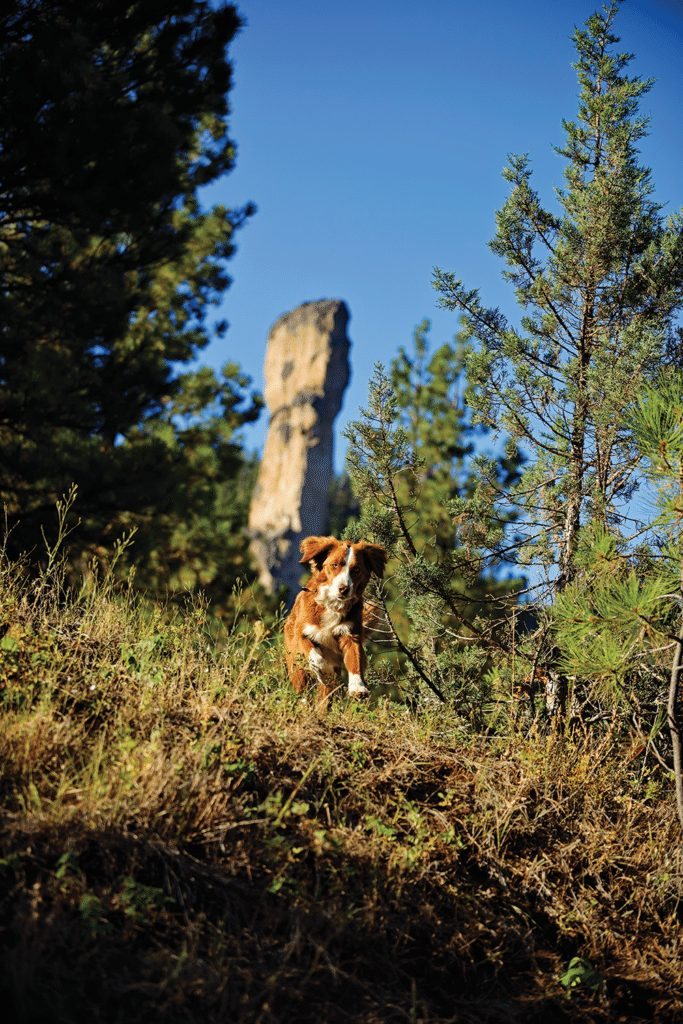


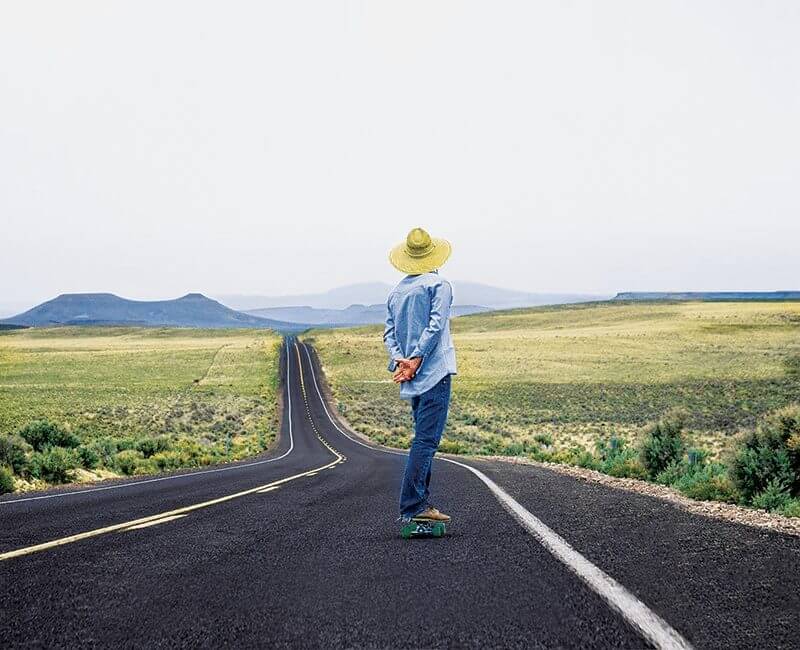





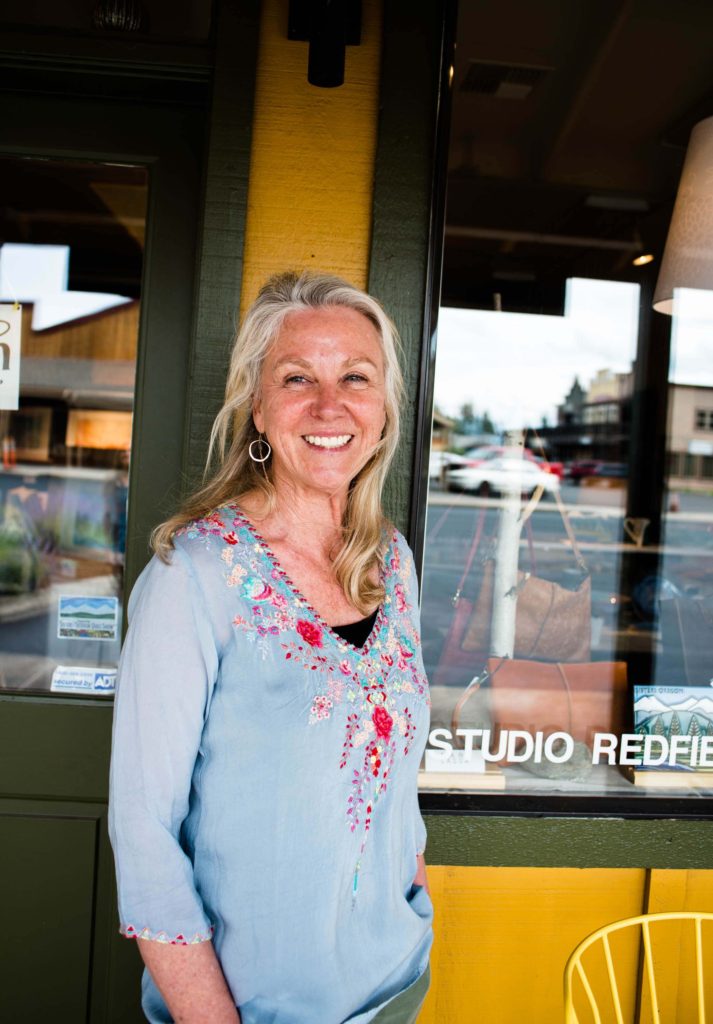






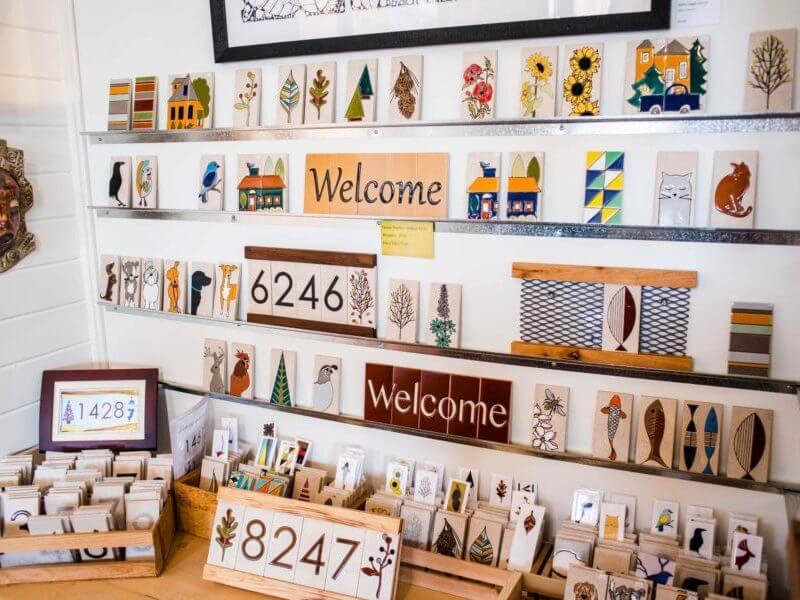



 Wild & Scenic Crooked River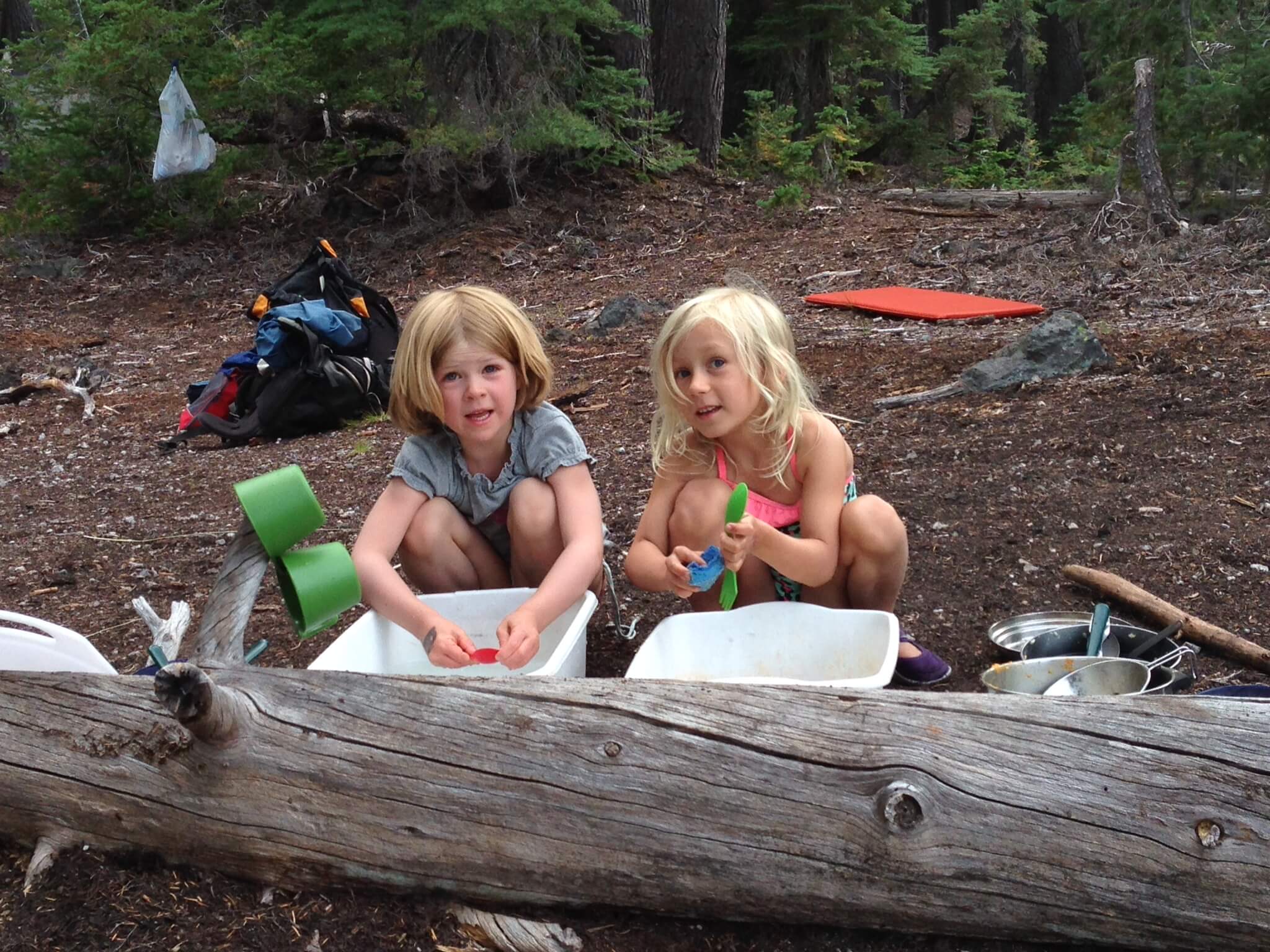
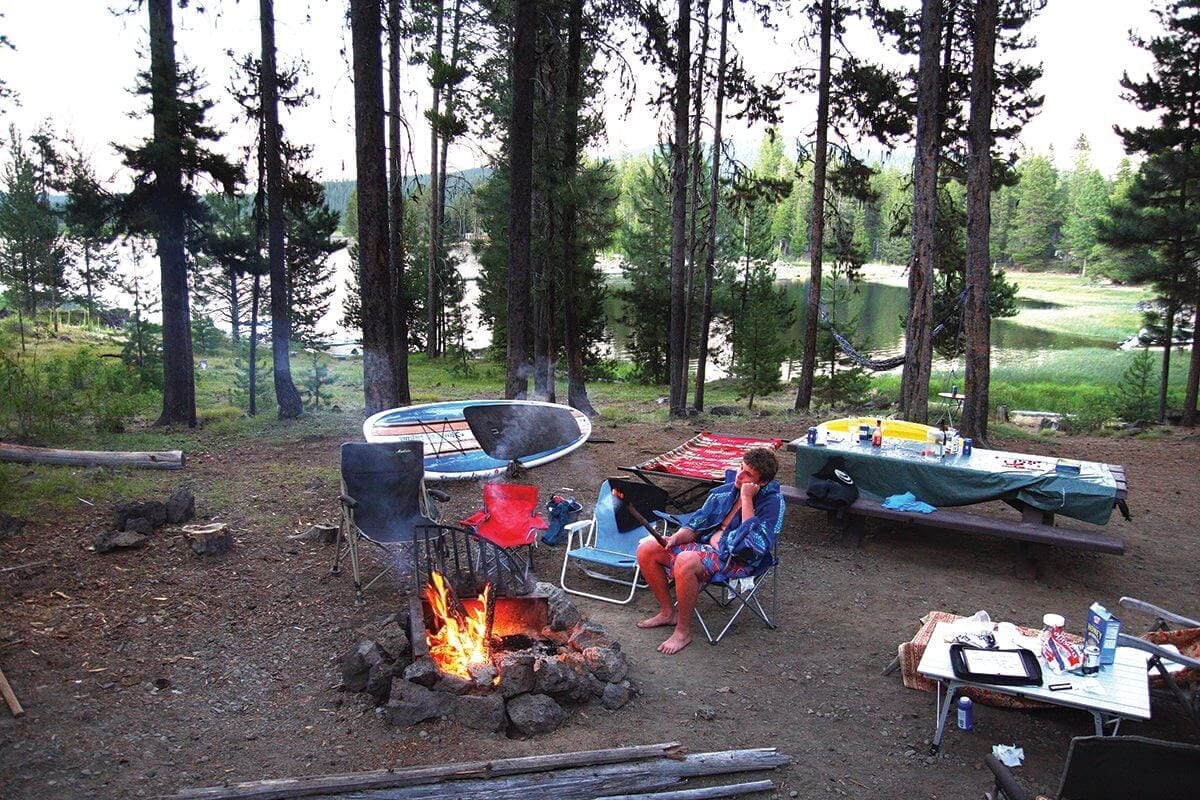
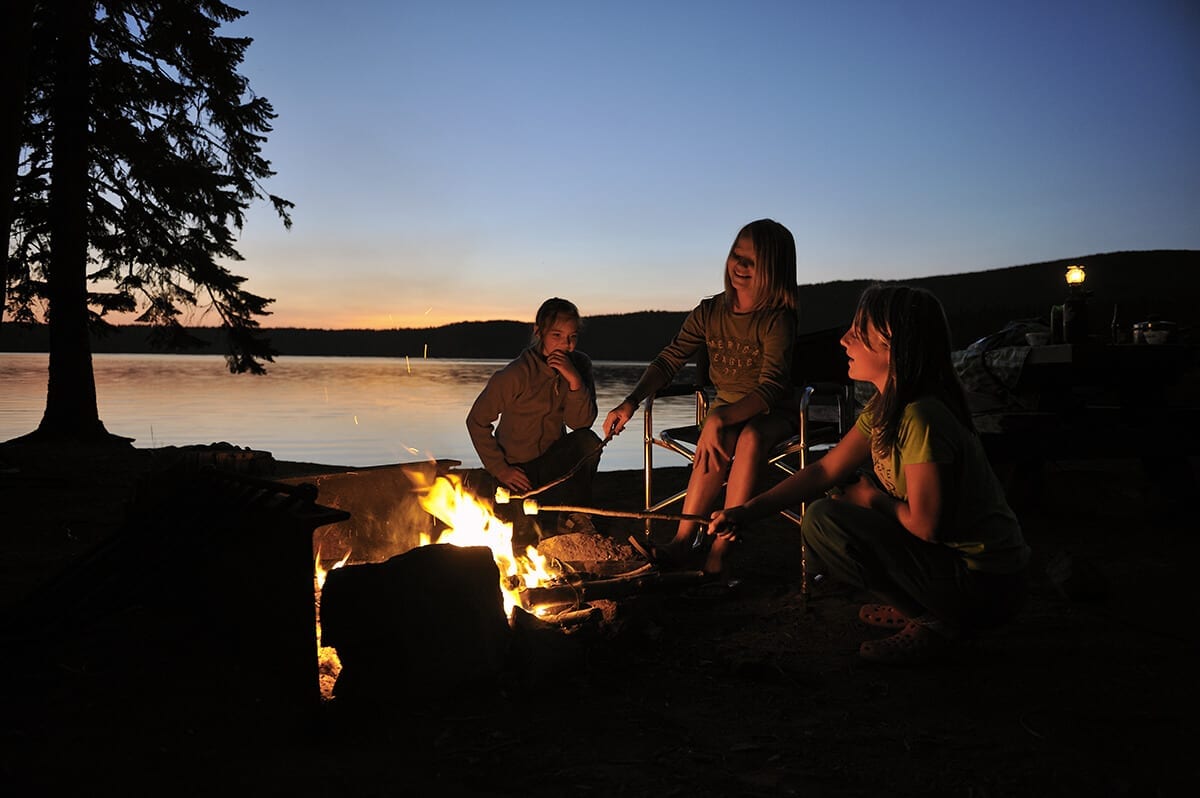
 Combine the fickle weather of the Northwest with the predictable unpredictability of mountain climates and you have a recipe for snow in July and frost on the ground before October. This can make for, well, challenging conditions to enjoy the great outdoors. Add in a few kids and overworked parents, and you’ve got a recipe for a camping disaster. It’s probably no wonder that so many families have embraced a refined approach with the addition of travel trailers and, in some cases, motorhomes. But let’s get this out of the way: No one wants to saddle up next to a rig with a generator running outside their tent door or wake up with a forty-foot coach parked in what was previously a view of the evening sunset. That being so, there’s a time and place for trailers and motorhomes. Those who thumb their noses should try sleeping in a tent with a crying infant or spending a weekend huddled against an October winter storm with only a vinyl wall for insulation. Trust us. There’s a better way.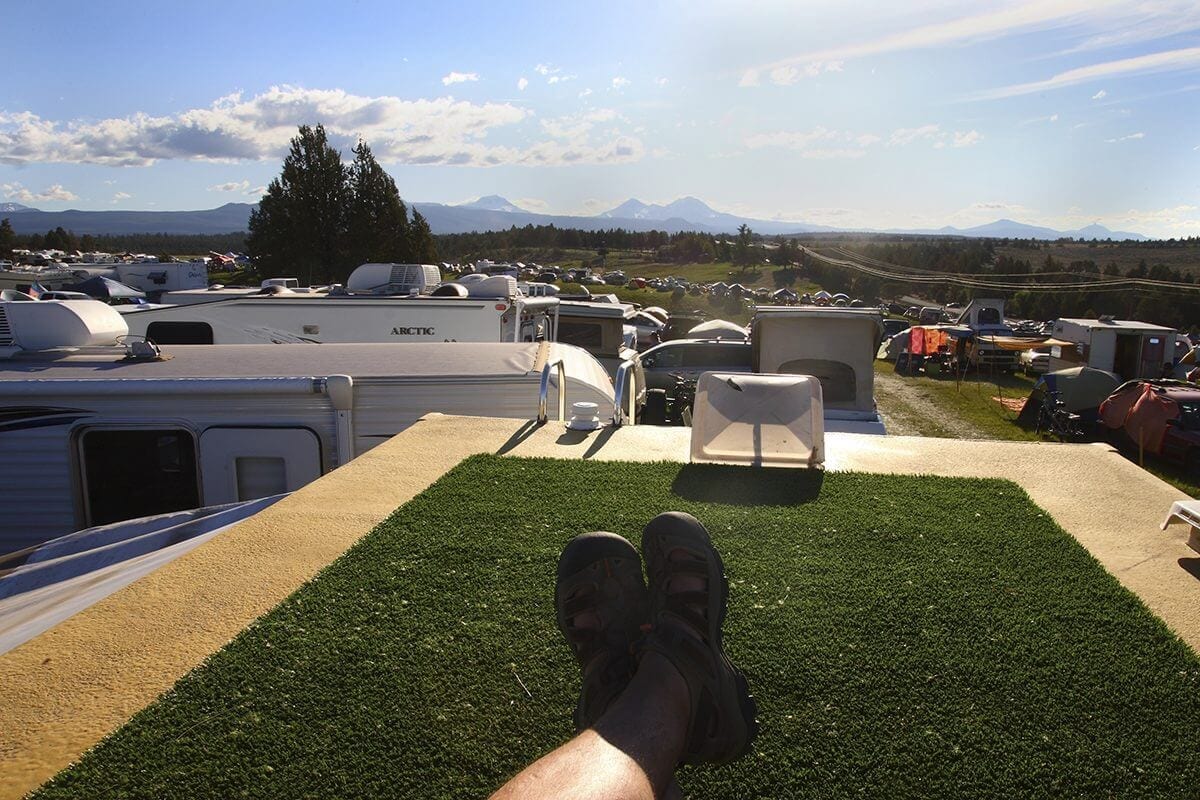
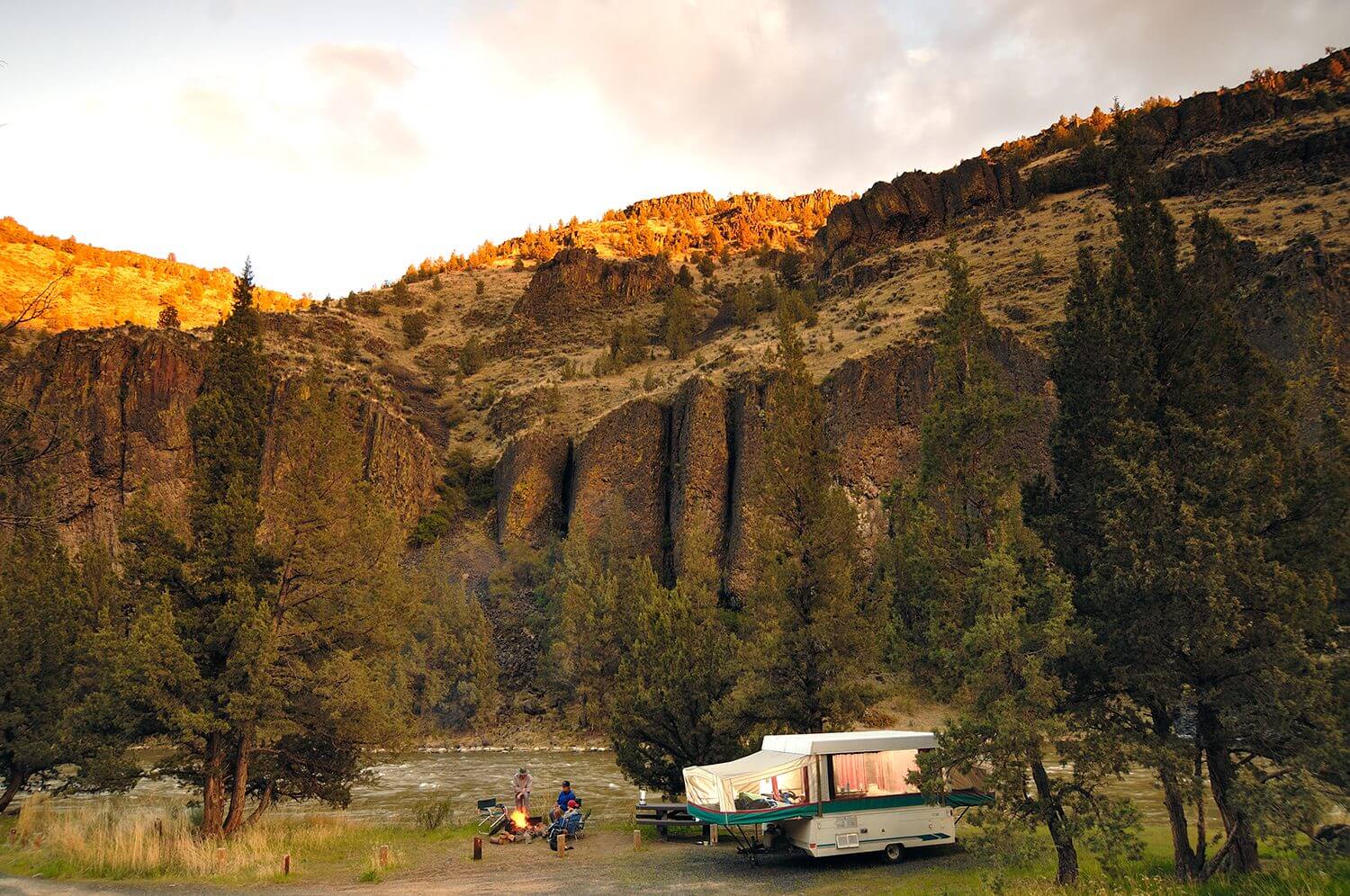
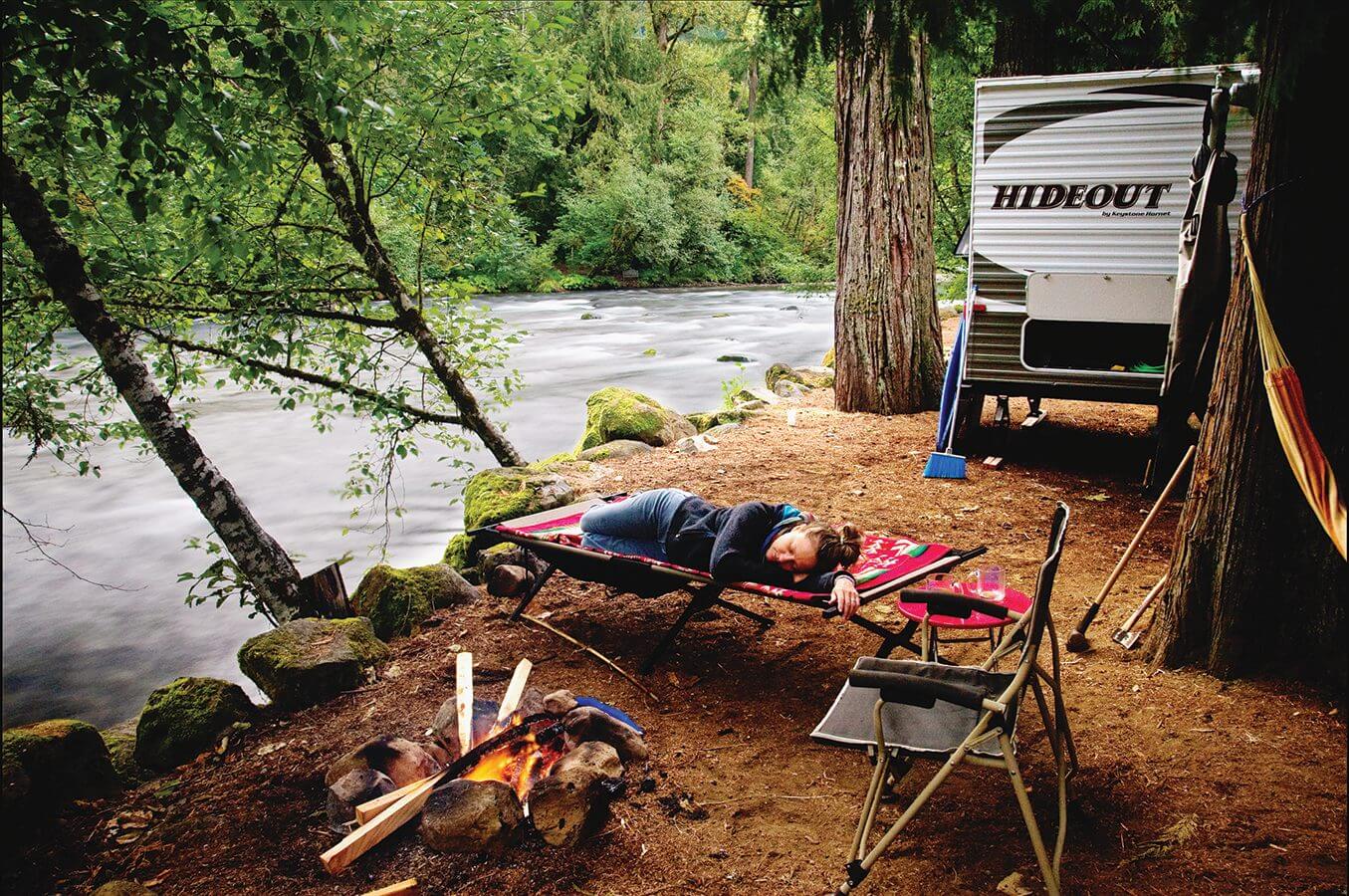
 We may not have the peaks of Yosemite or the grizzlies of Glacier, but Central Oregon is a perfect launching point for countless backcountry camping adventures. From subalpine lakes ringing the Three Sisters to the novelty of paddle-in camping at Sparks Lake, there is a backcountry itinerary for anyone who has a passion for exploration. Here is a short list of overnight backcountry trips that offer a taste of what the region offers.
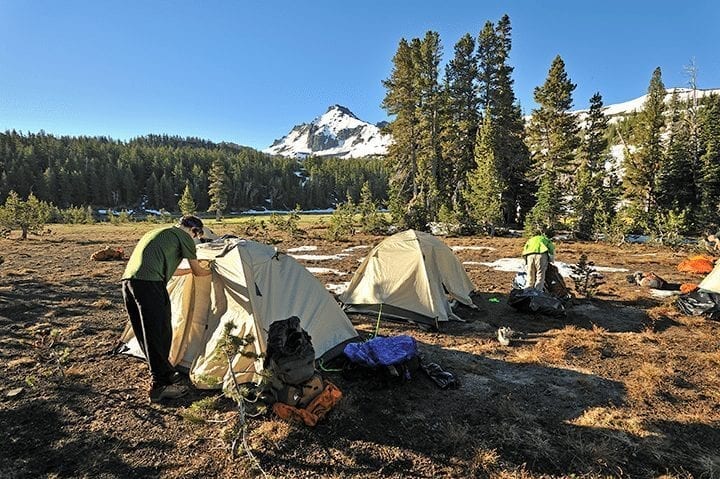
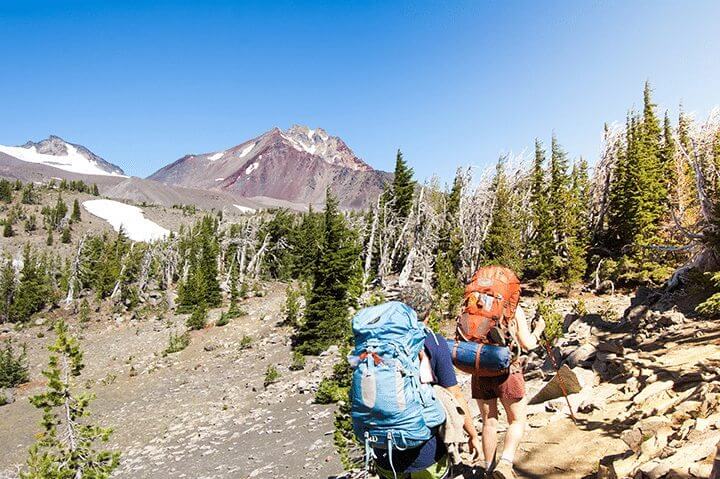

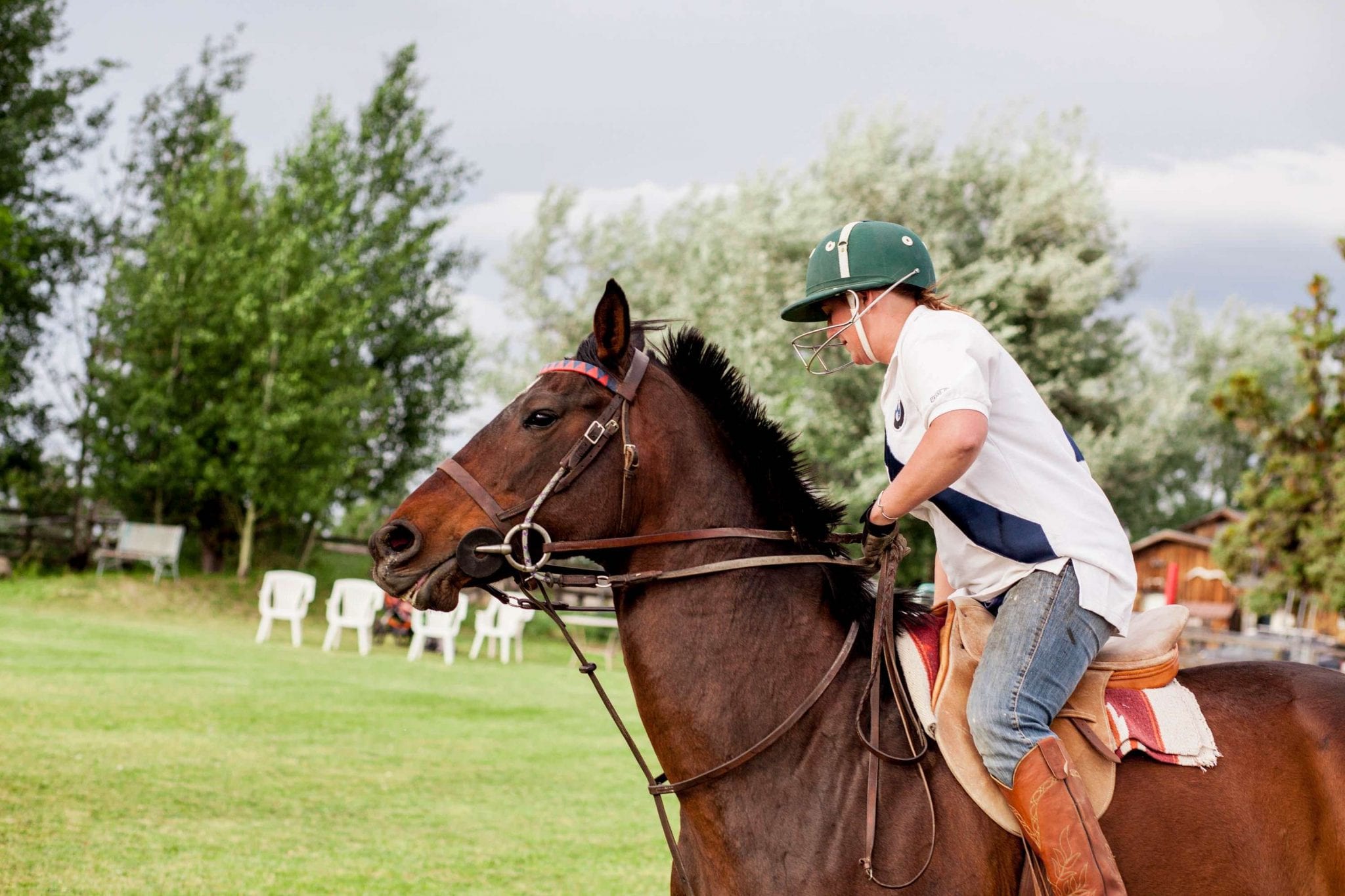

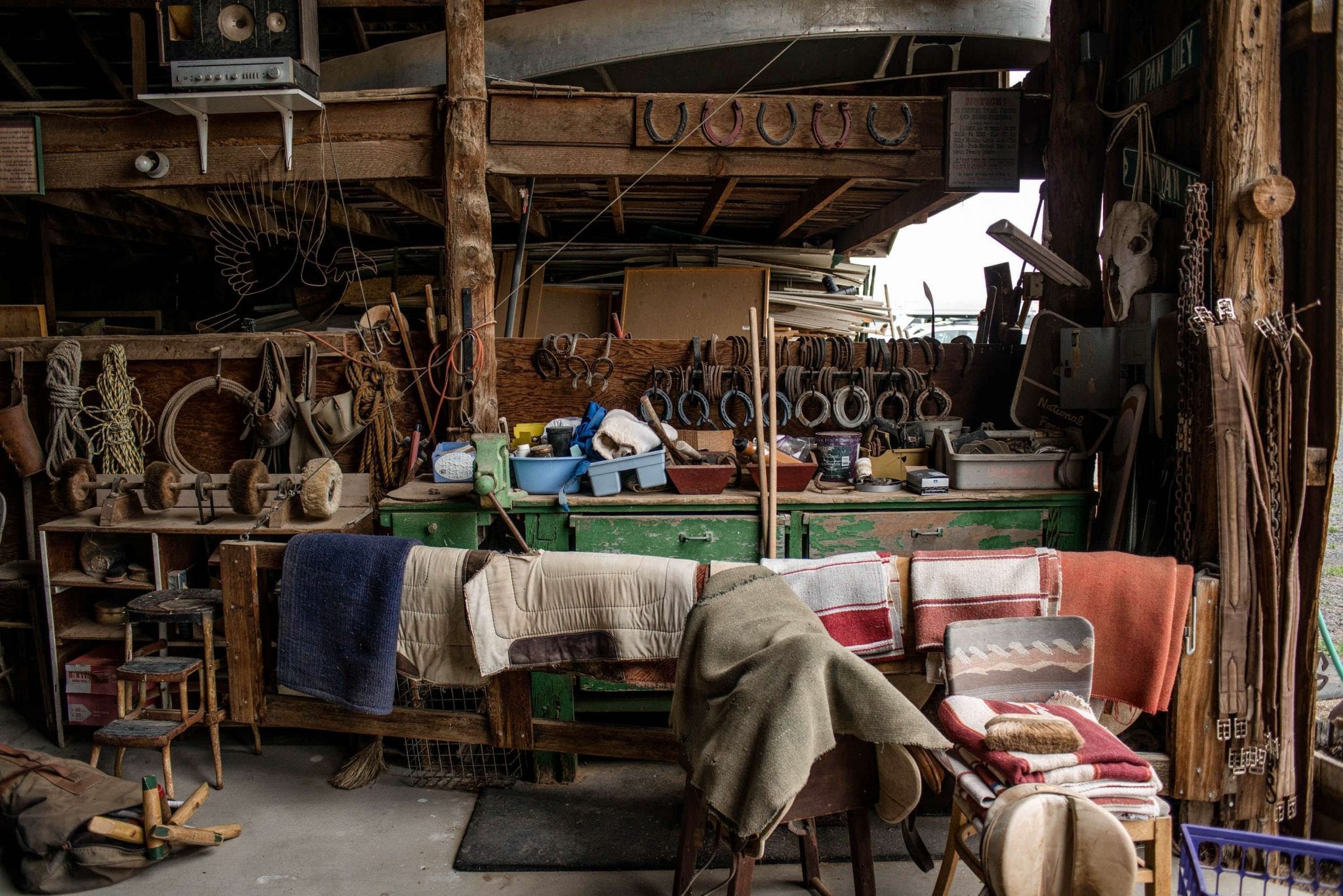
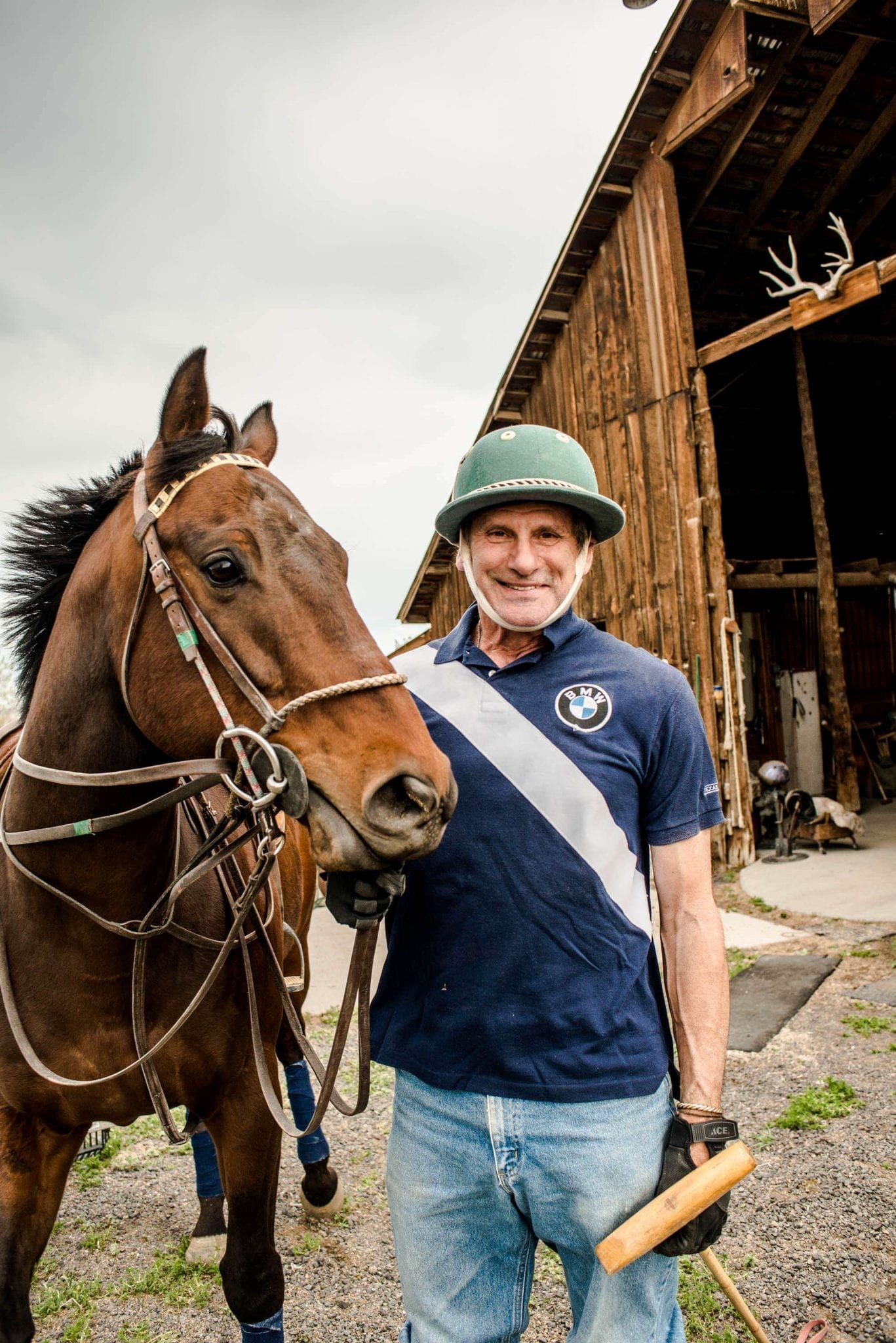


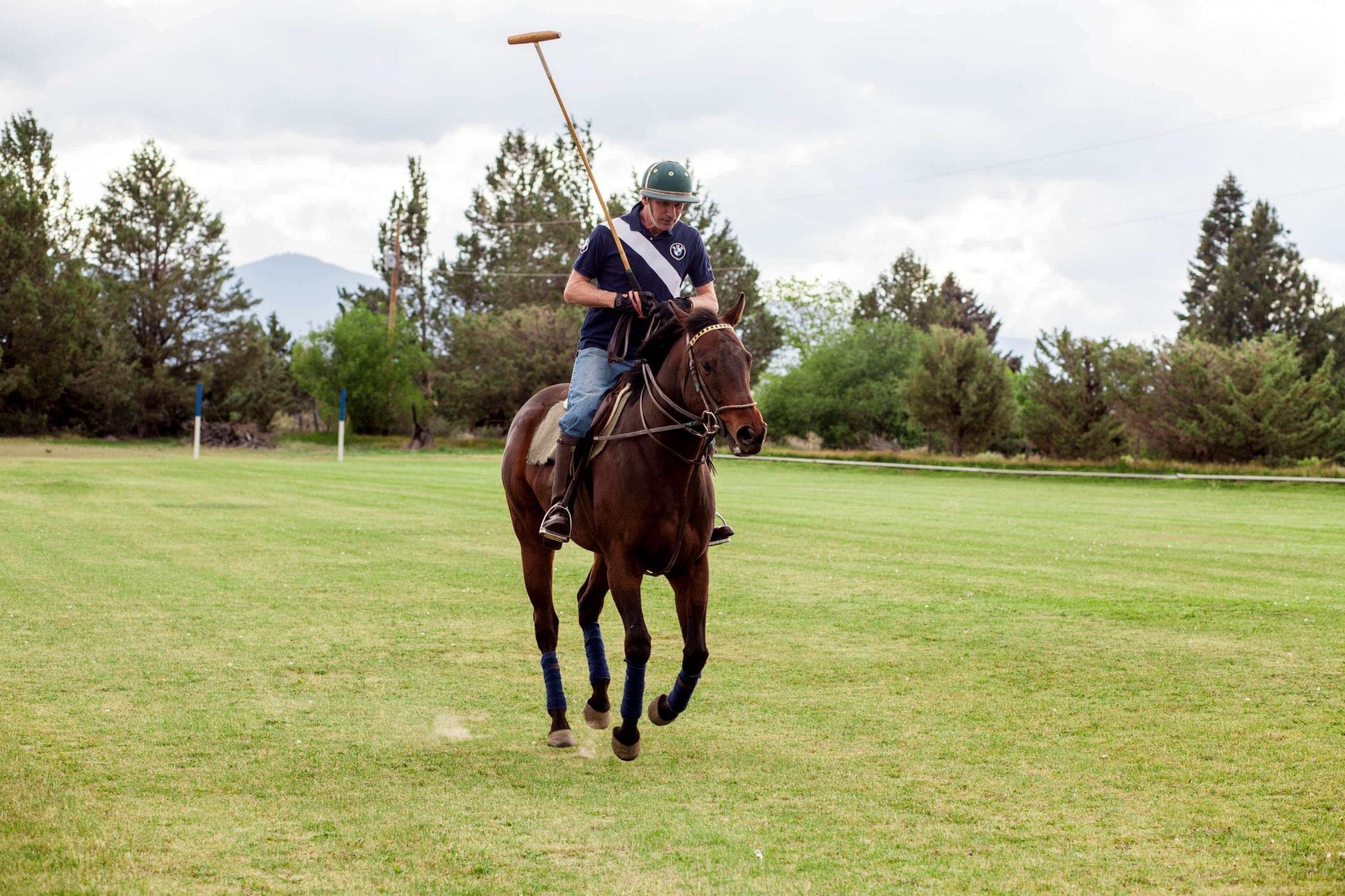
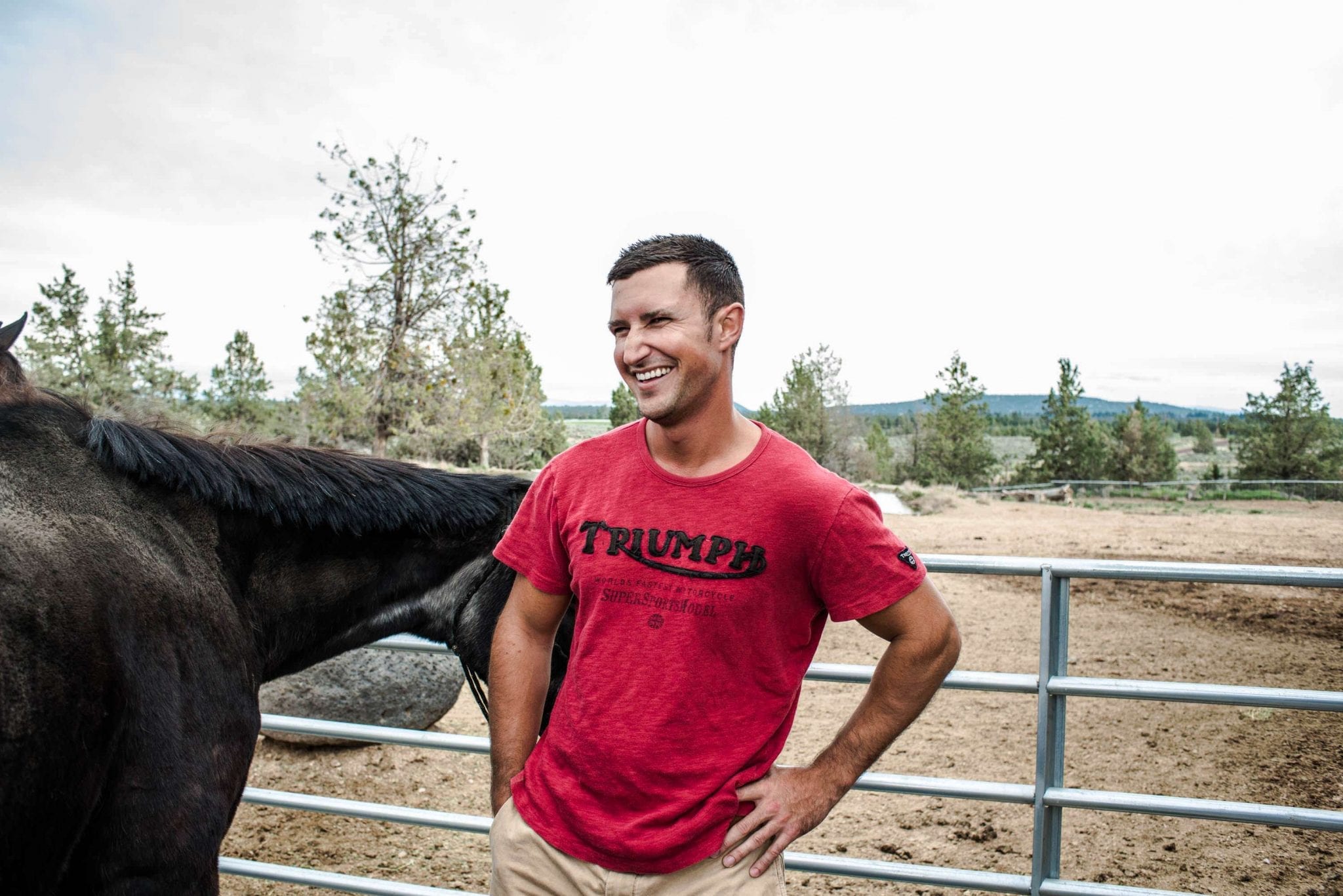


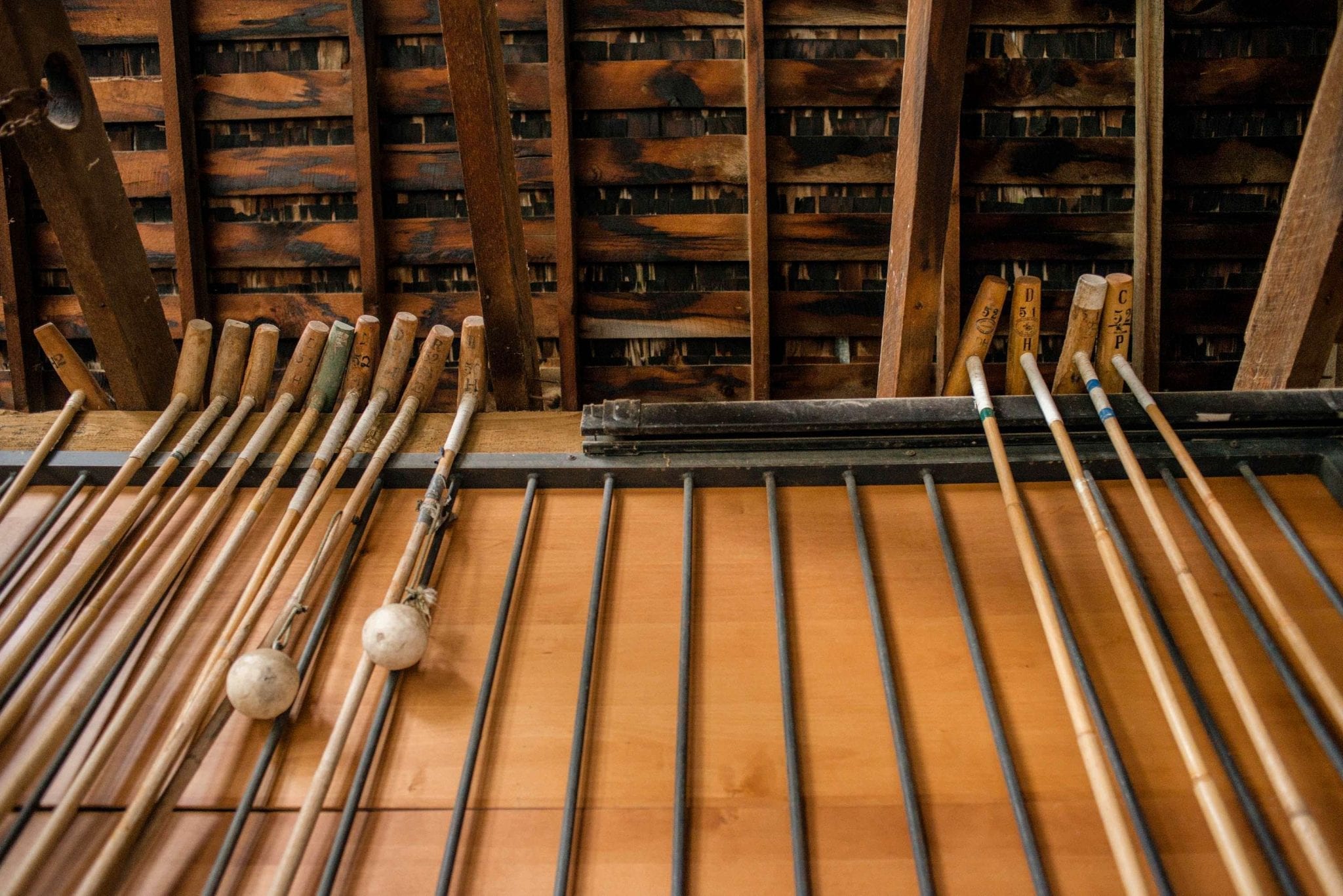

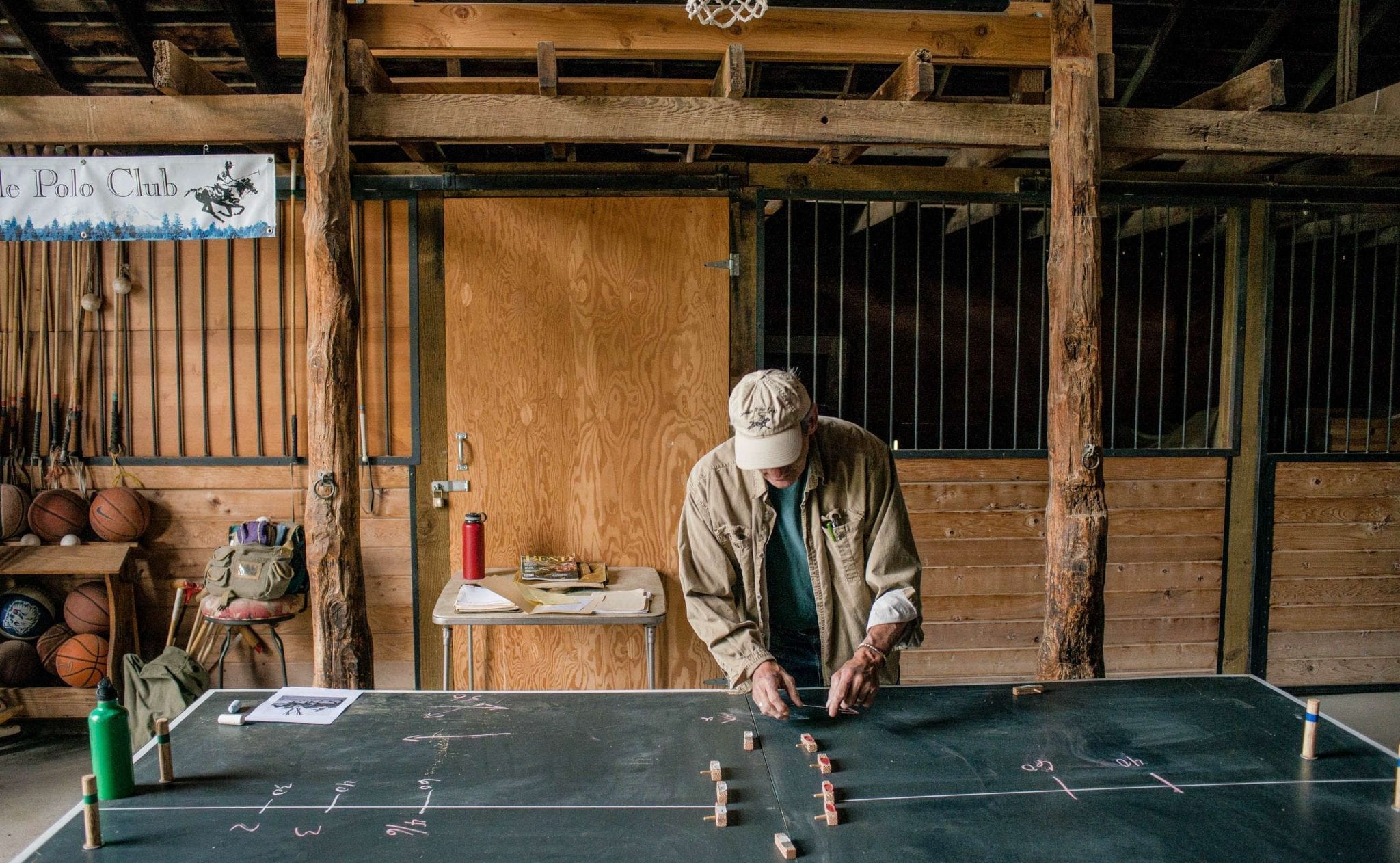
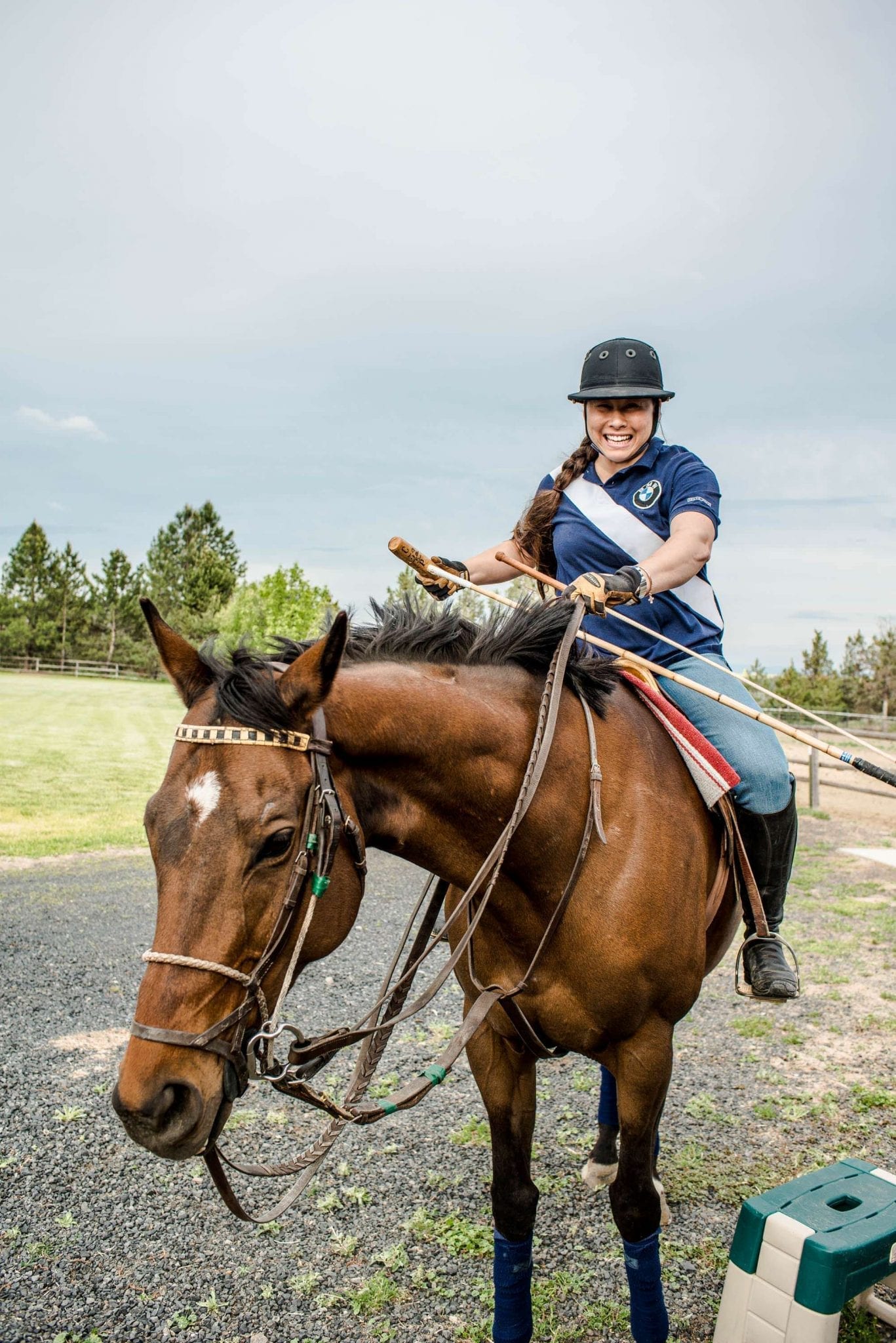

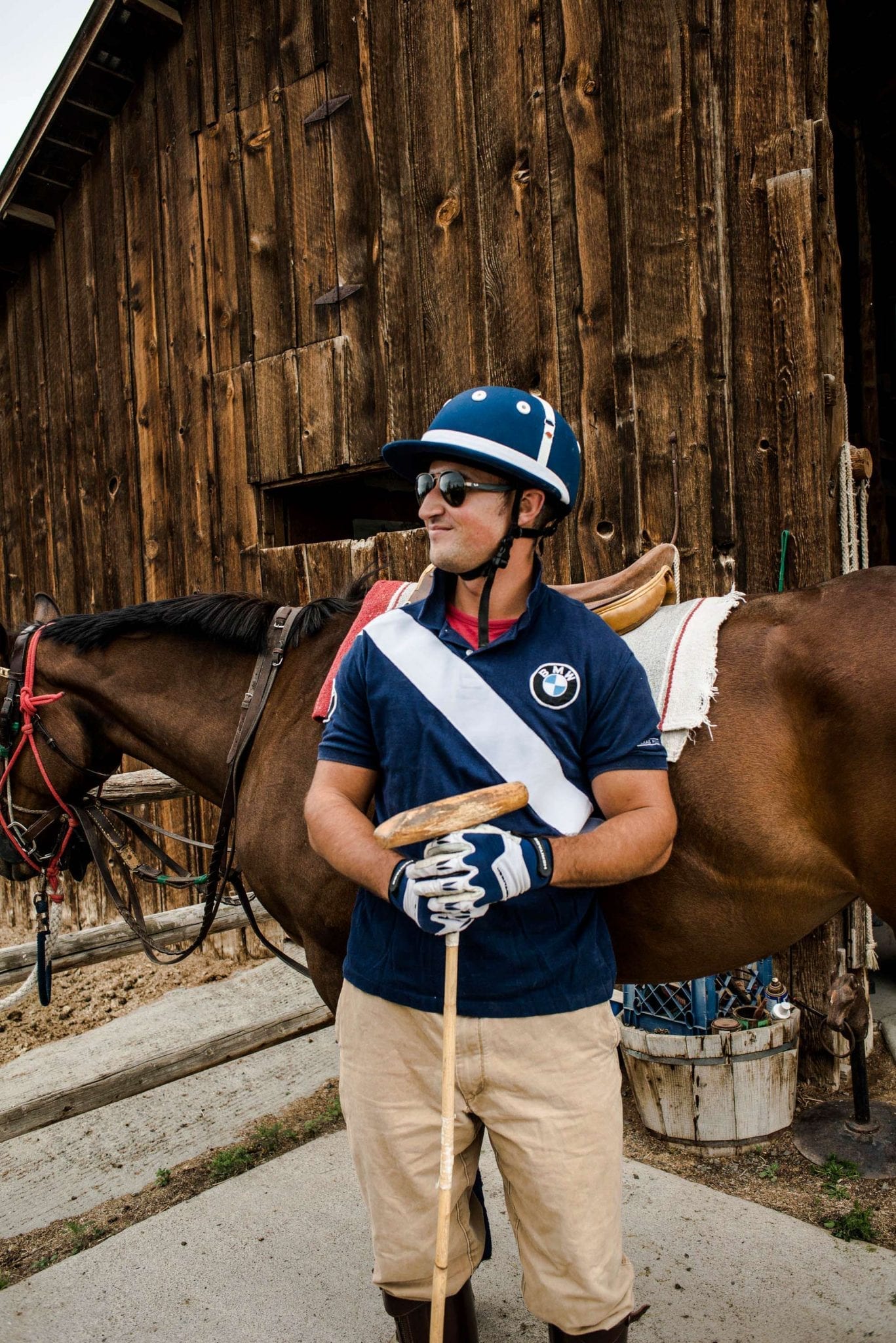
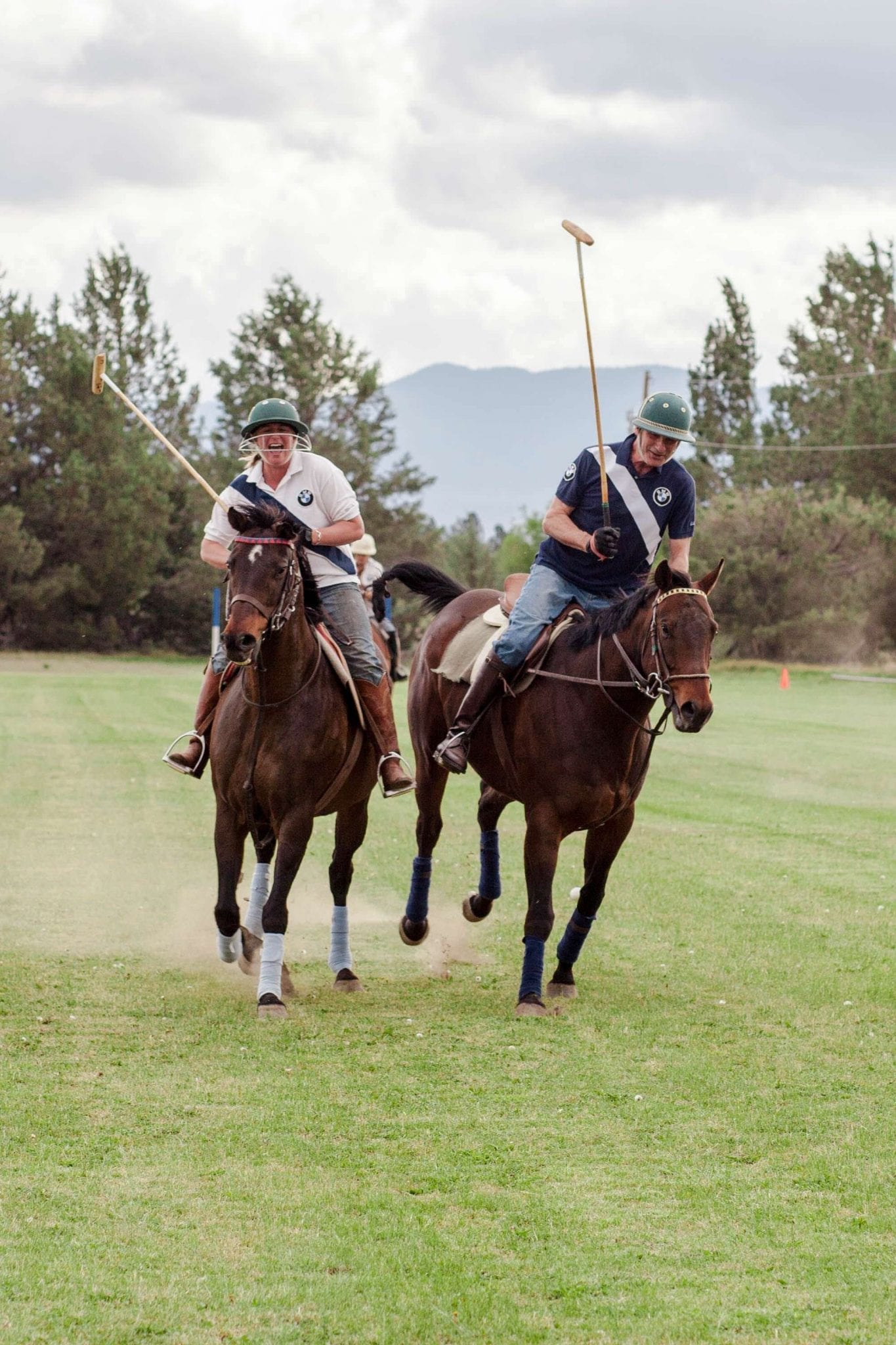


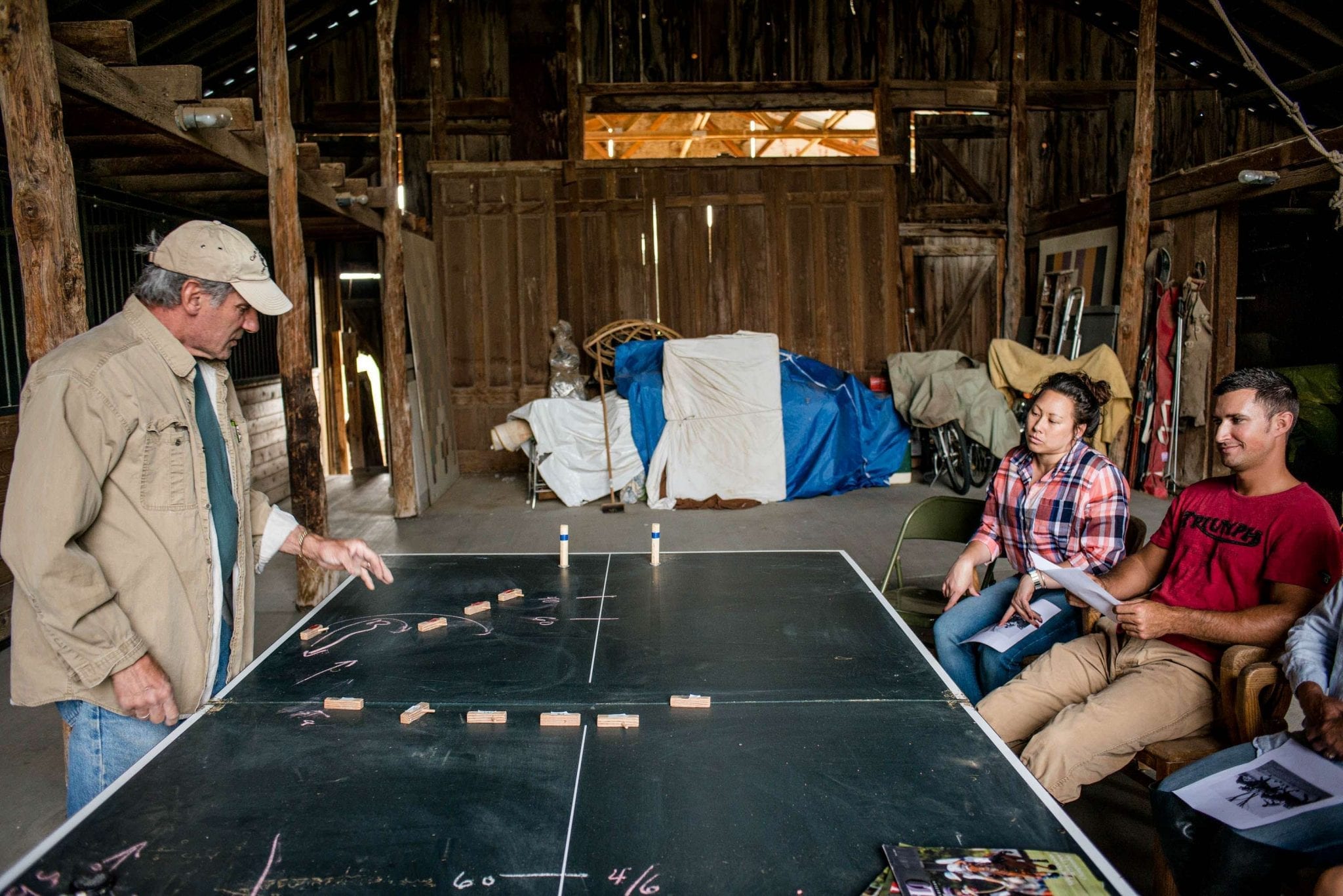
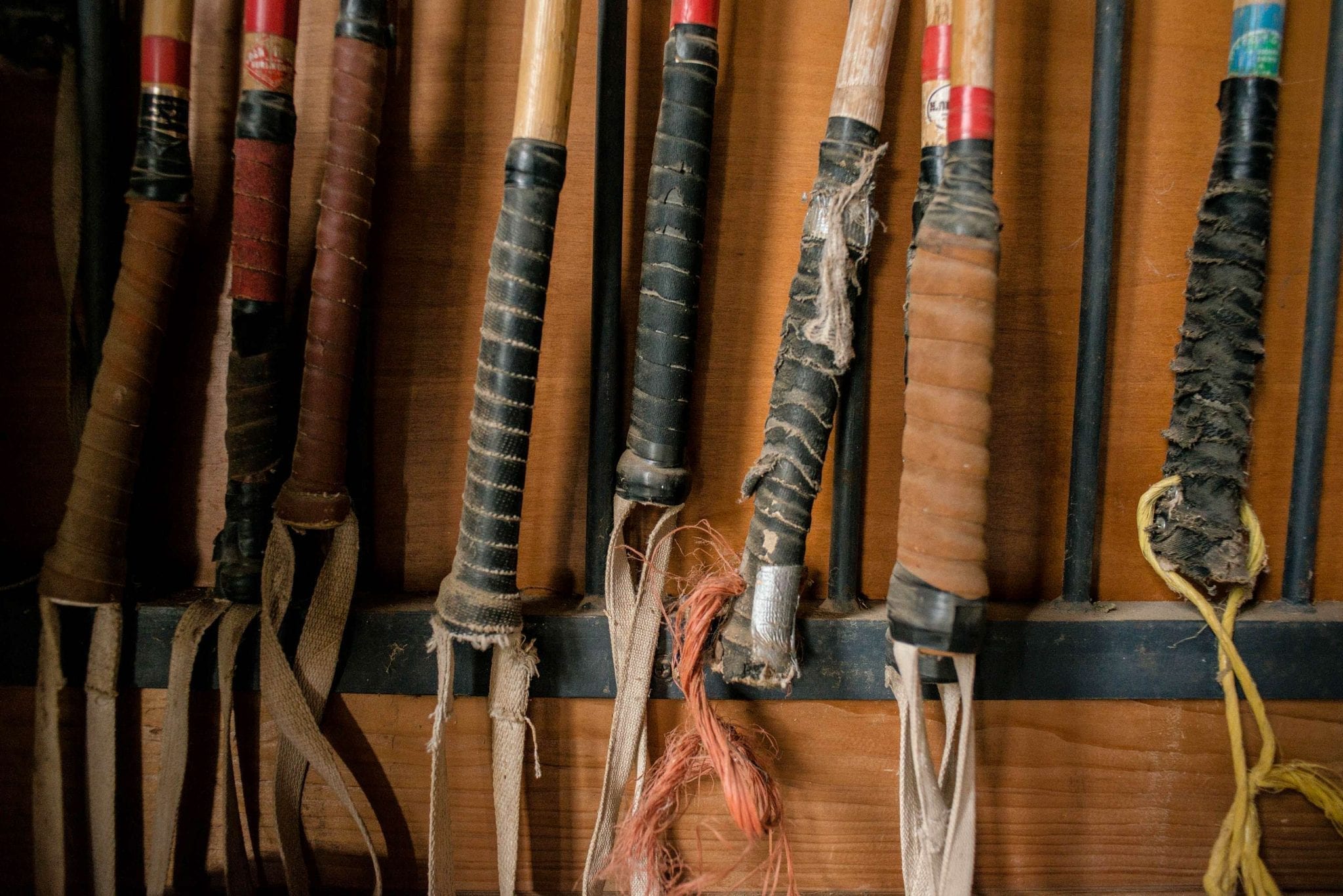


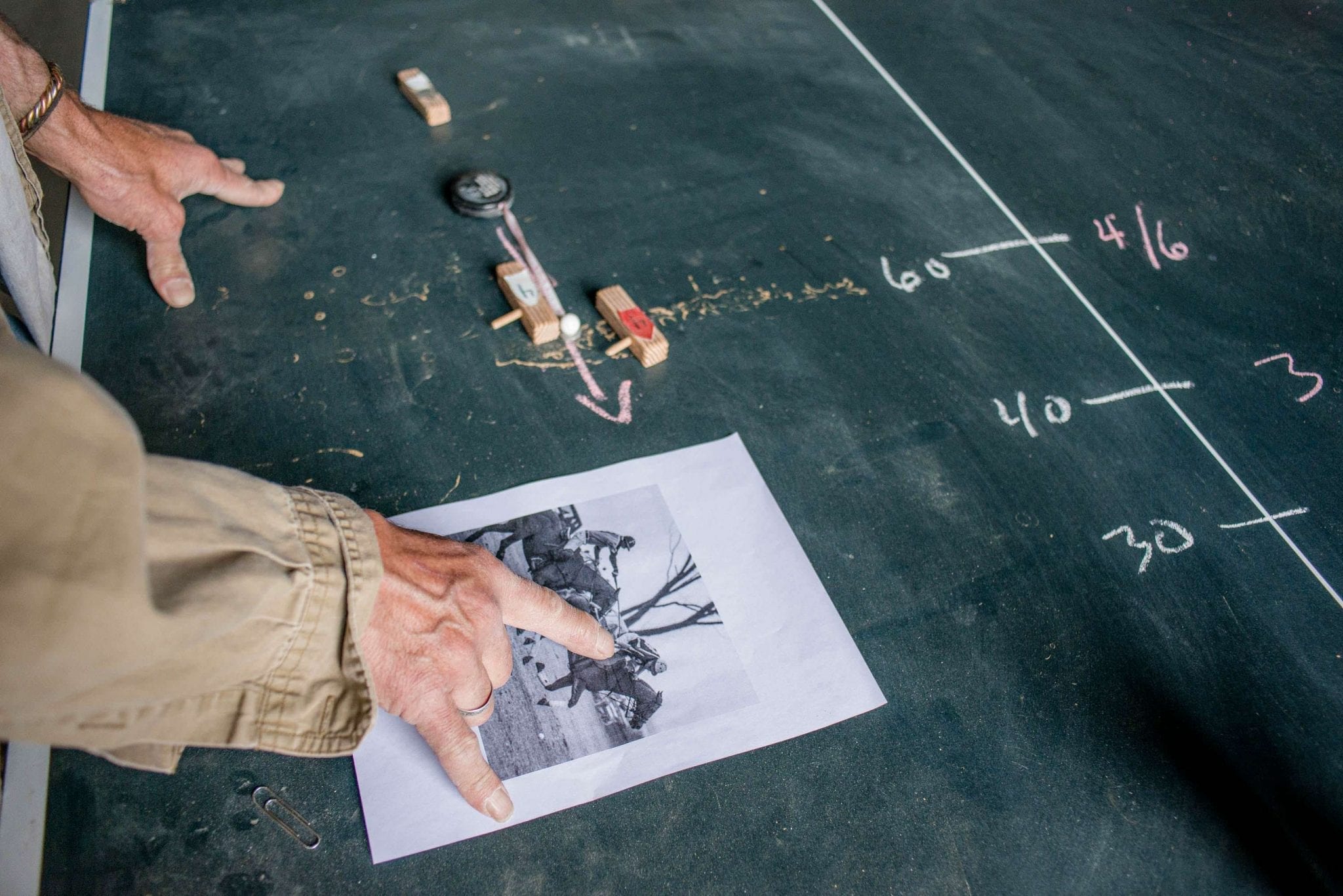



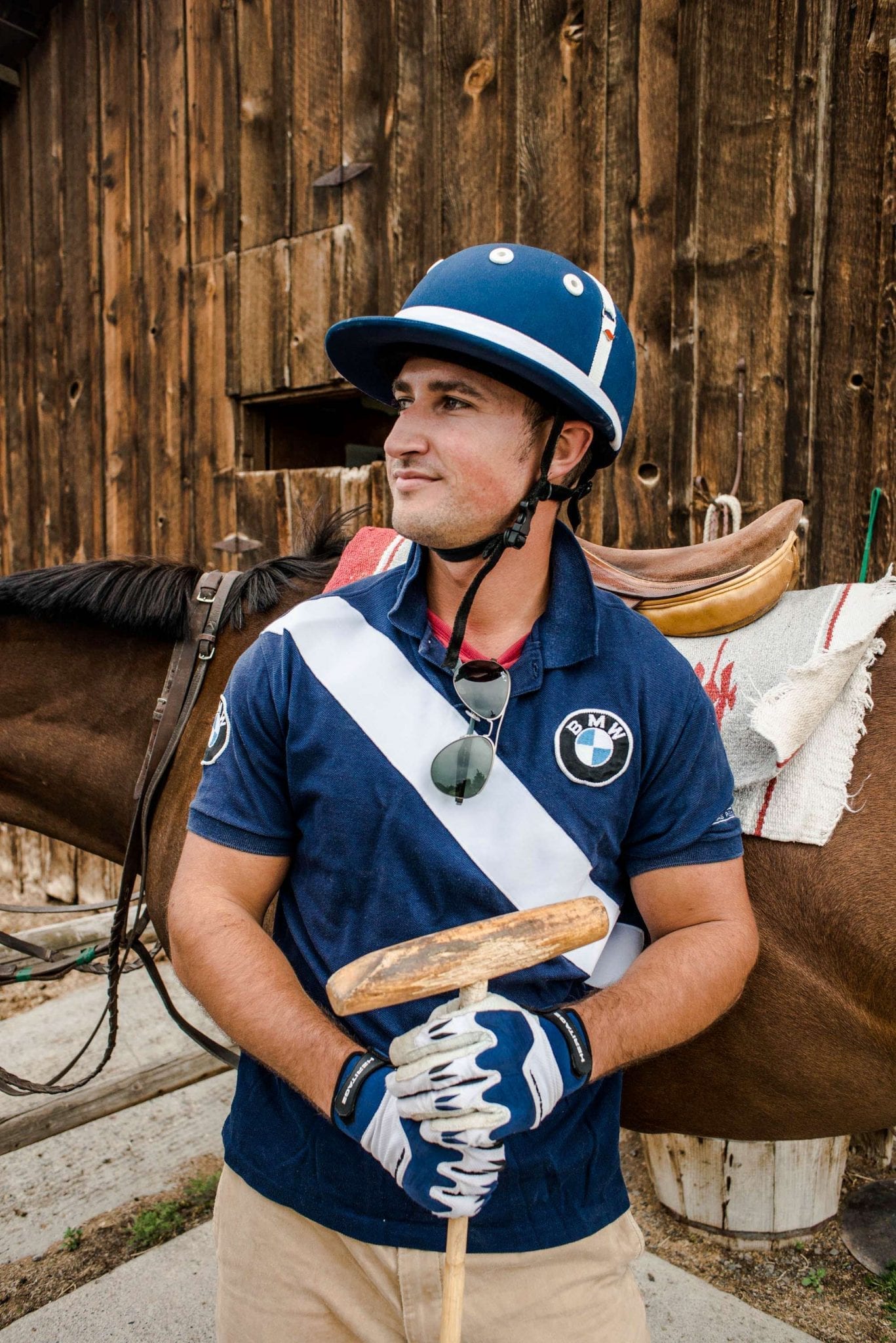
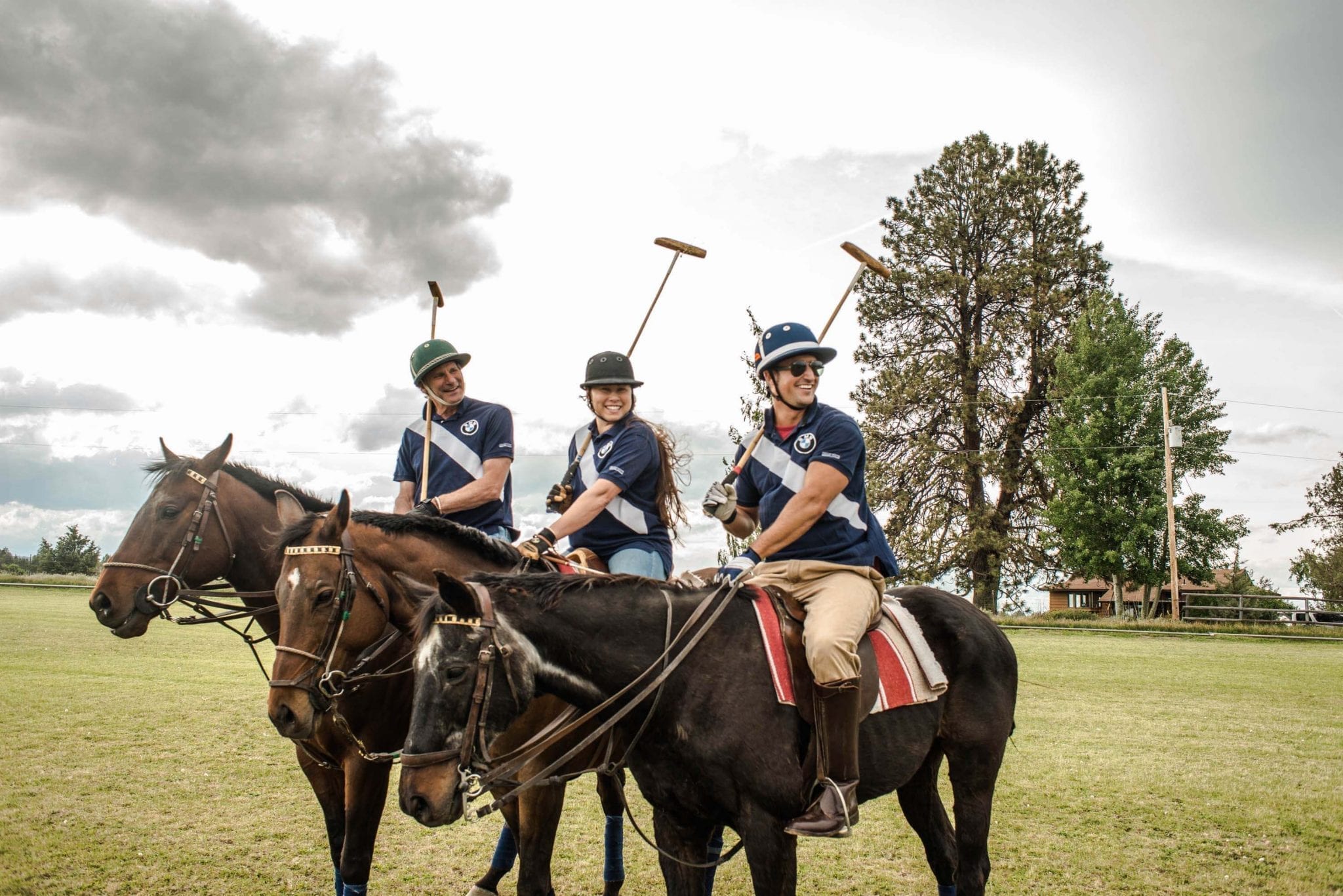

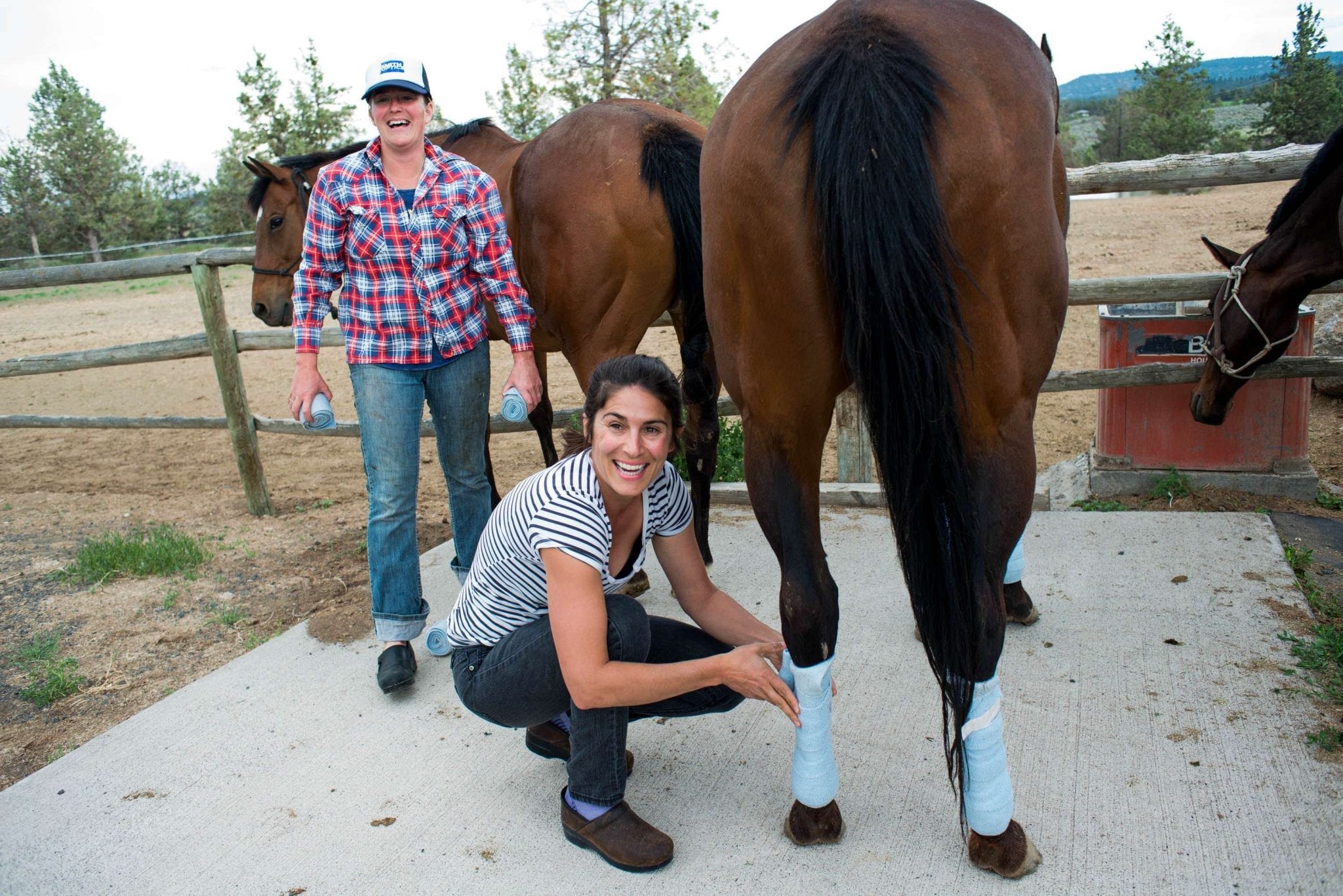

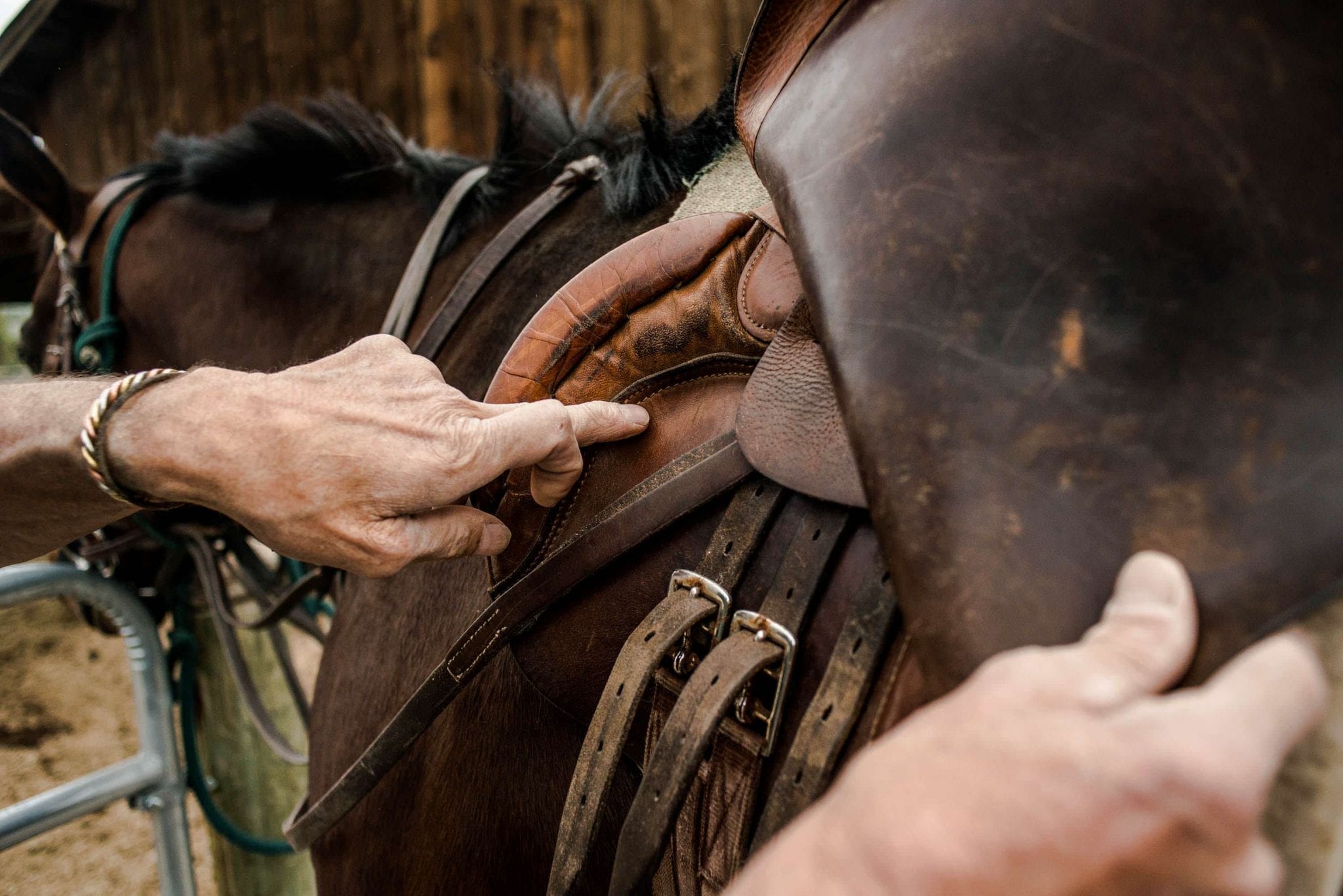
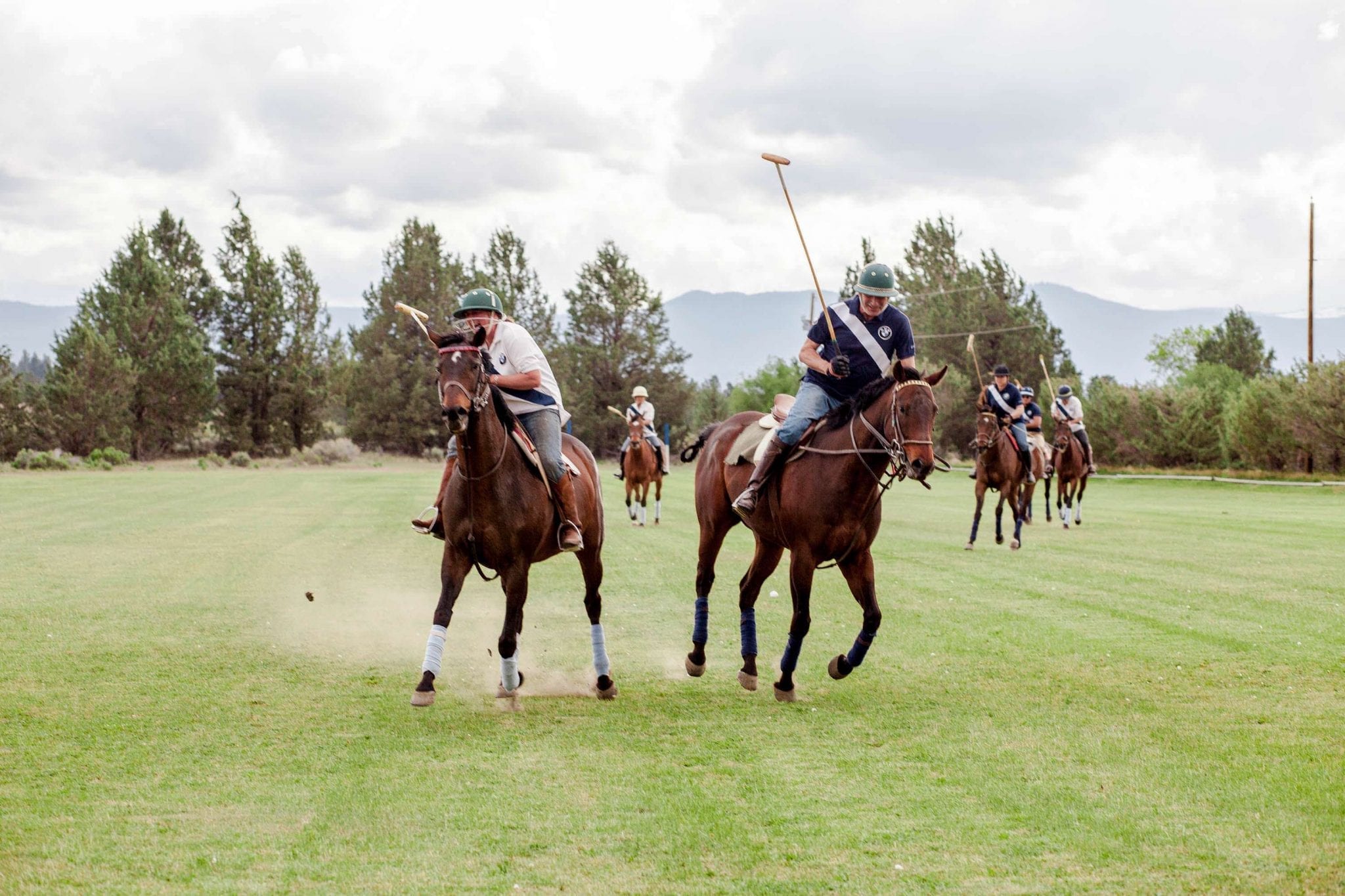
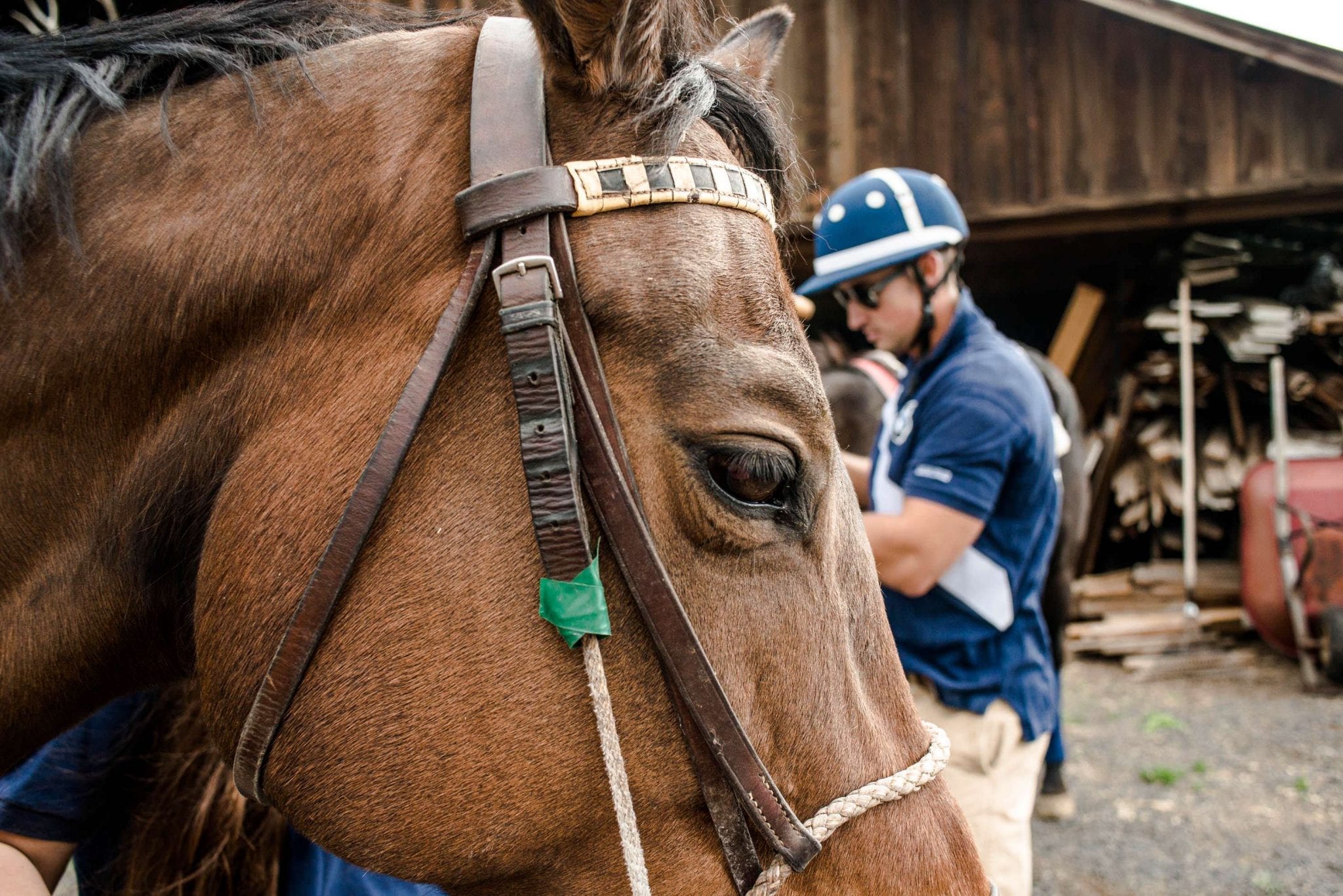

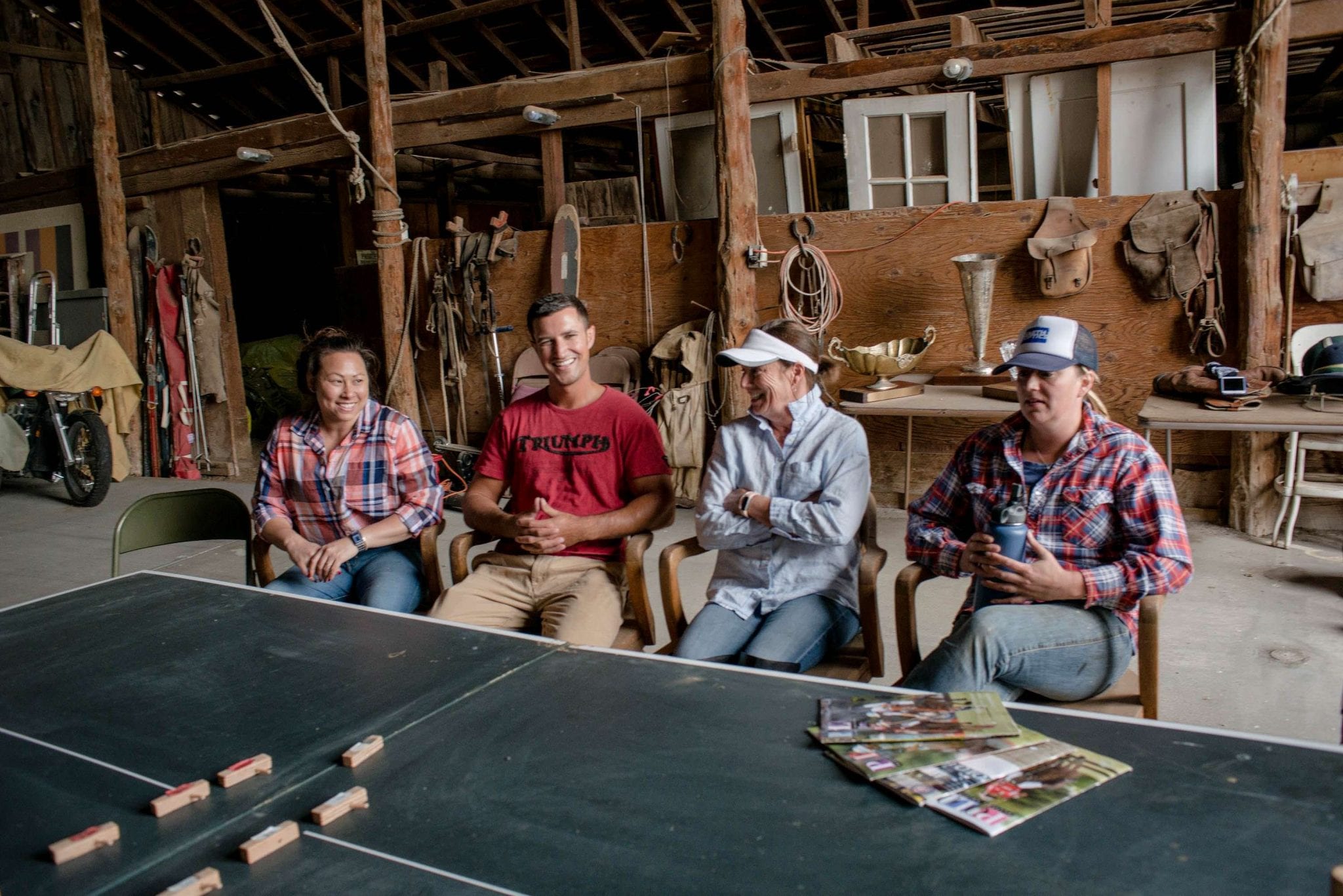


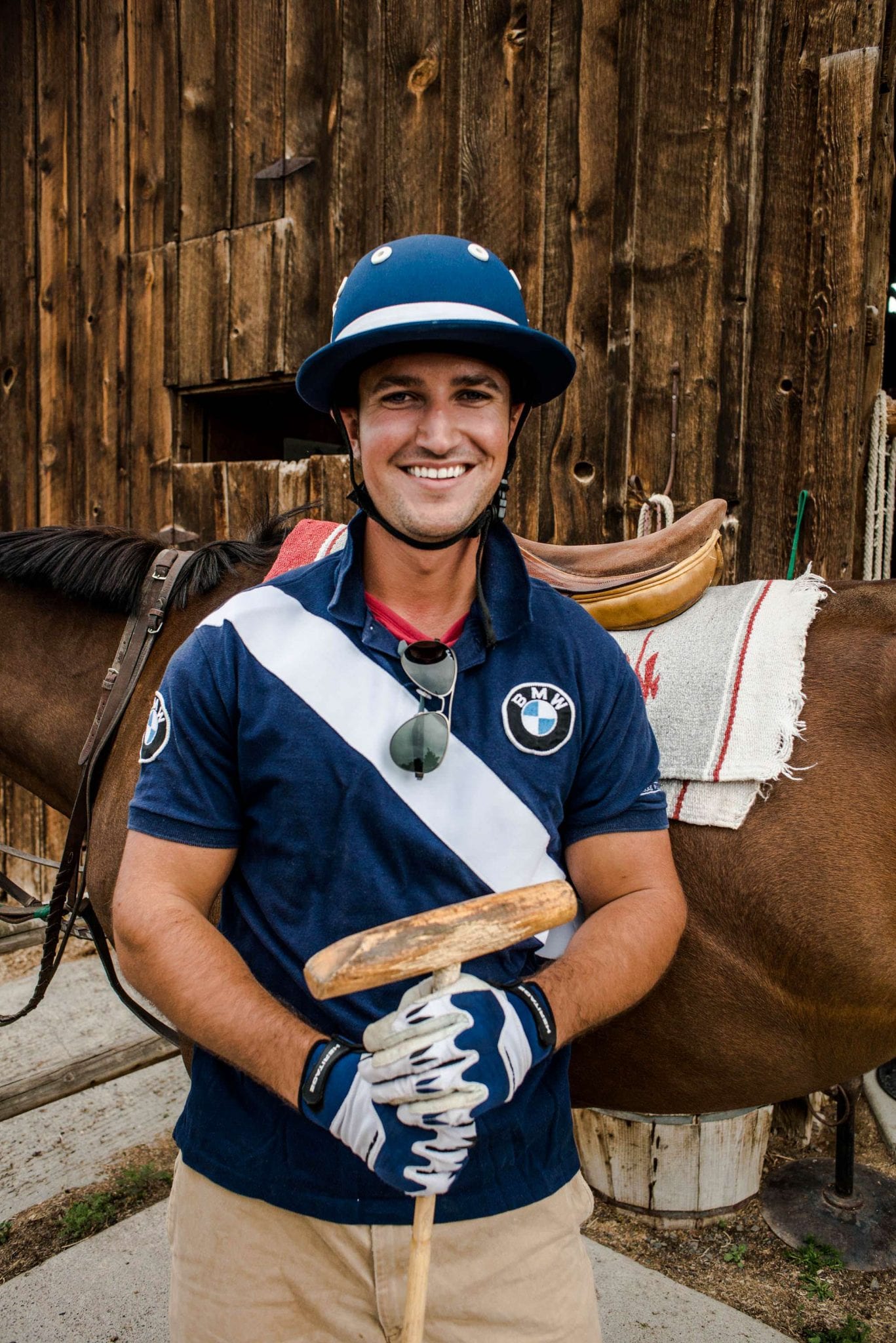




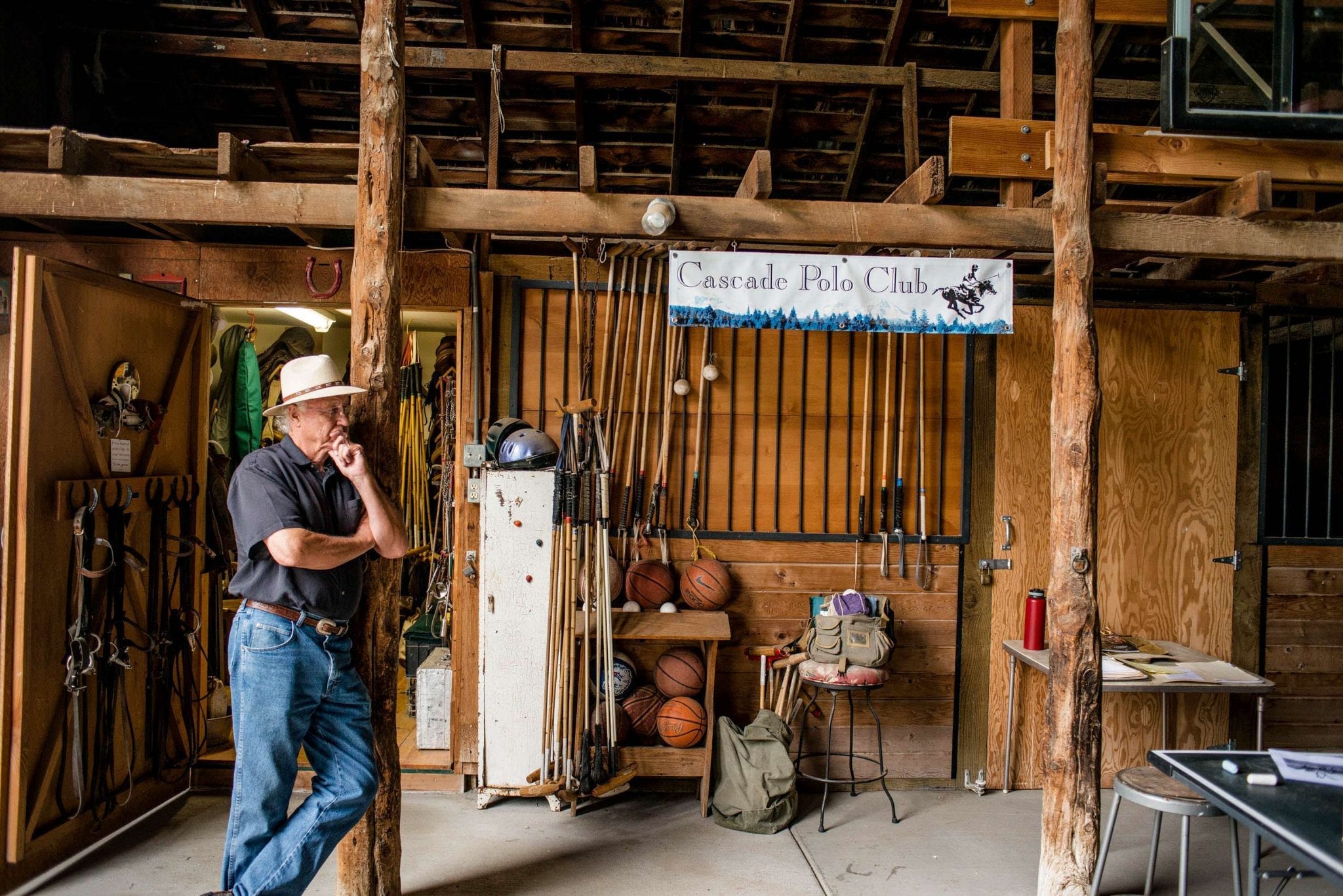
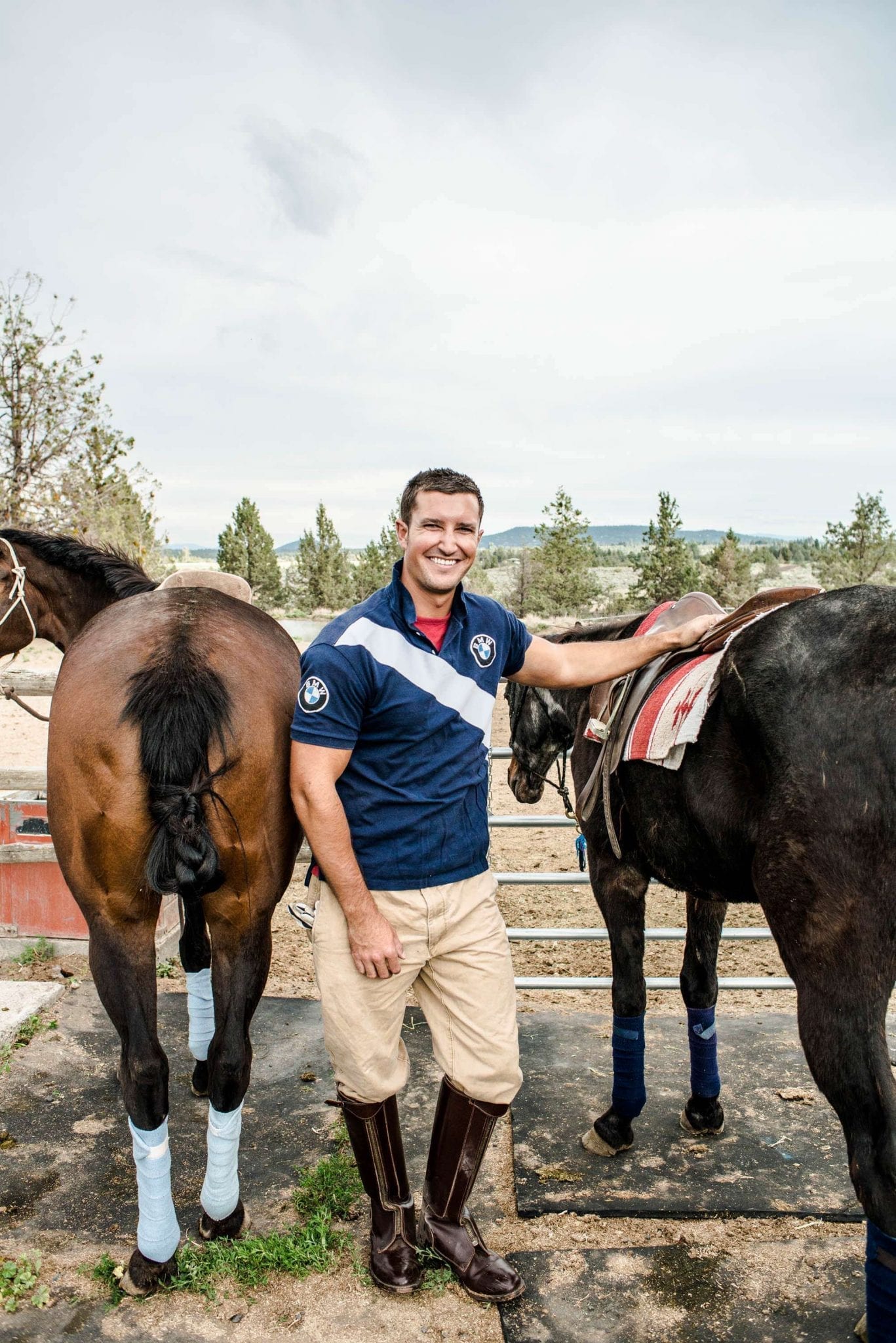

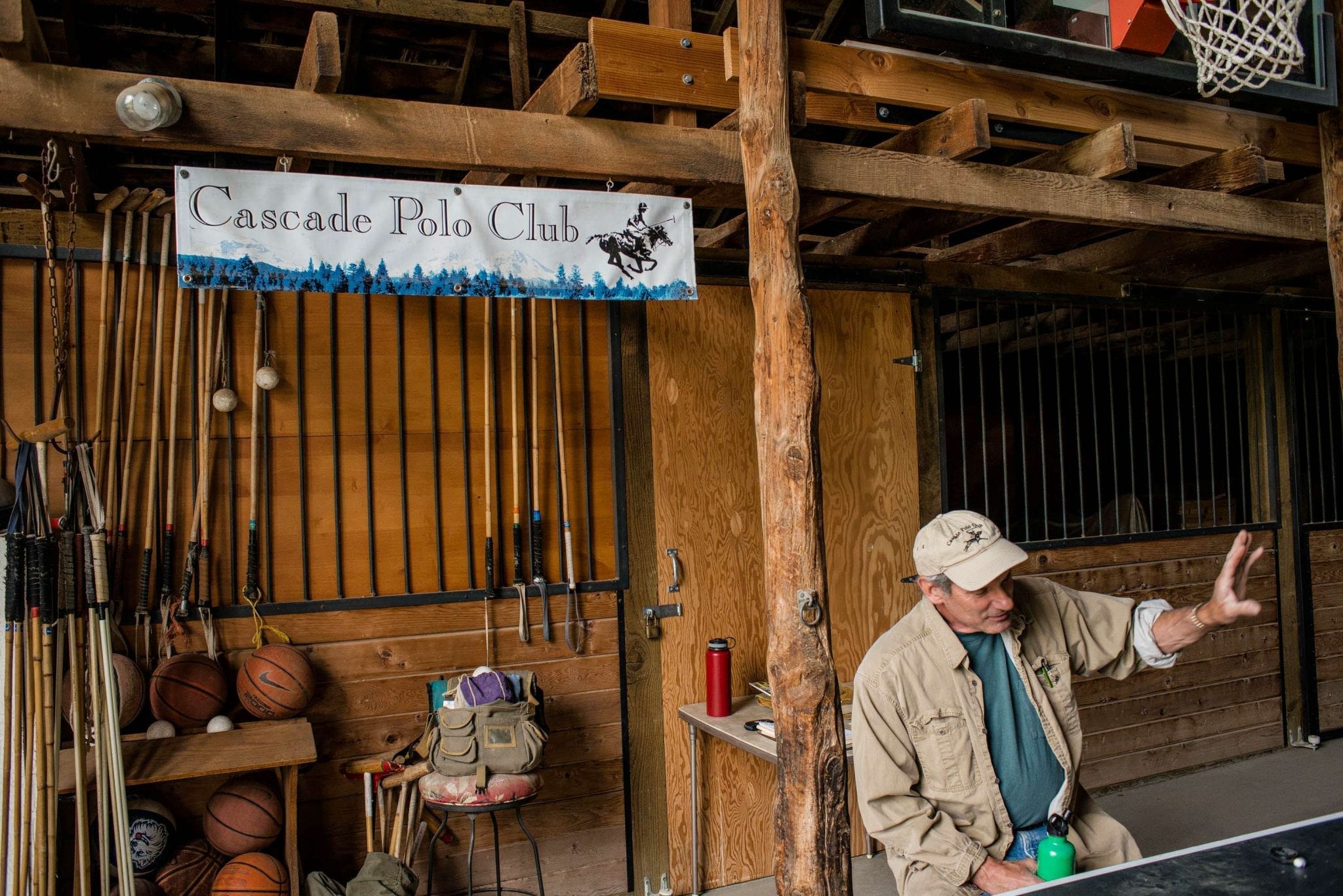

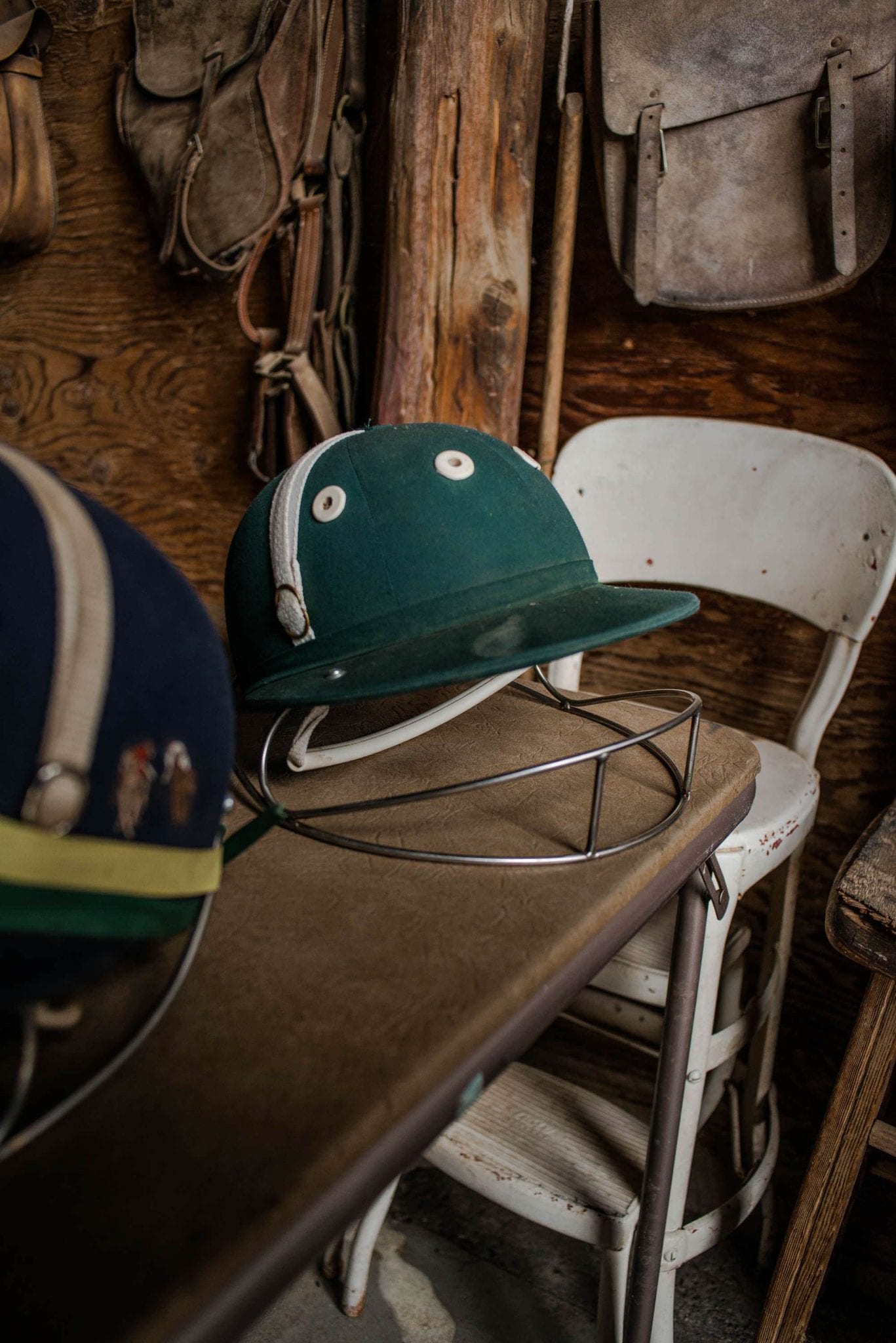

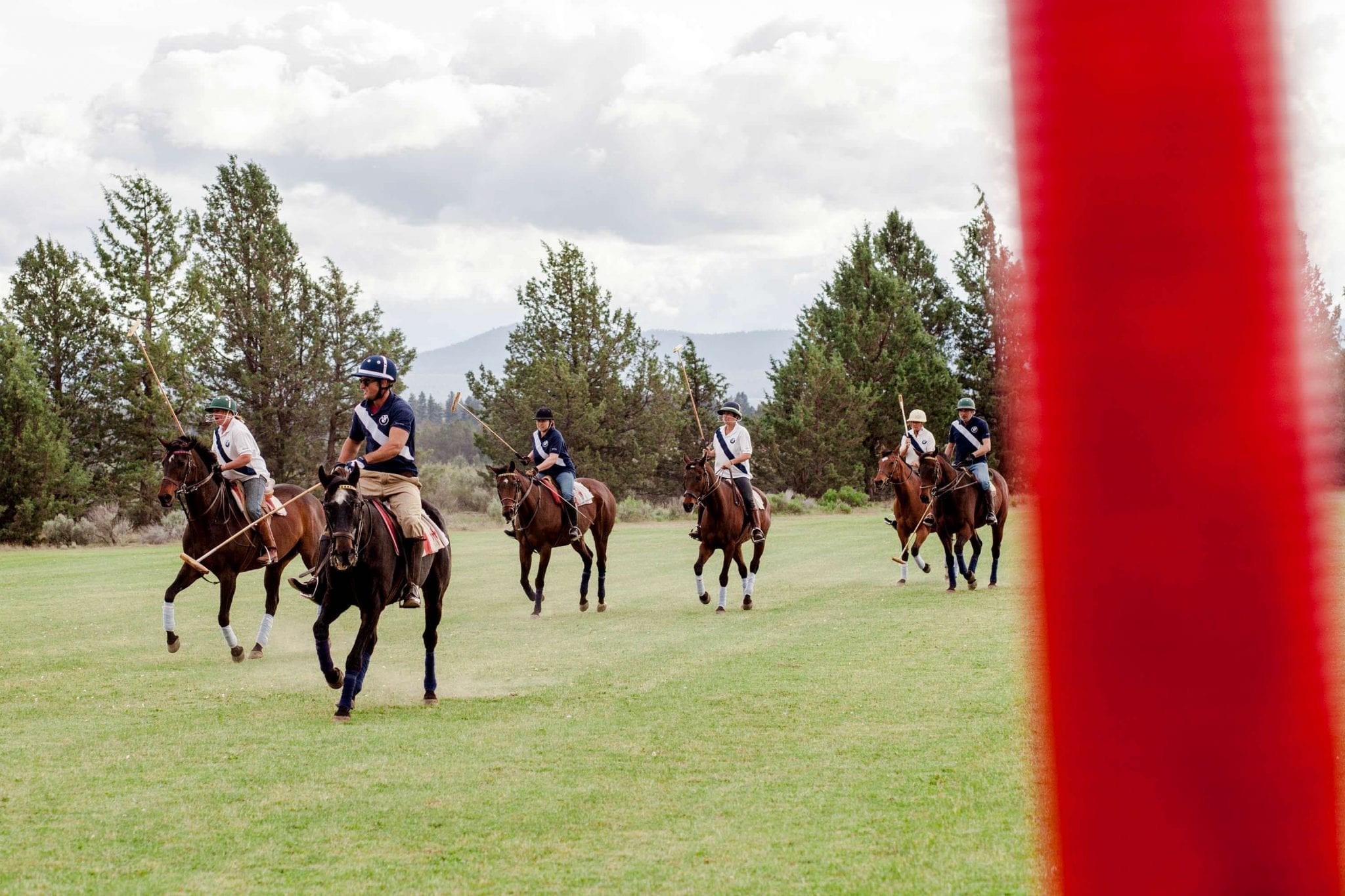

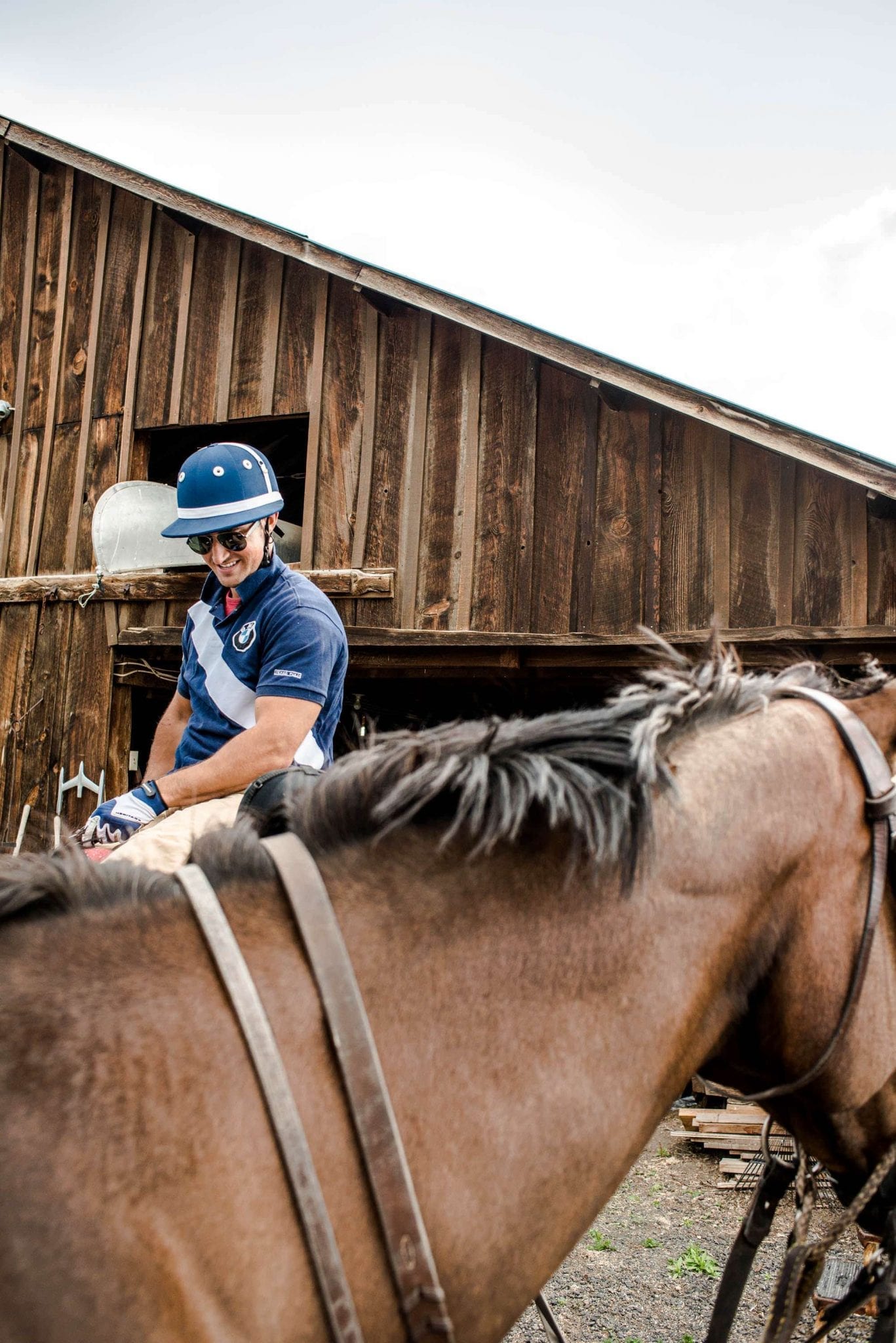
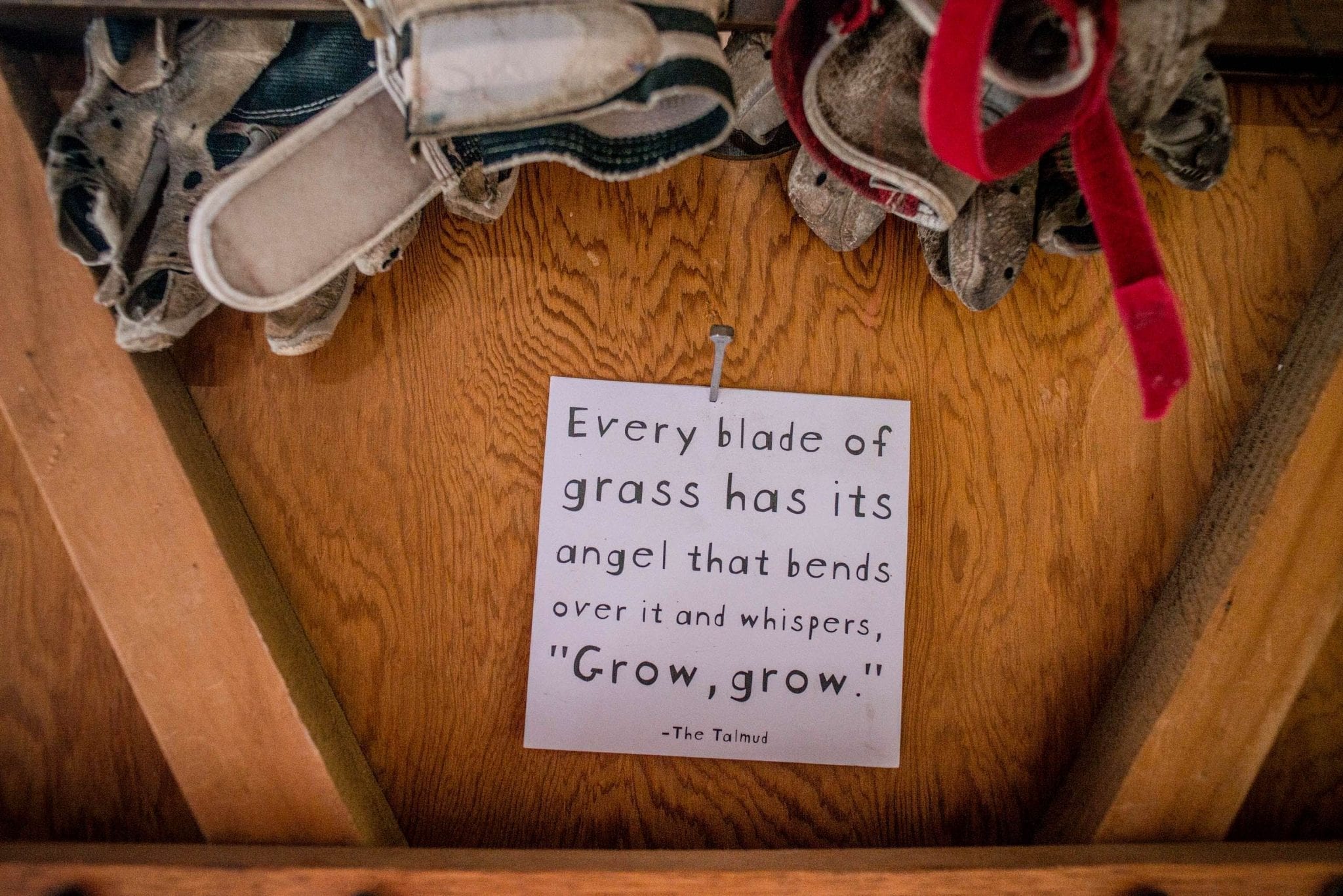
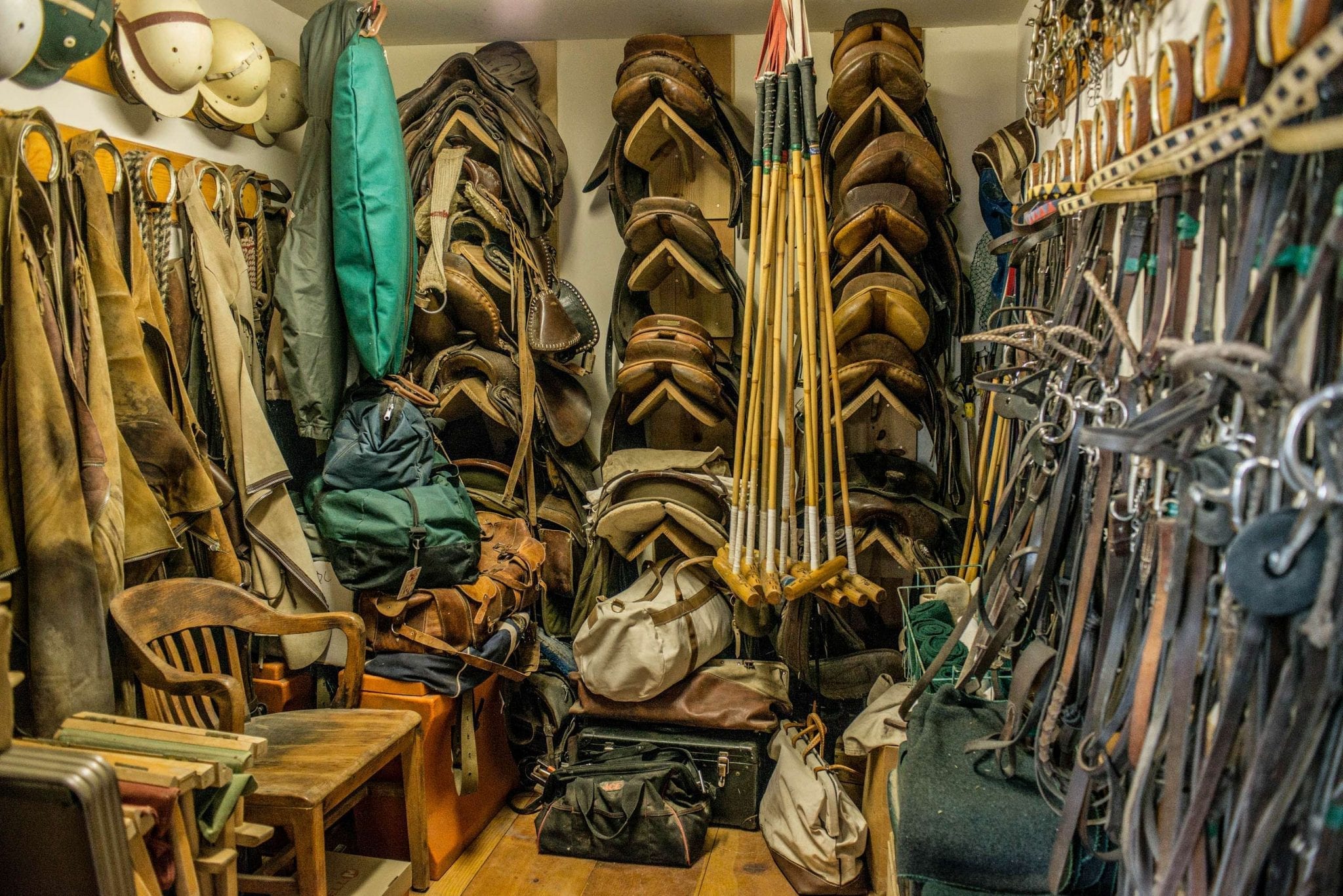
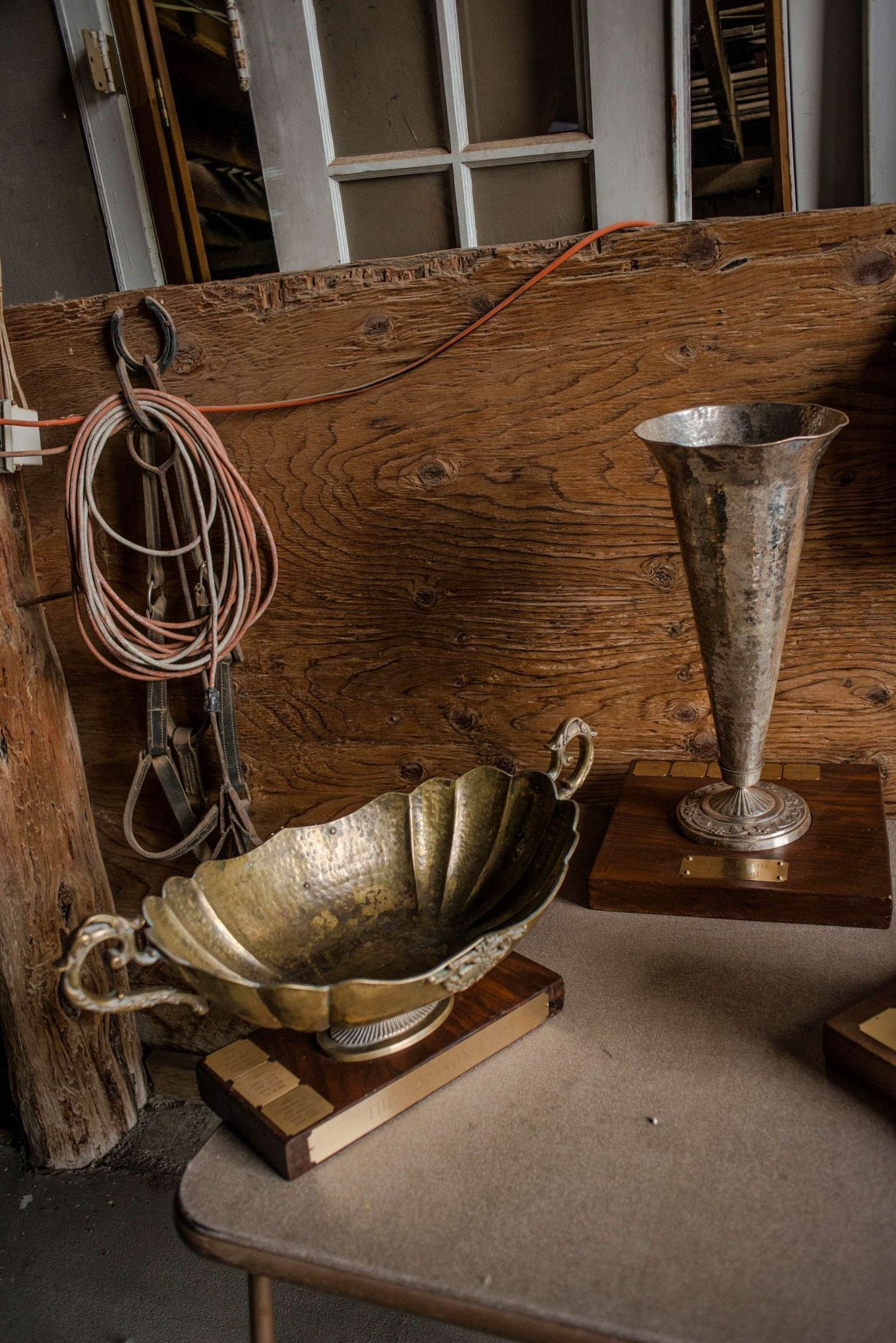

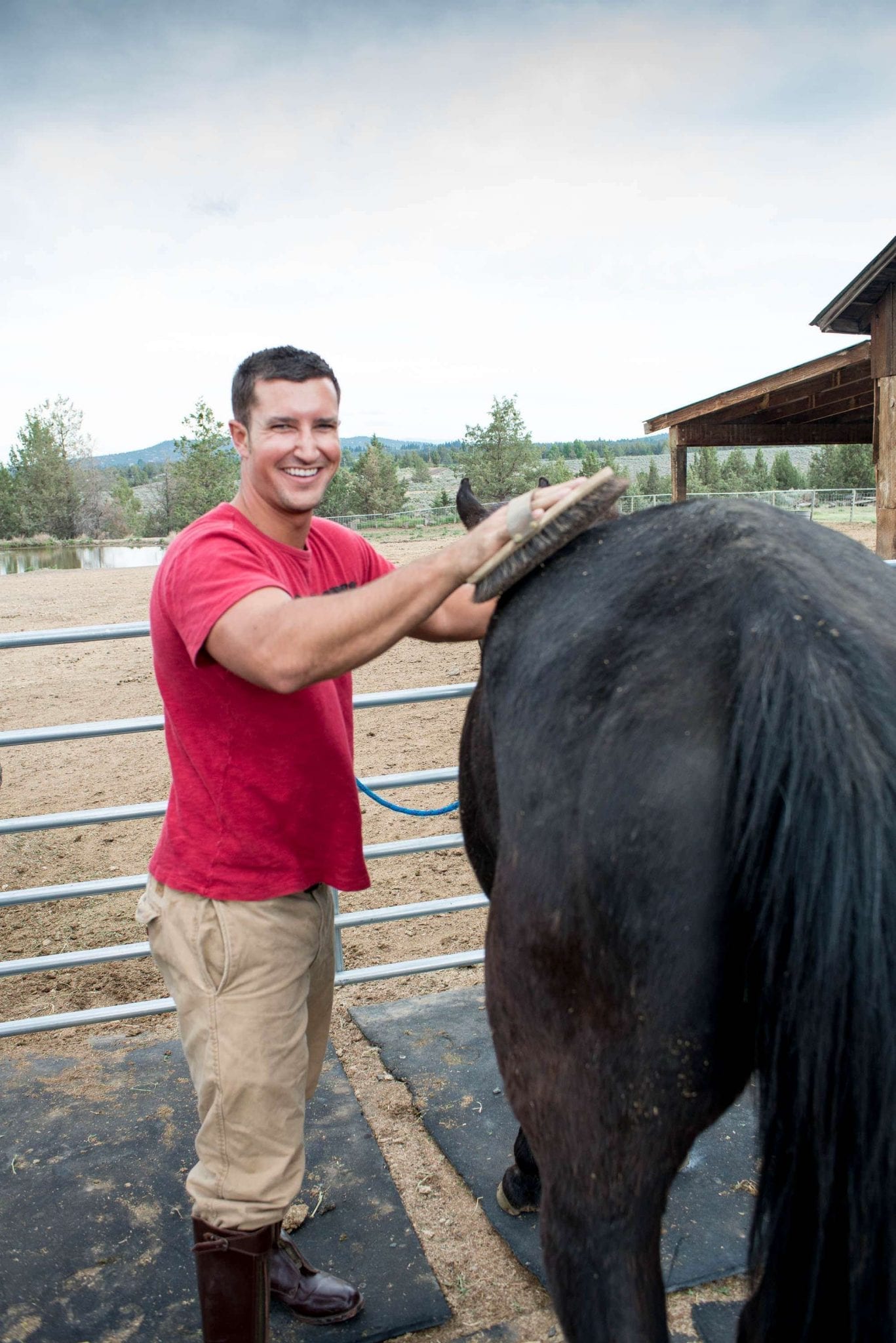


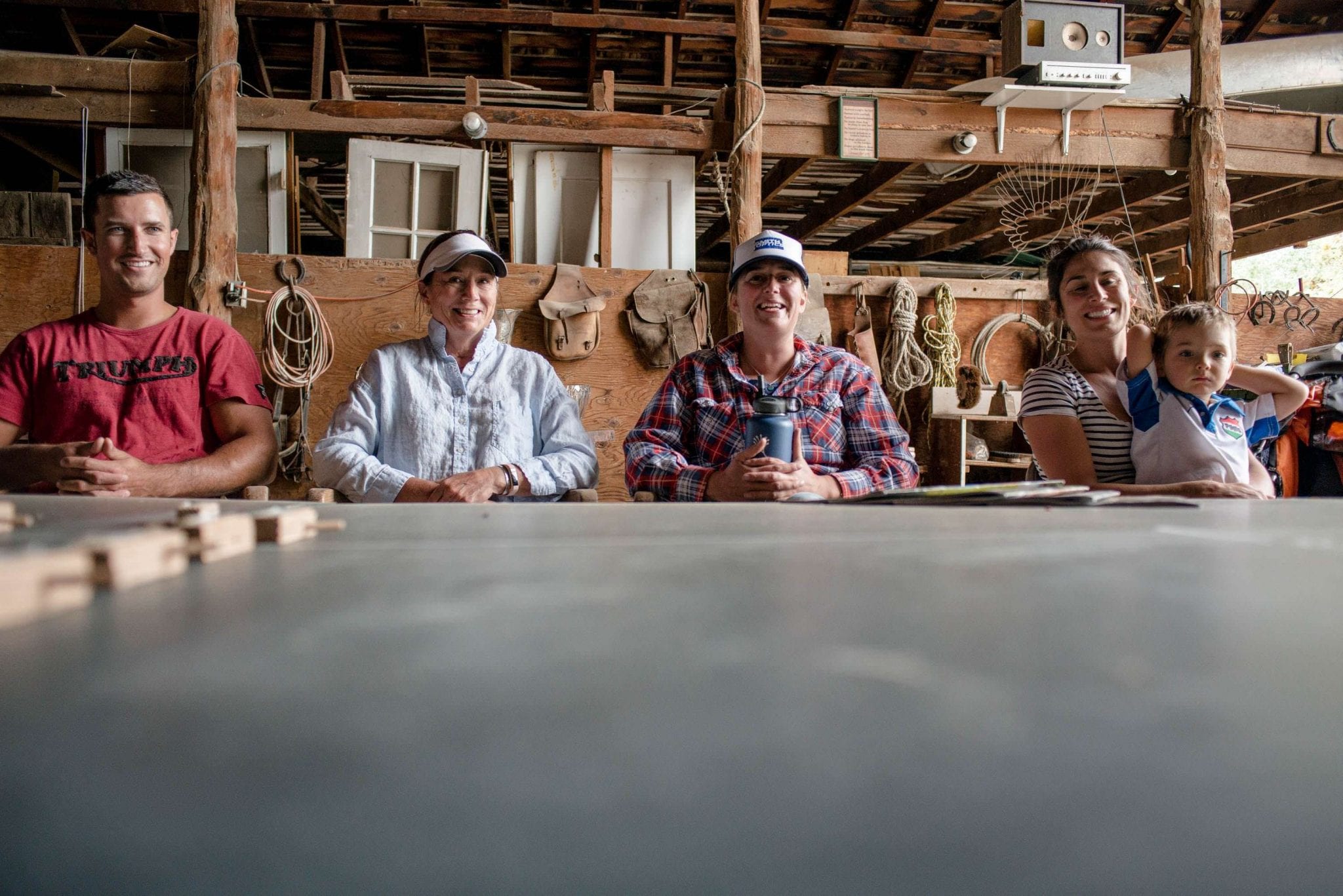
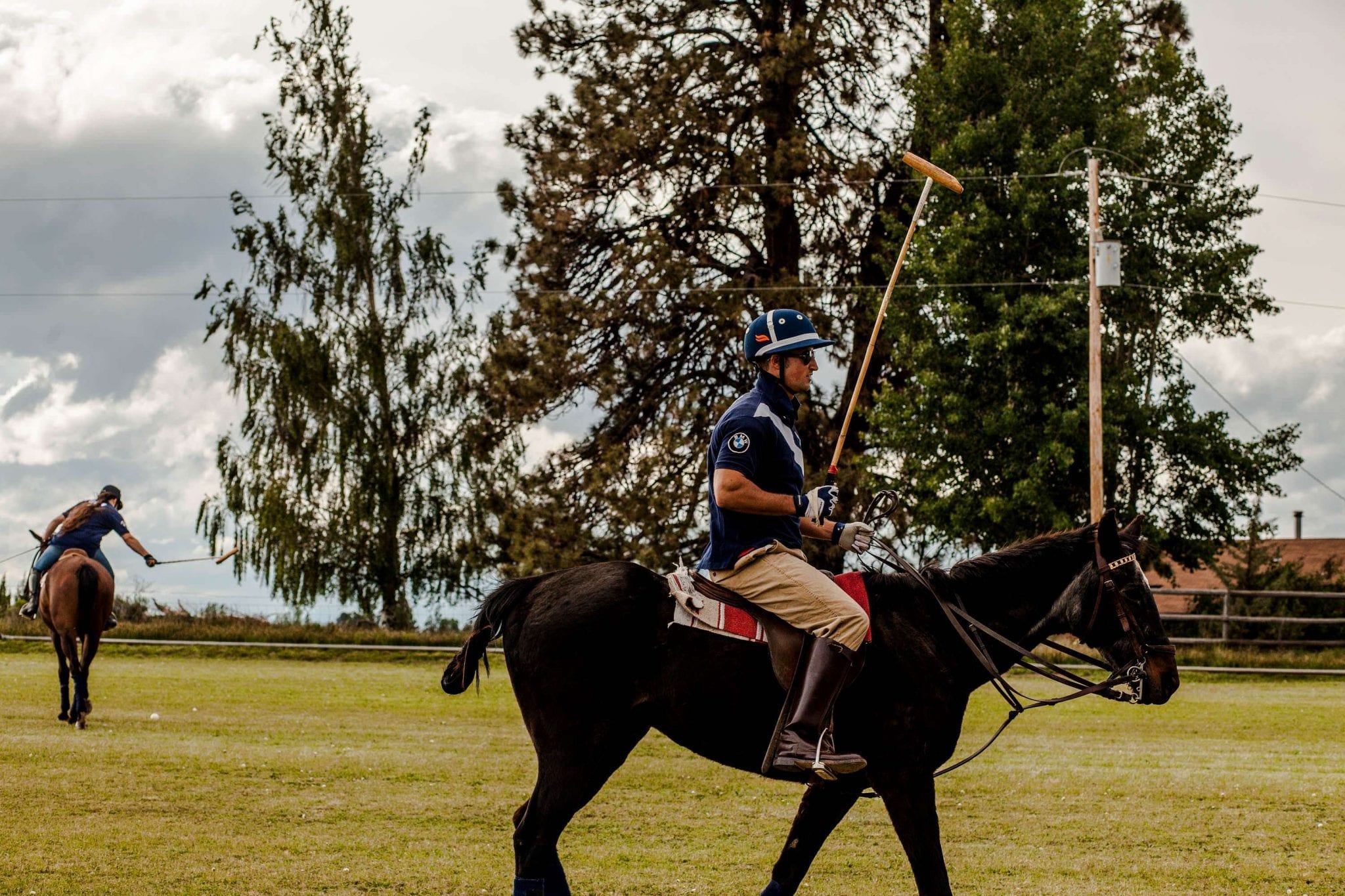
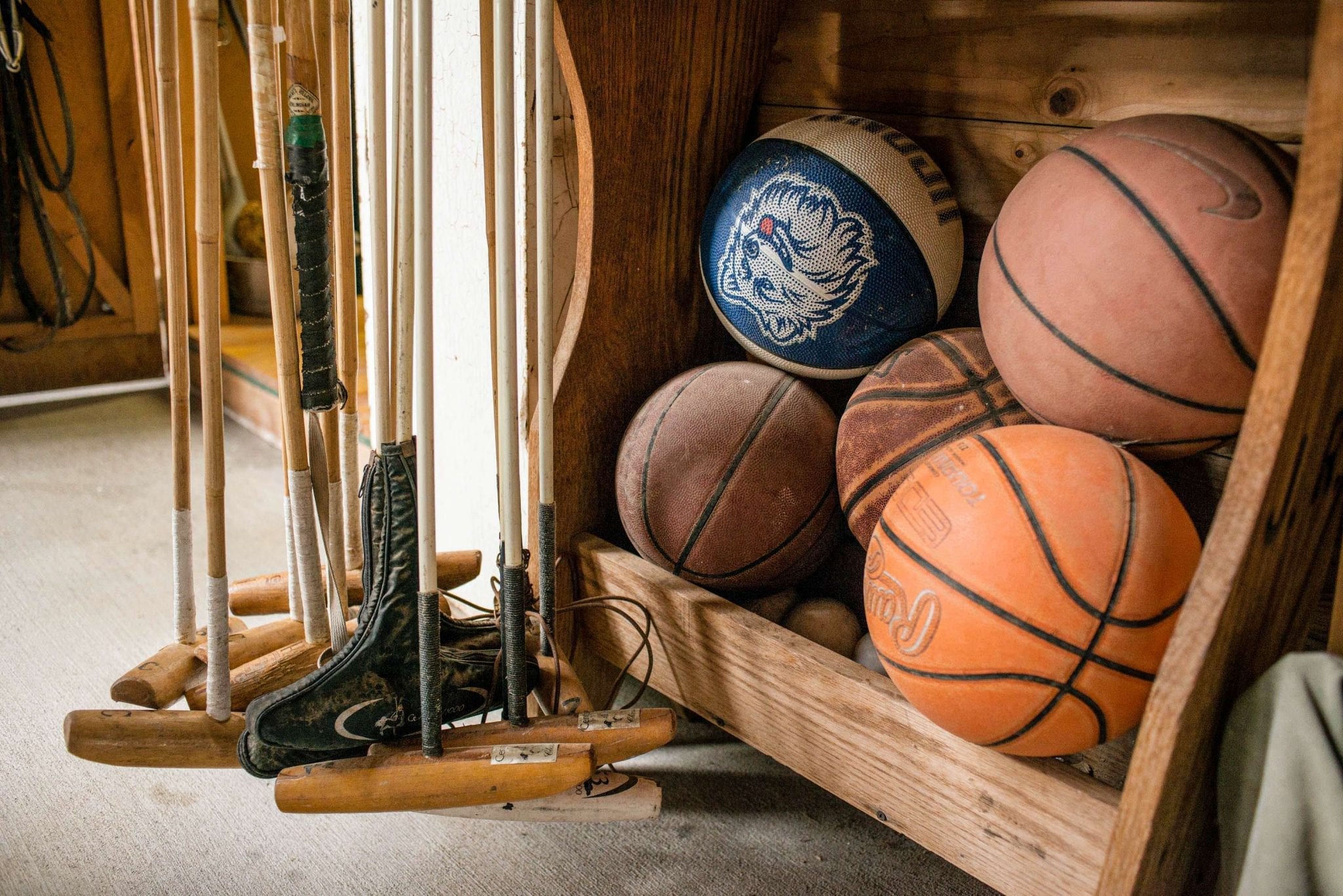
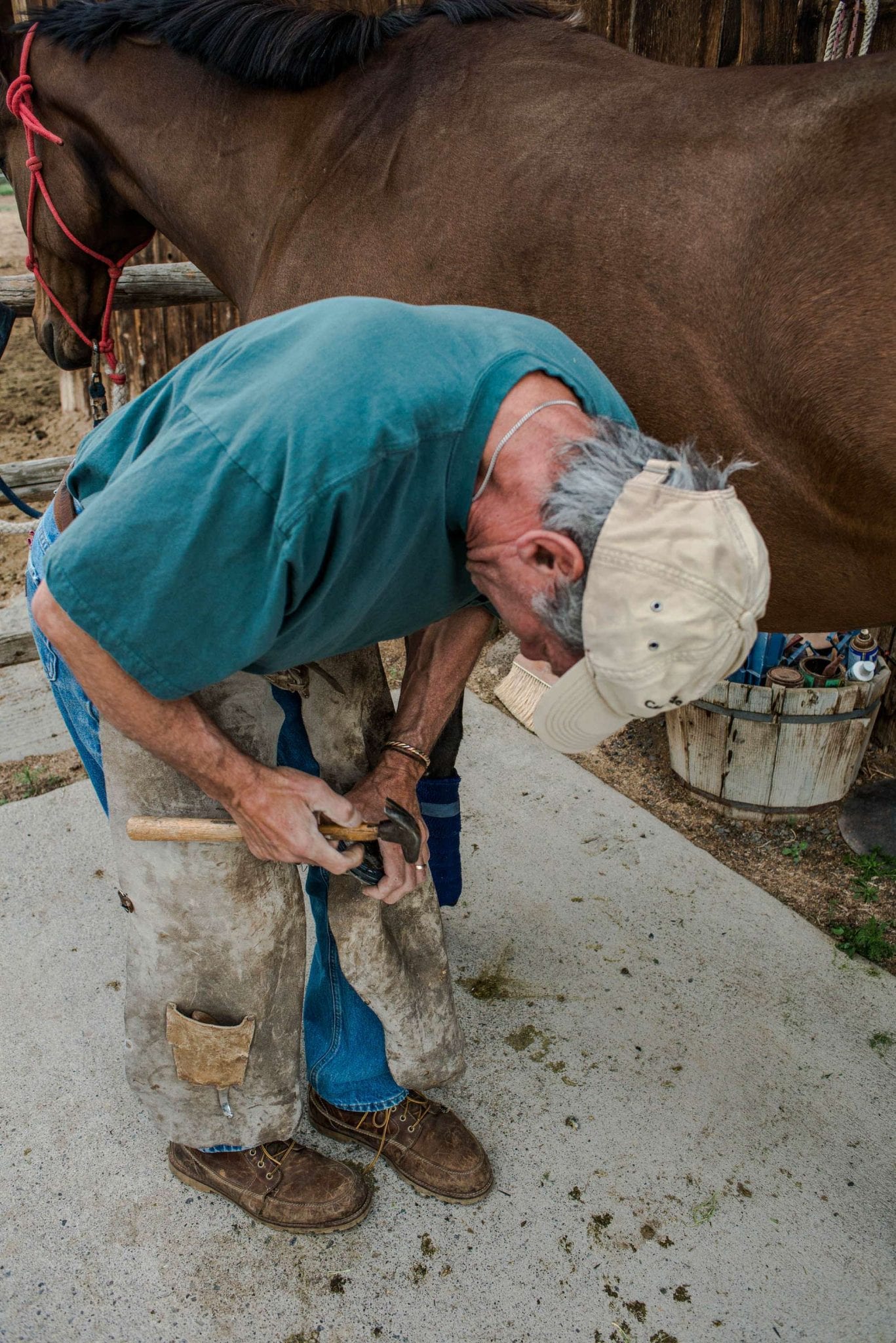






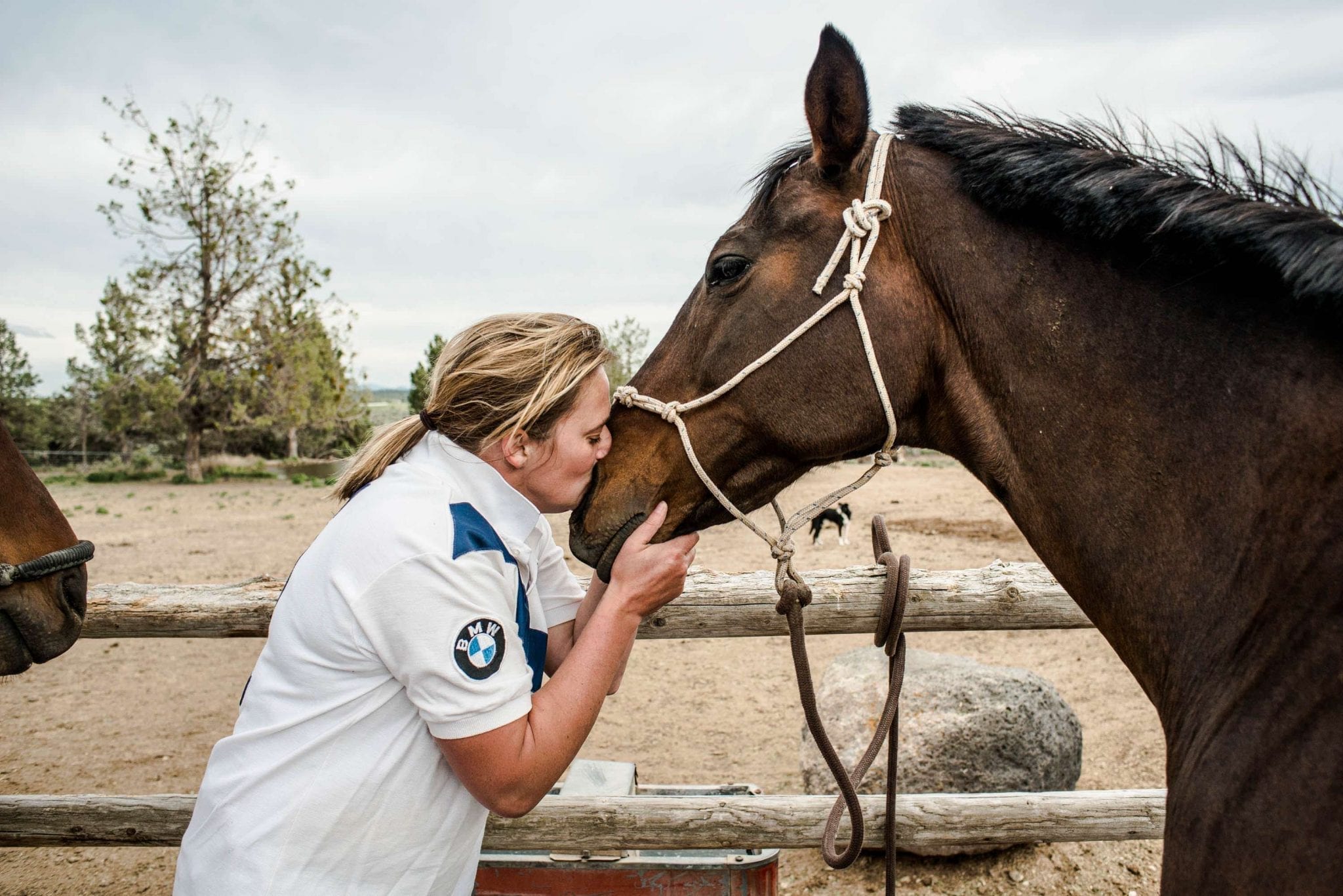
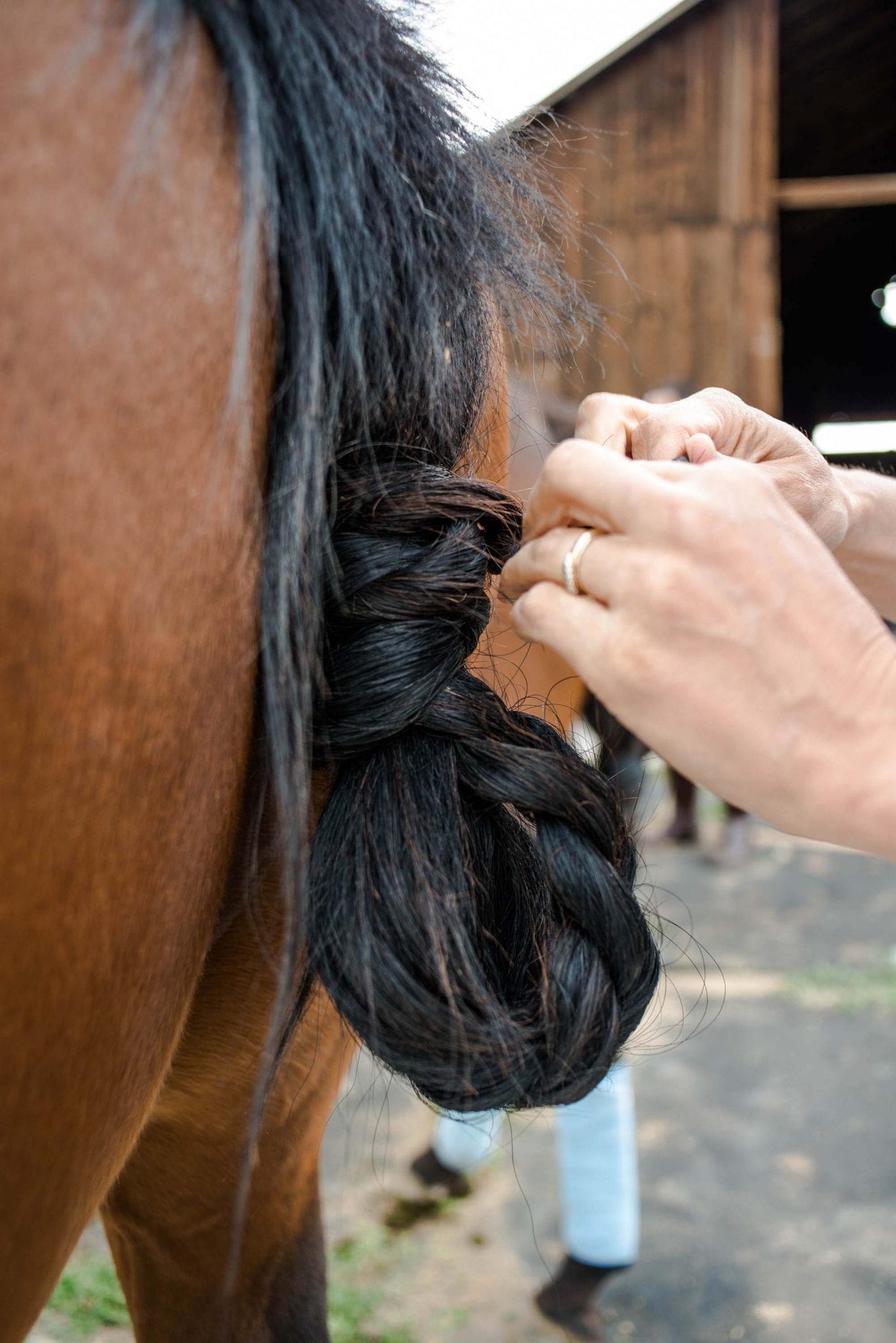


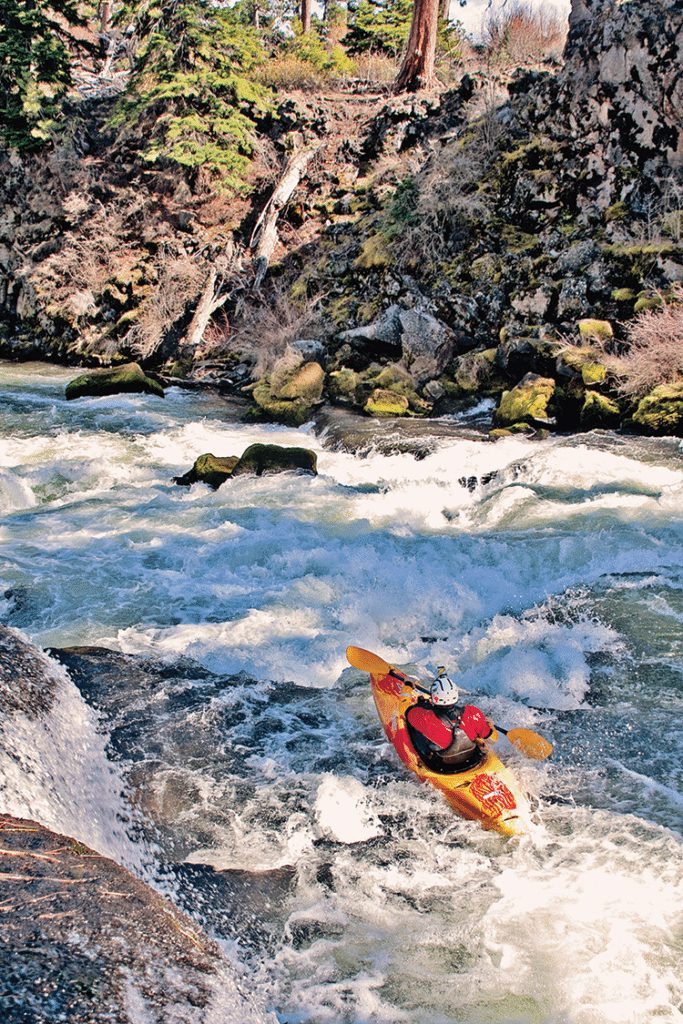


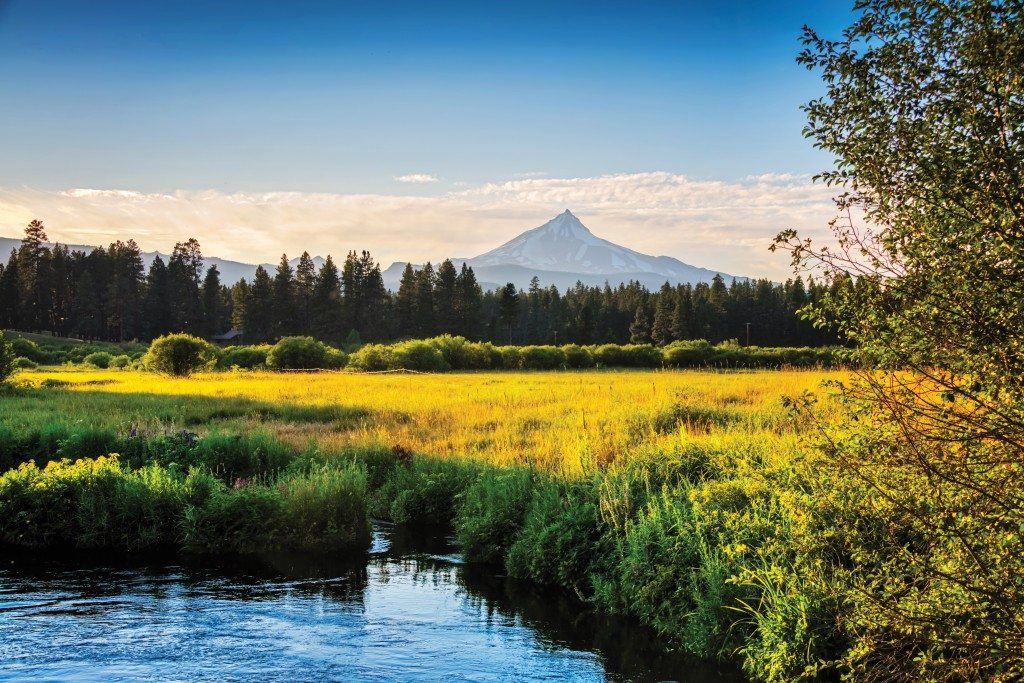


 Health on Wheels: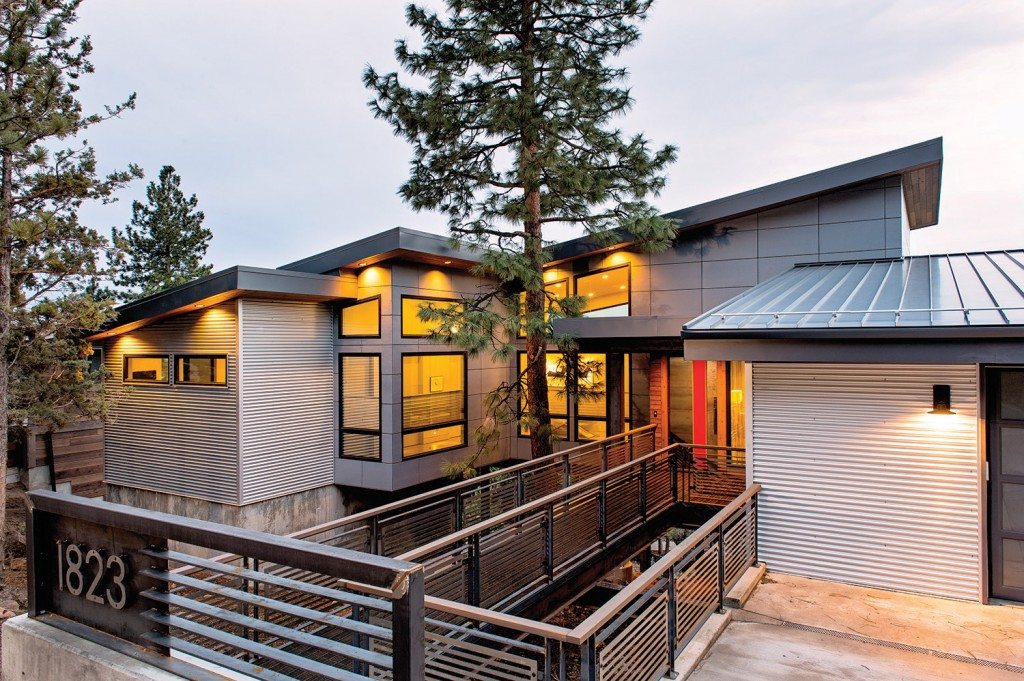


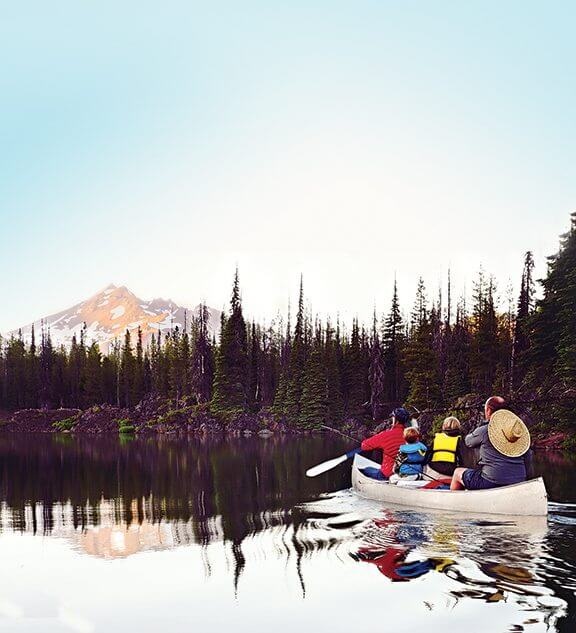 With mountains and rivers in its backyard, Central Oregon breeds the best kind of wild child. In a town where “going to the park” can easily mean going to a state park to scale a cliff, local kids grow up with a healthy appreciation for the nature (and dirt) right outside their front door. Kids by nature want to run, play and climb—and the opportunities to play here abound—from casting flies and running rapids to rock climbing and camping. While raising kids to be rugged may present some challenges, outdoorsy children learn from an early age to push through, be fearless and most importantly to have



 What is the Americana Project to you?
 What’s the best way to get started in using your car less?

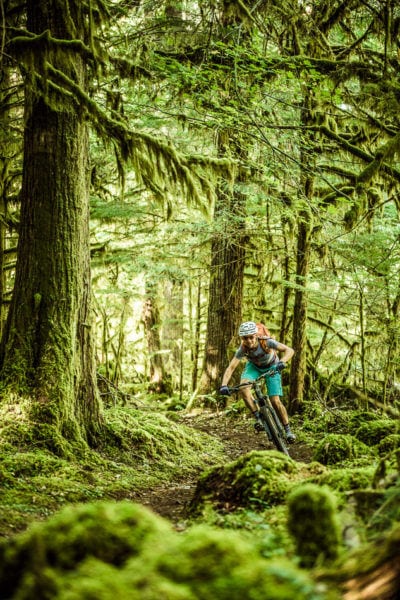

 KNOW: DAVID MARCHI