Ken Marunowski likes the power of large canvases. On a big surface, he can immerse himself in an abstract expressionist (or AbEx) mode of painting, focused on mark-making and intuition. The AbEx movement gained prominence in the 1940s through an anti-figurative, non-objective style of painting pioneered by artists like Jackson Pollock, Willem de Kooning and Joan Mitchell, all influences on Marunowski.
Spring Willows Glow On The Deschutes, oil on canvas
“Until I moved to Bend and had a garage to paint in, I was never able to express myself in such a large format,” the artist said. “As soon as I started experimenting in this way, it became quite obvious that this is the kind of painting I am meant to make.”
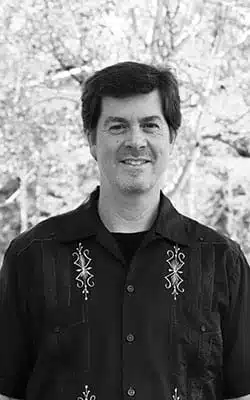
Ken Marunowski
In April, Marunowski had his first solo exhibition of medium-to-large paintings titled, “Spirit of Play” at the LAURA VINCENT DESIGN & GALLERY in Portland’s Pearl District. “Because I don’t require myself to reproduce any degree of likeness, I am able to focus on fundamentals like value, hue, composition, texture and form,” he said about the paintings. “Without an external referent other than a memory or feeling to guide my decision-making, everything is left for me to discover, an open-ended process of creating something from nothing.”
A life centered on art, teaching and France
A passion for France, its language and the Impressionist movement influenced Marunowski’s art even as a youngster, when a French teacher opened his eyes to the world of arts and culture. As an undergraduate at Kent State University, he received degrees in studio art and French, and studied at the Marchutz School of Fine Art in Aix-en-Provence.
Marunowski’s background is awash in academic achievement, including a Ph.D. in literacy, rhetoric and social practice. He took a job as an assistant professor of advanced writing at the University of Minnesota Duluth in 2006. With summers off from teaching, he often studied at the Painting School of Montmiral in southwest France, which reignited his passion for making art. By 2015, he was tired of teaching and left the university to pursue his artistic calling.
Following a cross country trek of hiking, camping, painting and visits with family, he and his wife Carly arrived in Bend, where his sister lives. In 2016, he returned to Aix-en-Provence for a six-week artist residency at the Marchutz School.
A full-time Bend resident since 2016, Marunowski continues to pursue his lifelong passions of painting, teaching and writing. He taps into his extensive writing background as a regular contributor of Cascade A&E. He teaches painting and drawing classes at Layor Art + Supply and the Bend Art Station and exhibits his paintings at the Artists’ Gallery Sunriver, The Wooden Jewel and at various Bend businesses and organizations, including Eastlake Framing and the Cascade School of Music.
Abstract acrylic painting class at Layor Art + Supply
“Over the past two years, Ken has rotated paintings around the building,” said Robert Lambeth, executive director of the music school. “Often, I’ll stop by the lounge with its huge walls adorned with Ken’s paintings and catch a student staring into one of them, lost in reverie. Abstract art lends itself beautifully to that. It’s been fun to watch our students glean inspiration from a style they’re not readily exposed to, especially in Bend where we love our landscapes,” Lambeth said.
On any given day, you might find Marunowski at his part-time job at Eastlake Framing or guiding groups of families and friends in collaborative and individual abstract painting through his business, Spirit of Play Art.
Or you can catch him in his garage studio where there’s just enough space to let spontaneity present itself in explosions of color, marks and shapes. “People, myself included, want to return to feeling, sensation and emotion,” Marunowski offered. “All of these lie at the forefront of abstract expressionist painting. It is a form of personal expression, a way of letting go and exploring within, but always with a critical eye.”
Even Bendites can sometimes use a respite from the normalcy of everyday life. Paradise awaits without layovers or delays at Rapa Nui, located in the Old Mill District. One step into the tiki lounge and you’ve entered the land where the rum never runs dry, and if only for an hour, your problems fade away.
“A tiki bar is a style of bar that has been around since the early 1930s. Its beginnings were because Americans weren’t really traveling right after the Great Depression,” said Jared Schmidt, co-owner of Rapa Nui. “It was a way to escape our everyday lives without spending a fortune.”
Donn Beach, an American adventurer, opened the first “tiki” bar in Hollywood when Prohibition ended in 1933. He named the place Don the Beachcomber. The restaurant served potent cocktails in a tropical setting, and started a trend of tiki bars throughout the country.
At Rapa Nui, iconic Easter Island statue heads, also called moai, a bright red volcano and tropical flowers lend to the immersive experience that goes along with classic tiki cocktails and Asian-influenced tropical food. If it weren’t for the unobstructed views of the Three Sisters from the patio seating, you may very well forget you’re still in Central Oregon.
Make your own tiki cocktail at home. “The prep work for the ingredients in this cocktail can be a little intimidating,” said Schmidt. But you’re sure to forget that hard work after just a sip of an Island Old Fashioned.
Island Old Fashioned
2 ½ oz. coconut washed bourbon
¼ oz. house pimento syrup (an allspice dram)
7 drops pineapple infused bitters
Dash Angostura bitters
Combine all ingredients in a mixing glass with ice. Stir until chilled and combined. Strain into a rocks glass over a large ice cube. Garnish with an orange twist and pineapple frond. Put on your tropical shirt, unfurl a paper umbrella and enjoy!
What do a doctor, a math teacher, a diesel mechanic and an entrepreneur do when they want to change careers? Farm, of course. For a number of enterprising Central Oregonians, farming is a passionate second act.
While an older generation of local farmers have “aged out,” said Annie Nichols, farm and ranch support manager for the High Desert Farm and Food Alliance, younger (though not always young) farmers are emerging. Despite many challenges including the weather, the rising cost of land and contentious water rights, some people with big dreams and a spiritual draw to the land are changing careers and choosing to farm.
“To get started, new farmers need to believe that they are helping their communities and the land,” said Nichols. She noted that small farms “are an important way to combat climate change—and the new generation of farmers gets that.”
Here are the new farmers: romantics and realists, driven by a belief that cultivating something—amaranth or alpacas, honey or hay—is a meaningful way to contribute to Central Oregon’s vibrancy and self-sufficiency.
Naftaland
From Entrepreneur to Hemp and Alpaca Farmer
Dave Naftalin is as comfortable in a boardroom as he is on a tractor.
Naftalin came to Central Oregon after owning a Washington D.C. commercial real estate firm and working as a Maryland park ranger. Upon arriving in Bend, he became director of operations and director of the global supply chain for Humm Kombucha. After a few years, he looked around at his Tumalo land and asked, “What’s next?”
The answer arrived in the realization that “my purpose in life is to raise children, plants and animals.” Now in his third season, Naftalin’s farm (five of his own and twenty-five rented acres) includes sixty alpacas and 5,000 hemp plants.
“Central Oregon is the Napa Valley of hemp,” Naftalin declared, noting that the climate, water and soil are ideal. While half of all hemp farmers who entered the market when the law changed in 2015 have already quit, Naftalin has gone all in, raising hemp that produces CBG (cannabigerol), one of more than 100 cannabinoids whose significant medical benefits are emerging through ongoing research. Recently, both Japanese and Swiss government representatives flew in to investigate Naftalin’s approach to growing hemp which is, he said unapologetically, “producing some of the highest potency CBG crystals ever seen. When top European and Asian distributors are contacting a small farmer in Tumalo, you know this is huge.”
Naftalin and his full-time farm hand are “like mad scientists,” tending each plant every day, piping in classical music and using drip lines to transport live bacteria and amendments to the plants. And while he initially got into alpacas for the fiber, he’s now “breeding for the best genetics in the world.”
“I work this land and the land works me,” Naftalin said, noting this is the hardest he’s ever worked for the least remuneration. However, when the single dad takes a rare moment to look out on his flock, his fields and his three children, he says, “I’m living the life I’m meant to live.”
From Math Teacher and Therapist to Historic Ranch Owners
John and Renée Herman have run the Lazy Z ranch just south of Sisters since June 2020. Leaving behind their “cushy” (John’s word) life in San Diego and coming to Central Oregon to care for the eighty-three-acre iconic ranch is the culmination of a long-held dream.
“Farming was in our blood in different ways,” Renée said. John grew up on a northern California ranch and Renée’s Kirkland, Washington, parents were mad gardeners.
While living in California and starting a family, John worked as a math teacher and Renée studied to become a marriage and family therapist. Still, they knew they “wanted to tie down into the soil somewhere.”
What are their hopes for the Lazy Z? “A mix of a plan and surprise,” Renée said.
To create the plan, they spent months meeting with neighbors and experts to suss out practices to restore the soil, which John described as “compacted and dead” from years of flood irrigation, overgrazing and too many horses. They will spend their first growing season adding organic material to sixty-three irrigated acres, planting thirty different seeds for pollinators and waiting for the surprise. “We want to see what will grow here,” John said.
Their goal for the irrigated land? To create half a foot of organic material over the next five to ten years. They’d love to lease some land to other growers who share their farming and ranching values, which they describe as “regenerative.” Also already in place are hundreds of bees and a dozen bee boxes, which were colorfully painted by art students at Sisters High School.
The scope of their dream echoes the hopes of 19th century homesteaders. “We describe ourselves as a regenerative nectar and pollen farm, focusing on bee products, u-pick and potentially, someday, a small winery,” said John. They are already boarding horses, hosting cattle who are “massaging” and fertilizing the soil, planting berries and pumpkins, raising goats, and cultivating bee hives (John is the beekeeper). Soon they hope to brew honey mead, restore their impressive 100-year-old barn (could it become a farm brewery like those they saw in Belgium?) and, very importantly, turn the Lazy Z into a community resource for Sisters. “The reality of how the community has responded to our dream is so much more than we could have imagined,” Renée said.
They have no delusions about the Lazy Z supporting their family of four; Renée works as a therapist in Redmond. “Our goal is to have enough money to live and to give back to our community,” John said.
From Natural Resource Manager and Diesel Specialist to Indigenous Agriculturalists
The sign on Highway 20 just north of Tumalo says “Sakari,” which means “sweet” in Inupiat, the language of its owner’s Native Alaskan tribe. “There aren’t many words for farming or plants in the Arctic,” said Upingakraq “Spring” Alaska Schreiner with a laugh, “but many words for snow, whale and walrus.”
Spring is the indigenous agriculturalist, seed keeper, farmer, owner and educator at Sakari Farms. Ten years ago, she launched the Central Oregon Seed Exchange, growing on rented plots across the county. In 2018, she and Sam Schreiner bought a six-acre farm, and their work shifted into turbo.
The compact farm is humming with activity. Greenhouses burst with vegetables and specialty tribal peppers (Sam’s passion). Fields feature Native plants for ceremonial use as well as eating and dyeing. Flowers, squash and rows of lavender and thyme attract bees tended by a keeper. In the off-season, they prepare healing teas, hot sauces and other plant-based products and sell them through Sakari Botanicals. Additionally, the farm is home to a cold-climate seed bank, along with both educational courses and cooking classes. Outreach to Native populations throughout Central Oregon is part of Sakari’s mission. Organic and biodynamic growing practices guide their work. They hold the Intertribal Agricultural Council’s “Made by Native American” patent certification.
Before they turned all their attention to farming, Sam, a Camp Sherman native, was a diesel specialist, and Spring was working for the Deschutes Water Soil and Conservation District. In
the ultimate “meet cute,” they were introduced while Spring was running the county’s manure exchange program.
For Spring, farming is both a way of making a living and an act of social change. “With the social unrest last summer, I had an ‘aha’ moment,” she said. “Different voices were needed.” Serving on multiple regional and national agricultural boards and educational committees as an advocate for local farmers and tribal members, Spring was awarded the 2021 Na’ahlee Tribal Fellowship and the 2019 National Association of State Department of Agriculture Women Farm to Food Award. To reinforce her indigenous products and practices, Spring says she “hires BIPOC employees,” noting that her crew currently includes a turkey farmer with Navajo roots and a pig farmer from Peru.
Serving her neighbors and surrounding communities is in Spring’s DNA. “Farming is a brave act,” she said. “The more we can show healthy food-growing success in Deschutes County, the better quality of life we’re all going to have.”
Dr. Yvette Scott, a Los Angeles internist, and her husband Frank, a commercial real estate broker, had only spent time in Central Oregon on vacation until 2011. Then, they became owners of twenty beautiful acres between Tumalo and Sisters. They hired a caretaker to tend the land until realizing, five years ago, that they wanted
to do it better—and do it themselves.
“We were living to work in L.A.,” Yvette said. “We wanted to be able to work to live.” While Dr. Scott thought she would join the Central Oregon medical community after moving here, she reversed course. “Taking care of my family, the property and my animals became my new career, and I haven’t looked back since.”
When the Scotts took over the land in 2016, locals said their hay fields were so neglected they would have to be replanted. Instead, Yvette—who had spent some time on her father’s family farm in Georgia—tended the land with helpful input from nearby farmers, restoring the blue and orchard grass fields to health. Seeing the bounty from each cutting, and doling out flakes of her baled hay to her horses, gives her intense satisfaction. Still, she’s aware of ecological issues. “Using up our precious water to grow hay is a source of conflict for me.”
With Yvette in the lead, the team does almost all the work on the farm themselves—moving wheel lines, caring for horses, repairing equipment. The lone exception: cutting and baling hay.
Unlike Naftalin, Scott doesn’t consider farming her business. “We sell and trade hay, yes, but we are mostly stewards of this land.” Stewardship includes caring for two horses. Her mother’s family in Cuba were competitive horse jumpers, and she had boarded a horse in L.A. Now horses are integral to her life.
“Who would have ever thought, me, a Cuban-American doctor who has lived her whole life in cities, is now doing what I do? I pinch myself every day.”
Support LOCAL FARMERS
The High Desert Food and Farm Alliance has a great guide to buying local: getataste.org.
Editors Note: This article was originally published July, 2021
Sponsored Content
Waking up on a lakeside property, with mountain views out the window and hiking trails out the back door, is the stuff of vacation dreams for many. Throw in morning fly-fishing on the creek, afternoon water-ski laps on a private lake and a six-mile drive to downtown Bend for dining, culture and shopping, and it starts to sound impossible.
Believe it or not, a one-of-a-kind new development, just west of Bend proper, promises all these amenities and more. The 182-acre Tanager community offers twenty-one spacious waterfront homesites along one of two private lakes or Tumalo Creek, all situated out Shevlin Park Road just northwest of Bend city limits. “There will never be another place like this,” said broker Tab Howard, of LUXE Christie’s International Real Estate, who is the listing agent for the development.
Tanager’s first lots hit the market in May, with four two-acre waterfront homesites available for $1.4 million apiece. Three miles of asphalt-paved roads connect the homesites, common areas, trails and lakes on the property and seventy acres of irrigation rights offer pressurized water and irrigation capabilities to every lot. While there are just twenty-one homesites total, residents can expect to share the area with a wide variety of wildlife, with deer, elk, bald eagles and raptors calling Tanager home. Each homesite borders either the rushing Tumalo Creek, which runs through the property, or one of two private lakes.
Tumalo Creek flows year-round on the eastern border of the Tanager property for nearly three-quarters of a mile of private frontage, with waterfalls cascading down rimrock cliffs and some identified spots perfect for fishing for rainbow and brown trout. A tributary to the Deschutes River, the creek is a natural beauty with waterfalls, rapids and picturesque vistas. Tanager residents will enjoy Tumalo Creek’s changing landscape all year long.
The water-ski lake is a purposefully-designed waterway 2,100 feet in length, ready for endless glass-smooth water for water-skiing, wakeboarding and wake surfing. Kids and adults alike can play on the 120-yard long swimming beach with Oregon Coast beach sand.The lake’s size, depth and configuration were all designed to offer Tanager residents and their guests a competition-level experience on the water for both smooth water sports and wake sports. Turn islands on each end eliminate wakes from traveling down the length of the course, and the lake features a 10-foot deep trench down the middle for wake sports and a sinkable slalom course with one-touch control. There’s also a picnic area near the lake with a shelter, restroom and shower.
The second recreation lake on the property is for non-motorized activities—a serene setting perfect for swimming, kayaking, standup paddleboarding or canoeing. A community dock offers the perfect place for fishing in this stocked lake or for launching small watercraft. Careful design, planning and engineering went into creating this private lake that residents will enjoy for decades to come.
Eleven homesites surround Tanager’s water-ski lake, seven homesites perch on the rimrock along Tumalo Creek and three border the property’s recreational lake. The owners of the homesites are all afforded access to the 117 acres of common open space (nearly eighty percent of the development), including recreation facilities and ample lakefront green space to offer a balance of access and privacy.
Central Oregon Paradise
The homesites offered at Tanager are poised to become enduring, legacy properties for the buyers that choose to build homes in the new Central Oregon community. The new homes could serve as primary residences for couples or young families, a breathtaking paradise for empty-nesters or retirees or a second-home ready for memory-making vacation visits.
The property is likely to welcome not only water-ski enthusiasts, but outdoor recreation lovers of all varieties, according to Howard, who himself is a Central Oregon transplant along with his wife, Lindsey, and two young children. Howard was enjoying success as a top-performing luxury real estate broker in southern California when the pandemic hit, offering new perspective to he and his family and the idea of truly loving where you live. “Professionally and personally, we realized that space was a commodity, and family was a priority,” said Howard, who settled into a home in the Broken Top neighborhood last year. “Bend offers all that and then some.”
Howard is originally from Norfolk, a small town outside Boston, while his wife is from Tigard. Moving to Bend meant having more family support and endless outdoor recreation opportunities without feeling like they’re in the middle of nowhere. “Bend still has that desirable small-town feel, but it’s among the fastest growing cities in the country,” Howard said.
Sharing the passion
The Tanager development is decades in the making, originally envisioned by Harris Kimble, who along with his wife Nancy, lives on the property. In 2013, the Kimbles partnered with another couple and began purchasing adjacent parcels of land, which today make up the 182-acre Tanager property. They’re now excited to offer a limited number of spacious homesites and look forward to sharing this paradise with others looking to enjoy the legacy of bringing families together for generations to come. “It’s truly been their passion project for the last nine years,” Howard said. These developers and residents of Tanager are eager to share their slice of heaven with other water and outdoor enthusiasts, who dream of vacationing where they live.
Locally grown, fresh foods have been a part of Miki Bekkari’s life since she was a child growing up in Humboldt County, California. By age seven, she was helping out with the family business, Potter’s Produce, which supplied fresh food to stores and restaurants in northern California.
After college and travels that brought her to Lebanon and Spain, she met her future husband, Kamal Bekkari, and the two settled into life with corporate jobs in Australia—he as a banker and she as a grant writer. But it wasn’t long before the couple was drawn to the United States, and after a trip through the Pacific Northwest they landed in Bend in 2018.
It was then that the couple began Blissful Spoon, a new “passion project” that started as a granola and baked goods pop-up shop at farmers markets. The granola features organic ingredients without oats, grains or sugar, making it a hit right away with those following special diets, including gluten-free, paleo and vegan. In addition to the granola, the baked goods were proving popular at the farmers market too, especially the gluten-free varieties, like flourless chocolate cake, Miki said. The popularity of gluten-free options led Miki to begin experimenting to add more gluten-free baked goods to the lineup. “Good baking is good baking, whether it’s gluten-free or not,” she said.
Miki Bekkari, owner of Blissful Spoon
Soon the Bekkaris were dreaming of a brick-and-mortar location, and after months of searching Miki spotted a space on the corner of Newport Avenue and NW Brooks Street. The 69 Newport development next to Bend Brewing Company was just underway, meaning the Bekkaris would be able to design the interior of the space to their liking. After a year of anticipation and construction, Blissful Spoon now occupies the development’s east building, along NW Brooks Street, while a new restaurant, Sen, from the owners of downtown Bend’s Wild Rose Thai, recently opened in the west building. Separately leased office spaces are atop each restaurant. “All of the tenants have been a pleasure to work with,” said developer Sean Cavanagh. “With the project wrapped up, the thing I’m most looking forward to is being able to dine in at either restaurant and see others enjoying the spaces.”
All moved in to the newly completed Blissful Spoon space, the Bekkaris are busy serving up a selection of gluten-free baked goods and selling granola. The space is also a coffee shop, and a cozy European bistro-style space to grab tapas from. Many of the dishes have a Mediterranean influence,both from Miki’s travels and Kamal’s childhood in Morocco. “It’s such a beautiful part of the world, we wanted to bring a little slice of that to Bend,” Miki said. Earlier in the day, try savory, smoked salmon brioche toast, with house-made bread (this time with gluten) topped with cream cheese, smoked salmon and a remoulade of capers and pickled onions. For lunch, fill up with the jambon au beurre, a classic French ham sandwich with tiny cornichon pickles.
In addition to coffee, Blissful Spoon offers local beers and cider on tap, and a variety of wines, with many from Europe and Australia. The drinks pair well with the after dark menu, which includes bruschetta, slow-cooked organic Moroccan meatballs and pasta du jour—freshly made pasta paired with one of the house-made sauces.
The dishes can be enjoyed at a handful of tables inside the fresh, new space, which has wood accents and modern, industrial touches. The walls are adorned with artwork created by the Bekkaris’ 12-year-old daughter Alia, who along with 9-year-old daughter Zuri, are regular taste-testers of the menu offerings. Makal’s 21-year-old son, Adam, is expected to move from Australia this year to join the business and Miki’s parents, who raised her on the produce farm in California, are also in Bend now, often helping out with farmers markets.
After a few months in the new location, Miki said that more customers are finding their way in as word spreads. With new dishes being tested and added regularly, Miki said they’re always willing to make substitutions and customizations to meet the needs of customers, in hopes that everyone is able to find something they like. “We want to cater to everyone,” Miki said. “We’re pretty proud of the whole menu. We make everything in house, and people can taste the difference.”
The nourishment and healing vibes of water, especially in a dry region, especially in our own yards, can’t be overstated. Water features don’t just look nice, they also provide relaxation and a sensory experience. In the parched high desert of Central Oregon, the audible trickle or flow of a hydro feature in an outside lounging space can be the thread that ties together all the other design efforts—from landscaping and plant selection to lawn furniture. Whether it’s a backyard waterfall, a bubbling basalt column, a modest fountain or an extravagant pond, a carefully designed water feature can help achieve watery backyard (or front yard) bliss.
Plan, Then Let it Flow
Before starting a new water feature project, it’s a good idea to spend some time getting familiar with different styles and products to decide what makes sense for the space available, according to Shane Conklin of Ewing Irrigation and Landscape Supply’s Bend location. Ewing recommends browsing through YouTube videos or visiting the website of a vendor such as Aquascape to look through ideas and find inspiration. “Research it—look at tutorials and learn what style you want to go with,” he said.
Conklin said among the most popular water feature styles in Central Oregon is the “pondless,” which incorporates a waterfall but doesn’t end with the water sitting in a pond at the bottom. Pondless waterfalls are a particularly attractive option if space is limited, but the serenity of a waterfall is desired.
The volume of water flowing through and the height at which water falls both contribute to how much sound will come from a water feature, with a louder fountain being a great option to drown out other sounds, according to Suzanne Day Audette, a landscape designer in Bend. “If we’re right next to Highway 97, I’ll say we need a stream water feature with a lot of volume,” Audette said.
To avoid an extensive installation process and ongoing maintenance, choose a standalone recirculating fountain—like those made from a large ceramic planter or other piece of colorful pottery. Often times homeowners think they want a permanent waterfall or pond feature, but don’t realize the ongoing maintenance it will need in the future, according to Michael Ludeman, owner of Earth’s Art garden center in Redmond. Ludeman said he stocks fountains and water features that offer the sound and quality people desire, without the headache of maintenance issues years down the line. “Many people just want to hear the sound of water and have it close to them, near or on the deck,” Ludeman said. With a fountain rather than a permanent waterfall or pond, “they’re going to be a lot happier in the long term as well as the short term,” Ludeman said.
Rock and roll
Rocks are large and plentiful in the high desert, and water features with carefully placed rock designs can become beautiful visual focal points in outdoor spaces. In addition to looking nice, they can also mask road and neighborhood sounds and attract local wildlife. Imagine the possibility of diverse local birds and other fauna enjoying the water feature as much as the people do.
Many local homes have native basalt and other lava rocks on site just below the surface which can be dug up, repositioned and incorporated into a water feature. In addition, non-native rocks can easily be selected and incorporated.
Another approach to creating a rocky water feature is bubbling water coming from the top of a single basalt column or group of columns. A pipe can be run through the center of this type of ancient lava rock, with water pumped up and bubbling up from the column’s top.
Water features with flowing water offer a focal point for the backyard and the sound of water can be calming, Conklin said. “It gives a visual effect to your landscape, and there’s also that subtle noise of water that can be therapeutic,” he said. “It can be really nice to look at.”
Still Waters
If space and time allow, installing a pond can be the ultimate addition of backyard serenity, and can stand alone or be incorporated into a flowing water feature like those previously described.
The classic and ever popular koi pond remains a timeless choice. Eye-catching since their backyard origins in the 1800s, tracing orange, white and black mystical elements gliding through the water embodies the feeling of swimming, floating, flying and relaxing.
Timeless Koi Ponds: In Japan, koi are often known to symbolize strength of character, perseverance, accomplishment and courage. In our backyards, koi ponds offer ultimate Zen vibes and a unique focal point.
Landscape design companies can help with the design and installation of a backyard water feature, and with ongoing maintenance for more extensive projects. “It’s more a style preference, but pondless or bubbling rocks will need less maintenance (than a pond),” Conklin said. “An open body of water is more susceptible to organic material and grass inside, and with the sun, it can make algae.”
With numerous products to help combat algae and maintain the ponds, the choice becomes more a matter of personal preference. Pick the option that makes the most sense for the space, get the water flowing, kick back and enjoy the soothing sounds of backyard Zen.
Outdoor dining has exploded in popularity everywhere over the past year. It’s no surprise that open-air meals are a hit in Central Oregon, where the outdoors is an important part of many people’s lives. Bringing the concept of outdoor dining to our own homes is a no-brainer. But let’s not leave the chef stuck in the kitchen inside, or limit ourselves to just the grill outdoors. Today’s outdoor kitchens provide convenience for backyard entertaining and meal-prep, easy-access refrigerators for cold drinks and snacks, storage space for essentials and a fun gathering place for outdoor get-togethers. (Above photo by Paula Watts)
Cook with a View
Bring the kitchen outdoors to maximize the mountain views of Central Oregon. Florida transplants who arrived in Bend in 2016 added this outdoor kitchen as part of the original construction of their home along the Deschutes River in southwest Bend.
Photo by Darius Kuzmicka
Veranda Kitchen
Outdoor kitchens don’t have to be exposed to all the elements but can instead take shape on a fully covered porch area. This Oregon outdoor kitchen combines sleek (and easy to wipe down) stainless steel with wood flooring and stone accents. It’s a protected kitchen oasis in the trees, warmed by a crackling fire on cool evenings.
Beverages Nearby
Choose a small refrigerator or refrigerated drawers specifically designed for outdoor spaces, which have much more significant temperature swings than indoor kitchens. Use these cool storage spaces for easy access to happy hour drinks, snacks, outdoor dining condiments and more.
◄ Kitchen Nook
This Central Oregon home features a sheltered space close to the house with an outdoor kitchen and dining area, offering open-air meals with some protection from the elements.
The past year was certainly tough on humans, but it was pretty good for dogs. People staying home could lavish pets with attention. For many, it was the perfect time to add a furry companion to the family. Animal shelters across the country could hardly keep up with demand, and Central Oregon was no different.
At the Humane Society of Central Oregon, not only was the number of adoptions up, but fewer lost dogs came into the shelter. “It was heartwarming how quickly the animals found homes, even older dogs,” said Lynne Oushida, HSCO community outreach manager. The organization matches dogs to families according to their energy, personality and available space inside and outside their homes. “There is a good fit for every person and dog, if we just wait for it,” Oushida said.
Once a dog becomes part of the family, backyard design takes on new significance. Dog-friendly spaces require more than a leash and water bowl—the yard should be a safe, healthy refuge for exercise and relaxation for the whole family.
Tip #1: Add a viewing window to the backyard fence for curious or social dogs to keep an eye on the neighborhood.
No Dog Left Inside
The first challenge of a dog-friendly backyard is defining the boundaries. Fencing options abound—wireless electric fences adapt to any terrain, even rocky hillsides, but training can be challenging. Solid fences also work well, keeping the family dog home while keeping other animals out. Some dogs love a viewing window in their fence, where they watch the world go by.
Sarah-Anne Reed, dog behaviorist at Pack Dynamics LLC in Bend, considers the dog’s personality when choosing fences. “Solid fences will reduce the triggers for dogs who instinctively bark at strangers. For athletic dogs, strategic landscaping can stop them from jumping the fence,” Reed said.
Once boundaries are established, a dog door may be the next step, allowing dogs to let themselves outdoors when they please and back in when they’re ready. Some inexpensive, easy-to-install models fit into a sliding glass patio door, offering a temporary or rental-friendly option. Permanany doors installed in an exterior wall or door are more secure but require some construction skills. Dog doors allow pups freedom to get outside, on their own schedule.
Dog-Friendly Landscaping
When it comes to landscape features, a simple patch of grass is number one on Reed’s list. Grass stays cool and is easy on paws, especially under leafy trees. “Even a small area of shady grass feels great for play or for naps,” she said. Shade is critical during the hot summer months in the high desert, whether from trees or a sun canopy.
Tip #2: A dog-friendly backyard starts from the ground up. Grassy areas, sand, mulch and cedar chips are all paw-friendly options.
If games of fetch range beyond the grass, stretch a running path across the yard for chasing balls. Dogs naturally create their own paths, too, and covering their trails with splinter-free mulch or softer crushed rock keeps the dust and mud at bay. Cedar chip paths can offer cushion beneath their feet and are known to repel fleas, too. Avoid cocoa mulch—like dark chocolate, it’s toxic to dogs.
No dog yard is complete without a source of fresh water, and today’s backyard makeovers often ditch the old-school jug dispensers for water features the whole family enjoys. From simple fountains to waterfall ponds to burbling creeks, any installation built low to the ground can keep dogs hydrated and happy. Water-loving dogs will appreciate the opportunity to cool off, especially in the heat of summer.
Tip #3: Challenge puppies and energetic breeds with a backyard ball pit or agility equipment.
Toxin-Free Gardens
Most dog families already choose natural pesticides and herbicides rated safe for pets, but a surprising number of plants contain poisons, too. Tulip and crocus bulbs, onion and garlic sets, and green potatoes are dangerous for dogs that like to dig. Other plants contain toxins in the flowers and leaves, including yarrow, rhododendrons, cannabis and foxglove. These plants belong in areas away from the pup’s play spaces, or use fencing to prevent digging. Invasive weeds like cheat grass pose a different problem: the seed pod’s tiny barbs drill into furry ears and skin—often requiring a vet visit to remove.
Instead, try appealing to a canine’s strong senses with fragrant plants like lavender and soothing chamomile or energizing scents like rosemary and peppermint, all of which are safe for dogs to sniff and even eat, if they choose. Barley grass satisfies a dog’s urge to eat grass, while also aiding in digestion.
Once the landscape is set, a world of toys awaits—from tetherball to tunnels and automatic ball throwers to glow-in-the-dark chucker balls. Puppies and energetic breeds will be eager to explore more activity options, from ball pits to agility ramps. But as Oushida and Reed both agree, the best backyard entertainment for any pup is simply time together with its family.
Central Oregonians love spending time outdoors, especially during the long days of summer. When those hot summer days turn to cool, dim evenings, there’s no reason to end the enjoyment. Unless, of course, the plan is to huddle under the porch light or start digging around the garage for Christmas lights or an old barbecue to light a fire in. Don’t get caught off guard this summer—with a little preparation when it comes to heat and light, daytime fun can last well into the evening with ease.
A combination of pathway lights, hanging lights and strings of bulbs give this pergola a burst of brightness. Add in a mix of candles and lanterns and this becomes a picture-perfect space for an evening of fun.
Let it burn
Incorporating fire through an outdoor firepit, fireplace or fire table is a great tool for setting the scene and gathering everyone together. Real log firepits can be a fun addition to a spacious backyard, in areas and at times when outdoor burning is allowed. Outdoor fireplaces offer a permanent gathering space that can be surrounded with cozy outdoor couches and chairs for a comfortable outdoor living room setting. Offering lots of versatility, fire tables create an instant fire, are conveniently powered by propane or natural gas and don’t require stoking or cleanup—making them a popular choice in Central Oregon.
Each option offers a focal point for the evening and brings everyone together. “The ambiance of family and friends sitting around a fire—you remember back to when you were a kid sitting around a campfire,” said Scott Holmer, owner at Bend’s Patio World. “This is the modern version of it. You push a button and turn a knob, and you’ve got yourself a fire. It’s not even so much about the heat, but the ambiance.” Holmer said fire tables are popular at his showroom, with varieties with colored tile designs that match outdoor dining areas, all coming together to create a cohesive outdoor living space. With the right fire feature and areas for seating and dining, outside spaces often become a resident’s favorite place to be. “It’s become one of the most desirable places in a home,” Holmer said.
Fire features can be a hit year-round and bring people out of the house on calm nights, according to Becky Shaw, a Bend-based landscape designer for Homeland Design. “The fire feature especially brings you outside of the house and extends the shoulder season of Central Oregon—it’s a gathering place for friends and family and keeps you a little warmer.”
Hit the lights
With high desert sunsets creeping past 9 p.m. in the early summer, natural light keeps our backyard activities going well into the evening. But as darkness starts to set in, an array of lighting choices can keep spaces well-lit. Permanent outdoor lighting woven into the landscape, stairs or along walkways is a great foundation for outdoor brightness, while dim outdoor lanterns, candles and discreet LED lights—including solar powered varieties—can add more sources of lighting.
When the stars come out, it’s time to flip on the brighter lights. Long strings of Edison-style lights can brighten up a patio or be strung from the house and out to a fence to offer a brighter backyard area. Covered areas can be a suitable space to hang bright orb lights or hanging pendant lighting with woven wicker-like lampshades. Be sure to choose outdoor-specific lighting to hold up to the elements and survive an occasional Central Oregon summer rainstorm.
Glow up: These glowing planters are a unique way to incorporate bright, bold lighting into the backyard landscape. The orb-like vessels are beautiful in the daylight, too.
Together, fire and light combine to create attractive and comfortable spaces that keep us outdoors during beautiful Central Oregon summer nights. “Lighting just brings an ambience to the backyard,” Shaw said. “Together the lighting and the fire just make you feel like it’s a place you want to go to.”
In 1932, a group of business owners were sitting around a table in a local coffee shop in Bend. Their community, like all others in the nation at the time, was struggling to survive in the Great Depression. Led by the owner of Bend’s Capitol Theatre, Byron “Dutch” Stover, the group was looking for new ways to get people to visit town. Bend remained a popular tourist destination, but the economic collapse of the nation meant that the town needed more help than ever.
Stover was regularly coming up with ideas surrounding performing arts and was a big early supporter of local pageants. He settled on the idea of a water carnival, originally proposed in order to incorporate the nearby Mirror Pond into the town’s Fourth of July festivities. This water carnival would be similar to a regular parade of floats, except it would take place on the Deschutes River. It would also crown a pageant queen every year, who was usually a local teen.
On July 4, 1933, the first Bend Water Pageant took place. Weeks before the event, the town was hard at work getting ready. The float near the modern day and aptly named Pageant Park was not a task to prepare for overnight. The first year, the pageant creators envisioned a rainbow of water that the floats could pass under when they came through Mirror Pond. This proved to be too complicated, so pageant officials opted to create a huge wooden arch every year after the first pageant that floats could pass under, fit with colorful lights to resemble a rainbow.
In 1934, the arch was one of the tallest structures in Bend. The fact that this relatively big construction project was devoted to a completely temporary structure speaks to how significant the Bend Water Pageant was to the town.
“I don’t think anybody had really caught on to this big vision that he [Stover] had for the water pageant,” said Kelly Cannon-Miller, executive director of the Deschutes Historical Society in a short film about the Bend Water Pageant called Let There Be Light.
The pageant became an opportunity for the Bend community to forget their woes. For one night, while the entire nation celebrated freedom and independence, people in Bend could stop by Mirror Pond and relax as they watched the colorful floats of swans and fairy tale figures pass under the arch; each color twinkling across the dark water to create a spectacle of light that dazzled locals and tourists alike.
“Maid of Athens,” Bend Water Pageant, 1937
“One of the things I love the most about this story is that for all those years, it was a chance for people to just be creative and build these beautiful things together. At a certain level, it was a giant group art project. Everyone brought their skills to bring this project to fruition,” Cannon-Miller said.
The pageant saw its peak popularity in the 1940s, when thousands of people would flock to town to see it. By the 1950s, the event had gotten almost out of hand. “Due to how many people were showing up, it would sometimes take six weeks to get Drake Park clean again,” Cannon-Miller said. By the early 1960s, the pageant had grown to such a size that it took a team of 200 volunteers two entire months of work, just to be ready in time for the Fourth of July. “The clean up combined with the massive effort it took to create the pageant created its decline,” Cannon-Miller said.
The real swans of Drake Park gather at the riverbank to comtemplate their supersized, and temporary, Water Pageant swan friends, 1954.
America had changed, and Bend with it. The strife from the Great Depression had passed and a generation had come and gone. The pageant, like many old traditions and institutions in the 1960s, was viewed as outdated and ultimately unnecessary.
In 1965, when the last float had left Mirror Pond, the final pageant came to an end. The history of the pageant is preserved around town in parks and archives, where visitors can learn about a nearly forgotten history and celebrate the legacy left behind; one of collaboration, creativity and community.
Oregon Tai Chi Wushu students with Master Chen practicing Yang Style Tai Chi in the mountains near Sparks Lake. | Photo courtesy of Tim Cash, Far From Earth Films
Oregon Tai Chi was founded by husband and wife duo Karin and JianFeng Chen nearly nine years ago in November of 2012. The studio sits in an unassuming building in Bend tucked next to a gas station and a used car lot—not a place many people might expect to find a traditional Chinese martial arts studio, especially one led by a master with nearly forty years of experience.
JianFeng, or Master Chen, as his students refer to him, has been practicing tai chi since he was just 3 years old. “I remember waking up early with my dad and walking down to the river to practice different forms,” Master Chen said. Originally from Zhangzhou, China, Master Chen was 8 years old when he was recruited to live in the sports facility of the Zhangzhou Youth Athlete School and train in tai chi. “He was selected out of 300 plus students to move away from his parents to live and train in the sports facility that housed not only tai chi and wushu, but weight lifting, swimming, gymnastics and more,” Karin said.
At 8, he was training to represent his hometown, Zhangzhou, in tournaments. When he was just 11, he was training to represent the entire Fujian province in China in national tai chi competitions. This martial arts background would eventually land him a role in a few Chinese movies and television shows. “My experience in these films showed me that I was constantly drawn to teaching and sharing Chinese martial arts,” Master Chen said.
JianFeng Chen practicing Tai Chi Fan at Painted Hills, Oregon | Photo Tim Cash, Far From Earth Films
Master Chen moved to the United States from China in 2009. One of his old teachers was teaching tai chi in Portland and invited him to become an instructor at his studio. He met his wife, Karin, in Portland. After that, it wasn’t long before they took a trip down to Central Oregon and fell in love with the area. About ten years ago, the couple found the current space that holds Oregon Tai Chi, and they’ve been part of the community ever since.
Through tai chi, we can teach kids about non-instant gratification. Tai chi is not something that can be done in a rush, and it takes time to see the labors of your hard work.
At the studio, Master Chen teaches all levels and forms of tai chi, from the commonly thought of slow and focused movements that we imagine seniors doing in a park, to the fast-paced, competitive form of wushu. Master Chen, who teaches all ages, believes that there are benefits to having children train in slower forms of tai chi.
“Through tai chi, we can teach kids about non-instant gratification. Tai chi is not something that can be done in a rush, and it takes time to see the labors of your hard work. A lot of things in kids’ lives now are so instant, and it can help to train in something that slows you down and calms you, like tai chi,” Master Chen said.
Elizabeth Collings and her husband Gerry Thomas are both retired dentists from Portland who have been practicing tai chi for about twenty years. They have been practicing with Master Chen at Oregon Tai Chi for seven years now, since they moved to Bend to retire.
Master Chen and a group of students performing at the Asian and Pacific Islander Festival at COCC in 2018. | photo Yuvia Storm
“Master Chen’s studio is a welcoming and fun place to learn tai chi. He has a great sense of humor and uses gentle, enthusiastic and masterful ways of guiding students at all levels. The classes allow a sense of community, and engender support and respect for fellow classmates. Through the classes, we have made life-long friends both young and old,” said Collings. “Tai chi has helped Gerry rehabilitate following knee surgery and allows me to manage a neurological movement disorder, especially with the use of intentional movement inherent in all tai chi forms. We always leave class with an uplifting feeling of accomplishment.”
Tim Cash, a Bend filmmaker with seventeen years of experience, has created several short films on Master Chen and Oregon Tai Chi. “My motivation for making the films was really to pay
homage to Master Chen and his lineage of teachers, and to share the philosophy behind this 1000-year-old art form,” Cash said.
While his friendly, lighthearted teaching style might stand in contrast to the teachers of his youth in China, Master Chen sees his teaching style as something that is adaptable to the different perspectives of his students. “As he would say, it’s all about balance, ebb and flow, and yin and yang,” Cash said. Master Chen can be soft when he needs to, and rigid when it’s necessary. It all depends on the perspective of the student.
photo Tim Cash, Far From Earth Films
The idea of perspective is an important one to Master Chen. When you walk into his studio, you will find a clock on the wall. Upon further inspection, that clock actually turns backwards. When viewed through one of the studio’s large mirrors, it flips again. Master Chen uses this as an example of perspective. He believes that it is important to consider what other people have experienced and how that is affecting their words and actions, much like it is important to understand your own experiences and how they are affecting your point of view.
Graciously, Master Chen extends this attitude to some of the racist incidents he has experienced in the past. Despite a few negative experiences in Bend, he still holds fast to the belief that people are born good, and it is ignorance that drives hate. As a bridge between cultures, he sees himself as someone who can help fight ignorance, and help us all become a closer community.
Tai chi can be seen in the community during flashy wushu performances, peaceful classes in the park and combat-sport competitions. Annually, Oregon Tai Chi can be seen during the Asian New Year. What was originally a fundraising event for a nonprofit organization in China has turned into a fundraising event for the Bend High life skills program. You can check out the event online at asiannewyearbend.com.
The short films made by Tim Cash can be viewed on Master Chen’s Youtube channel, “JianFeng Chen.” You can also view Cash’s feature length work on Amazon Prime.
Oregon’s spectacular Crater Lake National Park has a short summer window during which time visitors may drive the park’s thirty-three-mile-long Rim Drive and gaze into the surreal blue of the nation’s deepest lake. While the majority of park visitors enjoy only the overlooks and viewpoints along Rim Drive, trail lovers will find much to rejoice here. Numerous trails lead to dramatic views, unique geologic features, or meadows bursting with wildflowers.
With a winter snowfall of more than forty-four feet, summer is the short season here, and snow remains in the high country for a long time. Day hikers may obtain current information about trail conditions at the visitor center or online through the park’s website (nps.gov/crla). Here are a few of our favorite hikes—plus one cycling route and some lodging ideas as a bonus.
Trails Aplenty
Hiking the Mount Scott Trail | photo Toni Toreno
Mount Scott
5 miles round-trip, 1,250-feet elevation gain
The highest point in the park at 8,938 feet, Mount Scott, named for Oregon pioneer Levi Scott, is a 420,000-year-old volcano that once stood along the lower flank of Mount Mazama. Far enough away when the volcano erupted, Mount Scott survived the cataclysmic eruption that occurred some 7,700 years ago. One of the classic hikes in the park, it’s rated difficult primarily due to its elevation gain and height. The trail switchbacks across pumice fields and through coniferous forests before gaining the ridge, then traverses past patches of Western anemone (affectionately called Hippy-on-a-Stick due to the “hairy” seed heads) to the summit’s fire lookout. The views of the lake and surrounding mountains, from Mount Shasta to the Three Sisters, reward the effort.
Discovery Point
2.2 miles round trip, 100-feet elevation gain
From Rim Village, the epicenter of park activities on the caldera’s lip, a trail strikes west along the rim to Discovery Point offering outstanding views of the lake and the volcano within a volcano, Wizard Island, at various points. A second volcano within the caldera named Merriam Cone, which also erupted post-Mazama event, lies beneath the quiet waters of the lake.
The Watchman
1.6 miles round trip and 415-feet elevation gain
Hikers can either continue from Discovery Point to the Watchman, a volcanic outcrop that sits high on the caldera’s western rim, or drive to the trailhead for a shorter hike. The Watchman is a block of 50,000-year-old
volcanic rock with a 1930s-era fire lookout on the summit and fantastic sunset views. Please don’t feed the raucous Clark’s nutcrackers that might show up—these seed-caching machines are intricately tied to the survival of the whitebark pine and don’t need a handout.
Castle Crest Wildflower Trail
0.4 miles round trip
This forest trail crosses over spring-fed wildflower meadows that erupt with color during the summer. Lupine, monkey flower, bog orchid, paintbrush, shooting stars, elephant head, and bleeding hearts are just some of the many species that bloom along this trail.
The Pinnacles
1 mile round trip, 50-feet elevation gain
From the Pinnacles Overlook, a trail follows the rim of Wheeler Creek past ash-laden spires. These pinnacles are the result of fiery-hot ash and rock fragments that flowed like an avalanche down the mountain’s flanks during the eruption. Known as pyroclastic flows, these fast-moving flows obliterated all life in their path. When the ash settled, gases escaping through vents welded the debris into pillars or “fumarole chimneys” which erosion has exposed.
Cleetwood Cove Trail | photo paul christian Gordon, Alamy Stock PhotoCleetwood Cove boat dock | photo John Trax, Alamy Stock Photo
Cleetwood Cove
1.1 mile, 700-feet elevation loss
During normal, non-pandemic times, the Cleetwood Cove trail is the way to access the docks to embark on a scenic boat tour of Crater Lake. Unfortunately, boat tours (along with trolley tours) have been cancelled for the 2021 season. Visitors can still descend from the rim to reach the lake for a unique vantage point of the caldera and the 1,943-foot-deep-lake. The lake’s depth and excellent water quality enhance the light-absorbing qualities of the water, resulting in the oh-so-blue color.
A Spectacular Bike Route
An alternate way to explore Crater Lake is by cycling the Rim Drive during the Ride the Rim event, scheduled for two Saturdays in 2021: September 11 and September 18. The Park closes the East Rim Drive, a twenty-four mile segment, to vehicles so that cyclists, walkers, and runners may experience the park vehicle free. Visit ridetherimoregon.com for more information and to register.
Getting There
Crater Lake is located north of Klamath Falls and east of Union Creek. Access to the park is via the North Entrance (Highway 138) or the South Entrance (Highway 62) in the summer (the North Entrance is closed in winter). Entrance fees for private vehicles are $30 for a seven-day pass or $15 per individual for hikers or cyclists. An annual park entrance pass, good for all national parks, is $80—a good investment if one plans to visit various parks or monuments.
photo Toni Toreno
Places to Stay
For overnight stays, the park has two developed campgrounds, renovated cabins in the Mazama Village, and one of the most spectacular lodges in the National Park Service system, Crater Lake Lodge. Originally built in the early 1900s and renovated in the 1990s, staying overnight in this gem requires advanced booking or getting a lucky open date. Other nearby accommodations in the Union Creek, Fort Klamath, Chiloquin, and Klamath Falls areas include numerous nightly vacation rentals, motels, hotels and the premier Running Y Resort along Upper Klamath Lake.
Marianne Cox does outreach for a spay and neuter clinic in Pescadero, Mexico | photo Marianne Cox
When Marianne Cox first traveled to Mexico in 2002, she was shocked to find dogs littering the streets. She vowed to someday rescue a street dog. Instead, she’s saved thousands.
In 2017, despite having no experience running a nonprofit, Cox founded Street Dog Hero, a Bend-based organization that rescues dogs from around the world and flies them to families throughout the Pacific Northwest. Cox’s operations sprouted in Sayulita, Mexico, where she first saved “Trece,” a Vizsla mix that she found a home for within three days. Now, Cox’s rescue dogs hail everywhere from meat farms in South Korea to overcrowded shelters in Texas. “My heart is with the dogs that no other rescues want,” said Cox, “because I think they deserve a home, too.”
Canelo found his forever home in Bend, Oregon after being rescued from La Paz, Mexico | photo Teresa Ristow
Although Cox wishes she could save every street dog, rescuing and flying them across the world is no easy task. Each pup is rescued by one of Cox’s partner organizations, which work on the ground in Mexico, India, South Korea, China, Puerto Rico, Albania and the Virgin Islands. Then, volunteers escort the dogs through the airport and fly them back to either Redmond, Seattle or Portland, where their foster or adoptive families await.
The COVID-19 pandemic threw a wrench in this well-coordinated travel jigsaw. With most international borders closed, the Street Dog
Hero team moved their operations closer to home. Cox’s rescue partners and volunteers drove across the Mexican border three times a week and returned with cars jam-packed with dogs. They also began clearing out shelters domestically, in Oregon, California and Texas, and the quarantine pet-craze only further fueled their adoption rates. In 2019, the organization rescued 450 dogs, and in 2020, they saved over 600.
Cox said, “COVID made us help so many more dogs, and that’s why I have so much grey hair right now,” she said and laughed. Like most nonprofit founders, Cox is overworked, yet she said, “it’s all worth it in the end.” Street Dog Hero—which has a six-person team in Bend—relies on fundraising dollars and adoption fees to fund operations. Cox also can tap 10 Barrel Brewing for raffle prizes and event facilities, because her husband is a co-founder of the company. “My husband says I’ll kill the family (while driving) to save a chipmunk running across the road,” said Cox, who is known for being an animal lover.
Once she started rescuing dogs, Cox quickly realized how many dogs she couldn’t save. She pivoted to also combat the root problem of dog overpopulation, holding pop-up spay and neuter clinics several times a year in Mexico. During the pandemic, she instead launched clinics across rural Oregon, in LaPine and Christmas Valley, but she looks forward to the time when the organization can expand these efforts worldwide.
Cox’s long-term goal is for Street Dog Hero to no longer be needed because the organization has educated communities on how to address dog overpopulation. Until then, Cox and her team will find homes for one dog at a time.
Editors Note: This story was originally published in April, 2018.
The best way to start conserving water in your landscaping is to use plants that don’t require much at all.
We asked Amy Jo Detweiler, associate horticulturist for the OSU Extension office here in Central Oregon, to share her top plant choices for a water-wise landscape. For more ideas on drought-friendly trees, shrubs and flowers well-suited to the high desert, visit a local nursery or download Detweiler’s guide, Water-wise Gardening in Central Oregon, a publication of the OSU Extension service. When initially planted, even a native plant requires supplemental irrigation until its root system are established. In the longterm, a plant with a healthier root system requires less water.
1. Crabapple
An ornamental tree that flowers in spring and produces nice fall colors. Varieties include rose, pink, red, and white.
2. Serviceberry
A shrub characterized by white flowers in spring followed by red-orange fall colors.
3. Penstemon
Excellent native perennial for a dry garden that comes in multiple colors. Bonus: They attract hummingbirds.
4. English Lavender
Highly adaptable to the high desert, with gray-green foliage and fragrant blue spikes. Plus, it is a favorite with bees. French lavender is a good option for shady areas, while Spanish lavender is not recommended.
5. Sedum
A groundcover with succulent foliage that comes in shades of green to blue. Numerous drought-resistant varieties are available and are ideal for rock gardens.
Editors Note: This article was originally published in May, 2021
Lew Hollander is a ninety-year-old retired U.S. Navy physicist and world champion endurance athlete who knows a thing or two about aging. Turtle Rock Ranch, Hollander’s home in Terrebonne, Oregon, is truly a sight to behold. The seventy-six-acre plot of land Hollander affectionately calls his “playground” has pristine views of the Cascade Range, private river access, a trail network and a perfect view of the nearby Smith Rock State Park. Hollander purchased his ranch in 1981 and has been living there full time for ten years. Before that, he called Santa Cruz, California his home, and he chose to live in Central Oregon because of the equally idyllic sunny weather.
Advice on Athleticism and Aging
Hollander is passionate about the topics of athleticism and aging. “You are designed to die at thirty-five or forty. Your pituitary slows down hormone production, you stop repairing, you stop replicating cells, you get old, and you die. Okay? That’s the plan…and we don’t like that plan,” said Hollander, who moves better than most people thirty years younger than himself.
“So you want to know how I get around?” he asked with a chuckle, as if he’s been asked the question many times before. The incredibly accomplished Ironman triathlete, marathon runner and a hall of fame-inducted endurance equestrian rider has held multiple Guinness world records for being the oldest and/or fastest person to complete these races, of which he claims to have completed “thousands.” His life as an endurance athlete is so prolific that he has been nicknamed “The Ironman’s Ironman.”
“Look at me,” Hollander said as he twirled his arms around his body and fully above his head, “No pain. Every morning I jump out of bed with no joint pain, none. You know why? I run up this hill every day with this beautiful lady,” Hollander said, as he pointed along the steep ridgeline that bordered his property with one arm, and put the other around his wife, Karen.
Hollander and his wife, Karen, at the Pole Pedal Paddle competition in Bend in 2019
“It’s that moment when I can’t breathe that I say ‘I have to make it to that next tree,’ then when I do, I’m really dead! But I keep pushing. That’s the secret everyone asks about.” Hollander’s secret philosophy for staying fit in old age is a simple one; if you are not exercising until you are out of breath, you might as well not exercise. “If you can still hold a conversation during a workout, something is wrong,” Hollander said.
The 2020 PDX Virtual Triathlon, which Lew completed completely on his Terrebonne property, June 2020
How it All Began
Hollander first got into ultra running back in 1976 when a friend and fellow competitor did something that Hollander thought was impossible during an endurance equestrian race. “I thought no one could run 100 miles in one day. No one. Sure enough, I complete the race on horseback, and I see him run all 100 miles right alongside his horse,” said Hollander. “Right there, it was like a dream was born.”
He says he’s nearly lost count of how many titles, ribbons and trophies he’s won. An entire wall of his home is covered in awards, of which he claimed were “just a tiny fraction” of his total collection.
It is rare to find a man as accomplished in one field as Hollander is in two. He is also a retired physicist who worked for the U.S Navy and Lockheed Martin. “I was three or four when someone asked me what I wanted to be when I grew up, and I knew then I wanted to be in the sciences,” Hollander said.
Hollander had a chemistry set in his room growing up, and even remembers getting a cough and realizing later that it had been caused by storing chemicals—considered toxic by modern standards—in his room. His early interest in chemistry was brought on by an innate curiosity of reactions; specifically, explosions. His first homemade compound? Gunpowder.
Pole Pedal Paddle team, 2019
Lew was eventually able to create an explosive compound that detonated on impact, and he was selling it to other kids at school. “I was about nine or ten,” said Hollander. “We were playing football one day and I had my explosives in a jar. I told the other guys to watch out for it, because it might explode. Some kid said ‘you can’t make explosives’ and it was this kid I didn’t like, so I said back ‘you light it, then.’”
Lew Hollander at the Half-Ironman race in Bahrain
Nobody was seriously injured, but some kids—Hollander, included—walked away with a few scars from that day. “We had different rules back then,” he added.
Hollander would eventually switch interests and obtain his Master’s degree in physics at the age of twenty. Although he wouldn’t be making any more bombs, he would go on to study the effects of the hydrogen bomb after live testing with the U.S Navy. Hollander has accomplished more in his life than most people dream of. Still, he has an incredibly optimistic attitude about what he can accomplish in the future. “I’m very excited. I genuinely believe that my best years are yet to come.”
Barb Myers knows that designing a functional, purposeful home works best at an unhurried pace. Mapping the ideal placement of kitchen utensils and appliances, considering optimal lighting and thinking through room layouts are tasks best accomplished over time, as residents get to know their spaces. That was the case at least for Myers, who moved with her husband and son to Bend from Portland in early 2016. They found the Valhalla Heights neighborhood in a wooded area in northwest Bend, and settled on a 1970s single-story ranch home that would be in need of at least some remodeling.
The Valhalla Heights Remodel
“We liked the neighborhood and the price point at the time,” said Myers, a designer who has taught digital media and filmmaking at the college level and recently branched out as an interior design consultant. After settling on a 2,100-square-foot home on a slightly hilly lot on the edge of the neighborhood, Myers moved in, along with husband Eric Eggers, a consultant for medical device companies. A zipline from one tree to another in the front yard was a draw for their son Sebastian, now 10, and the family requested the sellers leave the zip setup behind.
The family knew a remodel was in order but didn’t rush the process. They painted the inside of the home to give it a fresh, clean look, while Myers began dreaming up the rest of the changes. By 2019, it was time to execute the bigger projects.
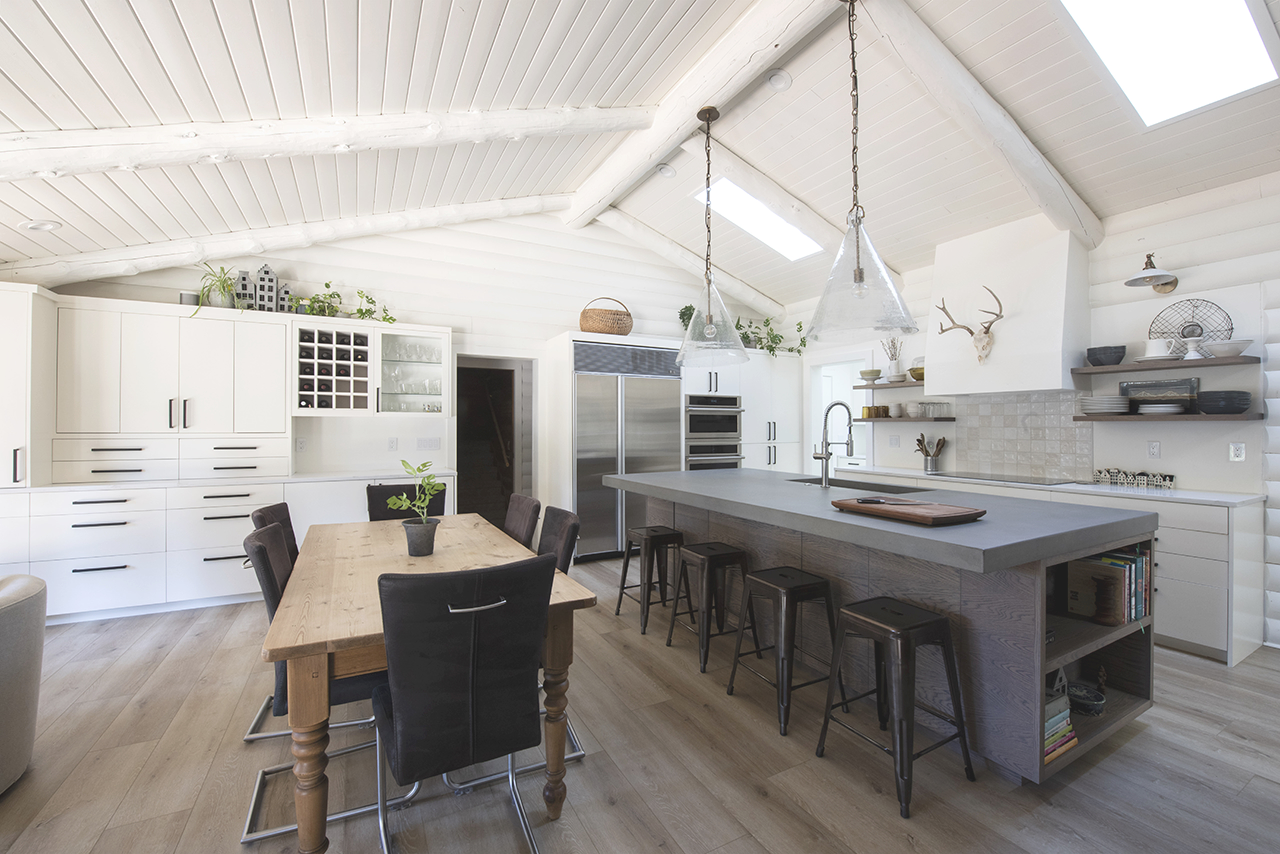
The family worked with Bend’s RD Building and Design to knock out two walls and open up the small kitchen space. This created a larger great room, with a spacious dining area, a cozy seating area and a connected living room space, with seating, a fireplace and television cabinet for occasional movie nights. An oversized kitchen island offers more kitchen prep area for Myers, who enjoys cooking and baking, and two skylights above the island help to brighten up the space. The kitchen’s one wall of cabinetry isn’t excessive, and Myers spent time taking careful inventory of which kitchen gadgets they actually used, carefully designing cabinetry for only what was needed and ditching the rest. An old telephone nook was taken out and some dead space behind the kitchen was turned into a small walk-in pantry for food storage.
“It’s one of the easiest remodels that I’ve done in the last five years, because she had everything lined out for me,” said Colby Summers, who heads up the remodeling division for RD Building and Design. Summers said Myers was extremely organized and knew exactly what she wanted, and that shows in the finished product. “She hit it out of the park,” Summers said.
Myers’ interest in design is coupled with an interest in art, and unique pieces were integral to guiding the design of the entire space. Above the seating area in the main room is a collection of abstract, circular clay pieces, each filled with fabric, created by artist Carolyn Hazel Drake. They’re clustered together in a way that seems random, but loosely depicts the mountains of the Sawtooth Range in Idaho. The art sits above a velvety orange couch over a shaggy rug, nods to the home’s 1970s history.
In the dining room, the art is a series of prints from Rafal Oblinski, a Polish illustrator and designer of Opera house posters whom Myers learned about while living in New York. Her home there was down the street from the School of Visual Arts where Oblinski was an instructor. “I was drawn to the surreal, dreamlike and psychological nature of his work,” she said. The dining table and seating benches are topped with beautiful white oak slabs, welded together by a neighbor, Mike Caligure. Together the dining area, seating area and kitchen island seating will provide ample spaces for guests down the road. “We used to entertain a ton, and will again someday,” Myers said.
Down the hall, each of the home’s three bedrooms—a main bedroom, Sebastian’s room and a guest room—offer simple, clean design, with thoughtful art pieces and colorful details that match the modern-yet-retro color scheme of the home. In the main bedroom’s bathroom, extra space was realized by expanding into a coat closet, allowing room for a double vanity and spacious shower. White oak is seen through the home, including the cabinets in this room and flooring throughout.
A spacious bonus room has space for three workstations, a convenient addition finished before the beginning of the pandemic. There’s also a library for the family’s book collection, and plenty of window views of quail and squirrels outside to enjoy. “It’s really kind of our catch-all space that we didn’t know we would really, really need,” Myers said.
Off the main living area is one more room that mixes function and design—the laundry room/mudroom/sunroom, a favorite spot for Sunny, the family cat rescued from the shelter in Redmond. The long room includes a purposefully designed laundry station, with cupboards and space to hang freshly cleaned clothes, while also serving as an unloading spot for gear after a day of Nordic skiing; a favorite activity for the family.
The interior remodel took about four months and was followed up last October with an exterior paint job, transforming the home’s outside with a crisp black—Sherwin Williams Caviar—paired with real copper gutters offering a modern, elegant accent. While the home today is mostly done inside and out, Myers is still looking forward to future projects, such as redoing the backyard’s entertaining areas and landscaping. She’s enjoyed the slow process of designing over time, and the result is a livable home with carefully considered details. “If you have the time, it’s nice to do slow design,” Myers said. “You really feel like you get to know the home. I think it’s okay to take your time.”
Myers is using the Valhalla Heights remodel as an example piece for her new design consulting business, Branch Home, where she helps other homeowners navigate the same process she’s gone through with the family’s home. She’s worked with some neighbors in the Valhalla Heights development, and expects to see a growing number of remodeling projects take place in the coming years, especially in west Bend, where many homes are older and ready to be refreshed. Myers said, “I love breathing new life into what’s already existing.”
Raise your hand if you’re ready to get outside and explore! Spring can be tricky—what trails are free and clear of snow? Try these four shoulder season hikes located in the high desert or Cascade foothills while waiting for hot summer days to open up the high-country trails.
105 miles southeast of Bend off County Highway 5-1
Of the many interesting geologic features in the Fort Rock/Christmas Valley area, one provides a “cool” spring experience. Crack-in-the-Ground, located about seven miles north of Christmas Valley, is a narrow, two-mile-long tension fracture in a portion of the Four Craters Flow. From the trailhead, an old two-track leads to the head of this narrow, 70-foot-deep fissure. The trail descends into the fracture’s shady recess which may be twenty degrees cooler than up on the rim.
In spots, hikers need to scramble over and around some of the boulders that have fallen into the fracture. These obstacles may need a rear spotter or occasional “butt boost,” so know your traveling companions well!
A few segments terminate at dead ends but offer glimpses into subterranean chambers where only lizards and small rodents tread.
The fun exploration of this trail is enhanced by fluting on the canyon walls and the occasional “chockstone” boulder wedged high above making hikers pause before quickly passing beneath. At the fracture’s end, hikers may return to the parking lot along the rim of this high desert adventure.
7.5 miles southwest of Bend off Cascades Lakes Highway
The Deschutes River, known as “Towarnehiooks” by Native Americans or the “Rivièr des Chutes” by French fur trappers, courses more than 250-miles from its headwaters at Little Lava Lake to the Columbia River.
Historically, the Deschutes flowed around Pilot Butte on its way to the Columbia. About 7,000 years ago, Lava Butte erupted and blocked the river’s channel with a basaltic dam. Ancient Lake Benham backed up to the Sunriver area before the river wore through the dam and created Benham Falls.
Hikers, runners and cyclists enjoy an 8.5-mile stretch of the Upper Deschutes River Trail between Meadow Camp and Benham Falls. Several trailheads, including Lava Island, Aspen and Dillion Falls offer access points to the trail for out-and-back trips. One popular segment connects Dillion Falls to Benham Falls (3.4 miles), slipping past the new habitat enhancement project at Ryan’s Ranch Meadow.
The Aspen area, which doubles as a whitewater rafting boat launch, connects upstream to Dillion Falls (1.4 miles) or downstream to Meadow Camp (3.7 miles). Along this stretch, observant hikers may spy a river otter or osprey hunting for fish.
The aquamarine bluffs of the Blue Basin area, comprised of volcanic ash and lake sediments dated twenty-five to thirty million years ago, have yielded a treasure chest of plant and animal fossils such as oaks, hackberries, three-toed horses, mouse-deer, sheep-like oreodonts and predatory bear-dogs, as well as turtles from which this geologic layer, the Turtle Cove member, derives its name.
Exploring this sculptured basin is via two trails. The one-mile round trip Island in Time trail explores the amphitheater-like interior of the formation, providing close-up views of embedded fossils. Several interpretive panels tell the geologic story of fossil preservation and discovery.
The upper, 3.25-mile round trip Blue Basin Trail climbs up a series of switchbacks to outstanding views of the John Day Valley. What goes up 600 feet, must come down on the
other side. Note: hiking the loop clockwise is easier on the knees.
Other Sheep Rock Unit trails explore the Foree and Cant Ranch areas. Not to be missed is the Thomas Condon Paleontology Center (check website for hours), which houses incredible fossil displays and colorful murals which portray prehistoric life of this region.
During the spring snowmelt, Tumalo Creek thunders over an eight-nine-foot-high cascade, forming the spectacular Tumalo Falls. Leaving the trailhead, it’s a short climb up to the overlook to feel the misty spray of this glacier-fed stream. The viewpoint also provides a glimpse at nature’s recovery from the 1979 Bridge Creek Fire which devasted this valley.
From the falls, hikers continue up the North Fork trail to Happy Valley (four miles), and pass by numerous waterfalls including Double and Upper Tumalo Falls. The gradual uphill trek crosses over the Middle Fork of Tumalo Creek on a log bridge with a hand rail. The trail continues upwards weaving between the Middle and North Forks before intersecting with the Swampy Lakes Trail which heads south and loops back to the parking lot. This loop crosses over the Bend Watershed into Bridge Creek (no dogs or bikes) and is a better summer hike when the water level drops and the one log crossing (no handrail) isn’t so intimidating.
Otherwise, hikers continuing up on the out-and-back route to Happy Valley reach an aptly named area: meadows bursting with spring wildflowers that hikers are “happy” to reach.
Once upon a time post-WWII, the American middle class boomed, automobile sales surged and road trips took their first steps into the lore of Americana. The creation of the nation’s interstate system in the 1950s and the burgeoning blacktop wanderlust that followed spurred the beginnings of the iconic roadside motel, providing weary travelers a functional, clean and reliable place to stopover for the night while traveling.
Motels (which originated from the combination of “motor” and “hotel”) were keenly differentiated from their hotel counterparts in that they were generally comprised of one or two floors, no central corridor or elevators and they provided automobile-loving Americans the opportunity to roll right up to their door.
Motels saw their heyday in the 1950s and 1960s but as the highway system evolved over the ensuing decades, freeways were built and the majority of motels were bypassed alongside the towns that contained them. Instead, travelers began staying in the newer, more standardized hotel chains sprouting up alongside the freshly laid pavement. Motels began to deteriorate, shut down and ultimately become relics of a bygone era.
LOGE Camp
Fast-forward to the last decade and motels are starting to see a resurgence. Americans are yearning for more authentic experiences, an ability to connect to the communities and places they visit and longing for the nostalgia of the past when life seemed simpler. Many savvy hoteliers saw a unique opportunity with these old motor lodges as they provided an affordable, scalable opportunity to build on top of an already established foundation.
“It’s expensive to build from the ground up right now,” said Gavin Burns, head of business development for LOGE Camp, formerly the Entrada Lodge. “We try to embrace the funkiness of the former property and keep those quirks but then refine them to our vision.”
Burns said the location on SW Century Drive was a perfect alignment for LOGE Camp. “We approached the Evert Family [the location’s original owners] early in the history of the LOGE hotels,” he said. “We wanted to be at the center of where outdoor recreation is.” The motel setup lends itself further to this active lifestyle, according to Burns. “People can pull right up to their doors, pull out their gear and be in their rooms in a matter of minutes,” he said. “And in just a few more, be ready to be back out and on the trails.”
Situated right next to public lands and singletrack trails, LOGE Camp is a hip motel basecamp for the outdoors. The simple yet attractive rooms are decked out with products from outdoor gear companies and a partnership with on-site adventure tour company Cog Wild Tours allows guests (and non-guests) to rent bikes and utilize shuttle services to Mt. Bachelor. Additionally, the motel rounds out the offerings with snowshoe, XC ski, sled and paddleboard rentals.
The newest addition to Bend, the Campfire Hotel on 721 NE 3rd Street opened its doors in October 2020. Formerly the Three Sisters Inn, the Campfire focuses on community and nostalgia channeled straight from the hotel’s brainchild, Tod Breslau. Breslau, who is also behind both The Hood River Hotel in the Gorge and Portland’s highly successful Jupiter Motel, said the idea for the Campfire came from his own experiences traveling as a youth with his family.
The Campfire Hotel / Photo Lane Pearson
“The Campfire Hotel is a nod to the great American road trip and to some of my fondest childhood memories of traveling in our trusty station wagon,” Breslau said. “The Campfire experience is about delivering that nostalgic vibe with modern touches and convenience. Check-in, jump in the pool, gather around the fire and meet new friends.”
Breslau said the site was chosen for its central location. “It was just kismet,” he said. “Everything just all came together. The location was available, and it was exactly what we were looking for—close enough to walk downtown and to restaurants, and easy to find.”
The vintage component was important for Breslau and the Campfire is the perfect mix of retro-cool with local interwoven throughout. Central Oregon juniper adorns the property and rooms have nostalgic touches such as rotary style phones and floor to ceiling photos depicting outdoors scenes when wool coats reigned supreme over puffies. The three separate buildings pay homage to the former site by distinguishing themselves as North, Middle and South Sister, and the rooms within have local touches that include Breedlove Guitars.
One of the earliest adopters to the motel renovation trend was longtime Bend family, the Kelleys, who opened the Wall St. Suites (1430 NW Wall Street) in 2013. Having already remodeled another motel on the Oregon Coast, the family saw a unique opportunity to restore a once prominent Bend motel back to its glory. “The Plaza Motel was cutting edge at the time it was built in the 1950s,” said Owner Kelsey Kelley Carson. “It was a big deal—celebrities would even stay there.”
Wall St. Suites
By the early 2000s, however, changes in both ownership and the surrounding neighborhood negatively impacted the business. The Kelleys bought the location in 2011 and completely remodeled the interior, transforming the original thirty-two units into seventeen, fifteen of which are suites. For the Kelleys, the remodel was all about a return to community. “Everything we do, we ask ourselves ‘Is there someone local who does this?’’” said Kelley Carson. “Can we connect our guests to the community in a meaningful way?” Some highlights include locally made Dani Naturals bath products, photography by both Joel Chadd and Toni Toreno, artwork by Sheila Dunn and in-room Metolius Tea and Bend Roasting coffee. Oh, and did we mention Deschutes beer upon check-in?
“When I travel, one of the first things I like to do is have a beer and settle in, so we thought let’s do the same,” said Kelley Carson. “Pair it with some good recommendations for a local restaurant and it provides a richer experience for people and a connection to the local community. That’s what people want when they’re traveling.”
It’s no secret that the pandemic changed life drastically for everyone. People, of course, have been dramatically impacted, but one ripple effect of the past year is a toll on local wildlife and the public lands they need to thrive and survive. Once people could go places, they chose the outdoors, where social distancing was easier. U.S. Forest Service Public Affairs Officer Kassidy Kern said the pandemic has brought “absolutely unprecedented numbers” of visitors to public lands in Central Oregon, and with them, unfortunately, a host of problems.
“We are currently cleaning up a lot of garbage from people, repairing trails and roads that have deep ruts or trail braiding, as well as assessing soil compaction and the degradation of wildlife habitat from off-roading and parking outside of designated areas,” Kern said.
Bend residents have reported increased amounts of litter in public areas and the roads that lead to them, like China Hat and the Cascade Lakes Highway. Even snow areas such as Wanoga Sno-Park and Mt. Bachelor have had issues with litter.
The tourism pros at Travel Oregon had already noticed an uptick in impacts to our wild lands prior the pandemic. They launched the “Take Care Out There” campaign in 2019, aiming to educate Oregonians and tourists alike in how to properly enjoy and maintain Oregon’s natural beauty. Now more than ever, everyone who enjoys visiting the outdoors needs to take measures to protect it. “We support and encourage people to make these memories with friends and family, but also remind visitors that recreating comes with a responsibility to take care of these special places,” Kern said.
Here are a few helpful tips to keep in mind as you explore this summer, to keep our public lands healthy and accessible for generations to come.
Prepare
Do some research on current guidelines and local regulations and try to plan a trip that avoids busy crowds. Have a backup plan in case a destination is closed or at capacity and try to limit groups to ten people. Be sure to dress appropriately for the weather and pack essentials. Don’t forget to bring some cash for the occasional parking fee at state parks and check road conditions before heading out.
Care
When everyone is mindful of their surroundings, it makes exploring public lands and state parks all the more enjoyable. Avoid crowds and don’t linger in parking lots or points of interest for too long. Know your limits and don’t do anything that puts you or others in danger. Follow posted signs, stay on the trails and be sure to wear face coverings when crossing paths with other visitors. Pack out everything that was packed in, including trash such as disposable face coverings and drink containers. When nature calls for both people and pets, be respectful and have a plan to leave no trace.
Connect
Take some time to learn about the diverse landscapes of Central Oregon and the communities that call them home. Wherever you go, be sure to share a smile and some kind words with the people you encounter on the trail and in town. During COVID-19, be patient and understanding with others as recent events have impacted many people’s well-being.
Lastly, always remember to show your appreciation. Say “thank you” to those you meet along the way. Try to eat, drink, shop and stay locally to ensure that the communities near Central Oregon’s public lands thrive into the future.
For one glorious summer fifty years ago, the computer who wore tennis shoes played second base for Bend’s first minor league baseball club.
photo deschutes county historical society
Yes, before he escaped from New York as Snake Plissken, before he got into big trouble in Chinatown as Jack Burton, before he led the charge against the Soviets as Herb Brooks, and before he teamed up with Doc Holliday as Wyatt Earp, Kurt Russell hit .285 over fifty-one games as a 20-year-old infielder for the Bend Rainbows in 1971.
“He was a lot like me…just a smart player,” Russell’s Rainbow teammate Tom Trebelhorn, who went on to manage seven years in Major League Baseball, told
MiLB.com in 2019. “Kurt knew the game, he played it well and was a good teammate.”
The son of longtime Hollywood actor Bing Russell, Kurt grew up in the business and appeared in more than a dozen TV shows as a child actor, including classics such as Gilligan’s Island, Lost in Space, The Fugitive, The Virginian and The Man from U.N.C.L.E. By the time he made his first appearance at Vince Genna Stadium in June 1971 (it was Municipal Ball Park then) Russell was a household name, starring in a series of charming but forgettable Disney teen movies, most famously The Computer Wore Tennis Shoes. Russell missed the first game of the Rainbows’ 1971 season finishing up production of The Barefoot Executive, a film whose plot revolved around a beer-chugging chimpanzee who could predict TV ratings. Released the same year as The French Connection, The Last Picture Show and A Clockwork Orange, somehow The Barefoot Executive was shut out at the 1972 Academy Awards.
Kurt Russell and David Janssen in The Fugitive, 1965. Photo ABC Television, Public domain, via Wikimedia Commons
“The local theater won’t be the only place that will showcase Hollywood actors in Central Oregon this summer,” the Bend Bulletin wrote on May 6, 1971, announcing Russell’s signing. “Young Russell’s decision was not a complete surprise. Baseball has been his ‘first love’ for years, and he even had a stipulation put in one of his television contracts that he be through work early enough in the day to play baseball.”
While Russell’s signing absolutely wreaked of a publicity stunt—the Rainbows had struggled with attendance in 1970, their first year in Bend, and would eventually leave for Walla Walla, Washington after the 1971 season—Russell more than held his own in his first season of pro ball in a league that included Trebelhorn and multiple future big leaguers. Arriving directly off the set of The Barefoot Executive with no pre-season preparation, Russell led off and started
his first game with Bend at second base, promptly going 2 for 5 with a double
and two runs scored. A switch hitter with a good eye but not much power—he walked almost as much as he struck out and finished with a .385 on-base percentage—Russell made the Class A Northwest League all-star team in 1971, a league made up mostly of recently drafted high school and college players, and helped Bend go 42-36, the best record in the NWL’s South Division.
photo deschutes county historical society
“If I could have everything my way, I would play pro baseball and produce movies,” Russell, who in his teens played competitive semi-pro baseball in southern California, told The Oregonian that summer.
Batting first or second most of the year for manager/pitcher Ed Cecil, a Bend native who went on to coach American Legion baseball in the area for decades, Russell built off his solid 1971 season in Central Oregon and hit .325 in twenty-nine games for Walla Walla in 1972, again earning a spot on the NWL all-star team.
“My picture commitments at Disney now revolve around my playing ball,” Russell told The (Louisville) Courier-Journal in 1972. “I’m really lucky to have so much freedom in my filming schedule.” That same year Russell starred in Now You See Him, Now You Don’t, a Disney comedy in which a college chemistry student invents an invisibility spray that a local crook tries to steal. One of the unintentionally hilarious taglines Disney used for the film was, “It’s the invisible vapor caper of the year!”
The Bend Rainbows team, circa 1971. Russell is in the first row, second from right. Photo deschutes county historical society
Russell opened the 1973 season at Class AA El Paso, just two rungs below Major League Baseball, and was hitting a blistering .563 over six games before tearing his rotator cuff turning a double play, effectively ending his baseball career. Later that summer he played twenty-three games for the Portland Mavericks, a club his father owned, as a designated hitter, but his days in the field were behind him.
Russell continued his string of Disney teen comedies for several years after he injured his arm before earning widespread acclaim in the 1979 TV biopic Elvis, which was helmed by the up-and-coming director John Carpenter of Halloween fame. Carpenter cast Russell as the lead in Escape from New York in 1981 and again in Big Trouble in Little China in 1986, by which time the former Bend middle infielder was a bonafide action star. Despite playing just 110 games over four seasons, Russell’s pro baseball experience left a lasting mark.
“I still look at the world through the eyes of a ballplayer,” Russell told the baseball history organization Society for American Baseball Research in 2019, more than forty years after his last at-bat in the minor leagues. “On a (movie) set, I want to make the team. If necessary, I’ll carry this team.”
Photo courtesy of the high desert museum- 2019 field trip
Starting May 7, the High Desert Museum welcomes the eighth annual “Kids Curate,” a youth art program run by the museum displaying students’ artwork from a rotating list of local schools. The program invites students to learn about a new topic within science or history every year, and to create an art project based around what they learned. Curators at the museum work with these individual schools in both classroom lessons and field trips to help students learn about their subjects and create the exhibition.
This year, fifth graders from R.E Jewell Elementary learned about how plants and animals get energy from the sun. Each individual class was assigned one specific habitat, full of flora and fauna to study, and then students created drawings to illustrate the scientific processes they studied. These drawings will be on display in the museum after they are laser etched into plexiglass tiles and arranged into a large mosaic.
The program was conducted completely virtually this year until about mid-April, when the students resumed their in-person classes. The curator of education at the museum, Carolyn Nesbitt, expressed her happiness in how this year’s students adapted to the new online format.
“We are so proud of how the students embraced this program in an online format this year. We all have the ability to examine plants and animals in our own neighborhoods, and the kids explored and embraced not only the assigned habitats, but also what’s right out their own front doors,” Nesbitt said.
This one-of-a-kind display provides students unique learning opportunities, a chance to connect their school lessons with the environment around them and the opportunity to publicly and proudly display their work in a museum. Click here to take a look at last year’s exhibition, created by fourth and fifth graders at Roseland Elementary in La Pine. For ticket and admission info, click here.
The Colima Market, located on Northeast Greenwood Avenue, is a traditional Mexican market run by the Chavez family that provides authentic Mexican and Central American goods to Bend. Many goods come directly from Mexico, and the Colima Market is one of the only places in Central Oregon where you can find them. The market includes a bakery where pan dulce (sweet Mexican bread) and hand-made tortillas are made fresh daily, along with a meat and dairy section that includes chorizo, queso fresco and other Mexican ingredients; the very same ingredients that are used in the owner’s brother’s food truck, El Taquero, among at other restaurants in Bend. The Colima Market was originally owned by a family from Colima, Mexico. They retired about eight years ago and sold the market to their friends, the Chávez family, who are originally from Guerrero, Mexico. The daughter in the Chávez family, Yamely Chávez Kennedy, is the current owner and manager of the Colima Market and oversees day to day operations.
How did your family go from living in Guerrero, Mexico to owning a small business in Bend, Oregon?
Poverty was the main reason my dad decided to come to America twenty-four years ago. My father had a very sad and difficult childhood where he suffered from homelessness and near-starvation. He came to America to provide for his children a better, safer future than what he had. We lived in California for eight years and then moved to Oregon after we came up to visit the state and immediately fell in love with it. My parents worked very hard and eventually got the opportunity to buy a small Mexican store in Madras, Oregon and that’s how we started. Then, the opportunity came up to expand into Bend when our friends put the Colima Market up for sale. We have owned and operated the market in the eight years since then.
How has your business been received by the community, and have there been any challenges along the way?
In general, we receive more positive feedback than negative. We are so grateful and fortunate to be a part of a community that, for the most part, supports our culture. Coming from Mexico to California to Oregon was definitely hard to adjust to at first; we were missing our culture and traditions. This is why we focus on bringing more of that into our stores so we can bring a part of Mexico to our customers and the entire community.
What plans do you have for the Colima Market in the future?
We’re concerned about competition from bigger stores, but we hope to still be in business ten years from now! We hope our customers keep supporting us even if big corporations come in. We are working very hard as a family to keep expanding and remodeling our little store, to add more departments and more authentic Mexican goods. We plan on expanding the bakery, meats and dairy section to provide a higher quantity of quality goods to our customers. We are dreaming big! We hope to one day become as big as Safeway or Fred Meyer, but Mexican style.
El Mercado Colima trae una porción de México al centro de Oregón
Entrevista por Noah Nelson
El Mercado Colima, ubicado en Northeast Greenwood Avenue, es un mercado tradicional mexicano dirigido por la familia Chávez que ofrece auténticos productos mexicanos y centroamericanos a Bend. Muchos productos provienen directamente de México, y el Mercado Colima es uno de los únicos lugares en el centro de Oregón donde puede encontrarlos. El mercado incluye una panadería donde el pan dulce y las tortillas hechas a mano se preparan diariamente, junto con una sección de carnes y lácteos que incluye chorizo, queso fresco y otros ingredientes mexicanos; los mismos ingredientes que se utilizan en el camión de comida del hermano del dueño, El Taquero, entre otros restaurantes en Bend. El Mercado Colima fue originalmente propiedad de una familia de Colima, México. Se retiraron hace unos ochos años y vendieron el mercado a sus amigos, la familia Chávez, quienes son originalmente de Guerrero, México. La hija de la familia Chávez, Yamely Chávez Kennedy, es la dueña y administradora del Mercado Colima y supervisa las operaciones del día a día.
¿Como logro venir de Guerrero, México a ser dueña de una pequeña empresa en Bend, Oregón?
La pobreza fue la razón principal por la que mi padre decidió venir a Estados Unidos hace veinticuatro años. Mi padre tuvo una infancia muy triste y difícil en la que sufrió de falta de vivienda y hambre. Vino a Estados Unidos para darles a sus hijos un futuro mejor y mas seguro que el que el tuvo. Vivimos en California durante ocho años y luego nos mudamos a Oregón después de que vinimos a visitar el estado e inmediatamente nos enamoramos de el. Mis padres trabajaron muy duro y finalmente tuvieron la oportunidad de comprar una pequeña tienda mexicana en Madras, Oregón y así fue como comenzamos. Luego, surgió la oportunidad de expandirse a Bend cuando nuestros amigos pusieron de venta el Mercado Colima. Hemos sido dueños del mercado y lo hemos operado en los ocho años transcurridos desde entonces.
¿Como ha sido recibida su empresa por la comunidad y ha habido desafíos en el camino?
En general, recibimos mas comentarios positivos que negativos. Estamos muy agradecidos y afortunados de ser parte de una comunidad que, en su mayor parte, apoya nuestra cultura. Definitivamente fue difícil adaptarse al principio de venir de México a California a Oregón; extrañábamos nuestra cultura y tradiciones. Es por eso que nos enfocamos en traer mas de eso a nuestras tiendas para poder ofrecer una parte de México a nuestros clientes y a toda la comunidad.
¿Que planes tiene para el Mercado Colima en el futuro?
Nos preocupa la competencia de las tiendas mas grandes, ¡pero esperamos seguir en el negocio dentro de diez años! Esperamos que nuestros clientes sigan apoyándonos incluso si entran grandes corporaciones. Estamos trabajando muy duro como familia para seguir expandiendo y remodelando nuestra pequeña tienda, para agregar mas departamentos y mas productos mexicanos auténticos. Planeamos expandir la sección de panadería, carnes y lácteos para brindar una mayor cantidad de productos de calidad a nuestros clientes. ¡Estamos soñando en grande! Esperamos algún día llegar a ser tan grandes como Safeway o Fred Meyer, pero al estilo mexicano.
The first line in Prineville-based country musician Olivia Harms’ song “Canby” encapsulates not only her country roots and her hometown pride, but her paramount objective in any of her music; to write about lived experiences, and to form connections with her listeners. “I should not write things that are not authentic to me, because you can’t relate to music that isn’t authentic. My first rule of songwriting is to always have the experience to back up the story,” Harms said.
And back it up, she does. Harms grew up as a member of the FFA on her family’s century farm in Canby that was homesteaded in 1872; a farm that is only thirteen years younger than the state of Oregon. She participated in 4-H and grew up to be more comfortable wearing Carhartt than Prada.
Harms believes that real country music comes from a real country lifestyle; growing up on her family farm in Canby taught her a strong work ethic and a deep sense of pride in her roots. These are the traits that the songwriter always brings to her creative process. “I figured if I was gonna be a country music artist, one day I’d need a song about my hometown so folks would know where I came from,” Harms said.
Harms began a career in music in high school, playing locally in and around Canby. While obtaining her undergraduate degree at Oregon State University, she played around twenty shows a year. After graduation, Harms moved to Prineville. “I had always loved central Oregon, and since there are many live music venues in the area I decided to make the move in 2017,” she said. “With Prineville being the cowboy capital of Oregon and a little less expensive, I thought it was the perfect fit.”
Soon after, she decided to go full-time with her music career, acting as her own booking agent, publicist and manager. “I contacted every venue I could around the area and throughout the Northwest, slowly creating tours and adding dates to my calendar. The first year and a half was definitely a learning curve, but I started seeing the progress by 2018. In 2019, I played over 130 dates and substantially grew my social media following.”
During this time, Harms was commuting back and forth to Nashville to record her singles, meet successful recording artists and co-write songs with them.
“Canby” was Harms’ first song to gain some traction and propel her career. After that came a song called “Gypsy” that spoke about life on the road and drifting from one town to another; Harms spends half her year in Oregon cowboy capital Prineville, living the life she sings about, and the other half in Nashville, recording her music.
“I had folks coming up to me after shows who would just gush about how they relate to my songs. Even if they hadn’t been to the towns I had been to, they related to the lifestyle I was singing about,” Harms said.
Out of all the country music heroes that Harms can talk about, her biggest inspiration is her mom and local country music legend, Joni Harms. Joni has released eleven studio albums and even had a chart-topping track back in ‘89 called “I Need a Wife.”
“My mom has always been my biggest fan. Although she mostly lets me fly solo now, she was instrumental in teaching me everything I know about country music,” Harms said. “I feel like it’s always been in my blood.”
Harms has a new studio album coming out May 21 that aims to showcase her diverse songwriting skills while utilizing an old Western sound. “I want to bring back real country,” Harms said. The album’s first few singles, “Gypsy,” “Road of Lies,” “Kiddie Pool” and “Hey There, Cowboy” have all been released.
Harms originally planned on recording her new album back in March of 2020, but the world had other plans. Eventually, Harms decided to record her album in Nashville, pandemic or not. “I always figured you can either focus on the bad in a bad situation, or choose to see the good. The world needed music and I wasn’t going to put my dreams on hold, so I went to Nashville, followed every legal precaution and got the record made,” Harms said.
In true country music fashion, Harms believes in persevering through hardships to achieve her goals, “You can’t always control what life throws at you, but you can always choose how to react.”
Listen to Olivia Harms and her new album on Spotify, YouTube and Apple Music.
It’s a popular saying around town that Bend enjoys two seasons: winter and construction season. And while it’s a sentiment typically played for laughs, there’s some truth to it: nearby Cascade peaks enjoy a light dusting of snow as early as October, lines form at Mt. Bachelor by December and overnight snow showers linger well into March.
With such a long winter, it’s easy to lose sight of spring—which is why an early-season outing to Southeast Oregon offers a welcome respite. Signs of the changing seasons abound with chattering bird calls, lemon-scented sagebrush blooms and clear night skies throughout the region.
The vaguely brick-shaped Steens Mountain may be the sun around which the rest of the region orbits—with Malheur National Wildlife Refuge at its northern edge, the historic Frenchglen Hotel at the base of its gentle western face and the Alvord Desert at the foot of its sheer eastern face—but snow keeps the higher reaches of Steens Mountain closed until midsummer. The peak is the largest fault block mountain in the northern great basin, after all. So in spring, the comparatively low-elevation attractions around the mountain get top billing.
photo austin white
And a long weekend is just the right amount of time to soak up that first dose of spring when it hits the region in May and June. Here’s how to make the most of a trip with a counterclockwise loop around Steens Mountain.
Spot Migrating Birds at Malheur National Wildlife Refuge
Driving the 42-mile Blitzen Valley Auto Tour Route south from Malheur National Wildlife Refuge, it’s easy to forget that—as recently as the 1880s—the North American bird population was in freefall. By the dawn of the 20th century, most of the long-necked egrets at Malheur Lake, for instance, had been killed by hunters who wanted their feathers for decorating high-priced headwear and growing the United States’ nascent hat industry.
photo George Ostertag / Alamy Stock Photo
To save what remained of the declining egret population, President Theodore Roosevelt established the refuge in 1908. More than a century later, thousands of egrets frolic and feed in the wetlands around Malheur Lake (the first stop on the Blitzen Valley Auto Tour Route) each spring—one of more than 340 species of birds that have been spotted around the 187,000-acre refuge.
On a recent springtime outing, I spied a few sandhill cranes soaring over the placid lake and Canada geese lounging in its waters. Farther south, at an overlook above the Blitzen Valley, a peaceful violet-green swallow relaxed on a sagebrush branch; the bird’s colorful coat makes it easy to see in the dusty landscape.
photo Greg Vaughn / Alamy Stock Photo
Slow Down in Frenchglen
There’s never a bad time to visit the no-stoplight hamlet of Frenchglen, just 45 minutes south of Malheur via Highway 205, but spring brings its own rewards. Summertime crowds passing through town and fanning out to the rest of the region haven’t arrived yet—so it feels as if the community takes a deep breath before road-trip season hits its stride.
It’s only fitting that the town’s main attraction, the Frenchglen Hotel, is the kind of place that forces overnight guests to slow down and take a deep breath along with the locals. Built in the 1920s, the eight-room inn originally served as an overnight stop for stagecoach travelers. Today, the Frenchglen experience doesn’t feel as if it’s changed much in the century since opening: On a recent stay, wooden floorboards creaked under my feet, landscape photography in my room recalled the region’s ranching heyday and a wooden rocking chair on the screened-in patio offered the right kind of comfort for watching the sunset as darkness descended on the sagebrush steppe below Steens Mountain.
Soak up the Sun in the Alvord Desert
The Alvord Desert sits less than 90 minutes southeast of the Frenchglen Hotel—but after hitting the southernmost point of your loop at the tip of Steens Mountain and then heading north along the gravel Fields-Denio Road, it feels a world away.
photo tyler roemer
Heading north, the first breathtaking view of the Alvord Desert comes from atop a nondescript hillside, the desert’s khaki-colored surface almost blinding on a sunny afternoon. The dry lakebed is among the driest places in Oregon, receiving barely enough precipitation each year to fill a bathtub and extending twelve-by-seven miles to the east.
Even base-model sedans can drive onto the Alvord, at least if it hasn’t rained recently—but the area’s most magical experience comes on the desert’s western shore, at the Alvord Hot Springs.
The hot springs can be accessed as a day trip or as part of an overnight outing, because Alvord Hot Springs offers campsites and bunkhouses. Daytime trips mean an opportunity to unwind en route to your next destination—but the magic of the Alvord Hot Springs really reveals itself on a clear night, when a quiet fog of steam rises from the pool and some of the darkest night skies in the contiguous United States give way to some of the brightest night sky displays in Oregon. On a moonless night, the entire Milky Way rises above the Alvord, and millions of stars seem to dance against the pitch-black sky.
Everything about the experience—the warmth of the pool, the clear night sky, the refreshing anticipation of what else the region hides—feels like a long exhale. It feels like spring.
Sarah Root’s studio contains no easel, no messy half-tubes of paint or palette, no hodgepodge of stacked work. In fact, her home studio is tidy and clean with plastic and plexiglass protecting the carpet. Her colored pencils stand upright in canning jars on a tray. “I’m a double Virgo, and Virgos are neat freaks. We find peace in order,” she explained.
Root creates solely in pencil, though she received training as a painter and printmaker. She sketches feverishly when inspiration strikes and draws layer upon layer until the paper is saturated in color, resulting in work that resembles a textured painting. Shapes become patterns, and patterns become familiar life forms. On occasion, she incorporates metal leafing.
“My drawings are inspired by my close friendship with nature and animals,” she said. “I’m doing a lot of birds because they come to me, often in dreams.” Owls, eagles and ravens soar with outstretched wings. Other wildlife—polar bears, hawks and foxes—find equal expression through Root’s pencils.
In her studio, the large piece she was working on was affixed to the floor, which immediately raises the question: how does she sketch? The answer: on her belly or cross legged, positions she can maintain for hours.
Root’s eagle drawing is titled “Brave”
When she finishes a piece, she has it photographed and made into prints and gift cards of various sizes, which she sells on her website (sarahrootart.com), at the High Desert Museum and in businesses in Central Oregon. The original is available to a buyer who connects with it. “I don’t hoard my work, even though I instill a lot of love,” she said. “I want it out where others can enjoy it.”
“I rarely see someone who follows their inner guidance like Sarah does,” said John Hummel, Deschutes County District Attorney and a collector of her art. “When I see those pieces she’s drawn, I know they’re a manifestation of what calls out to her.”
Raised as a second-generation Buddhist, Root grew up in a family of artists with a strong Japanese aesthetic. Her mother, Marlow Brooks, is a gallery-worthy calligrapher and her uncle, Stephen Brooks, is an artist, writer and producer of plays. “Uncle Steve educated me. I saw seven operas with him, countless shows, and I’ve viewed art with him in Paris, New York City and Minneapolis,” she said. The noted calligrapher and Japanese Zen priest, Kobun Chino Otogawa, was “a steady source of love and a dear mentor,” she added.
Her family lived in Nova Scotia, rural Vermont, Colorado and England, moving often. For college, Root chose Sarah Lawrence College in Bronxville, New York, where she studied philosophy and art. After graduation, she moved to Portland and ran a print gallery.
Root working on her newest piece “Modern Love,” posed on the floor in her unconventional drawing position
But service to others was in her DNA. She started helping students at Portland’s Roosevelt High School with college applications. It was there that she had an ah-ha moment and decided to become an educator. She became an accredited instructor for students with dyslexia and other learning differences through the Academy of Orton-Gillingham and began tutoring children in 2010. As a fellow dyslexic, she empathized with her students. In 2015, she moved to Bend and established Wild Roots Learning to provide specialized services for students with dyslexia and learning differences.
The Pacific Northwest also provided the landscape for rock climbing, mountaineering and volunteer work as a wilderness first responder. “I was spending less time doing art and more chasing mountains,” she said. But she suffered a traumatic brain injury which made physical activity and socializing nearly impossible. “When I hit my head, it shifted things,” she said. She continues to struggle with the aftereffects of the injury and says it significantly altered her path. “(But) it renewed my commitment to creating animal scenes and reminding people of their connection to the wild,” she said.
In addition to her sketches, Root has published a children’s book, Warrior Friends, and has submitted another book to a publisher.
Hummel says of the owl he purchased, “It’s small but when it soars, it’s majestic. Sarah captured so well the strength of that owl’s spirit. She helps her kiddos realize they are that owl. They may feel that they’re small, but she helps them spread their wings.”
After years of searching, Stoller Wine found a place in Bend to call home. The new wine bar opened in February 2021 and is located across from the Podski Food Cart Lot and next to River Pig Saloon in the Box Factory. It serves as the perfect place for Bend locals and visitors to stop in, sit down and stay awhile with a drink in hand.
“The concept behind this space is to create a bridge between the winery in Dundee Hill and Bend,” said Steven Benson, director of consumer sales at Stoller Wine Bar.
The place does just that with its keen ability to craft any experience someone may be looking for. The open-air room and patio emanate hospitality with a comfortable atmosphere and friendly prices for both wine novices and seasoned veterans alike. Children have an invite, as well. Abuzz with laughter and conversation, the space is unlike a traditional tasting room.
“We think of wine very much as part of a well-rounded lifestyle,” said Michelle Kaufmann, Stoller Wines communications director. “Whether you’ve been out hiking all day or you just hit the slopes, and you’re coming in off the mountain, [Stoller Wine Bar] is the place to stop, grab a drink and reset before you go home and make dinner or go out to dinner.”
The labels Stoller, Chehalem, Chemistry, History, and Canned Oregon are under one roof. Get a taste of the variety of the Oregon wine country when you choose from the Willamette Valley Flight or Reserve Flight, go straight for a full pour from their draft wine selection, or commit to a full bottle; you won’t be disappointed. A local’s favorite has been the Pinot Noir Rosé. If you’re not a wine drinker, you can opt-in for their beer or cider offerings or indulge in various snacks, including cheese, charcuterie and flatbreads.
Stoller Wine is the ideal place for day-drinking with friends, grabbing a beverage before dinner downtown or rounding out a perfect day in Bend. No matter your preferred time, reservations are recommended.
Every year when Central Oregon’s weather finally turns to warm temperatures full-time, taking in a refreshing beer and a mouthwatering meal feels as right as shrugging off your puffy coat in the sunshine. So many different combinations of flavors and aromas say summer. Maybe you’re looking to refuel in a big way after a day of hiking, or you’re simply craving something fresh and seasonal. Here, local chefs from breweries in Redmond, Sisters and Bend share dishes with a well-paired beer, to elevate your meal from tasty to memorable.
As owner of the new food truck Luckey’s Woodsman, Jackson Higdon has happily been juggling running his truck on Mount Bachelor while serving food in town at Silver Moon Brewing. Forged in the pandemic, the partnership made sense for both Higdon and Silver Moon.
Higdon calls his food elevated backcountry cuisine. In the lumberjack bowl, he combines “midnight brisket,” 14-hour smoked Cedar River Farms organic grain-fed steer, with forbidden rice, arugula pesto, cotija cheese, chipotle aioli, and charred Brussels sprouts and radishes.
Silver Moon’s Mango Daze, a “super sociable malty, not-so-bitter, easy-drinking pale ale,” as Higdon describes it, complements the “roastiness” of the brisket. Brewed with real mangoes and fruity Northwest hops, the beer comes in at 6 percent ABV and 25 IBU.
Initiative Brewing’s head chef Matt Anderson has creatively infused Asian, South American and European flavors into pub favorites at the Redmond brewery. One of his classics with a twist? The Hawaiian burger, a seven-ounce grass-fed beef patty from southeastern Oregon’s Roaring Springs Ranch, teriyaki ham, Tillamook swiss, lettuce, tomato and finished with a house-made pineapple jam and ginger aioli, served with salad, house-cut fries or Asian coleslaw.
Anderson and Chris Brumley, Initiative’s co-owner and brewmaster, said their Northwest style house IPA Hoppy Habits, at 7 percent ABV and 53 IBUs, is the ideal pairing, offering a tropical fruit and citrus hop profile. “It has a nice wheat and salty flavor, which the aioli kind of smooths over,” Anderson said.
At Three Creeks Brewing where Mark Perry is manager and head chef, he encourages a team atmosphere. So when kitchen staffer Sal whipped up carnitas tacos for himself, Perry ran with it.
For Sal’s carnitas tacos, pork is braised in a light beer until it’s fall-apart tender, then finished with fresh lime juice, cilantro and extra seasoning in a white corn tortilla. Cilantro rice and black beans are served on the side.
The tacos go best with Tres Arroyos Mexican lager, a seasonal beer so popular, they transitioned it to year-round. A batch of the lager takes about two months to make, Perry said, describing it as light, crisp and refreshing and coming in at an ABV of 4.5 percent.
Lots of textures and color. That’s what Worthy Brewing’s executive chef and food and beverage director Monica Kline likes on her menu, balancing pub staples with equally delicious healthy dishes. Inspired to pair Worthy’s new low-calorie Easy Day Hazy IPA series at 3.4 percent ABV, Kline used the grapefruit Easy Day to create a hazy avocado poppy seed vinaigrette for salad and bowl options (more flavors are expected to join the grapefruit and tangerine in the IPA series this summer).
The summer citrus salad tosses spring mix, grapefruit segments, quinoa, red onion and salty cheese in the dressing. For the bowl, ancient grains are warmed in the vinaigrette, then topped with carrot, avocado, cucumber, watermelon radish and yellow sweet drop peppers. Add grilled chicken, steak or steelhead to either.
Head chef Justin Goin is somewhat bashful about his name gracing Sunriver Brewing’s Goin beef enchiladas, but he’s proud to have recreated a dish he grew up eating in El Paso, Texas, and Tucson, Arizona. It’s not uncommon for visitors from Texas, Arizona and New Mexico to ask to meet the chef.
Goin takes New Mexico Guajillo dry chile pods, rehydrating them, mincing and grinding them for the sauce. The enchiladas are then layered similar to lasagna, with aged white cheddar, the guajillo sauce, beef and lettuce, with a fried egg placed on top. Sunriver’s Deseo Mexican lager at 5 percent ABV is the right pairing for the spicy dish, Goin explained, as the beer helps clean the palate between each rich bite.
Monkless Belgian Ales owner Robin Clement calls their European-influenced Belgo burger a “fork and knife burger.” Executive chef Stacie Cruikshank intended it that way. “You’re going to need napkins,” Cruikshank said. “It’s decadent, fatty and delicious.”
Layered with Oregon ground chuck, butter leaf lettuce, dill pickle, a pile of caramelized onions and Muenster cheese on a buttery grilled Big Ed’s Kaiser bun, the burger is sauced with dijonnaise, which, Cruikshank said, they “do not go shy on.”
To complement the burger Cruikshank recommends their Samaritans Saison at 6.2 percent ABV, or alcohol by volume. A Belgian farmhouse style, the beer is a bit tangy, pairing well with the rich burger’s natural fats. Diners can choose frites or salad for their side.
Just over a century ago, the tiny settlement of Bend was roaring into the 1920s. It was a land of adventure and opportunity, similar to current times in many ways. The population had expanded tenfold, from 536 residents in 1910 to 5,436 a decade later. Dense pine forests fueled the economy, and the Old Mill and Box Factory areas bustled with loggers and millworkers. A new dam on the Deschutes River provided the first electric power in town, creating Mirror Pond in the process. Entrepreneurs platted out new streets for homes and neighborhoods, with the bend in the river at the center.
In the midst of this boom, a few key local leaders recognized the value in preserving outdoor space for gathering and connecting with nature. Their vision led to the creation of Bend’s first parks: Drake Park along the east bank of the Deschutes River in the heart of downtown Bend, and Shevlin Park, a natural area wrapped around Tumalo Creek, on the western edge of town. In doing so they set the stage for Bend’s ongoing culture of outdoor recreation and love of nature. These parks, both established in 1921, remain the crown jewels in Bend’s park system today.
BEFORE THERE WERE PARKS
Long before European Americans reached Central Oregon, this land was important to the ancestors of the Warm Springs, Burns Paiute and Klamath tribes. Native Americans traveled seasonally along the Deschutes River and Tumalo Creek, seeking resources like berries, basket materials, medicine, fish and game. Bend is located within the lands ceded to the United States government in 1855, as part of the Treaty with the Middle Tribes of Oregon.
In 1843, explorer John Fremont passed through Central Oregon on a mapping expedition from The Dalles to Nevada. Along with guides Kit Carson and Billy Chinook, the Fremont party camped in what is now Shevlin Park. Billy Chinook eventually returned to The Dalles and became a leader of the Wasco tribe. He served as an advocate during the 1855 treaty negotiations, and Lake Billy Chinook is named in his honor. Fremont’s maps and guidebooks identified an easily crossed stretch of the Deschutes River, opening the door to settlers and loggers. By the turn of the century, Bend was on the map.
photo Beth Dixson / Alamy Stock Photo
DRAKE PARK: AT THE HEART OF BEND
Bend’s favorite gathering space might easily have ended up a neighborhood of historic homes, if not for the Women’s Civic Improvement League and its founder, May Arnold. When the landowners drew up plans for homesites along the east bank of the Deschutes River, Arnold successfully spearheaded an effort to turn the riverside property into a city park. The women gathered 1,500 signatures from the townspeople to put a bond measure on the ballot. It passed, and the city purchased its first park for $21,000. Drake Park is named for Alexander Drake, who platted the original townsite and built Bend’s first lumber mill, irrigation canals and the hydroelectric dam that created Mirror Pond.
From the beginning, Drake Park was intended to provide a gathering place, according to Julie Brown, communications and community relations manager for the Bend Park and Recreation District. “The Women’s Civic Improvement group rallied for a town square type of park that would be at the heart of the community. Their forward-thinking vision of what this could mean for the town has had a lasting impact,” Brown said.
The first organized events established the park as the site for music and celebrations: In the summer of 1920, volunteers gathered to pull weeds, build benches and enjoy performances by the Shevlin-Hixon band. By the summer of 1921, local merchants planned Bend’s first Fourth of July celebration as a high-speed, non-stop event. As described in the Bend Bulletin on May 10, 1921, the day would start with a parade, horse races and carnival games and ended with street dancing on the new pavement, until well after midnight.
Bend’s enthusiasm for spirited celebration in Drake Park has held through the decades. The Water Pageant, an Independence Day tradition from 1933 into the 1950s, involved flotillas of lighted floats and local pageant queens atop a giant floating swan—a spectacle that brought thousands of visitors to town each year. More recently, Drake Park has served as home for the Kids’ Pole Pedal Paddle competition and the Munch & Music concert series. In between organized events, informal gatherings abound: from family picnics to slacklining teens to sports teams running drills through the park, all under the shade of the towering Ponderosa pines that were preserved a century ago.
Photos Deschutes County Historical Society
Drake Park has grown to almost a half mile of river shoreline, stretching from the Galveston Avenue bridge to the backyard of the Pine Tavern. Mirror Pond’s reflective beauty still represents the heart of Bend, but not without controversy or negative impacts. Silt from the dam is filling up Mirror Pond, as the community debates the best solution. Crowds of people erode the riverbanks and degrade riparian habitats, keeping the Bend Park and Recreation District busy with restoring the vegetation and repairing rock walls. And about those goose droppings…feeding geese bread and popcorn is not healthy—for either the birds or the park.
Trail improvements slated for this year will improve accessibility on the trails and continue the park district’s goal of connecting pathways along the river. Brown explained, “A new boardwalk will cross the river at the north end of Drake Park, at the Newport Avenue bridge. This will connect into the Deschutes River Trail system up to Sawyer Park.”
Photos Deschutes County Historical Society
SHEVLIN PARK: CONNECTING TO NATURE
While Drake Park is at the heart of Bend, Shevlin Park may well be at its soul. Just three miles west of Drake Park, Shevlin Park encompasses 900 acres of mixed conifers and volcanic rock outcroppings, with Tumalo Creek tumbling along the canyon floor. There’s no playground or bandstand—just trails, trees and water. “People come here to walk, find a bit of solitude, connect with nature and escape the busy-ness of town,” said Jeff Hagler, park steward manager.
Like many locals, Bend resident Sue Dougherty feels a special connection to Shevlin Park. “The first time I hiked these trails, after we moved here in 2003, it brought me to tears. I was so happy to belong to a community that would preserve a place like this, when it could have been logged off or developed,” Dougherty said. An avid birdwatcher and photographer, she tracks the changing seasons by what happens in the park. “For years I’d see a pair of mountain bluebirds in a certain snag, and I’d know spring was close,” she said. Birdwatchers can also spot Pygmy owls, woodpeckers and sapsuckers, an occasional great blue heron, and a number of migratory songbirds in the dense creekside willows and aspens.
Photos Deschutes County Historical Societyphoto adam mckibben
Despite its natural appearance and majestic old pines, Shevlin Park was once a working part of the timber industry. The Shevlin-Hixon Lumber company owned more than 200,000 forested acres around Bend, including Tumalo Canyon. As the logging cleared whole tracts of land around them, the company management recognized what could be lost if sections of the Cascade forests were not preserved. F. P. Hixon, Shevlin-Hixon’s president, and Tom McCann, general manager, began outlining protection for forested land around Dillon Falls and along the Dalles-California Highway (U.S. Route 97). They also designated 350 acres around Tumalo Canyon and creek to donate to the city, to be used as a park.
The park was named in honor of Thomas Shevlin, founder of the company. Shevlin was a larger-than-life Midwesterner, an athlete and entrepreneur. After building the lumber company in Bend, he traveled east to coach football at Yale, his alma mater. Shevlin contracted pneumonia and died in 1915, at age 32. The land donated in his name was donated with the stipulation that it remain a natural park for the public to enjoy, in perpetuity.
When townspeople came out to the new park, they also would visit the fish hatchery north of today’s Shevlin Road entrance. The hatchery land was added to Shevlin Park in 1929, and the Skyliner Ski Club used the pond as a skating rink for many years. Today the hatchery building is the site of Aspen Hall, and the old skating rink is home to a youth fishing pond. The pond stays stocked with rainbow trout for Bend’s kids to learn to cast and land a fish.
Shevlin Park makes it easy for people to enjoy being outside, said Hagler. “It’s such a safe place. I love that our visitors can be here without worrying, and just do their thing,” he added. Parents with strollers and kids on bikes might stick to the paved pathway; nature lovers can hike the 6-mile Loop Trail or the 2.5-mile Tumalo Creek Trail. The park also links into the Mrazek Trail for mountain biking and hiking, with a trailhead near the park entrance and a connecting trail at the south end of the park. This summer, a new trail will connect Discovery Park to Shevlin Park. The Outback Trail meanders through thirty acres of natural, undeveloped land and offers a safer, non-motorized access to Shevlin Park.
Photos Deschutes County Historical Society
LOOKING AHEAD AT BEND PARKS
In the decades since these two founding parks got their start, Bend has added eighty more, ranging from playgrounds to off-leash dog parks to community gardens—with more than seventy miles of trails. This year, the park district broke ground on its eighty-third park: the Alpenglow Community Park in SE Bend. Alpenglow Park will include a “sprayground” water feature, event pavilion and grassy lawn, an off-leash dog play area and multi-use trails. The park is expected to open in 2022.
A day trip to a gorgeous alpine lake, a stroll through charming downtown, a float through one of the West’s best wave parks, sigh, yawn. Do Bend’s best outings have you a little bored? Here we offer a collection of hidden gems to spice up your season. This roundup offers tasty tidbits from culture to adventure, places and experiences that are not exactly secrets, because we do believe that some places deserve to remain hidden. And yet we hope this smattering of off-the-beaten-path options will brighten your days and enliven your senses as summer takes hold. Have fun exploring! [Photo above at Newberry Crater, by Max Rhulen.]
Outdoor Adventure Near Bend
Paulina Plunge ▲
The Paulina Plunge is a mix of waterfalls and slippery slopes along Paulina Creek in Newberry National Volcanic Monument that offers hikers and bikers a refreshing dip on a hot summer day. It’s one of Central Oregon’s best kept secrets and was thousands of years in the making. The waterslides have natural bumps, and it’s ride as you are (no tubes, please). Paulina Hot Springs are a bit more like warm springs and are rustic with no adjacent services. A National Parks Pass or Northwest Forest Pass is required to park at the trailheads.
Distance: 6.5 miles out and back
Difficulty: Moderate, but with some challenging sections
Dog and older kid-friendly
A VOLCANIC EMERGENCE: Best known as “Newberry,” this Forest Service-managed monument stretches from Benham Falls along the Deschutes River to Paulina Peak in Newberry National Volcanic Monument. Many features in the monument bear the Paulina name, which honors a Northern Paiute chief called Paulina or Pahninee who fought to protect his homeland against settlers and the army
in the 1860s.
The heart of the monument is Newberry Volcano, named for John Strong Newberry, an American physician and geologist who served on an 1855 western railroad expedition. It’s a massive shield-shaped volcano which extends across 1,200 square miles in Central Oregon. Active for more than 500,000 years, this volcano had an eruption event that emptied an underground magma chamber and resulted in a collapse of the overarching strata some 75,000 years ago, thus creating the high-walled Newberry Caldera.
The nearly 20-square mile caldera once held a single lake, but around 6,200 years ago an eruption and lava flow within the caldera divided that lake into two: Paulina Lake and East Lake, which are fed by rain and snowmelt.
EXPERIENCE THE FLOW: Paulina Creek twists and turns down the western flank of Newberry Volcano and plunges over resilient layers of basalt and past obsidian boulders to its confluence with the Little Deschutes River. The creek’s descent is interrupted by various waterfalls, most notably Paulina Falls, with an 80-foot vertical drop, and several other water slides which, collectively, have become known as the Paulina Plunge.
BY BIKE: Cyclists can either tackle a 12-mile loop from McKay Crossing Campground up to Paulina Lake (1,650-foot elevation gain) or ride the shuttle up to the Paulina Falls Day Use Area or Paulina Lake Lodge, then jump on single track mountain bike trails for a 6-mile downhill ride back to McKay Crossing Campground. Both sides of the creek offer short, unmarked side trails down to the creek to access the waterfalls and water slides.
IN THE KNOW:
Mountain bike traffic along Paulina Creek is uphill on the north side and downhill on the south side.
Watch for Paulina Plunge Mountain Bike Waterfall Tours, a family-run business, booking tours in 2026.
ON FOOT: Hikers take the Peter Skene Ogden Trail number 50 uphill from the McKay Crossing Campground to a plunge pool about 1.5 to 2 miles along the trail. This slippery slope forms a perfect water slide into a refreshing pool. Beyond this destination, hikers reach Twin Falls and a fenced viewpoint of Paulina Falls before reaching the Paulina Lake Lodge.
Find warm waters on the 7.5-mile loop trail around Paulina Lake, accessible from multiple trailheads, that pass by a set of hot springs located along the north shoreline. These shallow pools vary in size but are a testament to the geothermal activity still brewing below the caldera. Soak in a pool while gazing across the placid waters of Paulina Lake and up to the rocky prow of Paulina Peak. Look over to the younger—at 1,300 years old—Big Obsidian Flow to enjoy all things Paulina in Newberry National Volcanic Monument.
Photo by Jill Rosell
Tumalo Rapids ▲
These waters are perfect for any river-floater looking for more adventure and privacy. With sections boasting rapids big enough to flip a tube, come prepared! The adventure begins on the corner of Cline Falls and Tumalo Road where you can park cars and put your floaties in the water, and ends when the river crosses the Twin Bridges. There are some sections of the float that are so remote and undeveloped that you get to experience the same views of the landscape that early explorers had. Wear a lifejacket, plan for a shuttle and have fun!
◄ Riley Ranch Nature Preserve
Tucked away along the northwest edge of Bend, this 184-acre nature preserve features thirty-five acres along the meandering Deschutes River and another thirty acres along jagged rimrock cliffs. Unlike most parks in and near Bend, neither dogs nor bikes are allowed here, offering a unique opportunity to soak in the landscape and look for wildlife.
Lava Cast Forest
Lava Cast Forest is a little bit difficult to understand until you’ve seen it, but basically it’s a collection of fossilized trees, or really the fossilized absence of trees. Here’s how it works—lava flowed from the northwest flank of Newberry Crater 7000 years ago around a forest of living trees. The hot lava incinerated the wood within, but hardened into a mold of what had been there. An interpretive trail winds past several tree casts, and makes for an easy and interesting family hike.
Wizard Falls Fish Hatchery
Originally constructed in 1947, this hatchery is used for incubation and rearing of fish including kokanee salmon, rainbow trout, spring chinook and summer steelhead. See the fish from a viewing platform, bring a picnic to enjoy in the park-like setting and keep an eye out for Canada goose goslings in May and June. Closed in 2020, hopes are high that the hatchery will reopen this summer.
Caving
There’s a lot going on underground. Formed by lava flows many moons ago, underground caves remain to be discovered. Tour Lava River Cave, operated by Newberry National Volcanic Monument near Lava Lands Visitor Center in the summer or book a tour with Wanderlust tours. If you go out on your own, please respect these delicate environments, home to native bats and fragile ecosystems.
Photo by Richard Bacon
Stargazing ▲
Astronomy enthusiasts are spoiled in Central Oregon; wide open spaces combined with very low levels of light pollution make most of the region perfect for stargazing. There are a few observatories in and around Bend (even in a local brewery), and even more places to park a car and gaze out into the universe. Try the top of Pilot Butte, the Sparks Lake camping area or any other place with some elevation.
Culture
Photo by Steven Addington Photography
▲The Tin Pan Theater
This sweet little theater is tucked away in an alley in downtown Bend. Seating only 26, guests can grab a snack and a beer and kick back with friends for a very intimate showing of independent films. The pandemic didn’t stop this little spot, and owners BendFilm began showing films outdoors in the alley, a fun idea that just might stick.
Photo by Prisma by Dukas Presseagentur GmbH / Alamy Stock Photo
Museum at Warm Springs ▲
Head north for a visit to the 25,000-square-foot Museum at Warm Springs, the first tribal museum in Oregon. See one of the largest artifact collections of any Native American museum, with family heirlooms and tribal keepsakes from the Warm Springs, Wasco and Paiute tribes on display. Discover Native American paintings, ceremonial clothes and beadwork, as well as more than 5,000 photographs dating back to the 1850s.
Downtown Murals
An award-winning collection of public art can be found throughout Bend, much of it visible downtown and in the Old Mill District. Take an exploratory tour to find colorful tunnels under the parkway, stairs and walls in the Old Mill and the Tin Pan Alley art collection. Much of the art is accompanied by artist’s statements to enrich your viewing experience.
Fun for the Family
The Madras Aquatic Center ▲
Like an oasis in the desert, the Madras Aquatic Center is the perfect place to cool off when the high desert sun is high in the sky. The beautiful facility has a lazy river, a rope swing and a 300 foot slide, all with panoramic views of the nearby Cascade Mountains. Note: The Madras Aquatic Center is temporarily closed as of summer 2025, check here for updates on a reopening date and new schedules.
Photo by Aaron Bender
◄ Hot Air Ballooning
There is nothing like the feeling of floating on air beneath a huge colorful balloon. Based out of Culver and launching near Smith Rock, Big Sky Balloon Co. books private flights for two to six people. Float gently over the high desert terrain of juniper and sage, volcanic rim rock, deep river canyons, and rural farmland. It’s dreamy.
Pond Fishing
Remember tossing your first line in a pond when you were a kid? Bend kids can get that same thrill at two local parks, each featuring ponds stocked by Oregon Department of Fish & Wildlife. Shevlin Park’s pond is open to youth, 17 years and under, and anglers with disabilities. At Pine Nursery Park’s pond, all ages can cast a line. Limit two fish per day. Fish on! ▼
Photo courtesy of Bend Park & Recreation District
Rockhounding
Rocks are all around us in Central Oregon, but most of the time we pay them no mind. Take the kids and go searching for thundereggs at public digging areas outside of Prineville or north of Madras. A bit further afield is the Sunstone Public Collection Area, north of Plush and the Warner Mountains in Southeast Oregon, where the Oregon sunstone is sparkling and there for the picking. Learn more about rockhouding in Central Oregon.
Elk Lake Resort Fun
There is so much fun to be had at Elk Lake. The shoreline is dotted with beaches, campgrounds, cabins, hidden coves, and stretches of quiet forest. There are pontoon boats to rent, as well as paddle boards, canoes and kayak rentals available. Elk Lake Resort also rents floating day docks for chilling with your peeps just offshore.
Whether you’re a weekend adventurer or a daily lake lover, their private slips offer convenient, secure access to the crystal-clear waters of Elk Lake throughout the boating season. With stunning mountain views, easy access to resort amenities, and a supportive lakefront community, an annual lease ensures your boat is ready whenever you are. Learn more about Elk Lake Resort marina activities in the summer.
Since 1981, Contract Furnishings Mart has been serving the Pacific Northwest in all needs related to flooring, cabinets and countertops. The company is dedicated to trade professionals who deal in wholesale. As a proud, third generation, family-operated business, it specializes in providing a personal touch to all of their business dealings.
With the largest showroom and warehouse of its kind in Central Oregon, the team at Contract Furnishings Mart is ready and excited to serve the entire region. This sentiment is echoed by Director of Marketing Garrett Anderson. “We’re eager to partner with professionals to help grow their businesses,” Anderson said about the builders, designers, remodelers and other customers who buy products wholesale from Contract Furnishings Mart. “At CFM, we provide an atmosphere and experience you won’t find anywhere else while still offering great value every day.”
The Central Oregon showroom and warehouse is run by Manager Doug Starr, who moved to Bend with his family nearly twenty-seven years ago. After witnessing Bend grow and evolve into the bustling little city it is now, Starr has an adept understanding of his industry, as well as the needs of the Central Oregon community. “I’ve had several offers to move out and leave this community, but I chose to stay every time because I knew this was the right place to raise my family,” Starr said. “The opportunity to join the CFM family and do simple business the right way is something I couldn’t pass up,” he added.
His team averages 17 years of industry experience, and all of the salespeople are commission free; their only goal is to assist the customer.
With this experience, the team at Contract Furnishings Mart is expertly equipped to ask the right questions to ensure the material a customer chooses is truly the perfect fit for their project. Customers have taken notice of this quality sales experience, and have decided to work with the business time and time again. “After years in the industry, CFM in Bend is my new go-to industry material supplier,” said Heidi Byrnes, owner and operator of Society West Design, a Bend-based interior design company. “I have worked with many suppliers over the years and the beautiful showroom, material selection, pricing and reliability which CFM provides is unmatched in Central Oregon.”
To ensure Contract Furnishings Mart has just what customers need, the staff goes to great lengths to keep their showroom up to date with the latest flooring styles. With our ever-changing industry, CFM is constantly bringing in new, fashion-forward products to meet the design needs of Central Oregon. From new and exciting trends to the tried and true classics in all types of material, expect to find the carpet, hardwood, stone, luxury vinyl, laminate and ceramic tile surfaces you need and more all under one roof.
“Everything we do as a company is designed to take care of the customer,” says Anderson. “To say we’re excited to bring this experience to Bend is an understatement.”
Contract Furnishings Mart | 350 NE Addison Ave., Bend | cfmfloors.com | 541-508-4620
Editors Note: This article was originally published in April, 2021
Before landing in Bend’s NorthWest Crossing, Jason Burge and his wife Molly Tilley lived through a tough heat spell. Tilley was stationed in Texas with the Air Force where they endured sixty continuous days of temperatures higher than 100 degrees. When she got the opportunity to interview for a new job in a town with more temperate seasons—Bend—the couple jumped at the chance. “I was so sold on moving here that I told my wife to make sure she didn’t bomb the interview the next day,” Burge recalled.
The interview went well and Tilley was hired as a nephrologist with Bend Memorial Clinic. As the new job’s start date steadily approached, it was time for the couple to find a new place to call home. They met with a realtor who drove them from house to house, and the couple soon realized that every home that excited them belonged to a certain neighborhood—NorthWest Crossing. “It was at this point when we knew where we wanted to live,” Burge said. The couple was fortunate enough to secure a house that had only been on the market for a handful of days, and the rest is history.
There are many factors that drove Burge and Tilley into NorthWest Crossing, but their two young children might have been the most important. “Our kids were pre-K and elementary level at the time, so High Lakes Elementary was a big draw for us,” Burge said. “We also enjoy being close to Compass Park where the kids always had room to run around.” The shopping and restaurant scene in NorthWest Crossing was still small when Burge and Tilley first moved in nine years ago, but it has since grown in popularity as new businesses and residents have settled in.
Having homes close to schools, parks, shops and restaurants was a matter of design for the master-planned community on the west side of Bend, a quick five-minute drive from downtown. NorthWest Crossing was developed by West Bend Property Company LLC, a partnership of two local developers—Tennant Developments, LLC and Brooks Resources Corporation. Lots for the nearly 500-acre, mixed-use development were sold in phases to a pool of builders, using a lottery system that began in 2001. Developers built a mix of custom and speculative homes over the years, attracting young families, as well as retirees who had money to spend during the economic downturn. By 2018, the last lots were spoken for and the final homes under construction.
Today, the development is comprised of 1,175 homesites, with home sales over the past six months averaging around $900,000, according to Cascade Sotheby’s realtor Lisa Connors, who has worked with buyers and sellers in the neighborhood since 2015.
Connors has watched the neighborhood develop firsthand, and even decided to purchase her own family home in an adjacent neighborhood, just to get access to the amenities of NorthWest Crossing. “Many businesses in NorthWest Crossing, whether old or new, act as gathering places for the community,” Connors said. “This not only creates a sense of community for everyone involved, it also makes local businesses very welcoming places. The businesses are within walking distance to the neighborhood, and this makes homes in the area very desirable.” Roundabout Books and Sparrow Bakery have been popular spots for book clubs, while Portello Winecafe and other restaurants bring in people through special deals that are spread by word of mouth, keeping them mostly secret to all but locals.
With a sense of community, there’s also a sense of safety, which Burge and Tilley both enjoy about their neighborhood. “Our kids can get on their bikes and bring us eggs or milk from West Coast Provisions when we run out, or even some sweet treats from Sparrow to start the morning,” Burge said.
While many gatherings have been on hold because of the pandemic, many NorthWest Crossing businesses have continued to operate as normally as possible, adapting to changing protocols over the past year. At the new Bavarian restaurant Pflüke, this means cozy, hand-built igloos available for outdoor diners. “These restaurants are really doing everything they can to provide you their service,” Connors said. “I remember seeing the owner of Pflüke building the igloos out of cinder blocks by himself, and that is reflective of the effort these businesses are putting in.”
NorthWest Crossing has some exciting developments on the horizon that might make it an even more attractive place to live. Currently under construction is The Grove, a two-story, mixed-use building that will have a public marketplace with space for food and drink vendors and shared seating. Along with retail and parking on the ground level and condominiums in the back, this new development has the potential to become yet another popular gathering place, and just another reason to move to NorthWest Crossing.
This year, enjoy the longer days and sunny afternoons with a cocktail made from a flavorful liquor handcrafted right at home. Gather up whichever fruits, chilies and spices seem the tastiest and add them to liquors to marinate. For a touch of local flavor during cocktail hour, try some fresh ingredients readily available in Central Oregon. With some time spent infusing liquors like vodka and tequila in advance, crafting the cocktails themselves becomes a simple task, with many infused liquors pairing well with a simple splash of soda water, served over ice.
photo www.crowdedkitchen.com
Fruity Vodka
Vodka is a great candidate for infusions—just scan the shelves of a liquor store to see dozens of fruity vodka combinations, including local varieties like Bendistillery’s Crater Lake Hazelnut Espresso Vodka or Wild Roots Marionberry Vodka. To start, grab a mason jar or bottle with a resealable lid and wash and dry a couple of fruits. Look for fresh Oregon strawberries starting in early May and available through the summer, and pair with vanilla beans or fresh basil. Tightly seal the jar and let rest for a couple days or up to a week, before straining with a cheesecloth. The flavor will fade over time, so enjoy the infusion plain or in a cocktail in the coming days.
Sparkling Strawberry Vodka
2 oz strawberry infused vodka
4 oz soda water or sparkling seltzer
Dash of simple syrup
Add vodka, soda water and simple syrup to a glass with ice. Stir to combine and garnish with a fresh strawberry.
photo Chilipeppermadness.com
Tequila with a Kick
For a spicy libation, try infusing tequila with limes and local chilies. Choose the freshest chili peppers available and cut them in half lengthwise before adding them to a jar. Try habanero, chipotle or jalapeno for great flavors. Because peppers are a frost-sensitive crop that thrive during a long, warm growing season, there aren’t a ton of local options in Oregon. But, keep an eye out later in the summer for Oregon grown peppers, or try picking up a seedling in the spring and transplanting to the warmest place in the garden for a homegrown addition to this infusion.
Spicy Margarita
2 oz pepper infused tequila
1 oz fresh lime juice
½ oz agave nectar
Cayenne salt for rim
Add infused tequila, lime juice
and agave to a shaker with ice, and shake. Rim a glass of ice with fresh lime and cayenne salt and add strained mixture.
Homemade Gin
For a truly Central Oregon infusion, pick up some dried juniper berries to infuse gin at home. The berries are plentiful in Central Oregon, typically ripening in the fall, but with birds as competitors, the easiest way to get juniper berries is more likely purchasing them at the store. Start with plain vodka and juniper berries and infuse these together for a day or two to bring out that juniper taste and smell that gin is known for. Next, add in a mix of lemon slices, a piece of grapefruit rind, orange peel, chamomile, coriander seeds or lavender to spice up the flavors, infusing for a couple more days. Sip on this homemade gin infusion plain or pair with tonic water over ice for a flavorful gin and tonic.
Simple gin and tonic
2 oz infused gin
4 oz tonic water
Fresh lime for garnish
Fill a highball glass with ice and gin, followed by tonic water. Garnish with fresh lime.
Left to right: Sparkling Strawberry Vodka, Spicy Margarita, Simple Gin and Tonic
Houseplants can add an incredible splash of life to any room they inhabit, but keeping them happy can sometimes be tricky. Read on for tips on picking the perfect plant and keeping it alive and thriving.
Style and variety
One of the first things to consider when choosing a new plant is selecting a style of greenery that complements the space it will be kept. This means different people are going to be happier with different styles of plant, whether it’s a lush, leafy green or a dry desert variety.
Peace Lily, Spider Plant
Tropical plants often come with some of the biggest green leaves around, and can turn a room into your own lush getaway. Tropical plants vary in size, with some larger varieties able to grow up to 30 feet under the right conditions, and some requiring large amounts of water and humidity. Other, smaller varieties can liven up a bookshelf, table or plant stand without significant maintenance. Many of the common houseplants you see are tropical, including spider plants and peace lilies.
Desert plants include much more than just a basic cacti, with many more vibrant, green options to choose from. Although some desert plants can grow to monumental heights in the wild, most houseplant variants will be relatively small. Some are simple and green, while others can produce beautiful flowers in different seasons. They will typically not be as large and lush as their tropical counterparts. These plants can create a mini oasis anywhere they go, as long as they get plenty of sun and not too much water.
Within these categories, there are many different types to choose from, including succulents, air plants, flowering plants, trailing vine-types and more.
Choosing wisely
After evaluating the types of houseplants available, it’s time to determine which to bring home. This comes down to evaluating the space where the plant will be kept.
Someone with a large, warm space with tons of direct light and a lot of time to dedicate to maintenance might choose the monstera, a beautiful and tall, broad-leafed plant that has become so popular that its unique leaf shape is often featured in artwork. Have a little less space and sunlight? Consider the areca palm instead—these popular indoor palms thrive in bright, indirect sunlight. Or for something more low maintenance, opt for the calathea, a variety of plant that thrives on indirect light and limited water. All three plants can give a room a lush feel, it just comes down to what that room is able to support.
Water and Light Care
Different plants need different amounts of direct sunlight to survive. This divides most houseplants into three categories: full sun, semi-shade and shade. Full sun plants can withstand many hours of direct sunlight, while semi-shade and shade plants need some direct sunlight and no direct sunlight, respectively. Most plants will have a symbol on their tag when buying that describes their sunlight needs.
In general, plants need water when the soil is dry. Dry soil will appear at different rates with tropical and desert plants of varying sizes, so it’s a good idea to check a plant’s soil twice a day for the first week or so. After that, adjust the watering schedule based on how quickly the soil dries. As for the amount of water, start in proportion to the plant. For instance, a three-inch tall cactus sitting on a desk might get a few tablespoons of water every week, while a two-foot tall tropical plant in the corner of the room might get about half a liter of water a week, sometimes more.
In the days and weeks after bringing a plant home, be sure to check for signs of too much or too little water. Too little water will cause wilting and dead leaves, but too much water can be a little more tricky, as different plants have different tells. For example, some broad leaf plants will form brown, dry tips on their leaves when they are overwatered.
With a little practice and careful attention to the needs of each plant, from watering and sunlight to placement inside a room, houseplants of any style can grow to thrive inside a home or office.
Editors Note: This article was originally published April, 2021
More time at home these days is leading many of us to rethink our home décor, housewares and even the tech-savvy tools that make our lives easier. When shopping for new tech, let’s not forget the bathroom, a space where we often start and end each day. Technology is making a splash in today’s bathrooms, with products that improve hygiene and cleanliness, provide relaxing warmth, control ideal lighting and more. See how some of these new gadgets can make getting ready for a new day, or winding down after a long one, just a little easier.
There are now smartphones, smartwatches and according to Kohler, intelligent toilets. With a tankless design for a sleeker look, the Veil Comfort Height smart toilet offers front and rear bidet options, a self-cleaning function using UV light, a warm-air drying system and an adjustable heated seat. Motion-activated opening and closing of the seat and cover means you don’t even have to lift a finger, except maybe to tune to your preferred settings. LED lighting illuminates the base, saving the need for a nightlight.
If you’re more into baths than showers or just look forward to a relaxing weekend soak, the Conair Dual Jet Bath Spa can bump up your bath to a full-on jet spa experience. The bubbler hangs over the side of your tub to provide two jets of adjustable streams, taking water in on either side of the device to give continuous aeration action.
Sometimes it’s the little things that make all the difference when it comes to self-care. If you’ve ever bristled at trying to smooth on cold lotion after a nice warm shower or bath, the A&A Oil and Lotion Warmer may be just the thing. The lotion and oil dispenser saves you the time and trouble of warming up lotion in your hands, heating the product you choose to 140 degrees. Available in a few natural shades, the warmer offers a techy solution to your skin care regimen.
A digital shower installation is the thing luxury bathrooms are made of. Whether you’re hoping to bring the spa feel home or you miss the extravagance of an upscale hotel, Moen can transform your shower. Once installed, the device can be controlled with touch or via an app, and is compatible with Amazon Alexa, Apple HomeKit/Siri and Google Assistant, allowing for voice control. Customize your shower day to day with just the right temperature, make your own presets or set a shower timer to ensure you stay on schedule.
Kohler’s Verdera Voice Lighted Mirror with Amazon Alexa
Smart mirrors are another item you may have enjoyed in a chic hotel that you can now make a reality at home. Byecold’s Vanity Touch Mirror provides an adjustable backlight, defogging function, clock, as well as the weather forecast made easily visible as you consider your outfit for the day. Or take things up a notch with Kohler’s Verdera Voice Lighted Mirror with Amazon Alexa. At a $1,065.35 list price, the Kohler mirror can connect to Bluetooth, take voice commands, and play music, offering you the most soothing—or exciting—way to prep for bedtime or primp for a night out.
For those interested in adding a bidet to their existing toilet, the Tushy Spa 3.0 may be the perfect choice that won’t break the bank. As toilet paper became hard to come by for some in 2020, many people began turning to bidets as an alternative, or addition, to their current setup. As the product offers an adjustable warm water spray, Tushy even argues it’s an eco-friendly choice, eliminating the need for toilet paper altogether.
Apologies to the kitchen sink. This all-important fixture in what is often a favorite room in the house has been done dirty—literally. We toss in the food scraps and pile up the dishes until it’s a mess we’d rather walk away from. It’s time for a fresh start. With a bold, efficent new basin and a beautiful faucet, the sink can shine once again as the focal point of the kitchen.
Function and style converge with multi-purpose workstation sinks, designed to simplify prep work for putting together a meal and free up valuable counter space. Tuck dirty dishes on the rack below (protecting the sink from scuffs) while chopping veggies on the cutting board and storing freshly washed ingredients in the basket, which allows water to filter through.
photo BOCCHI Forte 30in in Matte Black
Black & Bold
Matte black is trending in the kitchen, and can complement modern or traditional styles depending on the piece. Black can add character to a wood and white kitchen, or stand out against bold cabinets.
Natural Stone
These durable sinks come in a variety of styles and colors. Use the same material for countertops to acheive a uniform look and enjoy having only one type of surface to clean.
Touchless Options
U by Moen’s Sarai
A motion-activated faucet can come in handy when hands are full or dirty. Many brands now integrate with home voice assistants, and some even have commands that follow Centers for Disease Control and Prevention handwashing guidelines.
Two-Tone Faucets
Kallista’s Juxtapose
Mixing faucet finishes can add subtle character to the kichen sink. This slim, minimalist faucet mixes matte black and brushed moderne brass accents for a fixture with function and style.
Copper Finishes
KV1 faucet by Vola
Warm, yellow metals are trending, so expect to see more bronze, brass and copper used for fixture finishes, as well as rose gold or champagne bronze.
From teeth brushing after breakfast to bubble baths before bedtime, a bathroom where children start and end each day should be playful, yet practical. Kids grow up fast, so before installing toddler-sized toilets and bright-colored countertops, consider ways to make effective use of your family’s space with features that can change with a child’s tastes. With an eye on safety, easy access and organization, here are some kid-friendly ideas to help you make bath time lots of fun.
Play it safe
Before fun themes or color schemes, bathroom design should always start with safety first to protect children from common hazards such as slipping, scalding and everyday curiosity. Prevent trips and falls with floor fixes such as bath mats, decals or anti-slip tile treatments. Cover sharp faucets with spout guards and install removable grab bars to help little ones in and out of the tub.
Also, kids love to test everything—from water temps to electric hairdryers—so you should, too. Inspect each part of the room for potential danger zones; check that shelving is secure, appliances are unplugged, and the water heater is set to no more than 120 degrees Fahrenheit. Most importantly, make certain breakable glass, chemicals and medicines are removed or kept out of reach by adding childproof locks to cabinets or drawers.
photo Dan Cutrona Photography
On their level
As children learn self-care routines, it is important to ensure that everyday tasks are accessible. Help kids reach new heights with a small step stool (or two) that allows them to climb up to the sink without adult help. A stool should be sturdy, but still easy to carry so it can travel from countertop to toilet and tub throughout the day.
Another way to achieve a child-sized setup? Think short. When little hands need washing or want to grab a towel, make things easier by stocking appropriate supplies at their height; set folded towels in a nearby basket or beneath the vanity, and keep toilet paper in an easy to reach drawer. Install an adjustable hand shower to simplify bathing small children (and shower cleanup!) and assist older kids’ transition from baths to showers.
photo Jeff Herr Photography
Fun in store
Small kids make big bathroom messes—from towels tossed on the floor to drawers overflowing with toothpaste and toys—so “storage before style” is a good rule of thumb to reduce clutter. Arranging items effectively and creating easy cleanup habits can encourage kids to get on board with an organized bathroom that they can keep tidy (mostly) on their own.
For starters, select a bathroom vanity with both counter and cabinet space, or outfit an existing pedestal sink with shelving units. Second, opt for extra hooks (anchored or over-the door) that can hang more towels than traditional racks and allow kids to skip folding without looking sloppy. Minimize the rest of the mess by designating water-resistant storage bins to drain and contain bath toys as well as a hamper to keep dirty clothes under control.
Fair and share
Sharing a bathroom with siblings or occasional guests calls for a smart, squabble-free layout that creates extra elbow room for all. Speed up morning routines and cut back on kids’ clashes by adding double vanity stations or a farmhouse sink with multiple faucets if the room is short on space. Another way to encourage kids to keep things nice and neat is to provide personal storage—separate drawers or different colored caddies can help children visualize and organize their toiletries.
In the end, a family bathroom should be functional for everyone, but also fun. Sprinkle in small details kids will remember— a few playful prints on the wall, animal hooks or a colorful shower curtain add a special touch that can turn bath time into playtime and let delight bubble over.
From spice blends to sourdough starters and air fryers to instant pots, cooking essentials have taken over our kitchens. Home cooking grew exponentially over the past year, both as a diversion and out of necessity. This trend means we’re keeping more food and more appliances on hand. Where do we put it all?
In the quest for efficient storage, savvy home chefs are taking a fresh look at their pantries. Once a black hole of outdated canned goods, crammed with chip bags and dust pans, today’s pantry is transforming into an inviting extension of the kitchen space. A pantry space, large or small, can keep the meal prep humming along in any home.
All it takes is a bit of planning, a few modifications and some really cute baskets.
Photo NEAT Method Pittsburgh
Designing the space
Unless you’re remodeling or designing a new home, upgrading the pantry means working with what you’ve got. Makeover the current pantry, reclaim an underused broom closet or repurpose a vintage armoire. Even a wall along the basement stairs or mud room can serve as pantry space.
First, plan shelving to fit your needs: large, bulky items go on low shelves, where pullout drawers are a plus. Seasonal items like turkey roasters go up high. Everyday items go in-between, on shelves about ten inches deep. For individuals with food sensitivities, avoid cross-contamination with dedicated shelf space for gluten-free or special foods.
To max out the pantry, make your door do more. Sliding doors save space, but traditional doors offer valuable storage territory. Bat-wing door shelves hold spices and small jars. A coat of chalkboard paint turns the door into the family notepad for grocery lists and reminders.
The butler’s pantry, reimagined
Actual butlers are not required to tap into the elements of an old-fashioned butler’s pantry. Installing a countertop between upper and lower shelves adds workspace for a multitude of purposes, like out-of-sight preparations during dinner parties. With electrical outlets, the counter becomes home to the coffeemaker, toaster or microwave, keeping kitchen counters clutter-free.
Busy families use pantry countertops to manage calendars, charge phones and plan meals. Even four-legged family members can claim some pantry space, with a food bowl station tucked into a low slide-out.
Wine lovers might tuck a modular wine rack or fridge below the counter and hang wine glasses on stemware racks above. When your hands are full, motion-sensor switches for LED task and track lighting makes pantry use even easier.
Tip #1: Not every home has a dedicated pantry space, so work with what’s available. Repurpose a closet or armoire or squeeze a narrow cabinet into the space beside the refrigerator.
Photo Andrea Rugg Photography
Hold it! Baskets and containers
When it comes to elevating pantry style, clear containers win the prize. From cereal to baking powder, decanting dry goods into see-through tubs creates a clean apothecary vibe. Whether you choose simple mason jars or a contemporary set, keeping quantities visible means you’re less likely to run out. Look for lids that are easy to remove but air-tight to keep staples fresh.
Clear containers are meant to be seen, but what about pantry items best kept out of sight? Baskets are the unsung hero of the pantry, corralling a mishmash of packaging into low maintenance, easy-to-use boxes. Woven seagrass, wooden crates, canvas, or metal—they snug into shelving and present a uniform, attractive front. Give each basket a theme: one for kids’ anytime snacks, one for grab-and-go breakfasts, one for spur-of-the-moment entertaining supplies. They’re not just for corralling food—baskets work well for art supplies and paper goods.
Pantries are no place for mysteries—every container needs a label. If you’ve got a steady hand, use oil-based metallic sharpies to write directly on the surface or on sticker labels. For those ready for next-level label making, a hand-held label maker may be a worthy investment.
Once the contents of the pantry are in order and labeled, keep organized by putting things away after cooking and carefully restocking after shopping trips.
Tip #2: Keep dry goods organized and easy to find by using clear containers, baskets and even turntables, which offer convenient access to items. Use sharpies, stickers or a hand-held label maker to keep track of what’s in every container.
Photo John Ellis Photo
Craving color
Pantries can be a great place to add colorful accents to liven up an otherwise neutral kitchen and dining area in the home. Try painting the pantry door a vibrant color such as a bold blue or green. If the door has a window to see inside or will be open most of the time, consider the colors of containers, foot stools, small appliances and other items on display inside the room, too.
Wallpaper is once again a popular way to add color and fun designs onto the walls of a room. Choose from a growing number of peel-and-stick varieties to quickly change the look and feel of the pantry. This type of wallpaper is renter-friendly and a great way to test out new décor without a significant commitment.
With a little planning and organization, some labels and a touch of color, the pantry can be a functional and fun addition to any kitchen.
Tip #3: Consider ways to add a pop of color to the pantry, which can liven up an otherwise neutral kitchen area. Try painting the pantry door a bold color or adding peel and stick wallpaper to a pantry wall.
Spring in the high desert is a tenuous affair. Crazy temperature shifts, snacking wildlife and low rainfall make gardening a task that requires constant vigilance. With so many uncontrollable factors, garden specialist Joel King of High Desert Ranch and Home suggested starting this spring with something you can change: the soil.
Chem 101
Although there are general characteristics of soil in Central Oregon—alkalinity, for instance—knowing particular deficiencies makes treating soil appropriately much simpler. Test kits are easy to find at any garden supply store, and most are user-friendly.
Opt Organic
Central Oregon’s soil lacks nutrients left behind by decomposing organic matter. “In the valley, they have about five percent organic matter in any given sample. Here we have .5 percent to none,” said King. To compensate, King recommended finding compost with food waste included. One option is “EcoScraps,” an Oregon-based compost brand. Look for “food-based” or “food-added” products, which will be full of beneficial micro-organisms.
Root Problems
It’s easy to forget that Central Oregon really is a desert. “Because we don’t get much rain,” said King, “the soil here tends to be alkaline. We also have ‘volcanic flour,’ which can get compacted and restrict both water and air movement.” Water-hold products, such as coco fibers, can help make the soil more porous. Adding a symbiotic fungus called mycorrhizae around plant roots helps them absorb nutrients. This is because the fungus produces its own hairs-breadth tendrils that can reach water, minerals and vitamins that would elude thicker roots.
Ground Control
Treat specific deficiencies found in the soil test. If your garden lacks magnesium or calcium, lime will help. Sulphur and iron add acidity. Pay attention to the NPK (nitrogen-phosphate-potassium) value in fertilizer, which should be 3:1:2 in this area. Nitrogen ensures above-ground growth, phosphate improves stem, bloom and root health and potassium aids the passage of water through cell walls in a dry climate.
Plan Ahead
It pays to put thought into plant protection and garden design long term. “One big challenge here is the way temperature fluctuates,” said King. Protective measures will depend on your yard. Windbreaks, rock beds, raised beds, greenhouses and cold frames could all be important. Many gardeners also keep thermal protectors on hands, so if they see a cold night projected in April, or August, they can cover their plants to survive the freeze.
Editor’s Note: This story was originally published in March, 2018.
When Jim Norman graduated college, his mom presented him with a couple of men’s business suits, an appropriate gift for a future junior executive who had just earned a degree in business finance. The suits were of no interest to Norman, who quickly decided a summer spent working construction for his uncle in Montana sounded more appealing.Earning $4 an hour, he started to learn the building industry, and soon enough he was eager to start a business of his own.
Norman and his wife arrived in Bend in 1977, and started talking to banks about building speculative homes in their new city. “We found Bend, and we fell in love with it,” Norman said. “There were only 15,000 people at the time, and it was a whole different place.”
Slowly the new business, Norman Building & Design, left behind spec home construction in favor of custom projects, with the quality and finishes getting more complex and finer over time.More than four decades later, Norman Building & Design has evolved into one of the region’s most highly regarded custom home builders, sought after by current and prospective residents looking to build their dream homes. The company’s solid foundation and core values, created in those early years by Norman, are poised to carry on as his son-in-law, Brian Murphy, takes the torch and the company looks towards a bright future in Central Oregon.
Building the Business
The Norman Building team has developed over the years, but family remains an integral part of the company. Jim Norman’s brother Ron Norman and nephew David Norman are project managers, and Jim’s son-in-law, Murphy, was named president in 2018. They’re some of about thirty employees total that provide a range of skills, from general labor and carpentry to interior design, cabinetry, doors and furniture and office staff.
Bringing so many artisans in-house is a strategy Norman Building & Design has used to make the construction process more efficient and higher in quality. In the early days, Norman learned how to be a general contractor and home designer, managing home builds and taking on many roles, while working with other professionals who specialized in things like cabinets or doors. As time went on, there was a realization that the more the company could do in-house, the better. Rather than coordinating with an outside cabinet builder, they hired their own to be a permanent staff member. The same was done with interior design, doors and furniture. The setup allows for stronger collaboration between each craftsperson, and simpler communication between builder and homeowner. “Our philosophy is to honor the voice of the client at every step of the process from floor plan design to the hand off of keys and beyond” Murphy said.
Trusting the Process
Another strategy of Norman Building & Design is the company’s commitment to transparency, building trust with homeowners through an open communication process, contracts with fixed prices and a top-notch warranty once the home is done. “When you move in, you’ll tell your friends you had an awesome time building your dream home,” Murphy said. That start-to-finish process of helping someone create their dream home is what attracted Murphy to the industry, he said. After meeting Jim Norman’s daughter Jenny in college, he spent a summer in Bend working as a general laborer at age 19. He returned years later, after graduating with a degree in math and economics, to join the Norman family business. “I think the most fun part for me is building a relationship with our clients based on a mutual desire to turn a slice of Central Oregon into a dream home they will be proud of for years to come,” Murphy said. Once a home is completed, the builders stay in touch with the homeowners for years to come, backing up their work through a warranty. Now that the business has been around for so long, they’re also getting more requests for small or large remodeling projects, refreshing Norman Building homes (and other high-quality builds) ready for a fresh look or design.
A New Generation of Norman
In the four decades since Norman first landed in Bend, he’s watched the community change and grow, and his company do the same. “It’s been incredible,” Norman said. “And it’s amazing the reputation of our company has grown so much.” When picturing what Norman Building & Design would become in the future, Norman said it was time to pass the company along to his son-in-law, who in 2021 will have been with the company fourteen years. “I’m really fortunate to have somebody like Brian, who has the same moral values and wants to do the right thing for the client,” said Norman, who along with Murphy expresses a genuine passion for creating dream homes for their clients. “It’s more about doing what’s right for the client, and doing something very creative and having fun with it,” Norman said. Murphy is poised to apply his fresh perspectives to the company in the future, while also acknowledging Norman’s role in building the business from the ground up. “What he’s created is really special—it’s a unique business model with a solid reputation and many years of success,” Murphy said. “I feel ready and excited to be handed the keys to something like that and take it to the next level.”
Looking Ahead
Central Oregonians familiar with Norman Building can likely pick out one of the company’s homes for its distinctive look, sturdy craftsmanship and fine finishes.While some characteristics of the “Classic Norman Design,” like an open concept with a great outdoor living space won’t change, Murphy is also excited to push the boundaries of what the company has been known for in the past. “Moving into other styles and going in new directions, we are at a very good place as a company, and the team we have assembled here is capable of amazing things,” Murphy said.
While exploring new styles, Murphy said he remains committed as president to carrying on the company’s strong values of high-quality work, innovation and growth, teamwork and having a fun, family-like work environment. These values are also what Andrew Bloo, the company’s new director of sales and marketing, plans to reinforce throughout the Central Oregon community. Together Murphy and Bloo are helping to reimagine the future of the company, including efforts to explore new styles of architectural and interior design, as well as bringing a heightened level of sophistication to the business. “What we want to do is really take that culture of quality that Norman has built his business on, and that commitment to client satisfaction, and really accentuate that culture while reimagining the tools and solutions we employ to achieve that goal,” Bloo said. “It’s taking the spirit of what we’ve done for forty-three years, and looking at new ways of meeting client expectations and achieving that same goal for the next forty-three years.” Bloo joins the Norman team with nearly thirty years of sales and marketing experience in high-tech markets and more than a decade of experience assisting companies navigate strategic pivots and management transitions. “I really believe in this group of talented and motivated people, but more importantly, I believe in Brian’s vision for where he sees this team taking Norman,” Bloo said.
Brian Murphy, Jim Norman and Andrew Bloo
Murphy said that in the earlier years of the company, as a joke Norman had a four-billed hat with different job titles like “project manager” and “accountant” on each side, representing his need to wear many hats and dabble in all facets of the growing business. Today, Norman Building & Design employs many of their own experts, with the skills and passion to push the company forward. Norman is one of those experts, though he sticks to strictly designing new homes these days. “My philosophy is really based on teamwork—my whole goal is building a strong team of trusted experts and surrounding myself with them,” Murphy said. “I’m not going to be the one wearing four hats the way Jim had to, I’m going to build the strong team around me and make sure they don’t have anything blocking them from providing our clients with an exceptional experience.”
Norman Building & Design | 1016 SW Emkay Drive, Bend | normanbuilding.com | 541-389-4245 | CCB#149151
With social distancing guidelines in effect and a limited capacity for all social gatherings, Oregonians are opting to spend more time in nature. Central Oregonians are widely known as a nature loving bunch, but this sudden uptick of usage of our national and state parks and public lands has created some concerns about littering and land management for locals.
These concerns however are shared across the nation, and even the world. International news outlets like the BBC are reporting that littering and general waste management have both become growing issues in places that have seen increased traffic due to COVID-19. Plus, the U.S Forest Service has reported that they are seeing an increase in land abuse related to off-roading and the destruction of natural habitat in the Deschutes National Forest and other nearby areas.
To many Oregonians, news like this creates concern that our natural bounty of parks and forests are not being taken care of or respected. To keep educated and accountable while frequenting public lands, consider following the ideas behind Travel Oregon’s new Take Care Out There campaign.
The campaign runs on three main tenets: prepare, care, and connect.
To prepare, the campaign recommends a boy scout like attitude: plan ahead for varying scenarios that could include anything from extreme weather conditions and injury, to the park bathroom being not stocked or open, which is actually the case in many parks now. Don’t forget to tell someone at home where you are going, and try to keep some extra cash in your pocket to pay for park fees that help keep our land pristine.
To care for our parks, you should stay on marked trails, keep a distance from wildlife for your own safety and theirs, and please only take with you what you brought on the trip. This includes trash, and the campaign emphasizes this point: always take all of the trash that you create, and keep our natural land natural. Not only will this maintain the cleanliness of our parks, but it will also decrease the likelihood of human-caused forest fires.
Lastly, try to connect with yourself, the land, and the people who keep it clean. Follow the rules, but remember to enjoy yourself and to appreciate the incredible natural beauty that we all share. Be polite and greet fellow adventurers and the park staff, but remember to keep a mask handy for any interactions. Always remember to spread goodwill and support your local community. Tell people about the good time you had, and help others create relationships with nature and the rest of their community.
It’s on all of our shoulders to preserve our natural land, our community and our history. By following these guidelines, we can all work together and keep Oregon amazing. Click here to learn more about the Take Care Out There campaign and how you can help.
Editor’s Note: This story was originally published in September, 2020.
Lindsey Provost was first given Ember, her pet bunny, as an Easter gift six years ago. She quickly realized that bunnies take much more care and maintenance than most people expect. “Bunnies are considered high maintenance pets,” Provost said. “Most people don’t really realize that when they give them out as gifts, because they neglect to do the proper research prior to purchase.”
Bunnies can prove to be a challenge to take care of if pet owners don’t have the time and resources required to care for them. Because of this, the House Rabbit Society estimates that over 35,000 bunnies are given away and abandoned by their owners each year in the U.S alone, and even more suffer from neglect in households that don’t understand how to fully care for them.
That is where Ember’s Wildflower Animal Sanctuary and Bunny Rescue comes in. Provost, the founder and director of the sanctuary, started Ember’s in the beginning of 2019 to address the issue of abandoned bunnies, rabbits and other animals in Central Oregon. “Ember’s is the only sanctuary in Central Oregon that will accept bunnies. While we try to take in any animal in need, our focus is on abandoned bunnies, including those with special needs,” Provost said.
A bunny with special needs often requires special attention, catered to their individual condition. In general, a bunny with special needs can be one with an injury or amputation, as well as elderly bunnies requiring extra care and bunnies born with any kind of medical condition that would render them reliant on human care. “Bunnies with special needs are euthanized too often, and I believe everyone deserves a chance at life,” Provost said.
Since their doors opened, Ember’s has taken in 170 bunnies in Central Oregon. Most of their operations revolve around getting these bunnies ready for their forever-homes, and as a result Ember’s has spayed or neutered 126 bunnies. Out of those, they’ve managed to adopt out over 100 bunnies to caring, educated homes.
“Education is key. We really try to educate every person coming in wanting to adopt a bunny on how high-maintenance they are when cared for properly, and we also provided some adequate supplies for new owners,” Provost said.
Ember’s sanctuary is capable of holding thirty to forty bunnies at a single time, due to a new twenty-six pen bunny barn built earlier this year. They have been able to switch to a waitlist system instead of turning bunnies away due to full capacity.
On Easter weekend, a celebration will commemorate the completion of the barn. This COVID-19-friendly event will allow families to go on an Easter egg hunt featuring real Easter bunnies. Better yet, guests will be able to interact with some of the bunnies and even learn a thing or two about how to care for these animals, should they choose to adopt one.
Omitting lifts entirely, more and more skiers are preferring to travel uphill under their own duress before enjoying a downhill plunge into powder. For many reasons, exploring what lies beyond the out-of-bounds signs of developed ski resorts by backcountry skiing is a popular way to recreate in Central Oregon.
Photo Brandon Nixon
First and foremost, the appeal of escaping crowds motivates many to push into the backcountry. Rather than waiting in lift and parking lines with the masses, skiers are eager to find untracked caches of snow, even at a higher aerobic cost. The harder to reach, the more likely the slopes will be untouched.
For Allison Miles, local avalanche educator and Central Oregon Avalanche Center board member, backcountry skiing reflects a lust to go where no one has gone before. Miles relishes the opportunity to see terrain in its winter coat. “The mountain landscape looks really different during the winter,” Miles said.
Appreciating what motivates a person to venture into the backcountry is one thing. Understanding the gear is another world entirely. Backcountry skiing starts with a piece of fabric, akin to carpet, which is affixed to the bottom of the skis. This “skin” only allows movement in one direction—uphill. Specialized backcountry skis are also equipped with heel lifts which help reduce leg strain during what can be hundreds to thousands of feet ascending.
Photo Brandon Nixon
These features are also present on splitboards—the snowboarder’s version of winter backcountry equipment. For both backcountry skiing and snowboarding, when it’s time to cruise down slope from the top of the hill, skins are removed, heels are lowered and a split board is transformed back to a single plank.
Other requisite gear (besides that which you’d bring on the lifts or for a winter hike) includes a backcountry specific pack, avalanche beacon, probe and shovel. More on this in the safety section.
Wintertime solitude, scouting fresh tracks and touring the seemingly uncharted acres are just a few cherries on the summit Sundays calling many a snow enthusiast into the backcountry.
Top Destinations
The Cone
Adjacent to Mt. Bachelor’s West Village parking lot, the Cone is the best place to start for beginners and a tried-and-true escape for quick sunrise or sunset sessions. With a descent of just more than 700 feet and a friendly gradient, this is a welcoming destination to those just getting their feet wet, or for those in a time crunch. Mt. Bachelor has guidelines on uphill traffic routes. Check the website for best practices. New this year: Reserve a free parking pass to enter the parking lot.
Tumalo Mountain
East of Mount Bachelor, across the saddle of the Cascade Lakes Highway, Tumalo Mountain beckons. While Tumalo can also be skied on a time crunch, the ascent is 1,900 feet over a three-mile cross section and conditions can vary. Access can be found from Dutchman Sno-Park. To ensure parking, a pre-sunrise departure is recommended as snowmobilers and Elk Lake Lodge visitors also utilize this modest lot. Routes up vary and are all up the west face. Once at the top, some choose to descend the same route traversed for summiting, while more experienced enthusiasts may choose to drop down the steeper east face. The route out after the east face descent circumnavigates the shaded, often icy, north face of Tumalo.
Photo Brandon Nixon
Broken Top Bowl
Shaped like a massive concave jagged bowl, Broken Top is located to the northeast side of Mount Bachelor. The seven-mile approach to the south face can be accessed by a thirty-minute snowmobile ride from Dutchman Sno-Park to the wilderness boundary near Todd Lake, with miles of hiking to follow. Many decent lines can be chosen from the summit ridge of Broken Top, all corresponding and named in reference to a clock face. This adventure can be accomplished in one day or some make it an overnighter. Because of the endurance and distance, consider contacting Oregon Ski Guides and enlist the services of a professional guide.
Photo Adam McKibben
Safety & Avalanches
‘Know before you go’ is a quintessential phrase for the backcountry. This includes having proper equipment like an avalanche beacon, receiving knowledgeable instruction on how to use it and learning how to read snow conditions. Backcountry certifications are given in the form of American Institute of Avalanche Research and Education course levels 1-3. Trip check and conditions report tools include Central Oregon Avalanche Center and Northwest Avalanche Center. Be sure to adhere to leave no trace ethics while exploring. Be kind to the land and the people, and mind parking and trail etiquette.
Hire a guide
Oregon Ski Guides & Timberline Mountain Guides
For glacier skiing at Mount Hood, a Broken Top bowl tour, a guide for a day tour or an educational intro to backcountry skiing or riding, contact these professional guides.
Three Sisters Backcountry
Need avalanche training? Want to check out Tam McArthur Rim or travel hut to hut, yurt to yurt? Then these are the knowledgeable guides you are looking for.
Growing up 56 miles east of Prineville on a cattle ranch along Beaver Creek, artist Greg Congleton learned to never throw anything away. “You just never knew what might be useful one day,” he said. Back then, a scrap pile was an important resource to keep ranch equipment running; today, a scrap pile represents creative potential for Congleton. Rusted axe blades, dilapidated gears and worn-out springs are piled outside his workspace—items that could be mistaken for junk, but instead are the raw material from which he draws out magnificent beasts, regal personages, and scenes redolent of Central Oregon’s frontier past.
Congleton got his start at the age of 16 through an art correspondence school. He studied this way for a few years until the rigors of college forced him to focus on his bachelor’s degree. For twenty-eight years, Greg ran a Bend-based construction business while raising his family. After his children had grown, Congleton turned his focus to his art. In 2001, he took a weeklong sculpting workshop in Scottsdale, Arizona. He initially started with bronze, then moved toward sculpting in steel with found objects. It was partly thrift, but Congleton was also motivated by the joy and raw creativity he found in making a unique and valuable work of art from something that had been cast away.
Congleton’s talents in both carpentry and drawing have a place in his art. He builds the foundation of his sculptures much as he would frame a home. Every line is measured, and every angle is exact. The endoskeletons, as he calls the interior support structures, are perfectly engineered to bear the weight of the hundreds of pounds of steel they must hold. He draws sketch after sketch and studies structural models of humans and animals before he ever starts piecing together the rusted metal flotsam that eventually becomes a horse, or a buffalo or a rodeo rider.
In 2019, Greg was selected by the city of Prineville to create a sculpture for a newly built roundabout. The city had a theme in mind—a high-spirited rodeo horse named War Paint who threw off nearly every rider. There’s a bit of Prineville in this story. There’s grit, determination and a sense of identity. There’s the will to hang on, even when things get tough. This town was built by people like this. People like Congleton’s granddad, Charles, who established a cattle ranch in the early 1900s. People like Congleton’s parents, Lowell and Florence, who met as shipyard welders during WWII. And people like Congleton himself, who built homes and businesses around Central Oregon to make a life for himself and his family.
Once Greg has a solid sculpture armature, it’s time to choose the layers that will differentiate this sculpture from any other. The selection is deliberate. Humor and storytelling play a large role. Four-inch wood screws and nuts create the cowboy’s head and forks are bent into eyebrows and hair. Two manure forks become a rib cage with an oil pan for a chest. The cowboy’s chaps are made from metal grating, lending the rider a subtle sense of movement. A conveyor chain represents the horse’s backbone that bucked so many hopeful riders. Inside War Paint’s head is an iron level, no doubt an apt choice for this stubborn bronc. Two antique rifles are situated in the horse’s belly along with an iron sign letting the viewer know that “we don’t call 911.” This whole process takes more than six months.
Greg’s unique sculptures have captivated collectors and museums alike. There are several of his sculptures in prominent places around Central Oregon, including pieces in bronze, new steel and found object steel. Each piece tells a story. For War Paint, it’s the story of Prineville’s rugged, pioneering past. The story of holding onto things you might need. It’s the story of building something new from the past. It’s the perfect full circle for an artist who grew from this land and has now left his indelible mark, creating something beautiful from a pile of old parts.
Take your own Greg Congleton tour
Bend
Two Bits, Farewell Bend Park (Found object steel sculpture of a horse pulling logs)
Spires, The Pavilion (Steel sculpture celebrating the athletic attributes of aspire, perspire and inspire)
Redmond
Air Traffic Control, Western ‘Y’ on the road to Sisters (Heroic-sized bronze sculpture of an eagle)
Western Swing, Northern ‘Y’ where 5th and 6th Streets converge (Heroic-sized bronze sculpture of a “cutting” horse, a cowboy and a yearling calf)
Papoose, Redmond Chamber of Commerce (Found object steel sculpture of a Native American woman with a baby)
Prineville
Maverick, Prineville City Hall (Heroic-sized bronze sculpture of a cowboy and two horses)
War Paint is currently on display at the Prineville Courthouse through April. It will be installed permanently in the Tom McCall roundabout on Highway 26 before the grade descending into Prineville.
In some ways, Placed: An Encyclopedia of Central Oregon is exactly what it sounds like. Locals who pick up a copy will recognize some of the topics right away—Pandora moths, Sparrow Bakery ocean rolls, wildfire, juniper trees and the specific way our red-tinged volcanic dust smells.
But really, Placed is much more. The anthology, released last fall, takes care to go beyond the typical Central Oregon grist and delve deeper. Edited and privately funded by Ellen Santasiero and Irene Cooper, Placed is organized into an encyclopedia format, an A-to-Z of all things high desert.
Initially, five women came together to work on the encyclopedia after getting the idea from former Oregon poet laureate Kim Stafford. “It was really with a wink and a nod, you know? Here’s this thing, go do it,” Cooper said. The group got started, then hit a big snag—a global pandemic. Santasiero and Cooper decided to press on and complete the project.
The result is a broad look at Central Oregon in all its diversity, and lack thereof. Placed doesn’t read like a practice in creative nonfiction. There are poems, expository writing, even a work of fiction. And its voices are not typical, either. Small regions like Central Oregon tend to have insular communities of writers, and this book goes beyond that cadre of the usual suspects, grabbing work from professional writers and newbies.
Cooper said the group started by asking people they knew from their writing network to submit two pieces, each under 800 words. Then the group talked about what topics they knew they’d want included, for example a piece on the local food scene. Turns out, one of Santasiero’s neighbors worked for High Desert Food & Farm Alliance, and while she wouldn’t call herself a writer, she had written a piece about her work for friends.
At times, the book can feel a bit disjointed, jumping around the landscape and from idea to idea. But that approach becomes part of the charm. This motley band of writers reveled in Central Oregon’s natural beauty, and then added its own twists. “We didn’t talk about it,” Santasiero said of the variety of styles and ideas featured in the book. “It wasn’t an overt thing. We just feel like writing is writing, and a different genre can reveal the optics or subject in a different way. We just left the doors wide open and were excited to see what we got.”
Those who pick up the book may notice it’s labeled as volume 1. There’s no funding for another volume, said Santasiero, but she is hopeful Placed will garner attention and lead to a second edition. “It’s this sort of glimmer in our eye right now because this was a labor of love. I have faith, but it’s just going to be an organic process.”
Cooper, for her part, believes there are plenty of topics that haven’t been touched yet. “There’s more to say about how people have navigated lockdown and quarantine. There’s more to say about what relationships and what community looks like in the past year,” she said. “I think one of the things I’m fairly impassioned about is avoiding the socioeconomic homogeneity that has affected so many towns in the West. That’s always been a concern of mine—hearing from people whose voices are fairly soft in the community. If we were to cast our net again, I think we’d be pleasantly surprised by what we’d find.”
“I would call it my love letter to Central Oregon,” Santasiero said. “I moved here thirty-one years ago, and I’ve made a really good life in Central Oregon. I think of it that way, it’s something I feel like, personally, is giving back to the community that has supported me.”
Pick up Placed in Bend at Dudley’s Bookshop Cafe, Roundabout Books, the Bend Store or The Workhouse, or order through your favorite bookseller.
Photo of Courtney Drewsen at Smith Rock by Paul Nelson
Editor’s Note: This story was originally published in 2018
Time to lace up sneakers, skip the treadmill and hit the trails.
Summer and fall bring ample opportunities for trail running in Central Oregon. Spring, however, is a different story, as higher elevation trails can still be snowed in. Here, three local runners share their favorite trails for running in Central Oregon in the spring.
Kari Strang
“For getting in some hills early spring I like to run the Summit Loop and Misery Ridge out at Smith Rock, and once snow starts to melt off more, Tumalo Falls up to to Happy Valley. Earlier in the spring I like to run the Deschutes River Trail, Horse Butte and Horse Ridge (out east), and Peterson Ridge (in Sisters). Running along the Metolius out past Sisters is also nice that time of year. And of course, Shevlin Park is always beautiful and easy to access for a nice spring run.”
Trails
Misery Ridge | About 1-mile, but entirely uphill Tumalo Falls to Happy Valley | 10 miles Deschutes River Trail | Old Mill Loop is about 6 miles Horse Butte | 10 miles Horse Ridge | 30 miles of trails to choose from Peterson Ridge | 16 miles of trails to choose from
Lucas Alberg
Photo of Lucas Alberg by Nate Wyeth
“An area developed by the Deschutes Land Trust, the Whychus Canyon Preserve has canyon views, mountain views and in the springtime, plenty of wildflowers to view as well. Classic high desert flora such as balsamroot and lupine litter the steep canyonsides and provide some nice color as you run up and down nature’s version of a stair workout.
The Tam-a-láu Trail is one of those hidden gems in plain sight. Most Central Oregonians have probably never heard of it, let alone run on it, but certainly know where it is. Situated atop the high plateau above the confluence of the Deschutes, Crooked and Metolius Rivers at the Cove Palisades State Park, the trail is a perfect springtime run. Summer crowds—and heat—have yet to come, and you’ll most likely have all the views to yourself.
The springtime wildflowers on Lookout Mountain in the Ochocos are likely to be out by late May or early June. One of my favorite loop runs, this classic 7-mile loop highlights some of the region’s best, including balsamroot, lupine, shooting star, mountain bluebell, Indian paintbrush, larkspur, and columbine.”
Trails
Whychus Canyon Preserve | 7 miles Tam-a-láu Trail | 7 miles Lookout Mountain | 7 miles
Courtney Drewsen
“Springtime I like to run at Smith Rock because the wildflowers are beautiful along the trails and the temperatures are not too hot like they can be in the summer out there. Also, the Deschutes River Trail between Meadow Picnic Area and Benham Falls is very scenic. The colors in the flowers and trees come out with great contrast against the lava rocks.”
Trails
Smith Rock | Lots of different trails to choose from, easy to moderate routes Meadow Picnic Area to Benham Falls | 6.5 miles Shevlin Park | A lot of trails to choose from with varying lengths
On all these great local trails, be sure to keep a mask handy and to maintain your distance from other people and groups on the trail. Please mask up when passing other groups, or when keeping six feet away is impossible. Let someone know where you’re going before you take off, stick to the trail and have fun!
We may think our lives today are drastically different than those who lived 100 years ago. But one spot in West Bend has remained true to its origins in many ways, reminding us life might not be quite as different today versus yesterday as we might think.
Today in operation as the cafe-style restaurant Jackson’s Corner, the building at 845 NW Delaware Avenue was long known to locals as Delaware Grocery. Constructed just outside what used to be the Brooks-Scanlon Lumber Mill, the originally Dutch Colonial-style building is estimated to have been built between 1921 and 1923, receiving major renovations about fifteen years ago, according to records at the Deschutes Historical Museum.
Jackson’s Corner owners Aaron Christenson and Parker Vaughan
Aaron Christenson, co-owner of Jackson’s Corner, said from the restaurant’s opening in 2008, the founders wanted it to maintain the feeling of a neighborhood grocery. They created a market-cafe ambiance and style, including the sale of some groceries such as bread and pasta made onsite, plus beer, wine, milk and eggs, explained Christenson, who was a manager of the restaurant at the time it opened.
The restaurant leases the building, yet the building largely defines the restaurant. “The building is a huge part of who we are, so we have to reflect back on who we are, and carrying that legacy,” Christenson said. Beyond selling groceries and hosting tenants in apartments upstairs, the old building’s purpose has been maintained in the community feel of the operation, he explained.
At its start, the neighborhood provided housing for mill workers and their families, as evidenced by the many charming 100-year-old homes that remain today. Sometimes referred to as the oldest grocery store in Bend, Delaware Grocery benefited from its primo location just outside the Brooks-Scanlon Lumber Mill gate. In one year during the 1920s, the business did $96,000 in gross sales, with $90,000 as the cost of the goods, according to The Bend Bulletin. In the 1920s, $6,000 was a sizable profit, considering for example that 10 pounds of sugar could cost just 85 cents, according to one 1924 ad for the store.
Deleware Grocery during renovation in 2005
The original grocery store was built for brothers and Bulgarian immigrants Mike and John Todoroff in the early 1920s. The men had arrived in La Pine in 1911. The brothers would later sell the building to Nick and Lillian Peterson in 1926. Born Nicklos Panagiotous, in Cletchos, Furnas, Greece, Peterson and his brother arrived in the United States as teenagers and worked their way west. Peterson filed for a homestead near Brothers in 1910, later receiving many medals for his service in World War I from April 1918 to May 1919 in France. After returning to Bend and working for the Brooks-Scanlon Lumber Mill until 1926, he bought the grocery building with the apartments above.
Peterson and his wife Lillian enlarged the grocery and shepherded the business through decades, before passing it on to their son George Peterson in 1971. All in all, the Peterson family would own the local grocery for more than seventy-five years, and at times, live above the store among other tenants. Bonnie Peterson, daughter-in-law of Nick and Lillian Peterson, worked to get the building a historical landmark designation in the late 1980s.
In addition to serving as a neighborhood grocery and an easy spot for mill workers to stop in on their walk home, Delaware Grocery was also an ice house from 1936 to 2004. Before refrigeration was commonplace, ice was needed for perishables, including to stock ice boxes in people’s homes. Even after refrigerators became more prolific, Delaware Grocery adapted to provide ice for personal coolers, wholesale and commercial use, and blocks for ice sculptures.
The store shows up in The Bend Bulletin archives over the years, most of the time in its print ads. But the grocery store address also showed up in a regular hospital ins and outs column by St. Charles, which announced not only when people entered and exited the hospital but also printed the patient’s home address right along with it. Some of the Peterson family birth announcements were made in this fashion.
Jackson’s Corner, present day
A series of ads in the 1920s also promoted grocery delivery. Featuring a cartoon of a crank phone’s handpiece holding a picnic basket, the ad suggested “send the phone for groceries.” Christenson was intrigued to hear how Delaware Grocery had pushed for grocery delivery, as the restaurant is encouraging phone orders for pick-up today. As Jackson’s Corner adapted its service model in 2020 to focus on takeout, it bumped up some grocery item offerings again, too.
If the occasional challenges of operating a modern-day restaurant in a century-old building, from decades-old brick walls to the occasional drafts to contend with, weren’t enough to remind Christenson of 845 NW Delaware’s roots, there are always those little loops like those that remind the Jackson’s Corner crew that they were, and are, an anchor in the neighborhood. While today, it’s pizza and pasta being sold instead of 100-pound bags of potatoes, the business is still a “neighborhood-first place.”
“People could view it as a con but I would view it as a pro—we have to hold ourselves accountable to being the next door neighbor,” Christenson said.
On a summer day in Bend, between the chaos of tubers navigating the rushing rapids and swirling eddies, a series of bobbing snorkels emerge from the river’s surface. These likely belong to some of Bend’s aGood Samaritan treasure hunters, better known as the group, Loot the Deschutes (LTD).
About eight years ago, Lled Smith and his friends started diving to clean up a growing amount of trash near the Bend Whitewater Park where they surfed. Smith began finding items that river goers had lost and created a Loot the Deschutes group Instagram page to reunite the goods with their owners.
LTD is more “organic than organized,” said Smith, and today the group is made up of about 12 volunteers who are motivated by a similar mission: to leave the river better than they found it. Two of these volunteers, Radley “Rad” Clothier and Lutra Wong, are regular divers who join Smith in what they describe as the thrill of river scavenging.This pull of the unknown—the uncovering of forgotten relics and the hunt for sentimental possessions—calls to them. To this crew, it’s more than just a pastime; it’s a unifying connection that showcases the inherent good of people who love Bend and call it home.
“It certainly has an addictive nature,” Clothier described. “It’s the rush of finding something that you can tell has a story behind it, and then figuring out that story.” Their finds capture snapshots of tragedy and awe, sentiment and utility, and sometimes even comedy. “We find so many socks,” shared Clothier. “I mean, who is wearing socks at the river?” he exclaimed incredulously. “And the left shoe. Always just the left shoe,” Wong chimed in. The divers have inside jokes about the excitement of finding a marble, their growing collection of mismatched Crocs, and occasionally items from decades past, such as vintage tools, Model T tires and antique glass jars.
Wong, a purist who has been free diving without a wetsuit for 14 years, dives almost every summer day while her husband floats on a paddleboard next to her, gathering the items she recovers. She shared a story about one dive that led to a literal treasure chest, found about 25 feet below the Mirror Pond bridge. Inside was a grandmother’s collection of costume jewelry that had been missing for seven years.
Most days, it is fins, clothing and items accidentally dropped overboard. Scavenging has spun off to create an unexpected hobby for Clothier, as he uses his sewing skills to make loot bags out of the discarded netting from inner tube bottoms, which the divers have affectionately named “Rad bags.” These come in handy especially on holiday weekends, when they will pick up around 50 aluminum cans an hour, along with countless numbers of sunglasses, phones, Bluetooth speakers, a few Apple watches and a discouraging recent uptick of discarded vapes.
Although there has been a noticeable reduction of trash in the riverbed since they started, the growing popularity of Bend’s water activities keep LTD’s volunteers busy. Due to the volume of loot, Smith has a dedicated pick-up box at his house for those who reach out to him in search of a specific lost item. Two of the original divers, Miranda and Kea Eubank, have created a Loot the Deschutes museum at their residence showcasing the most unusual river finds—a mosaic of loss and wonder.
Lled Smith added, “There is always something to be uncovered.” See what other treasures have been uncovered in the Deschutes River by following Loot the Deschutes on Instagram.
Published on March 2021, written by Noah Nelson
When the Bend Whitewater Park opened in 2015, avid surfers descended on the place, including husband and wife Kea and Miranda Eubank, and their friend Lled Smith, who they met on the banks of the Deschutes during the wave park’s early days. But the trio soon discovered two key issues with the new park; it was often too crowded for them to enjoy, and people were leaving behind a lot of their belongings at the bottom of the river.
“You would get to the park and find it too crowded to use, but think to yourself, ‘I still want to get in the water,’” Miranda Eubank said. Already wet-suited up, the crew sometimes went diving as an alternative to surfing in those early days, a choice that eventually led to the creation of Loot the Deschutes, an informal organization dedicated to diving the Deschutes River and reconnecting people with lost items.
According to Miranda Eubank, Smith was one of the first people to ever dive the new section. “You could walk across the walkway, look down and see things shining down there,” Smith said, “I would come up with handfuls of sunglasses.”
The Loot the Deschutes team finds all sorts of things in the river, from license plates to lighters to insulin pumps
As their diving jaunts became more purposeful, whether what the trio found was trash or valuable, they picked it up and stored it in an innertube they pulled along behind them. All of their diving is done without any breathing equipment. So far, they have pulled up nearly 5,000 pounds of trash.
But their finds are definitely not all trash. On one of his dives, Smith recovered a 96-carat diamond ring, glittering at the bottom of the river, and made a Craigslist post to see if the rightful owner would contact him. Six months later, a woman in Texas contacted Smith and told him the story of how she lost it.
“It turns out that the ring was gifted to the woman on her 30th wedding anniversary from her late husband,” Smith said. “She even remembered the moment that a rope caught her finger and just slipped the ring right off.”
Smith shipped the ring back to Texas to be reunited with its owner. After this successful return, Smith created an Instagram page to post pictures of lost items, and Loot the Deschutes was officially born. Since then, the trio have been diving the Deschutes, pulling up anything they can find, and posting on their page to help connect lost items with their owners.
Kea and Miranda Eubank and Lled Smith near the outlet of the Bend Whitewater Park, in a rare moment of rest between dives into the Deschutes
Outside of returning valuables to river goers, the trio also discovered the historical value to their newfound hobby. The Deschutes is the lifeline of Bend, and played a key role in the foundation of the town. Through all of our history, the Deschutes has slowly collected an archival collection that could rival a museum, guarded in its murky depths.
Don’t forget to pay the meter!
Among keys and rings sit relics that remind us of bygone eras: early 20th century longshoreman hooks used at the lumber mill, WWI dog tags (eventually returned to the soldier’s granddaughter), century-old revolvers, and vials of Wild West era medicine fit for a snake oil salesman. All historical recoveries have been kept in a growing collection. Through these relics, we glimpse the lives of people who came before us: the lumber mill worker whose labor helped found the town, the travelling salesman whose life is a reminder of the freedom and lawlessness brought on by the Old West, and the soldier who sacrificed his youth to fight violent nationalism.
With a sudden responsibility to both return lost items and document the past, the trio now find themselves looking to the future. For now, they just want to go with the flow. The plan for Loot the Deschutes is to keep reconnecting people with their lost items, recovering history and having fun.
For any divers looking to loot their own treasure in this river, the trio at Loot the Deschutes has some advice: be careful. Smith was electrocuted when he nearly grabbed an exposed wire underwater, while the Eubanks have had their own close calls. “We see a lot of young people follow in our steps, and we want them to have fun, but the last thing we want is someone to get hurt because they wanted to be like us,” Kea Eubank said.
If you do go diving and find an item that you would like to return to its rightful owner, contact Loot the Deschutes via their Instagram page @lootthedeschutes.
Like buying a car, sometimes you have to test drive a few homes before settling on just the right one. Since visiting Central Oregon in the early 2000s and then moving to the area permanently in 2008, Lisa and Darren Pleasance have owned a vacation cabin and later a house on the Sunriver airport. “It was a pilot’s dream,” said Darren, who flew himself weekly to the Bay Area for his job at Google.
Photo brandon nixon
When they enrolled their two kids at Seven Peaks School, they moved to The Parks at Broken Top in Bend. Darren said he started missing a view, which they’d had in Sunriver. In 2014, a friend gave the couple a lead on 40 acres in Tumalo, with only an abandoned pink single-wide trailer. They got in touch with the owner who told them the property wasn’t for sale. The Pleasances made several offers over the next three years. With hope dimming, they bought a lot with a spectacular view by The Rim in Tetherow and hired an architect to design a home.
And that’s when the owner of the Tumalo 40 acres finally said yes to their offer.
More than a country home
Photo Central Oregon Real Estate Photography
With the Tumalo land now in their possession, the couple made a ten-year plan for the property which would include an equestrian center. While the whole family enjoys riding, Lisa competes at the highest level in the “AA-rated” Hunter and Jumper circuit. Having her own show horses out the back door and a place for others to board, train and rehab their horses was a long-held dream.
Photo Central Oregon Real Estate Photography
For their residence, the couple decided to adapt the Northwest lodge style home intended for Tetherow to the more spacious country site. “We took those plans which included a two-level design and stretched them out into a single floor,” Lisa said.
Capturing the unobstructed views of the Cascade Mountains from Bachelor to Jefferson became the number one priority. “The house was designed to honor the site and maximize the views while maintaining privacy from the equestrian center buildings and clients,” said builder Scott Knox, owner of Madrone Construction. He noted that the “big beautiful front door has spectacular views to the mountains.”
The layout of the 4,400-square-foot residence spreads across a north-south axis, placing the kitchen, dining and living rooms in the middle with wings on either side.
The home is faithful to the lodge style with soaring ceilings, exposed wood inside and out, stone and forged metal accents and arching roof lines. And while the common central area has traditional lodge pieces such as an authentic antler chandelier and a rustic fireplace, the style isn’t overdone. “(Architect John Muir) scaled the home well,” Knox said. He points to the dropped ceilings in the dining room and a slightly different elevation in the kitchen to add human scale.
In the Details
Interior designer Sunny Maxwell added, “while we wanted a ranch-y, comfortable feeling, we tried to avoid the cliché and focused on classic, timeless touches.”
Among the standout features are the hand-scraped, textured hickory floors tough enough to withstand dogs and dirt tracked in from the ranch, a farm kitchen sink made of solid granite and custom fireplace doors, countertops and stove hood forged from zinc by Ponderosa Forge in Sisters. One of the couple’s favorite places is the great room with the view of South Sister and the drink bar and up-lit cabinet that displays spirit and wine bottles for entertaining and for pouring out a glass of wine to enjoy around the outdoor firepit after a long day on the farm.
The master wing includes the Pleasance’s bedroom with a rare feature—views of both the sunrise and sunset from bed. Darren’s office is conveniently located nearby. He now runs the Global Sales Strategy and Operations Teams for the high-tech firm Cisco and has worked from home during the pandemic. “His office was well thought out with a fireplace, providing a nice background for video calls,” Maxwell said.
Photo Central Oregon Real Estate PhotographyPhoto Central Oregon Real Estate PhotographyPhoto Central Oregon Real Estate Photography
One of Lisa’s favorite places is a special purpose mudroom off the master suite. It offers convenient access to and from the horse barn and a place to hang her riding clothes and drop muddy boots before heading straight into the shower or soaking tub.
The other wing consists of their two children’s bedrooms and a combined bunkroom and media room. The large laundry and mudroom off the four-car garage has cubbies and hooks for outdoor gear, and a spacious dog wash for the three Golden Retrievers who cohabitate with the family.
An equestrian center from the ground up
Concurrent with starting the building permit process on the home, the Pleasances began with infrastructure for the equestrian center, which they would call Meridian Peaks Farm. “They’re extremely high touch and knew what they wanted to accomplish,” Knox said. He said they chose to do much of the work themselves when they could easily have outsourced it. For example, Darren rented an excavator, and a friend showed him how to use it to dig a trench for electricity and water lines. Along with contractors, they fenced the entire property, dug a well and installed irrigation to grow hay for horse grazing.
Photo brandon nixon
They finished the first barn in 2018 and within eighteen months added another barn. It contains an outdoor riding arena, a pond stocked with fish, a meandering riding path around the property, a large equipment storage shed and finally an indoor riding arena suitable for competition.
Photo brandon nixonphoto brandon nixon
A lifelong friend and Hunter and Jumper competitor of Lisa’s, Simone Starnes of Starnes Equestrian, runs the training business and manages the clients and their horses while Lisa oversees the day-to-day operations of the entire facility which has grown since its opening in 2018. Another handful of employees help both Lisa and Starnes with chores related to the care of about twenty-five horses on the property. Still, Lisa retains responsibility for feeding and tucking in all the horses each night.
Starnes said the indoor arena is a dream, “built like an upper-class facility with high-end touches but homey and oriented to horses and their riders.” It was built with steel-framing so it could be bigger than wood-framed arenas and to withstand heavy snow loads. Lisa admits her horses are “super spoiled” with heated waterers and their own private turnouts during the day.
With a finished home in the rear-view mirror and a lifestyle complete with show horses, ponies, chickens and dogs, the former Bay Area residents are fully immersed in their new country lifestyle. Neither can imagine living anywhere else.
Amystery fox with a white-tipped tail in Oregon’s Cascade Mountains was recently identified through luck and scientific sleuthing. Spoiler alert: the “suspect” is the Sierra Nevada red fox (Vulpes vulpes necator) a rare subspecies of the red fox (Vulpes vulpes).
Before 2012, sightings of this secretive fox outside of its home range in the Sierra Nevada were few or attributed to another subspecies, the Cascade red fox (V. v. cascadensis). Nevertheless, the fox had been spotted roaming in and around the Three Sisters Wilderness more and more frequently.
To determine the identity, Oregon Department of Fish and Wildlife and partners conducted a research project from 2012 to 2014 utilizing baited camera stations equipped with trail cameras and hair snagging devices. University of California at Davis conducted DNA analysis on the collected hair samples, and the wily fox’s identity was confirmed.
To gain additional information, ODFW live trapped foxes in 2017 and affixed GPS collars to them. “We trapped a total of seventeen unique individual foxes,” said Jamie Bowles, ODFW assistant wildlife biologist. “The goals of our study were to assess the fox’s home range, habitat use and den site requirements.” Along with the GPS data, Bowles and volunteers spent many hours on the ground tracking and observing collared foxes.
Some results? These montane foxes range at elevations from 4,900 to 6,500 feet in mountain hemlock and white bark pine habitats in the Cascades. Their fur-lined feet act like snowshoes enabling the animals to easily move across the snow. Adults usually weigh from eight to ten pounds, and their pelage, or fur, color phases are red, silver, black or “cross” (silver with black across the shoulders and down the back). Prey includes rodents, birds, ground squirrels, snowshoe hares, pika and pine martens.
“We discovered that the foxes have large home ranges for their size, about sixty square miles,” Bowles said. In addition to the forested habitats, the foxes also inhabit high elevation lava flows for hunting prey and denning. Some dens are close to areas of high human use such as Mt. Bachelor parking lots or area sno-parks, which is a concern.
“The number one mortality that I could determine for the foxes during this study was vehicle strikes,” Bowles said. Also, numerous observations indicate the foxes are using ski and snowmobile trails to access warming shelters, perhaps scavenging for food scraps.
If you spot a fox while you’re out recreating, count yourself supremely lucky, but return the favor to nature by not disturbing the foxes or their den, and picking up after yourself and keeping a clean camp when you are out in nature. Welcome the new fox to our region by protecting the “wild” in wildlife.
On a frosty February morning in Bend, the Deschutes River drifts into town, as ducks and geese move about on flat mud banks, exposed by lower winter flows. With temperatures in the 20s, it’s hard to picture the same stretch of river in warmer weather, crowded with innertubes and paddleboards, water flowing a bit faster and higher. By the time the water reaches the Old Mill District, the seasonal highs and lows are hard to spot to the untrained eye, and many would think the river is thriving and healthy. The Deschutes River is the lifeblood of Central Oregon after all—an economic driver, recreation hub, source of irrigation, habitat for fish and wildlife and scenic beauty. The river is dear to many.
Take a closer look at the beloved Deschutes, and it becomes the story of a hardworking river, stretched thin—simply not enough water for everyone hoping to get a bucketful, especially during an ongoing drought. The challenges of overseeing water in the Deschutes River Basin aren’t new, and most agree there are no simple fixes. But, a new Habitat Conservation Plan twelve years in the making provides a glimmer of hope and stability for the future of the river, promising more consistent flows and protections for Central Oregon’s fish and wildlife.
A voluntary effort by Central Oregon’s irrigation districts and the city of Prineville, working with the U.S. Fish and Wildlife Service and National Marine Fisheries Service, the plan proposes that irrigators find ways to conserve water and stabilize seasonal flows in the river, and is part of an incidental take permit that will protect the applicants from endangered species litigation in the future. Irrigation districts agree the plan isn’t a comprehensive fix for the river, but believe it’s a great start, taking into account the needs of farmers, fish and wildlife, anglers, conservation groups and the public.
Central Oregon’s water woes are a product of historical practices that haven’t necessarily aged well. In the late 1800s, Congress passed the Carey Act, allowing irrigation companies to set up shop and sell water across the arid west, which a handful did in Central Oregon by 1904. Settlers were offered land in exchange for the cost of water, and irrigation districts followed the state water policy of “first dibs” that remains the foundation for water rights today. Those first irrigation districts established priority dates from 1899 to 1916, which dictate when and if their patrons receive water today. The process is straightforward but antiquated, without built-in protections for fish and wildlife and with no consideration for where farmers or other types of water users end up on the food chain.
In Central Oregon, many commercial farmers end up having the least amount of water, because their location is within a district with lesser rights. “We’re at the bottom of the list,” explained Mike Britton, the manager of today’s North Unit Irrigation District, which provides water to more than 950 patrons across 58,000 acres in Jefferson County. Depending on how the 2021 water year shapes up, farmers in Britton’s district may only receive 1 or 1.25 acre feet of water this summer. Those in the nearby Central Oregon Irrigation District have more senior rights, and are likely to receive triple or quadruple the amount, even though they engage in less farming and many patrons use the water less efficiently.
When Michael Kirsch returned to the farm in Madras ten years after leaving for college and exploring other careers, his dad was there to guide him in operating the 2,000-acre family business. With about thirty-five employees to lead, crop rotations to consider and a budget to manage, Kirsch’s father told him the biggest focus would be on water. “He said the most important thing you’re going to do on this farm is irrigation management,” Kirsch said. This year, the budget calls for letting a third of the farm’s acres go fallow, sitting idle because of an anticipated lack of water for irrigation. It’s an increase from last year’s 28 percent, and a huge hit to the farm, which grows grass and carrot seed, peppermint for oil and seed potatoes, among other crops.
Like others in the North Unit Irrigation District, Kirsch has doubled down on water conservation at Madras Farms. “We implement drip irrigation practices, we have converted flood irrigation farms to sprinkler irrigation and we’ve installed ponds to catch runoff from one farm that is downstream from another,” he said. Kirsch sits on the North Unit board, and agrees with manager Britton that the district is among the most efficient in the state. “North Unit farmers have really been forced to be more efficient with the water they have, simply because they have less of it,” Britton said.
While farmers in the North Unit pride themselves on efficient water use, other landowners like those in the Central Oregon Irrigation District don’t feel the same pressure to use their allocated water so efficiently. If they use less water after all, they’re subject to the state’s “use it or lose it” water policy, so they’re encouraged to understand beneficial uses and use the water in appropriate ways each year. Part of Central Oregon Irrigation District manager Craig Horrell’s work is educating landowners about water policy, understanding beneficial uses, exploring conservation projects and sharing options for landowners who no longer want or need the water rights they have. One option is putting water back into the river with in-stream leasing. “We’re sometimes seen as a waste of water, but we’re making great strides and changes,” Horrell said. “We educate how to use water appropriately.”
photo toby nolan
With a limited amount of water flowing through the Upper Deschutes River each year, irrigation districts work to monitor reservoir water storage, control flows and ensure the water is divided properly among patrons. Water rights call for eighty-six percent of water from the Upper Deschutes to be diverted for irrigation, twelve percent to remain in-stream and two percent for municipal city use (think drinking water, laundry and showers). And while there are many important uses for water diverted, the Deschutes itself must retain some water for fish and wildlife habitats and community use, like fishing and recreation.
The Deschutes River was once called the “peculiar river” for its notably consistent flows throughout the year. But flows have been dramatically altered for the sake of seasonal irrigation, causing damage to riverbanks, according to Kate Fitzpatrick, executive director of the Deschutes River Conservancy. In the winter, water is stored in reservoirs to prepare for spring irrigation, leading to lower flows on the Deschutes. In the spring and summer, the flows are ramped way up for irrigation. “The flow regime of low flows in the winter and high flows in the summer has absolutely devastated the Upper Deschutes River,” Fitzpatrick said.
Seasonal swings were so significant in the early 2010s that flows in the Deschutes were as low as 20 cubic feet per second in the winter and as high as 1,800 cfs in the summer, dictated by climate conditions, dams and water storage practices and irrigation needs. During low flows, fish habitats like those for redband trout are degraded, riverbanks eroded and silt deposited into the river. High flows widen the riverbanks, wash away fish eggs and cause further habitat damage. For the Oregon spotted frog, low river flows have resulted in the loss of many of the once-common frog’s river side-channel habitats. “They’re just hanging on in a few places, where they would have been distributed throughout the river abundantly,” said Noah Greenwald, endangered species director for the Center for Biological Diversity.
For fish, erratic highs and lows in river flows affect survival of fish species, and lessen opportunities for recreational fishing. “We need clean, cold water to sustain trout, and if you lower the river enough it’s not as clean and it’s not as cold,” said Tim Quinton, president of Central Oregon Flyfishers, a nonprofit group that promotes catch-and-release fly-fishing, river restoration projects and youth outreach. Quinton recalled a fishing trip to the Crooked River in the winter of 2015-16 when the winter flows had gotten so low, portions of the river were ice from top to bottom. “Obviously fish can’t live in ice,” he said.
The Deschutes River Conservancy and other conservation groups pushed for years to collaborate with irrigation districts in an effort to stabilize seasonal flows, but concrete change never came. In 2007, an effort to re-introduce threatened steelhead in the Upper Deschutes Basin kicked off a process to create the new Habitat Conservation Plan, which aims to ensure irrigation needs on the Upper Deschutes are balanced with fish and wildlife and river health. In recent years, it was the spotted frog that became the impetus of a lawsuit brought on by environmental groups, who argued that irrigation districts in Central Oregon and the Bureau of Reclamation had violated the Endangered Species Act through irrigation practices that harmed the frog’s habitat, and failed to consult with relevant agencies.
A settlement in 2016 required winter flows to be at least 100 cfs for the time being, with hopes the Habitat Conservation Plan would spell out a long-term solution. While better than flows of 20 cfs in the winter, running the Deschutes at 100 cfs still impacts the spotted frog, which biologists have said needs flows of at least 600 cfs to survive.
In December 2020, twelve years after work on the Habitat Conservation Plan first began, a final draft was released, gaining approval from the U.S. Fish and Wildlife Service. The plan puts forth a thirty-year roadmap for stabilizing flows in the Upper Deschutes to lessen such dramatic highs and lows in the river, improving conditions for the spotted frog and various fish species.
Irrigation district leaders are optimistic about the plan, as it lessens the possibility of litigation bringing forth sudden changes in water supply for their patrons, and offers for the first time a real commitment to the future of the river. “There’s accountability,” Horrell said. “I think that’s the big thing. We finally signed on the line and have accountability to put water back in the river and do these projects.”
To accomplish the goals set forth in the Habitat Conservation Plan, irrigation districts must find ways to conserve water, one of which is through large-scale piping projects to modernize delivery systems and prevent water loss. In the Central Oregon Irrigation District, as much as fifty percent of water is lost to seepage through porous lava rock canals, so piping can improve efficiency in the district and free up water for other uses or a return to the river. It’s costly, however. The district plans to undertake as much as $100 million in piping projects over the next ten years, starting with a 7.9-mile stretch of pipeline between Redmond and Smith Rock. That $33 million project is estimated to put 33 cubic feet a second of water back into the Deschutes.
Federal grant money to help pay for piping is attractive to irrigation districts, but shouldn’t be their only focus, according to river advocates like Tod Heisler, rivers conservation director for Central Oregon LandWatch and former executive director of the Deschutes River Conservancy. Heisler would like to see irrigation districts focus more on true conservation of the water—teaching landowners to irrigate more efficiently and offering incentives to do so, or further developing a water market, where patrons with water rights can lease their allocation to farmers in need or send it back into the river. “It’s very evident that most of their time and effort and focus has been spent on designing and working on this big modernization plan and piping their district,” Heisler said. “But they should still set higher standards—you can’t pipe your way out of a problem for a species that you helped create a threat for.”
Horrell said the district is focusing on more than just piping, with efforts to increase in-stream leasing and encourage on-farm efficiencies. But large piping projects are important too, he said and will give the district a solid infrastructure for the future. “In order to make a change for a long time, we have to invest in the district,” he said.
As of early February, the Habitat Conservation Plan was still under review by the National Marine Fisheries Service, a final cooperating agency that will weigh in on the plan for improvements in the Deschutes River Basin. The more consistent flows that will be achieved as part of the plan are a notable improvement from current river conditions, yet environmental groups worry that the process is taking too long, and that the Habitat Conservation Plan doesn’t spell out exactly how the goals will be achieved. “From our perspective, we have a lot of concerns,” Greenwald said. “Our primary concern is we’re going to get to year eight, and they’re going to say ‘we can’t do this.’”
While the plan doesn’t require higher winter flows on the Deschutes until 2028, a more gradual increase in flows as conservation progress is made is possible, too. “I’m an optimist and I see this as an incredibly positive thing for the Deschutes River, with accountability that’s never been there before,” said Horrell, who has lived and worked in Bend for twenty-three years, the last seven leading the Central Oregon Irrigation District. “Growing up in Oregon and coming to Central Oregon all my life, I’m so excited to see this change in the health of the river.”
Although the plan wasn’t created to address drought conditions, it offers a sense of stability to farmers like Kirsch, who hopes to continue his family farm for decades to come. He’s hopeful that through the steps outlined in the plan, and ongoing conservation efforts across the region, his farm will have a stable source of water, and hopefully more of it, in the future. “It’s never going to be perfect for the farmers, or the recreational group or the fisherman—but we’re all in this together and we need to find ways to make this work,” said Kirsch, who also fishes and enjoys rafting. “As you get older, you learn to really appreciate the river and how it does affect so many people. The water is for everybody, as long as it’s maximized to its fullest potential.”
Over One hundred years ago, the Oregon State Parks Commission was formed. In 1921, road trips as recreation were taking off, and the state commission was tasked with creating state parks for drivers on Oregon’s brand-new highway system to visit for rest, relaxation and exploration.
Photo Sean Bagshaw
Today, Oregon State Parks number more than 250. Nearly a dozen of these are in Central Oregon, where the likes of Smith Rock State Park draws visitors from around the world and Pilot Butte State Scenic Viewpoint delivers 360-degree views in the heart of Bend. But the region’s parks go far beyond those frequently visited favorites. Here are three state parks ripe for exploration—all within an easy day’s drive of Bend and all worth exploring.
George Ostertag / Alamy Stock Photo
La Pine State Park
Just a fifteen-minute drive northwest of La Pine, LaPine State Park teems with outdoor opportunities all year long, but it’s in spring that visitors can quietly explore the park’s ponderosa pine forest ahead of the summer crowds.
A stitched-together network of multi-use trails, totaling roughly 15 miles in all, links together the park’s fun attractions, including “Big Tree”—at about 500 years old and 162 feet tall, the state’s largest ponderosa pine.
The mostly flat paths flank both sides of the Deschutes River, generally remain in the park’s shady forest, and give visitors plenty to see without demanding much effort. “The trail system at LaPine is underappreciated,” said Chris Havel, associate director of the Oregon Parks and Recreation Department. “For people who have generally looked no farther south than Bachelor for outdoor fun, give LaPine a serious look.”
Fort Rock State Natural Area
Tetra Images / Alamy Stock Photo
Fort Rock is a towering near-circle of rock—technically, a tuff ring—roughly a one-hour fifteen-minute drive southeast of Bend in the Fort Rock Basin. In prehistoric times, it sat in the middle of what was once an expansive sea; today, the citadel-like rock formation sits surrounded by a vast, arid region and hosts several easy hiking trails begging for further exploration.
For his part, Havel said Fort Rock sees far fewer visitors than most of the region’s other parks, but that it also hosts colorful springtime wildflower displays and makes a fine gateway to the nearby Christmas Valley region.
White River Falls State Park
Jordan Fox / Alamy Stock Photo
In a sense, one could see all there is to see at White River Falls State Park in just five minutes: White River Falls tumbles ninety feet over a basalt shelf, its plume especially rich in spring, the result of winter runoff.
But Havel said a quick, in-and-out visit doesn’t do the scene justice. “I think you’ll have a hard time leaving the park after you get there,” he said. “It’s so mesmerizing—and the thunderous experience of a fully engaged waterfall coming off the Cascades, you just can’t look away.” The park sits in the Tygh Valley, an hour drive north of Madras, at the site of a decommissioned hydroelectric power plant. Today, a small overlook offers impressive views of White River Falls, and a short hiking trail heads to its base.
Add These to Your Future Road Trip Planner
Here are a few more regional state parks, and why you should visit soon.
Peter Skene Ogden State Scenic Viewpoint: Just a half-hour drive north of Bend, the viewpoint honoring the early fur trader and explorer makes a worthy stop on your way to or from some of the region’s other state parks. The rest area includes a stunning overlook that peers into the Crooked River canyon.
Kam Wah Chung State Heritage Site: The one-time Chinese apothecary dates back to 1865 and offers a fascinating look at life in the late 1800s and early 1900s for Chinese immigrants in the community of John Day. “Put it on your ‘life list’ of experiences,” Havel recommends.
The Cove Palisades State Park: Roughly twenty minutes southwest of Madras, the park hosts two seasonal campgrounds, two swimming areas and boat ramps, and several miles of hiking trails, all centered around the manmade Lake Billy Chinook, where the Metolius, Crooked and Deschutes rivers meet.
The Hotel Sisters was built in 1912 and is arguably the most iconic building on the town’s main drag—one of the original old West buildings that inspired an entire Western-themed town. It’s been home to the Sisters Saloon and Ranch Grill since 2016, properly restored to its vintage charm, and continues on as a favorite watering hole of locals and tourists alike.
Head to the patio on the west side of the building, a well-protected space with plenty of tables and heaters. Order an Elmer the Mule to drink—it’s the bar’s version of a Moscow Mule named for Elmer, the Rocky Mountain elk head, who, for years, has kept watch from the saloon’s wall. The local Cascade Street potato vodka gives good earthy character under the spice of the ginger beer and the sweet berry Humm Kombucha. Easy to suck down a few mules under the warm spring sun.
For food, the wonderfully crispy brussels sprouts are charred and tossed with a sharp, tangy balsamic reduction you’ll want to put on everything. Sirloin steak bites are marinated tender, grilled and served with a cool horseradish dip. And the roasted beet and goat cheese salad builds flavors and textures with rich red and golden beets, creamy goat cheese, crunchy slivered almonds and apples, and a light, sweet orange vinaigrette.
Elmer the Mule
1.5 oz. Cascade Street potato vodka
Splash of fruity Humm Kombucha
Ginger beer
Lime wedge
Fill a copper mug with ice. Add vodka and splash of kombucha. Fill the mug to the top with ginger beer. Stir and garnish with a lime wedge.
Henry David Thoreau once said: “Many go fishing all their lives without knowing that it is not fish they are after.” In the case of fly fishing, most anglers know exactly what they are after. The allure of fly fishing is one that has been deeply romanticized, so much so that it has been canonized in modern books, movies and TV shows as a sport so spiritual and pure that it is near godly. In fact, the opening line of Norman McLean’s classic book “A River Runs Through It” reads: “In our family, there was no clear line between religion and fly fishing.”
Photo by Ryan Cleary
For many, the sport provides an opportunity for a deep connection to nature—to be a part of something greater and be one with it. In today’s technological world, it can also be a way to escape the rigors of a busy and stressful life, and to exist on a more simple and natural scale while in harmony with the surroundings.
“There’s a lot in the sport of fly fishing that takes you away from reality,” said Scott Cook, owner of Fly & Field Outfitters in Bend. “When you’re out there on the water and you’re in a beautiful spot, fly fishing can separate you from all the stresses that are going on in the world.”
This connection to nature, combined with the rise of social media platforms such as Instagram, has helped boost the popularity of the sport to record levels. According to the 2020 Outdoor Industry Association report on fishing, a record seven million Americans went fly fishing in 2019.
Central Oregon fly and outfitter shops have seen the demand. “2020 was a record year for us despite being partially closed for six weeks,” said Paul Snowbeck, store manager of Fin & Fire in Redmond. “More people are spending time in the outdoors than ever before and fly fishing takes you to some incredible settings. Trout don’t live in ugly places.”
Photo by Trevor Lyden
Snowbeck said that social media has broadened the sport’s appeal to younger audiences. “Fly fishing is not just an old man’s sport,” he said. “There’s been a massive uptick in female and youth participation.”
This new audience has also injected a much needed energy into the sport, according to Kim Brannock, Bend-based fly fishing apparel and soft goods designer who has worked with brands such as Simms, Patagonia and Redington. “It’s so important for it to feel fun for people,” she said. “The old mentality of it needing to be a ‘gentleman’s sport’ is outdated.”
As a longtime angler, Brannock welcomes the changing of the guard. “When I started fly fishing, it wasn’t cool. There were no girls at all,” she said. “But in the last five years it’s been exponential. Social media has flipped it on its side.”
Both Brannock and Snowbeck caution against getting into the sport solely due to social media, however. “It’s a lot harder to catch the big fish than what you see on your phone,” said Snowbeck. “Unless you’re being taken out with a guide, chances are good you won’t be catching anything all that impressive.”
Brannock said “fishing for likes” has not only created some misperceptions of what fly fishing could be, but also can lead to some bad habits for newcomers. “When people are just starting out, they may not have received the best education on fish practices, such as handling fish or when not to fish, such as during a spawn.” To bridge that gap, Brannock recommends visiting a local fly shop, many of which have free classes and educational events.
Once you’re properly educated, the road of fly fishing can be a long, fulfilling one. “I’ve been fly fishing for over thirty years and I’m still absolutely obsessed,” Snowbeck said. “I do this for a living. And I still do it on my days off. That’s really all you can ask for.”
Getting Your Feet Wet
Photo by Toby Nolan
If you’re just getting into fly fishing, it can be an intimidating sport—the gear, the lingo and the mechanics are just a few areas where one can quickly get in over ones’ head. For instance, a quick search through the beginner’s fly-fishing dictionary on both Orvis and Redington websites yield more than 200 fly fishing terms apiece.
According to Fly & Field’s Cook, the sport doesn’t have to be overwhelming. “It can be as basic as you want it to be, or as complex,” he said. To help break it down, Cook suggests first visiting a local shop. “Find a fly shop you’re comfortable with and look to spend your money there. Learn to cast, get a guide, and go out and experience a day or half day of fishing,” he said. “Test drive it and see if you like it. If you do, then start to build your core knowledge and frequent that shop to build your education.”
Once you get the basics of how and where to fish, practice, practice, practice. “Enjoy the process first—because it’s a process—and the results will eventually come,” said Fin & Fire’s Snowbeck. “There’s always room to grow and evolve. I am still continually learning new things.”
Jesse Armstrong, a Redmond high school teacher originally from Madras, has been fly fishing in Central Oregon since his teens. He notes that the progression of fly fishing is part of the appeal.
“It can be a defeating sport, but you have to know that you’ll learn eventually and when you do, it opens up more possibility and in turn more appreciation.”
Fly fishing begins with learning to cast and tying knots, both activities that can be practiced at home or in a park to help expedite the process. On the river, noticing when a fish has shown interest is usually the next step, followed by learning to set the hook. After, one can focus in on reeling in and landing the fish. Beyond this, there’s a whole separate world to learn around entomology and the feeding habits of fish, along with reading the water and the environment.
In other words, the depth of the sport provides a continual opportunity to learn, which can last a lifetime. And for some like Armstrong, this is the draw. “There’s a reason why anglers are anglers,” he said. “It’s a lifestyle that goes beyond hobby or activity. This is because of the depth—because of the learning, the ability to continue to learn. And on top of it, because it can put you in the most beautiful places in the world.”
Armstrong said he’s begun teaching his two young daughters to fly fish in hopes that the sport will provide them an avenue to appreciate nature in the way it has for himself. “The sport and the connection to the environment you can take with you your whole life,” he said. “You can do it by yourself or with others and go nearly anywhere in the world. It’s a lifetime of learning and connection.”
Central Oregonians are fortunate enough to have some of the nation’s top fly fishing right in our backyard. Cook said the area is a perfect place for new and experienced anglers alike because it provides a rich geographic diversity with some of the best opportunities within close proximity.
“You put an hour radius around our fly shop and you have about twenty-five different locations you can fish,” Cook said. “From higher elevation lakes and streams to lower elevation rivers, we’re surrounded by a diversity of environments and species.”
Fin & Fire’s Paul Snowbeck notes the Crooked and Fall rivers as two great places to start, no matter what your experience. “Both are approachable,” he said. “The Crooked holds several thousand trout per mile so there are a lot more targets—it’s great for beginners and advanced alike.”
Other popular locations to fish are the Upper and Lower Deschutes (the latter of which is known for its steelhead and salmon), the Metolius (known as one of the most difficult rivers to fish) and along the Cascade Lakes Highway, Davis and Hosmer lakes.
Long time locals such as Brannock also point out that there are many locations beyond the popular ones. “People tend to put their focus on a few small areas and there are so many other places to explore,” she said. “I’ve been fishing here nearly a decade and I’m still finding new spots.”
A sport that keeps you learning and exploring beautiful Central Oregon makes fly fishing worthy of your devotion. Fish on!
Photo by Toby Nolan
Fly-Fishing Consists of Five Main Styles:
1. The most commonly known style, Dry Fly Fishing, uses artificial flies that imitate food sources on the surface of the water. Popular in summer months during various hatches.
2. Nymphing is sub-surface fishing mimicking the aquatic insects in their juvenile or larval state. Close to 95 percent of a trout’s diet is below the surface, which makes this an important style to learn for catching fish!
3. Originating in Japan, Tenkara fly fishing is a simple, lightweight approach that uses a rod but no reel. Great for backpackers and hikers who want to fish alpine lakes and streams.
4. Spey Rod Fishing uses a longer, heavier two-handed rod and is used primarily for catching fish such as salmon and steelhead in larger rivers like the lower Deschutes.
5. Saltwater Fly Fishing, the only style not readily accessible in Central Oregon, uses streamer (bait) fishing techniques to catch saltwater fish, mostly in the Americas and tropics.
Fly fishing gear can quickly add up, both in quantity and in price. Snowbeck said it doesn’t have to be an expensive sport to start, however. “Let the employees at your fly shop know your budget, and they’ll work with you,” he said. “There are some great rod and reel combos for under $200 which will get someone out the door fishing comfortably.”
If line management seems overwhelming, Brannock recommends beginning with a Tenkara rod, a simpler form of fly fishing popularized in Japan that uses no reel at all. “The Tenkara rod is a gateway drug to fly fishing,” she said. “It’s got a low barrier to entry from a cost standpoint and it’s something you can take with you hiking or mountain biking, which is perfect for around here.” Brannock said when it comes down to it, you can be fishing with three items. “A Tenkara rod, a spool of flies and a bit of tippet is all you need to start. From there, you can get into other things and build out.”
Editors Note: This article was originally published February, 2021
It’s a brave new world for Bend artist Kristine Cooper, who quit jobs in retail management and the building industry to support herself as a full-time artist. “I realized this summer that I was no longer being fulfilled in my 9-to-5 job and decided to move toward creating something from my soul,” she said.
The young artist—just 26—wanted to be a full-time creative professional after graduating from Seattle Pacific University’s studio fine arts program in 2016, but she had little encouragement from those around her. “I tried working full time while pursuing my art on the side but ended up exhausted and unfulfilled,” she said.
“Since COVID slowed life down, I had time to be intentional and process what I was doing with my life,” Cooper said. She was making money selling her artwork on the side and decided that devoting her whole being to art would open new doors. Quitting her jobs and starting her own business was the scariest thing she’s ever done, but she said, “The universe takes care of you when you’re doing what you’re really meant to do.”
Cooper creates a visual diary of her life through abstract and playful canvases, murals and textiles in vibrant colors and bold shapes. Some are energetic with swirling patterns and dripping paint; others hint at representational subjects such as people and landscapes. Her medium is primarily acrylic paint but often incorporates mixed media such as pencils, charcoal and oil pastels. She builds texture with thick and thin layers of paint and adds specks of gold “to create visual interest across the canvas.”
“I create what’s been in my head for weeks or days, such as a shape that occurs while hiking,” she said. “I don’t try to evoke any particular feeling, but [my] art can bring out a sense of joy, playfulness or a light feeling.”
When working from her home studio, she sets up an easel, listens to music “to make my brain think in different ways,” and loses herself in the process, working in long segments. When she wants to draw inspiration from the desert and her environment, she does plein air painting.
Like many new transplants, Cooper moved to Bend for the outdoor lifestyle. “I can get on a trail in 20 minutes instead of being in Seattle traffic for hours,” she said, adding she’s found her artistic voice in Bend since arriving in 2017. Cooper regularly shows her work in cafés and retail spaces, such as Thump Coffee, Revolvr, Velvet, The Commons and Nancy P’s Café & Bakery. Her work has also been exhibited at Franklin Crossing, Cascade Sotheby’s, the Oxford Hotel and Sunriver Lodge.
These shows are sources of sales, as are her website and others such as Etsy—from which the president of DreamWorks once bought a large-scale abstract called “Second Chances.” “It was an eye opener to have a client like that buy a piece,” she said. “I’ve seen continued momentum—you never know who is going to buy or who you’ll meet.”
Other avenues she’s exploring are commissioned murals in homes and businesses. Anna Spengler of Bend chose Cooper to do a mural in her living room after seeing her website and the joyful mood of her art. “Her work really speaks to me, especially her magical mountain scenes,” Spengler said. “She uses vibrant, fun colors and has an eclectic and bold style. Her mural brings my living room to life, and the colors inspire creativity.”
Cooper has also begun attracting clients who want help with their home’s interior styles, such as how to blend vintage or antique furniture with modern elements. This includes repurposing people’s treasures in a creative way that brings them new life. “I want to help people make their space unique and bring art into a home for a cohesive design,” she said.
Since starting Cooper Art and Abode, she no longer holds herself back. “I can fully dedicate my time toward my work and create boldly,” Cooper said. “I’m trusting the process and the gifts I’m meant to share.”
To see Cooper’s artwork, visit Fix & Repeat, a restaurant in the Box Factory, in January. See more at cooperartandabode.com.
Nothing goes better with brisk nights than a bowl of flavor-rich soup, freshly made in the comfort of your kitchen at home. Try incorporating a dash of Pacific Northwest flavor into these soups, whether it’s with a local craft brew to liven up beer cheese soup or fresh Oregon potatoes or onions in a savory veggie stew or French onion soup. Slurp a spoonful of Oregon and warm right up.
Oregon Beer Cheese
At first blush, mixing beer and cheese might sound a bit odd, but it’s truly a winning combination and classic comfort food when done right. While the roots of beer soup go back to medieval Europe, it’s the state of Wisconsin known for popularizing the cheesy variety, typically made with a classic medium or sharp cheddar cheese. And while Wisconsin may have the strongest cheese game, we’ll take full advantage of Central Oregon’s numerous breweries for options to round out the beer portion of this soup. Save the hoppy IPAs for drinking though, as beers with subtle flavors, like a wheat beer or a pilsner, are good options to complement the tangy cheese.
Vegetable soups are a failsafe option for warming up our bellies on a cool winter night, and they are as simple to create as sautéing vegetables, adding spices and broth and cooking to perfection. Whip up a colorful soup by mixing carrots, bell peppers, diced tomatoes, green beans and celery. Make a more filling medley by incorporating potatoes. These root vegetables are grown plentifully in Oregon, with 45,000 acres of potatoes harvested in 2020 alone. Let the potatoes soften up with the soup’s flavors through a long simmer and then top each bowl with fresh kale or parsley for an added pop of greenery.
If you are craving veggies, check out this recipe.
French Onion
photo Love and Lemons, loveandlemons.com
Often a popular menu item at restaurants, preparing French onion soup at home is easier than it may seem. Spices, beef broth and caramelized onions, of course, mix together to create a salty, cozy soup, best served with (or inside) bread for soaking up the flavors. Here in Central Oregon, we’re practically neighbors with many of the country’s onion growers, who harvest the crop in early fall across eastern Oregon and southwest Idaho. Volcanic soils and dry climate lead to some of the best tasting onions out there, with desirable mild flavors and large sizes. Top off this fragrant soup with croutons and a generous sprinkle of cheese, and dive in.
With some extra time on our hands, some of us have taken up old hobbies again, or challenged ourselves to try a DIY project. If you haven’t already, now’s the time to take a crack at some of the home wishlist to-dos you’ve been eyeing for some months, or maybe years. These are the home projects we’ve dreamed up that really are within reach—if only we made the time.
Each of the projects outlined here can be done for around $150 or less and completed between the span of an afternoon and a weekend, depending on how many breaks you take. Find inspiration in these ideas, then make them your own.
Accent Voila
Accent walls have come a long way from the randomly painted purple or lime green wall you may picture when you hear the phrase. Today’s accent walls can add something different than a burst of color—they can bring texture, character and depth to a room that may otherwise feature a big blank wall. Board and batten, shiplap and paneling offer a classic touch and are all versatile options. Go traditional with all white or show your style is au courant with a moody color like a deep blue or dark green. You’ll just have to do some measuring and math, and for supplies you’ll need to pick up MDF or wood, nails, adhesive, sandpaper and paint. Wallpaper also makes for an eye-catching statement and stays affordable when you’re only covering one wall. Temporary wallpaper is another fun, affordable option that’s easier to undo for a space like a child’s room that needs to grow with them. Plus, temporary wallpapers offer mural options too, that go beyond just a flat print.
Vinyl Revamp
photo courtesy of ACHIM IMPORTING COMPANY
Want to try out a new flooring style without a high price tag or big time commitment? Vinyl stickers just might be your new best friend. Available in a huge variety of colors and patterns, peel-and-stick vinyl tiles can mimic real tiles or a variety of common flooring options, and can be used to freshen up kitchens, bathrooms, laundry rooms or even a dated backsplash. Depending on the product you choose, peel-and-stick vinyl can be easily removed and even rental home friendly. Try a bold black and white pattern, mix together colors for a one-of-a-kind design or keep it classic with a solid color that complements a room’s existing look.
Kitchen Cabinet Refresh
Sometimes all it takes is a small tweak to have a big impact on a space. Kitchen cabinets really set the tone of a kitchen—which is why something as simple as hardware can make a difference. Consider changing out your dated pulls with a cleaner new style that still complements the colors and finishes in your space. Nickel continues to be a frontrunner for kitchen hardware, while soft gold and matte black have made a name for themselves in recent years. Count up the number of cabinets and drawers you’ll need pulls for, calculate the most you’d like to spend per pull, consider the existing holes your pulls will leave behind (depending on the width of a handle, for example), and get to shopping. All you’ll need is a screwdriver and some patience for installation.
Porch Perfect
Repainting your front door can be as simple as wiping it down and giving it a sanding and coat of primer before transforming it with a new color. Choose a go-to pop like a deep red, a classic yet trendy choice like true black or lighten things up with a shade of light blue or yellow that suits your home year-round. If you’re willing to put in the extra time, swatch a couple of samples and take a peek throughout the day as the light changes to know you’ll love your new front door in the sunshine, with cloud cover and under the porch light come night.
Whichever idea makes your DIY heart skip, it’s not too late to check off a project or two in your own home that you haven’t gotten to yet. In addition to these projects helping pass the time and sharpen your Bob Villa or Martha Stewart skills. There is something to be said for putting some thoughtful energy into the places we spend so much time.
When Bayard Fox went looking for a sleek concrete firepit for his Bend home in 2007, what he instead found was a segment of the home design industry in need of transformation. As Fox was exploring concrete products, such as kitchen countertops, he learned it was common for them to crack and stain over time. Not to mention the material was heavy, and it’s a little intimidating to have cement poured right inside your home. As someone already familiar with the construction industry, Fox decided to pursue a new venture. He purchased a cement design startup company in Bend, taking over the name and hiring the two existing employees.
Thirteen years later, Cement Elegance continues to call Bend home, but has grown to a company with fourteen employees (including those first two) and over 40 retailers, working out of a custom designed and built 16,000-square-foot manufacturing facility and design space in northeast Bend. What has allowed the company to thrive is its focus on producing a type of concrete that doesn’t crack, doesn’t stain and takes into account weight and price. “What we’ve done is focus on the latest in technology so that we can put out the best product possible with this medium,” Fox said.
The products at Cement Elegance are just that—elegant, as well as sturdy and aesthetically pleasing. In addition to perfecting concrete countertops to be crack-free and stain-free, the company also offers sinks, firepits, fireplace features, shower surrounds and many custom designed one-off products. Oxide pigments that are mixed in integrally are used to achieve a variety of colors, and with finishing, sealing and sanding options, the products take on multiple different styles. “There’s an aesthetic you can’t get with other products,” Fox said. “It’s less busy, there’s more natural character and there’s a certain handmade quality.”
Fox said that while architects and home designers have liked the look of concrete features for some time, in the past they would be hesitant to recommend them because they didn’t feel confident in a dependable and reliable source. Years ago, the concrete that would be put in place for a kitchen counter wasn’t much different from what was used on a sidewalk. Today, Cement Elegance’s products are more lightweight—using a proprietary core material that makes the product lighter, and less likely to crack. A square foot slab of the company’s concrete weighs about twelve pounds, compared to granite which is about nineteen pounds.
The revamped concrete products have helped propel the use of concrete forward. Architects are more likely to recommend concrete features, and the company’s commercial client base is growing, too. Cement Elegance has manufactured bathroom vanities for offices at companies like Microsoft, Google and Expedia, and locally at many restaurants including 10 Barrel, 900 Wall, and Crux to name a few. Drive down Galveston Avenue and you’ll notice the firepit of the Boss Rambler Beer Club, another Cement Elegance creation.
All of the products are pre-cast, manufactured at their Bend facility and then shipped or installed directly into their permanent homes. This process is quicker and more efficient than pouring concrete on site. The Bend headquarters is also a showroom, open for drop-in visitors or by appointment. Outside the area, they work with businesses and dealers to display and sell their products, which are primarily made on-demand. In any given week, the production team is hard at work preparing as many as ten to fifteen new pieces, including classy, durable firepits like the one Fox dreamed of for his Bend home more than a decade ago. It took three years after starting the business before Fox and the team designed their first high-quality firepit feature, and it remains in his backyard today.
Step inside this Juniper Preserve custom home and the first thing that catches your eye is a massive slab of rock mounted on the entry wall. The cross section of onyx is alive with browns, yellows and golds that twist and turn in a beautifully natural pattern. The piece is hung as a work of art and is the ideal introduction to the design concept of this home—merging the outdoors with the indoors in simple elegance.
You could spend hours just studying the onyx, but there is much more to see in this fine custom home, completed July 2020. Follow the reverse living plan up to find one fine feature after the next, from an elevator to a floating interior staircase to a remarkable outdoor spiral staircase, culminating with the pièce de résistance—a rooftop patio with stunning 360-degree views.
The homeowners were drawn to this remote lot in Juniper Preserve, a golf resort and residential neighborhood northeast of Bend in the sagebrush and juniper desert, for its privacy and easy access to two terrific golf courses. Avid golfers and longtime lovers of the Central Oregon landscape, the homeowners’ goal was to bring the outside, in. The lot itself sits at a low point in the topography, surrounded by lava rock and stunning old-growth juniper trees, some hundreds of years old. However, thirty feet up, through the use of a drone, the 360-degree views were confirmed—revealing the Cascades to the west, the Ochocos to the east, Smith Rock to the north, and Paulina Peak and Pilot Butte to the south.
Bend’s Madrone Construction was hired to build the home, and the plan was to take advantage of the opportunities afforded by all possible living levels. The first floor of the home includes an office, a workout room, another office with a Murphy bed, and a spacious guest suite complete with kitchenette, a cozy den and separate entry. Three outdoor living spaces overlook lit trees and rock landscaping, each used at different times of the year, depending on weather, sunlight and temperature. The lower level is representative of a camping experience, while the two upper levels are modern simplicity, each with their own fireplaces.
Upstairs, an expansive living room and kitchen are made for entertaining. The kitchen is well-planned with a pantry and workspace tucked out of view, and attractive accents such as wood countertops made from eucalyptus and 60-year-old Oregon black walnut. A wall of windows takes in the greens, greys and blues of the outdoors. A master bedroom overlooks the golf course. Outside, an eight-seat table allows for gatherings. Tucked around the corner is the spiral staircase, which climbs from the lower-level straight up into the sky—or nearly so.
The spiral staircase is an “engineering marvel and a piece of art,” said the homeowner. The metalwork in stainless steel was done by a local metalworker, Carson Janssen, who also constructed the interior stairwell, deck railings and other accent pieces around the house, including a large planter in the home’s entryway. The homeowners tried to use as many local artisans as possible.
A table and chairs anchor the rooftop patio, which takes in what could be some of the best views in Central Oregon. In fact, there is no vista in the home that doesn’t envelop something beautiful, even from the interior. Art is minimal; the entire home exudes a sense of elegance and simplicity. “What’s through the windows is the art,” said the homeowner, who gives plenty of credit to Scott Knox of Madrone Construction. “Scott did a wonderful job. We thought it had the potential to be a pretty cool place. It’s turned out to be better than we ever could’ve imagined.”
The home won three categories in the 2020 Central Oregon Tour of Homes, including Best Outdoor Living space. The homeowners got exactly what they wanted—a gorgeous home, with plenty of solitude, and easy access to the golf course. “We can golf ten or eleven months of the year here,” they said. “This house is truly a homecoming.”
It’s a wonder how Haven Home Style is able to fly under the radar from many in Bend, despite having a 6,000-square-foot showroom right in the heart of downtown. “Every day, people come in the store and say they didn’t know we were here,” said Rick, who co-owns the business with his wife, Jackie. The home décor, furniture and accessories store sits at the corner of Minnesota Avenue and Bond Street, and it is packed full of exclusive lines of high-quality pieces not found elsewhere in Bend.
Rick and Jackie previously both worked in the office furniture industry—Rick in sales, marketing and business development. While on business in Bend, Rick remembers seeing a summer concert at the Les Schwab Amphitheater. He called Jackie afterward to tell her he’d found their new home. After moving to town in 2008, Jackie took a job as store manager at Haven Home Style. “This is definitely where she belongs,” Rick said. “She really loves furniture and interacting with customers.”
Co-owners, Jackie and Rick
When the previous owners were ready to sell in 2013, the couple stepped in, and as the business has grown, it’s become a full-time venture for them both.
Inside the well-appointed showroom, visitors will find dozens of staged displays of living room furniture, wall décor, lighting, dining areas and more, with unique products meant to appeal to a variety of style preferences. The store is continually restocked with new and seasonal merchandise, pulled from Haven Home Style’s warehouse, shipping and receiving space on the south side of town. The store embodies a “transitional” design style, or one that falls somewhere between traditional and modern, and appeals to homeowners with any of those styles. The products work well with neutral color palettes, with bits of color infused throughout.
The back walls of the showroom are packed with fabric swatches, which customers can use to build a custom chair, sofa or pillows using upholstery of different weights, textures and colors. A selection of cushions lets shoppers feel the difference in comfort between options. The store carries product lines from a trio of companies out of North Carolina and one in Texas, and works with customers to purchase custom furniture, or select pieces directly from the showroom. Once items arrive, they’re inspected and delivered to customers’ homes with white glove delivery service.
The staff at Haven Home Style all have varying backgrounds in interior design, and while eager to help showroom visitors select or create the perfect pieces, none work on commission. “Customer service is everything to us, but we never want people to feel pressured,” Rick said. In addition to the collaboration that happens between staff and customers inside the store, Haven Home Style also offers in-home design consultations to assess spaces and design aesthetics before shopping, if desired. Staff also visit homes when furniture and other items arrive, to ensure every detail is considered. “Getting all new furniture can be a little overwhelming sometimes,” Rick said. “They’re there for delivery and to help with the placement of items.”
These days, the showroom is attracting more younger couples and families who are eager to modernize and refresh their homes with stylish new accessories, furniture and more. “We strive to stay ahead of industry trends and work to continually update displays,” Rick said. He encourages anyone looking for fresh décor to stop in, chat with the design-savvy staff and see what inspires you.
It’s time to rethink the humble laundry room, where, let’s face it—we spend more time with our washers and dryers than we like to admit. American families do, on average, 300 or more loads of laundry each year. With our seemingly unending washing chore at hand, it’s never too late to design a new laundry room or do a remodel. Going from drab and boring to dynamic and bold in a utilitarian room can perhaps bring some joy to our usually thankless chore.
Plan first, launder later
When examining your laundry room, think what you need and want it to be. Is the laundry room also part of a mud room, or the dog’s room? If your laundry room serves more than one purpose, remember it doesn’t have to be a catch all for piles of shoes or dog toys. Organized storage will be key, especially if your laundry room is a multi-purpose area.
There is no standard room size or layout for a laundry room. Some laundry areas in homes are relegated to closet spaces, basements or even garages. But no matter the space, when revamping the laundry area, ask yourself how often you do laundry—is it once a week, or every day? Do you want your laundry room to be a place where you also fold and iron your clothes? Some things to consider in revamping your laundry room include deciding whether you need counterspace, a rod for hanging clothes on hangers, drying racks or a built-in ironing cabinet.
Designer Veronica Solomon, Casa Vilora Interiors, Photographer Colleen Scott
Consider the space
In a survey by the National Association of Home Builders, ninety-one percent of buyers said they want a dedicated laundry room. Within that laundry room, most home buyers say they want a deep sink, shelving, cupboards and counterspace.
If your laundry area is limited in space, front-loading washer and dryer sets that can be stacked are useful. Front-loading washers can also allow a counter space to be built over the top, whereas a top-loading washer won’t have that option.
Should you decide to add countertops or you’re changing existing ones, remember that durability is key. Look for a countertop material that won’t be damaged if detergents or bleach is spilled on it.
Light and bright
If a large laundry room is out of your budget, don’t despair, designers say simply adding pops of color in your humble washing room can go a long way. You can draw inspiration for your laundry room with a bright coat of paint, or wallpaper that comes in a variety of patterns from whimsical floral designs to sophisticated stripes.
Why not think out of the box, and put a small crystal chandelier in your laundry room? There are no hard and fast rules here; if it makes you smile and feel good about doing a chore, then it’s a “yes.” Get creative and show your personality.
Ideally, natural light is always a plus for a utilitarian room, but if you have fluorescent bulbs in your laundry space, take them down now, and find some nice light fixtures that give plenty of soft light to your working area. It will make a big difference not only in your mood, but also give your workspace a more calming feel, something everyone needs when doing a load of laundry.
Less is more
Photo everthinedesigns.com
Because the laundry room is often the smallest room in the house, it’s essential to declutter it. Clutter will only make the space look and feel smaller. Something as simple as having your laundry soap pods or liquids in clear glass containers or attractive bottles instead of original store-bought packaging can keep your supplies close at hand, while looking nice, neat and organized.
Just a few cosmetic changes in the laundry room can bring a whole new look and style to even the tiniest spaces. Creating workspaces that are hardworking, but still attractive may change your whole attitude about doing laundry.
Dewayne Hornbeak launched Epoch Ascent in 2015, bringing his background as a U.S. Marine and his work with the State Department in high-threat protection to creating a sport-specific training facility. Today, Hornbeak trains competitive athletes, tactical athletes such as firefighters and law enforcement professionals and “everyday folks” who just like to push hard. Bend Magazine sat down with him to learn more about elite training, adaptation in the COVID-era and the “mad scientist” part of his work.
What led you to create Epoch Ascent?
My biggest inspiration has been Gym Jones out of Salt Lake City, Utah, founded by former alpinist Mark Twight, who trained the actors for the 2007 movie “300”. After reading about Twight’s climbing exploits, I developed my own interest in starting a gym with the understanding that it’s not just for people who want to go and do aimless workouts. I wanted to build a facility and training model that was purposeful, planned and sport-specific minus anything that was accidental, random or unnecessary. I set out to develop a training methodology where preparation for outside performance was paramount and closely mirrored various aspects of real life (hardship, integrity, courage, adaptation, failure and perseverance).
Who is your typical client athlete?
The common thread binding my clients is a want; they all want to be immersed in a “no social hour” culture of hard work, calculated stress and consistent adaptation. One of my main wheelhouses is mountain athletics which includes local and visiting climbers, skiers, downhill riders, backcountry hunters and endurance athletes. Another is “tactical athletes,” which includes fire/rescue, law enforcement, mountain/ski rescue, and individuals wanting to prepare for military special operations. Not everyone who wants to train here has to be an accomplished mountain sports or tactical athlete. They do have to be willing to commit, to go the distance and push hard alongside their peers who have a similar understanding.
What are your strengths as a trainer and as a motivator?
I feel that I’m good at being an enabler that understands there are many different paths for each individual to reach that next level. One thing I’ve learned in twenty years as a coach, mentor and team-builder is the significance of helping others progress and with that I constantly strive to offer the greatest training to each member I take on. I accomplish this through teaching, succeeding (and sometimes falling short), experimentation, listening, being restlessly ambitious, leading by example and by constantly expanding my base of knowledge.
What do you love about the work you do?
I love the “mad scientist” aspect of what I do. Similar to my experiences as a father, I’m afforded opportunities to be a motivator, myth buster, educator and a psychic mind reader all in the same day, and sometimes even within the same hour-long training session. Every time someone walks into my gym I know they are going to present me with another puzzle that we get to work through, whether I have four weeks to get them ready, or a year. It’s not like we can adjust one piece of that puzzle and all is well, oh no. We not only have to work on the physiological aspect of training, but also their foundational nutrition, their post workout recovery and their mental toughness.
What is the biggest challenge you face in your work?
I often meet athletes (mainly on the mountain and field sports side of the house) that make the mistake of training for their sport by only doing their sport. This works to some degree for a while, and then things like injuries, boredom and an overall lack of “adequate stimuli” leads to stagnation in their progress. The challenge I face is altering the preconceived notion that training in the gym space only leads to being heavier and as a result, less capable. On the contrary, appropriate programming and training in the gym increases an athlete’s power output, resistance to fatigue, and a durability making them far less likely to get injured and reduces down time if they are.
Can you share a recent satisfying success story or two?
One of my athletes that I’d consider a “success story” is Janessa Bork, a local Mt. Bachelor athlete and owner of ViVi Designs Co. She’s been training with me for a couple of years now and placed first at the Gerry Lopez Big Wave Challenge against some very tough competition. She also won the Women’s Masters Division, and has won a number of the local banked slalom contests. Another of my athletes is Aaron Tiegs, one of the head instructors at Clarks University here in Bend and an up and coming top competitor on the Brazilian Jiu Jitsu scene. He won his last two UFC fight pass fights quickly and confidently.
How have you had to adapt to COVID-19?
It’s been an endurance challenge for the mind, and I’d be lying if I didn’t say that the impact has been anything less than significant. We saw a drop of about 50 percent of the members within the first couple of months alone. The shutdowns had me moving quickly to implement new plans in order to stay afloat despite not receiving a loan, a grant or having any of my business expenses like rent waived.
I turned to remote programming in order to keep the members I still had supplied with training they could do from home. Everyone was caught off guard, so very few had any chance to stock up on home training equipment before everything started selling out. As a solution, much of the remote programming was written so that members could train with items on-hand or no equipment at all.
When we were able to return to in-gym training not much changed as far as 1-to-1 training goes. I already maintain “social distance” as a professional courtesy, even before COVID, and the need to go hands-on with a client or athlete is pretty rare.
What’s next?
As a part of Epoch’s post-COVID contingency plan, we now have an online library with just over fifty programs with the intention of adding a few hundred more. This library covers training for those interested in mountain sports, tactical and general fitness preparation. Epoch’s programs are also purpose built for a whole spectrum of individuals from those with access to a commercial gym to those that have little to no training equipment.
Why is Bend, Oregon your choice location?
It’s beautiful here with plenty of mountains to climb and backcountry to get lost in. I’ve lived in big complex cities like Vancouver, Canada, Osaka, Japan, and more recently Seattle, and found the simplicity of Bend to be good change of pace and safe place to start a family. No frills here, just plenty of trails, mountains and desert for outside activities.
Only in the darkness can you see the light. Such is the thinking behind the International Dark Sky Places program, which educates communities about responsibly curbing light pollution to protect and preserve the night sky. The program was created by the International Dark Sky Association (IDA), which recently recognized its first two certified Dark Sky Places in Oregon. Luckily, both just happen to be right outside Bend.
But whether certified or not, Central Oregon has ample opportunity for any Bendite to find their spot. So, bundle up, mark your calendars for the next meteor shower (hint: the Quadrantids peak in early January) and read on for four of our favorite spots to catch a glimpse of the stars this winter.
Oregon Observatory, photo courtesy of Sunriver Nature Center and Conservancy
Guided Astronomy by the Experts
Designated as the state’s first International Dark Sky Place by IDA, the Oregon Observatory in Sunriver boasts the largest fleet of publicly accessible telescopes in the country. Visitors can attend one-hour viewing sessions throughout the week with staff astronomers who are ready to assist and educate. $20 per person; reservations required. For a full schedule and details, see snco.org/events(opens in new tab).
Prineville Reservoir State Park, photo by Dawn Davis
DIY Stargazing
Prineville Reservoir State Park was named Oregon’s second Dark Sky Place and the first Oregon state park to receive the title in Spring 2021. To earn the designation, park staff replaced harsh outdoor lighting with softer yellow and red lights to minimize light pollution around facilities. Those in the know can bring their own gear to day-use or overnight camping locations and simply look up in amazement. Find information at stateparks.oregon.gov(opens in new tab).
Worthy Hopservatory, photo by Richard Bacon
IPAs and the Milky Way
Aptly named the Hopservatory, the Worthy Garden Club Observatory aims to inspire visitors to take care of the planet by showcasing its beauty. Conveniently located inside the brewery, the Hopservatory allows astronomy buffs to grab dinner and beers beforehand and see the stars through a telecsope for a nightcap. A $5 donation is suggested to enter. Open Thursday, Friday and Saturday evenings from 7 to 9 p.m. on a first-come basis. No reservations are required (and no beer allowed near the telescopes). Learn more at worthygardenclub.com/hopservatory(opens in new tab).
Stars While on the Move
For those who simply can’t sit still long enough to look at the stars, why not do it while moving? Some of the best winter stargazing happens away from it all in the wilderness. Grab the skinny skis and cross-country your way through the national forest at one of several sno-parks along the Cascade Lakes Scenic Highway. Mainstays such as Virginia Meissner Sno-Park can be busy during daylight hours but thin to a fraction of the crowd at night. As a bonus, between star-filled laps, you can warm yourself by the fire in one of the wood-stocked warming huts. Free. See meissnernordic.org.(opens in new tab)
Winter, spring, summer or fall—a simple wreath says a lot. Wreaths announce the changing of seasons, celebrate everyday occasions and connect us to nature as well as each other.
A custom deeply rooted in history, from ancient crowns to advent, these classic decorations convey an ongoing spirit of hope and welcome that is not limited to Christmastime. You don’t need a holiday to hang a wreath on your door—or fancy materials for that matter. Though traditional designs consist of evergreen boughs, wreaths can be crafted from just about anything. Whether foraged, dried or freshly planted, here is our round-up of wreath inspirations to help you keep the welcome coming.
Gather Round
In contrast to modern throwaway culture, wreaths were born out of not throwing things away; gathering nearby natural materials to make your own wreath is easier than you might think and the fun is in the finding. Cuttings from a recent pruning project or pinecones foraged from a family hike are all you need to make personalized pieces and add elegance to your home.
To get started, research DIY wreath instructions online or at a local garden center, then let the gathering begin. For boughs, Central Oregon boasts evergreen options galore including cedar, fir, juniper, pine and spruce. Next, search out accents such as cones and sprigs of mountain ash, wax currant, snowberry or whatever is in season. At home, clip excess branches from your backyard or rework a holiday wreath by adding new trimmings. When hiking, Deschutes National Forest offers a free use permit which allows harvesting small quantities of common plants for personal use.
Photo Jillian Guyette
Dried and True
Want to get away from the “holiday” look? Try going dried. Weatherproof with a farmhouse feel, wreaths made from dried or preserved plants allow for a variety of year-round flora, transition easily between seasons and can even be reused year after year. Discover non-native varieties like dried eucalyptus and magnolia leaves in décor stores as well as online or plan ahead to pick and preserve your own.
In spring and summer, save blooms gleaned from your garden or favorite farmers market—from grasses and aromatic herbs like sage or lavender to flowers and naturals such as moss and tumbleweed. Come colder months, try collecting fall leaves, Indian corn or stems of brightly colored winter berries that pop against bare branches. Save space for your collections by creating a simple drying rack out of dowels or screens hung from the ceiling.
Photo by Stamp and Co. Photography at Erie Way Flowers for Rochester Brainery, Rachel Hermansen Celebrate Succulents
Fill in a soil or moss-based living wreath form with plants, grow on a flat surface for one to two weeks, then position or hang in a properly lit place.
Circle of Life
For a truly fresh take, grow a new tradition with a living wreath. A miniature garden without the groundwork, living wreaths are long-lasting and surprisingly simple to assemble. What’s more, they change over time, becoming more beautiful as plants mature.
Liven up your wreath game by planting annuals like kitchen herbs, pansies, impatiens and ivies, or try out the easy and ever-popular succulent wreath. Pretty and perfect for Bend’s high desert climate, succulents love sunshine, are slow growing and require only periodic watering—many varieties can even withstand snowy temperatures. If you’re not sure what to plant, ask the experts; your local florist or nursery staff can help you make smart selections based on the sunlight and watering needs of plants and how different species hold up over time.
Editors Note: This article was originally published January, 2021
On blustery Sunday evenings from November through February, most folks tuck into their cozy homes to wind down the weekend. That’s not the case for Bend locals Shawn and Joe Anzaldo. They’ll be bundling up and heading out to the Pavilion, Bend’s sole ice rink, to join a group of hardy souls with brooms over their shoulders, grippy-soled shoes on their feet and huge smiles on their faces. These are the curlers, and Sunday evening is league night.
“Yep, it’s cold. Freezing, literally. Sometimes the games go late, and the scoring is complicated. But it’s so dang fun—and I love being part of this team,” Shawn said.
What draws people to this sport? It’s accessible—anyone can play. The slo-mo glide of the rock across the ice is mesmerizing, and the final scoring is unpredictable until the last push. And on dark, cold winter nights, curling league at the Pavilion can be the hottest spot in town.
The game has been refined since its origins in Scotland hundreds of years ago—think woolen tweeds swapped for puffy jackets and frozen ponds for covered ice rinks—but its heart remains the same: a team sport that is simple to learn but difficult to master, a serious competition with room for laughs and silliness, and a way to actively gather with friends and embrace the cold dark winter.
Curling is a 500-year-old Scottish pastime that can be described as a winter version of shuffleboard. History suggests it began in the 16th century when a Scottish monk and his cousin began sliding stones across a frozen pond. That friendly competition grew into a team sport that spread across winter-loving cultures from the Netherlands and Scandinavia to Canada. Since the Pavilion opened five years ago, it’s taken hold in Bend, as well.
Modern curling involves two teams of four players who take turns sending stones, carved from Scottish granite, down a narrow sheet of ice, 146 feet in length. One player delivers the stone with a graceful, lunging push, sending it gliding toward the target. Two players then use specialized brooms to furiously scrub the ice ahead of the moving stone, to guide its path. The skip, or team caption, stands behind the target calling out instructions for the sweeper: “Scrub hard! Let it curl! Off!” The strategy lies in guiding the stone to land within the target—and to knock opponents’ stones out of play. All points go to the team with the stone closest to the button, the center of the target.
As outdoor temperatures drop in early November, the Bend Park and Recreation District begins preparing the Pavilion’s ice for skating, hockey and curling. Four permanent curling lanes stretch the length of the rink, with concentric rings (the “house”) embedded in the ice at the lanes’ ends. Meanwhile, hopeful curlers wait for the park district’s curling league registration to begin.
“Registration for teams opened at 8 a.m. this year, and we had twenty teams signed up by 8:05,” said Joel Lee, program coordinator at the Pavilion. Forty teams can participate in the Sunday evening league. The district has added a Wednesday brunch league and drop-in “Learn to Curl” clinics on Friday mornings. All gear for league games is provided—stones, brooms, grippers and sliders (see sidebar).
Lee credits the welcoming, laid-back atmosphere for the sport’s popularity in Bend. “Curling is not like most team sports because it’s new for almost everyone. Experienced players love to help, and people learn quickly that it’s just as fun as it looks,” Lee said.
The Anzaldos have played for several years on the Miller Lumber Legs team, with skip Charlie Miller. The camaraderie keeps this tight-knit crew coming back for another season. Each player goes by a nickname, and Miller keeps them entertained and connected with game recaps that highlight moments big and small. All the teams find ways to keep it fun—some wear matching hats or outfits. “We see a lot of plaid and wigs,” said Lee and laughed.
On Saturday evenings throughout the winter, the Bend Curling Club takes over the Pavilion. This group of curling enthusiasts works with the district to support the sport. They arrive early to set up equipment and spray water droplets on the lanes to pebble the surface. The sessions begin with instructions for newcomers, covering everything from how to avoid falling to proper lunging form. And then the games begin, with a bit more intensity and competitive strategies than seen in the Sunday leagues.
Many club members have past experience with curling. Instructor Janice Robbins remembers curling as a child in New England. “We didn’t have real stones. We filled tea kettles with water to push across frozen ponds all winter,” she said. Another curling club member, Roma Larsson, joined soon after relocating to Bend from Canada. “I played quite a bit in Canada, so I was thrilled to find a curling group here in Bend,” she said. Some members, like Jason Burge, just fell in love with the game and the community that surrounds it.
Burge serves as the curling chairperson for Bend Ice, the community organization for ice sports in Bend. His love of curling began as a spectator, watching the Olympic games and learning the strategies that give curling it’s nickname, “chess on ice.” As a player, he’s drawn to the social side as much as the competitions. “It’s a gentleperson’s sport. We all help each other, even if we risk losing an advantage,” Burge said. “Plus, there’s broomstacking (a post-game gathering) after the games—winners buy the beer!” he added. Bend Curling Club members also travel to regional competitions, often in Portland and Salt Lake City.
The Bend Park and Recreation District and Bend Curling Club have adapted the curling rules as needed to prevent the spread of COVID-19. Curling is one sport that is particularly suited for COVID-prevention guidelines. This year, teams use one sweeper at a time instead of two. Players stand apart, and the four lanes start the games on alternate ends. The open walls of the Pavilion keep fresh air circulating, and as Burge noted, “It’s not so bad wearing a mask when we’re playing in cold temperatures anyway.”
Bend Curling Club has doubled its roster to sixty members since its inception in 2016. They plan to keep reaching out to local athletes of all ages and abilities and generating support for additional ice space in Bend. Learn more about the club at bendice.org or the Bend Ice Curling Facebook page, and check out BPRD curling opportunities at bendparksandrec.org. Then get your rock, your broom and go for it!
Two dollars was all it took to create one of the most enduring legacies in Bend’s ski history. Paul Hosmer, the newsletter editor for Brooks-Scanlon Lumber Company, claimed the cash prize after suggesting the winning name—Skyliners. Founded in 1927, the club and its name still carry weight in the community.
The founding of Skyliners harkens back to the late twenties. “Friluftsliv,” or outdoor living, was one of the cornerstones of Skyliners’ mission. The founders of the ski club were new arrivals to the U.S.; Norwegians Kris Kostol, Nels Skjersaa and Nils Wulfsberg, and the lone Swede, Emil Nordeen, were brought up in societies which valued the outdoor lifestyle.
The ski club grew out of a rescue mission in the Three Sisters mountain range after a devastating Labor Day snowstorm stranded two young mountain climbers in the area. The four Scandinavians joined other rescue organizations and made several high-profile climbs on the North and Middle Sister in blinding snowstorms in search of the lost youths.
During the cold nights at the Frog Lake staging area, the mountaineers retreated to campfires. They discussed how to create rescue organizations with skilled outdoor enthusiasts. Energized, Wulfsberg, Kostol, Skjersaa and Nordeen returned to Bend with an idea.
Wulfsberg was a recent Oslo University graduate, whereas his colleagues Kostol, Skjersaa and Nordeen had basic educations, albeit a lot of street smarts. As one of Wulfsberg’s friends described his impact, “He flashed through Bend like a meteorite and influenced the town.”
Beyond the rescue part of the club’s mission, Wulfsberg realized a ski club would extend the tourist season into winter and bring money into the local economy.
Eloquently (and prophetically) describing his vision, Wulfsberg said, “If Bend becomes a center for winter sports, with annual ski carnivals, with contests attracting attention over all Oregon and neighboring states, with winter resorts in the close neighborhood, it will mean that the name of Bend will be brought before large crowds on the days of contests and before tourists throughout the winter.”
The Four Musketeers of the Cascade Mountains: Chris Kostol, Nels Skjersaa, Nils Wulfsberg, and Emil Nordeen.
It was sweet music to the members of the Bend Chamber of Commerce, and they willingly signed on to the idea.
In line with the Scandinavian tradition of using winter sports to promote healthy living, Wulfsberg continued, “Nothing is more invigorating than fresh, cold winter air—air which brings the blood into circulation, stimulating energy, courage and initiative.”
By December 1927, the club had a name. It was time to build a winter headquarters. The club decided on a spot on the Old McKenzie Pass, eight miles from Sisters, just east of the current snow gate.
The Skyliners became a force to be reckoned within the up-and-coming Pacific Northwest ski community. Nordeen won the famed Klamath race, a 42-mile cross-country race from Fort Klamath to Crater Lake and back; Skjersaa was named on the all-American cross-country ski team when the National Ski Association published its ranking for 1931; and Kostol became a sought-after ski official. Unfortunately, Wulfsberg died shortly after leaving Bend in 1928.
At the end of January 1930, Skyliners announced plans to hold a ski tournament at their McKenzie Pass headquarters, the first such event in Central Oregon. The day of the carnival, 2,000 spectators crowded the winter playground. Skyliners had held up their end of the bargain with area merchants.
But Skyliners was much more than just a ski club. It ended up being an important social gathering place for the mill workers—a place to blow off steam after a Monday through Saturday work week at the Brooks-Scanlon or Shevlin-Hixon mills. In the socially stratified Bend, Skyliners was an outlier. The club was decidedly a social leveler. Mill workers, mill officials, and Bend businessmen could be seen skiing and ski jumping together.
In the 1930s and 1940s, Skyliners athletes competed against skiing greats such as Ole Tverdahl, Henry Sotvedt and Leif Flak of the Seattle Ski Club; Hjalmar Hvam and John Elvrum of Cascade Ski Club in Portland; and Nordahl Kahldahl, Tom Mobraaten and Hermod Bakke of Leavenworth Ski Club. The Central Oregon ski club held their own against the big city athletes.
After the McKenzie Pass headquarters proved too limited for the club, the Skyliners built a new winter sports complex at Tumalo Creek, inaugurated in early 1938. It offered all the amenities needed for large competitions and featured classic Nordic skiing facilities—two large ski jumps as well as expansive cross-country trails. Adapting to changing trends, Skyliners included areas for both downhill and slalom.
Members of Skyliners at their winter headquarters at McKenzie Pass. The original lodge was expanded several times to make room for an expanding membership.
The ski club weathered the Great Depression. Ahead of its ten-year anniversary and the first competition at Skyliners’ new playground, Nordeen wrote a letter to the editor of The Bend Bulletin, published in December 1937.
“Ten years have now elapsed since the cornerstones were laid. The club often seemed on a none too solid foundation. It teetered and swayed dangerously; an impending crash often loomed in the background. But now the Skyliners playground is about to be completed.”
By then, the founding members had largely stopped racing and a new cadre of skiers and ski jumpers took their place. Olaf Skjersaa, Bert Hagen, Sam and Phil Peoples, Tom Larson, Cliff Blann and Gene Gillis carried on the tradition of Skyliners.
World War II put the ski club on hiatus when the younger generation was called into service. When Bill Healy decided to build a new ski area in 1958, the members of the Skyliners knew the best place around—Bachelor Butte, a place which we now know as Mount Bachelor. Skyliners made their final move.
Under the tutelage of Head Ski Coach Frank Cammack, the club developed a new generation of skiers. Kiki Cutter, Karen Skjersaa, Sherry Blann, Mark Ford and Mike Lafferty competed at national and international tournaments.
Skyliners finally merged with Mount Bachelor Ski Education Foundation in 1986. But the club left an indelible mark on skiing in Central Oregon. The annual Skyliners Ski Swap introduces the name to future skiers and the Great Nordeen Ski Race in early January or February, depending on the snowpack, took its name from one of the founders of the ski club.
And don’t be surprised if you meet a skier who proudly announces he or she is a former member of Skyliners. There are still plenty of them around in Bend.
From the top of the Hodag Chair, the Cascade peaks and alpine forests roll to the north, catching the last light of day in shades of pink. Your skis are lined up and you’re ready to go. It’s the last run of the day, so you better make it count, but it helps to know the fun is far from over. Just down the hill is the little cabin in the woods you rented to stay in tonight with your friends. Fire, food, conversation, a great night’s sleep under dark and starry skies, followed by another full day of skiing to look forward to tomorrow.
There is something about a weekend getaway that requires less than an hour’s drive that feels like getting away with something. You’re away from home and all of its responsibilities, but you’ve been spared the onerous travel of a longer drive or air travel. The trip goes by in a blink of an eye and the weekend starts earlier. Maybe, if you’ve planned well, your overnight destination puts you that much closer to the fun and adventure you seek.
That’s the case with a retreat to the Sisters/Camp Sherman area for a ski weekend at Hoodoo. There are a number of terrific lodging options here in the woods at the base of the Cascades, and the snowy slopes and speedy lifts are just up the hill.
Hoodoo is one of Oregon’s oldest ski areas, dating back to 1938. Perched atop Hoodoo Butte, a volcanic cinder cone on the top of the Santiam Pass, Hoodoo’s five ski lifts sit on the northeast and northwest sides of the butte. Eight hundred acres of terrain, thirty-four runs and a terrain park with rails, tabletops and jumps provide plenty of options for skiers and boarders.
Hoodoo has the reputation of being a bit more family friendly, and affordable, than some of its Oregon ski area cousins—“cheaper, deeper and steeper,” they like to say. The ski slopes are on a big, rounded butte, with lots of wide-open terrain. The backside of the hill boasts deep and challenging powder, the front side offers finely groomed runs. A major draw is the night skiing. Wednesday through Sunday nights, zoom down twenty-three lit runs until 9 p.m. There’s nothing quite like skiing under a starry sky and a rising moon—another perk that’s not available at every ski area in the West.
Not a skier? The Autobahn Tubing Park on adjacent Hayrick Butte will keep you speeding downhill all day. Hoodoo has plenty of Nordic skiing trails, too. There’s no lodging here, though you can RV camp in the parking lot. Or, stay at one of these lodging destinations located just to the east.
Black Butte Ranch
photo kate thomas keown
Fifty years old last year, Black Butte Ranch is a beloved year-round vacation destination for Pacific Northwest families. Come winter, it’s a great basecamp for Hoodoo ski adventures. Located west of Sisters, BBR is a mere 13 miles from Hoodoo. Choose a ski lodging package wherein you stay two nights in a full-service accommodation and receive two lift tickets for free. Black Butte offers a wide array of lodging options from condos to large houses, several restaurants on site, and a spa and recreation center with a spacious hot tub for those post-ski soaks.
FivePine Lodge
photo courtesy five pine lodge
Sisters’ luxury lodging getaway offers romantic cabins tucked in the forest, on a campus including a brewery, athletic club, movie theater, spa and restaurant. Stay at FivePine Lodge this winter two consecutive nights midweek (Sunday – Thursday) in any cabin or upper lodge suite and receive two adult lift tickets to Hoodoo. Twenty-two miles from Hoodoo, FivePine offers proximity to the slopes as well as all of the amenities of the town of Sisters, including dining, shopping and the chance to hit the famous Sisters Bakery before your day on the slopes.
Suttle Lodge
photo buddy mays
Suttle Lodge sits on scenic Suttle Lake at the base of the Cascade Range. The resort offers both deluxe and rustic cabin retreat experiences as well as dining and a bar onsite. Overnight ski and stay packages start at $99 and include one adult ski pass and one house-beverage voucher at their Skip Bar. Suttle Lake is just nine miles from Hoodoo—rise with the sun and reach the slopes first from this classic lodging destination.
photo Austin Shepard
Lake Creek Lodge
Lake Creek Lodge is a collection of cabins on a meandering creek under a canopy of trees in one of Oregon’s coziest, old-time communities, Camp Sherman. Dine just a few minutes away in Camp Sherman or bring a feast to cook up in your own cabin, as each has a full kitchen. Located sixteen miles from Hoodoo, Lake Creek Lodge is a peaceful and quiet retreat after your day of skiing. Don’t miss a game of foosball or pool in the lodge.
Oregon Adaptive Sports was born twenty-three years ago, when members of the Central Oregon skiing community sought to create opportunities for members of the community with disabilities. Today, OAS, led by Executive Director Pat Addabbo, carries on that legacy by providing opportunities to people with disabilities in both summer and winter sports, such as skiing, mountain biking, rock climbing and others.
In an outdoor mecca like Bend, there are boundless ways to enjoy nature. It just makes sense that OAS would focus on sharing Bend’s natural bounty, because there is so much to share. Through OAS, athletes can rent the adaptive equipment they need for a huge discount, and they get to train with a volunteer in their respective sport.
The mission to bring a love of sports and the outdoors to people with disabilities is one that is driven by passion and personal experience. Addabbo’s first experience with adaptive sports happened when he was in college. He recalls a ropes course that was accessible to people with varying disabilities, partly because people with disabilities were included in the planning process. This experience showed Addabbo that with effort, inclusion was not just a vague possibility, but an achievable reality.
This mindset drives Addabbo to this day. “When you approach things with the right mindset, access to the outdoors can be the key to a healthy and thriving life,” Addabbo said.
Julie Hackbarth and George Hamilton on the snow.
Two people who have benefited greatly from OAS and their services are George Hamilton and Julie Hackbarth. Hamilton spent 20 years with the Air Force before retiring and picking up skiing. Hackbarth is a winter volunteer who works with Hamilton and skis with him on a tether system. This means that when Hamilton uses his sit down bi-ski, Hackbarth is tethered behind him to help control his speed.
Hamilton has a brain injury that makes him a wheelchair user as well as impairing his hearing and eyesight. He recalls his time before OAS when the mountain seemed less accessible. “I was the world’s biggest lodge-sitter, and I simply did not want to sit anymore,” he said.
Hackbarth’s passion for adaptive sports comes from high school where she was part of a program that paired her with students who had disabilities to help them around campus. Her teacher gave her a list of things that her partner could and could not do, and that did not sit well with her. “People with disabilities can do a lot more than what most people expect of them,” she said.
Together, Hamilton and Hackbarth have created an incredible bond through years of skiing together. Hamilton even claims the only time his wife won’t worry about him is when he’s with Hackbarth.
The adaptive part of OAS is so much more than just finding the right piece of equipment for an affordable rate. Volunteers constantly adapt their coaching style to best fit the needs of their athlete. “I have so much confidence when I’m out with Julie, and I’m grateful because it has truly changed and improved me,” Hamilton said. “There is nothing I could tell you about what we do together that isn’t special.”
Speaking to Hackbarth, Hamilton said, “You have empowered me, and OAS was a huge part of it. Your encouragement has helped me reach out and go after more than I thought was possible.”
To Hackbarth, the joy of volunteering for OAS comes from seeing someone achieve something they worked so hard for; something they may have previously thought impossible. “You go out there and want to give back, but the experience makes you so happy that you feel like you got just as much out of it as they did,” Hackbarth said.
The work OAS does is made possible by the community. Generous donors as well as more than 250 annual volunteers make life changing experiences like Hamilton’s come to life. OAS continues to support the Bend community by providing these opportunities and increasing accessibility to this outdoor paradise, one person at a time.
In a span of just ten days, Blackstrap Industries owner Abe Shehadeh pivoted his business from making facemasks, headwear and neck gaiters for the ski, snow and action sports industry to addressing the COVID-19 pandemic head-on with the manufacture of facemasks for public safety. Like most business decisions, it wasn’t an easy one at first.
“It started with employees suggesting we make masks, but I didn’t want to capitalize on the pandemic,” Shehadeh said. “But we kept getting more and more requests because nobody anywhere had them. Then we started seeing the disposable surgical masks everywhere—on the streets, sidewalks, in trash cans; that’s when we decided to pivot.”
Shehadeh and Blackstrap saw an opportunity to cut down on the waste of disposable masks by producing facemasks that could be washed and reused. This endeavor paired nicely with the company’s existing Waste-Zero program, the goal of which is to upcycle fabric scraps into new gear for consumers. “We were able to push our own green initiatives while providing good quality masks for people who needed them,” Shehadeh said. “With our Civil Mask program, we’ve saved roughly 77,000 pounds of fabric from going into a landfill. It’s truly a win-win all around.”
Another mandatory for Blackstrap was the implementation of a giveback program associated with the facemasks. With every mask sold, the company would give one to someone in need. “Close to 65,000 masks were donated and delivered, which is just shy of $1 million MSRP,” said Jim Sanco, brand manager at Blackstrap. “As a facemask company, it was the right thing to do. We needed to be able to walk the talk.”
Owner Abe Shehadeh
The list of beneficiaries is a long one at more than 300 businesses around the country, with nearly one-third of them located in Central Oregon. Businesses range from medical facilities like the St. Charles hospital system and Mosaic Medical to city government including the Bend Police Department and Bend Park and Recreation. In addition to donations, the company also offered larger quantities at or below wholesale costs to benefit existing programs designed to keep the community safe.
One such program was the Masks for Children Project, a partnership between Central Oregon Pediatric Associates, PacificSource and the Central Oregon Health Council. Designed to help reduce the spread of disease in hopes of getting kids back in school, parents back to work, and the community back to thriving, 15,000 masks are being distributed free to children during COPA visits, as well as through a number of local nonprofit organizations. “The Blackstrap masks are terrific, and kids love them, so they’re more likely to keep them on,” said COPA CEO Wade Miller.
Blackstrap, whose corporate office is headquartered in Bend, manufactures entirely in the United States with its factories in Los Angeles. It was this domestic production that allowed the company to move so quickly. “We’ve been in the industry for ten years,” Shehadeh said. “We know fabrics, we know quality and we’re 100 percent American made so we knew we could pull it off in a rapid timeline.”
The colorful and fun patterns were a hit with the public and the Civil Mask sales skyrocketed. More machines were bought and factory production more than tripled in size. Staffing was ramped up and employees more than doubled to fifty people between the Bend and Los Angeles locations. “When everyone was closing doors and laying off employees we were hiring,” Shehadeh said. “I’m happy that in a town with a strong service industry, we were able to hire people who had recently lost their jobs due to COVID. That’s something we’re all very proud of.”
At the height of summer, public safety mask production comprised nearly 80 percent of Blackstrap’s business. In a six month period, the company was producing between 25,000 and 50,000 units per day, distributing throughout Central Oregon and across the country. Additionally, these new products opened doors for the businesses that were previously closed.
Blackstrap masks in use at Bend Rock Gym
“Through the pandemic, we went from being in fifty REI stores around the country to all stores, as well as into all 862 Dick’s Sporting Goods stores,” Shehadeh said. “The Civil Masks have allowed these retailers to see the value of our brand and what we can bring to this category, which has translated into additional SKUs in additional doors.”
That also translated to sales. In the second half of 2020, sales grew over 700 percent from the previous six months, shattering records along the way. Now with the manufacturing expansion and operations infrastructure solidly in place, Blackstrap is once again focused on its prime business season. “We’re 90 percent back to our normal production schedule and ready for winter,” Shehadeh said.
The company plans to keep producing masks for public safety as long as they’re needed, though hopes the demand will lessen as more and more people keep wearing them. “We started out making these for people in need,” Shehadeh said. “But the ultimate goal is to be part of the solution and contribute to stopping the spread of this so that eventually, we’ll no longer need to wear masks.”
Until then, Blackstrap facemasks are available online at bsbrand.com and at retailers around Central Oregon.
Courtney Equall was walking her boxer Rudy on their regular stroll through their Three Rivers neighborhood two years ago this spring, when she spotted a rare “for sale” sign. While her own home was only a few hundred yards away, the listed property was right on the Deschutes River, and she was intrigued. She called her husband Nate Equall with a kind of crazy idea, and he immediately started running the numbers to see if they might be able to buy it. “We called the realtor, and I think we looked at it the next morning,” Nate said.
It took a few months to close the deal, because the couple had to sell their current home to get the next, but by late summer the property was theirs. It was “a real fixer” Courtney said, and hardly move-in ready—a 1984 build with mostly original features, old worn carpet and a dark, cramped kitchen right off the entrance. The couple would have their work cut out for them. But a project like this wasn’t intimidating for the Equalls. In fact, it would be their third go-around fixing up a house themselves, and this time they’d have their largest audience yet. Because as the couple planned to renovate their new 1,400-square-foot home into a bright, open, space, they’d have their 136,000 Instagram followers watching along the way.
Growing a following
It had all started when the Equalls moved from Portland to Texas in 2014 for Nate’s job in advertising. As they started working on DIY home projects, family back home encouraged Courtney to start a blog to share their progress. She set up girlandgrey.com to post photos and updates. “Girl” was for their daughter, Nolan, now 11, and Grey is their first son, now 9. They’ve since had a second son, Urban, now 4.
In 2017, the couple moved home to Oregon, this time to the Three Rivers area, and continued to share their DIY projects on the blog and Instagram account. They were amassing followers along the way and attracting the interest of companies such as The Home Depot and Sherwin Williams that wanted to collaborate and connect with the @girlandgrey audience. When it came time to move into house number three on the Deschutes River, they had a captive and eager following ready to cheer them on.
One Room Challenge
If not for their online friends, things may not have moved as quickly in the new home after the Equalls got the keys. But, they had signed on with Better Homes and Gardens to be a featured participant in the One Room Challenge, a six-week project to renovate one room in your home. The couple chose the kitchen as their project space, and started tearing things apart days after moving in. They would have to balance the renovation work with their regular lives—Nate working remotely as the director of advertising for an investment research firm and Courtney, who holds a master’s in education, helping raise the couple’s three kids. As they had in their first Three Rivers house, they enlisted the help of Courtney’s father, Jeff Price, who taught Nate most of what he knows about carpentry over the years. They ripped out dated cupboards from the 1980s to open up the space, removed the drop ceiling and swapped one small window for three large black-framed windows that look out onto the street. They added sage-green cupboards, a countertop-to-ceiling white tile backsplash behind the oven and fresh new hardwood floors, which extend throughout the main floor. “We just wanted it to be bright and open, with Northwest vibes,” Courtney said. It was a close call, but the couple completed the kitchen project in the six weeks of allotted time for the One Room Challenge.
Day by day DIY
As the chaos of the kitchen project faded away, the Equalls were on to the next thing, and then the next. They transformed their downstairs bathroom, adding sleek black and white tile on the floors, an all-white tiled shower-bath combo and a new sink and vanity. The resulting space is clean and modern, but still incorporates Courtney’s boho-inspired style with hanging plants, and one of her many repurposed art pieces thrifted from Goodwill on the shelves above the toilet. After the bathroom came the entryway, followed by a backyard firepit and then a refresh of the laundry room, complete with new open shelving and fun polka dot wallpaper behind the appliances.
Between all the smaller projects, Nate was busy outside on something much bigger—repainting the entire exterior of the house and swapping windows and the front door. Thanks to the @girlandgrey following, the couple collaborated with Sherwin Williams to get paint in exchange for documenting the process. While they initially thought they had a shade of black in mind, it was actually the Instagram audience who ultimately chose another called “Tricorn Black.” “I take a lot of polls when I’m choosing something like tile or color, and everyone loved that color,” Courtney said.
Perpetual projects
While the Equall’s Three Rivers home looks like a finished product in many of the photos they post today, experienced DIY-ers like them are always looking to what’s next. They have an upstairs bathroom that still exudes vintage vibes, and there’s a house addition they hope to tear down and rebuild in a couple of years. As they go, the couple will turn to their online following for support and feedback. “I feel like it’s my biggest passion,” said Courtney of her love of design and sharing it with others. “It’s the most fun thing in the world. It’s like this whole group of people out there that feel like my buddies.”
While six years ago in Texas, big renovation projects sounded like scary undertakings, the couple say they’ve gotten more confident with every project. “Anyone can do it. You learn a lot as you go,” Courtney said. “I think if it’s something you want to do, go for it.”
For fans of Italian cuisine, biting into a forkful of pasta cooked, sauced and paired to perfection is one of life’s simple joys.
Bend and Central Oregon are spoiled for choice when it comes to downright delicious pasta dishes by local restaurateurs. Winter is the perfect time to indulge in a plate of pasta cooked by the experts when you need a break after a week of cooking or to make your date night that much more special. Local chefs and restaurant owners show off their favorites here—dishes that entice newcomers and keep locals coming back again and again for more. Dine in or take out—it’s noodle time!
Trattoria Sbandati
Asked to choose a favorite dish to share, Trattoria Sbandati’s chef Juri Sbandati said the decision would come down to “sharing the memory of a landscape or the memory of a person, both nostalgic and intimate.” Sbandati chose pappardelle alla chiantigiana, highlighting the memory of the Tuscan landscape.
“I close my eyes and I see happy pigs roaming in the Tuscan countryside, rolling hills, red wine flowing through a land that was made what it is today by the hard work of stubborn people,” said Sbandati, who was born in Florence, Italy.
To make the dish a “small, humble tribute to that land, terra,” and his fellow Tuscans, Sbandati said, the pappardelle, a wide, ribbon-like pasta, must be made by hand. To start, Sbandati stir fries together extra virgin olive oil and chopped leeks, then adds sausage from Primal Cuts Market, fennel and plenty of Chianti wine. In the end, paired with the pappardelle, the result is a spicy, shiny tomato sauce with pieces of sausage, topped with parmigiano reggiano cheese.
Brickhouse
As executive chef at Brickhouse’s locations in both Bend and Redmond, Sharon Fabiana has honed the restaurant’s seafood pasta featuring an alfredo sauce over years’ time. The fettuccine dish includes jumbo prawns, fresh sea scallops, Alaskan-caught salmon and halibut when it’s in season (from about the middle or end of February all the way to around the second week of November), sourcing West Coast seafood whenever possible. Serving fresh seafood with cheese isn’t classic in Italian cuisine, Fabiana explained, but because of just the right balance of cheese used in the dish—it includes an eight-month aged parmigiano reggiano—it’s been a hit at Brickhouse.
“I wanted to do something a little different. I thought something more rich and powerful would work well,” Fabiana said. “Sometimes I like to step outside the box. That’s what makes a chef a chef—anyone can probably make a recipe, it’s about choosing to infuse flavors.”
The pasta is highly popular and often requested on what are Brickhouse’s busiest nights of the year: New Year’s Eve and Valentine’s Day.
Marcello’s Cucina Italiana
Though the kitchen’s recipe has surely been tweaked over time, linguini puttanesca has been served at Marcello’s Cucina Italiana in Sunriver since it opened forty years ago, according to Thad Lodge, owner, who has been part of the ownership for the past fifteen years. When guests order the savory seafood dish, they may ask after the flavors it features or which wine it pairs best with. The interesting bit that doesn’t always come up? The origins of the dish’s name.
“Puttanesca” in Italian is said to roughly translate to “lady of the night”—or what we might more bluntly call “prostitute.” Lodge tells it like this: “at the establishments where men would frequent in the past, they would often have a seafood stew cooking.” Over time, the stew and the term for the ladies who often served it became one in the same.
In most cases, puttanesca dishes use a red sauce, often with anchovy, but at Marcello’s it’s a little different, as they’ve added their own spin to the Italian classic, Lodge said. They toss linguini in a light basil pesto white wine sauce with jumbo prawns, sea scallops, wild salmon, artichoke, mushrooms, capers and diced tomatoes.
She was going to stab her doctor, but she wrote a book instead: that’s the hook for Prozac Monologues: A voice from the edge, a memoir released last fall from Sisters author Willa Goodfellow and She Writes Press.
Prozac Monologues is really two books. One is the raw stream-of-consciousness monologues Goodfellow wrote over the course of three weeks in Costa Rica in 2005 after she decided to quit taking Prozac. The second part, acting as a sort of epilogue after each monologue, provides the medical history and context for Goodfellow’s state, and offers resources for those who may be struggling with bipolar disorder. The result is something completely original.
According to the National Alliance of Mental Illness, 2.8 percent of the population is diagnosed with bipolar disorder; 83 percent of those cases are classified as severe. Bipolar disorder is often misdiagnosed as depression, and for years Goodfellow, an Episcopal priest, tried a slew of medications that offered some relief, but mostly dangerous side effects. “Bipolar disorder is not diagnosed and not treated appropriately for an average of 7.5 years,” according to a 2006 study cited in the book.
Goodfellow manages to strike the right balance in a tone that is serious and moving in nature but also comedic and witty, which makes the difficult moments of the book easier to swallow. One irony is that in the manic writing episodes there are snippets of great writing and clever insights. For example, “In short, it’s hard to know whether depression is a problem of distorted thinking or the consequence of clarity.” Or while recounting a hike in Costa Rica, “Forget your camera. You can’t capture an experience on film. While you are trying to preserve the moment, inevitably you fail to experience part of the moment.” And, “Depression is so depressing. And you can’t get help unless you talk about it. And if you talk about it, you get more depressed.” Each essay gains in clarity, direction and coherent thoughts as the Prozac works its way out of Goodfellow’s system.
Goodfellow was raised as a Roman Catholic but became an Episcopalian in college. She graduated from Reed College and has a master’s degree from the Yale Divinity School. She has a blog where she offers reflections on mental illness and critiques contemporary writing about mental health. Though she never had formal ambitions to write professionally, being a priest and writing sermons and her blog each week honed her writing skills, creating a form that feels conversational and friendly while offering important insights into mental health.
“When I first was writing this, all the memoirs of depression were so depressing,” she said. “Humor is a communication strategy. I can go as dark as I want. When I turn [my experience] into a joke, non-suicidal people don’t dial 911, and suicidal people hear me. They know that I see them and they see me.”
For some, the monologues may be difficult to parse. But read closely and see a thread that’s one of the most illuminating parts of the book. In the editing process, the bulk of the monologues were kept intact, to let the writing speak for itself. “I didn’t want to lose the hypomanic sense of it,” Goodfellow said. “That’s one of things that people with bipolar can do. We can find connections in things that don’t look connected.”
While her book tour has been moved online, Goodfellow continues to work on new writing projects. These days—when anxieties are high from COVID-19, climate change and political instability—Goodfellow said she is grateful to have meaningful work to do.
“In any circumstance, we need to find the thing that gives our life meaning. Putting together puzzles fills the time if it’s going to be short term. Over the long term, what is it that I can do that matters? So this is what I’m doing.”
Prozac Monologues can be purchased online at local bookstores and indiebound.org. Find more of Goodfellow’s writing at prozacmonologues.com.
There is an old adage, “If you can walk, you can snowshoe.” This bodes well for a popular winter activity that, truly, the whole family can share. Entry into the world of snowshoeing requires little more than some general fitness, minimal equipment and a desire to explore Central Oregon’s winter wonderland. “If you’re asking, how can I get outside on the snow, inexpensively, safely and easily, snowshoeing is the answer,” said Henry Abel, of the Pine Mountain Sports community outreach staff.
Brief History of the Shoe
Thousands of years ago our Neolithic ancestors traversed across snowy landscapes in search of game or shelter. Tired of post-holing through the snow, some archaic individual came up with the idea of binding slabs of wood or thick bark to his or her feet with leather. The oldest known snowshoe was found by an Italian cartographer in 2003 while mapping the Gurgler Eisjoch glacier at an elevation of 10,280 feet in the Dolomites. The oval-shaped, birch wood frame still had pieces of natural cordage attached and carbon-dating placed the snowshoe’s age at around 5,800 years old.
From there, snowshoe evolution has led us to ergonomic ‘shoes made of lightweight materials such as tubular aluminum frames, neoprene or plastic decking, and easy-to-use bindings. Heck, you can even get snowshoes sporting a Michelin tire tread.
So, if you’re thinking about taking down those vintage wooden Alaskan snowshoes with the rawhide webbing hanging above the fireplace mantle, don’t do it. They are cumbersome and challenging to wear—great for the historic Alaskans, maybe, but these days we can do a lot better.
What to Wear
Similar to hiking, snowshoeing offers an outdoor aerobic workout. “I tell my beginner groups that on a good day, snowshoeing is twice as hard as hiking,” said Leslie Olsen, outdoor recreation leader for Bend Park & Recreation District. “It’s a great way to get in a workout while seeing a beautiful landscape.” As with any outdoor activity, Olsen encourages folks to be prepared and know their limits. “Being prepared is like wearing a seat belt. You’re glad to have it on the one time you need it.” Dress in layers to add or subtract clothes and utilize microfleece and non-cotton clothing for its insulating value and comfort. Waterproof boots, pants and a shell also offer protection from the elements.
“You’re probably going to start out cold then warm up quickly,” added Abel of Pine Mountain, so having a daypack to stuff extra clothes into, along with some water and snacks, is a good idea.
There is an old adage, “If you can walk, you can snowshoe.” This bodes well for a popular winter activity that, truly, the whole family can share. Entry into the world of snowshoeing requires little more than some general fitness, minimal equipment and a desire to explore Central Oregon’s winter wonderland. “If you’re asking, how can I get outside on the snow, inexpensively, safely and easily, snowshoeing is the answer,” said Henry Abel, of the Pine Mountain Sports community outreach staff.
photo Alex Jordan
I’m In. Where do I begin?
The beauty of snowshoeing is that as long as there is enough snow, you can literally go anywhere: city parks, neighborhoods or up to the mountains.
We can all thank Jim Davis (1926-2014), a doctor who retired in Bend, for establishing snowshoe trails at sno-parks along the Cascade Lakes Highway starting in the early 2000s. “In the winter, Jim would take his map and compass to avoid snowshoeing on the ski trails,” said Fred DeCook, retired Bend resident who, along with others, helped Davis set up the initial trails. “He started to find that people were following his tracks, so Jim went to the Forest Service and asked if he could put in some dedicated snowshoe trails.” With the Forest Service’s OK, Davis and his group of volunteers flagged routes that the Forest Service would then vet and approve as a trail. After approval, the crew installed trail markers—blue diamonds with a snowshoer icon—with aluminum nails. Today, Central Oregon Nordic Club volunteers provide stewardship along 23.5 miles of snowshoe trails in cooperation with the Forest Service.
Virginia Meissner Sno–Park
photo Richard Bacon
Located 15 miles from Bend along the Cascades Lake Highway, this sno-park was named in honor of Virginia Meissner, a long-time Central Oregon resident who taught cross-country skiing and introduced many people to the outdoor wonders of the area. Originally known as the Tangent area, this is the first sno-park winter enthusiasts encounter on the road to Mount Bachelor.
The Ponderosa Loop is 3 miles long and follows the rolling terrain through ponderosa and grand fir forests to the Meissner warming shelter, which is a perfect spot to enjoy a snack or lunch or to howl at the full moon.
Swampy Lakes Sno-Park
A few miles above Meissner Sno-Park is Swampy Lakes Sno-Park. Often less crowded than Meissner, this area offers two great snowshoe destinations: Swampy Lakes Shelter and the Nordeen Shelter, named after local legendary ski pioneer Emil Nordeen (1890-1986).
The Swampy Lakes loop starts at the trailhead sign and travels west towards Swampy Lakes. This trail has rolling terrain, passes through mixed conifers, and leads to the new Swampy Shelter which was built in 2016 (the old one was leaning too far left, seriously). The Porcupine Loop is 3.5 miles long, and if you’re up for a cardio burn, take the Telemark Butte alternate route on your return trip for a 4.25-mile-long loop.
The Nordeen Shelter trail also begins at the trailhead and heads east through lodgepole pine stands and open meadows before ending at the shelter. Part out-and-back, part loop, the 4.75-mile-long trail is relatively level most of the way. There are views of the rocky face of Paulina Peak in Newberry Volcanic National Monument from the shelter.
Edison Sno-Park
photo Alex Jordan
This sno-park includes some “electric” routes such as the Direct Current Trail, Tesla Trail, Light Bulb Loop and High Voltage Trail. “The Edison area is my favorite because dogs are allowed and there are a lot of rock formations the trail winds around,” DeCook said. Located along U.S. Forest Road 45, there are several options to tie trails together to visit both the Edison and AC/DC Shelter (for alternating and direct current, not the band). The longer Tesla Loop to the Edison Shelter is 5 miles and the Short Loop to the Edison Shelter is 3 miles long.
Tumalo Falls / photo Richard Bacon
Todd Lake
Two trailheads lead to Todd Lake. Many snowshoers prefer starting at the Mt. Bachelor Nordic Center and, after obtaining a free corridor pass, ‘shoeing down the Common Corridor instead of parking at the Dutchman Flat Sno-Park and navigating through snowmobile traffic. The trail to Todd Lake traverses through a magnificent old growth mountain hemlock forest. After a fresh snow, some of the younger trees sport headdresses of snow which give them a gnome-like appearance. After descending to Todd Meadow, the trail winds along the outlet for Todd Lake which, depending upon snow depth, may have a fluted appearance as the creek becomes entrenched within walls of snow. Expect visiting Canada jays to swoop in on any unprotected sandwich or snack. Loop is 3.75 miles.
Skyliner Sno–Park
This sno-park is located 19 miles from Bend along Skyliner Road and offers a couple of options to reach Tumalo Falls. To make the 6.0-mile loop, follow the Tumalo Creek trail to the falls and return via the closed road or just snowshoe out and back on the closed Tumalo Falls Road. The 100-foot-high Tumalo Falls may be framed by ice as it plunges over a basalt ledge.
photo Brad Bailey
Pro Tips
• A sno-park permit is required November 1 to April 30 for parking at a sno-park. Annual or day pass options are available, and the pass helps support plowing and restrooms.
• Sno-parks on the north side of the Cascade Lakes Highway are closed to dogs but sno-parks on the south side are open to dogs.
• Obtain a free corridor trail pass at the Mt. Bachelor Nordic Center for the Common Corridor and remember to stay off the groomed trails.
• Be prepared. Bring the ten essentials, extra batteries for your headlamp if snowshoeing at night, and always let someone know where you are headed.
• Zip your cellphone pocket closed before creating a snow angel.
• Phone batteries may lose charge in the cold, so consider bringing the waterproof/tearproof Bend Area Trails map by Adventure Maps as a backup, or as a primary for us old schoolers out there.
The Pine Tavern is one of the oldest restaurants in Bend, and a favorite during the winter holidays. After a morning of shopping downtown, I always take my niece there for lunch—just like my mom took me, and her mom took her. The wood-paneled walls are decked in festive greenery and sparkly white lights, families dress up a little bit more than Bend casual, and in the dining room you can stare at the old Ponderosa pine trees growing up through the roof and classic Bend photos on the wall and remember those who came before you who stared at those trees and photos, too. It’s a special place.
I asked bar manager Lucas Neff what people like to order on cold winter days and his answer was simple—the Pine Tavern Hot Toddy. “When people come in during the winter, they want to warm up,” he said. So he created a twist on the whiskey toddy—using green chartreuse liquor to give it more of an herbaceous note than medicinal. Green chartreuse is made from hundreds of herbs, plants and flowers by French monks who have been making the liqueur since 1737. “The herbal flavor really works with the citrus and sweetness of both the honey and orgeat,” Neff said. Add spicy bourbon, hot water and a cinnamon stick, and you can bring a little of that Pine Tavern magic home. – Sara Freedman
Pine Tavern Hot Toddy
1.75 ounces of Easy Rider bourbon (Hood River Distillers)
1 teaspoon green chartreuse
.5 ounce lemon juice
1 Tablespoon honey
2 teaspoons orgeat
Add all ingredients to glass, add hot water and stir. Garnish with lemon wheel, cinnamon stick and star anise.
Local businesses and shops sell a variety of goods made by artisan makers from the region and beyond. When you’re holiday shopping this year, skip the big box stores and give the gift of Central Oregon. Whether you’re looking for local spirits, the latest gear for adventure-hounds or handmade sweet treats, these gifts will delight everyone on your list.
Yozamp in front of his mural at Miyagi Ramen. Wardrobe courtesy of Revival Vintage Bend, pants belong to artist, necklace courtesy of Planet Homeslice.
Richard James Yozamp pours another layer of house paint over a dead tree limb embedded in a concrete bucket in his garage studio. When finished, the sculpture will be part of his collection of “Bucket Trees” that he will place around town for people to enjoy and take home for free. “Everyone understands twigs,” said the Bend native, who recently returned to Central Oregon after immersing himself in street art in Southern California and apprenticing with masters in silk-screen T-shirts and pop-art prints.
The 2007 Summit High School graduate headed to Montana State University planning to major in art, but disliked the art school and switched instead to a business and marketing degree. He didn’t give up his dream of becoming an artist, though. “I painted abstracts by pouring paint onto a canvas in the party room of my fraternity,” he recalled. “I had eight large paintings and recruited eight sorority sisters to use their hair dryers to finish them in time for the student art show. I priced them cheap. They sold out quickly.”
After college, he moved to Ocean Beach, California, in 2012, surfing every day and working at James Gang T-shirt shop learning silk screening, color theory, photoshop and design. While there, he heard that Shane Bowden, a neo expressionist pop artist, was looking for an assistant. The Australian’s bold, vibrant and often provocative prints reminiscent of Andy Warhol and Robert Rauschenberg had a following in the art world. At one point, Bowden owned galleries in the United States, Canada and Asia.
“I went to meet him at his La Jolla gallery, and he told me, ‘You’re starting Monday morning. You’d better be ready,’” Yozamp recalled.
“I get there, and he tells me to make a four-by-four-foot silk screen of a Chanel (perfume) bottle. That’s an industrial size. I worked for him for four years, pumping out art, as many as 136 silk-screen paintings in one day. Until then, I didn’t know you could make a living doing art.
“He mentored me, and after a year of hardcore boot camp, I was painting forty to fifty hours a week,” he said. “I started selling my own work in galleries as a ‘ghost painter’ under his name and brand. At 25, I was making really good money and managing his whole operation and opened up eight galleries for him.”
When Bowden went to Italy in 2017 and didn’t return, Yozamp locked up the galleries. “I looked for work for several months, sold my own work and did small gigs,” he said. “I was directionless, but with the foundation Shane gave me, I was ready to become my own artist.”
Getting Started
His dad, Jim Yozamp, found him a job in marketing and sales in Bend in 2018. The younger Yozamp gave corporate life his full attention until he realized it wasn’t for him. “I was ready to get back into the studio and get creative,” he said. “The art followed me to Bend, and I got an order from Krave and Kulture, a high-end fashion and curated pop-art business in Palm Springs, for sixty paintings under my own signature.”
In addition to the Bucket Tree sculptures of dried bushes and dead branches, his studio had several large canvases ready for painting, made of heavy material he buys at Joann fabric store. “I love going to Joann’s and using my 50 percent off coupons,” he said and laughed. Although he’s mostly done silk-screened paintings in the past, he’s more focused now on hand painting his subject matter, which often includes mountains or trails he hikes in Central Oregon.
Yozamp also brought home a love of contemporary street art and mural painting. “I ran around San Diego at 2 a.m., zip tying cardboard cutouts to different parts of buildings, fences and street signs—about 100 different pieces at a time and a new series every week or two,” he said. “The subject matter included babies doing adult things, like reading the LA Times, drinking Starbucks or texting and driving a child’s Mercedes SUV electric toy car.”
Since returning to Bend, he’s painted murals at Bo’s Falafel Bar and Miyagi Ramen, and is in talks for other commissioned, large-scale public murals around Bend in 2021. He’s also had shows at Outside In equipment store, Dump City Dumplings and Revolvr Menswear.
Yozamp in front of the Bo’s Falafel Bar mural he painted
At 31, Yozamp is a fresh face on the local art scene. Expect to see more of his work around town. Visit him by searching @yozamp on Instagram. Yozamp’s newest exhibit, including classic views of Central Oregon Cascade lakes and mountains in natural fibers, will hang at Found Natural Goods opening December 4 and running through the month.
The best tasting meal you serve at home might be something you create personally in your own kitchen. Or it might be fixed by professionals who have worked at the Food Network or cooked alongside Jacques Pépin and Bobby Flay. With a call to Bend’s Ingredient Studio, either is possible.
Candy Argondizza and Marite Acosta
Ingredient Studio is the culinary brainchild of Candy Argondizza and Marité Acosta, an accomplished pair of female chefs who moved to Bend from New York City in 2017, after years of visiting Central Oregon. Together the couple offers in (your) home cooking lessons, cooking parties and private chef services, guaranteeing delicious meals served at your own table whenever you book them, or gift their services to a friend or family member.
“When we moved here, we saw an opportunity to do what we love,” Argondizza said. “I’ve been cooking for years and teaching, and to combine the two into our own business was exciting.” Ingredient Studio’s services are tailored to each customer and can cover specific cuisine or skill building for chefs with varying abilities. “We really like to cater it to each person’s experiences or interests, and that I think makes it unique,” Acosta said. “The education goes beyond just the cooking. The idea really is to tailor it, and give them skills beyond the stove.”
Perfect chicken
Both Argondizza and Acosta have a lifelong passion for cooking, and their own paths converged more than twenty-three years ago in New York City, long before they’d ever visited Central Oregon. Both culinary professionals at the time, they were introduced by a mutual acquaintance—their gym trainer. After meeting, they continued to live the city life and build upon their impressive resumes in the culinary world.
Acosta spent her time working at the Food Network and Cooking Channel, where she focused on recipe testing and development, often helping with important behind-the-scenes decision making and information gathering. “On Iron Chef America I was stationed in a control room that looked down over the set and would call out anything that was going on using any number of the unique ingredients that the chefs were working with,” she said. “The producers then feed that information to the host, Alton Brown, who would immediately incorporate the ingredient and some details or history about it to the audience.”
Meanwhile, Argondizza was busy leading kitchens in highly regarded New York restaurants, working alongside some of the industry’s best chefs, including Bobby Flay, Jacques Pépin, Alice Waters, Dan Barber and David Chang. In 2000, she took a role teaching at the International Culinary Center, where she served as Vice President of Culinary & Pastry Arts for seventeen years. She was named Culinary Teacher of the Year by the prestigious International Association of Culinary Professionals and has mentored students and instructors alike.
“Our world was all culinary all day back in New York,” said Acosta, who explained that after years of coming from New York to Central Oregon to visit friends, the couple had fallen in love with the area, and by 2017 were ready for a cross-country move to make it their home. “We loved our lives in New York City, but we were ready for another chapter and a better work-life balance,” Argondizza said.
Candy teaches a lesson in gnocchi making
After moving, they quickly got to work launching Ingredient Studio, with plans to offer lessons, personal chef services and a hybrid option, where customers participate in a portion of the cooking and then let the chefs take over. The services are personalized, and after a lesson, Argondizza and Acosta make themselves available in the future to answer cooking questions. “We let them know they now have access to asking us any question any time, going forward,” Acosta said.
Business has been steady over the past three years, and although things slowed down with the pandemic, the duo hopes to keep busy through the holidays with private chef services and small lessons. They also have plans to again offer larger cooking parties in the future. Ingredient Studio also offers gift certificates, and Argondizza and Acosta said a lesson or series of lessons makes a great gift for the chef in someone’s life. “It’s an experience, but it’s also a life skill,” Acosta said. The lessons are appropriate for just about anyone, from parents and children to aspiring chefs, to those just looking to improve technique or perfect a certain type of cuisine. There’s really no downside to gifting someone the experience of becoming a better cook. Because, as Argondizza said, “it’s the gift that keeps on giving.”
The owner of Bend’s whimsical new plant shop, Somewhere That’s Green, has had a passion for plants blossoming since he was a child growing up in Philomath, a small town near Corvallis. In elementary school, John Kish planted seeds and brought his own crosspollinated plants in for show and tell. In high school, he bonded with a plant science teacher and dove headfirst into a project restoring the region’s prairie ecosystem. And in college at Oregon State University, he worked on a project fighting the gall virus from harming grapevines while studying sustainable and ecological horticulture.
By the time he was 21, Kish’s love of plants was playing out in New York City, where he was busy keeping 5,000 holiday poinsettia plants thriving at Rockefeller Center. “I was the interior landscaper, there to install and maintain the plants,” Kish said. But it wasn’t plant life that brought Kish to the city—he was part of a demanding Broadway conservatory nurturing another passion, theater. When his 18-hour days with instructors and classmates were done, he would hurry over to Rockefeller Plaza to begin tending to the plants. Long days balancing horticulture and theater until 1 a.m. didn’t last, and soon Kish was working at bars and coffee shops, with horticulture as only a hobby.
After a few years in the city, Kish traveled to Ecuador with a group called Dramatic Adventure Theater. He would get to see the Amazon, while visiting an impoverished village, running a theater production during the visit and re-awakening his love of nature. “Seeing the Amazon was always a dream of mine,” Kish said.” After the trip, he was ready to return to Oregon.
Kish bounced between Bend and Portland over the next few years, getting involved in theater, including at Cascades Theatrical Company in Bend and by starting his own production company, Topsoil Theatrics. Meanwhile, a dream of someday opening his own plant business was quickly becoming more vivid. Things started modestly—he acquired plants and sold them at pop-up shops within other stores, starting at Revolvr during a First Friday in late 2018, and expanding with markets and coffee shops. By last summer he had moved into Bend’s DIYcave makerspace with the budding business, Somewhere That’s Green, a name from a song in Little Shop of Horrors. Kish’s Topsoil Theatrics had a production of the musical slated for May, but the pandemic shut things down two weeks into rehearsals.
With theater on hold, Kish focused on selling plants, and amid COVID-19 his customer base was quickly expanding. He launched a plant gifting program called “Purposeful Plants” allowing customers to gift plants for delivery to others in town, and planned a fun drag-queen-themed live class on repotting plants, acting as his alter-ego, Fertile Liza. This summer, with the plant business outgrowing DIYcave, Kish took an opportunity to move into a space on Powerhouse Drive in the Old Mill District. In a ten-day span, Kish along with Matt Marson (Kish’s fiancé and new co-owner), Kish’s father and others quickly revamped the space, building shelves for pottery and moving in more than 500 species of plants. By early July, they were open for business in the new location.
The new shop is cozy and imaginative, packed with plants large and small and a wall of pottery from local ceramicists, including Cook’s Pottery in La Pine. Tote bags bear Kish’s favorite plant, the giant rhubarb, which he also sports a tattoo of on his left forearm. The shop stocks four main plant varieties: topicals, arids including succulents and cactus, aquatics and air plants (no soil).
From left to right Matt, John and Dan of Somewhere thats Green share a joke in the shop. The shop has 4 employees making the comraderie strong and the laughs plenty.
When customers purchase a new plant from Somewhere That’s Green, they’re also buying insight from Kish, Marson and two other staff members, Daniel Young and Jonathan Stockman. Staff will help repot plants into ceramic containers, drill drainage holes and offer to help in the future if the plant ever struggles. “We want you to be successful,” Kish said. In addition to selling plants, Kish is a plant consultant of sorts, making in-home visits to assess lighting and space, and offering recommendations for which plants would thrive in Central Oregon homes.
As new customers trickle in daily, Kish is feeling grateful for the shop’s word-of-mouth success and the future. Ongoing workshops are planned (only some are taught in drag), as well as plant swaps and the possibility of other events aimed at bringing people together around their passion for plants. “Plants bring peace and growth,” said Kish, who is quick to tout the benefits of getting your hands dirty and tending to a plant, watching it grow. “There’s something really rewarding about it.”
Friday, Nov. 13 marks this year’s World Kindness Day. This day is meant to remind people to choose kindness whenever possible, and in the end, make the world a happier place. Middle school students from the Bend-La Pine School District have taken the reins of leadership in the campaign to spread kindness to their community.
“Kindness is a wonderful and inclusive thing and we hope to see that grow in our community,” said Nikolette, an eighth-grader from Cascade Middle School. “I want to be part of this positivity, to live in a community that is filled with kindness and that has the courage to be kind.”
This message is echoed by Nikolette’s classmates, as well as other students across several schools who are all spearheading this year’s kindness campaign. Many local organizations are participating in the campaign, including the Bend Park and Recreation District, Central Oregon Community College, St. Charles Health System and Oregon State University-Cascades.
The city of Bend itself is taking part in the campaign, with Mayor Sally Russell speaking on the importance of spreading kindness in the community.
“A little gesture of kindness—warm words of support or gratitude—might just help others in our community who are having a tough day feel like someone cares,” Russell said. “As a caring community we can get through these unprecedented times together. We can show support for each other by making kindness a priority. A little kindness goes a long way.”
A little kindness does in fact go a long way, and that statement is backed up by the U.S. Department of Education, which claims that “students who learn in positive learning environments that are safe, supportive and engaging are more likely to improve academically, participate more fully in the classroom and develop skills that will help them be successful in school and in life.”
Organizers suggest that the next time you get the chance, celebrate this holiday by spreading some cheer. Consider bringing someone coffee in the morning, or maybe break the ice in an online meeting and help the new people feel comfortable and welcome. On Nov. 13 in particular, organizers are encouraging others to wear a cardigan to represent the kindness spread by the late Mr. Rogers.
However you choose to be kind, consider documenting the act and posting to social media accounts with #ChooseKindnessCO, so anyone who sees it might be encouraged to spread kindness in their own life, too.
Learn more about the Choose Kindness campaign here.
In the new 50th anniversary book Black Butte Ranch: There is a Place, author Kathryn Graves Yoder’s love for the resort located north of Sisters spills over to readers. Through essays about the ranch’s history, natural beauty, residents and the people who’ve kept the ranch running, Yoder’s affection extends into a reverence for the land Black Butte Ranch was built on, which of course has a history far older than the resort’s 1970 opening date.
In the eighty-eight-page coffee table book, rich photos accompany the essays to portray Black Butte Ranch as the people who hold it close know it. There is a constant nod to legacy within the book, as many homes, experiences and memories are passed down between generations at Black Butte Ranch. And yet the book, like the ranch, welcomes newcomers to explore, too.
Yoder, a Sisters resident, herself holds tight ties to the ranch’s beginning. Her father, the late Robert “Bob” Muir Graves, a landscape architect who specialized in golf courses, designed Big Meadow at Black Butte Ranch, which is why Yoder’s mother, Mimi Graves, wrote the book’s introduction. “I was able to, from the time I was a little kid, watch the ranch evolve,” Yoder said. “A large portion of it was considered a swamp, which the Brooks Resources folks very thoughtfully transformed.”
Within the book, Yoder highlights how the Brooks Resources Corporation, which acquired and developed the area into Black Butte Ranch, was in many ways ahead of its time in its approach to construction. Tying into the book’s legacy motif are themes of stewardship, land management and a deep appreciation for nature.
Yoder’s first essay details the history of the ranch and the land, from its geologic beginnings, to the first people who called it home, the Northern Paiute nation. It was important to Yoder to tell the history of the land going back to its first inhabitants. In the book we hear from Wilson Wewa, a leading authority on Northern Paiute oral history, a Warm Springs elder and great-great grandson of Chief Paulina, for whom Paulina Springs and other local landmarks are named. “It’s a history that needs to be acknowledged and respected,” Yoder said.
In its modern history, Black Butte Ranch was often regarded as a hidden gem. Yoder spoke with the Brooks Resources team who started the ranch including Bob Harrison, Mike Hollern and Bill Smith, uncovering how the ranch’s first marketing campaign led by Smith took advantage of that “hidden gem” idea. Instead of focusing their spending on big advertising campaigns, the corporation invested in the ranch and relied a lot on word of mouth.
“The phrase Bill used is that ‘we just focused on celebrating the generosity of place,’” Yoder said. “The place just speaks for itself. There’s such a generosity of beauty.”
There’s a significant generosity of the ranch within the larger community, too, Yoder said. In addition to being the City of Sisters’ largest employer, Black Butte Ranch makes donations to organizations like Sisters School District each year. “Everybody that I interviewed had such a deep connection to the place, and they do a lot of volunteering to keep it clean and healthy and accessible for everyone,” Yoder said. “It’s a place that’s very welcoming.”
On the day of Yoder’s interview with Bend Magazine, she was heading to the ranch later that day, in honor of what would have been her father’s 90th birthday. She and her family planned to lunch at Robert’s Pub, named for her dad.
“It’s very … I still catch my breath when I turn around and look at Black Butte and the Cascade Range there,” Yoder said.
The essence of what makes Black Butte Ranch special, as captured within the book, will appeal not only to ranch residents but to history enthusiasts, nature lovers and explorers searching for a vacation destination. This coffee table book is a wonderful holiday gift.
Black Butte Ranch: There is a Place, essays by Kathryn Graves Yoder, is available for sale at Paulina Springs Books, Black Butte Ranch and online at blackbutteranchstore.com
As the holidays roll around, even those who live in contemporary dwellings may be dreaming of a Dickens Christmas with pine boughs on a wood fireplace mantle and a Santa’s sleigh and eight not-so-tiny reindeer in the front yard.
In Bend’s historic downtown neighborhood, it’s easy to imagine celebrating an old-fashioned holiday in homes constructed by the city’s elite between 1910 and 1954 in Craftsman bungalow, Colonial, English cottage and Tudor styles. With Drake Park and the Deschutes River as a communal gathering spot, the old section of town was and remains a center stage for holiday festivities like the Bend Christmas Parade and Jingle Bell Run (both canceled this year due to the coronavirus) and the community tree lighting ceremony.
Since Charlene and Ned Dempsey became residents of the Drake Park Neighborhood Historic District, they’ve created their own holiday traditions in the English Tudor home they bought in 1995 on Riverside Boulevard. One of a few Tudors in the city, it was built in 1926 by Bend’s first eye doctor, Fred Lieuallen, and remained in his family for the next seventy years. The home embodied typical Tudor features such as two stories under steeply pitched roofs, a light-colored stucco exterior with dark trim and windows with small panes of glass; the interior included arched doorways and lathe and plaster walls.
Ned and Charlene Dempsey
“We had been hoping to find something along the river, especially near the pond,” Ned said. “We felt fortunate to acquire the older Tudor even though we would be looking at much needed TLC and upgrades.”
Acquiring a local treasure
Both Dempseys possessed skills necessary to restore and upgrade the original structure. Ned is a civil and environmental engineer who moved to Central Oregon in 1973, designing infrastructure on Black Butte Ranch and later Bend’s first wastewater system. In 1974, he founded Century West Engineering and built it into a regional engineering company with offices in Washington, Idaho, Nevada and California. He sold the company to the employees in 2014.
Charlene worked in the hospitality industry as a corporate travel planner and traveled extensively throughout the Pacific Rim and East Coast of the United States. She left that job to obtain a degree in interior design from the Art Institute of Portland and worked for years helping clients re-do their own homes, and was also the lead designer on the 2004 Tower Theatre renovation.
Until they bought the Tudor, the couple, who married in 1984, split time between Bend’s Awbrey Butte and Portland’s Marine Drive where they had a houseboat, and navigated the Columbia River in Charlene’s classic 1949 Chris Craft 19-foot wood runabout. “Moving away from the water to live in the desert was a real challenge,” Charlene recalled. “I was always looking for something on the river.”
And the makeover began
The couple moved into the 2,400-square-foot Tudor a few months after they purchased it. “We loved it despite its having had no renovations or repairs since it was built,” Charlene said. “We especially loved the Moorish-style four-center arch doorways throughout.”
The renovation focused on maintaining the style and integrity of the house. They kept the floor plan largely intact, including individual rooms instead of opening the kitchen, dining and living rooms into one large space. “We find that company like to roam into the various rooms, especially the wine cellar. The individual rooms also allow space for eclectic collections from our travel,” she said referring to the forty-eight countries they’ve visited over the years.
They began the makeover with the arduous task of cleaning and stripping away years of neglect. “We were somewhat dazed,” Charlene remembered. “We removed curtains and carpets that had absorbed years of cigarette smoke.” They faced weeks of scraping many layers of oil-painted wallpaper from every wall in the house. With his engineering background, Ned spearheaded upgrades in electrical wiring, heating systems, plumbing and insulation.
A holiday table in the wine cellar staged by Donner Flower and including the Dempsey’s favorite red holiday dishes.
They removed a useless Model A garage and built a retaining wall off the alley to stem water seepage into the basement from the sloped lot. A wrought-iron gate welcomes visitors to a private courtyard filled with heirloom roses from the original owner and a riot of perennials and seasonal flowers lovingly tended by Charlene.
They added a sunroom (aka greenhouse) where the former garage stood and cut a wall in the stucco to make a doorway to the kitchen. The exterior wall of the sunroom incorporates a keepsake stone that Ned salvaged from the Pilot Butte Inn after its demolition in 1973. The glass-sided sunroom also opens into the garden sanctuary with high ivy-covered walls, the couple’s favorite space. Charlene has a particular affinity for Italy and says the carefree style of the garden is more Italian than English.
Other changes included removal of a breakfast nook to create a powder room downstairs and enlarging the size of the master bedroom and bath upstairs by taking out a child’s nursery.
A bonus they hadn’t planned when they bought the home: the two-foot thick stone foundation walls could double as a wine cellar, with a constant temperature perfect for storing their favorite Oregon pinot noir and pinot gris, and Italian reds. “The addition of the wine room in the basement has its own special draw for occasional entertaining,” Ned noted. They converted a Moorish-style door into a table for setting out hors d’oeuvres and sometimes a light holiday meal.
Now in their twenty-fifth year in the home, the Dempseys love walking to nearby restaurants and shops, and through the neighborhood. “I like the energy of downtown,” Ned said.
At the holidays, they cook a turkey and set a table complete with Waterford crystal goblets brought back from trips to Ireland and cherished Christmas dishes. And in the afterglow of an evening well spent, the reflection of twinkling holiday lights on the Deschutes River are the perfect nightcap.
Missing in action, or MIA. It’s a military designation many of us know in meaning but may have never considered in impact. The reality is that for families and friends of service members missing in action, there’s often no closure to provide solace about the lost loved one.
Of the 81,900 Americans missing in action, more than 72,000 are missing from World War II. As this year marks the 75th anniversary of the end of World War II, many of the spouses, siblings and friends of those MIA service members are now gone.
But that grief—and the hope for resolution—are often carried on from generation to generation, explained Derek Abbey, a Bend resident and president and CEO of Project Recover. Project Recover is a nonprofit dedicated to finding and repatriating Americans missing in action since World War II.
Project Recover seeks to provide what many family members and loved ones of Americans MIA need most: answers. “It starts with research,” Abbey said. “We do continuous research year-round, and we’ve established a database. We have more than 500 cases associated with about 3,000 Americans.”
Oregon still has 977 service members missing in action, including sixteen individuals from Bend alone. Central Oregon has contributed greatly to the military, said Abbey, who himself served twenty-three years in the United States Marine Corps. Project Recover has conducted missions from World War II to Desert Storm, in eighteen different countries around the world.
Derek Abbey, Project Recover CEO
Each year, Project Recover decides which missions to carry out. A lead historian on staff with Project Recover is the catalyst for the organization’s work. By analyzing historical records, reports and more, he can begin identifying potential missions, many of which take place underwater.
Project Recover often tries to focus on regions associated with multiple MIAs to increase the likelihood of success, but sometimes its missions focus on one person. Once Project Recover identifies a site for a mission, they thoroughly document the area with archaeologists, Abbey said. “We gather anything and everything we can, any report, any witness statement,” Abbey said. “We really develop a relationship with the person who we’re searching for.”
When remains are recovered, they’re repatriated to the United States, usually first to Hawaii or Nebraska where the U.S. Department of Defense’s labs are located to identify found remains and artifacts. “When you witness the repatriation of the MIA to these families, it’s indescribable,” Abbey said.
In American culture, it’s common to hold a memorial or funeral to honor a lost loved one. When someone is MIA, their family is left without that. Instead they’re stuck waiting, and wondering, and there are even often stories passed down about how a loved one missing in action went on living somewhere out there, Abbey explained.
There is a sense of resolution for loved ones once the details of the MIA, sometimes shrouded in myth, are laid to rest. Questions are answered. “People may think they can’t have an impact, I used to think that way, but they can,” Abbey said. “We are having a tangible impact on returning missing Americans home.”
Since its start as a small grassroots effort in 1993, Project Recover has located more than 150 MIAs. “Ultimately it has a healing impact on us as a nation, as we participated in these wars as a collective,” Abbey said. “These individuals sacrificed when they fought and lost their lives. It’s amazing to see the impact it has on these communities for them to be returned home. It’s exactly what our nation needs right now. Something to come together over.”
Two months and a thousand miles from Oregon, Travis Ehrenstrom and his wife Courtney Bruguier leaned against the front grill of their RV and stared at the dark green bushes contrasting the bright red rocks of Colorado’s Mesa Verde National Park. As the wind blew steadily out of the canyon and through the vista parking area, the weary travelers came to a realization: the RV life was more than just driving lonely highways, hiking far off trails and drinking craft beers. Though this epiphany had snuck up on them, the pair had officially accepted a road warrior lifestyle in tune with those who traveled alongside them and, in this case, the ancestral pueblo people who had walked this very place 4,000 years before them. “Learning about the history of our country and the land before we were even a country was extremely fulfilling,” explained a nostalgic Ehrenstrom. “Each day’s new experiences made each month seem like a year.”
Ehrenstrom near Silverton, Colorado
In April of 2019, Pacific Northwest singer-songwriter Ehrenstrom left the comfortable confines of his Bend, Oregon, life to find the common attributes of all Americans and translate those discoveries through song. Though he enjoyed crafting his Americana sound with his eponymous band back home, he couldn’t escape the desire of truly knowing what it meant to be an American. So, he and his wife traded their home for Rosie, a 2014 Winnebago Trend RV, and boarded their five-ton future with two small dogs and a cat.
Their trip was decidedly the envy of most of his friends, but it was not without a few bumps in the road. The pair had recently turned 30, sold their northeast Bend home, and made up their minds to downsize their belongings to fit in their silver and black embodiment of freedom—the motorhome which Ehrenstrom forgot to plug in to charge the night before they left.
At Capital Reef National Park with Rosie, the RV
Once on the road, life became a little less rocky. Armed with a Cannon OM guitar, a Breedlove mandolin, a 12-key midi keyboard and small recording workstation, Ehrenstrom got to work in chronicling the country through writing a song for each visited state, or “Our Creative States,” as the project is known.
“As the journey progressed, I became aware that these songs were evolving into not only snapshots of other people in other lands, but reflections of myself in these places,” Ehrenstrom said.
By criss-crossing the country, Ehrenstrom absorbed America’s stories and weaved them into his songs’ lyrics and melodies. While traversing up and down California’s Pacific coastline, he wrote in the song “Bombay Beach Club,” “freedom is a funny thing, the more you lose the more you gain.”
Some experiences—such as pickin’ bluegrass mandolin on a North Carolina hillside or late-night Louisiana creole lessons—strengthened Ehrenstrom’s musicianship, while others gave him a deeper understanding of our country’s history that is sure to surface in his songwriting for years to come. His journey found him debating immigration policies with folks in West Texas and visiting with the ghosts of blues pioneer Robert Johnson and civil rights icon Medgar Evers in Mississippi.
Ehrenstrom and Bruguier at Graceland in Memphis, Tennessee
While walking the hallowed grounds of South Carolina’s Fort Sumter, battle site of the American Civil War’s beginning, Ehrenstrom wrote in “Beginning of the Day,” “in the last of the storm that stands before me, when the scars from a war begin to fade, the only direction isn’t forward, but you know even then it’s to change.”
“Where we are from and where we go shapes us,” explained Ehrenstrom. “Seeing people’s connection to their surroundings reminded me of my own appreciation of Central Oregon’s mountains, lakes and rivers. The journey through this vast country is one that I will be forever grateful to have as a memory.”
After a year on the road, Ehrenstrom and Bruguier cut their travels short to welcome their first child into their family, but plan on visiting the twelve states they missed once the country welcomes travel again. Until then, Ehrenstrom is slowly releasing his songs through his Patreon website and recently created a magazine of song lyrics and photos from the first part of their trip. You can catch the Travis Ehrenstrom Band as well as Ehrenstrom performing solo throughout the Pacific Northwest as live music slowly becomes mainstream again.
In Oregon, no two hot springs are truly alike. Some sit surrounded by old-growth forests, like something from a fairytale, while others are the cornerstones of rural resorts in the far reaches of the state. Millions of years of geothermal activity under our state’s surface made our beloved hot springs possible, and those steaming pools are today a destination for visitors looking to rest and refresh. With winter on the way, here are four of our favorite hot spring adventures for stripping down and warming up within a morning’s drive of Bend.
Terwilliger (Cougar) Hot Springs
Perhaps the most popular hot springs in all of Oregon, Terwilliger Hot Springs sits just shy of two hours west of Bend in the heart of the Cascade Range nestled in a secluded canyon of Willamette National Forest. A quick, quarter-mile-long trail cuts through an old-growth forest before arriving at the magical site. Six pools are arranged in a step ladder-like fashion, with temperatures ranging from 85°F in the lowest pool to 112°F in the topmost pool. The temperature variance and the number of pools make Terwilliger a popular stop for groups of all sizes.
Also known as Cougar Hot Springs, the pools at Terwilliger are a cascade of geothermal pools where time slows and relaxation is key. The natural pools are just a short stroll from the trailhead and are regularly maintained by volunteers. The top pool is the warmest, and the others gradually cool. Bring a towel and bathing suit (or go au naturel). After a soak, explore the surrounding Willamette Valley’s hiking trails, waterfalls and trails. Note: Nudity is not permitted within eyesight of nearby Forest Road 19 (Aufderheide Drive). The pools are only open from sunrise to sunset, and are closed 8 a.m. to noon on Thursdays for cleaning. Forest Road 19 is not maintained in winter and may be covered in snow and ice after inclement weather.
If You Go: Forest Road 19, Rainbow | 541-822-3381 | fs.usda.gov
Photo by Nate Wyeth
Umpqua Hot Springs
Oregon’s most Instagrammed hot springs? That title likely goes to Umpqua Hot Springs, perched 150 feet above the North Umpqua River roughly two hours southwest of Bend. Soakers must endure a steep 0.3-mile-long hike before arriving at the popular pools, which jut out from a rock face and are supplied with water that ranges from 100ºF to 115ºF. If you are not bothered by nudity, these pools along the North Umpqua River are the place to soak. A short quarter-mile hike from the trailhead through dense forest leads to several geothermal pools nestled on a cliffside above the river. Unlike many springs short of space, the Umpqua hot springs have multiple pools that allow visitors some privacy and a range of soaking temperatures. Relax in a pool under a small shelter at the top or make your way down the cliffside. You can claim one of two smaller pools halfway down the cliff or climb all the way down to the river where a medium-size pool beneath bat caves awaits. If you get too hot soaking in this pool, cool off in this shallow stretch of the river or cross to the other side to reach natural springs and cascading falls. On the way back to the main highway, stop off at Toketee Falls, an 113-foot falls that plunges into a deep blue pool.
The springs are open sunrise to sunset daily. The gate to Umpqua Hot Springs is frequently closed in winter which may add an additional 1.5 miles of hiking in each direction; the U.S. Forest Service can offer updates on whether the gate is open or closed at any given time.
If You Go: Driving time from Bend: 2 hours 15 minutes | Forest Road 3401, Roseburg | 541-498-2531 | fs.usda.gov
Belknap Hot Springs
The soothing pools at Belknap Hot Springs aren’t technically hot springs; rather, they’re spring-fed pools of hot mineral water. But the healing atmosphere and relaxed nature of the pools nevertheless offer an escape from the modern world without sacrificing modern amenities.
Photo Greg Vaughn / Alamy Stock Photo
Belknap sits along the McKenzie River and hosts two pools—one reserved for overnight guests, the other open to walk-in visitors. (Bathing suits are required in both pools.) Beyond the pools, Belknap offers well-manicured gardens and overnight accommodations including lodge rooms, cabins, RV sites, and tent sites, all just one-and-a-half hours west of Bend.
If You Go: 59296 N. Belknap Hot Springs Road, McKenzie Bridge | 541-822-3512 | belknaphotsprings.com
Southeastern Oregon Hot Springs
A trio of developed hot springs sit in southeastern Oregon. The first, two-and-a-half hours southeast of Bend, is Crane Hot Springs. The resort hosts ten cabins, a few houses, and tent and RV sites for rent in the sagebrush sea of Oregon’s high desert. There, guests can soak in a cedar-enclosed bathhouse (fed with a natural hot water tap that accommodates desired temperature) and in a seven-foot-deep, open-air pond that runs roughly 101ºF. The newest building boasts a private patio with private soaking tub. Day-use is not permitted; guests must stay at least two nights to use the resorts’ facilities.
Alvord Hot Springs | Photo by Nate Wyeth
If You Go: Crane Hot Springs: 59315 Highway 78, Burns | 541-493-2312 | cranehotsprings.com.
Farther south sits Alvord Hot Springs at the edge of the Alvord Desert. The privately owned outfit hosts two concrete pools fed by water that comes out of the ground at 170ºF—and which is, naturally, cooled when mixed into the soaking pools. The experience is soothing at all times but is especially majestic under the starry night skies endemic to the region. Alvord Hot Springs hosts several bunkhouses and campsites; overnight guests can use the hot springs 24 hours per day, while day-use soakers are welcome during normal business hours.
If You Go: Alvord Hot Springs: Fields-Denio Road, Princeton | 541-589-2282, alvordhotsprings.com
Just two hours south of Bend is Summer Lake Hot Springs, with a collection of classic and new cabins, camping and RV sites for soakers. Three outdoor pools are at varying temperatures; the indoor pool is just right for family swims.
If You Go: Summer Lake Hot Springs: Highway 31, Paisley | 541-943-3931 | summerlakehotsprings.com
Know Before You Go
Soaking demands a bit more planning than “which bathing suit to pack.” Keep these tips in mind for a safe, enjoyable soaking experience.
Check road and trail conditions: Many hot springs are in remote areas where snow and ice can close roads all winter long, and downed trees can impede travel in fall and spring. Visit tripcheck.com for information on road conditions, and check with the appropriate land manager (such as the U.S. Forest Service) on the status of trails to hot springs on undeveloped land.
Leave the soap at home: Soap doesn’t break down on its own and can pollute water systems—even biodegradable soap.
Go easy on the booze: By their very nature, hot springs dehydrate the body—which only exacerbates the impacts of alcohol. To stay safe and healthy, save that IPA for after your soak. Besides, alcohol isn’t actually allowed at undeveloped sites. (And leave the glass bottles back in the car.)
Pack out what you pack in:Many of Oregon’s hot springs are in undeveloped, forested areas. Help preserve the natural beauty by packing out whatever you pack in, trash and all.
Time your trip well: Friday evenings and Saturday afternoons are among the busiest times at hot springs—and may lead to longer wait times or a wilder scene. If possible, try for an off-peak time—like weekday afternoons or midweek evenings—for a quieter experience.
The winter holidays are ripe with tradition. While some are better forgotten (a certain aunt’s fruitcake, perhaps?), others elicit that warm glow and special memory that makes this time of year a cherished one.
For my family, cutting down a Christmas tree is our beloved holiday tradition. Loading up the family truck, plowing through snow on a forest road and searching for that ever-elusive, perfect tree is something we look forward to each year. Though the tree may be the end goal, it’s just one part of what makes this tradition worth repeating. The outing itself is the real present, as well as the memories made while tromping around in snowy woods.
If you’re new to cutting down your own tree, Central Oregon is a great place to start. National forests surround us, making it accessible and easy. With a simple permit purchase and a little planning, you could be adding a new tradition to your family.
Before the hunt begins, spend some time preparing to ensure success. This is key, especially if you have little ones in tow. Dress warmly, bring layers, and have a few extras in the car just in case—you never know when you might need them. Warm drinks for the journey are a must (hot cocoa and spiked apple cider is our go-to) and hot food for the return, such as a hearty soup or chili. Scope out some locations on your map beforehand so you’re not aimlessly wandering snowy forest roads, and be sure to bring an actual printed map since cell service can be spotty in areas. As always, it’s also a good idea to have emergency supplies in the car as a safeguard.
Having an idea of what type of tree you’re looking for will help point you in the right direction. Douglas fir, white fir, incense cedar, lodgepole pine and ponderosa pine are all tucked away if you know where to look. According to the National Forest Service, pine trees are prevalent around lower elevations near Bend and Sisters and on south and western-facing slopes around Prineville, while the thicker, full-bodied fir trees and cedars can be found at higher elevations in Bend and Sisters or on northern and eastern slopes near Prineville.
Grab a $5 tree permit from any Forest Service office in Central Oregon or from a number of retail locations (such as any Central Oregon Bi-Mart store). Permits are good for one tree only, and trees should only be cut down on national forest lands. When grabbing a permit, ask for an accompanying tree map that provides some clues as to where to look for the various types of trees and remember to choose a tree at least 200 feet from main roads or 300 feet from any body of water. Before departing, grab everything you need to both take the tree down properly (handsaw or hatchet) as well as transport it home (tarp, rope or tie-down straps).
When you arrive and set out on your quest, keep in mind it takes time to find a tree that’s just the right height (trees should be under twelve feet tall) and symmetrical. Each year we think we’ve spotted the perfect conifer only to discover a sizable gap or thin branches on the other side. Don’t get discouraged—the most important part is having fun. Pepper in a snowball fight or two, make a snowman with a funny face for the next family to discover, or simply stand as still as you can and take in the pristine, beautiful quiet of a winter’s day in the woods.
Whether your perfect tree is worthy of a Hallmark card or more in line with Charlie Brown, it’s about the fun and experience—because that’s what makes a tradition worth repeating.
dishes prepared by kelly alexander, heather renee wong, kailey fisicaro
The Dutch oven has been around since the 1700s, but the classic cooking vessel has exploded in popularity in recent years. Look around and Dutch ovens will catch your eye everywhere. You’ll see them recommended in recipes, staged on stovetops in stylish kitchens in Instagram posts, and viewed as a must-have registry item by couples who love to cook.
Click photo for recipe
For cooks who love the “low and slow” method, a Dutch oven evokes a sense of well-insulated, evenly cooked joy. These old-fashioned lidded cooking pots are usually made of cast iron, offering the benefits of temperature control and of long, slow cooking.
Click photo for recipe
One of the most enticing features of Dutch ovens is their versatility. They’re amazing for recipes that use a combination of cooking methods, so that you can proceed through sautéing garlic until just fragrant, to browning meat, adding sauce and pasta, bringing to a boil and layering on cheese to finish cooking in the oven.
The renewed interest in these centuries-old kitchen accessories comes at a time when many Americans are trying to slow down cooking again. For decades now, we’ve been in a hurry in the kitchen, feeling the need to make things quick, easy, disposable and shelf-stable. While a can of sauce or store-bought stew may be nice to have in a pinch, there’s something to be said for recipes that are still quite simple, but fresh and truly homemade. That’s the line of thinking for Matt Perry, owner of Bend’s Savory Spice Shop franchise.
“A slow cooker or Crock-Pot is basically the newer version of the Dutch oven,” Perry said. “You can leave it without leaving fire on in your house.”
But with so many people staying in and working from home through the pandemic, he added, more people are comfortable turning back to slow cooking in a Dutch oven because they can keep an eye on things.
Click photo for recipe–For cooks who love the “low and slow” method, a Dutch oven evokes a sense of well-insulated, evenly cooked joy. These old-fashioned lidded cooking pots are usually made of cast iron, offering the benefits of temperature control and of long, slow cooking.
Dutch ovens are a great vehicle for some delicious recipes on the stovetop, in the oven or even over a campfire. In addition to the versatility mentioned above, they’re a kitchen item to be treasured, as they can last a lifetime. A blender you get in your twenties might not see you through college, but a well-cared-for Dutch oven can take you through decades of holiday brunches and dinners.
Perry has had a Le Creuset Dutch oven for about ten years and uses it often to make a Savory Spice Shop pot roast recipe, Thai coconut curry soup, chili and other foods. Le Creuset Dutch ovens are one of the brands lauded for their ability to last generations. And there’s just something about using a Dutch oven that makes cooking that much more special.
If you’re already the proud owner of a Dutch oven, you’re well aware of just how rewarding it is to cook with one.
“It’s just a nice way to cook that has pretty simple steps where the result makes you feel like you’re a really good cook,” Perry said.
During the holidays, in addition to braising roasts or other meats as a main course, Perry said he’s sure to make mulled cider in his Le Creuset every year. Part of what makes cooking with Dutch ovens feel so impressive is the way delicious scents are sure to emanate from them.
“It’s a great way to take a piece of meat or vegetables, and you can put so many flavors in and let it meld it together for hours,” Perry said. “That’s ideal for flavor. You think about historically the types of food we love from different cultures, like curries or Mexican moles, or chili from around here, it’s all about low and slow pots with liquid, meat and vegetables, and the longer they cook the better those flavors get.”
At Savory Spice Shop they offer a spice set called “one pot wonders” that works well for low and slow cooking—whether that’s in a Dutch oven or an electric slow cooker.
As the public’s recent obsession with bread-baking has shown us, Dutch ovens are also an amazing conveyor for homemade no-knead or sourdough loaves. According to the King Arthur Baking Company, the secret is the steam that the insulated, lidded Dutch oven traps inside. Steam is key to a wonderful bread crust, and what makes cinnamon rolls made in a Dutch oven an absolute delight, especially as a holiday morning treat for a full house.
Dutch ovens offer us a time-tested way to complete many of the cooking traditions we love around the holidays: taking our time making a meal, filling the house with the smell of rich savory or sweet flavors and having the ability to feed a crowd with something warm and made with heart.
It’s unanimous—2020 has been a doozy. There isn’t one among us who hasn’t felt the weight of hardship, helplessness and despair once or twice this year. What helps? Helping. That’s a proven fact. When we give back, help out, and do good, we feel more positive. Better yet, the more each of us helps, the stronger our community grows. Giving is a self-fulfilling prophecy of goodness.
There are hundreds of worthy causes all around us. What’s yours? Start big, start small, do what you can, when you can—but in the new year, vow to get involved and be one of the helpers as we move forward into 2021. Central Oregon, we’re better together.
A stock photo of a Hospice Nurse visiting an Elderly male patient who is receiving hospice/palliative care.
How to Choose a Cause
With so many worthy causes to support, making a decision about where to get involved can be overwhelming. How do I choose just one? And what if I choose wrong? Shelley Irwin of Volunteer Central Oregon suggests starting with your “why.” She said, “What are you hoping to achieve? Are you wanting to share your expertise or are you looking for something new? Do you wish to build experience for a resume, or are you freshly retired and wanting to keep busy?” Here are a few more tips to help you decide where to put your time, energy and dollars in the nonprofit landscape.
What pulls at your heartstrings? Find your nonprofit passion category. When you read something in the news about an important issue or cause, what grabs your attention the most? Children? Animals? Veterans? The environment? Food insecurity? Homelessness? Follow your heart to determine the cause that you can take personally.
Find a personal connection. Talk to your friends, coworkers or people you admire who do give-back work. Find out what they do and how. Is there someone in your circle doing work in your passion area? Sometimes a personal introduction to an organization can make the work you might do there instantly more meaningful.
Do some research. First, find out what organizations are doing work in your passion area. Then, take some time to delve into the nitty gritty. Not all nonprofits are created equally. How much of the annual budget actually goes to the cause? What are the true impacts of the work being done? You’ll feel better in the long run if you invest in an organization that puts its money where its mouth is.
Consider staying local. There are millions of meaningful causes to support around the globe, but consider choosing a cause close to home. In some cases, the bigger the nonprofit, the less you see your money at work. Sticking with local organizations tackling local problems can not only make a more significant difference, it puts you in a better position to see the impact of your efforts up close—right down to face to face encounters with the people you help.
Don’t seize up.Still not sure what to support? Just choose a cause and start small. Donate a few dollars or a few hours and see how it feels. Supporting worthy causes is your choice—you can change your mind at any point. Be open to the winding path approach—you never know where it’s going to lead or who you might meet along the way.
Volunteer Central Oregon
One-Stop Shopping for Volunteerism
What if you could visit one website, with a searchable database, to discover volunteer opportunities around you and sort for what interests you? That’s exactly what Volunteer Central Oregon is. Operated under the umbrella of the nonprofit Better Together, Volunteer Central Oregon connects volunteers with opportunities in Crook, Deschutes and Jefferson counties, as well as the Confederated Tribes of Warm Springs. “We host the regional volunteer database volunteercentraloregon.org, which includes more than 200 local organizations and nearly 400 opportunities,” explained project manager Shelley Irwin. “These opportunities accommodate wide-ranging interests and are searchable in our database. Our site connects volunteers with both one-time and ongoing opportunities to serve in the community, so it really is a one-stop shop for exploring community service.”
Irwin’s position gives her unique perspective on the overall volunteer landscape in Central Oregon. The good news? Around here, we’re involved. “I’m going to sound like a cheerleader here, but Central Oregon’s devotion to serving the community is so inspiring. The efforts that volunteers go to in order to ensure that our community is supported is amazing. Other communities may have more flashy volunteer campaigns, but here in Central Oregon, we just get down to do the good work.”
There are as many motivations to get involved as there are people, she said. “Maybe they want to be a part of the solution to problems in our community, they want to help and give back, they want to feel like they are contributing to a better world.”
Even with a vigorous volunteer community, the need is still strong, especially in the era of COVID-19. “There is so much need for support out there,” Irwin said. “In looking at our data, the top categories are children and youth followed by the environment and then in third place, animals. Mentorship of young people stands out to me, and I think of organizations like Big Brothers Big Sisters, Central Oregon Partnerships for Youth, Heart of Oregon Corps, Camp Fire and Aspire programs at high schools, just to name a few.”
In the past twelve months, the Volunteer Central Oregon website received over 70,000 views—many of which led to people helping people. In Irwin’s perfect world, every single Central Oregonian who is able would be involved in our community. “Figure out the type of volunteering that will make your heart sing, and make it a priority in your life,” she said. “We are all busy, and making space for the needs of others honestly gives us more space for ourselves.” See volunteercentraloregon.org.
Local Heroes
We rounded up the leaders of some of Central Oregon’s nonprofit organizations to ask them their needs, challenges, successes and the impact of 2020 on them and those they serve.
Marlene Carlson
Partners In Care
Marlene Carlson, Director of Development & Communications
Partners In Care is an independent, local healthcare organization best known for hospice care delivered in private homes, care facilities and at Hospice House. With nearly 200 staff and more than 150 specially trained volunteers, PIC also has a Home Health program, a non-medical Transitions program, palliative care and grief support services.
What is your impact and on what population?
People living within a 10,000 square mile region of Central Oregon—men, women, children, veterans, rich and poor, insured or not. Partners In Care is certified by Medicare and Medicaid and private insurance covers nearly all expenses.
What are people surprised to learn about Partners In Care?
We care for people well before there is a terminal diagnosis, as they recover from illness at home, and all the way through to the end of their lives, as well as provide grief support for a year or more following a death. Another surprising fact is that Hospice House is one of only three such hospice inpatient facilities in the state of Oregon, and the only one east of the Cascade mountains.
Melissa Butterfield
YouthLine
Melissa Butterfield, Assistant Director of YouthLine – Central Oregon Satellite
YouthLine is a free, confidential, teen-to-teen crisis, help and support line. Youth volunteers answer calls, texts, online chats and emails seven days a week—no crisis is too big or too small.
What would people be surprised to know about your organization?
Teens are actually answering the contacts and supporting peers their own age. These amazing young people do a level of work that is often comparable to licensed clinicians. They are hard-working, caring, articulate, empathic and passionate about mental health and changing the narrative around suicide.
Tell us about a recent accomplishment that you are proud of.
A viral TikTok was posted by a teen who suggested us as a resource. In under 24 hours our volume of contacts rose exponentially, bringing us to our new record of texts received and teens reached at once. Watching the positive impact of social media happen in real time and our teen volunteers rising to the challenge was amazing to see.
Ron Nelson
Deschutes River Conservancy
Ron Nelson, Executive Director
Founded in 1996 as a collaborative, multi-stakeholder organization, the Deschutes River Conservancy exists to restore streamflow and improve water quality in the Deschutes basin.
What is your organization’s impact and on what population?
The DRC was founded twenty-five years ago with the sole purpose of achieving collaboration and consensus across social and economic lines within the entire basin. We’re here to improve the water quality and link the river with the community, and our impact is on everyone who has an interest in the river, whether for beauty or recreation, farming or other economic benefit.
What is the most significant impact COVID-19 has had on your organization?
The pandemic has kept us from getting together personally with our local partners and funders. We have good, strong relationships within our basin community, but we have not been able to find an adequate replacement for in-person collaboration.
Brad Porterfield
Latino Community Association
Brad Porterfield, Executive Director
LCA exists to empower Latino and immigrant families to thrive, creating opportunities for advancement and building bridges that unite and strengthen us all. By advocating, interpreting and providing services, more than 10,000 Central Oregon Latinos benefited from a whole-family service model last year.
Tell us about a recent accomplishment that you are proud of.
We are very proud that we were able to adjust quickly to the safety requirements of COVID-19 and specifically to address the financial needs of immigrant workers and their families who were excluded from unemployment benefits and CARES Act stimulus payments. We have been able to help distribute nearly $1.5 million to our immigrant families in Central Oregon who would have otherwise been completely left out of relief efforts.
What are your key volunteer opportunities?
One of the best opportunities to volunteer with LCA is tutoring English. The main barrier to advancement for immigrants in the U.S. is language. Other ways to volunteer include translation and office help, especially if you’re bilingual, and community outreach.
Sabrina Slusser
Humane Society of
Central Oregon
Sabrina Slusser, Executive Director
HSCO strengthens the human-animal bond by advocating and compassionately caring for animals, through a variety of programs and services including sheltering and providing medical care for vulnerable animals, spaying and neutering, and feeding pets.
What is your organization’s impact and on what population?
I don’t think there is a segment of the population we don’t have an impact on unless it is someone who just isn’t into animals. The joy and comfort of owning a pet, especially during COVID times, definitely has its benefits as research is showing.
What are your key volunteer opportunities?
We are really down volunteer hours at the Thrift Store. These volunteers tend to be older and a higher risk population. We are recruiting “family pods” to come in and work together helping sort, clean and test things from clothes to electronics and sporting goods.
Ray Solley
The Tower Theatre
Ray Solley, Executive Director
The Tower Theatre is a historic building anchoring downtown that houses Central Oregon’s leading performing arts organization, providing cultural and educational programs that make essential contributions to the region’s lifestyle and strength of community.
What is the most significant impact COVID-19 has had on your organization?
For a group that is used to entertaining 60,000 people a year, to come to stop is a shock to the system. Our challenge has been to find creative ways to work within restrictions and requirements. If we are in the creative services business and can’t find a way to work creatively, then maybe we weren’t as creative as we thought we were.
Tell us about a recent accomplishment that you are proud of.
Being a small town and small theater allowed us to try new things, small things. After COVID closures, we first used our marquee to celebrate local graduating classes to provide a sense of community. Eventually we opened up for the weekend showcases, slowly and safely accommodating forty to eighty people to see a show and have an evening out.
What do you need most at this time?
People who share the belief that the performing arts can transform community and can bring issues and education to the forefront in ways that no other art form can. Performance is one of the easiest ways to share issues like diversity that strike deep in people’s emotions. Theater turns this into an experience and a memory.
Amy Ward
Deschutes Children’s Foundation
Amy Ward, Executive Director
Deschutes Children’s Foundation provides its partners—all nonprofits that serve children—with free facility management and drastically reduced-rate classroom and office space, relieving them of the burden of facility overhead and allowing them to focus on caring for more than 20,000 of our community’s most vulnerable citizens
each year.
What would people be surprised to know about your organization?
We started in 1990 with the Rosie Bareis campus in Bend, but now we are county-wide with four different locations in Bend, Redmond and La Pine. We save $800,000 a year for our partners by allowing them to work from one of our locations.
Tell us about a recent accomplishment that you are proud of.
We created a totally new fundraiser to adapt to COVID-19, called Riddles: Creative Community Problem Solving. Donors received a meal delivered to their home by a volunteer. With the meal came one of six different puzzles created by a local artist, which revealed a clue. Participants shared the clues via social media to discover more clues, to solve a riddle together. The event supported local restaurants and nonprofits, while encouraging problem solving as a community.
Elaine Knobbs-Seasholtz
Mosaic Medical
Elaine Knobbs-Seasholtz, Director – Strategy and Development
Mosaic Medical is a nonprofit community health center that serves Central Oregonians regardless of life circumstances. Integrated health services are offered and never influenced by how much money patients make, what language they speak or the status of their insurance coverage.
What would people be surprised to know about your organization?
Mosaic was founded in Prineville in 2002 by a group of concerned citizens who saw the need for a clinic that would serve anyone. We’re a nonprofit and have been since day one, but we do bill insurance companies and receive federal monies. We have 375 staff members and serve 27,000 people a year.
What is your organization’s biggest challenge?
Currently, our challenge is providing continued support for patients’ ongoing health needs while there is still societal hesitancy to access medical visits. Foregoing immunizations for children, flu vaccines, diabetes check-ups, etc., will make individual and community health worse in the future, both for COVID risk and general health risk.
Cassi MacQueen
Saving Grace
Cassi MacQueen, Executive Director
Saving Grace offers safety, hope and healing to survivors of intimate partner violence and sexual assault and engages Central Oregon to build life free from violence.
What is the most significant impact COVID-19 has had on your organization?
Over the past five months we’ve really seen how the pandemic has intensified needs of those we serve. The impacts of isolating at home, school closures and financial pressures have led to a spike in domestic violence. Our emergency shelter has increased in volume and we’ve managed to stay open throughout the pandemic.
What would people be surprised to know about your organization?
We’ve been serving Central Oregon for 40 years. Saving Grace’s shelter opened in 1990 and was one of the first six shelters in the U.S. for domestic violence and sexual assault. One in four women will experience intimate partner violence or sexual assault. But we serve a wide range of those affected by intimate partner violence—men, women, people of all ages. Domestic violence does not discriminate and neither do we.
Dan Anderson
The Shield
Dan Anderson, Co-Founder
The Shield protects the mental health of Central Oregon Veterans and First Responders by making specialized counseling services easily available to this unique population. We eliminate the five key barriers: awareness, availability, timeliness,
confidentiality, cost.
What is your organization’s impact and on what population?
There are more than 20,000 veterans and first responders in Central Oregon, and research indicates that approximately 40 percent of these important members of our community are currently in need or will someday need mental health support.
What is the most significant impact COVID-19 has had on your organization?
Like everyone, our clients are affected by the financial impact of the pandemic to their families, concerns about family members becoming ill, and the isolation that comes with quarantine and social distancing measures. Unlike everyone else, our first responder clients are impacted by continuing to serve the public, which puts them at higher risk for infection, and by being exposed to the public when many individuals in our community are not at their best due to additional stressors from COVID-19. Consequently, the demand for our services has increased significantly.
What is your organization’s biggest challenge?
Mental health is a difficult topic for some people which can make increasing community awareness challenging. What many fail to recognize is that engaging in counseling services on a pro-active, preventative basis can keep individuals healthy and prevent serious problems down the road.
Look for the Happy, Healthy Helpers
The power of helping isn’t just for those you help
“If I sit around, I cry, so I decided to get off my butt and go help today.” So said Oregon resident Tim Thoren in the first days of the devastating fires that tore through Oregon this September. Thoren spent many days at the evacuee site in Springfield, helping those displaced by the Holiday Farm Fire along the McKenzie River.
His thoughts speak to his own personal motivation, but also get at the heart of a deeper truth that psychologists have long understood—helping others helps us, too. Giving time or money can invoke feelings of gratitude and happiness. Scientists believe that altruistic behavior releases endorphins in the brain, producing the positive feeling known as the “helper’s high.” The National Institutes of Health have found that when people give to charities, it activates regions of the brain associated with pleasure, social connection and trust, creating a “warm glow” effect.
Helping can even boost your health. One reason giving may improve physical health and longevity is that it helps decrease stress, which is associated with a variety of health problems. Last but not least, giving brings us together, promoting cooperation and social connection. When we step in and help, we remember that we are part of a larger community, and others are encouraged to do so as well. That was Thoren’s experience at the evacuee center in September. “It was a heartwarming and heartbreaking day,” he said. “I got to see the power of my community and lead other volunteers, which was amazing.”
Five Ways to Help Today
Worried that making a difference will take more time, energy or resources than you have? Not true. Here are a handful of ways to make an impact before next weekend.
Get Informed
Sign up for a monthly newsletter from your favorite organization, follow their social media channels, or read up on their latest accomplishments.
Give Money
Find the “donate” link on an organization’s website and use it. Know that unrestricted dollars help an organization more than project-based dollars. Sign up for small monthly donations, an annual membership or a multi-year pledge. All financial donations to certified nonprofit organizations are tax-deductible.
Spread the Word
Often, an organization’s biggest hurdle is just letting people know they exist. Share a social media post, video or website link about a worthy cause, talk about its actions with friends, and think of ways to help link the organization with the people it serves. Simple communication can have impact.
Donate Goods
Many organizations have wish lists for specific donated items. A few nonprofits run their own thrift stores. Seek out needs and make a special shopping trip or gather gently used items of your own to pass along.
Volunteer
Take the first step to donate time to a local organization. Call or check the website for volunteer opportunities. Not up for a long-term commitment? Often organizations need volunteers for one-day events, like fundraisers, or one-time projects, like painting their building. Find something that works for you and your schedule.
Share Skills
Perhaps you are a skilled copywriter or web developer. Maybe you can share expertise with contracts or legal documents. Do you take amazing photographs? Love to create social media posts? Most nonprofits need all of these services from time to time. Sharing your talents as in-kind services saves them money.
Occasionally we have the pleasure of meeting someone whose lifelong passion has carried them to the pinnacle of their profession. Jan Daggett, owner of The Jewel in Sisters, is one of those people. In an era of computer-aided design and reproducible jewelry, she has devoted her life to hand-sculpting one-of-a-kind jewelry pieces. For decades, she has also mined her own stones, selling to museums, art galleries and worldwide collectors.
Her story begins in the 1970s when Daggett, in her teens, moved from California to a rustic cabin in Cascadia and attended high school in nearby Sweet Home. At the time, timber tax supported a well-endowed crafts program where she chose jewelry making for all her elective classes. A friend took her to the Quant Rock Shop in Prineville where she encountered Priday plume agate, a rare thunderegg dug north of Madras from the 1920s to the 1960s. “I was hooked immediately,” she recalled. “It was visual ecstasy, and I started searching out old collections.”
She especially liked scenic agates with “inclusions” resembling flowers, thistles, moss and ferns encased in clear agate. “Just as I was experiencing my very first fall colors, I saw Priday plume whose flowerlike inclusions came in all the shades I was seeing,” she said.
After high school, she found mentors to teach her the art of stone cutting and diamond setting and soon created her first line of sculptural silver and agate jewelry. On a road trip at 17, she found consignment galleries in Brentwood and Malibu, California, and wholesaled her first collection on Rodeo Drive in Beverly Hills. Soon after, she began working in gold and added accounts in Aspen and Kapa’a, Hawaii.
With a growing love for rare Oregon materials, she and a partner spent the next several years digging on public lands for materials thought to be extinct, like Freida thundereggs on the Deschutes River, jasper from Biggs Junction and pink dendritic limb cases out of Prineville. For years, they focused attention on McDermitt petrified wood on the Oregon and Nevada border, digging for two weeks at a time with pick and shovel 12 to 25 feet deep. After cutting and polishing, they sold their wares at shows, primarily to European dealers and collectors attending the largest international gem and mineral show in Tucson, Arizona.
In 1980, the partners bought the Dryhead Agate Mine in a desolate, arid region of Montana, named for its piles of ancient skulls left from a nearby buffalo jump. Here they could finally dig with heavy machinery. Dryhead, a rare agate nodule highly prized for its vivid color and sharp concentric bandings, rapidly gained worldwide attention. In 1981, the Smithsonian Museum bought a collection for its Hall of Minerals.
By 1985, Daggett was mining solo, having bought out her partner. When she wasn’t mining, she was in Cascadia, filling mail orders for agates, Dryhead beads and making gold jewelry. In 1990, she sold the mine and turned the proceeds into The Jewel, in Sisters.
The Jewel – dazzling Sisters for 30 years
Daggett opened a jewelry store in a small tourist town for two reasons. “I wanted to do a more exquisite job of displaying my jewelry and the specimens I love and to hire and collaborate with formally trained master jewelers to produce my designs,” Daggett said.
14k citrine, quartz drusy and Chinese turquoise pendant
A significant part of her goal has always been to simply introduce people to the variety of stones and gems that the earth presents. “My goal is to expose people to rare and unusual materials and exceptionally beautiful gemstones,” she said. “Even in fine faceted gems—like diamonds and sapphires, cut to refract light—I buy one of a kind. In some designs, a single major gem may stand alone, but I love combining more humble translucent materials with sparkly faceted ones. I still adore agates but combine them with gemstones and karat gold to create valuable wearable art.”
When she opened The Jewel, she included space for a tiny non-profit museum, but the idea was “a bit too ambitious back in 1991.” A self-described hoarder of fine agates, crystals, rocks and gemstones, Daggett is now ready to bring her sizeable collection out of storage and share it with people in a destination museum somewhere in Central Oregon. “I want people to walk into the space and feel not only the usual educational aspect, but an overwhelming sense of beauty,” she said.
A half-century after seeing those rare Priday agates, it’s fitting that Daggett wants to shine a light on some of Oregon’s buried treasure.
Dr. Sara Vice, left, and Dr. Jason Richards of Bend Anxiety Clinic.
Everyone experiences some everyday worries and fears, but when those thoughts overtake our minds or lead to a panic attack, it can be a sign of something bigger.
When it comes to treating those more impactful fears and anxieties, psychologists like Bend’s Dr. Jason Richards and Dr. Sara Vice are well equipped. Richards opened Bend Anxiety Clinic in 2017, where he specializes in treating a variety of anxiety issues, using evidence based practices such as cognitive behavioral and exposure therapy to help his clients better understand and face whatever causes them anxiety.
Richards said the anxiety people struggle with is a combination of their natural biological predisposition, their personal reactions to things, the circumstances they grew up around and the environment they live in.
“Some people are predisposed to have a harder time with anxiety but end up doing just fine by being taught to face their fears, and some people become sensitive to anxiety due to overwhelming circumstances, and need both support and the tools necessary to overcome their fear,” Richards said.
This October, the psychologists are hoping to raise awareness for the issues they treat, as part of the International OCD Awareness Week, taking place October 11 to 17. The week’s signature phrase is #FaceYourFear, and the efforts are part of a growing awareness for OCD and other anxiety-related conditions.
Many of the practice’s client anxieties are based around the discomfort generated by fear and the ambiguity and uncertainty inherent in life., Richards’ exposure-based treatment approach involves helping a person to realize that their fears aren’t worth the discomfort they are causing, by facing them. This approach can include Richards coming along with a person to a space or a situation that would normally cause them anxiety. By getting more comfortable with a situation that causes anxiety, a person’s brain is retrained to realize that the situation isn’t a dangerous one, after all. Continuing to avoid anxiety-inducing situations can have a negative impact on a person and causes the fear and anxiety to increase over time, he said.
At the Bend Anxiety Clinic, Richards and Vice treat issues including obsessive compulsive disorder, or OCD, as well as panic disorders, body dysmorphia, post-traumatic stress, hoarding and all other anxiety-related conditions.
Vice specializes in treating conditions in children under 14, including general anxiety, school-related issues, social anxiety, specific phobias or anxiety related to experiencing a traumatic event. Sometimes, this anxiety is first noticed in a school environment, if a student is overly anxious about taking a test or in social situations. “Usually a little anxiety is manageable and goes away, but in some cases the child is worrying more often than not,” Vice said. Another warning sign of anxiety might be a child who often has trouble sleeping.
Between sessions with Vice, a child’s parents or caregivers become a crucial part of the treatment. “I teach the kids a lot during the session, and then I’m wanting them to implement it during the week,” she said. “It’s important for parents to reinforce what is learned.
For anxiety disorders and for OCD specifically, the psychologists said symptoms are often noticed by friends or family members first, so knowing the signs are important. These can include compulsive behaviors, like overly excessive hand washing or participating in a variety of rituals to prevent something like germs or contamination.
If you or someone you know is experiencing symptoms of anxiety, visiting Bend Anxiety Clinic, or calling to have a conversation with a psychologist there is a great first step to improving symptoms, Richards said. He said in most cases, anxiety treatment is covered by insurance, and he said the clinic has a 90 percent success rate with clients.
For more information about Bend Anxiety Clinic, visit bendanxietyclinic.com or call 541-668-6015.
Sitting west of Bend, three wedges unite into a winning 3,900-square-foot home that blurs the lines between inside and out. Dubbed the “Pod House,” by architect Karen Smuland, the genesis for the arrangement of three house sections as pods was rooted in the owners’ wish for specifically designated private, common and guest spaces that would be separated by useful outdoor spaces and tied together by glass hallways.
“The owners have frequent guests and are very sports and outdoor oriented,” said Smuland, “so they wanted separation but also a very strong connection between inside and the outdoors.”
Each pod is angled toward a different mountain view: the master bedroom pod captures Mt. Bachelor; the center living pod, which encompasses the kitchen and living and dining areas, looks out beyond a bocce ball court to Broken Top; and the guest pod, which includes two guest suites, a rec room with bunks for additional guests and the mudroom/laundry connection to the garage, is focused on the northern Cascades.
While the views and purpose of each section differ, all pods share exterior designs and materials. Each has a tall ceiling, windows allowing natural light from multiple directions and a standing-seam aluminum shed roof angled to showcase the views, and they are clad with tongue-and-groove cedar siding. Gray composite panels on non-pod areas complement the wood, and stonework grounds the structure to its site.
Many of the same materials are woven into the house as well. This is especially true in the construction of the living pod, which is bisected by a continuous cantilevered roof that extends outside from the front porch, runs inside over the dining area and then continues out over the patio on the west side of the home. The cantilevered construction precludes the necessity of view-obscuring support columns, and the same cedar is used on the ceilings of the porches and interior to provide a seamless blend of in and out. The expansive effect is augmented by large accordion doors at the western porch that open the house to the whole outdoors. To provide extended usability of the Cascade-facing west side porch, heaters were recessed into the underside of the roof, and to provide a feature unique to the owners and the site, a compass rose was installed in the pavers of the patio.
On the inside of the home, Smuland worked with Bend-based interior designer Kirsti Wolfe with whom she had successfully collaborated in the past.
Taking her cues from Smuland’s design, Wolfe brought the colors and textures of the surrounding landscape inside. In the living pod for example, stone on the outside of the home was brought in to surround the offset fireplace. And the spectacular cedar ceiling has the counter point of a large live edge walnut dining table below and alder wood cabinetry in the kitchen. Elsewhere in the kitchen, Wolfe used fusion quartzite as the counter on the large island. Known for its stunning combination of colors, the counter shows white to symbolize the mountains, green to represent the surrounding trees and waves of blue in a nod to the Deschutes.
“I love designing interiors that complement the architecture of the home,” said Wolfe.
Slight angles used throughout the home to provide architectural interest and pivot views toward the mountains are repeated in the bathroom shower tiles and the shape of the kitchen island. Colors and finishes are subdued and neutral to reflect the outdoor palette and to ensure there are no distractions when looking out one of the home’s twenty-nine windows.
Both Smuland and Wolfe married aesthetics with the practical. Counters and other features are constructed of natural and low maintenance materials to address the owners’ wish for a house that is easy to care for. In the end, the architect and interior designer incorporated the owners’ wish list and love of Central Oregon to create a home that is beautiful to look at, welcoming to visit and easy to live in.
Is there anything original to say about Sisters anymore? The views are stunning. The food scene is producing some of the most delicious bites on this side of the Cascades (check some of them out in our online dining guide). There are seemingly infinite trails and lakes to explore within a half-hour drive of town. With the addition of Laird Superfoods’ headquarters and manufacturing, the town is building a local economy that can withstand tourism boom and busts. So why don’t we all live there already?
Judging by the real estate market this year, it seems we might all be trying to.
Since bottoming out in 2011, the real estate values in Sisters have continued to climb at a rate on pace with the rest of Central Oregon. In 2015, the median home value was around $300,000. Today, it’s almost $500,000, according to Zillow. Real estate broker Jennifer McCrystal described the current Sisters real estate scene as “very active.”
She answered a few questions over the phone while she was attending a home inspection in Pine Meadow Village, a planned community in Sisters.
Photo by John Trax / Alamy Stock Photo
“Houses are going so fast,” she said. A townhome that was listed at just under $300,000 and a home in the Village at Cold Springs valued at $360,000 both had immediate offers over asking price. The rush for home buyers in Sisters wasn’t anything new before COVID-19, but the urge to find a home with more space, potentially an office, and a smaller town with more outdoor recreation led a lot of buyers to the town more recently.
“What I’m finding is, I have a lot of clients who are wanting to retire in the next few years, and instead have made the decision to do so now,” she said. “They’re coming from the [Willamette] Valley, San Francisco and Portland.”
Some may recognize McCrystal as the former owner of the Cottonwood Cafe (previously known as Jen’s Garden). She recently sold the café and transitioned full-time to real estate.
“When I moved here fourteen years ago it was a retirement community,” she said. “Now, it’s much more developed. Neighborhoods are filling in. Now there are kids around town … It’s definitely changing the face of Sisters.”
All those changes are good news for the town, with a population climbing toward 3,000. Annual events like the Sisters Rodeo, Sisters Outdoor Quilt Show and Sisters Folk Festival have kept a steady stream of tourists visiting town, but with more people calling it home year-round, local businesses don’t have to rely on the summer months to make their income.
photo Greg Vaughn / Alamy Stock Photo
Ken Merrill is one of the small business owners in Sisters that has seen the growth firsthand. His studio and storefront, Canyon Creek Pottery, is located off of the main highway that cuts through downtown Sisters. He’s been a resident since 1998 and opened his pottery business in 2002. “For the most part it’s all been pretty good change,” Merrill said. “New businesses, new buildings. It seems like the city has progressed with the growth pretty well.”
The growth also brought better trail maintenance, more restaurants and more foot traffic to his store. “We’re getting more families coming here,” he said. “It’s a cool mix of people. There’s lots of stuff going on all the time.”
One of the new businesses, Laird Superfoods, has based its manufacturing in Sisters, and is poised for even more growth. In April, the plant-based superfood creator received $10 million in venture capital to increase its operations. The company employs more than 100 people.
The locally owned businesses, the new restaurants and the growing neighborhoods are all well and good, but there’s still really one factor that pulls people in and makes them want to settle down here.
“It’s just the beauty of Sisters,” Merrill said. “We’re located in a place with views of the mountains and the trails and the creeks and the lakes. I see it in my gallery—everyone is talking about wanting to live here. They come here and they’re like, ‘I really want to move here.’ We feel fortunate to live here, especially in the times we’re in.”
Chris Herrick and John Coltman moved to Bend thirteen years ago and built a custom home in NorthWest Crossing. In the past few years, they’d been looking for a change, but couldn’t quite find the right place to build another new home. The pair wanted to stay near the amenities and trails that they’d so enjoyed in NorthWest Crossing, but they also wanted to design and build a home that would be better for their long-term future. “We’ve been waiting for a lot big enough to build a one-story house,” Herrick said. “We found it in Discovery West.”
photo mike houska
Discovery West is the latest development of NWX2 LLC, the developers of the wildly popular Bend neighborhood NorthWest Crossing. Located on the westside of Bend, tucked into the land between NorthWest Crossing and the Tree Farm, and near Summit High School and Discovery Park, the 245-acre neighborhood will ultimately be built out in seventeen phases and include 650 residences. Discovery West residents will have access to forty acres of parks, miles of trails, and all of the amenities of NorthWest Crossing, including restaurants, shops, services and schools.
photo mike houska
“Discovery” is more than just a name in this promising new development. “Our goal is to create a neighborhood that celebrates little, everyday discoveries, from neighborhood artwork to the street names that are named after women who have made great discoveries in history,” said Valerie Yost, director of marketing for Brooks Resources. Take a stroll down Mayer Place and ponder Maria Goeppert Mayer, one of only three women to win the Nobel Prize for Physics. Nearby is NW Singleton Place, named for Theresa Singleton, one of the foremost archeologists studying slavery in the Americas. Seventeen more Discovery West streets are named for women who have made significant discoveries in the fields of medicine, technology, science, space and geography.
Public art throughout the neighborhood celebrates these amazing women and additional themes of discovery. In the underpass of the newly constructed bridge that serves as entryway to the neighborhood, layered stencil portraits, murals and mosaics created by local artists depict the women of discovery.
As a retired attorney who was admitted to the bar in the 1970s before women were widely attending law school, Herrick said, “I am thrilled that streets in Discovery West are being named after female explorers and scientists. I am sure I faced some of the same challenges that they did.” Herrick and Coltman chose a lot above the NorthWest Crossing community garden, near the underpass and its art, a location that also boasts access to a large trail network. “Eventually the neighborhood will be linked up by the most wonderful trails,” she said. “I walk a lot and look forward to a seven-mile loop to Shevlin Park, the Tree Farm and back from our home.”
The bridge that leads to Discovery West includes an underpass and footpath with public outdoor art and murals representing the neighborhood’s themes.
Central to the trail network is another major outdoor amenity for the neighborhood, Discovery Park. The already existing park, on the western border of NorthWest Crossing, will be extended, to feature pedestrian paths and an eventual neighborhood park.“As the Discovery West neighborhood builds out, we are excited to work with NWX2 LLC to ensure the preservation of open space in the development, plus provide additional neighborhood park amenity features and connect the trail system,” said Michelle Healy, deputy executive director of Bend Park and Recreation District. “The trail connections are especially exciting as they will link the Discovery West neighborhood to and from Discovery Park, Shevlin Park, new neighborhood parks and the national forest.”
To construct the neighborhood’s residences, Discovery West’s developers assembled a Guild Builder program, based on the success they had with the same type of system in NorthWest Crossing. Lynnanne Hayes, owner of Visionary Homes, is one of the nineteen guild builders selected for the project. As each phase of Discovery West releases, guild builders purchase lots by lottery, and then build spec homes to put on the market later, or team up with a homebuyer to create a custom home. Hayes is excited to be a part of the development. “This is going to be an easy, friendly neighborhood,” she said. “The group of quality builders bring a sense of variety and selection.” As the only female builder in the guild, in a neighborhood that celebrates female leaders, Hayes is excited to be on board and said she has felt welcomed. “The guild is like a big family.”
Hayes is underway with construction on a modern-farmhouse-style single-family spec home in Phase One of Discovery West, which released lots mid-2020. Phase 2 lots will be available to Guild Builders this fall. Discovery West’s master plan calls for a variety of mixed housing in addition to single-family homes, such as cottages similar to those in NorthWest Crossing, townhomes, and more. “The Urban Growth Boundary expansion of 2016 came with a comprehensive plan requiring certain density parameters for residential construction in new development, which encouraged us to be creative and diverse with design and planning,” said Kirk Schueler, president and CEO of Brooks Resources.
The Discovery Pod is home to sales and marketing for Discovery West.
The neighborhood is planned around a central core, including eventual commercial development. “The master planned mixed housing district will surround a hardscape plaza,” Schueler said. Discovery West is being developed under the “transect” concept of urbanism, where density decreases the farther you get from the urban core, which helps to mitigate negative impacts on wildlife and the threat of wildfire spread. Denser at its center, the neighborhood will include single-family homes, attached live-work townhomes, cottages, detached and attached single-family residences, and multifamily residences. Estate lots for custom homesites on the western boundary will be up to one acre in size. Discovery West has plans for affordable housing in its development as well. “We have a goal to create a mixed-income multifamily dwelling. We’re seeking the right developer for that project, which we intend for Phase Five,” Schueler said.
The long-term project will come with gradual improvements in terms of the parks, trails and infrastructure of the greater area surrounding Discovery West. A new roundabout and the eventual connection of Skyline Ranch Road as a north-south corridor are just some of the transportation improvements included in the Discovery West master plan.
Those seeking a new neighborhood on Bend’s west side, steeped in nature, close to amenities, with beautiful architecture and celebrating all things discovery will love Discovery West.
For more information, visit the Discovery Pod, a tiny house on wheels custom-built to serve as the neighborhood’s on-site sales center. To reach the Discovery Pod from NorthWest Crossing, head west on NW Crossing Drive. From the intersection of Skyline Ranch Road and NW Crossing Drive (behind Summit High School), head NW on Skyline Ranch Road over the new bridge into the neighborhood. See discoverywestbend.com.
As high-quality metal roofing continues to grow in popularity in Central Oregon, you’re likely to see a new company cutting and preparing the materials at job sites around the region.
Caliber Metal Manufacturing and Supply is the newest venture from husband and wife team Scott and Stacy Rightmire, who have owned and operated Scott’s Roofing in the area for the past seenteen years. Caliber Metal began operation in early September, using a portable metal machine to make roof-ready metal cuts on the job site, something unique in the world of metal roofing.
Scott and Stacy Rightmire
“We just decided it was needed here in Central Oregon,” said Stacy Rightmire. The couple has noticed the rising popularity of metal fabricated roofs, which are higher quality and last longer than more common composite roofing. Metal roofs used to look less sophisticated and weren’t as popular, Rightmire said, but materials and design have improved over the years. While demand has gone up, in most cases the metal roofing is cut off-site and delivered to projects, creating a transportation challenge and the possibility of issues with the roofing panels, both problems that Caliber Metal won’t have to worry about. “It’s a clean cut right on site,” Stacy said. “You don’t damage the metal because you’re not delivering it, and if the roof is long or steep, it’s a great benefit as that can be hard to transport when it’s pre-cut.”
Scott demonstrates how to use the metal forming machine
Caliber Metal will not install the metal roofs themselves, but will work with existing roofing companies, including Scott’s Roofing, general contractors and homeowners who are installing roofing themselves. In addition to the portable metal cutting machine, the company also has the necessary equipment for all the trim pieces, essentially being able to hand off a ready-to-go roofing kit to the installer.
Both Central Oregonians since they were young children, the Rightmires have watched as the local construction industry has ebbed and flowed, getting busy in recent years as the population booms. Their children have pitched in at Scott’s Roofing over the years, and today the company employs twenty-eight people in the region. They’ve hired a couple new employees to help run Caliber Metal, and they are eager to see what the future has in store.
Caliber Metal Manufacturing and Supply | 1020 SE Paiute Way, suite 110, Bend | calibermetalmanufacturingandsupply.com | 541-668-0062
A year ago, most families spent their days away from home: in classrooms, gyms and offices. Designing spaces for kids meant choosing fun bedroom colors and décor, and homes were more of a refuge to enjoy after the school and workday finished. The COVID-19 pandemic and stay-at-home guidelines have brought a new normal to how families live in their homes. These days, busy families need to incorporate work, school, play and fitness into their home life, and seek spaces that flex to accommodate more activities—especially for kids.
photo Virginia Harold
Design for the younger generation now involves much more than choosing paint and bedding. From toddlers to teens, kids need quiet spaces to study and read, loud spaces to move and blow off steam, creativity stations for messy art projects, and ways to connect virtually with friends. Their parents need room, too, for home offices and exercise. How can one household do it all while keeping kids organized, happy and productive?
photo courtesy of nestingwithgrace.com
CREATING FLEXIBLE KID SPACES
Designers suggest the first step is a fresh look at underutilized spaces. Attics, basements, even that nook under the stairs can be reimagined into kid zones. Cluttered closets can transform into study spaces (AKA a cloffice, or closet-office) with a countertop desk backed with corkboards or whiteboards. An empty wall can become a climbing gym, studded with rock wall hand and footholds. And that nook under the stairs? Perfect for a cozy reading hideaway.
Sometimes the best way to find extra space is to look up. Lofted platforms double the usable space. Small lofts create play areas with storage below, or loft the whole bed. Keep it low for little ones with easy access steps and a slide, or raise it up college dorm-style for teens, with an inviting study area or a hammock hung below. Even the ceiling can come into play, with monkey bars or hanging rings.
Make the most of your home’s nooks and crannies, like this play room tucked under a stairwell.
Creative use of partition walls makes dividing shared spaces easier. Whether used to split a bedroom for two kids, or separate a playroom into quiet and active sides, partitions offer extra wall space for hanging dress-up costumes, displaying artwork, or creating a felt or magnet board. Free-standing bookshelves make effective partitions, with catch-all baskets to scoop up everything from Legos to laundry. Extending desktops from the middle shelves on both sides of the bookshelf makes matching work areas for kids who share the space.
DESIGNED FOR LEARNING
When kids learn at home full-time, their study area matters more than when they just did homework. Blending academics with home décor means even the walls can inspire curiosity and learning: try a chalkpaint wall for everything from spelling lists to Venn diagrams, or a world map mural for future globe-trotters.
Choosing furniture to fit each child starts with considering individual needs. Is one child extra fidgety? Choose a wobble stool or a balance ball for their desk. Got a budding artist in the house? Set up an art table with easy-to-clean hard surfaces, and a pegboard to corral art supplies. How about the child who needs some alone time? An indoor teepee works well as a designated quiet spot, equipped with a weighted blanket and comfortable cushions.
photo pencilleddaydream.com
Size matters when it comes to chairs and desks: feet should reach the floor easily, and the table edge should meet their lower ribs. Look for chairs with adjustable height that can grow with the child—and consider adding a second one for mom or dad to pop in and help with lessons. Lighting matters too—desk time is easier on the eyes with proper task lighting from a 40- to 60-watt bulb aimed at the work surface, plus softer ambient lighting.
Managing kids’ digital lives should be part of the design plan too—for both learning and socializing. As social distancing keeps kids apart from friends, multi-player video games let them stay connected. Kids appreciate a gaming space with low comfy recliners, and dimmable lighting. Mounting old skateboards as shelving in the game area serves two purposes: they’re just the right width for controllers, headphones, and game boxes, and they’re a subtle reminder to head outside for some fresh air and exercise.
As days grow shorter, autumn ushers us indoors and causes us to rethink our concept of space, including form, function—and furniture. When it comes to crafting the perfect home, the right furnishings simultaneously reveal the purpose of each room as well as your personal style.
If you’re searching for a theme in current furniture trends, simply look out a window, where elements from the outdoors are inspiring the way we live and work. An increased interest in sustainability, for example, has led to the renewed popularity of vintage and antique pieces. Other trends, like furnishings with natural fibers and organic lines seem to point toward a collective desire to make more meaningful connections with the natural world. From cane furniture and curvy couches, to tracking down your own Antiques Roadshow-worthy find, here are some top furniture looks to hone in on this fall.
Rise of Rattan
While the word “wicker” may evoke memories from the 1970s, rattan is enjoying a renaissance that looks very different from your grandparents’ back porch. Originally crafted from palm stems (rattan refers to the material, wicker is a type of weave), rattan has the warm color and casual look of wood, without the weight. Durable and pliable, it can be woven into playful shapes and patterns that fit with any style and space.
When buying rattan, limit the look—less cane can be more. Choose an accent table or armchair to make a room pop, then balance textures by mixing with other natural materials such as stone, wood and iron. Also, consider where each piece will be used; natural rattan lasts better indoors while synthetic versions made from resin or intercepted ocean plastics are more weather-friendly and best suited for outdoor use.
Embrace the Bend
When it comes to furniture design, certain styles circle back around. Unconventional yet inviting, curved shapes in sofas, side tables, chairs and rugs introduce a retro, relaxed feel that fits perfectly in a laid back town like Bend. Organic lines can soften the sharp, right angles of modular styles, while contoured edges and rounded backs make any seating situation a little more comfy.
Ready to round out a room? Start small with a practical pouf or spherical lighting for a more subtle look. To make a statement, try a curved sofa (also called a conversational or crescent sofa) paired with a round or oval coffee table to complement the curvature. With no corners, round tables work great in tight spaces, and pedestal tables offer even more leg room. Finally, create a more intimate setting—and fit in more guests—by floating sectionals and tables in the center of the room, away from the walls.
Secondhand Sustainability
Want to save the planet? Go antique shopping. As environmental concerns change public attitudes toward consumption, one of the simplest ways to stop furniture from going to the landfill is to shop vintage for your home. The rising popularity of antiques indicates a return to traditional décor that is well-crafted, unique and sometimes even a steal of a deal. From your family’s attic to local stores and online marketplaces, options for sourcing pre-owned pieces are everywhere.
When styling secondhand, feel free to experiment with different styles and periods. Seasoned brown furniture doesn’t have to date your home; grandma’s mahogany chest may liven up the most modern room. Also, look for opportunities to upcycle slightly worn items; a fresh coat of paint or reupholstery can revive many a thrift store find. Most importantly, choose pieces that tell a story or fit your personality, regardless of brand or historical significance. If you love it, it’s a home run.
As summer fades to autumn, Central Oregon becomes a golfer’s paradise perfect for a restful fall staycation. With stunning landscapes and top-notch courses, these resorts offer more than just golf – think amazing dining, relaxing spas and access to outdoor adventures. Close to Bend, these five unique destinations promise a luxurious and tranquil escape in the heart of nature.
A golf development set on 700 acres in west Bend, Tetherow’s sprawling new homes can be spotted on the right as you drive south on Century Drive toward Mount Bachelor. The highlight of Tetherow is the 18-hole links-inspired course by award-winning course architect David McLay Kidd, who seamlessly fit 18 holes into a landscape previously ravaged by wildfire. For lodging, Tetherow offers a 50-room luxury hotel and vacation rentals.
In recent years, Black Butte Ranch homeowners invested in the resort’s transformation, supporting a nearly $4 million remodel of the Glaze Meadow course. That, paired with a new brand-new main lodge, which opened in May 2023, positioned Black Butte Ranch to thrive as a golfing community and getaway destination for years to come.
Since golfing at Brasada Ranch is open only to residents, their visitors and lodging guests, a staycation of sorts would be in order to experience Brasada Canyons, an 18-hole oasis of greenery among the high desert landscape in Powell Butte, northeast of Bend. The 1,800-acre resort offers both hotel suites and vacation rentals. Settle in for a stay and enjoy a private round on the course, where no two holes run parallel.
For lively, family-friendly resort vibes, head to Sunriver Resort. The community south of Bend is known for its many activities, in addition to the resort’s four courses—Crosswater, Meadows, Woodlands and Caldera Links, together offering a wide variety of holes for a mix of challenge and playability.
Ample vacation rentals in Sunriver mean you can finish a day of golf (or fishing or floating) with a beer around the firepit among family or a group of friends.
Nestled into an area of undeveloped high desert sand north of Bend is a 640-acre area that’s been transformed into Juniper Preserve. Juniper Preserve boasts two 18-hole courses, opened in 2004 and 2006 among lava rock ridges and outcroppings. The resort recently opened the 104-room Huntington Lodge, and there are a variety of stay-and-play packages offered for visitors this fall. Looking for a lesson? The resort’s Director of Instruction Jeff Ritter is also a regular on the Golf Channel, where he’s lead coach for the Golf Academy program. Golf Digest has also ranked him the No. 1 coach in Oregon.
The devastation Oregon is facing each year from wildfires around our state is unimaginable, scary and heartbreaking. It’s hard to just sit back and watch as communities and wild lands are destroyed. If you’re like us, you want to do something to help. Let’s continue to stick together and support one another through all these unpredictable challenges.
Thanks to our friend, Garrett Hampton, for starting this helpful compilation of information and sharing with us.
Whether it’s sipping wine while glimpsing life at a sprawling vineyard, feeding an alpaca and feeling its fleece, or hunting for the perfect pumpkin at a scenic ranch,agritourism introduces visitors to ranching and farming, while also serving as an integral part of many farms’ business plans. When done right, inviting tourists onto your land can be educational, entertaining and profitable.
photo justin bailie
It’s a model that’s thriving in Oregon. In 2017, farms participating in agritourism brought in an average of $33,470 in revenue from it, up from $18,557 in 2012, according to the most recent data from Travel Oregon’s Oregon Agritourism Network.
Here in Central Oregon, the High Desert Food & Farm Alliance works with local farmers and ranchers year-round to support local food. Of its sixty-two partner farmers and ranchers, thirty-three offer agritourism. The organization said it’s working with Visit Bend to secure a U.S. Department of Agriculture grant to help local agritourism grow.
“Agritourism offers a terrific opportunity for growers to engage directly with their consumers,” said Hilary Sager, product development coordinator for Oregon Agritourism Network. “When a guest comes to a farm, the host has an opportunity to tell their story and share their products in a way that is dynamic and meaningful. By combining aspects of tourism and agriculture, there are larger financial, educational and social benefit to tourists, producers, and communities.”
Here’s a look at how three local farms count on this mix to make it all pencil out.
Faith Hope & Charity Vineyard
When Cindy and Roger Grossmann bought a 312-acre ranch in Terrebonne in 2001, their vision for Faith Hope & Charity Vineyard was to create robust guest experiences in addition to pursuing their dreams of winemaking. After years of nurturing high desert-hardy grapes and securing land-use approvals, that plan is on track.
By late fall the Grossmanns expect to have completed a new event center for 200 visitors, with business and educational meeting spaces, a tasting room, kitchen, two-and-a-half-acre trout pond, and by spring, an outdoor amphitheater. In the meantime, music, wood-fired pizza, bocce and visits from neighboring alpacas keep it family friendly and widen the draw.
The business reopened in May after the coronavirus shutdown in March. The extensive grounds allow socially distanced dining by reservation and six-foot-long tables are ten feet apart, so the area can accommodate 250 guests, Cindy Grossman said. It all supports the main revenue stream. “The core of our business is the grapes—they run the world for us,” she said. “We have events not because they’re easy, but because they sell wine. At my music events, for three hours long we’re exposing those people to our wine and they always come back.”
The same is true for weddings. She estimates that 75 percent of each wedding’s 150 guests return, and that’s how the business built its customer base and wine club, which offers chef dinners and wine tasting trips. “We want to get people out of the city and to come and enjoy the wide-open spaces and agricultural land and learn about it,” Grossman said. Her long-range plan includes a five-suite guest lodge, five cottages and guest programs around culinary and beauty products made from the ranch’s lavender. “It all feeds on true agritourism—continually teaching conservation of water and soil, while being good stewards of land and very conscious of the environment,” she said.
crescent moon ranch
For more than a decade, Scott and Debbie Miller traveled the country promoting the breeding qualities of their alpacas, but by 2014, they wanted to spend more time at their 42-acre Crescent Moon Ranch in Terrebonne. They’re not alone. All year, visitors stop to see the long-necked, pony-sized, camel-like creatures with endearing eyes and luxurious fleece.
In peak season, they see hundreds of visitors per day, Scott Miller said. The Millers count on their positive experiences with the alpacas to prompt guests to browse their boutique, where they sell sweaters, hats, gloves, coats, blankets, socks, mittens and yarn from the fine, lustrous fiber. These sales generate about 60 percent of the ranch’s annual revenue. The Millers also yearly sell twenty to forty-five alpacas, at a cost of $5,000 to $40,000 each, depending on the quality of their lineage, he said.
One recent morning, visitors watched as Scott’s wife, Debbie, delivered a baby alpaca, that will join the herd of nearly 200. “We invite people to experience what we do, and learn about the alpacas. When they have questions, we stop what we’re doing to answer them,” he said.
In this line of work, Scott said, more’s at stake than the bottom line. “What’s most satisfying is that we get to work for ourselves, live and die by our own decisions, not someone else’s, and we get to be outside, at home.”
dd ranch
More people are buying locally raised meat since the coronavirus pandemic began, which is good news for the owners of DD Ranch in Terrebonne. But social distancing restrictions and school closures could affect revenue at the ranch, where field trips and the annual Pumpkin Patch celebration help sustain sales of grass-fed beef and lamb, heritage pork, eggs from free-range hens and raw honey from bees raised on 200 acres in Terrebonne. Linda Anspach, who runs the ranch with her husband, Jeff, said agritourism accounts for 15 to 25 percent of annual revenue.
Every October nearly 2,000 children visit to learn about the importance of honey pollinators, planting, harvesting and raising sheep, hogs and cows. Anspach is unsure whether those trips will happen or how Pumpkin Patch activities—petting zoo, hay rides, pony rides, BB gun range and archery—might be affected. Though the Pumpkin Patch is free (activities cost $2.50 to $7.50), the ranch reaps about a third of its annual revenue in October with visitors accounting for a spike in the sale of farm products. “The whole goal of agritourism is to endear people to agricultural products through entertainment. Harvest time is a celebration that also encourages people to look at farm life and consider it as a potential job.”
Raise your beer steins and dust off your lederhosen because it’s time to celebrate Oktoberfest in Central Oregon! Even if rowdy singalongs in crowded pubs aren’t up your alley, there are plenty of other (more chill) ways to celebrate German culture. In this DIY guide, find recommendations on where to indulge in traditional German cuisine and of course, plenty of frothy brews. Prost!
Drinks to Imbibe During Oktoberfest in Central Oregon
With a quick pub-hop—or should we say biergarten crawl—around Bend, it’s easy to find a handful of beers paying homage to traditional German brews. Whether you stay for a pint, pick up a growler to go or grab a six-pack from the store, there are plenty of options to kick off an Oktoberfest evening.
Bavarian lager at GoodLife
This German Telles-style lager is a crisp and refreshing beer combining clean American bittering hops and some German Czech Saaz hops—it’s light and drinkable and tastes great in the GoodLife bierhall tasting room or biergarden, off 14th Avenue in west Bend. It’s also available in a growler to-go.
Crux Pilz
Try this unfiltered German pilsner from Crux, featuring noble German hop bitterness. Crux Pilz is available from Crux Fermentation Project tucked away in an industrial area near Highway 97 in the center of Bend, and the Pilz is canned and available for purchase from retailers throughout Central Oregon.
Worthy Tenmile Dry Hopped Lager
Described by brewmaster Dustin Kellner as a “German lager that IPA lovers will adore,” the Tenmile Lager by Worthy is a dry-hopped German lager with Strata hops and fruity flavors. Some proceeds from sales of this beer support the brewery’s Worthy Garden Club campaign, Operation Appleseed. The goal of the campaign is to plant one million trees in Oregon, beginning with an old clear-cut parcel on Tenmile Creek, an area in the Siuslaw National Forest near the Pacific Ocean, just south of Yachats, Oregon.
Main Dishes to Enjoy During Oktoberfest in Central Oregon
Bangers and Brews
Banger’s and Brews’ German bratwurst with chimichurri | Photo mighty creature co
This unassuming counter-service joint in west Bend has ranked among Yelp’s Top 100 Places to Eat in the U.S. for the past three years, actually topping the list (yes, #1) last year. To keep it strictly German you’d have to pass on the fan-favorite bangers and mash, but no need to be disappointed—the traditional German bratwurst (with the twist of chimichurri) is sure to satisfy, as is the pretzel and cheese.
We’re the Wurst
We’re the Wurst bratwurst served at Monkless Belgian Ales | photo Mighty Creature Co
Grill up an Oktoberfest feast right in your backyard using a variety of sausages from Bend’s We’re the Wurst, including the signature German bratwurst. There’s no way to go wrong cooking up these meaty treats, often served with mustard and sauerkraut. Find We’re the Wurst at grocery stores around Central Oregon and toss it on the grill at home, or hire We’re the Wurst chef Matthew Fidler to cater a private Oktoberfest meal. For a meal with a view, try the bratwurst with house-made aioli off the menu at Monkless Belgian Ales, near the Box Factory and overlooking the Deschutes River.
FortyEighter Carolina Rib Blüm Böx | photo mighty creature co
Desert
Photo courtesy market of choice
Let’s not forget the icing on the cake of an Oktoberfest meal—the dessert. While traditional German desserts like Bienenstich (also known as bee sting cake) are hard to come by in the high desert, finding mouth-watering German chocolate is still on the table. Place a custom order from Market of Choice for a German chocolate cream pie with dark chocolate custard and coconut flakes inside a buttery crust coated with chocolate ganache. It’s the perfect ending to a build-your-own Oktoberfest feast.
Waterfalls are an intrinsic part of the Northwest landscape. We are drawn to them not only for their natural beauty but perhaps for more primal and instinctive reasons as well. They visually and auditorily announce a water source, along with a potential gathering place for fish and game. Take it a step further, and you can bring the mood-enhancing negative ions they produce into the discussion.
Whatever their particular pull might be for you, there’s a ton of waterfalls here, and we’re lucky for that. Beyond Tumalo, Central Oregon happens to be blessed with some prime regional specimens. Cast a broader net into day-trip range, and you can enjoy an exceptionally diverse array of waterfall hikes on both sides of the Cascades. Here are some highlights that include Instagram all-stars, as well as some that might have escaped your attention up to this point.
McDowell Creek Park is a family-friendly paradise that flies way beneath the recreational radar of most waterfall fans. It is, however, a stunner of a hike highlighted by a pair of impressive waterfalls, some legitimate old-growth forest and a grotto reminiscent of an Ewok village.
The 1.6-mile-loop hike first visits Royal Terrace Falls, where water flows like lacey ribbons over 119 feet and three tiers. Next up, the invitingly named Crystal Pool and its small but attractive namesake waterfall are a nice opening act for what comes next. Just a few hundred feet beyond the Crystal Pool, the trail enters a verdant, thickly mossed mini–box canyon. An elevated wooden walkway crosses the creek and delivers you to a viewing platform of Majestic Falls. Not the tallest cascade in the world, but the setting is in fact, quite majestic.
Directions: From Sisters, take Highway 20 west for 73.7 miles and make a right onto Quartzville Road. Follow signs for another 7 miles to McDowell Creek Falls County Park.
Rating: Easy
Tips: This is perhaps the most family-friendly of the bunch, with ample restrooms and picnic tables, but bring water. Also, geology buffs should note that the substrate around these falls is different from the lava flows responsible for most cascades around the state. These pour over layers of volcanic breccia, sandstone and diabase.
Restrooms and Regulations: Restrooms at trailheads, no applicable fees.
Chush Falls
Whychus Creek
At a thundering 67 feet high and 80 feet wide, Chush Falls is a uniquely powerful cascade worthy of your time. On top of that, an unmaintained but easily navigable trail leads a short distance beyond the Chush viewpoint to a middle and comparably scenic upper falls. The area that the trail traverses now bears the scars of the Pole Creek Fire, which also permanently re-routed and lengthened the hike to a five-mile out and back. However, a visit now provides a firsthand look at a post-wildfire forest in active rebirth.
Photo by Cavan Images / Alamy Stock Photo
The gentle ascent to Chush intermittently affords views of Broken Top, the Three Sisters, and the wild canyon holding Whychus Creek—vistas that may have actually been improved as a result of the recent fires. Whether or not that is straining hard for a silver lining, the fact is that this place has a striking beauty all its own. It should also be pointed out, however, that the view of the falls from the official end of the trail isn’t exactly unobscured. The vantage you see in photos is only earned after a steepish, 250-foot scramble down the side of the canyon to the creek below. It’s well-worn though, and there are a number of sturdy handholds. So if you’re up to it, walk to the right of the “Trail Ends Here” sign and pick up the boot path leading down to the base of the falls. Take a breather and some photos, you earned them.
Directions: From the town of Sisters, head south on Elm Street/NF-16 and drive for 7.4 miles and turn right onto gravel road NF-1514. Drive 4.7 miles on the occasionally rough road, staying right at a fork around the 2.8-mile mark. Just before a bridge crossing Whychus Creek, make a left on the easy to miss FR-600 and slowly drive the final 0.9-mile of very bumpy road to its end at the trailhead.
Rating: Easy to moderate, depending on if you choose to include the scramble to the base of the upper falls.
Tips: Sunscreen and water are a must. There are a few sections of the trail that offer no shade.
Restrooms and Regulations: No restrooms, so go in Sisters! A free, self-issue day-use Wilderness Permit needs to be filled out for each party at the trailhead from Memorial Day – October 31. A valid recreation pass is also required.
Spirit/Moon/Pinard Falls
Umpqua National Forest
Pinard Falls | photo adam mckibben
This trio of photogenic waterfalls are all within a handful of miles of one another in the Umpqua National Forest. If you have the time, you should really hit all three in the same go. All of them offer up a strong potentiality for solitude, and foolproof signage combined with excellent gravel roads help to make these remote falls a joy to visit. The first of the three is Spirit Falls.
Alex Creek tumbles over a 40-foot cliff as Spirit Falls. The area that extends out from the base of the cascade invites relaxed contemplation. That and a well-placed picnic bench make it a place where you can spend a considerable amount of quality time. The falls themselves, like many, take on a wildly different appearance based on time of year and water flow. For Spirit Falls, all are appealing, with its late summer presentation being more that of a Zen water wall than a waterfall. Please note that this watershed is what provides Cottage Grove with its water supply, so no camping or swimming is allowed.
The same creek that produces Spirit Falls downstream produces the striking Moon Falls—spreading out and veiling across a broad wall of basalt for nearly 100 feet. It then collects itself and plunges in side-by-side falls, crashing into boulders below and becoming Alex Creek again. And just like Spirit Falls, Moon Falls is a great spot for a picnic break.
Pinard Falls drops through a narrow slot before broadening slightly and falling gracefully over 100 feet to a semi-hidden pool below. Flanked by moss-covered rocks and drooping cedars, it might not be a good spot for a swim or a picnic, but it’s framed nicely for photos.
Directions: From I-5 south of Eugene, take exit 174 east toward Dorena Lake. At 18.5 miles from I-5, make a slight left onto FR 17 (also known as Layng Creek Road). Drive 8.7 miles to where the pavement ends and turn right onto gravel FR 1790. All three falls are accessed from this point.
Rating: Easy, all three hikes total around three miles of hiking.
Tips: If you don’t bring your own picnic, hit Jack Sprats or Big Stuff BBQ in Cottage Grove.
Restrooms and Regulations: No restrooms and no fees.
Koosah/Sahalie Falls
McKenzie River
This 2.8-mile-loop hike is very popular, but for very good reasons. It visits two massive, high-volume waterfalls, a quintessentially clean, cold, and rushing Northwest river, and viewpoint after viewpoint. Please note that at this location (as well as a growing number of hikes around the state), off-trail foot traffic has caused governing agencies to put up fencing or signage with the expressed objective of keeping people back and allowing the landscape to recover. Please abide by any and all posted signs or regulations at the trailhead.
Koosah Falls | photo richard bacon
From the parking area, walk a couple of hundred feet down to the lower viewpoint of Sahalie Falls. Continue downriver to the left. The water here runs swiftly, but occasionally swirls into deep, unimaginably vibrant pools of blue and green. After 0.5-mile you’ll pass the equally impressive Koosah Falls. The words Sahalie and Koosah both mean “high” or “heaven” in Northwest Chinook jargon—fitting descriptions for both. The loop eventually crosses the river and comes back up via the McKenzie River Trail, providing distractingly gorgeous viewpoints of the falls as well as the river along the way.
Directions: From Sisters, take Highway 20 west for 29 miles and make a left onto Highway 126 east, then an immediate left onto 126 west. Proceed 5.2 miles to the Sahalie Falls parking area on the right.
Rating: Easy
Tips: If you want to extend the outing, continue north or south on the McKenzie River Trail as long as you like before doubling back. Also, this place becomes the Central Oregon version of Multnomah Falls during the summer—especially on weekends. Parking is relatively limited at the trailhead, and parking on the shoulder of the highway is dangerous and not recommended. Go on a weekday and go early, if possible.
Restrooms and Regulations: There are restrooms, but no potable water sources. No parking or day-use fees apply.
photo adam sawyer
Strawberry Falls
Strawberry Mountain Wilderness
Strawberry Falls is perhaps the only notable waterfall accessible by maintained trail residing in the heart of eastern Oregon. In addition to the 50-foot cascade, this 6.5-mile out and back hike into the Strawberry Mountain Wilderness also visits a pair of very swimmable lakes and the opportunity for further backcountry explorations. Along the way, you’ll be treated to views of exposed craggy ridgelines, summer wildflowers and huckleberries by the thousands.
In addition to the aforementioned, an attractive dry climate forest comprised of grand fir, Ponderosa and lodgepole pine, along with western larch, make it easy to understand why the hike to Strawberry Lake and Little Strawberry Lake is so popular. That said, if you covet the trail less traveled and the word “popular” sends you moving onto the next hike, fear not. It’s popular by eastern Oregon standards. This is not the Gorge. If you show up on a weekday morning, even in the summer, there’s still a chance you’ll be making this trek without too many more souls.
Directions: From Prairie City, head south on Bridge Street, following signs for Strawberry Lake. Continue 11 miles to the end of the road and the day-use Strawberry Basin Trailhead, across from the campground. Along the way, the paved road will transition into a broad, very driveable gravel Country Road 60, and then a narrow, very bumpy FR-6001 best handled by high-clearance vehicles, but technically passable in passenger vehicles.
Rating: Moderate
Tips: Feel free to bring or hike in a swimsuit, if you are so inclined. There are some excellent beach areas along Strawberry Lake.
Restrooms and Regulations: There are restrooms at the trailhead. A free, self-issue day-use Wilderness Permit needs to be filled out for each party at the trailhead.
Editor’s Note: Be aware of occasional closures to natural areas around waterfalls, for habitat restoration, trail maintenance or public safety. Always respect “area closed” signage.
As Pat Mullens set out on a fat-tire bike tour last February, she expected some adventure. What she didn’t expect was to be saved by a search and rescue unit.
The morning was cold and clear when Mullens, 60, and her friend Siobhan McNulty set out to ride the loop from Skyliner Sno-park to Tumalo Falls, returning via the Skyliner trail. Both women are experienced in backcountry adventures and were fully prepared with emergency supplies. “Several inches of fresh snow had fallen, so we were working hard, but having a great time…until we came to a narrow wooden bridge that was mounded high with packed snow,”Mullens said.
As she carefully walked her bike across the bridge, Mullens’ foot slipped off the snowpack. She fell six feet into the creek and landed sandwiched between a boulder and her bike. The fall had broken her pelvis and she couldn’t stand. Mullens inched out of the water and wrapped herself in a space blanket, while McNulty rushed down the trail until she found cell service. Frantically, she called the people she knew could help: Deschutes County Sheriff’s Office Search and Rescue.
Snapshot from the scene of the rescue of Pat Mullens last year, after the fat-tire bike she was riding slipped from a bridge and she broke her pelvis. | photo Bonnie Phippen
At the Heart of Bend’s Outdoor Culture
Every county in Oregon provides search and rescue activities as part of the Sheriff’s Office special services. In Deschutes County, Lieutenant Bryan Husband leads the SAR unit, along with four full-time deputies. According to Husband, it’s the volunteers that place Deschutes County’s SAR among the most capable in the Pacific Northwest. More than 130 trained local volunteers participate in an average of 140 rescue missions annually, in environments that range from river rapids to steep-angle cliffs to backcountry mountain terrain.
“Central Oregon’s wealth of extreme outdoor recreation creates greater demand for SAR help,” Husband said. “Fortunately, our volunteers have such expertise in their fields and are passionate about this work. We couldn’t do this without them.”
Mary van Hilten has been a SAR volunteer for over fifteen years.
SAR is no small commitment: in 2019, volunteers averaged more than 200 hours of SAR training and mission time. All volunteers train for general rescue missions, and many specialize to work in swift water, deep water diving, tracking by horseback, rock climbing, aerial searches by drone and helicopter—and winter rescues like Pat Mullens’.
When McNulty called for rescue on that winter afternoon, every SAR volunteer certified for winter rescue received an alert on their phone. Those available jumped into action, as Husband’s team planned how they would get to Mullens. The team snowshoed in from Tumalo Falls with a sled litter, thermal blanket and medical backpack. They shoveled the bridge flat, packed Mullens in the litter and pulled her back up the trail. At the falls, they transferred her to the “Smurf”—an enclosed snowmobile trailer that delivered her to a waiting ambulance.
Mullens has since healed from her injuries and is back on her bike. “The hardest part was getting back across that bridge. This could have had a very different outcome if not for the SAR folks. I’m so grateful,” she said.
The Volunteer Experience
There’s nothing like the feeling after a successful mission, according to SAR volunteer Mary van Hilten. Van Hilten joined the SAR medical team soon after she moved to Bend in 2006. “Some nights, after a rescue, I can hardly sleep from all the adrenaline,” she said. Van Hilten, 55, has been a hospital nurse for several decades, but SAR emergency medicine is her passion.
On the way to a rescue, her sole focus is handling the medical issues at the scene. “I’m thinking through what I know about the person—their injury, their age and condition. What am I dealing with? We can’t heal people in the field, so how will we stabilize this person and package them for transport—will it be Airlink or an ambulance?” she explained. Medical volunteers bring a Basic Life Support pack equipped to address any medical emergency, from airway and breathing support to splints and bandages. Most injuries don’t ruffle van Hilten’s feathers. “But tell me there is a head injury, and I’m concerned.”
The responsibility feels heavy at times, but van Hilten never feels alone. “I’ve got an excellent team and I can talk with the ER if needed. Most of all, I rely on the deputies—they are tremendous. We follow their chain of command, and they make smart decisions,” she said.
The work gets under her skin, permeating her personal life at times. “I’ve become more cautious, for sure. I might be hiking to a beautiful summit, but I hardly notice the view. Instead I’m planning how I’d get someone out of the ravine or evaluating other hikers for potential heart attacks. I can’t turn off the SAR instinct,” she said.
But for van Hilten, the rewards outweigh the worries. “When I’m out on a cold winter night rescue, on the back of a snowmobile, I’ll look up at this beautiful starry sky, and I think ‘how cool is this? I get to go save a life! How did I get so lucky to be doing this?’ SAR is really in my blood. These are my people and I can’t get enough.”
Employing High-Tech Tools and Low-Tech Habits
Dan Dawson flying a drone over the high desert.
Over the past decade, SAR activity has shifted towards more rescues and fewer searches. Smartphones and GPS technology allow backcountry explorers to know their routes and get lost less often. “It also means more people venture farther out, so more people get injured or stuck,” Husband said. Often, SAR can pinpoint locations by cell phone, and even guide lost hikers back to the trail by phone.
Drone technology is changing SAR operations as well. Dan Dawson, SAR volunteer, serves as the Air Operations Coordinator. His team of thirty-eight volunteers began training with drones in 2017. Their fleet includes a Mavik Pro and a Mavic 2 Enterprise, for scouting landscapes and routing search teams in real time. Their most advanced aircraft, the Matrice 210, uses thermal imaging to spot warm bodies at night. Dawson appreciates the new ways to apply the technology. “We can drop supplies with the drone, like water or a radio, or give instructions through the speaker. We’re working on delivering life preservers during swift water rescues.”
New rescue technology is impressive, but SAR experts agree the best strategy is to practice low-tech, common sense habits to stay safe in the wilderness. Do research before setting out: check the weather, plan the route and share it with a friend. Pack the ten essentials (see sidebar). Learn to use a paper topo map and compass for the inevitable moment when batteries fade. Stay clear-headed in the backcountry, because over-indulging leads to poor decisions. Most of all, trust your gut. If conditions feel risky, consider a different plan.
Husband encourages people to contact SAR by calling 911 as soon as they realize they need help. SAR does not charge a fee for their rescues, even when a person’s own behavior has caused the problem. “No sheriff’s office would want a person to hesitate calling us because they fear a ticket or a fine,” Husband said. Waiting until dark, or until the situation becomes dire, makes the mission far more dangerous for the volunteers as well as for the person, he explained, and keeping the teams safe is a top priority.
Lieutenant Bryan Husband leads Deschutes County SAR along with four full-time deputies.
The Sar Community
Central Oregon culture revolves around outdoor recreation, with search and rescue at the hub. The most memorable adventures ride a fine line between pushing limits and managing risk. In the same way, SAR volunteers blend passion for their activity with helping others survive when the balance tips toward danger. Along the way they become a second family, a tightknit community with a singular focus.
“There’s no room for egos here, no heroes. Every rescue is a team effort.”
Deschutes County SAR recruits new volunteers each November. The application process typically kicks off at the Powder Hound film festival, a long-standing community event which raises funds for equipment and training, through the Deschutes County SAR Foundation.
The selection process is competitive: only twenty-five applicants are accepted each year to train at the SAR academy in the spring. Beyond physical abilities and specific skills, Husband seeks team players. “There’s no room for egos here, no heroes. Every rescue is a team effort,” he said.
No individual heroes, perhaps, but surely a collective one.







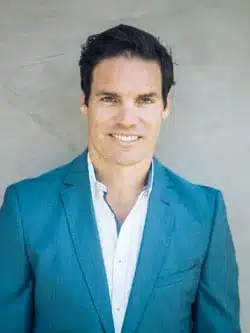
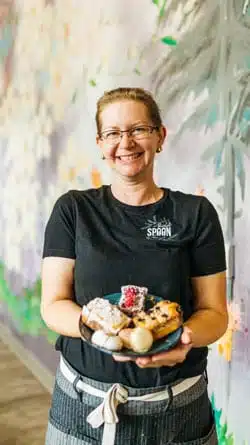


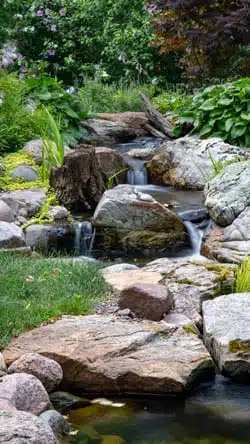


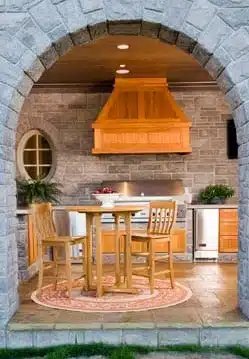

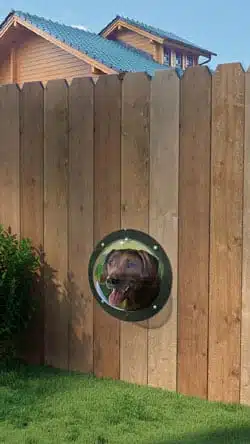





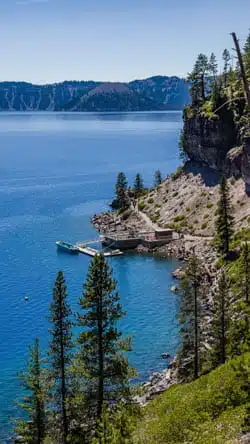







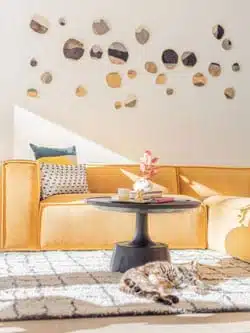


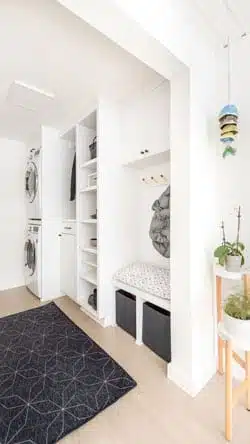

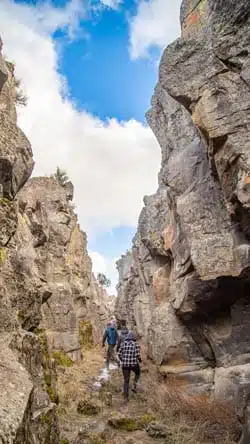
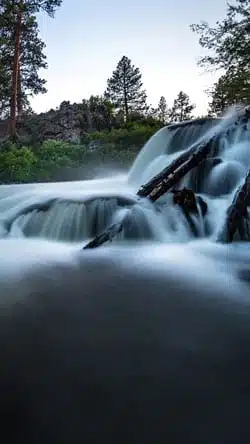





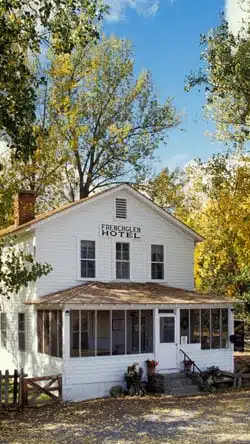


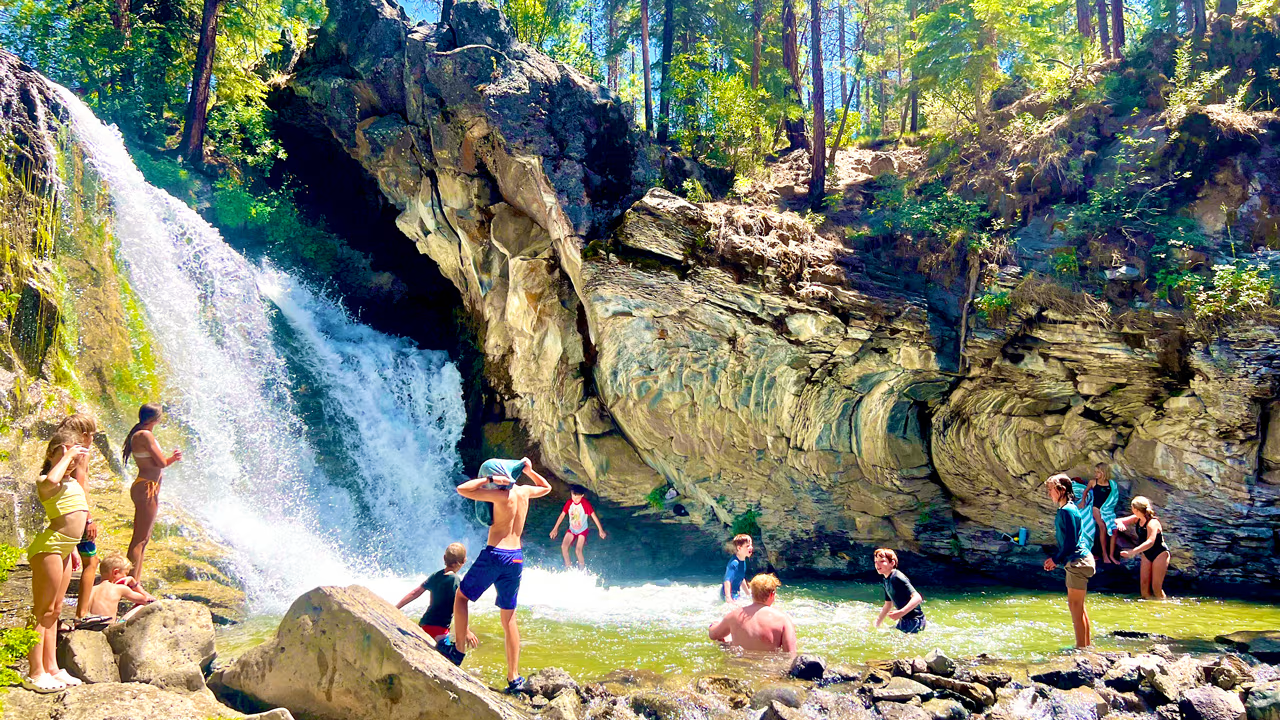



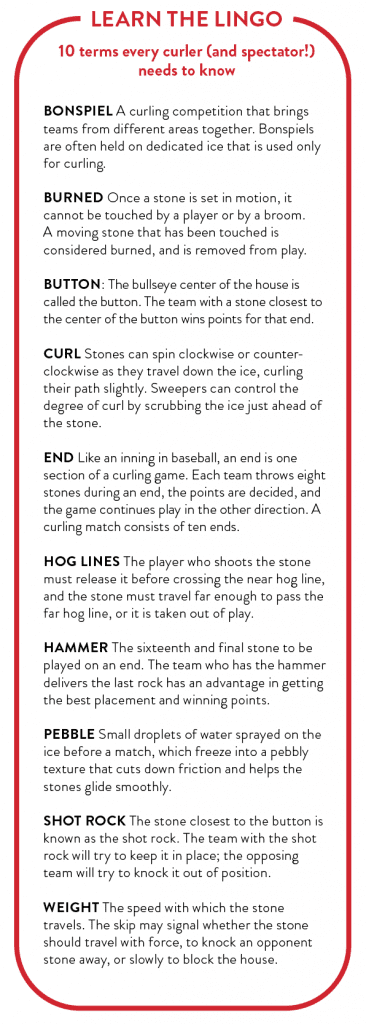 Lee credits the welcoming, laid-back atmosphere for the sport’s popularity in Bend. “Curling is not like most team sports because it’s new for almost everyone. Experienced players love to help, and people learn quickly that it’s just as fun as it looks,” Lee said.