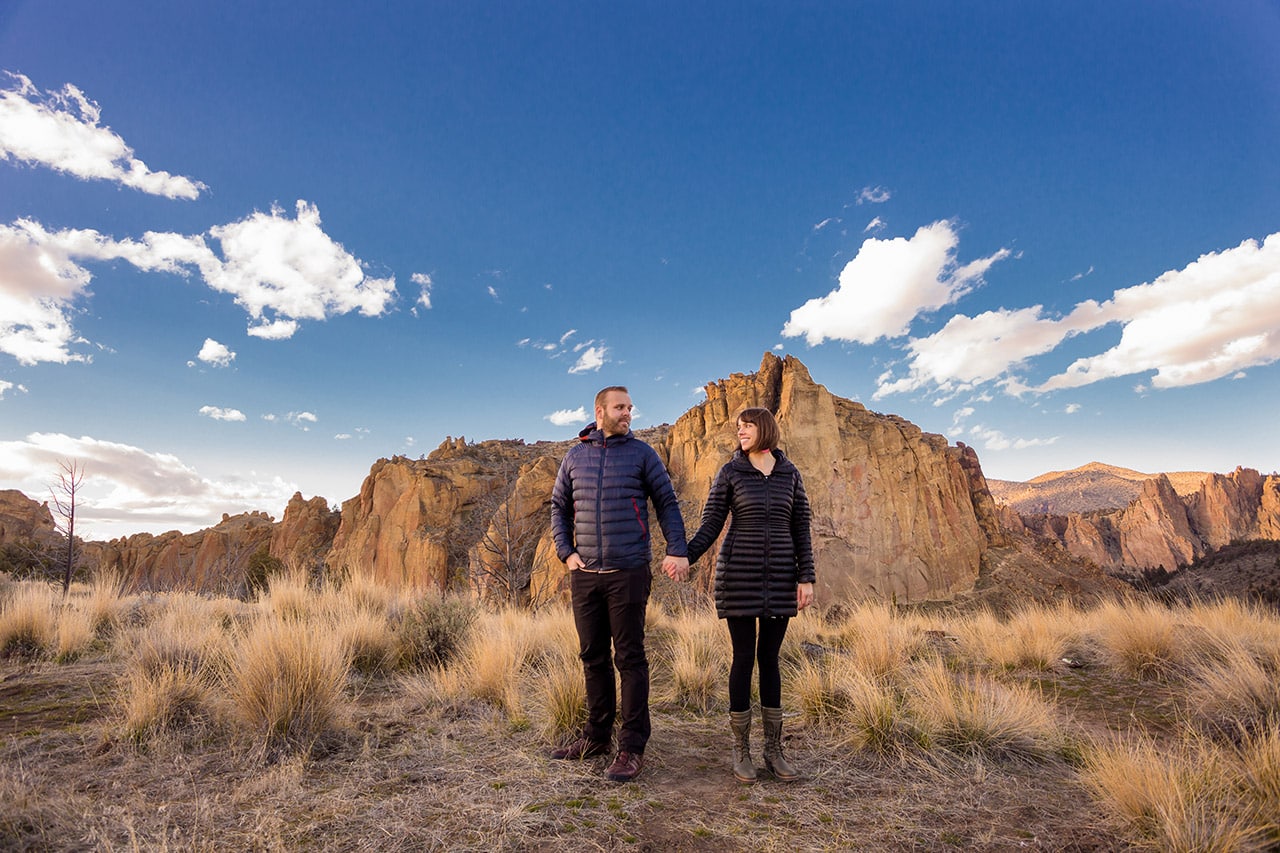



Every bend in the Owyhee River hides something new and enchanting. On this stretch of remote river near the Oregon/Idaho border, canyon walls of black basalt and red rhyolite rise up to 2,000 feet before giving way to wide-open, sagebrush-covered badlands. From the water, paddlers can spy 14 million years of geologic history in towering rock formations, etched petroglyphs and bubbling hot springs.
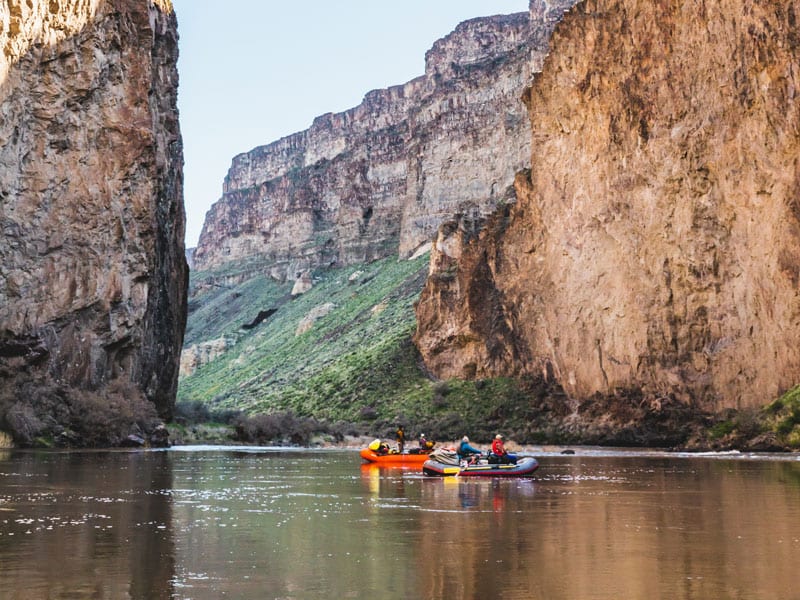
And much of that scenery looks just as it has for thousands, if not millions, of years.
The 280-mile Owyhee River spans three states, originating in northeastern Nevada, and cuts through the heart of the 2.5-million-acre Owyhee Canyonlands—one of the most remote, inaccessible regions in the country. And with only three paved roads crisscrossing the region, your best bet for exploring this wild expanse is from the seat of a raft or kayak on the Owyhee River.
Even with the drive—at least four hours from Bend—getting on the water is easier than you think. Follow our journey through the Owyhee and plan a trip of your own.
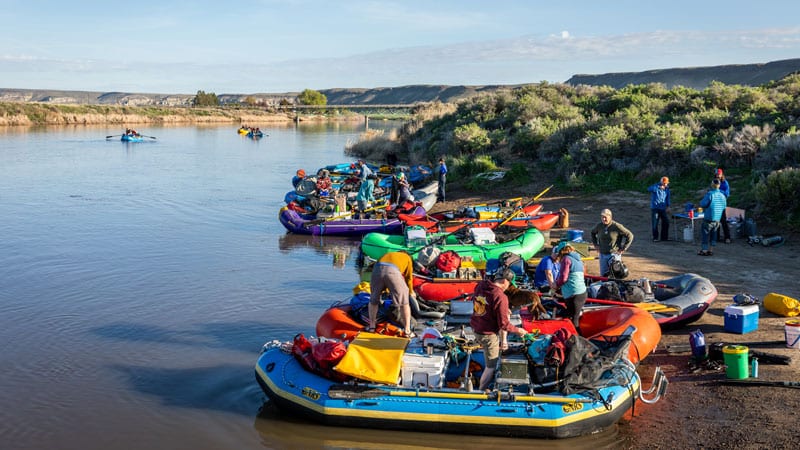
Hunter-gathers roamed the Owyhee as many as 10,000 years ago, and petroglyph carvings—still visible today—indicate that Native Americans hunted and lived in the region for centuries.
More recently, a group of North West Company fur trappers became the first non-Native people to enter the Owyhee in the winter of 1818-1819; three Hawaiian members of the party left to explore but never returned, and the river was named for the trio (using the Polynesian pronunciation of “Hawaii”).
The first white settlers arrived in the 1860s to establish cattle ranches on the vast rangeland, and Basque sheepherders followed suit in the 1870s. More than 150 years later, ranching remains an economic driver and way of life in the region.
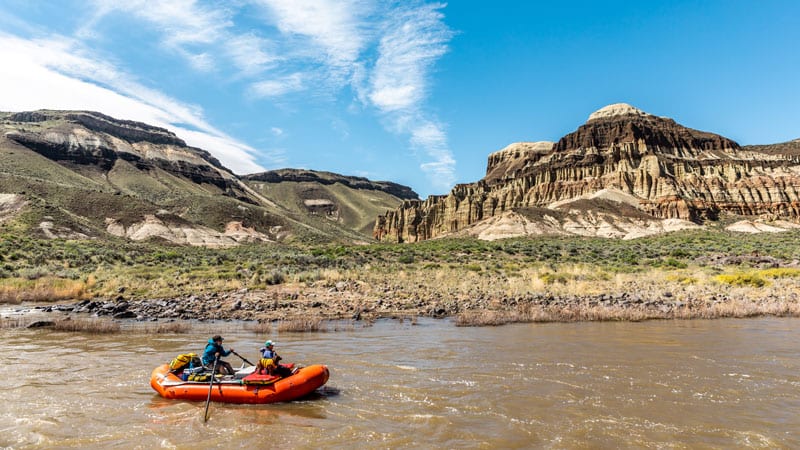
With a little know-how and planning, the Owyhee River is accessible to paddlers of all abilities. The high season for paddling is generally March to June—but check with the Bureau of Land Management office in Vale before heading out. Water levels and temperatures can fluctuate wildly, and heavy rain can render some roads impassable. And note that all paddlers must fill out a free self-registration form at each of the approved put-in sites before launching.
Paddlers generally put in along one of two stretches of river: the Lower Owyhee River and the Middle Owyhee River, both offering wildly different experiences.
The most common put-in site along the Lower Owyhee is near the hamlet of Rome, roughly four hours southeast of Bend. Trips along this stretch navigate Class II to Class III+ rapids through Sweetwater Canyon and the wide-open Chalk Basin before arriving at Birch Creek or Leslie Gulch.
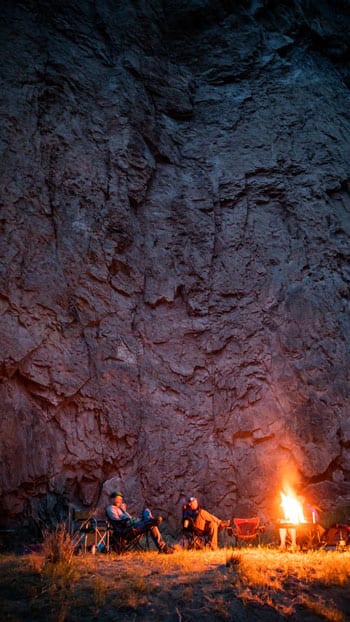
Most paddlers on the Middle Owyhee, meanwhile, launch at Three Forks—a nearly six-hour trek from Bend—and take out at Rome. Experienced rafters enjoy the fast-moving, more technical Class IV and Class V rapids along this less-traveled stretch, which hosts some of the most dramatic canyons and red-rock formations in the whole Owyhee River basin.
Experienced paddlers can tackle the river’s rapids alone. Others choose from several outfitters that make the journey easy by providing multi-day trips that include shuttle services, meal preparation, campsite setup and teardown, and recommendations for smooth navigation.
At the end of each river day, unwind with a soak in hot springs along the Lower Owyhee, hike to nearby rock formations, spy wildlife (from raptors to California bighorn sheep), or gaze upon the stars glinting down from some of the continent’s darkest skies.
Take a little of the Owyhee’s beauty and serenity home with you, until next time.
The road winds through the forest beneath the lofty green canopy of hundred-foot ponderosas. The one-lane bridge over the creek is like a threshold into another world. Then you spot The Suttle Lodge, its massive timbers and national parkitecture fitting the environs perfectly.
At the hefty front doors, the giant carved wood slabs depict the lake, mountains, deer, a life-size swooping eagle and a Native American dancer, all created by artist J. Chester “Skip” Armstrong. Armstrong has said his goal was “to reawaken your soul to the primal energy and life force of earth-based imagery.”
The mile-and-a-half long Suttle Lake laps at the shore as you make way to your base, where you can get cozy, start unwinding and embark on a weekend adventure—this time, a culinary one.
Here in the middle of the forest this spring at The Suttle Lodge and Boathouse, some of America’s best chefs are swooping in like the eagle on the front door, each making the journey to create a multi-course dinner inspired by the surroundings.
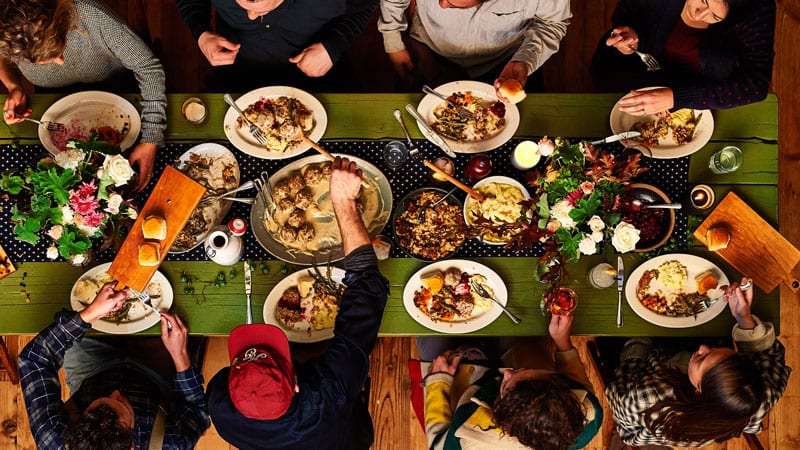
Earlier this year, Chef Ben Sukle arrived from Providence, Rhode Island, where his restaurant, birch, was named one of the fifty best new restaurants in America by Bon Appétit in 2016. At a handful of long, rustic tables around the fireplace, locals joined guests from around Oregon and the country, sipping cava (a sparkling wine from Spain) while vinyl spun on a vintage record-player console. Each course, served family-style, enhanced the conviviality.
“Restaurants have such an easy platform to reach people,” Sukle said. “They aren’t just about keeping people from starving, they are cultural meeting places, integral to the community and dinners like this reinforce that.”
We passed platters of roasted Hama Hama oysters with cream, dill and pork fat and discovered we also shared a mutual friend with others at the table. Next came the Painted Hills beef tartar with umami-heightening mushrooms foraged by Sukle’s aunt and uncle who traveled from Coos Bay, and had nurtured Sukle’s interest in food as a boy.
When the Dungeness crab salad with preserved, sweet habanada pepper and ginger dressing made the rounds, I was certain I’d met another woman at the table before. After the steelhead salmon with Portuguese, spicy-sweet piri piri sauce and winter greens, we realized she was my dentist. Dessert, Portuguese egg tarts, citrus punctuating the sweet, creamy custard, were en route, so guests took a few minutes out on the deck, watching the moonlight reflect on the lake.
Strolling the path to their cabins, guests vowed to make another reservation soon. They weren’t alone. It had been Sukle’s first trip to Central Oregon, but he intended to return. “You come out here and feel these endorphin rushes from these giant trees,” he said. “I want to come back.”
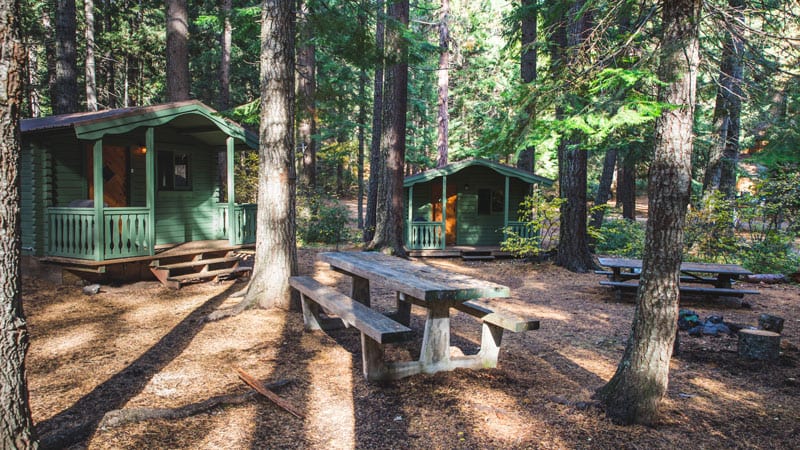
The Suttle Lodge offers eleven lodge rooms, a few lakeside cabins with kitchens and bathrooms, and a handful of rustic cabins. The lodge and the Boathouse restaurant are your source for food and amenities.
The lake is central to the experience here, no matter the season. Stroll, hike, mountain bike or ski around the mostly flat, three-and-a-half-mile trail around the lake, formed by a glacier 25,000 years ago. Kokanee (tasty land-locked salmon) may be biting as early as March.
At the nearby Hoodoo Ski Area, grab free-heel skis for a day of lessons, stories and Nordic culture, March 9, or check out Spring Fling pond skimming, April 11.
In 1904, a handful of citizens who lived in the not-quite-yet-incorporated community of Bend were craving greater access to news from all around the nation. They formed “The Bend Magazine Club,” a subscription club that allowed members to read a multitude of national magazines by borrowing them from one another. With this initial modest idea of sharing resources for the greater good, Central Oregon’s first lending library was born.

The idea quickly grew to include books donated from citizens or borrowed from the State Library, explained current Deschutes Public Library Director, Todd Dunkelberg. But what the library didn’t have, was, well, a “library.” Without a specific location to house books and magazines, patrons would meet wherever they could to make their exchanges, usually in various public spaces. “We did not have permanent homes for our libraries, relying on various store owners to lend us space to operate,” said Dunkelberg.
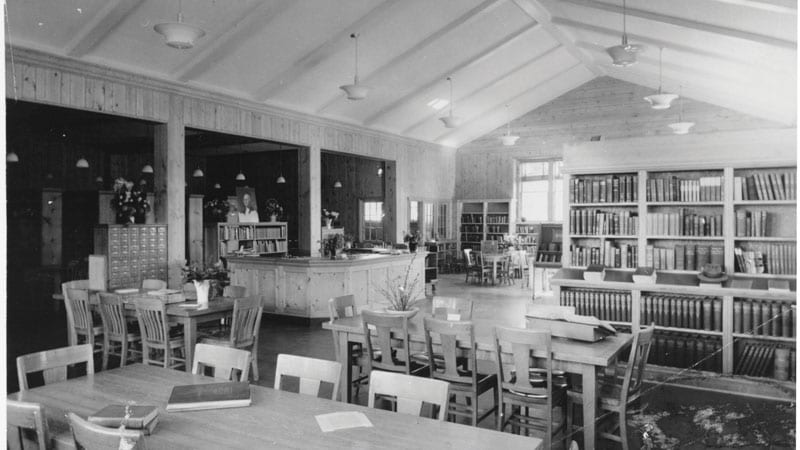
Deschutes Public Library was officially formed in 1920, bringing together independent, informal library systems both in Bend and Redmond. But it wasn’t until nearly twenty years later that a permanent structure was built, at the cost of $27,000. The Bend Library—today in use as the library administration building in downtown Bend—opened in 1939 as the region’s official library.
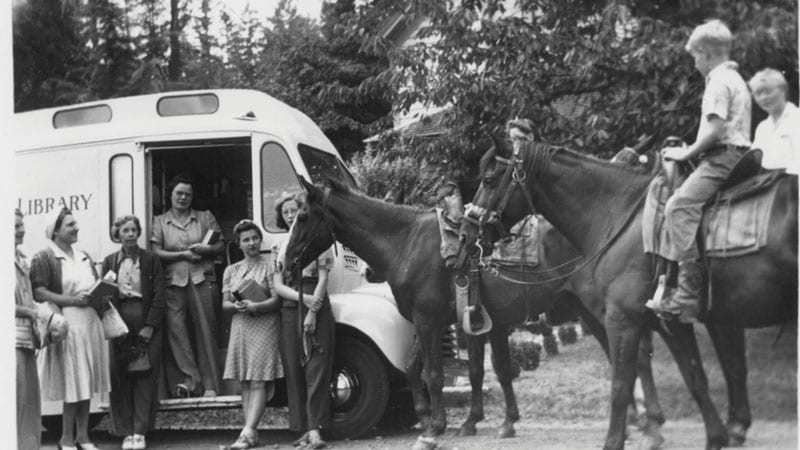
From there, the library only continued to grow. “By 1970, we had permanent facilities in La Pine, Sisters, Redmond and Bend, and a bookmobile service that traveled to the outskirts of the county,” said Dunkelberg. The bookmobiles brought the library to all sorts of people who may not otherwise have access to its resources, including those at the local lumber mills and living in rugged logging camps. Plenty of citizens traveled long distances to visit the library itself, too. It wasn’t unusual to see dedicated patrons ride up to the library on their horses, having come from the region’s most rural areas, said Communication and Development Manager Chantal Strobel, who’s worked at the library for 26 years.
Even back in those early decades, the library made available more than just books, Dunkelberg added. “Customers had the ability to check-out hardware and tools from our tool library collection.”
Despite the variety of services offered and the popularity with patrons at the county’s libraries, Dunkelberg says there were dark days in Deschutes Public Library’s history in 1998, when the organization faced permanent closure because of lack of funds. After a few months of closure, the library secured a small, but reliable tax district base, voted in by the people of the county that same year. Contributions from private donors, coupled with fundraising efforts by the non-profit Friends of the Deschutes Public Library, keep the library running.
Still, surviving a centennial is no easy feat for modern libraries, amidst the vast changing technologies and ever threatening budget cuts. To stay relevant, our library had to become more than just a place to borrow books, it had to become the heart and soul of our community. Those old enough to remember searching for books alphabetically in card catalogues housed in long wooden drawers or when librarians had to hand stamp the due date on the front page of a book, know how transformational the changes have been.
In 1920, the founders could never have imagined the kind of resources the six branches of the library would offer. Today’s Deschutes Public Library provides hardback and softcover books, audio books and downloadable electronic books. Patrons can also use computers, borrow movies, check out music of every genre, and attend a plethora of free cultural programs and speakers. The library partners with more than 180 agencies to help expand outreach, everything from working with the AARP and United Way to help senior citizens with their taxes and finances, to helping patrons with resume writing and interviewing skills through The Opportunity Foundation.
“Community librarians visit senior centers, day care centers, schools, low-income apartment buildings, and several other community areas that may not have access to library buildings or the technology to access information,” said Strobel. “We have partnered with ‘Thrive’ to bring social service assistance into our libraries to support people with basic living needs and access to affordable housing, food and other support systems.”
“What has not changed is the importance of being the vital infrastructure that helps bind our community together,” said Dunkelberg. “We remain one of the few spaces in our community where people can gather to converse, learn, work, play, connect and read without cost.”
“I would argue that libraries are more relevant today than in the past as we are immersed in this daunting Information Age. We are information stewards for the public,” said Strobel.
One hundred years ago, when Deschutes Public Library opened its doors, it allowed anyone who entered an opportunity for knowledge and empowerment. Anyone, no matter their color, employment level or financial situation, could enter the library and travel anywhere their imaginations took them, or learn as much as they could about any given subject. In that respect, the library hasn’t aged at all.
Sue and Larry Marceaux vividly remember the first collection of the Bend Food Project back in 2015.

The couple had heard about the Ashland Food Project—which has residents place a reusable green bag of non-perishable foods outside their front door every couple months for donation to people in need—and dreamed of bringing a similar program to Bend. They spent months planning the launch of the new organization, recruited a dozen friends to help collect food and identified a local food bank, The Giving Plate, to work with.
When the coordinators joined together on a drizzly day in October at The Giving Plate, the Marceauxs were stunned to see the results—2,572 pounds of food gathered through the first collection of the Bend Food Project. “We were so excited,” said Sue Marceaux.
Fast forward to 2020 and the organization will soon celebrate its fifth anniversary. The bi-monthly collections have continued and as of January the nonprofit has gathered, organized and donated more than 400,000 pounds of food to The Giving Plate, which then distributes it in Central Oregon. The original twelve volunteers have multiplied to 133 neighborhood coordinators and the local donor base has exploded to 2,500 residents setting out their green bags on collection days. The project makes it easy for volunteers to get involved. Anyone interested in participating in the bi-monthly donation can sign up to receive a green donation bag at bendfoodproject.com. Those interested in collecting from others can also sign up on the site. “We’ve been able to grow primarily by word of mouth,” Sue Marceaux said.

While the project continues to grow, so has the number of people in need. For longtime Bend Food Project volunteer Arlene Stafford, that was demonstrated before her eyes during a collection day early on. As volunteers hustled to unload and organize food outside The Giving Plate, a woman coming to pick up groceries from the organization mistook the commotion for something else, and thought the food was being taken away, rather than being delivered. “She had tears in her eyes. She was so frightened that it was going to go away,” said Stafford, who explained the food was just arriving, but found herself tearing up too. “I realized the desperation people feel when they’re food challenged.”
The Marceauxs said many factors play a role in the growing need in Central Oregon, including the lack of affordable housing and the high cost of childcare and healthcare. When a person is struggling to meet those needs, food can often fall to the bottom of the list. Larry Marceaux said, “I think it’s a real eye opener for people, how great the need is here.”
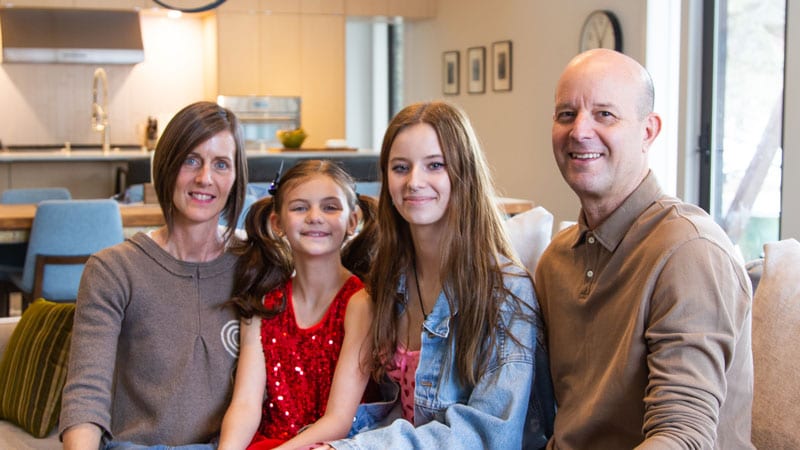
Architect Pauline Lyders landed the job of her lifetime—designing the dream home for her family. “We succeeded in creating something unique to us but very livable,” she said of the renovated pole barn that she and her husband, David Neidorf, along with their two daughters, moved into last year. “There’s nothing precious about the materials we used—it is just what it needs to be,” she said of the elegant, modern-minimalist dwelling.
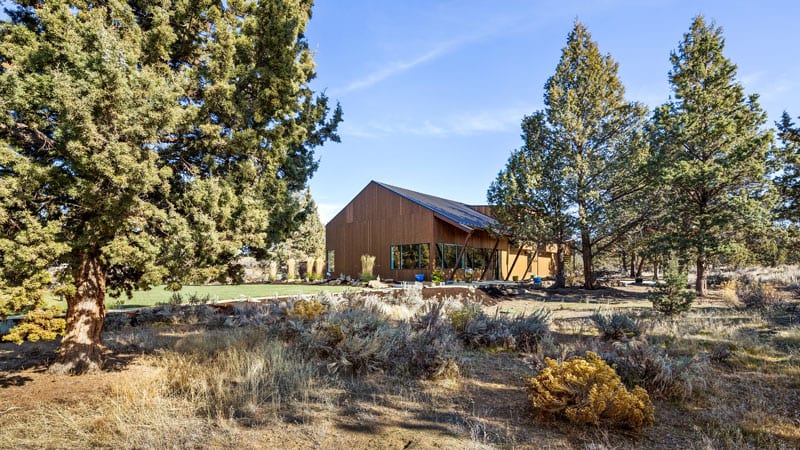
The couple moved to Bend from Los Angeles in 2011, and bought the barn, situated on ten acres off the Old Bend Redmond Highway, in 2016. Instead of seeing a plain structure amid the junipers, they imagined a living space integrated into the environment. Neidorf credits his wife for achieving their goal, but she sought his input throughout the process. “Truth is, David was my client,” she said.
The third partner in the conversation was Jason Duckowitz of Contour Design Build. “It was really important to Pauline to have a builder with an appreciation and understanding of design and who was part of the project from the beginning,” he said. “The three of us had a nice back and forth. I’d sometimes tell Pauline that a design might not work from a construction perspective, but she’d hold onto a concept, and she was usually right.”
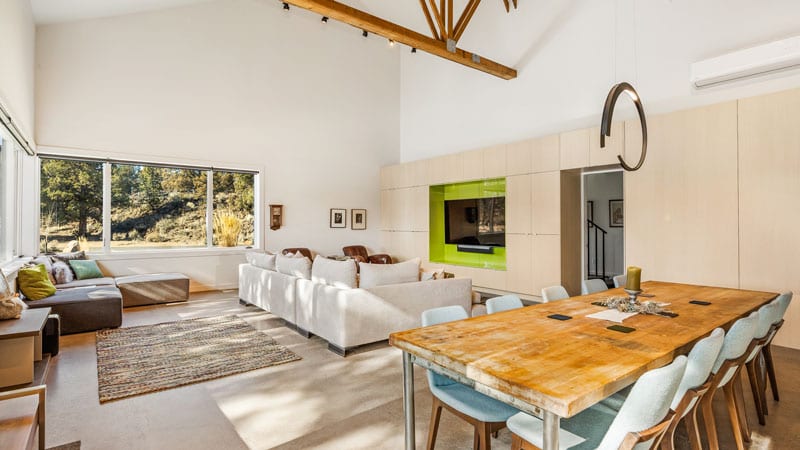
The two-story layout is conventional in some ways, with a large, open room on the main floor incorporating the living, dining and kitchen areas and master suite with a private patio. The upstairs has kids’ rooms, an office, studio/guest bedroom, lounge and a deck. But creative flourishes abound in the 3,900-square-foot home, making it unique to the Lyders-Neidorf family.
When Neidorf heads to his office, he gets there from the master bedroom up a winding staircase. This unique and private entrance is for him alone—a place from which he runs his own property management company, Full House Consulting, Inc. He loves the office with its large north-facing window overlooking another beloved feature—an outdoor hot tub accessed either from the bedroom or directly through a sliding LaCantina door in the master shower.
Duckowitz says it’s the first time in twenty years of building homes that he’s seen a sliding door in a bathroom. “It was important to Pauline to maintain an indoor-outdoor connection, both visually and physically to the space outside. The door through the shower was the simplest way to achieve that,” he said.
Without an attic, Lyders was free to design the second-story rooms with a combination of sloping roof and 10-by-10-foot cutouts or dormers, allowing for insertion of 10-foot-wide windows in each room. “When you sit in one of the upstairs rooms and look out those full-height windows, you feel like you’re outside,” Duckowitz said.
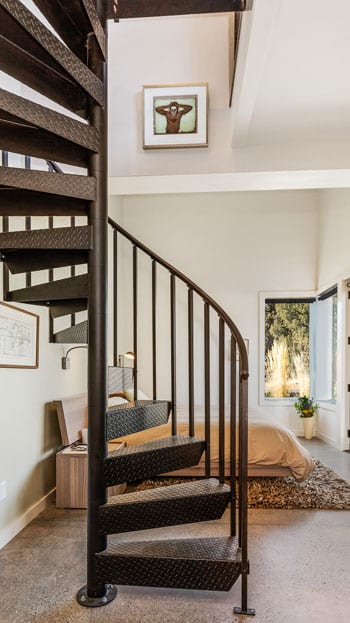
The couple’s daughters, Adin, 15, and Stella, 9, have bedrooms the envy of any child. “I tell my daughters they have the nicest rooms any kid ever had,” Neidorf said. Each is expansive, providing space for a queen bed, sofa, desk and areas for projects, games and music. Their mother also incorporated perhaps their favorite feature—a sleeping loft up a vertical staircase (Adin’s ladder is tucked in her closet). A small “sky” window in Stella’s room looks down into the living room and “gives her a sense of comfort and connection to be able to see us,” Lyders said.
The kitchen, dining and living rooms are spacious, with two of the barn’s original trusses exposed to honor the structure’s history. A series of tall windows faces the outdoors on two sides. Along the living room wall, a lichen-green recess houses the TV; another lichen-colored recess next to the dining room is for a bar and espresso machine. The bright green color matches the lichen that grows on junipers. A recess with neutral white vertical tile in the kitchen is for the range, oven and hood. A 14-foot, Caesarstone island divides the kitchen from the dining room where the family enjoys meals at the long antique baker’s worktable. The wool dining chairs are the color of blue juniper berries.
Large portraits of the daughters hang high on a wall and “make the room,” according to Neidorf. He commissioned Xander Berkeley, a well-known character actor and friend of Neidorf’s when he worked in film and TV, to paint the girls.
One of the family’s favorite spots is a covered deck off the second floor looking east over a pristine desert landscape. “It’s a place to meditate,” Lyders said. “Downstairs is about moving and engaging with each other. Up here it’s about witnessing nature.” The spiral stairs from the deck match the green-gold moss growing on rimrock. “It’s an escape hatch for my teen,” Lyders joked.
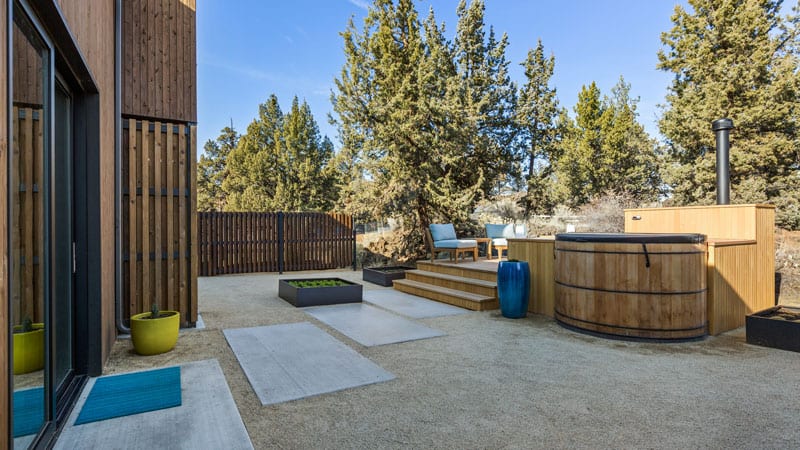
The pole barn’s exterior gable shape remains largely unchanged, although the new design lengthened the structure by 36 feet to include the garage and deck addition. “The easiest way to stay true to the structure and create a covered walkway from the parking lot to the main entrance was to follow the pitch of the existing roofline to the ground,” Duckowitz explained. “It tells a story of what the house was built from and draws you to the entrance.” With another nod to nature-inspired colors, the dark brown cedar siding was chosen to blend with the bark of juniper.
The creative collaboration between builder, architect and “client” resulted in a family home unique to its inhabitants while honoring its placement in the environment. “I live in my dream house that my incredibly talented and beautiful wife created,” Neidorf said.
Resources:
Building: Jason Duckowitz
Architecture & Interior: Pauline Lyders
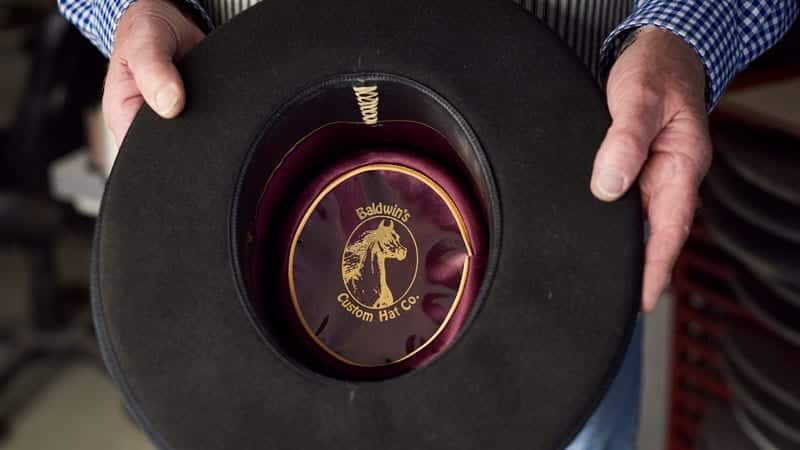
Not all hats are created equal. That’s something you learn the first time you walk into Gene Baldwin’s hat studio outside Sisters.
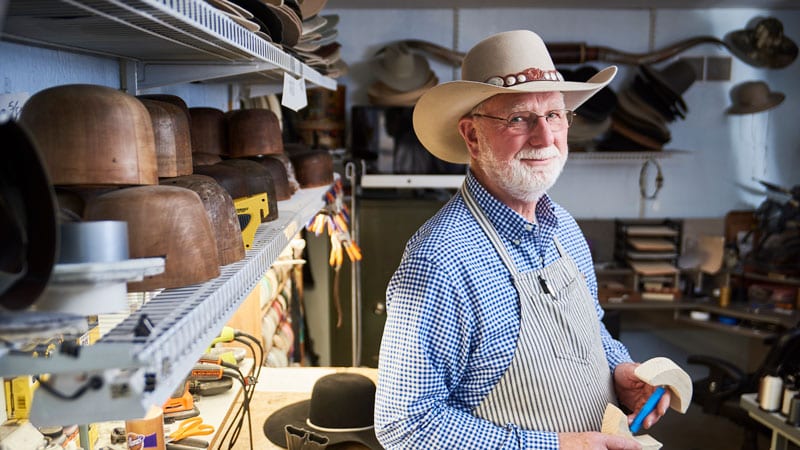
Inside the narrow shop is everything Baldwin needs to create his handcrafted masterpieces, which range from more traditional cowboy and cowgirl hats to Gus crowns, cattleman hats, oversized fedoras or just about any combination of hat crown, body and brim a customer dreams up. Each hat Baldwin creates is unique to the style, needs and head measurements of its future owner.
“This will fit his head and his head only,” said Baldwin, showing off one of his latest pieces, a custom hat that’s just between the typical sizes you might see on the shelf at a western apparel store.
Though Baldwin takes great pride in his work as a milliner, or hat-maker, and seems at home in the studio—it wasn’t always his calling. Baldwin spent his career in Portland as a funeral director and then later raised Arabian show horses. “I like to do things that are different,” Baldwin said. It was only in the early 2000s, after retiring from Portland to Sisters with his wife, that Baldwin turned to hat making.
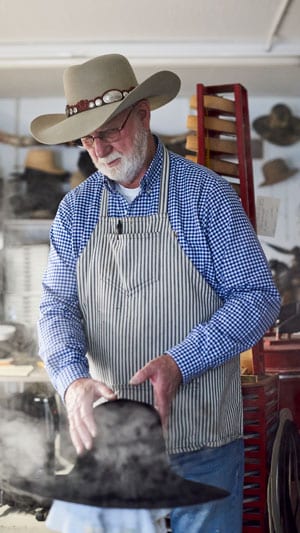
After taking up a new hobby of selling Serratelli cowboy hats, a friend asked whether Baldwin had considered making hats himself. It wasn’t long before he’d purchased, restored and in some cases modernized the needed equipment, including antiques dating back to the 1880s. One shelf of his studio is filled with curved wooden blocks, used to represent various head sizes at the beginning of the process. Baldwin stretches and shapes his material over the hat blocks using lots of steam. A plater is used to curve the brim into a ninety-degree angle and an antique crown iron smooths the top of the hat as it spins.
He has quite a measuring technique that he uses, so that it is truly your hat.
More than fifteen years after taking on his new hobby, Baldwin has earned a reputation for his custom hat making, and gained customers from around the world, mostly through word of mouth. “I’m busy,” he said, pointing to stacks of new orders around his studio. “There are times I’m getting two new orders a day.”
Baldwin estimates he’s one of thirty-five or forty custom hat-makers in the United States, though not everyone holds themselves to the same standards as Baldwin. The quality European hare and beaver Baldwin uses to form his hats mean they last longer, retain their shape better and stand up to the weather longer than more commonly produced wool hats or those with a blend of wool and some fur.
“They’re wonderful hats,” said John James, a friend and customer of Baldwin’s who together with his wife owns four Baldwin hats. “He has quite a measuring technique that he uses, so that it’s truly your hat.”
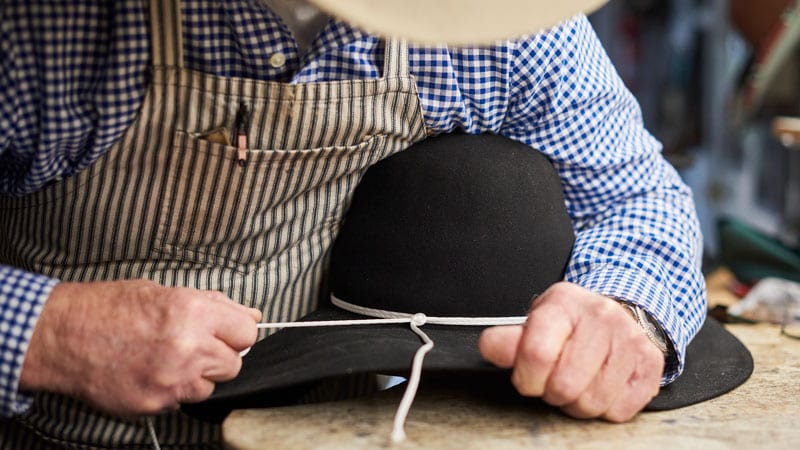
The hats aren’t priced for everyone—they start at $365—but for the cost, you’re getting personal fittings and a commitment from Baldwin to make a quality custom hat, the old-fashioned way. Old-fashioned values are important to Baldwin, who on his website shares a list of tips for proper hat etiquette (men, tip your hat when meeting a lady) and promises when it comes to hat making, he’ll take the time to do things right the first time. “He’s a good guy—if he gives his word he keeps it,” James said.
The hats earned Baldwin recognition many times, including top honors at the Art of the Cowboy Makers Contest for the five years he entered. The contest recognizes contemporary makers of traditional cowboy wear, including boots, saddles and of course, hats.
For Baldwin, it’s about more than hat-making, and he’s quick to share the stories behind each hat. Like the hat Baldwin was wearing this winter—sporting a silver and leatherwork band. The silver was melted down from a former customer’s wedding plates, gifted to Baldwin in hopes he could breathe new life into the material. The owner of the plates had recently lost his wife, and was so touched by the repurposing of the silver he wrote Baldwin a heartfelt email of gratitude. Baldwin carries a printout of the note in his wallet wherever he goes to illustrate the personal connections behind his work.
“It’s not just hat-making,” Baldwin said. “You can really touch people with the things you can do.”
When Whitney Nye begins a painting, she never knows where her muse will take her. “I don’t start out with an idea,” she said. Instead, she follows the creative impulse wherever it leads her.
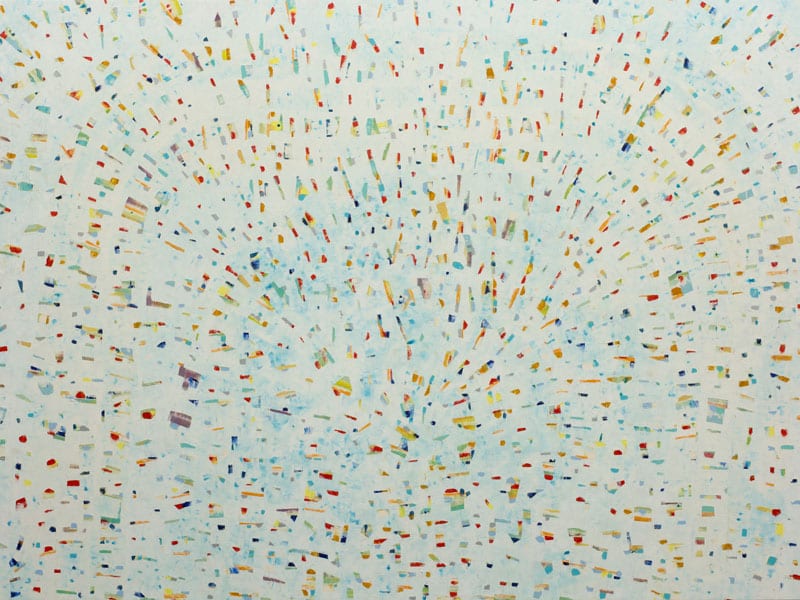
This instinctual style of painting has resulted in a large body of abstract and sometimes rhythmic paintings exhibited in galleries and museums across the United States. Her work is also found in many private and public collections, including the Jordan Schnitzer Museum, Eugene; Vanderbilt Medical Center, Nashville; Swedish Hospital, Seattle; and Oregon Health & Science University, Portland.
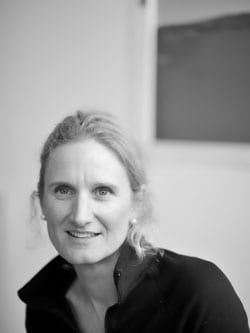
Nye’s mother and maternal grandmother were early DIY adopters, teaching her resourcefulness and fostering the idea that “if you need something, you can make it,” she said. Both women sewed their own and their children’s clothes. Textiles and fabric design was baked into the young Nye’s genes. When she headed to college at the University of Oregon in the 1980s, she “couldn’t stay out of the department’s textile weaving and dying areas,” she recalled.
A textile teacher at UO surprised her with a summer scholarship at Penland School in North Carolina, an international hub for craft education and creativity. After graduation from UO, Nye returned to the Penland School for a two-year fellowship where she could work in any medium. While there, she built a kiln, learned metalworking and woodworking and said she “dabbled in it all.” The experience was formative and she built relationships with other artists, as well as giving her familiarity with numerous materials she’d one day apply to her art.
In 1993, the Oregon College of Art and Craft in Portland offered her a residency, and she was soon working out of studio space in the Pearl District where artists were flocking. Some of her early work included large-scale installation art, sculptures and mixed media pieces incorporating her grandmother’s buttons, sewing patterns and ephemera. But her mother, Juanita Nye, an artist who studied with Portland sculptor Mel Katz, encouraged her daughter to try painting, a medium she had yet to explore.
Martha Lee, owner of Portland’s Russo Lee Gallery which has represented Nye since the early 2000s said, “Whitney has done sculpture and mixed-media-based work but has primarily been painting for the past several years, always with a level of abstraction using pattern and repetition.”
“She’s got an amazing sense of color,” Lee added. “A lot of people respond to her color, and although her work is abstract, there are many references to the natural world. Many of our clients are seasoned gallery goers, and Whitney’s work has something they can grab onto and recognize and put their own experience to.”
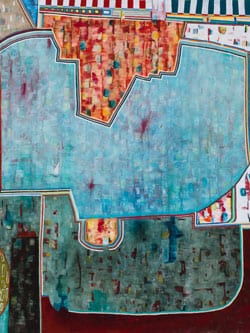
She’s currently participating in a group show, “A New State of Matter,” at the Grand Rapids Art Museum, featuring artists who incorporate glass in their work. She has an upcoming exhibit in August and September at the Newport Visual Arts Center at Nye Beach. She’s curious about whether she’s related to the “Nye” of Nye Beach and will work with the local historical society to find out.
After many years of living and creating art in Portland, Nye returned to Bend in 2018 where she’d spent much of her youth. She has a small studio but her approach to painting almost demands a large space where she can staple as many as five unstretched canvases to the wall or spread them on the floor. “I like to be physical, close up and far away from a piece, using a variety of tools to add or take away textures and layers,” she said.
“When I’m working, I’m in the piece and lose track of time. It’s a reactionary experience. I make a mark and another mark and can get obsessive in the process, and I have to know when to get off the train,” she said, adding that she stays true to what’s interesting to her. “If a painting isn’t authentic, I’ll abandon it.”
Whitney Nye’s work will be on display at Bend Magazine’s offices in March and April, and featured each month in conjunction with downtown’s First Friday Art Walk.
To see more of her work, go to whitneynye.com, Instagram
@whitneynye or russoleegallery.com
I read No Option But North, a new memoir and political nonfiction book from first-time Bend author Kelsey Freeman, days after finishing the controversial new novel American Dirt. Both books tackle the perilous migration journey from Mexico and Central America to the United States, but only one has stuck with me.
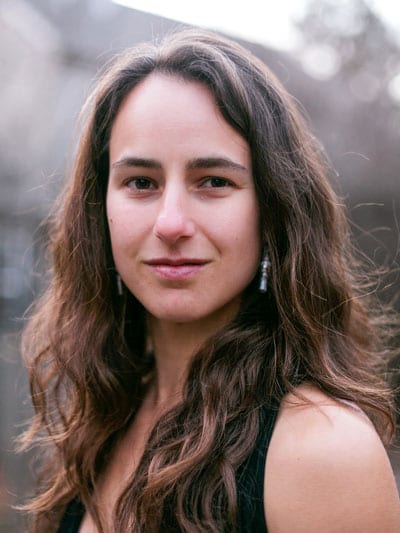
She wrote that she purposely avoids “the sort of immersion journalism that pretends that observing the migration phenomenon doesn’t affect it,” and carefully dissects the culture and politics that surrounds the narratives. It all belies her age; Freeman is just 26 and graduated from Bowdoin College in 2016. She had previously studied abroad in Mexico and worked on a research project in the Yucatan Peninsula.
Her research and writing is also influenced by her grandmother, who she dedicates the book to. Her grandmother was a German Jew who migrated to Italy and then America in the 20th century. She would tell Freeman stories from her experiences often, and Freeman found similarities in her research and interviews in Mexico. “It connects in ways that I feel intimately,” Freeman said in an interview over the phone.
Freeman confronts her own privilege head-on throughout the book. Within the first few pages, she parses through why she would be allowed a visa to study indigenous rights while the people she was talking to weren’t allowed visas to visit their families in the United States. “This privilege was a bitter, viscous taste in my mouth,” she writes at the end of her book.
“The essential goal and premise of my book was not to ignore the power dynamics at play, but to name them,” Freeman told me. “I think we do nothing by pretending those dynamics aren’t there.”
The reader can feel Freeman’s anger simmering beneath the surface of her writing. This blend of activism and journalism is vital to this story and makes it powerful. “I don’t aim to keep my own views out,” Freeman said. “What I’m trying to do with the book is connect structural inadequacies and injustices with lived realities and stories. When you’re talking about all that, it’s impossible not to be political.”

Today, Freeman works in the Office of Diversity and Inclusion at Central Oregon Community College in Bend. She plans to keep writing about migration and other social and political issues while she continues working in Central Oregon.
No Option But North: The migrant world and the perilous path across the border will release April 14 from IG Publishing. Find it at independent bookstores like Roundabout Books in Bend and online at IndieBound and Amazon. Freeman will be at Roundabout Books for an author event Friday, May 15.
In 2011, serial entrepreneur Paul Hodge was about to retire in his mid-30s. He’d sold his interest in a renewable energy business in New York, but he and his wife hail from Washington, and were looking to the West.

They moved to a 132-acre ranch along Whychus Creek near Sisters, to raise their three children and grow all their own organic food. That winter, in Kauai, a surfing buddy introduced him to world renowned big-wave surfer, Laird Hamilton. Hamilton, behind innovations such as standup paddle boarding, wanted to meet Hodge because he had a new idea.
It was the Golf Board, a motorized skateboard/golf cart. Hodge, although not a golf fan, helped develop it at his ranch and successfully launched it. Along the way, he and Hamilton got to be friends.
“He’d invite me to coffee before surfing, and he’d be putting all this stuff in my coffee, and I’d be out surfing and realize my energy level wouldn’t last just an hour and a half, but five hours,” said Hodge, 46. Hamilton educated him about fuel-efficient, medium-chain triglycerides in coconut and the benefits of trace minerals in things such as calcified red marine sea algae from Iceland. Hodge found Hamilton’s nutritional philosophies intriguing, so he did a bit of research.
“I said, ‘I think the world needs this, and it’s a great opportunity now to build a company based on your name,’” Hodge said. In 2015, they launched Laird Superfood, starting with powdered, plant-based, dairy-free creamers. Since then, the “rocket ship ride” has brought the Sisters company to about 110 employees, with a plan to employ 500 in the next two to five years.

They expect to continue adding workers and build a 30,000-square-foot warehouse this year, Hodge said. Now Sisters’ third-largest employer, when they reach 500, they’d rank nearly in Central Oregon’s top ten, ahead of Deschutes Brewery, according to Economic Development for Central Oregon.
The speedy trajectory from startup to global company is significant, said Caprielle Lewis, Sisters Area Director of Economic Development for Central Oregon. “In just a few short years, they’ve created a sustainable, stable base of family-wage jobs that pay above the average Sisters wage,” she said.
All aspects, from research and development to product testing, packaging, sales, marketing and management are done in about 24,500 square feet of space in two buildings in the eight-acre former Clear Pine Business Park, which Laird Superfood owns. Small food businesses typically outsource manufacturing and packaging, but instead the company invested in the property and its own production facility to have better quality control, Hodge said.
Typically, startups (including Hodge’s dozen others), hire to meet demand, but this time, the company built a strong executive team first. “This positioned us for the crazy growth we’re seeing,” he said, plus a less stressful workplace offers time to enjoy Central Oregon’s lifestyle perks.
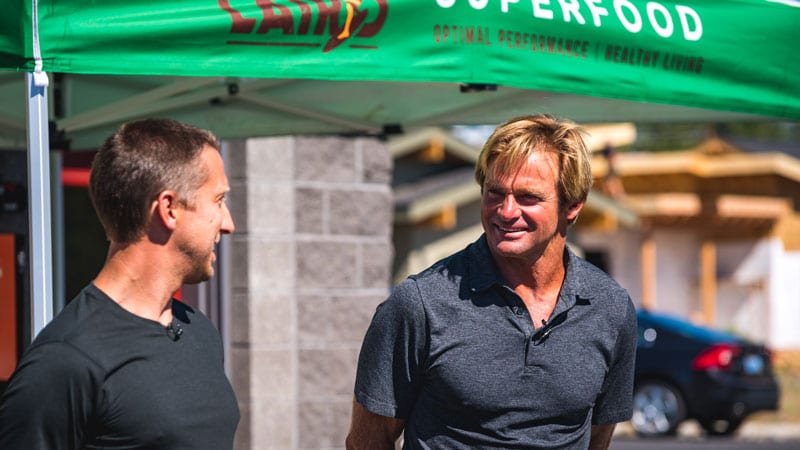
The company took in $32 million in a private funding round that included the global shared workspace company WeWork. It had seemed the perfect fit—superfoods, from creamers to Hydrate coconut waters—would be fueling tens of thousands of entrepreneurs renting WeWork spaces. After that company’s IPO plan failed last year, though, the Sisters company bought back the shares. They’re seeking another strategic partner, and targeting the “corporate warrior.”
Meanwhile, innovation keeps flowing. In January, they launched a line of plant-based, liquid creamers with nutrient-dense mushrooms. The refrigerated liquid market is ten times larger than powdered beverages, and the company will introduce healthy snacks this year too, Hodge said. Products are carried in thousands of stores, from Whole Foods to Costco, while 60 percent of sales is online.
“We’re not just building a coffee creamer or hydration company, we’re building the Laird brand, the next large, trusted food brand,” Hodge said. “The goal is to be like a Kraft or one of these legacy brands. These larger companies are losing trust from the consumer, and we’re looking to bring clean ingredients back, build a brand that’s trusted, and continue to roll out these products across multiple categories. It’s really endless.”
On a hot summer afternoon just weeks before the Deschutes County Fair, Carey Silbaugh’s front yard in Bend was hopping—literally—with a dozen rabbits of various colors and sizes, along with the young women who raised them. It’s the June meeting of the Bunny Brigade, a 4-H club devoted to raising rabbits.
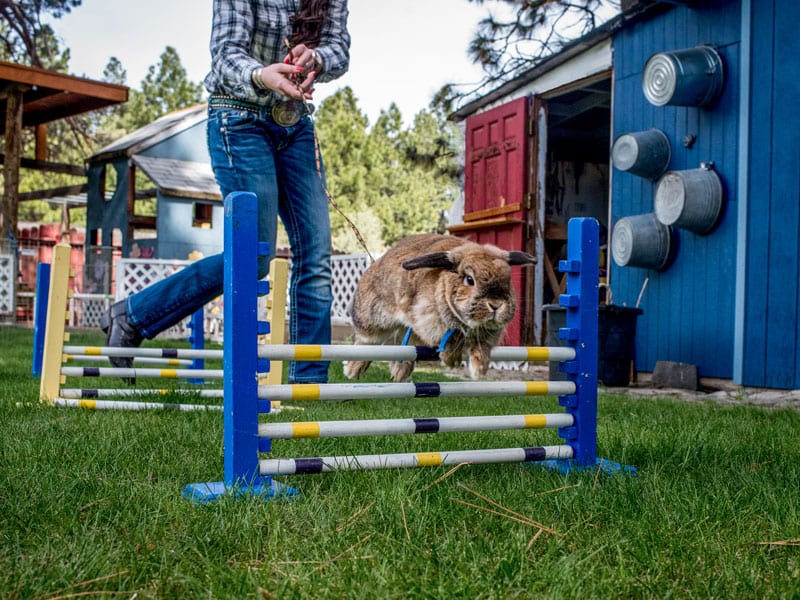
Like many teenage girls, they giggle and tease each other as they chat. But their conversation is far from typical. The discussion ranges from the differences between breeds like a Holland Lop and a Netherland Dwarf, to signs that a rabbit is sick. One of the older teens examines the eyes and ears of a friend’s rabbit, who seems sluggish. “Add a little Gatorade to his water,” she advises, “and feed him some pinecones.” In a world where many teens focus on social media and digital lives, animal husbandry is an unusual interest. But for the young women of the Bunny Brigade, raising rabbits is serious business.
The Bunny Brigade is one of several 4-H clubs working with rabbits in Central Oregon. The group has about a dozen members, aged 13 to 19. At monthly meetings with their team leader Silbaugh, they dive deep into rabbit care, anatomy, breeding and health. They also learn the business side of raising animals, and prepare to show their best rabbits in competitions. Along the way, they gain confidence, resilience and problem-solving skills, and create a community of mentors and friends grounded in a real, unplugged world.
Over 870 kids and teens are involved in 4-H groups across Deschutes County, according to Candi Bothum, 4-H Educator. “It’s not just about animals—we have clubs for every interest imaginable,” Bothum said. Whether it’s hiking, photography or animals, the clubs share a few core elements: developing knowledge in one key area, keeping a record book of goals and achievements, and participating in competitions like the county fair. All 4-H activities are open to girls and boys ages 9 to 19; younger kids can join the Clover Buds groups, which don’t include competitive events.
Most kids stay involved in their group for several years, explained Bothum, and 4-H becomes a strong influence in their lives. “College professors tell me they can recognize the 4-H kids in the class by their sense of responsibility and their time management,” she said.
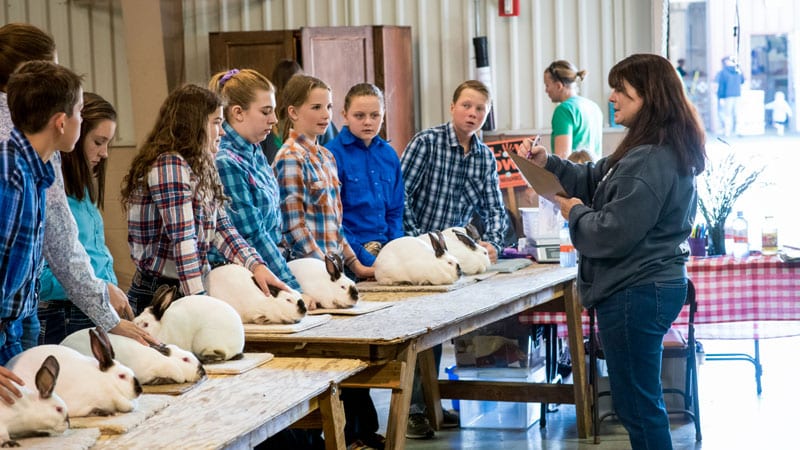
The clubs are part of the Oregon State University Extension Service. Land-grant universities like OSU share the mission of providing community education throughout their states, with gardening and nutrition classes for adults and a wide range of 4-H activities for youth. Since its inception over 100 years ago, 4-H has grown into the largest youth development program outside of public schools.
For kids interested in animals, rabbits have an advantage over larger animals. Sheep, goats and cows require a barn and pasture, but bunnies don’t need a lot of space. As Silbough explained, rabbits offer a way for any kid to participate. “You don’t have to live on a ranch to do this. One of our kids keeps her rabbit in her bedroom,” she said.

Destiny Beamer joined 4-H at age 7. Now 19, she’s moved on from 4-H but continues to breed and show her rabbits at a professional level, in additional to studying at Cascade Culinary Institute. Last summer, she participated in her twelfth and final county fair, and reminisced about the influence the 4-H rabbit groups had in her life.
“There were a few years in high school that were pretty difficult. My mom had a car crash, I got really sick and I had to change schools a lot. The one stable constant in my life was working with the rabbits and other 4-H projects,” Beamer said. “The friends I’ve met in this community are like an extended family to me,” she added, “and they inspired me to help teach the kids just starting out.”
Because of an undiagnosed learning disability, Beamer had trouble reading during elementary school. Her desire to gain expertise drove her to keep working through rabbit books, and she taught herself to read years before she learned she is dyslexic. “I learned to speak clearly too, by watching the older kids when they presented to the judges. I did what they did—calm down, slow down and speak up,” she said. Most of all, she explained, she learned to problem-solve when answers weren’t obvious, and figure out how to make things work—a skill that applies to all parts of her life.

The winter months allow time for the Bunny Brigade to take stock of their successes at the previous August’s fair and start planning for the next year. Each member updates their record books, where they list community service events, budget expenses and income from their rabbits, and lay out their goals for the next season. The record books document years of work and achievement, and track the cashflow for each project to the penny.
By spring, team members evaluate their rabbits with an eye toward the county fair competition. They must decide which to show, which to breed and which to take to market. Selling rabbits at the county fair auction is an important source of income—the rabbits often sell for $130 per pound. Natali Gerdes, 17, clarifies that raising rabbits is not the same as having cuddly pets. “You look at it differently when you breed them as market rabbits. We look for specific qualities, and choose the rabbits to breed for that purpose,” she said. At the 2019 Deschutes County Fair, Gerdes received scholarship funds to grow her business with more rabbits, and was recognized with the Small Animal Sportsmanship Award for helping newer club members.
By early summer, the Bunny Brigade meetings focus on preparing for the county fair, where the girls will show their rabbits in hopes of a ribbon or a sale. They line up behind a table, settling their rabbits on carpet squares as Silbaugh plays the role of judge, quizzing them on rabbit anatomy and health. They demonstrate how to check the hocks (the heel of the paw pad, which can easily become infected), check for mites (blow gently on the fur to expose the skin) and check for malocclusion (pull back the lips to verify the teeth line up).
Once the fair begins, Silbaugh has high expectations for the Bunny Brigade. But she’s watching for teamwork and effort, not wins or losses. The Bunny Brigade policy is to be the last to leave the barn each day, staying to help and clean until all teams have finished. “I don’t care what color ribbon any of us take home. The fair is a chance for our whole team to shine,” Silbaugh said.
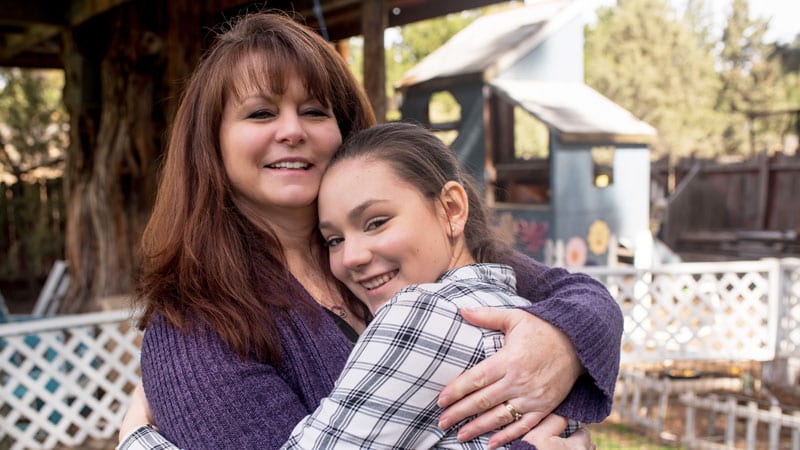
Her granddaughter, Cheyenne Silbaugh, echoes that viewpoint. As a Bunny Brigade member for several years, she’s won dozens of ribbons, yet is more eager to show her record book as a way to share her successes. As she explained, “The fair is a competition, and getting a ribbon is a reward for your work, but really we are more like a big family. We have fun with the competition, but we all help each other—that’s what it’s all about.”
Last fall, Southern Oregon’s Rogue Creamery took the top prize at the World Cheese Awards with its Rogue River Blue. Since, cheese lovers around the globe have had their curiosity piqued about Oregon, home of the world’s best cheese. The Rogue River Blue itself is sold out for now, but here are more amazing Oregon cheeses to grace your cheese board this winter season.

The Vampire Slayer Curds from Bandon’s Face Rock Creamery took first place in the national cheese competition in North America. Packed with loads of garlic in a base of classic aged cheddar, this cheese packs a garlicy punch strong enough to keep the vampires at bay.

Boerenkaas (or farmhouse cheese) is a Dutch-style cheese, handmade from raw milk. Located just north of Salem, Willamette Valley Cheese Co. makes this golden-rined, creamy textured, very approachable cheese with a complex flavor of fruit, milk and flowers.
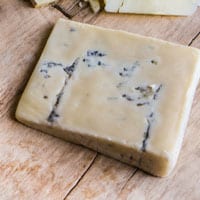
Located in Central Point, Rogue Creamery makes only organic, artisan blue and cheddar cheeses. The Oregonzola has a smooth and yielding paste and distinct blue veins of Gorgonzola with flavors reminiscent of fruit, sweet cream and tanginess. As are all Rogue cheeses, the Oregonzola is cave aged for at least six months.

This creamery in Lowell was founded by an Argentine whose father was a cheesemaker in their homecountry. The Chubut is a Welsh-style cow’s milk cheese that’s mild and nutty, with a firm texture.

Another Rogue Creamery stand-out. The blue veins of the Crater Lake Blue mirror the clouds reflected in Crater Lake, while the cheese itself reveals a complex, silky paste with flavors of sweet buttery cream, and a layered, pleasant fruity finish.

Tillamook is one of Oregon’s oldest creameries, dating back to a dairy farmer association founded in 1909. A recent line of artisanal cheeses from this coastal cheese producer includes this smoked black pepper cheddar. Enjoy each hickory smoked, peppercorn infused bite of this cow’s milk cheddar.
Choosing the right mudroom setup can bring some order to a dog’s life. A dog, like a Subaru Outback with a CVT tent on top and mountain bike rack on the back, is part of the Central Oregon lifestyle.

Almost half of Central Oregonians own a dog, and with dozens of dog parks, off leash hiking areas and breweries that allow your pup to sit next to you while you have a beer, the high desert is one of the dog-friendlier places to live.
At home, mixing style and function with the realities of owning a dog can be tricky. Bringing some order to a home’s entrances and exits can alleviate some of the mess that dogs track in and keep the rest of your home cleaner. Here are a few ideas for creating a space that has both style and function.

A multi-functional space like a mudroom offers a great template to keeping your dog’s supplies contained. Investing in a built-in setup that can house a washer and dryer along with extra shelf and cabinet storage that is easily reachable when you first get home or when you walk out the door can make a space infinitely more usable. There are even ways to create built-in beds or kennels to leave your dog at home in a comfortable space that’s all their own. Create easily reachable spaces for items you need every day like dog food, harnesses and leashes, treats and poop bags.
Lucky for those of us that live in the high desert, mud isn’t a big issue throughout the year, but flooring is still an important consideration. Large ceramic tiles are durable and offer a high-end feel. A more affordable alternative is vinyl flooring that resembles wood or tile. Found at large chains and local flooring retailers, there are hundreds of styles to choose from that can match your home’s aesthetic and look real, for a fraction of the cost and much easier to care for—and can be scratch-resistant. Increase the life of your flooring by placing mats at the door and in front of high-trafficked areas to catch any excess dirt, snow or mud.

One of the best features to incorporate into a mudroom is a bath or shower for your dog. While something like a tiled, built-in, elevated shower and tub combo would be ideal, there are standalone sinks that can function just as well, including those that are elevated and those that sit on the ground so your dog can walk right in after a muddy adventure outside.
We can’t forget about tech when we talk about the look and feel of a home. Our favorite gadgets help transform our spaces to function more smoothly, which is why the best tech is both fun to play with and makes our lives easier. Whether you’re looking for something to bring your home further up to speed, or simply want to treat yourself to a new tech tool, we’ve got a few ideas to get you well on your way.
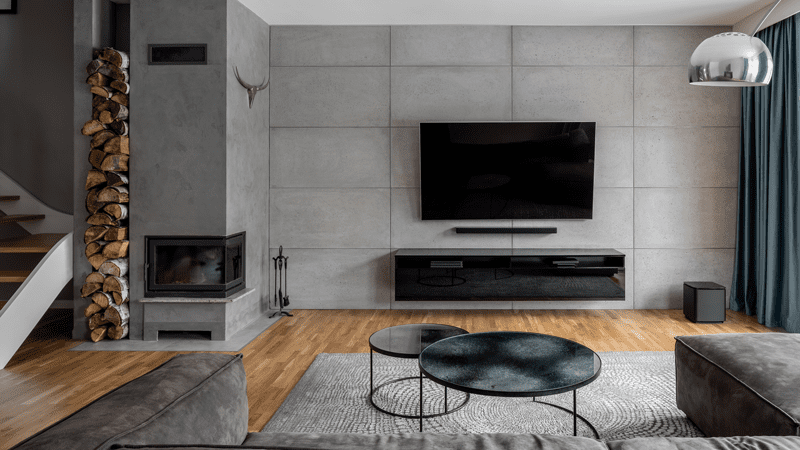

Calling all sleepyheads, this smart alarm clock just may be your morning rise-and-shine solution. The Lenovo Smart Clock may help to get at the root of your sleep issues by reminding you to reduce smartphone screen-time at night. Plus, it can control any smart features in your home from your lights to your espresso machine, play music, and keep you on schedule for meetings and to-dos. The soft-touch gray cloth exterior blends in well with any style.
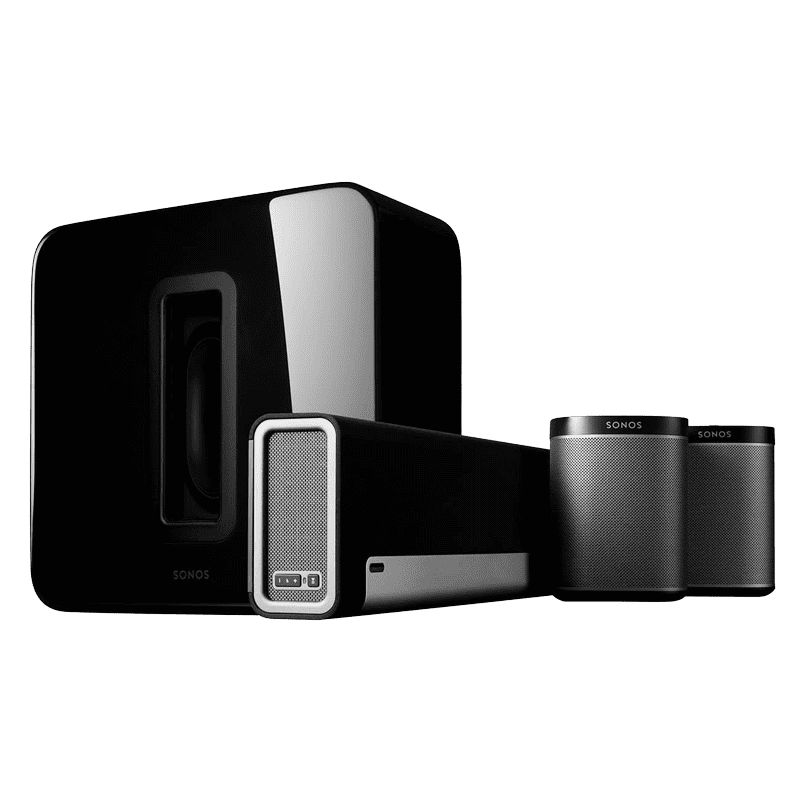 Sonos 5.1 Home Theater Surround Set $1,650 →
When you’re having friends over to watch the big game or indulging in a movie night, you want a system you love, and can easily use. This set delivers on both, offering quality sound carried through just four pieces—a Sonos Beam, Sonos Sub, and two wireless speakers, making set-up easy. Once plugged in and ready to go, the system responds to voice command, your remote, the Sonos app and Apple AirPlay 2.

Google Nest Hello is a smart doorbell that offers both convenience and peace of mind. It provides 24/7 streaming and continuous video recording, video coverage that’s wide and tall to give you a fuller picture of your doorstep and HDR video that shows sharp details even when it’s extra bright or dark out. Google Nest can also be personalized to you and your home to recognize familiar faces and play prerecorded messages when you can’t answer the door.

This smart faucet is like having another hand in the kitchen. With voice-activated technology, the faucet can connect to Amazon Alexa, Google Assistant or Siri to follow voice commands. You can ask your faucet to turn on or off, dispense measured amounts of water, fill to presets such as your coffee pot and even check your water usage. You can also use the faucet’s sensor to turn on, hands-free. But aside from the smart features, the faucet itself is a great fixture, allowing you to choose from two steam settings and four chic finishes.

In the cold winter months, many of us spend a lot more time in the kitchen, which is why we welcome a gadget that makes cooking easier and more fun. Whirlpool’s new KitchenAid Smart Display is a water-resistant, ten-inch standing screen meant for your countertop. Messy hands in the midst of cooking? The KitchenAid Smart Display takes Google Assistant voice commands. You can ask it to play a YouTube recipe video, call your mom for help with your turkey or pull up recipes from Yummly, another Whirlpool brand. The only thing we don’t like about it is that it hasn’t reached consumers yet—but the display is expected to be released by early 2020.

A combination heater and fan that purifies the air, the Dyson Pure Hot + Cool is a three-for-one tech find. The Dyson 360° Glass HEPA filter removes allergens and pollutants you can’t see from the air, while keeping your home cozy or cooling it down. Its design also allows it to circulate purified air, instead of only purifying the air around the fan.
Backyard forests are behind the latest trends in interior decorating. Designers from all over the globe gathered recently at the largest furniture and decor industry trade show in the world, High Point Market in North Carolina.
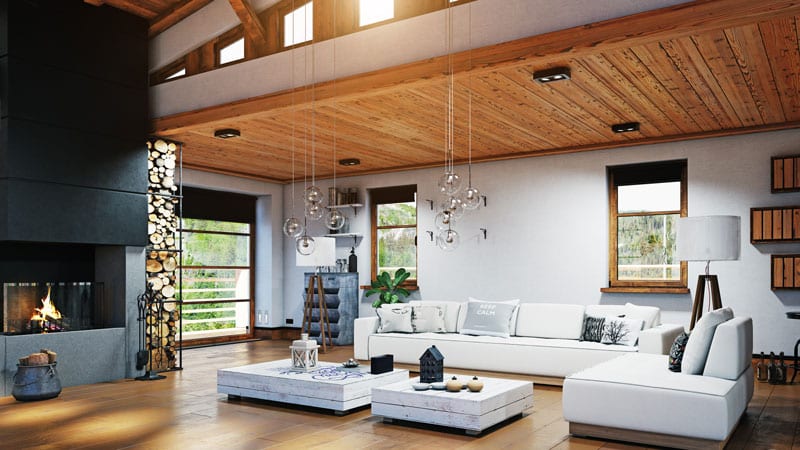
Taking cues from Mother Nature, these contemporary interior design leaders pointed to our mountains, rivers and forests for nature inspired designs for the coming seasons. Coastal environments aren’t to be left out either. Right now, designers are wild about anything natural, whether derived from a branch, a rock or a seashell.
The trend boils down to bringing the outdoors, indoors. Looking to natural materials means living more simply, and finding sustainable, organic, and environmentally friendly approaches to decorating and living in our spaces. Getting back to nature in one’s own home allows the homeowner to relax and feel peace and tranquility.
Even more upsides to using natural materials: eco-friendly materials found in nature really never go out of fashion. Natural materials are typically longer lasting and hold up better than man-made items, as well. Choosing natural materials almost always means a reduction in off-gassing of toxic chemical compounds that can pollute the air you breathe within your home.
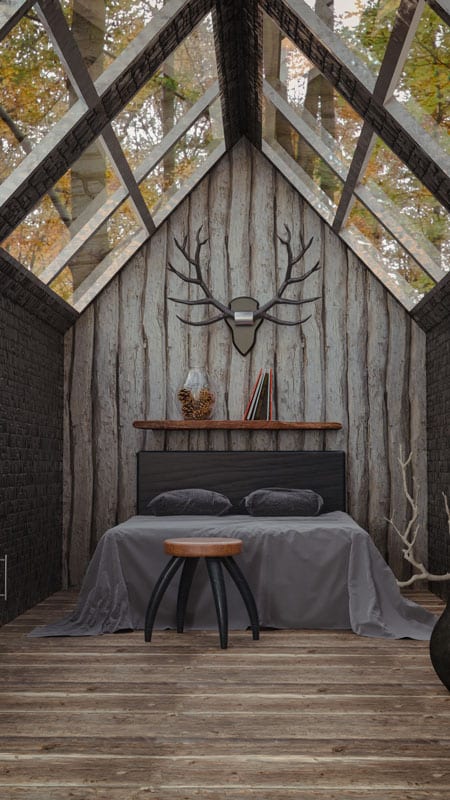
At the High Point Market this year, rattan, cane and wicker furnishings were the rage, coupled with rooms filled with tropical leaf print wallpaper or Audubon-like prints of colorful birds. The look of these natural materials is a historical glance back to British Colonialists in Africa and India, when nature played a significant role in design, and furniture was made with what was on hand in the region.
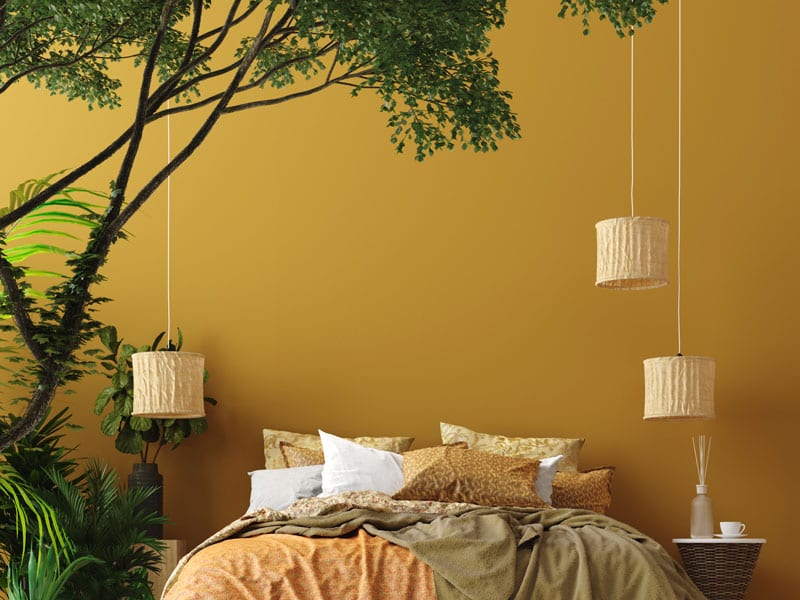
As the colonialists found then, it’s still true today that natural textures of rattan and wicker pieces pair well with vibrant colors coming from floral or botanical prints of that area, and so designers are bringing back that look once again, in various motifs. While the color wheel may surround the earthy taupe, tan and camel hues, pops of vibrant color from nature are also an inspiration; greens, saffron red, cinnamon and persimmon orange will warm up the space and add personality to any room.
Anything nature inspired is on trend this year, from mirrors framed with seashells, sticks or rocks to seashell light fixtures. It’s as if Madison Avenue designers came to Bend and borrowed some of our ideas, because interior décor such as taxidermy and antlers are being installed in client’s homes, to give homeowners that rustic, down home appeal. Another hot trend are stones. Cut polished stones are placed as décor: think thundereggs, granite and marble.
Organic materials are popular for flooring, whether it’s hardwood floors, or rock slabs, or even sisal and jute floor coverings. To fit this design aesthetic, window treatments should be made with organic materials as well, such as bamboo blinds, linen shades, and cotton or silk drapes.
Because designers and homeowners seem to be embracing new environmental consciousness with green natural materials, the push to natural décor may not be an actual trend, but a movement that is here to stay. As they say, nature never goes out of style.
It was 1970. Bend’s population was just over 13,000 and St. Charles Medical Center’s current location wouldn’t open for another five years.
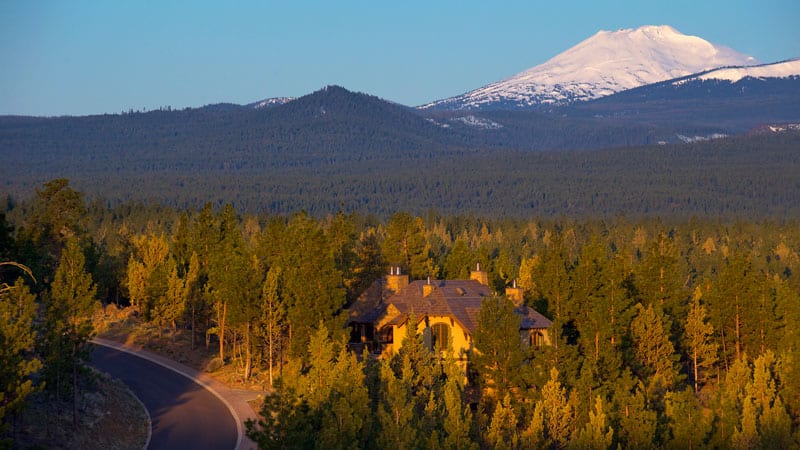
But the then-small upstart Brooks Resources had the foresight to predict the town’s growth, and took a bet on developing a hill west of downtown Bend called Awbrey Butte. Now fifty years later, that bet has more than paid off.
“We always viewed Bend as a desirable place,” said Brooks Resources chairman Mike Hollern. “We thought Awbrey Butte was a good investment, and it in fact turned out to be.”
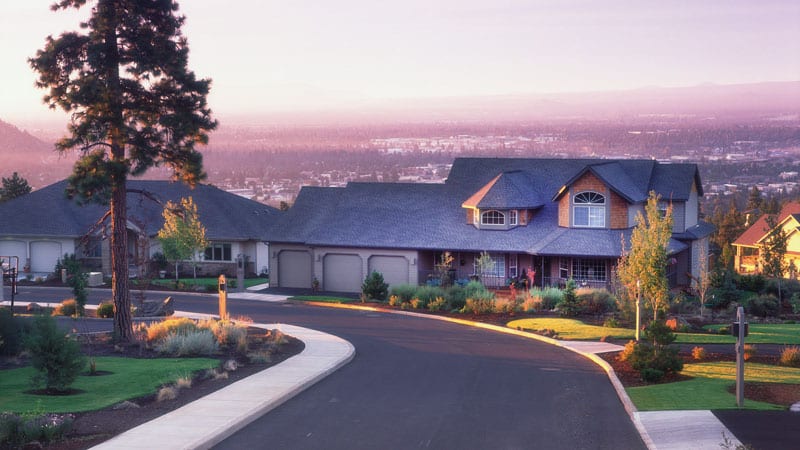
Today, there are close to 800 homesites on the butte that sits about 500 feet in elevation above Bend’s west side. Developed with attention to how each site could have ample space and privacy as well as fantastic views of the surrounding region, Awbrey Butte has attracted homeowners who are looking for all the perks of living near the hustle and bustle of Bend without being squeezed into urban-sized lots.
It took almost two decades for Brooks Resources to develop the butte. But in the 1990s, once water service was delivered and roads were carved into the hill, with the intention that they blend into the landscape, Awbrey Butte took off as one of the most desirable places to be in Bend.
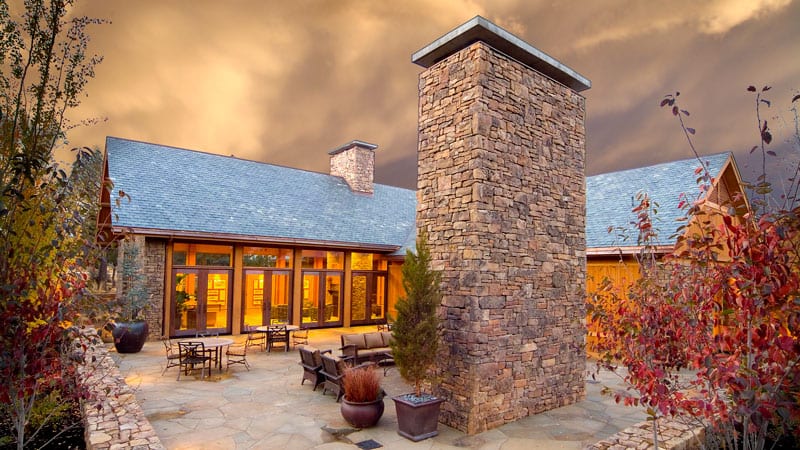
There are a wide range of homes on Awbrey Butte, named for the pioneer Marshall Awbrey who lived in the area during the late eighteenth and early nineteenth centuries. Buyers can choose from mid-century modern homes to classic Northwest craftsman—though there is continuity among the homes, driven by the homeowners’ association guidelines for building, including outdoor paint colors that match the surrounding landscape in order to better blend into the hill.
North Rim is the newest neighborhood on the butte. The private community has 121 one-acre homesite with a collection of custom-built homes. Other exclusive amenities include a lodge and park available to homeowners and guests as well as private tennis court. Awbrey Butte’s two public parks include Sylvan Park and Summit Park, with tennis courts and ample green space to play. A small business park sits on the butte’s north side, as well.
Kristi Kaufman, a real estate broker at Coldwell Banker Bain with two decades of experience in the area, said that homes on Awbrey Butte have seen an appreciation in value that is following the trends of the region. Buyers can expect to spend between $700,000 and $1.5 million for a home on the butte. “There is a wide range of homes that work for retirees who are downsizing, as well as 7,000-square-foot homes for large families,” she said.
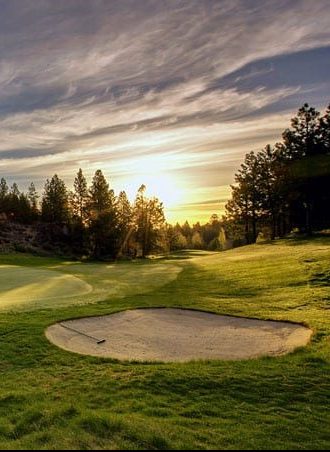
The large lots, location in Bend and quality of homes continue to draw more buyers to Awbrey Butte, said Kaufman. “It’s a huge draw for people wanting to be on the west side for access, but who want a little bit bigger lots,” she said. “Awbrey Butte gives a little more space, more elbow room. The homes are larger than what you would find in west Bend, and value seems to be pretty good.”
Jason Epple and his wife Trisha built their home on Awbrey Butte in 1998, selecting the lot for its privacy as well as space for a long driveway and yard for their future family. Today, they’ve raised four kids in the house and have built long-term friendships with their neighbors.
“It’s a place where there aren’t busy streets or cars driving fast,” he said. “Our kids grew up playing in the cul-de-sac and the yard. The most important thing for us is the neighborhood community we’ve had over the years. That’s what makes it for us.”
They also appreciate life on Awbrey Butte because of its location in town and how it’s become a retreat from the ever-growing construction and traffic. “Bend has been expanding and growing outward, and it helps me appreciate the butte even more. We drive down the butte and it’s busy with a lot more traffic and people,” he said. “It’s really nice to drive up on the butte and have a quiet neighborhood.”
With kids in college, Epple has considered a move from Awbrey Butte, but they haven’t been able to find a place that matches everything they have in the neighborhood, including close access to trails, popular west side amenities and attractions, and of course, their neighbors.
“My wife and I would love to build a new house, now that life and circumstances have changed, but I don’t know where we would go,” he said. “I don’t think that there’s a place where we would go in Bend to be happier.”
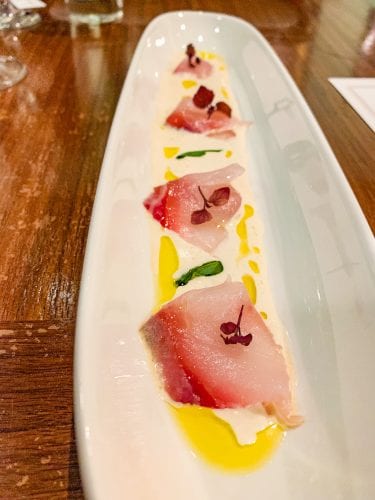
Kim, a three-time James Beard Foundation award nominee, curated each course as 40 guests gathered together with winemaker, Mark Beringer. Don’t presume nepotism, just yet. Beringer’s family actually sold the winery to Treasury Wine Estates over 40 years ago, long before the young Beringer was in the wine game. After spending over 20 years building a resume in winemaking, he applied for a job with Beringer Brothers “as a joke.” Fast-forward three years, and he’s now the head winemaker for Beringer Brother’s–making him one of eight winemakers ever at the winery that his great-great-grandfather founded in Saint Helena 140 years ago.
I was pleased to start the evening with some bubbles of rosé, as I don’t see many sparkling rosé wines by the glass or by the bottle offered in Central Oregon. Chef Kim paired five Beringer wines, two of which were named number-one wine of the year by Wine Spectator, with a tapas course, three dinner plates, and dessert.
I typically don’t gravitate towards Chardonnay–in fact, I avoid the varietal–but the first two courses were paired each with the butter white wine. Let me just say, it’s humbling when I am pleasantly proven wrong. Both Chardonnay wines were almost devoid of the buttery and oaky qualities that are less than agreeable with my palate. Chef Kim paired the first Chardonnay with a Japanese striped bass Crudo served over the most savory and decadent lobster velouté I’ve ever experienced (a velouté is similar to a bechamel sauce).
We ate our way through seared scallops and a ramen fettuccine served with a slightly sweet and spicy braised duck ragu. The wagyu beef and dijon fingerling potatoes plate was undoubtedly the star course of the evening. We bid adieu to our feast over a cigar-smoked chocolate mousse and a dark chocolate semifreddo. I imagined that the smoked mousse would emulate the dessert-equivalent of a Mezcal tequila. Still, it was best enjoyed in small doses with bites of the basil-infused semifreddo as a reprieve from its smokiness.
Lillian Chu, owner of 5 Fusion, is looking forward to hosting more winemakers dinners early next year. She has been facilitating similar events for the past ten years, which raised over $400 thousand for organizations such as the KIDS Center and Ronald McDonald House of Bend. All of the Beringer wines that were served at this event are available for purchase at the Good Drop Wine Shoppe.
[rl_gallery id=”18878″]
Disclosure: This event is the first for-profit winemaker’s dinner hosted by 5 Fusion.
Bend home builder leads the way in taking green practices, homeowners’ visions to heart.
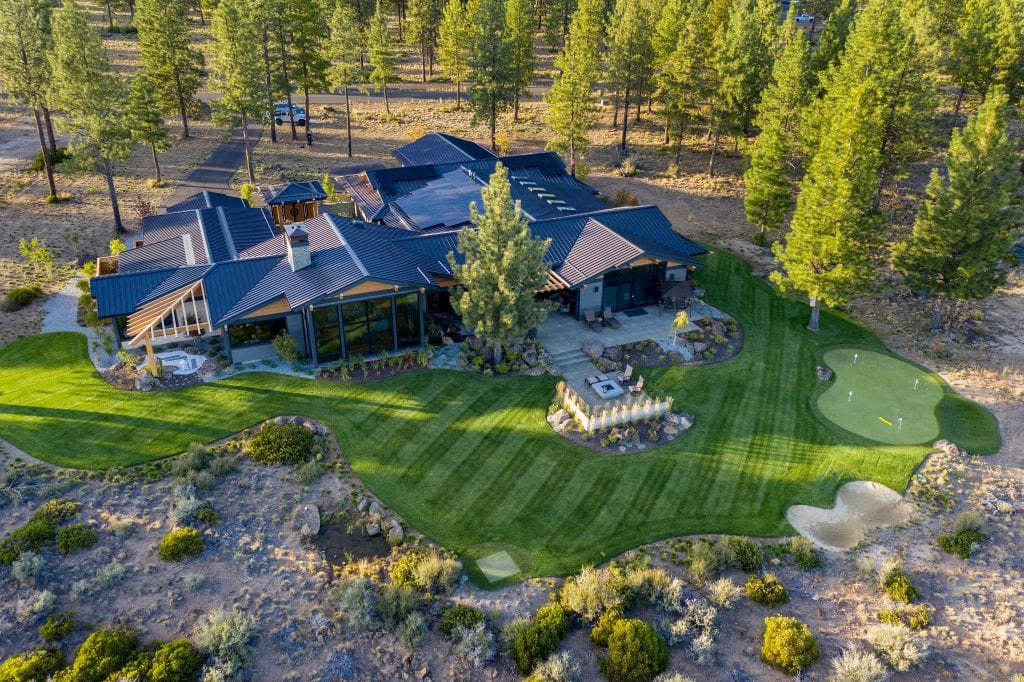
When it comes to building a custom home, you want someone you can count on from start to finish. You need an expert guide who is going to stick with you.
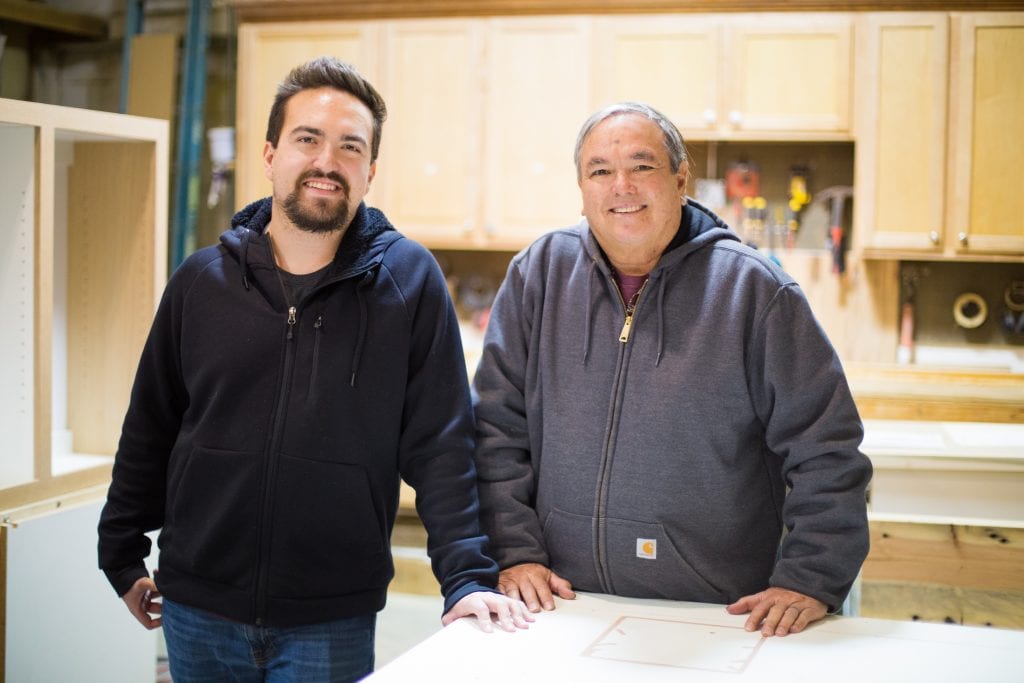
That’s exactly how Dennis Szigeti, owner of Leader Builders, approaches his work in Central Oregon. Leader Builders is a boutique builder, specializing in high-end residential construction. At 65, Szigeti has been in the business for forty years—somewhat of a rarity in a line of work that includes long hours, daunting projects and big asks.
“As we say, we’re custom building your dreams,” Szigeti said.
After building in Hawaii for sixteen years, Szigeti moved back to Bend in 1995 and opened Leader Builders in 1997. The length of time Szigeti has spent in the industry is in line with his general approach to his work—going the extra mile.
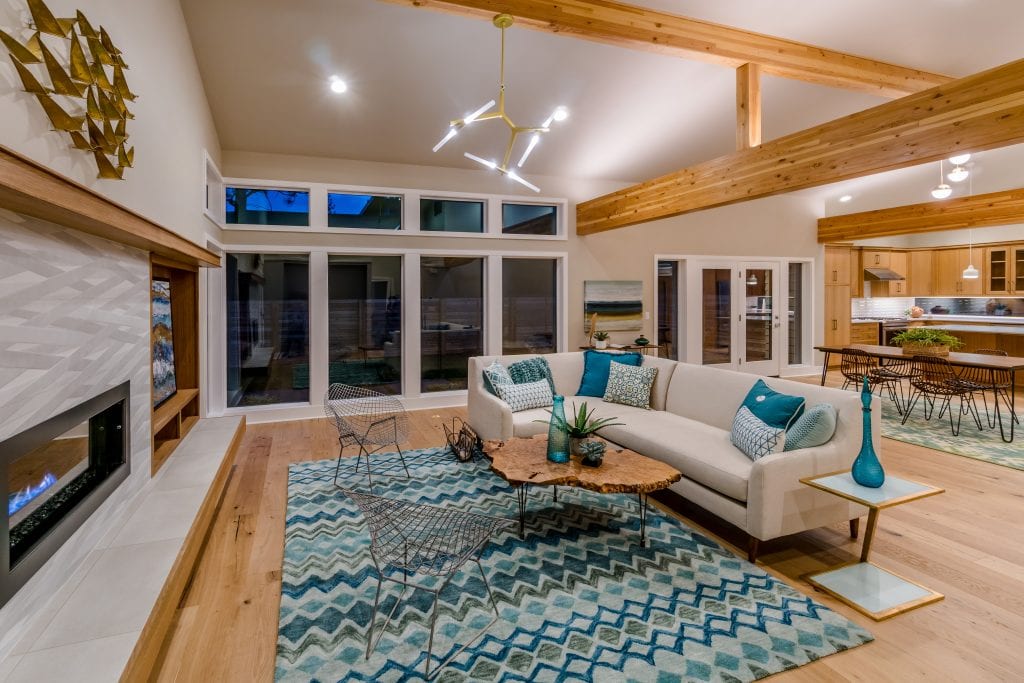
But as in every aspect of Szigeti and his team’s work, they don’t stop there. They build these jaw-dropping homes using green building practices as a partner of Earth Advantage and the Energy Trust of Oregon. Leader Builders even earned a Green Home of the Year Award in 2018.
“A lot of it’s in practice,” Szigeti said. “We do a lot of recycling way above and beyond what would be the norm throughout the course of the build.”
And they’ve been known to use recycled materials where they will make a statement, such as building a ceiling out of reclaimed wood.
It’s the visionary aspect of the work that has drawn Szigeti in for so many decades. He loves getting to hear people’s ideas for different rooms and areas, and bringing together the various elements they’re looking for into one, cohesive home.
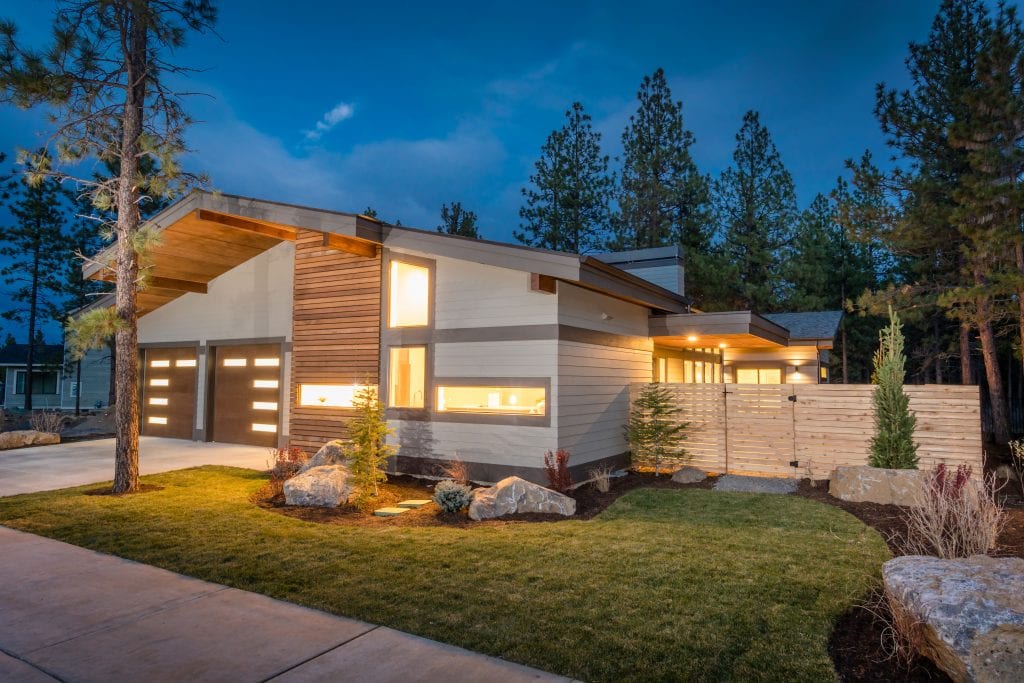
Making someone’s vision of a home a reality comes with plenty of challenges, which Szigeti thrives on. Even if it takes the Leader Builders team staining twenty samples to get the right look for a wood beam, they’re willing to do it—and have.
Whether it’s ensuring someone is on site for the build each day or doing walk-throughs with the homebuilder, Szigeti prides himself on being a builder who’s always willing to lend an ear.
“You’ve got to show up,” Szigeti said. It’s how he’s ended up crafting homes that are gorgeous to anyone yet personal to the homeowner. “We don’t pigeonhole ourselves into one category,” Szigeti said. “Northwest contemporary and mid-century modern are our two strongest styles, but we’ve done everything.”
Take for example, the home Szigeti recently built in Bend’s Tree Farm neighborhood. With a standing seam metal roof and Asian influenced architecture inside and out, the home perfectly suits its owners’ Japanese heritage.
The front gate to the residence stands tall with four wood pillars, clean lines and dark accents for a look that Szigeti calls “PNW meets pagoda,” which his team designed. In the living room, stained black panels encase the fireplace above the mantel, providing the perfectly contrasted backdrop for the homeowner’s white wedding kimono.
Adding a unique material to walls to create a standout scene in an unexpected place is a skill of Leader Builders. In a recent build at Tetherow, the team placed a steel panel in the living area above the entertainment center for a surprising texture that adds depth and texture to the space.
In every one of Leader Builders’ projects, it’s these custom details that make the home unique. From carefully chosen finishes and painstakingly placed lighting to upcycled materials and artfully laid tile—placed by Szigeti’s daughter—every detail is accounted for in Szigeti’s homes, and then some.
Nathan Good Architects tailor home design solutions to each client for stunning, award-winning results.
Imagine offering an object, an abstract idea, or perhaps a photograph of a lone sand dune to an architect and saying, “This is the design inspiration for my home.” Now imagine your personal style being seamlessly integrated into a stunning home design that honors its environment and goes on to win accolades for its green sensibilities and architectural innovation. Let’s take it a step further: your new home produces more energy than it consumes, and supports your aspirations for health and wellness.
Oregon architect Nathan Good can imagine all of this, because that’s what his firm does. “We once had a client tell us her inspiration for her home was a synthesis between the hemline of a flamenco dancer’s skirt and the interior of a nautilus shell,” recalls Good. “We had another client who wanted us to design a home that could withstand sustained winds of 150 mph, a forest fire or marauding bands of thieves. She wanted it to be off the grid, energy-independent, with a safe room where she could live up to two weeks without needing anything from the outside.”
How does this happen? How do you bring a sand dune, a skirt hem or the desire to age-in-place in a future-proof home to fruition? “Well,” says Good, who was one of the first in the United States to become a LEED-accredited professional, “We tailor our architectural solutions to our client, rather than plugging them into a preset aesthetic. All of our projects express our passion for daylighting, views, exemplary indoor air quality, and environmental responsibility.”
Another hallmark is also clear after perusing their portfolio: their ability to incorporate opposing ideals into their work, resulting in a smaller space imparting a sense of spaciousness, or casual luxury with precise attention to detail. “We had a lovely couple who wanted to build a unique home along the Oregon Coast,” remembers Good. “They were committed to utilizing all of the wood from a eighty-year-old barn that had been on their family’s property for generations. Everything was carefully dismantled because it was important to them that we infuse elements of their family history in every aspect of the home. They wanted it designed and built to last for many generations as a legacy project.”
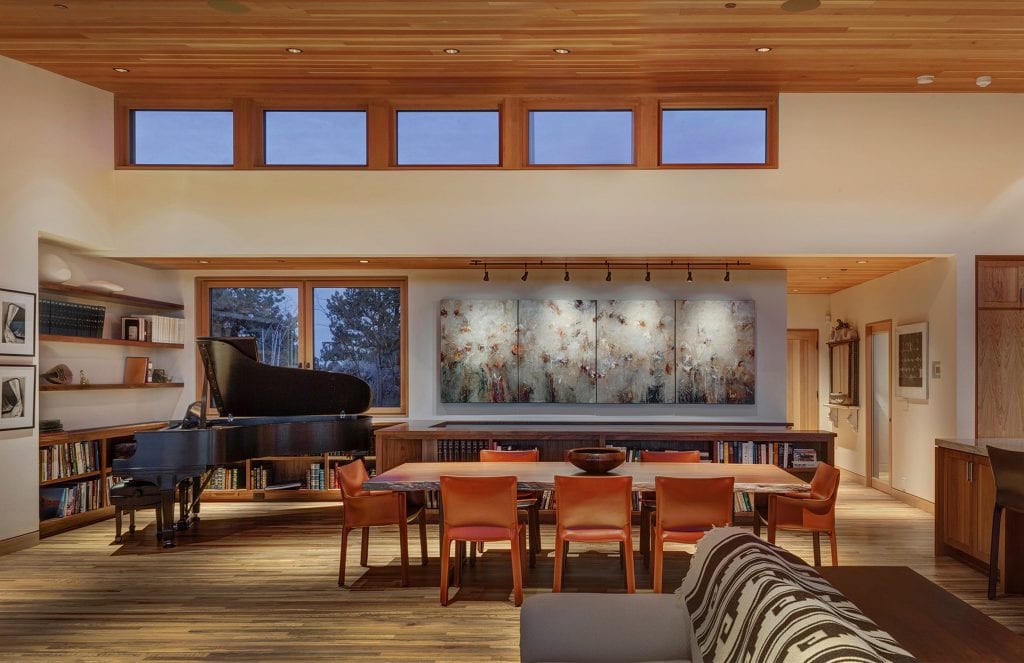
Nathan Good and his group of three other architects and an interior designer are known for their highly collaborative methods, involving all project stakeholders in a thorough, thoughtful design process. Their initial site assessments include analyzing views, rainfall, prevailing winds, annual temperatures and the path of the sun across the site through the seasons. They welcome input from their project’s clients and other team members, including interior designers, contractors, suppliers and energy consultants, resulting in the creation of a distinguished custom home.
Although Nathan Good Architects is headquartered in Salem, they have recently opened an office in Bend. Their custom home designs can be found throughout the western United States, Mexico and Hawaii. Demand for their services has resulted in a wide range of unique custom homes that span the spectrum from a modest fishing cottage overlooking the Deschutes River in Maupin to a 36,000-square-foot estate south of Denver, Colorado. “We’ve been designing custom homes in the Bend area for over ten years,” says Good. “Like many others, we see Bend as a haven for those who love the outdoors and feel a deep connection to the environment.” It’s no surprise, then, that when asked about some of their favorite projects, their designs in the Bend area quickly top the list. Central Oregon has been an opportunity for Nathan Good Architects to showcase their wide range of abilities, from multi-million-dollar residences to more modest cabins and retreats.
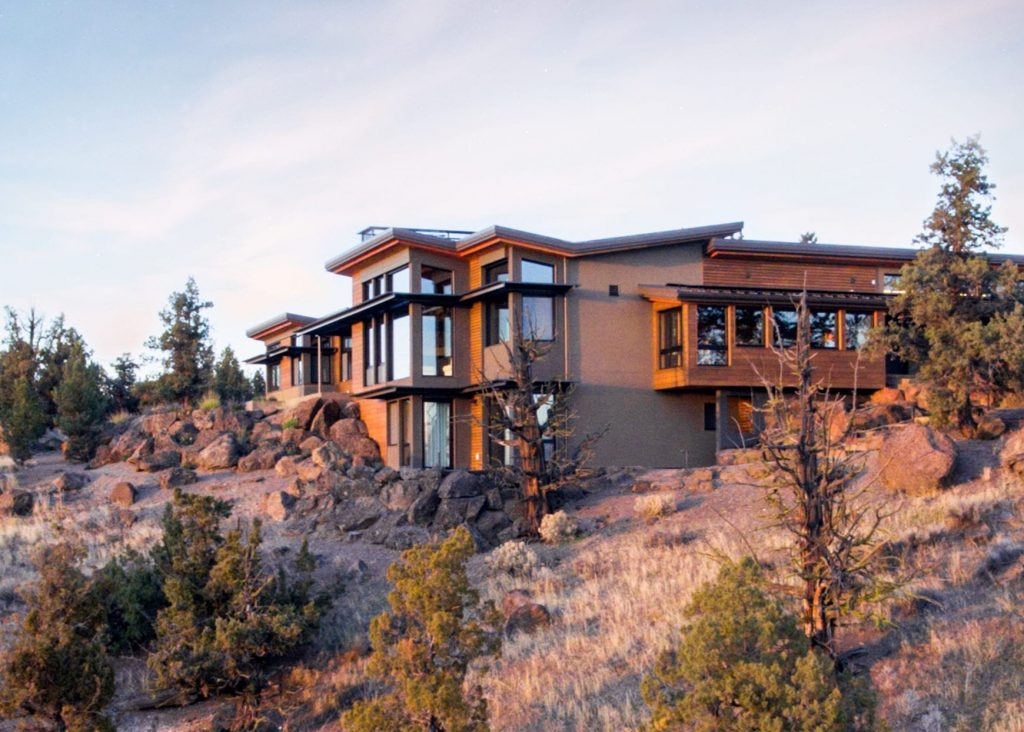
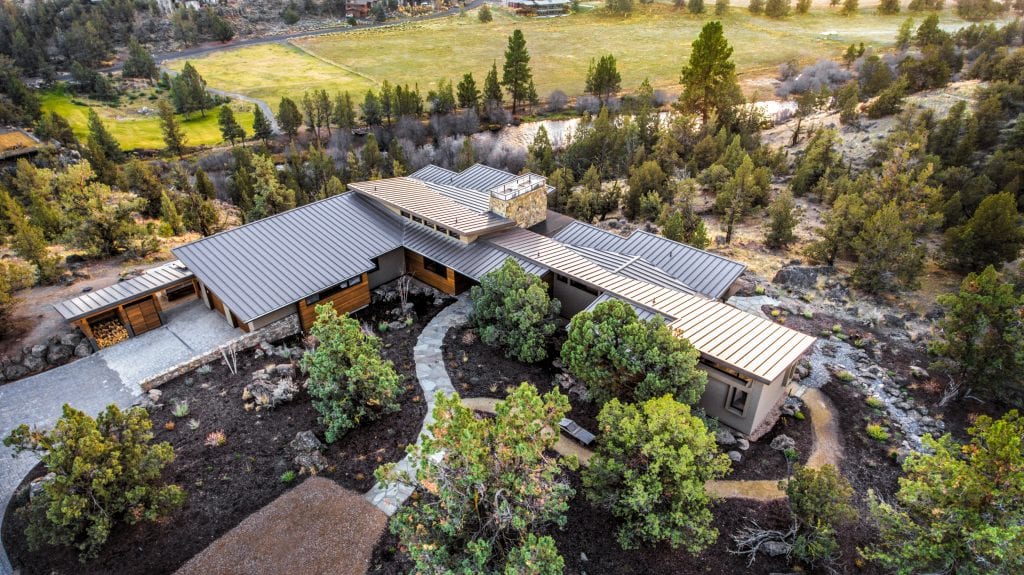
One home that captures the look and feel of Bend’s natural and cultural spirit is the Live Edge residence near Tumalo. The modern blufftop beauty is a LEED Platinum-Certified residence and was named GreenBuilder Magazine’s “Luxury Green Home of the Year” for 2018. Overlooking the Deschutes River from its rocky perch surrounded by ancient juniper and other indigenous plants, Live Edge complements the high desert landscape as if it took root among the sage and rocky outcroppings. The owners requested that the natural setting be preserved as much as possible, resulting in the home being designed to flow around ancient junipers and unaltered rock formations.
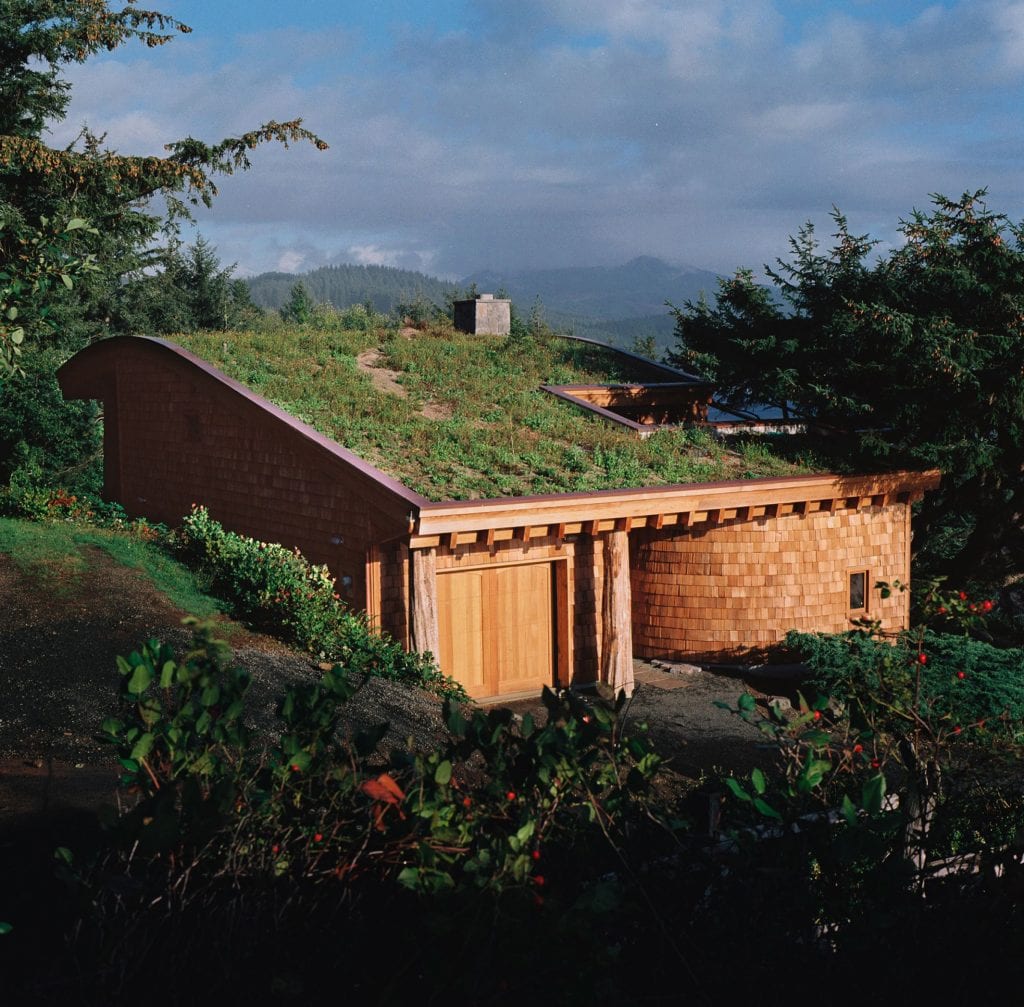
Still scratching your head over how a sand dune inspires a home? A signature project designed by NGA is still garnering recognition years after its completion in 2005 for its groundbreaking biophilic design. One national publication hailed it as “ingenious” for its functionality and beauty with a curved vegetative roof that reflects the client’s photograph of a graceful line defining the top of a wind-blown sand dune.

The giveaway includes:
The 2SR Butcher Box contains approximately 10 lbs of 100% Wagyu, which will fit easily into a household freezer. This box contains 2 New York steaks, 2 London Broil, 1 Flank steak, 2 Cross Rib steaks, and 4 packages of Carne Asada.
2Sisters Ranch Wagyu is a family owned and operated ranch in Tumalo, Oregon that raises 100% Fullblood Wagyu.
Their cattle are pasture raised in the fresh air and sunshine of Central Oregon, and are grass fed from nutrient-rich local hay, which produces an unparalleled umami flavor in the beef. On their family owned and operated ranch, they value the methods of traditional farming that prioritize the health and wellness of their animals. They believe the best beef comes from animals that are well cared for, and they work hard to provide you the highest quality meat directly from their pastures to your plate.
‘和牛’ Wagyu: ‘Wa’ means Japanese and ‘gyu’ means cow
2Sisters Ranch’s passion is raising the highest quality Wagyu beef with 100% pure Japanese genetics. Their herd was founded directly from the prominent Tajima and Kedaka lines, known for producing the highest amounts of marbling, tenderness, and exquisite flavor. They allow their cattle to grow naturally in order to maximize the superior meat qualities intrinsic to the Wagyu breed.
Bred from pure Japanese genetics
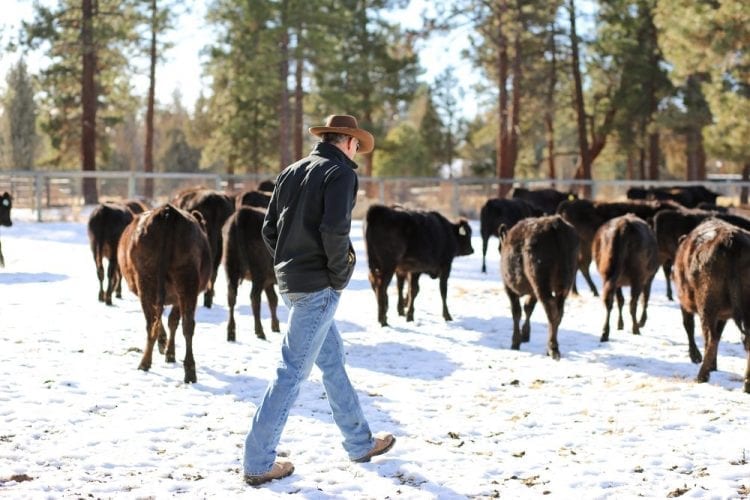
What does it mean to say pure Japanese genetics? In the 1970’s the first importation of Wagyu bulls occurred and over the next 20 years there were only a few more importations, totaling less than 200 Wagyu. In 1997 Japan declared Wagyu a National Treasure and ever since then there has been an export ban on any live animals or genetics. Fullblood Wagyu that are DNA certified by the American Wagyu Association can prove 100% of their lineage traces to the original importations from Japan. Fullblood Wagyu have never had any US cattle lines bred into them…only pure Japanese genetics similar to the Kobe beef being raised in Japan today. Read more here.
Grass Fed

Grass fed beef has been found to have healthier ratios of omega-3 to omega-6 fatty acids than grain fed beef. It also often contains higher levels of anti-oxidants like vitamin A and E. Factory meat typically contains unhealthy fatty acids, includes hormones, antibiotics, and other biotoxins.
Healthy Fat

Highly marbled Wagyu beef have higher proportions of monounsaturated fatty acid (MUFA) due to higher concentrations of oleic acid. Wagyu beef has the lowest cholesterol of all meats, even lower than fish or chicken.
Shop 2Sisters Ranch Offerings



The contest begins on February 3 at 12:00 a.m. and ends on February 16 at 12:00 p.m. For the complete list of rules, visit our contest policy page.
Bend Chamber taking the lead on an initiative aimed at tackling the region’s childcare shortage.

If you asked Bend residents about the city’s top problem, you’d probably hear things like traffic congestion, affordable housing and wages. But if you asked that same question to parents of young children, you’d probably hear about the lack of affordable, quality childcare in town. It’s not just a problem for parents.
The lack of childcare is pushing employees out of the workforce at an alarming rate as parents of young children, particularly mothers, opt to remain home rather than return to the workplace because of the childcare shortage. According to a survey conducted last year by the Bend Chamber of Commerce, it’s also creating problems for employees who remain at work but are less productive because they are distracted by childcare-related issues, The survey confirmed what the business community knew instinctively: that the lack of childcare is an issue of concern for employers as well as employees.
It’s not just a Bend problem. Cities around Central Oregon are strapped for childcare, said Bend Chamber CEO Katy Brooks. In places like Madras, there are sometimes only one or two providers to cover the entire community, Brooks said.
“We have a society where both parents are working, or you’re a single person working with kids. This is a nationwide issue. We have not built the infrastructure by which we have an affordable, high-quality way to take care of our children,” Brooks said.
Brooks said the issue hit the chamber’s radar in 2018 when it was developing a series of discussions and programs around its “year of the woman” theme. One thing that kept coming up was how a lack of childcare options, especially for mothers of infant children, was keeping them out of the workforce.
“Only one out of three kids under the age of five are in childcare. What we don’t know is how many of them are just folks who have decided to stay home, but we do know there are waitlists for infants, especially under one years old, of at least one year,” Brooks said.
This past fall, the chamber decided to get proactive about the childcare crisis. It hired a “Childcare Accelerator,” a new position in the organization to provide more options for parents in the short term while developing a new model for childcare in the region through a partnership with Oregon State University and Central Oregon Community College.
The position is funded in part by contributions from local businesses who have a vested interest in alleviating the childcare shortage. For now, the job will be housed at the Bend Chamber under the umbrella of its BendNext program, the chamber’s non-profit workforce development program. The goal, however, is to work with partners like OSU and COCC to create an independent umbrella organization dedicated to taking on the childcare issue. OSU Cascades has already set aside land for a pilot childcare program that, if successful, could be replicated across the region.
“Our challenge is going to be [getting] some early wins and starting to add some slots now while we work on some of these bigger pilot ideas” Brooks said.
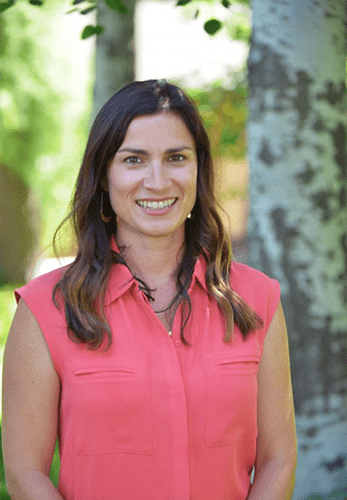
Megan Norris, Childcare Accelerator
A former teacher and a mother of two, Norris will work with businesses and other community partners to entice some of the region’s existing providers to expand capacity by opening new childcare centers. She has extensive experience in the intersection of public policy and private enterprise and has developed solar projects, mixed-use neighborhoods and worked with the California Sierra Club. Solving the childcare problem will require her to draw upon all that experience, she said.
So far, she has been encouraged by the initial conversation with potential partners. “The community coming together around this has been amazing. I think everyone realizes the need and is just embracing it and wanting to help,” she said.
Wellness center’s approach emphasizes access and affordability.
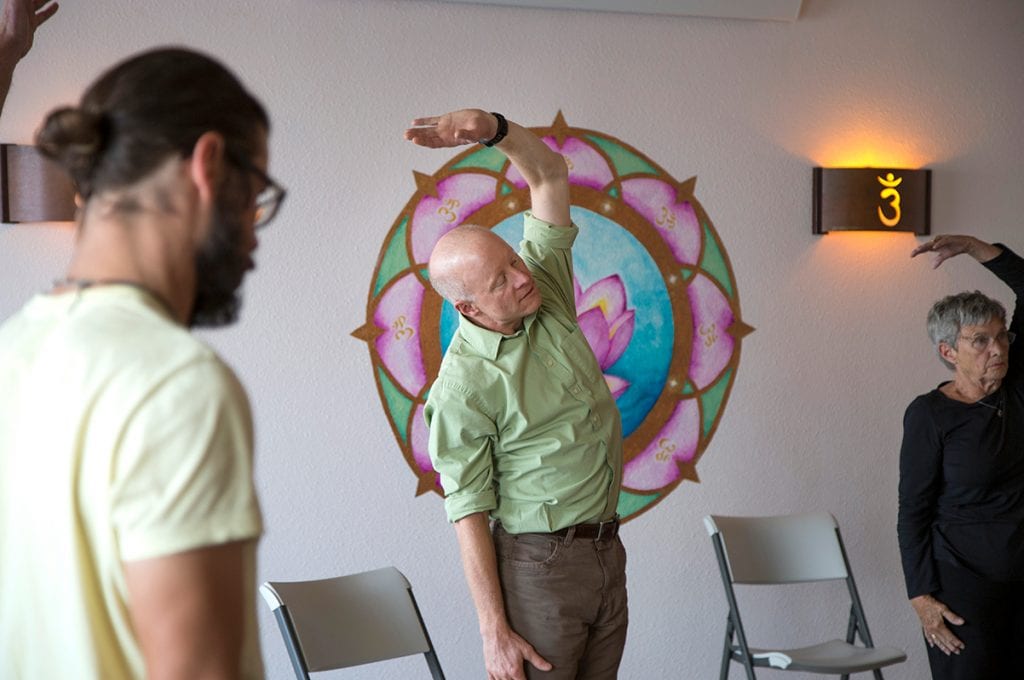
Standing in a relaxed, yet tall stance, eight people raise their arms to shoulder height, graceful and ethereal as long-legged, long-necked cranes. As if moving through honey, striving for quality of movement, they take unforced, diagonal steps, shifting their weight, back to front. In a ponderous, powerful, plié of sorts, they take on the wide stance of the bear, heavy, with hidden agility. Traversing the room like playful monkeys, they extend upturned palms from under their chins, as if offering fruit.
In this qigong class, a dozen students, ranging in age from 20s to 60s, follow the lead of instructor Mark Montgomery. He founded Bend Community Healing in 2014, which now operates out of a small office/healing center off Century Drive on Bend’s west side. He offers meditation classes and acupuncture, community-style, in which a group receives the treatment simultaneously, provided on a sliding scale. Each person pays what they can, $20 to $50, no questions asked, and a $15 intake fee at the first visit.
Montgomery, who has studied with master acupuncturists and qigong instructors throughout the U.S. and in China, has long supported the community acupuncture model, believing that it doesn’t have to be expensive. In a stressful, conflict-filled world, we need spaces where strangers can turn off their phones and rest side-by-side, healing together in comfy recliners in a large room, amid soft, therapeutic background music. Community itself is a potent healing force, he said, and the way to popularize acupuncture’s effectiveness—from calming the mind to helping treat injury and disease—is to make it readily available.
Healing, energy-enhancing, calming practices such as meditation and qigong are free and easy to learn, Montgomery said. Qigong (pronounced chee gung) combines the Chinese words qi (life force or vital energy) and gong (cultivation or skill). The gentle movements, breathing techniques, and mental concentration are aimed at circulating, strengthening and purifying the qi.
“What’s frustrating for me is that most of the people who come in have things going on that are the result of never having been taught to tune in to, and feel and tend to their own energy, and for me, living in the 21st century, it is a non-negotiable,” said Montgomery. “We have to learn to bring our awareness of ourselves in the world into alignment… There’s a way that we can actually tune in and feel not just structure, but energy, and the more we can hone awareness, that ability to attune, the more we can start to take care of ourselves in a much more profound way.”
Ryan Redmond said he joined the qigong class six months ago to build on his experience in a similar practice, tai chi. Qigong has taught him how to stay in tune with his mental and physical energy in a distracting world. The 41-year-old said he respects Montgomery’s commitment to his clients, the sliding scale and welcoming space, in which clients share not just “rainbows and unicorns” but also their struggles. “People in class are experiencing genuine community,” he said.
Sophie Bijjani and Florian Pappafava discovered Bend Community Healing while visiting from Quebec and considering moving to Bend. Bijjani, 25, said she appreciated the time at the beginning of the qigong class for people to tap into their feelings and to focus on an intention throughout.
“It quiets the mind and gives an opportunity to focus on your body, and not just on what you have to do, what’s next, what’s best for your career or your kids,” she said.
Pappafava, 32, said, the class creates an inviting space for exploring your own energy. “I get something through living the movement rather than just doing it mechanically; it was nourishing to think and just live the movement. You are present.”
These eagerly anticipated releases belong on your bookshelf in 2020.

1 American Dirt by Jeanine Cummins American Dirt is already being called the next great American novel. The novel follows a middle-class family from Acapulco, Mexico as they flee north to the United States, hoping to escape the wrath of a brutal drug cartel. I haven’t read any of Cummins’ earlier work, but with raving blurbs from authors like Kristin Hannah, Stephen King and Julia Alvarez, this novel is definitely on my to-read list.
2 Weather by Jenny Offil Jenny Offil’s novel Dept. of Speculation was noted as one of the best books of its year by the New York Times and has been passed around as a quiet favorite in the literary world. Her newest novel Weather follows a librarian who agrees to answer letters written to an old mentor who is too busy to answer her own fan mail.
3 The Glass Hotel by Emily St. John Mandel When people ask me what book they should read next, Emily St. John Mandel’s Station Eleven is my first recommendation. That means that The Glass Hotel has large shoes to fill. Still, I have high hopes for Mandel’s latest novel that involves Ponzi schemes and mysterious disappearances at sea. Like Station Eleven, I have a feeling that this most recent novel will be one of those hard to summarize, yet must-read books.
4 All Adults Here by Emma Straub In addition to owning and running Books Are Magic, a popular bookstore in Brooklyn, novelist Emma Straub manages to write contemporary novels to great acclaim. Her next work, All Adults Here, is a family-centered epic that is already garnering great reviews.
5 My Dark Vanessa by Kate Elizabeth Russell Fifteen-year-old Vanessa’s affair with her teacher is a source of strength and confidence, until a former student shares a secret. Vanessa is not the only one to gather her teacher’s affection. Now she must reconcile her memory with the knowledge that she has been manipulated. Russell’s debut novel examines the power of memory, identity, and our willful need for self-deception.
6 Dreyer’s English by Benjamin Dreyer OK, it’s more of manual than a novel and it was technically released in 2019, but… if you’ve argued over a semicolon, debated the validity of the Oxford comma, or taken issue with a split infinitive, this offering from Random House’s copy chief is a must-have. Dreyer puts style and personality back into the tired world of style guides, adding humor and anecdotes designed to both entertain and educate.
A mid-winter meditation on Central Oregon’s second mountain.
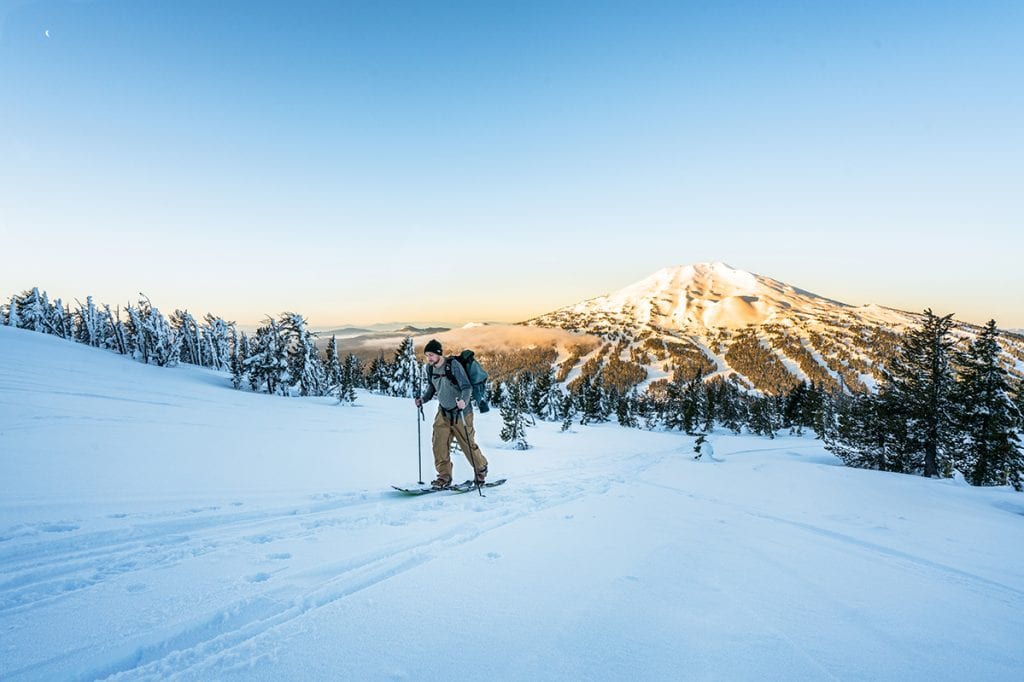
By late morning the parking lot was still empty, which seems unfathomable now when you think of Dutchman Flat. It was early January 2005. That was the year I fell in love with Tumalo. That was the year I learned how a bad winter could still be great.
Alone, I set out on the two-mile skin to the top of the 7,779-foot volcano in a ritual that would not change over the next 15 years. Hard breathing would soften into a steady chuff set to a mohair metronome swaying over snow. The cold air hitting hot lungs gradually lost its bite. With each stride, the curtain of spruce pulled back to reveal the pink folds of Mount Bachelor to the southwest. In the backcountry, the winding up of gravity is just as pleasurable as the release.
A place of easy access and easy reward is bound to tease out our natures, too. We players want what we want and will tribe up to get it. Two legs, four legs, blue smoke, pedal strokes: we stride, ride, spin and slide up and around those flanks in a microcosm of everything that makes Bend great. The peak may sit in the shadow of one of the nation’s largest ski resorts but Tumalo is a destination in its own right. We’ve mostly figured out how to tolerate, maybe even how to share.
I got to the top that day just as I’d do hundreds of more times over the years. The windswept ridge of storm-punished pines feels impressive every time. The backside bowl howled steep and tempting but the snowpack that year would prove be the shallowest in sixty years. No matter. I stripped skins, locked heels and came down the thousand feet.
Frank Zappa once said you can’t be a real country without a beer and an airline. I don’t think you can be a real mountain town without a Tumalo. It’s the season’s great equalizer, where what goes in is what comes out, and the you that’s up there is always better than the you that began.
America’s leader in online cannabis ordering set to expand in Bend
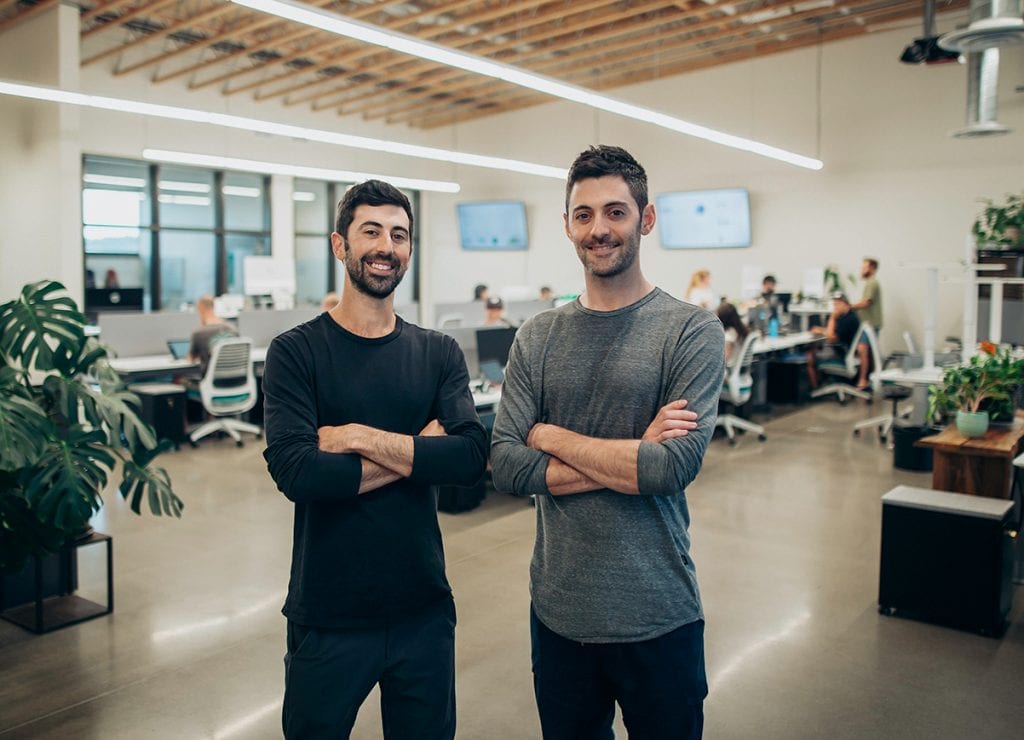
When Ross Lipson went off to Michigan State University in 2005, on his first day in the dorm, he got inundated with take-out food menus. Knowing there was a better way to connect restaurants and customers, he dropped out of college in the first week of school to launch one of the first online restaurant-ordering sites in the U.S. capable of aggregating offerings from multiple eateries. He replicated that with GrubCanada, the country’s first such service, which became a household name and the hub for online ordering.
After selling it in 2011, Lipson, an avid snowboarder, moved to Bend in 2012. His timing was fortuitous. When Oregon voters legalized cannabis for recreational use in 2014, Lipson saw an opportunity. He founded Dutchie (pronounced doo-chey) an online marketplace where consumers can place pickup or delivery orders from local cannabis shops. With hundreds of participating dispensaries across the nation, Dutchie is dominating the space and expanding locally. We talked with Lipson recently about the endeavor and his plans for its growth.
Tell us a bit about launching Dutchie in Bend in mid-2017.
Shops were starting up, as we all remember, on every corner—lines out the door. Everyone was very excited. I was personally excited. I enjoy consuming, the culture, the people, I see the opportunity. I’m in Bend, in Oregon, one of the first markets to go legal for rec[reation], and so I have this early exposure to this emerging industry, cannabis. I’m in line that first day of legalization, and my light bulb is going off in my head, screaming at me, saying ‘You need to apply the online ordering concept, everything you know, to the cannabis space.’ I called my brother (Zach Lipson), who’s my co-founder and chief product officer here. He was living in Chicago, he’s a tech startup guy, and serendipitously, he was going through an acquisition at the same time. I called him with my idea and he said, “It’s a no-brainer, you have to do it, and I’m in.”
How much is the company growing?
We launched here in Bend in mid-2017 with just one dispensary and now, two-and-a-half years later, we’re in twenty-two states, we’re in more than 500 dispensaries, we have forty-five employees, growing quick. We just signed a lease for a 13,000-square-foot building with room for 130 employees. We’re moving in November 2020, so we’re really aggressively recruiting. We are recruiting software engineers, product specialists—cannabis connoisseurs, customer support, sales, account management. Those are the buckets for thirty job openings.
Tell us about your funding and sales.
We’ve raised $18 million in funding. The lead on our first round was Casa Verde Capital, which is [backed by] Snoop Dog, and Gron Ventures led our last round, our Series A in September. We’re the leader in the nation in online ordering for cannabis —transacted more sales in cannabis than anyone in the nation last year. We’re right now annualized at doing $185 million in GMV, gross merchandise value—transacted sales. (The amount of sales made by dispensaries using Dutchie online ordering.) We work with many multi-state operators like Mission and ZenLeaf and the largest dispensary in the world, NuWu, in Vegas, and the closest recreational dispensary to New York City, Theory Wellness, which averages a two-hour line all day in Great Barrington, Massachusetts, on the border of New York State. Order volume like you’ve never seen—over 1,000 transactions per day.
Who are your main competitors and how are you distinct?
Leafly and Weedmaps are our two main competitors, however, we’re very focused on online ordering. That’s all we do, whereas they do many things. They’re first and foremost product review, and a dispensary guide of listings in your area. They just recently launched online ordering.
What have been the biggest challenges so far?
I am so optimistic; I see the challenges as positive. In the cannabis space there are these rules and regulations that wear you down. Those are the reasons why the big players aren’t in—the barriers to entry—I love those problems. It all comes down to the mindset.
Take a look around the heart of Bend, and it’s hard to miss Alexander Drake’s handiwork. Drake arrived in Bend more than 100 years ago, but his fingerprints are all over this town, even if you don’t know where to look.
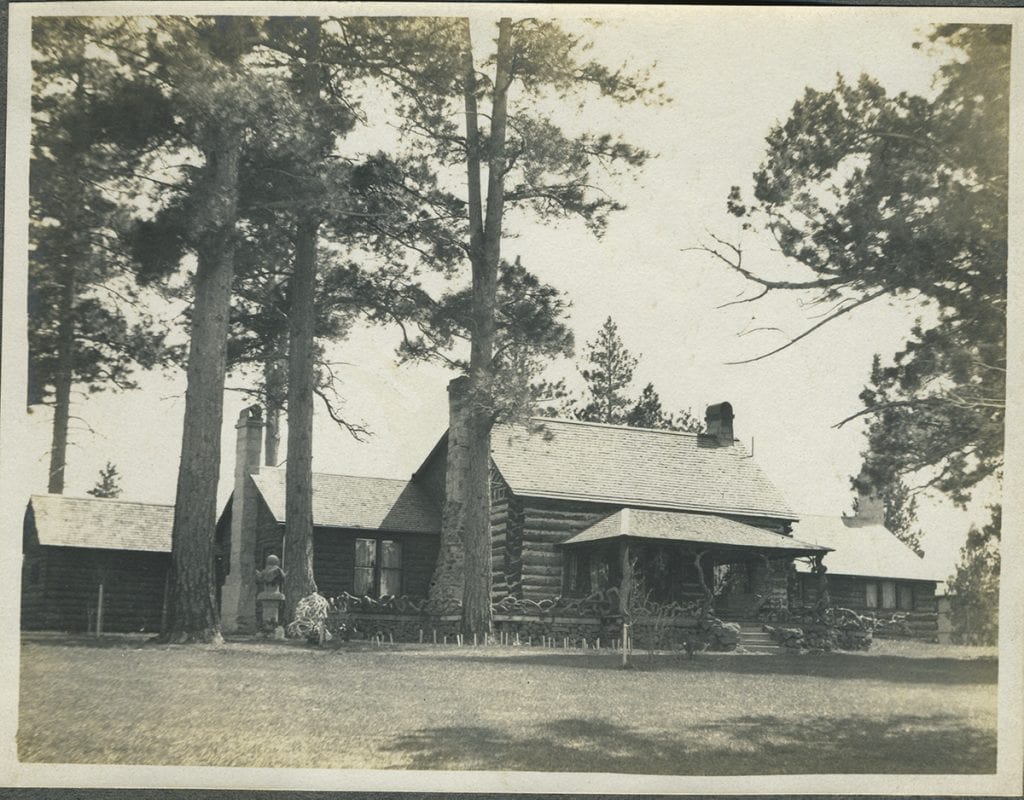
Drake laid out the town’s street grid, opened the first sawmill, developed the first canal system, and built the infrastructure to bring electricity to his town. And he did it all in just a little over a decade. About the time it would take today to get the permits for any single piece of the public works project.
Before Alexander and Florence Drake arrived, Bend was a rural outpost of just twenty-one souls at the turn of the nineteenth century. The Drakes had a vision of something grander.
“Alexander Drake came from money,” said Lisa Lee, historian with the Central Oregon Irrigation District (COID). “The elder Drake was involved in the railroad business and also served as a senator to the Minnesota senate.”
The Drake family fortunes took a hit in the latter part of the 1890s, in part thanks to two economic downturns and the railroad stock crash in 1894. The Drakes looked west to the frontier and saw opportunity. They left St. Paul, Minnesota for Portland, before finally settling in, what was then, Farewell Bend.
At the time of the Drakes’ arrival, Farewell Bend was barely a dot on the map. Engineer Levi Wiest helped Drake survey and map the irrigation canals for the federal government. In an interview with The Bend Bulletin on October 20, 1933, Wiest remembers a desolate place.
“There was only a little log schoolhouse in what is now Drake Park, a caved-in log cabin […] on the riverbank, and the Griggs deserted log cabin.”
Drake came to Bend to take advantage of the Carey Act of 1894. The Act gave investors a way to acquire public land if they could bring it under irrigation. With plenty of water on hand, Central Oregon was ripe for development.
In his book, Frontier Publisher, Jim Crowell writes, “Drake, even before leaving for the Far West, was familiar with the great economic potential of Central Oregon, especially its water resources, and soon after his arrival, he purchased land of his own.”
Entrepreneurial pioneers were already lining up to irrigate the desert land of Central Oregon. Charles Hutchinson formed the Oregon Irrigation Company in 1892. He had already filed a claim under the Carey Act but was looking to expand the footprint.
What happened next is murky, according to Lee. Hutchinson and Drake met at an irrigation conference in Spokane. Hutchinson was looking for capital to continue the expansion of his irrigation business.
“Hutchinson told Drake there were opportunities in Central Oregon and wanted Drake to join him as a business partner,” said Lee.
Only four months after arriving in Bend, Drake founded the Pilot Butte Development Company (PBDC). Days before the two “partners” were set to file the Carey Act paperwork, Drake cut Hutchinson out and filed the necessary documents as the sole owner of PBDC.
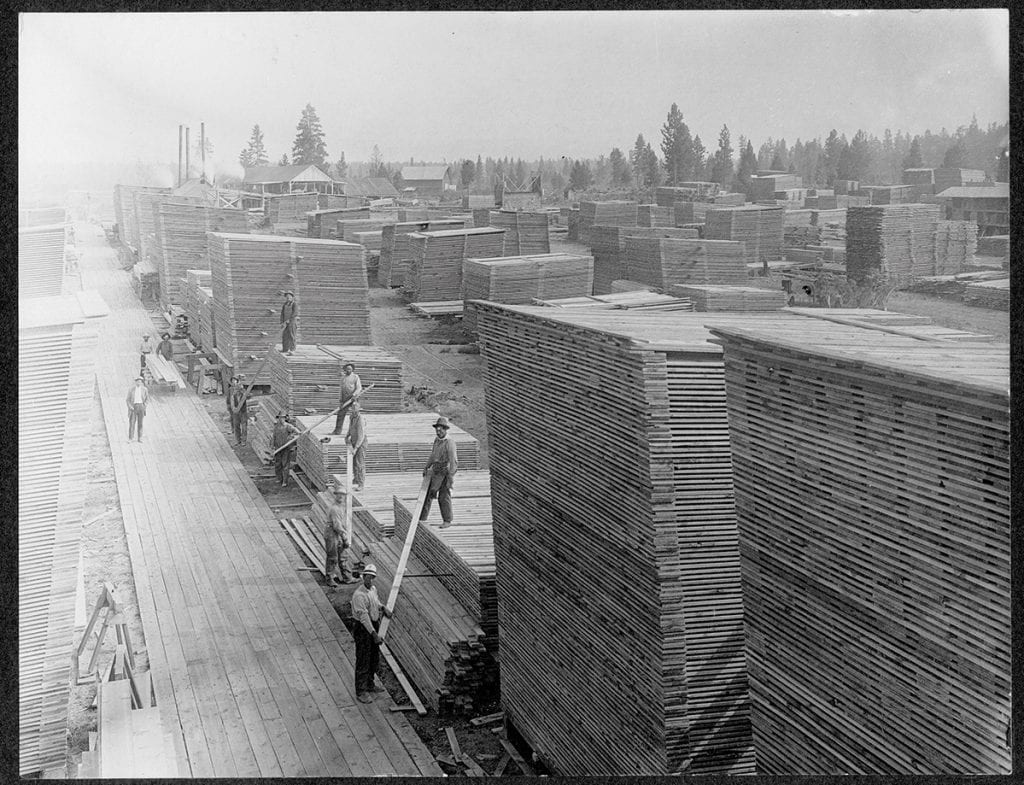
Drake received a state contract to sell the land and water rights and spent most of the next three years developing detailed survey maps for the future irrigation canals. But soon Drake was onto the next project. He sold his interests to Oregon Irrigation Company for $10,000 in 1904. (The equivalent of about $290,000 today.)
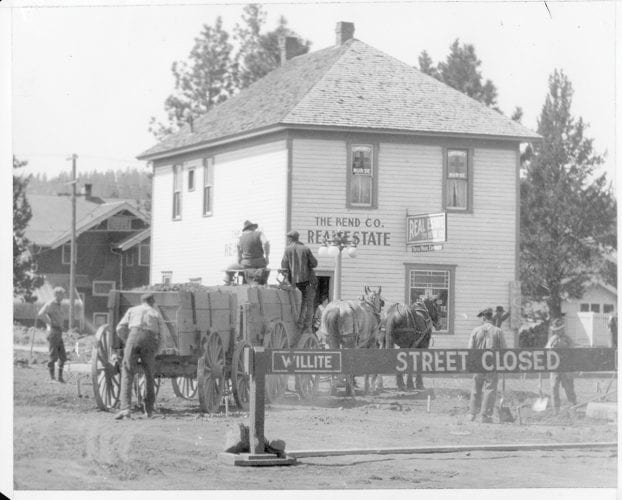
Drake’s vision for Bend did not end with plans to water the desert. Having helped spur an influx of settlers, Drake knew the growing town would need electricity, a commodity already enjoyed in large cities but scarcely found in rural areas. He founded the Deschutes, Water, Light and Power Company in 1909. He constructed a dam and powerhouse on the Deschutes at what is today Newport Avenue. While Drake sold his interest in the project before the lights came on in Bend, the work was a success. On November 2, 1910, the first electricity crackled through wires running from the powerhouse to business in downtown Bend, and 375 lights blinked on in the darkness.

As the father of Bend, Drake is credited with laying out one of the most picturesque townsites in Oregon, although that honor may go to his wife. In 1910, Drake hired a young civil engineer, Robert Gould, to start platting the townsite. Gould was assisted by Elmer Ward, who came to Bend the same year.
“Mrs. Drake loved every one of the cow trails on which these streets are located today,” said Ward in an interview with KBND’s Kessler Cannon in 1953. “She insisted that we locate the streets of Bend along those contours that formed the cow trails of those days. And we followed instructions. And that’s why we have the winding streets.”
The Drakes left Bend in 1911 for Pasadena, California—the same year that railroad tycoon JJ Hill hammered the last stake in the Oregon Trunk Railroad. The arrival of the rail line set off a second population boom and the construction of two massive sawmills that would transform Bend into a booming mill town for years to come. Drake wasn’t here to see the transformation, but he’d laid the groundwork for the town’s next phase of growth.
Drake died in his adopted hometown of Pasadena in 1934. The Bend Bulletin featured his obituary on the editorial page on October 12, 1934. The writer noted, “Had Mr. & Mrs. Drake chosen some other part of the west for their home, Bend might have remained Farewell Bend […] It was Mr. Drake who organized the Pilot Butte Development company, platted the Bend townsite and interested eastern capitalists in a community which, at the turn of the century, was merely a rangeland frontier.”
It seems fitting that the town’s crown jewel, the thirteen-acre Drake Park, bears his name. More evidence of fingerprints that time and memory may never erase.
Read more about the history of Central Oregon or more about our vibrant COMMUNITY today.
One of the first things Donald Yatomi does upon entering his home studio is to flip over a ten or fifteen-minute hourglass. It’s the amount of time he can reliably devote to painting, given his responsibilities as a father of four teenagers and his job as a full-time visual designer for Sony video games.
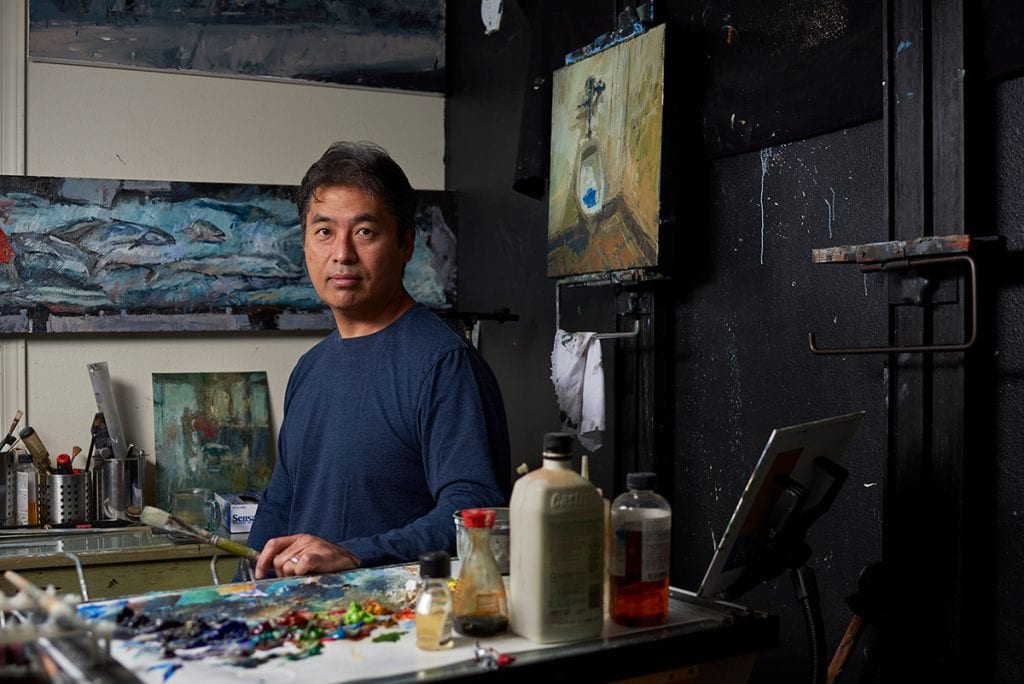
“We’re always happy to get one of his paintings because we know he is so busy,” said Tracy Knish, an art consultant with Peterson/Roth Gallery in Bend.
But Yatomi’s short stints in the studio have built a body of contemporary realism that depicts scenes not typically associated with fine art. Rather than mountains or meadows, Yatomi turns his eye and his brush to “the industrial mundane, the urbanized deserts and the metropolis serenity,” he said. “My challenge is to find the uncelebrated things in life – trailer parks, laundromats, the homeless. I’m not interested in capturing the romance of life.”
“I know I’m not a good painter, and I don’t want accolades as someone who handles the craft well,” he said.
Despite this self-effacement, Yatomi offers new insight on every day and often overlooked situations and objects. A typical Yatomi scene might center on idle passengers awaiting a flight, the lone patron sitting at a diner, salt and pepper shakers, or shimmering cocktails and beer cans. He turns everyday machines, such as cars, motorcycles and even washing machines, into statements of time and place.
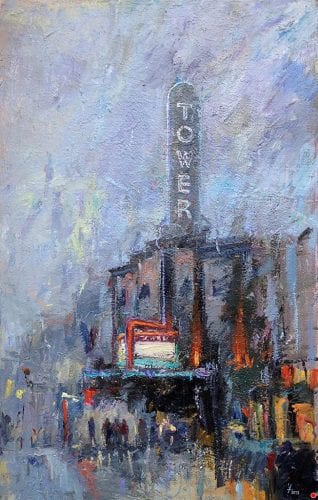
Yatomi’s canvases have a rough-hewn quality of paint laid down helter-skelter. The result is a vibrancy of color and movement achieved with brushes, palette knives, spatulas, caulking guns and brayers. His handmade cabinet holds the implements as well as oil paint, which sometimes ends up on the carpet, evidence of a painter in a hurry. The studio also includes a mirror where he can view a piece in reverse. “When you flip over a painting, you can see composition mistakes,” he said.
He draws inspiration from American artist Chuck Close whose large-scale paintings of faces appear from a distance to be photo realism but upon closer inspection, “expose blemishes, stubbles, hair and pimples,” Yatomi said. “These are things we don’t like to look at when we get close to a person’s face. That’s what I like to paint, things that aren’t good to look at, the unromantic scenes of life.”
Yatomi calls himself a Realist after an art movement that took off in the mid-19th century. And while his subjects are real enough, his works have the soul of an Impressionist. Yatomi said he is drawn the Realists’ approach that avoided romanticizing subjects. “Before then, classical artists painted bourgeoise and the elite,” he explained. “Realists began painting the poor, farmers, people on long train rides, slaves and the unromantic. I want to capture places people don’t want to look at. My realism celebrates things we take for granted. My challenge is to look at subjects that aren’t on gallery walls and put my own twist on them.”
The Japanese-born artist graduated from the University of Hawaii in Honolulu with a BFA in painting, and then attended the prestigious Art Center of Design in Pasadena, completing a BFA in illustration with distinction in 1996. After college, he lived in Los Angeles and entered the entertainment design field, working in video and film. He also painted and wondered how he could feel so lonely. His canvases then and today evoke these mundane and lonely urban landscapes.

While living in Southern California, he met his wife, Leslie, a Corvallis native. They lived in LA for a while and then spent several years in Salt Lake City. Sony Interactive Entertainment eventually moved the couple to Bend in 2006. An artist herself, Leslie wanders into the studio during our interview and the pair begins an easy banter about the urinal painting he’s working on.
Leslie: “It’s too personal.”
Donald: “That’s it! That’s the point.”
Donald: “One of our favorite things to do on a road trip is stop by a dive bar. I really want to be the guy who paints urinals.”
Leslie: “It borders on the line between humor and disgust.”
Donald: “A transgender man in Utah bought one of the urinal paintings. Until he transitioned, urinals were inaccessible. He bought the painting because that’s the space he always wanted to be at.”
The urinals were part of works he recently shipped to an art gallery in Utah. He says the gallery was initially surprised but when his show opened, all the urinal paintings sold. Despite his success, Yatomi says he’s indifferent about whether a painting sells, which gives him freedom to follow his own impulses.

Donald Yatomi’s work will be on display at Bend Magazine’s offices during February, beginning with a kick-off event on Friday, Feb. 7 in conjunction with the monthly downtown Art Walk. To see more of his work, visit Peterson/Roth Gallery or go to his website, donaldyatomi.com. Better yet, follow the prolific Yatomi on Instagram @donald_yatomi_fineart
Our Readers Weigh in on the best in dining, drinks, entertainment and more. Total votes:26,326
One of the greatest challenges in conducting a reader’s poll is determining what categories to include and just how far to drill down into our research. Details matter, we know that. And we appreciate it. So it’s difficult for us to, say, ask our readers for their favorite craft brewery (Crux, it turns out) without asking them to tell us who brews the best double IPA or winter seasonal. We want to know the answers to all of these questions. Alas, there’s issues of time, space and reader fatigue. So we stuck to the big overarching questions, like Best Breakfast (McKay Cottage), content to let readers argue amongst themselves as to who has the best Eggs Benedict. We removed a few categories that didn’t get traction last year and added more opportunities for you to weigh on categories like business, retail fashion and community events. In all, more than a thousand readers took the time to share their insights and opinions. In the results, we found a few surprises and witnessed some extremely close races. Most of all, we were reminded of the wealth of amazing experiences that are available to residents and visitors, thanks in part to the many small business owners who pour so much passion into their products and services. The next time you find yourself in one of these establishments, please congratulate them on their achievement. It’s no small feat, given the competition.
Category with Most Votes Cast
Best Breakfast (McKay Cottage)
Closest Race
Best Wine List (Portello Wine cafe)
Largest Winning Margin
Pole Pedal Paddle (Best Community Sports Event)
Largest Vote Getter
El Sancho (Best Taco)
[rl_gallery id=”18499″]
Reggie Strom pulled out the family camcorder recently and got nostalgic. Strom is only 12, but he was watching an old recording of himself as a baby, barely over a year old, busy in the kitchen, pouring water back and forth among more than a dozen bowls, wielding an unplugged mixer to achieve artistic culinary perfection.
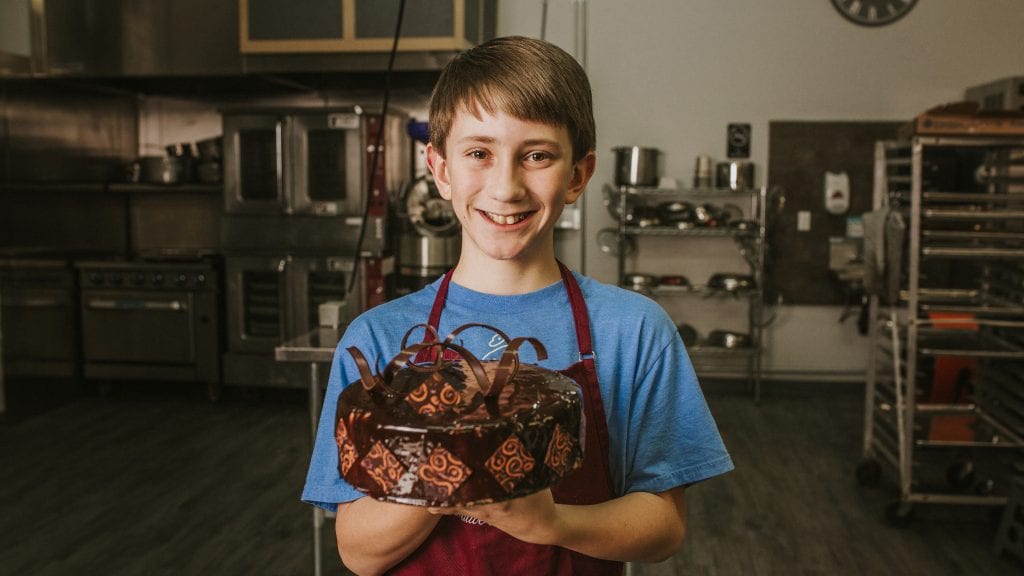
By the time he reached middle school last year, Strom’s skills were on par with his childhood imaginings. He’s whipped up wedding cakes, crafted European-style pastries and constructed the kind of elaborate desserts you might see at the Bellagio, all for the benefit of neighbors, friends and family in Bend.
Now, the rest of the world will get to see Strom put his skills to the test starting in January, the kickoff of the Food Network’s latest season of Kids Baking Championship. As one of a new batch of ten bakers age ten to thirteen, he’ll vie for a $25,000 prize by competing in challenges that test the contestants baking skills and originality. The competition, in which contestants strive for excellence in each throw-down or face being booted off the dessert island, is seemingly as difficult as just getting on the show.
Reggie’s journey began two years ago, when his parents, Julie Cavanaugh and Greg Strom, gave him for his birthday a class in making macarons at The Kindred Creative Kitchen. It was there, with owner Michele Morris, that Reggie, who previously was happy simply baking sugar cookies and other treats with his grandmother, Karin Cavanaugh, blossomed as a pastry chef.
“We just hit it off,” said Strom, 12. He took a few more classes.

Morris recognized his precision and organization, skills integral to the craft. “He always wanted to try new things and was happy to take my advice and feedback,” said Morris, who has worked at Michelin-star-rated restaurants in Las Vegas and taught baking and pastry at Cascade Culinary Institute. “He likes to completely submerge himself in it. I saw that spark in his eye.”
She suggested he investigate the Food Network show.
Strom submitted a short video and was asked to interview for the show via Skype. Casting asked him to provide a longer, fifteen-minute video of him at home, baking various confections.
Each time he’d progressed to the next interview stage, he’d be asked to submit more photos of his work. “It’s Monday and they’d ask for forty pictures of forty different desserts you’ve made,” he said. “It’s absolutely insane.”
Without a portfolio of everything he’d made in the recent past, they scrambled to meet each new deadline. They looked back for things he’d made with his grandmother. His mom ran to the store for ingredients and thought up new items for him to make. When they needed to show a video depicting his skill at piping frosting, they grabbed one of his cakes out of the garbage. “I cut a circle out of it, put it on a plate and piped onto it,” Strom said.
His mom even let him skip a day at Pacific Crest Middle School because he needed to make eight more things by the next day. By the time he’d submitted upwards of 150 photos, he made it to the final round of interviews with producers.
Every day for weeks he’d ask his mom if she’d heard a response. Nearly a month later, in mid-2018, he learned that he didn’t make it on the show. He was heartbroken.
“I wasn’t even talking about it,” Cavanaugh said.
His mother gave him a deadline of February 14, 2019 to decide if he wanted to try again, so that he’d have ample time to prepare. The deadline passed, but in early March, Strom said he was ready. In the interim, they kept taking photos of his work.
Strom went through the whole submission process again. When his parents learned he was selected for the show, they took him out to dinner to celebrate.
Strom was ecstatic but had to conceal his thrill. The show requires absolute secrecy about what transpires on the series, with suspense building through each episode that ends revealing which contestant is eliminated, a la Project Runway. To prepare, he took private classes with Morris, taking his skills to the next level, learning how to make French, multi-layered, mousse-filled entremet, toffee and work with chocolate.
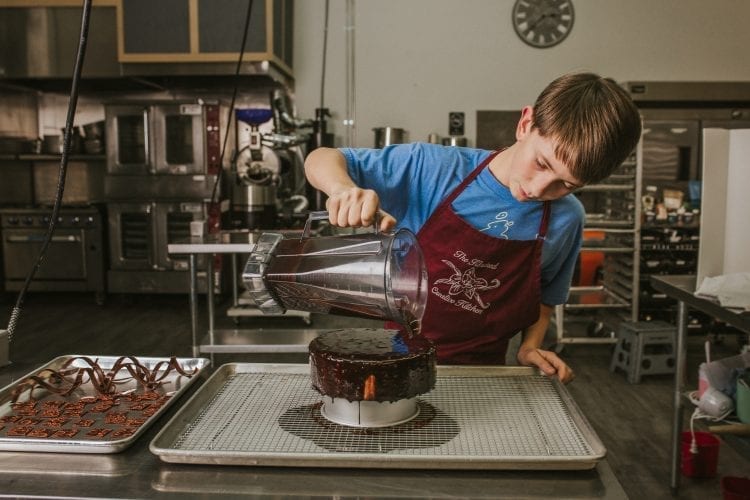
When he missed the last week of school to tape the show in Los Angeles, he told friends he and his mom were just taking advantage of getting cheap tickets (not untrue, considering the production flew them there and provided their hotel accommodations).
The experience, from classes to competing on the show, has been transformative.
“Watching your kid find that thing that he loves so much is pretty cool,” said Cavanaugh, adding that she and her husband are sports junkies who know nothing about baking. “The whole show, from casting on, it felt like they believed in your kid more than any other kid on the planet. And the way they handled the kids, it’s emotionally intense for that age, and the producers were amazing, so kind, and so thoughtful.
That’s all they can say about the show, though, until it airs in January.
What happens when a book club writes a story of its own
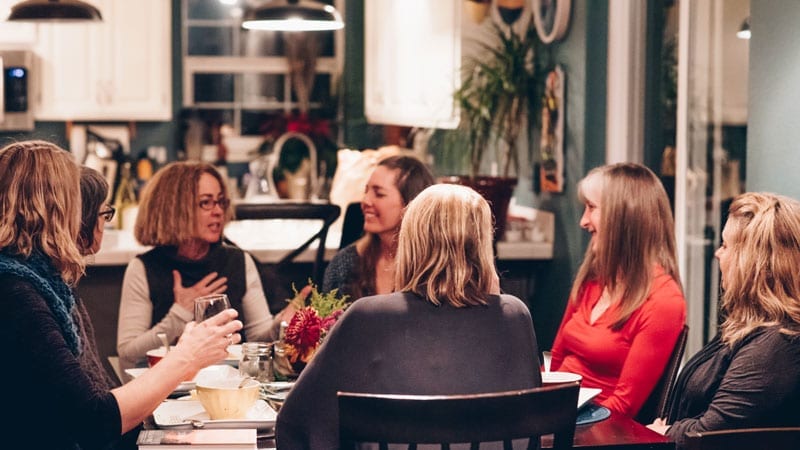
“You’re going to want to sit down for this,” the subject line of the email read. Kathleen, my dear friend from book club, had just been diagnosed with stage 3B lung cancer. Numbly, I sat down, trying to make sense of this. Kathleen, who is so healthy, never smoked, regular exerciser, mother of two young boys.
We didn’t start our book club as a support group or as a social safety net, but when Kathleen came to us with her diagnosis, there was no question that’s what it would be.
It’s been thirteen years since Erin and I started our book club. Over the years, the group has become more than a reading circle. Our book club has witnessed the most significant moments in our adult lives. Cancer didn’t kill our book club. Nor have marriages, divorces, children and careers. Our book club is alive and well, just like Kathleen, who is surviving her cancer scare, teaching us all a lesson in strength and courage along the way.
We’re not alone. By some estimates, five million Americans take part in a book club. There are dozens of book clubs in Bend and many more options to participate online. Deschutes County Public Library even offers a book club start-up kit.
Our book club started like most others. My friend Erin and I each invited a few people. We decided to read Elizabeth Gilbert’s Eat Pray Love and see what happened.
That evening, we lived and traveled through Liz Gilbert’s story. We learned about the Dolce Vita in Italy, struggled with Gilbert during her ten days of silence in an Indian ashram, and followed her journey to become a whole person with Ketut in Bali. The sense of discovery of one’s self seemed to fit with a group of women getting to know ourselves and each other.
There are seven of us who gather now. Some of the original book clubbers have drifted off, and others joined in their place. This group of seven—we’re not going anywhere.

Amy is an artist. I am always blown away by her creativity and sense of adventure. Erin is an estate planning attorney with a wild, free spirit and steadying wisdom. Markay is a paralegal and explorer. Newly remarried, she and her husband are trying their hand at being Airbnb hosts. Andrea is just magic and cannot be defined by her job. She works in marketing, has a wicked sense of humor and a thoroughly contagious laugh. Donna is an acupuncturist and Chinese doctor by trade, as well as a gardener, and a multi-year Burning Man reveler. Kathleen is a physical therapist with a permanent twinkle in her big brown eyes and the heart of a lion. And then there’s me, Marisa, a photographer and communications director and now, I guess, a writer. Some of us are mothers, and some are not.
Our book club meets every six weeks or so—a decision we made early on to allow professional women with busy lives to have time to finish the book.

We don’t all make it to the end of every book, but most of us do. We choose our books spontaneously and in no particular order. Some of us love the feel of a printed book in our hands. Others cruise through the audio versions while folding innumerable loads of laundry. E-readers, library books, and dog-eared borrowed copies all make up our reading sources. No matter what the format, we all get pulled in by the beckoning world of the storyteller.
In a time when loneliness and isolation seem to be on the rise despite so many online “connections,” meeting in person with our book club provides a real community that has fostered lasting friendships and created a story of our own.
I remember sitting on Erin’s bed with her just days after her daughter Quinn was born, marveling at impossibly tiny fingers and toes. We listened with compassion as Markay voiced her disappointment in love and we all wished desperately for her to meet someone who deserved her. We were spellbound when Amy shared the discovery of a baby sister in a graveyard about whom no one ever spoke. We kept Andrea company after a fall left her with a severe concussion and housebound for a month. We all shrieked with surprise when Donna came back married from a trip to Cuba. And when I dodged hosting book club year after year because of my crippling anxiety, no one objected.
Thirteen years ago, eight strangers started a book club because it sounded like fun. Before we knew it, we had evolved into lifelong friends. Together we’ve been through births and deaths, traumatic injuries and life-threatening illnesses, divorces and remarriages. Today we are sisters, joined at the heart and soul, and bound together through the pages of our own story.
For most boaters, kayaking is a summer sport. For the one percent, the best time to paddle is when the kids go back to school, the crowds subside, and old man winter begins to stir. With Jack Frost as our co-pilot, let’s pull on our dry suits and explore what paddlers around here affectionately refer to as the “second season.”
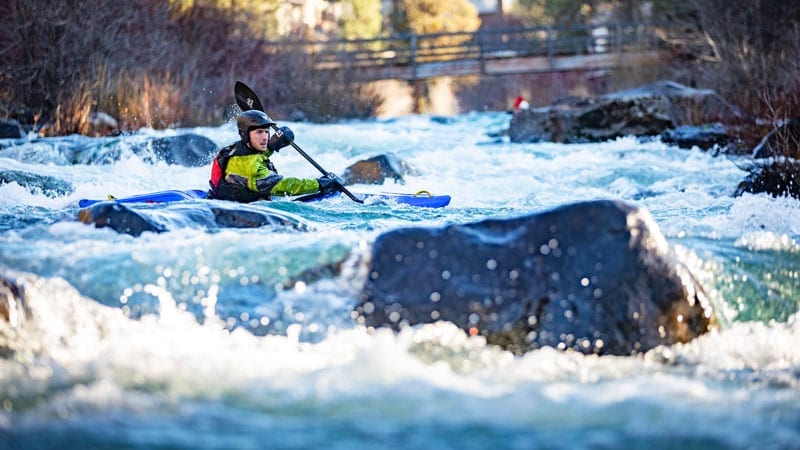
Type: Slalom
Difficulty: Summer – Class II; Winter – Class I
Levels: Spring fed, dam controlled
Length: 100+ yards
Commitment: Low
The only form of kayaking to qualify as an Olympic sport, slalom boating was developed by European skiers who transitioned from snow to water after ski season. Like downhill skiing, the sport revolves around timed runs through a predetermined course. In this case, it’s a series of hanging downstream and upstream gates.
Slalom boaters are known as rabble-rousing members of the kayaking community. They are also some of the most knowledgeable paddlers. In Bend, 71-year-old Bert Hinkley, a former Olympic coach and boater, leads the slalom covey that also comprises former Olympians, coaches and intermediate to beginner boaters.
While slalom boating was born in the Alps during spring, it’s a winter tradition around here due to weather and river flows. “What’s amazing, is in Bend, we have a mild enough climate to ski and boat on the same day,” Hinkley said.
Type: Freestyle
Difficulty: Winter – Class IV
Levels: Spring fed, dam controlled
Length: 4.6 miles
Commitment: High
Just downstream of First Street Rapids begins the so-called “Riverhouse” section. It’s a churning stretch of boulder-strewn runs and narrow whitewater chutes that attracts the region’s renegade freestyle boaters.
Will Howerton started his kayak career on Idaho’s Payette River, classic big water and a bucket list river for many Western kayakers. Still, he enjoys the Riverhouse run’s technical creeking charm. “The walled-in canyon section promotes a remote feeling, which is therapeutic for me,” Howerton said. He compares this paddle to the upstream summer run at Meadow Camp, Bend’s other backyard section of Class IV river. “Meadow Camp is a bit more difficult but has (the river) trail next to it, so it lacks the remote feel a bit,” Howerton said.
With four “named” Class IV rapids (The Wright Stuff, Flumes of Doom, Trex and Oger), the Riverhouse Run provides predictable risks and rewards, said Howerton.
Things can get even more interesting when dam releases upstream of Bend create surges that quickly push water levels from around 500-700 cubic feet per second (cfs) to 2,000 cfs. This typically happens in the fall or winter when irrigation district’s need to create room for spring runoff in upstream reservoirs. (A similar event happens during spring on the Crooked River when strategic releases create a short-lived section of Class III-IV water in the Crooked River Gorge below Smith Rock State Park).
If you are wondering just how cold it gets on the water, well let’s just say there’s a reason the crowds are gone. “I remember when, at the end of [one] paddle, my friends couldn’t get their frozen life jackets off. Sometimes you have to get in your truck and warm up before you can remove gear.”
Outsiders may wonder why anyone would paddle with ice on the water and frost on the ground. For many boaters, the misery is part of the challenge, plus there’s bragging rights on the line.
“In whitewater, your weaknesses come out,” said Howerton.
No matter the season, paddling challenges your body and mind.
“How well can you deal with fear? How well can you focus? How well are you prepared and organized?
“You will find out very fast what the answers are,” he said.
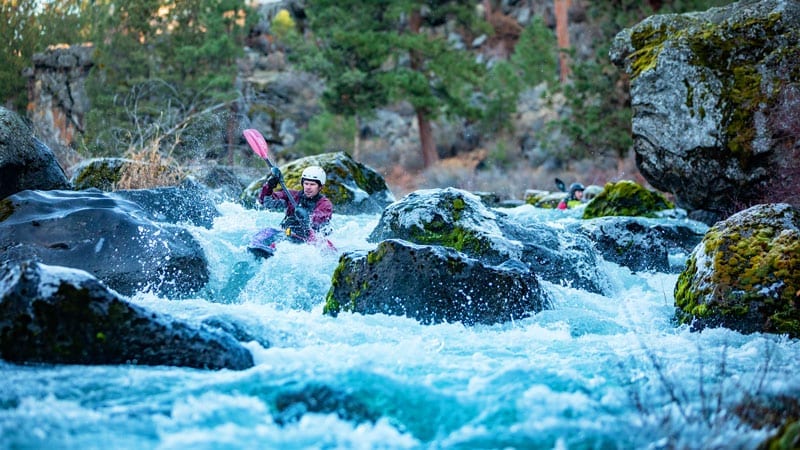
Type: Freestyle
Difficulty: Year-round Class III
Levels: Spring fed
Length: Two miles
Commitment: Medium
Easily offering Central Oregon’s chilliest splashes, the Metolius River springs from the earth with purpose, beckoning boaters and anglers under an umbrella of pine trees in a bassinet of basalt.
Artist and athlete Christina McKeown has been paddling for two decades and said there is nothing quite like the Metolius in a winter snow fall, when it’s akin to “paddling in a snow globe.” Picturesque encounters like limbo-ing under bridges, drinking from riverside springs and grabbing a sneaky, tightly wound tributary creek line make for one-of-a-kind paddle experience, particularly when it’s snowing.
The two Class III rapids in the gorge section are rhythmic, but rather short lived. Although bigger drops can be exciting, there’s a certain playfulness to the Metolius. The river seems to escort boaters into each rapid, pacing out the frequency like a metronome. By the time a paddler reaches the crux of the run, there’s a sense of rhythm to the task. Most other Class III’s on the run are avoidable. (Note: Beware the rogue, river-wide snags and lost fishing tackle dangling like holiday tinsel from the streamside brush.)
“Absolutely magical,” said McKeown, who’s kayaked on rivers around the world. “The Metolius is one of my favorite winter runs in the Central Oregon area, and the rapids themselves will keep you on your toes.”
Type: Freestyle
Difficulty: Class III – IV
Levels: Spring-fed
Length: Seven miles
Commitment: Medium – High
Lushly painted in velvet green and moss, the North Umpqua rumbles down the western slope of the Cascades, charging toward the Pacific Ocean. The fabled river’s abundant salmon and steelhead drew the likes of Ernest Hemingway and Zane Gray, but it has plenty to offer paddlers. There is scenery aplenty despite an adjacent highway. The Umpqua beckoned sisters Isabel and Violet Rodhouse, a pair of accomplished young boaters from Bend, who finish each other’s sentences when describing the ambiance of the Wild and Scenic North Umpqua. The duo paddles year-round but appreciates the appeal of winter solitude on the water. How to deal with freezing water and rain or snow? Simple. Don’t dwell on it.
“If you’re cold, just try not to think about it. If you think about it, it’ll make you more cold. I taught myself that skiing,” said Violet, 11, as older sister Isabel, 14, nodded in agreement.
The Rodhouse family started to paddling together four years ago, frequenting the North Umpqua. Father and national parks ecologist Tom Rodhouse said the landscape is part of the appeal. “There’s more diverse flora than we’re accustomed to in the high desert landscape,” he said. That includes madrone, oak and a conifer mix, a confluence of the Southern California Mediterranean chaparral and coastal vegetation. He adds that it’s fun to paddle through different geology, as well, including rounded boulders that contrast with Central Oregon’s sharp young, monochromatic lava rock. That’s right, Toto; we’re not in Kansas anymore.
With multiple jaunty, terrace-to-pool drops, Horseshoe Bend to Gravel Bin contains one Class IV rapid, Pinball and several must-make moves on Class III rapids that occur with regularity each mile. The Rodhouse crew agreed that Pinball is easier to navigate at winter water levels. The fun begins just above this rapid with a difficult Class II-III “pour-over” feature. At Pinball, boaters should start right of center and bounce spryly to the left. The rapid finishes with a chute and a center boulder at the tail, best passed on the left. Navigating the twists and turns, the Rodhouses didn’t miss a beat. When Violet flipped her boat, she caught a combat roll—no problem. All in a day’s play.
An explosion of coworking spaces has created a wealth of options for Bend’s flexible workforce. Before coworking became the coolest thing to do in Bend since opening a craft brewery, it had to go through another stage where it wasn’t so glamorous. And it wasn’t so long ago.
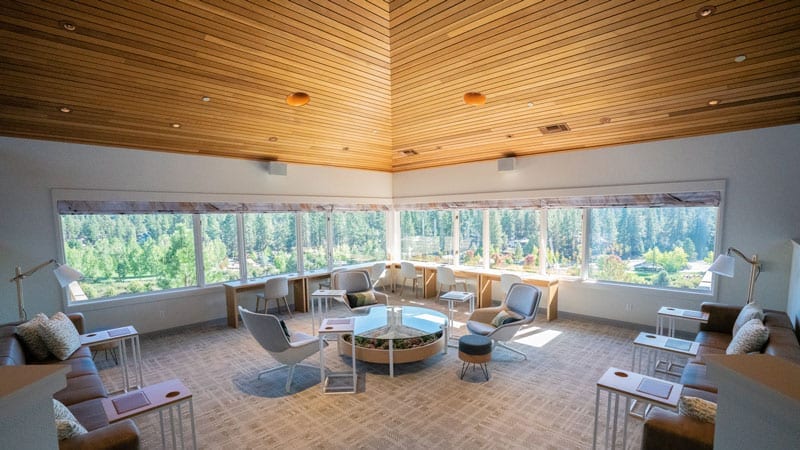
Kelly Kearsley, a freelance writer and start-up cheerleader, was one of the early adopters. She and her husband, Justin, who was developing a start-up company, joined up with a group of software engineers who had rented office space off Greenwood Avenue.
“It wasn’t ‘cool’,” she laughs. “I mean, it was like a closet, and there were cubicles… But it was rad, because, back then, Bend was just dipping a toe into the tech industry, and this was a space where a lot of people were having meetups.”
Software engineer James Gentes was the ad hoc organizer of the group, buying pizza, and managing the space in his free time.
“It kind of grew organically. And we all shared one big lease and figured it out,” Kearsley said. Within a few short years the group had a new home on Emkay Drive and had adopted a non-profit model to foster the remote work and start-up culture emerging in Bend.
“We started thinking we could create a much bigger coworking community,” said Kearsley, who now serves as BendTECH’s board chair.
They didn’t know how right they were.
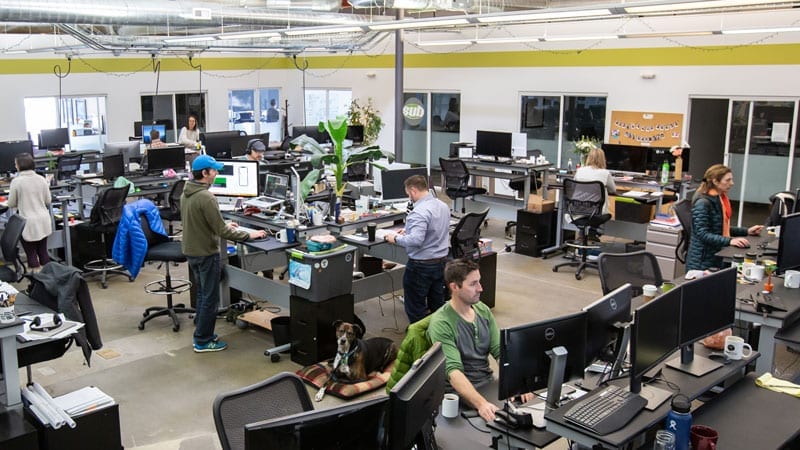
Fast forward to 2019, when at least three new coworking spaces opened in Bend, two of them just a few blocks apart in the NorthWest Crossing neighborhood. Another was set to debut before the end of the year inside the SCP Redmond Hotel in downtown Redmond.
By a way of a loose count, the combined capacity of Bend’s coworking spaces sits at about sixty-seven private offices (some of which can accommodate multiple workers), 140 dedicated desks, and roughly 300 “flex memberships,” which allow members to drop in as needed.
At full capacity, that’s a workforce of more than 500 individuals. If it were a business, it would rank among the Bend’s top 10 private employers, bigger than Les Schwab and Deschutes Brewery in terms of personnel.
This trend isn’t surprising to Damon Runberg, Regional Economist for the Oregon Employment Department. “Bend is bringing in [remote] workers and small business owners who value our slower pace, high quality of life, and relative affordability,” he explains.
But what many of these “remote workers” discover, after working from their home office—or kitchen table—for a few months, is that working from home day after day isn’t always the dream gig it’s made out to be.
“Working from home sounds great, especially when you moved to Bend and you’re excited about being able to take that conference call in your yoga pants, and you can make that ‘slipper commute’ and not have to drive anywhere,” says Carrie Douglass, co-founder of The Haven coworking space on Bend’s near west side, off Colorado Avenue. “But six months into it, you’re thinking, ‘My toddler’s bothering me or walking in on conference calls,’ or ‘My dog’s barking when the truck drives by.’ After craving that flexibility, now you’re realizing that working from home every day might not be all that great.”
It’s for this reason that Douglass and her husband, Scott, founded The Haven. Beautifully designed and decorated to replicate a “residential feel,” with huge windows and sweeping views of the Deschutes River below, The Haven’s members are a mix of remote workers—part of a larger company’s distributed workforce—and self-employed professionals or freelancers, a breakdown that reflects both corporate America’s embrace of remote work and the rise of the entrepreneurial “gig economy.”
“I think companies have figured out that, as the workforce has changed, employees want more flexibility,” said Douglass. “Part of that includes being able to work remotely, and technology has allowed for that to happen.”
The Haven offers multiple “membership types,” from private offices starting at $875 a month, to dedicated desks in an open office setting for $449 a month, to multiple types of flex memberships, and even “day passes” for $40 each. Each of Bend’s coworking spaces operates using a similar membership system.
The Collective NWX, for example, deliberately features a selection of different workspaces that cater to different professional needs and budgets.
“We know that some people love to work in their house, but they just need a few hours to get out of their jammies and socialize with other people. So, we built a community drop-in space where you can come work for a couple of hours or meet a client in a location that’s not a Starbucks,” said Sara Odendahl, Owner and Managing Partner. “We also know some people might not want to work at home but don’t have a physical office elsewhere, so we created six private offices and twelve dedicated desks where members can work every single day.”
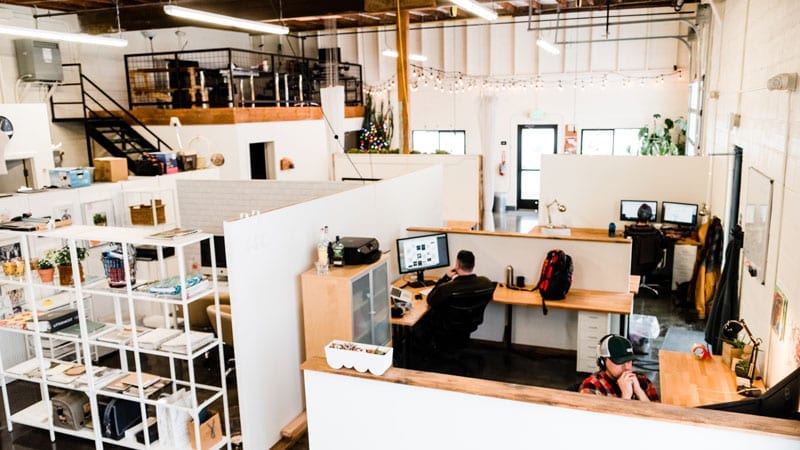
Avoiding distraction isn’t the only challenge facing remote workers trying to make a go of it at home. Remote work can also be isolating.
“People are yearning for connection,” said Will Blount, president of dog outdoor accessory company Ruffwear and founder of another new coworking space in town, Embark.
He thinks this innate desire is one of the biggest drivers of the coworking boom. “Technology has allowed us to work from anywhere, and it’s allowed us to be connected with people anywhere. But at the same time, I think we’re really feeling disconnected. To physically sit in a room with someone and get to look at them, that’s something that you can’t experience over Skype or some other digital tool. There’s a real sense of communication that happens in the presence of other humans. And I think that our society is deeply yearning for that experience.”
Amanda Krantz, the executive director of BendTECH, said that the shared desire for community that leads professionals to become coworkers also sometimes leads to unexpected professional collaborations and partnerships.
“Many of our members initially just want a sense of community, a place where everybody else is also working,” she agrees. “But even if they didn’t come here trying to network, we’ve seen a lot of members meet people or find likeminded groups, and they go off and start companies together or hire someone away from what they were doing.”
Kelly Thiel, cofounder of The Wilds, a coworking space focused on creative professionals, said that the managers of Bend’s coworking spaces collaborate to help new members find the ideal space for their work.
“Each of Bend’s coworking spaces has its own flavor, so there’s a space for everyone,” she says. “Our flavor is more creative. The Haven has a certain flavor, and Embark and BendTECH each have their own feel.”
In the case of Embark, the coworking concept evolved from what used to be Ruffwear’s product warehouse in Bend’s NorthWest Crossing neighborhood. Though it welcomes members from numerous different types of businesses, its focus is in on the outdoor industry.
“What we’re creating here is a container where people who share a common goal can come together and learn and grow from each other,” says Blount. “We designed the place specifically to create these intersections where people from different backgrounds and companies are going to run into each other and spark a conversation about their passions. And, hopefully, a rising tide lifts all ships.”
There may be a secondary benefit to a strong coworking culture in Bend, said The Haven’s Scott Douglass. Coworking has the chance to engage people not just creatively, but also civically.
“When you look over history, people tend to be connected to their community through their children’s school, their church and their place of work. Well, fewer and fewer people go to church, you’re only connected to a school if you have a school-aged kids, and now we’ve got this huge segment of 12 or 13 percent of people in Bend who aren’t connected to a local place-based employer. So how are people growing roots in a community and finding out how to be connected, finding out about volunteer opportunities and civic opportunities?”
Douglass said coworking spaces like the Haven can help fill that void by providing an environment where members of a disparate workforce can help each other connect to the community at large and promote civic engagement, like volunteering.
“If you’re at home Monday through Friday, head down, working by yourself, and then on evenings and weekends you’re accessing all of the wonderful resources we have in Bend—the river, the trails, the mountains—you’re really not fully participating in the broader community. And that doesn’t bode well when it comes to a city maintaining that sense of place,” he said.
Bend is a great community not just because of the proximity of the mountains or the urban trails, but rather because generations of citizens have invested their time and talents into building our parks, our schools and our social infrastructure.
“As our city grows, and as more and more talented people move to Bend, it’s important to ensure that their talents are contributing to our community overall,” Douglass said.
After downsizing into a 1,180-square foot home, Kathi and Tom Denton have no regrets, although Kathi misses a walk-in closet, and Tom parks his car on the street because the single-car garage functions as their primary storage space. The residence is about half the size of their last home, but the couple says its location in NorthWest Crossing’s Farmstead 12 development and the thoughtful layout has made the transition smooth.
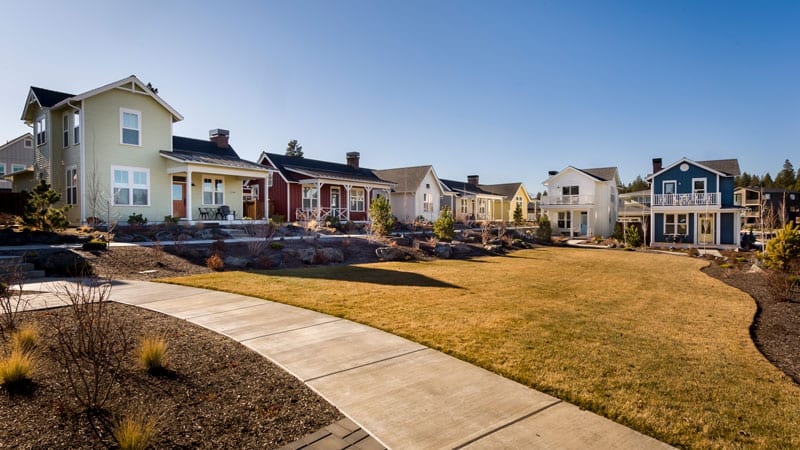
“This location is perfect,” said Kathi. “We can walk to Portello Wine Café or Discovery Park, meet our neighbors at the firepit or snip herbs from a small raised garden bed.” It’s also close to hiking and biking trails and Shevlin Park, where Tom goes to practice tenkara, a Japanese fly-fishing technique.
Farmhouse 12 is one of several small-scale cottage developments in the popular and growing Northwest Bend neighborhood that prides itself on sustainable building practices, where every home is required to be Earth Advantage certified. Eric Meloling Construction teamed up with Greg Welch Construction to form Farmstead 12 LLC, which recently finished its last dwelling.
“Our intent is to make small homes livable and not feel like a small home,” Meloling said. The project features farm-style cottages arrayed around a parklike setting with a common area and a small barn with picnic tables and a fire pit where residents can gather.
The philosophy of downsizing corresponds with a housing-market trend toward smaller, more affordable homes. A recent story in the Washington Post cites data from the National Association of Home Builders that shows the average size of new houses fell for the third straight year in 2018. (Data for 2019 is not yet available.)
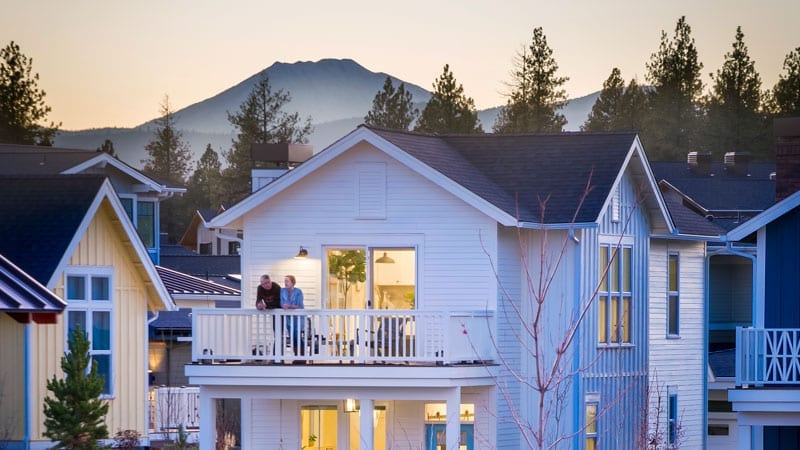
The Dentons bought their residence less than two years ago after Kathi completed treatment for breast cancer, and they found themselves regarding their lives differently. “Life is short, and the new house gave us a fresh start,” she said. “I don’t think about having cancer all the time.”
The two have been married twenty-three years and feel strongly about reducing their environmental impact. Moving into a smaller, more energy-efficient home is a big step toward that goal. They’ve never had kids, although they parent two cats, Gus and Deud. The couple explored the idea of small-scale living and became obsessed with tiny-home TV shows but ultimately decided that 400 square feet of living space wasn’t for them.
Instead, they ended up with a home that relies on a “reverse living” design that features a kitchen and master bedroom on the second level. It may seem novel, but it’s a case of form following function.
The Dentons’ home is squeezed into a narrow lot that required their designer, the late Charlotte Van Valkenburg, to create a two-story home that captured views, sunlight and access to Farmstead 12’s common outdoor areas. “It’s the genius of the designer who is able to see a piece of dirt and imagine what is not there now, but will be there someday,” Meloling said.
By necessity, the ground-level had to include the garage, which currently sports a T@B teardrop camp trailer as a fun sleeping place for visiting nieces and nephews. Tom added tall storage cabinets for shoes and coats that they don’t have space for in their bedroom. Sports equipment hangs on racks from the ceiling, and plastic bins store everything from photo albums to holiday decorations.
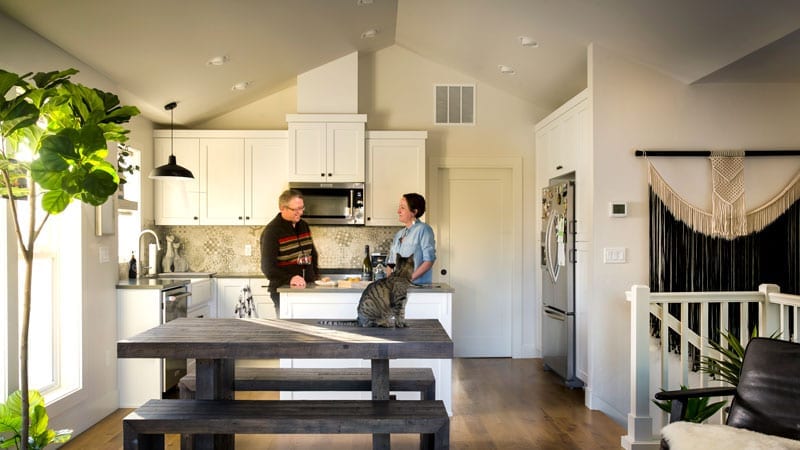
Visitors enter the cottage on the first floor, where a sliding barn door opens into a den that functions as a guest bedroom, TV room and office. A guest bath with a soaking tub, a laundry room and a converted coat closet for the cats complete the first-level layout.
But it’s the upstairs “reverse living” where the magic happens. A narrow staircase opens into a large, vaulted and contiguous space for the kitchen, dining and living rooms. One comfy chair and a sofa face the natural-gas fireplace and TV. The room is filled with plants (plastic because Kathi says she doesn’t have a green thumb), a large dining table with bench seating, an island and well-appointed kitchen with high-end appliances and hardwood floors. A deck off the living room is where the Dentons go to enjoy coffee with the sunrise or fresh air in the evening.
At the opposite end is the master suite with the bath, and one shared sink that they say is just fine. The bedroom has a view of Mount Bachelor and is large enough to accommodate a king-size bed and two nightstands, as well as a small nook with a view of Awbrey Butte. To add texture and character to the room, Tom built a floor-to-ceiling herringbone pattern on the wall behind the bed made of pre-cut barn wood.
When the Dentons moved into the residence, they left most of their previous furnishings behind and instead selected much of the cottage’s décor based on functionality, style and artistic preferences. “Living small forces you to choose the things that make you happy,” Tom said. “This fits our needs.”
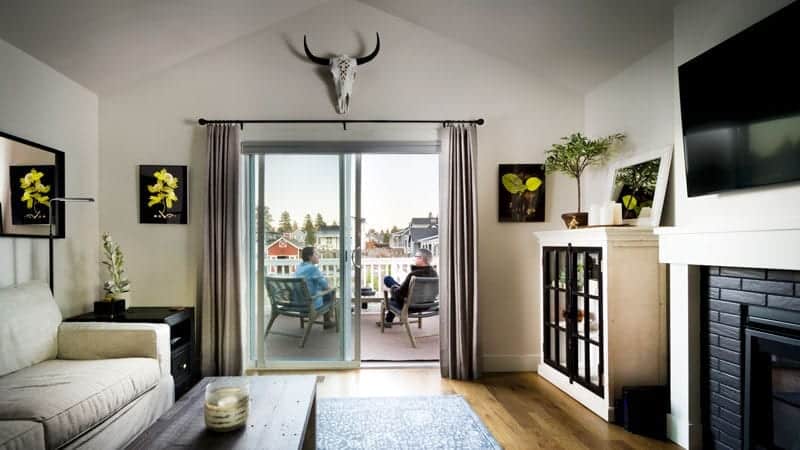
Editor’s note: Designer Charlotte Van Valkenburg was killed along with her cousin in an automobile collision with a drunken driver in British Columbia this past summer. Bend Magazine featured Van Valkenburg previously for her work as a mentor and coach of the Summit High robotics team.
Nab a direct flight to sunny San Diego for a warming winter getaway.
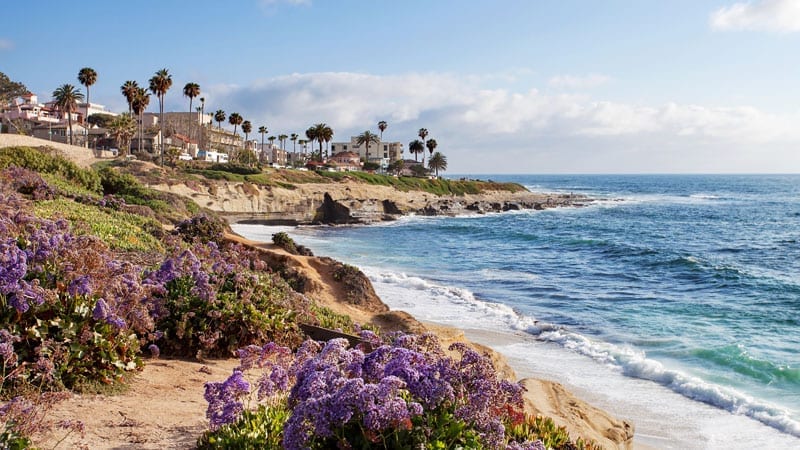
I pushed my toes into the warm sand of Coronado Beach, the Pacific Ocean lapping waves to shore in the near distance. A rented red beach umbrella cast shade over our temporary parcel of beach real estate in front of the Hotel Del Coronado. A cooler at our feet held a picnic for later, a magazine lay forgotten by my side, and the operative word was “lazy” as we kicked back in wooden folding lounge chairs and basked in the balmy air of San Diego’s Coronado Island.
Come late winter in Central Oregon, it’s not uncommon for cabin fever to take hold. Too many days of shoveling snow in dense layers of clothing and maneuvering cars down icy streets can just plain wear a person out. A warm-weather vacation is the logical cure. Several direct flights depart the Bend/Redmond airport to arrive in just a matter of hours in decidedly warmer climes, including San Diego.
My husband and I were treating ourselves to three nights at the historic, iconic Hotel Del Coronado. Opened in 1888, the Del (as it’s affectionately known) was the largest resort hotel in the world at the time of its construction. Built entirely from wood, this majestic structure has survived its many decades when so many others of its ilk have succumbed to fire, rot, or the bulldozer. Just another reason to appreciate this stunning property. Victorian in design, the hotel is painted in white with striking red peaked roofs. Equal parts history and luxury are all around. We rode the creaky, antique elevator—complete with a human elevator operator—to our modest but lovely room, before choosing the Babcock and Story Bar for a post-flight lunch with a view of the sea.
The sprawling grounds are elegantly landscaped, and there are plenty of places to tuck in and relax around the property. Several pools, a variety of bars and restaurants and a central courtyard vary the experience for the Del guests. But if the ocean is near, you can be sure that is where I will be. The wide, flat beach of Coronado Island is popular for walking, surfing and lounging, and overlooks the Pacific with a view of Point Loma to the north. With the proverbial “nowhere to go and all day to get there,” my husband and I napped, sipped and snacked away the afternoon in the sunshine, not missing the winter weather of home one bit.
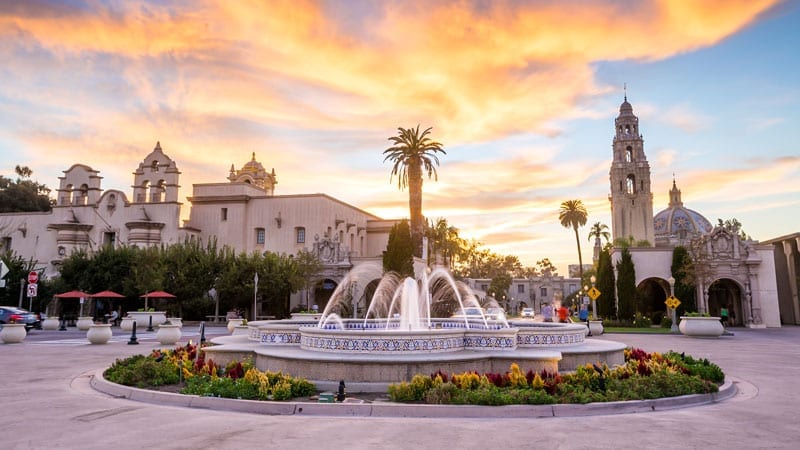
Traveling with the family? San Diego will fit the bill. Several years ago, I took a not-quite-as-romantic San Diego trip with my parents and my young children. That visit revolved around the theme park trifecta of the San Diego Zoo, Lego Land and SeaWorld. At 100 acres, the San Diego Zoo is one of the largest in the world and is as immaculately landscaped as it is an ideal place to see many animals from around the world, including the giant panda. On par with the zoo, SeaWorld is one of the biggest and best aquariums and aquatic attractions in the world. Book seats at the live animal shows, including Orca Encounter and Sea Lions Live. Note: They aren’t kidding when they warn the audience they’ll get wet in the “splash zone.” Legoland will thrill the kids for the rides, and the adults might find they geek out on the large sculptures throughout the park, truly made entirely from Legos.
The 1915 Panama-California Exposition was cause for the construction of this expansive park, now registered as a Historic Landmark, which includes gardens, seventeen museums and cultural institutions, restaurants and shopping. If you’re with kids, visit the historic carousel and the Natural History Museum. On your own, take a self-guided tour of the diverse architecture found throughout the park, including the Spanish Renaissance-style structure Casa De Balboa and the Balboa Park Botanical Building, which features more than 2,000 plants from orchids to cycads.
About as classic Southern-California-lifestyle as it gets, the three-mile stretch of Mission Beach is excellent for strolling, people watching and sunbathing. While the spot is popular with surfers, the waves are mellow enough at shoreline to encourage kids (and maybe adults too) to splash in the ocean. Belmont Park anchors the central stretch of the beach, and is an East-coast style seaside amusement park not to be missed, with a historic roller coaster and street performances.

Even the largest American cities started small at some point, and Old Town San Diego is the historic heart of the city and the place to see the heavily Spanish- and Mexican-mission influenced beginnings of the city’s first settlement. Museums and historic sites are dotted across these blocks, as are contemporary restaurants, shops and hotels. Don’t miss the 160-year-old Whaley House Museum (which is possibly haunted) and the Casa de Estudillo, an authentic adobe home restored with vintage furnishings to demonstrate life 150-plus years ago.
In view from Coronado Beach is Loma Point and the Cabrillo National Monument, the first place a European explorer set foot on the West Coast. He was Juan Rodriguez Cabrillo, the year was 1542, and the monument that exists here today is named after him. A hilltop statue commemorates Cabrillo, and is also the point from which visitors take in amazing views of San Diego and the sea, and in the right season, migrating whales. Walk to the historic Old Point Loma Lighthouse, restored to its 1880s appearance.
When it comes to weather, San Diego can offer a welcome respite from Central Oregon’s freezing mid-winter temps. However, despite its numerous beaches, San Diego is not the tropics. The proximity of the ocean and San Diego’s unique geography result in a Mediterranean climate. In January and February, daytime highs average in the mid to upper 60s. But you may encounter cooler weather. Smart travelers will plan a vacation with activities suited to a host of weather conditions.
While air travelers have long been able to reach San Diego from Central Oregon, a new direct flight from Redmond takes the layover out of the equation. The route was announced in August 2019, one of more than a dozen new direct routes on the West Coast provided by Alaska Airlines. Other direct flights from Redmond include non-stop service to Los Angeles and San Francisco.
If the walls inside the cabins of Paulina Lake Lodge could talk, they would tell a story a hundred years in the making. It’s a tale of pioneers and preservationists who created and maintained this unlikely recreational outpost and continue to do so today.
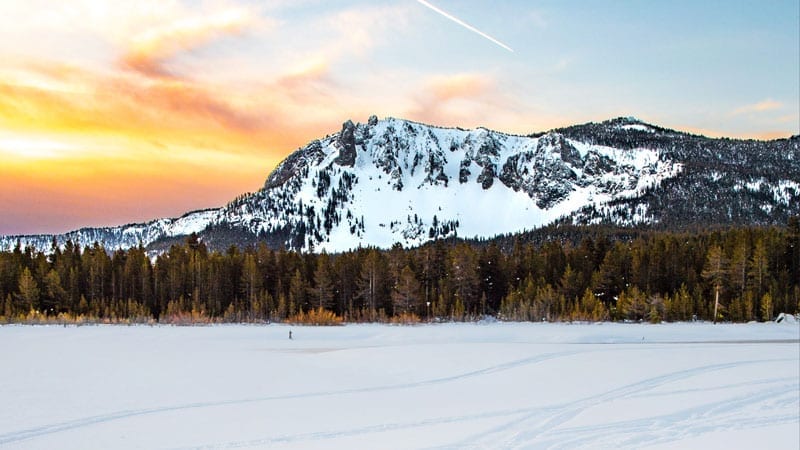
Known to many Central Oregonians as a popular summer resort, Paulina Lake Lodge is a spectacular Pacific Northwest destination that takes on a new personality after the first snow arrives. Come winter, it’s basecamp for a devout snowmobile community, as well as backcountry skiers and those seeking a cozy winter escape.
On the heels of an epic late winter snowstorm, we visited the lodge to explore this Central Oregon gem. We found not only an epic volcanic wilderness to explore, but also a retreat of rustic comfort and small luxuries, including hot showers and warm meals.
Six hundred thousand years ago, the first volcanic activity began to rumble beneath what is now Newberry Volcanic National Monument. Explosions of molten lava shaped the land in the ensuing millennia. Approximately thirteen hundred years ago, it all went quiet, frozen in time, forming a mesmerizing crater with two crystal clear lakes. The larger of the two is Paulina Lake, which takes its name from a legendary Paiute warrior and chief.
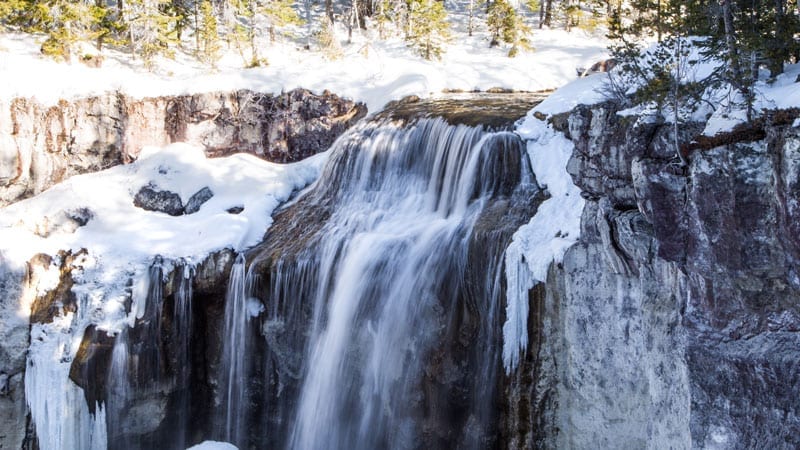
The seventeen-square-mile caldera is the crown jewel of the Newberry Monument, which was dedicated in 1990 and included the adjacent Lava Cast Forest, Lava Butte and Lava River Cave. Each feature tells part of the story of the massive shield volcano that covers more than 1,600 square miles.
The twin lakes are a draw for swimmers and paddlers as well as anglers (Paulina Lake holds trophy-sized brown trout and once yielded the state record fish). There are also ample hiking opportunities, horseback riding, and mountain biking trails and even a natural waterslide on Paulina Creek.
For many visitors, the season ends when the gate swings shut on the access road in late fall. For others, the transition to the winter season opens a whole new world of possibilities. We counted ourselves among the latter.
Our weekend getaway started at Ten Mile Sno-Park, which marks the end of the road for vehicle traffic and the beginning of a three-mile trek to the lodge, which is usually done using Nordic skis or snowshoes. Our reward: a feast of prime rib and Atlantic cod served with a hearty ale next to a crackling fire at the Paulina Lake Lodge.
At 3 p.m., we clipped into our skis, grabbed our bags, checked the map, and headed into the woods. The gentle uphill ski to the lodge offers views and nature stops, including the roaring Paulina Falls. The tracks lead skiers through a snow-covered wilderness. Alas, our expedition was beset by a broken ski binding that led to a somewhat arduous boot trek over the final mile and a half.
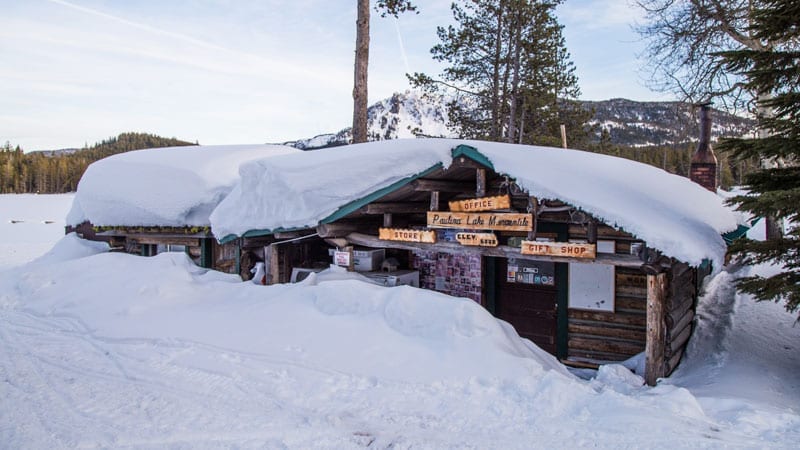
Undaunted, we arrived at the lodge’s restaurant and lounge just before dusk. Thanks to a recent storm, snowdrifts reached almost to the rooftops of the low-slung buildings and cabins. Smoke drifted reassuringly from the chimneys beckoning our band of weary travelers.
Despite its popularity with snowmobilers, the lodge was relatively quiet for our late-season visit. I found my group in the corner, beers in hand, and a cold one waiting for me right when I sat down. We soon met our generous hosts, Todd and Karen Brown.
The couple has operated Paulina Lake Lodge for more than twenty-five years. That’s thanks to their great hospitality and the resort’s long-standing role as an outpost for riders exploring the hundreds of miles of backcountry snowmobile trails around Newberry Volcano.
Quirky keepsakes occupy the lodge’s nooks and crannies alongside historical and contemporary photos of resort life. There’s a shrine of sorts to Todd, AKA the “King of Paulina,” complete with an old photo of Todd adorned with a crown.
“You know, we’ve been up here since ’93,” Karen said. “Our kids grew up on this lake. We’ve watched a lot of our guests grow up and start families. Being up here, on this monument, it probably holds our fondest memories.”
This winter, the lodge celebrates ninety years of operations, and not a whole lot has changed since those early days. You still won’t get a reliable cell signal, and you shouldn’t need one. Getting away from technology is part of the attraction here. There are fourteen cabins, ranging from the large “grand” cabins that accommodate up to ten people to the more modest one and two-bed “standard” cabins. Each cabin is outfitted with a kitchenette, renovated bathrooms, wood-burning fireplace, and is steps away from the main lodge.
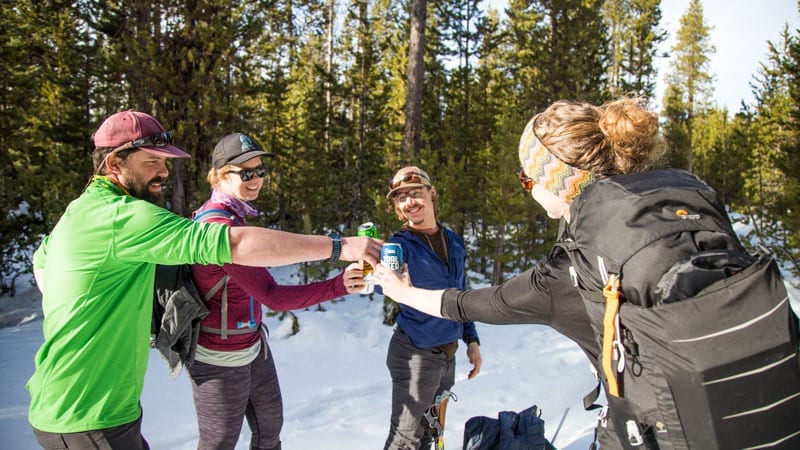
Our home for the night was the Bluebird cabin, one of four so-called “classic” cabins that can accommodate large-ish groups of eight or more. After a hearty dinner, we shuffled back to our cabin to play cards and share stories. With plenty of wood to stoke fire, we slipped into cozy pajamas, and cracked open a bottle wine to warm our bellies. We eventually found our way to a bed of soft, homey linens. With a crackling fire to serenade, we drifted into a well-earned sleep.
Morning breaks with a chill at 6,300-feet elevation, and nothing is getting done before a cup of coffee. Several of us slipped out early and snapped on skis to watch dawn arrive over the snow-covered crater rim. Others opted to enjoy another hour of shut eye, pulling warm blankets tight against the cold outside. Eventually, we clipped into our skis and kicked over to the restaurant for a proper mug of morning brew. Alas, our short stay was almost over. After a quick breakfast, we hitched a ride with Karen on the resort’s snowcat, which shuttles guests back and forth from Ten Mile Sno-Park.
Just before we lost sight of the lodge, I glanced back and glimpsed Todd and his granddaughter on their snow machines zipping between the cabins. She followed him, staying right in his tracks. I wondered if I could make it here all winter, a mile high, enduring storm after storm, maintaining a 90-year-old property against the power of Mother Nature and the march of Father Time.
Luckily, I don’t have to. I know that the lights will be on the next time I visit. I also know that the cozy beds will be turned down, and the prime rib will be served up thick. I guess you don’t have to be a king to live like one at Paulina Lake Lodge—no matter what the season.
Some of us wouldn’t dare trade out our family’s heirloom holiday decor for something new and flashy. Grandma’s ornaments, auntie’s crystal and mother’s china are what make the holidays the holidays. But others crave a fresh, clean and new look to spruce up the winter season. For those intrepid decorators, we offer these contemporary solutions to tired old traditions.






Nowhere epitomizes Bend’s transformation from a sleepy lumber town to a world-class destination like the Old Mill District.
Once home to two of the largest ponderosa pine sawmill operations on the planet, the Old Mill District now showcases more than 55 restaurants, shops, art galleries and boutique fitness studios nestled alongside the Deschutes River.
The winter months are truly magical in the Old Mill District with SantaLand, roving carolers, Tumalo Creek’s Holiday Paddle Parade, gorgeous holiday lights and more.
That’s why we have partnered with our friends at the Old Mill District to bring you an exclusive Holiday Giveaway. One winner will be randomly chosen.
Old Mill District – Gift Card $250
Hilton Garden Inn – One-night lodging value $200, subject to availability not valid July 1 – August 31 and expire December 30, 2020
Hampton Inn & Suites – One-night lodging value $200, subject to availability not valid July 1 – August 31 and expire December 30, 2020
desperado – $50 Gift Card
Radiant Day Spa – Swedish massage. $80 value
Bath & Body Works – Into the Night Candle and Body Care Bundle, valued at $65
Saxon’s Fine Jewelers – $100 Gift Certificate towards merchandise
Avalon Salon & Spa – $100 Gift Certificate
Flatbread Neapolitan Pizzeria – $50 Gift Card
CycleBar– 1 month of unlimited rides valued at $139
Pastini – $100 Gift Certificate
Tumalo Creek Kayak & Canoe – 2 full rental days. Rentals can be applied to your choice of a tube, kayak, paddleboard, canoe, or tandem kayak. Value up to $240
Naked Winery – 2 complimentary wine tastings and a $50 gift certificate
Anthony’s at the Old Mill District – Dinner entrees for two, up to $70
Free Spirit Yoga + Fitness + Play – 1 free adult class and 1 free kids’ open play session. Value $30
Lubbesmeyer Studio & Gallery – Signature Art Tile of your choice $49
Nashelle – Gift Card $75
Sweet Tooth Candy Shoppe– $15 Gift Card
Savory Spice – What’s Shaking spice set, $35
Greg’s Grill – $100 gift certificate
REI – Two ski/snowboard tune and premium hot wax upgrade, $120
Total value of over $2,000
The contest begins on November 22 at 5:00 p.m. and ends on December 22 at 11:59 p.m. For the complete list of rules, visit our contest policy page.
The prize includes a night in one of two winery guest suites with luxurious accommodations, warm hospitality and breathtaking vineyard views. The Estate Tasting Room features a cozy setting with elegant fireplaces, an expansive patio and an impressive 65-foot lookout tower showcasing incredible views of the valley and Mary’s Peak. During the day, take a VIP private tour of the winery! Subject to availability.
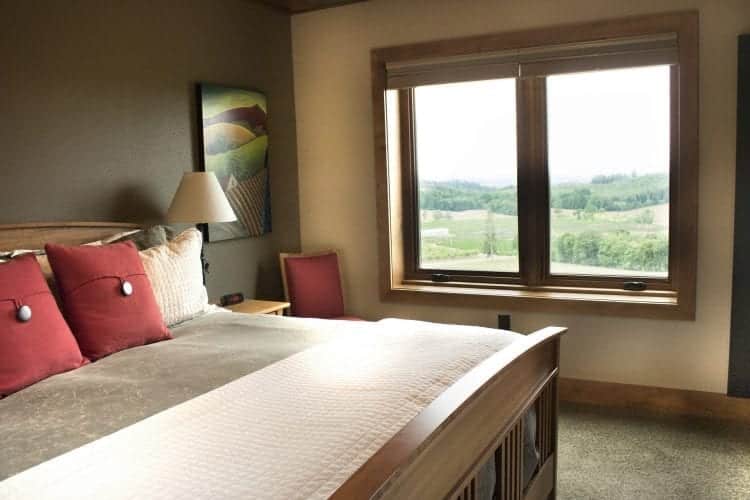
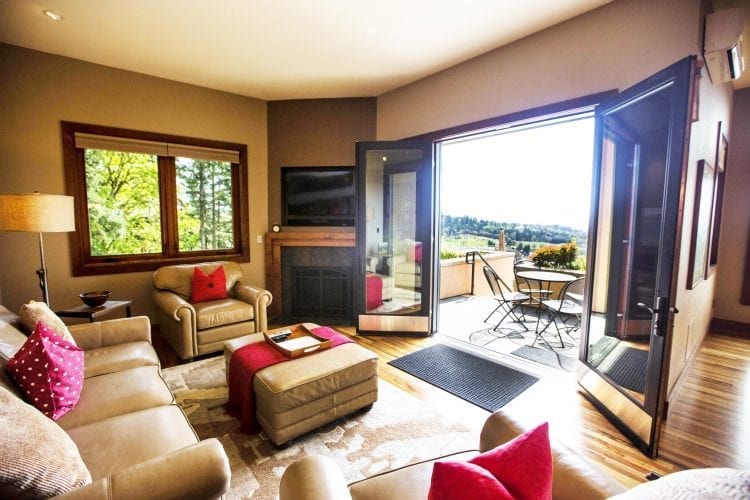
Founded in 1983 by Oregon native Jim Bernau, with the dream of creating world-class Pinot Noir, Willamette Valley Vineyards has grown from a bold idea into one of the region’s leading wineries, earning the title “One of America’s Great Pinot Noir Producers” from Wine Enthusiast Magazine. All of the vineyards have been certified sustainable through LIVE (Low Impact Viticulture and Enology) and Salmon-Safe programs.
Prize must be redeemed by 6/30/2020. Winner must be at least 21 by the redemption date. Prize does not include $150 wine credit normally offered with a paid suite stay.
The contest begins on November 1 at 12:00 a.m. and ends on November 17 at 11:59 p.m. For the complete list of rules, visit our contest policy page.
For a town that seems to have a little bit of everything, Bend is a virtual desert when it comes to murals, those vibrant urban canvases that seem to be everywhere in most cities.
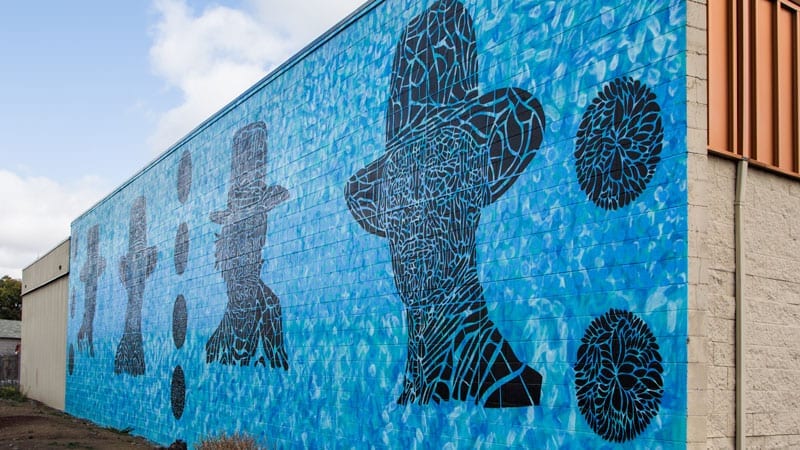
Doug Robertson wants to change that. An artist and the founder of the nonprofit organization for the High Desert Mural Festival (HDMF), Robertson has been rallying artists and public art supporters to change a long-standing city policy that effectively banned murals.
“There were basically zero murals in Bend, so we needed to start [the conversation] there,” Robertson said.
Prior to 2015, murals were prohibited under the city’s restrictive sign code. Robertson got the city to take a small step forward in 2016 by lifting the ban in the so-called Makers District, a swath of industrial and retail business just east of the railroad tracks north of Greenwood and south of Olney avenues.
The response to the murals within the pilot project area was overwhelmingly positive, said Robertson. Business owners, like Lisa Johnson of Cascade Heating, appreciated the way murals act as a deterrent for graffiti while making an artistic statement. Johnson commissioned Robertson, to paint the “Blue Cowboy” mural on the west-facing wall of the building, which can be seen from the Bend Parkway.
The liquid-blue mural started as a sketch and grew into a two-story canvas that features silhouettes of two cowboys donning Josie Wales-style hats and floating in a kaleidoscope background of color.
Despite the success of the program it wasn’t clear if the mural policy would be relaxed in other areas of the city. But in January the city got a request, that made them reconsider the mural policy as it related to the entire city.
Pine Ridge and Elk Meadow elementary schools proposed a joint mural project to paint a retaining wall near an adjacent canal. Teachers and administrators pitched the project as a way to promote the arts among students while also being proactive about preventing vandalism and graffiti. However, because the proposed mural would be visible from nearby Brookswood Avenue, the project was prohibited under the sign code and was blocked by the city. Pine Ridge Assistant Principal Ned Myers, who also serves as board president for the High Desert Mural Festival, asked the council to revisit the code.
“We basically leveraged 200 fifth graders by pitching it as, ‘You’re restricting their educational opportunities,’” said Robertson.
So how do you say no to 200 children? Well, you don’t.
The city acquiesced. After reviewing and revising some of its sign policies, the city council voted unanimously this past spring to permit murals on nonresidential properties throughout Bend with a few exceptions. According to the findings from the public hearing, the council found that murals could “tell a community’s stories… increase appreciation for the arts and artists and increase overall attractiveness of the space.”
The 5th grade classes from Pine Ridge and Elk Meadow schools hope to complete their mural project in spring of 2020, but the policy change has opened the door for other projects as well. Over the summer, Central Oregon LandWatch, a nonprofit advocating for sustainable planning and healthier communities, partnered with local artist Kaycee Anseth to re-imagine the pedestrian crossing at the Franklin Avenue underpass as a safe, welcoming, and vibrant public space. Her work can be seen in the walkway linking Bend’s downtown to the emerging Central District west of Third Street.
For Robertson and the High Desert Mural Festival, the real work of raising the visibility of public arts in Bend is just beginning. “We’re hoping to get as many murals up as possible and then build on that,” he said.
How a handful of citizens saved the High Desert from becoming another American news desert. (Pictured left to right: Bill Smith, Amy Tykeson, Louis Capozzi, Mike Hollern, Todd Taylor)
Amid cardboard moving boxes in her new office at The Bulletin, Publisher Heidi Wright takes a book from the sparsely filled shelves. It’s Saving Community Journalism: The Path to Profitability, by Penelope Muse Abernathy. The veteran media executive’s distillation of cutting-edge research and analysis reveals how newspapers can transform and find long-term profitability in the digital age. Wright’s notes, handwritten in fine-tipped black marker, fill the margins of the acclaimed study on shedding legacy costs, building a vibrant, multi-platform community and identifying new revenue streams.
Tucked inside the hardcover’s jacket were Wright’s talking points for potential investors — strategies outlining how her employer, EO Media Group, could rescue Central Oregon’s struggling daily newspaper, which had spent the past several years fending off creditors. By mid-2019, The Bulletin was facing the prospect of a court-administered sale to the highest bidder as part of a prolonged bankruptcy proceeding. It was the most uncertain time in the history of the paper that started in a log cabin near the Deschutes River 116 years ago. It had survived two World Wars, the Great Depression and the 2009 Wall Street collapse. Now it was on the auction block.
With a July 29 deadline approaching, two companies emerged as suitors, Tennessee-based Adams Publishing Group and Rhode Island Suburban Newspapers. A winning bid by either would mean that new owners with no other ties to the area would make editorial and business decisions. If either followed the playbook used by other corporate chains, Bend could expect a reduction in news-gathering resources and other cost-cutting measures aimed at boosting the paper’s bottom line while eroding its reporting.
But over the course of four days last summer, seven community leaders and two local foundations intervened with the hope of preserving the paper’s commitment to reliable, local journalism. They found a partner in Wright and EO Media, a family-owned newspaper company with more than 100 years of publishing experience in Oregon. They pooled about $1 million toward EO Media Group’s winning, $3.6 million bid for The Bulletin and the weekly Redmond Spokesman.
For those following the bankruptcy and sale, it wasn’t immediately clear who had stepped in to help EO Media with its winning bid. But in the days and weeks after the sale, a list of names began to emerge. It read like a who’s who of Bend business and philanthropy: The Tykeson Foundation, the Hollern family, the Taylors, Bill Smith, and others. Each of them made a different contribution, but they all shared one thing in common: a belief that a strong, locally controlled paper was critical to the political and intellectual health of a community that they love.
“People truly want to know, to be educated about issues, whether it’s the school bonds or healthcare, and I don’t know you’re going to get that from a non-local news source,” said Todd Taylor, who, with his wife, Lorri, runs Taylor Northwest construction and development.
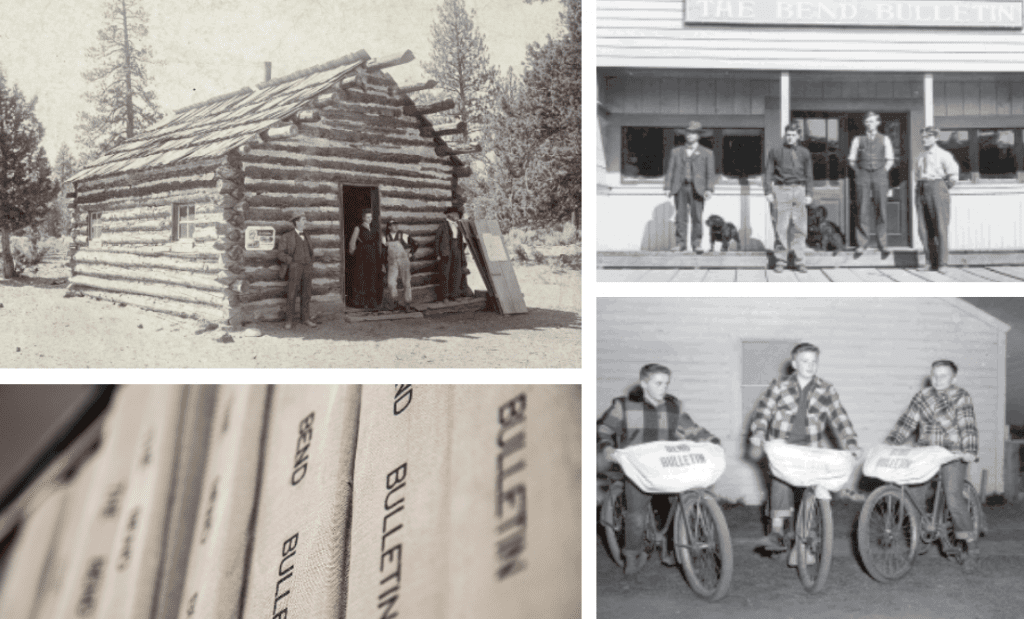
To understand The Bulletin’s unlikely sale to a relatively small, Oregon family-run publishing company, you need to know how problems get solved in Bend. They get solved when conversations among friends inspire action. They get solved the same way they did, fifty years ago when parks official Vince Genna got tired of asking of his bosses at the city for more ballfields and instead asked his construction buddies to help him start building them. The result was a parks’ building boom.
This time, though, there was more at stake than a baseball diamond. The Bulletin is perhaps the primary news source in the tri-county area and one of the few outlets covering everything from sports’ scores to school bonds, to bills in the state capital.
As news broke that distant corporate entities might buy The Bulletin, it sparked conversations among community leaders. Louis Capozzi, a Bend resident and member of the Bend 2030 community visioning organization, was one of the first to contemplate a community-based solution. Capozzi, who also teaches in the Strategic Communication master’s program at the University of Oregon School of Journalism and Communication in Portland, asked the dean, his longtime friend Juan-Carlos Molleda, about media businesses in the state that might want to buy The Bulletin with help from the community.
“He introduced me to nine in the state, and I couldn’t get a bite,” Capozzi said. “They either thought it was a bad investment or they had no resources, so I got a little discouraged.”
When Capozzi heard Oregon Public Broadcasting report a new potential bidder, EO Media in Salem, he called Wright.
“It was extremely uplifting,” he said. Wright pointed him to Saving Community Journalism. “I saw the quote on the flap from Dr. (Ron) Heifetz, at Harvard’s Kennedy School of Government that describes a good newspaper as ‘an anchor’ because it ‘reminds a community every day of its collective identity, the stake we have in one another and the lessons of our history.’ And I thought, well that’s singing my tune.’”
Capozzi introduced Wright to Mike Hollern, Brooks Resources chairman, who helped oversee the transformation of the Brooks Scanlon sawmill into the land development company Brooks Resources. Hollern’s vision is woven throughout the community, from education and economic development to transportation and cultural resources.
Hollern said he wasn’t expecting much to come of his meeting with Wright. “But, I ended up being very impressed with her background, the whole Forrester family, the Aldriches, (EO Media owners) going back a hundred years, and what they’ve done in Oregon,” he said. “To me, it was so clearly a desirable outcome for The Bulletin to be in their hands. They’d arranged a loan from their longtime bank for the basic purchase,” said Hollern.
What they didn’t know is if it would be enough to secure the winning bid at auction.
He told them he’d like to help with that. Kirk Schueler, Brooks Resources president and CEO, quickly contacted fellow trustees of The Bend Foundation, which is funded in part by Brooks Resources. It was created in 1947 to assist injured loggers and mill workers, and to award scholarships to industry workers.
The foundation typically gives grants to local social services, arts, culture and education nonprofits, and invests in traditional equity and debt markets. Its loan to EO Media was a rare foray into social investing, which considers both financial return and positive societal benefits, said Schueler.
“It’s unconventional, but the scale was appropriate, not a vast amount,” he said. “They may not pay it all back, but there’s the expectation that they will.”
Another investor, former BendBroadband CEO Amy Tykeson, said she wanted to prevent what happened to The Register-Guard in Eugene, which lost much of its local news coverage after it was acquired by New Media/GateHouse. The company is one of the large investment groups aggressively seizing newspapers at bargain rates in small and mid-sized markets across the nation.
Next to join the party was Jay Bowerman, son of Nike co-founder and University of Oregon track legend Bill Bowerman. His participation was symbolic and significant.
“He’s a very quiet, private guy, so I was surprised,” Hollern said. “But he and (Bowerman’s wife) Teresa are also very good citizens.”
Bowerman, an independent field biologist who led the Sunriver Nature Center & Observatory for two decades, seems more comfortable doing amphibian ecology research, wiring frogs with tiny radios at 7,000 feet on Broken Top, than being quoted in news articles. “But I’ve always maintained a personal commitment to be honest with members of the media,” Bowerman said, adding that the open flow of accurate information benefits the community.
Bowerman had met Capozzi at an OPB event in Bend last year and had kept in touch on issues of interest. When he’d heard from Capozzi about the support for EO Media, Bowerman met with Wright and some of her team. “I came away with the sense that this was something that needed to be done,” said Bowerman.
He cited the Oregon roots of the Forresters, the family that owns EO Media Group. There was also a personal connection. Mike Forrester, former editor of the East Oregonian, ran track at the University of Oregon under his father. Bowerman quoted Charles Samuel Jackson, who bought the East Oregonian in Pendleton in 1882, and led it to become a respected, influential daily before it became a cornerstone of EO Media. Jackson said, “Print the truth. Fight for the right. People like a fighting newspaper.”
The tone is similar to that of Robert W. Chandler, the gruff, philanthropic owner and editor of The Bulletin. He was considered one of the nation’s most prominent small-town newspaper leaders. After buying the paper in 1953, he gradually expanded his newspaper holdings. By the time he died in 1996, he’d founded Western Communications, which had 300 employees among seven newspapers, five in Oregon, and two in California.
Throughout the latter half of Chandler’s tenure, Bill Smith was helping shape Central Oregon’s evolution from timber outpost to outdoor mecca with Brooks Resources and development projects such as the Old Mill District. Having known the Chandlers for nearly five decades, he heard about EO Media going up against far-flung bidders and was the first equity investor.
“I think I’m going to make money, but… it was the local paper, that’s why I did it. Bend is Bend because we have a lot of [great] things here, including the luxury of having a local newspaper with local reporting,” said Smith. Having local news is only a luxury if it’s credible. To that end, all of the investors agreed they’ll have no editorial control.

Observers say that whatever happens in the future, it’s significant that community members took a stand here for their local paper.
Abernathy, who has written three follow-up reports expanding on her research in “Saving Community Journalism,” has spent the last decade documenting the shifting news landscape. That work includes evaluating the threat of “news deserts,” rural or urban communities with limited “credible, comprehensive news and information that feeds democracy at the grassroots level.” Her team at the University of North Carolina’s Center for Innovation and Sustainability in Local Media has collected, researched and analyzed more than a decade of data about the state of U.S. newspapers and monitors it with a database of more than 9,000 of them. Their 2018 report, “The Expanding News Desert,” delves deeper into the implications for communities at risk of losing their primary source of credible news.
Abernathy could think of only two other such instances where a community stepped in to save a paper, once in Virginia in 2016 and in Santa Rosa, Calif. in 2012.
Investors noted that along with its storied history in Oregon, EO Media has journalistic resources and partnerships across the state. That includes a wealth of innovative strategies for digital engagement and senior management committed to being active in the community. The outlook for the bottom line is brighter, too. EO Media won’t bear the burden of Western Communications’ roughly $30 million in debt associated with the Chandler Avenue building.
Though rightly concerned about liabilities, investors were also keen to hear about opportunities. They listened to Wright’s vision for navigating strategies in the digital age while leveraging partnerships to produce news that feeds democracy at the state and local levels. Profitability hinges on measuring how audiences engage with the content and each other, said Wright, who’s looking at how digital subscriptions and membership models might best serve their audience.
For example, multi-tiered membership could have a community activist or community supporter level, which would allow you to convene online meetings and conversations around community topics. “I think that would fit well for Bend because Bend is so passionate,” said Wright, who lived here from 2014 to 2017 when she was chief financial officer for The Bulletin’s parent company, Western Communications.
Despite The Bulletin’s struggles, there is plenty to build upon, Wright said. EO Media’s paid print and digital circulation, including The Bulletin and Spokesman is about 66,000 and has more than two million web page views per month, she said. Oregon Capital Insider, a weekly newsletter, launched in 2014 with Pamplin Media in the face of declining statehouse coverage across the U.S., has nearly 100,000 opt-in subscribers. EO Media, including Central Oregon Media Group, the holding company for The Bulletin and Spokesman, has seventeen daily, weekly, bi-weekly and monthly publications across the state and one on the southern Washington coast.
Abernathy said the investors’ move is an important first step. To grow, owners need to invest in the business and news operations to attract digital advertisers and readers. This long-term strategy requires owners to have faith in the future, the paper’s mission, and endurance in the face of inevitable monthly and yearly financial fluctuations.
“One thing that’s historically true with media companies and acquisitions is that they fail if they do not … invest to transform the business,” she said. “You really need the capital. Transformation is never a [smooth] process. You’ve got to know when to push on and when to pull the plug, and not live on the razor-thin edge of available capital.”
It appears the investors may have the wherewithal for the long game. Smith didn’t flinch. “I’ll hold up my hand again and invest again,” he said. “I put in some money with the expectation that I would not put in any more, and I hope the enterprise works, but if I misjudged that they’d go in and turn it around, I’m not going to orphan the initial investment because they did not deliver.”
Though challenges remain, Wright is confident that there is a place for newspapers in America, no matter what form they take, and a home for The Bulletin in Bend.
“We reach a lot of people, and still we keep talking about the death of newspapers, and it’s like we have more audience than anyone, and I think we can grow it still,” said Wright.
Editor’s Note: This article was published by Bend Magazine in November 2019.
Portraying the essential nature of treasured places.
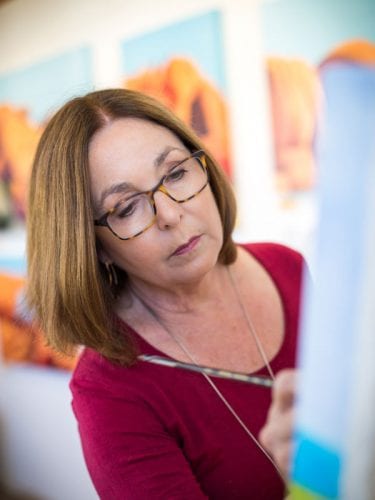
Julie Blackman’s landscapes conjure scenes of familiar places visited—national parks or stretches of open highways glimpsed through a car window. A highway arcs into the sunset. The John Day Fossil Beds throw off glowing orange and blue hues. The large sensuous boulders of Joshua Tree National Park evocate female forms. Orderly rows of Willamette Valley vineyards crest a hill beneath biscuit-shaped clouds.
“I look at shape and form in organic ways, almost like human bodies,” Blackman said of her abstracted landscapes. Blackman strips her subjects to their essential form, portraying them as living, breathing entities. Most of her paintings, done in either pastels or oil, have sharp horizontal contours, bright colors and clean, uncluttered views of the natural world.
“There’s a peacefulness of landscapes that don’t include houses, people and animals,” she said.
Landscapes are more than a muse. They were also a salve against severe depression that she experienced in her teens and early twenties. At the time, treatment for depression was in its infancy, but she recovered and says that, “observing the landscape still brings me an inner peace as it did then. My own sort of treatment.”

Blackman’s process is slow and deliberate, producing most of her work in a studio, although she does some plein air painting. Photos and sketches of places she’s visited inspire the process that involves brushing many layers of thin glazes onto the canvas to build depth and luminosity.
Blackman grew up near St. Louis, Missouri and showed an early interest in the arts. When she was twelve, her grandfather, a musician and painter, gave her a set of oil paints. The aspiring artist went on to earn a bachelor’s degree in painting from the University of Wisconsin-Milwaukee. Blackman eventually ended up in Portland where she exhibited her paintings in the late 1970s. She took a “long break” to raise a family and work in Portland Public Schools as a special education teacher, but never lost her interest in artistic expression.
She picked up the brush again in 2005, which overlapped with her teaching job until 2009 when she retired from the school district and started painting full time. From 2008 to 2012, she participated in Portland Open Studios, a program that provides the community with the opportunity to tour and interact with local artists in their studios.
It was during one of the open studios that Bend resident Keith Levesque met Blackman and was drawn to her paintings. “I like the composition, colors and how I feel when I look at Julie’s work,” Levesque said. He and his wife have three Blackman paintings, including two they commissioned for their home. “When I look at a painting in my living room ten times a day and it relaxes me, that’s very valuable to me.”
In 2013, Blackman moved to Bend where her daughter Whitney Keatman, co-owner of Sparrow Bakery, lived. The artist initially worked from home but found she wasn’t as productive outside a studio.
“The first couple of years were kind of a struggle. I’m not as disciplined at home,” she said.
Blackman found structure and a place to mingle with other artists at Bright Place Gallery in 2017, an east side artist collective. The gallery is tucked toward the back of the 9th Street Village in southeast Bend. Blackman’s space is long and narrow with windows that let in natural light and an open aisle for gallery visitors to meander and see work in progress. Outside the gallery, you’ll find her work at the occasional show. For example, this past summer she displayed her paintings at Art in the High Desert in the Old Mill District, a showcase of some of the best artists and crafts-workers in the nation.

To see her work and meet the artist, visit the Bright Place Gallery, noon to 9 p.m. Fridays and Saturdays, or go to her website, julieblackmanart.com
Growing up poor in Mexico City, graduating to working amid the glamour of celebrity chef restaurants in Las Vegas in the ’90s, and then fighting in Iraq after 9/11 hardly seems a logical path to opening a French-inspired bistro in Redmond. Yet it is a telling mélange behind the daunting drive of Moises Becerra, who’s aiming to raise the standard for dining in Central Oregon with Becerra’s on 6th Bistro.

This military and kitchen veteran recognizes that his visceral connection with Gallic cuisine is derived from his love of the traditional Mexican comfort food that his mother made for him and his four siblings, as well as from his father, a hospital cook.
“I’d come around the table when she was mixing tamale dough with a big spoon, especially during Mexican holidays,” he said. “It was a thing that personally made me happy, to see an abundance of food, a big mound of tamales, as well as the everyday food, like handmade tortillas. We were raised very poor, so we’d rarely eat meat, and when it did make it to the table, we were very excited. So, yes, food was very important.” Becerra wanted to be a petrochemist but couldn’t afford the requisite education. Instead, he went to work, came to the U.S. in the early ‘90s, and earned an associate’s degree in tourism and hospitality management from Lane Community College in Eugene. He went to work as a server at Spago in Las Vegas, just as Wolfgang Puck began launching his empire. “In Vegas, it’s very glamorous, there’s a lot of money, and you meet beautiful people from all over the world, but the restaurant competition is ferocious, so you have to have quality of service,” he said. “You’re not just a food carrier or order taker, you’re a sales manager, trained in customer service. It’s a phenomenon in Vegas and they push hard for it.” After the 9/11 attacks, however, he set aside his vision of managing a glittering restaurant and enlisted in the U.S. Army infantry, despite being in his early 30s.
In 2010, after returning from two deployments in Iraq, he decided to pursue his passion for cooking, attending LCC’s culinary program for a year, and completing the second year of the associate’s degree at Central Oregon Community College’s Cascade Culinary Institute. He worked at 900 Wall and Brasada Ranch for a summer then returned to Vegas to cook at Le Cirque and Mon Ami Gabi. “One of our ideas was how to bring that level of customer service to Redmond,” Becerra said. “I created a matrix of the nineteen steps of service in which we train servers, based on the American Culinary Federation book, Remarkable Service.” Employees must complete two days of training including a Powerpoint detailing why he and his wife, Sheila, started the business.
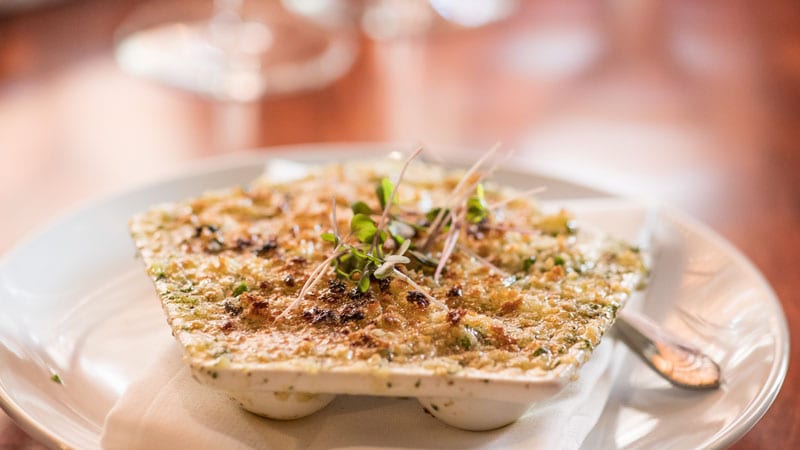
“We had been retired already, and now we’re coming back to open a restaurant,” he said. “It’s crazy, it’s so much work, why not enjoy retirement?” He didn’t want to have regrets. “We do things, we’re doers.”
His mission is to make the food and atmosphere as remarkable as the service, striving to use excellent organic, local ingredients. For instance, Redmond is historically a potato growing region and yet he rarely found potatoes on local menus, so he’s changing that.
“We are meat and potato people here, we like beautiful French mashed potatoes,” he said. “We mix in butter and milk from Eberhard’s just three blocks away.”
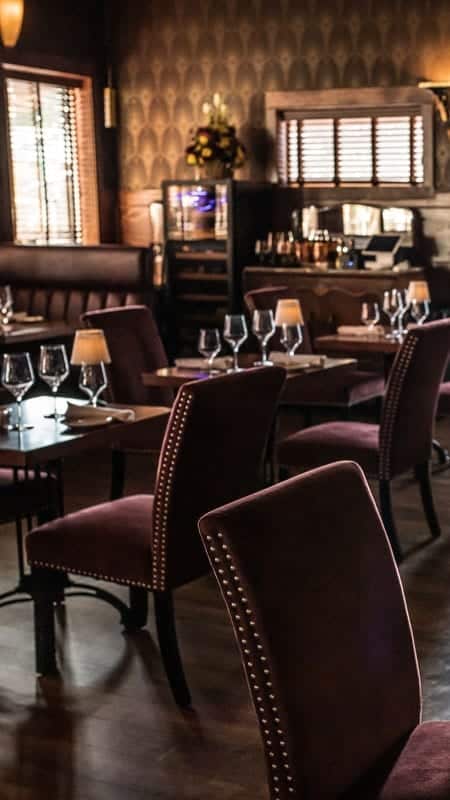
Aside from potatoes, the menu boasts an amuse bouche of housemade baguette with compound butters and salmon mousse, appetizers including charcuterie, four-cheese casareccia pasta with brie cheese foam, escargot and flatbreads. A roasted red beet salad is dressed with a Champagne vinaigrette and pine nuts.
There’s a traditional French onion soup, lemon-brined heirloom chicken, beef Wellington, roasted pork chops brined in beer and tamari with apple compote brandy, grilled lamb chops, beef Bourguignon and wild mushroom pasta.
Their pastry chef creates desserts such as maple bread pudding with house-made bourbon vanilla ice cream with toffee sauce and maple pecans and a dark chocolate mousse cake with black current mousse, black currant curd and whipped cream.
The couple’s goal is for the art deco ambiance to mesh with the downtown design and transport guests to another place and time. From the feel of a doorknob, a wine glass stem, a seat cushion or the splendor of a chandelier, Becerra has considered it all.
He knows that tourists come and go, but he wants to offer a year-round escape for locals, even if it’s just to relax with wine and dessert.
Central Oregon is one of those rare places where people actually get excited for winter. We hold ski season pass parties, drink beers with names like Pray For Snow, and pine for that first morning when we draw back the drapes to find a fresh blanket of snow outside of our doors. Of course, not everyone is waxing their skis in early November and stashing away sick days for an onset of powder fever. Thankfully, there is plenty to do around town from adult-oriented recreation, like bar trivia and axe throwing bars (yes, it’s a real thing), to family-friendly activities like tree lighting and arts classes. With that in mind, we’ve put together a list of activities to keep your whole clan engaged this holiday season.
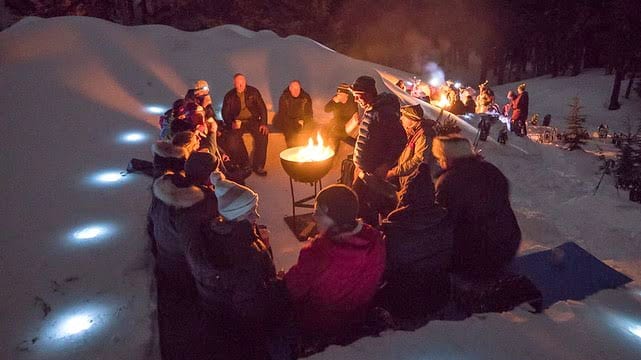
Much has changed in downtown Bend over the past half-century. One constant is the Tower Theatre, which has served as Bend’s cultural hub for as long as just about anyone remembers. The historic theater continues to show films (it’s the epicenter of Bend Film every October), but it’s also a showcase for the performing arts, including live music and theater. Enjoy it all in November and December when the Tower packs in acts like the Moscow Ballet’s Nutcracker, a holiday film series that includes a festive screening of the contemporary classic National Lampoon’s Christmas Vacation. Grab a seat, order a large popcorn and a beverage, and enjoy some holiday-stress-free entertainment in Bend’s marquee venue.
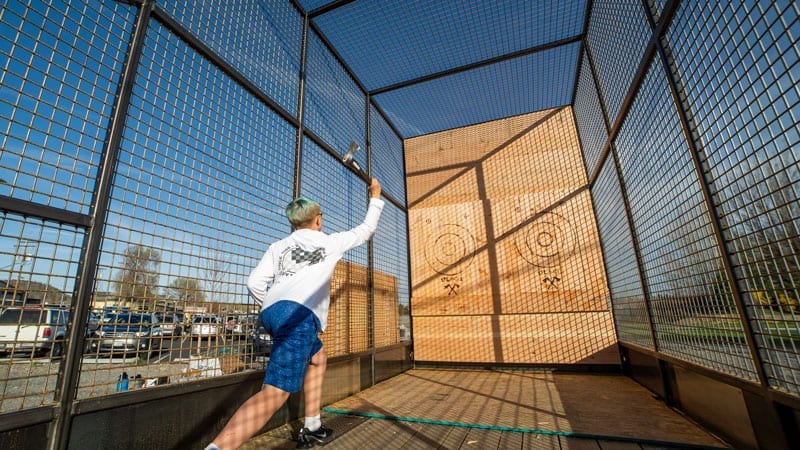
Maybe it’s a sign of the times that axe-throwing has become a popular pastime, or maybe it’s always been fun to hurl weighty, sharp objects across a room. In any case, the holidays are the perfect time to work off some pent-up energy by throwing axes at bulls-eye targets. The Unofficial Logging Co. offers a 6-lane axe-throwing venue in downtown Bend in the O’Kane Building. Which means the food, drink, and fun indoor activity are all in one location, with beer, wine and food from The Brown Owl on hand. Round up the multigenerational crew (10 years and up please, and wear closed-toed shoes) for an evening of friendly, yule time, axe-throwing competition. Don’t be surprised if Grandpa wins.
Staying close to the fire on a cold winter’s night might sound like the way to go, but every now and then you need to break out of the cozy routine and do something extraordinary. Wanderlust Tours Starlight and Moonlight Snowshoe Tours fit the bill. Naturalist guides take tour-goers away from the lights of the city into the dark and dreamy woods, where stars and moon shine bright and unhindered overhead. Breath the cold night air deeply and take in the vast sky for a little taste of the magic of the season that you won’t find at the mall.

When people ask what there is to do around Central Oregon, recommendations tend to center around outdoor activities. What is sometimes overlooked is our vibrant arts scene that includes an interactive “art station” where adults and kids can learn how to fire pottery, create glass art, roll prints, sculpt and more. Located in a historical train depot, The Arts Station welcomes artists of all ages and experiences, offering classes, workshops and day-camps that are popular with families on school holidays and breaks. Parents can join in the fun through the Arts Station’s “With Your Child” classes that allow parents to work side by side with their kiddos to create a piece of unique art. No experience or materials are required. “Bring your body and your imagination, and we’ll provide the rest,” said Laura Von der Osten, recreation coordinator. More information is available through the Bend Park and Recreation Department website and Playbook publication.
Pomp, circumstance and twinkly lights—what more do you want from a wintry Friday night? Bundle up in a puffy coat, stocking cap and gloves, and kick off the holiday season with the Christmas Tree Lighting at Drake Park in downtown Bend. Scheduled for December 6 this year, the actual lighting of the tree occurs promptly at 6:59 p.m. to the oohs and ahhs of the crowd (that’s your pomp and circumstance). See Santa, eat candy, sing carols and much more at this must-do annual event.
Half a century ago, Bend’s fire department would roll out the water hoses to flood in downtown’s Troy Field in Bend’s version of New York City’s rink at Rockefeller Square. Leather-booted skaters could drop in anytime for laps around the temporary rink. Fast forward to 2019, and multiple options exist for ice skaters wanting to carve a few laps in a fresh sheet of frozen water. In Bend, The Pavilion offers ice time in the afternoon and weekends. Rental skates, a party room and a small concession stand make this a go-to spot for locals and visitors alike. If you want a true open-air experience, head for the Seventh Mountain Resort and glide around under the stars. Here, you’ll find another full-service rink that caters to guests and visitors. Down south, Sunriver has ice skating at its recently renovated pavilion on the Village Mall. If your travels take you north, check out Redmond’s contribution to the ice-skating scene. The city of Redmond operates a seasonal rink, usually open from November through February at the Downton Redmond Plaza at 7th Street.
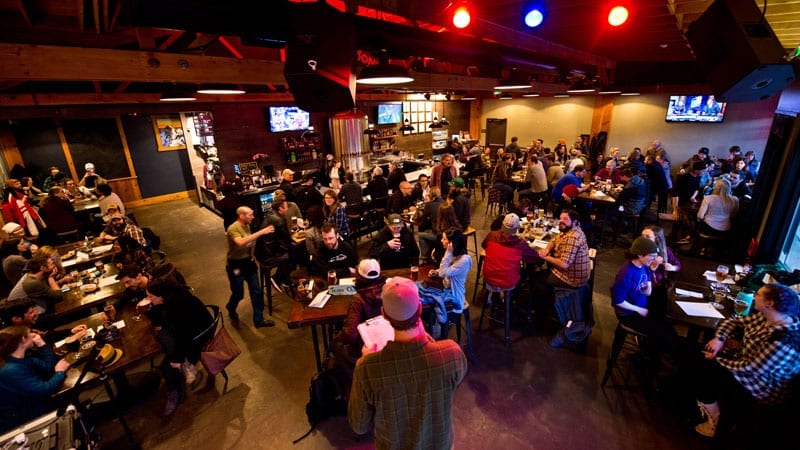
Answer these three questions: On the seventh day of Christmas, what did my true love give to me? In what country did eggnog originate? What is the name of the Dr. Seuss character who steals Christmas? Okay, one more question—why do we love to know the answers to random questions? This season, distract yourself from more serious matters and choose from one of many regional trivia nights to bone up on your useless knowledge. Try Trivia on the Moon Thursdays at Silver Moon Brewing, Trivia Tuesday at the Lot, Kobold Brewing’s occasional Taphouse Trivia, and second and fourth Tuesday Night Trivia at Broken Top Bottle Shop.
Central Oregon has been a rock-climbing mecca since the early 1980s when sport climbing pioneers like Alan Watts set the first routes at Smith Rock. The iconic climbing area remains the epicenter of the climbing community here, but the sport has grown in interesting ways and places around the region. One of the most popular ways to climb doesn’t involve rocks at all. Indoor climbing, which uses manufactured walls with multiple routes and levels of difficulties, is perhaps the fastest-growing segment of the sport in Central Oregon. The official headquarters is the Bend Rock Gym on Bend’s east-side, where twenty “auto belays” allow climbers to work independently and at their own pace. The Rock Gym offers oodles of clinics and a cool learn-to-climb program for children and adults. While it may seem intimidating, no experience is required, and the staff is happy to help first-time climbers learn the ropes as it were. “We are working hard on eliminating that initial intimidation,” said Rich Bruener, director of operations.
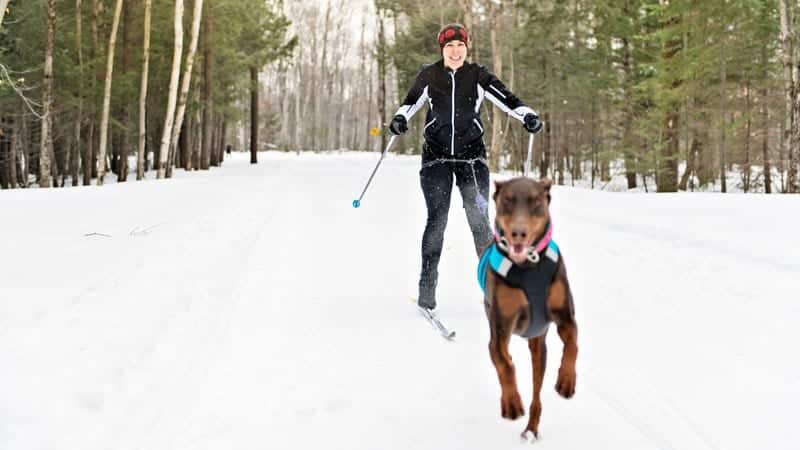
Few winter activities offer the smooth exhilaration of cross-country skiing while being pulled by a dog. That’s right — think dog mushing with skis instead of sled and you have skijoring, an uber niche winter sport popular with dog-owning Nordic skiers. Skijoring affords an accelerated way to explore wintry Central Oregon with a canine companion. When the snow falls, take your skis and pup to an already-traveled trail, such as those at Tumalo Falls Day Use Area or dog-friendly Wanoga Sno-park. There, dogs will intuitively follow the tracks. But let your pooch roam free until he or she is comfortable around your skis. Then, when the time seems right, clip into your dog’s harness. With persistence and luck, you’ll be gliding along, propelled by canine combustion. Bend-based Alpine Outfitters makes skijoring-specific harnesses and towlines. Adanac Sleds & Equipment, is also a good skijor outfitter. The book “Skijor with Your Dog,” by Mari Høe-Raitto and Carol Kaynor, is rife with insight.
The go-karts of my youth were open framed contraptions powered by something that looked like and, probably had been, a lawnmower engine. I can only imagine how my 12-year-old self would have reacted if I had the chance to visit Bend’s K1 track, which brings the whole concept into the 21st century. Clean-burning electric carts wrapped in sleek Formula One style bodies allow racers to get a little glimpse of what it might feel like to whip around the track at Monaco. Wireless headsets allow racers to share track talk while zipping around the serpentine course as an official clock monitors lap times. The driver with the single fastest time around the track is the winner and invited to summit the podium post-race. But let’s not kid ourselves, the real attraction here isn’t radio heat sets or leaderboards, it’s speed. And K1 has plenty of it. The carts accelerate like a cat, reaching speeds up to 40mph on short straight away that throw drives into g-force generating turns. So, yeah, they’re fast. And fun. Lots of fun. – Eric Flowers
The first frost has arrived, the leaves have fallen from the trees, Christmas lights are up and is that, wait, holiday music creeping into the background noise? Yep. There’s no denying that shopping season is upon us. But let’s forget the retail madness for a minute and focus on something that matters, gathering up friends and family to share a meal and maybe a great glass of wine. Now is the time to indulge; we can count the calories in January when we’re working on New Year’s resolutions. If that sounds like a plan, we’ve put together a list of can’t-miss fine dining experiences that consistently deliver on food, ambiance and service. Your table awaits.
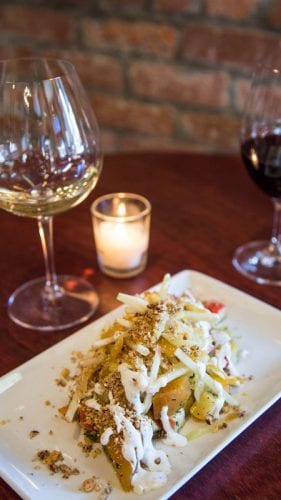
A pillar of downtown Bend, 900 Wall serves up a traditional and reliable menu of new American fare. Among the best options are the beef tartare and beef carpaccio, deviled eggs prepared perfectly, outstanding quality oysters and impressive thin-crust pizzas. For entrees, the flat iron steak is a go-to, the duck confit is like candy it’s so tasty, but the burger infused with bacon and served with onion jam is a favorite. Hard to go wrong with anything there. A private dining area on the second floor overlooks the large dining room and makes this a great choice for small groups, or large families needing a reserved space for private celebrations.
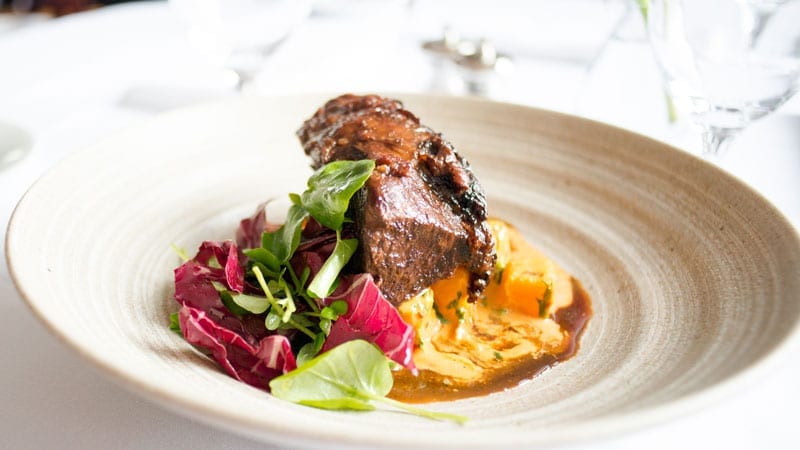
Tucked into a bungalow on Bend’s westside, Ariana is about as romantic and delicious as Central Oregon dining gets. Chefs Andres and Ariana Fernandez opened for business in 2004, bringing their fresh perspectives to classic dishes. Expect local products and Northwest produce included in each immaculately prepared fine dining dish. Dine on entrees including filet mignon, salmon and rabbit surrounded by white tablecloth service and ambiance. The wine list is a particular treat, with bottles from the Northwest as well as all around the globe. Ariana is open for nightly for dinner Tuesday through Saturday.
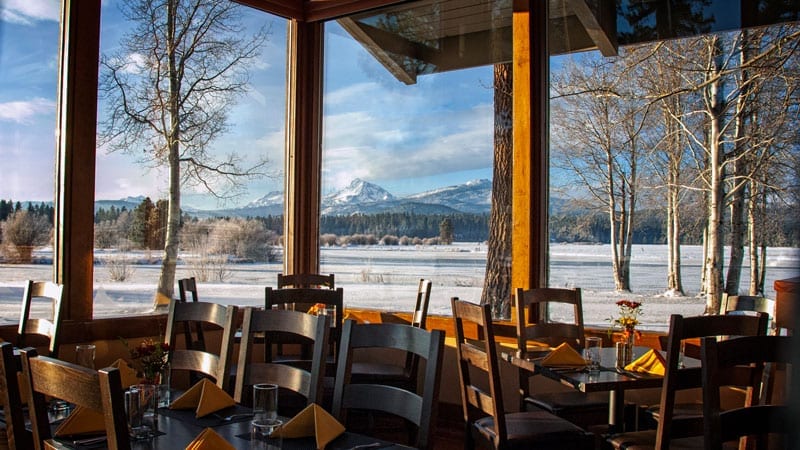
Tucked at the foot of the Cascade mountains on an expansive footprint that features forested hills and open meadows, Black Butte Ranch is a jewel that has beckoned visitors from around the Northwest for nearly half a century. The dining options are as varied the recreational offerings. From grab-and-go deli food to comfort casual and fine dining. When it come to the latter, look to the Lodge Restaurant where resort guests and visitors can indulge in chef James Healy’s menu that transforms traditional steaks, salads and chops into haute ranch cuisine, like the cocoa-rubbed pork tenderloin with bacon bourbon jam and cider reduction. Open for Thanksgiving, Christmas and New Year’s eve. Reservations recommended.
It’s been several years since Steve and Cheri Helt took over management of the former Scanlon’s grill inside the Athletic Club of Bend. Owners of downtown’s popular Zydeco restaurant, the Helts remade the Bistro 28 menu with some of Zydeco’s popular dishes, incorporating that eatery’s Cajun and nouveau American cuisine influences. But there are differences between the two establishments, beginning with the ambiance. The downtown restaurant is a bustling urban eatery, while Bistro 28 is tucked into a quiet corner of the club. Diners will find differences in the menu as well, notably the wood fired pizzas at Bistro 28 that make for a personal meal or dish to share. With overflow space in an adjacent lounge area, the restaurant offers a great place for small groups and larger families. It also continues Scanlon’s longstanding tradition of being open on Christmas Eve when many other restaurants close their doors.
The Pine Tavern’s hot scones with honey butter taste great year-round, but the fresh baked treats are especially delicious when you’re tucked indoors in this cozy, historic restaurant as the snow flies outside. Opened in 1936, the Pine Tavern has anchored downtown Bend for 80 years. The restaurant is open for both Thanksgiving and Christmas Day, with seafood, steak, pasta, ribs and more on the menu. Make a reservation ahead of time, and perhaps you’ll even earn a seat in the main dining room, where a Ponderosa pine tree grows right through the center of the action. Beginning at the end of November, a giving tree will sit in the lobby, inviting donations for the Bethlehem Inn, a local organization that helps those experiencing housing challenges. Also keep your eyes open for the annual Breakfast with Santa event, benefiting the Assistance League of Bend. A warm breakfast, a toy for each child and a photo with Mr. and Mrs. Claus are included in admission.
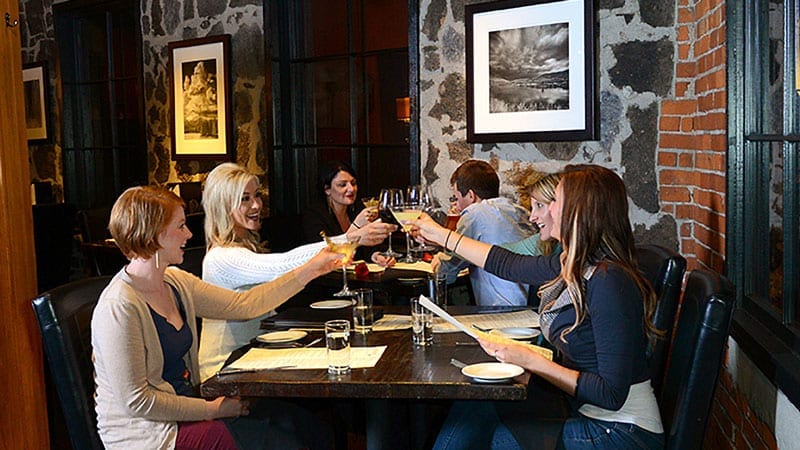
Blacksmith is primarily a steakhouse, but it offers more than that. The pork chop is a standout and the Northwest ribeye served with a roasted mushroom bordelaise and horseradish mashed potatoes topped with crispy red onions might be the best cut in town. It’s a dark, comfortable dining room, a welcoming, large wrap-around bar and a great happy hour menu, including some impressive sliders. Their signature mac and cheese with a choice of smoked cheddar, bacon, or truffle is worth sampling all. Executive Chef Bryan Chang nails it on all counts.
Many Bend restaurants have come and gone, but Zydeco has stood the test of time for a couple of decades. Beginning at their first location on 3rd Street, and, since 2005, in a classy space downtown, Zydeco is a crowd pleaser serving Northwest cuisine with a Southern twist paired with amazing cocktails. Chef Steve Helt and his team have landed on many “Best Of” and awards lists during their long run. Visit Zydeco for a special holiday-season date night or a very special family gathering. Make reservations and sink into an evening of delicious food, including the much-loved redfish in zydeco sauce topped with crab meat, or the New Zealand rack of lamb with pumpkin seed romesco. Don’t forget room for the flourless chocolate cake.
With locations in Bend and Redmond, Brickhouse has been entertaining diners around Central Oregon for almost a decade. The atmosphere is metropolitan cool in Redmond where the steakhouse enjoys a location in historic downtown Redmond. In Bend, Brickhouse settled nicely into the renovated downtown Bend firehouse on Minnesota Avenue. While the ambiance may vary based on location, the menu does not. Both locations serve classic Pacific Northwest fare with an emphasis on its aged cuts of prime grade meats and fresh seafood.
Once the sole province of club members, the restaurant at Broken Top now welcomes the public at large to dine. Open Wednesday through Sunday, the restaurant offers cozy, lodge-like setting in the expansive clubhouse overlooking the golf course. The menu includes many fine dining staples, as well as a few surprises like bison short ribs and shrimp and andouille sausage rigatoni. It’s all prepared with the same attention to detail that goes into every element of the Broken Top experience.

Formerly the Tumalo Feed Company, this Central Oregon institution has been undergoing a modest makeover since new owners took the helm in 2018. There’s been a few exterior renovations and small changes to the menu, but most of what makes this place an iconic eatery remains, from the clapboard feel to the wealth of historic and Western memorabilia. While the service is great, don’t expect all the trappings of fine dining—this is a real country steakhouse. But if you’re looking for a perfect porterhouse and a ton of fun, well then, dust off your boots, hang your hat by the door, and dig in.
Located adjacent to the popular “Row” pub, Solomon’s takes the dining experience to another level at Tetherow. With views overlooking the David McLay Kidd golf course and distant mountain peaks, Tetherow offers a one-of-a kind setting. But it’s the menu that really takes center stage at Solomon’s where fine dining staples like rack of lamb are transformed into gastronomical greatness. An extensive wine collection and expert staff will help provide the pairing to make a perfect meal.
The uber-popular Powell Butte Resort offers year-round casual dining at its Ranch restaurant in the main lodge. However, its Range restaurant that showcases chef Doug MacFarland’s fine dining menu operates on a seasonal basis with operations typically wrapping up around Labor Day. Of course, there’s always the exception to the rule. In this case, the Range re-opens temporarily for special seatings on both Thanksgiving and Christmas Day. While we haven’t seen the menu, you can be sure it will be rich in locally sourced ingredients and thoughtfully paired with regional wines and craft beers.
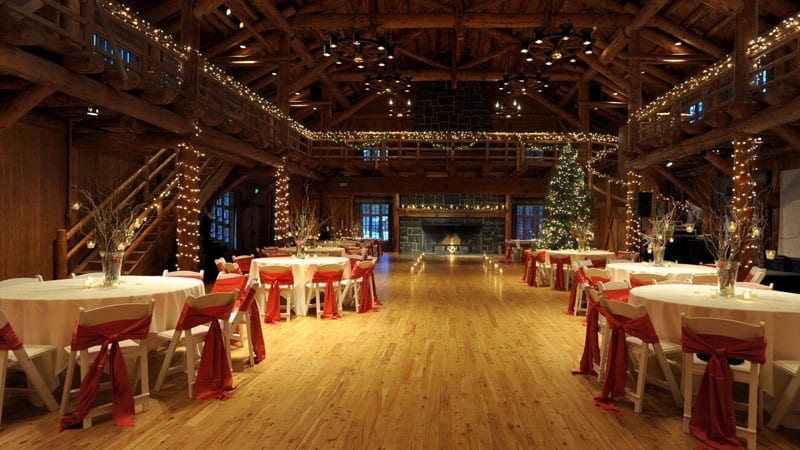
Sunriver Resort has the holidays down. The resort’s month-plus-long Traditions event hosts a myriad of events that scream “holiday” and “family.” When it comes to food, the attention to detail is no less exacting. Carson’s American Kitchen, Sunriver’s fine dining destination in the main lodge, is open for Thanksgiving Day and Christmas Day with a special menu and plated dinner. If you’re more of a buffet-style-family, you’re in for a treat. Sunriver’s grand historic Great Hall serves a special buffet on those two holiday days. Roasted turkey, blackened salmon, pumpkin soup, deviled eggs and much more are on hand, with tiered prices for adults and children (and free for children under age 5). Planning to party the night away at Sunriver for New Year’s Eve? Fuel up with dinner at Carson’s beforehand.
Not so long ago the idea of having an “innovation officer” within city hall, might have seemed farfetched – a Silicon Valley construct dropped onto main street. Today it’s nearly a necessity as the way citizens interact with government and each other continues to evolve. As the city’s first Chief Innovation Officer, Stephanie Betteridge is tasked with solving problems that range from the everyday variety to those of epic proportions. At the same time, she is working to improve city processes and find opportunities to make government more effective and efficient for one of Oregon’s fastest growing cities.
Betteridge moved to Bend with her family this past April after holding the same position in Gresham. She said that innovation isn’t about chasing technology or relying on it to solve all our problems. It’s about using new tools and new thinking to address challenges and create opportunities.
We sat down with Betteridge for a conversation about how she drives change, the projects she’s leading and why governments like Bend are embracing innovation.
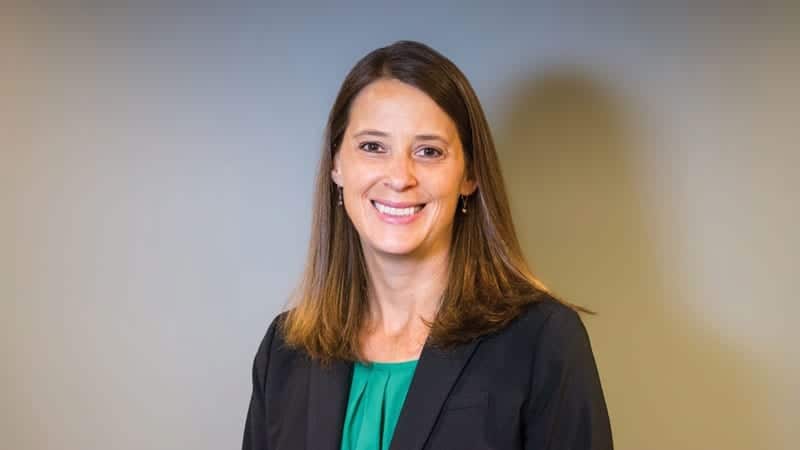
Tell us a little more about what your new position entails.
It is a super cool job. I get to be a connector and convener and bring people together to address challenges and opportunities. I also provide leadership to IT, Performance Management, and our Enterprise Software Replacement project teams. I developed the work plan of over sixty projects that support the [city] council’s four top goals [public safety, transportation, economic development, government efficiency]. I work with colleagues across the organization to ensure we are making progress in accomplishing those goals, which are all aimed at providing an excellent quality of life in Bend. Finally, I’m working with the city to create an Innovation Strategic Plan. This is our vision for how we can expand the use of data, technology, and continuous improvement to enhance service delivery to meet the changing needs of our community.
What are some innovative projects that you’re currently working on?
There are quite a lot. I’m especially excited about the traffic report and map. This is an interactive tool that allows community members to keep up-to-date on weekly closures and detour routes during peak construction season. We’ve also partnered with WaterSmart Software to provide water customers online access to their water use information. Customers can track daily water use, see how you compare to similar water users, and get notified of potential water leaks. And then there’s our speed radar data project, which collects information from speed radar boxes. We’re using the data to help determine if policing or traffic calming changes need to be made.
Is innovation crucial to Bend’s future?
Bend is a rapidly changing community with significant challenges around housing and transportation. There’s also a strong desire to keep Bend, Bend. We can’t afford not to be innovative. It’s important to have a designated position that focuses on looking forward, collaborating with others, and keeping pace with the capabilities of data and technology.
On Bend’s eastside sits a small industrial office building that connects thousands of students and hundreds of teachers to one of the nation’s largest online education networks.
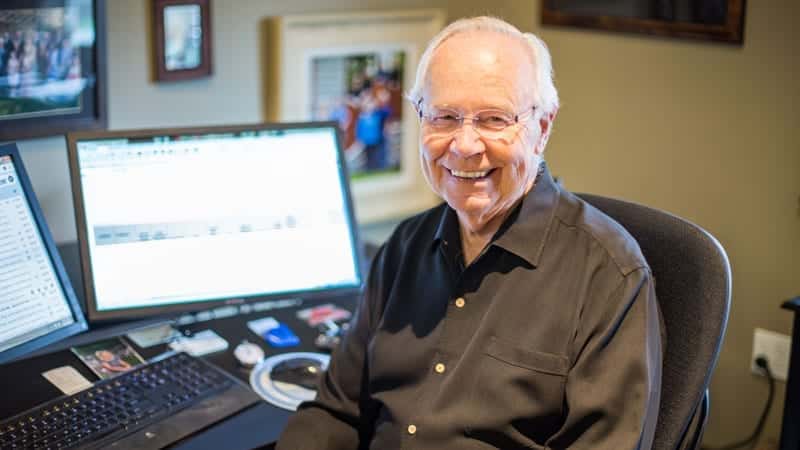
The man behind the operation is Dr. Ray Halm, former president of Concordia University in Irvine, Calif. and a pioneer in the world of online education. Halm brought Concordia University Education Network, or CUEnet, to Bend when he moved here to retire in 1998. It’s been two decades since Halm relocated to Bend, but he hasn’t stopped working.
From a new, high-tech studio on the city’s east side, Halm and four full-time professionals serve as the “distance education” focal point for the Lutheran Church’s Missouri Synod U.S. education system that includes 1,200 pre-schools, 880 elementary schools, 100 high schools, nine colleges and universities, two seminaries, and several international schools.
It all started in 1996 when Halm, then president of Concordia University-Irvine, launched the first CUEnet broadcast, with a course on the modern novel. Halm taught the class live to twenty-one students in Irvine, three students on the Concordia campus in Ann Arbor, Mich., and one student at Concordia University in Portland. The idea at the time was to share academic resources between the schools. Rather than ask the Ann Arbor and Portland schools to add the class, Halm folded the students into the modern novel class at Irvine.
For the next two years, Halm continued to expand CUEnet course offerings across the Concordia University system, while still serving as full-time president at the Irvine campus. Before long, Concordia offered sixty courses online. Then in 1998, after 18 years as president, Halm was asked by the presidents of the other Concordia schools if he would be willing to devote full time to distance education.
“ [My] response, was that if it could be done from where we planned to retire, namely Bend, then we’d do it,” he recalls. “The initial response, not surprisingly, was ‘where’s Bend?’” Halm said. Once everyone found Bend on the map, all agreed that Bend had the necessary resources to become a center of distance education for the Concordia system.
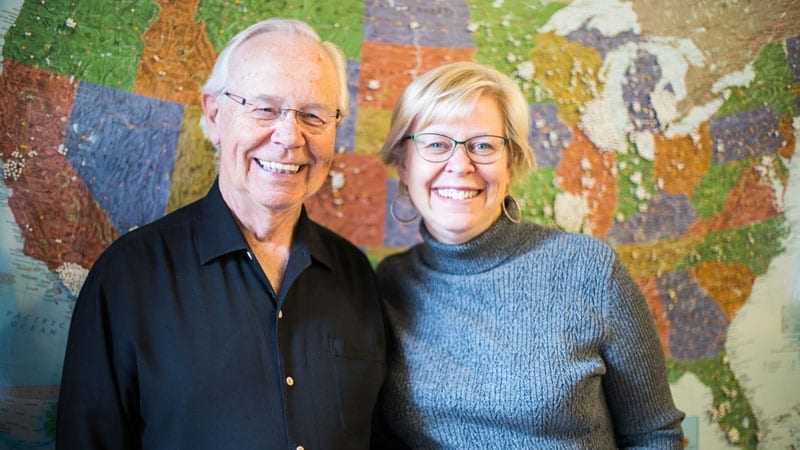
Over the next decade, CUEnet went far beyond a single online literature course, to a global internet operation helping the Lutheran Church to prepare teachers for its thousands of classrooms.
Developing teachers at the baccalaureate, master’s and doctoral level is one of the church’s biggest challenges. For decades, no one could become a teacher at any of its elementary or secondary schools without having graduated from one of the Concordia campuses.
In recent years, however, growing numbers of older adults have sought alternative avenues to teach in Lutheran schools. To properly educate these “late bloomers” in the doctrine and practice of the church, it established a “colloquy,” or a program of religious instruction including eight academic courses, and a certification process.
The response was immediate and dramatic. The number of applicants grew from less than ten to hundreds per year. The Concordia system couldn’t accommodate these older adult students, particularly considering that many lived far from the nearest Concordia campus.
Our fear was that we would be seen as little more than a re-hash of correspondence education.
-Ray Halm
Using video textbooks and an electronic theological library, Halm and a corps of Concordia professors nationwide now conduct all of the colloquy studies over CUEnet from Bend.
Is CUEnet working? Halm shared the results of a survey of more than 2,000 colloquy students who reported, “97.5 percent satisfaction with the value of CUEnet learning,” he says. Equally impressive are the reactions of the professors on the different Concordia campuses who participate in the assessment process. “Our fear was that we would be seen as little more than a re-hash of correspondence education. Instead, professors have continuously ranked the quality of CUEnet education equal to or better than the traditional, on-campus program,” Halm said.
And, as the axiom goes, success begets success. Beyond the program for teachers, CUEnet also provides colloquy education for other ministers in the Missouri Synod, including deaconesses, directors of Christian education, and directors for family life. There is a teen education program, teaching aids, and a library for educators and laypeople.
Looking ahead, Halm believes that distance education will continue to enjoy increasing popularity within America’s higher education system. “With the price of higher education becoming so difficult for many to bear, I believe we will see growing numbers of students acquiring their college and university education through distance learning channels like CUEnet,” he said.
Forging old-world heirlooms for new generations.
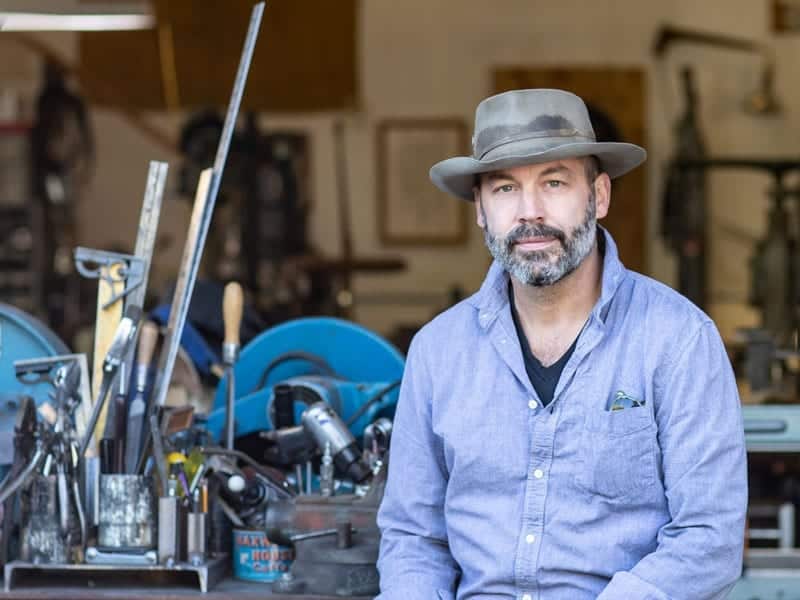
One of the first things you notice when entering John Paul’s downtown store is the ‘60s-era Schwinn leaning against the wall. You might wonder, ‘What’s a bike doing in a jewelry store?’ But spend a little time in John Paul’s shop and you’ll realize that the bike is emblematic of all the unexpected, handmade items showcased in the small space. From chunky metal wrist cuffs to forged sterling pendants on thick chains to rectangular copper earrings stamped with mountains and inset with diamond moons, everything here exudes vintage craftsmanship.
Sharing space in the jewelry cases are an original window sign from Magill Drugs and an apothecary bottle with extract of blue cohosh recovered from the drug store when it closed in 2004. The three display cases also came from Magill’s and everything in the showroom was gathered locally and tells a story, according to employee, Bayly Winkler.
In short, visitors won’t find a collection of shiny, new pieces displayed under special lighting and designed by CAD machines and mass-produced. That type of jewelry is made to hide the hand of the artist, Paul said. Instead, this is a place where vintage, repurposed items revel in imperfection.
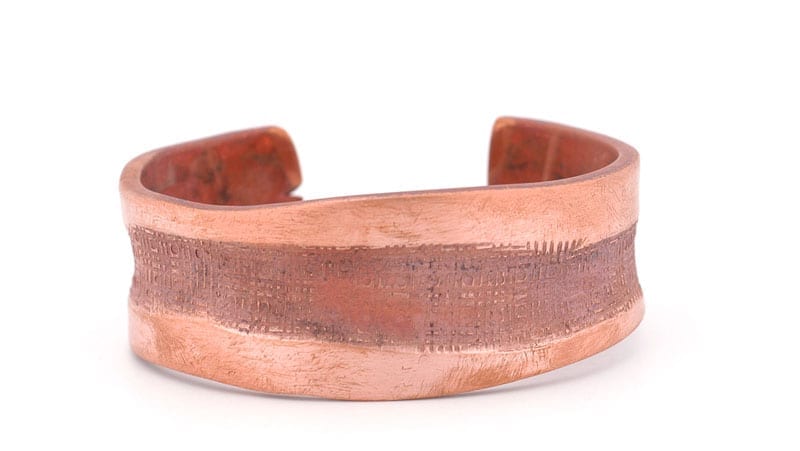
“I like to capture something imperfect and worn, something that might appear to be from the 17th century,” Paul said. “The difference between my peers and me is they’re using computers to design, mill and machine their wares, whereas I’m old school.” He said he was once on the cusp of modernizing his technique but learned from his first encounter with a computer that it wasn’t for him.
His upbringing in a Midwest auctioneer’s family imprinted on him a love of antiques and the stories that come with them. He earned a bachelor’s degree in metalsmithing from the University of Wisconsin and then apprenticed with master metalsmiths in Wisconsin and Colorado. He moved to Bend in 1997, where he says, “the universe opened up to me.” He opened his storefront, John Paul Designs, on Bond Street in 1997. In 1998, he became a founding member of the Central Oregon Metal Arts Guild. He has given back both his time and his artistry to the community, often contributing to favorite charities.
Paul’s knack for combining blacksmithing and metalsmithing with traditional diamond and stone setting has drawn many clients to his door. Custom work, particularly during bridal season, is a large percentage of his business, but he attracts clients through social media and word of mouth. He often spends hours with them, refining ideas that transform the buying process from selecting a piece to creating a piece.
If Paul’s work is old school, then his tools are almost Medieval. Walk into the rear section of the downtown storefront, or in a much larger industrial building near Bend High School, and you’ll find twenty years’ worth of tools that transcend time. “I’m the guy who lines up at 6 a.m. at an estate sale before it opens,” he said. With all the vintage equipment, he’s able to forge his tools, ensuring that every piece is unique. His advertising touts how “every blow [reveals] textures that can only come from hand forging metals into perfect imperfection.”
“My No. 1 rule is to only surround myself with things that bring me joy, from the vessel that holds Q-tips to what is beautiful and has good energy,” he said. “I like to carry on all the stories and qualities from something old and worn.”
A historical home renovation should honor the past while looking to the future. That’s exactly what Justin Brevoort accomplished in his recent makeover of Bend’s “Claypool House.”
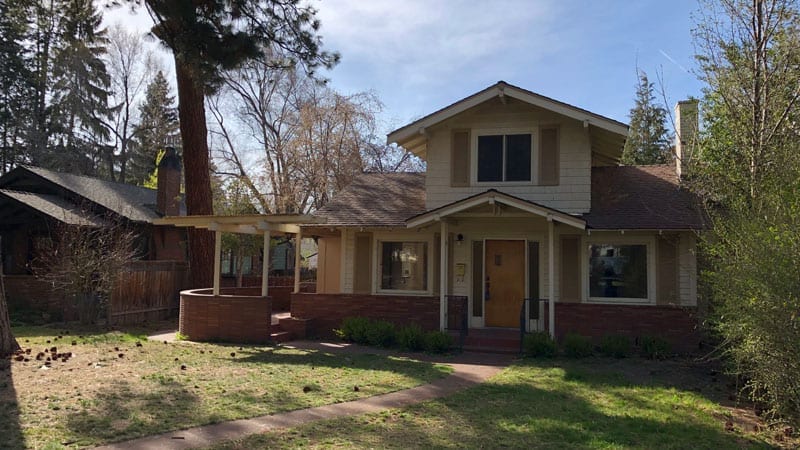

The Craftsman-style bungalow was built in 1919 and typical for the time: living room in the front, small kitchen toward the back, one bath on the main floor and bedrooms upstairs. There was nothing particularly remarkable about the Drake Park area home, save the fact that for almost a century it was inhabited by one family.
Guy and Doris Claypool owned Claypool Furniture Store on Wall Street from 1936 to 1999. They bought their modest home on Congress Street in 1929 for $1,500. There they stayed for more than eighty years, according to their son, Dale.
“In the 1950s, Dad sold the place and bought another home on east Eighth Street where everyone was moving,” Dale recalled. “That lasted about two months—Dad wasn’t comfortable in his new neighborhood. He bought his old house back, which cost him a fortune.”
Dale said that after his parents got the house back, they built a two-story addition in the rear, which had a fireplace, bath and entrance. His mother occupied the original part of the house until her death in 2010 at the age of 103. Dale sold the house in 2011, and ownership passed through a couple of hands before Brevoort bought it in May 2018.
“The first thing that grabbed me was how unique its architecture was for Bend. It combined Craftsman with elements of Southern California style, plus I liked its location in the Drake Park Neighborhood District,” he said.
But signs of recent neglect were showing. The siding was peeling off, and the roof was sagging. At one point, doors and windows were boarded over in plywood. “It was an eyesore on a street where other homes around it had been remodeled,” Brevoort said.
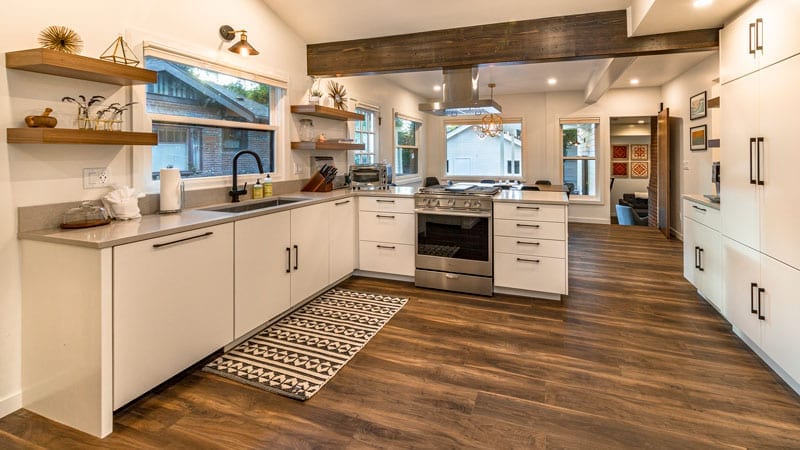
A native Oregonian who grew up in Keizer, Brevoort spent many family vacations in Sunriver and Bend. He attended Central Oregon Community College and was a “snowboard bum” in the ’90s. Brevoort now lives in Hermosa Beach where he has a design firm, Creative Labz. Buying the Claypool home was an opportunity to reconnect with Bend. But it was also a significant undertaking to manage remotely. As an experienced home builder and remodeler, Brevoort envisioned a restoration that would bring the residence into the 21st century. Open spaces and modern finishes set the tone on the inside while the home’s exterior was renovated to meet the city’s historic preservation codes on the outside.
He assembled a team of designers, including his cousin Josh Brevoort of 0-plus, and Seth Ehlinger and Kadi Driver of Dos Designers. He selected Ryan Carroll Construction to handle the building phase, and Michelle Redo helped with the interior design. “We tried to balance modern building concepts with the home’s century-old roots while also adding creature comforts,” he said.
The first step was to gut much of the interior and pull out old wiring and plumbing. New walls, insulation and windows came next, along with a floor plan that preserved the 1950’s-era addition while transforming the main level into a great room that created a casual gathering space. While maintaining the ceiling height in the living room, the builder removed the attic over the kitchen, opening the area and bringing in more light.

A Japanese-inspired staircase with vertical, walnut slants beckons visitors upward to the second story. The front, east-facing bedroom features the original upper window visible from the street. At the other end is the west-facing master bedroom where the team replaced two windows with five, modernizing the back corner of the home and revealing a bird’s eye view. The master bath features a converted vintage credenza with two sinks in place of a traditional vanity. Between the two bedrooms is what Brevoort calls a “flex” room with sleeper sofa, a closet housing the washer and dryer and space for storage. A second upstairs bathroom is just off the hallway and contains a sink from the original house and a front porch light repurposed for the vanity. All the baths have black and white natural stone hexagonal tiles, quartz countertops and subway tile in the showers.

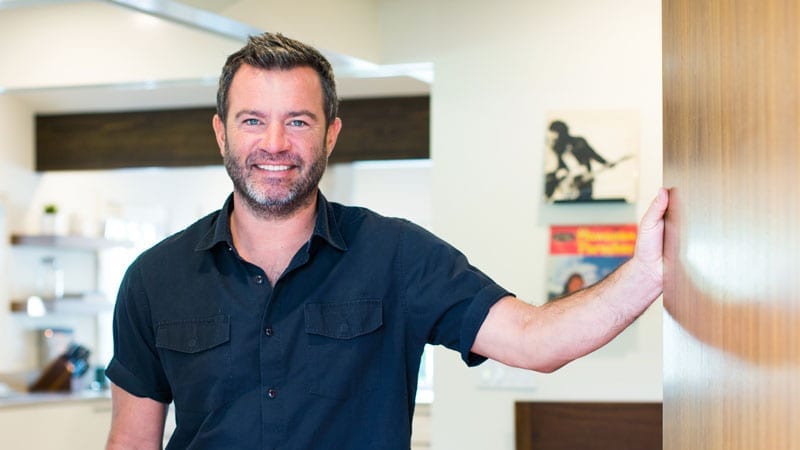
The exterior also got a facelift. With approval from historical preservation groups, Brevoort’s team painted the entire home white, removed visual clutter, like overhead wires. They added sliding doors to the kitchen and rear addition, removed false window shutters and added pergolas on the west and south sides to blend with an existing open-porch pergola. The team also redid the entire yard with contemporary walkways and planting beds, and created a back patio with concrete pavers, a fire pit and outdoor seating and dining. It also preserved a curved, Roman-brick wall encasing a small veranda.
The interior décor and furnishings honor early 20th-century style trends, including art deco and post-war or mid-century modernism. A functioning RCA Victor record player stands beneath a wall covered in vinyl records that guests can enjoy. (He received city approval to use the home as a vacation rental and believes that this will allow him to share its history and location with Central Oregon visitors.) Most of the furniture is walnut, and an eclectic array of colorful artwork, including Shepherd Fairey prints, hang throughout the residence.
In the case of the Claypool, he’s rescued a bit of Bend’s history and repackaged it for another generation. “I’m passionate about real estate,” he said. “By building or improving structures, a person can leave a mark or legacy.”
Photographer Brown Cannon’s travels have taken him around the globe. He’s photographed big wave surfers on Hawaii’s north shore and snapped images of whales near the South Pole.

He’s brought back stunning images from faraway places. His work has helped expose him and his audience to the wonders of the world, but it’s also revealed something dark and deeply troubling. Our world is being choked by a plastic pollution epidemic that is poisoning our seas and sullying landscapes. Rather than standby and watch the problem continue to grow, Cannon decided to do something about it.
Last year, he challenged his friends and social media followers to take a no-plastics pledge. No plastic straws, no plastic cutlery, no plastic bottles. He offered to give away a print of one of his photos in a random drawing to incentivize participation. He wasn’t sure how the idea would be received. The response was immediate. More than two hundred people signed on. Rather than stop there, Cannon decided to see how far he could take the idea. Over the past year, he has formed a non-profit and built a website to support a student-led campaign to reduce the use of plastics in schools.
He rolled out the No2Plastic campaign at the start of the school year in Bend and Denver. With student ambassadors pushing the program, almost 500 students have taken the No2 Plastic pledge. Participants agree to avoid using plastic straws, bottles and cutlery, or any combination of the three. Each pledge is immediately factored into a formula that calculates how much plastic waste is being saved from landfills and landscapes. As of October 1, students from nineteen schools had signed on to the program, with an estimated one million pieces of plastic waste saved.
“We are trying to get people to change a habit or two and see if that translates to deeper action,” said Cannon, in a recent interview.
In this case, he believes that it’s critical to mobilize a young generation of activists and consumers who are willing to change their behavior and are open to the idea that individual actions can have global consequences. He recently rallied students in the Bend High Environmental Club through a teacher connection. Freshly motivated from the climate action walkouts, students were quick to take up the cause.
“We see a lot of plastic in the kitchen and cafeteria, but meeting with Brown really showed us that we have a lot of plastic waste coming out of our school and personalized it a bit,” said Sydney Dedrick, a junior at Bend High.
Sydney and two other classmates GG Johnson and Kira Gilbert spearheaded the sign-up effort at Bend High where nearly 150 students have taken the pledge.
Even as more students get on board with the pledge, Brown said he is looking to expand the campaign by enlisting support from businesses and creating a resource hub on the No2Plastics website where individuals and companies can go to learn about plastic pollution and alternatives to reduce their contribution to the problem. Also, on tap is an aggressive recruitment of artists and ambassadors who can spread the message, helping to educate consumers.
“We want to approach this from an artist’s standpoint, creating beautiful imagery, films and videos that help tell this story and get people connected,” Cannon said.
He believes that the world can tackle plastics the same way that it got a handle on smoking—not by banning cigarettes, but by educating the public on the consequences of not changing our behavior.
“How did we get America to stop smoking? That was driven by those impassioned, emotionally charged campaigns. I think that stuff really resonated with people,” he said.
When executive director Audrey Tehan started Seed to Table in 2013, she had a vision for a nonprofit farm that could change how Sisters thinks about nutrition while expanding the supply of fresh, locally raised foods.
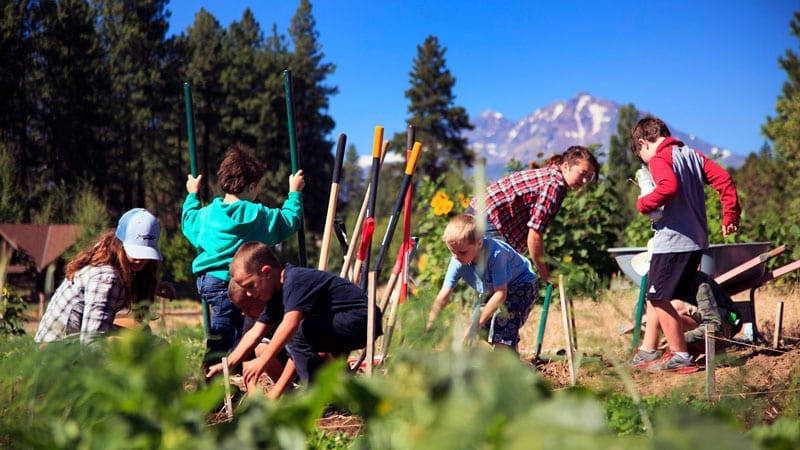
She wasn’t sure how the idea would be received. As it turns out the community’s appetite for fresh food was largely untapped.
In its sixth season, the Seed to Table farm has expanded its production every year.
“Our mission is to increase the health and wellness of the community through nutritional food and education,” Tehan said.
At a time when Americans seem to be ever further removed from the source of their meals, Seed to Table aims to rekindle a connection to the land, while promoting a model of small sustainable agriculture.
The nonprofit farm sits on one and a half acres less than a mile northeast of Highway 20 in Sisters. A whimsical, hand-painted sign welcomes visitors to the property almost as warmly as Tehan does. During the approximately seven-month growing season, Tehan, who is a farmer in addition to being executive director, gets her hands dirty in the morning and digs into the organization’s operations by afternoon.

Tehan said nonprofits like Seed to Table are always being pushed to add new programs to meet the requirements of grants. To that end, Tehan said she has been willing to grow her nonprofit’s mission, but she’s also keen on growing smart.
“We want to expand really mindfully,” Tehan said.
There is already plenty to keep Tehan and her small staff busy. The farm grows most of the vegetables you’d find in the grocery store, according to Tehan, including lettuce, bell peppers, carrots, zucchini, cucumbers, kale and more. Growing in the high desert is never easy because of the challenges of climate and the short growing season. There’s also the soil, which is relatively nutrient poor. Seed to Table has brought in fifteen dump trucks of compost and another fifteen dump trucks of aged horse manure to enhance to bolster its dirt.
So far, it’s worked, and the community has reaped the benefit of Seed to Table’s bounty. The farm distributes about thirty percent of what it grows to local food banks and educates about 1,500 students each year through field trips, trainings, internships and agriculture programs with local schools. During field trips, kids rotate through a nutrition station, science station and combo nutrition-science station where they get to dig in the dirt and taste-test fresh vegetables. Adults can learn about nutrition and cooking fresh food from the farm, too, including through the nonprofit’s Fresh Food Farmacy. Healthcare providers can prescribe the program to patients, which gives participants free or subsidized fresh veggies, recipes and access to educational activities about nutrition and healthy cooking.
In the throes of the Great Depression, President Roosevelt had a message to all Americans: Take a road trip and get to know your country. He hoped to divert people’s attention from their daily struggles by highlighting the country’s natural splendor and incredible diversity. His ulterior motive was to encourage people to spend money that could help to jumpstart the nation’s stagnant economy.
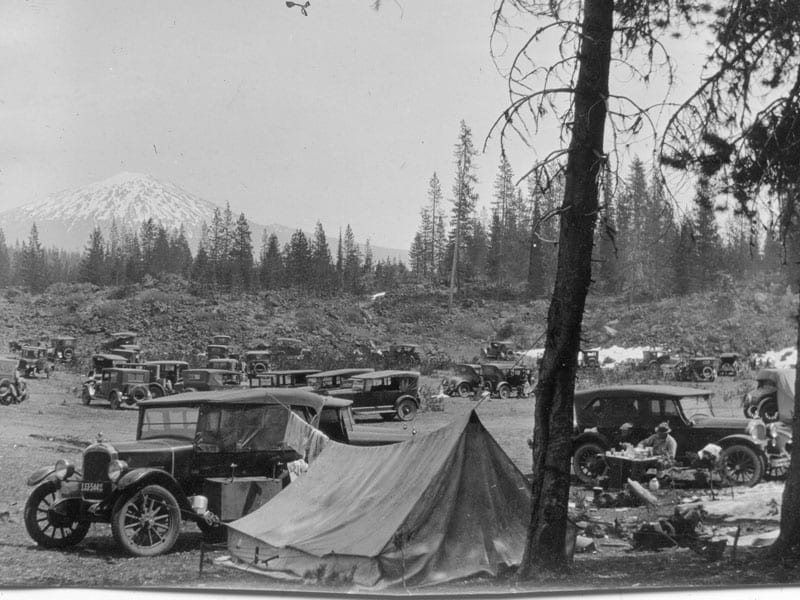
To support the effort, the government developed and published The American Guide Series, a serial atlas that was designed to inspire travelers. The guidebooks spurred a nation of emerging motorized tourists to take to the country’s growing highway network that, for the first time, connected the United States from New York to Los Angeles. In January, our state’s contribution to the campaign, Oregon–End of the Trail celebrates its 80th anniversary.
Traveling the wide-open roads has been an American pastime since the first Tin Lizzie rolled off the Ford plant in 1908. Auto-tourism became a hit in the Roaring Twenties, but the Great Depression put the brakes on travel. Hoping to rekindle the public’s interest, the Federal Writer’s Project, one of President Roosevelt’s New Deal agencies, published a guidebook for every state.
“Guidebooks promised to harness writers for a product that was potentially an economic catalyst,” said David A. Taylor, author of the book, Soul of a People. “Not only would the writers adapt local histories for a general audience, but travel guides could, in theory, generate tourism and local business. This was early in the automobile culture, so references for auto-based travelers could literally open paths for local growth.”
Though designed to portray Oregon to visitors, it is also intended, […] to present Oregon to Oregonians.
The project was imagined by Henry Alsberg, director of the Federal Writer’s Project, and his second in command, Katherine Kellock.
“[Alsberg] pitched his notion of capturing American regionalism, and [Kellock] in turn pitched the idea of having the writers create state guides,” said Nate Pedersen, former Deschutes Public Library Community librarian and a local expert on the WPA guides. “The unique format of the state guides comes out of that pleasant working tension between those two ideas.”
Although there was an expressed wish to have the Washington D.C. version kick off the launch, the first guidebook out was Idaho: A Guide in Word and Pictures, published in January 1937.
Oregon–The End of the Trail was published in March 1940. Oregon Governor Charles Sprague introduced the book, “Though designed to portray Oregon to visitors, it is also intended, […] to present Oregon to Oregonians,” wrote Sprague.
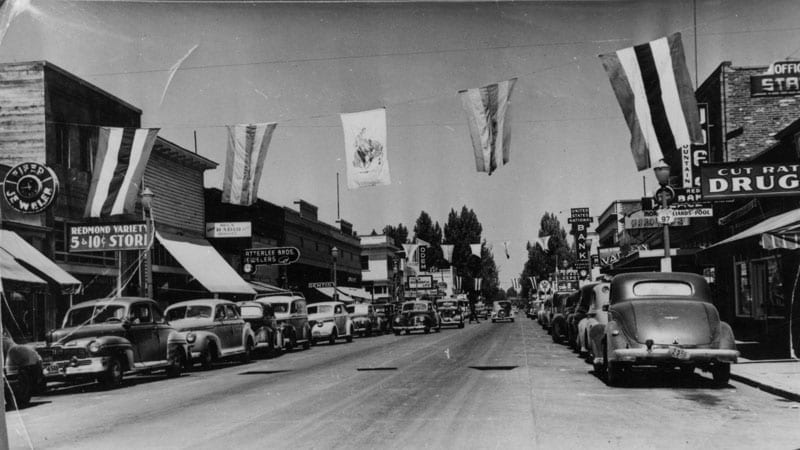
The more than 500-page book offers a mix of history, agriculture, transportation, social welfare, religion, literature, music, and art.
The Bend Bulletin’s editorial board was not impressed with the book. Led by owner and Roosevelt critic, Robert Sawyer, the paper published a dismissive critique of the Oregon guidebook.
“It is most unfortunate that in a volume that has taken so much work to compile and that must have cost so much, so many inaccuracies should be perpetuated,” the paper wrote.
Perhaps Sawyers’ bad review was due to feeling slighted. Neither the Bend Bulletin, nor the newspaper-owned KBND, were mentioned in the “Newspaper and Radio” chapter of the Oregon guidebook.
A guidebook about Oregon, with suggested “tours,” may feel quaint in an era when everything is available on Google Maps. But the guidebook offered more than just driving directions. It included a chapter on Oregon myths and legends and even a recipe for huckleberry cake.
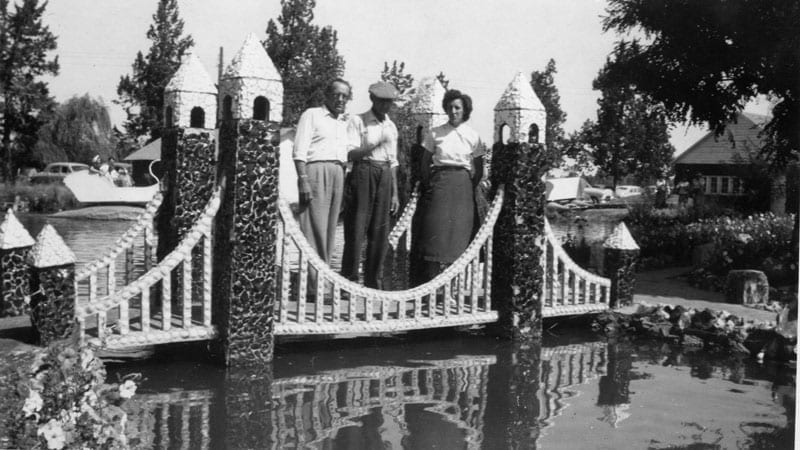
Perhaps surprisingly, the guidebook mentions Bend only in passing as one of the side tours. Portland, Eugene, Salem and other cities along U.S. Route 99 have individual chapters.
“Bend had only been incorporated for thirty-five years when the book came out,” said Kelly Cannon-Miller, director of the Deschutes Historical Museum. “In 1940, the city was a tiny place with some nice hotels, nice things to see, and two enormous mills, but not enough history at that point to rank us on a chapter.”
Bend may have not merited a full chapter at the time, but the WPA guidebook is getting the royal treatment from the Deschutes Historical Society, which is paying tribute to the publication’s 80th anniversary with an exhibit about motor travel and tourism called Crusin’ 97. Included in the exhibit are the Oregon guidebook’s local travel suggestions for exploring the Dalles-California Highway 97 and Century Drive.
If you’re planning to use the publication as a travel guide, you may want to cross-reference the information with contemporary resources like AAA or the Central Oregon Visitors Association. Those publications are more likely to include such “new” attractions as Mt. Bachelor ski area (just sixty-one years old this season) and Sunriver Resort (only fifty years old). But if you’re looking for a snapshot of a young nation on the edge of a motorized revolution that helped to forge America’s identity for the next century, you’ll find plenty to explore.
Timberline Lodge looms large on Oregon’s highest peak.
“The weight of history” is a cliché, but in certain exceptional places, the phrase nevertheless thrums in your mind. Timberline Lodge on Mt. Hood just feels heavy. Weighty with timber and stone, solidly built on the flanks of Oregon’s highest peak, yes—but also heavy in spirit. There is a heft to the atmosphere in the old lodge’s creaky hallways, a heightened gravity that pulls you into a worn chair twice your age, a settling in the air that hints at the thousands of people who have visited here over decades. Out the windows, the weight of time itself emanates from the rugged basalt of the mountainside.
Timberline Lodge was completed in 1938, built during the Depression by the Works Progress Administration as part of President Franklin Roosevelt’s New Deal. The project was meant to boost the economy, but the assembled workers were also tasked with creating a stately lodge in a difficult location—an elevation of nearly 6,000 feet on the side of a volcanic peak. Among other challenges, the craftsmen had to construct and enclose the exterior in one summer season, before the snow fell. Economy, ingenuity and speed led to innovative touches that today make Timberline so endearing—newel posts made from telephone poles, railroad ties bent into andirons, tire chains transformed into fireplace spark arresters. FDR and his wife Eleanor visited Mt. Hood for the lodge dedication in 1937, during which they were fed a luncheon of salmon and huckleberry pie. The lodge opened to the public the following year.
What happened very shortly thereafter was an unfortunately familiar story of decline, neglect, doors closing and someone suggesting the whole place be burned to the ground. Thankfully, that isn’t how this story ends. Luck, hard work, passion, a little bit of crazy—Timberline would never have reached the “weight of history” phase it enjoys today without a little of each. Richard Kohnstamm, the lodge’s fifth operator, took control of the property in the mid-1950s. He was determined to treat Timberline like he owned it, even though it was (and still is) government property. Kohnstamm moved his family in, he took a loss for the first five years, and he didn’t quit. His son Jeff remains the lodge’s operator to this day.

On the winter day of our arrival, my husband and I stood before an impressive painting of Kohnstamm in the lodge entryway, a room defined by significant features in stone, wood, wool and steel. As a National Historic Landmark that doubles as a working lodge, Timberline must adhere to strict guidelines whenever anything is reproduced, be it blanket or carpet or chair, so it’s a fair bet that everything you see looks a whole lot like it did when Franklin and Eleanor were here. The sound of a piano drew us into the Barlow Room, a common area near the entrance named for the toll road over Mt. Hood used by Oregon’s earliest settlers. The music was generated by a guest, who played a tune while her children explored the room, including the curious large-scale, leather-carved paintings that depict early Oregon life.
Timberline is open year-round and receives most of its visitors in the summertime. But winter is really the historic lodge’s home season, when the structure is cozy and compact under abundant snow, the mountain itself white and gleaming, the fireplace inside radiating heat. The Timberline Ski Area that literally surrounds the lodge is the obvious draw in the winter, but a surprising number of guests (like us) visit to observe the wintry magic from indoors, rather than venture out into it.
A great place observe is the lodge’s central room, known as the “head room.” Five hand-carved Douglas fir columns, each the diameter of a Volkswagen beetle on end, surround a massive stone fireplace. Windows face north, uphill with a direct view to the perfect peak of Mt. Hood (11,250 feet). We sat on hefty leather and wood sofa and gazed up the luscious alpine slopes. A flight of stairs took us to the Ram’s Head Bar, where nostalgia for my last (summertime) visit led me to the huckleberry margarita, while my husband chose a craft beer from down the hill at Mt. Hood Brewing Company in Government Camp. To the southwest, a pink and salmon colored sunset bounced off of the slopes.
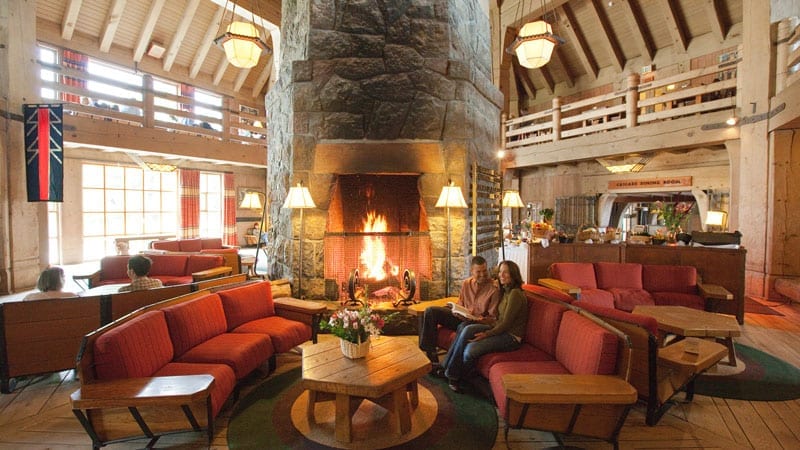
Dinner was back downstairs in the Cascade Room, a place defined by chunky wooden tables, low ceilings, tinkling glasses and utterly delicious food. We shared an arugula salad garnished with apple, radish and egg. My husband reveled in the much-recommended New York Steak with chanterelle mushrooms, while I enjoyed the Wild Pacific Salmon, accompanied by a glass of Sokol Blosser pinot gris.
In the morning, we awoke to the ice-grey clouds of imminent snow. The winding road down the mountain was calling, but first, we had a mandatory photo op to perform. When pressed, many visitors to Timberline admit that their urge to ascend the six miles from Highway 26 to actually see this place for themselves came not because of an interest in history, or in skiing, but in film—or rather one film: The Shining. That 1980 film looms large in the lore of Timberline Lodge, even though no one really talks about it on the property except in hushed tones, perhaps out of fear of ghosts, and anyway, only the exterior appeared in the movie’s footage. Still, countless people associate Timberline Lodge with a leering Jack Nicholson menacingly wielding an ax. If you ask nicely, the front desk staff will hand over a replica ax—inscribed with the words “Here’s Johnny!”—and let you pose for photographs with it. Which we did.
In some tennis circles, Lee Whitwell is a heretic. A former touring tennis pro, Whitwell has been teaching tennis for two decades and spends most of her workday organizing league play or teaching juniors at the Athletic Club of Bend, where she is the director of tennis operations at the seven-court facility. Tennis players like Whitwell’s no-nonsense style. It’s what she does in her spare time that has some of them wondering just where her allegiance lies.
When Whitwell isn’t at the Athletic Club, she’s down the street with a racquet in her hand. The problem, some would say, is that it’s the wrong kind of racquet. That’s because Whitwell is a not-so-closeted pickleball player. Yes, pickleball that sport that looks like a combination of badminton and ping pong that was popularized by card-carrying members of the AARP at RV parks in Arizona and Florida.
Laugh if you like. But the pickleball revolution is here. Whitwell is one of a growing number of tennis players young and old who are picking up a pickleball racquet and finding that they are having trouble putting it down.
“Tennis will always be my first love, but I see the benefit of both and how they can coexist,” said Whitwell.
Whitwell juggles her time between her duties at the Athletic Club and a second job as the head pro at a new indoor pickleball facility at Widgi Creek, a semi-private golf club on Century Drive. Club owner Barry Helm recently built the ten-court facility after seeing the explosion of interest in pickleball locally and nationally. It’s the second indoor pickleball-only facility to open in Bend in just the past two years.
The tension between tennis and pickleball is real. The fast-growing pickleball population is gobbling up court times and playing space in traditional tennis clubs. Pickleball players are pushing parks officials in places like Redmond to repurpose under-utilized tennis courts into pickleball venues. The demand is growing and widespread. Between 2016 and 2017, pickleball participation grew nationally by almost 13 percent. Today, there are now more than three million people in the U.S. who identify as regular or casual pickleball players, according to the Sports and Fitness Industry Association. By way of contrast, tennis participation in the United States remained flat for casual players last year and decreased for regular players, defined as those playing more than nine times per year.
Widgi’s Helm understands the tension as well as anyone. A recreational tennis player, Helm initially proposed building three indoor tennis courts at Widgi. He changed his mind when others asked him about the possibility of pickleball. He quickly realized that he could more than double the number of courts by pivoting to pickleball. A trip to the outdoor pickleball courts at the Bend Pine Nursery park, confirmed that player interest was high.
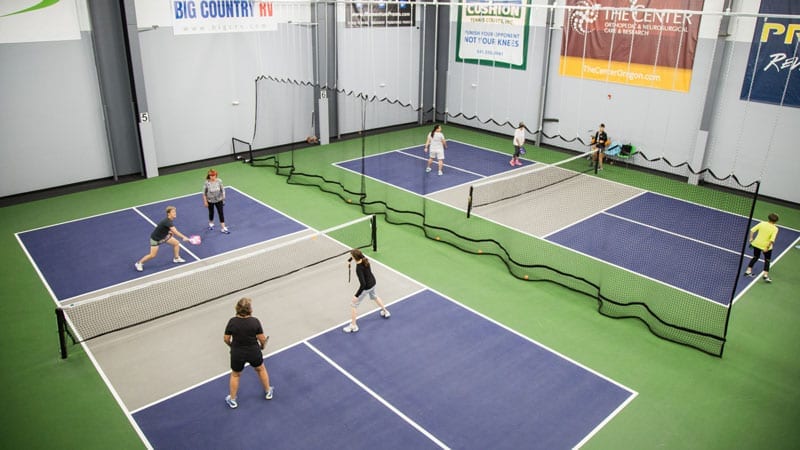
“I went out on a Friday and saw sixteen courts with lines of people waiting to play, and that was the “A-ha” moment,” Helm said.
Developed in the 1960s, the game is somewhat of a latent sensation that has exploded in popularity as baby boomers reach retirement. These “active” young seniors are finding they have more time on their hands than they do cartilage in their knees. So, they’re setting aside tennis racquets and basketballs for a sport they say is a perfect blend of socializing and competition. No surprise, destination retirement places like Central Oregon are seeing an explosion in interest.
Lisa Palcic who teaches at the Bend Pickleball Zone, an eight-court indoor facility in northeast Bend, said it was common for her to see twenty-five new players per week when she was teaching pickleball through the Bend Parks Department just a few years ago. The Bend Pickleball Club that was formed to help organize the construction of the sixteen courts at Bend Pine Nursery reported almost 800 dues-paying members as of June.
Nancy Brook is one of those who started playing as a substitute for another activity and got hooked. Brook typically got plenty of exercise by competing in dog agility events with her canine. But when her dog sustained an injury, she turned to pickleball as a diversion and a casual way to stay fit.
Brook wasn’t a racquet sports novice. She and her husband had owned and operated a tennis pro shop at a club in California before moving to Bend. Brook hadn’t played tennis in a decade but found that she was a quick study at pickleball.
“I’m sixty, but I was able to learn a lot of things pretty quickly. I was hooked from day one, but I took a lot of lessons and took advantage of the group lessons,” she said.
The ability to pick up the game relatively fast is a big draw for pickleball. Unlike, the traditional country club sports of tennis and golf, it takes players only a few minutes to grasp the basic and a few hours to build their skills. It also offers a more level playing field, allowing players of different ages and abilities to compete and still have fun.
“I could never take a family of four coming to Bend on vacation and give them a tennis lesson and say, ‘Now go play tennis, and have fun.’ That would result in lost balls and arguments and tears. You name it,” said Whitwell.
Summer gets all the buzz when it comes to book releases, but winter is the time to catch up on all your reading. Here are new favorites to cozy up with on the couch or add to your wish list.

Lisa Jewell, author of popular novels such as I Found You and Then She Was Gone, is back with her latest thriller. The Family Upstairs follows three families occupying the same house that all become entangled in lies. While the thriller genre has become oversaturated with similar story lines (read: dead girls), Jewell stands out for her intricate plots, surprising endings and deep truths.

Frankly, I’ll read anything Ann Patchett writes. Her novels The Patron Saint of Liars, Bel Canto and State of Wonder have pulled at my heart and captivated me for years. The Dutch House, released in October, is the story of two siblings who confront issues of building a life and identity while bearing the scars their family’s past. Told over five decades, The Dutch House promises to be one of Patchett’s best novels yet.

The much-anticipated sequel to Call Me By Your Name, Find Me follows the same characters years later. Author André Aciman managed to capture the emotional turmoil of young, first love in such a delicate and sensitive way, I’m excited to see how he handles the nuances of love as his characters age and grow.

Erin Morgenstern’s The Night Circus has been a slow-burning hit since it was released almost a decade ago. Since then we haven’t heard much from the author, but her new novel The Starless Sea is already generating a lot of buzz. “It’s about stories and storytelling and fate and time and video games,” according to the author, and if it’s anything like The Night Circus, I’ll be wrapped up in it all month.

Essayist and commentator Jia Tolentino recently noted in her New York Times, “By The Book,” piece that middle-grade and YA literature should not be overlooked by critics or readers. The Grace Year is a case in point. It’s a speculative novel that tackles misogyny and the devastating power of young women. Read it before the movie comes out, currently in development by Elizabeth Banks.
After attending Bend Design in 2018, I could hardly wait to see the catalog of presenters for 2019. As a young professional employed in the marketing, writing and design industries, this conference has become a tipping point in my work. Progressive concepts, industry-leading presenters and world-class workshops contribute to the articles, campaigns and graphic art that I create every day. Here are some of the highlights I am looking forward to in the 2019 line-up. I hope to see you there! Register here.

The documentary film chronicles street artist Shephard Fairey’s rise from punk rock and skateboard artist to mainstream sensation. Fairey designed the iconic HOPE poster for Barack Obama’s presidential campaign, but the artist’s word is rooted in the country’s counterculture. Bend Design partnered with BendFilm for a free screening of the documentary film at the Tower Theatre. Tickets are free- register here.
Chris Martin, Live Podcast presentation | October 25 | 3:30 pm
Chris Martin, producer of the podcast Getting Work To Work, will interview long-time friends and collaborators Ivar Ziele and Peter Burr. Martin will dive into topics that every creative entrepreneur can relate to, including:
There will also be time for Q&A and behind-the-scenes commentary on what it takes to produce a weekly podcast.
Kate Bingaman-Burt, Zine Reading Room workshop | October 25 | 1:30 & 3:30 pm
“Zines” are DIY publications, ranging from small magazines to fanzines and comics. Come and browse some selections from the Outlet Zine Library. Bingaman-Zurt will be setting up a temporary studio filled with collage materials, art supplies and other tools to create your zine.
Deanna Van Buren, Peace By Design presentation | October 24th | 1:30 pm
DJDS believes that our environment embodies many of our society’s inequities. Peace by Design looks at the work of Designing Justices Designing Spaces (DJDS), along with research that explores how informed design concepts support healing from interpersonal and transgenerational harms. The organization works with nonprofit, government, and community partners to create new prototypes such as peacemaking centers, mobile classrooms, and housing for foster-age youth.
Tré Seals, Being Vocal presentation | October 24th | 4:00 pm
D.C.-based designer and creative engineer, Tré Seals brings a minority perspective to a traditionally white male industry. A multi-disciplinary creative, Seals will focus his talk on delivering a more inclusive mindset to the font and typography niche through his agency, Vocal Type Co. His talk will cover the founding of Vocal Type Co., the importance of diversity in design and a look at his process.
Joyce Carpenter caters desserts for parties and special events in Bend. “I’m sharing this recipe because it is by far my best and most popular dessert recipe,” she said. “I started making this cake thrity-five years ago when I was a Consumer and Home Management Teacher in Irrigon, Oregon. It was just a basic chocolate cake at first but I added the coffee then raspberries over the years to enhance the flavor. Many people have said it is the best chocolate cake they have ever had.”

Cake Ingredients
1 oz. unsweetened chocolate baking bar
1 1/2 cups water
2 tbsp. instant coffee
2 tbsp. unsweetened baking cocoa
3/4 cup butter
2 1/4 cups dark brown sugar
3 eggs
1 tsp. vanilla
2 cups all-purpose flour
1 tsp. baking soda
1/2 tsp. salt
2 cups fresh raspberries
Break chocolate baking bar into small pieces and place in small saucepan with 1 cup water, instant coffee and unsweetened baking cocoa. Stir over low heat until chocolate is melted. Set aside until cool. Cream butter and brown sugar in large mixer bowl until well combined. Add eggs and vanilla; beat well. Blend in cooled coffee chocolate mixture. Sift flour, baking soda and salt; add alternately with 1/2 cup water on low speed. Beat just until well-blended. Pour batter into two well-greased and floured cake pans. Bake at 350 degrees for 30-35 minutes. Cool 10 minutes then remove from pans. Cool completely before frosting.
Frosting Ingredients
1/2 cup water
1 oz. unsweetened chocolate baking bar
2 tbsp. unsweetened baking cocoa
1 tbsp. instant coffee (or more for a richer coffee flavor)
2 cups (4 cubes) butter at room temperature
1 tsp. vanilla
1 tsp. salt
4 cups powdered sugar
Break baking chocolate bar into small pieces and place in small saucepan with 1/2 cup water, instant coffee and unsweetened baking cocoa. Stir over low heat until chocolate is melted. Cool. Whip butter in large mixing bowl until light and fluffy. Add cooled coffee chocolate mixture, vanilla and salt. Mix until well blended then gradually add 4 cups of powdered sugar. Frost cake with a layer of raspberries in the middle.
Offering a fresh take on the use of plants in decor, living walls provide the kind of striking feature that make a home or business stand out.
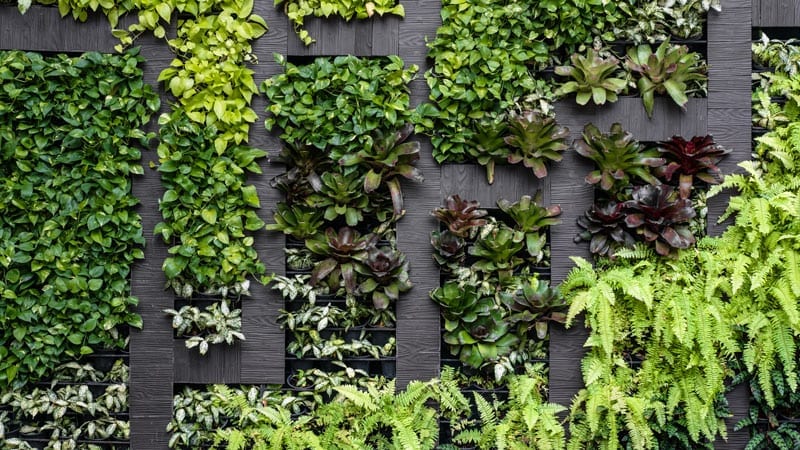
These vertical gardens come in a variety of types, shapes, colors and sizes, but are most often a wall of lush green in one form or another. In the past, you may have seen them on the exterior wall of a chic restaurant’s patio area, or in the lobby of a luxe hotel. But living walls are spreading their roots, moving beyond just large-scale installations and into people’s homes, with the same eye-catching effect.
Living walls, or green walls, encompass many different kinds of vertical gardens that are mounted to a wall to display a group of plants as you would a canvas. They come in such a range of styles, they can morph to fit almost any design approach. Tightly planted succulents inside a dark frame could add a hint of warmth to the clean lines of a contemporary room, while thick pouches sagging with plants may be the obvious choice for a modern farmhouse.
Spend any time scrolling Instagram or Houzz and you’ll see that green houseplants, from philodendrons to fiddle leaf figs, are in. Plants are lovely to look at and can freshen up the air in your home. But why are living walls the new thing? It may simply be part of the explosion in popularity of indoor gardens—sometimes more closely resembling small jungles—that have popped up in the design world in recent years. In a way, living walls are a new take on ivy-covered exteriors, brought indoors, making all of our secret garden dreams come true. They offer the same beauty and benefits of everyday houseplants, plus some added extras.

For one, they’re perfect for rooms or areas short on space. Whether your home is generally lacking in square footage or you’re looking for the right statement piece over your staircase, living walls can add texture and greenery to the most unlikely places. Up off the ground, vertical gardens put your prized plants out of reach of little hands, too. They can even improve a room’s acoustics by absorbing extra noise, providing an art solution that’s easy on the eyes and the ears.
In Bend, a green wall could be a wonderful way to add color to your home, especially during the long winter. Picture the whimsy of a wall of trailing vines in your living room set against the stark contrast of white outside your window. Living walls may also be the one foolproof way to protect your plants from nibbling deer in Central Oregon—by bringing them indoors.
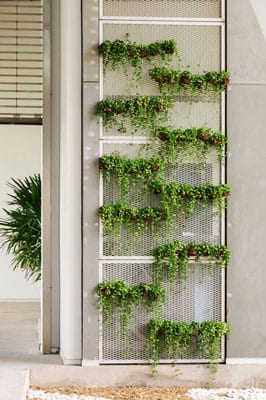
Like any living thing, vertical gardens require at least a little maintenance. Many offer drip systems built into the set-up, and some living walls are even installed for you. But you’ll still likely have to do some pruning and trimming for perennials or changing out of annual plants.
Beyond plant care, there are some other logistics to consider. Depending on their size and makeup, living walls can be fairly heavy with the combined weight of the plants, soil and water. Pros can help you determine the set-up for your vertical garden, or build it for you. If you’re looking to DIY, make sure to do some research and planning ahead of time. Remember, you’ll need a spot with natural light unless you’re also willing to install a grow light.
With so many different types of living walls, the toughest part may be choosing the right one for your space. Luckily, there’s no shortage of examples out there to get inspired.
Last summer, my family moved out of our 4,000-plus square foot Bend home that we’d inhabited for fifteen years.

Oh my, did we accumulate a LOT of stuff during that time. The task at hand led me to the Marie Kondo method of tidying up. The author’s two books The Life Changing Magic of Tidying Up and Spark Joy: The Japanese Art of Decluttering and Organizing both have been bestsellers.
Admittedly, when I read Kondo’s first book, I thought she was somewhat obsessive compulsive about cleaning and discarding. But I learned that by growing up in a tiny Japanese home, she taught herself out of trial and error how to not only tidy up, but how to not get in the habit of cluttering again. In short, Kondo has made a successful profession out of helping people like me. Her name has turned into a verb—it was time for me to “Kondo” my home.
For the uninitiated, the Kondo method goes like this. Supposedly, the easiest purge starts with clothes. Start discarding items by first piling every piece of clothing in the middle of the floor. It’s a psychological unloading. As I excavated my closets, I was horrified by dozens of pieces I never wore, many with tags still attached. I soon realized I had done some serious “retail therapy” for several years following my teenage daughter’s death. I could actually envision what shops the pieces of clothing had come from, and looking back I realized shopping was the one activity I could do, where shopkeepers didn’t know my sad story, and I could feel normal, at least in that moment. I had purchased a lot of unworn clothing, shoes, purses, even houseware items. Kondo advises mentally thanking each piece of clothing you’re giving away for sparking joy for the times you wore it. I thanked the items and put them in a box. In total, I took a half-dozen carloads of clothing to Goodwill, Opportunity Foundation and Bethlehem Inn. They were grateful and I was liberated, just as Marie Kondo predicted.

Next challenge to tackle, per Kondo, are books. I love books. I belong to two book clubs in Bend, and while I love the library here, I also love owning books. Books spark joy, at least for me, and we had a dedicated office/study with many bookcases. But even if you love a book, do you ever re-read it? For me, the answer is no; there are just too many splendid books to read in one’s lifetime.
I packed at least a dozen big boxes of books and sent them on their way to be donated, mainly to the library, where I hope another bibliophile will enjoy them as much as I did. Thank you, great books, for sparking joy and imagination.
The next area to tackle are things. In Japanese that’s “komono,” and yes, I love stuff, especially nice dinnerware and place settings. I had the Spode Christmas dinnerware, and there were my red Italian Ro Valentine plates, spring/Easter bird plates and bowls, summertime floral dishes, and three sets of formal china. In total I had eight sets of dinnerware, not including the china sets, along with dozens of chafing dishes, more than a dozen large bowls, thirteen serving trays and five crockpots.
To be fair, after my mom had to move into assisted living, I inherited more stuff, like another china set with a tea service, and LeCreuset pots and pans. It was all a sentimental journey, when I hauled that stuff into my house.

Another huge sifting and discarding came with Christmas and holiday decorations. I swear there’s not a Christmas ornament or Nutcracker I didn’t love. I dragged almost a half-full attic into one pile in the entertainment room, and whittled it down to just six boxes of ornaments and Christmas stockings. Sadly, all six faux Christmas trees were donated, including a splendid twelve-footer.
As empty nesters downsizing, we realized there’s just no room to bring all the stuff with us. While some is sentimental, a lot, if you’re being honest, is emotional baggage. Kondo says things and possessions are holding you back. Only invite those things that spark joy. Only then will the things you hold onto bring you more happiness. That’s her basic philosophy.
I’m just a newbie at this, so the results are still pending. But so far, I haven’t missed a thing.
There was a time when you couldn’t open Instagram without seeing a line-up of interior design images that all looked the same.
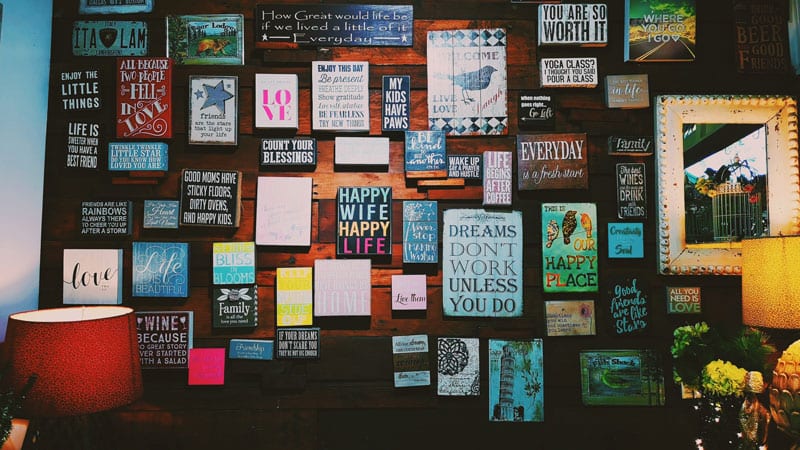
White walls, mid-century modern furniture and perhaps a potted succulent were on every squared-up post. Five years ago, it felt refreshing, but today it seems inauthentic. Over the last year a noticeable shift in interior design has occurred, perhaps as a reaction against that aesthetic—a picture may be worth a thousand words, but spare walls don’t tell much of a story. Enter: maximalism.
The interior design trend is about embracing what you like, be it bold color on the walls, patterned furniture, art on every wall or shelves filled with tchotchkes that evoke memories, not social media likes. Maximalism will turn a house into a home. The best part is, you’re probably halfway there, because the trend is about putting your possessions on display and creating a space with things that you like, not with things that fit a mold.
One way to embrace the maximalist aesthetic in your home is to pick one room and start with color. In a living room, a fresh set of pillows in contrasting color to a chair or sofa can reinvigorate a space without costing much money. Mixing patterns also works when the color palettes align. In the kitchen, repainting cabinets is easier than repainting the whole space. Cool colors like blue or green are timeless and add depth to the room. Color is an easy way to create some interest in a room where there wasn’t any before.
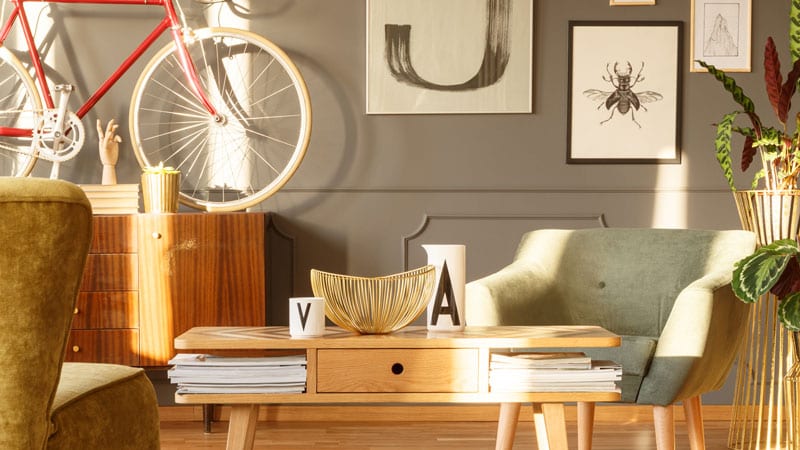
Paint isn’t the only way to add interest to walls. In recent years, the variety of peel-and-stick wallpaper has grown to include designs that would suit any home and style. In lieu of a single paint color, consider wallpaper on one wall as an accent, or on all four as a way to create some texture and drama in a space.
There is a thin line between curated and cluttered. When it comes to objects, keep in mind the rule of three to avoid looking crowded. A lamp plus a plant plus a vintage clock on an end table. A piece of art plus a framed photo plus a textured wall hanging on a wall. Grouping objects into threes draws attention without overwhelming the eye. An exception should be made for shelves of books, because there can never be too many of those in a home.
Maximalism is a timeless design trend that can’t be done wrong because it’s all about living with your things and not trying to keep it all drawers and closets. What makes a home interesting is your mom’s old coffee canister on the counter that she gave you for your first apartment, the fly fishing rods that parallel your ceilings and are used almost daily or the guitar that hangs next to the sofa, easily in reach when the mood strikes. Maximalism tells the story of your home and your life, one room at a time.
If you’re ready to embrace more, might I suggest you start by browsing your local thrift store. There are hidden treasures galore there that could fill design voids in your home, probably donated from your neighbor’s latest design purge in an effort to fit in to the feed. Their loss—more is always more.
Central Peaks Construction customizes quality for homeowners.
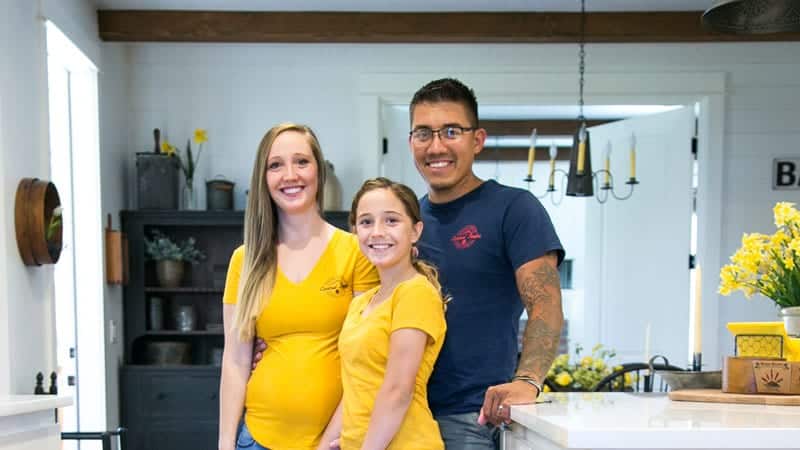
When it comes to building a business, Scott Noveron believes in starting small and dreaming big. Four years ago, Noveron moved to Central Oregon and worked for friends before he and his wife Chelsie formed the family-owned Central Peaks Construction in 2018.
After seeing high quotes and hearing stories from homeowners who had been overcharged on projects, Noveron believed his company could do better. “For me, it’s not a typical kind of ‘make money quick and move on to the next project’ model,” he said. “We want to perform quality work at an affordable price for consumers.”
Licensed as a residential and light commercial contractor, Central Peaks Construction works on remodels as well as new construction projects across the region, including framing, roofing, flooring installation, painting, decking and fencing. “We do a touch of everything,” said Noveron, who sees even the smallest job as art. “Trustworthiness is really huge for us. I treat every project as if it were in my own house and expect the same kind of craftsmanship to go into someone else’s home.”
A Central Peaks Construction business card reads, “Where dreams become reality.” For Noveron, it’s a reminder of how small beginnings have led to bigger things. This year, his crew took on its biggest project to date: a 3,800 square-foot duplex in Redmond that the company oversaw from start to finish. Other favorite projects include an immaculate custom floor inlay that moved a homeowner to tears and the giant “O” he installed in a floor for an Oregon Duck fan.
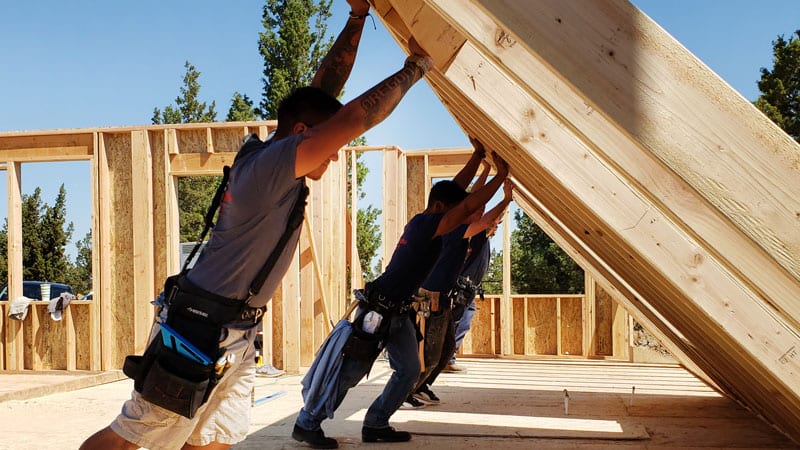
Noveron said projects like these are what sets his company apart in the industry and keep the referrals coming. “If we can’t do it, we’ll figure out a way to do it—I think that’s one thing that makes us stand out and why we’ve been so busy is the fact that we think outside of the box and give a homeowner different options,” he said.
In Central Oregon’s competitive market, Noveron credits a lot of Central Peaks’ success to honest collaboration, with other contractors as well as homeowners. “Working with Scott is a positive experience,” said Noah Harvey, a plumbing contractor of Cascade Roots LLC. “Not only did the finished product turn out beautifully, but the project was managed appropriately and efficiently with minimal stall time.” Noveron also cites his company’s commitment to remaining affordable; sometimes charging less, he says, leads to more jobs in the future.
“I think it speaks volumes when you’re able to save money for a homeowner. For me, the secret is just being humble and honest about what we can do,” he said.
At Century 21 Lifestyles Realty, Jenny Gregoriou is very much at home in her new role as Designated Principal Broker. That’s because for her, real estate runs in the family.
Starting in 1988, Gregoriou’s father Rich Hadley operated his own real estate company in Central Oregon for two decades before franchising with Century 21’s Sunriver satellite office in 2009. Two years later, he and Gregoriou purchased the franchise and expanded north into Bend. Today, the branch continues to grow and recently moved into new offices on 3rd Street. With a new location and new brand look, Gregoriou takes charge of her father’s company while carrying on his legacy of commitment to customer service.

Growing up, Gregoriou said she never intended to go into the family business. After college, she returned home for a year to help her father manage a property in Three Rivers South. Thrust into a world of permits and payrolls, she worked alongside her dad and obtained her realtor license in 2010.
“That one year turned into eighteen,” she said with a laugh. “Real estate became an evolution of me saying ‘I’m not a salesperson’ and Dad telling me ‘Someone is coming to you asking for help—we’re just solving problems.’ Sellers want to sell, buyers want to buy and there are a series of hurdles to remove in between to help both parties achieve their goals. I love that challenge and that all deals are different; I learn something new every day.”
Gregoriou said she considers herself lucky to work with a team of more than thirty brokers including two cousins, a brother, a nephew and his wife. “We are very much a family-focused company, she said. “The culture of ‘a rising tide raises all boats’ is so important to us, and my cousins Robbi and Chelsey support me daily.”
After thirty years of selling real estate in Central Oregon, Rich Hadley said he has been blessed to work with his daughter. “Jenny is a natural leader. Not only does she have good common sense, but she continues to research and study our industry. The most experienced agent knows they can come to her for information and help,” he said.
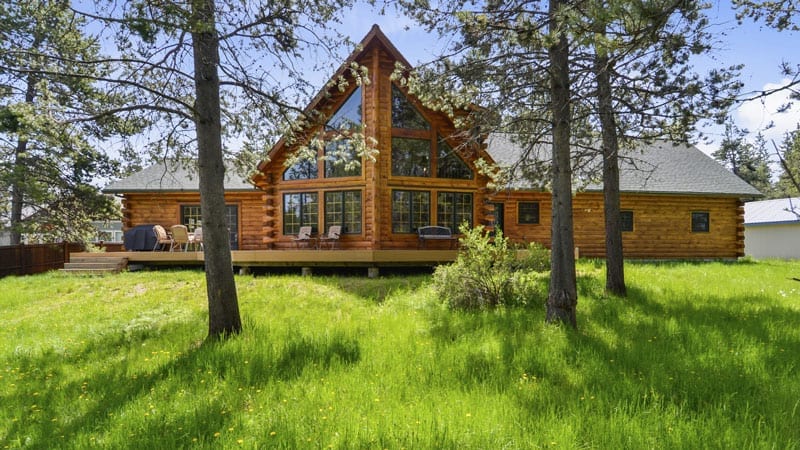
Looking ahead, Gregoriou said she is excited to grow a company that gives back to its community through local initiatives including the Relentless High School Student of the Week program and helping veterans find housing.
“We continue to build on the culture of our company and what we can do for the community,” said Gregoriou. “We strive to make ourselves a staple in Central Oregon for client-focused real estate solutions and are working toward that goal every day.”
Bend architect takes an innovative approach with a classic touch.
In any given Bend neighborhood, you’re likely to be near a home or building designed by local architect Neal Huston. There’s Worthy Brewing on the east side, the Ronald McDonald House off Purcell Boulevard, condos in NorthWest Crossing and custom homes in North Rim.
The long list of structures Huston has architected over his decades-long presence in Central Oregon range from mountain lodge-style to mid-century modern. But there is a common thread throughout. Huston takes a thoughtful approach to offer fluid layouts with timeless design.
“I believe one thing we try to think about is how some of these really starkly contemporary homes are going to feel and weather over time,” Huston said. “If someone wants contemporary, we try to follow that path, but also think more classic, so that it’s going to be appealing to the owner or future owner as time goes on.”
Huston has worked as an architect in Bend for well over forty years. An Oregonian raised in McMinnville, Huston started his career in Bend designing homes in Black Butte Ranch for Brooks Resources in 1970. By 1976 he’d finished his apprenticeship and partnered with two other fellows to start Waldron Huston Barber, which later became Huston Barber Barrett Turner, before opening up the enterprise we know him for today—Neal Huston & Associates.
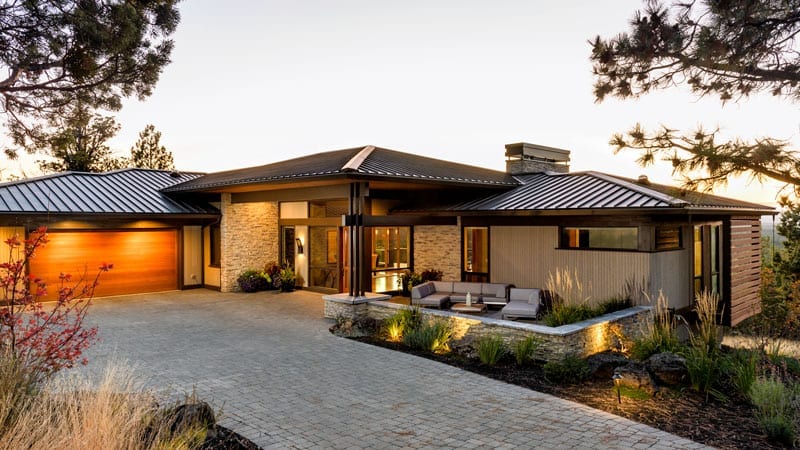
Much of Huston’s work in recent years is on custom homes, though you’ll recognize his commercial work around town, too, like inside Jackson’s Corner eastside. With years of practice under his belt, Huston is an expert at integrating a client’s vision with a smooth user experience, architecting a design that will stand the test of time.
In his office of five, Huston is joined by his wife and business manager, an office coordinator, and two fellow architects, who have been with him for twenty-plus years. While Huston provides the design component, his colleagues provide support for other aspects of the project, including producing construction documents and communicating with contractors throughout the building process.
“The thing about our arrangement is that there’s continuity in design because I’m always doing it, where in a larger firm, this project may go to various staff,” Huston said.
Huston is known for crafting plans that speak to the style of the moment but remain ageless. For several local couples, Huston has architected an initial custom home, and designed for them again when they’ve downsized years later. “What a lot of people tell us is that we listen to what they want to achieve, but if we think they’re going down a path that may not be the best for them we offer them options,” Huston said.
He remembers coming to Bend years ago, noticing how so many homes and businesses had windows that were overly small and wood paneling that soaked up the light. Huston wanted to take advantage of Bend’s natural beauty and abundant sunlight by architecting plans that highlighted Bend’s best views while being beautiful in their own right.
In any of his designs, you’ll notice sweeping windows, plenty of natural light and a creative approach that incorporates the builder’s wishes and ideas into a classic form that will age well. One of Huston’s favorite projects is a home he designed in 1997. The home was in many ways ahead of its time—fitting the style of the moment but still holding up perfectly today.
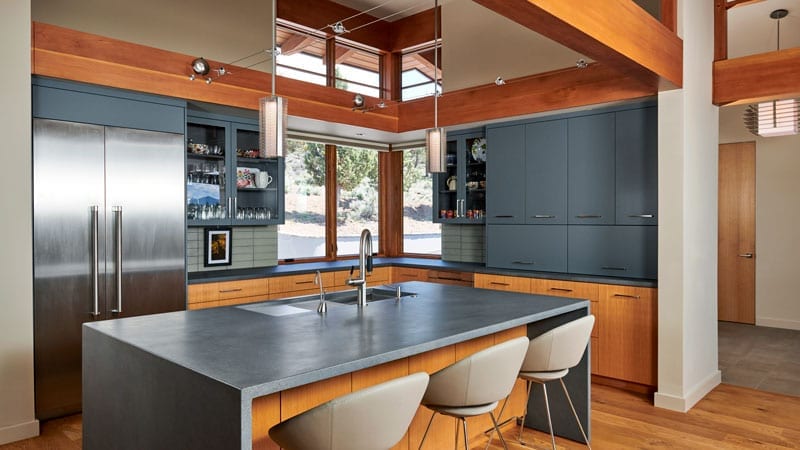
The couple who originally built the home had Huston architect again for their next, smaller home. The young couple who recently bought the contemporary 1997 house couldn’t believe it was more than twenty years old. “Contemporary to us is very broad,” Huston said. He asks clients to share images that appeal to them so he can get an idea of their brand of “contemporary.” From there, he can draft a design that fits current style while maintaining classic elements.
Until about 2008, Neal Huston & Associates’s work was comprised of about 70 percent commercial and the rest residential projects, but as the nation started coming out of the recession Huston’s firm began doing more residential and less commercial.
“Whether it’s modest or larger commercial projects, I believe that the perception is often that a larger architectural firm is required to take on such work, while smaller firms usually provide the same level of technical expertise and design creativity while perhaps providing more personal attention,” Huston stated. “One would think, that if you’ve survived for decades, you must have something of value to offer.”
Nancy Melrose of RE/MAX key properties brings experience to real estate brokering.
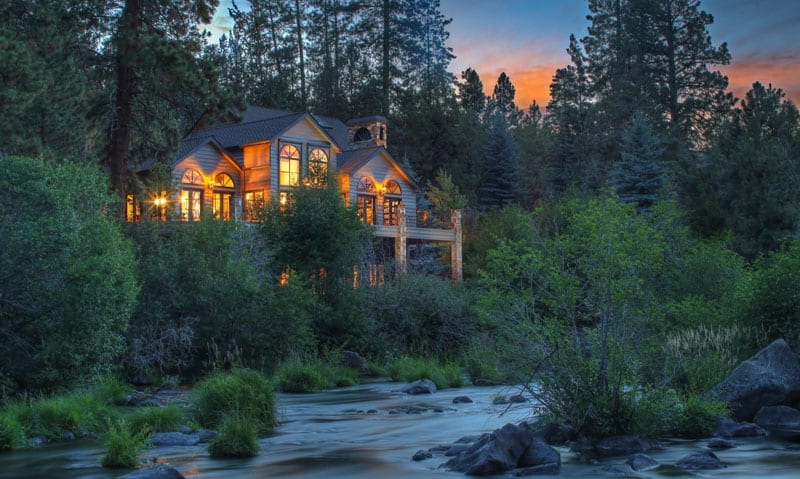
Nancy Melrose owned a classic French restaurant in West Germany for a decade, and then worked as the Director of Marketing for a prominent office building in San Francisco. Both experiences, she feels, prepared her for a career as a residential real estate broker. “I realized that I’m a people person, happy to speak with whoever walks in the door. I enjoy interacting with the public and providing customer service, and I’m good at handling details and managing timelines,” she said.
Family ties, a love of the high desert and a desire for a change from a busy urban lifestyle brought Melrose and her husband to Central Oregon nearly twenty-five years ago. Transitioning into residential real estate, she said, was a natural fit, and she earned her license and began selling real estate in 1996. She became a Principal Broker and opened a boutique brokerage on Bend’s Westside in the early 2000s, which she ran for almost a decade. Twenty-three years later, she’s earned her reputation as a top local real estate agent.
Melrose’s longstanding familiarity with the region and deep knowledge of the local real estate market past and present are great assets to her clients. “I have historical market knowledge,” she explained. “I really know the communities here and can help people understand their options. I have a more holistic approach to this business. I love to help clients make choices that translate into a happier life for them.”
For people coming from a metro or urban environment, Melrose’s approach may be quite different than what they are accustomed to. “I like to spend time with people.” She begins each encounter with what she calls a counseling session, during which she tries to determine a client’s true goals. “I also always ask, what do you see yourself doing when you are here? That can help guide where they might feel most at home. Bend has so many different vibes, from urban living to golf course communities to family neighborhoods.”
“Often people think they know what they want, but they don’t really,” she said. Sometimes that’s because a buyer simply doesn’t know what their options are in an unknown market. “They need a professional to guide them to what might be a better fit. It’s not just about selling them a house, it’s about finding a community that fits their personalities, and helping them to become a part of that community.”
For the first-time buyer, Melrose might suggest neighborhoods that have more opportunity for increased equity, if they plan to start a family and will need a bigger home in three to five years. For the investor client, the conversation is all about risk assessment and return on investment and identifying those options accordingly.
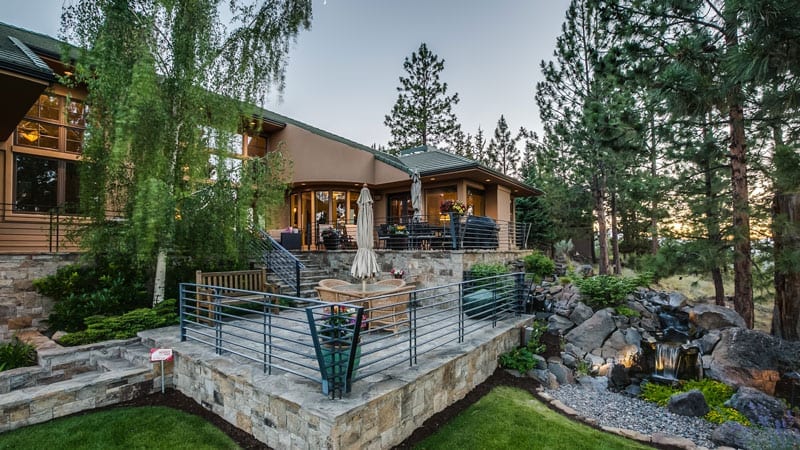
Melrose finds that what Bend buyers do have in common is that they truly want to be here. “So many people in Bend are here very purposefully,” she said. “I think of it as ‘choice’— for the most part, people move here by their own choice. That makes the community here very special and enthusiastic.”
Melrose works as a Principal Real Estate Broker full-time, handles all sorts of properties, and loves the rewarding career that she has found here in Central Oregon. She especially loves showing clients new to the area around town. “I think sometimes we take for granted all of the wonderful things that are around us in Bend. To be able to see the excitement and wonderment in my clients’ eyes as we tour the area, to be able to observe their discovery, it’s terrific to be a part of that. To hear a newcomer say that they can see the stars at night or smell the Ponderosa pine for the first time—that is wonderful.”
An aging ranch-style home, perched on a rocky outcropping with sweeping views of the Deschutes River and the Cascade Range started out with good bones, but was in need of major renovations. Timberline Construction of Bend, known for its custom homes, embraced the challenge. It gutted the old structure down to its wall studs and transformed the floor plan into spaces tailored to the homeowners’ lifestyle. For instance, the kitchen was reimagined with contemporary materials and appliances.
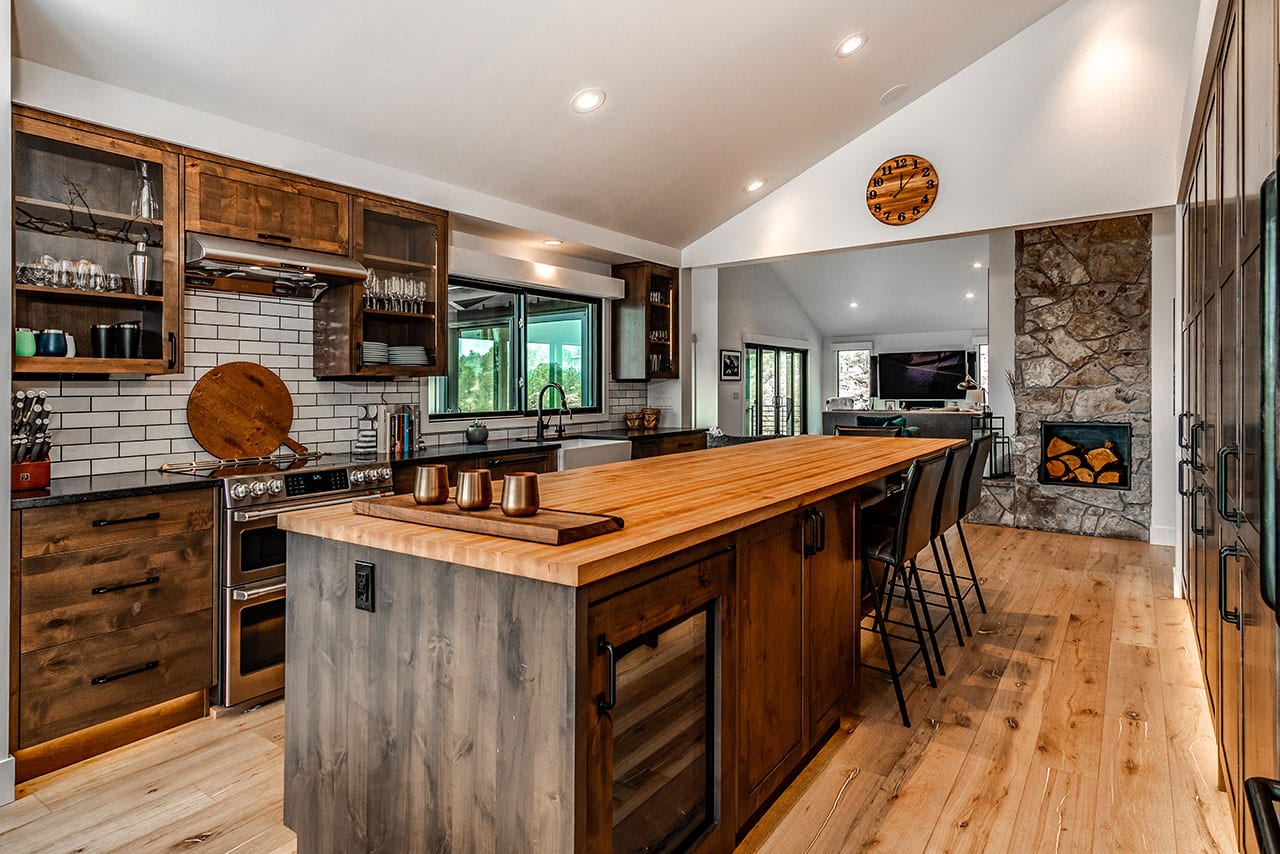
Timberline also built an entirely new wing with access to the main quarters through a breezeway. A key aspect of the redo was upgrading to energy-efficient elements throughout the home. Outside, a courtyard tucked between buildings allows inhabitants and guests to traverse terraced stairs and landings for stargazing or recounting active Central Oregon days around the barbeque and firepits.
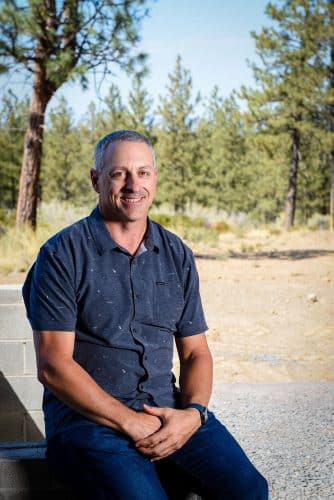
It was an old home with good bones, but it wasn’t energy efficient. There was no insulation in the roof, and ice dams formed during heavy snowfall. The homeowners were burning through electricity for warmth. It had exposed beams and tongue-and-groove ceilings, features that the owners loved but didn’t allow for insulation.
We made it a higher-performing home by installing new windows and doors, sheetrock, spray insulation and blown-in blanket insulation. We were trying to build a well-functioning home, thinking about energy efficiency and finishes that match the upgrades.
The existing home was on a cliff overlooking the Deschutes River, a site that couldn’t be built on with today’s building codes. Instead, we built on the original footprint and constructed an additional wing accessed through a breezeway. The only thing that stayed true was the wood-burning fireplace and wood storage box.
We moved the primary bedroom to an entirely different location in the house and made a cool kitchen with more usable space and a bigger living room. The clients are a family of four with an active lifestyle and were originally from Seattle. The goal was to have a great place to spend time together when they had people in town.
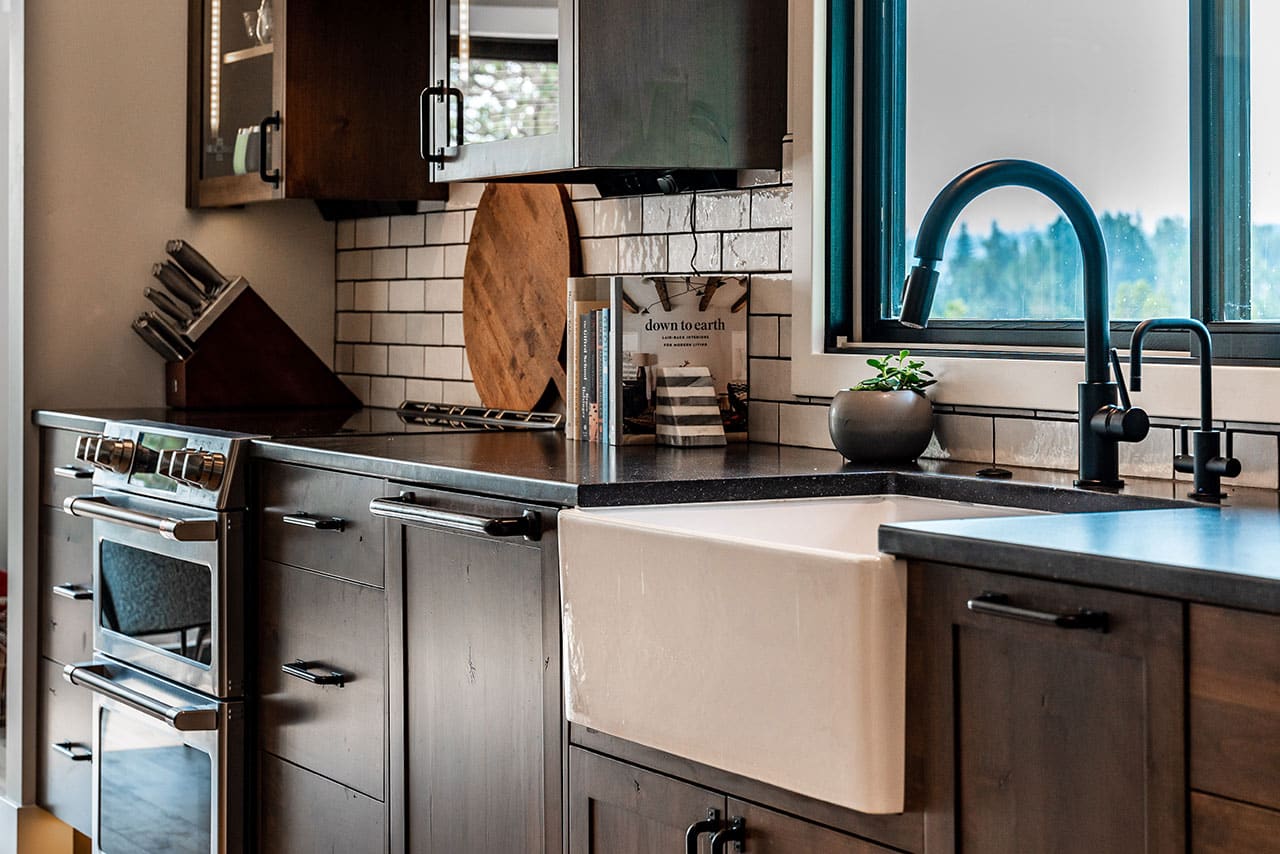
Mike Szabo (landscape architect) did an amazing job transforming the outdoor spaces. A sizable portion of the remodel budget went to the outside hardscapes. The patios and terraced steps create inviting respites and, more than anything, peaceful spaces that take advantage of the river and mountain views.
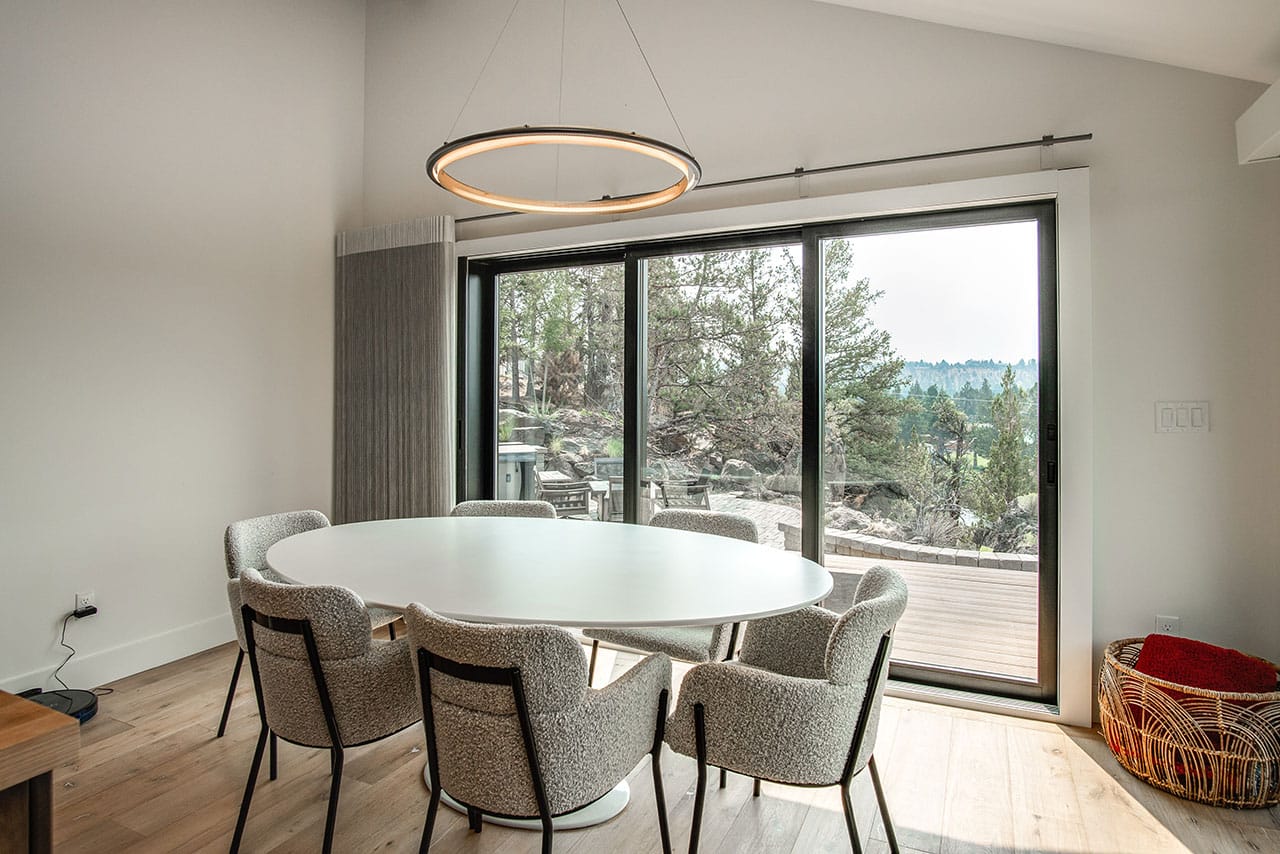
I have a fondness for remodeling projects, particularly because many older homes are in need of revitalization. There’s a certain satisfaction in deconstructing and reconstructing these spaces, turning something dated into something modern and efficient. It’s a challenge I enjoy tackling. Working on remodels allows me to take old structures and breathe new life into them, enhancing both their efficiency and functionality. Brandon Olin, the architect on this project, played a pivotal role with his creative floor plan, further enhancing the transformation process.
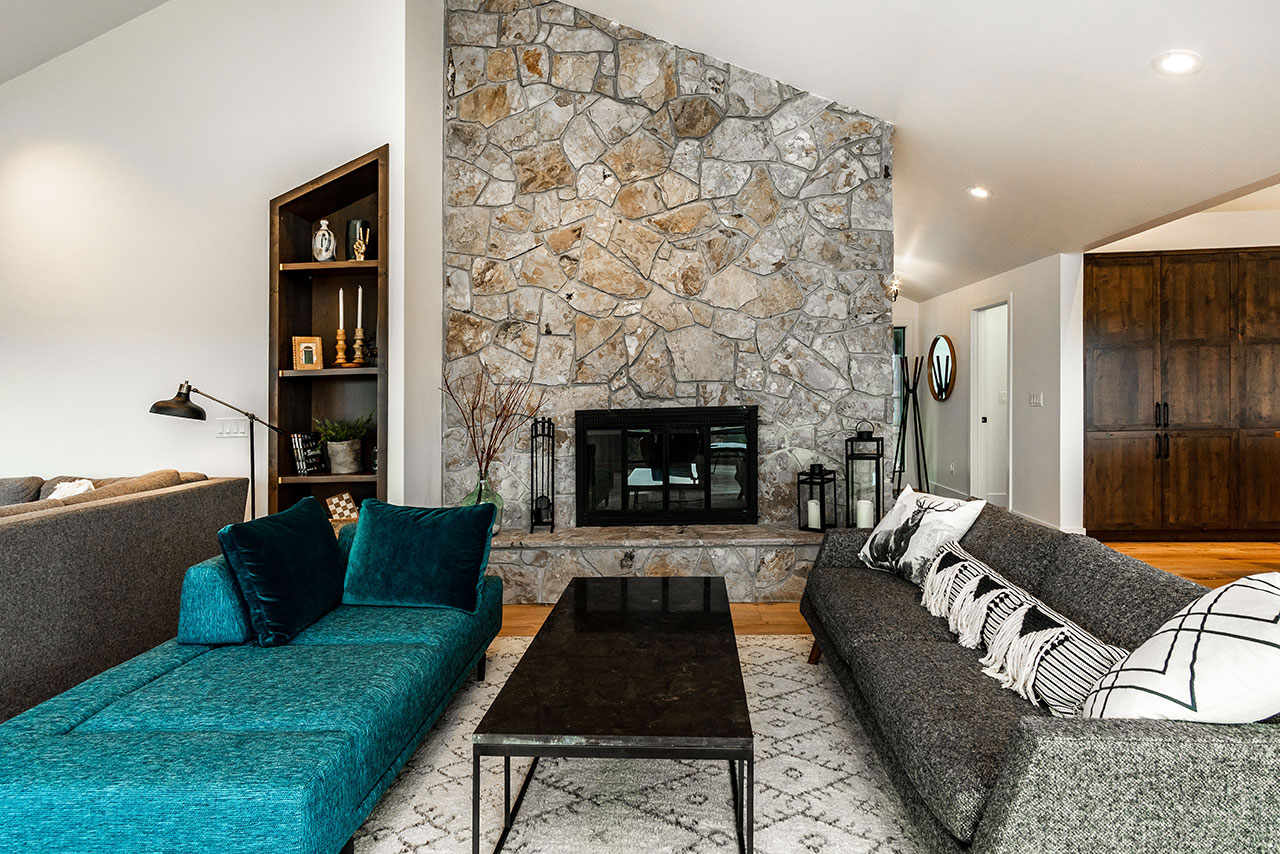
Architect: Brandon Olin
Olin Architecture | 541-508-9579 | olinarchitecture.myportfolio.com
Builder: Timberline Construction-Bend
541-388-3979 | timberlinebend.com
Interior Design: Anne Mastalir
Design Bar| 503-260-8661 | designbarbend.com
Landscape and Hardscape: SZABO Landscape Architecture
541-382-2059 | szabo-la.com
Timberline Construction brings communication and respect to the art of custom home building.
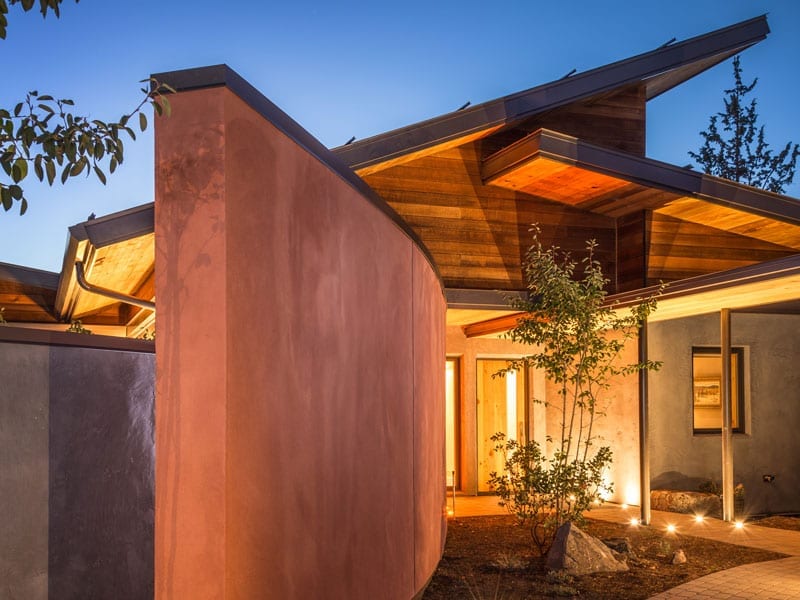
Jacquie Sebulsky and her husband hired Timberline Construction to build their Craftsman-style home in 2005. “Kristian Willman understands that people will create memories in those homes, and he and his team are very aware and respectful of that. They truly care about the people in the homes they build,” said Sebulsky. “He is very detailed and thorough, which I really appreciated.”
Timberline Construction, which has built more than 200 homes in a variety of styles and construction methods throughout Central Oregon since its inception in 2000, is based on Willman’s credos of communication, respect and experience. This trifecta influences every relationship that Timberline has—be it with clients, architects or subcontractors.
Even before meeting the team in person, interested homeowners, new clients and others who are interested in construction can experience Timberline’s ease and willingness to communicate just by visiting their website. In addition to the expected categories of About Us, Green Building and Portfolio, it has a large section entitled Client Resources that details the company’s approach to bidding and cost tracking, and it boasts a blog that shares information on design, home maintenance and other areas of interest to homeowners—any homeowners, not just clients.
“Our expertise is on managing trades and providing quality,” Willman explained. “Everyone on our team has worked in the trades. I started as a framer and together with my crew, we have more than forty years of experience. We know how to work and communicate with subcontractors. We can respect them and get our point across. We have a project manager on site every day so the subs can always get the information they need and have questions answered.”
Timberline project manager Kevin Lorda explained further. “How long a project manager spends on a site each day will depend on the amount of oversight that’s needed and where we are in the project,“ he said, “but it’s important that we maintain clear lines of communication—it’s a smoother building process, and it makes expectations clearer for both the subcontractors and the homeowners.”
“The biggest thing is to coordinate and manage time,” said Willman. “It’s a huge effort. You need to put together and build the project team around the finances, the time, and what the homeowners want and expect. We are primarily problem solvers and schedulers. We’re organized, and we need to keep the momentum going.”
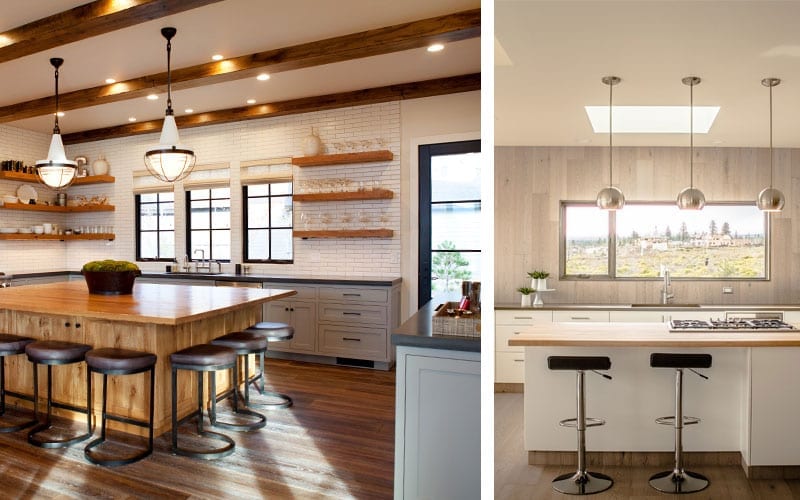
“Working with Timberline is very collaborative,” said Bend-based architect Brandon Olin, who has been working with Timberline since he opened Olin Architecture in 2010. “It’s a triangular relationship with the homeowner, builder and architect. Timberline is very open about what they are doing. They offer suggestions and become a welcome part of the design team, and a homeowner can go to either of us to get information.” Olin continues, “Timberline defaults to a certain high level so the houses perform very well. It’s how they want to build a home, and how we want to do it, too. We are a good fit. Right now we are working on four or five homes together.”
While Timberline has most recently focused on projects that are modern in styling, the firm has also built Tuscan, Mountain Lodge, Northwest Contemporary (a hybrid of lodge and modern), and Craftsman homes. Nor have they shied away from different types of construction. In addition to traditional framing methods, the Timberline team is practiced in straw bale, insulated concrete forms (ICF), stress insulation panels (SIPs), post-and-beam and advanced framing techniques, the latter of which are designed to optimize material usage while also promoting energy efficiency. In fact, the firm is probably best known for building the Desert Rain home. Situated in western Bend, the LEED Platinum home was the first home to be certified by the Living Building Challenge.
Focusing on custom homes and remodels, the company never really builds the same thing twice. Yet despite the differences between the different projects, there are some commonalities: One is finances, and the other is energy efficiency.
“When I put together a bid,” explained Willman, who is very exacting and systematic about the cost estimating and budget processes, “I don’t just get one estimate from a trade, I get two to three bids per trade from several subcontractors so I can compare them and make sure that all are covering what I requested. I need to know what each one is including or not including in their figures. From that I can assess what work will be done and at what cost. I look to hire the most thoughtful bidder. When I have the estimates in from subcontractors I can put together my cost break down.
“Money is very emotional so I am very transparent with clients. We build the house twice on paper before we actually start construction. I breakdown the costs and itemize everything, and I also share everything. We don’t want any surprises. We want the client to be comfortable going into the process so we focus on communication, honesty and transparency.”
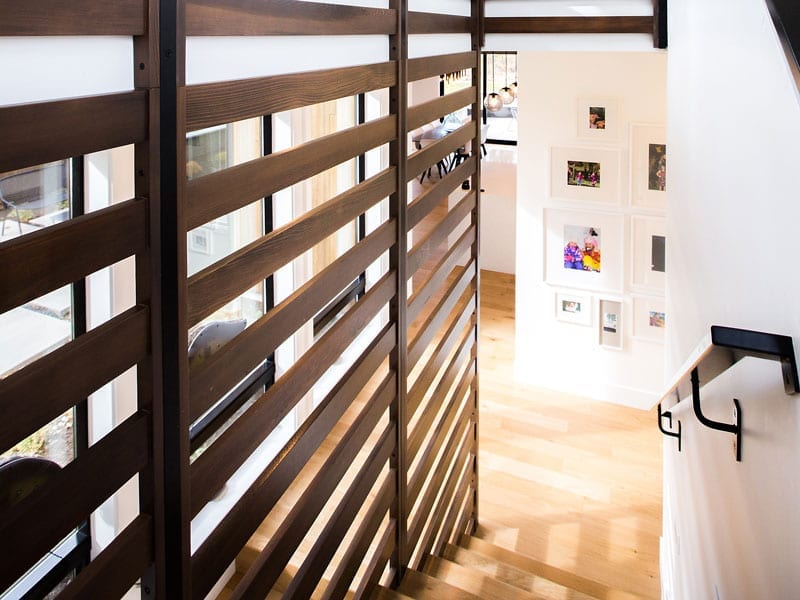
By Willman’s own admission this means Timberline probably won’t provide the least expensive cost estimate, but it may be the most accurate. The latter, according to Olin, is one of the great advantages of working with Timberline. “Based on their bid, we get the budget information early, and we know where it’s going to come in,” he explained. “Timberline is very good at staying on budget or even coming in a little bit lower than what was expected.”
In an area where people have flocked for its natural beauty and outdoor pursuits, energy efficiency in construction has been added to an increasing number of homeowner wish lists. “Getting a green home comes with a cost, but we still want to be responsible,” said Willman. “This is my playground, it’s our environment to protect. We always do our best within the budget and the homeowners’ wishes to build a tight envelope and use high efficiency heating, air conditioning and air exchange systems. We follow the Earth Advantage protocol even if an energy audit is not going to be performed.”
Sebulsky notes that the company’s commitment to quality goes beyond the actual construction. “They have the cleanest work sites I’ve ever seen,” she said. “Kristian takes great pride in the work. He even puts the company’s name with a small ‘T’ plaque discretely on each home they build.” Sebulsky, who is now a realtor with Cascade Sotheby’s, often recommends Timberline to clients.
The client is the most important part of what we do,” said Willman. “We need to build trust and we need to be compatible because we could have a three-to-five year relationship. I want them to feel comfortable to call me at any time even after the house is done and they have moved in. In the end I’m going to help someone as much as I can because Timberline built the house.”
Commitment to the excellence of their work has resulted in homeowners coming back to Timberline when it is time to build another or a second home and in the friendships that have been formed between Willman and his clients.
The site of a failed farming experiment blossomed into one of the most desirable neighborhoods in Bend.
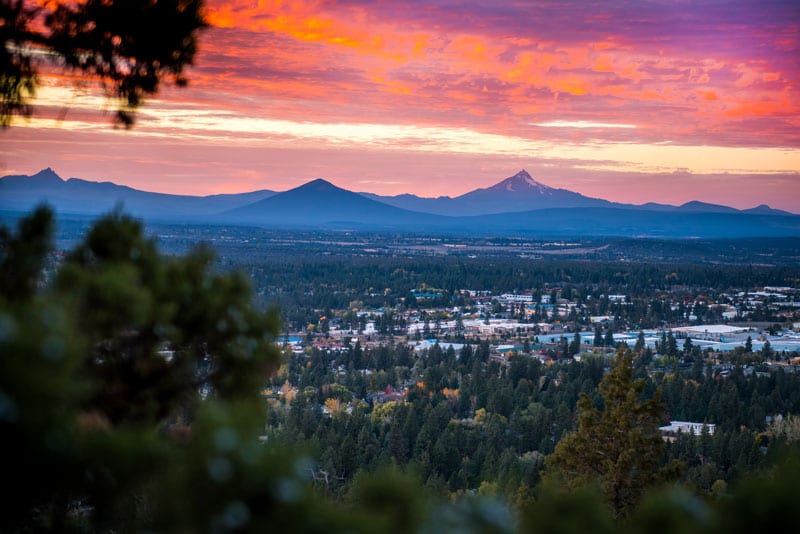
Jackie Vance rented houses on Bend’s westside for twelve years, but when it came time to buy a home in Bend, she chose the Orchard District for her family.
Also known as Midtown, the Orchard District is the area that stretches from Hollinshead Park to Pilot Butte to Highway 20 and the Parkway. The name refers to an experiment that took place in the 1930s to test Central Oregon’s agricultural potential and grow apples. That experiment ultimately failed, but today it’s a part of Bend that has both large residential properties and prime commercial locations, quickly becoming the place to be in town.
Developed in the mid-twentieth century, the residential lots in the neighborhood district are larger than most you’ll find in Bend. That’s part of what drew Vance there. “There’s enough room to throw a football around,” said Vance, as well as enough room between homes that houses aren’t on top of each other.

That’s not to say the neighborhood isn’t close, though. “We have such great neighbors,” said Vance. “The kind of neighbors that take care of each other’s kids and borrow cups of sugar. Impromptu gatherings happen all the time. It reminds me of the neighborhood we grew up in.”
Families have settled in the Orchard District because of its close access to places like Hollinshead Park and Barn, which boasts a large grass park, off-leash dog area and the Franklin’s Corner Community Garden. “It’s probably the biggest draw for that neighborhood,” said LivBend realtor Jodell Born.
Other nearby outdoor areas include Stover Park and its baseball diamond as well as Al Moody Park and its play structure. “It’s all very walkable and safe—people drive slower,” said Born.
The Orchard District Neighborhood Association has a strong presence, creating programs that engage the residents and spearheading projects like the Laurel Pocket Park, a sustainable garden that was landscaped in a piece of property that would otherwise have gone undeveloped because of its smaller size.
Amenities in the area include drugstores and grocery stores within walking or biking distance of most residential streets, and easy access to Highway 97. Recent additions to the commercial centers include Backporch Coffee Roasters and Parrilla Grill—both popular westside destinations that bet on the growing interest in Midtown.
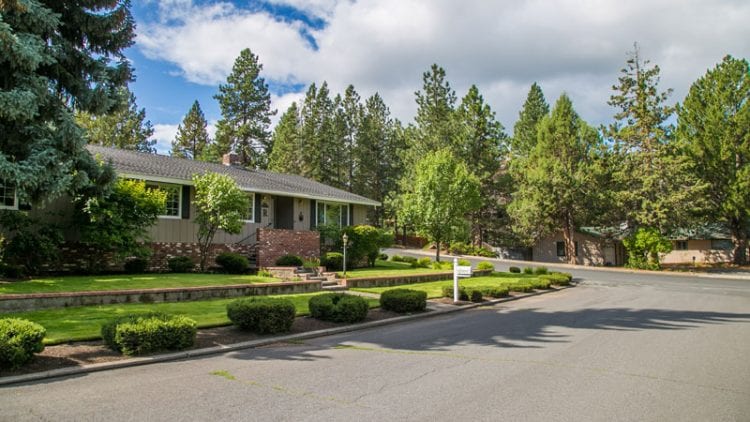
Most homes in the Orchard District were built between the 1950s and 1970s. There are a variety of ranch-style, single-level homes with large lots that help this almost-urban area retain its residential appeal. Vance and her family live in a 1950s-era home set back off the road, like many homes in the area. It was a fixer-upper when they bought the house five years ago, and today, with some updates and the growing popularity of that part of Bend, the home has significantly increased in value.
Realtor Born said that the single-level homes in the area are selling in the mid-to-upper 300s, and the values will only continue to increase. “It’s still a desirable area to be, and I think it will continue to be as more amenities come in,” she said.
Vance and her family host neighborhood gatherings at their home each year to cultivate the close relationships they have. “Every year it gets bigger and bigger,” she said. “There are a lot of connections, and it seems like in this area everyone is willing or wanting to make those connections. It’s a community.”
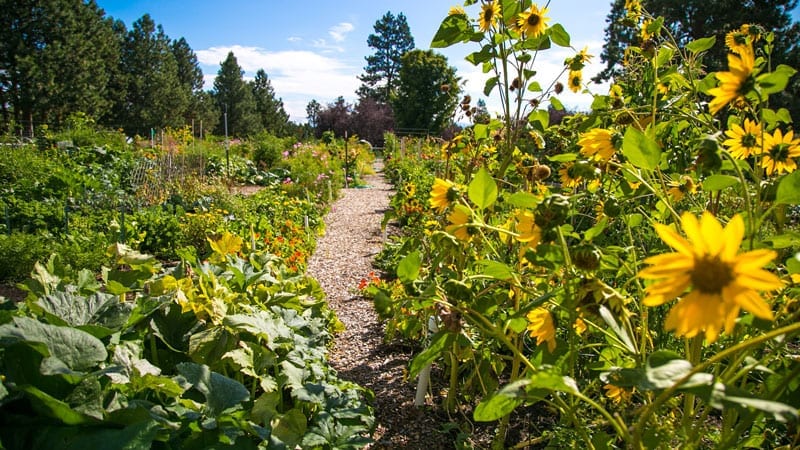
(Part 3 of a bigger article. Click here to start at the beginning.)

Ten years ago Hydro Flask revolutionized the water bottle with a simple idea: What if a water bottle could keep water colder, longer? The technology already existed. It was in your dad’s insulated Thermos; it just needed a makeover and rebranding. Voila!-the first Hydro Flask was born, a double-walled steel bottle with a powder coating finish to add a splash of color. Fast forward to 2019 and the little Bend brand is now a household name from Connecticut to Kona. It remains one of the fastest growing outdoor businesses in the country, and has been named one of the best places to work by Outside Magazine. We talked with Hydro Flask General Manager Scott Allan, who has overseen much of the company’s meteoric rise, about the challenges of growth and the secret to Hydro Flask’s success.

Hydro Flask works in a crowded space with tons of knockoffs. How important is innovation and creativity in your ability to maintain and grow the brand and business?
At a macro level, the category was crowded before Hydro Flask launched, so this hasn’t changed too much. What has changed is the consumer experience, and how innovation and creativity fit within the lives of active, on-the-go consumers. This is how Hydro Flask has set itself apart. We entered the market as the first company to introduce an all-vacuum insulated lineup, as well as the first to combine vacuum technology with the lightweight, sleek aesthetic of a water bottle.
How are those concepts of innovation and creativity fostered within the Hydro Flask? Are there any things HF’s does to make sure those values are expressed in your culture?
For employees, they start with the onboarding process where we talk about our origin story, key moments that shaped the brand and culture, and the important role we play in helping consumers live a happier, healthier and outdoor-enriched life. One of our core values is “Deliver Delight,” which becomes the vehicle for our staff to be creative and innovate with the consumer in mind. Our mission-To Save the World From Lukewarm-further reinforces this and is our call to action to banish compromise and mediocrity as a brand. There is no way to do this without creativity and innovation.
With the 2016 sale to Helen of Troy, Hydro Flask is now part of a larger business operation. Talk about the challenge of meeting the expectations of a new owner while maintaining the kind of culture and products that have made Hydro Flask so unique.
Reflecting over the past seven years, higher expectations would have happened whether Helen of Troy acquired us or not. When a brand is more established, there is more at risk, and expectations rise with that. Of course, being a public company means each quarter we are publicly accountable for our divisional results. That isn’t a trivial thing.
Hydro Flask is a real success story; what advice do you have for entrepreneurs and small business owners in Central Oregon who look at Hydro Flask as a model?
First off, very few companies play out like Hydro Flask-I know this from my own long career with failed or perpetually struggling companies prior to Hydro Flask. That being said, lean into the positives of Central Oregon. The community is really proud of local companies, so get them behind your company or brand as much as possible. For Hydro Flask, this has shown up in locals promoting and gifting Hydro Flask bottles to friends and families around the country. Second, network via the many channels that exist – especially EDCO Pub Talk, Oregon Outdoor Alliance (OOA) (if the business is in the outdoor space), or sponsoring a great local event or cause to get your brand out there and meet others. This will help with identifying and recruiting local talent and finding financial services, legal, organizational development, web development, and other resources to help you over time. There is a lot of talent here for a region our size. Finally, use Central Oregon to attract great talent when you need to hire for a specialty position for which there isn’t a local candidate. You’d be surprised at the level of talent you can attract because their entire family wants to here.
Hydro Flask makes tremendous investments in talent and culture. Can you talk about how important that is for your brand’s success?
For Hydro Flask, culture is the internal view of our brand that ultimately manifests into everything we do. Meaning, if our culture is not healthy, it’s a matter of time before our products, services and other customer facing work are negatively affected. Ultimately, that is what shapes the external view of our brand. For growing businesses, there is a war for talent given near 50-year lows for unemployment. There is also a shift in generational workforce. So as leaders or business owners, we should all be asking-how are we leading in a way that attracts and retains talent.
Culture is a big lever here. Additionally, studies have shown that people don’t leave companies, they leave bad managers. So as leaders or business owners, we should also be asking how are we developing and training our managers to be great people managers. Finally, growing companies have plenty of challenges but also opportunities for people to learn and grow.
So as leaders we should ask how we grow and develop everyone to the extent they value this. When people grow at Hydro Flask and land a great role elsewhere, it’s not always a great thing for Hydro Flask but we take pride in how we contributed to that person’s career. – Eric Flowers

Back at The Wharton School, the University of Pennsylvania’s grooming ground for future financiers, Rob Little and Jared Peterson were a little odd. “We both had this entrepreneurial bug and loved the outdoors,” Little says. “Those things aren’t really in the majority there.”
That was 2012, the year the friends attended a series of lectures on innovation and creativity in the retail world. At one end, the professor explained, you had the brick and mortar shops that many believed a dying breed. At the other end lay the disruptive, mega-buck-making world of e-commerce. “In between there was really a lot of room do to something new,” Little recalls. “Thinking about that got our wheels turning.”
Jump to today and Little and Peterson are now the brains behind Cairn, their Northwest Bend-based company that has created new, innovative ways to carve out a claim in those changing spaces on the retail map. For a monthly fee, Cairn subscribers get a curated box of outdoor gear that fits their interests, from socks to solar panels. But the real genius comes from how Cairn has harnessed its subscription base and community of 150,000 people to provide more than 250 brands with client feedback on that gear, and then drive those customers’ reviews to other sites that influence what we buy.
“Go to REI.com and look up solar lamps,” Little says. One has zero reviews; another has 40. But the latest version of the Luminaid-a design heavily influenced by Cairn customer feedback-has nearly 1,500 reviews that came almost entirely from Cairn customers. “Which one would you buy?”
Now, five years since its founding in 2014, the company has started to explore ways to disrupt the idea of ownership or to at least find innovative ways to inspire it with a program called Kitted. Launched earlier this year, Kitted sends curated gear to customers who may be new to the outdoors and are looking to get geared up for a specific activity, like, say, backpacking. “People who aren’t familiar with Black Diamond may not want to drop $600 on the latest jacket because that’s intimidating,” Peterson says. “But if I can help them read about it, learn about it, and then get it physically in their hands to take in the mountains to use before the barrier of price even becomes an issue, then they understand why a $600 shell is so valuable.”
But innovation doesn’t stop there. It runs through all levels of the business, from the way they handle shipping and packaging to vacation time, which employees take as much of as they want. “Cairn is in this sweet spot space between the digital community and all of the outdoor companies and their products,” says Gary Bracelin, founder of Bend Outdoor Worx, which mentored Cairn in its early days. “They just think differently.” – Tim Neville
It could have been intimidating to start a water bottle company in the hometown of HydroFlask. Instead Hydaway founder Niki Singlaub drew inspiration from the brand leader across town. A product designer, Singlaub was looking for a reusable water bottle that was more portable than anything on the market. His collapsible bottle uses an accordion style design that packs down into the palm of users’ hands.
Founded in 2015, the company has been growing steadily thanks in part to a successful Kickstarter campaign last year that saw the company meet its $20,000 goal in less than a day. Hydaway went on to raise more than $180,000 in the campaign. Singlaub’s ultimate goal is to see his product make a dent in the plastic problem. Recent wins including placement in Whole Foods indicate Hydaway has tapped a lucrative niche. – Eric Flowers




(Part 4 of a bigger article. Click here to start at the beginning.)

Take any living, breathing thing, from cats to kombucha, and it’s going to do what it wants to do. While unpredictability may be endearing when loving Mr. Frisky, it’ll bite your hand when it comes to building a national business based around bacteria and yeast and the vagaries of a fermented tea.
“We live in America where we want the same Big Mac, the same cup of Starbucks, the same products where we get what we expect,” says Humm Kombucha CEO and co-founder Jamie Danek. “The challenge with kombucha, with any live, raw product, is that it is constantly changing.”
Those changes can include variations in flavor, carbonation and even the amount of alcohol-a natural product of the fermentation process.
One of the secrets of Humm’s success has been its ability to control these variables. Since its launch as Kombucha Mama in 2010, today’s Humm has grown from a small-time kitchen project founded by Danek and her tennis pal, Michelle Mitchell, into a multimillion-dollar enterprise on Bend’s northeast side that stands as the country’s fourth largest kombucha producer. As growth soared, the kombucha queens knew they had to crack one of the biggest riddles in their industry: how to brew a consistent, stable product every time with an alcohol content low enough to satisfy regulators. It took three years and millions in R&D, but they did it.
The new process, called FIP for short, remains a trade secret with a patent pending but it has allowed Humm to brew an “ambient” drink that can be shipped without refrigeration, a move that has cut shipping costs nearly in half.
“Our company puts far bigger ones to shame,” Danek says. “They say, ‘You don’t have any money, you don’t know what you’re doing, you have no expertise.’ And yet we figured out the most challenging issue in this category.”
The entire company has been built on this kind of disruptive thinking. Before Humm, only health food stores and organic grocers carried the drink. Humm brought it to 7-Elevens, pizza shops and university campuses. Only now, a decade later, is the company circling back to the health food scene.
“A lot of the industry focuses on the health-conscious consumer but for us it’s different,” Danek says. “It’s about everyone.”
“A lot of innovation has to do with us not knowing what you’re supposed to do, and letting everybody talk because you never know who’s going to have a great idea,” Danek says. “Then one day you come up with a new process and this process enables you to think even bigger. It’s amazing.” -Tim Neville
Life+ Time Free Range Fast Food opened last winter on Century Drive aiming to revolutionize fast food by making it healthy. The restaurant serves healthy, organic food made from scratch at fast-food prices.
Garrett Wales and Mike Moor, formerly with 10 Barrel Brewing group/ Anheuser-Busch, launched the drive-thru on the corner of SW Century Drive and SW Simpson Avenue in Bend.
“The first location is doing better than we ever could have hoped for,” said Wales. “What we’re really seeing is such a demand and shared passion from our customers for good, clean, healthy and convenient food.”
“We certainly have big dreams for the brand and the mission behind it,” said Wales. “We are in preliminary discussions on a few different real estate opportunities, but not rushing or forcing anything. We want to make sure we stay focused, continue to improve on our quality and consistency, and take it from there.”
Part of the vision includes expanding their clean and organic philosophy to other food categories. Their next project, Vida y Tacos, a healthy, organic taco shop, is slated to open in early fall, with Luke Mason as executive chef overseeing both restaurants. – Cathy Carroll

(Part 5 of a bigger article. Click here to start at the beginning.)

Adam Krynicki, executive director of the OSU-Cascades Innovation Co-Lab, loves to “nerd out” on the kind of roadblocks that give entrepreneurs headaches. Before joining OSU-Cascades in 2017, Krynicki co-founded Launch Alaska, a startup accelerator that helps fund and train high-tech entrepreneurs. At the Innovation Co-Lab on Columbia Street in Bend, entrepreneurs who sign up as members pay a monthly rent for workspace, plus access to answers and much-needed resources. There, Krynicki offers one-on-one coaching and teaches workshops to the incubator’s 35 members, plus a few OSU-Cascades students with startups of their own who get free membership.
What do you do for entrepreneurs at the Innovation Co-Lab?
We provide coaching and intense learning sessions — we provide education for people who are launching new companies and nonprofits. The things that we focus on are how to get investment, where to make sales and how to manage the risk of an early-stage startup.
Why did you want to start this type of incubator in Bend?
It’s about taking the first step to helping businesses and nonprofits. An incubator was the right fit at the right time for the community and it provides a platform for us to grow into an accelerator program.
It’s also the foundation for another part of our program, which we just formally announced August 6. It’s called Students for Startups and the idea is that we want students working on projects with the startups and nonprofits that we create, giving them real-world experience, building their resume and discovering the jobs that they might want to do someday.
Who is the Co-Lab open to?
Anybody in the community.
Why not a program or grant – why a space?
Programs are not customized to you. There’s a template, there’s a format, it’s a lecture. And that’s much different than somebody sitting down with you and going through your individual business plan… Just having someone to bounce ideas off of is a big deal.
What’s your vision for the Co-Lab?
We are launching a more formal mentorship program, for example, we can have an online component, so that you can get anonymous feedback from mentors. -Kailey Fisicaro
Talena Barker may pause when asked for her business card. Which one should she hand over? As co-founder of BendX, founder and CEO of Mission Limelight and the Bend Chamber of Commerce’s vice president for leadership development, Barker may be better off giving out one card that says “entrepreneur and community catalyst.” Barker runs Bend Chamber programs that offer leadership training, mentorship, networking and more. And her background in nonprofit work led her to start Mission Limelight, a company that helps nonprofits raise more money. We chatted with Barker about her most recent venture, BendX, a bootcamp for female entrepreneurs.
You’re an entrepreneur, like the women you support through BendX. What made you risk starting Mission Limelight?
I get so excited by problem solving. And that’s what we’re doing here at the chamber too, where other people see barriers, we see opportunities.
BendX offers a six-week program of courses to provide entrepreneurial education, advice and mentorship. Was that something that was missing for you when you switched careers?
I had to look to Portland to get this. And it’s not that there aren’t great resources here, there just wasn’t a comprehensive training program. In that process I found that there is something kind of special when you’re talking about being an entrepreneur about having an all-female environment.
How do you see BendX making an impact in the Bend community?
For [co-founder Christine Callahan] and I, we would love if successive cohorts continue to carry BendX forward. It doesn’t have to be run by us. It could be that we always advise and be a part of it, but to have it be self-supported by the community would be really cool for us. Bend is growing and changing and thriving, and just ensuring that women’s vision for business is a part of the growing, changing Bend community is important. We need that diversity of thought and diversity of perspective in our community, and just for every successful female business that’s out there, there’s a ripple effect. They go on to solve problems and hire people and have an impact not just here but all over. -Kailey Fisicaro
(Part 2 of a larger article. Click here to start at the beginning.)

For most investors, startup success looks like this: Founders have an idea, raise money from investors, build the product. They grow at a rapid pace, perhaps raise more money, and then sell the company (or IPO). The investors get paid back. The founders go on to start other things or invest in other companies.
Matt Smith, a serial entrepreneur and founder of Tribe Pilot, an adventure planning app, is certainly familiar with the concept. But the Bend native sees a different end for his company.
“The traditional model doesn’t make sense for Tribe Pilot because I want it to exist here,” he says. He wasn’t keen on the notion that taking on investment meant that he’d have to potentially sell the company to exit and risk the buyers moving somewhere else.
So the founder took a different approach, becoming one of the first Bend startups to employ a Shared Earnings Agreement with its investors. Under a SEA, investors receive payments from the startup up to a predetermined cap. The investors don’t take equity in the company, and once they’ve received their payout, the founders can continue however they’d like.
“We needed a vehicle to reward investors for helping us along, but that didn’t necessitate an exit for success,” Smith says. “It allows us to keep our company local, while still providing the capital we need to grow.”
He hopes the mechanism will catch on with other local startups, offering an investment option for those who have similar goals. He’s open sourced the legal documents for the Tribe Pilot SEA with that mind. In the meantime, Smith is growing his local team, improving the product, and watching the number of adventures planned on his app increase rapidly. — Kelly Kearsley
If skiing in Central Oregon has taught us anything, it’s that we need to be more aware of tree wells, the dangerous voids that form around the base of large trees in deep snow. These pockets are responsible for three skier deaths at Mt. Bachelor in the past several seasons, including two tragedies that occurred on the same day in 2018. The resort has increased its education efforts around the dangers, encouraging patrons to ski and ride in pairs. It’s added signs around the mountain and messages in email blasts. Now the resort is looking in a new direction—your cell phone. As soon as next season, riders could have access to an app that could save their lives. TreeWell is a mobile alert system designed to get help to skiers who can’t call for a rescue.
The app uses sensors built within the phone to detect sudden falls, inverted positions, and movements associated with tree well entrapment. TreeWell CEO Tommy Chipman and his team of Bend-based developers started developing the app after seeing the problem unfolding at their hometown resort.
“If it saves one life, it’s one hundred percent worth it for us,” said Chipman. With the help of Mt. Bachelor ski patrol and staff, the TreeWell team will be conducting preliminary tests this fall. Their goal is to release the app to the public before the first chair inaugurates the 2019-2020 coming ski season. If it’s successful, look to see the app in use by skiers and riders across the Northwest and beyond. — Dalton Charest
When Adam Carroll left his position as a director at Bend Research six years ago, he knew that he’d likely need to create his next job or move back to the Bay Area. A former university professor with a Ph.D. in biochemistry, Carroll didn’t see a lot of potential job opportunities here.
However, his experience working in pharmaceutical research had illuminated a problem Carroll thought technology could solve. He notes that the amount of information generated after the completion of the human genome project is staggering. And keeping up with new research, clinical trials, and more had become a seemingly unwinnable task.
“We used to joke that if only Pfizer knew what only Pfizer knew,” Carroll said. “Just one company generates such huge amounts of research and data; it’s hard to know what’s there.” He co-founded Amplion on the notion that pharmaceutical and diagnostics companies were missing opportunities simply because they didn’t know they existed.
In the past year, Amplion has more than doubled the size of its staff, filled out its leadership team, and brought a new product to market. The Bend technology startup is leveraging machine learning to help diagnostic and pharmaceutical companies access and analyze biomarker information in a more efficient way.
“The volume of biomedical information is massive and growing at a terrifying rate,” said Carroll, Amplion’s co-founder and chief science officer. “We’re using technology to extract meaning from all these documents, answer real-world questions, and translate it into information that people can use.”
The company started in Bend in 2013. The next year Carroll pitched the idea on the Bend Venture Conference stage and won the conference’s top investment. This year, the company doubled down on the promise of its software, raising $4 million to help accelerate its growth.
Pharma and diagnostics companies may be on the leading edge of medical discoveries and treatments, but when it comes to information research, many still rely on traditional techniques. For example, a researcher may come up with potential key terms and search for them in a database, hoping to find a needle in a biomedical haystack.
Not only is the process manual and often inefficient, but the searches can leave a lot of information undiscovered.
Amplion’s most recent product leverages machine learning and natural language processing to help diagnostics and pharma companies navigate the information deluge. The company’s product allows customers to focus their searches, automatically serving up information that may suit their needs. It makes it easier to identify industry partners, who may complement their work through their specific test or drug development activities or by their interest in specific patient groups.
Carroll knows firsthand the ups and downs of starting a tech company, and looking back he can see the scale of his initial idea was even larger than he anticipated. “What I proposed then was a heavy lift for a small team,” he said. But today, “the momentum is palpable.”
Under the leadership of CEO Chris Capdevila, a serial entrepreneur who sold his previous company to Oracle, Amplion has raised $4 million. That capital is fueling the company’s current growth, spurring the new product enhancements and enabling a whole spate of hires. Amplion now has more than 20 employees, spread between Bend, Eugene, Seattle and Portland.
“The progress we’re making is incredible,” Carroll said. “It’s been amazing to see the kinds of things we’re able to take on. It’s like the thrill of driving a fast car—you press the gas and you’re thrown back in your seat.” –Kelly Kearsley

When the great recession hit in 2008, few places sunk as far as Central Oregon. Home prices halved, business closed and people packed up for greener pastures. It didn’t take long however, for the region to rebound. Today Bend boasts a thriving economy that has diversified beyond construction and tourism. It has landed a four-year university and is becoming a hub of technology and outdoor-related businesses. At the same time it has emerged as one of the country’s most popular remote working designations. The next few pages looks at the companies and people who are driving the region forward by creating a culture of ideas and innovation able to withstand the next recession.
When my husband and I began talking about moving back to Bend in 2013 from Tacoma, we knew all the things we really loved about this place—the weather, the outdoor activities, the small-town feel, the great people. We’d lived here in our 20s and had long wanted to get back. But before we could pull the trigger, we had to put aside the fun factor and consider whether we could make a living. (As a freelance writer, my geography was less of a concern, but we needed to know whether my husband could grow his fledgling software company in Central Oregon).
We knew that for our grand plan to work—living where we’d like, building businesses and progressing our careers—we’d need to get creative. However, what we didn’t anticipate was that there was already a vibrant, growing culture of entrepreneurship and innovation in the mountain town we wanted to call home. It included a burgeoning startup community with founders and investors, companies growing in an array of sectors such as tech, beer, biotech, and outdoor products; plans for a growing university and a whole raft of people keen on offering advice, support, and connections.
It was an exciting discovery. Among everyone we met, there was this prevailing notion that this was a place to start things—a place for big ideas. No one seemed all that concerned that 300 miles and a mountain range separated us from the closest bonafide city. This issue of Bend Magazine highlights that mentality, explores what drives and why a spirit of innovation and creativity has long been part of this place’s DNA.

The demise of timber in the 1980s gave way to a local economy reliant on recreation and tourism. Bend’s appeal as a recreation destination was drawing people into the area who were toting backcountry skis and bikes, but also ideas. By the time Preston Callicott, CEO of software development firm Five Talent, landed here in 2003, it seemed everyone he met was starting a business. “There was this forced entrepreneurship and a feeling of self-reliance,” he says. “Combined with the creativity and lifestyle, it was really seductive.”
The financial crisis brought nearly everything to a screeching halt. But the entrepreneurial spirit that Callicott noticed didn’t go dormant. “Instead entrepreneurship became about survival at that point,” he says. Home values had dropped by 58 percent—one of the most significant declines in the country. The crisis caused much economic damage, but also reinforced the need for the region to diversify its economy.
Bend business and government leaders as well as entrepreneurs began exploring: Could Bend sustain a tech industry? Consumer products? Biotech? Beer? More beer? Kombucha? Anyone fancy an insulated water bottle? (ICYMI: Lots of people do). Callicott notes that the attitude was never “no, we can’t,” but instead, “we can.”
Entrepreneurs began launching what are now some of Bend’s best well-known brands, while others started building out the necessary infrastructure to support startups. HydroFlask began in 2009. The founders of Humm Kombucha began in 2008. In the following decade, Bend witnessed the birth of local angel and venture funds, at least two startup accelerators, multiple coworking spaces, the growth of many conferences including Bend Design, Swivel, BendFilm, and Bend Venture, and the expansion of OSU-Cascades, with a position dedicated to entrepreneurial support and innovation.
A culture of creativity and experimentation is indigenous. Matt Smith, the founder of Tribe Pilot and a Bend native, has witnessed the upsurge in startups, resources, events, and attention to the area in the last several years. “It requires creativity to live here and make it work,” Smith says. “That drives some pretty interesting things.”
It’s not just anecdotal. The rates of entrepreneurship here outpace other places in Oregon and most places around the country. According to the Oregon Secretary of State’s Office, the Bend-Redmond Metro Area led the state in businesses registered per capita last year—one per every 25 residents compared to the state average of one per every 65 residents. Bend entrepreneurs also registered more businesses in total than every other city in Oregon, except Portland, according to an analysis from Eager Law Group.
The creativity extends well beyond entrepreneurship. Bend was also deemed the remote work capital of the U.S. in 2019. More than 12 percent of the Bend-Redmond workforce telecommutes, and Oregon has more remote workers than every other state besides Colorado. Can we call that innovation? It’s certainly a creative solution to finding suitable employment outside of a major metro area.
To be sure, this spirit extends well beyond the business community into other aspects of Bend life. Callicott cites the evolution of OSU-Cascades as a prime example. Meanwhile, the City of Bend recently hired its first Chief Innovation Officer, Stephanie Betteridge, whose job includes improving processes for city staff and residents.
“Innovation isn’t about chasing the next shiny new technology. It’s about combining tech, data, processes and people to add value to our customers, who are the entire community,” Betteridge says.
So where’s the next big idea in Bend? Look around you; it’s probably right next door. Or better yet, look in the mirror, and tell yourself that it’s time to get started on your big ideas. You’re in the right place.
In the dark about the best way to illuminate your home, particularly as days get shorter and nights come earlier? You are not alone.
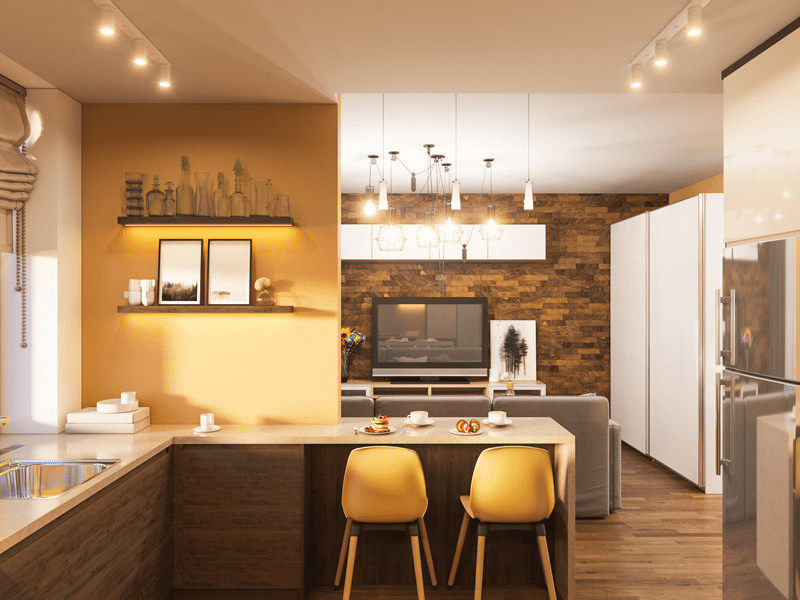
Overlooked and frequently under powered, lighting may be one of the most under-appreciated facets of home design, particularly in Bend where the annual equivalent of ten months of sunshine relegates lighting to an afterthought.
Beyond looking for fixtures, architectural style can help hone the selection process. Many Central Oregon homes are arts-and-crafts or ranch designs, styles that have been supplanted recently by farmhouse modern and Northwest contemporary. Some lighting types work better than others based on home type, so start at the top before working down to details.
More than one hundred lighting manufacturers offer a myriad of styles and fixture types. For consumers that means that no matter your dwelling, there is an abundance of lighting selections.
“Most people come to us and are quickly overwhelmed,” said Ammar Elkateb of Globe Lighting in Bend. “I’ve had people leave and then come back another day.”
Devon Jero, who with her husband is building a new mountain modern home, used architecture and a Restoration Hardware catalog to narrow the choices when they visited Globe Lighting. “We walked into Globe with a Restoration Hardware catalog as inspiration and told Ammar we wanted clean simple lines and warm lighting,” she said.
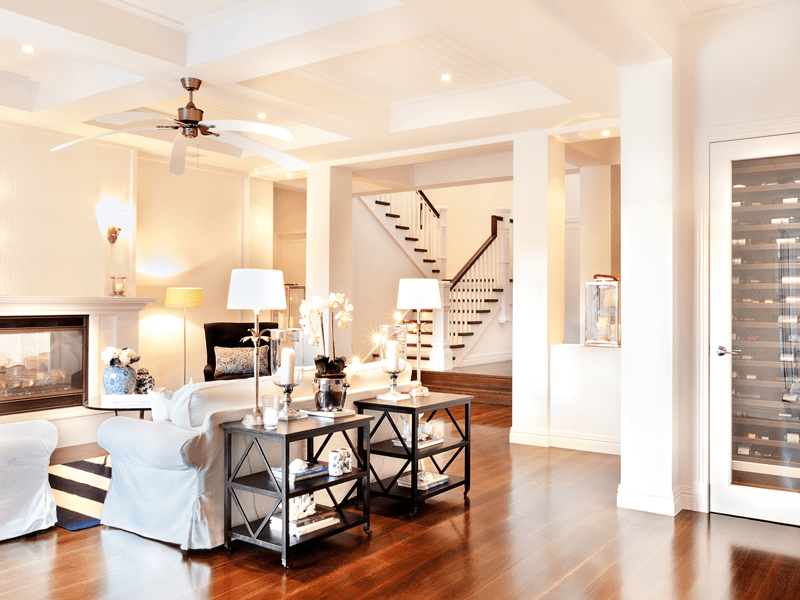
Doing a little homework in advance can smooth the process, but remain open to feedback. “The best thing people can do is look at magazines and catalogues, and sites like Pinterest to pick out the styles they like best,” Brianna Galkin of Bend Lighting advises. “Then we can help them select what they need from there.”
It is a smart strategy to have initial choices driven by style, yet the success of a lighting scheme rests on how well it performs the practical purpose of illumination.
And that according to both Elkateb and Galkin is where many people don’t realize how much lighting they need. “This is really true in Central Oregon,” said Galkin. “People really want to rely on natural light but that can only work for about half the year, and then only during daytime.”
While decorating is an artform, there is also a science to lighting. In fact, illumination needs can be calculated in foot candles, or lumens, based on a room’s function and square footage. Most plans rely on the concept of layered lighting: using a combination of overall, task and accent lighting to reach a room’s requisite number of lumens.
“All the light sources need to support each other and work together,” said Elkateb.
In a kitchen, for example, under-counter lighting, pendants and cans could be used to reach the required lumens. In a dining room, task lighting is not as important, and more emphasis could be given to a chandelier and accent lights.
While style and brightness and the mechanics of home electricity have not changed in decades, “smart lighting’ has become really popular,” said Elkateb, “and it will only become more popular as the prices come down.”

The beauty of smart outlets and switches is that any lamp or light can be Bluetooth or WiFi enabled and operated by a phone, tablet or home’s virtual assistant (think Alexa or Siri). Better still, a whole home does not have to be rewired; you can have one smart outlet or decide to refit them all.
The original smartness, however, came from LED bulbs. Once disdained for their harsh light, they have evolved to now provide the warm and inviting light that many consumers prefer. LEDs also offers more design opportunities than traditional fixtures because they can be formed in designs ranging from a stylized Edison bulb to a twisted ribbon of light filaments suspended in a pendant. Far more efficient than an incandescent bulb, an LED can also last for decades—a real boon when it comes to lighting fixtures in a cathedral ceiling or in a ceiling fan.
“All the lights we chose are LEDS,” said Devo. “It actually all went really easily. We knew what style we wanted, and Ammar found us the right fixtures with the right amount of light, and it was a lot cheaper than Restoration Hardware, too.”
_______________________________________
Color Rendering Index (CRI) How well a light reads a particular color when compared to ideal light. Look for 85 to 90 CRIs.
Kelvin It measures the color temperature of a light bulb and is seen by most people as warm or cool light. Typical ratings are 2000 to 3000 kelvins for soft white general light in living and dining areas and bedrooms, and 3100 to 4500 kelvins for bright white lights suitable to kitchen or work-area task lighting.
Lumens Measures the brightness level of a bulb. One lumen is equal to one-foot candle.
Watts How much energy the bulb consumes to produce its brightness. In the case of incandescent bulbs, the more energy a bulb consumed, the brighter it burned. This explains how a 60-watt incandescent bulb and a 9-watt LED bulb can have the same brightness.
Much has changed since the game of golf’s formative days, when shepherds in Scotland would pass long hours by knocking a pebble with a stick at a target, counting strokes along the way. The soul of the game remains true to those simple principles, but most golf these days is a whole lot swankier—not to mention expensive.
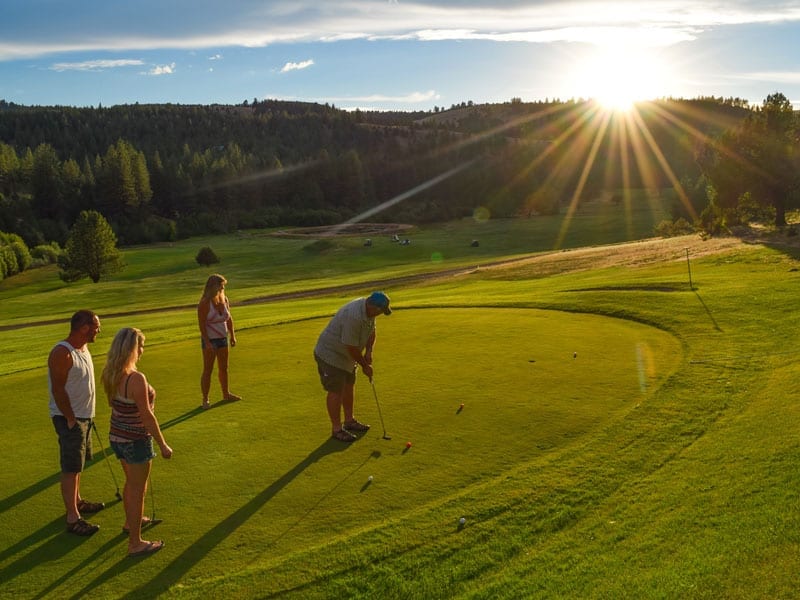
So, what would a buddies’ golf trip look like that eschewed all the trappings of modern resort golf? I decided to find out by getting back to basics this past summer with a golf road trip that took my crew off the beaten path. We loaded up my camper trailer and headed east toward Fossil and a rumor of a ghost town golf course. We extended our travels to Condon on the Columbia River plateau on the edge of wheat country. We wrapped up our travels in Seneca (don’t blink or you’ll miss it) where the Bear Valley Golf Course is a place that those swinging shepherds would have recognized for its no-frills approach.
Our first stop was the nearly mythical Kinzua Hills Golf Club, a six-hole course that once served a thriving logging town by the same name. Today the mill is gone, as is all evidence of the town that sprung up around it. Thanks to a local community organization, the Kinzua (pronounced Kin-Zoo) golf course lives on. With onsite camping available, and offered on a donation basis, the Kinzua golf course with its $11 green fee ($1 per hole plus a $5 “trail” fee) might just be the most laissez faire golf experience in Oregon.
From Bend, the drive to Kinzua traces the stunning scenery of the Ochocos east of Prineville and north on Hwy. 207 out of Mitchell through the dramatic John Day River canyon at Service Creek. A small sign about ten miles south of Fossil directs visitors toward Kinzua. We arrived at dusk, following a gravel road and an Apple map that inspired less confidence than my short game. I had read that the Kinzua golf course was taken out in the 1950s to create a baseball field that served as home to a minor league team affiliated with the mill. If that’s true, the calf-straining hills and valleys give no indication of just where a diamond may have been scratched out of the terrain. Luckily for us, the baseball heyday came and went, and the site was returned to a golf course, which it has remained even as the population of the valley plummeted.
After gathering our clubs for a late twilight round, we were greeted by greenskeeper Jerry Luther, who also serves as a caretaker on the site, which includes a clubhouse, complete with full kitchen and dining area that can be rented out for group events. Jerry also serves as a tour guide/caddy of sorts and offered to show us around the course. With his dog, Bear, a spry collie mix on his lap Jerry trailed us around the several holes on his four wheeler while we lugged our golf bags. He pointed out hazards and offered tips on shots and other tidbits of local knowledge. Most importantly Jerry pushed back the start time on the automatic sprinklers, saving us a good dousing.
Like most of the other courses on our pasture golf tour, Kinzua Hills operates on the honor system. Jerry cuts the grass, but he doesn’t count the cash. It’s your job to put the green’s fee in the box that sits on the porch of the clubhouse. If you want a cart to help negotiate those hills, you can talk to Jerry. He’s got a side hustle in rentals. If not, I suggest you lighten your bag a bit, since a full round at Kinzua is three loops around the up-and-down track.
In addition to the playing tips and irrigation assistance, Jerry ensured that the greens were cut down a nearly diabolical speed the following day. (Kinzua is known for its speedy and somewhat tricky green complexes, and Jerry didn’t want us to miss out on the experience). While no scoring records were threatened during our round, we were treated to a stellar sunset that painted Kinzua’s fairways a deep emerald against the red pines and golden rays that filtered through the valley.
We capped the evening with marinated steaks, fresh corn, and scalloped potatoes from a box, around a campfire. Soon a canopy of stars blinked on in the summer sky, the ethereal mist of the Milky Way galaxy stretching overhead. We were missing only a good bottle of single malt to toast a day dedicated to the simple things. We will be back, I’m sure, to raise that glass.
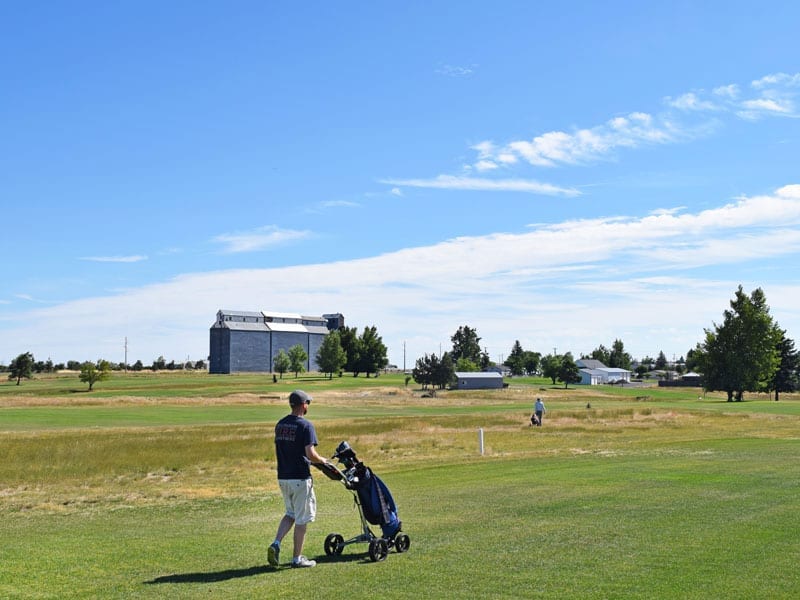
Apart from rural road biking and a revamped historic hotel, there isn’t much to draw visitors to Condon. The nine-hole golf course wasn’t designed to change that. It opened in 1967 for residents of this roughly 600-person town on the edge of the Columbia plateau. Though it’s not clear just how much use it gets from locals or anyone else.
We arrived at the Condon Golf Course to an empty parking lot, which it remained during the duration of our two-hour stay. A kiosk adjacent to a public restroom allowed us to drop our greens fee ($10 for nine holes or $15 all day). A relatively flat course that doesn’t offer much in the way of hazards, the track’s primary defense is wind, which can howl in the afternoon—one of the reasons that the horizon is dotted with wind farms. We timed our round for the morning, before afternoon gusts and heat settled in. The course proved more than enjoyable with sparsely tree-lined fairways that afforded creative recovery shots. The park-style layout makes for a pleasant stroll with a hulking steel-sided grain elevator adjacent to the ninth hole a reminder that wheat, not golf, is king in Gilliam County.
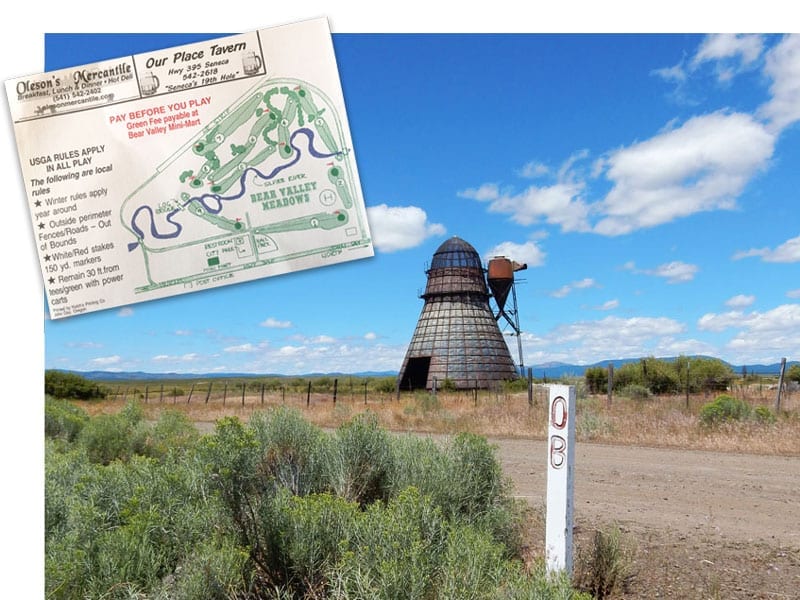
This sparsely maintained golf course in Seneca between Burns and John Day appears on several pasture golf lists and not many other places. The reason for such an omission is somewhat obvious when we arrive at the parking lot at Bear Valley, though parking lot is the wrong term since there is no pavement. (I did however find remnants of pavement on the second fairway which appears to cross an old parking lot).
If honest to goodness pasture golf was what I had set out to find, I hit the jackpot at Bear Valley, where greens as we know them are not part of the package. Instead a few extra passes with the mower through the straw that passes for grass are applied. An enlarged cup like those used for temporary greens on traditional golf courses is employed to counteract the lack of a real putting surface. I wasn’t surprised that I didn’t see any other golfers during my hour and a half round. But the lack of cows, that was a bit puzzling. Still, if you’re in the neighborhood, the price is right at $7, and you won’t have a lot of competition. That’s guaranteed.
Trail running is becoming more popular as runners avoid the hard pounding of the city pavement and opt, instead, for the dirt and gravel trails that provide a more intimate experience with nature while also bringing a bit of variety to the everyday run.
Knowing that fall in Central Oregon is the best time to get on the trails and go for a run, we stopped by FootZone in Bend to explore the trail running trend and take a look at what shoes are best suited for Central Oregon trails.
Thomas Morgan, the buyer and gear guru over at FootZone, was quick to point out that while the following list of shoes represents the latest trends in trail running sneakers, it ultimately comes down to fit. “One shoe may catch your eye while on the shelf, however, it may not be what feels best on your foot,” explained Morgan. At the end of the day, let your feet—not your eyes—be your guide.

This is the hot new shoe from Altra and the best high-cushion trail model right now. It offers a wide toe box, better fit, and a “zero-drop” design, meaning there is no elevated heel in the sole, something that some runners believe can lead to injuries. High-cushion trail shoes also mean less impact on runners’ joints, allowing us to run farther and recover more quickly. — $130
The most popular Hoka model. It’s a lower stack height, mid-cushion trail shoe. It’s the shoe for people who don’t want to go to the extreme end of high cushion, they just want to go part of the way. It has great tread, a very nice fit through the midsole, and it’s very well cushioned, but it’s not a tank. — $140
Like Altra, newcomer Topo offers a wide toe box in a traditionally shaped sole. A lot of reviews are pegging Topo’s other shoe, the Terra Venture, as the hot item, but the Ultraventure could be the new go-to shoe because of its superior fit profile. It offers the latest trends and features without getting too extreme. — $130
This shoe is popular thanks in part to a unique look and a focus on the function. The shoes use Cloud Tech—hollowed outsoles that provide the cushioning. Besides being visually appealing, the shoe fits well, too. If look is as important as feel, then On’s style-driven shoes might be for you. — $150
Brooks has always been a favorite brand among hardcore runners. With the Caldera 3, they have integrated trends like extra cushioning and toe armoring for rock strikes. Given our local terrain, the Caldera 3 might be the perfect Bend shoe, and it’s the most popular women’s trail shoe at FootZone. It works well for runners who are transitioning from road to trail running because Brooks also makes the most popular road shoes. — $140
Trophy trout are just part of the appeal at Southern Oregon’s Lonesome Duck ranch.
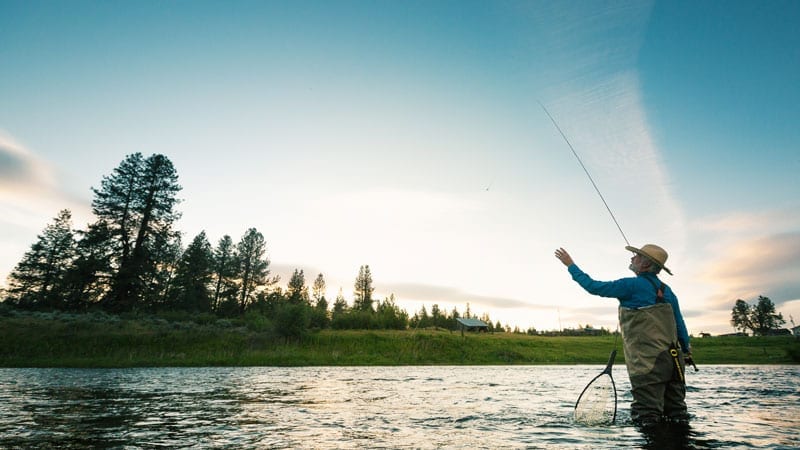
You’re not likely to just stumble across the Lonesome Duck Ranch. The rustic, yet cozy, getaway is tucked into a strip of private land just east of Highway 97, near the old logging town of Chiloquin. The property, which owners Steve and Debbie Hilbert acquired some twenty years ago, sits on the east bank of the Williamson River about a mile upstream from where the river passes beneath the highway. A small sign bearing the ranch’s logo is the only prompt to turn left at a small opening in the guard rail, just south of the Kla-Mo-Ya Casino, and onto a private road that serves as the only way in and out of the riverside resort and adjoining ranch.
The Hilberts sold off the ranch portion of the property several years ago, as well as a custom home they built and operated as a bed-and-breakfast for almost two decades. Hilbert said they made the decision after realizing that their semi-retirement retreat had left them “land rich, but cash poor,” not to mention constantly overworked.
The Hilberts found a willing buyer and now lease back the barn and pasture from the new owner, who is more interested in fishing than ranching (more on the fishing in a bit). Not ready to leave their river sanctuary, Steve and Debbie downsized in 2013, moving into a smaller guest house that they remodeled as a permanent home by adding and upgrading appliances. The shuffle left them with two rental cabins and no bed-and-breakfast to tie them down.
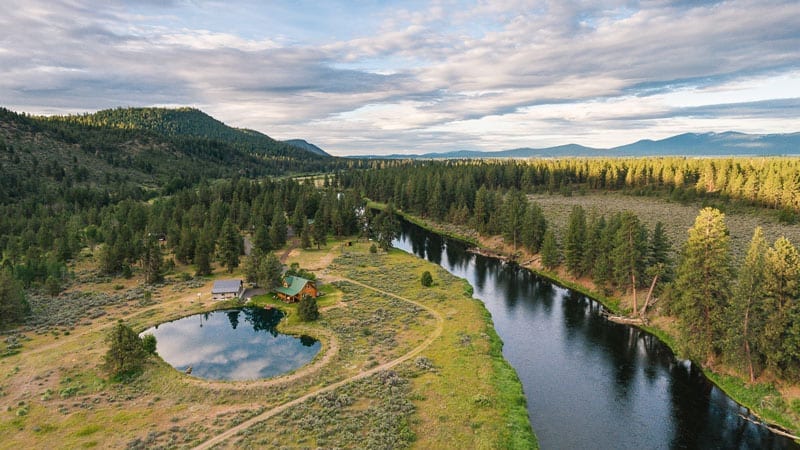
Despite the scaling back of the operations at Lonesome Duck, the essential draw of the river endures. I made my first and only visit on a mid-summer weekday evening, one of the only times that Hilbert could find a small window of vacancy at the property, which serves as a basecamp for anglers in pursuit of trophy rainbow trout. It’s also a launching point for a visit to Oregon’s only national park, Crater Lake, which is located about fifty miles northwest of the property. With few other lodging options closer to the park, the Lonesome Duck has an international appeal. Flipping through the guest ledger in our cabin we saw notes from previous visitors who come from as far away as London and Germany.
Our travel plans were less ambitious. After confirming a vacancy a few days prior to the date, we packed up on the afternoon of our visit. Throwing a few extra clothes and a few snacks together (there is no on-site restaurant or provisions), I hopped into the truck with my somewhat reluctant daughters whom I had enlisted for company.
Hilbert greeted us upon arrival, motoring over from his nearby residence on a side-by-side four-wheeler, his enthusiastic black lab, Clara, sitting beside him on the passenger seat. (Like other elements of the ranch, Clara takes her name from a character in Larry McMurtry’s classic Western novel, Lonesome Dove.)
Hilbert, a University of Oregon graduate, said he first learned about the Williamson from an article in a fly-fishing magazine. After spending most of their professional lives building an interior design business in Lake Tahoe, Hilbert and his wife were ready for a change of pace. They found the Lonesome Duck property in the mid 1990s and spent the next several years shuttling back and forth between Lake Tahoe and Chiloquin. They made slow but steady progress, refurbishing an old railroad cabin that served as the main farmhouse residence. They removed junk cars and piles of trash and restored the home room by room. In 2005, They designed and built a 4,000-square-foot home that served as a two-bedroom bed and breakfast and their primary residence.
Rustic relaxation is the primary theme at Lonesome Duck, where days pass by as lazily as the river out the front door. Hilbert provides kayaks and canoes for guests, who can fish or just slip quietly downstream, while osprey and eagles perched in towering ponderosa pines adjacent to the river watch from above.
Before playtime could begin, we settled into our accommodations, a two-bedroom cottage with a comfy living area, surprisingly large kitchen and full bath with claw-foot tub. In the main living room area, a stone hearth occupies a wall above the fireplace. Hilbert points to native arrowheads embedded in the stones and explains that Lonesome Duck Ranch was once a native fishing grounds and village.
That was our cue to hop in Hilbert’s ClackaCraft drift boat that he keeps handy for opportunistic excursions. I’m not much for guided trips, but in this case I’m happy to have Hilbert’s help. The Williamson is a riddle. A languid creek with almost no discernible current.
Hilbert oars gently downstream toward a downed log. Before reaching it, he drops anchor. He advises me to peel off as much line as I’m comfortable casting. Maybe more. I do as I’m told and drop a marginal cast at forty-five degrees downstream. “Mend,” Hilbert directs, asking me to ease tension on the line by tossing loops of slack line upstream. I toss the mend. “Again,” Hilbert says. I toss another mend. “Another,” he says. “Now wait.” After a solid six seconds, he tells me to begin retrieving the fly. I begin pulling in line with long strips. Hilbert stops me. “Small strips—one inch,” he says. I try again. Still too aggressive, he says. I start to get the picture. I’m not so much stripping in line as teasing it in.
As we work the water downstream, we repeat the same sequence. Long cast. Mend. Mend. Mend. Wait. Tiny fingertip strips.
Nothing.
After almost two hours, dusk is closing in. We motor back upstream, and Hilbert drops me in front of our cabin. He leaves me the boat in case I want to give it another shot in the morning. As twilight envelops the ranch, I drop into an Adirondack chair on the porch with a cold beer while the girls play cards inside by lamplight. We drop steaks on the grill with fresh corn and enjoy a family meal as night settles over the ranch. After dinner, we shake Yahtzee dice as yawns set in. I set my alarm for 6:30 a.m. We need to be out of the cabin by 10 a.m. for the cleaning crew to prepare it for the next guests.
Dawn arrives early with a chill. I grab an extra layer and my fly rod, then head to the river. I decide to go upstream to a riffle that provides some structure and a semblance of familiarity to my eye. After a tug on the line on my second cast, I spend a fruitless hour casting and stripping to no avail. The sun works its way across the water and fish begin to rise around me. Time is slipping away, and my best chance to catch one of the legendary trout is already behind me. I pick up anchor and row downstream to where Hilbert and the girls are walking a pair of llamas. I work toward the edge of the pasture and a fence post where Hilbert spotted several fish a few days ago. Hilbert sees me and wanders over. He takes up a position and within a few seconds his trained eyes spot a fish. Then a second. And another.
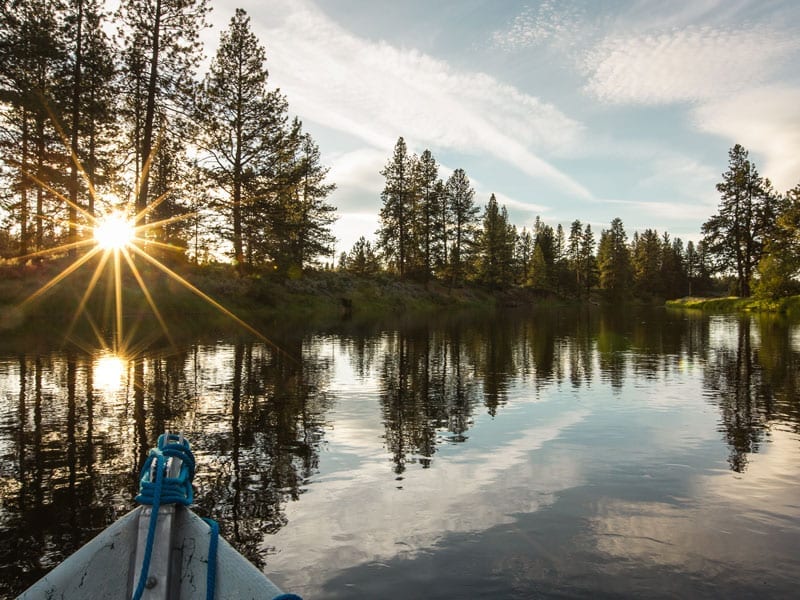
“Move the boat a little close, maybe five feet,” he instructs.
I move the boat and drop both stern and bow anchors to hold my angle in the current for an optimal presentation. My first cast drops well short. I make another. Better, but too far downstream. I make a third cast. “Let it sink,” Hilbert admonishes, reading my nervous thoughts. I begin the small strip tease. One, two, three….
“Bang!”
An unmistakable grab of a large fish. I lift my rod. Nothing. Hilbert sees it all.
“Fish?”
“Yes, nice one.”
I keep stripping. One, two, three, four.
Fish On!
The rod doubles over and Hilbert allows a smile. After several leader-straining runs, the fish comes to the net. It’s at least 18 inches long. A migratory fish that bears signs of its recent lake residence. I hoist it into the boat and the small hook pops free. A tenuous connection.
It’s 10 a.m. Time to go. But I can’t resist, just one more cast. Maybe two. I know Hilbert understands.
83-year-old Dolly DeCair continues inspiring riders in the world’s toughest endurance race.
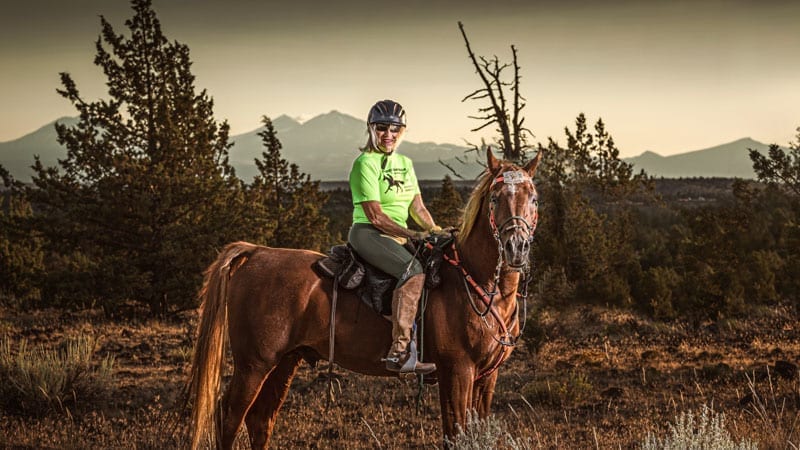
A slim, five-foot, four-inch-tall, platinum blonde with hot pink lipstick, red, fitted t-shirt and lavender riding tights slides her boot into the stirrup of a chestnut stallion, his muscles rippling. She whispers in his ear, “Mama’s gonna try and not scream now,” as she throws her leg over the latest in her line of champion stallions, which in the last forty years she’s raced roughly 7,500 miles. Simply mounting the Arabian reminds Dolly DeCair of her two hip replacements, the most recent done last year.
But at 83, with 100 top-ten endurance race finishes — including a second-place finish at age 65 in the world renowned 100-miles in twenty-four-hours Tevis Cup — to her, there’s no other option than to push through the pain. She was born to ride, and ride fast — even on Tevis’s narrow trails through remote mountain wilderness, with riders racing to the finish in the dark.
Known for her speed, her flair, and for slowing down to help others on the trail, the Crooked River Ranch “blonde at the O.K. Corral” as friends call her, has been inspiring riders throughout the West’s endurance racing community. That includes locals who’ve gone on to dominate in Tevis, known as the world’s most difficult endurance ride.
DeCair even sped into the world, born prematurely, and was called Dolly because of her toy-like size. When she was five, her mother died of kidney disease, leaving her father to raise his three children on his own in Central Park, Washington. He worked constantly as an electrical engineer for a lumber mill and was strict.
“He was the kind of dad that ‘no’ meant ‘no,’” DeCair said. “But I never gave up on a horse.” When she was 12, they saw one for sale, and he let her take it for a ride. The only way she could get the horse to stop was to run into the side of the barn. She seized her opportunity and told her father she loved the horse, although she never could teach her to stop. “I’d just bail off.”
She never had the money for lessons. “I just got on and rode,” she said. “The only thing I had going for me was that I wasn’t scared.”
It’s the 1980s, and Dolly and her husband Bill DeCair are living in a one-room bungalow at Ace in the Hole, a boarding facility run by a gambling addict in the Almaden Valley of San Jose. Endurance riding legend Virl Norton is living across the street and taking on horses that people gave up on. “It was his place or the meat factory,” said DeCair, “So he’d call them ‘Alpo’ and ‘Thriftway,’’
“I learned so much from him. I rode all his insane horses ’til I got one.”.
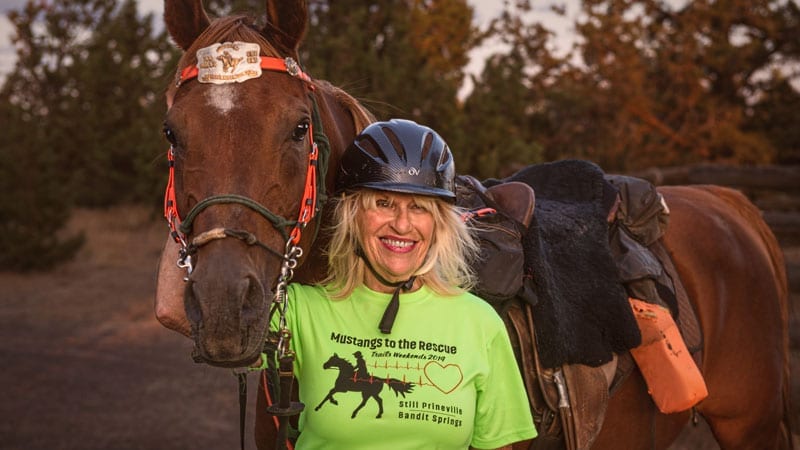
She sees Wazir’s Karahty, a five-year-old, copper colored chestnut Arabian stallion with a long mane, tail and athletic physique. He’s completed several endurance races, but the owner doesn’t think he’s fearless enough to ride the horse to its full potential. “He said, ‘Well, I know you’ll ride the piss out of him, and he won’t want for a better home,’” said DeCair.
Wendy Lumbert, who writes for Endurance News, a monthly published by the American Endurance Ride Conference, called Karahty “the greatest U.S. Endurance racing stallion that ever lived. Even though Wazirs Karahty and his remarkable owner and rider, Dolly DeCair are not highly publicized, statistics prove that both were superstars.”
Karahty’s last finish was in 1992. He completed 54 of his 55 races (an achievement, considering races such as Tevis Cup have a roughly 50 percent drop-out rate). Together, DeCair and Karahty had thirty wins with twenty-one Best Condition awards (based on designated check-ins given along the trail by a team of expert equestrian veterinarians). These were in prestigious fifty- and 100-mile races: Karahty won the North American Championship at Swanton Pacific riding against the famous world champion horse, Rio. DeCair rode with broken ribs.
Karahty sired more than twenty top-ten endurance horses. DeCair rode Karahty’s most winning son, AAA Amadeus, to second, fourth and eleventh place in the Tevis Cup.
DeCair recalled taking second-place in the historic Tevis Cup in 2000. She stopped at the final vet-check, seventeen miles from the finish at Francisco’s, a two-acre, natural meadow overlooking Oregon Bar, named for a party of Oregonians who found gold there in the summer of 1848. The vets had checked Amadeus’ pulse and respiration and DeCair was cleared to go. “I knew I had my chance,” she said. “But he was so hungry, I couldn’t get his head out of his mush.”
When they got back on the trail, they began fording the American River, with DeCair putting her legs atop the horse to keep from getting wet. She could see the headlamp of her rival ahead in the pitch darkness, the moonlight obscured by trees. “Most riders say it’s the scariest part,” DeCair said. “It’s the funniest sensation, going full blast in the dark. You have to trust your horse. You can’t see, but they can.”
She knew Amadeus’ competitive nature, and that only something serious would let him tolerate another horse ahead of him. “I could never forgive myself if I’d ignored what he was telling me,” DeCair said. Your first responsibility is to your horse. You can kill yourself if you want, but don’t kill your horse.” They finished in twenty-three hours, sixteen minutes — eighteen minutes behind the winner.
Wendy Lumbert, an endurance rider in Cool, Calif., and formerly of Alfalfa, said, “The really amazing thing about Dolly, however, is her perseverance. She has ridden fifty miles with a broken arm. One year she broke her leg badly, and as soon as it healed, she was back in the saddle. Hip replacement, terrible injury to her forearm, back surgery, loss of her beloved husband and now, in her 80’s, Dolly is still out there competing on a stallion.
“She works through the pain, the loneliness, the brutal work of conditioning horses in Bend winters and hot summers,” Lumbert said. “Her love of horses and endurance racing carries her through. You have a real living legend there in Central Oregon with Dolly, 83 and still racing her stallion on twenty-five-mile rides. Amazing.”
Lumbert recalled riding her best horse near Smith Rock with Dolly, who rode Amadeus:
“Dolly was trotting along about eighteen miles per hour. My horse was galloping so fast the wind in my eyes made them fill with tears, but he wasn’t catching up. Dolly turned her head and yelled back at me, ‘Do you want to canter now?’ I laughed so hard I nearly fell off, and yelled back, ‘You go ahead Dolly!’ and they took off like being shot out of a cannon.
“That’s what happens when you take your VW to the Indy 500,” said Lumbert. “And yet in the two decades I’ve known Dolly, she has never bragged or said anything more than what an honor it’s been to have had her fantastic horses. What an inspiration.”
Wasch Blakeley of Terrebonne met DeCair shortly after she moved here from California in 2001. Blakeley, a Jehovah’s Witness, was going door-to-door, spreading the faith. He knocked on DeCair’s door, not knowing she was already a devoted follower. Instead, it was DeCair who did the preaching—about endurance riding.
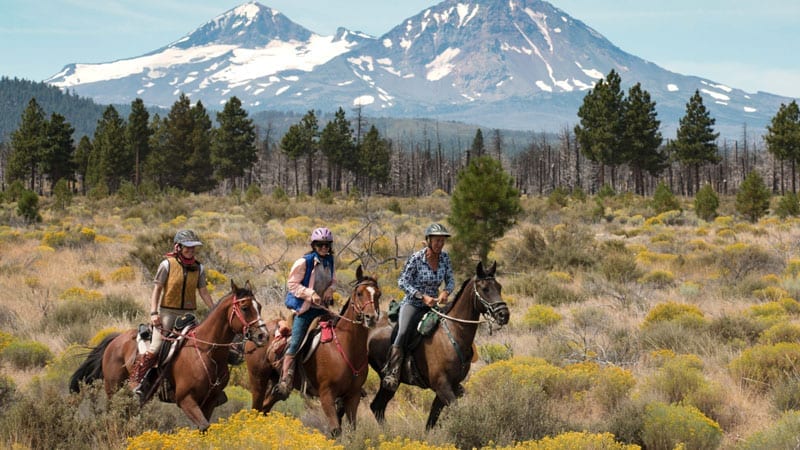
“It sounded awesome,” said Blakeley. “I’d just done pleasure riding. A year or two after meeting, we did our first twenty-five-mile race and then we were just hooked. We thought, ‘Wow, this is a lot of fun.’ We could hardly walk up our stairs at night.”
The Blakeleys have gone on to Tevis Cup success. Blakeley’s wife, Gabriela, finished second and Wasch finished third last August. Their son Barrak, 20, finished fifth last year. In 2014, as a junior racer, Barrak won the event’s other major trophy, the Haggin Cup, awarded to the rider whose horse is in the best physical condition of the first ten finishers. The Blakeley’s daughter, Sanoma, 18, competed with the rest of the family when she was at the minimum race age, 12.
Nina Bomar of Malibu recalled the impression DeCair made on her when she was a teenager at a Southern California endurance ride about forty years ago. “She was known as the wild and crazy girl who rode fast on a stallion and won most of the time,” she said. She thought Karahty was magnificent and DeCair’s bright red spandex riding pants were fun.
“Most outstanding of all, she wore a big beautiful smile and had a visible, hyper energy that surrounded her … The next day, Dolly won that ride and I got to see her for a few brief seconds on the trail as she and her horse thundered by us as if we were standing still. I’ll never forget the energy I felt from their presence — it was powerful. I recall thinking that they could have swept me and my horse off the trail and sucked us into their tailwind as it was that strong.”
For DeCair, the bond between a horse and rider during fifty and 100-mile races is incomparable to other riding events. “You overcome so much in yourself and your horse — the heat, the weather, the trail, you can’t give up,” she said.
Today, she finds that acting as her own support crew for twenty-five-mile rides, keeping her truck and trailer running, plus paying the entry fees, is almost as difficult as racing the Tevis Cup. “It’s a humbling thing,” she said. She pointed to a meme on Facebook that read: “I ride to escape this world. I ride to find peace with myself. I ride to feel free and I ride to feel strong.”
She said, “That’s why I do it now.”
The arrival of autumn may mean it’s too late to jump onto a paddle board and too early to hit the slopes, but these Central Oregon hikes for fall will get you outside. Summer crowds have all but disappeared, leading to sparsely populated parks, trails and natural experiences for locals and autumn visitors. From the wide-open sagebrush steppe of the Badlands to the alpine slopes of the Santiam and beyond, here are three hikes that we recommend you hit this season.
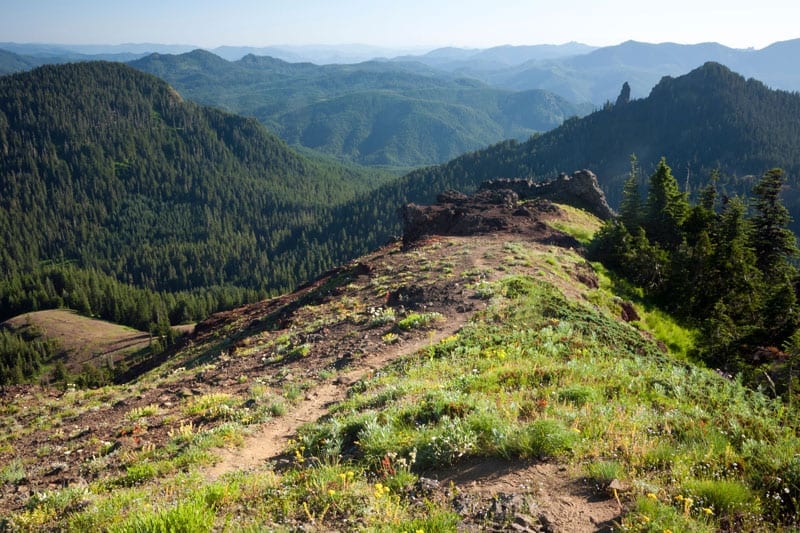
Located on the southern edge of the Middle Santiam Wilderness, the botanically expansive Iron Mountain via Cone Peak hike offers some of the best opportunities to explore Oregon’s diverse flora in the high Cascades.
The Iron Mountain area is home to more than 300 plant species. It also offers hikers the chance to witness the seasonal flora change during early fall excursions. Find your way through expansive meadows, dry rock beds, and ecologically diverse alpine forests where at least seventeen species of trees can be found.
Traveling along the Cone Peak trail, hikers will meander in and out of these varying landscapes. From meadows to alpine forests, and back out into meadows again; you feel as though you are passing into different worlds. Every moment feels refreshing and variable. Just about a third of the way through the journey, the hike opens into an expansive view, lying at the foot of Cone Peak, Echo Mountain, and Iron Mountain. You might think you’ve hit the best views, but climb farther and you’ll find more impressive vistas. Winding up through the meadows and open steppes, you will eventually find yourself back into the alpine forests, where ancient trees in a breadth of species tower above.
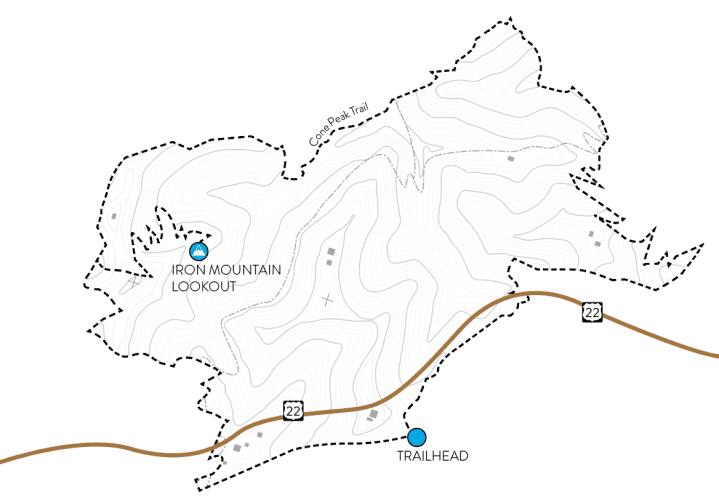
WHAT TO KNOW
The Cone Peak hike is rated as a moderately difficult, five-mile loop around Iron Mountain. Start at the Tombstone Pass parking area; walk east along Highway 20 for a quarter mile or so to reach the start of the trail. For those who crave a little more strenuous activity, just a little less than two extra miles and a total of under 1,000 feet in total elevation gain will take you to the top of Iron Mountain via the Iron Mountain Summit Trail. This additional segment is rated as “hard”, but will reward you with some of the best views the Willamette National Forest offers.
Upon reaching the Iron Mountain summit, at just over 5,000 feet, hikers can find a vantage point with clear views of Mount Jefferson, Three Fingered Jack, Mount Washington, Diamond Peak, all Three Sisters, and many other peaks. On a clear day, you can even see Washington and catch a glimpse of Mount Saint Helens and Mount Rainier.
Find this hike by traveling west on Highway 20 from Sisters, along the Santiam Pass, towards Sweet Home.
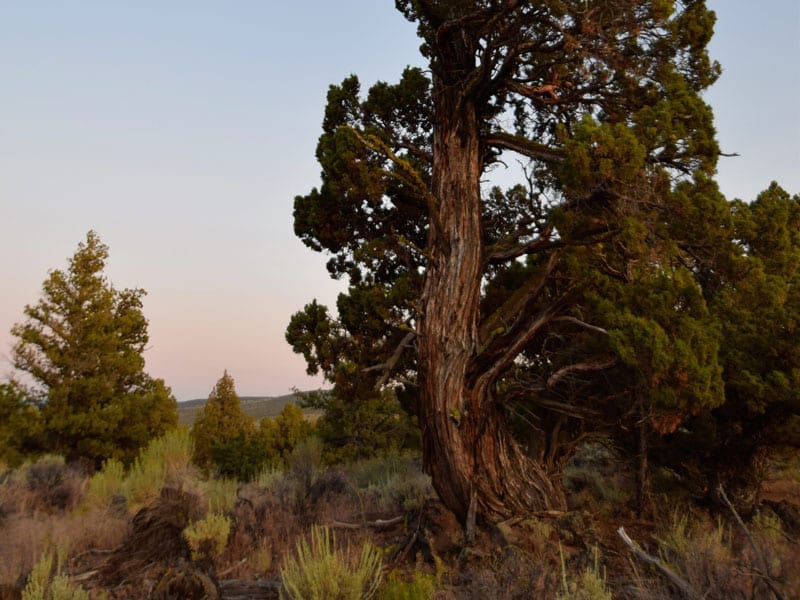
The Oregon Badlands is a stark contrast to the alpine wilderness to the west. With its seeming lack of visible wildlife, it can at first seem destitute. That’s not to say that animals aren’t out there, they are just perfectly adapted to stay hidden. But visit during the twilight hours, around sunset and sunrise, and you may find your new favorite landscape and a world of wildlife that is just beginning to stir.
As the name suggests, junipers, many of which are hundreds of years old, pepper the landscape. Aromatic high desert fauna like rabbitbrush, bitterbrush, and varying sagebrush abound among the sculpted lava rock. The smell of this area is truly mesmerizing. Matched with the sound of hunting songbirds and cricket serenades, this hike is truly about the sensory experience.
Other elements of the Badlands are less obvious, like the geology. The area sits at the intersection of two volcanoes and is home to silt and ash deposits and obsidian flows from ancient volcanic eruptions.
The hardy juniper tree thrives in some of nature’s most inhospitable environs and is often found growing directly out of basalt outcroppings. Be ready for a dusty and rocky trip, and if you are hiking in the twilight, navigate these conditions carefully.
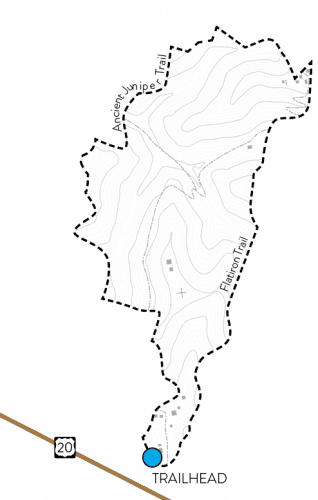
WHAT TO KNOW
This hike is a quick and easy three miles, which can take you as little as an hour or as many as three if you take in the scenery. At a mere fifteen miles east of Bend on Highway 20, the Ancient Juniper Loop is easy to get to and is rated as easy. Just start at the Flatiron Rock Trailhead. Come prepared with headlamps, and you can extend your trip into night hours to catch some of the darkest skies and best celestial views the high desert has to offer. Crisp fall skies often host a lack of atmospheric disruptions—free from the smoke and haze of the summer season.
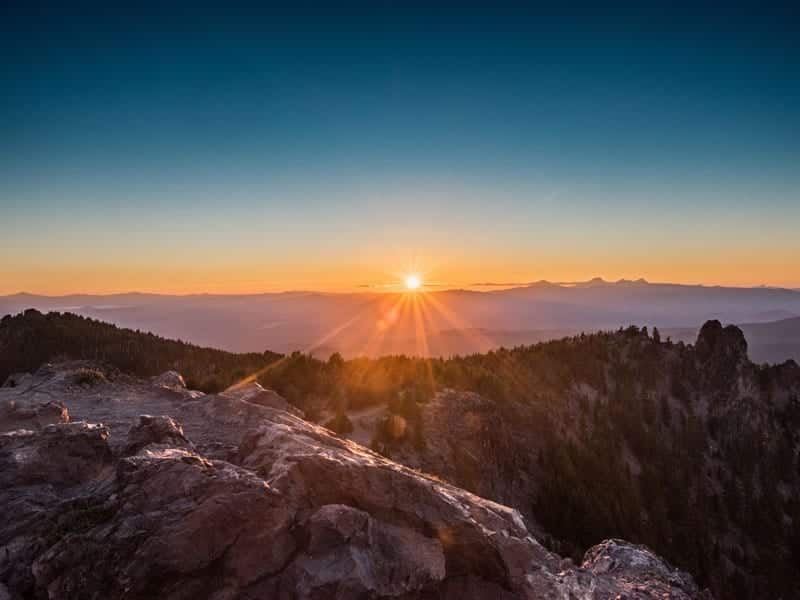
Paulina Peak is a physically challenging but highly scenic hike that is well worth the work. It’s part of a wider system of gorgeous trails and camping sites that run throughout the beautiful Newberry National Volcanic Monument. From short half-mile hikes to twenty-mile lake loops, there are plenty of amazing adventures from which to choose.
Paulina Peak Trail begins at the caldera of Newberry Volcano, home to Paulina Lake. At a maximum depth of 250 feet, Paulina Lake sits in the belly of the ancient volcano. The largest volcano in the Cascade Shield, Newberry, has a footprint roughly the size of Rhode Island and last erupted about 7,700 years ago. Although the volcano remains mostly quiet, it is closely monitored by the United States Geological Survey, and thermal vents and hot springs run the northern shoreline of Paulina Lake to create diverse life and booming ecosystems.
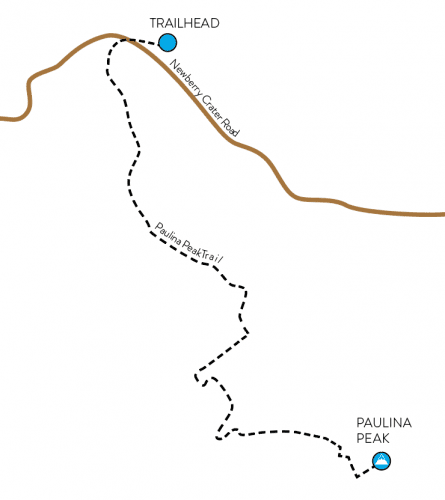
WHAT TO KNOW
Work your way up the caldera, towards the rim of Newberry volcano, for this six-mile, there-and-back hike. The reward is a vast view of some of the 1,200 miles of Newberry’s lakes, foothills and buttes, diverse forests, and miles and miles of obsidian-lava flows.
Toward the apex of this hike, you walk through the starkly beautiful but eerie forest remains of the few surviving whitebark pine trees, some of which are more than 1,000 years old. The Forest Service has installed some helpful interpretive panels where hikers can learn all about these incredible trees and their symbiotic relationship with wildlife such as Clark’s nutcracker, as well as their unfortunate decline in the face of imported disease and infestation.
The top of Paulina Peak Trail will bring you to the summit of Newberry Volcano at 7,984 feet. Here you will find the most encompassing of views, and incredible variations of lava rock, some artistically formed with stripes of rhyolite and obsidian.
If you are looking for a shorter adventure that can be fit into a mid-week, pre-work or post-work hike but still delivers a physical challenge, skip the first mile of the trail, and start your hike at the Crater Rim trailhead. This will knock your hike down to four miles round trip, and still give you several trail sections that span from thirty to fifty percent grade.
Enjoy these beautiful Central Oregon hikes for fall, we’ll see you on the trails.
With Whiskey When We’re Dry, Oregon author John Larison propels the Western genre into the modern world.

Whiskey When We’re Dry almost didn’t happen.
A few months into writing the 2018 Western novel, a water line broke and flooded author John Larison’s writing studio at his home in the Oregon Coast range, drowning his computer, backup computer and thumb drive. But the old adage that good writing is just rewriting, proved to be true.
“I had the first page or so burned into my memory. When I sat back down, it came out exactly as it had been,” said Larison. “I rewrote the two months of work in two or three days. Now, it’s almost like my writing strategy to throw away the first draft.”
Whiskey When We’re Dry is a modern take on Westerns. Set in the late 19th century, the coming of age novel follows Larison’s heroine, Jessilyn Harney, who sets off across the West to find her outlaw brother and secure her family’s homestead. Along the way, she binds her chest and cuts her hair to pass as a young man and becomes a gunman for a politician. The story is told as Jessilyn reflects on her past, coming to terms with her choices and what it means to be part of a family, blood or not.
Like a true Western there are gunfights and chases on horseback and encounters with all the different cultures that were laying claim the West. But it’s a decidedly feminist take on the genre that challenges norms and pushes Westerns in a new direction.
“I had grown up reading those [classic] Westerns,” said Larison. “I looked for models of masculinity, what it means to be a man. As a grown up, I started to find the Westerns’ conception of masculinity to be outdated.”
The writing in Whiskey When We’re Dry is noticeably different than his previous works. Larison ended up writing twenty-three drafts of the novel, and the effort shows in how beautifully the prose flows. The voice of Jessilyn feels authentic and real, and the descriptions of the harsh landscape will etch themselves into your memory, as will the story, long after you’ve put it down.
“It wasn’t much of an idea. It was a voice. I followed that voice, and listened to the story that it told me,” said Larison. “To me it felt like I was transcribing someone else’s story.
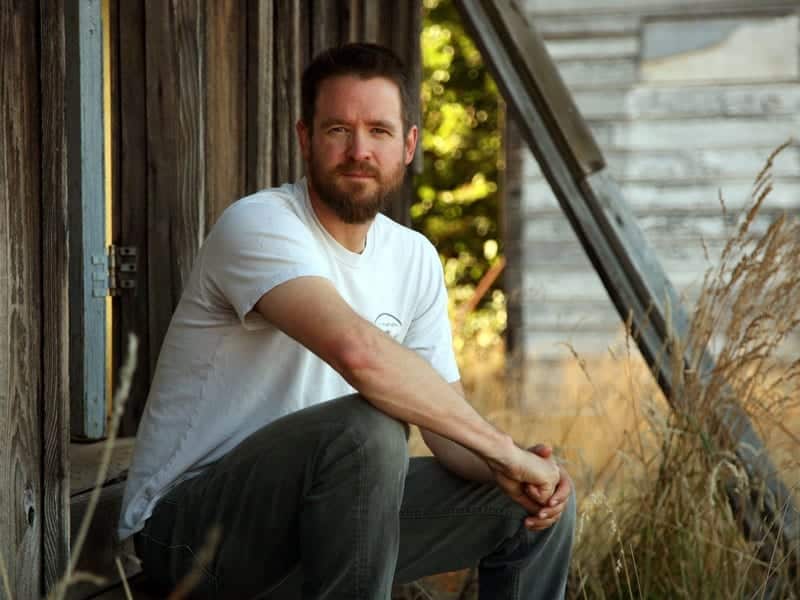
“I realized early on, when you take issue with the Western, you are also taking issue with the dominant culture of America,” he continued. “The book had a lot of potential to talk about relevant, pertinent issues in American society, while also remaining totally true to this person who was speaking through me. I felt like it was my job to listen to that.”
A former fly-fishing guide and writing instructor at Oregon State University, Larison, said that his writing career has paralleled his early reading career.
He grew up in Oregon and reading books about fly fishing. His first two novels, Northwest of Normal (Barclay Creek, 2009) and Holding Lies (Skyhorse, 2011), were contemporary fiction about a fly-fishing community on the fictional Ipsyniho River in the Pacific Northwest, loosely based on the Mackenzie and North Umpqua rivers in Oregon. Then he started reading classic Westerns, and about twelve years ago began writing Whiskey (Viking, 2018), which was nominated for an Oregon Book Award.
Whiskey When We’re Dry caught the attention of Hollywood producers before it was even published and is currently being developed into a 10-part limited series. He’s currently at work on his next book, a novel titled The Ancients, which will grapple with climate change in a new way. It’s expected to be published in 2021.
“The experience of watching all my local fisheries change due to climate change, that brought the crisis home for me in a way,” said Larison. “If you do something outside, especially if you’re income is dependent on something outside, you’re forced to face it. As someone who considers themselves an environmentalist, I was really under informed. It’s a challenge for storytellers to articulate in a way that brings it home for readers.”
Shooting the wild world, bringing it home to Central Oregon.
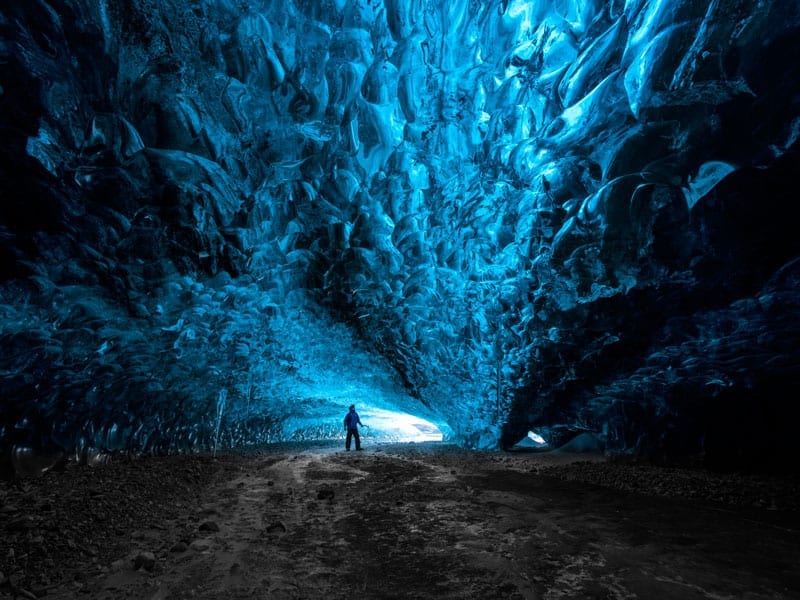
Chad Copeland has been to war. He’s seen the planet from the seat of a fighter jet and flown civilian aircraft in white-knuckle Alaskan conditions. In 2002, he tried, failed and finally succeeded at flying a camera on a remote-controlled aircraft, commonly called a drone today. And while working as an air traffic controller, he once cleared the skies for Air Force One with President Obama aboard.
His training as a pilot, his love of cameras and his early adoption of drone technology led him into remote and wild places around the globe. It proved a winning combination. While it takes most professional photographers time to build their portfolio, Copeland’s first assignment was with National Geographic. They sent him to China for six weeks in 2013 to shoot Moon Hill in Yangshuo and limestone karsts of the Shilin Stone Forest. That job made him the first civilian person to fly drones in China. Since then, his A-list clients have included Microsoft, BBC’s Planet Earth, Outside magazine, Men’s Journal, the NFL Network, NBC Sports for the 2016 Olympics in Rio, Tesla and Spacex, and Jeff Bezos’ Blue Origin where he said he put “a cloud of drones” around rocket launches in West Texas.
Copeland, 38, moved to Bend in January, opened Copeland Gallery in Sunriver in February and has plans for a second gallery in Bend. The Sunriver gallery displays large-scale ultra-high definition prints chronicling his encounters with grizzly bears, humpback whales, sharks, turtles and a rare and endangered Hawaiian owl. He’s dived with tiger and Galapagos sharks and even great whites, and although the photos of those creatures are in his archives, they may form part of an upcoming oceans-themed exhibit.
“The focus of my gallery is to convey a message of wild places and to give animals more focus,” he said. “I’m in awe of their intelligence and emotions, and I feel it’s possible to communicate nonverbally with many of them.”
The gallery also showcases exotic places where Copeland has traveled on international assignments or simply for his own adventures. Visitors are greeted with images of red-sand caves punctuated by a shaft of light, craggy mountain rims, green swirls of the Northern Lights, Fiji and the Nepali coast of Kauai, shimmering ice caves and icebergs, and even sunsets and waterfalls. More recently, photos of his new life in Central Oregon have begun to populate his gallery, holding up well to the plethora of other beautiful places that hang on the gallery walls.
He’s been lugging a camera around since the age of 7 when he found a Polaroid (without film in it) sitting on the coffee table of his family’s home in Pocatello, Idaho. Although his equipment costs a bit more now, he still shoots every day. A high-end Sony camera system with all the necessary lenses, filters, batteries and a drone are packed in a Pelican case that’s ready to go on a moment’s notice. “I may get a call from across the country asking me to be somewhere to film in a few hours,” he said. “Adventure photography is not a planned lifestyle,” he said, adding that he was away from the Pacific Northwest and his family ten months last year.
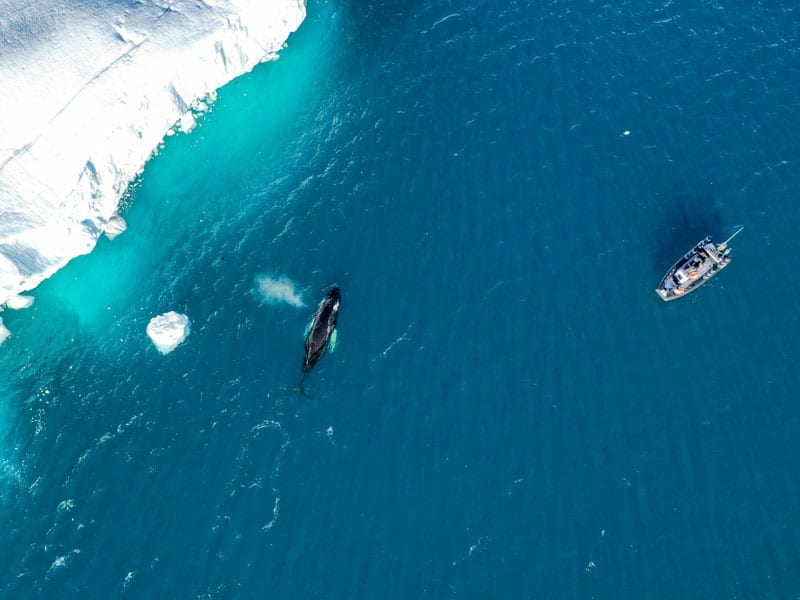
To help others explore the outdoors and its inhabitants through a camera, Copeland offers weekly workshops at the gallery. Students range from those wanting better photos with their iPhones to accomplished professional photographers. And if individuals seek adventure Copeland-style, they can sign up for one of his globally guided trips to places like Greenland or the South Pacific kingdom of Tonga.
So what kinds of challenges does this master of the camera face? The biggest one he says is dust, and there’s plenty of that in Central Oregon. “I go through everything each night, looking for a speck of dust or smudge to purify the image,” he said. “I want people to imagine they could be there, I want them to see the wild as I saw it through the lens.”
Three generations mark a century on the pioneer property.
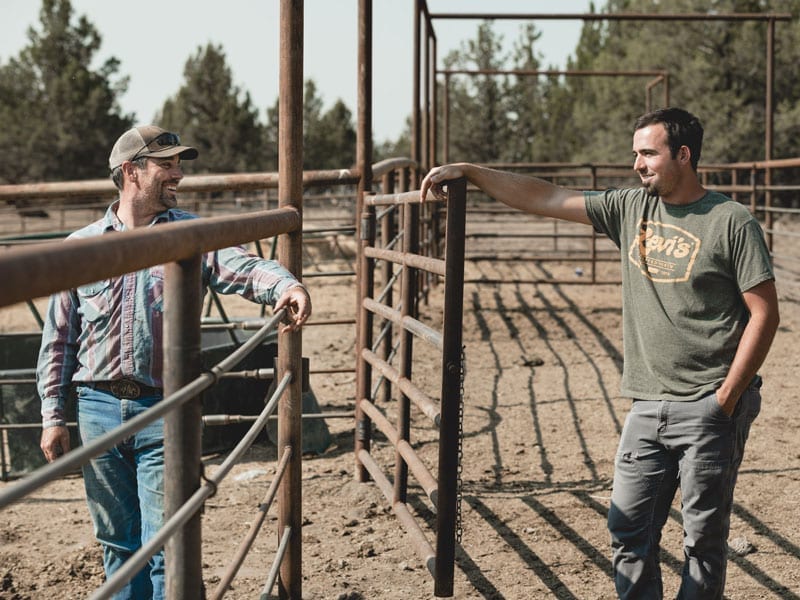
Walking on the Rastovich Farm east of Bend is a journey back in time. The first structures were erected in 1919. One of the original barns even has a cellar used to store alcohol during Prohibition. There is a “junk yard” on the property that looks straight out of an episode of American Pickers, complete with Model T cars, vintage gas pumps, and of course, years and years’ worth of farming equipment that showcases the evolution of modern agriculture.
Much has changed at the farm over the past century as modern machines have supplanted the hand tools used by George Rastovich who homesteaded the property one hundred years ago. What hasn’t changed is the family behind the operation. The farm today is operated by Rastovich’s grandson, Rob, who has helped to transform the modest family farm into one of the area’s premier beef operations and has recently branched out to hemp production. In the tough and tumultuous world of farming such continuous lineages are rare. So rare, that the Rastovich farm is the first in Deschutes County to earn the coveted Century Farm designation, awarded by the Oregon Farm Bureau and the Oregon Agricultural Education Foundation.
The bucolic farm is a uniquely American success story. In 1919, George Rastovich was a war refugee from the former Yugoslavia who emigrated to United States. Rastovich took advantage of the Homestead Act that promoted settlement of the frontier West. He put down stakes on forty acres of land east of the growing outpost of Bend. A subsistence farmer, Rastovich grew crops and kept animals to feed his extended family of aunts, uncles, and seven kids.
Over the past 100 years, the farm has grown into a much larger operation. The now 200-acre stretch of land is home to more than one hundred head of cattle, most of which are part of the locally famous “Barley Beef” operation.
Rastovich spent time as a Silicon Valley executive before returning to the family farming operation. (He runs a tech-related business on the side.) He brought that entrepreneurial spirit back to the land, popularizing the idea of farmers partnering with local breweries to utilize their spent grains as feed for cattle. Rastovich sells the grain-feed beef to local restaurants, including some of the same breweries. The symbiotic relationship has been a boon to both farmers and brewers, who also send nutrient rich “beer water” to be used as fertilizer.
After one hundred years, the Rastovich Farm is part of Bend culture, a testament to our modest beginnings and our ambitious future. Rastovich’s goal for the family farm is simple: work to maintain and improve so that the Rastovich Farm will be prepared for the next century.
“We’ve been doing a lot of upgrades around here,” Rastovich said. “After one hundred years, most things begin to look run down like the first structures that came up on the property. We’re just trying to get ready for the next one hundred.”
Miyagi Ramen raises the bar for trending, savory noodles and more.
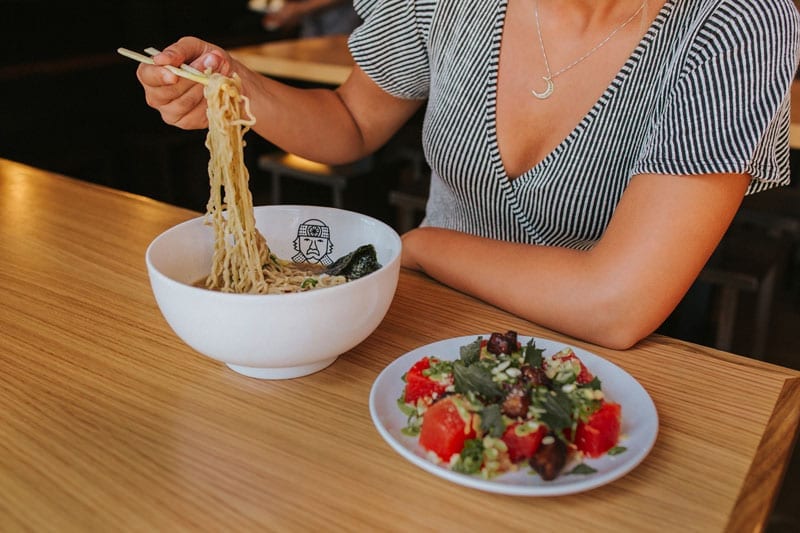
Bars of scarlet neon in the sprawling, thirty-foot high, street-arty mural flickered on. Aromas wafted from twenty-gallon stock pots. A line wound out the door, despite a downpour. When Miyagi Ramen opened in The Box Factory this summer, those behind it wished they could claim it reflected calculated smarts. Instead, they followed the same strategy — which is to say they didn’t have one — as in 2017 with Bos Taurus, a Bend twist on a classic steakhouse.
“It just kind of felt right,” said James Meskill, a partner, along with 10 Barrel Brewing founders Chris and Jeremy Cox, company president Kyle McKee, and George Morris, executive chef of Bos Taurus and Miyagi. “We all really enjoy ramen, and it was a great excuse to go around and eat ramen in Manhattan, in Portland, when we’re traveling.” (Meskill also works with brew pubs around the country as director of operations for The High End, the craft brands of Anheuser-Busch, which bought 10 Barrel in 2014.)
They didn’t stop at U.S. borders, though. When they’d asked Morris, who in the past two decades has worked at some of the nation’s best restaurants, if he could be a brothy-noodle shogun, he replied, “I can cook anything you want, but if you want me to cook ramen, you’ve got to send me to Japan.” They did.
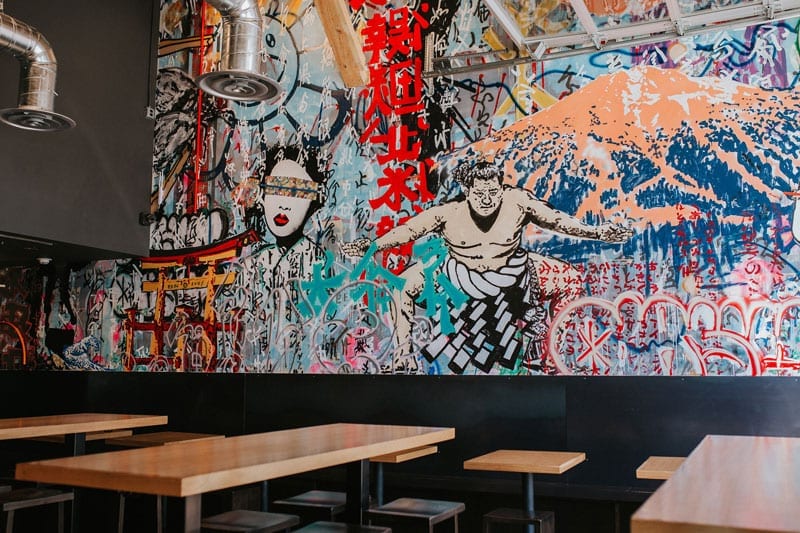
For two weeks, he did nothing but taste the iconic dish throughout Tokyo, visiting five shops a day, texting the partners with images and details of everything inspiring him. Back in Bend, at a table tucked into a corner of the buzzy eatery, Morris described three dishes that set a new bar for him: coriander Dan dan ramen at Ippudo; spicy miso ramen at Misoya Hachiroshoten, where the wok-charred bean sprouts added a rich, smokey flavor, and tonkotsu at Gogyo, notable among discerning Japanese ramen-eaters.
Morris pays tribute to these on his menu. His tonkotsu includes an egg cooked sous-vide (vacuum sealed in a pouch and immersed in precisely heated water), allowing the viscous yolk to swirl amid chashu pork (pork belly braised in soy sauce, sake, and mirin), nori, pickled burdock root, bamboo shoots and scallions. An umami-packed smoked shitake mushroom and cashew ramen with spicy tofu and baby bok choy, is a vegan option that also has broad appeal.
You might not even mind developing monstrous atomic breath from nibbling the tare “Godzilla” wings, roasted with garlic, toasted rice and togarashi (a mix of spices typically including mandarin orange peel, sesame, poppy and hemp seed, nori and ground sansho). The steamed buns, baby soft and swaddling chicken, pork or tempura miatake mushrooms, with burnt scallion mayo, pickles, hoisin and barrel-aged Sriracha is the Asian equivalent of the perfect slider.

Morris’ inventive, compressed watermelon and crispy pork belly salad, which he developed while at the acclaimed Fatty Crab in New York City, will prompt you to assume a tournament-winning “crane” stance. The chef’s menu also harkens back to his days as a (non-Karate) kid. On every birthday, from age 6 to 13, his parents would take him to Benihana. Just before the chefs would launch into their theatrics, flipping shrimp from the tableside hibachi into their red, cylindrical hats, there’d be a salad.
“It wasn’t anything great, but the dressing was to die for,” Morris said. His “Benihana” vinaigrette for local greens with shaved radish and pickled burdock root is an homage to that memory.
Like the kid from the movie, Miyagi strives for excellence while also keeping it casual. And like the 1984 surprise hit film, its family friendly (see: Little Ninja ramens), and reasonably priced. “What’s most important is quality food, service and fun,” said Morris. “We wanted to create a place where we could enjoy ourselves.”
Gameday grub that transcends the standard pub playbook.

Getting together with friends for a game day barbecue is revered tradition, even in Central Oregon where the nearest college stadium is two hours away and the nearest NFL market is Seattle. While hosting a big get together can be fun, it’s also exhausting, requiring hours or prep and shopping—not to mention post-festivity cleaning. When a big gathering isn’t in the cards, consider hitting one of the sports-friendly venues where the drinks are always flowing, and the cooking and cleaning are someone else’s responsibility. There are plenty of options around Central Oregon, but several stand-out for their unorthodox take on traditional pub-fare. Here are four places where you’re guaranteed to find not only the big game, but also something to pique your culinary curiosity.
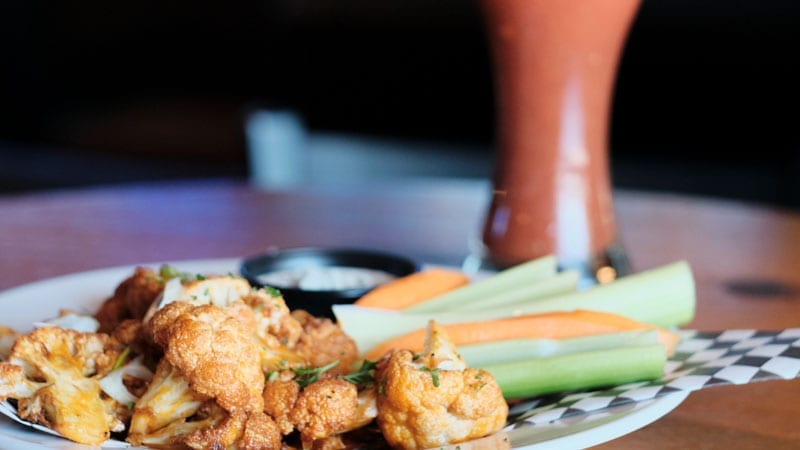
Whether it’s the Ducks taking on a Pac-12 patsy on Saturday night, or Russell Wilson calling plays on Sunday, come game day, Redmond fans pack the Hideaway, a casual restaurant and eatery, that is a fraternal twin to its Bend counterpart—similar but not identical. Both restaurants are heavy on sports and New England memorabilia, a nod to owner John Nolan’s East Coast roots, and televisions (try to find a wall without a set), but there are differences. The original Hideaway is tucked into Bend’s southside, far enough off the main drag that it necessitates a billboard to guide patrons into the establishment. The Redmond location, formerly known as the Dawg House, takes no such searching. It’s located on Evergreen right off Centennial Park and just a short walk from city hall and the heart of a reawakened downtown Redmond.
What doesn’t change, between the two locations is the menu that is heavy on upscale burgers, pizzas, and signature bloody mary’s. Happily, though, the menu strays from wings and nachos to dabble in lesser worn culinary paths. When it comes to shareable food, the tempura-battered and deep-fried pickles with dipping sauce is a delightful departure. Stay bold and order and the Buffalo Cauliflower, proof that Frank’s Red Hot sauce goes great on everything. If you’re still hungry, try the vegetarian Stromboli Sophia, a calzone-like turnover stuffed with cheese and vegetables and baked to crisp perfection. Wash it all down with Proud Mary cocktail for the two-point conversion.

Bend locals aren’t all that keen on transplants these days. The exception might be the River Pig, the hip watering hole that is helping to anchor the redevelopment of the Box Factory area on Arizona Avenue. The saloon style bar and casual eatery is a near mirror image of its namesake bar in Portland’s Pearl District and operated by the same owner, Ramzy Hattar, a former University of Oregon footballer and former co-owner of the acclaimed Lardo restaurant in Portland. An avid skier, fly angler and outdoor enthusiast, Hattar wanted to be closer to his hobbies while still doing what he loves, serving good food and stiff drinks in a casual but cool environment.
The River Pig is too rustic chic to be described as a sports bar. But if you don’t arrive early, you’ll be hard pressed to find a seat on game day when fans flock to the big-screen projection television and a roadhouse-style loft with limited seating. Hattar’s philosophy is to keep the food affordable and the drinks flowing. Take advantage by blitzing the appetizer menu that includes loads alternate takes on traditional bar fare. The Brussel sprouts in balsamic reduction are a good pre-game warm-up. If your appetite can’t be sated without deep-fried flavors, try the curly fries, crisply cooked and seasoned to perfection.

For years, Boneyard Beer operated out of their tiny hidden industrial brewery east of downtown, filling growlers happily but casually, and letting the other breweries in town feed and entertain the masses. That changed last year, when Boneyard finished a long and extensive remodel of a former Chinese restaurant on North Division Street to open their own pub. Even then, Boneyard continued to follow the beat of their own drummer, changing up the local pub concept just a little bit, with a unique menu and way of doing business.
All service at Boneyard Beer Pub is counter-service, and patrons grab a beer and order off of a small but powerful menu at one of two bars, both of which offer several screens on which to view the game of the day. The tech-savvy can use an online app (directions explained on table tents) to order food and drink from the table, which magically brings a server bearing treats.
When it came to game-time nibbles, the polenta tots were our favorite. The perfectly fried cubes of polenta are served with a deliciously tangy, lemony, spicy Togarashi aioli, and on a bed of arugula, which some people probably don’t see as food but which we noshed on too. The chili lime edamame was our second-favorite, covered in a course spicy mixture and topped with a little crumbled queso fresco. By the third quarter, we’d moved on to verde nachos with beer cheese, which made us just wish we’d ordered more polenta tots. Next time, perhaps we’ll order one of Boneyard’s famous bowls, from poke to firecracker chicken. That sounds like a touchdown to me.

The Row at Tetherow was the resort’s first and only restaurant for years, designed to cover all bases when it comes to dining, drinking and socializing. Today, the modest-size bar and restaurant retains a well-balanced casual excellence that matches the incredible view of the austere but beautiful high desert landscape out the windows. Want a Wagyu steak with a sunset view? No problem. Family dining with three generations and plenty of fries? That works. Just want to belly up to the bar by yourself, grab a beer and a snack and watch the big game on one of five TVs? Check.
The appetizer menu straddles this diverse territory as well. On a recent visit, we went with a couple of craft beers from a 12-tap selection, paired with a foodie’s cross-cultural trifecta: ceviche, pub wings and scotch eggs. We elected the ghost chili sauce on the wings (house buffalo and sweet BBQ were the other two options). Two bites in and my mouth was a four-alarm-fire, which is when my husband shoved a forkful of cool, citrusy bay shrimp ceviche in my mouth, quenching the flames just a little bit. I couldn’t go back into the fire, so veered over the Atlantic to the scotch eggs: two farm fresh eggs wrapped in Carlton Farms sausage, fried and served with creamy brandy peppercorn sauce and aged balsamic reduction. Brilliant! And savory and satisfying and delicious! I think I’ll have another beer, thank you very much. It’s only half-time.
Get your garden ready for winter by planning for spring.

The growing season may be almost over, but now is not the time to get complacent. Autumn is a busy time in the garden, clearing out the decaying vegetation of the summer, and preparing the garden for the coming winter months.
“In the fall, you want to clear out what’s brown and dead in the garden, and if your perennials are already declining, you’ll want to prune them back to a little above the ground; about one to two inches should be peeking out,” says Oregon State University Extension horticulturalist professor Amy Jo Detweiler.
By prepping your garden beds now and preparing them for the winter months you will save yourself a lot of time next spring, and help your plants survive the harsh winter months.
“The more you cut back, the greater encouragement for the plant to grow next spring,” said Detweiler, who’s been assisting Central Oregon gardeners for twenty years. “I also advise that home gardeners don’t tidy up too much, because you want to leave some places for little birds to shelter.”
For Central Oregon gardeners, Detweiler suggests fertilizing your garden beds and lawns when the leaves start falling. Well-timed fertilizing ensures your plants have time to replenish for the rigors of spring with new growth.
“Compost and mulch work well with organic fertilizers to restore life to the ground during the autumn rest,” says Detweiler. “Don’t forget to water during this period. In the high desert we have very sandy soil, and plants will dry out. We call this winter desiccation.”
Detweiler suggests “deep watering” to a depth of at least ten inches. You can check your work by digging with a trowel to see if moisture has made it down to the roots.
Fall is also the time of the year to plant your bulbs for showy spring and summer flowers. If you live in an area where deer or other critters think your tulips are too tasty to resist, Detweiler has suggestions for deer-resistant bulb flowers.
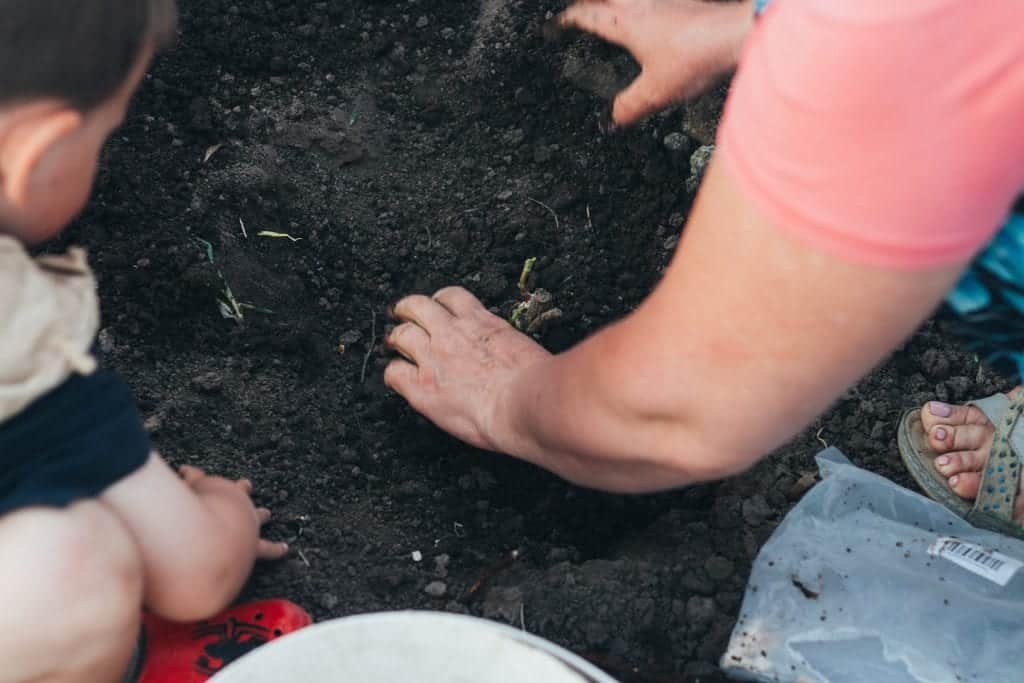
“Deer tend to stay away from the daffodils, and the grape hyacinth is also a good one for our area,” said Detweiler. “I think an underused bulb here, which is also deer resistant, is the scilla, and the galantus. When you purchase your bulbs, make sure they’re healthy with no soft or rotted spots, and most important of all, bulbs are planted pointy side up.”
Detweiler also suggests crocus bulbs, which are the first to emerge —even if there is late spring snow—and any of the ornamental onions, also known as alliums. Also on the bulb list is the fritillaria, which Detweiler says is quite hardy and deer resistant.
Covering bulbs with two to four inches of mulch now, will help protect them during a harsh winter by creating an extra layer of moisture and warmth.
Fall is the harvest time for late autumn vegetable crops, like broad beans, broccoli, cabbage, onions, Brussel sprouts and, of course, squashes.
After your last harvest, don’t forget to also fertilize and mulch your vegetable garden too, which Detweiler says will not only enrich the soil, but it will also loosen up the soil when it’s being turned over in the spring.
If you still have green tomatoes on your vine, and you hear a freeze is on its way, don’t despair. Detweiler says harvest them before the first heavy frost, and place them in a box with newspaper, and they will ripen in your garage at room temperature between sixty and seventy degrees within a few weeks.
The fall chill in the air is a reminder that the days are getting shorter and winter is around the corner. Put your garden to bed with a nice tuck-in of mulch and fertilizer. It will awaken in spring awash in colorful blooms, and your vegetable and fruit gardens will be ready to take root.
Gary Nolton allowed the land to inform his decision to build a compact, energy efficient showcase outside Terrebonne.
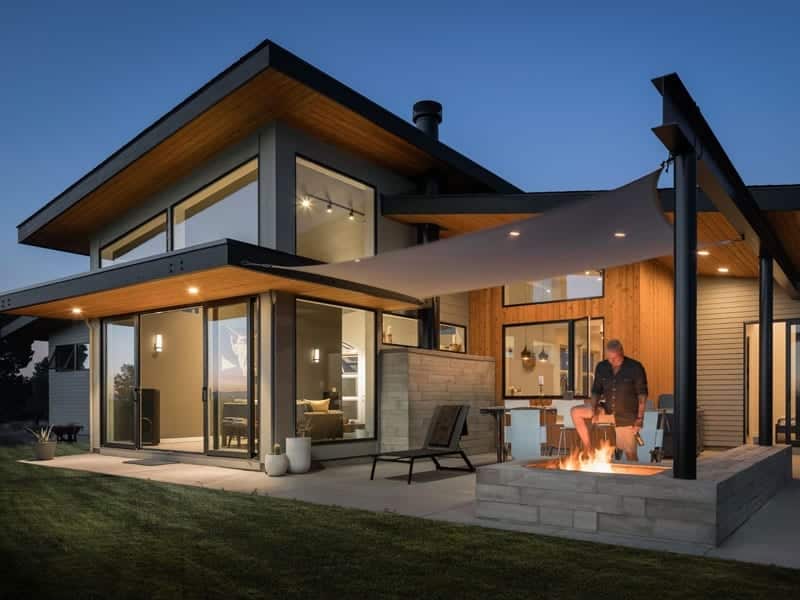
It might have been the sunset over the Cascades, or maybe the steep drive past junipers to a knoll overlooking lush farmland, or maybe it was a connection to something unseen and unexplainable. Whatever it was, from the moment Gary Nolton set foot on 10.75 acres listed for sale west of Terrebonne, he felt “right at home.” He came to a quick decision, called his real estate broker and told her, “I’m buying it.” He wrote an earnest money check the next day. And then he sat on the property for seven years.
“I had to figure out financing, and I wanted to get the lay of the land,” he recalled. “Siting is super critical. Where’s the best view and light? Where’s the wind coming from?” To answer those questions, he drove from Portland where he lived and worked, and camped on the property all four seasons for years. He often invited friends and family to join him to experience the property. They saw meteor showers in a sky with no light pollution and observed the 2017 total solar eclipse over Central Oregon.
In Portland, he went to Powell’s Books and began amassing reference materials on home design, construction and energy-efficient building practices. He took inspiration from Frank Lloyd Wright’s approach to creating structures in harmony with their natural surroundings. And as a cinematographer at Limbo films, a company he founded in 1992 to produce digital media for commercial clients across the country, he applied his creative force to planning his future home. By 2017, he was ready to start the process. “I realized I could build something unique to me,” he said.
He took his ideas to Mike and Cindi O’Neil, owners of Solaire Homebuilders in Bend, who specialize in high-efficiency healthy homes. Among the many things Nolton had learned was that the summers “could be brutally hot.” He knew he’d have to mitigate heat and direct sunlight by building a home with as many energy efficiencies as possible.
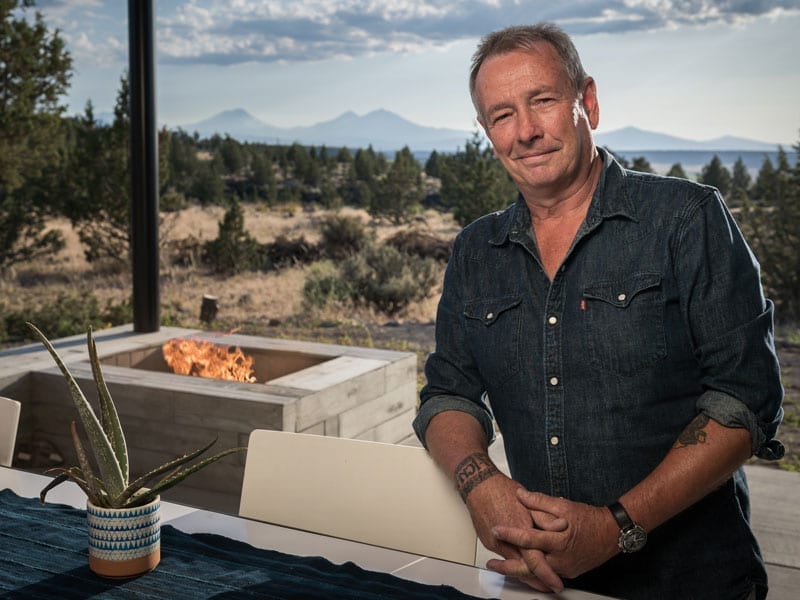
“Gary came to us to wanting an efficient dream home that would perform well in the high desert climate,” Cindi said. “It was a perfect marriage for us. We loved his ideas for an open bright home that blended indoor and outdoor spaces. He also knew exactly where to place the home on his land.”
The design concept came next. Solaire recommended Bend architect Neal Huston whose firm has 30 years of experience in designing homes on the high desert. Because of Nolton’s busy travel schedule, he and Huston were never able to meet in person. “We exchanged emails, calls and images,” Nolton said. “Neal took all my materials, notes and ideas. It shocked me that he abbreviated the process without any push and pull. He hit the nail on the head right off the bat. What you see today is the result of his original ideas.”
Huston’s thoughts were similar. “I feel that from the beginning, Gary and I were on the same page for this story,” he said. “He understood the relationship between amount of square footage and cost, and that smaller can work if efficient and thoughtfully conceived.”
Solaire broke ground in May 2018 on a three-bedroom, two-bath home with 1,753 square feet. The orientation is toward the Cascade Mountains. “Taking advantage of his incredible view was paramount, both for indoor and outdoor living spaces,” Huston said.
“Low maintenance materials and energy conservation were both concerns of Gary’s,” he continued. Nolton had considered solar panels and wind turbines to be off grid. But rather than generate power, the more affordable solution was to incorporate energy efficiencies, such as 8-inch thick exterior walls, high-efficiency windows, blown-in fiberglass blankets in interior walls and ceilings to achieve insulation values 50 percent above code and large overhangs to shield west-facing rooms from the intense sun.
Solaire’s attention to efficiencies in the home shell combined with the installation of high- performance windows led to a nearly airtight dwelling. To maintain healthy air exchanges, the company installed a Lifebreath ventilation system to bring in fresh air and expel stale air. A filter system removes dust, pollen and smoke.
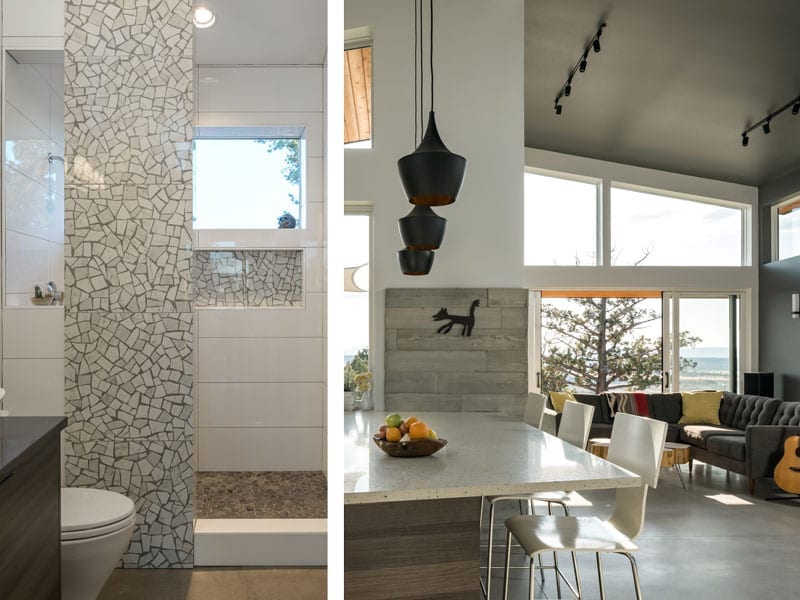
Cindi said that the home is certified Earth Advantage Platinum for its superior energy efficiency, healthy air quality and responsible use of natural materials.
“It’s all about building a super-insulated home shell, creating a healthy indoor environment, conserving the earth’s resources and ensuring the home meets our client’s aesthetic goals,” she said.
The home’s architecture and view stand out immediately on arrival. Without blinds or curtains to impede the first impression, guests can gaze straight through the sliding doors, great room and out the backside to the mountains. Two of the three bedrooms also face the Cascades, and a covered outdoor eating area is perfect for gathering on a summer evening.
Nolton served as his own interior decorator, selecting mostly white walls, with a couple of accent walls. Tile colors, lighting fixtures and cabinets are contemporary but muted. The simplicity of the inside strongly complements the stunning views outside the home. Pieces of art punctuate the walls and fun Western touches are a nod to his inner cowboy.
After several seasons as a visitor on his own property, Nolton moved into his desert hilltop home in May and says he loved being an integral part of the design and all the steps along the way. “It’s been a big lifestyle change,” he said. “I’ve always lived in the ‘hoods. It’s amazing to walk to a stream and throw a fly rod in, but I can’t walk to restaurants.” All in all, he says it’s the right size for him. “I love the house so much,” he said. “It feels like a warm hug.”
At age 83, serial entrepreneur is still building a better Bend.
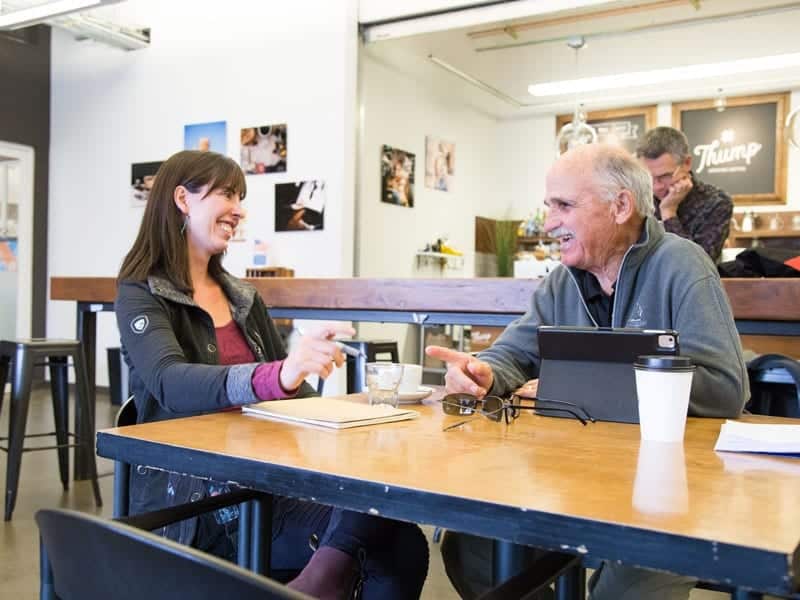
Thump cafe at BendTECH’s coworking space buzzes with the caffeinated energy of tech, collaboration, networking and entrepreneurial growth. It’s not where you’d expect to find the average octogenarian. But it’s the place where Jim Schell feels most at home. At age 83, Schell continues to be a driving force in shaping Bend’s growth as a premier place to live and work, fostering the success of the startup community as well as guiding nonprofits that boost the area’s quality of life.
It began three decades ago after Schell moved to Bend, having built up sporting goods and screen-printing businesses in Minneapolis. He’d already gone through the agonies and ecstasies of becoming an entrepreneur, and had benefited from Vistage International, a peer mentoring organization for CEOs, business owners and executives of small- to mid-sized businesses. But it was expensive.
“I loved the business model of peer-to-peer groups, but I knew it was out of the price range of 95 percent of Bend’s entrepreneurial community,” he said. So he created Opportunity Knocks, a nonprofit that helps Central Oregon businesses leaders succeed by pairing them with a local peer-mentoring team.
“Entrepreneurship is a lonely, lonely profession,” said Schell. “Your spouse doesn’t understand what you’re doing, employees react and can’t give guidance, but by putting entrepreneurs together in a room, in essence as an advisory board, they can be held accountable.”
Since Schell founded O.K. in 1996, it has served nearly 500 organizations, he said, which has improved the work lives of about 10,000 employees. That’s Schell’s measure of a successful nonprofit.
He used O.K.’s success as a springboard to launch a series of local nonprofits, including the City Club of Central Oregon and Volunteer Connect. He served as executive director and director of development of the Partnership to End Poverty for five years, until 2012, and as board chair of Boys & Girls Clubs of Bend in 2014.
He’s written eleven books, such as: Small Business for Dummies and launched an online publishing company. He continues to offer guidance to uber successful Humm Kombucha, where he has been board chair since 2014. Since 2016, he’s served as advisory board chair for Sudara, a loungewear company launched from Bend which supports living-wage jobs and training for women in India.
Preston Callicott, chief executive officer of Five Talent Software, has gotten to know Schell through O.K, and community endeavors such as Looking Forward.
“At 83, he makes me feel like I’m standing still,” said Callicott. “He’s one of the busiest retirees I’ve ever met. He’s extremely wise about business and the undercurrents of what makes a community good, fostering that good and rallying not just support, but also energy for that support.”
Matthew Carter of Carter Knife Co. is on a roll making custom knives in a converted bus east of Bend.
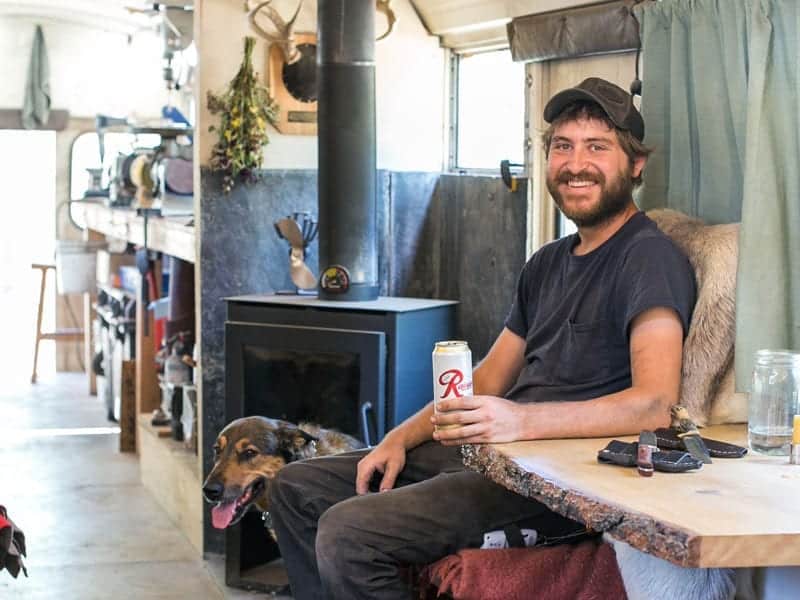
Matthew Carter has a tendency to wander. A native of Ohio and Michigan, he’s traveled across the United States five times. On one of those trips, seven years ago, Carter “stumbled upon Bend.” Officially, he’s lived here ever since, but the open road is always calling, and Carter answers the call as often as possible. It’s only fitting, then, that his home—and his workplace—are on wheels.
A few years ago, Carter bought a cast-off school bus and converted it into a multipurpose space, serving as both home and headquarters of his business, Carter Knife Co. “Upfront is my showroom, the back half is my shop,” he explained. “I wanted to own my shop space, not rent. I wanted to build a home that could go where I want to go.”
For now, the Carter Knife Co. bus is most of the time parked east of Bend off of Highway 20, in the high desert. From its renovated interior, with his dog Roo nearby, Carter creates hand-crafted knives for discerning individuals who seek a truly special knife. Some of what he produces are stock knives which are sold at Spoken Moto and Revolvr Menswear in Bend, to name two locations. But many are custom knives, made to order.
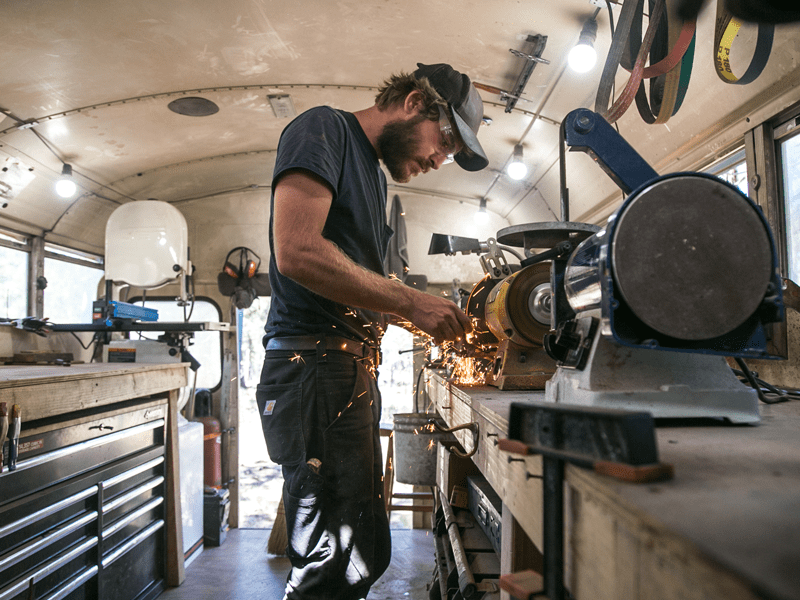
“I’d say about half of my customers want to design a custom knife with me,” he said. “They want to see the shop, meet me. They want to choose the wood, pick out brass or nickel or silver pins. They want a knife specific to their unique uses, and balanced to their own hand.”
Carter’s clients are typically outdoorsy types, from mushroom hunters to backpackers to hunters. “Many are looking for a knife for ‘everyday carry,’ which is a big deal in the knife world.”
Carter came across the trade of custom knife making on one of his cross-country wanderings. Four years ago, he found himself in northern Montana, alone, but never for long. Carter considers himself easygoing and gregarious. “I can talk to anyone,” he said.
Outside of Glacier National Park, he made the acquaintance of a fourth-generation logger—an extremely self-sufficient man of the woods named Ben Quilling, who had built his own home from scratch. Quilling invited Carter over for dinner with his family. After dinner, he asked, “Do you want to see my knife shop?”
Recalled Carter, “His shop was a small hut outside, outfitted with a woodstove and tools.” The next day, over “a 12-hour session that included two cases of quality beer,” Quilling made Carter a knife, showing him the ropes of knife making in the process.
Carter had to get back to Bend, where he was enrolled in OSU Cascades pursuing a social science degree, so his crash course in knife making came to an abrupt halt. But that winter, in-between studying, “I made a cruddy knife after cruddy knife,” said Carter. Eventually, as he improved, someone offered him $100 for a knife he’d made, and Carter Knife Co. was born.

Each knife Carter makes is unique. “I shape by hand. Every piece of the knife is crafted by hand or eye.” The process begins with measuring the knife and shaping the style, profiling the handle to balance with the blade size. Grinding the bevel and hardening the steel are next. “The harder the cutting edge of the steel, the greater the life longevity of the knife.” Carter chooses a wood for the handle from a wide variety, including California buckeye, Honduran ironwood and maple burl, hand sands it, and secures it to the blade with pins. Finally, he crafts a leather sheath just for that knife, doing the hand-stitching himself.
“I love that knife-making is well-rounded,” he said. “I get to work with steel, with many woods, with leather. I get to be creative and do different things.”
Carter works mostly full-time making knives these days, but he also has a side job building custom crates for moving art and glass. “I slow down on knives in the summer, pick up in the winter,” he said. As for whether he and his custom home/shop/bus will stay in Bend, well, Carter just can’t say. After all, the road keeps calling.
Bend, Oregon is making headlines again, but not for the great outdoor activities, or the last Blockbuster store, or the incredible micro-breweries. It’s on the map because of sixteen Summit High School teens who problem-solved their way to The World Robotics Championships in Houston, Texas earlier this year.
But like all great teams, they aren’t content to rest on success. Chaos Theory, as the SHS team is known, hopes to improve and advance even farther this coming competitive school year. Recruitment for engineers and programmers is well underway.
“We’ve qualified for The World Robotics Championships three years in a row, but this was by far our most successful year,” explained volunteer head robotics coach, Charlotte Van Valkenburg. “It’s very competitive in Houston; you have more than 15,000 students from more than 33 countries all vying to have the best performing robot.”
Returning junior Jacob Zhao says he’s already thinking about how he wants their robot to perform, though FIRST (For Inspiration & Recognition of Science and Technology) Robotics, the organizer of World’s, won’t be sending the new parts to build the new 2020 robot until later this school year. Once the parts arrive in January, the team will have just eight weeks to build it.
“When we get the parts for the build, the instructions will tell us what tasks and operations the robot is supposed to do once it’s completed. There’s a lot to think about, with the vacuums, the rotating wheels, the pincher arms,” says Zhao, who hopes to be an environmental engineering the future. “World’s was great. We got to meet people from all over the world and see their new ideas. There are famous teams that qualify every year; these teams have amazing reputations.”
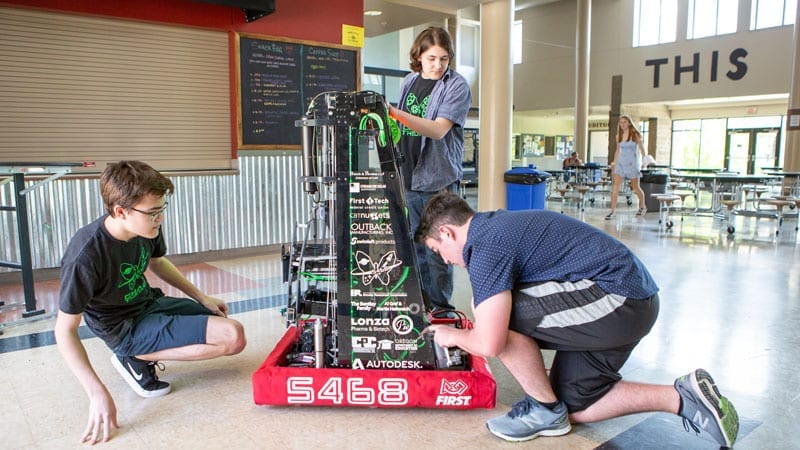
An architect by trade and training, Coach Van Valkenburg has grown Chaos Theory team from a fledgling five-person team to more than forty contributing members. Van Valkenburg said she taught herself everything she knows about FIRST robots through trial and error.
For her persistence and undying enthusiasm, she was awarded the Pacific Northwest Robotics coach of the year. Each region in the country selects one coach that exemplifies the mentoring and ideals of one of FIRST’s founders, Woodie Flowers. Flowers, a Massachusetts Institute of Technology (MIT) Professor Emeritus, is perhaps best known for designing an MIT curriculum to build robots that had to accomplish different and complex challenges.
The students, who nominated their coach for the prestigious award, say without Van Valkenburg there would be no team. She’s mentored these budding engineers and scientists. She organized fundraisers to get the team to regional competitions in Portland and Washington, and to Houston each year they’ve qualified.
“It’s exciting to see the kids grow in so many ways, not just in design and engineering and programming, but in public speaking and being able to work in a team with one another,” said Van Valkenburg. “It’s a great learning tool for life.”
Chaos Theory programmers Aidan Beery and Owen Wheary agree with their coach about the life skills they’re learning.
“Robotics is real world experience,” said Beery. “We were challenged by design and engineering constraints, and deadlines to get the robot done on time. And like an engineering company, we had to figure things out as a team, so social skills were important to hear everyone’s ideas.”
With 155 teams in the Northwest alone, the Summit High team must place in the top third in local and regional robotic competitions to even get a shot at Worlds.
Future engineer Jake Enos is excited for the new 2020 robot to come online, and says there’s so much to consider when building it.
“It’s everything from maximum robot weight of 125 pounds to the precision of the drive train, where we used a brushless electron magnetic field,” explains Enos. “We also used copper wires, which are two times stronger, and half the weight. The weight adds up fast on a robot.”
Last school year, the Chaos team named their robot “Betelgeuse” after the brightest star in the Orion, which emits 7,500 times as much energy as the sun.
Like a heavy weight boxer, Betelguese had to be weighed in at each competition; and like a fighter, according to Enos, the robot stepped up its game when it teamed up with the Australian team’s robot, setting up a run into the playoffs. Strategy is key as the robots race to place hatch panels, which are round disks, onto an imaginary spaceship, along with balls representing cargo.
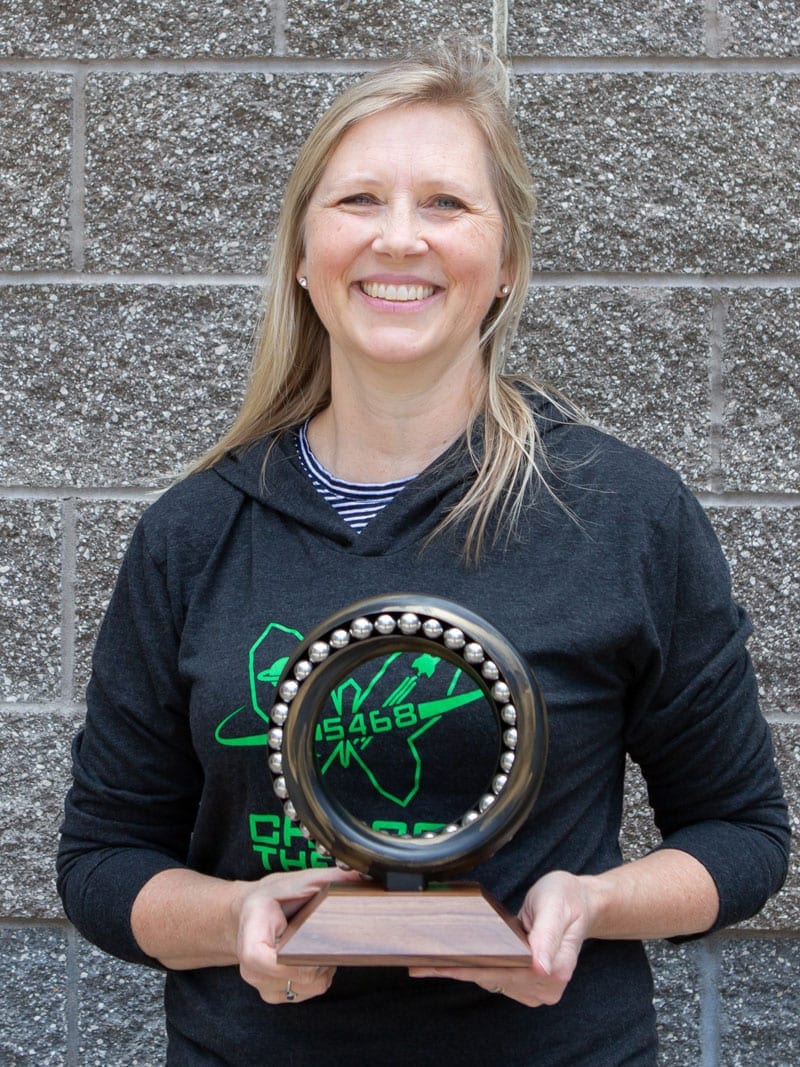
If you think robotics is just a guy’s game, you’d be wrong. Every year, Van Valkenburg says she sees more and more girls joining the team, even if the guys still outnumber them. This year, they have six women on the team, and for the past three years she’s taken them to an all-female robotics competition, where they run the robot. No guys allowed, except for the cheerleading section.
Alexis Dinges is one of three lead Chaos Theory engineers, and though she was a dancer before joining robotics, she says Chaos Theory soon replaced her dancing, and became one of her favorite high school experiences. As a result, she’ll be attending Oregon State to study Mechanical Engineering this fall.
“I love to create things, and seeing things through from start to finish,” says Dinges, who worked on the design and mechanical teams. “You start with a box of parts, and at the end you’ve created this robot [that] can perform all these games and tasks; it’s pretty amazing.”
An ongoing quest to find and ferment apples rooted in the history of Bend.
A few years ago Mike and CJ Johnson of Terrebonne became curious about the apple trees growing on their 3.25-acre farm near Smith Rock. Unlike some of the young but lovely trees you see gracing yards and boulevards in Bend, these appeared quite old with thick, gnarled trunks and mature, leafy canopies. “I really just wanted to know what kind so I’d know how to use the apples,” CJ says. “As it turns out, we stumbled into a good story, too,” adds Mike.
Identifying apples isn’t easy, though. The definitive work on the fruit, Dan Bussey’s 2016 The Illustrated History of Apples in the United States and Canada, took 30 years to compile and includes seven volumes describing more than 16,000 varieties. Fortunately, the Johnsons found Shaun Shepherd, Oregon’s very own “apple detective” who together with Joanie Cooper founded the Temperate Orchard Conservancy in Molalla in 2012. Shepherd discovered something remarkable: at least six of the Johnsons’ trees were century old Ross Morris apples, a variety so rare that they didn’t even appear in Bussey’s book.
“They were the only ones I knew of in existence,” says Shepherd, who has since propagated one for the conservancy. “It’s the craziest thing.”
The discovery five years ago led The Ale Apothecary to use those apples in a boutique batch of Sahalie (Smoked Apple), an American wild ale, but it also unleashed CJ on a quest to find other heirloom apple trees across the region. She eventually formed iN Cahoots, a collaborative that now includes at least six century-old orchards that yield thousands of pounds of Northern Spy, Winter Banana and other vintage varieties that local brewers turn into delicious drinks. Bend’s 10 Barrel created a cider named after the collaborative in 2014. In July 2019, Deschutes released “Historic Oregon Super Juice.” Now, come Thanksgiving, Crux brewmaster Bianca Thomas will release a cider made from this year’s harvest.
“Heirloom apples like these are really hard to come by,” Thomas says. “You’re drinking the terroir of the community.”
You’re drinking history, too. Having an orchard was a way for pioneers to “prove up” a claim to own land under Abraham Lincoln’s Homestead Act of 1862, and newspaper articles published in the Bulletin in the early 1900s boast of the region’s fruit growing successes. CJ’s latest move has been to ask residents in Bend’s Orchard District to search for the remains of fruit trees that the town’s earliest settlers may have planted. Terry Foley, 78, remembers them well. “It was the kids’ summer job to pick all that fruit,” says Foley, who grew up on a six-acre farm with fruit trees in the heart of the neighborhood on the corner of Revere and NE 8th Street. “That part of town is something of a banana belt.”
Of course, many of those trees have now disappeared under subdivisions and shopping centers, but vestiges of Bend’s fruity past do remain. You can find a few old giants off Jones Road near Hollinshead. There’s a fine sample tucked off NE Innes Lane and a beauty in a backyard on NE Ninth St. All of them are not far from where Levi Wiest, a founder of the town and nurseryman, once had a 160-acre homestead full of fruit trees.

Standing before his church one Sunday evening in January 1908, Wiest delivered a message that we modern partakers of craft beverages may still clink our glasses over today. “Mr. Wiest spoke from the thought, ‘Ye must be born again’,” the Bulletin reported, “and he showed how with corn, with apples, with potatoes, with all fruits, perfection only comes by the new birth into conditions far higher and nobler.”
Surely he was foreshadowing CJ and all that cider.
Four-day, hosted backcountry ride explores the best of the Ochocos and John Day region.
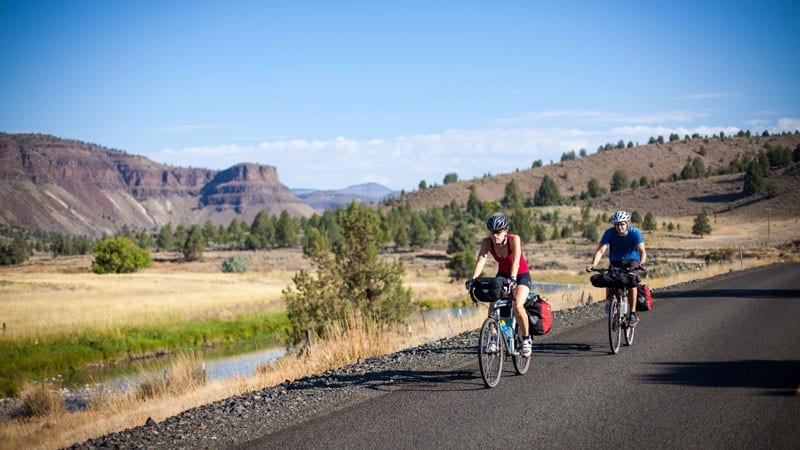
If you’ve ever had the urge to get on a bike and pedal to the horizon without looking back, but don’t have the gear to support a multi-day adventure, here is your chance.
The Ochoco Overlander “bikepack” adventure is returning to Central Oregon for its second year. Hosted by Good Bike Co. and Salsa Cycles, this four-day excursion (Sept. 20-23) will take riders over 175 miles and 14,000 vertical feet through the scenic Ochoco forest and into the John Day River country. On the first day, you’ll be able to camp, swim, and fish along the John Day River, after a seventy-mile ride. Day two keeps things easy with a leisurely pedal through the breathtaking Painted Hills, which are considered one of the seven wonders of Oregon. Day three features a climb to the summit of Mt. Pisgah, and provides the opportunity to camp, swim and fish at Walton Lake. Day four concludes back at Prineville with a family-style dinner and bonfire on the outdoor patio at Good Bike Co. Every morning, you will be greeted with a warm breakfast and coffee from Backporch Coffee Roasters. Registration costs $375 per rider.
Bend’s Lady Roughriders help to put female rugby on the map.

When Summit Kuehn first moved to Bend in 2015 from a small Midwestern town, she brought with her troubles that required a cure. She’d battled with body image issues throughout her school years and dealt with the bullying that accompanied her insecurities. She always wanted to be involved with athletics and be part of a team of confident women who built each other up, but instead, she constantly felt as though she was being torn down.
Most sports that are popular for women and girls, such as volleyball, soccer, and basketball, usually favor a more traditional athletic build; tall, quick, and agile. After being constantly benched, Kuehn quickly felt alienated and discovered that these types of sports might not be for her.
“Because of this, I became angry and bitter towards athletics,” Kuehn said. “I was nervous and scared to even try sports again. But I am so glad I did.”
At twenty-four, Kuehn is now happy, confident, and feels accepted in her community. So what happened? In the warm spring of 2016, she was introduced to the rough and tumble sport of rugby while attending a Total Fit class at Central Oregon Community College. The decision to give athletics another try ended up being life changing.
“Though it was a very intimidating situation to walk into, everyone was so nice and accepting. They just wanted me to learn,” Kuehn said. “Not only is the sport itself amazing, but the community you gain is even better. It’s given me my motivation, my happiness, my confidence, and my physical well-being back,”
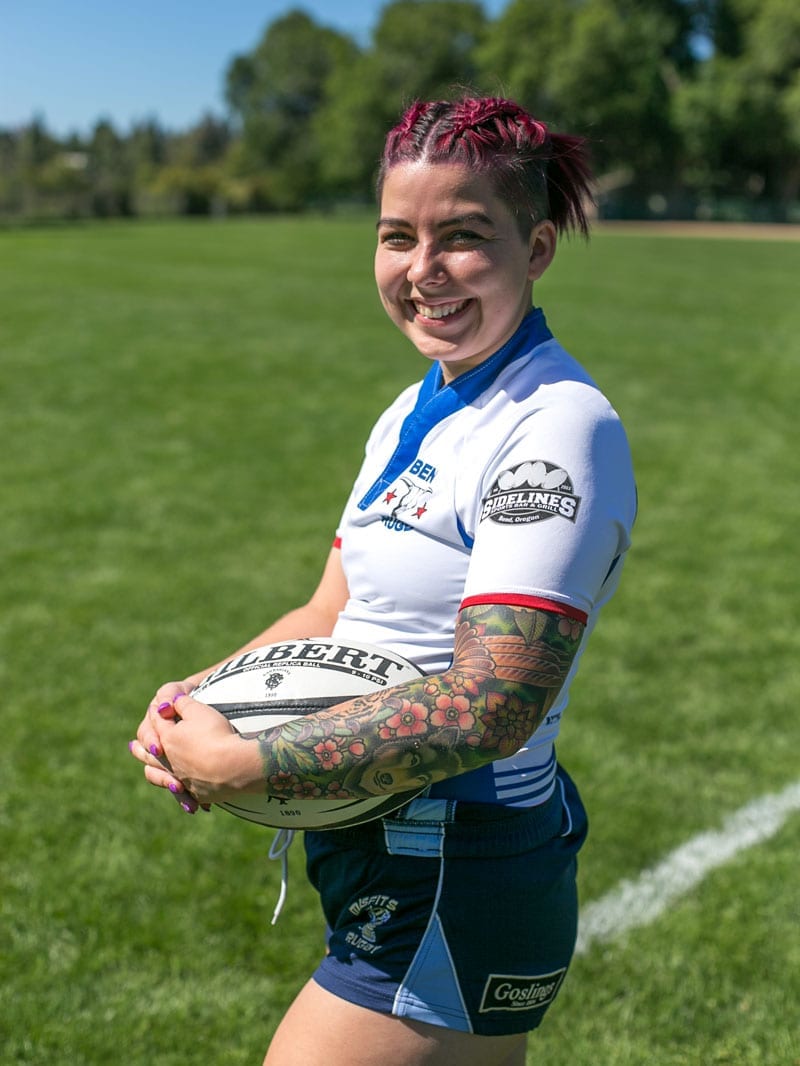
She said her team and coaches constantly pushed her to be better on and off the pitch, but it was the inclusivity and body positivity she discovered that finally made her feel accepted. Kuehn learned you need players who are quick on their feet and fast in a sprint, as well as players who can tough out constant contact and even have the strength to lift their teammates in the air and knock an opponent off the ball. This sport not only accepts body types of all shapes and sizes, it demands them.
By some measures rugby is the fastest-growing sport in the nation. The number of people participating has more than tripled between 2006 and 2017, according to Statista.com, with more than 1.5 million people designated as participants in the United States. That’s more than double the number of ice hockey players registered with USA Hockey.
Because of how many different professional leagues exist across the planet, all with varying rules and styles of play, it is difficult to pinpoint how many people play rugby. However, the most popular version, Rugby Union, is governed by World Rugby, and more than one hundred nations from six different continents all participate under its banner.
In Bend, there are seven teams practicing and playing under the Bend Rugby Club, including Kuehn’s Lady Roughriders. This team of women usually has twenty-five to forty-five players annually and costs $75 to play. Other than that, you just need cleats, shorts, and a mouthguard. The Lady Roughriders play a fall and a spring season, both of which take them all over the Pacific Northwest. All of their games are free to attend.
Despite its bare-knuckle reputation, rugby has long welcomed women into the ranks. The first woman played in a match of rugby (and scored a try) in 1887, with all-male teammates and opponents. Since then, rugby has continued to grow as an inclusive sport for all women.
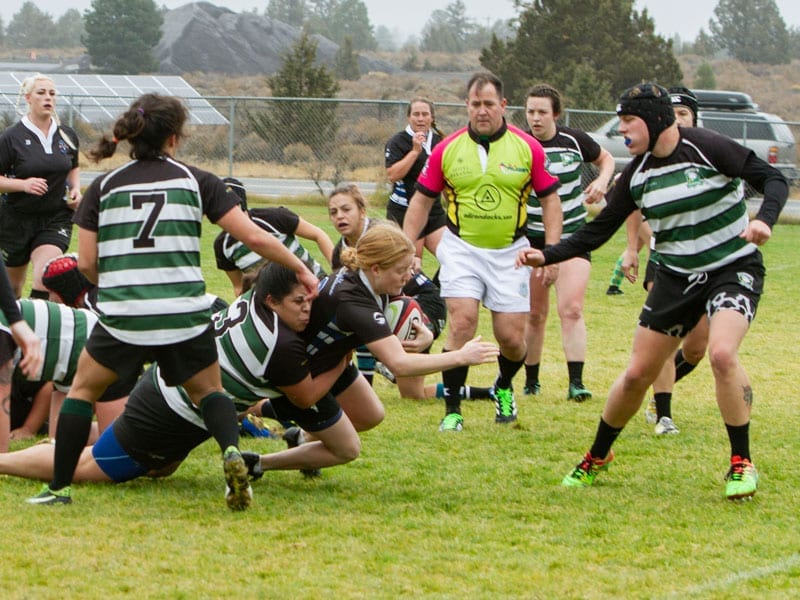
Because of the constant action and lack of protective gear, there is a common misconception that rugby is highly dangerous. While getting bruised is almost guaranteed, rugby actually has lower rates of concussions and injuries overall, when compared to American football.
“Rugby is one of the only true team sports I’ve ever played,” Kuehn said. “When one person scores, the whole team scores. You have to trust one another. Rugby became the source and root for all of my happiness, and it continues to be that for me today.”
In 2015, a group of design professionals from various disciplines mustered up a two-day event in Bend, hoping to inspire their peers by celebrating the practice and principles of design. Nine years later, Bend Design, produced by local nonprofit organization Scalehouse, has evolved into something deeply impactful. While the conference still welcomes those who design for a living, the audience has expanded to include anyone who can benefit from creative thinking in their professional or personal lives, as well as across communities.
Central to the event is Bend itself – while smaller than many creative hubs, this city serves as a powerful catalyst and incubator for creatives. The innovative spirit of this year’s speakers exemplifies Bend’s character: a town that fosters innovation and collaboration.
“The Bend Design conference aims to explore how creative thinking and practices can lift up our lives, our communities, and the wider world. It’s a way to engage our forward-thinking, talented community in a meaningful conversation about the role of art and design in our daily experience and how it invigorates and inspires us to do better,” said Scalehouse co-founder and Bend Design co-producer René Mitchell.
For Bend Design organizers, the hope is that by engaging creative thinking, communities can make positive changes within a wide range of challenges.
Throughout the year, Scalehouse convenes diverse thinkers for in-depth discussions, artistic expression and hands-on collaboration. Bend Design stands as their flagship event.
“We believe that our future presents complex challenges and opportunities, not just benefiting from creativity but requiring it,” Mitchell said.
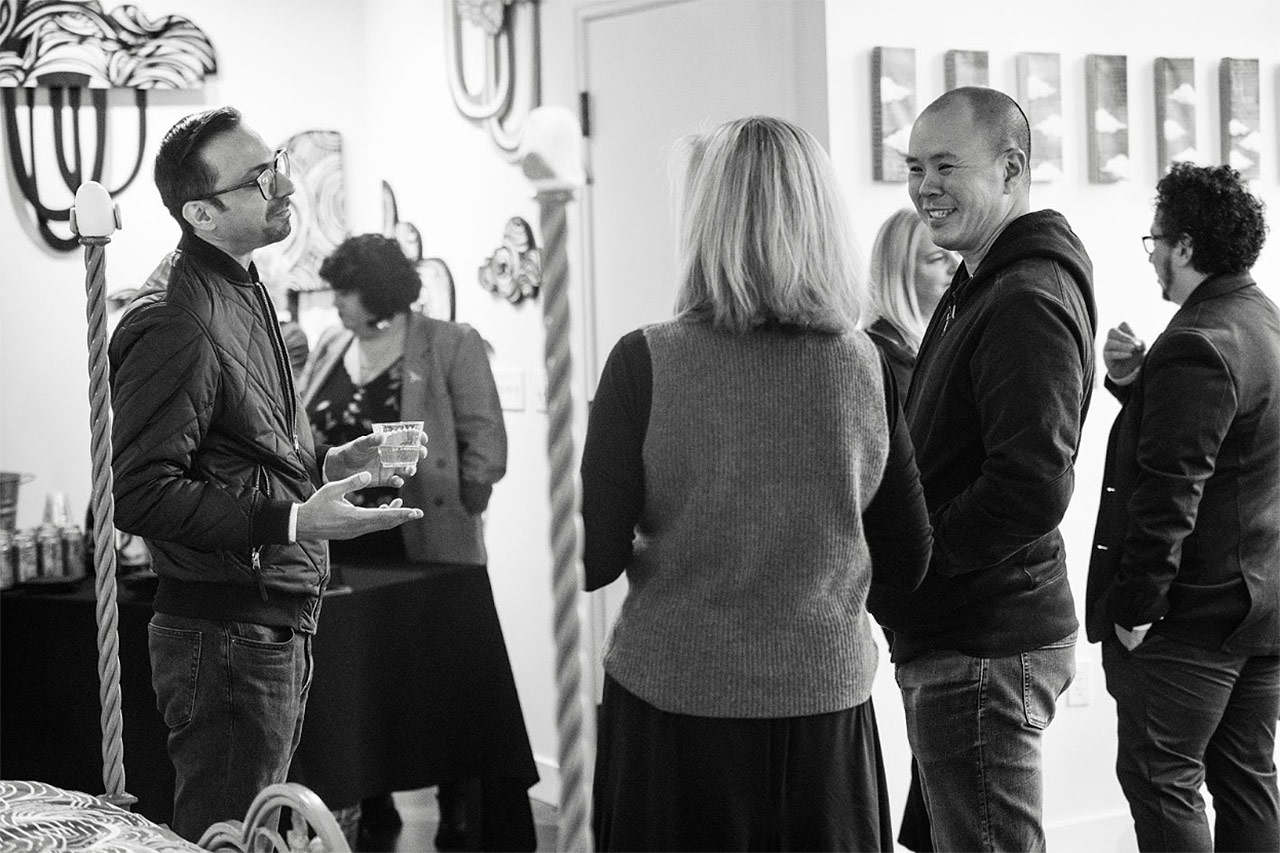
This year’s Bend Design conference showcases an impressive lineup of speakers, including:
A highlight of 2024’s conference is the partnership with the Warm Springs Community Action Team (WSCAT) and a presentation from Indigenous Designer Jaihline Ramirez. Ramirez will present “Threads of Heritage: The Ribbon Skirt as a Contemporary Symbol of Indigenous Identity.” This session explores how ribbon skirts, now a fashion staple across Indian Country, have been adopted by women and girls as an alternative to Western formal attire. The conference will culminate in a runway show at the Wrap Cocktail Party, showcasing the creativity and craftsmanship of these ribbon skirts. This event spotlights Indigenous design and demonstrates how traditional crafts can evolve into powerful symbols of contemporary identity.
This year, in collaboration with Bend’s Tin Pan Theater, the conference features a screening of “Squaring the Circle: The Story of Hipgnosis,” a documentary film that invites an intimate look at the creative process, triumphs and challenges of the album cover designers at Hipgnosis. Founded in Cambridge amidst the cultural upheaval of the sixties, Hipgnosis rose to prominence by redefining album art. The film celebrates its ability to conceptualize and execute visuals that capture the essence of the music they adorned, influencing not just the perception of the albums but also the broader artistic landscape of the time.
Bend Design is a cornerstone of Tenth Month, the monthlong October series of Bend cultural events that also include the BendFilm Festival and the Bend Venture Conference. Bend Design 2024 will take place from October 17 through 18.
For the full schedule of events, visit the Bend Design 2024 website.
As Bend Design continues to evolve, it remains true to its core mission: inspiring creativity, fostering innovation, and celebrating the vibrant design community of Bend and beyond.
Published August 2019
Bend Design 2019 addresses how creative thinking can solve business, social and civic issues.
In 2015, a group of design professionals from various disciplines mustered up a two-day event in Bend, hoping to inspire their peers by celebrating the practice and principals of design. Five years later, Bend Design, produced by local organization ScaleHouse, has grown to a four-day festival filled with talks, shows, workshops, screenings, and problem-solving sessions, all centered around the broader-than-design concept of “ideas.” The conference still welcomes in those who design for a living, but the audience has expanded to include anyone and everyone who can benefit from creative thinking in their professional or personal lives, as well as across communities.
Central to the event is Bend itself, and the way this small city has grown to serve as catalyst and incubator for creativity. “This year’s creative visionaries are aligned with the innovative and collaborative spirit that distinguishes Bend as a hub for creative thinking,” said ScaleHouse co-founder and Bend Design co-producer René Mitchell.
The event creators’ hope is that by engaging creative thinking, communities can make positive changes within a wide range of challenges. “The Bend Design conference aims to explore how creative thinking and practices can lift up our lives, our communities, and the wider world,” said Mitchell. “It’s a way to engage our forward-thinking, talented community in a meaningful conversation about the role of design in our daily experience and how it invigorates and inspires us to do better.”
Throughout the year, ScaleHouse convenes diverse thinkers for in-depth discussion, artistic expression, and hands-on collaboration. Bend Design is the flagship event. “We believe that our future presents complex challenges and opportunities, not just benefiting from creativity but requiring it,” said Mitchell.
Returning this year is a special session called Design for Good. This branding and design exercise benefits a Central Oregon non-profit which serves historically marginalized communities. “Bend Design participants bring branding and design chops to a nonprofit,” said Mitchell. “Last year we developed a logo for the Latino Community Association. We’re in the process of selecting an organization this year.”
New this year is a screening of “Obey Giant: The Art and Dissent of Shepard Fairey,” a documentary film that explores the life and career of street artist and graphic designer Shepard Fairey. Co-presented by BendFilm, this is a free event bringing participants together for film-watching and discussion about a controversial artist.
A cornerstone of Tenth Month, the monthlong October series of Bend cultural events that also includes BendFilm Festival and the Bend Venture Conference, Bend Design will take place October 23 through 26 this year. “Bend Design is for creative thinkers, designers, and innovators,” said Mitchell.
Fishing Literature and Modern Westerns.

This 1983 novel has been hailed as not only a cult classic novel for fly fisherman, but also as part of the canon of great Western literature. It’s a coming of age story that tackles the environment, family, love and what an ideal life really is.

Don’t Skip Out On Me (Harper Perennial, 2018) follows a young ranch hand from Nevada who sets out to the Southwest to become a championship boxer and is forced to confront his own ideas about destiny. Willy Vlautin is an award-winning author from Portland who writes in sparse sentences and simple prose that cut deep to reveal a tender and ultimately hopeful story.

Keith McCafferty is a Western mystery author that fans of CJ Box and Craig Johnson will like. His newest novel A Death in Eden (RandomHouse, 2019) takes place on Montana’s Smith River and is the seventh installment of the series that follows his fly fisherman detective Sean Stranahan.

In this forthcoming debut novel (TinHouse, November 2019), author JP Gritton takes an unlikeable character and tackles themes of forgiveness and redemption. Shelley Cooper has lost his construction job and finds himself running marijuana from Colorado to Houston, then finding his way back home in one piece.
Sculpture installation is the latest addition to Redmond’s public art campaign.
In the transit center area behind the Redmond Lowe’s home improvement store awaits something unexpected, a four-dimensional sculpture that observes you back. The bus station’s outdoor waiting area now includes a large, colorful, and metallic clock tower sculpture that was created by a team of five artists who combined unique styles and mediums to create a testament to time, relativity, and obscurity.
Headed by artists Miguel Edwards and Jesse Pemberton, this sculpture called “Relativity Clock” is now on display in Redmond, along with eighteen other works of publicly funded art installations as part of the city’s Art Around the Clock initiative. After two years on display, Redmond residents will have a chance to vote on their favorite installment.
With contributions from additional artists Rick Zar, James Meyer, and Ginger Sanders, the “Relativity Clock” is an artistically diverse piece, combining glass blowing, neon, motion sensitive LED lights, welding, carved sheet metal (of which no single piece has even one right angle) and more. Playing on the theme of relativity, the installation’s motion sensitive lights mean that you can change the way the sculpture is experienced by everyone around you.
“You can become part of the sculpture by coming near it. Not only are you observing the art, but the art is observing you,” Pemberton said. “The observer changes the observed object.”
The designs etched into the sides of the roughly ten-foot-tall sculpture carry meanings and motifs from the local landscape, and all relate to one another in shape or symbolism. For instance, one side is carved to look like an aerial view of a river, with the bends in the shape that carry the observer’s eye like a river current. At the same time, it exposes the inner workings of the sculpture, revealing the intricacies of hand-blown neon lights, car batteries hooked up to a solar panel, and a good deal of welding that include metal clock hands that allude to, but do not actually tell time.
The clock is metaphysical, but also mechanical, drawing on sun and wind power. Edwards and Pemberton requested it be put in the windiest part of the city because the top of the clock tower features a round wheel that acts like a pinwheel in the wind.
“Turns out, the windiest available spot in Redmond happened to be a bus stop,” Pemberton said. “This creates an ironic moment, as you sit waiting for your bus to arrive and stare at a clock that does not work.”
This sculpture will be on display for the next two years, at which point the residents of Redmond will vote on their favorite installation from among the nineteen works, with the most popular piece being granted a permanent spot to be displayed in the city.
Dive into these page-turners while you’re lounging by the lakes or river this summer.

My Lovely Wife is a mystery that doesn’t follow old tropes and sets a new standard for the genre. A husband and wife in a boring marriage decide to take up murder, but then one of the bodies turns up where it shouldn’t.

Elizabeth Gilbert is most well-known for Eat Pray Love, but her fiction should not be overlooked. Set in the 1940’s New York City theater scene, City of Girls is a love story told in Gilbert’s exquisite prose that will keep all readers engaged.

This memoir from the duo behind the favorite podcast My Favorite Murder is packed with all the same wit and humor that they bring to the show. It’s part memoir and part manifesto for advocating for yourself.

For fans of romantic comedies, The Unhoneymooners is a sure-bet for a great summer read. The author-duo that goes by Christina Lauren has perfected the genre. Their latest sharp and fun novel follows two people who are walking the fine line between love and hate on a vacation together.

A young woman’s puzzling death goes unquestioned for ten years until a chance encounter leads a friend to question whether there is more to the story. It’s a debut in the genre that will keep you on your toes and reading into the night.
Summer is a time for adventure and exploration. Whether you’re staying local or ready to hit the road, there’s much to be done before the sun is gone. This year, plan ahead to “go big” with your plans by knocking off as many of our Summer Bucket List items as you can before your lungs, legs and nerve give out.
The earliest travelers and trappers used rivers as a means of transportation and rapids were an obstacle that had to be navigated as a matter of course. The stakes were high. Hit a rock and risk wrecking your wooden boat and swamping your supplies. Despite the danger, it’s hard not to imagine these trail-weary explorers letting out a whoop or two as they rushed down the river into the unknown. Today, the rivers are mapped and the routes well established, but it’s no less thrilling. In Bend, several tour groups, including Ouzel Outfitters and Sun Country Tours offer would-be paddlers the au naturel thrill of running rapids. The Big Eddy tour is a short three-mile, scenic jaunt down the Deschutes, flanked by a massive lava flow that forces the river into a series of chutes and drops. The same companies offer more ambitious day trips to the renowned North Umpqua, Upper MacKenzie rivers and the Lower Deschutes. Splash. Giggle. Repeat.
Just twenty-five minutes from downtown Bend, Elk Lake has been the destination de jour for locals and visitors alike for more than a century. Back then it was a cool oasis for flannel-clad timber fellers. Today, it’s a shot of fresh mountain air for office and cubicle denizens. But as Bend has grown, so have the crowds at popular destinations like the Elk Lake resort and marina. The solution? Grab a little slice of the shoreline for yourself by renting the resort’s full service “Day Dock” a large party barge, complete with a barbecue grill, that is moored at the resort. The day dock accommodates up to thirty-two people, perfect for a family reunion, bachelorette party or just a day with friends.
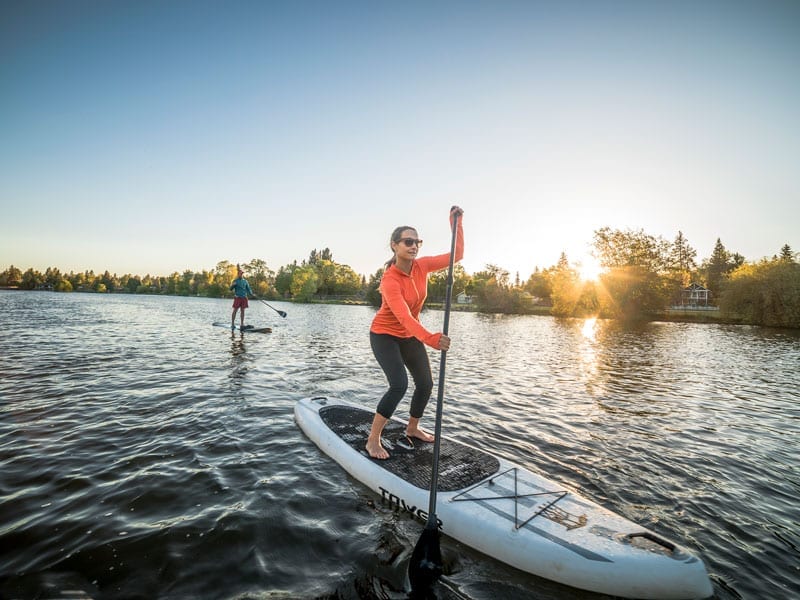
The day is warm, the water is inviting and the desire to float is overwhelming. So off you go in your innertube, canoe or inflatable kayak humming “Cruising Down The River” when you hear a noise ahead and spot a sign stating “Falls Ahead.” In no time at all, the mellow float has become an encounter with Killer Fang Falls. That’s because the Deschutes River Trail offers a variety of river travel over its close to 100-mile length starting near La Pine and flowing north. The trail is mapped, so there’s no mistaking what type of water exists on each section of the river. Get a map, chart a safe course, and have a wet and mild to wet and wild river experience.
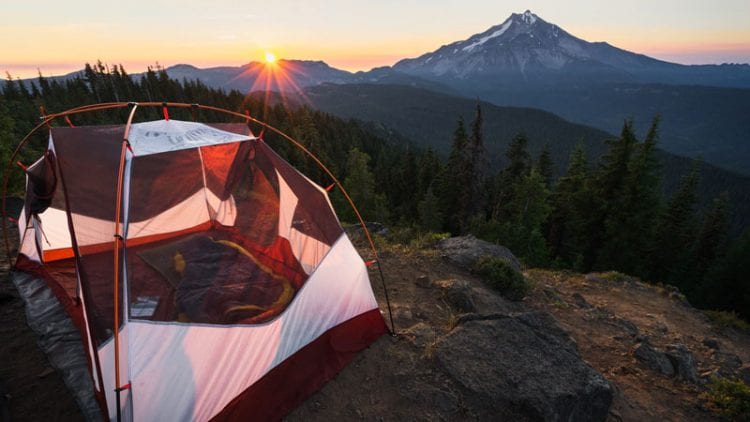
Summer is a time for adventure and exploration. Whether you’re staying local or ready to hit the road, there’s much to be done before the sun is gone. This year, plan ahead to “go big” with your plans by knocking off as many of our Summer Bucket List items as you can before your lungs, legs and nerve give out.
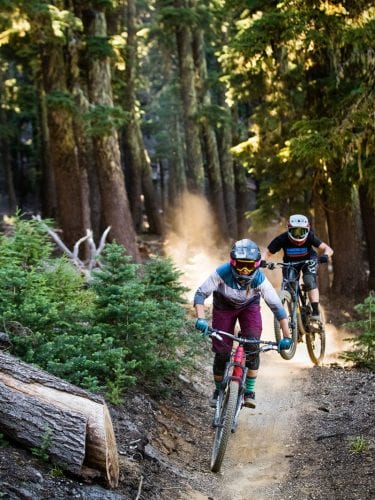
You don’t need a chairlift to go downhill skiing. But it sure helps. So why did it take so long to apply the same mechanical model to mountain biking? We’re not really sure. But we are glad that someone finally thought to, so dirt fanatics in Bend can be whisked to mid-mountain at Mt. Bachelor where singletrack trails have been scratched into popular ski runs like Leeway and DSQ. This year marks the third season that Mt. Bachelor has welcomed summer guests to bomb down the mountain on two wheels. It also marks the debut of a new experts route, dubbed Redline, that is expected to open in early to mid-July. The “jump trail” was designed by legendary freestyle rider Kyle Jameson, who worked with local trail builders last summer to develop the route that pushes the boundaries of Bachelor’s bike park offerings. “It’s a pretty unique trail unlike anything else in Oregon that’s lift accessed,” said Anelise Bergin, Mt. Bachelor’s marketing manager. You don’t have to be an expert to enjoy what Mt. Bachelor has developed at the bike park. Bergin said the resort has put an emphasis on developing a progression of routes that range from beginner and basic to experts only. The resort has also extended hours and days of operation to make getting up easier than ever. Bike and gear rentals are available on mountain, as well as instruction and guided rides from Mt. Bachelor’s partners at Grit Clinic.
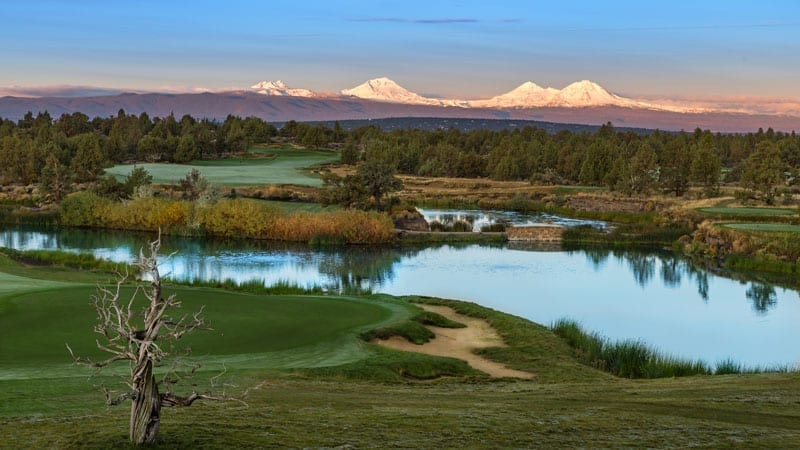
To say that Central Oregon is a golf mecca would be an understatement. A person could build an entire extended vacation around golf in Central Oregon without ever playing the same hole twice. While the quantity of golf is remarkable, it’s really the quality of golf that sets the region apart. Make the most of this abundance of riches by cherry-picking three courses that consistently rank among the very best in the country, Tetherow Golf Resort, Pronghorn Resort and Sunriver’s Crosswater. Assemble a small group of friends and barnstorm them all in a single epic weekend.
Due to a happy accident of history and geology, Central Oregon boasts world-class rock climbing as well as top notch mountaineering opportunities. Contrary to what you might think, you don’t have to possess the skill of Alex Honnold or the fortitude of Sir Edmund Hillary to experience both of them. In fact, it can be done in the span of a weekend with a little help. Enter Timberline Mountain Guides, one of the states oldest guiding services for would-be climbers and mountaineers. TMG’s expert guides offer an array of trips around the Central Oregon Cascades and Mount Hood. Co-owner Pete Keane recommends that newcomers to the sport sign up for a two-day outing that combines literally learning the ropes with a basic mountaineering expedition on Three Fingered Jack. Clients work with a professional guide on day one at Smith Rock, mastering the basics of multi-pitch climbing with ropes and belay tactics. They bring those skills into the field on day two. An extended approach to the summit of Three Fingered Jack culminates in a roughly three-hundred foot climb. It may sound intimidating, but Keane assures that anyone in reasonably good hiking shape is fit enough to handle both the rock climb and mountaineering aspects of the voyage. “It’s pretty fun. People are scared of climbing, but it’s more doable than they think,” said Keane, who added the biggest challenge is covering the roughly ten miles in and out on the trail on day two. “You’d be surprised what you can do,” Keane said. Timberline offers trips on a first-come, first-served basis from July through mid-September.
At first I thought I would miss having the pack on my back, but now I only ride with my waist pack for most of my rides. It’s super sensible for most of my one to three-hour rides. The Hot Laps 5 carries seventy ounces of water, tools, and still has room for food and personal items. I can even compress it down as needed. No pack on my back means I stay cooler, and it helps me bring only what I need for my next ride. – Dan McGarigle, Owner Pine Mountain Sports
Rips and tears are just part of being in the backcountry, but they can also torpedo a trip. Make repair tape a mandatory item in your pack. It’s perfect for on-the-spot patching of jackets, tents, backpacks, etc. – Matt Deacon, Manager The Gear Fix
A must-have, award-winning item for the campsite, nighttime paddle or your next disco party! The light is collapsible, solar chargeable and color changing allowing you to cast any light you wish without ever needing access to power. Why get one when you can have multiple. – Kevin Ganey, Manager Mountain Supply
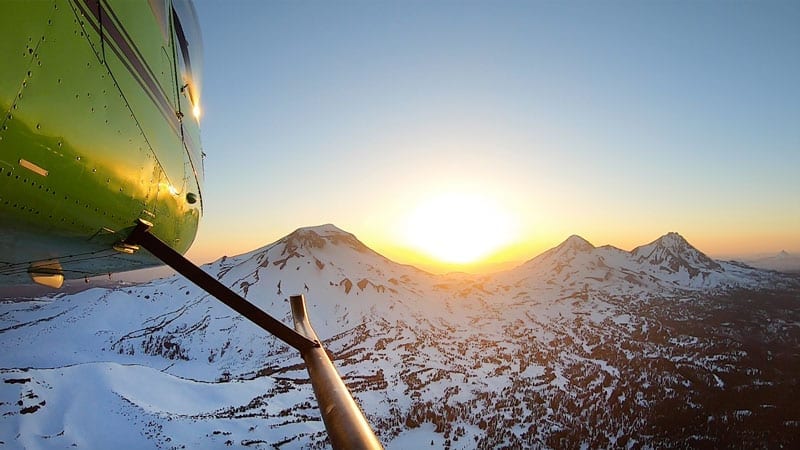
Summer is a time for adventure and exploration. Whether you’re staying local or ready to hit the road, there’s much to be done before the sun is gone. This year, plan ahead to “go big” with your plans by knocking off as many of our Summer Bucket List items as you can before your lungs, legs and nerve give out.
A growing legion of tour companies offer to whisk you around Central Oregon’s popular sites. You can see downtown Bend by Segway scooter; you can see the Old Mill and environs on an electric shuttle or pedal pub; you can explore the desert in an off-road rally vehicle. But only one company is ready to show you it all from a bird’s eye view. Big Mountain Heli Tours offers several ways to see the region by helicopter, ranging from ten-minute hops over the Old Mill and downtown to the hour-plus Ring of Fire excursion that whisks passengers over the Cascade peaks, including Broken Top and South Sister. Mid-summer is a great time to take flight as the warmer temperatures allow the pilots to jettison the doors opening the views to the dramatic landscape below that includes glacier-capped peaks, river canyons and unique perspectives on popular destinations like Smith Rock State Park. Scenic tours are just the tip of the proverbial iceberg at Big Mountain, where customers can book wine tasting trips, golf outings at popular resorts and even trade vows on a remote mountaintop with an elopement flight.
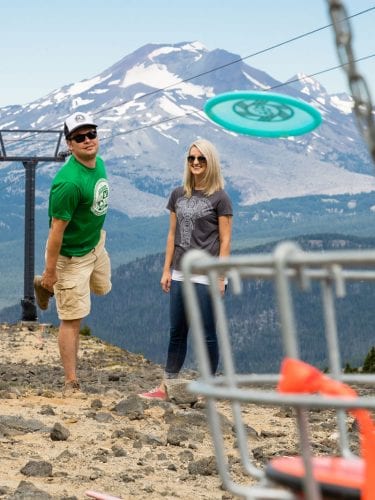
If you’re not a twentysomething mountain biker, you might think there isn’t much incentive to visit Mt. Bachelor come July. That’s a bit of a shame, because the short ride up from West Village Lodge on the Pine Marten lift affords some of the best views of Broken Top and South Sister that you’ll find anywhere around. Here’s a great excuse to catch a ride to mid-mountain: you can play what might be Oregon’s most unique disc golf course, an 18-hole layout that zigzags down the mountain under Pine Marten lift, finishing at West Village Lodge. On weekends, you can enjoy a “19th hole” beer at the Clearing Rock bar, a popular watering hole that serves the mountain’s signature Mazama Bloody Mary and some of the area’s most popular craft beers that are best enjoyed with a heaping plate of pork nachos.

Yes, your mom told you not to, but she also told you not to talk to strangers. So if you have the nerve, take a swan dive off Oregon’s highest fixed point with Central Oregon Bungee Adventures. Operated by veteran basejumper James Scott, Central Oregon Bungee invites brave souls to pitch themselves off the old Crooked River Bridge into a vast chasm with the Crooked River rushing below. What the heck, it’s cheaper than jumping out of a plane and likely safer.
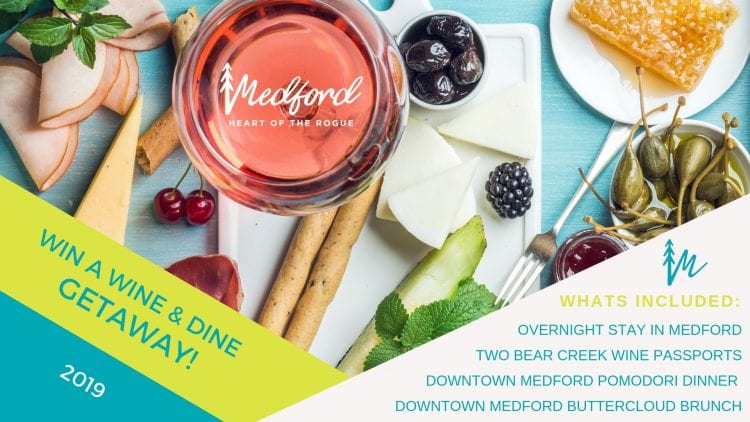
Enter to win a Wine & Dine Getaway! Let Medford be your launchpad for sampling everything Southern Oregon has to offer. Sip wine. Run Rapids. Play nine. Explore trails. Create stories. Visit Medford.
Giveaway Includes:
(1) Night Stay at Medford hotel of winner’s choice
Stay in your choice of Medford’s perfectly located hotels in the heart of the Rogue Valley. With your comfortable and conveniently located home base, you will be positioned to maximize your wine tasting experience in our beautiful wine country.
(2) Bear Creek Wine Trail Passports
Enjoy two Bear Creek Wine Trail passports which include thirty nine tastes at thirteen different award winning, world class wineries in and around Medford.
(1) Pomodori Dinner Voucher for $100
Wine and dine at Pomodori in downtown Medford where they are known for their thoughtful and exciting cocktails as well as their extensive wine list. In addition to their love of libations, they craft exquisite plates of cascade cuisine with an Italian flare.
(1) Over Easy Brunch Voucher for $75
Experience one of the best brunch spots in Medford and the Rogue Valley. Over Easy began as a pop up brunch business whose massive success set the course for the owner to open his very own brick and mortar in downtown Medford.
Package to be utilized by the end of 2019
The contest begins on August 1 at 12:00 p.m. and ends on August 31 at 11:59 p.m. For the complete list of rules, visit our contest policy page.
Whether you live on a small lot downtown or on many acres in the country, an outside retreat adjacent to your home can be a place to rejuvenate and reduce life’s stresses.
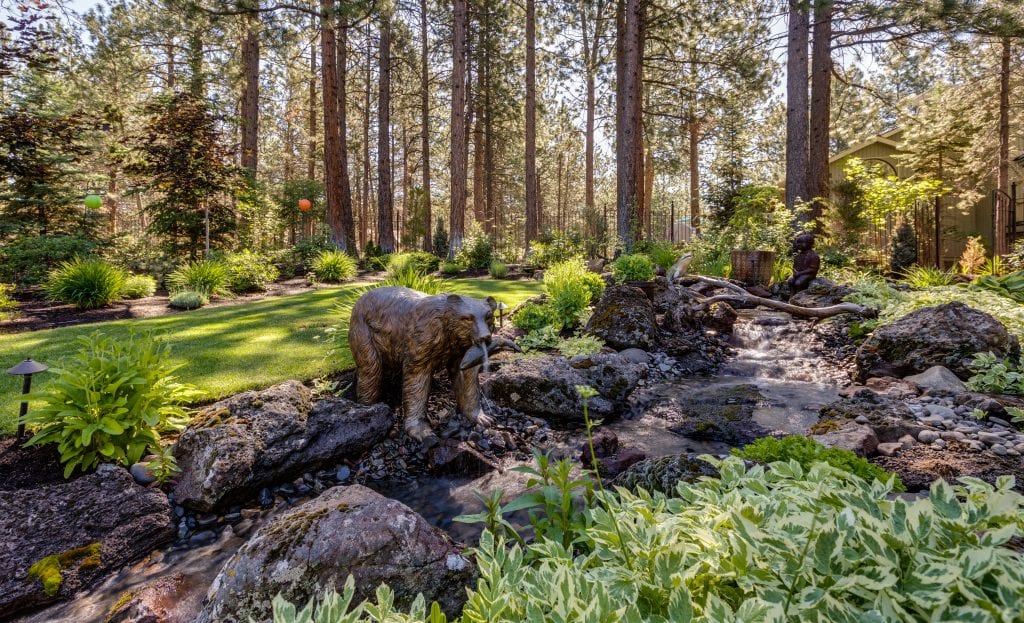
From March to October—and sometimes through the winter months—Central Oregonians seek sanctuary in the outdoors. You don’t need to drive to the river or into the mountains to achieve the respite provided by a beautiful outdoor space. Cultivate a peaceful retreat right out your own back door.
Kathy DeGree and her husband, Butch, have spent three decades building and fine-tuning an outdoor oasis at their Awbrey Butte home. “We live a crazy life,” said Kathy, who co-owns two Black Bear Diners with Butch. “We wanted a place to sit outside and enjoy the calming effect of water going over rocks.”
Longtime Bend residents, the couple has incorporated into their yard many of the high desert’s most popular features for outdoor living, wildlife viewing, star gazing, listening to music and hosting small intimate gatherings of friends.
Here are a few ideas from the DeGrees’ yard, designed to regularly transport busy people from adrenalin-jazzed days to the calming zone of a private retreat.
Humans naturally gravitate to water. Nearness to water can trigger feelings of tranquility, peacefulness and even happiness. Homeowners can incorporate a simple bird bath, a cascading waterfall, a meandering stream or a pond to reap these benefits. Water also connects us to the natural environment by attracting wildlife. The DeGrees installed a meandering creek that flows down a gentle slope into a small pond where Kathy says two goldfish they bought four years ago have grown into beautiful and large koi. Whether you do the work yourself or hire a local company, water features can be incorporated into both small and large spaces and on any budget.
The yin to water’s yang, fire creates warmth, security and recalls our prehistoric roots. In Central Oregon where wildfires are a constant threat, firepits and fire features can be safely added with thought and care. Many homeowners’ associations ban the use of open wood-burning firepits, but gas or propane-fueled features of every size, shape and cost create ambiance and an inviting place to unwind, share stories with friends and enjoy a warm spot to contemplate the universe.
A major trend in new homes, outdoor kitchens can involve elaborate features such as built-in cabinets, stoves, drink coolers, refrigeration, counter space and sinks, plus furniture for sitting and eating meals. Or they can be simple additions, such as a BBQ, casual seating and a portable drink caddy. The DeGrees created a covered cabana-style bar with a mini-fridge for drinks and snack food with stools arrayed around the bar for conversation. They also built a brick-and-mortar wood-fire oven that bakes a perfect pizza and roasts meats, including the Thanksgiving turkey.
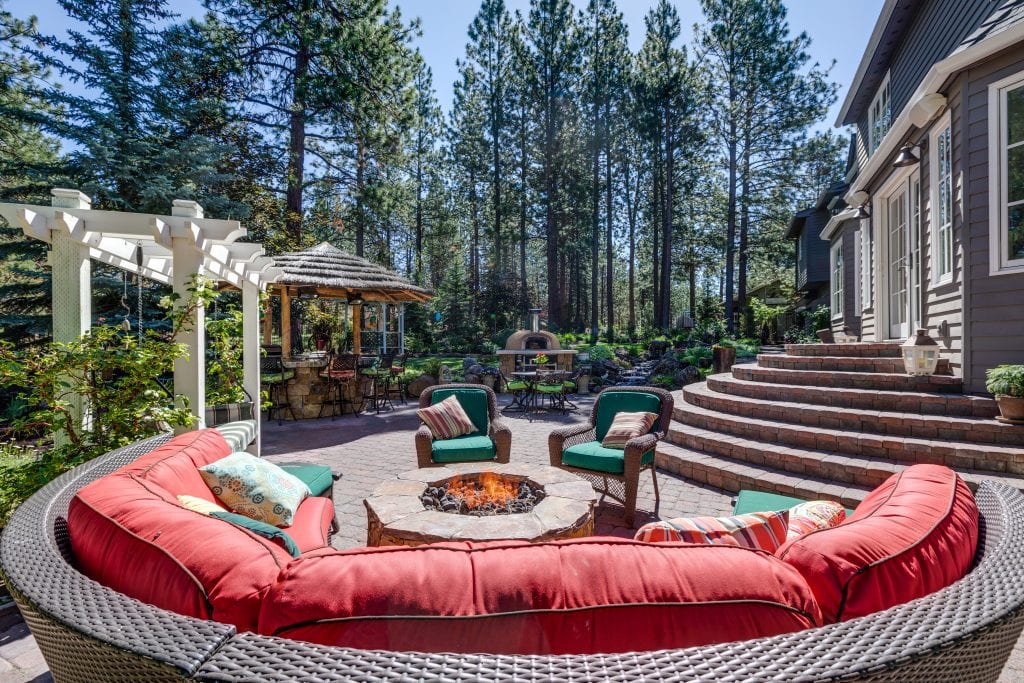
Furniture can be a major part of any backyard retreat and also serve to partition space. For example, a homeowner may wish to have more formal furniture near sliding doors to enhance flow between the home’s interior and exterior, with a more casual bench strategically placed some distance away under a shade tree or near a water feature. Side tables, ottomans, pillows and cushions add functionality and comfort. The DeGrees placed an adult-friendly swing near the bar with cushions and seating for two. It’s one of the first places Kathy heads to after work. From there she can observe wildlife, including a pair of owls that return each year to raise their young.
What’s an oasis without a garden or attractive landscaping? It’s almost a given that homeowners will want to incorporate living things into their Eden, whether that means native plants of the natural desertscape, potted plants, hanging flower baskets, special gardens for attracting butterflies, or trees and shrubs that create shade on hot summer days. With proper placement, taller plants and trees can double as privacy screens from adjacent properties. Newcomers to the high desert, though, might heed this warning: deer love roses, tulips, day lilies, dahlias and just about anything that costs a lot of money. So check with garden stores or the Oregon State University Extension Service for advice and a list of deer-resistant plants.
Life in Sunriver is quiet and surrounded by amenities.
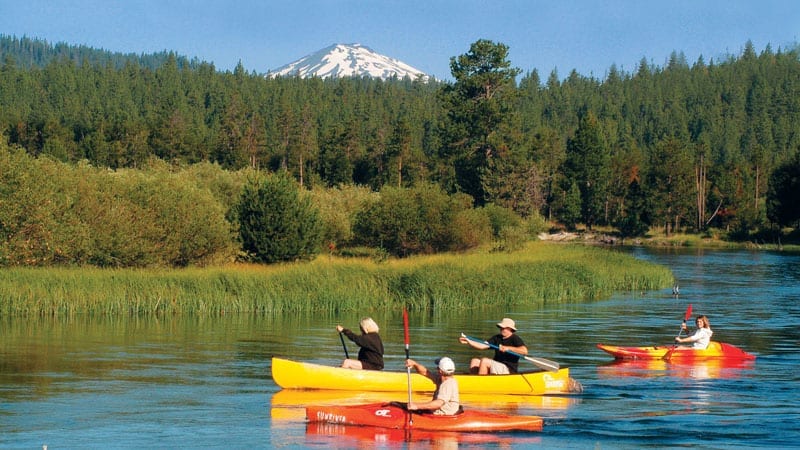
If there was ever an idyllic place to grow up, Sunriver may be it. Consider biking and walking trails right outside the front door, acres of forests to play in and explore, and, of course, the Deschutes River meandering and winding through. Sunriver has drawn families for decades who are looking for a little bit more space than a city offers. Part mountain village, outdoors mecca and arts hub, Sunriver has become so much more than a resort town. For many, it’s a place to put down roots.
Carolyn Pearson has lived in Sunriver for thirty years. She and her husband, Rob, brought their three kids to Sunriver after she took on a teaching job at Three Rivers K-8 School. “We both wanted a calm environment where we could be in nature on a daily basis,” said Pearson.
Today, Sunriver, about twenty miles south of Bend, has about 1,400 full-time residents, according to the latest census information. Built around Sunriver Resort, here families find plenty of amenities, including grocery stores, gas stations and the ever-growing Village at Sunriver. Local businesses like Goody’s ice cream shop, Sunriver Sports, The Hook Fly Shop and Sunriver Books & Music have kept the small-town atmosphere alive and the local economy thriving.
Other draws to Sunriver include the Sunriver Nature Center and the Oregon Observatory, which has eleven telescopes and an outstanding view of the night sky. There’s also a growing arts scene, with small galleries featuring local artists and artwork. Local restaurants include the award-winning brewery Sunriver Brewing Company, South Bend Bistro and Marcello’s Italian Cuisine.
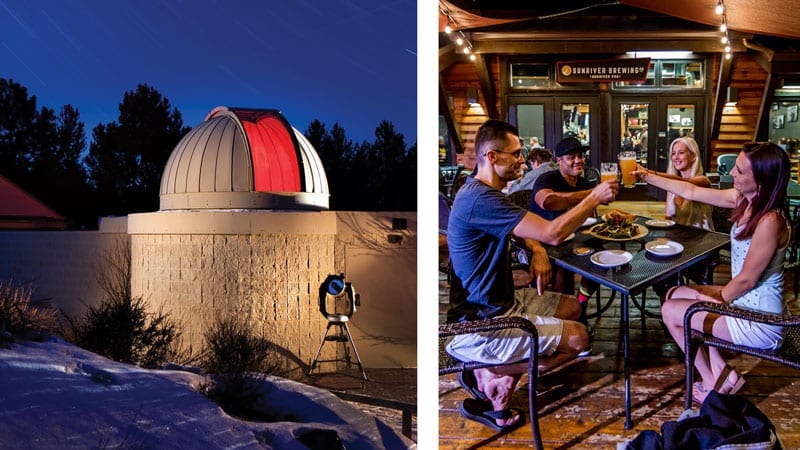
“Moving to a small community was not an issue for us,” said Pearson. “You know each other, you have frequent contact with each other, and if you stay, you build a history with each other. Not everybody loves that, but we do.”
Pearson and her husband, who worked at a local church, have been longtime active members of the community, developing scholarship programs for students at Three Rivers as well as the Sunriver Music Festival. “It helps you stay connected, so you invest in each other and the needs of the people around you,” said Pearson.
Despite a consistent tourist population, the town has retained its community atmosphere. “There’s always the downside and the upside,” said Pearson. “It gets noisier, and tourists are less respectful of the environment. You take it in stride when you decide to live here.”
For Pearson and others, living within easy access to natural areas makes up for the extra visitors. “There’s a sense of gratitude that comes from being in a setting that Sunriver offers,” she said. “It’s a place that we have access to on a daily basis, so I just personally thrive on that.”
Courtney Equall and her family are a new addition to the area. A few years ago, they moved from Texas back to the Pacific Northwest to be closer to family. “We landed on Bend, and looked at the market, but knew we wanted a little more room for our kids. We didn’t seek out Sunriver, but we are really happy we landed here.”
Equall runs a popular interior design blog Girl & Grey. Her home is in a growing neighborhood that has lots of room for her three kids to play. “We have a half-acre, and we’re on one of the canals on the Deschutes. It’s so much fun for the kids. We put kayaks in the water in our backyard and float to the river.” She took advantage of the short drive to Mt. Bachelor and put her kids in ski school in the winter. Her kids also “go crazy” for SHARC, the Sunriver Homeowners Aquatic and Recreation Center that features indoor and outdoor pools.
Equall said that they were pleasantly surprised at how many young families live in their neighborhood, including a lot of transplants like them. “Everyone comes from somewhere else, and everyone who’s here wants to be here.”
Keep the outdoors cozy until late in the evening this summer.
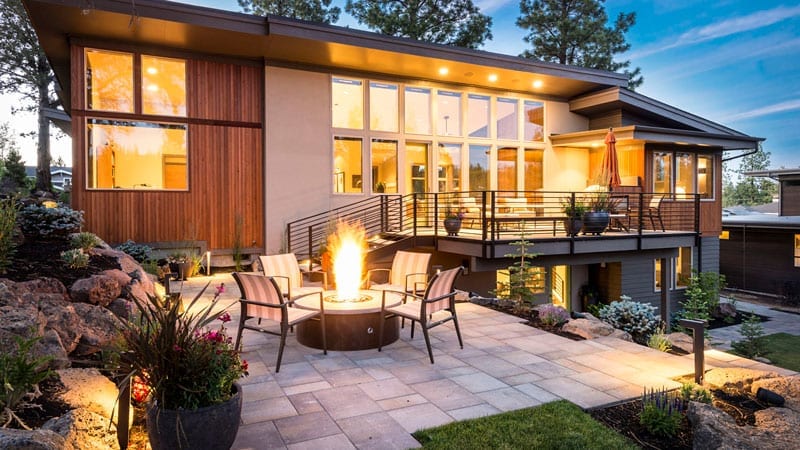
Summer in Central Oregon is our time to bask, play and even dine in the sun. But when the sun starts to set, the high desert air gets chilly and the sky gets dark fast. We asked Bend resident Patrick Howard, master host for outdoor entertaining, for a few tips to illuminate and warm up your outdoor areas to extend your summer days well into the night.
At home in his backyard, Howard has a built-in gas fire pit, which delivers not only warmth but also ambiance for guests, who gather around the fire while sipping wine at the NorthWest Crossing residence.
Fire pits come in various shapes, sizes, and fuel sources, from gas-powered to wood-burning. Growing in popularity are table fire pits, which ensure your guests stay warm at dinner time, as the flames are centered in the middle of a patio table. Other popular alternatives to a fire pit are outdoor fireplaces and outdoor heating towers.
Many families prefer the outdoor fireplaces, as they’re self-contained units which are generally safer for young children, but because they are a built-in part of an outdoor patio they tend to be pricier than a fire pit or a heating tower. Others prefer heating towers, as they’re portable and can be moved from deck to patio with relative ease, many brands come with base wheels, making it more portable. These outdoor heaters are either gas or electric powered, and most newer models have an automatic anti-tilt shut-off for safety reasons.
Heating towers generate a good amount of radiant heat to a specific area, from a 6-foot to 20-foot radius depending on the model you buy. Similarly, radiant heaters can be mounted onto outdoor patio ceilings or walls.
Before you make a decision, check your city or neighborhood’s regulations. Some cities, like Bend, do not allow outdoor wood-fueled fire pits.
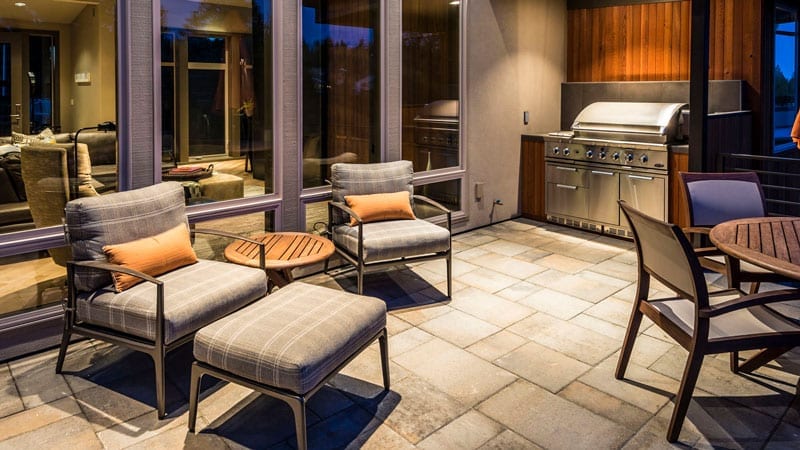
We’re fortunate here at the 44th parallel, because the summer sun stays high in the sky late into the evening. But when the sun does set, you want your guests to be safe as they wander your backyard area, especially if you have stairs.
Howard has a three-tiered outdoor entertaining area, and as a retired engineer he planned low profile lighting on all the walkways and stairs. The lighting blends in with the landscape, so during the day, the units are barely noticeable, but at night they illuminate areas where guests may gather.
“I worked with my landscaper on illuminating the backyard area,” explains Howard. Lighting needs vary, and direct lighting to provide illumination on a pathway was varied with more decorative lights to cast a glow on a landscaped feature. “We even illuminated the tree area, so you can see it at night.” Decorative lights are generally not as bright, as those used for illumination, so keep this in mind when selecting your outdoor lighting.
Most recent outdoor lighting fixtures use LED lights, which not only illuminate brighter, but also are more energy and cost efficient. Solar outdoor lighting has improved over the years, but generally is not as strong or reliable enough to provide adequate illumination for walkways.
String lights in a patio area are used primarily for decorative use, and can set the mood for a sparkling night.
As an engineer, Howard believes every party needs a good sound system. He placed 30 speakers throughout his home, with another 15 speakers outside on all three tiers of his yard. He can control and stream his music from his Iphone or his Ipad, and have different music playing inside than outside. Howard is happy to deliver advice on music selection too. “Make sure your music playlist matches your guests’ taste,” says Howard. “My party playlist usually includes older and newer songs, to please my friends and their teenage children.”
For an amazing outdoor space this summer, don’t forget about keeping your guests warm and safe when the sun goes down. This is our time, when the snow is but just a distant memory.